Books · Jane Austen · News

Another Austen sequel

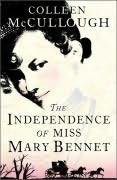
In some random searching today I discovered that come December, there will be yet another Austen sequel in the mix.   Titled The Independence of Miss Mary Bennet: a Novel, the book is by Colleen McCullough of Thorn Birds fame and will be published by Simon & Schuster.  You can pre-order it at Amazon.  [note that it will be published in Australia in early October by HarperCollins…read their synopsis and pre-order here.]

Lizzy Bennet married Mr Darcy, Jane Bennet married Mr Bingley – but what became of the middle daughter, Mary? Discover what came next in the lives and loves of Jane Austen’s much loved Bennet family in this Pride and Prejudice spin-off from an international bestselling author Readers of Pride and Prejudice will remember that there were five Bennet sisters. Now, twenty years on, Jane has a happy marriage and large family; Lizzy and Mr Darcy now have a formidable social reputation; Lydia has a reputation of quite another kind; Kitty is much in demand in London’s parlours and ballrooms; but what of Mary? Mary is quietly celebrating her independence, having nursed her ailing mother for many years. She decides to write a book to bring the plight of the poor to everyone’s attention. But with more resolve than experience, as she sets out to travel around the country, it’s not only her family who are concerned about her. Marriage may be far from her mind, but what if she were to meet the one man whose own fiery articles infuriate the politicians and industrialists? And if when she starts to ask similar questions, she unwittingly places herself in great danger?
[quote from Fantastic Fiction]
Jane Austen · News · Regency England

Just hafta share

In a comment sent to my research blog on Mary Gosling and Emma Smith, Dinah at the Priaulx Library on the island of Guernsey sent a link for the library’s delightfully informative article on the Le Marchants. Denis Le Marchant married Emma’s sister Eliza, but his father was a famed Peninsular war hero (and a founder of Sandhurst! I never realized…). Major-General Gaspard Le Marchant wrote to his daughter (Denis’ sister) Katherine during these years – and one has such a ring of something Jane Austen would have included in a novel (or even a letter!) that I just had to copy and share it here:

The Priaulx Library has some of the letters that Gaspard wrote from Spain to his daughter, Katherine (1796-1881). Her grandaughter says of her in a letter that she was like a mother to the younger children.  She went on to marry a parson, Basil Fanshawe, and lived in Essex.  Gaspard took great care over her education at Mrs de Minibus’ establishment, especially her musical education, and the end of his last letter to her, written on 5 July 1812, about two weeks before his death at Salamanca, reads thus:


Beauty, education and money, are separately capable of obtaining an advantageous marriage.  As you have not the money, nor the beauty, your whole reliance is on an excellent education.


Father sometimes knows best…

Jane Austen · JASNA-Vermont events · News

“Austen’s England” ~ A Fine Afternoon!

We append a guest post from Janeite Marcia who so graciously comments on our Sunday gathering on “Austen’s England”.  With over sixty people in attendance at the Vermont College of Fine Arts Chapel (and with many thanks to the College for the use of this lovely space!), it was a fine way to spend a Sunday afternoon, and we heartily thank John Turner for his delightful and insightful talk.


Even though it was a beautiful Sunday afternoon after many dreary ones, the College Hall Chapel at Vermont College in Montpelier was filled with Janeites eager to learn more about our favorite author at the fall quarterly meeting of the Vermont Chapter of JASNA.  We were a group of men and women of all ages, clearly enjoying the companionship of those who shared our interest in Jane Austen.  The Chapel Room is exquisitely decorated and I kept looking for Jane herself to walk into the almost 19th century setting. 


The afternoon opened with Deb welcoming the attendees, outlining the afternoon’s activities, and providing updates on future Chapter activities as well as other related and interesting news.  See this website for the upcoming events.  So much to do, see and read; so little time.  Alas, I suspect we all feel that way. 


After Kelly reminded us that the Vermont Chapter had its origin in the very city we were in, nearly one year ago (November 2007 at the Kellogg-Hubbard Library), she introduced John Turner to speak about “Austen’s England.”  John began by stating that we were not to have a travelogue.  I guess I didn’t expect one, but I did rather expect details on English life of the time.  Indeed, those details were what John talked about, but it was English life as Jane Austen lived it, an entirely different focus than I expected.  And, it was wonderful. 


John’s early statement that Jane Austen’s writings revealed England more truly than many scholarly sources was accurate indeed.  With quotes from Jane Austen’s books and letters, and his skillful interpretations of their meanings, we were transported to her time and how she must have lived.  John Turner’s presentation was filled with fascinating information and interpretations, and delivered with his ready wit and humor.  For those of us who were able to be there, we were fortunate indeed.  If you couldn’t attend, John Turner has posted his presentation on his website:  http://wordandimageofvermont.com/.  Whether for the first time or to refresh your memory of the afternoon, it is wonderful reading.  I, for one, will always remember the joy of fully understanding the line from Emma that begins “A mind lively and at ease…” 


When his formal talk was finished, John graciously answered questions to the pleasure of all.  Thank you, John Turner!


A refreshment break included a delicious variety of cookies and cakes, donated by many of the Chapter’s members.  From the crumbs, and only crumbs, left on the platters, I think everyone enjoyed them. 


The second part of the day was a delightful presentation of pictures of Jane Austen related sites taken by Deb during trips to England.  For some it was a refresher of places they had already seen; for others, it was a glimpse of places to see in the future.  But as I looked around the room during Deb’s commentary on the pictures, everyone’s eyes were focused on the screen and smiling as they “traveled” in Jane’s footsteps, as I was. 


While I’m sure I should close with an appropriate quote from Jane Austen, I can only say the afternoon was delightful and fascinating, not the least of which was being with so many others who felt similarly.

Thank you Marcia for posting this for us!  

Books · Jane Austen · News · Social Life & Customs

A Journey through Jane Austen’s Letters

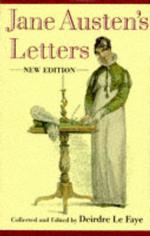
I have read many of Austen’s letters through the years, and certainly know the majority of quotes that are repeated over and over…but I am finally committing myself to going through each letter in chronological order and reading through all the accompanying notes and references ( my source and Essential Austen title: Jane Austen’s Letters, collected and edited by Deirdre Le Faye, 3rd edition, Oxford University Press, 1997)…. and I invite you all to take this journey with me, one letter at a time, one day at a time. 

So often these letters, and the sentences or words from them, are quoted out of context, and I feel compelled to make some sense of it all, to go back to the original source and get a feel for what Austen was really saying.  There are so many gaps in the letters, either from Cassandra’s choice to edit and / or destroy many of her sister’s writings, or because the sisters were not apart and hence no need to write (and of course there are only a few letters from Cassandra herself, and because Austen often refers back to a received letter, and with her constant comments on her sister’s writing abilities and humor, the reader is saddened by this loss.)

There are also many primary and secondary sources on the letters and I will discuss these periodically (see also the Letters Page, which I will continually add to), but I think I better just start the process and let it evolve from there.  I encourage you to comment, suggest sources, offer suggestions or interpretation, so please visit often and participate.  For those of you who know the letters backwards and forwards, and for those just discovering them, please take this journey with me.  I think all of us might learn something new along the way.  I know I already have….

This will be the format: 

  • letter number
  • date
  • sender (their location) / recipient (their location)
  • location of letter today
  • synopsis; quotes of import; comment

So today I start with Letter No. 1:

  • January 9 – 10 (Sat, Sun) 1796
  • Jane (Steventon) to Cassandra (Kintbury, Newbury [Rev. Fowles home])
  • Original MS untraced

 This is Austen’s first documented letter and one of the most quoted.  It is here that Jane writes of her attachment to Tom Lefroy and she refers to him often in this letter…”I am almost afraid to tell you how my Irish friend and I behaved.  Imagine to yourself everything most profligate and shocking in the way of dancing and sitting down together.”  She tells of the balls- “we had an exceedingly good ball last night”, who she danced with (Warren, Charles Watkins, and “fighting hard” to escape John Lyford), commenting on Miss Heathcote (“[she] is pretty, but not near so handsome as I expected”), and the many references to friends that we meet again and again in her letters.  We read of her latest fashion thoughts, the silk stockings she cannot afford but the white gloves and pink persian (silk) she can, and much on her brother Charles and brother Henry and his latest plan to obtaining a lieutenancy.

The letter ends with another lengthy reference to Tom Lefroy:  “he has but one fault…his morning coat is a great deal too light.  He is a great admirer of Tom Jones, and therefore he wears the same coloured clothes, I imagine, which he did when he was wounded.”

So in this first letter,  (Jane was 20 years old writing this letter on Cassandra’s 23rd birthday and the letter opens with “In the first place I hope you will live twenty-three years longer”)  we are introduced into Austen’s life, her family and friends, her likes and dislikes, and her biting wit, her poking fun at others and so very often herself.  Her letters to her sister were entertainment for both of them when they were apart, and in just these few pages we are drawn into this late 18-century world, with all its domestic goings-on, and we are glad to be in such company.  These letters are a veritable feast!

Book reviews · Books · Jane Austen

Old Friends and New Fancies (a review)

A guest-post from Nancy Charkes, a JASNA-Vermont member who is also active in her ‘winter’ JASNA region of Eastern Pennsylvania:


Like Marianne, I believe that first attachments are forever, and cannot be superseded. So, once I fell in love with Jane Austen, no sequel, pastiche, or derivative, could interest me. Not for me the middle age of the Darcy marriage, or Jane Austen as Miss Marple, or a 21st-century chick waking up in the Regency period. The language was wrong, the irony was lacking, the bite was dulled. But along came Col. Brandon, or rather, Sybil Brinton. Truth be told, she came along nearly 100 years ago, but only recently did I discover her book in a contemporary reprint. Old Friends and New Fancies: an Imaginary Sequel to the Novels of Jane Austen was written in 1913 and republished in 2007 by Sourcebooks, Inc.

Old Friends bring together many of the main characters of all six novels as a social network of friends and acquaintances. From Bath to London to the great country estates in Derbyshire, people we know quite well are linked in a busy social life that is full of budding attachments, misunderstandings, and eventual reconciliations. The language is right, although lacking the subtle irony of Jane Austen. The voice is that of the observer, the storyteller.

Kitty Bennet, visiting her sisters Mrs. Darcy and Mrs. Bingley, sets her cap for William Price, who is home on shore leave, and visiting in the country. William, however, is attracted to Georgiana Darcy, who, out of friendship to Kitty, rejects Capt. Price’s addresses in spite of her own warm feelings towards him.

Col. Fitzwilliam, having been introduced to Mary Crawford in Bath, falls in love with her. His evident interest is, of course, subject to the arrogant meddling of Lady Catherine, with an almost fatal outcome. Besides, gossip reports that Miss Crawford is the constant companion of Sir Walter Elliot and his haughty daughter Elizabeth, and is almost sure to be soon the second Lady Elliot.

Along the way, Mrs. Jennings stirs the pot; there are balls at Pemberley and Desborough; reference is made to Darcy, Bingley, and Ferrars offspring. There are hunting mishaps, heroes, and a cameo of Emma Knightley. Elizabeth Darcy manages with good sense and astute understanding; Jane Bingley is calm, facilitating with kindness, and there are just the right number of weddings at the end.
 
[submitted by Nancy Charkes]

Book reviews · Books

And yet another item in my mailbox….

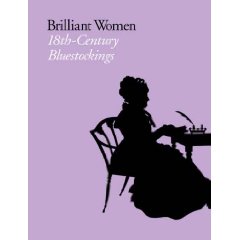
…but this time in my REAL mailbox!  I am thrilled to find in the mail today a book I ordered,  titled Brilliant Women:  18th-Century Bluestockings, a book published to accompany the exhibition of the same name held at the National Portrait Gallery, London, from March 13 – June 15, 2008.  Unhappily not in London to see this exhibit, I find that this book must suffice…and a quick skim through its pages proves it will not disappoint.  Written by Elizabeth Eger and Lucy Peltz, these are the chapters:

  • The Bluestocking Circle:  friendship, patronage and learning
  • Living Muses:  constructing and celebrating the professional woman in literature and the arts
  • ‘A Revolution in Female Manners’:  women, politics, and reputation in the late 18th-century
  • The Bluestocking Legacy

and all accompanied by the fabulous portraits of the women of the circle and paintings of their time: Mary Wollstonecraft, Hannah More, Catharine Macauley, Madame de Stael, Elizabeth Monatgu, Elizabeth Vesey, Frances Boscawen, Anna Seward, Elizabeth Carter, Maria Edgeworth, Mary Shelley, Fanny Burney, and many more.

Dear Jane shows up in the last chapter, with the portrait by Cassandra displayed (this likeness is housed in the National Portrait Gallery), and a short paragraph on Austen’s novel writing and her references to it in Northanger Abbey (though the writers make the oft-published mistake of calling NA her “earliest” work), and the importance of Austen writing in the wake of the changing times wrought by the Bluestockings.

So this book heads to the top of my already toppling TBR pile… this needs a close reading and time to savor the lovely illustrations!  

Further reading: see my previous post on the “Bluestockings” where there are several links to more information.

Jane Austen · News

Another “In my mailbox”… more about Austen

Just got this email from a gentleman who has posted on his website Wild River Review  “Interviews with the Famously Departed” … today his “chat” with Jane Austen  is quite amusing… and click here for his interview with Charles Dickens.

Jane Austen · News

In my Mailbox today…..a few more all things Austen

In my email box today:  The Jane Austen Centre’s latest newsletter, filled with all sort of interesting articles about afternoon dress, calling cards, the new P&P musical, Stoneleigh Abbey, an Austen quiz and a word search puzzle for a rainy afternoon, and of course, information on the upcoming Jane Austen Festival in Bath from Sept. 19-28.   (you can purchase a DVD of the festival events “Crazy about Jane” on the website)The newsletter also references ( click here ) an interesting musical montage from the newest Northanger Abbey on YouTube….

Jane Austen · News

Web Round-up…all things Austen

Another tour through cyberspace generated some great tidbits this week…..let me hear from you on any of YOUR Austen finds out there!.

  • Found a wonderful blog called Factual Imaginingswhich “consolidates information, both new and old, concerning film adaptations of English History and Literature”…. lots of information on Austen related films, Thomas Hardy’s Tess, and even the upcoming 2009 celebration of the 500-year anniversary of Henry VIII’s coronation.  Click here for the link to the blog’s review of Lost in Austen and another on the history of  the Royal Crescent in Bath.  This is a site I shall be visiting often!
  • The BBC’s Radio 4 broadcasts of “Book at Bedtime” are available online for seven days after airing.  Listen this week of Sept 8 – 14 to Someone at a Distance, a story by Dorothy Whipple; book is available from Persephone Books:  get on their mailing list immediately if you are not already [I LOVE their books!…if any of you are looking for a book list to work on, start here!]
Persephone Books reprints forgotten classics by twentieth-century (mostly women) writers. Each one in our collection of seventy-eight books is intelligent, thought-provoking and beautifully written, and most are ideal presents or a good choice for reading groups.
  •  I may be perhaps the only Janeite out there who has not been watching Lost in Austen (we in the US can see it on YouTube), but there is enough chat about it to keep you busy for a while…Professor Kathryn Sutherland reviewed the show in this Guardian article; see also these posts at Austenblog; Austenprose; and Jane Austen Today (there are a few posts here), for just starters! I will put in my 2 cents after I have had a chance to see it… and any reviews from any of you would be appreciated!
  •  The Art of Manliness (!) site has a wonderful post on the Gentleman’s Guide to the Calling Card.  See also a few posts by Ms. Place at Jane Austen’s World on this topic…. Calling Cards in S&S and Persuasion; the Etiquette of using calling cards; and her most recent, The Etiquette of using calling cards 100 years after Austen.
  • Jane Austen is now the biggest industry in Britain…see this article at NewsBiscuit.  You need to read through the whole article, as it is quite outrageous (oh! what would Jane think!)
  • And speaking of Britain, If you happen to be hanging around Bury St. Edmunds, visit their Georgian Gem festival that runs through Sept. 21.  There is also the annual Jane Austen Festival in Bath from Sept.19 through the 28th. Oh, why am I not in England!  (our meeting this Sunday on “Austen’s England” will just have to do for now…)
  • Jane Odiwe has added a few of her lovely drawings to her blog Jane Austen Sequels:  a portrait of Jane, and a winter scene of Jane and Cassandra walking in Chawton.
  • And another book giveaway of Confessions of a Jane Austen Addict:  go to the Bookworm Blog and comment on the Q&A with author Laurie Viera Rigler…winner will be announced Sept. 15.
  • And Laurel Ann at Austenprose, still recovering from her excellent Mansfield Park Madness escapade, is reading some of the Juvenilia…so visit her for an update, and if you haven’t read any of Austen’s early works, start now…they are delightful!  (and hoping that Laurel Ann will continue her posts on this.) 

A review of the book Lace in Fashion , by Pat Earnshaw on the Textile Dreams Blog:  the book traces the history of lace from the 16th to 20th century.  Originally published in 1986 by Batsford, a 2nd edition by Gorse (1991) is still in print.

Book reviews · Jane Austen

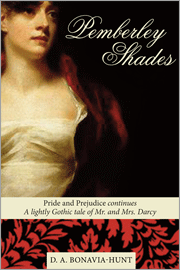
Book Review: Pemberley Shades

Kathleen Glancy in her “Persuasions” article “What Happened Next? The Many Husbands of Georgiana Darcy”(Vol. 11, 1989, pp. 110-116) states that D.A. [Dorothy Alice] Bonavia-Hunt’s Pemberley Shades is the best written of all the sequels she has read, and though “lacking in the irony department….it is a brave try, and an amusing story.”  [spoiler alert!…Ms. Glancy in this article tells the full story, so read this after you have read the book!]

Published originally in 1949 by Allan Wingate in the U.K. and by Dutton in the U.S., Pemberley Shades is finally available again (it was reprinted in 1977 and again in 2007, but quickly out of print, and only available from antiquarian booksellers and sure to finish off your annual book budget…there is one online for $650.), so this Sourcebooks 2008 reprint is welcome indeed!

There is little known about the author, and even if perhaps she ever wrote anything else under another name; but what is known is that she was born in London, the daughter of a clergyman, was educated by a governess and in private schools, and lived with her brother, the Vicar of Stagsden, Bedfordshire, during the time she wrote her Austen Pride & Prejudice sequel.  She obviously was knowledgeable about Austen and the Georgian period, and comes very close to Austen’s style.

The title “Pemberley Shades” refers to Lady Catherine’s angry retort to Elizabeth “Are the shades of Pemberley to be thus polluted?” (ch. 56, P&P)  Austen’s use of the word “shades” has generated many theories and some research into the word does little to clarify.  Austen was likely being intentionally ambiguous- with a literal reference to the woods and forests of Pemberley, with the darkness and shadows, as well as the figurative meaning of the ancestral lineage and social standing of the Darcy family (i.e referring to the ghosts of ancestors.)   But there is so much darkness in this book, so many secrets and the sense of “not telling all” and characters living in shadow, the “lightly gothic” atmosphere pervading the story…the author chose the perfect term to headline her tale, in the same ambiguous way as Austen.

So the title itself leads into this gothic realm and the reader is on alert from page one, although it all SEEMS so peaceful and harmonious.  We  re-enter the lives of Darcy and Elizabeth a few years after the end of P&P:  they have a two-year old heir to the estate named Richard (an inside joke perhaps?!).  The action begins with the death of the elderly Rector of Pemberely, leaving his two maiden sisters in the Parsonage and Darcy in search of a successor.  Passing over Mr. Collins, who, on the outs with Lady C, has written an officious (though humorous of course!) letter of application, Darcy heads to London to engage the services of Lord Egbury’s brother Stephen Acworth, who has been highly recommended.

Acworth’s arrival at Pemberley sets the plot in motion:  his first meeting with Elizabeth who “at the moment of first beholding him [it] was her instant conviction of having seen him before”… we meet characters we know and those new to this story:  The Robinson sisters, who seem more like the sisters in Gaskell’s Cranford, set themselves at odds with the Darcys by supporting Acworth; Jane and Mr. Bingley the milquetoasts that Mr. Bennet so predicted; Mr. Bennet is wonderfully drawn here with his insights and many witticisms [“every woman requires a dose of neglect now and then to keep her from being above herself”]; Anne de Bourgh finally getting a moment to shine no longer under her mother’s watch [“Anne was not so much proud and disagreeable as stupid” says Elizabeth]; Lady C exactly the same; Acworth, an odd peculiar lost soul; and a host of servants and maids getting some prime time of their own, a nice touch.

But the story really centers on Georgiana Darcy and her three suitors, all new characters:  Mr. Mortimer, Major Wakeford, and the vicar-in-waiting Acworth.  Miss Darcy is a shadowy figure, aloof and secretive, with “something on her mind” as Elizabeth keeps saying; and the resolution of her courting dilemma propels the tale.  There is no point in telling more….it is a bit of a mystery and so I shall not divulge a thing!  But we can ask Who is Acworth and what are his motives in coming to Pemberley? and why does Elizabeth feel so uncomfortable in his presence? and why is Georgiana so secretive and preferring to be alone with her music?  It is a good story, and this reader was much impressed with the author’s use of language.  But of course there is no duplicating Austen, and so there are disappointments: the story feels a tad far-fetched; Darcy and Elizabeth are a wonderfully harmonious couple, all that lovers of P&P could hope for, but I found them both a little too perfect and more than a little condescending to all those around them; and Acworth is quite the disturbing character, something not quite right with him (I cannot say more!…);  and there is this underlying sadness that pervades the whole novel…but it is certainly compelling enough and has wit enough to definitely be added to your Austen sequel collection, and you shall enjoy the read immensely!

Further reading: see also Laurel Ann’s review at Austenprose.