
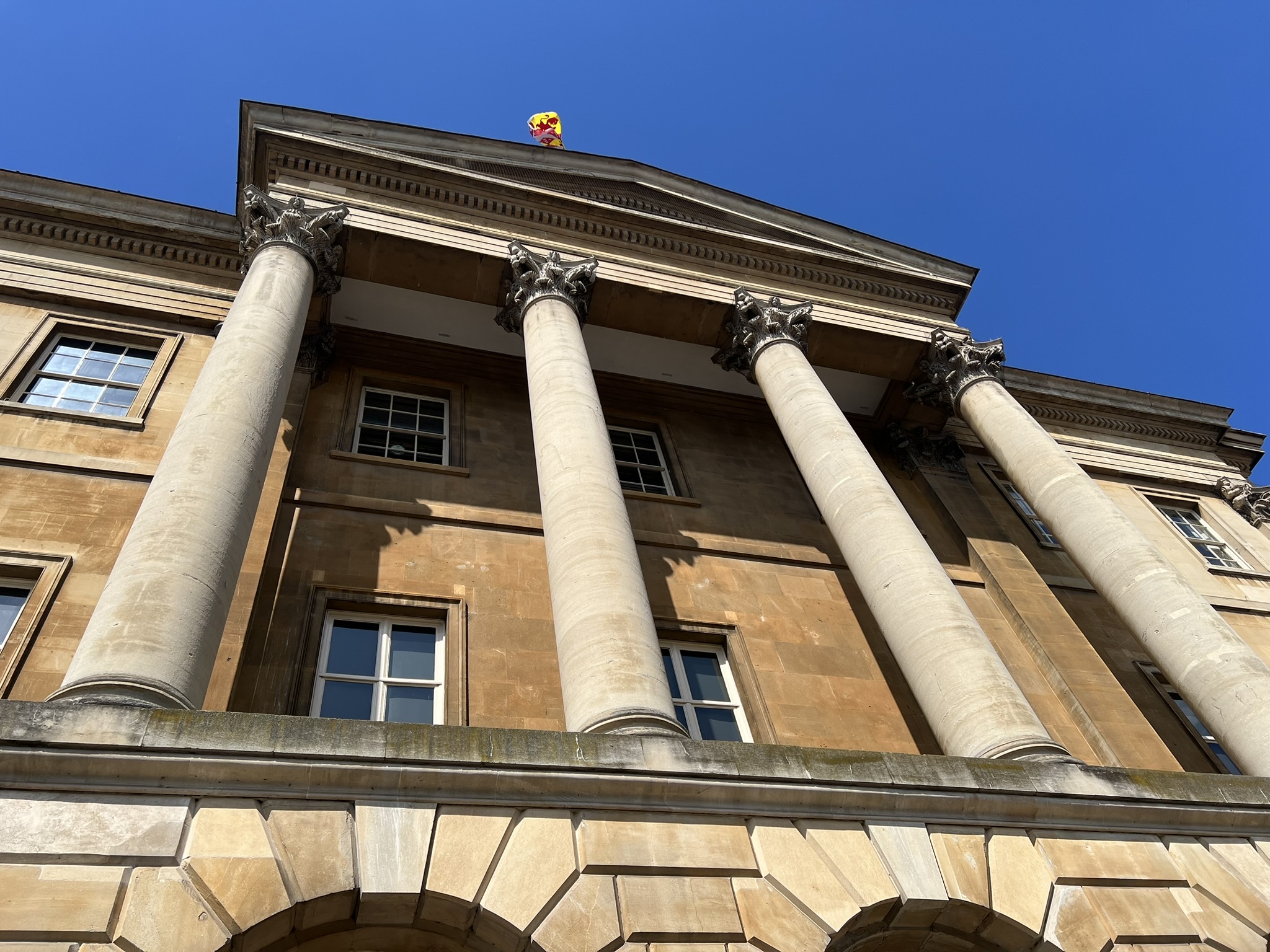
I am ashamed to say I have never been to Apsley House, home of the Duke of Wellington, so that was my goal this day – Ron had never been either, so we met there [right at the Hyde Park Gate, address is One London as you exit from Hyde Park] – and if you had a doubt as to whose home this was [and is], the number of portraits, sculptures, and paraphernalia of the Duke would certainly give you a hint… not to mention the statue of said Duke in the park across the street…


And the Wellington Arch: it is crowned by the largest bronze sculpture in Europe: the Angel of Peace descending on the Chariot of War. You can read about its history [and controversy] here.
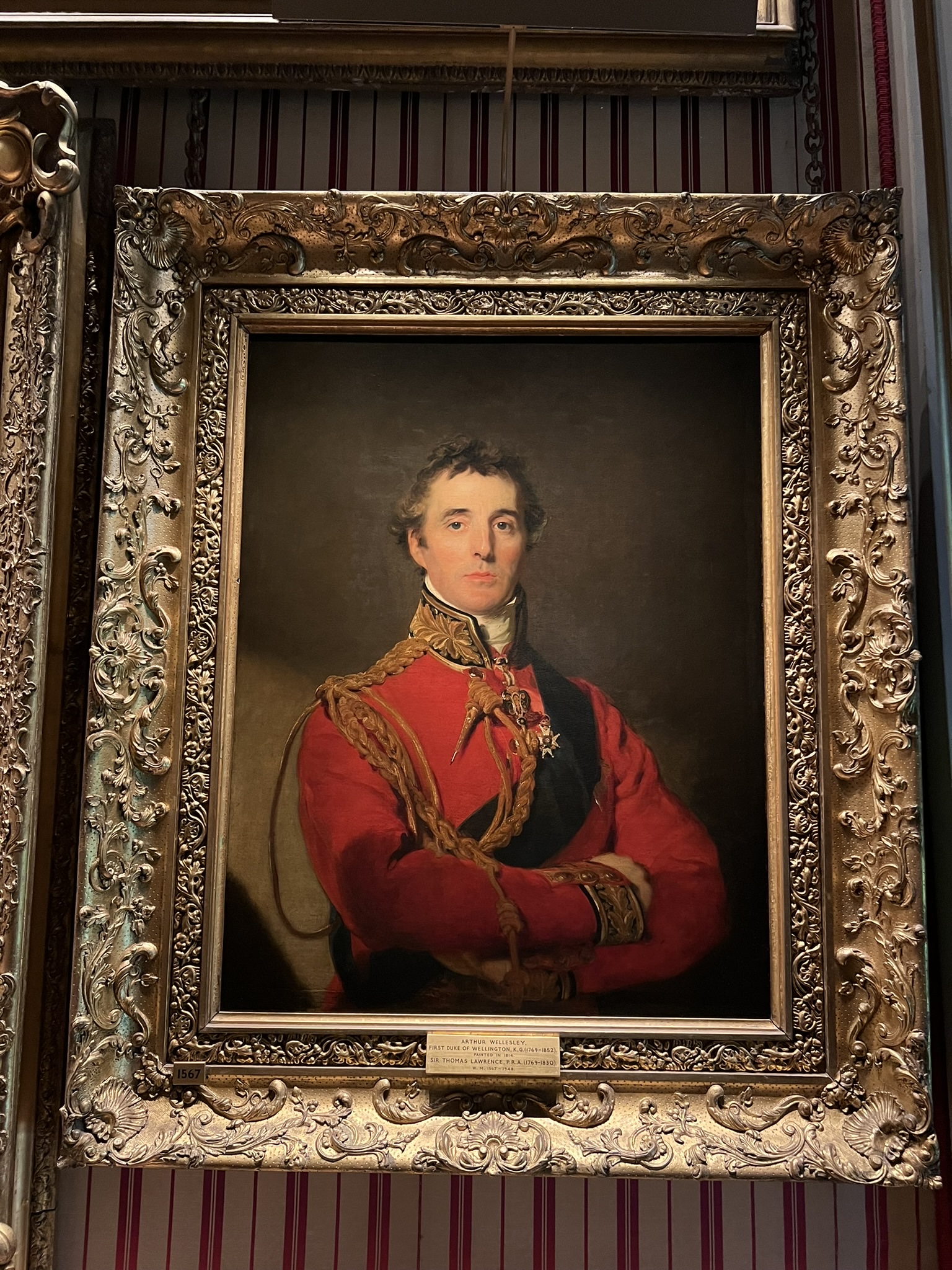
One of the many portraits of the Duke
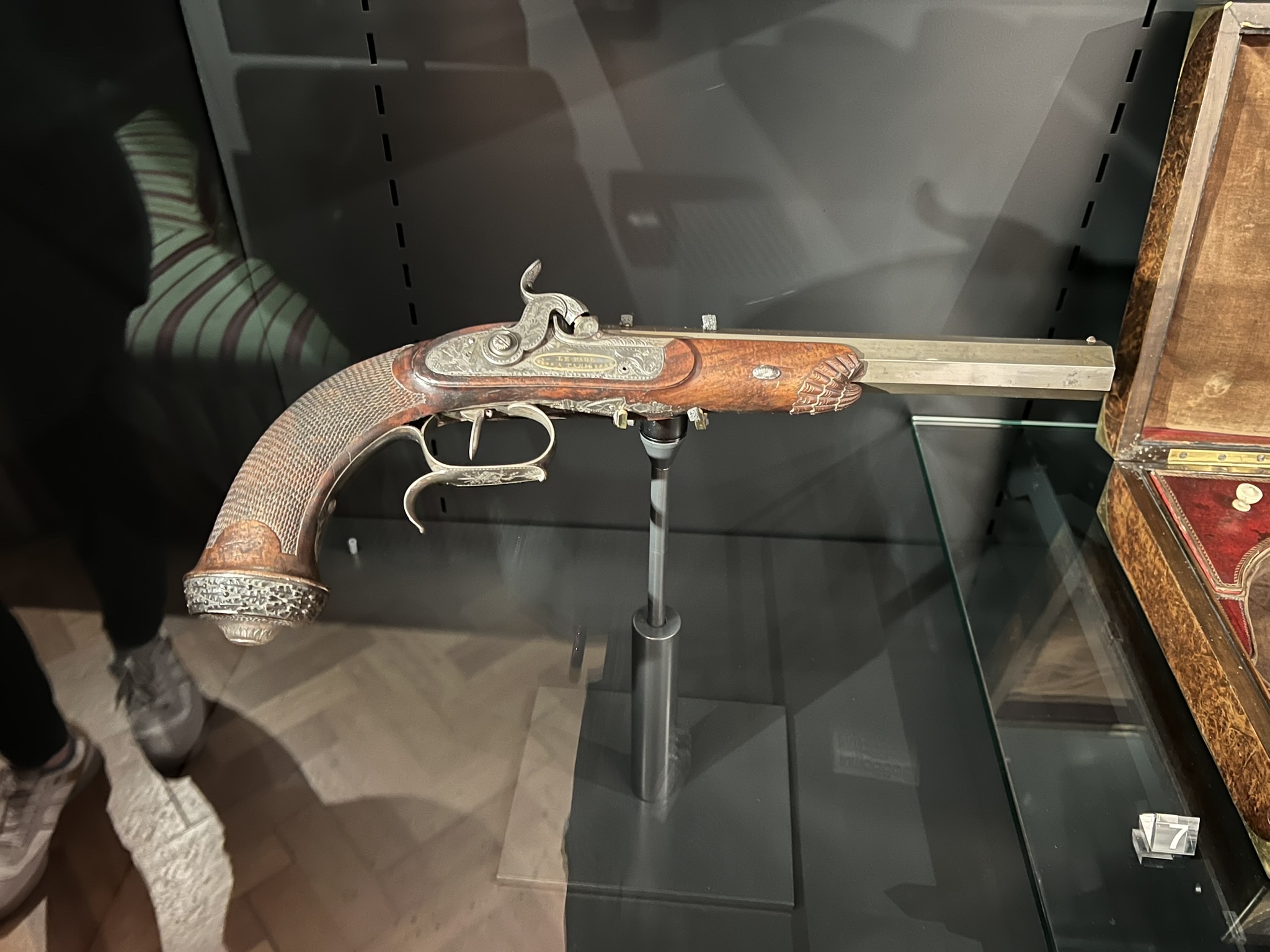
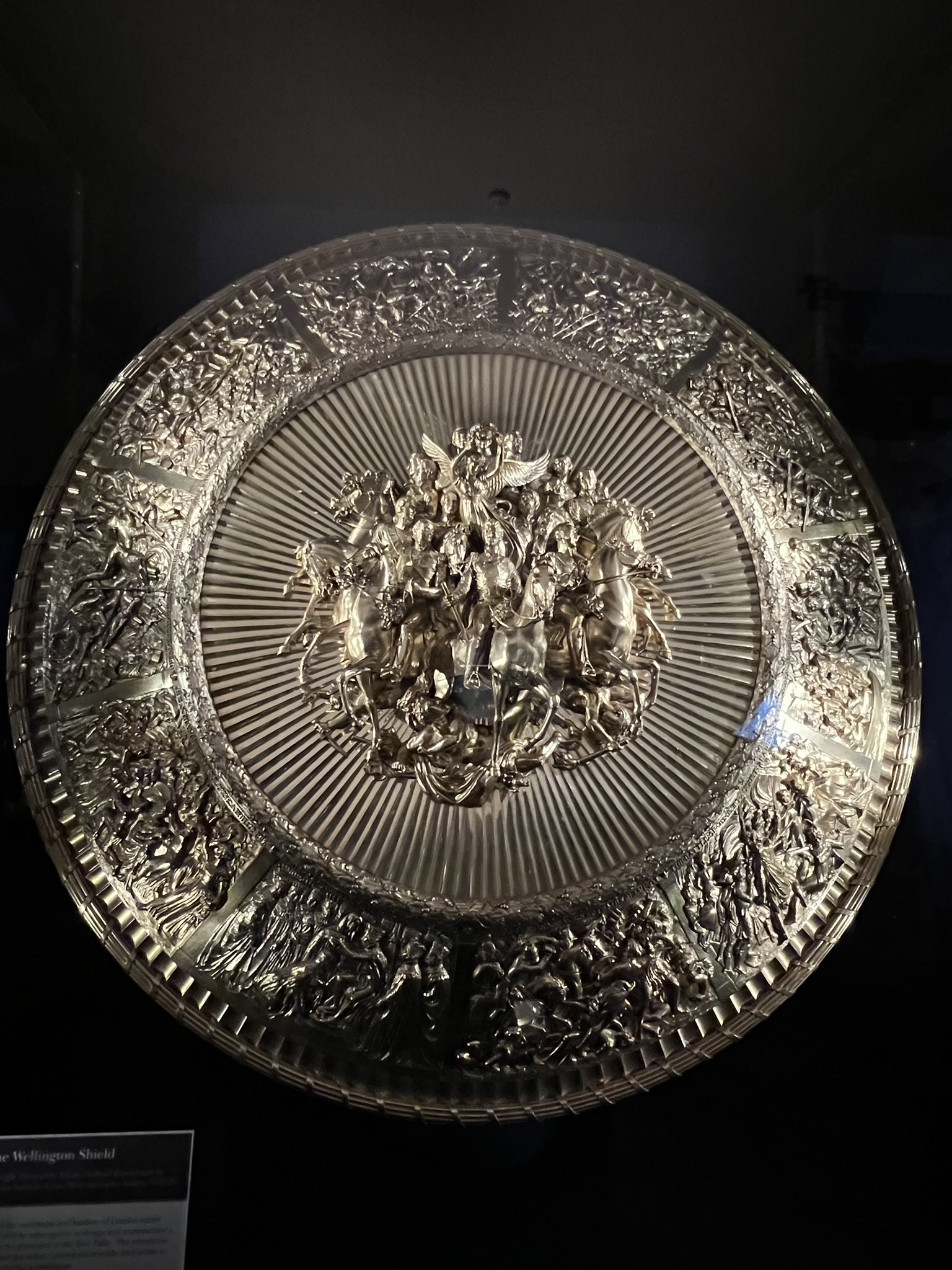

Your basic dining room…
*****************
I loved it here – and art collection beyond compare – I could have spent many more hours. But for a man who by all accounts liked the simple life of being on a campaign, the extent of elaborate decorative arts and sumptuous décor seems to belie that – the color RED everywhere, and YELLOW…

************
One of two great surprises at Apsley is the extensive Spanish art collection in the Waterloo Gallery, “one of the great palatial interiors of Britain” [the Apsley House Guidebook by English Heritage] – a gift of King Ferdinand of Spain in 1816, the 165 paintings were found in an abandoned baggage carriage of Napoleon’s brother Joseph Bonaparte, then King of Spain. I give one fine example: “The Gambler,” by “a follower of Caravaggio”:

–
The other grand surprise was to find on entering the house a large nude statue of all people Napoleon! Napoleon as Mars the Peacemaker by Canova. It had been commissioned by Napoleon but had been covered up at the Louvre – after Waterloo Britain bought it for 66,000 francs and the Prince Regent [George IV] gifted it to Wellington. The entry stairwell was the only possible location and the floor had to be reinforced to support the great weight. Wellington admired Napoleon and there are several paintings of him in the art collection here. You can see the stairwell and the size in my more modest photo (!) here – this better picture of the whole statue is from the guidebook [it actually looks much larger than this image conveys – I did burst out laughing when I saw it was Napoleon…]


A friend of mine went several years ago to Apsley House for one of their occasional Regency balls – I can only imagine the swoosh of the dresses and music all around … you can see such a one in this youtube: https://www.facebook.com/ApsleyHouse/videos/2444115022311548
Alas! I had to content myself with an audio guide and a vivid imagination…
**************
Next up was Henry Austen! Ron and I were off to Sloane Square, where I served as a grateful listener for one of Ron’s walking tours of Austen sites. I had done this part of Henry Austen’s life before but Ron’s history of it all added much to my knowledge, not to mention another glorious weather day… all followed by lunch in a crowded outside eatery right in the middle of the weekend Sloane Square market – made one feel like a real Londoner!
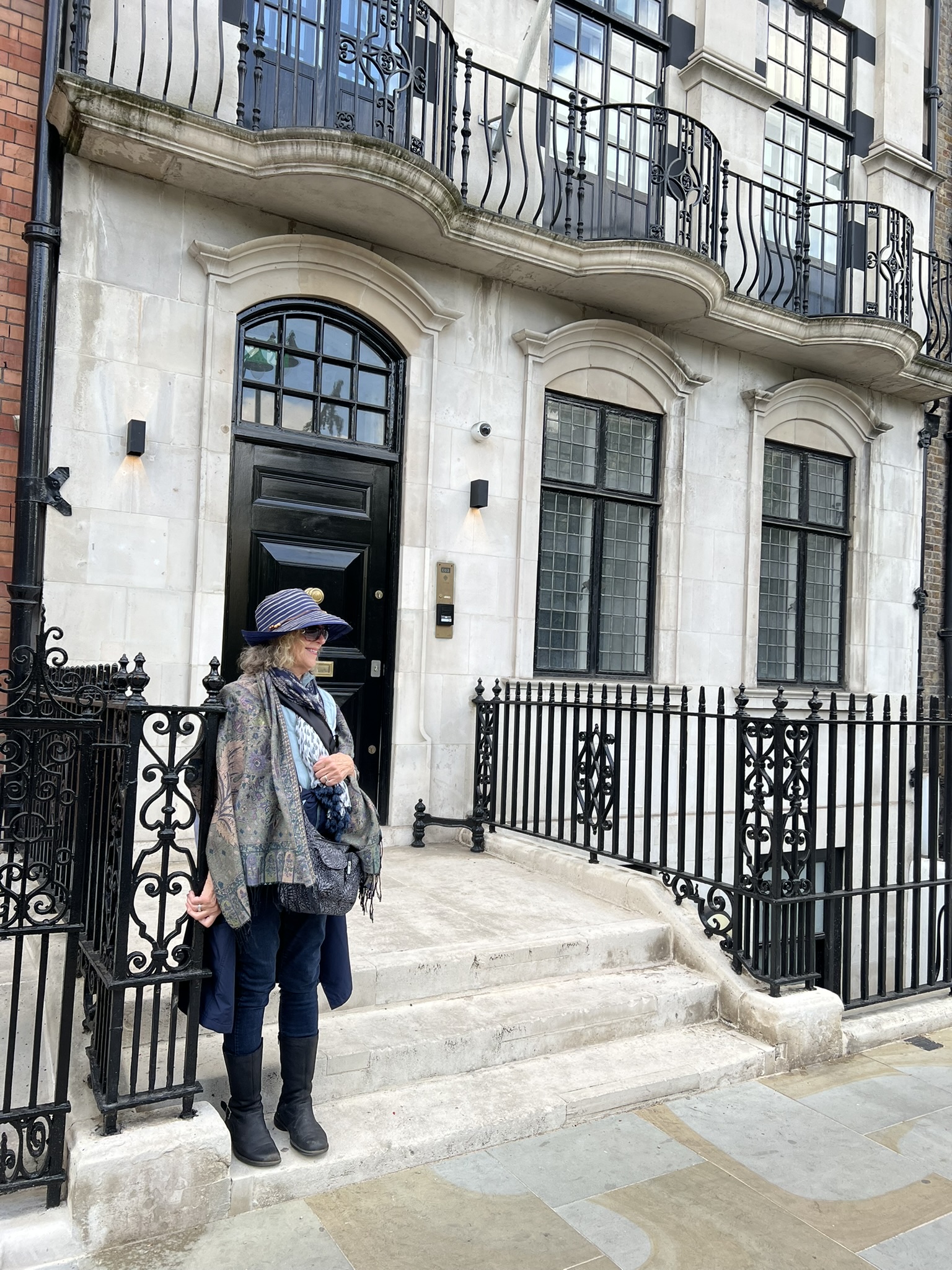
Henry’s house in Hans Place…

What Henry’s house would have looked like then…
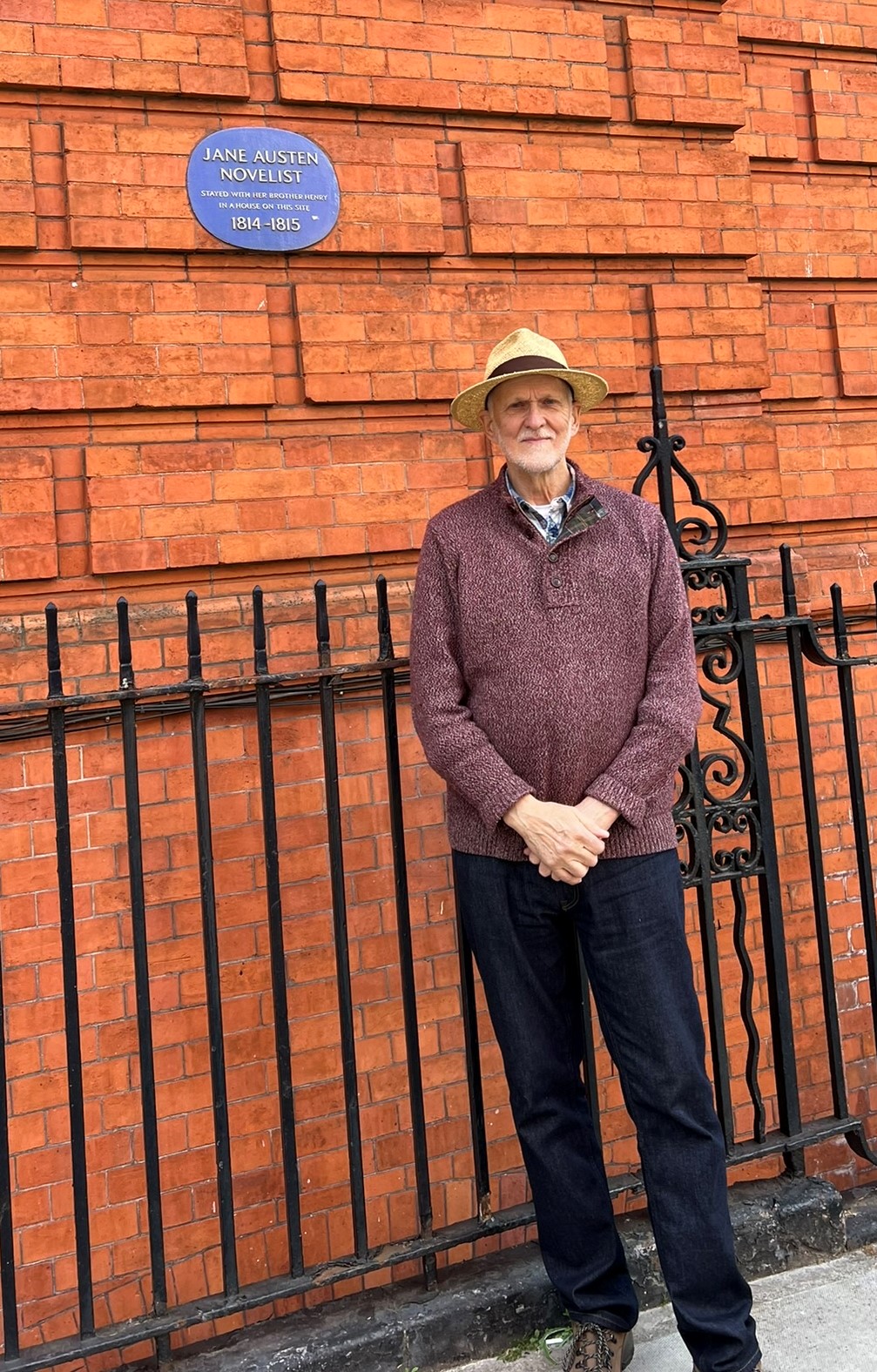
And the requisite Blue Plaque so we know it’s true…
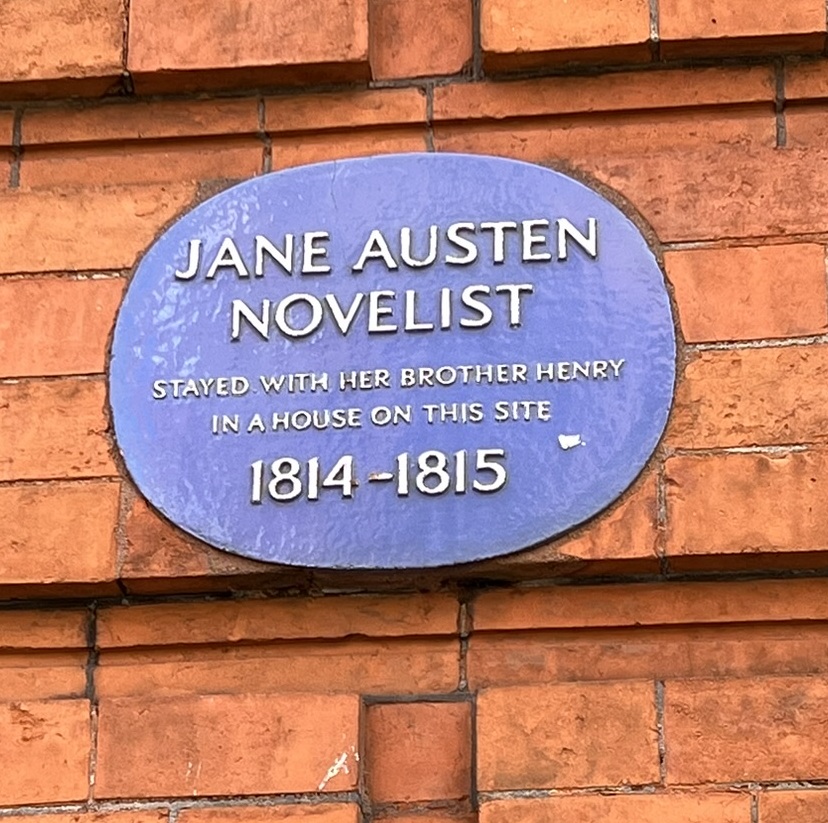
adding this sketch from Constance Hill’s book JA: Her Homes and Her Friends (1902):

**************
Another great day with Ron…we bid adieu ’til a next visit [we have already lined up an itinerary…] – and I had a fine dinner later at my hotel [that is water not vodka!]:

Next up: the beginning of the JASNA Tour starting in Windsor!
 Jane Austen in Vermont
Thanks, Deb. I wonder what Henry Austen would think of his house getting a blue plaque–with his sister’s name on it, and his own name in only tiny letters. I am a little confused, though. Is the white part Henry’s house, or the red bricks next door where the plaque is?
LikeLike
The plaque is actually just on the end of the buildings where Henry lived, not on the actual house; the white house with black door is the actual location of his house [no plaque there); and the brick is just an an example of what his house would have actually looked like without the upgrades we now see on his house… Constance Hill in her book on JA has a drawing of the house… I will add it here for you to see…
LikeLike
Great, thanks, Deb!
LikeLike
Who is Ron and how do I get a tour with him??😁
Dr. Inger Sigrun Bredkjær Brodey
Professor, Department of English and Comparative Literature
Affiliate Faculty, Global Studies and Asian Studies
University of North Carolina at Chapel Hill
http://www.IngerBrodey.com
LikeLike
Hi Inger – Ron is Ron Dunning – great-great-great something grandson of Francis Austen – I can put you in touch with him if you are serious about wanting to take a tour with him…
Thanks for visiting – see you soon in NC!
LikeLike
FYI, Inger, Ron runs this website, Akin to Jane, which you might find interesting: https://www.janeaustensfamily.co.uk/akin-to-jane/akin-to-jane.index.html
LikeLike