I have been reader of Austen for many years; was re-introduced when my daughter was in college and reading "Emma" and I read it along with her, and thus re-discovered Austen with a whole new appreciation! Happily my daughter, Jess, "got" that "Emma" was quite funny, the only one to do so in her class, I might add.
I re-read the books periodically and find them a tonic for the soul, as well as the best gauge of humanity I have ever encountered....and the humor helps immensely (not to mention Darcy!) My favorite book is Persuasion, I find Fanny the truest of feminists, NOT the major milktoast of all fiction characters, Elizabeth is a delight, and I often forget that these people ARE NOT REAL!
I have a group of friends scattered around New England who gather together several times a year to discuss books, most often Austen, as she is really the anchor (all due to the delightful, wonderful Ingrid G. of New Hampshire, who started this all many years ago with a weekend at Pinkham Notch at the base of Mount Washington in NH with a workshop "I'd Rather be Reading Jane Austen"!)...we call ourselves the Wild Women, but really, how can that be possible, trekking about the White Mountains, sipping tea and conversing about Austen!
And it all helps that I have a used bookstore called Bygone Books, now only an online presence. Every booklover's dream is to own a bookstore....and I challenge each and everyone of you to try it for a week!
I am currently the Advisory Chair for the JASNA-South Carolina Region. I post information about both this region and the JASNA-Vermont Region and its events on this blog.
Enquiring Readers: Last week I had posted a comment about Macbeth during the hoopla about Richard III; Ron Dunning [of the Jane Austen Family Tree fame] and I have been in communication since about how everything it seems comes back to Jane Austen, further evidenced by a recent tour he took of Canonbury Tower…. read on for yet another connection to Jane Austen!
****************
Canonbury on the map: Londontown.com
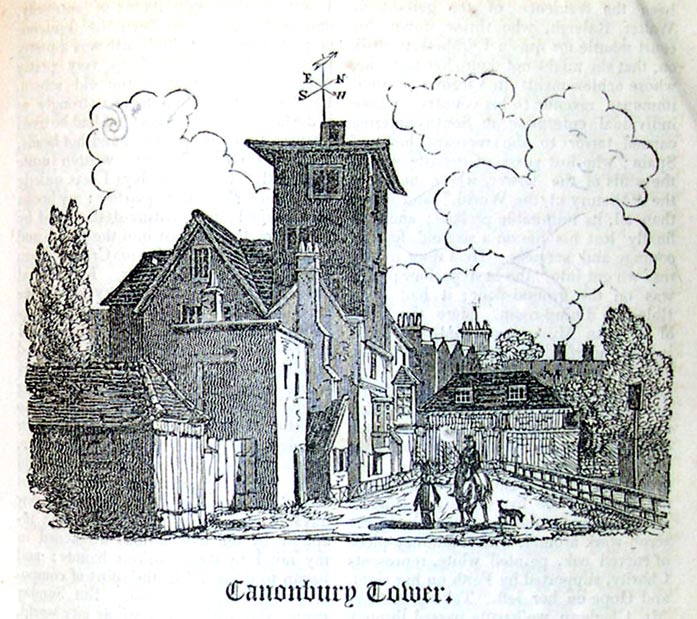
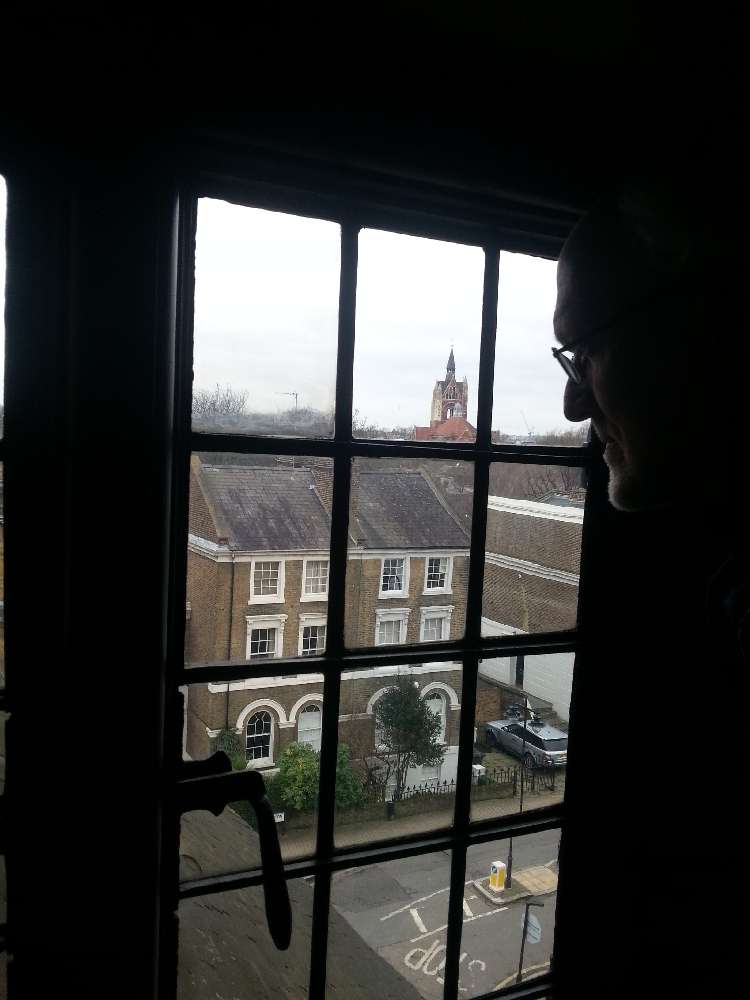
Our esteemed [blush…] blogiste and editrix remarked a few days ago, in reference to the fact that Macbeth’s victim Duncan I was an ancestor of Jane Austen, that “ALL in life that one thinks or does comes back to Jane Austen”. It’s true – it does. Earlier in the week, I went on a guided tour of Canonbury Tower, in the Islington area of London, with my accomplice in exploration, Catherine Delors. [Ed. note: Catherine is the much moreso esteemed historical novelist who blogs at Versailles and More]. For all we knew, it would be no more than a fascinating view of one of London’s few remaining precious Tudor residences, little suspecting that there would turn out to be an Austen connection.
Canonbury Tower – wikipedia
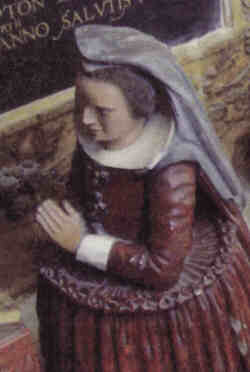
Canonbury was a Saxon manor, and after 1066 was awarded by William the Conqueror to the de Berners family. It was only a brief horse ride from the centre of London, and even walkable, so it became the residence of various abbots and other dignitaries. In the late 1500’s the manor was owned by Sir John Spencer (d. 1610), a very wealthy merchant and sometime Lord Mayor of London – who had a pretty young daughter, Elizabeth.More to the point, she was worth £40,000 on her marriage – some five million pounds today. Her father had promised her to several men, in consideration of the usual dynastic criteria, but she met and fell in love with the spendthrift William Compton, Lord Compton (and later to become Earl of Northampton, d. 1630). John Spencer was vehemently opposed to this match, not least because William owed him money. She managed somehow to elope with William, one version of the story claiming that he disguised himself as a baker’s boy and smuggled Elizabeth out of the house in a blanket.
John Spencer refused to be reconciled to this marriage, until Queen Elizabeth intervened. When he and his wife died intestate (not without suspicions of subterfuge on that score), William and Elizabeth inherited the entire estate, then valued at between £300,000 and £800,000. William immediately spent over £70,000 on horses and gambling, and it appears that Elizabeth had no qualms about spending money, either.
So far, I haven’t told you what the Austen connection was. I knew that William and Elizabeth were in my Austen database but with 13,500 people in it, I couldn’t remember their connection. Checking when I got home I realized that they were ancestors of Adela Portal, the wife of Edward Knight (the younger), Jane’s nephew. Among others, the current doyenne of the Austen family, Diana Shervington, is a descendant of that line.
There is a further literary connection, in that William and Elizabeth were also the ancestors of Vita Sackville-West. The time has long since passed when I was surprised that almost anyone that you could name was connected with the Austens, but the particular individuals and their stories continue to fascinate!
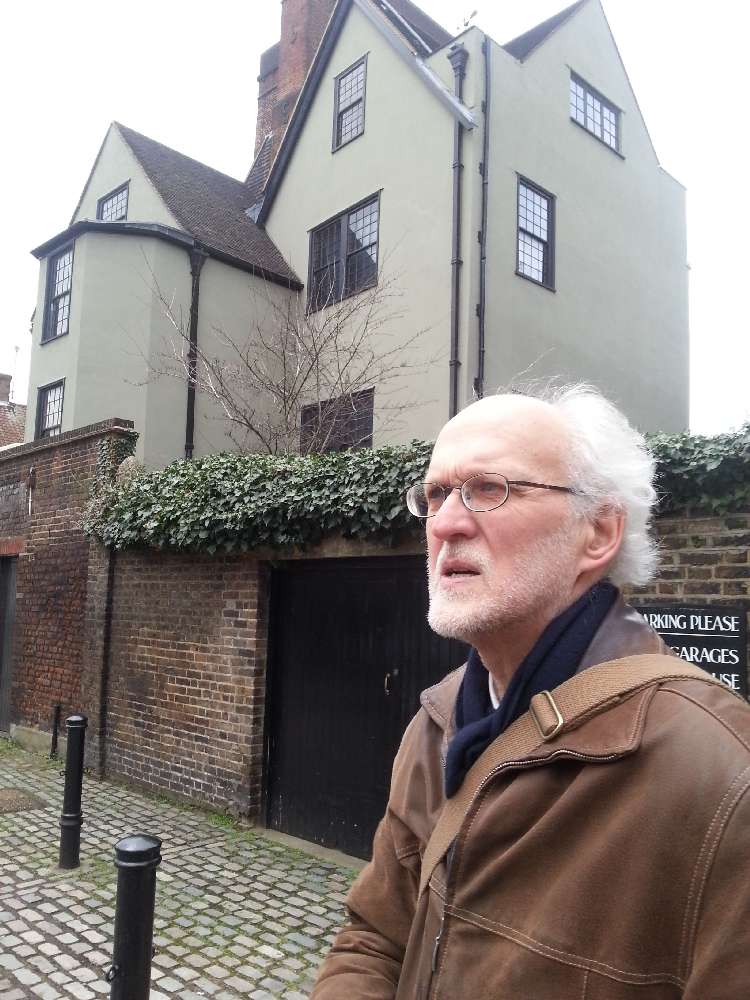
Ron Dunning outside Canonbury Tower
[image: c2013, Catherine Delors]
Catherine Delors
Wish I had been there with the two of you! Thank you Ron for your continued insights on all things in the Austen family!
******************
Further reading: the problem with these sort of postings is that one can spend an inordinate amount of time researching all these new connections! – here are a few places to start, Elizabeth Spencer having quite the interesting story!
Thomas Cromwell, Lord Privy Seal, lived in Canonbury Tower from 1533. His residency ended abruptly in 1540 when he was beheaded by King Henry VIII. Cromwell has been the subject of Hilary Mantel’s critically-acclaimed Wolf Hall and Bring up the Bodies.
Sir Francis Bacon, King James I’s Lord Chancellor, lived in Canonbury Tower, 1616-1626.
Chimney-piece and panelling in the Compton Oak Room, late 16th-century. Image: ‘Plate 102: Islington: Canonbury Tower’,
An Inventory of the Historical Monuments in London,
Volume 2: West London (1925), pp. 102. British History Online.
And finally, and again from the William Hone (1780-1842) archive:
Those who have been before and not lately, will view “improvement” rapidly devastating the forms of nature around this once delightful spot; others who have not visited it at all may be amazed at the extensive prospects; and none who see the “goings on” and “ponder well,” will be able to foretell whether Mr. Symes [the resident when Hone visited] or the tower will enjoy benefit of survivorship.
To Canonbury Tower
As some old, stout, and lonely holyhock,
Within a desolate neglected garden,
Doth long survive beneath the gradual choke
Of weeds, that come and work the general spoil;
So, Canonbury, thou dost stand awhile:
Yet fall at last thou must; for thy rich warden
Is fast “improving;” all thy pleasant fields
Have fled, and brick-kilns, bricks, and houses rise
At his command; the air no longer yields
A fragrance—scarcely health; the very skies
Grow dim and townlike; a cold, creeping gloom
Steals into thee, and saddens every room:
And so realities come unto me,
Clouding the chambers of my mind,
and making me—like thee.
*****************
And so here we are almost 200 years later, still visiting Canonbury Tower!
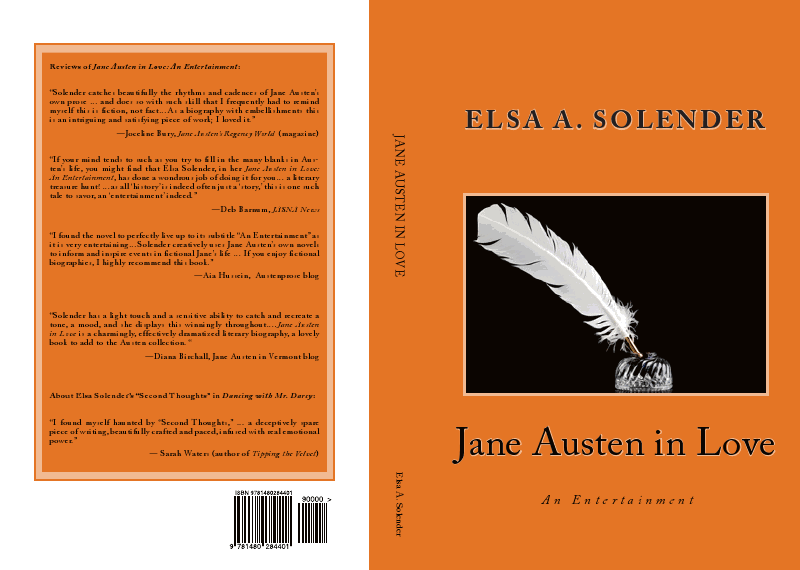
What better way to celebrate Valentine’s Day than to think of Love in Jane Austen terms. I think we can say that it is a “truth universally acknowledged” that Captain Wentworth’s letter to Anne in Persuasion* is the grandest expression of Love in all of literature – who would not want to receive such a letter as this? But what of Love in Jane Austen’s own life? – we know so little; where did Mr. Darcy come from, or any of her other heroes? What of True Love in her own life? We can only imagine… so I lead you to a fine imaginative rendering of ‘Jane Austen in love’ in Elsa Solender’s Jane Austen in Love: An Entertainment. When published last February, it was only available as an ebook, delightful to read but nothing to put upon the shelf. We had to wait until this past December to see it finally published in real book form at Amazon.com.
book cover
At the time of its release as a kindle book, Elsa graciously “sat” for an interview here at Jane Austen in Vermont – you can read that here. And as my review was to be published in the JASNA News (just out in the Winter 2012 issue), I did not post a review of the book on this blog; Diana Birchall very graciously did so for me here. But as my review is now published and available online, I append it here in part and then direct you to the JASNA site for the remainder [Note: all book reviews in the JASNA News are available online from 1998 to the present: click here.] – and Elsa has offered a copy for a book giveaway [see below] in celebration of Valentine’s Day!
Jane Austen in Love: An Entertainment, by Elsa Solender.
Review by Deborah Barnum
Imagine a young Jane Austen reading aloud her History of England, Cassandra sketching Henry as Henry V, their Mother as Elizabeth I, and Jane as Mary Queen of Scots; or young Jane at school nearly dying of typhus; or hearing Jane’s thoughts on first encountering Madame Lefroy; or sparking a laugh from the intimidating Egerton Brydges. Imagine the suitor you might like your Jane Austen to meet by the seaside, she falling madly in love but destined to suffer the pangs of lost love, forever irreplaceable. If your mind tends to such as you try to fill in the many blanks in Austen’s life, you might find that Elsa Solender, in her Jane Austen in Love: An Entertainment, has done a wondrous job of doing it for you.
Ms. Solender, former president of JASNA and a prize-winning journalist, has taken her story “Second Thoughts,” runner-up in the 2009 Chawton House Library Short Story Contest, and expanded this one moment in Austen’s life to other places and times, all through the lens and voice of Cassandra Austen—it is part real, part imaginary, and part Austen’s own fiction, dialogue and story all beautifully woven together in this tribute to love in the life of Jane Austen—her love for her sister, her family, her cousin Eliza, and her mentor and friend Madam Lefroy; her flirtation with Tom Lefroy; the proposal from Bigg-Wither; and her Mysterious Suitor of the Seaside.
About the author: Elsa A. Solender, a New Yorker, was president of the Jane Austen Society of North America from 1996-2000. Educated at Barnard College and the University ofChicago, she has worked as a journalist, editor, and college teacher in Chicago, Baltimore and New York. She represented an international non-governmental women’s organization at the United Nations during a six-year residency in Geneva. She wrote and delivered to the United Nations Social Council the first-ever joint statement by the Women’s International Non-Governmental Organizations (WINGO) on the right of women and girls to participate in the development of their country. She has published articles and reviews in a variety of American magazines and newspapers and has won three awards for journalism. Her short story, “Second Thoughts,” was named one of three prizewinners in the 2009 Chawton House Library Short Story Competition. Some 300 writers from four continents submitted short stories inspired by Jane Austen or the village of Chawton, where she wrote her six novels. Ms. Solender was the only American prizewinner, and she is the only American writer whose story was published in Dancing With Mr. Darcy, an anthology of the twenty top-rated stories of the contest.
Ms. Solender’s story “A Special Calling” was a finalist in the Glimmer Train Short Short Story Competition. Of more than 1,000 stories submitted, Ms. Solender’s story was ranked among the top fifty and was granted Honorable Mention. She has served on the boards of a non-profit theater, a private library and various literary and alumnae associations. Ms. Solender is married, has two married sons and seven grandchildren, and lives in Manhattan.
****************
For Valentine’s Day, Elsa has graciously offered a copy of her book [as she did with her ebook] to the winner of a random drawing – please comment below on what reading Jane Austen has taught you about Love. Or you can pose a question to Ms. Solender. Deadline is Thursday February 21, 2013 at 11:59 pm; winner will be announced the next day. Domestic mailings only [sorry global readers, but our postal service has skyrocketed their overseas prices!]
Thank you Elsa, and good luck everyone!
*********************
‘Placed it before Anne’
[Image: C. E. Brock, Persuasion, vo. II, ch. XI; from Mollands.net]
*Captain Wentworth’s letter: [because I cannot resist]
‘I can listen no longer in silence. I must speak to you by such means as are within my reach. You pierce my soul. I am half agony, half hope. Tell me not that I am too late, that such precious feelings are gone for ever. I offer myself to you again with a heart even more your own than when you almost broke it, eight years and a half ago. Dare not say that man forgets sooner than woman, that his love has an earlier death. I have loved none but you. Unjust I may have been, weak and resentful I have been, but never inconstant. You alone have brought me to Bath. For you alone I think and plan. – Have you not seen this? Can you fail to have understood my wishes? – I had not waited even these ten days, could I have read your feelings, as I think you must have penetrated mine. I can hardly write. I am every instant hearing something which overpowers me. You sink your voice, but I can distinguish the tones of that voice when they would be lost on others. – Too good, too excellent creature! You do us justice, indeed. You do believe that there is true attachment and constancy among men. Believe it to be most fervent, most undeviating, in
F. W.
‘I must go, uncertain of my fate; but I shall return hither, or follow your party, as soon as possible. A word, a look will be enough to decide whether I enter your father’s house this evening or never.’ [Perusasion, Vol. II, ch. XI]
Let’s just be honest about our superficiality. Even when it comes to the high-minded business of literature, people do judge books by their covers. Perhaps that’s why Amazon produces glossy mock “covers” for its disembodied e-books, to be inspected and decided upon alongside the traditional print offerings.
Book covers may be especially important when it comes to the classics. After all, many of us have a general sense of, if not a thorough familiarity with, the contents within. Perhaps more than anything else, these covers show what matters to prospective buyers. Two centuries of Jane Austen’s “Pride and Prejudice” are particularly revealing about the novel’s broad and sustained popular reach….
Enquiring Minds: Tony Grant of London Calling, and a regular contributor to Jane Austen’s World, had written a post for me on Marble Hill House in Twickenham– but alas! I have been so delayed in getting this on the blog that we agreed he should post it himself and I will link to it… so herewith the tale of Marble Hill House, home to Henrietta Howard, mistress of George II. This all started with a conversation over Joshua Reynolds’s house, which led to Richmond Hill, and then on to Henrietta Howard and Marble Hill House, and then Pope and Swift, Horace Walpole, John Gay and the Scriblerus Club, a bit on Wordsworth and Sir Walter Scott and on to Dickens and Virginia and Leonard Woolf, and of course Jane Austen gets her required mention – you get the idea – this is cram-packed with literary tourism and as always, Tony’s fine photographs…
****************
The Thames from Richmond Hill
The River Thames wends its tortuous way across England from Thames Head in Gloucestershire until it reaches the southernmost part of the North Sea. Its journey stretches for 215 miles. Finally the wide Thames Estuary which pours its contents into The North Sea is bordered on the north bank by the Essex coast and Southend on Sea and at its southern bank by the Kent coast, Sheerness and the entrance to the Medway.
Along its course The Thames passes though some beautiful English countryside before it enters the Greater London area passing by Sunbury and on to Hampton, then Hampton Court, Kingston upon Thames, Twickenham and Richmond. At last it reaches the centre of London with its iconic landmarks. The Thames, from London along its whole length, has a long history of Iron Age villages, Roman habitation, Saxon towns, and mediaeval settlements, Tudor Palaces and Georgian and Victorian Villas. London itself began as a Roman settlement for trade, built at the nearest bridging point to the coast where they had their port called Ritupiae (Richborough). They wanted to penetrate the hinterland north of the Thames. Indeed the names Thames which was Celtic in origin but had its Roman equivalent (Tamesas recorded in Latin as Tamesis) and London (Londinium) come to us from Roman times.
Over the centuries the Thames outside of London has provided a beautiful Arcadian retreat for the wealthy, the famous, the aristocracy and the monarchy away from the stench and diseases prevalent in many periods of London’s history. They built palaces and grand houses and villas with adjoining estates and landscaped parks to relax and take their leisure in. Marble Hill House is a Palladian Villa built between 1724 and 1729, very close to Richmond upon Thames but on the northern bank of the Thames near Twickenham. It was built for George II’s mistress, Henrietta Howard….
Gentle Readers who love to travel, especially those who love to follow in Jane Austen’s Footsteps: I am linking to this post by Nan Quick, one of our JASNA members from New Hampshire. She had emailed me recently to tell me of her website for armchair travelers, with one of her posts on Jane Austen’s Bath … I append it here – with lovely pictures and lively commentary, how perfect to visit such a place as this, when so many of us are snowed-in! So with dreams of warmer climes and Jane Austen hovering nearby, here you go…
I really wanted to call this Armchair Traveler Chapter “Jane Austen’s Bath.” But holding forth about Jane’s bathing habits would have given me ammunition for a brief and not very interesting article. So, instead it’ll be “Jane Austen AND Bath.” I’ll try to describe the City as it was during the times when she lived there, and I’ll show you many of the locations that she used in two of her books. Happily, the built world of today’s Bath is largely unchanged from Jane’s time. Over the past two centuries the City’s fame has protected it from indiscriminate “improvements,” and so visiting Bath today gives a fairly good impression of what Jane’s days there might have been like.
If you’re reading this, it’s likely you’re Austen-informed, and have thus read NORTHANGER ABBEY and PERSUASION, which are called Austen’s Bath novels.
On May 28th, 2011 I had the pleasure of spending an afternoon in Bath. Of course, in England, the weather has a mind of its own, and storms from a place called “Bill’s Mother’s” descended. Here’s how it is with Bill: the locals always say bad weather is blown in from a mythical place called “Bill’s Mother’s.” I thought you should know, just in case you go to Bath and people start talking weather. On that Saturday my British friends and I were rained upon, blown about, and generally frozen; late May felt like early March. But I’d asked Anne and David and Janet (who you’ve met in my earlier Armchair Traveler pieces) to make the long round-trip drive on the traffic-jammed M5 with me from the Midlands down to Bath, expressly so I could make the following words REAL to myself:
“The Crescent,” “Milsom Street,” “Pulteney Street,” “The Pump Yard.” I also wanted to clear my confusion, once and for all, about all those infernal ROOMS that Austen’s characters scurried between: the Upper Rooms, or the New Assembly Rooms; the Lower Rooms; and the Pump Room. Even though my time there was short, and the weather awful, I managed to get a sense of the lay of the land, which is what I’d like to share with you.
This is a long post, so if Jane is your only interest, then scroll through it to the end – but I advise you see read the whole thing – I was in a Liverpool a few years ago and it was very nice to re-live that trip – so thank you Nan!
Richard III, by an unknown artist – National Portrait Gallery
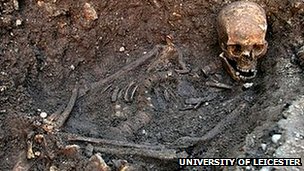
Richard III has been getting much-needed attention these past few days – his Bones, it seems, have been languishing beneath a parking lot …
About 22 years ago on a trip to Scotland with the Appalachian Mountain Club, we stayed in Beauly not far from Inverness in a Castle called Aigas (now the Aigas Field Centre), hosted by Sir John Lister-Kaye and his Lady Lucy. We spent our days studying the flora, fauna, and geology of the surrounding area, a glorious adventure, as you can imagine – but one of the most memorable parts of the trip was meeting another guest staying at the Castle – he was not part of our group, but came there every year to go birding, an elderly gentleman blessed with a brilliant mind and great charm – his one great obsession other than birds was Richard III, and from him I learned about the Richard III Society. He went off into spasms of ecstasy telling of his also annual treks to Bosworth where he could hear the “swish, swish” of the swords on the field where Richard was slain in 1485.
Illustration depicting the Battle of Bosworth Field, with King Richard III on the white horse.
Credit: The Print Collector/Heritage-Images – from Britannica.com
******************
The earliest surviving portrait of Richard III – from the RIII Society website
I came home with my own obsession with the long-dead Richard – read everything I could find on him, beginning with Josephine Tey’s The Daughter of Time, her tribute to Richard [she was a staunch member of the Society] and the clear statement of her belief in his innocence. Shakespeare had done the young King a dirty deed it seems, maligned forever in History as the murderer of the Princes in the Tower and various other souls including his Wife, and perpetrator of all manner of other nefarious politically-induced deeds…
I confess to having forgotten more than I ever actually knew about RIII, and now other than Shakespeare and Tey, he has largely fallen off my radar, or at least I no longer need to get into discussions with everyone I meet in a rabid defense of his innocence… but I am excited about his Bones being found and restored to a rightful burial place at Leicester Cathedral; this discovery shall certainly bring on a re-assessment of who he might really have been…
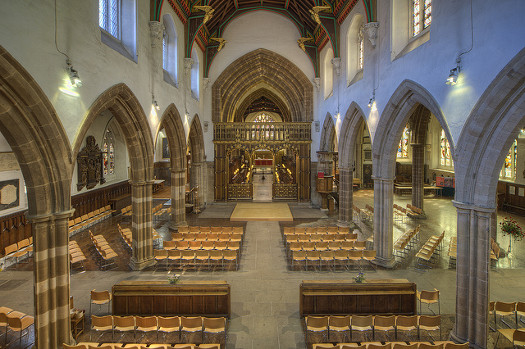
Leicester Cathedral – RutlandChurches.co.uk
Which brings us to Jane Austen:
Austen, as avid readers know, had an aversion to the name of “Richard”: let’s recall her first paragraph in Northanger Abbey, where she denigrates Catherine’s father so:
Her father was a clergyman, without being neglected, or poor, and a very respectable man, though his name was Richard …
And later in a 1796 letter to her sister, she remarks on Mr. Richard Harvey’s match being put off, “till he has got a better Christian name, of which he has great Hopes.” [Letters, p. 10]
And famously in Persuasion, and one of the nastiest comments in all her novels, on poor Dick Musgrove:
The real circumstances of this pathetic piece of family history were, that the Musgroves had had the ill fortune of a very troublesome, hopeless son, and the good fortune to lose him before he reached his twentieth year; that he had been sent to sea, because he was stupid and unmanageable on shore; that he had been very little cared for at any time by his family, though quite as much as he deserved; seldom heard of, and scarcely at all regretted, when the intelligence of his death abroad had worked its way to Uppercross, two years before.
He had, in fact, though his sisters were now doing all they could for him, by calling him “poor Richard,” been nothing better than a thick-headed, unfeeling, unprofitable Dick Musgrove, who had never done any thing to entitle himself to more than the abbreviation of his name, living or dead. [Persuasion v. I, ch. VI]
Ouch!
No one has ever satisfactorily explained this aversion of Austen’s to the name ‘Richard’ – one could certainly explain it as her disliking Richard III with such a passion that anyone named Richard should suffer her admonition; but here is what she says about Richard in her History of England, with such a contradictory tone, one does not quite know what she really thought [forever the illusive Jane] – but on the whole I think she believes him to be mistreated by History – perhaps she would have been a reigning member of the Richard III Society!
Cassandra’s portrait of Richard III
Richard the 3d
The Character of this Prince has been in general very severely treated by Historians, but as he was a York, I am rather inclined to suppose him a very respectable Man. It has indeed been confidently asserted that he killed his two Nephews & his Wife, but it has also been declared that he did not kill his two Nephews, which I am inclined to beleive true; & if this is the case, it may also be affirmed that he did not kill his Wife, for if Perkin Warbeck was really the Duke of York, why might not Lambert Simnel be the Widow of Richard. Whether innocent or guilty, he did not reign long in peace, for Henry Tudor E. of Richmond as great a villain as ever lived, made a great fuss about getting the Crown & having killed the King at the battle of Bosworth, he succeeded to it.
So what do you think? Should Richard III be exonerated of his dastardly deeds? Should we do as Jane did and be “rather inclined to suppose him a very respectable Man”? I will just say that may Richard at least from henceforth Rest in Peace…
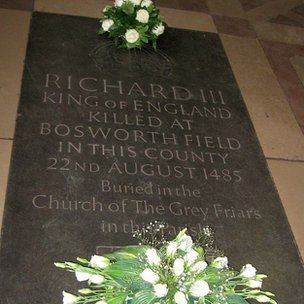
[Richard III Memorial in Leicester Cathedral]
And I must add this final image sent just this morning from a friend – only the English can get away with this sort of thing, but I laughed ‘til tears came… somehow I think Jane Austen would be laughing too…
This past week’s Downton Abbey had its usual witty remarks from all quarters, Violet yet again leading the pack. But my favorite by far came from Mrs. Patmore, as she says to Ethel:
“Anyone who has use of their limbs can make a salmon mousse.”
************
My mother-in-law always made salmon mousse – I cannot recall a single family gathering where it was not upon the table, eye and all – and to keep me from forgetting these family gatherings, I actually inherited her much-used salmon mousse mold – but alas! have not put it to any use, despite having all limbs in fairly good working order.
But recipes abound if you should want to try – and if Ethel could pull this off, it should be easy sailing:
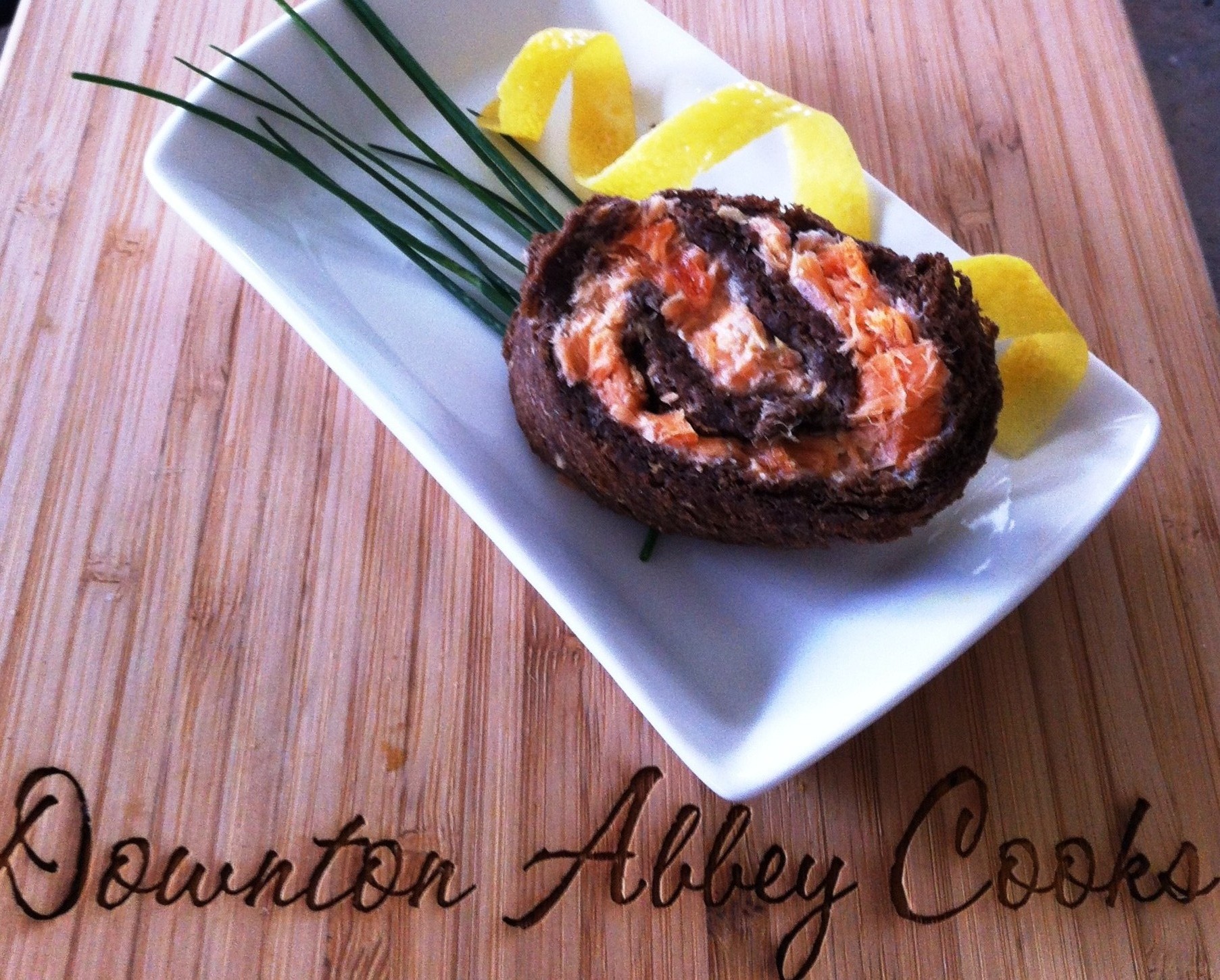
This is from the website Downton Abbey Cooks, worth a visit for the show’s food history and great recipes [there IS a great deal of cookikng and eating!], all from Pamela Foster, author of Abbey Cooks Entertain:
This sandwich adds a lovely punch of color to your tea tray, contrasting dark pumpernickel bread with deep orange smoked salmon. The Ritz London serves a similar version with whisky, but I like the fresh flavors of vodka and dill. You are only limited by your imagination.
Ingredients
1/3 cup non fat greek yoghurt
1 tbsp. minced chives
2 tbsp. whisky
4 ounces smoked salmon
1 1/2 tbsp. fresh lemon juice
For the Sandwiches
12 slices dark wheat or pumpernickel bread, crusts removed
2 ounces cold smoked salmon, cut into strips: you can also use hot smoked salmon as pictured above
Method
To make the mousse
Put the greek yoghurt, chives, vodka, salmon, lemon juice and pepper in a food processor and process for 20 to 30 seconds or until smooth. Cover and refrigerate for up to 2 days to let the flavours blend.
To make the sandwiches
Roll the bread slices flat with a rolling pin . Spread the salmon mousse on one side of each slice and arrange pieces of smoked salmon on top. Roll up and place seam side down on a serving plate. Cover with a damp tea towel or paper towels until ready to serve.
You can make larger pinwheels by cutting in half diagonally and stand on the flat edge. You can also cut into smaller bite sized 2 inch angled sections.
Makes 12 large or 24 mini pinwheels
**************
Here are links to other recipes, some made in the mold, some in bowls:
Perhaps Ethel’s praise-worthy attempts to be a cook who actually cooks something edible and Mrs. Patmore’s kindness in helping, despite the grousing of Mr. Carson, might indeed see “the return of the salmon mousse,” even in my house.
A big thank you to Julie at Austenonly for blogging about this. And do visit the link to Harrington’s other Austen materials – a treasure-trove for the Austen-collector…
Actually my first experience with P&P ever was watching last 5 minutes of episode 4 in mini series of 1995 when I was 13 or 14. Those 5 minutes intrigued me so much, that I watched all the remaining episodes and then went in search for the original. I remember reading it the same year during my summer vacation. I loved everything about the book, its plot and style, its heros and heroines, and since that time P&P has become the best love story for me: witty, humorous, illustrative of different human characters, satisfying and with wonderful happy end. After P&P I read other works by Jane Austen, and some of them I liked, some of them I liked very much, but P&P was and still remains the best for me.
Congratulations Oloore! – Please send me your contact information [full name, address, phone, email] as soon as you can and I will get the book off to you right away. So glad you went from the 1995 movie to the book and discovered even more of its treasures!
Again, many thanks to all who commented with their stories of first encountering Pride and Prejudice – an interesting study in itself, and illustrative of the power of this book that so many remember the joys of that first reading! I included all the comments on this post on the Pride and Prejudice anniversary posted on January 28th: you can read all the “first impressions of P&P” from members of JASNA-Vermont here.
And hearty thanks to Susannah Fullerton for joining us, and for writing the book! and to Voyageur Press for generously supplying the giveaway copy!



















 Jane Austen in Vermont