Books · Jane Austen · Movies · News

Better Late than Never

Long over due are many comments on VARIOUS Austen (or Austen-related) topics. I have been so lazy in completing my online thoughts on the Austen Symposium in Lennoxville, Quebec (March!), and when at lunch with Janeite MKay, and she asked about the play, I had the thought: Well, better late than NEVER! So thoughts on that, and the last talk will come — I promise!

A little closer in time are two JASNA meetings. Our own JASNA-Vermont chapter hosted HOPE GREENBERG in Montpelier on June 7th; and Montreal/Quebec City’s chapter hosted a ‘Donwell Abbey’ strawberry picking at Elaine Bander’s Montreal home.

Before I forget – since Donwell Abbey reminds me – David from Montpelier, who attended our meeting on the 7th (he is a JASNA member! Yeah, David!!), spoke about reading P.D. James. This brought up James’ JAS (Jane Austen Society; in Britain) lecture a decade-plus ago. I just happened to have a copy of that the year’s “Report” (as JAS’s journal is called). So in digging it out for David, I re-read it myself. She brings up some points (since she treats Emma as a detective novel) about ‘clues’ in the novel that is unique and thought-provoking. But for me the more startling ideas were thoughts fired by her comments on Mr Knightley! James painted a picture of an exceptionally strong man, one who not the namby-pamby many name him to be. Makes me want to pull the novel out again — and soon!

HopeGreenberg_orange-regencyHope’s illustrated lecture on Fashion was one of the most comprehensive I have ever had the priviledge to listen to. The amazing amount of pictures – drawn from paintings, clothing (who knew Burlington’s Fleming Museum had so much in their ‘attics’!!), period drawings, etc. – as well as the lovely gowns Hope had on display (including the one she wore!), all brought to our capacity audience, visually and virtually, the fashion in Austen’s era. Thank you, Hope.

One JASNA-Vermont couple, Jim and Carol, had this to say about the presentation: Sunday was delightful …We enjoyed the presentation, especially once the sound was turned up a bit [Hope was microphoned]. I thought the visuals were very effective and useful for someone who is not at all versed in the subtleties of Regency fashion. Indeed, I have been most impressed with the intellectual content and professionalism of all three presentation we have attended. We look forward to our next meeting!”

Thanks, Jim! Great to hear such words of encouragement.

David wrote succinctly: “Thank you for hosting such a nice event…It was the largest attendance I have yet seen at a lecture, although it was only my third.”

We do have a growing and attentive audience in the Montpelier region! ‘Thanks,’ to everyone who attended Sunday.

And David shared his opinion that to bring Austen elsewhere in the state would greatly increase our presence; he writes about having some thing in St. Johnsbury — someday.

For the Montreal JASNA meeting, I went in order to meet their guest speaker, Jan Fergus. Jan’s book on 18th century publishing in Britain utilized the 1730-40 ledger (held at the Bodleian) belonging to Robert Gosling — Mary Gosling’s great-grandfather (my diarist; see SmithandGosling.wordpress.com, my research blog). Jan decried the sloppiness of Norton’s recent Austen publications; she ‘would proof them for free’, she exclaimed, as she showed the handwritten notes in the rear cover of her copy. Her lecture was a preview of her AGM lecture – on Brothers and Sisters in Austen’s novels, of course (Jan centered Sunday’s talk on Jane and Elizabeth Bennet).

The food was plentiful – and the strawberries sweet and delicious! Elaine has a lovely home, and I’m sure everyone was grateful for the invitation to visit her perfumed garden (peonies!). The weather held off just enough to make the day quite pleasant.

Two of the Montreal members are off to England, Elaine Bander herself; and Peter Sabor gives a paper at the Chawton Conference. Someday I hope it’s me that is able to hop a plane and have people anticipate some talk I’m about to give…

Which reminds me again, and I will close with this thought, of my lunch with MKay. We got to discussing – what else! – P&P films (1980, 1995 and 2005), as well as Lost in Austen. And that brought around a discussion of Darcy and Mr Collins. Between this lunch and Jan Fergus’s talk, I am convinced more than ever that 1995 (and, by extension, the Lost in Austen series) got poor Mr Collins ‘wrong’; that Charlotte was never a martyr to her marriage (a match made in heaven? perhaps not; but NOT a match made in hell either…); and that there is more to the Darcy-Collins pairing than people are willing to admit (MY paper proposal for Chawton; not accepted, of course.)

Time’s a tickin’ and Sunday morning’s winding down; so I will get off my soap box and get back to my book – a fascinating look at Virigina Woolf’s servants: Mrs Woolf and the Servants, by Alison Light. A ‘souvenir’ from my Montreal trip…

Still haven’t heard if my registration for the AGM puts me in among the 550 members going to Philadelphia… I see the numbers, as of 6/19, now stand at 503.

And JASNA’s website announces the inclusion of Persuasions vol. 3 – published in 1981. We must applaud JASNA’s dedication (and those who put these journals online for all) in making these invaluable resources available, and for free!
Fashion & Costume · Jane Austen · JASNA-Vermont events

7 June 2009: Austen & Fashion


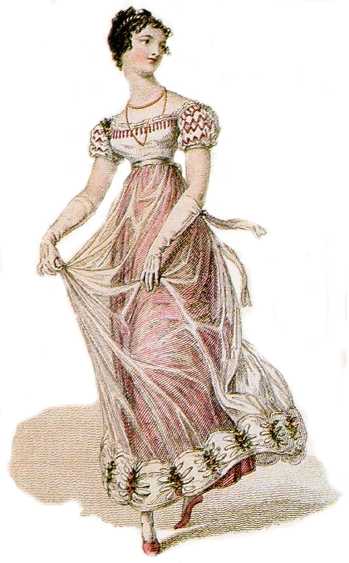
HopeGreenberg_orange-regencyJoin us in Montpelier this coming Sunday, 7 June 2009, 2 p.m., for what promises to be a fascinating discussion of Austen, fashion, and the Regency era (see our events page).

Our guest speaker, Hope Greenberg (pictured at left, in costume!), entices with the following description:

“We will have two halves, with a break in between. The first half discusses Austen’s use of clothing in the novels (who talks about clothing; how it reflects or delineates the character, etc.), and also Austen’s own comments, as mentioned in her letters. This is followed by an overview of clothing and Regency ‘style.’

A break for refreshments [kindly contributed by our Vermont Chapter members!] will give the audience time to look at the costumes on display. [We also hope some audience members will be coming IN COSTUME… But that we shall see!]

The second half covers ‘seeing’ historic clothing: How do paintings, fashion plates, or extant garments help (or hinder) us from figuring out what the clothing actually was like, how it changed, how to recognize different time periods.”

Plenty of time for questions and audience interaction. So MARK YOUR CALENDARS (if you haven’t already). See you at Vermont College of Fine Arts on the 7th!

P.S. – check out the fabulous AUSTEN-related books on our merchandise page: we’ll be having a “boutique” at the talk! All proceeds benefit JASNA-Vermont and our effort to bring free and open to the public events centering on All Things Austen.

fashion plate dancing

*****************************

Please also make note that the Burlington Country Dancers are hosting their annual Across the Lake Event this weekend as well:  see their website for more information, reservations and admission costs at www.peter.burrage.net/dance

Location: the Elley-Long Music Center,223 Ethan Allen Ave., Colchester, VT

Friday June 5, 2009
8pm to 11pm – Casual Dress –    Welcome Dance for All
    with Gene Murrow & Bare Necessities

Saturday June 6, 2009
1:30pm to 4:30pm – Casual Dress (Choose big or small hall when you arrive)
    BIG HALL ~  Gene’s Dance Workshop for Experienced Dancers
    with Gene Murrow & Bare Necessities
        
    SMALL HALL ~  Review Session for All
    with Orly Krasner & Impropriety’s Laura Markowitz

Sunday, June 7, 2009 [Location: at the Jericho Community Center]
    Brunch 9:30am to 11:30am ~ Informal dancing 11:30am to 12:30pm
    with Wendy Gilchrist & Fine Companions (Lee & Julian Shepherd, Charlene  Thomson, Cheryl Spiese)

country dance pic

****************************************

Hope you can join us for any and all events!

Movies

Lost in Austen – the (US?) DVD

Bowing to much publicity – even Persuasions had a rave ‘review’ of the series (why does a peer-reviewed journal run what amounts to an advert?) – I Netflixed LOST IN AUSTEN. Spoilers may come up, so tread carefully as you wade ahead; but I cannot give the end away, as I’ve not seen it yet!

Behind the scenes: readers might appreciate this link to the ITV website for the series.

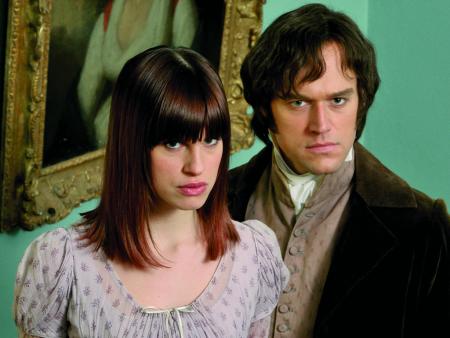
lostWatching the DVD last night – and under the *impression* that a multi-part TV show, it would be multi-episodes on DVD – I was of two minds about whether to post something today, or nothing. Dare I say, I am underwhelmed?? But that is why I decided indeed TO POST something about LiA.

A little backstory: My Netflix account had been on hold a couple of months, but was due to restart at the end of May. I almost put it on ‘vacation’ another couple of months, but decided to put Lost in Austen in my queue and let its hiatus expire. Why? Because I had YouTubed the show and its beginning charmed me. Poor Amanda Price (very Mansfield Park-ish name), with that dolt of a boyfriend! And then she finds Lizzy Bennet in her bathtub, assuming her named ‘Miss Spencer’ because Amanda’s undies were Marks & Sparks’ finest! I love anything British, anyway, and actress Jemima Rooper was calling to me to watch. So I rented it.

The surprises: According to IMDB (The Internet Movie Database – a must website for films!), LiA was a four-part UK series, comprised of 60-minute (with commercials, of course) episodes. The DVD lists the running time as 2 hours 57 minutes. Fair enough one might say, BUT: How is it Laurie Kaplan can write of Amanda’s rendition of the Pet Clark hit Downtown and all DVD’ers get is Bingley saying, ‘Brava, Miss Price! And whenever life is gettin’ me down, I shall be sure to go downtown.’ Amanda is asked to sing, has sung, but never actually SINGS! So that leads to the damning questions I cannot answer: WHAT ELSE HAS BEEN CUT? And: ARE THESE CUTS ONLY DONE TO THE U.S. DVD?

Grrr….

There is talk of the family pig — an in-joke for those who’ve seen the Joe Wright (2005) film; but you never SEE the pig: I have a feeling she, too, ended up on the ‘cutting room floor’. (She made the opening credits!)

lost2Therefore, I have to wonder: does this choppy version account for my lukewarm reception?? It’s amusing — highly; yet, somewhat one-note. How many times do we we need Amanda saying ‘No! the book doesn’t go this way,’ as she does her best Emma Woodhouse impression, and tries to get couples to line up ‘properly’?

Of course one half of the prime couple is missing: Elizabeth Bennet, who instigated this ‘exchange’ (Amanda in 19th Century Meryton; Lizzy in 21st Century Hammersmith), is obviously enjoying herself and not willing to come home! The only thing seen of her is a note slipping itself under the communicating door — addressed to her father. (Amanda had been beating on the door, oh on a good three different occasions, by the time this ‘small’ communication comes about…) How many times, also then, do we need Amanda trying to raise Lizzy from the ‘other side’?

Maybe with four episodes the ‘sameness’ wasn’t quite as noticeable?

Anyway, I kept waiting for episode one to end, when I finally stopped the disk and looked at the menu for accessing the film: all one ‘seamless’ episode here… Usually you can guess — by the crescendo of action or a cliff-hanger — where an episode ends. The lack of such a thing might account for the flatness I am experiencing here.

My favorite scene so far? When Amanda grabs Bingley (already enamored with her) and plants a kiss smack on the lips! The doe-eyes of actor Tom Mison play well in this ‘sweet’ role. He looks like someone who would carry a crush. But two things about that turn of events: (1) EVERY male falls for Amanda (Bingley, Darcy, Wickham, Collins); and (2) Amanda rails at the thought of the plot of P&P NOT following its destined route, yet does she ever say to herself ‘My very presence is what is upsetting the plotline…’?? The first is just a tired old ploy; and the second would make for more entertaining entertainment than the constant moaning about characters acting out of character!

That brings me to a point I thought of this afternoon, at lunch. Not having read the book upon which the series is based, I cannot comment as to what was or wasn’t changed for the screen, but how wonderful to have had Lizzy SHOWING Amanda around?! Amanda confesses, early on, that it isn’t Darcy she loves, it’s Elizabeth. So who wouldn’t love to hang out with your favorite character and learn all the ropes from her??

The series misses the mark when Amanda causes consternation when her arrival finds her dressed in ‘breaches’, yet no one is REALLY that bothered by her costume! And she never has anything but the perfect hair she arrived with, despite putting on some 19th century dresses. Surely, Amanda should have gone ‘whole hog’ in adapting to her new place. She could have been Eliza Doolittle, and slipped back into her old persona once in a while, had she adopted any new persona to begin with. And it would have been great fun to have Jane (who gets ‘flashed’ early on in their acquaintance) remark on Amanda’s queer underthings; or lack of them, perhaps, since Bingley clearly gets an eye-full when Amanda curtseys on meeting him. Yet the Bennets (sans Mamma) are ‘charmed’ by her unusual qualities and queer manners of speech, rather than puzzled by them (as surely anyone in ‘real’ life would be).

And that could have led to a natural sequel, with Amanda, in turn, hosting Lizzy in Hammersmith! (A bit of Time After Time, with H.G. Wells in 20th Century LA, though, huh?) I have a feeling that series could not have ended the way this show probably ends…

Nice to see Perdita Weeks; she looks so much like her sister! Poor Hugh Bonneville just moans about wanting to read – an action I can well understand, but the part must have (so far!) somewhat bored him as an actor. I like that Mrs Bennet (Alex Kingston) doesn’t grate on the nerves as some shrill Mrs Bennets do, but I’m on the fence about her seeming ‘of the period’. Loved it when she tells Amanda to ‘back off’ — for Mamma Bennet realizes before anyone else that Amanda is stealing the thunder from the Bennet girls! Mr Collins (Guy Henry) is so odious and Charlotte Lucas (Michelle Duncan) so non-existant, that even I cringe at the thought of them marrying (should Amanda manage to get the storyline straightened out…).

[BTW, I am QUITE convinced that people misjudge Mr Collins — and base their thoughts of him on the 1995 P&P; and am always on the lookout for contemporary to Austen thoughts on this character — post to the blog, or email me, should you come across any such things!]

I had to laugh — but for a totally different reason than intended — when Amanda pulls from her bosom area a packet of paracetamol tablets. Now why on earth would she just happen to keep aspirin — and in her bra??? She also evidently has been known to secret her ‘lippie’ there too. Is her bra ‘bottomless,’ like Mary Poppins’ carpet bag!??

LiA reminds me, in retrospect, of The Devil Wore Prada; a pleasant film – but would have been much better (in my humble opinion) if it had been EXCEPTIONALLY hilarious, or QUITE serious in its treatment. The region of ‘cutesy’ just doesn’t cut it. Therefore: I expected more…, wanted more, and was left wanting more.

So, while I’m wondering about the trimming question [see PSs below], and waiting a day or two to finish the show, I’d appreciate thoughts on the series from anyone who’s seen it, wants to see, or wants never to see it. Ditto for those who’ve read the book. In the meantime, you can also read Kate from Norfolk’s reactions to the series when it ran on TV in the UK.

A couple PSs: while the US Amazon.com has it running 180 minutes, the UK Amazon says their DVD is 178 minutes. Hmmm…
And, according to the TRIVIA at IMDB, the pig was scheduled to appear – but hoof and mouth caused her film debut to be cancelled.
Here’s the ‘missing’ Downtown on YouTube. Surely an ‘Austen fan’ would have put a Marianne Dashwood spin on her rendition of this 1960s song, rather than singing its melody straight and in tempo?? And WHY would the producers (or whomever) THINK that 20-somethings would even know the song? so why bother leave in Bingley’s line??

JASNA-Vermont events

A Plea to VERIZON users

Now is the time for our flyers regarding our next JASNA meeting to be sent — and poor Verizon users, already abused during the Fair Point ‘take-over’ are not going to get them!

Therefore, if you are interested in JASNA-Vermont’s events, were a Verizon customer and have a new email: contact us! In the meantime, download our flyer — which can be found on the EVENTS page of our blog.

Uncategorized

Thoughts on P&P’s “White Soup”

From Judith:

The JASNA newsletter which I receive yesterday (April 21) mentioned that the Vermont chapter is interested in Nicholls’ “White soup.” There are several recipes available on line for this concoction, which is so called because no dark meat (that is beef or mutton) are used in making it, but only veal and or chicken. It is a very rich soup with anchovies, cream, egg and ground almonds added, as well as herbs and onion.

However, soup spoils readily, and it is possible that Nicholls was making a white portable soup, which is described at length in The Frugal Colonial Housewife. One takes a leg of veal, a LOT of chicken and a LOT of water and cooks it all down to a jelly, strains and boils down some more, until one winds up with what amounts to dry bouillon cubes, which, according to the cookbook, you can carry in your pocket. These could be reconstuted when wanted, and the fancier ingredients mentioned above added.

Incidentally–Nicholls is Mr Bingley’s cook, not his housekeeper. In a household of that level of wealth, there would be both, as indeed Mr Bennet’s also has, although we do not know the name of his cook. The Bennet’s housekeeper is Mrs Hill.

Those who do not receive JASNA News will need a bit of a filling-in: At the Pride & Prejudice Weekend held end-January/beg-February, our hostess Suzanne Boden (owner of The Governor’s House in Hyde Park, a B&B) had a quiz based on the novel. I am hopeless at such quizzes; as I’ve said before, I do not read Austen in order to retain minutae.

One question had to do with Who ‘Nicholls’ was–we’ll come back to that point in a moment–this person shows up twice in the novel, once just as a last name, and once designated “Mrs Nicholls” (or could they be two people?). Anyway, after reading the comment about ‘white soup enough’ – a requirement for Bingley to begin sending out invitations to the Netherfield ball, we did two things: looked up a recipe for ‘white soup’ and wondered among ourselves WHY the dance would depend so heavily upon this. Suzanne, as an excellent cook, of course could come up with a book that included a recipe for ‘white soup’ — but not being a cook, I didn’t read it thoroughly, much less retain it! So what Judith tells us is of great interest! Especially about the ‘portable’ soup!! Who knew?!

For Nicholls’ place in the household, I believe I deferred to Chapman (I had had the book with me that w/e); so will have to look further into the matter (Would Bingley allude to her merely as ‘Nicholls’ or would she always receive the title-treatment, Mrs Nicholls? Is Nicholls male, and has a wife who does the shopping??)

The relevant passages: in the 1918 edition online at Google, p. 56: “‘If you mean Darcy,’ cried her brother, ‘he may go to bed, if he chooses, before it begins–but as for the ball, it is quite a settled thing; and as soon as Nicholls has made white soup enough, I shall send round my cards.’

The second mention of Nicholls, in VOL II of the first edition, p. 193: “‘You may depend on it,’ replied the other, “for Mrs. Nicholls was in Meryton last night; I saw her passing by, and went out myself on purpose to know the truth of it; and she told me that it was certain true. He comes down on Thursday at the latest, very likely on Wednesday. She was going to the butcher’s, she told me, on purpose toorder in some more meat on Wednesday, and she has got three couple of ducks, just fit to be killed.'”

Therefore, my BIG question was WHY: Why would the invitations (if that is what his “cards” allude to) depend upon Nicholls making ‘white soup enough’?? Was this a staple at a dance? did you nourish your visitors before sending them on their way at 2 or 4 a.m.? Was the staff, or townsfolk given this as a ‘thank you’ treat kind of thing?? It’s such a little sentence, but (as often in Austen) the author was pointing out something that was a ‘norm’ then — and just isn’t thought about (maybe known much about) now.

So thank you for your insights, Judith. I’m sure readers will have more to add regarding both white soup and the position of Nicholls within the Bingley household. And if anyone knows the ‘why’, as well, do write in!

Books · Jane Austen · News · Rare Books · Regency England · Social Life & Customs

Hot off the Press!

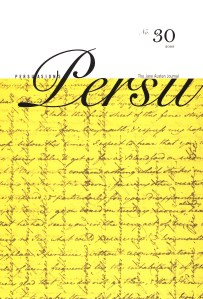
persuasions-cover30Yesterday, a FedEx box left on my stoop prior to lunch yielded up a BIG surprise: my contributor’s copies of JASNA’s annual journal PERSUASIONS, vol. 30 (2008). A brief email to Susan Allen Ford, the journal editor, to congratulate her on an ‘awesome’ volume, was answered by an email which said she hadn’t received her copies yet! Vermont’s good fortune (and mine) to be located next door to New Hampshire — from where the packages seem to have originated…
The first article I read was Edith Lank‘s telling of her annotated Brabourne edition of Austen letters. One curious thing: how could the books languish EIGHT years on her shelves, unopened?! A used book never passes my threshold without a thorough perusal! There is more on Miss Lank’s edition in Persuasions-Online.

Joan Klingel Ray offers up an interesting look at Victorian era perceptions of Austen, though I must comment that to Edward — a nephew who was in his late teens when his aunt died — Jane would surely have remained, over the 50 ensuing years, his “dear Aunt Jane”. Joan and I take differently, I think, to James-Edward Austen-Leigh’s Memoir of Jane Austen. Joan knows the descendents; but I’ve come to know Edward and Emma through their own words! So: a discussion to look forward to when Joan Klingel Ray visits Vermont in September (see our EVENTS page).

I would be telling a lie if I didn’t confess that the very first article I checked out was my own… Oh, the pictures look lovely! (They come via the collection of The British Museum.) I had been so worried after seeing the proofs. Susan Allen Ford has been very positive in her reaction (the anonymous reader, too) to this article, in which I examine an Emma Austen 1833 trip to Derbyshire in the steps of Elizabeth Bennet. The article was only improved by their wishes for a lengthier piece and some illustrations.

The Chicago AGM’s theme of Austen’s legacy brings up many fascinating ideas: Jocelyn Harris invokes Dr. Johnson; Deb will surely be interested in turning straightaway to Janine Barchas‘ article on Gaskell’s North & South (Deb highly recommends the new TV series, which she’s been watching) — but what will she think of the author’s assumption that it is a veiled recreation of P&P??? Sarah Parry‘s article on “The Pemberley Effect: Austen’s Legacy to the Historic House Industry” is surely next on my list.

A special ‘legacy’: the writing desk that once belonged to Austen, has been in the family, and now has been donated to The British Library. Freydis Welland‘s personal take on this piece of history opens the always pleasurable MISCELLANY section of Persuasions. Although I’ve not seen Lost in Austen, Laurie Kaplan‘s article which closes the journal has the oh-so-tempting title “‘Completely without Sense’: Lost in Austen“.

More comments than this — teasing tantalizers or tantalizing teasers, since the journal (according to the JASNA website) is schedule to mail out on May 1st — will have to wait. The one thing that keeps me from delving deep into my copy is an article I’m working on, and I must get back to work.

Austen Literary History & Criticism · Jane Austen

Bishop’s PRIDE, part II

Prof. Robert Morrison
Queen’s University, Kingston
“Getting Around Pride & Prejudice: Gothicism, Fairy Tales & the Very World of All Us”.

In a thought-provoking premise, Dr. Morrison equated the “Gothic” literary tradition with a fear of spinsterhood and the deeper fear of its relation, poverty.

Citing sources such as Byron and Wollstonecraft, his ideas contained such laden words as humility, compassion, love, humiliation, terror, anguish, in short: firm Gothic Territory. Neoclassical in form and structure, with fairytale endings of “happily ever after,” Austen’s writings are often paired with Shelley’s in Dr. Morrison’s classes. Pretty women, estates, happy marriages. ” ‘What calm lives those people had,’ said Churchill of Austen’s characters.” But Austen’s major achievement, hidden perhaps, are the shortage of men, passing mentions of prize money and economic crises: “Politics seems to shape the novel at every turn”. Austen cannot continue to suppress or ignore the ‘individual’. Citing Howells, we could all agree that Elizabeth – a gentleman’s daughter – was more a ‘lady’ than even Lady Catherine de Bourgh. Elizabeth’s triumph over Lady Catherine can be taken as a triumph of humanity over rank.

The linchpin is realism, Dr Morrison concluded, but her novels touch on the fears (the Gothic).

Some points and arguments that Dr Morrison advanced which caught my particular attention:

Citing Martin Amis, he commented on Austen’s thoughts and rhythms invading his own thoughts and rhythms. I would heartily agree; it makes such a difference in my quality of writing (even speech), when I read the phrases of a powerful author as opposed to a pedestrian hack.

He brought up the reactions of such readers as Annabelle Milbank and Henry Crabbe Robinson. These are precious, as they are reactions to the novels, from people living during Austen’s lifetime, and wholly untainted by memories of films and teleplays. HCR even called Mr Collins ‘a masterpiece’! My thoughts exactly (which made a later comment [see below] hard to fathom).

Dr Morrison made a joke of Catherine Morland’s name; citing that everyone in the novels wants ‘more land’. He promoted the idea of a woman being “her father’s burden; her husband’s property”. But the comment of Charlotte Lucas committing “respectable prostitution” – well, that seemed out of place. Actually, it left me shaking my head – ‘No!’ When Dr Morrison said that his ‘skin crawled’ at the idea of the Collinses’ marriage, that sounded more ‘colored by film depictions of Mr Collins’ than genuine thoughts about the plight of both characters: one in want of a good wife; the other in want of a good home.

In equating the Gothic, there was this thought-provoking idea behind Darcy’s comment on Elizabeth’s looks: Darcy doesn’t want to dance (doesn’t even wish to be at the dance); and all people talk about is his money! Darcy’s “tolerable” evaluation of Elizabeth “haunts her – raises the specter of spinsterhood”. Her greatest asset (no dowry) is her looks. Excellent way of digging deeper into this much-quoted comment by Darcy.

Elizabeth is wrong about Charlotte, willing to be wrong about Wickham, and wrong about Darcy. Darcy’s letter helps her see herself more clearly. The implacable resentment Elizabeth attributes to Darcy, she feels herself.

One unanswered – until that evening – observation: when Dr Morrison spoke of Austen’s use of words and cited her deliberate use of “a month” in Elizabeth’s rejection of Darcy. Dr. Morrison’s thoughts centered on Lizzy’s inability to forgive the slight Darcy had inflicted. But as the question period opened and this was addressed (with more than one person saying ‘I never really noticed’) it became apparent that Austen meant more by this specific period of time: not an hour, not a day – but “I had not known you a month”. The Play that evening answered this hitherto unanswered observation – and it is in the novel: When Mr Wickham is ‘confessing’ his life story to Elizabeth, he asks her how long Darcy has stayed with Bingley. The magic answer: “About a month.” Obviously Austen wanted readers to conclude, in the proposal scene, that  Lizzy’s enmity against Darcy survived the slight to her ‘tolerable’ looks, but surfaced to the fore from the point at which she ‘knows’ Darcy to have harmed the prospects of Mr Wickham!

An audience member then brought up this acute observation: Miss de Bourgh, in being sickly, is quite Gothic and can be seen as the symbol of “the dead end,” the dying system that once was predicated upon blood (again the idea of rank versus the humanity of Elizabeth). And on that thought, which touched on the truly Gothic – the vampire tales, we broke for beverages, cookies and oranges. There will be more to say on this subject when the Play is discussed; for the actress portraying Miss de Bourgh gave the role something never seen before.

Jane Austen · Literature · News

Previewing Persuasions

JASNA has posted a link to the table of contents for volume 30 (2008) of the Jane Austen Society of North America’s journal Persuasions. This annual is a peer-reviewed journal, featuring both articles based on papers presented at the October AGMs (Annual General Meeting; in 2008 it took placed in Chicago) and ‘miscellany’ — which includes my own article on the 1833 Austen-Smith journey to Derbyshire: they travelled pretty much in the shoes of Elizabeth Bennet! Watch the JASNA website, for I have been told the article might be posted on their “maps” page (a very interesting and quite useful resource, now augmented with related articles on places and travel pulled from the Persuasions archive).

Austen Literary History & Criticism · Jane Austen · News · Schedule of Events · Uncategorized

Bishop’s PRIDE

Two Saturdays ago (March 14th, to be exact) I ventured up to Bishop’s University (Lennoxville, Quebec) for a Pride & Prejudice Weekend – a symposium, thanks to English department professor Claire Grogan; a delicious ‘Jane Austen’s Cream Tea’ at Uplands; a Pride & Prejudice play, adapted by drama professor George Rideout; and an Austen-era Sunday Service in the university’s beautiful chapel. Sure the footlights have dimmed, the curtain has dropped, and the weekend’s events have faded into memory – but readers should know what they missed; and why they should keep an eye out for a production of this well-thought-out new play.

Saturday afternoon’s symposium featured three speakers; a full-hall (a good 70 people) had gathered to hear them.

Prof. Peter Sabor
McGill University, Montreal
“Portraying Jane Austen: How Anonymous became a Celebrity”. 
senseandsensibilitytitlepage

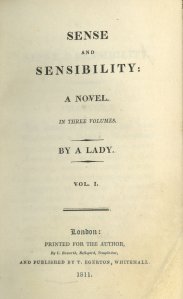
Illustrated by images, Dr. Sabor brought the audience along Austen’s circuitous route to celebrity – beginning with the original “BY A LADY” title page of Sense and Sensibility and showing near the end a publicity photo that made everyone chuckle: Jane Austen Hollywood-ized, complete with cell phone (the giant, 1980s version), conducting business while lounging on a poolside chaise.

In between these humble beginnings and the 20th-century hype lay a lot of Austen territory to be explored. Austen, of course, sold the copyright to Pride & Prejudice – her most popular novel – for ₤110. In 1813, the three volumes sold for 18 shilling (“about $2 Canadian today”).

Austen’s name has been located on a few subscription lists (Burney’s Camilla; the 1808 sermons of the Rev. Thomas Jefferson). Dr. Sabor explained that it was costly to purchase books by subscription. Such lists, however, can be invaluable to the researcher (I have located many Goslings and Smiths on subscription lists; it gives a thrill to realize they knew the author or valued the work enough to purchase a copy – or more than one – before the presses rolled).

The anonymous review (in reality Walter Scott) of Emma highlights Austen’s soon-acknowledged authorship a few years later: Although the title page of Northanger Abbey cited “By the author of ‘Pride and Prejudice,’ ‘Mansfield Park,’ &c,” the first volume included brother Henry’s biographical notice – thereby naming in print for the first time exactly who authored all six of these novels. [See also Henry’s updated version in the Bentley edition (1833) of S&S.] Beginning in 1818, we see reviews that mention Austen by name. (In an aside: Emma Smith, the future Mrs James-Edward Austen, was in 1817 already citing her as the author, specifically, of Mansfield Park; though Emma spelled the last name, as many did and often still do, Austin.)

A French translation of Austen’s last completed novel – published under the title La famille Elliot – becomes the first book in which Austen’s name appears as author on a title page. The year is 1821. [For information on the translator, see Ellen Moody.]

When discussion of the known and purported Austen portraits began, the audience was given a truly informative lesson on the pitfalls, as well as hopes and shattered dreams, of claimants to “authentic Janes”. Even the 1804 sketch: Is it a depiction of Jane by her sister Cassandra?? Anna Lefroy (half-sister to James-Edward Austen) inherited it, and to this day it resides within the family. (It was first presented by Chapman in his volume of Letters.)

The illustrations of Austen grow more wild as the publicity picks up – paper dolls, figures made for ‘action,’ plush and bobble-headed dolls, even an Austen Powers ‘superhero’. From recreations to fantasy depictions, Austen’s ‘anonymity’ has certainly turned a complete 360-degrees.

ADDENDUM: for an observation on the so-called ‘wedding ring portrait’ of Jane Austen (which Dr. Sabor called “bizarre”, see SEPARATED AT BIRTH?)

*

next: Prof. Robert Morrison (Queen’s), “Getting Around Pride & Prejudice: Gothicism, Fairy Tales & the Very World of All Us”

Waiting in the Wings: read insights into the character of Miss Bingley by actress Stephanie Izsak.

News · Schedule of Events

Boston and Austen

Boston in the Austen Era: A Lady and a Maid. This special “Women’s History Month” presentation takes place at Waltham’s elegant Federal period Gore Mansion at 7:00 p.m. on Friday 27 March 2009. This Chautauqua performance feature “fact-based, first-person” costumed-interpreters who focus on life stories — in this case the life stories of two women Catherine Codman (played by Diann Ralph Strausberg, a founder of The Storied Past) and Mary Stone (played by Camille Arbogast). Guitarist Chris Renna entertains with period music during the interlude. Mrs Codman, widow of a wealthy Boston merchant, tells of her life among Boston’s elite — including visits to London and the English countryside. She’ll share a scandal or two to rival any in Austen’s fiction! Mary Stone, a servant who immigrated from England, gives her persepctive on what goes on “behind the scenes” in these “fine” households. $8 in advance/$10 at the door; for tickets call (781) 894-2798.