Austen Literary History & Criticism · Jane Austen · Literature

Andrew Lang’s ‘Letter to [a dead] Jane Austen’

Andrew Lang’s Letters to Dead Authors  [NY:  Scribner’s, 1889, c1886] is one of my favorite little books [because I like and collect little books, love Andrew Lang, as in Fairy Book fame, and love the title – my book is a very dark green with gilt lettering, has a Greek myth book-plate and a few notes from a previous owner penned in a beautiful calligraphic hand].

Lang (1844-1912) was one of the most prolific and versatile writers of his day – a poet, essayist, reviewer, biographer, bibliographer, historian, translator, editor, and anthropologist [1] – known mostly today for his Homeric scholarship, and his series of lovely Fairy Books [the first in 1889 was The Blue Fairy Book, followed by eleven others[2] which did much to revive interest in fairy tales.

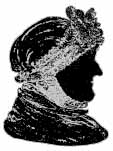
[Andrew Lang, 1855 portrait by Sir William Blake Richmond,
Scottish National Gallery, from adelaide.edu]

 But I bought this book many years ago because of chapter VIII, “To Jane Austen”, though the other essays are certainly deserving of a read: 

Contents:  Preface

  1. To W. M. Thackeray
  2. To Charles Dickens
  3. To Pierre De Ronsard
  4. To Herodotus
  5. To Mr. Alexander Pope
  6. To Lucian of Samosata
  7. To Maitre Francoys Rabelais
  8. To Jane Austen
  9. To Master Isaak Walton
  10. To M. Chapelain
  11. To Sir John Manndeville
  12. To Alexandre Dumas
  13. To Theocritus
  14. To Edgar Allan Poe
  15. To Sir Walter Scott, Bart.
  16. To Eusebius of Caesarea
  17. To Percy Bysshe Shelley
  18. To Monsieur De Molie’re, Valet De Chambre du Roi
  19. To Robert Burns
  20. To Lord Byron 
  21. To Omar Khayya’m
  22. To Q. Horatius Flaccus

*********************************
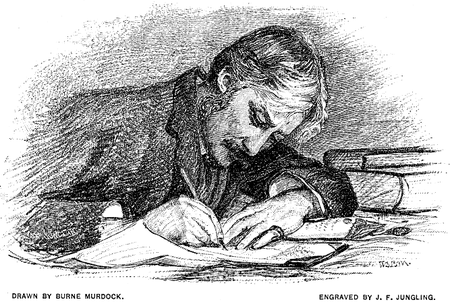
[‘Lang at Work’ from Wikisource]

You will note, of course, that Austen is the only female in the group and thus shows her status among the literary elite in 1886, the essay first appearing in the St. James Gazette.  Lang remarks in his preface the “it is, perhaps, superfluous to add that some of the Letters are written to suit the Correspondent than to express the writer’s own taste or opinions.” [p. vi].  I append here the full text, as it is available in numerous online versions.  Lang offers a humorous critique of Austen’s critics, as Brian Southam suggests, Lang’s own comments voicing those of Anne Thackeray and reiterating the ”cloying tradition” of Austen criticism.[3]  So whatever Lang’s intent, I think his words still stand today to those who think that “nothing happens in Austen” – his thoughts on Lydia or Kitty as heroines is one of the many chuckles in these few short paragraphs – 

With Lydia for a heroine you might have gone far; and, had you
devoted three volumes, and the chief of your time, to the passions of Kitty, you might have held your own, even now, in the circulating library. How Lyddy, perched on a corner of the roof, first beheld her Wickham; how, on her challenge, he climbed up by a ladder to her side; how they kissed, caressed, swung on gates together, met at odd seasons, in strange places, and finally eloped: all this might have been put in the mouth of a jealous elder sister, say Elizabeth, and you would not have been less popular than several favourites of our time.  [p. 79]

 **********************

So, read this, it is not that long, and comment if you will, please!

 VIII.  To Jane Austen

Madame,–If to the enjoyments of your present state be lacking a view of the
minor infirmities or foibles of men, I cannot but think (were the thought
permitted) that your pleasures are yet incomplete. Moreover, it is certain
that a woman of parts who has once meddled with literature will never wholly lose her love for the discussion of that delicious topic, nor cease to relish what (in the cant of our new age) is styled ‘literary shop.’ For these reasons I attempt to convey to you some inkling of the present state of that agreeable art which you, madam, raised to its highest pitch of perfection.

As to your own works (immortal, as I believe), I have but little that is
wholly cheering to tell one who, among women of letters, was almost alone in her freedom from a lettered vanity. You are not a very popular author: your volumes are not found in gaudy covers on every bookstall; or, if found, are not perused with avidity by the Emmas and Catherines of our generation. ‘Tis not long since a blow was dealt (in the estimation of the unreasoning) at your character as an author by the publication of your familiar letters. The editor of these epistles, unfortunately, did not always take your witticisms, and he added others which were too unmistakably his own. While the injudicious were disap-pointed by the absence of your exquisite style and humour, the wiser sort were the more convinced of your wisdom. In your letters (knowing your correspondents) you gave but the small personal talk of the hour, for them sufficient; for your books you reserved matter and expression which are imperishable. Your admirers, if not very numerous, include all persons of taste, who, in your favour, are apt somewhat to abate the rule, or shake off the habit, which commonly confines them to but temperate laudation.

‘T is the fault of all art to seem antiquated and faded in the eyes of the
succeeding generation. The manners of your age were not the manners of to-day, and young gentlemen and ladies who think Scott ‘slow,’ think Miss Austen ‘prim’ and ‘dreary.’ Yet, even could you return among us, I scarcely believe that, speaking the language of the hour, as you might, and versed in its habits, you would win the general admiration. For how tame, madam, are your characters, especially your favourite heroines! how limited the life which you knew and described! how narrow the range of your incidents! how correct your grammar!

As heroines, for example, you chose ladies like Emma, and Elizabeth, and
Catherine: women remarkable neither for the brilliance nor for the degradation of their birth; women wrapped up in their own and the parish’s concerns, ignorant of evil, as it seems, and unacquainted with vain yearnings and interesting doubts. Who can engage his fancy with their match-makings and the conduct of their affections, when so many daring and dazzling heroines approach and solicit his regard?

Here are princesses dressed in white velvet stamped witla golden fleurs-de-lys –ladies with hearts of icc and lips of fire, who count their roubles by the
million, their lovers by the score, and even their husbands, very often, in
figures of some arithmetical importance. With these are the immaculate
daughters of itinerant italian musicians, maids whose souls are unsoiled
amidst the contaminations of our streets, and whose acquaintance with the art of Phidias and Praxiteles, of Daedalus and Scopas, is the more admirable,
because entirely derived from loving study of the inexpensive collections
vended by the plaster-of-Paris man round the corner. When such heroines are wooed by the nephews of Dukes, where are your Emmas and Elizabeths? Your volumes neither excite nor satisfy the curiosities provoked by that modern and scientific fiction, which is greatly admired, I learn, in the United States, as well as in France and at home.

You erred, it cannot be denied, with your eyes open. Knowing Lydia and Kitty so intimately as you did, why did you make of them almost insignificant characters? With Lydia for a heroine you might have gone far; and, had you devoted three volumes, and the chief of your time, to the passions of Kitty, you might have held your own, even now, in the circulating library. How Lyddy, perched on a corner of the roof, first beheld her Wickham; how, on her challenge, he climbed up by a ladder to her side; how they kissed, caressed, swung on gates together, met at odd seasons, in strange places, and finally eloped: all this might have been put in the mouth of a jealous elder sister, say Elizabeth, and you would not have been less popular than several favourites of our time. Had you cast the whole narrative into the present tense, and lingered lovingly over the thickness of Mary’s legs and the softness of Kitty’s cheeks, and the blonde fluffiness of Wickham’s whiskers, you would have left a romance still dear to young ladies.

Or again, you might entrance your students still, had you concentrated your attention on Mrs. Rushworth, who eloped with Henrv Crawford. These should have been the chief figures of ‘Mansfield Park.’ But you timidly decline to tackle Passion. ‘Let other pens,’ you write, ‘dwell on guilt and misery. I quit such odious subjects as soon as I can.’ Ah, _there_ is the secret of your failure! Need I add that the vulgarity and narrowness of the social circles you describe impair your popularity? I scarce remember more than one lady of title, and but very few lords (and these unessential) in all your tales. Now, when we all wish to be in society, we demand plenty of titles in our novels, at any rate, and we get lords (and very queer lords) even from Republican authors, born in a country which in your time was not renowned for its literature. I have heard a critic remark, with a decided air of fashion, on the brevity of the notice which your characters give each other when they offer invitations to dinner. ‘An invitation to dinner next day was despatched,’ and this demonstrates that your acquaintance ‘went out’ very little, and had but few engagements. How vulgar, too, is one of your heroines, who bids Mr. Darcy ‘keep his breath to cool his porridge.’ I blush for Elizabeth! It were superfluous to add that your characters are debased by being invariably mere members of the Church of England as by law established. The Dissenting enthusiast, the open soul that glides from Esoteric Buddhism to the Salvation Army, and from the Higher Pantheism to the Higher Paganism, we look for in vain among your studies of character. Nay, the very words I employ are of unknown sound to you; so how can you help us in the stress of the soul’s travailings?

You may say that the soul’s travailings are no affair of yours; proving
thereby that you have indeed but a lowly conception of the duty of the
novelist. I only remember one reference, in all your works, to that
controversy which occupies the chief of our attention–the great controversy on Creation or Evolution. Your Jane Bennet cries: ‘I have no idea of there being so much Design in the world as some persons imagine.’ Nor do you touch on our mighty social question, the Land Laws, save when Mrs. Bennet appears as a Land Reformer, and rails bitterly against the cruelty ‘of settling an estate away from a family of five daughters, in favour of a man whom nobody cared anything about.’ There, madam, in that cruelly unjust performance, what a text you had for a _Tendenz-Roman_. Nay, you can allow Kitty to report that a Private had been flogged, without introducing a chapter on Flogging in the Army. But you formally declined to stretch your matter out, here and there, with solemn specious nonsense about something unconnected with the story.’ No ‘padding’ for Miss Austen! In fact, madam, as you were born before Analysis came in, or Passion, or Realism, or Naturalism, or Irreverence, or Religious Open-mindedness, you really cannot hope to rival your literary sisters in the minds of a perplexed generation. Your heroines are not passionate, we do not see their red wet cheeks, and tresses dishevelled in the manner of our frank young Maenads. What says your best successor, a lady who adcIs fresh lustre to a name that in fiction equals yours? She says of Miss Austen: ‘Her heroines have a stamp of their own. They have a _certain_gentle_self-respect_and__humour_and_hardness_of_heart_… Love with them does not mean a passion as much as an interest, deep and silent.’ I think one prefers them so, and that Englishwomen should be more like Anne Elliot than Maggie Tulliver. ‘All the privilege I claim for my own sex is that of loving longest when existence or when hope is gone,’ said Anne; perhaps she insisted on a monopoly that neither sex has all to itself. Ah, madam, what a relief it is to come back to your witty volumes, and forget the follies of to-day in those of Mr. Collins and of Mrs. Bennet! How fine, nay, how noble is your art in its delicate reserve, never insisting, never forcing the note, never pushing the sketch into the caricature! You worked without thinking of it, in the spirit of Greece. on a labour happily limited, and exquisitely organised. ‘Dear books,’ we say, with Miss Thackeray–‘dear books, bright, sparkling with wit and animation, in which the homely heroines charm, the dull hours fly, and the very bores are enchanting.’

 *************************

[Text from ReadPrint.com; etexts also available on Mollands, Google Books, Literature Network, etc.]

______________________________________________________________________

 1. Drabble, Margaret, ed.  The Oxford Companion to English Literature. Oxford, 1985, p. 548.

 2. the Fairy Books Series:  see  MythFoklore.net for contents and various etext versions [though there is nothing like holding these books!]
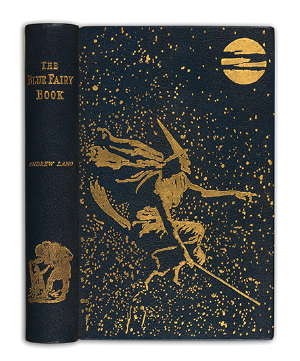
  • Blue Fairy Book (1889)
  • Red Fairy Book (1890)
  • Green Fairy Book (1892)
  • Yellow Fairy Book (1894)
  • Pink Fairy Book (1897)
  • Grey Fairy Book (1900)
  • Violet Fairy Book (1901)
  • Crimson Fairy Book (1903)
  • Brown Fairy Book (1904)
  • Orange Fairy Book (1906)
  • Olive Fairy Book (1907)
  • Lilac Fairy Book (1910)

3.  Southam, Brian.  Jane Austen: The Critical Heritage, 1870-1940.  Routledge,1996; Introduction, p.25.

*************************

Further Reading:

Austen Literary History & Criticism · Jane Austen · Regency England

Jane Austen, Humphry Repton & The Pierpont Morgan

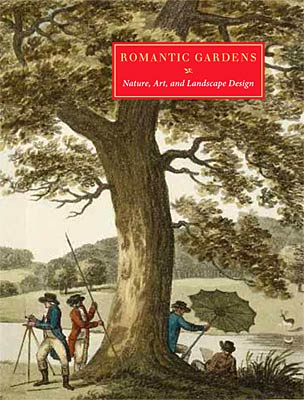
A post to merely to remind you that the exhibition at the Pierpont Morgan Library & Museum on Romantic Gardens: Nature, Art, and Landscape Design will be there only until August 29, 2010:

Scenic vistas, winding paths, bucolic meadows, and rustic retreats suitable for solitary contemplation are just a few of the alluring naturalistic features of gardens created in the Romantic spirit. Landscape designers of the Romantic era sought to express the inherent beauty of nature in opposition to the strictly symmetrical, formal gardens favored by aristocrats of the old regime.
The Romantics looked to nature as a liberating force, a source of sensual pleasure, moral instruction, religious insight, and artistic inspiration. Eloquent exponents of these ideals, they extolled the mystical powers of nature and argued for more sympathetic styles of garden design in books, manuscripts, and drawings, now regarded as core documents of the Romantic Movement. Their cult of inner beauty and their view of the outside world dominated European thought during the late eighteenth and early nineteenth centuries.
 [from the Morgan website; the Catalogue of the exhibition is available here

******************

Jane Austen, as her brother Henry Austen writes in his Biographical Notice [included in the Northanger Abbey and Persuasion edition of 1819]:

“was a warm and judicious admirer of landscape, both in nature and on canvass.  At a very early age she was enamoured of Gilpin on the Picturesque; and she seldom changed her opinions either on books or men.”  

 And so just how did Austen express her opinions on these matters?

From Northanger Abbey, ch. 14: 

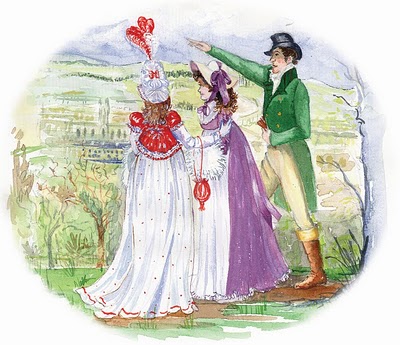
Jane Odiwe's Beechen Cliff

They were viewing the country with the eyes of persons accustomed to drawing, and decided on its capability of being formed into pictures, with all the eagerness of real taste. Here Catherine was quite lost. She knew nothing of drawing — nothing of taste… she confessed and lamented her want of knowledge, declared that she would give anything in the world to be able to draw; and a lecture on the picturesque immediately followed, in which his instructions were so clear that she soon began to see beauty in everything admired by him, and her attention was so earnest that he became perfectly satisfied of her having a great deal of natural taste. He talked of foregrounds, distances, and second distances — side–screens and perspectives — lights and shades; and Catherine was so hopeful a scholar that when they gained the top of Beechen Cliff, she voluntarily rejected the whole city of Bath as unworthy to make part of a landscape. Delighted with her progress, and fearful of wearying her with too much wisdom at once, Henry suffered the subject to decline, and by an easy transition from a piece of rocky fragment and the withered oak which he had placed near its summit, to oaks in general, to forests, the enclosure of them, waste lands, crown lands and government, he shortly found himself arrived at politics; and from politics, it was an easy step to silence….   

[The lovely watercolor of Henry, Miss Tilney and Catherine is from Jane Odiwe’s post on Beechen Cliff ]

********************

Edward Ferrars in Sense & Sensibility, ch. 18:

“You must not inquire too far, Marianne — remember, I have no knowledge in the picturesque, and I shall offend you by my ignorance and want of taste, if we come to particulars. I shall call hills steep, which ought to be bold! surfaces strange and uncouth, which ought to be irregular and rugged; and distant objects out of sight, which ought only to be indistinct through the soft medium of a hazy atmosphere. You must be satisfied with such admiration as I can honestly give. I call it a very fine country — the hills are steep, the woods seem full of fine timber, and the valley looks comfortable and snug — with rich meadows and several neat farm houses scattered here and there. It exactly answers my idea of a fine country, because it unites beauty with utility — and I dare say it is a picturesque one too, because you admire it; I can easily believe it to be full of rocks and promontories, grey moss and brush wood, but these are all lost on me. I know nothing of the picturesque.” …    I like a fine prospect, but not on picturesque principles. I do not like crooked, twisted, blasted trees. I admire them much more if they are tall, straight and flourishing. I do not like ruined, tattered cottages. I am not fond of nettles, or thistles, or heath blossoms. I have more pleasure in a snug farm-house than a watch-tower — and a troop of tidy, happy villagers please me better than the finest banditti in the world.”   

[I love this passage from Sense & Sensibility.  Edward is bantering with Marianne, and one sees here a relaxed and humorous Edward – he is comfortable with Marianne and so much more himself – he is more stilted and uncomfortable with Elinor because of the feelings he has for her – this passage has always given me hope of the real Edward when the obstacle of Lucy is removed from the equation – and thankfully she is!]…

************

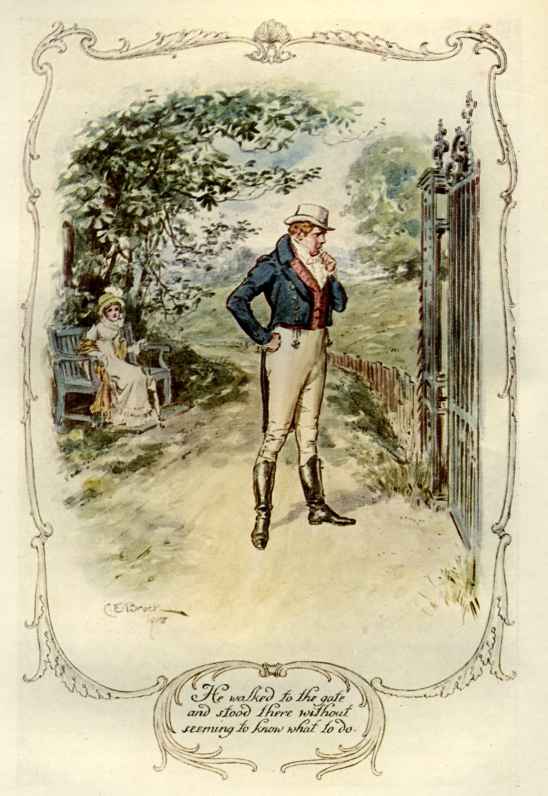
And let’s not leave out Mr. Rushworth and his efforts to “improve” Sotherton!  Mansfield Park, ch. 6: [image from Molland’s]

Mr. Rushworth at the gate at Sotherton

He [Mr. Rushworth] had been visiting a friend in the neighbouring county, and that friend having recently had his grounds laid out by an improver, Mr. Rushworth was returned with his head full of the subject, and very eager to be improving his own place in the same way; and though not saying much to the purpose, could talk of nothing else. The subject had been already handled in the drawing–room; it was revived in the dining–parlour…

 “I wish you could see Compton,” said he; “it is the most complete thing! I never saw a place so altered in my life. I told Smith I did not know where I was. The approach now, is one of the finest things in the country: you see the house in the most surprising manner. I declare, when I got back to Sotherton yesterday, it looked like a prison— quite a dismal old prison.”

“Oh, for shame!” cried Mrs. Norris. “A prison indeed? Sotherton Court is the noblest old place in the world.”

“It wants improvement, ma’am, beyond anything. I never saw a place that wanted so much improvement in my life; and it is so forlorn that I do not know what can be done with it…I must try to do something with it,” said Mr. Rushworth, “but I do not know what. I hope I shall have some good friend to help me.”

“Your best friend upon such an occasion,” said Miss Bertram calmly, “would be Mr. Repton, I imagine.”

“That is what I was thinking of. As he has done so well by Smith, I think I had better have him at once. His terms are five guineas a day.”  …

After a short interruption Mr. Rushworth began again. “Smith’s place is the admiration of all the country; and it was a mere nothing before Repton took it in hand. I think I shall have Repton.”

“Mr. Rushworth,” said Lady Bertram, “if I were you, I would have a very pretty shrubbery. One likes to get out into a shrubbery in fine weather.” …

… Mr. Rushworth, however, though not usually a great talker, had still more to say on the subject next his heart. “Smith has not much above a hundred acres altogether in his grounds, which is little enough, and makes it more surprising that the place can have been so improved. Now, at Sotherton we have a good seven hundred, without reckoning the water meadows; so that I think, if so much could be done at Compton, we need not despair. There have been two or three fine old trees cut down, that grew too near the house, and it opens the prospect amazingly, which makes me think that Repton, or anybody of that sort, would certainly have the avenue at Sotherton down: the avenue that leads from the west front to the top of the hill, you know,”

Fanny, who was sitting on the other side of Edmund, exactly opposite Miss Crawford, and who had been attentively listening, now looked at him, and said in a low voice—

“Cut down an avenue! What a pity! Does it not make you think of Cowper? ‘Ye fallen avenues, once more I mourn your fate unmerited.’”

He smiled as he answered, “I am afraid the avenue stands a bad chance, Fanny.”

************ 

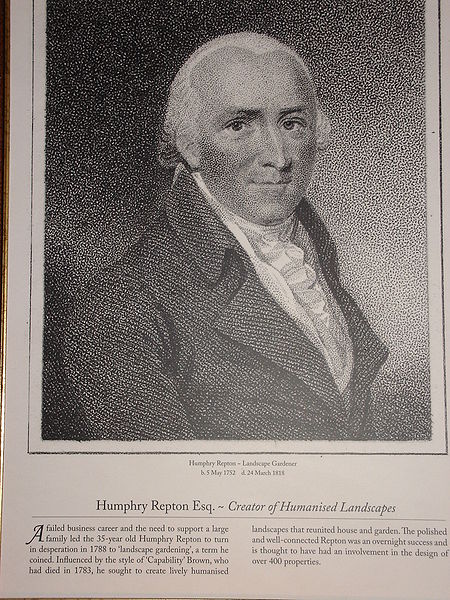
[Humphry Repton, from Wikipedia]

The exhibit at the Morgan includes two of Humphry Repton’s Red Books.  Repton [1752-1818] was the leading landscape architect of his day, as Mr. Rushworth so notes – his Red Books were the compilations of his observations in words and watercolors of his landscape plans for a client’s property, and included the use of overlays for a before-and-after scenario.  – The Morgan has made available an online page-by-page view of two of these books:  The Hatchlands and Ferney Hall. 

Hatchlands Red Book
Ferney Hall Red Book

and a view of Hatchlands Park today [Ferney Hall was replaced in 1856 with a Victorian mansion and has recently been restored]


[A short note here also on William Gilpin: please visit Austenonly where Julie has posted a recent article for the Austenprose P&P event on Gilpin and Austen that covers this subject quite nicely!]

Gilpin first introduced the term “picturesque 1782 in his Observations on the River Wye, and Several Parts of South Wales, etc. Relative Chiefly to Picturesque Beauty; made in the Summer of the Year 1770, a book that outlined for travelers in England a way to view the beauties of the country based on his rules of the picturesque.  Austen was very familiar with Gilpin’s writings – as seen above, both Henry Tilney and Edward Ferrars comment on and satirize his theories. And the trip taken by the Gardiners and Elizabeth in Pride & Prejudice closely follows a travelogue set forth by Gilpin, and so to Elizabeth relies on Gilpin to escape a walk with Mr. Darcy and the Bingley sisters:

But Elizabeth, who had not the least inclination to remain with them, laughingly answered, —

   “No, no; stay where you are. You are charmingly grouped, and appear to uncommon advantage. The picturesque would be spoilt by admitting a fourth. Good-bye.”  

[Pride & Prejudice, ch. 10]

*******************

Further Reading: [all Google Books sources are full-text]

 The two must-have books for your Austen Library on Jane Austen and the landscape:

Alistair Duckworth.  The Improvement of the Estate:  A Study Of Jane Austen’s Novels.  Baltimore:  Johns Hopkins U Press, 1971; reprinted in paperback, 1994  –  brilliant 

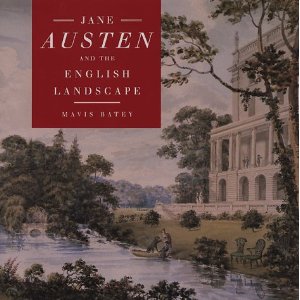
Mavis Batey.  Jane Austen and the English Landscape.  London:  Barn Elms, 1996   –  absolutely lovely!

Humphry Repton:

William Gilpin  and the “Picturesque”:

[Posted by Deb] 

Austen Literary History & Criticism · Jane Austen · Publishing History

Jane Austen on St. Swithin’s Day

I refer you to my post from July 15th, 2009,  Austen on St. Swithin’s Day – three days before Austen died, she penned her humorous poem “Venta”  – read all about the writing and publishing of the poem, St. Swithin, and the Winchester Races…


[And like last year, our June here in Vermont has been cold and rainy – followed by the grueling heat wave of the last two weeks….!]

Austen Literary History & Criticism · Books · Jane Austen · Literature · Publishing History

Jane Austen’s ‘Own Darling Child’

Laurel Ann at her Austenprose blog is currently posting a month-long group read through Pride & Prejudice – do visit and join in the discussion! – she is as always an insightful reader and discussion leader, and what better way to spend the first month of summer musing on P&P and the finer points of Austen’s magic!
 
The publishing history of P&P, Austen’s most popular book, then and now, is an interesting study in the book trade of early 19th century England.  First completed in 1797 [and called First Impressions] and rejected by the publisher her father took the manuscript to, Austen reworked P&P and submitted it to Thomas Egerton, the publishing house of her Sense & Sensibility, in 1812 [published January 28, 1813].   She sold the copyright outright for £110, and did not incur other expenses in its publication, as in the three other works published in her lifetime [see links below for more information.]  How we would love to know her thoughts on this road to publication! – how we would love to have her letters written while in the process of the writing to give us some idea of her imagination at work [where WAS the model for Pemberley?  was Mr. Darcy someone REAL?  was Elizabeth Bennet her alter ego? was MR COLLINS drawn from life?], or to have the letters to her brother Henry and his to Egerton – but alas! we have nothing, just a few comments scattered among the surviving letters. 
 
Austen does not give us much in her letters as to her writing practices or narrative theory [and thus such a disappointment when they were first published, criticized for their “mundaneness,” their focus on domestic nothings and neighborhood gossip!] – but if you dig for diamonds you will find them, and these scattered mentions are certainly diamonds – it is the feeling of having her right over your shoulder when you read that she is “disgusted” with the way her mother is reading her book aloud, or that she REALLY likes this earning money for her labors, or being miffed [but also full of pride!] with Henry for telling her Secret to one and all – we see Jane Austen here in her own words – the funny, ironic, brilliant Jane Austen – never enough, but this is as good as it is going to get. 
 
So in this post I offer all the references she makes to Pride & Prejudice, her “own darling Child” – read them and enjoy!
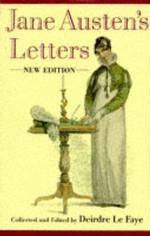
[NOTE:  page references are to Deirdre Le Faye, ed., Jane Austen’s Letters, 3rd ed., Oxford, 1997;  all abbreviations and spelling errors are retained]
 
Letter 17. January 8-9, 1799 to Cassandra, from Steventon
 
I do wonder at your wanting to read first impressions again, so seldom as you have gone through it, & that so long ago. [page 35]
 
[Le Faye notes that this is the first surviving mention of Austen’s literary work, this prototype of P&P having been finished in August 1797; Note, p. 366]
 
Letter 21. June 11, 1799,  To Cassandra, from Bath
 
I would not let Martha read First Impressions again upon any account, & I am very glad that I did not leave it in your power. – She is very cunning, but I see through her design; – she means to publish it from Memory, & one more perusal must enable her to do it.  [p.44]
 
Letter 77.  November 29-30, 1812, to Martha Lloyd from Chawton
 
P.& P. is sold. – Egerton gives £110 for it. – I would rather have had £150, but we could not both be pleased, & I am not at all surprised that he should not chuse to hazard so much. – It’s being sold will I hope be a great saving of Trouble to Henry, & therefore must be welcome to me. – The Money is to be paid at the end of the twelvemonth. [p. 197]
 
 
Letter 79.  January 29, 1813, to Cassandra from Chawton    
 
I want to tell you that I have got my own darling Child from London; – on Wednesday I received one Copy, sent down by Falknor, with three lines from Henry to say that he had given another to Charles & sent a 3d by the Coach to Godmersham; just the two Sets which I was least eager for the disposal of.  I wrote to him immediately to beg for my own two other Sets, unless he would take the trouble of forwarding them at once to Steventon & Portsmouth – not having any idea of his leaving Town before today; – by your account however he was gone before my Letter was written.  The only evil is the delay, nothing more can be done till his return.  Tell James & Mary so, with my Love. – For your sake I am as well pleased that it shd be so, as it might be unpleasant to you to be in the Neighborhood at the first burst of the business. – The Advertisement is in our paper to day [the Morning Chronicle of January 28, 1813]. – 18s – He shall ask £1-1- for my two next, & £1-8 – for my stupidest of all. I shall write to Frank, that he may not feel himself neglected.  Miss Benn dined with us on the very day of the Books coming, & in the eveng we set fairly at it & read half the 1st vol. to her – prefacing that having intelligence from Henry that such a work wd soon appear we had desired him to send it whenever it came out – & I beleive it passed with her unsuspected. – She was amused, poor soul! that she cd not help you know, with two such people to lead the way [JA and her mother]; but she really does seem to admire Elizabeth.  I must confess that I think her as delightful a creature as ever appeared in print, & how I shall be able to tolerate those who do not like her at least, I do not know. – There are a few Typical errors – & a “said he” or a “said she” would sometimes make the Dialogue more immediately clear – but “I do not write for such dull Elves” “As have not a great deal of Ingenuity themselves.”  [from Scott’s Marmion] – The 2d vol. is shorter than I cd wish – but the difference is not so much in reality as in look, there being a a larger proportion of Narrative in that part.  I have lopt & cropt so successfully however that I imagine it must be rather shorter than S. & S. altogether. – Now I will try to write of something else; – it shall be a complete change of subject – Ordination. [p. 201-2]


Letter 80.  February 4, 1813, to Cassandra from Chawton
 
Your letter was truely welcome & I am much obliged to you all for your praise; it came at a right time, for I had had some fits of disgust. – our 2d evening’s reading to Miss Benn had not pleased me so well, but I beleive something must be attributed to my Mother’s too rapid way of getting on – & tho’ she perfectly understands the Characters herself, she cannot speak as they ought. – upon the whole however I am quite vain enough & well satisfied enough. – The work is rather too light & bright & sparkling; – it wants shade; – it wants to be stretched out here & there with a long Chapter – of sense if it could be had, if not of solemn specious nonsense – about something unconnected with the story; an Essay on Writing, a critique on Walter Scott, or a history of Buonaparte – or anything that would form a contrast & bring the reader with increased delight to the playfulness & Epigrammatism of the general stile. –  I doubt your quite agreeing with me here – I know your starched Notions. – The caution observed at Steventon with regard to the possession of the book is an agreable surprise to me, & I heartily wish it may be the means of saving you from everything unpleasant; – but you must be prepared for the Neighbourhood being perhaps already informed of there being such a Work in the World, & in the Chawton World! Dummer will do that you know. – It was spoken of here one morng when Mrs. D. [Digweed] called with Miss Benn. – The greatest blunder in the Printing that I have met with is in Page 220 – Vol.3 where two speeches are made into one. – There might as well have been no suppers at Longbourn, but I suppose it was the remains of Mrs. Bennet’s old Meryton habits. [p. 203]
Mrs. George Austen
 
I had a letter from Henry yesterday, written on Sunday from Oxford; mine had been forwarded to him… he says that copies were sent to S. [Steventon] & P. [Portsmouth] at the same time as the others. [p. 204]
 
 
Letter 81.  February 9, 1813, to Cassandra from Chawton
 
I am exceedingly pleased that you say what you do, after having gone thro the whole work – & Fanny’s praise is very gratifying; – my hopes were tolerably strong for her, but nothing like a certainty.  Her liking Darcy & Elizabeth is enough.  She might hate all the others, if she would. I have her opinion under her own hand this morning, but your transcript of it which I read first, was not & is not the less acceptable. – To me, it is of course all praise – but the more exact truth which she sends you is good enough. [p. 205]
 
Yes, I beleive I shall tell Anna – & if you see her, & donot dislike the commission, you may tell her for me.  You know I meant to do it as handsomely as I could.  But she will probably not return in time [p. 205, referring to telling her niece Anna that she is the author of S&S and P&P, note p. 414]
 
…- there is still work for one evening more. [p. 206, to finish reading P&P aloud, note p. 414]
 
 
Letter 85.  May 24, 1813, to Cassandra from London
 
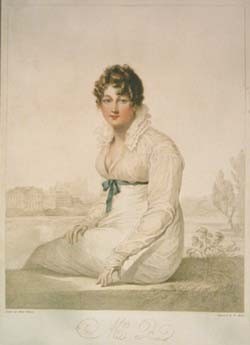
…Henry & I went to the Exhibition in Spring Gardens.  It is not thought a good collection, but I was very well pleased – particularly [pray tell Fanny] with a small portrait of Mrs. Bingley, excessively like her.  I was in hopes of seeing one of her Sister, but there was no Mrs. Darcy; – perhaps however, I may find her in the Great Exhibition which we shall go to, if we have time; – I have no chance of her in the collection of Sir Joshua Reynolds’s Paintings which now is shewing in Pall Mall & which we are also to visit. – Mrs. Bingley is exactly herself, size, shaped face, features and sweetness; there never was a greater likeness.  She is dressed in a white gown, with green ornaments, which convinces me of what I have always supposed, that green was a favourite colour with her.  I dare say Mrs. D. will be in Yellow. [p. 212] 
 
 [Portrait of a Lady, by J.F.M. Huet-Villiers]
a.k.a. Mrs. Bingley
 
 
I am very much obliged to Fanny for her Letter; – it made me laugh heartily; but I cannot pretend to answer it.  Even had I more time, I should not feel at all sure of the sort of Letter that Miss D. would write… [p. 213, referring to a letter from Fanny written to and expecting a response from Georgiana Darcy – Note p. 417]
 
We have been to both the Exhibition & Sir J. Reynolds’, – and I am disappointed, for there was nothing like Mrs. D. at either. – I can only imagine that Mr. D. prizes any Picture of her too much to like it should be exposed to the public eye. – I can imagine he wd have that sort [of, omitted] feeling – that mixture of Love, Pride & Delicacy. [p. 213]
 
 Letter 86.  July 3-6, 1813, to Francis Austen from Chawton
 
You will be glad to hear that every Copy of S.&S. is sold & that it has brought me £140 – besides the Copyright, if that shd ever be of any value. – I have now therefore written myself into £250. – which only makes me long for more. – I have something on hand – which I hope on the credit of P. & P. will sell well, tho’ not half so entertaining… [referring to Mansfield Park] [p. 217]
 
 Letter 87.  September 15-16, 1813, to Cassandra from London
 
Lady Robert [Kerr, nee Mary Gilbert] delighted with P. & P – and really was so I understand before she knew who wrote it – for, of course, she knows now. – He [Henry] told her with as much satisfaction as if it were my wish.  He did not tell me this, but he told Fanny.  And Mr. Hastings – I am quite delighted with what such a Man writes about it. – Henry sent him the Books after his return from Daylesford – but you will hear the Letter too.  // Let me be rational & return to my two full stops. [p. 218]
 
I long to have you hear Mr. H’s [Warren Hastings] opinion of P&P.  His admiring of Elizabeth so much is particularly welcome to me. [p. 221]
 
 
Letter 89.  September 23-24, 1813, to Cassandra from Godmersham Park
 
Poor Dr. Isham is obliged to admire P.&P. – & to send me word that he is sure he shall not like Mde. Darblay’s new Novel half so well. – Mrs. C. [Cooke] invented it all of course. [referring to Frances Burney’s The Wanderer, published in 1814] [p. 227]
 
 
Letter 90.  September 25, 1813, to Francis Austen from Godmerhsam Park  
 
I thank you very warmly for your kind consent to my application & the kind hint that followed it. [asking Frank if she can use the names of his old ships in her her current work, MP] – but the truth is that the Secret has spread so far as to be scarcely the Shadow of a secret now – & that I beleive whenever the 3d appears I shall not even attempt to tell Lies about it. – I shall rather try to make all the Money than all the Mystery I can of it. – People shall pay for their knowledge if I can make them. – Henry heard P. & P. warmly praised in Scotland, by Lady Robt Kerr & another Lady; – and what does he do in the warmth of his Brotherly vanity & Love, but immediately tell them who wrote it! – A Thing once set going in that way – one knows how it spreads! – and he, dear Creature, has set is going so much more than once.  I know it is done from affection & partiality – but at the same time, let me here again express to you & Mary my sense of the superior kindness which you have shewn on the occasion, in doing what I wished. – I am trying to harden myself. – After all, what a trifle it is in all its Bearings, to the really important points of one’s existence even in the World!  [p. 231]
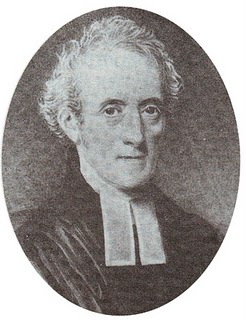
Henry Austen
 
There is to be a 2d Edition of S.&S. Egerton advises it. [p. 232, referring to her publisher]
 
 
Letter 104.  August 10-18, 1814, to Anna Austen from Chawton
 
Now we have finished the 2d book – or rather the 5th – I do think you had better omit Lady Helena’s postscript; to those who are acquainted with P.&P it will seem an Imitation. [p. 268, referring to Anna’s manuscript sent to JA for advice]
 
  
Letter 128.  November 26, 1815, to Cassandra from London
 
Mr. H is reading Mansfield Park for the first time & prefers it to P&P. [p. 301, referring to Mr. Haden, London surgeon, who brought good Manners & clever conversation]
 
  
Letter 132(Draft).  December 11, 1815, to James Stanier Clarke from London
 
My greatest anxiety at present is that this 4th work [Emma] shd not disgrace what was good in the others.  But on this point I will do myself the justice to declare that whatever may be my wishes for its’ success, I am very strongly haunted by the idea that to those readers who have preferred P&P. it will appear inferior in Wit, & to those who preferred MP. very inferior in good sense… [p. 306]
 
 
Letter 134(A).  December 27, 1815, from the Countess of Morley to JA at Chawton
 
I am most anxiously waiting for an introduction to Emma…. I am already become quite intimate in the Woodhouse family, & feel that they will not amuse & interest me less than the Bennetts [sic], Bertrams, Norriss & all their admirable predecessors – I can give them no higher praise- [p. 308]
 
************************************
 [a letter-writing Fanny Austen-Knight by Cassandra]
Ah! indeed! – no higher praise…
 
 
Further reading:

[Posted by Deb]

Austen Literary History & Criticism · Jane Austen

The Saga of the Steventon Parsonage

[Note:  please see an update to this post at Steventon Parsonage Redux ]

One of the things I love most about old books is what you sometimes find in them, be it bookplates, inscriptions, the odd bookmark or pictures or postcards or notes or newspaper articles, some history of the book or the owners, or something relating to the subject of the book in your hands – alas! I have never found money! [but I did find a check once and I called the person so they could have it re-issued – a corporate check from only a few years before – the  customer was thrilled! ] – so if it looks like something the previous owner might want I send it to them] – but as that is not usually the case, I find the possibilities endless – indeed I have several shoe boxes filled with the stuff, someday to be gone through in my dotage.  But I recently bought a book by R.W. Chapman [to be posted about another time], our esteemed editor and scholar of Jane Austen and in it was the following news article [dated 1931]:

The Estate market:  a link with Jane Austen

   Steventon Rectory, in Hampshire, is for sale with 20 acres of garden and pasture.  The formal notice of the auction, to be held at Basingstoke on September 9, in The Times yesterday, refers to building frontages on adjoining land, and indicates that there will be two lots.  So any admirer of Jane Austen anxious to acquire a house where the great novelist was “without impertinence” called “Jane” needs to bid only for the rectory and grounds.  A short history of Steventon speaks of Edward Knight as patron of the living in 1830.  There, for those who know Jane Austen’s family connexions, is a name that is eloquent of her life at Godmersham, near Canterbury, and Chawton House, near Alton.  Jane Austen was born in the parsonage at Steventon in 1775, her father, the Rev. George Austen, being the rector.  She lived there for 16 years.  The contemplated sale of the Steventon Rectory is by Messrs. Daniel Smith, Oakley and Garrand {Charles-street, St. James’s-square, and Rochester) and Messrs. Clutton [Great College-street, Westminster).  The freehold will be sold in low reserve, and it is worthwhile to add that private offers before the auction will be considered by Sir John Oakley’s firm.

 No date on the news-clipping, but there are a few notices on the reverse side with dates of 1931, so I am assuming this auction took place on September 9, 1931. 

Other real estate noted in this clipping [and pictures of what the houses look like now]:

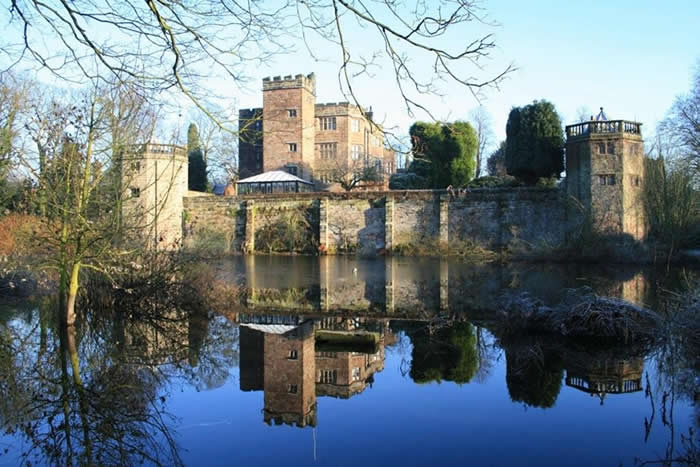
Caverswall Castle, Staffs. A fortified manor house that has escaped the perils of siege and the sometimes equally defacing hand of the restorer, is for slae by Messrs Hampton and Sons (St. James’s-square).  An Edwardian tenure of the estate by Sir William de Caverswall followed that of his ancestors in the reign of Richard I….  [it is now a luxury wedding and events venue]


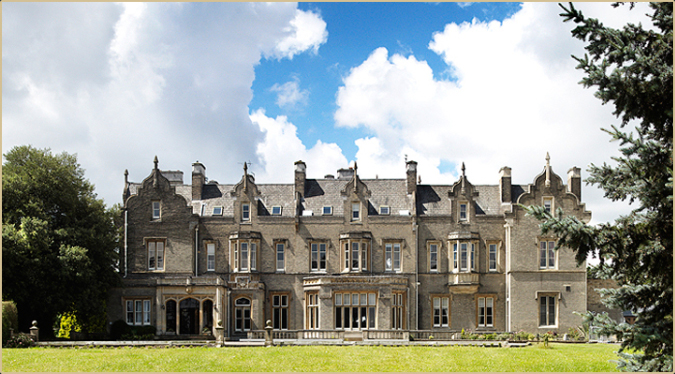
Shendish House, with 90 or 525 acres, and the rest of the 1,300 acres of Shendish estate, Kings Langley, will come under the hammer of Messrs. John D. Wood and Co (Berkeley-square) on September 15 in Watford.  There are farms of from 120 to 320 acres, two residences, and 18 cottages.  The land has frontages for development…. [now called Shendish Manor, a hotel and golf course]


And 

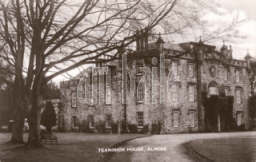
Teaninich, Cromarty Firth, is for sale by Messrs. Knight, Frank and Rutley (Hanover-square).  It includes 2,000 acres, Teaninich House, a grouse moor, and salmon and sea trout fishing in the Alness and loch trouting. [picture of an old postcard of  Teaninich House  – is this now called Teaninich Castle?,  a small hotel]

 ******************************

But what of the Steventon Rectory sale and the reference to Austen?  This auction announcement cannot be correct, as we know that the parsonage where Jane was born was demolished by her brother Edward Knight in 1826 [or 1824 – see below] – and I have not seen anything about the house that he built to replace it to serve as the rectory when his son took over the benefice from his uncle, Jane’s brother Henry Austen in 1822. 

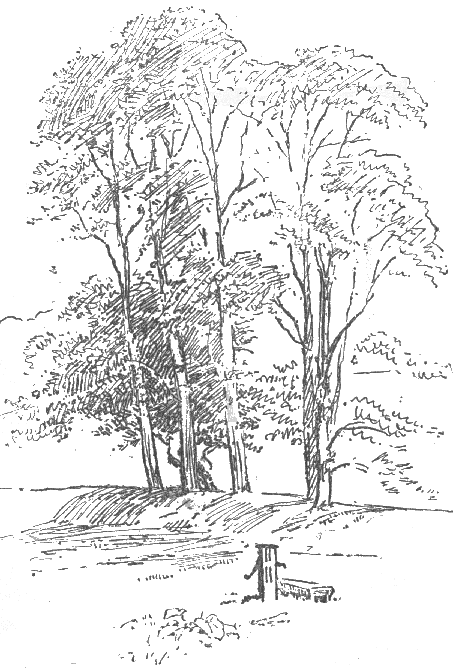
All trips to Steventon, and books on the subject, guide you to the lonely pump sitting in a distant field that you can only document with a telephoto-lens camera – this the only remains of the rectory where Jane lived from her birth in 1775 until the move to Bath in 1801.

Old Steventon Parsonage site

[Image from Constance Hill biography]


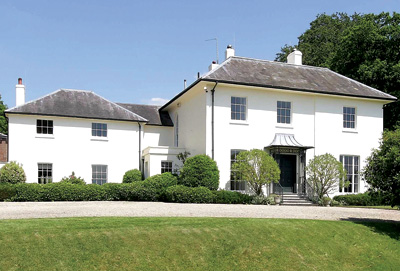
But I have not seen anything about this second rectory that was built after James and Henry let the original rectory where Jane was born go to seed – that is until recently when it appeared on the market again in October 2009 [ it was on the market for £4.5 million, I can find no listing for it now, so assuming it has sold]  – see this article at Country Life as well as this blog post at Austenonly.] 

 ******************************

So this little newsprint set me to research what I could find about this house, misnamed in the 1931 announcement as the house Austen grew up in [it also states she lived there for 16 years…],  and of course what one finds is so many varying accounts of the original rectory and nothing of this newer house at all.  I first discovered the discrepancies in dates as to when Edward demolished the house, then further variances in what the house looked like in a number of sources I have.  Then a search on the JASNA.org site led me to the Linda Robinson Walker article in Persuasions On-Line [Winter 2005] – where she has meticulously reviewed all these different depictions of the rectory to understand why Jane Austen was sent from home for so many years of her childhood. 

 The varying history [some sources say the land was given to Rev. Austen by the Knight family, some say the Austen family, some say he rented the land he farmed (called Cheesedown Farm), and some say he sold that land when he moved to Bath], discrepancies in dates [the dates of the sketches, the dates the house was demolished, how long Austen lived there], various pictures [some resources show one front view, some the other, and David Cecil in his A Portrait of Jane Austen [Constable, 1978]  is wrong in identifying the rectory as Chawton Cottage!] – all this conjectural history is dizzying, and one sees the danger of interpreting such flimsy data for a biography!  [though certainly some of these discrepancies can be due to newer data coming to light at various periods…] 

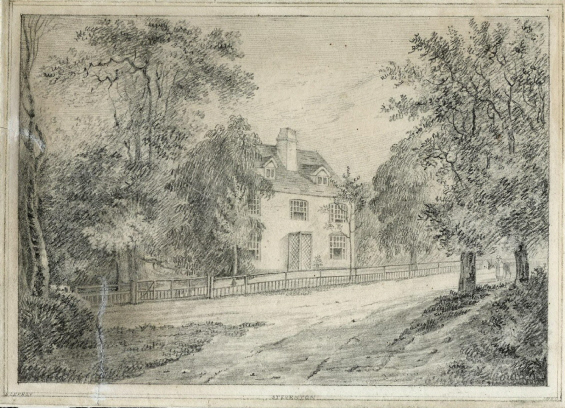
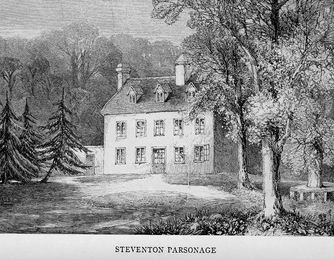
What the Rectory actually looked like is by no means clear – all knowledge is based on the original drawing by Anna LeFroy [James Austen’s daughter – she lived in the house as a child when Jane was there and then later when her father took over as curate in 1801] – and information gleaned from letters and the early memoirs / biographies of the family who actually knew the rectory [i.e. Anna LeFroy, Fanny Knight, Caroline Austen, and James Edward Austen-Leigh, as well as Jane Austen’s own comments in her letters about the house].  Anna made several sketches of the house, front and back view, and a street of cottages in Steventon.  [but see:  Deirdre Le Faye in her Jane Austen: a Family Record [2nd edition, Cambridge 2004] states that for the 1870 Memoir “Anna provided a ‘little drawing of Julia’s [her second daughter] made from my description of the Parsonage: more pretty than true, yet, some thing perhaps might be made of it…’ This joint composition formed the basis for the engraving of Steventon rectory used in the Memoir, and Anna added a note to the drawing in her possession: ‘The Door should have more Glass and less wood work – The Windows were Casements.”  [Le Faye, p. 280, quoting a LeFroy letter and the LeFroy MS]

Steventon Parsonage LeFroy sketch
Steventon Parsonage - LeFroy sketch rear view
Steventon Parsonage - Engraving in Memoir

 As you can see the two drawings of the house from the front do not compute – and Walker concludes that the engraving made from one of the drawings that was put into the 1870 Memoir was just another example of “beefing- up” Austen’s image, just as was done with her portrait – and that the smaller house was actually the rectory and Jane and Cassandra were sent from home to a boarding school to allow room for Rev. Austen’s boarding [and paying] male students.  Walker believes the larger house to be a sketch of Ibthorpe [still standing, privately owned – I was fortunate enough to have tea there during the JASNA AGM in Winchester in 2003!] and a house much visited by all the Austen family.  Walker does a most admirable job of computing all this data, based on family reminiscences, comments in letters as to location of rooms, etc. – but it is likely to be a mystery for all time, or at least a full-time research project to expand on what Walker has done.  But in the end I am inclined to concur with Tom Carpenter’s thoughts that the smaller house view is actually a side view of the rectory [Walker cites Carpenter’s opinion in her note no. 2 on page 20-21].  An aside on this:  I have the 1926 Memoir as edited by Chapman:  the frontispiece of Austen is the Victorianized / “beautified” Austen, and the parsonage is the engraving that Walker refers to.  But I also have the Folio Society edition of 1989, based on Chapman’s edition – the frontispiece is the facing-away sketch of Austen in the blue dress and the rectory is the original drawing by LeFroy of the smaller house.  Why this change in the illustrations?? Are you all sufficiently confused at this point?! It is interesting to note that David Nokes in his 1997 biography of Austen has no illustration at all of the parsonage – perhaps he saw this jumble in the making and opted out?!

As to when the original rectory was demolished and the new one built, an article in Persuasions by Patricia Jo Kulischeck [Vol. 7, 1985, pp. 39-40 ]– [the full text for this issue is not available, so I will quote from it directly] gives us the following information from land records of the time, Memorandum for a supplementary affidavit respecting Steventon Glebe Apl 1824, docketed in Edward Knight’s handwriting [text is in another hand]:

There is no rectory house in the Parish of Steventon excepting the new one now nearly finished built on a part of the land proposed to be added to the original glebe.  The former house was situated low and subject to be flooded, distant from the greater part of the village and in a dilapidated state.  The present house is placed above the valley in a more healthy spot and nearer the village.  The inhabitants are about 150 persons.  The original glebe consisting of only 3 A. OR. 23P [presumably 3 acres, or 23 parcels of land] in two disunited pieces was quite inefficient for the necessary accommodation of a resident clergyman’s family and as there are besides cottages only farm houses in the Parish and very few resident incumbents in the adjoining Parishes, it is most particularly desirable that the Rector of Steventon should reside there rather than on any other preferment he may eventually have and nothing is so likely to secure that residence as the proposed addition to the glebe which will add so materially to the comforts and in some degree to the respectability of the Rector.  There can be no doubt what ever but very sensible advantages will be felt as well in several of the adjoining Parishes as in that of Steventon by securing the residence of the Rector in that Parish.

 After the Austens moved to Bath in 1801, Rev. Austen retained the Steventon living and its income in his retirement and his son, James Austen, held the curacy, until his father’s death in 1805, when he became the Rector, and was so until his death in December 1819.  As the living was part of the Knight estate that Edward Austen owned, Henry Austen took over the living until Edward’s fourth son William Knight was old enough to take it on in 1822.  [Henry moved on to be curate of Farnham in Surrey.]    William lived here in the new rectory with his wife, Caroline Portal, who had eight children in twelve years [and died in childbirth with the last one, much like her sister-in-law, Elizabeth Knight, Edward’s wife, who died after giving birth to her 12th child]– this from Claire Tomalin’s biography of Austen,  and I find nothing more mentioned about this new rectory… 

 Kulisheck also quotes from an entry in the Victoria County History of Hampshire, printed in 1911:

 St. Nicholas’ Church is on the eastern boundary of the parish.  The rectory standing in very pretty and well-wooded grounds of 53 acres is some distance north of the church…situated about 500 yards from where the old one used to stand.  At present no vestige of it remains, but up to within the last twenty years garden flowers used to bloom every season in the meadow where it formerly stood.” [Kulisheck, p. 40, quoting the History, vol. IV, p. 171.]

 The October 2009 advertisement for this property, now called Steventon House, [see picture above] says it was bought by the Duke of Wellington in 1855, sold to a Harris family in 1877 – the house remained a rectory for the village until 1930 [1931], when it sold and became a private home [and that would be the sale from the auction in the newspaper that started this whole circuitous post…] [this current information from the Austenonly blog and a number of news articles about the sale]

 So this is a very convoluted explanation of the original Steventon Parsonage where Jane Austen spent the first 25 years of her life !- the mystery remains, I feel more confused than ever! – more reading on the agenda… and certainly a required trip to the Hampshire Records Office – how awful that work gets in the way of such adventures!

Sources and further reading: 

-Austen-Leigh, James Edward.  A Memoir of Jane Austen by her Nephew.  With introduction, Notes and Index by R.W. Chapman.  Oxford, 1926. 

 -Austen-Leigh, J.E.  A Memoir of Jane Austen by her Nephew.  Introduction by Fay Weldon; based on the Second Edition of 1871 edited by R.W. Chapman for the Clarendon Press in 1926.  The Folio Society, 1989.

 -Cecil, David.  A Portrait of Jane Austen.  Constable, 1978. 

-Hill, Constance.  Jane Austen:  Her Houses and Haunts.  John Lane, 1901, rep. 1923 [available online at A Celebration of Women Writers here.] 

-Kulisheck, Patricia Jo. “Steventon Parsonage”  Persuasions, Vol. 7, 1985, pp. 39-40.

 -Le Faye, Deirdre.  Jane Austen:  a Family Record.  2nd ed.  Cambridge, 2004.

 -Todd, Janet, ed.  Jane Austen in Context.  Cambridge, 2007.

 -Tomalin, Claire.  Jane Austen:  a Life.  Viking, 1997. 

Walker, Linda Robinson Walker, “Why Was Jane Austen Sent Away to School at Seven? An Empirical Look at a Vexing Question.”  Persuasions On-Line, V.26, No. 1 [Winter 2005]

-Wilkes, Brian.  Jane Austen.  Hamlyn, 1978.

The Basingstoke and Deane Conservation Area Appraisal for Steventon, shows numerous homes in the area, including Steventon House.

Austenonly Blog on the Steventon Rectory

Jane Austen’s World Blog on the Steventon Rectory

Steventon, Jane Austen’s Home at Hantsweb

 [Posted by Deb]

Austen Literary History & Criticism · Books · Jane Austen · News

Jane Austen’s Fiction Manuscripts Digitized

The following fabulous information just received from Janeite Hope!

 Last year there was quite a bit of discussion around the kerfuffle between author Claire Harman (Jane’s Fame) and Professor Kathryn Sutherland (Jane Austen’s Textual Lives) [see post:  Discord in Austen Land  from March 15, 2009]. The dust appears to have settled and now we can be indebted to Professor Sutherland for yet another wonderful contribution to all Janeites and the world of Jane Austen scholarship.


Under the direction of Professor Sutherland, and a joint project of the University of Oxford and Kings College London, the Centre for Computing in the Humanities of King’s College London has published the website: Jane Austen’s Fiction Manuscripts. The site includes transcriptions as well as high quality facsimiles. Of particular interest to scholars, though not yet apparent on the website, is the fact that the manuscripts have been encoded with “orthographic variants and punctuation symbols in minute detail for subsequent computational interrogation” as well as complex structural metadata. This means that interesting reconstruction, deconstruction and analysis will be possible.

Meanwhile we have the current Austen site to study and enjoy.

Jane Austen’s Fiction Manuscripts

According to the site:

“Jane Austen’s fiction manuscripts are the first significant body of holograph evidence surviving for any British novelist. They represent every stage of her writing career and a variety of physical states: working drafts, fair copies, and handwritten publications for private circulation. The manuscripts were held in a single collection until 1845, when at her sister Cassandra’s death they were dispersed among family members, with a second major dispersal, to public institutions and private collections, in the 1920s Digitization enables their virtual reunification and will provides scholars with the first opportunity to make simultaneous ocular comparison of their different physical and conceptual states; it will facilitate intimate and systematic study of Austen’s working practices across her career, a remarkably neglected area of scholarship within the huge, world-wide Austen critical industry.

Many of the Austen manuscripts are frail; open and sustained access has long been impossible for conservation and location reasons. Digitization at this stage in their lives not only offers the opportunity for the virtual reunification of a key manuscript resource, it will also be accompanied by a record in as complete a form as possible of the conservation history and current material state of these manuscripts to assist their future conservation.

The digital edition will include in the first instance all Jane Austen’s known fiction manuscripts and any ancillary materials held with them.”

Manuscripts now online are:

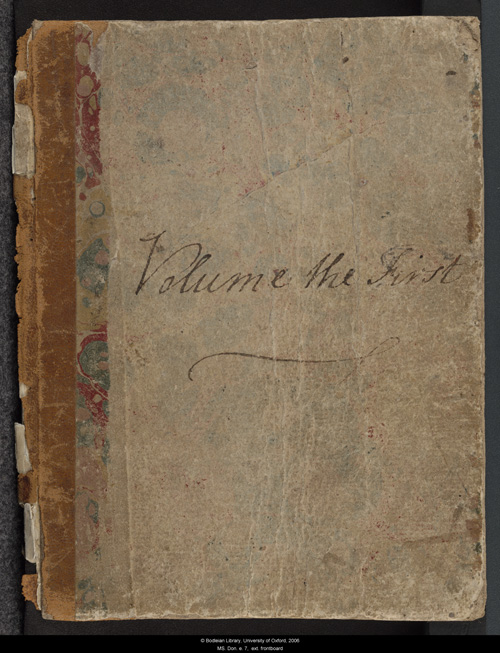
•          Volume the First, Bodleian Library, Oxford

•          Volume the Second, British Library, London

•          Volume the Third, British Library, London

•          Lady Susan, Morgan Library & Museum, New York

•          Susan, Morgan Library & Museum, New York

•          The Watsons, Morgan Library & Museum, New York

•          The Watsons, Queen Mary, University of London, London

•          Persuasion, British Library, London

•          Sanditon, King’s College Cambridge, Cambridge

•          Opinions of Mansfield Park Opinions of Emma, British Library, London

•          Plan of a Novel, according to hints from | various quarters, Morgan Library & Museum, New York

•          Profits of my Novels, Morgan Library & Museum, New York


[Posted by Hope G.]

Austen Literary History & Criticism · Jane Austen

A Jane Austen Triple-Play in Montreal!

No, I am not talking about Baseball or Hockey [though I am very pleased to see the Montreal Canadiens in the Stanley Cup Semi-Finals!] –  these endless sport finals have nothing to do with Jane Austen after all [but can we assume that Catherine Morland likely played some form of hockey on a pond in her village…?]

This “Triple-Play” was a lovely “An Afternoon with Jane Austen” in a Montreal micro-brewery where members of JASNA-Montreal / Quebec celebrated Jane Austen with cheese, chocolate and BEER! – all the while listening to three lectures about Jane: 

JASNA President Marsha Huff’s lovely “Viewing Austen through Vermeer’s Camera Obscura” and assisted by Helen Mayer and Peter Sabor as readers [always nice to hear Captain Wentworth’s heart-stopping letter read aloud by a gentleman with the proper accent!]; McGill Professor Peter Sabor gave his Philadelphia AGM talk on “Brotherly and Sisterly Dedications in Jane Austen’s Juvenilia”; and  Professor Elaine Bander of Dawson College spoke on “Revisiting Northanger Abbey at Chawton”.

I confess to actually having heard EACH of these talks – but much like re-reading Austen herself, a few hours of re-listening to others talk ABOUT her is a double treat not to be missed whenever possible [and interesting to see the variations in my notes from each talk!] – and connecting with other Austen fans, coupled with a few shots of beer makes for a perfect afternoon!

Huff’s Austen / Vermeer talk is a wonderful exploration into several of Vermeer’s paintings, building on what Sir Walter Scott wrote in his review of Emma where he likened Austen’s talents to the Flemish School of Painting.  Huff offer’s a visual comparison with Vermeer’s “The Concert” to the party at the Cole’s in Emma; “The Music Lesson” with Elizabeth performing at Rosings for Col. Fitzwilliam and Darcy; “Lady Reading a Letter” to the various scenes in Austen of heroines reading letters: Elinor, Fanny, Emma, Ann Elliot, and Elizabeth – these are just a few examples, and one must see and hear this talk to really see the connections.  Marsha has been touring all of North America in her term as JASNA President, and if you get a chance to see this, get thee hence to it immediately [and do so even if you have already heard it – it gets better each time!]  [Note that she will be doing this talk for our JASNA-Vermont group on September 26, 2010]

[We all clamor for publication of this talk, but Ms. Huff believes there would be copyright issues with the paintings.  You can visit the very complete and indeed “essential” website Essential Vermeer to see all his works [and source of above image of  “Girl with a Pearl Earring”]

Peter Sabor teaches at the Department of English at McGill University, where he is Canada Research Chair in Eighteenth-Century Studies and Director of the Burney Centre.  He has recently edited the Cambridge University edition of Austen’s Juvenilia, and the Juvenilia Press editions of Evelyn (1999) and Frederic and Elfrida (2002).  He is currently working on a new biography of Austen.

As many of us know, Austen dedicated only one of her novels to anyone – Emma to the Prince Regent, and likely much against her will!  But her juvenilia have dedications all over the place! – and eleven of these are to her brothers and Cassandra.  Are they ironic or reflective of the fictional characters?  Professor Sabor offers an amusing and scholarly take on the mind of the young Austen and her relationships with each of her siblings. [Note that Prof. Sabor will be giving this talk to our JASNA-Vermont group at our annual Birthday Tea on December 5, 2010 – though he might be changing this as we get closer as this talk is in the just-arrived-in-your-mailbox Persuasions 31 [pp. 33-45]– so you can read all about it, though lacking Sabor’s not-to-be-missed lively delivery…]

Juvenilia Press edition

Elaine Bander is one of my favorite AGM speakers – whatever the topic of the Break-out Session, I go if she is the headliner.  [Professor Bander is Regional Coordinator of JASNA / Montreal-Quebec, and President of JASNA-Canada; she is currently on the editorial board for Persuasions] – she gave this talk this past summer at Chawton, and also in Boston in the fall – her blurb for this talk:

In “Catharine,” the last of the Juvenilia, Austen shifts from the mocking fictional conventions through burlesque to dramatizing misreadings through the character of Camilla Stanley, who is contrasted to the sensible heroine Catharine Percival.  In Northanger Abbey, the only pre-Chawton novel still essentially in its pre-Chawton form, the narrator, not the heroine, has quixotic expectations, while Catherine Morland, resolutely empirical, is [briefly] led astray not by literature but by love.

Indeed Dr. Bander gives Catherine all due credit for being a worthy heroine, eschewing those critics who find her too innocent or silly:  Catherine observes, reflects, then chooses her course throughout the book, and it is only when Henry comes into the picture that her sound judgments are disturbed – you can read this article also in the new Persuasions [pp.209-219]

After these three thought-provoking talks [and always nice to end with images of Henry Tilney!] – the McAuslan Brewing Company  in Montreal offered a tasting feast of five McAuslan beers, two beer cheeses, and dark chocolate – much Austen chat ensued as we opined on the various beers to be tasted, and this fabulous afternoon ended with a very happy crowd wandering out into the windy, rain-soaked streets!

Available through JASNA-Montreal/Quebec Region is Dr. Bander’s pamphlet written for this special event:  Jane Austen and … Beer?  [Montreal:  Hartfield Editions, 2010].   [There are also two other pamphlets by Dr. Bander:  In Defence of Fanny Price [2006] [a must-read for everyone!] and On Drinking Tea in Jane Austen’s Novels [2002]; contact me if you are interested in any of these and I will forward your request to the Montreal Region]

[Posted by Deb]

Austen Literary History & Criticism · Books · Jane Austen · JASNA-Vermont events

You are Cordially Invited! ~ JASNA-Vermont March 21st

You are Cordially Invited to JASNA-Vermont’s* March Meeting

 Ingrid Graff 

on 

~ Learning to Love a Hyacinth:
Emotional Growth in Northanger Abbey ~  

Sunday, March 21, 2010  2 – 4 pm 
Champlain
College, Hauke Conference Center
375 Maple St
 
Burlington VT  

Free & Open to the Public! 

*******************************************

Ingrid Graff is a great friend of mine and will offer us all a most entertaining talk on Northanger Abbey – so if this is not one of your favorite Austen novels [and how can it not be with Henry Tilney as the hero?!], please join us – it will become so after listening to Ingrid!

**************************************************

Upcoming Events: 
June 6, 2010:  Box Hill Picnic* Kelly McDonald on “Austen – Adams ~ Journeys with Jane &  Abigail” [Deb Barnum’s garden]
September 26:  JASNA President Marsha Huff on “Viewing Austen through Vermeer’s Camera Obscura” [Champlain College]
December 5: Annual Birthday Tea with Professor Peter Sabor of McGill University on the Juvenilia [Champlain College]
March 28:  “Jane Austen’s London in Fact & Fiction” with Suzanne Boden & Deb Barnum [Champlain College]

*Please contact us to be put on our mailing list for all future events

Austen Literary History & Criticism · Collecting Jane Austen · Jane Austen · News · Social Life & Customs · Women Writers

Janeites at the Morgan

A triple series of Janeite interest in the Pierport Morgan Library & Museum’s Austen Exhibit —

From Janeite Hope:

From now until March 14th the Morgan Library and Museum is exhibiting “A Woman’s Wit: Jane Austen’s Life and Legacy.” According to the website, the exhibition “explores the life, work, and legacy of Jane Austen (1775–1817), regarded as one of the greatest English novelists. Offering a close-up portrait of the iconic British author, whose popularity has surged over the last two decades with numerous motion picture and television adaptations of her work, the show provides tangible intimacy with Austen through the presentation of more than 100 works, including her manuscripts, personal letters, and related materials, many of which the Morgan has not exhibited in over a quarter century.”

There is an online exhibition that includes images of pages from the manuscript of “Lady Susan” along with a short documentary film commissioned for the exhibit. The film contains brief interviews with several writers, scholars, and actors (you’ll recognize Harriet Walker – Fanny Dashwood in the Thompson Sense and Sensibility). Though the interviews are interesting, what I like best about the documentary is watching the participants handle Austen’s letters and manuscripts. Bit of a vicarious thrill, there.

More at: www.themorgan.org/exhibitions/exhibition.asp?id=22


From Janeite Suzanne:

I’d never been to the Morgan, so I’m glad to have discovered it. There was a little film showing downstairs in the theater to introduce the JA exhibit. It had a variety of people giving their thoughts about the letters. It was ok, but seemed like rather a stretch to pad the exhibit and not particularly valuable. And it bothered me a bit to see someone actually handling the letters. They were also playing the movie, none too quietly, in the actual exhibit room which I found annoying because at that point I wanted to enjoy looking at the letters undisturbed.

They were hard to read, of course, but one could read much of it, even with cross writing and that was nice. Seeing the actual “JA” was a thrill. I was surprised that one letter had the JA squished right down to the edge of the paper and the “a” was a large lowercase a, not the one we think of as her signature and which was on everything else.

 There were period copies of the books she would have read and some delightful period satirical illustrations, but what I liked best was a letter she’d written to a youthful Cassy. It would have been better if the presenters hadn’t “translated” it for us because that was the fun. I felt that I gained some insight into J’s character from seeing how she wrote this to a child and also that she was able to form the words as smoothly as if they had been familiar letters sequences. I shall have to make up my own text, but it will give you the idea of her “code”.

Read Yssac,

Ew Era ta emoh yadot dna ti si gniniar. Spahrep ew lliw eb elba ot og rof  a egairrac edir siht noonretfa. I ylniatrec epoh os esuaceb ereht era ynam sgniht ew dluohs tisiv erofeb ew evael Thab.

Rouy gnivol tnua, Enaj

Now, wasn’t that fun! It’s much harder than simply writing backwards, especially the capitalization. Now I have to wonder if she thought it up herself.


from Janeite Bonnie:

JUST WANTED TO LET YOU KNOW:

Last night, I went to the Morgan Library and Museum’s exhibition “A Woman’s Wit: Jane Austen’s Life and Legacy”, and, oh, what I saw!! I didn’t know that the Morgan holds the world’s largest collection of Austen’s letters, 51 of the 160 known ones. The curators trotted out many of the more well-known letters, and it was thrilling to see them in the original hand. Among the Austenalia I got to examine:

–cross-hatched letters and letters with lines excised by Cassandra
–the backwards letter to her niece Cassy
–the letter in which she writes of the gentleman on which she “once doated”
–the letter in which she writes of having a shaking hand from having drunk so much wine, and mentions the woman with the diamond bandeau, pink husband, and fat neck, and James Digweed having made a gallant remark about the two elms falling down in grief over the absence of Cassandra (a particularly enjoyable letter, and dated November 20–serendipitously read by me 209 years to the day later)
–the letter in which she drew the pattern of the lace for her new cloak
–the letter in which she asks Cassandra to tell Fanny that she has found a portrait that looks “excessively like” how she pictures Mrs. Bingley
–the page on which she sums up her expenditures for a year
–her satirical “Plan of a Novel” (very difficult to read)
–Cassandra’s letter to Fanny describing Austen’s last days and her death
–some pages of the manuscript of “The Watsons” with much editing
–some pages of the manuscript of “Lady Susan” (of which the Morgan holds the entire manuscript)
–James Stanier Clarke’s letter to Austen, in which he tells her that it is not *incumbent* on her to dedicate her next novel to His Royal Highness the Prince of Wales, but…
–first editions of all six novels, including the spines of a three-volume set of “Emma” with the price on the original labels
–one of the books that Austen owned, “The Spectator”, with her signature and “Steventon” inscribed inside

There was other material on display related to Jane Austen, such as books by Richardson and Cowper, a copy of “Camilla” open to the page of subscribers where “Miss J. Austen, Steventon” is listed (believed to be the only time her name was in print before her death), Walter Scott’s original journal open to the page of his comment about Austen’s “exquisite touch” versus his “Big Bow-wow strain”, material by Yeats, Nabokov, and Kipling, an edition of Pride and Prejudice with a preface by George Saintsbury (he who coined the term “Janite”, now “Janeite”), and, to top it off, original prints by James Gillray interspersed among Austen’s letters to punctuate some of the trenchant comments she made in them.

As a little bonus, on the way out I stopped by Mr. Morgan’s library and took a peep at the original 1843 manuscript of “A Christmas Carol” and one of the three Gutenberg Bibles (1455) in the Morgan collection.

All I can say is, I’m so thankful for the Morgans’ use of their money in this manner.

in a second email, the following wonderful & exciting tidbit was added:

I have one more thing to tell. It happened during the question-taking portion of the gallery talk. One of the enthusiasts in the crowd questioned Declan Kiely, the curator of the exhibition, about the attribution of one of the documents — a scrap attributed to Jane Austen, with the titles of all her novels. The woman questioned whether it was actually Jane Austen who had written it, as the title “Persuasion” was listed, and she thought that that was the title Henry had given it after Jane’s death, and that she had always called it “The Elliots”. I had read that too, but I wasn’t sure that it had not been settled on before her death, as there are other theories out there.

Afterwards, a few of us compared it with the note that she wrote summing up some profits from her books, which was in the same frame, and we saw that the capital P’s didn’t match. However, now that I see the “Profits” scrap close up on the Morgan website, I do see two different ways that Austen wrote capital P on the same scrap

(See the P in “Mansfield Park”, then compare it to the P in “Profits from Emma” quite near the blot of ink.)

If it is the case that Jane Austen habitually wrote her capital P two ways, then the scrap with all the titles of her novels that is attributed to her would confirm that she intended the title of her last novel to be “Persuasion”, and all the speculation should be laid to rest.

I think it will require another trip to take a closer look and see if there are similarities of script in Cassandra’s letter to Fanny, and look for capital P’s in all of Jane Austen’s other letters…

I don’t know if people are aware of this, but the Morgan has no entrance fee from 7:00 PM and 9:00 PM on Fridays.

Austen Literary History & Criticism · Jane Austen · Jane Austen Circle · Literature · News · Women Writers

“Literary Property Changing Hands” ~ after the auction…

Ever wonder what happens to all those books and manuscripts that show up at auction and then disappear somewhere into the ether, briefly looked at wistfully in the catalogue and then only something you file away in your bibliographic memory chip??  I know I do this with all the Jane Austen materials  [see the post my Bygone Books blog for the latest Austen titles on the block ]

The recent Bloomsbury Auction, The Paula Peyraud Collections:  Samuel Johnson and Women Writers in Georgian Society [New York City, 6 May 2009] [click here for the catalogue and auction results] was of great interest to collectors and readers of 18th and early 19th century women writers.  A recent article by Dr. Maureen E. Mulvihill (Princeton Research Forum, Princeton, NJ), titled “Literary Property Changing Hands: The Peyraud Auction (New York City, 6 May 2009)”  [Eighteenth-Century Studies, vol 43, no. 1 (2009) pp. 151-63…..] sheds light on this world of auctions and book collecting, and tells us who bought many of the lots and where they are now to be found.   As Dr. Mulvihill writes, “the sale was a dramatic validation of continuing interest and commercial investment in cultural property of the Georgian period, especially its women writers.”  [p.152] 

The sale consisted of 483 lots, mostly books, manuscripts and letters, but also many visual works of art somehow relating to the authors Ms. Peyraud collected.  [The dominant figures in the collection were the women writers of the era:  Frances Burney, Hester Thrale Piozzi, the Bluestockings, Maria Edgeworth, Jane Austen and the Brontes; but also several male writers:  Samuel Johnson, Alexander Pope, Edmund Burke, David Garrick, Horace Walpole, and Lord Byron.]

The article also gives some history of Paula Peyraud [1947-2008] and the depth of her collection [the auction barely scratched the surface it seems…], and this alone is a compelling  story of the habits of a woman collector.

My interest here is largely with the Jane Austen lots in the auction [see my post on this auction here], and unfortunately, although the results of the auction are available online [see below as well as my previous post], the five lots of Austen works seem to have been purchased by private collectors and are undisclosed.  And the one Austen-related piece of art, a miniature of Elizabeth Bridges, Austen’s sister-in-law, remained unsold.   

[title, estimate, price realized]

  • Emma-1816- 3 volumes: [$8,000-12,000] – $9500.
  • Mansfield Park-1814- 3 volumes: [$7,000-10,000] – $7500.
  • Northanger Abbey-1818- 4 volumes: [$5,0008,000 ]-   $5500.
  • Pride and Prejudice-1813- 3 volumes Carysfort copy: [$20,000-30,000] – $26,000.
  • Sense and Sensibility-1811- 3 volumes: [$25,000-35,000] – $38,000. [or $46,360. with premium]

Austen aside, it is fascinating to see how many of the other lots are now in Library collections, and thus available for research purposes:  The British Library, Dr. Johnson’s House, the University of Manchester, McGill University [10 lots of Frances Burney materials], the Houghton Library at Harvard [Johnson and Hester Thrale], the Morgan Library, New York Public Library, the University of Pennsylvania Rare Book Library, Princeton University [Maria Edgeworth], Vassar Library [Burney], and Yale University Beinecke Library [Yale acquired the “star of the show” for $140,300. – 8 volumes of Hester Thrale Piozzi’s heavily annotated copy of The Spectator.]  Harvard purchased the most lots, and a Zoffany full-length portrait of Hester Thrale [lot 379] was the second highest sale at $58,560.

[from the Bloomsbury Auction Catalogue]


 See the full article at this link at Bloomsbury Auctions: [prices in the article reflect hammer prices and premium]

bloomsburyauctions-peyraud-mulvihill.pdf

Just added:  Dr. Mulvihill’s February 2010 article “Captured by Jane” on the Morgan Library’s Jane Austen exhibition is in the online magazine of the Jane Austen Centre.  If you did not get to see this wonderful exhibition last year, this is the next best thing to being there… you can view the article here.

[Posted by Deb]