Austen Literary History & Criticism

A First-Timer’s AGM

Upon arrival at the AGM Registration desk you are *marked* for the remainder of the conference: Pale blue ribbons on the name badges around your necks denote the First-Time AGM Attendees.
AGM 2009 bannerA bit too late to join in the prefunction Welcome Reception, my first official AGM engagement was the “conversation” between Elisabeth Lenckos and actress Elizabeth Garvie, better know to her Austen fans as Elizabeth Bennet (1980 BBC production). A rather long and narrow room meant those off to one side got a bit of a crook in our necks, but how thrilling to be all collected together to talk about what has to be my favorite production of P&P. The great pity was that no time was reserved for questions from the audience.

Dr. Lenckos’ questions were not especially thought-provoking, but they did bring out small tidbits about Ms. Garvie’s life in the nearly thirty years since this production, as well as some fascinating insights into  TV production of the period – sans steady cams and extensive on-location filming. Garvie credited being in “the right place at the right time” for her being cast as Elizabeth, though in her finely-drawn portrait her audience recognizes that “right time” might have gotten her in the door, while a rightness for the role got her before the cameras.

A couple memorable remembrances: During the first three weeks of their April to September filming schedule, all exterior shots were filmed — this included (on the third day!) the walk taken with Darcy after Elizabeth had accepted him!  Otherwise, they filmed episode by episode – Garvie likened the experience to “episodes shot like little plays.” She commented on the greater immediacy now possible with the smaller cameras. Then she related that while seated on the log to read Darcy’s letter, the log wobbled and over she fell!

The talk began late and ended early…

Friday packed in a full day, starting with a 10 am call to Tea: Mim Enck talking about tea, that is. She showcased some wonderful photographs of the women tea-pickers who work the slopes in tea-regions half a world away. From the audience comments and questions (yes, we did get to ask questions here), most of her information about the growing, picking, processing and drinking of tea was new to many. Guess they don’t order from my favorite loose-leaf tea company… One useful comment made: do a tea tasting with same tea but different water.

Spotted an interestingly-titled book in the hands of an audience member nearby: A History of Jane Austen’s Family. Wonder if there’s anything on Edward and Emma??

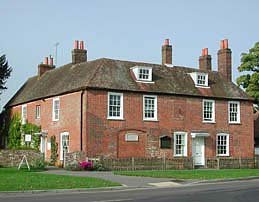
The next hour brought Louise West, of the Jane Austen House Museum (aka Chawton Cottage) and her discussion of the museum’s obtaining funding through the UK National Lottery Fund for its very recent house ‘make over’. Some background history was provided through pictures for those of us who don’t recognize all the names and faces that made Chawton Cottage what it was and has become – as well as the close ties between the ‘Cottage’ and the ‘House’ (Chawton House Library). Her discussion of bringing Austen and Austen’s home to young students and those who might otherwise be unable to afford a few hours there was very thought-provoking for those of us hoping to do the same sorts of outreach – without such a museum! – with our chapter organizations.

News included that the Austen quilt had been lent to an exhibition of quilts being held in Winchester! Great to see a photograph, too, of R.W.  Chapman (his are the editions I use when writing). Visit the website – all new!

Lunched at POSITANO with Janeites Deb and Carol; and got to meet the woman who is so good at sending membership information every month and on demand: Bobbie Gay. Nice to put a face to a name.

After lunch, 1:30 to be precise, the 2009 AGM was officially ‘opened’. The AGM coordinator, Elizabeth Jane Steele (how apropos her name) was our master of ceremonies at all of these mini-events. How did she manage to be everywhere? Though, obviously, no one does such coordinating singlehandedly and Eastern PA had a great pack of volunteers.

Jan Fergus, whom I had met in Montreal in the summer (giving an early version of this plenary speech), spoke on “‘Rivalry, Treacherybetween Sisters!’: Tensions between Brothers and Sisters in Austen’s Novels”. Poor Jan had injuried herself only a few weeks earlier, so she had to deliver her talk sitting down. We wish her a speedy recovery…

Break-out Sessions began at 3:15 – my session was Kathleen Anderson‘s “‘A Most Beloved Sister: The Influence of Sisterly Love on Romantic Relationships in Austen’s Novels”.

Little did I realize at the time, but the next speaker sat in the audience; they teach at the same Florida university. This was the 4:30 break-out session by Susan Jones on “‘My Brother was an Only Child”: Onlies and Lonelies in Jane Austen’s World of Brotherly Love”. As an only child, how could I not attend such a lecture??? Though the more informative proved to be Jones’ thoughts on the ‘lonelies’ in Austen (ie, Mary Bennet).

After a long afternoon on some rather uncomfortable chairs and hours of being talked at and lectured, I nipped back to the hotel room for some rest and hopes of less-intense headache.

Saturday brought a brighter day: it closed with the most interesting lecture of the entire AGM.

Carol and I joined AGMers for a lovely continental breakfast at the Sheraton Society Hill (the conference hotel), meeting JASNA members from as far away as California as well as closer-to-home Boston. One enthusiastic Boston member hadn’t read my last Persuasions article, but was absolutely thrilled that a non-professor actually gives Austen-related lectures and she just loved the idea of my combining Jane Austen with Abigail Adams. We all need a little encouragement from time to time…

Maggie Lane’s plenary talk opened today events (9:30). I had hoped on finding her Austens through Five Generations book at the Boutique – but nope… And more on books later.

Maggie Lane‘s “Brothers of the More Famous Jane: the Literary Aspirations, Achievements and Influence of James and Henry Austen” was right up my alley. In my research, these two brothers are on the fringe: James being the father of James-Edward Austen (my Emma’s eventual husband) and Henry having his stint as a banker — though, in conversation with Maggie Lane after her talk (I got her autograph!), she had never heard of the banking firm Goslings and Sharpe (but she did give me the name of someone who’s looked into Henry’s life as banker).

When the Break-out sessions began at 11:00 I had a good seat for one of the best presentations, “The Bingley Sisters Advise their Brother Charles” – the sisters played by sisters-in-law Liz Philosophos Cooper and Molly Philosophos. Although instructive to the audience, in words and PowerPoint pictures, I must confess that their talk’s title made me envision a different lecture. However, as a performance piece, with pointed humor pulled from what must be their favorite P&P (the 1995 Ehle/Firth production), simply brimming with information on Regency life and delightful visuals, the Bingleys provided a highpoint for an entertaining lecture.

The after lunch events began promptly at 1:00 – Lisa Brown‘s entertaining, enlightening and informative “Dressing Mr Darcy”, a fashion demonstration. Saying that she usually passed around the articles of clothing to an audience more in the range of 15 people, Ms Brown solved her problem by finding volunteer models. Oh the howls that came from the audience when they were told they ‘mustn’t touch the models’! One wished the runway was less “down the middle” (in such a large crowd it was difficult to see), but a few times the models took it upon themselves to stroll down side aisles, thereby giving those on the sides a chance to see what was being discussed – whether it was frills on shirts or the heft of an all-linen coat. The most enthusiastic model – the only Miss Darcy in the group – was simply a delight, and gave me the idea to dress in male clothing should I ever wish to go in costume (how much more comfortable!). BTW, Lisa, I will sooner or later get to emailing you about your handouts, as well as that letter reference to a “pudding”…

The next plenary speaker, Ruth Perry on “Brotherly Love”, followed on the heels of this memorable demonstration. Her concept focussed on Consanguinal versus Conjugal family, and how the trend changed more and more towards the conjugal over the nineteenth century. Quite useful for my research.

The 3 o’clock hour brought the last Break-out, and my session had been originally called “‘Brother and sister! No, indeed!’ From Friendship to Courtship in the Novels of Jane Austen”. Nora Stovel, however, informed her audience that the talk had taken a bit of a turn; while the opening Emma quote still retained its place in the title, the rest of it changed to “From Siblings to Suitors” and looked at pseudo-siblings (ie, Edmund) or paternalistic men (Darcy, Knightly) who end by courting. I had hoped for some insight on why Charles Smith (Emma’s brother) might have turned to a woman he’d grown up with after the death of his first wife. Alas… when late changes are made… the audience is the last to know.

I then made a quick dash across the hotel to the actual Annual General Meeting – a far smaller crowd! And at only a half-an-hour, business was quickly gotten through: new officers were named, including incoming President Iris Lutz — who was on hand as VP for Regions when our Vermont Chapter was first forming! It will be a pleasure to welcome her as President next year. Americans were prompted booted out so the Canadians could have their meeting; I darted back to my hotel room to change for the banquet – thereby missing the Author’s book signing. BUT: I had my signatures…

At Maggie Lane’s plenary talk, she was greeted by Freydis Welland – daughter of Joan Austen-Leigh and one of the movers behind the book A Life in the Country which shows off the silhouettes Edward Austen-Leigh cut for his young children in the 1830s. I had missed talking to Mrs Welland in obtaining Ms Lane’s signature in this book – but guess who showed up as a guest in the audience for the Bingley sisters!? I made bold and introduced myself afterwards; Mrs Welland was kindness itself – and even said she may have illustrations for my next article (though it may be harder to illustrate an article based on Emma’s cousins Lord and Lady Compton…unless she had more “shades” in her collection than I dare hope!). Likewise, on Friday I had introduced myself to Susan Allen Ford (after her talk, which I had not been able to attend); she is the hard-working editor of Persuasions, and is very complimentary of my work–especially “Derbyshires Corresponding,” which appeared in the last issue and appears online at JASNA.org.

At the banquet I sat between Carol and a woman from close-by PA. The volume of chatter in a room with 600 persons meant I only got a few words with the Southern woman sitting beside Carol and none at all really with those a mile away at the other half of the table! A bit of a squeeze (I suspect tables were more for parties of six?), but a delicious vegetarian ravioli. Tea came too late for me to want to imbibe and risk being awake all night. (My hotel room nestled between two highways and a major bridge to New Jersey meant I got about as much sleep as I manage at home being next to a highway and way too close to a ‘new and improved’ airport…) And wouldn’t you have thought a nice cup of tea just the thing at a Jane Austen convention – yet all participants were ever offered in the Break-out sessions was ice water.

After watching the promenade of Costumed participants (though I’m sure a few had on street clothes, just like me), I got a good seat for what turned out to be the most enlightening – and original – talk of the entire AGM: Janine Barchas on “The Sisterly Art of Painting and Jane Austen”. She opened with a litany of names – Wentworths, Elliots, etc. who had connections one with another in REAL life; she’s obviously been performing the feats of a true genealogist in tracing these connections. Needless to say, she had my full attention. But when she brought up names of artists – for we all know the well-conceived idea that in Mrs Reynolds (Pemberley’s housekeeper) Austen nodded at Sir Joshua Reynolds – who perhaps also appear in the naming of minor and not so minor characters, I was astonished: such an avenue of original, thought-provoking research! Janine is another one I promised to email, for Reynolds too portrayed portraits within portraits, as in his picture of Lady Cunliffe who wears her husband’s portrait on her wrist.

Needless to say, after this stimulation, even without cups of tea, I was wide awake half the night… As well I was looking foward to tomorrow’s Boutique and the books I had scoped out earlier.

Sunday opened with a quick breakfast and then off to the Regional Coordinators’ meeting. This was a stimulating session – meeting some who were old hands at being their region’s RC, while others were quite new to the position. Again, a wish for more time… An AGM goes so quickly (though some of the talks were a bit over long, especially when you sit on the same stackable chairs for days on end).

Breakfast brought a hello, come join us from Peter Sabor and his wife. I had first met Peter over email – he was in Surrey not far from where the Goslings lived – then met him in person at last December’s Jane Austen Birthday celebration in Montreal (he was their guest speaker).

The last speaker of the 2009 AGM, John Mullen, closed with his thoughts on “Sisterly Chat” – which brought up the remarkable ‘find’ that a Basingstoke furniture company had sold the Austens two beds, ie, for Cassandra and Jane; what things turn up in historical records, huh?!

The ‘promotions’, as announced in the program, proved to be promoting the next couple AGM regions with ‘invitations’ for the audience to come and join them. Poor Portland, Ore. had a hard act to follow (although they host the next, 2010, AGM on Northanger Abbey) when Fort Worth brought out two well-spoken gents and two musical cowboys and offered up Sense and Sensibility‘s 200th anniversary AGM. By the way, it was announced at the General Meeting that Pride and Prejudice‘s 200th anniversary (the 2013 AGM) was awarded to Minneapolis!

And I leave the AGM (and all this typing…) with their song, which still has my toes tapping. The tune is “Home on the Range” but the piece is entitled “Homeless on the Page“:


Oh give us a home,
Where Marianne roams,
And Colonel Brandon can visit all day
Where the rent is quite low,
And Fanny won’t go,
And London is not far away
(chorus)

Norland was entailed away,
Then Willoughby left for Miss Gray,
Lucy Steele gets a spouse,
But she’s still quite a louse,
Elinor is pragmatic all day
(chorus)

Come to Fort Worth and see,
A toast to Sense and Sensibility
There’s museums galore,
Teas, gardens, and tours,
And you can win the Texas Hold ’em Trophy

So in two thousand eleven,
Come to Texas, it’s heaven,
We will talk of Jane Austen all day

Learn the Two Step and Glide,
There’s a bull you can ride,
Or just chit-chat with Deirdre LeFaye

Oh give us a home on the range!!!!!!!

Singing cowboys: Leo Sherlock (Woody – Hank Dashwood) and Brian Keeler ( Willy – Johnny Willoughby); hear Leo’s band Mile 77 at  www.myspace.com/mileseventy7)
Lyrics by: Uncle Lenny, Craig, Cheryl, and Kathy 

[Posted by Kelly]
Austen Literary History & Criticism · Jane Austen · Jane Austen Circle · Social Life & Customs

Jane Austen in Philadelphia ~ the JASNA 2009 AGM ~ Part 2

AGM 2009 banner

Ok, here I go again…. [please note that due to a computer / camera glitch, all my pictures of the AGM which I was to include in this post, i.e the “Darcy” models, the Regency Ball fashionistas, etc. will not be on here at present – still working on this, but lack the time and patience to be honest! – will post them separately when I can…] 

Day 3:  Up for a continental breakfast, another Regency Emporium visit… then on to the next Plenary speaker, the always delightful Maggie Lane ~ “Brothers of the more Famous Jane:  the Literary Aspirations, Achievements and Influences of James and Henry Austen”.   As the emphasis is often on Austen’s brothers Francis and Charles and their naval world, Lane spoke only here on the professional and literary brothers, Henry, often considered Jane’s favorite brother, and James, who she thinks is in need of a reassessment. It is James, she says, who wrote the majority of the essays in his and Henry’s publication “The Loiterer” [Lane also posits here that the “Sofia Sentiment” letter is NOT by Jane – more on this in another post…] – and James who wrote plays and poetry throughout his life, and it was James with whom Jane shared a similar taste in literature.  Austen’s one negative comment about him [and the only negative comment about a family member] has perhaps been over-credited as her general view.  Lane goes on to compare James to Austen’s characters:  in youth, like Edmund Bertram; in later life, Dr. Grant!, and the use of the name “James” in two of her characters, James Morland and James Benwick, both young men who fell in love easily, a trait attributed to James Austen in his youth. 

Henry Austen, [Oh! what a Henry!] the brother who had a lot of enthusiasm [but often of the short-term variety!], is credited with being the chief negotiator with Austen’s first publisher Thomas Egerton, and likely helped to fund her publications.  He was the “interesting” brother, the one who married his “outlandish” cousin Eliza de Feuillide, the one who is likely the model for Henry Tilney, as well as Henry Crawford!  But Lane also gave us the side of Henry that resulted in the Biographical notice of Austen that began the “Dear Jane” view that persists today – Henry puffed up their social standing, and in the second edition added more religious references and removed the literary mentions of Burney and Edgeworth.  Lane also believes it was Henry’s ambition that resulted in Austen being buried in Winchester Cathedral rather than her beloved Steventon. In the end however, the immortality of both brothers “is only due to Austen’s genius.”

 On to the next two breakouts, and again a struggle to choose, but I decided on Peter Sabor’s “Brothers and Sisters for Brothers and Sisters:  Jane Austen’s Juvenilia, a wonderful discussion of the various dedications written by Austen to her siblings in her juvenile works.  This was very informative and enjoyable, Dr. Sabor being an energetic and engaging speaker, with all sorts of tidbits about Austen’s early works [he is the editor of the Cambridge edition of the Juvenilia].  As I have been reading through these works over the past few months [with much laughing out loud in the process!], this offered a different approach to the works based on her dedications, what Sabor feels were very thoughtful choices on Austen’s part.  As most readers of Austen know, none of her novels bear dedications, excepting of course Emma, where her over-wrought dedication to the Prince Regent was not of her own choosing!

After lunch, a quick pop-in to Lisa Brown’s fun fashion demonstration “Dressing Mr. Darcy” ~ with most excellent and accommodating models, walking the “runway” in all manner of Regency fashions for the men of consequence and their military counterparts.  [pictures forthcoming…]

The third Plenary session with Dr. Ruth Perry who eloquently spoke on the topic of the weekend, “Brotherly Love.”  The author of Novel Relations:  the History of the Novel and the Family in English Society 1750-1810, [and speaker at the Boston 2000 AGM on “Sleeping with Mr. Collins” for those who recall that!], Dr. Perry summarized how the changes in English society changed the view and treatment of women within the family:  as Susan Allen Ford in her session [as mentioned above] suggested, class mobility and geographical movement, changes in marriage choices, the inheritance laws, the increase in population, all led to changes in what was considered the immediate family – emphasis shifted to the conjugal family rather than the biological.  This is apparent in Austen’s own life with her dependence on her brothers’ voluntary support and provision of means of travel, when their priority was their own families.   Perry also emphasizes the literary / historical as well as the biological influences on Austen in her writings, and how good brothers = good husbands:  in Northanger Abbey, Henry Tilney as affectionate brother and lover of muslin; John Thorpe shows his character by the way he talks to his sister and mother; Captain Tilney chafes at family responsibility; James Morland a good brother and friend to Catherine;   the various brother and sister ties in Mansfield Park – Edmund combines the conjugal and fraternal but is inattentive to his sisters [perhaps because there are two of them? – this is a good question…]; the selfish Henry Crawford, fond of Mary, but does not write to her or provide her with a home; Mr. Knightley who speaks of Mr. Martin as an excellent son and brother; Charles Musgrove, who tellingly supports his sisters over his wife; the housekeeper’s praise of Mr. Darcy as a good brother… etc. … lots to mine here as you can see – the need to re-read each book to just look at the brothers and what they do and say and what they don’t!

book cover my dear charlotte

Last breakout session – Jan Fergus on “My Dear Charlotte” the new book by mystery writer Hazel Holt.  I wanted to hear Dr. Fergus’s talk because I had just read the book and was intrigued by it – it is a novel set in the early 19th century written in letters, like Austen’s Lady Susan, but Holt uses selected words or sentences or ideas from the text of Austen’s actual letters and weaves in Austen’s words with her own story.  It is a fun read [I will review it in another post] – and what Fergus calls the “only successful imitation of Austen” on the market today.  The plot does not come from Austen, only those words taken out of context that fit into Holt’s story – at once a mystery and a romance.  Fergus is a friend of Holt, and after her talk she graciously made herself available in the Regency Emporium to offer the book with signed bookplates for sale.  I highly recommend it – the most fun is the ferreting out Austen’s words from Holt’s – it helps to be very familiar with Austen’s letters!


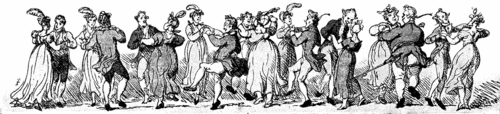
dancing longways rowlandson

 The Banquet and Regency Ball: after a few moments at the author’s book signing table, on to a delicious dinner to meet old and new friends at our table, watched the promenade of those regally dressed, and took some pictures for your viewing enjoyment [all photographs shown with permission of the subjects! – and will be forthcoming…]


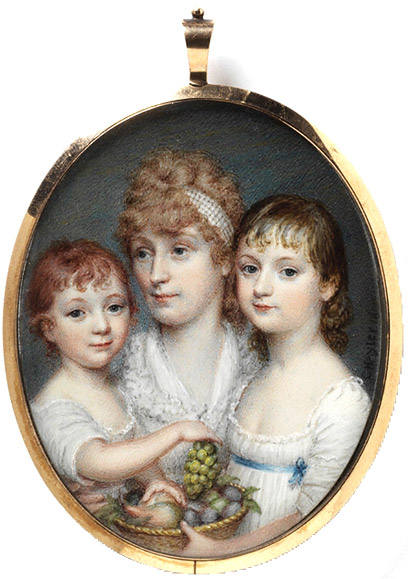
And after watching the dancers for a bit, I wandered into the evening talk I unfortunately only heard the last two-thirds:  Dr. Janine Barchas on “The Sister Arts and Jane Austen”, a fascinating visual exploration of the surnames and places that Austen uses in her novels and the possible connection to contemporary artists:  Reynolds, William Hodges, William Larkin, and Charles Hayter’s miniatures.  It was a packed, standing room only crowd for those non-English Country Dancers among us [though I do so love to dance!] – and all were entranced with this take on names in Austen.  [Dr. Barchas will be presenting an address titled “A Big Name: Jane Austen and the Wentworths” at the August 2010 conference Jacobites and Tories, Whigs and True Whigs: Political Gardening in Britain c.1700 – c.1760, to be held at Wentworth Castle, given by the Wentworth Castle Trust and The Garden History Society.]

Charles hayter minitature

[Charles Hayter miniature – from Wikipedia]

Day 4:  After some housekeeping duties for the Regional Coordinators [a great meeting for sharing ideas, as always…but alas! missed the Episcopal Church Service at the historic Christ Church], we all gathered for the final Plenary session with John Mullan as he addressed us all on “Sisterly Chat” – a wonderfully engaging and humorous talk that will yet again send one back to all the novels for a re-read with a view to all the goings-on between sisters!  The sister relationship was paramount in Austen’s own life and thus in the novels; there is indeed more “chat” between sisters than between lovers.  Mullan is talking about the intimate talk between sisters when they are alone in a special place – the films show this visually, but in the books you have to look for it closely.  He reviewed the controversy from a few years back – “Was Jane Austen Gay?” complete with the newspaper articles and letters, the question hinging on the sleeping arrangements between she and Cassandra – Mullan quoted the final letter in the months-long submissions of raging letters which referenced the furniture company records that proved that Jane and Cassandra did indeed have separate beds!  But all this led to the many examples of the various sisters in the novels and how and where they do or do NOT share confidences.  And after quoting Keats’s “unheard talk”, Mullan runs through the examples of the talk that takes place off-stage, where the reader is “invited to infer what has been said”, with nods to Fanny [his favorite parts of Mansfield Park are when Fanny is not there!], the sisters Steele in what he calls their “mutual espionage” and of course can you imagine the chat between the Bingley sisters who are “always together, almost ganging up” on all around them!  This was fabulous – I hope it will be published in Persuasions, so all may enjoy this fresh approach!

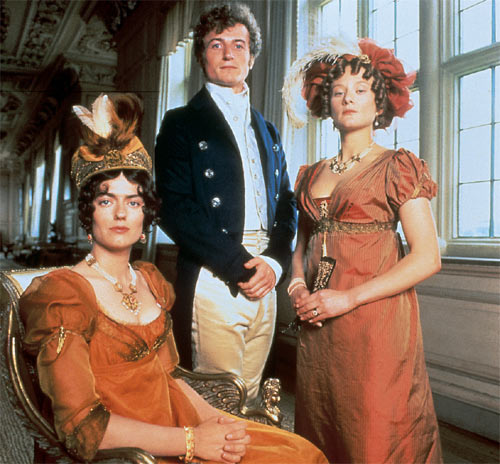
bingley sisters
The Bingleys in P&P

So another AGM is done – I have skimmed over a lot – there were the essays by high school and college students, and the winning short story in that contest [see the JASNA site to read these – very inspiring to see another generation making room for Austen’s books in their lives!]; Steve Lawrence, the Director of Chawton House Library quickly summarized all the goings-on and handed out hearty thanks to all of JASNA for the generosity of so many members. 

The JASNA banner was then dutifully passed on to the coordinators in the  Oregon / Southwest Washington Chapter who will be hosting next year’s AGM:  Jane Austen and the Abbey:  Mystery, Mayhem and Muslin in Portland on the Halloween weekend of October 29-31.  We were also given a delightful treat by the North Texas Region, who will be hosting us in October 14-16, 2011 in Fort Worth, Texas for  200 Sense & Sensibility, celebrating the 200th anniversary of its publication –  two very cute cowboys [and they could sing too!], who to the tune of “Home on the Range” gave us a good sampling of how terrific this 2011 AGM will be [“chatting with Deirdre Le Faye” brought the house down!]  

Final thanks to Elizabeth Jane Steele and her team at the Eastern Pennsylvania JASNA Chapter, who put on a lovely weekend – no words really to thank all the volunteers who have spent countless hours in preparation, just so a very appreciative crowd of Austen-obsessed souls could spend four days in the early nineteenth century! – I know this Janeite is still having troubling re-entering the 21st!

[Posted by Deb]

Austen Literary History & Criticism · Books · Jane Austen · Jane Austen Circle · Regency England · Social Life & Customs

In such good company as this ~ the 2009 AGM!

The 2009 JASNA AGM ~  
Jane Austen’s Brothers and Sisters in the City of Brotherly Love

Philadelphia October 9-11, 2009

 AGM 2009 banner

The best-laid plans of course often go astray – so my hopes to do a close analysis of everything going on the 2009 AGM have been sadly reduced to a mild wish to present a quick summary… so here goes… 

The Eastern Pennsylvania Chapter of JASNA has indeed put on a lovely event – the City of Brotherly Love opened its wide arms for all 550 of us obsessed Janeites, offering great tours, excellent hospitality, lively and elegant evenings, and fabulous sessions filled with all things Jane.  I always upon returning home have the worst time re-entering the 21st century – and this time more than ever.  And time spent with my best-AGM and travel buddy Sara, just adds to the treat … and this year the special treat of JASNA-Vermont friends Kelly and Carol…

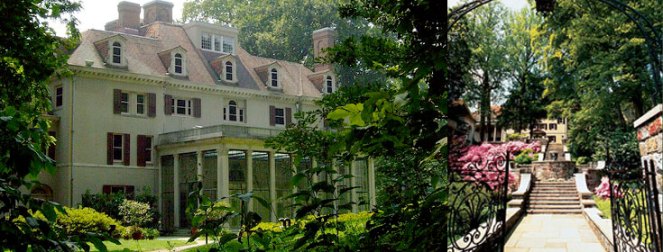
 Day 1:  A tour of Winterthur on the Thursday, one of my favorite places through books only, was a living reality of the beauties of home and garden, what one man with a lot of money was been able to preserve for future generations.  I discovered that Electra Havemeyer Webb, the founder of the Shelburne Museum here in Vermont and one of the first collectors of American art and decorative arts, was the inspiration behind Henry du Pont’s veering away from the popular collecting of European antiques toward acquiring Americana.  It was a lovely day and a wonderful way to start that entry into the late 18th-century the rest of the weekend promised!  [only downside: I missed the talks on writing and Wedgwood.]

winterthur-museum-header


Thursday evening ~ “Elizabeth Garvie in Conversation with Dr. Elisabeth Lenckos” was a special offering this year and began with a short clip of the first proposal scene in the 1980 Pride & Prejudice.  Ms. Garvie, who most everyone knows as Elizabeth Bennet in that adaptation, and now an active patron of the Jane Austen’s House Museum in Chawton, charmed the audience with her engaging and honest responses to Dr. Lenckos’s questions: the realities of filming a television production in the late seventies; how she portrayed a sister with four sister siblings without any of her own [she had a mother with FIVE sisters!]; a few comments on deleted scenes [falling off the log during that outdoor reading of Darcy’s letter…]; how each new P&P adaptation has something to offer each new generation with a reinterpretation of Austen [though she didn’t like the pig in the 2005 movie either!]  She ended the talk with a very humorous reading from one of Austen’s juvenilia pieces, “The Three Sisters.”

ElizabethGarvieElizabethBennett


Day 2:  Had breakfast with several Austen-L / Janeites participants [though I have been only a lurker for years!] – and ended up having a rousing discussion on Georgette Heyer!

An early visit to the Regency Emporium always ends with too many books and items that add to the weight of my suitcase [and those flying rules now are intimidating – even Austen cannot impel me to go over that 50lb limit!] – thankfully Jane Austen Books where I spent most of my time [and money] sends everything media mail after the conference, so I just set up a running account of sorts – almost guilt-free ~ and shopped happily away… The Emporium is great fun to catch up with many of the other regions, Chawton House Library [director Steve Lawrence was there], Jane Austen’s Regency World Magazine [with editor Tim Bullamore], Austentation [two tables filled with regency accessories!] and a few other vendors with Austen-related goodies ~ I went back many times over the course of the conference…

 Off to a talk on tea by Mim Enck from the East Indies Company – and learned how to make the perfect “cuppa”…  and then a talk with visuals by Louise West, from the Jane Austen’s House Museum, on the exciting new addition to Chawton Cottage, the dreams, the funding, and the lovely reality.  The grand opening was in July – if you have been to Chawton, but not since this work was done, put it on your next Austen trip itinerary!

chawton cottage

***************************

Marsha Huff, current JASNA President, welcomed all to the first official gathering, giving over the podium to our very own Vermont member Lorraine Hanaway [who was there for the founding of JASNA in 1978] who introduced the first Plenary speaker, Jan Fergus.  I love Dr. Fergus’s talks  – she inspired a whole new way of looking at Austen in her “The Whinnying of Harpies”? Humor in Jane Austen’s Letters” [Persuasions 27 (2005)] and has continued to regale her audiences with the humor of Austen’s whines ever since!  Today she spoke on “’Rivalry, Treachery between sisters!’ Tensions between Brothers and Sisters in Austen’s Novels” –  and the various ways in which Austen’s fictional siblings either love and support or compete with one another. Some of this thinking is based on the conduct books of the 18th-century, but also the reader must have awareness of the problems that arose between siblings due to the inheritance laws of the time.  Fergus showed by example Austen’s use of humor as a form of criticism between characters and how a sense of humor or lack thereof is an important gauge in understanding Austen’s characters:  i.e Marianne lacks humor and openness, thus her lack of understanding Elinor’s humor causes friction between them; Mr. Woodhouse has no sense of humor, just doesn’t get it!; and finally an emphasis on Elizabeth and Jane and how their different personalities and use of humor causes an undercurrent of almost comic aggression on Elizabeth’s part.  I liked this differing view of Elizabeth, not so perfect but with a tendency toward jealousy…

************************************

One of the problems in the AGM is choosing between the breakout sessions – so much to hear, so many speakers – whichever one you choose leaves you knowing that you are, regardless of how great your chosen session might be, missing so much else.  One can only hope that many of the talks you miss will be in the next issue of Persuasions.  I am a voluminous note-taker – but alas! none of my friends are, so after a full day of events and all things Austen being bandied about, one is lucky to get a few intelligible sentences about a missed session – I know if I didn’t take notes, I would have trouble piecing this all together – and indeed even my notes leave me stupefied occasionally! – so I can only present a few thoughts of the four sessions I did go to, knowing full well I am only scratching the surface of the possibilities…

I went to hear Jocelyn Harris, author of ….Jane Austen’s Art of Memory and A Revolution Almost Beyond Expression:  Jane Austen’s ‘Persusaion’, who spoke on “Jane Austen:  Frances Burney’s Younger Sister”.  Harris’s emphasis is to move away from the biological interpretation of Austen toward an historical one, Austen being very connected to her historical and literary references.  In Persuasion, Austen shows her knowledge of the Navy, Nelson and the Napoleonic Wars, but Harris also shows how the two cancelled chapters of Persuasion are steeped in Frances Burney’s The Wanderer.  I confess to having read several books by and about Burney, but The Wanderer has sat upon my TBR pile for many a year, never opened, largely due to the negative contemporary reviews and all those succeeding.  But Dr. Harris has inspired me to finally pick it up, though she says herself it will be a bit of a “slog” – a perfect winter read perhaps…?

*************************

Then on to Susan Allen Ford’s “’Exactly what a brother should be’? The Failures of Brotherly Love”:  Again, with an emphasis on the contemporary conduct literature [and with a very helpful handout with bibliography and selected paragraphs], Ford reviews the examples of fraternal love in the various novels in the context of the time – issues of inheritance, personality differences, the role of women and the emphasis on them as daughters and mothers rather than sisters, the economic realities of the sister’s lives.  And while she says that “the fraternal role is difficult to define in Austen because the characters as brothers are not often in the foreground”, it was an interesting discussion on their varying degrees of success and failure:  John Dashwood as a brother [yikes!]; the parallels between Edward and Robert Ferrars; Tom Bertram, the prodigal son; the jealousy between Darcy and Wickham, but Darcy’s anxiety and his overriding concern to be a good brother; James Morland as a good brother who wrongly throws his sister into the hands of the Thorpes [yikes again!]; and Edmund, brother / lover who neglects Fanny once Mary appears on the scene [this is when one audience member graciously invited everyone to join the SLEUTH club = “SLap Edmund Upside The Head” – there were many joiners on the spot!] ~ Dr. Ford’s choices? – Edmund the biggest failure [he indeed has NO relationship with his sisters], and most successful? [drum-roll please!] HENRY TILNEY [Mags are you listening??] – and I couldn’t agree more! [love the Henry!] – but an interesting question – who would yours be??

 Then off to dinner with Sara and friends of hers who live in Philadelphia for a few short hours back in the 21st century – we went to an Israeli restaurant right across from the hotel [ Zahav ] and one of the best meals I have had in a good while – even the wine from the Golem Heights was superb!

Up tomorrow – Day 3 and 4…. meanwhile post a comment on your choice for the best and worst brother in Austen…

Austen Literary History & Criticism · Jane Austen · Jane Austen Circle

An Austen Brothers & Sisters Bibliography

Take a quick look at the JASNA website where a select bibliography on “Austen’s Siblings in Fact and Fiction in JASNA Publications”  has been posted ~ all in preparation for the upcoming AGM in Philadelphia, City of Brotherly Love.  All the articles are in JASNA publications, many with online links.

Here is a taste to start your reading adventure:

Tthe facts“Austen Brothers and Sisters” by Park Honan. Persuasions 10 (1988): 59-64.

The fiction:  “Sisterhood and Friendship in Pride and Prejudice by Deborah J. Knuth. Persuasions 11 (1989): 99-109.

AGM 2009 banner

Austen Literary History & Criticism · Books · Jane Austen · News

Jane Austen’s Regency World Magazine ~ Time to Subscribe!

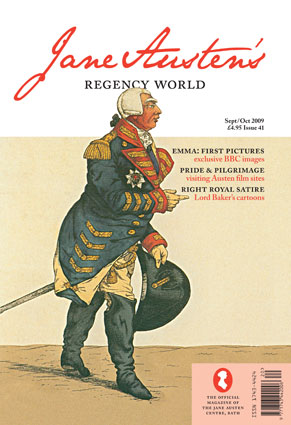
The latest issue of Jane Austen’s Regency World [vol. 41] will be in the post this week ~ now is your chance to subscribe and begin adding this great journal to your Austen collection!  Some highlights from the latest issue:

JARW_41_Cover

  • The first OFFICIAL pictures of the BBC’s new Emma
  • Right Royal satire: Lord Baker’s collection of Georgian caricatures
  • Pride and pilgrimage: visiting Austen sites
  • Would Jane blog? How Jane’s journals differ from today’s blogs
  • The stigma of illegitimacy in Regency times
  • Genius, wit and taste in Austen’s writing

You can subscribe to Jane Austen’s Regency World, “the full-colour, must-read, glossy magazine for fans of the world’s favourite author – delivered to your doorstep every two months direct from Bath, England,” by visiting the website at Jane Austen Magazine.co.uk and clicking on “Subscriptions”.  Cost is £29.70 + shipping – you can pay securely online using a credit card or PayPal.  Back issues are also available for purchase. Treat yourself ~ it is well-worth it!

[Posted by Deb]

Austen Literary History & Criticism · Books · Jane Austen · Literature · News

Persuasions No. 1 ~ Now Online!

JASNA.org has added online** the full text of the Number 1 Persuasions journal that has long been out-of-print:

persuasions no 1 cover

Persuasion*  No. 1.  December 16, 1979 

Board of Directors
President’s Report 
Brief highlights of the meeting 
St. Nicholas Appeal      -George H. Tucker
Our First Dinner   – Lorraine Hanaway
Pemberley Revisited     -Donald Greene
The Picturesque in Pride and Prejudice   – A. Walton Litz
A Member’s First Pilgrimage to Winchester   – Hilma D. Barrett
Some notes on the “parish business” in Emma    -Cathy Fried
Telegram from the Jane Austen Society 
Letter from James T. Farrell 
Quiz Angela Addison
Meeting aboard the Elizabeth Bennet

* The first issue was titled “Persuasion” – it was decided to change the name to Persuasions for subsequent issues

**[Many thanks go to Montreal member Renée Charron (Treasurer, Canada), who scanned and corrected the full text of Persuasion No. 1, as she also did for the other eleven out-of-print issues of Persuasions.]

Drawing from the cover of Persuasion No. 1
by Pamela Susan Koppel, age 15, of Tucson, Arizona

[Posted by Deb]

Austen Literary History & Criticism · Jane Austen · JASNA-Vermont events · News · Schedule of Events

JASNA-Vermont & JASNA-Massachusetts 2009-2010 Schedule

JASNA ~ Vermont

Upcoming events ~ 2009 – 2010 

Banner 30 x 48

Sunday, September 27, 2009  2-5pm 

“Jane Austen for Smarties”

Professor Joan Klingel Ray, past President of JASNA
Author of Jane Austen for Dummies

Talk and Book- signing to be followed by
A Mini-Concert with Impropriety and The Burlington Country Dancers
Place:  Hauke Center, Champlain College 

Sunday, December 6, 2009 2-5pm 

Annual Jane Austen Birthday Tea w/
UVM Professor Philip Baruth [topic TBA]
Place: Champlain College
$15./ person 

Sunday, March 21, 2010, 2-4pm 

“Learning to Love a Hyacinth: Emotional Growth in Northanger Abbey”
 Ingrid Graff, Independent Scholar
Place: Champlain College 

Sunday, June 6, 2010, 2-4pm 

Box Hill Picnic
“Austen / Adams ~ Journeys with Jane & Abigail”
JASNA-Vermont’s Kelly McDonald!
in Deb Barnum’s Garden
[ Bring-Your-Own-Picnic to celebrate Emma ]

Please join us for any and all events!

[please contact us directly through the blog if you would like more information]

****************************** 

I am also posting here the 2009-2010 schedule of the JASNA-Massachusetts Chapter, as many of us like to attend their events; for more information, please contact Nancy Yee at jasna [dot] yee at gmail [dot]com

JASNA Massachusetts    2009-2010 Program 

Sunday, September 13, 2009 ~ 
                                     Henderson House: Mini-Conference:
                                    “The Power of Place in Austen’s Life and Work.” 

                                                            Plenary Sessions:
                                                                        Alistair Duckworth
                                                                        Elaine Bander
                                                            Breakout Sessions:
                                                                        Marcia Folsom
                                                                        Ann Morrissey
                                                                        Isa Schaff 

                                                    Sunday, September 13, 2009
                                                    12 noon – 5 p.m.
                                                    Henderson House Conference Center
                                                    Weston, Massachusetts 

Sunday, November 15, 2009  ~  Speaker: Judith Wilt
                                                   Sunday, Nov. 15th, 2 p.m.
                                                   Wheelock College, Brookline Campus
                                                    43 Hawes Street, Brookline, MA

 Sunday, December 13, 2009  ~  Birthday Celebration
                                                     Sunday, Dec. 13th, 2 p.m.
                                                     Wheelock College, Brookline Campus
                                                      43 Hawes Street, Brookline, MA 

Sunday, March 14, 2010  ~  Speaker: John Gould
                                                    Sunday, Mar. 14th, 2 p.m.
                                                    Wheelock College, Brookline Campus
                                                     43 Hawes Street, Brookline, MA 

Sunday, May 2, 2010  ~  Speaker: Susan Allen Ford
                                                  Sunday, May 2nd, 2 p.m.
                                                  Wheelock College, Brookline Campus
                                                  43 Hawes Street, Brookline, MA

**********************************

[Posted by Deb]

Austen Literary History & Criticism · Jane Austen · News · Regency England · Schedule of Events · Social Life & Customs

A Jane Austen Weekend in Vermont!

The Governor’s House in Hyde Park will be hosting another Jane Austen event next weekend on August 14-16 ~ topic is Pride & Prejudice.

governors inn

Jane Austen Weekend: Pride and Prejudice*

The Governor’s House in Hyde Park

Friday to Sunday, Aug. 14 – 16

[also the weekends of  Sept. 11 – 13, 2009 and Jan. 8 – 10, 2010]


http://www.OneHundredMain.com/jane_austen.html

802-888-6888, tollfree 866-800-6888 or info@OneHundredMain.com


Reservations are required!


A leisurely weekend of literary-inspired diversions has something for every Jane Austen devoteé. Slip quietly back into Regency England in a beautiful old mansion. Take afternoon tea. Listen to Mozart. Bring your needlework. Share your thoughts at a discussion of Pride and Prejudice and how the movies stand up to the book. Attend the talk entitled The World of Jane Austen. Test your knowledge of Pride and Prejudice and the Regency period and possibly take home a prize. Take a carriage ride or sleigh ride. For the gentleman there are riding and fly fishing as well as lots of more modern diversions if a whole weekend of Jane is not his cup of tea. Join every activity or simply indulge yourself quietly all weekend watching the movies. Dress in whichever century suits you. It’s not Bath, but it is Hyde Park and you’ll love Vermont circa 1800. 

Note that our very own Kelly McDonald will be speaking on 
“Georgiana Darcy and the ‘Naïve Art’ of Young Ladies”   ~ Looking into the lives of ladies like Georgiana Darcy (Pride & Prejudice), as expressed through their artwork.

mrs-hurst-review-at-dynas-hall [from “Mrs. Hurst Dancing”, illus. by Diana Sperling]

[see Kelly’s blog at Two Teens in the Time of Austen for more information on her talk…]

**************************

*Or come for just an afternoon or evening and choose from these activities:

  • Informal Talk with Coffee and Dessert, Friday, 8:00 p.m., $14.00
  • Afternoon Tea, Saturday, 3:00 p.m., $20.00
  •  Book Discussion and Dinner, Saturday, 7:00 p.m., $35.00
  •  Jane Austen Quiz and Sunday Brunch, Sunday, 11:30 a.m., $15.00
  • All four activities: $75.00

The Governor’s House in Hyde Park

100 Main St

Hyde Park, VT 05655


http://www.OneHundredMain.com/jane_austen.html

802-888-6888, tollfree 866-800-6888 or info@OneHundredMain.com


[Posted by Deb]

Austen Literary History & Criticism · Jane Austen · News

Jane Austen at the Pierpont Morgan Library

The Pierpont Morgan Library announces its upcoming Austen exhibit:


morgan exhibit letterA Woman’s Wit: Jane Austen’s Life and Legacy
November 6, 2009,
through March 14, 2010

[Jane Austen, Lady Susan, autograph manuscript, written ca. 1794–95 and transcribed in fair copy soon after 1805. The Morgan Library & Museum, Purchased in 1947; MA 1226.]


“This exhibition explores the life, work, and legacy of Jane Austen (1775–1817), regarded as one of the greatest English novelists. Over the past two decades, numerous successful motion picture and television adaptations of Austen’s novels have led to a resurgence of interest in her life and work. Providing a close-up portrait of Austen, this exhibition achieves tangible intimacy with the author through the presentation of her manuscripts and personal letters, which the Morgan has not exhibited in a generation.

 The Morgan’s collection of Austen’s manuscripts and letters is the largest of any institution in the world and includes the darkly satiric Lady Susan, the only surviving complete manuscript of any of Austen’s novels. The exhibition also includes first and early illustrated editions of Austen’s novels as well as contemporary drawings and prints depicting people, places, and events of biographical significance. In addition to the literary influences that inspired and informed Austen’s works will be responses by later writers as diverse as Auden, Kipling, Nabokov, Scott, Yeats, and Woolf. A specially commissioned film of interviews with contemporary authors and actors commenting on Austen’s work and influence will also be shown in the gallery.”
 

[See the Library website here]


The Morgan Library & Museum
225 Madison Avenue at 36th Street
New York, NY 10016

Tel: (212) 685-0008

Posted by Deb

Austen Literary History & Criticism · Jane Austen · Publishing History

Austen on St. Swithin’s Day

On July 15, 1817, three days before she died, Jane Austen wrote several lines of comic verse, dictating them to her sister Cassandra.  Henry Austen refers to these verses in his biographical sketch: “The day preceding her death [though she died on July 18], she composed some stanzas replete with fancy and vigour.” [Biographical Notice]

Venta

[Written at Winchester on Tuesday the 15th of July 1817]

When Winchester races first took their beginning
It is said the good people forgot their old Saint
Not applying at all for the leave of St. Swithin
And that William of Wykham’s approval was faint.

The races however were fix’d and determin’d
The company met & the weather was charming
The Lords & the Ladies were sattin’d and ermin’d
And nobody saw any future alarming.– 

But when the old Saint was inform’d of these doings
He made but one spring from his shrine to the roof
Of the Palace which now lies so sadly in ruins
And then he address’d them all standing aloof. 

Oh subjects rebellious,  Oh Venta depraved
When once we are buried you think we are dead
But behold me Immortal. –  By vice you’re enslaved
You have sinn’d & must suffer. – Then further he said 

These races & revels & dissolute measures
With which you’re debasing a neighboring Plain
Let them stand–you shall meet with your curse in your pleasures
Set off for your course, I’ll pursue with my rain.

Ye cannot but know my command in July
Henceforward I’ll triumph in shewing my powers
Shift your race as you will it shall never be dry
The curse upon Venta is July in showers.

[text from Minor Works, ed. Chapman, Oxford, 1988 [revised edition]

*********************************

saint swithin 

St. Swithin [sometimes written as Swithun] was the Bishop of Winchester in the 9th century.  Legend has it that Swithin requested upon his death to be buried in the churchyard, but his remains were later brought into the church on July 15, 971.  The Saint’s obvious displeasure with this move resulted in a hard rain for forty days and he was thus removed again to the outside [the location of this grave was at the Old Minster, now covered by Winchester Cathedral – there is some authority for the belief that Swithin’s body parts may be buried in various places…] – but these mysterious rain happenings gave England the still-held weather prediction that:

St Swithun’s day if thou dost rain
For forty days it will remain
St Swithun’s day if thou be fair
 For forty days ’twill rain na mair 

The Winchester horse races were run on July 15th at “the neighboring plain” of Worthy Down.  Austen in a light-hearted moment composed these lines to  “Venta” [ Venta was the name given to Winchester during Roman Britain, “Venta Belgarum”, which means market or meeting place – it is also the name of the University of Winchester’s Alumni Magazine] – she was pointing out the incongruity of the races taking place on a Saint’s Day and his punishment for the “revels & dissolute measures.”

The appearance of these verses is an interesting side story in the history of publishing Austen’s works.  After Henry’s reference to them in his Biographical Notice, his comment was deleted from the 1833 edition.  James Edward Austen-Leigh in his 1870 Memoir makes no mention of them, nor in his second edition.  The fifth Earl Stanhope, an early collector of Austen’s works, had tried unsuccessfully to find out what these “stanzas replete with fancy and vigour” were actually about.  His efforts prompted Austen’s niece Caroline to write:

Nobody felt any curiosity about them then – but see what it is to have a growing posthumous reputation! we cannot keep anything to ourselves now it seems…. Tho’ there are no reasons ethical or orthodox against the publication of these stanzas, there are reasons of taste – I never thought there was much of a point to them – they were good enough for a passing thought, but if she had lived she would probably soon have torn them up – however, there is a much stronger objection to their being inserted in any memoir, than want of literary merit – If put in at all they must have been introduced as the latest working of her mind – Till a few hours before she died, she had been feeling much better, & there was hope of amendment at least, if not a recovery – but the joke about the dead Saint, & the Winchester races, all jumbled up together, would read badly as amongst the few details given, of the closing scene.  [Le Faye, p. 89-90]

So Austen’s last words fell to the axe of Henry’s protective spirit and the later Victorian sensibilities.  The poem was first published in 1906 in the Hubback’s Jane Austen’s Sailor Brothers.   Chapman in his notes to the Minor Works, questions at first if they are hers – that is until he realizes he was overlooking the clear evidence in Henry Austen’s deleted comment and concludes “that no doubt settles the question.” [Chapman, MW, p. 451] 

 There are actually two manuscripts, the copy in Cassandra’s hand as dictated by Austen [owned by the Carpenter family], where the lines “When once we are buried – but behold me Immortal” are underlined, likely by Cassandra at a later date, and a second copy written out by James Edward Austen-Leigh, now in the Berg Collection at the NY Public Library, and the manuscript used in Chapman’s edition.  There were a few changes to the text, especially with the use of the word “dead”, where the manuscript reads “gone” – this does not rhyme with the “said”, and again conjecture is the Cassandra could not write what Jane actually spoke.

For me, I am heartened that in her last few days, Austen was able to rally her spirit to write yet another of her light verses, reminiscent of her juvenilia, even in the face of what she knew had to be the fast-approaching end of her life.

Winchester House college st

Further Reading:

  1. Chapman, R.W.  Minor Works.  Oxford University Press, 1988 [c1954], pp. 450-452.
  2. Doody, Margaret Ann, ed.  Catharine and Other Writings.  Oxford University Press, 1998, pp. xxi-xxiii. 
  3. Le Faye, Deirdre.  “Jane Austen’s Verses and Lord Stanhope’s Disappointment,” Book Collector, Vol. 37, No.1  (Spring 1988), pp. 86-91.
  4. Modert, Jo., ed.  Jane Austen’s Manuscript Letters in Facsimile.  Southern Illinois University Press, 1990. pp. xxiii- xxiv.]
  5. see also Joanna Waugh’s post on on St. Swithin, Jane Austen: Sleeping with the Saints

[image of St. Swithin from Wikipedia]

*[today in Vermont it is FINALLY a bright and sunny day, after what has felt like forty days of rain – so hopefully this bodes well for an end to our soggy-summer!]

Posted by Deb