Author Interviews · Book reviews · Books · Jane Austen · Jane Austen Popular Culture · Regency England

Interview: Part I ~ Walking around Regency London with Louise Allen

NOTE:  Book giveaway! ~ see the end of this post for details!

 Please welcome author Louise Allen today as she answers questions about her new book on Regency London.  Louise is a very successful writer of historical Regency romances, over thirty-five titles to date!  Her interest in all things Regency is fed by constant research into the period, as well as the development of a fine collection of prints and ephemera from the era – all this to help in her writing. In December 2010 she released her first non-fiction work titled Walks Through Regency London [available direct from her at louiseallen [dot] regency [at] tiscali [dot] co [dot] uk


JAIV:  Thank you Louise for joining us here in Vermont today! I was so pleased to get your new book on Regency London hot off the press! – I ordered two copies and gave one to another London-obsessed friend and she is most enjoying your book!…we only wish we could both be in London together and exploring Town with your book in hand, rather than this armchair traveler thing! – hopefully, sometime soon…we’re working on it!

JAIVSo first, tell us something about yourself.

LA:  Thank you very much for inviting me to join you – it is great to be in Vermont, even if only in cyberspace! I live in the East of England with my husband and we are about to move even further east, to a cottage on the North Norfolk coast. I was first published back in 1985 and for years I wrote alongside my full-time job as a property manager, but for the last three years I’ve been writing full-time and I love it.

JAIV:  When did you first discover your love of the Regency period? Why this time and place?

LA:  I think I first became aware of it when reading Georgette Heyer as a teenager. I’ve always been an historian – I studied landscape history, historical geography and archaeology at university – but it took me a while to settle on the “long” Regency as a period to write in. My first book was set during the English Civil War of the 17thc but my editor encouraged me to look at the Regency and I fell in love with it. I think it is because it occupies a transitional place between the agricultural and aristocratic world of the 18thc and the rapid technological change and urbanization of the Victorian era. Boundaries are always interesting and complex and it is also sufficiently different and yet recognizable, which makes it fascinating to write about. And I’m English, so English history felt right.

JAIV:  Did you read Jane Austen as well as Georgette Heyer? – do you re-read them? Which are your favorite titles, if it is possible to choose?

LA:  Yes, to both authors and yes to re-reading. Austen – I love Pride & Prejudice, but I find Sense & Sensibility more interesting. I was at Jane Austen’s house at Chawton last year and it was very moving to walk in her garden and to see her tiny writing table. Heyer favourites? The Grand Sophy and also The Toll Gate, which isn’t everyone’s choice, but I’m tall, so I identify with the heroine!

JAIV: You obviously use London and the London social scene in your fiction, and the need to be accurate has led you to amass a great deal of research through the years – hence your “Walks” book – what first prompted you to pull all this together and publish it?

LA:  My husband and I love walking, and we love London, so it was no hardship to start exploring when I wanted to check details. Then we got hooked and started exploring specific areas – when I looked at my notes and our photos I realized that I had the makings of a book.

JAIV:  You cite the 1807 The Picture of London guidebook as your main source. What other books did you use? – there are so many works on London – which are your favorite and why?

LA:  I use the 1807 guide because it is fun to take it for a walk where it must once have gone with its Regency owner – it is the real thing, much used and slightly battered. We also take the invaluable A-Z of Regency London published by the London Topographical Society. Their historical A-Zs are a brilliant resource. When I checked my shelves just now I found I have 55 reference books on London, so it is a problem to pick out just a few, but I would say The London Encyclopedia (published by Macmillan) is an essential. Peter Ackroyd’s London: The Biography is full of fascinating, unusual and often downright weird information and Dan Cruickshank’s book on the sensual life of London The Secret History of Georgian London is about so much more than sex.

JAIV:  What are your favorite haunts in London, for both Regency times and the present?

LA:  The St James’s area is the best preserved Georgian/Regency quarter. Soho is endlessly fascinating – so many layers of history. The City, although it has been leveled by the great fire and then again by the Blitz still preserves its medieval street patterns and modern office blocks must contort themselves to fit the shape of some ancient workhouse or monastery cloister. You can even see the curved walls of Newgate Prison fossilized in the shape of an ultra modern building. But it is hard to find a part of London that isn’t interesting if you are prepared to be very nosy!

JAIV:  The book is fact-filled and anecdotal, and culled from so much available information – how did you decide what to include and what not to include?

LA:  It was a nightmare! I had enough material for twenty walks, but I tried to chose ones that gave a variety of experiences, which were all about 2 miles long and which could be split up if walkers wanted to have a shorter route or spend more time in a museum.

JAIV:  Did you discover anything surprising in your research and exploration? Something you did not already know?

LA:  It wasn’t so much new facts that I found but places which gave me a real frisson of excitement: the 1820s operating theatre where you can see the marks of the surgeons’ saws on the table; the last galleried coaching inn left in London; the great scales in Berry Bros & Rudd where Byron used to weigh himself; having a drink in Tom Cribb’s own pub and exploring the back alleys behind Almack’s which were once filed with high-class brothels and gambling dens. Perhaps the most unexpected discovery was in a Chinese supermarket in Soho – walk past stacks of dried herbs and fish, bags of rice and look up and realize you are in a very old house indeed – and in the back is still the sweeping 18thc staircase. This is the Turk’s Head coffee-house and Dr Johnson and Joshua Reynolds were just two of the great men who  socialized here.

[Image of Samuel Johnson: Johnsonese.com]

JAIV:  The illustrations in your book are from your own collection. What other ephemera from the era do you look for? When did you start becoming a serious collector? – and did your writing come first or vice versa?

LA:  The writing came first then the more I wanted to know about the period, the more I would look for items from it. I collect fashion prints 1790-1820, prints of London from Ackermann’s Repository, coaching and sporting prints, bills and invoices, playbills and anything else that I can get my hands on. I started buying fashion prints when I stubbed my toe on a box of over thirty, all framed, under the table at an auction. I got them for a song and as the porter staggered out to the car with them he said, ‘Bloody hell, madam, you don’t half buy in bulk!’ He didn’t know how true it was, I’m afraid – I’ve got about 1,000 prints now.

[Charles Street]

JAIV:  Where are your favorite haunts to find items? How do you categorize and store them?

LA:  On-line and live auctions, antique fairs and antique shops are all good places to search, but auctions are the most productive. I store them in archival-quality binders on acid free paper, or have them framed by a specialist framer using acid-free mounts. I arrange the fashion prints by date, the London prints by street and everything else by subject.

JAIV:  You bring the Regency so to life! – better to have this guide while actually walking around London – but even so this journey of readinghas been delightful… Which of your walks is your favorite? – what is your favorite part of London?

LA:  Thank you! I enjoy them all – it depends on my mood. If I am feeling like high society and shopping, Mayfair and St James’s are best. Hyde Park is great for a good walk, Soho is vibrant and slightly edgy and the City surprisingly dark and sinister.

JAIV:  The process of writing fiction and non-fiction is quite different – explain the process for writing this Walks book.

LA:  I was very conscious the whole time that I had to make this crystal-clear for people to follow. It would have more than doubled the cost if I’d included maps, so users needed to be able to do without, or use it in conjunction with an ordinary pocket map. Then, once I had plotted each walk out on a modern map it was a question of picking out the relevant points of interest or short snippets of interesting information and weaving them in with the directions – and then re-walking to check every turning and fact.

JAIV:  Do you have another non-fiction Regency-era book in the works?

LA:  We are tracing the original route of the Great North Road, the main coaching route between Edinburgh and London – but not on foot! This is great fun and needs a lot of detective work and old maps. I see this one as possibly being a Kindle book rather than a print one.

JAIV:  Thank you Louise for joining us today for Part I of this interview! Louise is happy to answer any of your questions, so please ask away!

Stay tuned: Part II  tomorrow where I continue this interview with Louise on her Regency Romances and her thoughts on writing; followed by Part III, a book review of Walks Through Regency London

You can visit Louise’s website here and find her on Twitter @LouiseRegency

If you would like to order the Regency Walks book, you can do so directly from her website – I can attest to the book being mailed right away, arriving safe and sound and very quickly!

Thank you again Louise for joining us today – looking forward to continuing our discussion  tomorrow!

Book Giveaway:  Please enter the drawing for a copy of Walks Through Regency London, compliments of ‘Jane Austen in Vermont’, by asking Louise a question or commenting on any of the three posts about this book.  Drawing will take place next Wednesday 2 March 2011; comments accepted through 11 p.m. EST March 1st.  [Delivery worldwide.]

[All images excepting Dr. J from Louise Allen’s website]

Copyright @2011, Deb Barnum, at Jane Austen in Vermont.
Austen Literary History & Criticism · Books · Jane Austen · Jane Austen Popular Culture · Regency England · Social Life & Customs

In Praise of Margaret Sullivan (and Her Henry Tilney)

A few words of praise for Margaret Sullivan, famed “Editrix” of Austenblog, developer of Molland’s, personal blogger at Tilney and Trap Doors, and authoress: 

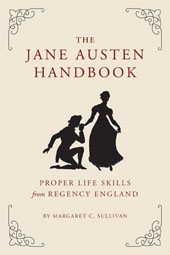
Her Jane Austen Handbook, first published in 2007 will be re-released in early March 2011 by Quirk Books.  Note that this is not a new edition; it has the same content with just a change in the subtitle from “A Sensible Yet Elegant Guide to Her World” to “Proper Life Skills from Regency England”.  There is a new cover design and a change from turquoise to a cocoa brown for text and illustations.  The illustrations by Kathryn Rathke are a delight.  All text and references are exactly the same, alerting you to such important concerns as:

  • How to Become an Accomplished Lady
  • How to Identify the Quality
  • How to Write a Letter [with directions on the proper fold]
  • How to Become Known as a Valuable Neighbor
  • How to Marry Off Your Daughter
  • How to Decline an Unwanted Proposal of Marriage
  • How to Behave at a Dinner Party 
  • How to Get Rid of Unwanted Guests

Certainly all necessary rules of etiquette we could all still learn and apply today ~ I for one do lament the loss of the letter-writing culture…!

An Appendix includes a short biography of Austen, a page summary of the novels and other works, and a few words on the film adaptations.  A short list of Resources, a very select Bibliography, a Glossary and index round it all out. 

If you didn’t get this book the first time around, don’t miss out again – it is a  must-have addition to your Austen collection – fun and informative [card games, dances, fashion, needlework, all manner of Regency social life and customs!], and filled with Sullivan’s well-known wit:

It is a truth universally acknowledged that in this world there are haves and have-nots.  Some are born to marry a man with ten thousand a year and have jewels and pin money second to none; some are destined to teach that woman’s children and be patronized by her servants.  In the sad event that you are forced to seek employment, here are a few acceptable ways for you to do so.  All are ill-paid and unpleasant in their own way and should be avoided if at all possible.   [She then outlines the following]

  •  Governess
  • Schoolteacher
  • Companion
  • Lady’s Maid
  • Authoress

[The Jane Austen Handbook, p. 87-88] 

Fortunately for us, Sullivan chose the latter, perhaps because, as her dedication so lovingly conveys, “For my mother, who let me read everything.”  We should all follow such sage advice!

**********************

I am late to the table one this one, but here ‘s another shout-out about Sullivan’s also recently re-published novella There Must Be Murder, a sequel to Northanger Abbey – as noted in her article in the latest JASNA News (Vol. 26, No. 3, Winter 2010), it is available from Librifiles.com  as a hardcopy [also at Amazon] and as a free ebook from Girlebooks.com  .  [It is also available on the Jane Austen Centre website where it was first published.]

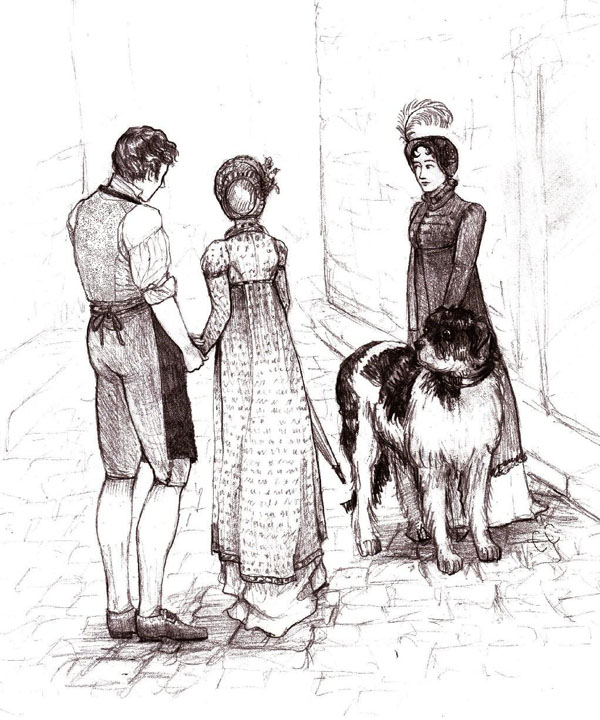
So I added this to my Kindle and have had the most enjoyable time with Henry and Catherine as they return to Bath shortly after their marriage – filled with Tilney’s expected wit and humor, Catherine’s laughing at her own efforts to not be temped into gothic thinking, an almost romantic General Tilney pursuing a lovely Bath widow, a possible rival for Henry’s attentions, a fair bit about Henry’s newfoundland much appreciated by dog-lovers everywhere, and a possible murder indeed [no spoilers here!].  The illustrations by Cassandra Chouinard are a perfect accompaniment to this fun read – who can resist a few hours with Henry Tilney! ~  highly recommended.

[illustration from the Jane Austen Center website]

 Further reading:

Copyright @2011, by Deb Barnum, at Jane Austen in Vermont

Books · Jane Austen Circle · Regency England · Social Life & Customs

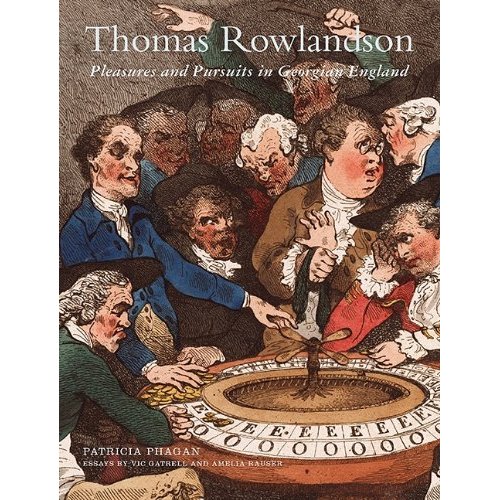
Book thoughts ~ ‘Thomas Rowlandson: Pleasures and Pursuits in Georgian England’

On my TBO* list:  with a release date of January 16, 2011 [as per Amazon; publisher release date is February 2011]

Thomas Rowlandson: Pleasures and Pursuits in Georgian England, by Patricia Phagan; essays by Vic Gatrell and Amelia Rauser.  Published by D Giles LTD in association with the Frances Lehman Loeb Art Center, Vassar College, Poughkeepsie, NY, 2011.

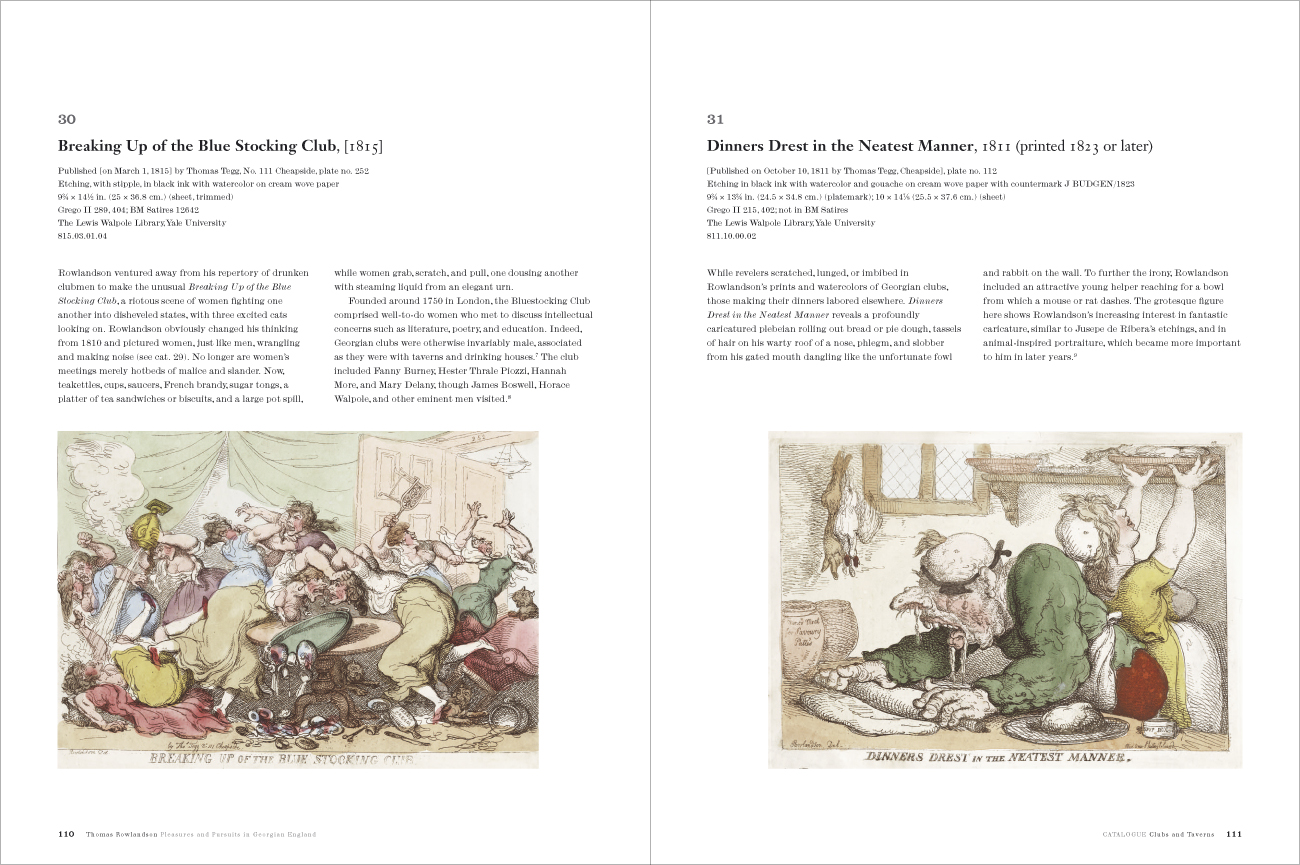
This illustrated volume which presents 72 watercolors, drawings, prints and illustrated books to reassess the legacy of this renowned 18th-century satirist. Accompanies the first major exhibition of Rowlandson’s work in North America for twenty years, showing at the Mary and Leigh Block Museum of Art, Northwestern University, Evanston, Illinois, Jan 14, 2011 – March 13, 2011 and the Frances Lehman Loeb Art Center, Vassar College, Poughkeepsie, April 8, 2011 – June 11, 2011 [Click here for information on the exhibit]  

Thomas Rowlandson - Pages 110-11

[Click on to enlarge]

About the authors: 

Patricia Phagan is Philip and Lynn Straus Curator of Prints and Drawings at the Frances Lehman Loeb Art Center and the co-author of ‘The American Scene and the South: Paintings and Works on Paper, 1930-1946’ (1996) and ‘Images of Women in Seventeenth-Century Dutch Art: Domesticity and the Representation of the Peasant’ (1996).

Vic Gatrell is Life Fellow of Gonville and Caius College, Cambridge, and the author of ‘City of Laughter: Sex and Satire in Eighteenth-Century London’ (2006) [fabulous book!] and ‘The Hanging Tree: Execution and the English People 1770-1868‘ (1994).

Amelia Rauser is Associate Professor of Art History at Franklin and Marshall College, Lancaster, Pennsylvania, and author of ‘Caricature Unmasked: Irony, Authenticity and Individualism in Eighteenth-Century English Prints’ (2008). [from Amazon]

 See the publisher’s website at:  D Giles LTD; and Amazon.com   

            ISBN-10: 1904832784
            ISBN-13: 978-1904832782

*To Be Ordered

Copyright @ 2011, Deb Barnum, Jane Austen in Vermont

Austen Literary History & Criticism · Books · Jane Austen · Jane Austen Circle · Literature

Reading ‘Clarissa’

I made a promise to myself back in August 2010 to finally read Samuel Richardson’s Clarissa, this promise made after reading Laurel Ann’s Austenprose interview with Lynn Shepherd.  Shepherd is the author of the  Austen-inspired mystery Murder at Mansfield Park, but also a Samuel Richardson scholar and author of  Clarissa’s Painter: Portraiture, Illustration, and Representation in the Novels of Samuel Richardson (Oxford University Press, 2009].

I have had Clarissa sitting on my bedside table for years – a friend gave it to me as a joke, daring me to read the thing – I was tempted to tear it into nine parts [an easy thing to do!] and have each of my book group buddies read their piece of the book and report on it – an easy way to lessen the pain of reading this rather large tome – my copy [the Penguin edition of 1985 with introduction and notes by Angus Ross] measures 9 x 6 x 2.75″ with a total of 1534 pages, a heady feast of endless words in very small print!  But alas! I could not go the book destruction route, it’s not in my genetic makeup, and so have just stared at this thing for years, dusting it occasionally, contemplating its use as a doorstop or such [it weighs 2 lbs, 11oz!], but somewhat guilty all the while…  an English major who cleverly avoided this book or any Richardson for that matter because everything is just so long and not to mention depressing! And despite Richardson being Jane Austen’s favorite author, and that she read and re-read his works and was greatly influenced by him, I just haven’t done it… until now…

So when I read Lynn Shepherd’s post and saw the brilliant suggestion to read Clarissa in ‘real time’, starting on January 10th, and finishing on December 18th, I thought this was a perfect solution, nearly a whole year to finish the thing,  not much time to be spent on a daily basis – how bad can it possibly be?  So, Dear Readers, I have begun – January 10th, with already a welcome reprieve as the next letter is not until January 13th… 

When I told my gifting friend that I was finally going to read the thing – she wondered how I would be able to put it down and not read ahead – I told her I did not think that would be a problem in this case – and indeed it seems not to be so far!

I welcome anyone else who would like to join me in this – there have been group reads of Clarissa on other listservs – I am not going to post about the book,  just periodic updates of my reading progress.  My only concern is I am already looking forlornly at Richardson’s other book on my shelf, Pamela, a much shorter and happier exercise in reading what Jane Austen read… – so wish me luck and join me if you can!

Samuel Richardson (NNDB)

Further reading on Samuel Richardson:

Copyright @ 2011 Deb Barnum, Jane Austen in Vermont

Austen Literary History & Criticism · Books · Jane Austen · JASNA · Literature · Publishing History

Jane Austen on her ‘Sense & Sensibility’

Sense and Sensibility was first published in October 1811, hence all manner of this 200 year anniversary celebration will be literally taking over the world, or at least the blog-sphere world, for this entire year! [See the JASNA site  for information on the next AGM in October in Fort Worth]

There are already a number of blog events in place [I will be posting on these shortly], but I hope this year at Jane Austen in Vermont to do a number of posts on S&S, starting with its very interesting publishing history. So today, Part I – a compilation of what Jane Austen wrote in her letters about her first published work – there is not as much as on Pride & Prejudice or Mansfield Park and Emma, but she did make a number of comments that are worth noting. The upcoming Part II will outline the details of its publication and how it was received by her contemporaries. [You can also re-visit my previous posts on “Travel in S&S” – Part I, Part II, and Part III, and more to come regarding the types of carriages in use during Austen’s time.]

Note that all references in the letters are to: Deirdre Le Faye, ed. Jane Austen’s Letters. 3rd Edition. NY: Oxford, 1997, c1995.


Jane Austen on Sense & Sensibility
:

Ltr. 71. 25 April 1811, to Cassandra, from Sloane St, London

No indeed, I am never too busy to think of S&S. I can no more forget it, than a mother can forget her suckling child; & I am much obliged to you for your enquiries. I have had two sheets to correct, but the last only brings us to W.s [Willoughby] first appearance. Mrs. K [Mrs. Knight, Edward’s adoptive aunt] regrets in the most flattering manner that she must wait till May, but I have scarcely a hope of its being out in June. – Henry does not neglect it; he has hurried the Printer, & says he will see him again today. – It will not stand still during his absence, it will be sent to Eliza. – The Incomes remain as they were, but I will get them altered if I can. – I am very much gratified by Mrs. K.s interest in it; & whatever may be the event of it as to my credit with her, sincerely wish her curiosity could be satisfied sooner than is now probable. I think she will like my Elinor, but cannot build on anything else.

[Note: S&S was actually not published until 23 October 1811]


Ltr. 79. 29 Jan 1813
, to Cassandra, from Chawton

[Talking about P&P after its publication] – I have lopt & cropt so successfully however that I imagine it must be rather shorter than S&S altogether. – Now I will try to write of something else…


Ltr. 86. 3-6 July 1813
, to Francis Austen, from Chawton

You will be glad to hear that every Copy of S&S is sold & that is has brought me £140 – besides the Copyright, if that should ever be of any value.* – I have now therefore written myself into £250. – which only makes me long for more. – I have something in hand – which I hope on the credit of P&P will sell well, tho’ not half so entertaining. [i.e. Mansfield Park]

*My note: this is the world’s most perfect example of understatement!


Ltr. 87. 15-16 Sept 1813
, to Cassandra, from Henrietta St, London

Nothing has been done as to S&S. The Books came to hand too late for him to have time for it, before he went. [i.e send the books to Warren Hastings]


Ltr. 90. 25 Sept 1813, to Francis Austen, from Godmersham Park

[On the secret of her authorship]

  I was previously aware of what I should be laying myself open to – but the truth is that the Secret has spread so far as to be scarcely the Shadow of a secret now – & that I believe whenever the 3rd appears, I shall not even attempt to tell Lies about it. – I shall rather try to make all the Money than all the Mystery I can of it. – People shall pay for their Knowledge if I can make them. – Henry heard P&P warmly praised in Scotland, by Lady Robt Kerr & another Lady; – and what does he do in the warmth of his Brotherly vanity & Love, but immediately tell them who wrote it! – A Thing once set going in that way – one knows how it spreads! – and he, dear Creature, has set it going so much more than once. I know if is all done from affection & partiality – but at the same time, let me here again express to you & Mary my sense of the superior kindness which you have shewn on the occasion, in doing what I wished. – I am trying to harden myself. – After all, what a trifle it is in all its Bearings, to the really important points of one’s existence even in this World!

[postscript] There is to be a 2d Edition of S&S. Egerton advises it.

[Note: the 2nd edition was published 29 October1813]

Henry Austen

Ltr. 91. 11-12 Oct 1813, to Cassandra, from Godmerhsam Park

I dined upon Goose yesterday – which I hope will secure a good Sale of my 2d Edition.

[Note: Le Faye cites a poem from 1708: Old Michaelmas Day was October 11]

“That who eats Goose on Michael’s Day
 Shan’t money lack, his Debts to pay.”


Ltr. 95. 3 Nov 1813
, to Cassandra in London from Godmersham Park.

Your tidings of S&S give me pleasure. I have never seen it advertised. …

…I suppose in the meantime I shall owe dear Henry a great deal of Money for Printing, etc. – I hope Mrs. Fletcher will indulge herself with S&S.

[Note: Mrs. Fletcher was the wife of William Fletcher, of Trinity College Dublin – Austen notes that” Mrs. Fletcher, the wife of a Judge, an old Lady & very good & very clever, who is all curiosity to know about me…”. The 2nd edition of S&S, advertized on 29 October 1813,  was published at the author’s expense, thus Henry likely paid for it]


Ltr. 96. 6-7 Nov 1813
, to Cassandra in London, from Godmersham Park

Since I wrote last, my 2d Edit. has stared me in the face. – Mary tells me that Eliza [Mrs. Fowle] means to buy it. I wish she may. It can hardly depend upon any more Fyfield Estates [sale of Fowle property] – I cannot help hoping that many will feel themselves obliged to buy it. I shall not mind imagining it a disagreeable Duty to them, so as they do it. Mary heard before she left home, that it was very much admired at Cheltenham, & that it was given to Miss Hamilton [the writer Elizabeth Hamilton]. It is pleasant to have such a respectable Writer named. I cannot tire you I am sure on this subject, or I would apologise.

Elizabeth Hamilton - Wikipedia

Ltr. 100 21 Mar 1814, to Francis Austen, from London

Perhaps before the end of April, Mansfield Park by the author of S&S – P&P may be in the world. Keep the name to yourself. I should not like to have it known beforehand. [i.e. about MP]

Ltr. 121. 17-18 Oct 1815, to Cassandra, from Hans Place in London

Mr. Murray’s Letter is come; he is a Rogue of course, but a civil one. He offers £450 – but wants to have the Copyright of MP & S&S included. It will end in my publishing for myself I dare say. – He sends more praise however than I expected. It is an amusing Letter. You shall see it.

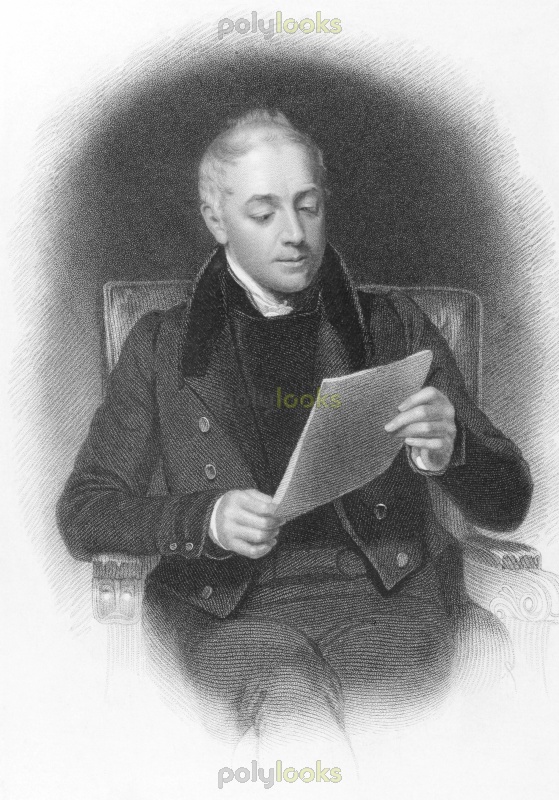
John Murray II

Ltr. 122(A)(D). 20-21 Oct 1815, draft of letter from Henry Austen to John Murray, in London

On the subject of the expence & profit of publishing, you must be better informed than I am; – but Documents in my possession appear to prove that the Sum offered by you for the Copyright of Sense & Sensibility, Mansfield Park & Emma, is not equal to the Money which my Sister has actually cleared by one very moderate Edition of Mansfield Park – (You Yourself expressed astonishment that so small an Edit. of such a work should have been sent into the World) & a still smaller one of Sense & Sensibility.- …

[Note: the 1st edition of S&S was 750 or 1000 copies; MP was probably 1,250, and Emma was 2,000 copies.]

Ltr. 154. 13 Mar 1817, to Caroline Austen, from Chawton

I have just recd nearly twenty pounds myself on the 2d Edit: of S&S* – which gives me this fine flow of Literary Ardour.

* Sense and Sensibility [footnoted by Austen in pencil]

*********************

Isn’t it such a delight to hear Austen’s very own words on her writing! Stay tuned for Part II on how it all came to be…

Illustration: John Murray II from Polylooks.com

Copyright@Deb Barnum, Jane Austen in Vermont, 2011.

Austen Literary History & Criticism · Book reviews · Books · Collecting Jane Austen · Jane Austen · Literature · Regency England · Social Life & Customs

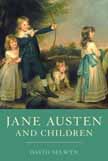
Book Review ~ “Jane Austen and Children” by David Selwyn

To be at the beginning of life, one must start at the end of the novel.  For although Jane Austen concludes her books with the marriage of the hero and heroine to which the whole thrust of the narrative has been leading, and the reader rejoices in the perfect happiness of the union, in reality the best is yet to come: they will have children – procreation  being not only the natural and desirable end of marriage, but also an economic and dynastic necessity.  And those children will have their own stories…What will become of the Darcy children?…”  (Ch. 1, Confinement, p. 5)

And thus does David Selwyn begin his treatise on Jane Austen and Children (Continuum, 2010), a most enjoyable journey through the world of childhood and parenting and education and growing-up in the life of Jane Austen, and the lives of her fictional characters.  If you are perhaps one of those people who think that Jane Austen does not like children, an idea certainly fed buy such comments about women “breeding again” or the child-generated “dirt and noise” or “the two parties of Children is the cheif Evil” [Ltr. 92], or the proper child-rearing “Method has been wanting” [Ltr. 86], etc. – you need to read this book!

Selwyn takes his reader essentially through the nine ages of man [with apologies to Shakespeare] beginning with confinement and birth, through infancy, childhood, parenting, sibling relations, reading and education, and finally maturity, as Selwyn says, the “end of the novel” when the Hero and Heroine come together, after all manner of trial and tribulation, to begin their own family.

We are given a general survey of the shift in the attitudes toward children, that late eighteenth – early nineteenth century view that fell between viewing children as not just “little adults” to the Victorian view of “seen but not heard”, following Locke and Rousseau and believing children to be natural innocents.  In each chapter Selwyn seamlessly weaves pieces of Austen’s life as gleaned from her letters and scenes from all her writings – and it is masterly done, all with a historical perspective.  We see Jane as a child, as a madly composing adolescent, a loving and humorous Aunt imaginatively interacting with her nieces and nephews, and as an accomplished writer whose fictional children are far more worthy of our notice than we have previously supposed: the frolicsome Walter hanging on Anne’s neck in Persuasion; the spoiled Middletons; the noisy and undisciplined Musgroves; the grateful and engaging Charles Blake in The Watsons; the John Knightley brood in the air courtesy of their Uncle George; the dynamics of the five Bennet sisters; Henry Dashwood the center of attention for the manipulative Steele sisters; the reality-based scenes of Betsy and Susan Price at Portsmouth; and finally Fanny Price, Austen’s only heroine we see grow up from childhood, having an elegant come-out, finding true-live and ends “needing a larger home.”

In all her works, Austen uses children as “a resource for her narrative strategies” (p. 4), be that comedy, a plot device to further the action, or a means of revealing attitudes and responses of the adults around them (p. 3).  Austen’s children are easy to miss – they won’t be after reading this book – here they are brought to life, given character and meaning, and you will see what Selwyn terms “Austen’s satirical delight in children behaving in character” (p. 73)

If Austen’s fiction seems to gloss over the reality of childbirth [the exception is Sense and Sensibility’s two Elizas], her letters tell the tale of its dangers [Austen lost three sisters-in-law to death in childbirth], and Selwyn links all to the social structure of the day, the nursing of babies and swaddling practices, to child rearing theories and moralizing tracts, and governesses and Austen’s ambivalence toward them. We visit boarding schools along with Jane and her characters and we hear the voices of a number of contemporary diarists (Agnes Porter, Sophia Baker, Susan Sibbald, Elizabeth Ham and Sarah Pennington).  There is a lovely in-depth chapter on the reading materials written especially for children and Austen’s first-hand knowledge of these titles.  The discussion on sisters and brothers, those so important in Austen’s own life, and those in her fiction, for example, characters with confidants (Lizzy and Jane, Elinor and Marianne), those isolated (Fanny, Anne Elliot, Emma Watson, Mary Bennet), and those with younger sisters (Margaret Dashwood and Susan Price).  As part of the growing-up process, Selwyn uncovers much on “coming-out” as Austen herself writes of in her “Collection of Letters” [available online here] – with the emphasis here on Fanny as the only heroine to have a detailed “coming-out” party.

The chapter on “Parents” starts with the premise that “in Jane Austen’s novels the parents best suited to bringing up children are dead” (p.95) and Selwyn takes us from the historical view of parenting, through Dr. Johnson’s “Cruelty of Parental Tyranny” [shadows of Northanger Abbey] to a full discussion of the marriage debate in the 18th-century – that between the worldly concerns of wealth vs. choice of partner based on emotional love as personified in Sir Thomas and Fanny Price respectively.  Excerpts are included from James Austen’s very humorous Loiterer piece   “The Absurdity of Marrying from Affection.” (p. 207) and Dr. John Gregory’s A Father’s Legacy to his Daughters (1774) [viewable at Google Books here] , and the Edgeworth’s Practical Education (1798) [Vol. III at Google Books here].  One finds that in reading all of Austen’s letters and all the works you can indeed discover a complete instruction manual for good parenting!

Jane Austen and Children appropriately ends with Selwyn’s speculation on what sort of parents her Heroes and Heroines will be, all of course based on the subtle and not-so-subtle clues that Austen has given us throughout each work – conjecturing on this is perhaps why we have so many sequels with little Darcys, Brandons, Bertrams, Knightleys, Tilneys, and Ferrars running about!

Just as in his Jane Austen and Leisure, where Selwyn analyzes the various intellectual, domestic and social pursuits of the gentry as evidenced in Austen’s world and her works, he here gives us an accessible and delightful treatise on Austen’s children, culling from her works the many quotes and references related to children and linking all to the historical context of the place of children in the long eighteenth century.  The book has extensive notes, a fine bibliography of sources on child-rearing, contemporary primary materials, children’s literature, and literary history, and several black and white illustrations.  (I did note that there are a few mixed up footnotes in chapter 3, hopefully to be corrected in the next printing).  What will this book give you? – you will never again miss the importance of Austen’s many children, peaking from behind the page, there for a set purpose to show you what great parents the Gardners are, or just to make certain you see how very selfish the John Dashwoods and the Miss Steeles are, or to see the generosity of an Emma Watson in her rescue of Charles Blake, or to feel the lack for the poor Musgrove boys having Mary for a mother, the playfulness of an otherwise conservative Mr. Knightley, and the unnerving near touch of Captain Wentworth as he relieves Anne of her burden –  thank you David Selwyn for bringing all these children to life for Austen’s many readers – you have given us all a gift!

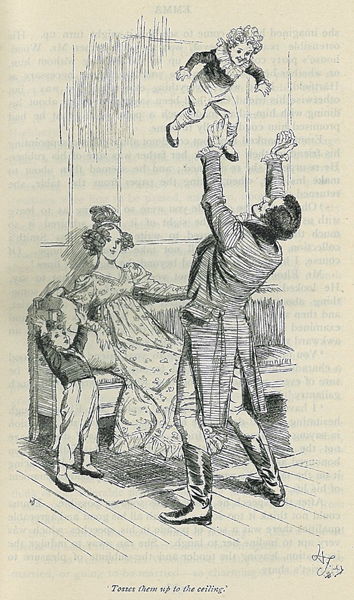
Emma – ‘Tosses them up to the ceiling’
[by Hugh Thomson, print at Solitary Elegance]

 __________________

Jane Austen and Children
Continuum, 2010
ISBN:  978-1847-250414

David Selwyn is a teacher at the Bristol School in Bristol, UK.  He has been involved with the Jane Austen Society [UK] for a number of years, has been the Chairman since 2008,  the editor of the JAS Report since 2001, and has written and edited several works on Austen.  He very graciously agreed to an “interview” about this latest work that you can find by clicking here.  See also the post on the various illustrations of Austen’s children by the Brocks and Hugh Thomson.  And finally, I append below a select bibliography of Selwyn’s writings on Jane Austen and her family.

 Select Bibliography:  

  1. Lane, Maggie, and David Selwyn, eds.  Jane Austen: A Celebration.  Manchester: Fyfield, 2000. 
  2. Selwyn, David, ed.  The Complete Poems of James Austen, Jane Austen’s Eldest Brother. Chawton: Jane Austen Society, 2003. 
  3. _____. “Consumer Goods.” Jane Austen in Context. Ed. Janet Todd. Cambridge Ed. of the Works of Jane Austen. New York: Cambridge UP, 2005. 215-24. 
  4. _____, ed.  Fugitive Pieces: Trifles Light as Air: The Poems of James Edward Austen-Leigh.  Winchester: Jane Austen Society, 2006. 
  5. _____. “A Funeral at Bray, 1876.” Jane Austen Society, Collected Reports V (1998): 480-86. 
  6. _____. “Games and Play in Jane Austen’s Literary Structures.” Persuasions 23: 15-28 
  7. _____. “Incidental closures in Mansfield Park.”  [Conference on “Jane Austen and Endings”, University of London, 17 November 2007] – unpublished paper. 
  8. _____. “James Austen – Artist.” Jane Austen Society Report 1998. 157-63. 
  9. _____.  Jane Austen and Leisure.  London: Hambledon Continuum, 1999. 
  10. _____, ed.  Jane Austen: Collected poems and Verse of the Austen Family.  Manchester:  Carcanet / Jane Austen Society, 1996. 
  11. _____, ed.  Jane Austen Society Report, 2001 – present. 
  12. ­_____. “Poetry.” Jane Austen in Context. Ed. Janet Todd. Cambridge Ed. of the Works of Jane Austen. New York: Cambridge UP, 2005. 59-67. 
  13. _____. “Shades of the Austens’ Friends.” Jane Austen Society Collected Reports V (2002): 134. 
  14. _____. “Some Sermons of Mr Austen.” Jane Austen Society Collected Reports V (2001): 37-38. 
Books · Jane Austen · Query

Query: Are You Reading Jane Austen on your eReader??

This sent from Nili Olay of JASNA-Greater NY Region – the author, Phyllis Fine had attended one of their book discussion gatherings and wrote the following for OMMA [Magazine of Online Media, Marketing & Advertising: http://www.mediapost.com/ – I am appending the whole article here: [and thanks Nili for sharing!]

 “Don’t be Prejudiced: Janeites Aren’t Necessarily Luddites”   by Phyllis Fine

The new member of the Jane Austen Society of North America (JASNA) looked sheepish. “Um, I know you ladies don’t approve, but I’m thinking of buying a Nook,” she said. Some looked puzzled, and a quick tutorial on ebooks ensued. Then Nili Olay, JASNA’s New York Metro Region cochair, showed she had her heart in both the 19th and 21st centuries. “Why shouldn’t we approve?” she asked. “We want everybody to read as much as they can, any way they can.” 

Olay had a point. If you’re devoted to the classic novels the modern world has arguably messed with the most, why should you scream heresy when you now find them accessible electronically? 

In fact, Austen devotees have already seen her works invaded by the undead (Pride and Prejudice and Zombies) and the water-logged (Sense and Sensibility and Sea Monsters). Faced with such indignities, some adapted and others complained. 

Not surprisingly, Janeites are also highly sophisticated, knowledgeable readers. They remember the names of minor characters in the Austen oeuvre (Darcy’s cousin Colonel Fitzwilliam in Pride and Prejudice – that’s for amateurs! How about Darcy’s housekeeper, Mrs. Reynolds?), and are willing to entertain the theory that the oh-so-reserved Jane Fairfax is secretly pregnant in a shadow version of Emma. So they’re a good test of how the most literate are adapting to the electronic book. 

Polled during a discussion group of roughly 15 JASNA members, only three identified themselves as regular ebook readers. Yet these three were enthusiastic e-cheerleaders, using words like “love” to describe their relationship with the devices. 

Linda Dennery, executive vice president of benefits at Advance Newspaper Group, must keep up with the latest in media professionally, so she has both a Kindle and an iPad. 

Ann Herendeen enjoys her Kindle, “but when I’m reading a book between Austen and escapist trash, it drives me crazy,” she said. If she’s looking for a certain scene that isn’t searchable by an easy keyword, she’d rather flip through physical pages than slowly go through electronic ones. “It’s like reading through a narrow hole, a periscope that illuminates one spot only,” she said. 

Olay is an economical ebook reader: She uses her iPhone rather than a dedicated e-reader, and the volumes she reads are free because they’re in the public domain. She’d just finished reading Daisy’s Aunt by E.F. Benson and was currently in the midst of Dickens’ Our Mutual Friend. 

Others in the group were yet-to-be-convinced that ebooks have value – like Marilyn Goldfried, who gave perhaps the most erudite counterpoint possible to Olay’s testimony on the beauty of packing just one small device to fulfill all your literary vacation needs. Goldfried reported that when Noel Coward was on a cruise, he lightened his book burden by throwing pages into the water as he finished reading them. 

Olay, noting another e-advantage, said, “You don’t need a bookmark; it always keeps your place for you automatically.” 

“But let’s not exaggerate the problem of using bookmarks,” Goldfried quickly retorted. 

“Well, I’m always losing bookmarks,” Olay came back. 

June Shapiro was more of a Luddite than many in the group, noting “I don’t trust a computer at all, and I would probably throw a mobile phone across the room.” And yet she said, “Good for anybody who reads Austen, any way.” 

Dennery, perhaps the most tech-savvy, related a story about how quickly habits can change: “I was reading a ‘real’ book a few weeks ago, and when I closed it, I went to turn it off in the back.” 

______________________________

So, you know that I am a bookseller of fine collectible books, and we in that bookselling world I live in have been discussing this for a good number of years – and we read the daily notices of book sales down, ebook sales up, bookstores closing, and who is buying used books if no one wants new books, etc. – but I have a kindle and an iphone with ebooks on it [great in traffic jams!] and I have been listening to books on tape and cds and now my ipod / iphone for years – and I still buy books and collect books, and read books – I think that we have here just one other way to disseminate and absorb information, and if people are reading Austen on their kindle or nook, we should celebrate that at least they are reading Austen

 What are your thoughts  about reading Austen on kindles and nooks and iphones and ipads and whatever is the next  rage of the moment?? –  and are you still buying BOOKS?  please weigh in!

 [Image from MacWorld.com]

Austen Literary History & Criticism · Books · Jane Austen · Jane Austen Sequels · Jane Austen Societies · JASNA · Regency England

Jane Austen AGM ~ Day 2 Recap: Auden, Castles, Henry the Hero, Dancers, & Gothic Art

Portland AGM – Day Two ~ I first refer to Laurel Ann’s post at Austenprose for her take on Day 2 – we did a lot together, but also tried to attend different break-out sessions –  so here is a quick summary of my day two: I should start this by saying something about my love of Northanger Abbey – it took me few readings, over a few years, but now I count it as one of my favorites, Catherine an engaging heroine and Henry quite to-die-for and Austen more on her game than she is often given credit for – you can read this former post about my thoughts on NA, rather than repeat all that – but just wanted to emphasize how much I was looking forward to this AGM and it most certainly exceeded my expectations!

I was completely bummed that I had to miss the Team Tilney offering headed by Maggie “‘Da Man” Sulllivan and thankfully Laurel Ann shared the happenings with me – I had to go off to a THREE hour [yikes!] regional coordinator training session, which was great – some new people, some old friends, some great new ideas – Claire Bellanti, VP of Regions gave an inspiring meeting – and we all left with plans for new programs and ways to connect with each other in our varying attempts to bring Jane Austen into the lives of the folks in our respective regions.  Claire had us all introduce the person next to us and we each had to share what book, other than of course any Austen, we would want with us if stranded on a desert island – interesting responses [perhaps a future post]!

After a quick lunch with Laurel Ann, we headed into the official AGM opening, hearing President Marsha Huff on her love of Northanger Abbey; the JAS Secretary Maureen Stiller who spoke of the loss this year of two great Austen scholars Elizabeth Jenkins and Brian Southam; and Steve Lawrence from Chawton House Library and Joan Ray thanking members for their generosity to the NAFCHL [North American Friends of Chawton House Library] –

and then on to the Plenary speaker Stephanie Barron, noted  author of the Jane Austen mysteries, on Suspicious Characters, Red Herrings, and Unreliable Detectives: Elements of Mystery in Jane Austen’s Northanger Abbey – a delightful talk on the mystery elements in Austen, a crime in every novel, the heroine as solver, the detectives and pseudo-detectives, and the final restoration of order.  Barron quotes W. H. Auden and his three requirements of a mystery novel, all present in Austen’s works: a closed society; a state of innocence with the “crime” committed by a fallen member of the society; and the societal ritual that the criminal has knowledge of in order to commit the crime, but is overcome by one of superior knowledge who restores order [thankfully!] –  Barron then applies this pattern to Northanger Abbey – the investigators, the clues, the red herrings – Henry as the consummate detective, Catherine as ignoring the clues, Isabella the dropper of clues, John Thorpe as the red herring, General Tilney as the fallen one – with Henry finally restoring order, Catherine all the while gaining understanding of the male world, “penetrating the veil” as in all good gothic novels.  Barron ended her talk with a comment on the Kathryn Sutherland kerfuffle about one’s editors [you can read more about it here], a reference to her short story to be part of Laurel Ann’s Jane Austen short story anthology Jane Made Me Do It [we all whooped! Laurel Ann swooned!], and answered some questions on her latest book Jane Austen and the Madness of Lord Byron – she spoke about following Austen’s chronological real life in the writing of her fictional mystery series, and oh! what will happen in 1817.  All in all quite a wonderful introduction to this year’s AGM!

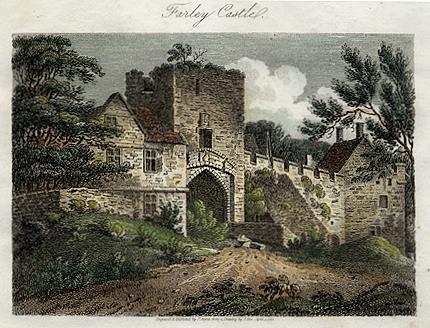
Then off to the first of many break-out sessions – and what a task to choose! – each session offering such variety and depth – the choice so difficult – I decided to do at least one on the gothic literary features of NA, one on fashion and all that muslin, and of course, something on Henry Tilney.  So my first was to hear the ever interesting Janine Barchas on The Real Bluebeard of Bath: A Historical Model for Northanger Abbey a brilliant tour through the nightmarish history of the Farley-Hungerford Castle, within driving distance form Bath, and a place that Austen would likely have visited or known about in her time in Bath. Professor Barchas shared the words in a contemporary guidebook, Richard Warner’s Excursions from Bath [1801], a book known to have been in George Austen’s library and containing Jane’s marginalia – and here we have some real-life gothic tales about what went on in Farley Castle and may have served as Austen’s inspiration for her own Abbey story, truth of course being far more bizarre than fiction!

Then off to see Stephanie Eddleman on “Henry Tilney: Austen’s Feminized Hero?” – One of the things that can get my dander up in a discussion about NA is talk that Henry is too feminine to be a true hero, or too condescending to be an equal lover to Catherine, or too distant as a character to engage the reader – so I was hoping that Prof. Eddleman would give me much needed ammunition! – and she did indeed:  Henry as the one hero who stands apart – he is her only witty hero; he is feminized but not feminine, and unlike Austen’s other feminized male characters [Frank Churchill, Robert Ferrars], Austen is not critical of Henry.  I most appreciated Eddleman’s answer to Marvin Mudrick’s contention that Henry is a detached, disengaged character – she feels that Henry develops intimacy through his intelligence and wit, always encouraging Catherine toward her own independent thinking.  I hope this talk will be in Persuasions – it gives much needed support for Henry as True & Worthy Austen Hero.

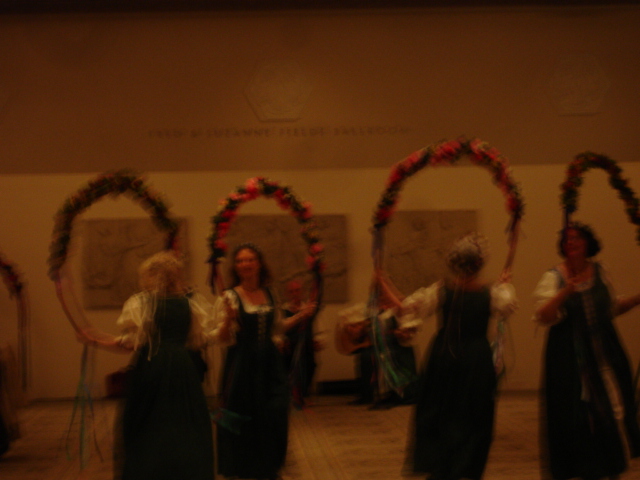
With all these great thoughts swimming around in my head, off we ran to the Portland Art Museum for the General Reception with the Wild Rose Garland Dancers – we arrived slightly behind schedule and found long lines for food and drink – Laurel Ann off for food, I did drinks – the long line frustration only lessened by a gentleman who told me all about his breakout session by James Nagle on “Dismemberment in the Library with the Quill Pen” – all about Regency succession rules, primogeniture, entails, etc. – Laurel Ann also went to this, so between the two of them I felt as though I had not missed this obviously interesting and entertaining talk – so this made the line move – we ate and drank and stood for the dancers as there was not a seat in sight – the dancers quite lovely and great fun to watch – here are a few pictures [with apologies for the dark and motion]:

Wild Rose Garland Dancers
the woman who would not sit down
The Dancers and the Players
“]
Sneakers- for my son
Player Gerhardt Quast on his Bodhron

[with thanks for letting me take a picture of his sneakers for my son!]

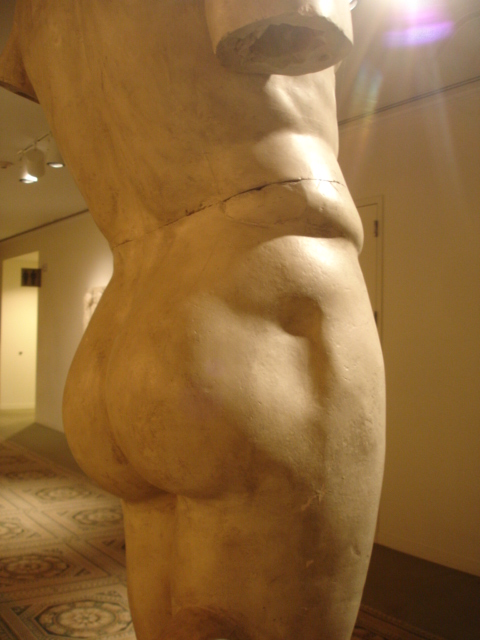
Next to me, however, was a woman who said she was sorely distracted by the distant statue of a rather large naked man [rear view only] – pictures duly taken, much laughter around and we were lost in the giggles for the rest of the evening [too much wine perhaps and not enough food?] – I see that Laurel Ann posted on this and the woman left a comment, so we are glad to have found her – and send you thanks Brenda for making our evening! – not that the dancers were not fabulous – we were just giddy at this point and who could resist!

 I regret not taking more photos of the museum offerings – I see that Diana Birchall has several on her blog – so I send you over there for a peak to Light Bright and Sparkling.  And you can view the Museum website as well.

And then the evening not nearly over – back to the hotel for the author book signings and to hear Jeff Nigro’s talk on Mystery Meets Muslin: Regency Gothic Dress in Art, Fashion and the Theatre.”  Jeff is the new RC for the Chicago Region and had spoken at that AGM two years ago on Art – so here again, another interesting visual treat about art and fashion and the literary and theatrical world of Austen’s time – I am not sure I will ever look at the art of the period the same ever again, or at least trust what I am looking at! – I am not even sure I can understand my notes! – so much information in this talk! – the mixing and matching of styles in the historical and contemporary works of art, with an emphasis on the “Gothick Picturesque”, the eclectic Regency gothic – Nigro shows that Austen’s Northanger Abbey is itself an eclectic mix, an overlapping of genres, as encompassed in both the Thomson and Brock illustrations. This was such a visual tour, one must see it to appreciate it, and not well described without the visual piece to accompany it – I would dearly love to get Jeff to visit Vermont and share his love of the arts with us…

So Day Two –who knew that just sitting around and absorbing all things Austen could be so invigorating and exhausting!  I will add this – hanging out with Laurel Ann had many perks! – the book she is editing involves a number of great Austenesque authors who have each contributed a story to the anthology [see Austenprose for details] – but while I have been attending AGMs for a number of years and was happy to introduce Laurel Ann to a number of JASNA people [and as soon as they understood she is the force behind Austenprose they all nearly genuflected!] – but her contacts with her authors was a treat for me to be introduced and spend some time with them as well – I have a few pictures of them and append them here with links to their sites – great writers all who embrace Austen in their own imaginative ways – I look forward to Laurel Ann’s book publication [alas! not until next October – just in time for the Fort Worth AGM!] – so thank you Laurel Ann for this – great fun all around!

Syrie James, Laurel Ann Nattress, and Cindy Jones

Syrie James and her husband Bill were a delight to meet – she costumed every day and he for the ball [will save the elaborate ball dress for tomorrow!] – Syrie has authored The Lost Memoirs of Jane Austen, The Secret Diaries of Charlotte Bronte [we bonded on a mutual love of Jane Eyre], and Dracula, My Love [on my TBR pile -I hear it is great!]  Visit her website here.

Cindy Jones has a new book coming out [March 29, 2011] My Jane Austen Summer: A Season at Mansfield Park – we had a great chat and I look forward to reading her book – please visit her blog at First Draft to learn more about her and her forthcoming  book. Cindy is also blogging at the new Austen Author’s blog.

Marsha Huff, Laurel Ann Nattress, Laurie Viera Rigler

Marsha Huff is, of course, JASNA President – this is her last AGM as head of the troops, and she has now passed on the torch to Iris Lutz from the Tucson Region – it has been a wonderful four years with Marsha and we will miss her – but I don’t think she will wander very far from the activities!  In this picture, she has just given Laurel Ann her JASNA Life Member pin! – so congrats to Laurel Ann on this!

Laurie Viera Rigler needs no introduction, but you can view her website here and her blog here – always a sheer pleasure to spend time with Laurie – but alas! no gossip on her next book – we must content ourselves for now with her “Sex and the Austen Girl” creations [such a punishment…]

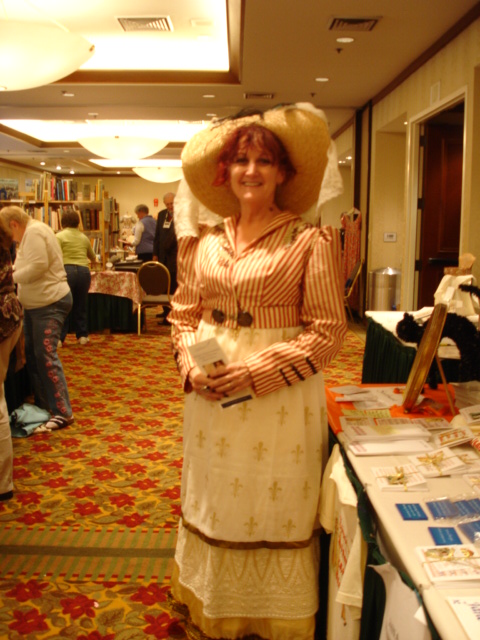
And I will close with another fashionista picture of Rebecca Morrison-Peck, one of the Emporium vendors – you can visit her shop at Etsy here:  http://www.etsy.com/shop/thethatchedcottage, where you will find all manner of Regency fashion pieces.  I was quite disappointed to try on two lovely spencers – one too large, the other too small – so will wait for another day to adorn myself – I purchased a Regency dress pattern three years ago , and that is as far as I have gotten – my Singer retains its dust and I think I should just give in and buy something from one of these far more talented mantuamakers!

Rebecca Morrison-Peck - The Thatched Cottage

Vic, who we sorely missed and hope one of these days to meet at an AGM, has posted links on her Jane Austen Today blog to several of the AGM posts already out there – so check out the thoughts and pictures of everyone else! … and finally,

Stay-tuned for tomorrow, Day Three and the Ball fashions! – I think this was the most costumed AGM yet!

Austen Literary History & Criticism · Books · Jane Austen · Rare Books

Austen on the Block ~ Auction Results!

Well, I have been immersed in the long 18th century these past several days [and will shortly post on the fabulous AGM in Portland in the next few days] – but while there, the October 28 Sotheby’s auction that I posted about last month, The Library of an English Bibliophile Part I, took place and here are the results

and the winner? Pride and Prejudice at £139,250! – whatever would Jane say?!


LOT 1

[AUSTEN, JANE.]
SENSE AND SENSIBILITY: A NOVEL… BY A LADY. LONDON: PRINTED FOR THE AUTHOR BY C. ROWORTH AND PUBLISHED BY T. EGERTON, 1811

40,000—60,000 GBP
Lot Sold.  Hammer Price with Buyer’s Premium:  49,250 GBPLOT 2

[AUSTEN, JANE.]
PRIDE AND PREJUDICE: A NOVEL. LONDON: G. SIDNEY FOR T. EGERTON, 1813

75,000—100,000 GBP
Lot Sold.  Hammer Price with Buyer’s Premium:  139,250 GBP

LOT 3

[AUSTEN, JANE.]
EMMA: A NOVEL. LONDON: C. ROWORTH FOR JOHN MURRAY, 1816

20,000—30,000 GBP
Lot Sold.  Hammer Price with Buyer’s Premium:  30,000 GBP

LOT 4

[AUSTEN, JANE.]
MANSFIELD PARK: A NOVEL. LONDON: FOR  J. MURRAY, 1816

1,500—2,000 GBP
Lot Sold.  Hammer Price with Buyer’s Premium:  1,875 GBP

LOT 5

[AUSTEN, JANE.]
NORTHANGER ABBEY: AND PERSUASION…WITH A BIOGRAPHICAL NOTICE OF THE AUTHOR. LONDON: JOHN MURRAY, 1818

20,000—30,000 GBP
Lot Sold.  Hammer Price with Buyer’s Premium:  43,250 GBP

 Further reading and other results in this auction at Sotheby’s website

Austen Literary History & Criticism · Books · Jane Austen · News · Regency England

Hot off the Press! ~ Jane Austen’s Regency World, Nov -Dec 2010

The November/December 2010 edition of Jane Austen’s Regency World is now on sale:


In the new issue:

*ALL I WANT FOR CHRISTMAS: seasonal gift suggestions for the Austen fan in your life – or hints to drop your family and friends if you are an Austen fan!

*POWER OF ATTRACTIONS: what gives some of Jane’s characters sex appeal

*WHY I’M BANISHING JANE FROM MY BOOKSHELF: the reader who has fallen out of love with Austen

*THANKS FOR ALL THE FISH: Amy Patterson, of Jane Austen Books, finds similarities in the writings of Douglas Adam and Jane Austen

*NOVEMBER IN THE NOVELS: a busy time of year in Jane’s writing

*TOM AND JERRY: No, not the cartoon; a sportswriter’s fiction from the 1820s

*ON THE COVER: Royal Crescent Hotel, Bath, one of the grandest buildings in the city. Sharon Love, the general manager, tells us about “My Jane Austen”
 
Plus: All the latest news from the world of Jane Austen, as well as letters, book reviews, quiz, competition and news from JAS and JASNA
 
For further information, and to subscribe, visit: www.janeaustenmagazine.co.uk

DHL permitting (!) it will be available at next week’s JASNA conference in Portland, Oregon!