Austen Literary History & Criticism · Collecting Jane Austen · Jane Austen · Jane Austen Circle · Literature · Rare Books · Women Writers

Preserving Jane Austen and Her Literary Sisters ~ Book Conservation at the Chawton House Library

battered-books-2-CHL
Chawton House Library – books in need

When I was in Library School, one of my favorite classes was a study of book conservation and visit to the NEDCC (the Northeast Document Conservation Center) – this I thought was the place where the things I most loved were given the care they sorely needed. Sadly, I didn’t go into that field [hindsight is a dreadful thing!] – I was more into reading and making sure the right book got into the right person’s hands, believing that our system of free libraries was the grandest example of a free world. I remember as a 15 year-old page in our hometown library, roaming the shelves and discovering the Brownings, and rather than doing my job of re-shelving (I confess this now many years later), I was secretly discovering Poetry, finding Love and Words in the pages of these old books. I’ve never lost that love of an old book – the smell, the touch, the beauty of bindings and paper, the scribbled notes or bookplates or inscriptions of previous owners – not to mention the story being told. That I ended up a used bookseller was likely destiny at work – my favorite set of books in my home was an 1890 Encyclopedia Britannica! (I was not the most current student in history class!)

We now live in a world where the physical book is being rejected for the joy of carrying around 1500 titles on a small tablet that we can also use for all manner of interruptive connections to the real world. This escape into a book can be initiated wherever you are, whenever you want, without the inconvenience of lugging around poundage – I readily admit to loving my kindle! – But it is not the same, no matter how many people argue the point. I don’t remember the books I read this way – I don’t retain where such and such was on a particular page, I miss that smell, that touch, that communion with a physical object that has a history that somehow brings me closer to the author or a binder or papermaker or some previous owner or owners.
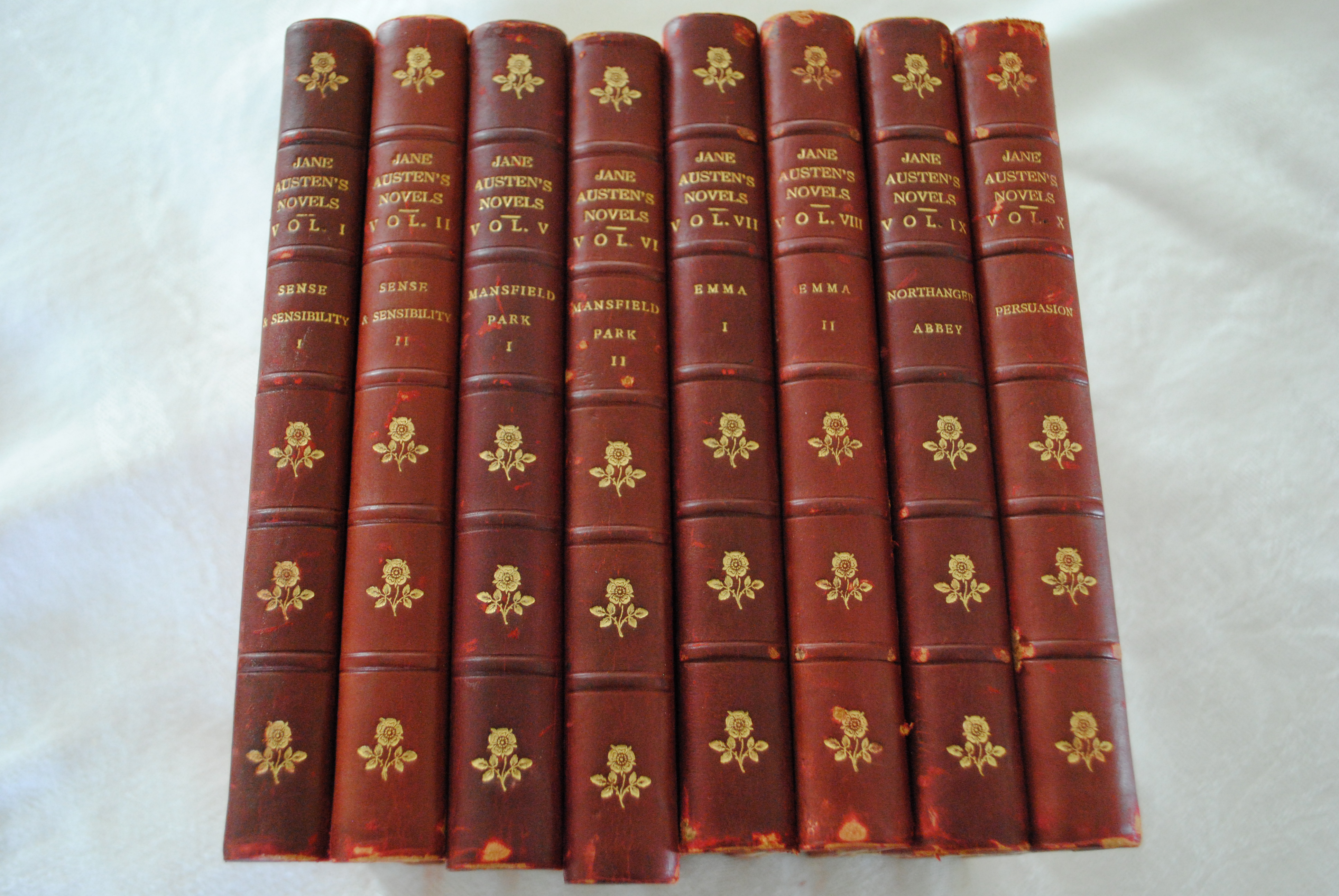
DentSet-dcb

[1898 Dent edition of Jane Austen’s novels – trivia: what is missing??]

I think, I have to believe that the book is not Dead, that an appreciation for the book as an object of beauty and worth may even be stronger than ever, fear of it all disappearing making it all the more valuable to us. And this then brings us to Book Conservation. Because if we don’t take care we shall be losing our very own heritage. I have had any number of books come across my desk that are in appalling states, either too well loved through the years, or just left to disintegrate in some old attic or basement – it is one of the saddest things to encounter really – a book of special significance that is rendered nearly worthless by its poor condition. Enter the conservationist! – Magic can happen! I have been fortunate in finding the most brilliant of these magicians, who has salvaged many a book for me and my customers … And though the value of a repaired work can be affected by such tampering, it is the return to its former state that is the end result, to preserve, protect and savor for the future… The digitizing efforts of so many of our libraries is a glorious thing – making so much accessible to all – I marvel at what is only a keystroke away – but preserving the original must and should be part of this plan.
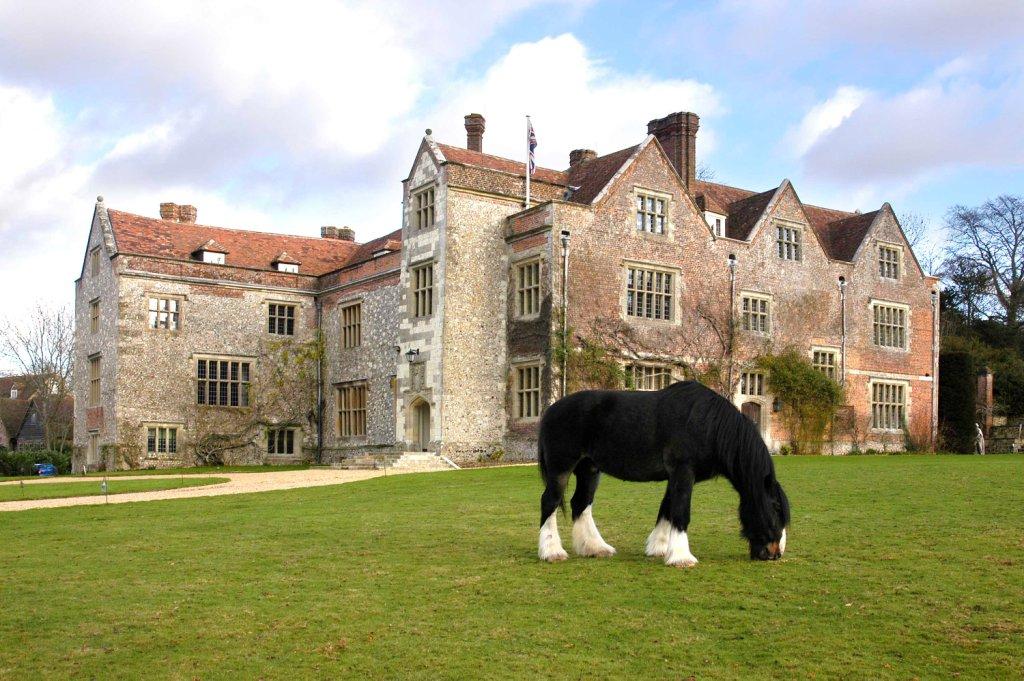
Chawton House Library

And this brings us to Chawton House Library and their appeal for their book conservation program – they need our help!

The history of the Chawton House Library [CHL] is a well-known story, at least among most of my readers here, who perhaps have come to know of CHL because Jane Austen brought us there. Read its history if you don’t know it, and you will come away with unending gratitude to Sandy Lerner for making it all possible. If you have read Dale Spender’s classic Mothers of the Novel: 100 Good Women Writers before Jane Austen (Pandora 1986), and other various titles on the subject, you know that the entire literary tradition of women writers has been essentially silenced – if you are over 50, how many women writers did you read in college? How many did you even know about? The foundation and purpose of CHL has been to correct that horrible omission in our collective history, to give these women writers a home of their own, and to make sure none of them are ever again consigned to the neglected heap of second-class literature.

The CHL website offers a wealth of information on many of these women writers:

[for example: Aphra Behn’s The Rover; or, the Banish’d Cavaliers (1729), and Penelope Aubin’s The Inhuman Stepmother, or the History of Miss Harriot Montague (1770)]

Aphra Behn (1640-1689) - wikipedia
Aphra Behn (1640-1689) – wikipedia
Charlotte Lennox (c.1730-1804)
  • The quarterly publication The Female Spectator is mailed to those who become Friends of the Library. Some of the past issues are available online from 1995 – 2010 here: http://www.chawtonhouse.org/?page_id=55522
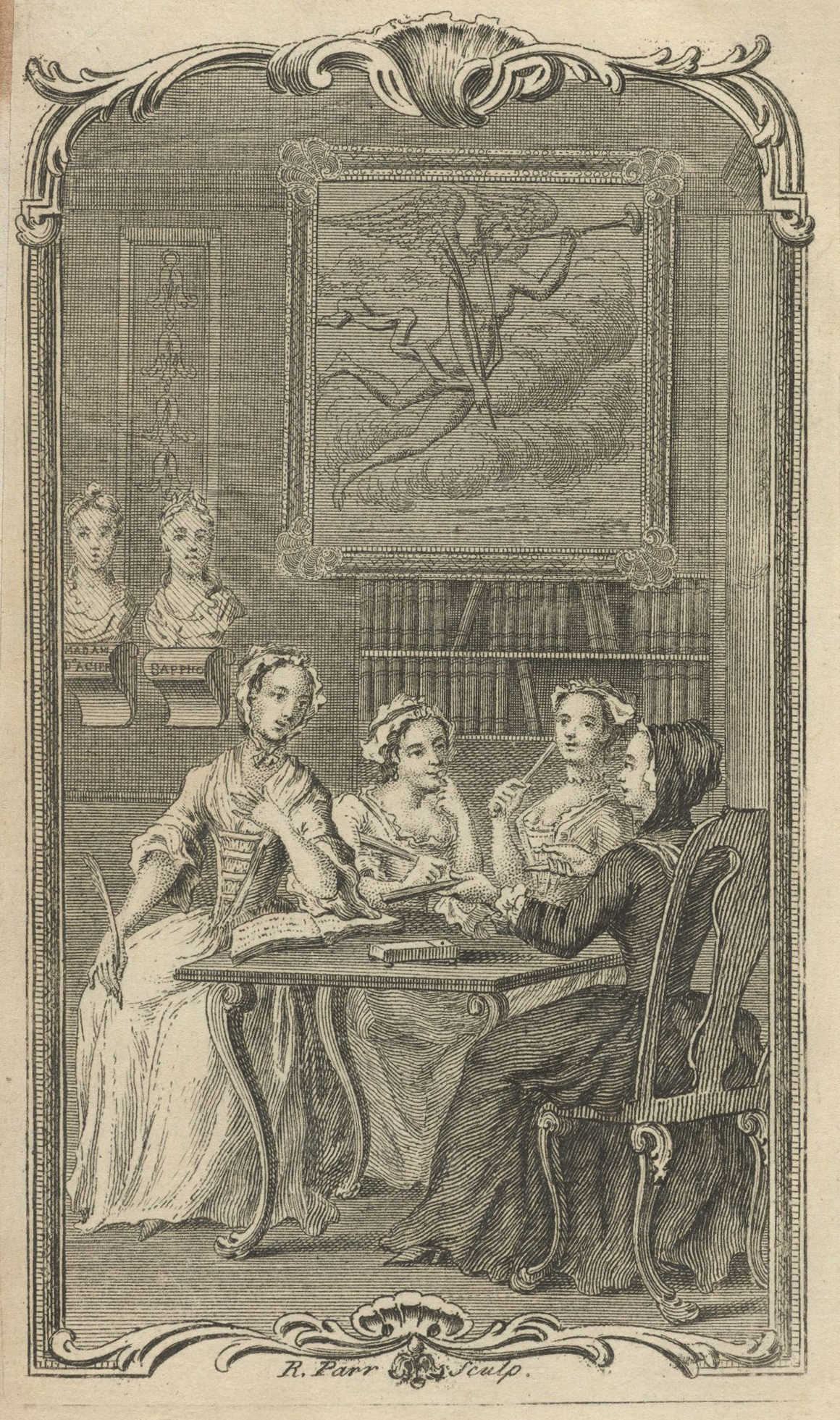
Female Spectator-frontis-wp

 Frontispiece, vol. 1 The Female Spectator, by Eliza Haywood (1744-46) – the title CHL now uses for its quarterly newsletter [image: wikipedia]
_________________

Chawton House Library
More books in need at Chawton House Library

But the books themselves, the majority really, are in need of repair. Keith Arscott, the Development Director of CHL, in the kick-off for this fund-raising effort, writes:

Thanks to our first and biggest single donation to date – over $3,000 from the George Cadbury Quaker Foundation – we have been able to organise our first conservation skills training day for 10 of our library volunteers to be run by a professional conservator. The donation also covers the first purchase of materials to enable our first volunteers to make a start. And for those of you that don’t know, we also had two generous donations at the reception – one from a red rose and the other from a yellow! [the reception for CHL members at the JASNA AGM in Montreal – we were all given roses!] But it is only a start – the Book Condition Survey that we were able to commission after a number of successful funding initiatives concluded that the cost of such a conservation programme would be easily a very large six figure sum  – if all the conservation work was undertaken by professional conservators in studio conditions. However, the tremendous interest that our appeal has had with volunteers and their willingness to give their time to help with much of the work – means we have an appeal target in mind of something in the $90,000 range.

And so this is where your help is needed. Gillian Dow, the Executive Director, writes on the website that small amounts of money can make a very big difference to our programme” and outlines how any donation can contribute to protecting this unique collection:

  • £1 / $1.70 can buy document repair tape
  • £6 / $10 can buy unbleached cotton archival ribbon
  • £10 / $17 can buy an archival box to protect a fragile book
  • £100 / $162 can pay for a full set of conservation equipment including unbleached cotton archival ribbon, document repair tape and archival boxes
  • £300 / $486 can pay for a volunteer training day, giving a whole team the necessary skills to carry out vital conservation work
  • £500 / $809 can restore a complete volume

______

Conservation tools at the NEDCC

__________ 

*You can visit the CHL website to watch a film on the program:  http://www.chawtonhouse.org/?page_id=58943

*You can also find on the CHL blog this post by Giorgia Genco, “A Career in Book Conservation” where she writes about assisting in the training of volunteers in this new program: http://www.chawtonhouse.org/?library_blog=a-career-in-book-conservation

*And here, some great PR from the BBC: last November, they visited CHL and produced a video on the appeal, where Frankenstein and Sense & Sensibility are featured among other titles: http://www.bbc.com/news/uk-england-hampshire-29949168

*For those of you near Chawton, there is an evening lecture on February 12, 2015 at 6:30 pm on “Conserving a Unique Literary Heritage at Chawton House Library” with library conservator Caroline Bendix – it is free, but donations graciously accepted! – and you must register [but alas! the event is fully booked!]: http://www.chawtonhouse.org/?lectures_talks=conserving-a-unique-literary-heritage-at-chawton-house-library

A tattered 'Sense & Sensibility' at CHL
A tattered ‘Sense & Sensibility’ at CHL

_______________

How to donate? For those of you living in the States, you can donate online directly to the North American Friends of Chawton House Library (NAFCHL) [NAFCHL is a U.S. 501 (c) (3) tax-exempt organization and all donations are deductible for purposes of U.S. income taxes]. NAFCHL will acknowledge U.S. donations as being specifically allocated to our Book Conservation Appeal. See the link on the right sidebar on this page: http://www.chawtonhouse.org/?page_id=58943 . [Everyone else can donate by visiting the same page and choosing the “Virgin Money Giving” link.]

______________

Mary Brunton (1778-1818) – Jane Austen writes about Brunton in her letters [image: wikipedia]

You will find if you spend a bit of time on the CHL website just how many of these women writers have been resurrected from their centuries-long oblivion. They are being studied more than ever as our female literary tradition finds its rightful place in the history of literature. The Chawton House Library has been and continues to be instrumental in finding and keeping these materials – the books, manuscripts, diaries, letters, and artifacts – and we need to preserve it all as best we can so that the Book as we now know it will be there for future generations of readers and scholars.  Any donation will be greatly appreciated…hope you can help!

Sources and further reading:

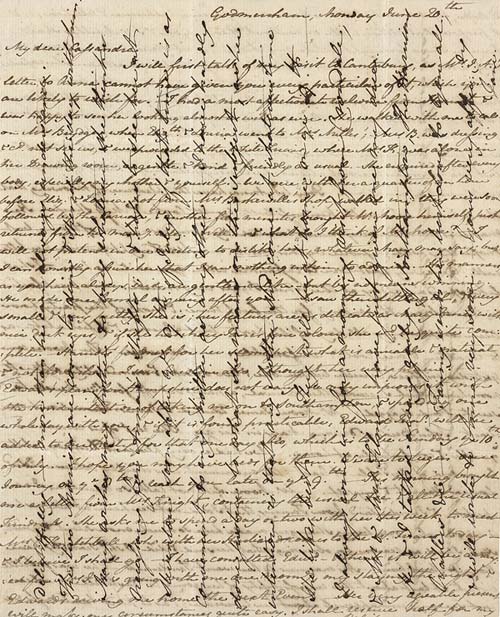
JA-letter-MorganJane Austen letter – the Morgan

c2015 Jane Austen in Vermont
Austen Literary History & Criticism · Books · Collecting Jane Austen · Illustrations · Jane Austen · Jane Austen Illustrators · Publishing History · Rare Books · Regency England

Jane Austen’s Mansfield Park in Pictures ~ The Illustrations of Philip Gough

It only seems fitting to end 2014 with a final nod to Mansfield Park. My intention of course had been to spend the entire year discussing the various illustrators of this novel over the past 200 years, but alas! such best intentions are all I have to offer up – so here is the first and final post on illustrating Mansfield Park!

Emma1948-Gough

[Source: StrangeGirl.com]

When Macdonald & Co. (London) published its first volume of Jane Austen’s work in 1948, Emma was the chosen work, with Philip Gough as illustrator. It was the 4thvolume in the Macdonald Illustrated Classics series. It is a small book, under 8 inches, bound in red leatherette, with a frontispiece and six full-page plates of watercolor drawings by Gough. There is no introduction. Macdonald published its next Jane Austen in this series in 1951 – Pride and Prejudice, with illustrations again by Gough and again no introduction.  If you are lucky enough to have all the six volumes published by Macdonald, you will see that they appear to be a set, all with the same binding and all illustrated by Gough – but they were published over a period of years from 1948 to 1961 as follows – with the No. in the Macdonald series in ():

  • 1948 – Emma (No. 4)
  • 1951 – Pride & Prejudice (No. 23)
  • 1957 – Mansfield Park (No. 34); introduction by Q. D. Leavis
  • 1958 – Sense & Sensibility (No. 37), with Lady Susan and The Watsons; intro by Q. D. Leavis
  • 1961 – Northanger Abbey (No. 40); intro by Malcolm Elwin
  • 1961 – Perusasion (No. 41); intro by Malcolm Elwin

Not sure why Leavis did not do the other introductions – her essays on Jane Austen are magnificent, and a definite must-have for your Austen library. Her Mansfield Park introduction, after stating that MP is “now recognized as the most interesting and important of the Austen novels,” gives us a brief summary of Austen’s life and times, then writes of her theories that Lady Susan is the matrix of Mansfield Park, that Austen was “soaked in Shakespeare,” that the Sotherton sequence  is one of the “most remarkable in any English novel” where all the action is symbolic and how its pattern of events is “exactly and awfully repeated” in the final outcome of the book, and finally how Mansfield Park is really a tragedy “in spite of the appearance of a happy ending.”

****************

There is little known about Philip Gough and I cannot find much researching the internet other than he was born in 1908, illustrated a number of children’s books, this Jane Austen series from Macdonald, and a goodly number of dust jackets for Georgette Heyer’s Regency novels.

But it is worth noting that in the introduction to the 1961 Persuasion by Malcolm Elwin (and also quoted by David Gilson in his entry E327 on this edition), Elwin states that the drawings of Hugh Thomson are said to be “too Victorian in their sentimentality to suit the spirit and period of the novels” – and that “Mr. Gough has shown himself a student of the Regency period, and many sound critics have judged him to have succeeded in conveying the subtlety of Jane Austen’s satiric humour.” Gilson also notes a TLS review of this edition (10 November 1961, 810), quoting that “Philip Gough’s illustrations have their own brand of sentimentality, this time of the pretty-pretty sub-Rex Whistler variety.”

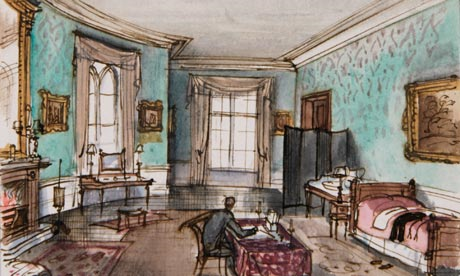
Now I confess to having to google Rex Whistler, and find that there was an exhibition of his works at the Salisbury Museum in 2013: http://www.salisburymuseum.org.uk/whats-on/exhibitions/rex-whistler-talent-cut-short

Here is a Whistler drawing to better understand the “pretty-pretty” the TLS critic was referring to:

WhistlerInterior-guardian

 [Source: http://www.theguardian.com/artanddesign/2013/aug/25/rex-whistler-british-artist-exhibition ]

How easy it is to get off-track when researching!

Children’s literature
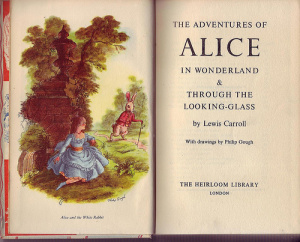
: Gough’s illustrations for children’s works range from Alice in Wonderland for the Heirloom Library to Hans Christian Andersen’s Fairy Tales:

Gough-Alice-Heirloom

[Source:  https://aliceintheinternet.wordpress.com/2010/02/03/alice-illustrated-by-philip-gough/ ]

Gough-Andersen FT-Abe

 [Source: Abebooks: http://www.abebooks.co.uk/servlet/BookDetailsPL?bi=14347377033&searchurl =an%3Dhans+christian+andersen+philip+gough ] 

GoodReads has a starting list of books illustrated by Gough – this is not complete, as I find in a quick search on WorldCat a number of titles not listed, so if you know of others, please add to this GoodReads list!

********

Georgette Heyer: Philip Gough was one of Heyer’s favorite dust jacket illustrators (another was Arthur Barbosa) – you can see many of the jackets here.

But here are a few of your favorite Heyers – and clearly signed by Gough:

Illustrating Jane Austen:

Gough’s watercolors for the Jane Austen novels have a tendency toward “Pretty in Pink” (as they do for Heyer) – indeed I have always looked rather wide-eyed at the abundance of Pink in his Pride and Prejudice – especially in this portrait of Mr. Darcy at the pianoforte…!

MacDonald1951-Gough-e&d-dcb2
You can see all the Emma watercolors here, where again, and as evident in the Gough illustration opening this post, you see one dominant color  – it seems that Gough equated the Regency period and Jane Austen with the feminine Pink! https://www.fulltable.com/vts/aoi/g/emma/a.htm

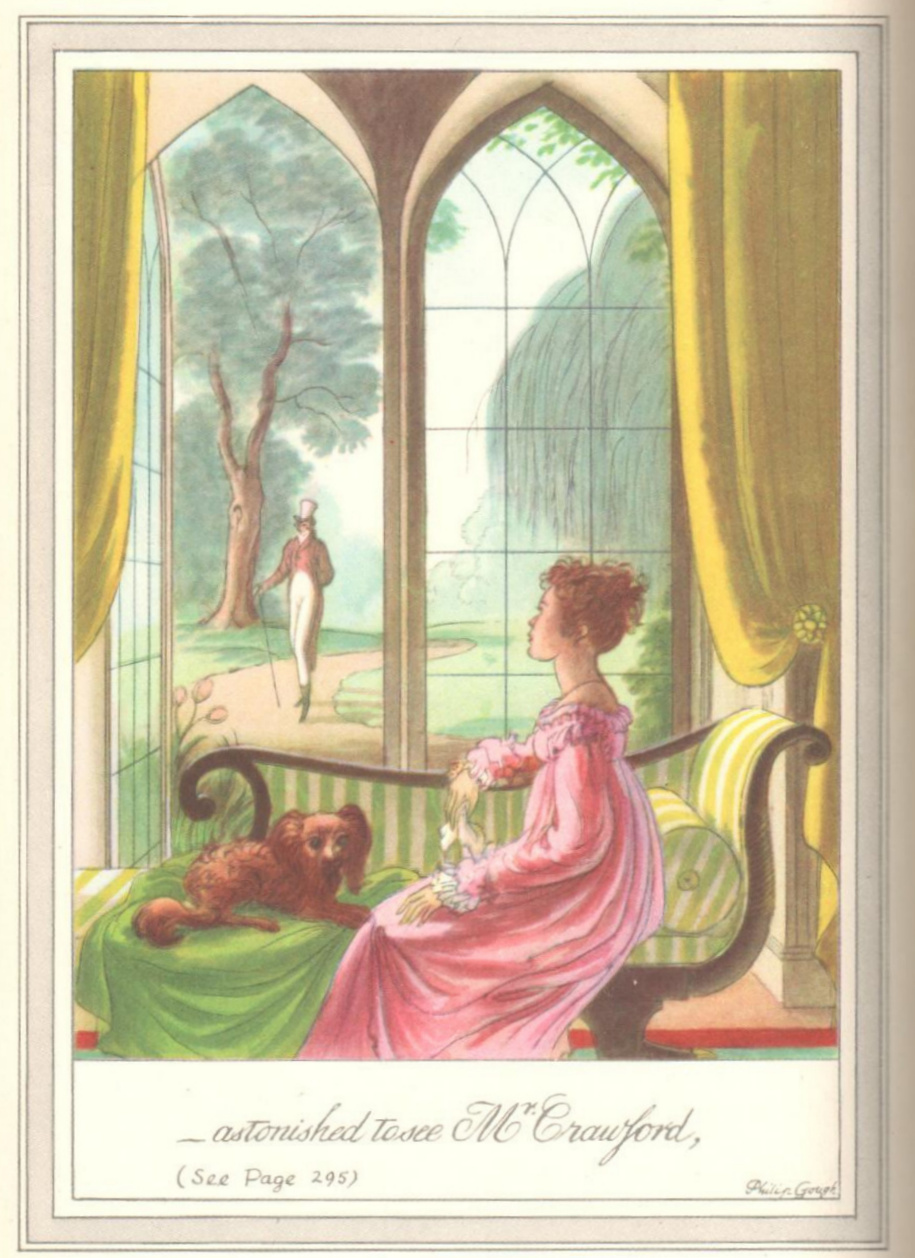
But now to our Mansfield Park, with Gough’s illustrations in the order as they appear in the book:

1-Frontispiece-Gough1
Frontispiece

TitlePage-MP-Gough 2-ChapHeadV1C1-Gough 3-Carriage drove off-Gough 4-SpeakFanny-Gough (2) 5-ThorntonLacy 6-Astonished-Crawford-Gough 7-FannyIntroduce-Gough 8-FannyEdmundTrees-Gough

Now, go back and look at the illustrations and think about these questions [and comment below with your thoughts…]:

  • Do the illustrations tell the story?
  • Does Gough get the characters right?
  • Why do you think the illustrator chose these scenes to depict? Would you have chosen other scenes?
  • Do they give a sense of the time and place, the setting of MP?
  • Does anything in the illustrations give a clue to Gough’s time rather than the time of the novel?
  • Does Gough get anything really wrong?
  • Do you have another illustrated edition of MP that you think conveys the story better than these??

Please leave a comment on any and all of these questions – I am interested in your thoughts and welcome the chance to hear from you as we end this year-long celebration of Mansfield Park!

Wishing all a Very Happy New Year!

2014 Jane Austen in Vermont
Austen Literary History & Criticism · Collecting Jane Austen · Holidays · Jane Austen · Jane Austen Popular Culture · Jane Austen Societies · JASNA · Literature

Celebrating Jane Austen’s Birthday ~ December 16, 1775

austen silhouette

You have doubtless been for some time in expectation of hearing from Hampshire, and perhaps wondered a little we were in our old age grown such bad reckoners but so it was, for Cassy certainly expected to have been brought to bed a month ago:  however last nightthe time came, and without a great deal of warning, everything was soon happily over.  We have now another girl, a present plaything for her sister Cassy and a future companion.  She is to be Jenny, and seems to me as if she would be as like Henry, as Cassy is to Neddy.  Your sister thank God is pure well after it, and send her love to you and my brother, not forgetting James and Philly…

[Letter from Mr. Austen to his sister Philadelphia Walter, December 17, 1775, as quoted from Deirdre Le Faye, Jane Austen, A Family Record, Cambridge, 2004, p.27.]

*************

pollogo


In celebration of Jane Austen’s birthday today, JASNA has published its annual Perusasions On-Line Vol.35, No. 1 (Winter 2014).  Click here for the Table of Contents to yet another inspiring collection of essays, some from the 2014 AGM in Montreal on Mansfield Park, and other “Miscellany” – all about Jane Austen…and perfect winter reading material…!

Here are the Contents:

The “Ordination” of Fanny Price: Female Monasticism and Vocation in Mansfield Park
Kathleen Anderson

A Distracted Seminarian: The Unsuccessful Reformation of Edmund Bertram
Br. Paul Byrd, O.P.

Why Tom Bertram Cannot Die: “The Plans and Decisions of Mortals”
Theresa M. Kenney

The Monstrous Mothers of Mansfield Park
Marilyn Francus

“Assisting the Improvement of Her Mind”: Chapone’s Letters as Guide to Mansfield Park
Susan Allen Ford

Fanny Price as Fordyce’s Ideal Woman? And Why?
A. Marie Sprayberry

“Favourable to Tenderness and Sentiment”: The Many Meanings of Mary Crawford’s Harp
Jeffrey Nigro

I Sing of the Sofa, of Cucumbers, and of Fanny Price: Mansfield Park and The Task; Or, Why Fanny Price is a Cucumber
Emma Spooner

The First Soldier [She] Ever Sighed for”: Charles Pasley’s Essay and the “Governing Winds” of Mansfield Park
Kathryn Davis

Mansfield Park vs. Sotherton Court: Social Status and the Slave Trade
Sarah Parry

Mansfield Park and the News
Robert Miles

“Delighted with the Portsmouth Scene”: Why Austen’s Intimates Admired Mansfield Park’s Gritty City
Christina Denny

“Bad Smells” and “Fragrance”: Reading Mansfield Park through the Eighteenth-Century Nose
Emily C. Friedman

Among the Proto-Janeites: Reading Mansfield Park for Consolation in Halifax, Nova Scotia in 1815
Sarah Emsley and Sheila Johnson Kindred

Modernizing Mansfield Park at the Millennium: Reconsidering Patricia Rozema’s Film Adaptation
Nora Foster Stovel

MISCELLANY

A Treasured Possession: Jane Austen and the Chandos Letter
Karen Thomson

Jane Austen and the Subscription List to Camilla (1796)
Jocelyn Harris

Pride, Prejudice, and the Threat to Edward Knight’s Inheritance
Christine Grover

Spontaneous Composite Portraits of Jane Austen
Lance Bertelsen

First Impressions: The Control of Readers’ Cognitions in the First Chapter of Pride and Prejudice
Kevin Alan Wells

To Forgive is Divine—and Practical, Too
Robert Mai

The Importance of Servants in Jane Austen’s Novels
Natalie Walshe

Fanny Price and Lord Nelson: Rethinking the National Hero(ine)
Elaine Bander

Imagining Future Janeites: Young Adult Adaptations and Austen’s Legacy
Andrea Coldwell

Jane Austen Bibliography, 2013
Deborah Barnum

_________

c2014 Jane Austen in Vermont
Book Giveaway · Book reviews · Books · Collecting Jane Austen · Jane Austen · Jane Austen Circle · Jane Austen Popular Culture · Jane Austen's Letters · Regency England

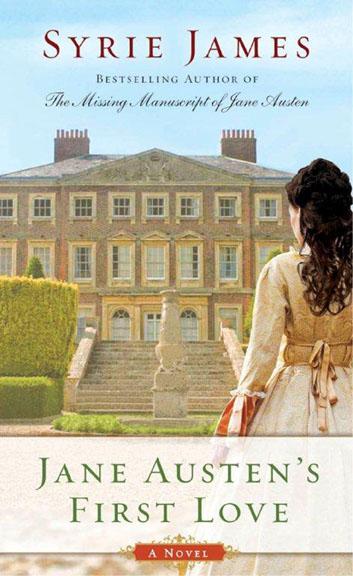
Holiday Blog Tour & Grand Giveaway Contest! ~ Chatting with Syrie James about her Jane Austen’s First Love

“The summer of 1791 is so firmly fixed in my memory that I believe I can never forget it; every detail is as fresh and vivid as if it occurred only yesterday, and looking back, there are times when it seems as if my life never really began until that moment – the moment when I first met him.”

And so begins Jane Austen’s First Love

Jane Austens First Love by Syrie James

Gentle Readers: As part of her Holiday Blog Tour, Syrie James joins us today to answer a few questions about her latest book Jane Austen’s First Love. Syrie has based her tale on the real-life Edward Taylor, mentioned by Austen in her letters – he may have been her never-forgotten First Love and hence perhaps a model for her very own Mr. Darcy. Today Syrie tells us a bit about her research into Edward Taylor and his world and a few thoughts on her favorite Austen books in her own collection. Please see below for the Grand Giveaway Contest information…

JAFL Banner v6


JAIV:
As far as I can tell, there are three references to Edward Taylor in Jane Austen’s letters: 

-Ltr. 6 of Sept 15-16, 1796, where she writes ““We went by Bifrons, & I contemplated with a melancholy pleasure, the abode of Him, on whom I once fondly doated.” 

-Ltr. 14 of Dec 18-19, 1798, where she writes the news of Taylor’s possible inheritance; and 

-Ltr. 25 of Nov 8-9, 1800, on news of his possible marriage to a cousin and where she makes mention of “those beautiful dark Eyes” [he marries someone else in 1802] 

Can you tell us something of the “ah-ha” moment that prompted you to look into this “fondly doated” upon young man of the “dark Eyes” – and finding nothing much, decided to pursue an extensive research project to learn everything you could about him and his family?? When were you held captive by the idea that Jane Austen indeed could have fallen madly in Love with this young man?? 

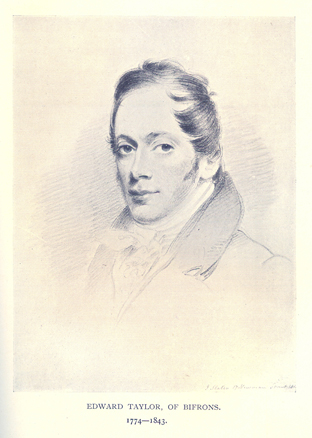
SJ: Sure, Deb! The “ah-ha” moment occurred when I was re-reading the above-quoted letter that Jane wrote to her Edward Taylor for JA in Vermontsister Cassandra in Sept. 1796. When I read that line, I sat up in my chair in stunned excitement. Who was Jane talking about? What was Bifrons? Who was the “Him” she referred to? The way she phrased it, whoever it was, it seemed very clear that Jane had once been crazy in love with “Him.”

I quickly learned that the “Him” was a young man named Edward Taylor, and the “abode” was Bifrons Park, the estate in Kent he would one day inherit. To my frustration, there was almost no other information about Edward Taylor in Austen biographies, even though there were those two other mentions of him in later letters that also hinted at how fond she was of him. I knew Jane met him as a teenager while visiting in Kent, but that was about it. So I delved into extensive research—and I’m excited to say that I uncovered his true story. What I learned was groundbreaking. He was an extraordinary young man, and it became very easy to see why Jane fell head over heels for him.


JAIV:
I don’t want to ask many questions about the book so as not to give away too much of its plot [no spoilers here!], but I would like to ask, how difficult [or easy!] was it for you to enter into Jane Austen’s head and essentially become her at the age of fifteen? And to put on paper what would be this 15-year-old’s first-person narrative?

SJ: I had such fun writing about Jane Austen at age fifteen!  I started with all the qualities she clearly possessed as a grown woman: fierce intelligence, a great (and sometimes snarky) sense of humor, boundless imagination, a love of fashion (governed by a tiny budget), and a driven need to succeed, all tempered by sensitivity and deep affection for those she loved. I then imagined her as a young woman based on what I knew of her life: she grew up in a home filled with noisy, active boys, was educated by them side-by-side, and was included in their sports and games. The juvenilia she wrote as a teenager is also lively and hilarious, an indication of her youthful personality. As with all my other Austen novels, I re-read her work over and over during the composition of this book, to keep her voice in my head.

JAIV: Your research interests me a great deal – I know you found previously unknown facts about what appeared to be a very shadowy figure in Jane Austen’s life, and were from there able to fashion a story of possible truth, a lovely weaving of fact and fiction – you have already written about this on several sites and blogs [including here at Jane Austen in Vermont: https://janeausteninvermont.wordpress.com/2014/08/18/guest-post-syrie-james-on-jane-austens-first-love-goodnestone-park-and-the-bridges-family/ ] …  so I’d rather ask you a few questions about your own Austen library: 

– What do you consider the best, the I-cannot-live-without, book by or about Jane Austen in your collection? 

Le Faye - Letters - 4th ed

SJ: That’s hard—I have hundreds of Austen-related books. But I guess the one I turn to the most is Jane Austen’s Letters, edited by Deirdre Le Faye. It’s the world’s best window into Jane Austen’s mind, heart, and soul.

JAIV: What book(s) would you say you especially treasure? In the two categories of older / collectible, and more recent works?

SJ: OLDER/COLLECTIBLE:

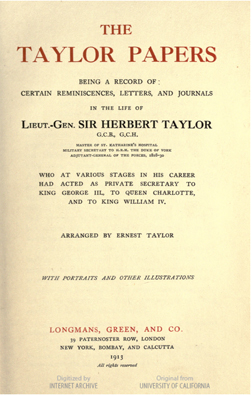
Title page of The Taylor Papers Jane Austen in VermontI treasure The Taylor Papers (1913), the rare book I discovered when researching Edward Taylor. A collection of memoirs and letters written by Edward’s brother, Sir Herbert Taylor, it filled in a wealth of details about the Taylor family and the children’s extraordinary and well-traveled childhood, enabling me to understand who Edward Taylor was when Jane Austen met him—and why she adored him.

I also dearly treasure my illustrated set of Jane Austen’s classics (1892, Little Brown & Company). Unfortunately it only includes five of her novels—it’s missing my favorite, Pride and Prejudice.

And I treasure The Brontes: Life and Letters (1908) edited by Clement Shorter, a two-volume work containing all of Charlotte Brontë’s correspondence—it was invaluable when I was writing my novel The Secret Diaries of Charlotte Brontë.

MORE RECENT PUBLICATIONS

Among my favorites (they’re still all older books!) are a whole shelf full of hardcover annotated versions of a great many classics, from Pride and Prejudice, Anne of Green Gables, and Dracula, to the 3-volume set The New Annotated Sherlock Holmes.

JAIV: What title would you most like to own, that either you have been unable to locate or find it is unattainable??

SJ: Pride and Prejudice, (1892, Little Brown & Company) to complete my illustrated set of Jane Austen’s classics.

JAIV: Ah yes! The elusive missing volume – I have a few of those myself! 

All this research, invaluable for your fictional tale, should be made available to Austen scholars! – do you intend to write an article about Taylor and his family for one of the Jane Austen publications? [you must!]

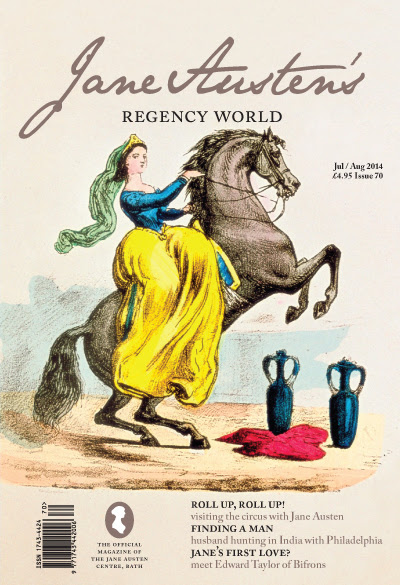
SJ: Actually I did write just such an article. Entitled “Jane’s First Love?” the six-page article with lovely images was published in the July/August 2014 issue of Jane Austen’s Regency World Magazine.

Jane Austens Regency World Magazine Jul Aug 2014 Jane Austen in Vermont

JAIV: Yes, I read that article Syrie – I do hope everyone is able to read it as well.

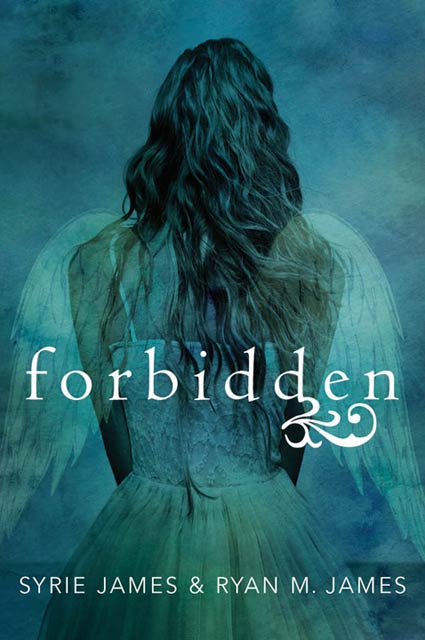
Your novel tells of Austen before she met Tom Lefroy, the young man we most often hear as being her first and long-ForbiddenCoverLgForWebheld Love [and further rendered into “truth” by the movie ‘Becoming Jane’…]; your book The Lost Memoirs of Jane Austen tells the tale of her mysterious love met at the sea-side in later life. Can you tell us what’s up next??  

SJ: I have a few other Austen-tales in mind! At the moment, though, I’m hard at work co-writing the sequel to Forbidden with my talented son, Ryan James.

JAIV:  Excellent news! 

 Now, I just have to ask Syrie, as I know you love the movies: if your book was to become a movie, who would you cast in the major roles?

SJ: For Jane Austen, I think Saoirse Ronan, Hailee Steinfeld, or Kaya Scodelario could be a good choice. For Edward Taylor I’d be thrilled to have the role played by Jamie Blackley (from the film IF I STAY) or Douglas Booth, who played Romeo in ROMEO AND JULIET  (2013.)

Hailee Steinfeld and Douglas Booth
Jamie Blackley
Jamie Blackley

JAIV:  I can see that you have thought this through – and all very engaging choices – this book is a sure candidate for a book-to-movie venture, don’t you think?! – Anything else you might like to add Syrie??

SJ: Thank you so much for having me here today, Deb. I’m excited to share Jane Austen’s First Love with the world, just in time for the holidays! Readers, do you have any questions for me? Any specific thoughts about Jane Austen’s First Love, or my other books? I’d love to hear!

********** 

Thank you Syrie for joining us today! If you have any questions or comments for Syrie, please respond in the comment box below to enter into the Grand Giveaway Contest – all information is below:

Book Blurb: In the summer of 1791, fifteen-year-old Miss Jane Austen is determined to accomplish three things: to do something useful, write something worthy and fall madly in love. While visiting at Goodnestone Park in Kent for a month of festivities in honour of her brother’s engagement to Miss Elizabeth Bridges, Jane meets the boy-next-door — the wealthy, worldly and devilishly handsome Edward Taylor, heir to Bifrons Park, and hopefully her heart! Like many of Jane’s future heroes and heroines, she soon realises that there are obstacles — social, financial and otherwise — blocking her path to love and marriage, one of them personified by her beautiful and sweet tempered rival, Charlotte Payler.

Unsure of her own budding romance, but confident in her powers of observation, Jane distracts herself by attempting to maneuver the affections of three other young couples. But when her well-intentioned matchmaking efforts turn into blundering misalliance, Jane must choose between following her own happily-ever-after, or repairing those relationships which, based on erroneous first impressions, she has misaligned.

QUICK FACTS: 


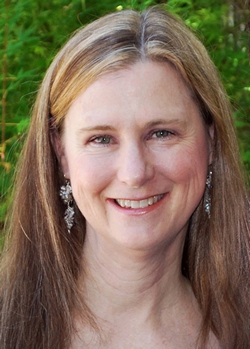
Syrie James headshot 2012 x 250AUTHOR BIO: 

Syrie James, hailed as “the queen of nineteenth century re-imaginings” by Los Angeles Magazine, is the bestselling author of nine critically acclaimed novels that have been translated into 18 languages. Her books have been awarded the Audio Book Association Audie, designated as Editor’s Picks by Library Journal, named a Discover Great New Writer’s Selection by Barnes and Noble, a Great Group Read by the Women’s National Book Association, and Best Book of the Year by The Romance Reviews and Suspense Magazine. Syrie is a member of the WGA and lives in Los Angeles. Please visit her at syriejames.com, Facebook or say hello on Twitter @SyrieJames.

*****************

GIVEAWAY DETAILS: 

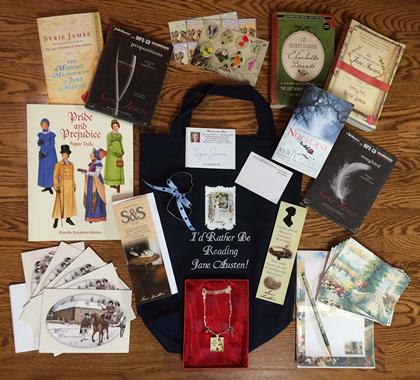
Grand Giveaway Contest: Win One of Five Fabulous Jane Austen-inspired Prize Packages

To celebrate the holidays and the release of Jane Austen’s First Love, Syrie is giving away five prize packages filled with an amazing selection of Jane Austen-inspired gifts and books!

JAFL Grand Prize x 420

To enter the giveaway contest, simply leave a comment here at Jane Austen in Vermont, or on any of the other blog stops on the Jane Austen’s First Love Holiday Blog Tour: http://www.syriejames.com/LatestNewsPageNEW.php

Increase your chances of winning by visiting multiple stops along the tour! Syrie’s unique guest posts will be featured on a variety of subjects, along with fun interviews, spotlights, excerpts, and reviews of the novel. Contest closes at 11:59pm PT, December 21, 2014. Five lucky winners will be drawn at random from all of the comments on the tour, and announced on Syrie’s website on December 22, 2014. The giveaway contest is open to everyone, including international residents. Good luck to all!

c2014 Jane Austen in Vermont
Author Interviews · Book Giveaway · Collecting Jane Austen · Jane Austen · Jane Austen Popular Culture · Jane Austen Sequels

When Henry Met Fanny, or Let’s Talk about a Different Ending for Jane Austen’s Mansfield Park ~ Guest Post by Sarah Ozcandarli

UPDATE: The deadline to comment and win a kindle copy of  Revisit Mansfield Park, How Fanny Married Henry has been extended until next Sunday November 30, 11:59 pm due to the holiday – winner will be announced December 1st. Sarah has offered a second copy of her book as an incentive to comment! Happy Thanksgiving all!
****************

 Gentle Readers:  I invite today to ‘Jane Austen in Vermont’ Sarah Ozcandarli, who has written a story reimagining the ending of Mansfield Park, an ending about which all of us, including Jane Austen, have pondered the “what if…?” Her book is titled Revisit Mansfield Park, How Fanny Married Henry – I confess to not having finished the book as yet – it is now on my kindle awaiting a moment to give it the time it deserves (I will say that the first three chapters very nicely summarize the plot and characterizations of Mansfield Park).

Sarah contacted me a few weeks ago to say that a number of my links on the blog led to the dreaded oops! – where did you find such a link?” – because as all we bloggers know, who has time to go back and check all the links we ever have put out there, links that go nowhere – such a disappointment to the reader – I wonder always, where does this information go to? Some cyberspace default-filled world with thoughts and ideas and information no longer accessible – it is all quite daunting really, isn’t it?? – but I did go in and remove or edit some of these links Sarah told me about, and in our conversation she told me she had written a tale of Mansfield Park with the plot line that Fanny and Henry do end up together (no spoilers here, this outcome, as you see, is in the title!), as do Edmund and Mary – not an uncommon thought among those people largely disappointed with the lacklustre ending of Mary going off to London, Henry off with Maria and then on to his surely dissipated life (a life Fanny could have salvaged if she had only given him the chance he asked her for),  and Fanny and Edmund riding off into the sunset of boredom.  So I give you a post from Sarah about how her love of Jane Austen began, and what it was about Mansfield Park that made her want to change the ending. Please leave your comment or question for Sarah to win a kindle version of her book – see details below!

***************

cover

First falling in love . . .

“You will not know the day or the hour”, says St. Matthew, but if the agent is Masterpiece Theatre in the year 1981, the day will Tuesday and the hour 8:00 pm. I was toiling through my last semester at university on that fateful night, when there were two contenders for my attention: Electricity & Magnetism II and the BBC’s Pride & Prejudice. I wanted to study E&M, but my housemates Meg and Laurie were determined that I should be acquainted with Jane Austen. They were two against one, but we were all winners, for I fell in love with Lizzy and Darcy and their creator about fifteen minutes into the program.

Once graduated, and free to read according to my own inclinations, Jane Austen quickly became my first favorite among writers and has never descended from that pedestal. I read all I could find about her life and family, I devoured her letters, but oddly enough, I never noticed the vast collection of Austen-related news, fact, and opinion on the internet. One day in 2012 I googled “white soup” and read through one blog, and then another, and realized that our respect for the greatest novelist in the English language need not prevent us from using her characters to people our own stories! 

Then writing a book . . . 

That being so, I could fulfill my wish (and Cassandra Austen’s as well) that in Mansfield Park Fanny Price should be allowed to marry Henry Crawford, instead of Edmund Bertram. After all Jane herself had written that if Henry had “persevered, and uprightly, Fanny must have been his reward,” and with Jane’s and Cassandra’s opinions of Henry duly noted I was emboldened to write a different ending for Mansfield Park – a sort of Volume III(b) – with plans for a sequel to tackle Edmund and Mary’s problems.

The first difficulty of the story I wanted to tell was that Fanny justifiably disliked and distrusted Henry, and had no

CE Brock -Mansfield Park - Mollands
CE Brock -Mansfield Park – Mollands

conception that his interest in her was genuine until Sir Thomas informed her that Henry had made “decided proposals” for her. When Henry left Mansfield a few days later he had achieved very little in his quest to change Fanny’s opinion of him. When next they meet, Henry was in Portsmouth to visit Fanny, and as he took his leave of her, he nearly begged her to advise him to return to his work at Everingham. In Mansfield Park Fanny rather unkindly dismissed Henry’s plea; in my story Fanny observed that:

“Henry had said he would show Fanny by his constancy that he deserved her, and now, when all her friends at Mansfield, excepting perhaps her aunt, had forgotten her even more thoroughly than she had anticipated that they would, here was Henry Crawford, as constant as he had declared he would be, and asking her advice.”

Fanny’s judgment, though in all respects sound, was only once sought in all of Mansfield Park. Edmund asked Fanny to approve his participation in Lovers’ Vows – though Edmund was well aware that Fanny would not approve – and having gotten her opinion, he ignored it. Henry’s request was a much greater compliment, not least because he intended to abide by her advice; he truly wanted to be encouraged to do right by his responsibilities at Everingham. This, I think, is the pivotal moment for Henry and Fanny, when they will move forward together if Fanny tells Henry her opinion, or stall out if she does not.

A chance to win . . .

Dear Readers, please comment or leave a question for me to be entered into the giveaway of the Kindle version of Revisit Mansfield Park, How Fanny Married Henry. [see details below]

Revisit Mansfield Park for Kindle – It is available only in English, but can be purchased from Amazon in the USA, England, Germany, France, Spain, Italy, Japan, India, Canada, Brazil, Mexico and Australia, and may be read for free with the Prime or Kindle Unlimited Programs.

****************

picture of SOZAbout the author: Sarah Ozcandarli graduated in 1981 from Carnegie-Mellon University with a BS in Physics and English, and went back three years later for an MS in Industrial Administration. Her varied career took her to Pittsburgh, Philadelphia, New York City, Los Angeles and Boston, where she sought and found her Mr. Darcy. They were married in 1996 and live near Boston with a large menagerie of wild and domesticated critters, some of which are now hibernating.

For more information, see Sarah’s facebook page or her goodreads page

kindle store: http://www.amazon.com/dp/B00MKB0XRC

*********************** 

Book Giveaway! Please leave a comment or question for Sarah by Sunday Nov 23, 2014, 11:59 pm to be entered into a random drawing to win the kindle version of Sarah’s book, available to all, but you must of course be a kindle user!

You might consider the question Sarah asks:  In your reading of Mansfield Park, have you ever thought that Fanny should have ended up with Henry Crawford and Edmund with Mary? And if so, why?

c2014 Jane Austen in Vermont
Austen Literary History & Criticism · Books · Collecting Jane Austen · Georgian Period · Jane Austen · Jane Austen Societies · JASNA · London · Rare Books · Regency England

My Jane Austen Book Stash from the 2014 JASNA AGM in Montreal!

mp-200-logo

The JASNA AGM in Montreal was quite wonderful – five days immersed in Mansfield Park! – Fanny Price and Jane Austen were celebrated in style and received their just due in attention and adoration… The Montreal-Quebec Region outdid themselves in making us all comfortable [much more than “tolerable”!], entertained, and enlightened! I haven’t had a chance to post anything but start here with my annual compilation of book purchases at the Emporium [Jane Austen Books, Traveller’s Tales from Picton Ontario, and The Word Bookstore in Montreal] – successful as always with finding several goodies at the book stalls! – in no particular order…

1. Mudrick, Marvin. Jane Austen: Irony as Defense and Discovery. Berkeley: U of California P, 1968. [originally published in 1952 by Princeton UP].

One of the classic works of Austen literary criticism – I’ve always borrowed this from the library – now happy to have my own copy. Mudrick was one of the earliest to appraise the ironic aspects of Jane Austen – “her ironic detachment that enabled her to expose and dissect, in novels that are masterpieces of comic wit and brilliant satire, the follies and delusions of eighteenth-century English society.” In his preface, Mudrick writes “this book began as an essay to document my conviction that Emma is a novel admired, even consecrated, for qualities which it in fact subverts or ignores.” – and he goes on from there to apply his theory to all the novels, juvenilia and minor works. A must have for your Austen collection…

MrsBeetonNeedlework 2. Mrs. Beeton’s Book of Needlework, Consisting of Descriptions and Instructions, Illustrated by 600 Engravings. London: Bounty Books, 2007.

A facsimile of the original 1870 edition by Ward, Lock and Tyler. Just because I didn’t have this, and do quite adore anything my dear Mrs. Beeton [despite being in the wrong period].

  1. 3.  Fleishman, Avrom. A Reading of Mansfield Park: An Essay in Critical Synthesis. Minneapolis: U of Minnesota P, 1967.

One of the few critical works just on an Austen novel, and in this year of celebrating MP, I wanted to add this to my collection… I have not read it other than in excerpts in other essays.

4.  Favret, Mary A. Romantic Correspondence: Women, Politics and the Fiction of Letters. Cambridge: Cambridge UP, 1993.

Has a chapter “Jane Austen and the Look of Letters” which examines the letters in Austen’s fiction as well as her real-life correspondence. A must-have…

5. Lamb, Charles. The Book of the Ranks and Dignities of British Society. London Jonathan Cape, 1924.

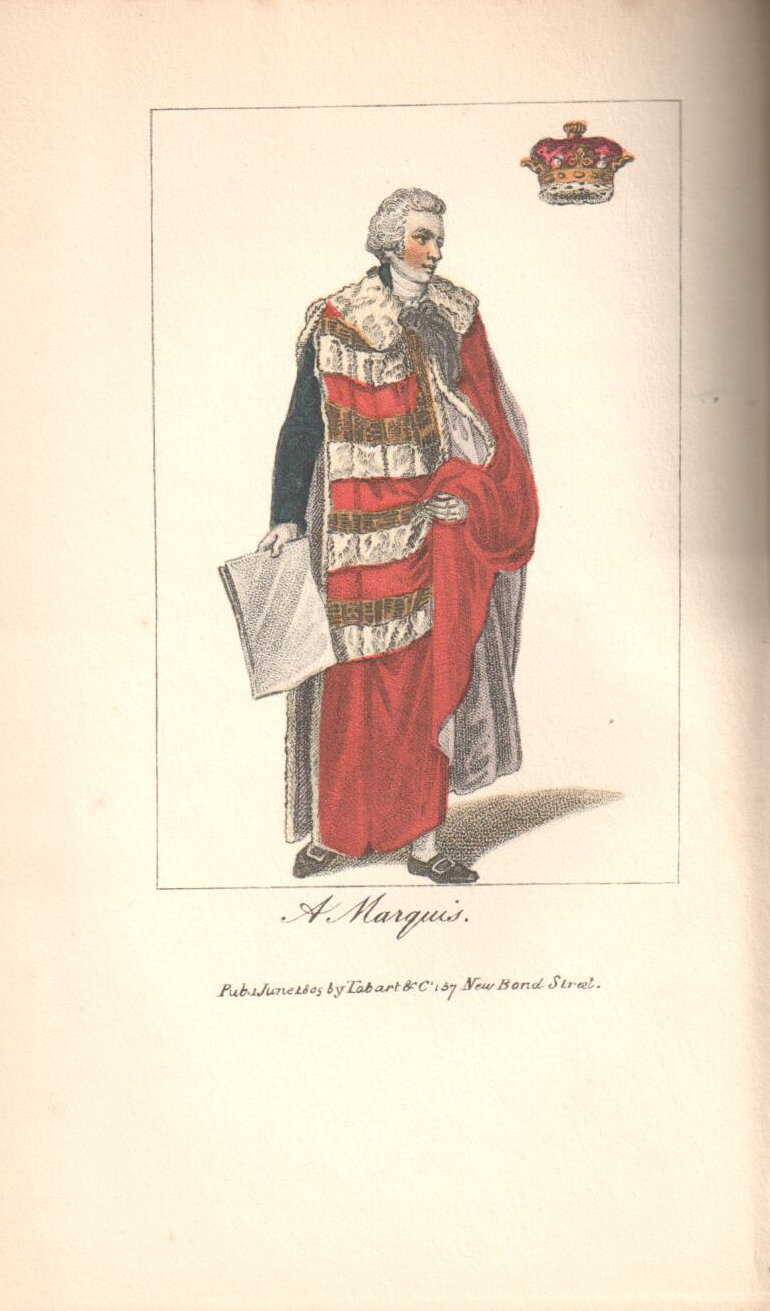
Marquis-Lamb

A reprint of Lamb’s 1805 edition published by William Henry for Tabart & Co. Includes 8 coloured plates and 16 in monochrome [the original edition has 24 in color]. I couldn’t resist, as you can see from this plate of “A Marquis.” The original seems to range upwards from $350.

*********

6.  Tristram, W. Outram. Coaching Days and Coaching Ways. Illus. Hugh Thomson and Herbert Railton. London: Macmillan, 1894.

Tristram-Coaching-Cummins

A 3rd printing of the 2nd edition [first edition published in 1888] – another must-have for anyone with an interest in travel and the carriages of Austen’s period – with the added plus of Thomson’s and Railton’s 214 illustrations. [You also must try to say the author’s name 10 times very fast …]

7.  Waldram, Richard. Overton in Regency Times. Illus. Rosemary Trollope. Overton, Hampshire: Parsonage Farmhouse, 2008.

OvertonRegency

From an exhibition during the Overton Regency Sheep Fair, 2008. With many illustrations of ephemera from the time. Overton was near Steventon and Basingstoke; Austen would have walked there and mentions it in her letters.

8.  The Knight Family Cookbook; Preface by Richard Knight. Introd. Gillian Dow. Chawton House Press, 2013. KnightFamilyCkBk-CHL

A Facsimile edition of the handwritten cookbook of the Knight Family, never published but dated circa 1793. Who can resist this family treasure so you too can make some of the recipes that were in use at Chawton House and Godmersham Park during Jane Austen’s time:

  • To Make Plumb Porridge (p. 70)
  • To Make Cracknails (p. 51)
  • To Make Hedge-Hog-Cream (p. 35)
  • To Make Tansy without Frying (p. 28)
  • To dress a Codds-Head (p. 111)
  • To Pickle Pigeons (p. 193)

There is even a handwritten index, but alas! I find nothing to help make Mr. Woodhouse’s famous gruel – just as well I think!

This book was published by subscription; i.e. if you had made a donation to Chawton House Library as a subscriber (just as Jane Austen subscribed to Frances Burney’s Cecilia), your name will be listed on the “subscriber” page. More information on this at the CHL website. Their next book is The Duties of a Lady’s Maid; with directions for conduct, and numerous receipts for the toilette (1825). Make a donation if you can and see your name in print!

9.  Simo, Melanie Louise. Loudon and the Landscape: From County Seat to Metropolis, 1783-1843. New Haven: Yale UP, 1988. LoudonLandscape

John Claudius Loudon (1783-1843) was the designer of England’s first public park and inventor of the means to construct curvilinear glasshouses, and the first landscape gardener to address the problems of the modern city. A must-have study to have on your shelves next to your Humphry Repton, Capability Brown, and others. Illustrated with maps, photographs, and drawings.

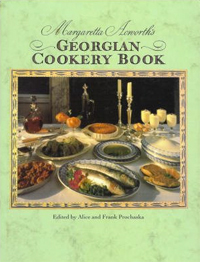
10.  Prochaska, Alice and Frank Prochaska, eds. Margaretta Acworth’s Georgian Cookery Book. London: Pavilion / Michael Joseph, 1987.AcworthCkBk

The cookery book of a London housewife of the Georgian period, of which 90 recipes are transcribed and “updated” with modern ingredients and modern cooking practices by the Prochaskas. Lovely black and white and full-page color illustrations. The introduction offers biographical background on Acworth.

11.  Lucas, E. V. Mr. Punch’s County Songs. Illus. Ernest H. Shepard. London: Methuen, 1928.

A delightful book of poems by Lucas on each county in England with each on the recto, verso is blank. Shepard’s [of Winnie-the-Pooh fame] drawings get you into the spirit of each place, and the poems tell of history and story.

Lucas-Hampshire

 Here is the page on Austen’s own Hampshire

But I bought this solely for its page on London:

Though a Wren built St. Paul’s, sacerdotal and grey,

That fame is a stronghold of pigeons today:

They bill there and coo there and bring up their brood,

And swarm on the pavement at lunchtime for food. 

…. Etc.

**********

12.  Archbold, Rick. Last Dinner on the Titanic. Recipes by Dana McCauley. Introd. Walter Lord. New York: Hyperion, 1997.Archbold-TitanicDinner

Wonderful illustrations of the Titanic interior and the various recipes from the last meal. Why you ask? Well, I have been obsessed with the Titanic since I was a little girl. Both my parents emigrated from England as children, but my father was 11 years old in 1912, when his entire family boarded a ship to take them to America only a few months after the Titanic had taken its maiden and tragic voyage. I always thought that if my father had been on the Titanic I would not exist – I also have marveled at how brave they all were to do this crossing… so hence I have collected various Titanic things for years. I do not have this book and especially like it because it is signed by the author…

 13.  The Infant’s Grammar, or a Picnic Party of the Parts of Speech. London: Scholar Press, 1977. Reprint of the original 1824 edition by Harris and Son.

This picture says it all:

InfantsGrammar

 *******

14. Rocque’s Map of Georgian London, 1746. Colchester, Essex, UK: Old House, 2013.

Nothing to say except that this is fabulous: here is the description from their website: http://www.shirebooks.co.uk/old_house_books/

RocqueMap1746

First published in 1746, it extends from Marylebone to Bow and from Vauxhall to Knightsbridge and Hyde Park. Reproduced here in four detailed sheets, it gives a fascinating glimpse of Georgian London in the early industrial age and is a perfect research tool for the historian and genealogist. As well as over 5,500 street and place names, the survey also includes: Markets, churches, barracks, parks, bridges, hospitals, workhouses, schools, prisons, asylums, theatres, inns and much more.

*********

15.  Crow, Donna Fletcher. A Jane Austen Encounter (#3 The Elizabeth and Richard Mysteries). Boise: StoneHouse Ink, 2013.Crow-JAEncounter

I haven’t read the previous two mysteries (about Dorothy L. Sayers and Shakespeare), but this one is about the married professors Elizabeth and Richard on a vacation trekking through Jane Austen country – they encounter murder and mayhem and a missing letter about The Watsons. Can’t wait to read this one…

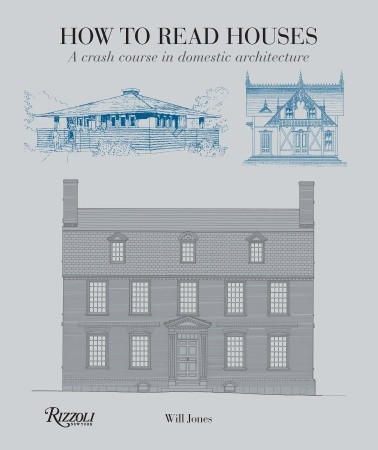
16.  Jones, Will. How to Read Houses: A Crash Course in Domestic Architecture. New York: Rizzoli, 2014.

I picked this up at the Musee des Beaux-Arts Montreal shop – a compact little guide to architecture with photographs and drawings and enlightening text to answer all your questions about the differences between Queen Ann and Georgian and Federal and all the various decorations…

Jones-Houses

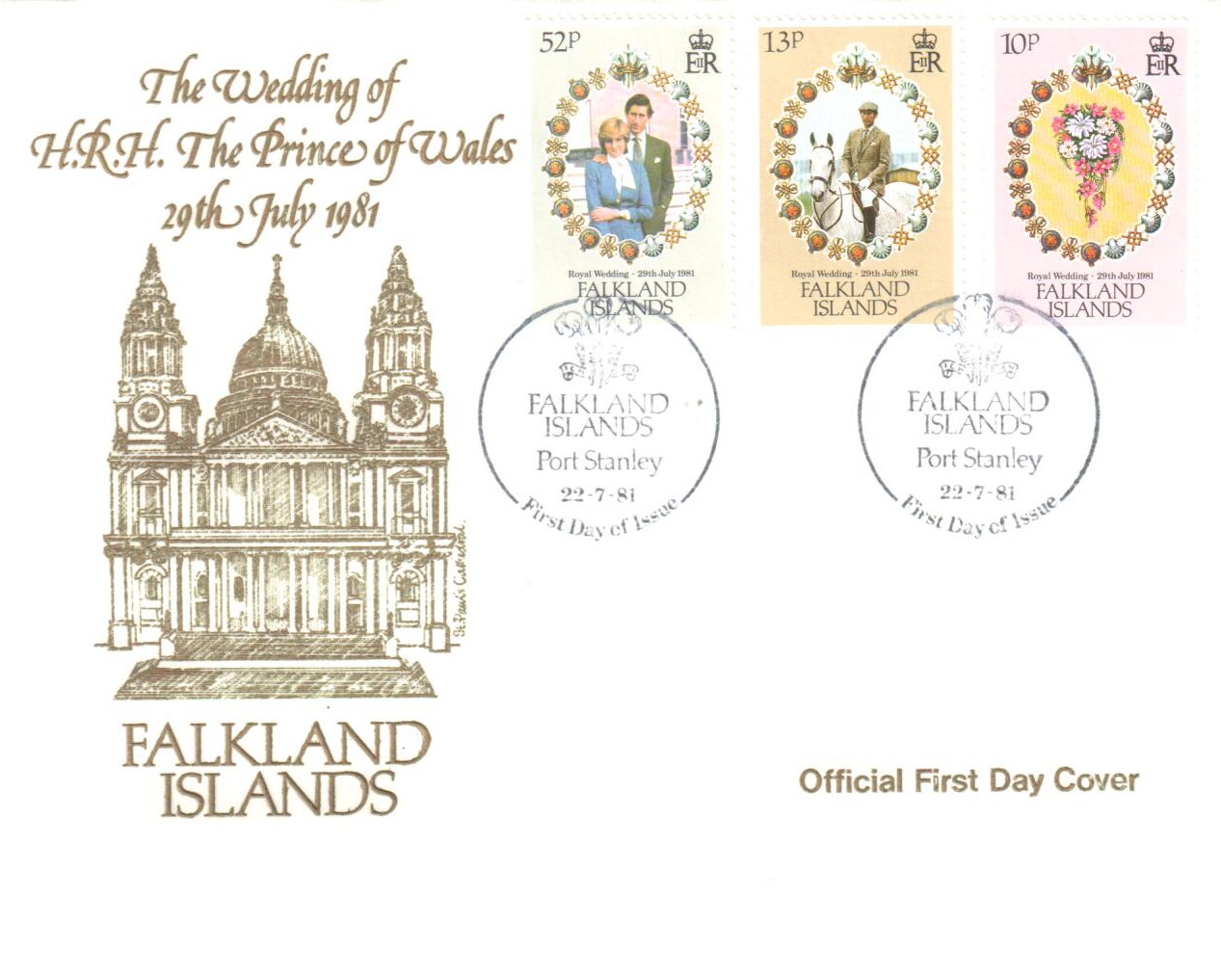
17.  First Day of Issue – Royal Mint coin commemorating Charles and Diana’s wedding with stamps; and another First Day of Issue from the Falkland Islands with new stamps:

RoyalMint-FDOI

Stamps-FDOI-Falklands

***********

So, all in all, a goodly haul – this time I didn’t have to worry about luggage weight, only crossing through immigration from Canada into Vermont. They only seem to ask about alcohol, cigarettes and fruit! so Jane Austen passed through with nary a glitch… now to find room on the bookshelves and the added dilemma of time for reading…

What did you buy at the AGM??

c2014 Jane Austen in Vermont
Austen Literary History & Criticism · Author Interviews · Books · Collecting Jane Austen · Georgian England · Georgian Period · Great Britain - History · Jane Austen · Literature · Regency England · Social Life & Customs

Interview with David Shapard, Author of the Jane Austen Annotated Editions!

Gentle Readers: David Shapard, author of five annotated editions of Jane Austen’s novels – all but Mansfield Park, which is due out next year – will be joining the JASNA Vermont Region next week at the Burlington Book Festival. He will be speaking on “The World of Jane Austen and her Novels,” offering us a peek into the society of early 19th-century England that dominates her novels, with a focus on the position and customs of the controlling landed elite, and the role of women in this society.  I welcome David today for a Q&A about his love of Jane Austen and his excellent annotated editions. If you have any questions for him, please do comment at the end of this post – but better yet, if you are in the area next weekend, please join us at his talk – Saturday September 20, 2014, 1:30-2:45 at the Fletcher Free Library, 235 College St, Burlington VT. [for more info: September 2014 flyer]

 ********* 

So welcome David – thank you for being so gracious in answering all my questions! 

annot-S&SJAIV: To start off, why do you think Jane Austen still speaks to us 200 years after she first published her Sense and Sensibility in 1811? 

DS: I think Jane Austen interests us partly because she is so good, i.e. quality will out. I believe she is the best novelist in the English language, and that gives her a bedrock appeal, one she has had for a very long time (even if she has not always been the object of as much enthusiasm as today). With her you have well-constructed plots, brilliantly delineated characters, interesting and profound themes, and superb language – meaning excellence in all the major elements of a novel. One symptom of this is the variety of reasons people have for appreciating Austen: people, in giving their reasons, have cited, among other things, her comedy, her poignant romances, her keen insight into human psychology, her careful depiction of society, and her moral messages. With so many strong elements, she can appeal to an array of tastes and interests. Another reason is that, even though her novels are set firmly within her own time, she was looking at many matters that transcend that time. Her focus is on basic matters that people always have to deal with, whom to marry, how to relate to other people, how to judge right and wrong, how to cope with the difficulties of life. Her characters personality traits, feelings, relationships, and moral dilemmas are all ones that are still frequently found today, so the insights and lessons presented in her novels can still ring true today.

JAIV: Whatever got you so interested in Jane Austen to first take on annotating Pride and Prejudice (in 2004)? 

DS: I had long loved Jane Austen, for many of the reasons described in my previous answer. But there were several precipitating factors that spurred me to attempt an annotated version of her novel. In the six months or so preceding the decision I had begun to read and sometimes participate in an online forum devoted to Jane Austen, The Republic of Pemberley. This, in addition to being very enjoyable, helped me appreciate how much interest and discussion even very specific points in Austen could generate. That eventually gave me the idea of doing a running commentary on her novels, in which various passages would be examined and elucidated. One feature of Austen is that she is a very subtle author, who makes many of her points quietly and unobtrusively; she also is one who is especially good in the details. For this reason the standard format for analysis of a novel, an article or book examining it as a whole, and looking at the overall theme, would inevitably miss much of what makes her so worth reading. But these elements could be brought out through a more minute analysis of the entire novel. At that time this idea was simply one for the indefinite future. But soon after events occurred that convinced me that I was unlikely to procure a annot-P&Ppermanent, full-time position teaching at a college or university, the profession I had been pursuing for a number of years. I decided to turn to writing, which I had long seen as my principal alternative. I had a longstanding idea for a book, but work on it soon persuaded me that it was the great idea I had earlier thought. While casting around for other ideas I suddenly thought again of my Austen project. I had seen annotated versions of other classic works, and liked them. I also knew there was a large market for anything related to Austen. So I decided to try this, and I quickly realized that I had made an excellent choice.

JAIV: We think so too! ~ Which novel is your favorite? And why? And did your favorite change after your in-depth readings and the historical research?  

DS: Mansfield Park is my favorite overall. I like what I consider its density, the many story lines and the many different complex subjects it explores. At the same time, while the plot is very eventful, it does not rely at all on improbable coincidences, as others of Austen do to some degree. Finally, it has four different characters – Fanny, Edmund, Mary, and Henry – whose inner life is shown, who change over the course of the novel, and who experience serious inner conflicts. In other Austen novels there are only one or two characters about whom that could be said. This has not really changed because of my doing the annotated books. The main change that brought about was simply to increase my appreciation for each one; this was especially true for the four I consider her strongest, Pride and Prejudice, Persuasion, Emma, and Mansfield Park (I am only part way through doing the last).

JAIV: Why the long gap before the next annotated edition came out, Persuasion in 2010? And when does Mansfield Park come out? 

DS: I had first done Pride and Prejudice because I knew it was by far the most popular. I held off doing others until I knew how well it did, and it took a number of years before it succeeded. I wasn’t able to sell it initially, then I self-published it, then somebody at Random House noticed it and approached me about signing with them. After that came out, and did well, my editor there approached me again about doing the other Austen novels. Mansfield Park will come out next year, probably late in the year. The gap between it and the previous one, Northanger Abbey, is the result of my having devoted much of the last year to working on a special enhanced version of Pride and Prejudice that is designed for an iPad. It comes out in a few weeks, and I am very excited about it, but it has significantly delayed Mansfield Park.

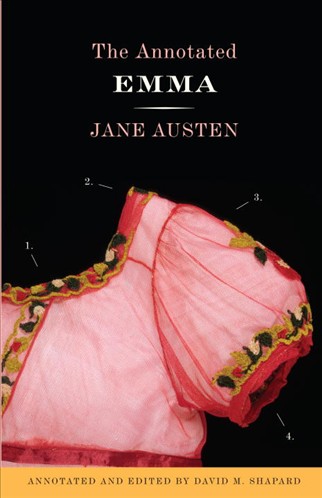
annot-EmmaJAIV: Does Jane Austen get anything wrong? 

DS: She got very little wrong. All I have noticed is a mistake on a date of a letter in Pride and Prejudice, and two specific events, one in Emma and one in Sense and Sensibility, that are probably wrong, based on what I have read about the history of the time. There are also at least a couple places where a quotation from a poem or other writing is off. But that is really a remarkable record, especially when you consider that she didn’t have a large library to consult for quotations or other references.  

JAIV: What do you think of the films? – do you have a favorite? Any that you find completely appalling? 

DS: I like the films overall. They are no substitute for reading the novels, since much of what is in there cannot be shown on film. But the films can do things the novels cannot, such as show houses and carriages and costumes, as well as specific places. That is something I have also done in my books, and the visual adaptations go even further in that direction. It is also nice to see the characters brought to life by real people, even though I inevitably judge them according to how well they correspond to the characters in the novel and often find them wanting, at least in certain respects. In terms of favorites, I would probably say the Sense and Sensibility written by Emma Thompson. I also like the Persuasion with Amanda Root and the Pride and Prejudice miniseries with Jennifer Ehle and Colin Firth. I did not like overall the series of TV adaptations that appeared a few years ago, and I thought the Mansfield Park of that series was the worst of any adaptation I have seen.

JAIV: Oh! I agree with you there, though the Persuasion with Anne running around the street in a panic while reading the annot-P&PCaptain’s letter is embarrassing to watch as well!  ~ Tell us something about your writing process: when and how? 

DS: I usually start by reading through the novel several times, and as carefully as possible; while doing so I note any possible point I might wish to make or passage I wish to explore further or think about. I also listen to audio versions with the same purpose in mind, for I find that in hearing it I sometimes notice things I don’t notice when simply reading it. Then for the historical references, which is what requires the most effort, I organized all the points or topics I want to look at by subject matter, and start reading, or rereading, various books related to those topics. I also, at some point, read through commentaries on the novel to see what additional insights they offer, re-examine Austen’s letters and other biographical material to see what’s relevant there, and look at the words I might need to define; I use here a pre-existing list of words with different meanings in Austen’s time, supplemented for what I may have noticed in addition through my reading. As I do all these things I often go ahead and write the annotations appropriate to what I’ve just found. When all that is done I begin to go through the book chapter by chapter and insert whatever points have not been made. After that it’s just a series of reading over again and making corrections, by myself and by my editor, until the text is finally settled, and also adding other material like illustrations and maps.  

JAIV: How do you think your annotated editions compare to the Harvard University annotated series that began in 2010 with P&P [their Mansfield Park is due out in the Fall of 2015, edited by Deidre Lynch] 

DS: I am not that familiar with these other annotated versions. I know they are in hardcover and are significantly larger (and therefore also more expensive); they also have some color pictures. In terms of the content, my sense is that they have fewer annotations. In the case of the one that I have read, the Pride and Prejudice, it does have fewer annotations overall. Some of its annotations, especially definitions of words, are similar to mine. The principal difference is that it focuses less on historical background – there are definitely fewer annotations there – and more on literary interpretations. It has a number of annotations that explore debates between different literary scholars regarding points in the novel, something mine does not do.  

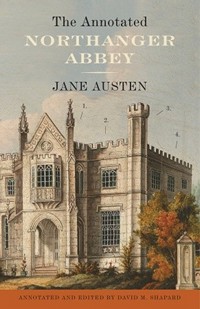
JAIV: The covers for each work: did you choose them yourself? – and the idea of annotating them is a very good one – gets the reader right intoannot-NA ‘reading the annotations’ mode! 

DS: The publisher comes up with the cover, along with the overall design, though they always show it to me for my approval. They had the idea of doing annotations for the cover, but I am the one who comes up with the annotations themselves. That is also part of the process of agreeing on a cover picture: it has to be one that I think will be suitable for annotating.

JAIV: I know you mention “plot disclosures” at the beginning of the book to alert readers that some of your notes might contain “spoiler alerts” – did you get complaints about that when the first edition of your P&P first came out?

DS:  Yes, I did get some complaints about my first edition of Pride and Prejudice. I had envisioned the book being used by many people as a reference, one they would turn to whenever they were curious about a specific point; thus I didn’t worry so much about plot spoilers. But it seems that most people have simply read it through, as with most books, and that many are reading the novel for the first time. As a consequence, I have tried harder in later editions to avoid giving anything significant away. That has constrained me in some respects, because important points about a passage often relate to something that happens later, but I think it’s worth it to avoid spoiling the surprise for the reader. The one important exception here was in Emma: it centers around several mysteries, especially one big one, and I felt that a valuable feature of an annotated edition would lie in showing how all sorts of apparently minor and innocuous actions take on a completely different significance in light of what we find out in the end. So in the case of the annotations for those passages, I put “CAUTION: PLOT SPOILER” at the start to warn off any first-time readers who wished to preserve the surprise.

JAIV: Are you a book collector? And Jane Austen in particular? – if so, what is your favorite edition of any of her works, and why? 

DS: I like to buy books and I have a large library, but I am not a collector in the sense of seeking out rare or special editions. The editions of Jane Austen I have used are those that are most scholarly and authoritative: these are an Oxford edition that first came out in the 1920’s, and the even more exhaustive Cambridge editions (with many notes of their own) that have come out within the last decade. Oxford-Chapmanset-covers-dcb JAIV: You are nearly done with annotating the six novels – what’s up next? Will you annotate the minor works or any of the Juvenilia?

DS: I am close to being done with annotating the novels. It is possible the publisher will also want to do enhanced editions of other Austen novels; I’m sure that will be determined by how well the Pride and Prejudice about to appear does. I have thought about annotating other Austen works, but I am not sure if there is sufficient demand for that. I also have a few ideas for novels of my own, some related to Jane Austen. But right now I am keeping my options open and waiting to see what develops out of my existing books.

Brochure

Huntington Library Regency Exhibit

JAIV: Why do you think the modern reader should have a better understanding of the society of the Regency Period? and can the reader still enjoy Jane Austen without having to read annotated versions?

DS: I think that understanding the Regency period helps greatly in understanding Jane Austen. Of course, millions of people have enjoyed and appreciated Jane Austen over the years without having any particular knowledge of her period, beyond what they could pick up from the novels themselves. I know I was in that situation when I first read her. So such knowledge is in no way a precondition. But I think that if one understands the historical background, all sorts of important events in the novels become much clearer and more comprehensible, and all sorts of particular details, ones the reader probably passed over without much thought, become significant. The story then springs to life in a variety of new ways.

*************

David M. Shapard (c) Michael Lionstar

Thank you David again for joining us here at Jane Austen in Vermont! We look forward to welcoming you to the real Vermont next weekend, where there will be an opportunity at the Book Festival to purchase all your Jane Austen annotated editions and have you personally sign them! I will also add here that David will be the leader on a tour next spring to Jane Austen’s England. The trip will be through Edventures, a tour group that offers educational trips to many parts of the world – or as they say, “Edventures – Adventure Travel That Educates.” You can read more about it here: http://goedventures.com/ – and click here for the flier with details: Huber-Jane Austen 2015 Itinerary April 21 Any questions for David? – please comment below! Further reading:

c2014 Jane Austen in Vermont
Book Giveaway · Books · Collecting Jane Austen · Jane Austen · Jane Austen Circle · Jane Austen Popular Culture · Jane Austen Sequels

Reminder: Book Giveaway!! ~ Syrie James’ Jane Austen’s First Love

Jane Austens First Love by Syrie James

Just a reminder about the giveaway for Syrie James’s newest book, Jane Austen’s First Love. I am extending the deadline for another week, through the holiday weekend until Tuesday September 2, 2014, with the winner announced Wednesday September 3. Please either comment on this post or the original post where Syrie wrote about Lady Bridges’ letters on her daughters’ marriages – one of those daughters, Elizabeth, married Jane Austen’s brother Edward Austen (later Austen-Leigh). (Sad to say, Elizabeth died at the age of 35 shortly after the birth of her eleventh child). These letters from Lady Bridges to her friend tell the tale of the desire to marry one’s daughters well – not unlike Mrs. Bennet!

Syrie’s new book is about Jane Austen’s acquaintance with Edward Taylor whom she met while visiting the Bridges’s home at Goodnestone Park in Kent. It is the imagined story of Jane Austen’s first love, based on extensive research. Syrie’s previous books on Jane Austen have been first class entertainments as she has taken us into the Regency world we all so love to visit! – and I highly recommend this new work, where we have real-life and fiction so beautifully intertwined.

Please comment or ask Syrie a question either here or on the previous post:

https://janeausteninvermont.wordpress.com/2014/08/18/guest-post-syrie-james-on-jane-austens-first-love-goodnestone-park-and-the-bridges-family/

Syrie James 72 dpiAbout the Author: Syrie James, hailed by Los Angeles Magazine as “the queen of nineteenth century re-imaginings,” is the bestselling author of nine critically acclaimed novels including The Missing Manuscript of Jane Austen (“A literary feast for Anglophiles”—Publisher’s weekly), The Lost Memoirs of Jane Austen (named one of the best first novels of the year by Library Journal), and The Secret Diaries of Charlotte Brontë (Audie Award, Romance 2011; Great Group Read, Women’s National Book Association). Syrie’s books have been translated into eighteen languages. She is a member of the Writer’s Guild of America and a life member of JASNA. Follow Syrie on twitter, visit her on facebook, and learn more about her and her books at syriejames.com.

Best of luck in the giveaway – You have until September 3rd!


c2014 Jane Austen in Vermont
Book Giveaway · Books · Collecting Jane Austen · Jane Austen · Jane Austen Circle · Jane Austen Popular Culture · Jane Austen Sequels · Regency England

Guest Post ~ Syrie James on Jane Austen’s First Love, Goodnestone Park, and the Bridges Family ~ and Book Giveaway!

Just a reminder about the giveaway for Syrie James’s newest book, Jane Austen’s First Love. I am extending the deadline for another week, through the holiday weekend until Tuesday September 2, 2014, with the winner announced Wednesday September 3. See below for Giveaway details!

Gentle Readers: I welcome Syrie James today with a post on a bit of her background research for her new book Jane Austen’s First Love. Syrie has based her tale on the real-life Edward Taylor, mentioned by Austen in her letters – he may have been her never-forgotten First Love and hence perhaps a model for her very own Mr. Darcy. Syrie’s previous books on Jane Austen have been first class entertainments as she has taken us into the Regency world we all so love to visit – and I highly recommend this new work, where we have real-life and fiction so beautifully intertwined. – see details at the end of the post on how to win a copy of your own…

Jane Austens First Love by Syrie James

Letters From Lady Bridges on the Engagements of Her Three Daughters

By Syrie James


“It is certainly a very singular instance of good fortune in One Family, that 3 Girls, almost unknown, should have attach’d to themselves three Young Men of such unexceptionable Characters.” —Lady Bridges of Goodnestone Park, July 10, 1791  

Sir Brook Bridges and Lady Bridges

The above was written by Lady Bridges, the former Fanny Fowler, wife of Sir Brook Bridges, 3rd Baronet of Goodnestone Park in Kent. Lady Bridges had eleven children including Elizabeth Bridges, who married Jane Austen’s brother Edward Austen in December, 1791. That year must have been a very busy and happy one for the Bridges family, as sisters Elizabeth and Fanny became engaged within weeks of each other, and another sister Sophia became engaged a few months later—an unusual occurrence in any family at any time, as Lady Bridges gleefully notes. 

This remarkable circumstance in the Bridges family is one of several things which inspired me to write my novel, JANE AUSTEN’S FIRST LOVE. The book takes place during the summer of 1791, when fifteen-year-old Jane visits the Bridges family to join in a month of festivities celebrating their daughters’ engagements. While at Goodnestone Park, Jane meets and falls in love with devilishly handsome Edward Taylor, heir to the nearby, ancestral estate of Bifrons. Edward Taylor is a real person who Jane adored in her youth, as mentioned in several of her letters to her sister Cassandra—references that made me eager to learn more about him, and to write about their relationship. 

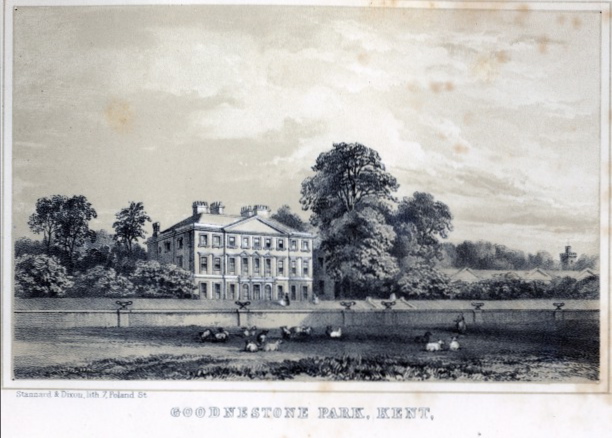
Goodnestone in late 18th century

During my research, I uncovered a trove of information about the remarkable Edward Taylor and his family which was previously unknown to Austen biographers. He spent much of his youth living and traveling abroad, and was extremely well-read and accomplished, qualities which must have greatly appealed to the young Jane. Learning all this was exciting, and it helped me to bring him to life in my novel accurately and in vivid detail.

Another Austen fact that inspired JANE AUSTEN’S FIRST LOVE is that in 1791, Jane wrote a comedic short story, The Three Sisters, featuring characters named Fanny and Sophia. I felt certain that Jane visited Kent that summer, where she not only met the young ladies who inspired that story, but also met and became enamored of Edward Taylor—and that her experiences there greatly shaped her views forever after regarding love and marriage. 

During my research for the book, I was excited to come upon three letters which Lady Bridges wrote in 1791, announcing the engagement of her daughters Elizabeth, Fanny, and Sophia. The letters are little gems, providing us with a glimpse of that family’s history. Here are the letters in their entirety:

LETTER #1

To Mrs. Fielding, St. James’ Palace, London.

Goodnestone: (March 2, 1791)

MY DEAR MRS. FIELDING, 

Elizabeth Bridges
Elizabeth Bridges

I cannot leave to my Daurs the pleasure of informing you of an Event that gives us the greatest satisfaction. We had for some time observed a great attachment between Mr. Austin (Mr. Knight’s Relation) and our dear Elizth; and Mr. Knight has, in the handsomest manner, declared his entire approbation of it; but as they are both very young, he wish’d it not to take place immediately, and as it will not suit him to give up much at present, their Income will be small, and they must be contented to live in the Country, which I think will be no hardship to either party, as they have no high Ideas, and it is a greater satisfaction to us than if she was to be thrown upon the world in a higher sphere, young and inexperienced as she is. He is a very sensible,  amiable young man,  and I trust and hope there is every prospect of Happiness to all parties in their union. This Affair has very much agitated Sir B., and he has not been quite so well for some days past as he had been for a month before; but now it is decided he will, I make no doubt, be better again in a few days, but I have long observed that when his mind has been agitated he has had a return of cough and oppression. He has sent his case to Bath, and if he is encouraged to go there, we shall set out according to the time pointed out from thence, as he has desired to know when the Waters have most efficacy. Fatty is so good (as) to stay with my Girls during our absence, or I should be much distress’d at leaving them so long. She has been pretty well, upon the whole, ever since she has been here, and in remarkable good Looks and Spirits.

Adieu, my dearest Mrs. Fielding. All here unite with me in kindest love and compts: as due. My Daurs desire their duty to you.

Believe me ever yours affectionately, F. B.


[NOTES: “F.B” is Lady Bridges, whose Christian name was Fanny, the same as her eldest daughter. “Sir B” is Sir Brook, her husband. “Fatty” was Isabella, sister of Mrs. C. Fielding’s husband. A popular woman, she was known all her life as Fatty Fielding, and often visited at Goodnestone Park and Godmersham Park.]

edward-austen-knight
Edward Austen Knight

***********

LETTER #2

Goodnestone: (March 28, 1791)


MY DEAR MRS. FIELDING, 

I flatter myself you are so truly interested in the welfare of my dearest children, that I am not afraid of being troublesome in writing again so soon, but must inform you that my dearest Fanny has received an offer of Marriage from Mr. Lewis Cage, a Gentleman of this County of an unexceptionable good character. His proposal has our entire approbation. As you was so kind to express a wish to be acquainted with Mr. Austin, I inform’d him of it, in consequence of which he call’d at St. James’s, and was very much disappointed he was not so fortunate to find you at home, as his Time would not permit him to make a Second Attempt; indeed, I should be quite happy that your two future Nephews should be known to you, and I hope it will not be long before they have an opportunity of being introduced. My Daughters are going to-morrow to Godmersham for a Week; I do not accompany them, as Mr. Bridges is here. Sir Brook continues charmingly well, and is in very good spirits. I hope we shall get a glimpse of you as we pass through town to Bath the middle of next month, tho’ our stay will be very short. How is Miss Finch? I hope much recovered since she left Margate. I am quite delighted to hear such good accounts of Augusta,  and hope she feels no remains of her severe Illness, but that she and all the rest of your Family are well. All here unite with me in kindest Love to you all.

Believe me, ever yours affectionately, F. B.

[NOTES: “Miss Finch” was probably one of Mrs. Fielding’s three sisters. “Augusta Sophia” was the youngest daughter of Mrs. Fielding.]

A close-up of Goodnestone in Austen's Day
A close-up of Goodnestone in Austen’s Day


***********

LETTER #3

Brock St., Bath: (July 10, 1791)

MY DEAR MRS. FIELDING, 

After having wrote to you so lately you will be no doubt surprized at hearing again so soon, and not less so to find that the Cause of my addressing myself to you is to inform you that we have received proposals of Marriage from Mr. William Deedes for your God-daughter, our dear Sophia. He is a young Man of a very Amiable Disposition and universally beloved, and his Father has been so kind to approve his Choice. I hope it will meet with your approbation, and think she bids as fair to be happy with her Connection as her sisters with theirs. It is certainly a very singular instance of good fortune in One Family, that 3 Girls, almost unknown, should have attach’d to themselves three Young Men of such unexceptionable Characters, and I pray to God that their future conduct will ever do Credit to their Choice. Mr. William Deedes is gone with Mr. Knight on the Scotch Tour; he had been long engaged to accompany them, but did not choose to set out on so long an excursion till he had explain’d himself. As I have many letters to write I will not obtain you longer than to beg our best Love and good wishes to you and all your dear Family, and kind Compliments to Lady Charlotte and Miss Finch.

Believe me, ever affectionately yours,
F. B.

**************

Goodnestone Park today

****************

If you’d like to read more about my research for JANE AUSTEN’S FIRST LOVE, please visit my guest post on Austenprose. You’ll find more images of Goodnestone Park and its lovely gardens in my guest post on Laura’s Reviews. I hope you enjoyed Lady Bridges’s letters, and I hope you love JANE AUSTEN’S FIRST LOVE!

************

Syrie James 72 dpi

About the Author: Syrie James, hailed by Los Angeles Magazine as “the queen of nineteenth century re-imaginings,” is the bestselling author of nine critically acclaimed novels including The Missing Manuscript of Jane Austen (“A literary feast for Anglophiles”—Publisher’s weekly), The Lost Memoirs of Jane Austen (named one of the best first novels of the year by Library Journal), and The Secret Diaries of Charlotte Brontë (Audie Award, Romance 2011; Great Group Read, Women’s National Book Association). Syrie’s books have been translated into eighteen languages. She is a member of the Writer’s Guild of America and a life member of JASNA. Follow Syrie on twitter, visit her on facebook, and learn more about her and her books at syriejames.com.

***********

Thank you Syrie for sharing those wonderful letters with us – a perfect example of the marriage market of the late 18th century – such a happy year for these parents in 1791! And how interesting that you discovered these letters in your research into Edward Taylor. Readers, please either comment or ask Syrie a question about her new book and you will be entered into a giveaway for a copy of Jane Austen’s First Love.

Deadline is Tuesday, September 2, 2014 at 11:59 pm (EST) – winner will be announced September 3rd. Limited to US residents, sorry to say – and with hearty thanks to the publisher Berkley for the giveaway.

__________

UPDATE:

I add this comment here from Janine Barchas who wished to send this along to Syrie James: the cover of a Mansfield Park (Philadelphia, circa 1900) with the image of Fanny Brydges as seen above. Thank you Janine for sharing this – always nice to bring Mansfield Park into the mix whenever possible!

MP1900-Barchas

c2014 Jane Austen in Vermont; text and images courtesy of Syrie James, with thanks.
Author Interviews · Book Giveaway · Collecting Jane Austen · Jane Austen · Jane Austen Circle · Jane Austen Popular Culture · Jane Austen Sequels

Jane Austen’s First Love Virtual Book Launch Party & Blog Tour with Author Syrie James, & Giveaways

Syrie James on her new novel “Jane Austen’s First Love” – don’t miss out on the giveaways from Austenprose and others on the Blog Tour! Can’t wait to read this – Love Syrie James’ books!

Laurel Ann Nattress's avatarAustenprose

JAFL blog tour banner x 500

I am very pleased to welcome author Syrie James to Austenprose today to officially open her virtual book launch party and blog tour of Jane Austen’s First Love, published by Berkley Trade. This new Austenesque novel is a fascinating combination of fact and fiction, exploring the first romance of fifteen year-old Jane Austen with the handsome and sophisticated Edward Taylor. 

Syrie has generously offered a guest blog sharing her inspiration to write her new book—and to add to the festivities—we will be offering an amazing selection of giveaways including: trade paperback copies of Jane Austen’s First Love, a muslin tote bag stuffed with Jane Austen goodies, and a specially commissioned painting inspired by the novel. Just leave a comment following this blog post to enter. The contest details are listed below. Good luck to all. 

Please join us in welcoming Syrie James.

The inspiration for my…

View original post 1,453 more words