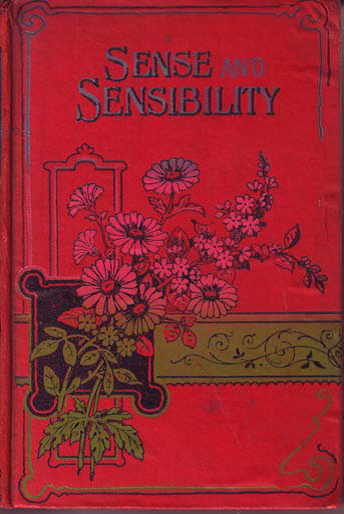
For those of you interested in the publishing history of Jane Austen, Professor Janine Barchas has recently published another of her fabulous bibliographical articles on Austen covers, this time in the journal Book History. It discusses the little-known fact of a Lever Brothers soap marketing campaign that offered various giveaways, including hardbound editions of classic literature, Jane Austen among them. I append here the beginning of the article, one of the many [and interesting!] illustrations, and a link to the rest of it … with thanks to Janine for alerting me to it!
Source: Janine Barchas. “Sense, Sensibility, and Soap: An Unexpected Case Study in Digital Resources for Book History.” Book History 16 (2013): 185-214.
Unrecorded in even David Gilson’s A Bibliography of Jane Austen is the little-known fact that soap manufacturer Lever Brothers published editions of Sense and Sensibility and Pride and Prejudice during the 1890s as part of a unique marketing campaign for Sunlight soap. The first English company to combine massive product giveaways with large-scale advertising, Lever Brothers offered a range of prizes in “Sunlight Soap Monthly Competitions” to “young folks” (contestants could not be older than seventeen) who sent in the largest number of soap wrappers. The Sunlight advertising blitz, targeted to working- and lower-middle-class consumers, proved such a boon to sales that Lever Brothers ran the competition for a full seven years, annually escalating the giveaways. Prizes included cash, bicycles, silver key-chains, gold watches, and—for the largest number of winners—cloth-bound books. For this purpose, Lever Brothers published and distributed its own selection of fiction titles by “Popular Authors” and “Standard Authors,” including cloth-bound editions of Sense and Sensibility and Pride and Prejudice. By 1897, the year the competition closed, Lever Brothers had awarded well over a million volumes.
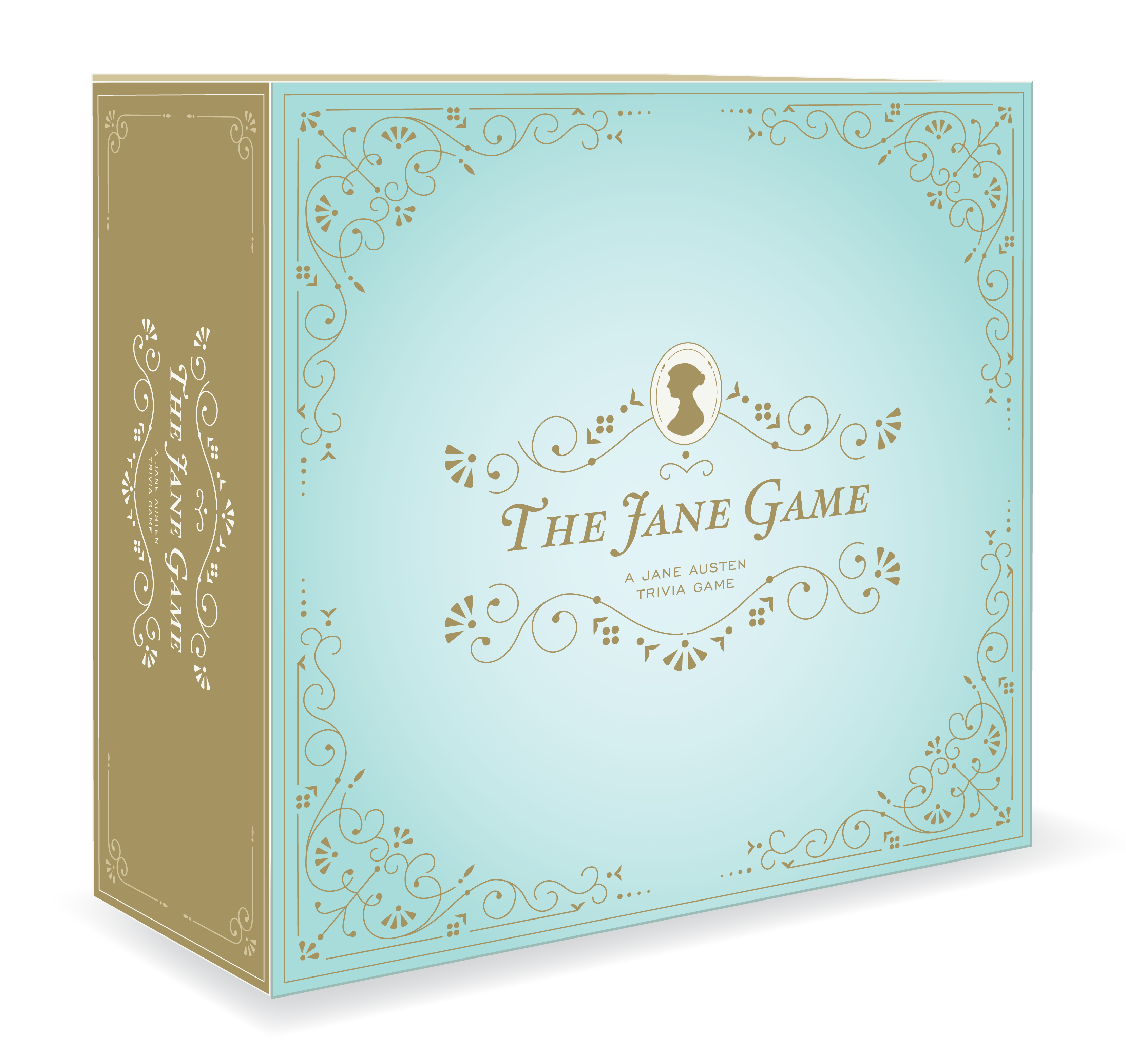
Today is the day! – the Kickstarter campaign of The Jane Gamehas been launched!
I first posted on this here in January 2013 – now it is time for you to sign on and help with getting this Jane Austen trivia game completed for distribution – a donation of $40. [or more!] will get you a copy of the game as well as the satisfaction of helping a Jane Austen entrepreneur. The Kickstarter website is here, where you will find the details of the game, the Rules of the game, and the various donation categories – you have until December 14, 2013 to sign on… I just did, and hope you will too!
Enter Jane Austen’s world of elegance, wit and romance along with your friends when you play The Jane Game!
The Jane Game is a trivia board game devoted to Jane Austen’s six novels. It is designed to bring Austen admirers together to share in her stories, characters, wit and language. While playing, each participant enters Jane’s world as one of her heroines. As such, you seek after a fortunate life by becoming an accomplished woman, gaining life experience and choosing to marry or not. Through chance, expertise and choice you could become the envied Mrs. Darcy, the pitied Mrs. Collins or the new roommate of Miss Bates.
****************
And here are a few words from creator Elizabeth Bankhead on what to expect:
Experience Section: The Jane Game gives you the experience of:
Entering Jane Austen’s world
Sharing in the merriment with your friends
Becoming more acquainted with Austen’s novels and encouraging us to want to read her more
Unique Section: The Jane Game
Is a shared experience
Is the only board game that has trivia from all 6 of Jane’s beloved novels
Details:
$37 and shipping is free; after the Kickstarter campaign it will be $40 +shipping
Kickstarter ends on December 14, 2013
Kickstarter 101:
Kickstarter is a method through which we can give small amounts of money that together will equal a large sum…which, in this case, will be the cost of manufacturing the game
If you give the cost of the game, then you will get a game, which basically means you are pre-ordering
If we do not reach our goal, your credit card doesn’t get charged. This protects you and me. It gives a guarantee that you will receive a nice product and guarantees that I won’t be stuck with promises I cannot keep because I do not have enough money
Why pledge now?
You Become a Founder: As such, you become part of The Jane Game. Welcome! Your name is placed on our website and you get to take part in some of the decisions for the game’s future.
Get the Game…and First: You get The Jane Game, which is “loveliness itself,” is it not? If we are able to do a larger print run and can sell them, you get the game before any other distribution begins.
We Need You: We have covered the cost of the game’s development, but we cannot manufacture and ship the game to you without your support.
Free Shipping: We are covering the cost of shipping to many areas of the world, which will not be the case if it goes retail.
Another book to be added to your wish list, due out early December!
Jane Austen and the Arts: Elegance, Propriety, and Harmony Edited by Natasha Duquette and Elisabeth Lenckos.
Lehigh U P / Rowman & Littlefield, 2013
What makes this book so special to JASNA-Vermont is that one of the chapters is by our founding member Kelly McDonald! – see chapter 2 in the table of contents below, and her blog post on it here. Congratulations Kelly!
Contributions by Jessica Brown; Diane N. Capitani; Christine Colón; Alice Davenport; Deborah Kennedy; Kathryn L. Libin; Kelly McDonald; Belisa Monteiro; Jeffrey Nigro; J. Russell Perkin; Erin J. Smith; Vivasvan Soni; Melora G. Vandersluis and Frederick A. Duquette.
The essays collected in Jane Austen and the Arts; Elegance, Propriety, and Harmony examine Austen’s understanding of the arts, her aesthetic philosophy, and her role as artist. Together, they explore Austen’s connections with Edmund Burke, Adam Smith, Johann Wolfgang von Goethe, Madame de Staël, Joanna Baillie, Jean Jacques Rousseau, Mary Anne Schimmelpenninck, and other writers engaged in debates on the sensuous experience and the intellectual judgment of art. Our contributors look at Austen’s engagement with diverse art forms, painting, ballet, drama, poetry, and music, investigating our topic within historically grounded and theoretically nuanced essays. They represent Austen as a writer-thinker reflecting on the nature and practice of artistic creation and considering the social, moral, psychological, and theological functions of art in her fiction. We suggest that Austen knew, modified, and transformed the dominant aesthetic discourses of her era, at times ironically, to her own artistic ends. As a result, a new, and compelling image of Austen emerges, a “portrait of a lady artist” confidently promoting her own distinctly post-enlightenment aesthetic system.
***************
Table of Contents:
Preface: Jane Austen’s Critique of Aesthetic Judgment by Vivasvan Soni
Introduction by Natasha Duquette and Elisabeth Lenckos
I. The Fine Arts in Austen’s World: Music, Dance, and Portraiture
Ch 1. “Daily Practice, Musical Accomplishment, and the Example of Jane Austen” – Kathryn Libin Ch 2.”A ‘Reputation for Accomplishment’: Marianne Dashwood and Emma Woodhouse as Artistic Performers” – Kelly McDonald Ch 3. “Miss Bingley’s Walk: The Aesthetics of Movement in Pride and Prejudice” – Erin Smith
Ch 4. “The Sister Artist: Cassandra Austen’s Portraits of Jane Austen in Art-Historical Context” – Jeffrey Nigro
II. Austen and Romanticism: Female Genius, Gothicism, and Sublimity
Ch 5 – “Portrait of a Lady (Artist): Jane Austen’s Anne Elliot, Madame de Staël’s Corrine, and the Woman of Genius Novel” – Elisabeth Lenckos
Ch 6 – “Jane Austen’s Comic Heroines and the Controversial Pleasures of Wit” – Belisa Monteiro
Ch 7 – “An Adaptable Aesthetic: Eighteenth-Century Landscapes, Ann Radcliffe, and Jane Austen” – Alice Davenport
Ch 8. “Exploring the Transformative Power of Literature: Joanna Baillie, Jane Austen and the Aesthetics of Moral Reform” – Christine Colón
Ch 9. “Jane Austen’s Influence on Stephenie Meyer” – Deborah Kennedy
III. Austen in Political, Social, and Theological Context
Ch 10. “Aesthetics, Politics, and the Interpretation of Mansfield Park” – Russell Perkin
Ch 11. “Reflections on Mirrors: Austen, Rousseau, and Socio-Politics” – Melora Vandersluis
Ch 12. “‘So much novelty and beauty!’: Spacious Reception through an Aesthetic of Restraint in Persuasion” – Jessica Brown
Ch 13. “Augustinian Aesthetics in Jane Austen’s World: God as Artist” – Diane Capitani
Ch 14. “‘Delicacy of Taste’ Redeemed: The Aesthetic Judgments of Austen’s Clergymen Heroes” – Fred and Natasha Duquette
If you are into your holiday shopping early, or compiling your own wish-list, here is a fine start: a must-have for your Jane Austen collection: the Folio Society’s latest edition of Pride and Prejudice, 2013.
“I had not known you a month before I felt that you were the last man in the world whom I could ever be prevailed on to marry.”
One of the world’s favourite books, Pride and Prejudice has long been regarded as a classic romance. In Elizabeth Bennet and Fitzwilliam Darcy, Jane Austen created the greatest pair of sparring lovers since Shakespeare’s Beatrice and Benedick. This sparkling comedy of manners features an inimitable cast of characters including the obsequious Mr Collins, the autocratic Lady Catherine de Bourgh, and Mrs Bennet, the most embarrassing mother in literature.
The award-winning Balbusso twins have contributed eight exquisite illustrations to this edition, as well as a striking cover design. The novel’s celebrated first line is blocked in gold on the slipcase. In a new introduction, the author Sebastian Faulks praises ‘a novel of almost boundless wit and charm that has withstood film and television adaptations and attempts to define it as a “fairy tale” or a “rom-com”.’
[Pride and Prejudice (Folio, 2013): image from the Balbusso website]
Details:
Introduced by Sebastian Faulks.
Illustrated by Anna and Elena Balbusso.
Bound in metallic cloth, blocked with a design by Anna and Elena Balbusso.
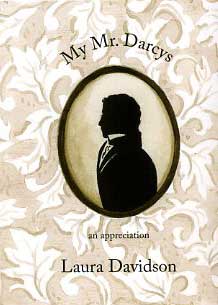
I most fortunately stumbled upon this book My Mr. Darcys when searching for another Austen title and found the bookseller had this title as well – but alas! no available copies. So I went straight to the source and found not only this but other delightful books from the Boston-based book artist Laura Davidson – we got into a conversation about what inspired her to create this miniature book [4 ¼” x 3”] about the various Mr. Darcys in film:
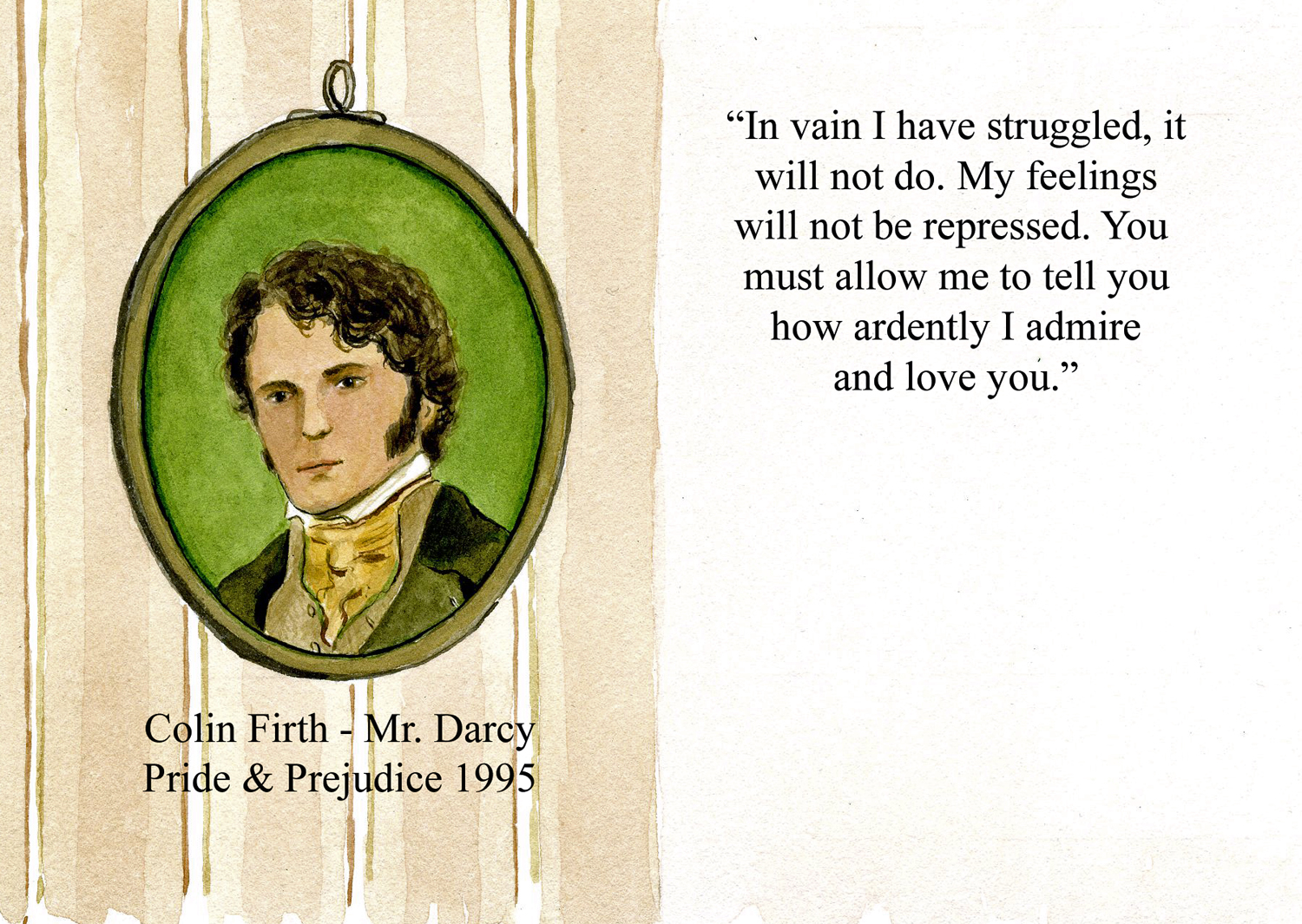
LD: My Mr. Darcys: An Appreciation (2009) is a tribute to the many actors who have played the role of Mr. Darcy in Pride & Prejudice adaptations. It includes portrait miniatures of sixactors along with text from each film. It is especially made for the true Austenite.
There are 500 copies, each signed and numbered. $28.00
When I was doing research for this book, I had to re-watch all of the films, taking notes about which line would work with each painted miniature of the actors. This was easier than one might think, and also really fun. When it came to the text on the back of my book, I knew which line from P&P I wanted to use, but had no idea where to find it quickly. I phoned my older sister Paula, a devoted Austenite and the one who introduced me to Jane originally. She was driving, pulled off the road, and reached into the side pocket of the passenger door to pull out her emergency copy of P&P and found the passage for me right away. At the time – I was amused by this. But now, of course, I carry an emergency copy of P&P on my phone (along with Persuasion). [Ed. I am not going to tell you which passage Laura chose for the back of the book – you will just have to buy your own copy to find out! – but what passage do you think she might have chosen?]
JAIV: Why did you feel compelled to do this book – you refer to your sister being an “Austenite” – are you as well?
LD: At the time, my sister and I were talking quite often about the various adaptations of Pride and Prejudice and it occurred to me that there must be women everywhere having the same conversations and comparing Darcys. I’m a book artist, and much of my work is making visual lists, drawing everyday items, familiar yet very personal things. My work often reflects my passion for art history, maps and architecture. My Mr. Darcys was a bit out of the blue. I don’t really know how it came into my mind to do the book exactly, but once the seed was planted there was no turning back. I like that a book a woman wrote 200 years ago still resonates today and inspires artists, writers, and filmmakers to keep the characters alive. So, I would say that yes, I am an Austenite.
JAIV: Which of the novels do you like the best?
LD: Persuasion. I adore Anne Elliot, because she always knew her own heart even though she was afraid to follow it.
JAIV: Which adaptation do you like the best?
LD: I love the 1995 BBC adaptation of Pride and Prejudice. I think it was perfectly cast. Of all the Austen adaptations I’ve seen though, the Persuasion from 1995 is my favorite. Watching it is like comfort food to me.
JAIV: And which Mr. Darcy is your favorite, and why?
LD: Laurence Olivier was in the first “Hollywoodized” version which was terribly cast, except for him. He played Darcy’s imperiousness beautifully, but the compromised ending let him down.
Colin Firth was absolutely perfect in the role, getting the arrogance right, but showing the vulnerability beneath. Plus, all the Darcys that came after were a direct result of his performance, and that of the rest of the cast. If he hadn’t had the charm and charisma to pull off the Darcy character, I doubt any of the other adaptations would have been made.
So, Colin Firth, to me, is the definitive Mr. Darcy. And we can’t forget the lake scene…!
************
So fellow Darcy fans, this is must have book – know that some of you like David Rintoul the best from the 1980 BBC production – he is, sorry to say not in this book – but everyone else is, each with an appropriate quote that sums up his character best… it is small, doesn’t take up much shelf space, but I think you will choose to display it in a prominent place somewhere as a centerpiece to your Austen collection.
What else I had to buy: for an obsessed Red-Sox Fan! [and a best friend, even though I am, dare I say it, a Yankee Fan…]
Fenway Park Tunnel Book: This tunnel book shows a view of Fenway Park and the skyline of Boston. The images were painted, then offset printed, laser cut and pieced together by hand. Each copy is signed.
2007, 2008; 2nd edition (with 2007 world championship flag); 6.5 x 8 and 3/16 inches, 6 two-sided pages; $38.
I bought another book but as it is a gift for a friend that I have not yet given it to, I must wait – but will say it has something to do with Birds!
And what book-loving person would not require this:
Block Prints: Read Art
2012, 10 x 14” hand printed on Kitakata rice paper, two colors. One small print on a book page is attached, printed in an edition of 12. Unframed $125.
*********************
Here is Laura’s website and contact information: http://www.lauradavidson.com/ – take some time to look at her various creations – time well-spent I assure you! If you have a question or a comment for Laura, please do so here and I will pass them on to her for a response…
[all images copyright Laura Davidson and used with permission]
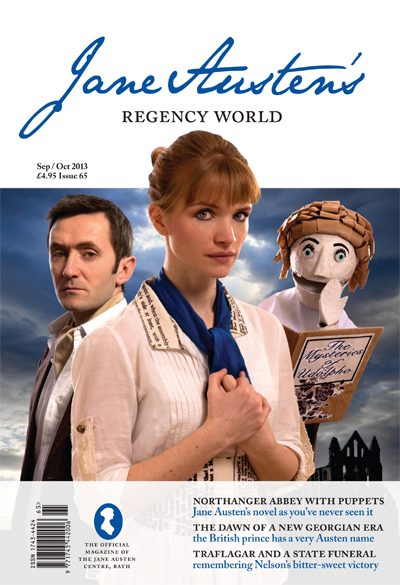
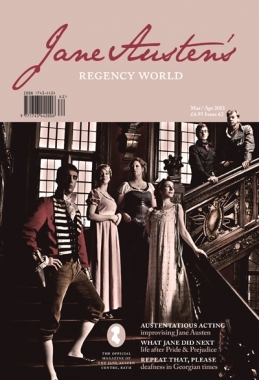
The September/October issue of Jane Austen’s Regency World magazine is out now and will be mailed to subscribers this week. In it you can read about:
Northanger Abbey with strings: the Gothic puppet show that gripped the Edinburgh Festival and is heading to Bath and London
JASNA AGM preview: an exclusive look at September’s gathering in Minneapolis
The importance of being George: the new royal baby has a very Austen name
Trafalgar and Nelson: how the press reported the great Naval victory – plus Nelson’s funeral remembered
Remembering the Burneys: a new plaque in unveiled in memory of Fanny
Plus News, Letters, Book Reviews and information from Jane Austen Societies in the Netherlands, UK and Australia
************************
To subscribe now click here: http://janeaustenmagazine.co.uk/subscribe/ – and make sure that you are among the first to read all the news from Jane Austen’s Regency World.
The Leslie Hindman Auctioneers sale on April 10, 2013 in Chicago: Sale 239 – Fine Books and Manuscripts [preview starts April 6] has three items of interest to collectors and readers of Jane Austen, and this time a pleasant surprise to see them in a more affordable range…
1. Lot 319:
* JANE AUSTEN. Mansfield Park. London: J. Murray, 1816.
3 vols. 12mo, modern quarter morocco, renewed endpapers. Second edition. Lacks half-titles; 2-inch tear to title page vol. 2 restored; spines deteriorating and hinges cracked; otherwise the interior is in near fine condition with very little brownspotting.
Estimate $ 1,000-2,000.
2. Lot 320:
* JANE AUSTEN. Fragment of a Novel, written January-March 1817. Now First Printed from the Manuscript [Sandition]. Oxford: Clarendon Press, 1925.
8vo, publisher’s cloth-backed blue boards, printed spine label, facsimile frontispiece. Limited edition facsimile, one of 250 copies on handmade paper. Boards lightly soiled with some loss to spine label; otherwise very good.
Estimate $ 100-200.
3. Lot 434A:
JANE AUSTEN. Works (COLLECTED WORKS). London: Richard Bentley and Son, 1882.
6 vols. 8vo, 3/4 maroon morocco over decorative boards, title in gilt to black leather spine labels, t.e.g. Light edgewear; otherwise fine.
Estimate $ 100-200.
__________
My note: this last item does not offer a very comprehensive description, so I would suggest an inquiry to the auction house for more information. This is likely the Steventon Edition that Bentley published in 1882, limited to 375 sets; size is 20.5 cm, or a small octavo (8vo), obviously rebound here; there are illustrations (those that appeared in Bentley’s original Standard Novels of 1833, and a few additional woodcuts and a facsimile of Austen’s letter to Anna Lefroy (29 Nov 1814)) – full information on the edition can be found in Gilson at D13; but again, please check with the auction house to verify that it is this edition (there was a reissue in 1886). The interest in the Steventon Edition is that it was the last complete edition of Jane Austen’s works to be published by Bentley, her major publisher in England from 1833 to 1882, and holder of the copyrights until their various successive expiry dates.
And now doubly delighted to hear from Tony that he is planning a similar miniature edition of Pride and Prejudice – perfect timing for this bicentenary year. It will be another triple-decker, as was the original, in the same format and size as Emma with the same typeface. Each of the three volumes is to be published separately, in April, June, and August; the third volume will include a slipcase for the set.
Volume I and II will contain 240 pages, and 260 pages for Vol. III, all bound in a lovely soft faux leather, in a pretty butterscotch color. The endpapers will be decorated with colored illustrations from the 1907 Dent edition, four different pictures in each volume. The slipcase will be decorated with some of the same illustrations. It will be a limited edition of 15 copies. [no image is yet available]
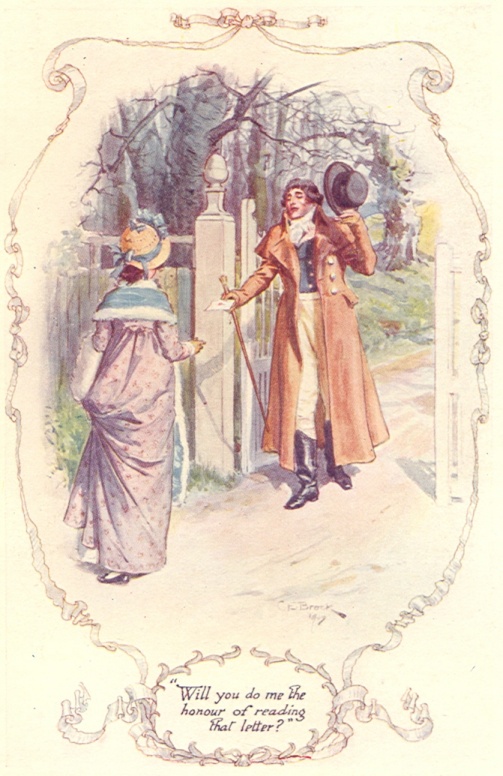
C. E. Brock – ‘Pride and Prejudice’ – Dent 1907 – Mollands
The first volume will be available near the end of April; price is $35. / volume, the complete set with slipcase, $105. You can order either by volume as they become available or wait for the complete set in August, but with only 15 sets available, you best get your order in soon! [There was a second edition of Emma, and there are copies still available.]
Other titles that Tony has published in this miniature format: [see his website for more information on each]
Priestley: Experiments and Observations of Different Kinds of Air
In the United States, a miniature book is usually considered to be one which is no more than three inches in height, width, or thickness. Some aficionados collect slightly larger books while others specialize in even smaller sizes. Outside of the United States, books up to four inches are often considered miniature.
Please see below for information on the book giveaway!
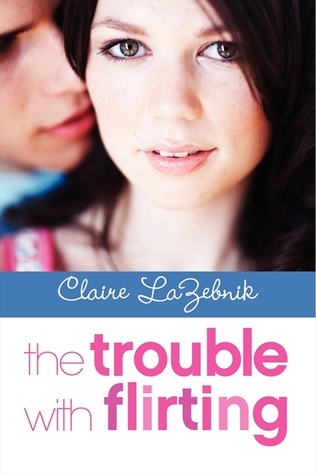
Gentle Readers: Today I welcome Claire LaZebnik as she shares with us her thoughts on her newest book, The Trouble with Flirting, a Jane Austen for young adults. Loosely based on Mansfield Park, it tells the tale of Franny Pearson and her summer of friendship and romance with the likes of Edmund Bertram, his sisters, and Henry and Mary Crawford, all updated to the 21st-century. There is even a rather demanding, you-shall-never-please-me Aunt Norris in the mix!
In one of my former lives I was a children’s librarian and with the added plus of having children of my own, I’ve have read a good amount of children’s and young adult literature – I can honestly say that some of the works for young people still rate as my favorite reads [Bridge to Terabithia by Vermont’s own Katherine Paterson remains my number one]. Now if I pop Jane Austen into the equation [which I do whenever possible], I have been delighted to discover a treasure-trove of titles that take her tales and adapt them to the world of the 21st century teenager – Polly Shulman’s Enthusiasmand Rosie Rushton’s series spring immediately to mind – indeed there is even a blog out there!: From JA to YA: Adapting Jane Austen for Young Adults! [And most of my Jane Austen friends agree that Clueless might well be the best of all the Austen adaptations…]
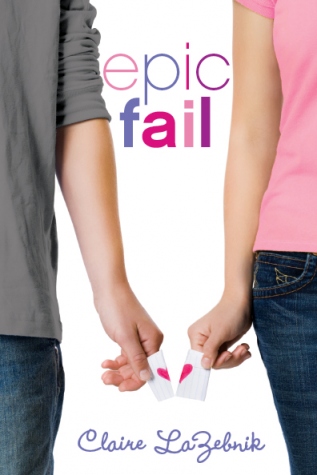
I have just found out about Claire [thank you Diana Birchall!] and have not read her first book Epic Fail based on Pride and Prejudice, but am nearly finished with The Trouble with Flirting – a thoroughly enjoyable read that whether you are 14 or 40 or even 64 you will find something to savor in the young love so beautifully rendered by Jane Austen 200 years ago as now transported to a modern day summer theater camp, where even Shakespeare takes a bow.
***********************
UPDATING JANE
By Claire LaZebnik
How do you stay true to the spirit of an author who wrote two hundred years ago?
When you sit down to write a modernization of a Jane Austen novel, you get hit by a jumble of emotions. There’s terror—how dare you tinker with perfection?—and dread—no matter how good a book you write, it will never compare to the original—and excitement—you get to spend the next few months of your life thinking about an author you love!—and, mostly, perplexity—how do you bring an early 19th century text into the 21st century? You can’t simply switch “ball” to “prom” and “tea” to “diet Coke” and call it a day. (Not that some haven’t tried.)
My first YA novel, Epic Fail, is loosely based on Pride and Prejudice. For the most part, updating the story went smoothly. The emotions in P&P feel as true today as they ever did: we all know what it’s like to be embarrassed by members of our families and we’ve all at some point given our respect to someone who didn’t deserve it and withheld it from someone who did.
My challenge was figuring out how to give a modern day Darcy a reason to be so guarded that he comes across as a snob: our class distinctions aren’t as clearcut as they were back in Austen’s day and country. But then I figured it out: children of celebrities get fawned over and hounded pretty much everywhere they go in L.A., and, just like Darcy, they learn to be wary of strangers who may want too much from them. So Darcy (now Derek) became the son of two movie stars in my novel.
One thing I never worried about was how to make Elizabeth Bennet accessible to my readers: Lizzie’s about as modern as a nineteenth-century heroine can get. She’s funny, intelligent, wellread, outspoken, and prefers even potentially insolvent independence to life with someone she can’t respect. She transplants beautifully into our modern world.
That project finished, I turned my attention to Mansfield Park.
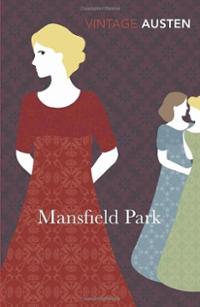
Vintage Classics
I love Mansfield Park. It’s like a combination of Cinderella and the Ugly Duckling. Plain and poor Fanny Price pines quietly for her kind, wealthy cousin Edmund, but has to watch from the sidelines as he falls in love with the dazzling and witty Mary Crawford. Mary’s equally charming brother Henry decides he’ll steal faithful little Fanny’s heart, just for the hell of it, then surprises himself by falling more in love with her than she with him. He’s an attractive guy, but morally flawed and conscientious Fanny doesn’t trust him. So she rejects his courtship and waits patiently for Edmund to come to his senses or for senility to descend on her–whichever comes first. (And, trust me, it’s a bit of a toss-up.)
Devout, patient, deeply moral, quiet . . . Fanny Price is about as modern as a whalebone corset.
So there lay my challenge with Mansfield Park: finding a way to make Fanny accessible to modern readers. I still wanted her to feel like an outsider, so in my version she arrives at the Mansfield College Theater Program for a job sewing costumes, while all the others teenagers are enrolled in the summer acting program. But she’s not meek, submissive or embarrassed by her position: she takes some pride in the fact she’s earning her way, and when she’s given a chance to participate as an actor, proves she can hold her own against the more privileged set.
Nor does my Franny (I added an “r”) sit around waiting for Edmund/Alex to notice her once he’s clearly crushing on someone else. She still carries a torch for him, but it’s summertime and she knows she might as well have fun.
So there I was, writing my update of MP, feeling pretty good about how I’d made Fanny more modern and brought the plot into this fun summer acting program setting, and everything was falling into place–and then I got to the ending. In Austen’s version, morality triumphs. The two people who’ve acted in a conscientious and thoughtful way end up together, while the morally lax ones ride off into the sunset. Actually, let me correct that. First the morally lax ones ride off. Then Edmund spends some time moping around because he really really liked Mary and is so bummed she didn’t come up to his high moral standards. And then he remembers about faithful little Fanny who’s still watching him hopefully from the sidelines.
Times were different when Austen wrote Mansfield Park. Young women of no means didn’t have a lot of power. Sitting around waiting—and turning down the occasional wrong suitor—was pretty much the only option for someone as poor and dependent as Franny.
But I couldn’t make that ending work. Not today. Not with a more modern heroine. I found it hard to respect a 21st century girl who sits around passively waiting for the guy she loves to appreciate her, especially when that same man has made it clear he preferred someone else pretty much all along.
I tried to make it work. I wanted to be true to Austen and true to the novel I’d read so many times and loved so very much. But it wasn’t working. No matter how wonderfully romantic I tried to make the moment when Franny and Alex came together in my book, I felt resentful toward him. He didn’t deserve her.
So I sent an email to my editor. “May I please just try changing the ending?” I asked.
“Sure,” she said.
So in my version, Franny learns that the guy who makes you wait while he pants after someone else just isn’t worth waiting for.
I love Austen—madly, passionately, deeply. That’s why I’ve wanted to pay homage to her with these modernizations: if you’re going to steal, steal from the best. But I wouldn’t be faithful to her legacy of capturing universal human truths and emotions and setting them in a very specific time and place, if I didn’t recognize that times change and women are much freer now than they were back then—and give my readers a Fanny Price for our time.
About the author:
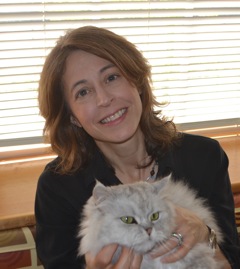
Claire LaZebnik
Claire LaZebnik’s most recent novels, Epic Fail and The Trouble with Flirting (HarperTeen), are loosely based on two of Jane Austen’s classic works. She’s currently finishing up The Last Best Kiss, which is due out in summer 2014 (also from HarperTeen) and is inspired by Austen’s Persuasion. Her first novel, Same as It Never Was (St. Martin’s, 2003) was made into an ABC Family movie titled Hello Sister, Goodbye Life. Her four other novels for adults, Knitting under the Influence, The Smart One and the Pretty One, If You Lived Here, You’d Be Home Now, and Families and other Nonreturnable Gifts, were all published by Hachette’s Grand Central Publishing imprint. LaZebnik co-authored two non-fiction books with Dr. Lynn Kern Koegel (Overcoming Autism and Growing Up on the Spectrum) and contributed a monologue about having a teenage son with autism to the anthology play Motherhood Out Loud.
The Trouble with Flirting
by Claire LaZebnik
HarperTeen 2013
$9.99 ISBN-10: 0061921270 ISBN-13: 978-0061921278
Find it at your local bookstore, or at Amazon
***********************
Book Giveaway! Please enter into the random drawing for a copy of The Trouble with Flirting by commenting below: either by asking Claire LaZebnik a question or telling us why you would like to read this YA novel based on Mansfield Park and how you might fashion the ending. Deadline is Monday March 25, 2013 11:59 pm; winner will be announced on Tuesday March 26th. Domestic eligibility only [sorry all, our postage rates make international mailings impossibly expensive]. Good luck all, and thank you to the publisher HarperTeen for donating the book for the giveaway, and to Claire for her posting here today [and her delightful book!]







 Jane Austen in Vermont