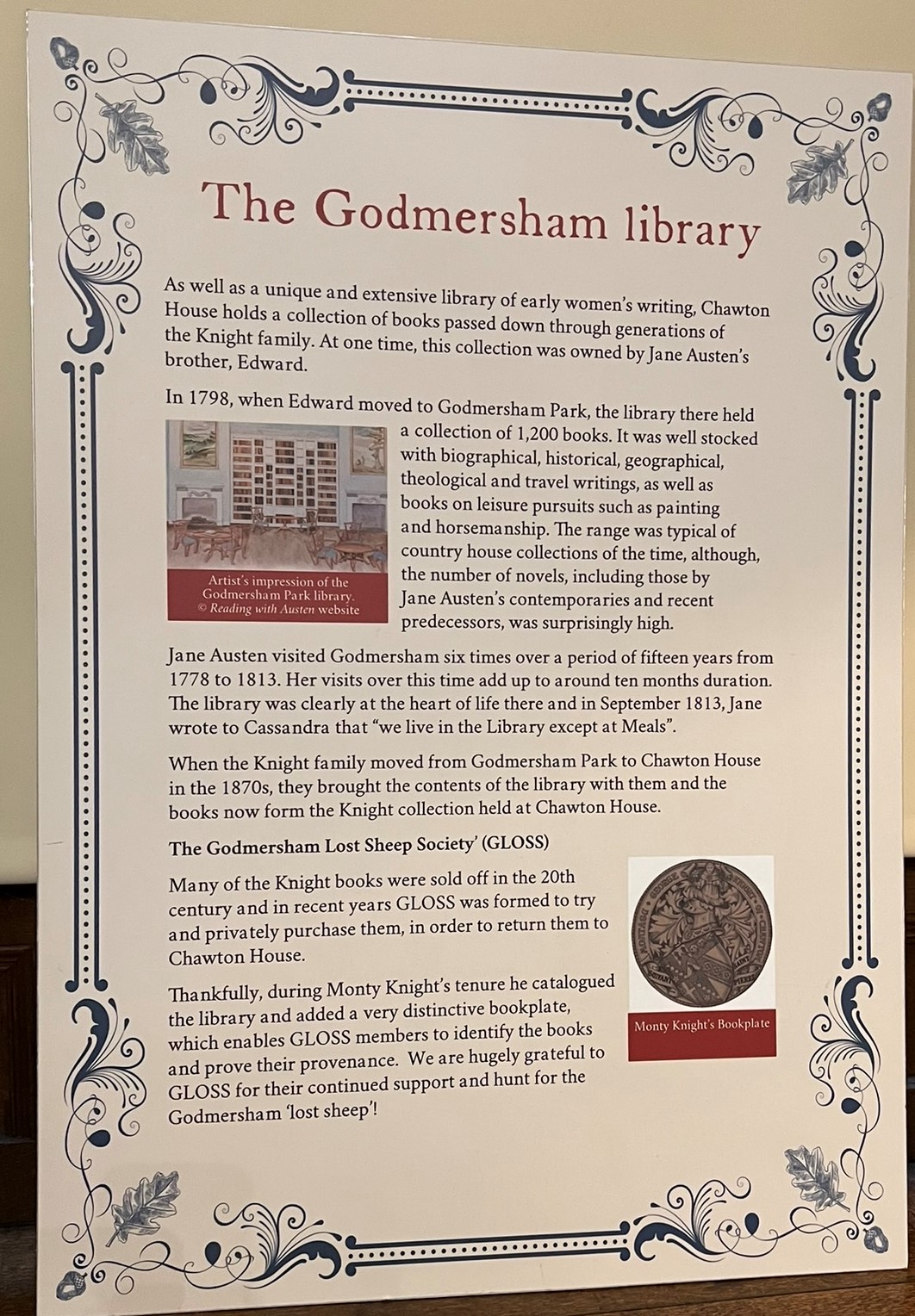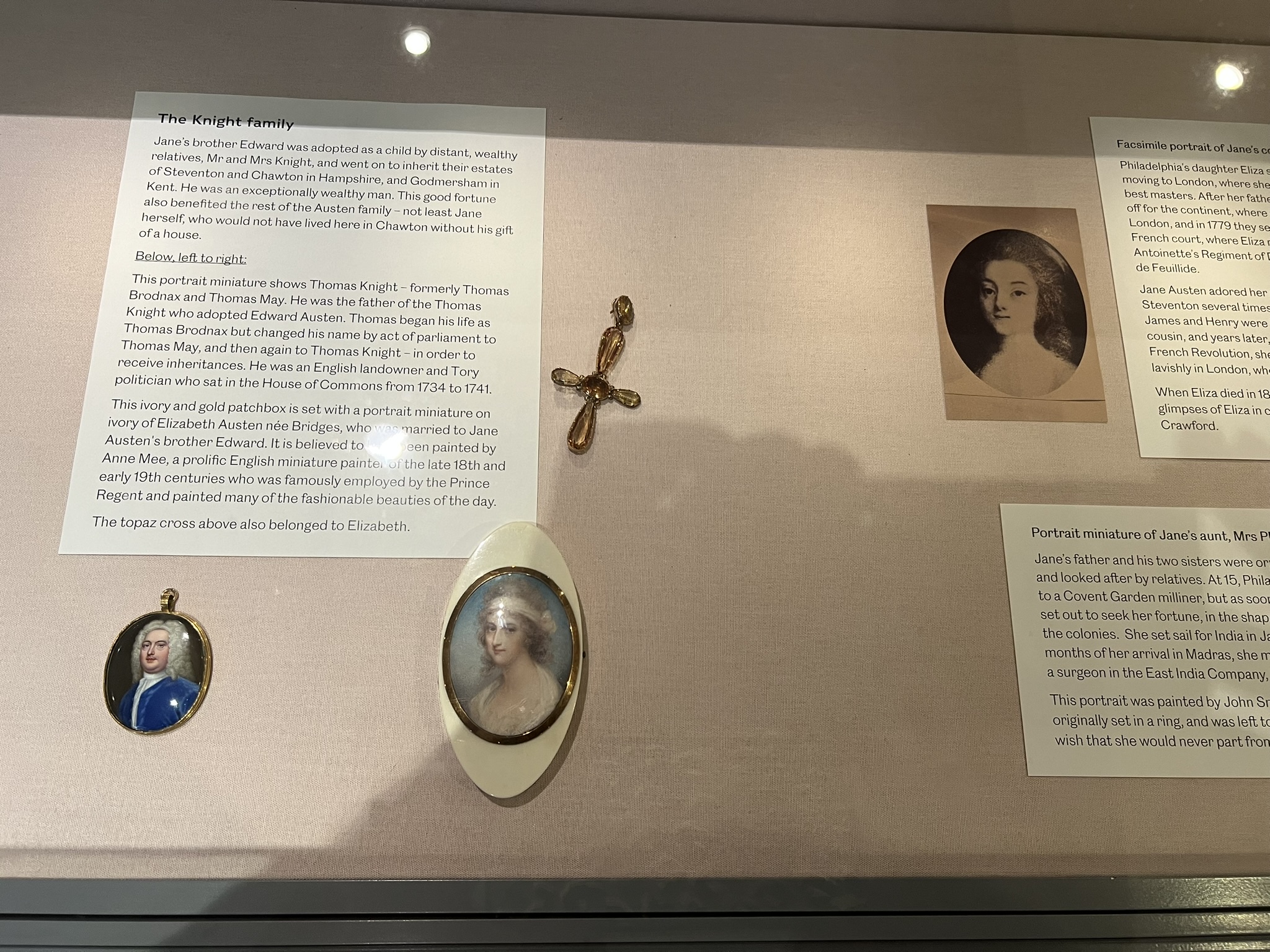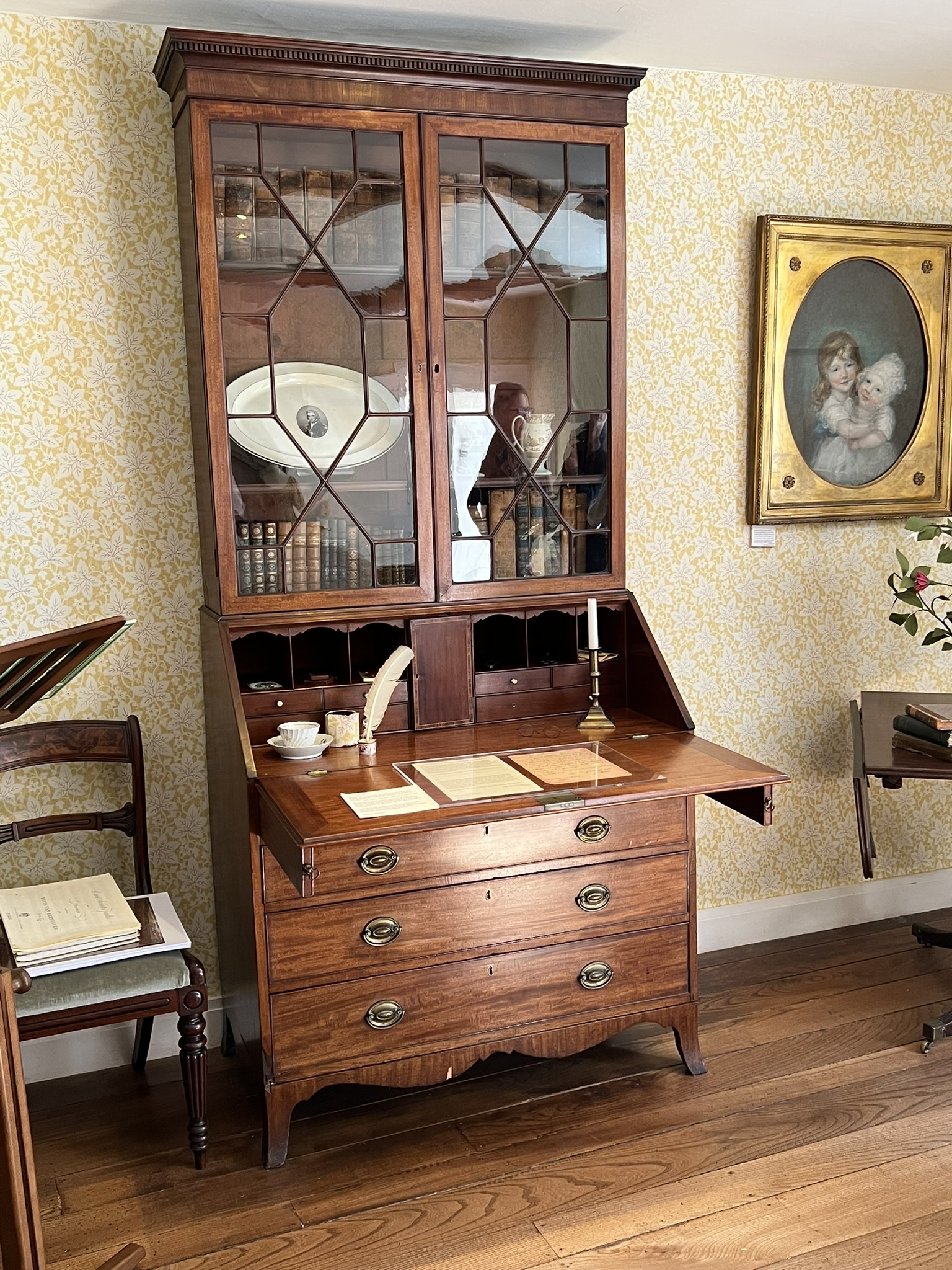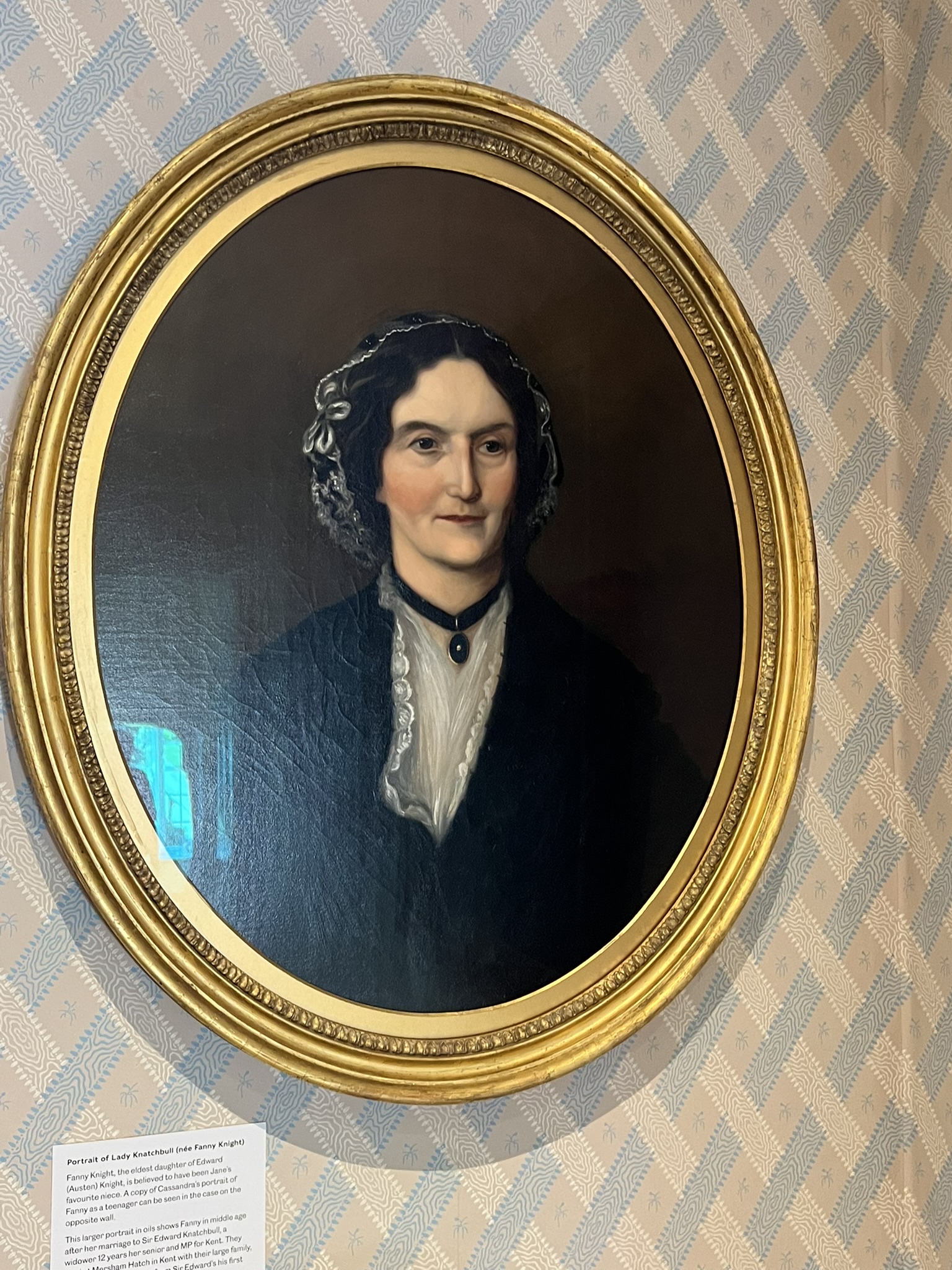
Austen Literary History & Criticism · Chawton House · Decorative Arts · Domestic Arts · Fashion & Costume · Georgian England · Georgian Period · Godmersham Park Library · Great Britain - History · Jane Austen · Jane Austen Circle · Jane Austen Merchandise · Jane Austen Popular Culture · Jane Austen Societies · Jane Austen's Letters · JASNA · Museum Exhibitions · NAFCH - North American Friends of Chawton House · Rare Books · Regency England · Social Life & Customs · Women Writers

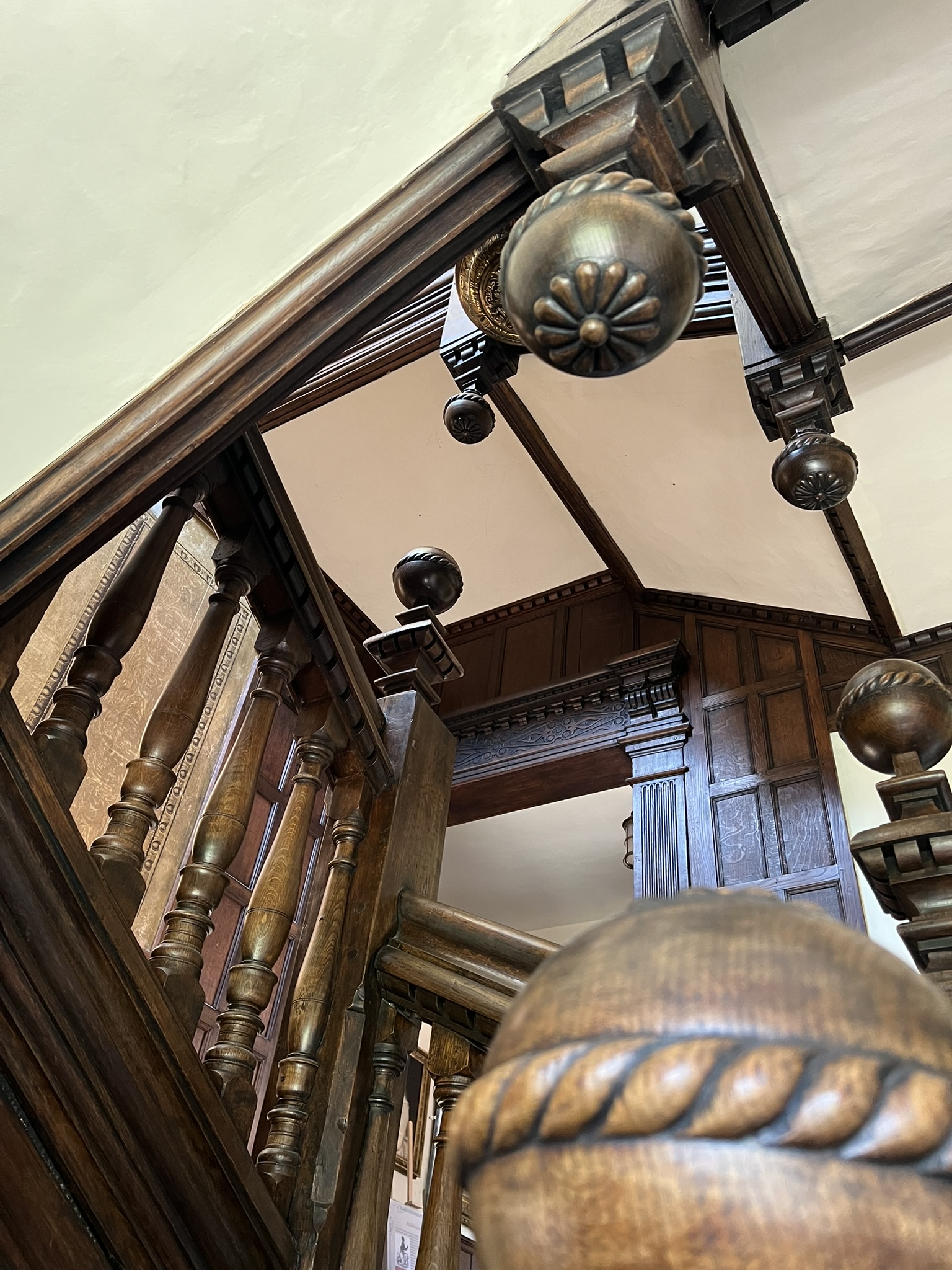
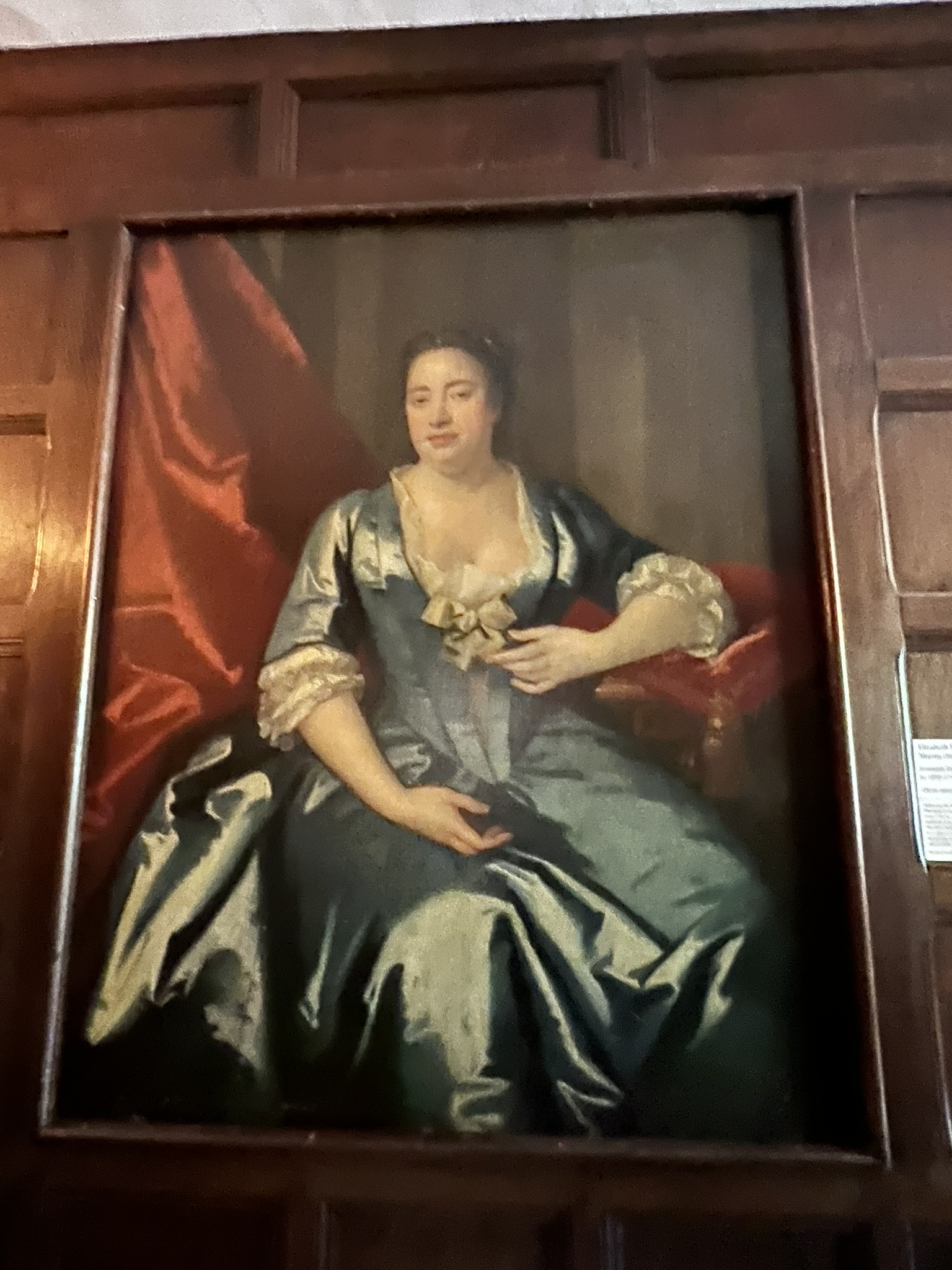
Adventures with Jane! Day VIII: The Delights of a Visit to Chawton

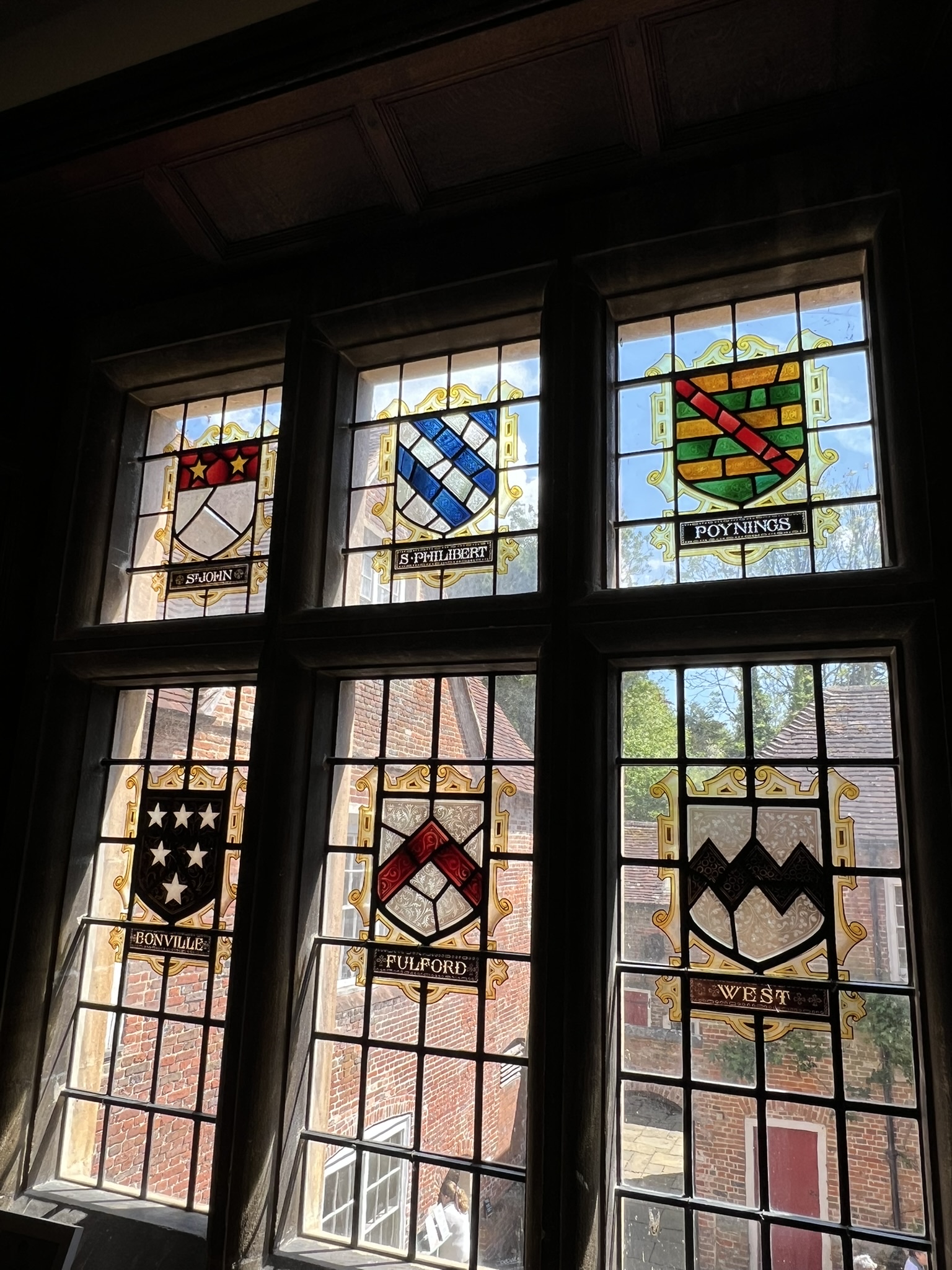
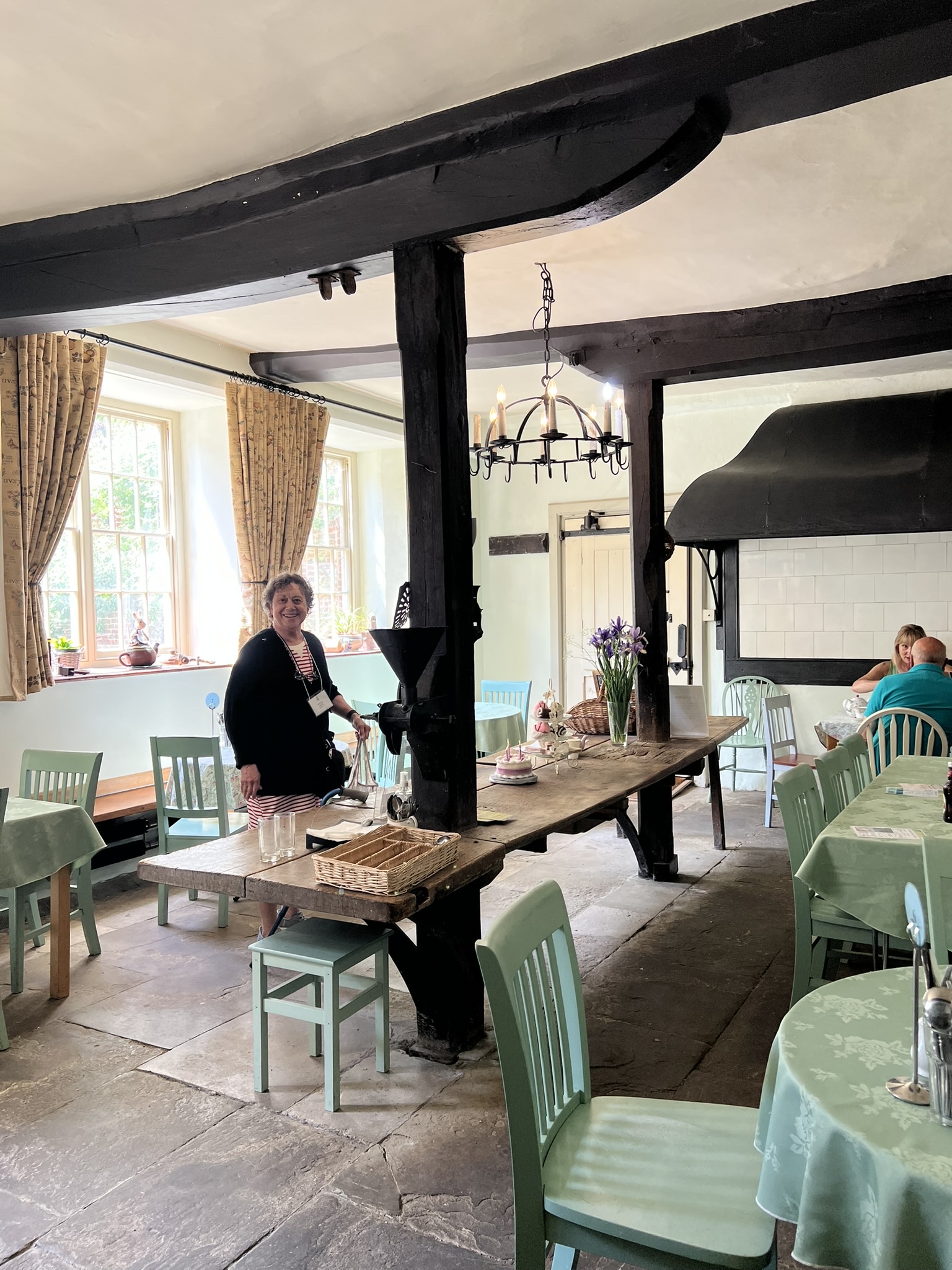
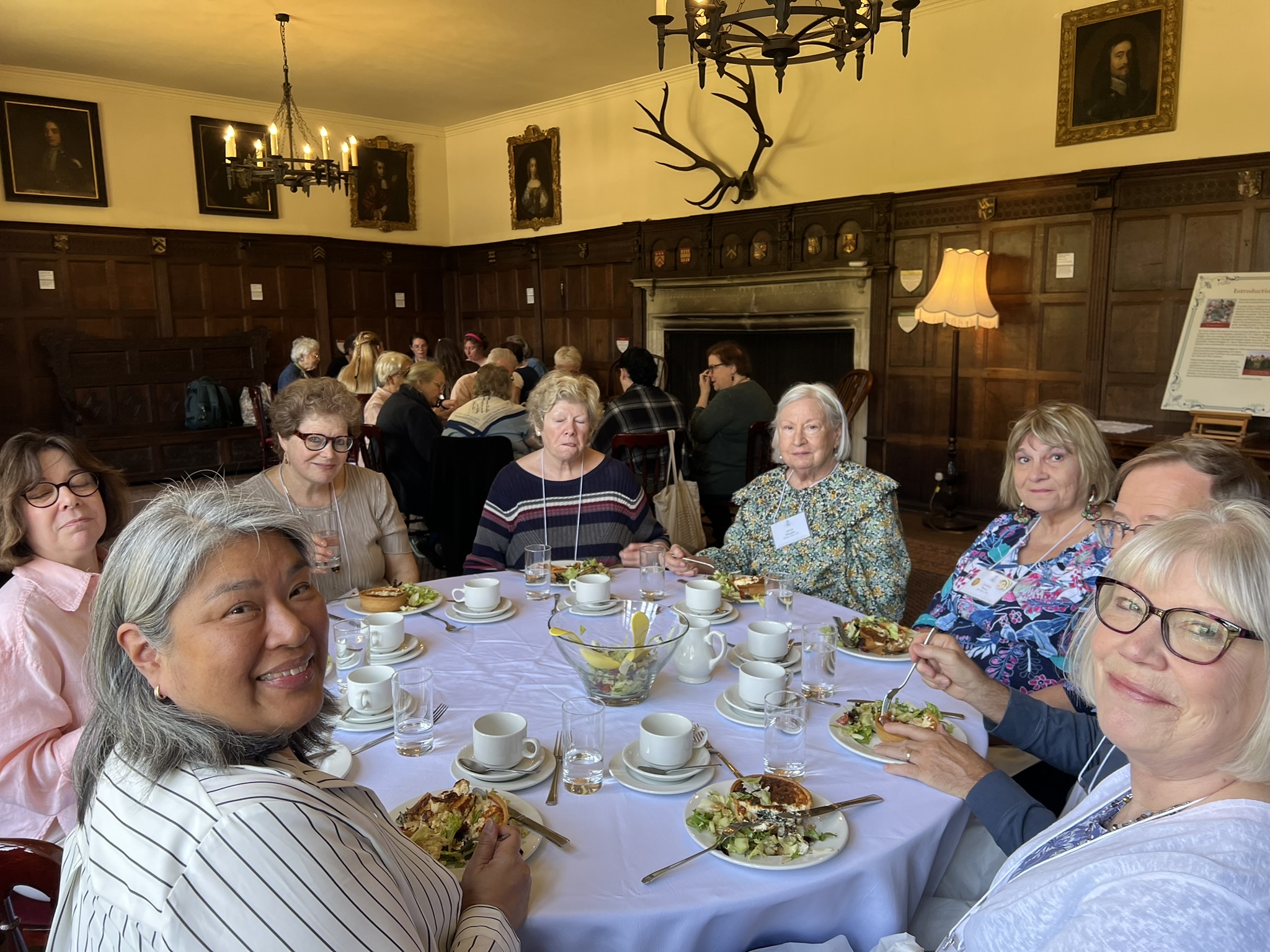
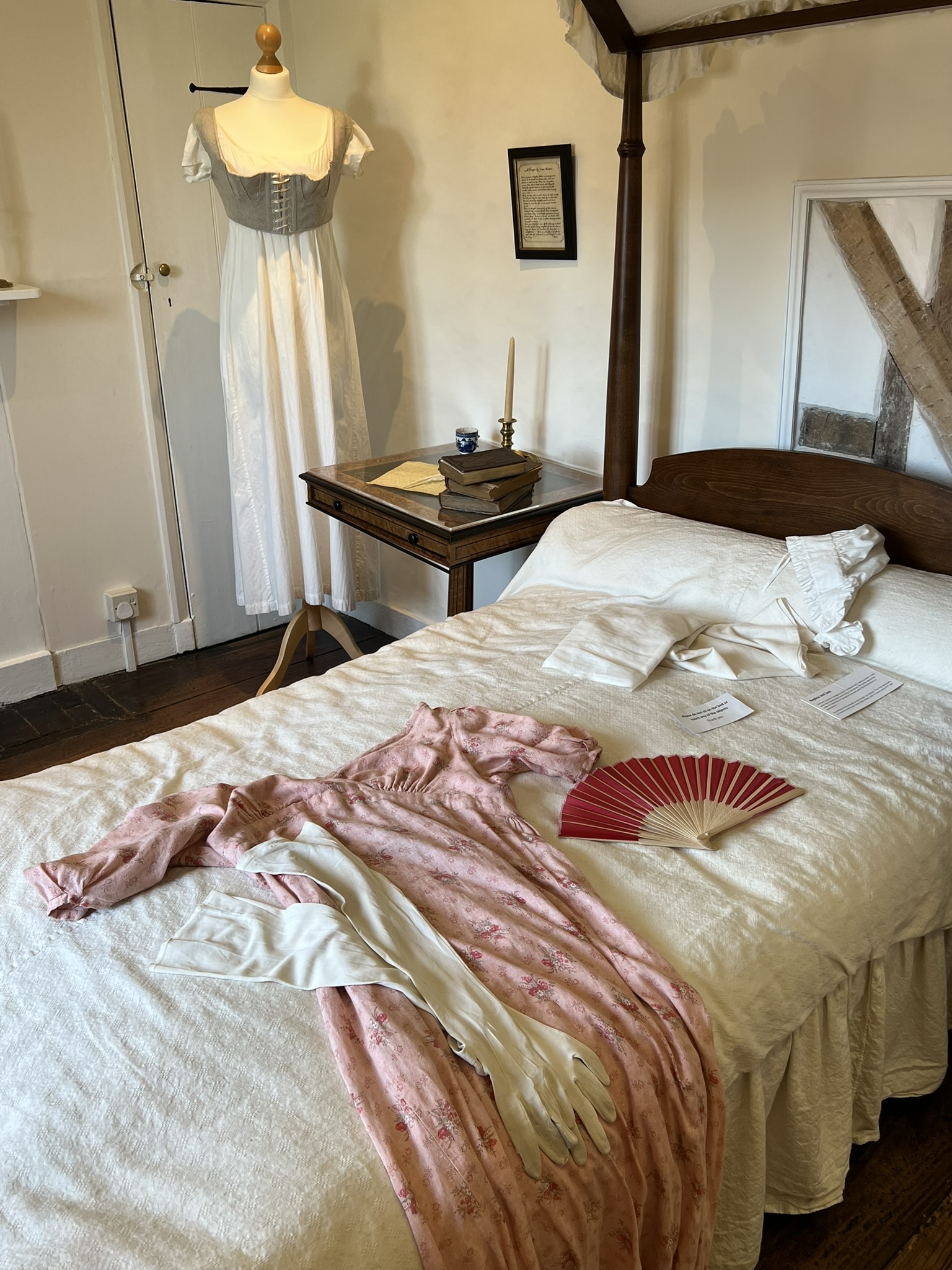
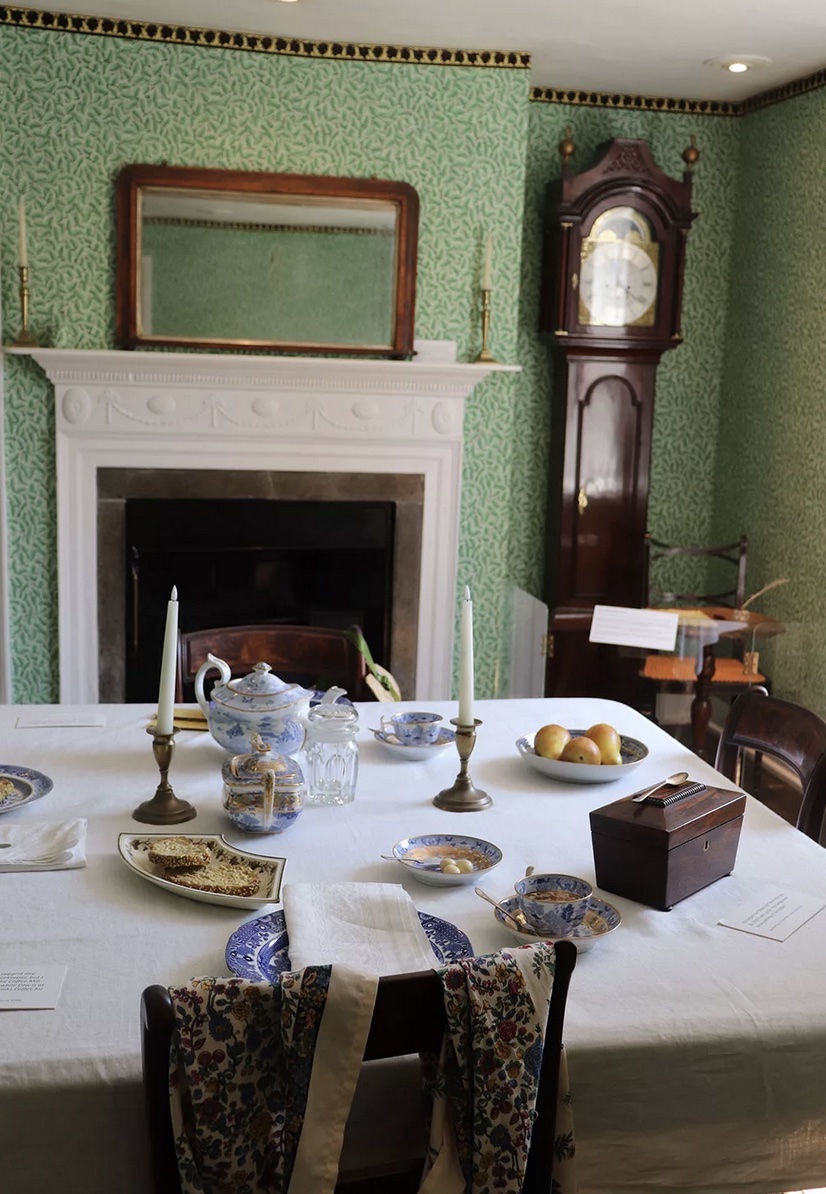
The Tea Room

************

– Janine Barchas, 2025

Jane Austen, 29 May 1811 from Chawton
to Cassandra at Godmersham Park

c2025JaneAustenInVermont
Austen Literary History & Criticism · Domestic Arts · Fashion & Costume · Georgian England · Great Britain - History · Jane Austen · Jane Austen Circle · Jane Austen Societies · JASNA · Museum Exhibitions · Regency England · Social Life & Customs

Adventures with Jane! Day VI, Part 2: Winchester and the Hampshire Cultural Trust.

Coming off our visit to Steventon, we were given some free time to explore Winchester on our own, the Cathedral and College to be part of the Day 7 adventure. I have been to Winchester before, have seen all the spots associated with Jane, and at the 2003 AGM we had a grand banquet at the Great Hall. [There was a talk by the then woman mayor of the City – a Jane Austen follower! Her name was Jean Hammerton, and I see that she passed away in 2020 – she was a delight!]


Considered one of the finest surviving medieval aisled halls of the 13th century, it is all that remains of the vast Winchester Castle, begun by William the Conqueror. I was largely alone here today, and lacking banquet tables and all that food, you can see the vastness and majesty of the place:

It is also home to the “Round Table”:

Which is nearly 800 years old, has a diameter of 18 ft, made of 121 separate pieces of English oak – and is considered the symbol of medieval mythology – think Camelot – King Arthur and the Knights of the Round Table. Since recent dating proves it is from the 13th century and not an original table of Arthur’s 6th century, much conjecture remains as to who ordered this to be made (probably Edward I), and why (part of a great banquet for an ‘Arthurian’ tournament during celebrations in 1290). The painting on the Round Table is dated to the early 16th century and has been determined to be the image of Henry VIII as a young man – Henry wanting to reinforce the Tudor claim to be direct descendants of Arthur [what a Henry…]*:

…as well as a nice reference to John F. Kennedy.

Queen Victoria has her own place of honor here – a HUGE statue for her Golden Jubilee in 1867:

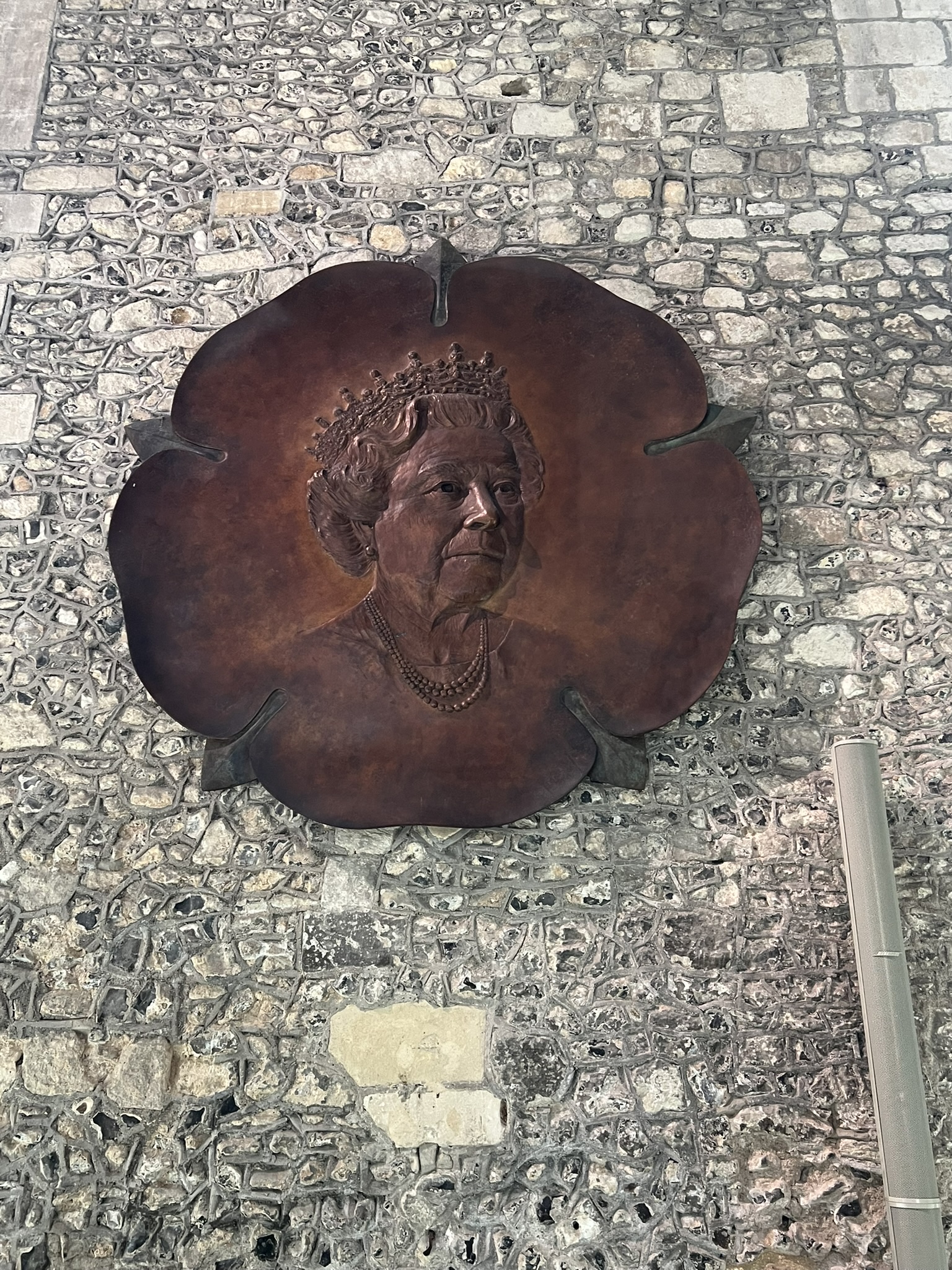
and a 6-ft wide bronze sculpture for Queen Elizabeth II for her Diamond Jubilee:

**********

Exiting the Hall is a recreation of Queen Eleanor’s Garden [Queen Eleanor of Provence, wife of Henry III, and Queen Eleanor of Castile, wife of his son Edward I], opened in 1986 by Her Majesty The Queen Mother – it also includes an herb garden, filled with medieval plants, for their beauty as well as their medicinal purposes.

***********

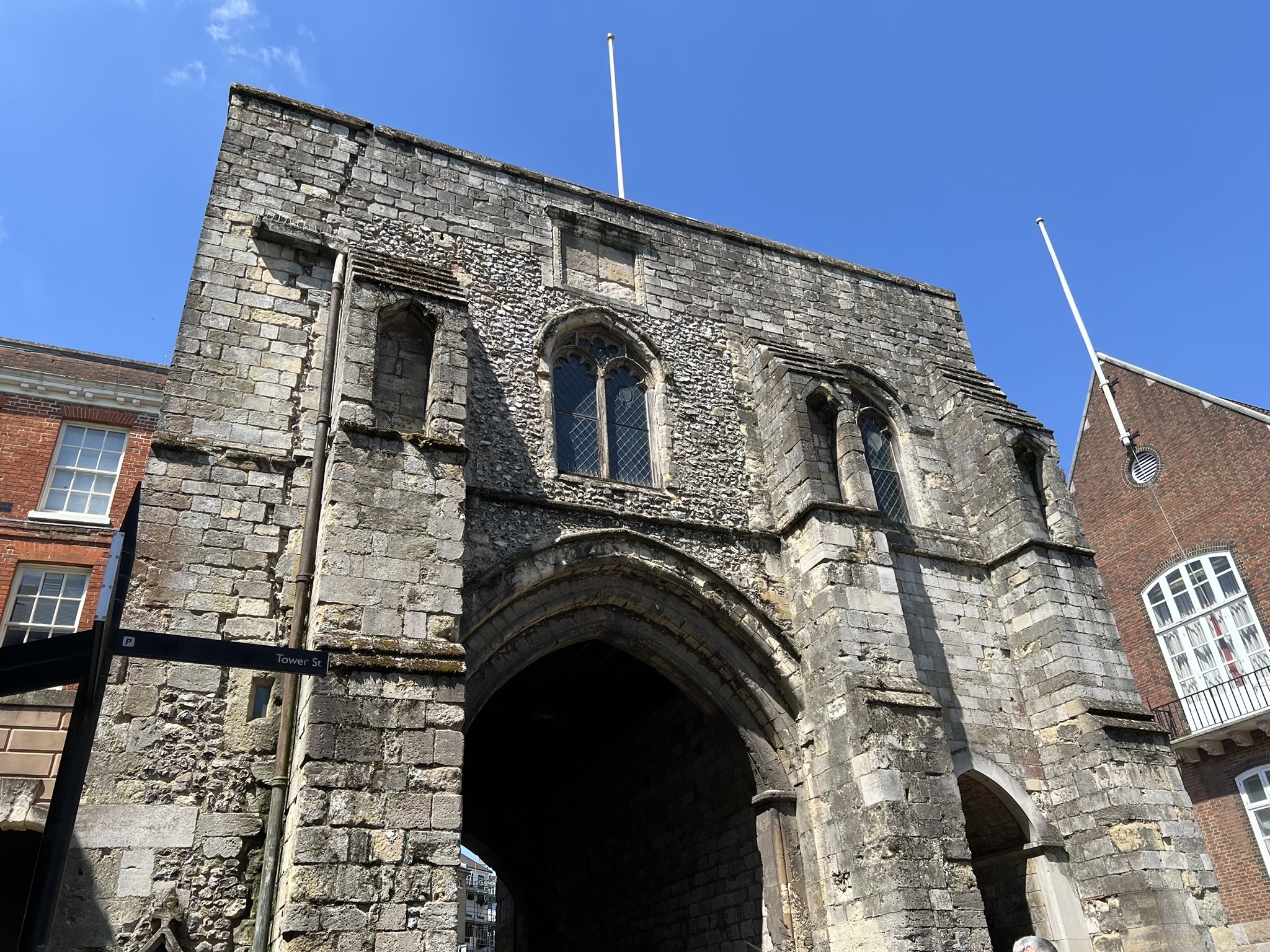
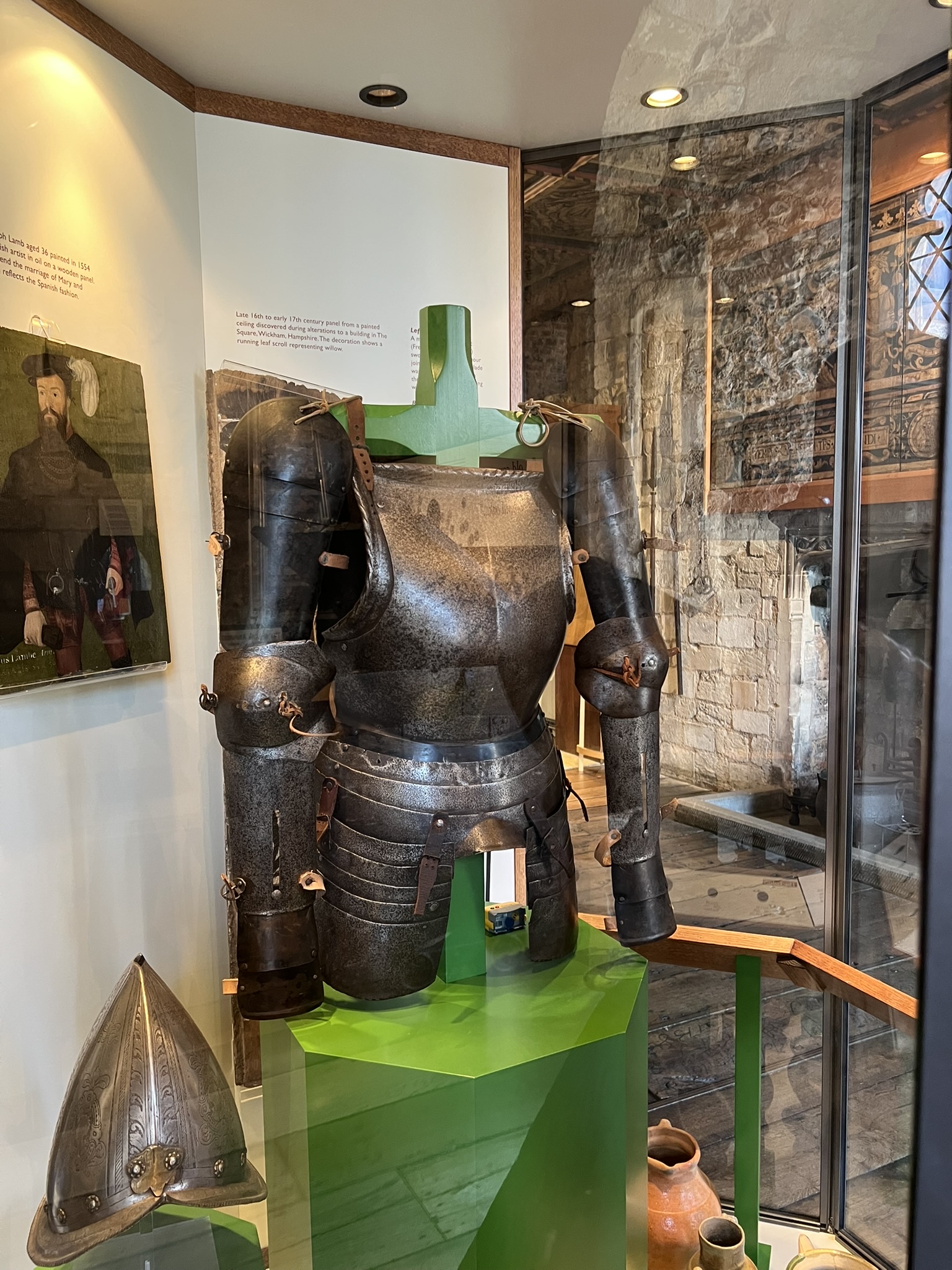
I then went to the Westgate Museum, next to the Hall and within the West Gate into the City, which holds some interesting artifacts of medieval and later times – always impressed by a fine coat of armor:

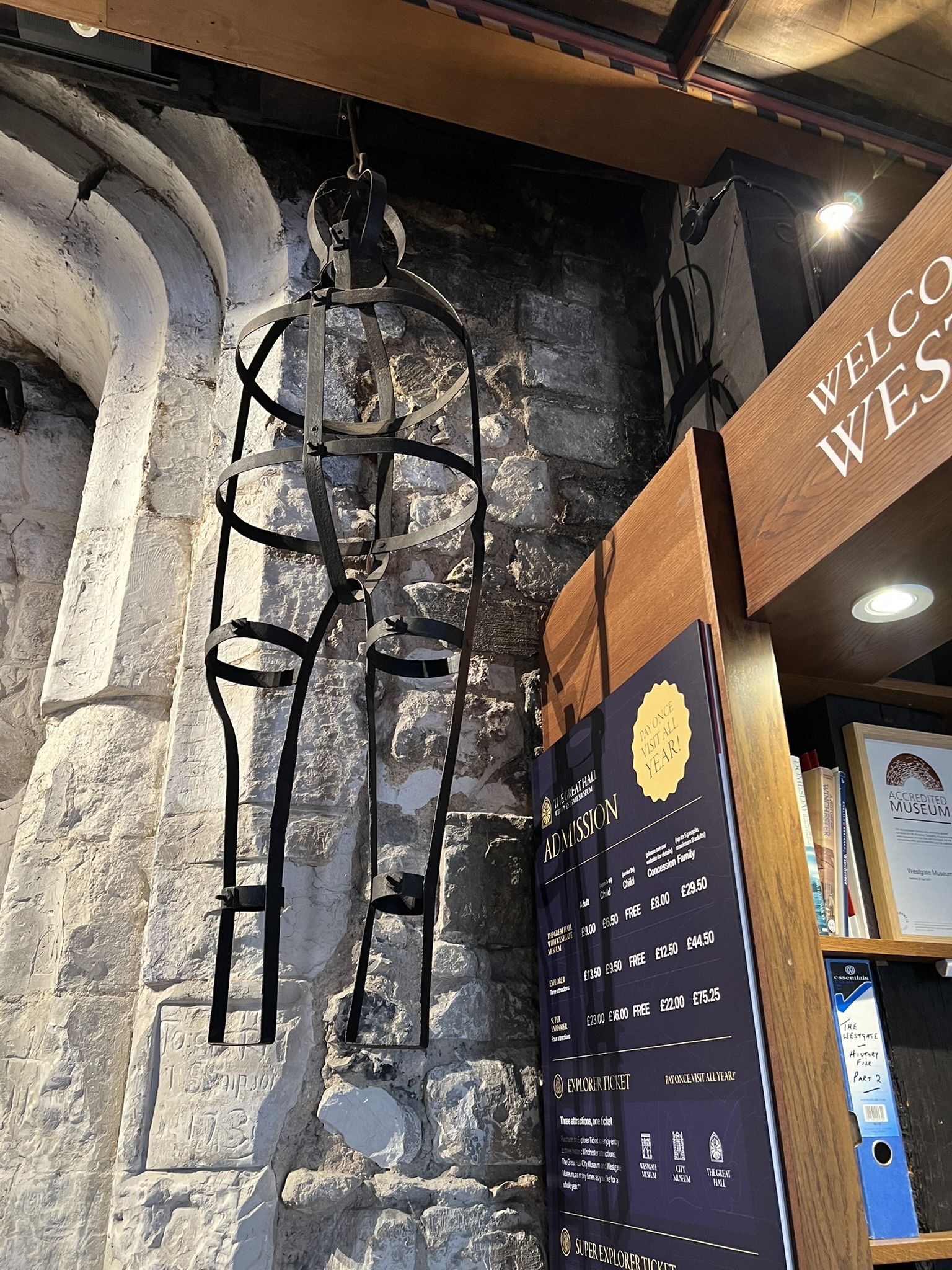
A hanging gibbet, not so much…

Great views of the Hall and the City from up top of the Gate:

********

And finally a return to Jane’s times, as we head to The Hampshire Cultural Trust.

We were greeted by Louise West, Trustee for the HCT, and Jaane Rowehl, Director of Programme and Collections, and two of the people working on their upcoming exhibit  “Beyond the Bonnets: Working Women in Jane Austen’s Novels”

Dates: 2 Nov 2025 – 22 Feb 2026 – you can read about it here:

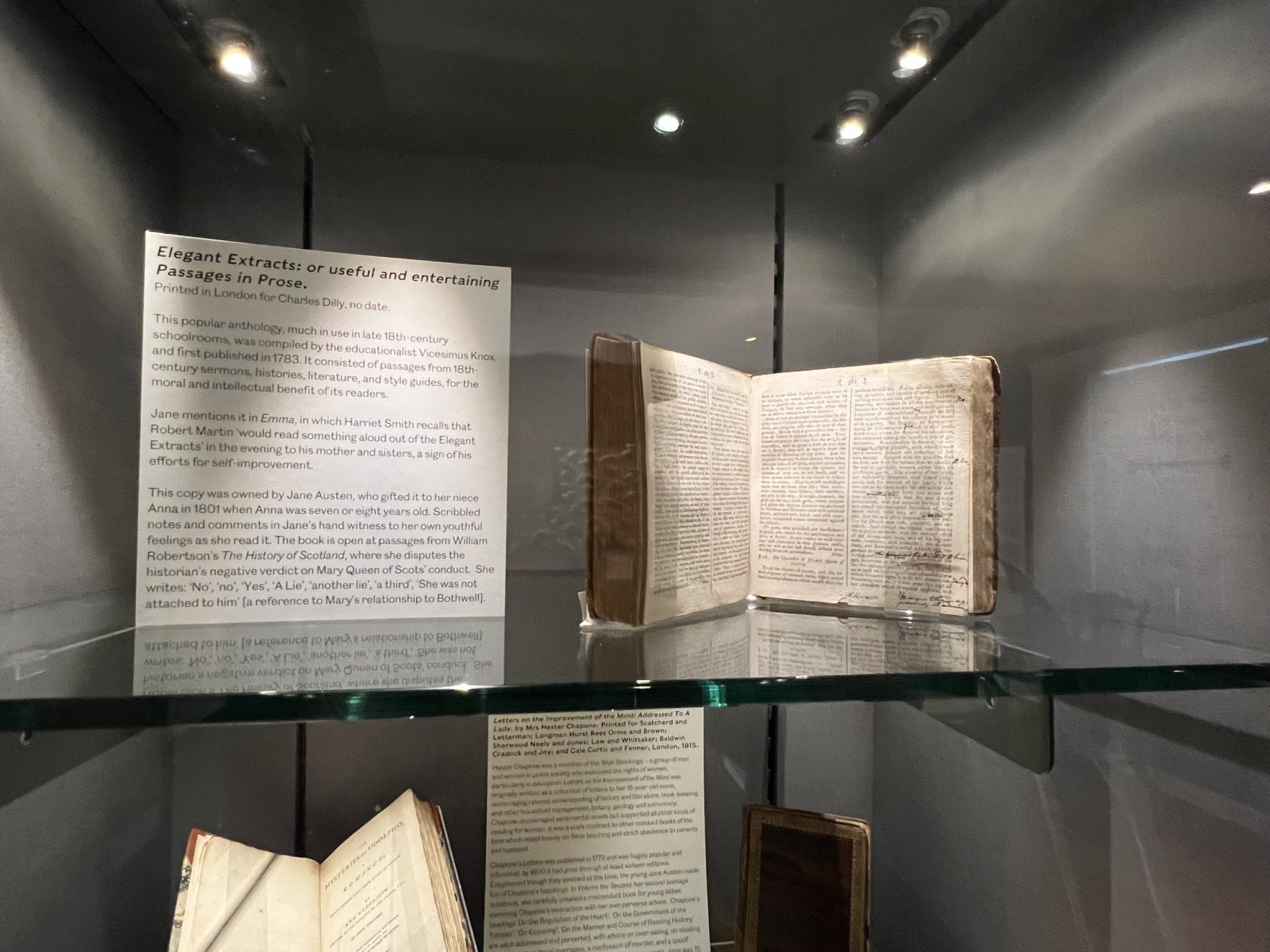
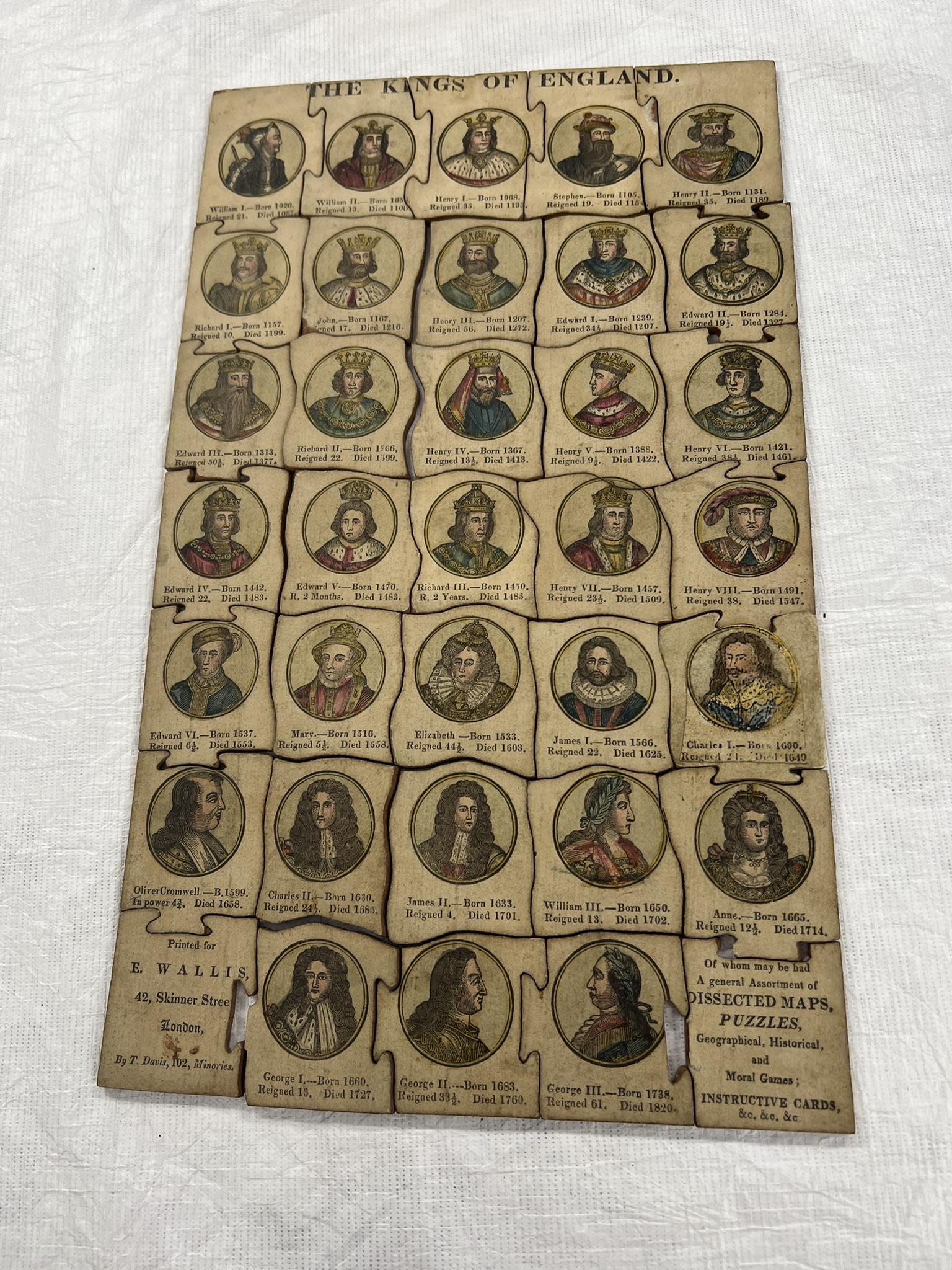
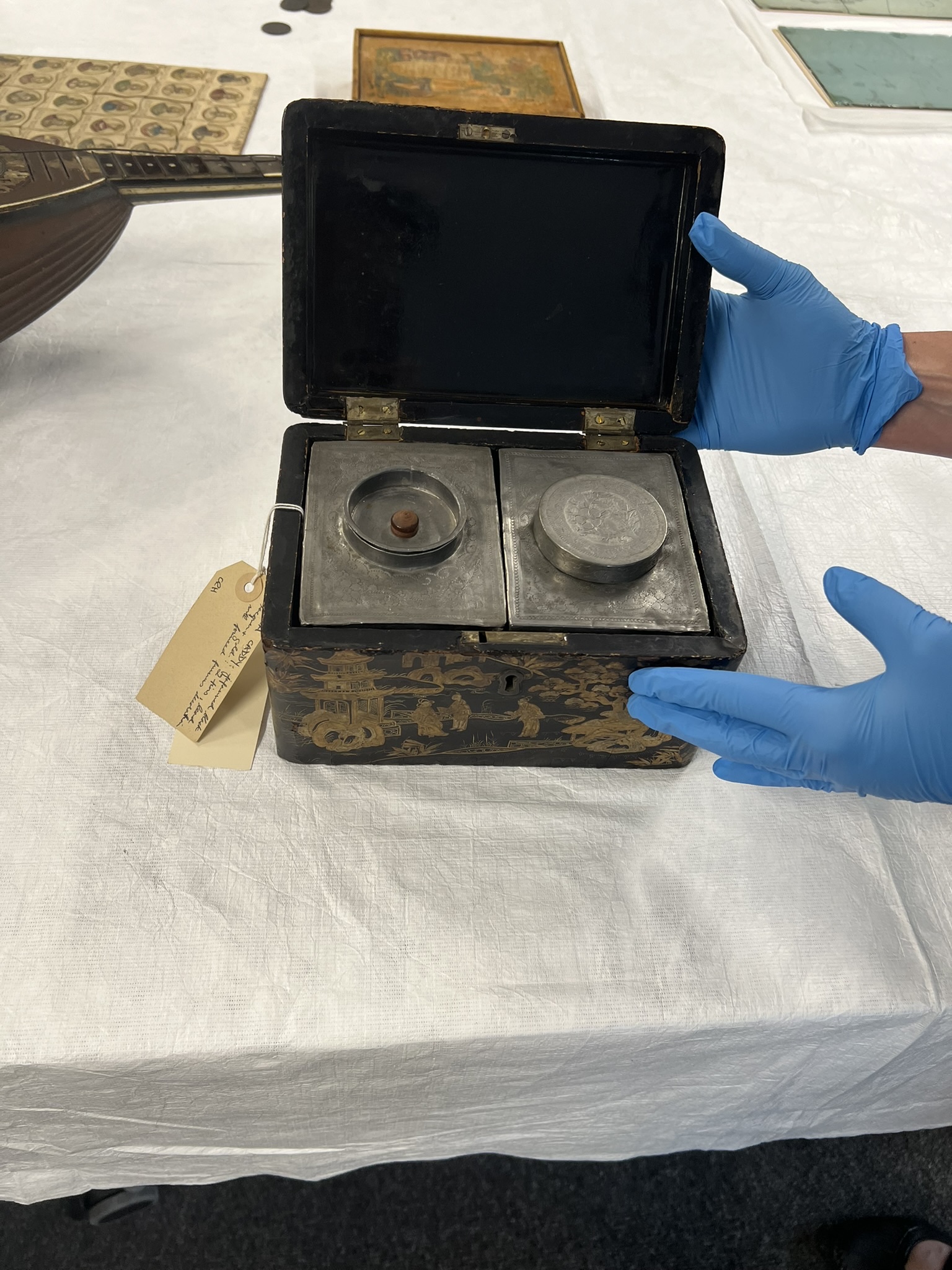
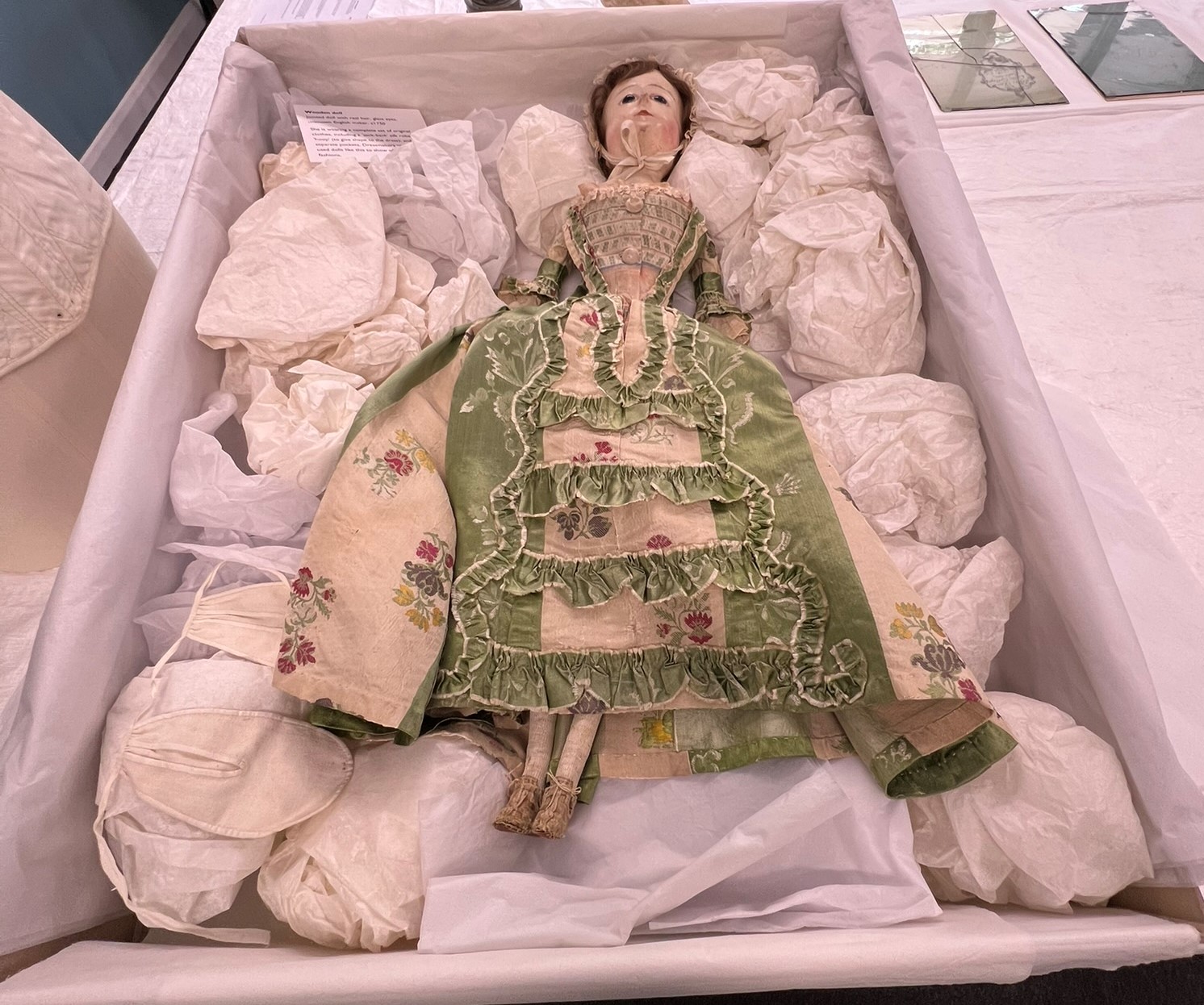
We were first treated to a talk on and a viewing of some of the artifacts that would have been used by these “working women” of Hampshire: domestic servants [lady’s maids, housekeepers, washer women]; governesses and teachers; and business women [seamstresses, milliners, glazers]; and the inevitable houses of prostitution – the artifacts that will be in the exhibit about their working lives, much of what has been discovered from diaries, receipts, and letters:

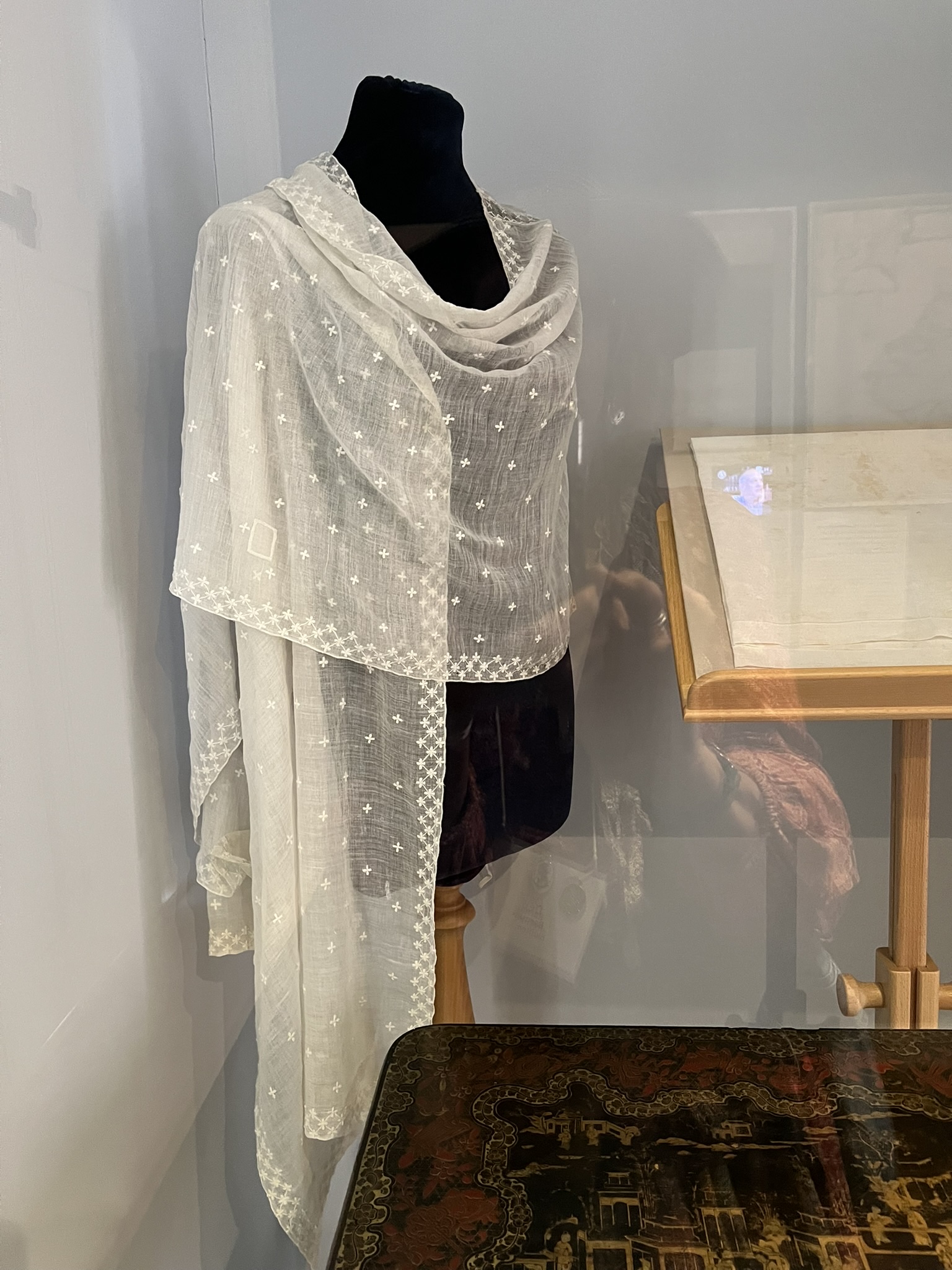
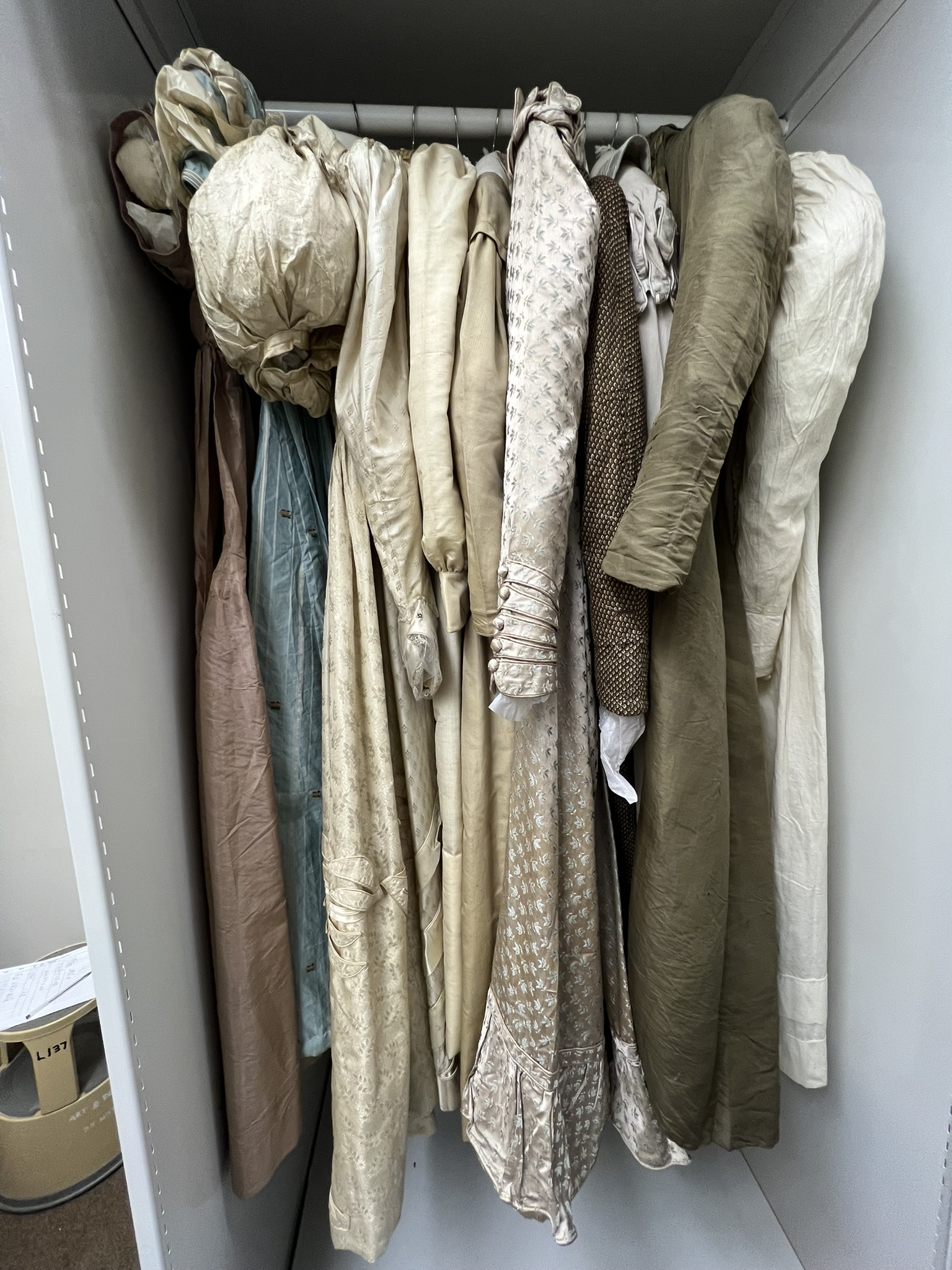
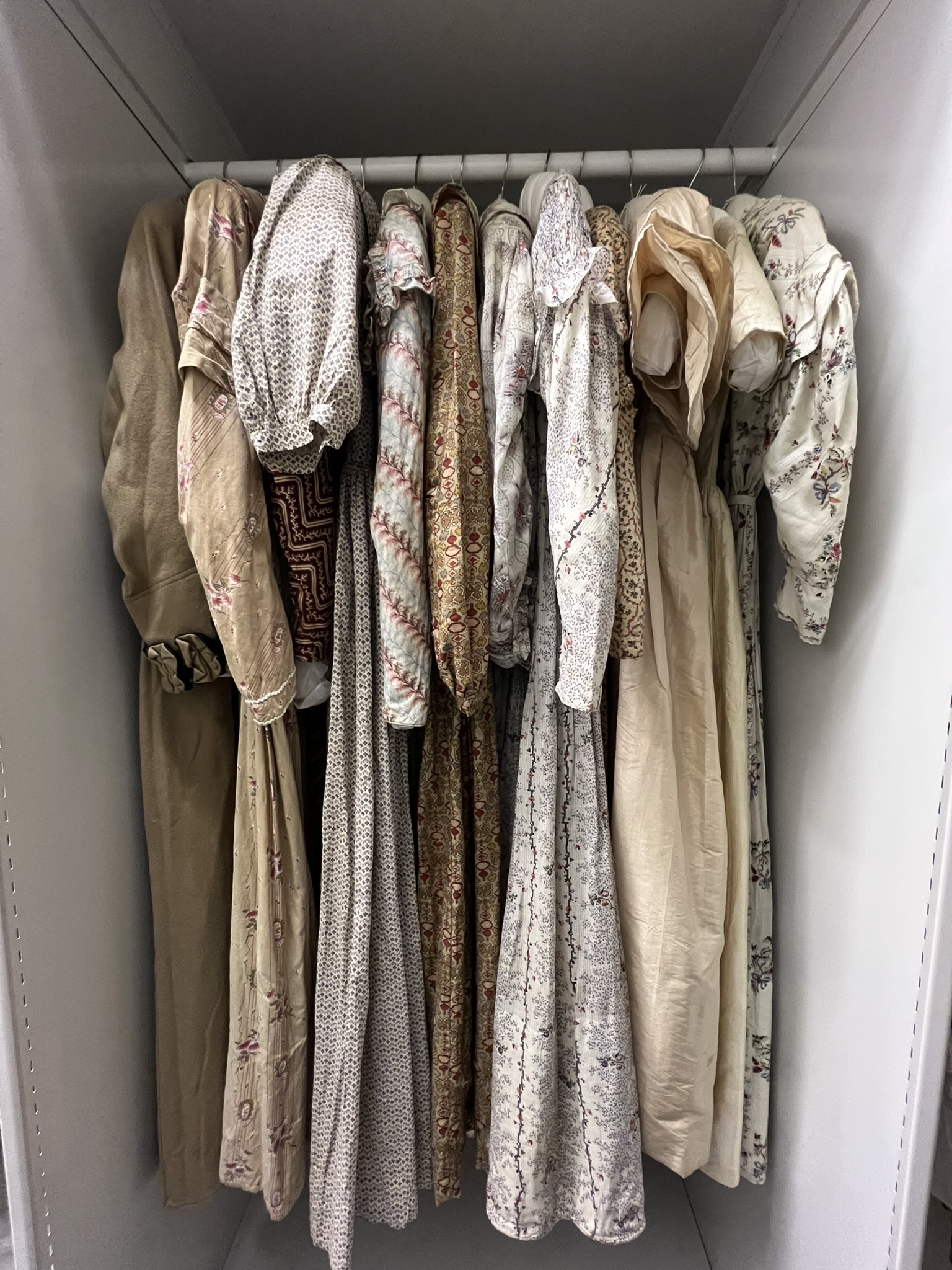
Then a behind-the-scenes tour of the HCT’s costume and textile collection – fascinating work being done here [as well as rows and rows of costumes that are rented out for plays, etc]. Here we could see some of the actual dresses in the collection that are being preserved and studied:

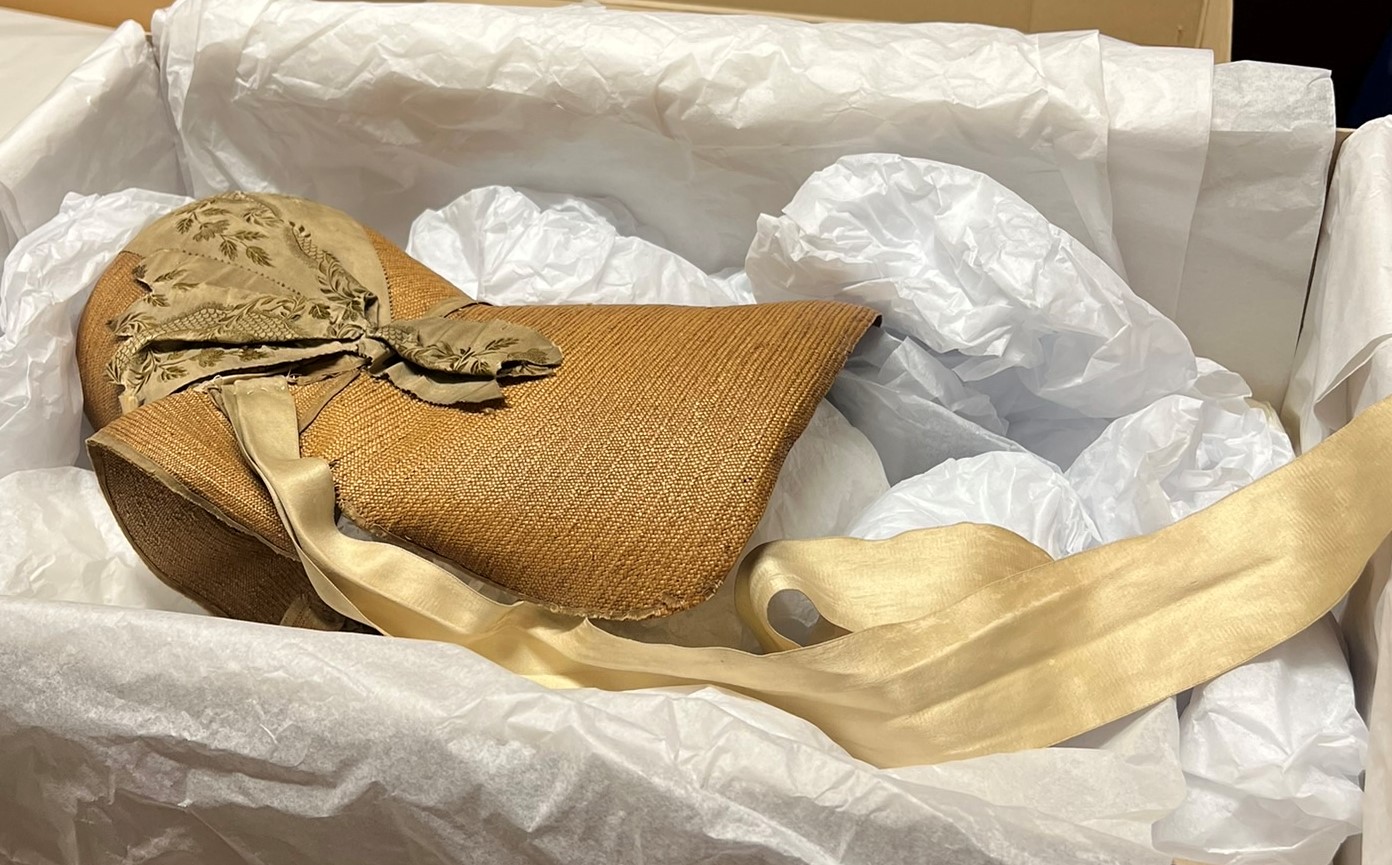
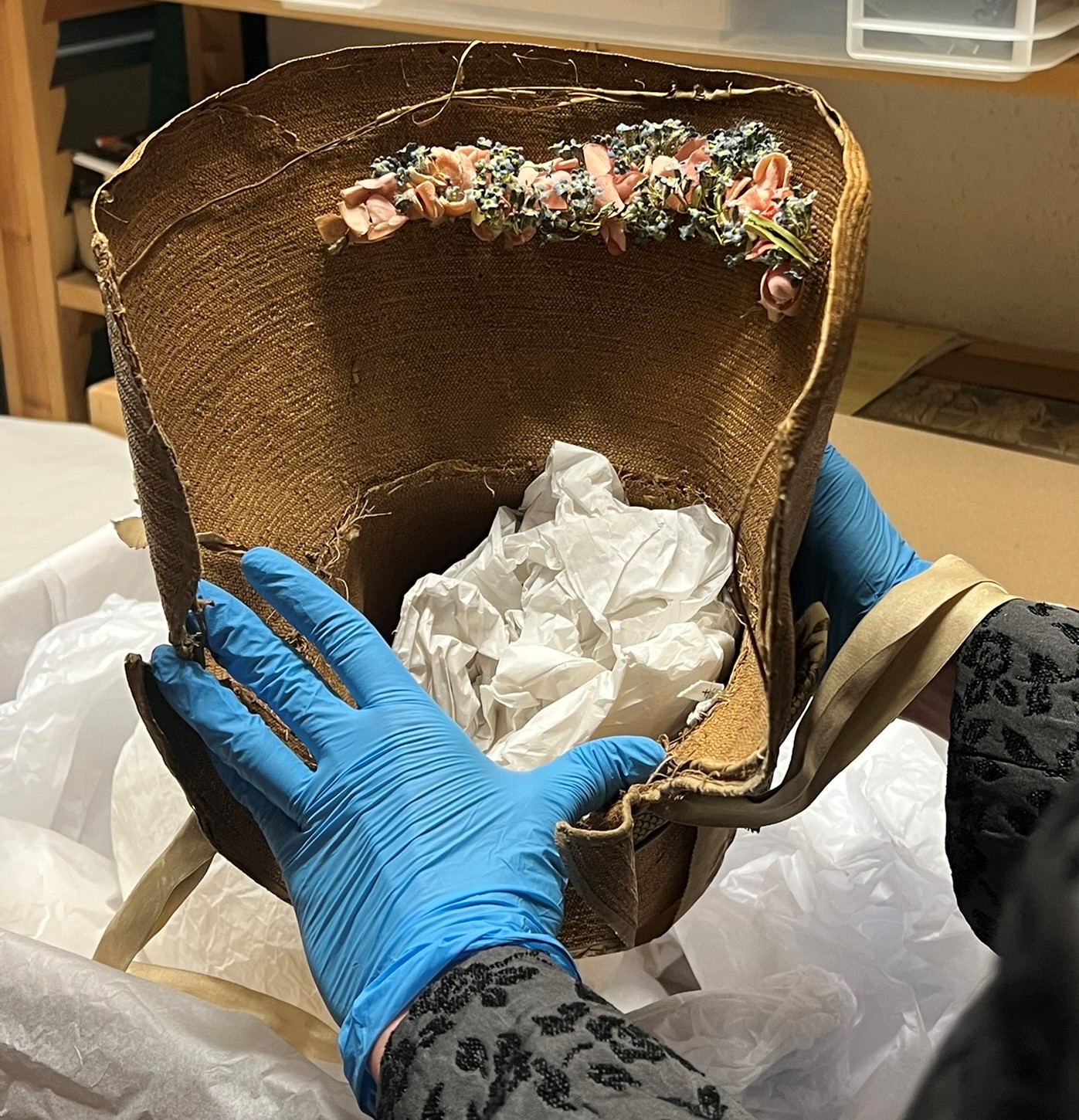
And this fascinating bonnet!

And the necessary Fan:

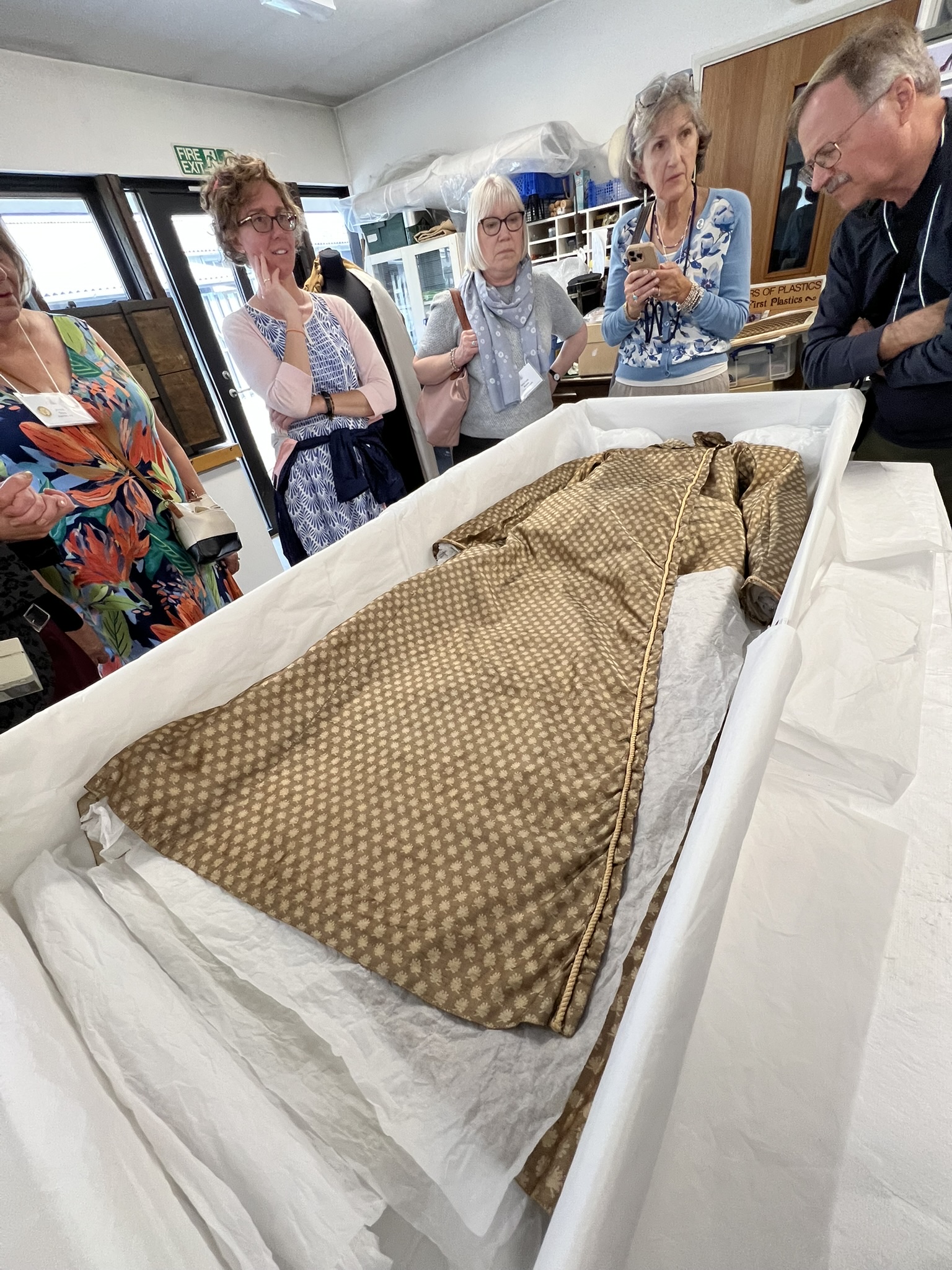
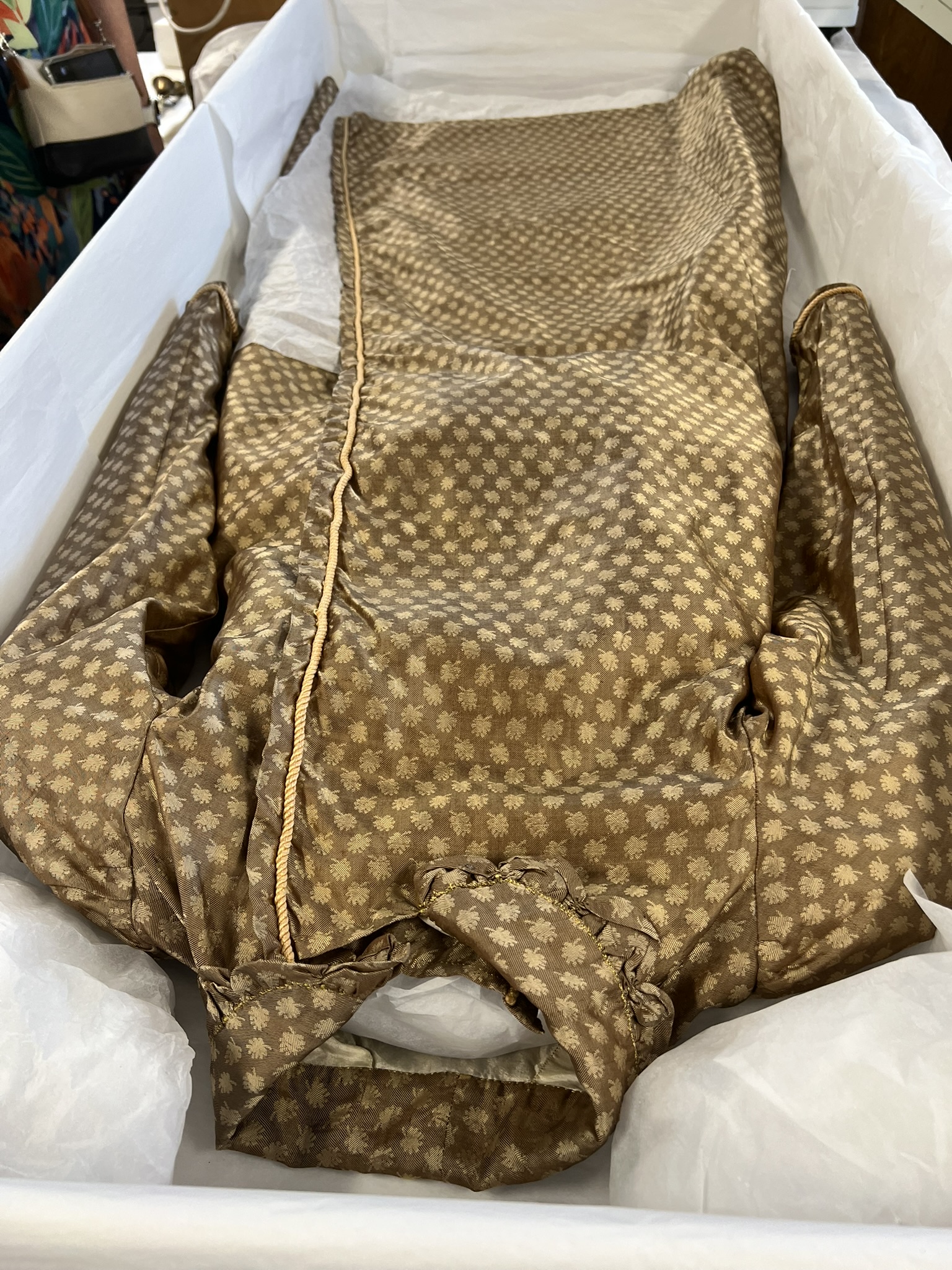
But nothing was quite so moving [some of the group on the verge of fainting] of Austen’s original pelisse:

Many of us have seen the various replicas, but to see this so close up [no touching allowed!] was quite something… and nice to know the care it is being given…

We were treated to a proper cup of tea and refreshments and then back to the hotel, where we had the evening to ourselves – we took advantage of the lovely outdoor patio with a fine glass of wine and pub fare – another perfect day [one can get used to this…]

Tomorrow brings us to the Cathedral, final resting place for Jane, so come visit again… [this blog posting is taking longer than the trip itself!]

*Source: Hampshire City Council. The Great Hall: Where History and Legend Meet. [no date]

C2025JaneAustenInVermont

Domestic Arts · Jane Austen · JASNA-Vermont events · Regency England · Schedule of Events · Social Life & Customs

JASNA-Vermont ~ Next Meeting! March 23, 2025 – via Zoom

Let There be Light (A ZOOM Meeting), 

Sunday, March 23, 2025

2:00-3:30 pm

In Jane Austen’s Regency England the winter sun set before 4:00 PM. In Austen’s novels, candles illuminate the Netherfield Ball in Pride and Prejudice and the Christmas Eve party at Randalls in Emma.

In this JASNA-Vermont Zoom presentation, Marti Sterin will share Sue Dell’s 2018 AGM presentation Let There Be Light, which will illuminate for us the way Jane Austen’s characters lit their worlds.

********

This free event will be online via Zoom. Register here:

https://us02web.zoom.us/meeting/register/siuf-1HrSrSN4RP7rEIiTQ

After registering, you will receive a confirmation email with information on how to join the meeting.

For more information: 

JASNAVTregion@gmail.com
Blog: https://janeausteninvermont.blog/
Facebook: Jane Austen in Vermont

c2025JaneAusteninVermont
Chawton House · Domestic Arts · Jane Austen · NAFCH - North American Friends of Chawton House · Social Life & Customs

Guest Post: The Snowdrop ~ Harbinger of Spring

Can there possibly be any signs of Spring with current temperatures what they are?! Even here today in South Carolina we are at 28 degrees [warming up to maybe 53…I live in Hope]! So I happily welcome Pam Braak, NAFCH Treasurer and Tarrant County (TX) Master Gardener, with her thoughts on Chawton House and the Snowdrop:

Chawton House

The Snowdrop ~ Harbinger of Spring

******

I wonder if the sap is stirring yet,

If wintry birds are dreaming of a mate,

If frozen snowdrops feel as yet the sun

And crocus fires are kindling one by one:

Sing, robin, sing:

I still am sore in doubt concerning Spring.

–Christina Rossetti (1830-1894), from “The First Spring Day”

*********************

Chawton House recently announced their participation in the National Garden Scheme’s Snowdrop Sunday, with an event on February 6.  The National Garden Scheme in the UK brings joy to this Texas gardener — and envy that I cannot participate without a transatlantic flight.  I wondered about the snowdrop mania in the UK and if there exists an analogous passion for them in the U.S.

We have Garden Conservancy Open Days in the U.S. but that cannot compare to the immense number of gardens that the NGS organizes each year. Privately owned gardens open each year to visitors, with admission fees donated to health-related charities. In 2020 there were over 3,700 gardens due to open. Imagine the choices!  For the Snowdrop Festival in February, 100 gardens are participating, including Chawton House.

George Plumptre, Chief Executive of the National Garden Scheme, says: “Following the restrictions of 2020 and 2021 there has never been a greater need to start the new year with the beautiful freshness of the first blooms of spring. But garden visiting at this time of year is not just for galanthophiles who are looking to discover a rare variety of snowdrop in gardens they may never otherwise find. Snowdrops are the perfect antidote to the winter blues and spending the afternoon at one of our 100 Snowdrop Festival gardens is the ideal opportunity to get outside and enjoy some spectacular scenes at an otherwise gloomy time of year.”

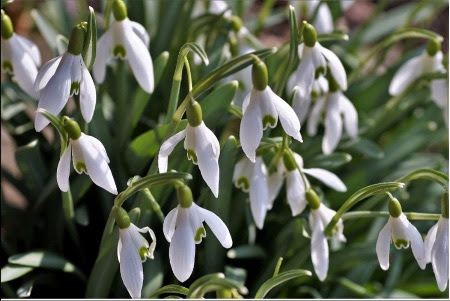
Common Snowdrop Galanthus nivalis

*********

“Snowdrops: theirs is a fragile but hardy celebration

– in the very teeth of winter”

Louise Beebe Wilde (1878-1938), American gardening writer

Snowdrops enjoy a cult following in the UK where aficionados are known as galanthophiles. No doubt these enthusiasts will be spotted around the Chawton House gardens getting down on their knees and even lying on their bellies to enjoy and photograph these late-winter wonders. Galanthophiles are collectors of much more than common snowdrops. The lure of collecting the 2,500 plus varieties is quite a draw. Galanthophiles look for snowdrops in old gardens, but there are plenty for sale, some at phenomenal prices. Per “Fun facts about Snowdrops – National Garden Scheme” , a single Galanthus plicatus “Golden Fleece” sold for £1,390 on eBay in 2015!  Akin to the tulip craze in seventeenth-century Holland.

There are a plethora of festivals and tours in the UK celebrating the snowdrop. For instance, in Dorset the citizens of Shaftesbury have planted more than 200,000 snowdrop bulbs since 2017 and have an annual festival. Stateside, I did find the Galanthus Gala in Downingtown, PA but I do not think our fondness approaches UK levels. [Here is their facebook page with a virtual event in 2021, nothing yet for 2022 on there.]

Snowdrops are easy to grow, tough, and often push through the snow to bloom. You can find several varieties for sale online in the U.S., but I doubt you’ll locate 2,500 varieties. They are recommended in USDA hardiness zones 3 to 7, growing best in partial sun and partial shade. In the southern zone where I live, the bulbs may decline over time; this is a plant that is most likely best suited to cooler climates. In the meantime, I content myself with growing a relative, summer snowflakes Leucojum aestivum, which bloom in February, contrary to their name.  In my garden, I must be content to just dream of swaths of snowdrops.

Various varieties of Galanthus

***********

Thank you Pam for bringing us a little joy into our climate-stressed, virus-ridden world – I think even Jane Austen would be smiling! [Does she mention snowdrops anywhere??]

For more information on Chawton House, their current exhibition on Botanical Women, and their other interesting goings-on, please visit ChawtonHouse.org. You can also help with their ongoing efforts for their Library and estate by becoming a Friend – donate whatever you can on the North American Friends of Chawton House donation page – we appreciate your support!

***********

Jane Austen on 7 March 7 1814, from London to Cassandra in Chawton:

Monday Here’s a day! – The Ground covered with snow!  What is to become of us? – We were to have walked out early to near Shops, & had the Carriage for the more distant. – Mr. Richard Snow* is dreadfuly fond of us.  I dare say he has stretched himself out at Chawton too.

Ltr. 98, 5-8 March 1814, p. 270 [Le Faye, 4th ed.]

The Brighton Mail, Sunday, December 25th 1836 (R. Havell)
[F. Gordon Roe, Sporting Prints of the Eighteenth and Early Nineteenth Centuries.  NY: Payson & Clarke, 1927.]
©2022, Jane Austen in Vermont
Austen Literary History & Criticism · Books · Collecting Jane Austen · Decorative Arts · Domestic Arts · Fashion & Costume · Georgian England · Georgian Period · Great Britain - History · Jane Austen · Jane Austen Circle · Regency England · Social Life & Customs · Victorian Period

Collecting Jane Austen: ‘The Accomplished Lady’ by Noël Riley

“It is amazing to me,” said Bingley, “how young ladies can have patience to be so very accomplished as they all are.”

   “All young ladies accomplished! My dear Charles, what do you mean?”

   “Yes, all of them, I think. They all paint tables, cover screens, and net purses. I scarcely know any one who cannot do all this, and I am sure I never heard a young lady spoken of for the first time, without being informed that she was very accomplished.”

   “Your list of the common extent of accomplishments,” said Darcy, “has too much truth. The word is applied to many a woman who deserves it no otherwise than by netting a purse or covering a screen. But I am very far from agreeing with you in your estimation of ladies in general. I cannot boast of knowing more than half a dozen, in the whole range of my acquaintance, that are really accomplished.”

   “Nor I, I am sure,” said Miss Bingley.

“Then,” observed Elizabeth, “you must comprehend a great deal in your idea of an accomplished woman.”

   “Yes, I do comprehend a great deal in it.”

   “Oh! certainly,” cried his faithful assistant, “no one can be really esteemed accomplished who does not greatly surpass what is usually met with. A woman must have a thorough knowledge of music, singing, drawing, dancing, and the modern languages, to deserve the word; and besides all this, she must possess a certain something in her air and manner of walking, the tone of her voice, her address and expressions, or the word will be but half deserved.”

   “All this she must possess,” added Darcy, “and to all this she must yet add something more substantial, in the improvement of her mind by extensive reading.”

   “I am no longer surprised at your knowing only six accomplished women. I rather wonder now at your knowing any.”

   “Are you so severe upon your own sex as to doubt the possibility of all this?”

   “I never saw such a woman. I never saw such capacity, and taste, and application, and elegance, as you describe united.”

[Pride & Prejudice, Vol. 1, Ch. 8]

*********************

And so, to truly understand what Mr. Darcy is driving at, to understand anything about Jane Austen’s world, you need to study this quite formidable lady, if indeed such a one existed! – and there is no better book on the subject than Noël Riley’s The Accomplished Lady: A History of Genteel Pursuits c.1660-1860 (Oblong, 2017).

“This is a study of the skills and pastimes of upper-class women and the works they produced during a 200-year period. These activities included watercolours, printmaking and embroidery, shell work, rolled and cut paper work, sand painting, wax flower modelling, painting on fabrics and china, leather work, japanning, silhouettes, photography and many other activities, some familiar and others little known.

The context for these activities sets the scene: the general position of women in society and the constraints on their lives, their virtues and values, marriage, domestic life and education. This background is amplified with chapters on other aspects of women’s experience, such as sport, reading, music, dancing and card-playing.” [from the book jacket].

Table of Contents:

Introduction

1.  A Woman’s Lot
2.  Educating a Lady
3.  Reading and Literary Pursuits [my favorite chapter]
4.  Cards, Indoor Games and Theatricals
5.  The Sporting Lady
6.  Dancing and Public Entertainment
7.  Music
8.  Embroidery
9.  Threads and Ribbons
10. Beadwork
11. Shellwork
12. Nature into Art
13. Paperwork
14. Drawing and Painting
15. Creativity with Paints and Prints
16. Japanning
17. Penwork
18. Silhouettes
19. Photography and the Victorian Lady
20. Sculpture, Carving, Turning and Metalwork
21. Toys and Trifles.

Includes extensive notes, an invaluable bibliography of primary and secondary sources, and an index.

I have mentioned before that in collecting Jane Austen, you will often go off into necessary tangents to learn about her Life and Times – this can take you in any number of directions, but understanding the Domestic Arts of the Regency period is an absolute must – and there are MANY books on the subject, cookery alone could fill shelves. But here in this one book we find a lavishly illustrated, impeccably researched study of all the possible activities a lady of leisure [no cookery for My Lady] can get herself caught up in….whether she becomes accomplished or not is beyond our knowing, but certainly Mr. Darcy would find at least ONE lady in these pages who might meet his strict requirements, despite Elizabeth’s doubting rant.

The Georgian Society of East Yorkshire offers a nice review here with a sample page: http://www.gsey.org.uk/post/992/book-review-the-accomplished-lady-a-history-of-genteel-pursuits-c-16601860-by-nol-riley

It is always a worthwhile effort to check the index of every book you pick up to see if Jane Austen gets a mention. And here we are not disappointed – Austen shows up on many pages, and five of her six novels are cited in the bibliography – all but Persuasion for some odd reason – one would think Anne Elliot’s skills at the pianoforte would have merited a mention?

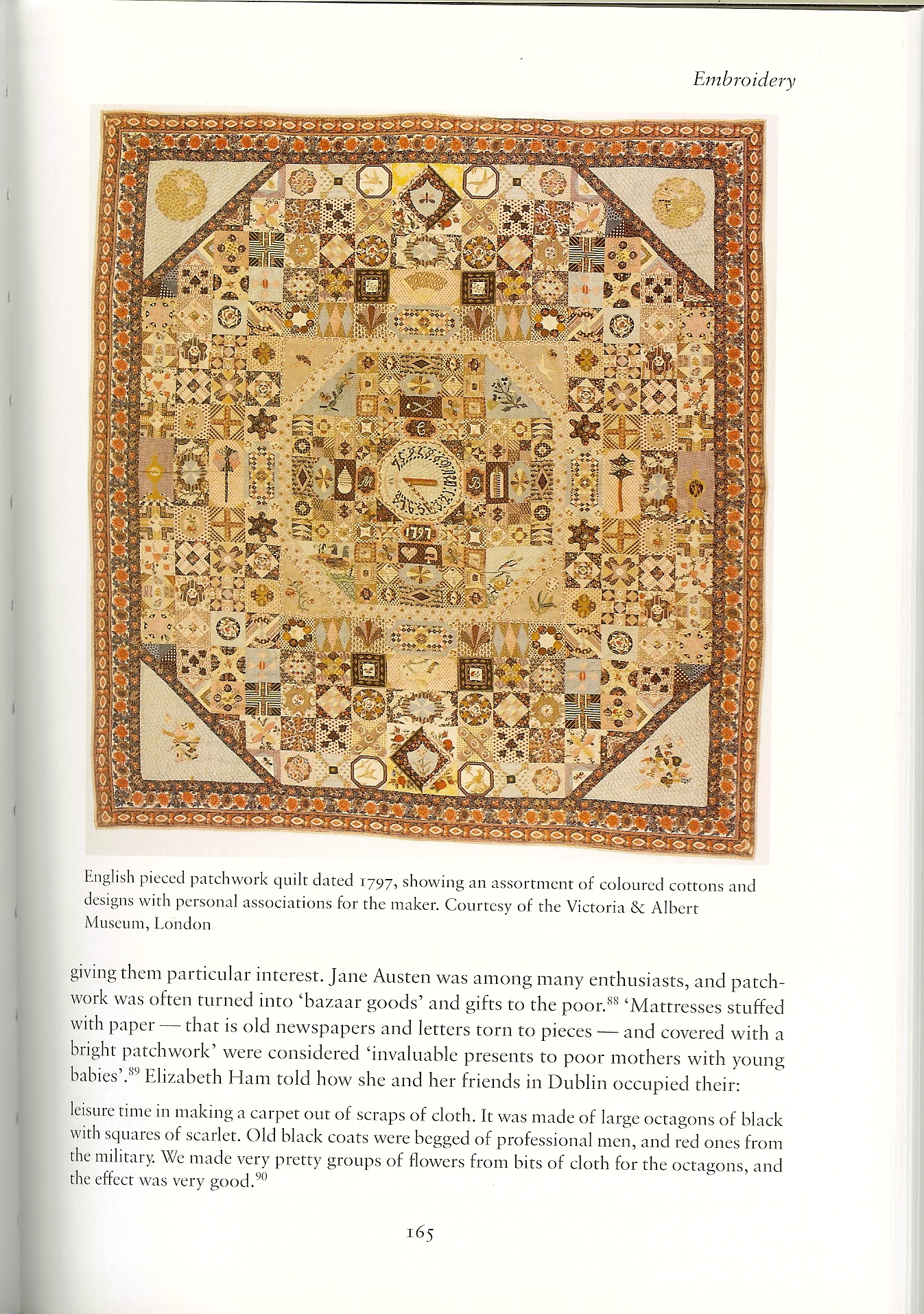
This image of page 165 quotes Austen about patchwork when she writes to Cassandra on 31 May 1811:“Have you remembered to collect peices for the Patchwork?”

So, let’s stop to think about the varied accomplishments of Austen’s many female characters…anyone want to comment and give a shout out to your own favorite and her accomplishments / or lack thereof? Is anyone up to Mr. Darcy’s standards?

©2021 Jane Austen in Vermont
Austen Literary History & Criticism · Author Interviews · Book reviews · Domestic Arts · Georgian Period · Jane Austen · Jane Austen Popular Culture · Regency England · Social Life & Customs

Guest Author Interview ~ Bryan Kozlowski on “The Jane Austen Diet”

Dear Healthy Readers: I welcome today Bryan Kozlowski, author of The Jane Austen Diet: Austen’s Secrets to Food, Health, and Incandescent Happiness – he joins us here to answer a few questions about his book, why he wrote it, how long he’s been a reader of Jane Austen, and when he discovered she had all these things to say about nutrition and health.  Joceline Bury, the book reviewer for Jane Austen’s Regency World magazine calls it “a delectable salmagundy or culinary history, illuminating quotes, dietary science and intriguing recipes – it made this gourmand’s heart sing. Delicious in every way.”          

*****         

 Welcome Bryan!

When did you first start to realize that Austen’s work contained these words of wisdom about wellness?

Very unexpectedly. Looking back, Jane and I had always been in a very superficial relationship. Begging her polite pardon, I never viewed her beyond anything other than a pure romance writer, always good for a giggle over the newest rich gent in the neighborhood, but not exactly influential to everyday life. If anything, Austen was just a bosom buddy I turned to for distraction from modern life, never realizing she held one of its biggest solutions. Yet that all changed rather quickly two years ago. Nearing my 30th birthday and in the midst of a personal wellness quandary (wondering, among other things, whatever happened to the energy levels of my roaring twenties), I delved into the latest health books for answers. That’s when it happened.  Reading the “newest” research on eating, exercise, and holistic living felt very familiar, like literary déjà vu. Hadn’t I come across these exact insights before in Austen’s novels? Hadn’t she said the same thing, espoused nearly identical lifestyle advice, over two-hundred years ago? It all looked amazingly similar to the way her healthiest characters eat, stay fit, and interact with nature. The discovery led me to health maxims in Austen’s writings I never knew existed, which revealed a side to this famous English spinster rarely, if ever, discussed. Here was a woman just as interested in persuading her readers to live a healthier life as she was inspiring them to fall in love. Plainly, Austen wanted to take my relationship with her to the next level. So I took the plunge, deciding to test out her unique health strategies for myself (rather secretly, at first – one doesn’t announce to the world that one is going on the Jane Austen “diet,” does one?) It was a personal guinea-pig project that – shockingly – was not only suitable to the 21st century, the elegance of embracing “health and happiness” like a true Austenite is one that I now heartily announce to anyone in sore need of adding back some civility and sense to their own modern health routine. 

You’re not a health professional. Do you intend for people to actually follow this plan? Is it a serious contribution to the wellness space?

Quite right. It’s something I discuss upfront in the book: that neither am I nor was Austen a doctor (or apothecary, rather!). Austen was, however, one of the most brilliant observers of human nature, and devoted her literary life to finding out what makes people happier and healthier both in mind and body. For this reason, Austen is often considered one of the best “didactic” novelists, meaning she made it her mission to inspire us – no matter the century – to live a better life. And just like she didn’t need to get married herself to understand the nuances of love, she didn’t need a medical degree to accurately grasp what our bodies need to thrive – the evidence is all in her novels. In fact, the health advice scattered throughout her writing continues to be so timeless today because it was based on organic observation, not on shifting fashions or fads. She knew what naturally worked for our bodies and what didn’t, which is why her wellness philosophies find such resounding support from the latest health research. Moreover, it’s important to remember that Austen lived in an age that faced health challenges nearly identical to the ones we grapple with today. The Regency era had its own mini obesity epidemic, movement crises, and trendy starvation diets to contend with. Yet in her own clever way, Austen chose to respond (never bluntly) but with subtle, counterculture clues woven throughout her fiction: clues meant to gently motivate us to better alternatives. And I, for one, am so grateful she did.

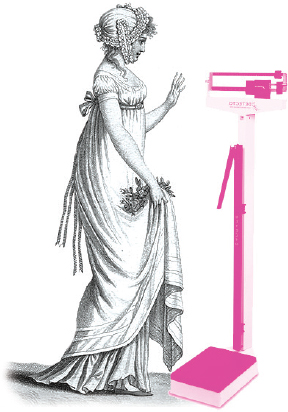
What is the best piece of advice gleaned from Austen included in your book?

Austen would probably get a merry kick out of my attempt to answer this, as her health code purposefully defies any attempt at tidy condensing. But if possible to boil down, you could say that it’s built on one refreshing reminder – that “health” is far more holistic than most of us have been conditioned to view it today (that is, as an isolated number on a scale, BMI chart, food plan, fitness strategy, or dress size). As a matter of fact, weight hardly mattered to Jane at all, who progressively considered excessive thinness, not fatness, as a much more serious risk to health. There are corpulent characters in her novels, of course, who could certainly loose a few pounds, but Austen chose to widen the lens and focus instead on what she calls the “complete” “picture of health” throughout her fiction. In short, Austen’s healthiest characters never have just one defining attribute that makes them “lovely, blooming, [and] healthful” but a sweeping range of interconnected lifestyle habits and patterns that keep them effortlessly “in health” from tip to toe: from their relationship to food and exercise, to their interactions with nature, to how they think and feel about their bodies. Your corset size mattered far less to Jane than how you laced up the rest of your life.

 Which of Austen’s heroines lives the healthiest life, and why?

What I love about Austen’s approach to wellness is its firm footing in reality – that is, none of her heroines start their stories as perfect paradigms of health. Everybody has something to learn. Anne Elliot begins Persuasion “faded” and frumpy and Marianne Dashwood certainly has some hard health lessons ahead of her in Sense and Sensibility. But if any heroine could be said to have a head start on the rest, I believe it would be Lizzie Bennet in Pride and Prejudice. If nothing more than the fact that she begins the novel completely comfortable in her own skin. So much so, she instantly laughs off Mr. Darcy’s infamous body-shaming snark (“he had detected with a critical eye more than one failure of perfect symmetry in her form”). And that alone was incredibly important to Austen, an early promoter of body positivity. Because becoming healthy in Austenworld truly begins in your mind, where the quality of your relationship to food, fitness, and even your reflection in the mirror will greatly depend on how you think about those things. Still incredibly important today, these are the mental “exercises” that set apart the body healthy from the body harmful in Austen’s novels. As Fanny Price insists in Mansfield Park, “that would be exercise only to my body, and I must take care of my mind.”

What is the most surprising/useful habit that those living in Austen’s era abided by for health?

The most surprising aspect of Austen’s wellness program is her insistence that a healthy diet includes far more than just food – that it relies on a daily dose of nature, too. Things like fresh air, sunlight, trees, good clean dirt and sea breezes are practically treated like vitamins in her fiction, routinely prescribed to any character in need of a body reboot. And though I used to (shamefully) think Austen had gone a wee bit too far with her love for nature – note Lizzie in Pride and Prejudice, at one point, prefers “rocks and mountains” to actual men – thanks to new and growing support from modern science, it is now an essential part of my own wellness walk with Jane, and one I cannot live without.

*****

About the author:

Bryan Kozlowski is a passionate champion of “lit wit” – bringing the wisdom of classic literature into everyday life. From Jane Austen to Charles Dickens to children’s cookbooks, his books celebrate the modern magic of living literarily. His works have appeared in Vogue, the New York Times and the Washington Post. He graduated valedictorian from The Culinary Institute of America in New York, where he fell in love with British food history, and interned at Saveur food magazine before setting off on the writing path.

About the book:

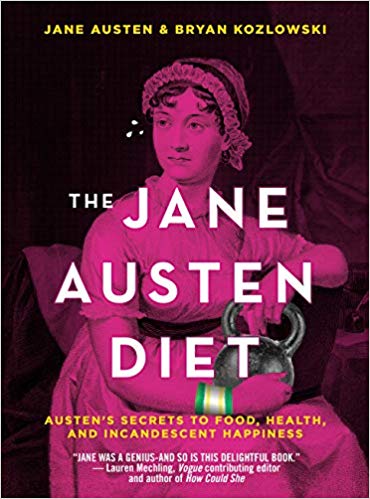
Bryan KozlowskiThe Jane Austen Diet: Austen’s Secrets to Food, Health, and Incandescent Happiness

Turner Publishing, 2019
Paperback: 304 pages
ISBN: 978-1684422128

If you have any questions for Bryan, please comment below.

Thank you Bryan for sharing your new book with us! I am heading out now for my daily walk knowing Jane would heartily approve!

c2019 Jane Austen in Vermont
Austen Literary History & Criticism · Author Interviews · Blog Tours · Book reviews · Collecting Jane Austen · Domestic Arts · Jane Austen · Jane Austen Popular Culture · Social Life & Customs

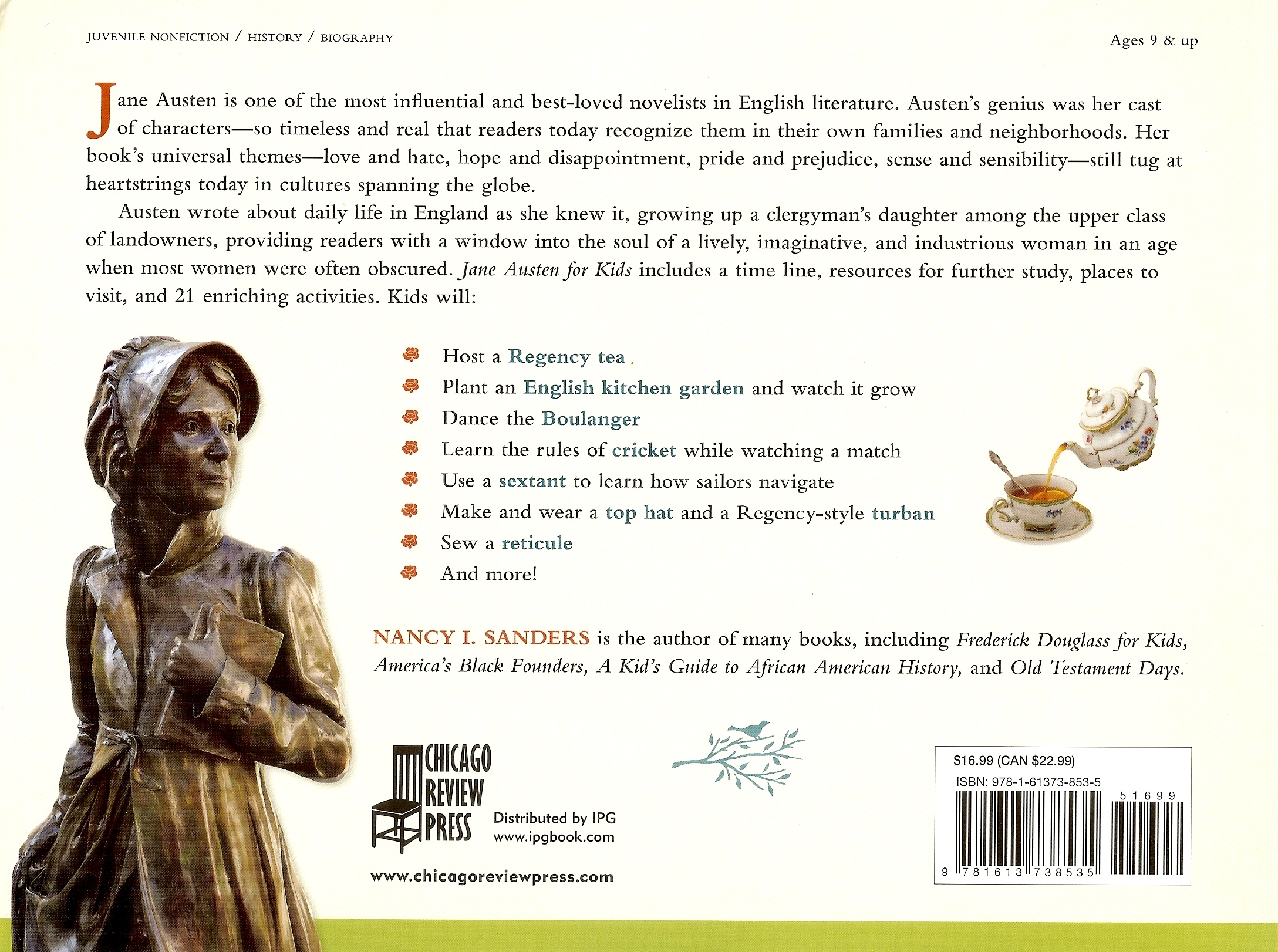
Guest Post ~ Nancy I. Sanders on Her New Book, “Jane Austen for Kids”
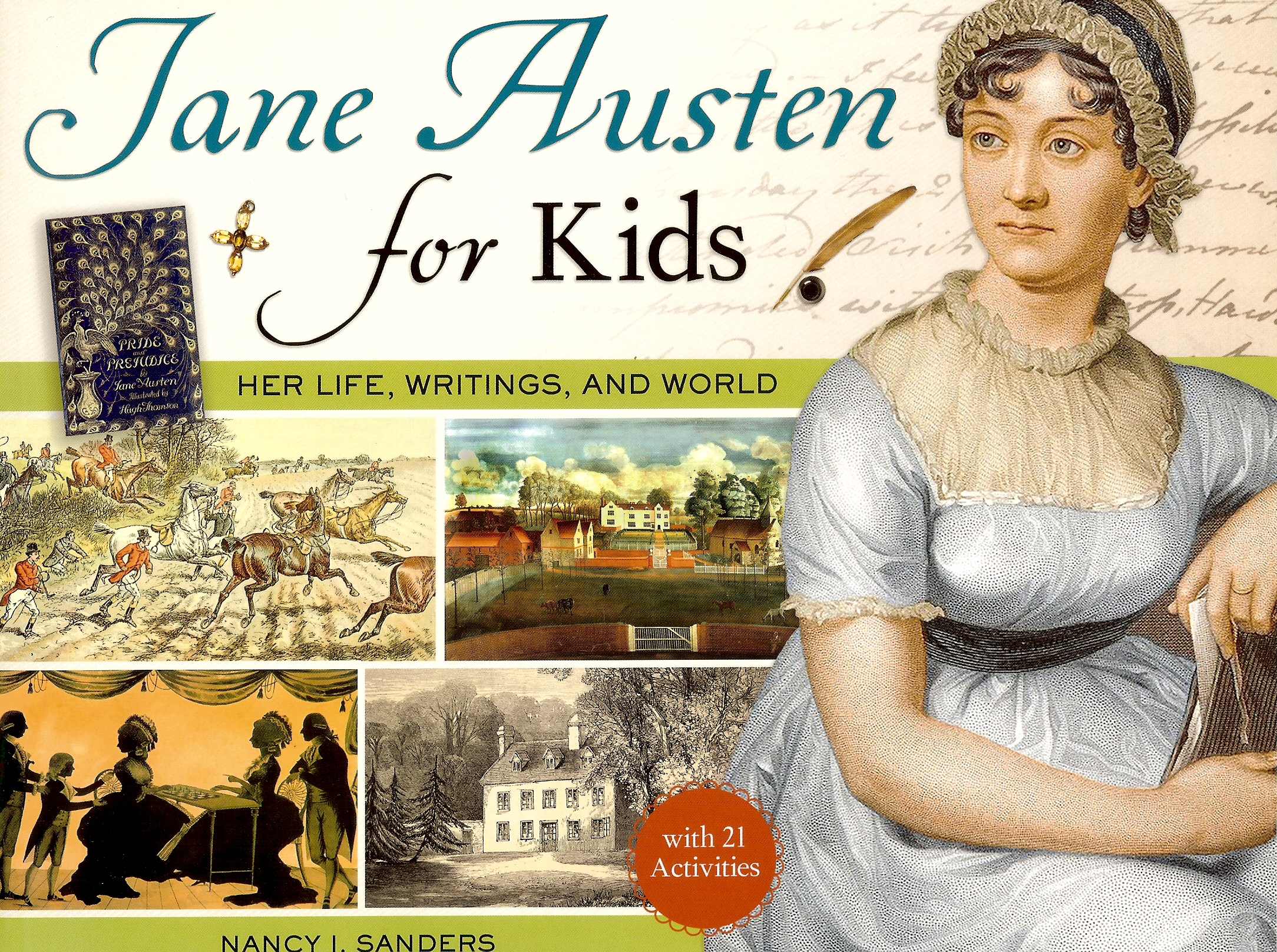
Good Morning Readers! Today I welcome Nancy I Sanders, author of the recently released Jane Austen for Kids: Her Life, Writings, and World. Designed for ages 9 and up, the book provides 21 enriching activities to help them gain a better understanding of daily life in the Georgia era: playing whist, designing a coat-of-arms, planting a kitchen garden, learning the boulanger, hosting a tea, playing cricket, sewing a reticule – all activities Jane would have participated in – and now we can too! Filled with pictures and much information of Austen’s life and works, this is a lively and engaging way to learn more about Jane Austen. I highly recommend that you add this book to your Austen collection, no matter your age – you might learn how to curl your hair just like Jane did!

Join Nancy as she takes us on a tour through Jane Austen country, where she was inspired to write this book!

**************

Our beloved Jane once wrote in a letter to her sister Cassandra, “It appeared so likely to be a wet evening that I went up to the Great House between three and four, and dawdled away an hour very comfortably.”

Two centuries later, early in the afternoon on July 19, 2017, I rode with my husband Jeff and our JASNA tour group on the tour bus toward the Great House. My heart beat with excitement as we drove past quaint homes, many reflecting days gone by.

I had traveled all the way from Los Angeles here to Hampshire to treasure this experience today. As a children’s writer, I was researching and taking photographs for my newest book, Jane Austen for Kids. But for me as well as others in our group, today would be a highlight of our trip. I would get to visit Jane’s adult home, the church she attended with her mother and sister and other family members, and her brother Edward’s nearby mansion, known affectionately as the Great House.

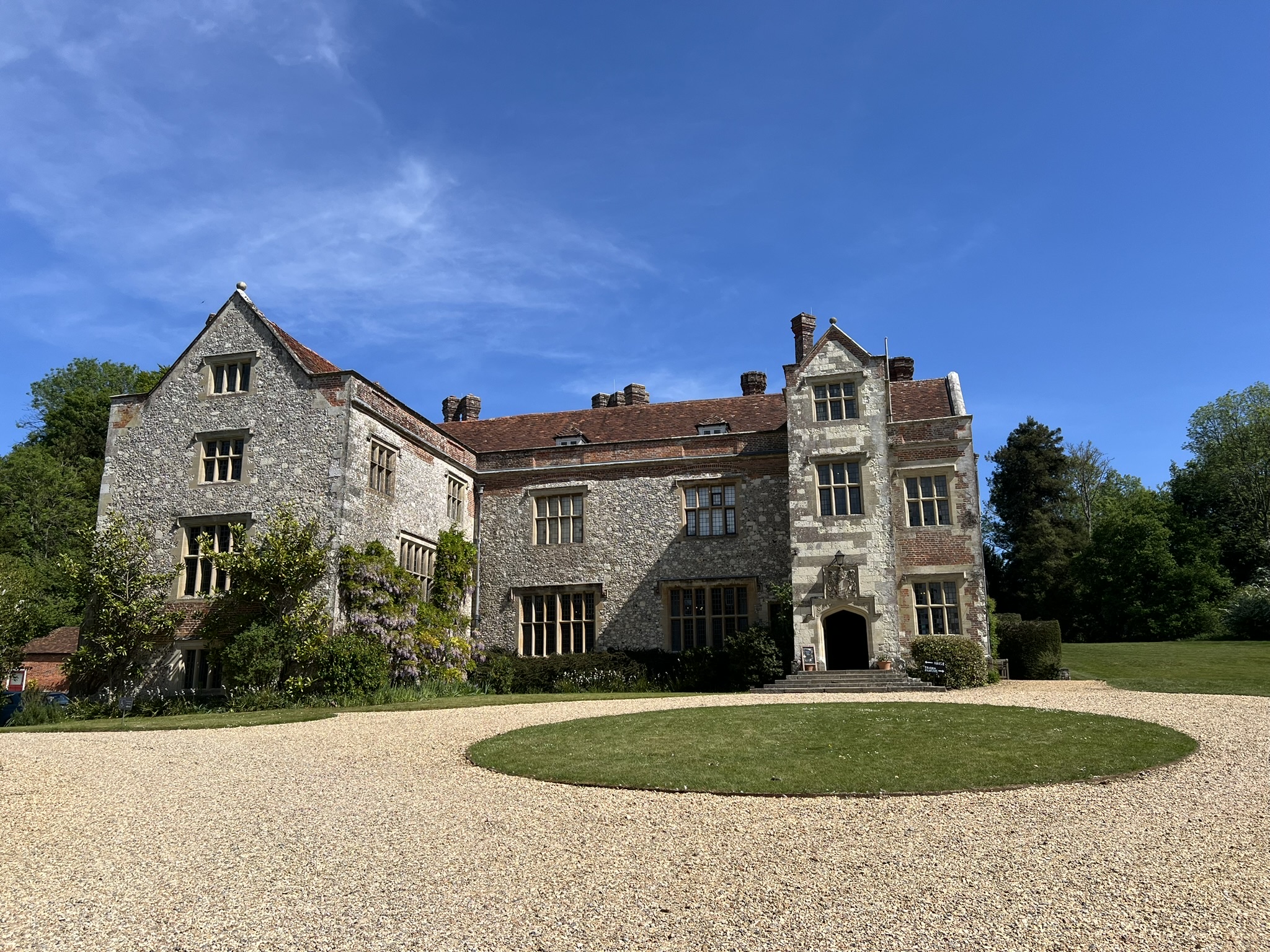
Chawton House –  “The Great House”

We turned up the lane and I saw it. The Great House. Jane spent many a merry day here visiting her nieces and nephews…exploring the well-stocked library…meandering over the manicured grounds…drinking delightful teas…and, I dare say, collecting many ideas for her novels.

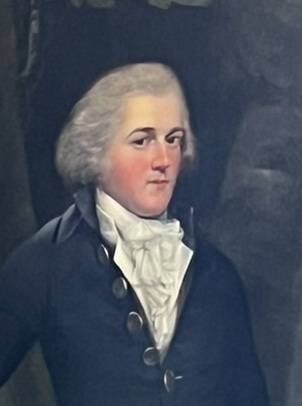
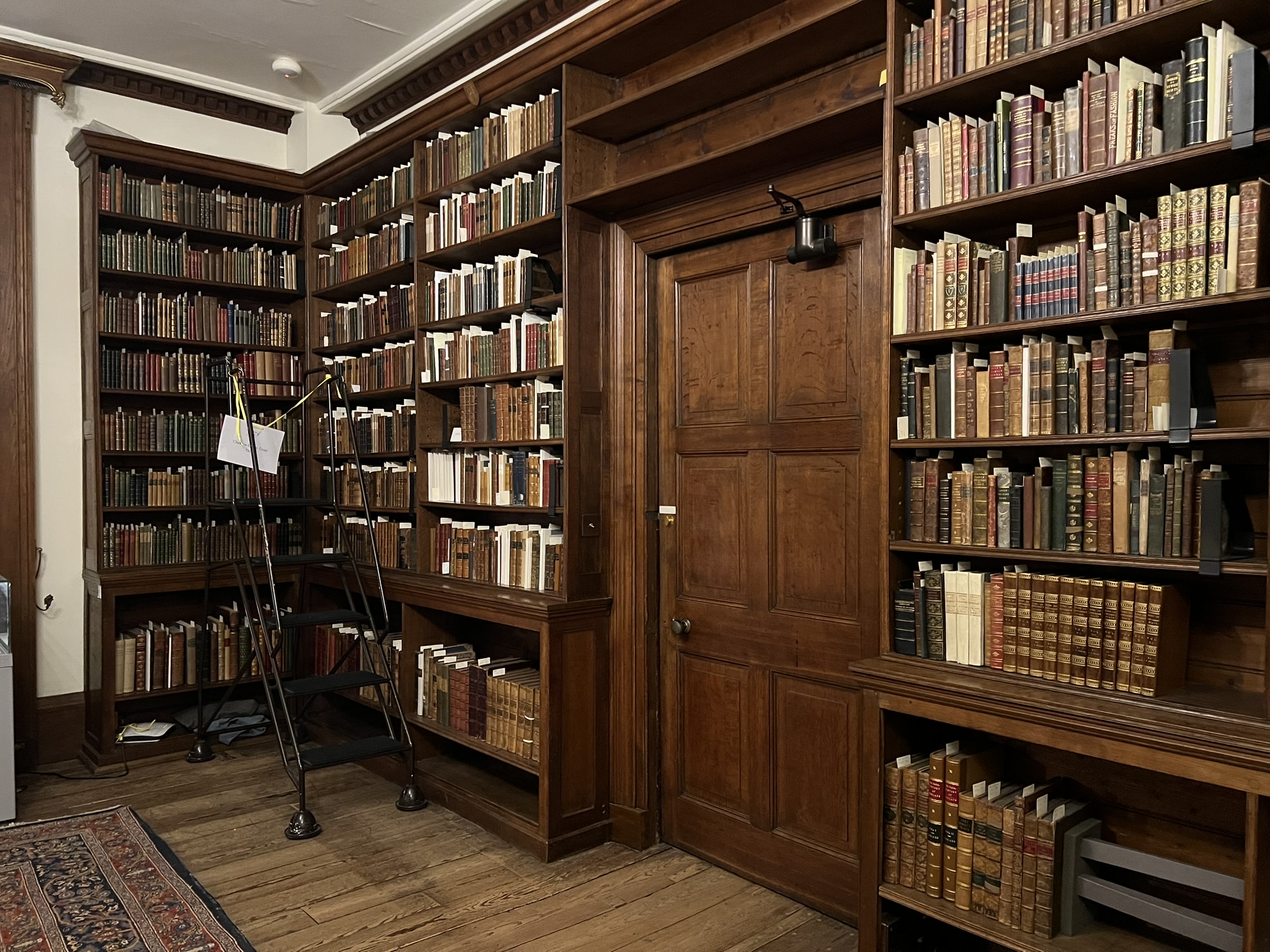
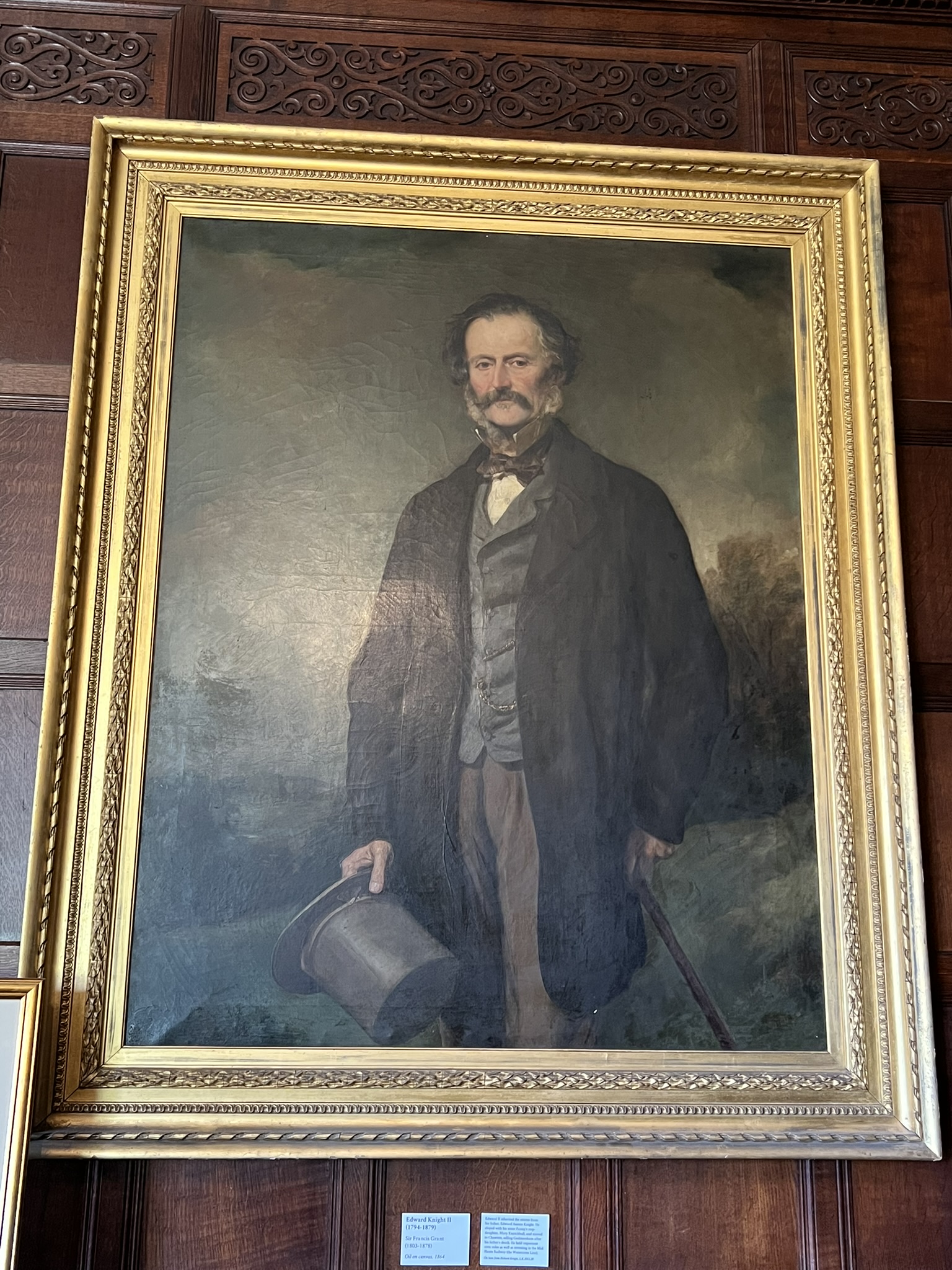
What a joy it was to explore the Great House. Now known as the Chawton House, its collections feature Jane Austen as well as other famous women writers. We visited its library room with collections of rare books. We saw the huge portrait painted of Edward Knight, Jane’s fortunate brother who was adopted by the childless Knights. The silhouette of this adoption was also here at the Great House. It was because of her brother’s adoption by Jane’s wealthy relatives that Edward eventually inherited this property and also the humble cottage that eventually was granted for Jane, her mother, and her sister Cassandra to live in.

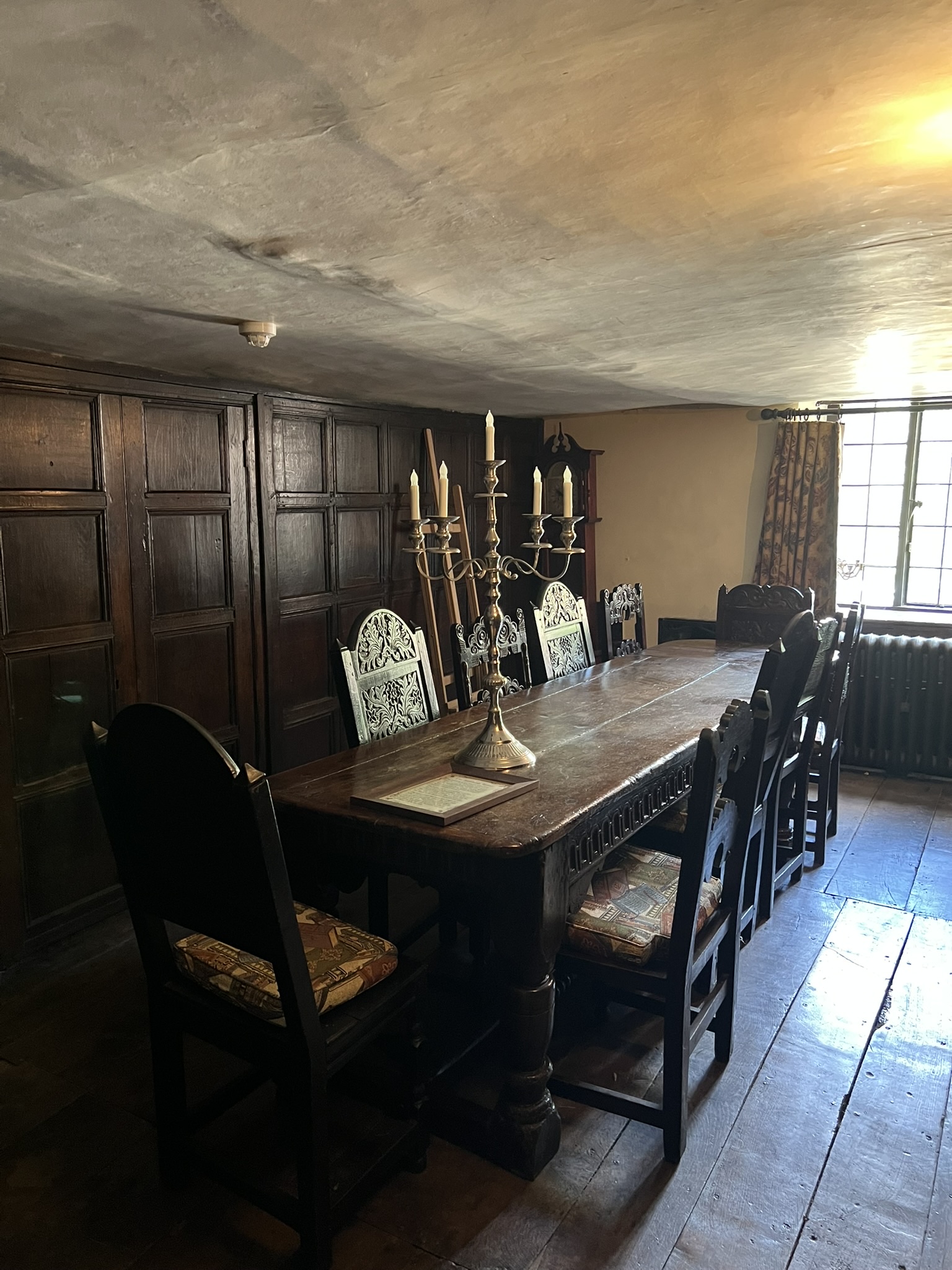
In the dining room was the same dining table where Jane would sit down to eat when she visited her brother and her favorite niece, Fanny. We saw Jane’s favorite window overlooking the gravel driveway where Jane would sit and look out and imagine…


Finally it was time to leave. There were other memories to explore. We headed toward St. Nicholas Church, located next to the Great House.

Arriving at St. Nicholas Church, a peaceful pastoral scene greeted us. Its open gate beckoned us inside.

Later that day, I wrote in my travel journal of this experience:

As we walked down the golden gravel path, the gentle mist fell around us as the gentle mist of time melted away. We walked in the footsteps of Jane and her family on their way to church and to visit each other. Sheep bleated peacefully in the nearby pasture. Jane’s sister and mother are buried behind the church. Their tombstones stand as silent reminders that there are stories of our Jane still waiting to be told…


Parish Church of St. Nicholas, Chawton


We passed by tombstones, weathered by the rains and sunshines of time. Even though this church has been renovated and altered from its original design, it was still a remarkable site to see.

Inside was a simple magnificence.

A hushed stillness comforted our visit and filled us with awe.

I headed outside, paused for a moment to take a photo shot, then walked around in search of the graveyard.

More sheep grazed quietly near the old churchyard fence.

A giant tree, ancient silent sentinel, hosted a sign that pointed me toward the back.

And then I saw them. Standing side by side as markers of the two women who were perhaps most influential in Jane’s life. Her mother and her sister, both named Cassandra. The moss and ivy made delicate frames for this picturesque site. I lingered…savoring this moment…quiet…reflecting…the influence of these women reaching down through two centuries to influence me as a woman, as a reader, and as a writer.

But there was more to see, so I finally pulled myself away and headed back to the front of the church, out the gate, and down the gravel lane. I turned to take one last look at St. Nicholas and bid it farewell.

****

Then down the gravel lane to the country road. Destination? Chawton Cottage, the home where Jane lived and wrote a large bulk of her novels. Today it houses Jane Austen’s House Museum.

We walked down the Jane Austen Trail….

The country land led us past moss-covered fence posts and ivy-covered trees. I must have brushed against the undergrowth because suddenly, the calf of my right leg was on fire.

Alas! That ancient culprit. Stinging nettle! I had become its victim just as in Jane’s day. Except for the pain, I had to smile. It was an unexpected souvenir of my day’s adventure.

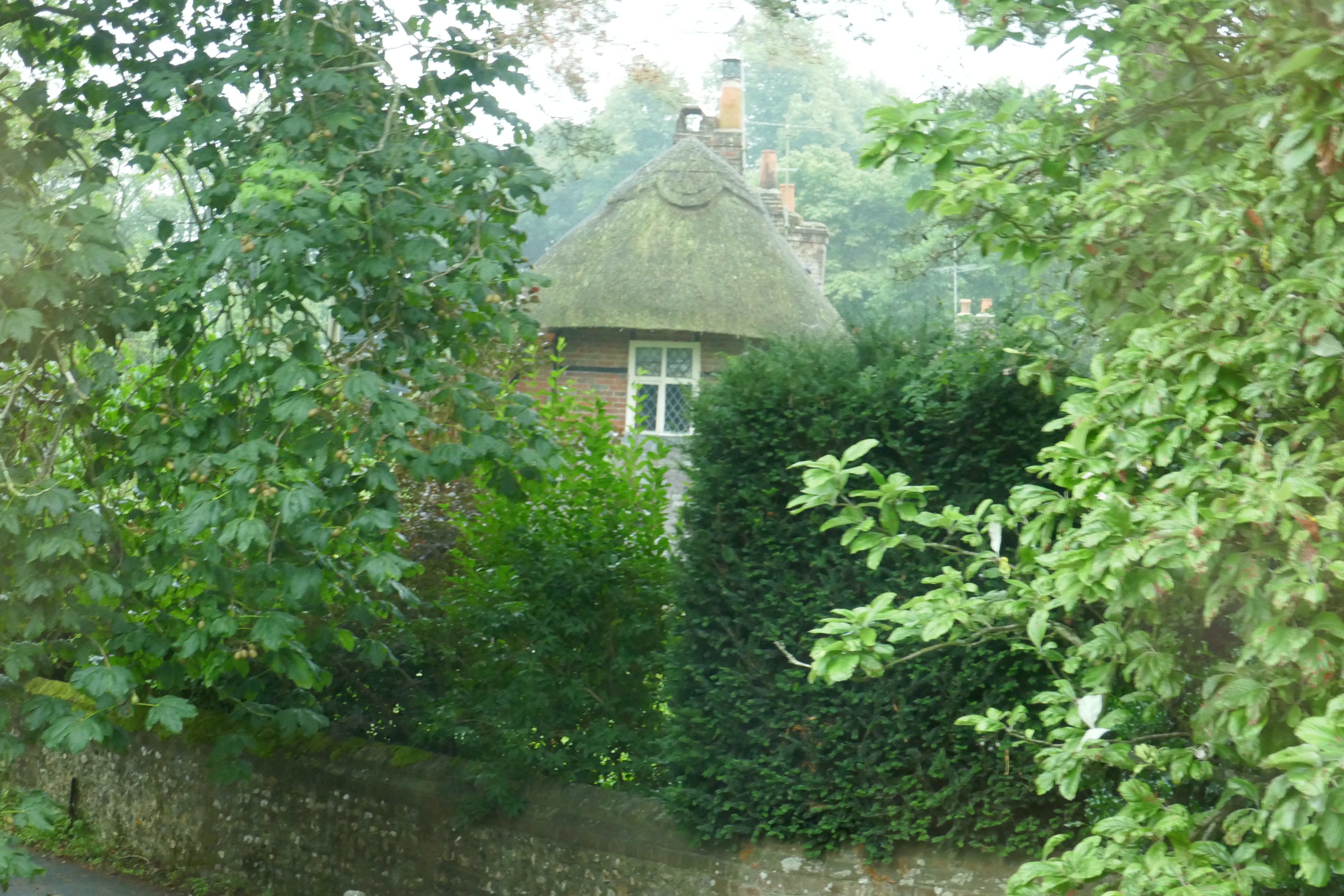
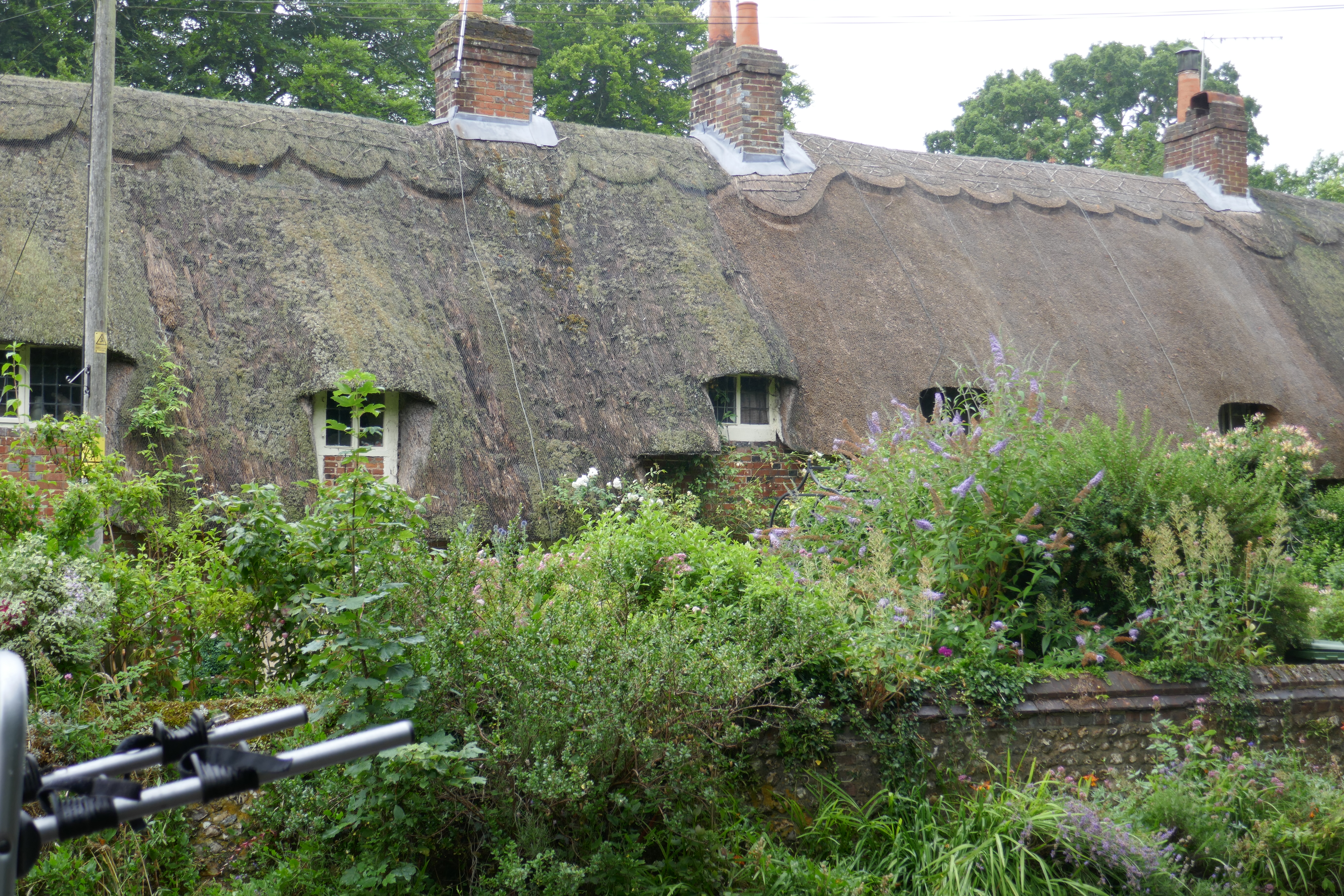
We meandered past more quaint homes and delightfully overgrown gardens.


We turned the corner. And there it was. Chawton Cottage. Jane’s beloved home. Tea awaited us! Along with a glimpse into the daily life and heart of Jane.

Inside we found her writing table. The infamous door that squeaked. The bedroom she shared with Cassandra her adult life. The garden where she gathered flowers…but more than just things, we found rich treasures. Pearls and diamonds enough to fill our hearts to overflowing…yet never enough. Can one ever get enough of our Jane?


Once outside again, a surprise awaited us. This bench was one of many benches painted in commemoration of 200 years of Jane’s legacy to the world. They were scattered throughout Hampshire and we saw quite a number of them at various historic sites where Jane visited or stayed.

This beautiful bench brought me back from the 1700-1800s to my current day. It reminded me that I had a task to do. An exciting project that I would spend the rest of that year working on. My biography of Jane that would bring her life to young readers in a way no other book has done, focusing on Jane’s childhood and juvenile writings as well as including historic activities based on Jane’s life and times.

****************

Jane Austen for Kids: Her Life, Writings, and World
By Nancy I. Sanders
Official book’s website:  http://nancyisanders.com/jane-austen/

About the author:

Nancy I. Sanders was introduced to Jane Austen as a teenager when she read Pride and Prejudice aloud with her future sister-in-law. Since then she chose to follow in Jane’s footsteps to become a writer—although her published books mostly are enjoyed by younger readers (such as the rollicking fun picture book A Pirate’s Mother Goose). With over 100 books to her credit including bestsellers and award-winning titles, Nancy still enjoys reading Jane Austen with Persuasion being her current favorite. Nancy and her husband Jeff live in Norco CA near their two sons and their wives, and three grandchildren.
Credits:

  • “It appeared”: Jane to Cassandra Austen, 13 June 1814, in Chapman, Jane Austen’s Letters, 388.
  • Chawton House photos by author, courtesy of Chawton House
  • St. Nicholas photos by author, courtesy of St. Nicholas, Chawton
  • Chawton Cottage photo by author, courtesy of the Jane Austen’s House Museum

c2019, Jane Austen in Vermont
Domestic Arts · Fashion & Costume · Jane Austen · Museum Exhibitions · Social Life & Customs · Victorian Period

Museum Musings: Victorian Fashion at UVM’s Fleming Museum ~ “The Impossible Ideal”

It is really rather churlish of me to post about an exhibit that is no longer there – give you a sample of something you can’t anywhere find the full feast – but so I shall do because the exhibit closed right after I went and then the holidays intervened. But with the permission of the Collections Manager at the Fleming Museum at the University of Vermont, I shall show you several of the fashions that were on display at their recent “The Impossible Ideal: Victorian Fashion and Femininity” which ran from September 21 – December 4, 2018.

All the fashions are part of the Fleming’s collection and not usually on display. The exhibition of clothing and accessories, along with excerpts from popular American women’s magazines (Godey’s Lady’s Book and Peterson’s Magazine), explores “how fashion embodied the many contradictions of Victorian women’s lives, and, eventually, the growing call for more diverse definitions of women’s roles and identities.”

It is not a large exhibition, but each gown or corset has its own story: the fabric and accessory details, the history of the wearer, and how it reflected the times in Victorian Vermont. We see the changes during this “Victorian era’s ‘cult of domesticity’ and the idea that women’s place was in the home and not in the public sphere,” to later in the century, “when sleeker skirts, broader shoulders, lighter fabrics, and suit styles gave women greater freedom of movement reflecting increasing autonomy.” [Quoted text from the Fleming Newsletter, Fall 2018].

It is interesting to see the Victorian shift from the Regency era’s flowing and revealing dresses and wonder how women ever let that happen!


I will show you here some of my favorites: I’d like to hear which is your favorite from this small sample…

****************************

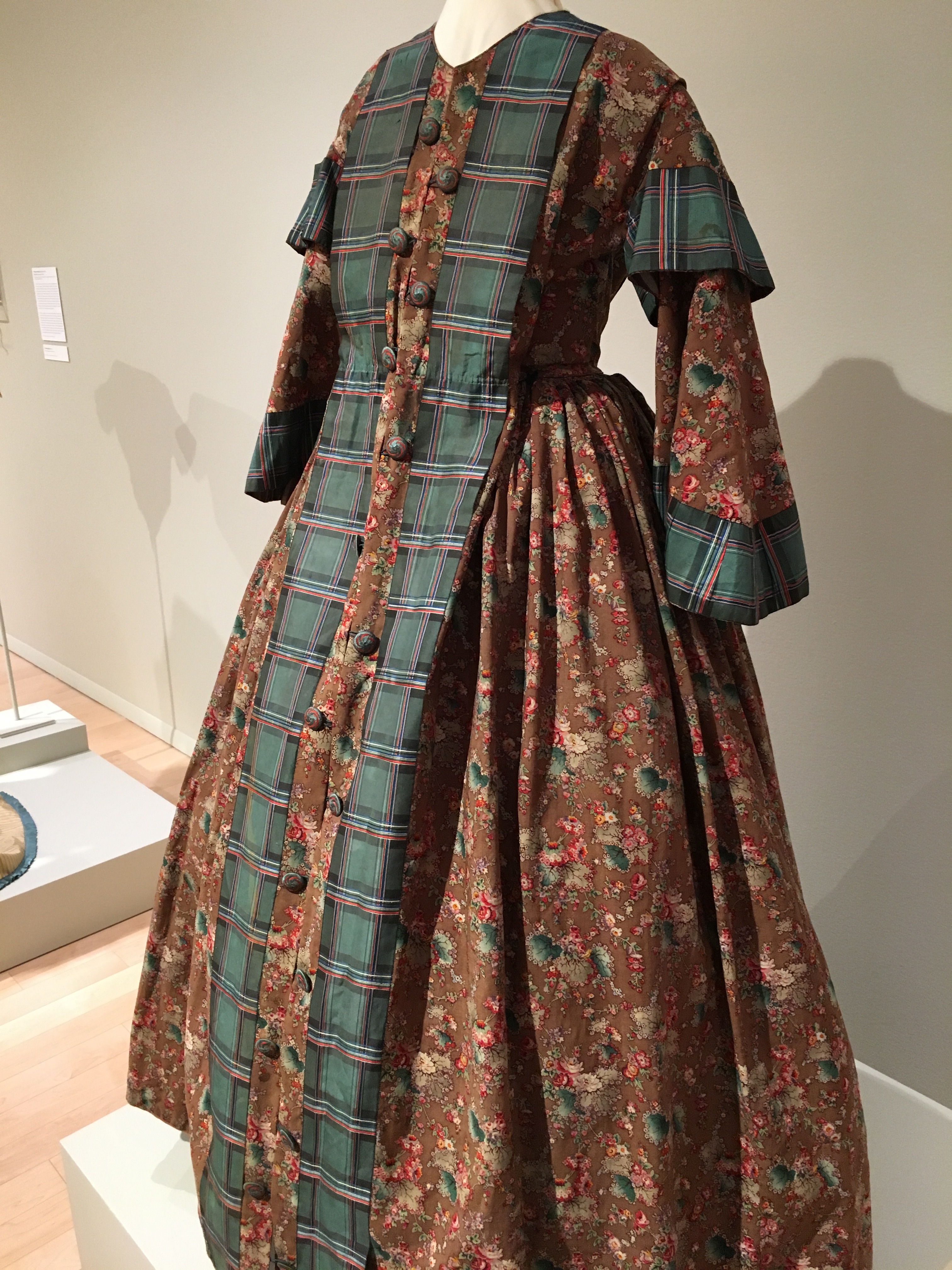
Wrapper, c1850:
printed floral cotton with silk taffeta trim and embroidered buttons; a loosely-fitted at-home dress usually worn at breakfast

Have you always wondered why the Victorians had such a penchant for plaid? See below for some further reading on the subject…

White Wedding Dress, 1857:
off-white damasked silk taffeta with gold silk-fringe. Tradition has it that the trend to wear white for weddings began with
Queen Victoria’s wedding in 1840
– but in reality, white was only used by the wealthiest of brides.
*

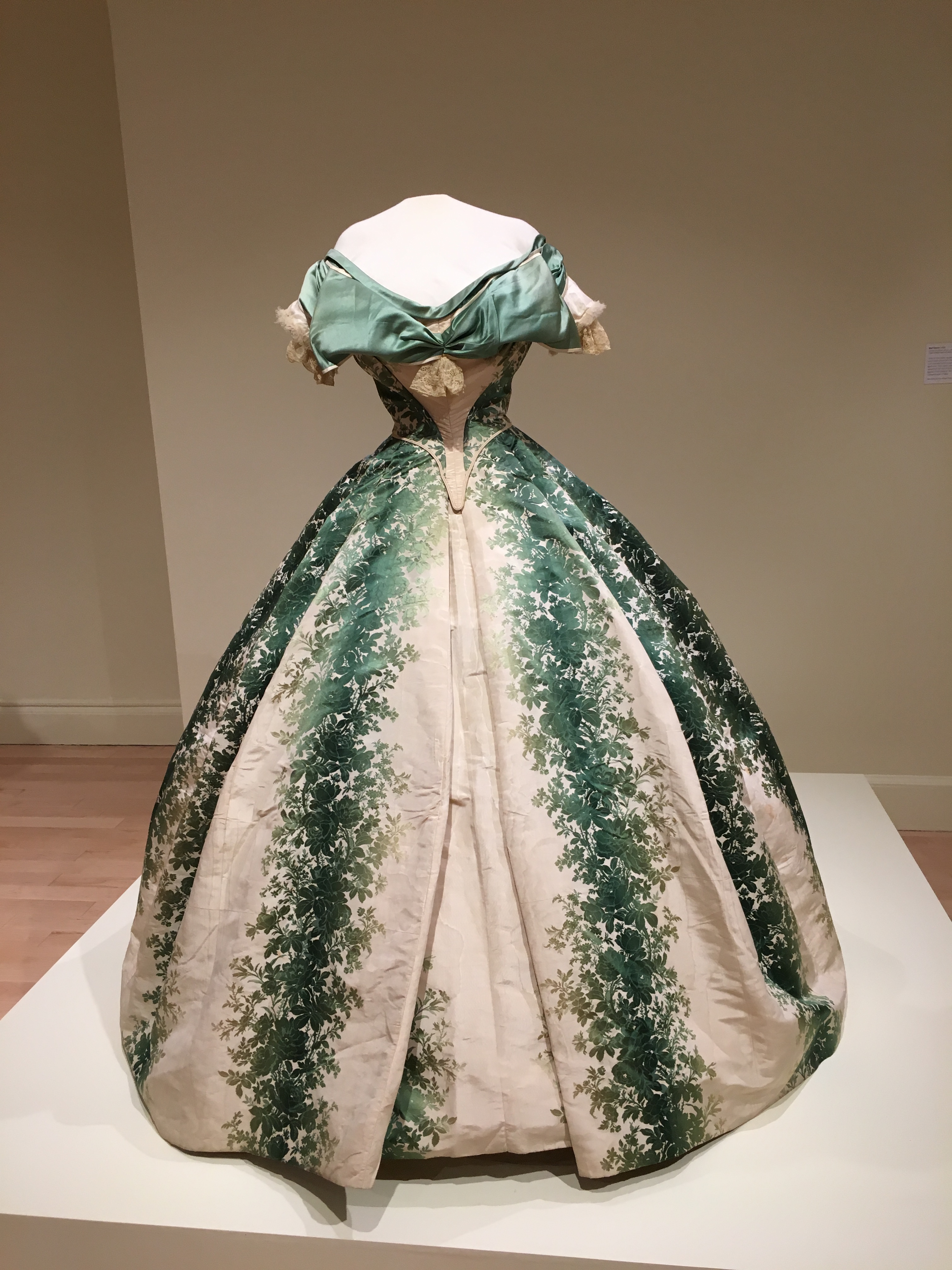
Ball Gown, 1860:
cream moiré silk taffeta with floral damask and trimmings in satin and lace

*

*Wedding Skirt (1865) and Afternoon Bodice (altered early 1870s):
yellow and green striped silk taffeta. This is a prime example of how even the wealthiest of women would have adapted their clothes to reflect fashion crazes or bodily changes.

*

Princess Cut Dress, c1870s:
purple silk taffeta with silk organza trim. The cuirass bodice, named for the chest piece on medieval armor was the latest fashion craze. And by the late 1850s, synthetic chemical dyes began to replace vegetable-based dyes, allowing for brighter, longer-lasting colors – and not entirely safe, as some of the dyes contained arsenic!

*

Opera or “Fancy Dress” Gown, 1875:
aubergine silk velvet, satin brocade bobbin lace, glass beads and tortoise-shell buttons,
and absolutely stunning in real life! (hard not to touch…)
*

Blue dress worn at UVM graduation in 1878:
silk taffeta with mother-of-pearl buttons

The University of Vermont began accepting women in 1871and in 1875 was the first American University of admit women into the honor society Phi Beta Kappa. This dress was worn by Ellen Miller Johnson (1856-1938) of Burlington Vermont – she majored in Classical Courses and graduated with the fourth co-educational class in 1878, one of three women in a class of seventeen.
*

Two-Piece Traveling Wedding Dress, 1885:
garnet silk satin with dark purple velvet and white bobbin lace, and I confess this to be my favorite – who can resist garnet and purple!


*

Two-Piece Suit-Style Dress, 1895:
black and red textured silk with white bobbin lace. The beginnings of a more masculine-mode of dress
*

Riding Habit, c1900:
brown wool broadcloth with black silk satin


And we cannot forget about the all-important unmentionables:

with a Brattleboro, VT advertisement from Brasnahan & Sullivan:

Which obviously gave the publisher this idea for a Persuasion cover (having literally nothing to do with the story but it’s worth a chuckle…)

And a few hats and shoes to finish off this exhibition:

***********************

All photos c2018 Deborah Barnum; with my thanks to Margaret Tamulonis, Manager of Collections and Exhibitions at the Fleming Museum, for permission to publish these images. If you have any interest in knowing more about a particular dress and who wore it, please ask me in a comment.

Select further reading:

c2019, Jane Austen in Vermont
Austen Literary History & Criticism · Collecting Jane Austen · Domestic Arts · Georgian Period · Jane Austen · JASNA-Vermont events · Regency England · Social Life & Customs

Julienne Gehrer on “Dining with Jane Austen”

Dear Janeites Near and Far,

Next Thursday, August 3rd, we will be welcoming author Julienne Gehrer to Vermont! She will be speaking at the Fletcher Free Library in Burlington from 5-7 pm on, you guessed it, “Dining with Jane Austen.” This is the first event in the Library’s  new series “BURLINGTON RISING: Lectures & Culinary Demonstrations centered on the historical role of bread in human civilization” – see below for more information on this series.

Julienne will be giving her full talk to us at the Library; a shorter talk will be offered on Friday evening at Shelburne Farms as we partake in a full-course Regency-era dinner provided by local chef Richard Witting and his Isolde Dinner Club – you can read the details of both events here.

Today, a little introduction to Julienne’s book – it will be available for purchase and signing at both events – if you would like to reserve a copy in advance, please contact me.

*******************

Telling Jane Austen’s Life Though Food

     During a cool and rainy summer in Hampshire, England, an American writer received unprecedented access to two manuscript cookbooks connected to Jane Austen. Paging through the unpublished works, it became clear that many of the family recipes could be connected to foods referenced in the author’s letters and novels.

Fast forward through three years of research, 45 period food articles, 75 recipe adaptations, plus on-site photography at two Hampshire houses where Jane Austen lived and dined. In her new book, Dining with Jane Austen, Julienne Gehrer tells the story of the famous author’s life through the foods on her plate. The book’s May release date coincides with the launch of Hampshire events celebrating the 200th anniversary year of the author’s death.

Readers will enjoy the book’s food-centric stories sequenced in the order of Jane Austen’s letters and residences: her girlhood home in Steventon, economic struggles in Bath, stability in Southampton, creative freedom at Chawton, and death in Winchester. Now Haricot Mutton, Orange Wine, Bath Buns, White Soup, and many other foods familiar to Austen can be recreated using the her family’s own recipes. By understanding and recreating these foods, readers can enjoy a certain level of intimacy with the author—much like that of sharing a meal with family and close friends.

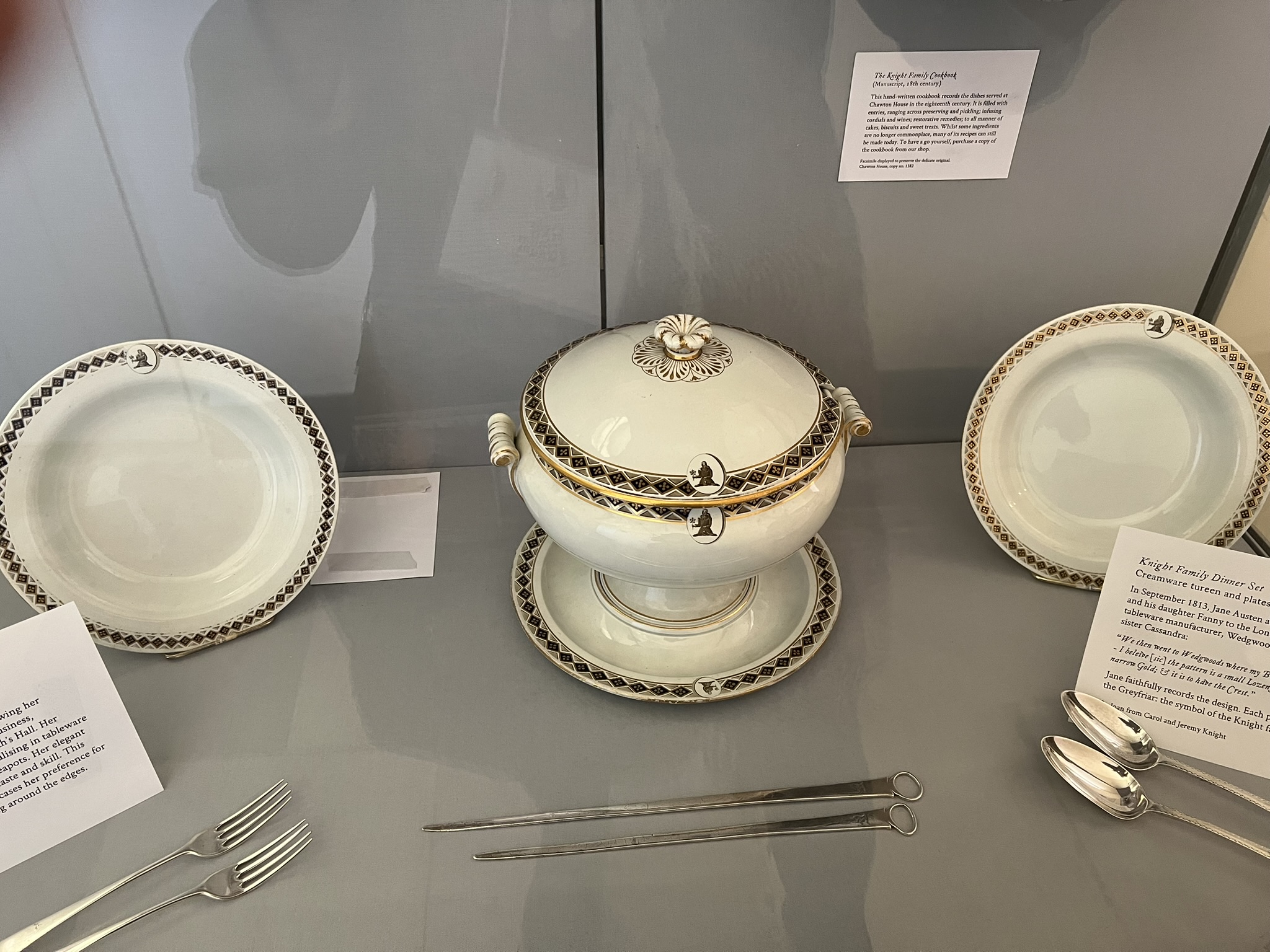
Dining with Jane Austen gives readers their first view of family recipes on the family china in the family houses. To create the book, Gehrer was allowed to photograph from attic to cellar in Chawton Cottage, where Austen wrote or revised all her major novels. The cottage is now known as Jane Austen’s House Museum, located just down the lane from Chawton Great House, the home of Austen’s brother Edward Austen Knight. Here Gehrer was allowed to photograph the recreated recipes on the Knight family china bearing the familiar grey friar. Jane accompanied her brother and niece to select the pattern at Wedgwood’s London showroom in 1813—the same year Pride and Prejudice was published. One of Jane’s letters describes the pattern of  “a small Lozenge in purple, between Lines of narrow Gold;—& it is to have the Crest.”

In the midst of so many books offering the fictitious dishes of Mrs. Elton’s Rout Cakes or the dinner Mrs. Bennet might have served Mr. Darcy, Gehrer made it her goal was to serve up Austen with well-researched authenticity. By recreating the famous author’s favorite foods, readers may indeed feel like they are dining with Jane Austen.

Dining with Jane Austen
By Julienne Gehrer
May, 2017 (Ash Grove Press, Inc.) 218 soft-bound pages with 250 full color illustrations $34 at diningwithjaneausten.org and Amazon 

Proceeds from the sale of the book will benefit Jane Austen’s House Museum and Chawton House Library.

********************

Julienne Gehrer is a Lifetime Member of the Jane Austen Society of North America, and has served as a Board Member and Regional Coordinator. She worked as an Editorial Director for Hallmark Cards, Inc., and retired after a 31-year career. Julienne is the author of two books: In Season: Cooking Fresh From the Kansas City Farmers’ Market and Love Lore: Symbols, Legends and Recipes for Romance. She is the creator of three board games including Pride and Prejudice—the Game. Julienne has spoken at several JASNA conferences and regional events on topics including, Did Jane Austen Prefer a Plain Dish to a Ragout? and Jane Austen and 18th Century Kitchen Wisdom. Although she admits a preference for modern kitchens, Julienne has cooked period foods over the open hearth at the 1858 John Wornall House Museum.

Hope to see many of you there!

******************

More on the Fletcher Free Library series:

BURLINGTON RISING: Lectures & Culinary Demonstrations centered on the historical role of bread in human civilization Brought to you by the Fletcher Free Library, the Vermont Humanities Council and the Friends of the Fletcher Free Library.

Burlington Rising explores bread’s connection to cultural identity, the development of cooperative economies and food systems, archaeological artifacts from Africa to New England and the breads brought from across the globe to Vermont through immigration. Burlington Rising provides opportunities for people from a variety of backgrounds to learn from each other; educates our community about the historical foundations of diet and food preparation; and engages multiple generations in activities that build relationships through stories and food preparation.

Burlington Rising Lectures on Bread Traditions and Culinary Demonstrations:

  • August – from Europe
  • September – from Africa
  • October – from Asia
  • Late October & Early November – from the Americas


c2017 Jane Austen in Vermont, with thanks to Julienne Gehrer
Domestic Arts · Fashion & Costume · Georgian England · Georgian Period · Jane Austen · Jane Austen Popular Culture · Movies · Museum Exhibitions · Regency England · Social Life & Customs

Museum Musings: “Cut! Costume and the Cinema” ~ with a little bit of Jane Austen

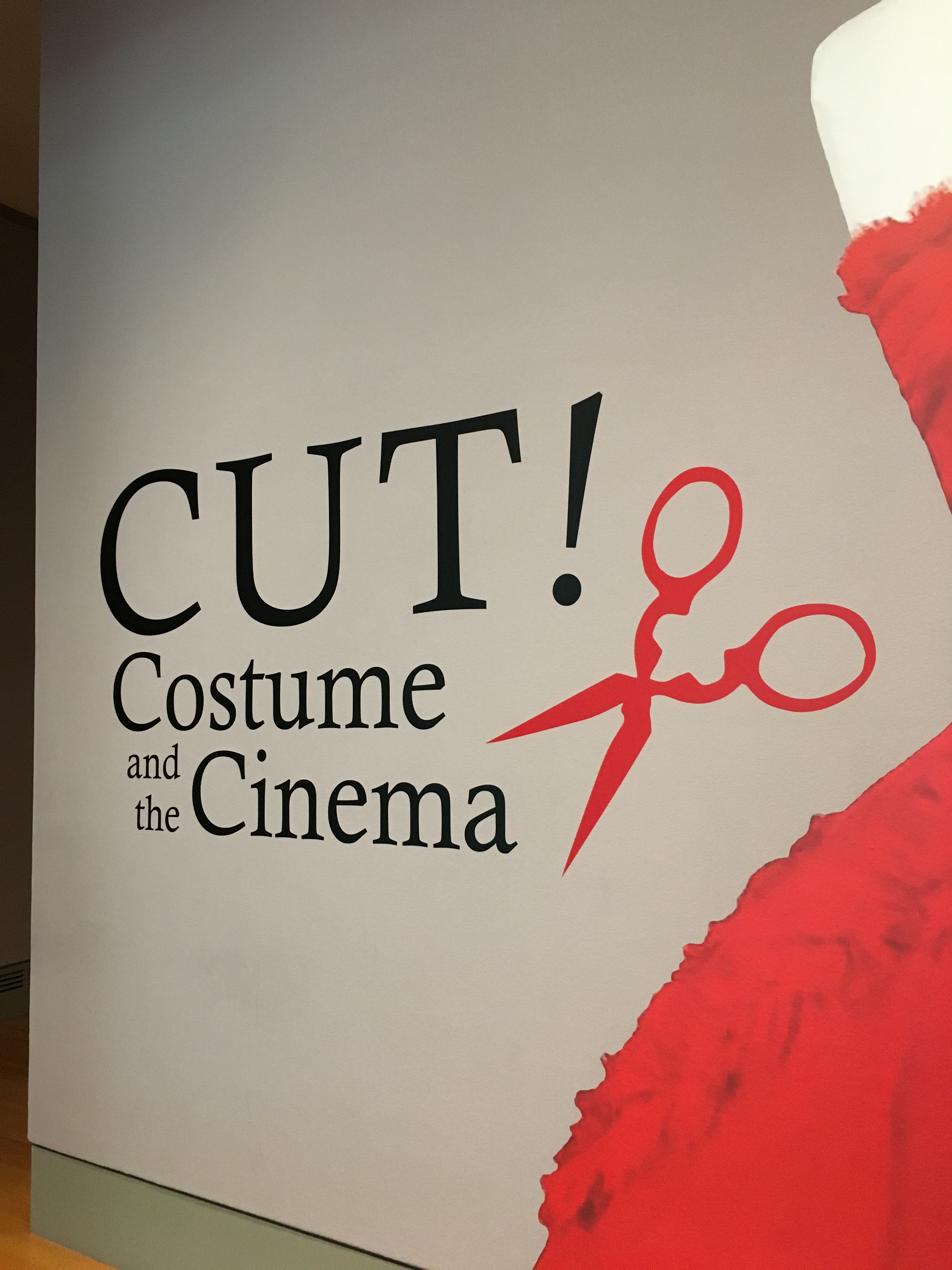
Cut! Costume and the Cinema has been showing at the Columbia Museum of Art since November and closes today February 19, 2017. The exhibit takes us chronologically through the various fashions made for the movies by COSPROP, a London-based designer of authentic period costumes.

img_1247

Step into the exciting world of costume design with CUT! Costume and the Cinema. Through more than 40 period costumes we will expose the art of making costumes for film. The exhibition will reveal how film costumes set the scene and establish authenticity in films. These perfectly crafted costumes uncover clues about a character’s status, age, class and wealth as well as their role in the story.  The films represented in the exhibition depict five centuries of history, drama and comedy with period costumes worn by famous film stars Johnny Depp, Keira Knightley, Ralph Fiennes, Daniel Craig, Kate Winslet, Sandra Bullock, Uma Thurman, Angelica Huston, and many others. In all, more than 30 actors will be represented from 26 films…

World-renowned British costumer Cosprop Ltd. earned its first Academy Award for Costume Design in 1986 in A Room with a View.  Since then, the costumier has been nominated more than a dozen times. In 2007 three of the five Oscar nominees came from the Cosprop shop, only to be topped by winning the following year for The Duchess. Like their period prototypes, these opulent costumes are crafted of sumptuous fabrics and decorated with intricate embroidery and lace.

[From the distributor’s website: http://www.exhibitsdevelopment.com/Cut!.html]

Watch this youtube of the exhibit when it was at the BYU Museum of Art:

This exhibition has been traveling for the past ten years and finally made it to South Carolina. Joyful that I could take pictures (no flash), and as alas! there is no exhibition catalogue, I here offer a good sampling of what was on view. A picture cannot nearly capture the exquisite detail of these fashions – they must be seen up close and personal. And quite amazing to see how tiny some of these actresses (and actors) actually are! It also offers a terrific list of must-see movies, some that had somehow fallen through the cracks and others to be revisited with a new-found appreciation for the costumes.

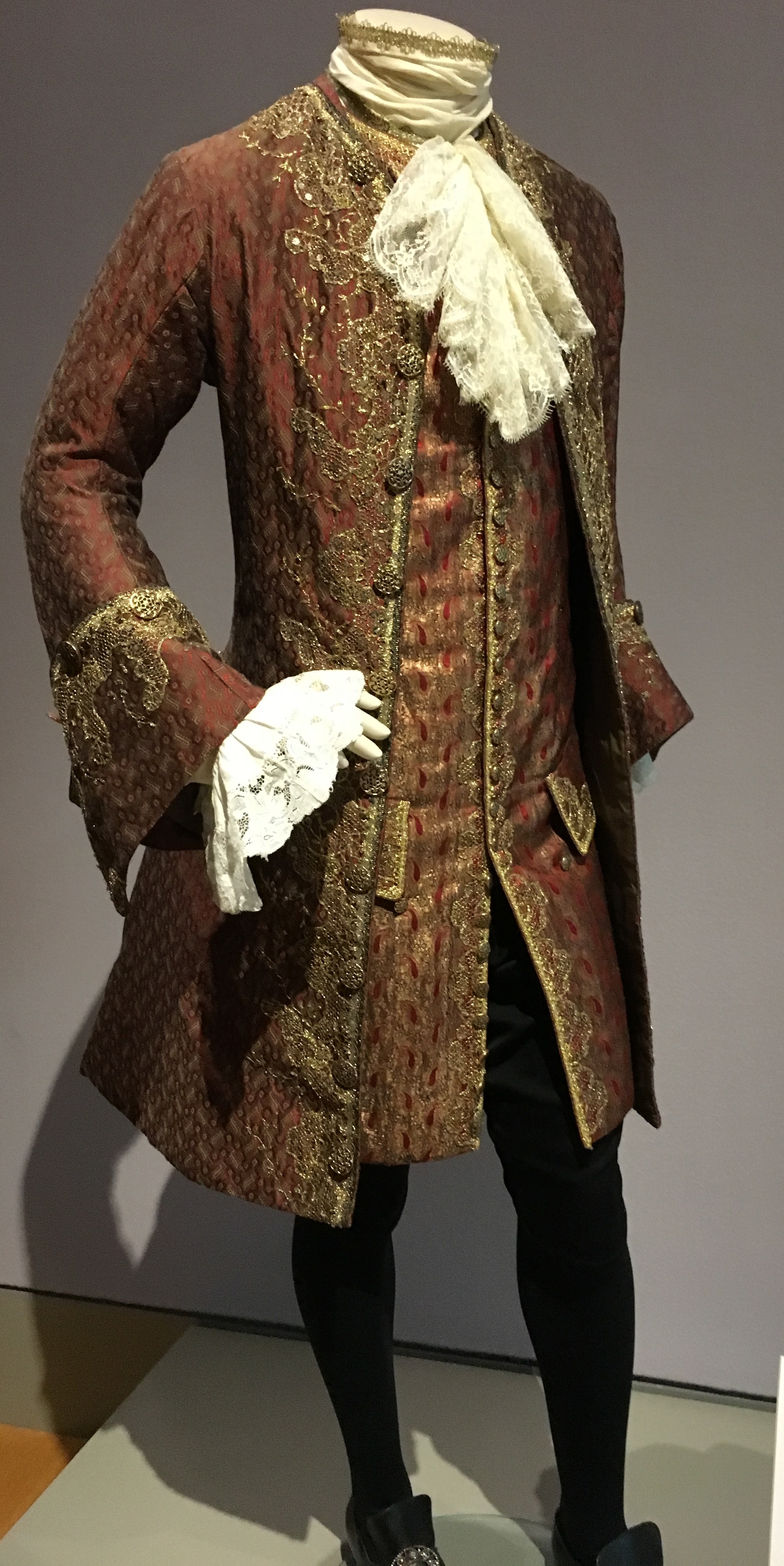
The costumes are arranged chronologically. And YES, there is a Jane Austen, but alas! only one … we begin in the Renaissance period with this stunning dark green velvet: (you can click on any picture to enlarge it and see more detail)

everafter-huston

Angelica Huston in Ever After: A Cinderella Story (1998)

cassanova-ledger
Heath Ledger in Cassanova (2005)

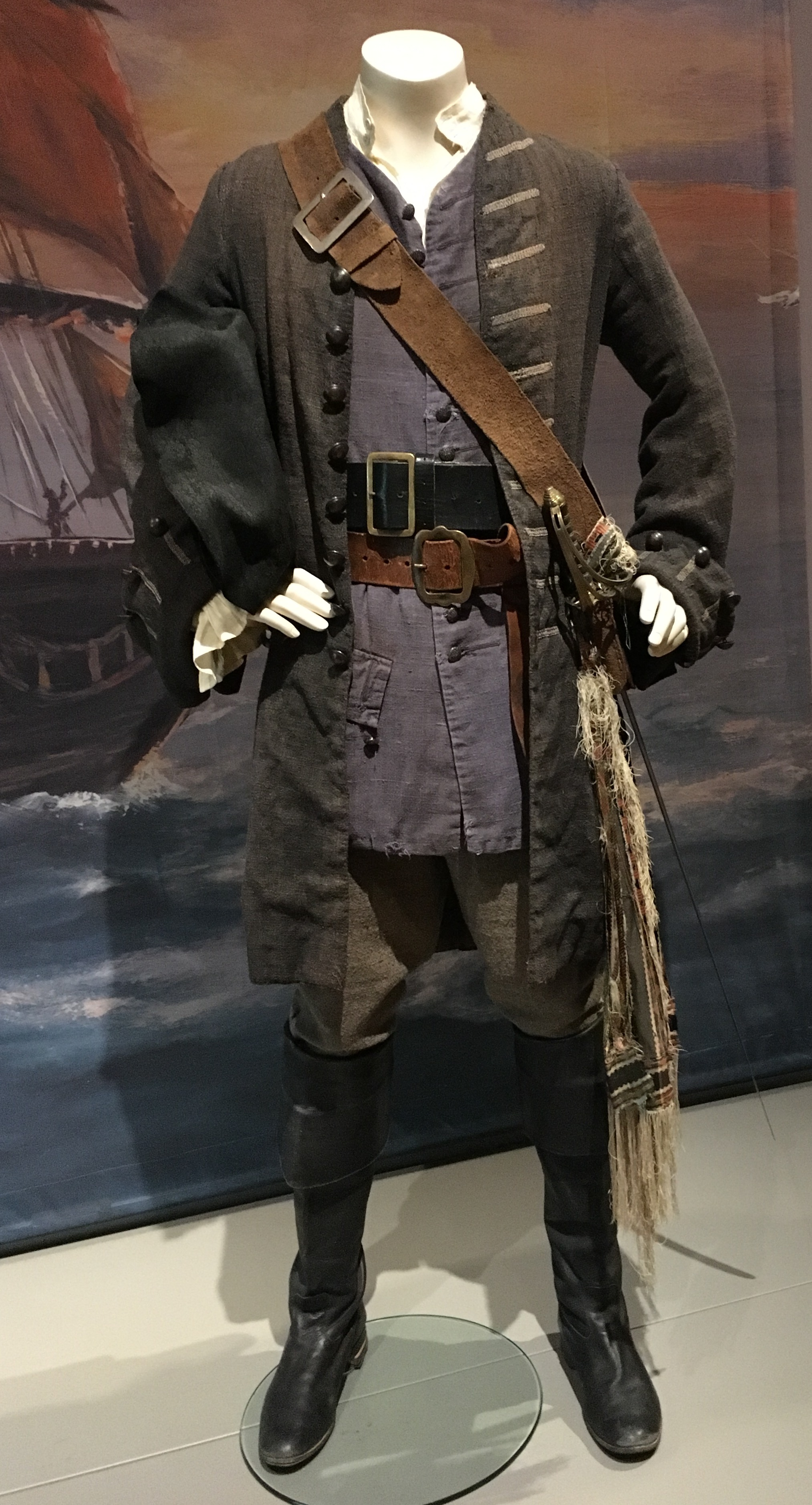
pirates-depp-2
Johnny Depp in Pirates of the Caribbean: The Curse of the Black Pearl (2003)

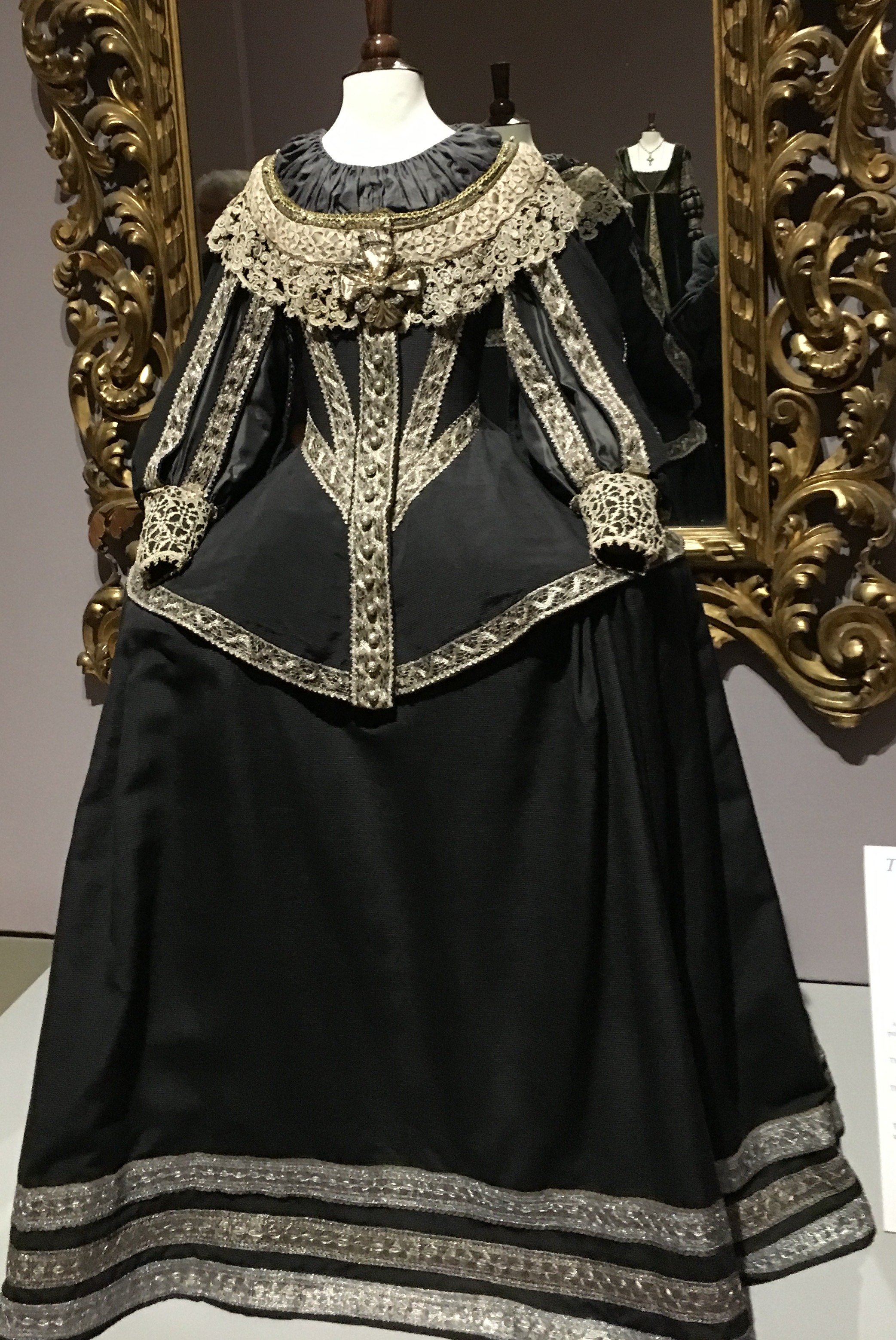
kingcharles-henderson
Shirley Henderson as Catharine of Braganza “The Last King: The Power and the Passion of Charles II” (2003)

***************


****************
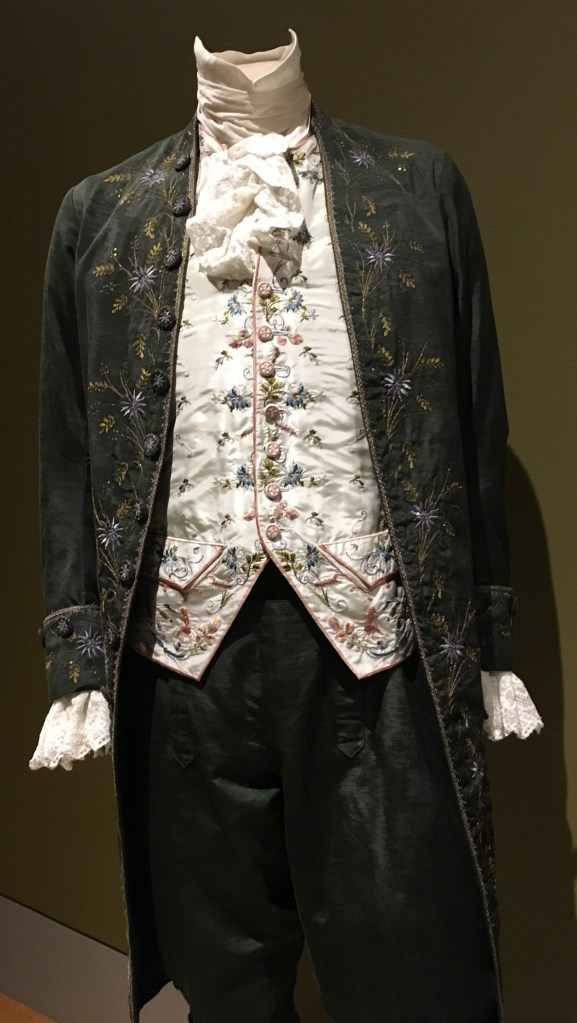
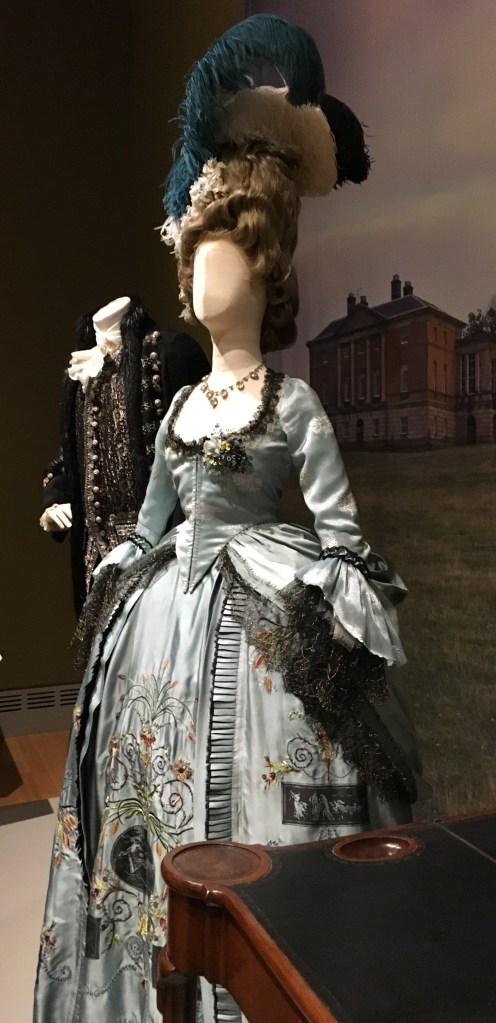
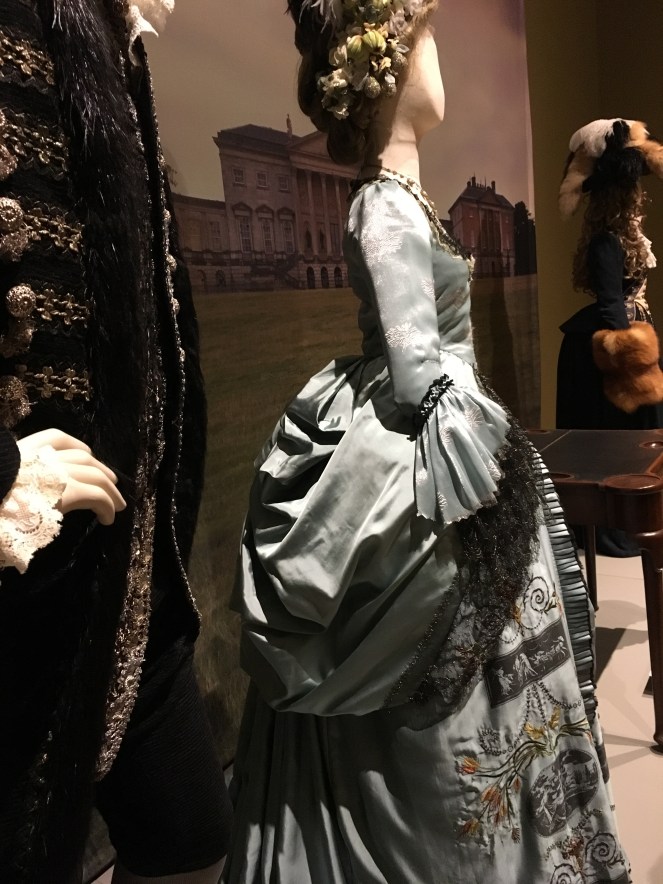
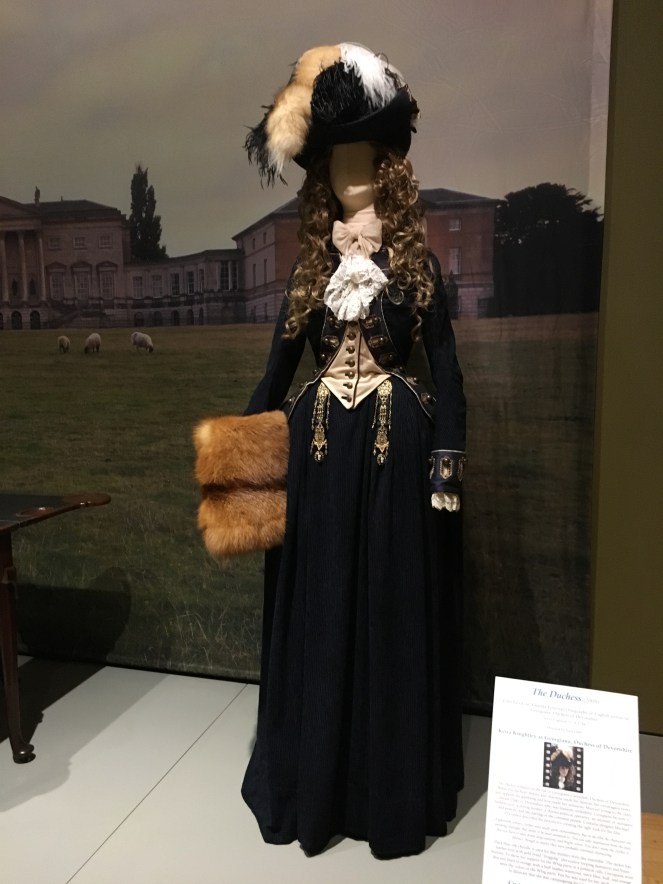
The Georgians: outlandish (and to-die-for) fashions from The Duchess (2008):

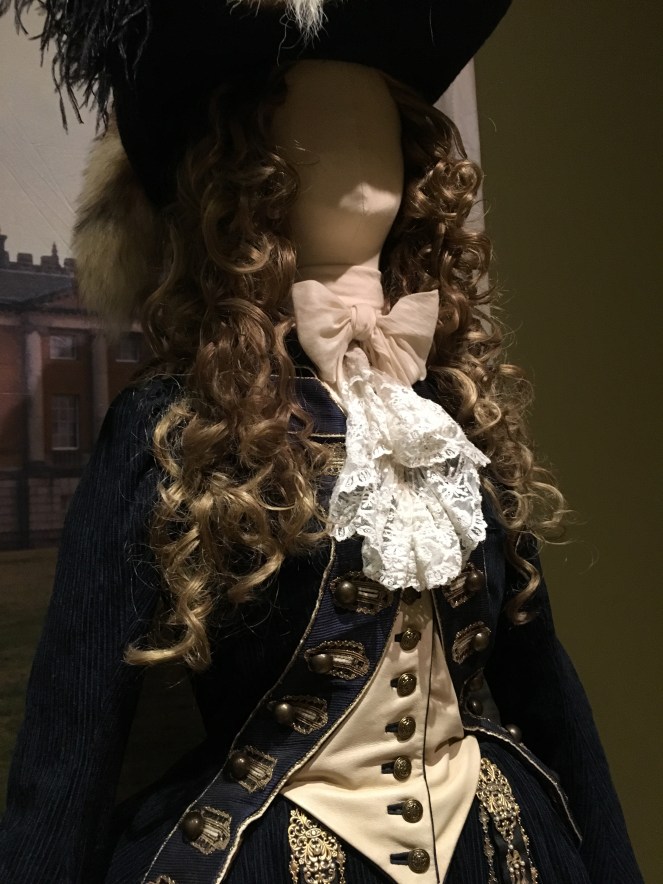
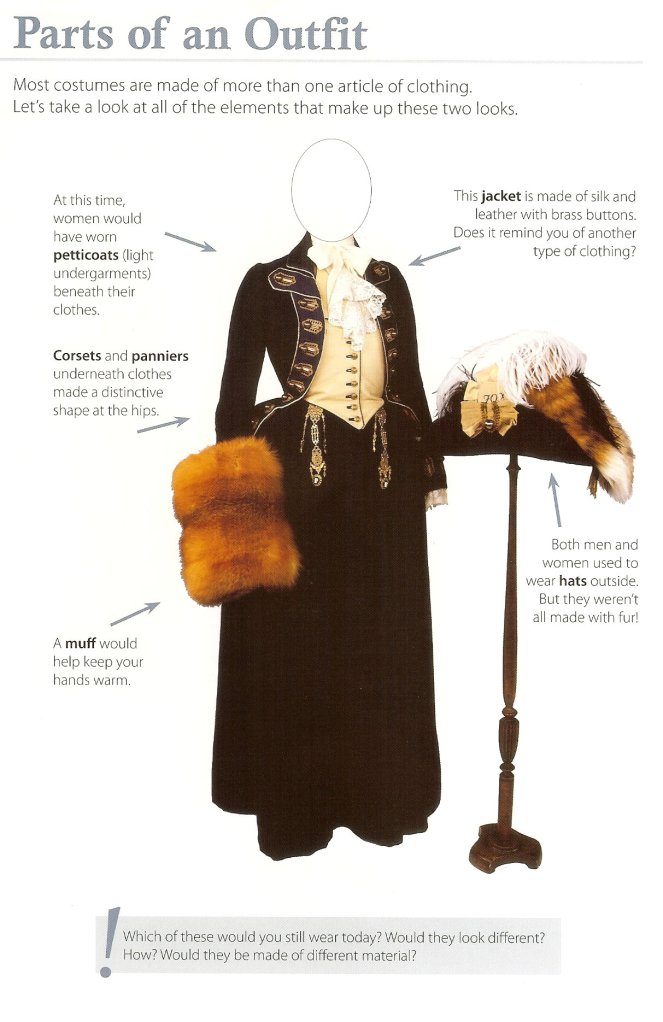
And a close-up of Keira Knightley’s Whig-inspired outfit, and this helpful description from the “Family Guide” to the exhibition:

*************

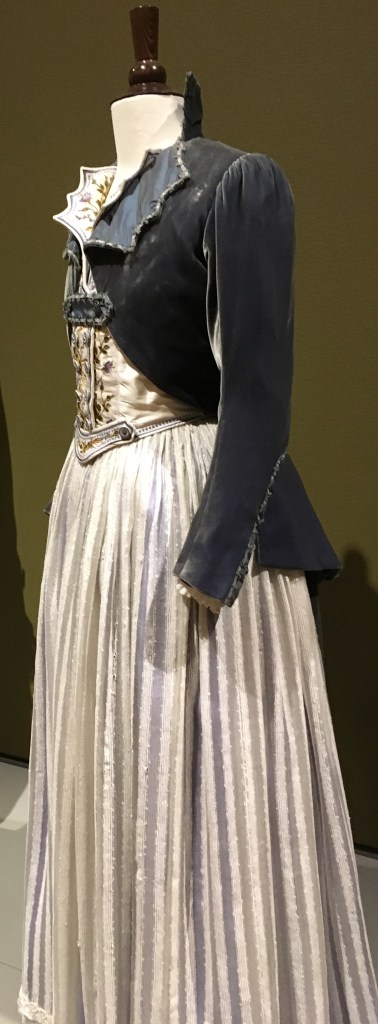
Finally Jane Austen!  Kate Winslet as Marianne in Sense and Sensibility (1995)

*************

Victorian times with Dickens:

littledorrit-foy
“Little Dorrit” (2008) with Claire Foy

and Bronte:

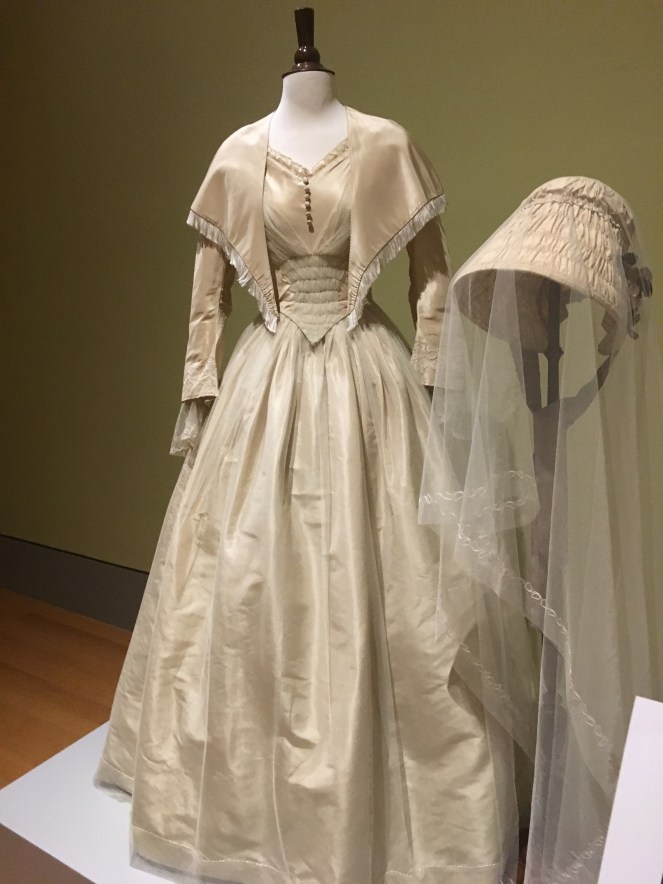
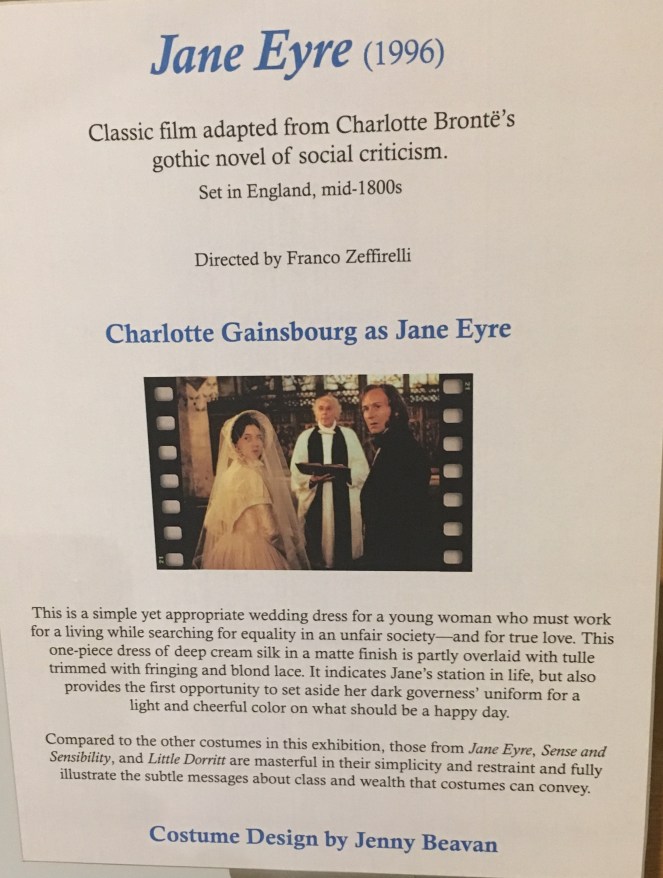
The wedding dress in the 1996 Jane Eyre (with William Hurt)

And the all important hoop for Victorian ladies:

hoop

***********

Phantom of the Opera (2004) gives us these two stunning outfits, worn by Emmy Rossum and Minnie Driver:

portraitlady

***********

We now head into the later 1880s and beyond with this from Henry James’ Portrait of a Lady, here a dress worn by Nicole Kidman (I want this!)

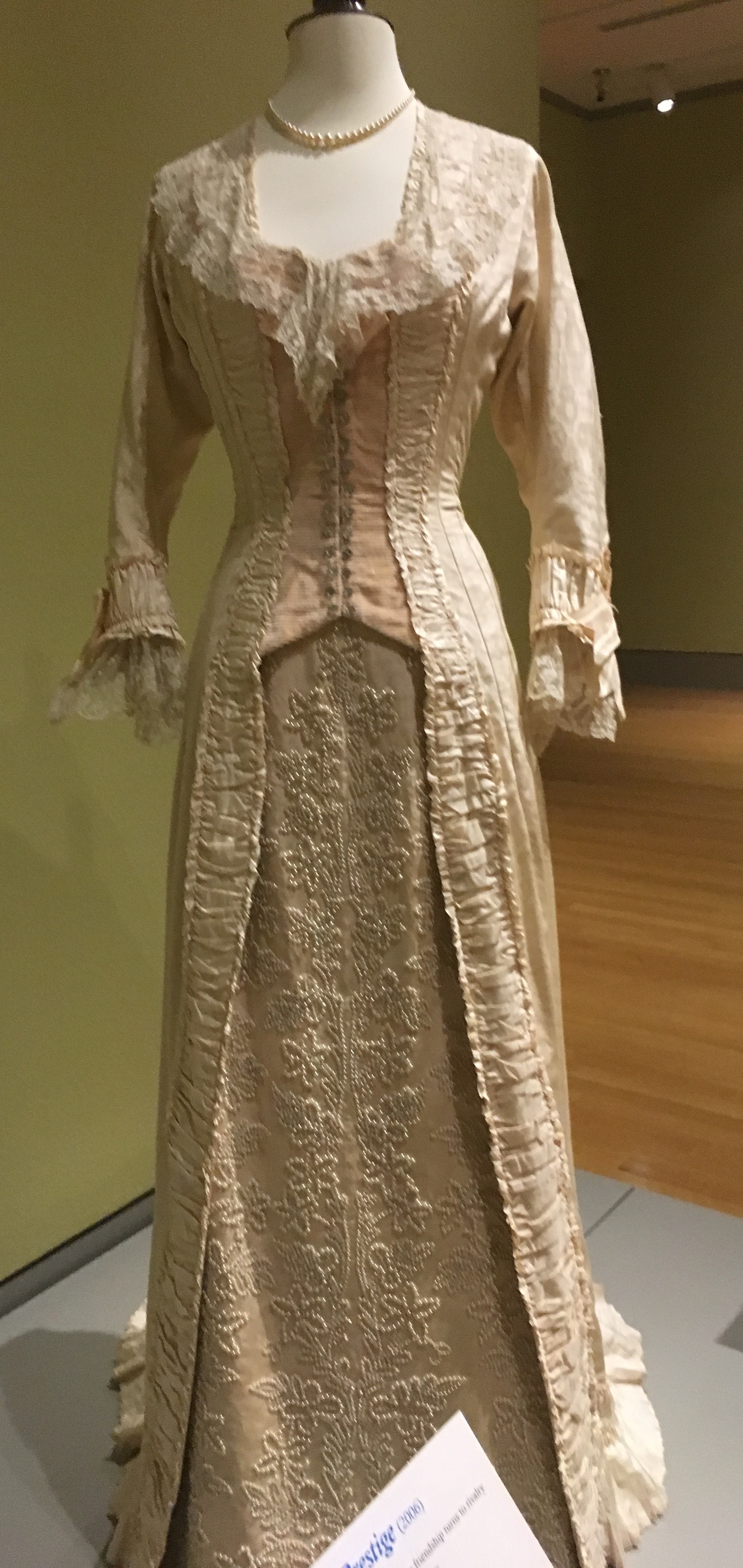
prestige

and this worn by Scarlett Johansson in The Prestige (2006)
– one of my favorite movies…

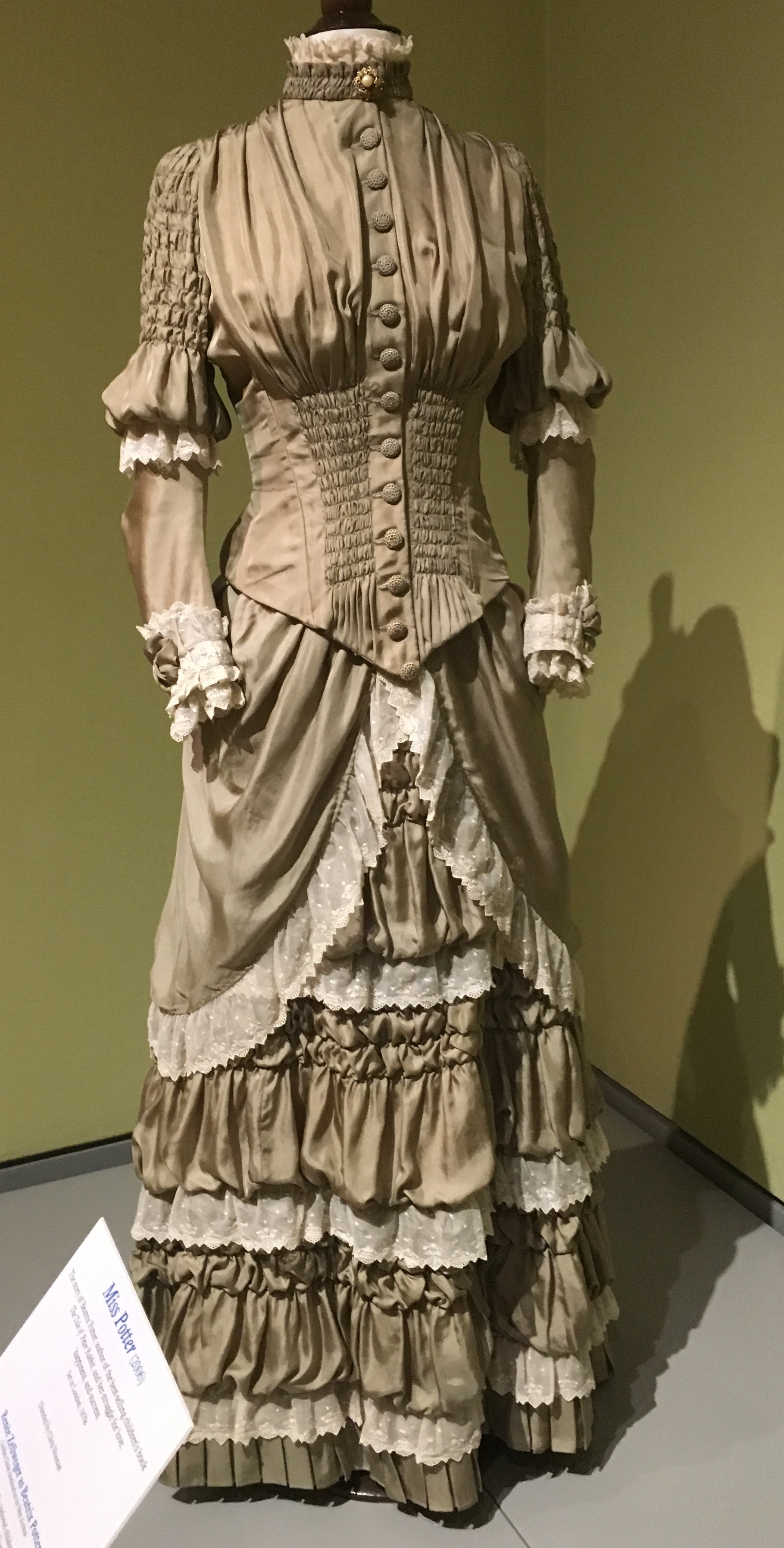
Renee Zellweger as Miss Potter (2006):misspotter

****************

Finding Neverland (2004) with Kate Winslet yet again and Rahda Mitchell as Mrs. Barrie (look at the detail in this dress!)

We’ll give the men a short nod here with Robert Downey Jr. and Jude Law in Sherlock Holmes (2009):

sherlockholmes

[click on picture for info]
********
A stunning Emma Thompson in Howards End (1992):howardsend-thompson

lovewar-pettigrew

In Love and War (1997) with Sandra Bullock (left) and
Amy Adams in Miss Pettigrew Lives for a Day (2008)

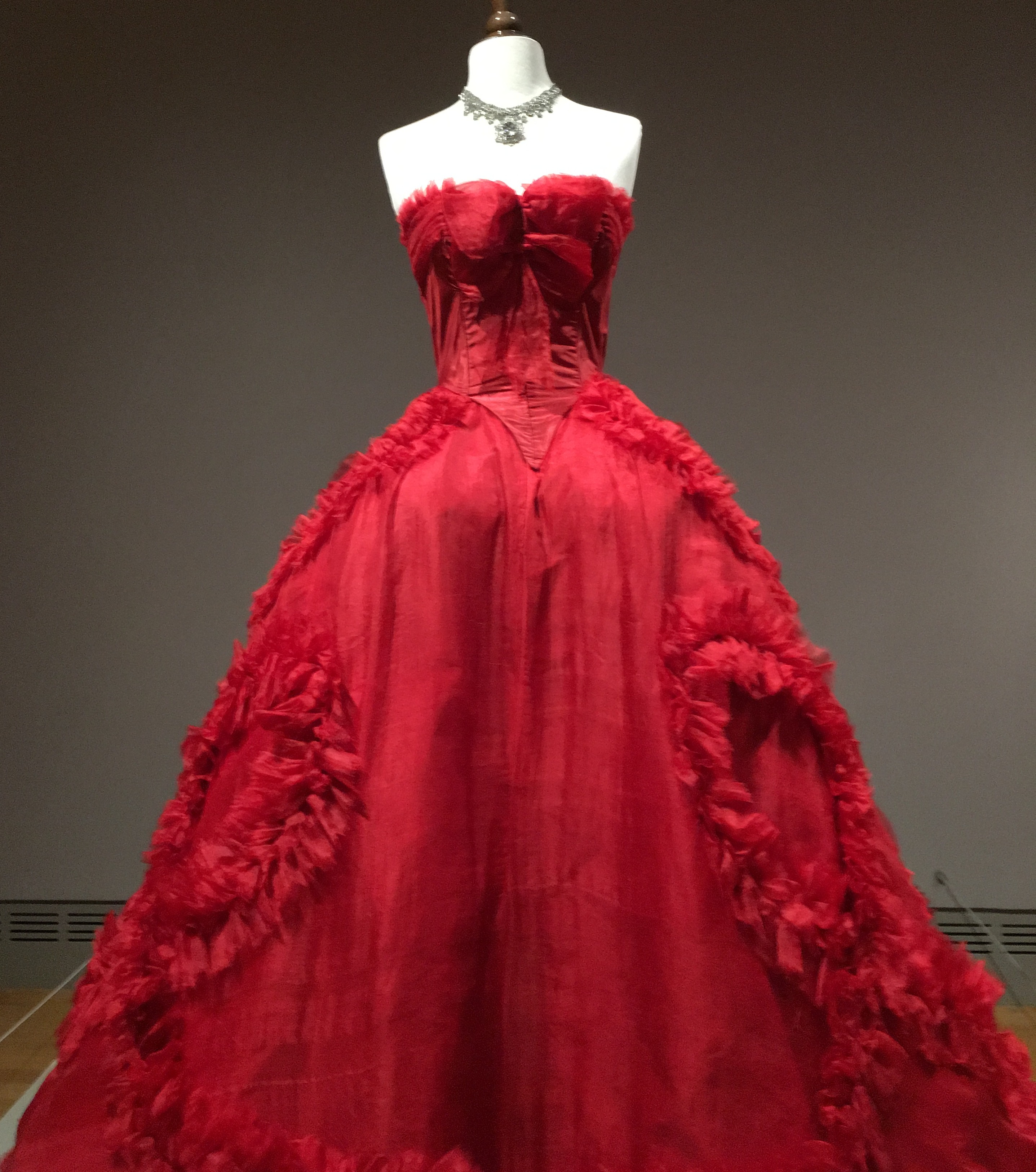
And finally, the costume that headlines all the publicity, this from The Land of the Blind, a movie I confess to knowing nothing about other than it starred Ralph Fiennes and had this gorgeous dress!

landblind

Movies included in the exhibition but my pictures were not worth posting (all movies worth seeing!):

  • Hamlet (1996), with Julie Christie, Kenneth Branagh, and Kate Winslet (!)
  • Gosford Park (2001), Maggie Smith pre-Dowager Lady Grantham…
  • Mrs. Dalloway (1997) with Vanessa Redgrave 
  • The New World (2006) with Colin Farrell as Captain Smith and Q’orianka Kilcher as Pocahontas
  • The Golden Bowl (2000), with Kate Beckinsale,,Uma Thurman and Jeremy Northam

Join the discussion: What are some of your favorite fashions from period movies or TV?

c2017 Jane Austen in Vermont, all photos by the author