Started the morning with Joy spotting yet another famous person – in the lobby of the hotel – a Gerald-Ford-Lookalike – Joy is very good at finding these people! [recall Churchill last night at The Wellington!]
**********
We are off and running this morning to see as much as possible before the play tonight…
We hit Hatchard’s on Piccadilly first thing – one of those must-see places whenever in London [I go again when I came back in July] – founded in 1797, claims to be the oldest in the UK, it offers five floors of books, mostly new but also a brilliant collection of used and rare…one could be here all day, or more – so we do a rather fast scurry to all the floors, find this book, newly out that we both have to have…
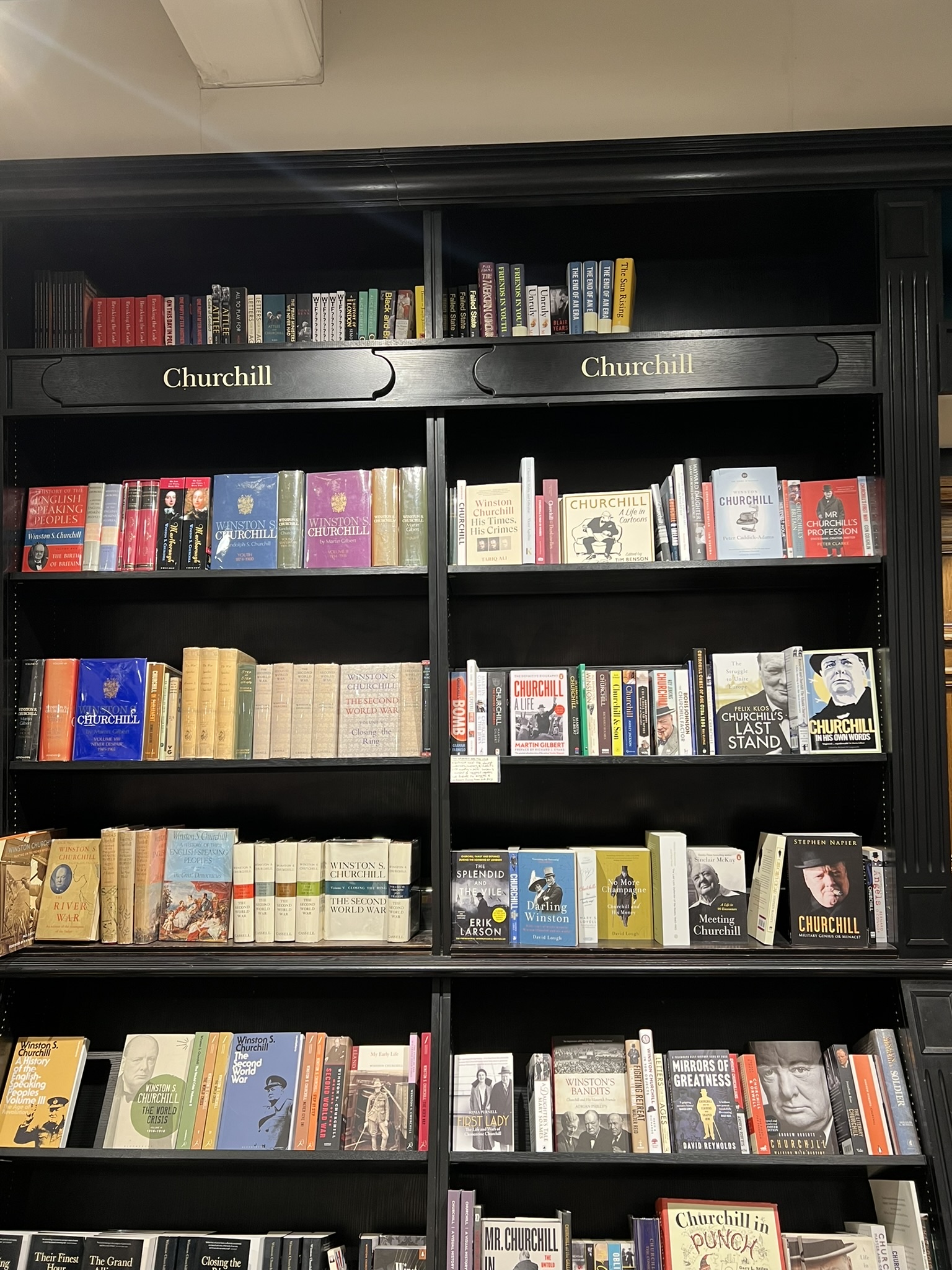
Always check the Churchill section…how much can you possibly say about one man??
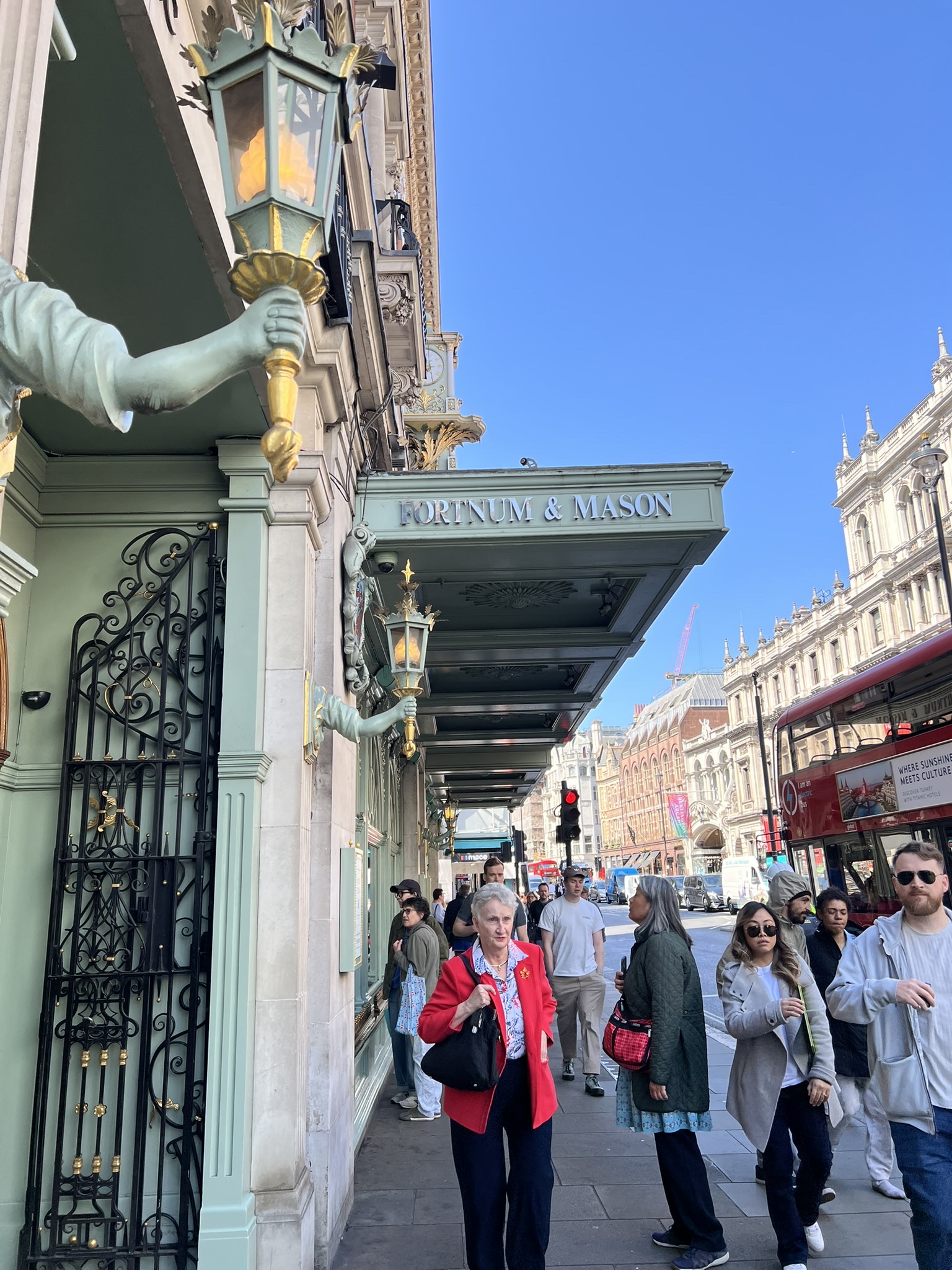
– and after a few purchases we head next door to the other must-see London shop Fortnum & Mason: their windows alone drawing you in…
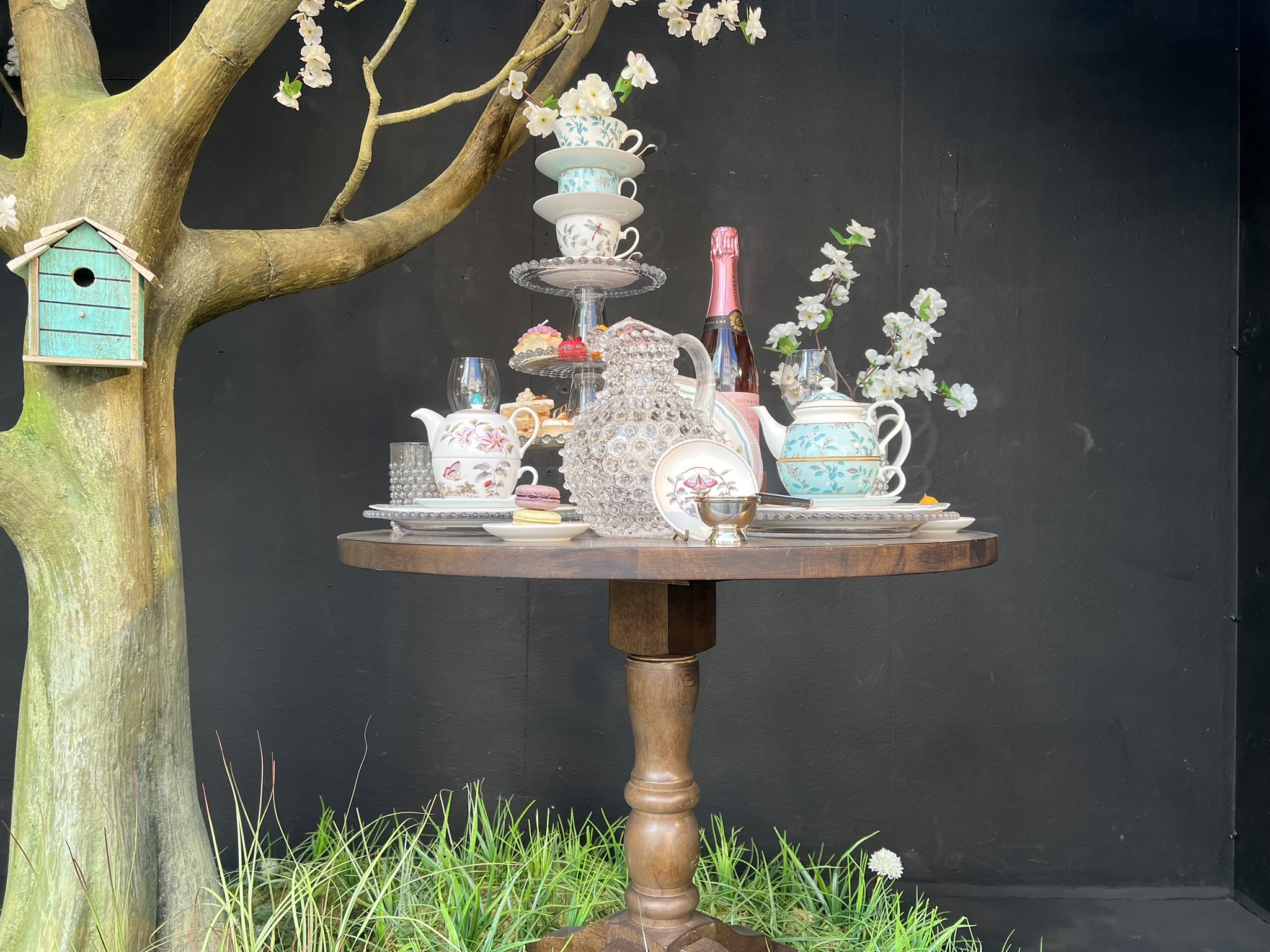
Did not do Afternoon Tea this time – but here it all is awaiting your arrival….
************
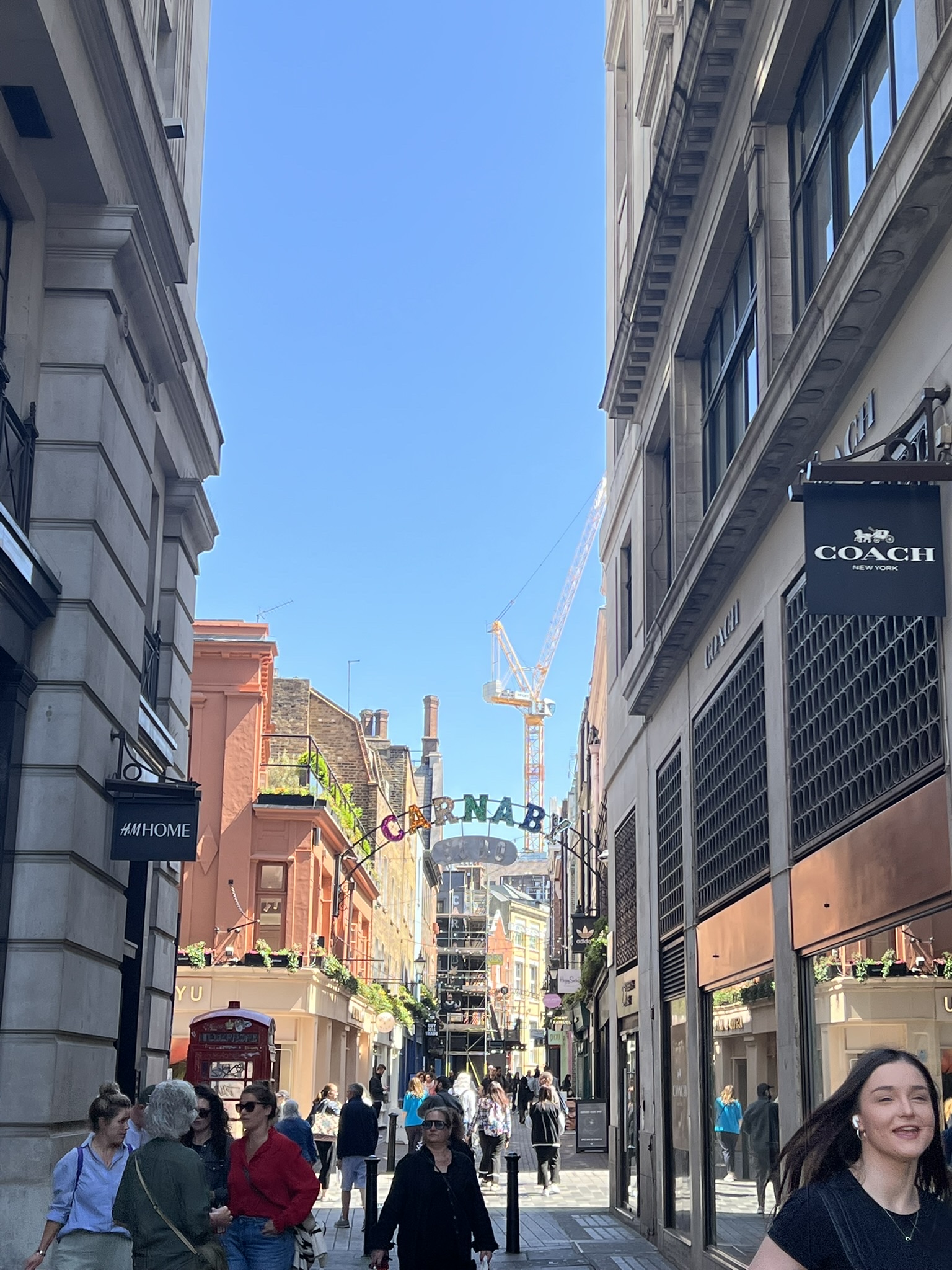
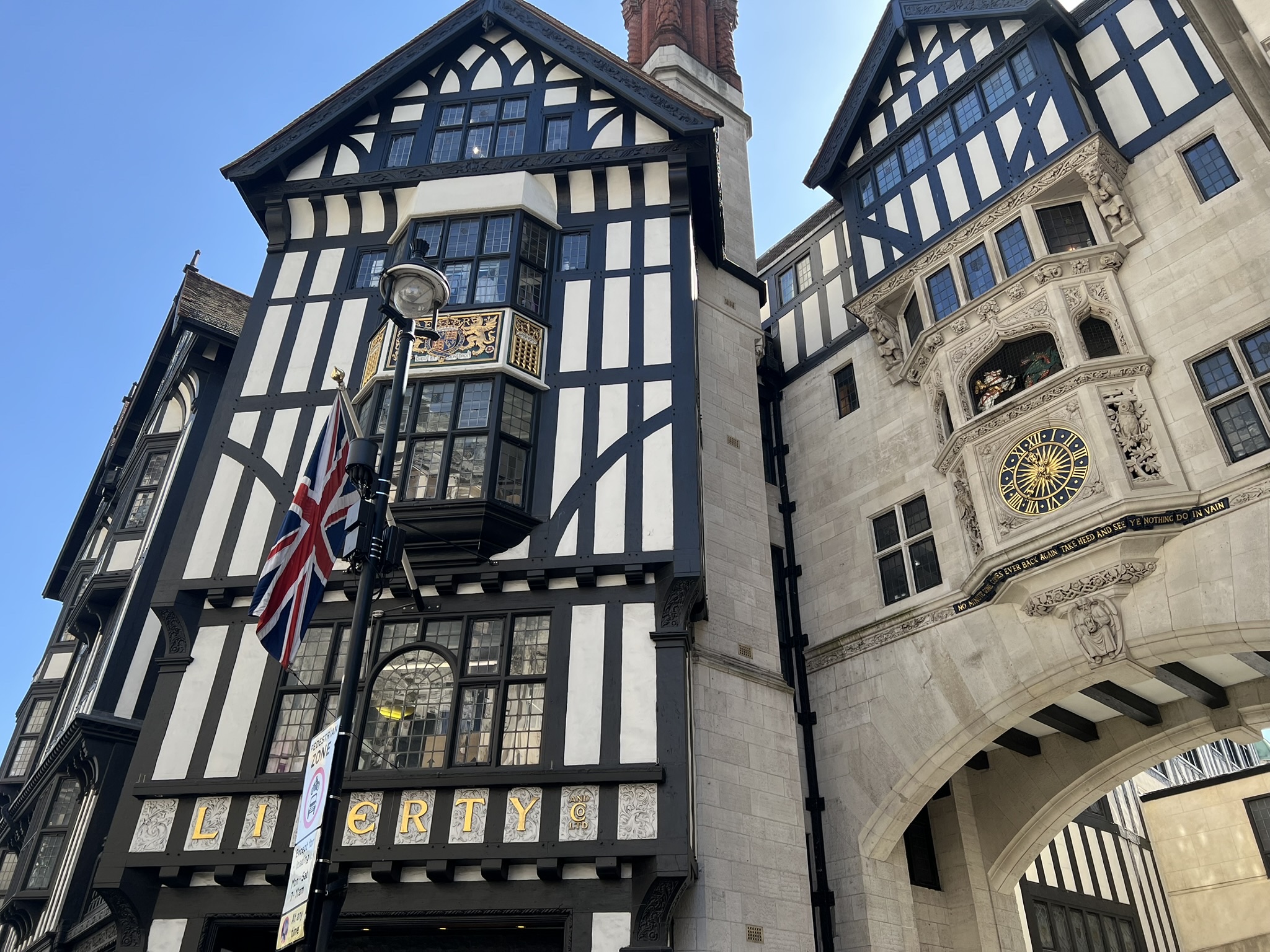
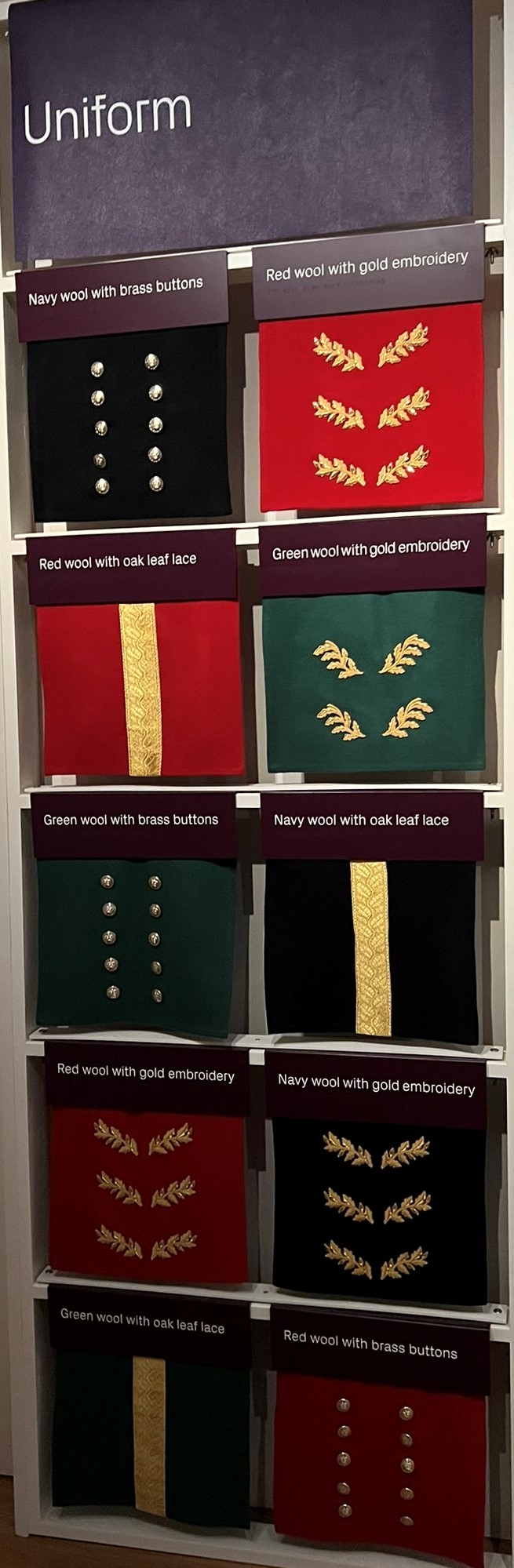
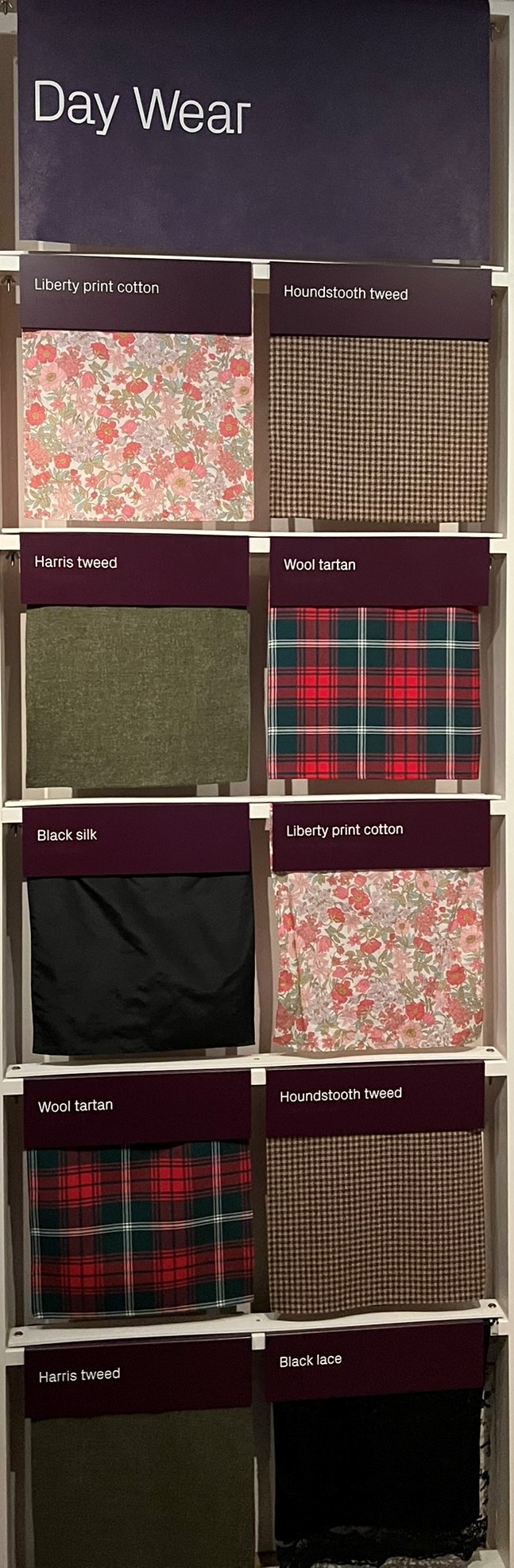
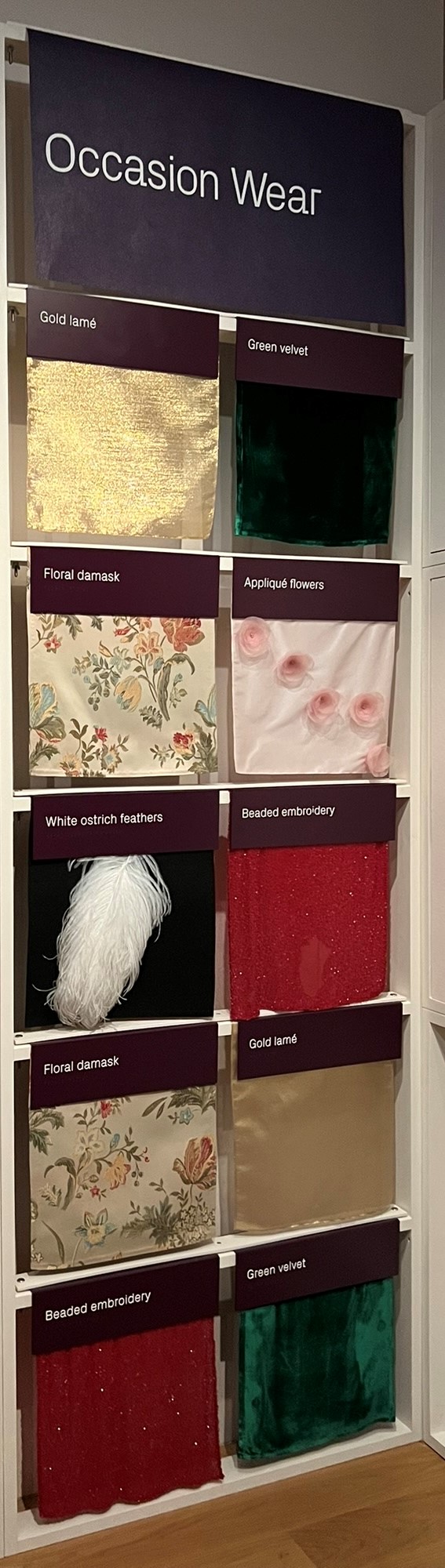
Passing Carnaby Street on our way to Liberty London on Great Marlborough St., with its array of fabrics for all manner of fashion and household goods. I had not been here before and what a treat! There was an exhibit on the history of the store and its variety of fabrics – could not get enough of this!
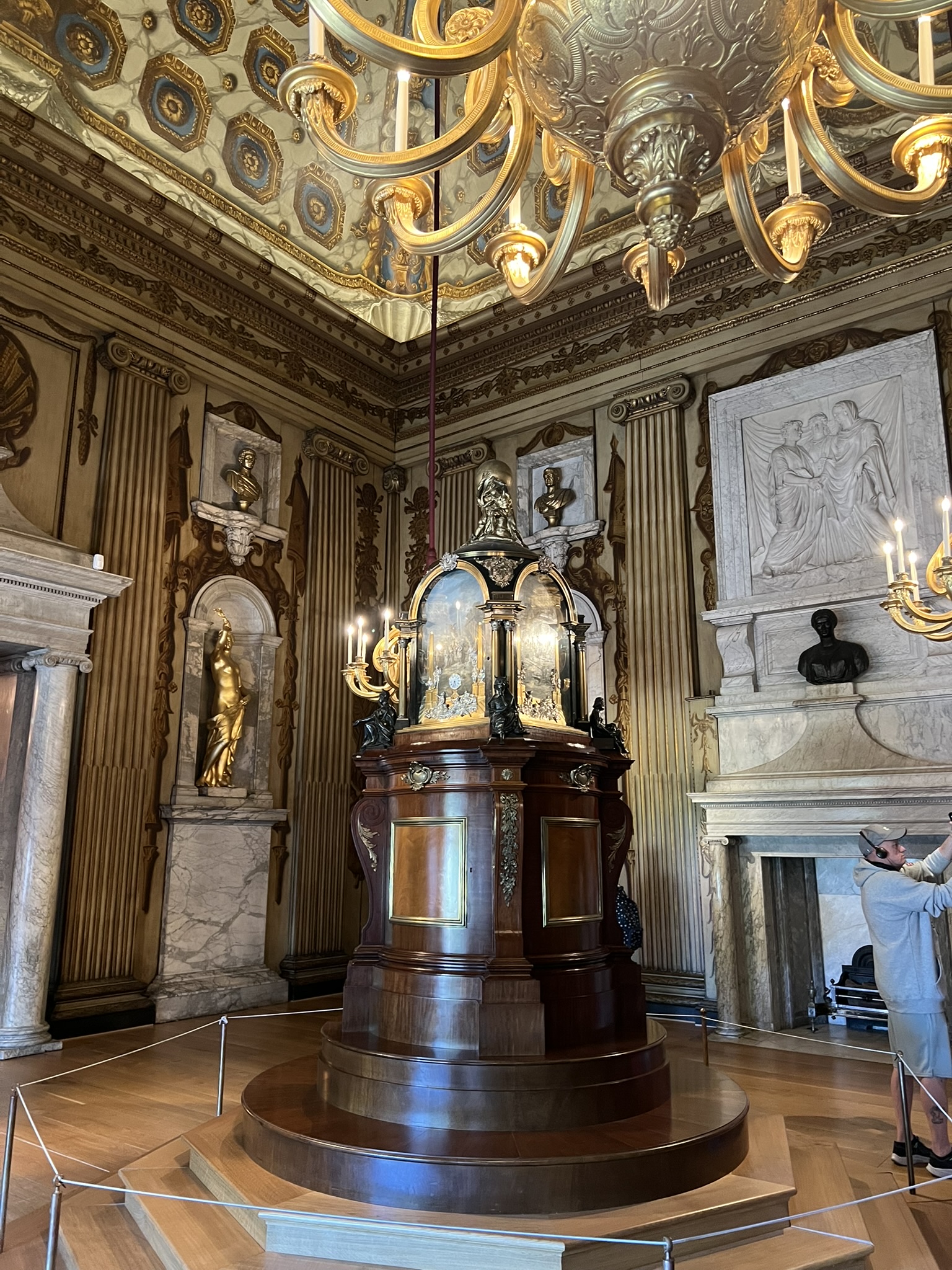
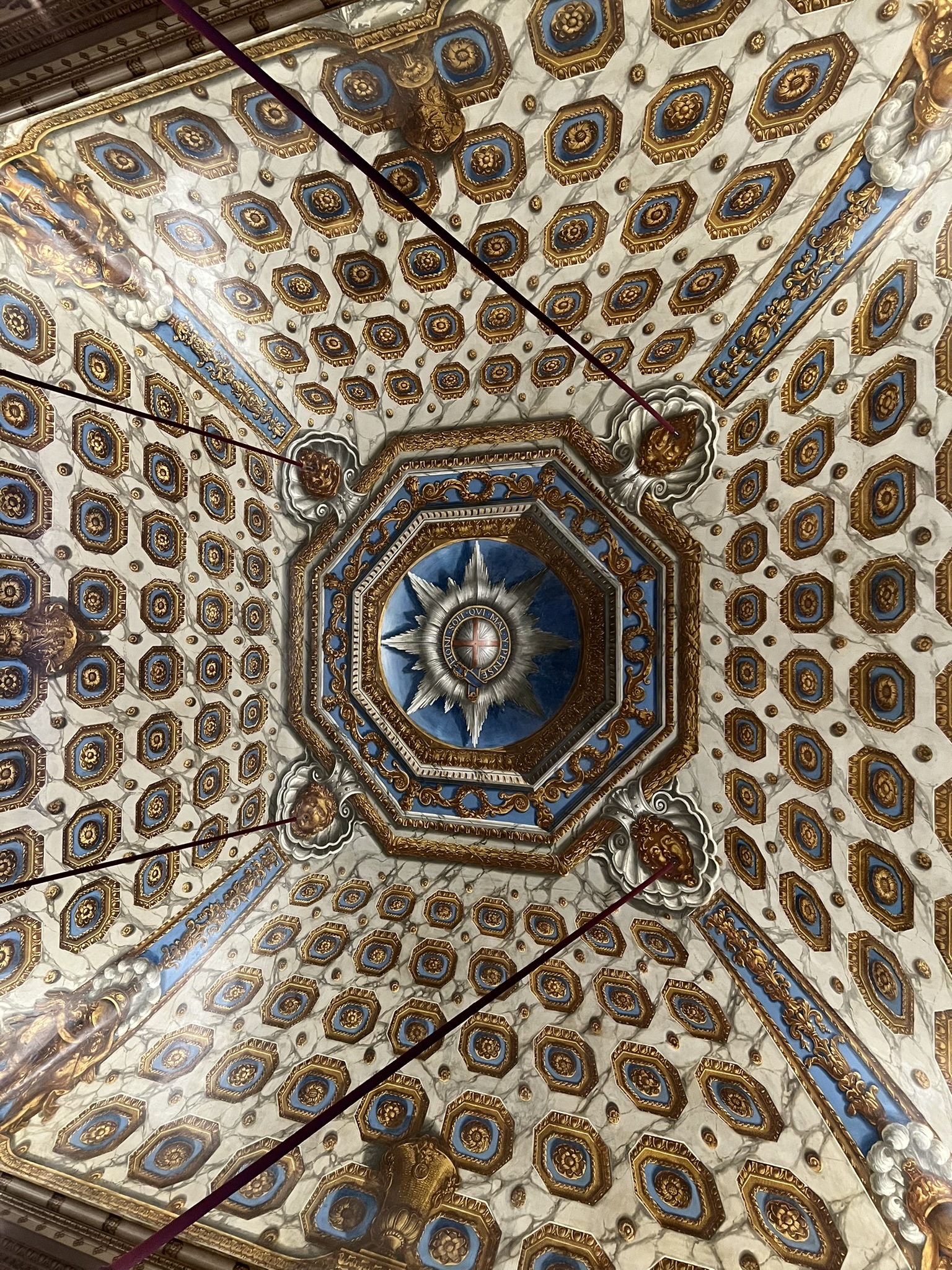
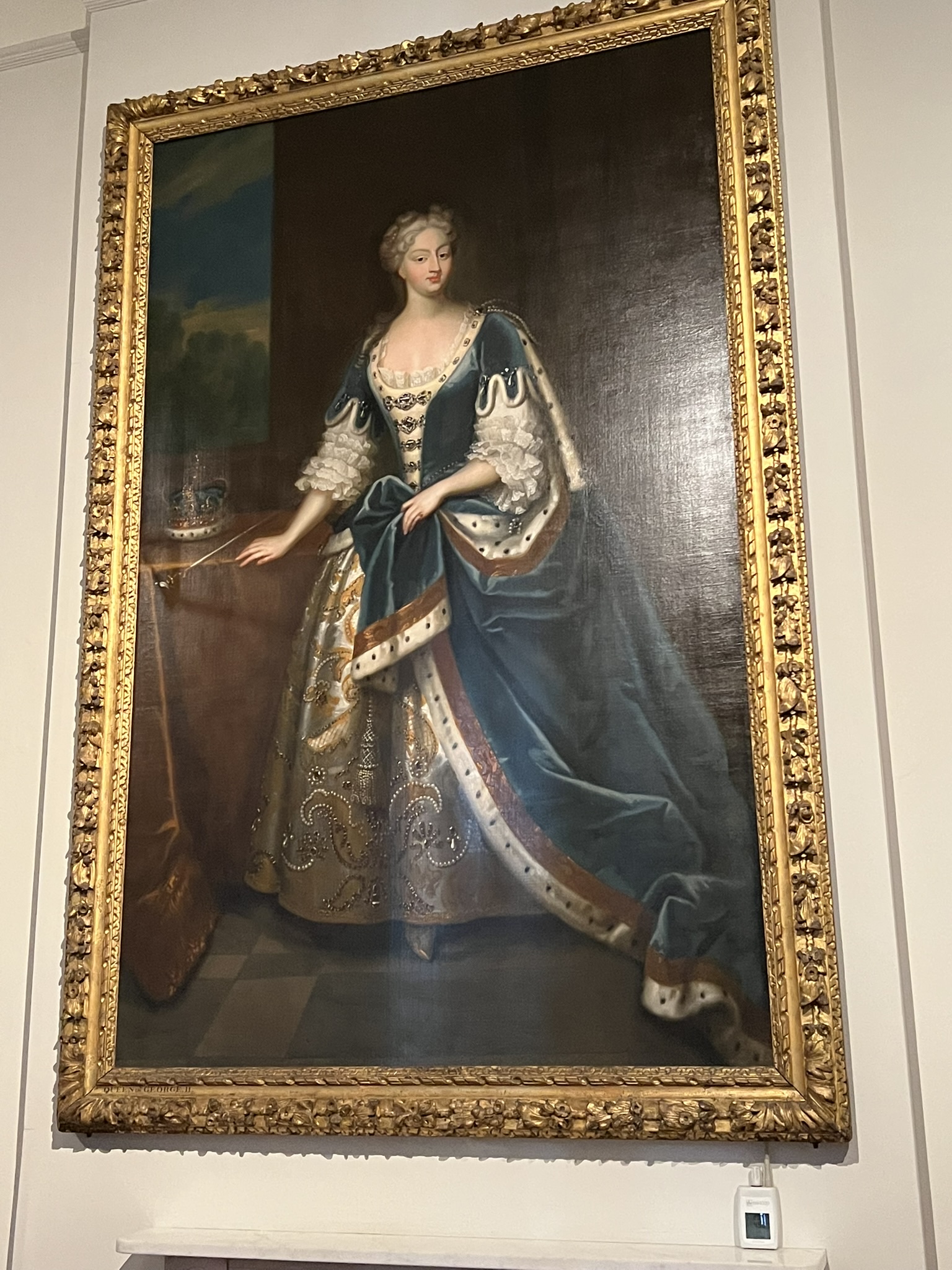
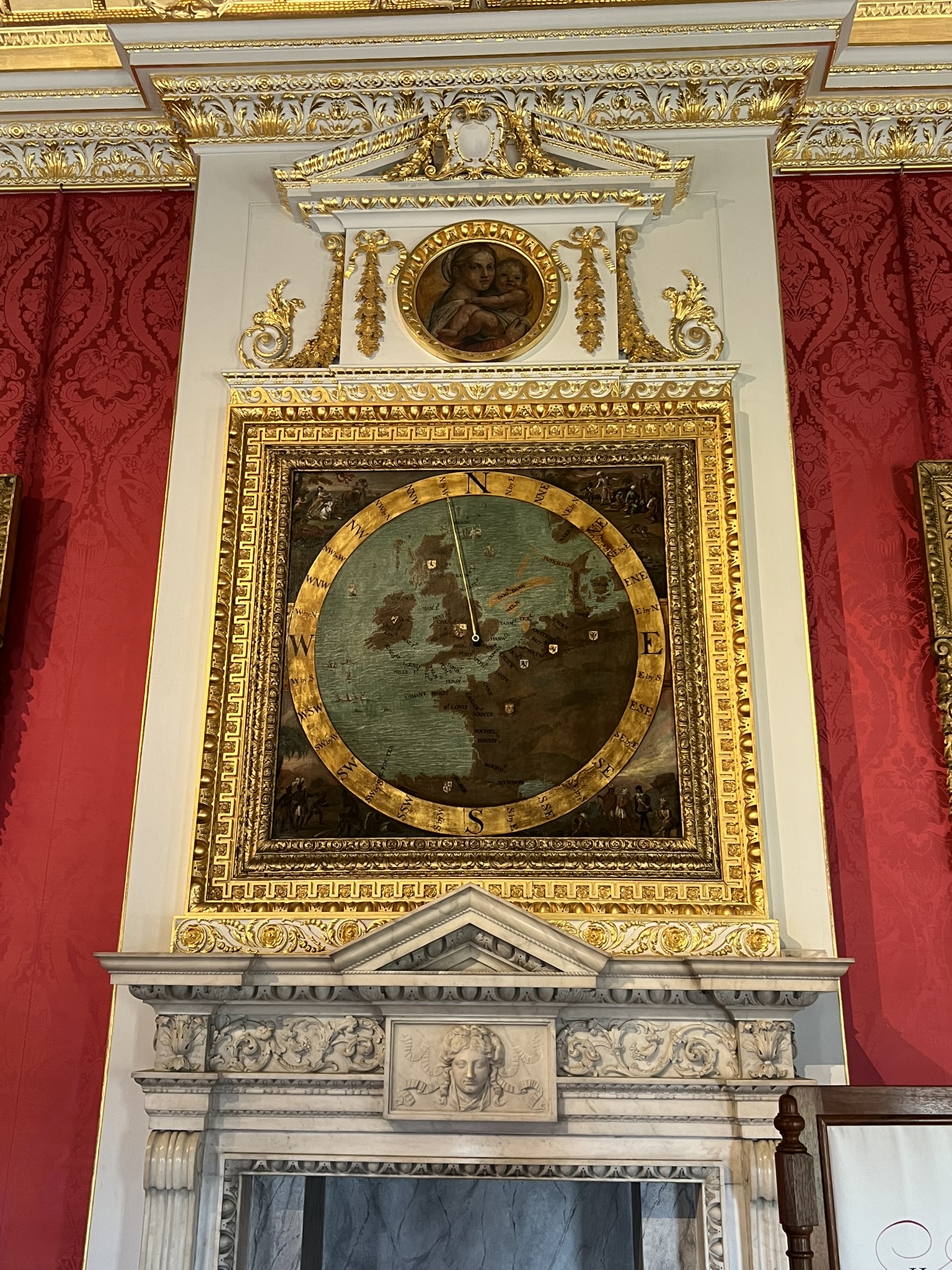
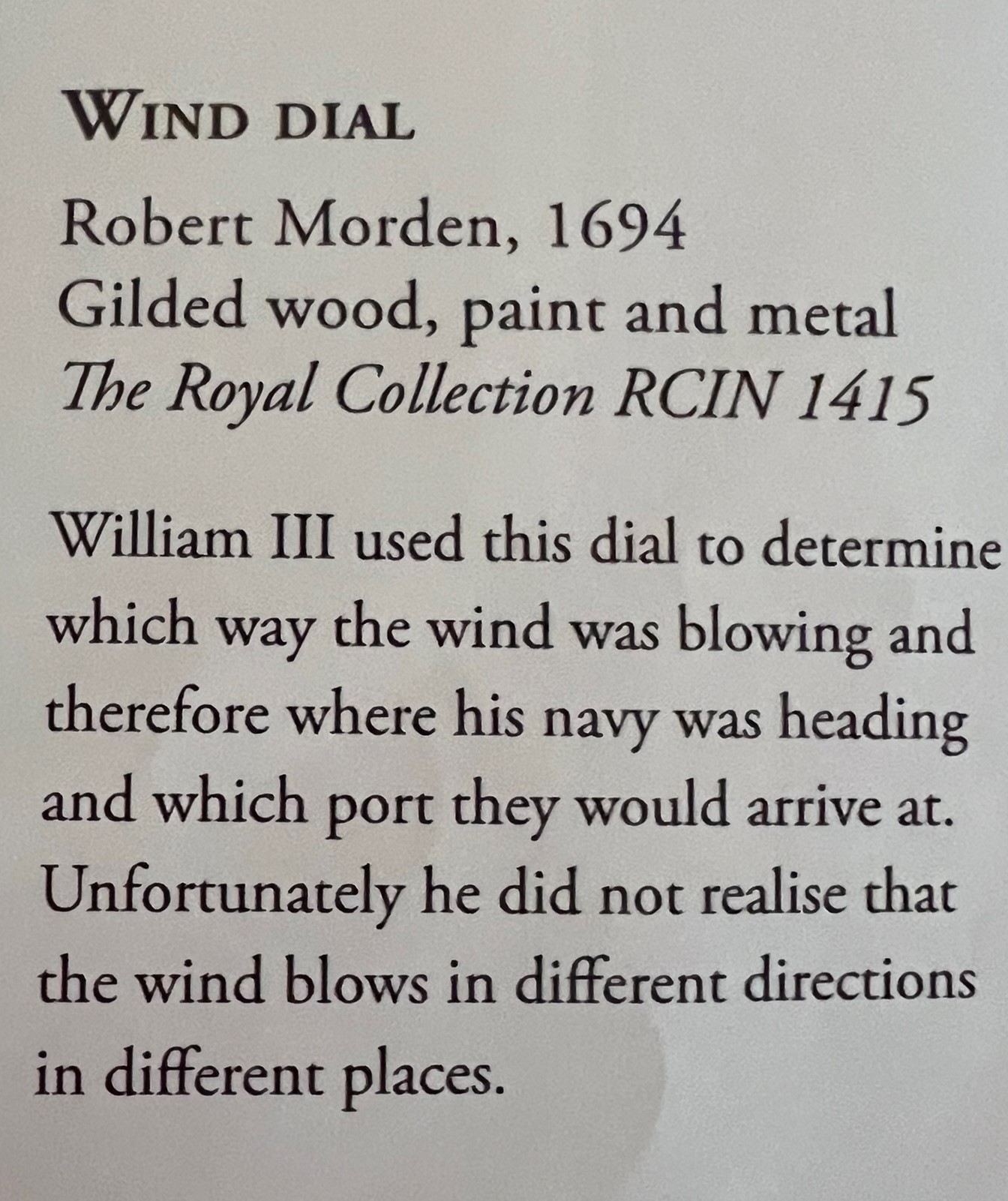
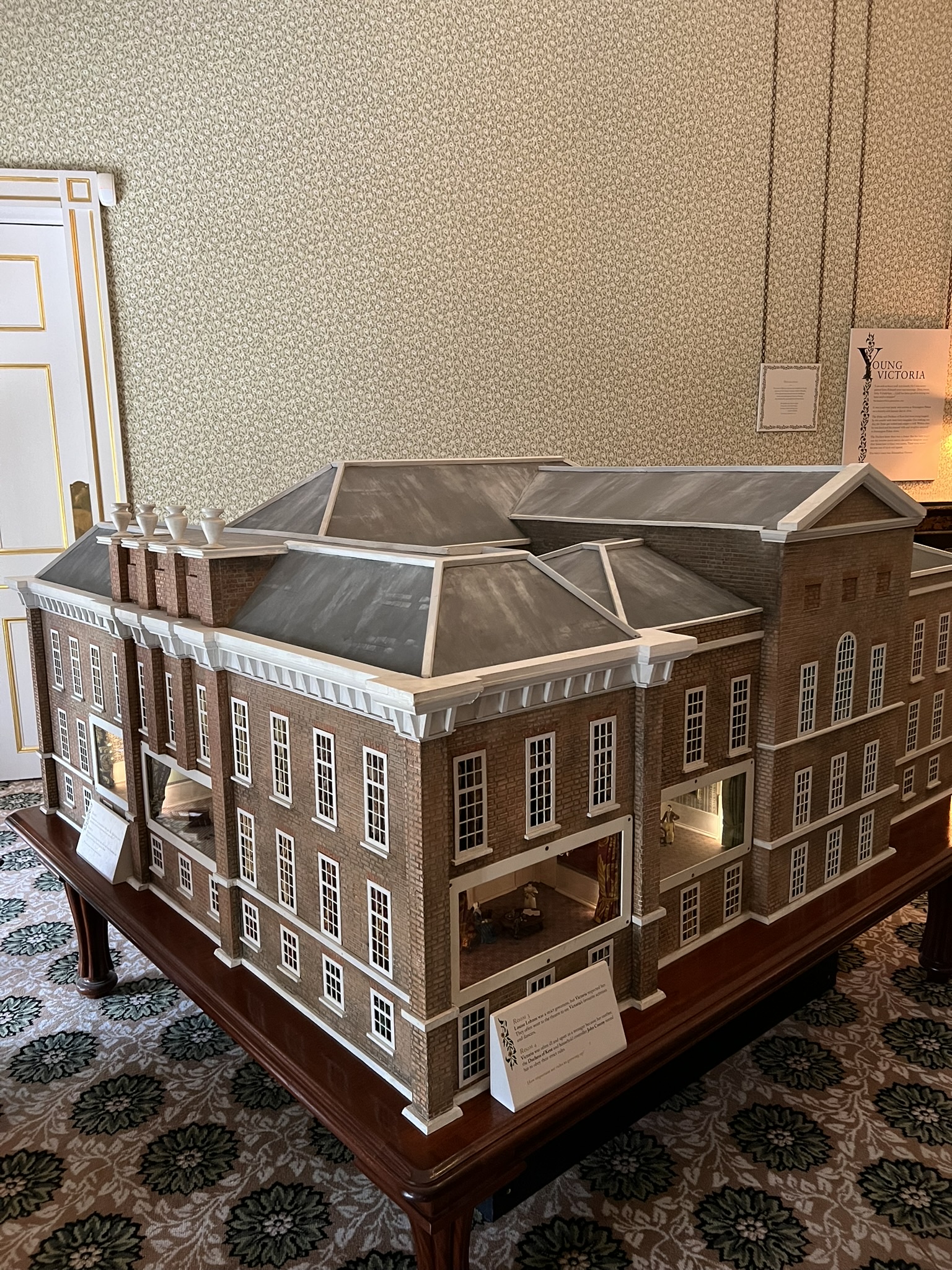
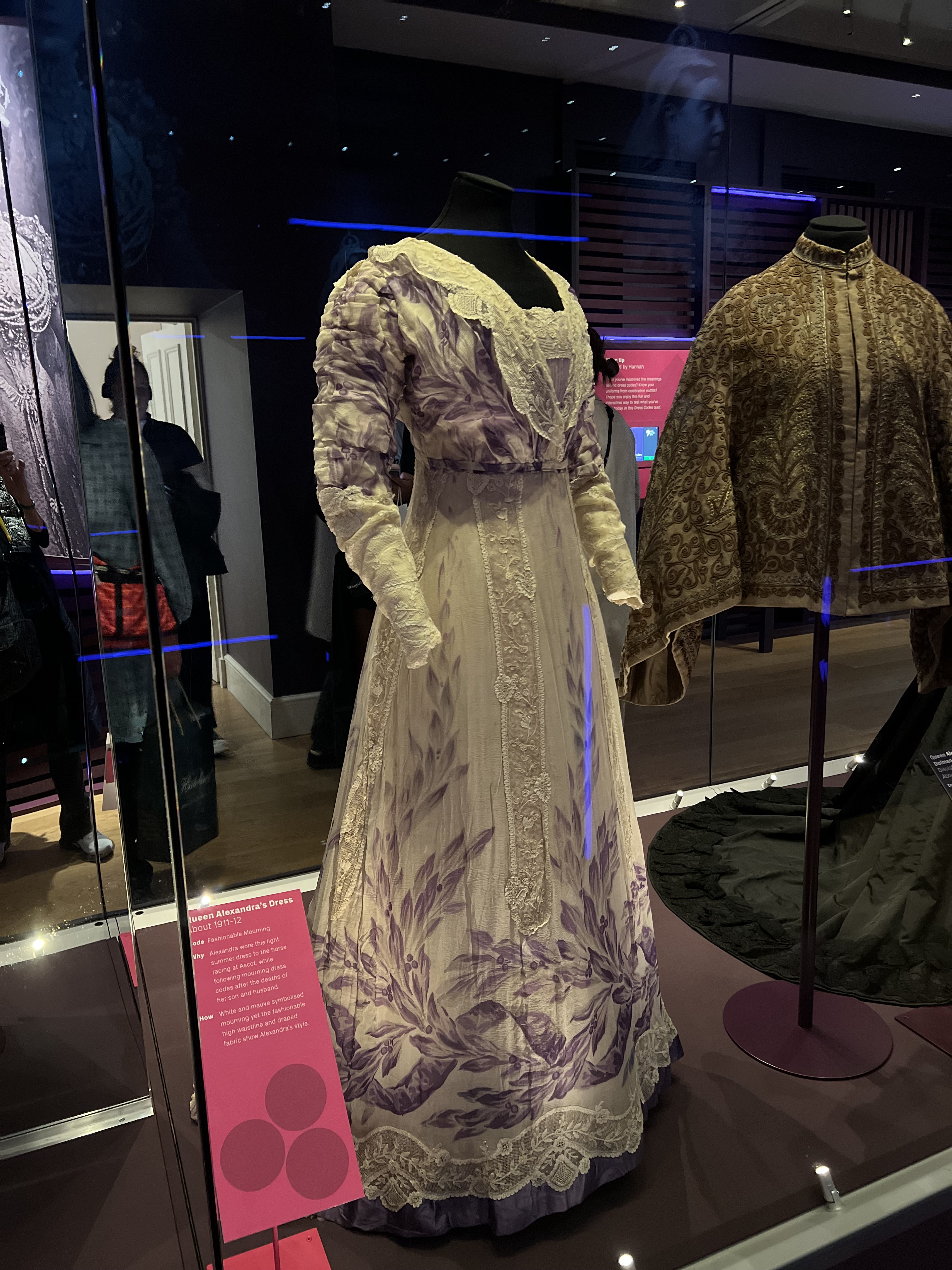
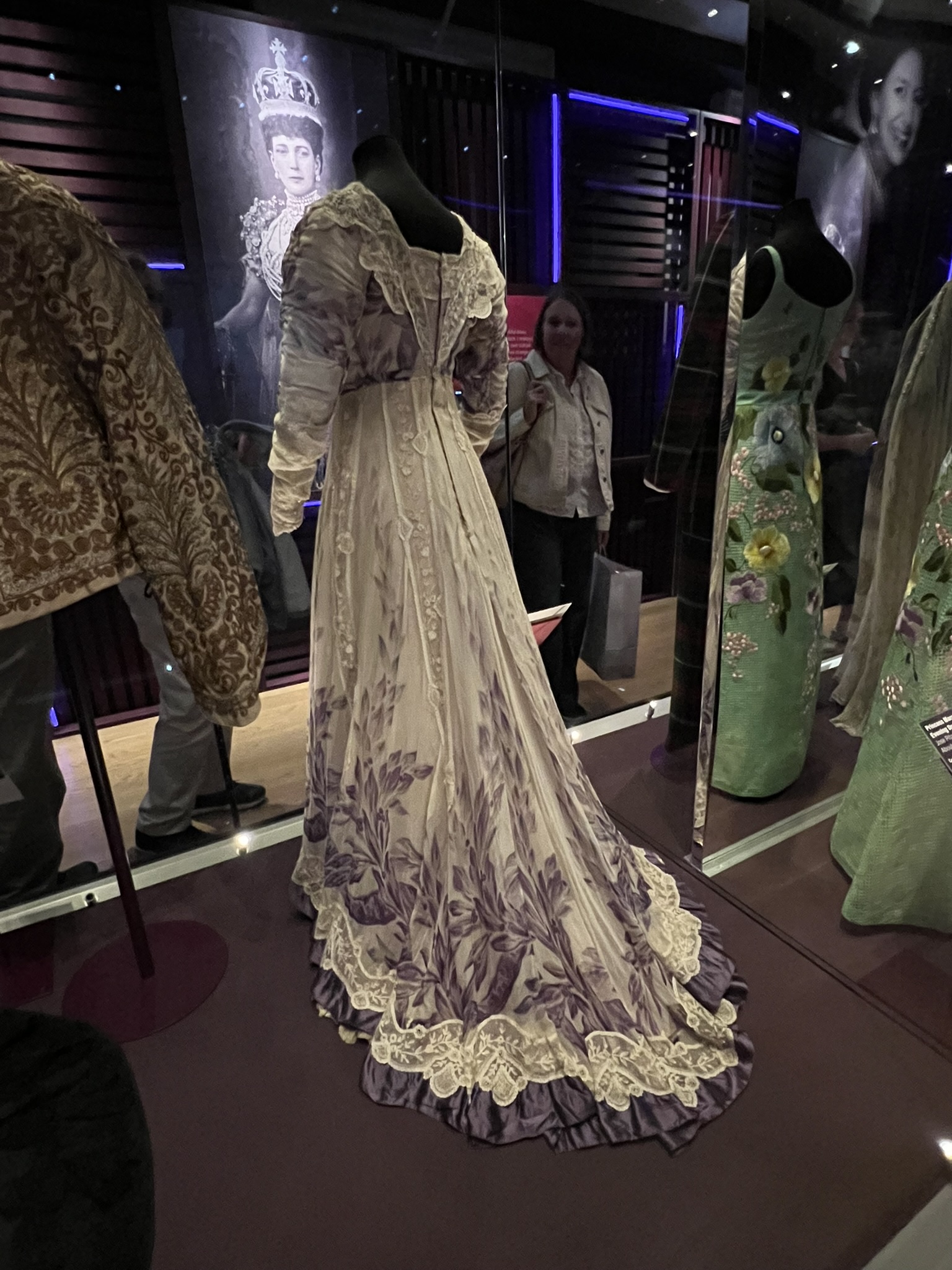
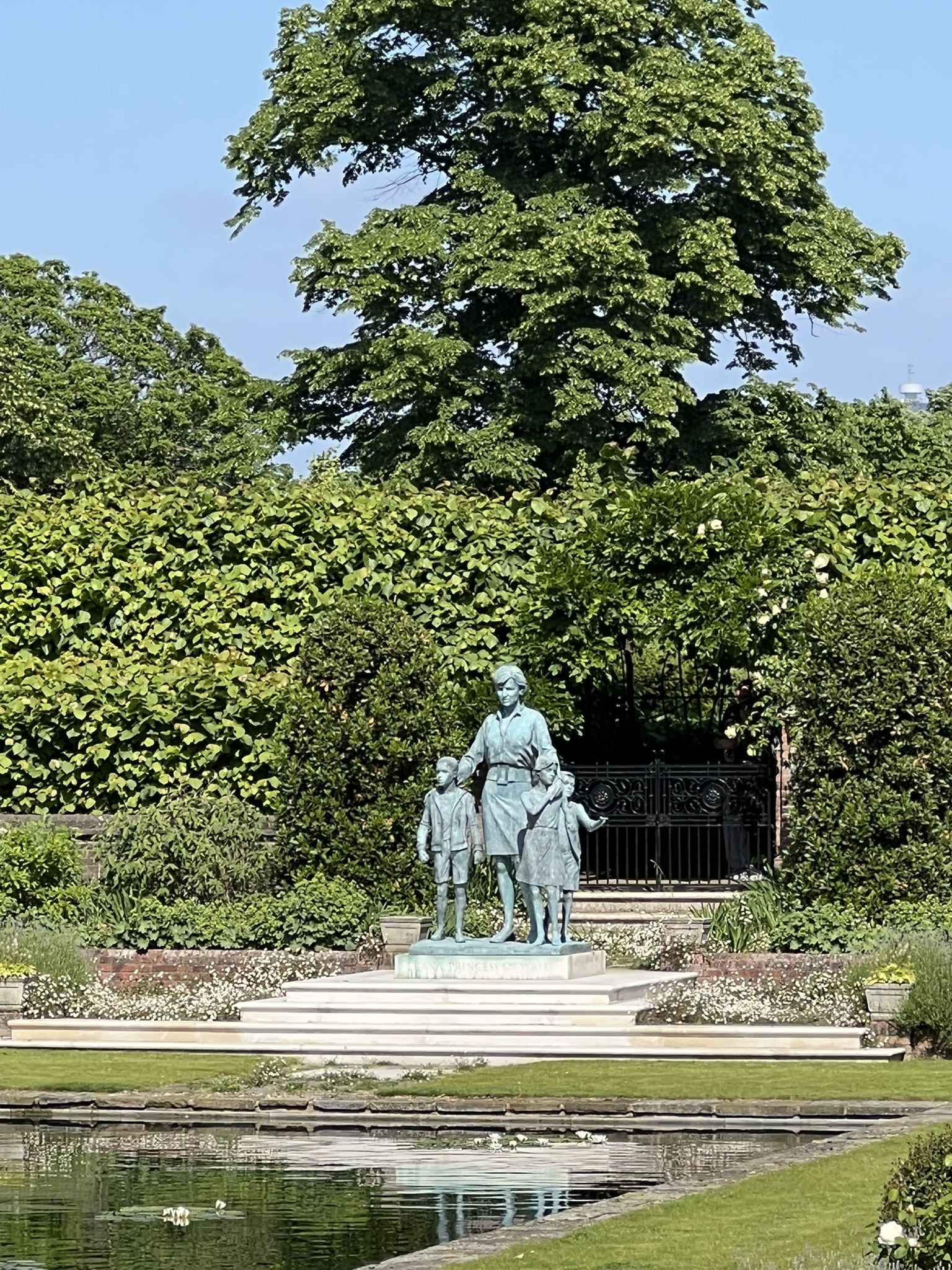
Then off to do the Royals – Kensington Palace – have been a number of times before but with different exhibits, this time going through most of the place to see its history – then a fine café lunch and then just wandered back to the hotel to pack and prepare for the play – A few photos from the Palace:
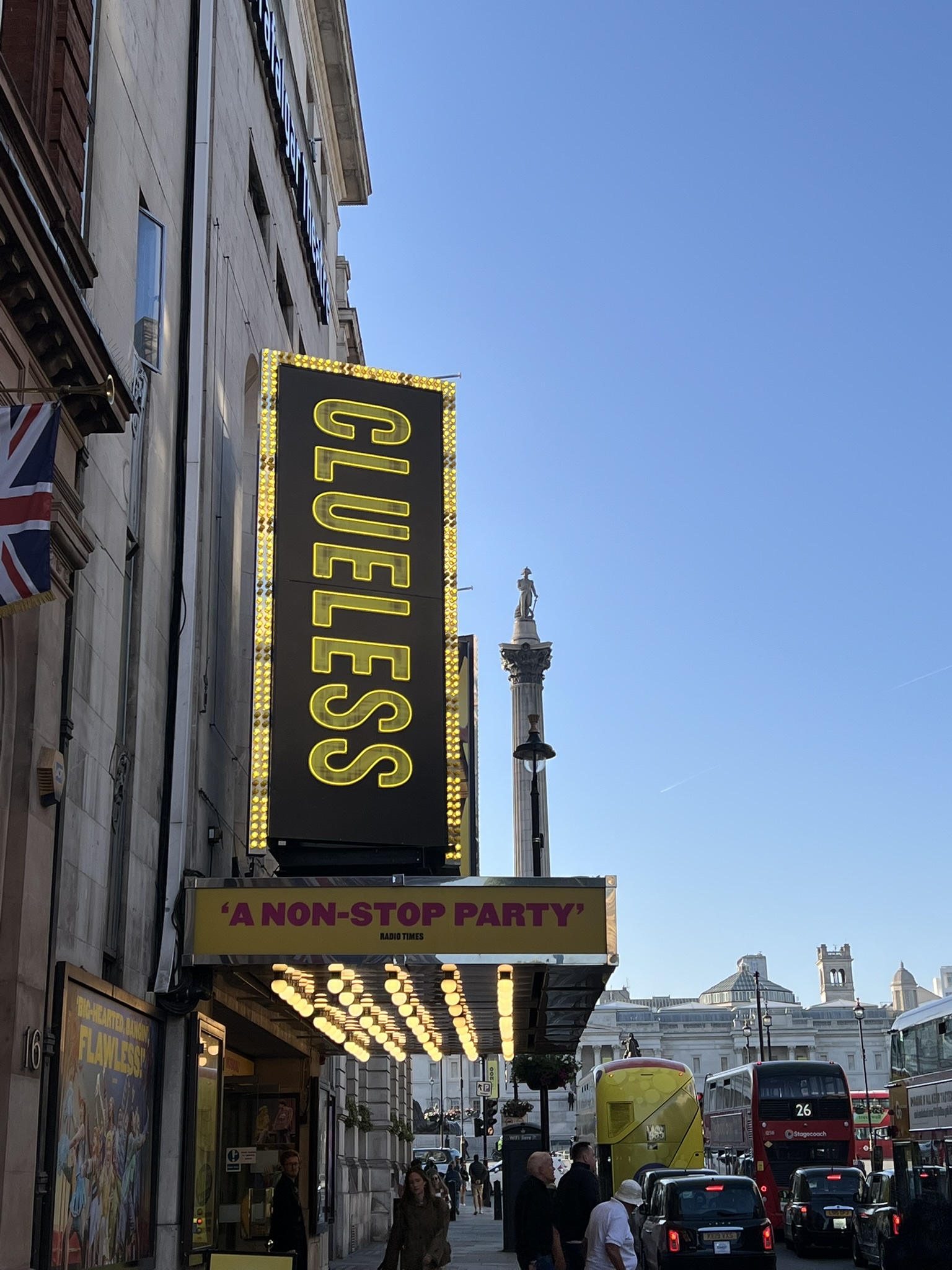
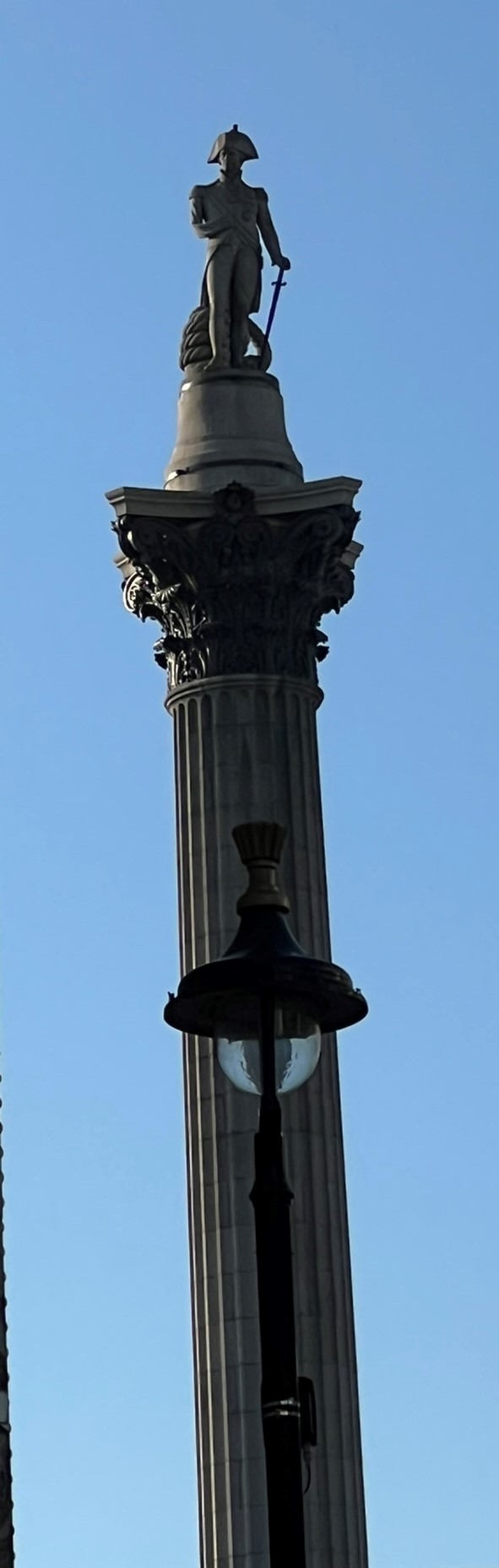
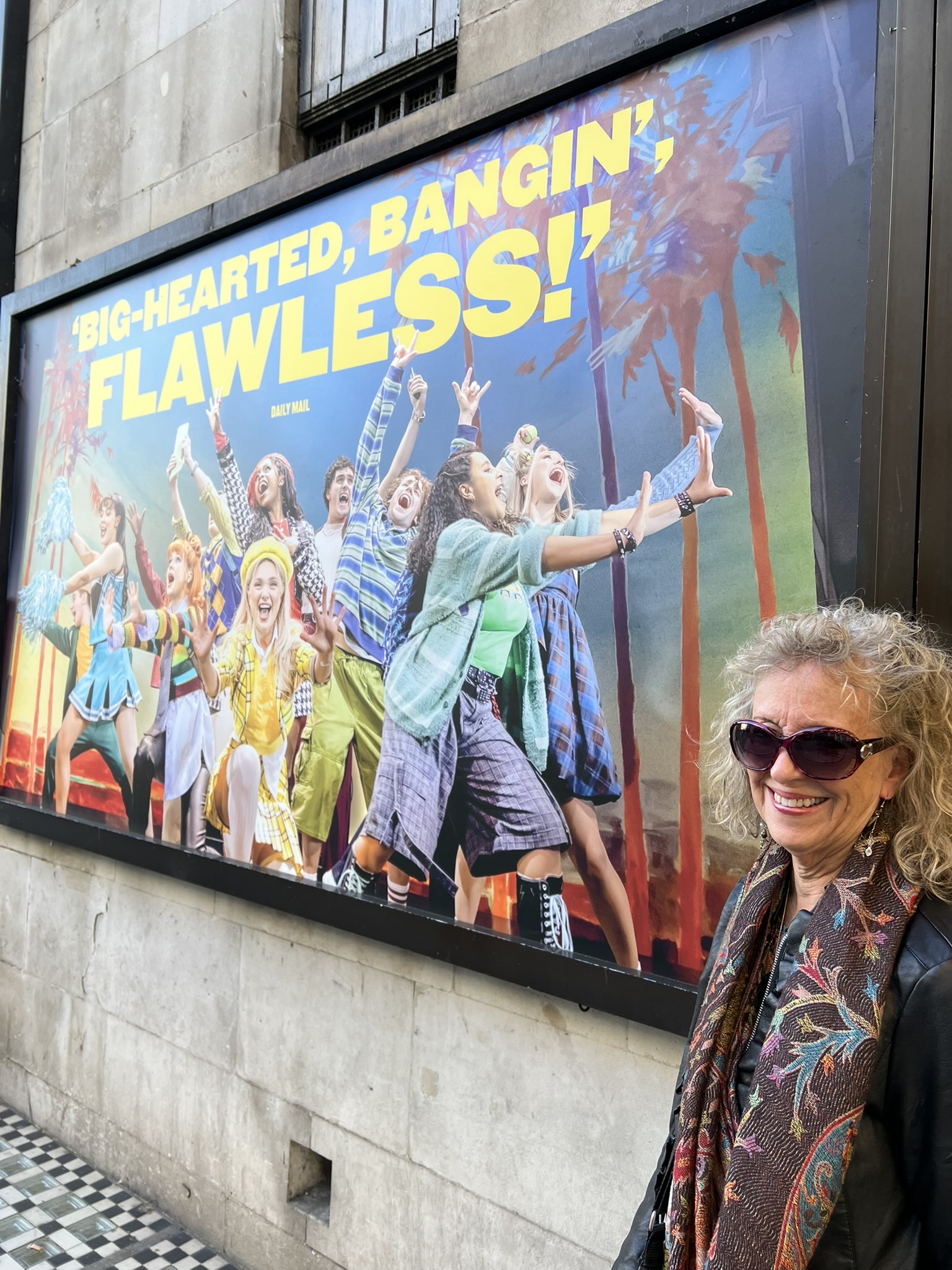
Then the play! No photos allowed during the performance, so only these from the outside [with Nelson in the background]:
and the opening screen:
Clueless did not disappoint – completely faithful to the original film AND Emma, there were catchy tunes, with great actors / singers / dancers; enough plaid to satisfy any tartan-obsessive; and enough energy in the playhouse to keep us all tapping and clapping all the way home. It was pure delight! [It is closing soon – get your tickets if you can…]
***********
So this short stop in London ended our tour – my hopes to see some of those places on my to-do list [the Sherlock Holmes Pub. and the National Portrait Gallery, closed for renovation the last time I was there] – I was not too disappointed as I was coming back at the end of June – and happy to report I did see Richard III in his new digs at the NPG [Room 1, Floor 3] as well as my favorite pub, under new management and with a new sign, but all the same inside with the Holmes memorabilia upstairs – the pub sign has changed a number of times through the years – here is the new one:
[Mr. Holmes is a topic for another day – a full post just on these changing signs is way past due…]
[this sort of creeped me out – my mother’s name was Elsie…]
–
And of course a Richard III – because even Jane thought he was an innocent man…
I was off very early for a 10:30 am flight – the hotel packed me a lovely breakfast; the taxi driver and I had the best conversation about Life and Current Politics I’ve had all year [lots to talk about!]; Heathrow was smooth sailing – and I was home via Charlotte NC and to Savannah in what seemed like a jiffy..
Such a nearly three-week journey! – very well-spent – with a hearty Thank You to JASNA and Pathfinders [and Marian our leader and driver Paul], to Liz Cooper for all her planning and just being there for all of us. And to everyone in Britain who welcomed us with such open arms despite our political nonsense! All the tour participants were a joy to spend some quality-Jane-time with – Thank You all for making this trip one of a lifetime – all in celebration of Jane’s 250th – seeing all the spots from her birth to her death, and all the glorious writing in-between. I am more devoted than ever – we are all nuts, of course, but justifiably so!
[You can visit the JASNA site for information on this years two tours – you should start planning for next year – JASNA will be announcing the 2026 tour early in the new year…just do it!]
c2025JaneAusteninVermont
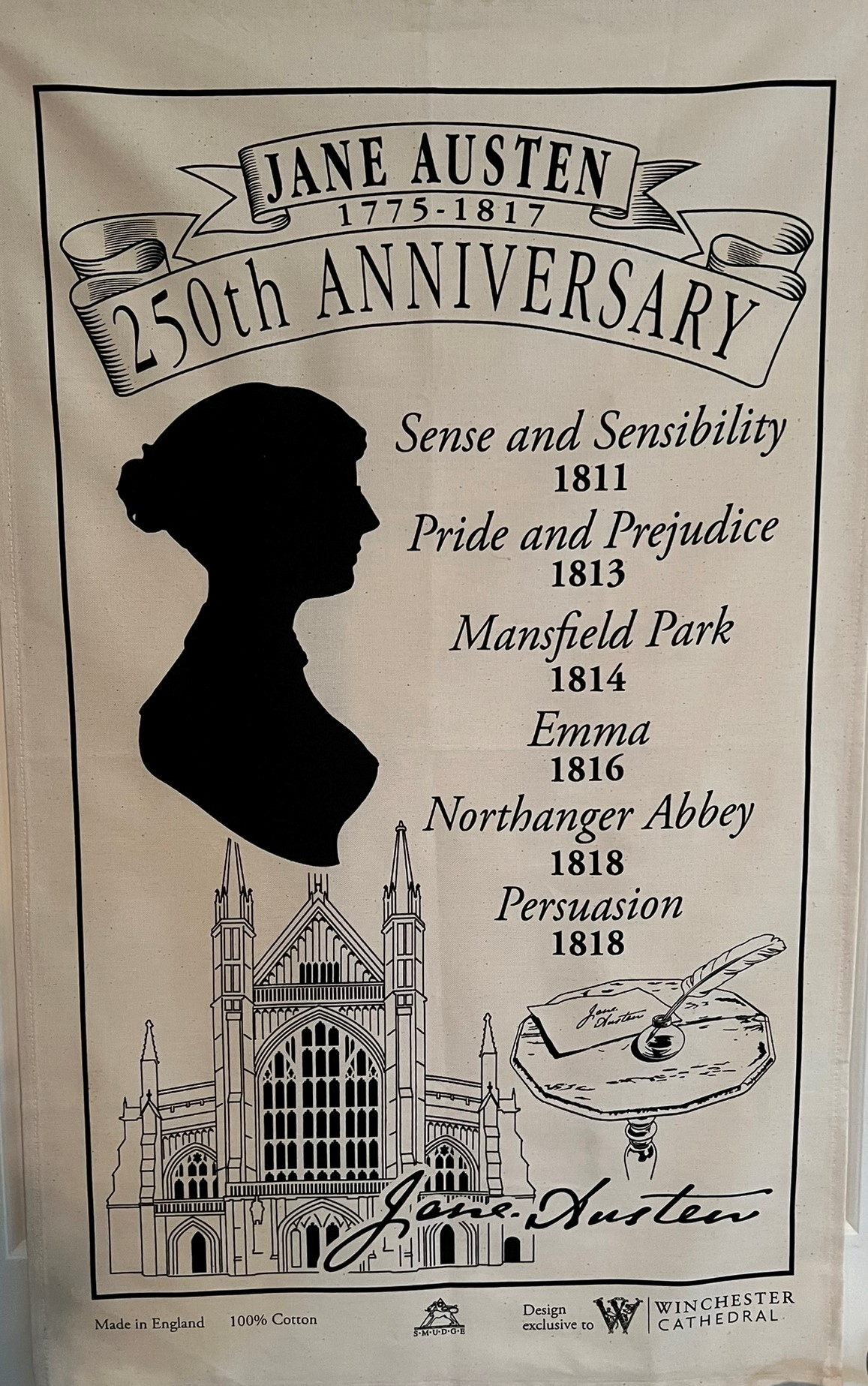
Tea Towel – Winchester Cathedral
Winchester Cathedral – at the Jane Austen wall memorial
Hotel Indigo [from their website – I forgot to take a picture!]
Our last group breakfast at our Hotel Indigo in Bath – hugs and goodbyes and “safe travels” to all who boarded the bus to Heathrow – and those of us doing the London extension boarded ours – we were a small group, and each of us with our own London agenda. We would be gathering only for breakfast each day and then on our own until the next evening’s play Clueless [more on that tomorrow…]
Our London hotel in Bloomsbury [love staying in Bloomsbury!] was a tad bizarre with the ugliest couch I have ever encountered – but we managed for the two nights as were never there…
[Not sure what that shadow is – appears to be a Knight in Shining Armor – but he too was frightened away by the couch…]
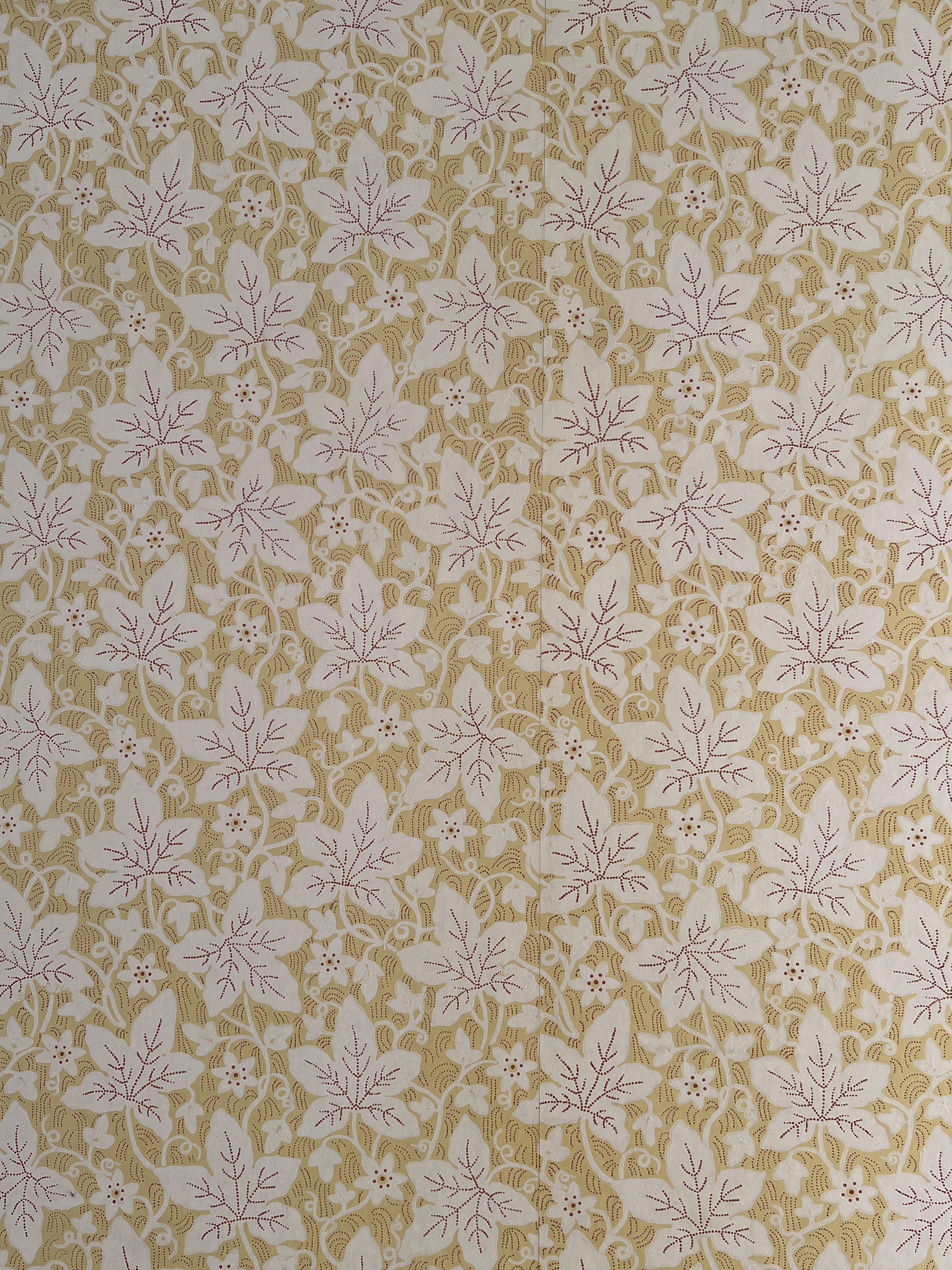
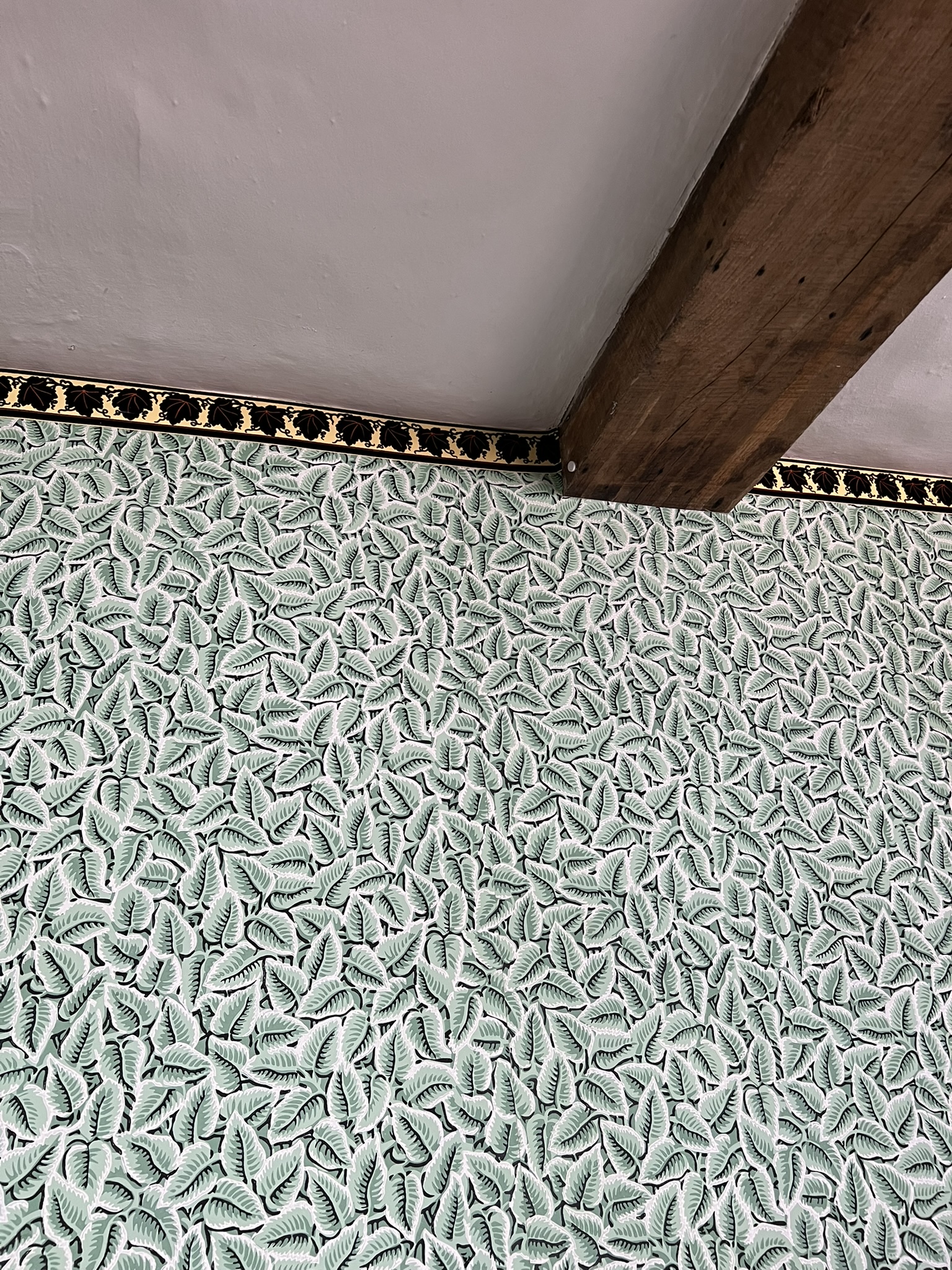
But first, a photo of this wallpaper – I think it was in the hotel in Bath – but this is a favorite pattern of mine so have to share:
**************
As Joy and I had a few of the same agenda high spots, off we went, walking everywhere, just so overJOYed to be in London again…
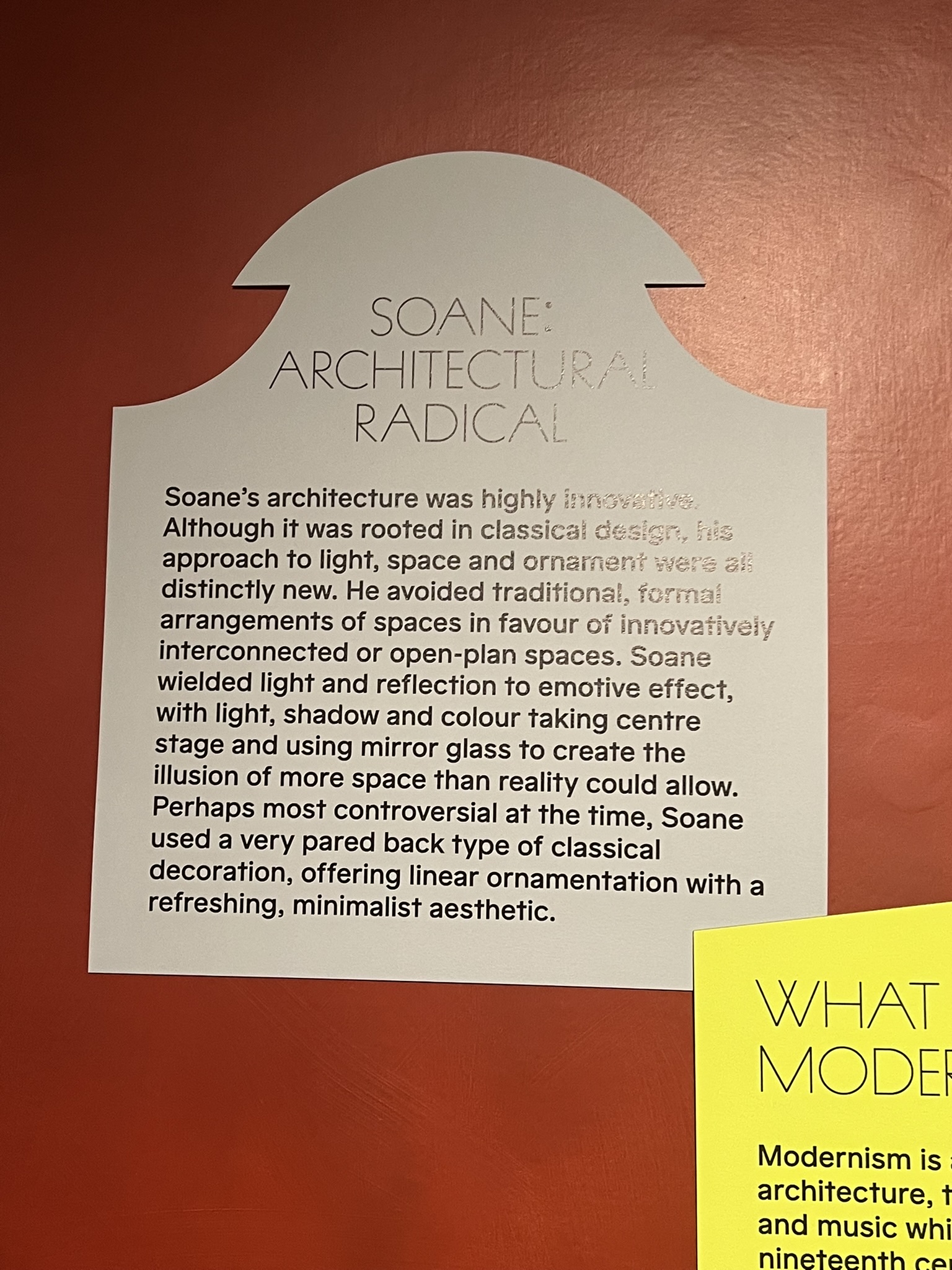
First, the John Soane Museum, comprising three houses in Lincoln’s Inn Fields – Soane’s architectural office, his home and library, and later home to his extraordinary collections. Since his death in 1857, everything has remained the same – all the works of art, sculptures, and furniture – all as he had it arranged (similar again to the Isabella Stewart Gardner Museum in Boston) and why there is minimal signage and no labels.
Exterior of the Soane Museum [from their website]
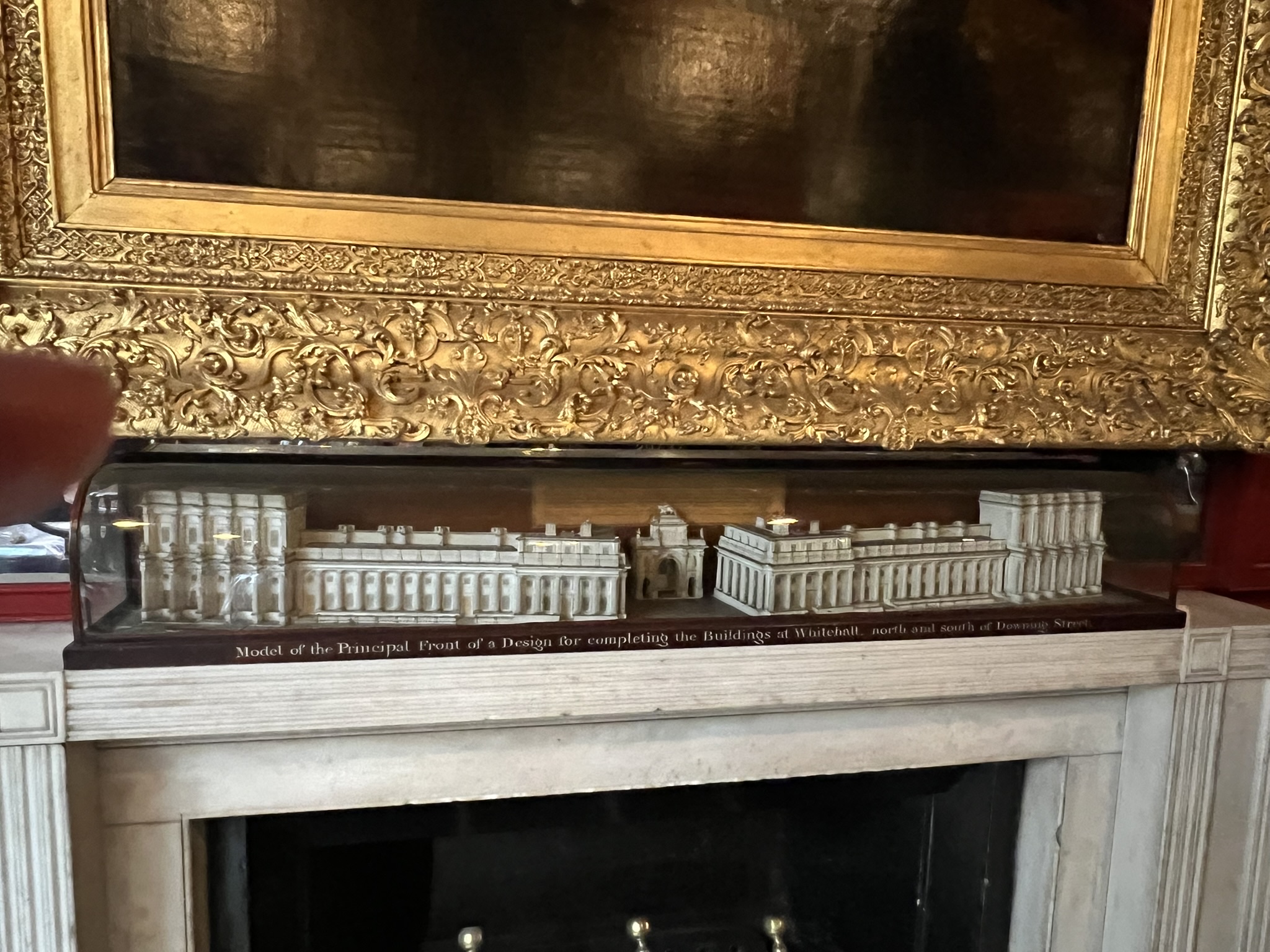
Soane is considered one of Britain’s greatest and most innovative architects – though his design for Whitehall, here as a model, was never executed:
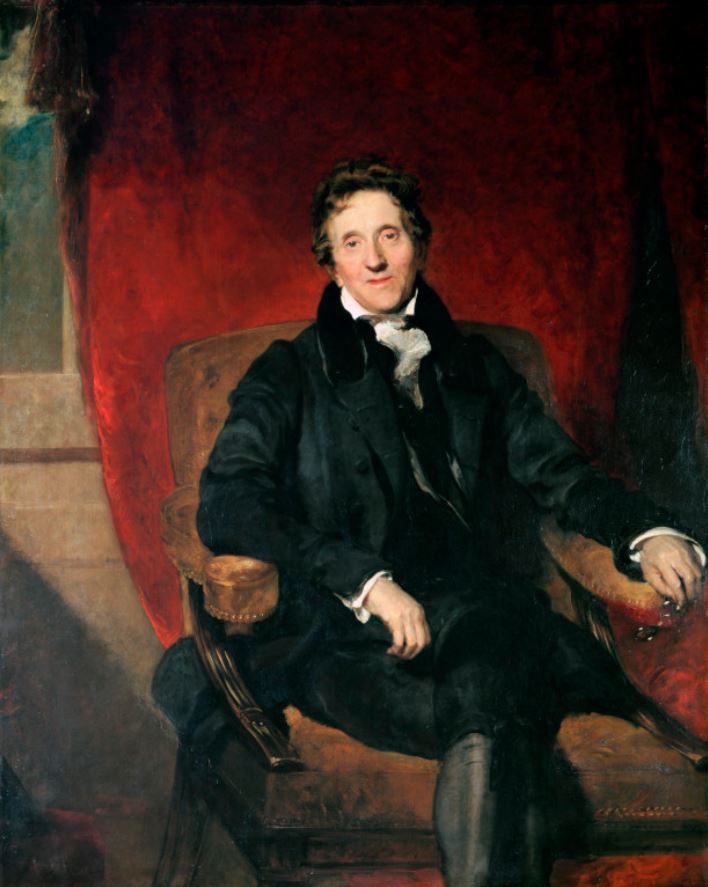
As you first enter the dining room and library, you come face to face with his portrait by Thomas Lawrence.
The entire museum is a maze of rooms filled from top to bottom with Soane’s collections – one couldn’t take it all in in with daily visits for months – a few hours just leaves one quite overwhelmed [not to mention humbled…]
Let’s take a quick tour with a few of the photos I took [not enough!]
The Picture Room:
– Venetian scenes by Canaletto [alas! no photos…idiot]
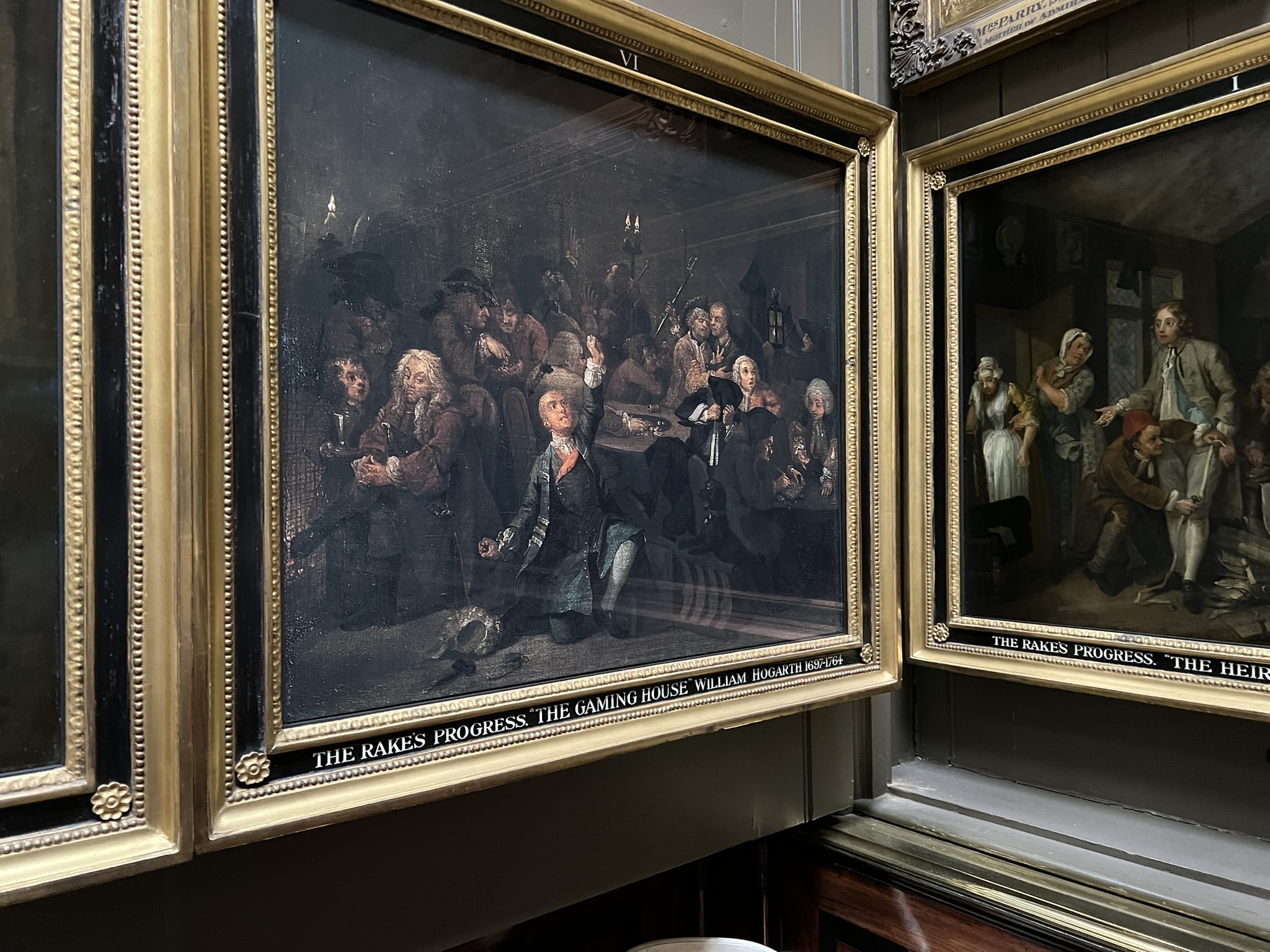
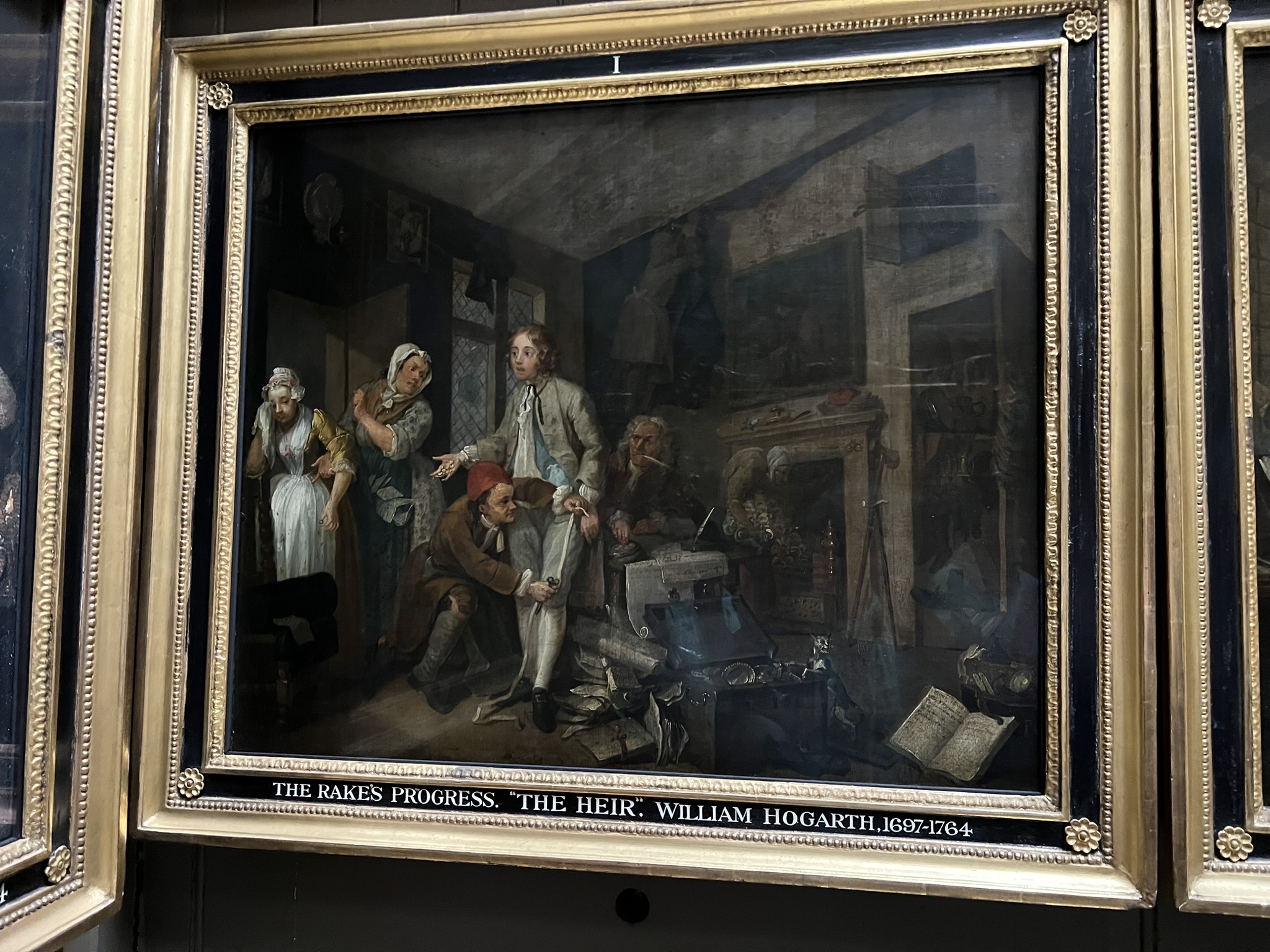
– hidden behind large wooden doors that open up to another group of paintings – only about 10 people are allowed in for the timed viewings – we were SO lucky to arrive just in time – behind the panels we found Hogarth’s The Rake’s Progress – here just a few (but you can see the whole series here: https://en.wikipedia.org/wiki/A_Rake%27s_Progress
Austen as we know knew her Hogarth – she references him in a letter to Cassandra [8 Sept 1796]:
she has decided to not go to London with Frank for fear her friends will not be there –
“…for if the Pearsons were not at home, I should inevitably fall a Sacrifice to the arts of some fat Woman who would make me drunk with Small Beer.”
She is referencing here in her witty way the first plate of Hogarth’s The Harlot’s Progress – Austen understands the reality of a young woman alone in London:
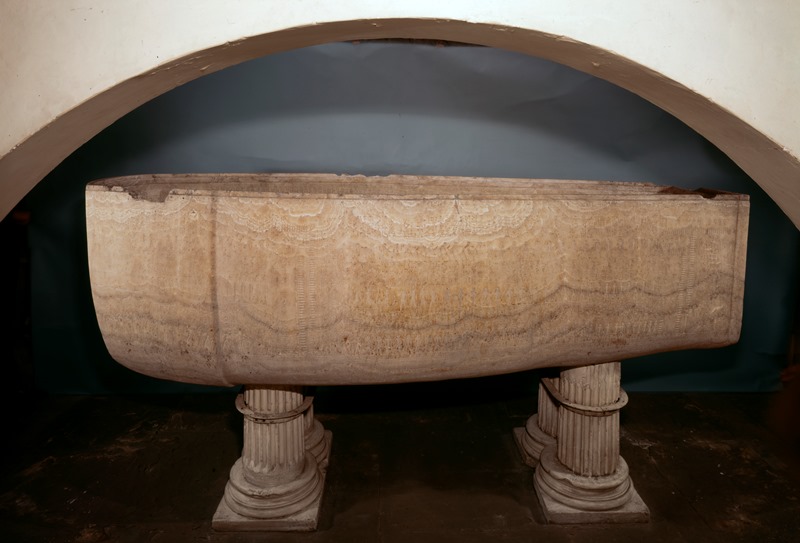
In the basement you find the Monks Parlour: Soane here making fun of the Gothic style – the “monk” was Padre Giovanni, Soane’s imaginary alter ego – you could be invited here to tea – between this and the nearby sarcophagus of King Seti I (1303-1290 BC), considered one of the most important of all surviving Egyptian antiquities, I might have rethought a nighttime visit to Mr. Soane’s basement parlour…
[from the Soane fb page]
[from the Soane Museum website]
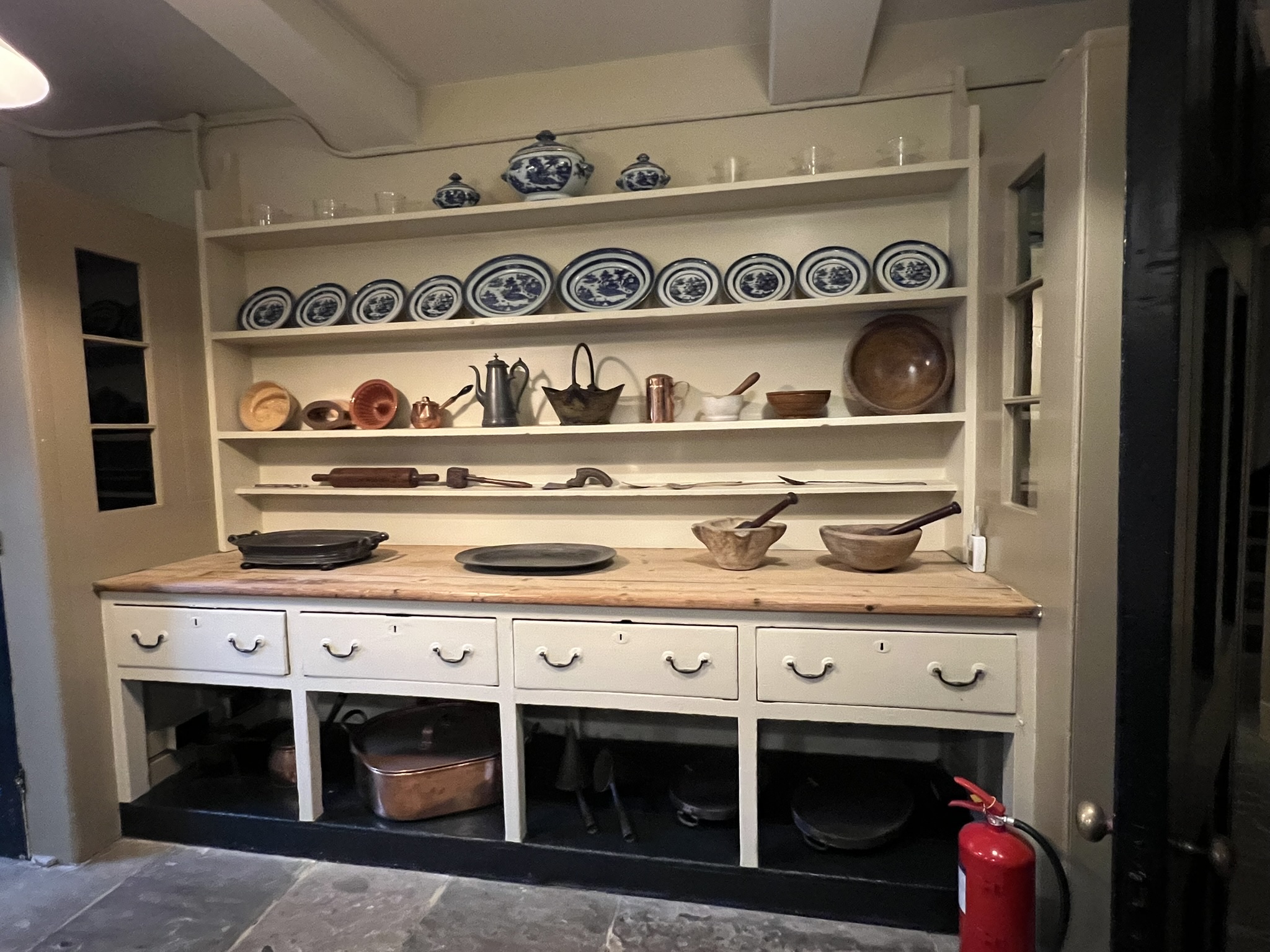
The Kitchen:
I can never resist an old kitchen – and here we have a patent range dating from 1812, as well as the china pantry with my favorite blue and white…
We find Shakespeare with his own hallowed place in the stairwell:
And the Drawing Rooms, painted in “Turner’s patent yellow,” we find family portraits and fine furniture:
[South Drawing Room – from the Soane Museum website]
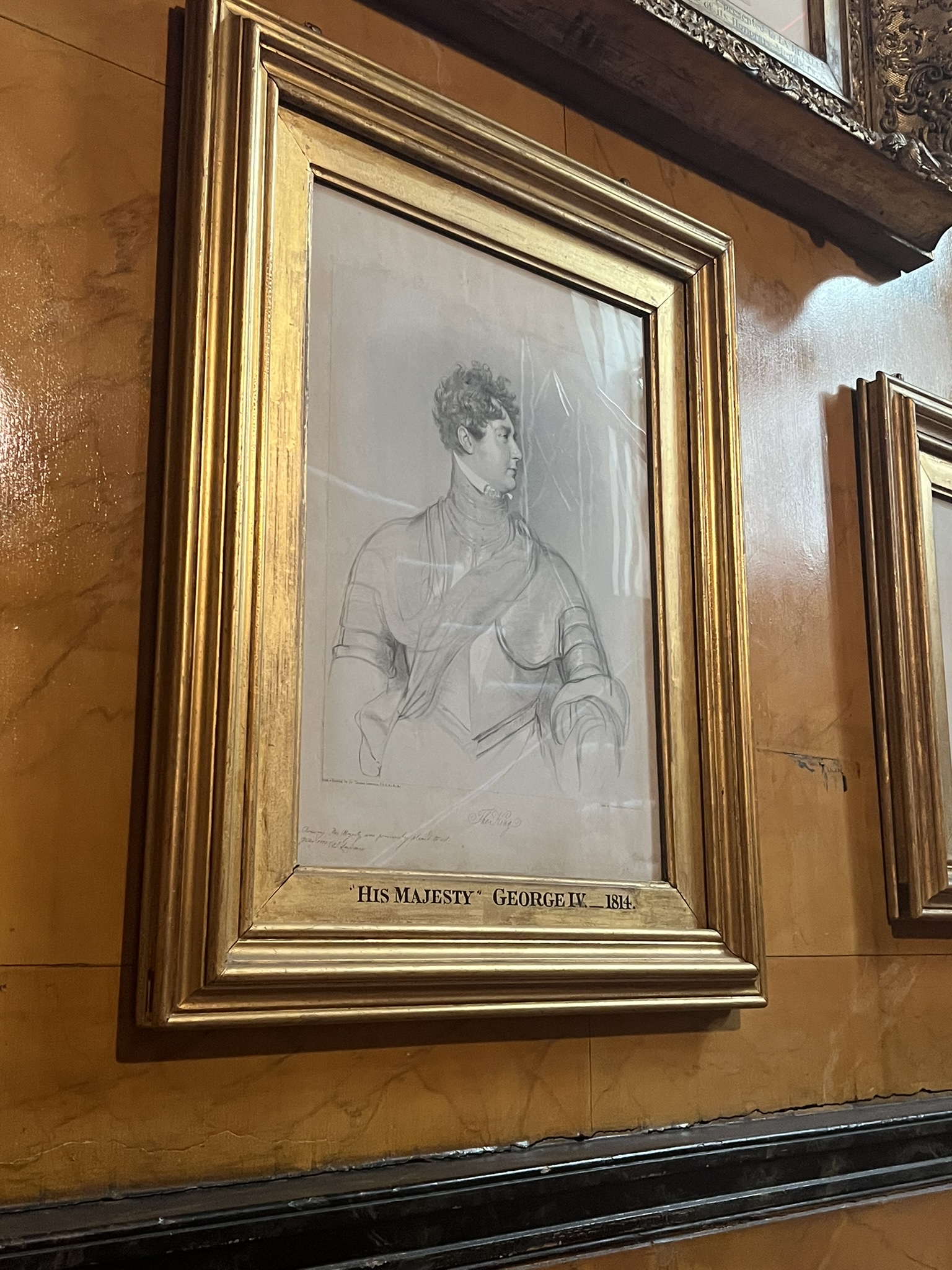
And can we ever have a day without finding a George IV on the wall??
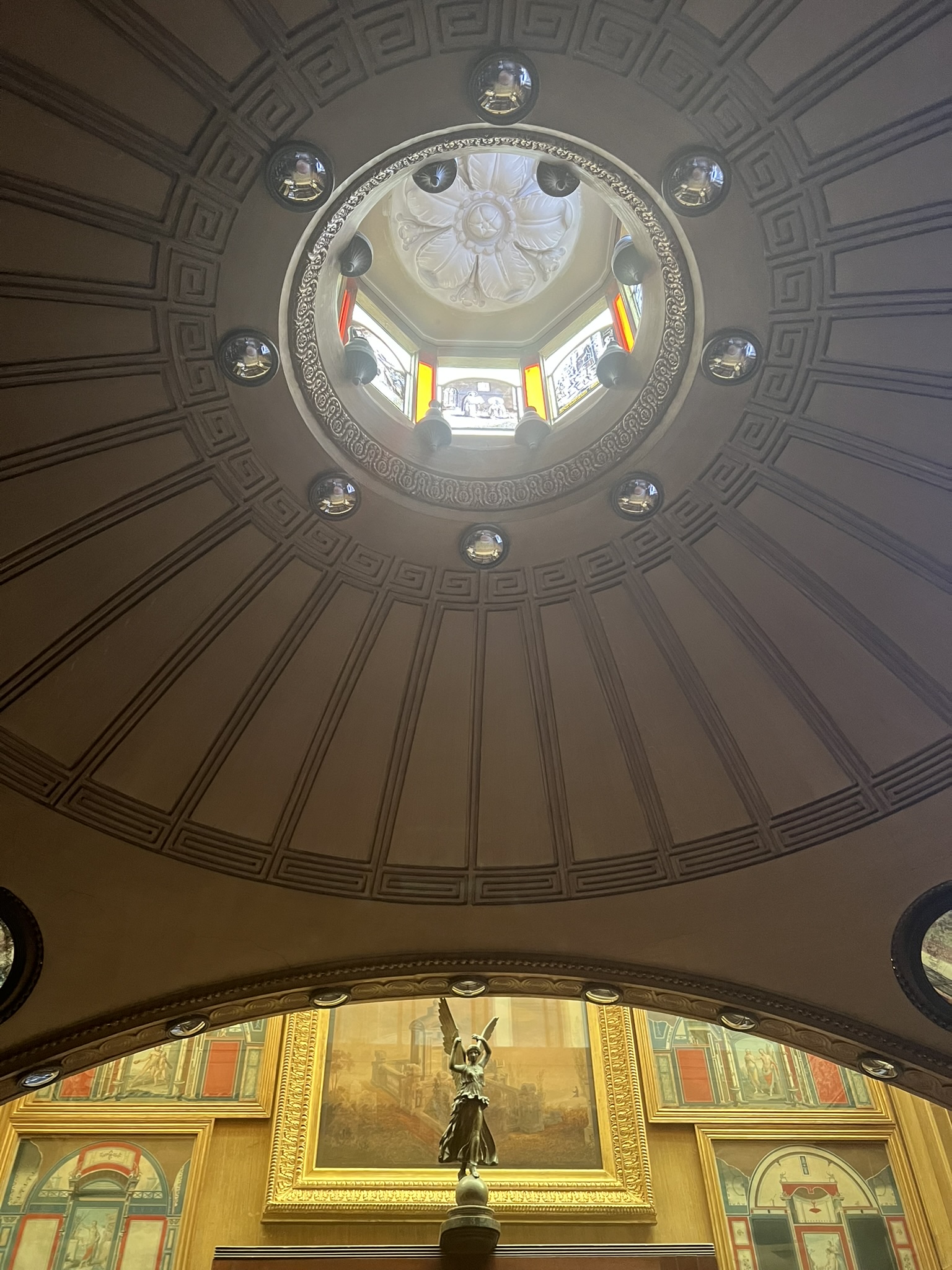
One of the dome ceilings:
And a secret photo of Joy and me! [I didn’t see this until I got home!]
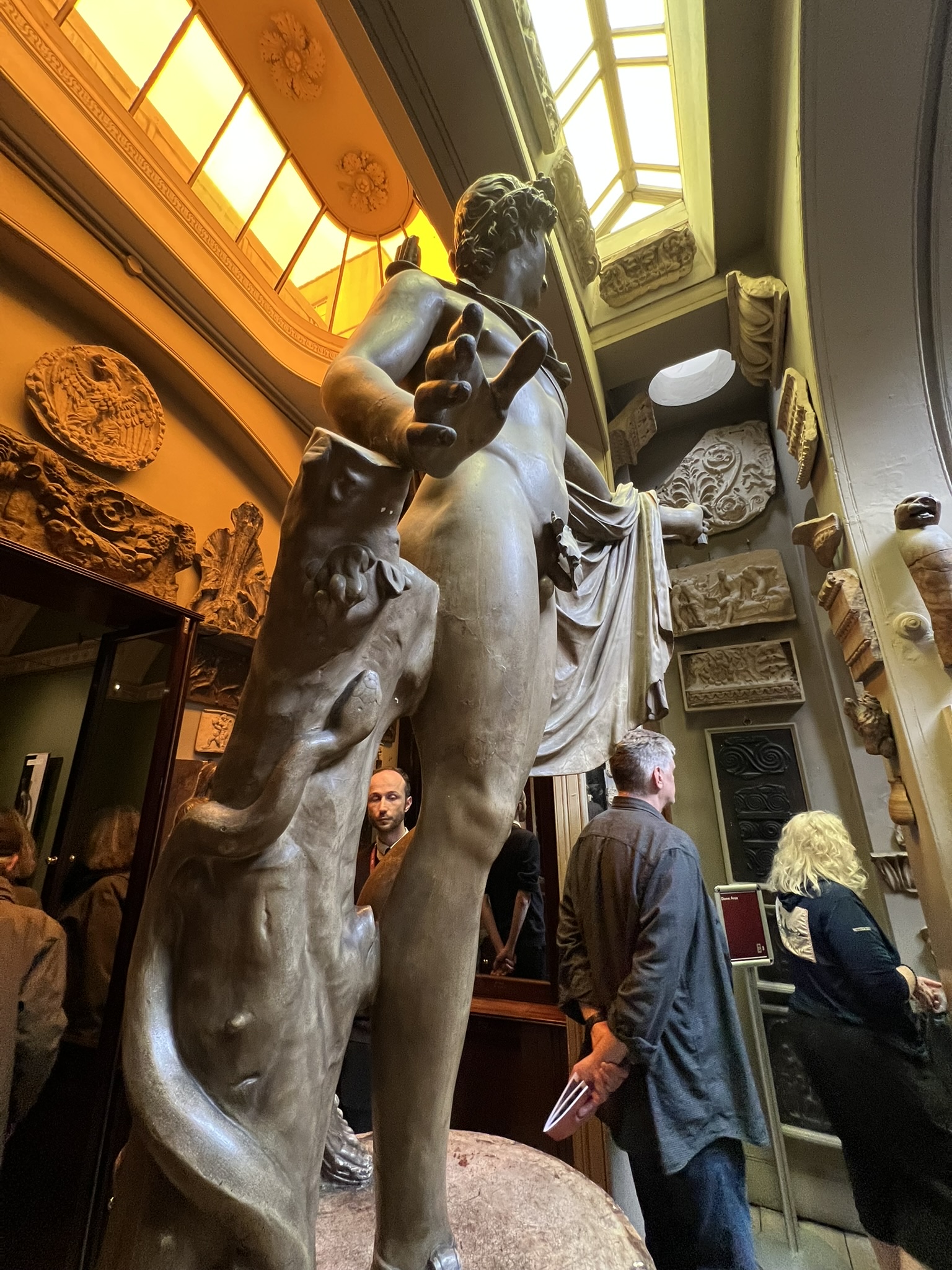
The Apollo Belvedere [a cast from the one in Rome]: a very odd angle, not sure what I was thinking…
And the famous Dome Ceiling:
***************
Lovely time here – wish we could have spent more, but I was quite dizzy as we emerged into the light of day…and now time to just do a little more wandering to must-see places:
I passed LSE where I had gone to classes on my semester abroad in 1968:
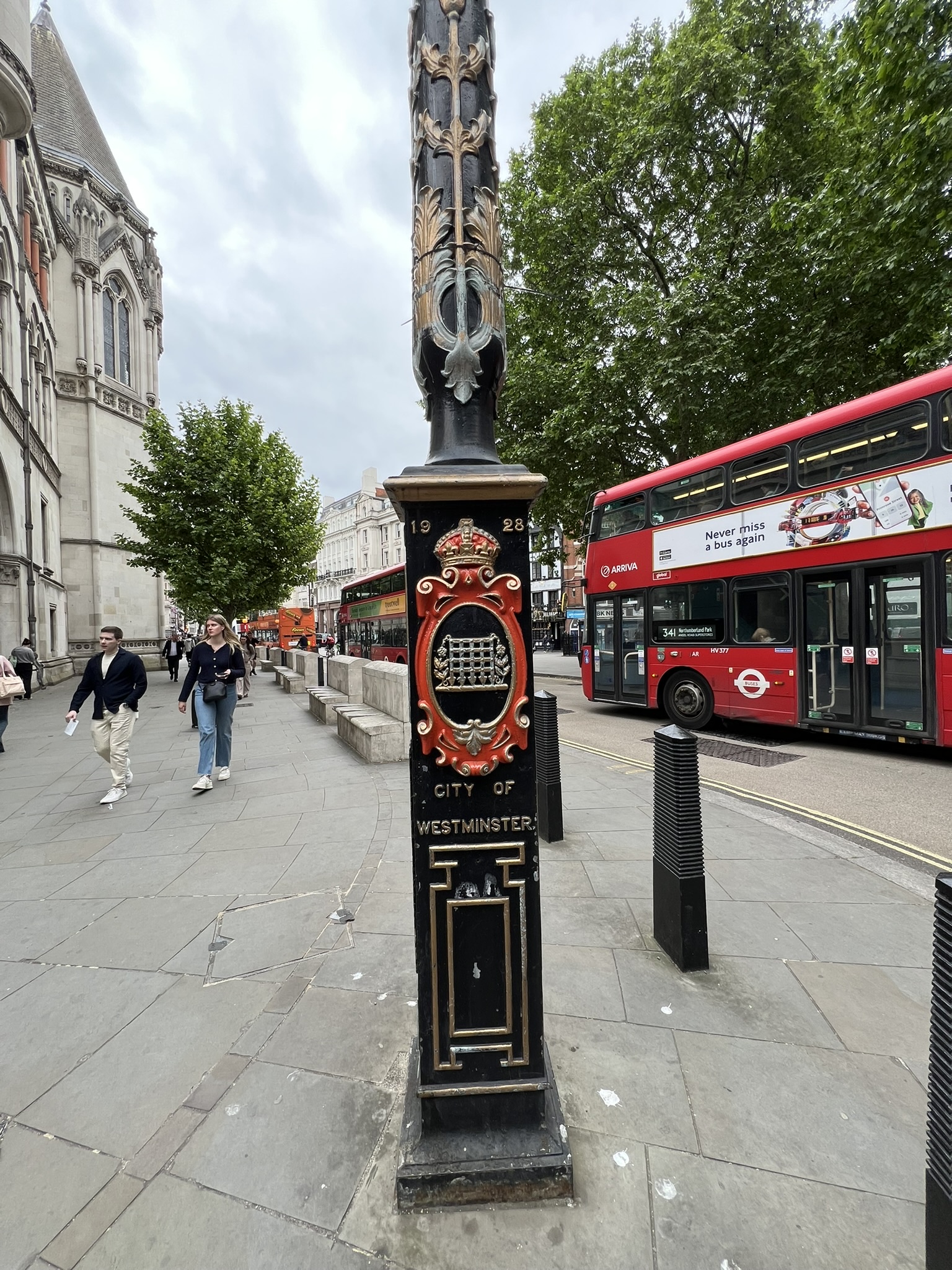
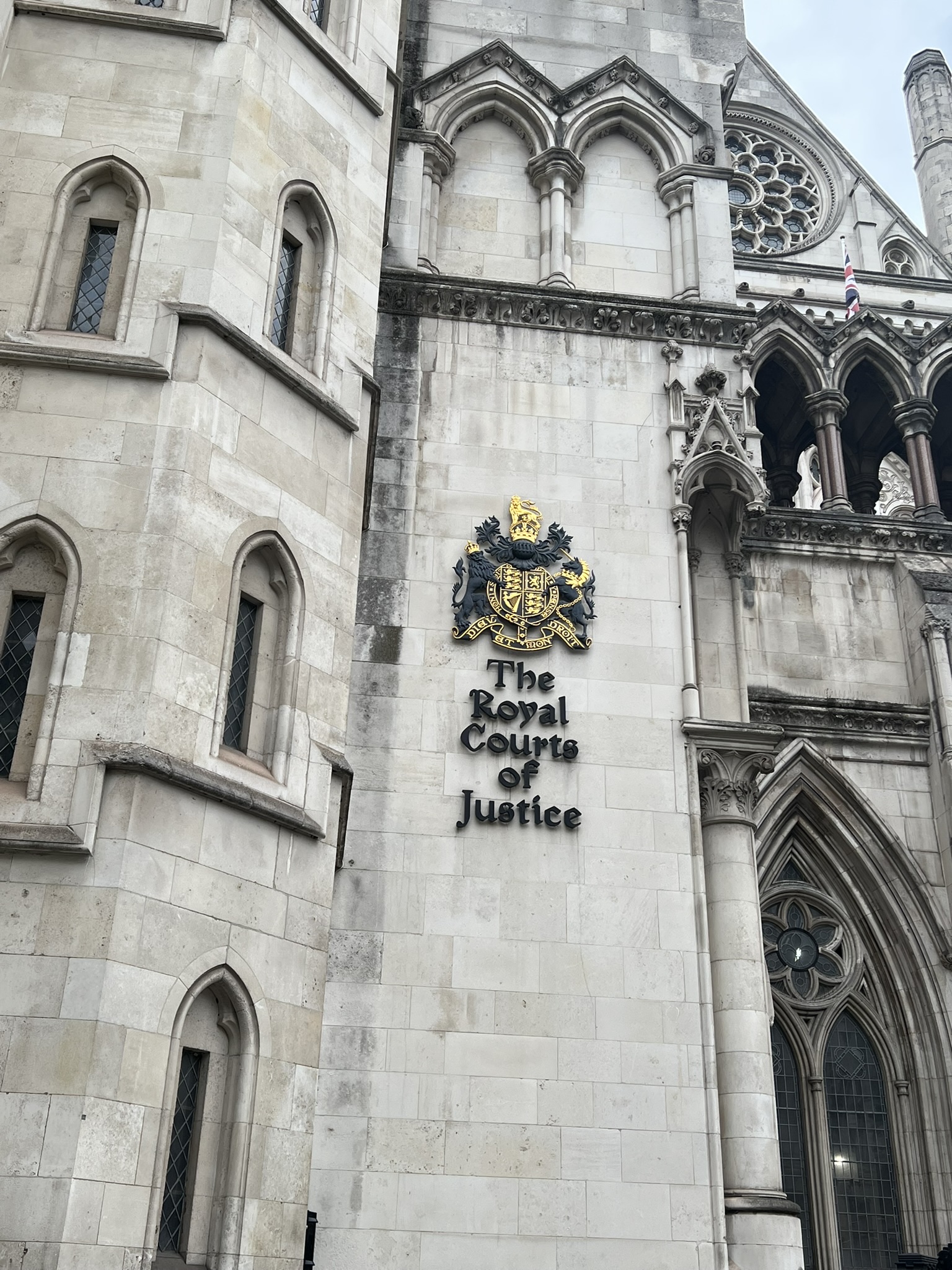
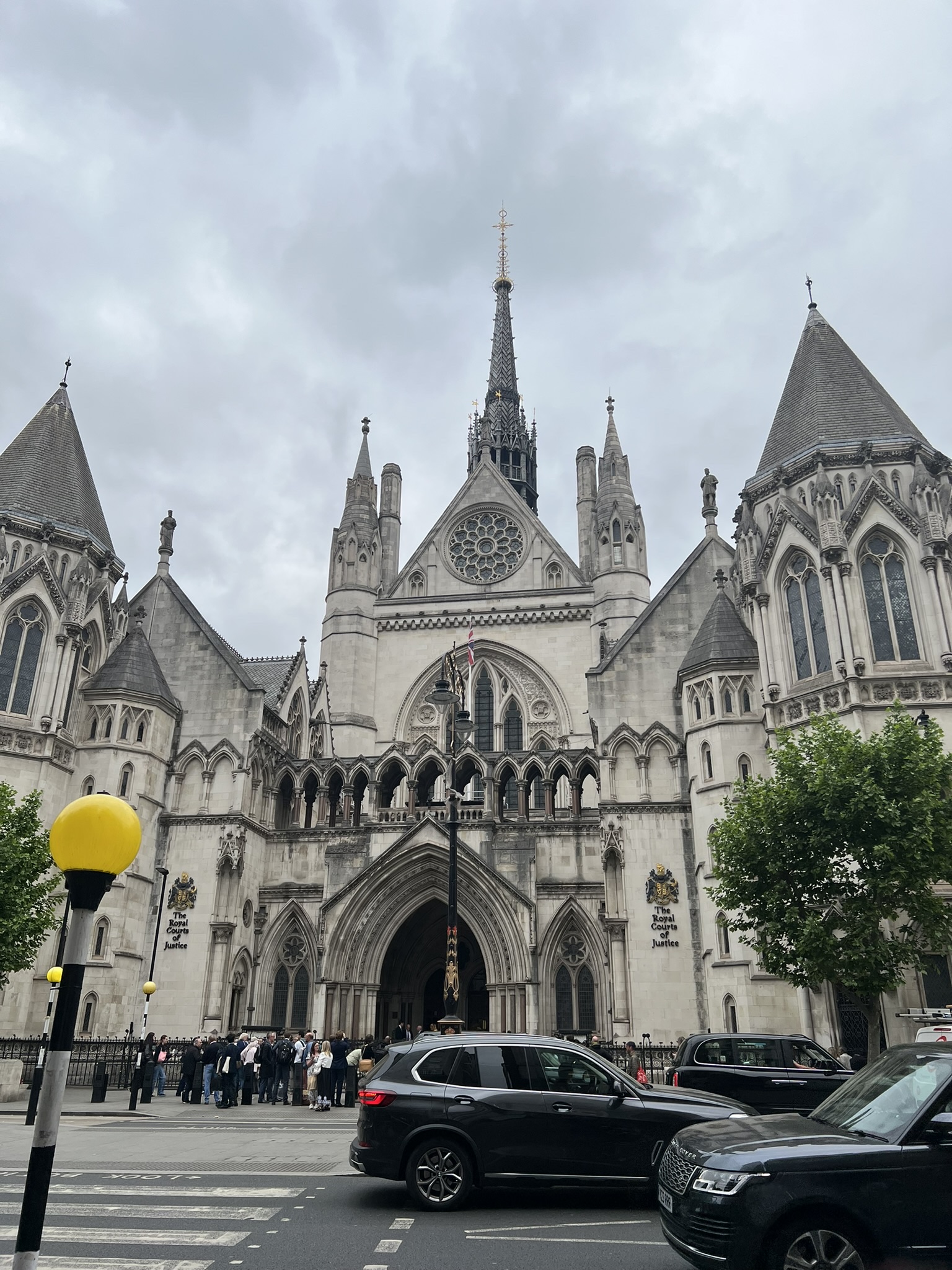
Passing the Royal Courts of Justice, we saw much press activity about a famous court case about to be decided – I knew nothing about any of it and still don’t and cannot find anything in the news!
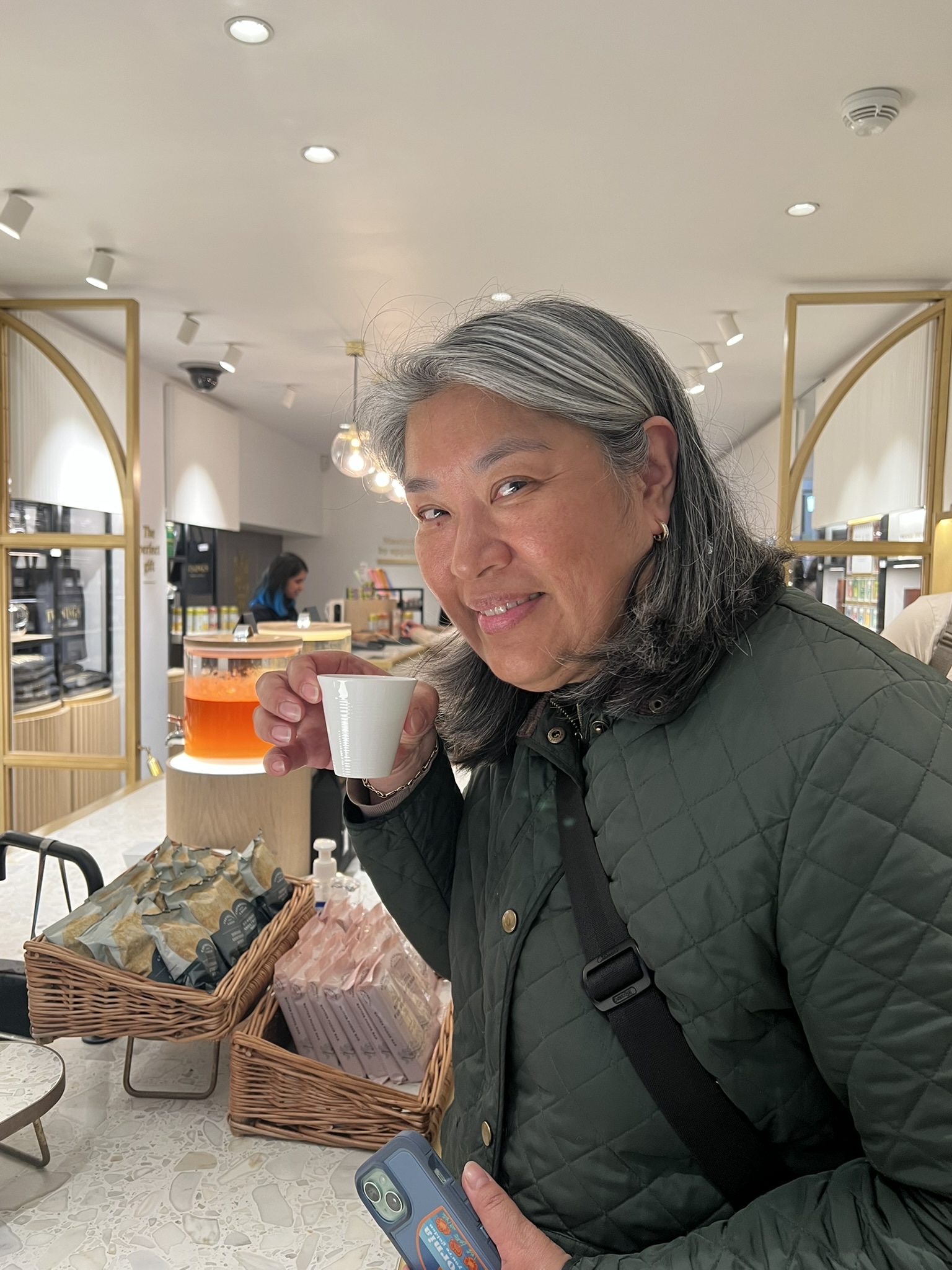
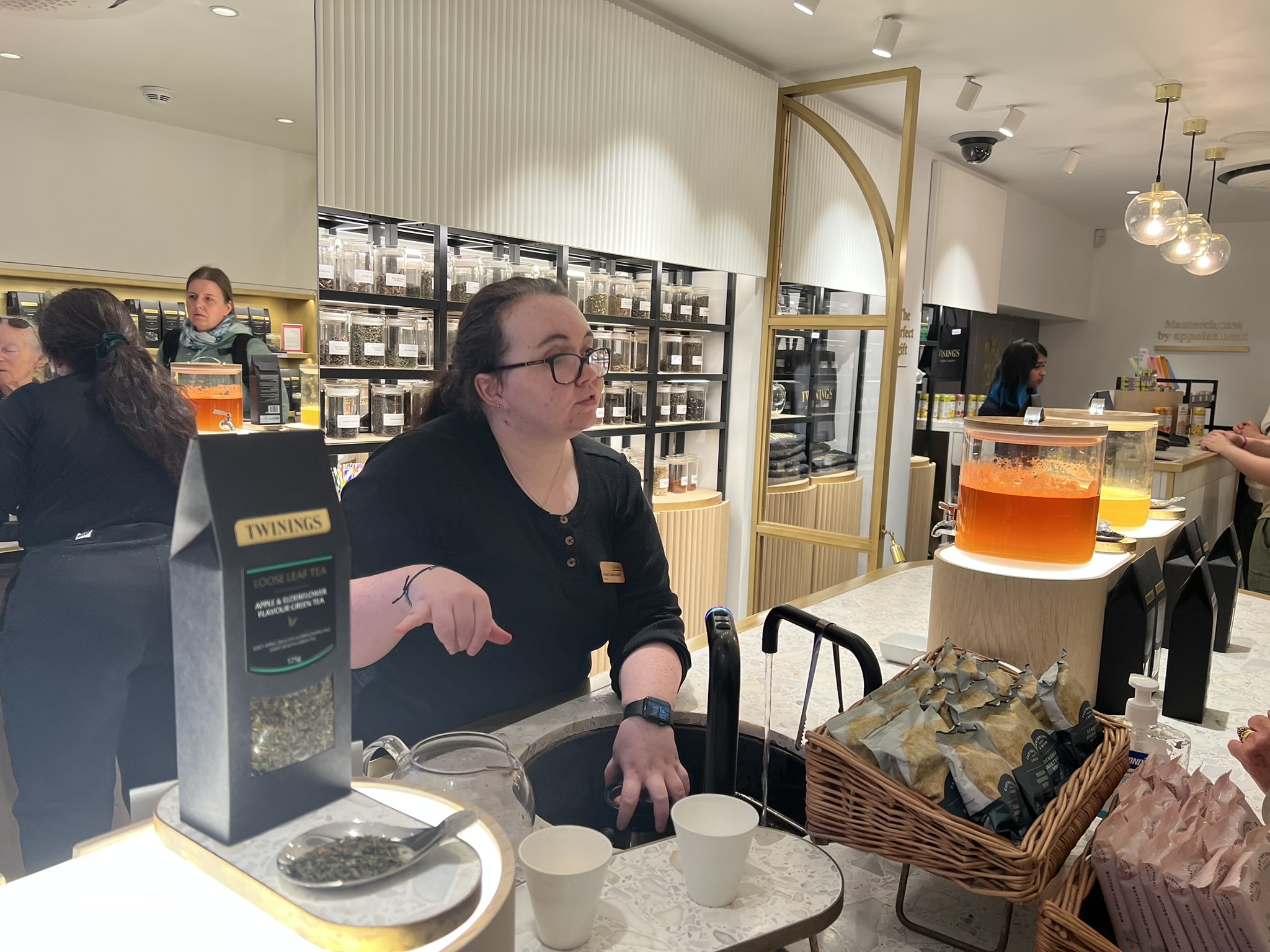
Of course a trip to London is never complete without a visit to Twinings [Jane would approve as well]
I have never understood why in a country founded and sustained by Tea, they do not serve iced tea – yet, here at Twinings at the sample tea bar in the back of the store, one of the “flavours of the day” was an iced tea – here is the recipe: Enjoy, wherever you are…
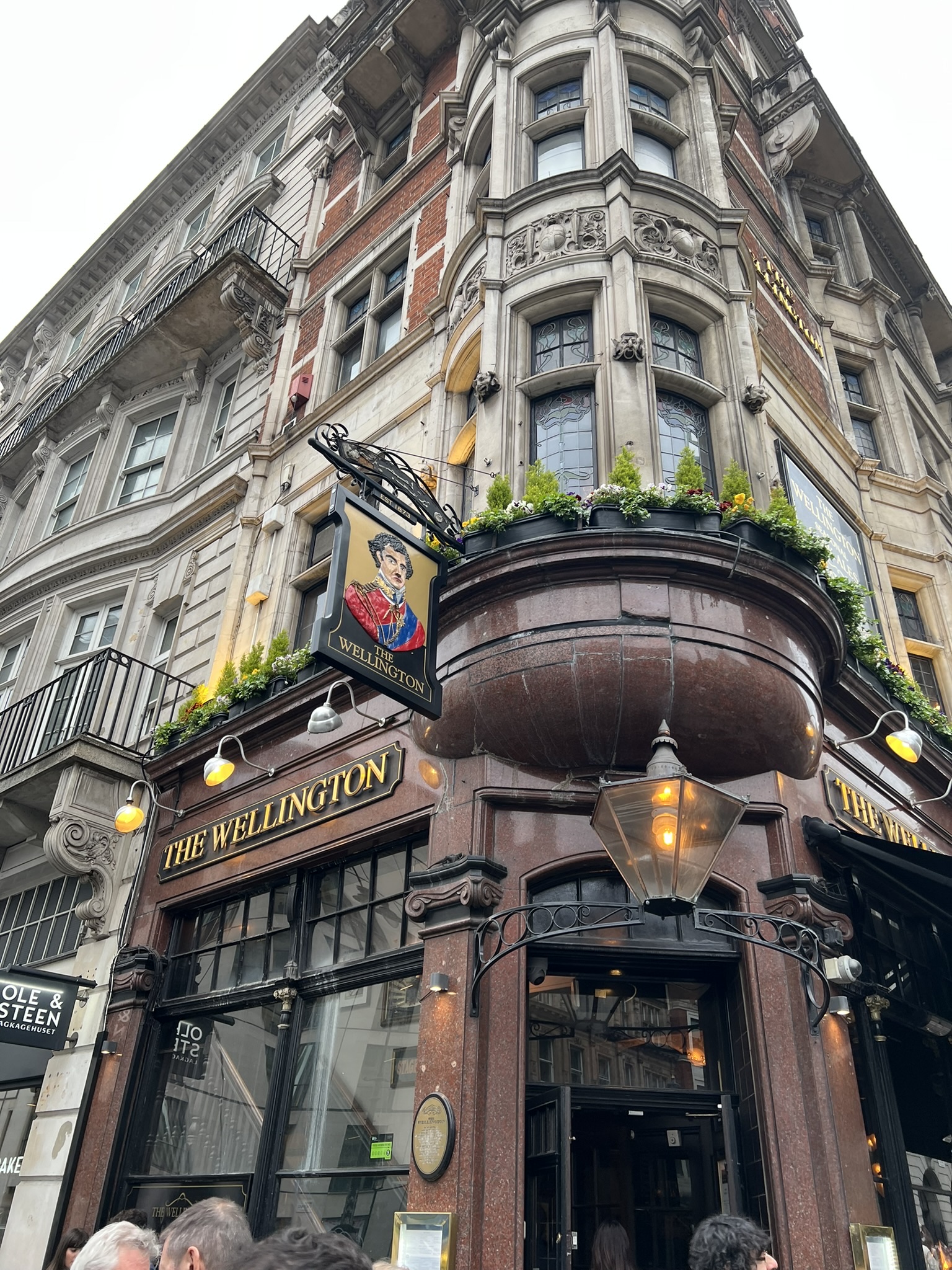
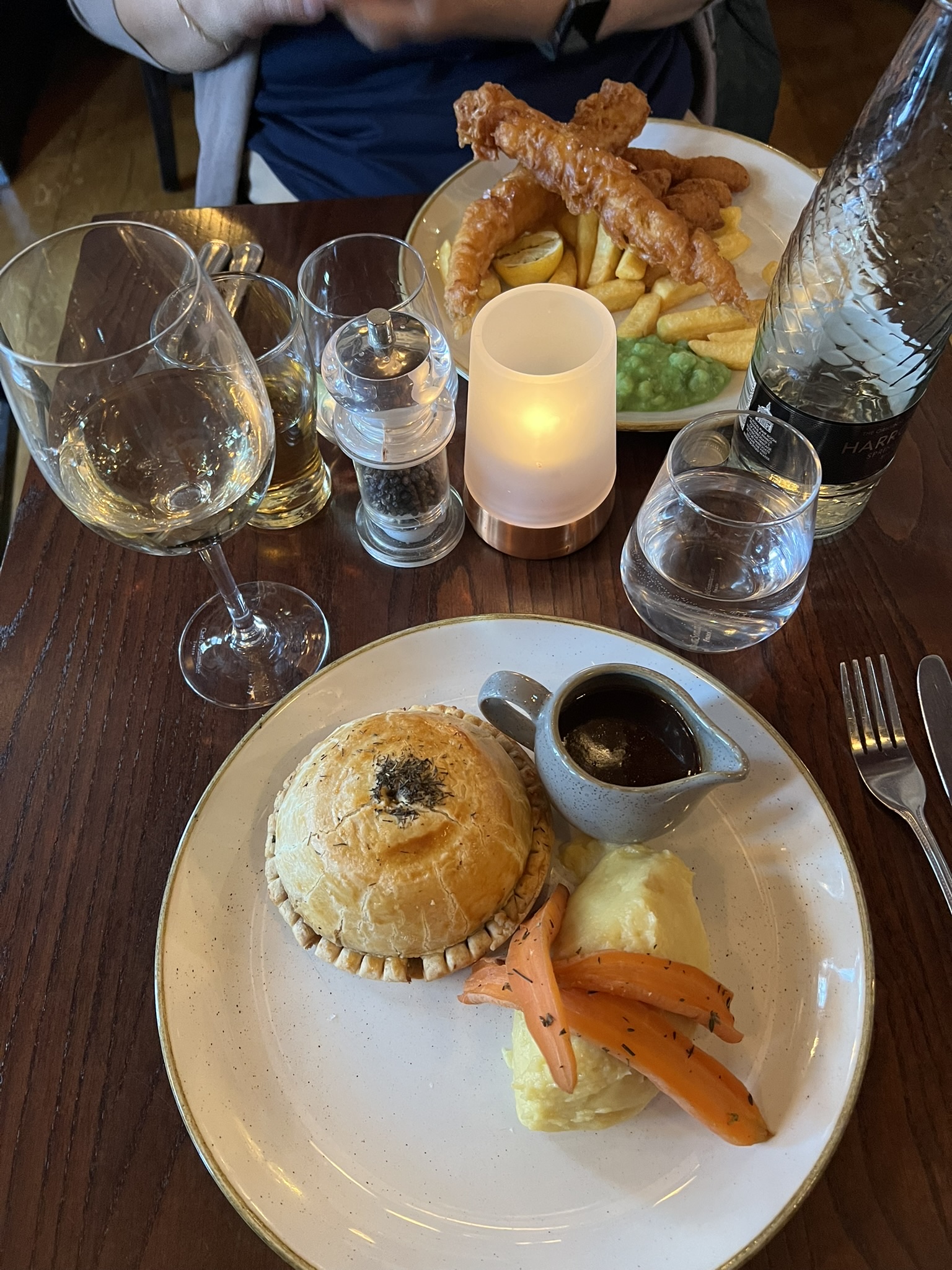
Dinner at The Wellington [appropriate since I started this trip engrossed in the guy – see first posts of this trip] was to finish our day – delicious beef pie – with Joy spotting a Winston Churchill behind her!
Walking back to hotel we took in the Royal Drury Lane Theatre,
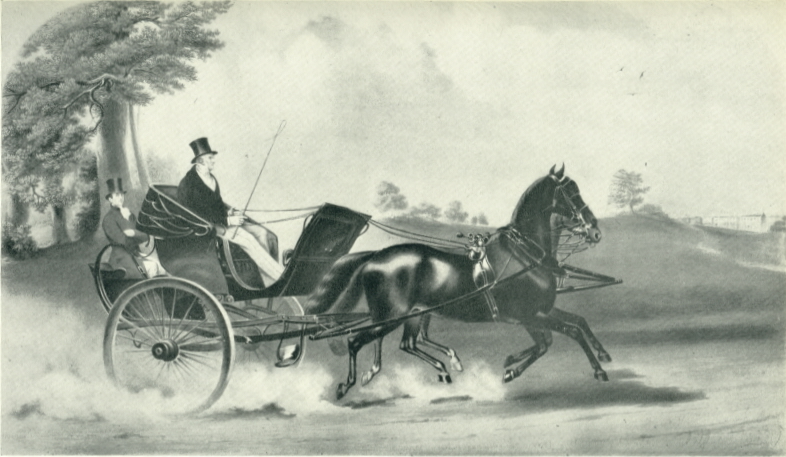
And The Marquess of Anglesey – I feel connected to the good Marquess because I use an image of him in his curricle in my talks on Regency carriages and travel in Jane Austen’s time:
Passing by this artful extravaganza: quite the magical show – we could not stop smiling!:
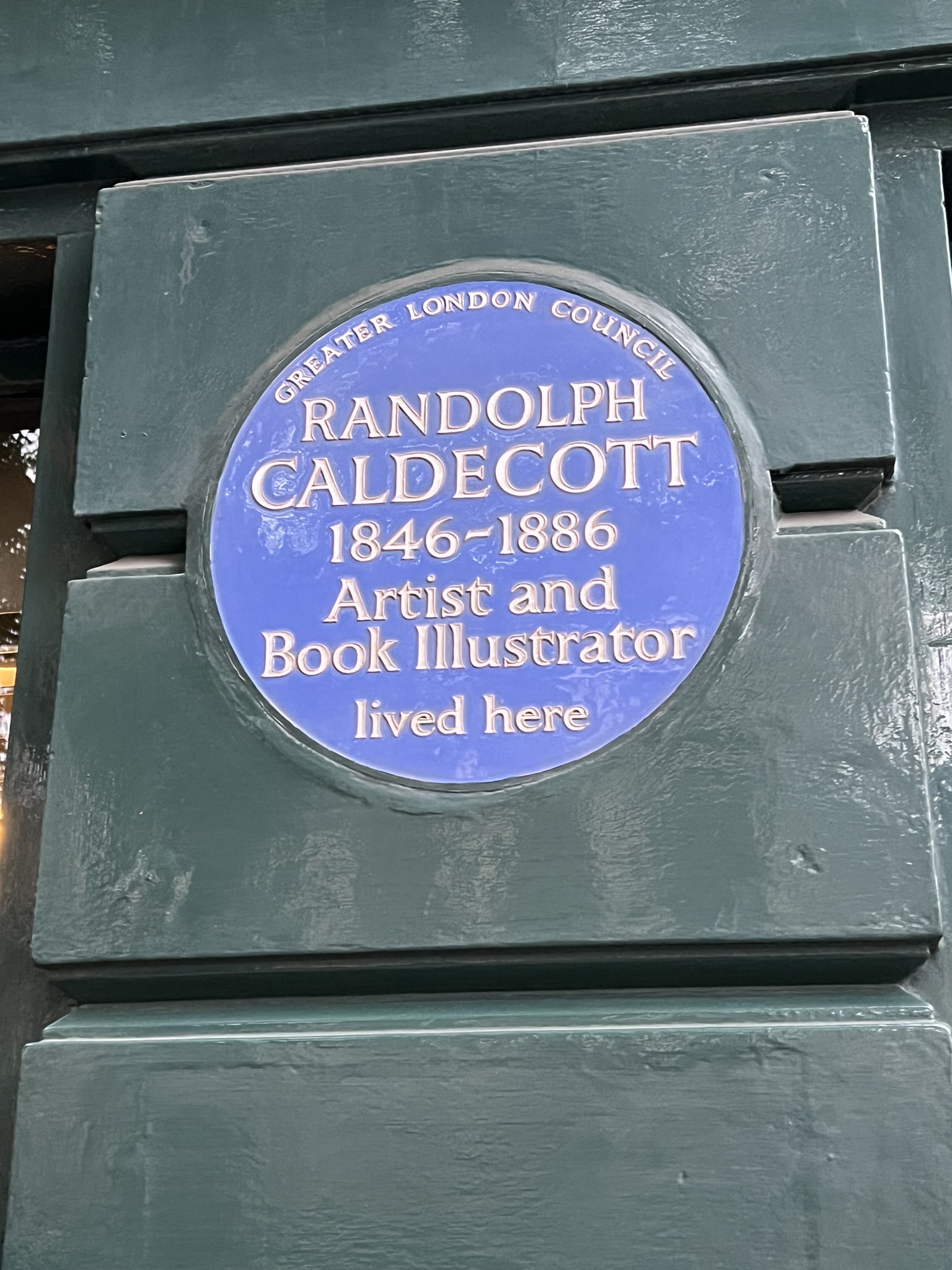
Found the home of Randolph Caldecott, complete Hero in the history of children’s literature – I love him:
Caldecott’s John Gilpin
And finally the London Review of Books Bookshop, a favorite spot, but this evening closed because of an author event in progress…
So ‘til tomorrow – last day! Aren’t you exhausted??
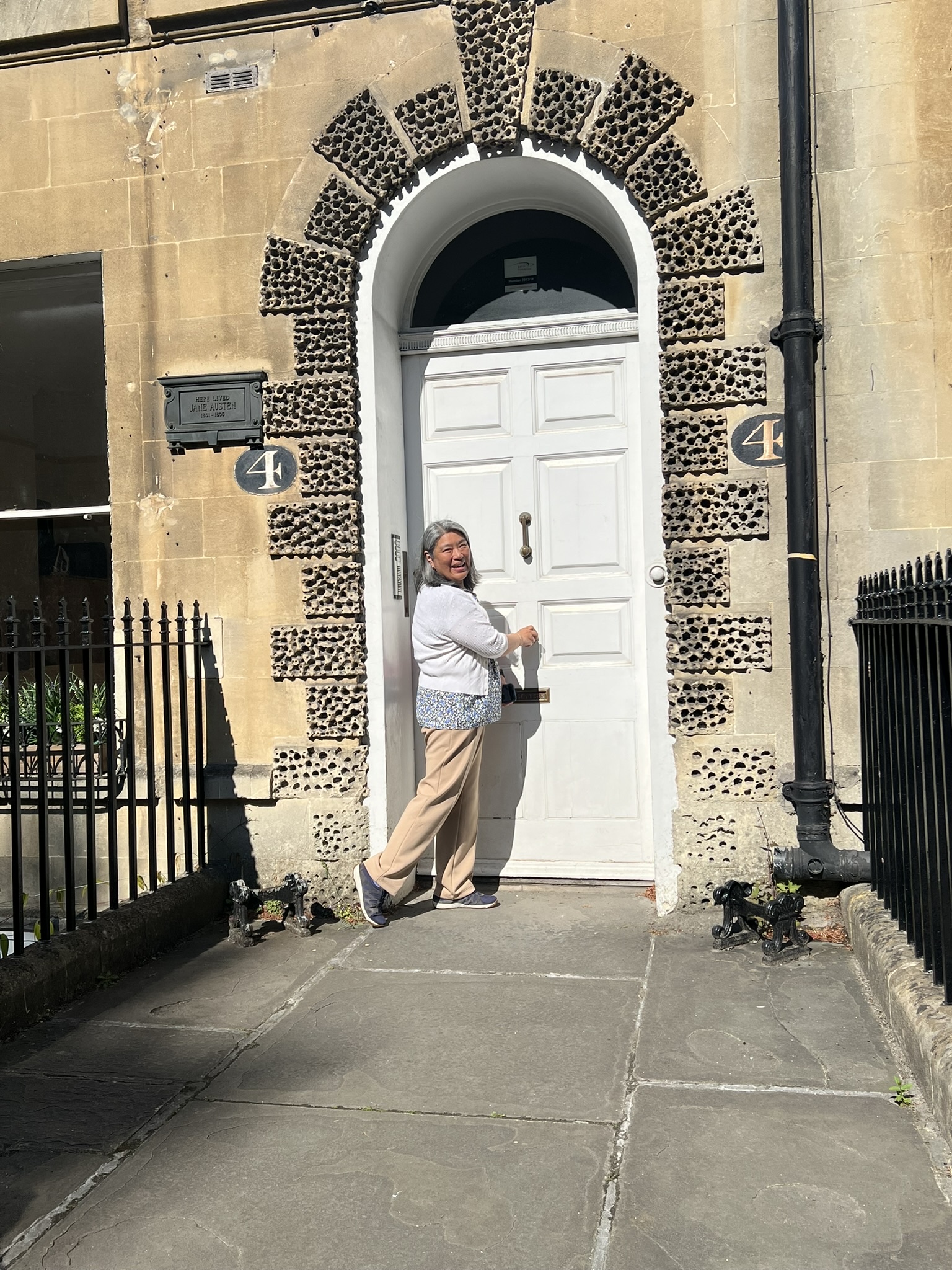
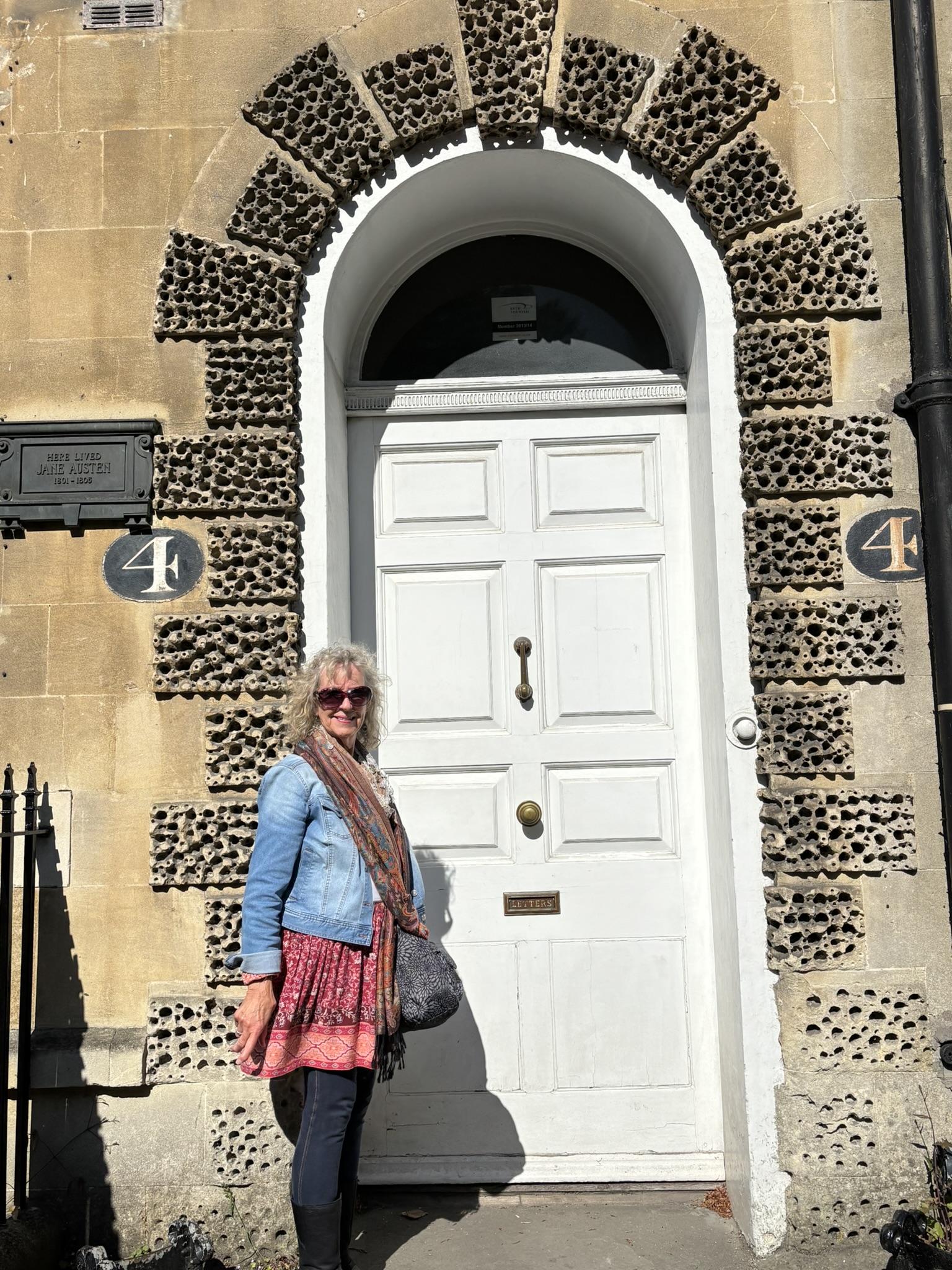
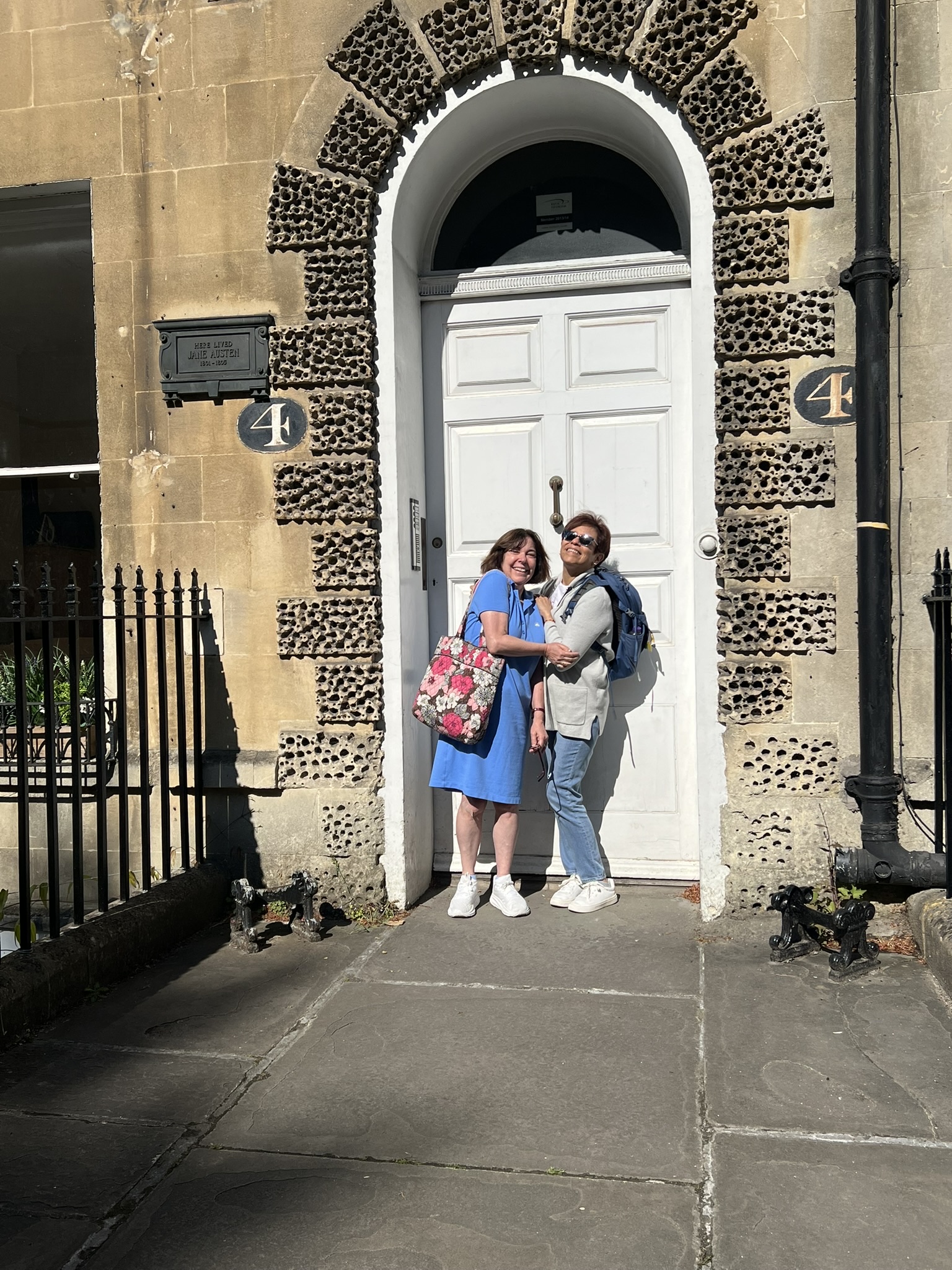
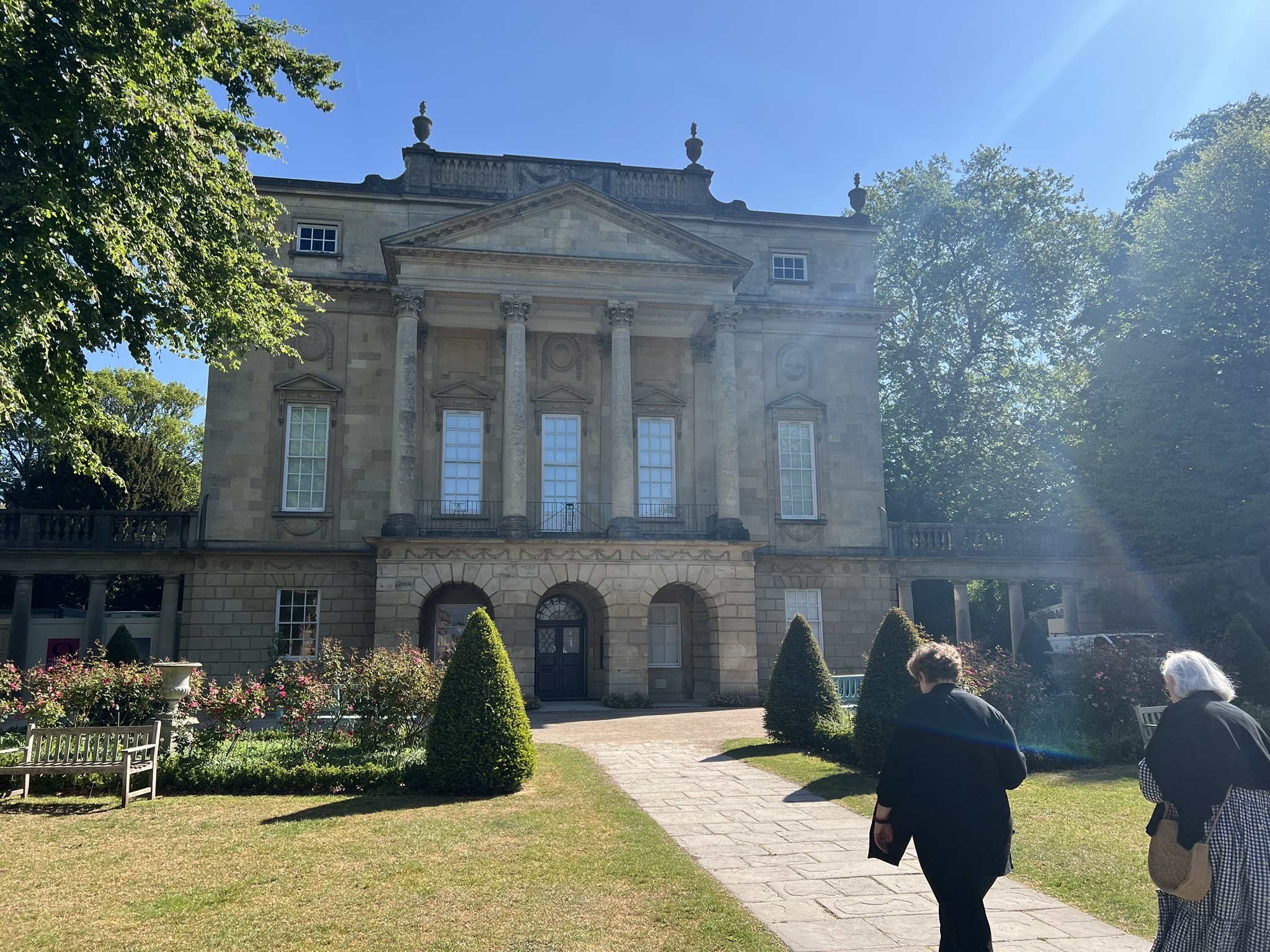
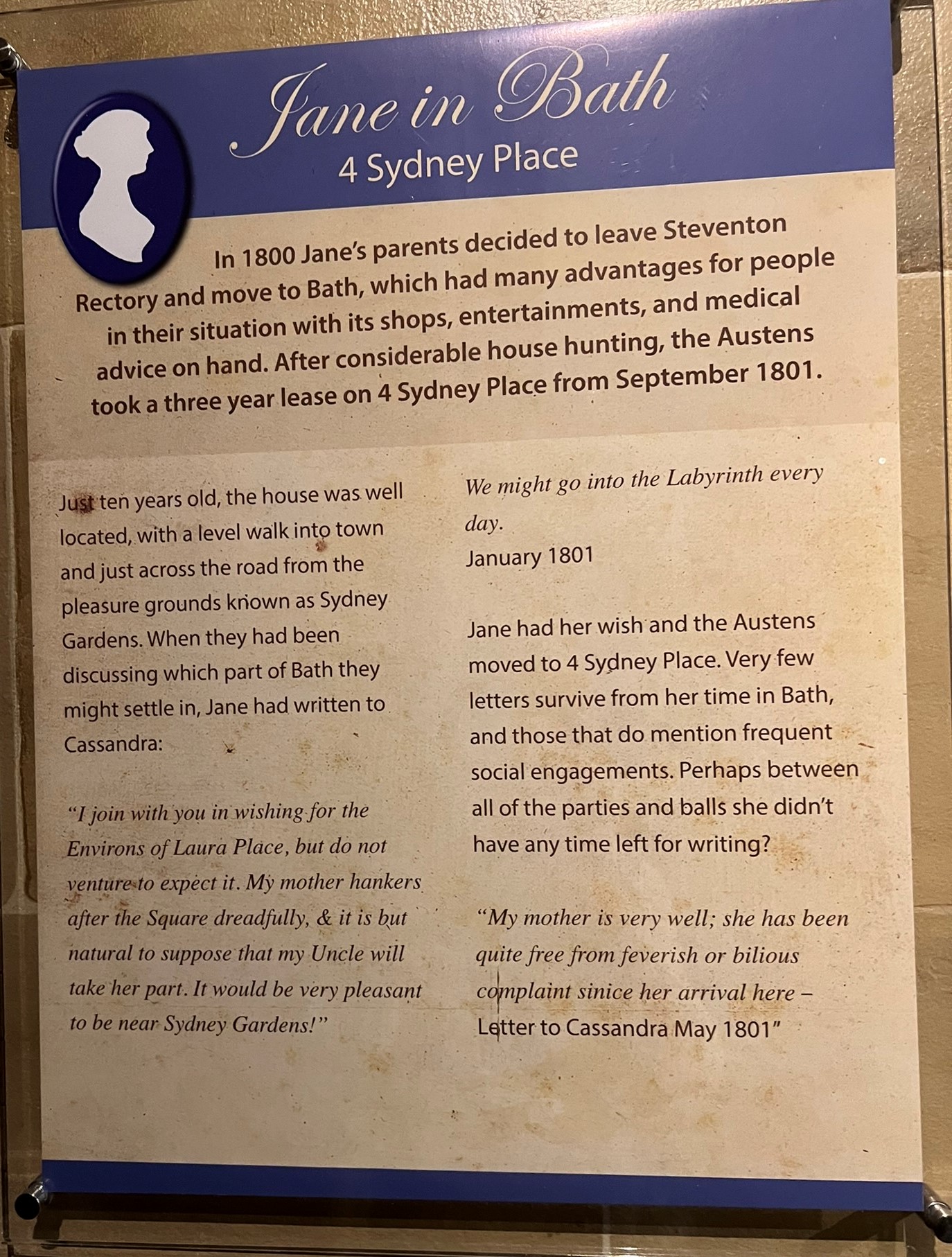
But now we are off first thing to the Holburne Museum – with a stop along the way to No. 4 Sydney Place, at the end of Great Pulteney Street, where Jane and her sister and parents lived for their first three years in Bath – it is also the only house in Bath to have a plaque telling us that she had lived here: here are Joy and I, and Michele and Vicki in the required photos at the front door [people who live here must love this constant invasion of their doorstep…]
**************
Then into the Museum, with again a terrific guide, who pointed out the salient pieces to see on a fairly quick tour – so much here to ponder over: the artwork, decorative arts, and history of the owner:
At the heart of the Holburne Museum is the collection of Sir William Holburne (1793-1874), fifth baronet of Menstrie. William seemed destined for a naval career but, following the death of his elder brother Francis, he inherited the family title and a modest fortune. He left the navy and embarked on an eighteen-month Grand Tour of Europe, visiting Italy, the Alps and the Netherlands. This sparked a life-long interest in art and his enthusiasm for collecting. He particularly loved bronze sculptures, silver, porcelain and Dutch landscapes.
Sir William never married. He lived with his growing collection and his three unmarried sisters on the North side of Bath. It was his wish that his collection be left to the City of Bath for everyone to enjoy. Since his death, more than 9,000 items have been added to his collection including portrait miniatures, porcelain, embroideries and portraits by some of the greatest artists of the eighteenth century.” [from the website]
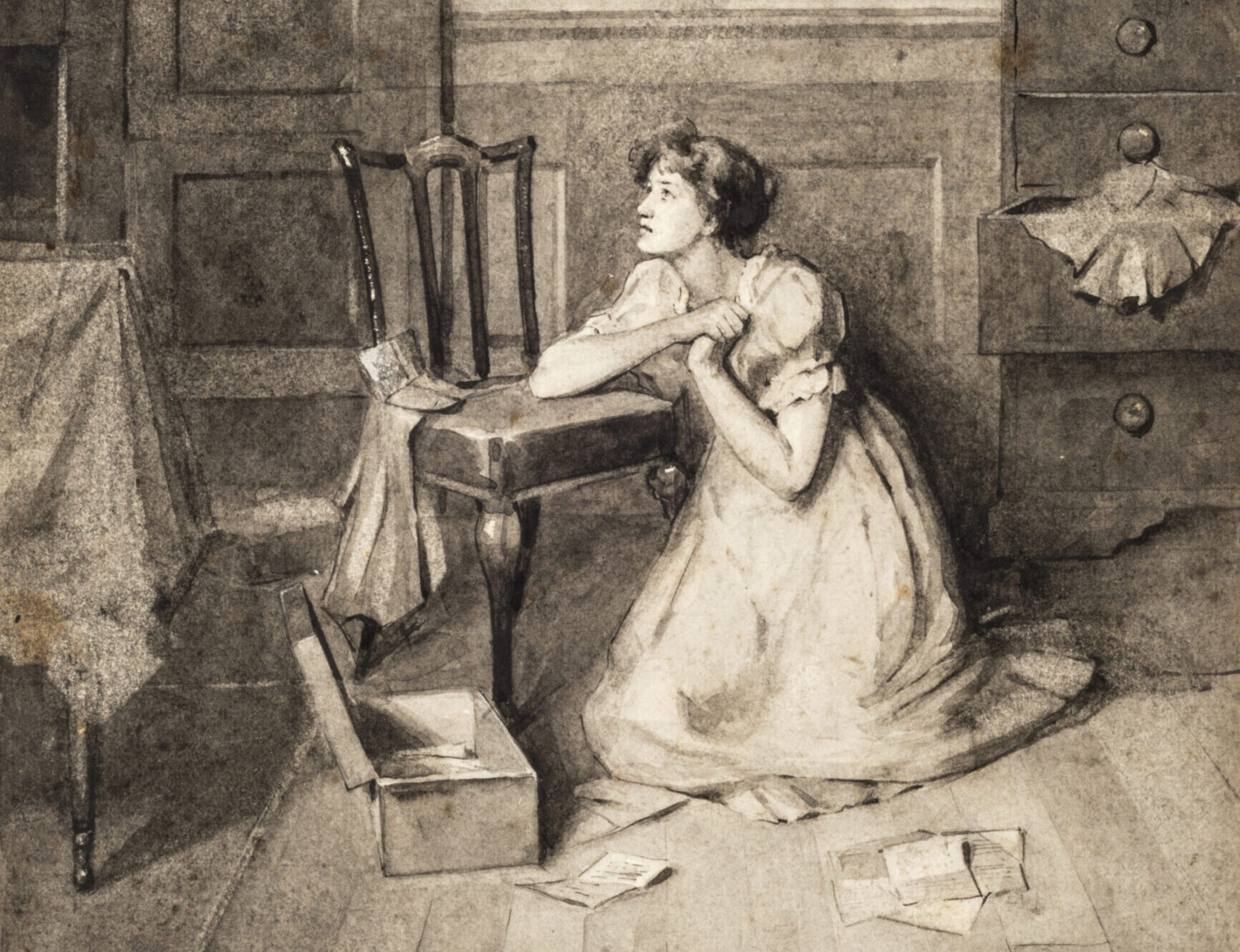
We just missed the Turner watercolor exhibit which was to open on May 23 – but to celebrate Austen in this 250th year, coming up are two evenings of adaptations – the 1995 Emma and 1995 Sense and Sensibility. And from Sep 11, 2025 – Jan 11, 2026, an exhibit on “Illustrating Austen”:
[Marianne Dashwood, by William C. Cooke, S&S, 1892]
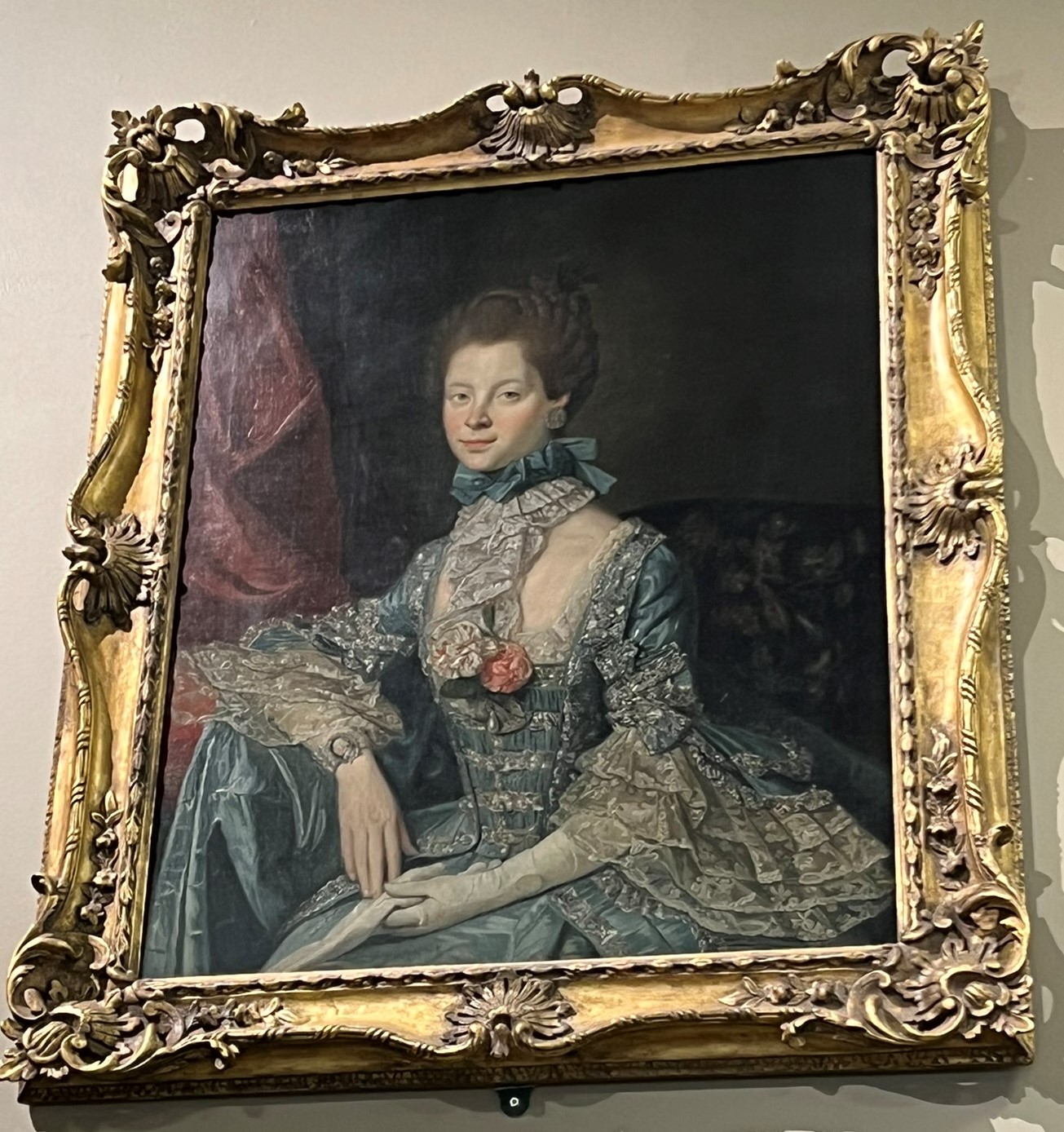
I could have stayed here all day taking photos – so here just a few of my favorites:
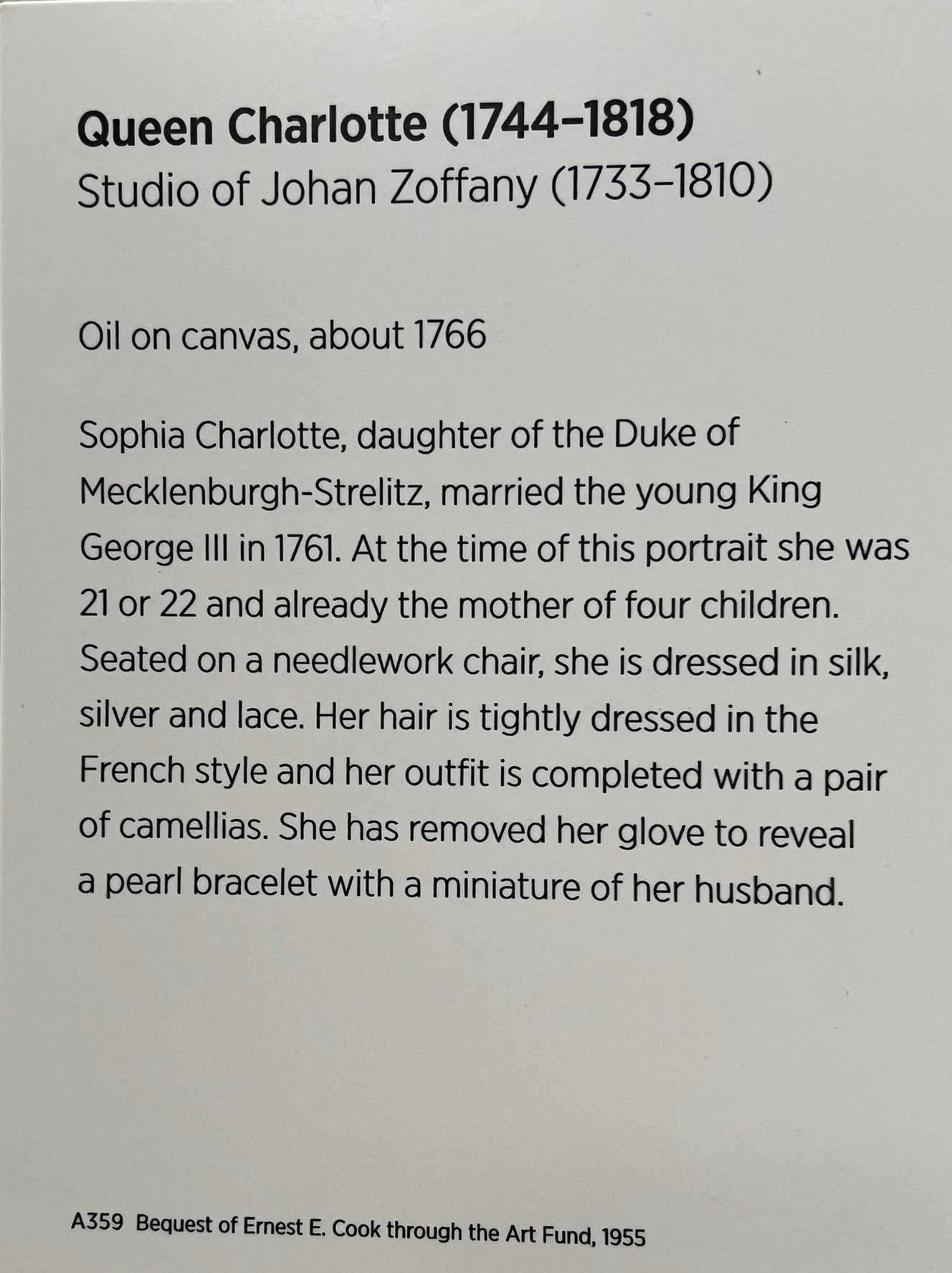
Queen Charlotte:
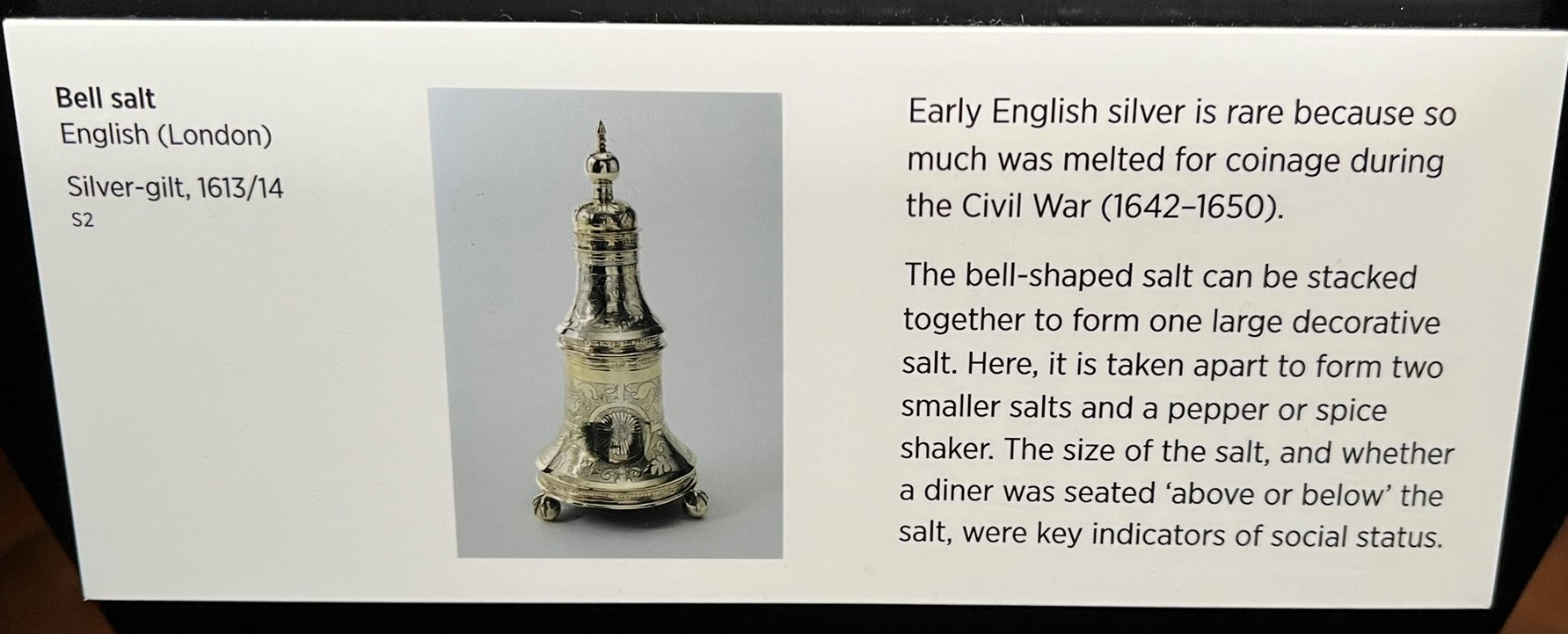
English silver:
A chamber pot designed as a planter:
More porcelain:
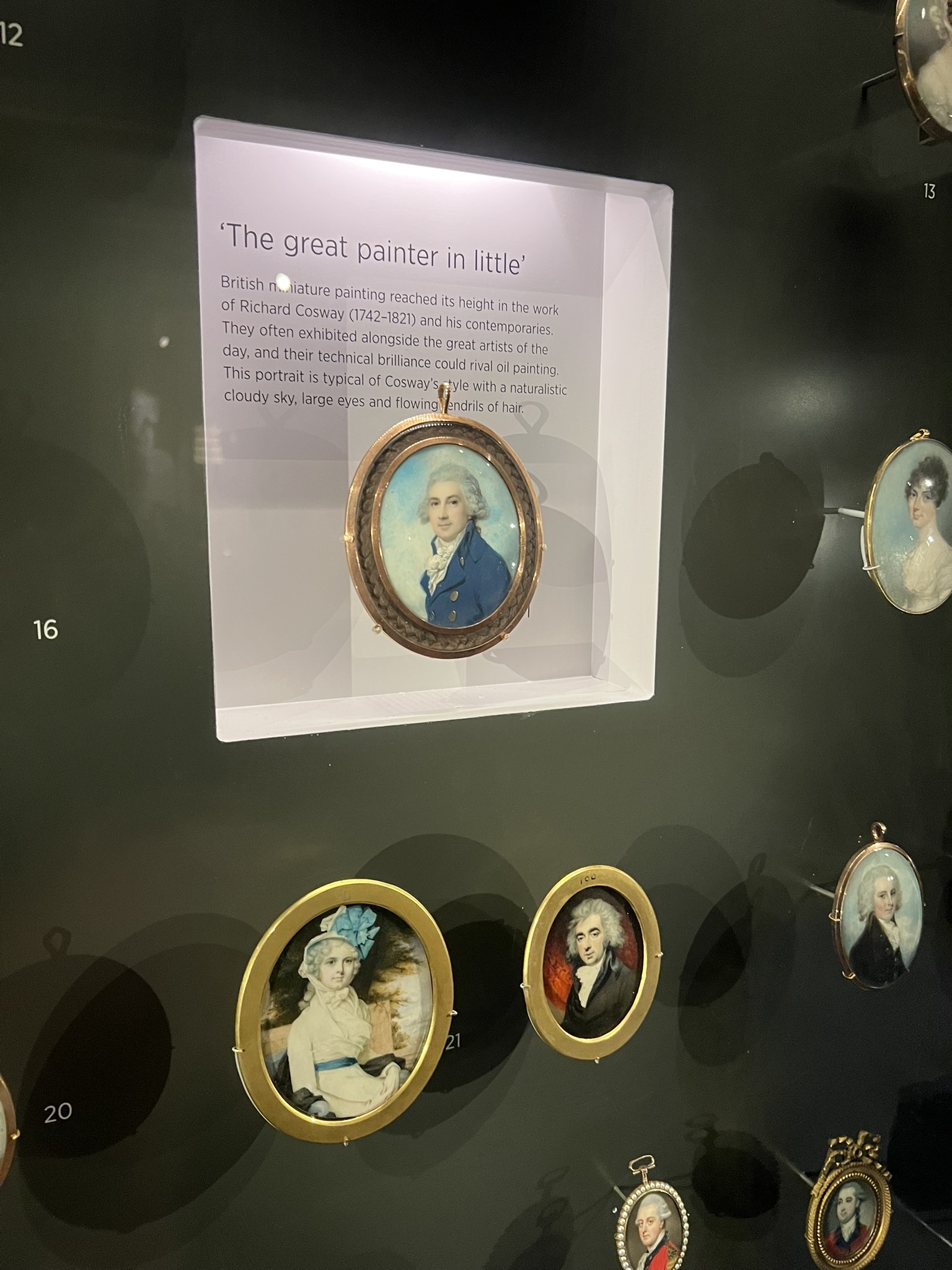
Richard Cosways’ miniatures:
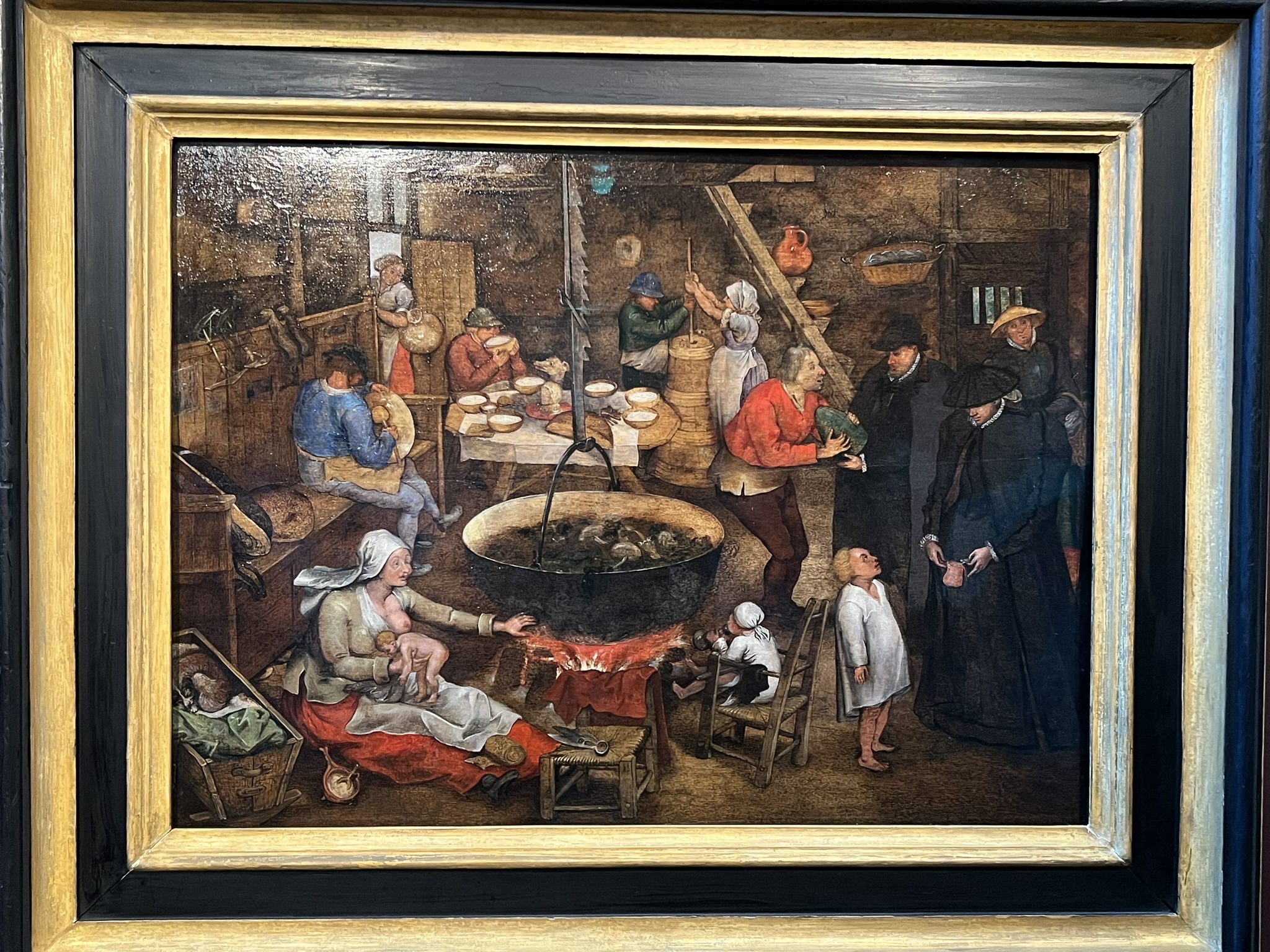
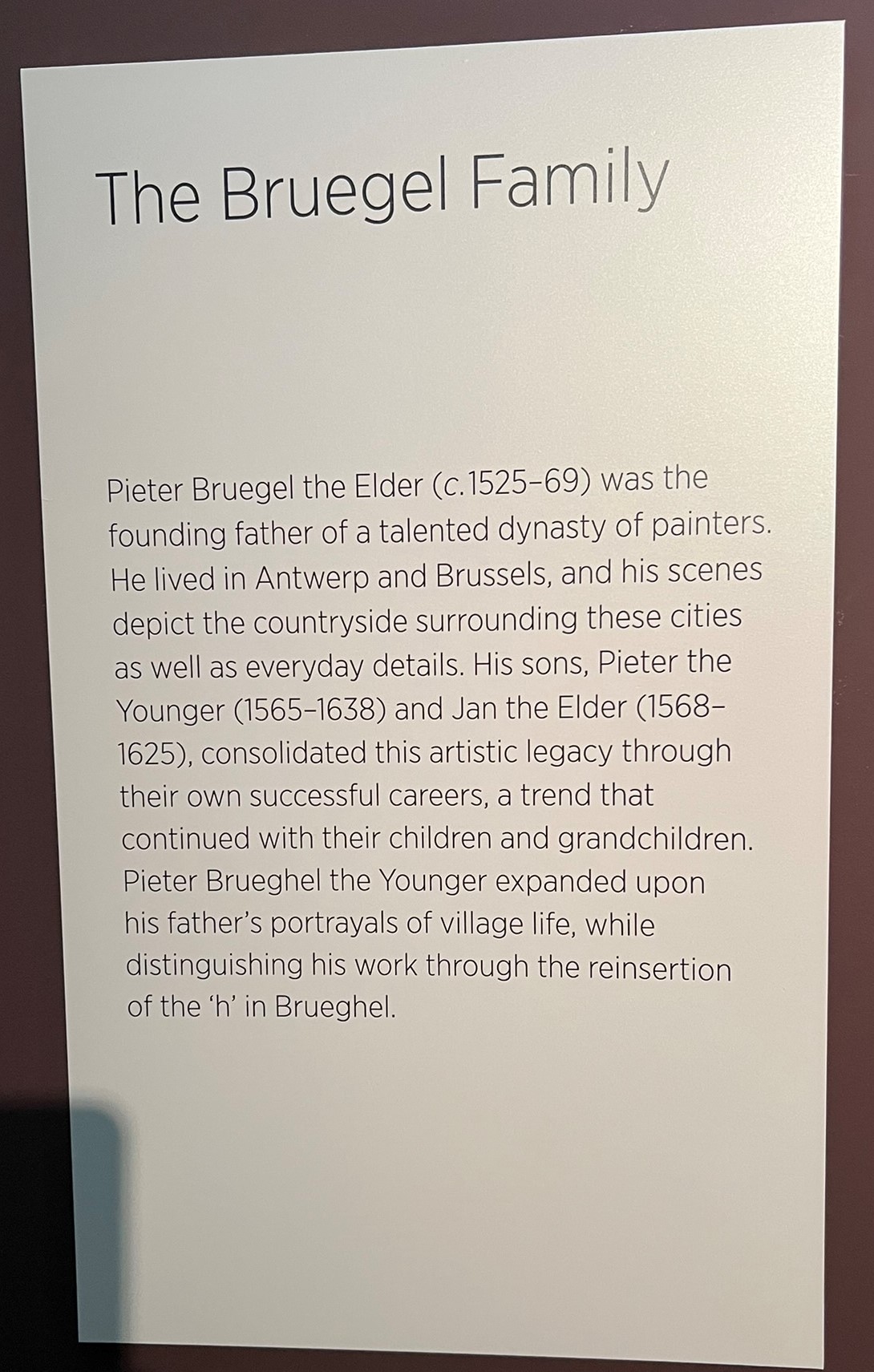
I was interested in these Bruegels because I was heading off to Belgium on a Flemish art trip at the end of June – apparently this one is definitely attributed to him, the one below has not…:
And, where there is a harp, can Mary Crawford be far behind??
**************
And must make a note of the setting of the Holburne Museum as Lady Danbury’s house in the Netflix series Bridgerton – it appears in all three seasons and also in Queen Charlotte: A Bridgerton Story. The museum’s exterior is particularly recognizable when guests arrive at balls, and it’s also the setting for a scene in season 3 where Penelope is upset with Colin.
Then more walking around Bath – across the Great Pulteney Bridge with its great shops – here Joy and I found the perfect spot for tea: Pulteney Bridge Coffee where we had “lemon drizzle” – yum…
And where you then come upon Laura Place, the widest street in Bath, and where Lady Dalrymple lives – the very upper-class (and expensive) location and where Sir Walter is chuffed to bits to be invited…
Here is a great summary of places in Bath that show up in Persuasion:
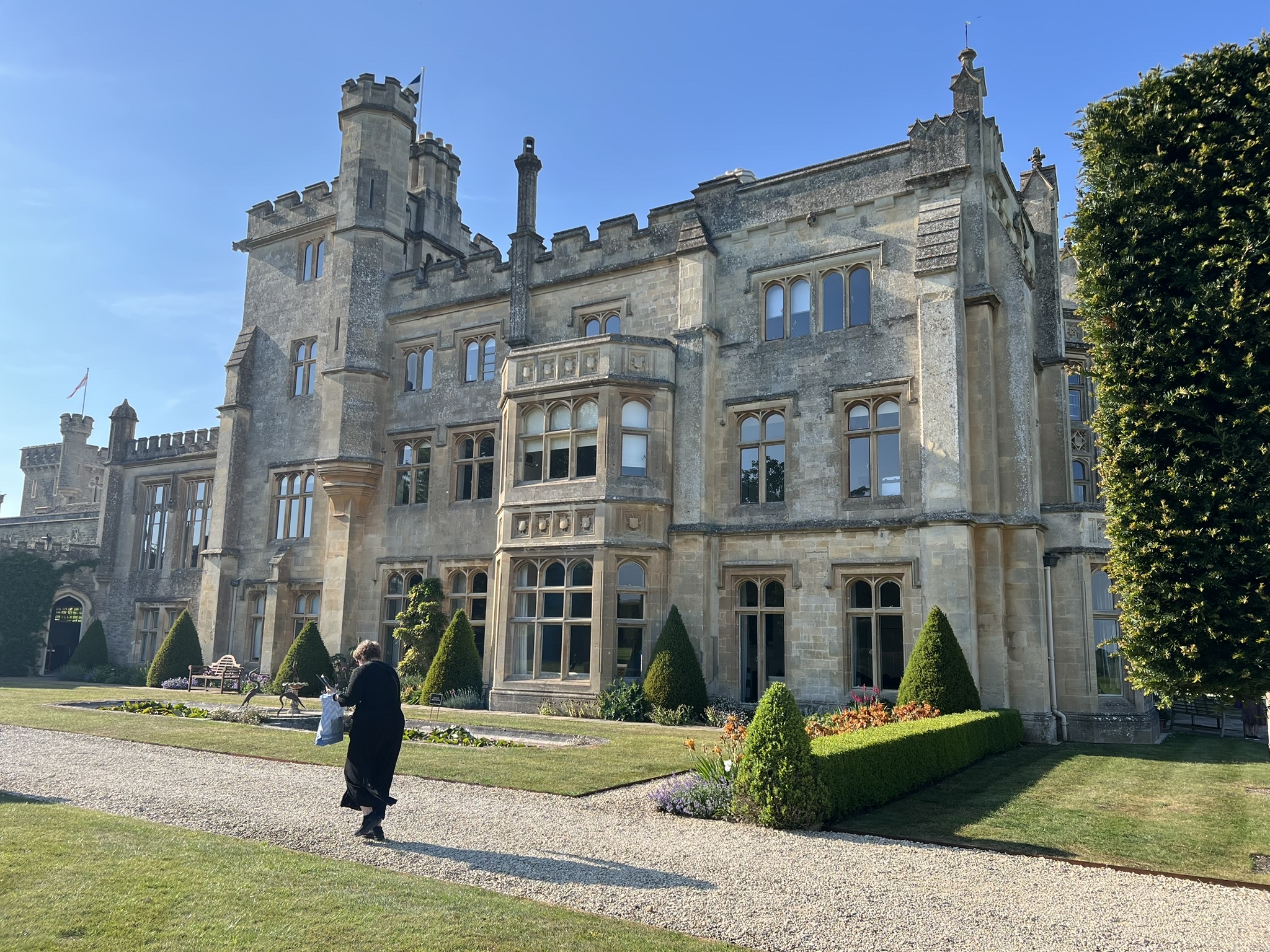
If you want to get married here or throw yourself an elegant party [and I highly recommend it!}, go here: https://www.farleigh.house/
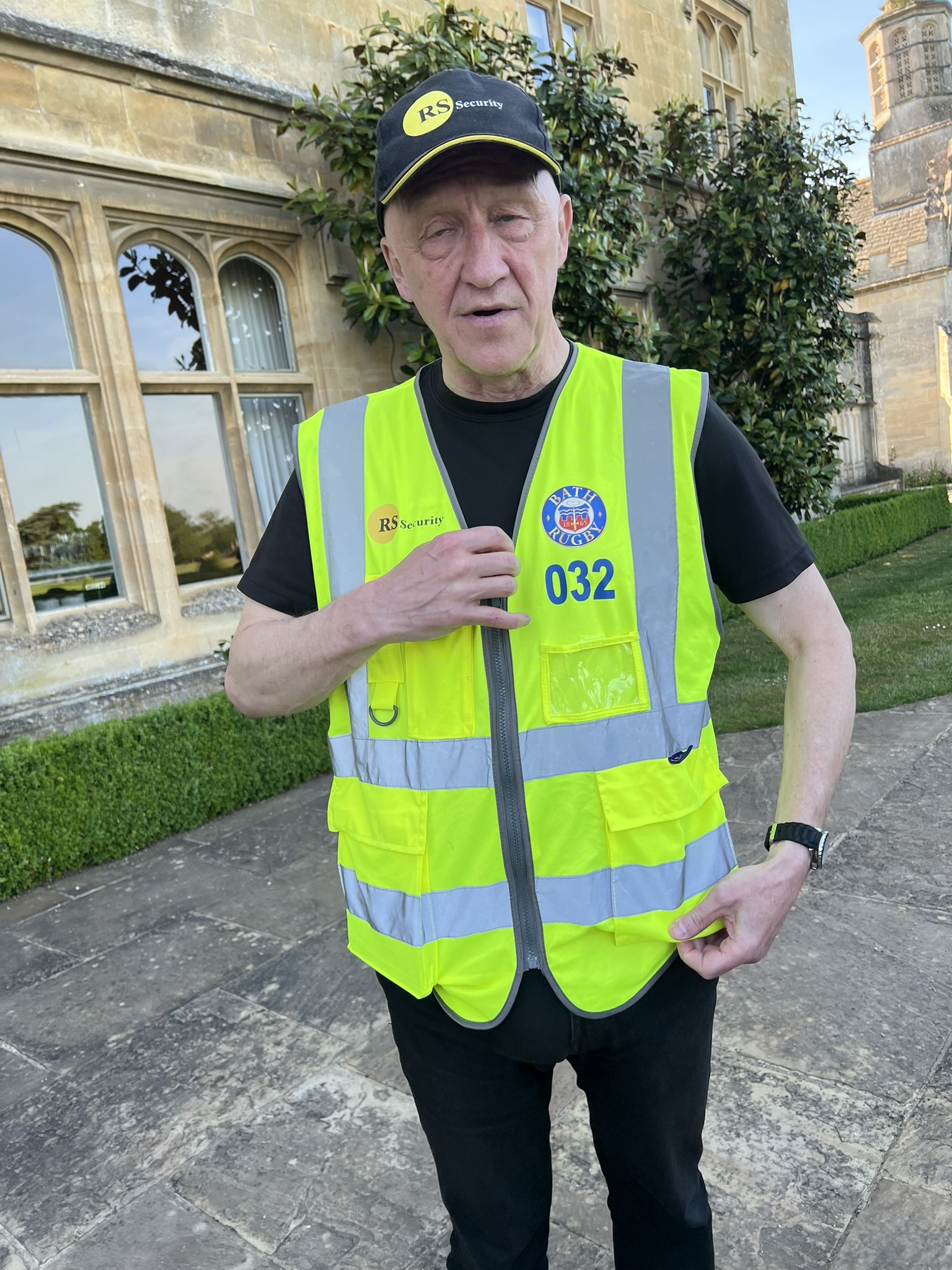
I was most interested in the rugby! My husband played rugby in college and later for a club in Washington DC – but alas! no rugby players in sight, only some views of the playing fields – more about them here: https://www.bathrugby.com/
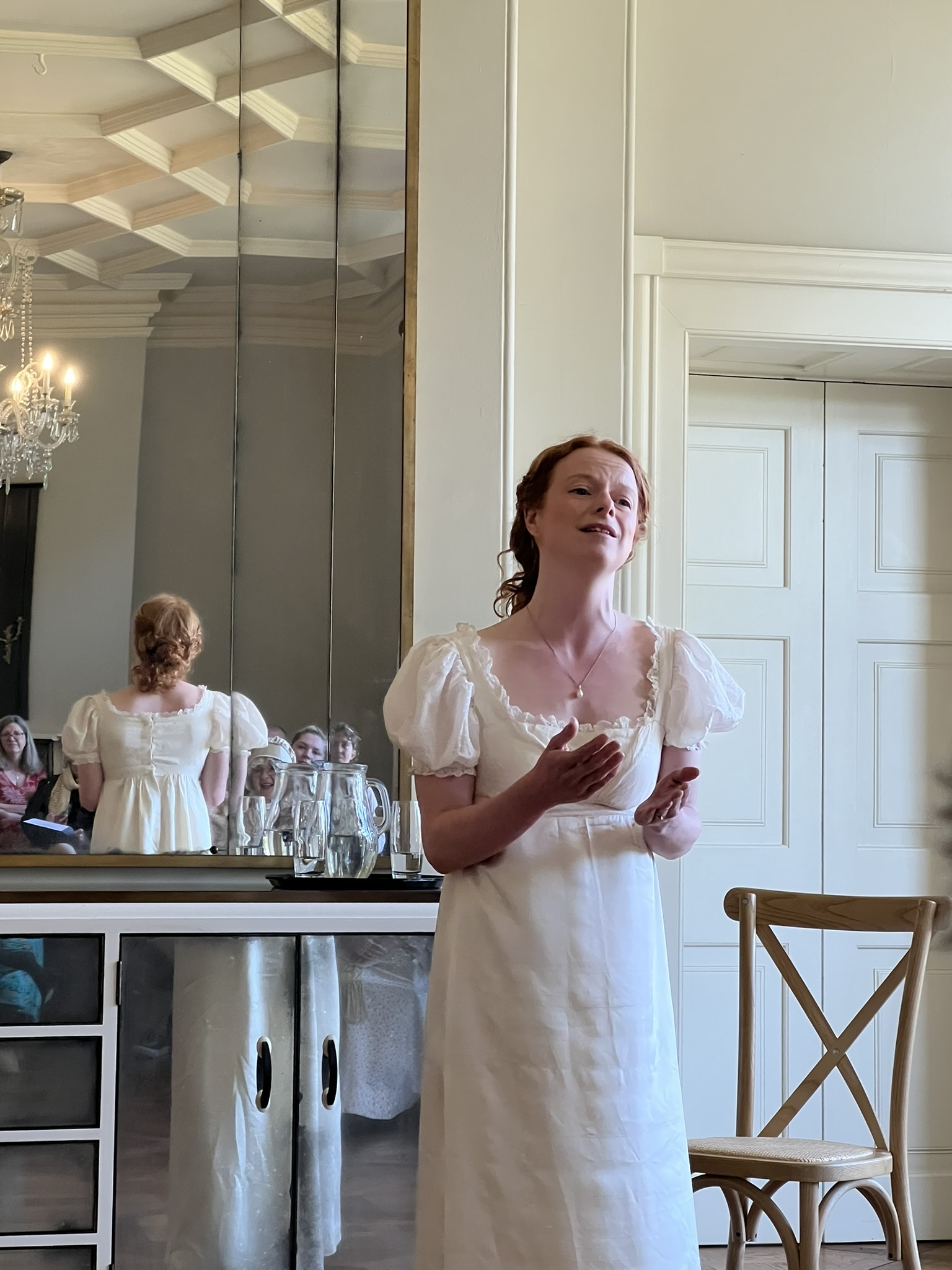
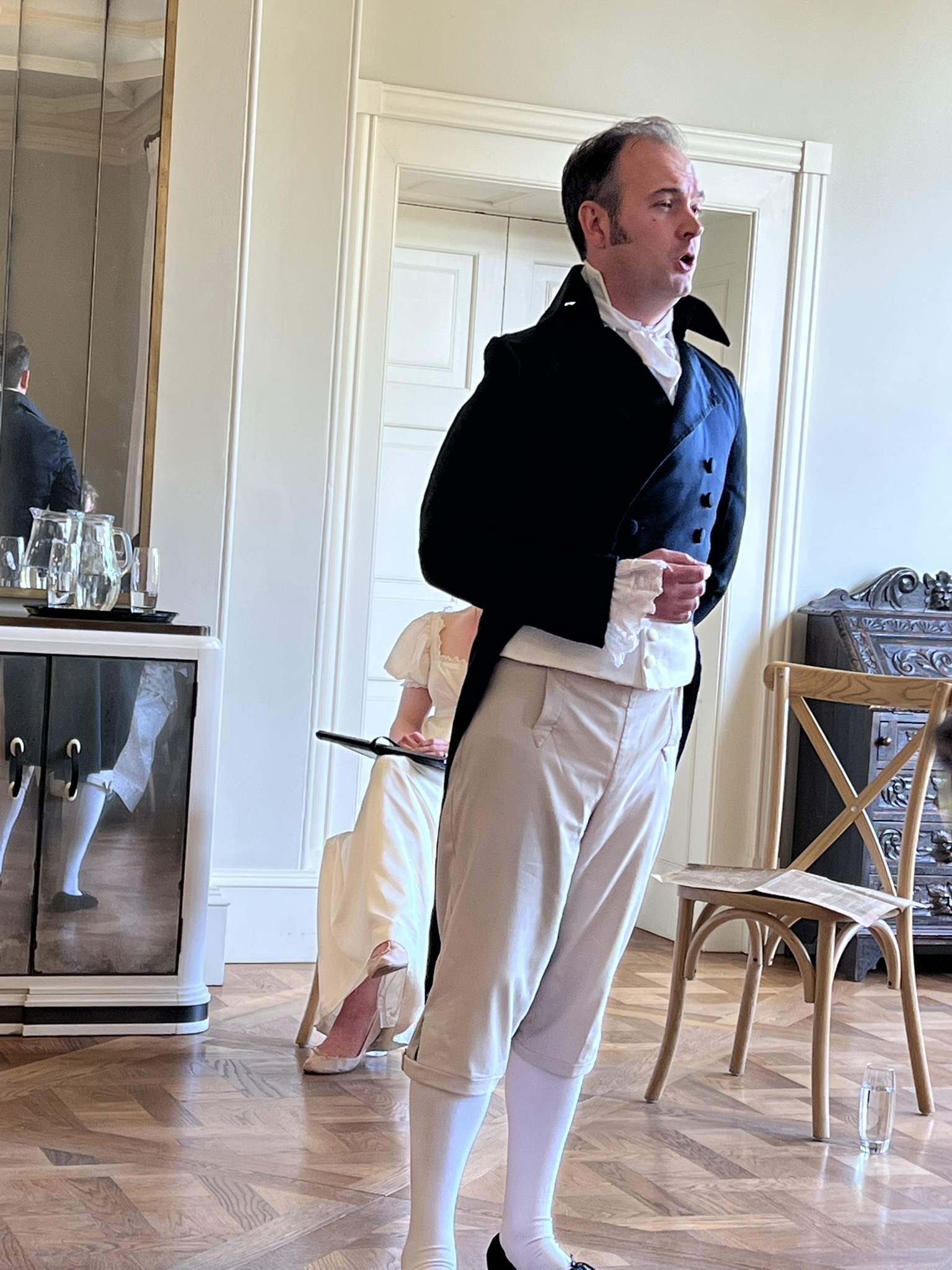
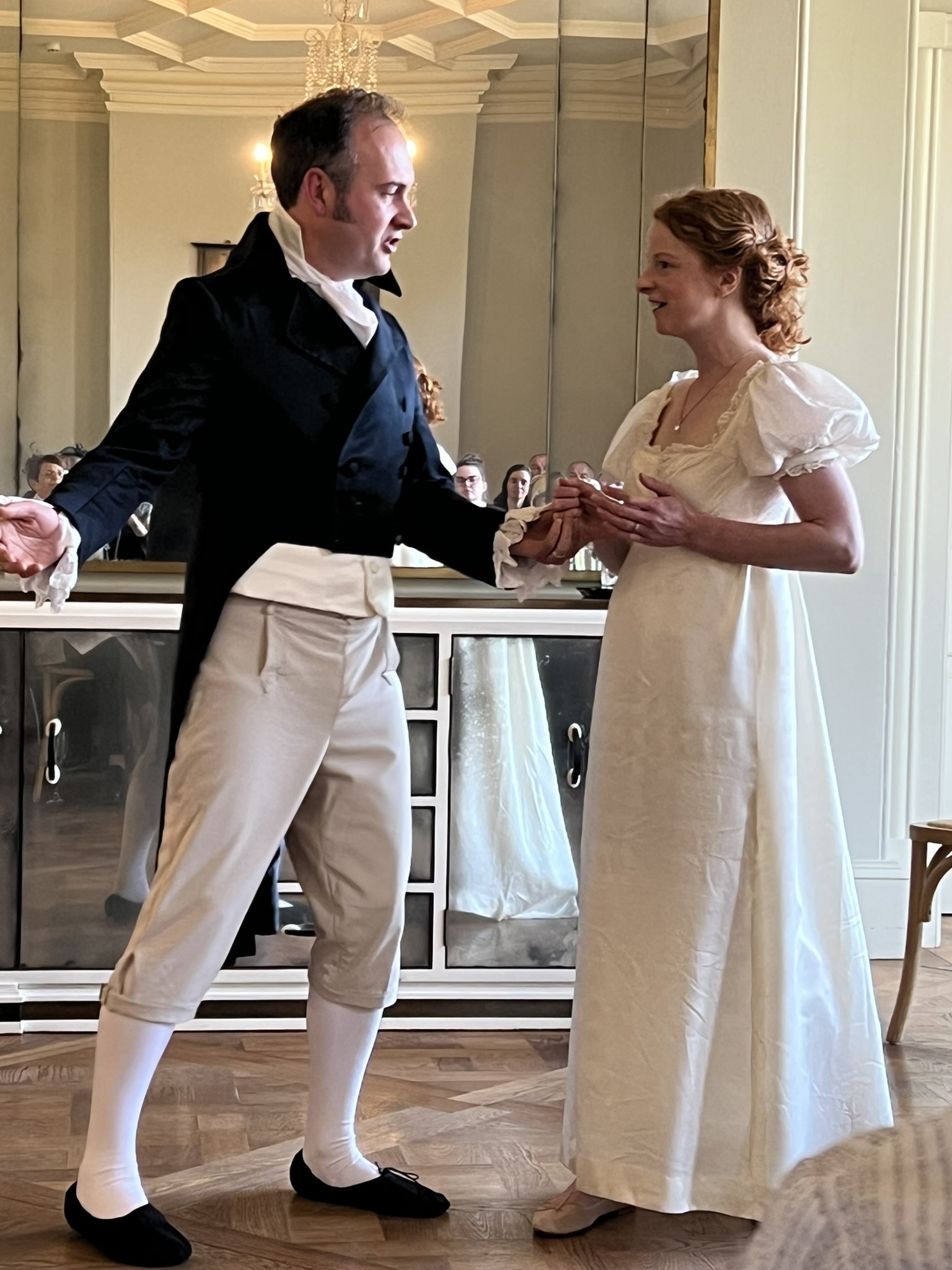
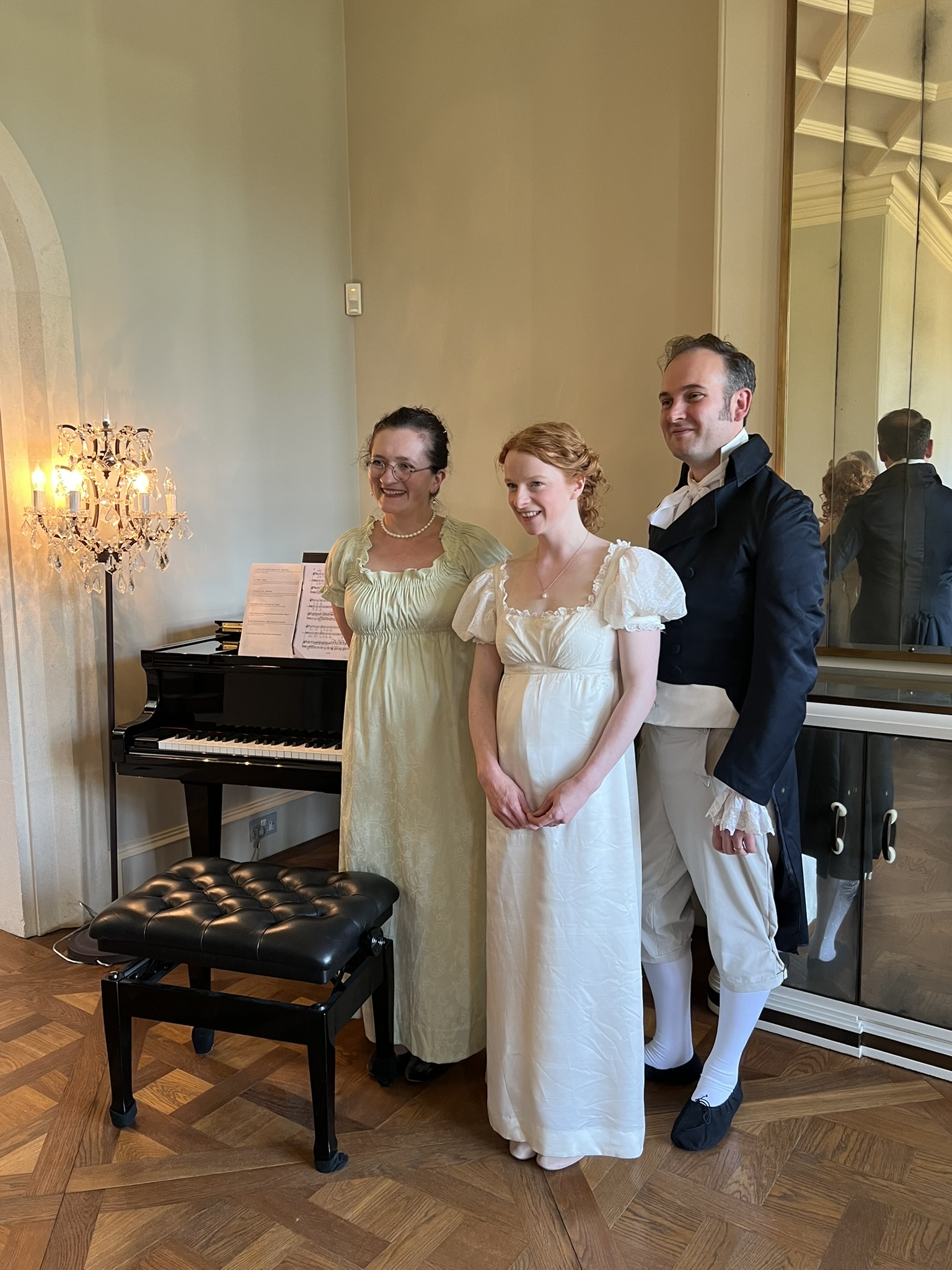
On entering the house, we were vastly and beautifully entertained by a Regency Ensemble of three: pianist and two singers singing Jane Austen-era songs: “A Delightful Diversion” performed by The Literary Music Ensemble:
**************
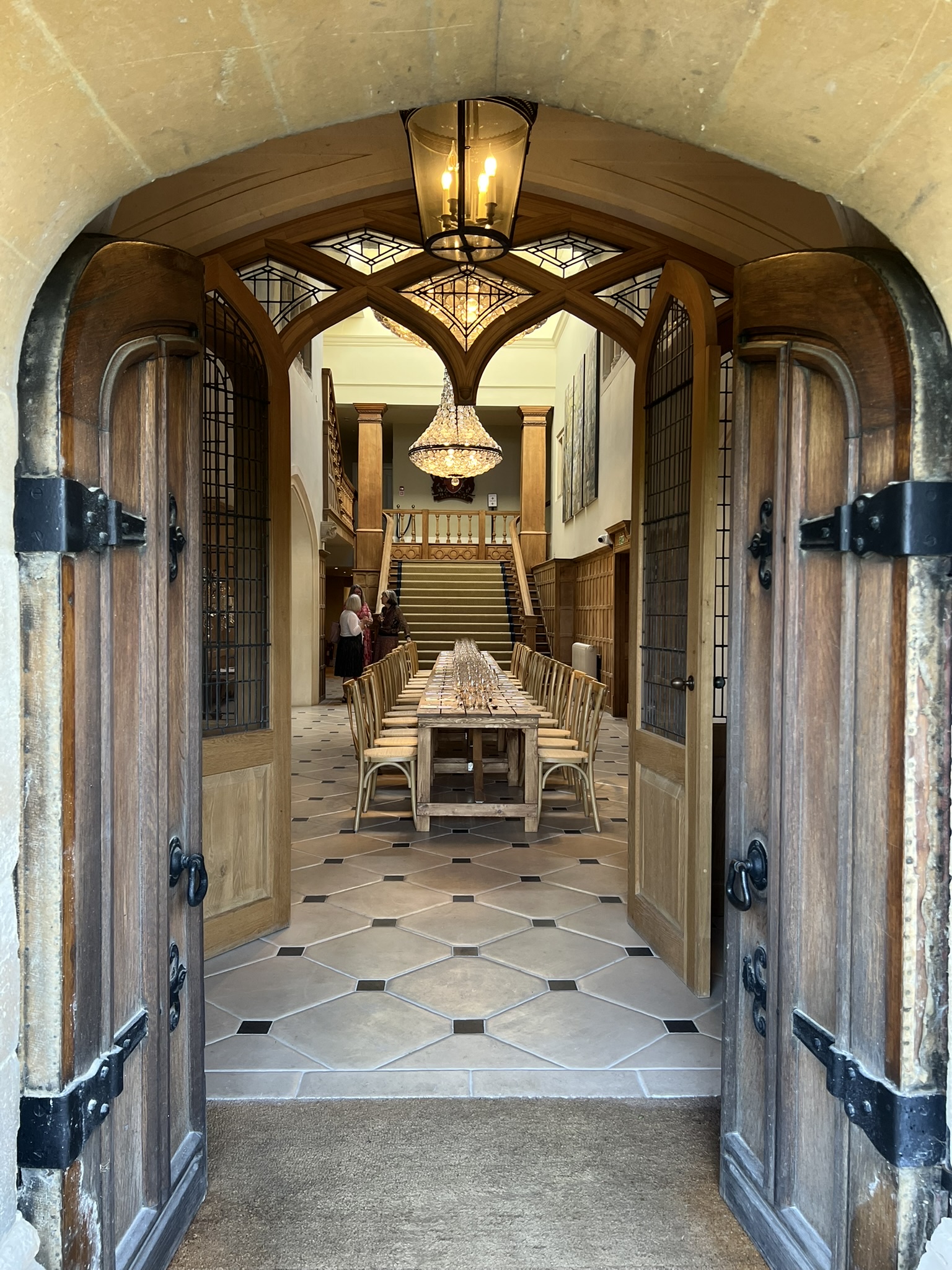
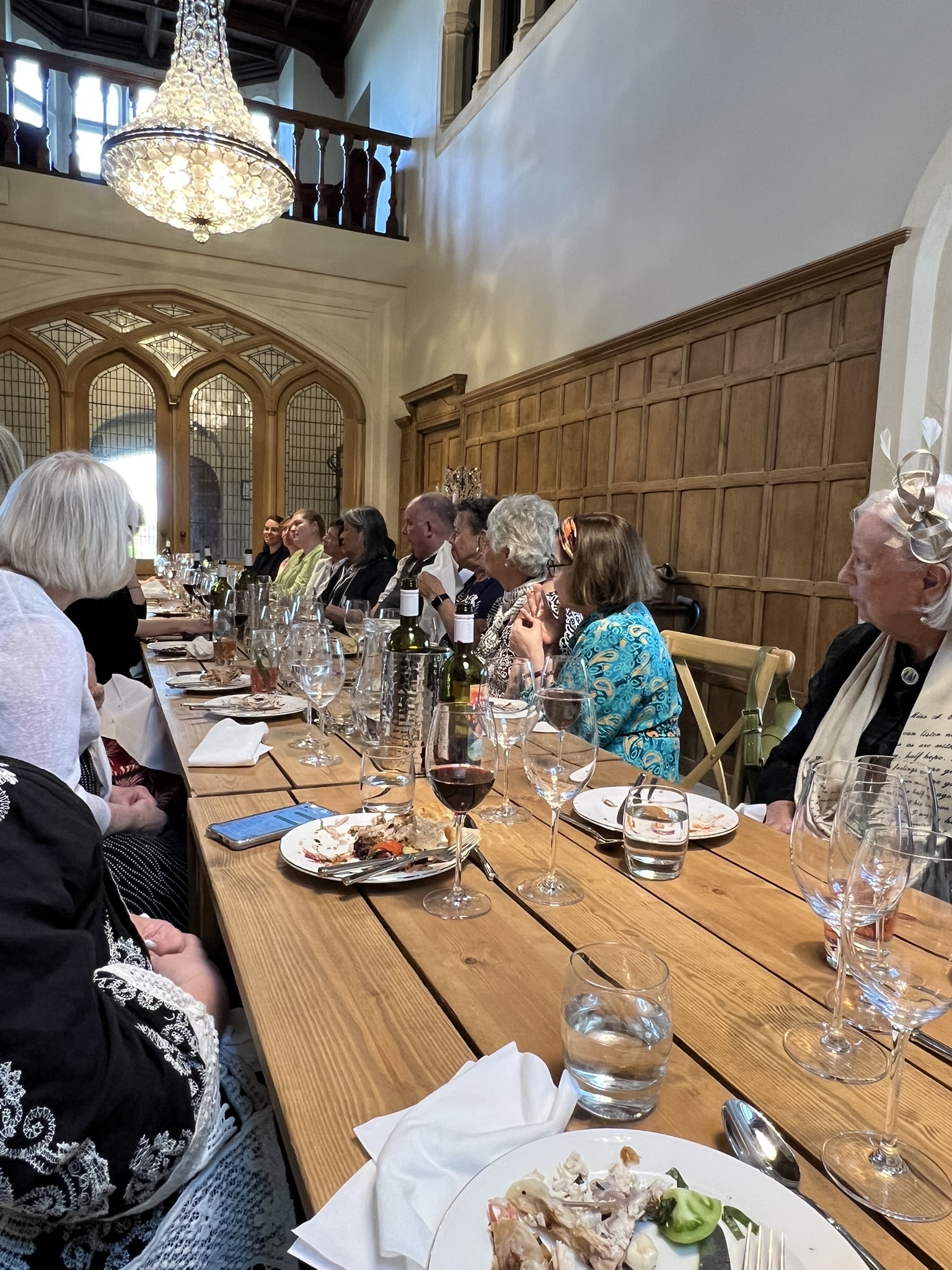
Then into the main hall that serves as the VERY large dining room – on offer was a delicious buffet…
No going upstairs, but one could wish…
Dessert!!
A perfect place for a Regency gathering of like-minded souls – JASNA went all out here for our last evening together:
Claire and Marcia!
Back on the bus heading back to the hotel on a beautiful evening, all very well-fed, very well-entertained, and quite sad to be bidding adieu to each other…:
So, today I messed up Royally – was supposed to meet a friend, but misplaced days of the week in my head – travel can do that to you [anyone else out there have this happen??]. To me, today was a Monday, because yesterday felt like a Sunday – everything contrived against my really knowing today is a Tuesday, the day set up to meet my friend – it was to be my second day in Bath, but I didn’t count the first day because we only got there in the evening – I am still trying to make sense of it – my only consolation is that we shall see each other in Baltimore!
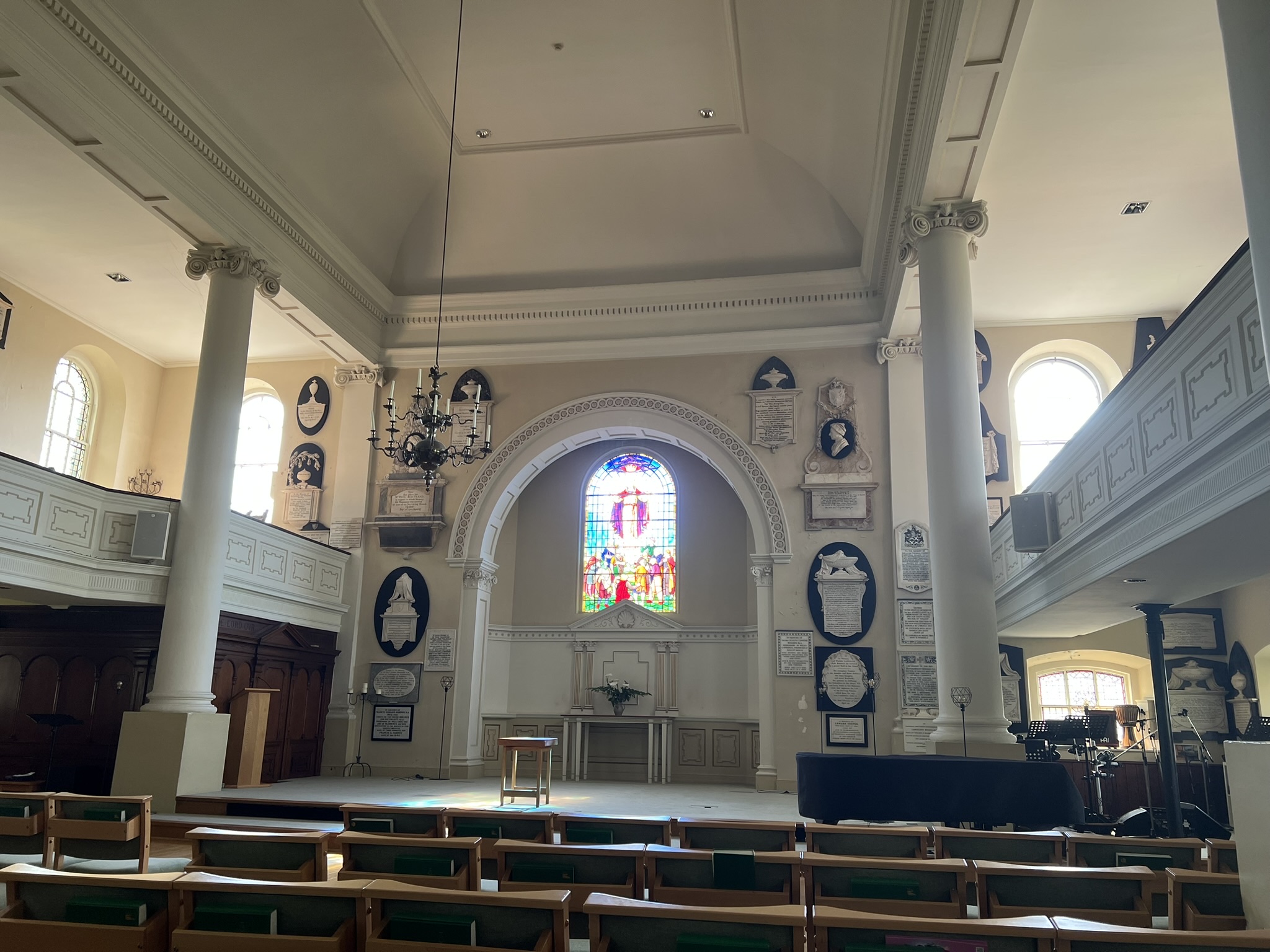
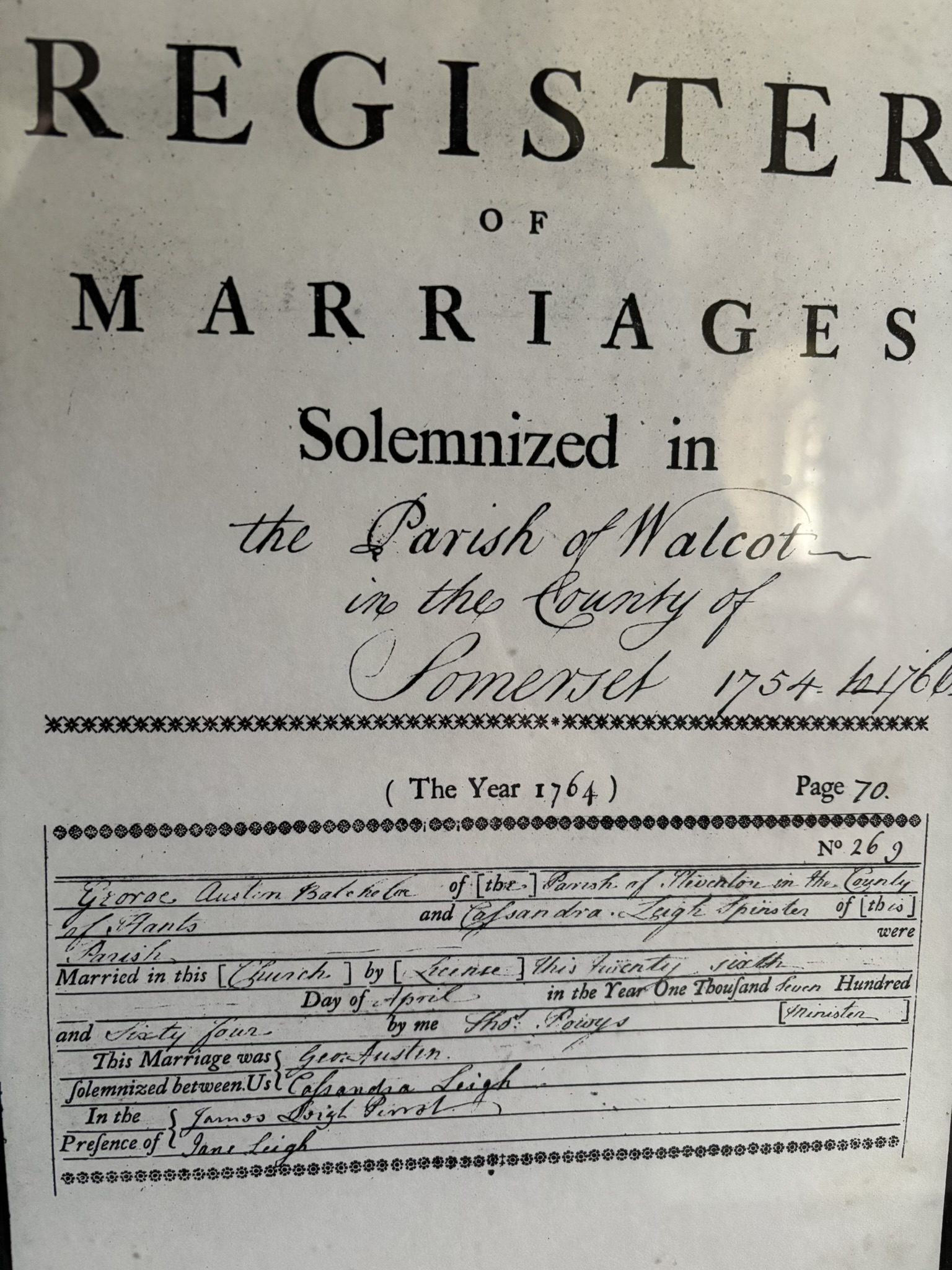
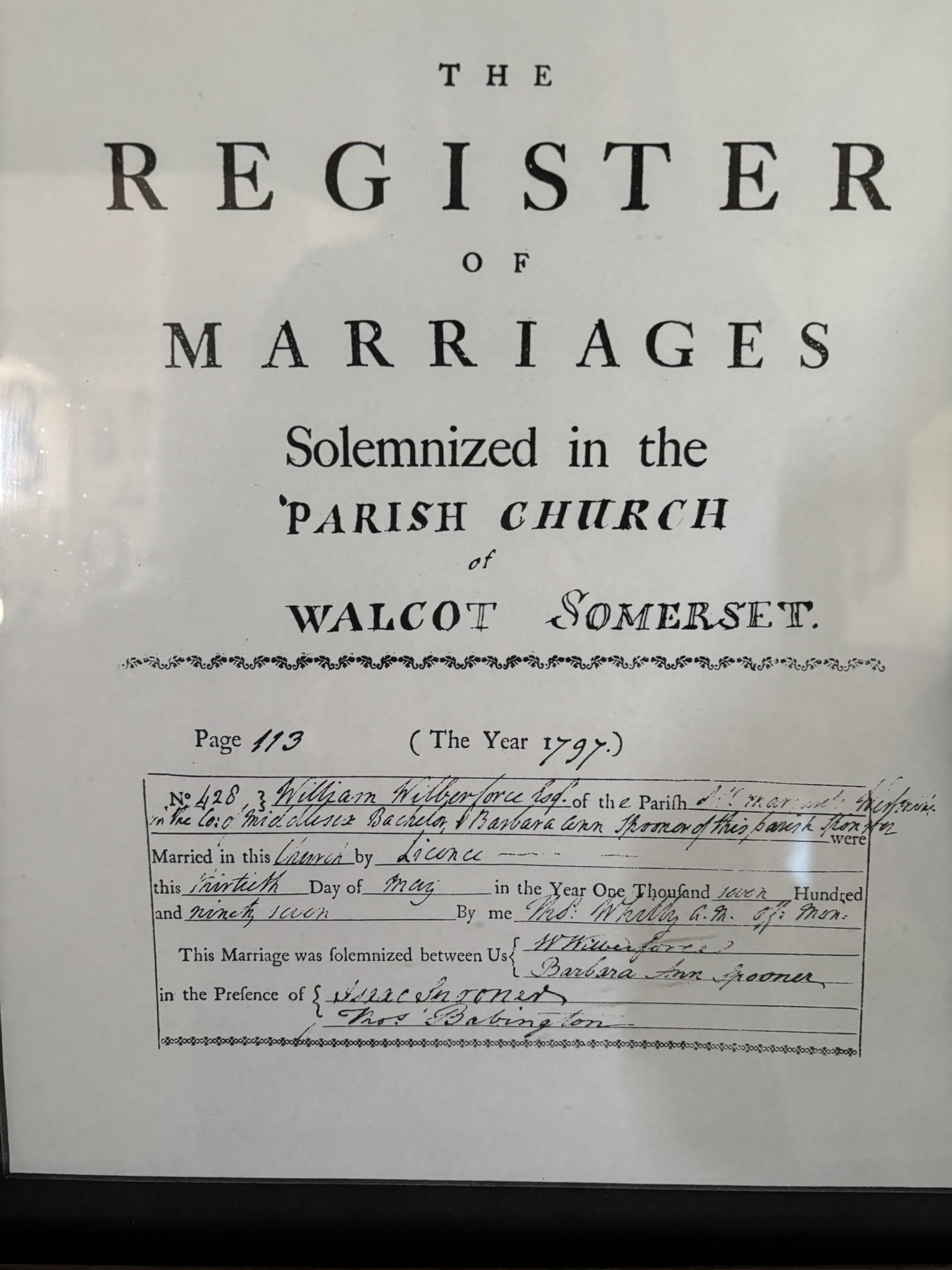
So to carry on – today started with the usual to-die-for English breakfast (Tea + everything else) – then off on a walking tour of Bath – with a Terrific guide starting at St. Swithin’s Church where George Austen is buried – and also where he and Cassandra Leigh were married in 1754, their register below – and for those interested, William Wilberforce was married here also in 1797:
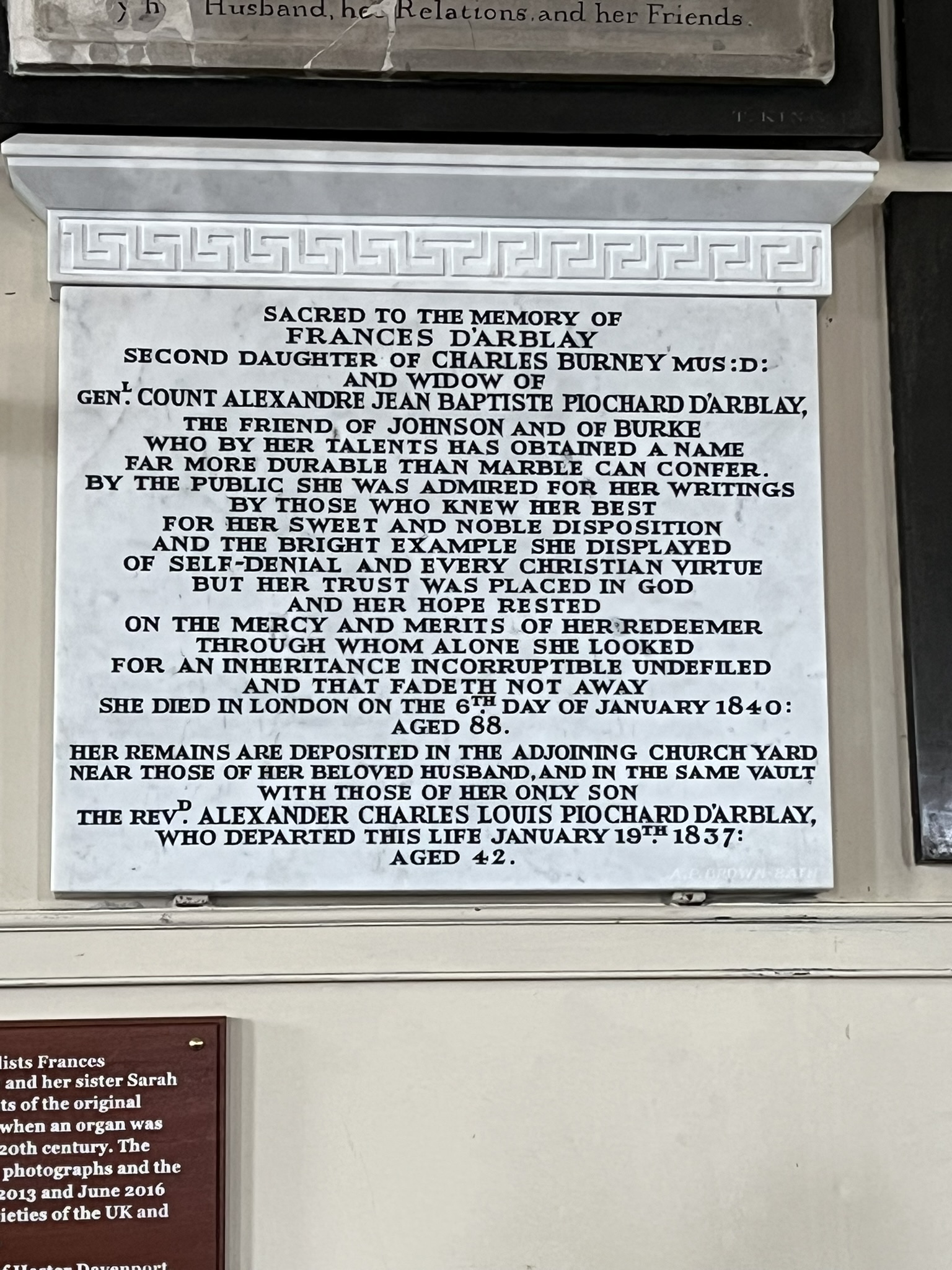
And of great interest to me, this is where Frances Burney is also buried, her grave in the churchyard, along with the remains of her husband Alexandre D’Arblay and their son. Burney had lived in Bath for a number of years and died here in 1840.
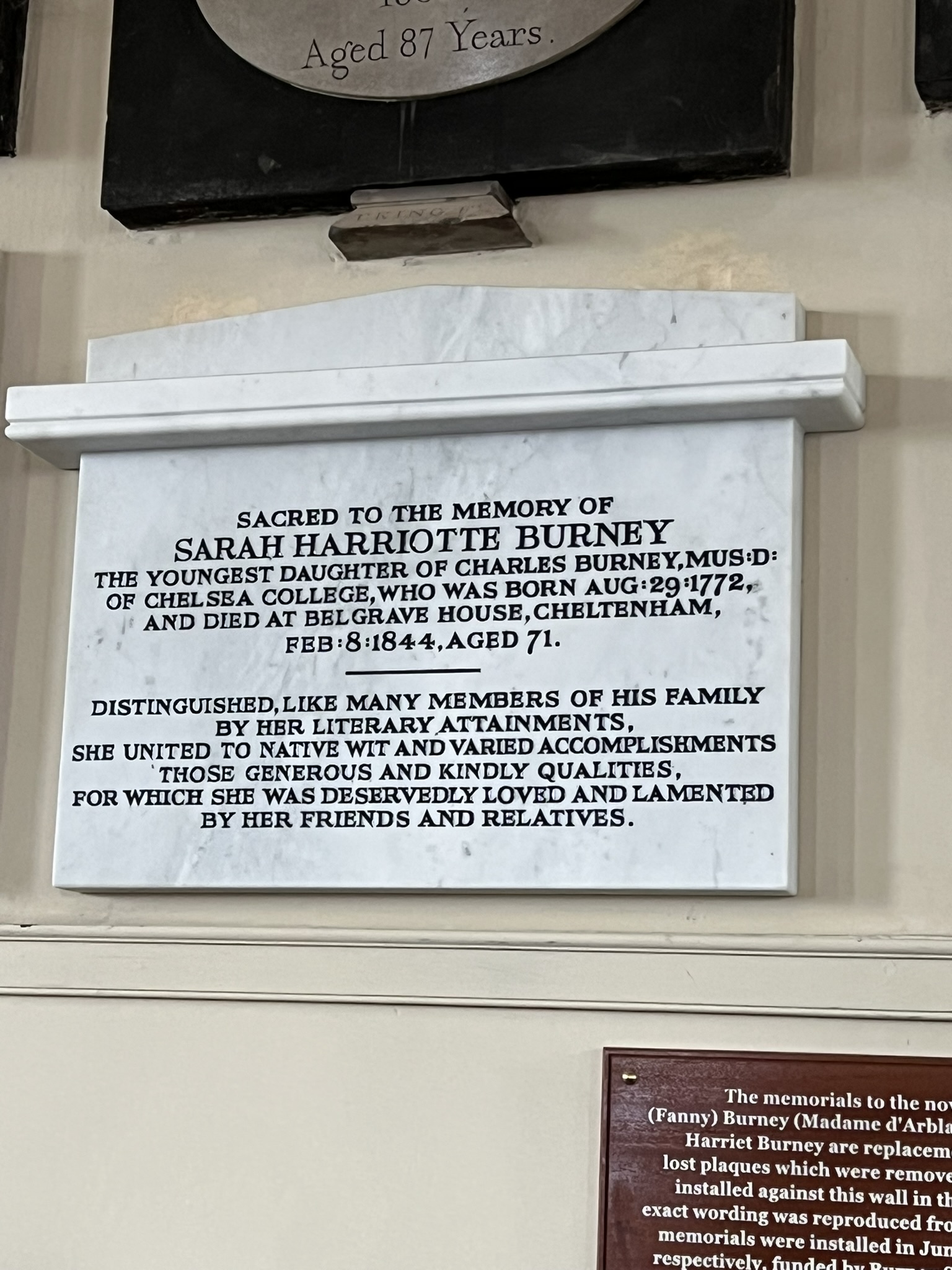
There is this memorial to her on the wall, and one to her sister and also novelist Sarah Harriet Burney:
These plaques were installed in 2013, replacing the originals what disappeared in 1958 during renovations to the church organ [are they perhaps somewhere with Jane Austen’s missing head??]
***********
From there we walked to the Royal Crescent, perhaps one of the most photographed spots in all of England? – completed by John Wood in 1775, Mrs. Austen’s sister Jane Cooper lived at number 12.
We hit all the mentioned locations in both Northanger Abbey and Persuasion – and easy to imagine Catherine Morland and Henry Tilney and Ann Elliot and Captain Wentworth wandering along the streets – the movies have made them all very real to us, and nothing has much changed really, other than the errant car or two, or people holding cell phones and wearing flip-flops…
The Queen’s Parade, the Gravel Walk [Ann and the Captain along with us]…we walked it, but in those early days it was a way for the gentry to be transported to the baths in their sedan chairs.
We passed the World War I Memorial which features the “Cross of Sacrifice” and erected in 1923, now has the additional names of WWII fallen, including civilian deaths – you can read more about it her: http://bath-heritage.co.uk/war-memorial.html
We followed around former haunts of the Austens and family:
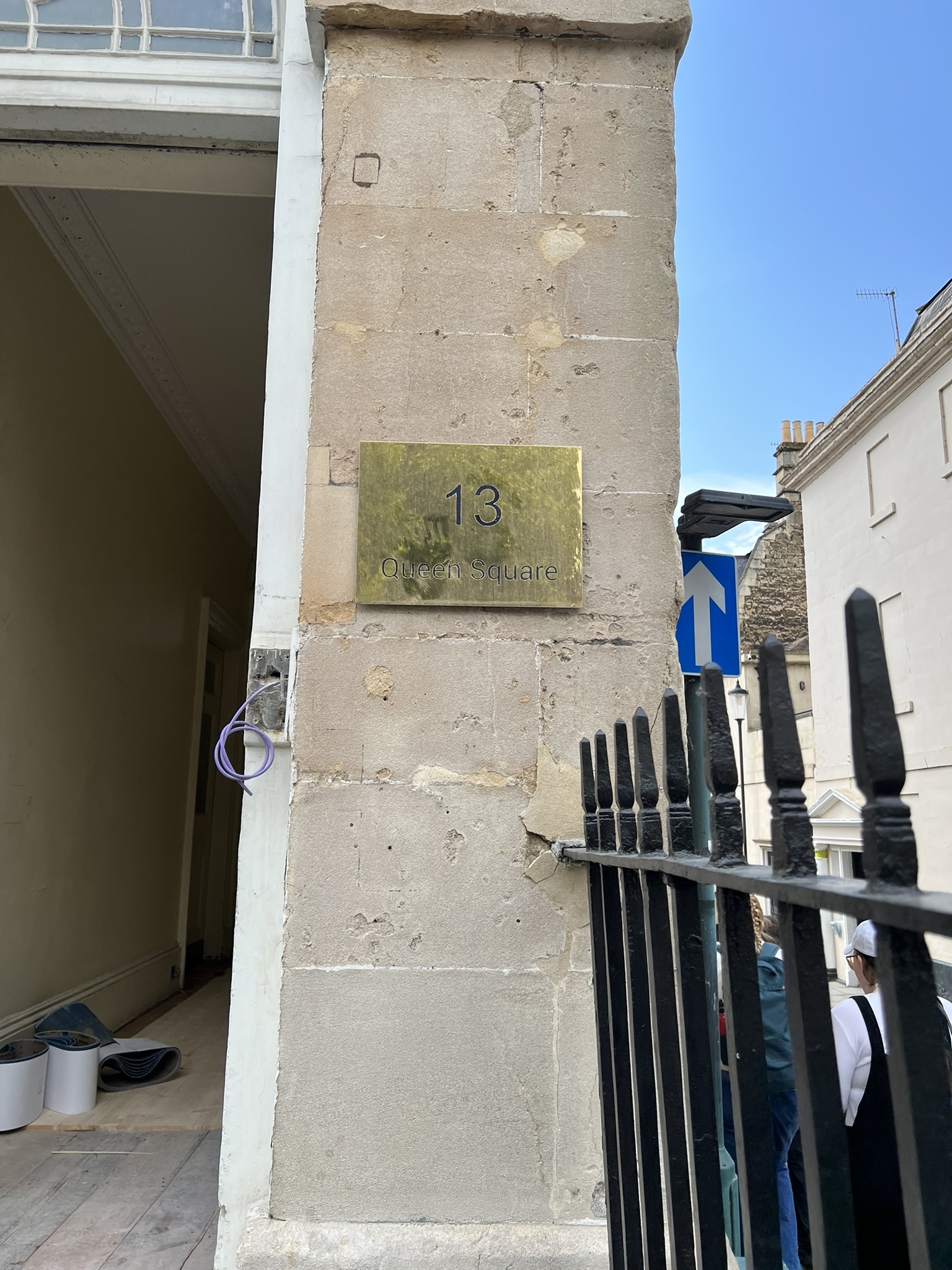
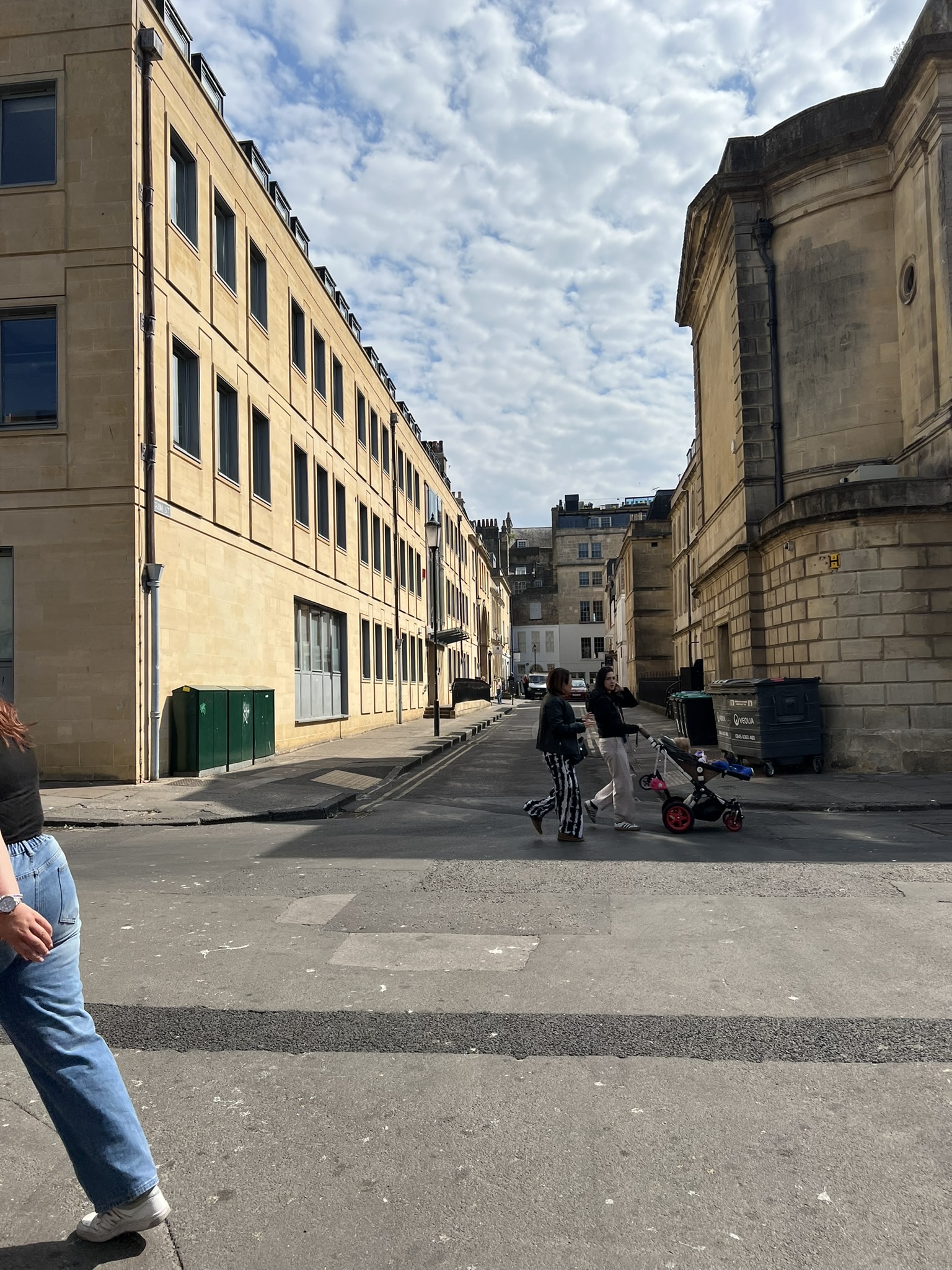
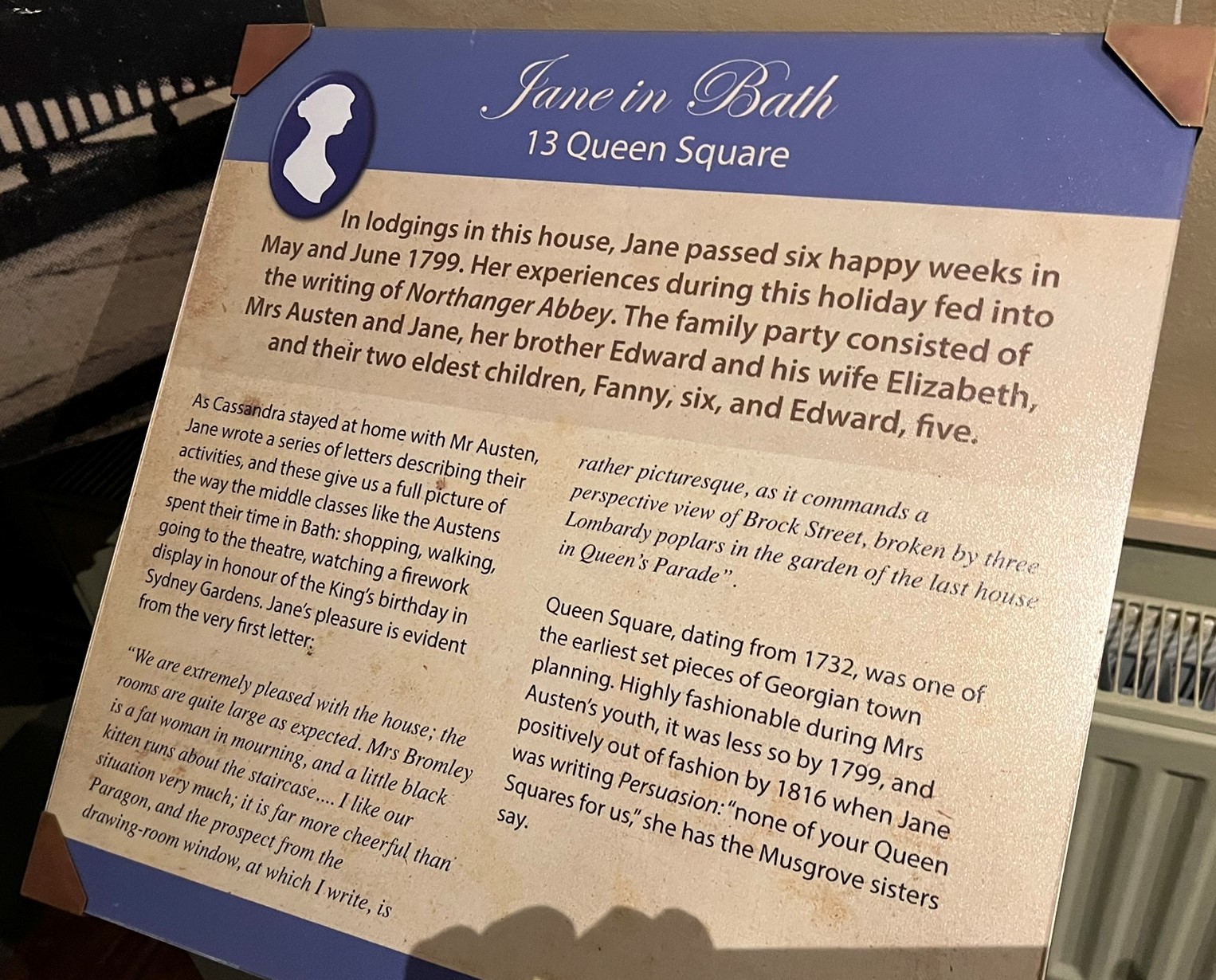
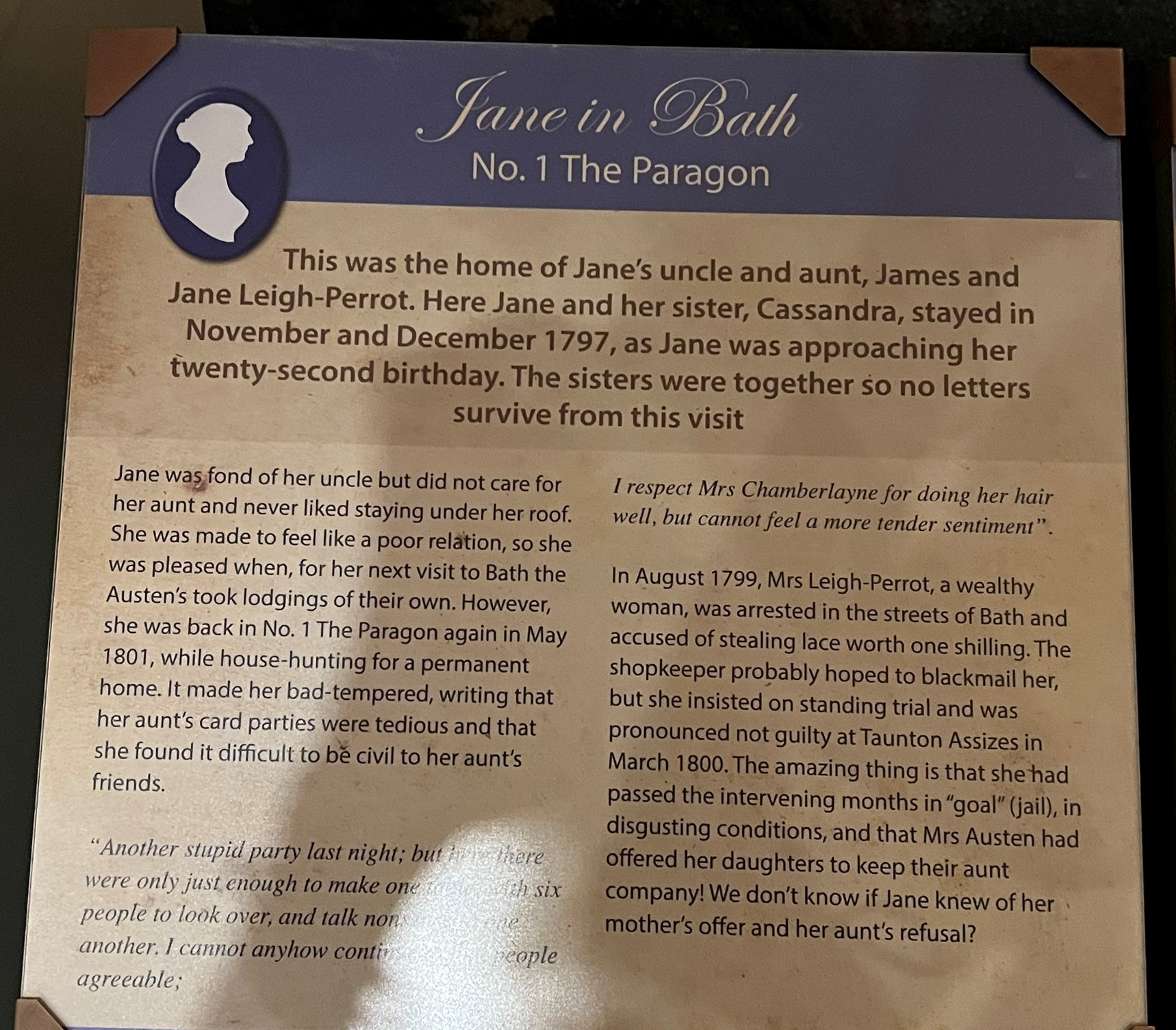
No. 13 Queen Square is where Jane stayed with her mother and Edward in 1799 – he had come to take the waters… [it is now being renovated…] – and then along to Trim St, the final lodging of the Jane, Cassandra, and Mrs. Austen, and the “very bottom of the social scale, populated by prostitutes, beggars, and thieves.” [Jane Austen’s Bath, JA Centre]
25 Gay Street, just down from the Jane Austen Centre, is where the Austen’s lived following Mr. Austen’s death – [the Jane Austen Center is at #40]
And here several photos of various sites as we walked around:
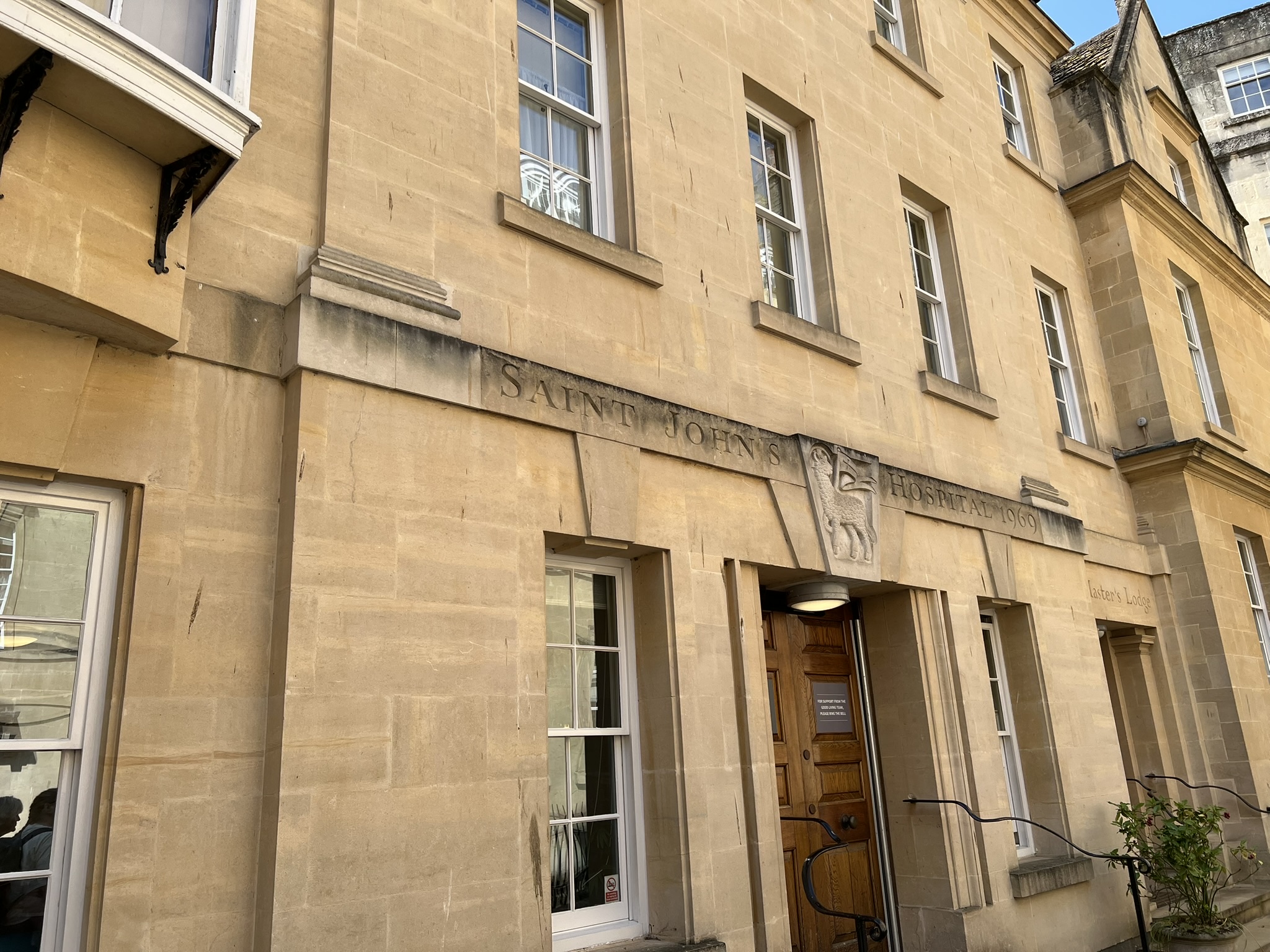
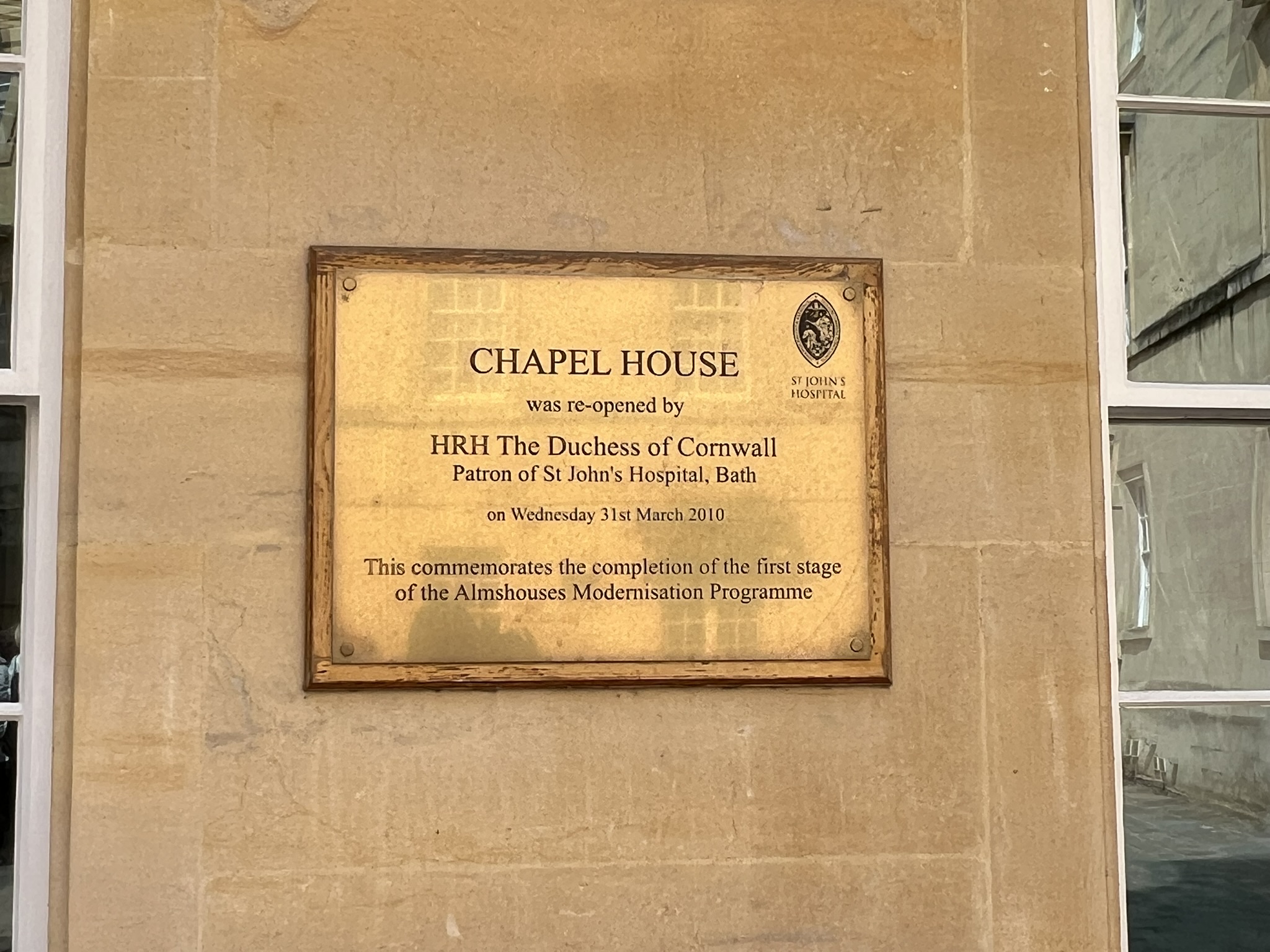
The St. John’s Hospital, recently dedicated by the then Duchess of Cornwall [now Queen Camilla],
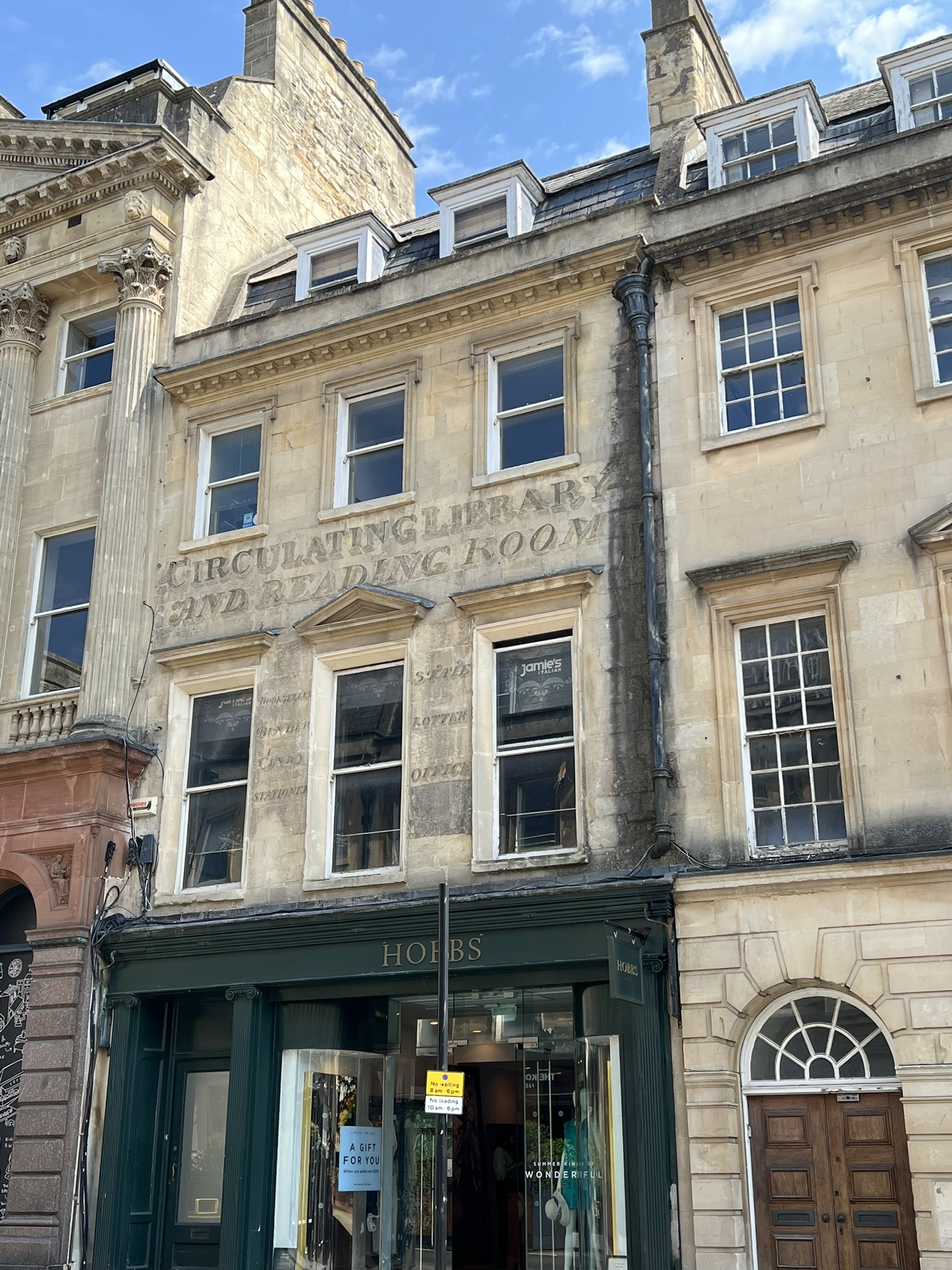
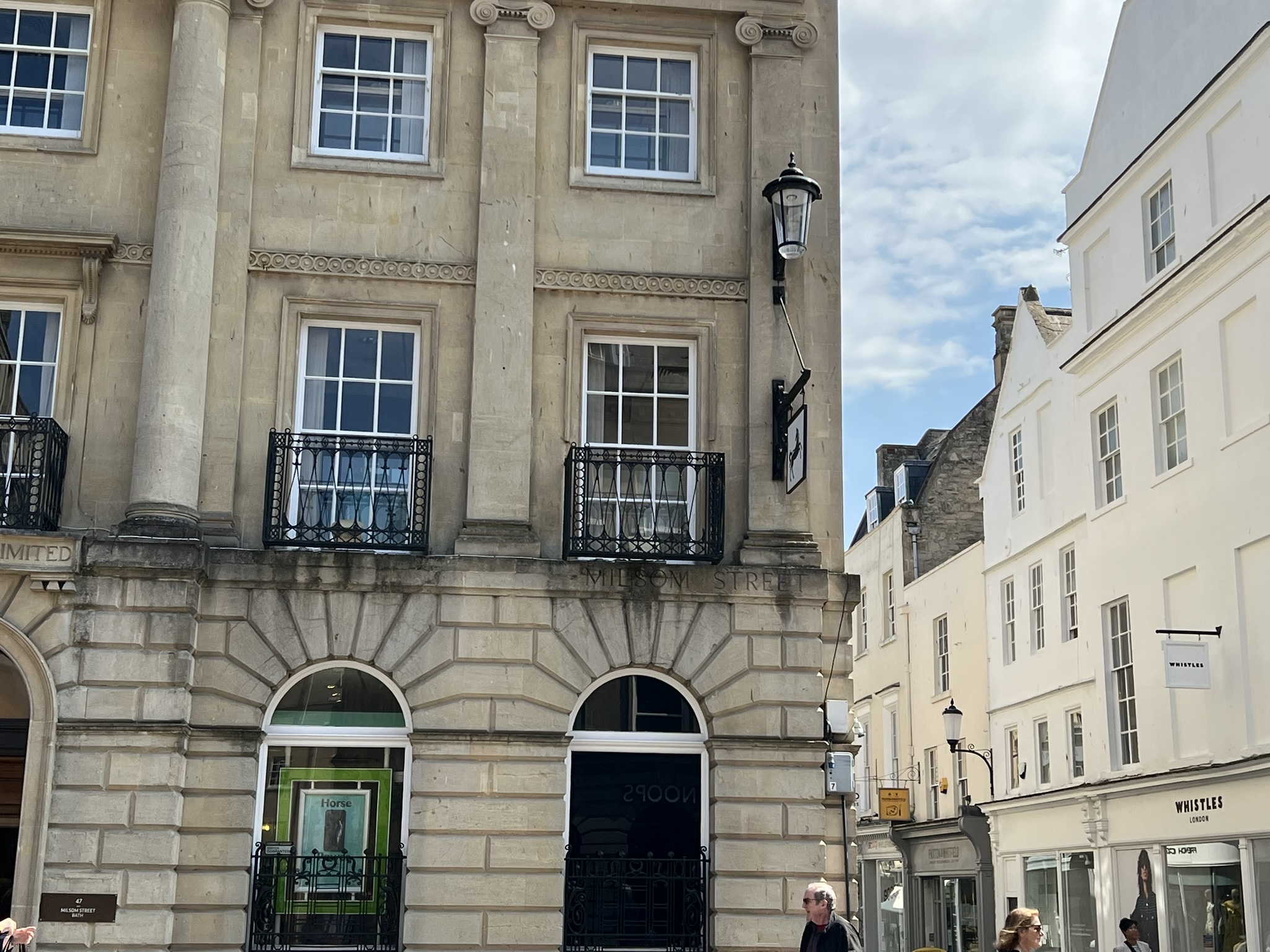
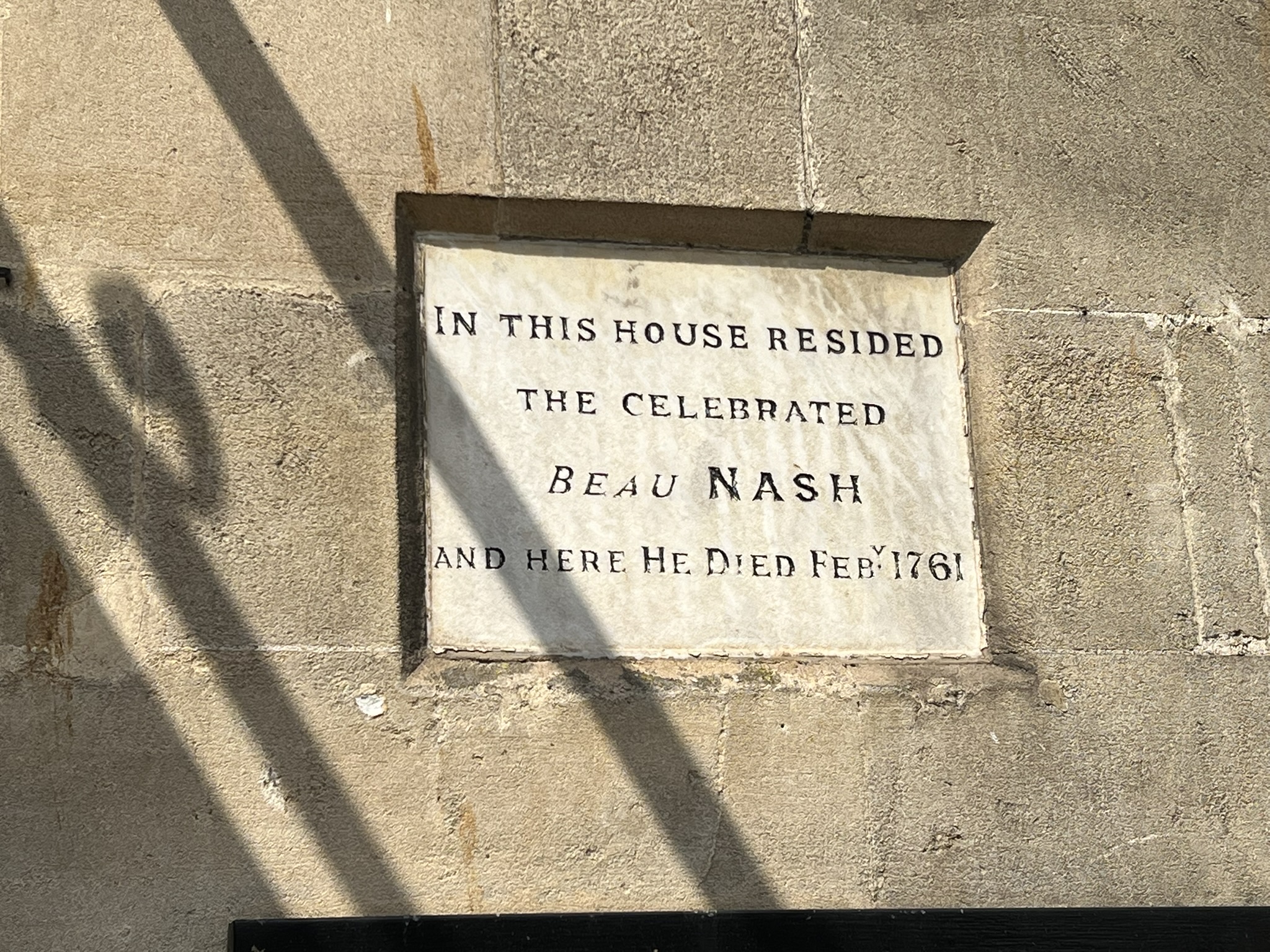
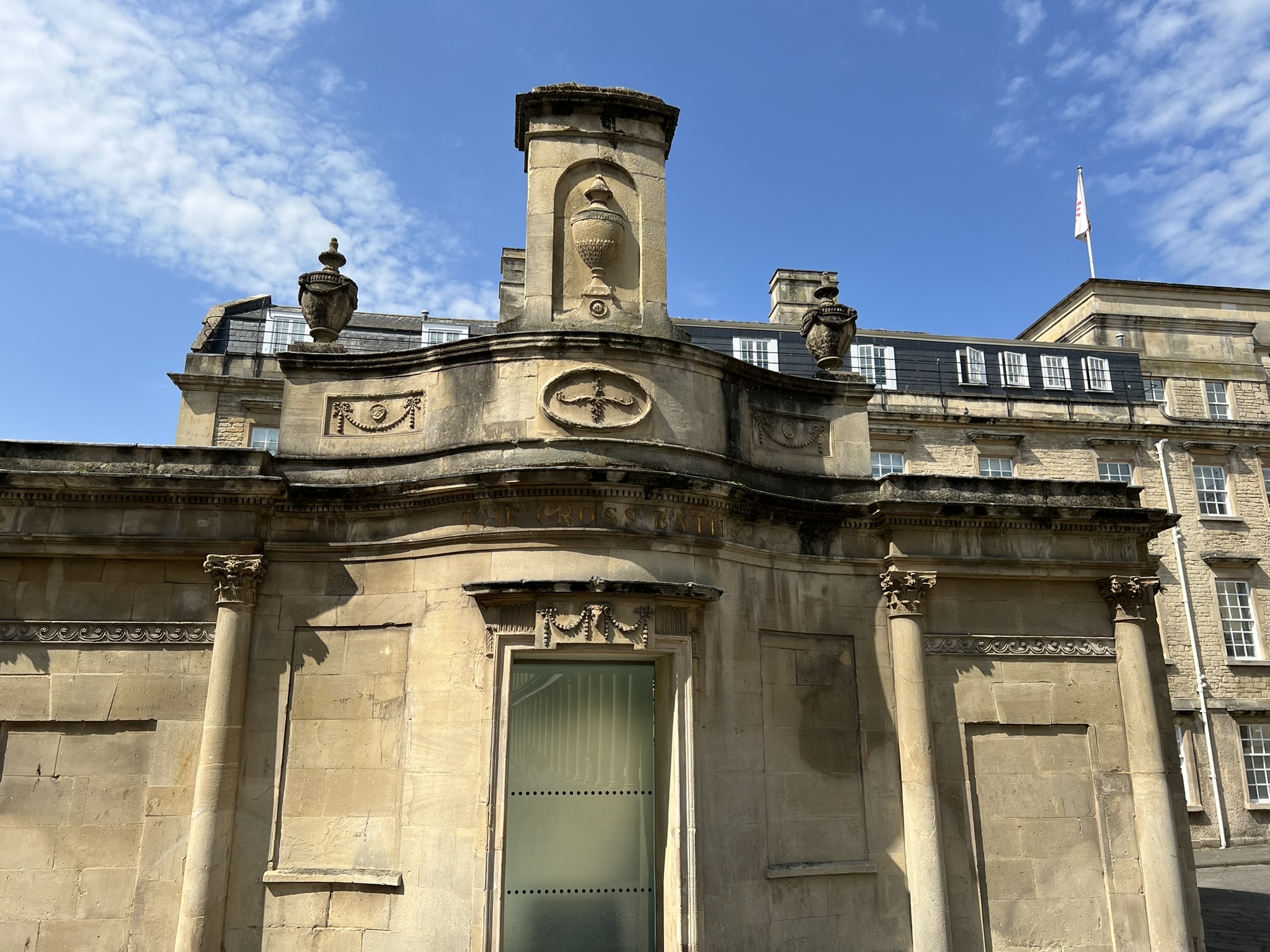
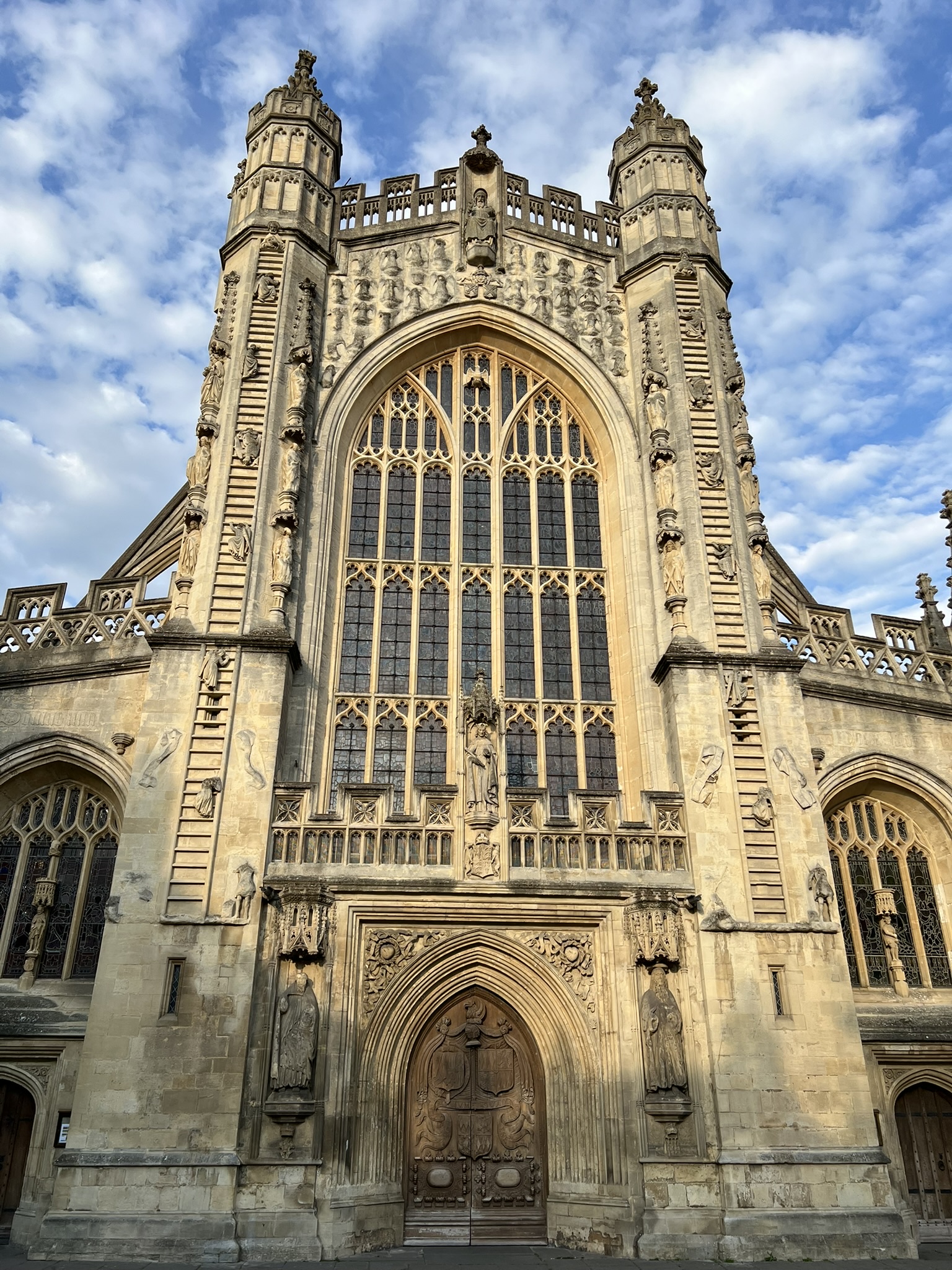
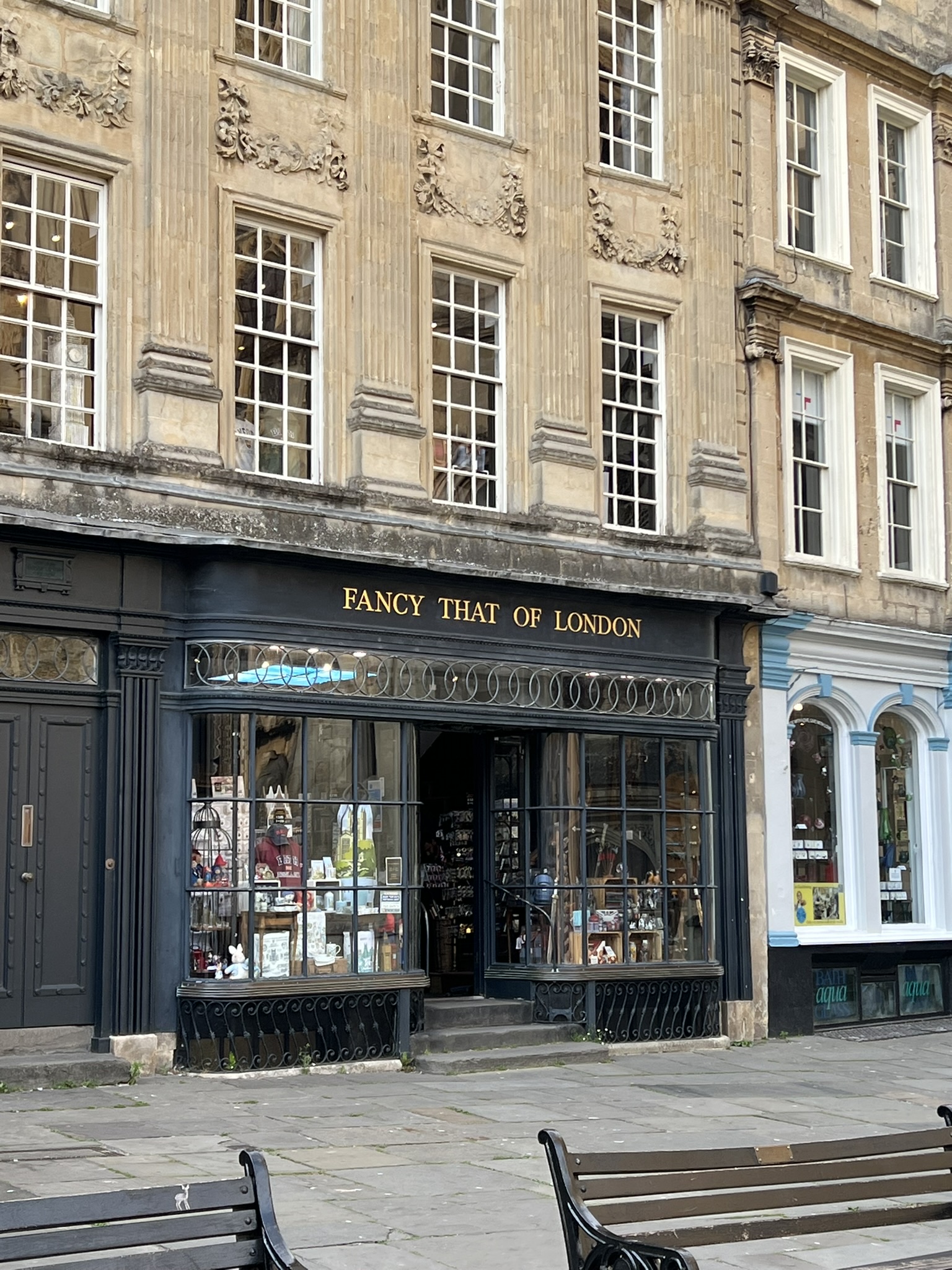
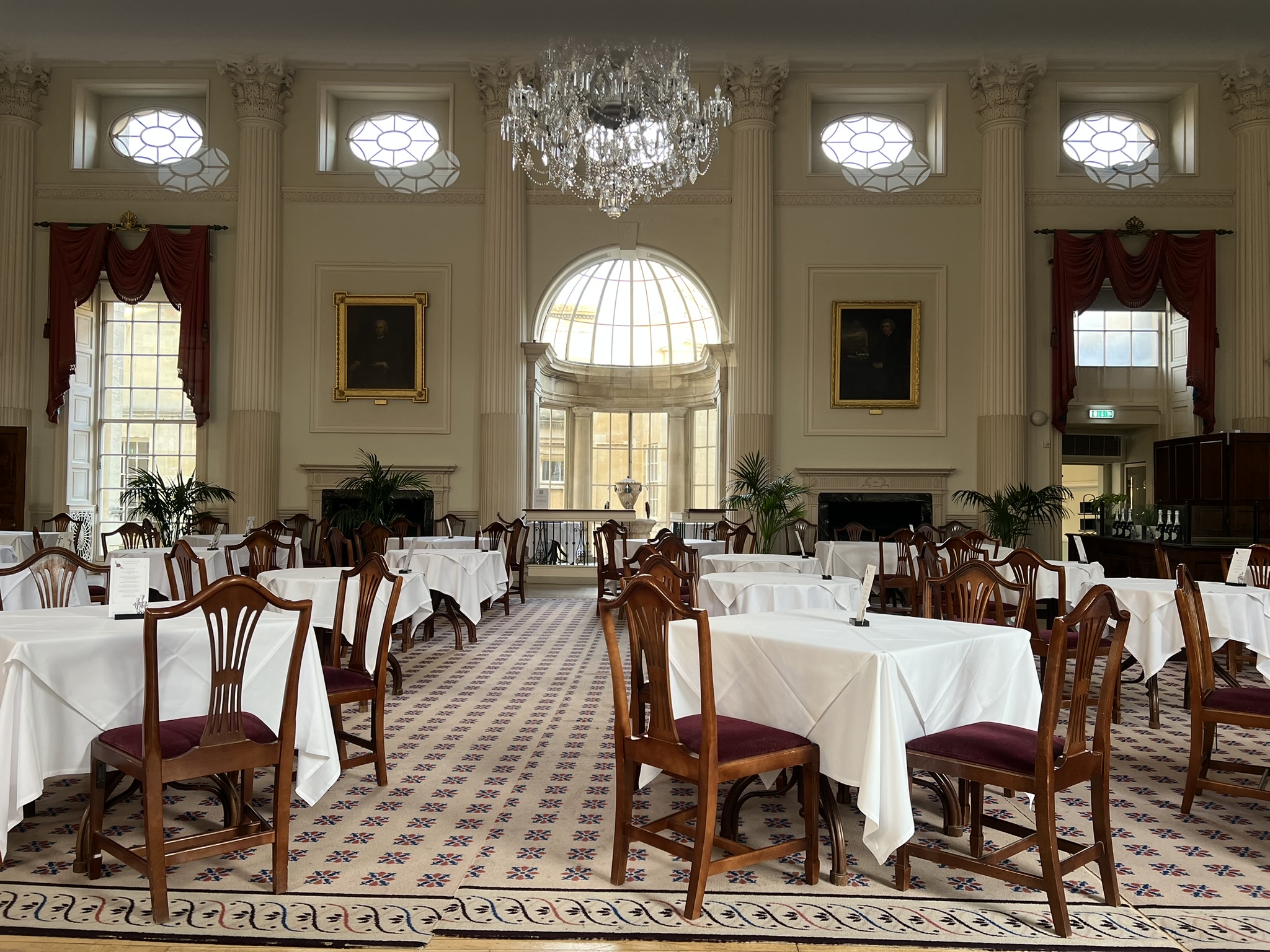
The all-important Circulating Library and Milson Street, Beau Nash, the baths, and shopping!:
and a sign worth a photo:
**********
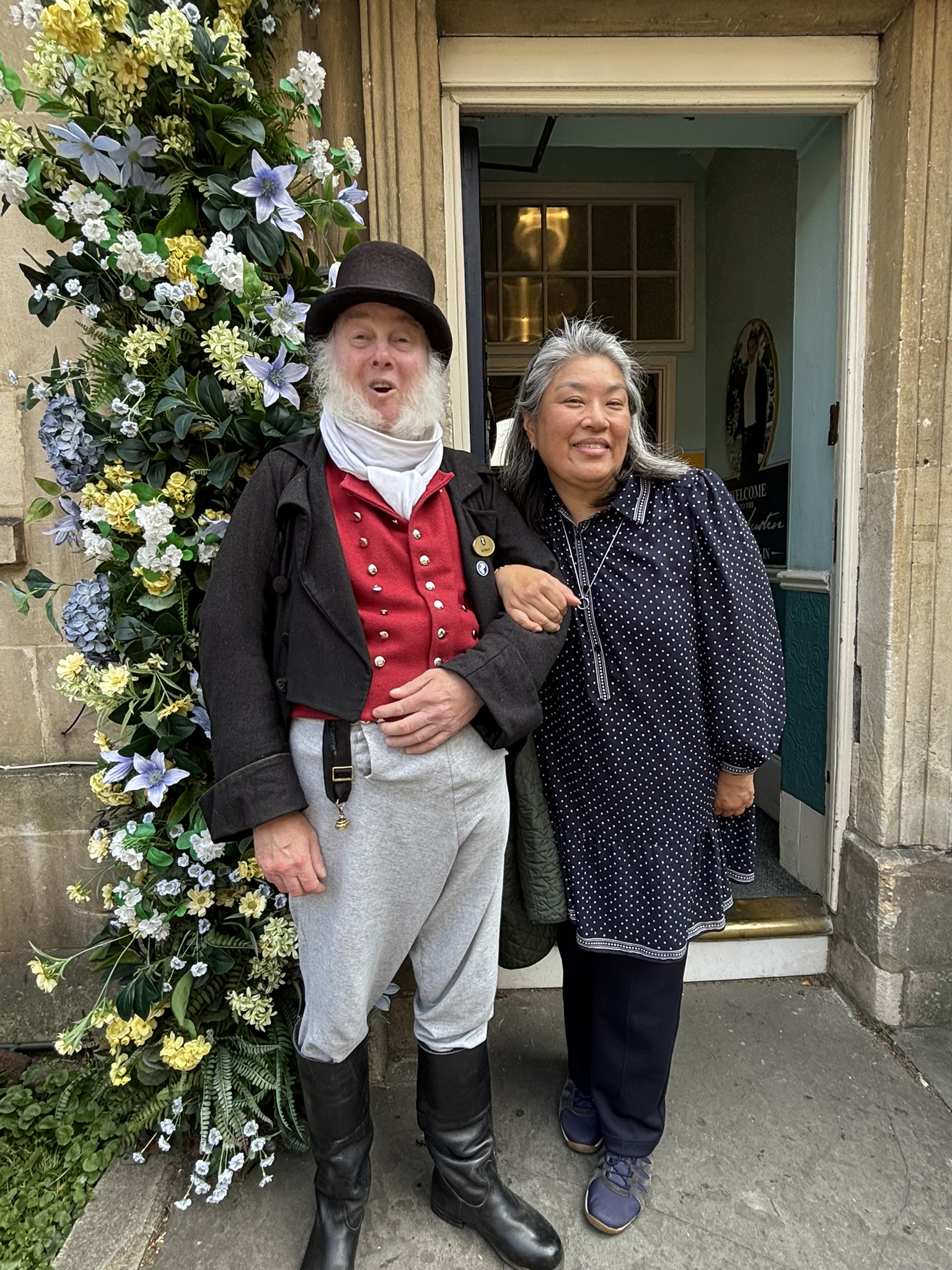
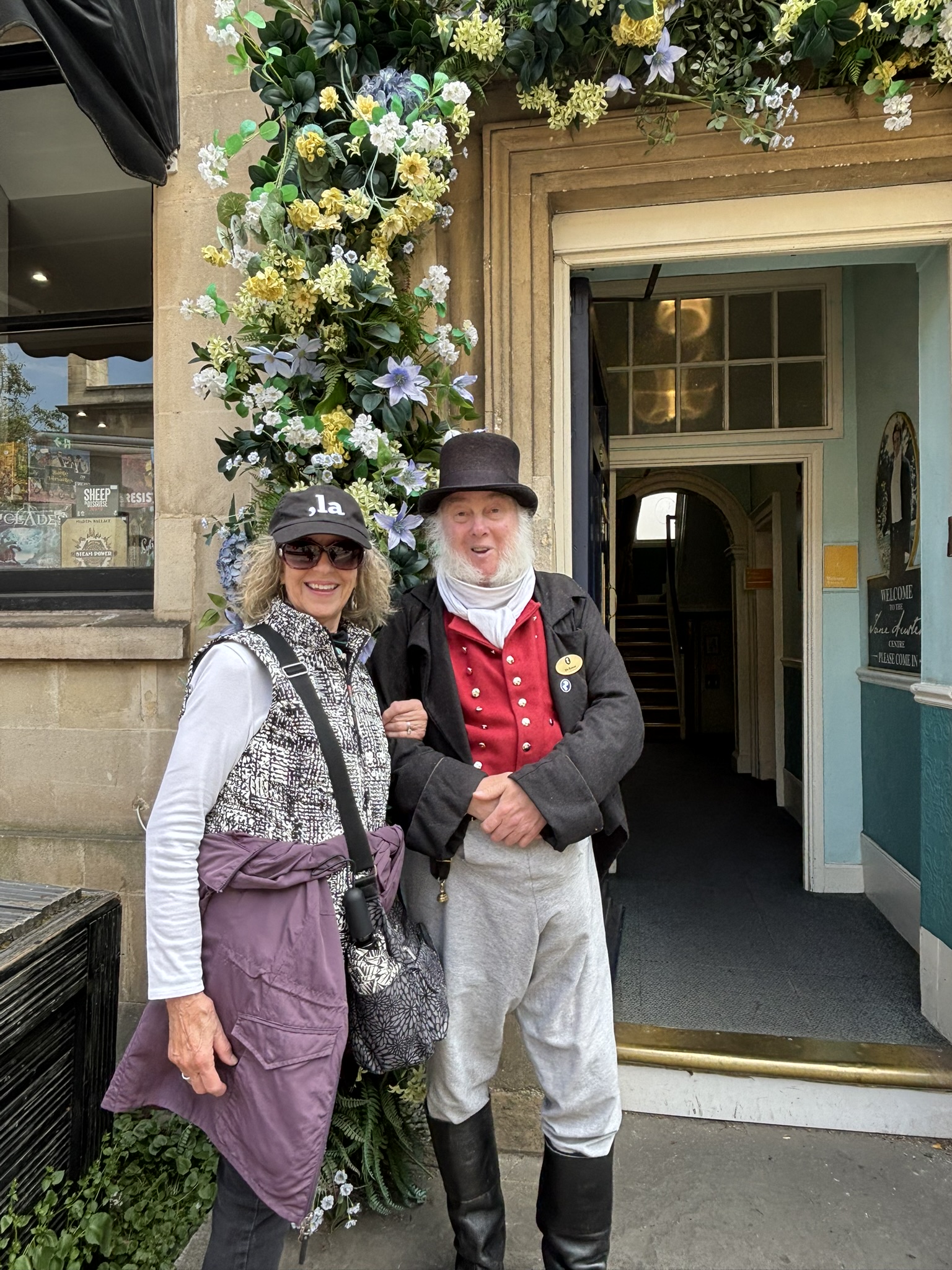
After the tour, Joy and I went to the Jane Austen Centre – I had visited this several years ago when it was first starting out – much improved, and they do a terrific newsletter, and the long-time greeter Martin Salter is worth the price of admission… [these pictures from Joy]:
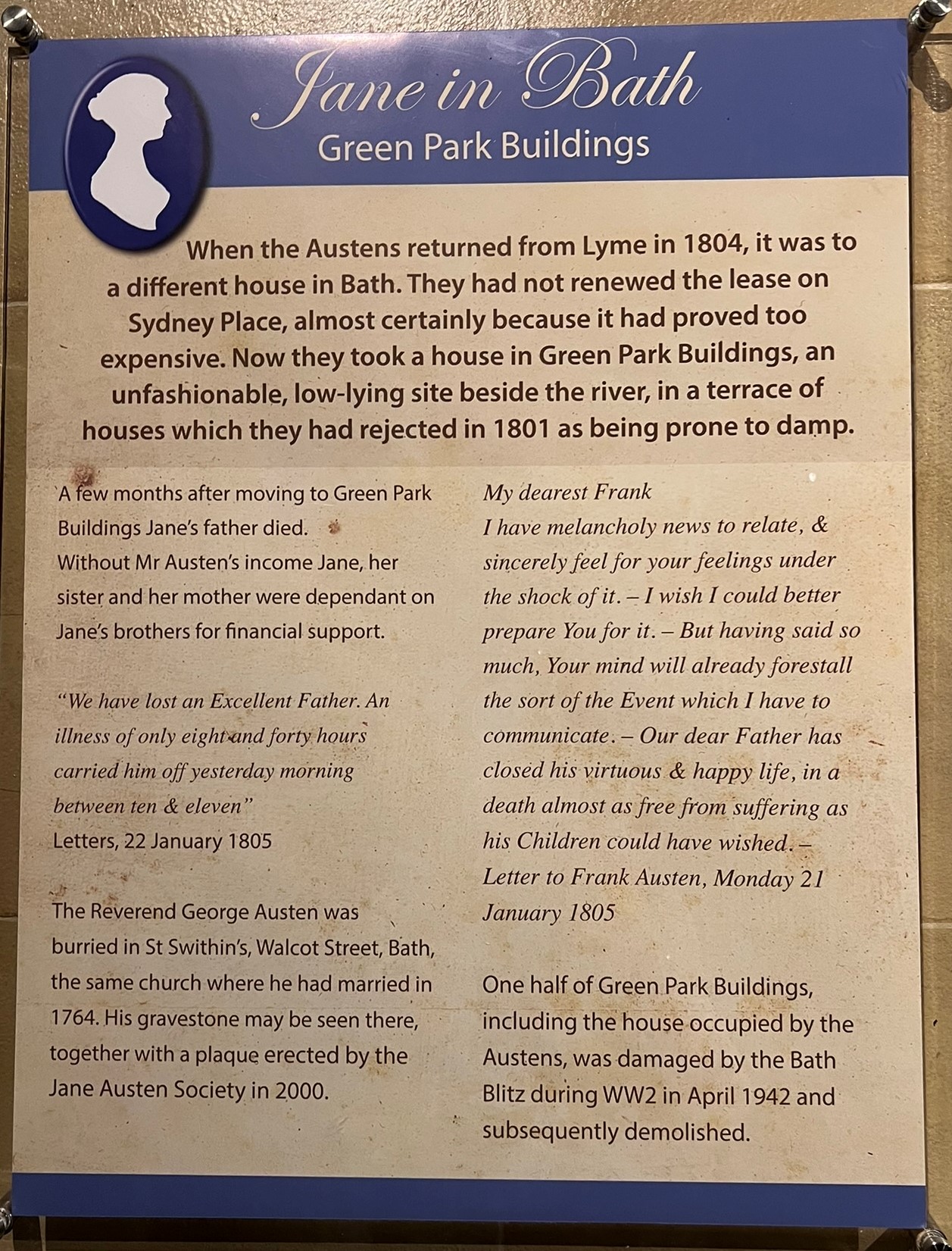
And some pictures from there worth sharing [I didn’t take many! – see the website for a great collection]:
And Joy found this in the WC!
**************
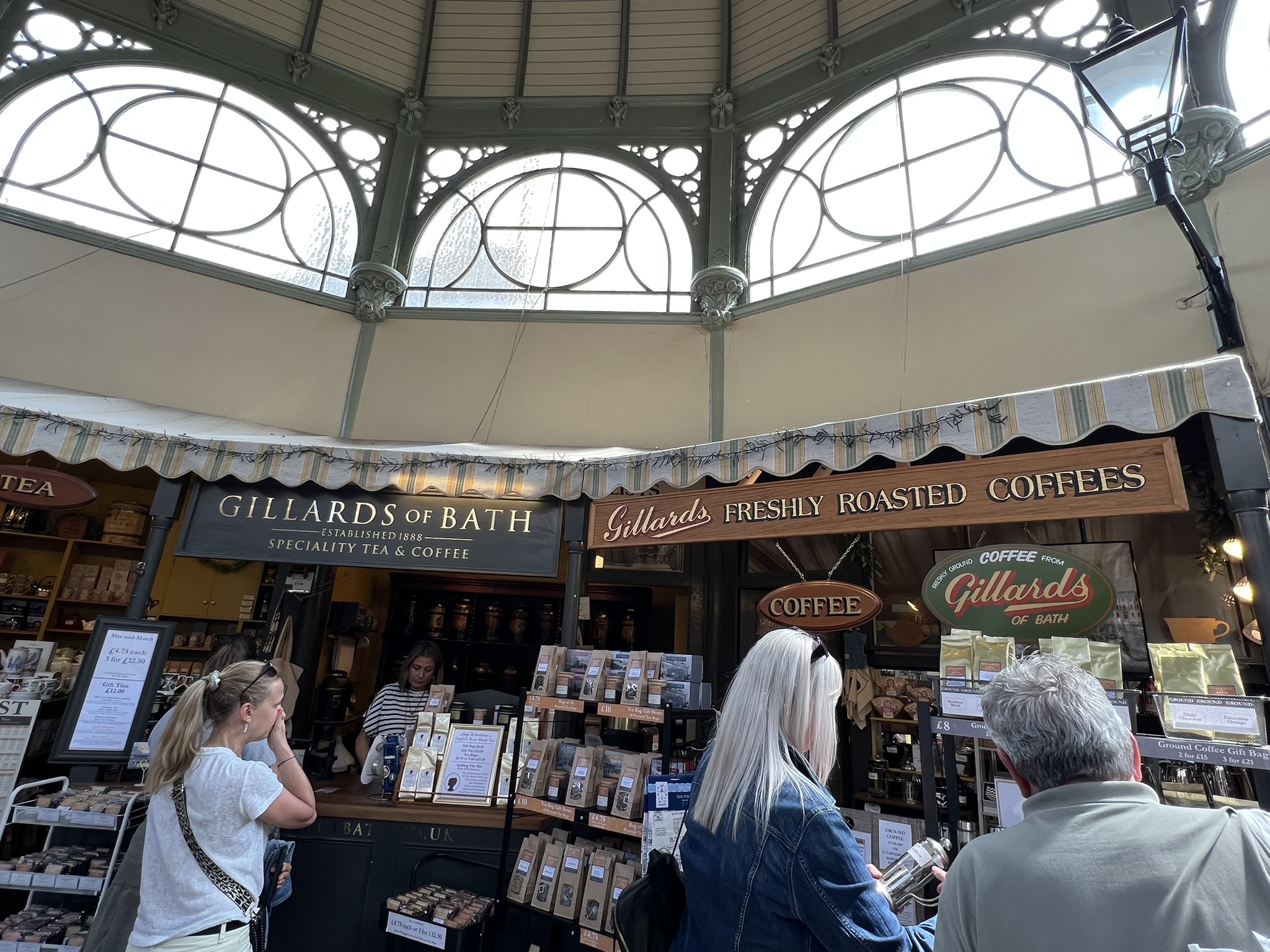
We visited the main Marketplace as Joy was in dire need of Gillards of Bath teas, and I spot a Snoopy:
***********
And then we went our separate ways – me finding it ironic that though I was supposed to be meeting my friend, I felt quite foot-loose and fancy-free and wandered all around Bath with no itinerary – what an idiot! And here is the final glitch – I did not stop to eat or go anywhere where I connected to the internet – if I had I would have seen the various messages from my friend asking where I was!
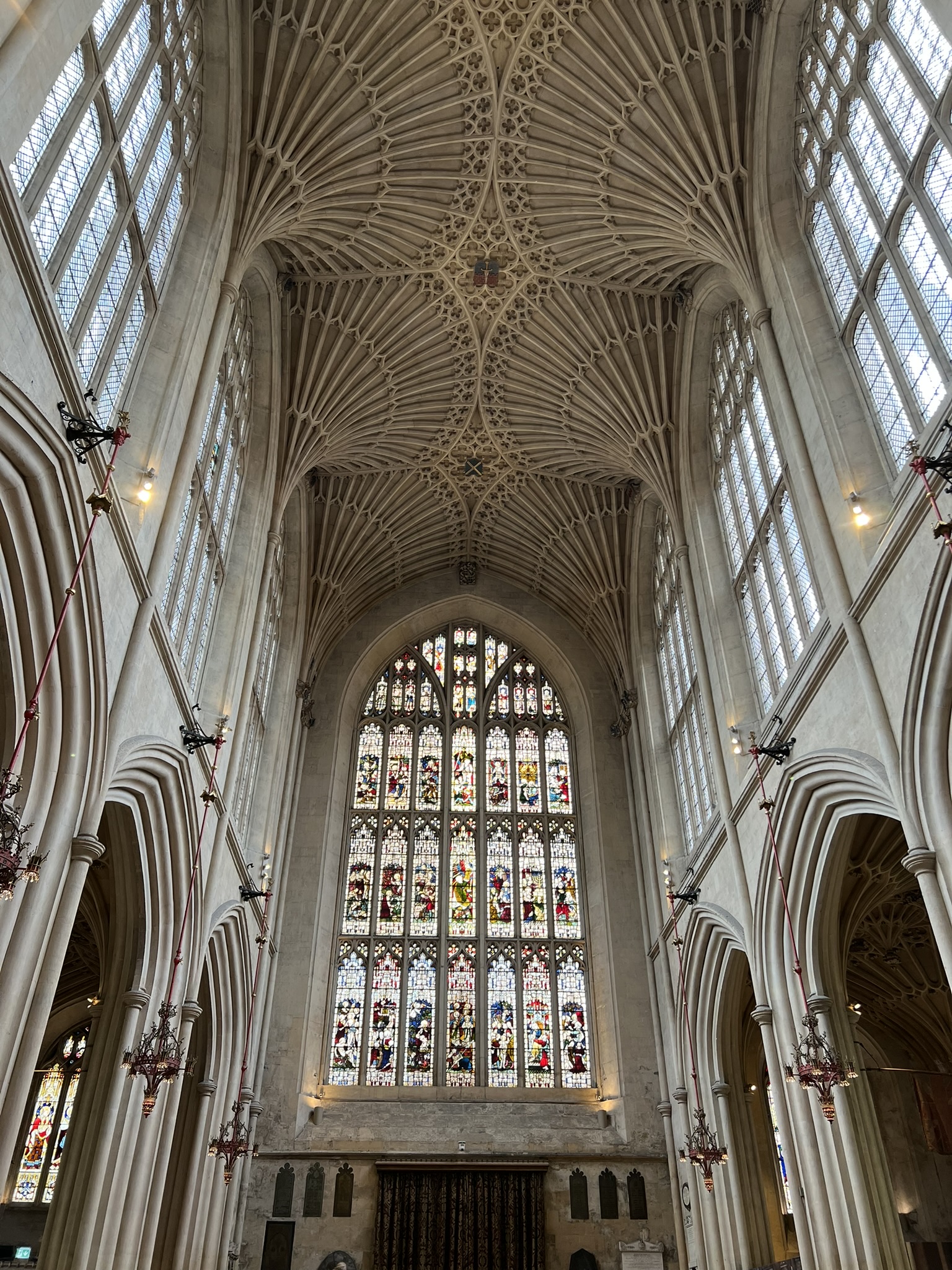
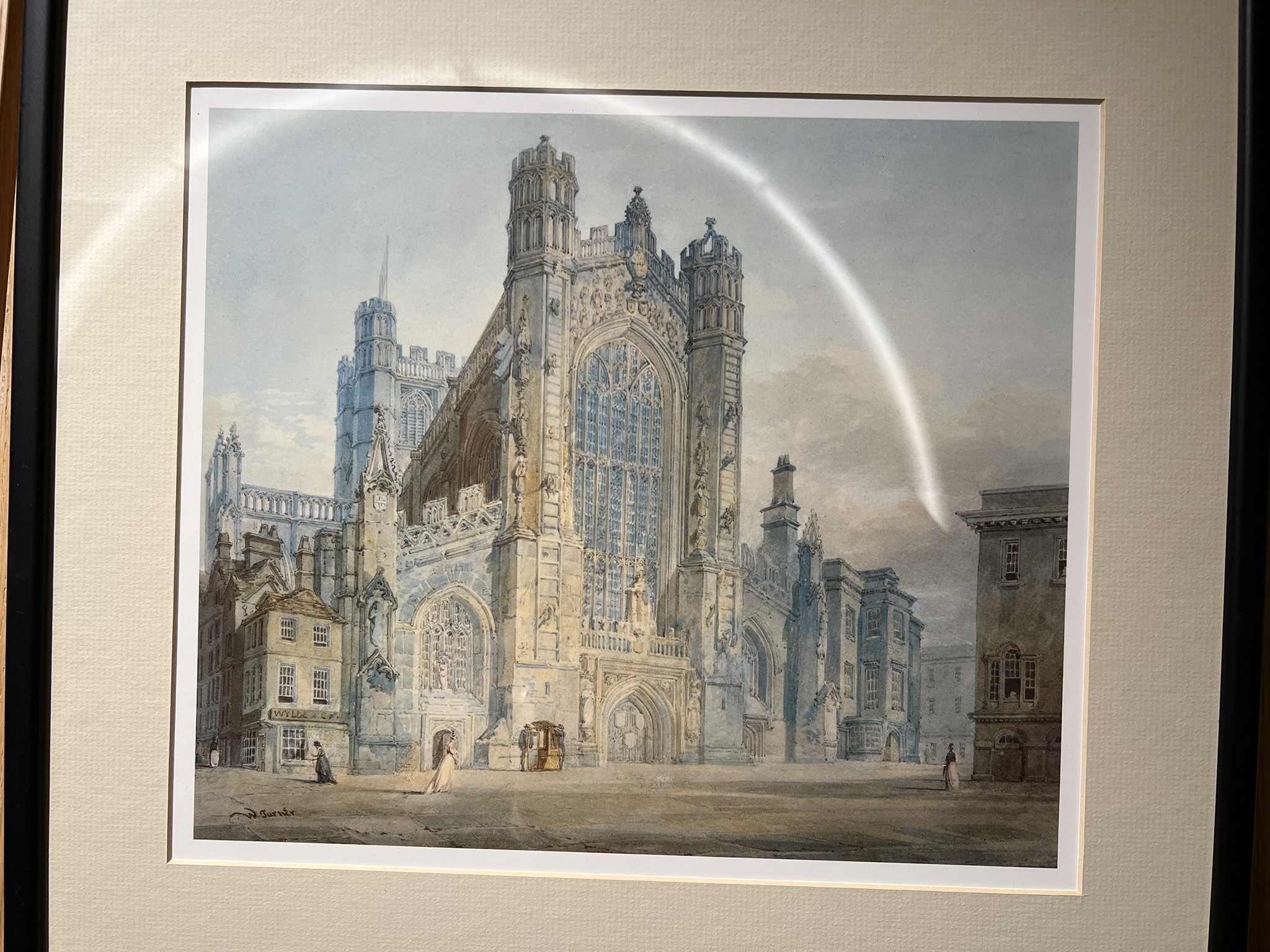
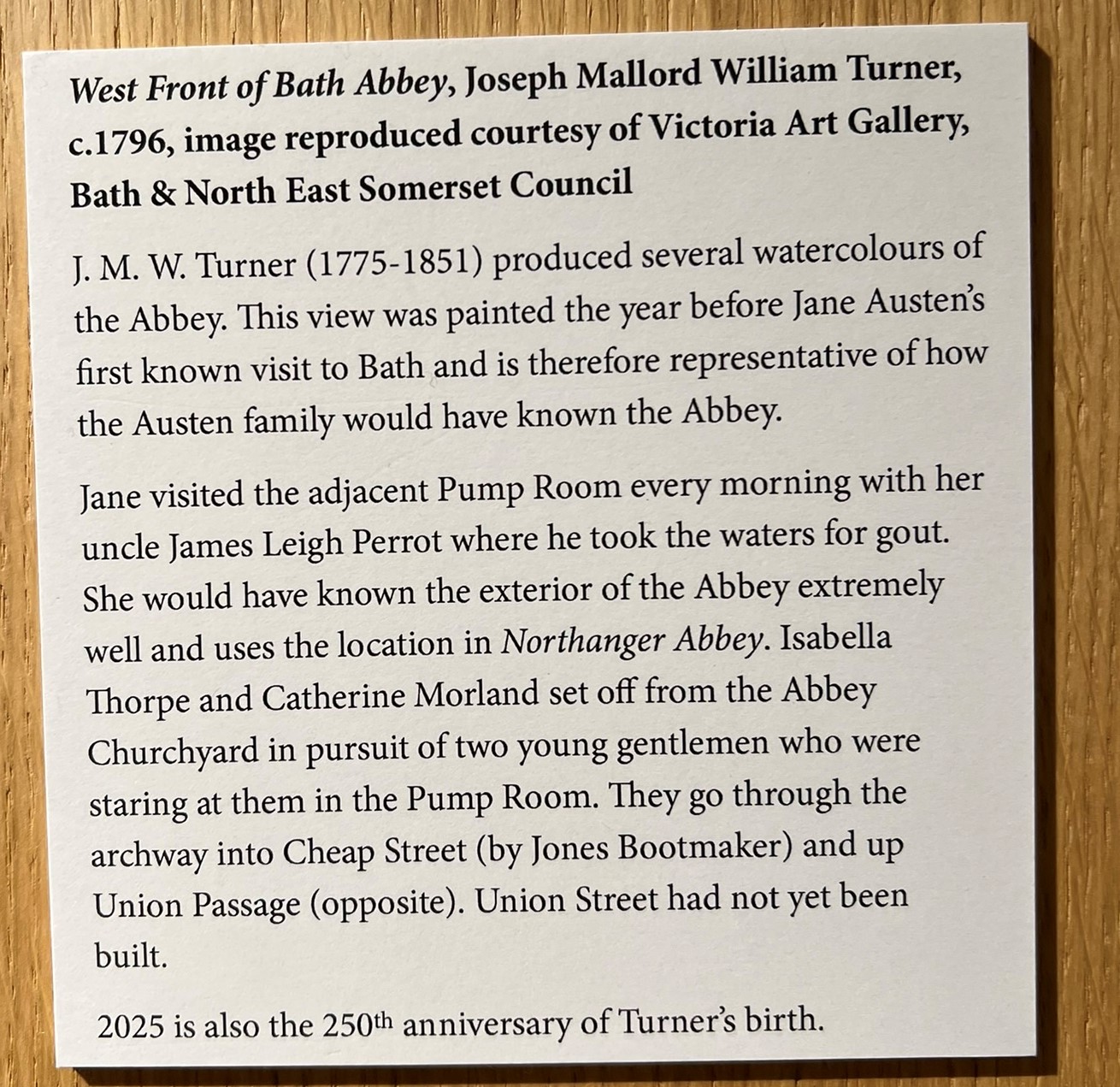
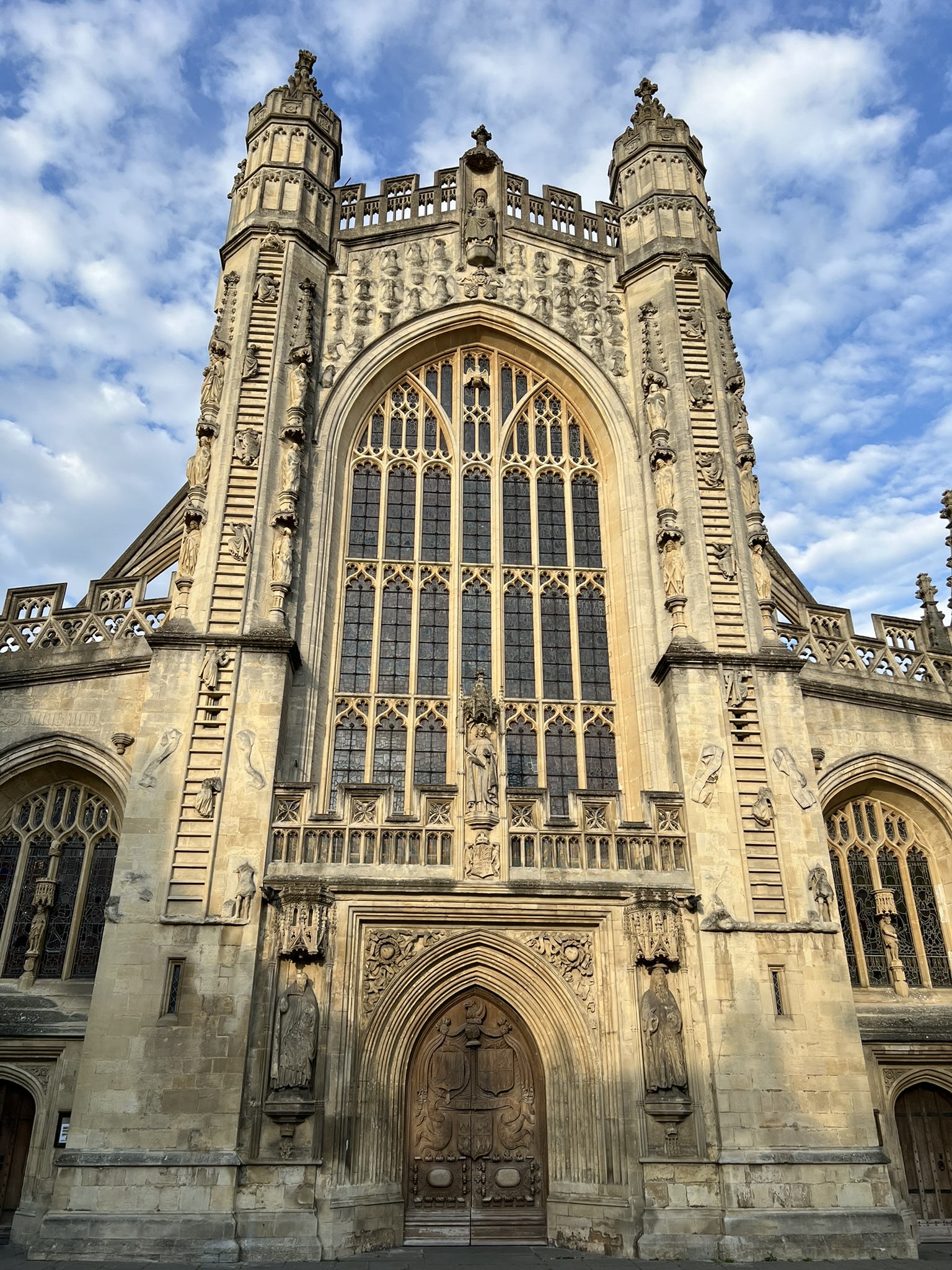
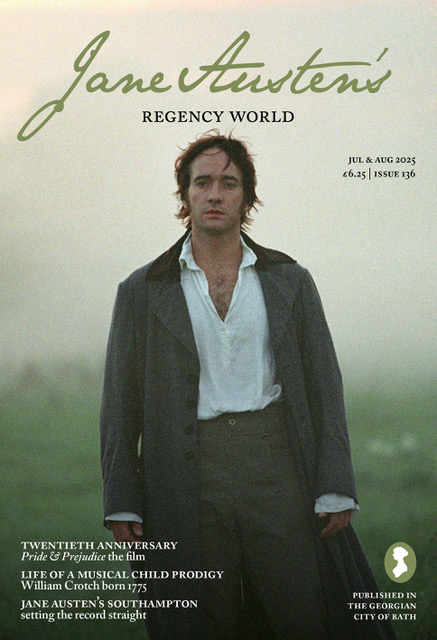
So off to Bath Abbey for an in-depth visit – and started it with a tour of the Jane Austen-related memorials – and here I found Stephen Herring of Jane Austen’s Regency World magazine * giving tours at the Abbey! What a grand surprise! Though disappointed to not see Jackie as well – but Stephen was great taking a small group of us all around the Abbey – I took notes but took NO PHOTOS! – but we did learn about:
The Nibbs Family [James Langford Nibbs]
Dr. William Bowen – doctor to Mrs C Auysten in 1804
William Siddons, husband to Sarah
Admiral Sir William Hargood [Francixs Austen’s Canoppus
Caleb Hillier Parry
The Famous Castrata Rauzzioni
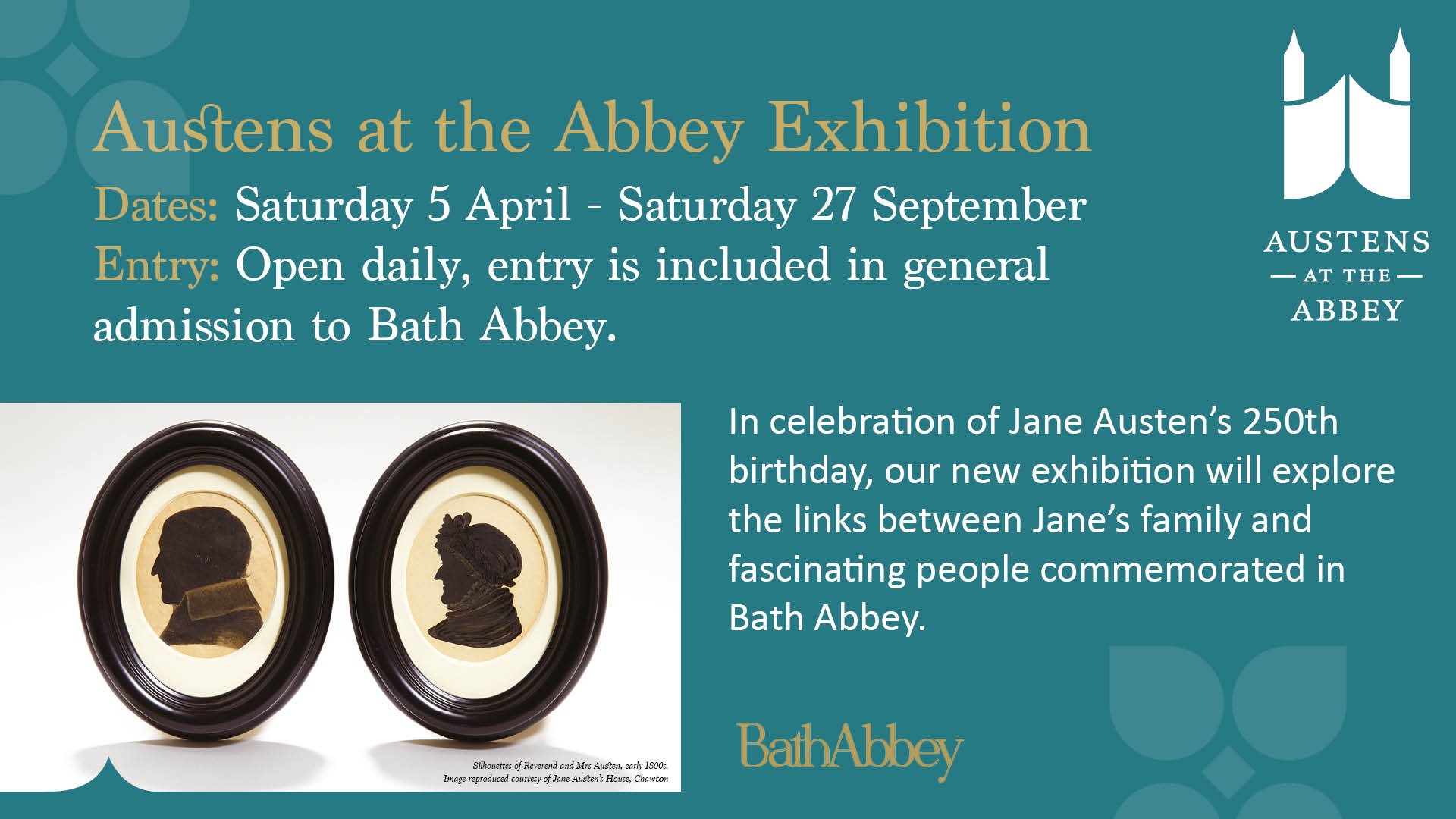
The Abbey also has an exhibit on through September 27, Austens at the Abbey – Jackie Herring is on the video and it covers much of what I had just learned on the tour with Stephen.
Wandered around the other exhibits at the Abbey, hit the bookshop (of course) and then wandered back to the hotel which was very nearby – and when I found the note from my friend letting me know I had missed her – it was too late as she was already on the train heading home – a lost adventure with a friend… but Marcia DID see Hazel in the Topping bookshop…so that was something I suppose…
*************
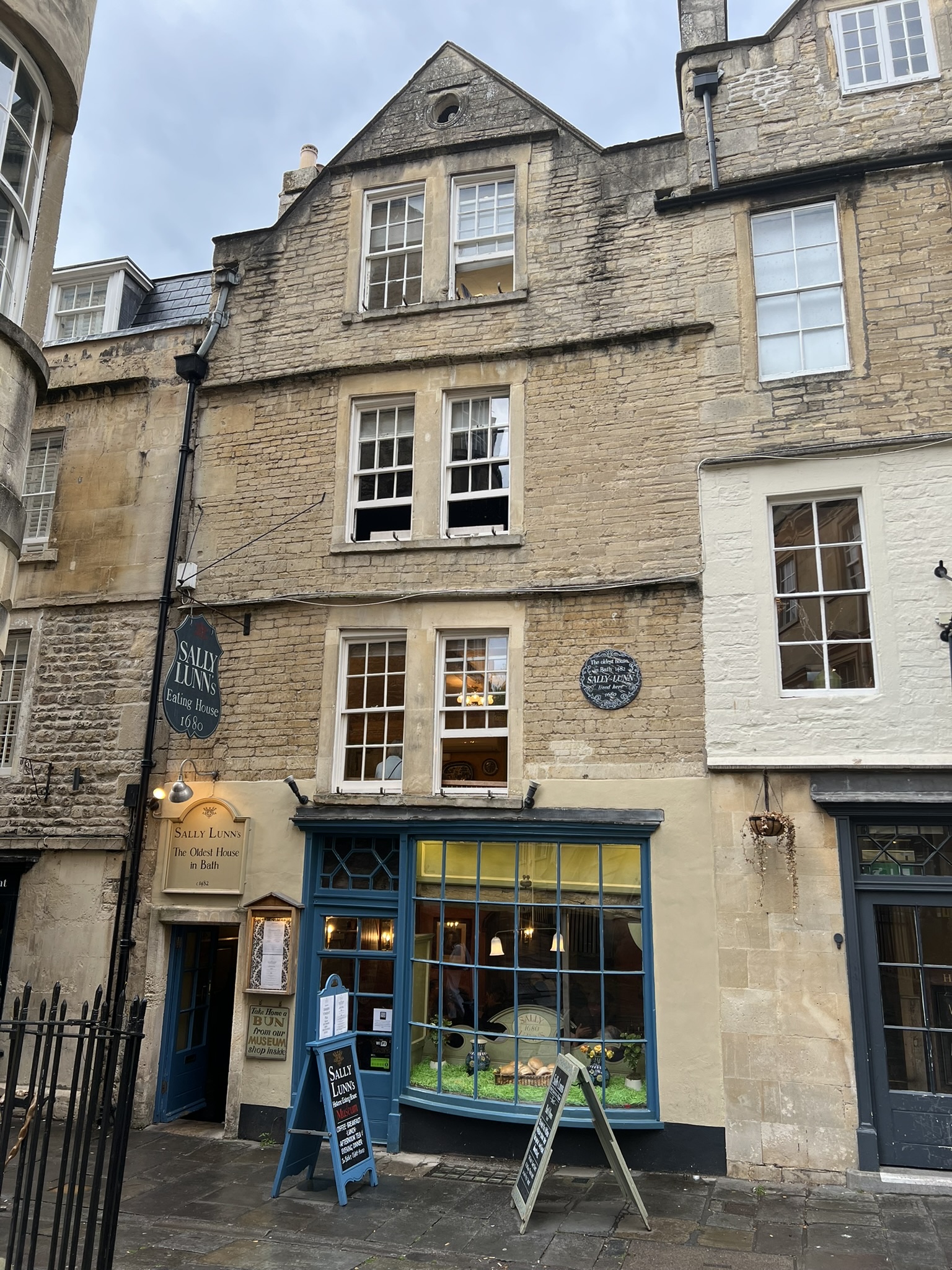
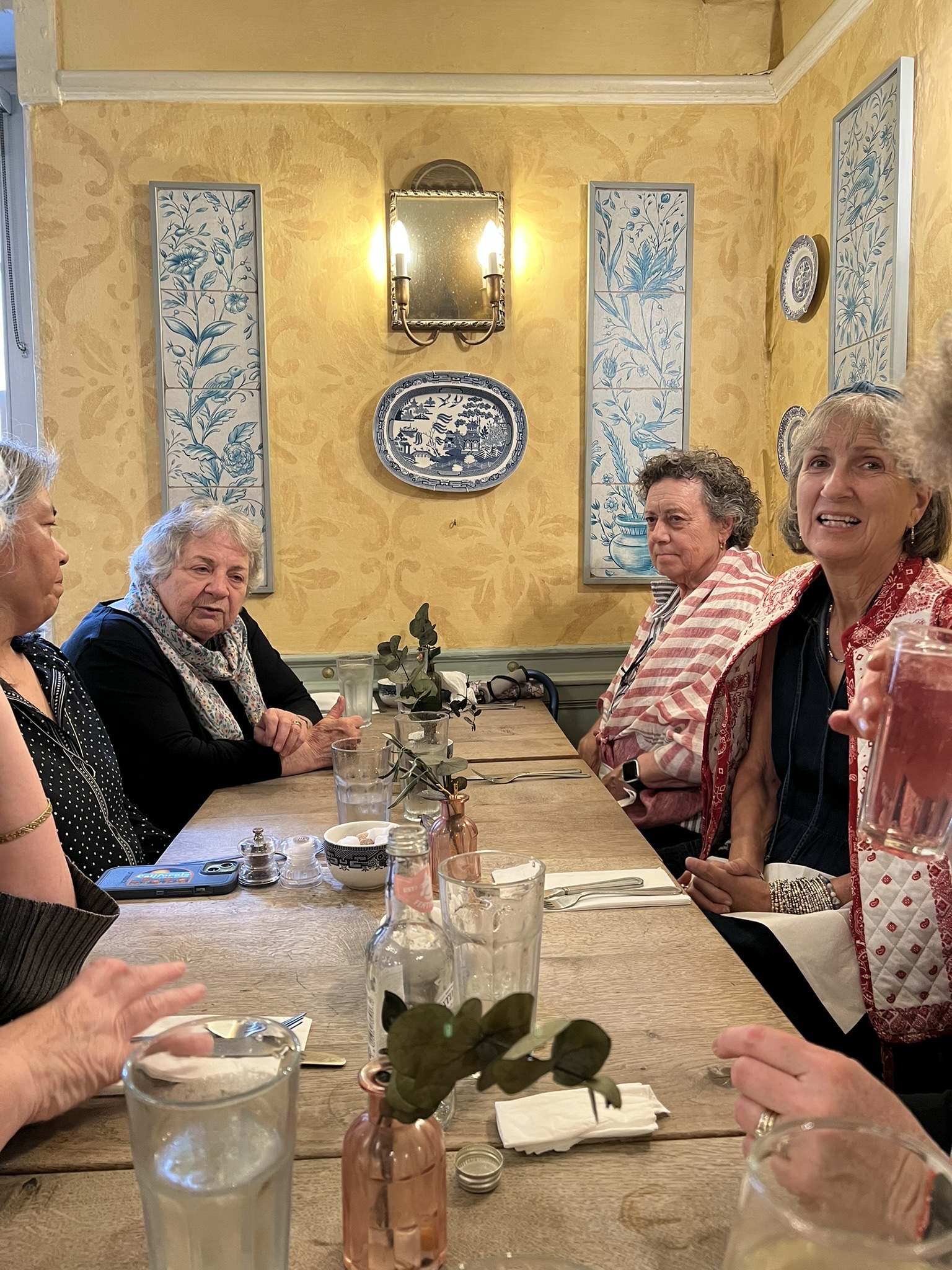
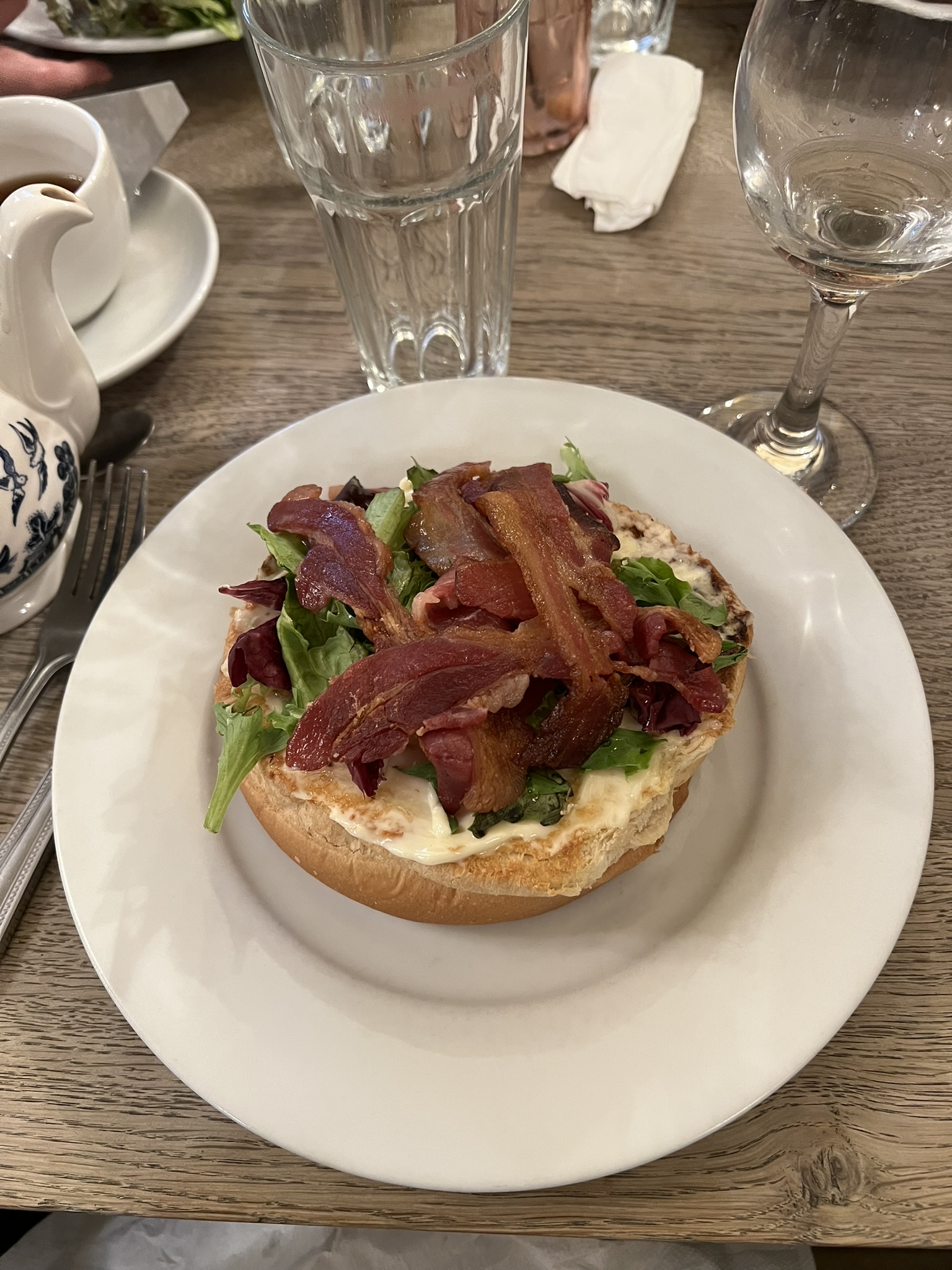
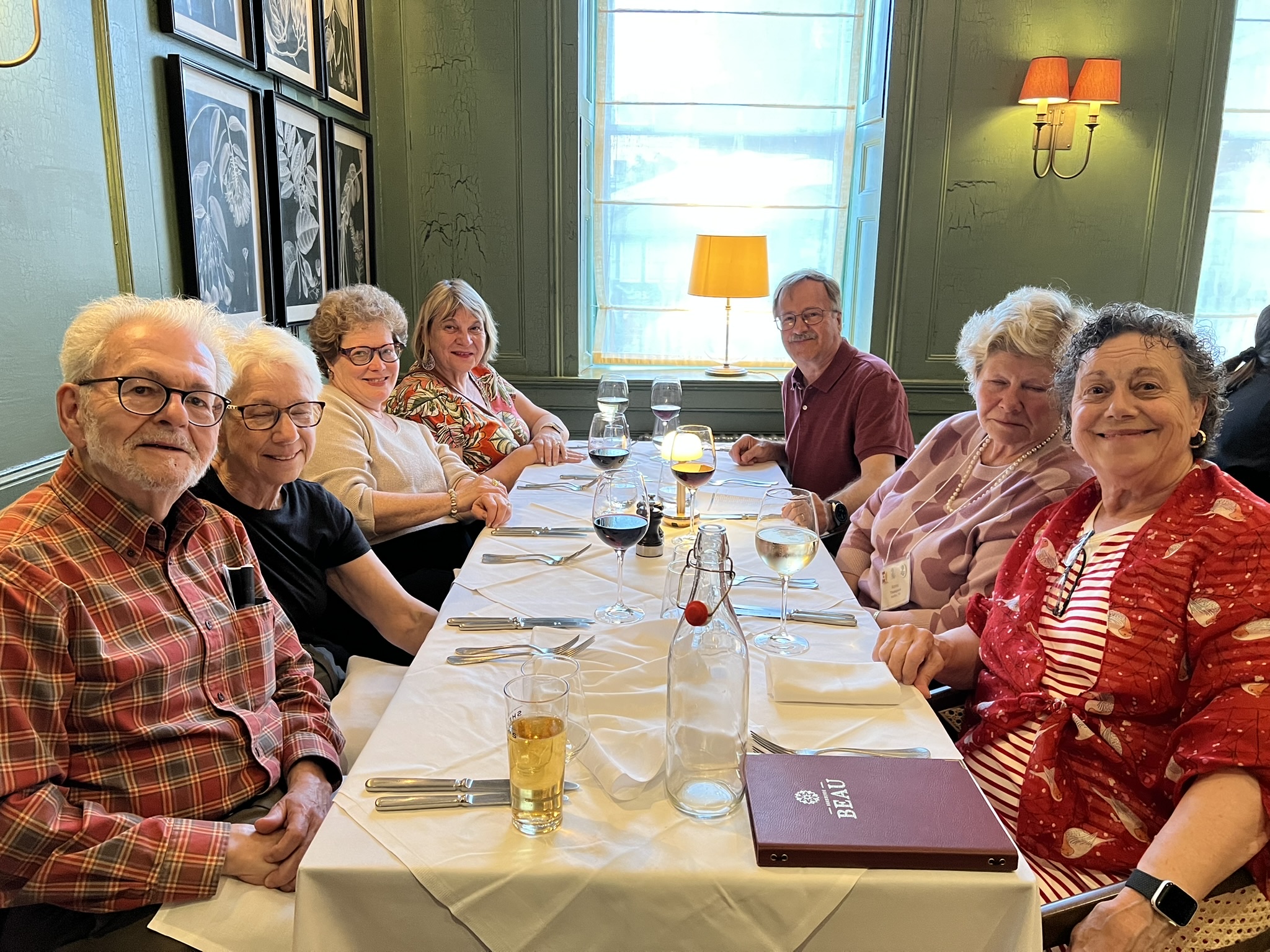
Dinner on our own and several of us headed to the absolutely required eating spot in Bath: Sally Lunn’s – a few photos for your pleasure!
And another day is done…
* Latest issue of JARW: [always a pleasure to see Mr. Darcy in the fog…]
Well, finally back to recounting this Jane adventure – I have been to London again and then to Belgium for a Flemish Art tour [fabulous trip with Martin Randall Travel] – so working on remembering the details of this JASNA tour while reentering from an immersion into the art world of the 14th – 16th centuries…with enough artist-rendered crucifixions to last a lifetime…
I left off with our visit to Chawton on Day 8 – now on to Day 9 when we left our excellent Winchester Hotel and headed on to Bath – with the absolutely required stop in Lyme Regis – no Wentworth in sight as yet, but one can only hope. Actually I was more on the lookout for Jeremy Irons, but that is another story entirely…
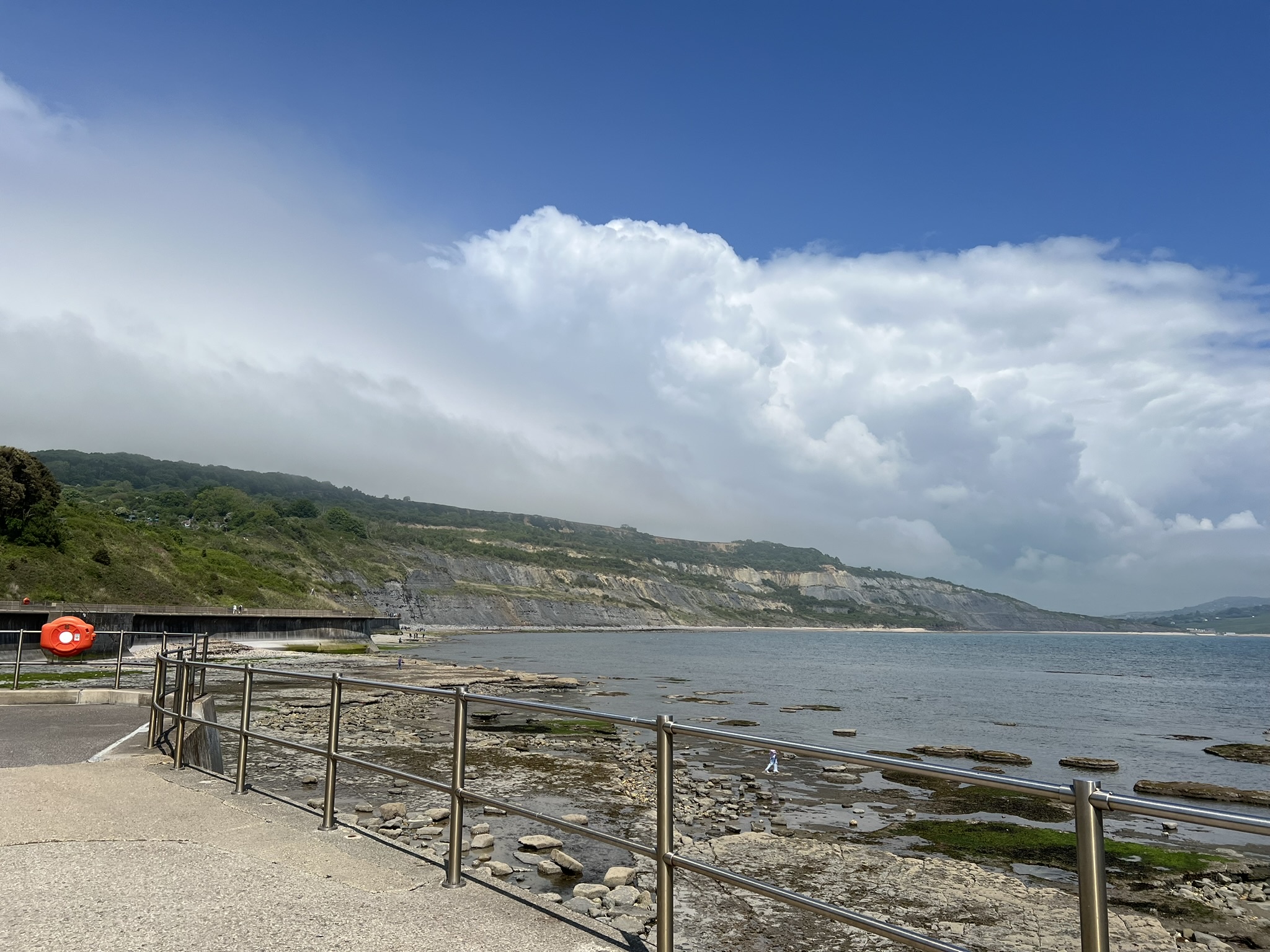
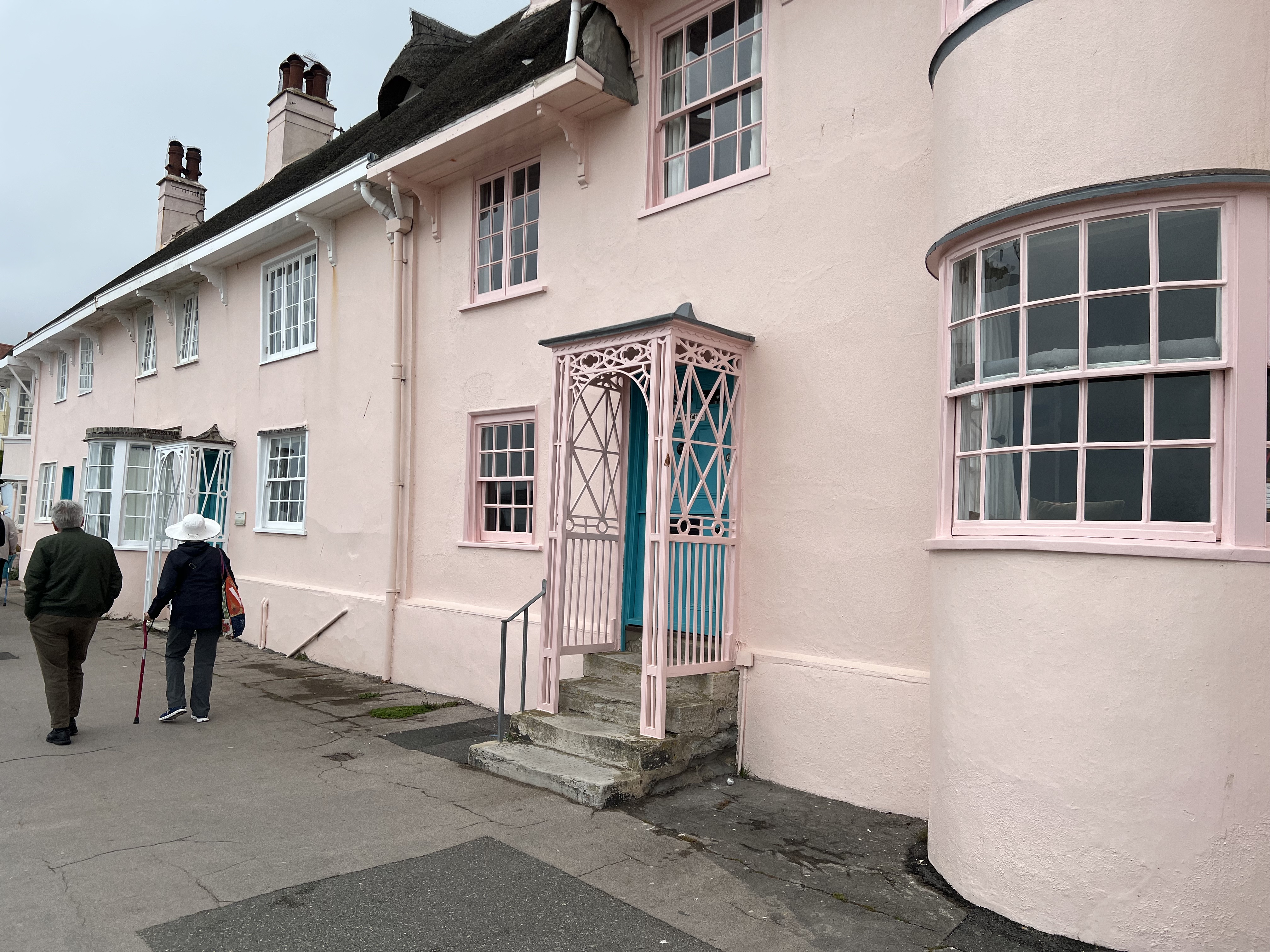
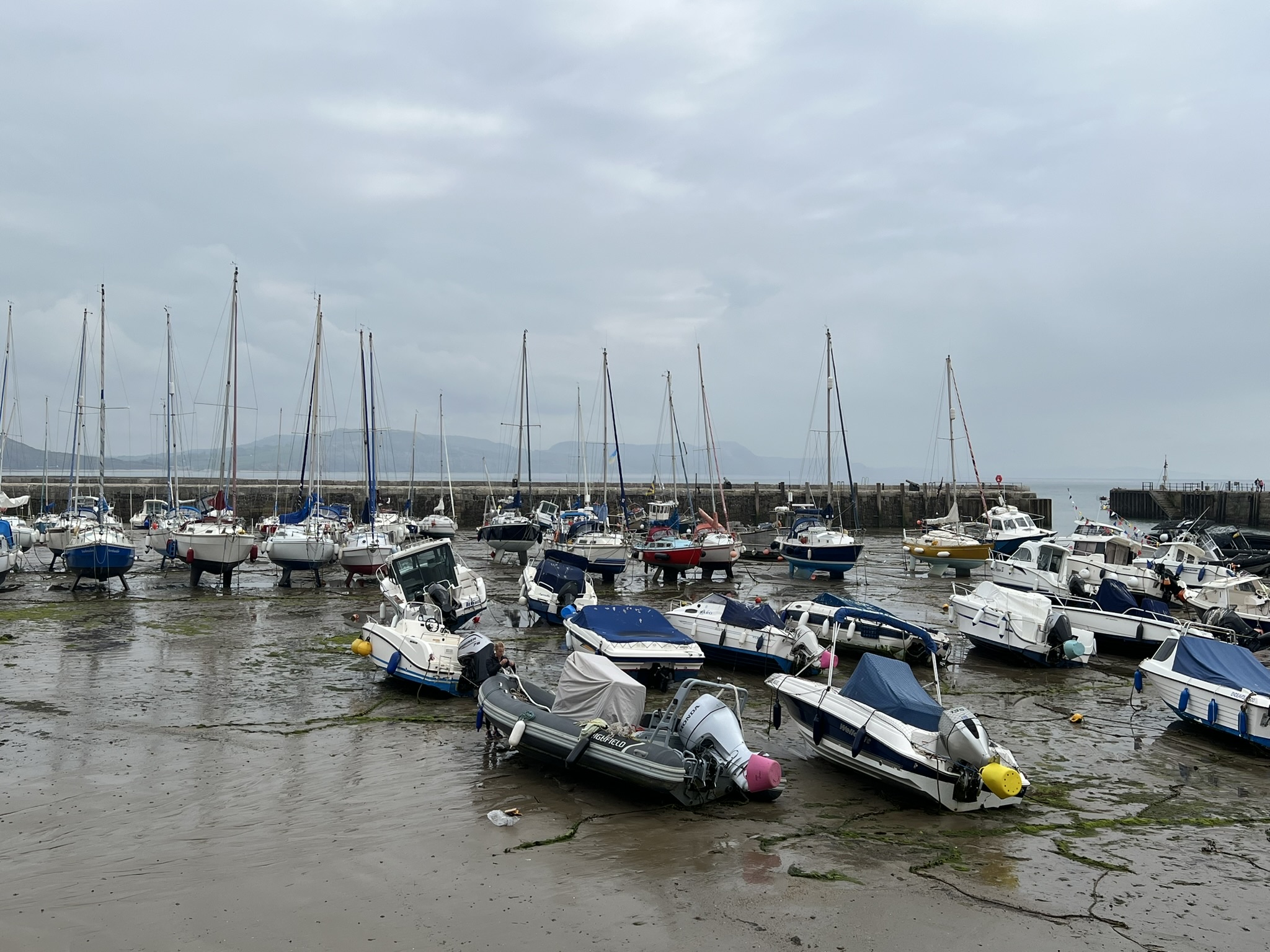
I have been to Lyme Regis before, where I stayed with friends in a bed & breakfast – the owner a sailor and the house fitted up like a ship – and with gorgeous views of the cliffs. Today was a perfect day, but very hazy and the cliffs barely visible the whole time we were there – unfortunate because it gives you a whole different perspective on this town, both now and when Austen would have visited.
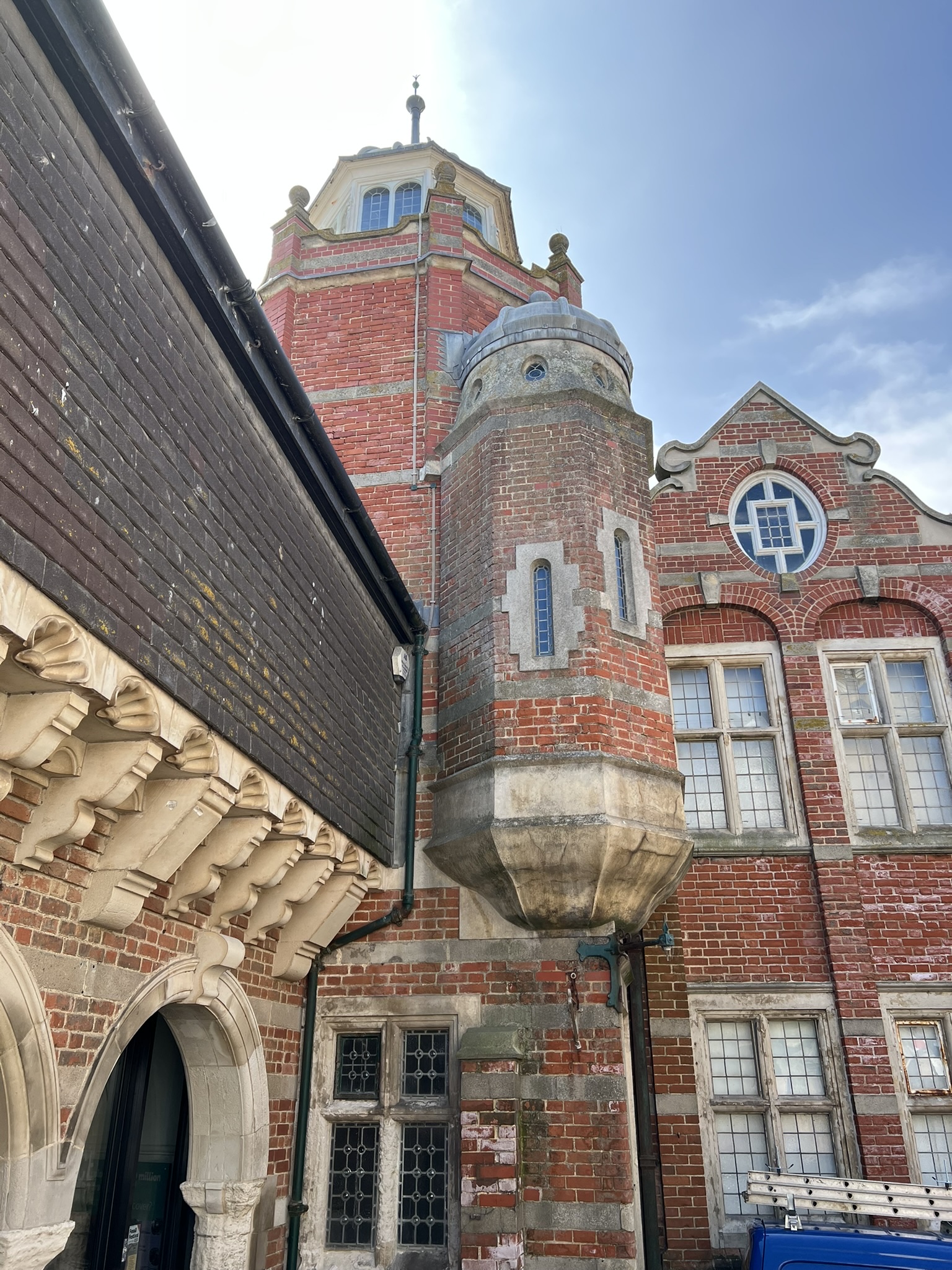
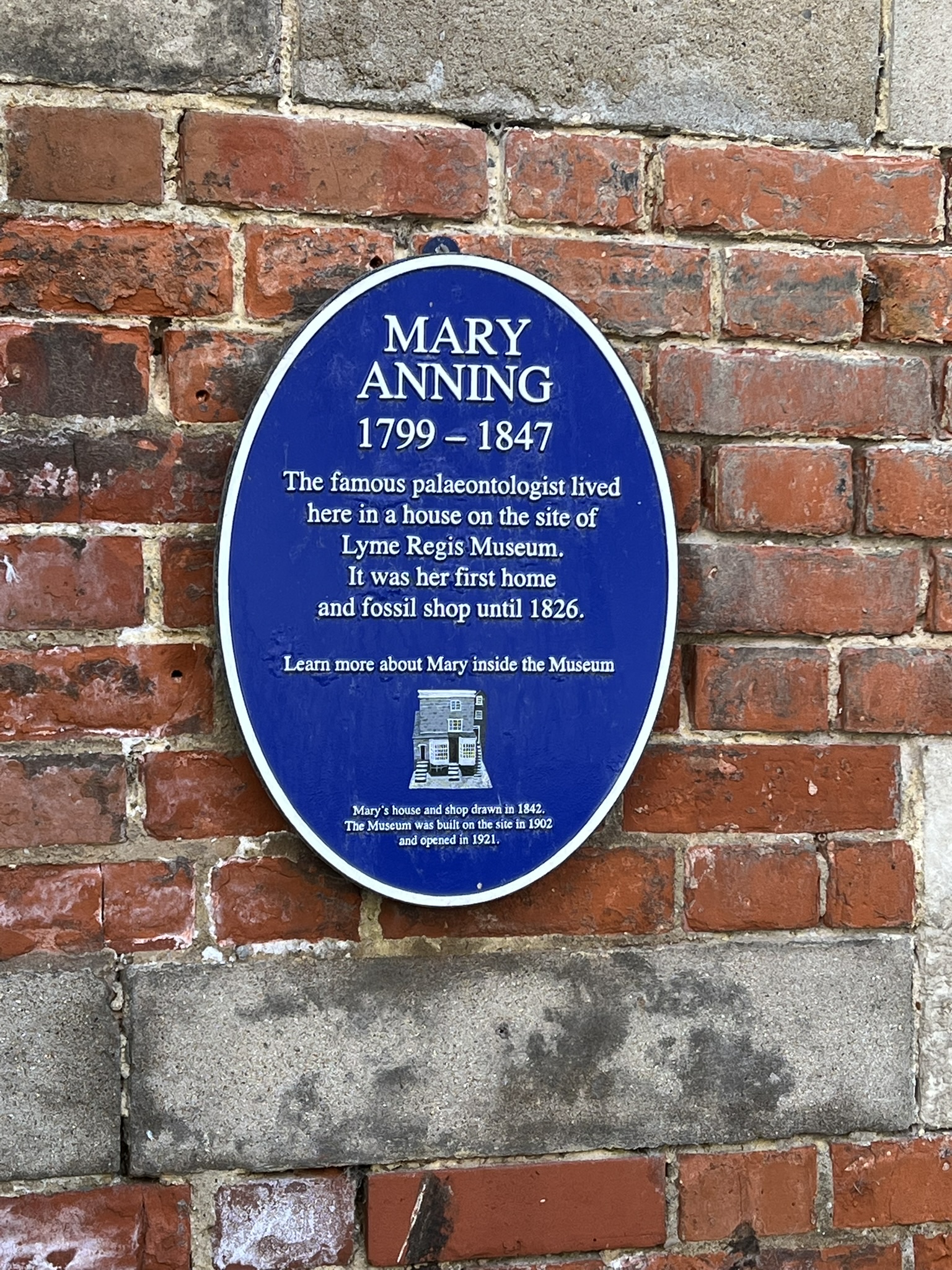
What does get prime attention here, and rightly so, is Mary Anning, famous for her fossil hunting and contributions to the study of paleontology. [You can read about her in Tracy Chevalier’s Remarkable Creatures for the historical fiction approach, but also here for a complete history lesson: https://www.nhm.ac.uk/discover/mary-anning-unsung-hero.html
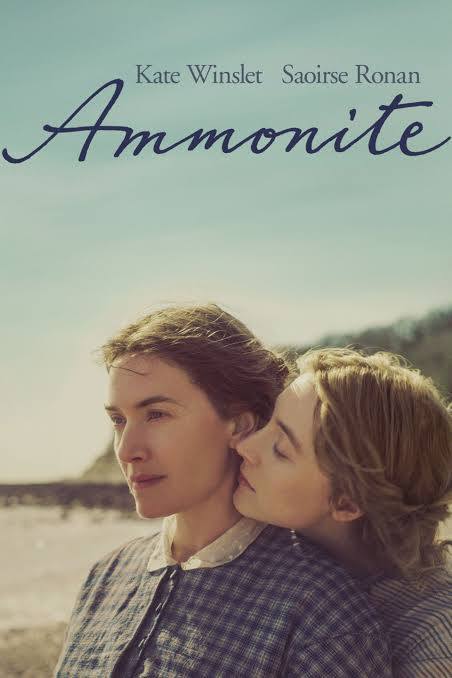
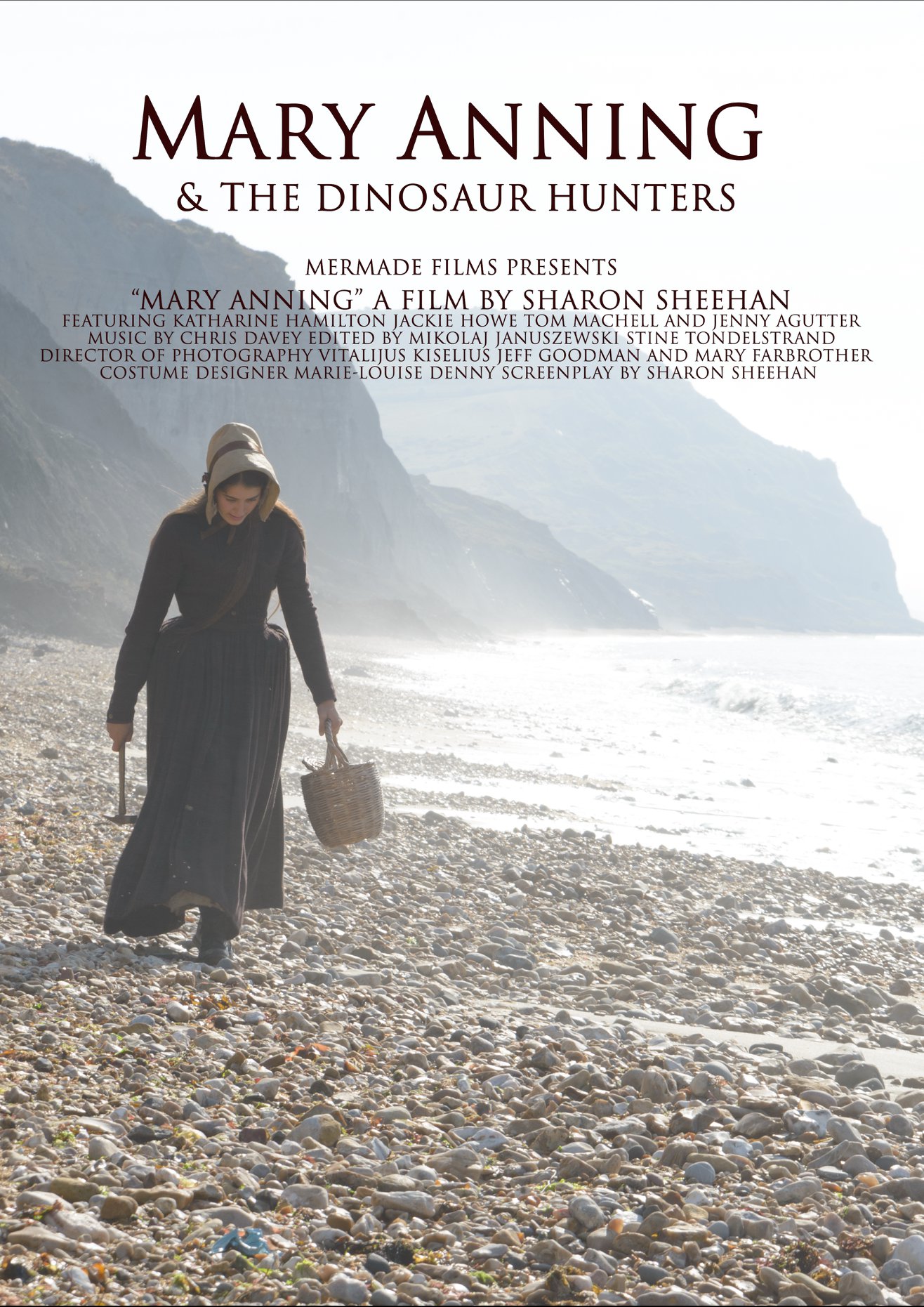
There is also the recent movie (2020) with Kate Winslet: Ammonite, which adds quite a bit to the historical record. And also the 2024 Mary Anning and the Dinosaur Hunters. Mary getting her just due finally!
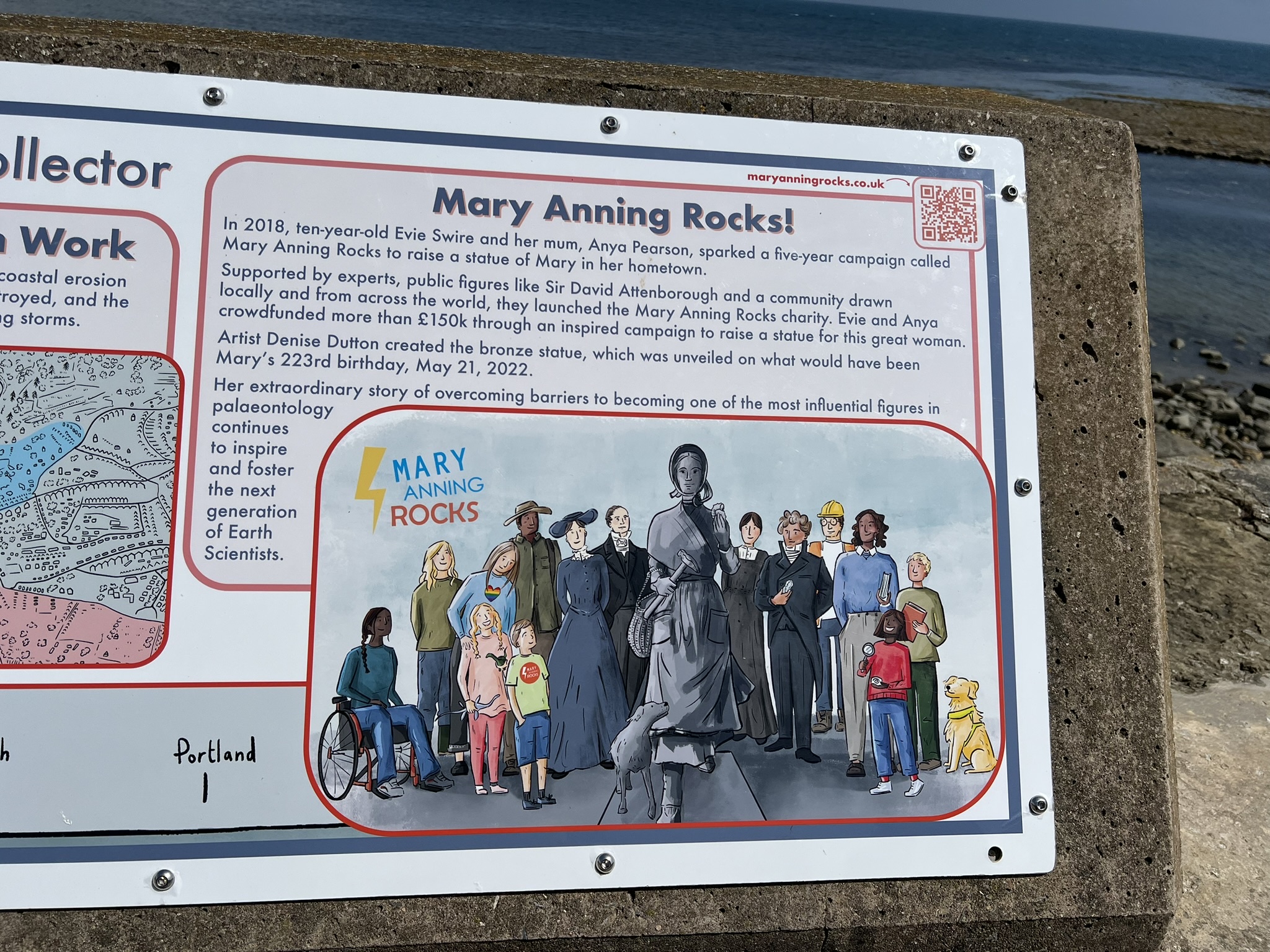
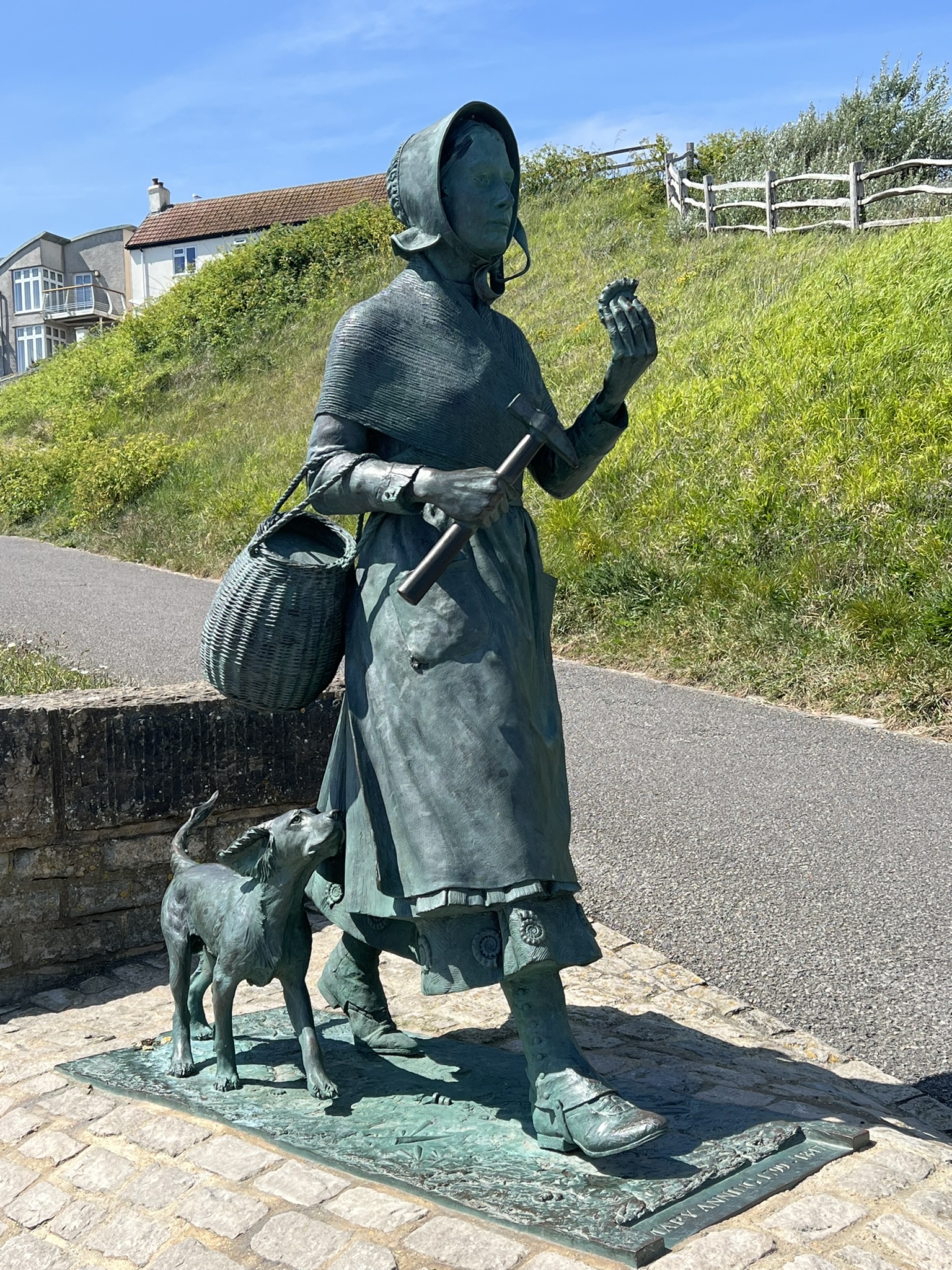
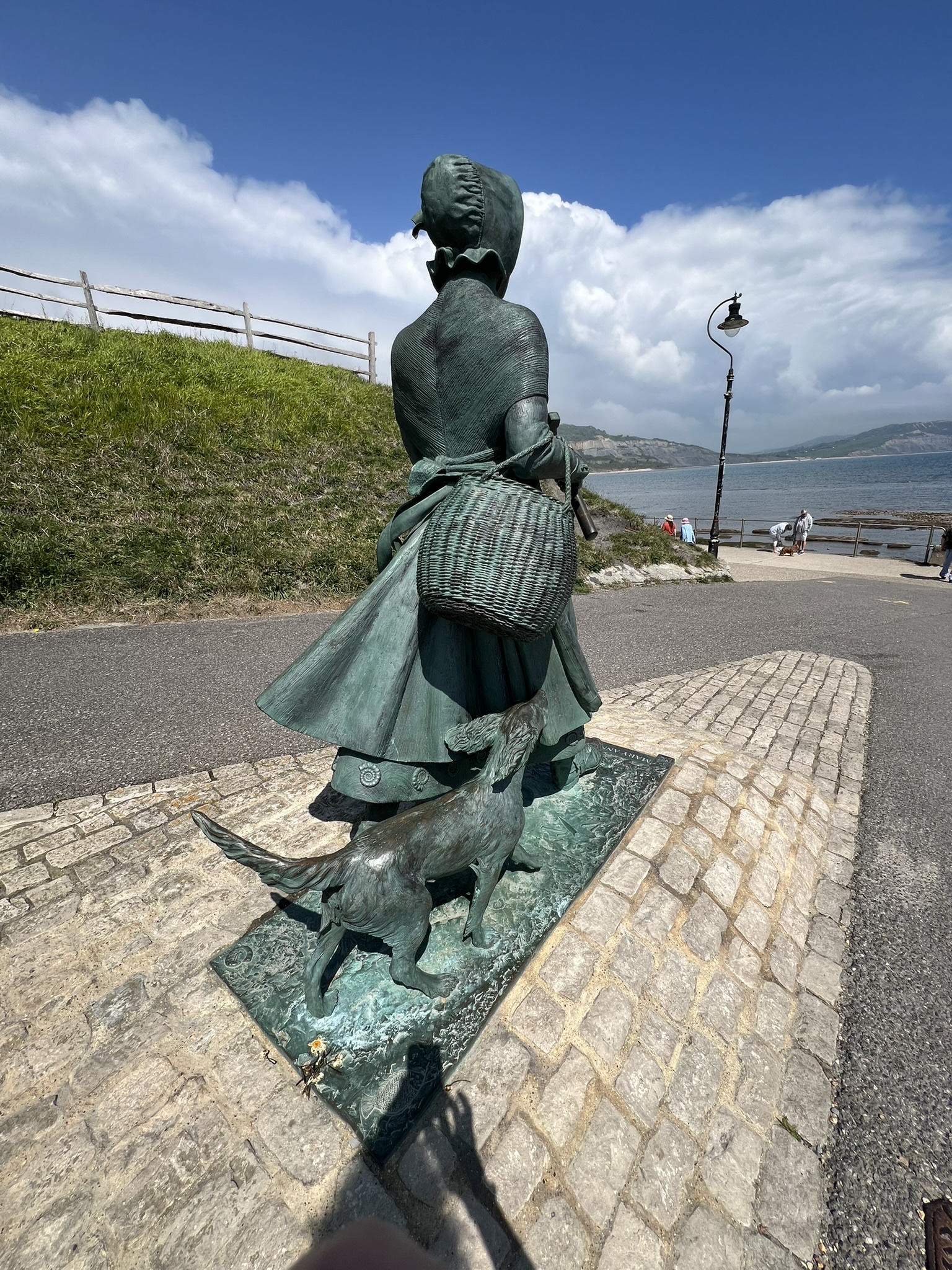
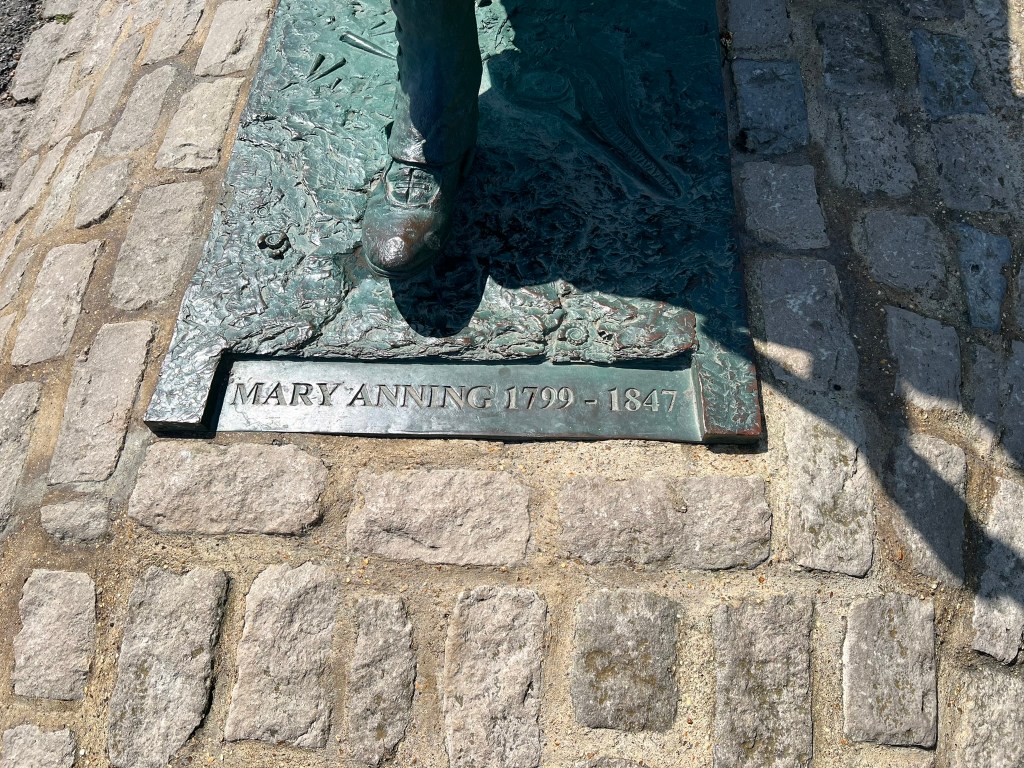
So, one of my main quests in our short visit to Lyme Regis was to see the Mary Anning statue, recently unveiled in 2022 – its creation a story in itself: a crowdfunding campaign called “Mary Anning Rocks” started by an 11-year old girl in Dorset – [did you know that 85% of the statues in the UK are of men??? Why am I not surprised…].
Designed by Denise Dutton, it is beautifully placed with a Mary in active pursuit looking out to sea with her dog in tow. It is quite lovely:
*****
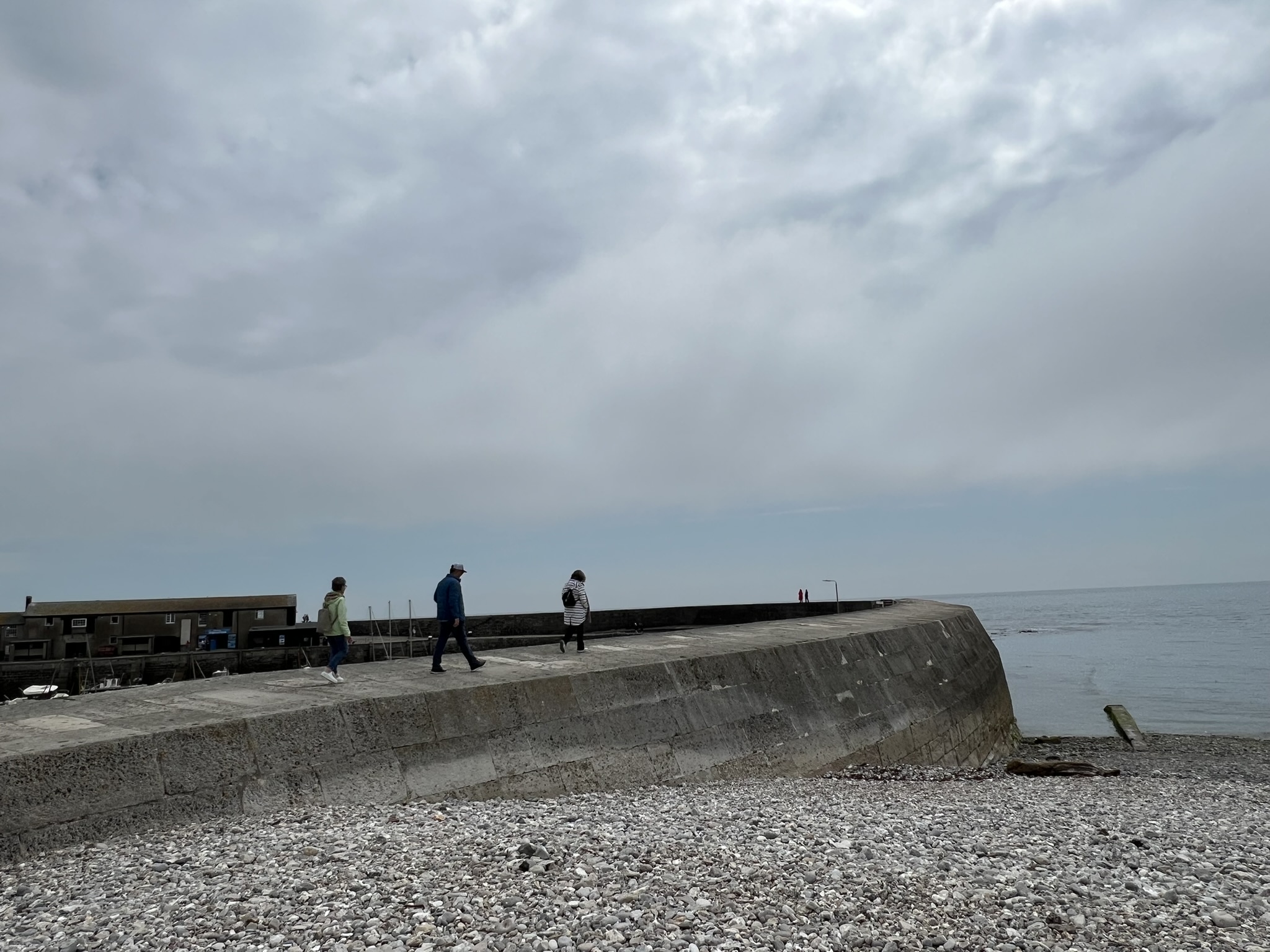
As for Jane here [and she is everywhere!]: we did a stroll on the Cobb – we listened to Marian [our tour manager] read the passage on Louisa Musgrove’s famous fall from the Cobb in Persuasion – we did this before attempting the treacherous Cobb itself as it was quite windy – we did not need a reenactment of anyone falling – especially as I have already noted that Wentworth was nowhere to be found…
…and pictures do no justice to the extent of the slant on the Cobb – treacherous is too gentle a word…
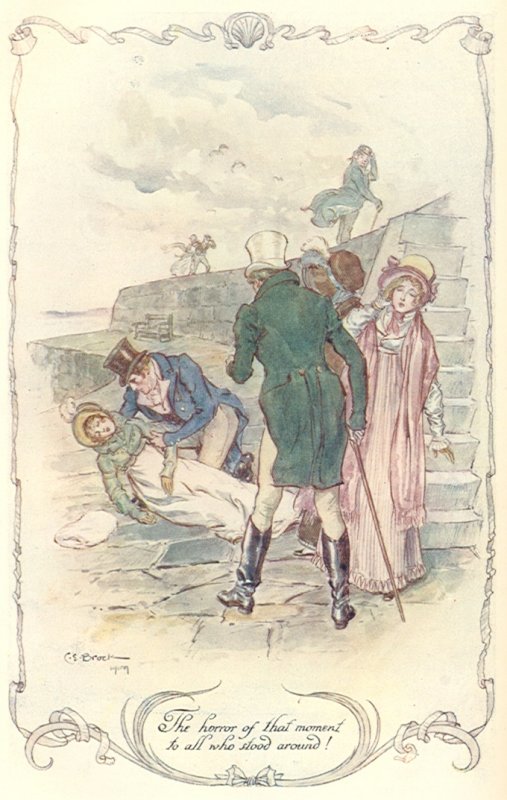
Louisa’s fall is quite a tale, and it lives on in the imagination of us all, but none perhaps as renowned as these two:
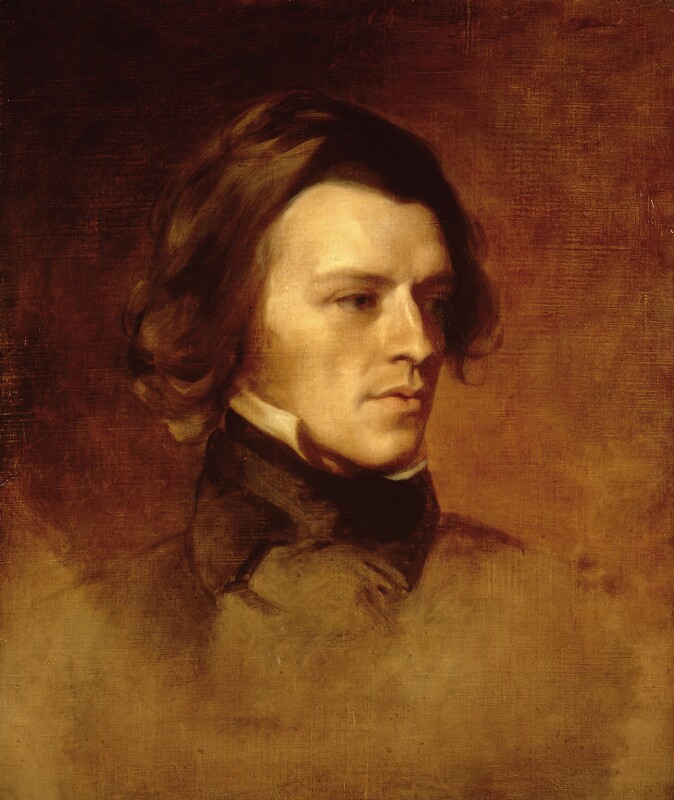
Alfred Lord Tennyson visited Lyme primarily for its Austen sites, walking the nine miles from Bridport to Lyme on 23 August 1867—“led on to Lyme by the description of the place in Miss Austen’s Persuasion.” Arriving, Tennyson called on his friend Francis Palgrave, and “refusing all refreshment, he said at once, ‘Now take me to the Cobb, and show me the steps from which Louisa Musgrove fell.’
Charles Darwin’s son Francis expounded a good deal on the actual location wondering how a strong man such as the Captain could have entirely failed to catch her – he hypothesizes that Wentworth slipped, as he did himself: “I quite suddenly and inexplicably fell down. The same thing happened to a friend on the same spot, and we concluded that in the surprisingly slippery character of the surface lies the explanation of the accident.” (see Peter Graham, “Why Lyme Regis?” Persuasions 26 (2004): https://jasna.org/publications-2/persuasions/no26/graham/ )
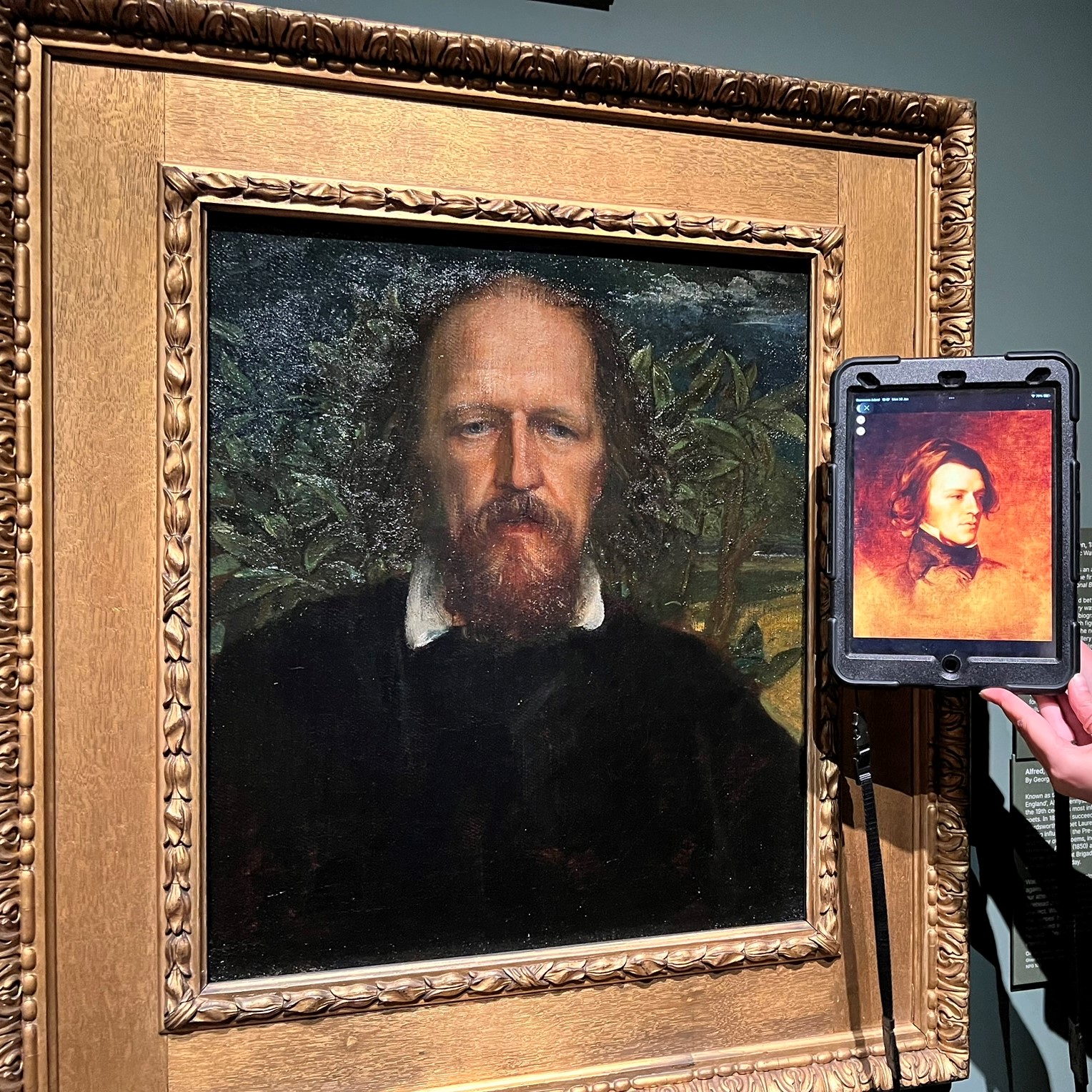
[This portrait at the NPG of a young quite-to-die-for Tennyson is no longer on display – here is the one there now – a shock to discover this when I just returned to London again last week and finally got to the renovated NPG:
I told the guard, here holding the earlier painting on her ipad, that she must speak to the powers that be and get young Tennyson back on view!]
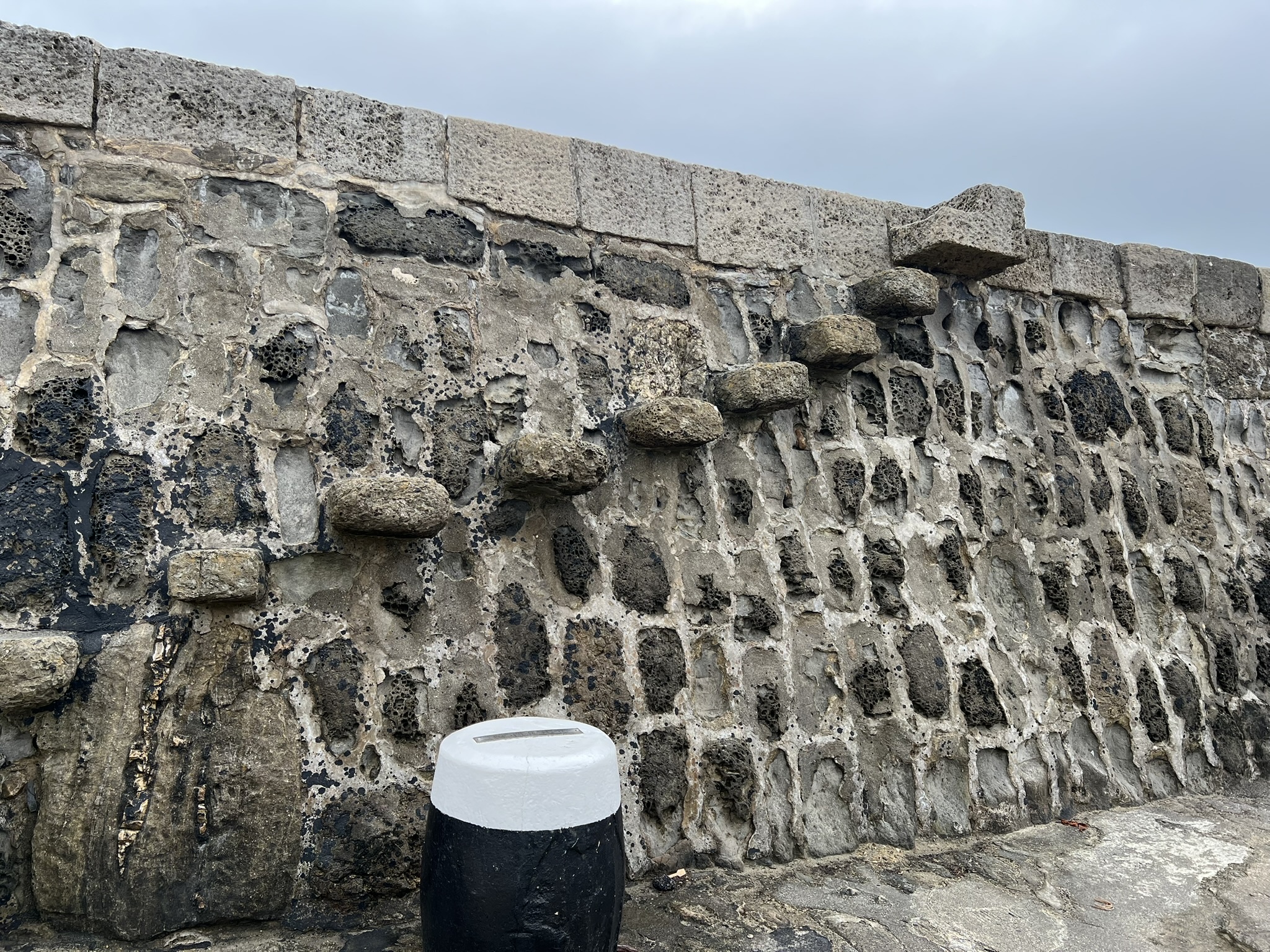
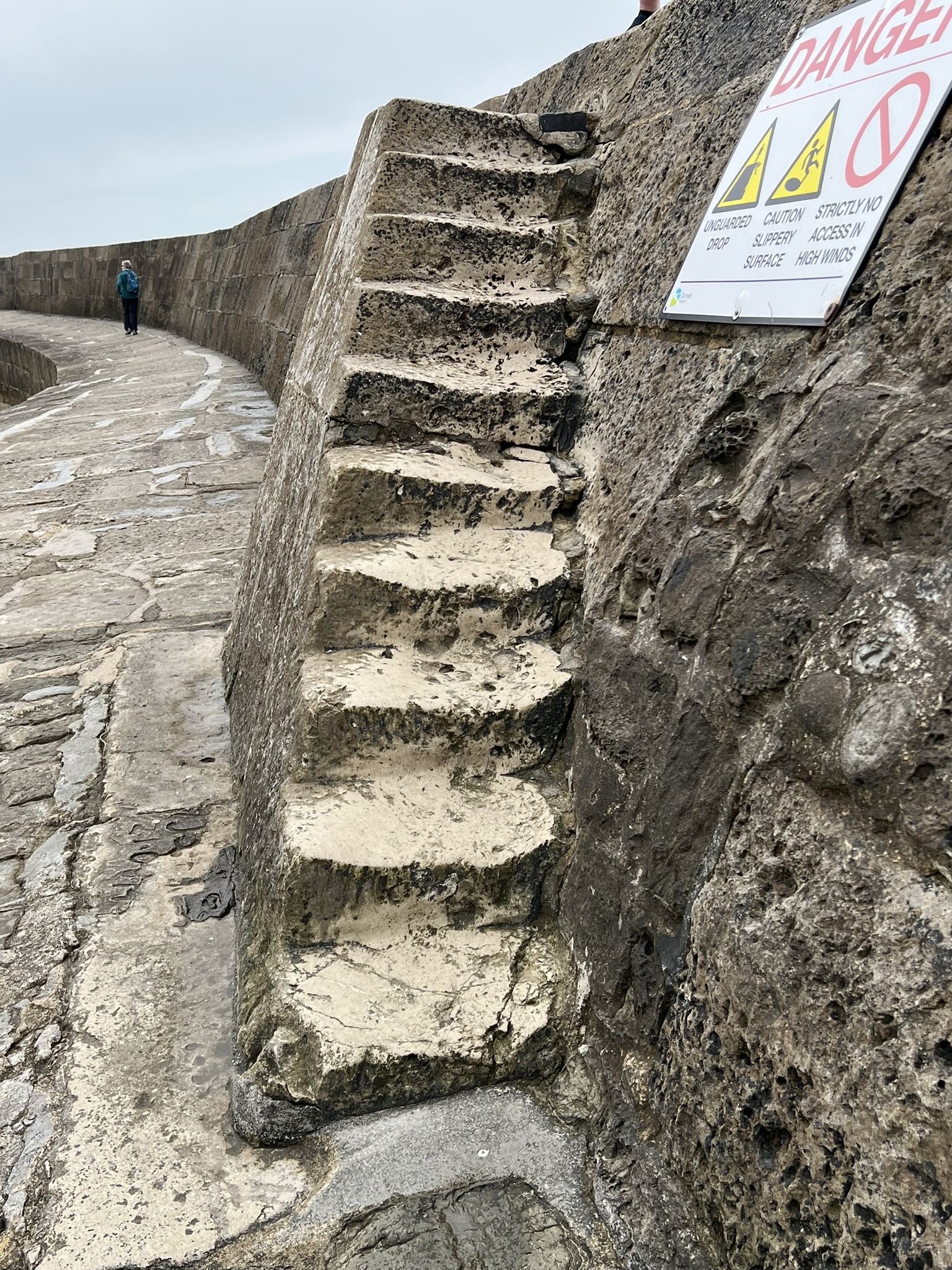
But, back to the steps – the confusion continues as to which steps Louisa actually jumped from – “granny’s teeth” on the left being the most decided upon: but another treacherous walking adventure on the Cobb… two of my photos:
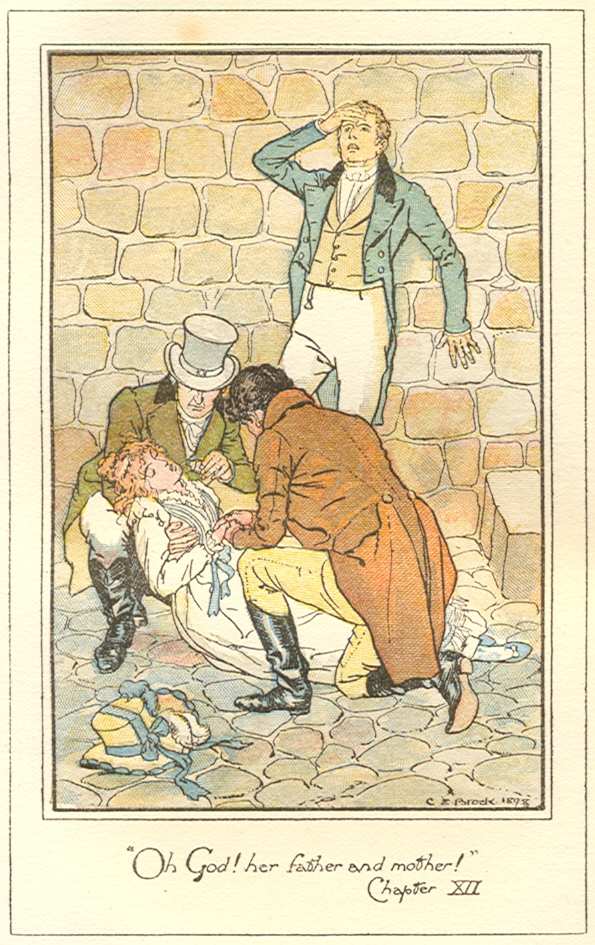
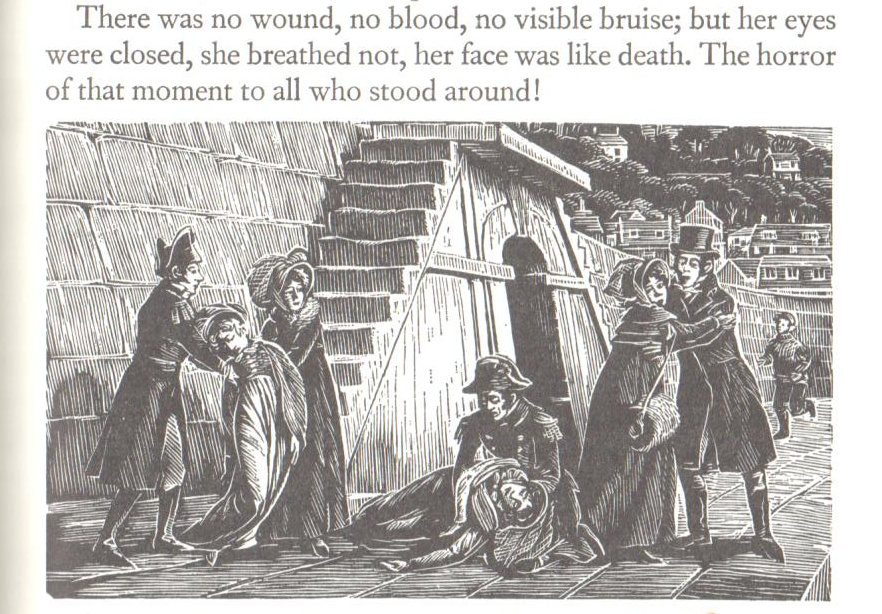
Illustrators of Austen’s Persuasion went wild with this scene, showing both options in their drawings: do you show her jumping?, or lying “lifeless” on the ground, Wentworth pleading “Is there no one to help me?” – here are just a few:
C. E. Brock – Dent, 1898 / Dent, 1909
Hugh Thomson – Macmillan, 1897
Joan Hassall – Folio Society, 1975, shows Henrietta in a swoon: “nay, two dead young ladies”!
Niroot Puttapipat – Folio Society, 2007, gives us an action image “I am determined I will” – perfect!
and the 1995 film of Persuasion is also perfect – the first jump when Wentworth catches her…:
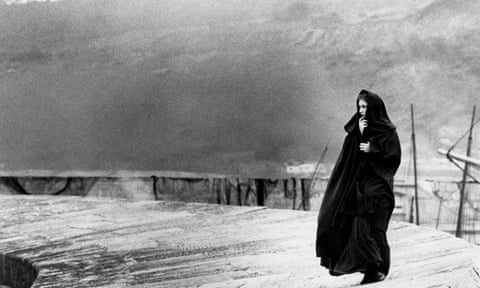
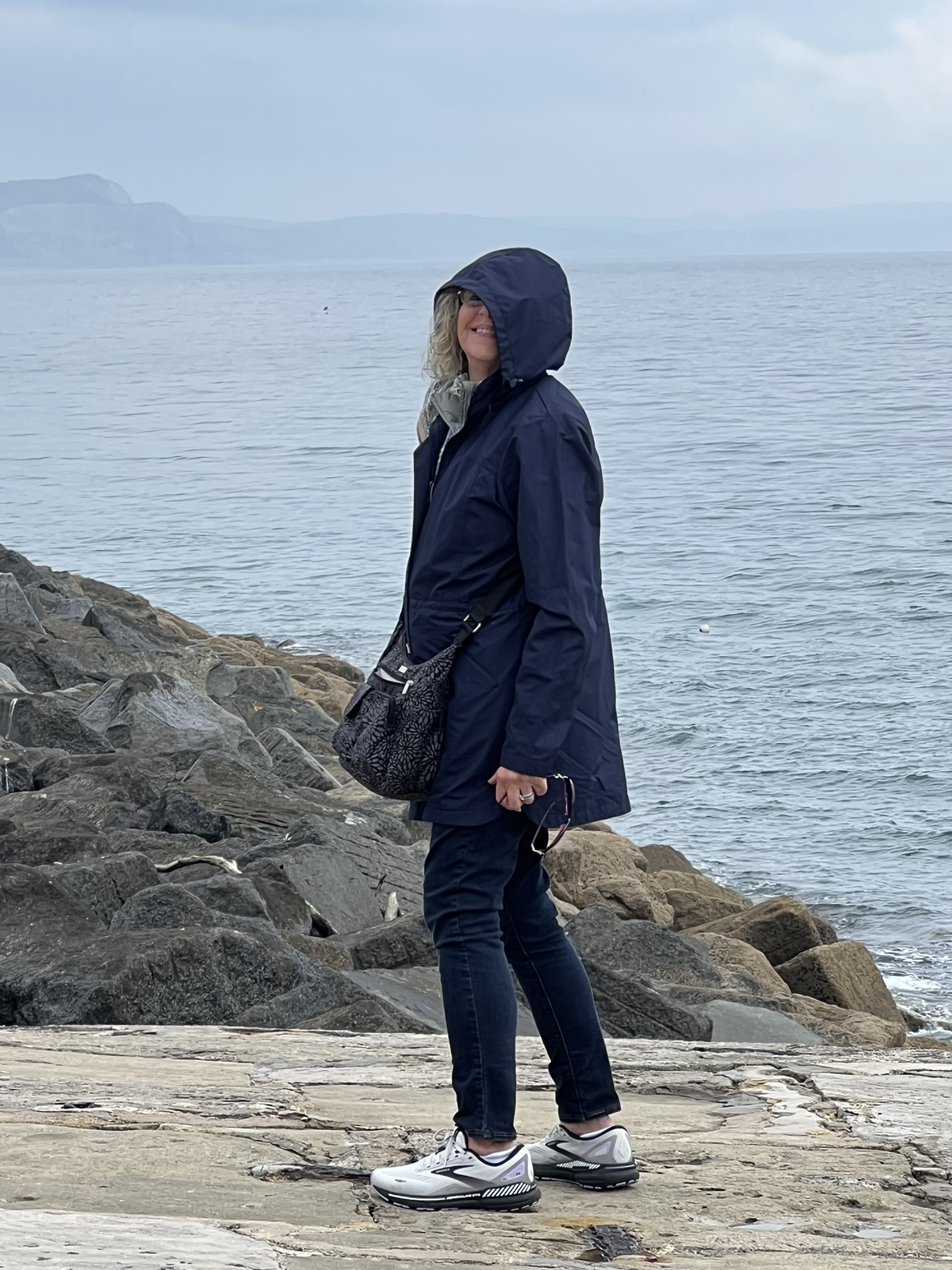
Despite all these dire images in our heads, Joy and I bravely trekked along the Cobb, and here as you can see I am channeling Meryl Streep in The French Lieutenant’s Woman – but again, no Jeremy Irons in sight to rescue me…a precarious place this Cobb…
Then we walked around town in our limited time here, in pursuit of the Anning statue, had lunch at a delightful restaurant, Rock Point, sitting outside on this now sunny day [still hazy…]
– and found that the Lyme Regis Museum was closed on Mondays so we were unable to see much of the local history: info here on the Museum
– we did just pass by the place where there is a Jane Austen Garden, but her stone bust disappeared a number of years ago, never to be seen again… sort of like the paintings in the Isabella Stewart Gardner Museum – I didn’t take any photos sorry to say, but here is one from their website:
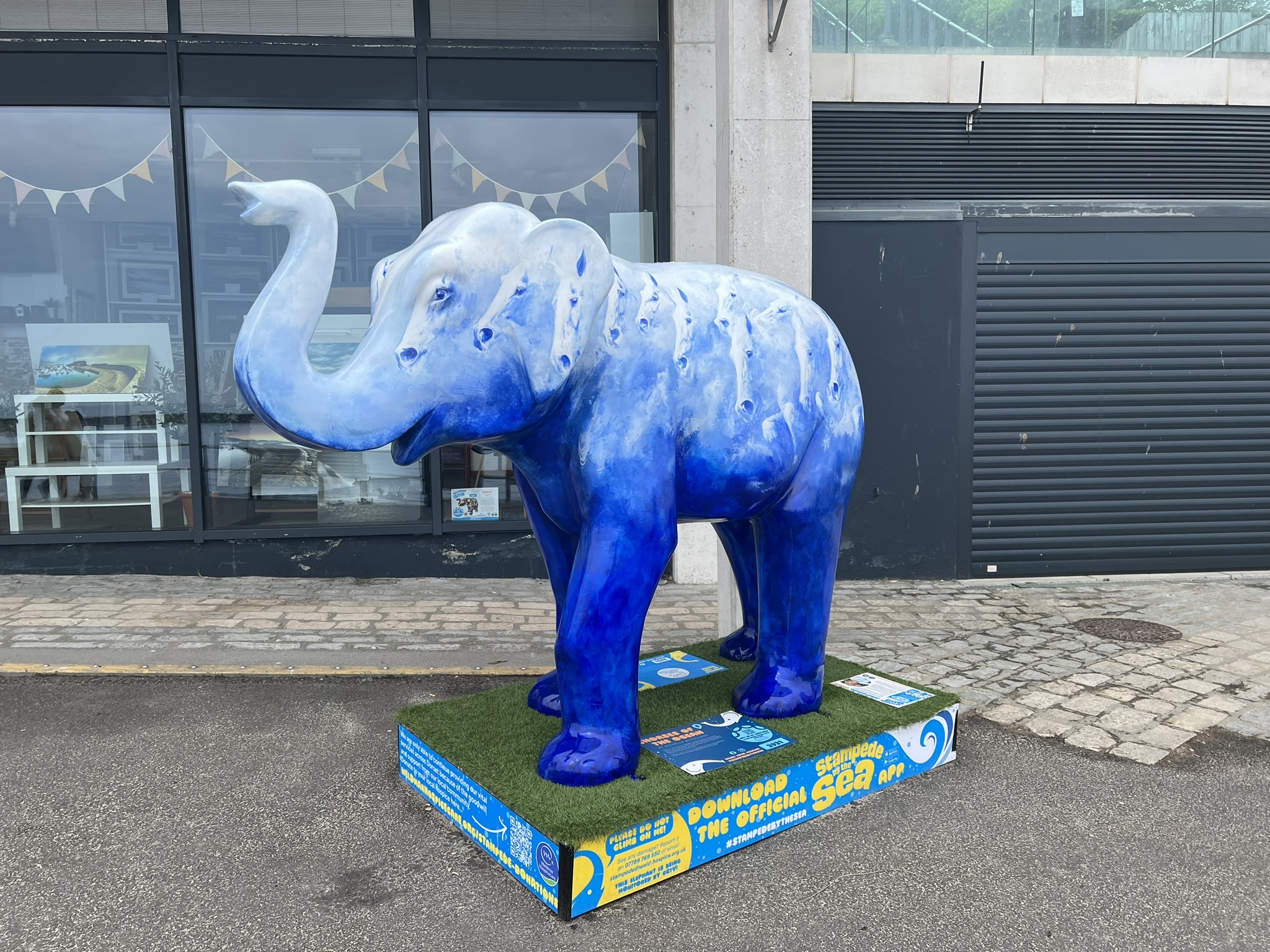
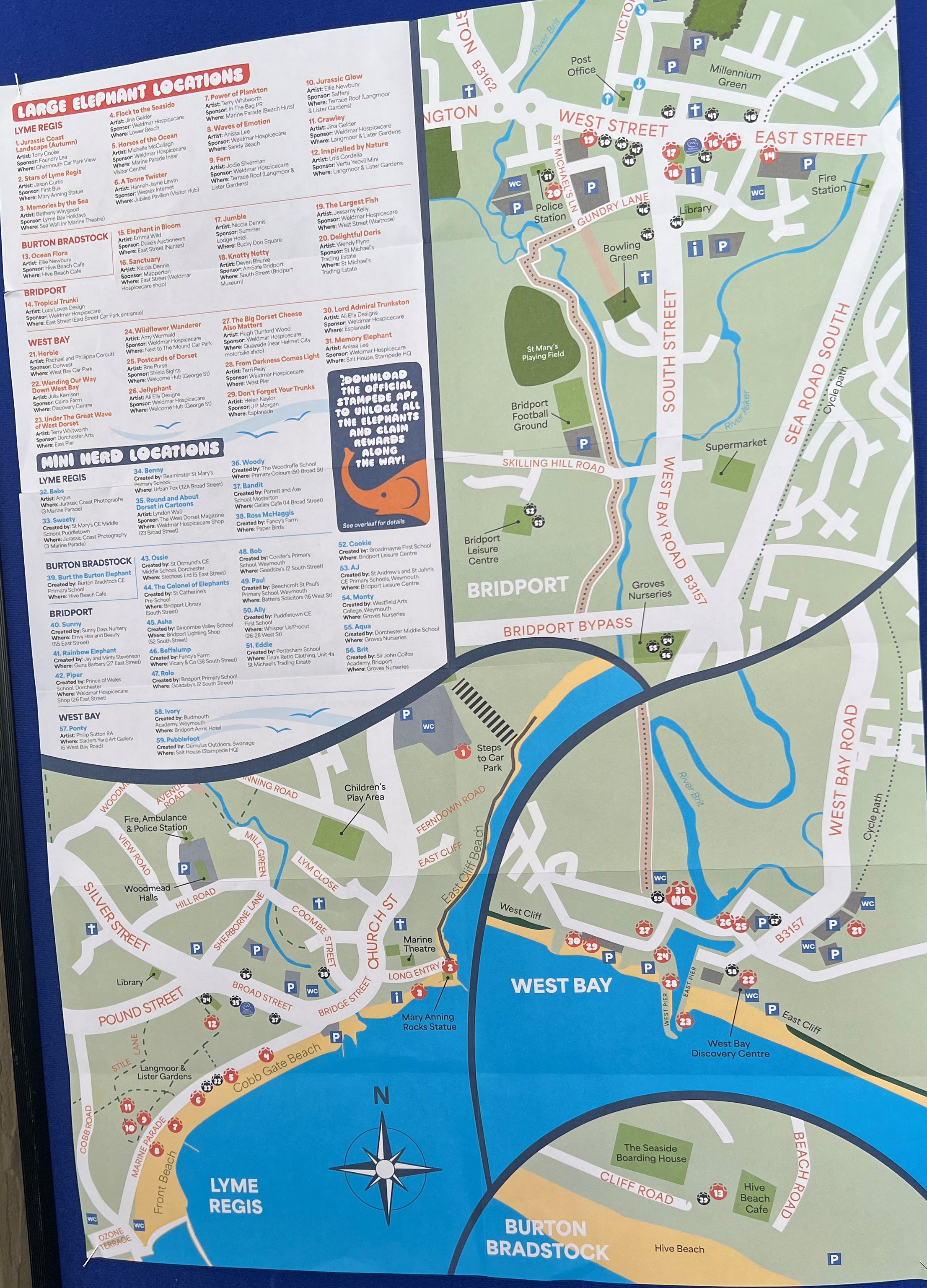
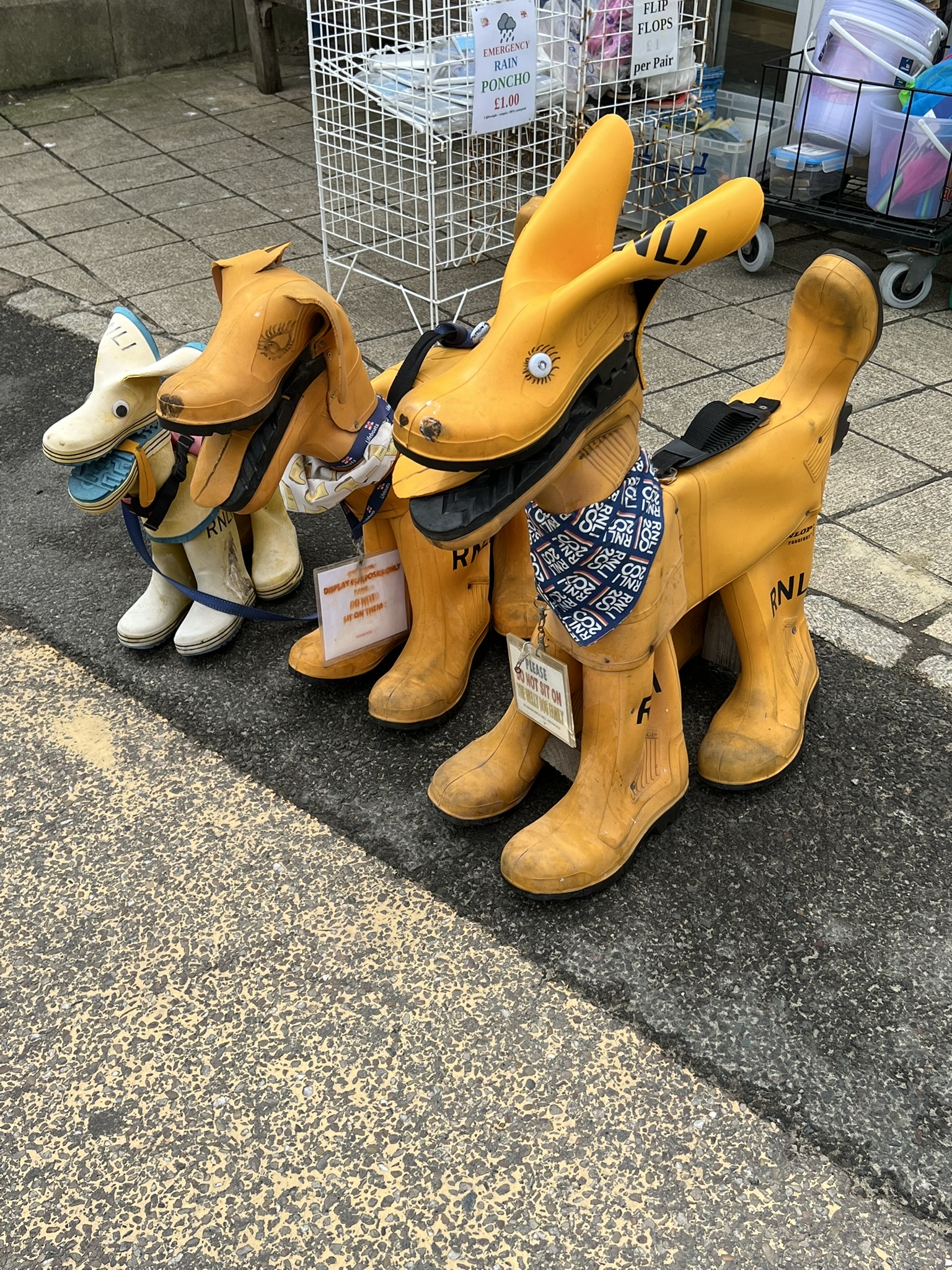
Also of interest walking around town is the current Stampede by the Sea – a collection of decorated painted elephants auctioned off for a charity event – you can find them all here on the map below, but here are two that captured my imagination: [look closely at this first one – what do you see??]
Map of all these hefty fellows about town – it is quite the fundraiser:
a farewell to Lyme Regis…the Cliffs just appearing…
************
Then, back on the bus to head to Bath, home to some of the finest architecture in England, as well as a home to Jane Austen for several years, and as a plot-solving location in her book-end novels Northanger Abbey and Persuasion.
A very proper waistcoat on our “butler”…
After settling into our room at the Hotel Indigo, perfectly located right downtown, Joy and I took a stroll around the places familiar to us and all the set locations for the various Austen films – a delightful walk as few people were around and most of the stores were closed, excepting our favorite Topping & Company Booksellers:
“Oh! what a Henry!…”
Dinner at the hotel restaurant to end a very full day, well-spent of course – Bath adventures will fill our next few days, can’t wait…
Where oh where do I begin to tell of this joyous day? All places I have been before, but more engaging touring about with a group of like-minded people, and the chance to see so much more behind the scenes…
We are today off from our Winchester hotel to Chawton – and there to see the two most important sites having to do with Jane Austen: Chawton House and the Jane Austen House Museum.
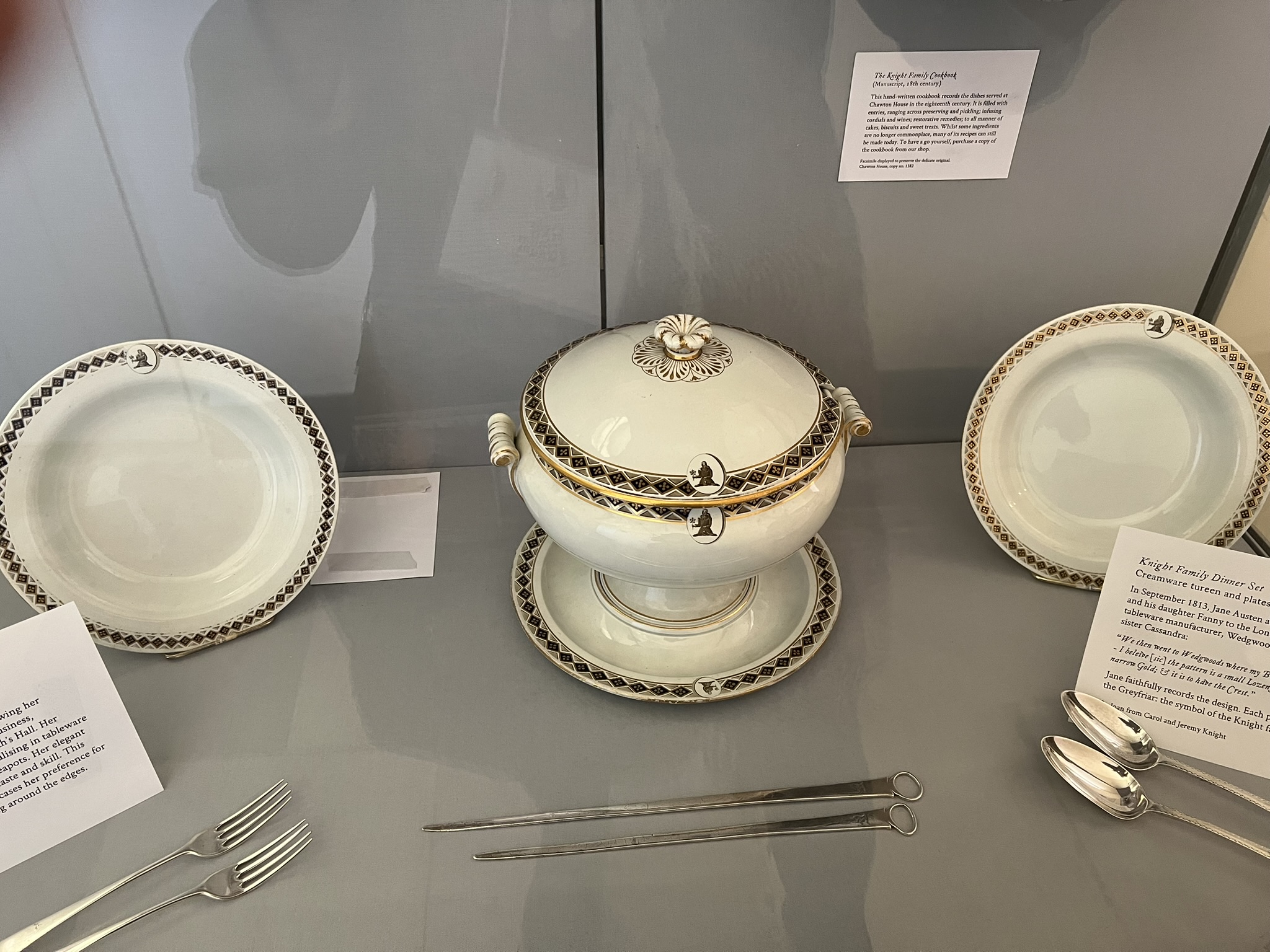
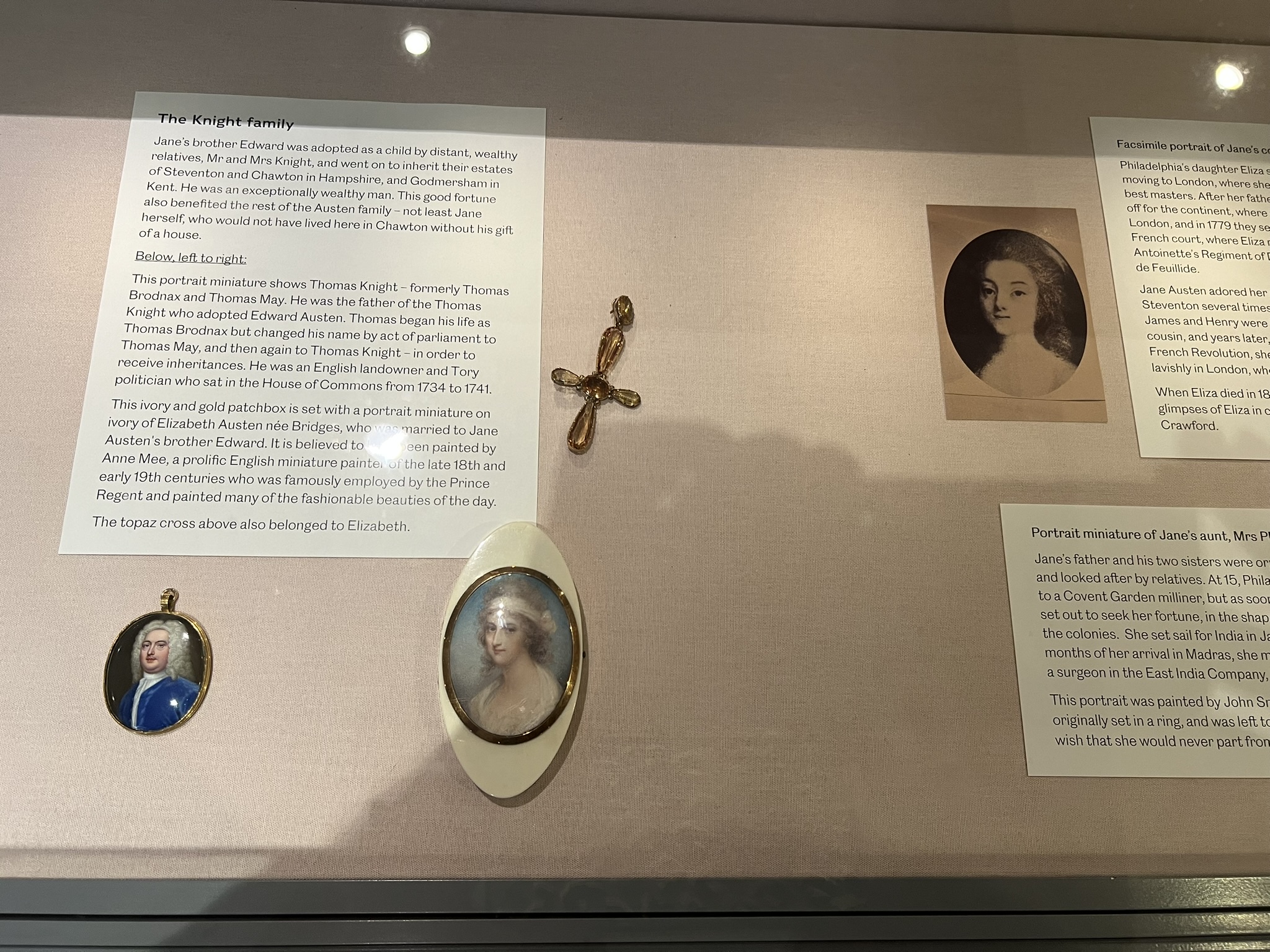
Chawton House is an Elizabethan manor house still in the Knight family, owned by Edward Austen Knight, Jane Austen’s brother. Edward was adopted by the Knight family and he inherited three estates: Steventon, Chawton and Godmersham Park. You can read all this interesting history here – https://chawtonhouse.org/visit/house/
…the main point being that Edward’s ownership of this Chawton estate gave him the ability to offer the steward’s cottage on the property to his mother and two sisters in 1809 [this is now called the Jane Austen House Museum] – and so, like Godmersham Park, Jane would have visited this house often – a short walk up the road – again, giving her the knowledge of life on a gentleman’s country estate. Edward’s stewardship of his land and properties certainly served as a model for her grand land-owning Heroes in her novels: Mr. Darcy, Mr. Knightley, and Col. Brandon.
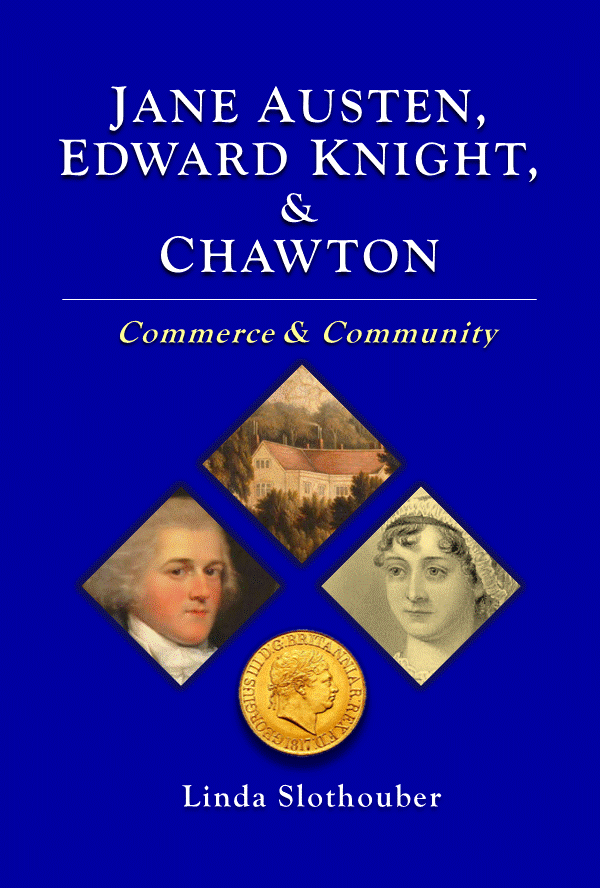
[If you have any doubts about Edward’s generosity, please read Linda Slothouber’s book: Jane Austen, Edward Knight, & Chawton: Commerce and Community [Woodpigeon Publishing, 2015.]
************
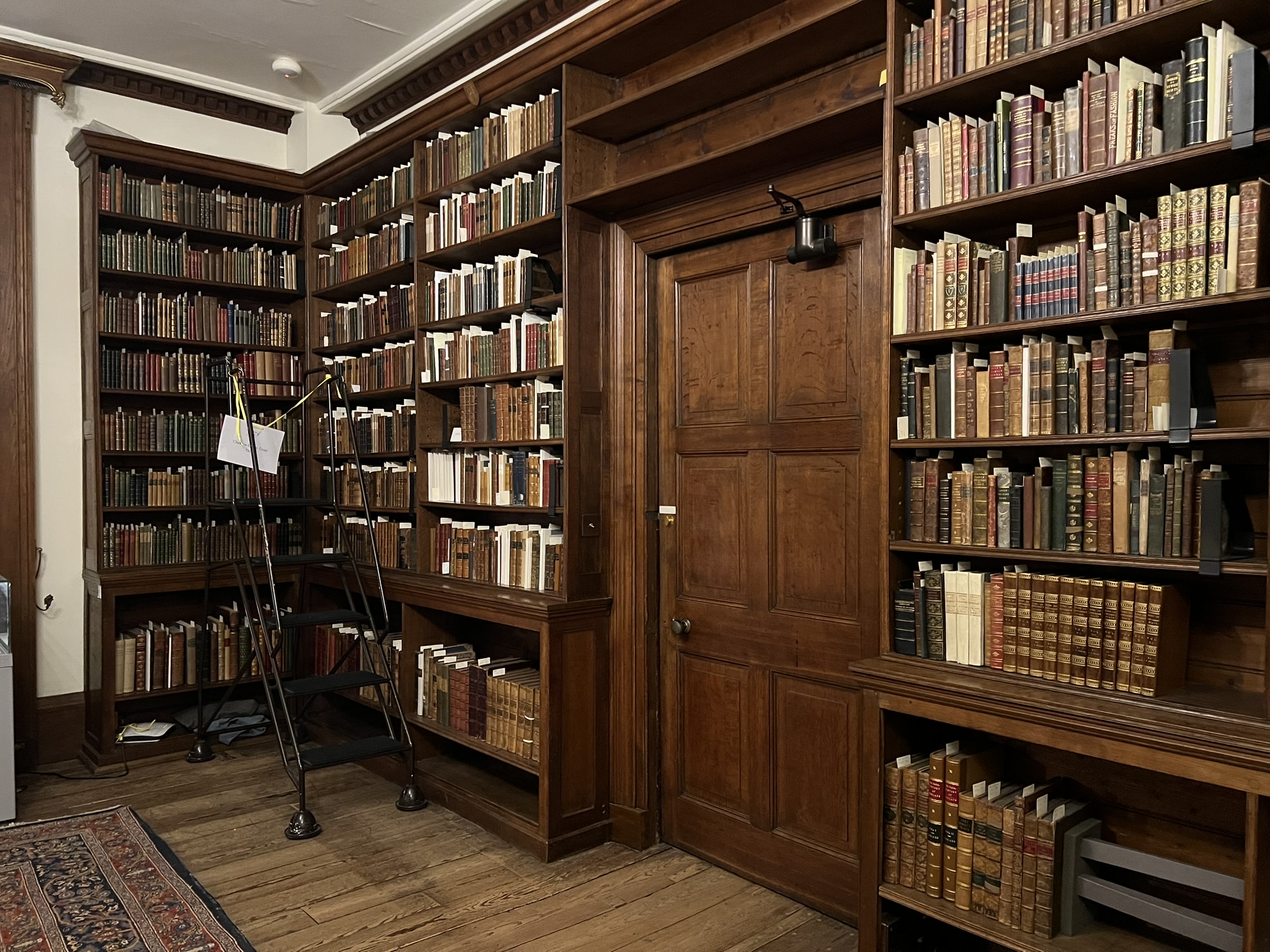
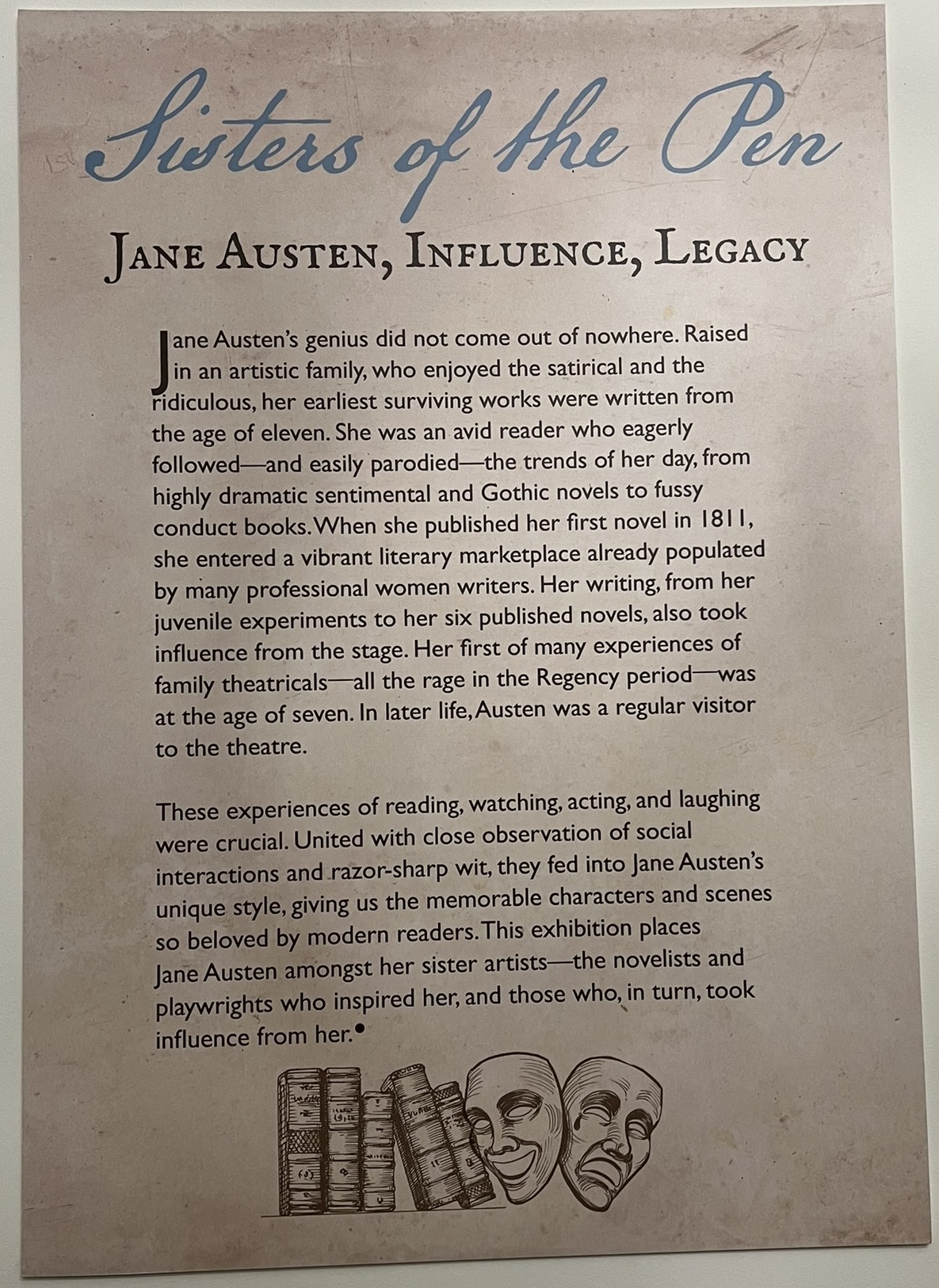
Chawton House is far more than a visit to a grand manor – complete with a tea room, numerous indoor and outdoor events throughout the year, a splendid garden and a place to wander, an Airbnb stay, and a wedding venue – it is most importantly a Library and Centre for the study of early women writers, 1600-1830. https://chawtonhouse.org/the-library/using-the-library/ – which is exactly what it says, a library of early women writers with many rare and unique titles; they also present changing exhibits on the many aspects of these women writers – right now one on “Sisters of the Pen.” [more on this below] – and do not miss their regular online offerings to us far afield.
The history of this library is novel-worthy itself – the American Sandy Lerner, taking on the lease of the property and keeping it from becoming a golf course [!] – the renovations to the house and outlying buildings, the housing of her book collection of these mostly forgotten women writers, and the creation of the now self-sustaining manor we can visit and study at today.
or if you are in the US or Canada, you can join the North American Friends of Chawton House here: https://www.nafch.org/ ]
Lots more to say here, but let’s get to our visit and some photos!
Katie Childs with Edward Austen Knight
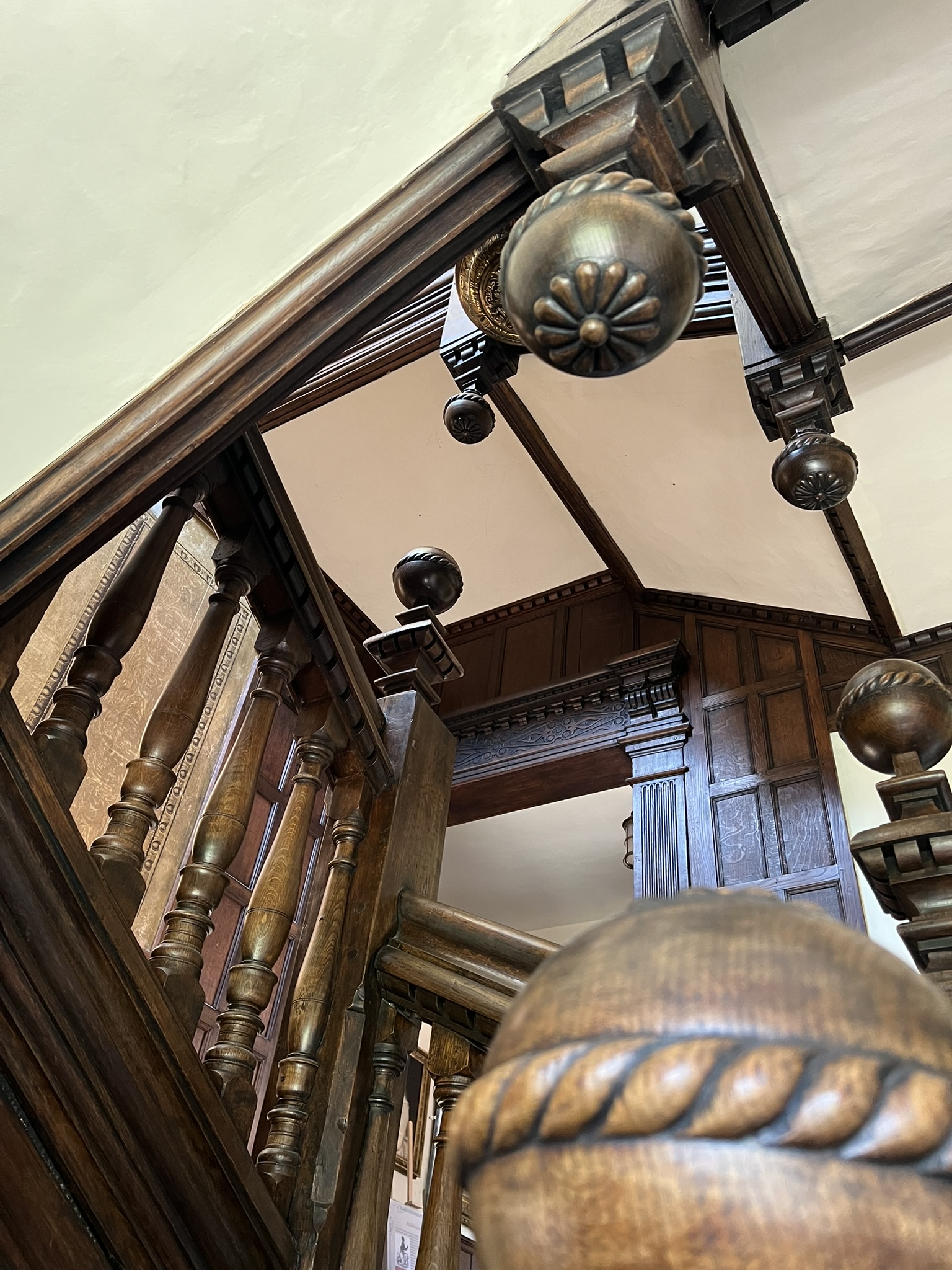
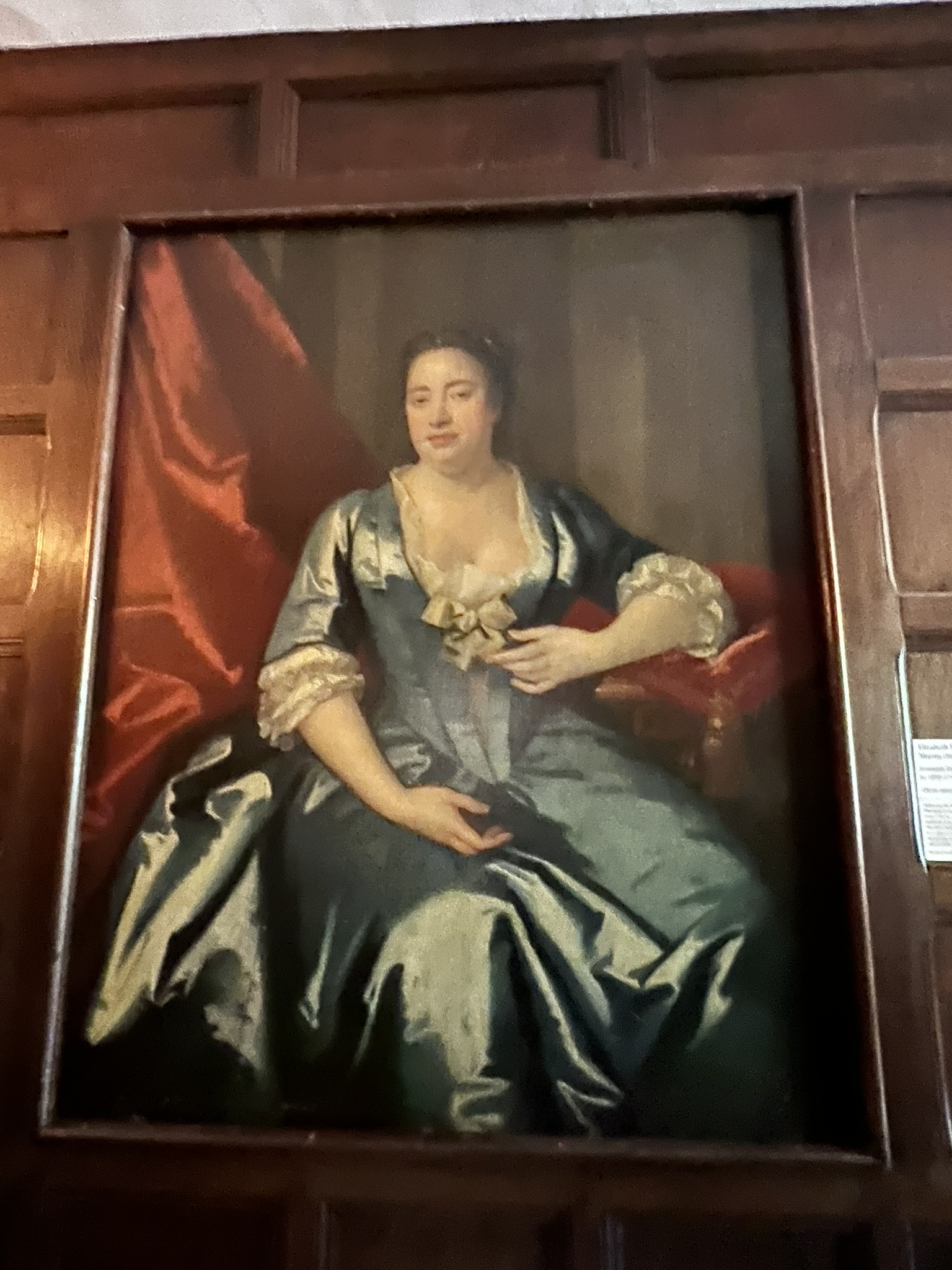
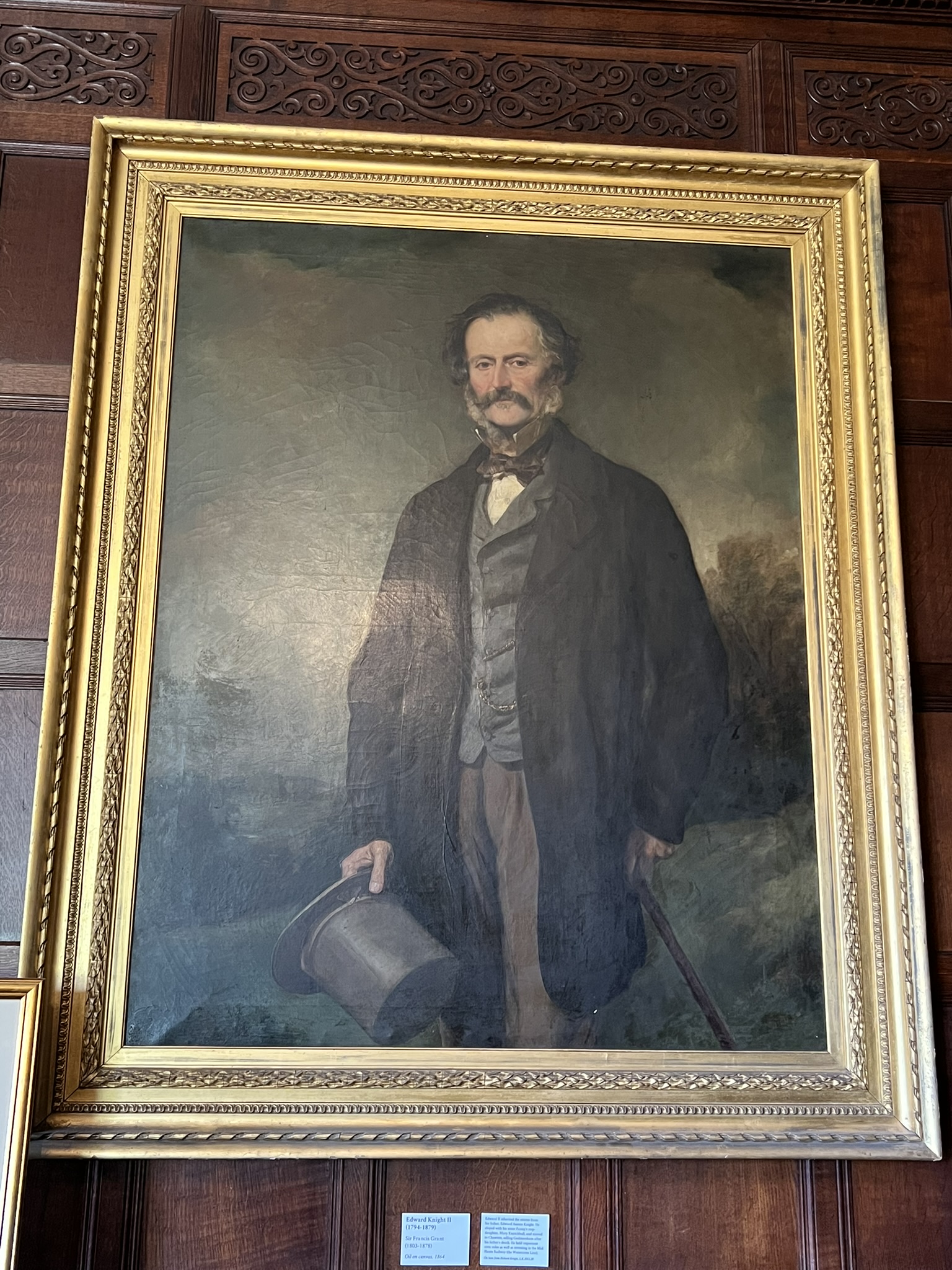
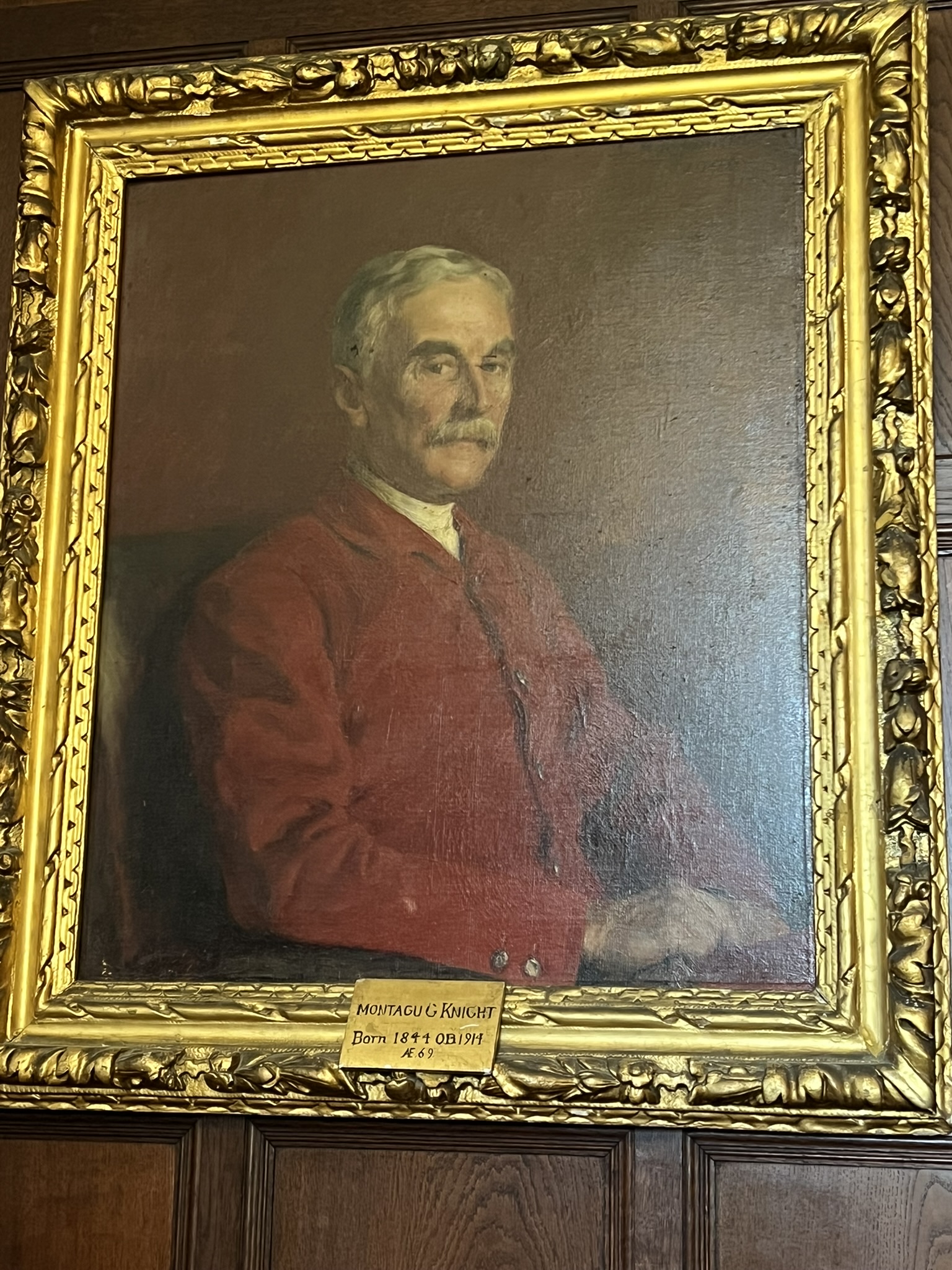
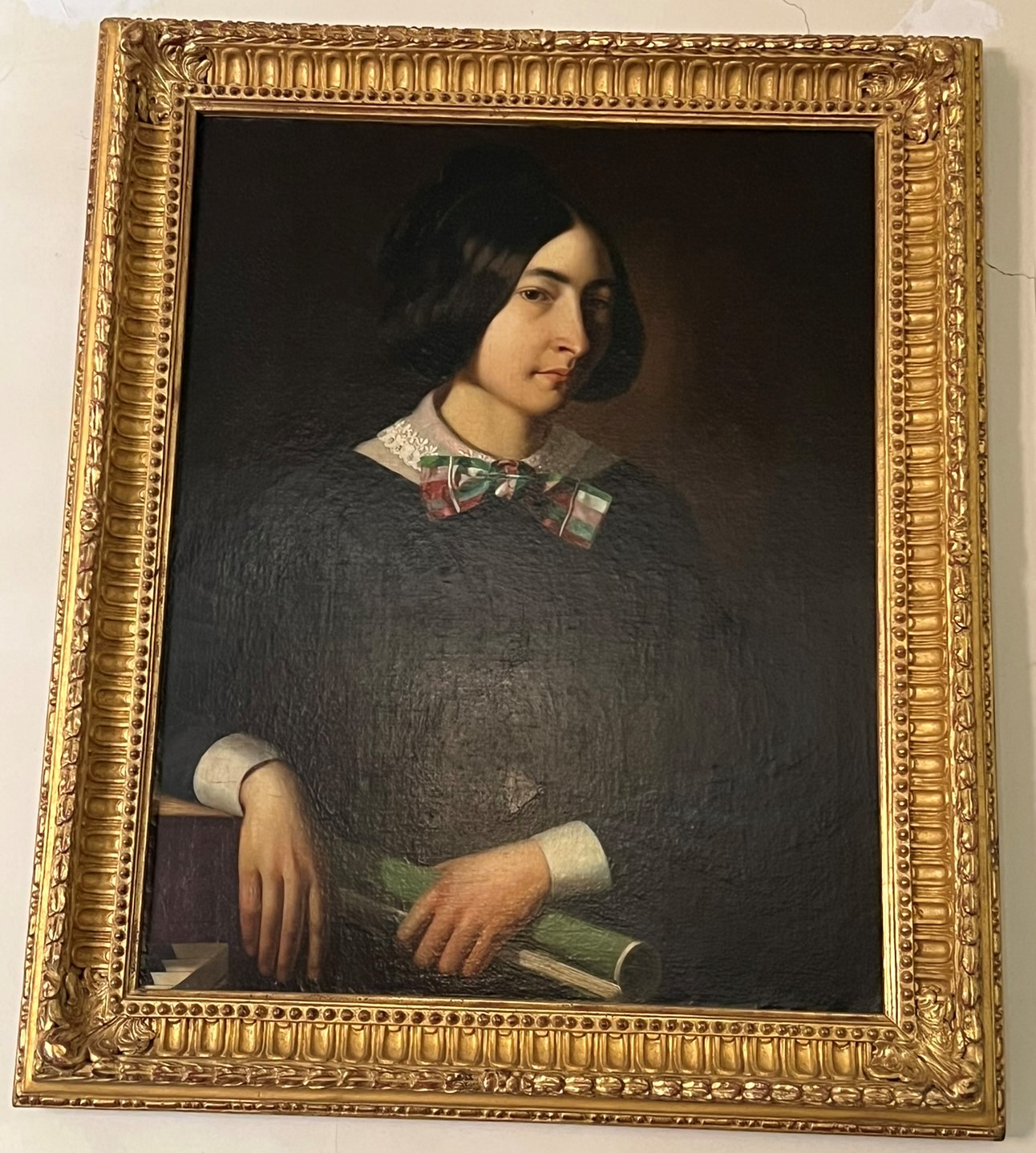
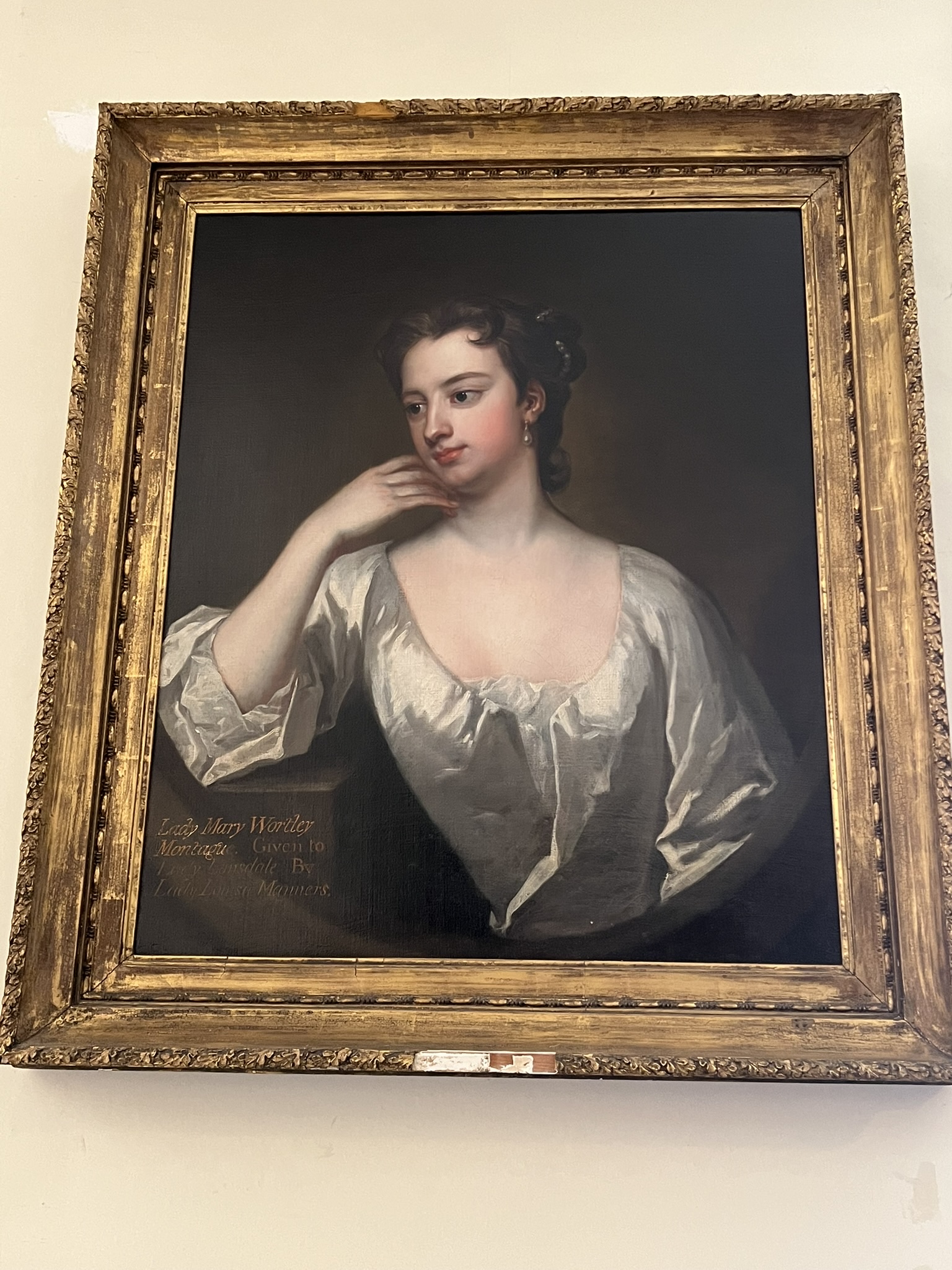
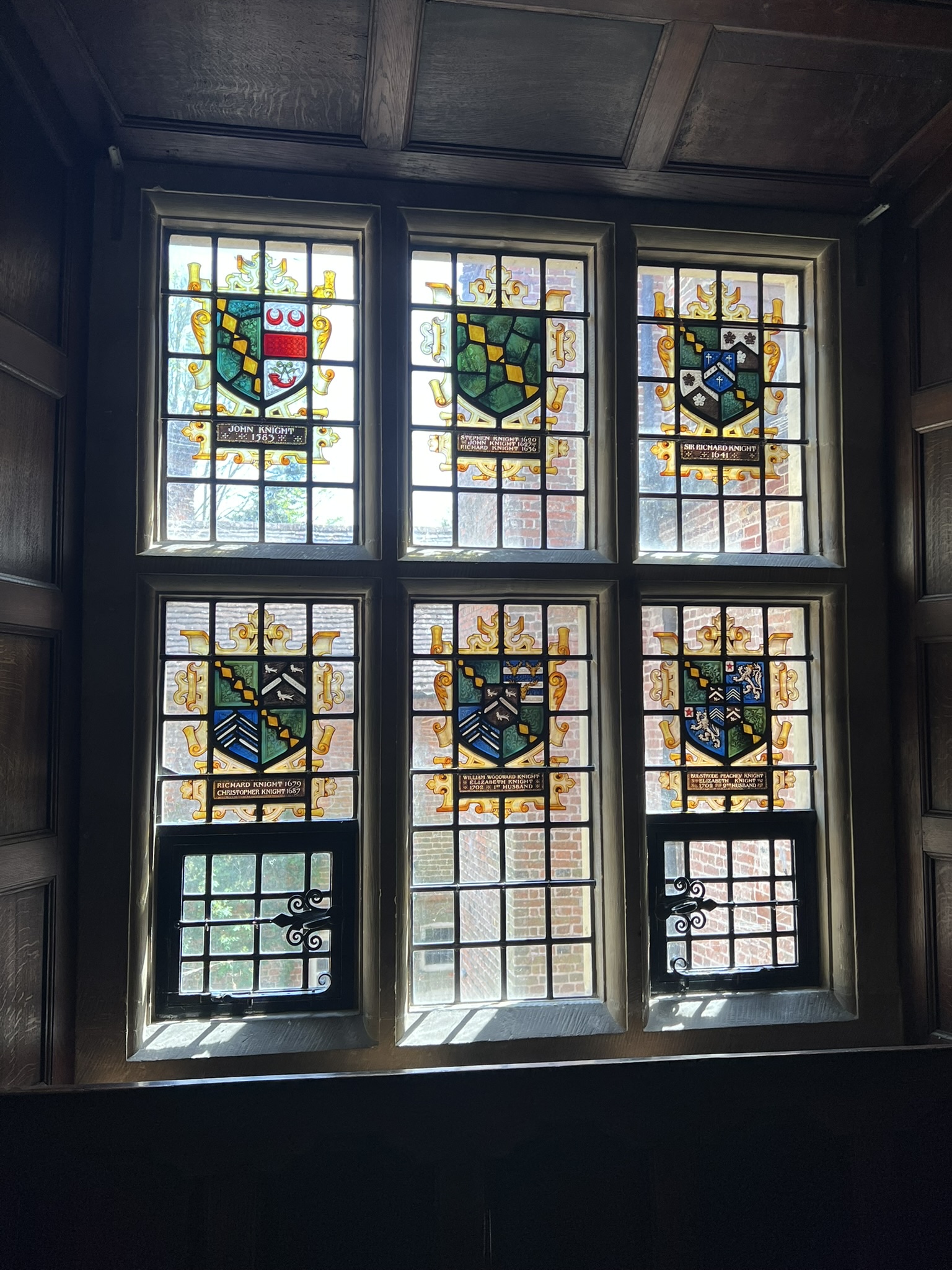
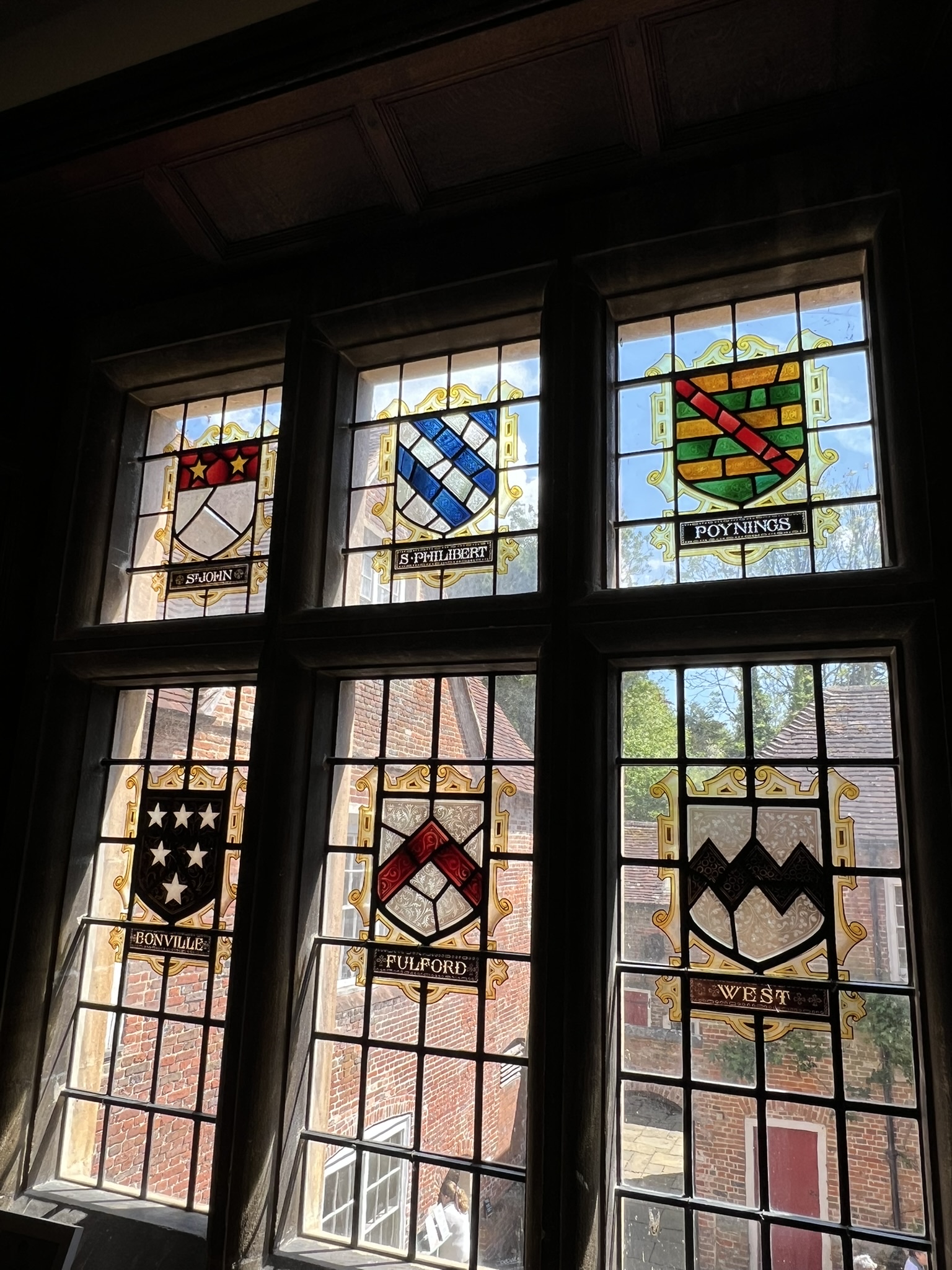
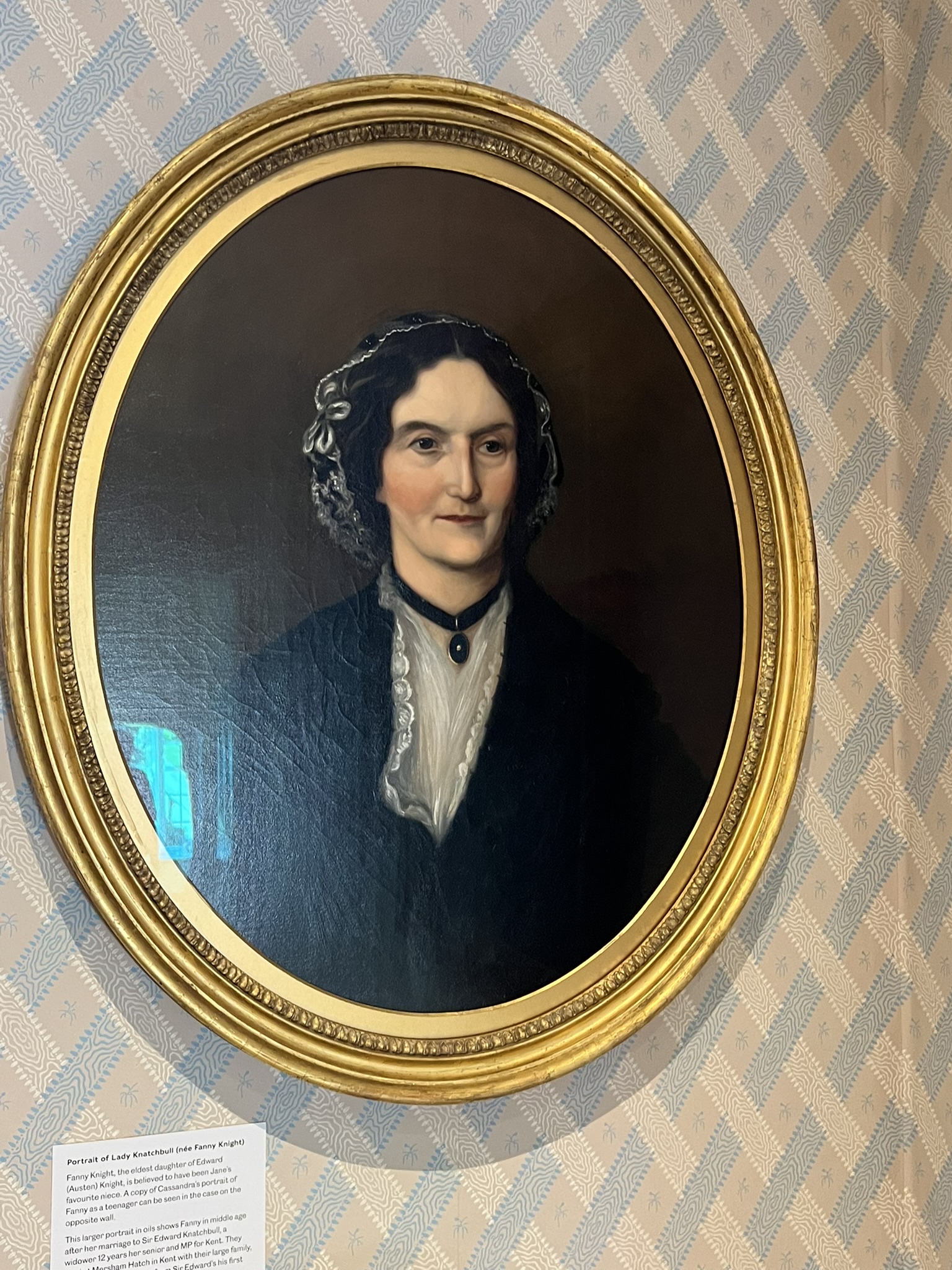
We were first greeted by Katie Childs – the Chief Executive [if you have been paying attention, we also met Katie at Godmersham Park!] – who gave us some of the history of the house, the library, current plans and exhibitions. We were able to tour the house on our own [ascending the grand staircase such an experience!] – seeing all the portraits of Knight family members, hung along with some of the famous women writers, actresses, manor house owners – and admiring the heraldic windows that I have posted about before.
Elizabeth Knight – Edward Knight Jr – Montagu George Knight
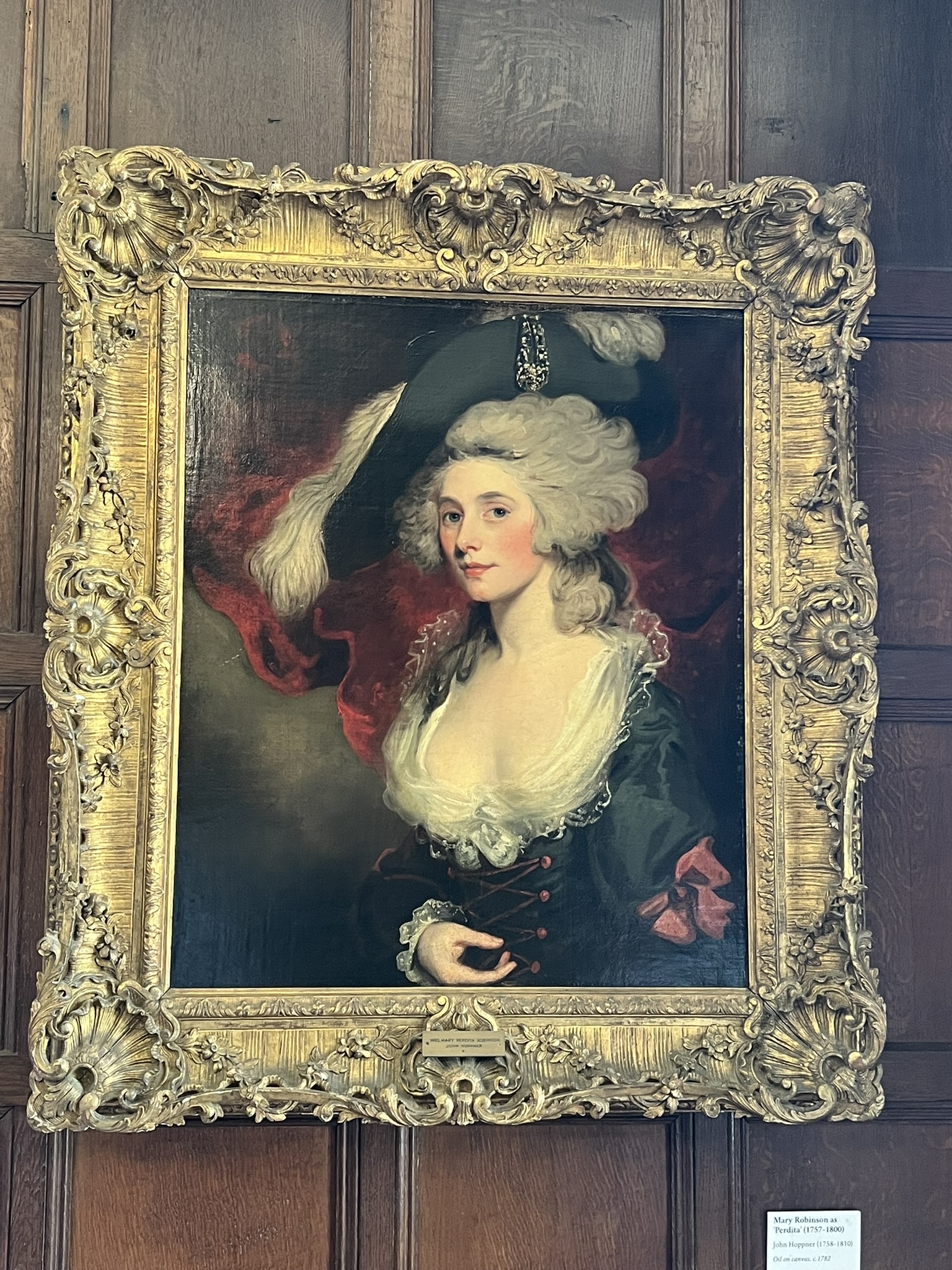
George Sand – Lady Mary Wortley Montagu – Mary Robinson
and what manor would be complete without an image of the Duchess of Devonshire:
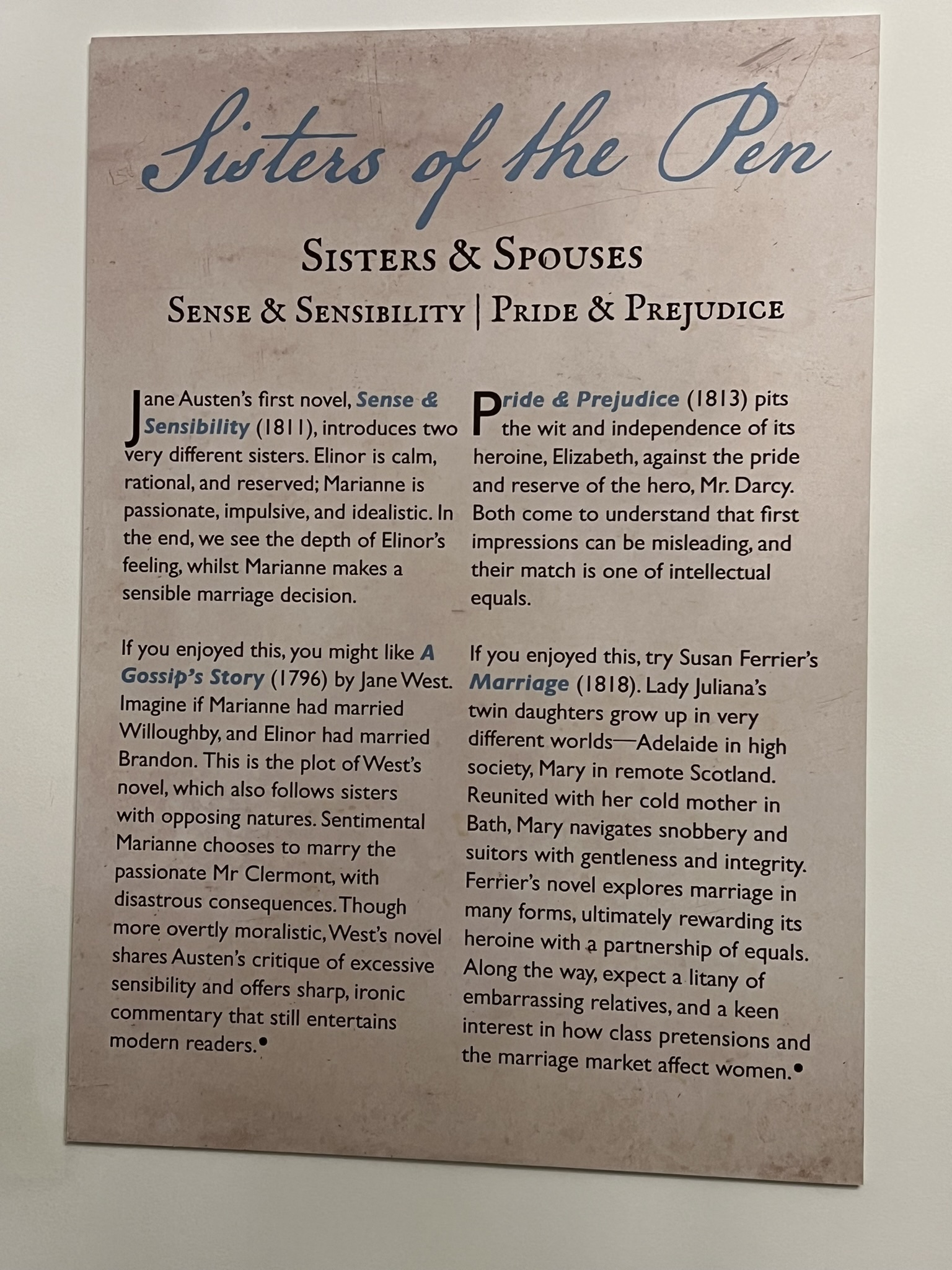
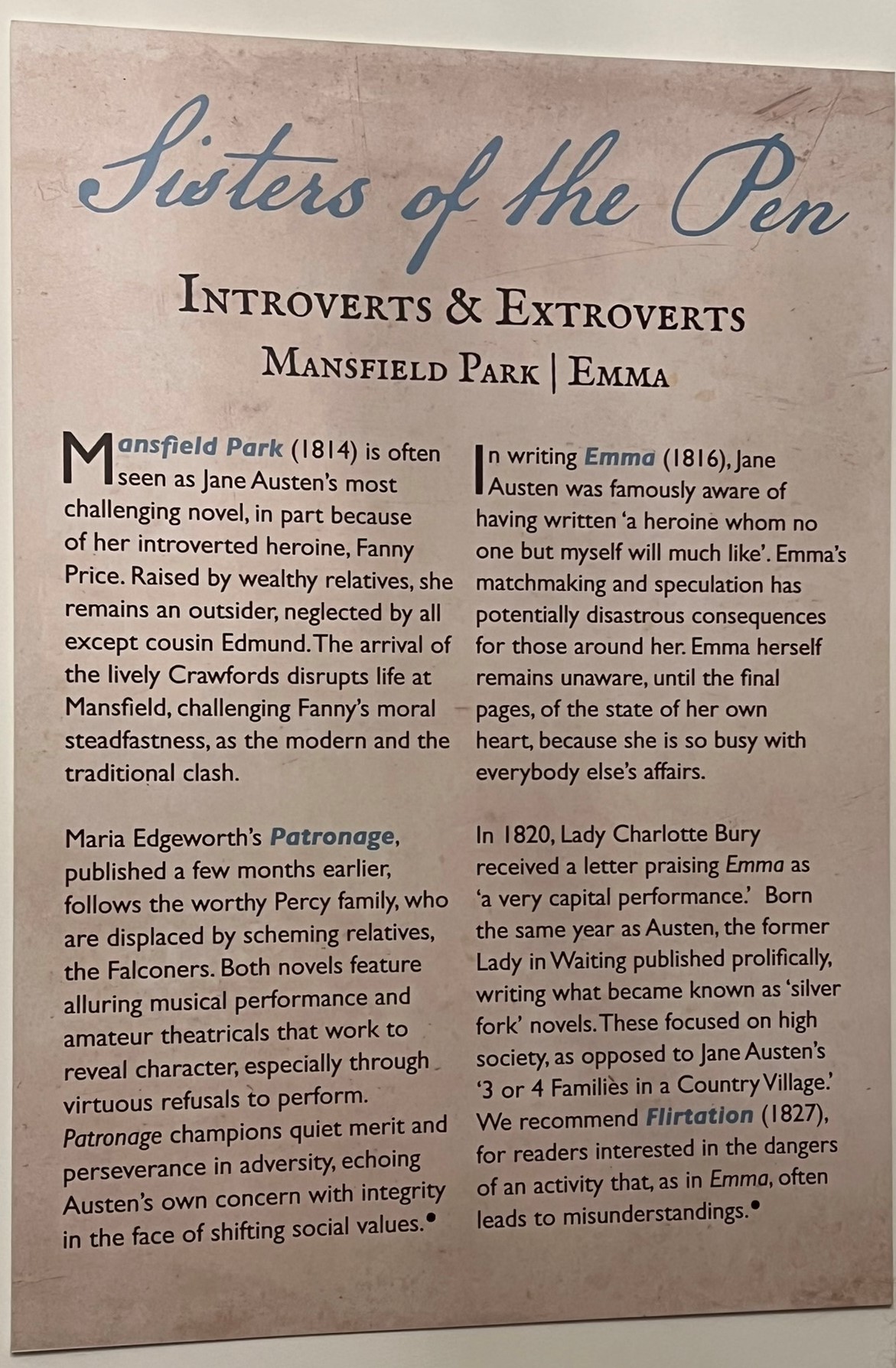
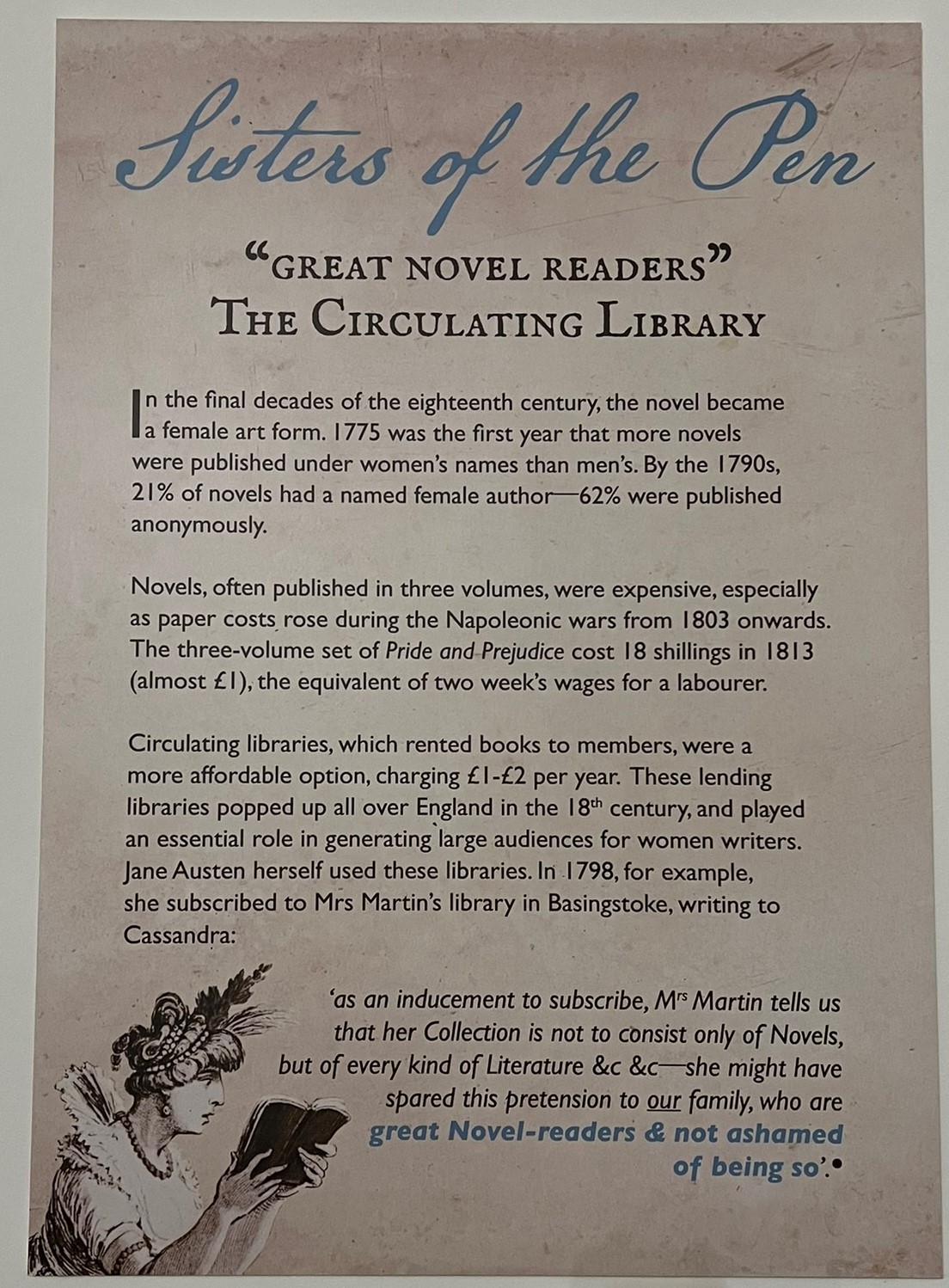
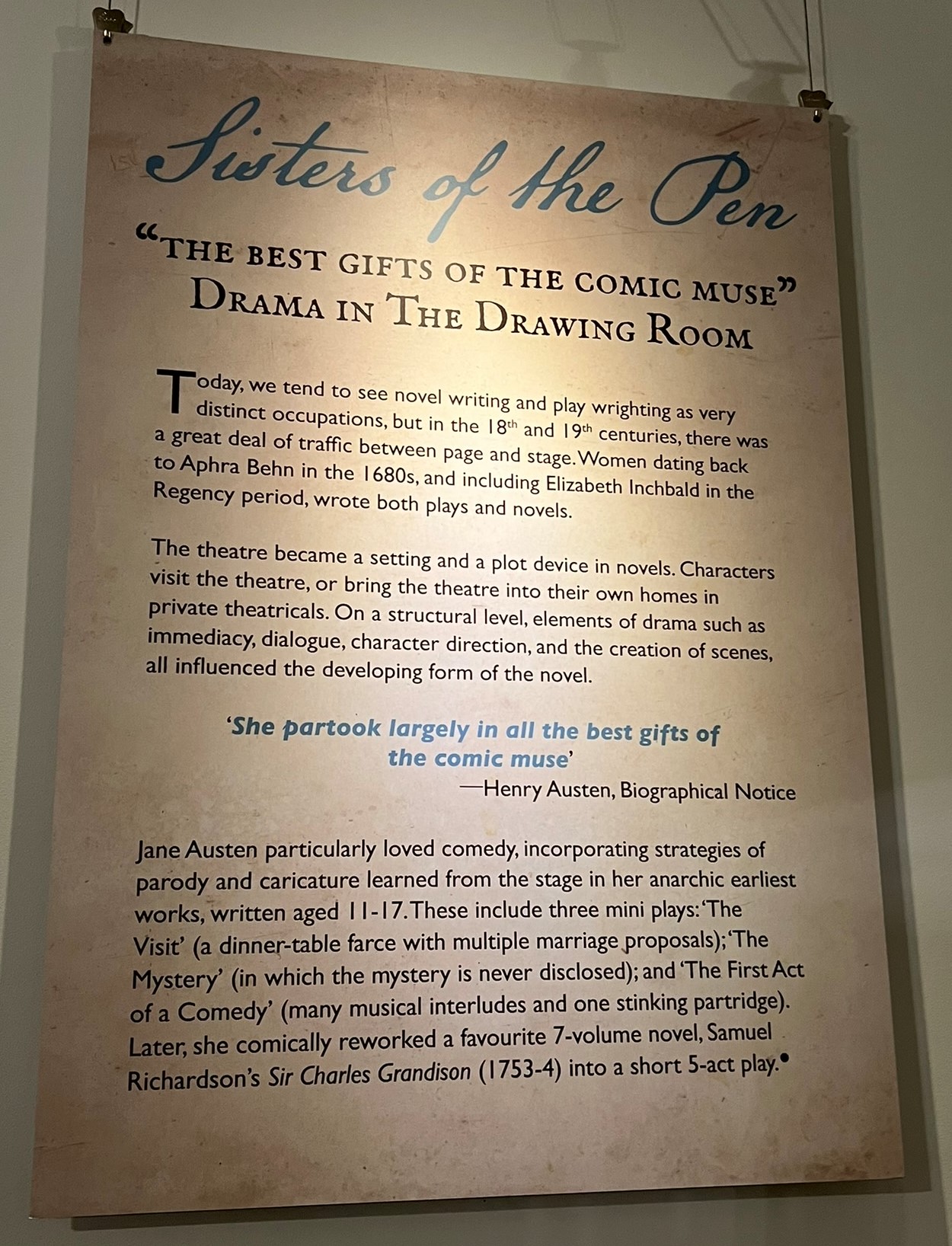
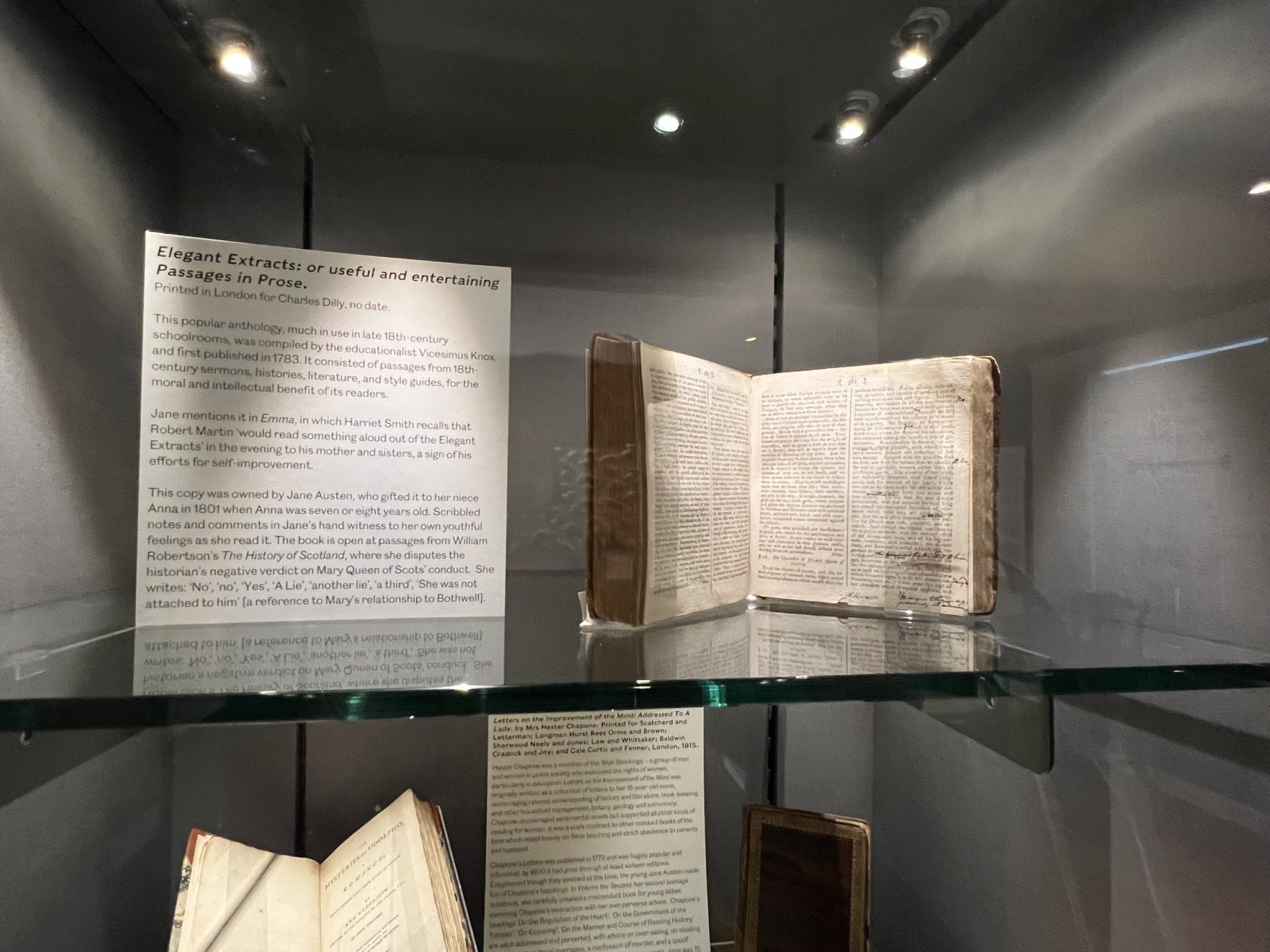
The current exhibition is quite eye-opening, especially if you were not previously aware of the numerous women writers before and during Jane Austen’s time [spoiler alert: Jane Austen did not invent the novel as we know it, nor was she the only woman writing in the late 18th / early 19th century!] – it is called “The Great Forgetting” – the removal of 100s of women writers from the canon, now subject to the ongoing process of being recovered – this exhibition “Sisters of the Pen: Jane Austen, Influence, Legacy” tells this history with both signboards, objects and books – it is beautifully done and no way to quite capture it with random photos – here are a few to give you a sense:
[and for the rest, you just must visit yourself!]
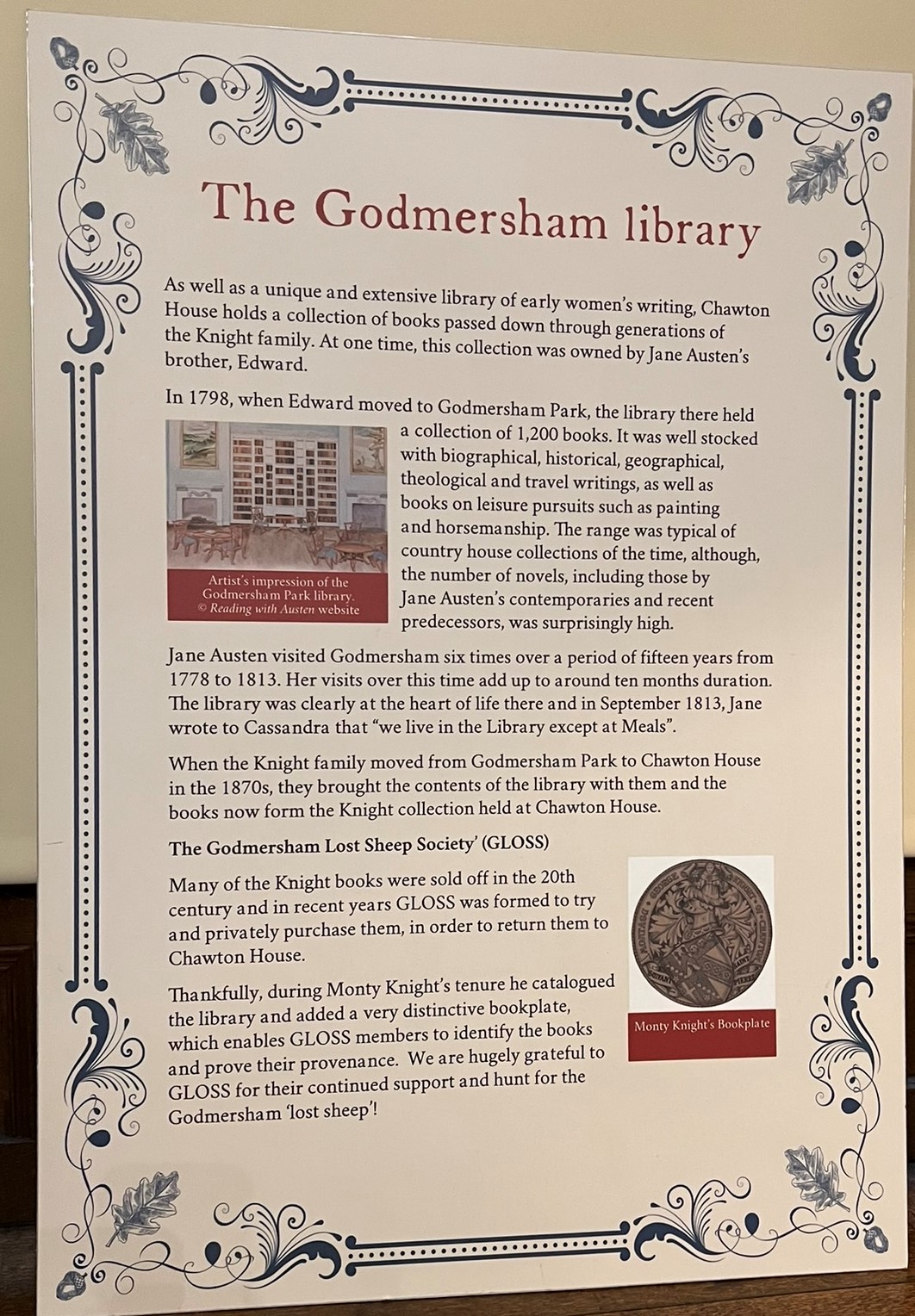
It was nice to see the display on the Godmersham Park library and the Reading with Austen website and the blogwhich tells of the GLOSS finds: “Bulstrode Peachey”, one of the volunteers, was very happy to tell me all about it, and even happier to learn I worked with Peter Sabor in returning the “Lost Sheep” to Chawton House:
It was grand to meet a number of the Chawton House volunteers – those that keep it all going and preserving and sharing the grand history here to visitors like us.
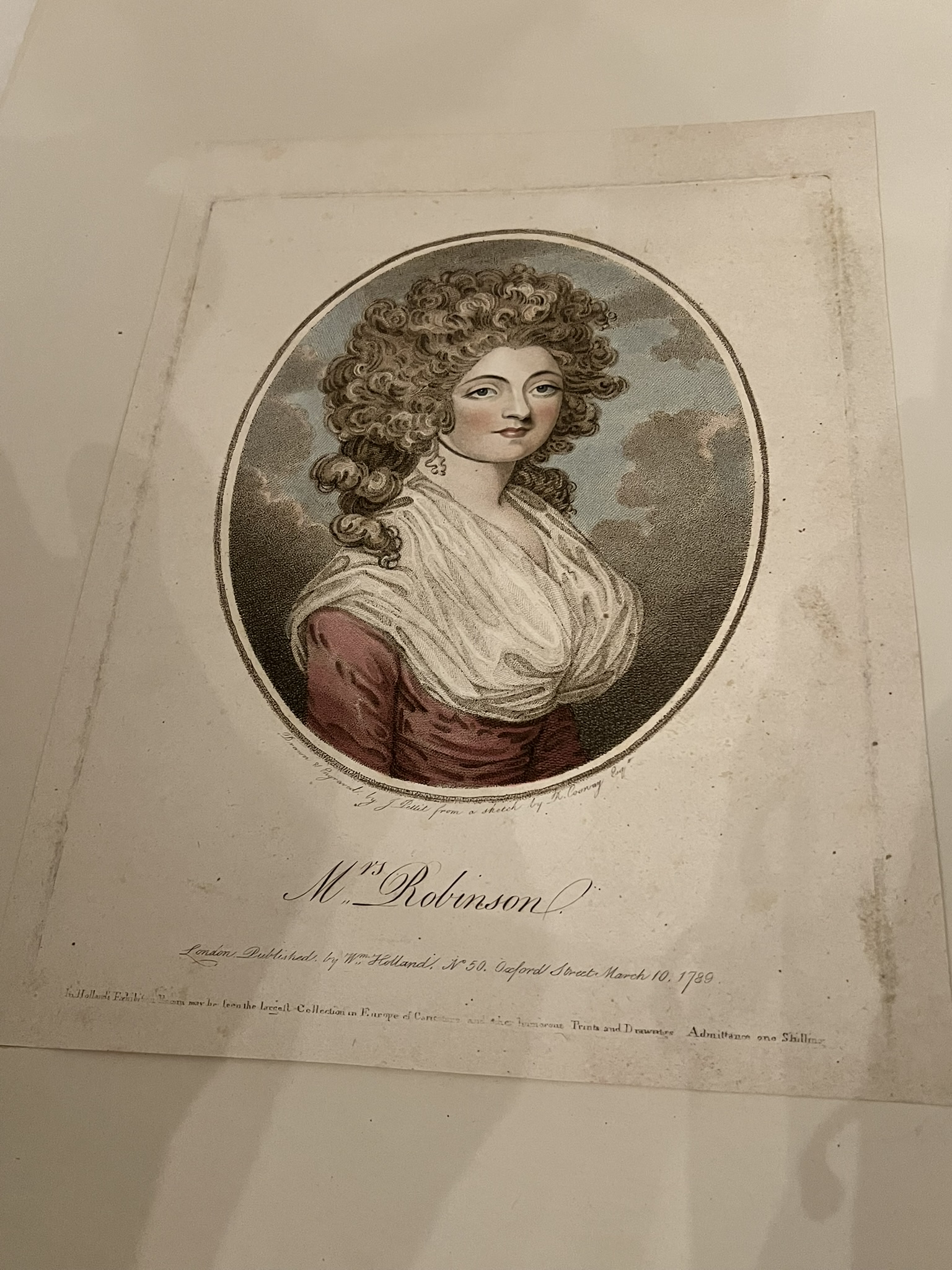
Katie invited us to see some of the recent acquisitions from the Deirdre Le Faye Archive: here is a Mary Robinson print:
and here an example of Le Faye’s numerous fashion prints:
and one of Le Faye’s carriage prints:
************
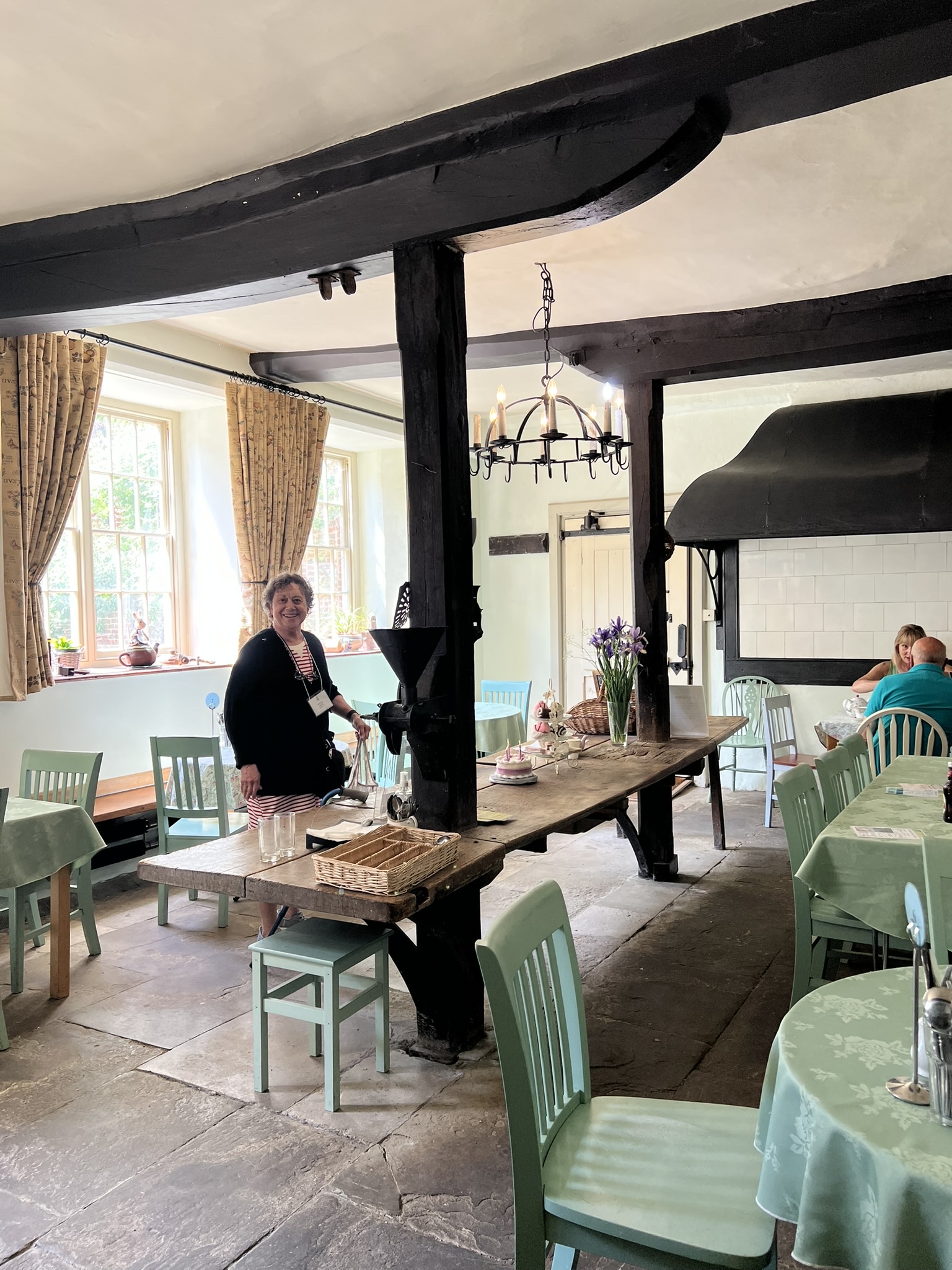
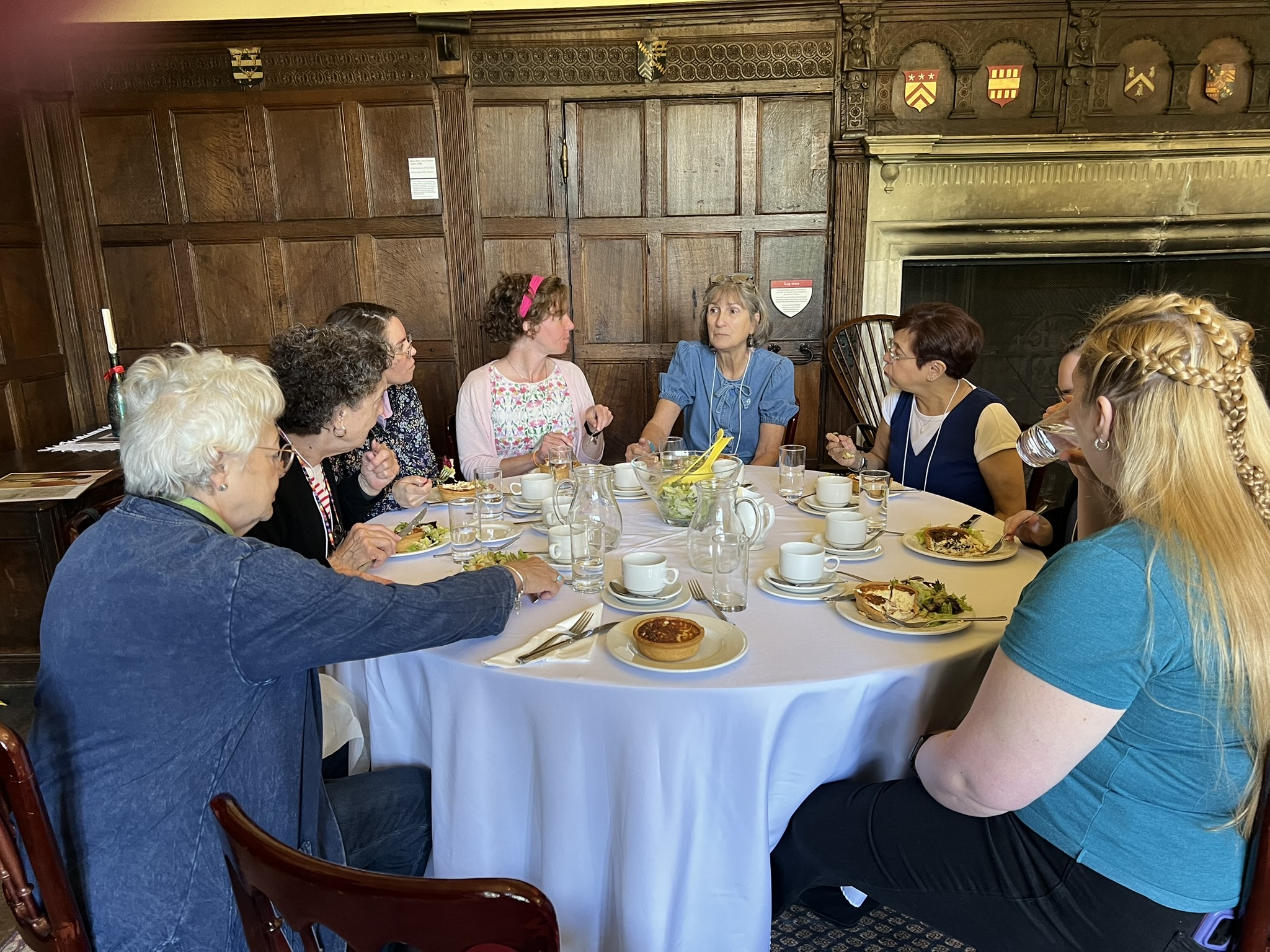
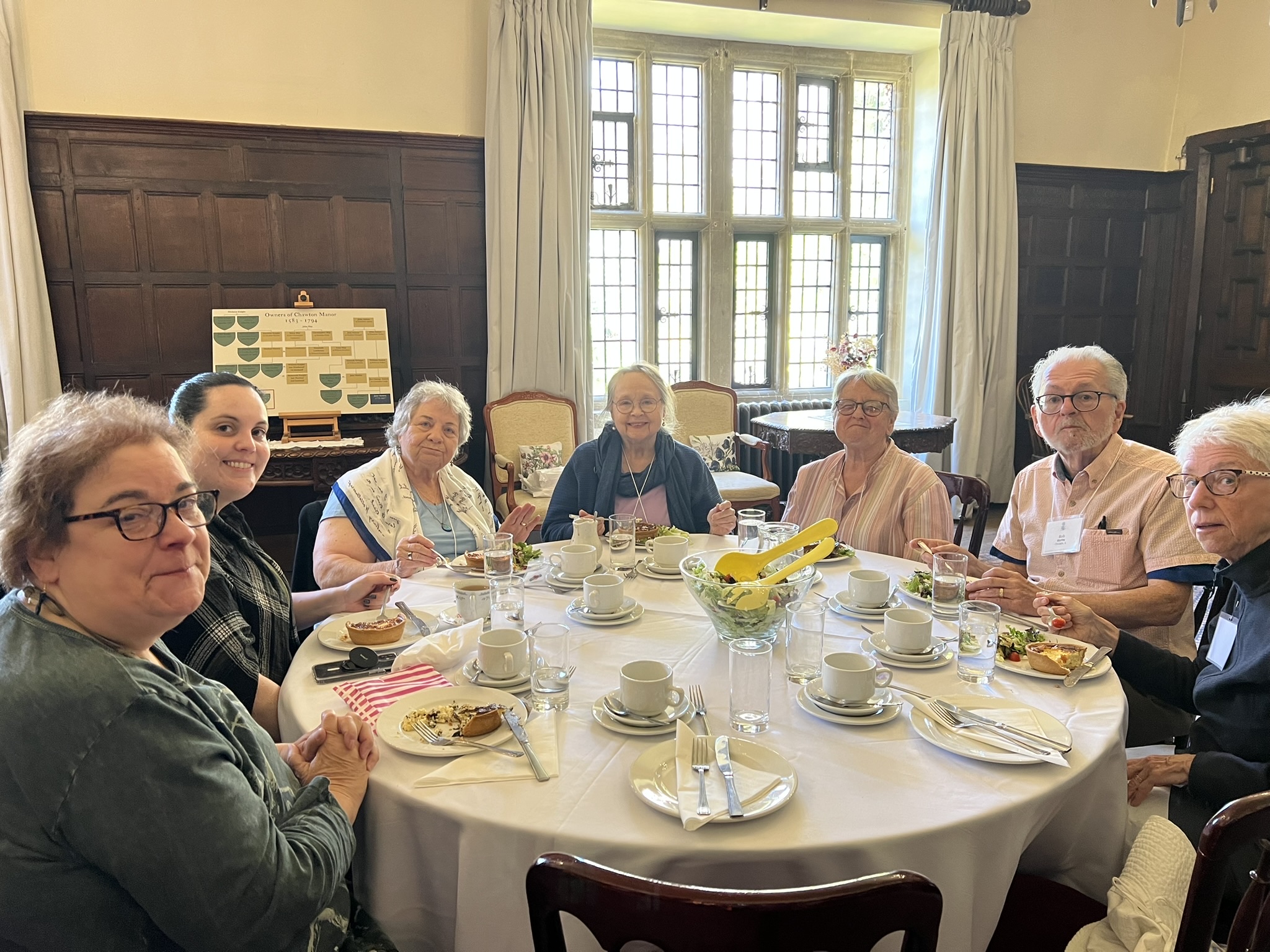
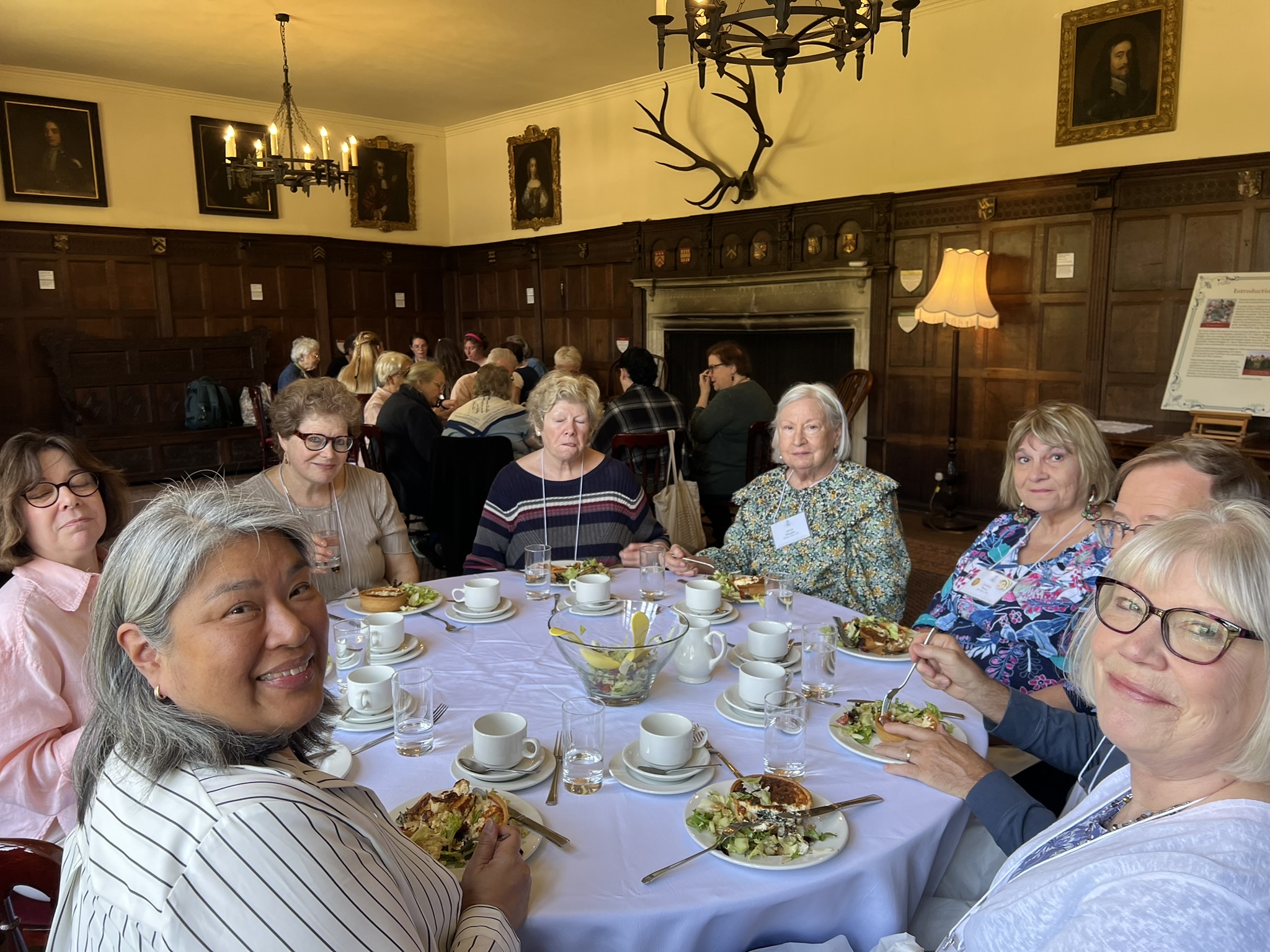
Then a delightful lunch:
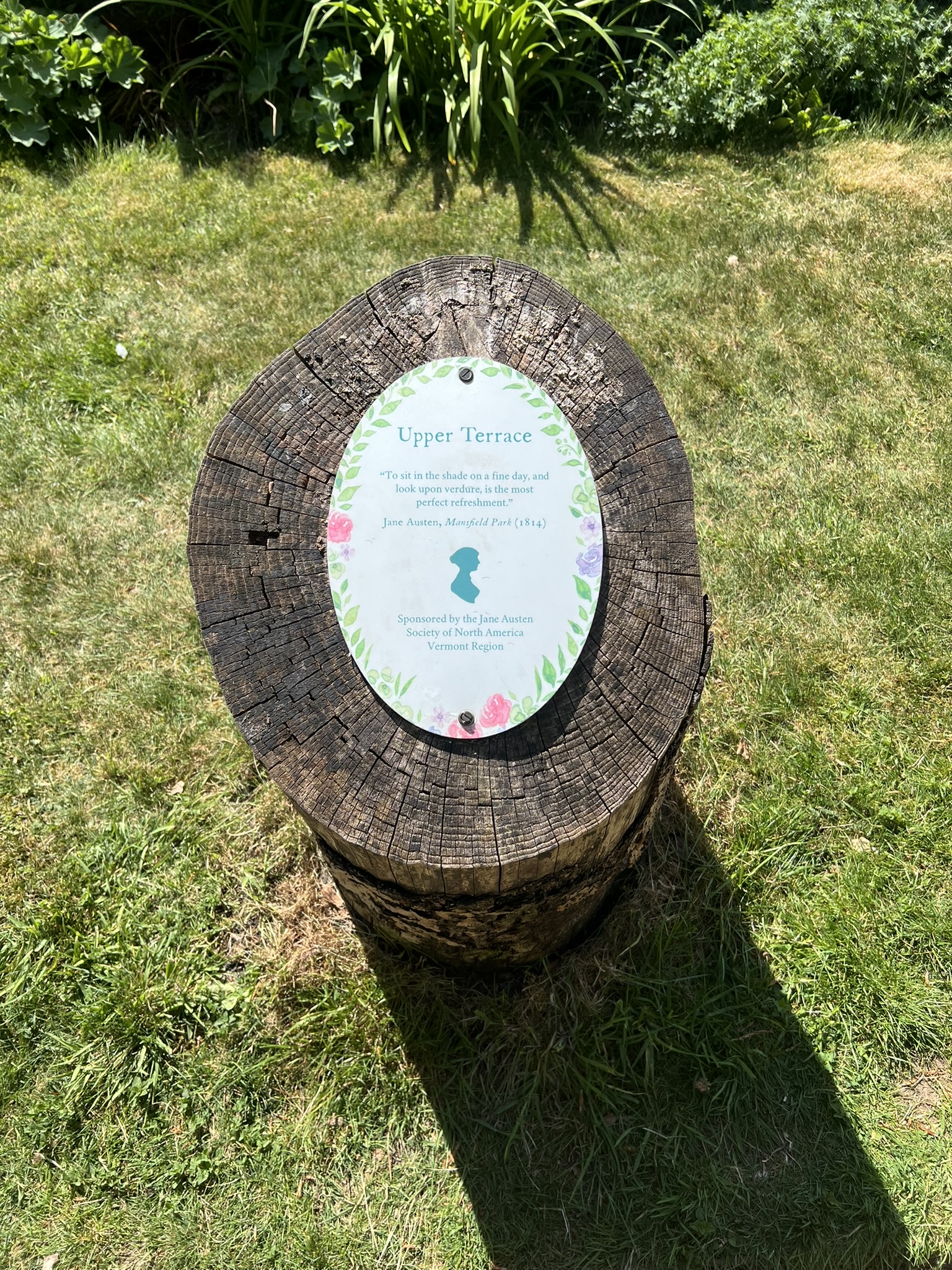
….and of course a chance to SHOP and then to wander about the grounds – I did visit the marker at the Upper Terrace, donated to NAFCH by the Vermont Region:
**************
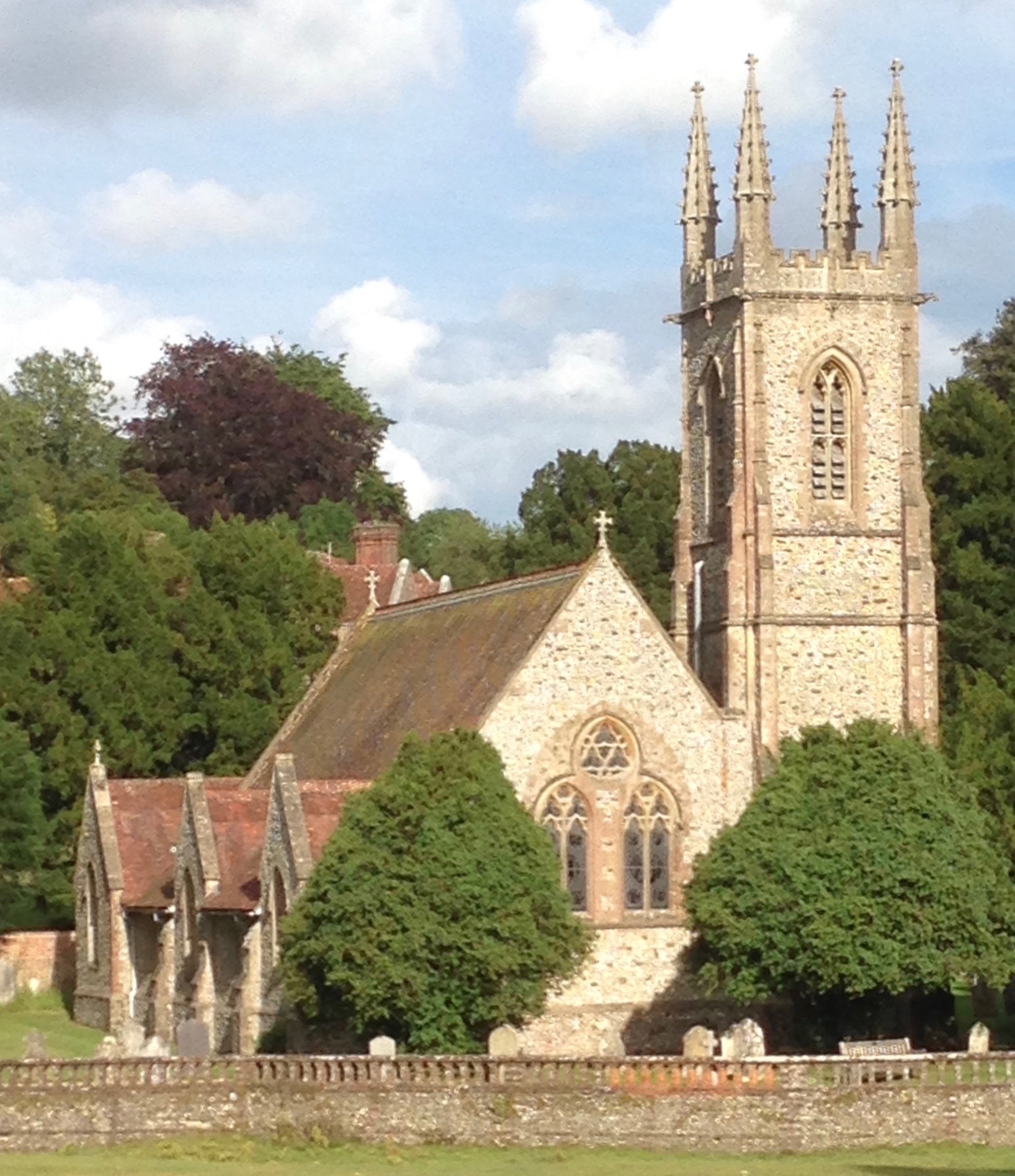
A short walk down the drive takes us to the Church on the grounds – do I dare say it is a St. Nicholas??! – where Jane and family would have worshipped and where we will find the graves of Mrs. Austen and Cassandra:
************
We were then off down the road to the “Chawton Cottage” – now called the JAHM: https://janeaustens.house/ – a short trek in Jane Austen’s footsteps, nothing much changed from her own time here, excepting macadam and sidewalks, and cars roaming about rather than horses and carriages and stagecoaches rumbling by their front window….
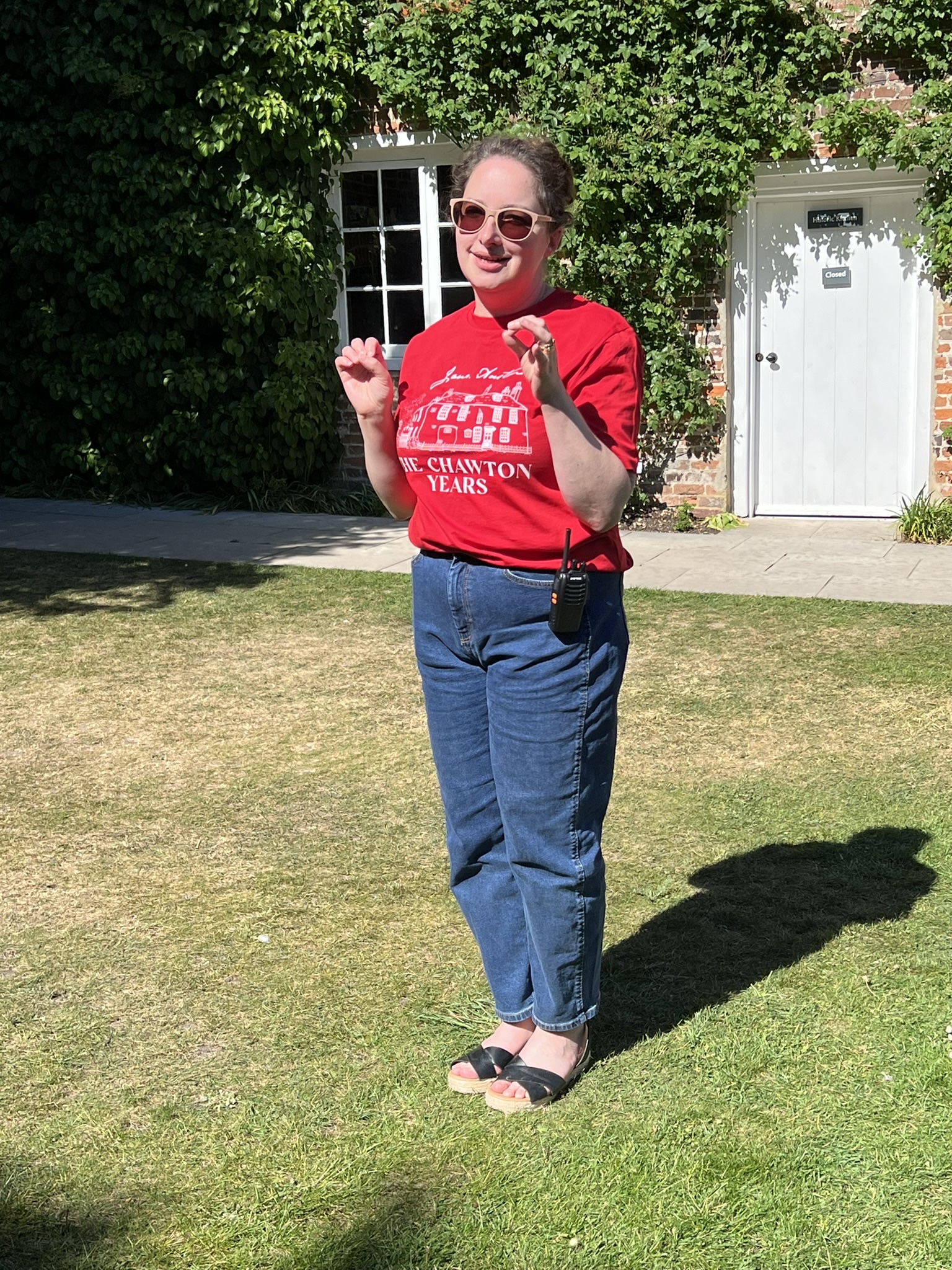
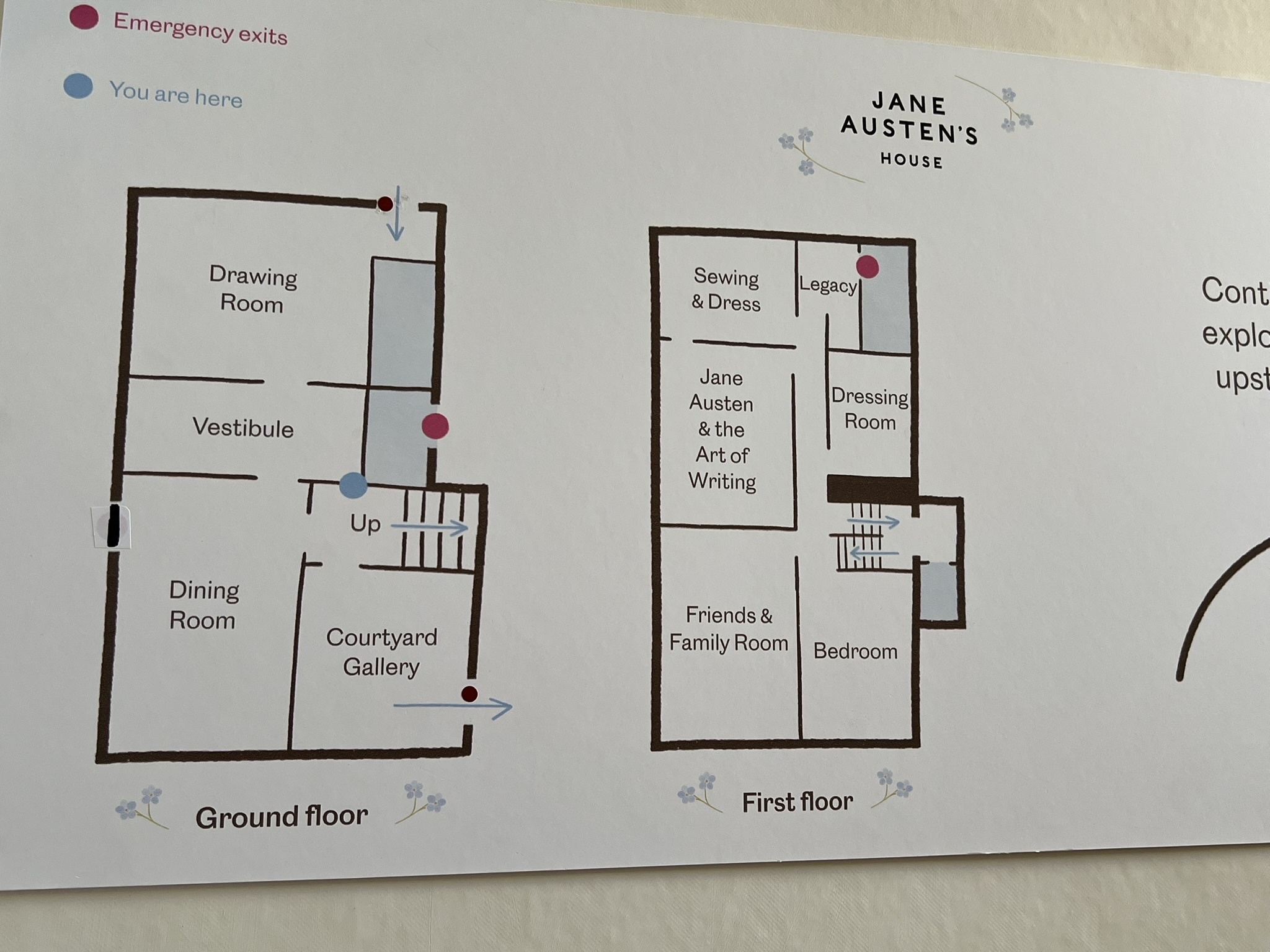
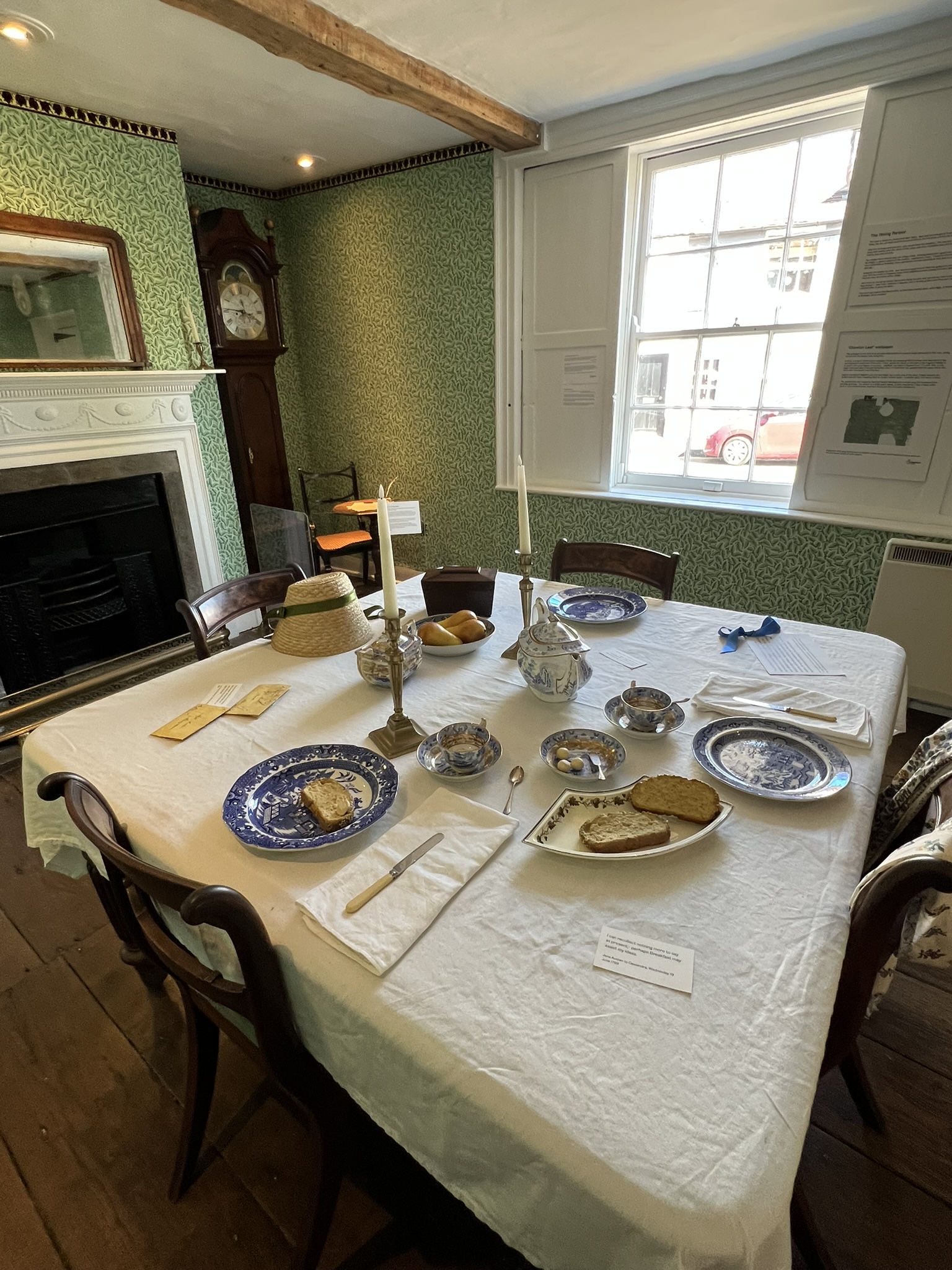
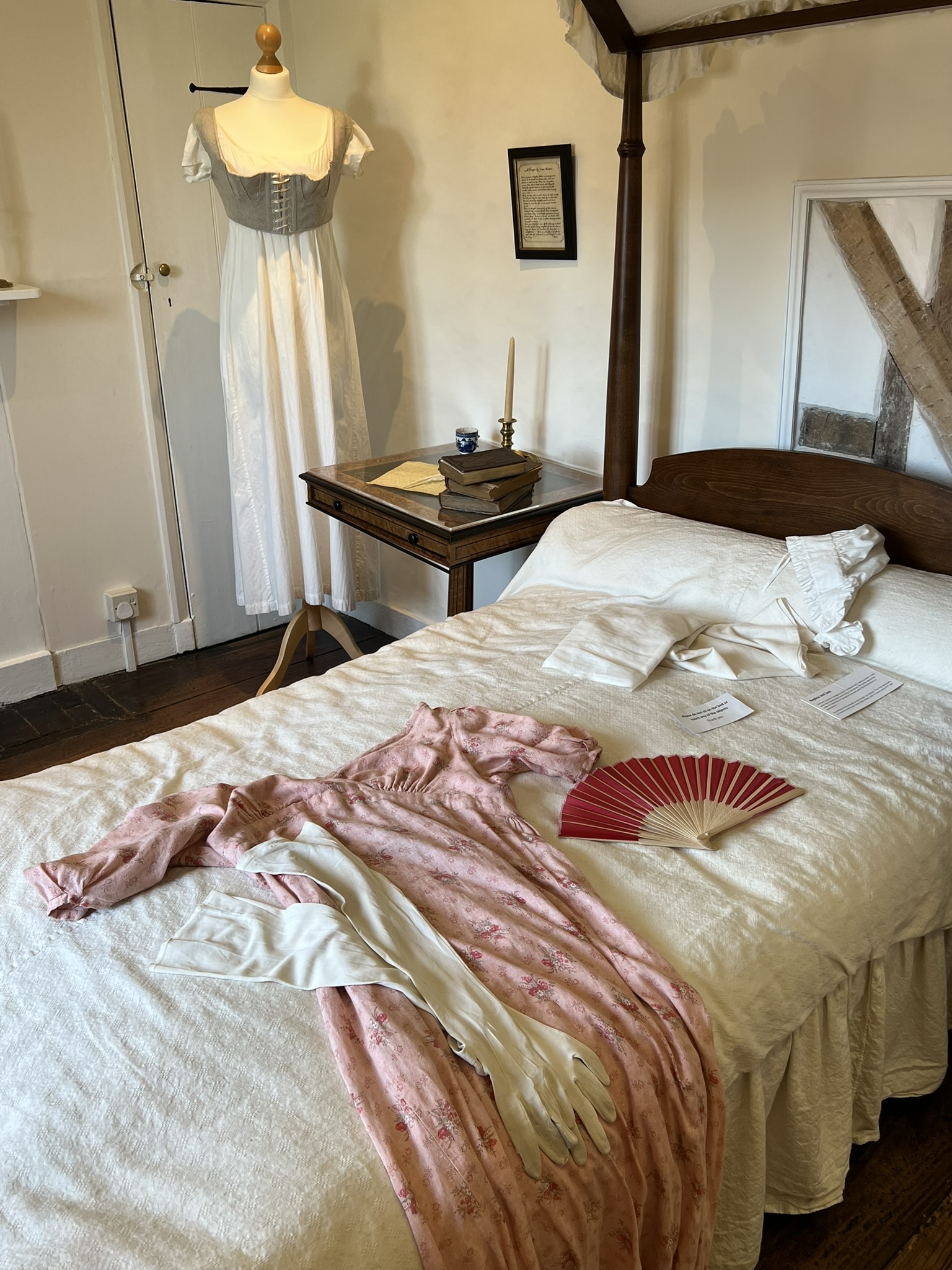
Warmly welcomed by house Director Lizzie Dunford, we could tour the house on our own, a living monument to seeing how Jane and her sister Cassandra and her mother lived in this “cottage” but actually quite a large home:
The rooms decorated with the newly minted wallpaper, recreated from the existing fragments, it all feels as though Jane herself is just around the corner…
As there was a concert scheduled for that evening, we were fortunate to be there when the pianist and singer were rehearsing – a Jane Faifax / Frank Churchill moment for sure!
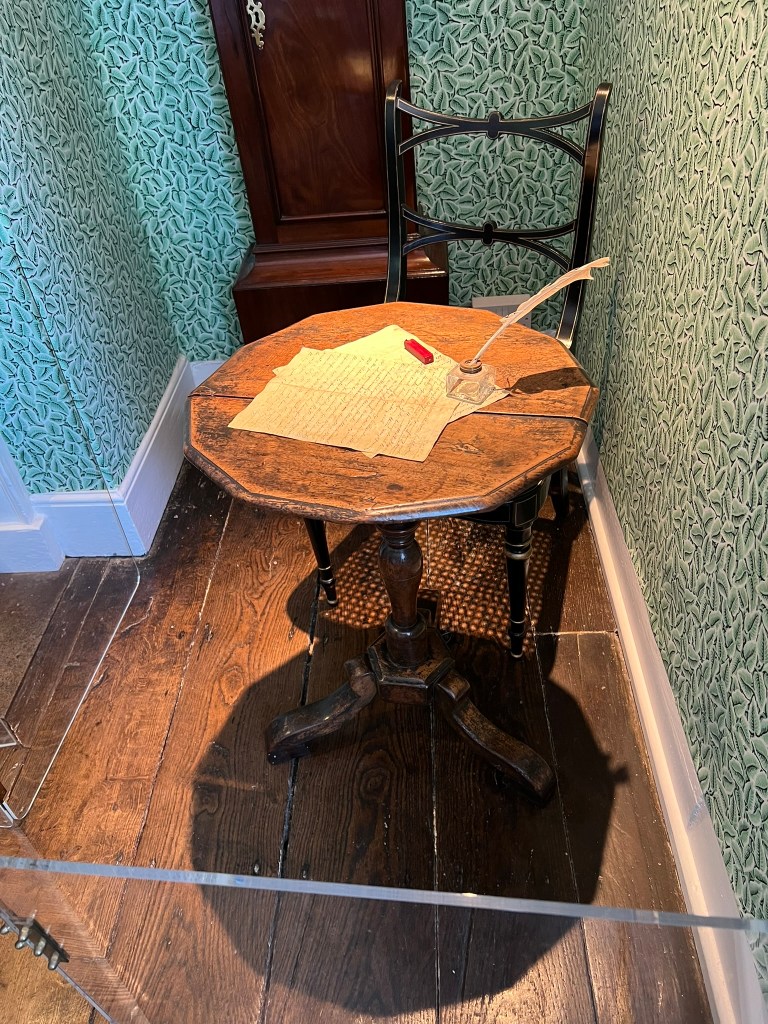
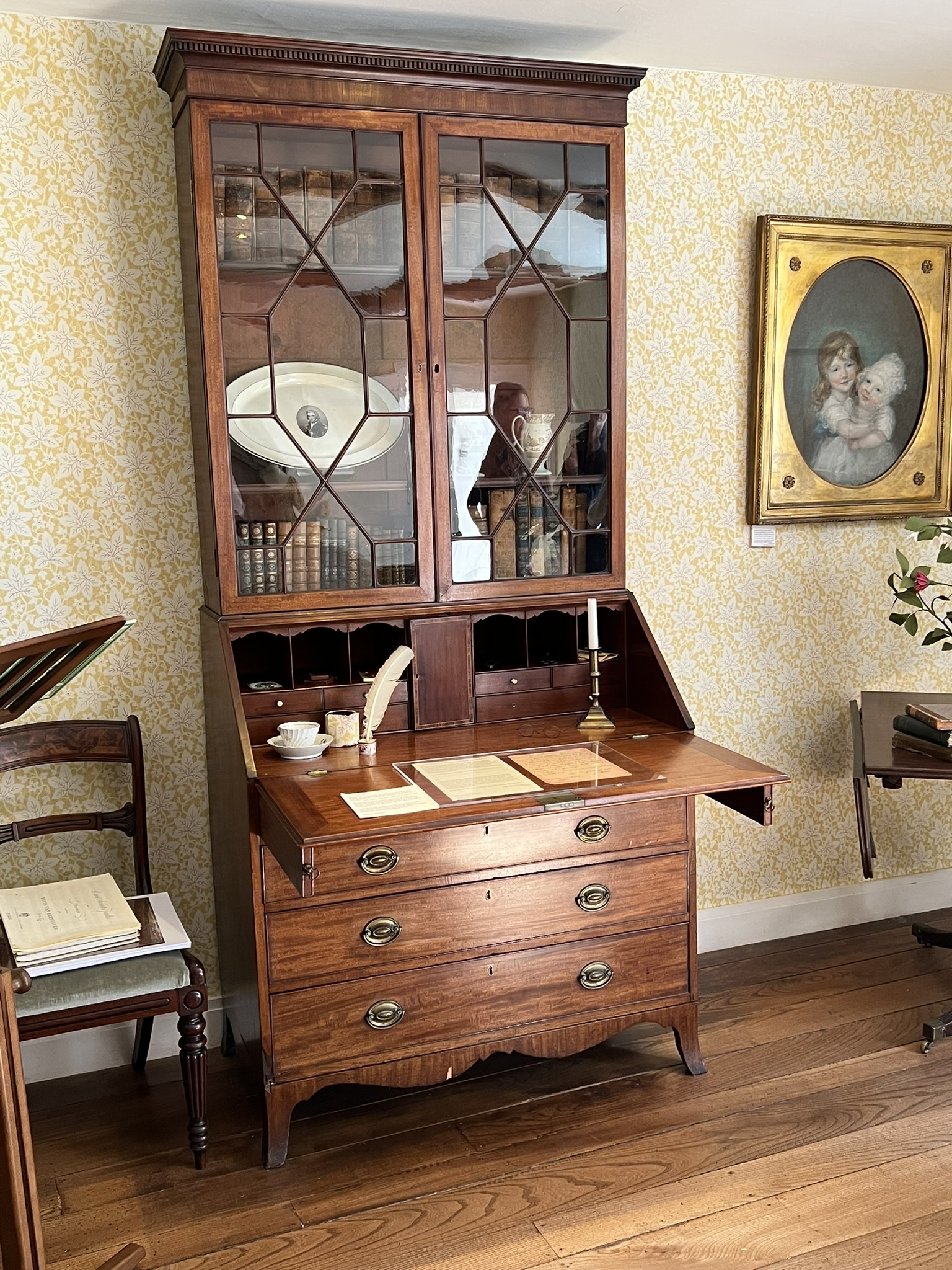
Here is a slideshow of various spots and objects in the house, starting with the infamous writing table where Austen “scribbled” her letters and novels: [scroll right to see all the photos]
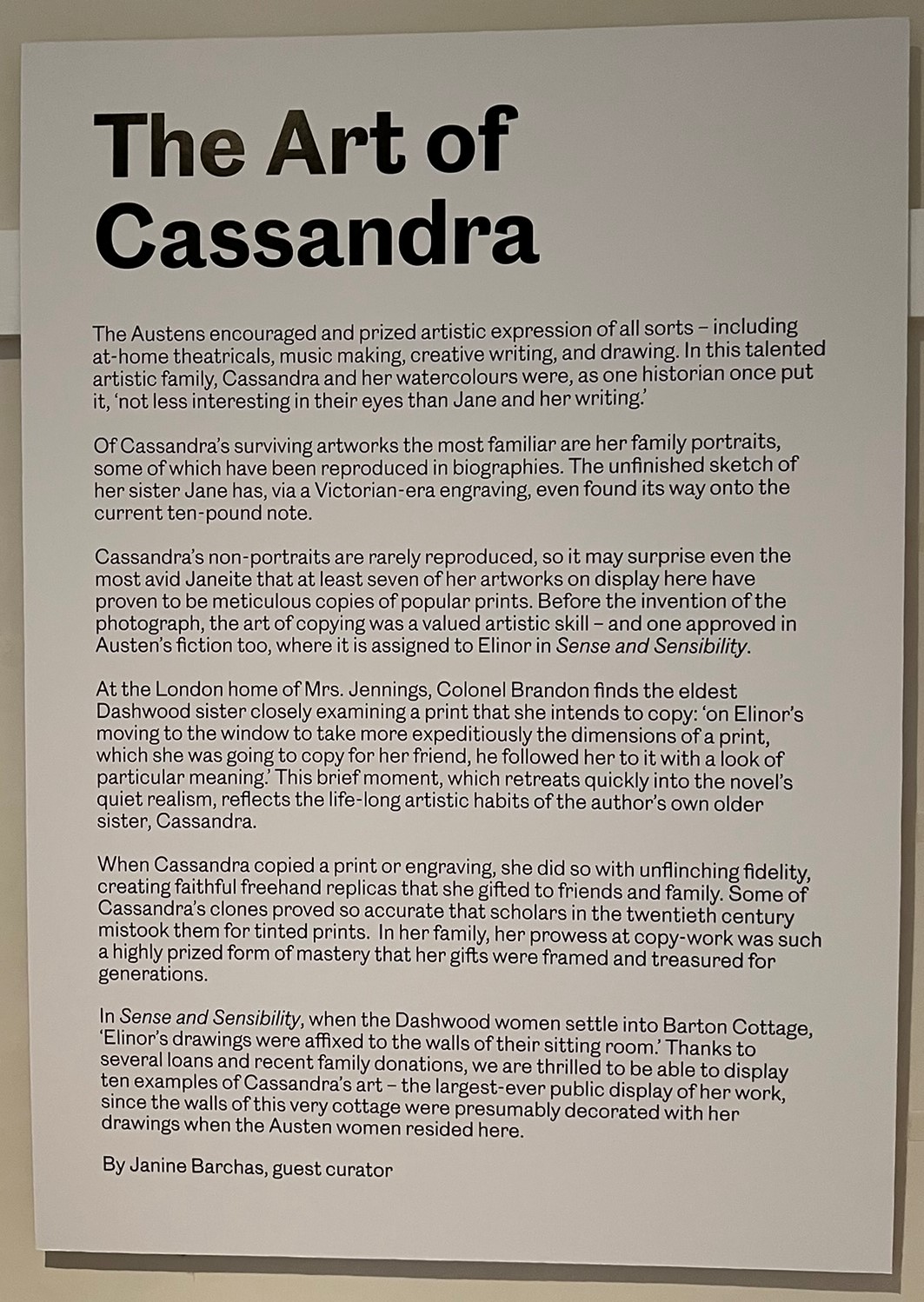
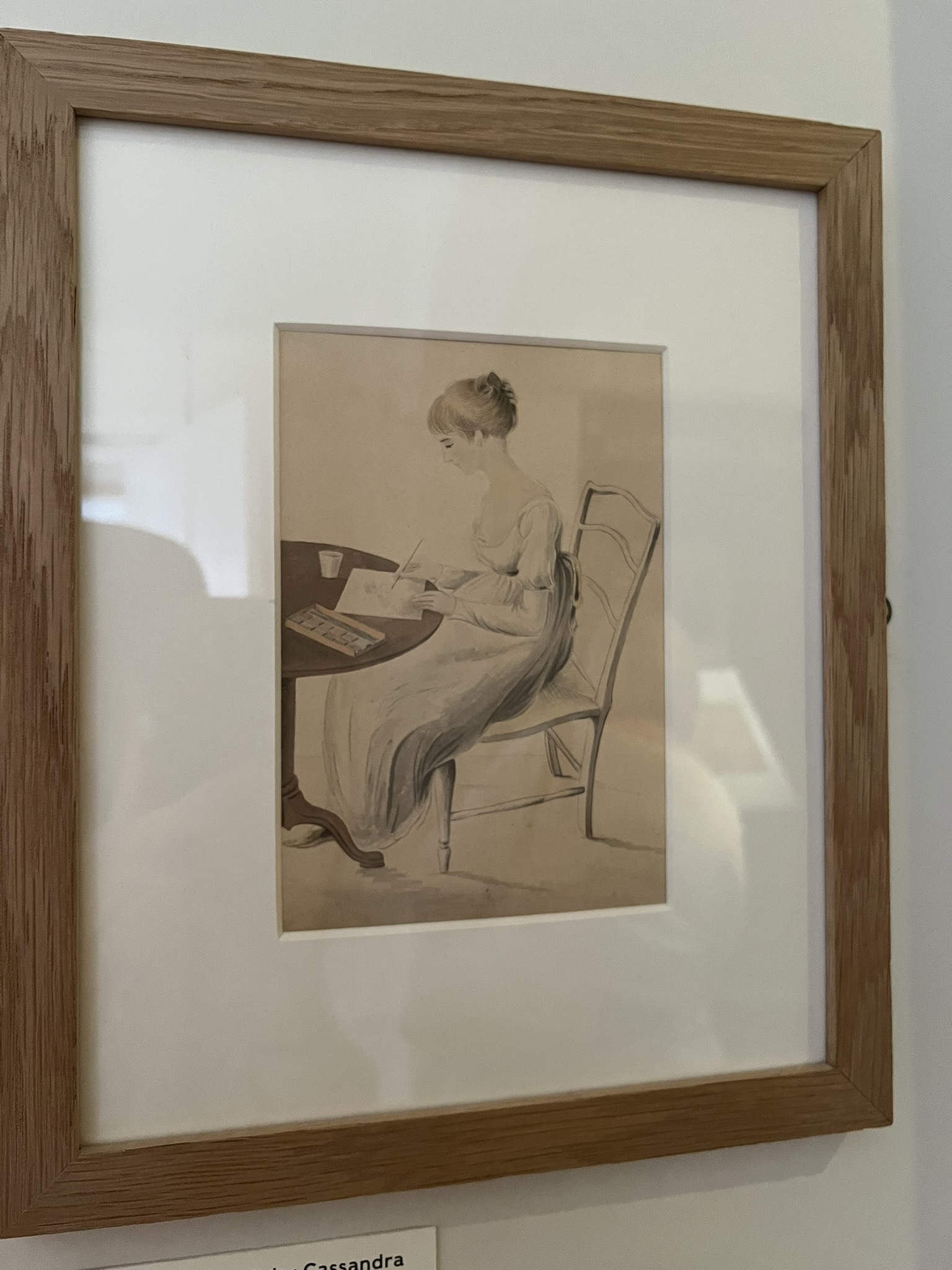
And were incredibly lucky again to see the exhibit on “The Art of Cassandra” on view til Sept 7, 2025, and curated by Professor Janine Barchas – a first-time ever display of 10 works by Austen’s sister:
This seemingly modest exhibition of ten artworks is the largest-ever public display of the confirmed works of Cassandra Austen. Not since Cassandra’s creative years in this very cottage have so many of her surviving artworks been gathered together in one place. Four of these were only recently discovered to exist among the possessions of Austen descendants. I’m thrilled that they will once again be displayed in the home where the Austen women lived and worked.’
– Janine Barchas, 2025
[Sorry! I did not take any more photos of Cassandra’s drawings, I was so enchanted by them – this link takes you to the online exhibition!]
The shop here at JAHM is yet another treasure trove as well as a danger to one’s wallet – I regret not buying the ring – I rarely wear gold, and somehow the silver one just doesn’t feel like the real thing…so I shall get through my disappointment by looking at the photo [image from JAHM]:
The garden at JAHM is a delight and you can imagine Jane and Cassandra working in it, enjoying it every day:
Our young Piony [sic] at the foot of the Fir tree has just blown & looks very handsome; & the whole of the Shrubbery Border will soon be very gay with Pinks & Sweet Williams, in addition to the Columbines already in bloom. The Syringes too are coming out. – We are likely to have a great crop of Orleans plumbs…
Jane Austen, 29 May 1811 from Chawton to Cassandra at Godmersham Park
These tulips will have to do!
Time for afternoon tea! [we did not want for food on this tour!]
And then back to the hotel…the evening on our own… a glorious day!!
Coming off our visit to Steventon, we were given some free time to explore Winchester on our own, the Cathedral and College to be part of the Day 7 adventure. I have been to Winchester before, have seen all the spots associated with Jane, and at the 2003 AGM we had a grand banquet at the Great Hall. [There was a talk by the then woman mayor of the City – a Jane Austen follower! Her name was Jean Hammerton, and I see that she passed away in 2020 – she was a delight!]
Considered one of the finest surviving medieval aisled halls of the 13th century, it is all that remains of the vast Winchester Castle, begun by William the Conqueror. I was largely alone here today, and lacking banquet tables and all that food, you can see the vastness and majesty of the place:
It is also home to the “Round Table”:
Which is nearly 800 years old, has a diameter of 18 ft, made of 121 separate pieces of English oak – and is considered the symbol of medieval mythology – think Camelot – King Arthur and the Knights of the Round Table. Since recent dating proves it is from the 13th century and not an original table of Arthur’s 6th century, much conjecture remains as to who ordered this to be made (probably Edward I), and why (part of a great banquet for an ‘Arthurian’ tournament during celebrations in 1290). The painting on the Round Table is dated to the early 16th century and has been determined to be the image of Henry VIII as a young man – Henry wanting to reinforce the Tudor claim to be direct descendants of Arthur [what a Henry…]*:
…as well as a nice reference to John F. Kennedy.
Queen Victoria has her own place of honor here – a HUGE statue for her Golden Jubilee in 1867:
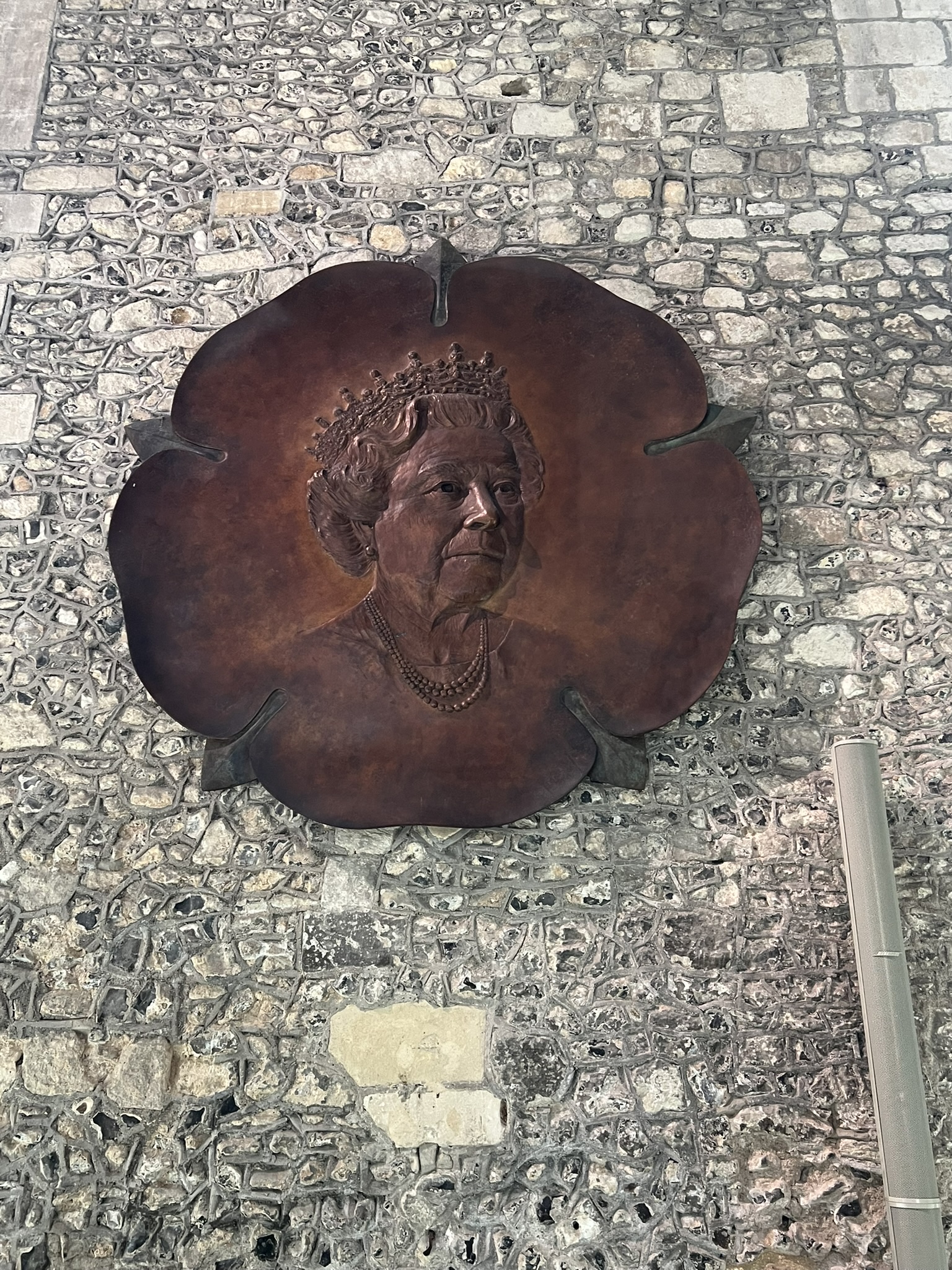
Exiting the Hall is a recreation of Queen Eleanor’s Garden [Queen Eleanor of Provence, wife of Henry III, and Queen Eleanor of Castile, wife of his son Edward I], opened in 1986 by Her Majesty The Queen Mother – it also includes an herb garden, filled with medieval plants, for their beauty as well as their medicinal purposes.
***********
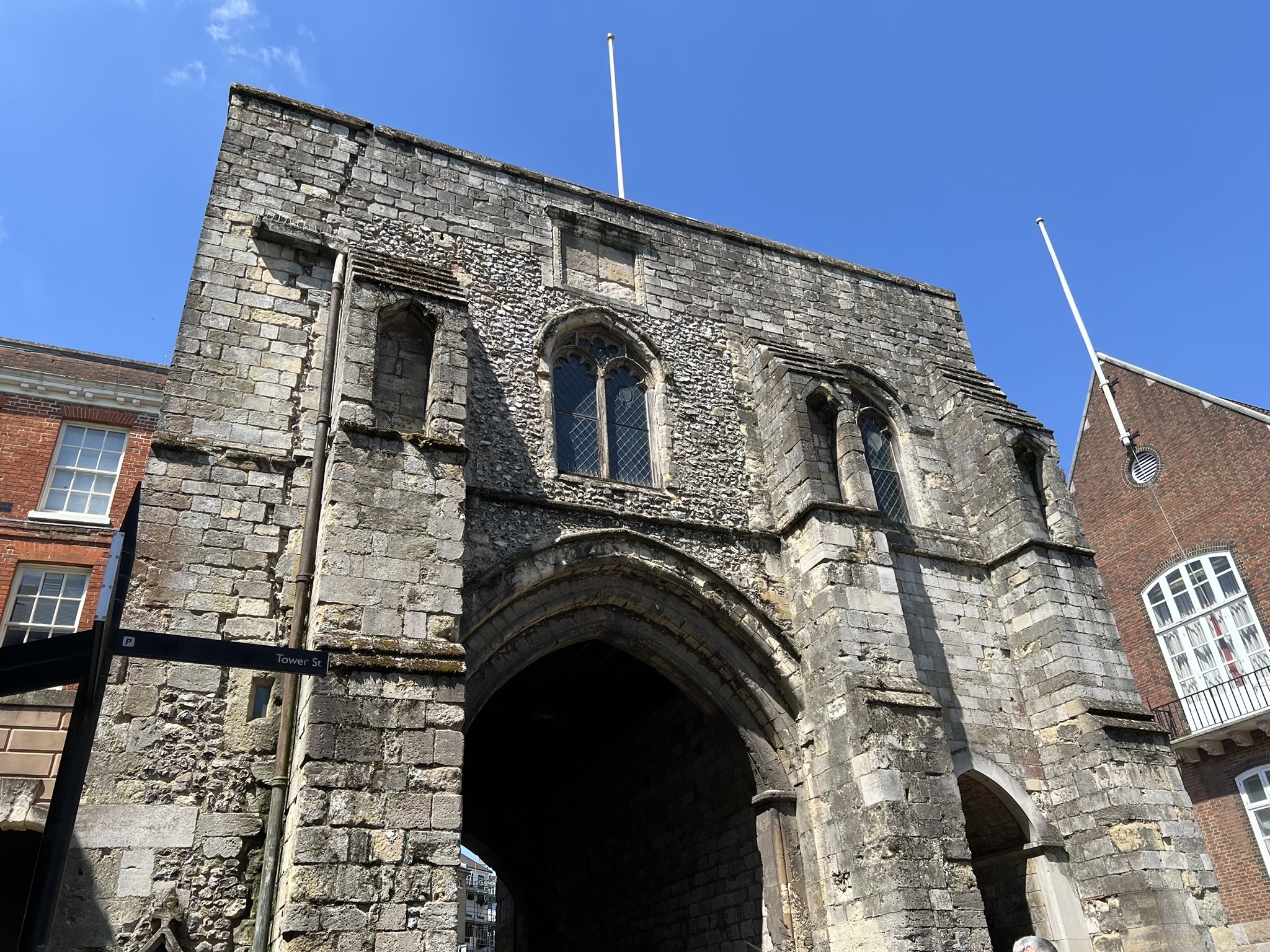
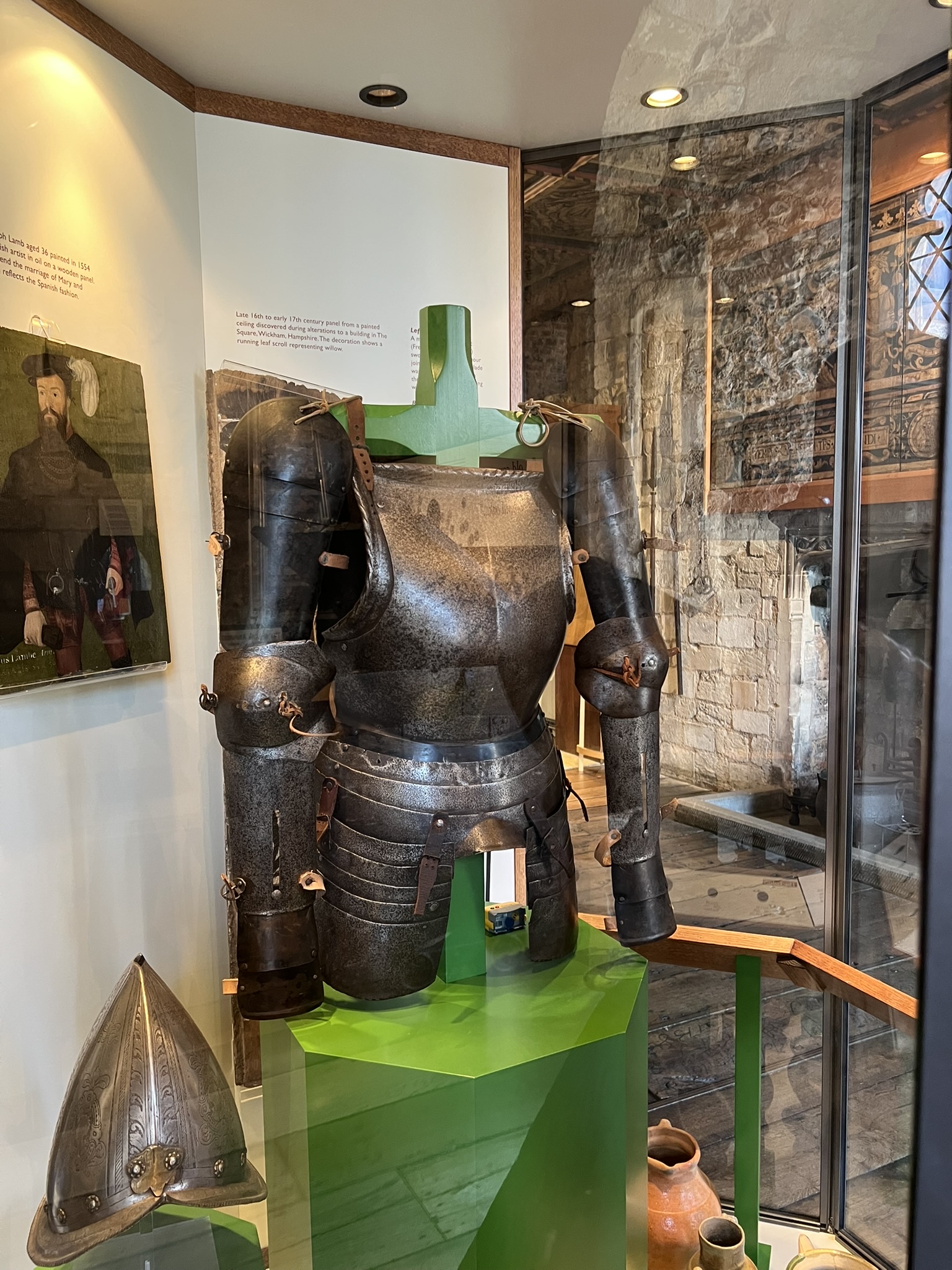
I then went to the Westgate Museum, next to the Hall and within the West Gate into the City, which holds some interesting artifacts of medieval and later times – always impressed by a fine coat of armor:
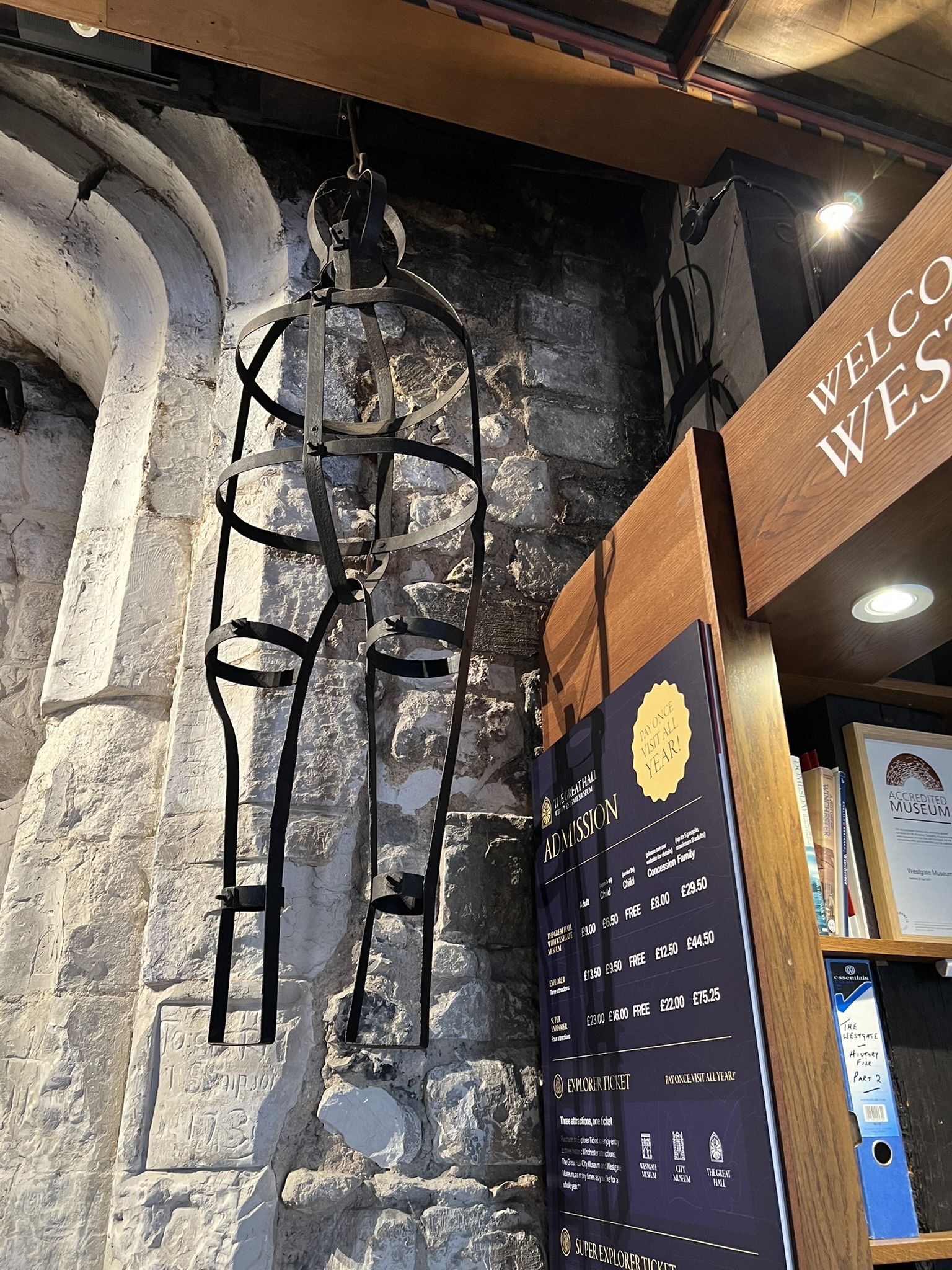
A hanging gibbet, not so much…
Great views of the Hall and the City from up top of the Gate:
We were greeted by Louise West, Trustee for the HCT, and Jaane Rowehl, Director of Programme and Collections, and two of the people working on their upcoming exhibit “Beyond the Bonnets: Working Women in Jane Austen’s Novels”
We were first treated to a talk on and a viewing of some of the artifacts that would have been used by these “working women” of Hampshire: domestic servants [lady’s maids, housekeepers, washer women]; governesses and teachers; and business women [seamstresses, milliners, glazers]; and the inevitable houses of prostitution – the artifacts that will be in the exhibit about their working lives, much of what has been discovered from diaries, receipts, and letters:
–
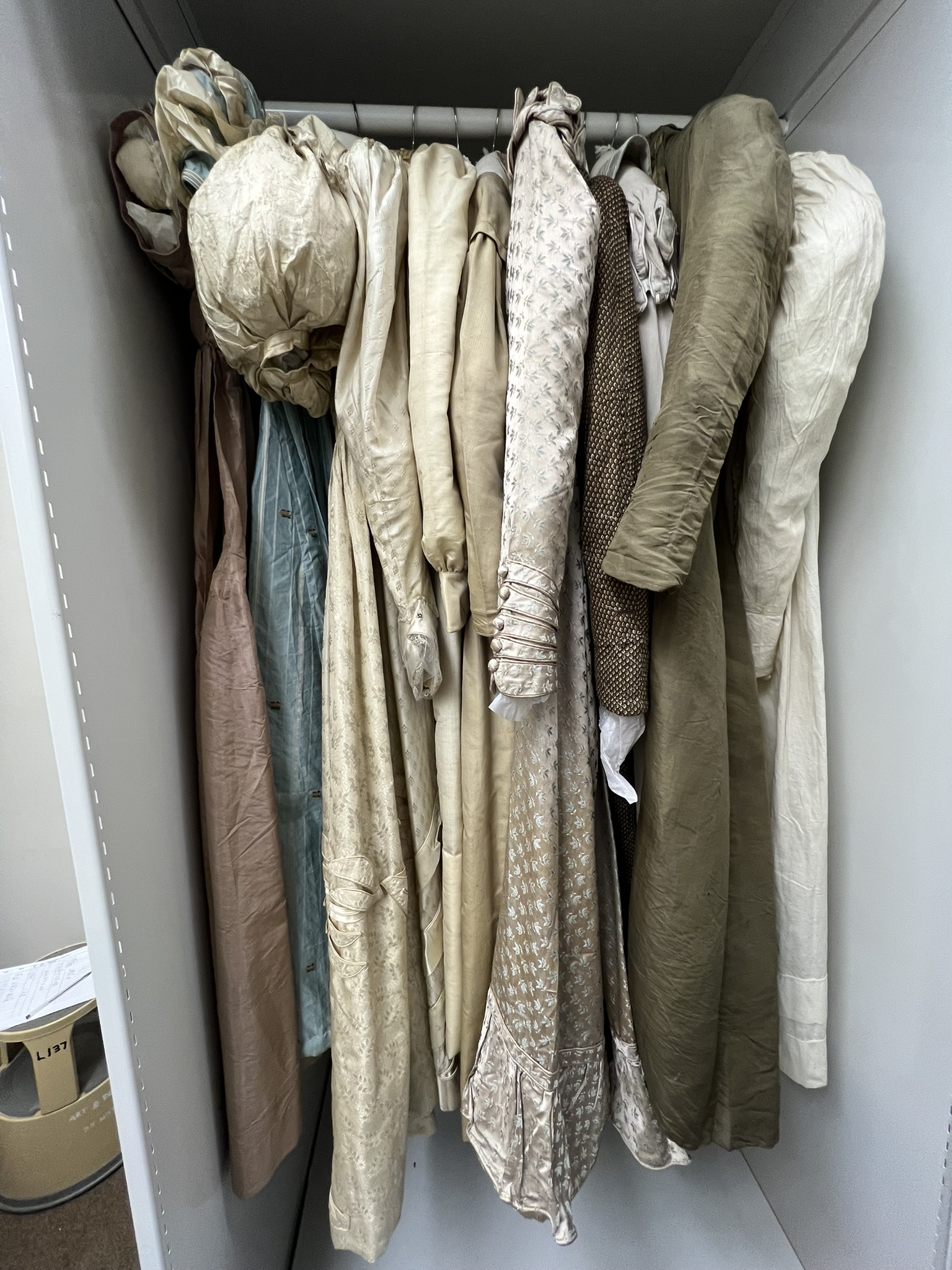
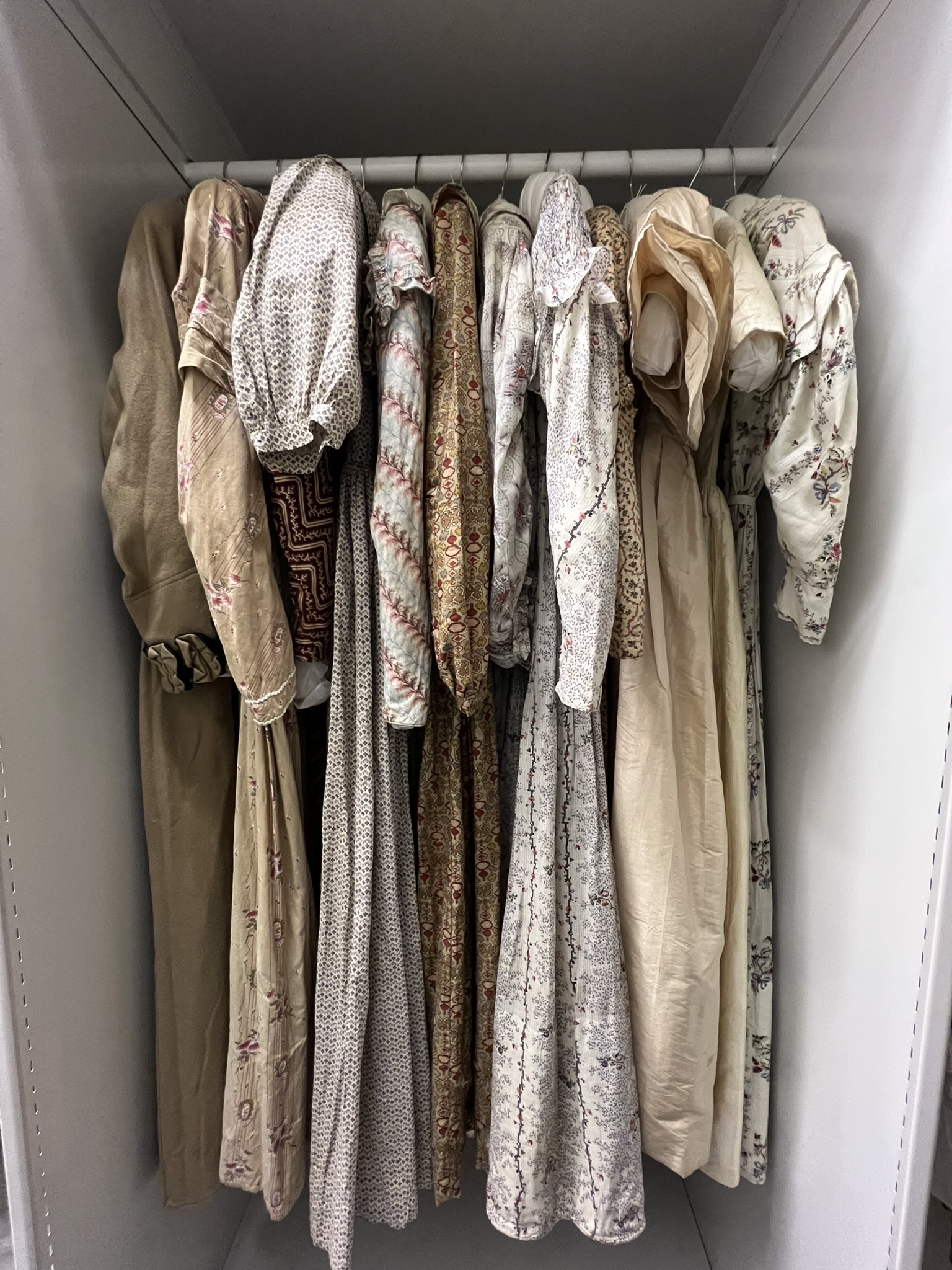
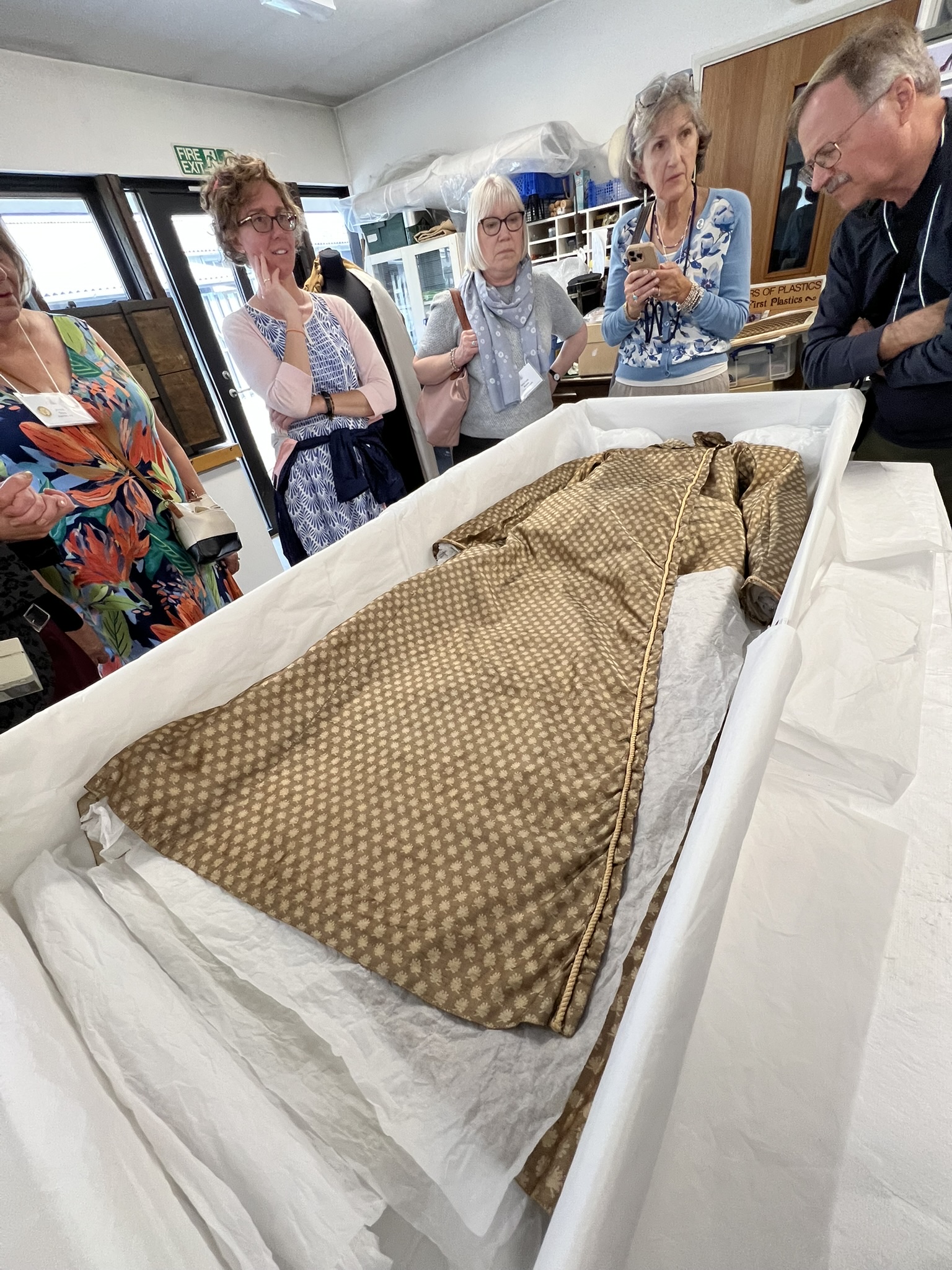
Then a behind-the-scenes tour of the HCT’s costume and textile collection – fascinating work being done here [as well as rows and rows of costumes that are rented out for plays, etc]. Here we could see some of the actual dresses in the collection that are being preserved and studied:
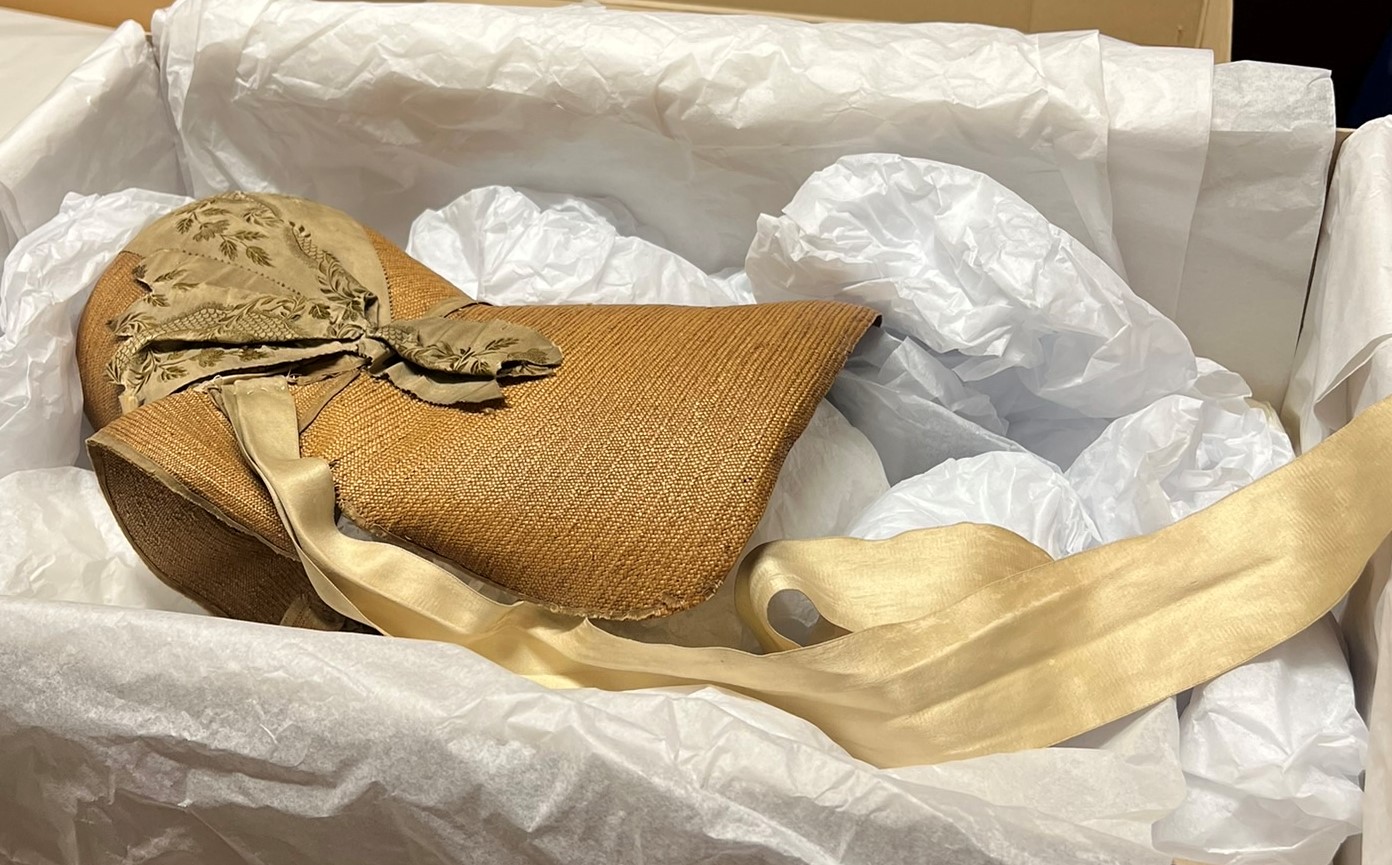
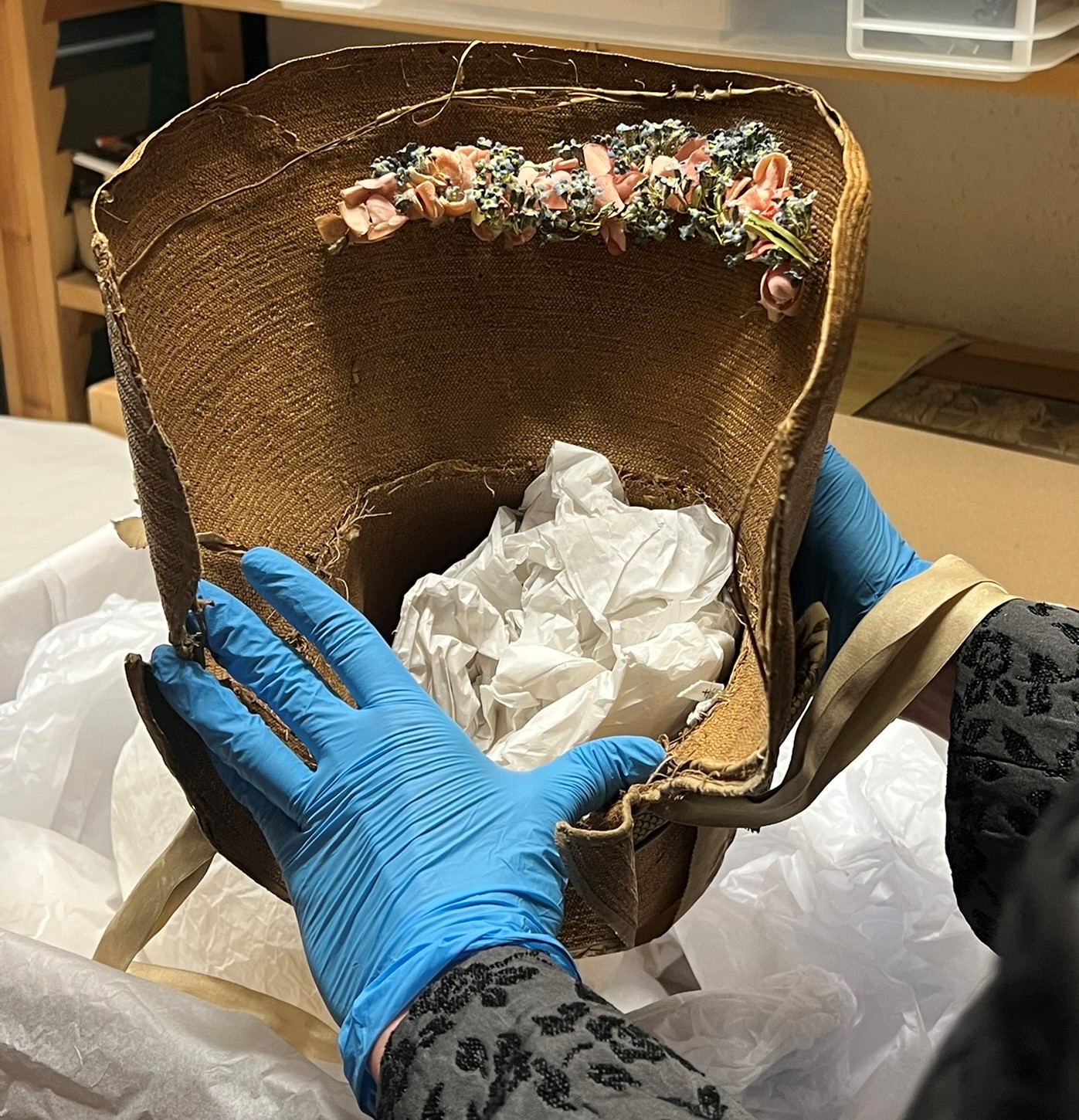
And this fascinating bonnet!
And the necessary Fan:
–
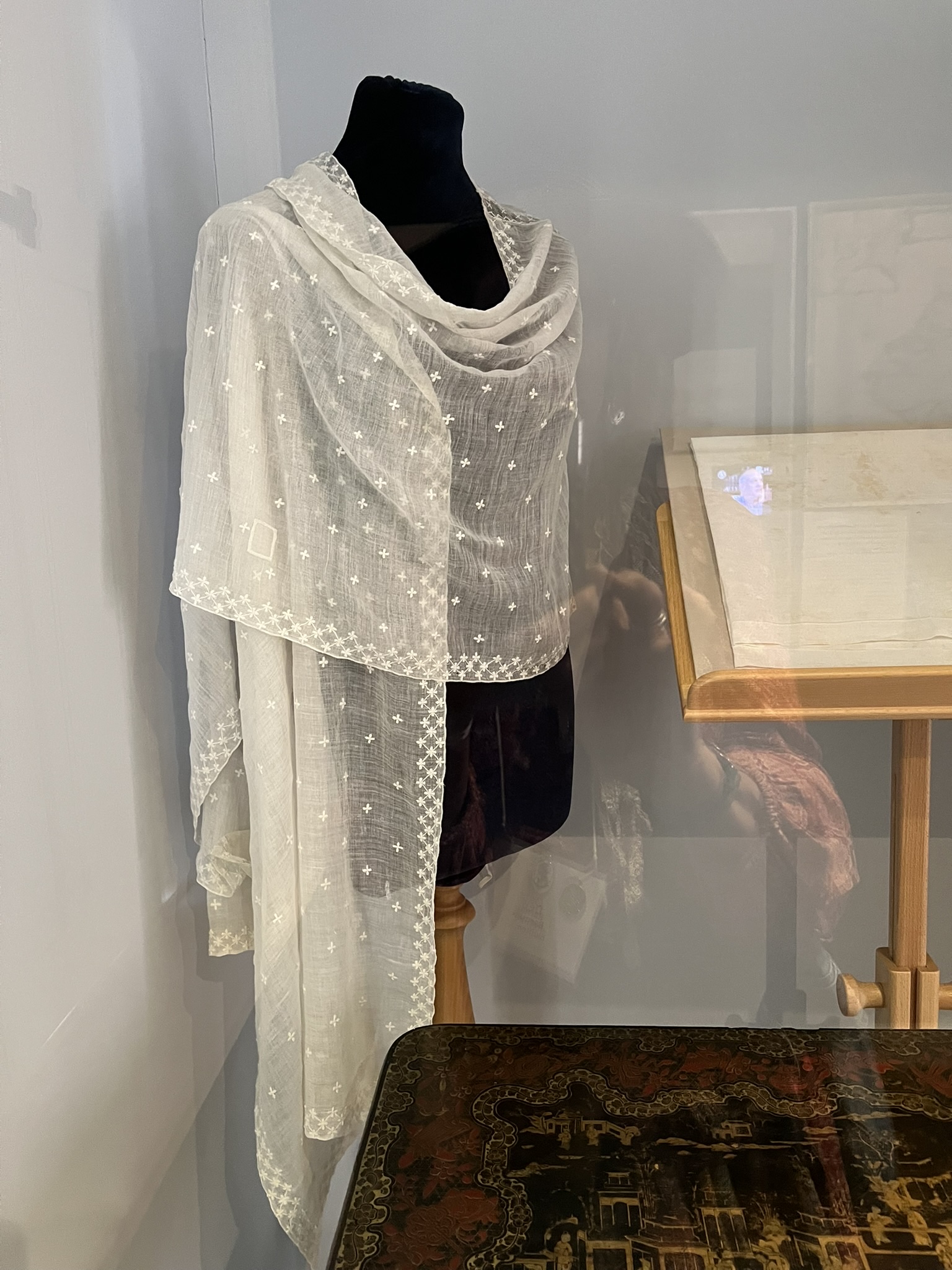
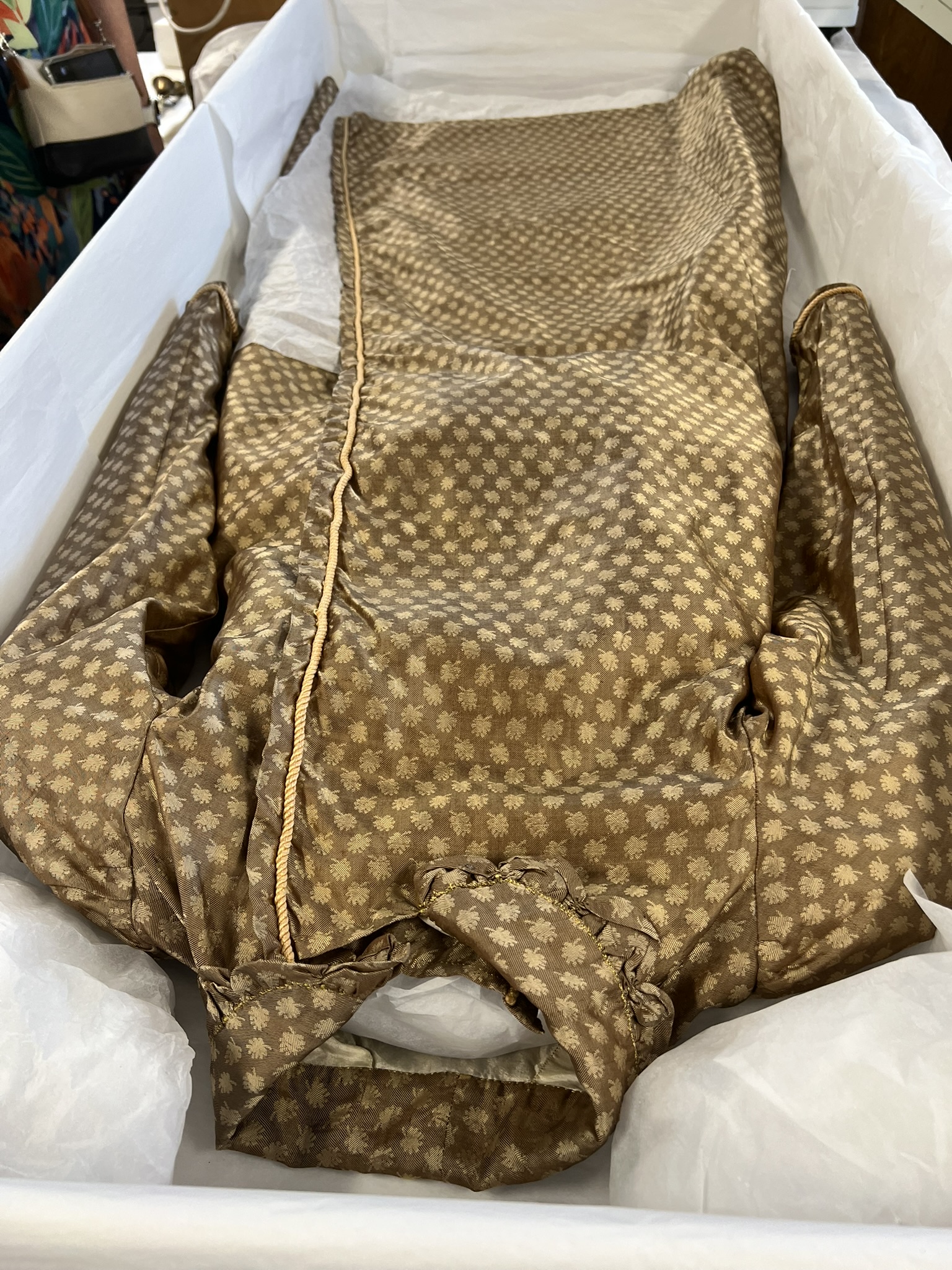
But nothing was quite so moving [some of the group on the verge of fainting] of Austen’s original pelisse:
Many of us have seen the various replicas, but to see this so close up [no touching allowed!] was quite something… and nice to know the care it is being given…
We were treated to a proper cup of tea and refreshments and then back to the hotel, where we had the evening to ourselves – we took advantage of the lovely outdoor patio with a fine glass of wine and pub fare – another perfect day [one can get used to this…]
Tomorrow brings us to the Cathedral, final resting place for Jane, so come visit again… [this blog posting is taking longer than the trip itself!]
*Source: Hampshire City Council. The Great Hall: Where History and Legend Meet. [no date]
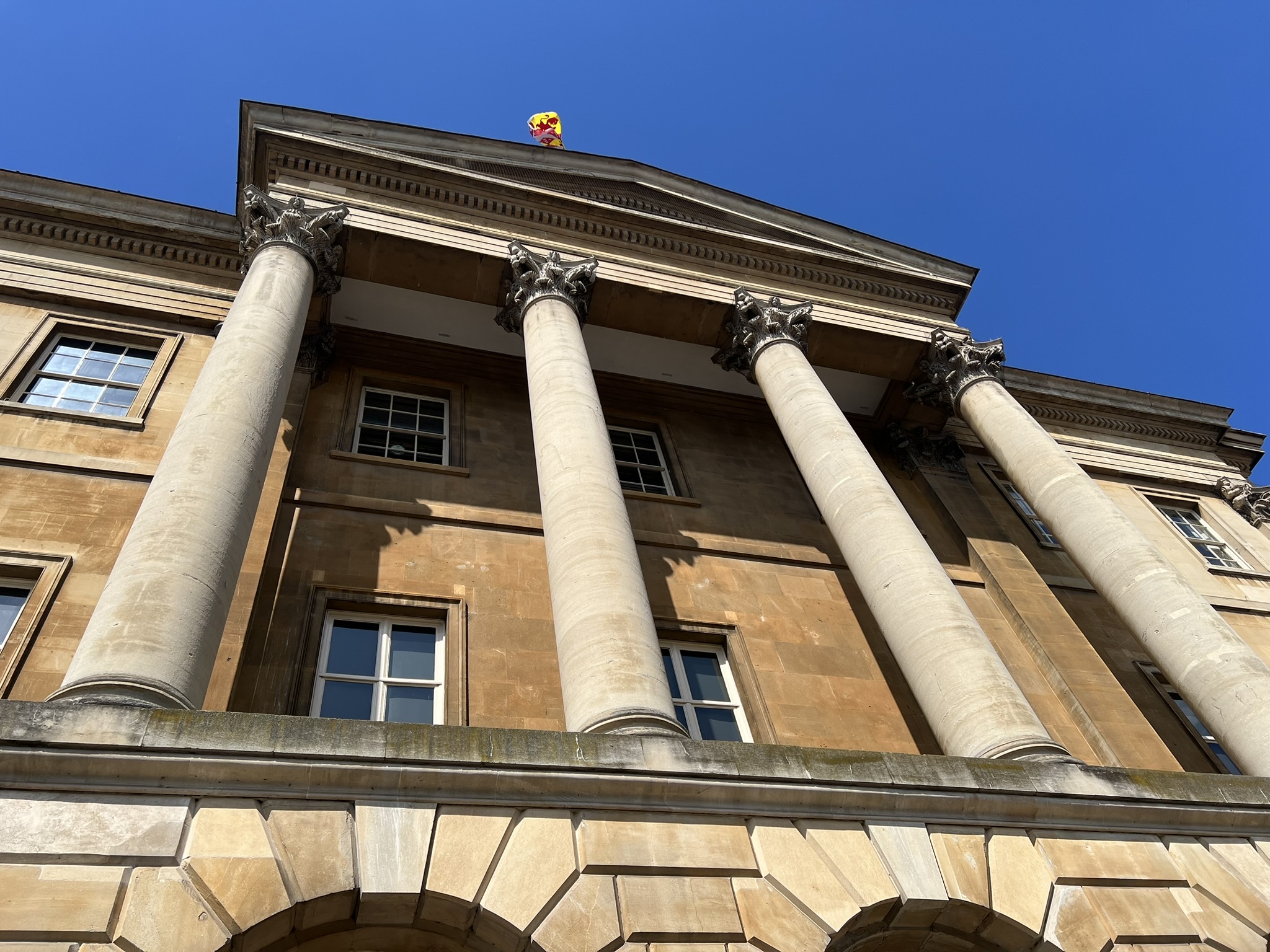
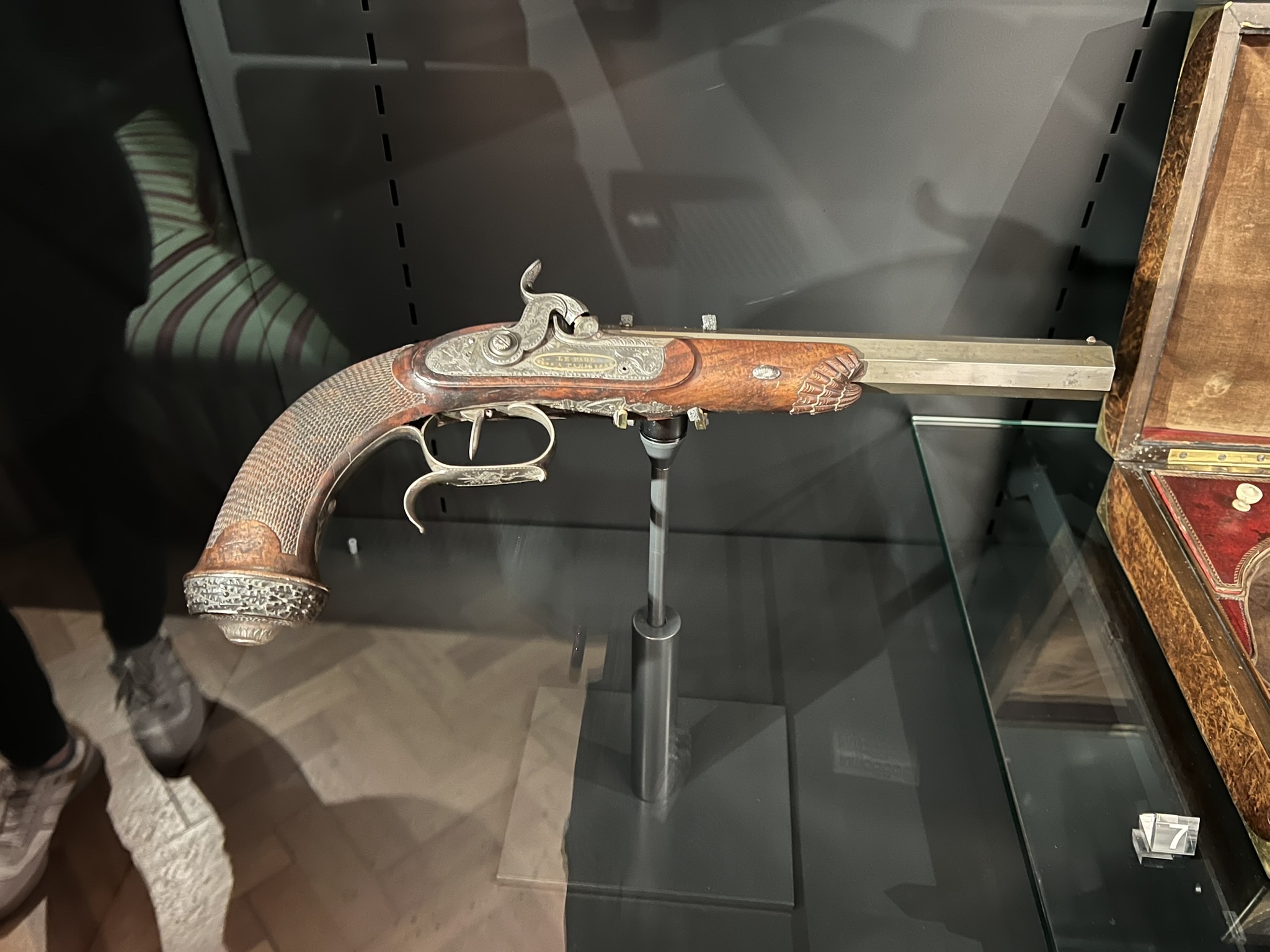
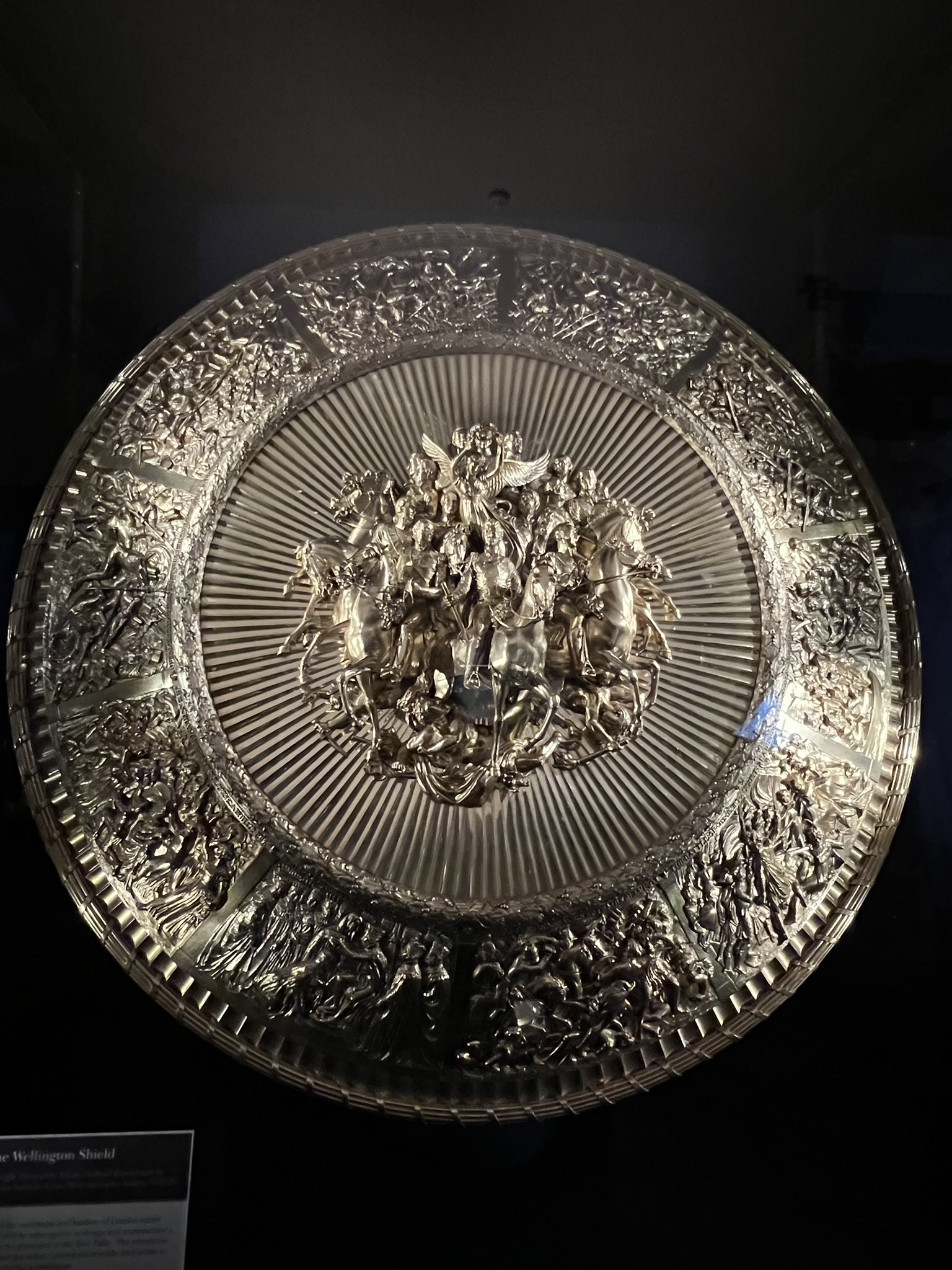
I am ashamed to say I have never been to Apsley House, home of the Duke of Wellington, so that was my goal this day – Ron had never been either, so we met there [right at the Hyde Park Gate, address is One London as you exit from Hyde Park] – and if you had a doubt as to whose home this was [and is], the number of portraits, sculptures, and paraphernalia of the Duke would certainly give you a hint… not to mention the statue of said Duke in the park across the street…
And the Wellington Arch: it is crowned by the largest bronze sculpture in Europe: the Angel of Peace descending on the Chariot of War. You can read about its history [and controversy] here.
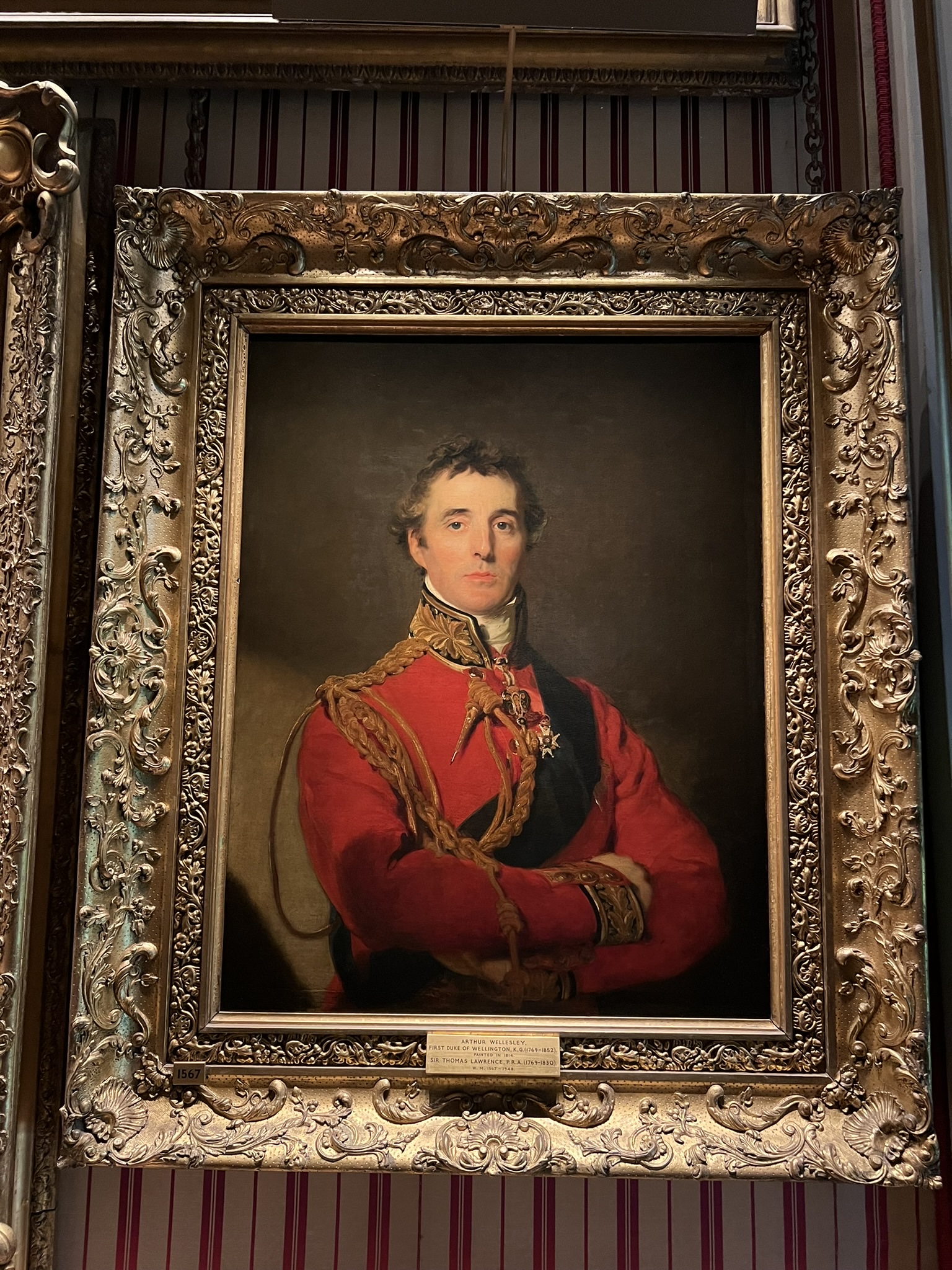
One of the many portraits of the Duke
Your basic dining room…
*****************
I loved it here – and art collection beyond compare – I could have spent many more hours. But for a man who by all accounts liked the simple life of being on a campaign, the extent of elaborate decorative arts and sumptuous décor seems to belie that – the color RED everywhere, and YELLOW…
************
One of two great surprises at Apsley is the extensive Spanish art collection in the Waterloo Gallery, “one of the great palatial interiors of Britain” [the Apsley House Guidebook by English Heritage] – a gift of King Ferdinand of Spain in 1816, the 165 paintings were found in an abandoned baggage carriage of Napoleon’s brother Joseph Bonaparte, then King of Spain. I give one fine example: “The Gambler,” by “a follower of Caravaggio”:
–
The other grand surprise was to find on entering the house a large nude statue of all people Napoleon! Napoleon as Mars the Peacemaker by Canova. It had been commissioned by Napoleon but had been covered up at the Louvre – after Waterloo Britain bought it for 66,000 francs and the Prince Regent [George IV] gifted it to Wellington. The entry stairwell was the only possible location and the floor had to be reinforced to support the great weight. Wellington admired Napoleon and there are several paintings of him in the art collection here. You can see the stairwell and the size in my more modest photo (!) here – this better picture of the whole statue is from the guidebook [it actually looks much larger than this image conveys – I did burst out laughing when I saw it was Napoleon…]
A friend of mine went several years ago to Apsley House for one of their occasional Regency balls – I can only imagine the swoosh of the dresses and music all around … you can see such a one in this youtube: https://www.facebook.com/ApsleyHouse/videos/2444115022311548
Alas! I had to content myself with an audio guide and a vivid imagination…
**************
Next up was Henry Austen! Ron and I were off to Sloane Square, where I served as a grateful listener for one of Ron’s walking tours of Austen sites. I had done this part of Henry Austen’s life before but Ron’s history of it all added much to my knowledge, not to mention another glorious weather day… all followed by lunch in a crowded outside eatery right in the middle of the weekend Sloane Square market – made one feel like a real Londoner!
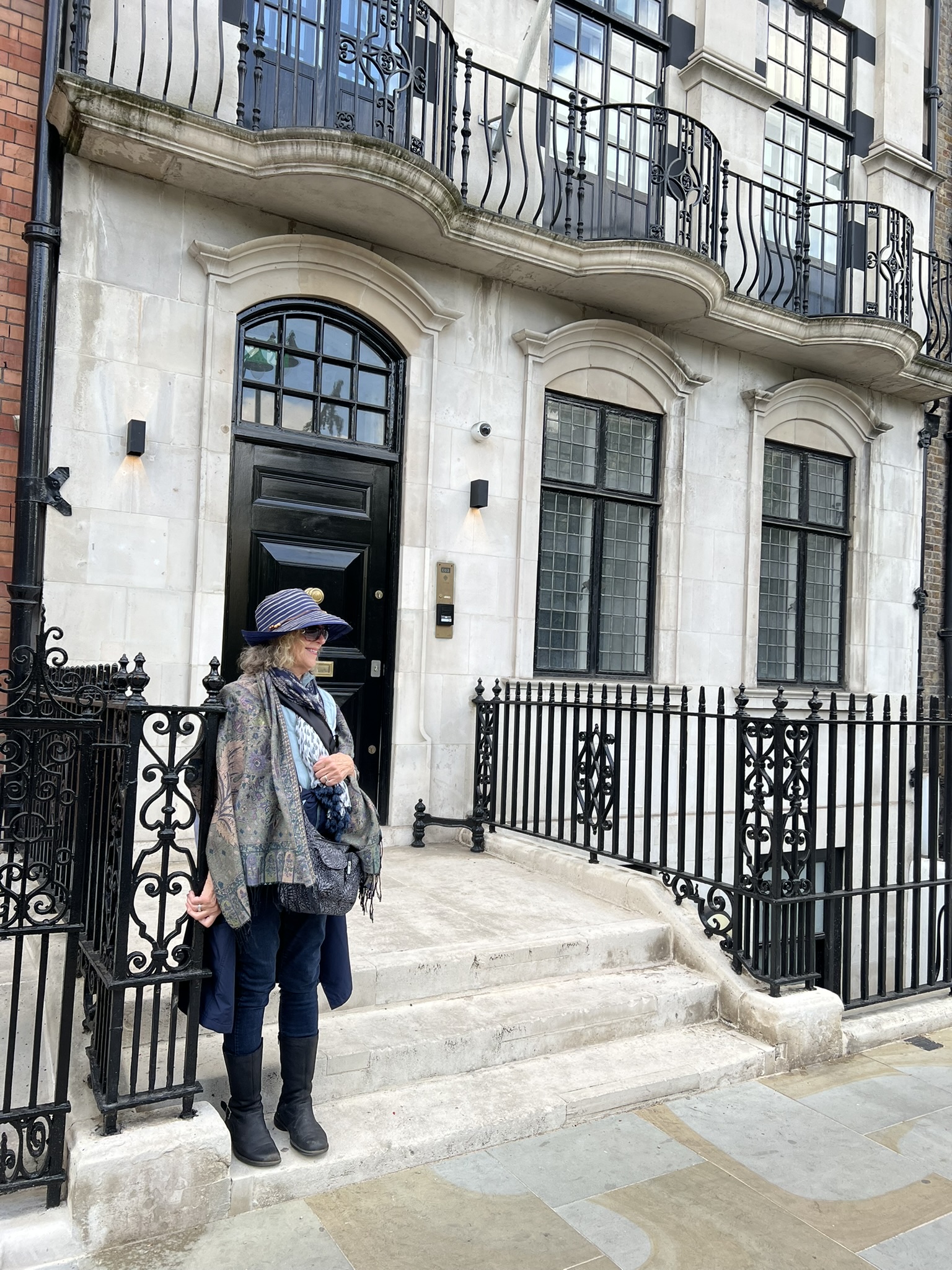
Henry’s house in Hans Place…
What Henry’s house would have looked like then…
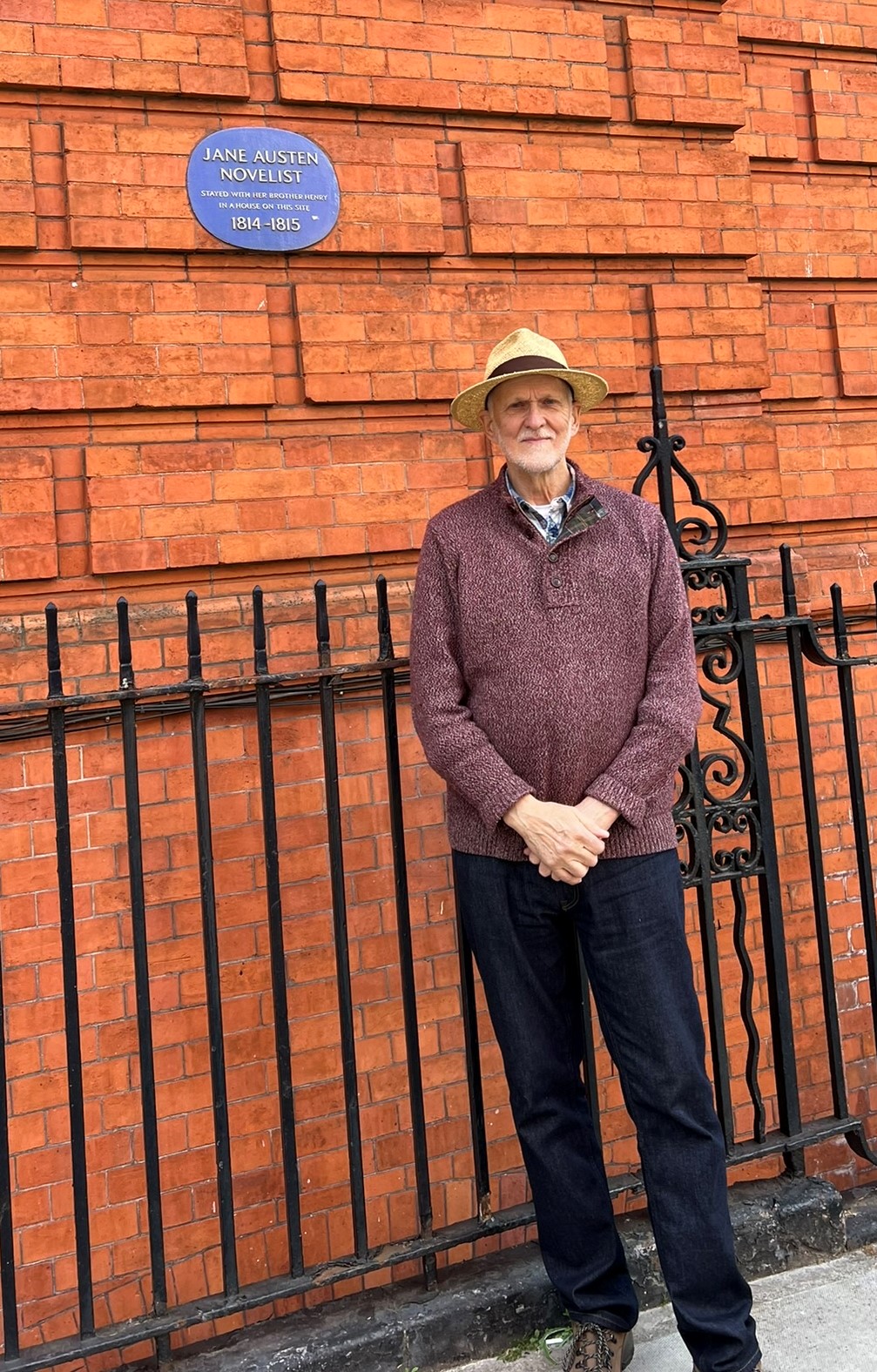
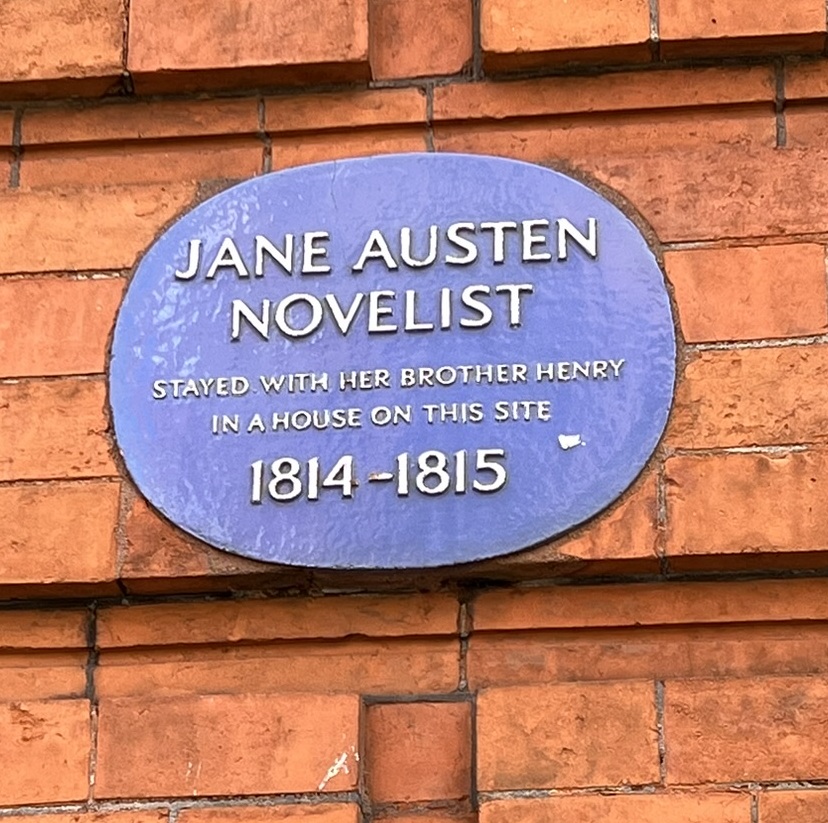
And the requisite Blue Plaque so we know it’s true…
adding this sketch from Constance Hill’s book JA: Her Homes and Her Friends (1902):
**************
Another great day with Ron…we bid adieu ’til a next visit [we have already lined up an itinerary…] – and I had a fine dinner later at my hotel [that is water not vodka!]:
Next up: the beginning of the JASNA Tour starting in Windsor!
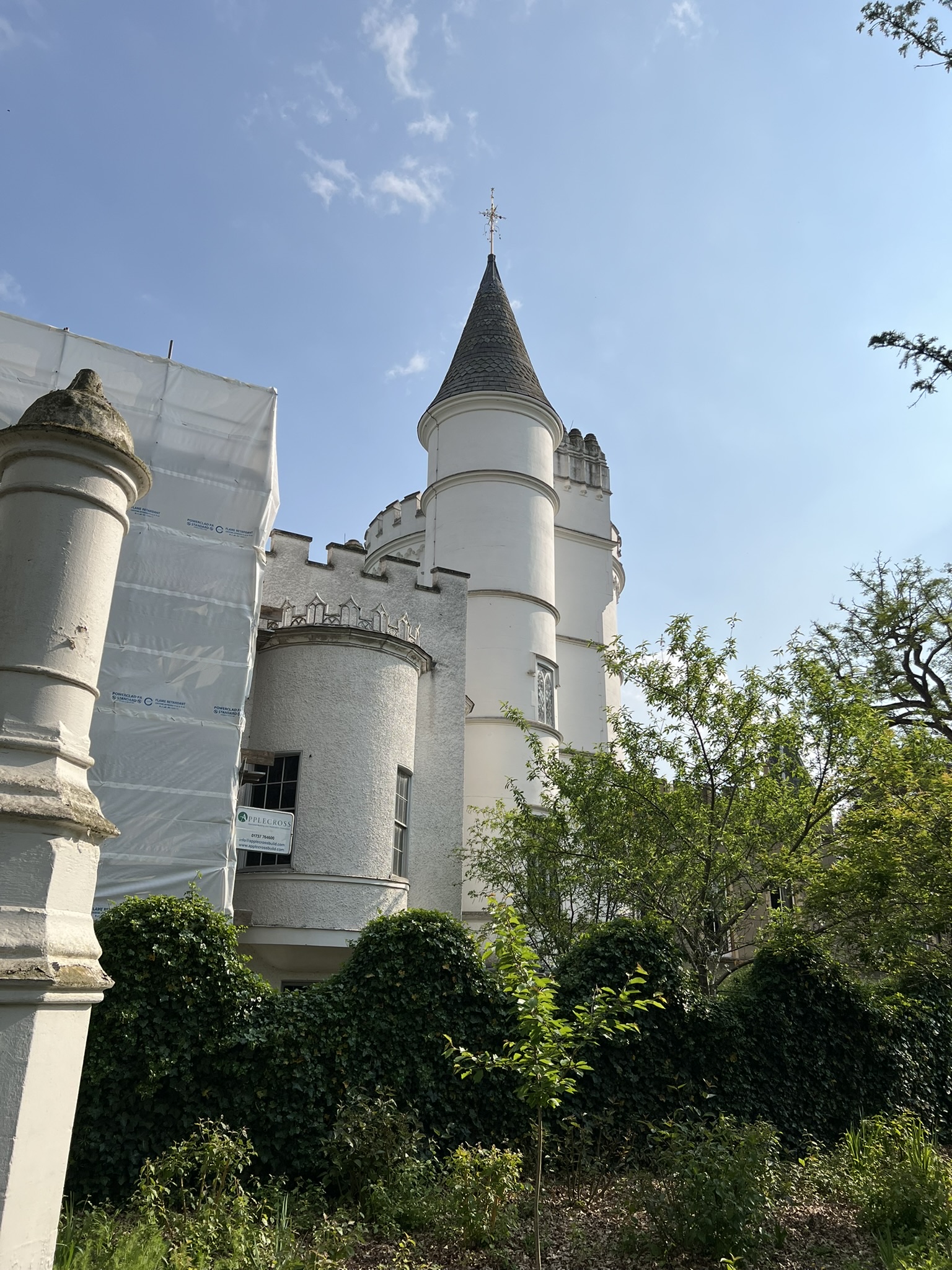
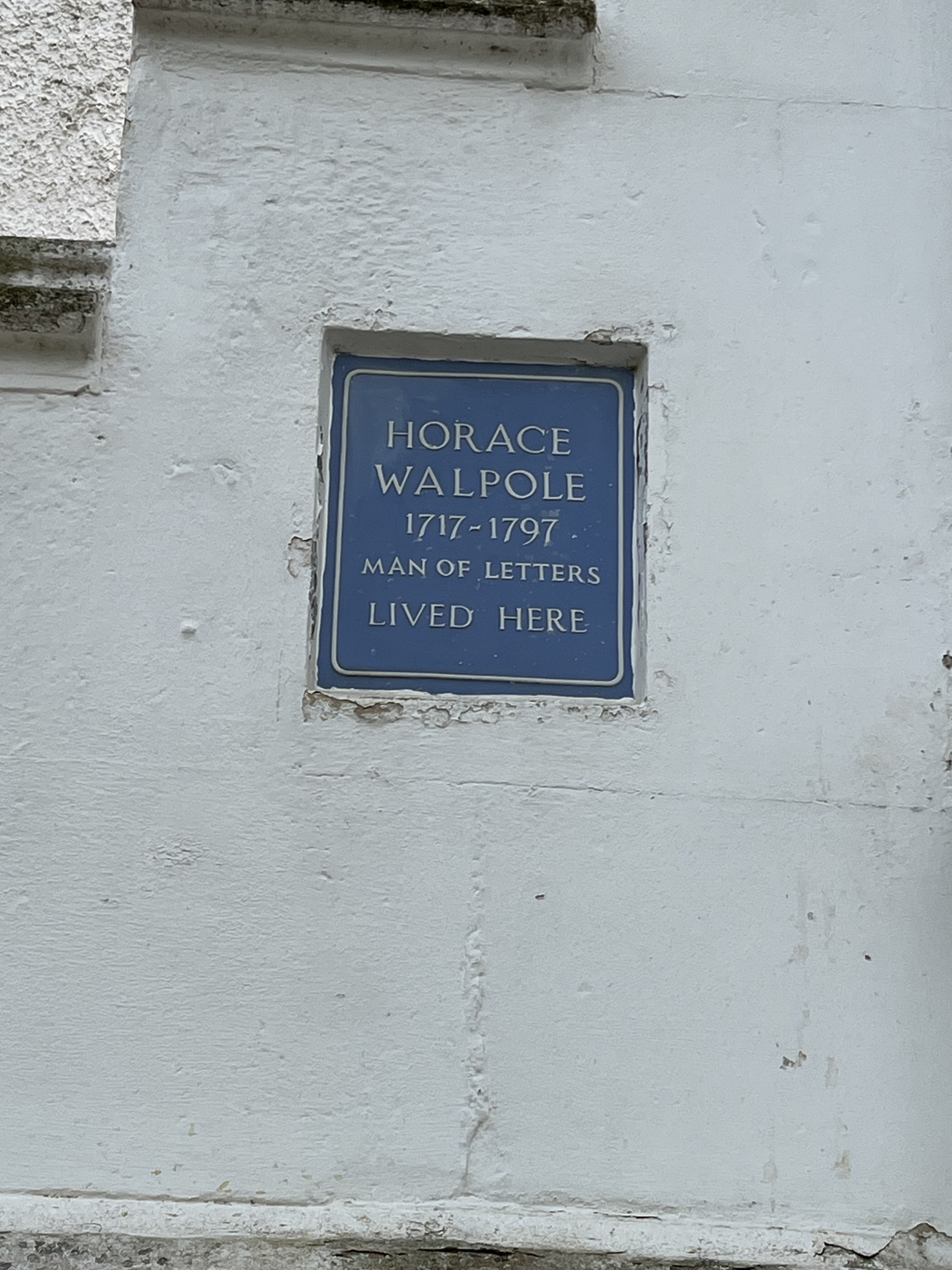
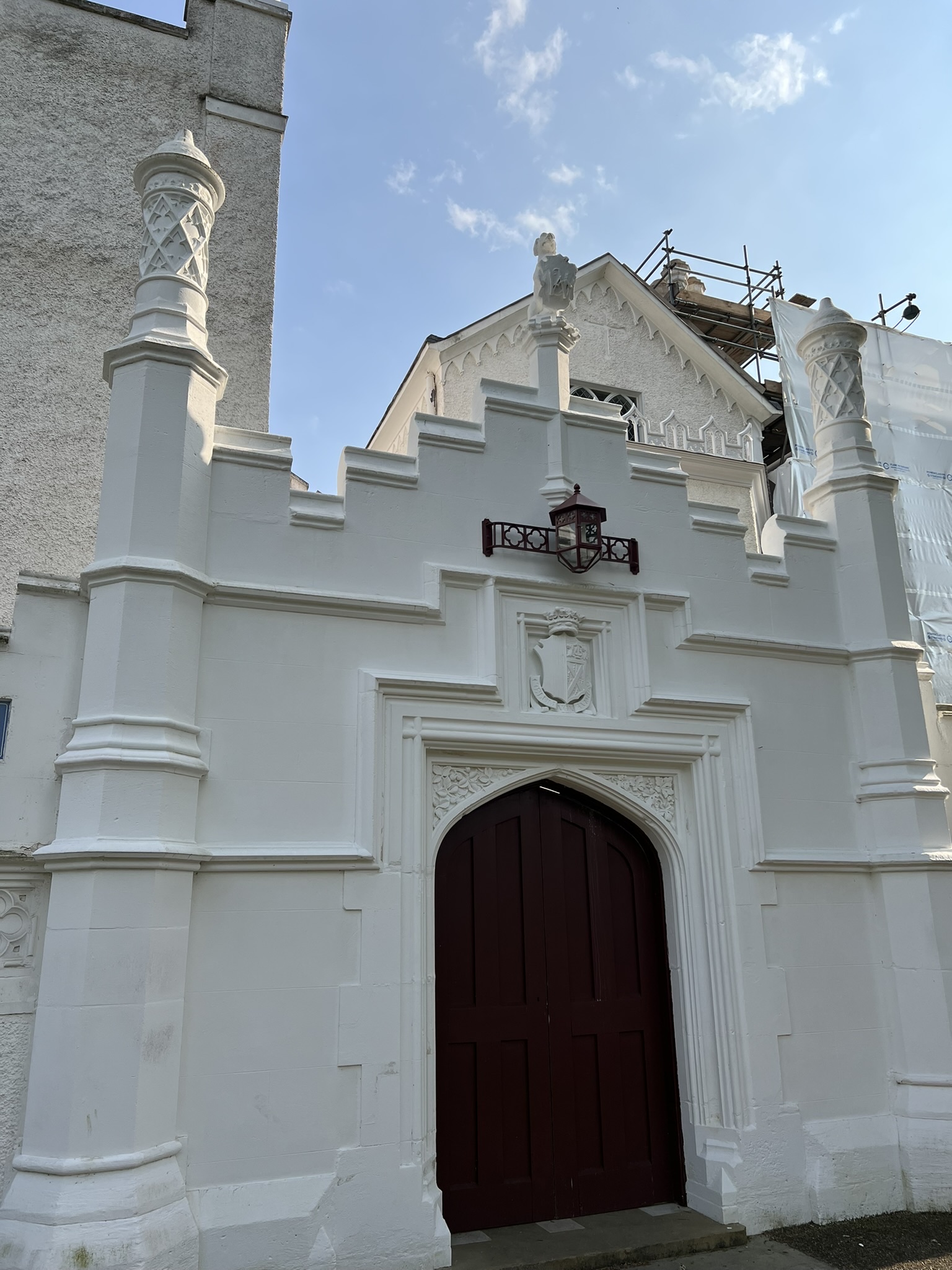
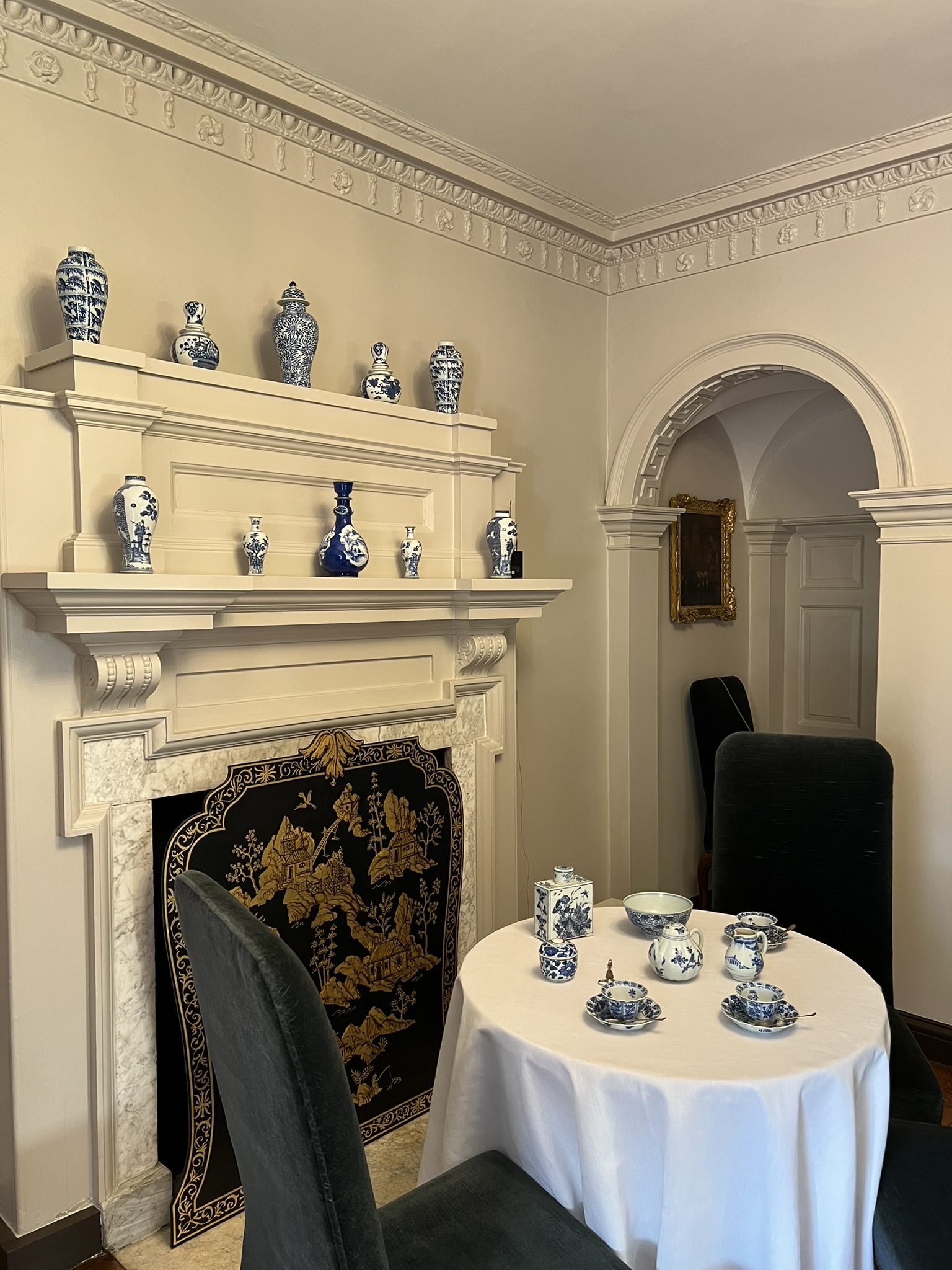
This day I had the pleasure of spending time with Ron Dunning – we have in the past visited estates and famous houses, and this time the plan was to go to Horace Walpole’s Strawberry Hill
– alas! it was CLOSED [who closes a tourist site on a Friday??!] – but a few outside photos give you a sense of its grandeur – inside for another trip I am sorry to say – but you can visit it virtually here:
*****************
But Marble Hill was a lovely surprise – home to Henrietta Howard, mistress of George II [for which George’s wife Caroline was most grateful] – apparently George spoke no English and Henrietta was deaf, so a perfect relationship that lasted until he took on another mistress [you can read the ever-interesting George’s mistress stories here.
Howard was unhappily married, separated, but a well-loved and respected woman of education, wit, and grace. She also had a “home of her own” – she designed and lived in Marble Hill beginning in the 1720s, one of the many villas built along the Thames – it remains a rare example of a house built for and by a woman in Georgian England, thankfully saved by an Act of Parliament in 1902. Unlike many such estates, it feels like a very real and livable home, not a museum – you can read more about Henrietta and Marble Hill here.
Love this dining room wallpaper:
View from the Thames:
And now a view of the modern Thames, not likely what Henrietta saw!:
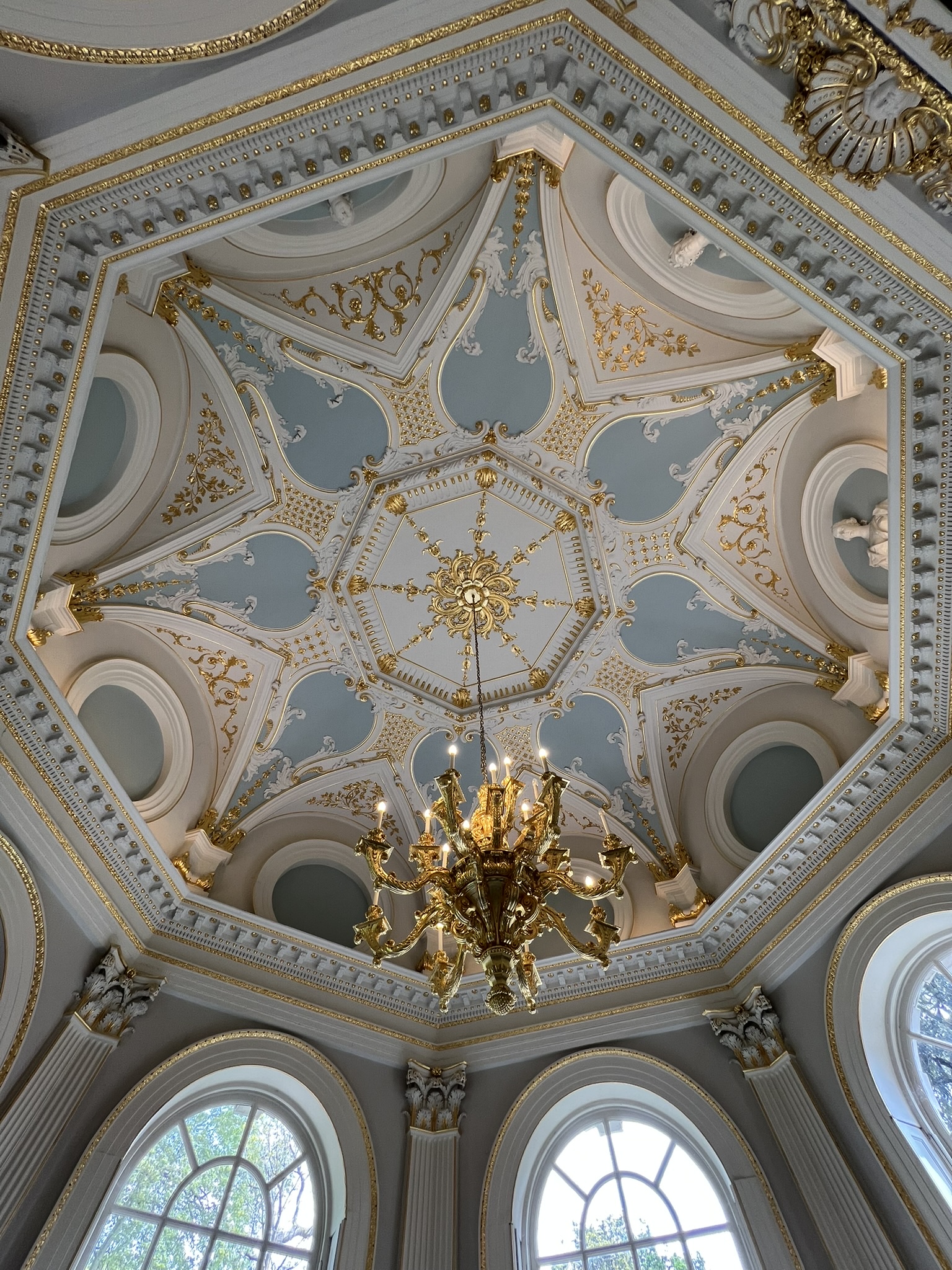
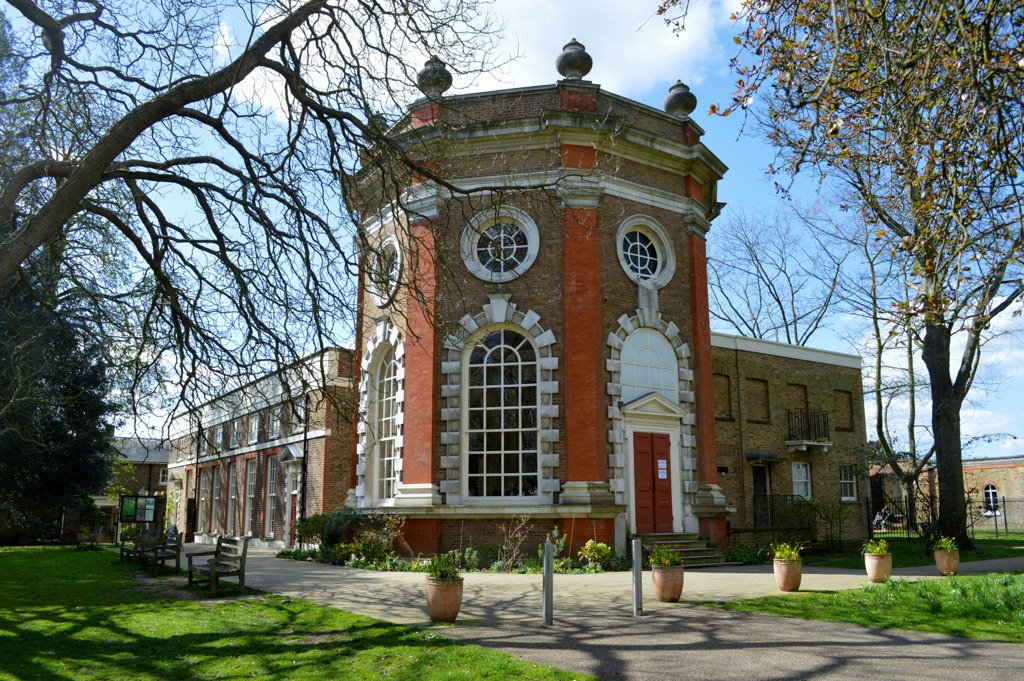
We did go to nearby Orleans House, now really just the Gallery standing – I only took a picture of the exquisite ceiling, but here is also an exterior shot courtesy of Wikipedia:
*****************
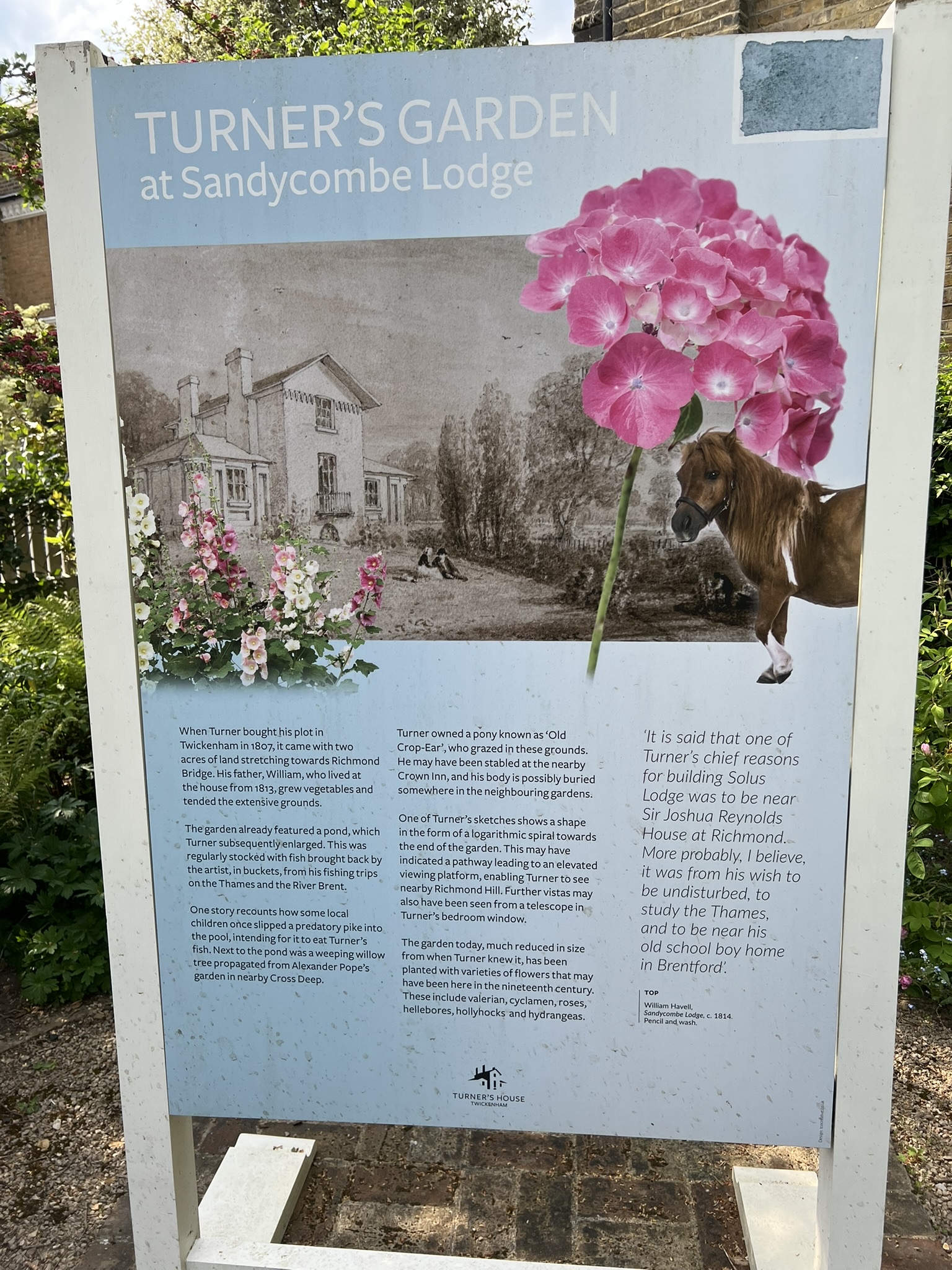
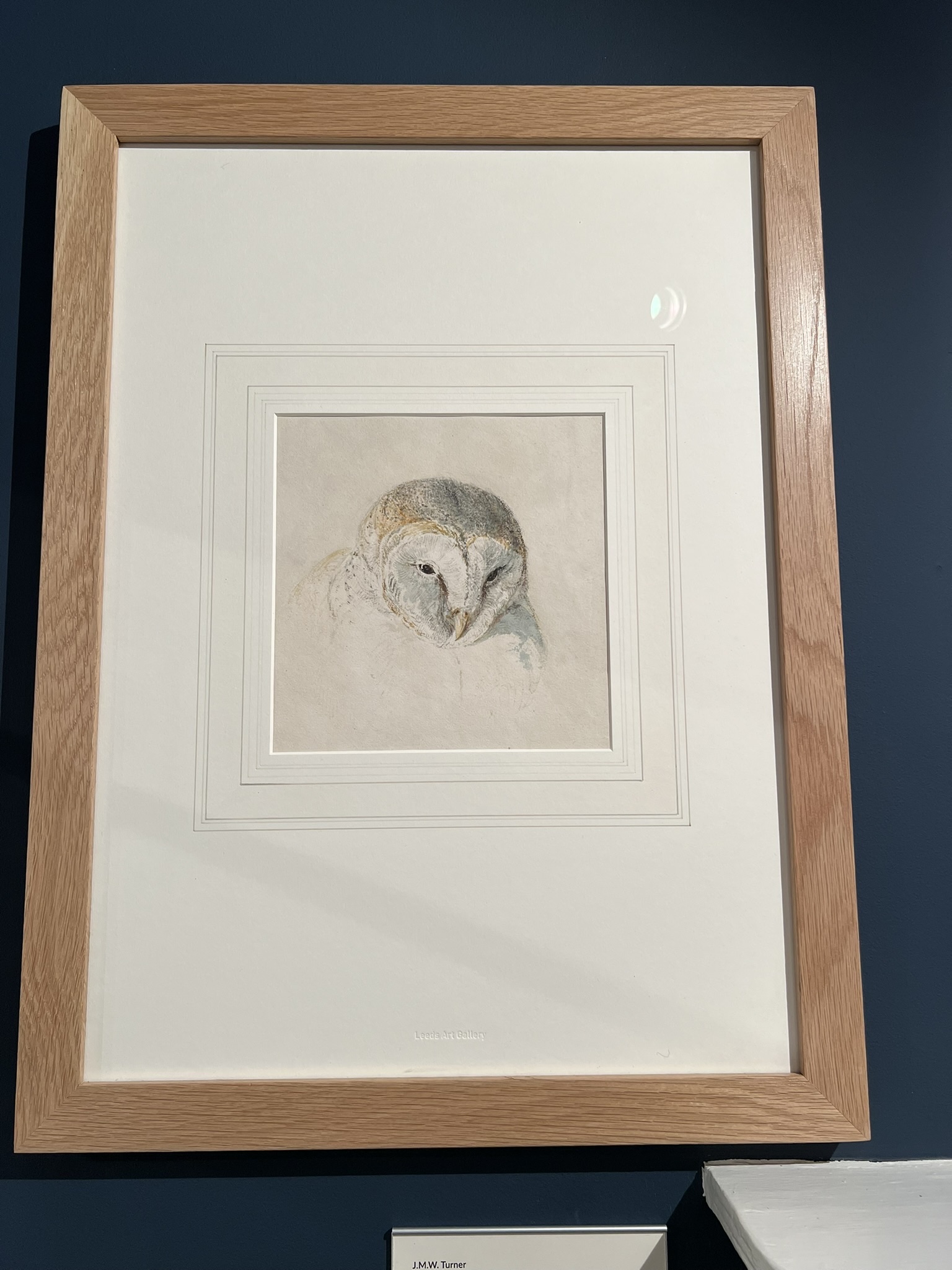
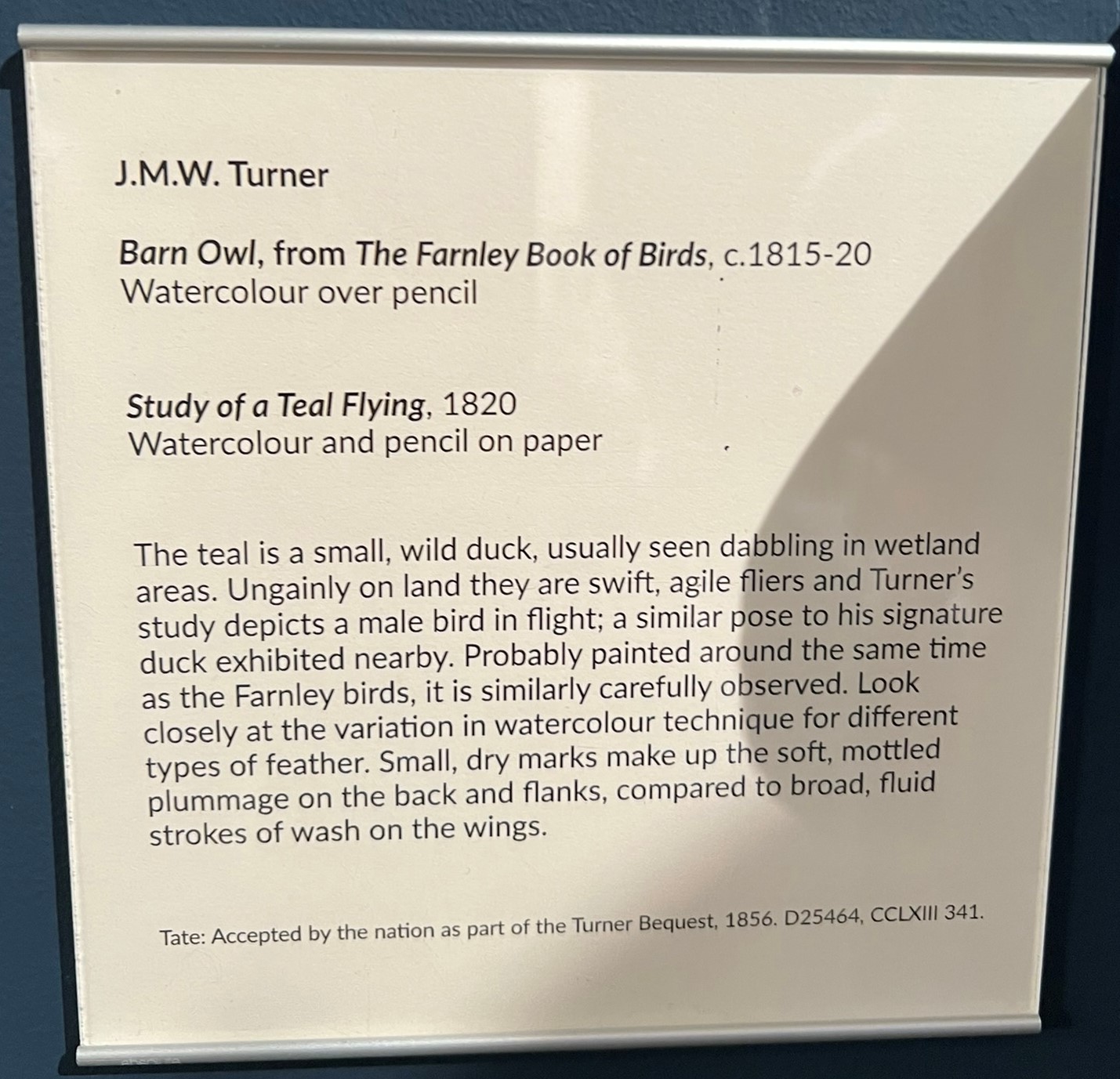
And to finish off the day, we took in the country home Sandycombe Lodge of J. M. W. Turner, where there was an inspiring watercolor exhibit of “Turner’s Kingdom: Beauty, Birds, and Beasts,” and very unlike the large and dramatic landscapes we associate with him. Celebrating Turner’s 250th [just like Jane!], the house, designed by Turner, is a small retreat that Turner lived in with his father.
************
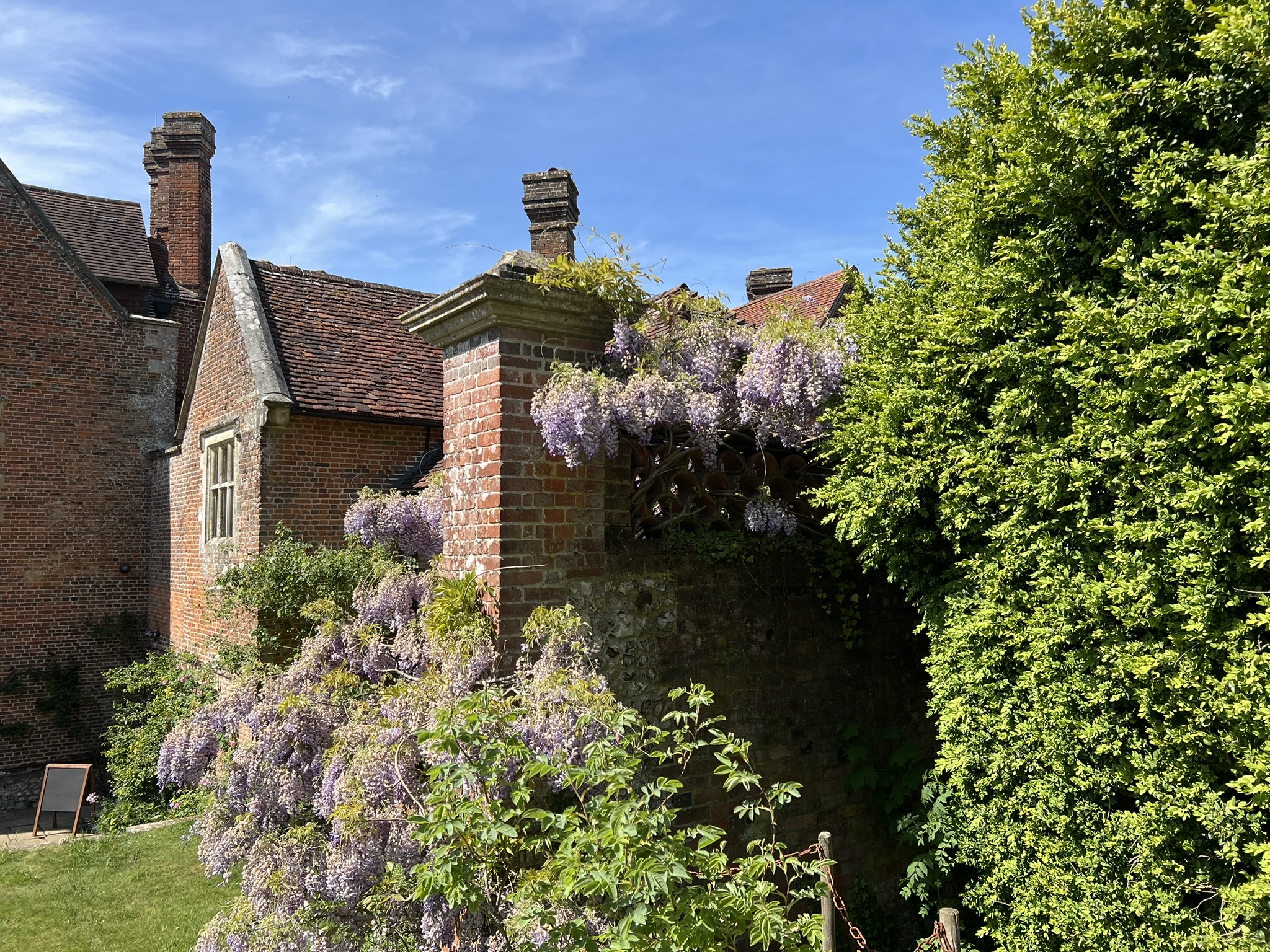
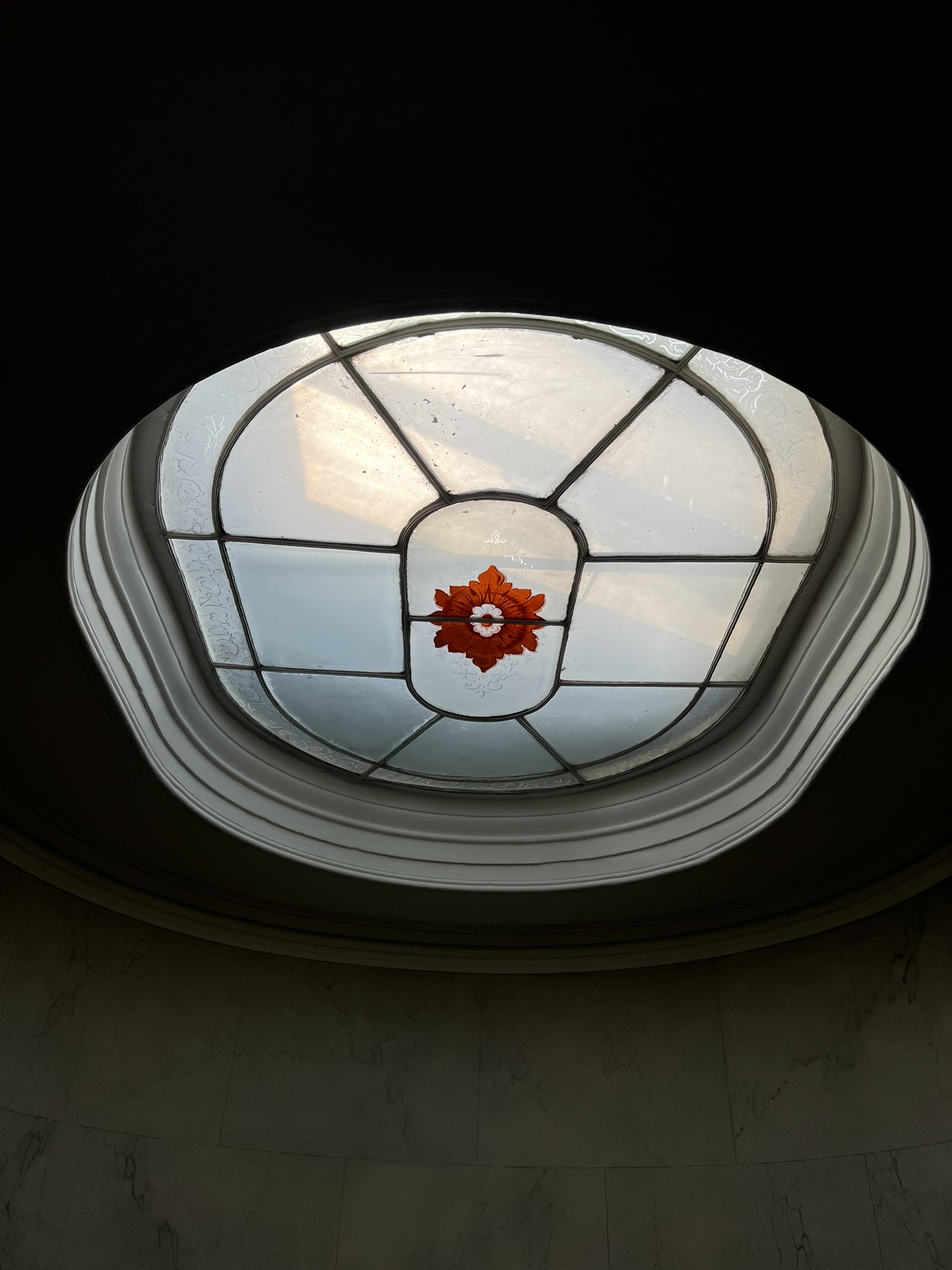
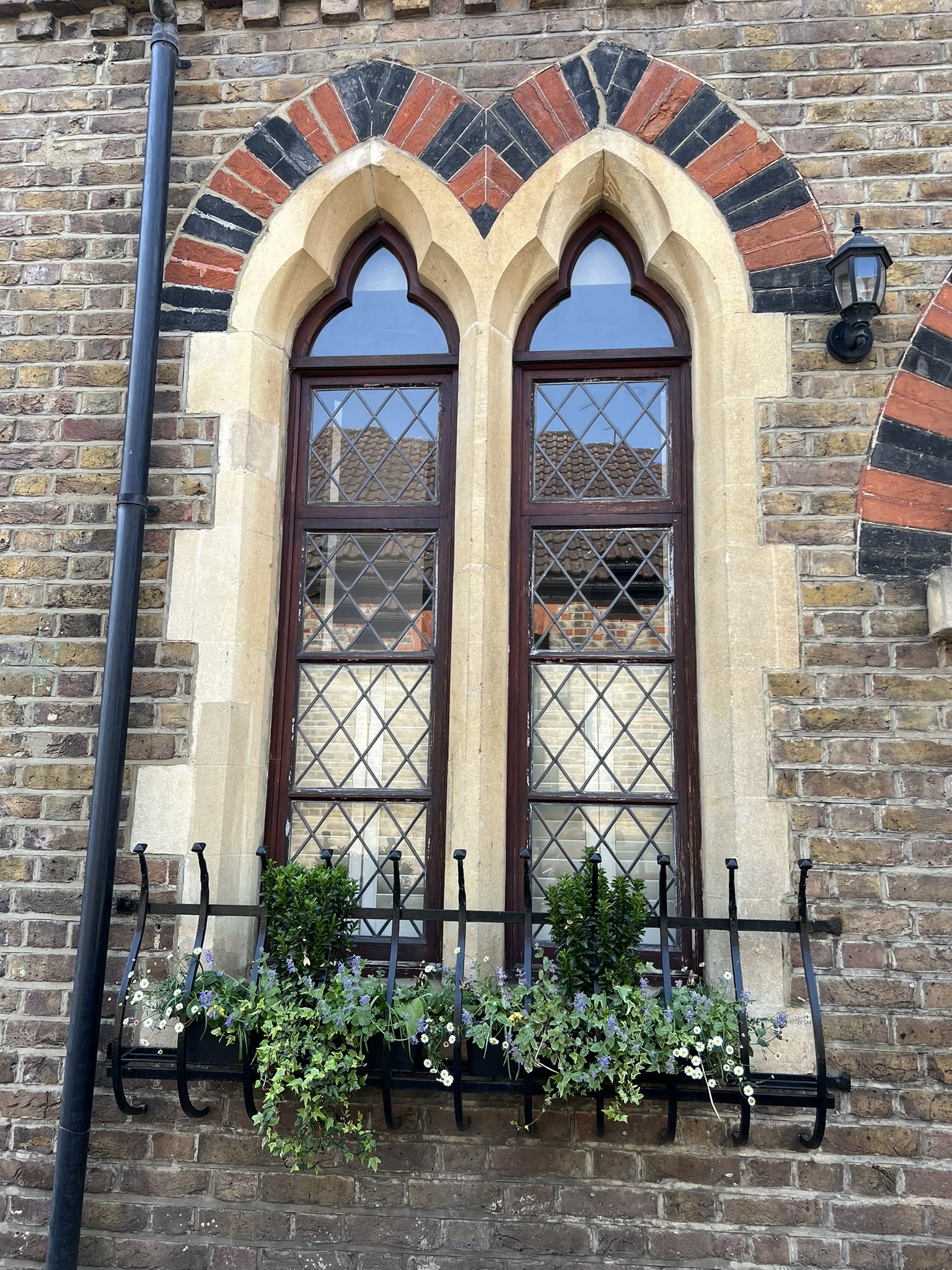
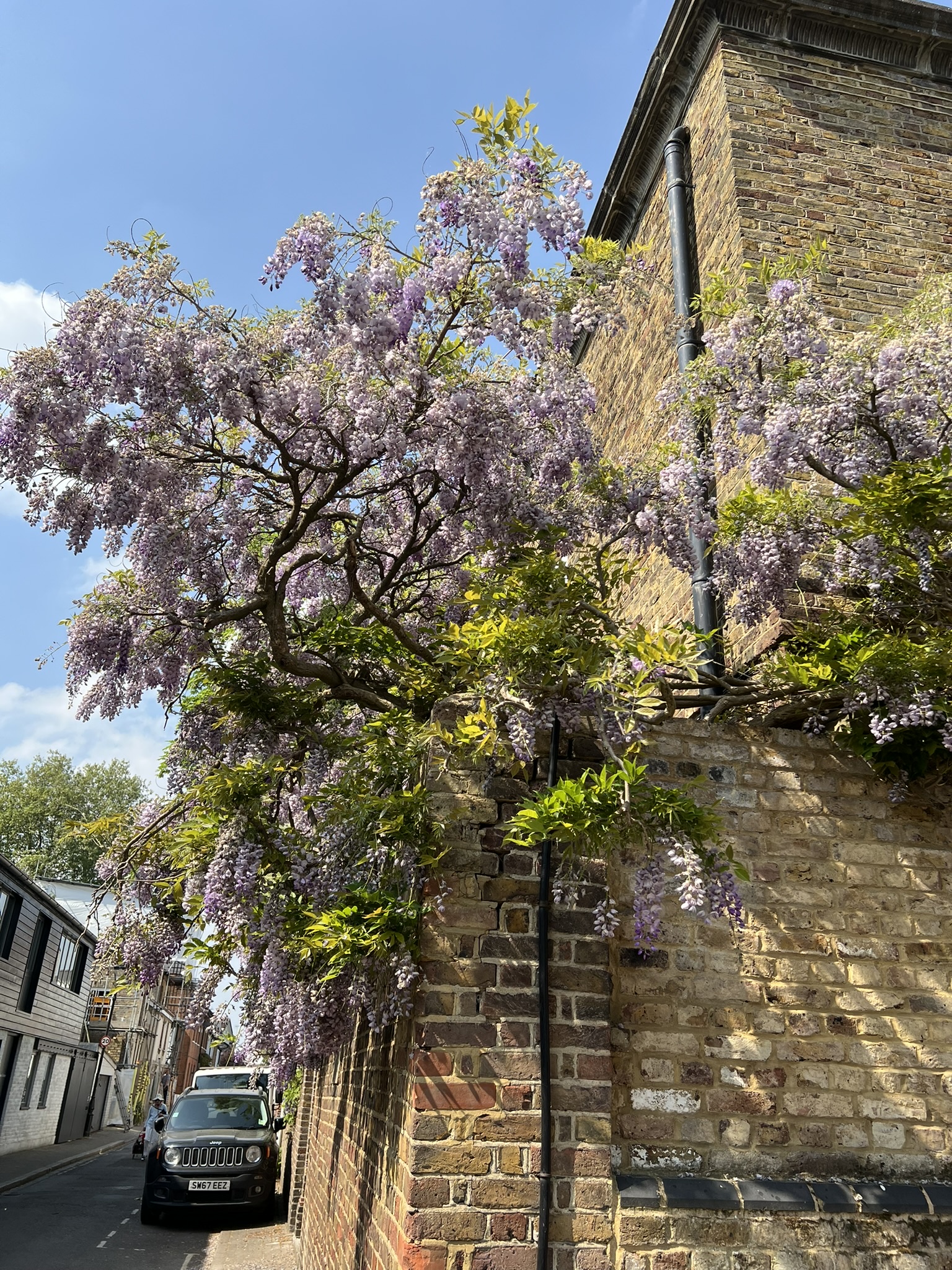
And this just another window of interest – and wisteria EVERYWHERE! [just like in SC…]
–
And another day “well-spent” – Thank you Ron for shepherding me around the sites of Twickenham!
Today’s post is about Brenda Cox and her just-published Fashionable Goodness: Christianity in Jane Austen’s England. You can follow the other blog posts on this tour here. [See at the end of this post for information on the giveaway.]
A few thoughts: I was honored when Brenda asked me to write a blurb for the cover, and I repeat that here with a few additional thoughts. I would first say that I have read a few works on Austen and religion, all of them enlightening in their own way. We do need to have some inkling of this religious world Austen grew up in, and the religion she practiced, to see that dimension in her writing. I am a born and raised Episcopalian [my parents were Anglican] and much of what Brenda writes in her book was very superficially known to me, at least those parts about the Church hierarchy, prayers and liturgy and hymns. What was enlightening was how Brenda wove all the details of the Church itself, and its spiritual foundations into a fuller understanding of what Jane Austen is actually saying in her novels, in the plots, the characters, and the settings – this book is a compelling read and you won’t look at the novels and the characters in the same way ever again. Just the tables, definitions, and references alone are worth the price of admission.
My blurb:
Fashionable Goodness is a meticulously researched, faultlessly organized, and engaging study of how religion, in all its forms, features in Jane Austen’s world, her life, and her writings.
Starting with Henry Tilney’s famous defense of “the English” in Northanger Abbey, Cox reveals the facts of Jane Austen’s faith, the realities and challenges of practicing religion in the Regency period, and with biographical sketches of the leading religious leaders and analysis of the various denominations of the time, she puts into context the explicit and subtle religious references in Austen’s novels. This Christian world permeates Austen’s writings and a fuller understanding of the Church and its clerical hierarchy and the emphasis on living a moral “good” life will open up a clearer view of Austen’s plots, characters, and underlying themes. You will look at Mr. Collins, the Crawfords and the Dashwoods, the Tilneys, the Wickhams and Willoughbys, all the “good” and the “not so good” people that populate the novels (and especially Fanny Price!) with new and surprising insights. Bravo to Brenda Cox for giving us this very accessible illuminating take on the “fashionable goodness” of Austen’s era.
*****************
An Excerpt from the first chapter, beginning as I say above with my favorite Hero, Henry Tilney:
C. E. Brock, Northanger Abbey, 1907
“Jane Austen’s England, A Foreign Country (Foreign to Modern Readers)”
“Remember the country and the age in which we live. Remember that we are English, that we are Christians.”—Henry Tilney, Northanger Abbey, ch. 24
How can we understand “the country and the age” in which Jane Austen lived? Her society is poles apart from our modern world, despite some points of similarity. As L. P. Hartley insightfully begins a novel set in 1900 [The Go-Between], “The past is a foreign country; they do things differently there.” The world of Austen’s novels is foreign to us, whether we live in the United States, modern England, or elsewhere. To enter this “foreign country,” the civilization that spawned Elizabeth Bennet, Mr. Darcy, and Emma Woodhouse, we need to learn its language and culture. While we may interpret Austen’s timeless novels according to our own experiences and values, we can enjoy them more deeply as we get to know Austen’s world.
Religious practices and values influenced many aspects of Austen’s culture. For example, in politics, the Church of England was (and is) the national church of England; the Pilgrims and Puritans fled to America to escape its authority. The sovereign was the head of the church, bishops and archbishops were members of the House of Lords, and Parliament made laws regulating worship, the clergy, and churches. From 1810 to 1820 (the Regency), the Prince Regent governed the country because of his father’s illness. Jane Austen disapproved of the Regent’s immoral lifestyle, but when he asked her to dedicate Emma to him, she respectfully complied, since it was her duty as a Christian to obey her country’s leader.
Religious values also guided family relationships. Honoring one’s parents was an important religious duty, given in the Ten Commandments in the Bible and elaborated in the Church of England catechism. In Mansfield Park, Edmund and Fanny are shocked by Mary’s disrespect for her uncle who raised her; Mary is showing poor moral values (ch. 7). Mr. Collins of Pride and Prejudice carries this to a ridiculous extreme when he delays reconciling with his cousins out of respect for his father’s memory, since his father was at odds with them (ch. 13). Disrespect toward a husband or wife was also considered immoral. In Sense and Sensibility, Willoughby shows his poor character by criticizing his wife, and Elinor rebukes him (ch. 44).
As Laura Mooneyham White points out in Jane Austen’s Anglicanism, the “foundational worldview” of modern Christians, including modern Anglicans, differs radically from the worldview of the Georgian-era Anglican Church. Because of this, we may miss some of the deeper dimensions of Austen’s novels….
A Worldly Bishop and a Godly Curate: Pillars of the Church, anonymous, 1810-1820. Satirical cartoons of the time showed serious issues in the church. Rich bishops were contrasted with destitute curates. This curate’s pocket holds “Sermons for Rent.” Sermons were often bought and sold. In Austen, the curate Charles Hayter of Persuasion cannot afford to marry, while Dr. Grant of Mansfield Park gets a high church position and dies of gluttony. Image courtesy of The Lewis Walpole Library, Yale University.
To understand the church’s pervasive influence in Austen’s world, we also need to recognize some the issues it was facing. Edmund Bertram and Mary Crawford argue about several: clergy without a calling, clergy who did not live in their parishes, and “fashionable goodness.” Was it enough to follow the fashions of the city and show up at church on Sundays, ignoring religion the rest of the week? Or, as new movements in the church stressed, should people seek a personal relationship with God that affected their hearts and behavior? Even for Mr. Darcy, being “given good principles” – knowing theoretical religious truths – was insufficient to make him a man Elizabeth could respect and marry…
Jane Austen’s religious beliefs, and the beliefs of her society, are often overlooked. She does not talk as openly about religion as today’s Christian writers do, or even as some of her contemporaries did. And yet, as Henry Tilney points out, being “Christian” was part of the English identity. Jane Austen’s personal identity was also Christian, as we shall see in the next chapter. In the rest of the book, we’ll explore the crucial part Christianity played in Austen’s stories and in her world. In Austen’s England, morality came directly from religion….
Author interview: I asked Brenda a few questions about why she wrote this book and how it has affected her reading of Austen:
DEB: You have said you titled the book Fashionable Goodness: Christianity in Jane Austen’s England, because during Austen’s time, it was fashionable to attend church and pretend to be “good,” but that the immorality of the Prince Regent and others seemed more fashionable, leading the influential William Wilberforce and others to try to reform “manners” [meaning behavior] – Edmund Bertram in Mansfield Park explains that “manners” meant behavior, how people acted based on their religious principles. So I would ask you: which of Austen’s novels focuses most on the church and this idea of “manners”?
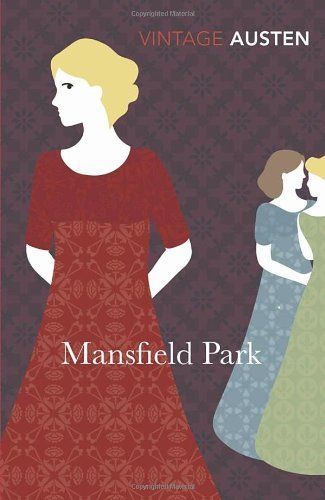
BRENDA: Mansfield Park, hands down. Edmund and Mary Crawford discuss the importance of the clergy (those responsible for “all that is of the first importance to mankind”). Edmund and Henry Crawford discuss preaching and leading church services. Fanny, physically weak, displays great moral strength in refusing to marry an “unprincipled” (irreligious) man. Also, godly traditional values are contrasted with the immorality of the city. I appreciate Mansfield Park far more than I did before, now that I understand its religious background.
DEB: Your book is packed with information, from how the Church of England is organized, the challenges the church faced during Austen’s time, and the legacy it still holds for us. How did you decide to organize it?
BRENDA: My background is in engineering, and I tried to structure Fashionable Goodness logically. It starts, of course, with Jane Austen and her novels. We look at things like her personal faith, the lives of her clergymen, and worship during her time. Two chapters address how some of the church’s values played out in everyday life, particularly in the areas of marriage and divorce, and in scientific advances.
Part 2 then looks at challenges to Austen’s Church of England. Some of those, like the system of patronage and different levels of clergymen, are addressed in the novels. Others, like the Methodist movement and the place of different economic groups and races in the church, give background. I wove in fascinating stories of men and women leaders of the time.
As I saw how the church was making an impact on the country and the world, I added Part 3. It shows the impact of committed Christians of Austen’s era, ranging from the abolition of the slave trade to the Sunday school movement that educated millions of poor children and adults, breaking cycles of poverty and dependence.
DEB: What spiritual messages do you think Austen was trying to convey through her novels?
BRENDA: Austen always promoted moral behavior. But she didn’t do it by preaching and telling people what to do. Instead, she showed examples, both positive and negative. Readers of Pride and Prejudice, for instance, might learn to avoid judging and ridiculing other people. We might instead want to be more like Jane Bennet, assuming the best of others until the worst is clearly proven. (This was a religious virtue called candour in Austen’s time; posts on my blog explore this and other “faith words.”)
DEB: Which of her novels speaks most strongly to you personally?
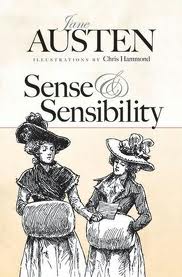
BRENDA: Usually my favorite Austen novel, and the one that speaks to me most, is whichever one I have read most recently. Right now that is Sense and Sensibility, which I’ve read repeatedly in the months leading up to the JASNA AGM. It has made me more aware of emotions and their effect on us and other people. We can express our emotions selfishly, as Marianne did, not caring how we make others feel. Or we can recognize them in ourselves, as Elinor did, and choose ways to respond that do not hurt our loved ones. In this, Elinor was doing her Christian “duty,” to love her neighbour as herself. However, I also think Austen put Elinor in a worst-case scenario. Elinor’s promise to Lucy made it impossible for Elinor to tell her family what she felt. In other circumstances she might have shared her pain with her family in healthy ways.
*********************
About the Author: Brenda S. Cox has loved Jane Austen since she came across a copy of Emma as a young adult; she went out and bought a whole set of the novels as soon as she finished it! She has spent years researching the church in Austen’s England, visiting English churches and reading hundreds of books and articles, including many written by Austen’s contemporaries. She speaks at Jane Austen Society of North America meetings (including three AGMs) and writes for Persuasions On-Line[JASNA journal) and the websites Jane Austen’s World and Brenda’s own blog Faith, Science, Joy, and Jane Austen. You can find bonus material on the book here as well.
Brenda is offering a book giveaway [paperback or ebook] – Please comment below or ask Brenda a question [she will respond here] by Wednesday November 9 and you will be entered into the random drawing for a copy [there are some limitations to worldwide shipping] – I will announce the winner on November 10th. Here are some prompts for commenting, or please ask your own.
1. What is one character trait you think Jane Austen most valued, based on her novels?
2. Who is your favorite clergyman or clergyman’s wife from Austen’s novels? And why?
3. What is one question you have about the church in Austen’s England, or the church and clergy in her novels?
*[N.B.: The giveaway is limited to addresses in the US, UK, Australia, Canada, Germany, Spain, France, or Italy for a print copy of the book. The author can only send a giveaway ebook to a US address. (However, both the ebook and paperack are available for sale to customers from any of these countries, and some others that have amazon.)


























































































































 Jane Austen in Vermont