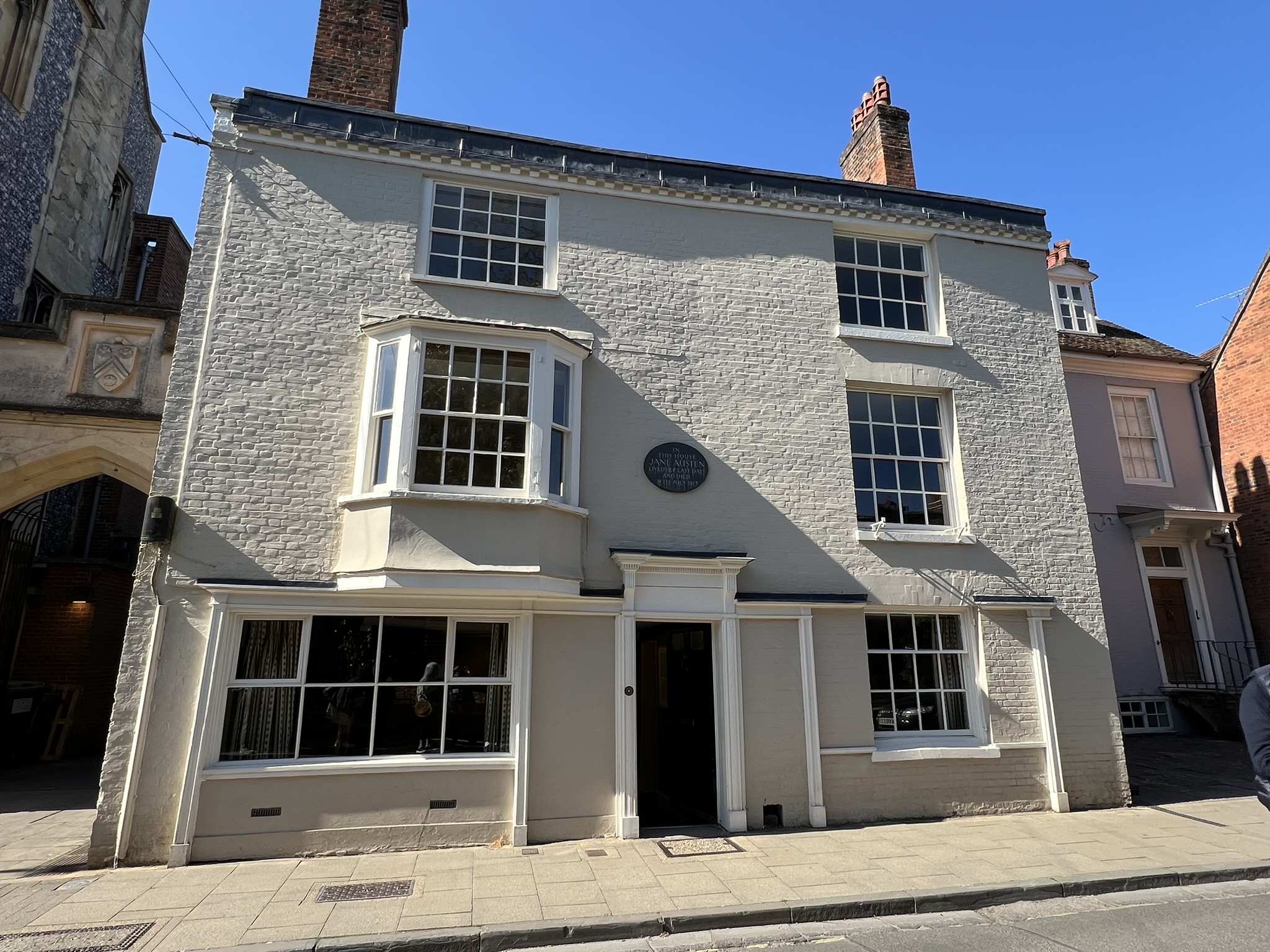
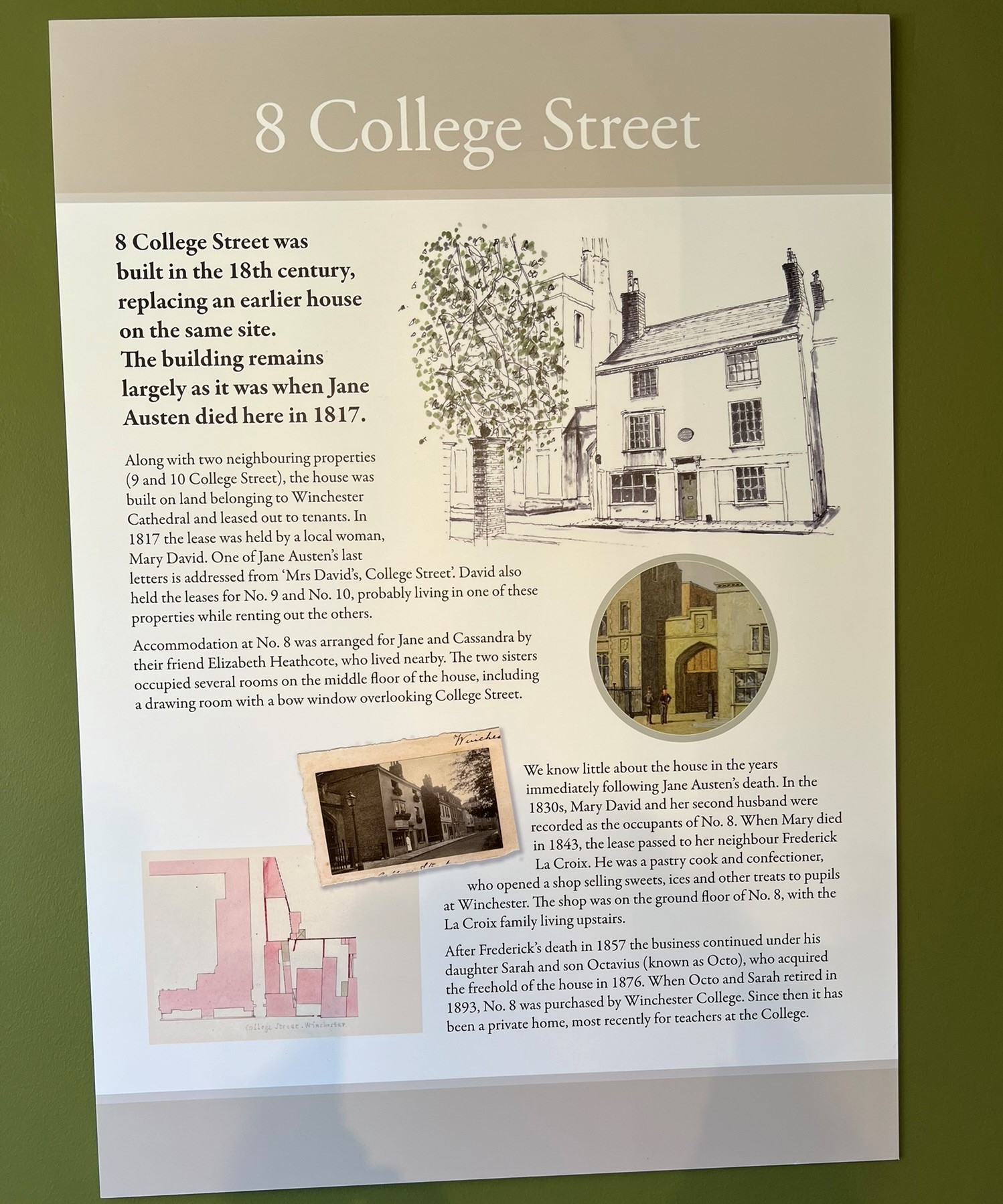
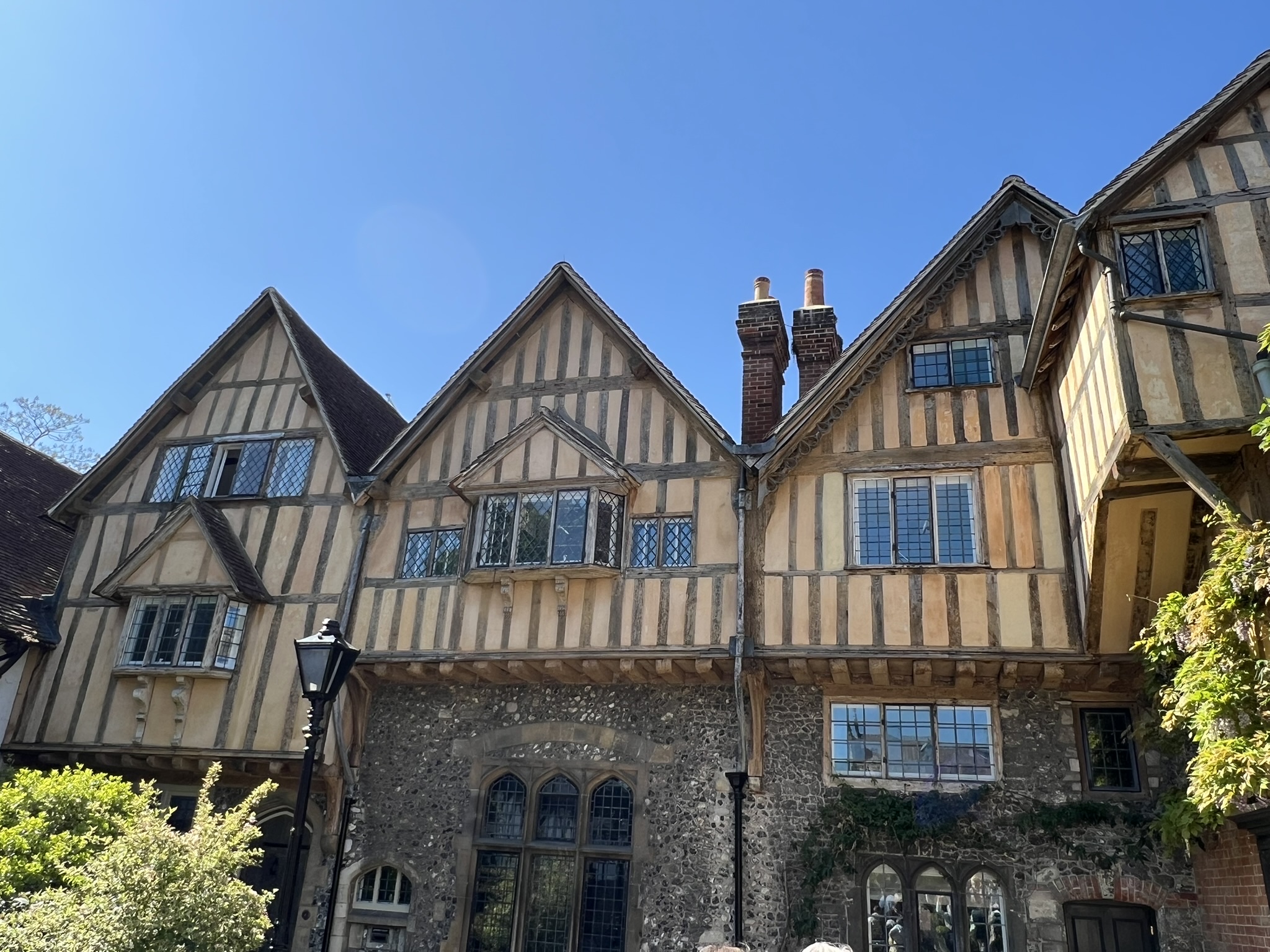
We are off to Winchester College to learn of its history and its connection to Jane Austen – several of her nephews went here – and we were privileged to see many of the treasures in the library, as well as the what was to be an exterior visit to 8 College Street, the location where Austen dies on July 18, 1817….
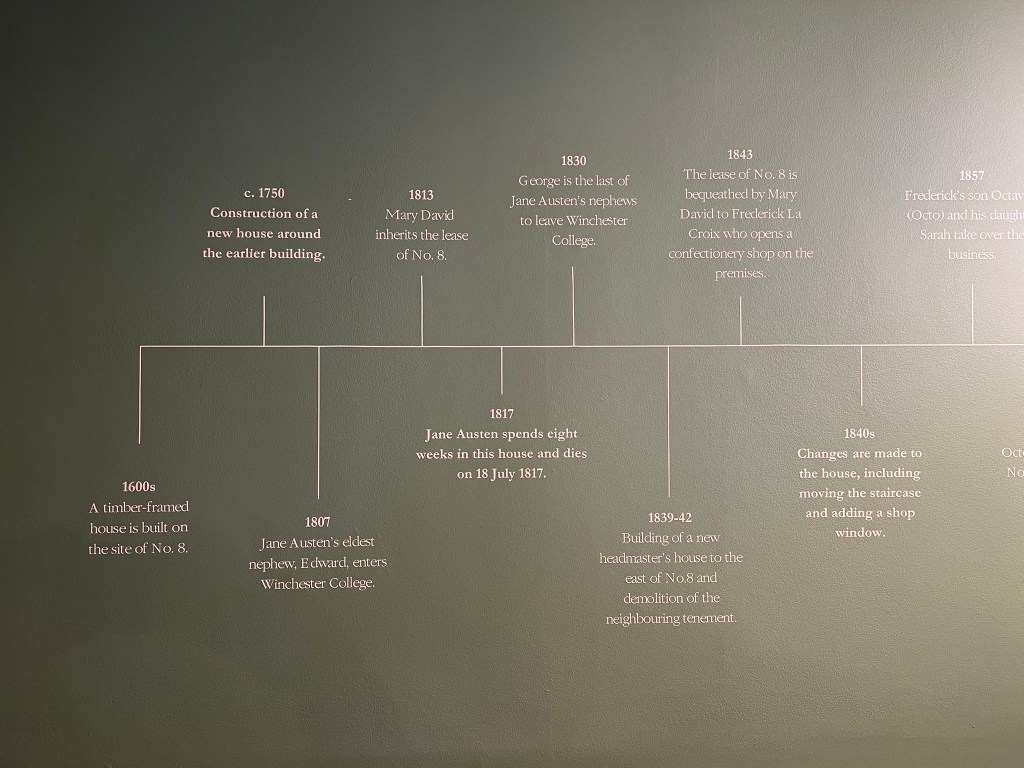
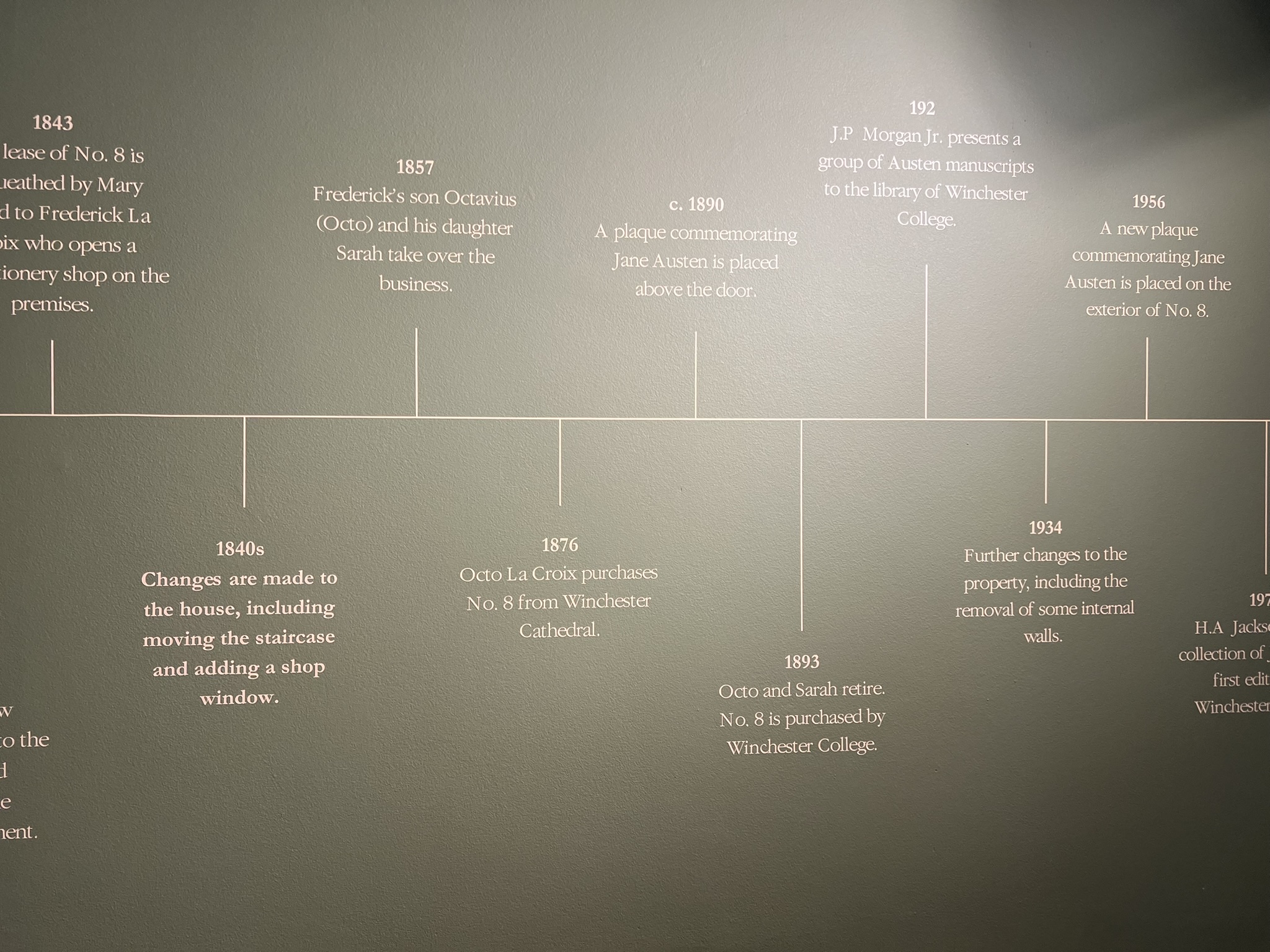
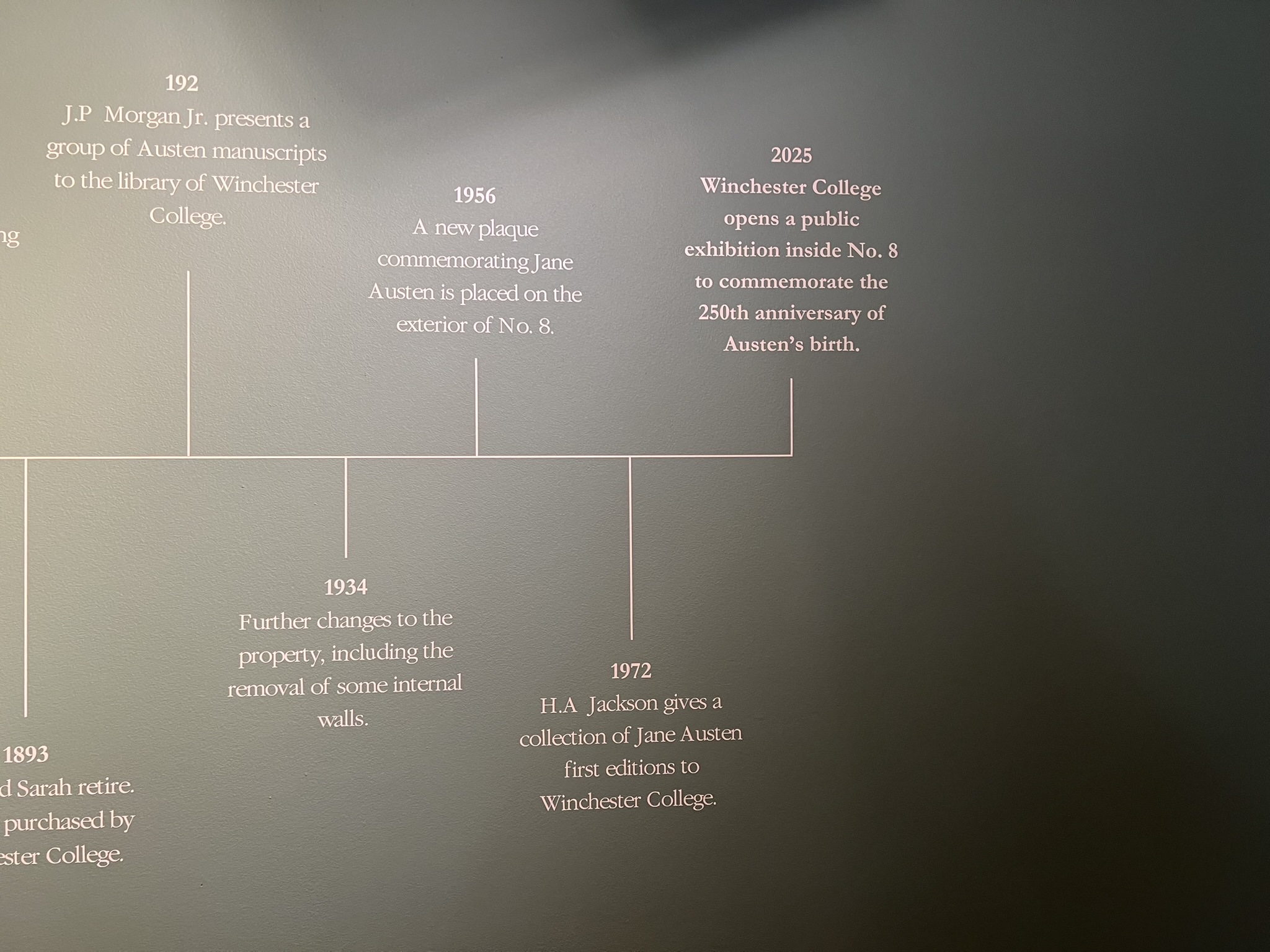
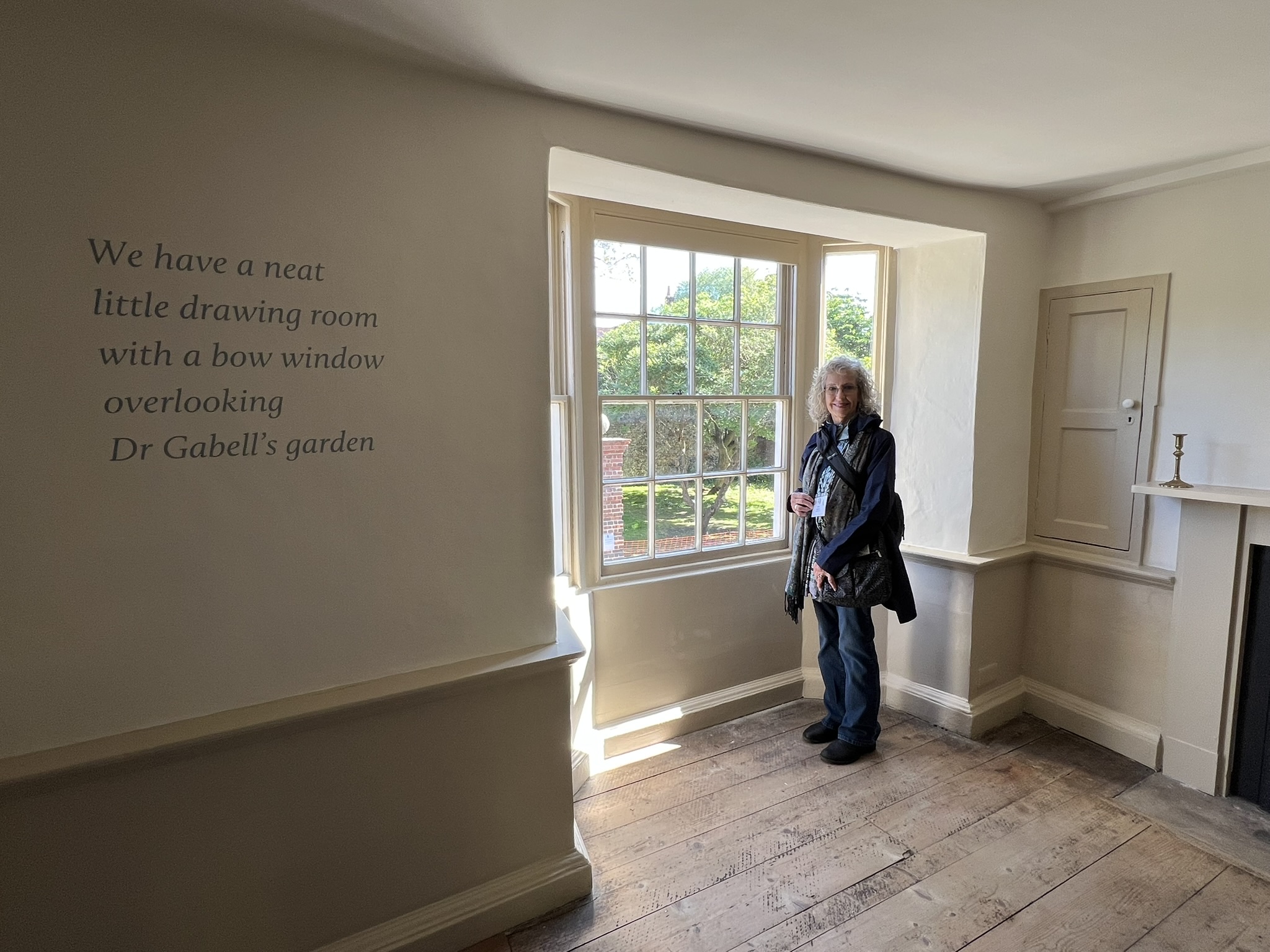
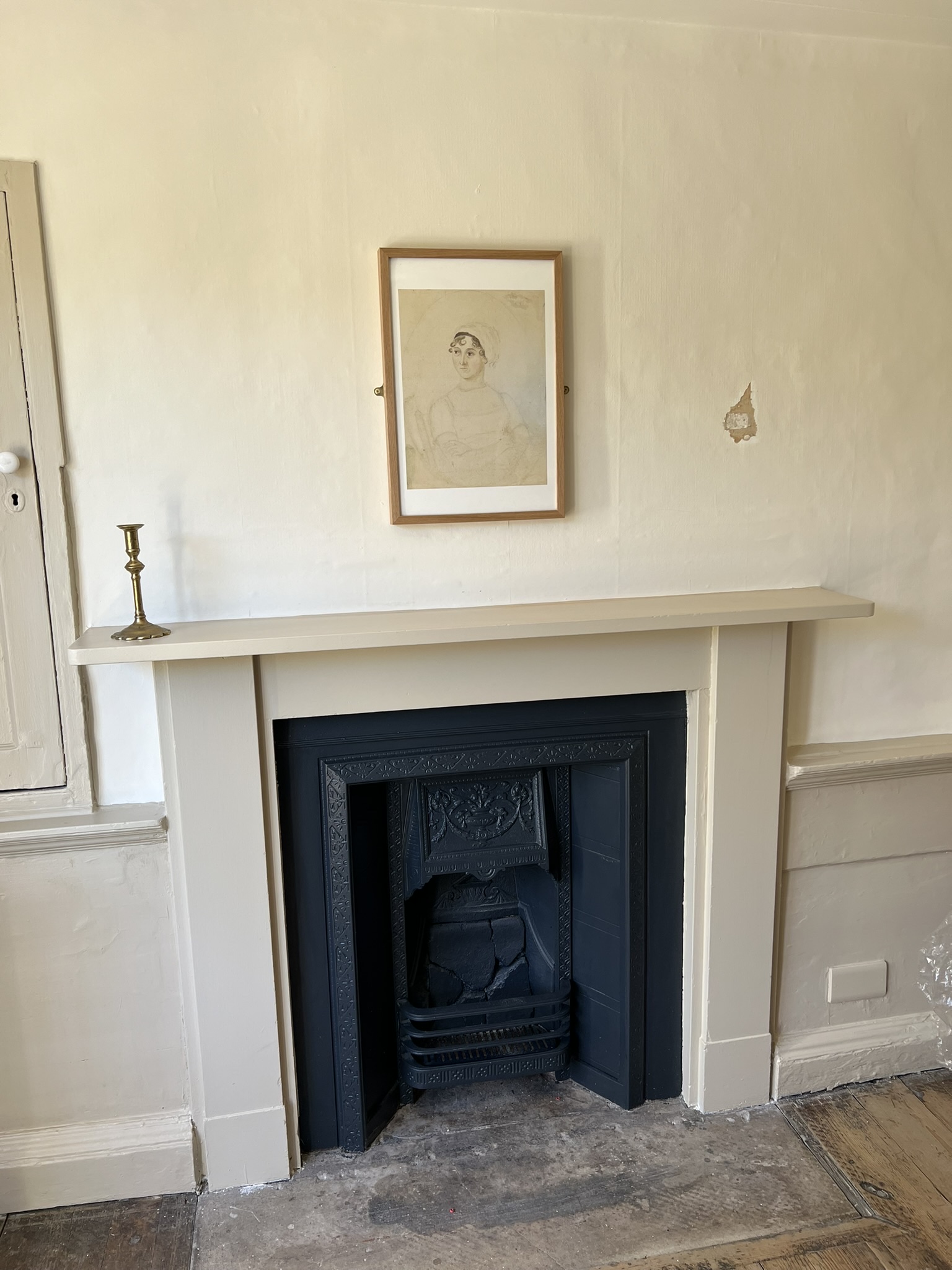
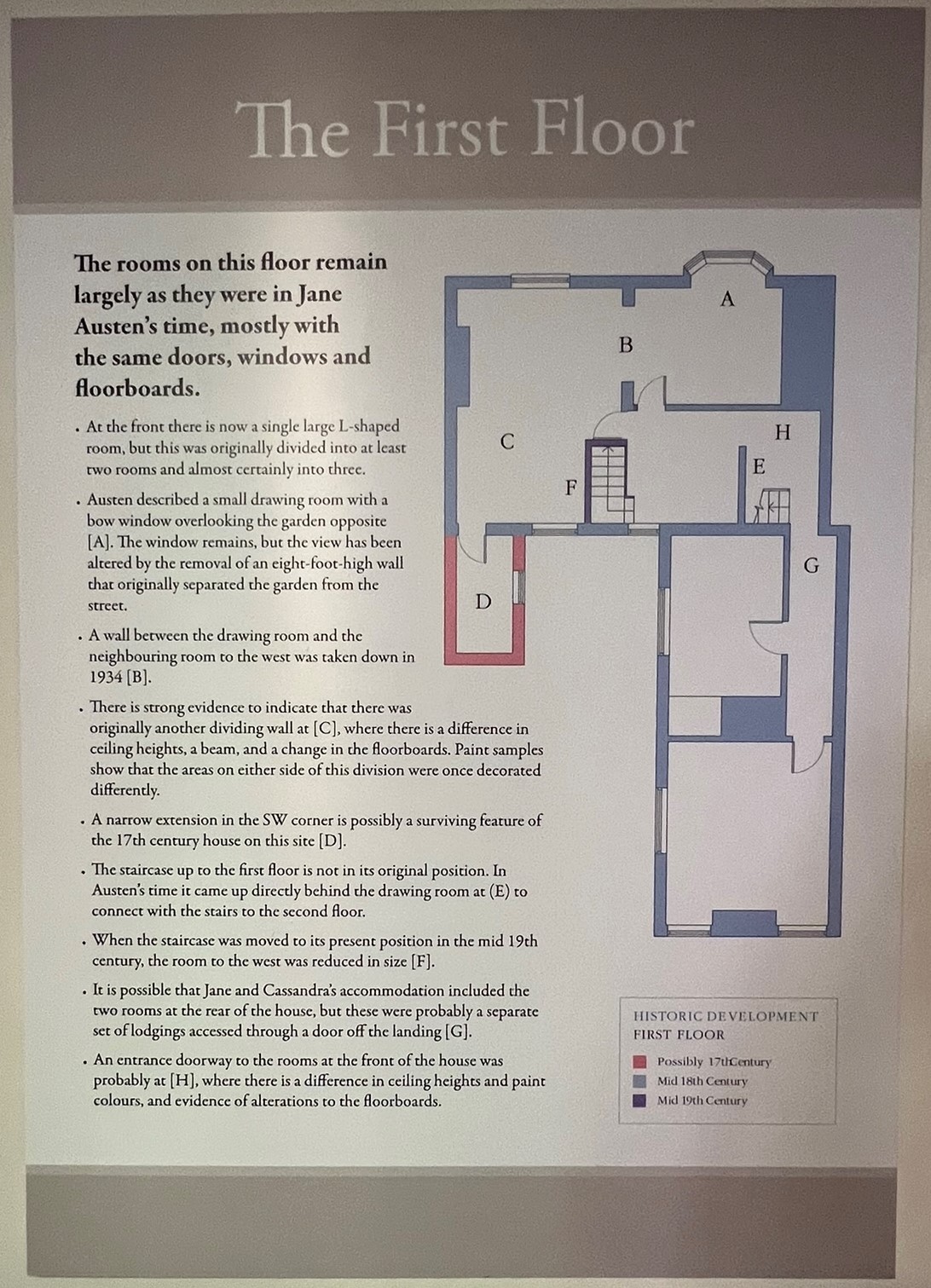
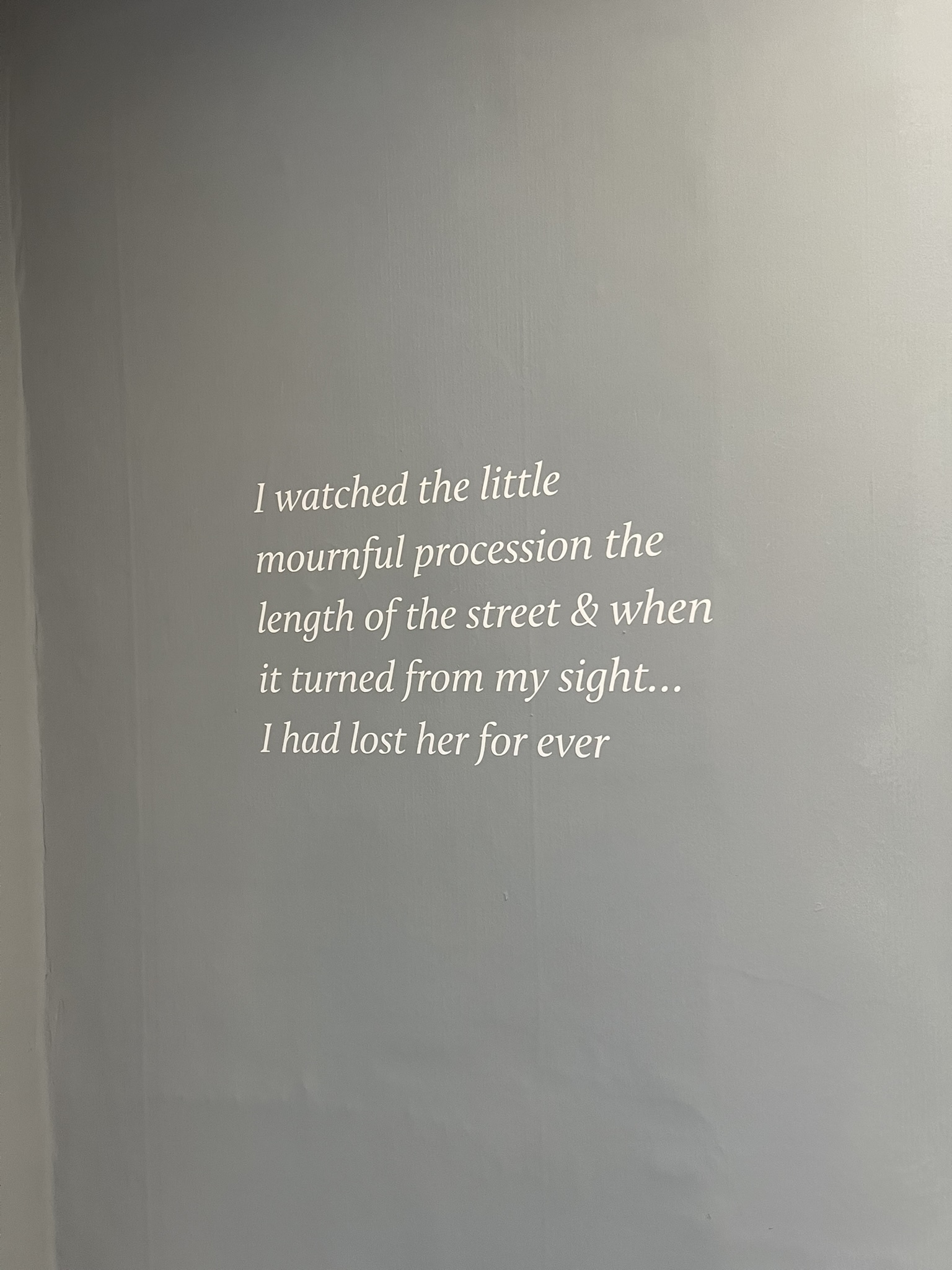
What a wonderful and unexpected surprise to find that the College, who owns the building, had just the day before put some of the finishing touches on the house, readying it for the onslaught of Jane people in this 250th anniversary year. They had literally just finished painting some of the wall signs and quotations just the day before, and while the restoration is still ongoing, this very welcome gift to us on the JASNA tour is too much to put into words. I have been to this house before a couple of times, standing across the street and looking longingly at the spot where Austen spent her last weeks – but to go inside and see the interior walls, painted now as they were in her time, was so much more emotional than I expected [this now just edging out my seeing where Keats* died in Rome as the saddest literary moment I’ve experienced…]
Just showing a few of the photos I took – you really do need to be there yourself to feel the intensity of this place…tears flowed from many of us.
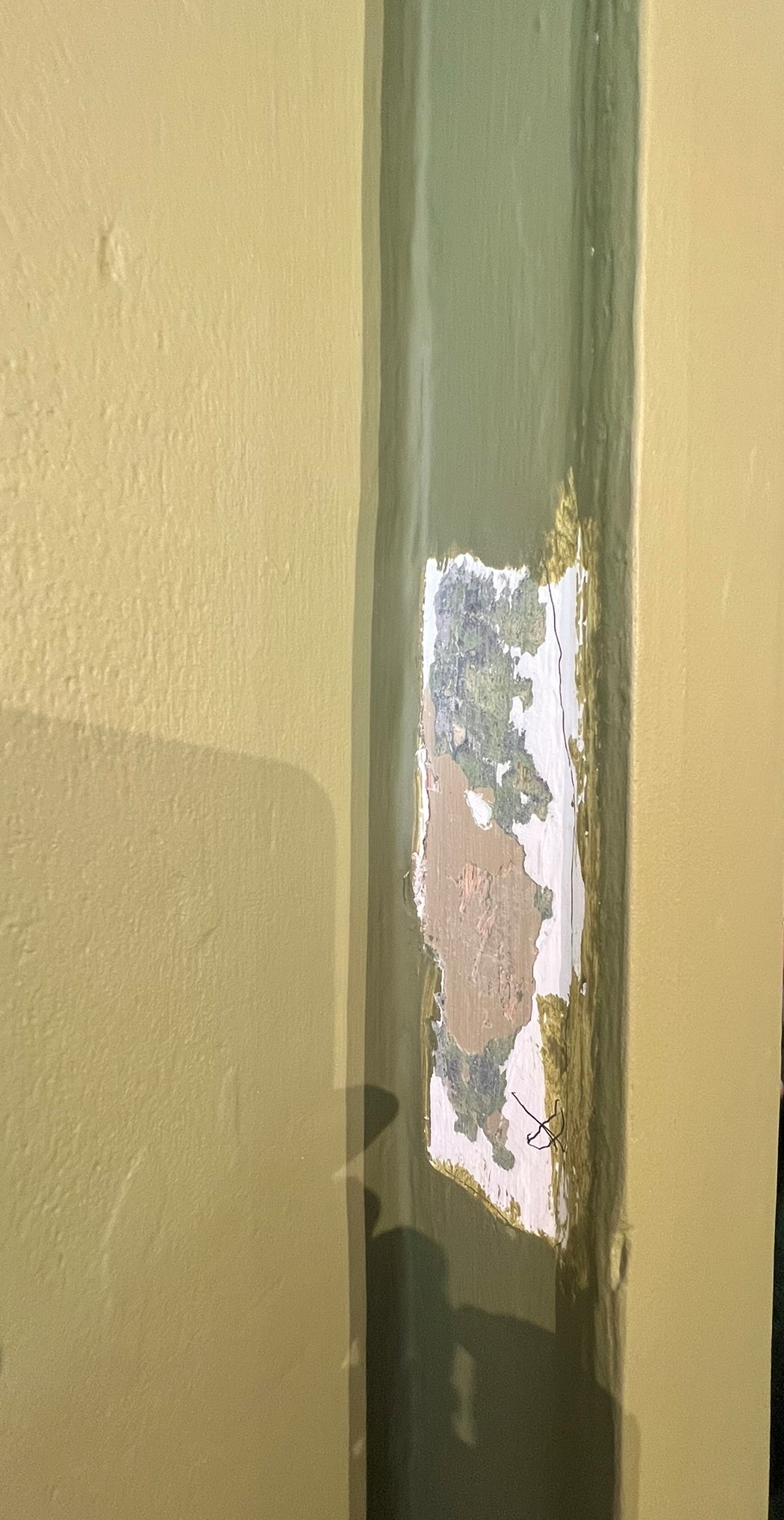
Matching the original paint colors…[the colors surprised me – different in every room, colorful and deep – I didn’t take photos of every room sorry to say…]
It was here at 8 College Street that Austen penned her final verse about St. Swithin’s Day – “Venta” just a few days before her death. You can read the poem here.
****************
Then we headed back to the College:
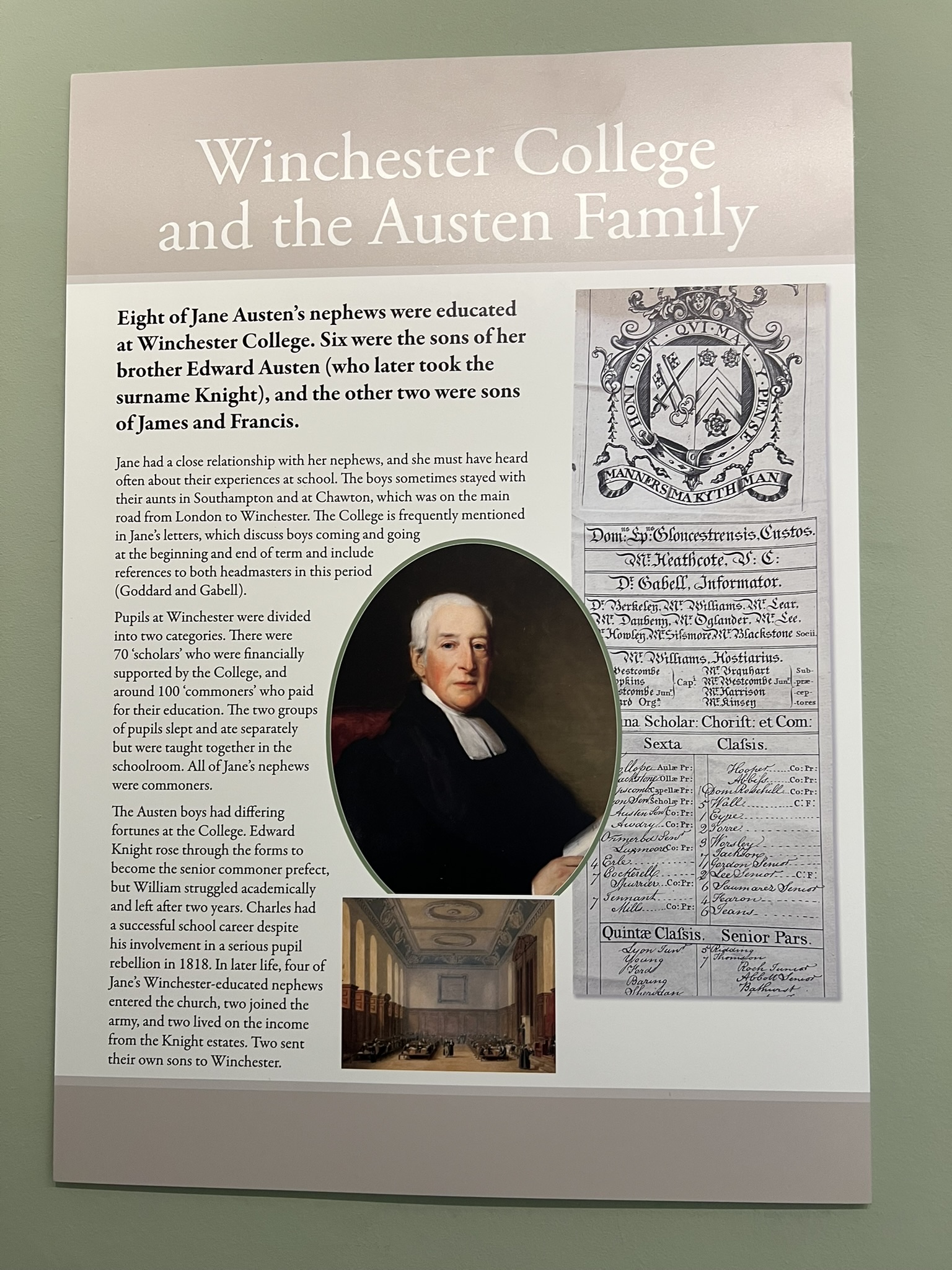
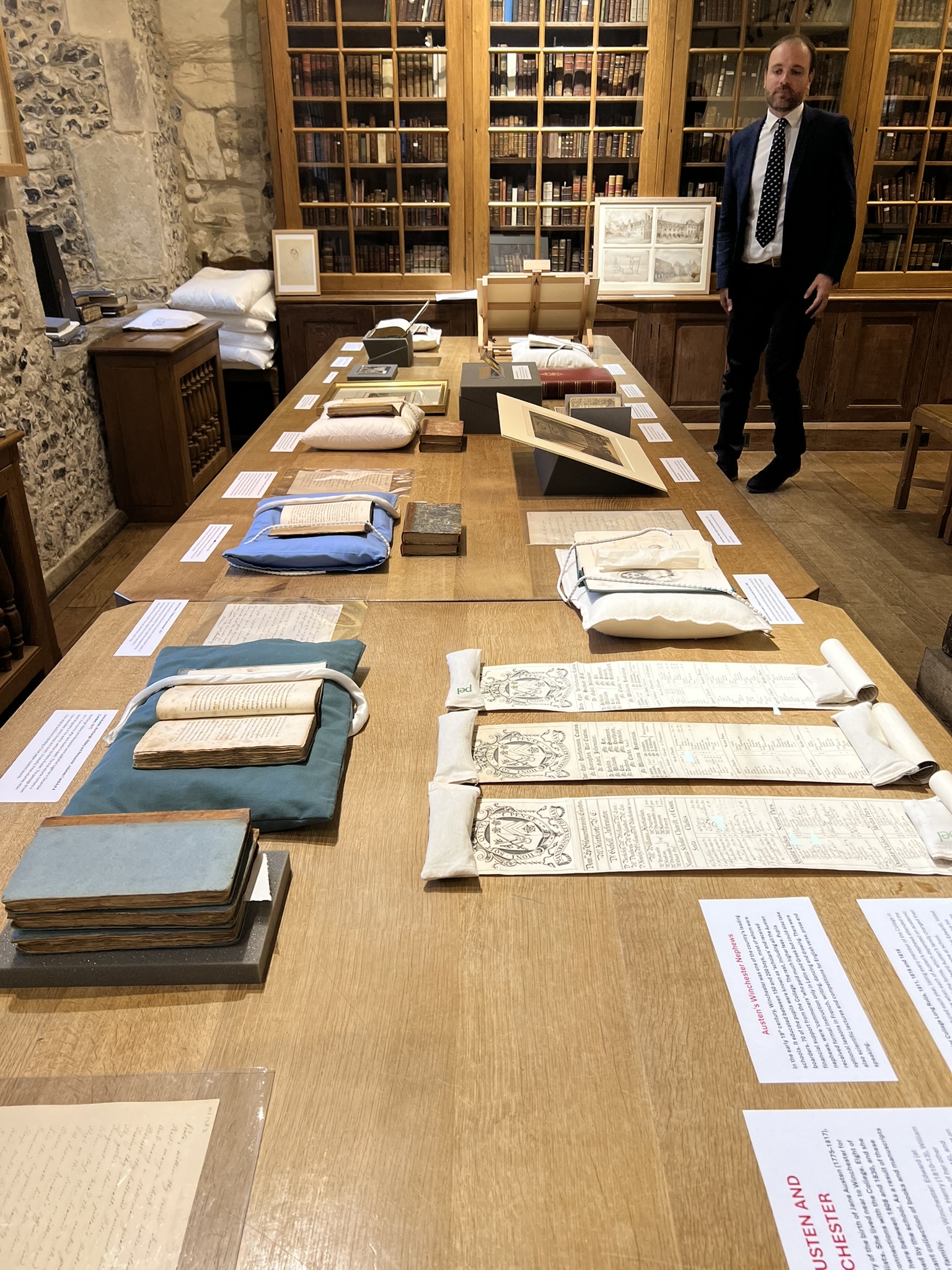
And then to the library where the Special Collections Librarian Dr. Richard Foster spoke to us about the several items of interest to a crowd of Janeites – including the rolls of students where we could see the names of her attending nephews.
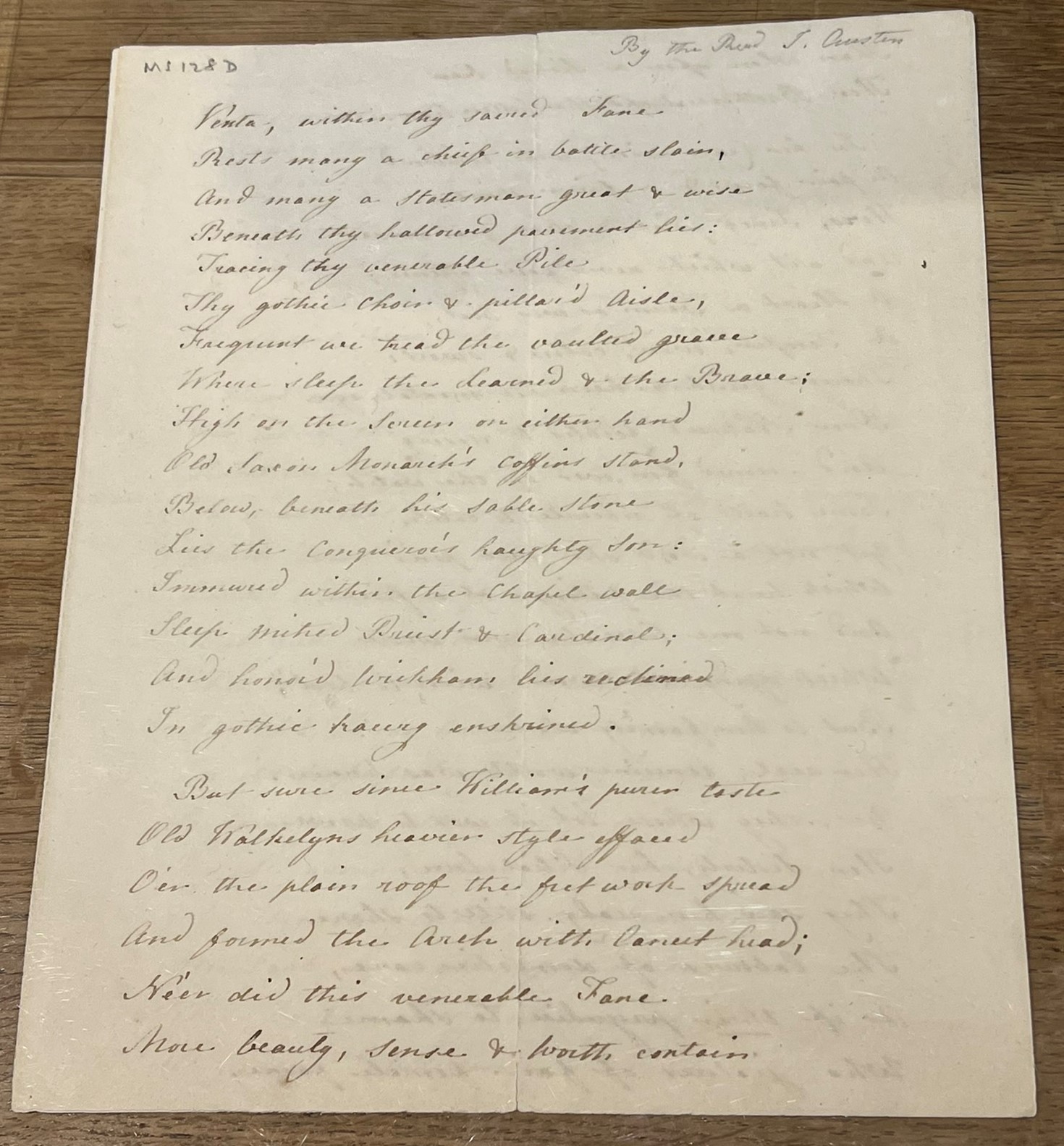
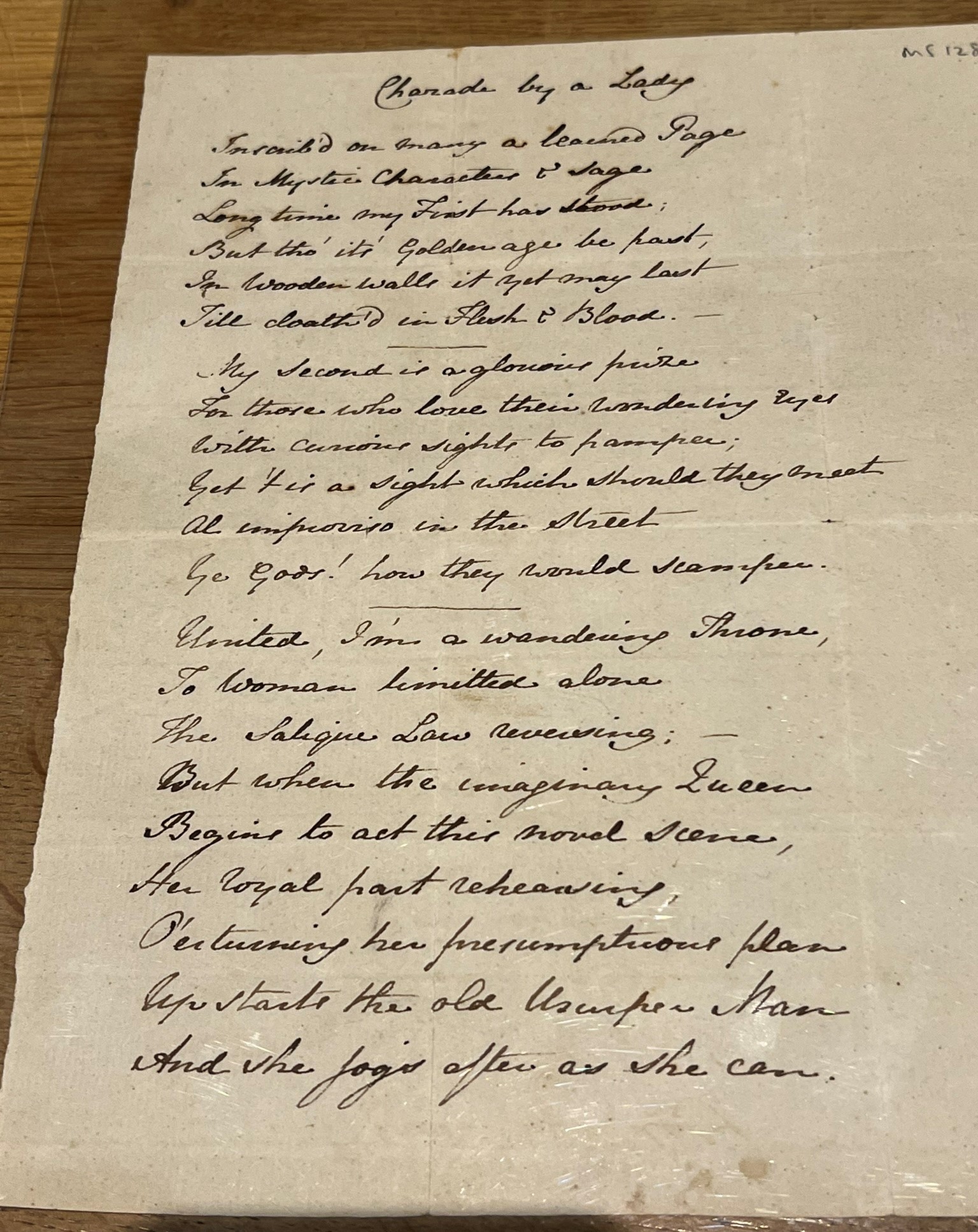
here is a poem written out by James Austen / and a charade by Jane:
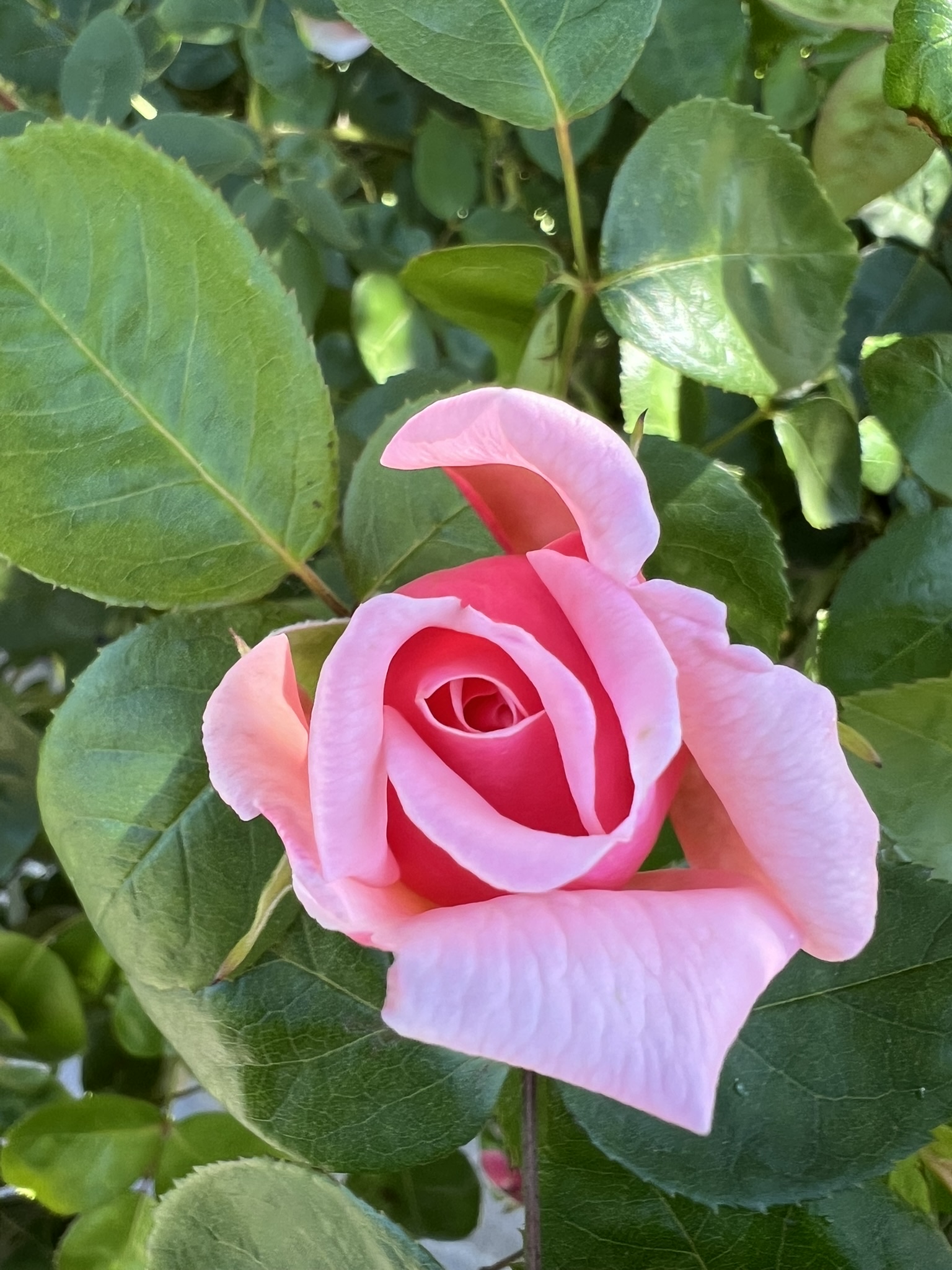
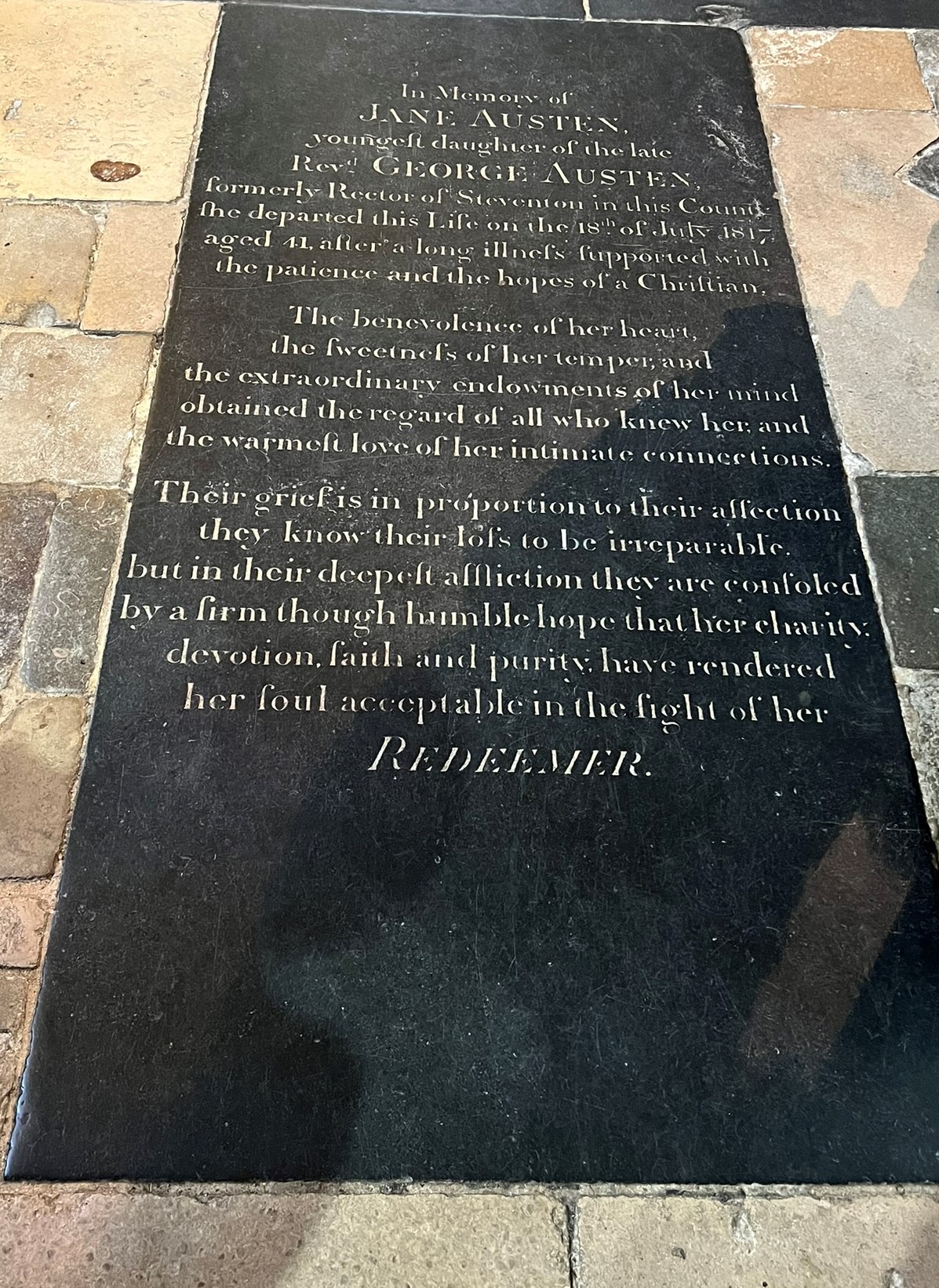
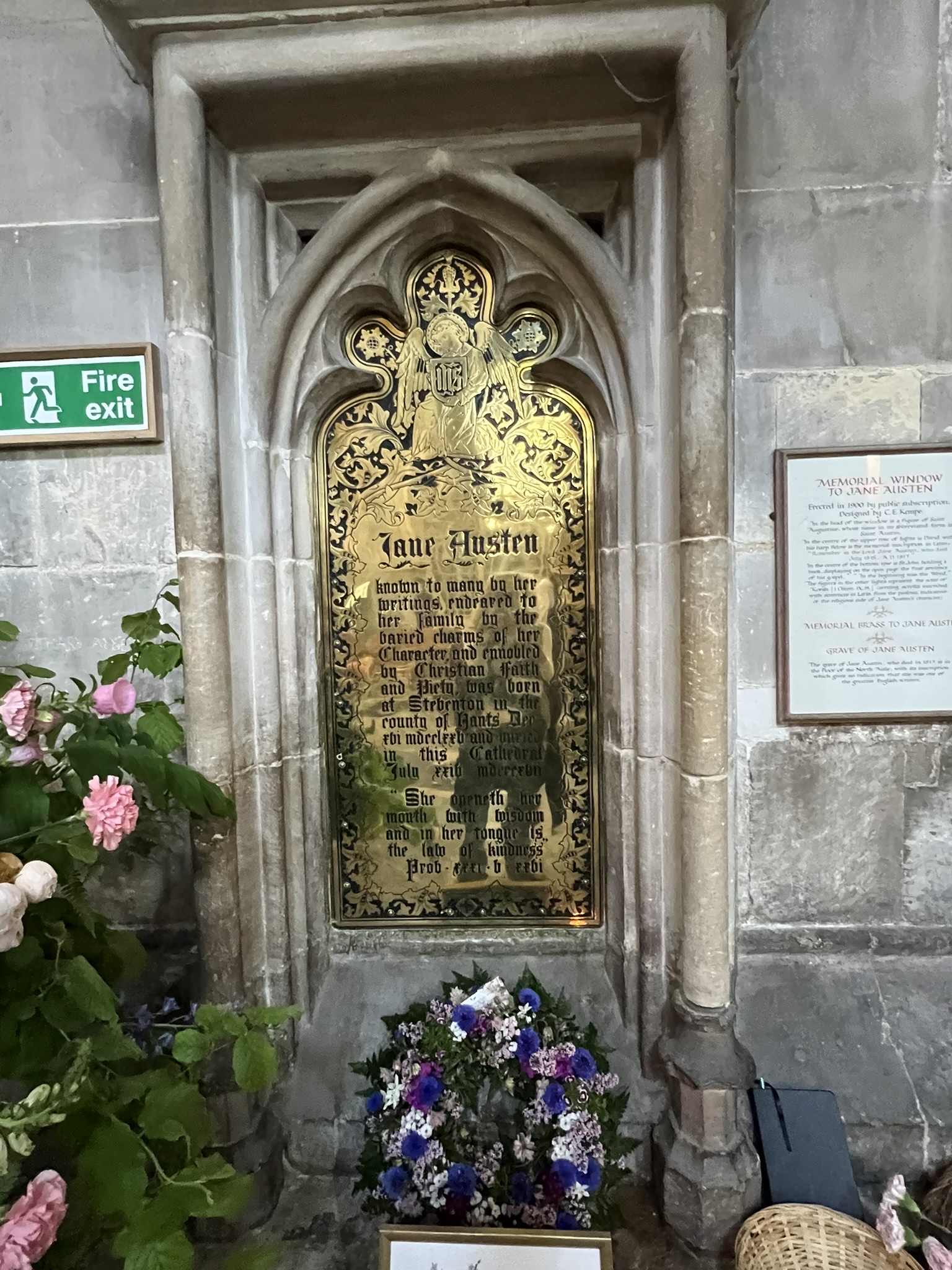
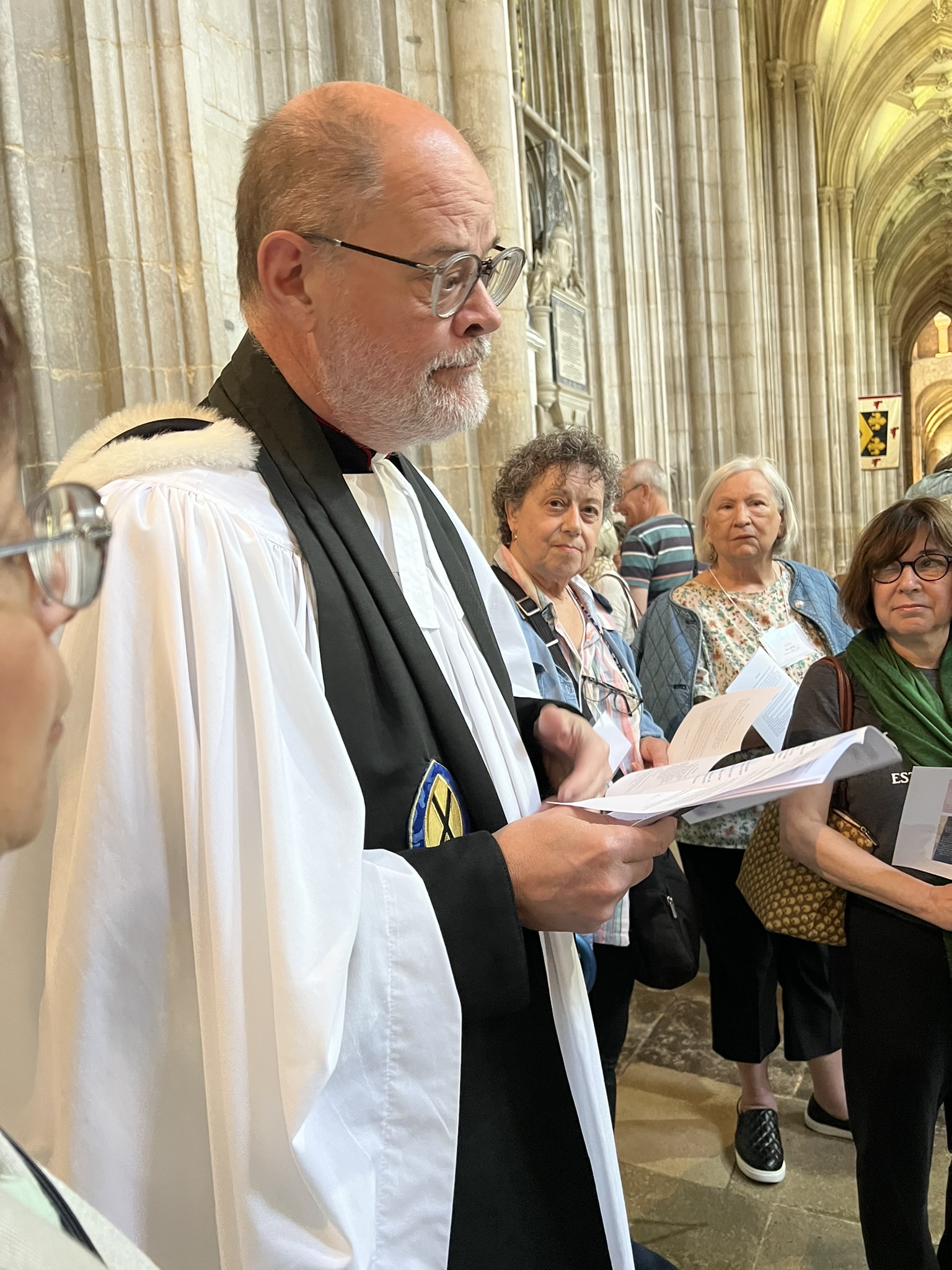
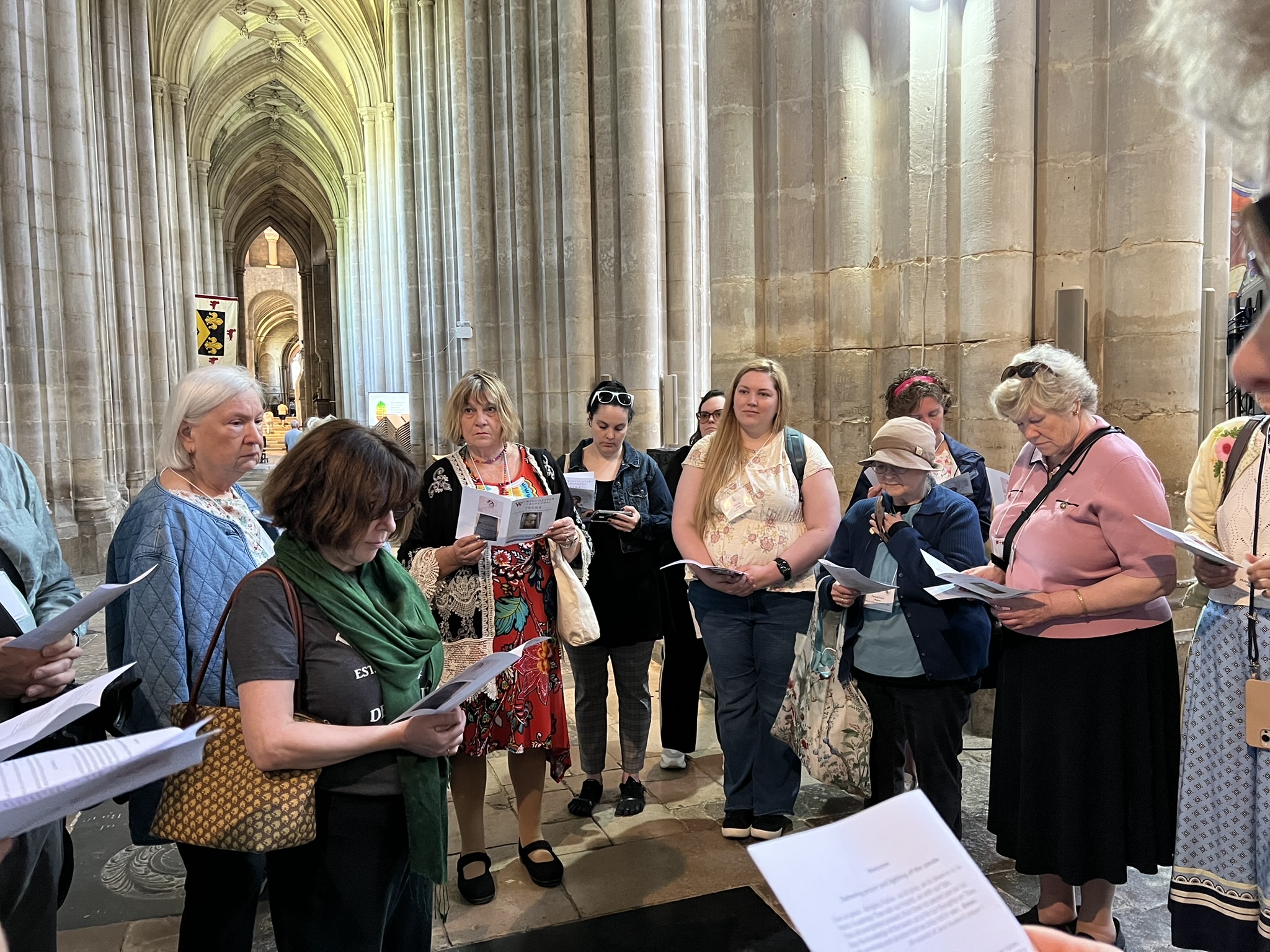
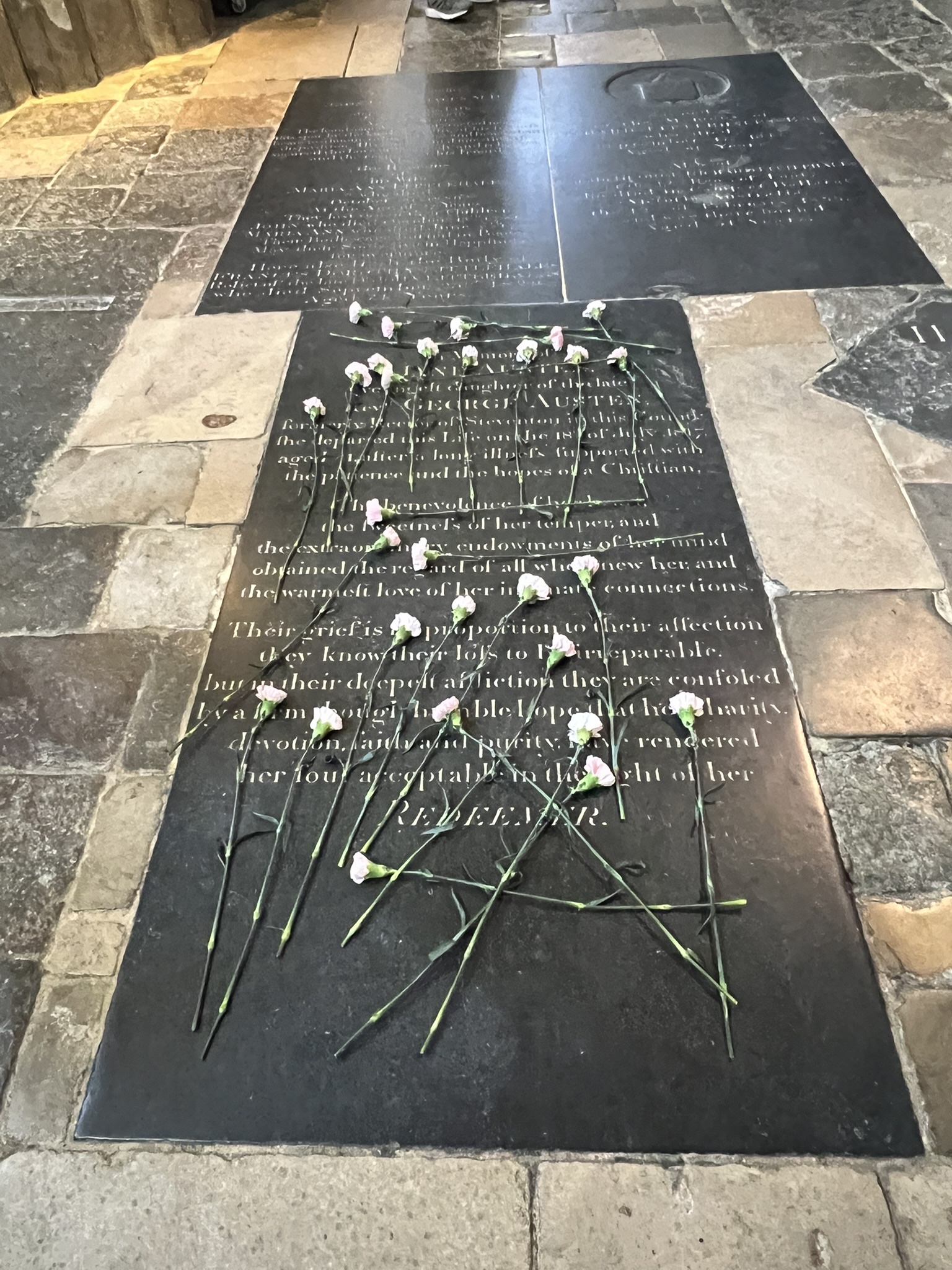
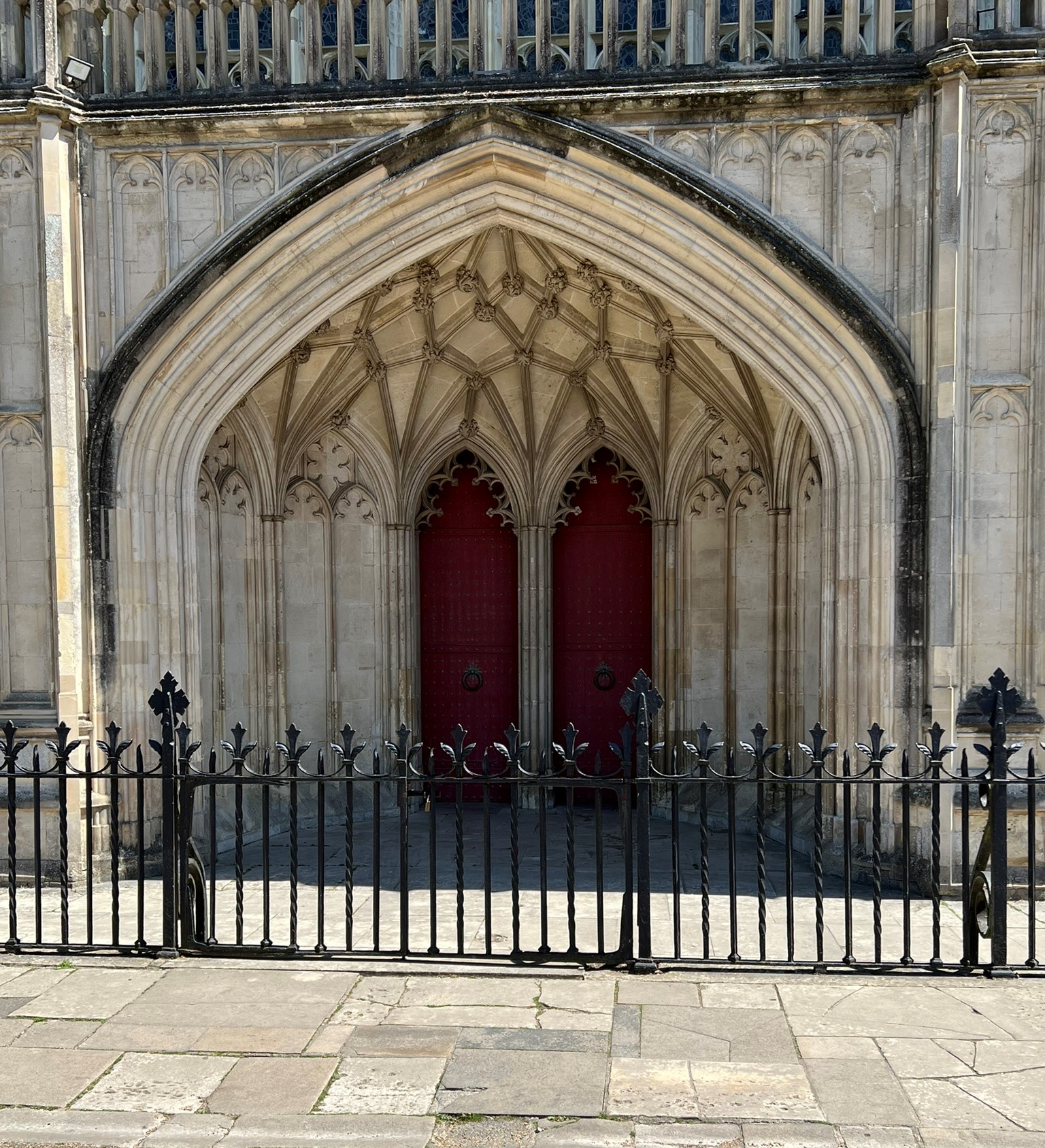
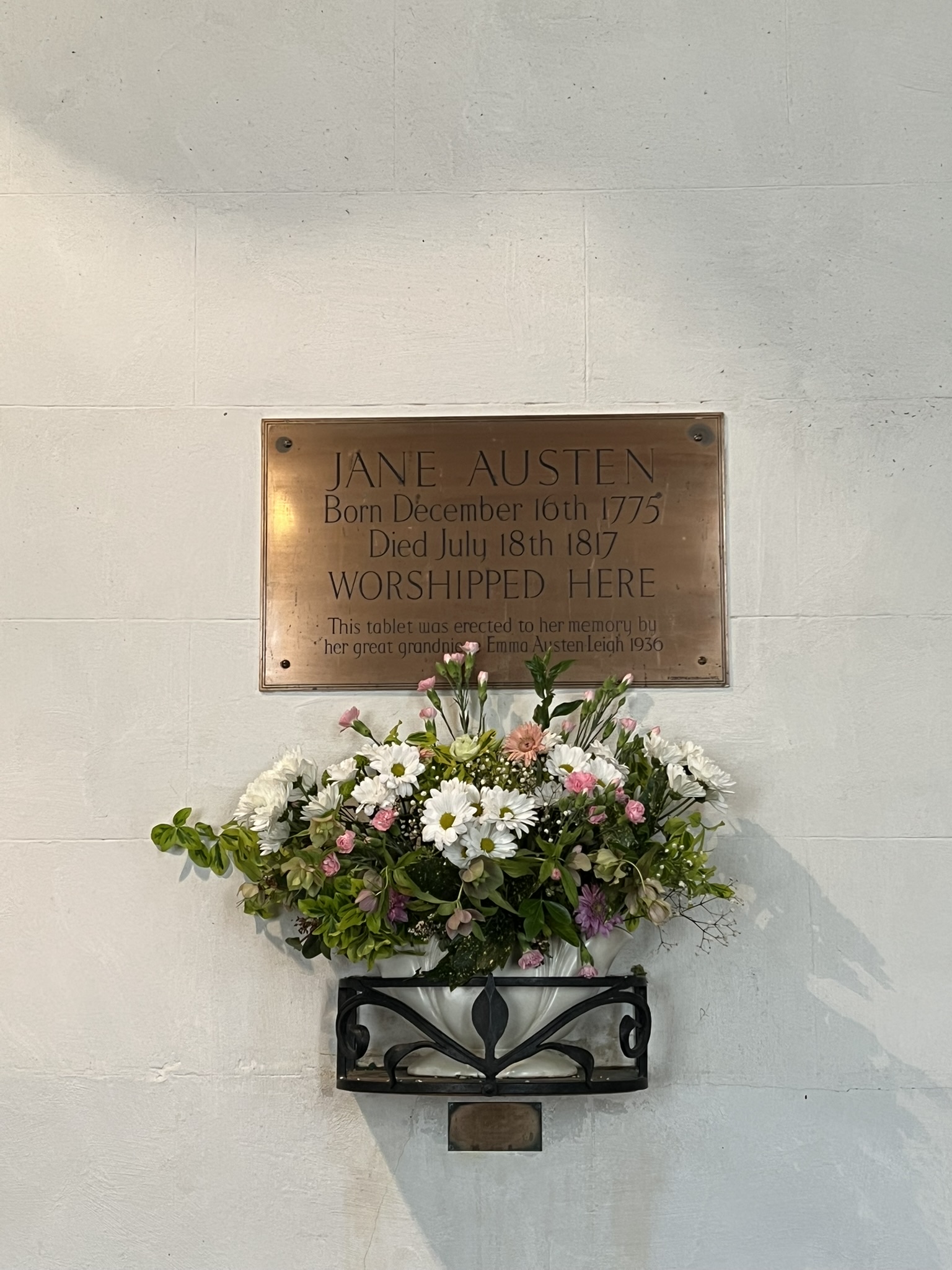
Inside the Cathedral, we find Austen’s grave, another somber spot – and the wall memorial – here one of the deacons awaited our arrival to perform a short celebratory service of prayers and a short eulogy as we stood around the memorial – each given a pink carnation to then leave on the tomb:
– it was quite lovely –
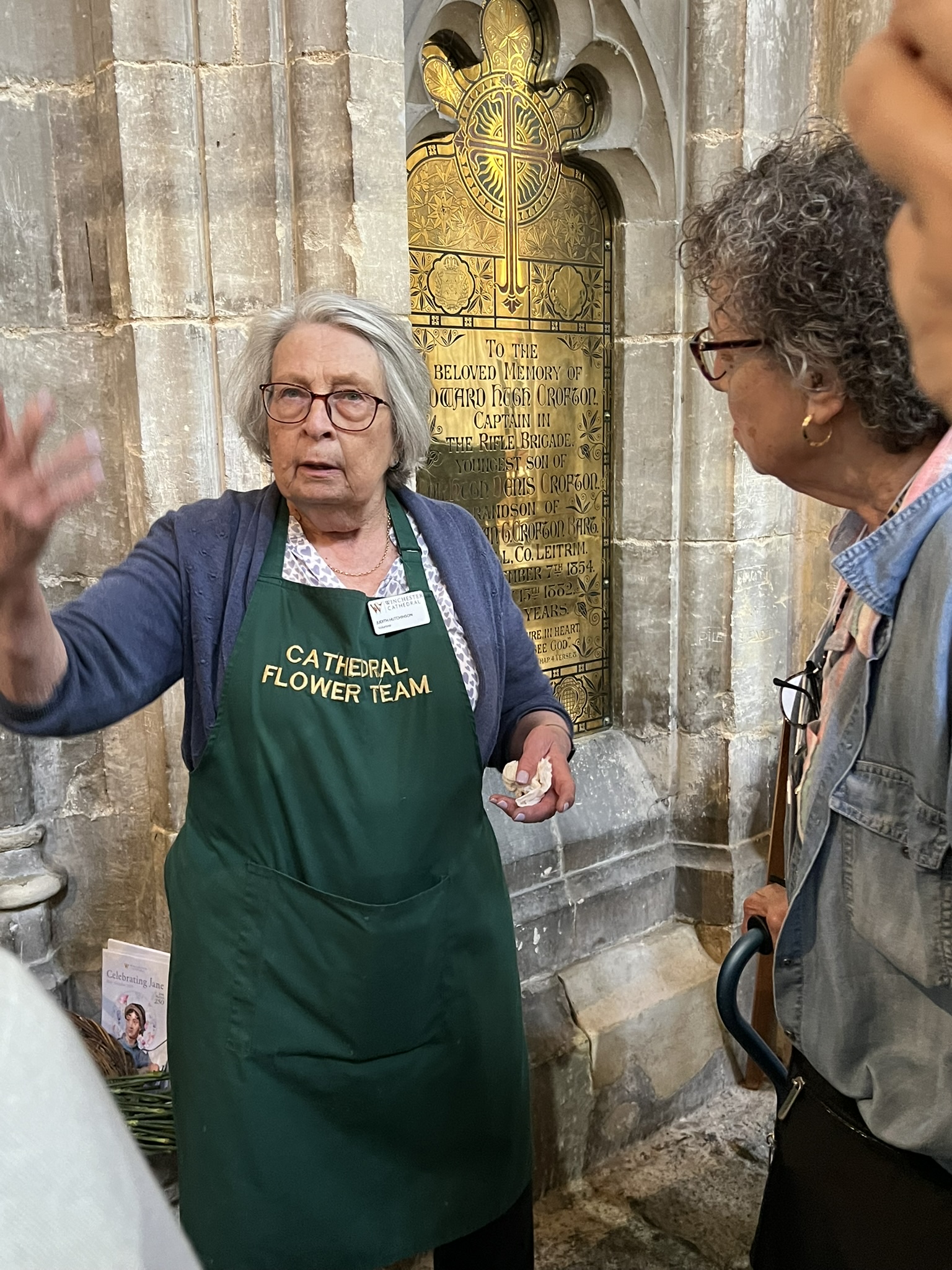
– a quick chat with the flower lady cheered me immensely – how they replace all the flowers around the wall memorial on a weekly basis – she agreed with me when I said I thought she had the best job in the entire cathedral!
And of course one cannot but sing [or at least whistle] the tune “Winchester Cathedral” – have I really spent my entire life since the 60s thinking the Beatles sang this song??
It is actually by the New Vaudeville Band – also appearing here on the Ed Sullivan Show… [lots of others think the Beatles sang this too – it comes up in Google as a common search!]
Following the service we went to one of the private chapels to listen to Cathedral Curator and Librarian Eleanor Swire talk on the poem Jane Austen wrote about the death of her dear friend Madame Lefroy – the manuscript of the poem is housed here and it was another emotional moment to gaze on it for a bit… written four years after Anne Lefroy’s death on Austen’s birthday after falling off a horse – you can read the poem here.
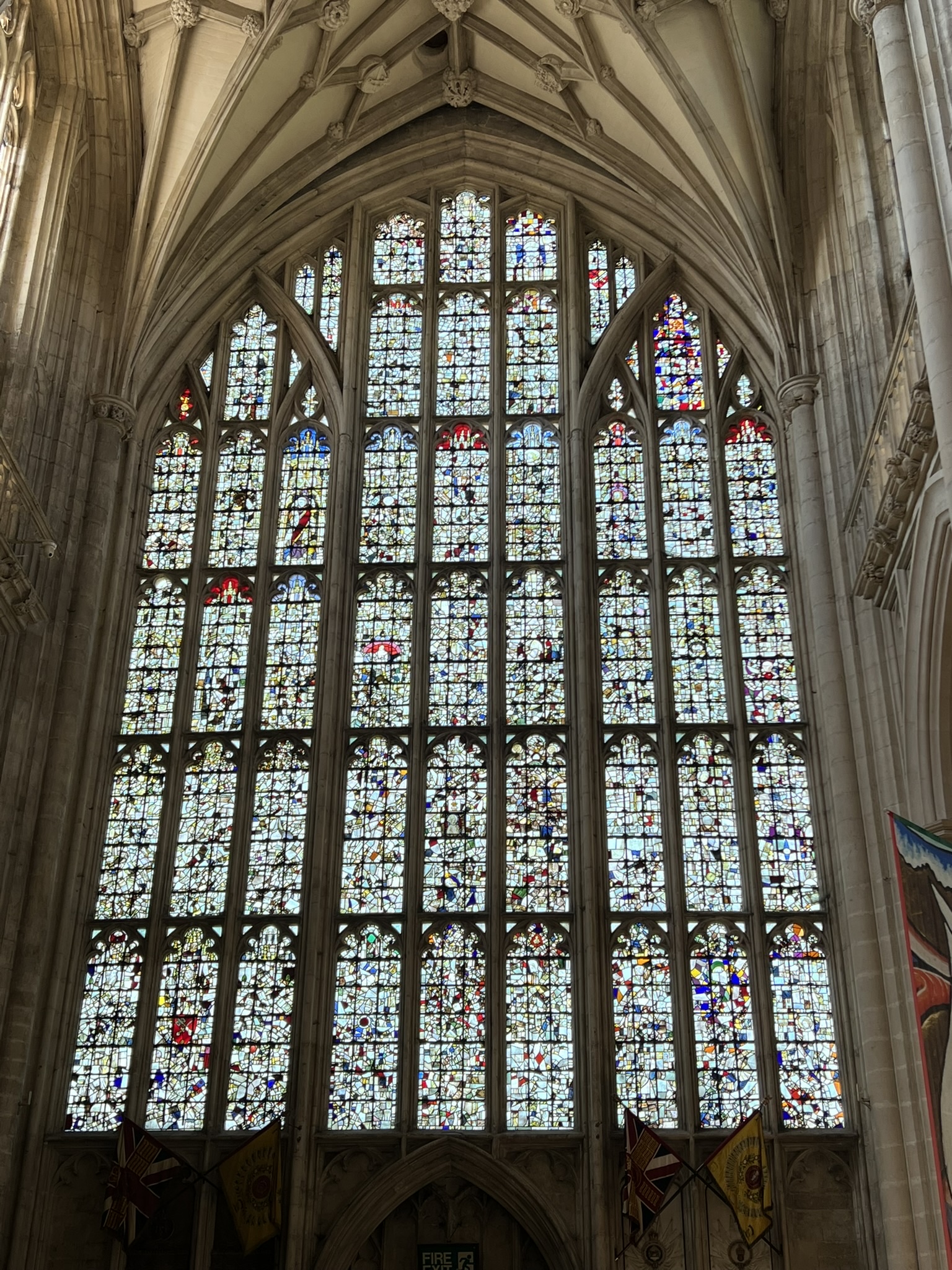
This Epiphany Chapel houses the most stunning stained glass windows, designed by Pre-Raphaelite artist Edward Burne–Jones. Here is one image I took:
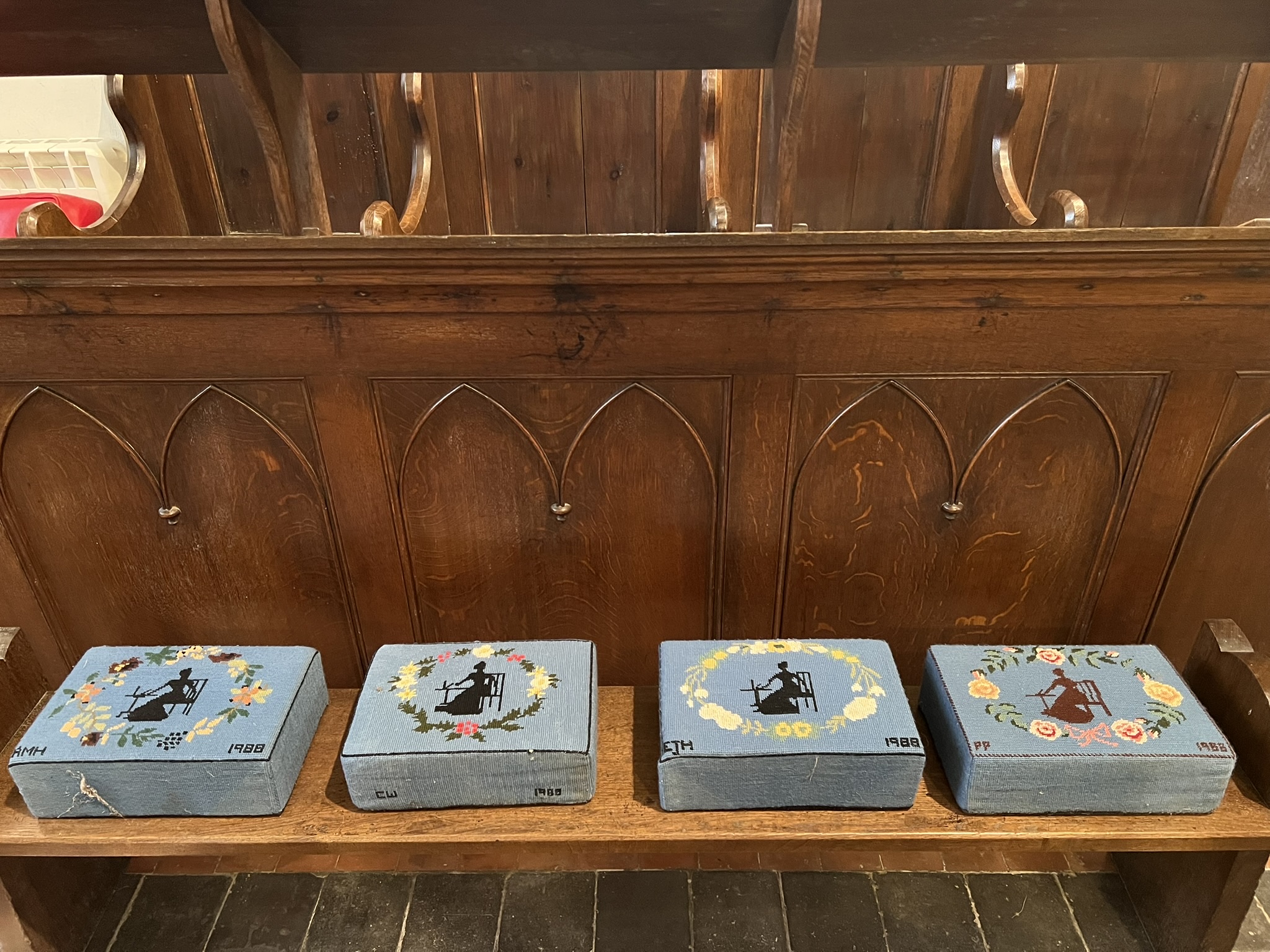
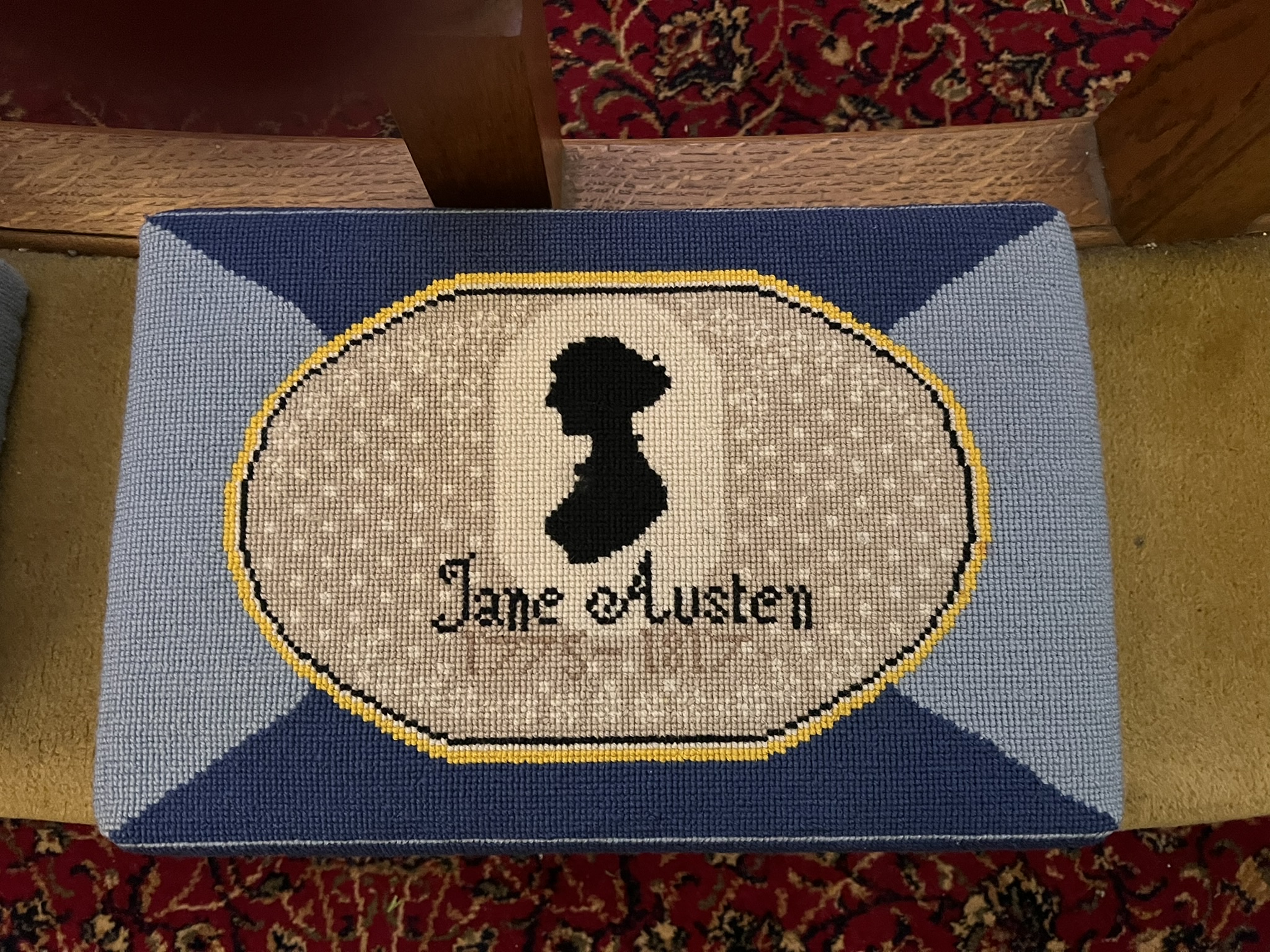
We were then sent off on our own to explore the Cathedral as we chose, so I just wandered around for a bit to find this kneeler by the author Tracy Chevalier memorializing Hampshire women (Florence Nightingale, Charlotte Yonge, and Jane Austen):
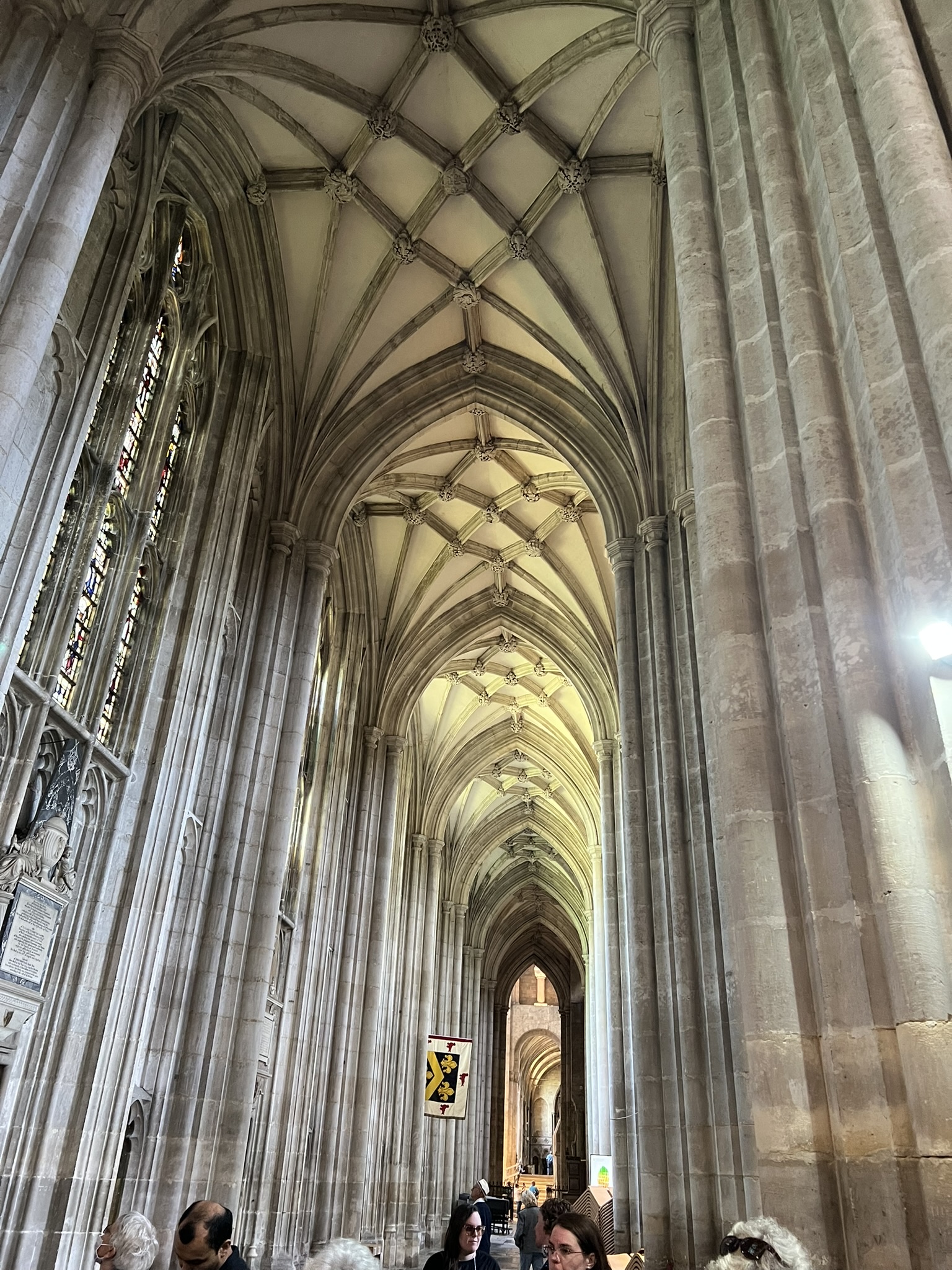
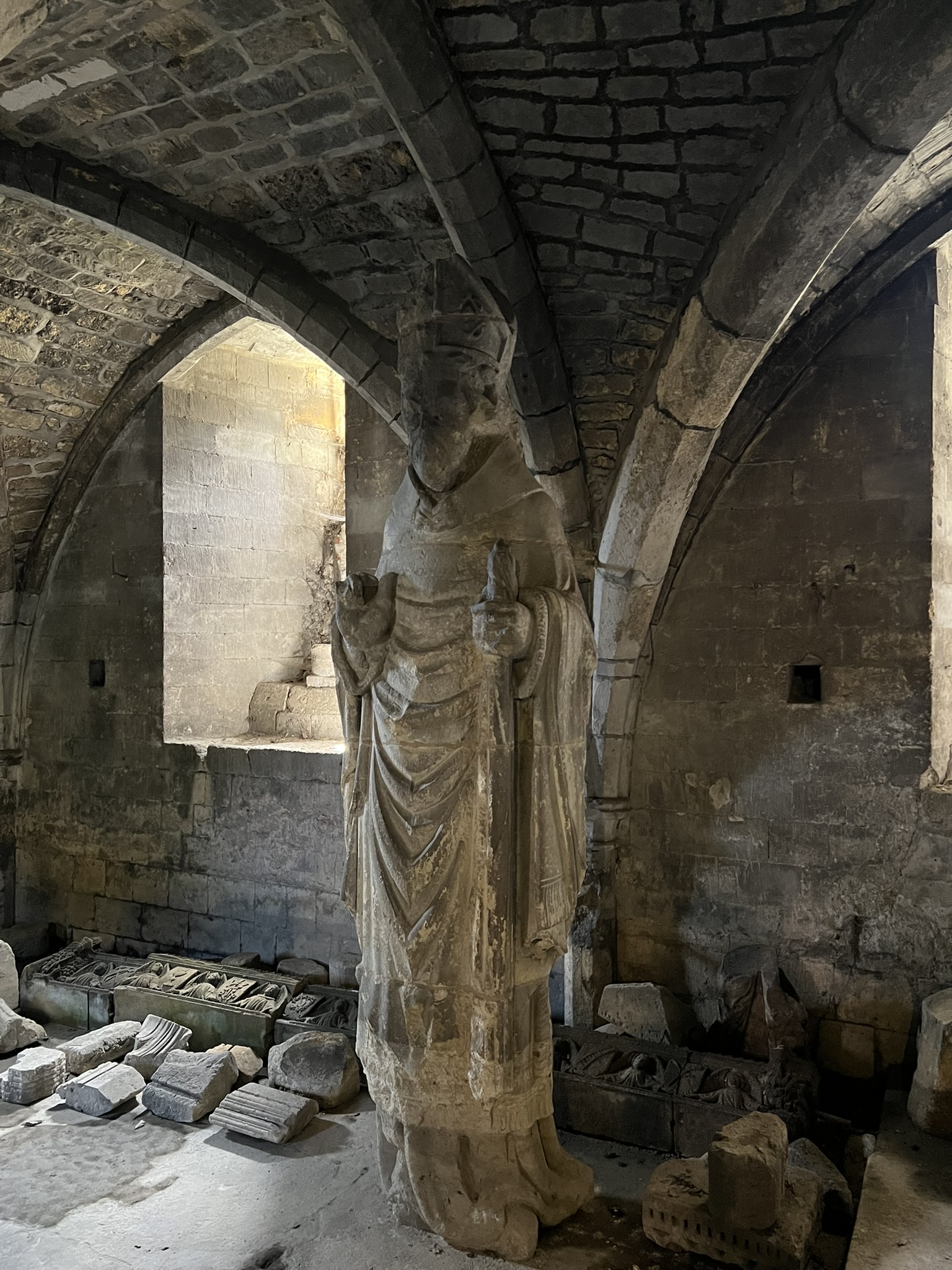
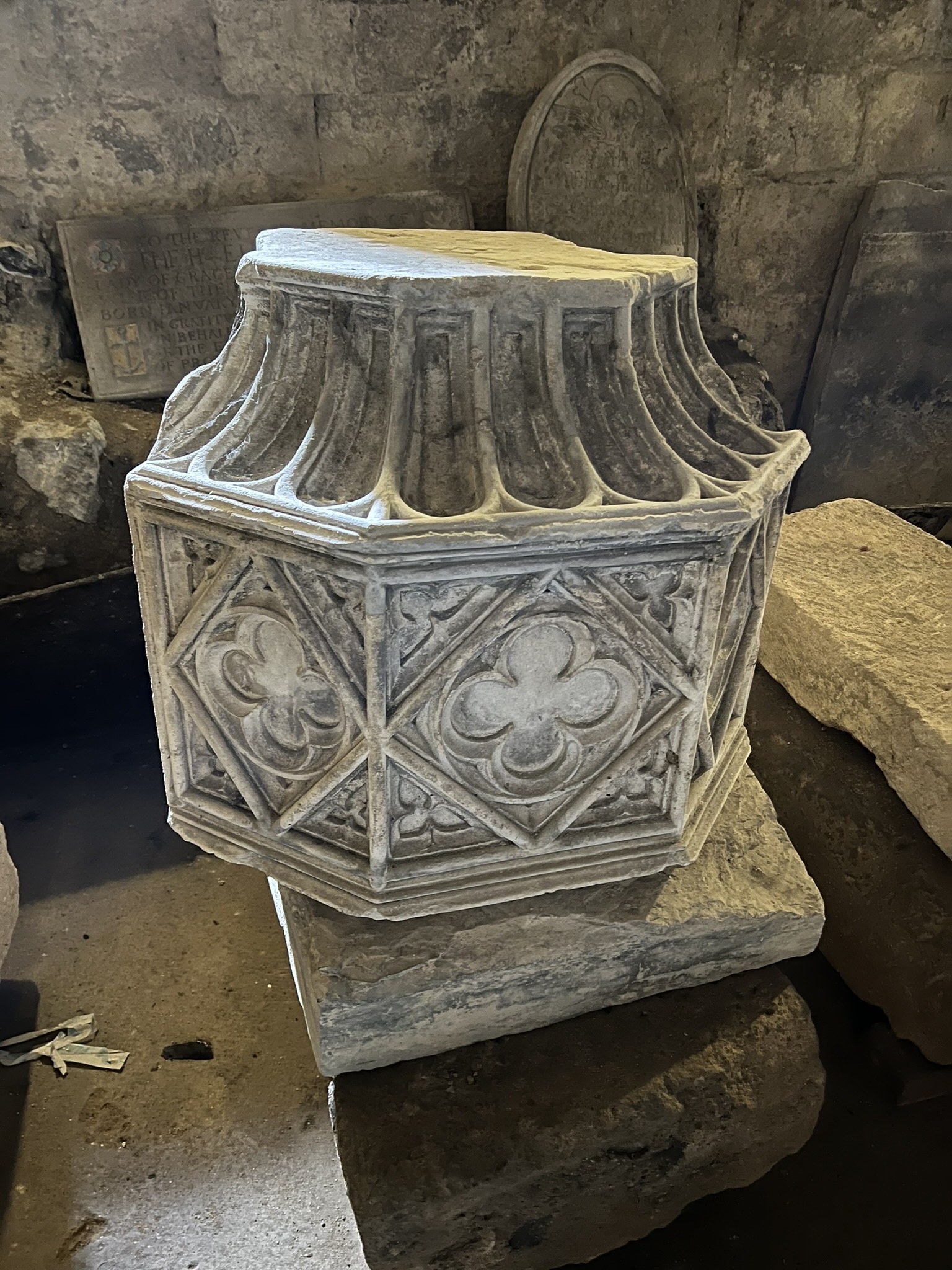
And then I could not resist a trek to the nether regions of the crypt and the guided tour did not disappoint. Who knew that any piece of absolutely anything that falls off the Cathedral has to be kept in perpetuity – that means any pieces of exterior sculpture or stone or anything inside that has fallen or removed is moved to the crypt – so it is full of all sorts of disused figures, columns, etc. – quite fun – these original pieces are then sourced for any ongoing restoration work:
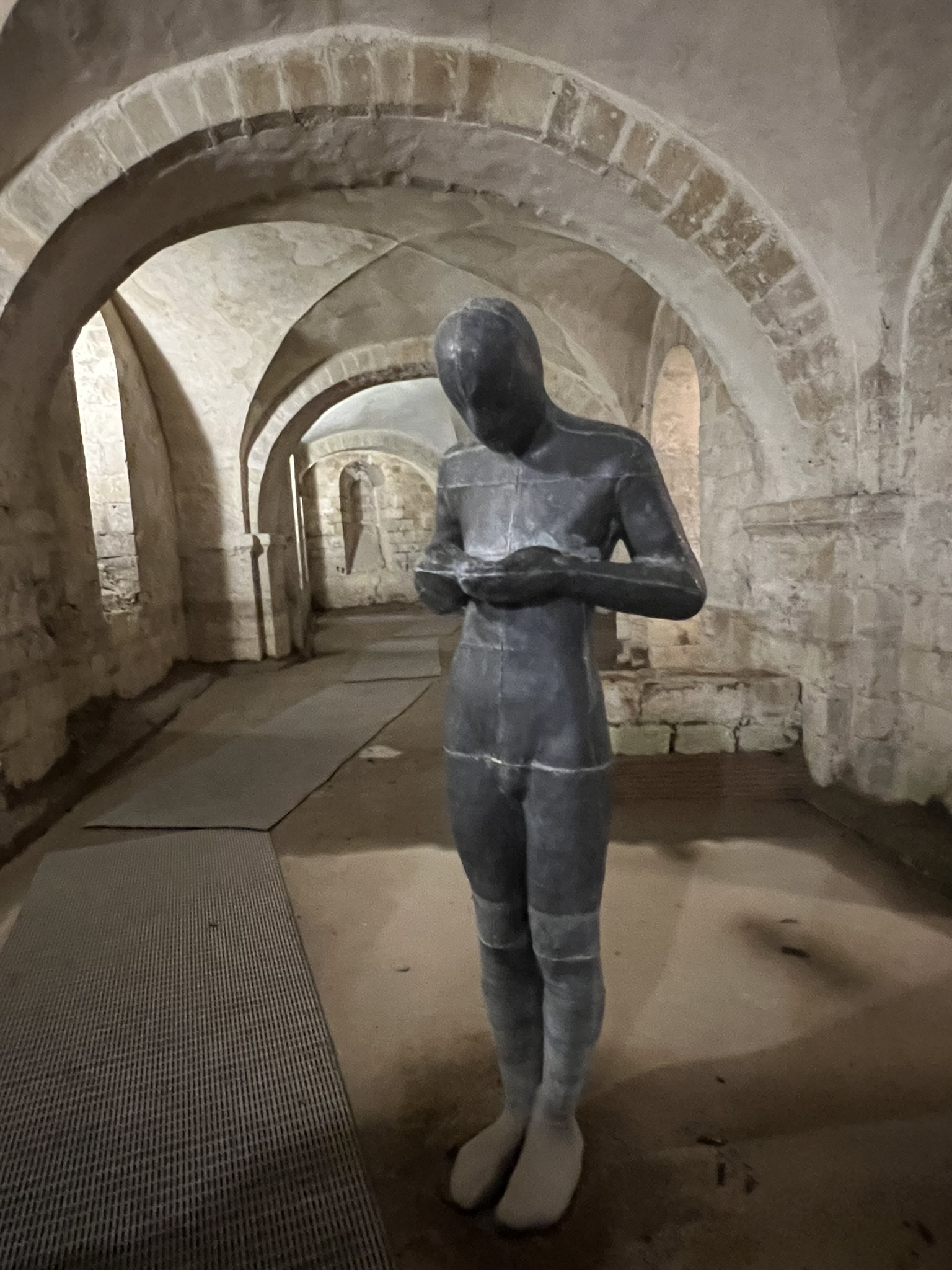
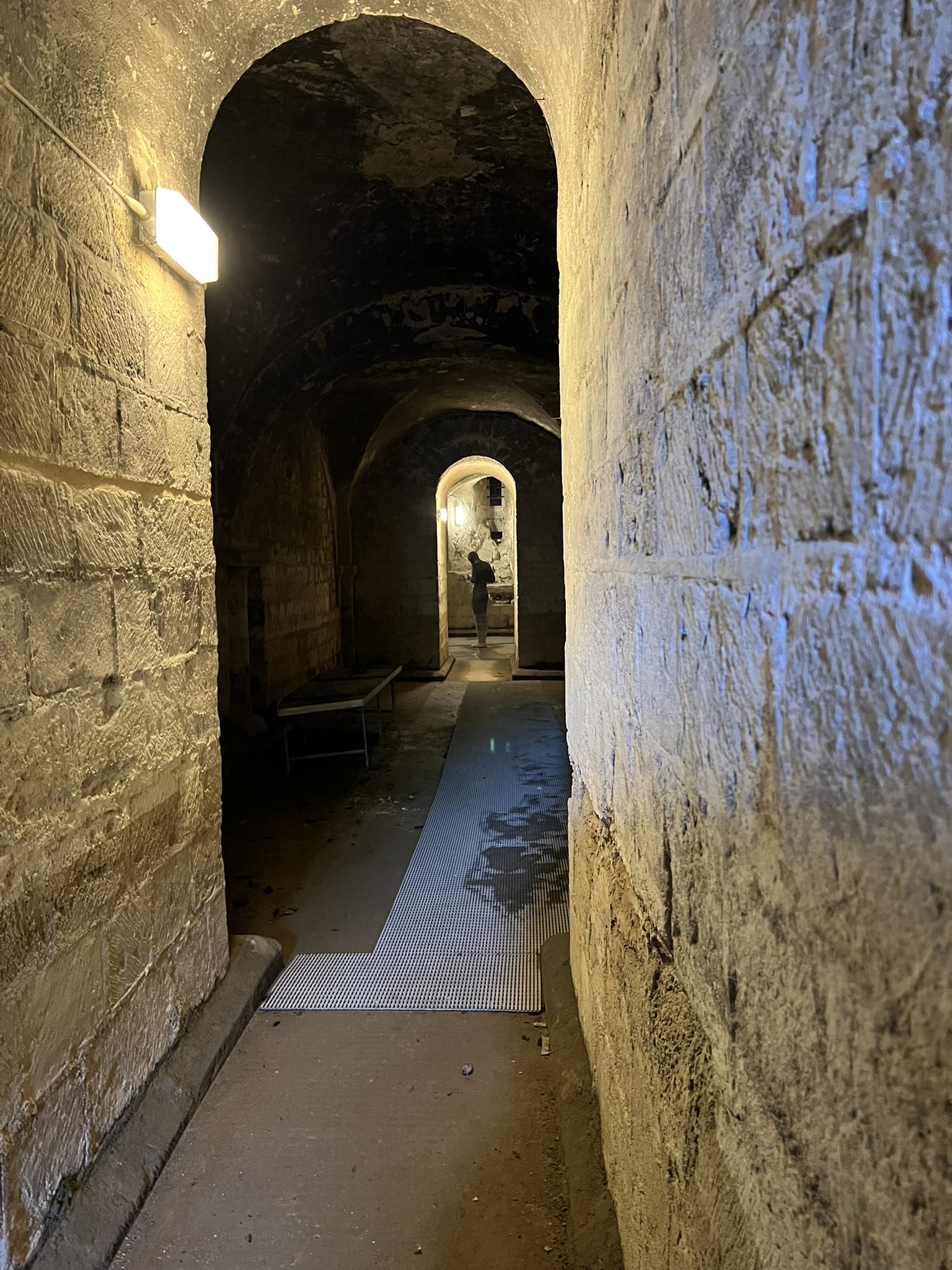
Even more interesting was to find that the entire Cathedral at one point risked collapsing because of how the water table rose to such heights in the crypt that it was only a matter of time until it all fell down – an amazing story of one man, William Walker, an experienced diver who would spend several years diving below the surface and reinforcing the foundation with concrete – today the water still rises in the crypt and you can see the levels on the walls – along with this very modern sculpture “Sound II” by Antony Gormley that periodically finds itself knee-deep in water as well as actually holding water in his cupped hands… :
[quite unnerving really because you come upon it unexpectedly from various vantage points]
During lunch at the Cathedral café I found this monument to William Walker, known affectionately as “Diver Bill” – “The diver who with his own hands saved Winchester Cathedral.” Nothing to do with Jane, but good to know the building which holds her tomb is safe from disintegrating…
***********
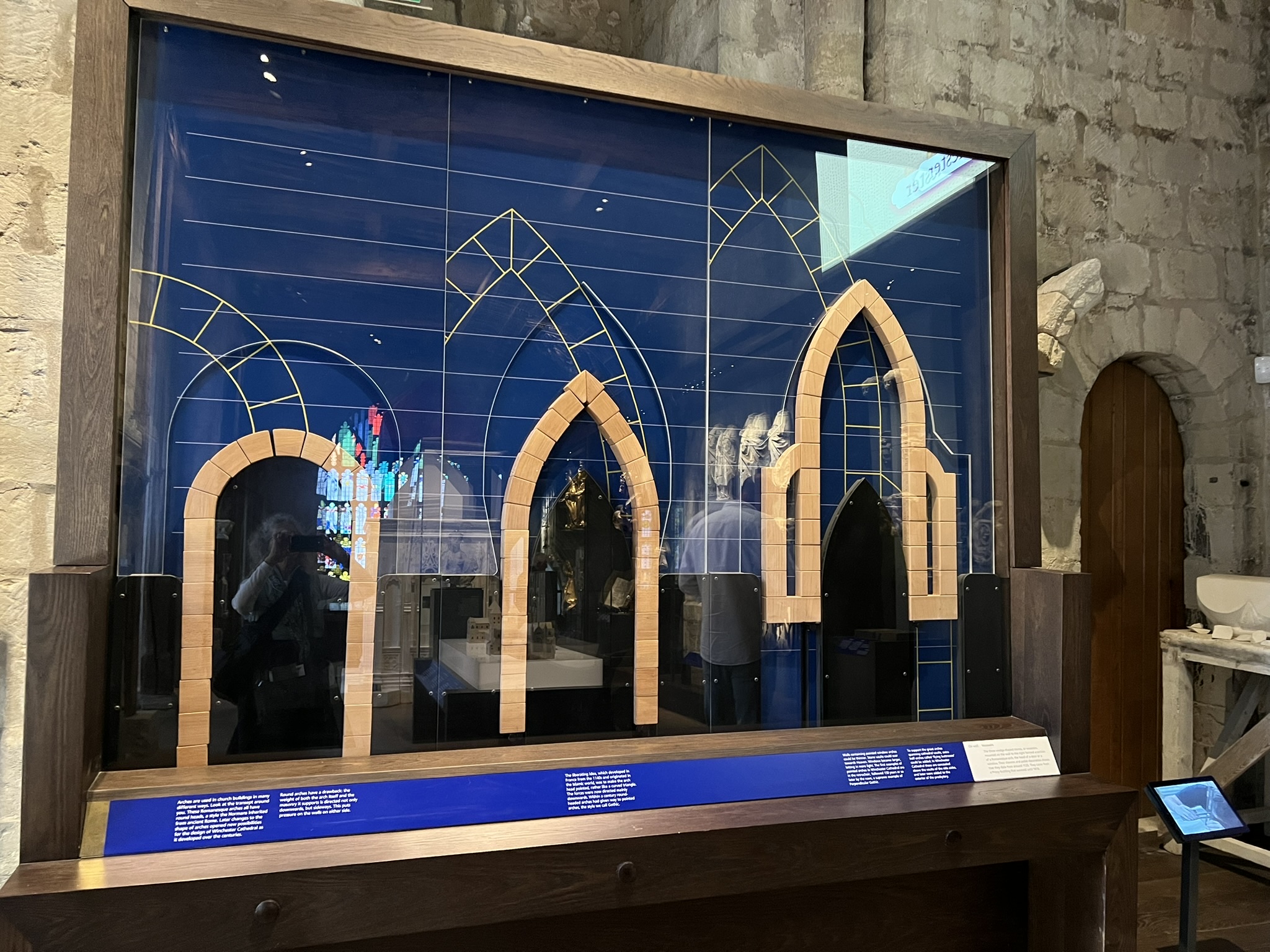
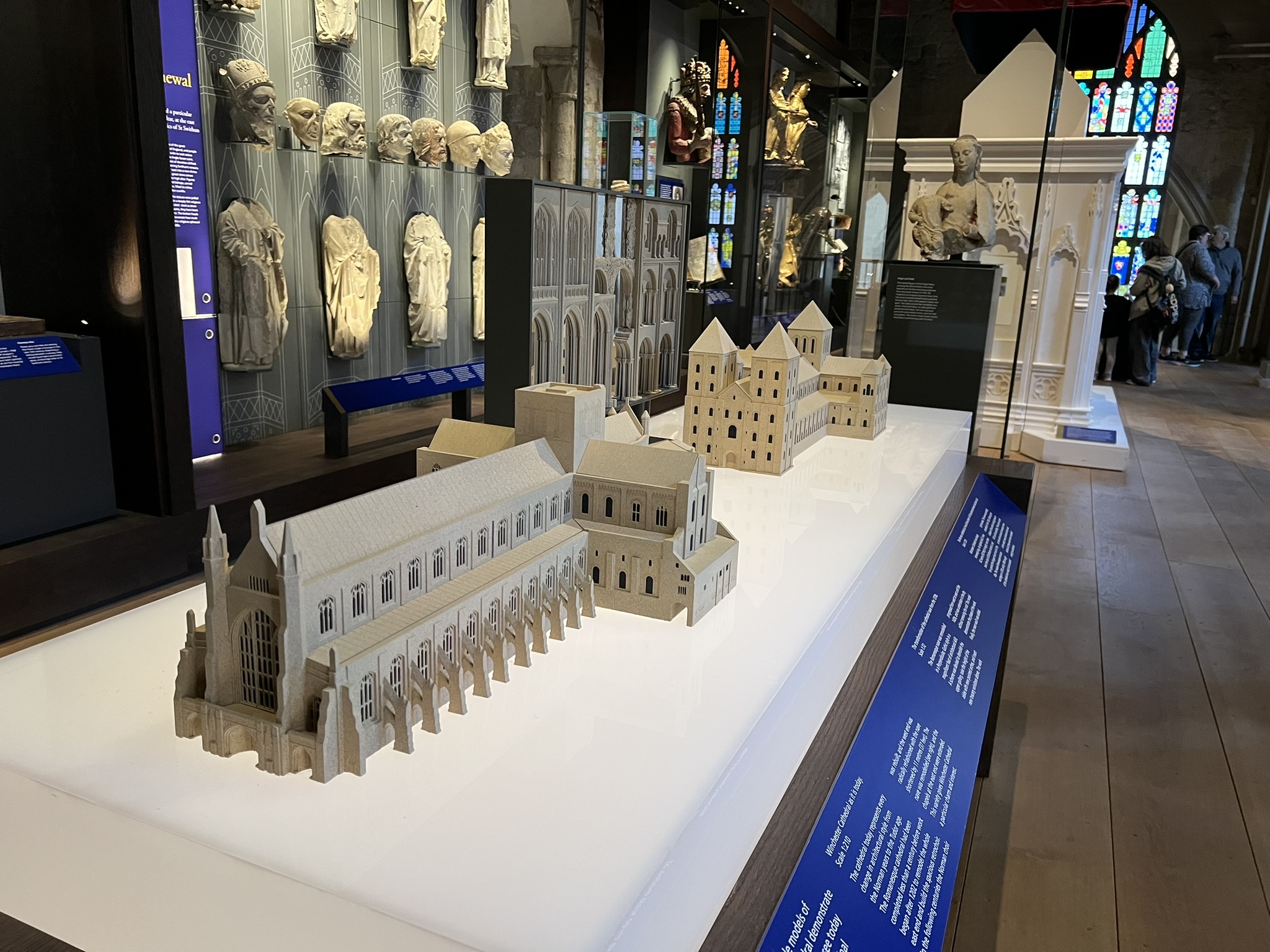
The Cathedral exhibition “Kings and Scribes: Birth of a Nation” tells the over 1,000 year history of Britain with many treasures, as well as this nicely done explanation of the architectural differences through the ages:
And the various illuminated manuscripts – you can see a bit of it here in this video: [since I didn’t take many photos]
Leaving the Cathedral, I had lunch at the café, then wandered around in search of Bookshops – first finding the current building of The Hampshire Chronicle, publishing since 1772 – and certainly a paper the Austens would have read:
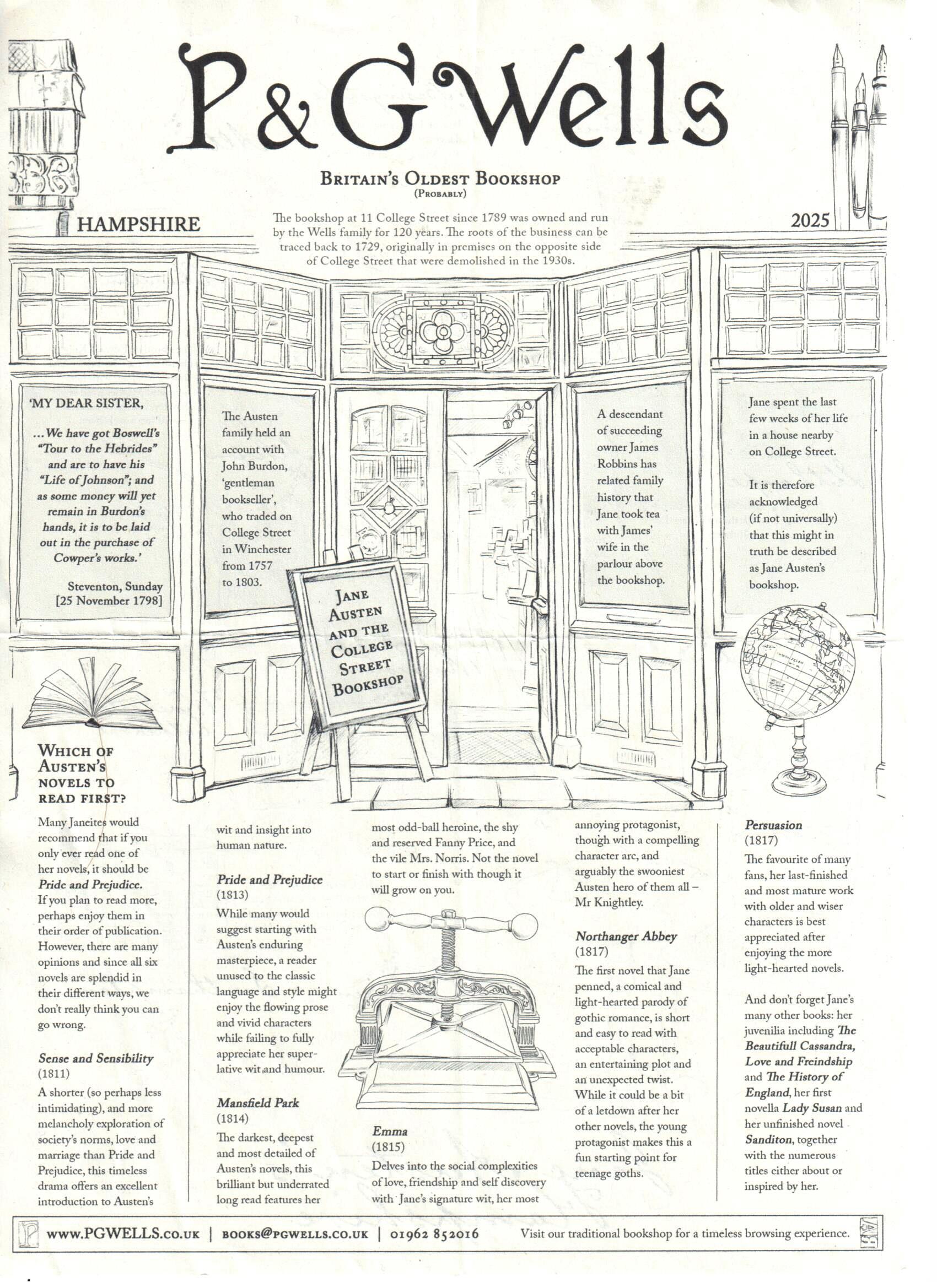
The P&G Wells bookshop is just down the street from 8 College St and where the Austens had a standing account with the then bookseller John Burdon. I missed an exterior photo but I do have this tile of the front, a gift from my roomie Joy! : it looks just like this:
– the interior retains much of the original Georgian furniture – the bookshelves, drawers, etc.
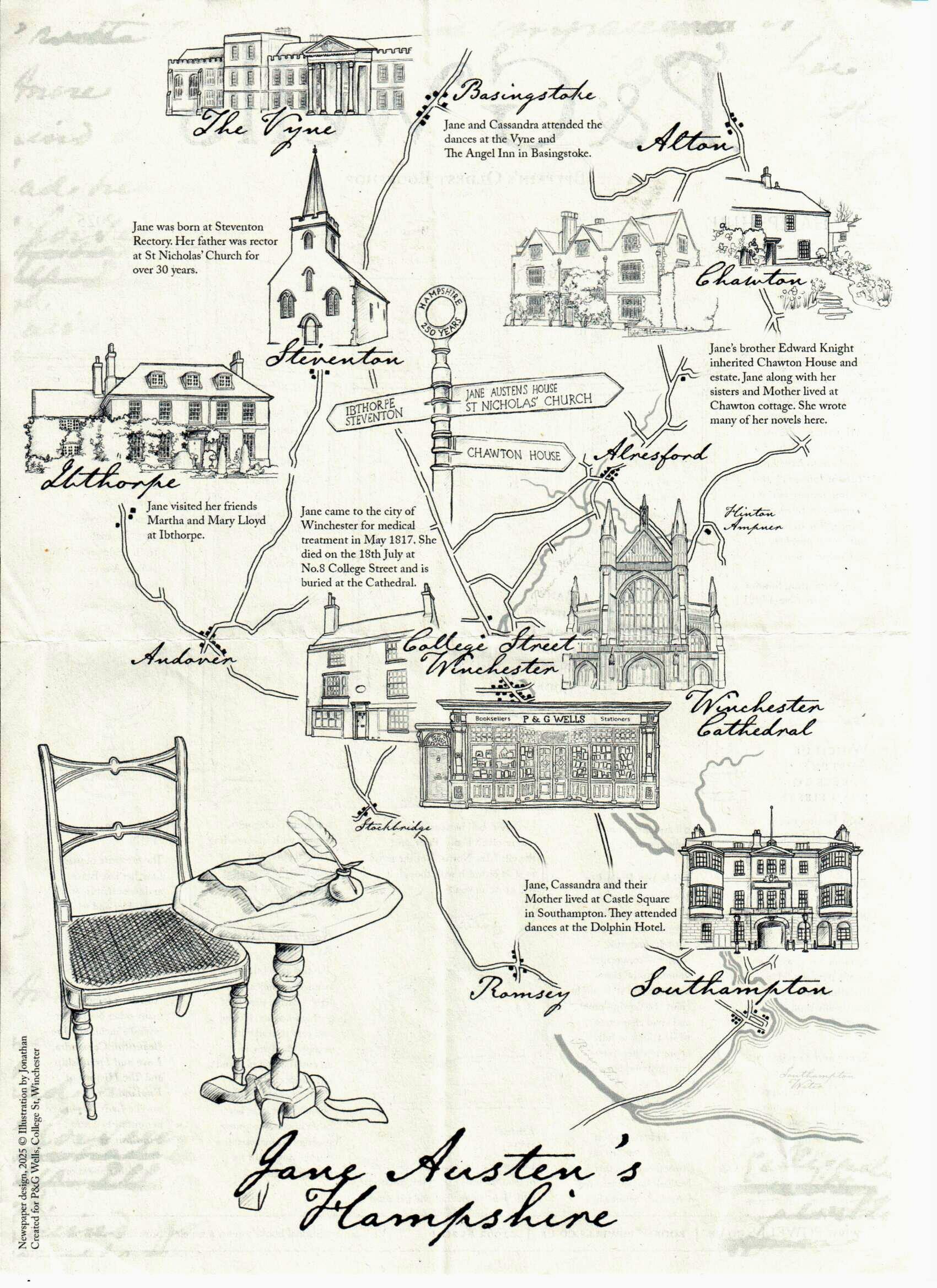
Here is the flier they have celebrating Jane Austen’s 250th:
[I didn’t buy anything, but did find this Ladybird book [didn’t buy; didn’t handle…] – apparently “specially planned to help grown-ups with the world about them” – what a concept…
The Deanery Bookstall in the Cathedral’s Inner Close, run completely by volunteers, was a book searcher’s delight – not enough time to spend as one would want… but did find a few things [and knowing now I would have to buy another suitcase to get home…once you pass that point, there is no stopping you…will tell the tale of the actual suitcase in the last of these posts…]
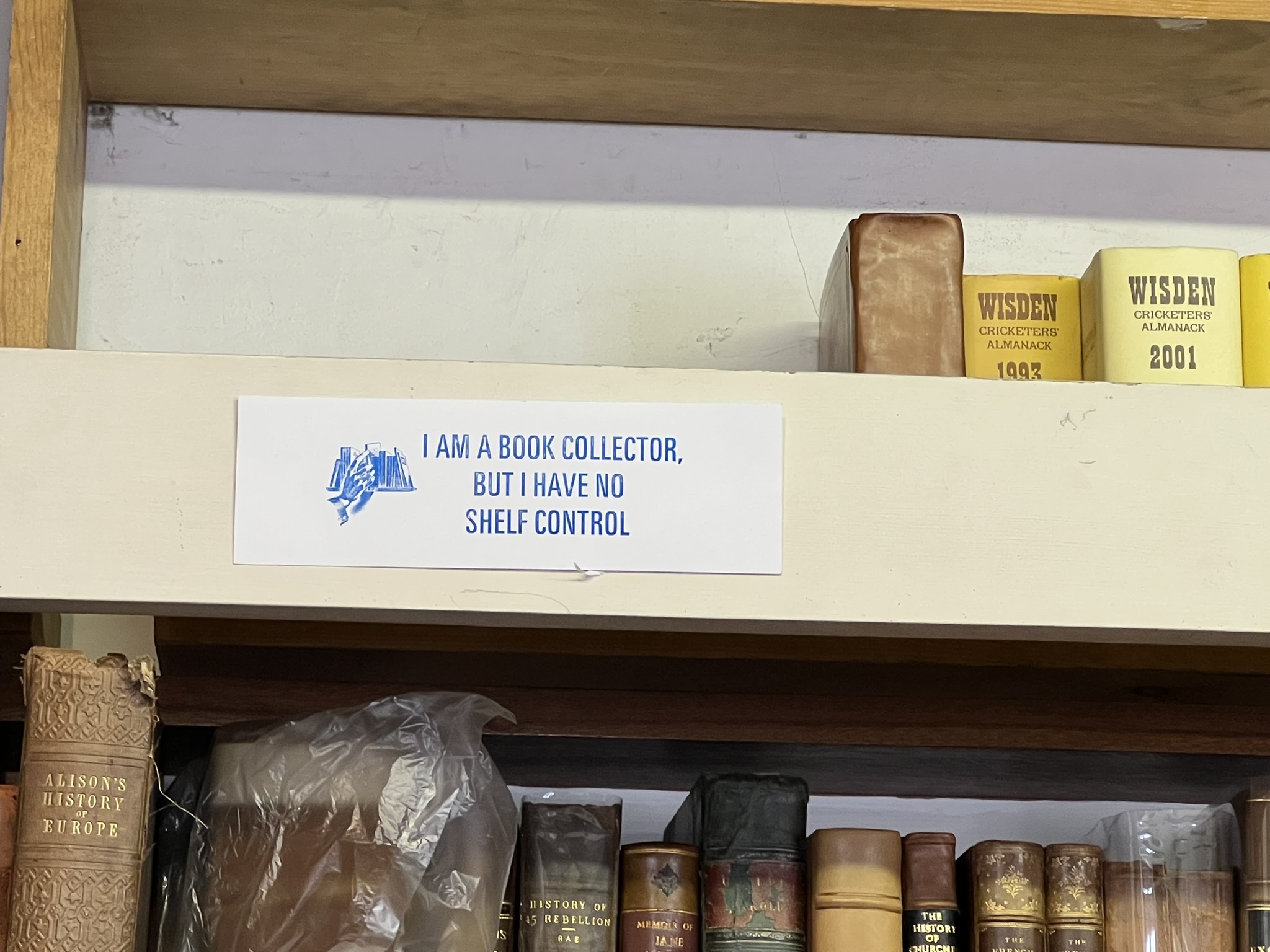
Found The Winchester Bookshop on St. Georges St – and DID find a few things there, including this sign, one I had never seen before, though it certainly could be my mantra…
I like nothing better than a staircase in a bookshop that beckons…
A day is always well-spent with it ending in random book searching … and of course, yet another dose of wisteria:
c2025JaneAustenInVermont
*There is a Keats walking tour in Winchester– he visited here for about two months in the late summer and early fall of 1819, his daily walks inspiring his poem “To Autumn”. I did not follow the tour but you can download the guide here:
Today we journey from Winchester to Jane Austen’s home ground – where she lived for the first 25 years of her life: Steventon.
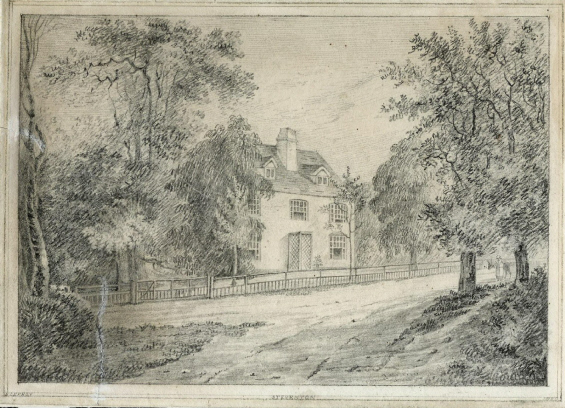
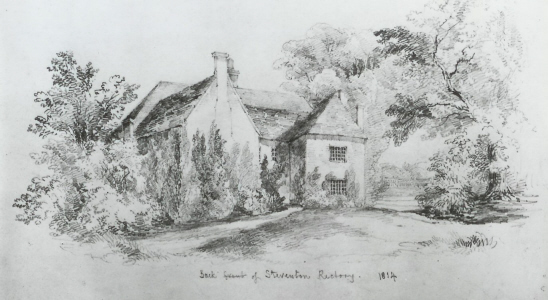
The house she and her siblings were born and raised in no longer stands, but thanks to her niece Anna Lefroy (or possibly her nephew-in-law Ben Lefroy), we have these drawings of the house:
and this rear view:
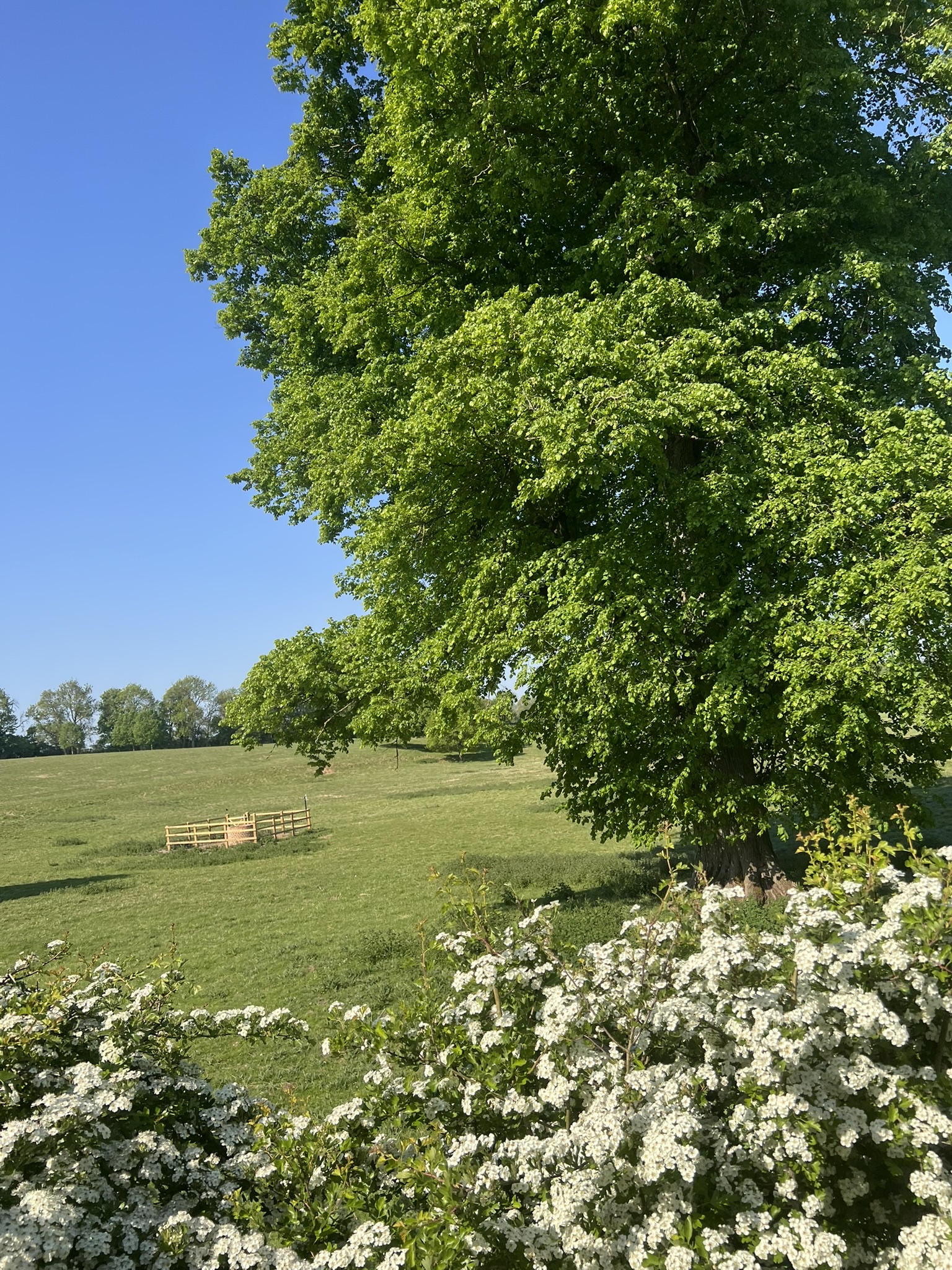
All that is left today is this fenced-in location of the house pump: so our imaginations have to run wild…
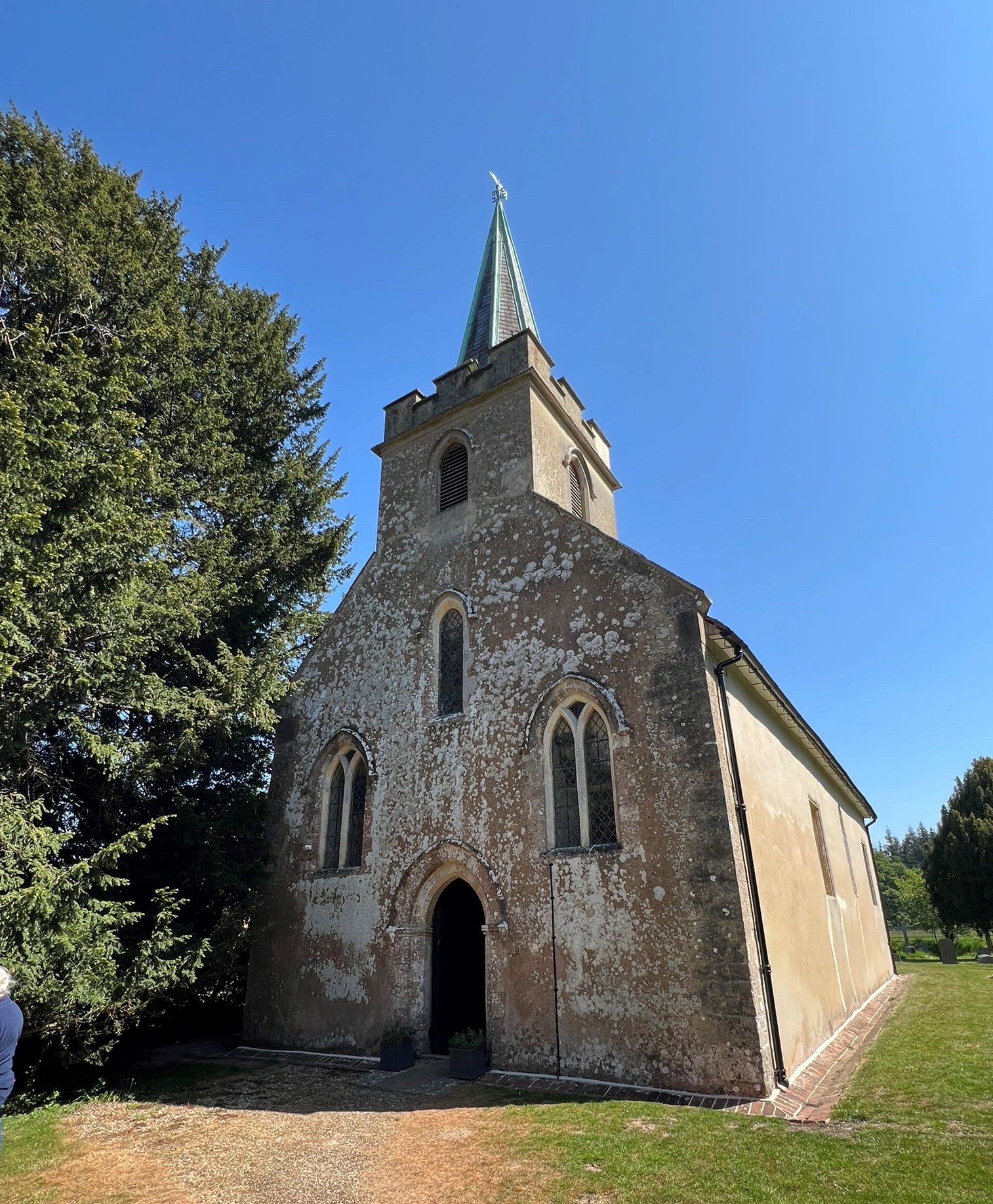
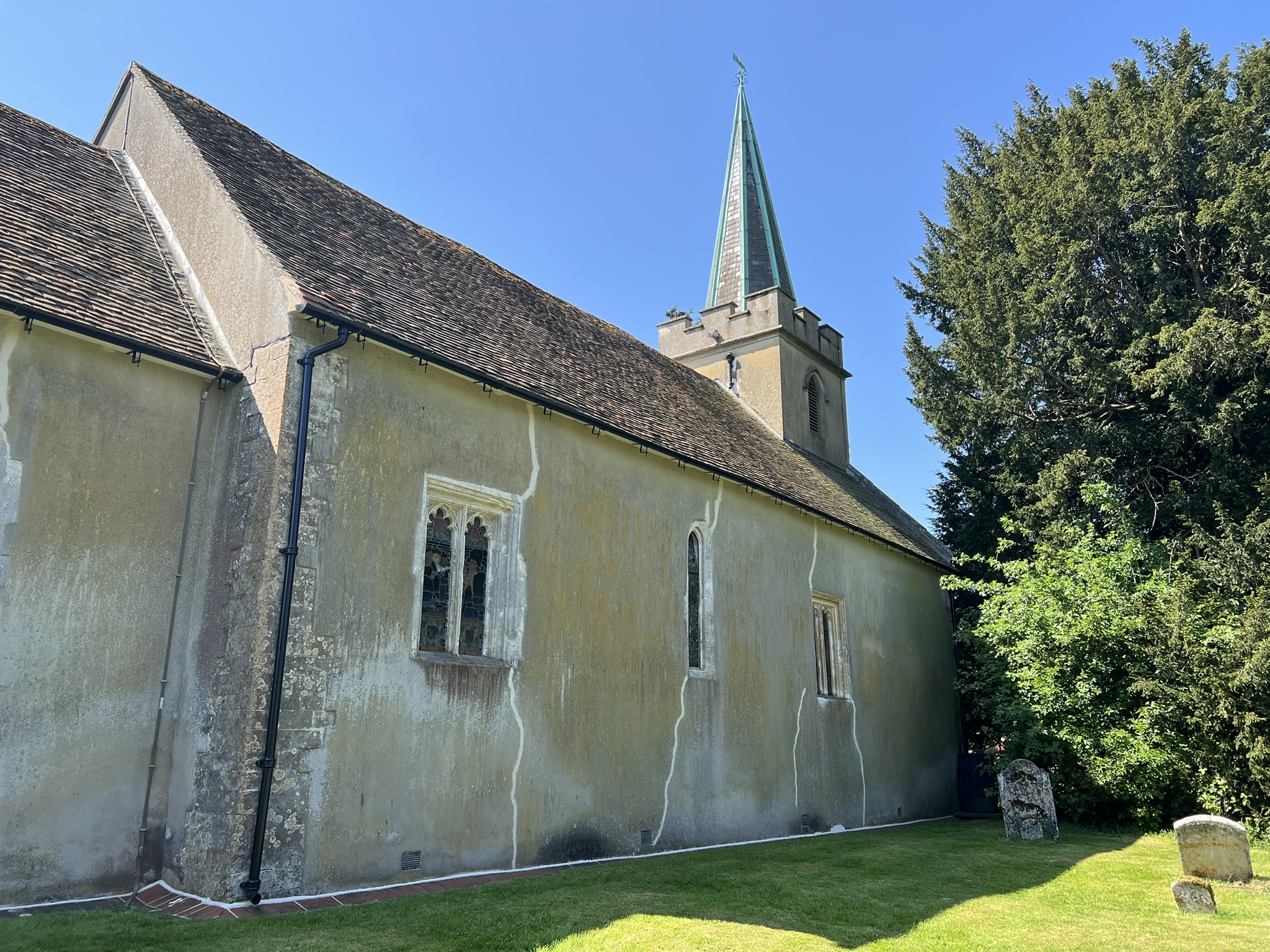
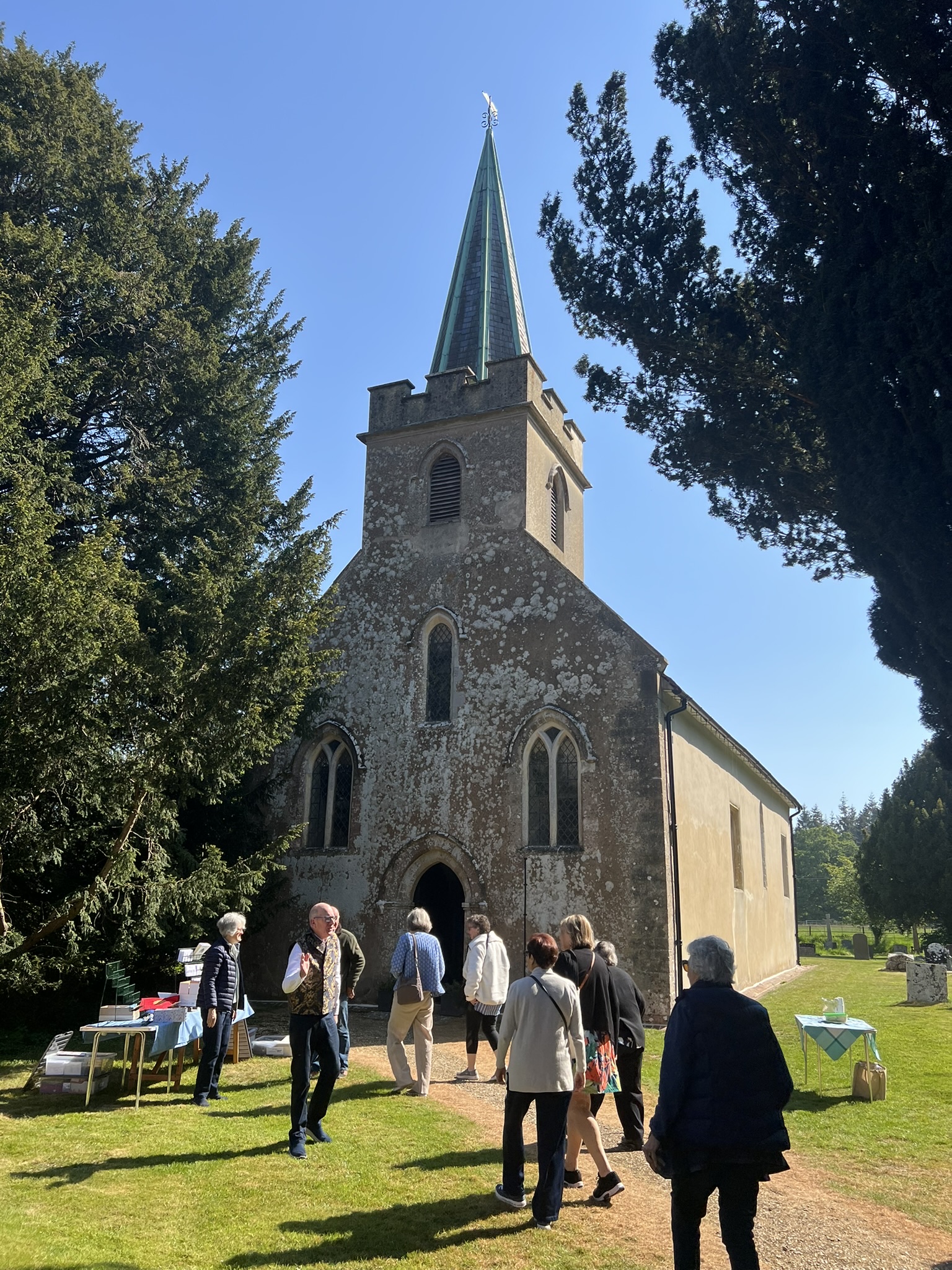
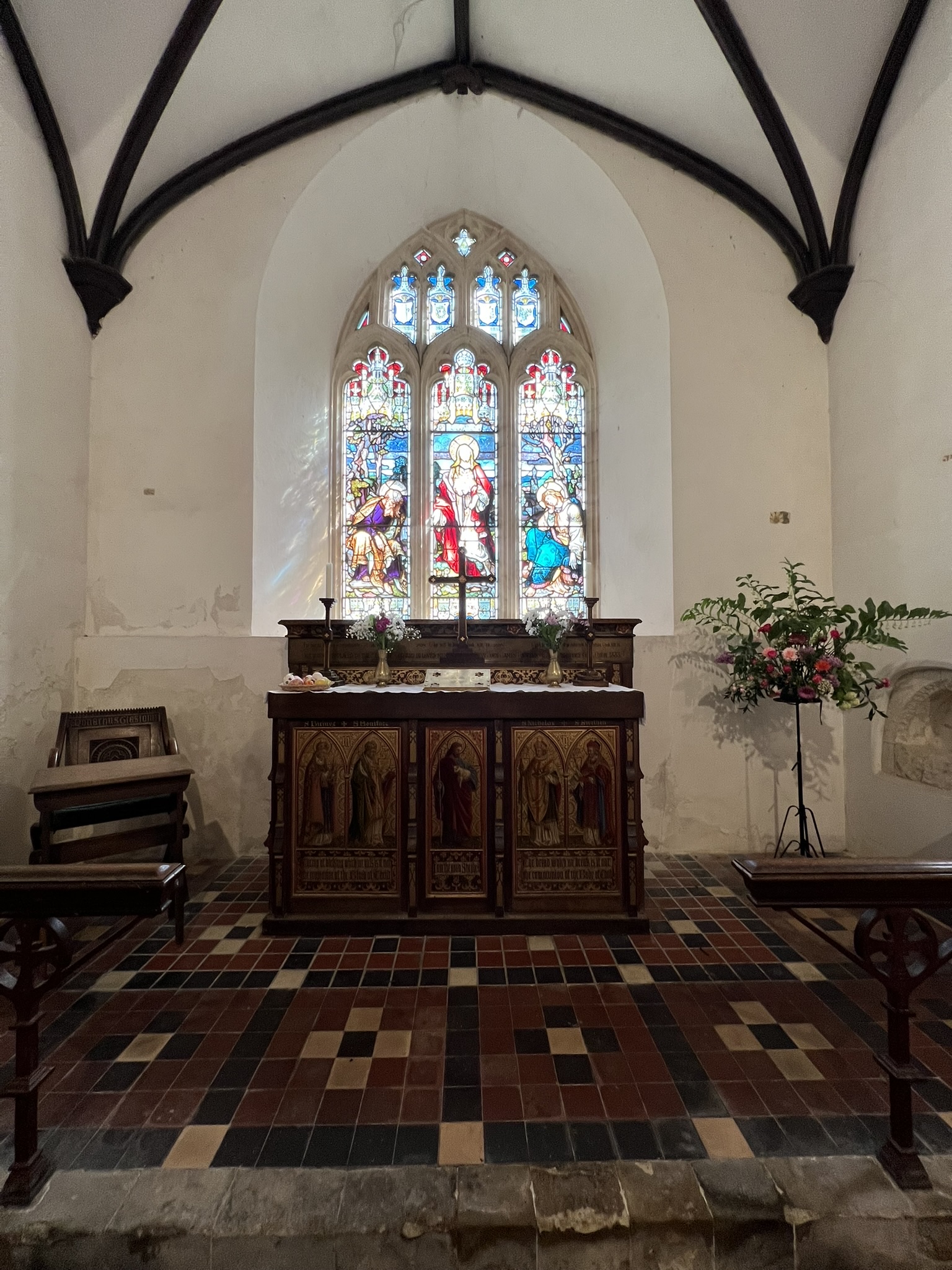
It is the Church we come to see here [a St. Nicholas of course]: you can also see we are done with the cold of Kent, and welcome the warm and cloudless sky of lovely Hampshire – [I am reminded for a moment of Margaret Hale in Gaskell’s North and South and the loss of her beloved Hampshire and her favorite “Helstone” roses, as she makes her way in northern cold and dark Manchester…]
Members of theJane Austen Societywarmly greeted us on this lovely day, offering delicious fare and Austen-related merchandise to buy. Then a quiet visit inside the church to see where Jane would have worshipped, her father rector here from 1761 (and of Deane from 1763) until his retirement in 1801 and death in 1805.
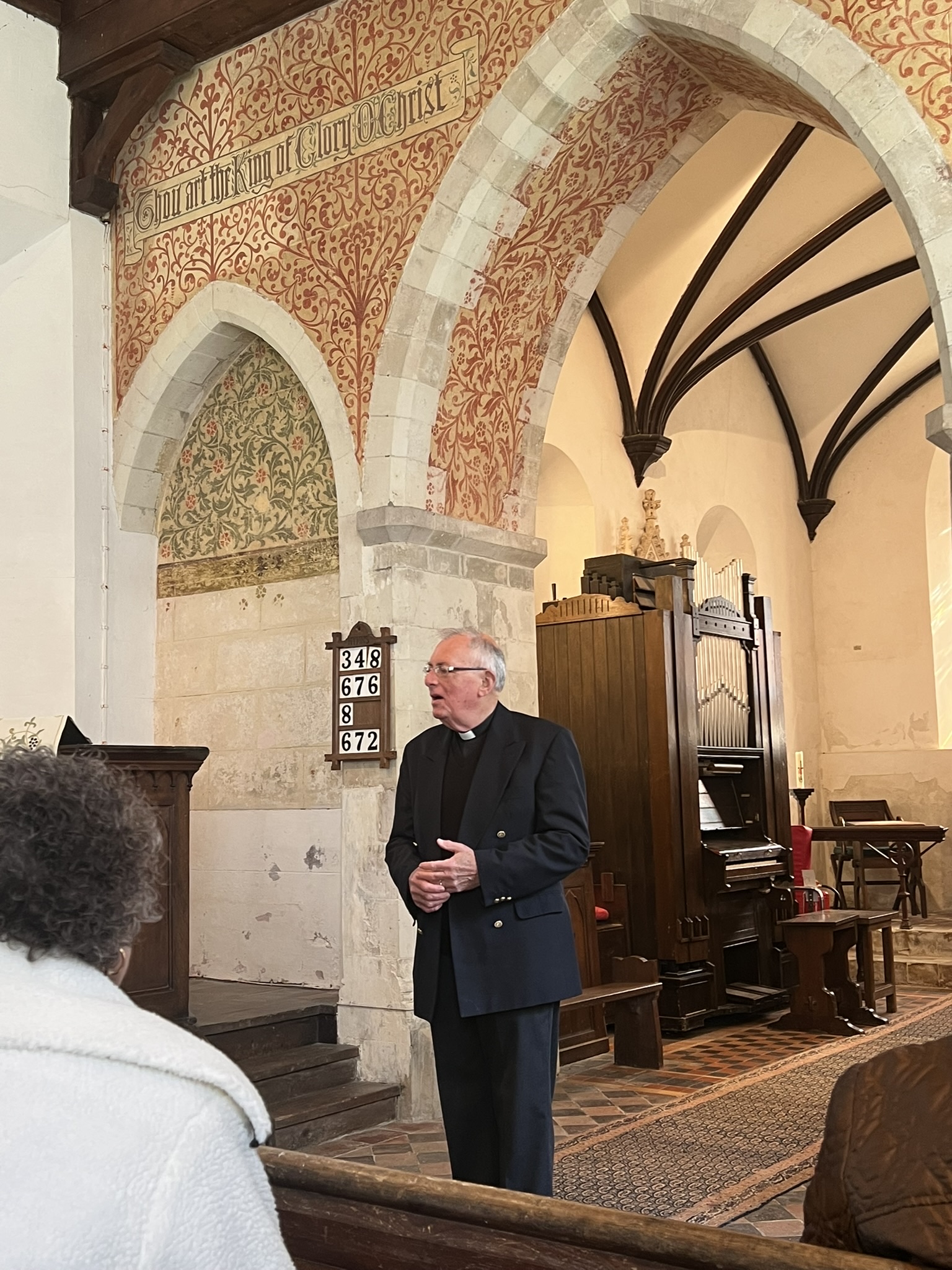
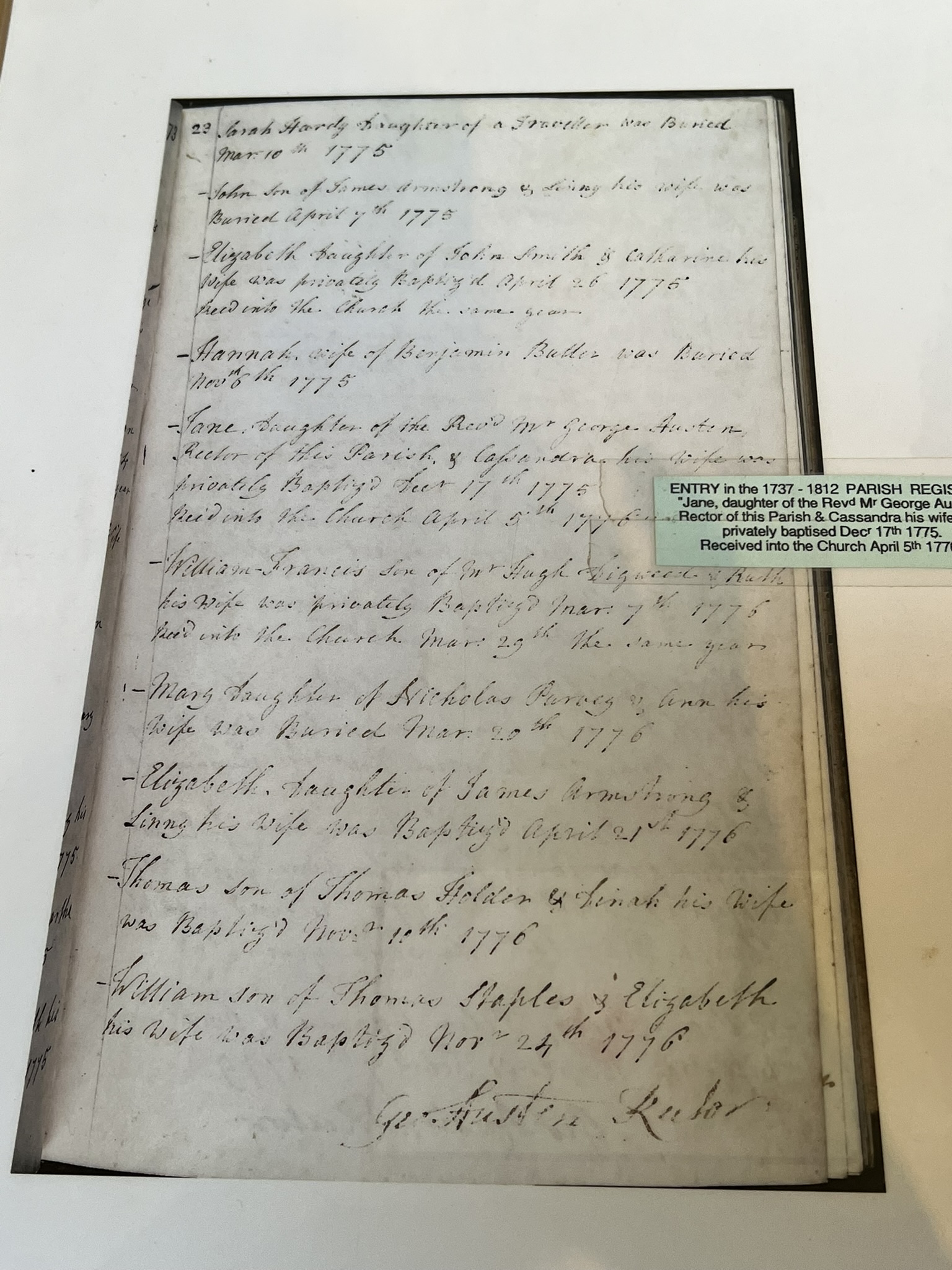
Michael Kenning, rector here from 1992-2012, introduced us to the Church and its Jane history – I have had the pleasure of meeting Canon Kenning in 2003 for the JASNA AGM trip to Winchester – he is little changed, and still an avid Austen “fan” – the vice-chairman of the Jane Austen Society Trustees. He shared this baptism note in the church records:
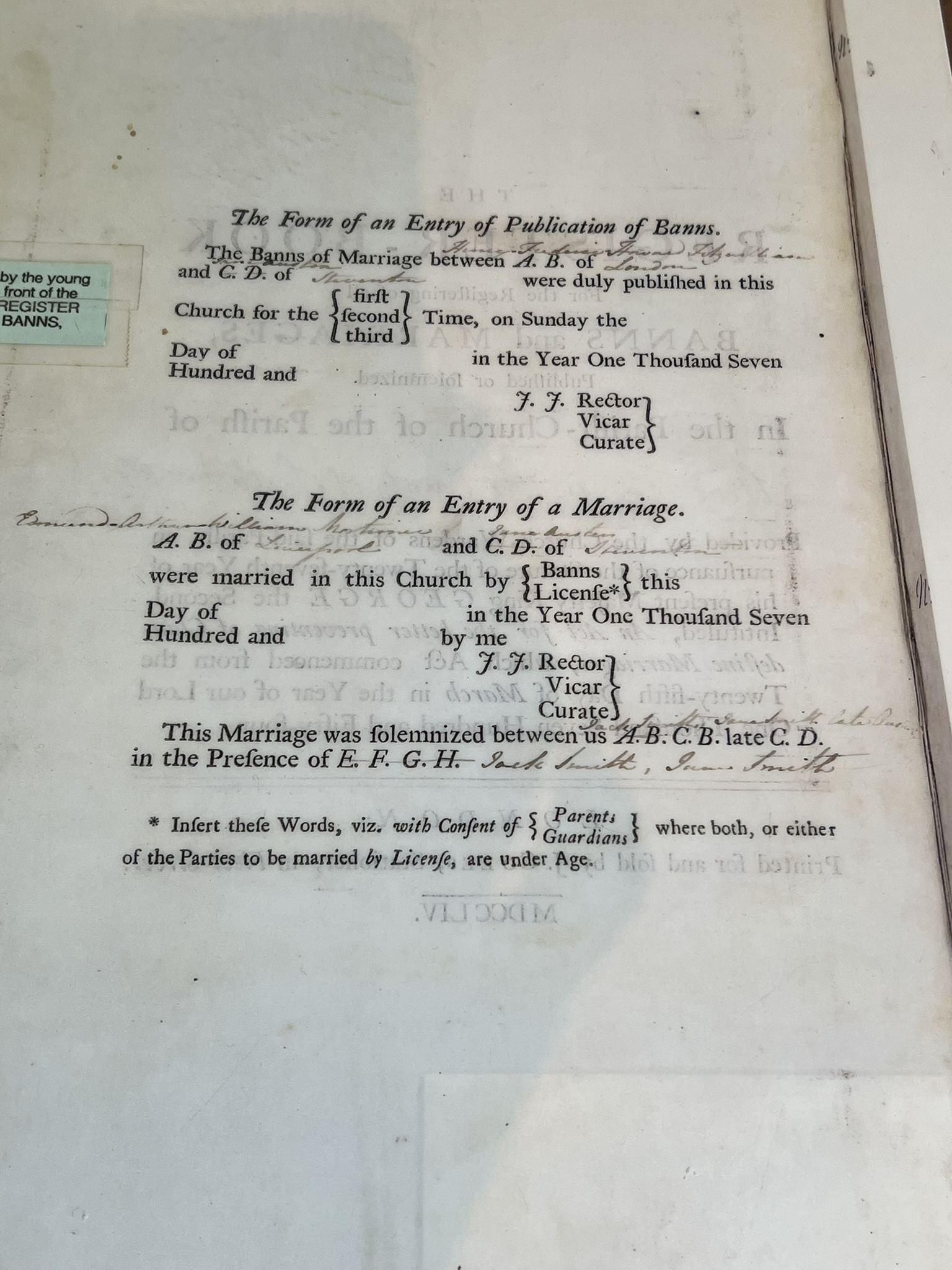
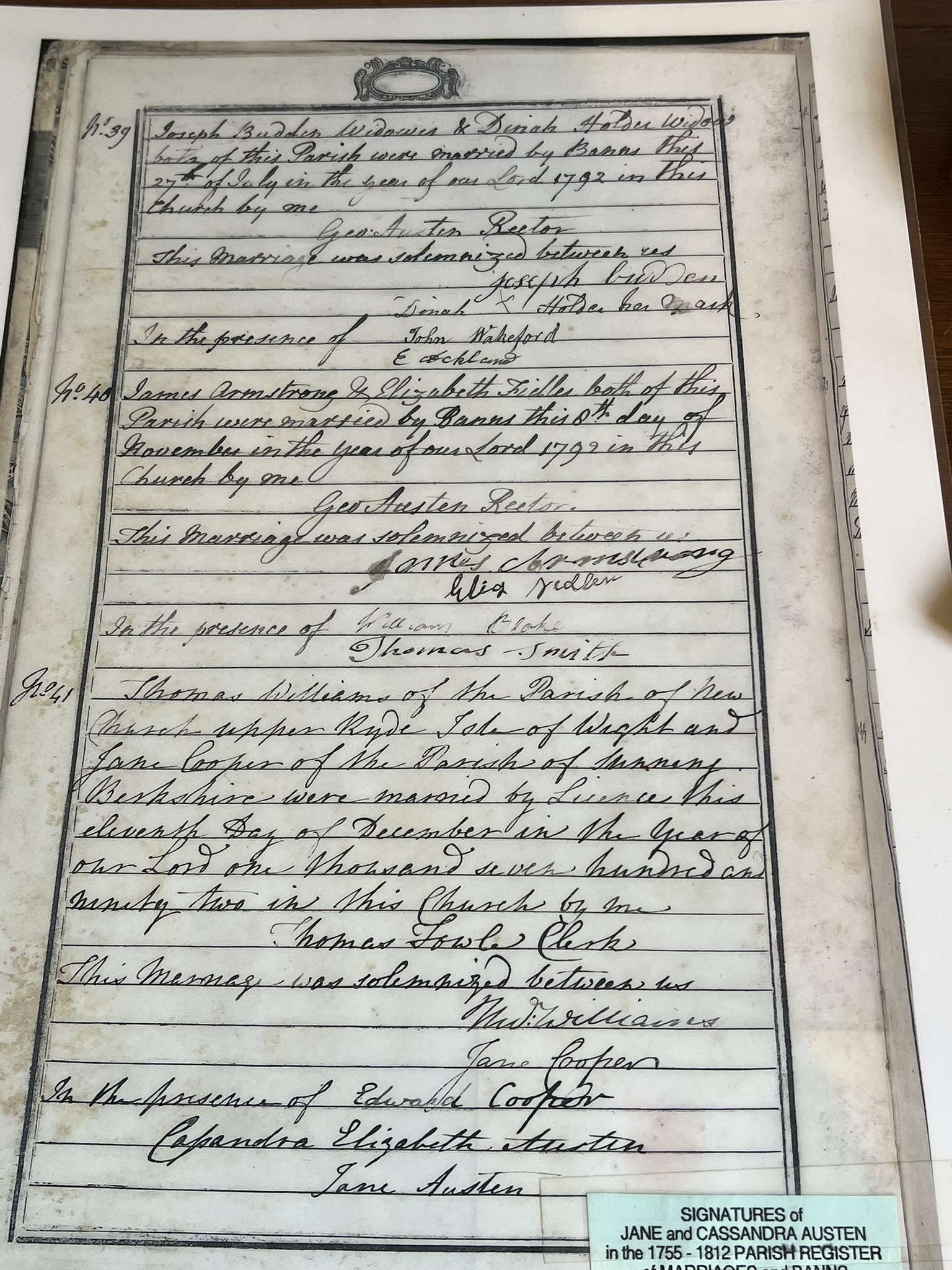
And some of the documents that Jane had written in, in one or more of her imaginative fits marrying herself off to various people, as well as her serving as a witness to a marriage (Kenning noted that she wasn’t actually old enough to serve as a witness, so what does that do the married couple?!]:
–
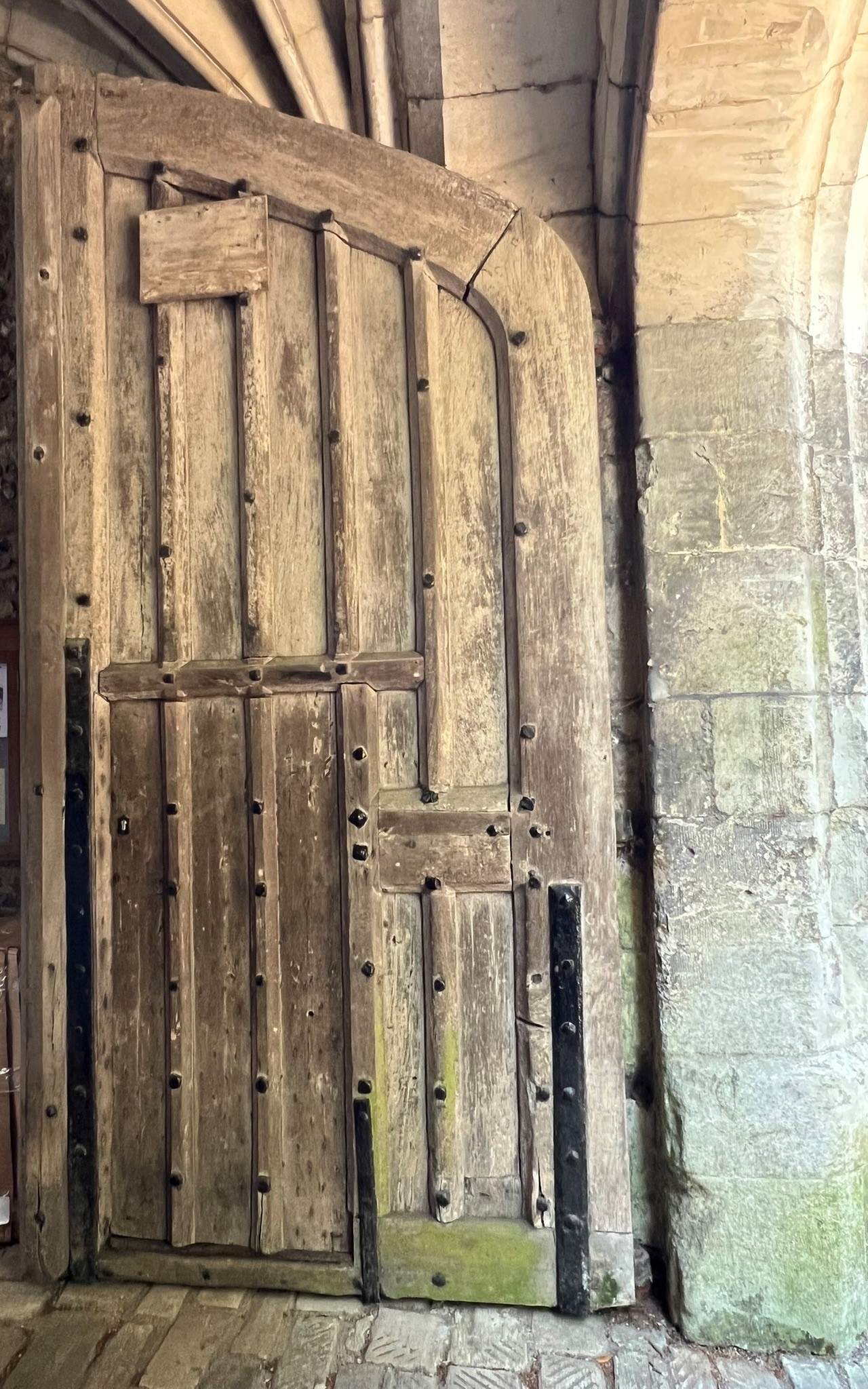
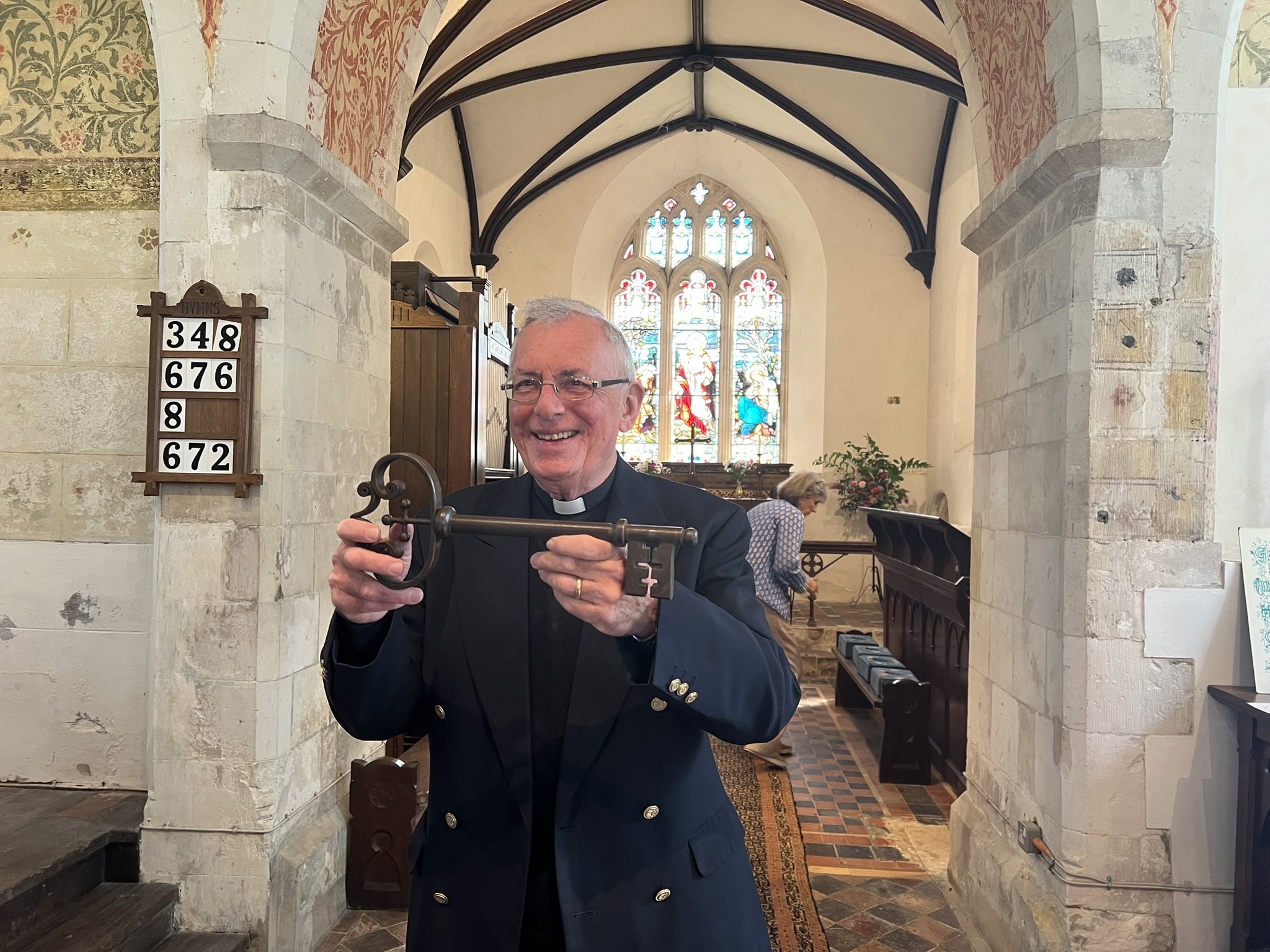
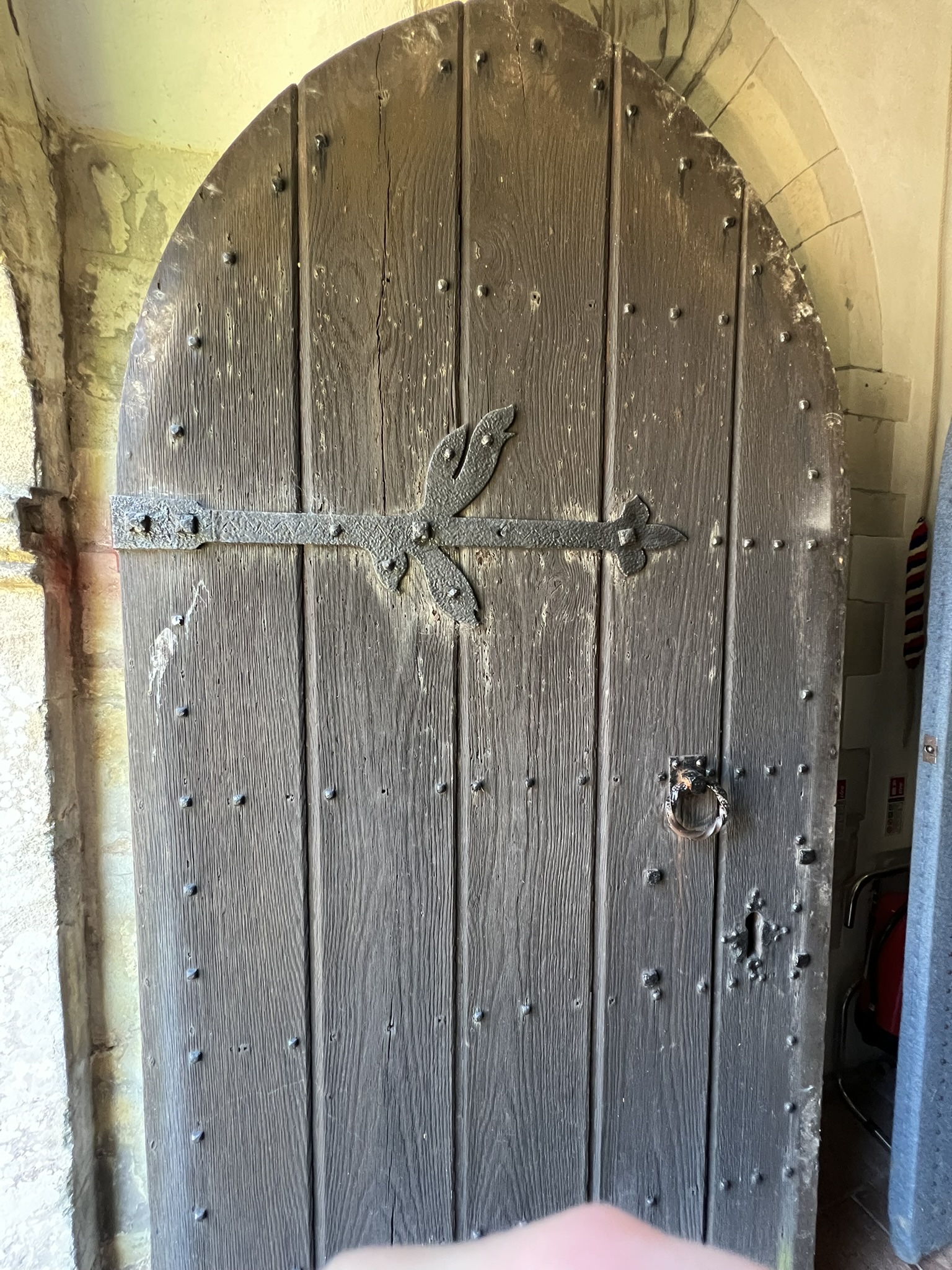
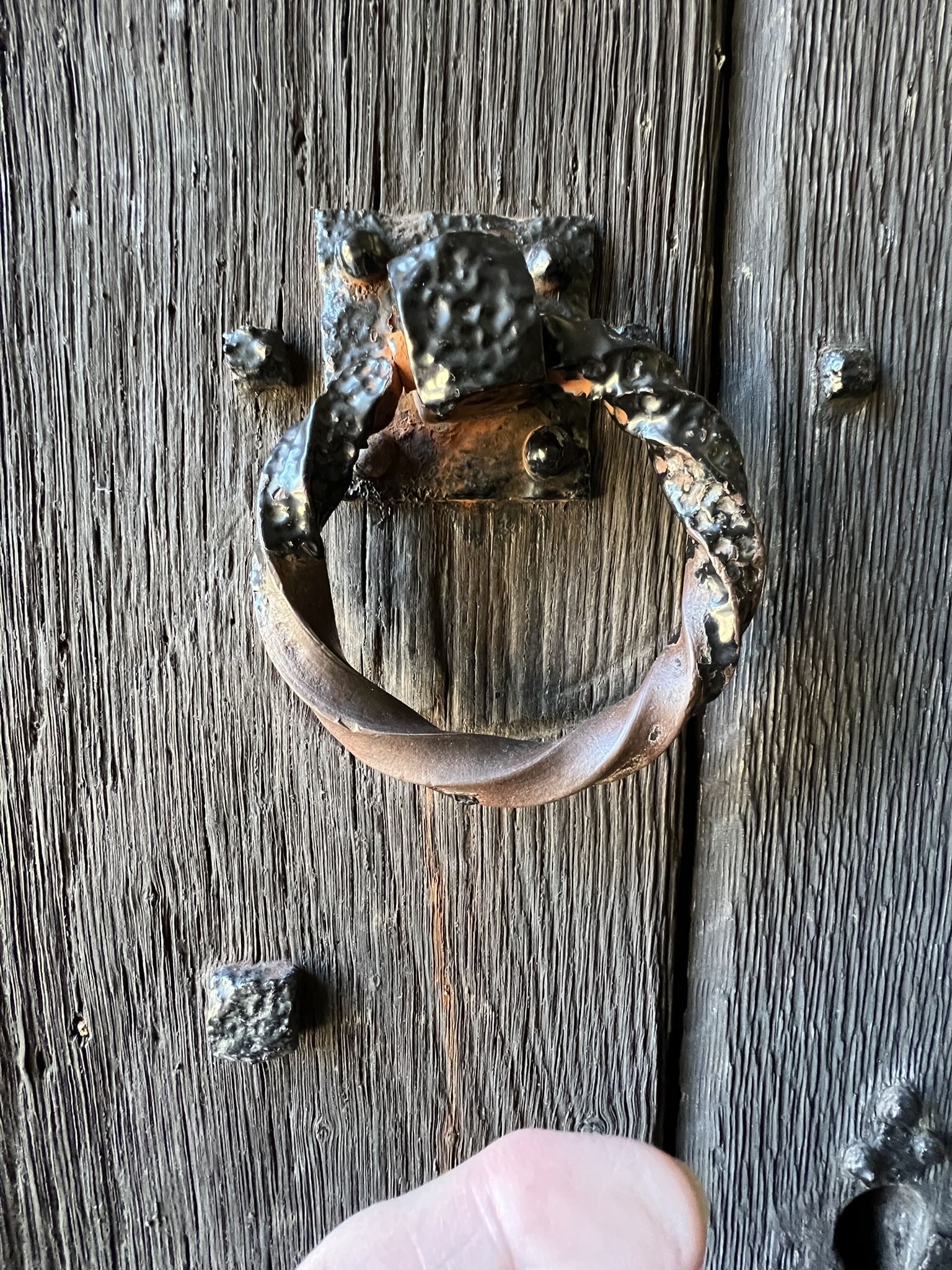
Kenning also showed us the massive and heavy key to the church – the door having a lock that was unmanageable, the key hidden in a nearby tree [did EVERYONE know this?!]
–
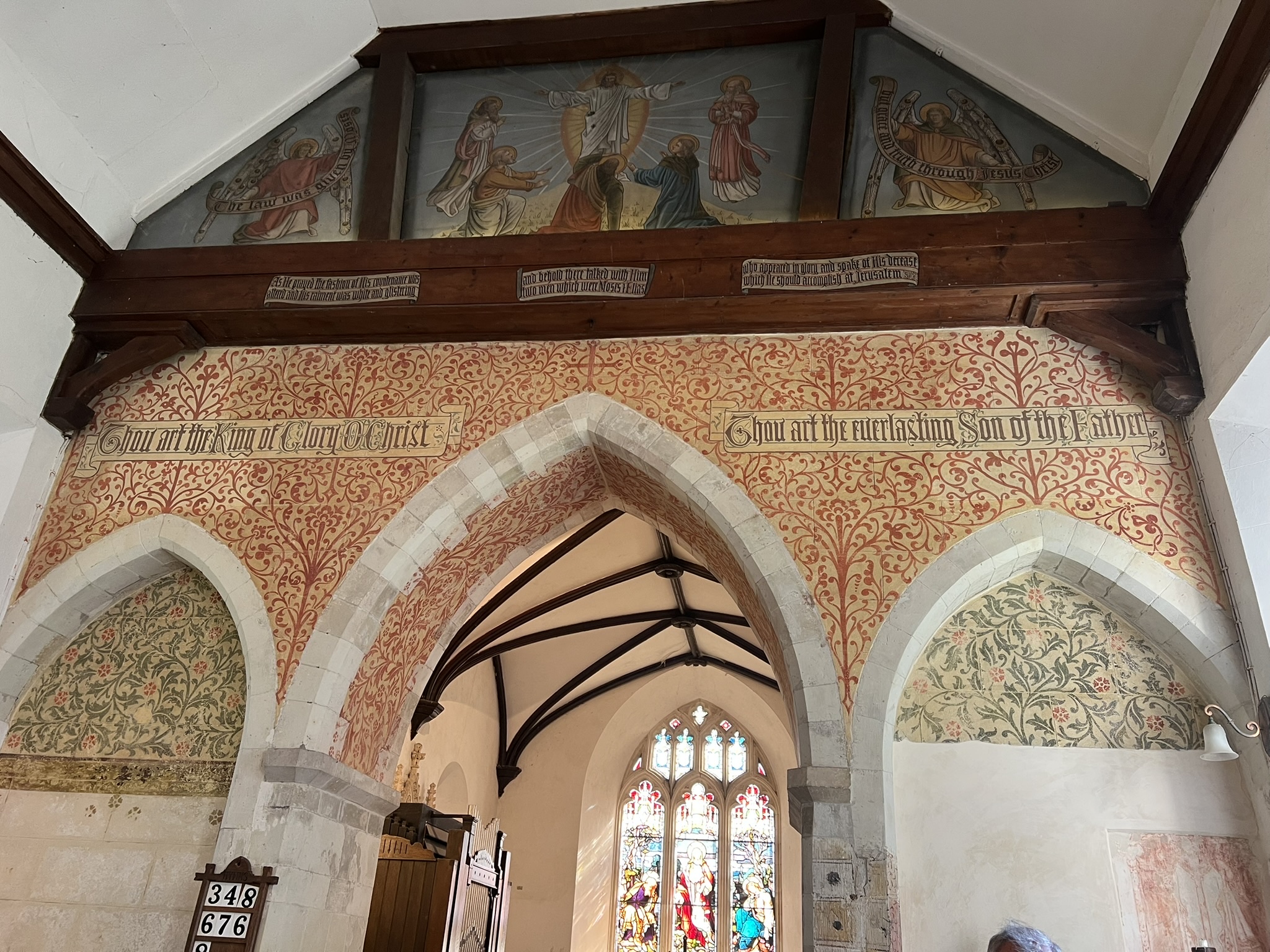
The church interior is lovely, with these William Morris-like decorative designs, but not there during Austen’s time.
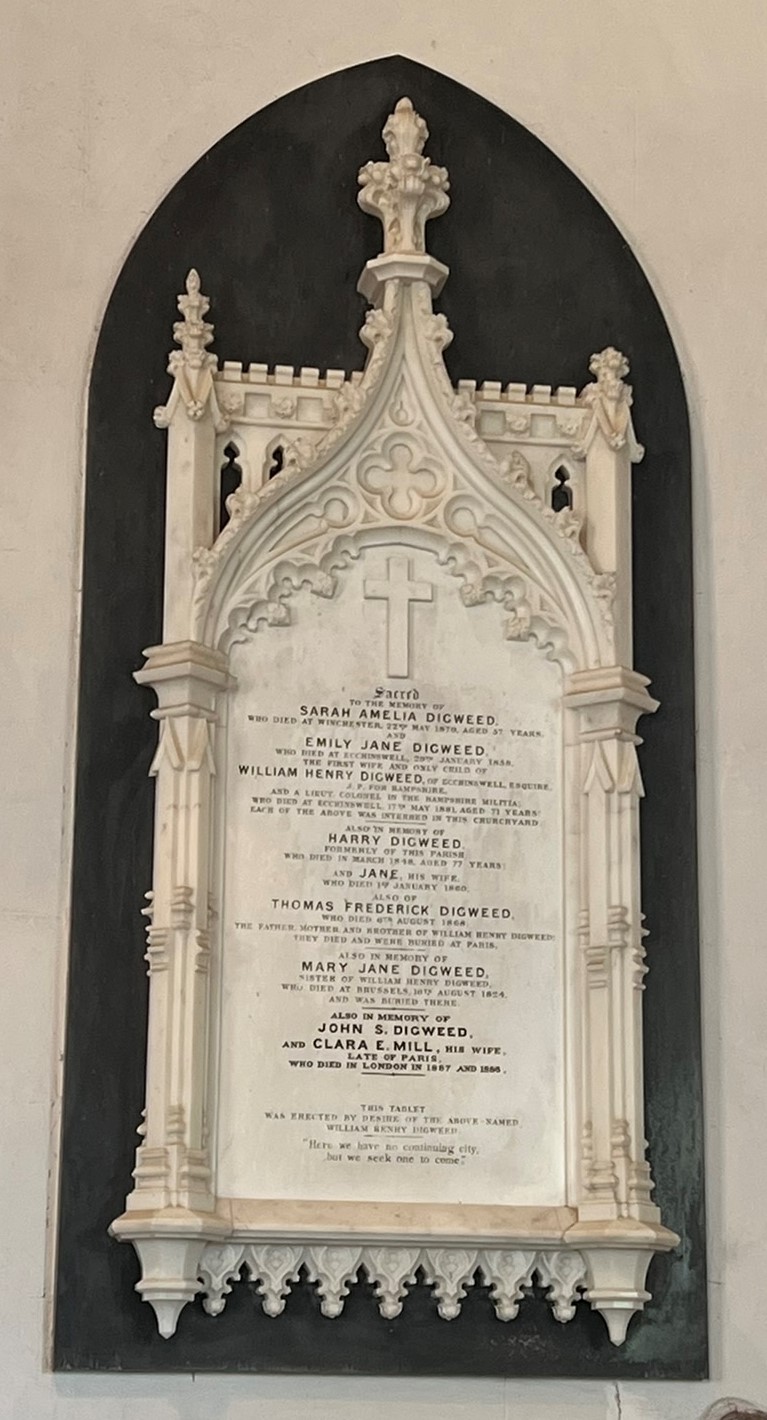
The Austen neighbors the Digweed family are very present with large memorials and many graves in the churchyard:
–
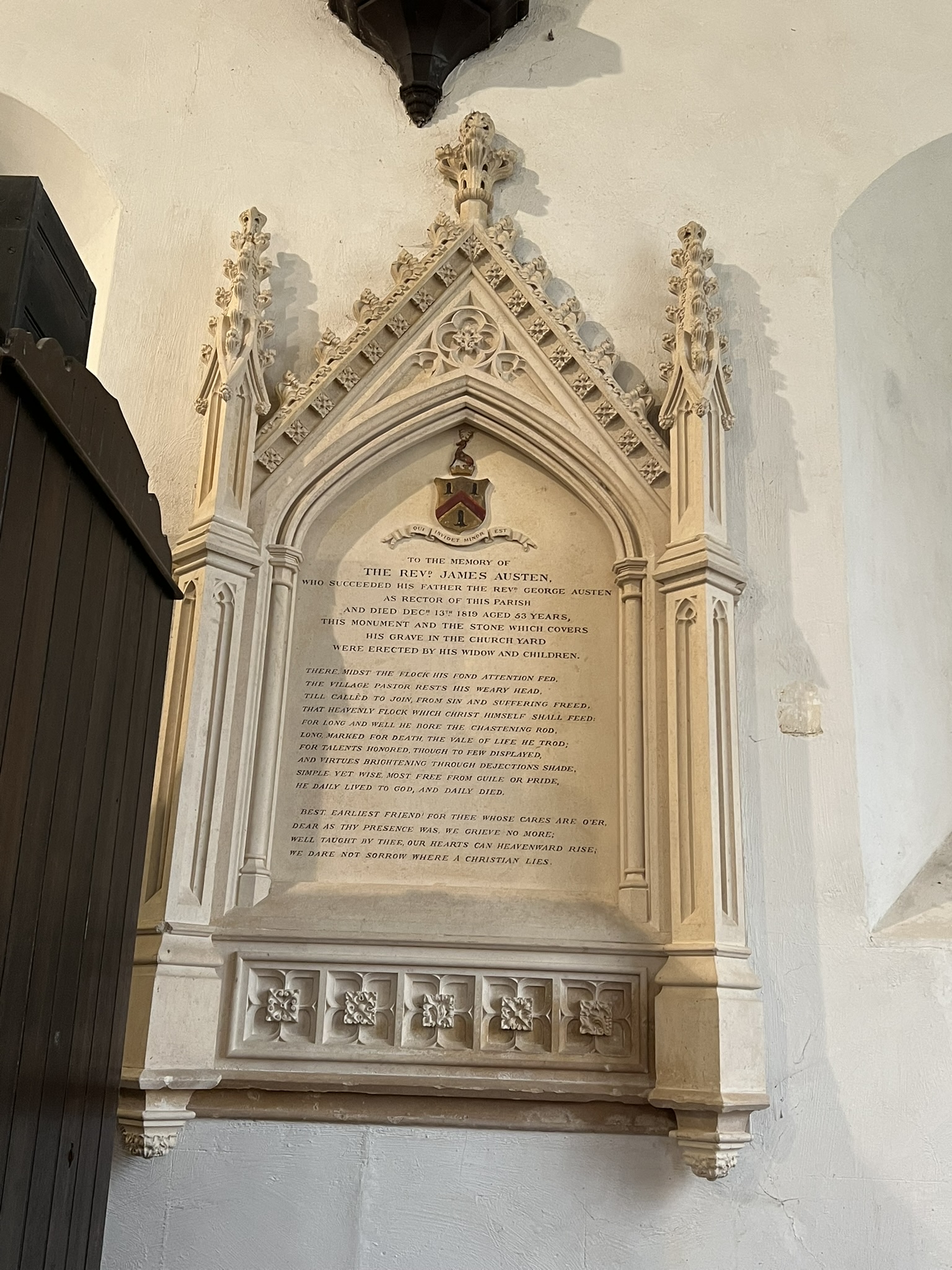
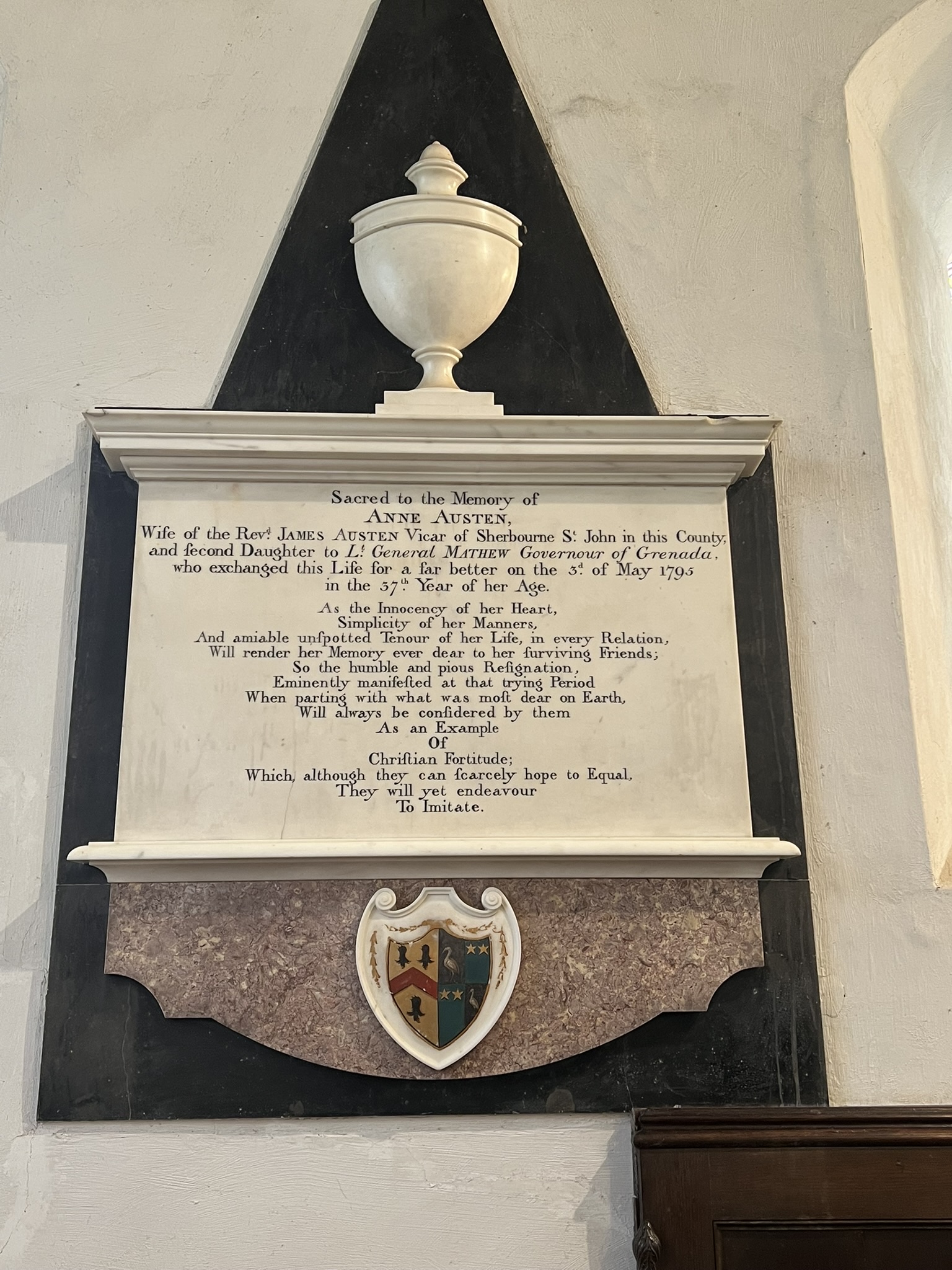
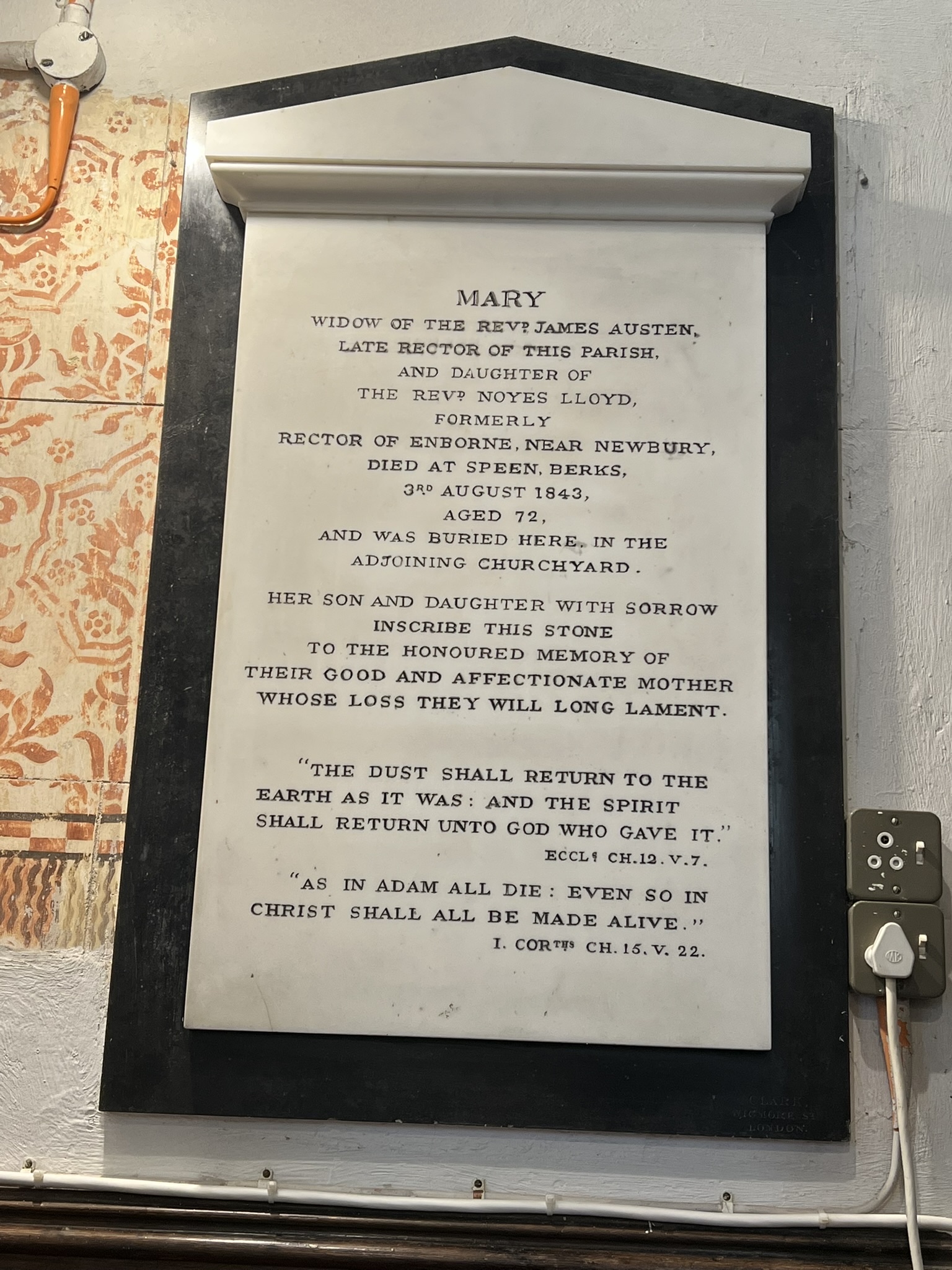
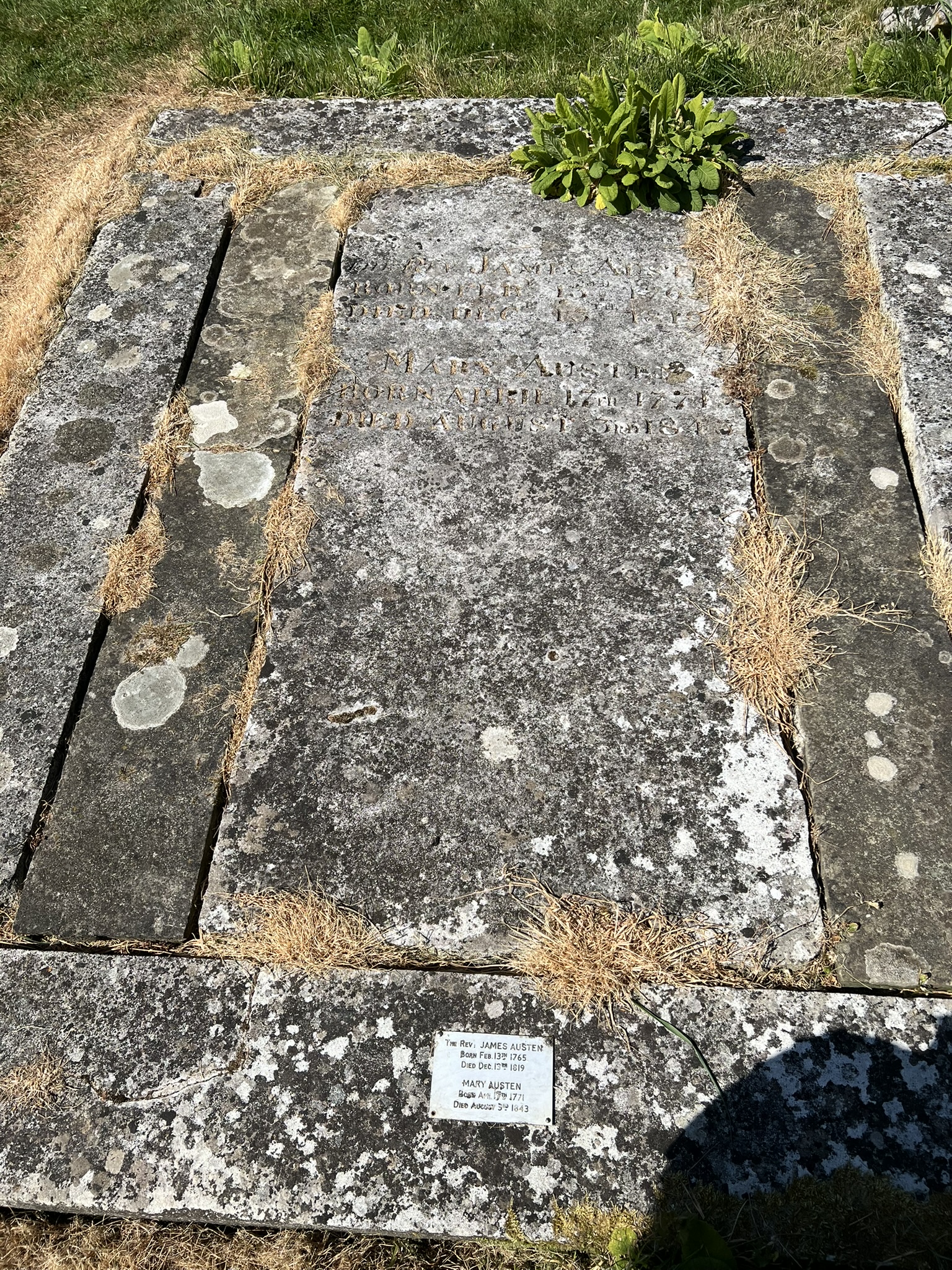
James Austen has a few memorials and is buried in the churchyard – it states that Mary Lloyd Austen is buried here, but no mention of Ann, his first wife, though records show she is buried here as well…
**************
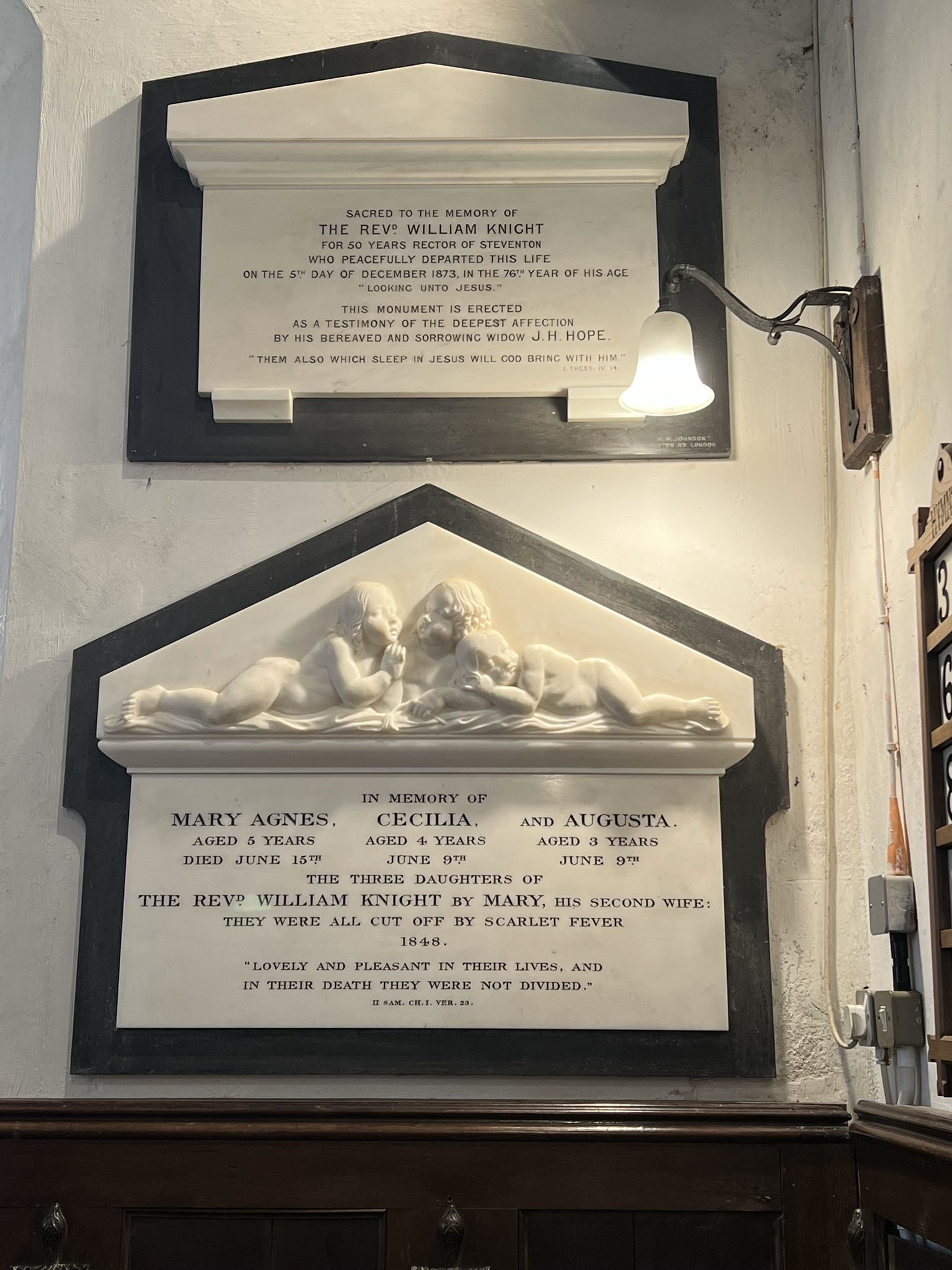
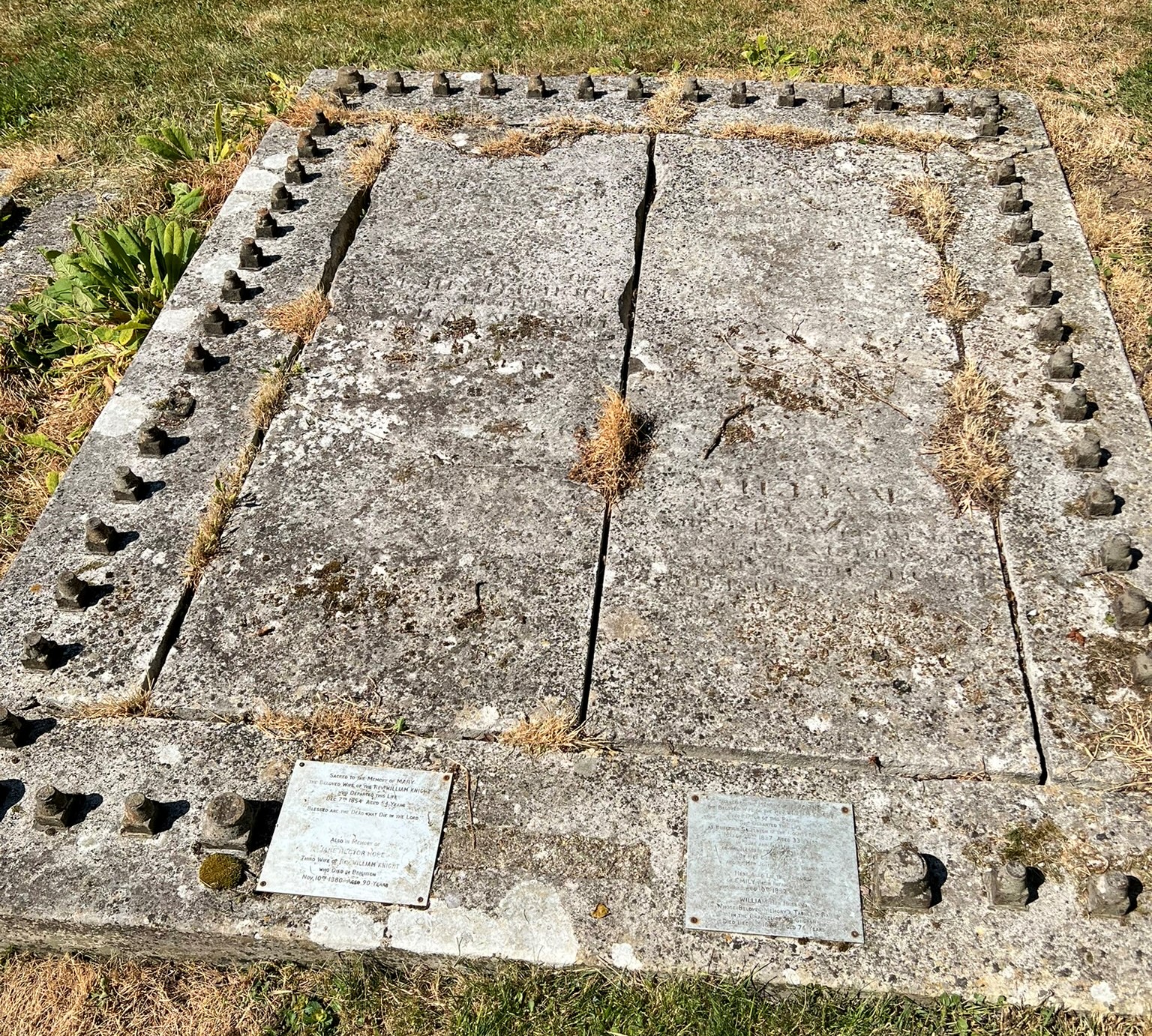
A sad memorial to encounter is the one for William Knight, Jane’s nephew [Edward’s son] – he was rector here from 1823-73. This memorial shows the death of his three young daughters within days of each other from scarlet fever – and the graves in the yard:
The iron pieces at the edge of the grave indicate there would have been an iron-fence enclosure around the grave – many such metals were removed for use during wartime in the 1940s.
I have already written a bit about the parsonage that Austen grew up in – and while today there is nothing but the pump to give us a sense of time and place, when William became the rector, Edward Austen demolished the Steventon Rectory, his own boyhood home, and built a new one for William on higher ground – sometime in around 1826 [it is all quite confusing as these two blog posts about Steventon indicate]:
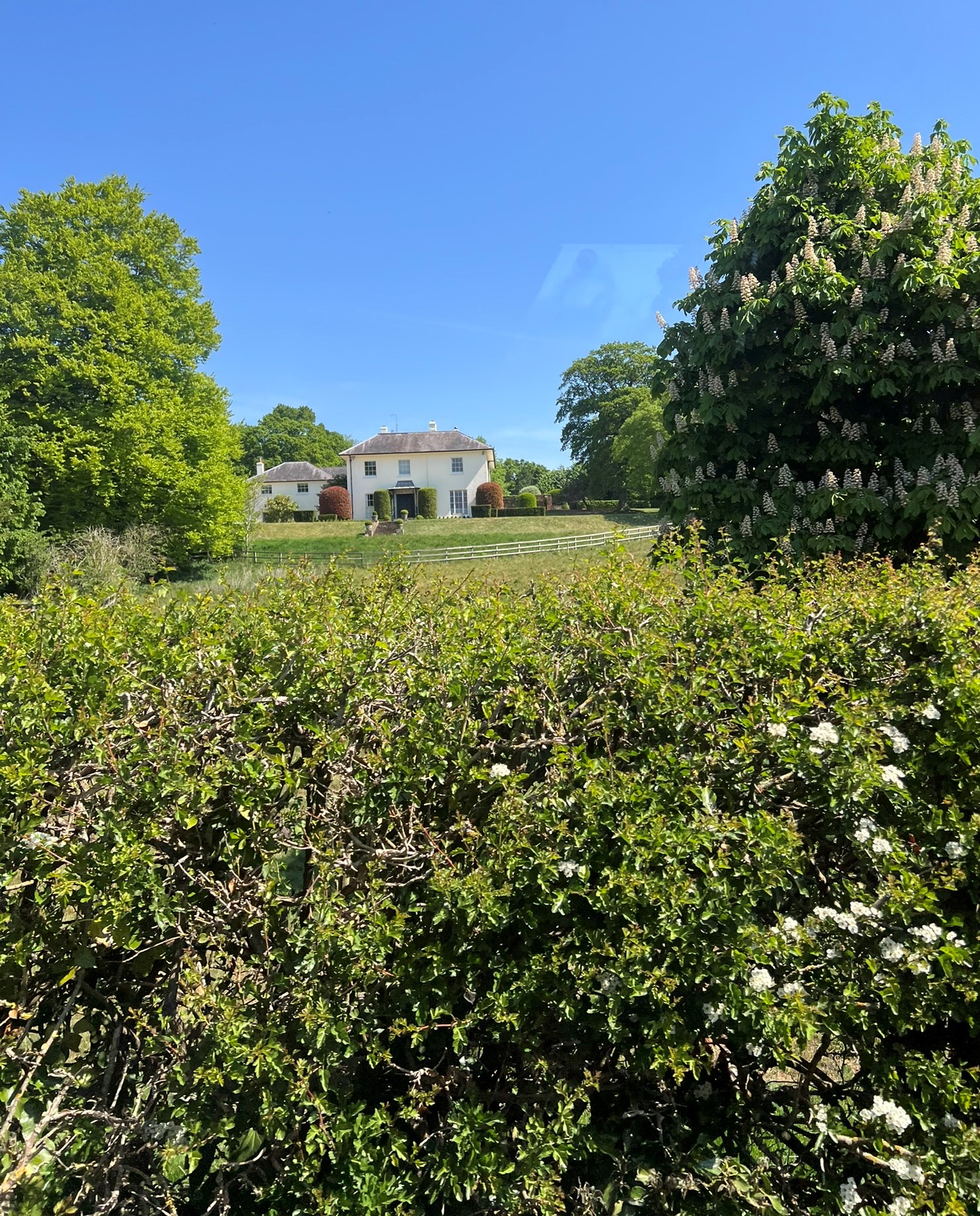
…..and was recently on the market – here a grand example of just how wrong some real estate listings [and history in general] can be: this Steventon House [as it is called] was not built on the same location where Jane Austen lived and wrote…
We then headed back to Winchester for some time on our own to explore the city – the afternoon finding us at the Hampshire Cultural Trust, which I shall write more about in a Day 6, Part 2 post…so much there to talk about! [think the “pelisse”… and do not faint…]
First, we traveled on our bus today to Goodnestone [did I mention yet our very-talented bus driver on this trip, Paul? A master of small lanes, hedgerows, and city maneuvers, Paul brought his expertise, patience (with all the Jane talk!), and humor to each day. The bus was smaller than the average bus, but with NO SIDE MIRROS, which proved his abilities beyond possibility…[I have a picture thanks to Joy!..]
– but I bring this up because today, traveling down a country lane on the way to Goodnestone, this big red behemoth attracted a herd of sheep like none of us have ever seen – unlike a Gary Larson cartoon, where the cows keep eating and ignoring the passing-by humans, these sheep raced to the fence to visit the huge bus – did they think it was their Mother?? Many of us got out to greet them, all running toward us – whatever they expected or what was on their minds we were unable to determine – but it gave us all a good laugh and we felt more welcomed than ever to the Kent countryside [I did have a Thomas Hardy moment of all the sheep racing to and jumping over the cliff edge in Far From the Madding Crowd, one of the most distressing moments in 19th century literature…but no such sad outcome for us – the fence stopped any such disaster and we just bid them all adieu and continued our journey smiling all the way…]
Goodnestone was the family home of Elizabeth Bridges, wife to Edward Knight. Brook Bridges purchased the home in 1704 [more on him in a bit…] – it remains in the family and now you can visit the house and gardens and it serves as a wedding venue. I was looking forward to seeing this house and having tea there, but alas! our plans were sent all askew by a film crew taking over the house for a “Married at First Sight” filming… the UK series has been on TV since 2015 – I did watch ½ an episode on TV while there and was quite stupefied by its stupidity…but if it helps support the Goodnestone estate, then that is a mere quibble of taste…
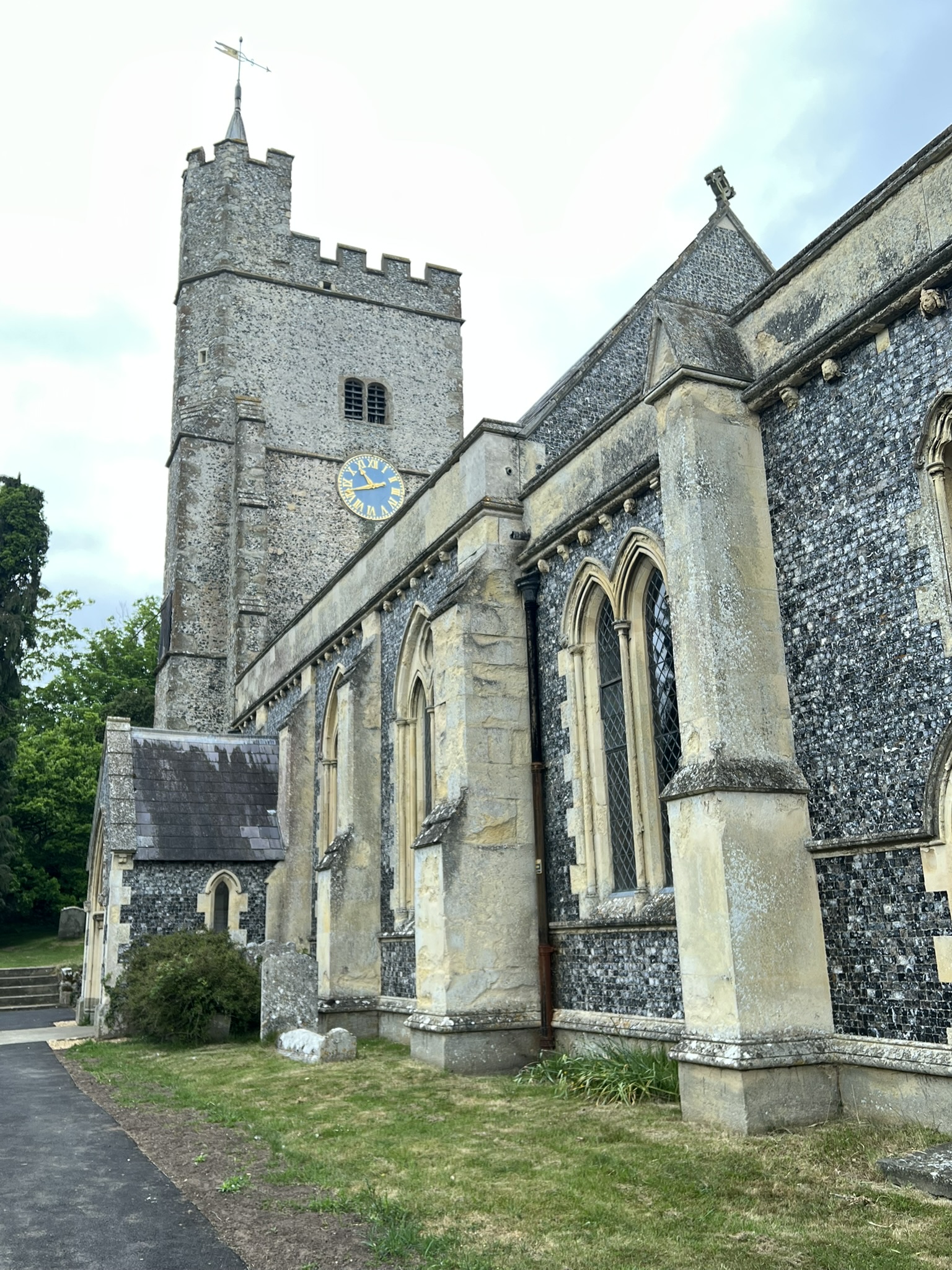
So, only distant shots, and a visit to the Church of the Holy Cross, where we were introduced to one of the family who gave us the low-down on the family history, and a tour around the church. This is the church where Edward and Elizabeth were married – it was actually a double wedding [Elizabeth’s sister Sophia and William Deedes], perhaps giving Austen the idea for her Pride and Prejudice double wedding of the Bennet sisters, Elizabeth and Jane.
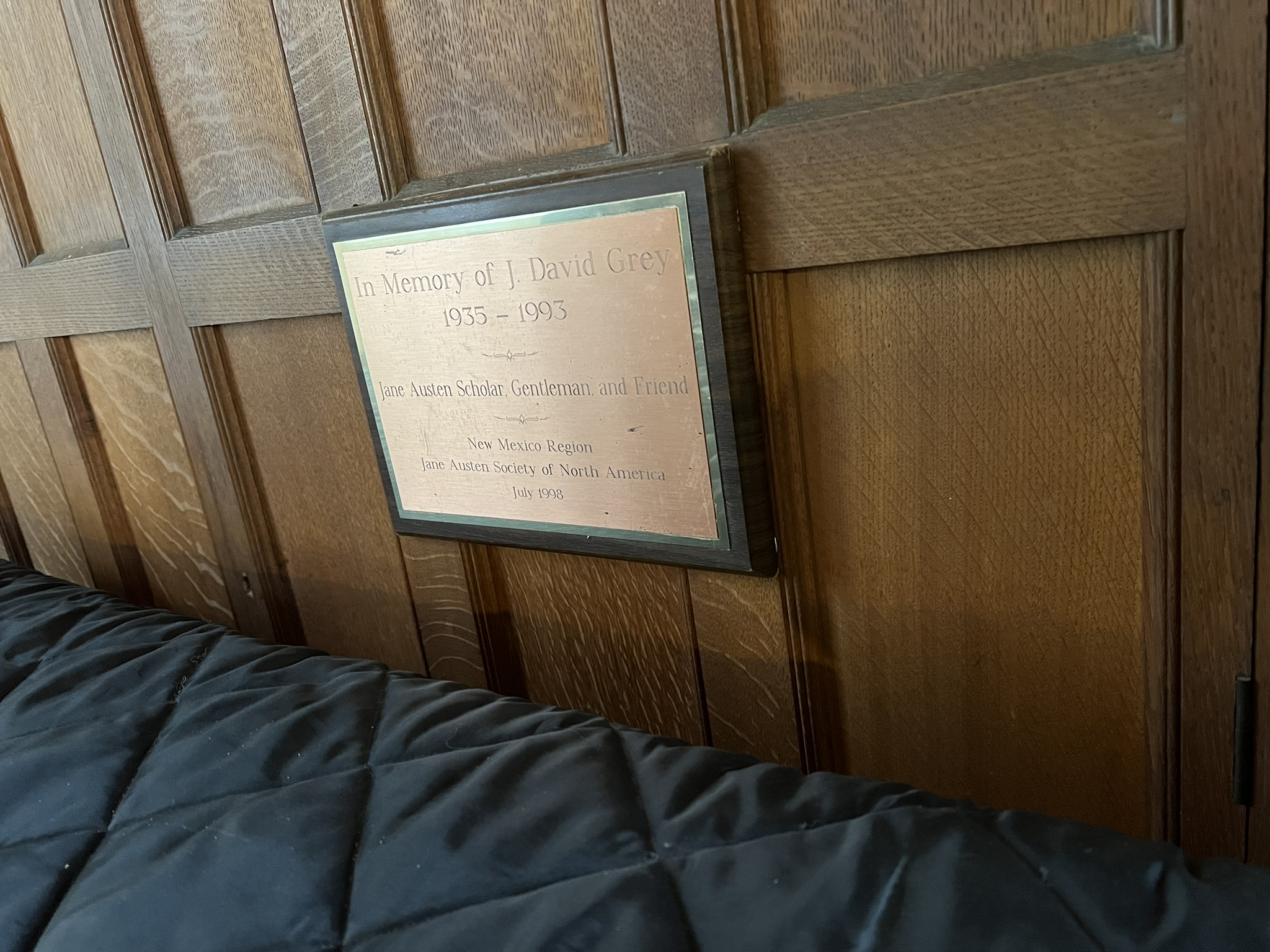
Of interest to Janeites is the plaque to J. David Grey, one of the founders of JASNA, and installed here in his memory with JASNA’s support.
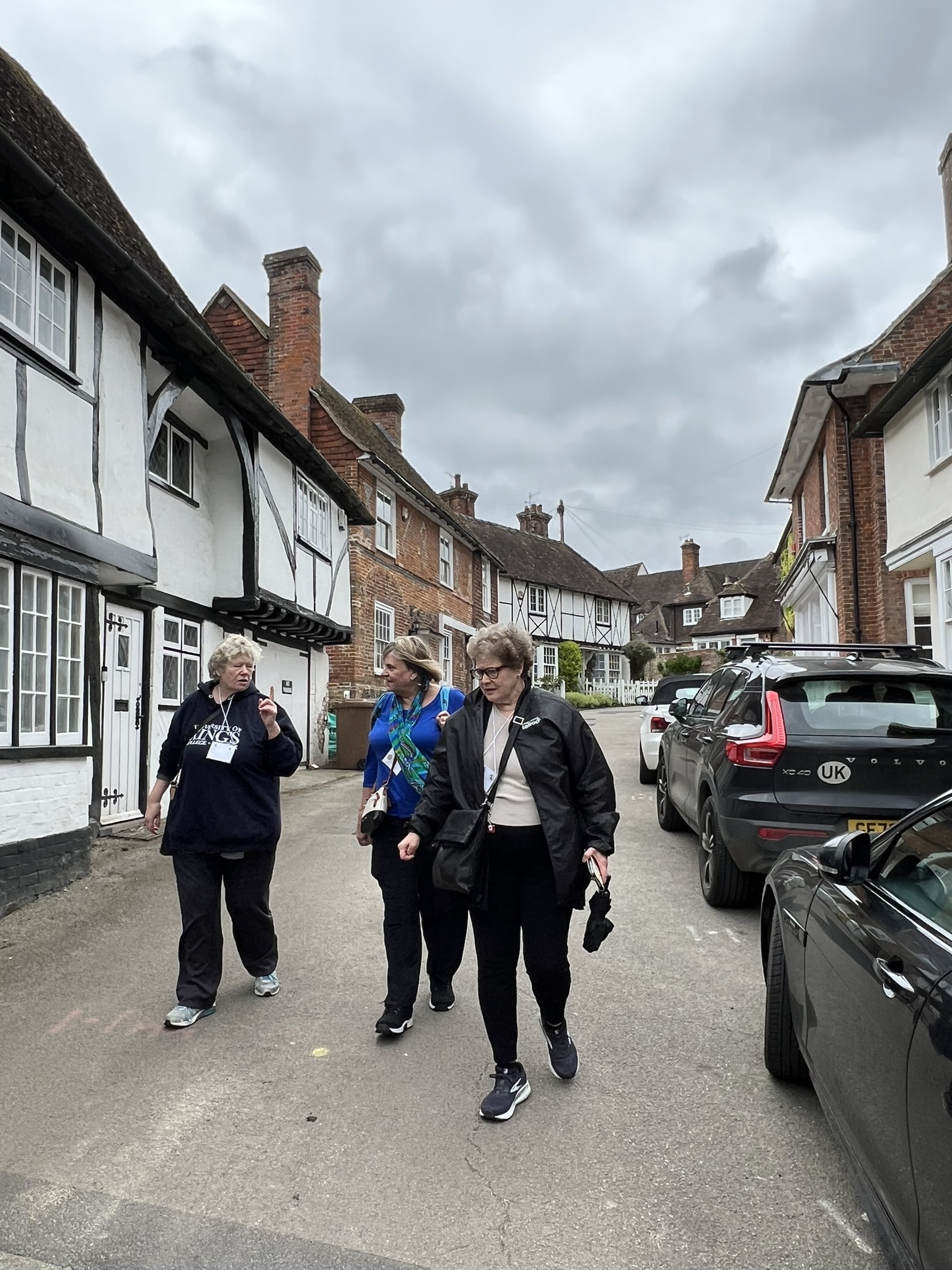
Then off to Chilham, the village that served as the location for Highbury in the 2009 Emma series. We were able to walk around the village and had lunch at the Woolpack Inn, established in 1480 [so delicious, I forgot to take a single picture!], and an appropriate spot considering our sheep welcome…
***********
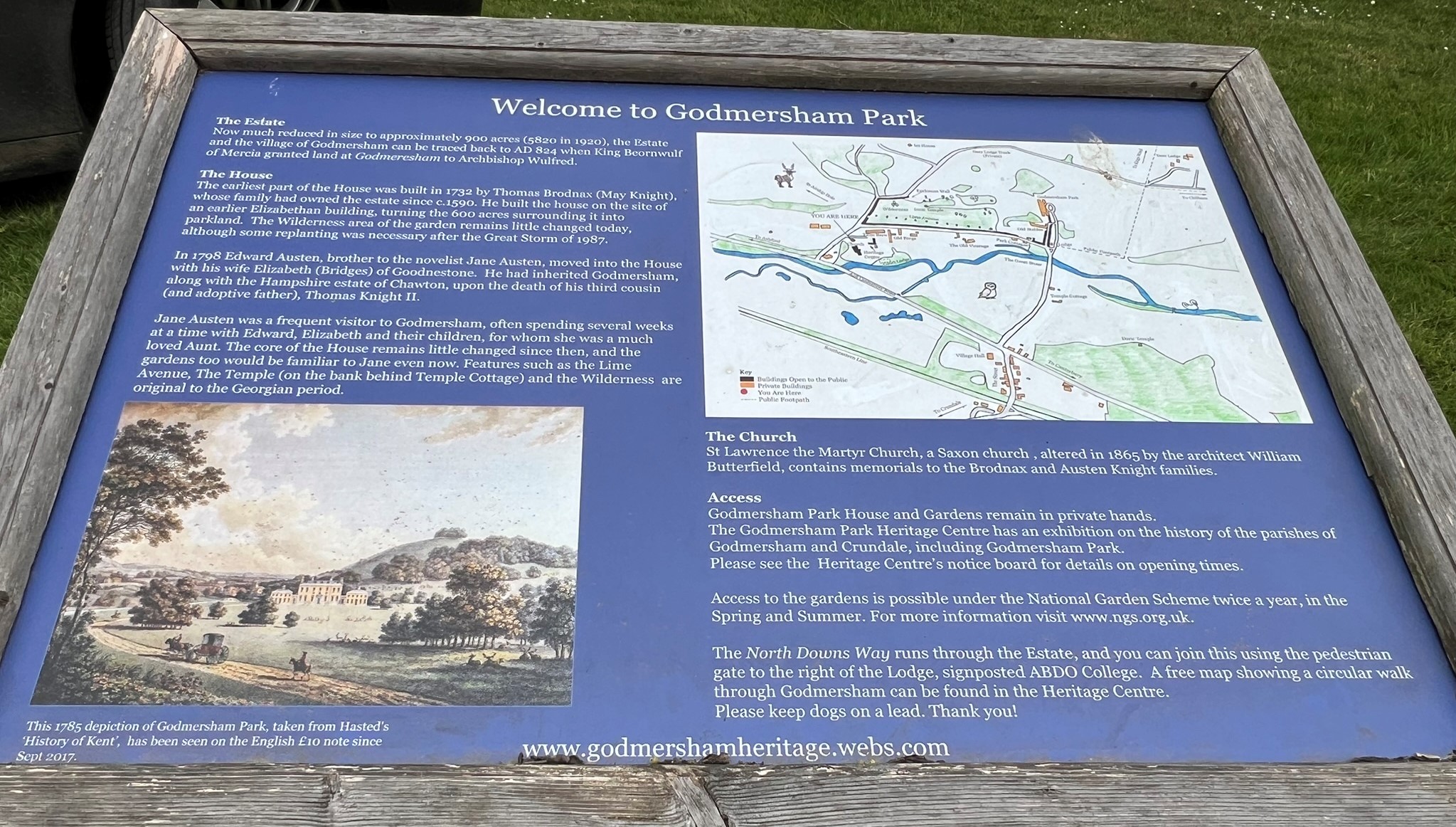
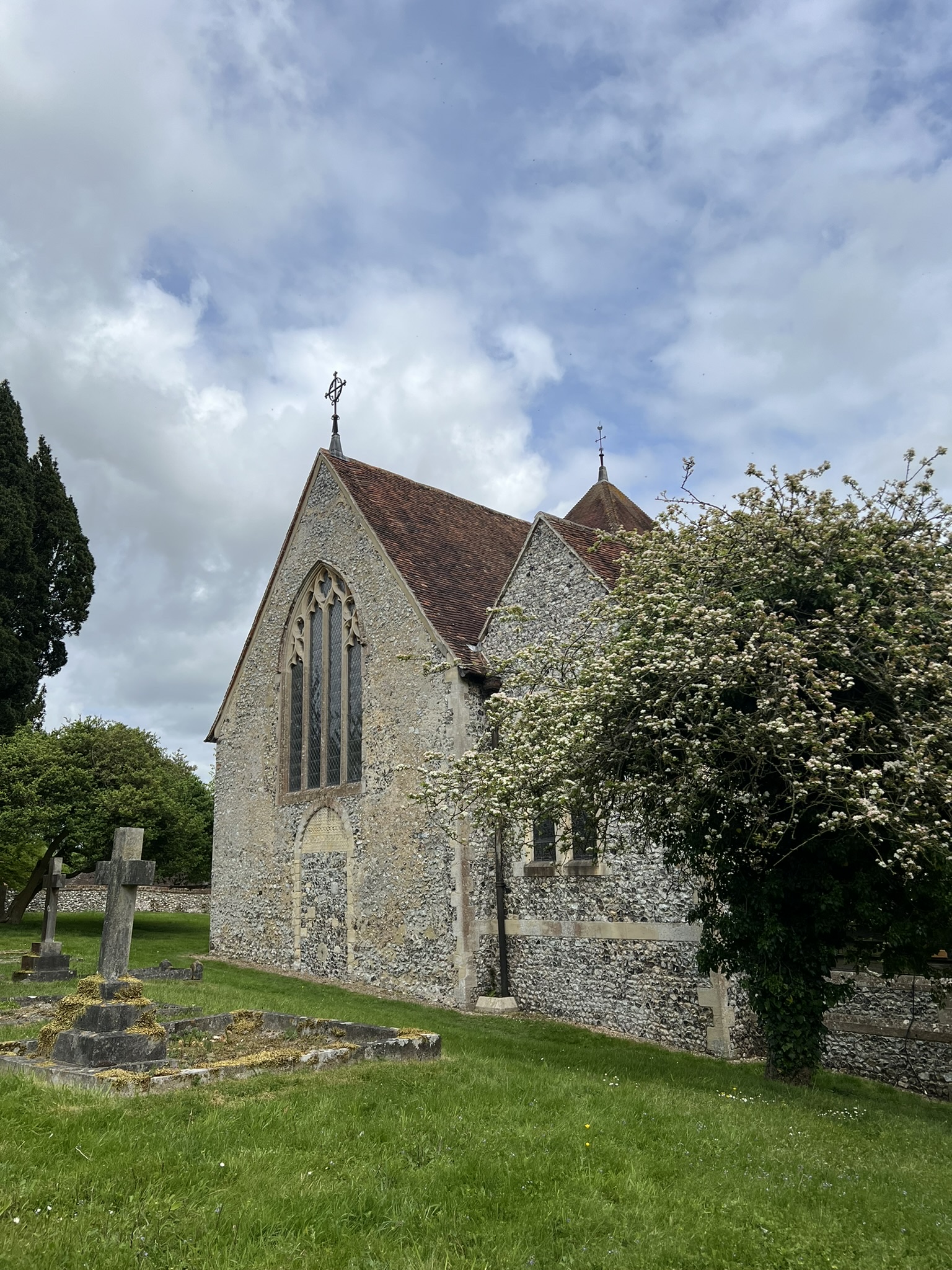
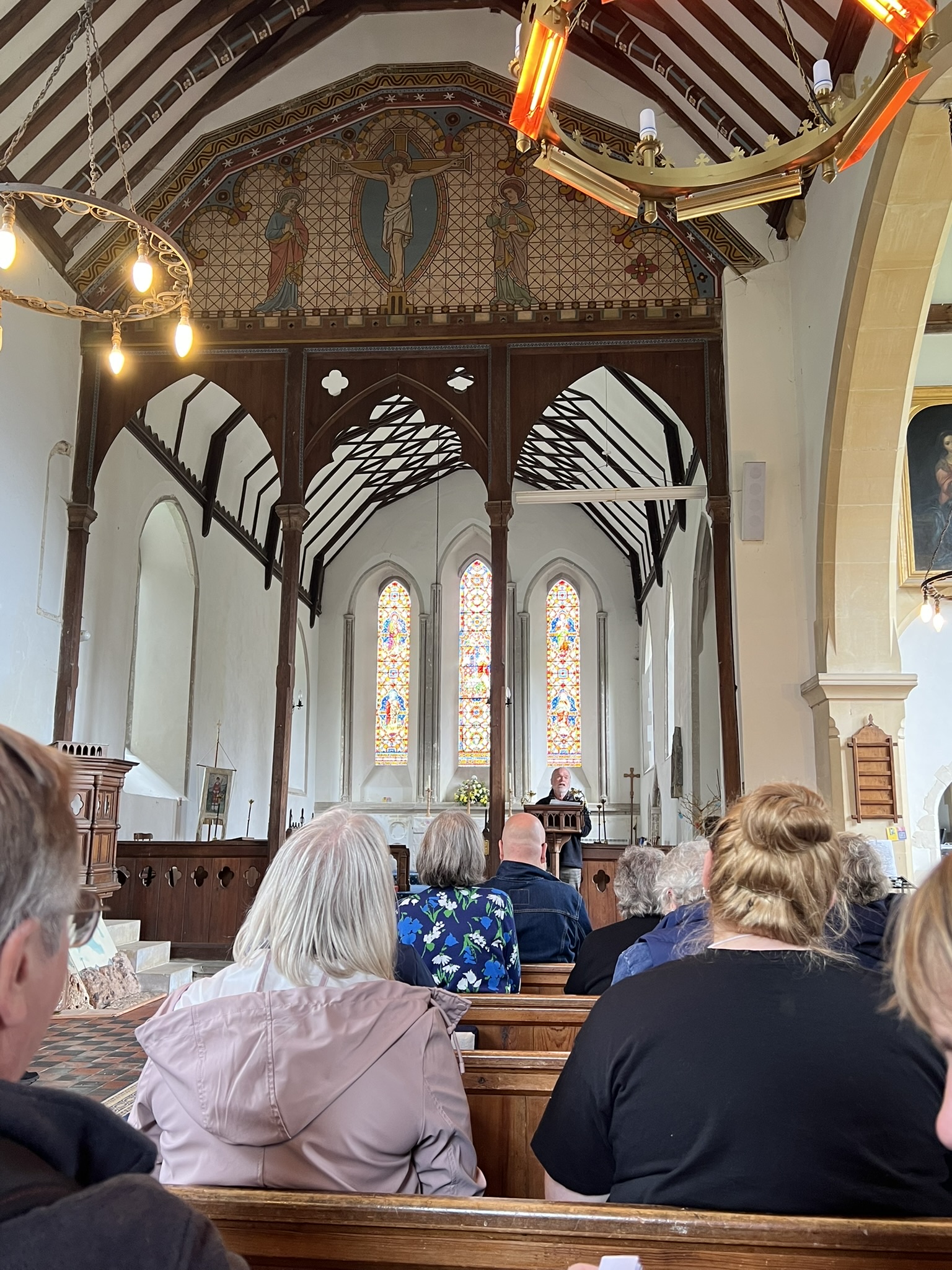
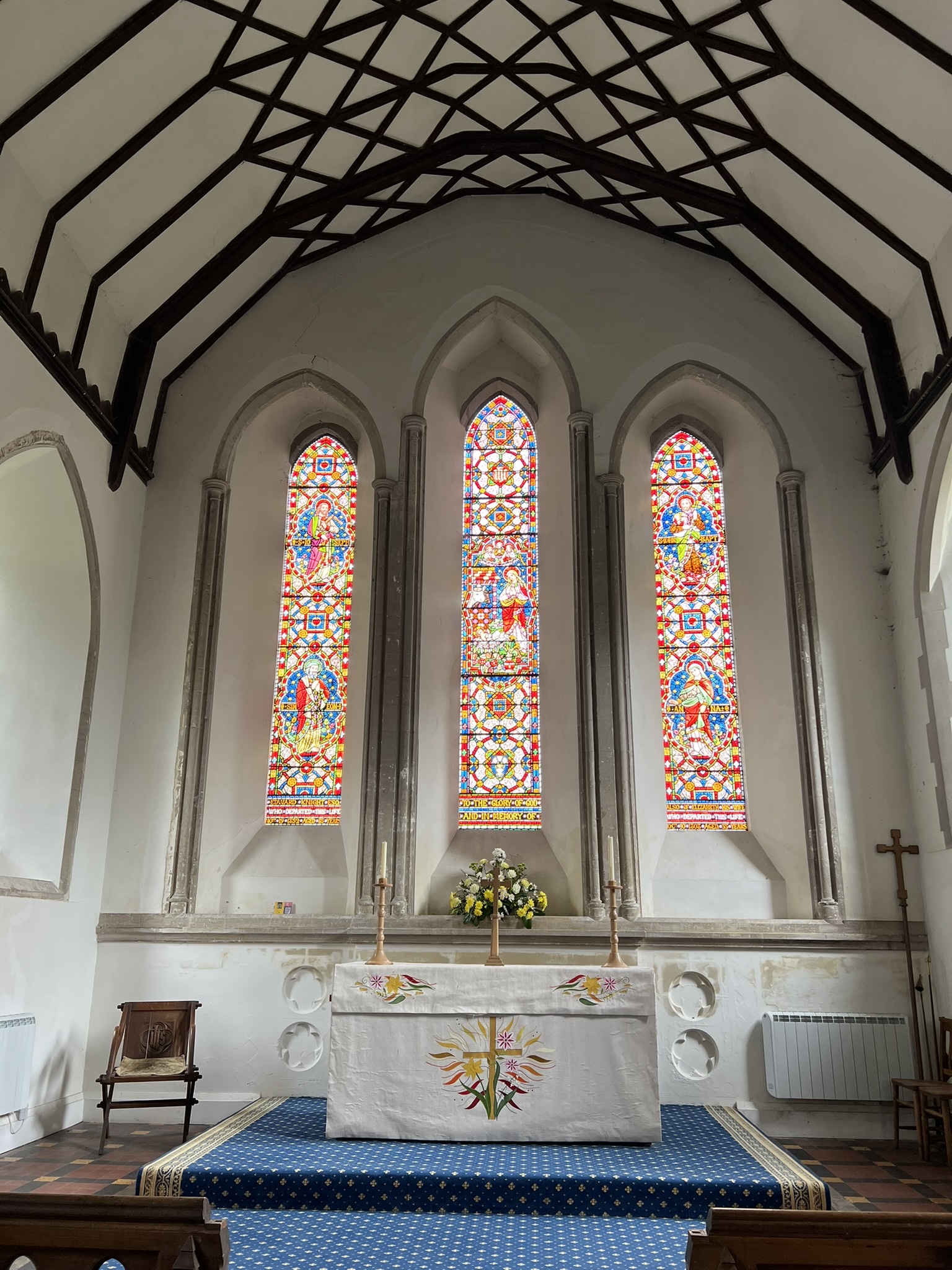
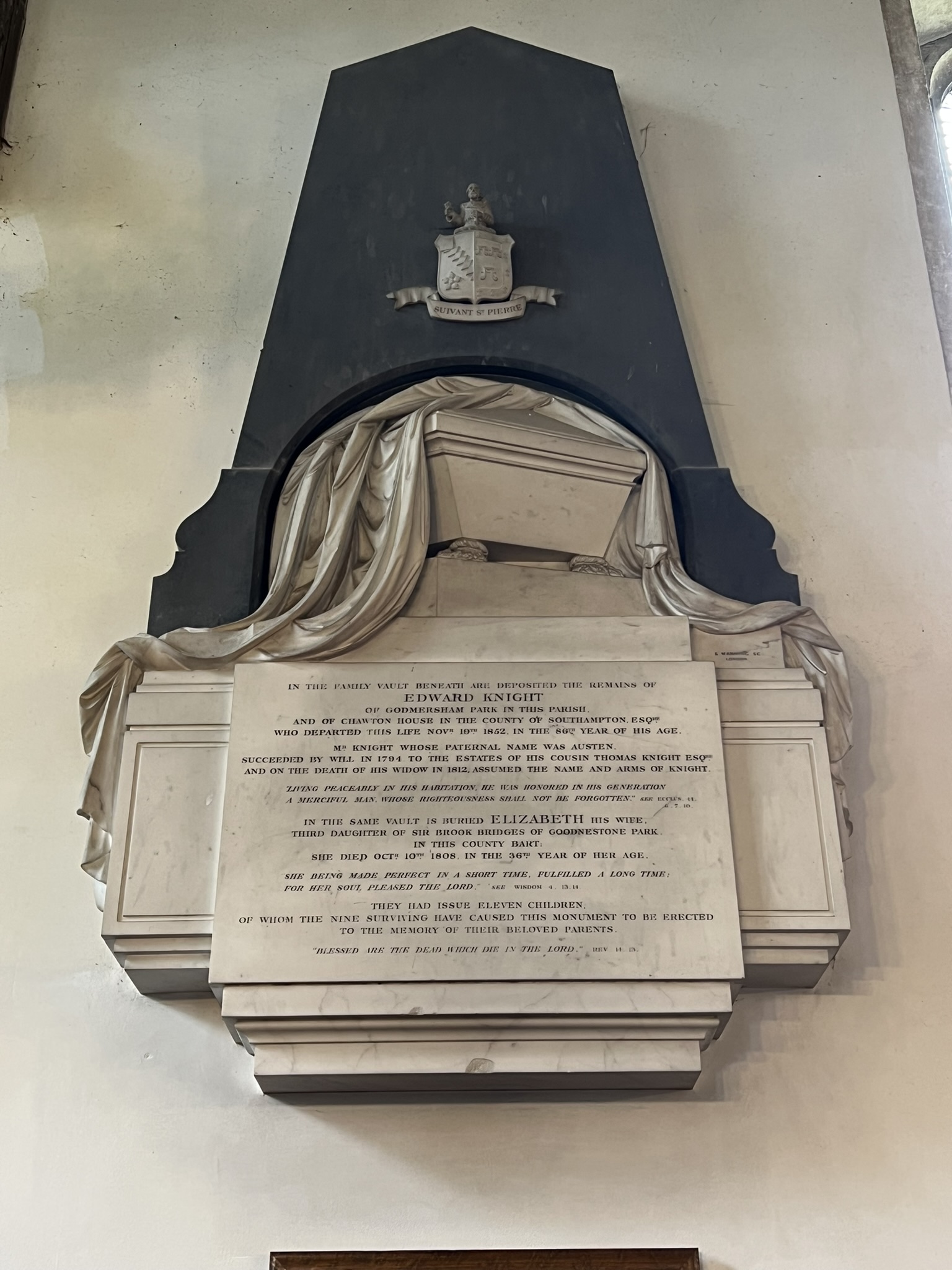
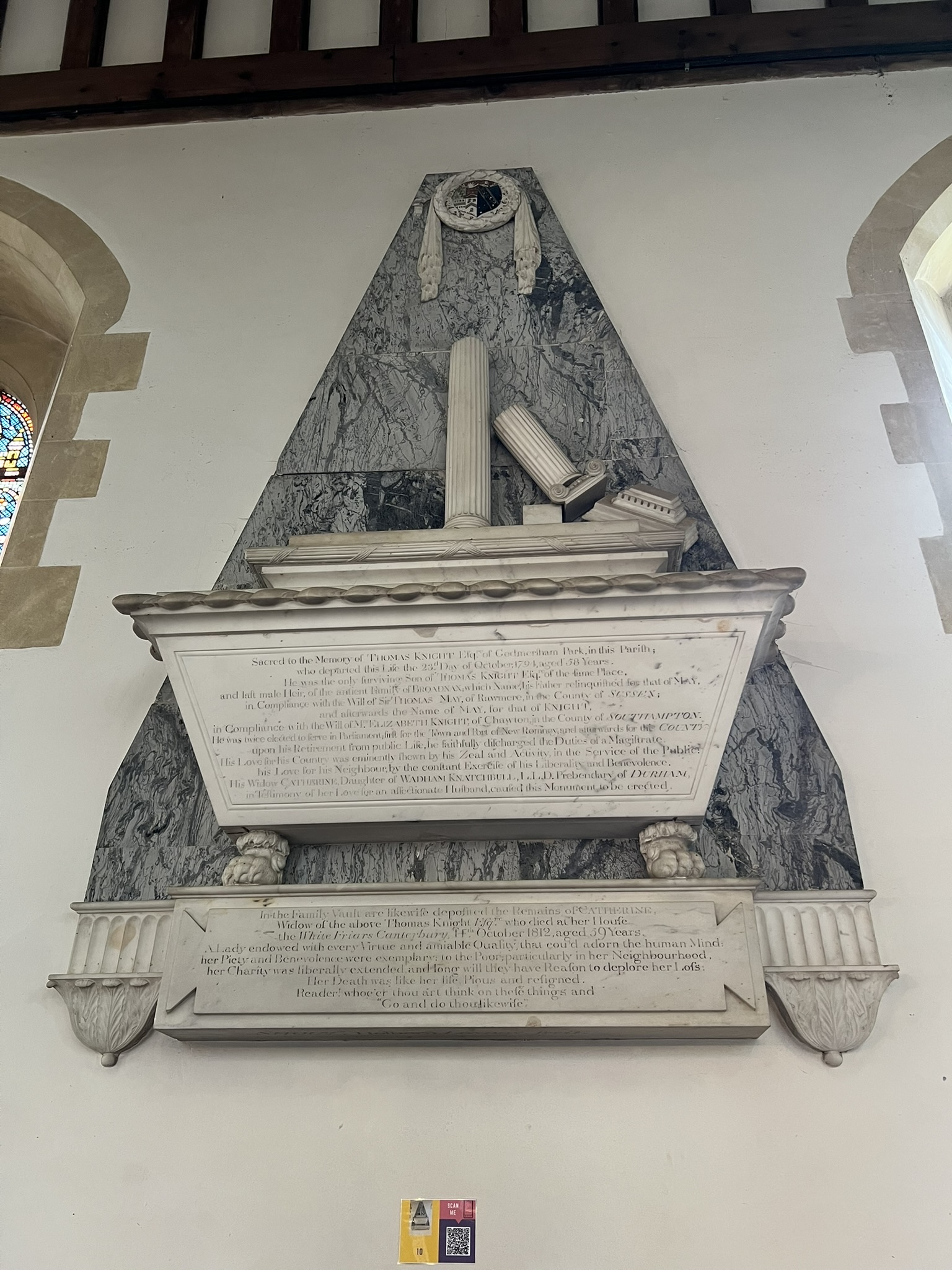
Then to Godmersham Park, my most anticipated spot on the tour. First to the Church, surprisingly not a St Nicholas, but a St. Lawrence: here we had a history lesson about its connections to the Austens.
Godmersham Park was Edward Austen’s home, inherited from his adoptive parents that required him to change his name to Knight. Here he and Elizabeth raised their 11 children [Elizabeth died after the birth of the 11th at the age of 35 in 1808] and where his extensive gentleman’s library was housed, the source of Professor Peter Sabor’s project Reading with Austen– the website offers an interactive plan of the library showing what books were on the shelves and their location as Jane Austen would have experienced. The goal of the project has also been to return as many of the books that were originally in Edward’s library if at all possible – we call ourselves The Godmersham Lost Sheep Society – you can read all about it at these links – we actively fundraise to help in the purchase of any books that might show up at auction or in booksellers’ catalogues.
Godmersham Park
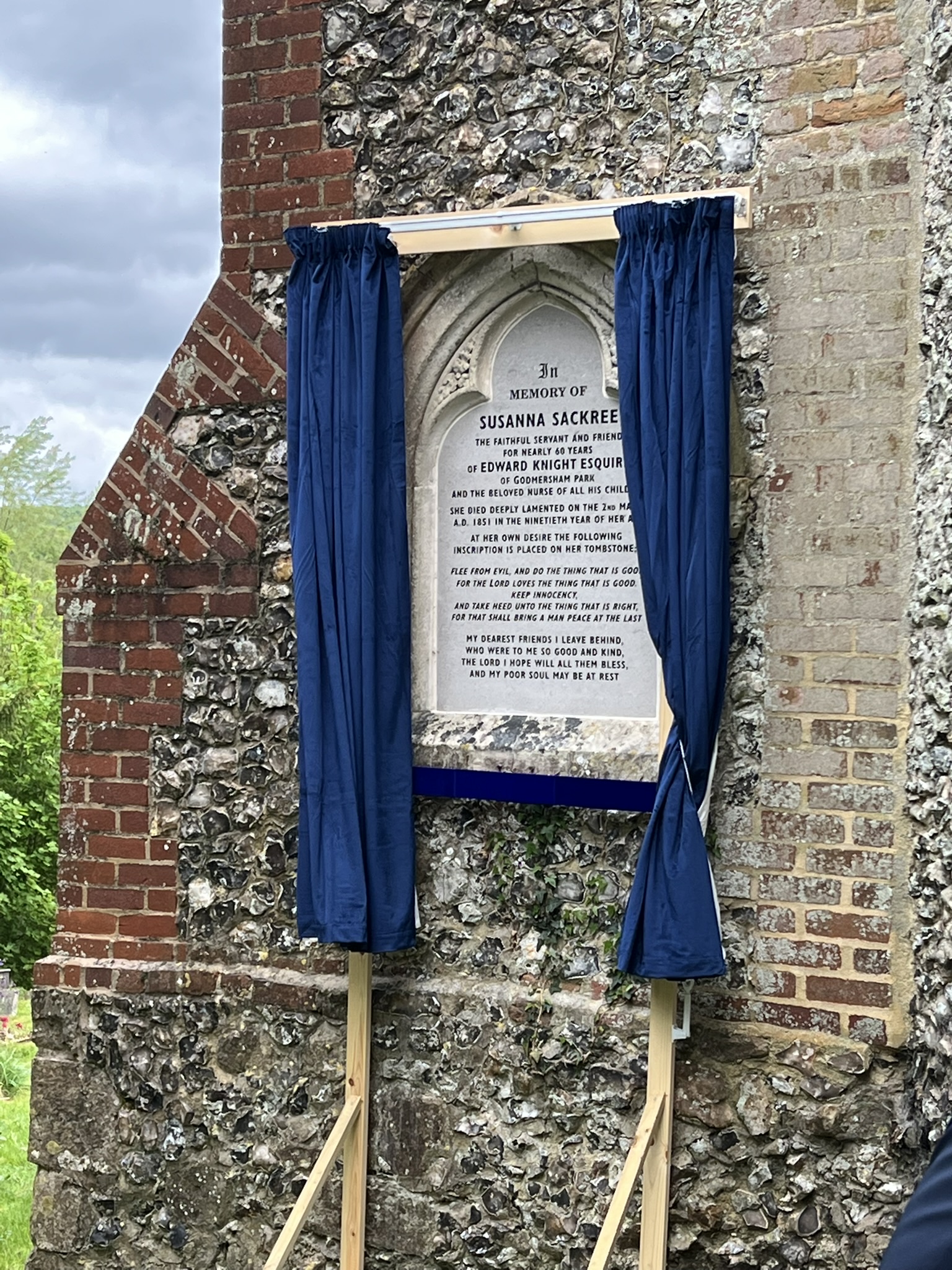
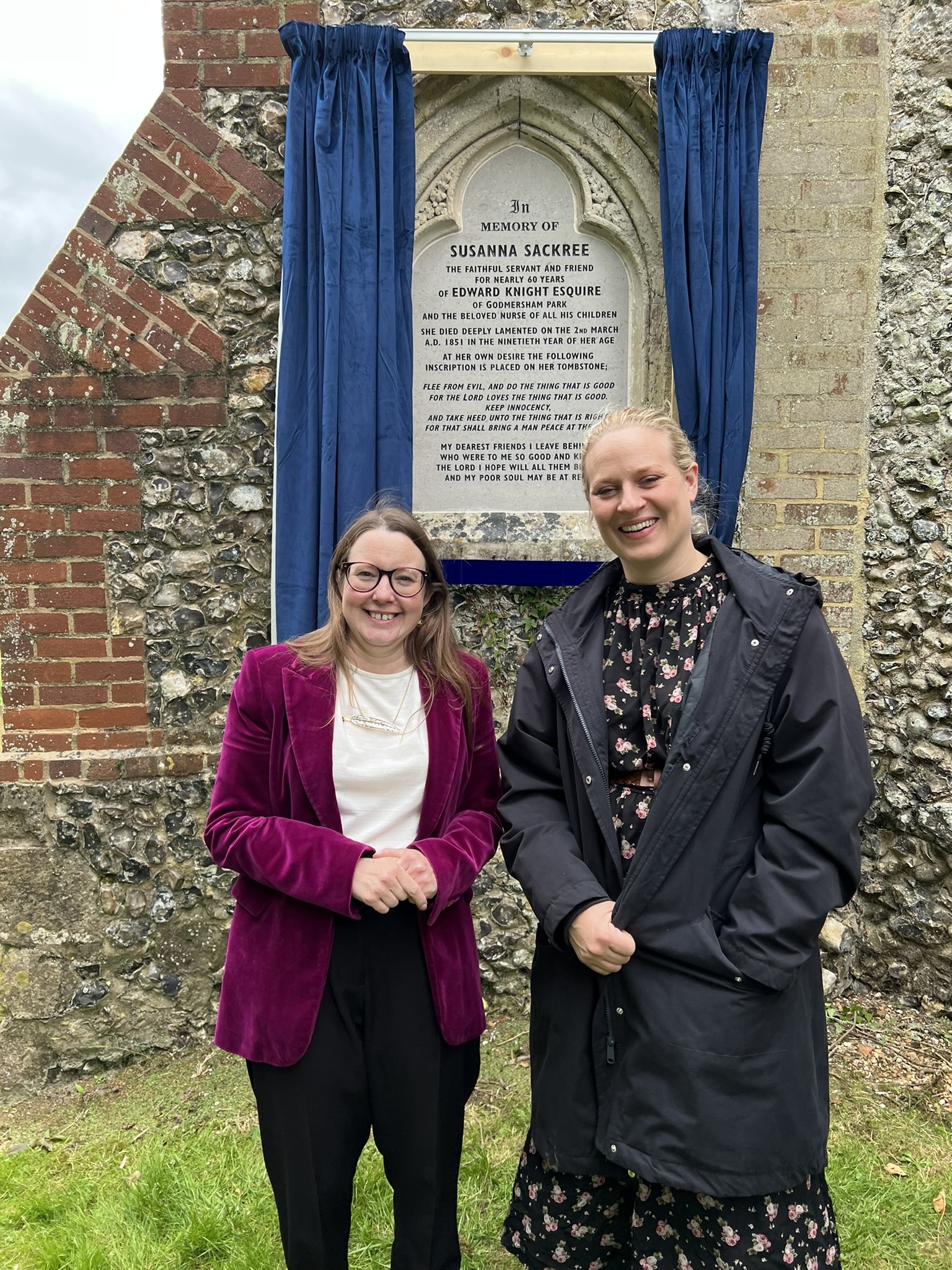
We were honored to be present for the unveiling at the Church of the Susannah Sackree memorial, here with Katie and Kim from Chawton House:
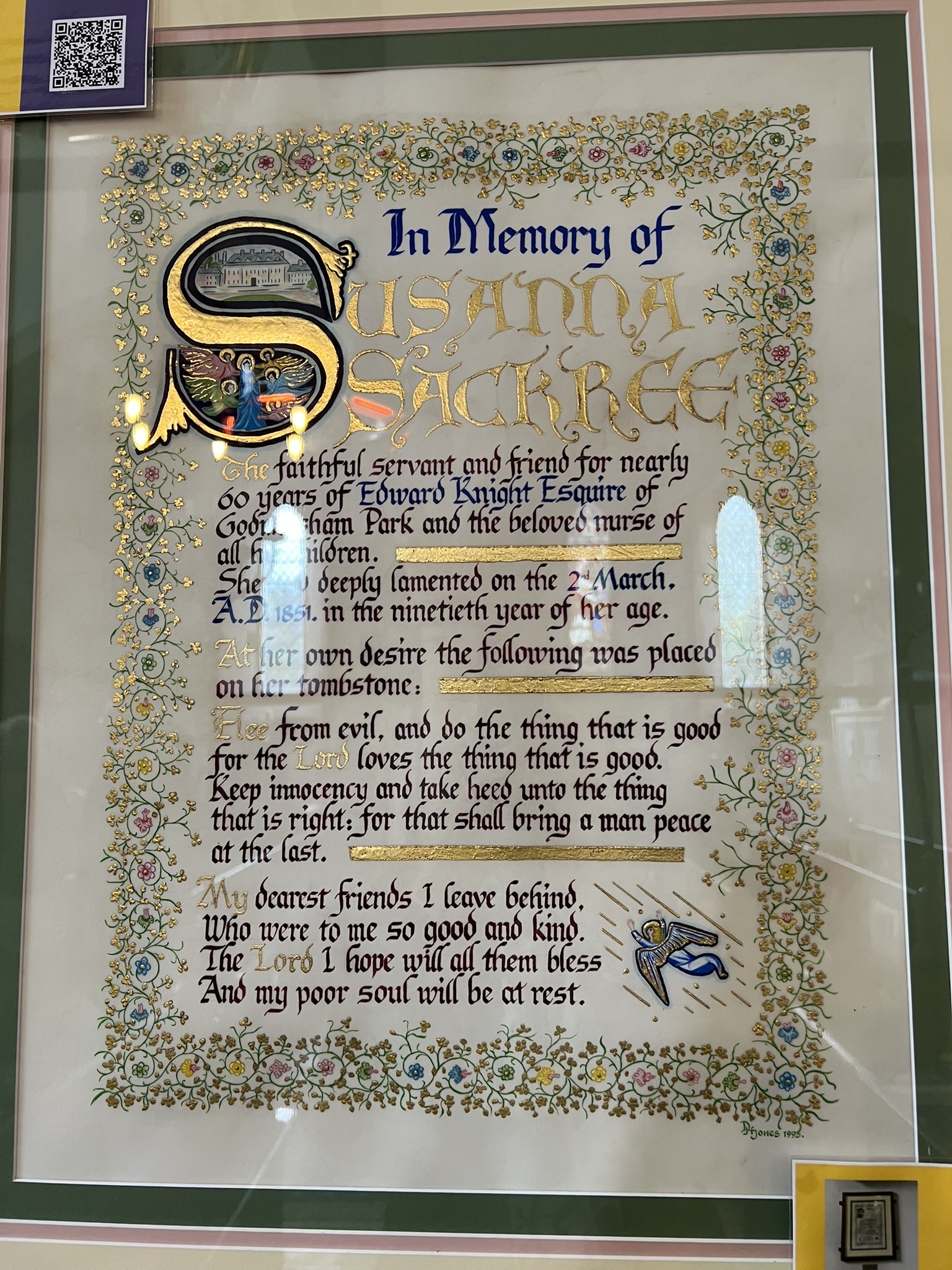
Susannah Sackree was the nursemaid to the Knight children, and memorialized by them in the church and now with this grand memorial on the exterior. It was a very moving moment to see a servant, often forgotten by their employers and history, so lovingly remembered by the Knight family.
Susannah Sackree, Edward Knight, and Thomas Knight Memorials
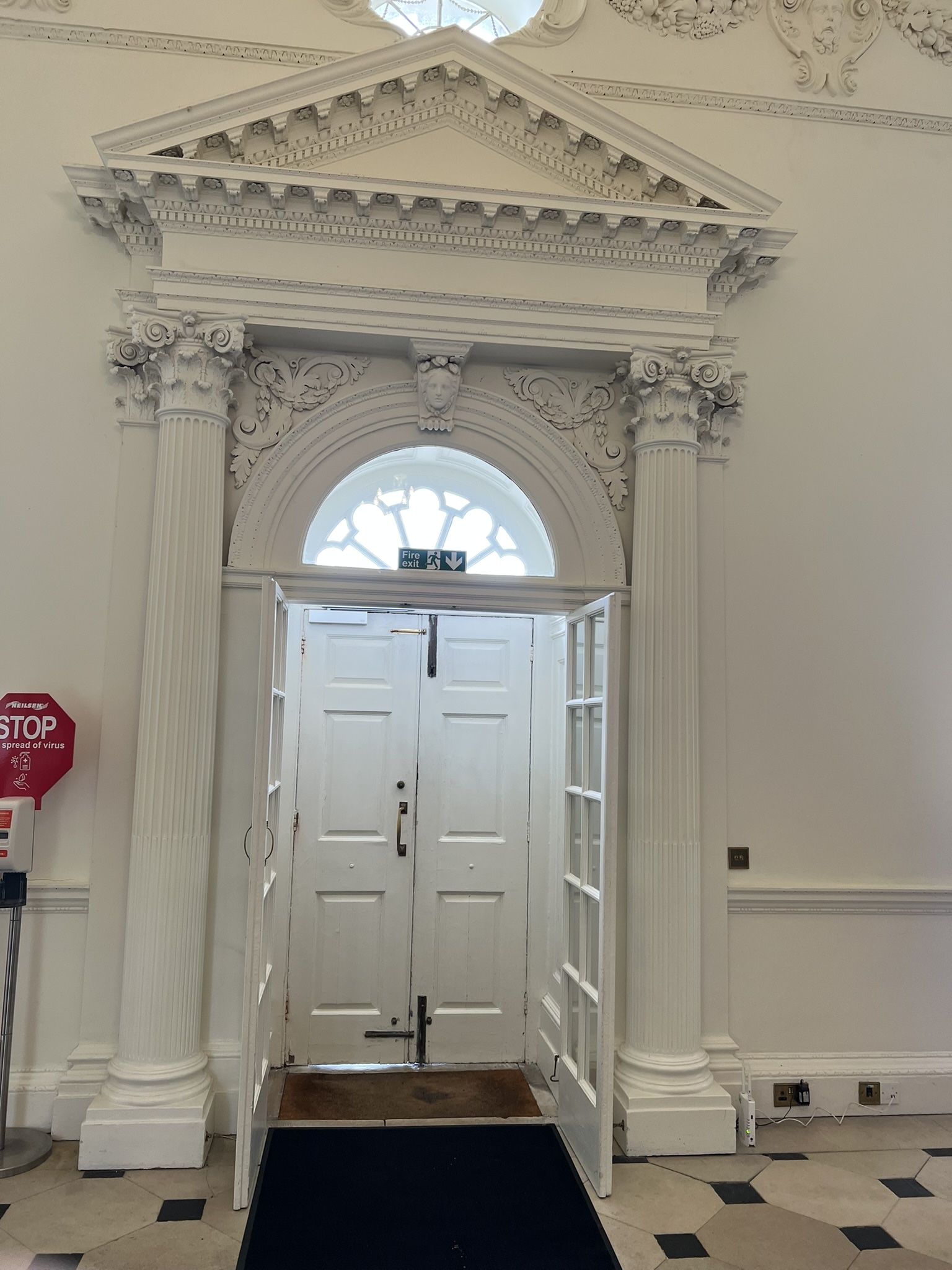
The Heritage Centre tells the story of the house and grounds – it now serves as home to the Association of British Dispensing Opticians and so you cannot tour the house, BUT, we were allowed into [under a code of silence] the entrance foyer, nearly the same as it was in Austen’s time – but no library to visit or any of the other rooms Jane would have stayed in – it is all classrooms now…
The grounds however we could walk around, and as we know that Jane, being an avid walker, would have strolled around these very spots – one could almost feel her there hovering about…
**************
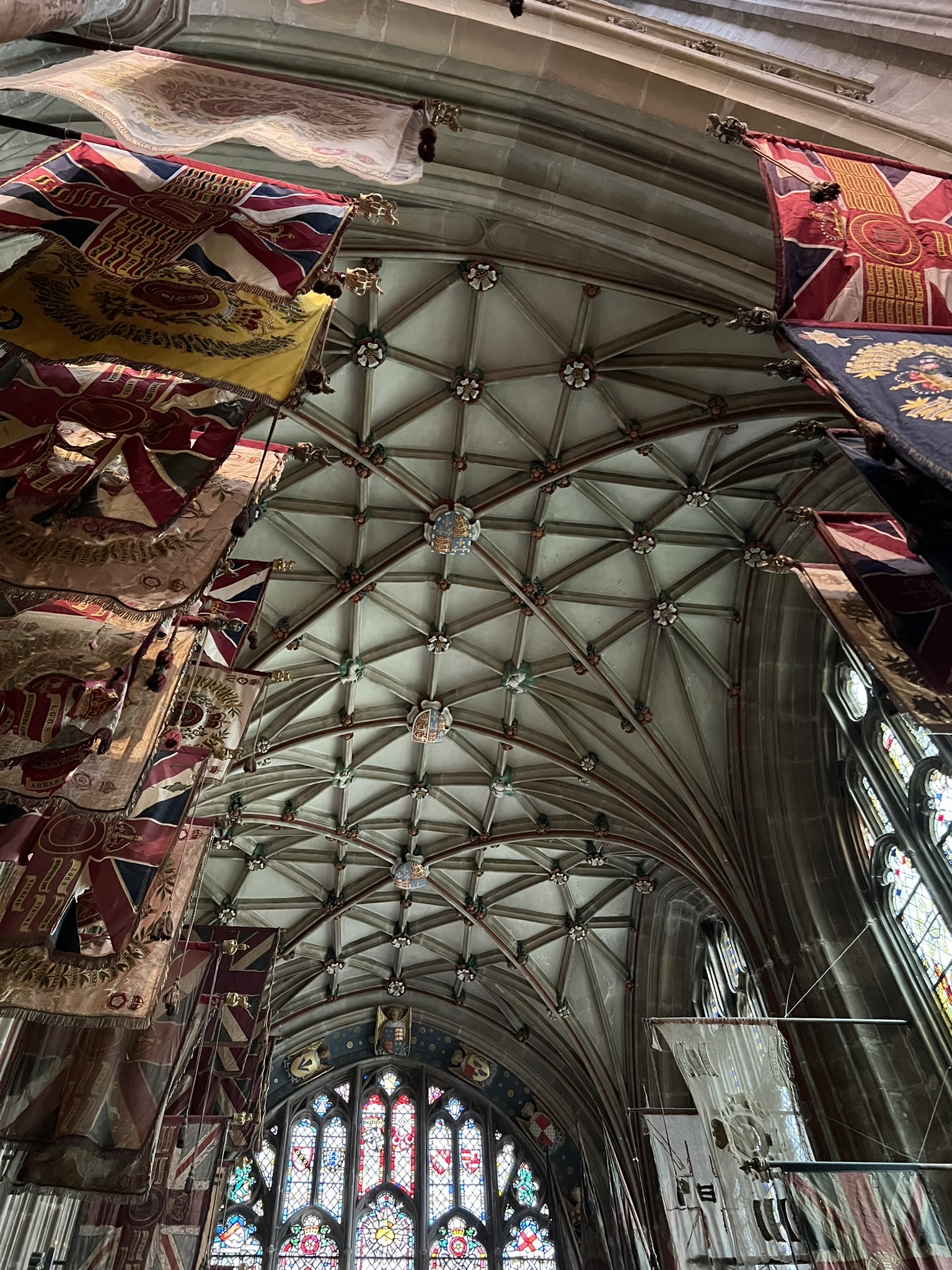
Refreshments were gratefully received, and then we were off to Canterbury. Some of us went to the evensong at the Cathedral [one of my favorite things to do when in England], this after walking around the city for a while – we had two goals in mind: to see the portrait of the scandalous father of Elizabeth Bridges, Sir Brook Bridges (1733-91), whose portrait hangs in the Beaney House of Art & Knowledge – here he is in all his glory:
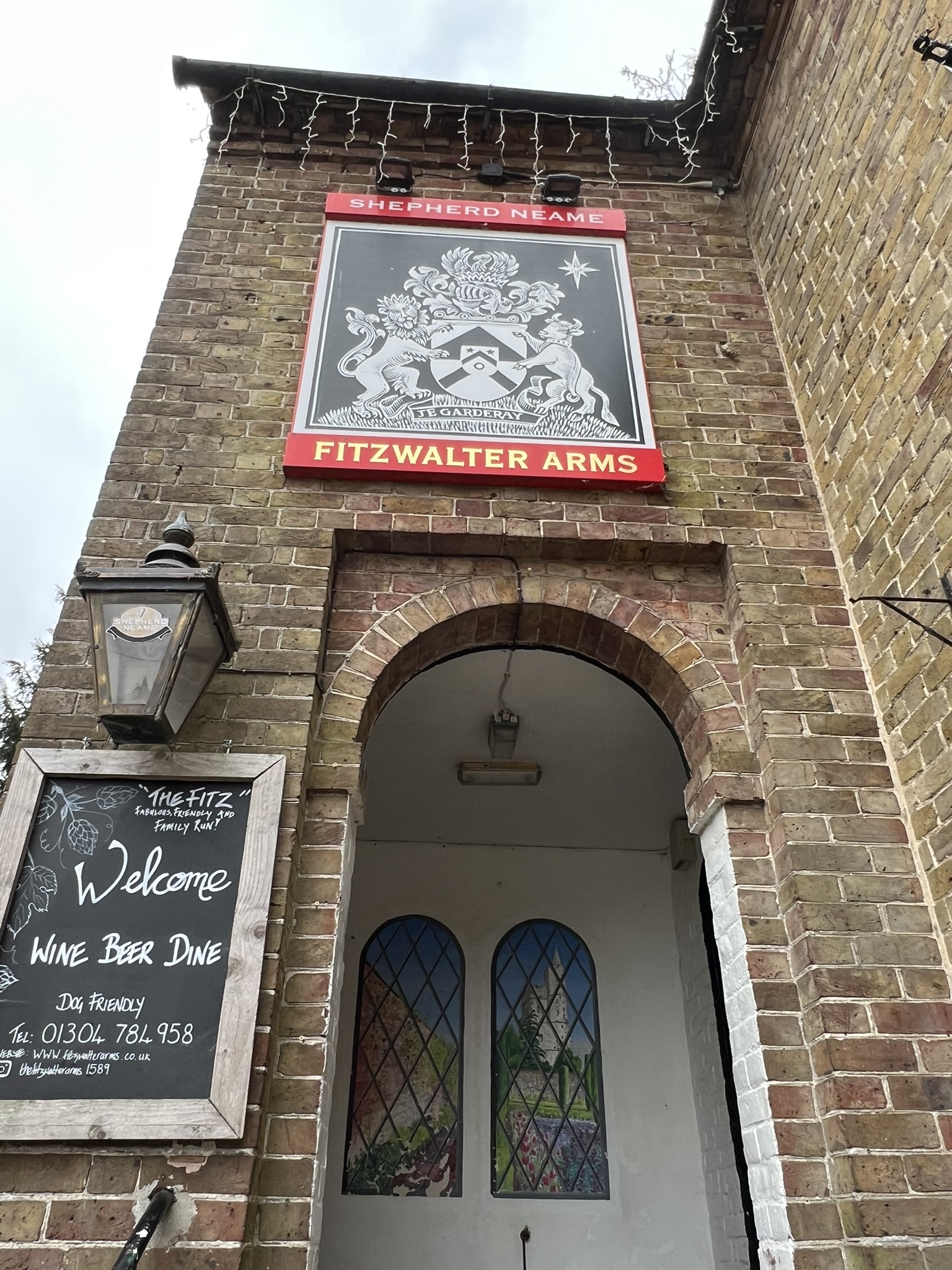
[Bridges married Fanny Fowler, who was heiress to the title Baron Fitzwalter, and still the prominent name here at Goodnestone]:
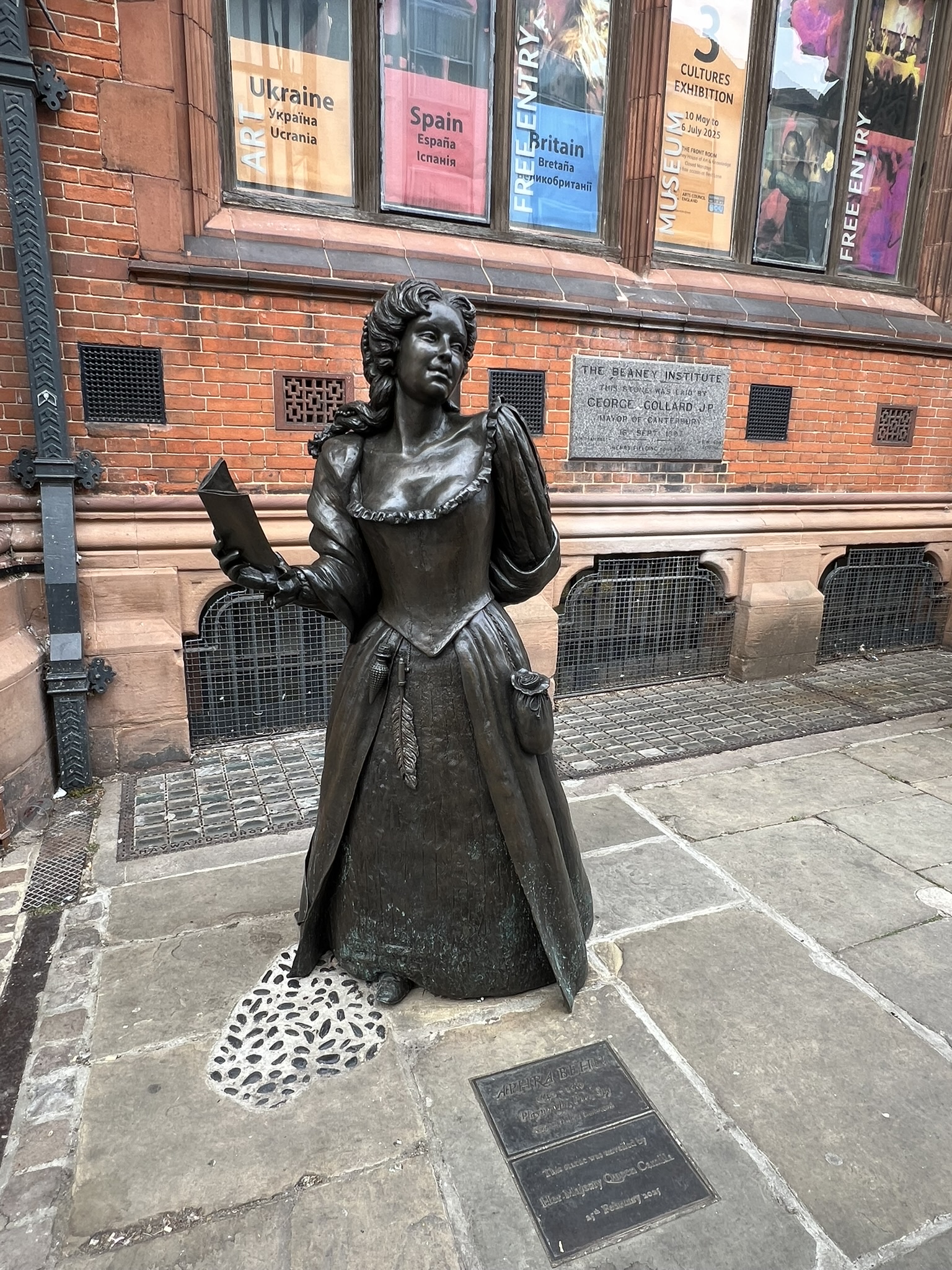
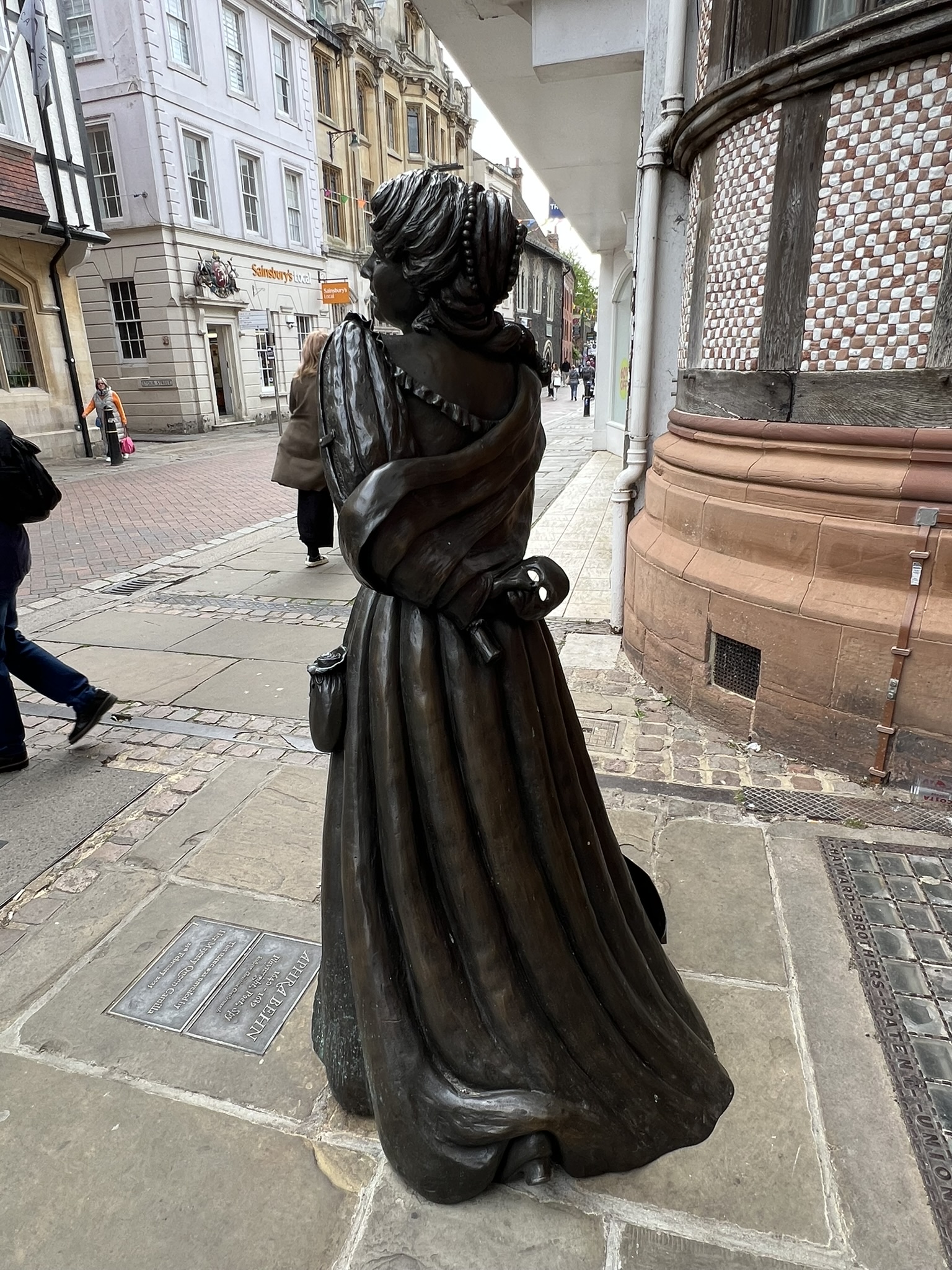
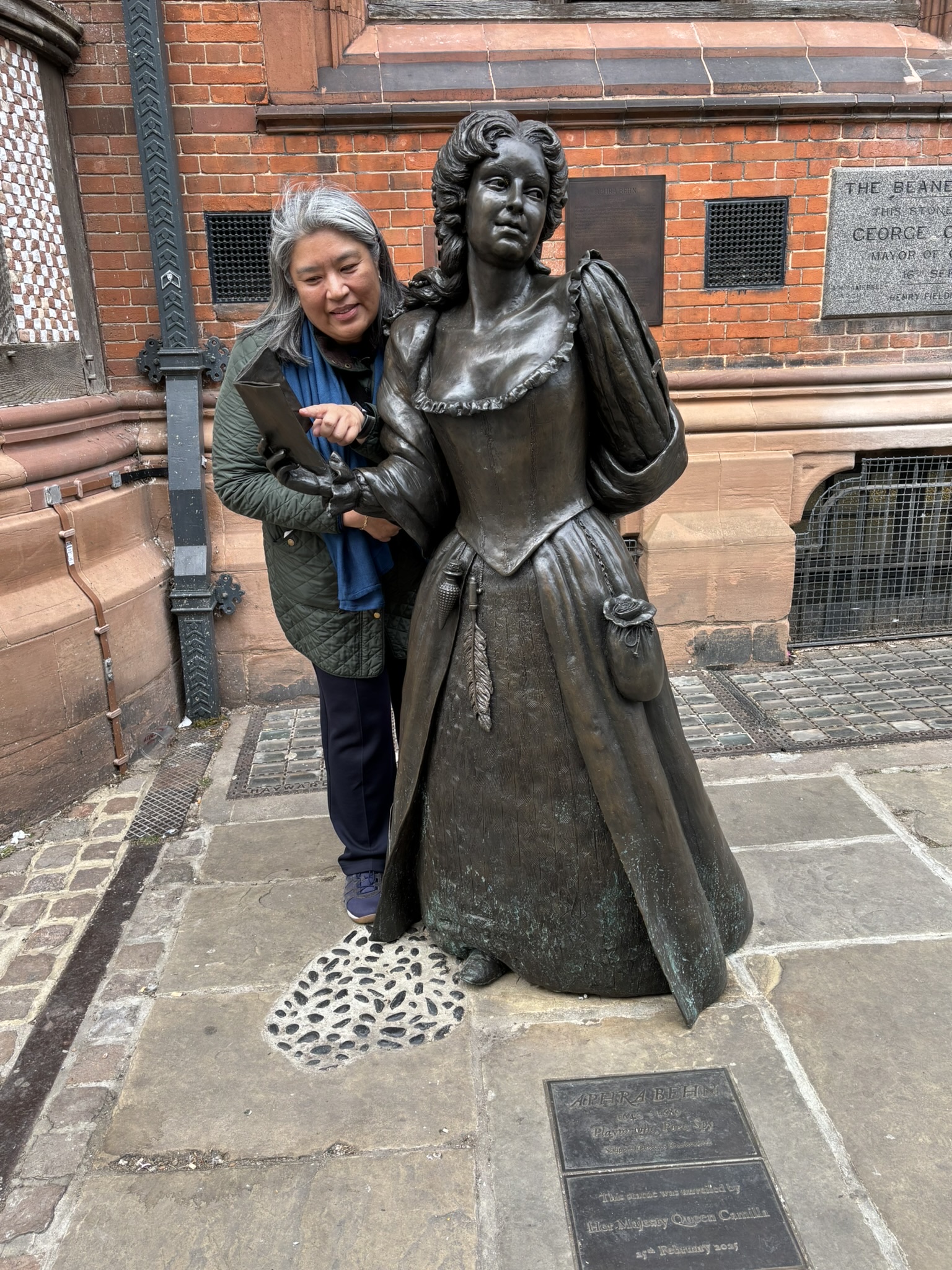
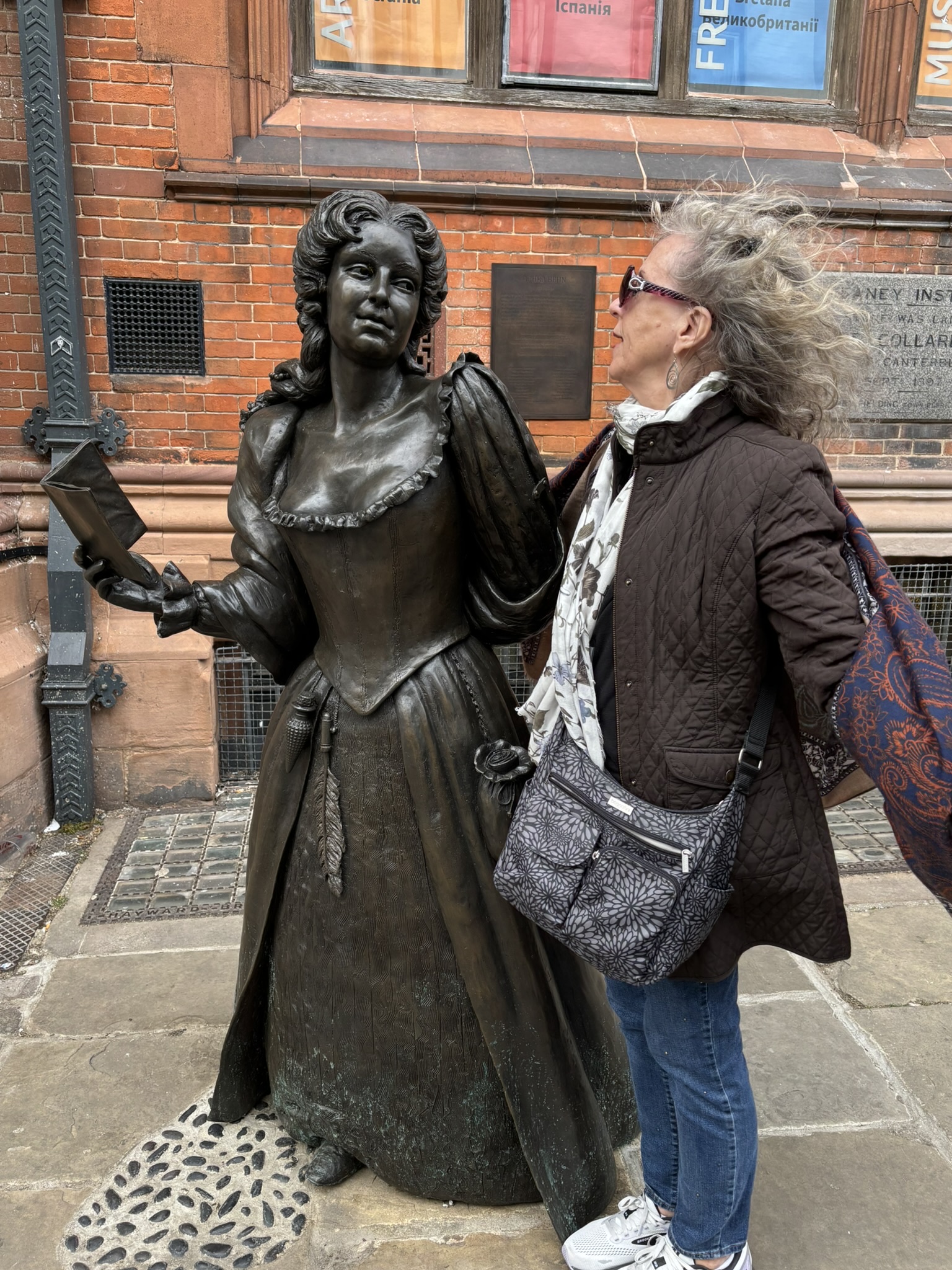
And Joy and I giving tribute to this early woman writer par excellence:
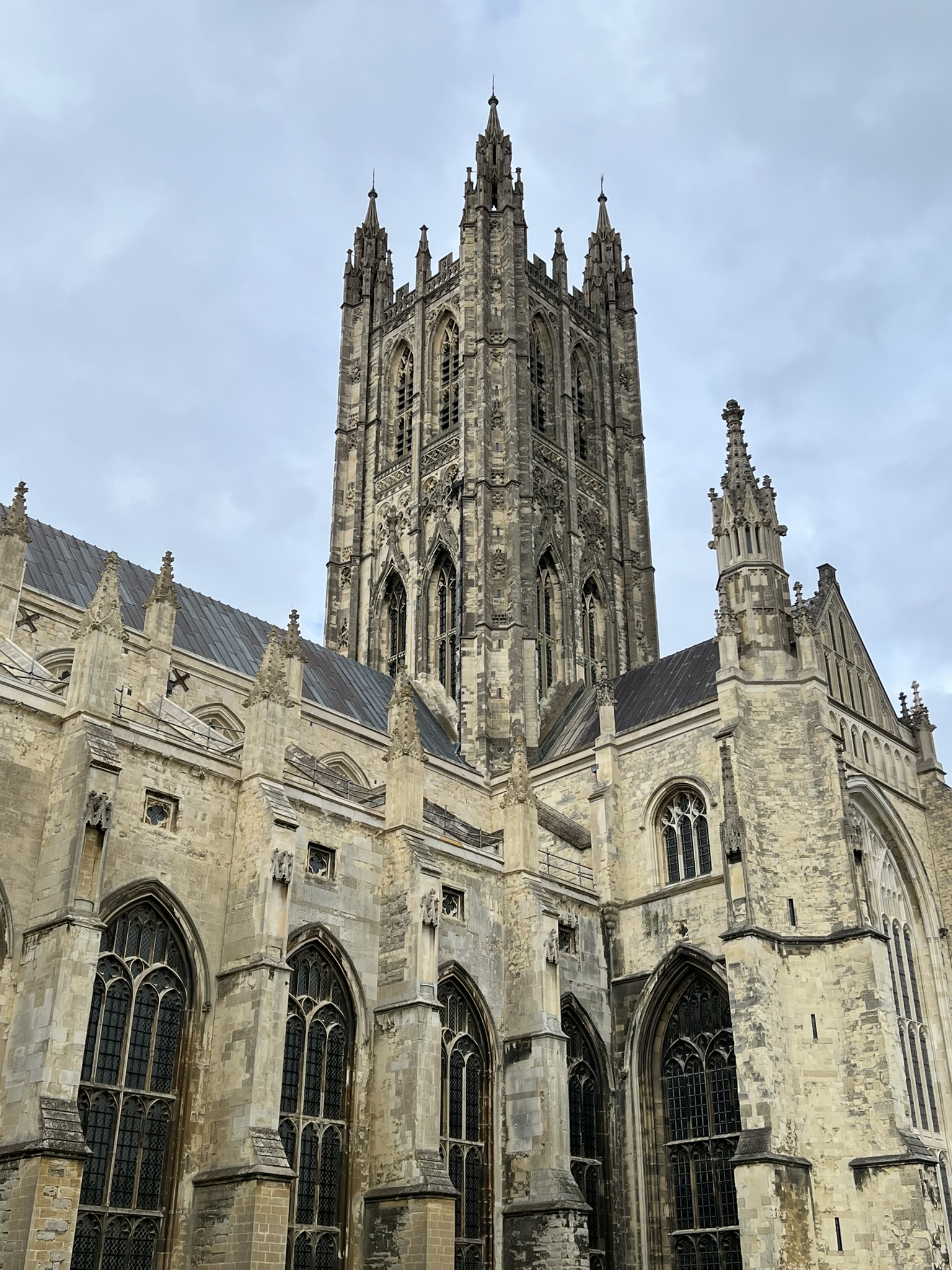
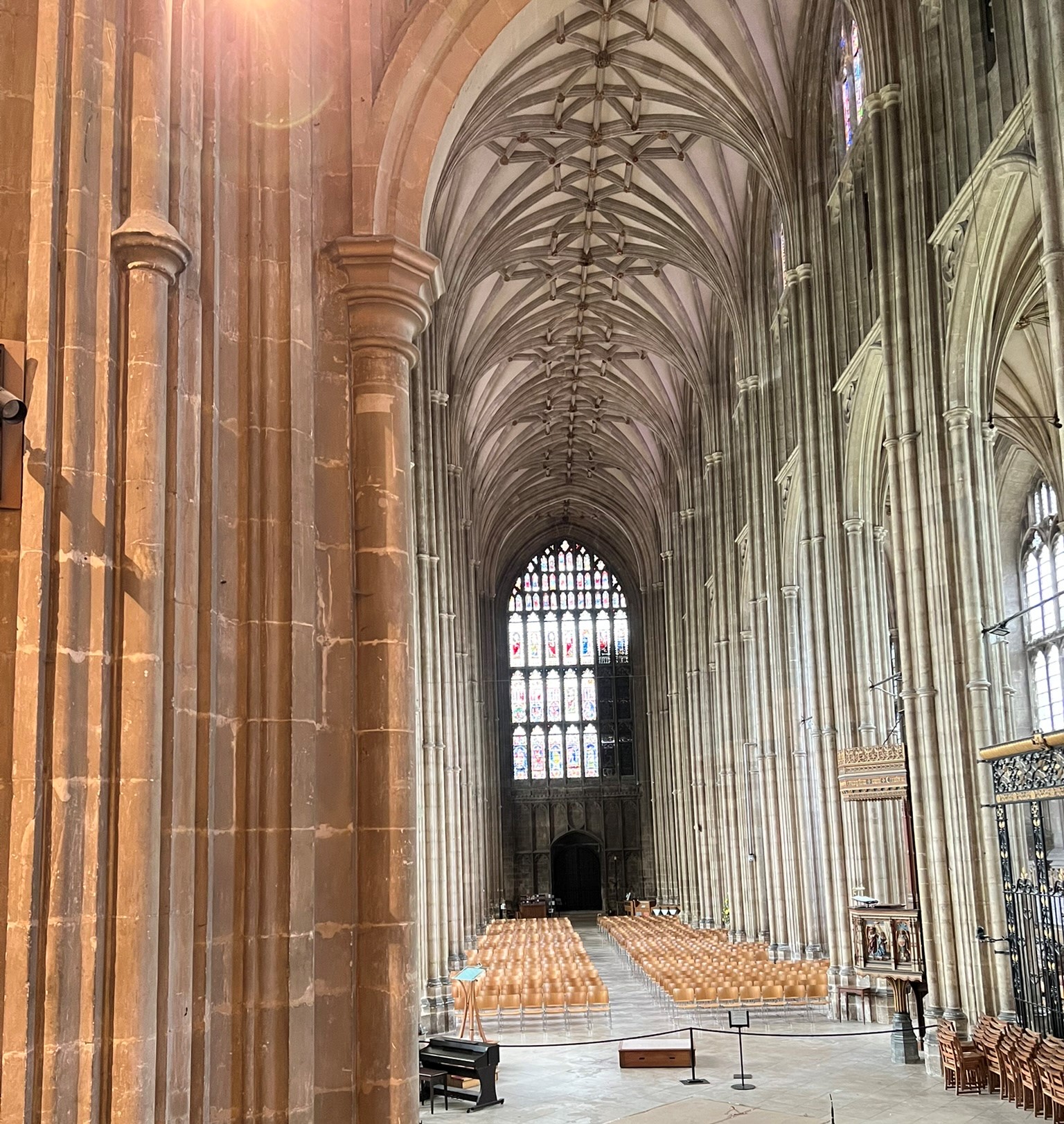
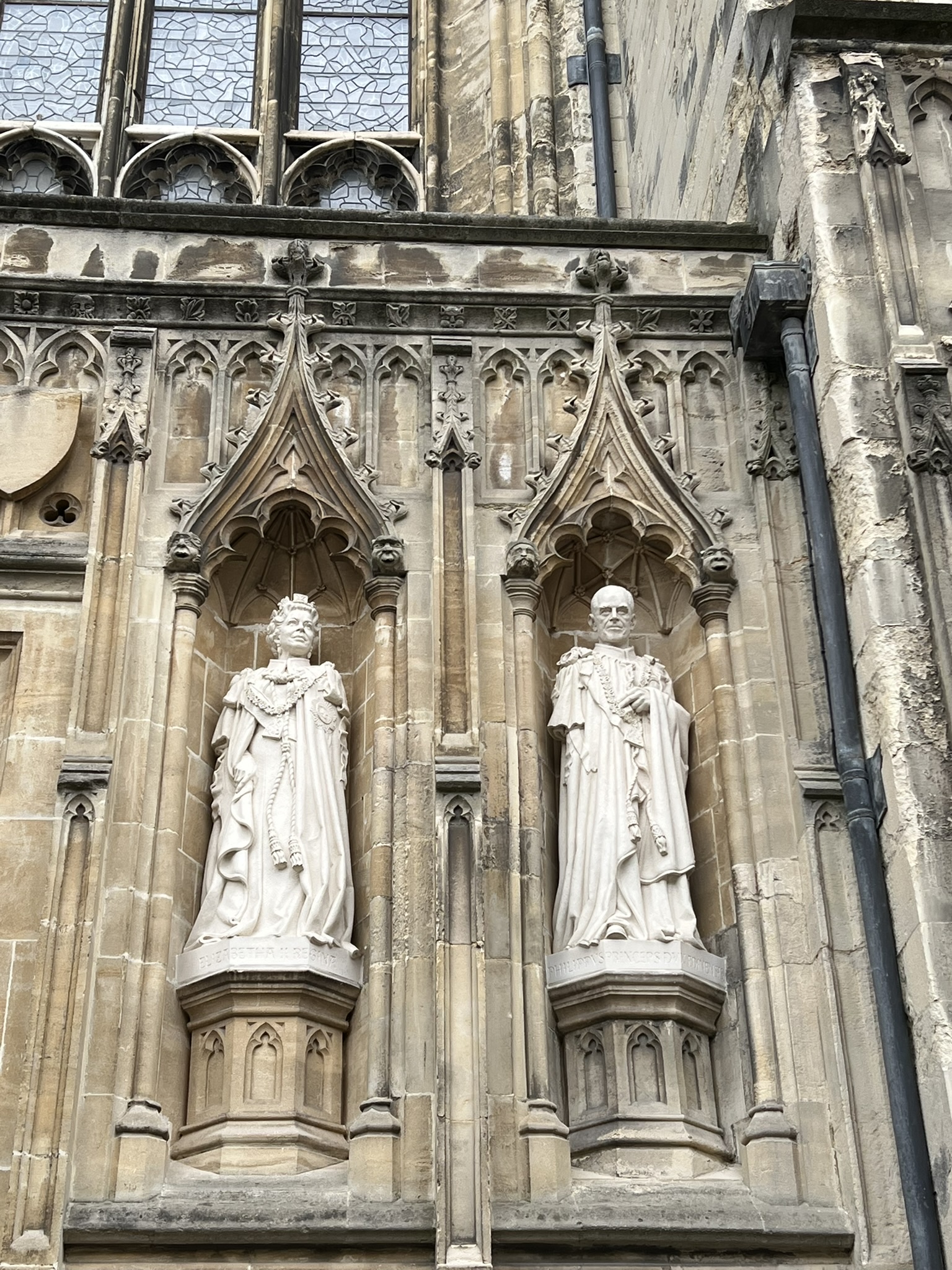
Our walk around Canterbury found us in delightful conversation with a gentleman who asked where we were from: Joy says California – “You must be a hippie” he says. I in South Carolina but from Vermont, and he goes into rhapsodies about Bernie Sanders! [Bernie’s brother has long lived in England and has served in the Labour Party, and this fellow apparently knows him…it was good to have a conversation about the troubles in the US right now – everyone sympathetic to us but also not appreciative of the tariff situation and concerns about ally relationships…] – it was an enlightening conversation, but we were off to Evensong – which was beautiful, as always, – reserved seats just for JASNA, and though we were unable to take photos during the service, I captured a few on the way out…and the exterior [much restoration work going on covering up the main entrance]:
So, until tomorrow, when we leave our gorgeous Chilston Park Hotel and head to Winchester for four nights, by way of Worthing…
c2025JaneAustenInVermont
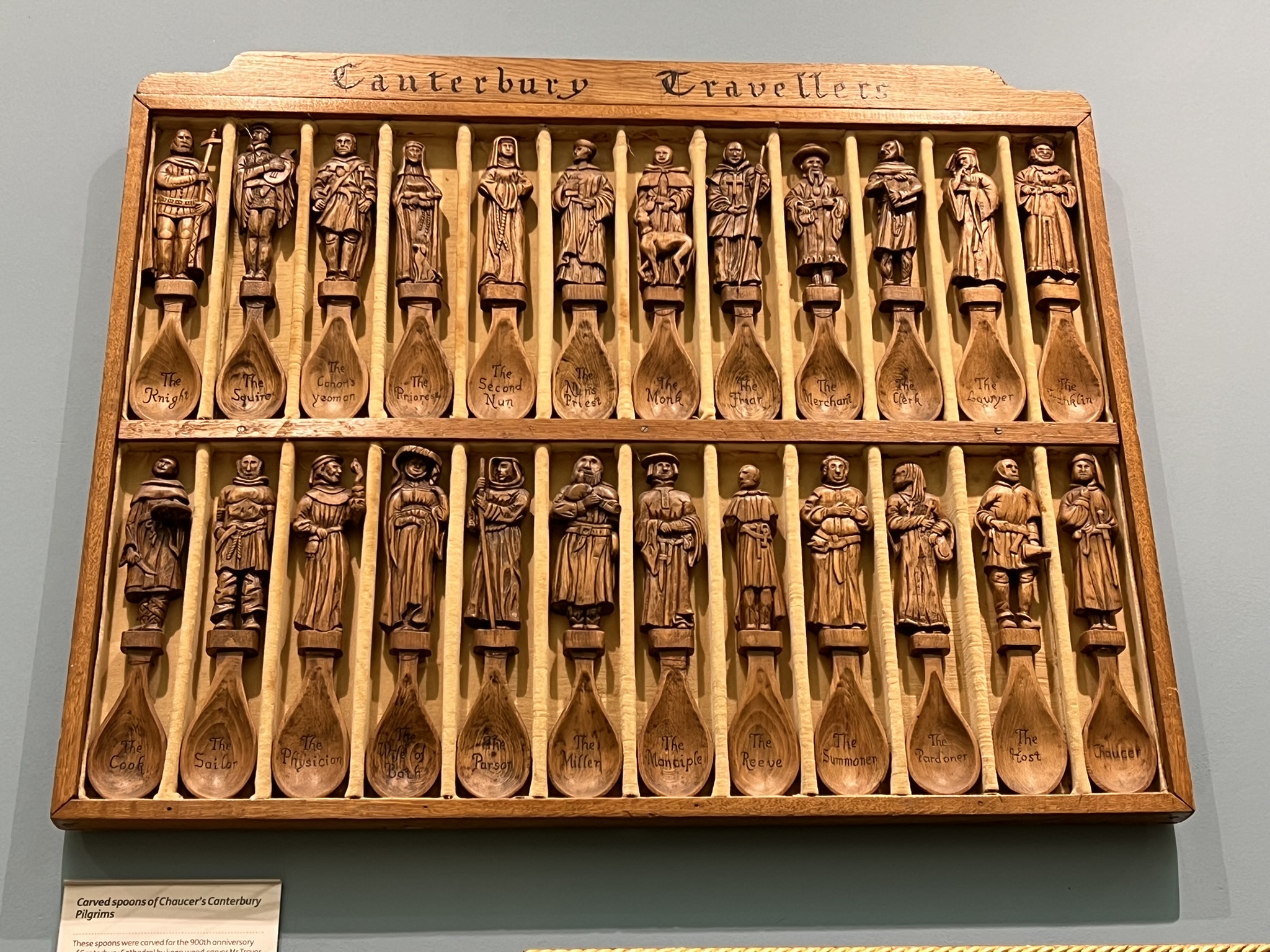
Feeling a bit like a “Canterbury Traveller”… [from the Beaney Museum]
Another day begins with a full English breakfast in this lovely morning room at Chilston Park, the piano serving as a buffet table!:
[One of the hardest things about returning from travel in England is the loss of that daily English Breakfast – if one had a maid, it could be sorted, but alas! I do not…I am the maid and chief swabby…and cereal works just as well to start the day, or so it has to…]
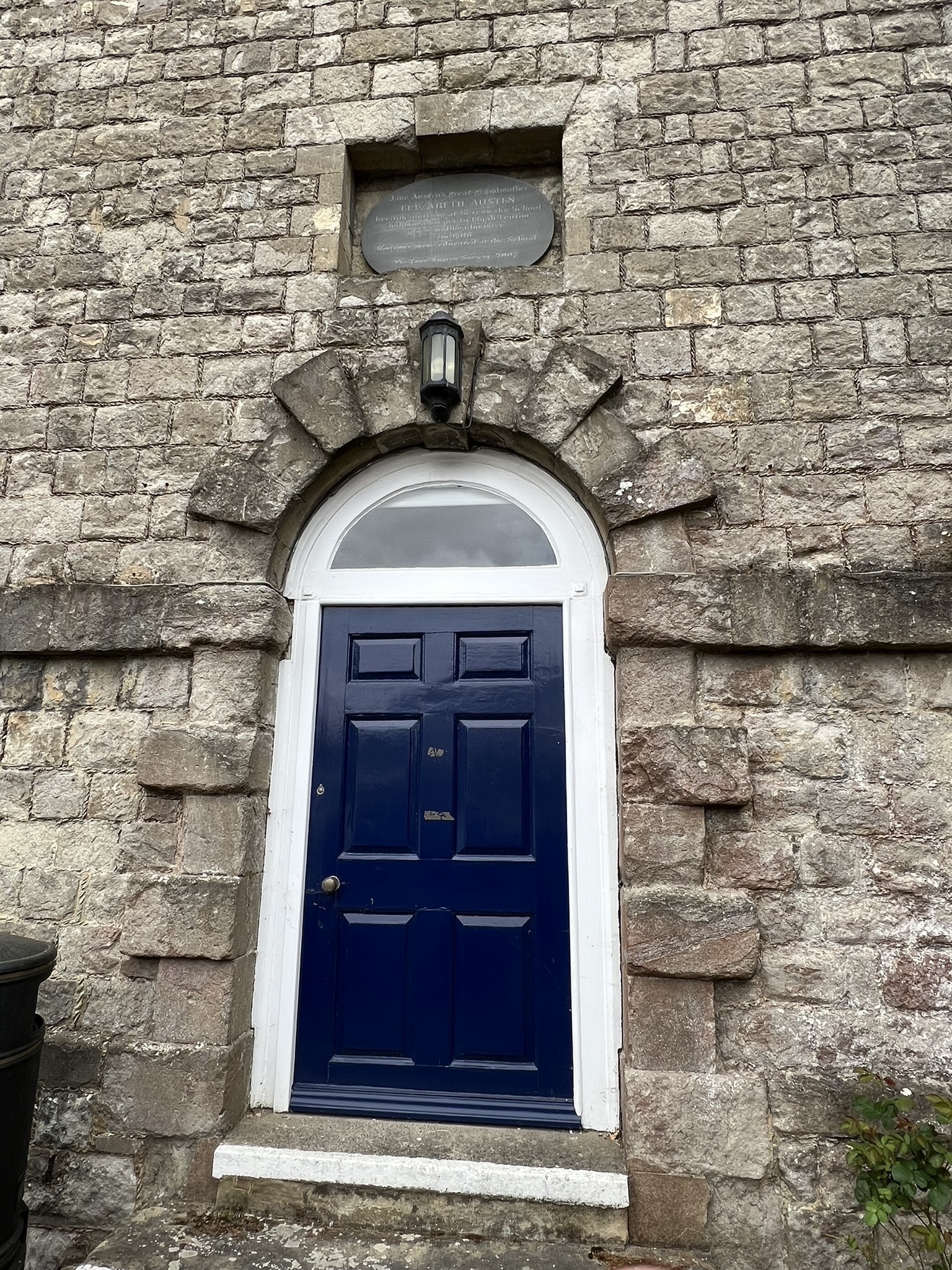
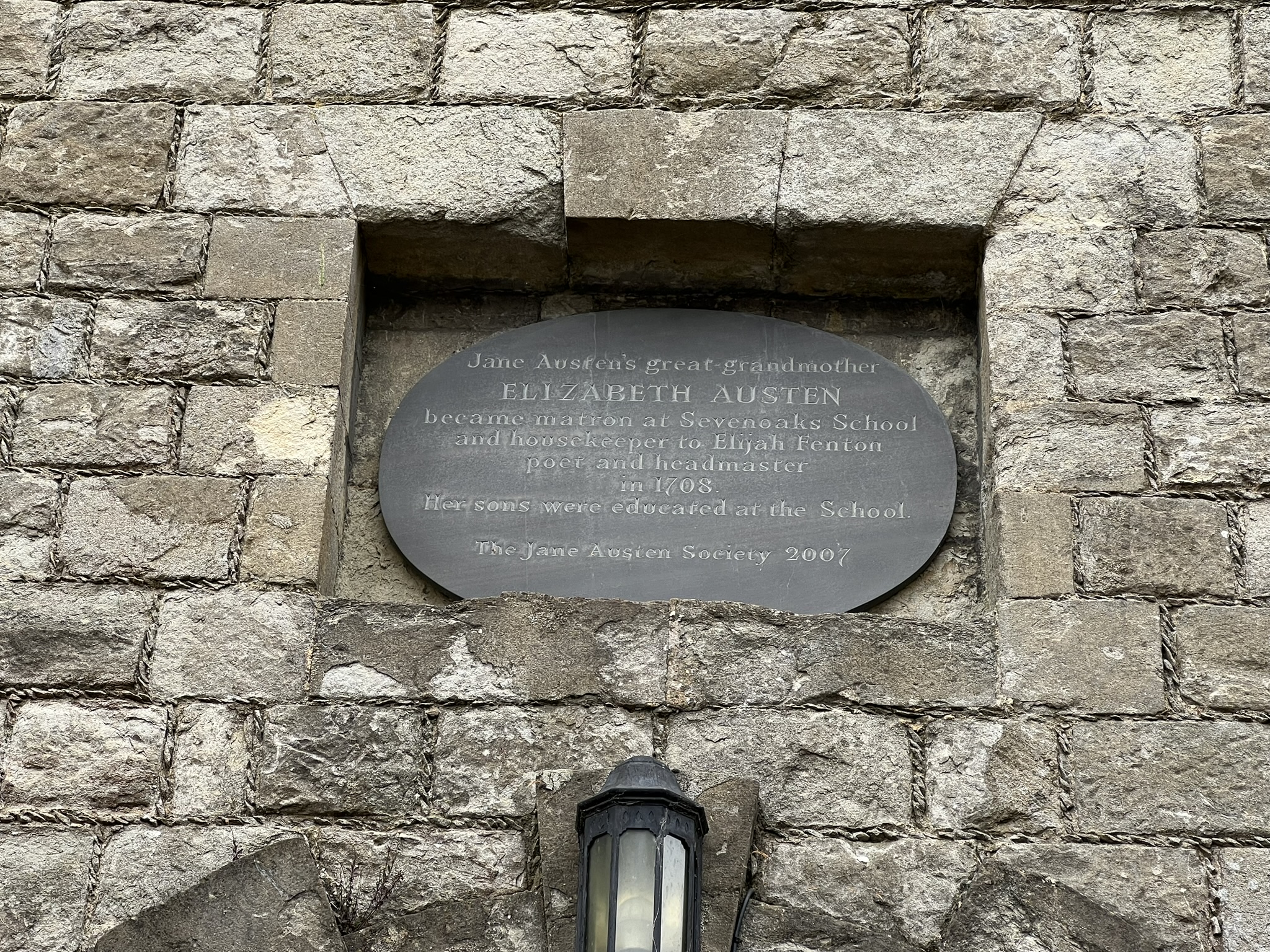
We are off today to Sevenoaks to learn more about the John Austen family. Several members of the Kent Branch joined us again – we walked down the High Street to see the Red House, where George Austen’s uncle Francis lived, Sevenoaks School where George’s father William had been a pupil, and to learn more about John Austen’s wife Elizabeth Weller, Jane’s great grandmother. Weller had to take a housekeeping job at Sevenoaks School in 1708 to keep her family together –
Here is the plaque to her on the Sevenoaks School building, a fitting tribute to a very strong woman in Austen’s ancestry.
You can read more about Weller in this recent Persuasions On-Line essay by Azar Hussain with an extensive bibliography for further sources on this side of the family.
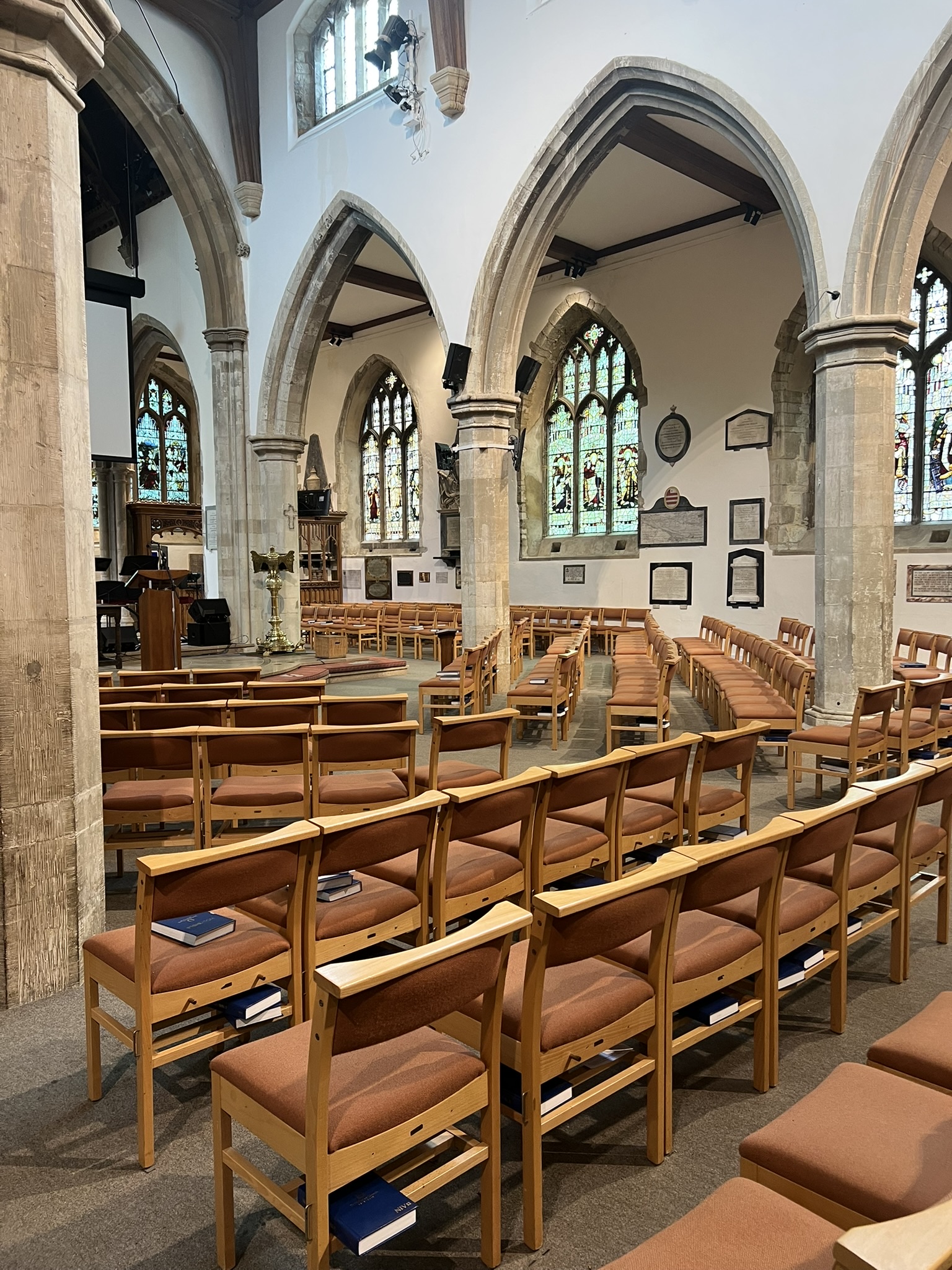
Then off to visit yet another St Nicholas Church, where a number of Austen family are buried, and where the Kent JAS members offered us some fine refreshments before we wandered around the churchyard [you can see it is now freezing!].
[You can just make out the “Austen”]
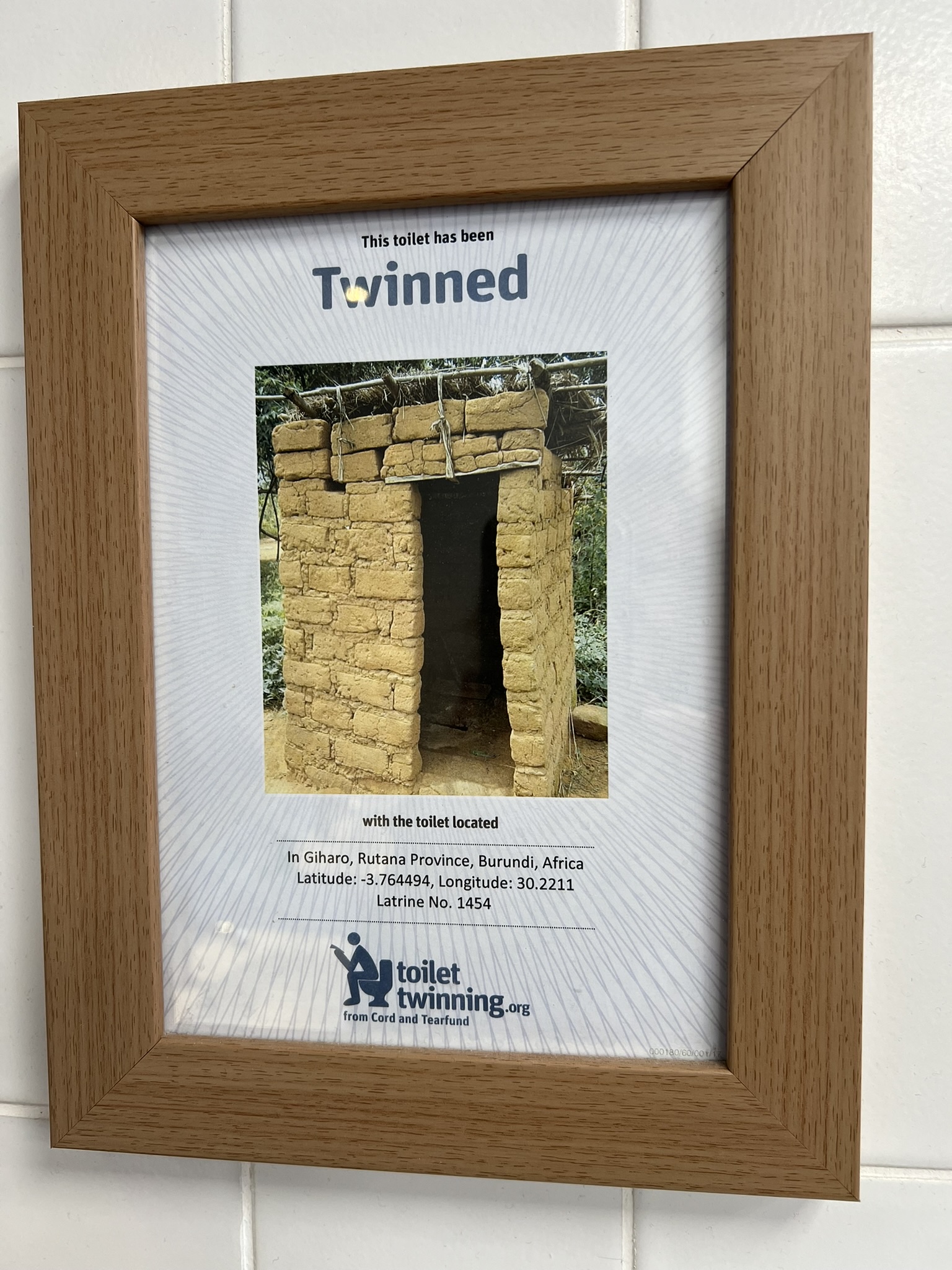
And another “Twinned Toilet”!
And another wisteria fix:
[NOTE: Sheila Johnson Kindred wrote a fine blog post about this whole area of Kent – you can read that here.]
********
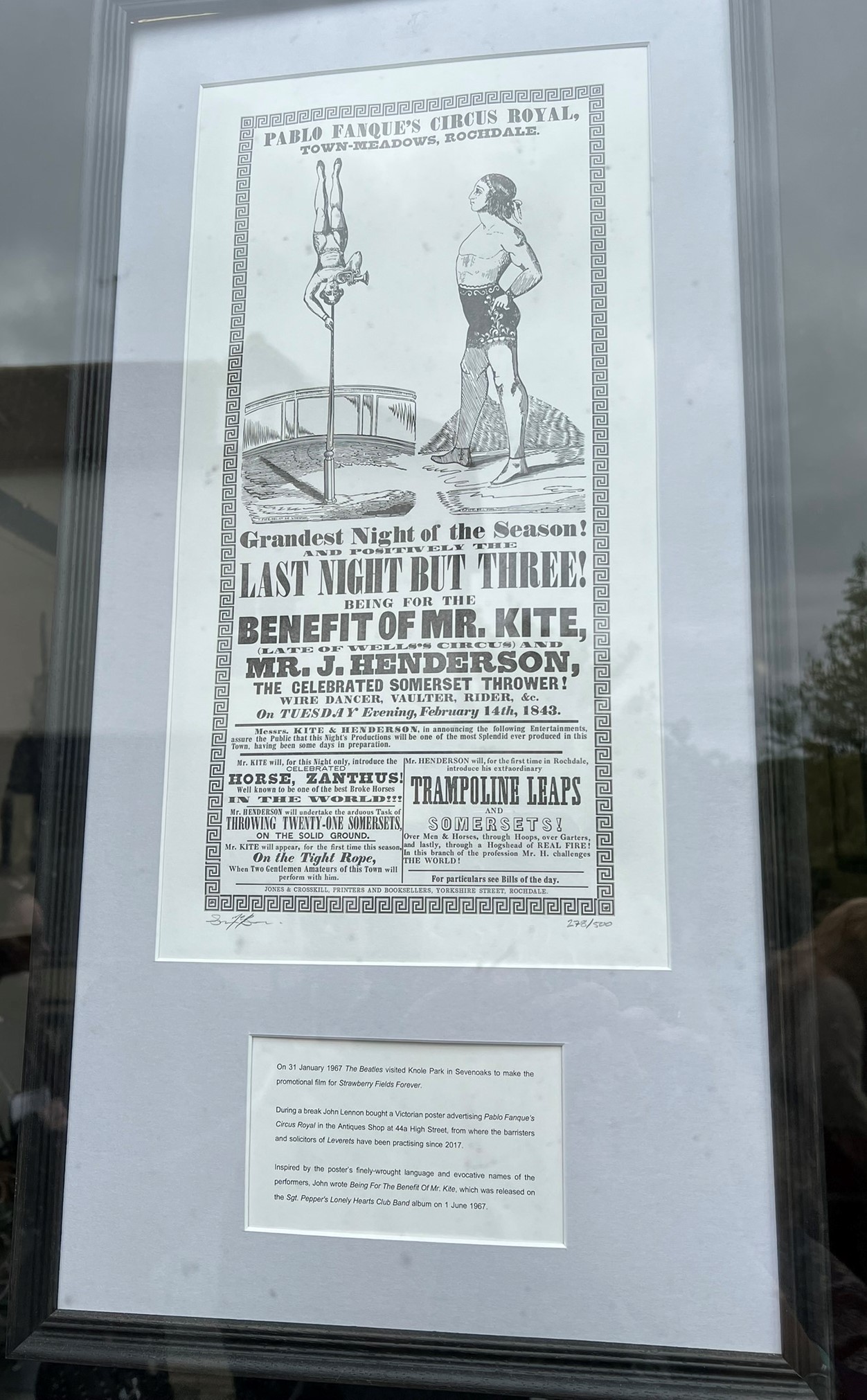
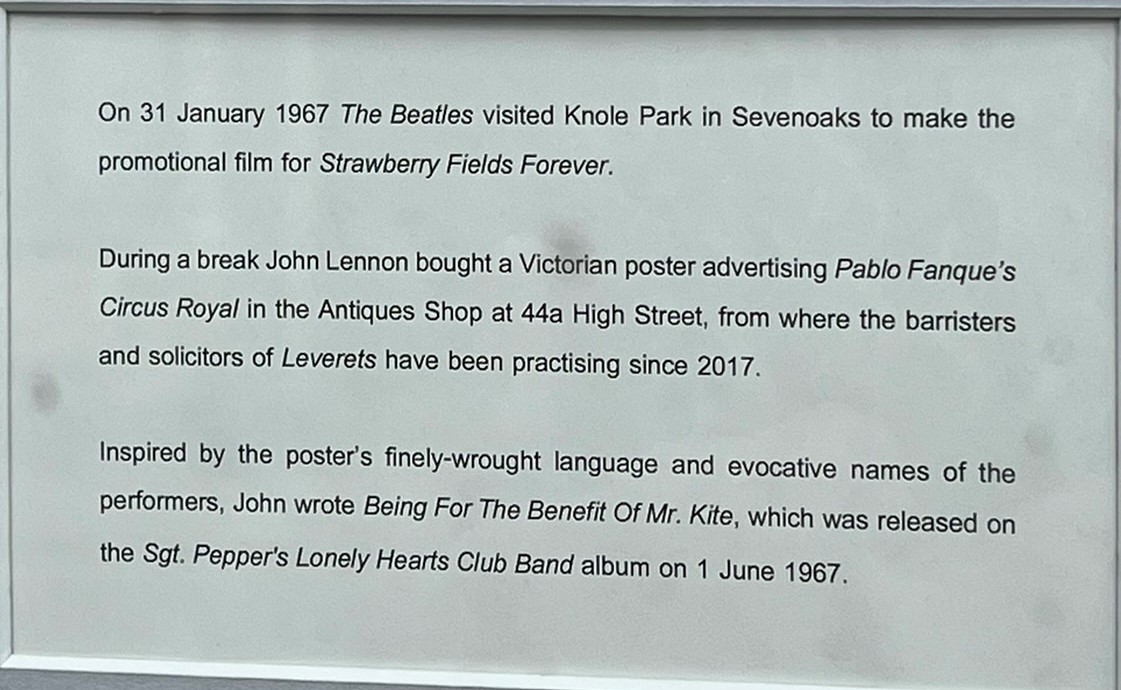
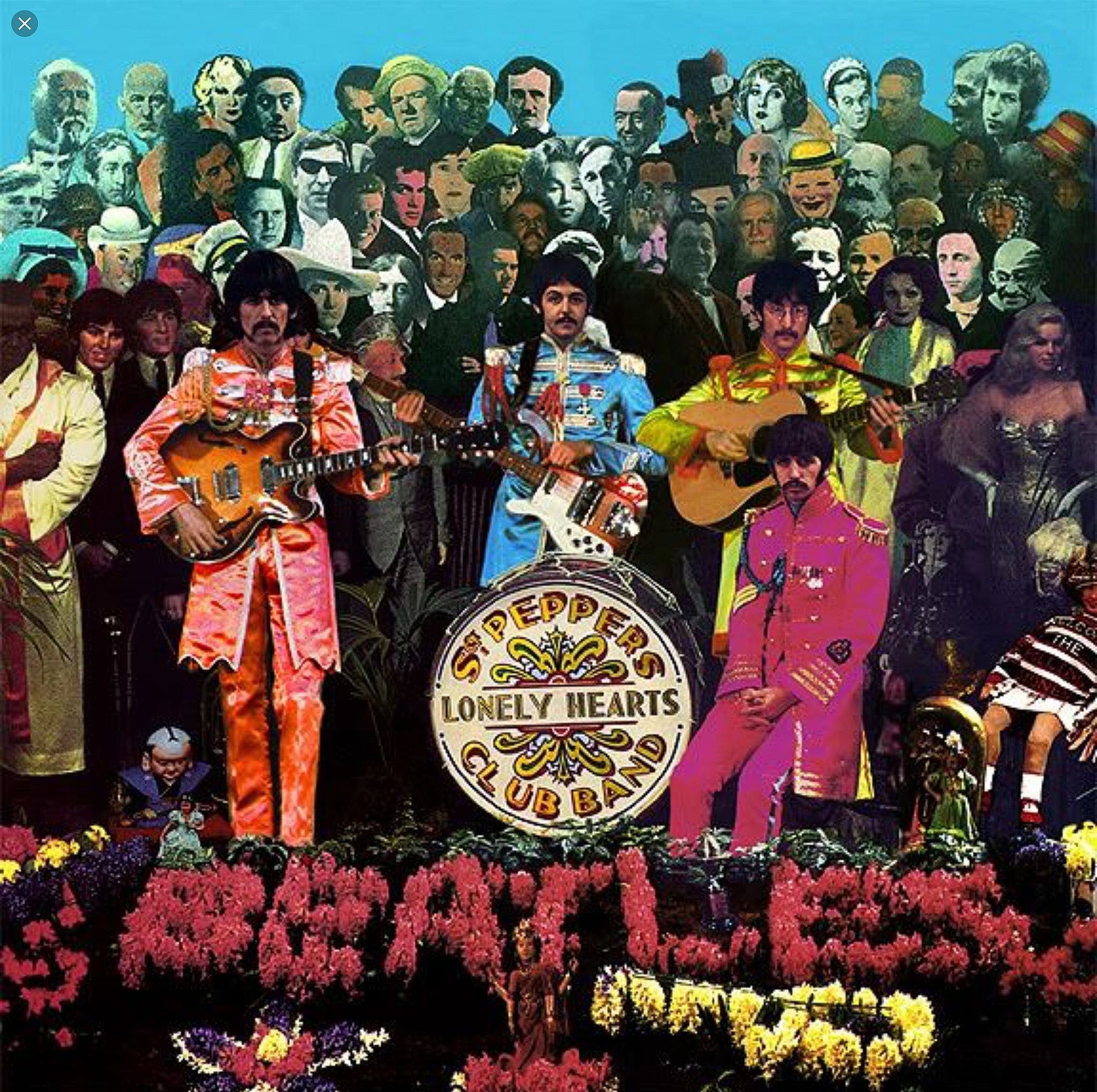
A Beatles aside: a quick return to the 20th century with this advert in a window in the former antique shop at 44a High Street – you can read about it on this sign and how John Lennon made a song from it all…on their Sgt. Pepper’s Lonely Hearts Club Band album:
***********
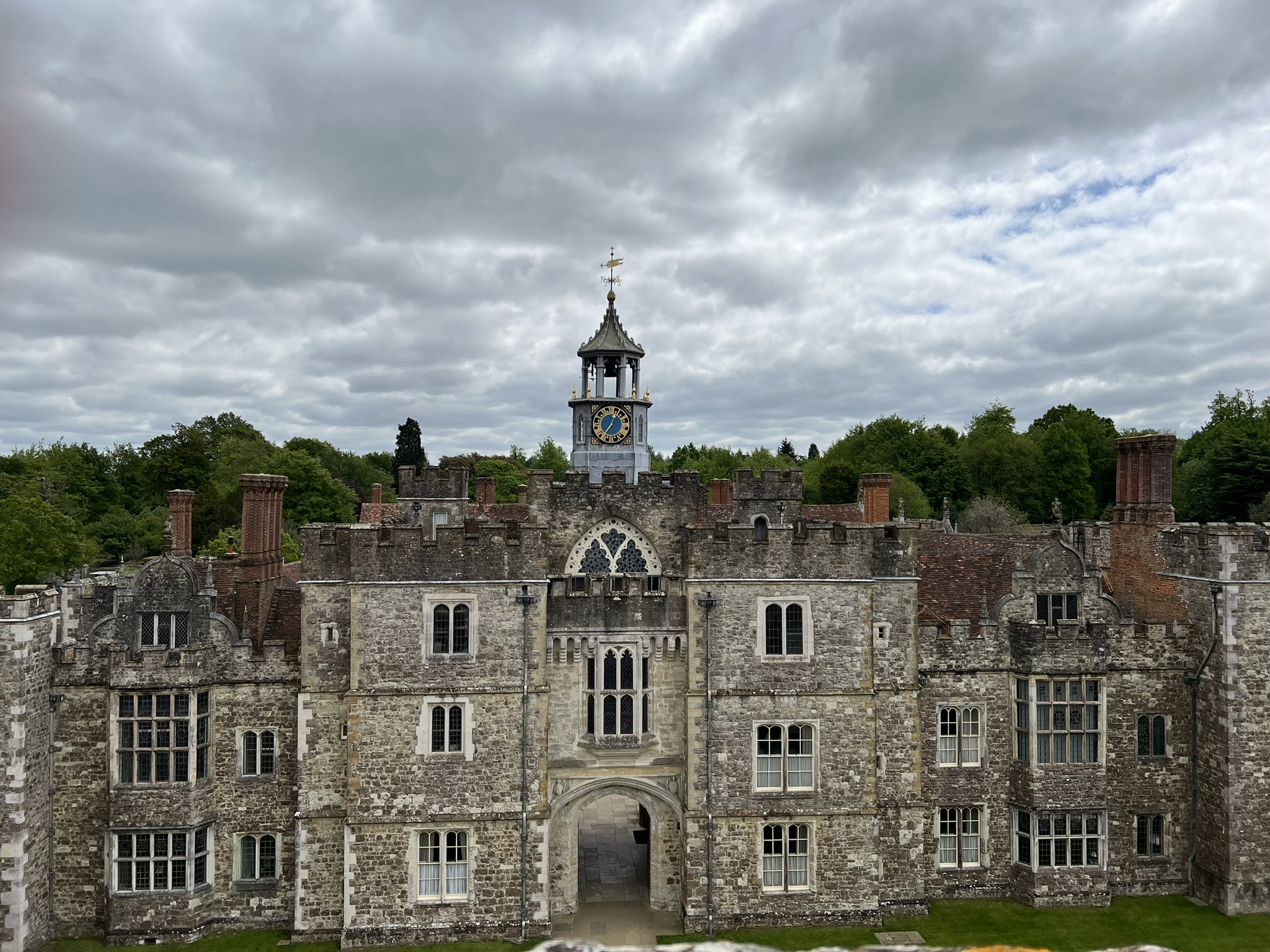
Ok, now we head back to the 15th century – we are off to Knole, one of the largest country houses in Britain, and in the hands of the Sackville family since 1605 [and now part of the National Trust]. The history here is startling and a guidebook essential to understand the intricate maze of rooms – I could not get out of my mind the joys of playing hide-and-seek in such a place, participants never found and now likely molding skeletons around every corner. The history covers every century since its inception, the walls filled with portraits of all manner of famous people, rooms you know Vita Sackville-West and Virginia Woolf [writing her Orlando] knew well. I loved it here, and was so engrossed I forgot to use my camera! – but here are a few of things that spoke to me – none of this does justice to the place – you must add it to your next trip itinerary:
The exterior:
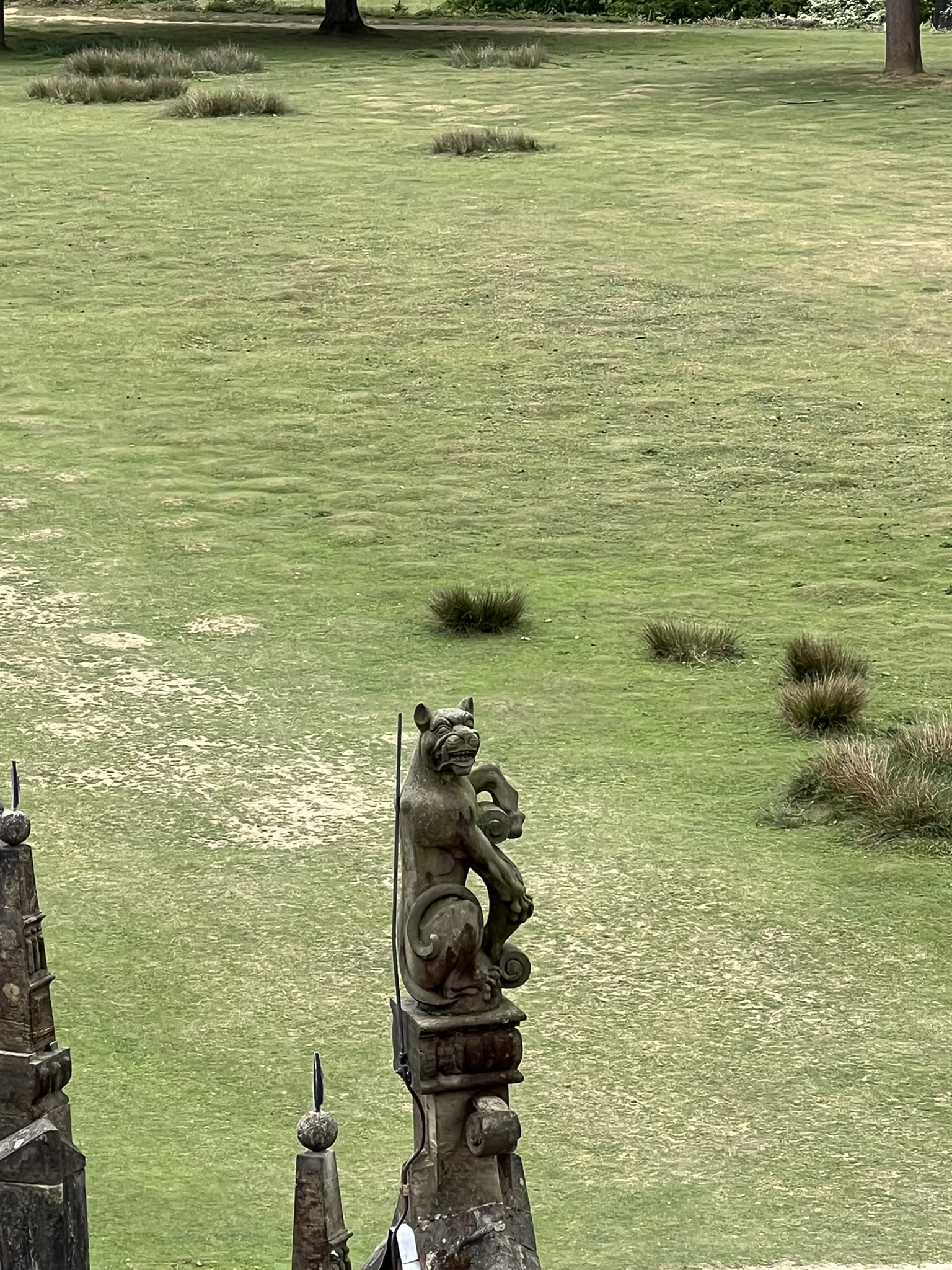
The leopard stone statues:
The Great Stair with its stunning artwork [leopards here too]:
Guess who?! [he is everywhere…]
The Orangery, awaiting the upcoming Beatrix Potter exhibition:
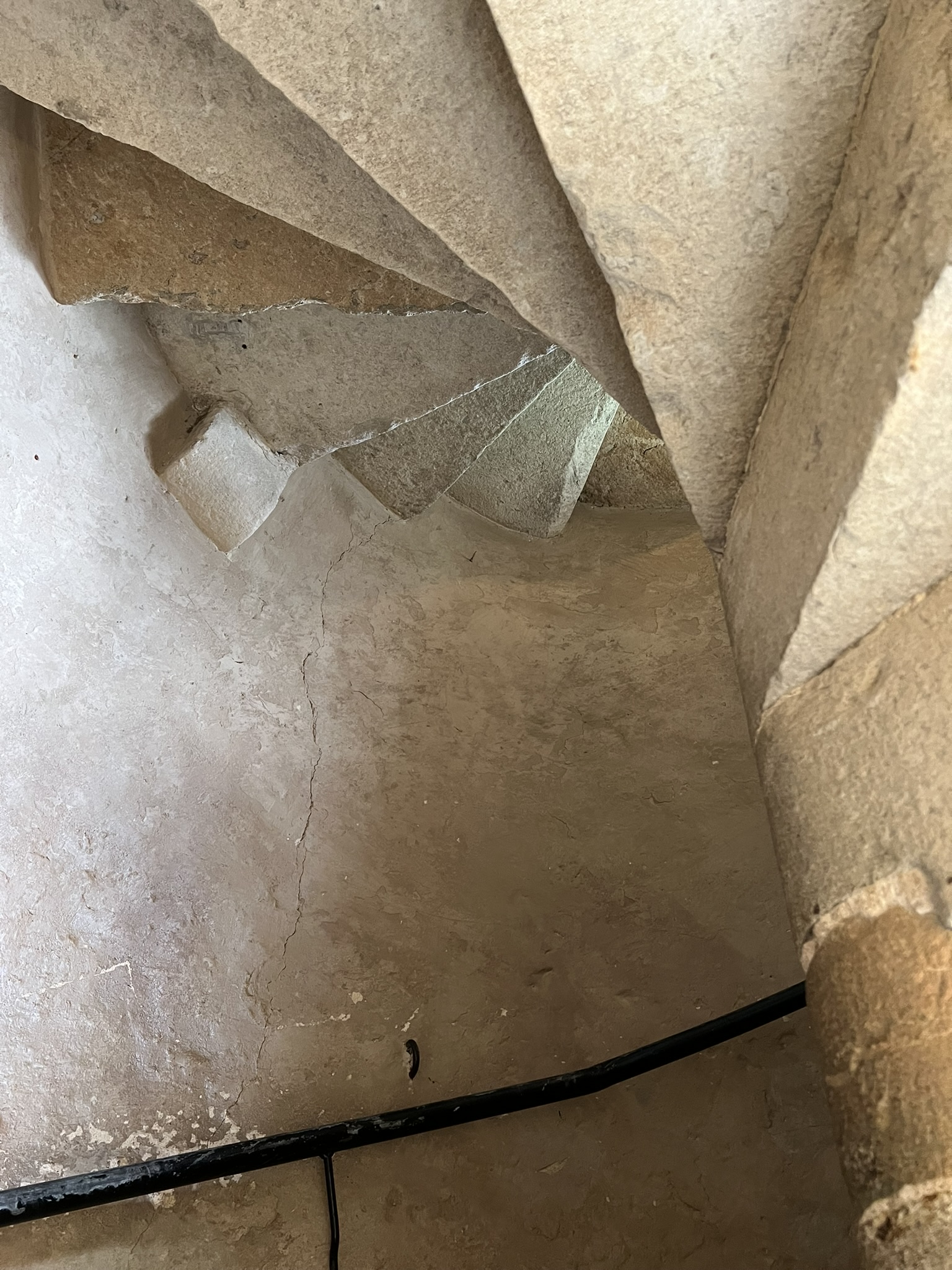
The winding staircase to Eddy Sackville-West’s gatehouse tower [do not attempt after a glass of wine…]:
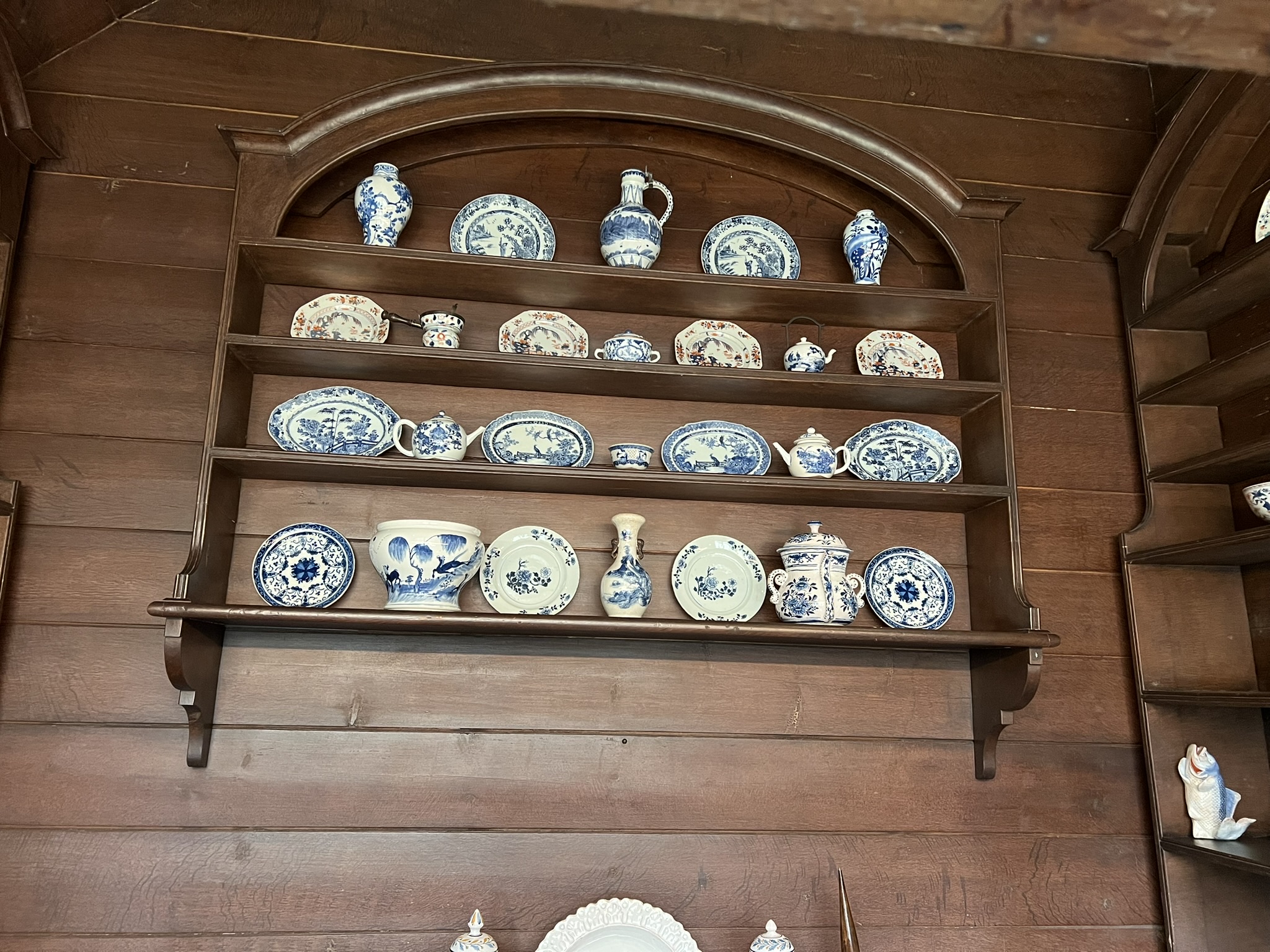
I was captivated by the story of Lady Betty, Lady Elizabeth Germaine (1680-1769), who lived at Knole in the 18th century – her bedroom and dressing room are presented as historically accurate to her times. She had a passion for porcelain, and here on display are some of her blue and white collection [my own passion…]
We were on our own for lunch and the tea room here was most accommodating…
It is a worthwhile endeavor to give Knole and its history a bit of your time: at the National Trust site, and Wikipedia does not disappoint.
*******************
More Austen family history as we drove to Tonbridge, to see where George Austen was born in 1731 and went to school; as well as another church visit to St Peter and St Paul’s. You can follow our walk with this guide “In Austen Family Footsteps: A Circular Walk in Tonbridge” – again with the Kent Branch members.
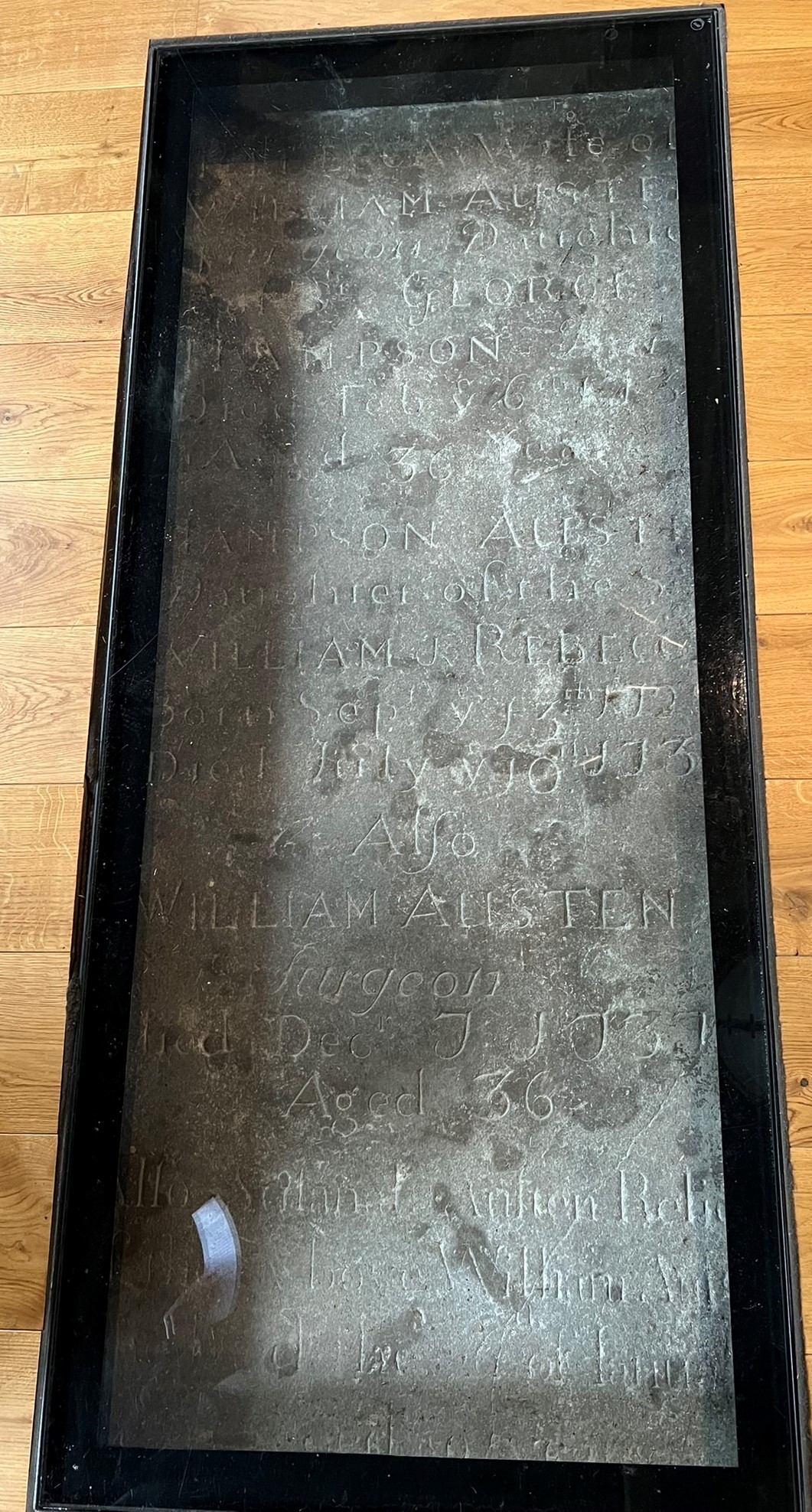
The Church of St Peter and St Paul, where Jane Austen’s grandfather William is buried with his first wife Rebecca Hampson and his second wife Susanna – the grave is now protected with glass so you can read the inscriptions and no more trodding on them:
************
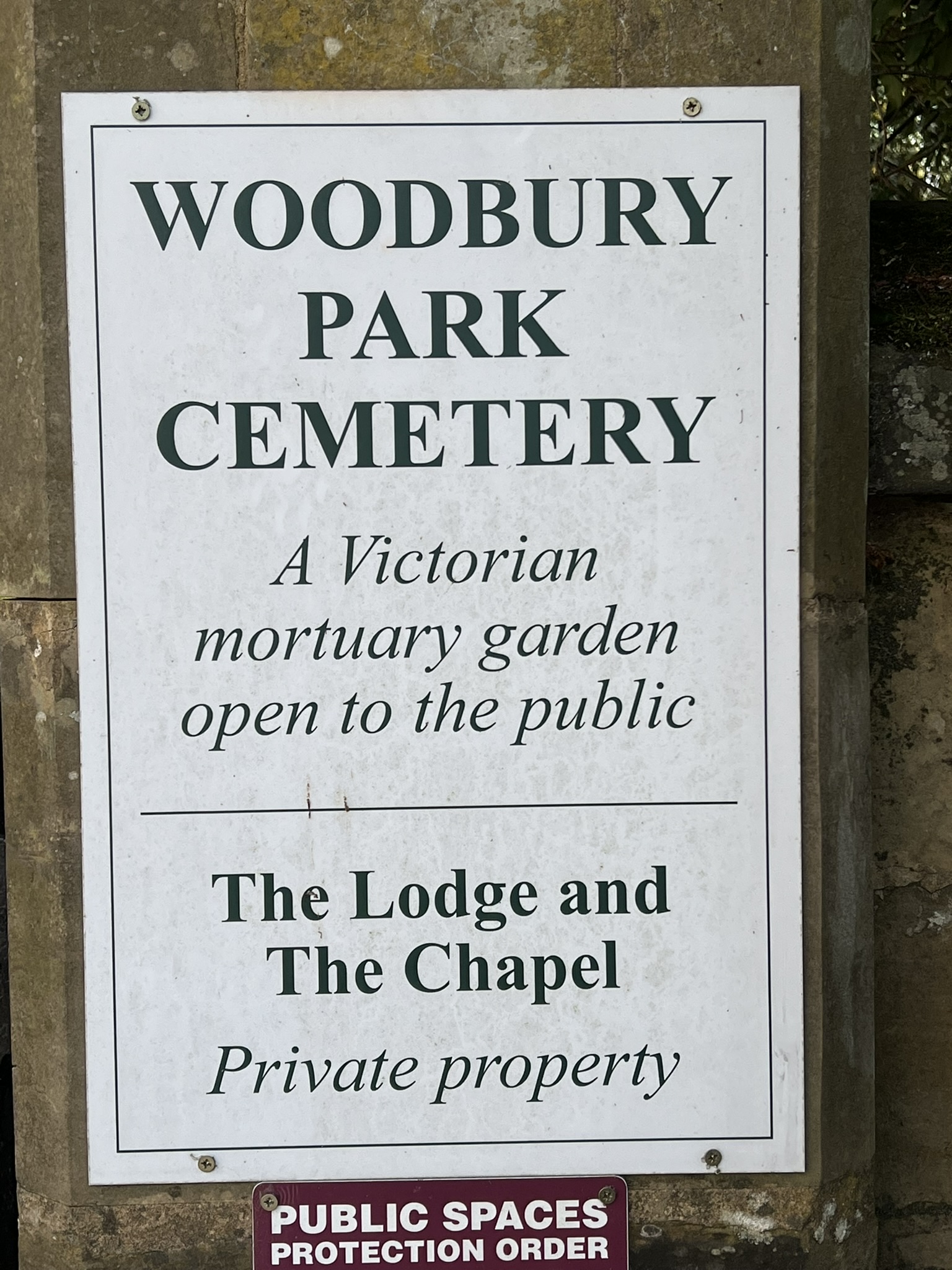
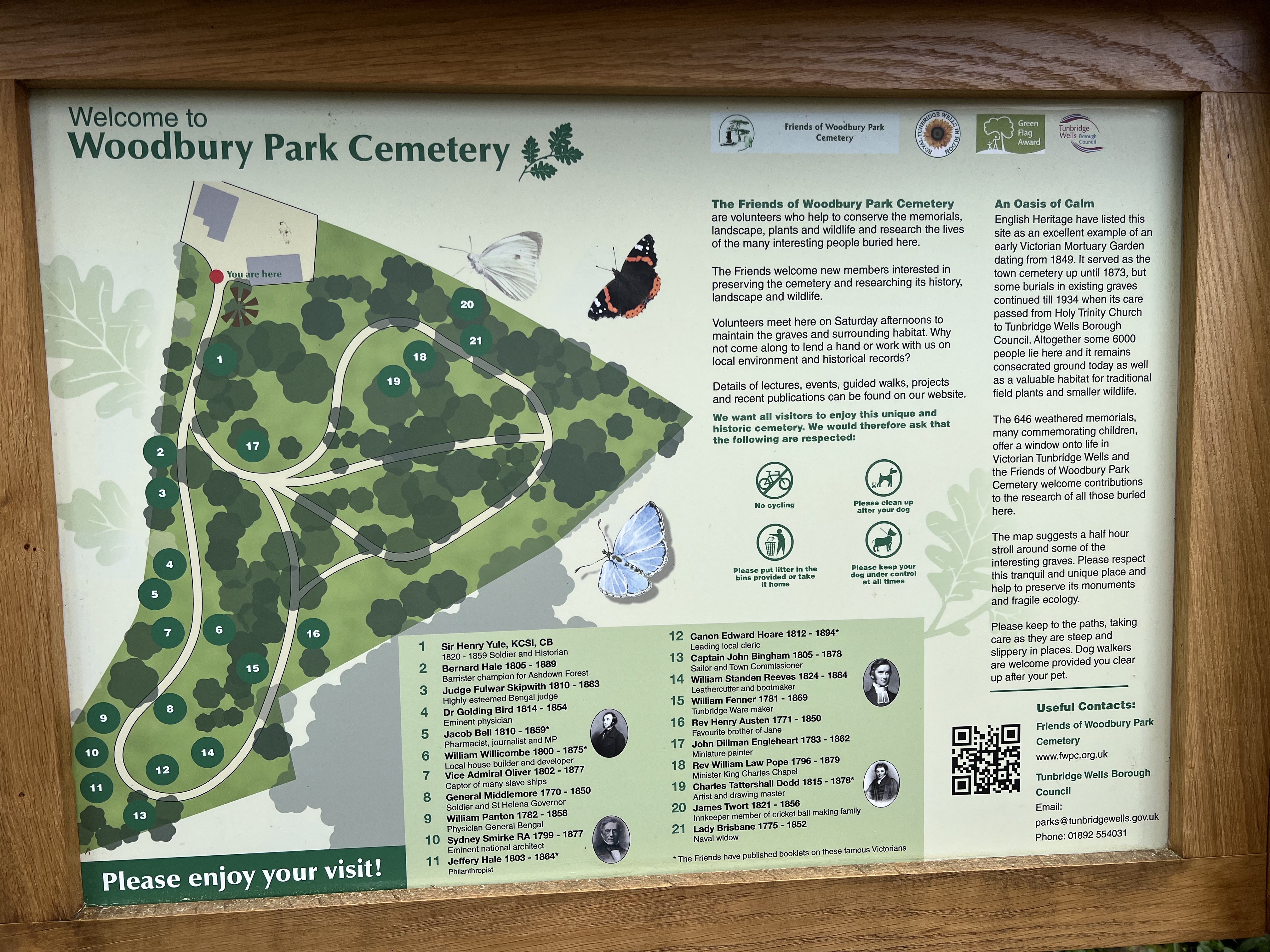
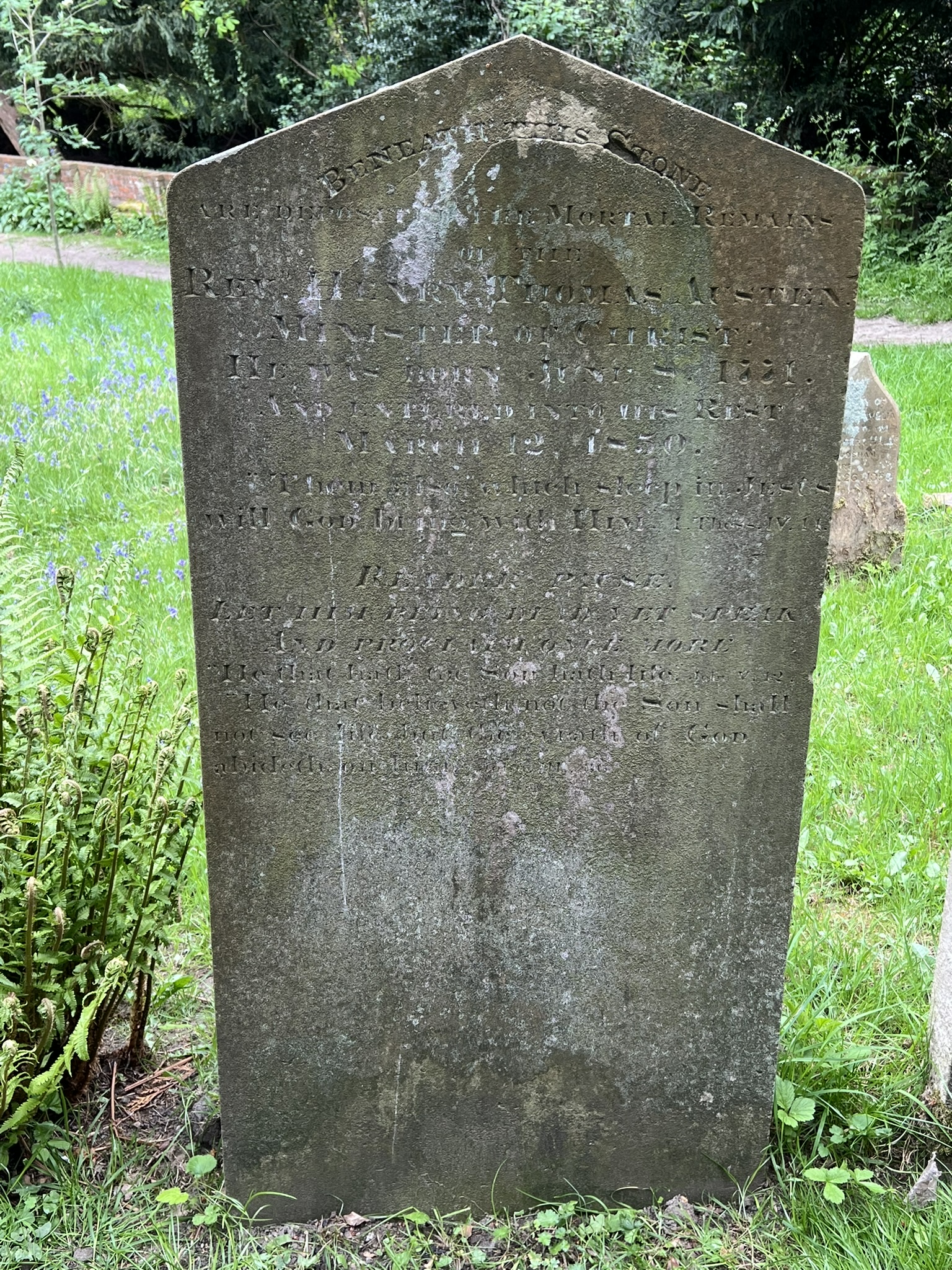
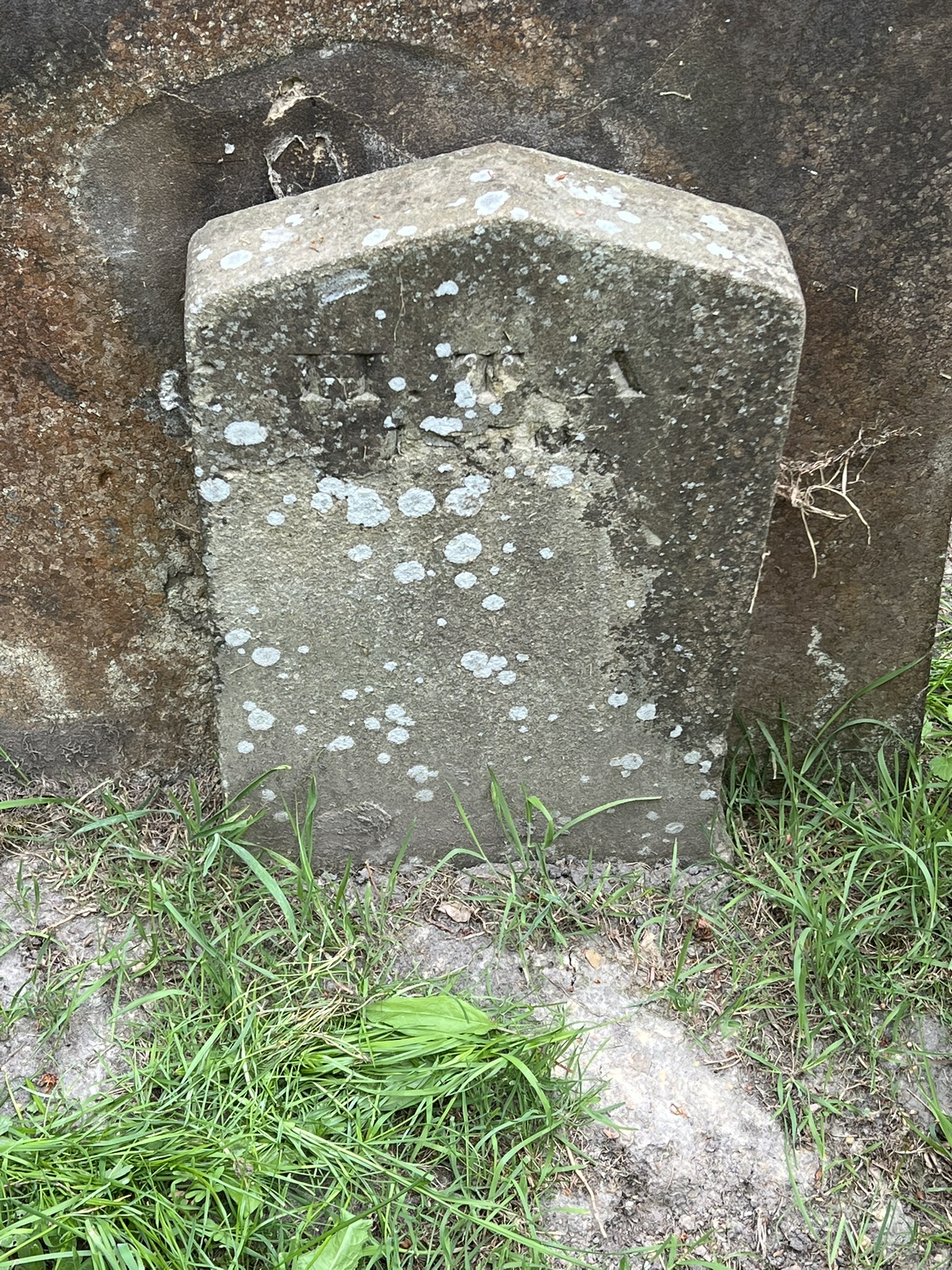
And the day ended at the Woodbury Park Cemetery in Tonbridge Wells, where Henry Austen (1771-1850) is buried, along with several other notables. It is a lovely spot, all maintained by volunteers, with new walkways recently installed. I felt a sadness here, thinking of Henry here all alone, with Eliza buried in the cemetery of St John-at-Hampstead in North London, and his second wife Eleanor Jackson, who died in 1864, who knows where? [does anyone know?] So here lies Henry, the liveliest of Austen’s brothers, the likely model for her various Henrys [Oh! What a Henry!], as well as her publishing champion, all alone in Tonbridge Wells – I was quite overcome really…
***********
Dinner again at our hotel, joined by several of the Kent Branch members who had so graciously guided us at the various spots to give us a deeper understanding of George Austen’s family in Kent. I hate to repeat “a day well-spent” but it was, as each proceeding and succeeding day proved – the “Beautifull Cassandra” would be quite jealous with her only one such day…
************
c2025JaneAustenInVermont
The hot-air balloon shower in the Montgolfier room:
One of the reasons I wanted to do the JASNA tour this year [other than the doable May option] was in it following the life and times of Jane for her 250th and therefore Kent was on the itinerary. I have been only to Canterbury a million years ago as well as to Dover [for one of the worst crossings in English Channel history – only two people on the ship did not get sick: me and my not-yet husband – perhaps destiny stepped in right then and there…]. But Kent was an important place in Jane Austen’s life, and so I was most curious to visit all the known spots with Austen family connections.
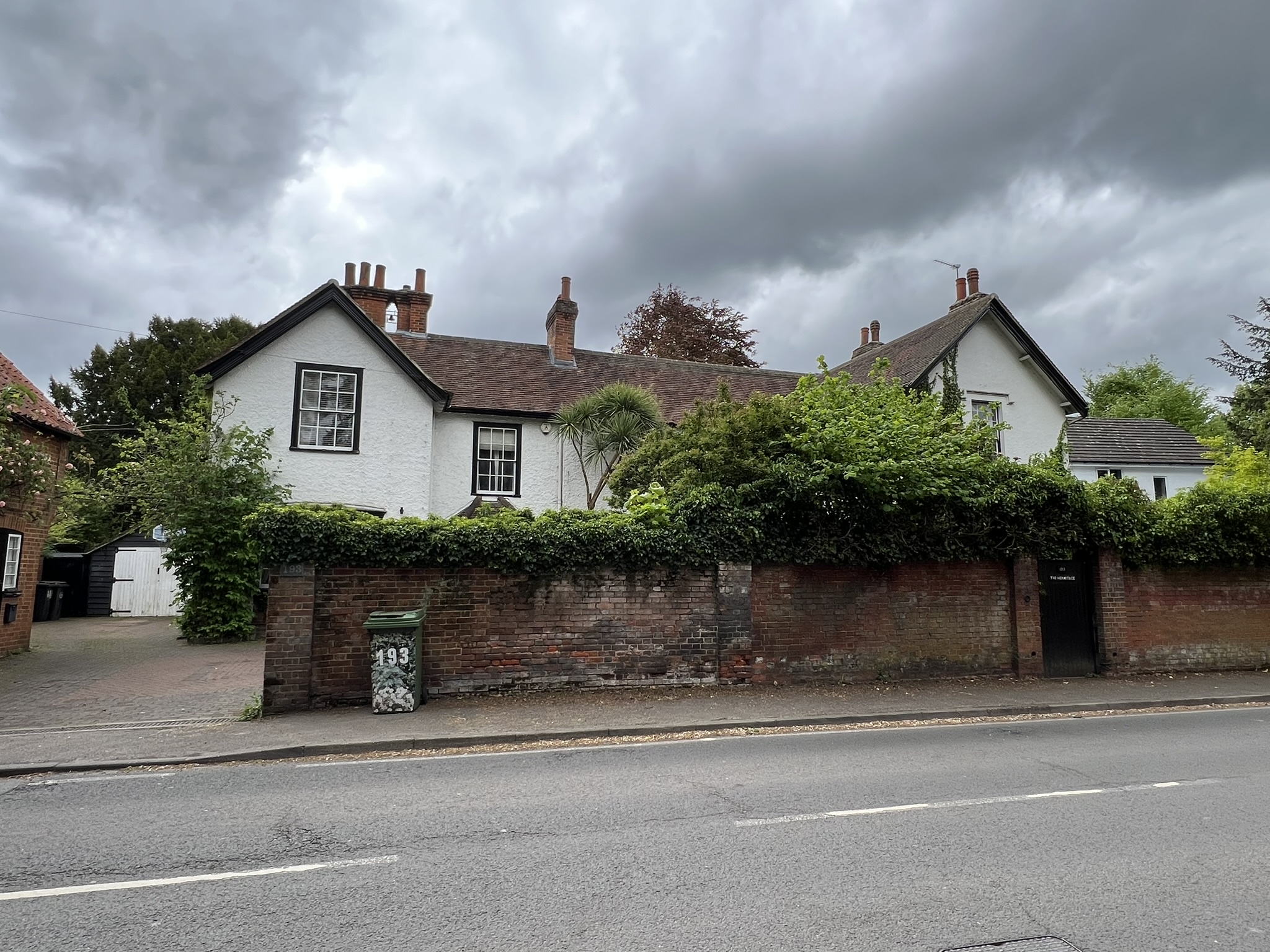
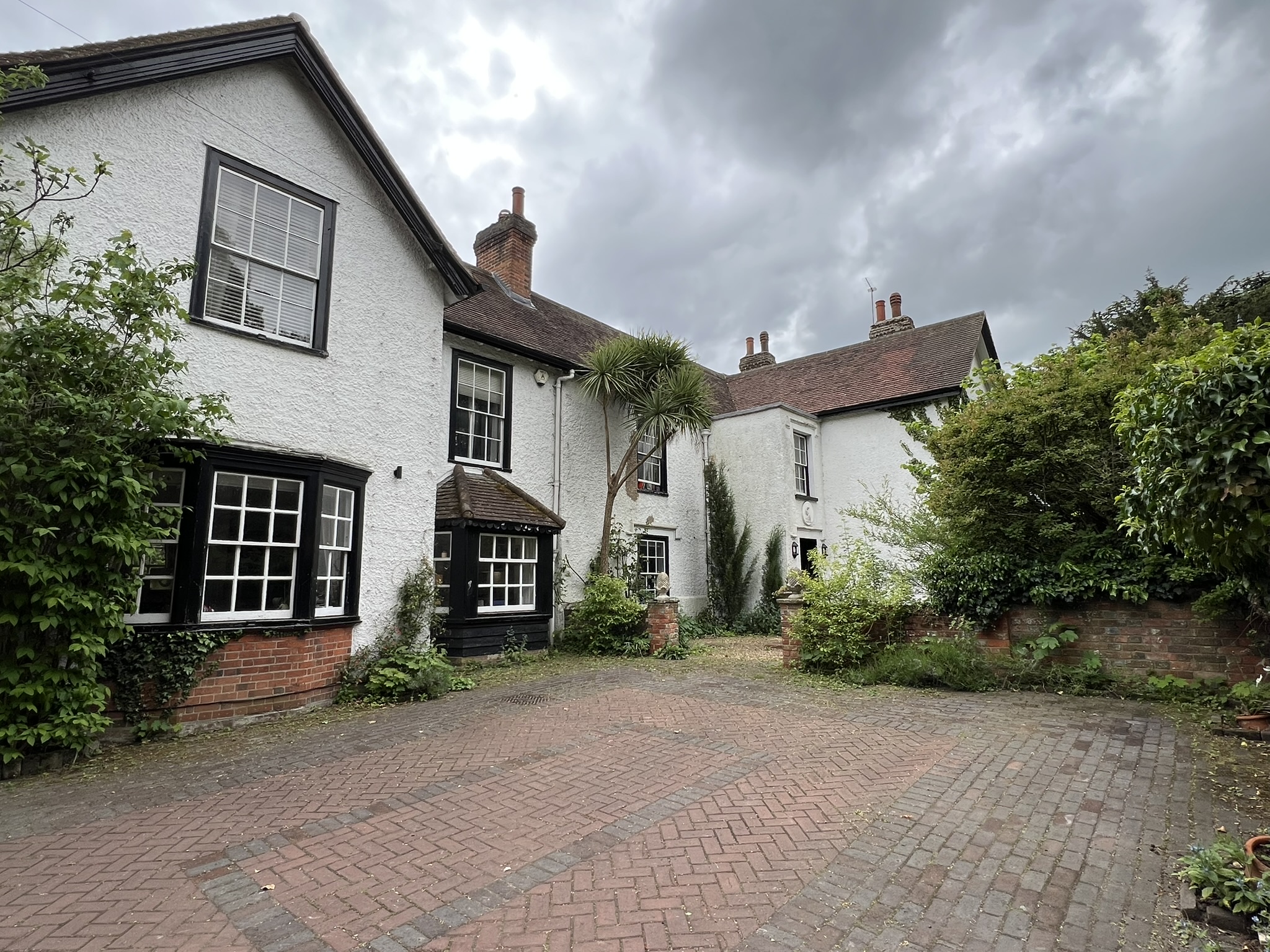
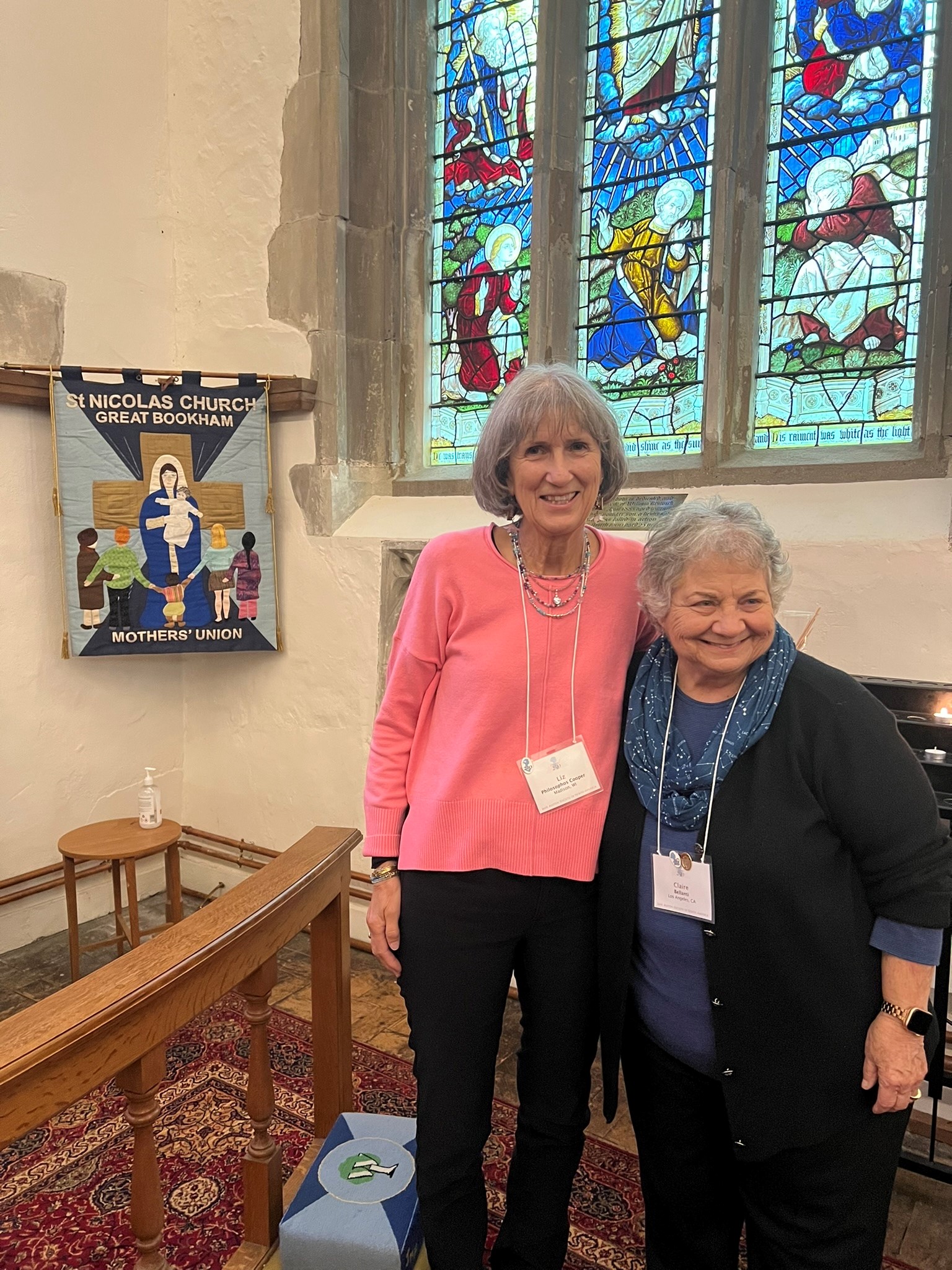
We left Windsor and headed east by way of Surrey to stop in Great Bookham, home to Samuel Cooke as well as another Frances Burney spot on my side-view Burney trek – she lived here from 1793, shortly after her marriage to D’Arblay, until 1802 when they left for France [bad timing – they remained in France for over 10 years due to the Napoleonic Wars]. The home they lived in there is now called The Hermitage:
[it is lovely – they need a gardener…]
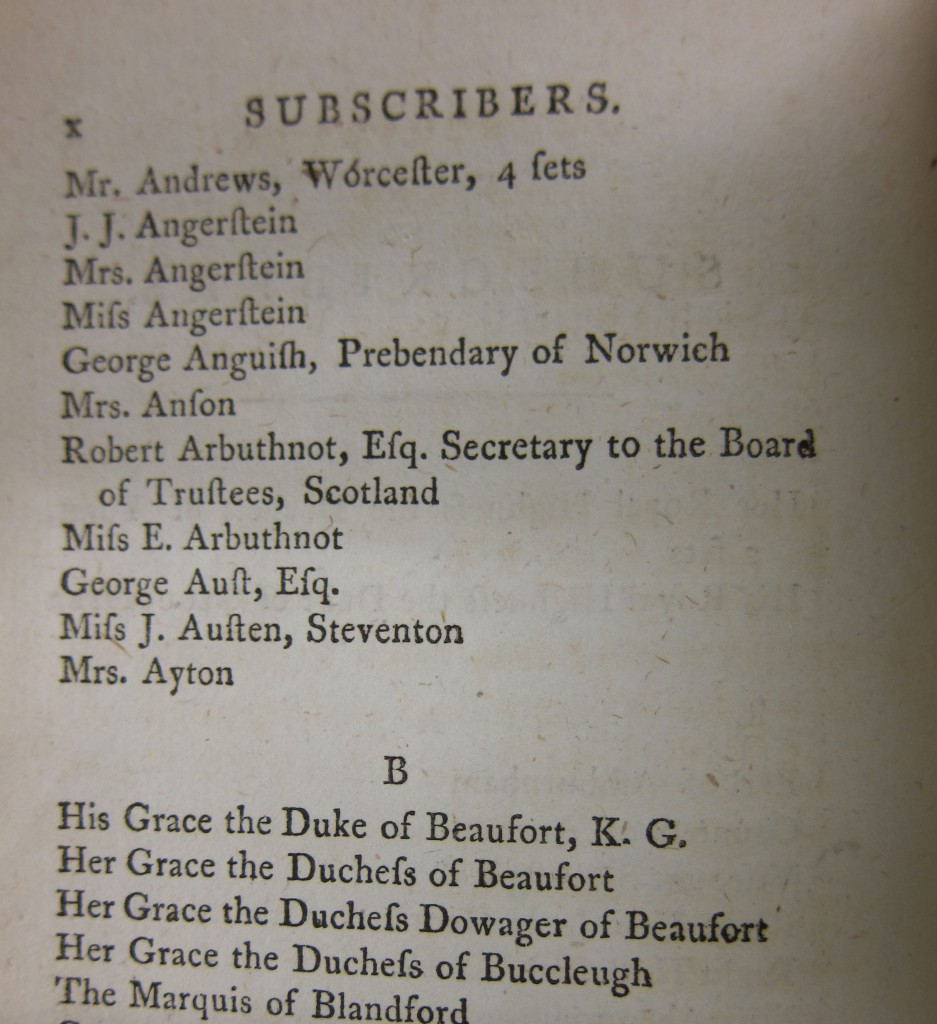
this is where Burney wrote Camilla (1796), the book where Austen’s name first appears in print as a subscriber:
Apparently Burney’s husband General D’Arblay attempted to manage the extensive gardens with military zeal – “he demolished an established asparagus bed and pruned the fruit trees with his sword.” 1
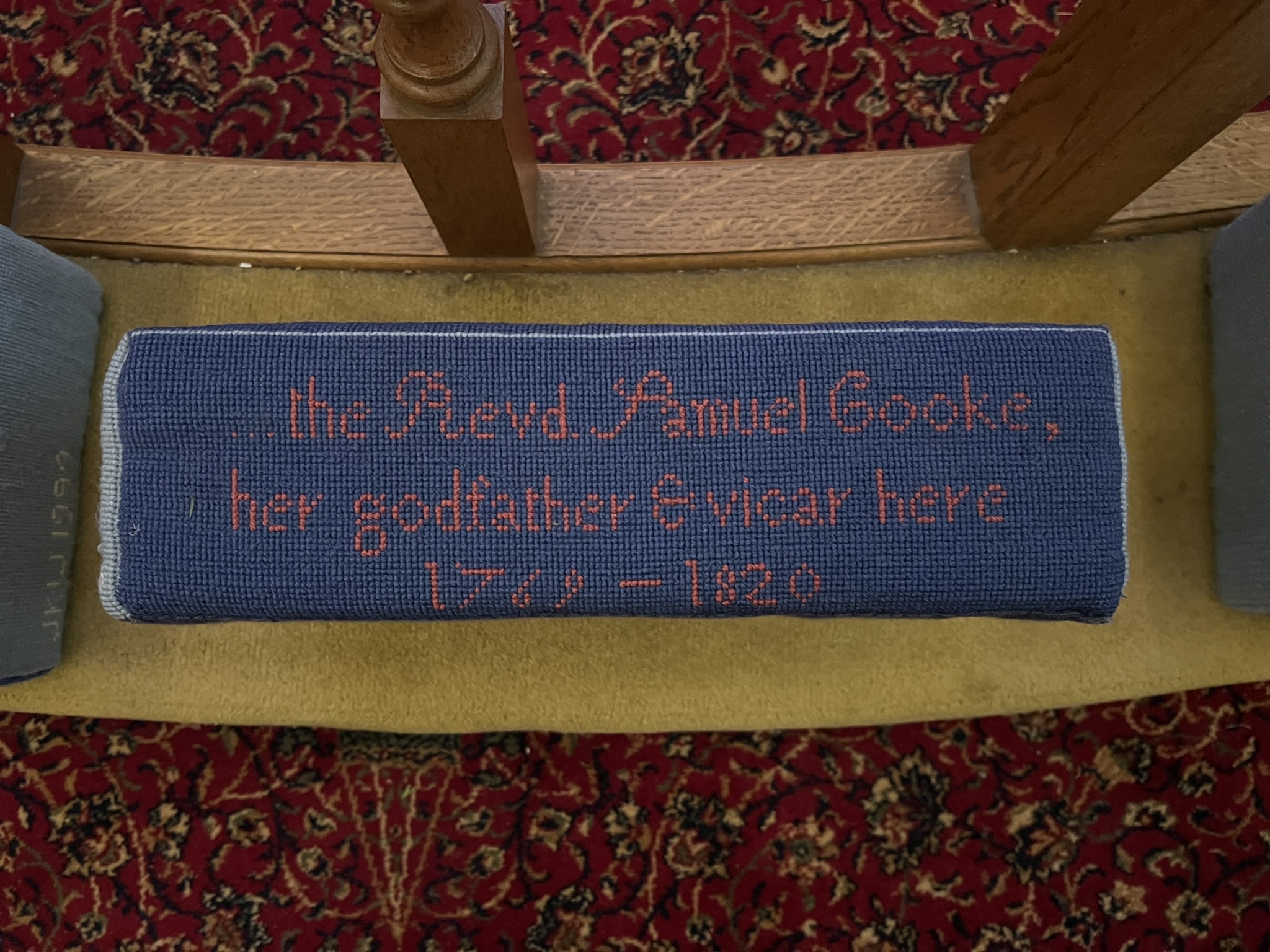
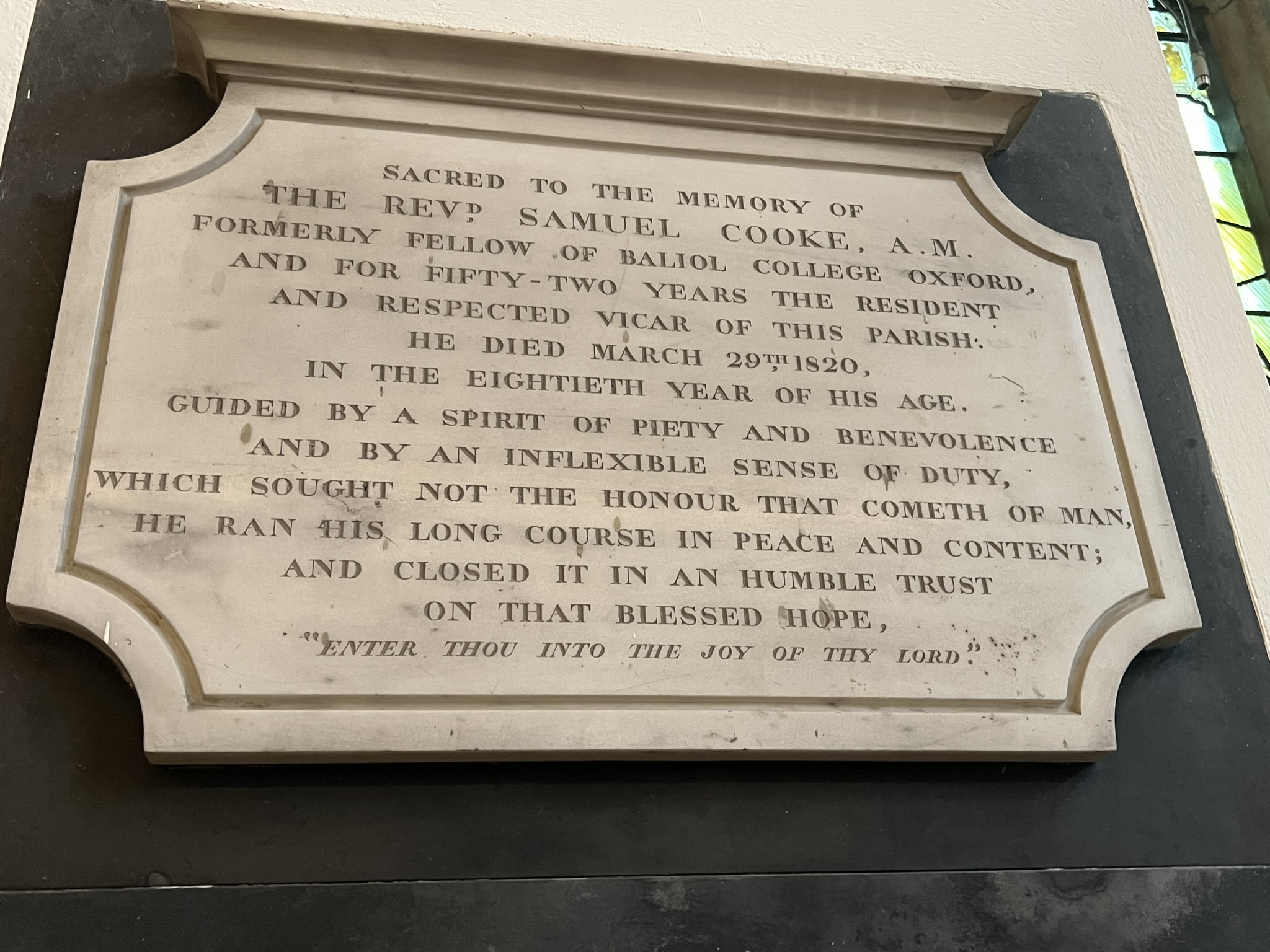
The Rev. Samuel Cooke (1741-1820) was the vicar of this first of our St Nicolas Churches for 52 years…
[notice that some have an “h” and some do not: Nicholas vs. Nicolas– no explanation for this to be found, other than this from the never-wrong AI:
“The variation in spelling (St. Nicholas vs. St. Nicolas) for churches dedicated to Saint Nicholas is due to historical and linguistic shifts. The “ch” in “Nicholas” was adopted in the 12th century in English, based on the Greek pronunciation of the “chi” letter in the name’s original Greek form. While “Nicholas” is the more common English spelling, “Nicolas” is occasionally used and reflects a more direct pronunciation of the Greek origin.”]
Samuel Cooke married a Cassandra Leigh, first cousin to Austen’s mother, also named Cassandra Leigh; he was Jane’s godfather [one way to lose your mind on any given day is to try to absorb the genealogies of the Austen, Cooke, and Leigh families…] and the families were close.
Tony Grant wrote a blog post about this several years ago, so you can visit here for more info.
Found these signs in a few toilets in our travels… you can read all about “Toilet Twinning” here – who knew??]
***********
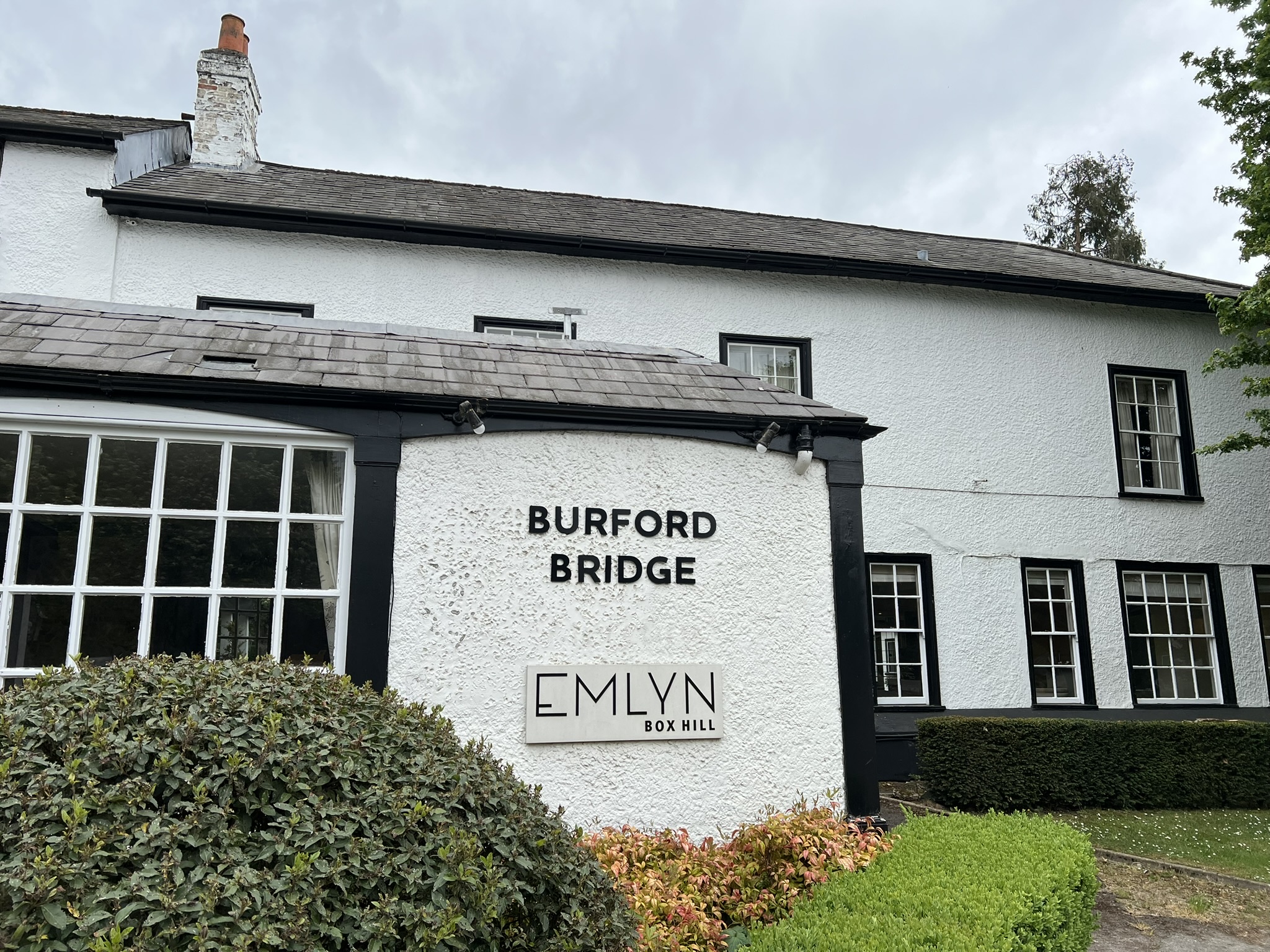
We next headed to the Box Hill area and had lunch at the Burford Bridge Hotel [I had been by there on my day with Tony and Marilyn when we trekked Box Hill] – an interesting old Inn with a number of notable guests as Wikipedia tells me:
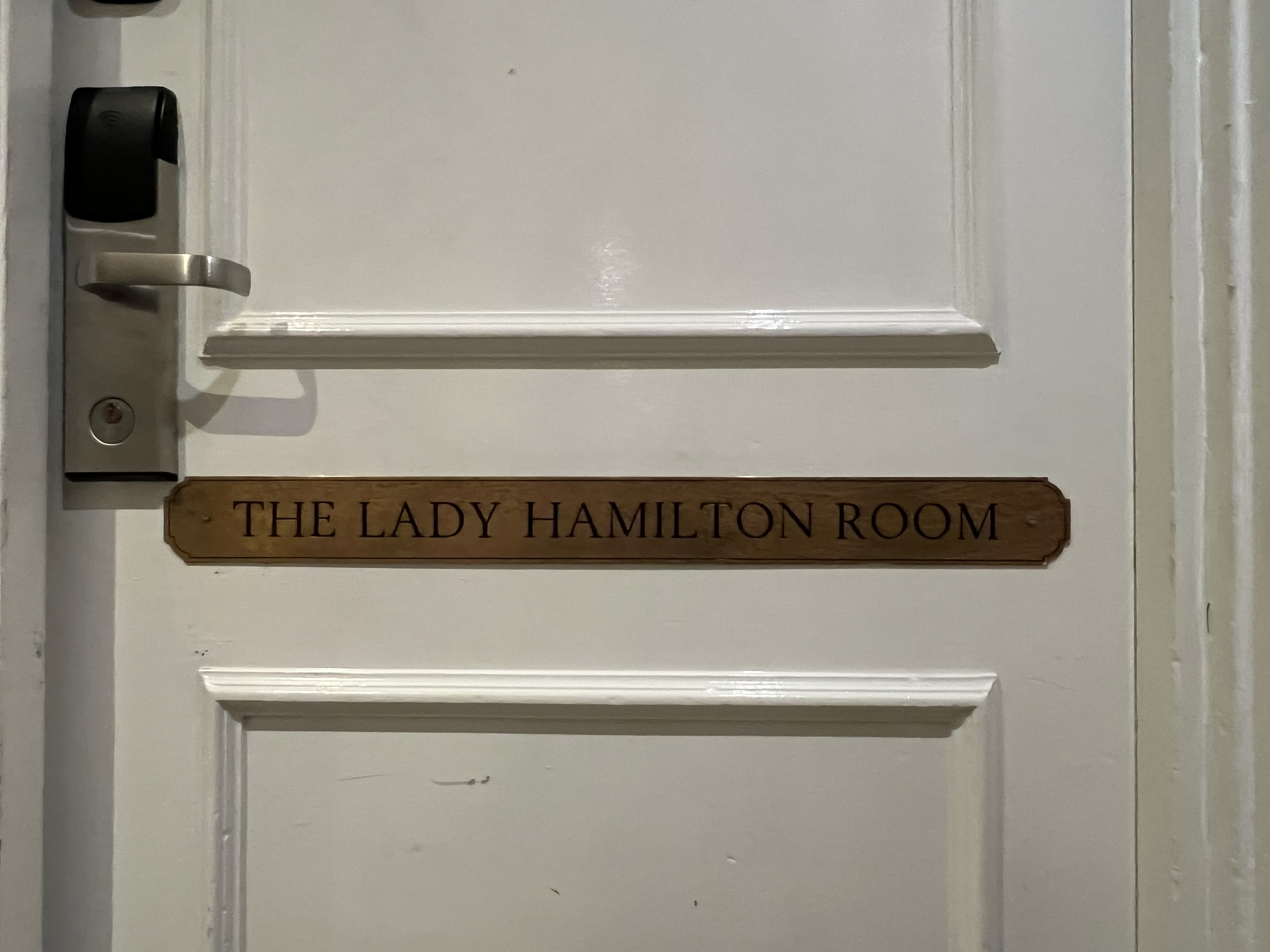
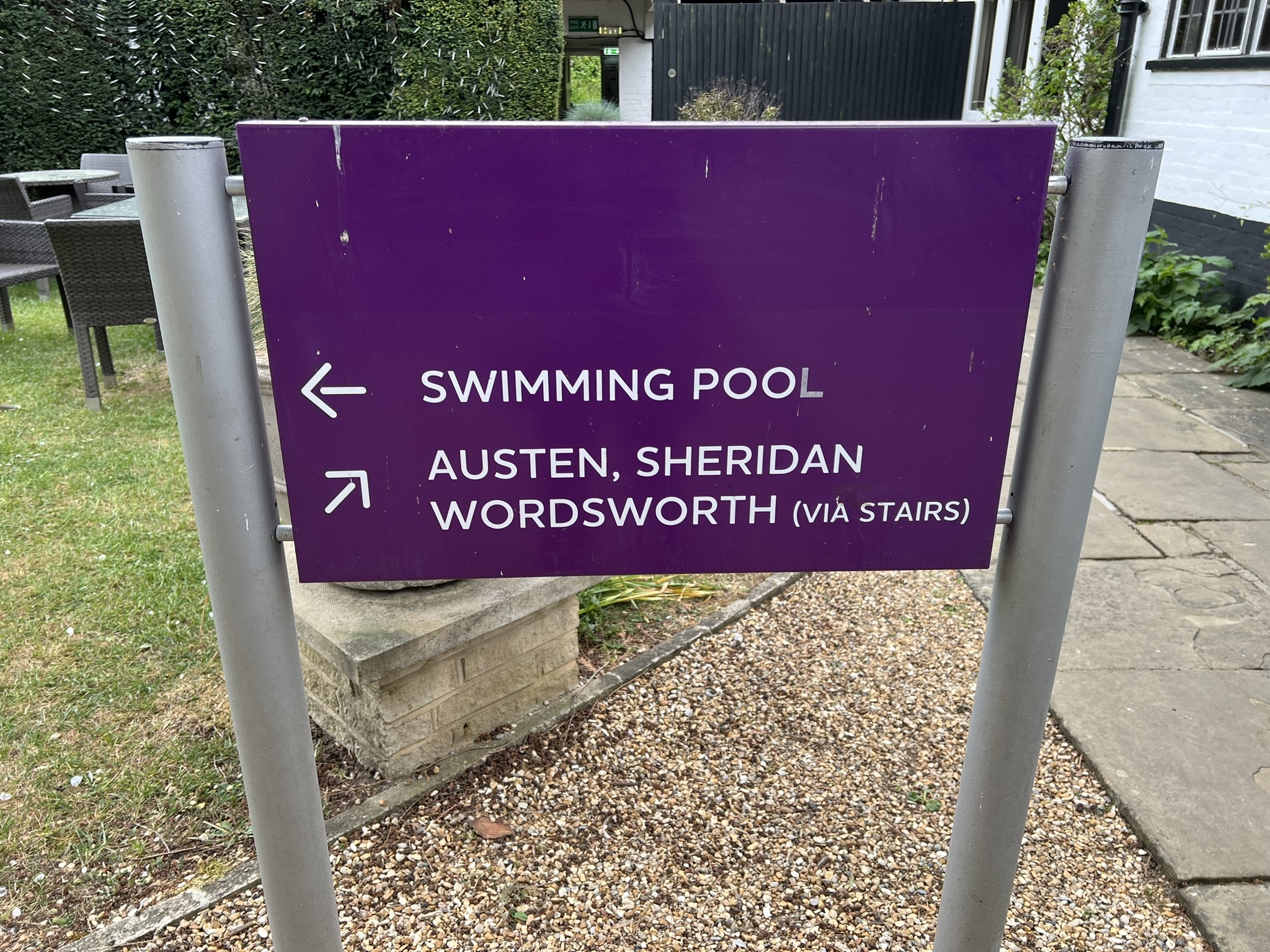
“After leaving London, John Keats took a room overlooking the gardens, and completed his epic poem “Endymion” there in 1817. (Keats is said to have been recommended the hotel by the essayist and literary critic William Hazlitt [I am not a fan of Hazlitt – he said terrible things about the Bluestockings..].) Robert Louis Stevenson was a guest in March 1878, during which time he wrote two short stories: “Story of the Young Man with the Cream Tarts” and “Story of the Physician and the Saratoga Trunk.” Other prominent visitors included Queen Victoria, Jane Austen, William Wordsworth and Sheridan. It was here too that Lord Nelson spent secret hours with his love Emma Hamilton, before going to vanquish Napoleon’s fleet at the Battle of Trafalgar.”
Notable indeed! Lady Hamilton’s room is now a boring conference room but nicely labelled thus:
Rooms reflect the hotel’s history:
And Box Hill was just above us:
***************
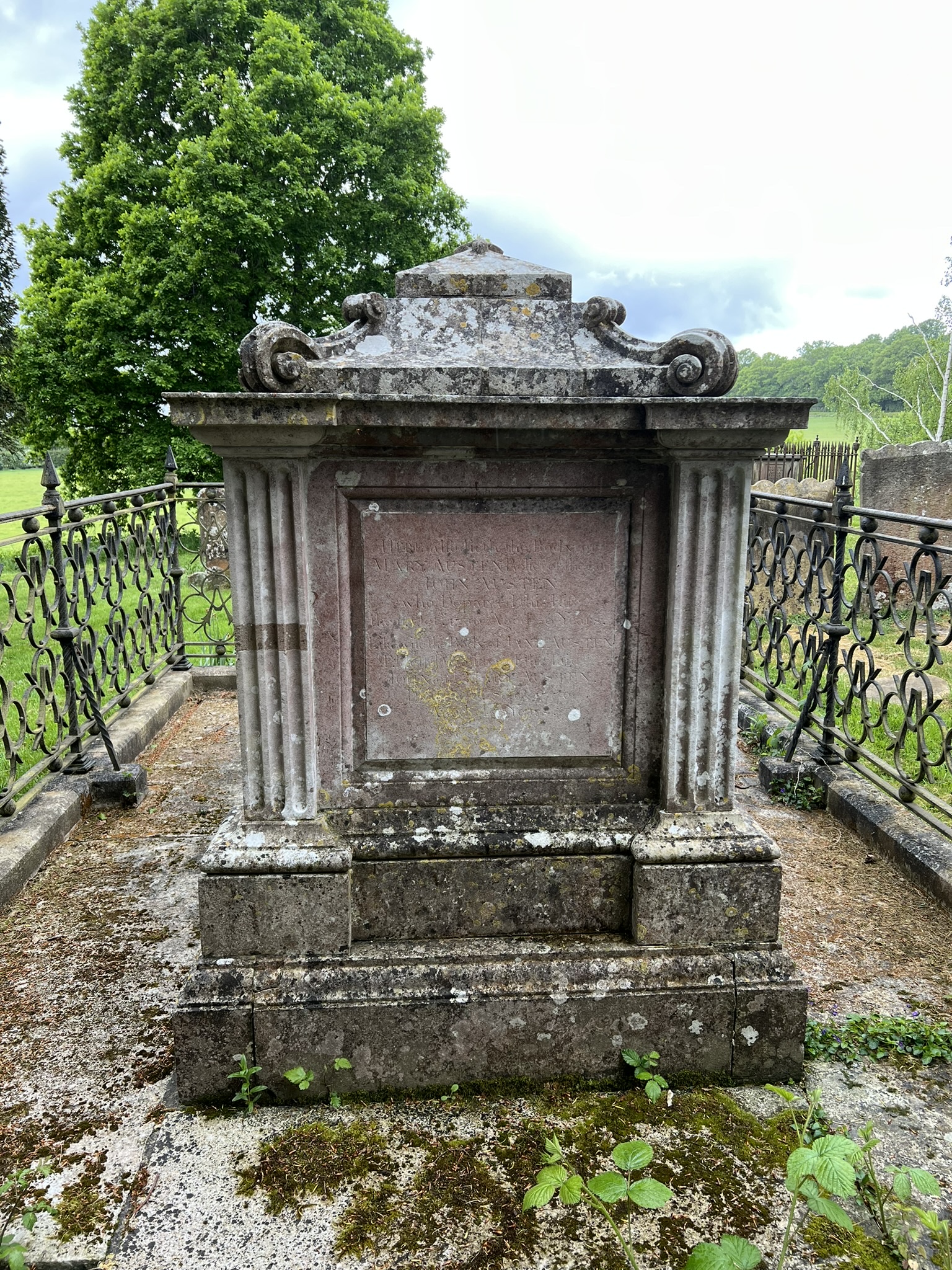
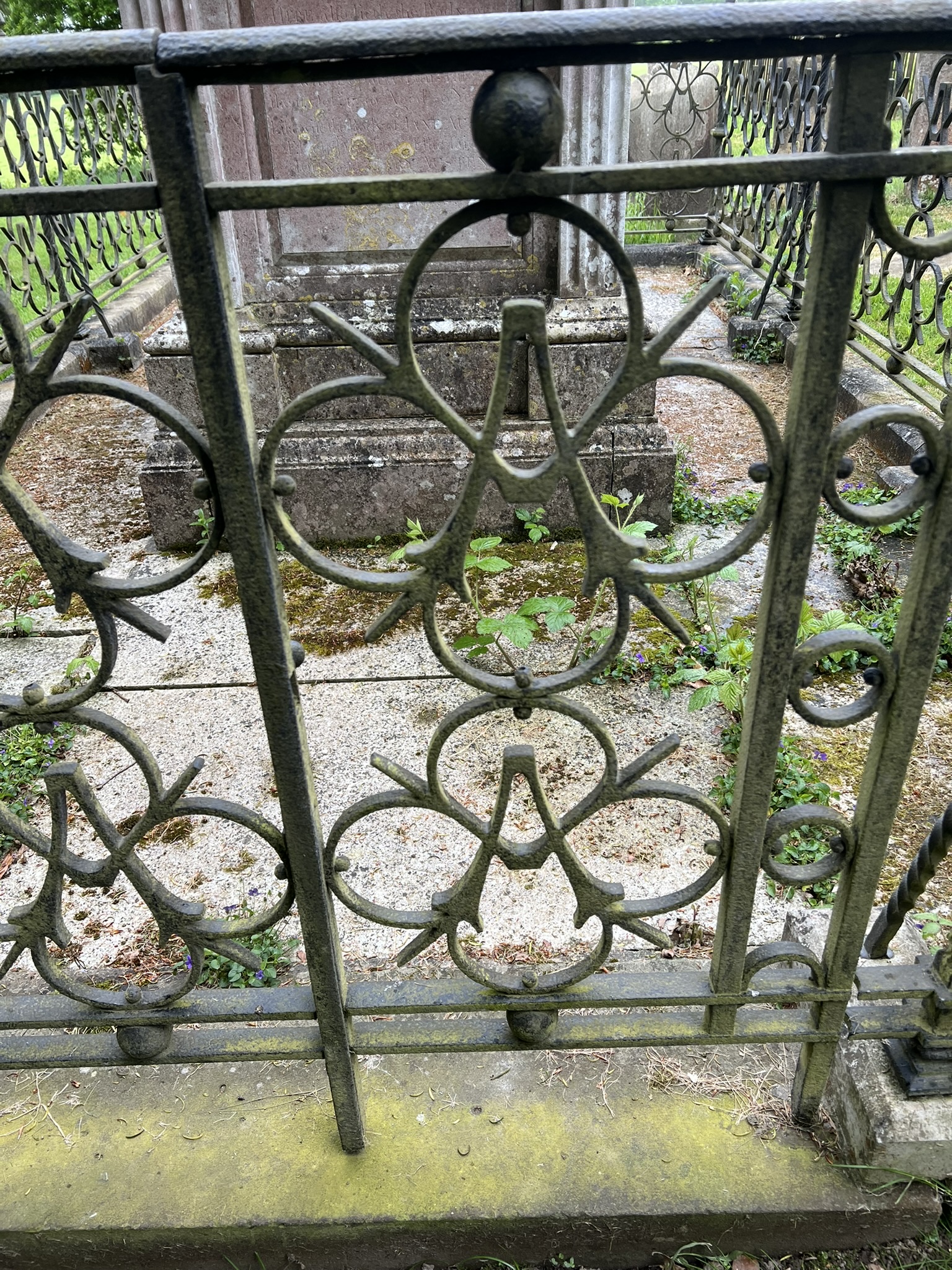
After a fine lunch we headed off to Horsmonden to visit the Church of St. Margaret – this was delightful as we met some of the JAS Kent Branch members who graciously told us about the church and its ties to the Austen family. The John Austen family [John Austen was Jane’s great-grandfather but the family goes back to the first John Austen (1560-1620) – more on them tomorrow] lived here and there are various memorials in the church and churchyard – here one of the tombs: notice the “A” on the gate, signifying “Austen”:
Note: And Ron Dunning joined us here as well – you can read a post of his about Horsmonden from the vantage of a hot-air balloon!]
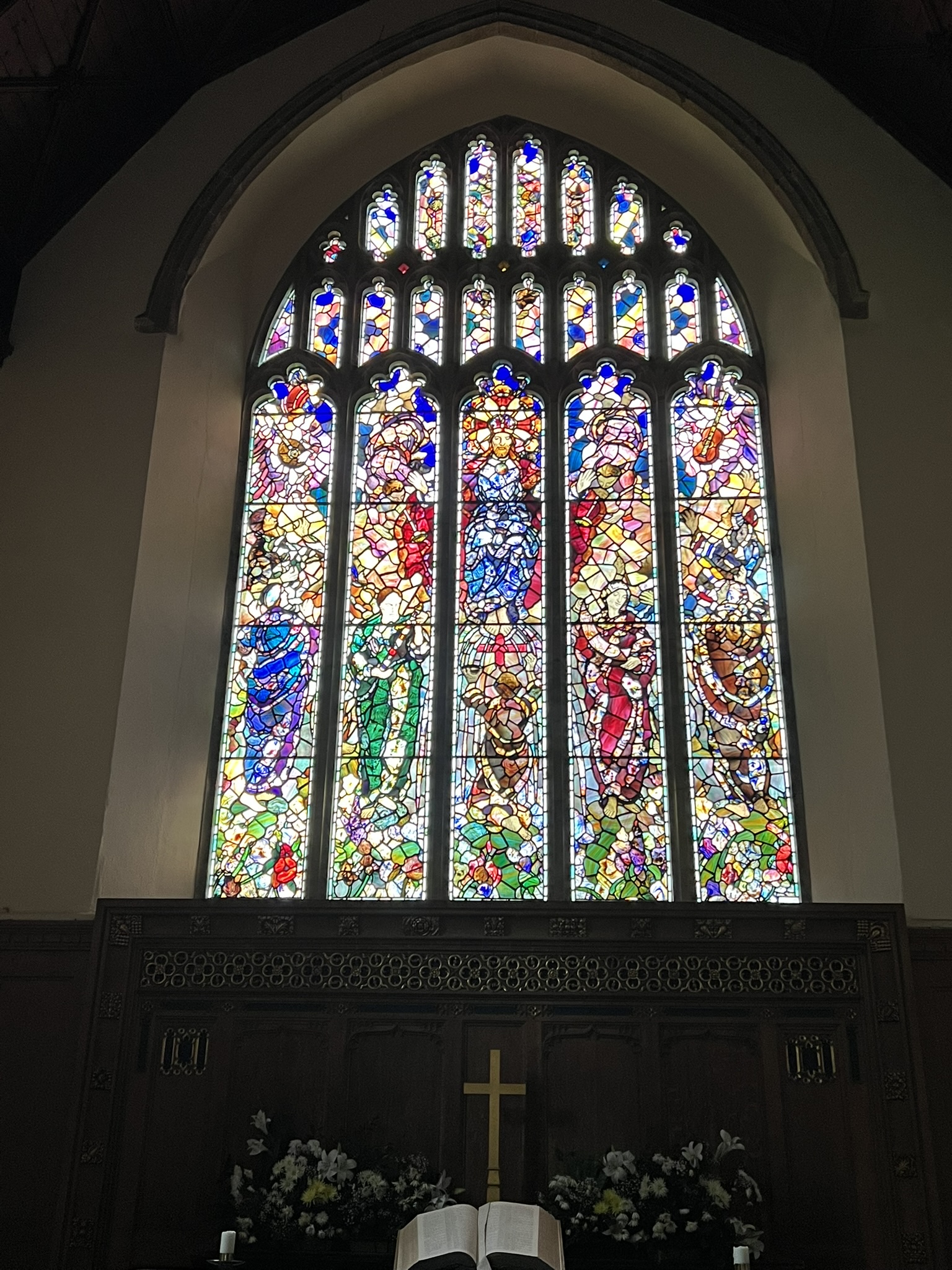
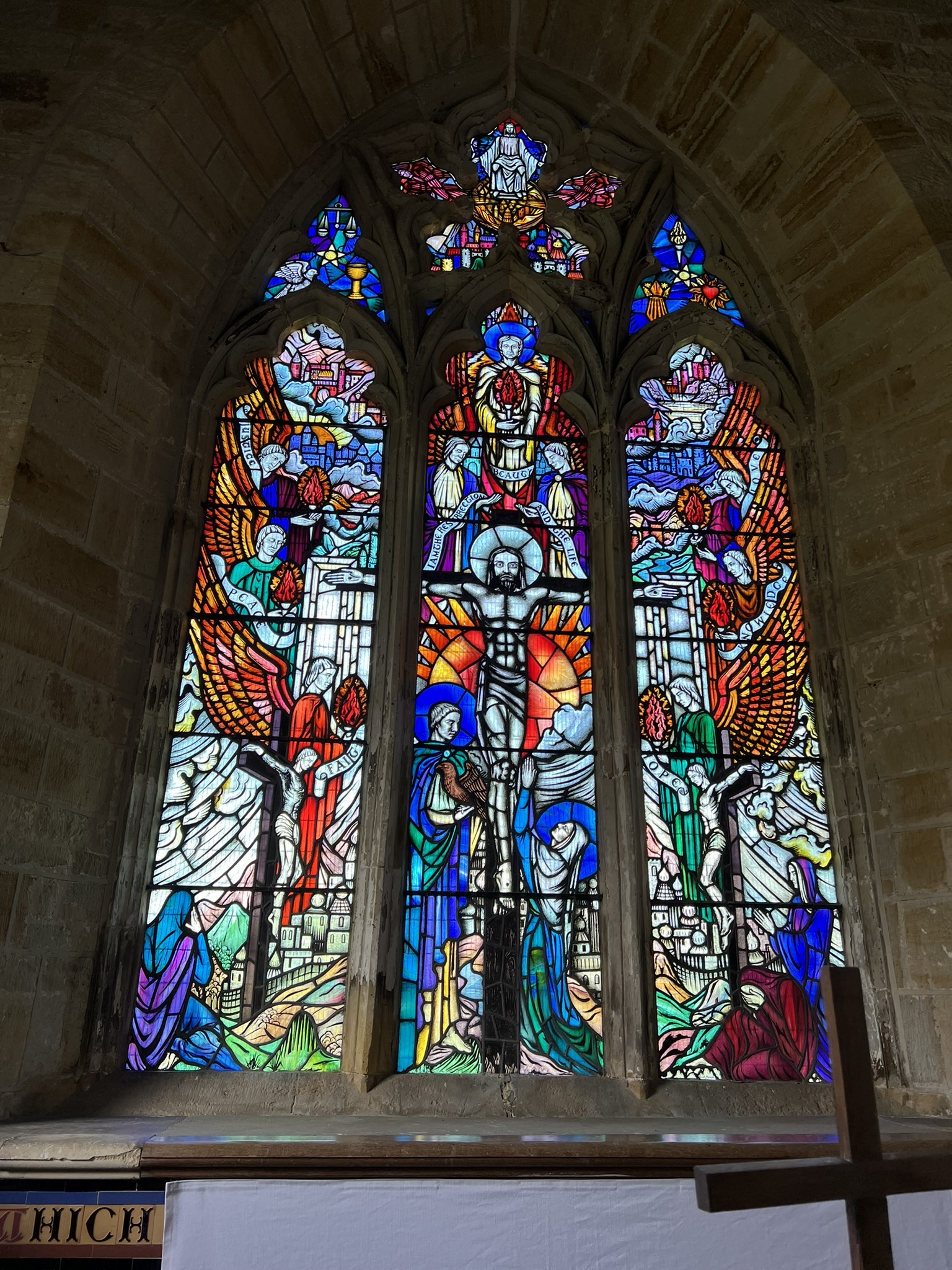
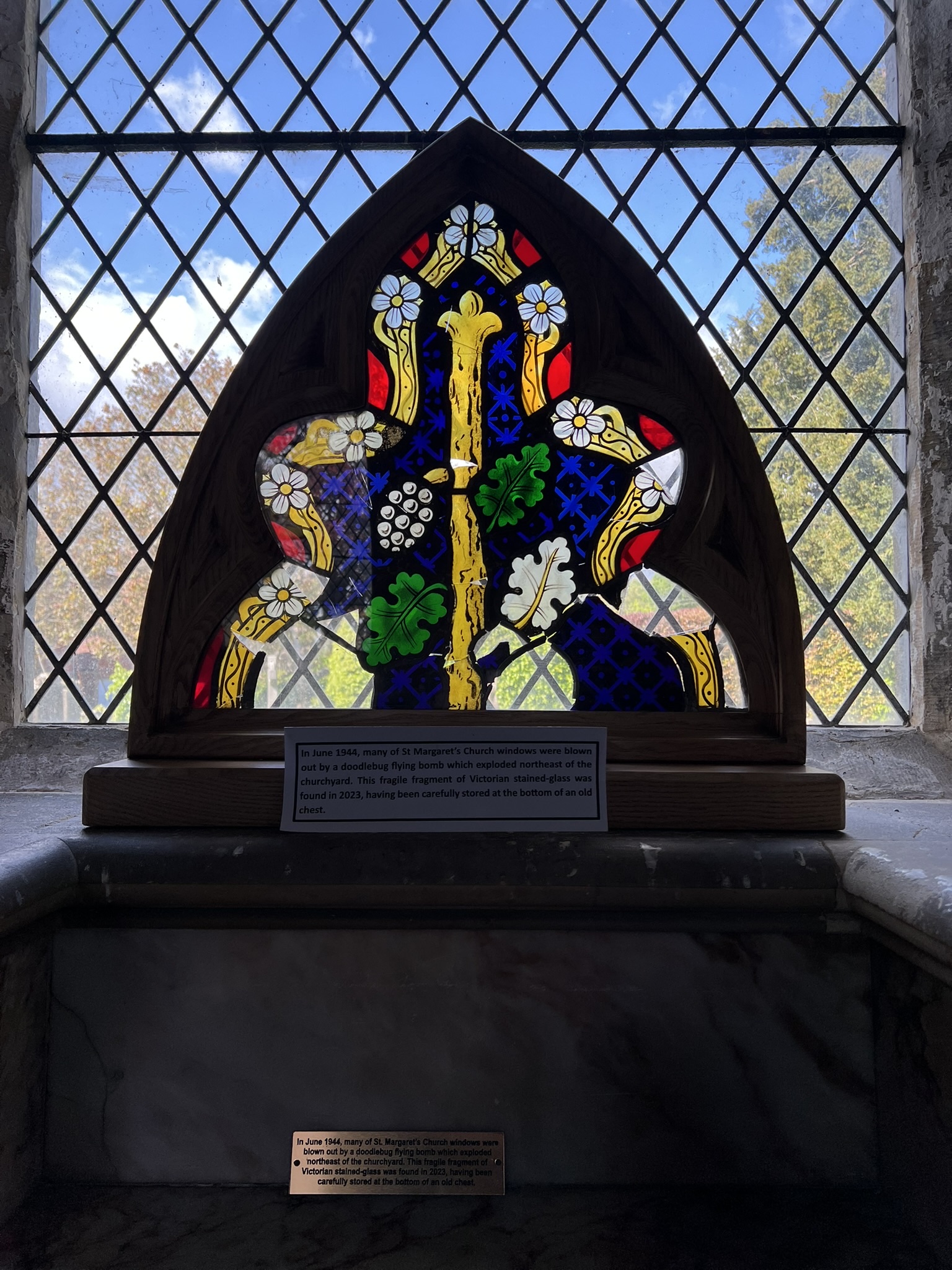
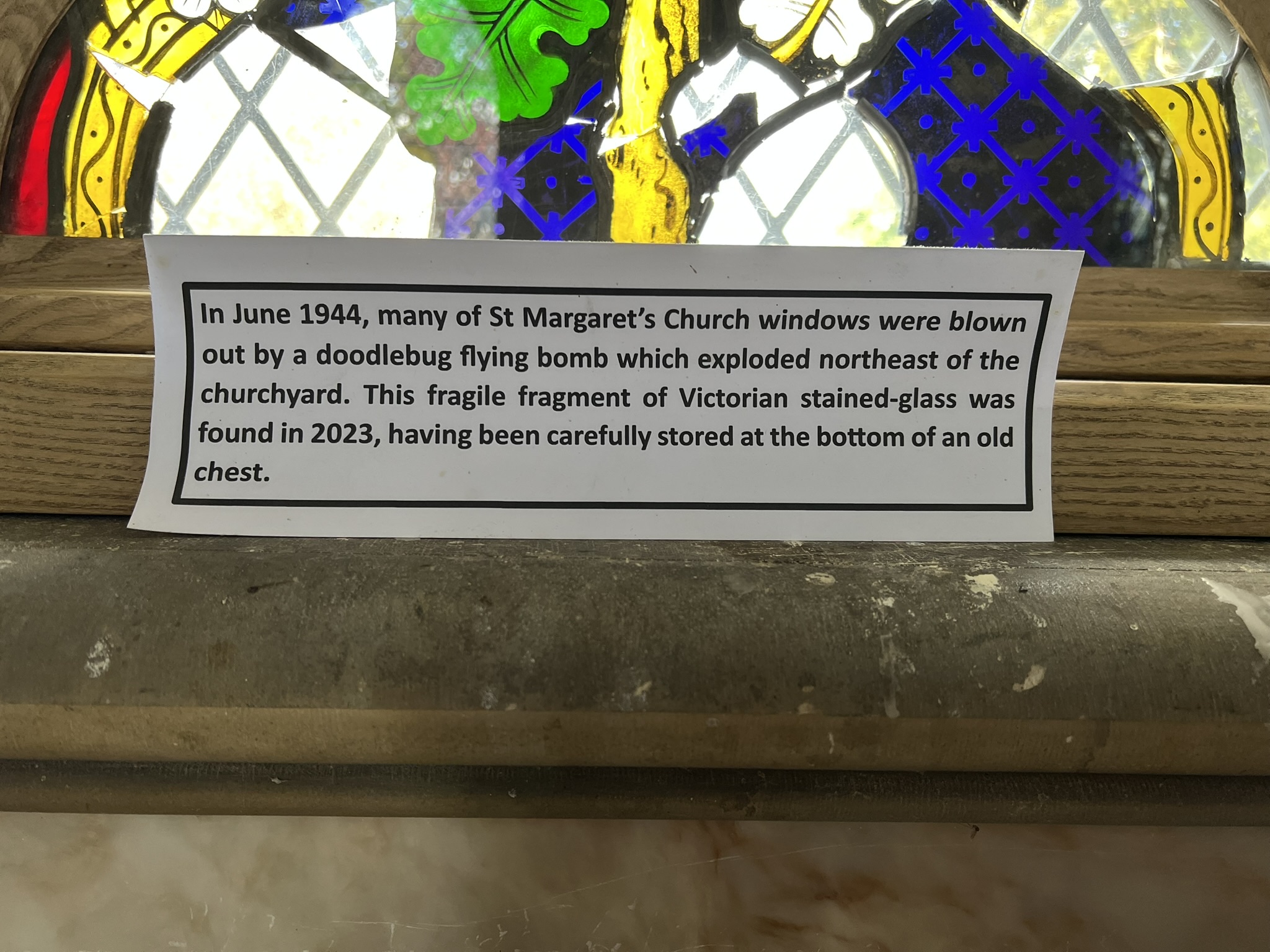
The stained glass windows in this church are stunning. A WWII bombing blew out all the windows on the north and east sides with little of the glass surviving – many of the now existing windows have been designed by notable artists. And a very recent discovery in an old chest at the church of an intact piece of window gives us this lovely example of what the whole window must have looked like:
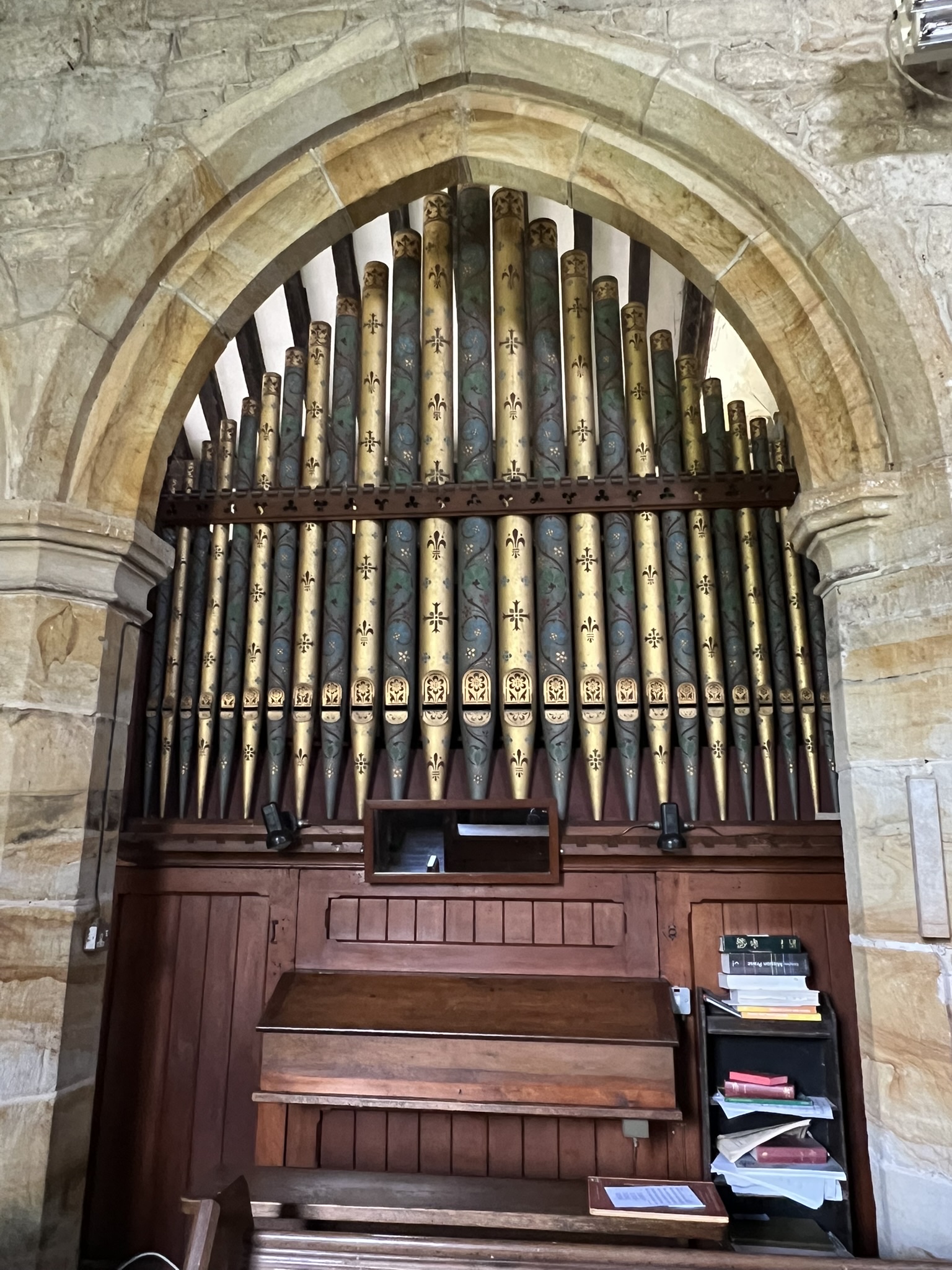
The organ pipes are also a work of art:
************
We then headed to our hotel in Lenham where we stayed for three days to allow for further exploring of Kent…and more of the John Austen family …
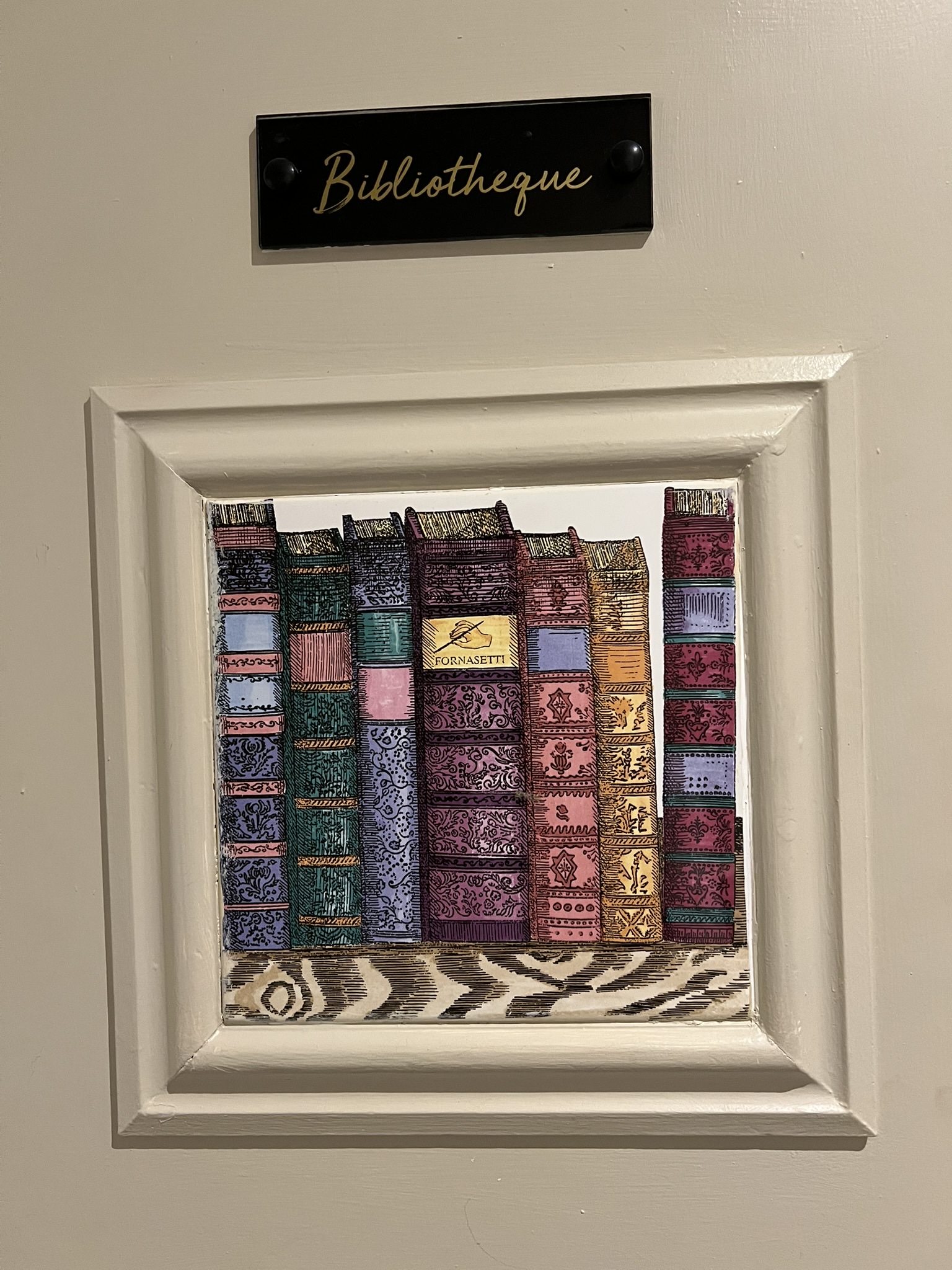
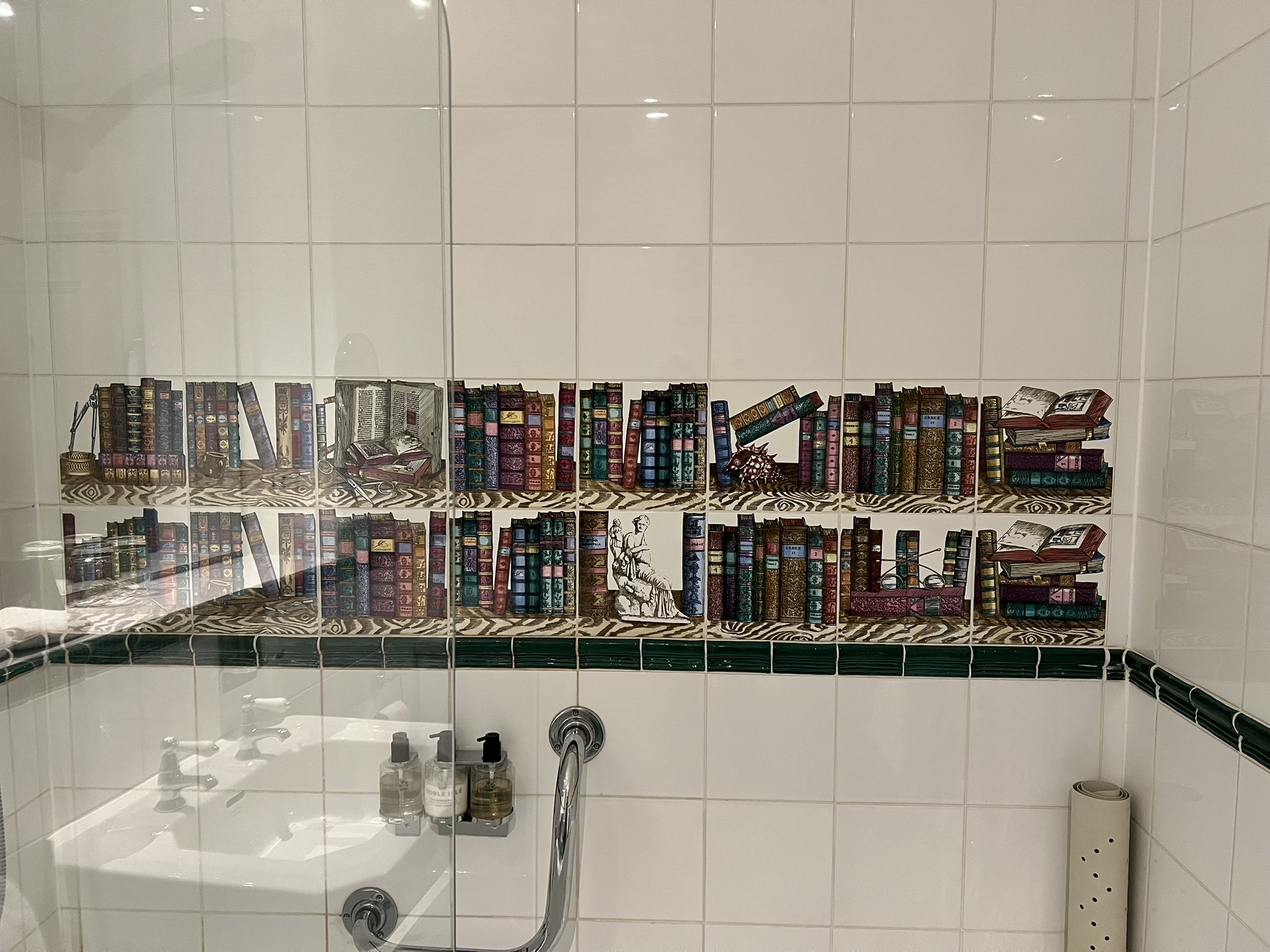
The Chilston Park Hotel was pure pleasure – the cold days and nights had set in [after unseasonably hot days in London], so walking the property was limited, but the hotel was grand, with each room named and decorated according to various themes such as Art Deco, Carousel, Montgolfier (Hot Air Ballooning!) – not sure whether the knowledge gods were at work but my room was the “Bibliotheque” – here is our door, and the tub, along with a bookcase full of books, and this “wise” fellow on the wall:
And another day well-spent! Stay tuned for tomorrow…
_________
1. Elizabeth Matts, et al. 1800: Great Bookham at the Time of Jane Austen, Fanny Burney and R B Sheridan. Parochial Church Council of St. Nicolas, [circa 2008], p. 26. [Published with the support of the JASNA Churches fund.]
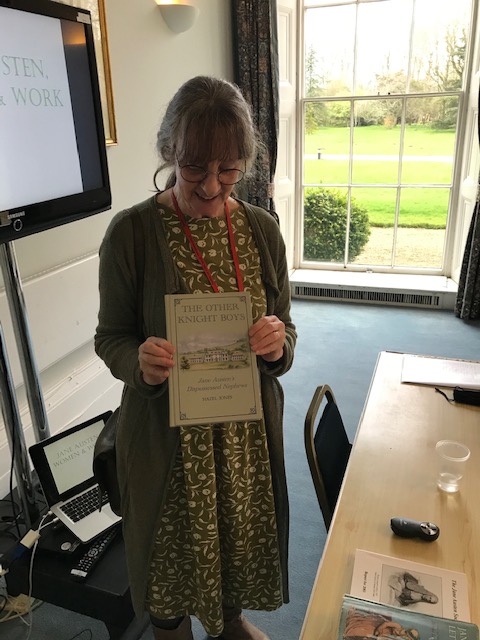
Enquiring Readers: Today I welcome Austen scholar Hazel Jones in an interview about her newest book The Other Knight Boys: Jane Austen’s Dispossessed Nephews. If you have been following my blog Reading with Austen: Returning the Lost Sheep of Godmersham, you have seen the several posts on the diaries of Charles Bridges Knight, i.e all the excerpts that Hazel shared with me of Charles’ references to his reading in the library at Godmersham Park, home to his father, and Jane Austen’s brother, Edward Austen Knight [see below for links to these posts]. Hazel has been researching not only the life of Charles, but also the lives of the five other sons of Edward [all six in order are: Edward, George, Henry, William, Charles, and John]. Her recently published book just flows with tales of their childhood into manhood adventures. I highly recommend it, many of the stories worthy of an Austen novel!
So, Welcome Hazel!
JAIV: Can you give a brief summary of the book?
HJ: Jane Austen’s letters provide clear-sighted glimpses of her six Knight nephews as they grew up, but hers was not the only pen to record their privileged upbringing. Cassandra and Henry Austen commented on Edward Austen Knight’s indulgence of his sons and worried about the boys’ ability to cope with future adversity in the wider world; their affectionate sister Fanny noted key moments in their lives – birthdays, holidays, marriages; Charles kept a detailed diary throughout the 1830s and 40s. The Other Knight Boys explores the character of each nephew in turn, their professional and personal circumstances, their close fraternal bonds as well as the difficulties and disappointments they encountered in adulthood. For five of the brothers, future dispossession of their beloved family home at Godmersham as a consequence of birth order was a reality they had to live with. How it affected the choices they made forms the story that the book attempts to tell.
JAIV: How did you end up doing this research on Austen’s nephews, the six sons of her brother Edward?
HJ: Quite by chance, in 2010, I was in a small party on a guided tour of Trafalgar (pronounced Traffle-gar) Park near Salisbury in Wiltshire. The property featured as Hartfield in the 1996 ITV film of Emma [with Kate Beckinsale], as well as Barton Park in Emma Thompson’s Sense & Sensibility. Originally known as Standlynch Park, it was acquired in 1813 by Parliament for Nelson’s brother William, the new 1st Earl Nelson and re-named Trafalgar Park. The Nelson family lived here until 1946. In 2010, the owner was Michael Wade, whose housekeeper conducted us around the ground floor rooms. In the saloon she pointed out a stunning full length portrait of William Nelson’s beautiful wife, Hilare. Wait a minute, I thought, wasn’t she subsequently married to one of Jane Austen’s Knight nephews? Next followed some very intensive sleuthing which uncovered baptismal records in Cornwall and three marriages – to a cousin, to Nelson and eventually to George Knight of Godmersham. The Kent History and Library Centre and the British Library supplied more biographical material and in a room not usually open to visitors at Chawton House, I found a portrait of George as a young man. My research turned into an article on the couple for the 2016 Jane Austen Society Annual Report. After that came the urge to write about the other five Knight boys and uncover as much as possible about the women in their lives. Charles of course never married, but he had close relationships with his father, his brothers and their spouses.
[Portrait of Hilare Countess Nelson, by George Sanders, 1829-34. Courtesy of Martyn Downer and Michael Wade]
JAIV: Your research took you to materials scattered throughout southern England – “Kent, Hampshire, and beyond” as you say (3). Was most of this known or did you discover any untapped sources?
HJ: The archives in Hampshire Record Office and the Kent Archives at Maidstone have been scoured pretty thoroughly by Austen scholars across many generations, although even here I discovered one or two sparkling gems which had never appeared in any other text. Previously ‘untapped sources’ for me were the Winchester College Archives, the matriculation records held at St John’s and University College in Oxford, the Nelson archive at the British Library and the War Office records at the National Archive, Kew. Articles in the Jane Austen Society Annual Reports (now accessible online) also filled in a number of gaps and put me in touch with other Austen / Knight researchers such as Margaret Wilson, who then provided material I would not otherwise have found. Sophia Hillan, Linda Slothouber, Maggie Lane and Deirdre Le Faye were also happy to have their generous flow of scholarship ‘tapped’. Karen ievers, Andrew Bradford and Hampshire Cultural Trust allowed me to see and reproduce previously unseen images.
JAIV: Of the six boys-to-men you researched, was there more information available from sources on any one more than others? And if so, was that frustrating? For instance I know that Charles kept extensive diaries for years – did any of the others leave such behind them?
HJ: Edward’s life is well documented, given that he was the eldest son and lived at Chawton House, but there are few examples, beyond business letters, of his own personal voice. George’s facility with language shines through his amusing poems and articles on cricket written for The Sporting Magazine. His restless character is evidenced by Fanny’s reports of his comings and goings between England and the Continent, his inability to settle to a career in the law and Charles’s revelation of his brother’s wish to try his luck in America. Letters were written to Fanny by all of the brothers, she records their arrival in her daily diary entries, but where are they now? I wish I had found a greater number of letters from Henry to Lizzy Rice. He comes across as the most contentedly independent and self-sufficient of all the brothers; the harrowing nature of his early death tugs at my heart strings. One or two of William’s letters have survived, together with contemporary descriptions of his youthful exuberance and Fanny’s revelation of his affair with the Knatchbull governess. John is the brother about whom least is known and the hardest to pin down on the page, yet his moving account of the loss of Godmersham is the most revealing of all.
JAIV: Edward, of course, was the heir, and while he appears to have maintained a close and friendly relationship with each of his brothers, there had to have been some bad feelings about how he really dispossessed all of them from their Godmersham Park home. Do you feel sympathetic toward him? Did he have any choice?
HJ: Edward’s siblings must have understood that maintaining Chawton House and Godmersham Park was impossible. The drain of his first and second families on Edward’s finances would have been excessive. The sons from his first marriage were at the stage where they required cash, so when Edward Austen Knight died, money came their way via their father. What appears inexplicable is Edward’s expensive and architecturally unsympathetic alterations to Godmersham in 1853, shortly before he decided to lease the property for 20 years. I can understand his attachment to Chawton – it had been his permanent home since 1826, although his frequent and lengthy returns to Kent each year might have misled his brothers and sisters into believing he would eventually move back and continue to make Godmersham available to all the family. When he sold it in 1875, of the brothers only John was still alive.
Chawton House
JAIV: Some great drama in the family! What is your favorite story? [then I’ll tell you mine!]
HJ: Difficult to choose one … Louisa Lushington’s* description on her visit to Godmersham of the boys somersaulting into the river fully clothed comes near the top of the list and I rather like the story Henry and George concocted, featuring Uncle Henry Austen’s imprisonment for poisoning his second wife. Scandal is always irresistible too … Fanny’s snide references to Fanny Jones, the consequences of Edward’s elopement with Mary Dorothea, William’s affair with the governess.
*[The Journal of Louisa Lushington (1821-22), with an introduction by Linda Slothouber, Chawton House, 2017]
Ok, so you mention my favorite! Edward’s elopement with his sister’s step-daughter is quite compelling, and definitely worthy of a novel – I cannot tell anymore, readers – buy the book!
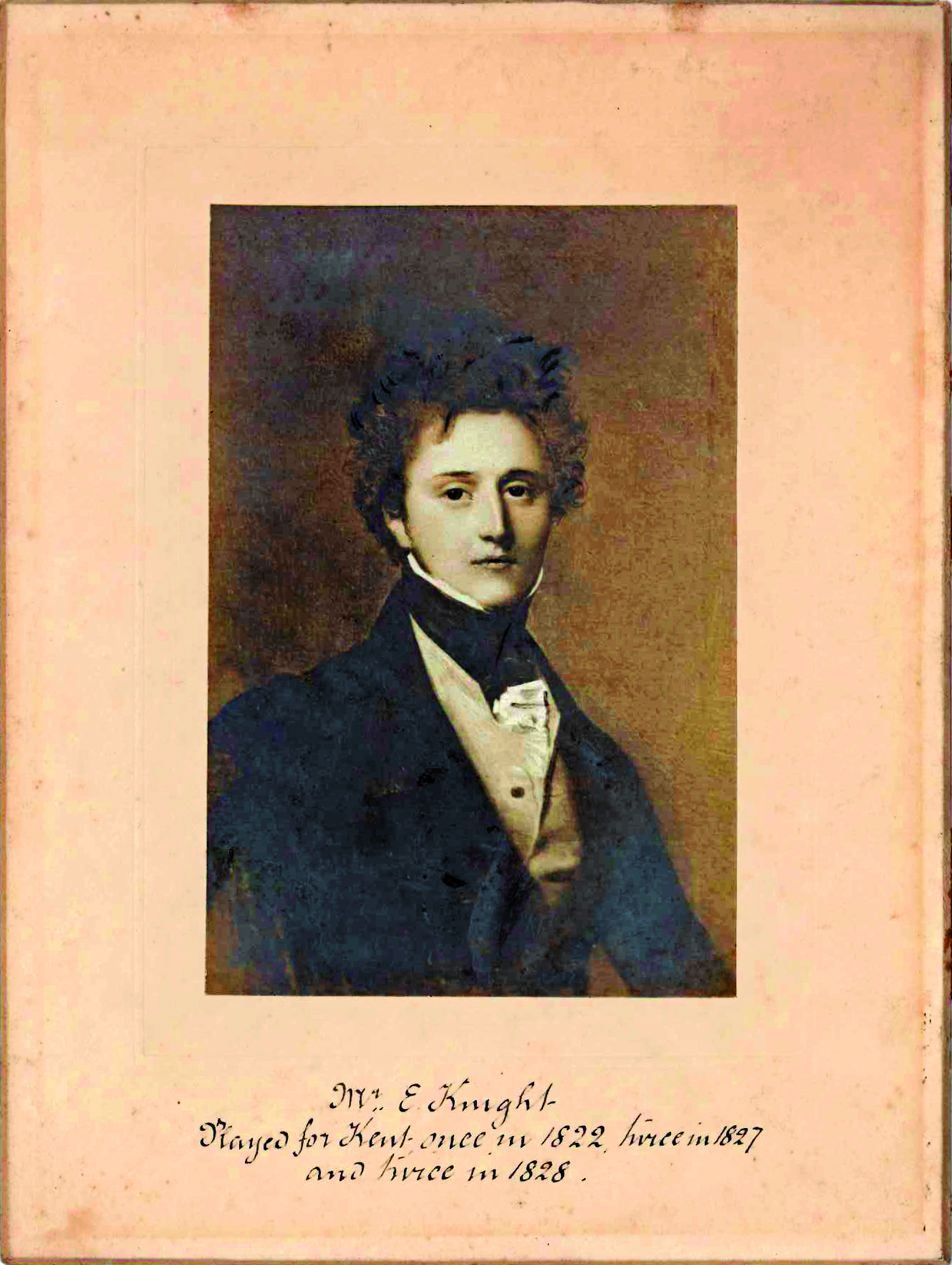
Photograph of a lost portrait of Edward Knight,
held by Kent County Cricket Club, Canterbury.
JAIV: There was so much tragedy in their lives: not unlike their father and uncles (excepting the youngest John, and Charles who never married), all suffered the loss of first wives in childbirth or illness. It is really wrenching to read – how do you think they all handled this?
HJ: Tragedies such as these are almost unimaginable in our modern age of effective remedies, reliable diagnoses and informed medical expertise. Death in childbirth happened so frequently that many women – judging by their correspondence – did not expect to survive, so perhaps their husbands anticipated the worst before it happened. As for the Knight husbands, they certainly grieved for a time, it’s difficult to tell for how long, but from Charles’s diaries we learn that Edward was decimated by the loss of Mary Dorothea and that William and Henry were emotionally affected on the first anniversary of their wives’ deaths. Two or three years later, they are all married again, and embarking on the creation of second families. Life went on. Perhaps a combination of strong religious belief, practical rationality and fraternal support carried them through the worst.
Elizabeth Bridges Knight – Jane Austen blog by Kleurrijk
JAIV: Any sense that the death of their mother after the birth of her 11th child (Brook John, known as John) in 1808 (Edward was 14) had a long-lasting effect on any/each of them?
HJ: John would not have remembered his mother and Charles’s recollections were probably indistinct at best. The affection the brothers felt for each other, for their sisters, and for their father – and his for them – strengthened the familial tie after Elizabeth’s death. Their easy, happy life at Godmersham appears to continue much the same as before, with Fanny standing in as a very capable and loving presence. Male and female occupations and interests were largely separate and distinct, which perhaps helped to lessen the sense of loss at the time and later. Edward, George, Henry and William were away at school for most of the year, Charles and John were initially under Fanny’s care until the time came for them to leave. Any long term effect might have manifested itself in a very understandable anxiety when their own wives became pregnant.
JAIV: Was Jane Austen a big factor in any of their lives growing up (she died when Edward was 23 in July 1817)? But when she became more popular and James Edward Austen Leigh (James’s son) wrote her memoir in 1869 – did any of Edward’s children contribute to that?
HJ: According to Anna Lefroy, Jane Austen was not loved by the Knight children, although they appreciated her story-telling skills. Anna had her own reasons for holding this view, but the probability is that Jane was merely tolerated by the nephews while at Godmersham, especially as they grew older and beyond female influence. Given their hunting, fishing and shooting pursuits, Jane called it ‘sporting mania’, they would see little of her during the day and there is evidence that at and after dinner, she found their their male acquaintance and their talk of wholesale slaughter distasteful. Maria Bertram, bored silly by Mr Rushworth’s boast of game bagged and poachers apprehended, comes to mind. A spinster aunt casting disapproving looks across the table, however, would have had little effect on these confident, indulged young men. At Chawton, out of the hunting season, the nephews appear to have proved more congenial company, especially Henry and William, whose visits to the Cottage in their aunt’s final year are recorded with great affection in her letters. In 1822, Henry Knight wrote to his sister Lizzy that he expected Chawton to feel ‘sadly unreal’, surely on account of Aunt Jane’s absence, when he next visited.
James Edward Austen-Leigh attempted to access Fanny’s letters from Jane Austen, but did not succeed. He stayed with William Knight at the new Steventon Rectory for a day and night, in order to walk the familiar lanes and remind himself of where the old rectory used to stand. At the time the Memoir was written, Henry, George and Charles were dead.
JAIV: In reading about Edward’s family, do you feel that at any time in her writing that Jane Austen was modelling a character after a real-life family member?
HJ: No. [ha! Love this very succinct answer!]
JAIV: What surprised you the most? – Something previously unknown to you or anyone else in the Austen research world?
HJ: A small discovery involved Henry’s attendance at University College, Oxford. There is no reference to this in other texts and it was even a surprise to Deirdre Le Faye. Another concerns George’s final years, after his wife’s death. I am intrigued by his relationship, whatever it entailed, with Fanny Jones. George’s sister Lady Knatchbull certainly suspected something untoward, especially when her brother moved to Hereford to share a house with Fanny and her husband. One that almost got away is the small sheet of paper, Plate 8 in my book, comprising poems written by Edward Knight II and his second wife Adela. It was listed in the HRO catalogue, but missing from the file. It had still not surfaced when my last day at the Record Office came, but in the three hours it took to drive home, the Archivist had located, photocopied and forwarded it.
Charles Bridges Knight
JAIV: For instance, Charles went to Cambridge not Oxford like the rest of his family – do you know why that was?
HJ: One of my theories is that he was sent to Cambridge to detach him from certain school friends who had involved him in a rebellion at Winchester College in 1818. A number of the expelled ringleaders went on to Oxford, with which Winchester was closely associated. His sister Fanny reveals that Charles was ‘intended for the Law’ at this point – maybe Cambridge had a better reputation for training lawyers. One can only speculate.
JAIV: All the brothers had very interesting and novel-worthy love interests – some thwarted by parental involvement – but there were elopements, governess shenanigans, some intermarriage with cousins, etc., some of which you have mentioned above – Charles was the only brother not to marry – was there any love interest found in his diaries?
HJ: From time to time, Charles expresses a lukewarm interest in what he calls ‘domestic happiness’ but he recognized at the same time that it would very likely result in a diminution of his income and the luxury it afforded. While living at Godmersham he attended balls with his sisters, usually reporting afterwards that he had found them ‘stupid’ or that he ‘had not been up to the mark’. He is open to the appeal of women and notes their beauty, or lack of it, and liveliness. In the summer of 1847, when Charles was forty-four, heavily inked deletions appear in his diaries, which appear to be linked to Lizzie Pole, a young woman he encountered at Wolverton Rectory. That Charles himself was not responsible for these obliterations is a possibility, since not all of the references to ‘dear Lizzie’ are removed. His end of the year summary for 1847 expresses ‘shame and sorrow’ at his unbecoming behaviour and ‘cold unfeeling heart’. What happened remains a mystery.
JAIV: Charles’ diaries are quite detailed and extensive. Are you hoping to do more with them? Make them available to a larger audience? [You were terrific in sharing excerpts from the diaries about Charles’ reading while at Godmersham – see links below]
HJ: Yes indeed. See the answer below!
JAIV: Your previous books, Jane Austen and Marriage (2009, paperback 2017 by Uppercross Press), Jane Austen’s Journeys (2014) are both excellent and informative reads where you discuss the times Jane Austen lived in and how the understanding of that helps us understand her plots and characters. Did you enjoy researching the real people in Austen’s life more or less than delving into a subject?
HJ: I loved creating both of my previous books, but have found biographical writing fascinating and wholly compelling (for that, read obsessive). The Other Knight Boys was my first foray as a writer into this territory and I must admit I did find this kind of study more absorbing than focusing on a set subject. It’s something of a cliché to say it, but I did develop a strong sense of each nephew as a living breathing individual, and consequently able to make informed leaps into speculative musing where there were gaps in the records. Where the boys’ experiences overlapped – attendance at Henry and Sophia’s wedding, for example, or the visit to Ireland on their sister Cassandra’s death – deciding in which chapter or chapters to locate the material and at the same time avoiding unnecessary repetition, was a very complex but rewarding process, rather like solving a six-dimensional puzzle.
JAIV: Which leads us to: What’s up next?
HJ: I am currently working with Peter Sabor on the transcription and annotation of Charles Knight’s diaries – 1832 – 1851.
[The Sophia Hillan book May, Lou & Cass: Jane Austen’s Nieces in Ireland (Blackstaff Press, 2011) covers the lives of Marianne (May), Louisa, and Cassandra Jane – much has already been written about Fanny, so what about Elizabeth (Lizzy) – is there a story to tell there?
M.C. Hammond’s Relating to Jane has already covered Lizzy Rice’s life.
[JAIV: Goodness, I have this book on my shelf and have never read it – more than half the book is on Lizzy Knight!: Relating to Jane: Studies on the Life and Novels of Jane Austen with a Life of Her Niece Elizabeth Austen/Knight, by M. C. Hammond (Minerva Press, 1998)].
JAIV: What is your favorite Austen and why? Your favorite character?
HJ: This reminds me of that question from a famous BBC Radio 4 programme: ‘Which book would you choose to take with you to your desert island?’ My answer would have to be ‘The Complete Works of Jane Austen’. I find it impossible to single out for special notice one novel or one character. Heroines, heroes and minor characters, they are all perfectly realized and crafted.
JAIV: An absolutely perfect answer! So, what else do you like to read?
HJ: I love reading biographies, by Claire Tomalin and Hermione Lee in particular, also intelligent detective and thriller fiction – P.D. James, Ian Rankin, Stella Rimington, Henning Mankell, Stieg Larsson, Kate Atkinson; authors from other genres include Dorothy Whipple, Hilary Mantel, C.J. Sansom, Tracey Chevalier … I could go on.
JAIV: well. Thank you for that – a perfect reading list to add to my already toppling TBR pile! [and I see that many of Dorothy Whipple’s books have been republished by the incomparable Persephone Books.]
****************
A hearty Thank You! Hazel, for sharing so much about your book and research into the world of Austen’s nephews. You give a very loving picture of their varied lives, emphasizing their continued connection and affection for each other, and giving us a compelling view into this next generation of the Austen family. The amount of your research alone astounds me! And again, I highly recommend it to all. If you have any questions for Hazel, please comment below and I will forward them to her for answering.
Hazel Jones, Denman College, Oxfordshire
About the author:
Hazel Jones taught English at Exeter University’s Department of Lifelong Learning. She has lectured to Austen Societies in the UK, USA, Canada, Australia, and the Netherlands and contributed articles to a number of their journals. Since 1995 she has tutored residential courses on Jane Austen’s life, letters and novels in a range of locations. Her published books include Jane Austen and Marriage (2009) and Jane Austen’s Journeys (2014).
The Other Knight Boys: Jane Austen’s Dispossessed Nephews, by Hazel Jones
Crediton, Devon, UK: Uppercross Press, 2020.
165 pages, color illustrations, notes, bibliography, index.
* The Godmersham Lost Sheep Society (GLOSS) is a research group of scholars and bibliophiles searching for all books that were originally in the libraries of Godmersham Park and later Chawton House, both estates of Jane Austen’s brother Edward Austen Knight.
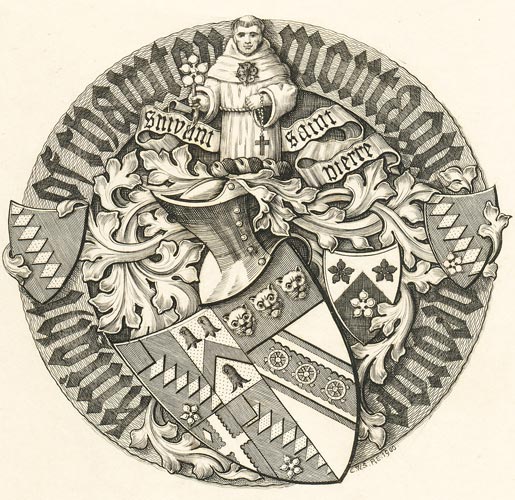
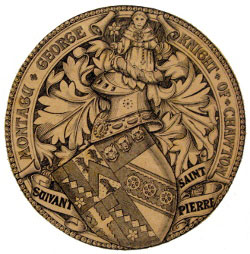
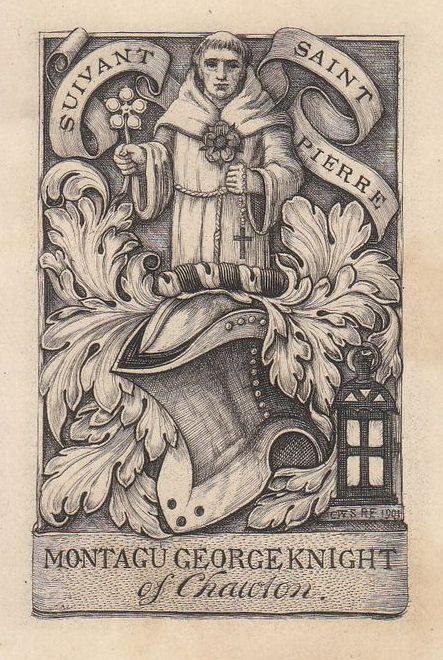
**The three Knight bookplates were all designed by Charles Sherborn in 1900 / 1901:
Bookplate 1
Bookplate 2
Bookplate 3
***********
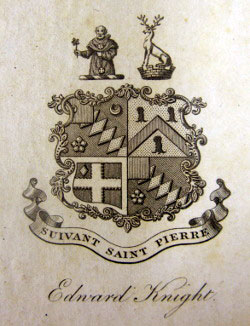
We note here that there are also the bookplates of Thomas Knight (1701-1781) and Edward Knight (1767-1852) and his son, also named Edward (1794-1879) – it is unclear if the bookplate was father or son’s, or if they both used the same bookplate – these bookplates are also to be found in some of the Godmersham library books, so we are searching for these as well, especially if they are listed in the original 1818 catalogue:
Thomas Knight bookplate
Edward Knight bookplate
***********************
1. The History:
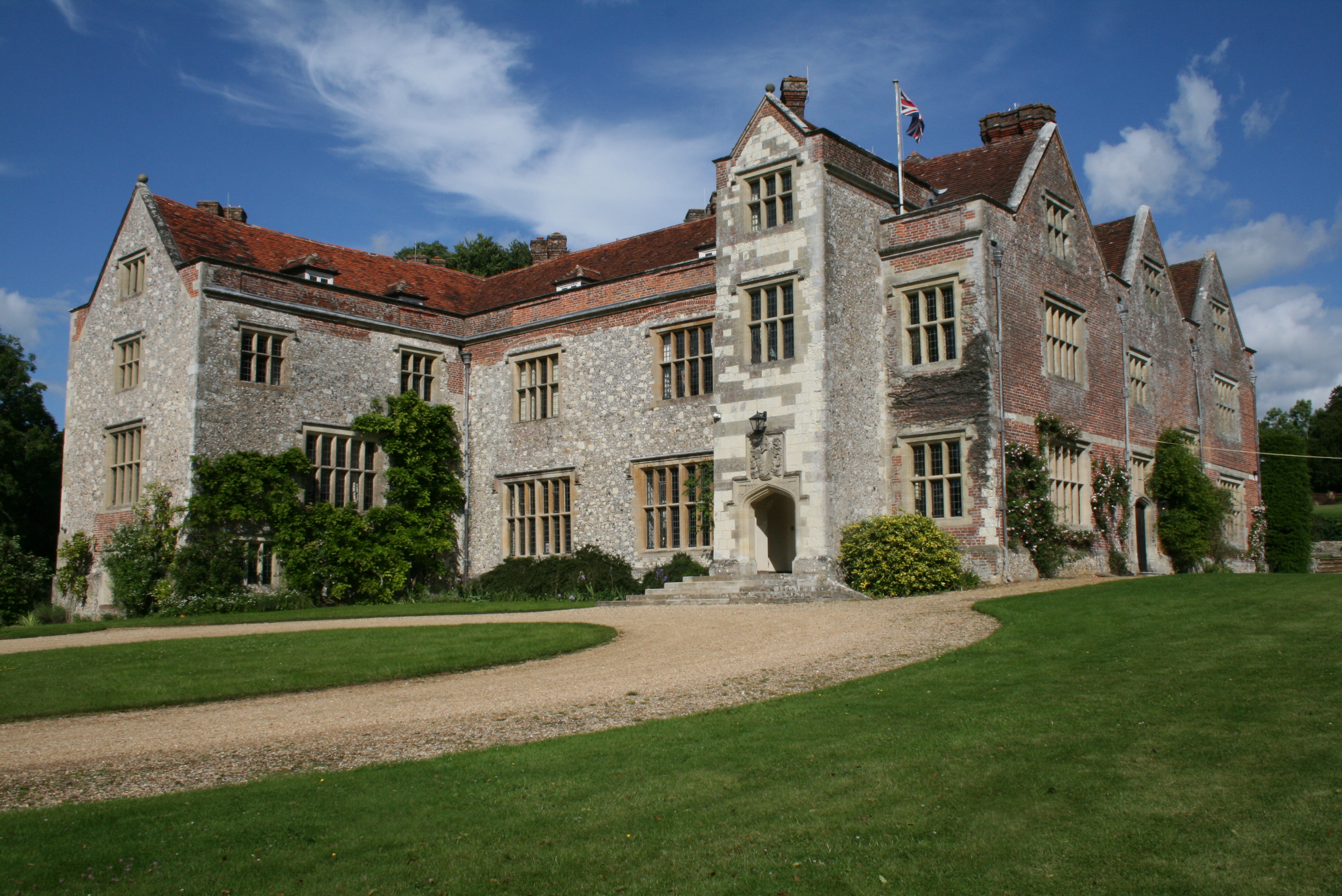
Edward Austen Knight inherited three estates from his adoptive family the Thomas Knights: Godmersham Park in Kent, and Chawton House and Steventon in Hampshire. Godmersham and Chawton had large extensive libraries typical of the gentry of the time. Edward had a catalogue of the Godmersham Library compiled in 1818, listing about 1250 titles. These books were later combined with the Chawton House Library when Godmersham was sold in 1874, with many of the volumes sold or otherwise distributed over the years. [Montagu George Knight, grandson of Edward Knight, placed his bookplates in most of the books of this combined library, as well as in the books he added to it. The remaining library (called the “Knight Collection” and still in the family) is now housed at Chawton House Library, which serves as an important literary heritage site and a center for the study of early women writers]. We know Jane Austen spent a considerable amount of time in both these libraries – and an ongoing project has been to try to locate the missing volumes that have wandered away and might still be extant in libraries, in book collectors’ homes, or on bookseller shelves – the “Lost Sheep” of Godmersham Park.
2. The Digital Godmersham Project:
Initiated and run by Professor Peter Sabor (Canada Research Chair in Eighteenth-Century Studies and Director of the Burney Centre at McGill University), this is a web-based open-source project that will include the Knight family books that are recorded in the catalogue of 1818, as they were on the shelves – a virtual library so to speak. It will be called “Reading with Austen.” This Phase I of the project will launch in 2018, the bicentenary of the original catalogue. While it would be a final goal to locate all the missing titles that are out there, this digital project will create for us what Jane Austen would have seen and read when visiting her brother.
3. What we need:
If you have or locate any books with any of the three Montagu George Knight bookplates, or the Thomas or Edward Knight bookplates, please contact us – we would like good pictures of:
a.) the binding/cover;
b.) the inside cover of the book, where Montagu Knight’s bookplate should be attached, often together with a small shelf ticket from Chawton House Library; and
c.) the title page of the book;
d.) any marginalia
These images would be used on the website, with or without your name as the book’s current owner/location (this is up to you).
4. Donation / sell options:
Some of those found thus far have been privately purchased and donated back to the Chawton House Library (they do not have funds for this project). If you would like to “return” the book to Chawton to be part of their permanent collection, you would become one of GLOSS’s Team Heroes and we would be forever grateful. All donations are tax-deductible. Or, if you would consider selling the book back to CHL now or in the future (or making a donation to the cause so we can purchase books as they become available), we would add it to our wish-list of purchases and ask that you send the pictures noted above so it can be added to the website. Progress is slow, and because every book may not be able to return home, we hope this virtual library will serve as a useful research tool for future studies of reading habits in the 18th and 19th centuries.
Peter Sabor – Professor, Canada Research Chair in Eighteenth-Century Studies, Director of the Burney Centre, McGill University: peter.sabor [at] mcgill.ca
Dear Readers: Today I am posting Part III on the Heraldic windows at Chawton House Library, this post giving details on the shields in the Great Hall, as well as two more family pedigrees, and a very short course on the meaning of the various colors in the heraldic crests.
And again I thank Edward Hepper, one of the Chawton House Library’s invaluable volunteers, for sharing with us his expertise on heraldry! Please comment if you have any questions or anything to add to any of these three posts.
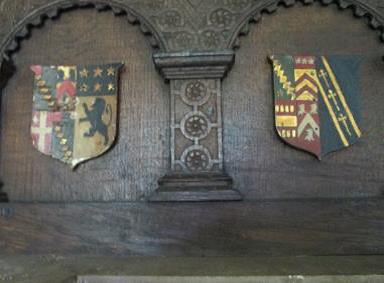
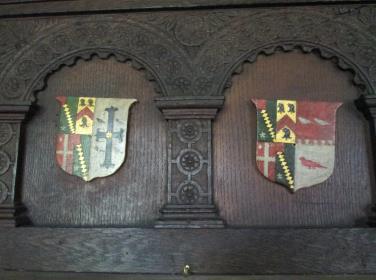
Various painted shields show the arms of different branches of the family since the 17th century. Some of those above the fireplace include Knights and their wives from the early 20th century. They were probably painted for Montagu Knight in the years just before the 1st World War. [You can see portraits of these named in the previous two posts.]
Edward Knight (jr) & Adela Portal: Thomas Knight (jr) & Catharine Knatchbull
*******
Charles E Knight & Emma Patrickson (?): Lionel C E Knight & Dorothy Deedes
*******
Jane Monk; Thomas (Brodnax) Knight (sr)
***********
Pedigree: Knight Family
The Chawton Manor Succession:
The Meaning of the colors: a brief summary, and please note that there is a wide variation in assigning a meaning to a color, with many experts disagreeing…
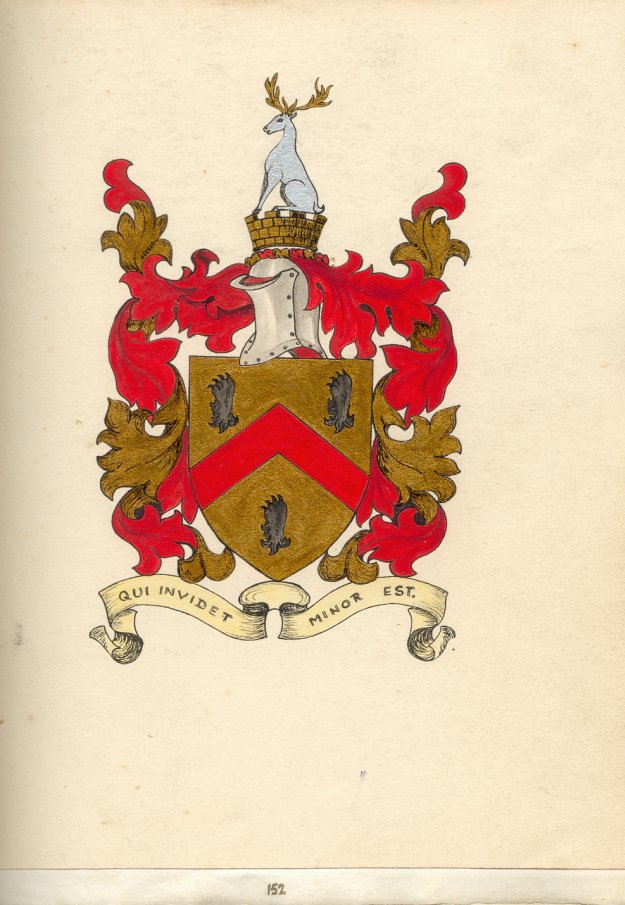
Here’s my very own“caro sposo’s”: (apologies for fuzziness – it is scanned under glass, but you get the idea…)
**************
If you are interested in visiting Chawton House Library and seeing all these examples of heraldry (and much more!), you can find information about it here: http://www.chawtonhouse.org/
If you are interested in becoming a Friend of Chawton House Library (a very worth-while cause!), please visit this page on their website: http://www.chawtonhouse.org/?page_id=56592
Dear Readers: Today join me for Part II on the Heraldic windows at Chawton House Library, this post giving details on the two windows on the Great Staircase. [You can read Part I on the Great Gallery here] – And again I thank Edward Hepper, one of the Chawton House Library’s invaluable volunteers, for sharing with us his expertise on heraldry.
Chawton House Library
Part II: The Great Staircase:
The Landing window
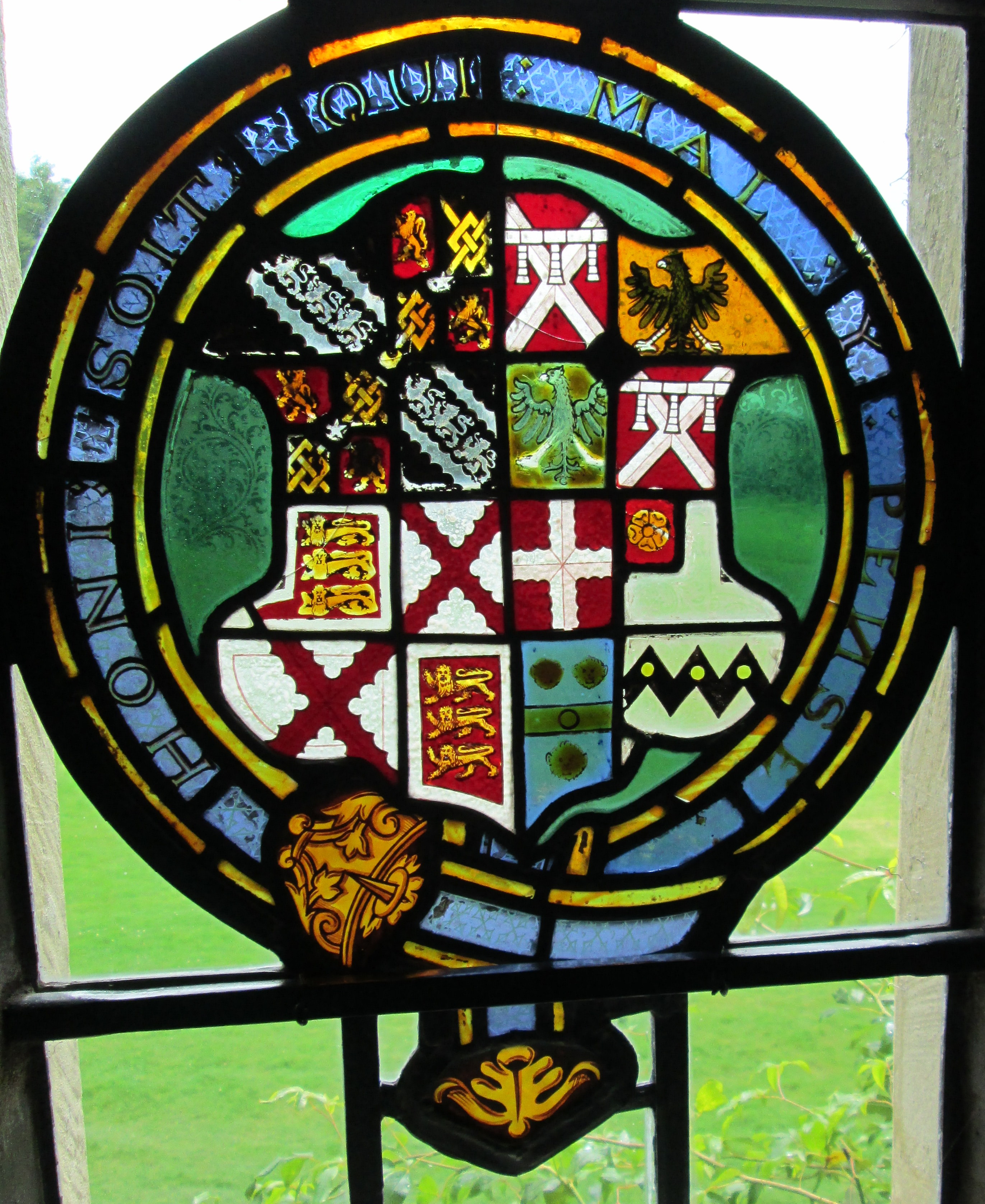
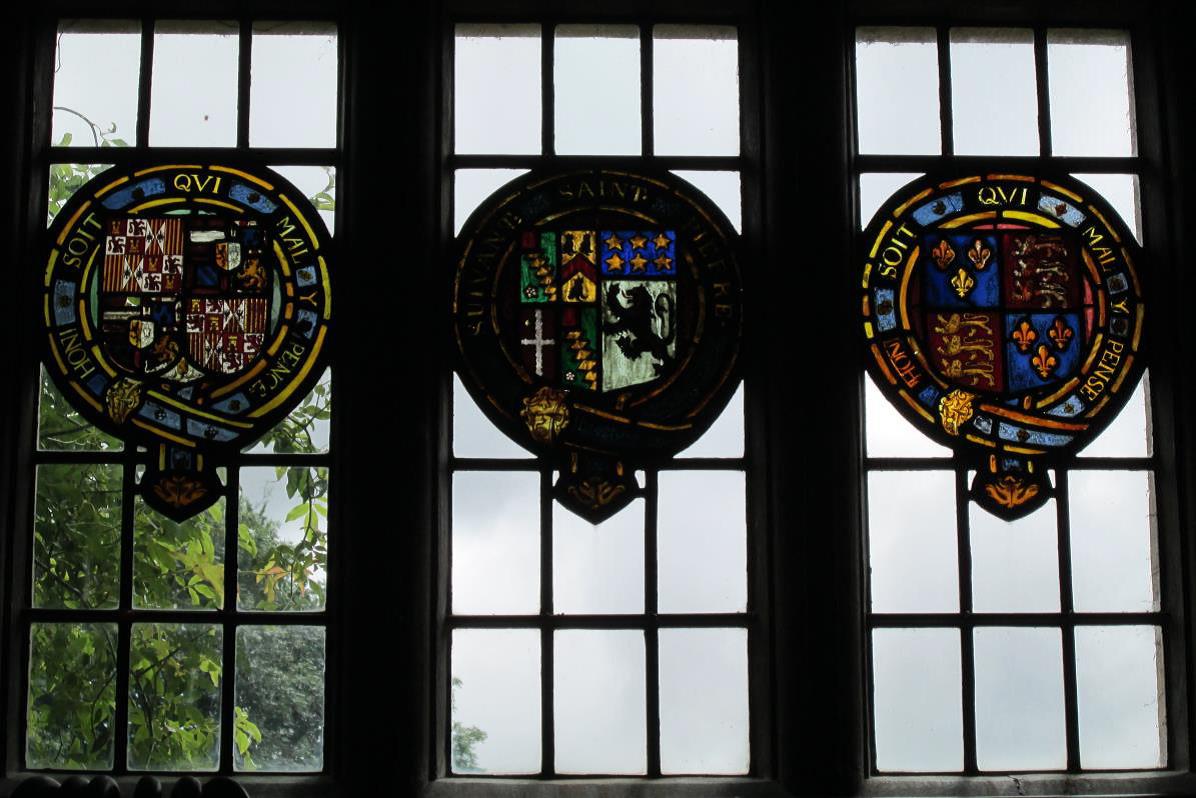
The windows on the staircase landing and that at the foot of the stairs were modified by Sir Edwin Lutyens to display this collection of mid-Tudor heraldry. It probably came from the Manor of Neatham, on the other side of Alton, which came into the Knight family in the mid-18th century. Neatham had been owned by Anthony Browne, 1st Viscount Montagu, and the heraldry fits with his prominent Roman Catholic allegiance – he was an Executor of Queen Mary’s will.
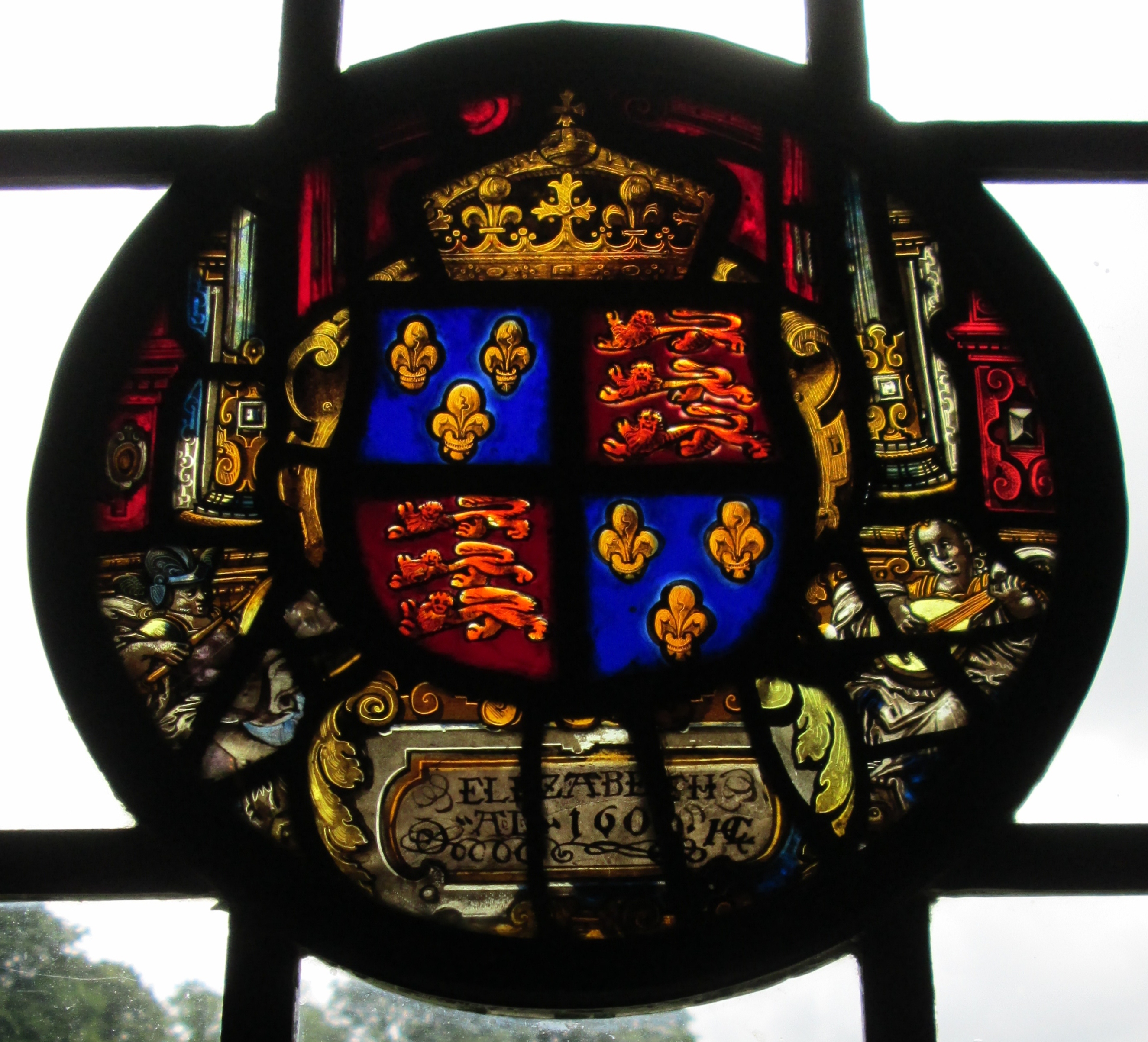
Queen Elizabeth I
Edward Manners, 3rd Earl of Rutland
King Henry II of France
Anthony Browne, 1st Viscount Montagu [see note below]
Close-ups:
Queen Elizabeth I
*************
Edward Manners, 3rd Earl of Rutland
***************
King Henry II of France
*************
Anthony Browne, 1st Viscount Montagu
[Note: Anthony Browne, 1st Viscount Montagu was a leading courtier, Roman Catholic, supported Queen Mary, attended the official wedding of Mary and Philip in Winchester Cathedral (though note that the DNB entry for Browne says Hampton Court Palace in which she stayed frequently but DNB for Mary and the cathedral’s own records state Winchester Cathedral), and was MP for Petersfield (DNB)]
*****************
2. The Window at the foot of the stairs:
King Philip II of Spain (NB the punning arms of Leon, Castille and Grenada)
Edward Knight (jr) & Adela Portal
Queen Mary I
Close-ups:
King Philip II of Spain
*************
Edward Knight Jr & Adela Portal
************
Queen Mary I
*********************
Notes:
Edward Knight is the odd one out and his glass must be at least three hundred years later, perhaps bought or commissioned by Montagu Knight. They include Knight, Austen, Leigh and Portal.
The arms of Queens Mary and Elizabeth are the same as those for English sovereigns from, Henry V to Elizabeth I. In this case, Elizabeth is labelled as such. Mary has to be Mary because of the provenance and context of the other arms shown.
Similarly, Henry used the same arms as nearly all the French Kings but Henry II was the only one who was a Knight of the Garter – and so had the Garter encircling his shield.
The difficulty was to see the reason why the 3rd Earl of Rutland was included as he was not a prominent Catholic, like most of the others. However, the 3rd (or bottom left quarter) in his and the Browne shields are the same, which points to a relationship between Rutland and Browne. Indeed, examination of their family trees points to a common descent from Edmund of Woodstock (son of King Edward II) via John, 1st Baron Tiptoft, and it is the Woodstock and Tiptoft arms that appear in this 3rd quarter. A family tree or pedigree is available to show this connection. Browne, being a relatively ‘new’ man was keen to show his historical and aristocratic credentials and so included as many quarterings as possible of related families (including Browne, FitzAlan, Maltravers, Neville, Monthermer, Woodstock, Tiptoft, Ingoldsthorpe, Bradston, de la Pole and Deburgh). Rutland, being the 3rd Earl, was well established and so did not need so many quarterings (just Manners, Roos, Belvoir, Ross or Especk, FitzBernard, Woodstock and Tiptoft); however his presence in the window added to Browne’s prestige.
Philip II of Spain is included because as Mary’s husband, he was King of England, during her reign. His arms include most of the European territories he ruled: Castille, Leon, Sicily, Aragon, Austria, Burgundy, Brabant, Flanders, Tyrol and Granada.
There is more information available on the heraldry in the rest of the house (stained glass, wood carving, paintings and tilework).
***************
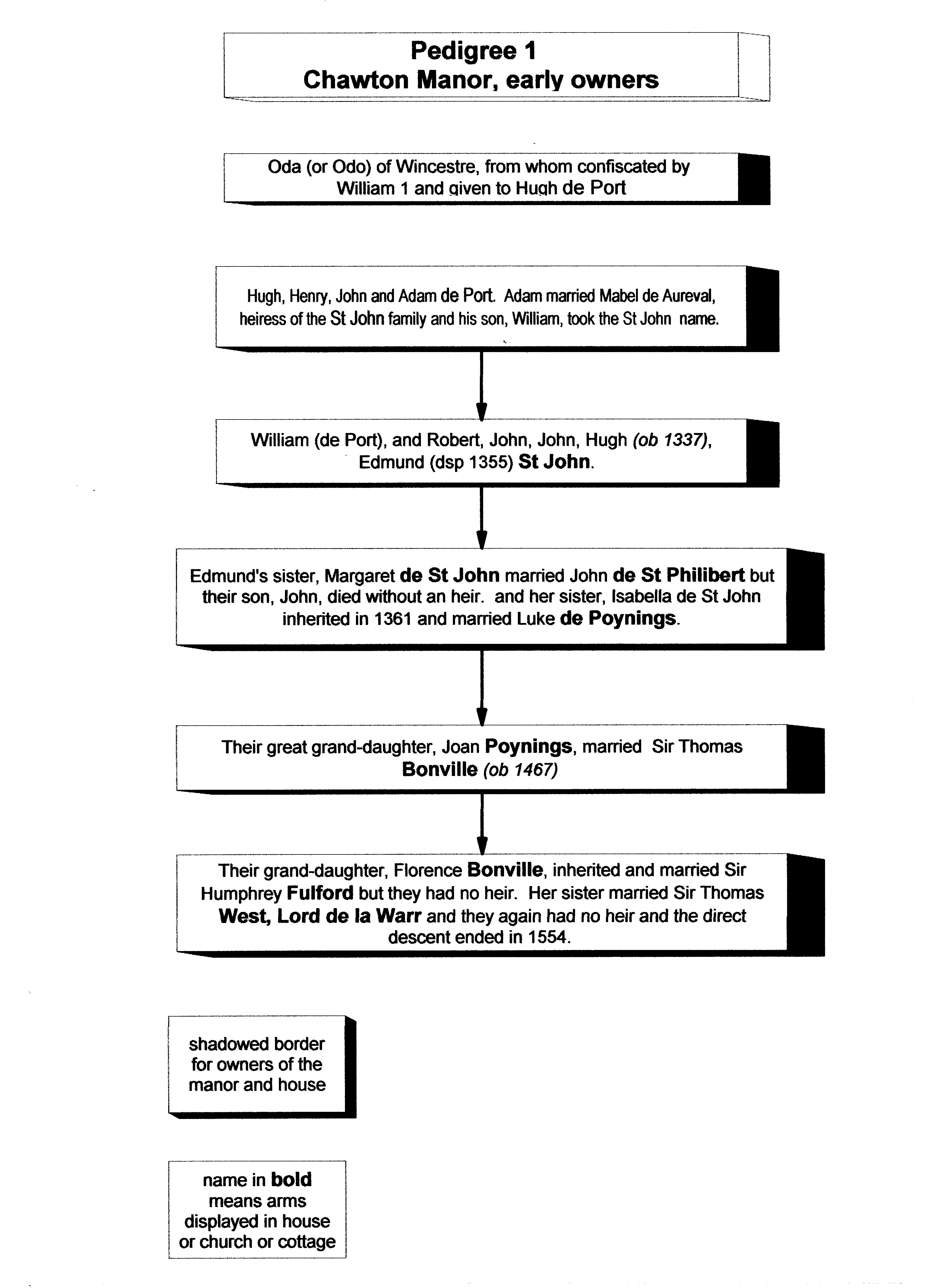
Mr. Hepper also sent along three family trees: here is the first one on the early owners of Chawton House (others to follow in next post)- (no worries, there will be no quizzes at the end…):
Early owners of Chawton House, pre-Knight Family, from 1066 – c1550
Stay tuned for more, and with thanks again to Edward Hepper!
c2016 Jane Austen in Vermont, text and images by Edward Hepper
Dear Readers: Today I am posting in response to a question on Tony Grant’s post about visiting the Emma exhibitionat Chawton House Library a few weeks ago. One of Tony’s pictures at the end of the post was of stained glass windows at the Library, and “Lady L” inquired about them. Tony had not seen anything about the various windows and portraits, but he confessed to be solely focused on Emma to really pay close attention. I have since discovered that all the heraldic windows are indeed explained at CHL, and that one of the Library’s many terrific volunteers has researched the history and meaning of all of them. Edward Hepper has graciously sent me his write-ups along with pictures and with his and CHL Executive Director Gillian Dow’s permission, I share this with all of you. Mr. Hepper is a long-term member of the British Heraldy Society, http://www.theheraldrysociety.com/home.htm and is quite knowledgeable on the family coats-of-arms that grace the windows of CHL – you will see some connections to Jane Austen and her family…but there is much other British history in these windows as well!
**************
Chawton House Library
We will start today in the Great Gallery:
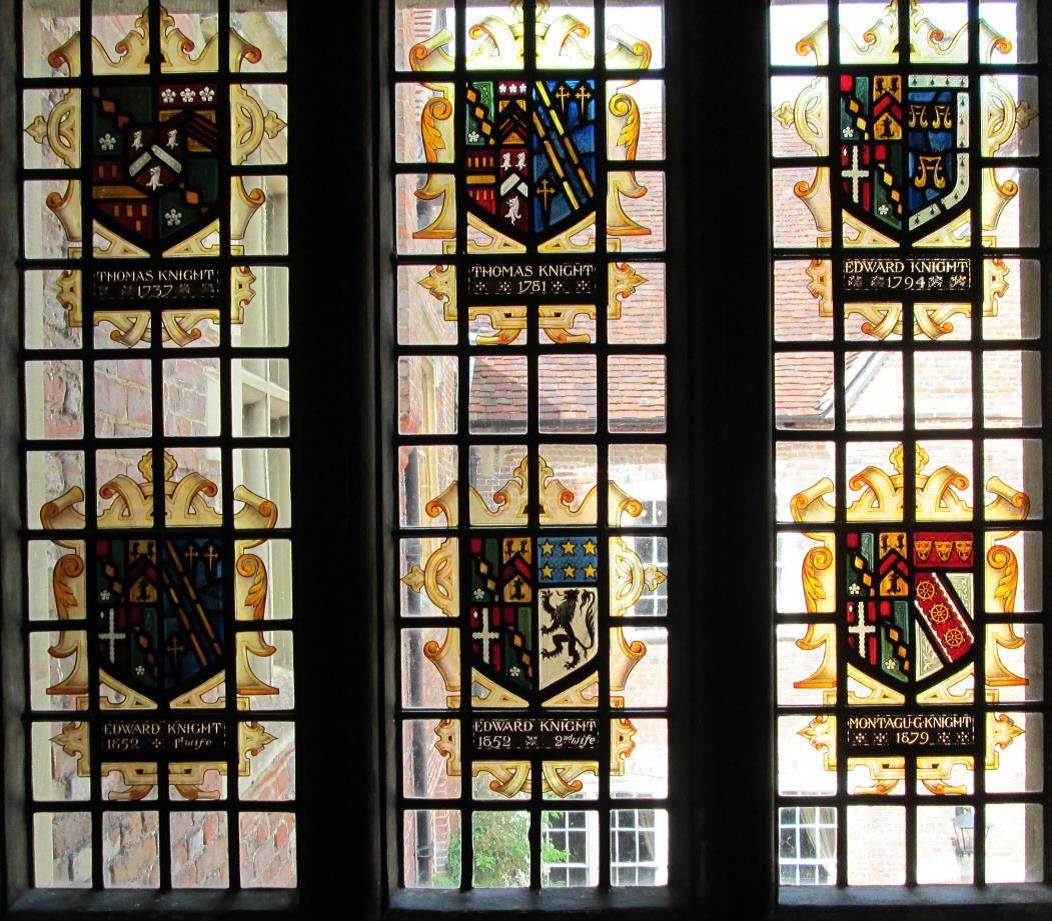
These three windows were commissioned by Montagu Knight from the London firm Powell, of Whitefriars. They were installed between 1910 and 1913. The first window, furthest from the Great Staircase, shows the families of the freeholders from the 11th century over the next five hundred years. They were all descendants from the de Ports, to whom William the Conqueror granted the estate, although sometimes the lack of a male heir meant that Chawton passed through the female line with a change of name and coat of arms. The last of this family was Leonard West, by whom Chawton was sold to the Arundels.
St John, successors to the DePorts
St Philibert
Poynings
Bonville
Fulford
West (NB the punning ‘W’)
**********
Within a few years, they sold to Nicholas Knight, whose son John, started to build the present house in 1583. The Knight family have held the freehold ever since – over four hundred years, although it has several times passed through the female line to other branches of the family which have had to adopt the name and arms of Knight (usually slightly differenced).
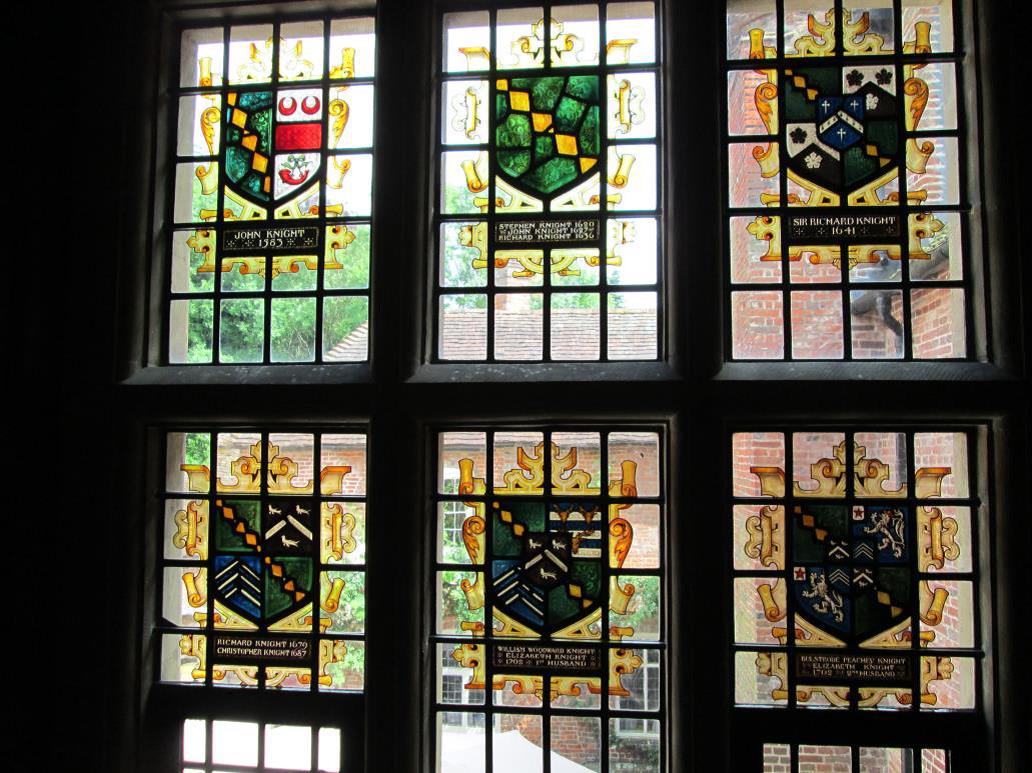
The succeeding Knights are shown in the next two windows and the dates next to their names indicate the year in which each of them succeeded to the freehold.
John Knight & Mary Neale (1583)
Stephen & Richard Knight (1620, 1637)
Sir Richard Knight & Priscilla Reynolds (1641)
Richard & Christopher (Martin) Knight (NB punning martins) (1679, 1687)
Elizabeth (Martin) Knight & William Woodward Knight (1702)
Elizabeth (Martin) Knight & Bulstrode Peachey Knight (1702) [Elizabeth Martin Knight had two husbands: William Woodward and Bulstrode Peachey (you cannot make up a name like that…)]
Here are their portraits, to put a face to a name:
Richard Knight
Richard Martin Knight
Sir Richard Knight – Richard (Martin) Knight
Christopher Martin Knight
William Woodward
Christopher (Martin) Knight – William Woodward
Elizabeth Martin Knight
Bulstrode Peachey
Elizabeth (Martin) Knight – Bulstrode Peachey
******************
The third window brings us to Jane Austen territory:
Thomas (Brodnax) Knight & Jane Monk (1637)
Thomas Knight (jr) & Elizabeth Knatchbull (1781)
Edward (Austen) Knight & Elizabeth Bridges (1794)
Edward Knight (jr) & Mary Dorothea Knatchbull (1st wife) (1852)
Edward Knight (jr) & Adela Portal (2nd wife) (1852)
Montagu Knight & Florence Hardy (1879)
And their portraits:
Thomas Brodnax Knight
Jane Monk
Thomas (Brodnax) Knight – Jane Monk, wife of Thomas Knight (sr)
Thomas B Knight Jr
Edward Austen Knight
Thomas (Brodnax) Knight (jr) – Edward (Austen) Knight (Jane Austen’s brother)
Edward Austen Knight Jr
Montagu Knight
Edward Knight (jr) – Montagu Knight
*****************
Hearty thanks to Edward Hepper for allowing me to post on this – stay tuned for more information on the other windows … And I will be conversing with Ron Dunning to make sense of all these names and their connections to Austen – see his Jane Austen Genealogy for starters…
c2016 Jane Austen in Vermont; text and photos c Edward Hepper














































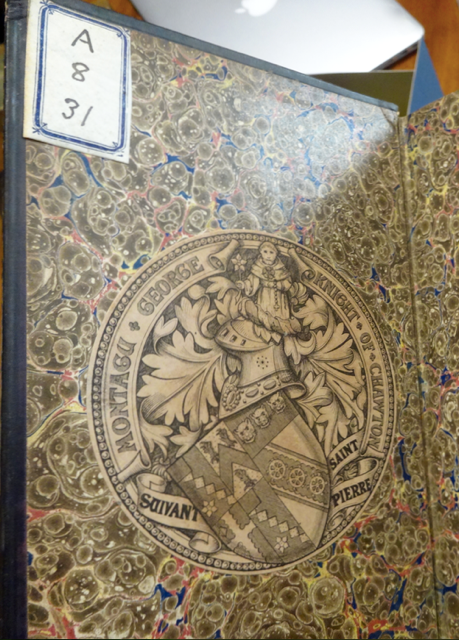 [CHL book with bookplate and shelf ticket]












 Jane Austen in Vermont