Georgian England · Georgian Period · Great Britain - History · Jane Austen · Jane Austen Circle · Jane Austen Illustrators · Jane Austen Societies · JASNA · Museum Exhibitions · Regency England · Social Life & Customs

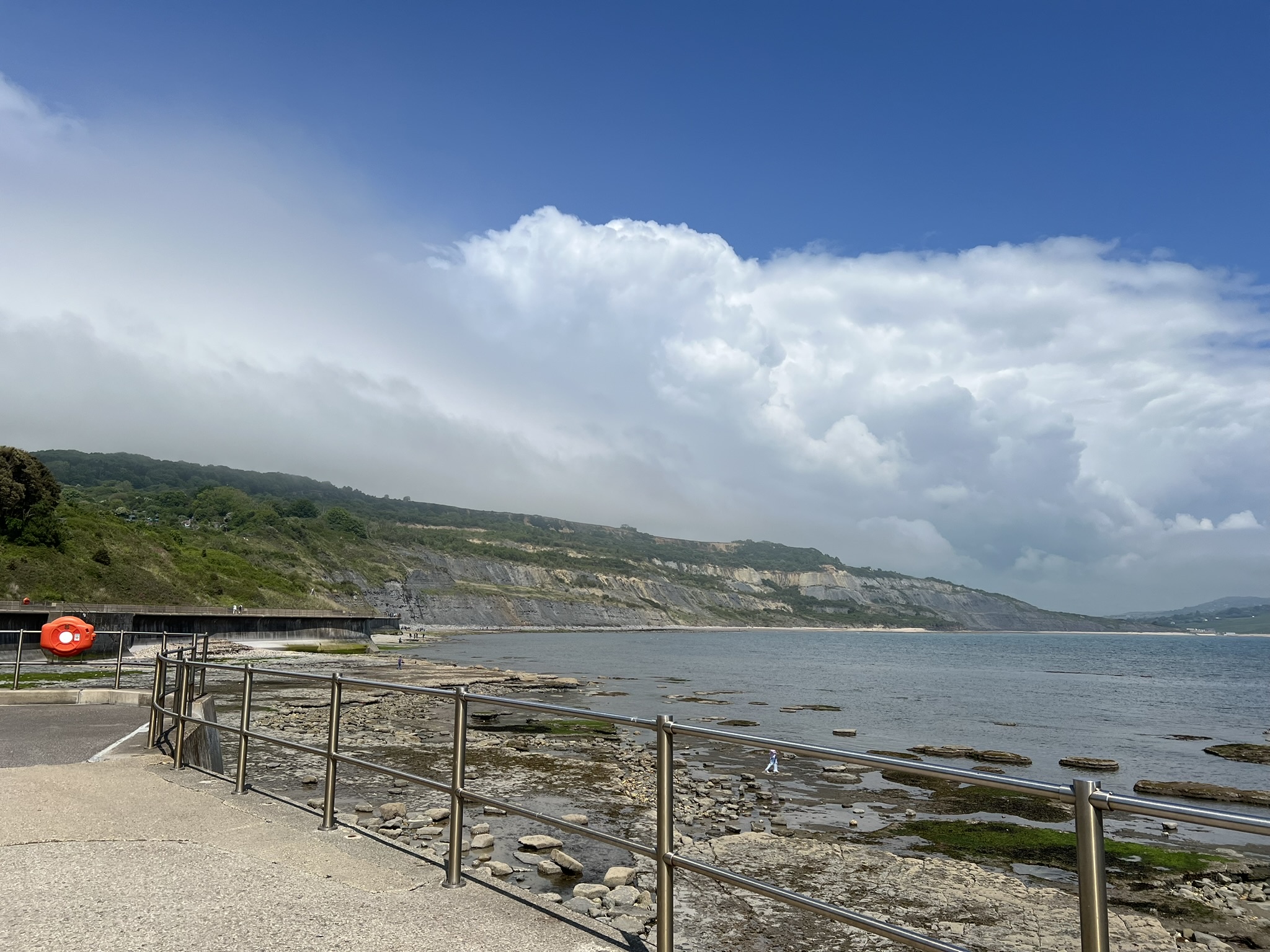
Adventures with Jane! Day IX: On the Trail to Lyme Regis…         

*****

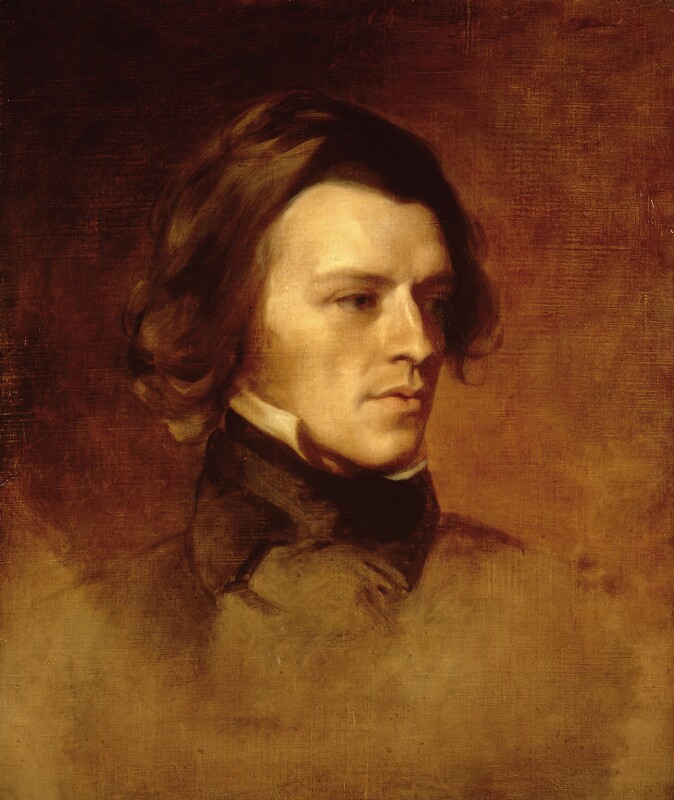
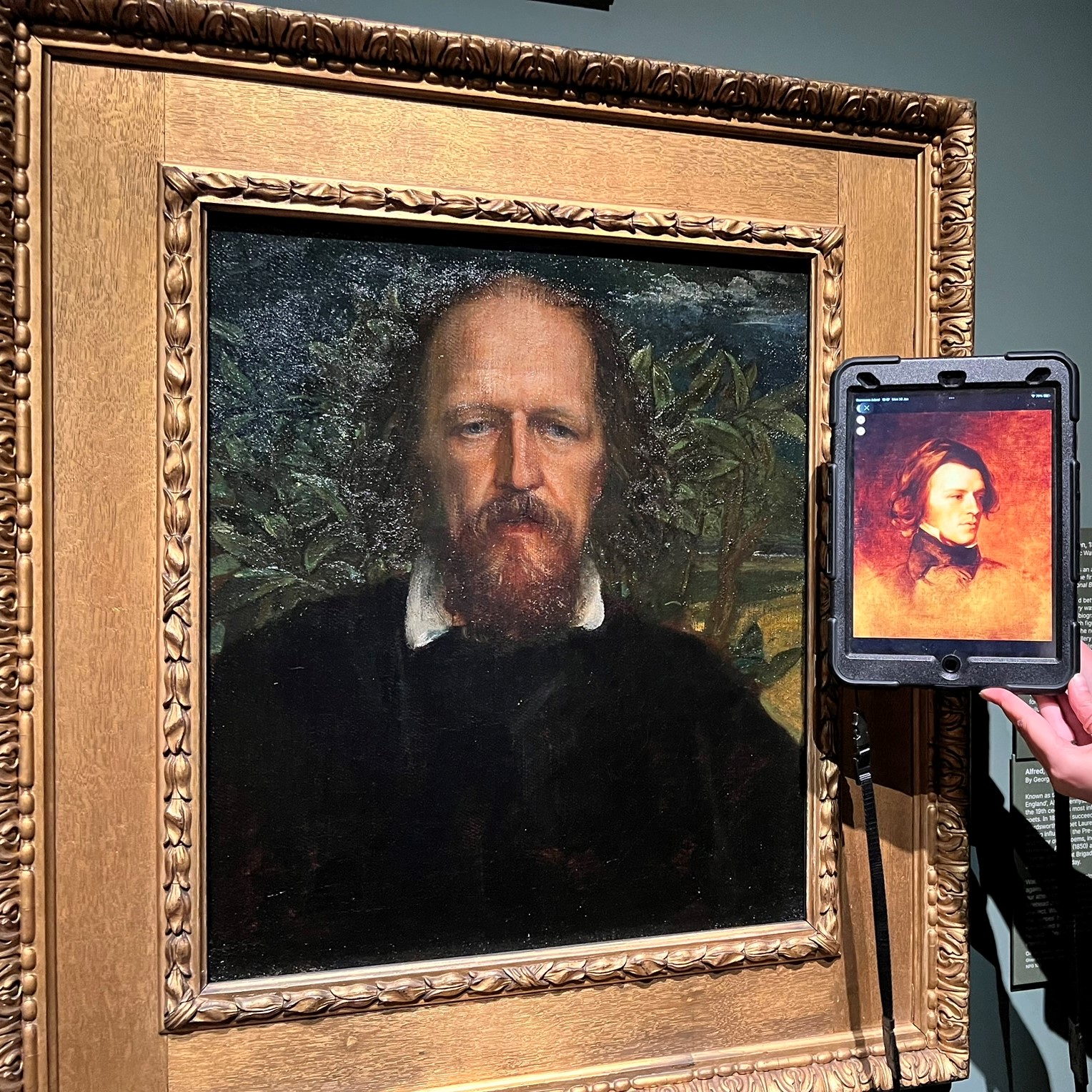
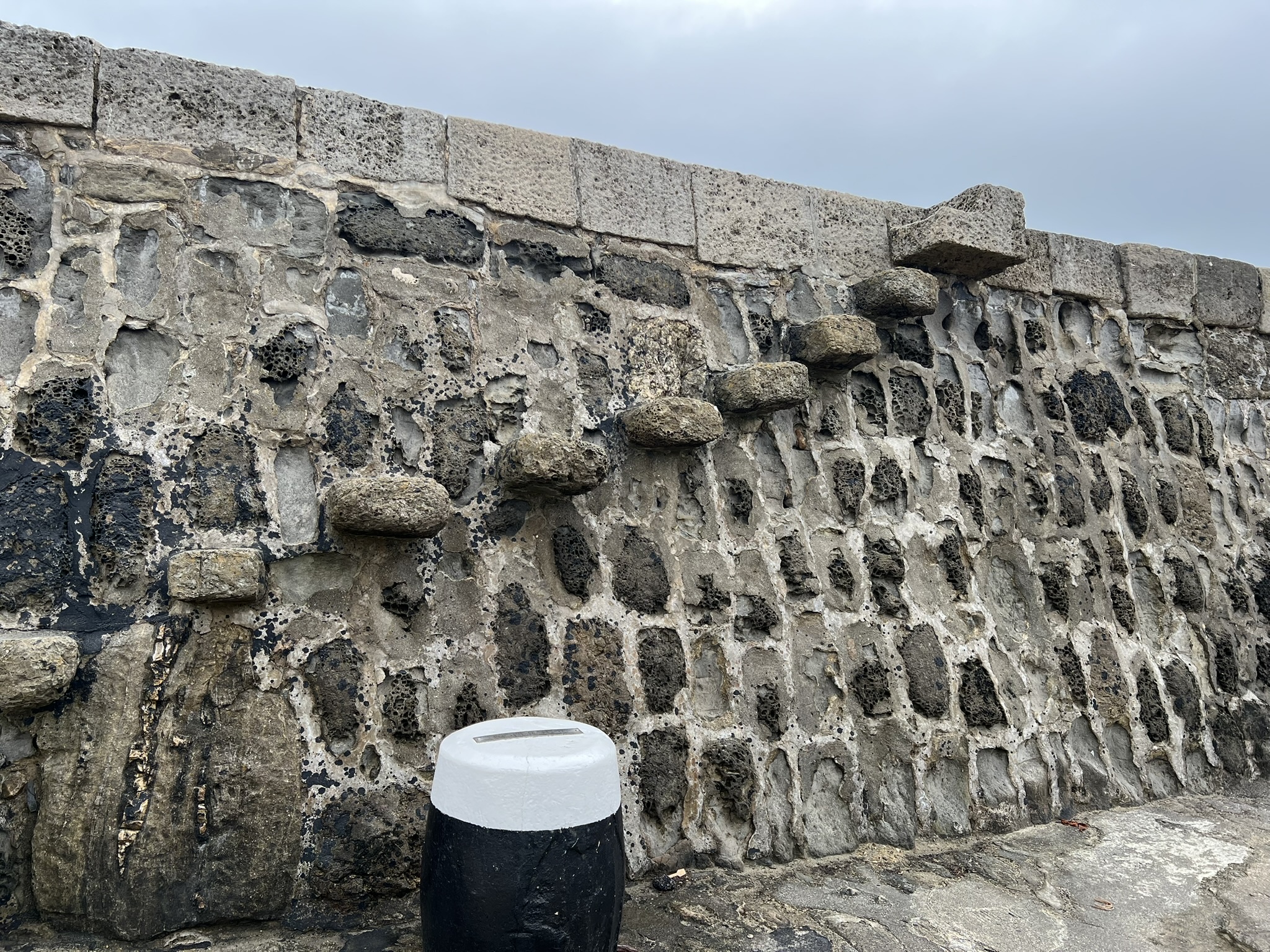
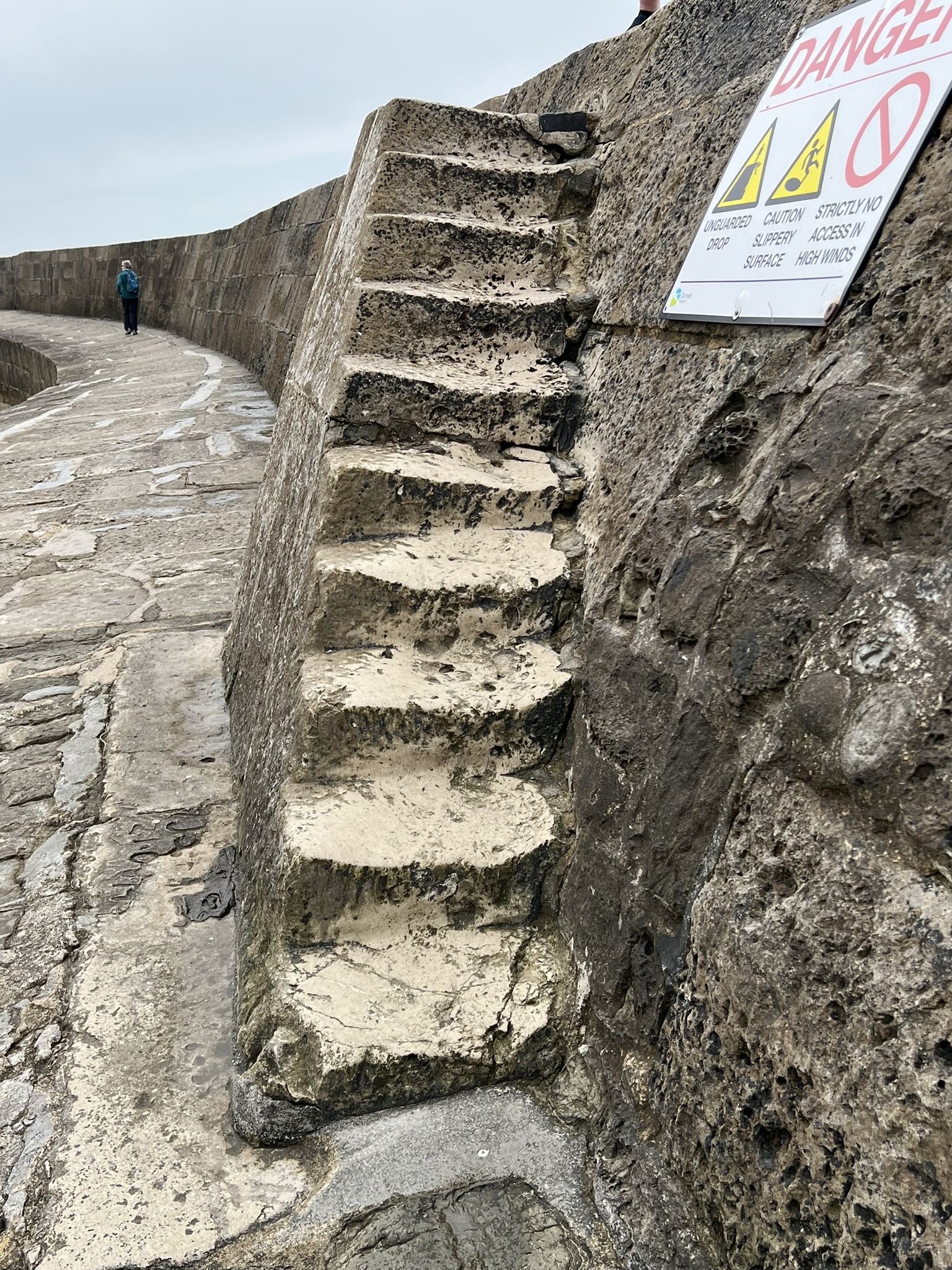
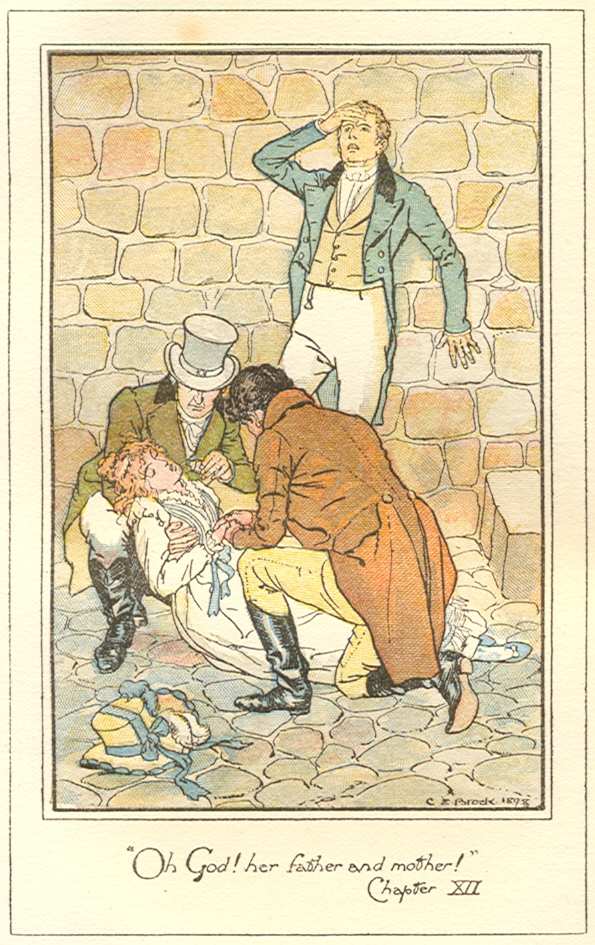
C. E. Brock – Dent, 1898 /  Dent, 1909

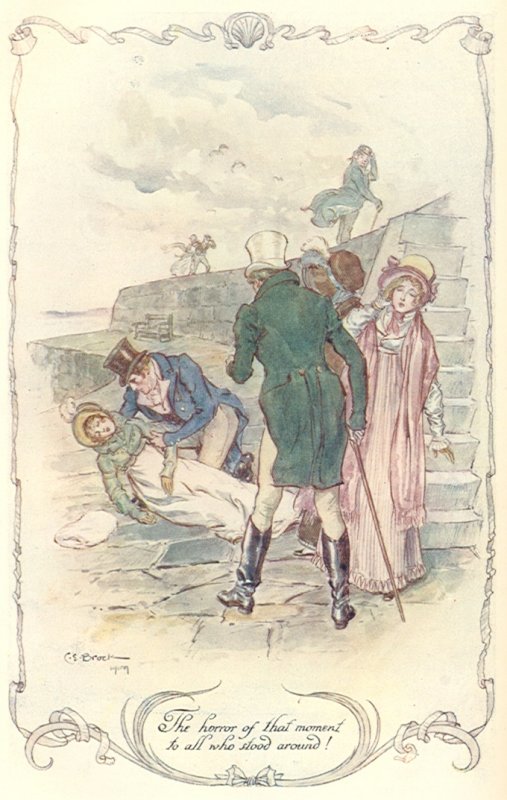
Hugh Thomson – Macmillan, 1897
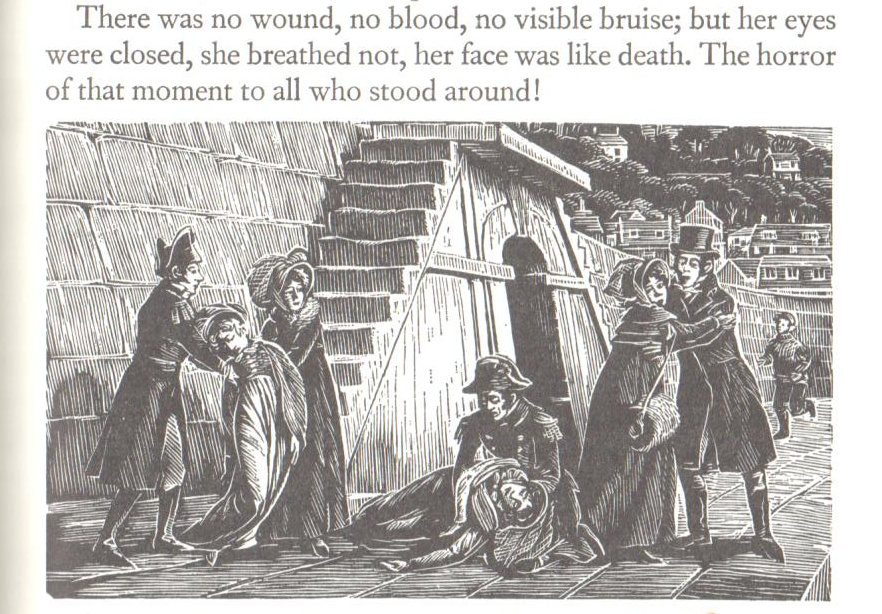
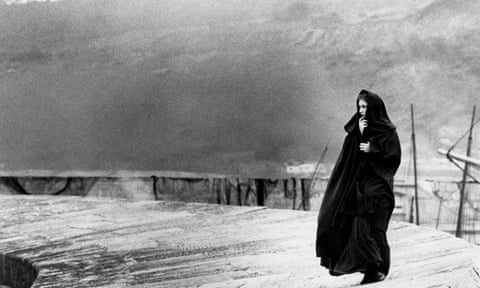
Joan Hassall – Folio Society, 1975, shows Henrietta in a swoon:
“nay, two dead young ladies”!

Niroot Puttapipat – Folio Society, 2007, gives us an action image
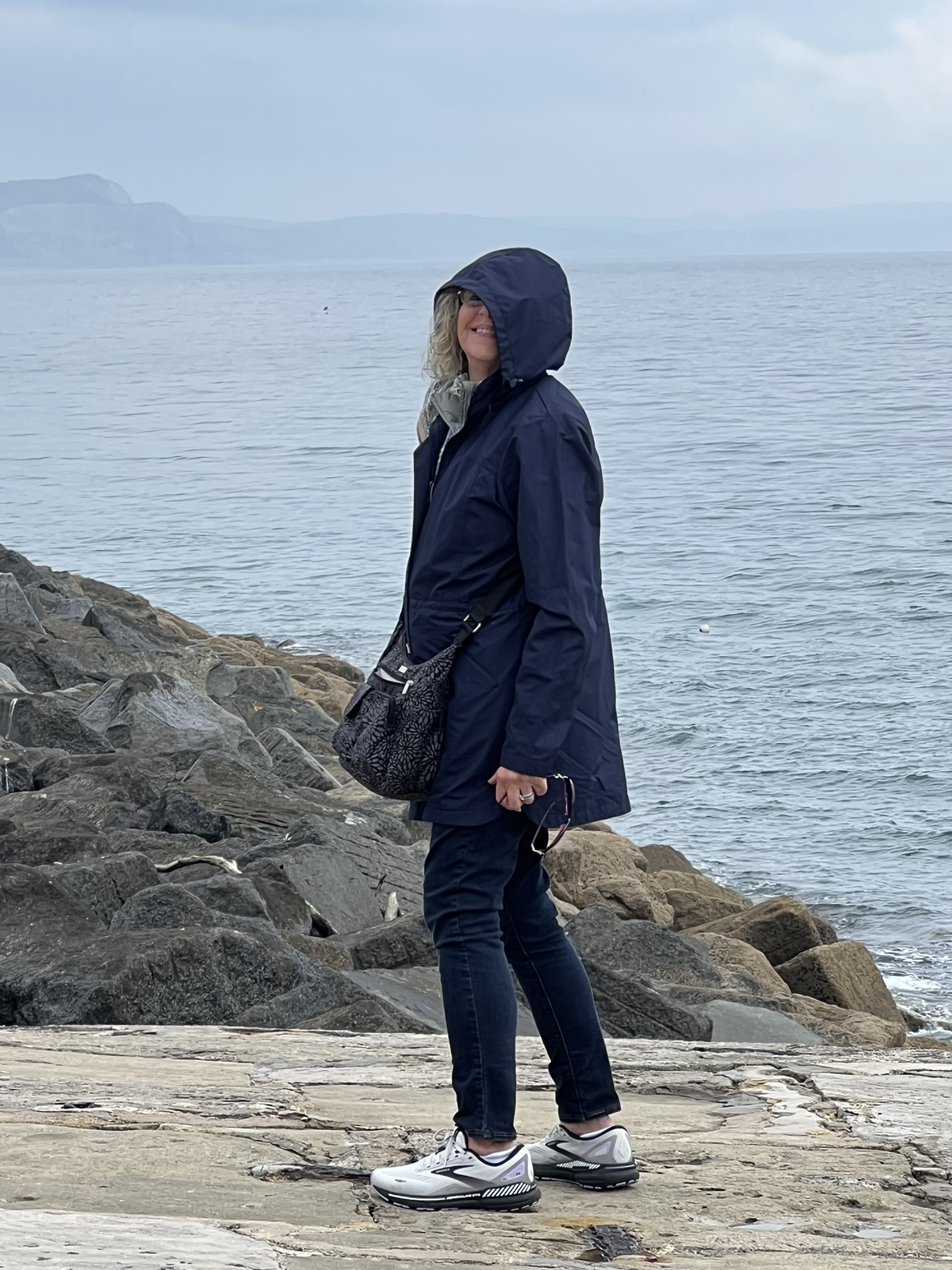
“I am determined I will” – perfect!

© RICHARD AUSTIN 2003

*************

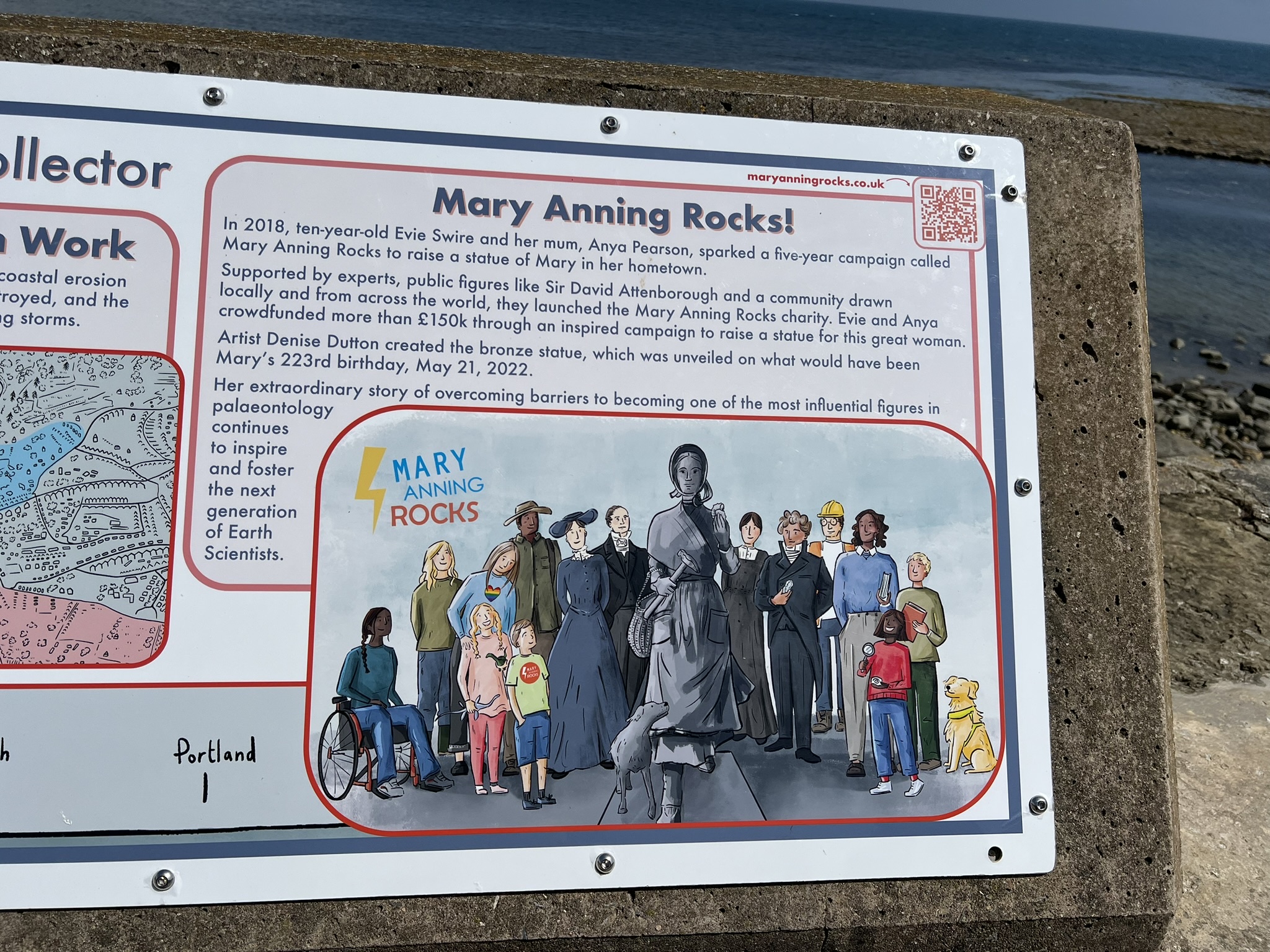
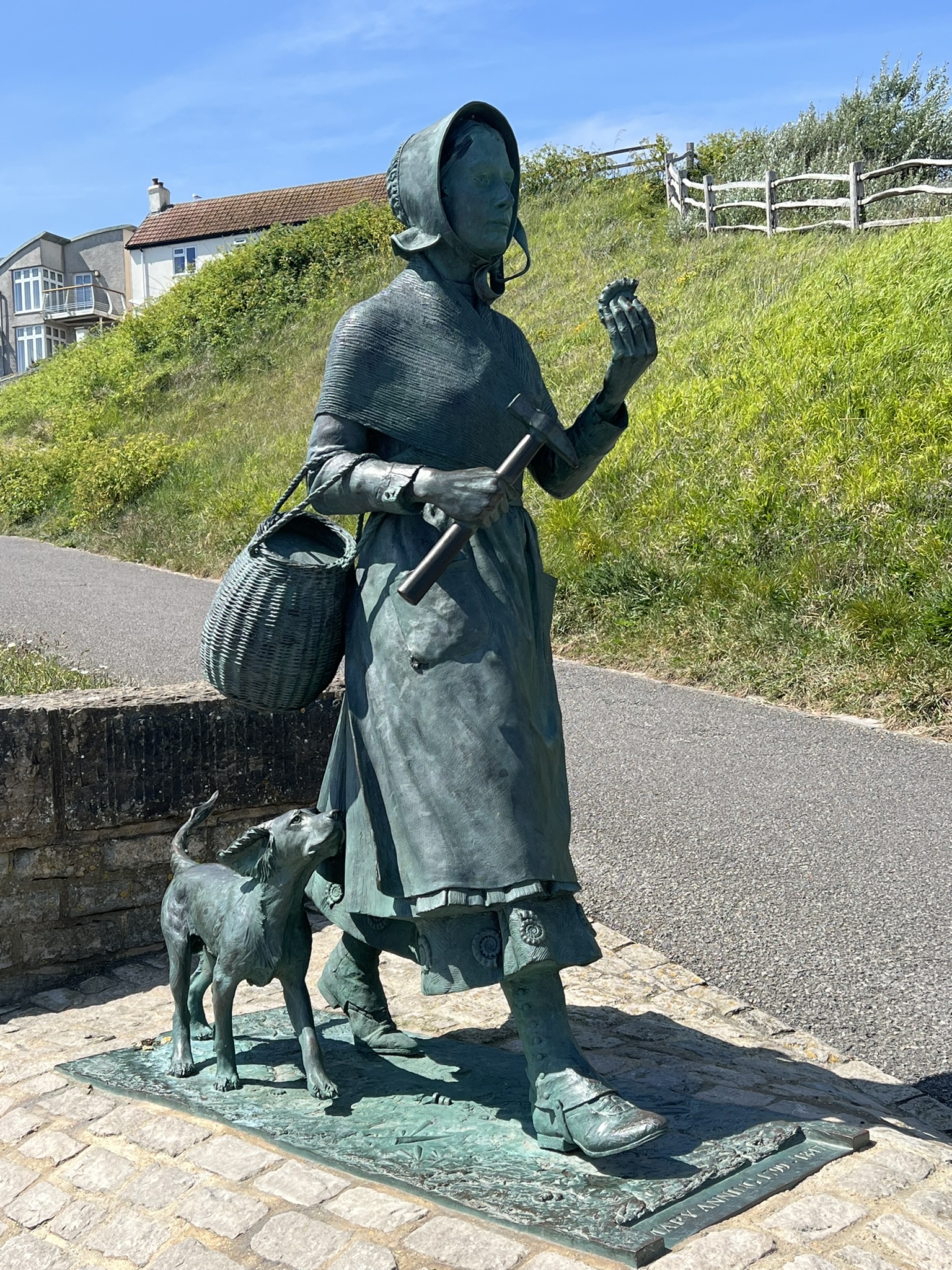
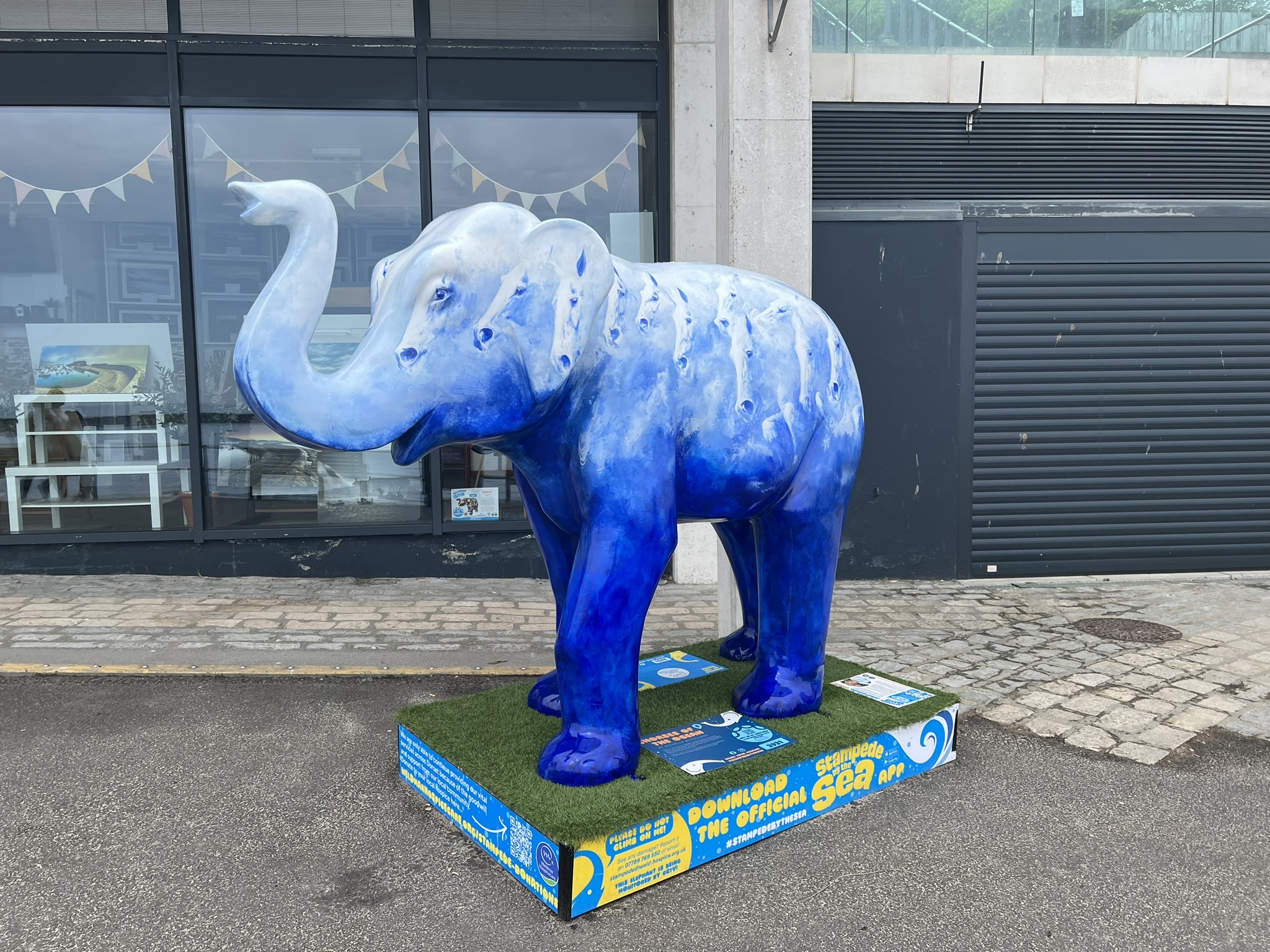
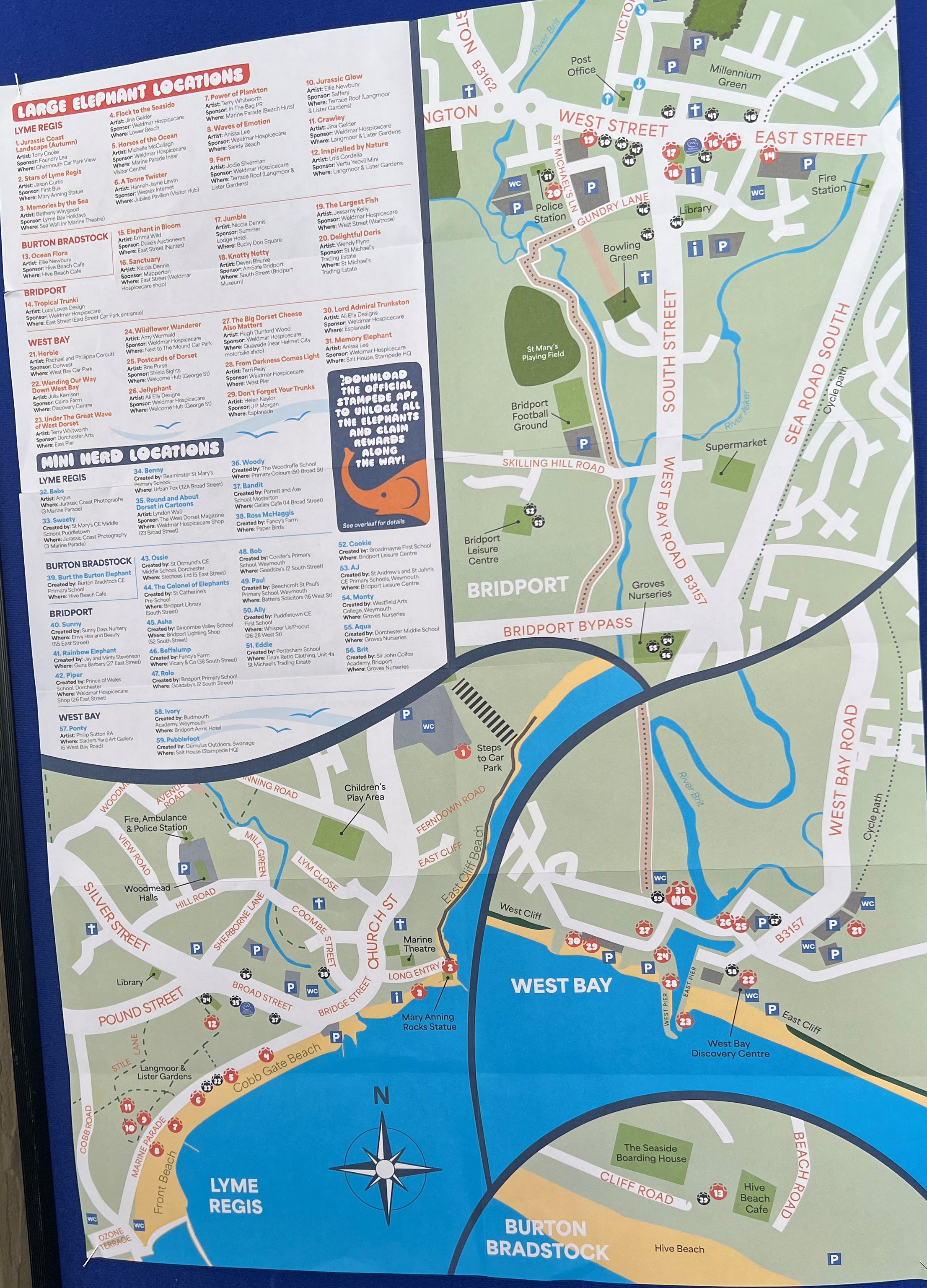
Map of all these hefty fellows about town – it is quite the fundraiser:
*************

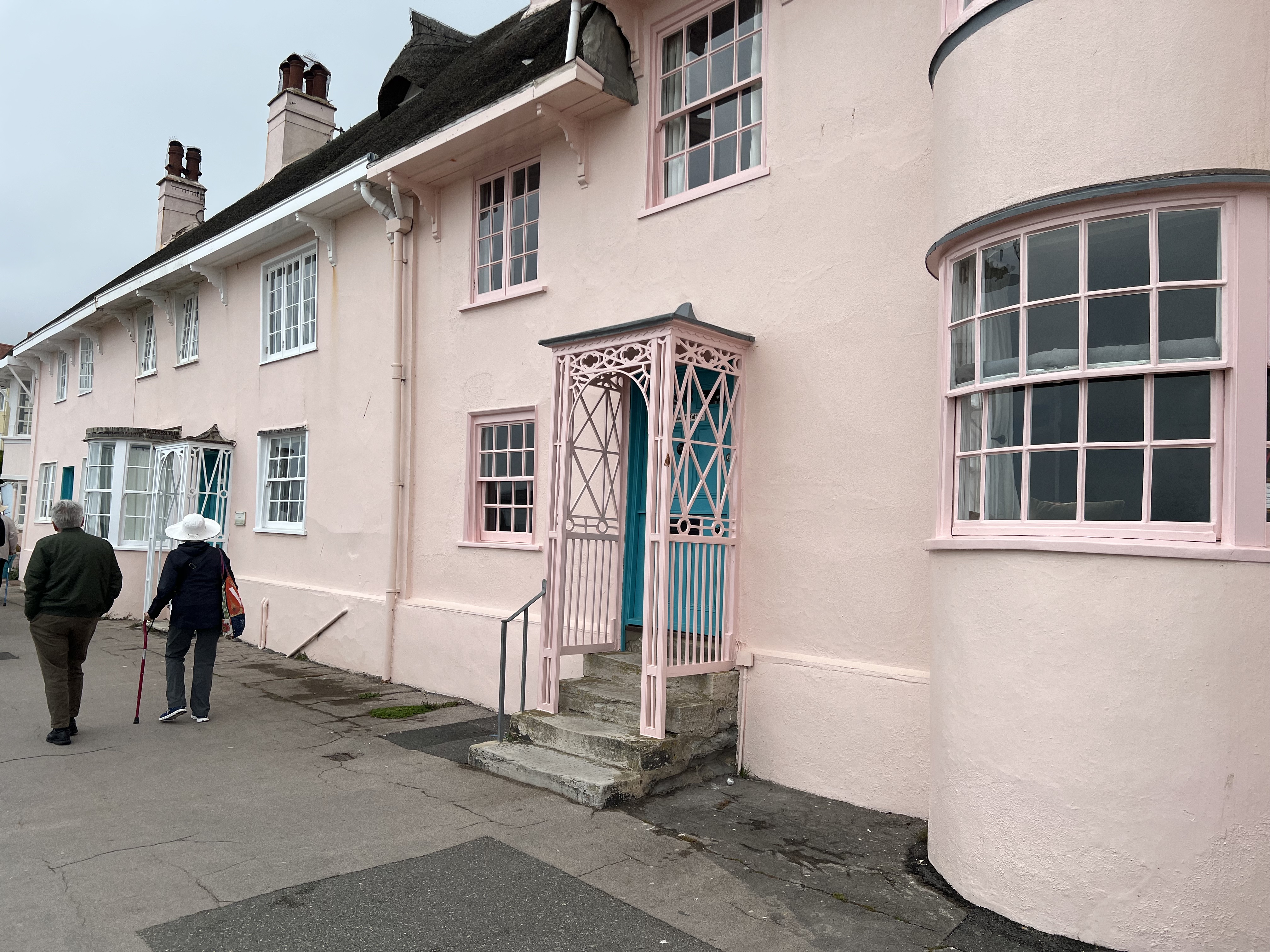
Benwick Cottage!

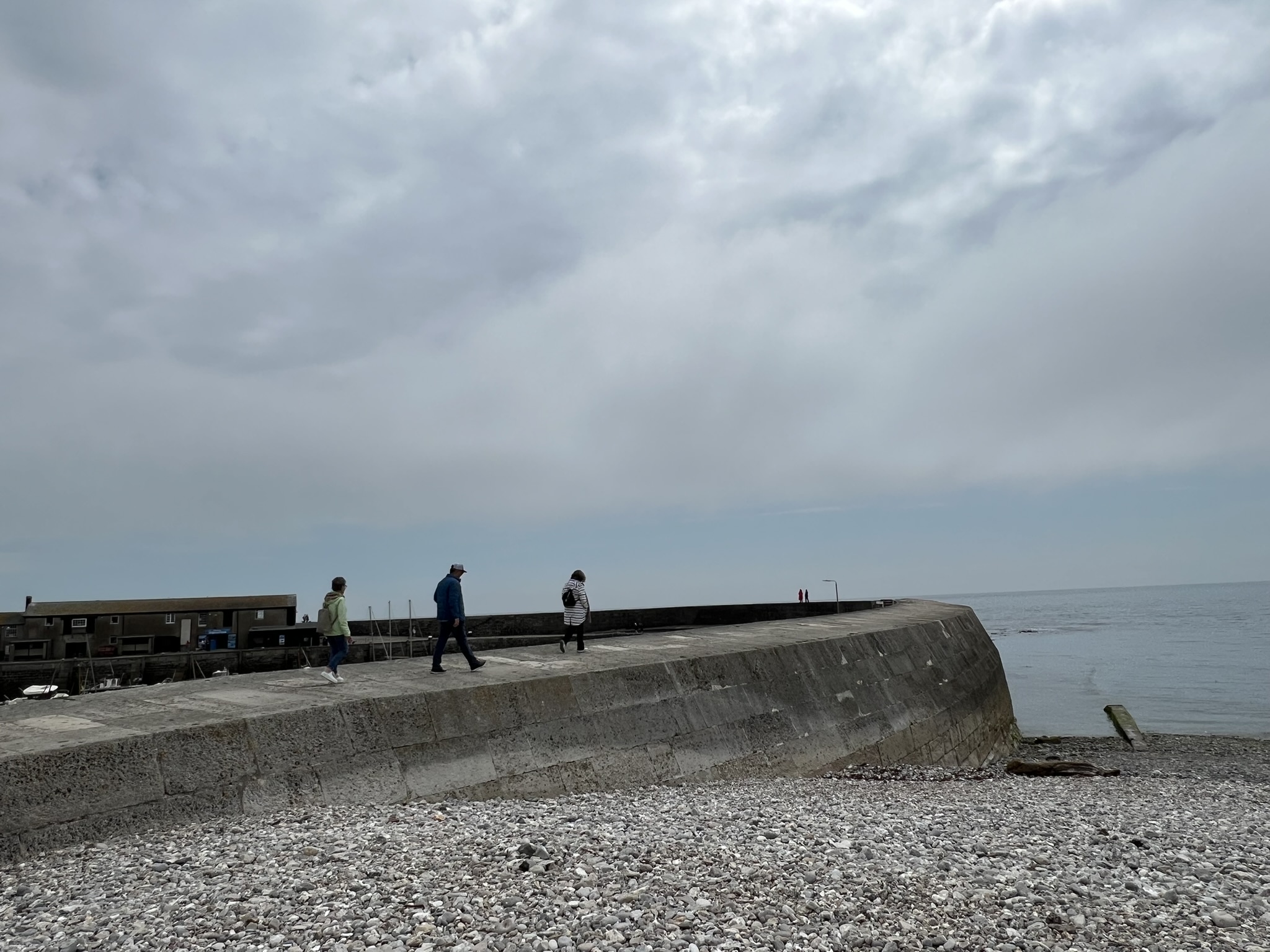
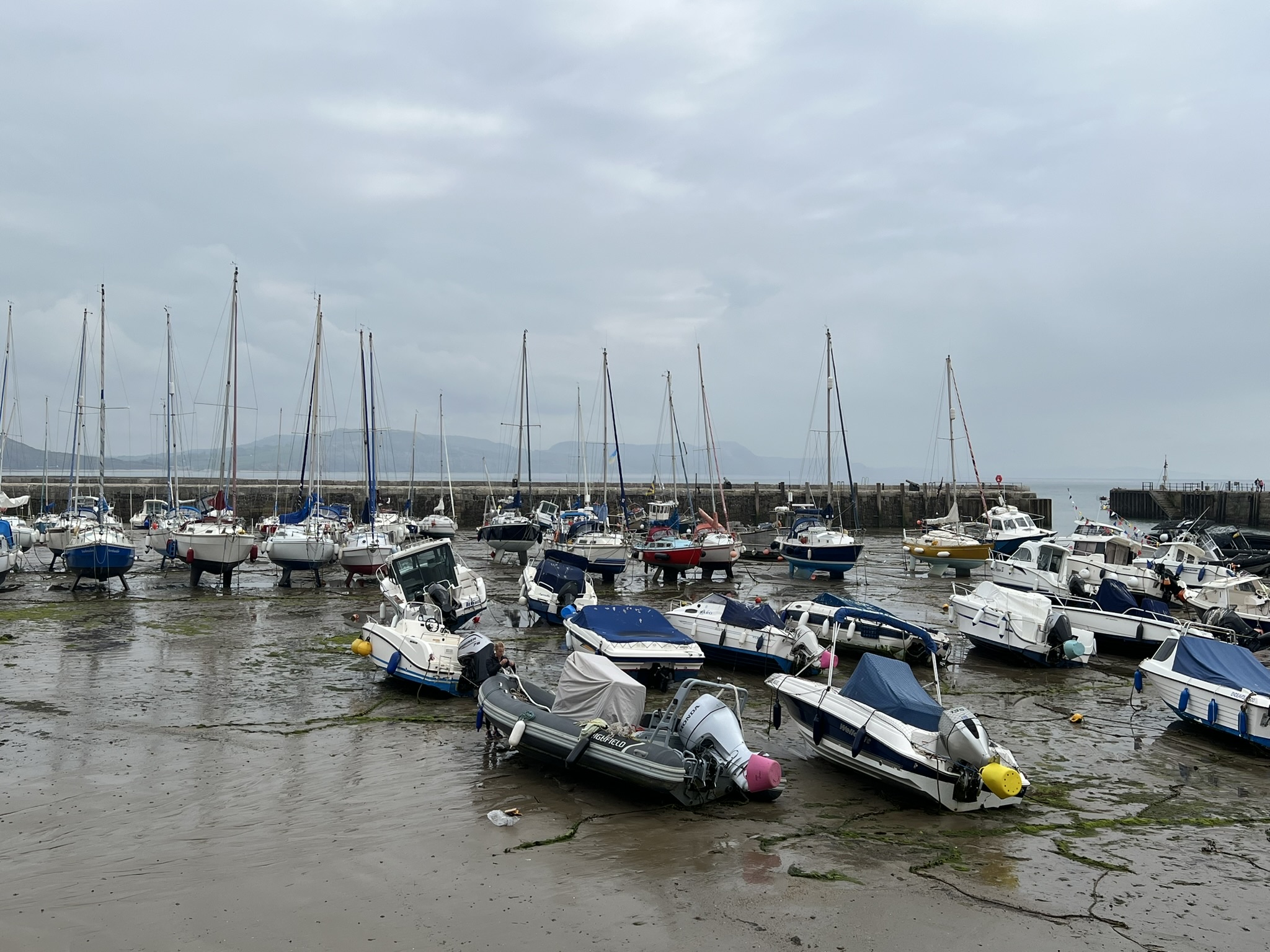
Boats awaiting the tide…

My now favorite shop: Seasalt Cornwall
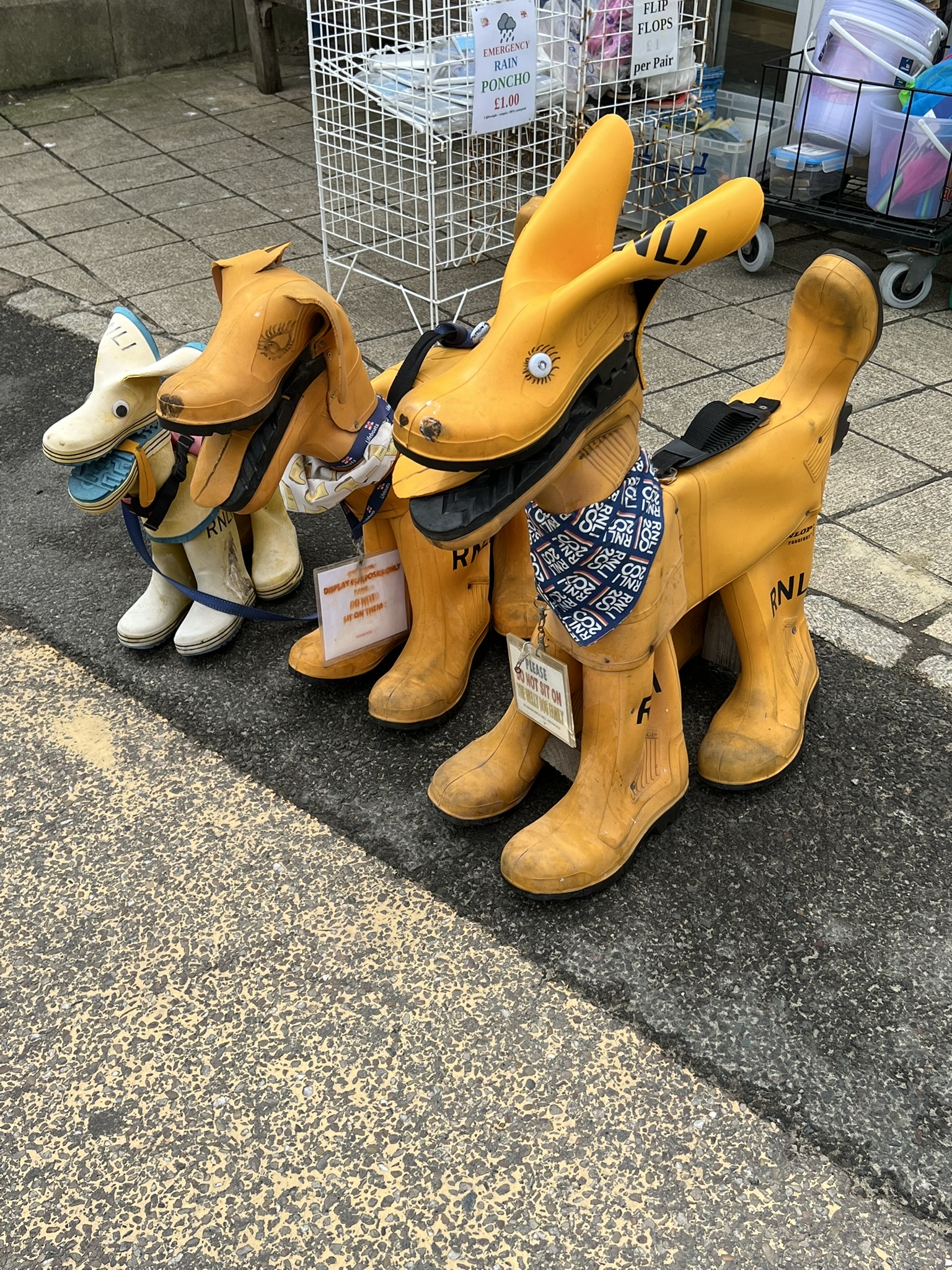
A clear reminder you are at the seaside!

Always in search of poppies….

a farewell to Lyme Regis…the Cliffs just appearing…

************

A very proper waistcoat on our “butler”…

“Oh! what a Henry!…”

C2025JaneAustenInVermont
Austen Literary History & Criticism · Chawton House · Decorative Arts · Domestic Arts · Fashion & Costume · Georgian England · Georgian Period · Godmersham Park Library · Great Britain - History · Jane Austen · Jane Austen Circle · Jane Austen Merchandise · Jane Austen Popular Culture · Jane Austen Societies · Jane Austen's Letters · JASNA · Museum Exhibitions · NAFCH - North American Friends of Chawton House · Rare Books · Regency England · Social Life & Customs · Women Writers

Adventures with Jane! Day VIII: The Delights of a Visit to Chawton

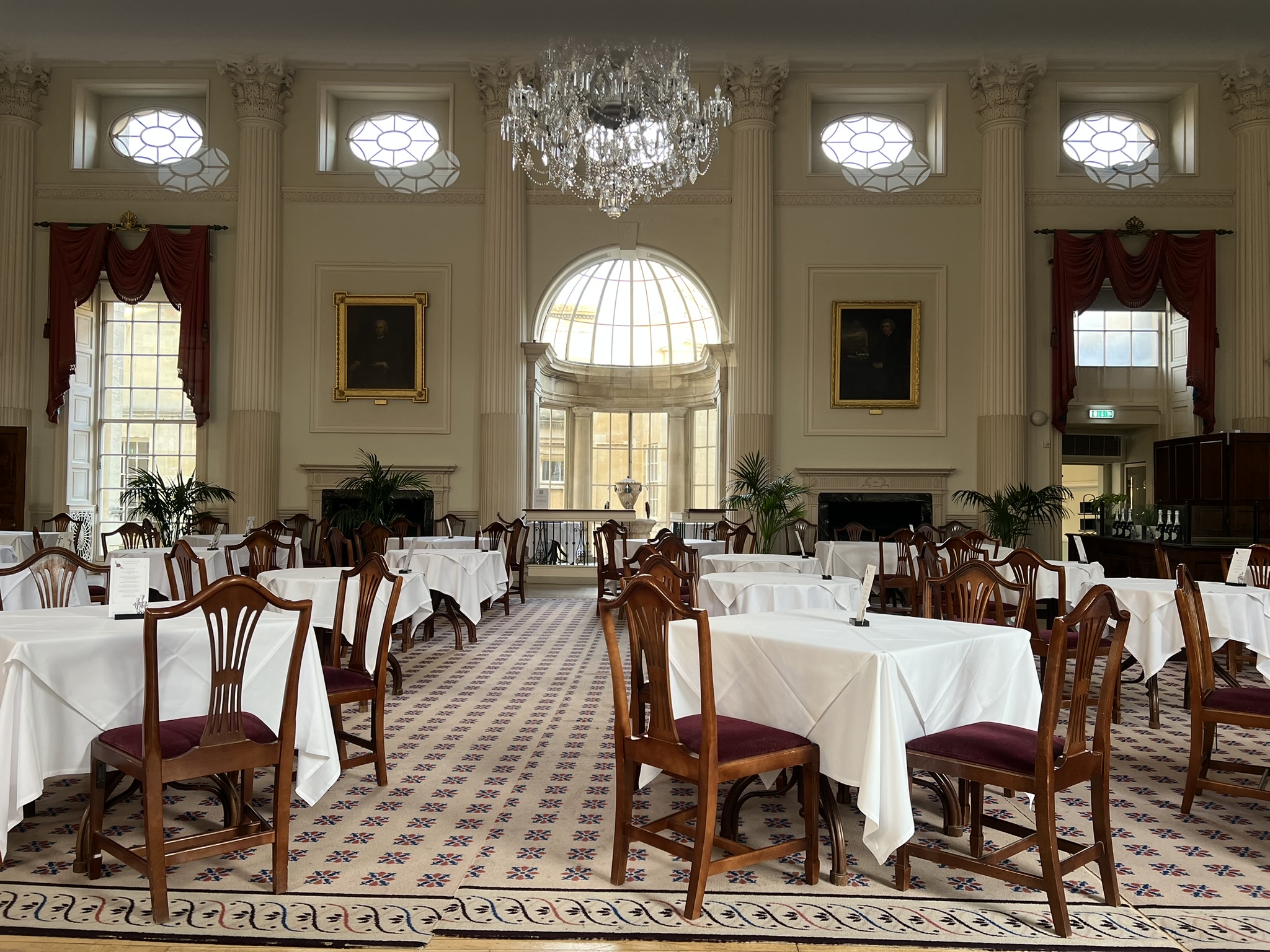
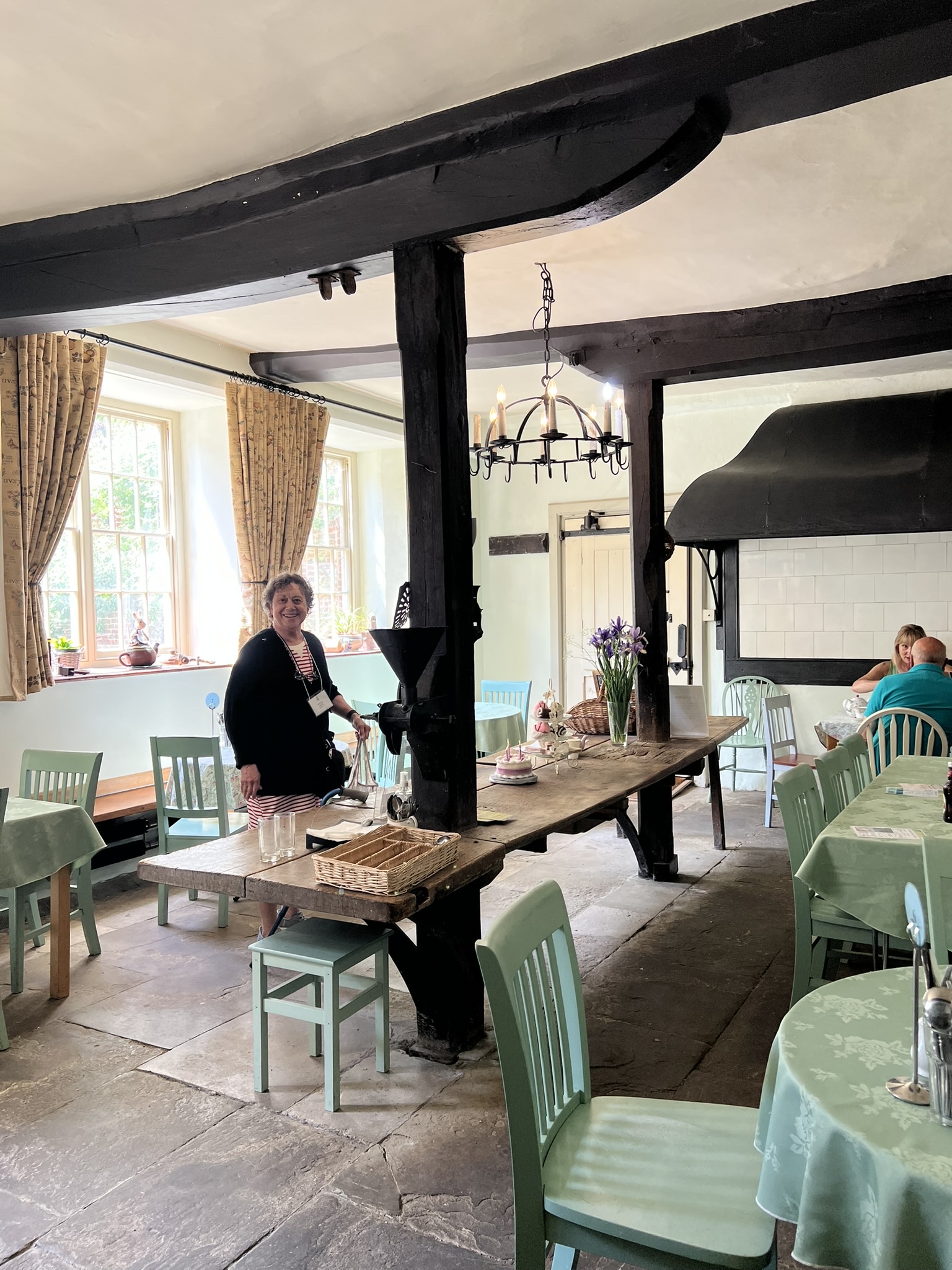
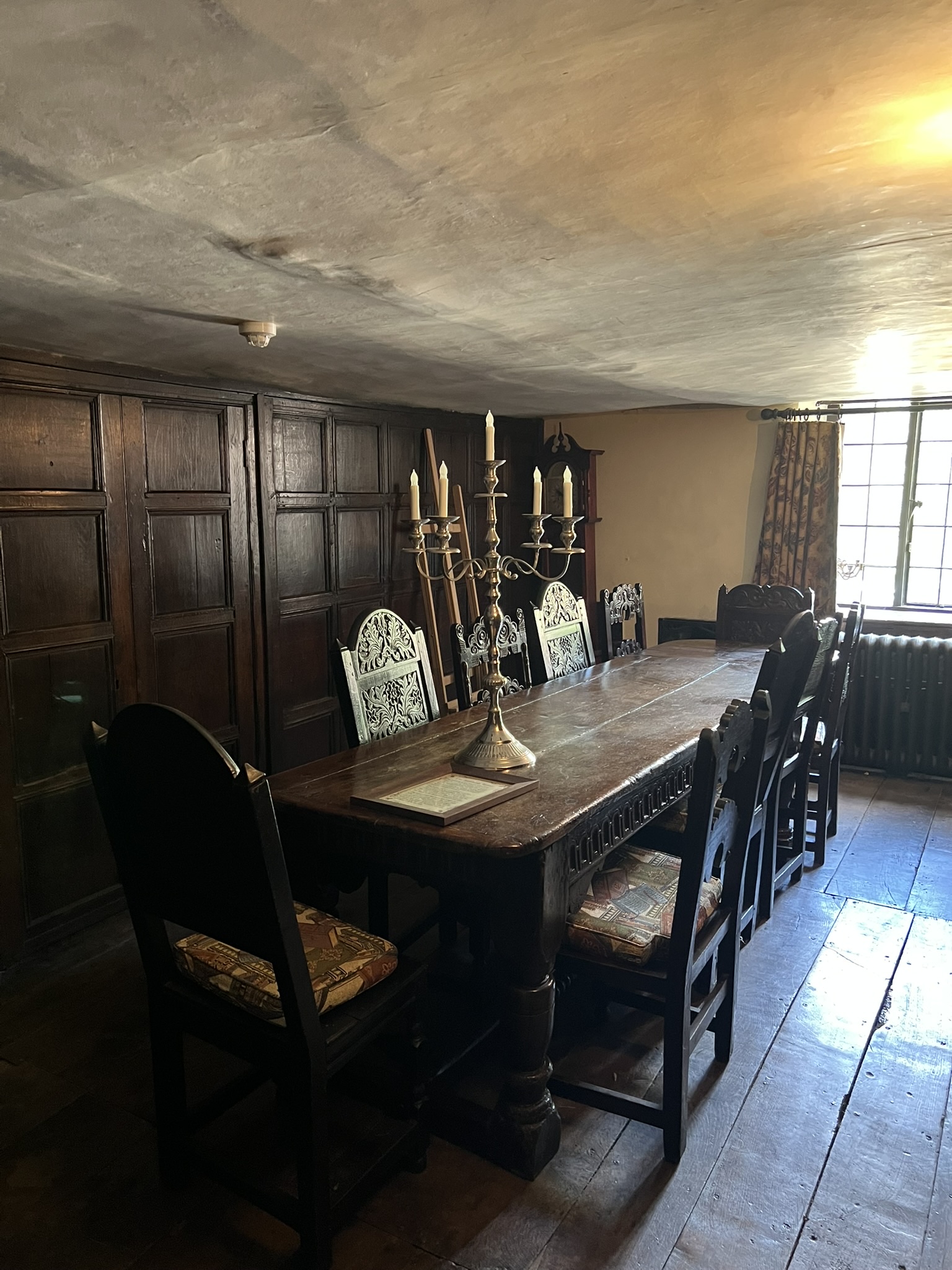
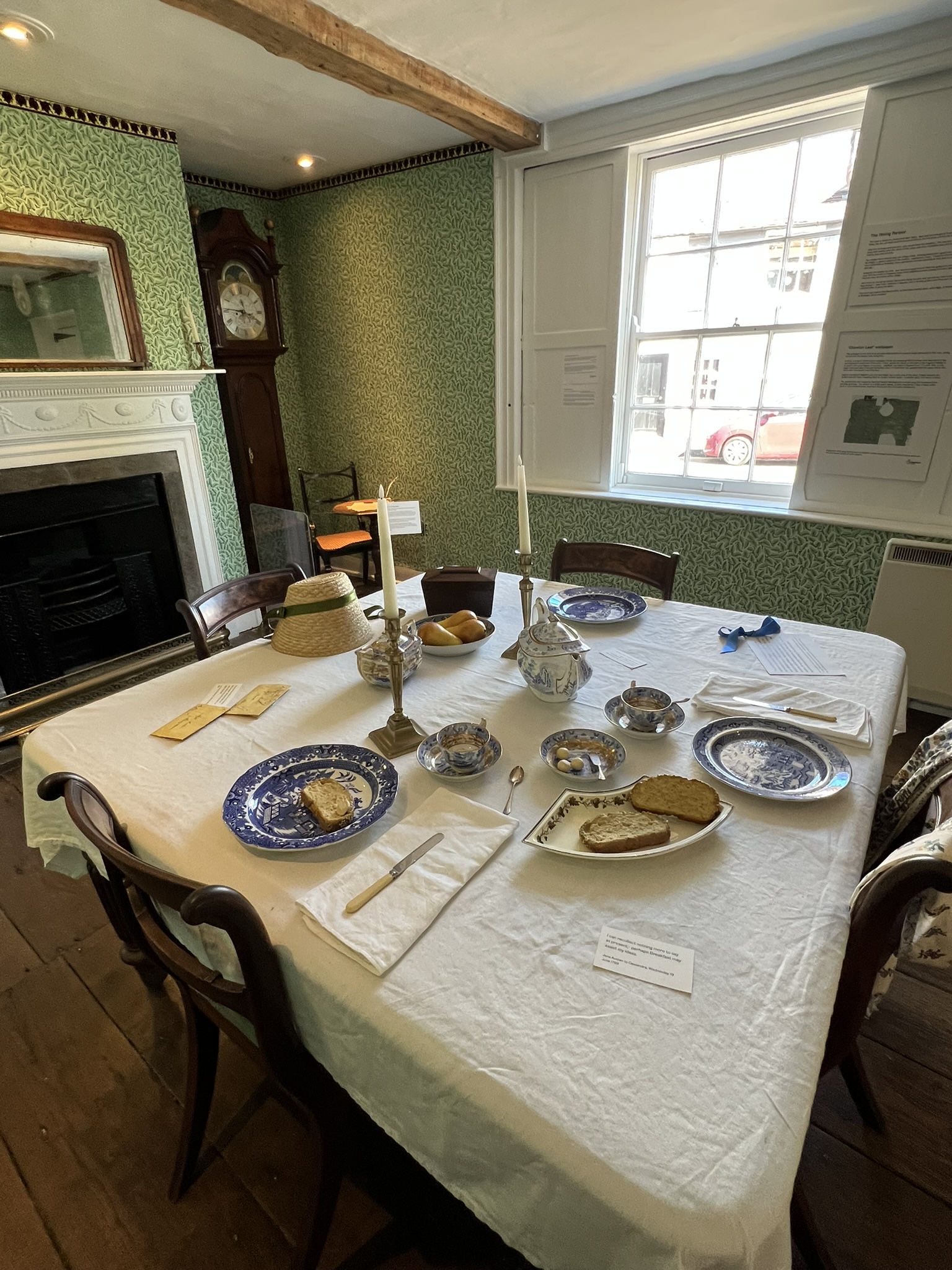
The Tea Room

************

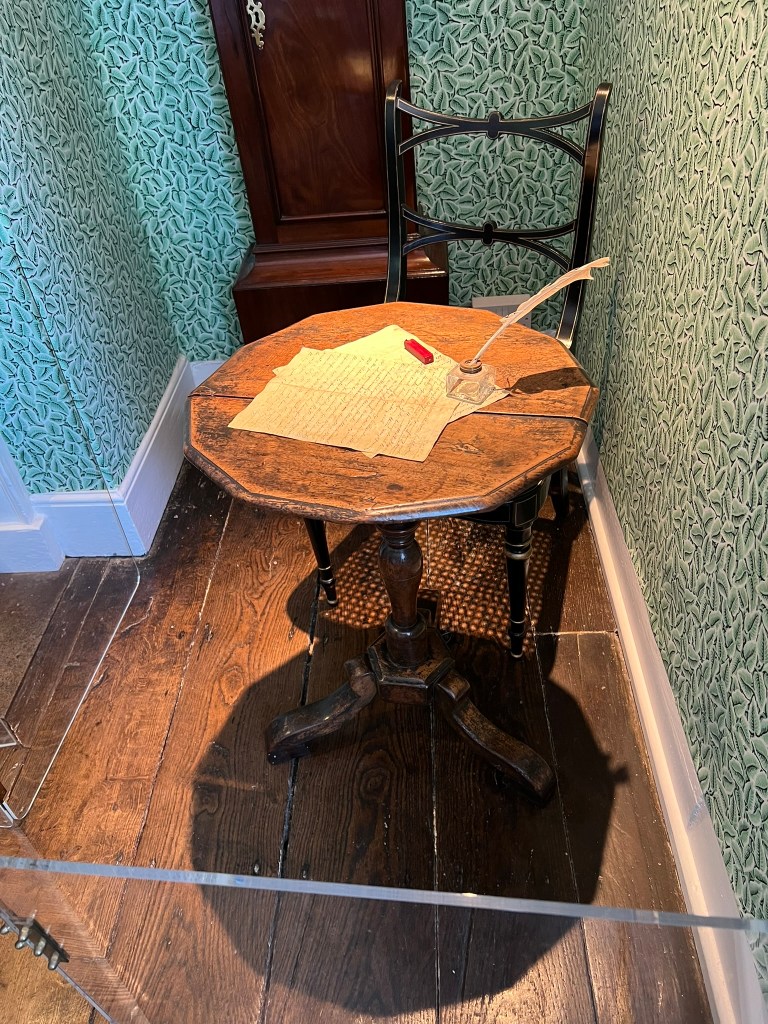
– Janine Barchas, 2025

Jane Austen, 29 May 1811 from Chawton
to Cassandra at Godmersham Park

c2025JaneAustenInVermont
Austen Literary History & Criticism · Domestic Arts · Fashion & Costume · Georgian England · Great Britain - History · Jane Austen · Jane Austen Circle · Jane Austen Societies · JASNA · Museum Exhibitions · Regency England · Social Life & Customs

Adventures with Jane! Day VI, Part 2: Winchester and the Hampshire Cultural Trust.

Coming off our visit to Steventon, we were given some free time to explore Winchester on our own, the Cathedral and College to be part of the Day 7 adventure. I have been to Winchester before, have seen all the spots associated with Jane, and at the 2003 AGM we had a grand banquet at the Great Hall. [There was a talk by the then woman mayor of the City – a Jane Austen follower! Her name was Jean Hammerton, and I see that she passed away in 2020 – she was a delight!]


Considered one of the finest surviving medieval aisled halls of the 13th century, it is all that remains of the vast Winchester Castle, begun by William the Conqueror. I was largely alone here today, and lacking banquet tables and all that food, you can see the vastness and majesty of the place:

It is also home to the “Round Table”:

Which is nearly 800 years old, has a diameter of 18 ft, made of 121 separate pieces of English oak – and is considered the symbol of medieval mythology – think Camelot – King Arthur and the Knights of the Round Table. Since recent dating proves it is from the 13th century and not an original table of Arthur’s 6th century, much conjecture remains as to who ordered this to be made (probably Edward I), and why (part of a great banquet for an ‘Arthurian’ tournament during celebrations in 1290). The painting on the Round Table is dated to the early 16th century and has been determined to be the image of Henry VIII as a young man – Henry wanting to reinforce the Tudor claim to be direct descendants of Arthur [what a Henry…]*:

…as well as a nice reference to John F. Kennedy.

Queen Victoria has her own place of honor here – a HUGE statue for her Golden Jubilee in 1867:

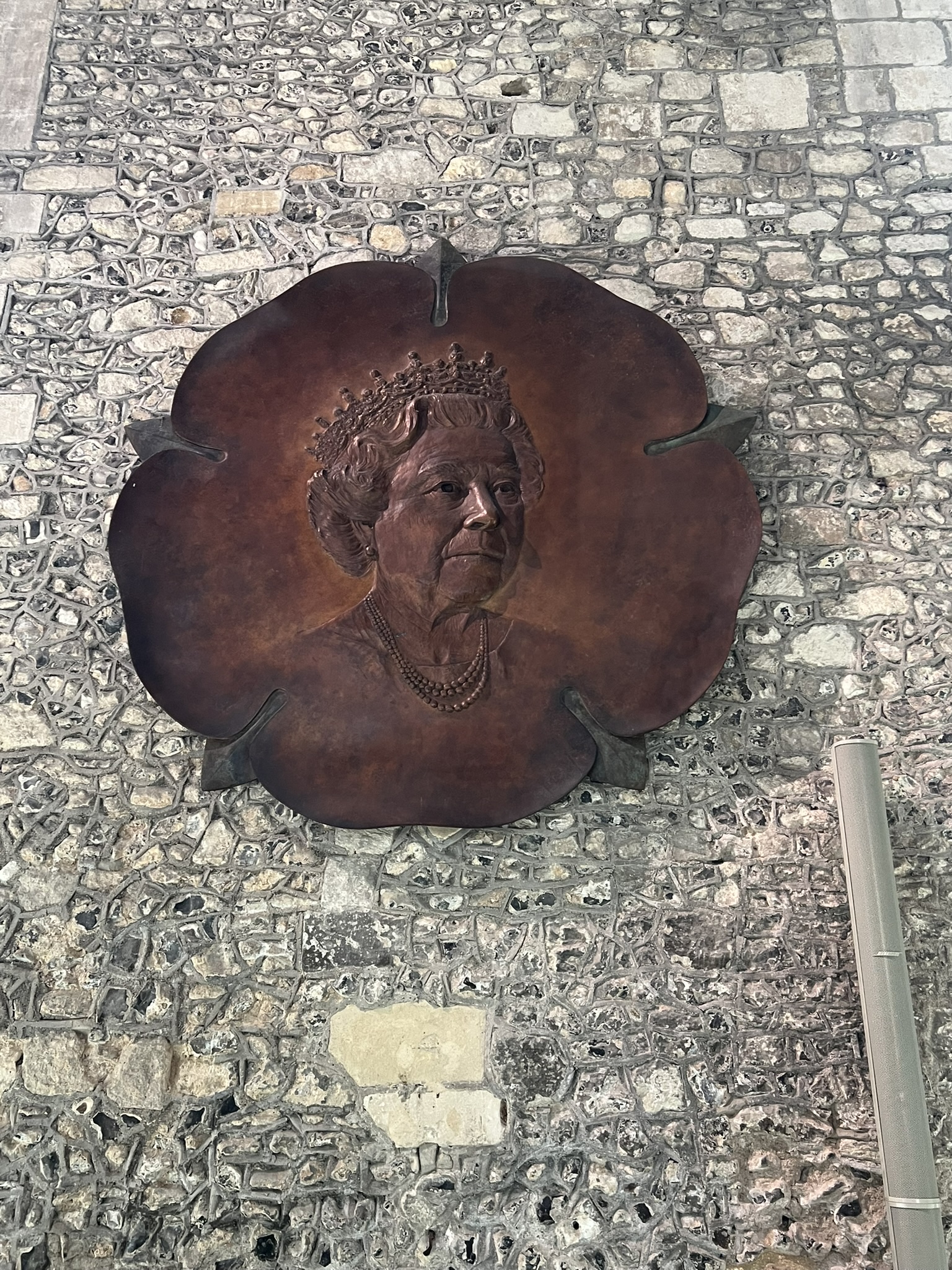
and a 6-ft wide bronze sculpture for Queen Elizabeth II for her Diamond Jubilee:

**********

Exiting the Hall is a recreation of Queen Eleanor’s Garden [Queen Eleanor of Provence, wife of Henry III, and Queen Eleanor of Castile, wife of his son Edward I], opened in 1986 by Her Majesty The Queen Mother – it also includes an herb garden, filled with medieval plants, for their beauty as well as their medicinal purposes.

***********

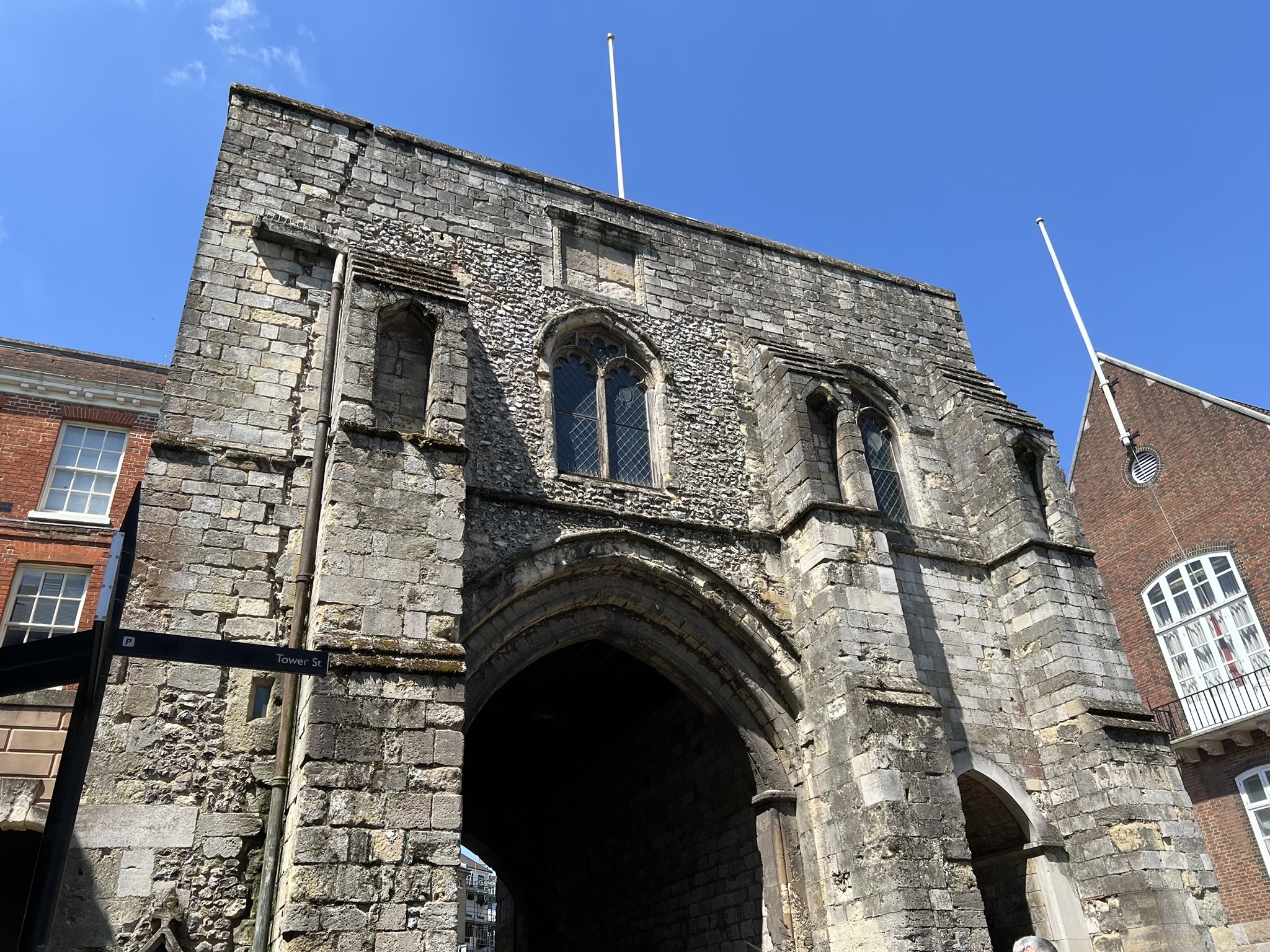
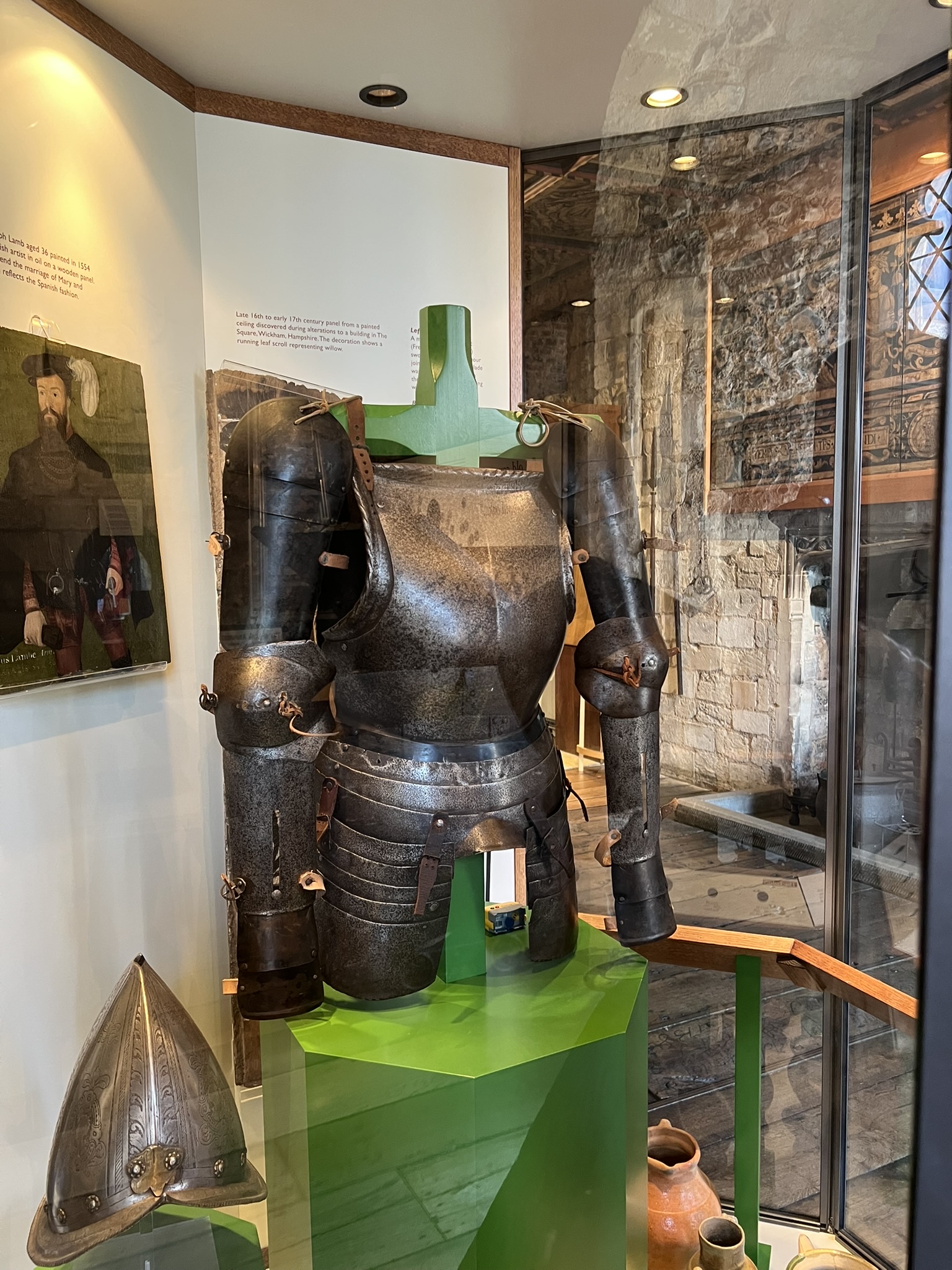
I then went to the Westgate Museum, next to the Hall and within the West Gate into the City, which holds some interesting artifacts of medieval and later times – always impressed by a fine coat of armor:

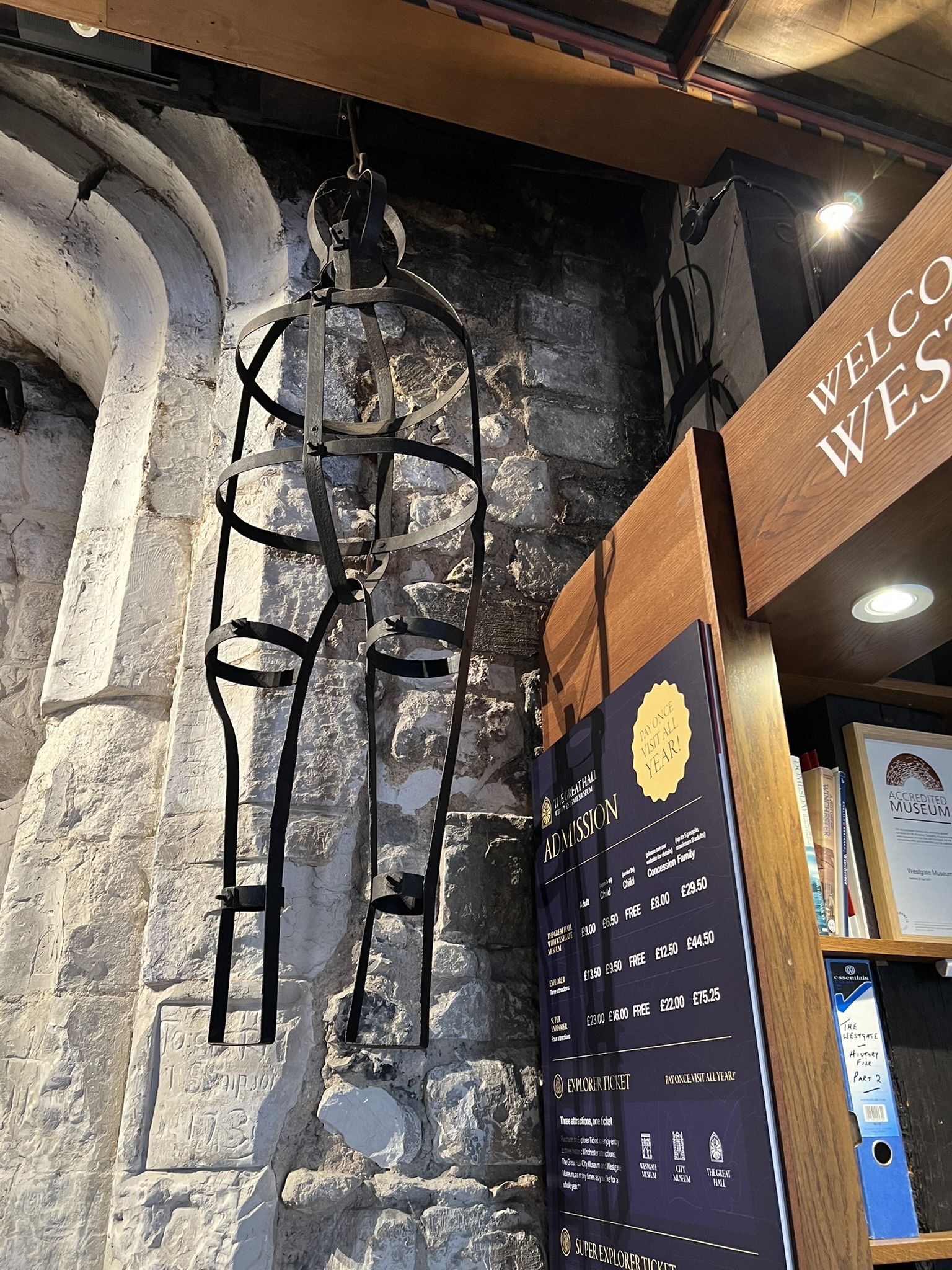
A hanging gibbet, not so much…

Great views of the Hall and the City from up top of the Gate:

********

And finally a return to Jane’s times, as we head to The Hampshire Cultural Trust.

We were greeted by Louise West, Trustee for the HCT, and Jaane Rowehl, Director of Programme and Collections, and two of the people working on their upcoming exhibit  “Beyond the Bonnets: Working Women in Jane Austen’s Novels”

Dates: 2 Nov 2025 – 22 Feb 2026 – you can read about it here:

We were first treated to a talk on and a viewing of some of the artifacts that would have been used by these “working women” of Hampshire: domestic servants [lady’s maids, housekeepers, washer women]; governesses and teachers; and business women [seamstresses, milliners, glazers]; and the inevitable houses of prostitution – the artifacts that will be in the exhibit about their working lives, much of what has been discovered from diaries, receipts, and letters:

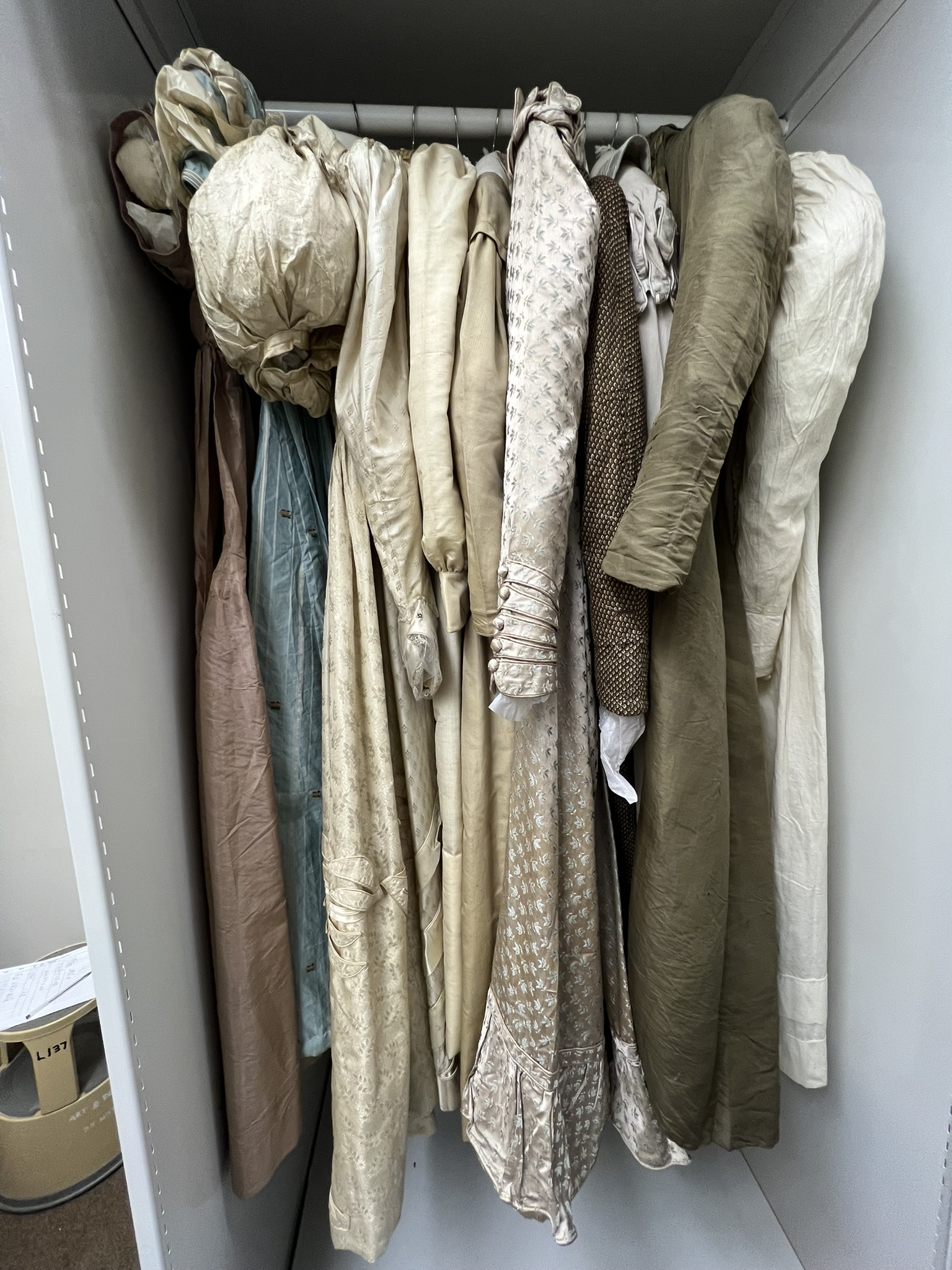
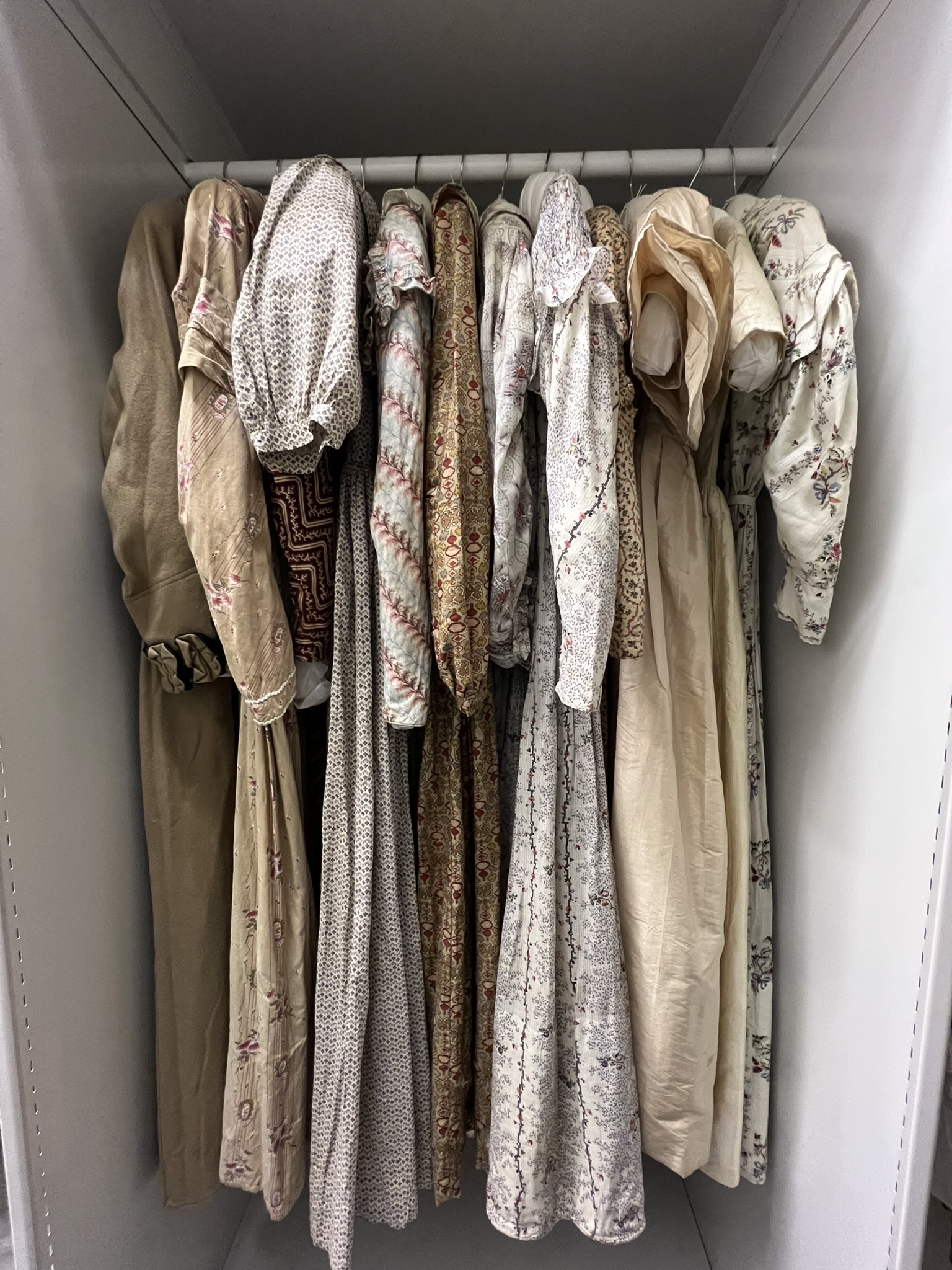
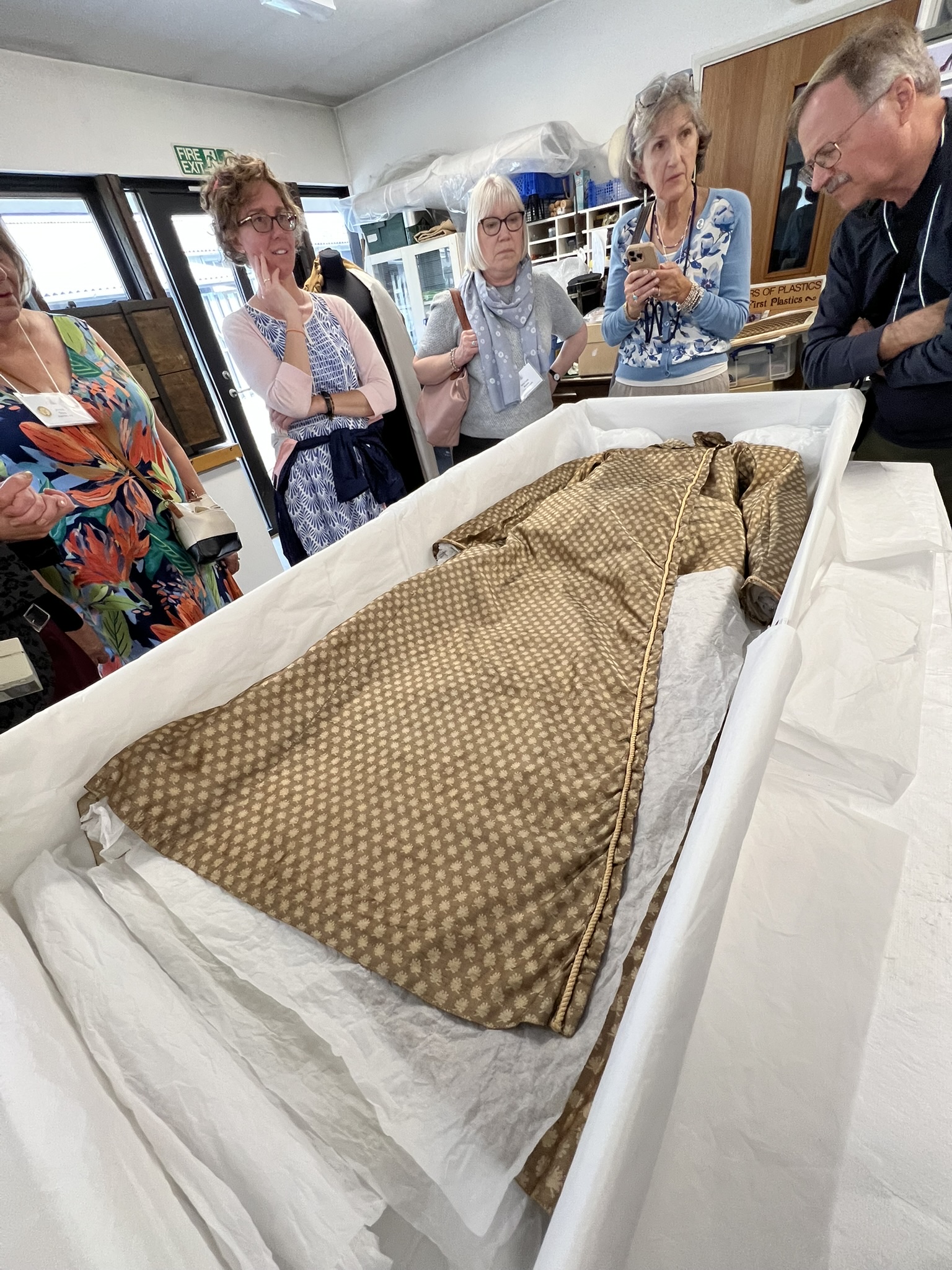
Then a behind-the-scenes tour of the HCT’s costume and textile collection – fascinating work being done here [as well as rows and rows of costumes that are rented out for plays, etc]. Here we could see some of the actual dresses in the collection that are being preserved and studied:

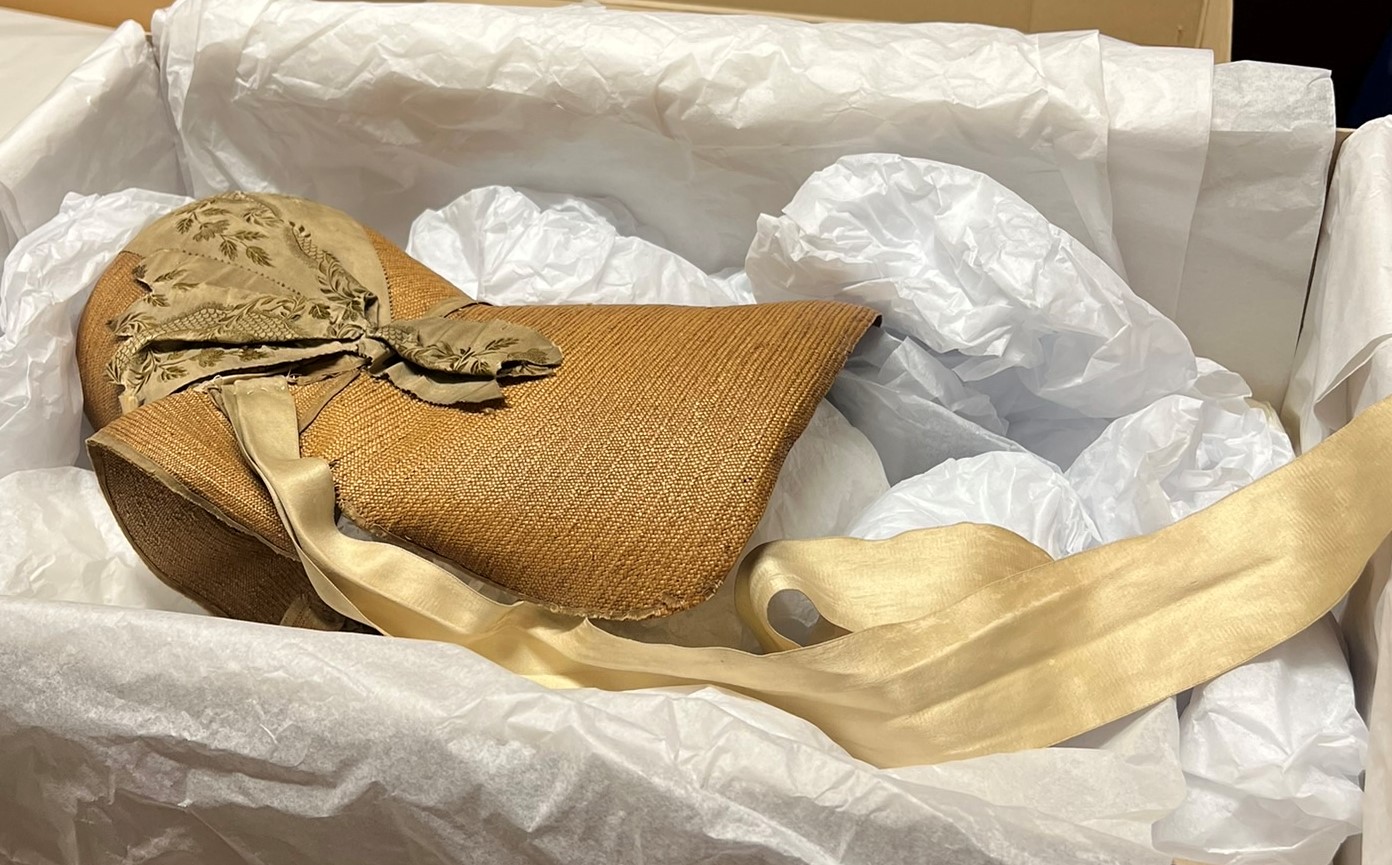
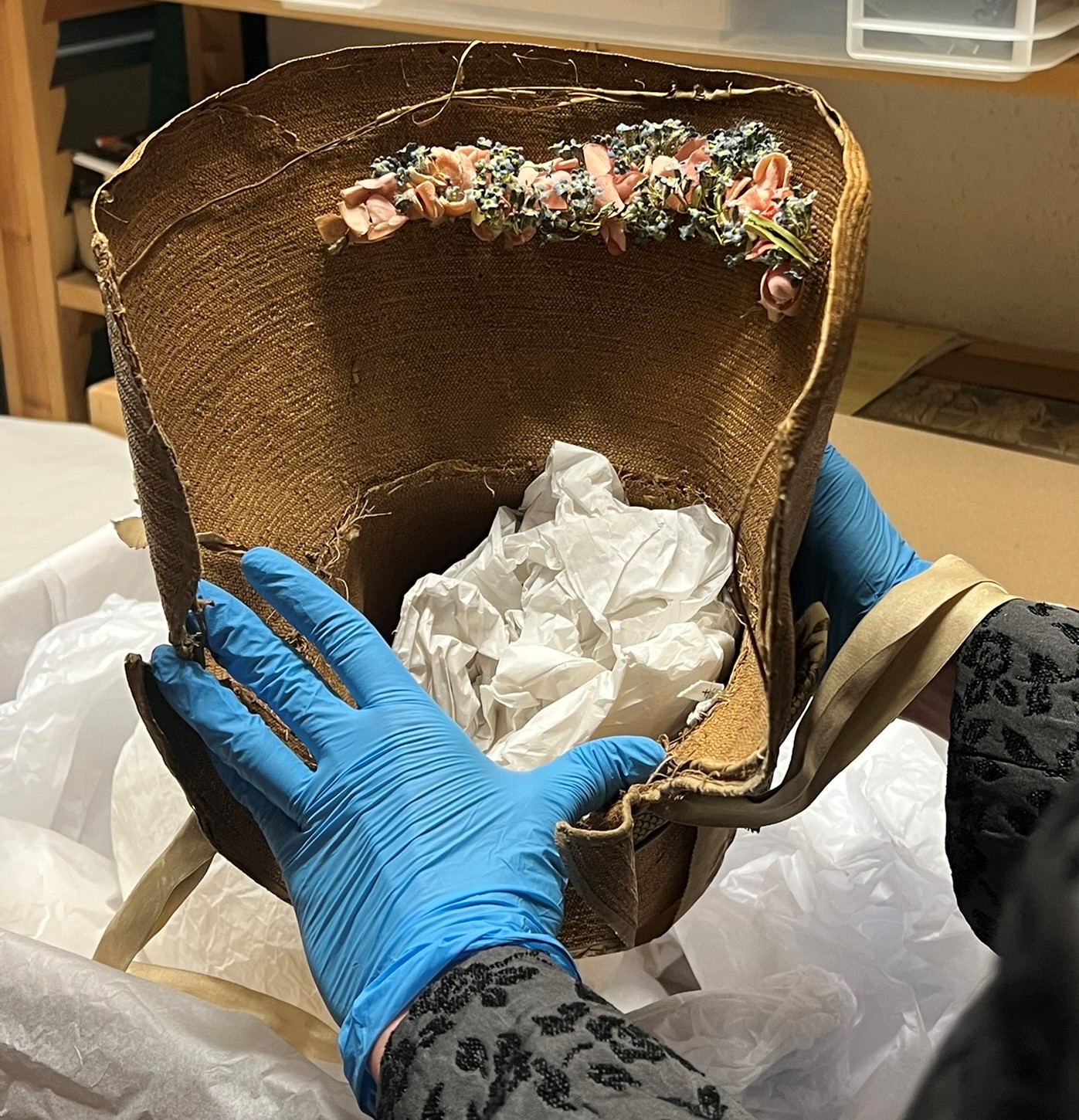
And this fascinating bonnet!

And the necessary Fan:

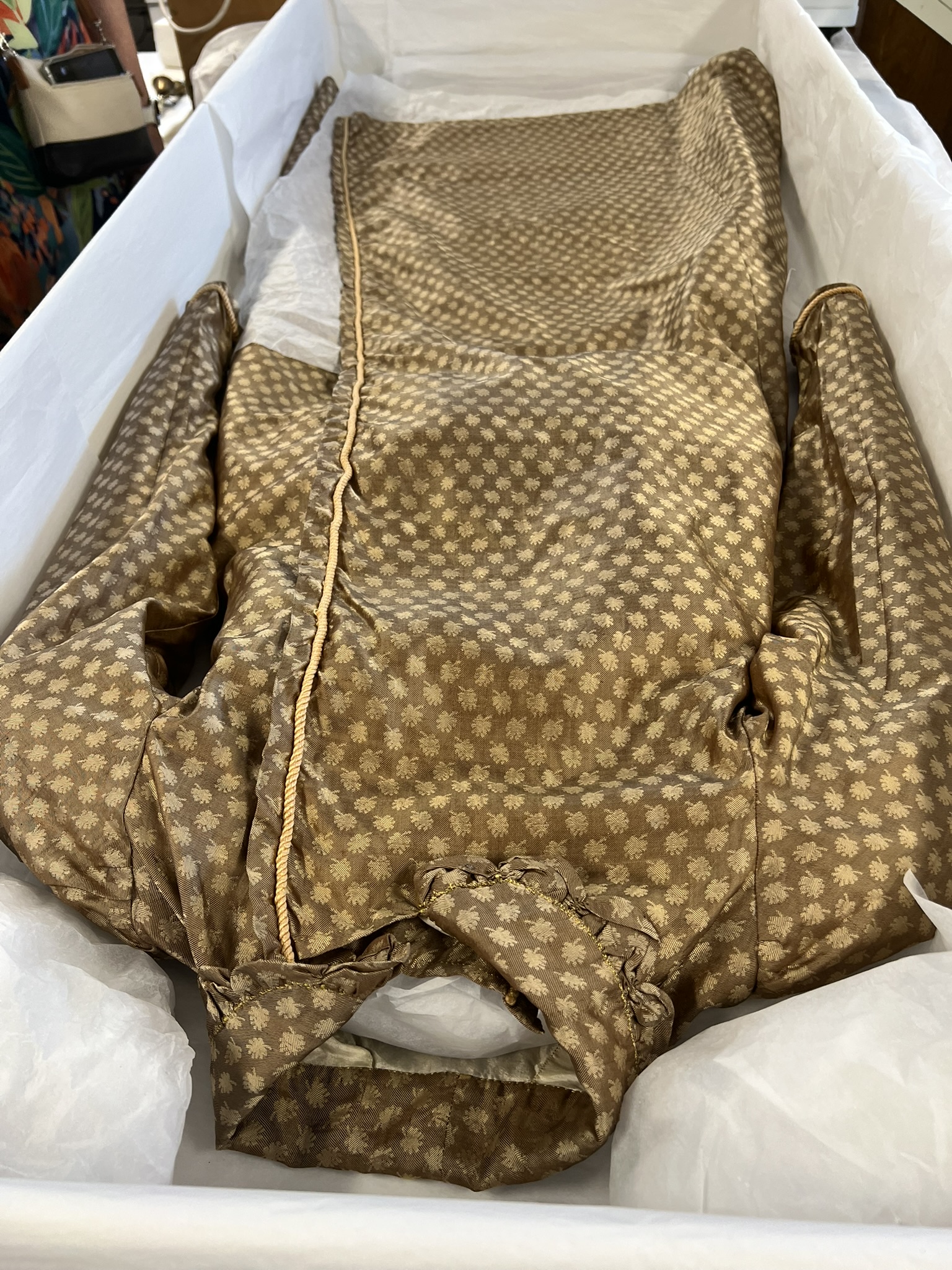
But nothing was quite so moving [some of the group on the verge of fainting] of Austen’s original pelisse:

Many of us have seen the various replicas, but to see this so close up [no touching allowed!] was quite something… and nice to know the care it is being given…

We were treated to a proper cup of tea and refreshments and then back to the hotel, where we had the evening to ourselves – we took advantage of the lovely outdoor patio with a fine glass of wine and pub fare – another perfect day [one can get used to this…]

Tomorrow brings us to the Cathedral, final resting place for Jane, so come visit again… [this blog posting is taking longer than the trip itself!]

*Source: Hampshire City Council. The Great Hall: Where History and Legend Meet. [no date]

C2025JaneAustenInVermont

Austen Literary History & Criticism · Great Britain - History · Jane Austen · Jane Austen Circle · Jane Austen Genealogy · Jane Austen Popular Culture · Jane Austen Societies · JASNA · Regency England · Social Life & Customs

Adventures with Jane! Day VI: Hampshire…

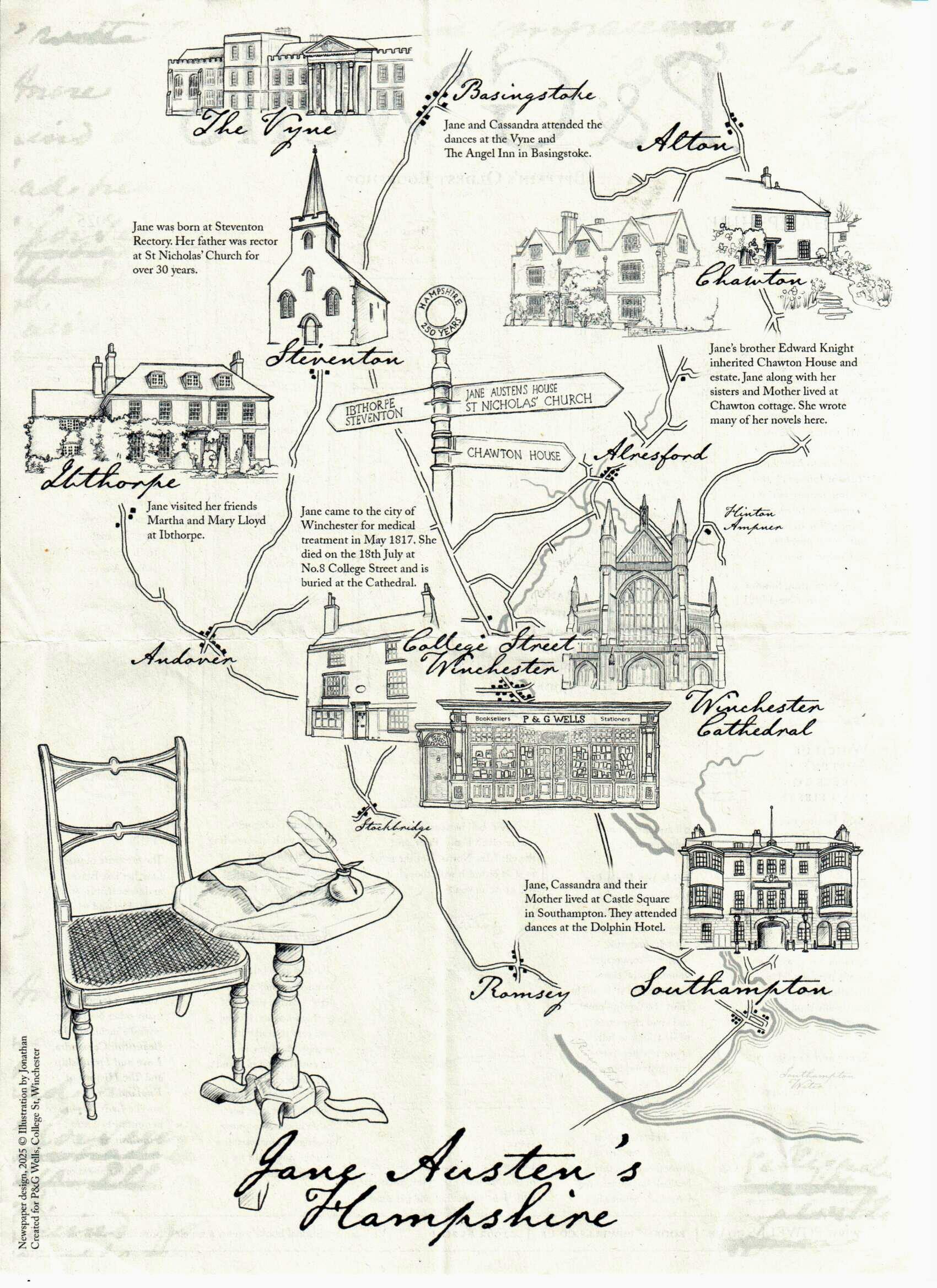
[Handout from P&G Wells Bookshop]

Today we journey from Winchester to Jane Austen’s home ground – where she lived for the first 25 years of her life: Steventon.

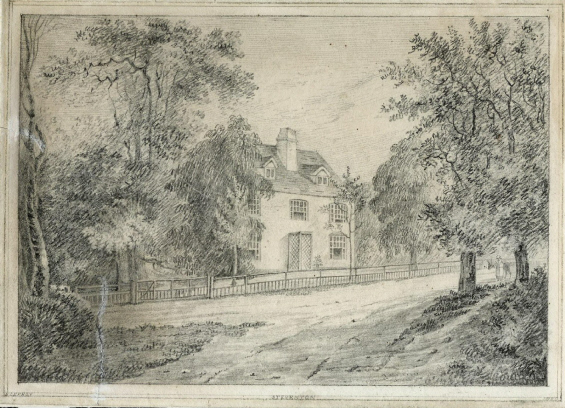
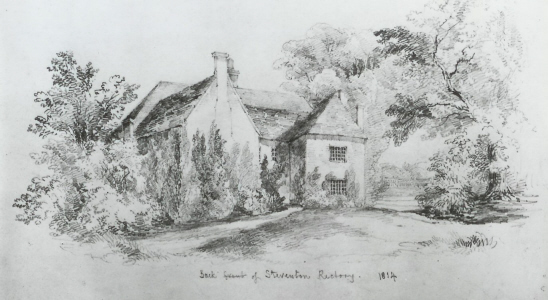
The house she and her siblings were born and raised in no longer stands, but thanks to her niece Anna Lefroy (or possibly her nephew-in-law Ben Lefroy), we have these drawings of the house:

and this rear view:

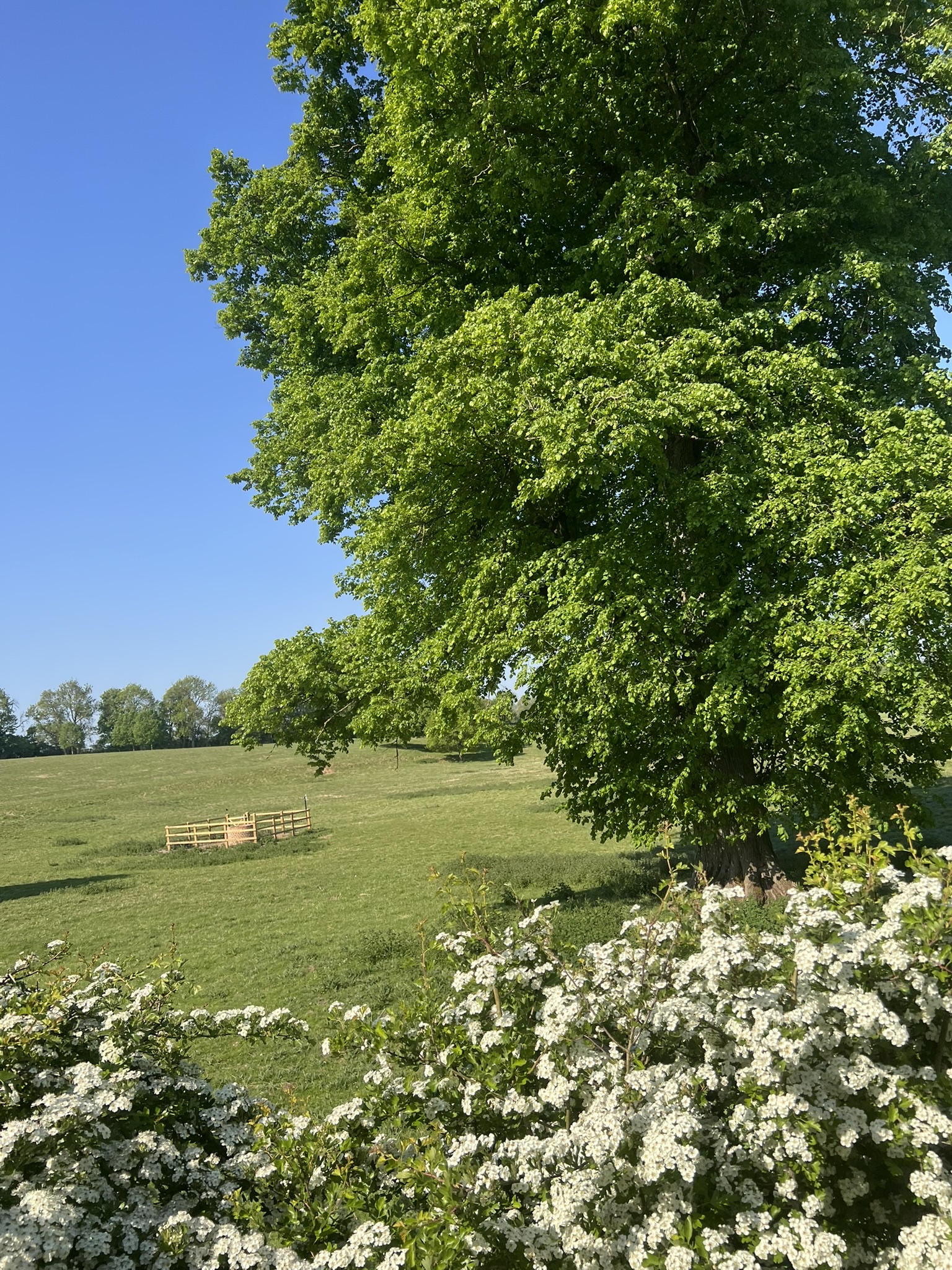
All that is left today is this fenced-in location of the house pump: so our imaginations have to run wild…

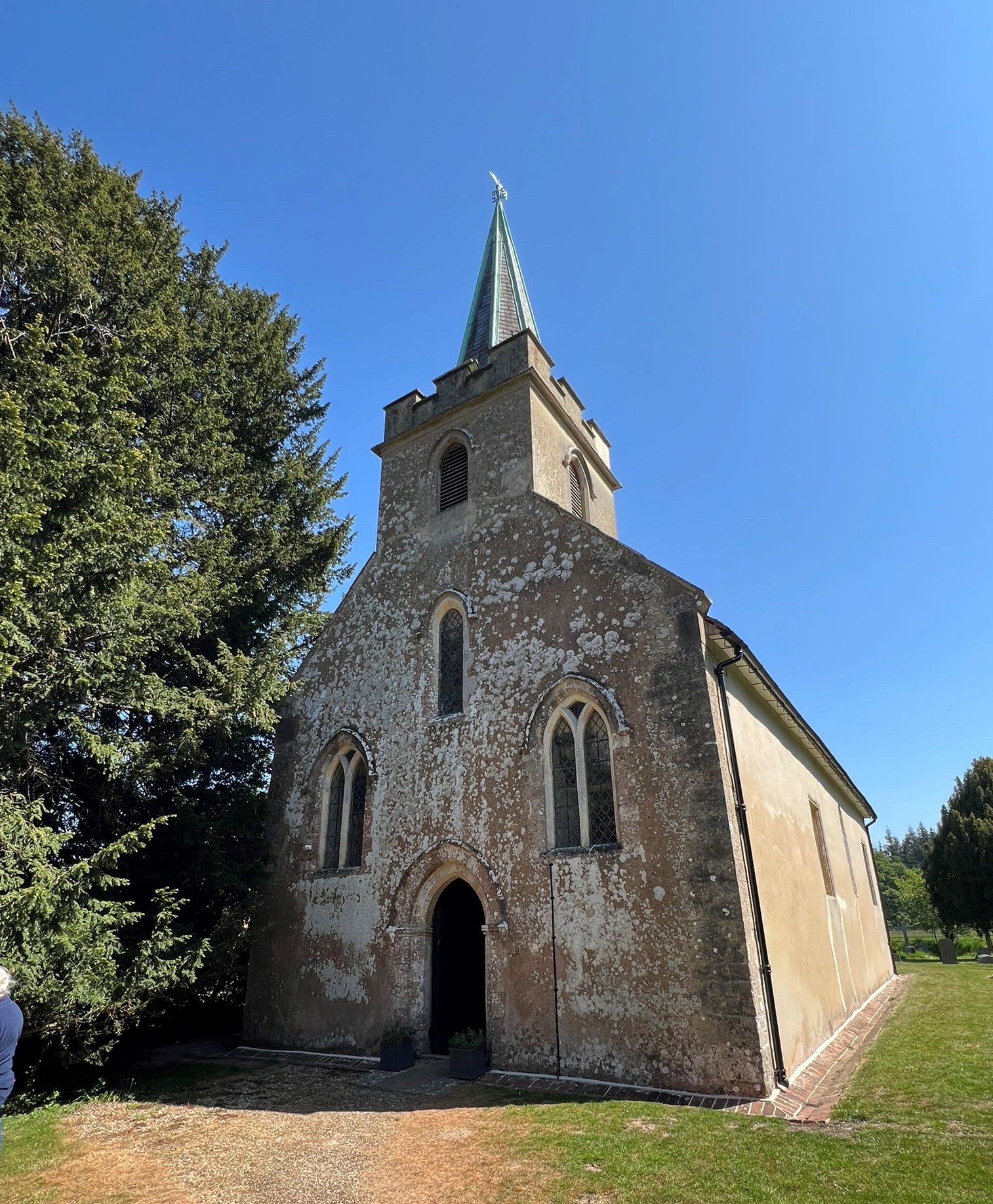
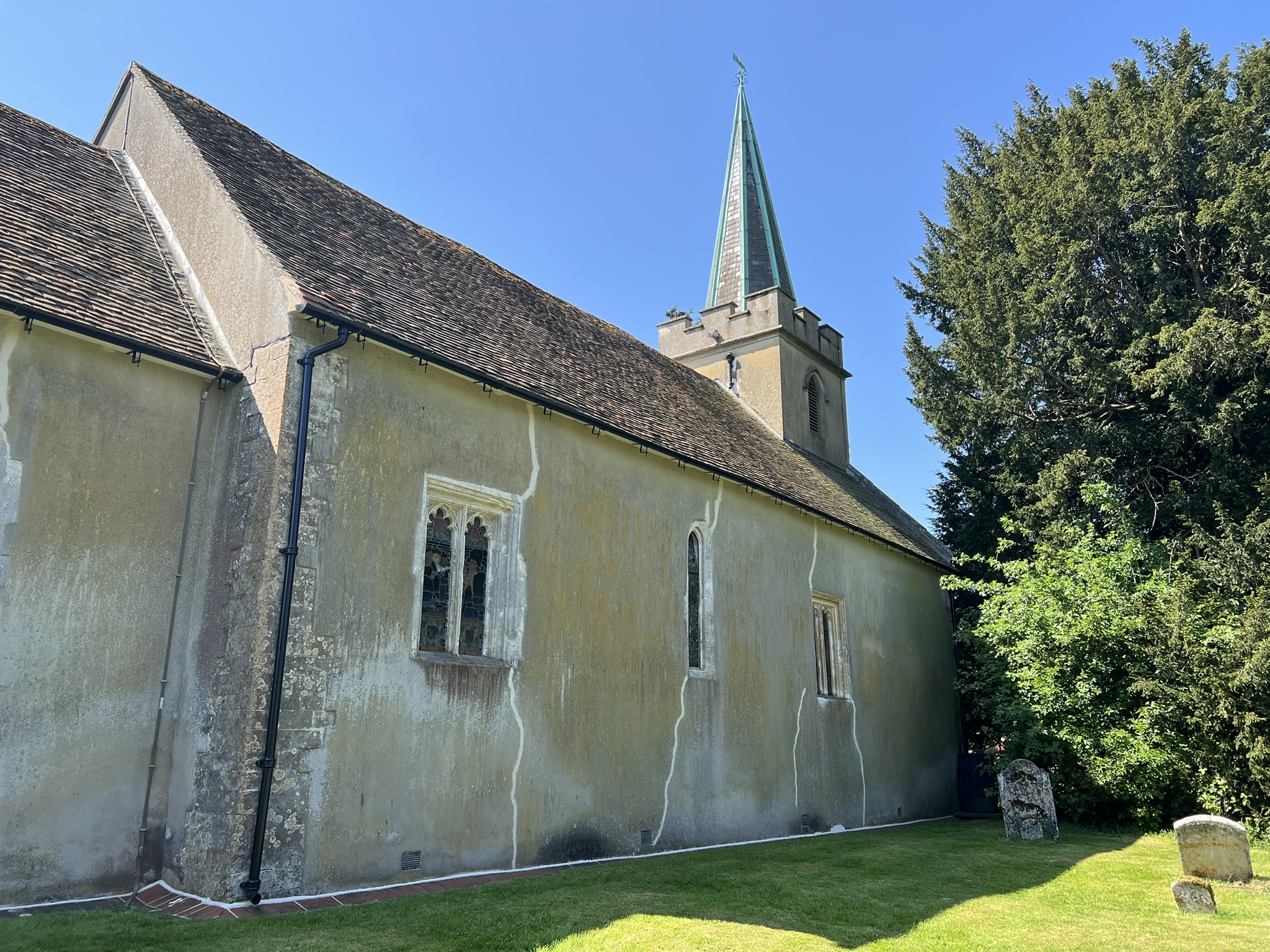
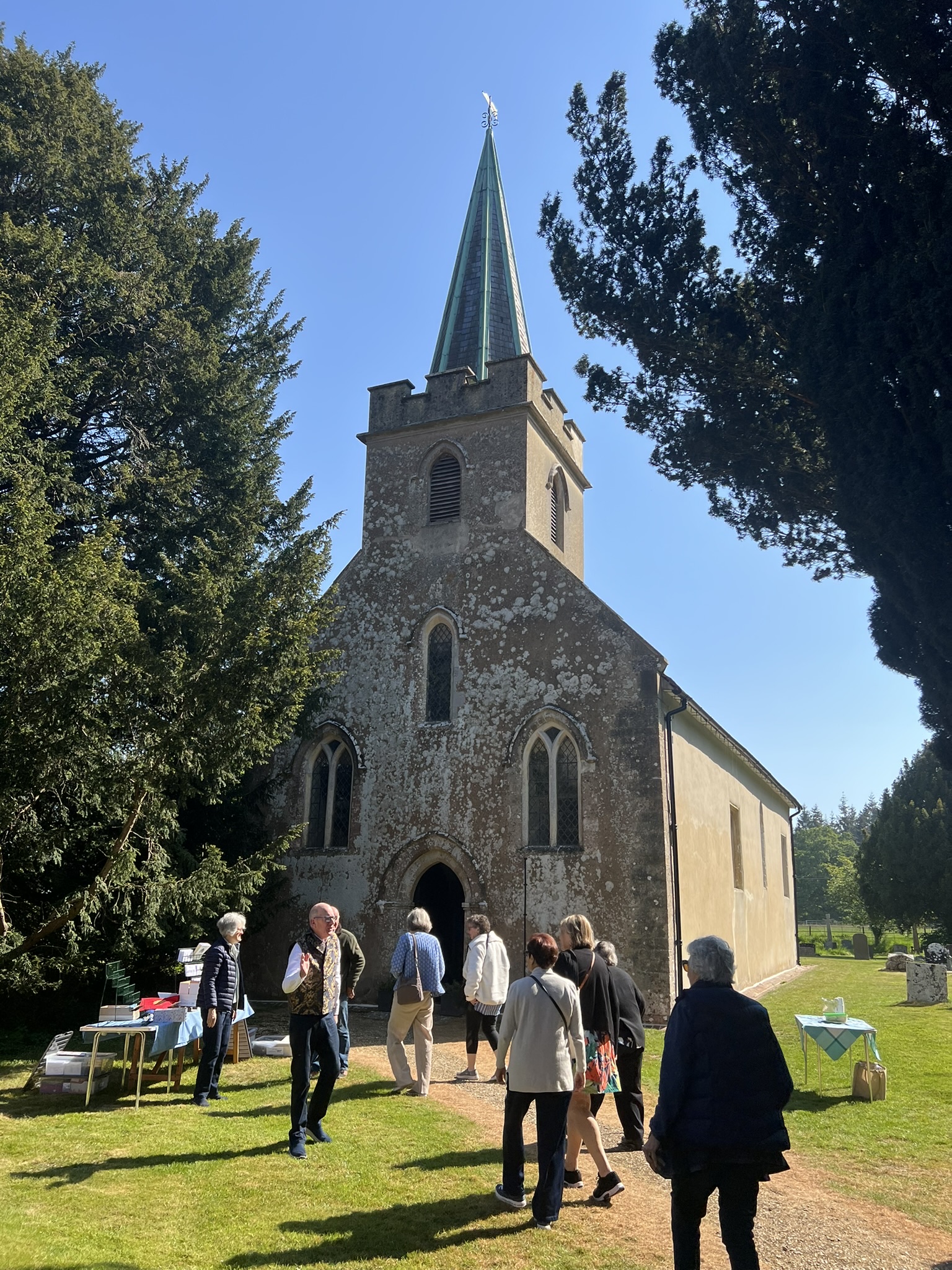
It is the Church we come to see here [a St. Nicholas of course]: you can also see we are done with the cold of Kent, and welcome the warm and cloudless sky of lovely Hampshire – [I am reminded for a moment of Margaret Hale in Gaskell’s North and South and the loss of her beloved Hampshire and her favorite “Helstone” roses, as she makes her way in northern cold and dark Manchester…]

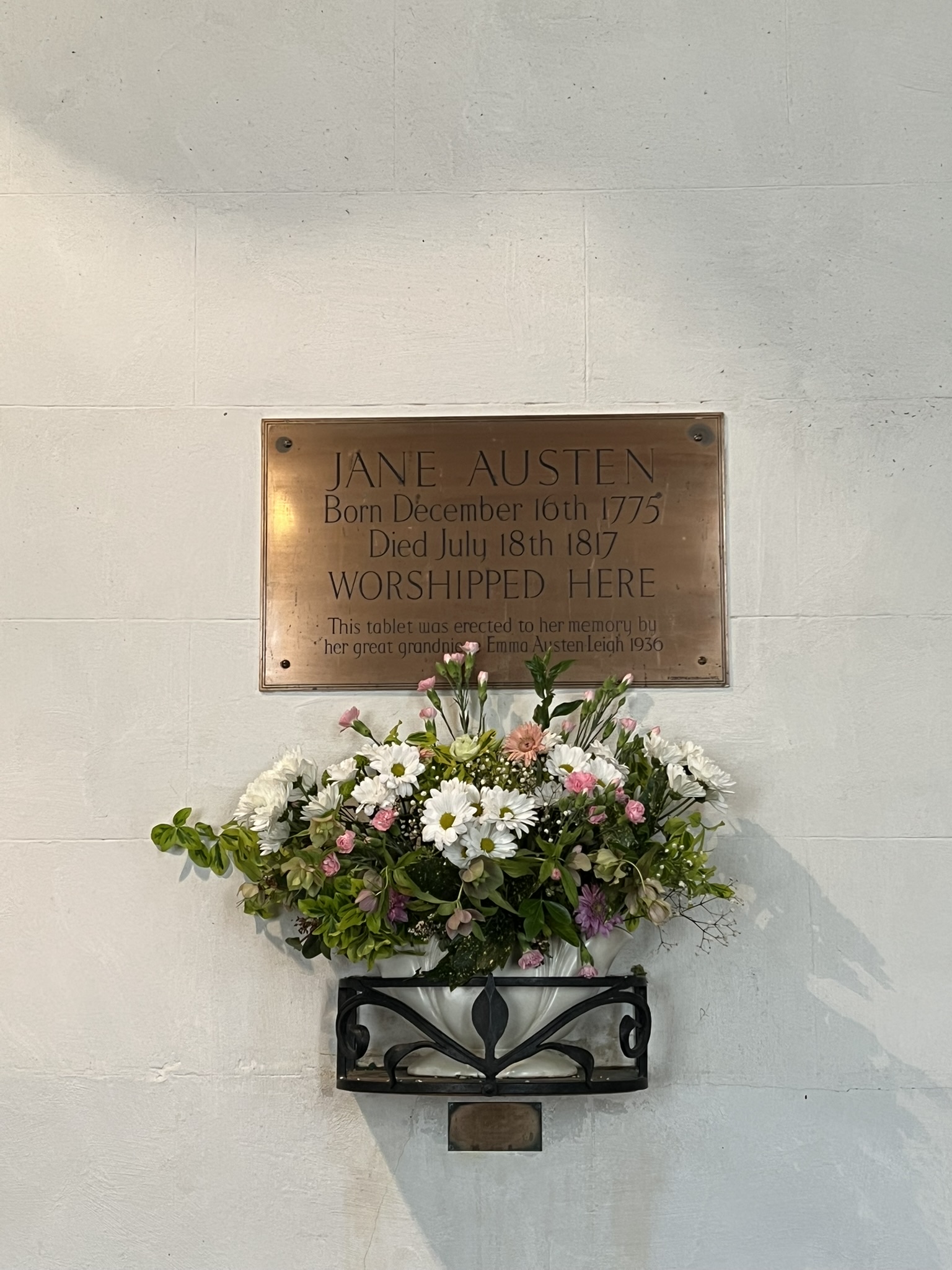
Members of the Jane Austen Society warmly greeted us on this lovely day, offering delicious fare and Austen-related merchandise to buy. Then a quiet visit inside the church to see where Jane would have worshipped, her father rector here from 1761 (and of Deane from 1763) until his retirement in 1801 and death in 1805.

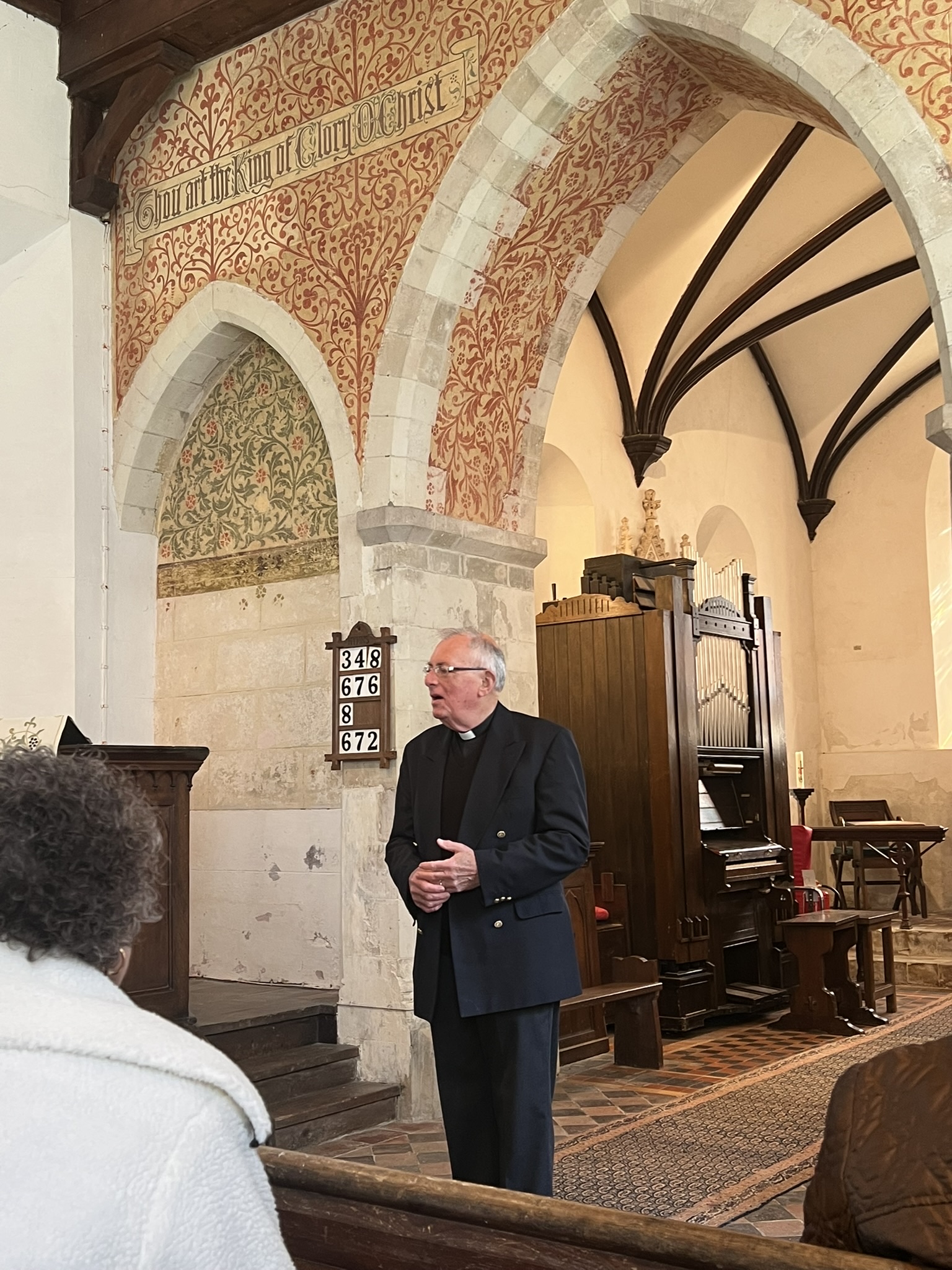
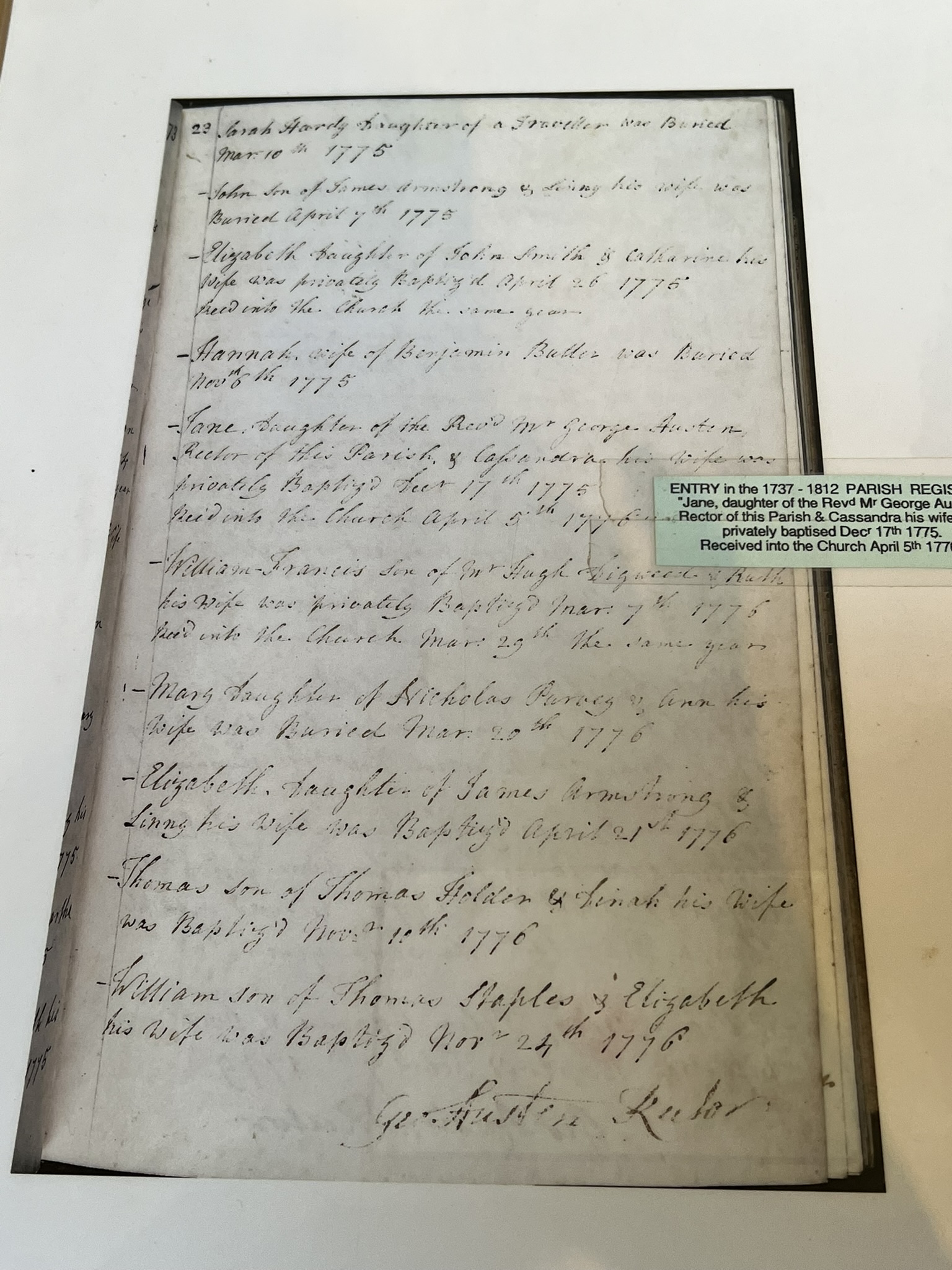
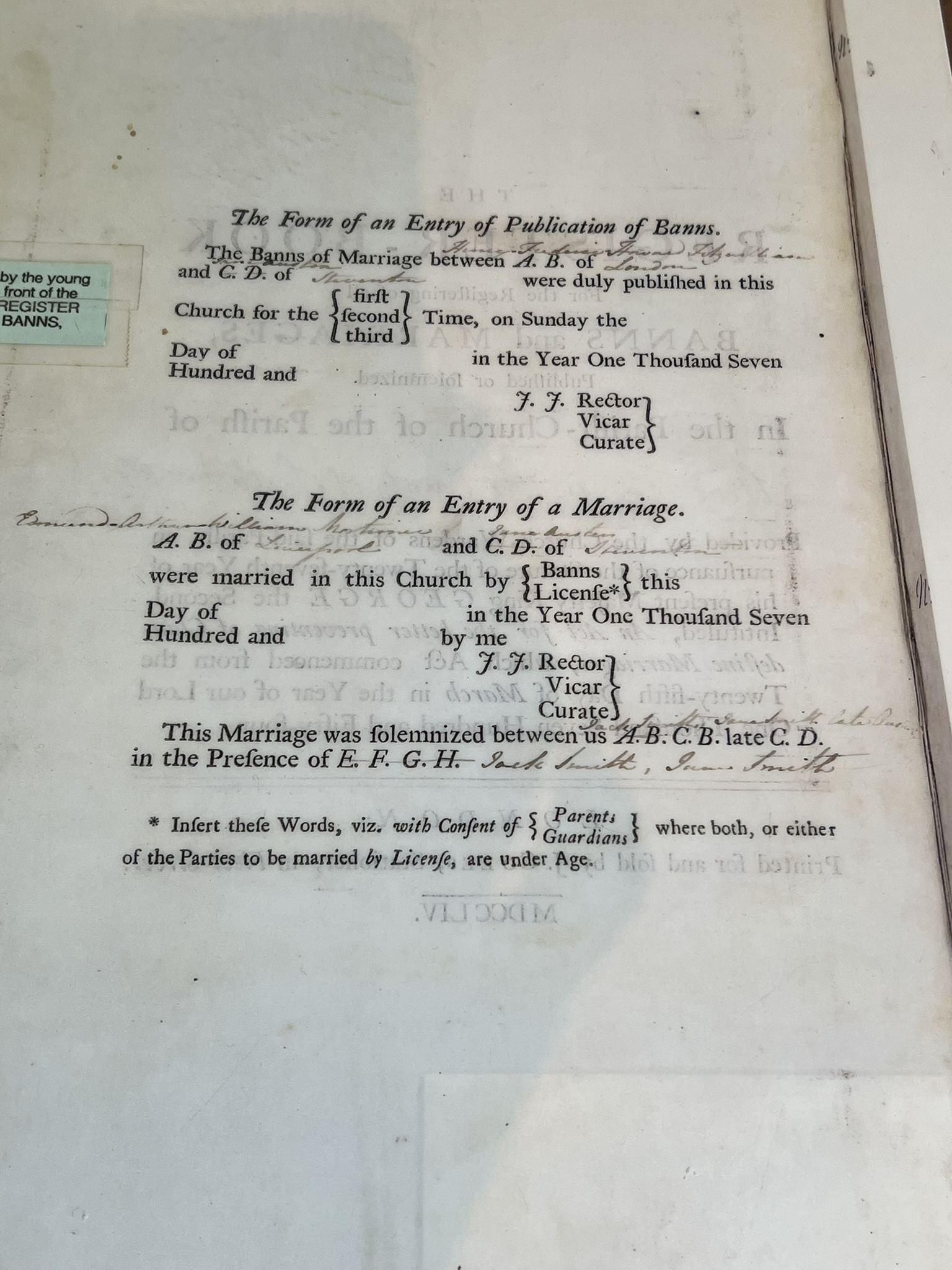
Michael Kenning, rector here from 1992-2012, introduced us to the Church and its Jane history – I have had the pleasure of meeting Canon Kenning in 2003 for the JASNA AGM trip to Winchester – he is little changed, and still an avid Austen “fan” – the vice-chairman of the Jane Austen Society Trustees. He shared this baptism note in the church records:

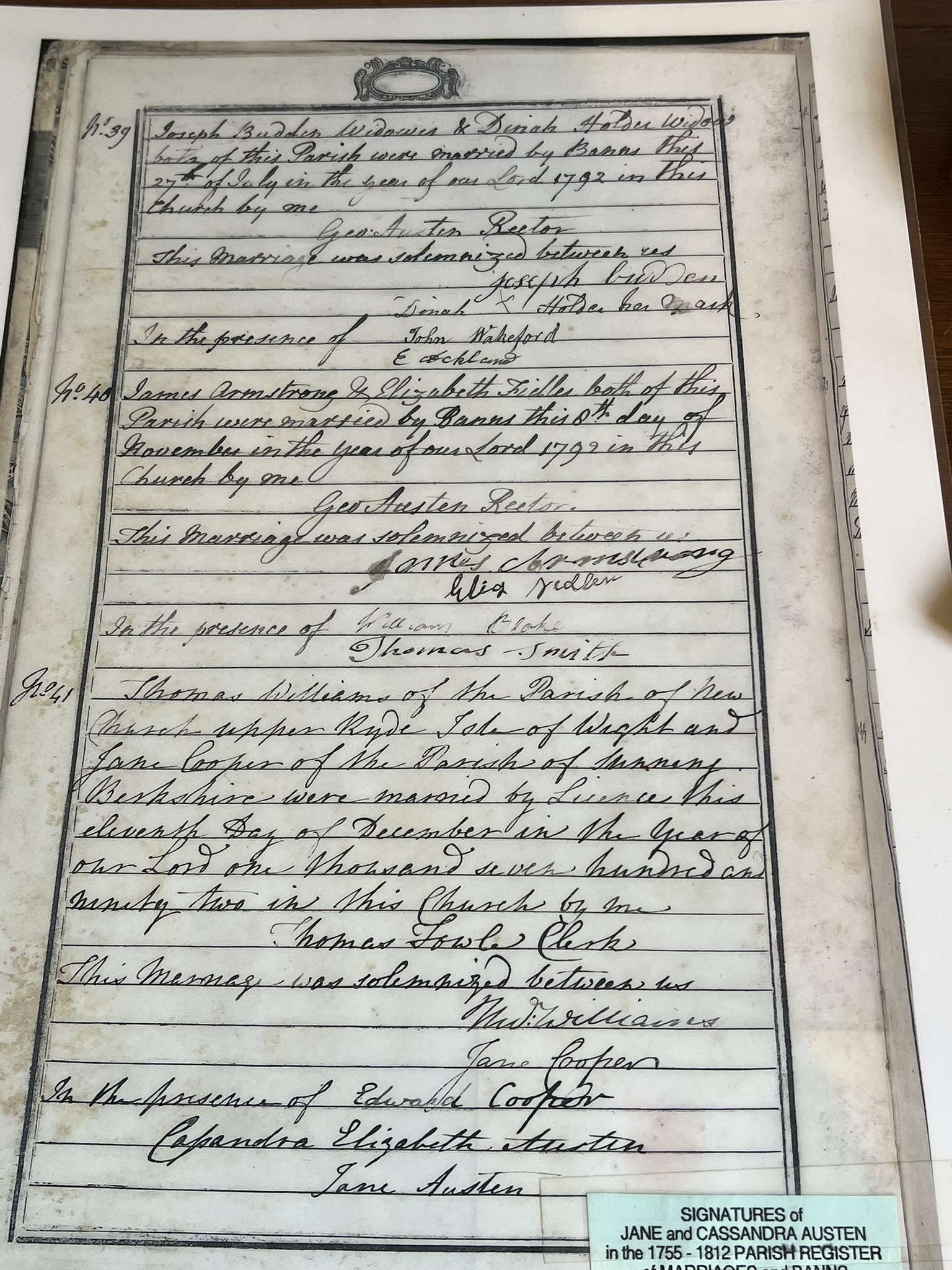
And some of the documents that Jane had written in, in one or more of her imaginative fits marrying herself off to various people, as well as her serving as a witness to a marriage (Kenning noted that she wasn’t actually old enough to serve as a witness, so what does that do the married couple?!]:

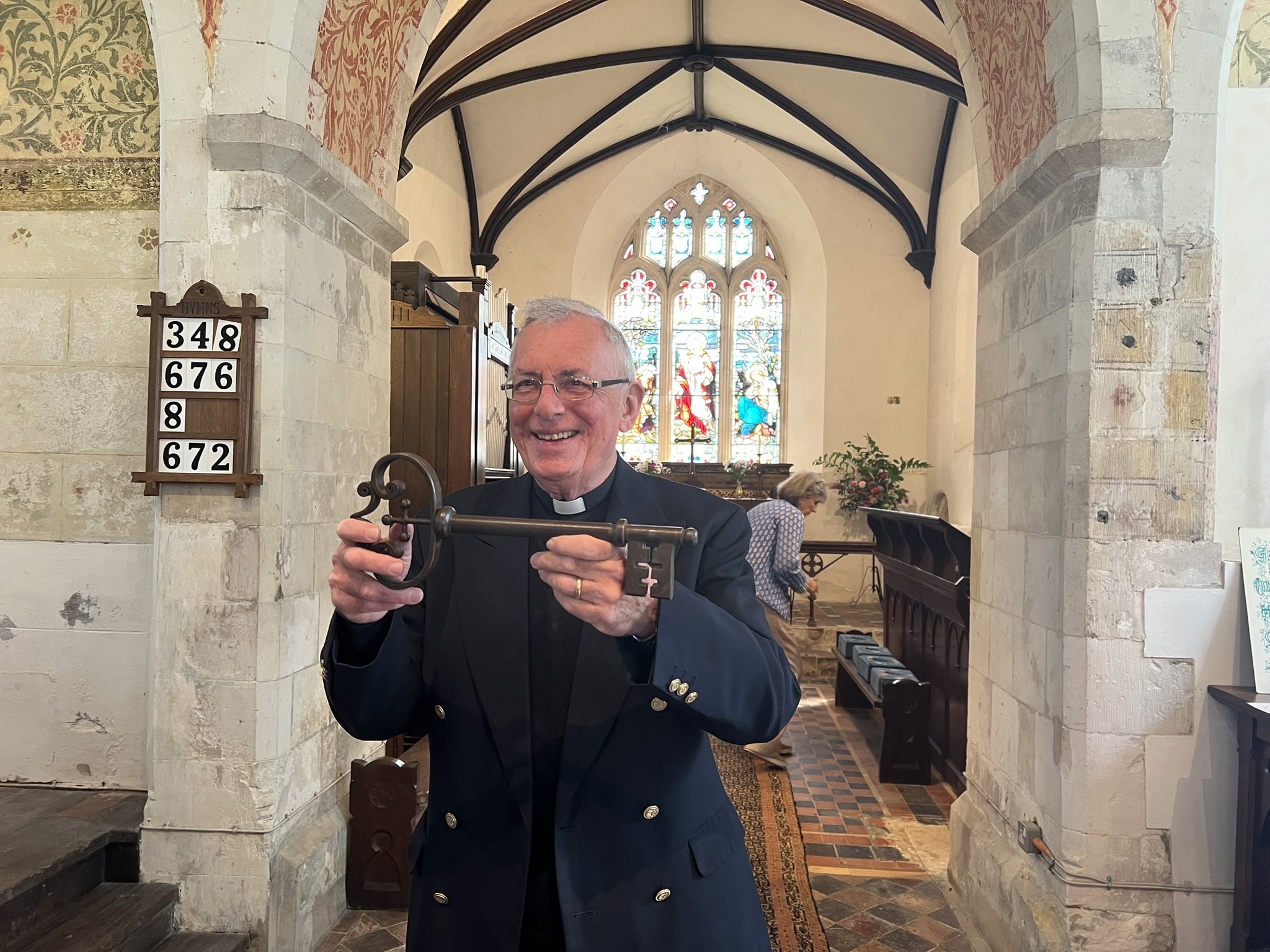
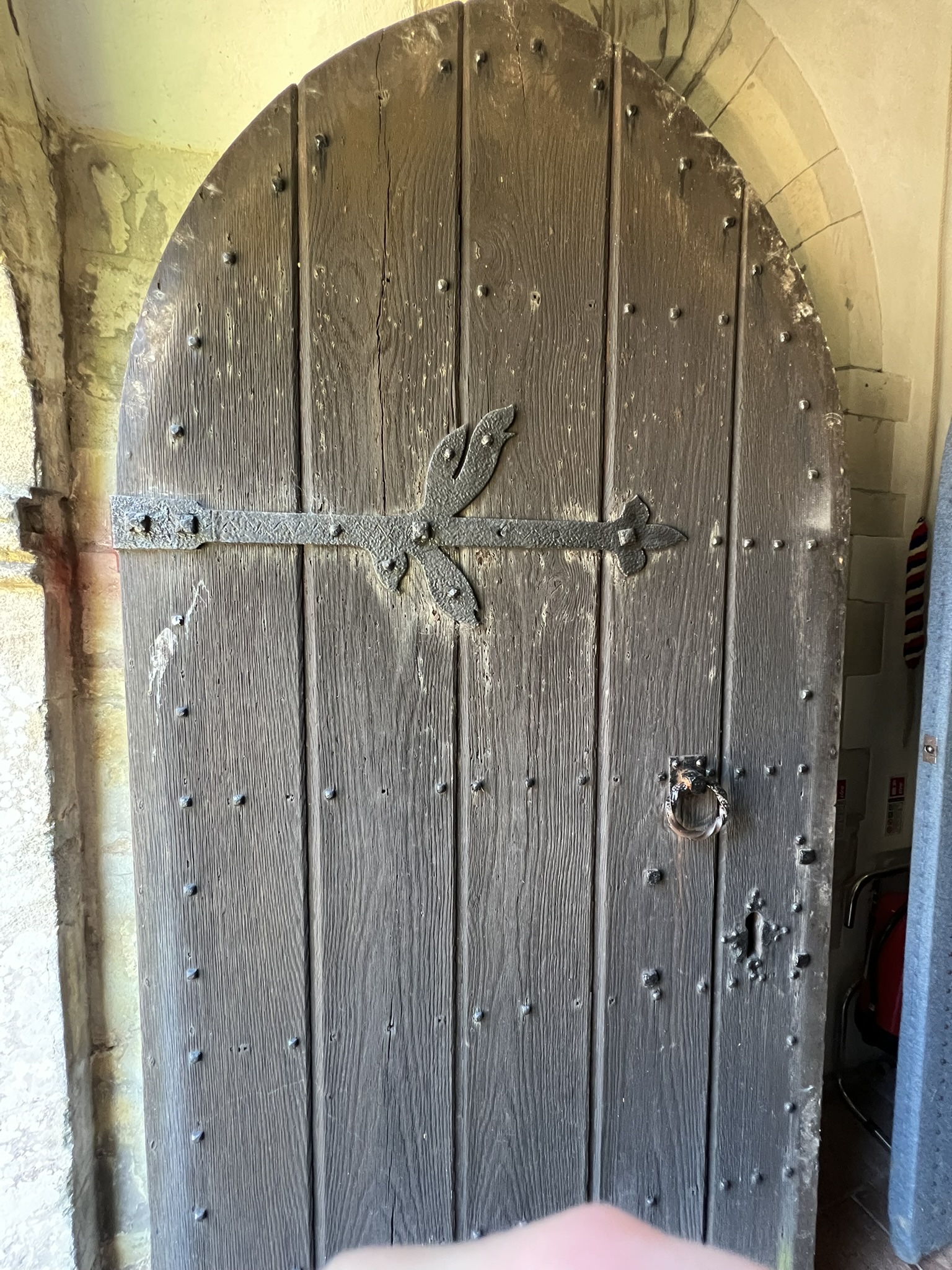
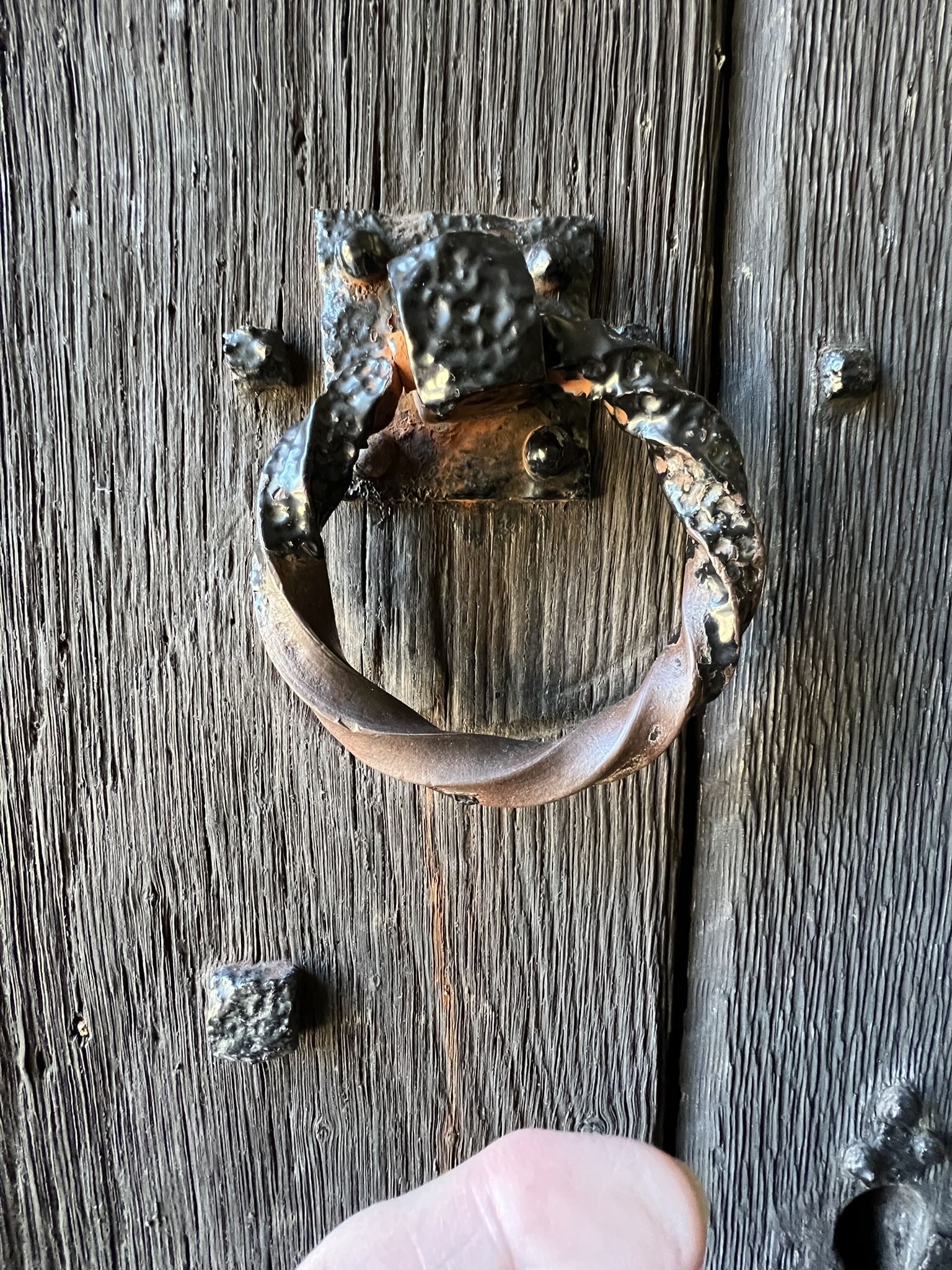
Kenning also showed us the massive and heavy key to the church – the door having a lock that was unmanageable, the key hidden in a nearby tree [did EVERYONE know this?!]

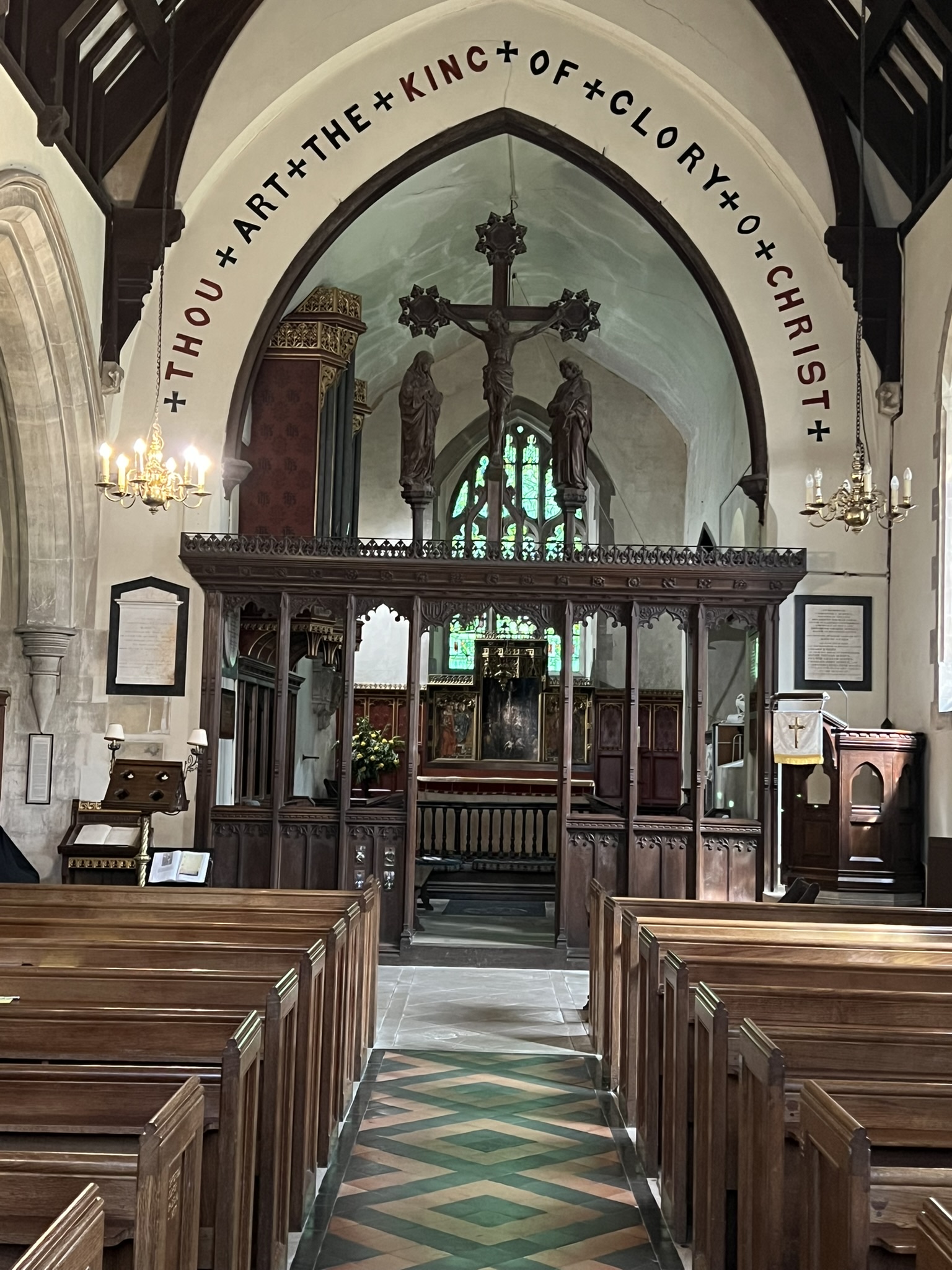
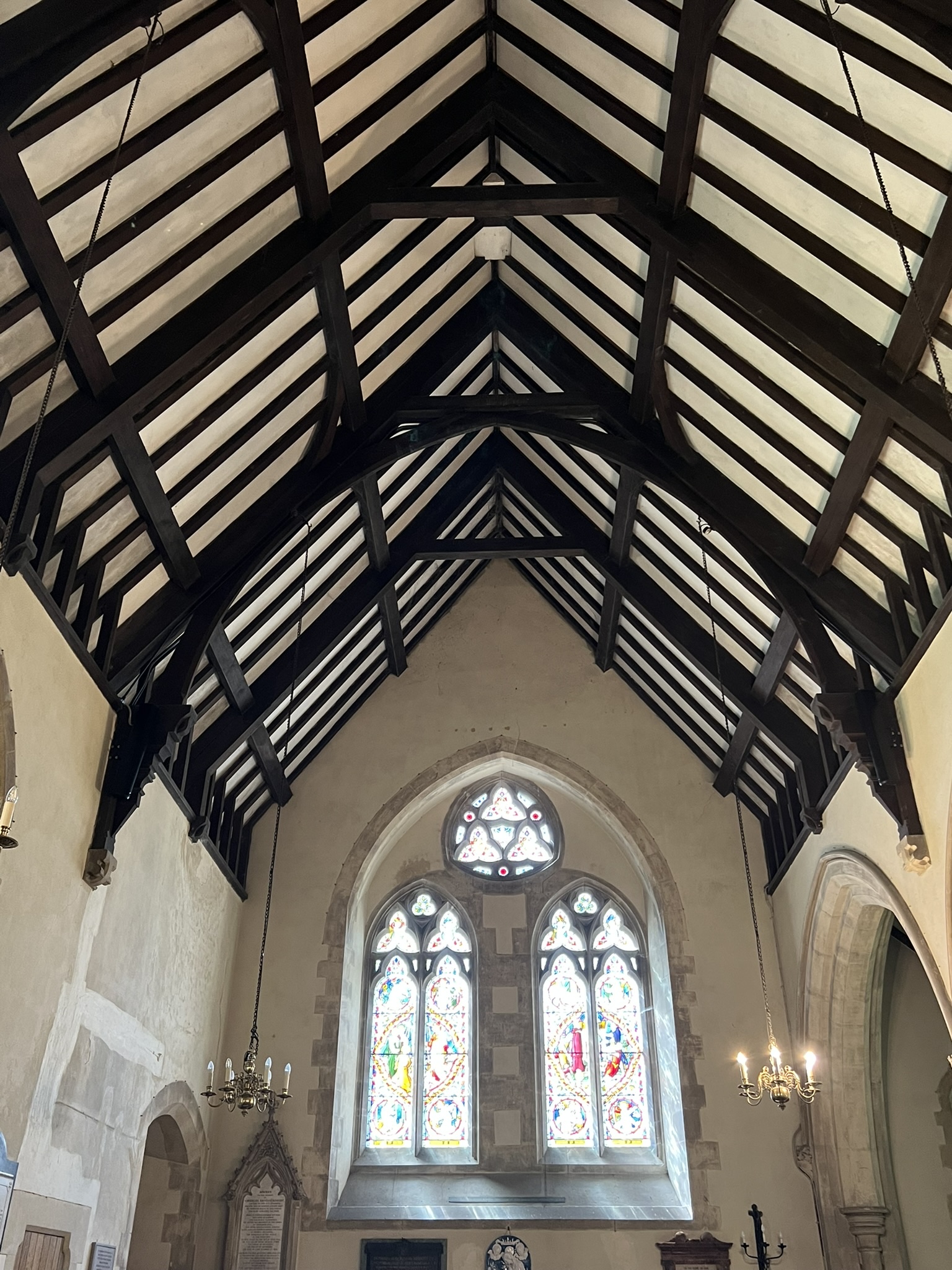
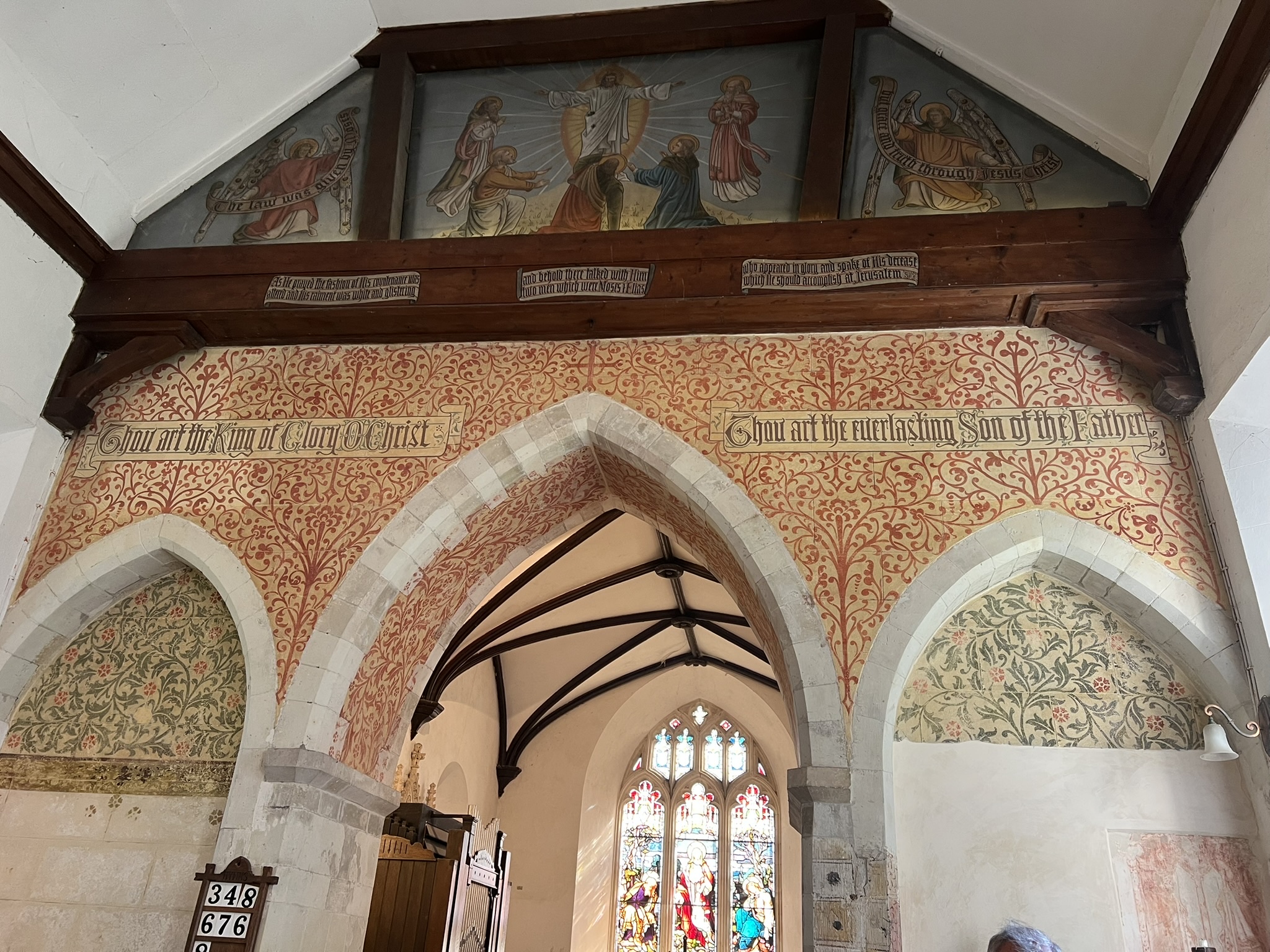
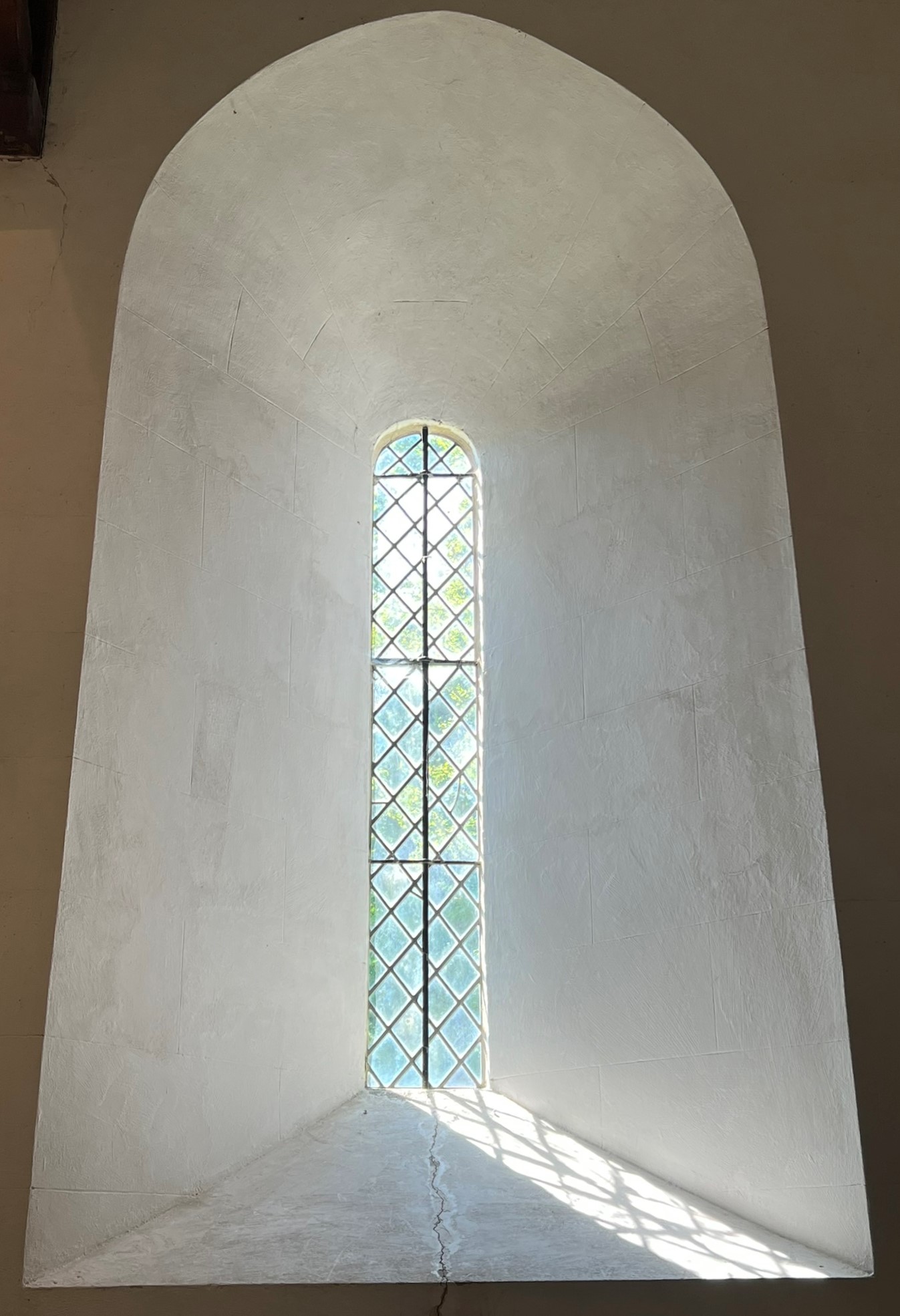
The church interior is lovely, with these William Morris-like decorative designs, but not there during Austen’s time.

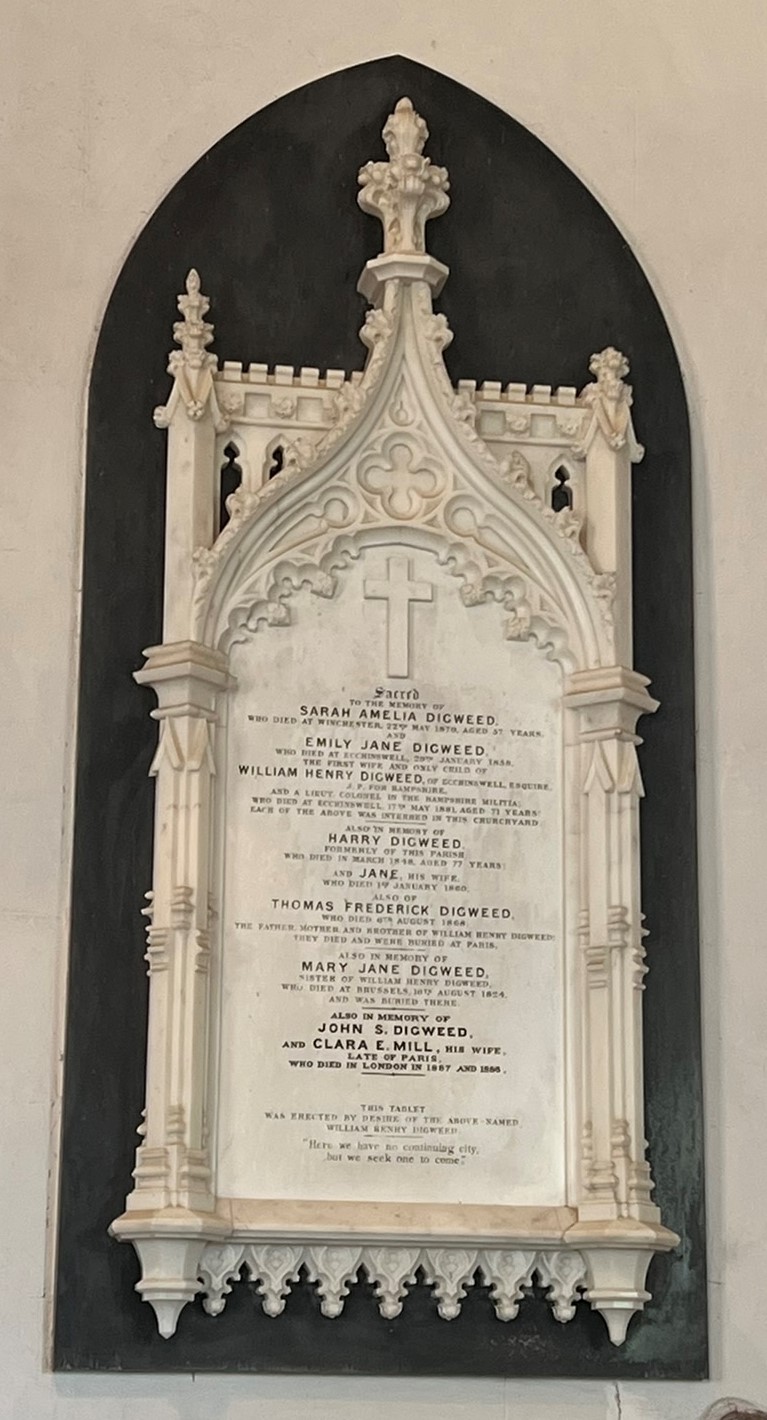
The Austen neighbors the Digweed family are very present with large memorials and many graves in the churchyard:

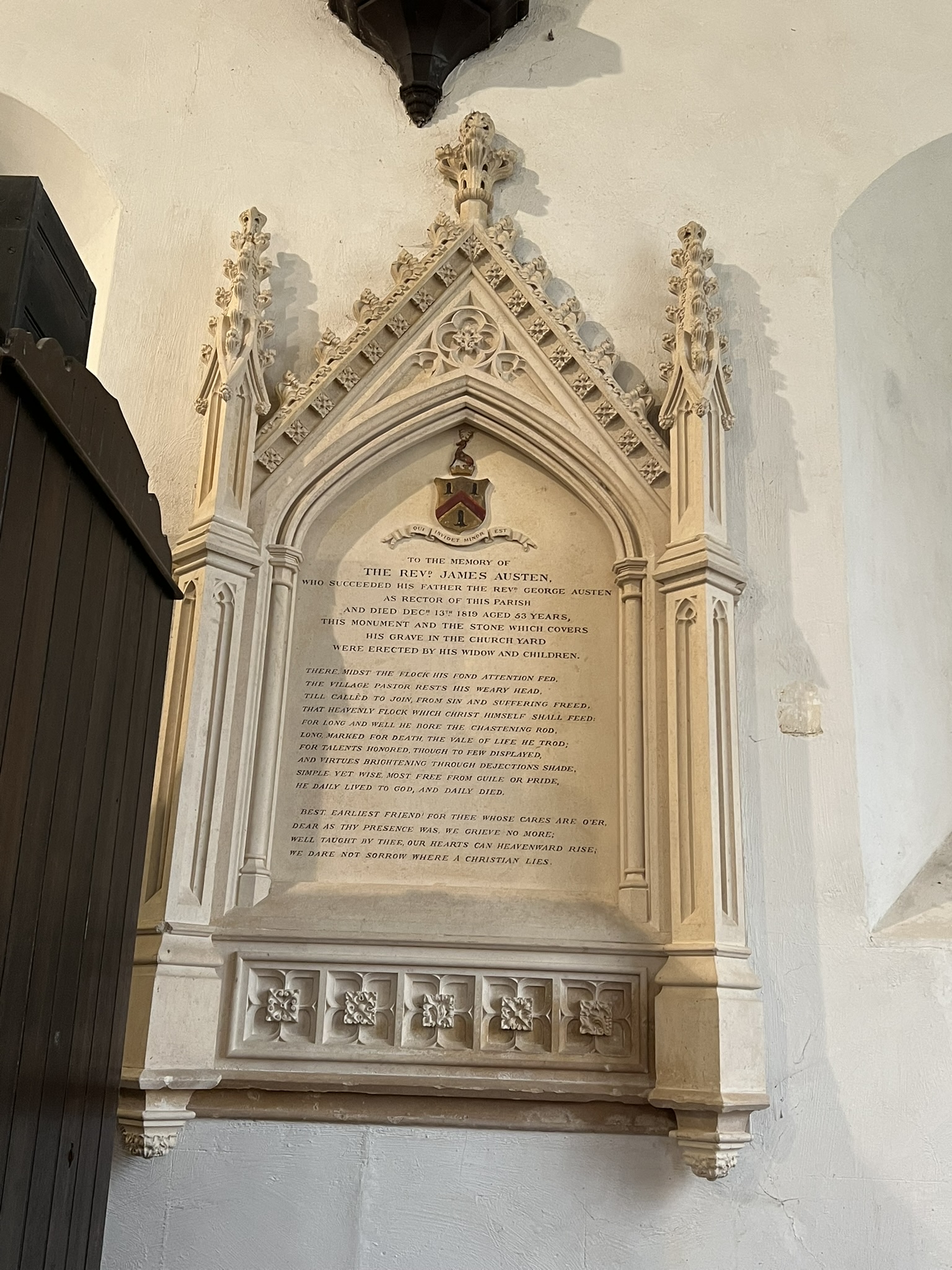
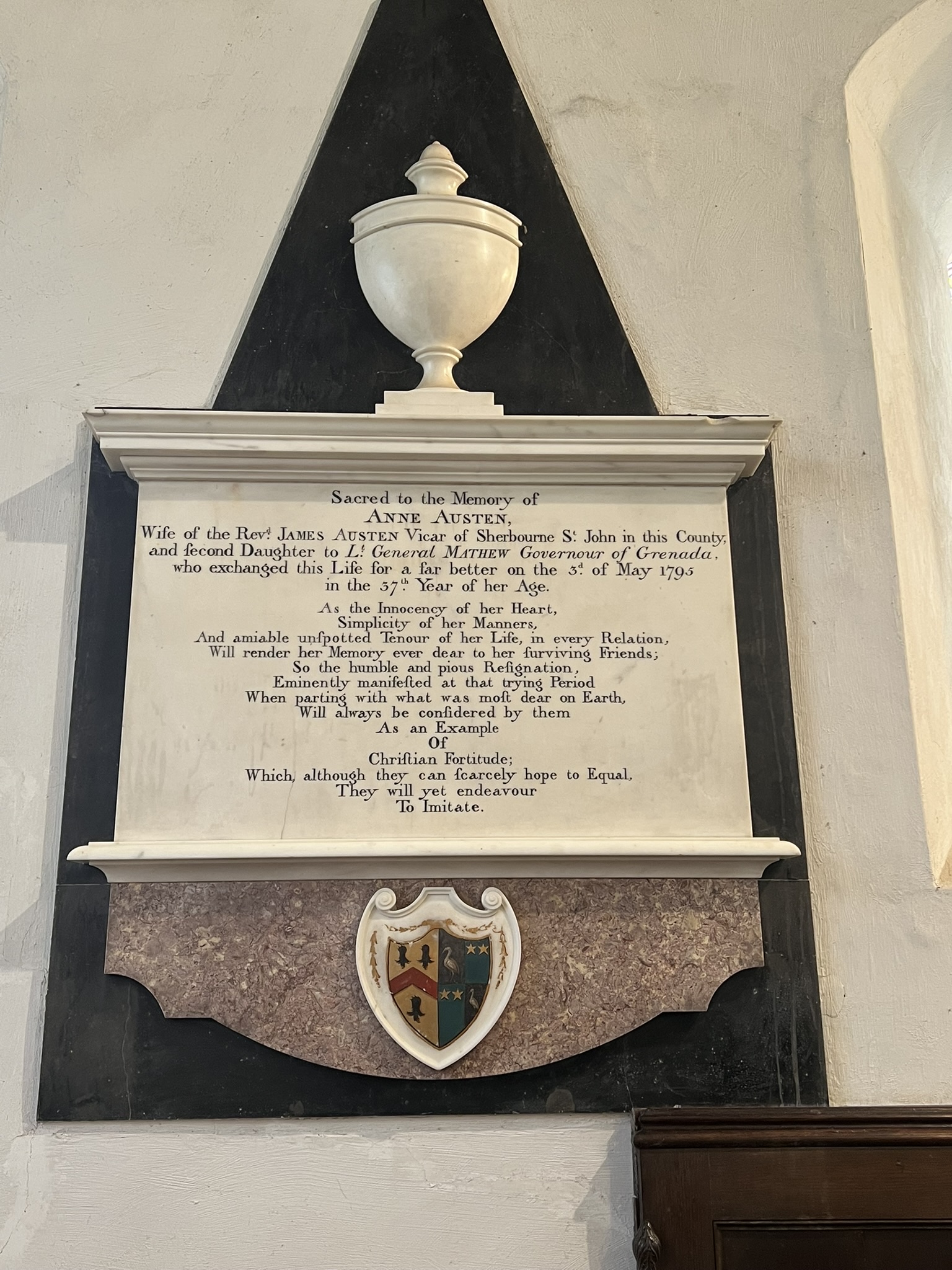
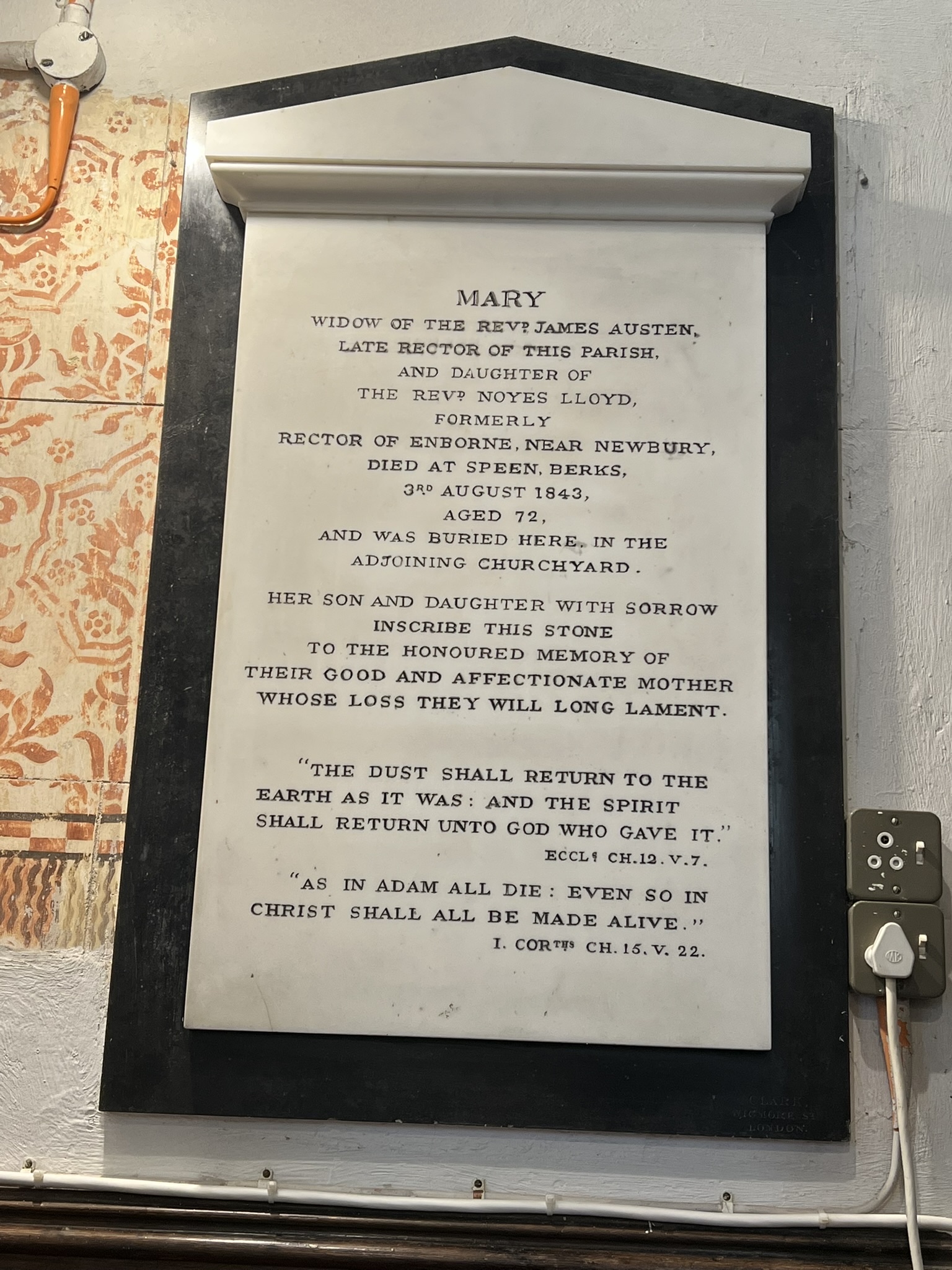
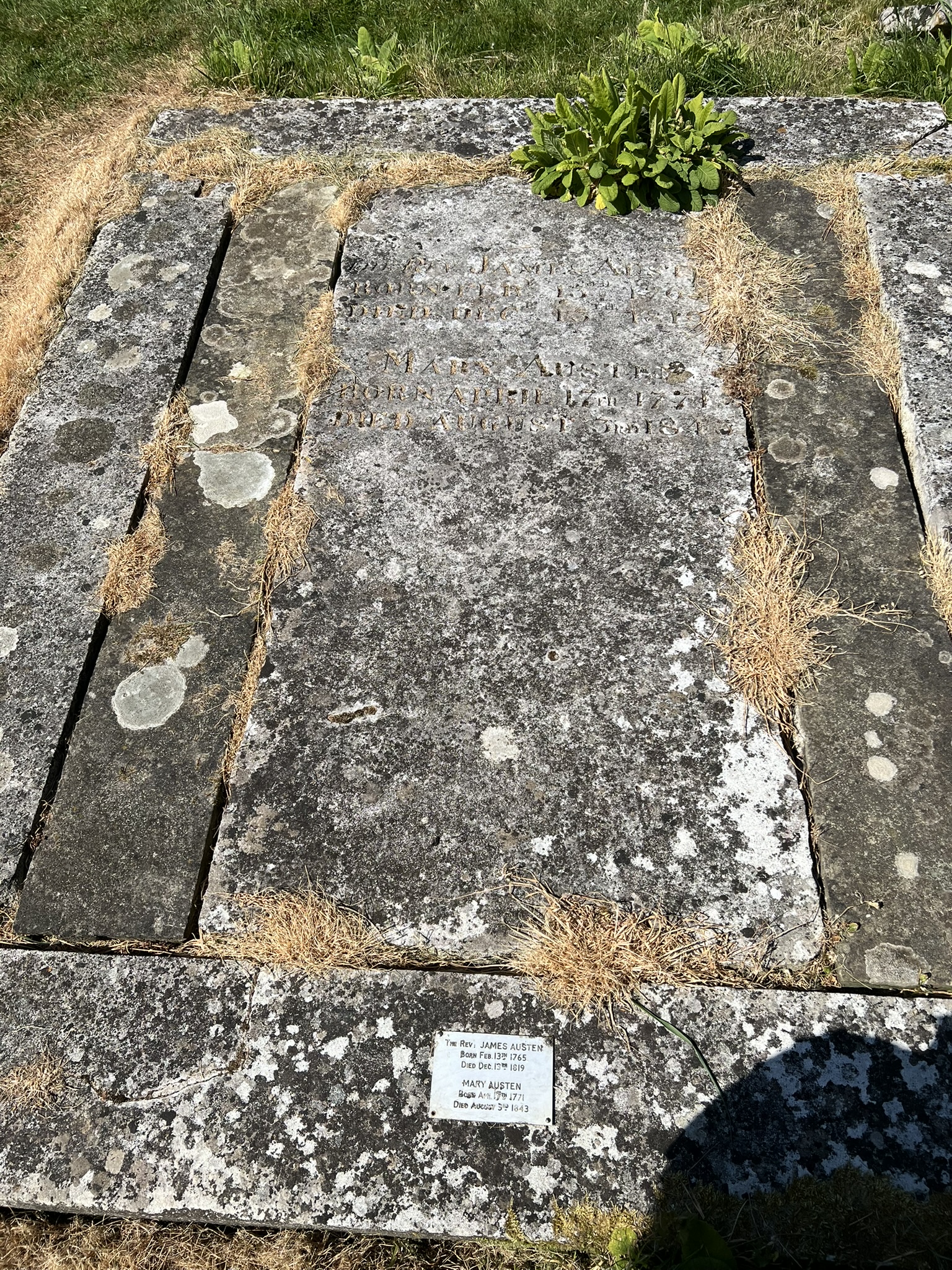
James Austen has a few memorials and is buried in the churchyard – it states that Mary Lloyd Austen is buried here, but no mention of Ann, his first wife, though records show she is buried here as well…

**************

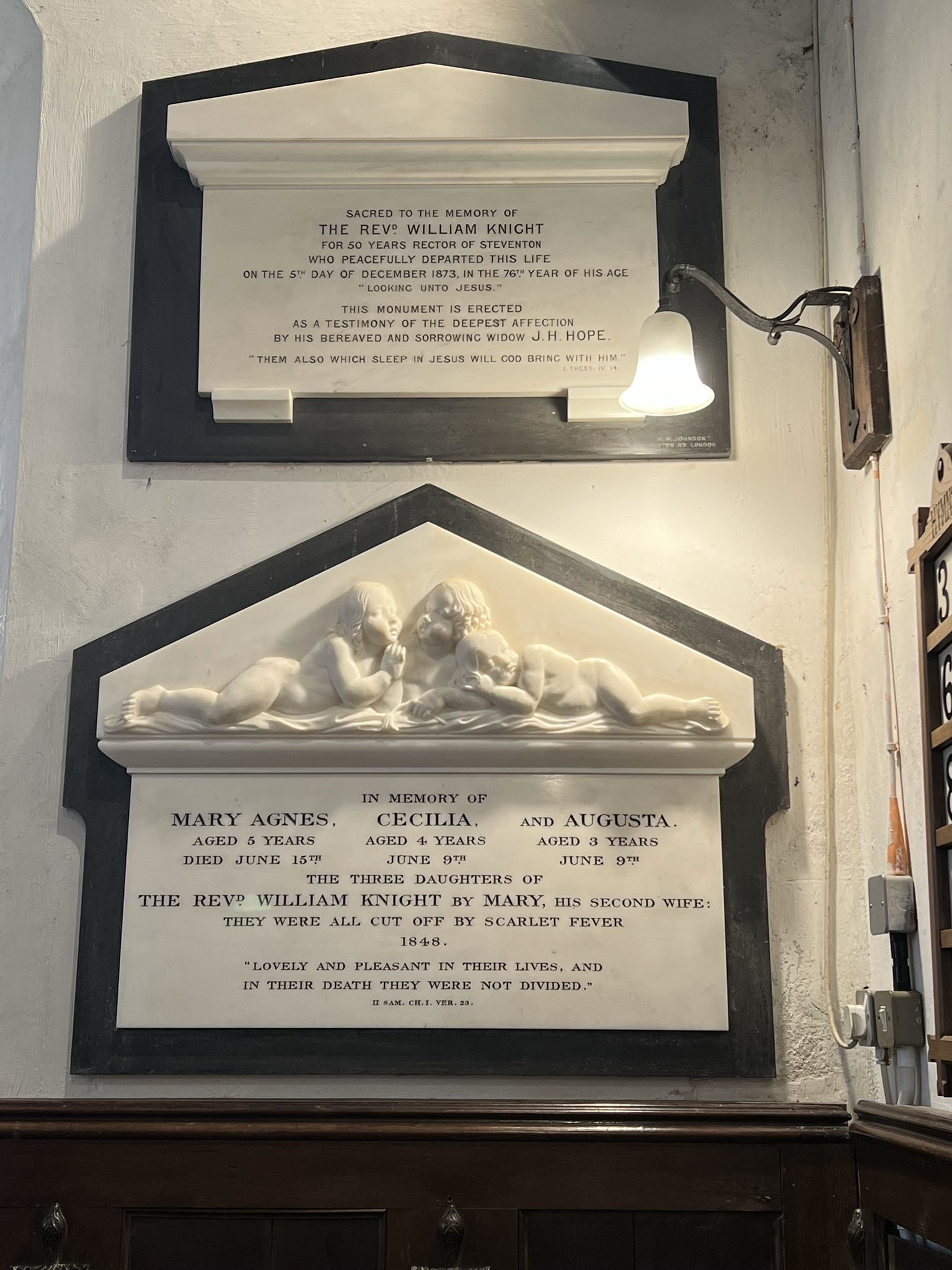
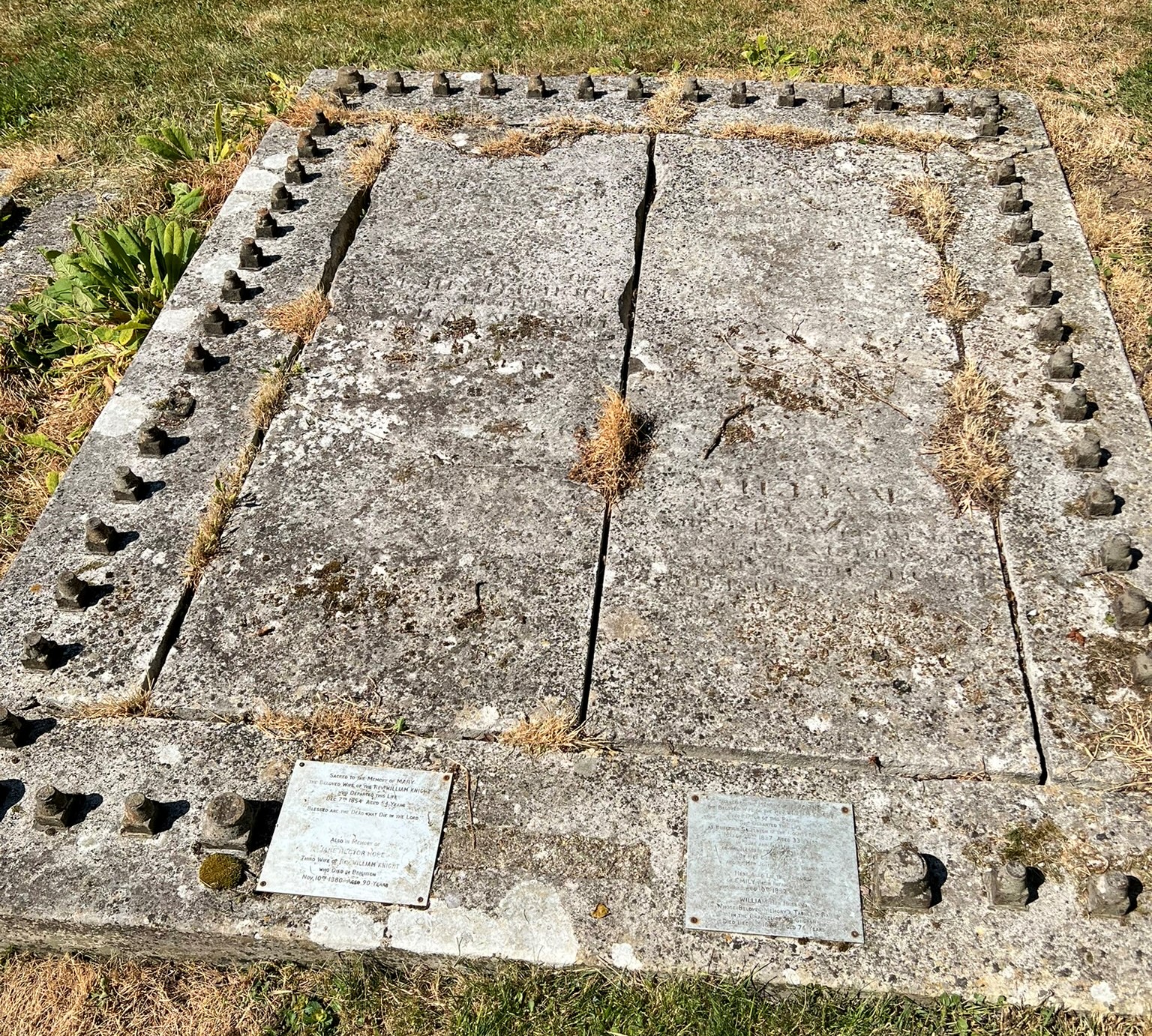
A sad memorial to encounter is the one for William Knight, Jane’s nephew [Edward’s son] – he was rector here from 1823-73. This memorial shows the death of his three young daughters within days of each other from scarlet fever – and the graves in the yard:

The iron pieces at the edge of the grave indicate there would have been an iron-fence enclosure around the grave – many such metals were removed for use during wartime in the 1940s.

I have already written a bit about the parsonage that Austen grew up in – and while today there is nothing but the pump to give us a sense of time and place, when William became the rector, Edward Austen demolished the Steventon Rectory, his own boyhood home, and built a new one for William on higher ground – sometime in around 1826 [it is all quite confusing as these two blog posts about Steventon indicate]:

The Saga of the Steventon Parsonage;

and a follow-up post.

 – this rectory still stands…

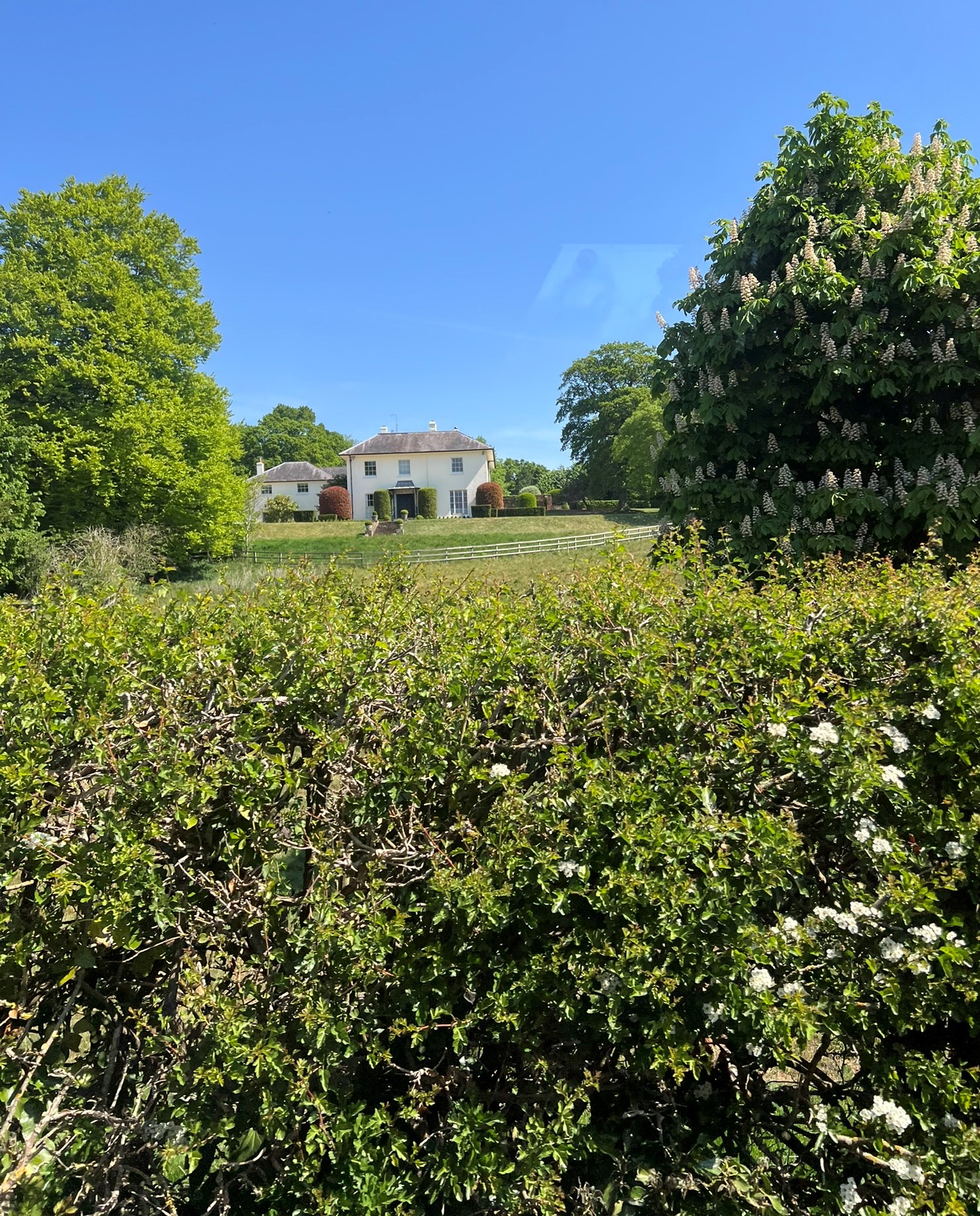
…..and was recently on the market – here a grand example of just how wrong some real estate listings [and history in general] can be: this Steventon House [as it is called] was not built on the same location where Jane Austen lived and wrote…

.https://www.houseandgarden.co.uk/article/jane-austen-steventon-house-for-sale

But see the great pictures of the house interior and gardens…! It sold, the going price £8,500,000 – not sure how much it actually went for…

*************

A few more images to leave you with – a magical place here:

************

https://www.bbc.com/news/uk-england-hampshire-16002088#.

And here from Jane Odiwe in 2015:

https://janeausten.co.uk/blogs/jane-austen-life/jane-austens-china-and-the-steventon-archaeological-dig?

**********

We then headed back to Winchester for some time on our own to explore the city – the afternoon finding us at the Hampshire Cultural Trust, which I shall write more about in a Day 6, Part 2 post…so much there to talk about! [think the “pelisse”… and do not faint…]

So stay tuned…

c2025JaneAustenInVermont

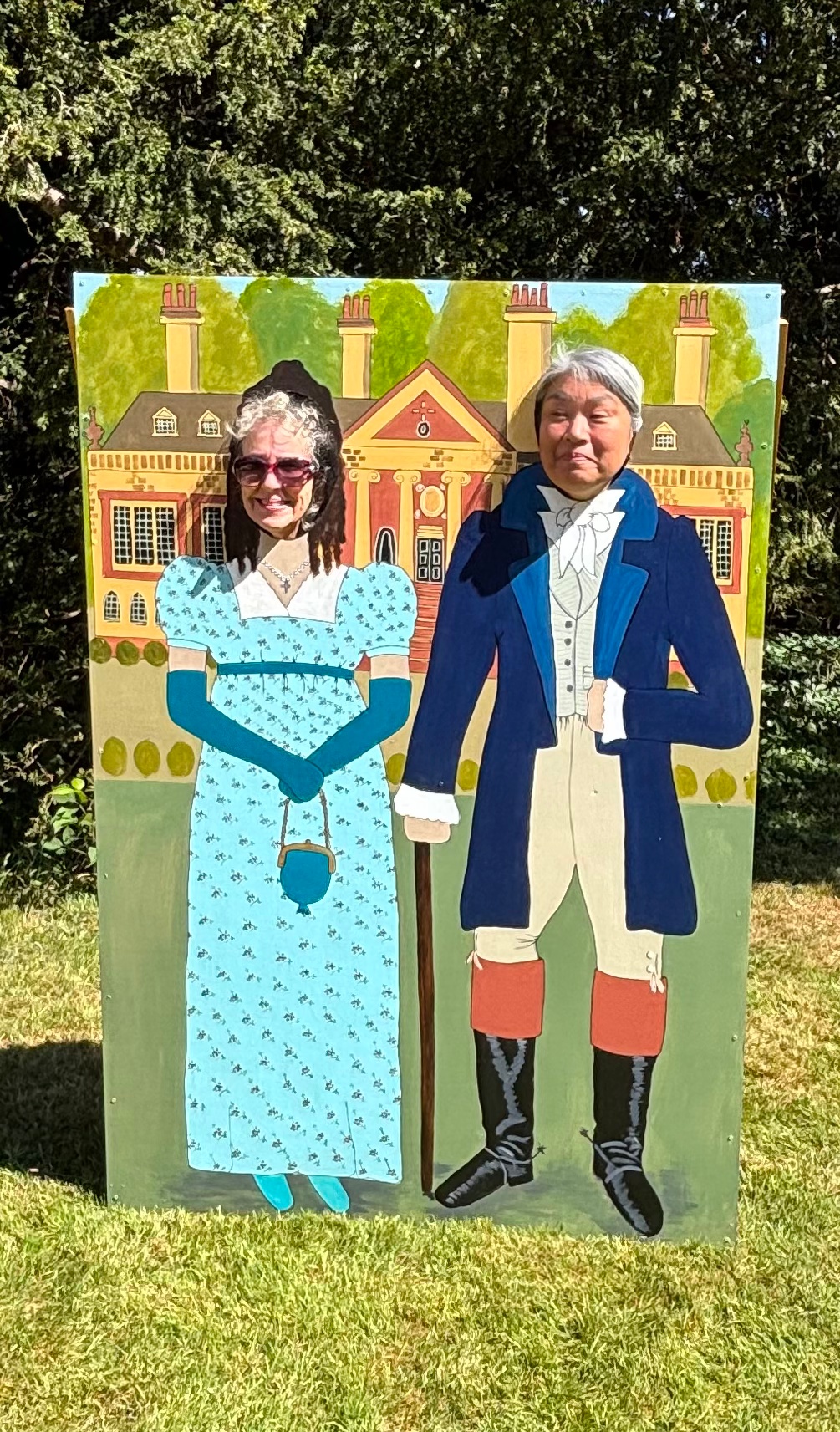
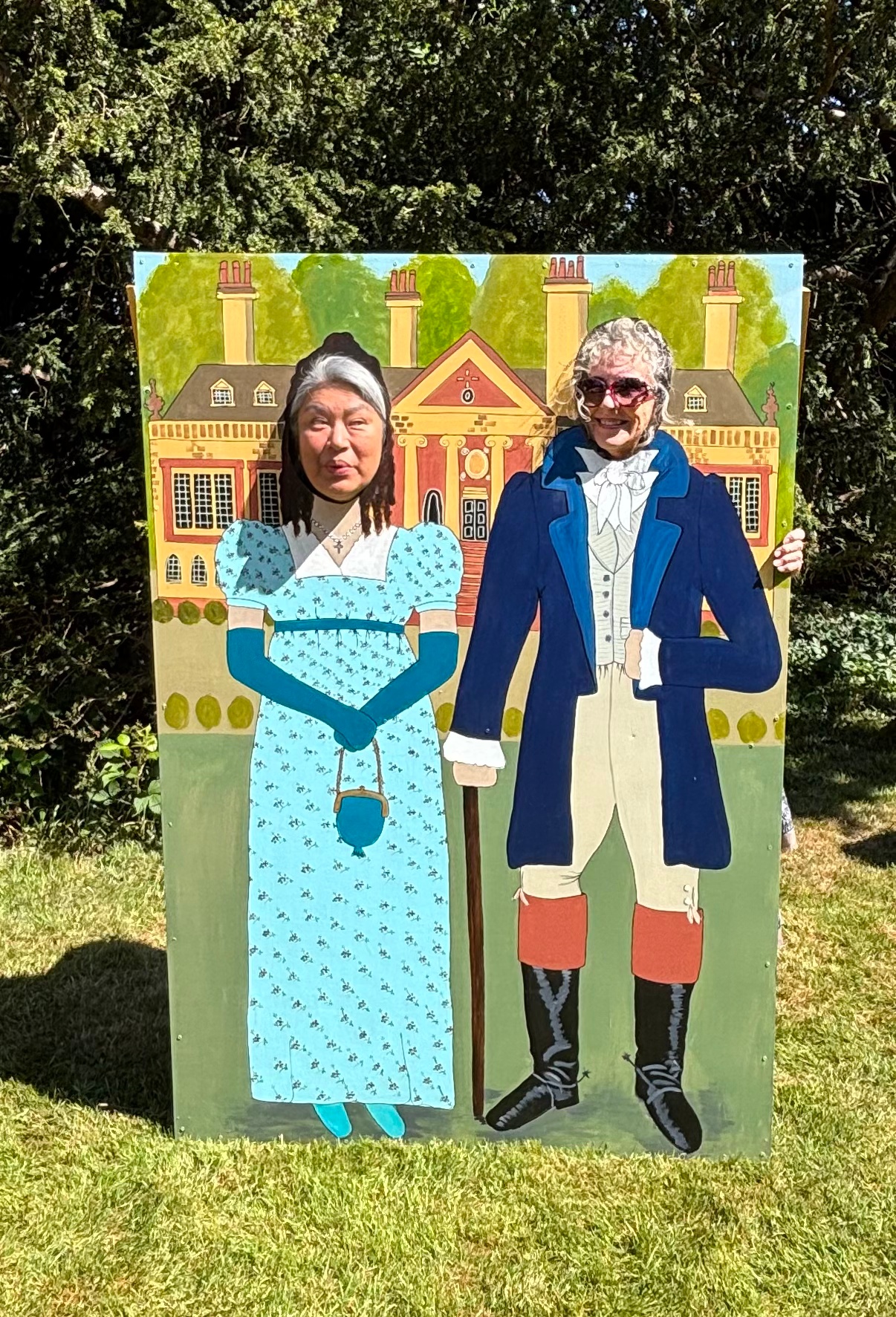
[Joy and I “dressed” for the occasion…]

Georgian Period · Godmersham Park Library · Great Britain - History · Jane Austen · Jane Austen Circle · Jane Austen Genealogy · Jane Austen Societies · JASNA · Literature · Museum Exhibitions · NAFCH - North American Friends of Chawton House · Regency England · Social Life & Customs · Women Writers

Adventures with Jane! Day IV: Goodnestone, Godmersham, and Canterbury

What an extraordinary day this was!

First, we traveled on our bus today to Goodnestone [did I mention yet our very-talented bus driver on this trip, Paul? A master of small lanes, hedgerows, and city maneuvers, Paul brought his expertise, patience (with all the Jane talk!), and humor to each day. The bus was smaller than the average bus, but with NO SIDE MIRROS, which proved his abilities beyond possibility…[I have a picture thanks to Joy!..]

– but I bring this up because today, traveling down a country lane on the way to Goodnestone, this big red behemoth attracted a herd of sheep like none of us have ever seen – unlike a Gary Larson cartoon, where the cows keep eating and ignoring the passing-by humans, these sheep raced to the fence to visit the huge bus – did they think it was their Mother?? Many of us got out to greet them, all running toward us – whatever they expected or what was on their minds we were unable to determine – but it gave us all a good laugh and we felt more welcomed than ever to the Kent countryside [I did have a Thomas Hardy moment of all the sheep racing to and jumping over the cliff edge in Far From the Madding Crowd, one of the most distressing moments in 19th century literature…but no such sad outcome for us – the fence stopped any such disaster and we just bid them all adieu and continued our journey smiling all the way…]


Goodnestone was the family home of Elizabeth Bridges, wife to Edward Knight. Brook Bridges purchased the home in 1704 [more on him in a bit…]  – it remains in the family and now you can visit the house and gardens and it serves as a wedding venue. I was looking forward to seeing this house and having tea there, but alas! our plans were sent all askew by a film crew taking over the house for a “Marriage at First Sight” filming… the UK series has been on TV since 2015 – I did watch ½ an episode on TV while there and was quite stupefied by its stupidity…but if it helps support the Goodnestone estate, then that is a mere quibble of taste…

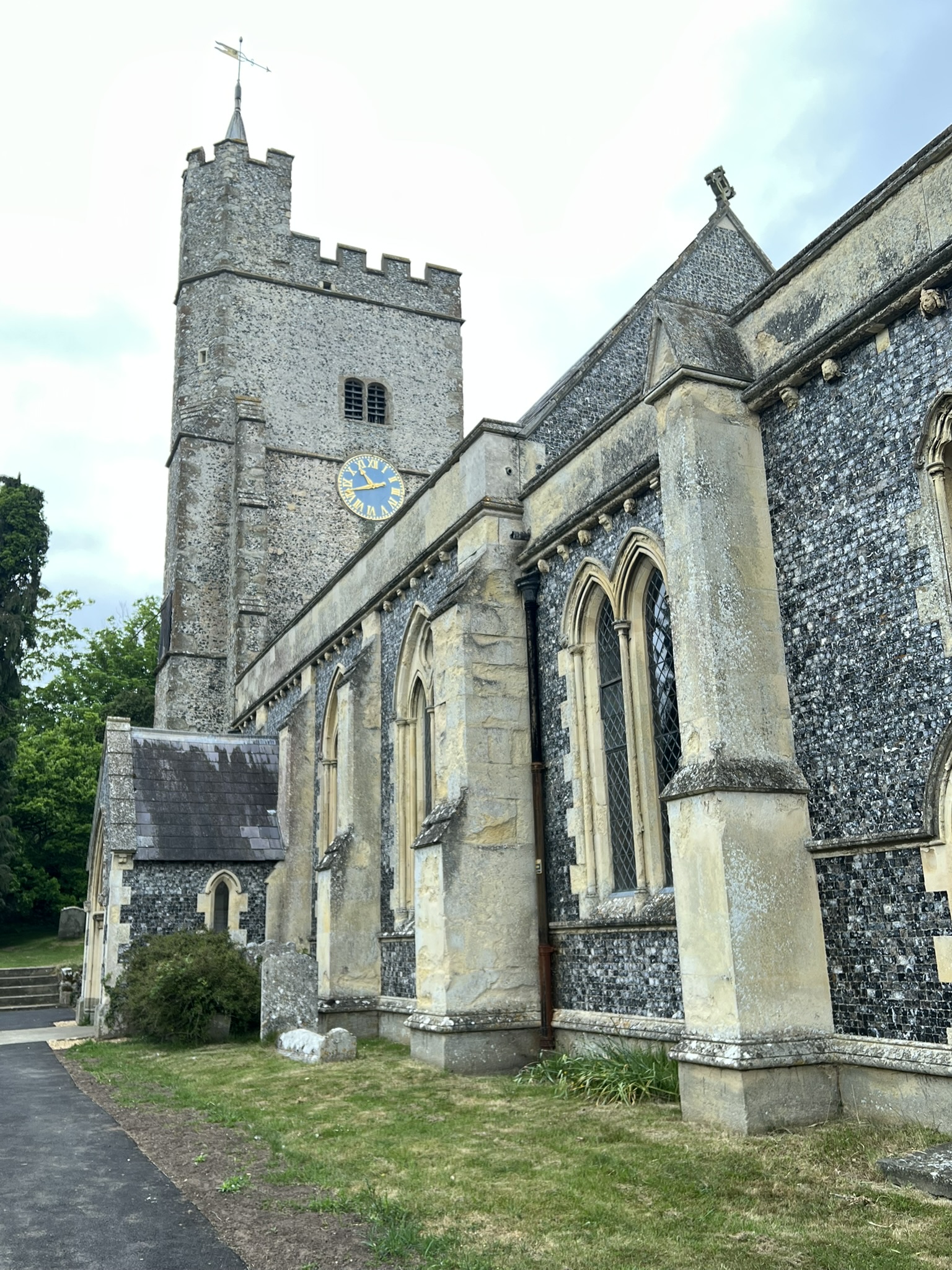
So, only distant shots, and a visit to the Church of the Holy Cross, where we were introduced to one of the family who gave us the low-down on the family history, and a tour around the church. This is the church where Edward and Elizabeth were married – it was actually a double wedding [Elizabeth’s sister Sophia and William Deedes], perhaps giving Austen the idea for her Pride and Prejudice double wedding of the Bennet sisters, Elizabeth and Jane.

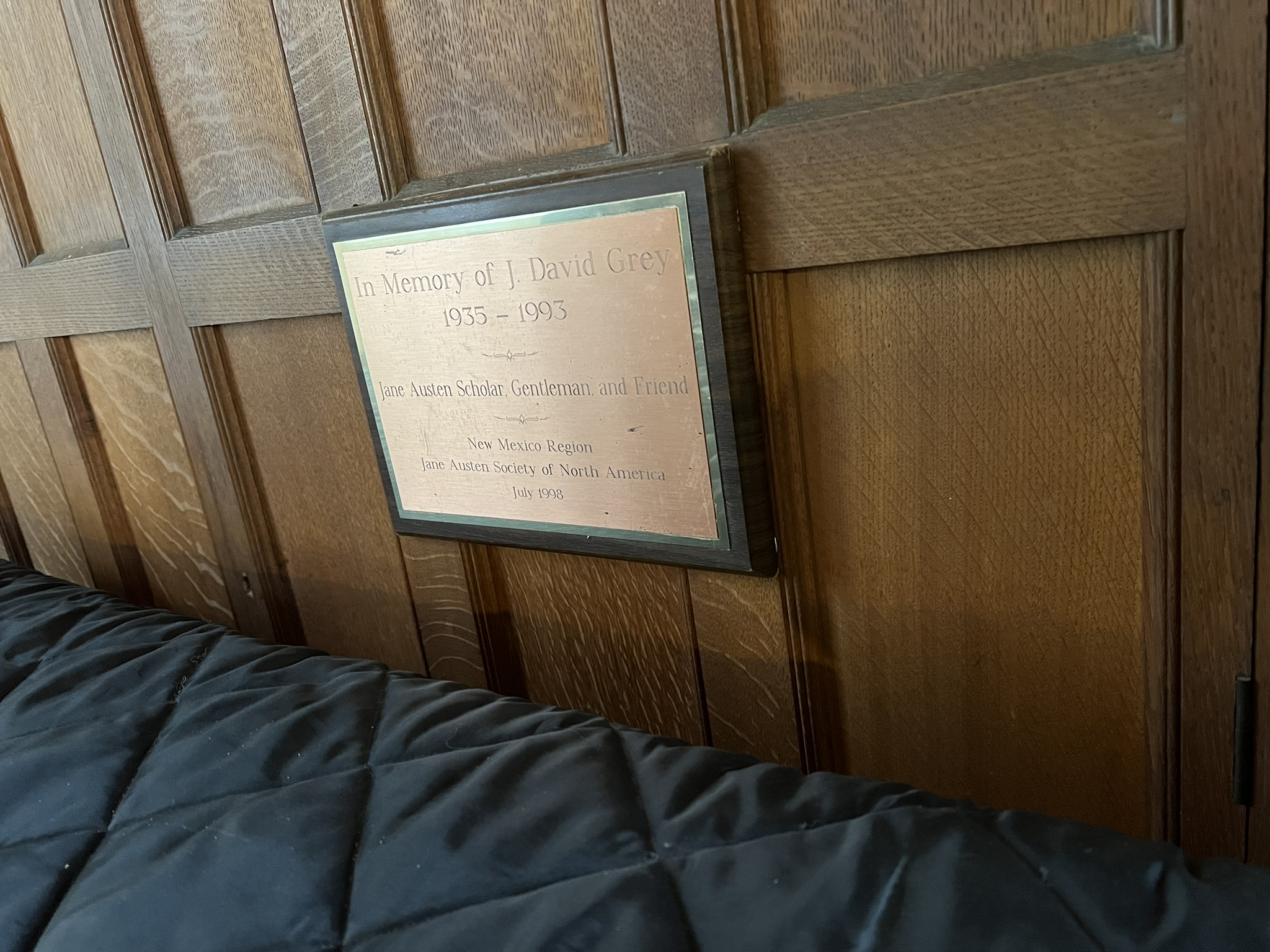
Of interest to Janeites is the plaque to J. David Grey, one of the founders of JASNA, and installed here in his memory with JASNA’s support.

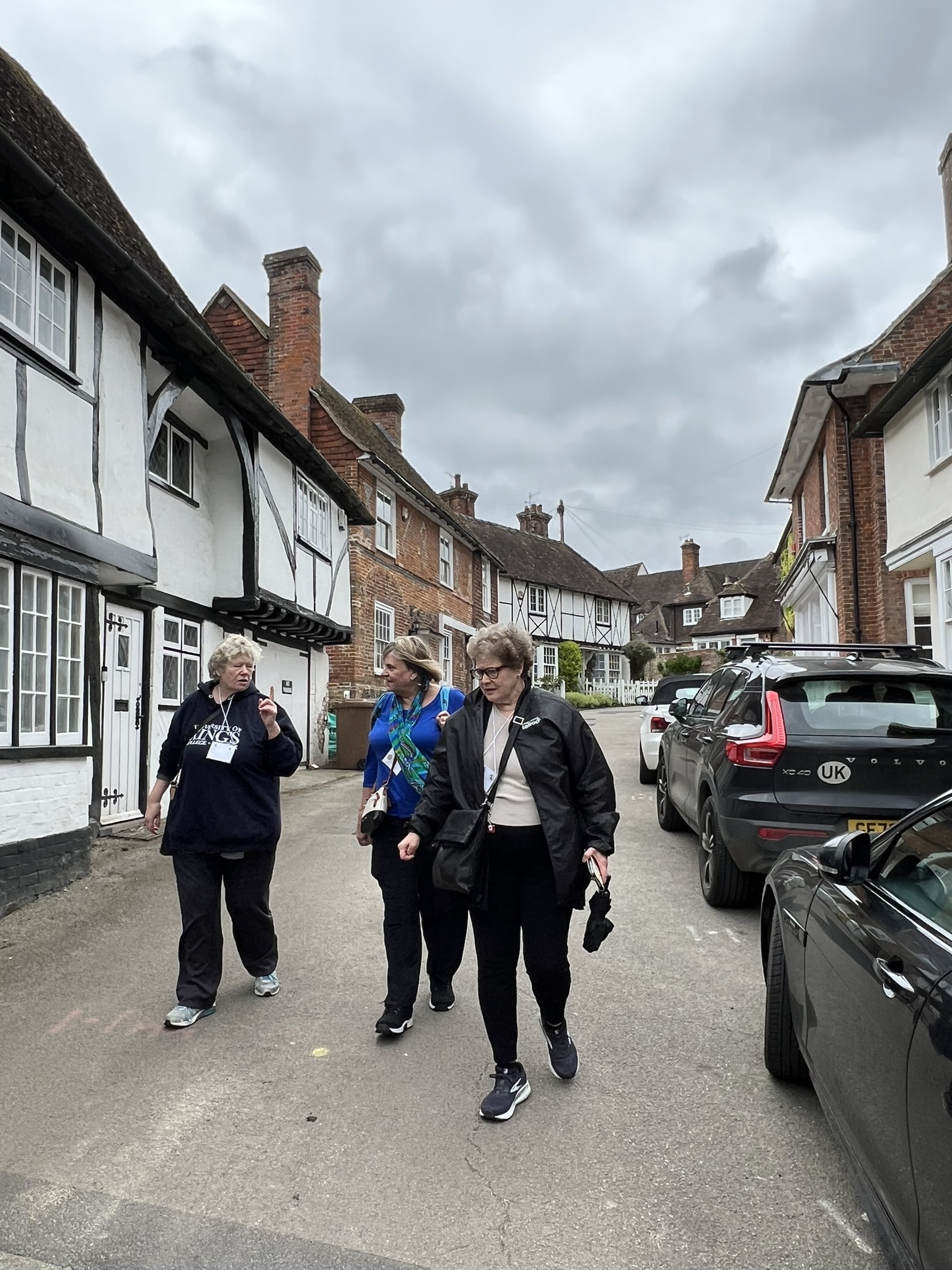
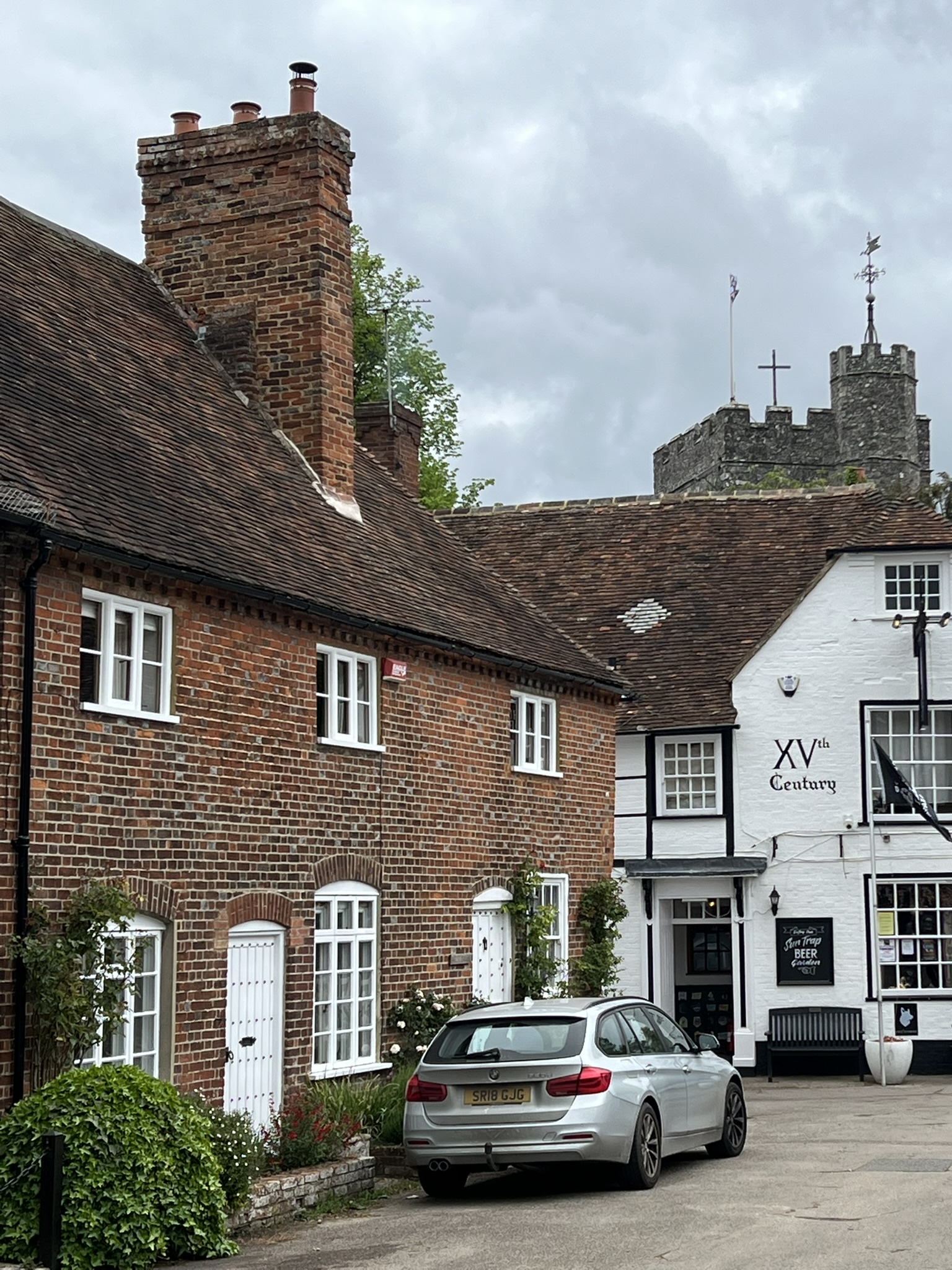
Then off to Chilham, the village that served as the location for Highbury in the 2009 Emma series. We were able to walk around the village and had lunch at the Woolpack Inn, established in 1480 [so delicious, I forgot to take a single picture!], and an appropriate spot considering our sheep welcome…

***********

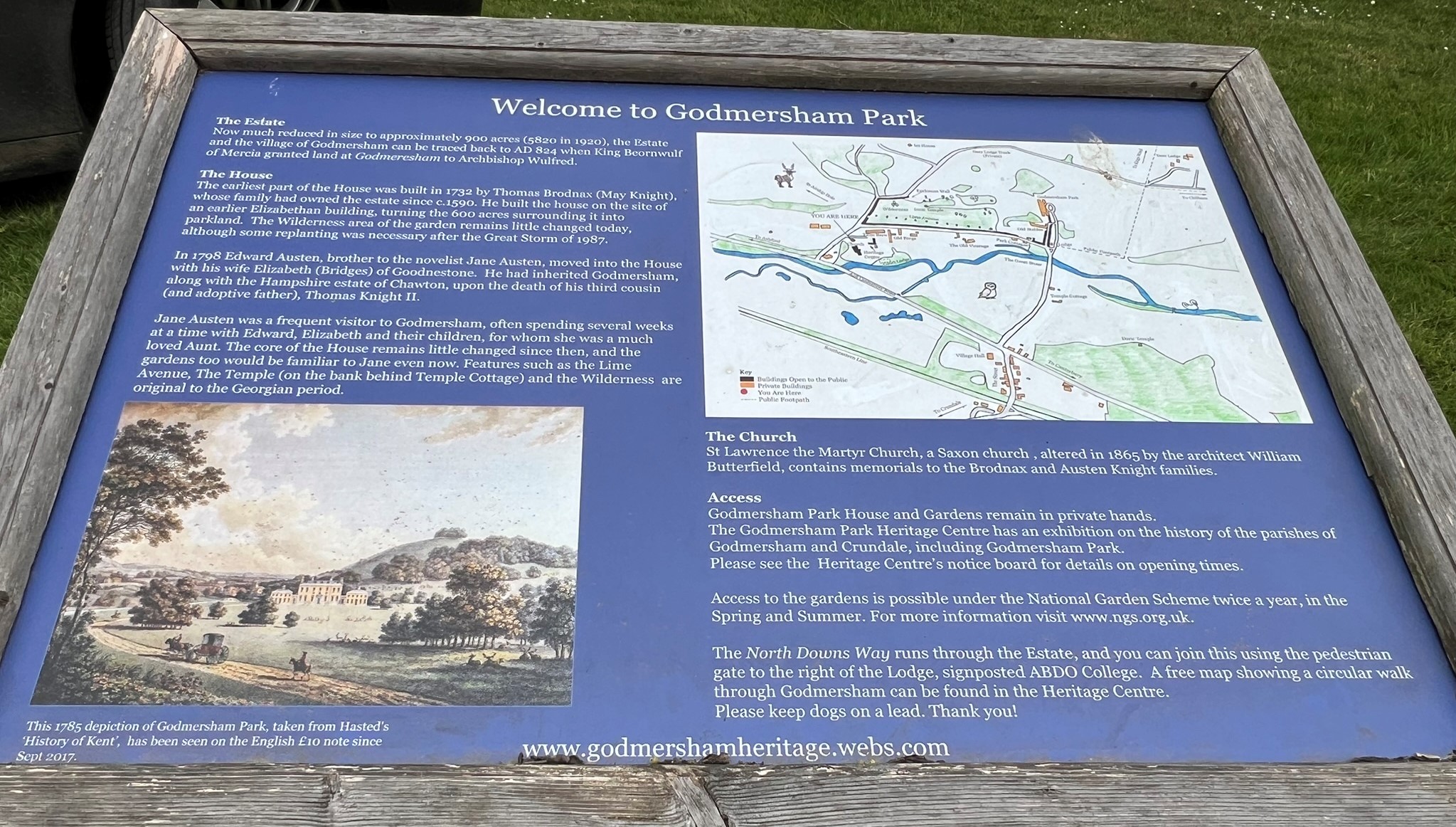
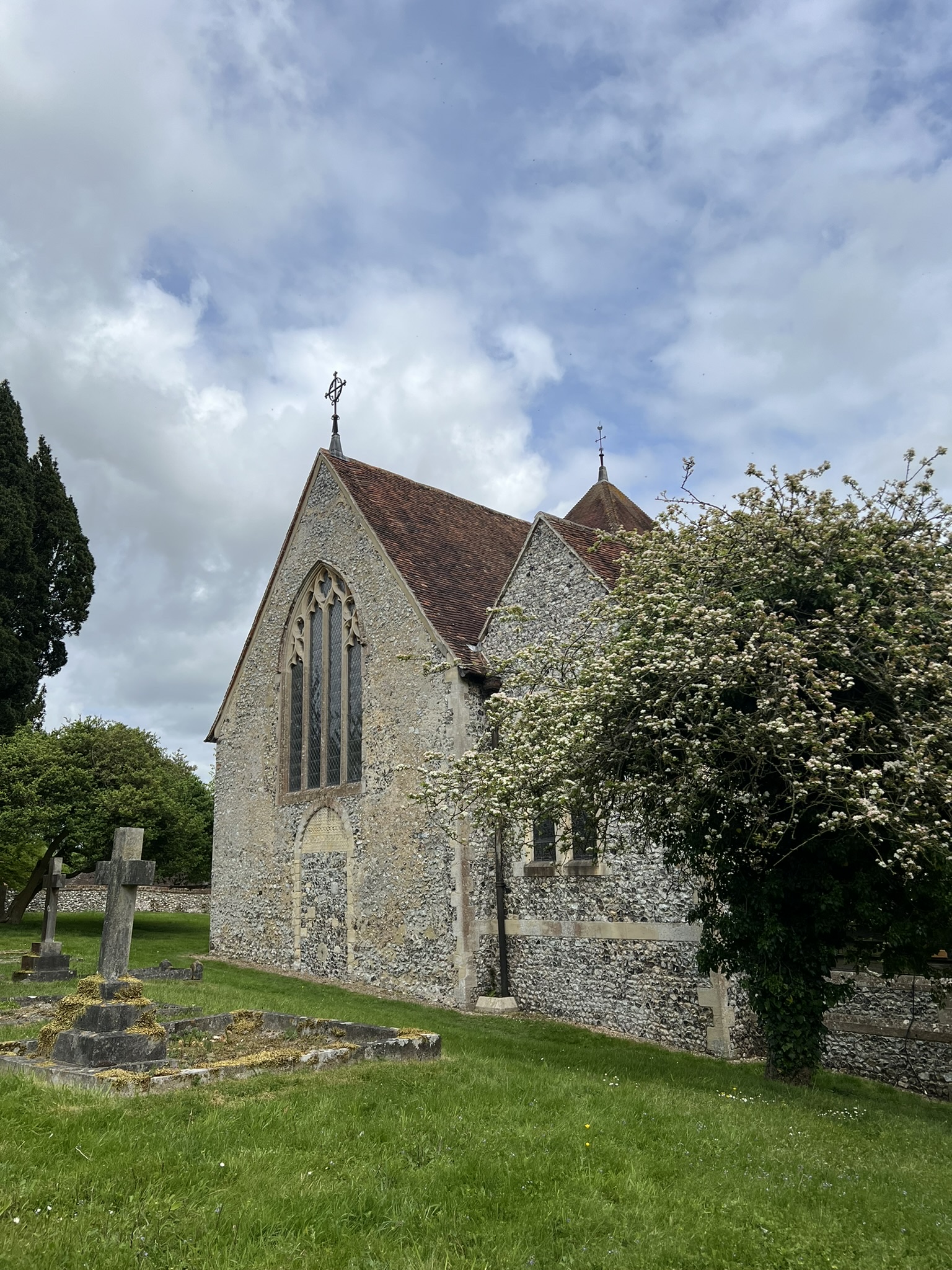
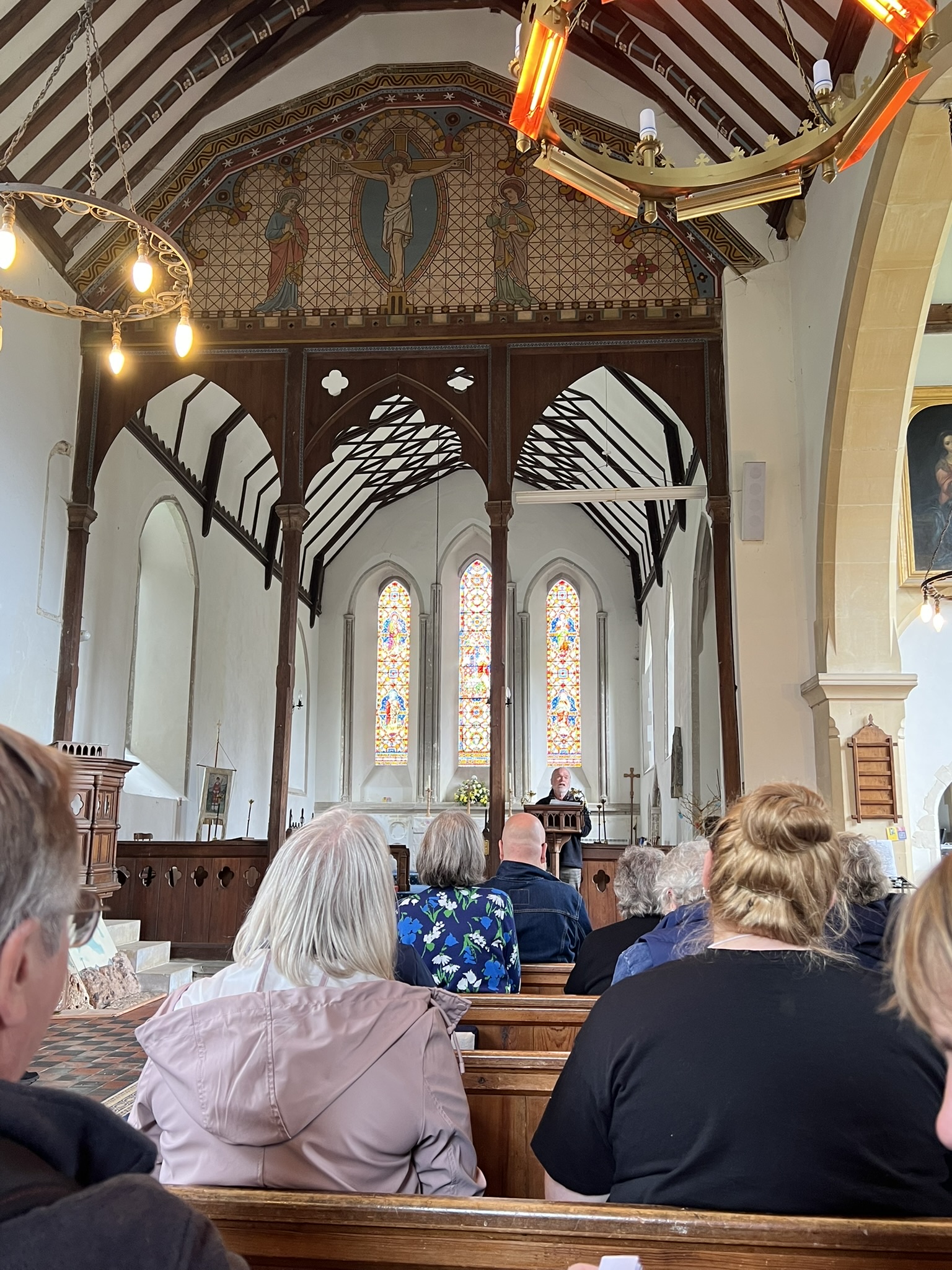
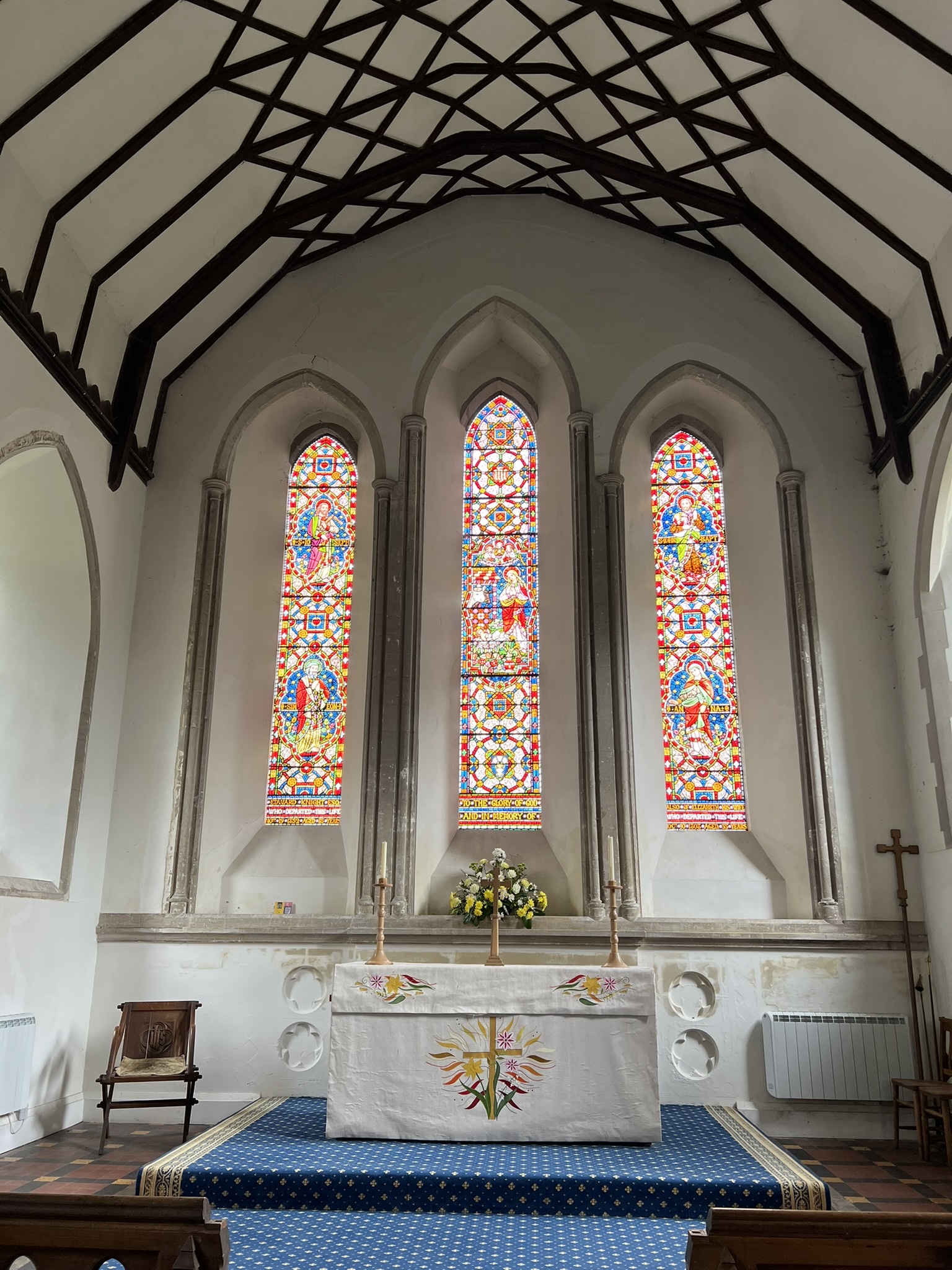
Then to Godmersham Park, my most anticipated spot on the tour. First to the Church, surprisingly not a St Nicholas, but a St. Lawrence: here we had a history lesson about its connections to the Austens.

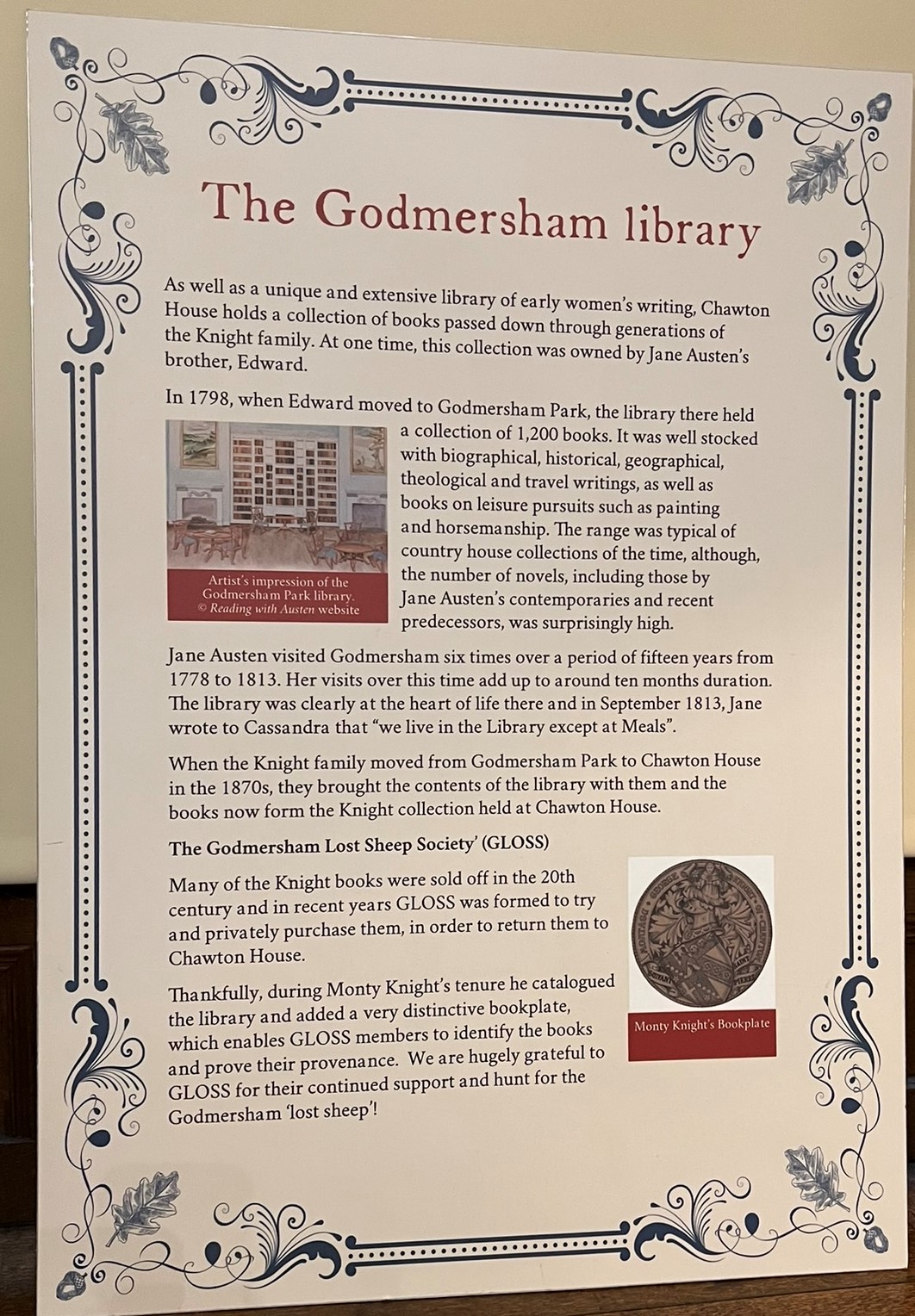
Godmersham Park was Edward Austen’s home, inherited from his adoptive parents that required him to change his name to Knight. Here he and Elizabeth raised their 11 children [Elizabeth died after the birth of the 11th at the age of 35 in 1808] and where his extensive gentleman’s library was housed, the source of Professor Peter Sabor’s project Reading with Austen – the website offers an interactive plan of the library showing what books were on the shelves and their location as Jane Austen would have experienced. The goal of the project has also been to return as many of the books that were originally in Edward’s library if at all possible – we call ourselves The Godmersham Lost Sheep Society – you can read all about it at these links – we actively fundraise to help in the purchase of any books that might show up at auction or in booksellers’ catalogues.

Godmersham Park

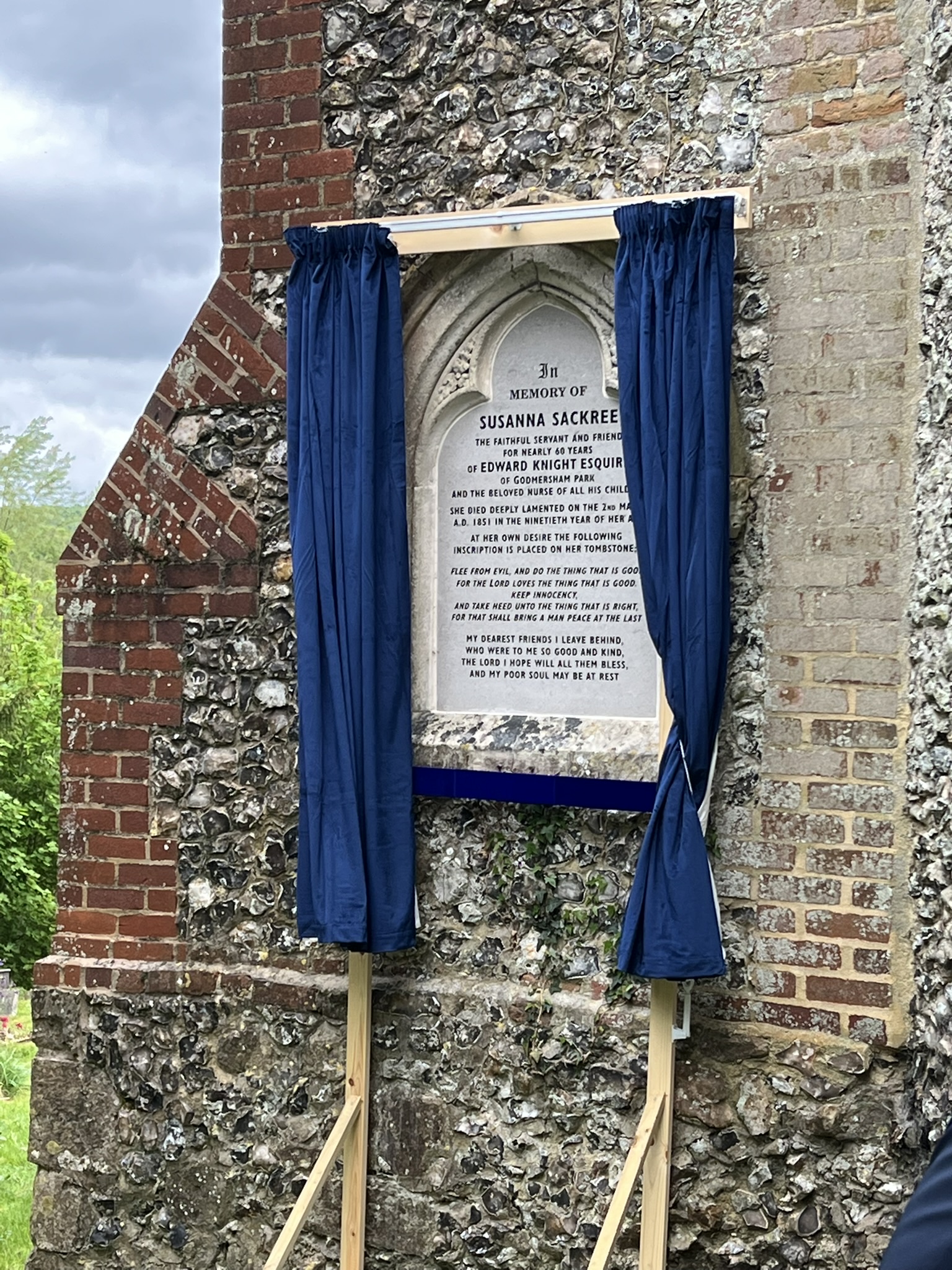
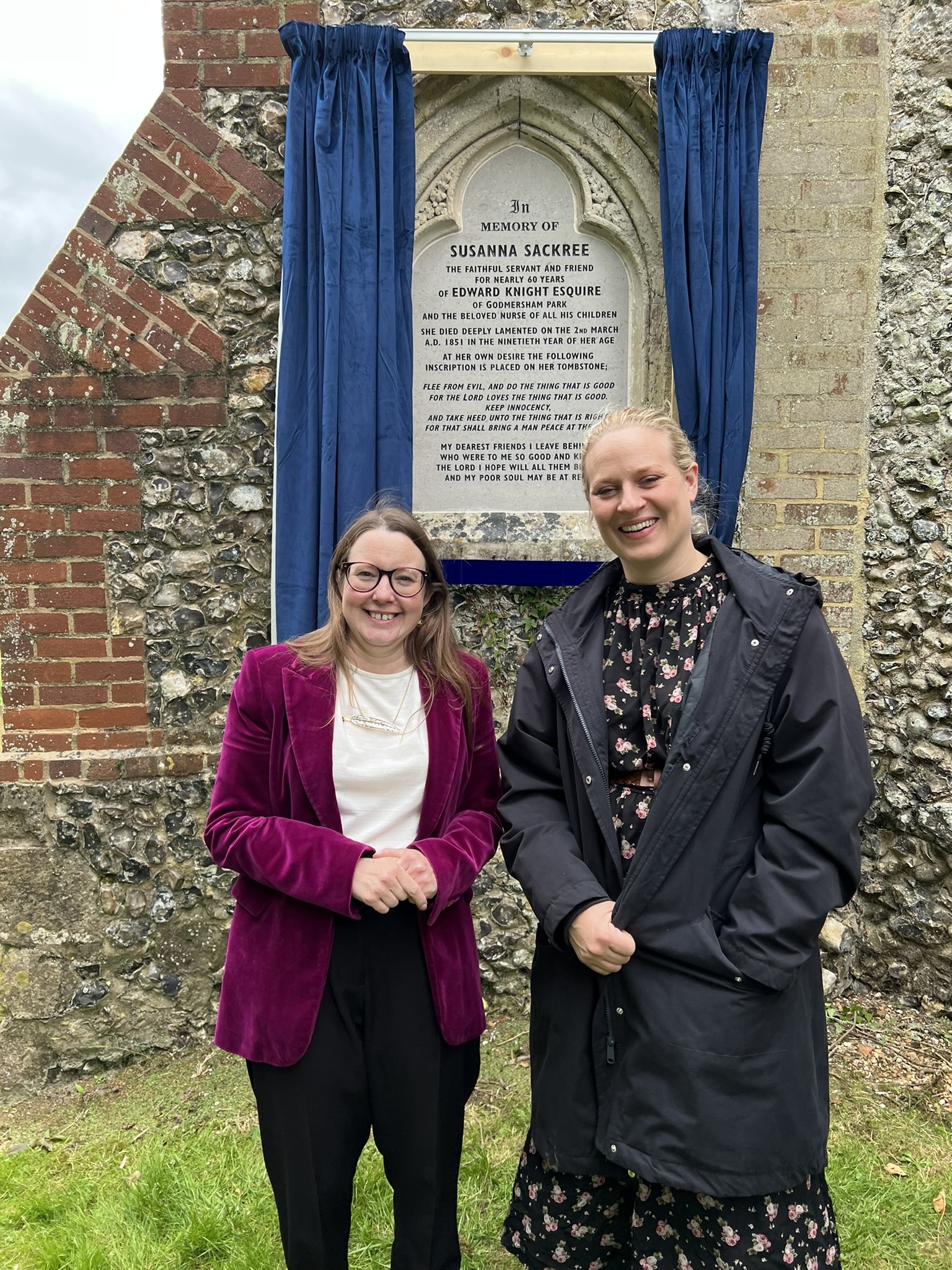
We were honored to be present for the unveiling at the Church of the Susannah Sackree memorial, here with Katie and Kim from Chawton House:

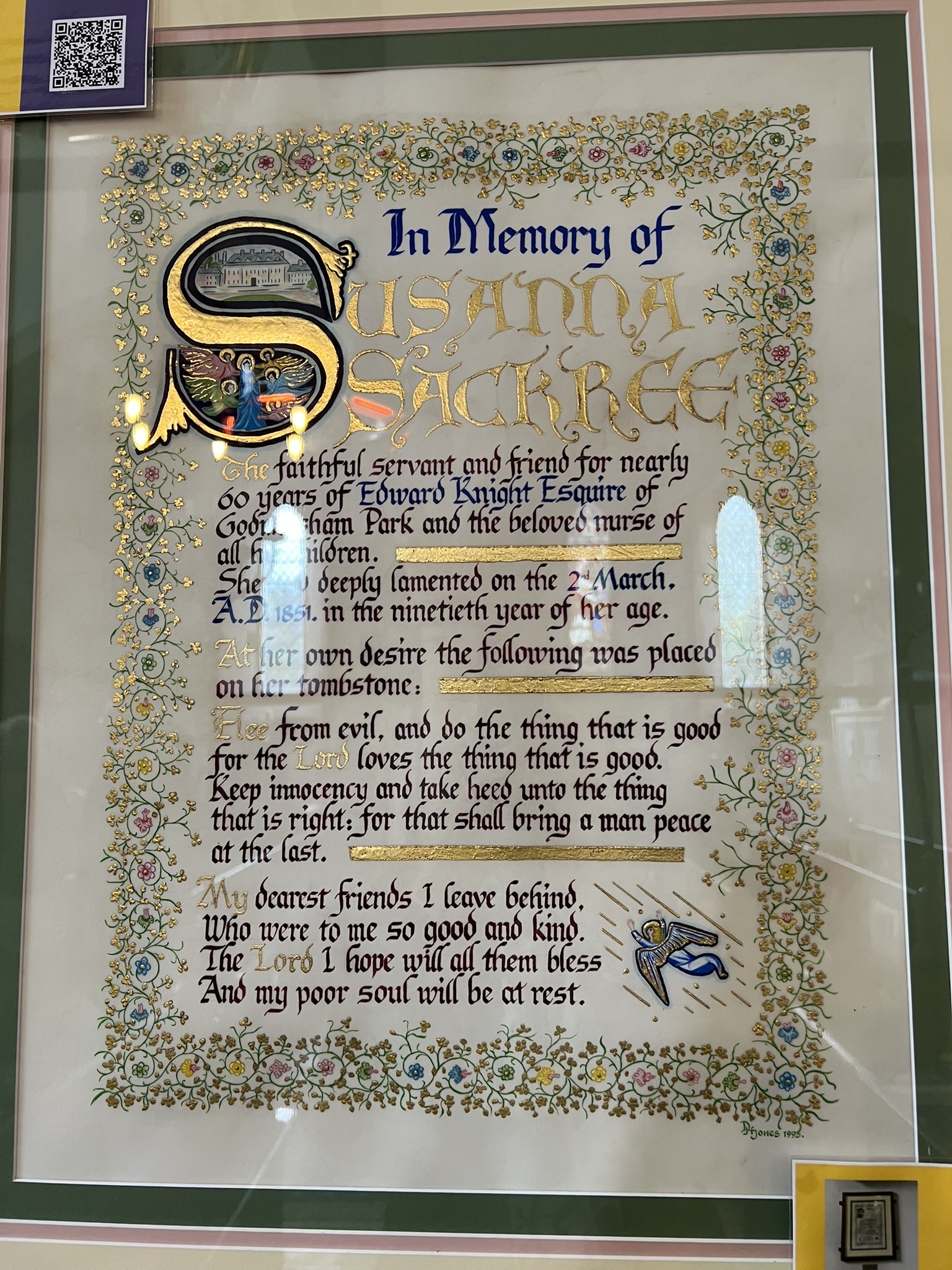
Susannah Sackree was the nursemaid to the Knight children, and memorialized by them in the church and now with this grand memorial on the exterior. It was a very moving moment to see a servant, often forgotten by their employers and history, so lovingly remembered by the Knight family.

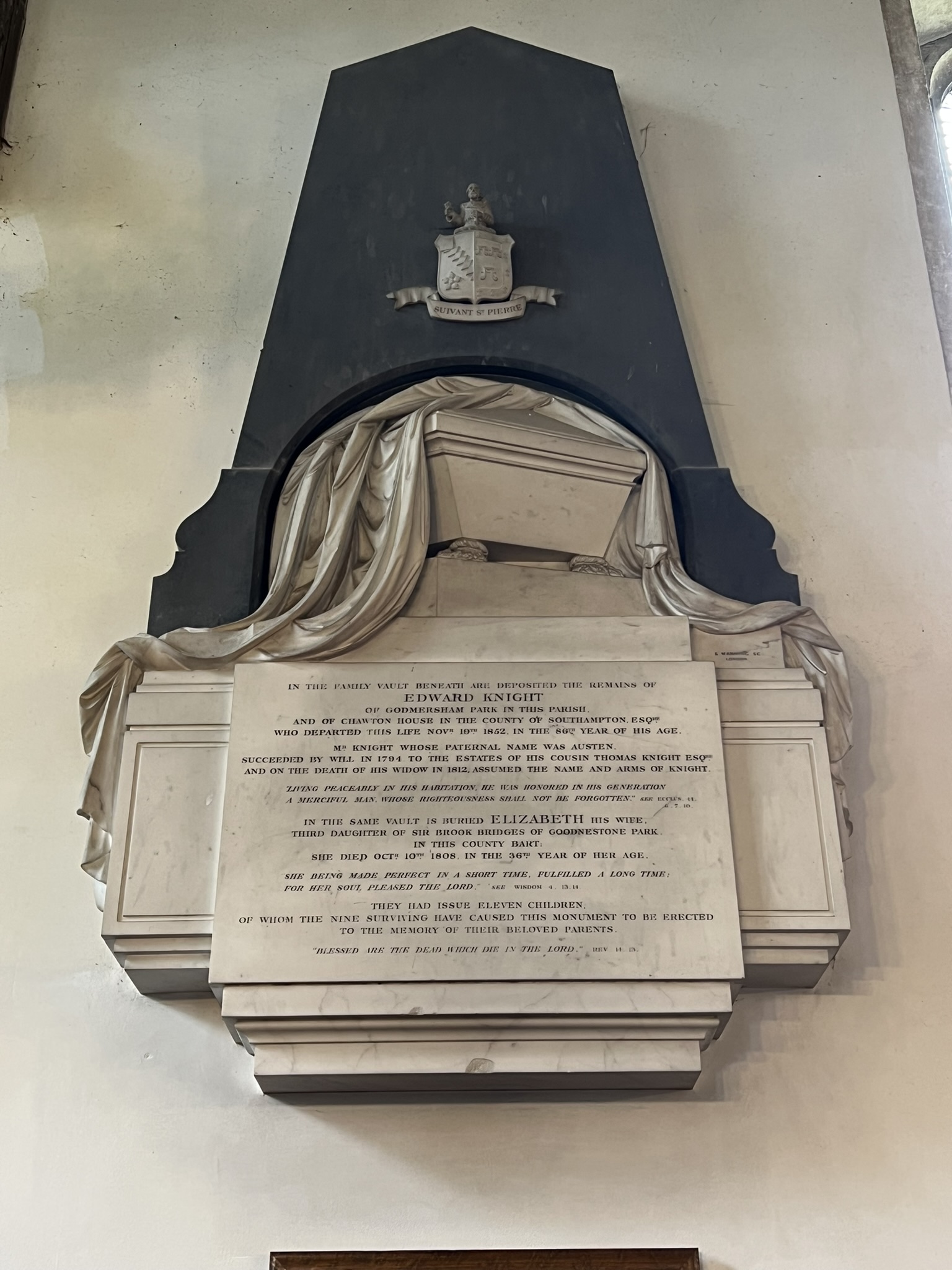
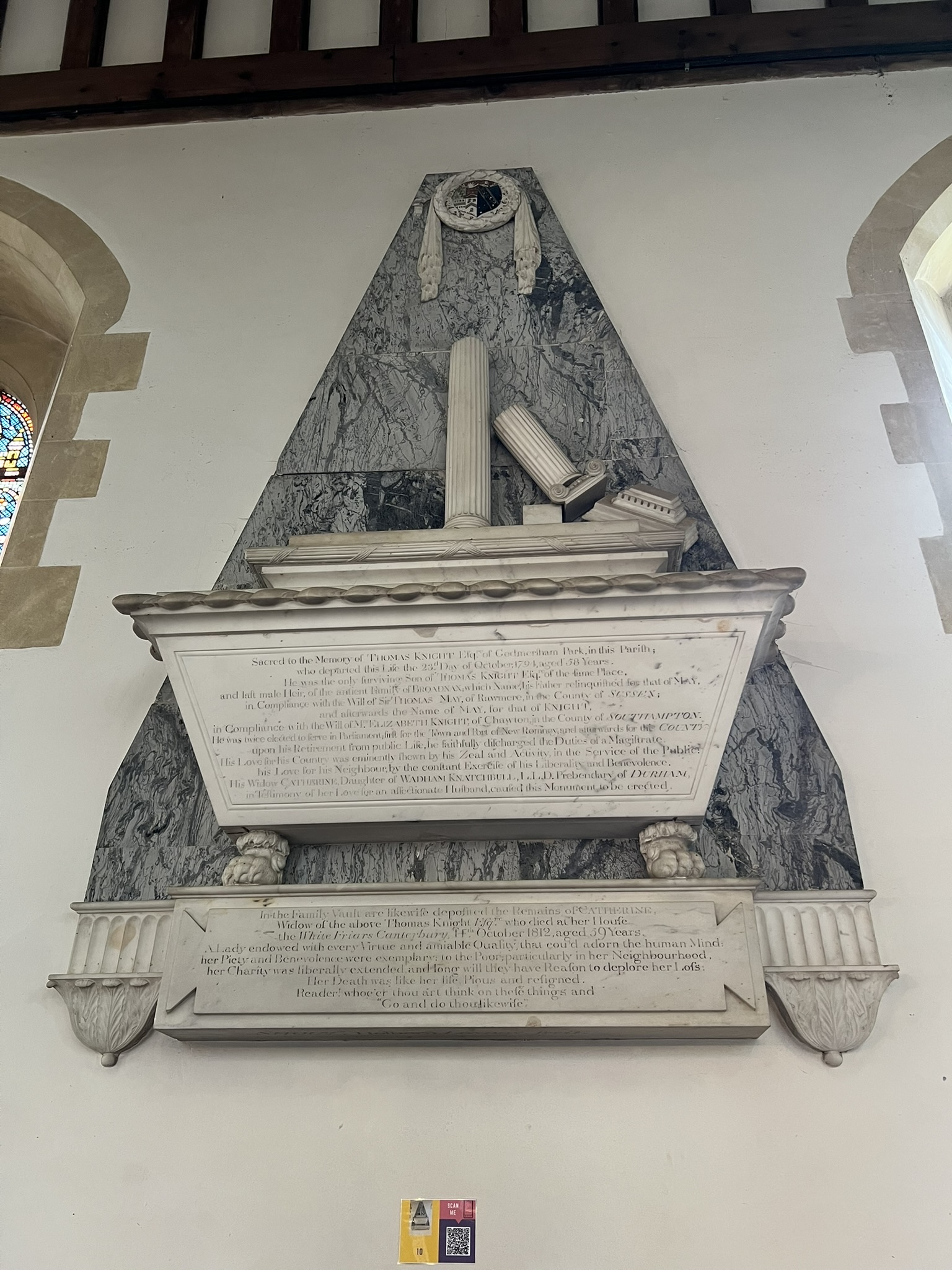
Susannah Sackree, Edward Knight, and Thomas Knight Memorials

You can read more about her in this Persuasions On-Line essay by Jennie Batchelor (2023) .

**********

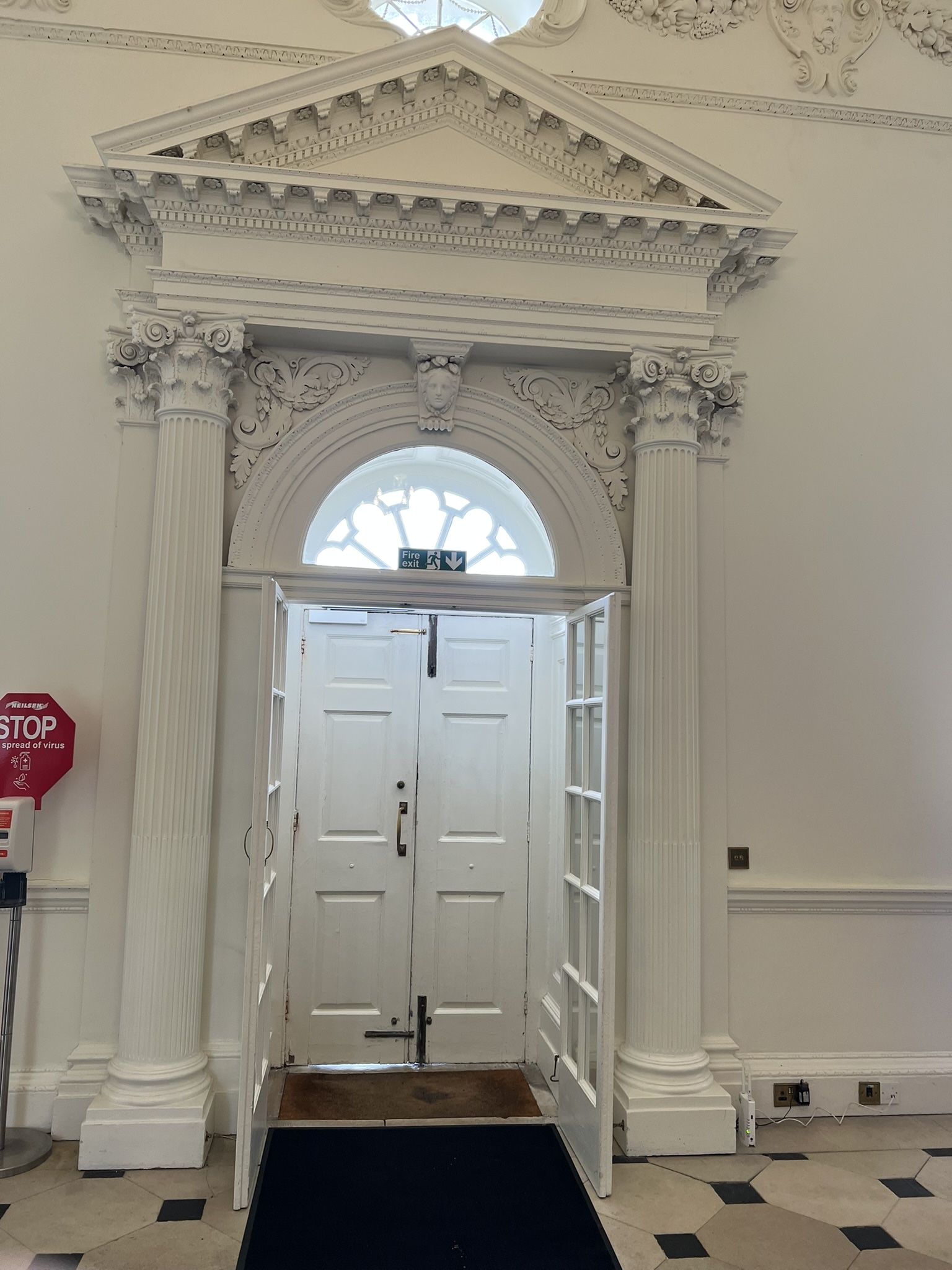
The Heritage Centre tells the story of the house and grounds – it now serves as home to the Association of British Dispensing Opticians and so you cannot tour the house, BUT, we were allowed into [under a code of silence] the entrance foyer, nearly the same as it was in Austen’s time – but no library to visit or any of the other rooms Jane would have stayed in – it is all classrooms now…

The grounds however we could walk around, and as we know that Jane, being an avid walker, would have strolled around these very spots – one could almost feel her there hovering about…
**************

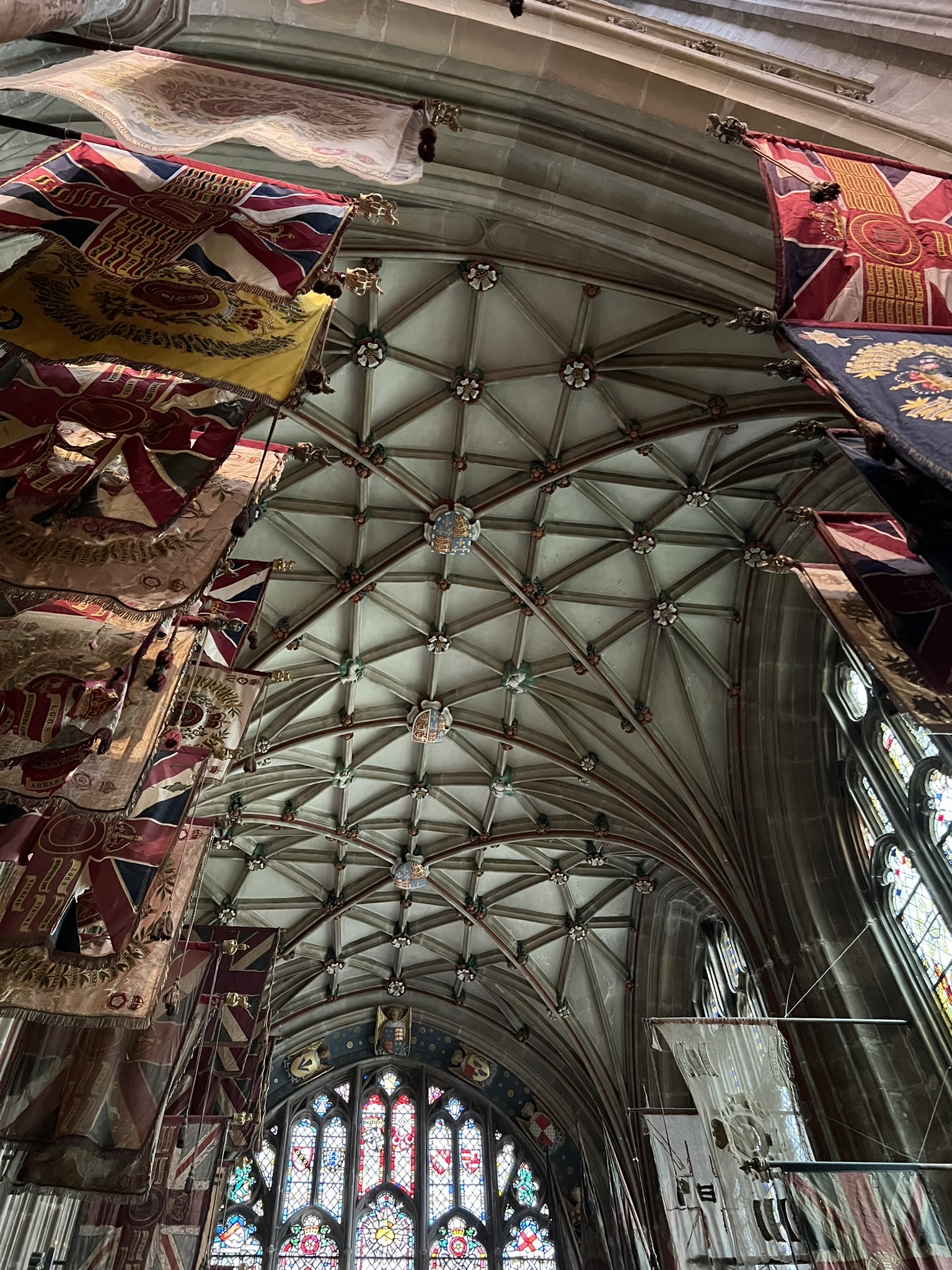
Refreshments were gratefully received, and then we were off to Canterbury. Some of us went to the evensong at the Cathedral [one of my favorite things to do when in England], this after walking around the city for a while – we had two goals in mind: to see the portrait of the scandalous father of Elizabeth Bridges, Sir Brook Bridges (1733-91), whose portrait hangs in the Beaney House of Art & Knowledge – here he is in all his glory:

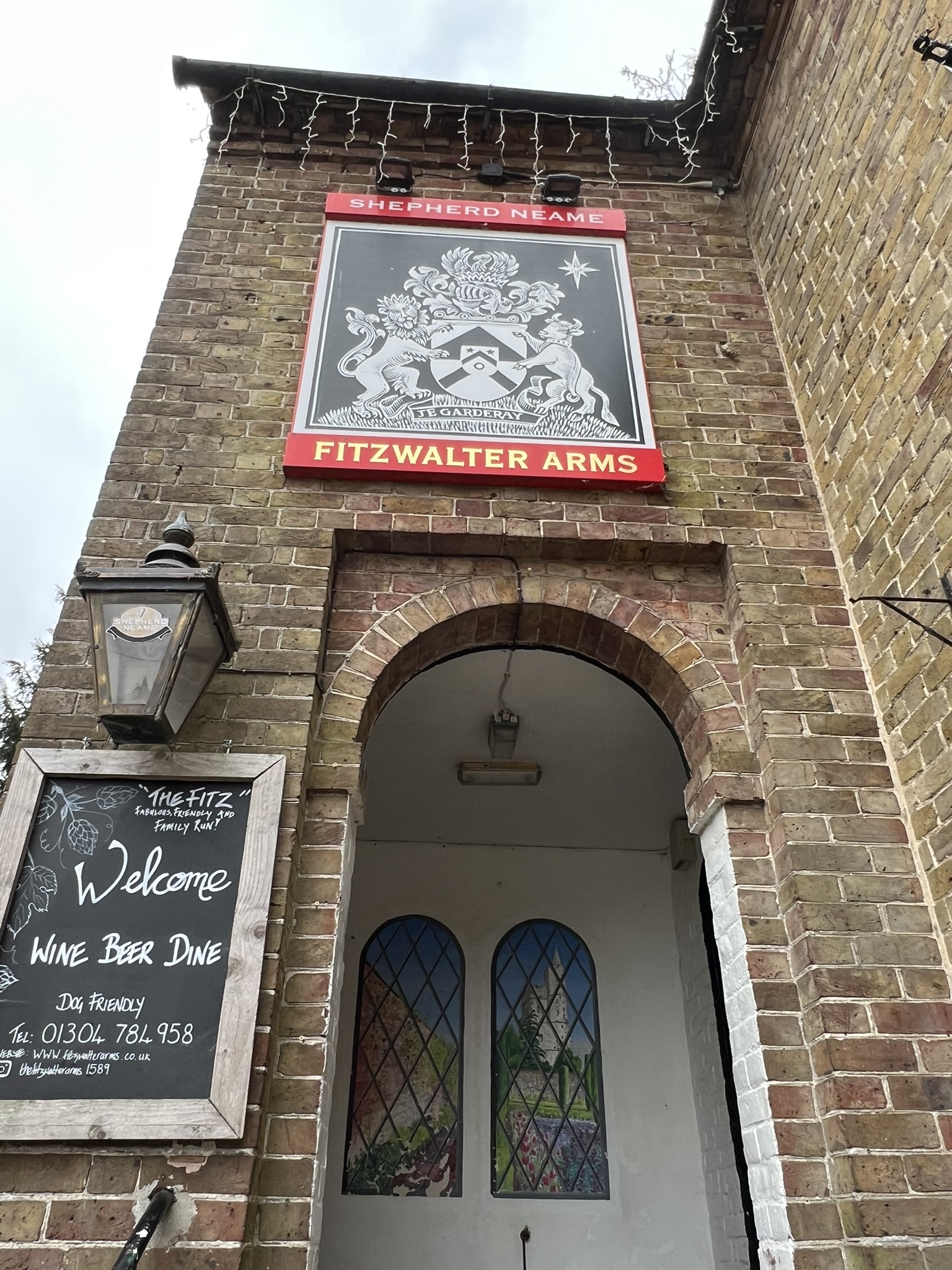
[Bridges married Fanny Fowler, who was heiress to the title Baron Fitzwalter, and still the prominent name here at Goodnestone]:

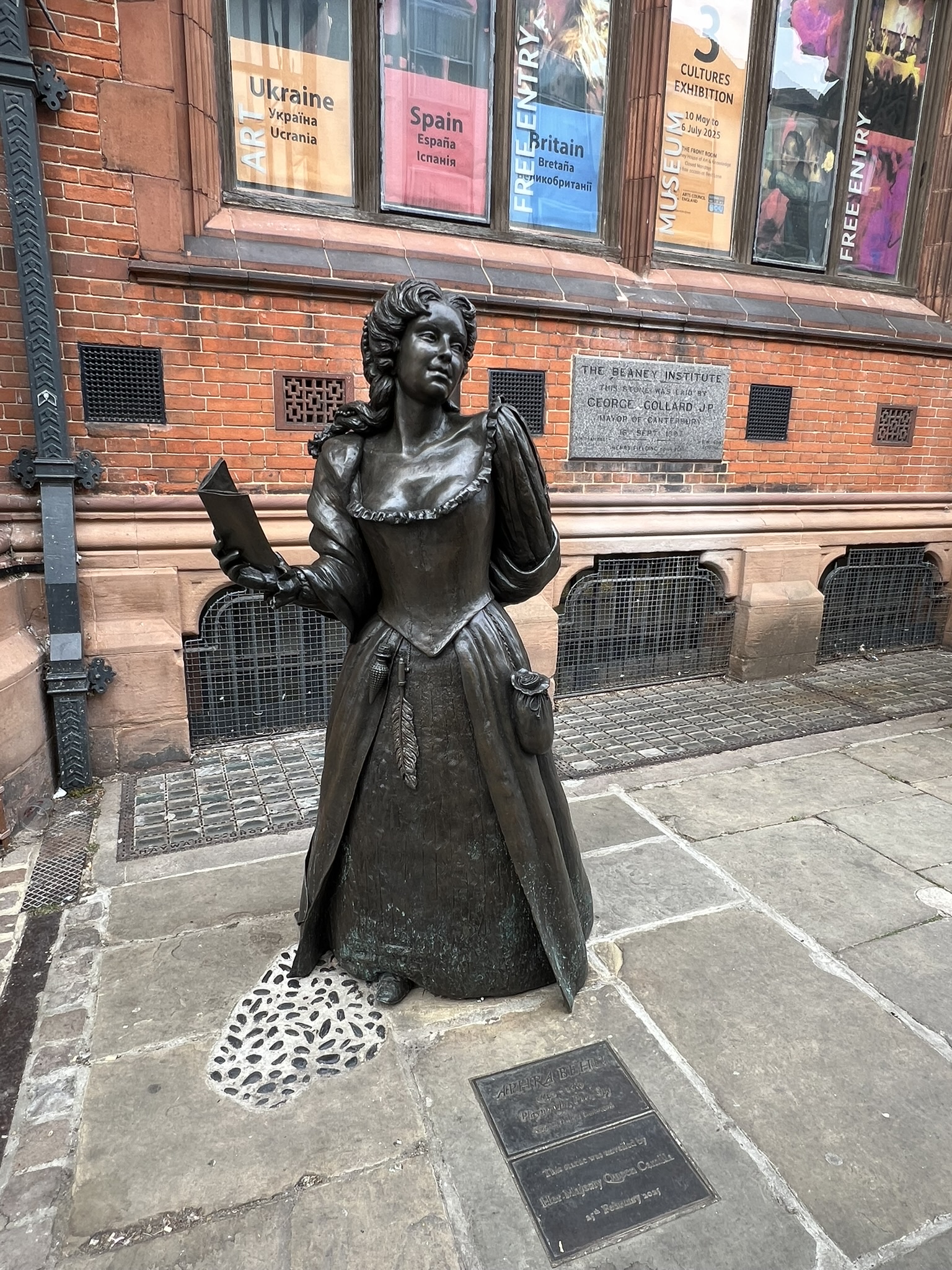
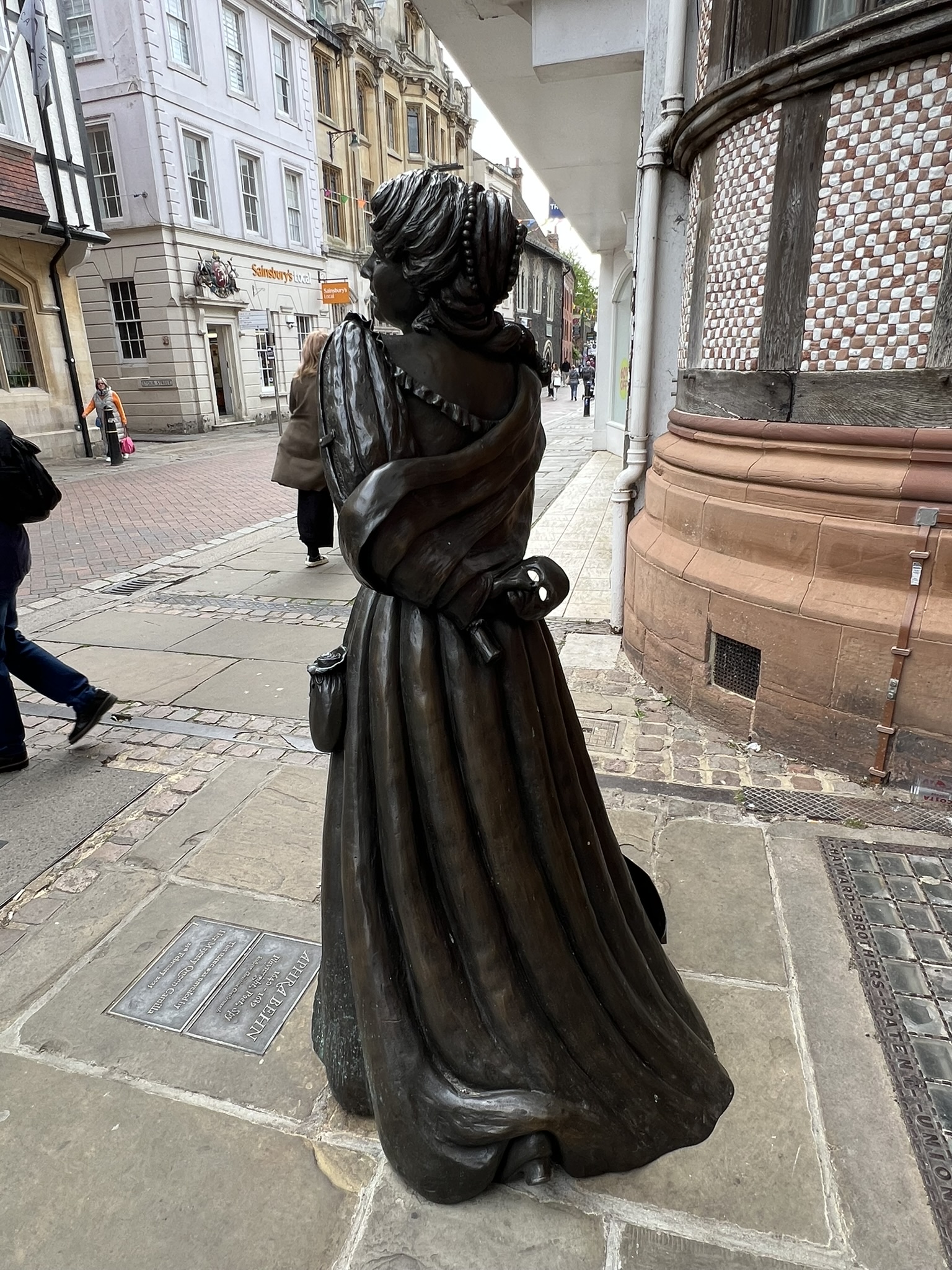
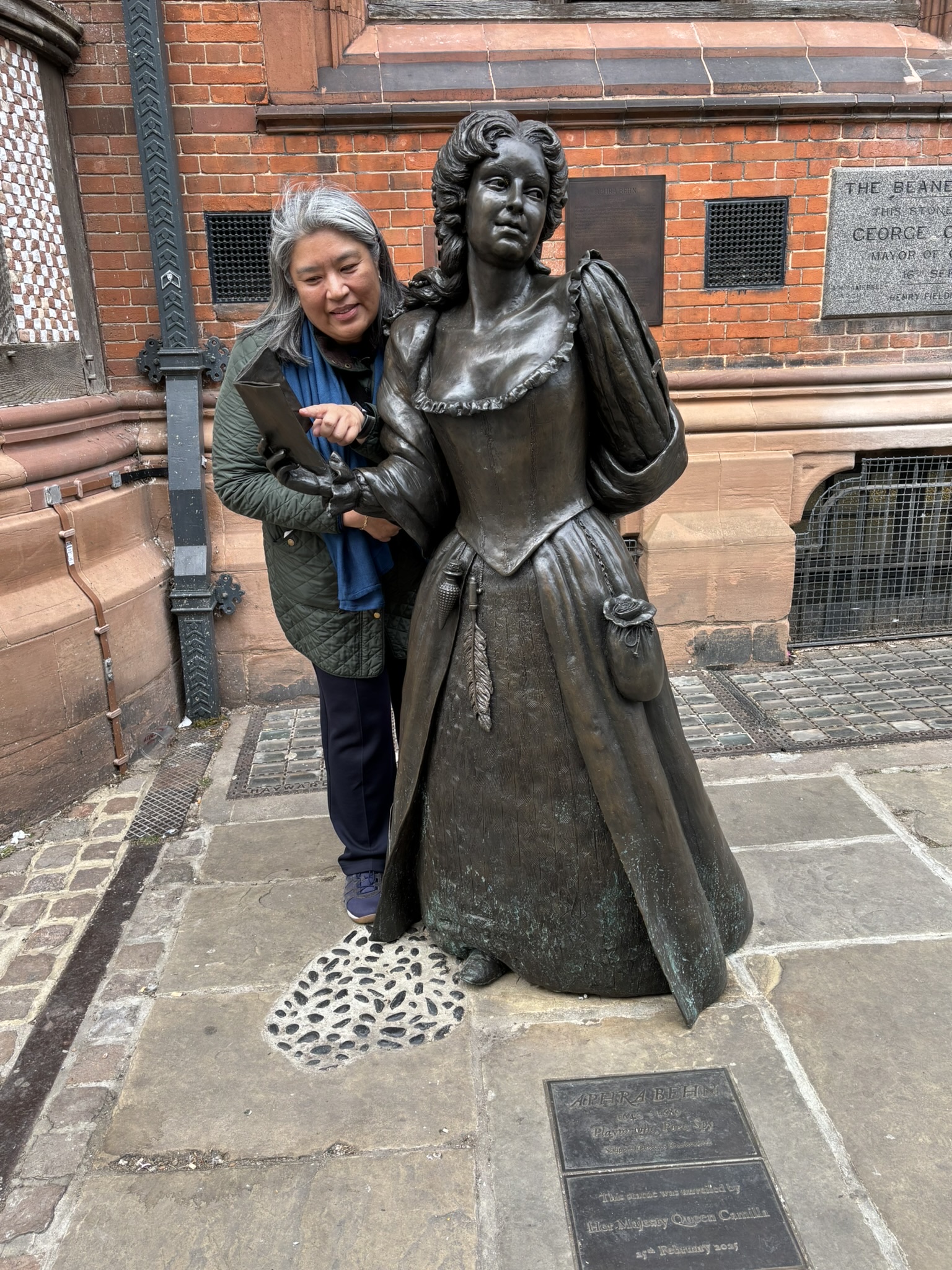
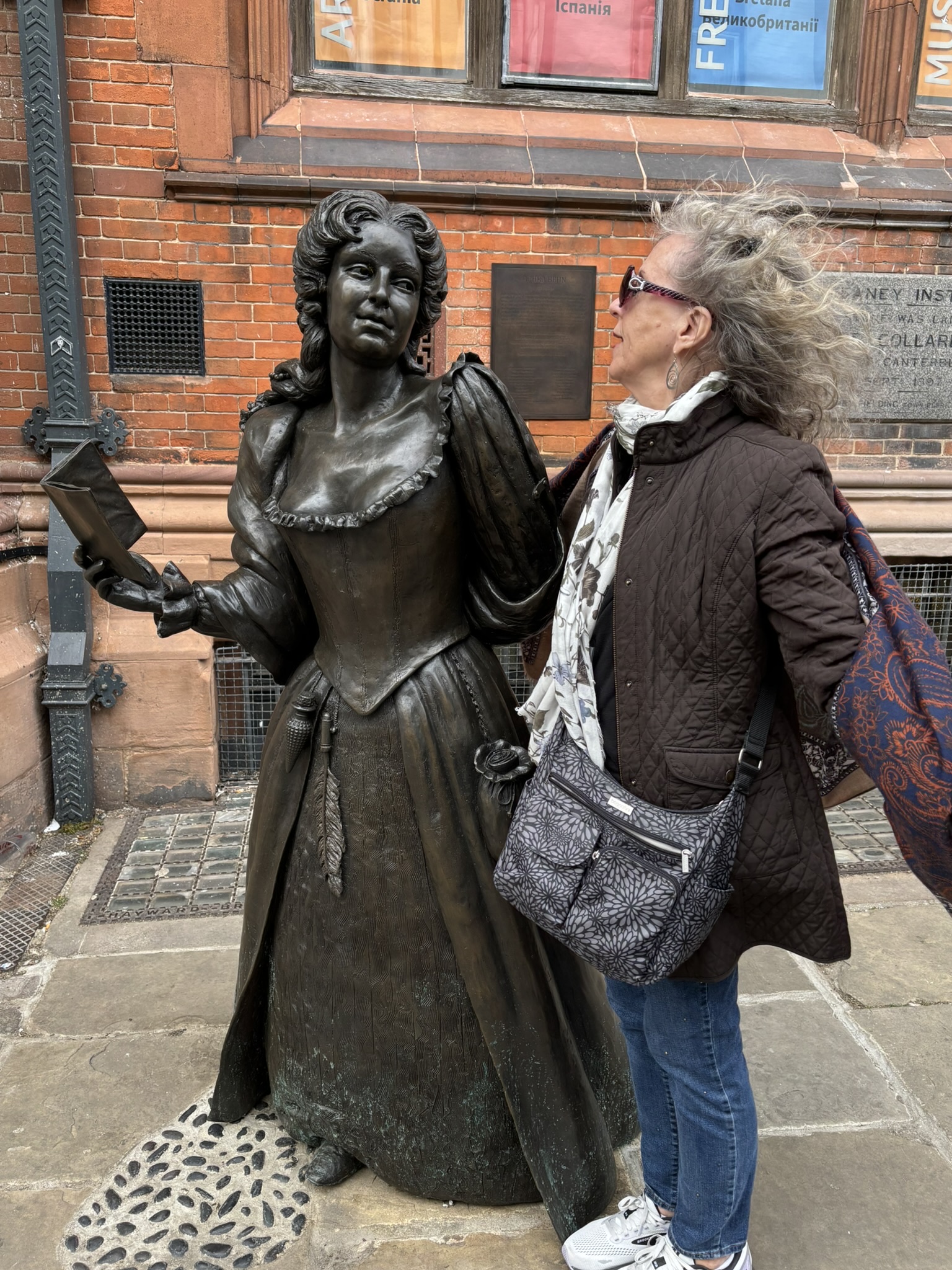
Another draw here was the statue of Aphra Behn, lately unveiled by Queen Camilla – such a tribute to Behn, right here on the main street of Canterbury, she finally getting her just due. See here for an explanation of all the features of the statue – and more here at Fine Books & Collections – I especially liked her foot revealed from under the back of her dress…

And Joy and I giving tribute to this early woman writer par excellence:

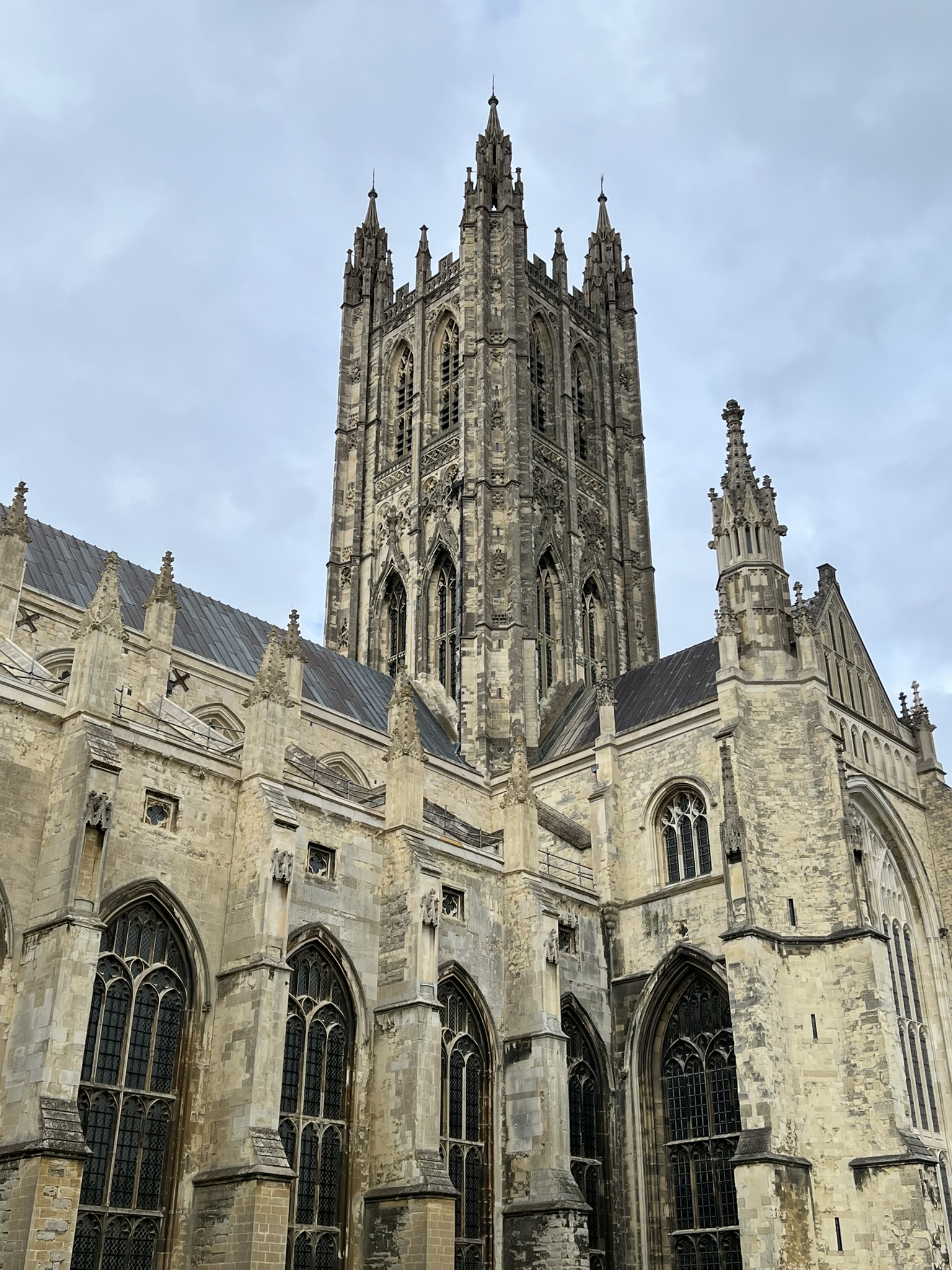
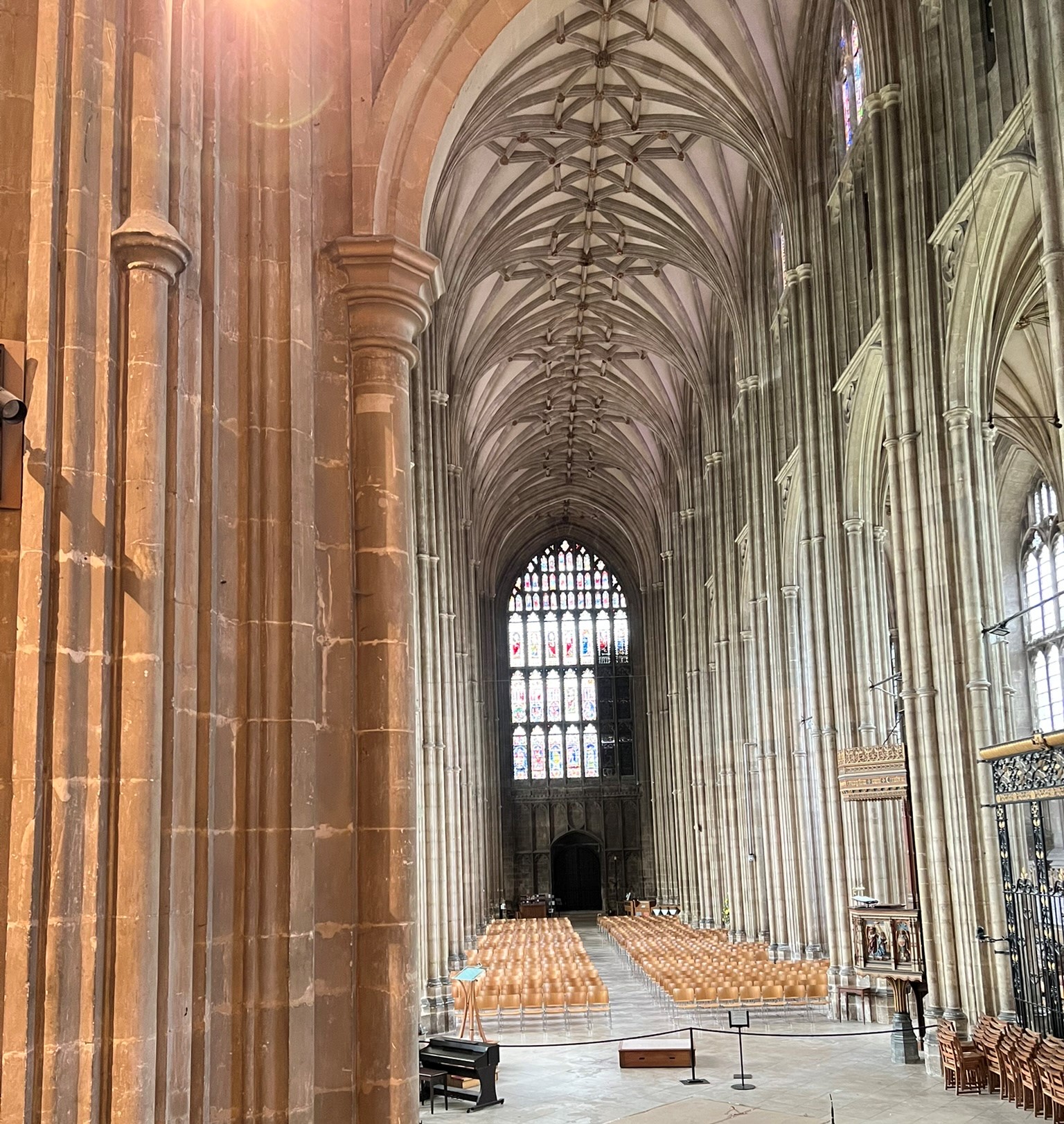
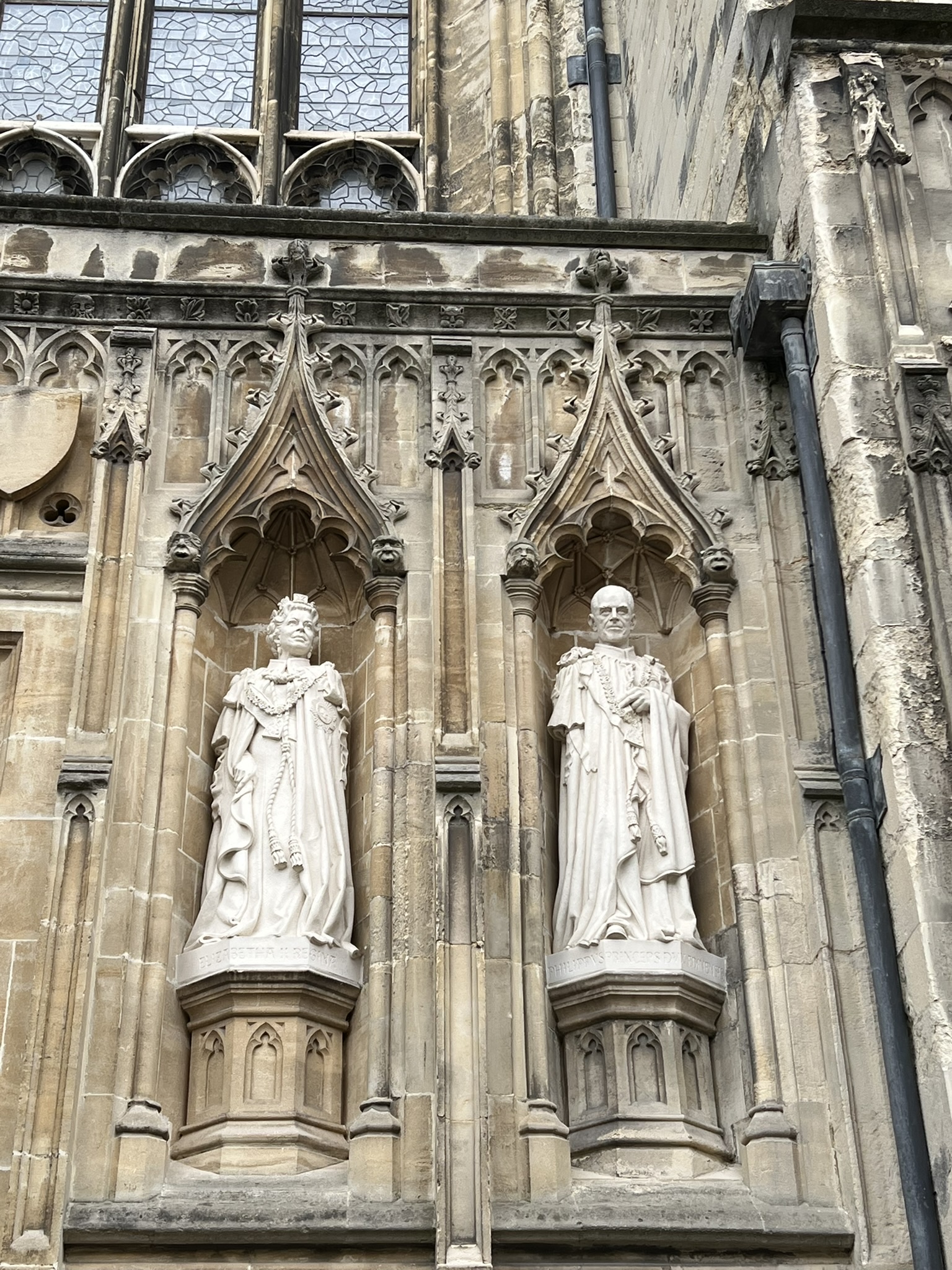
Our walk around Canterbury found us in delightful conversation with a gentleman who asked where we were from: Joy says California – “You must be a hippie” he says. I in South Carolina but from Vermont, and he goes into rhapsodies about Bernie Sanders! [Bernie’s brother has long lived in England and has served in the Labour Party, and this fellow apparently knows him…it was good to have a conversation about the troubles in the US right now – everyone sympathetic to us but also not appreciative of the tariff situation and concerns about ally relationships…] – it was an enlightening conversation, but we were off to Evensong – which was beautiful, as always, – reserved seats just for JASNA, and though we were unable to take photos during the service, I captured a few on the way out…and the exterior [much restoration work going on covering up the main entrance]:

So, until tomorrow, when we leave our gorgeous Chilston Park Hotel and head to Winchester for four nights, by way of Worthing…

c2025JaneAustenInVermont

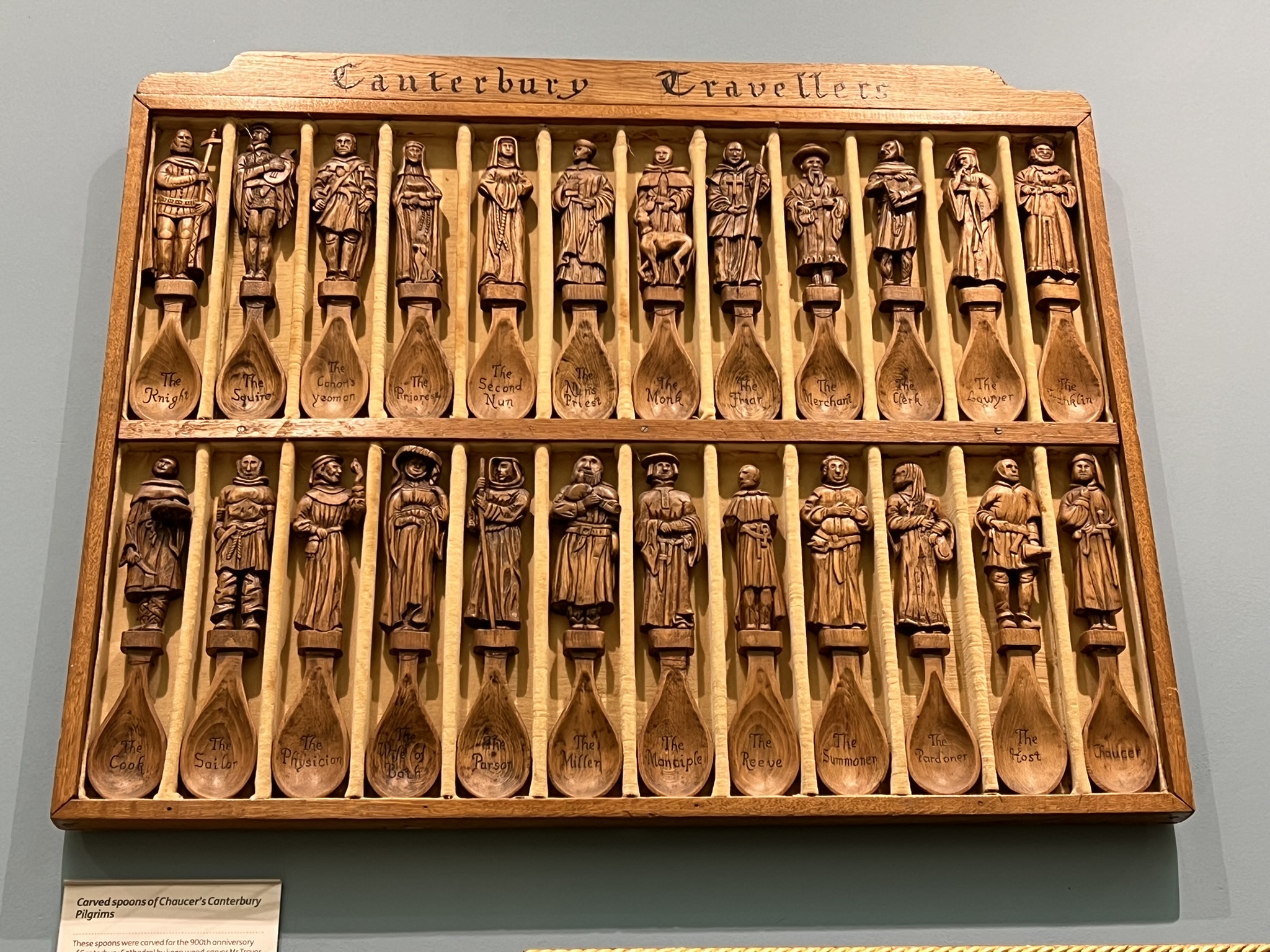
Feeling a bit like a “Canterbury Traveller”… [from the Beaney Museum]

and I loved this:

Austen Literary History & Criticism · Georgian Period · Great Britain - History · Jane Austen · Jane Austen Circle · Jane Austen Genealogy · Jane Austen Societies · JASNA · Literature · Museum Exhibitions · Regency England · Social Life & Customs

Adventures with Jane! ~ Day III: Sevenoaks, Knole, and Tonbridge

Another day begins with a full English breakfast in this lovely morning room at Chilston Park, the piano serving as a buffet table!:

[One of the hardest things about returning from travel in England is the loss of that daily English Breakfast – if one had a maid, it could be sorted, but alas! I do not…I am the maid and chief swabby…and cereal works just as well to start the day, or so it has to…]

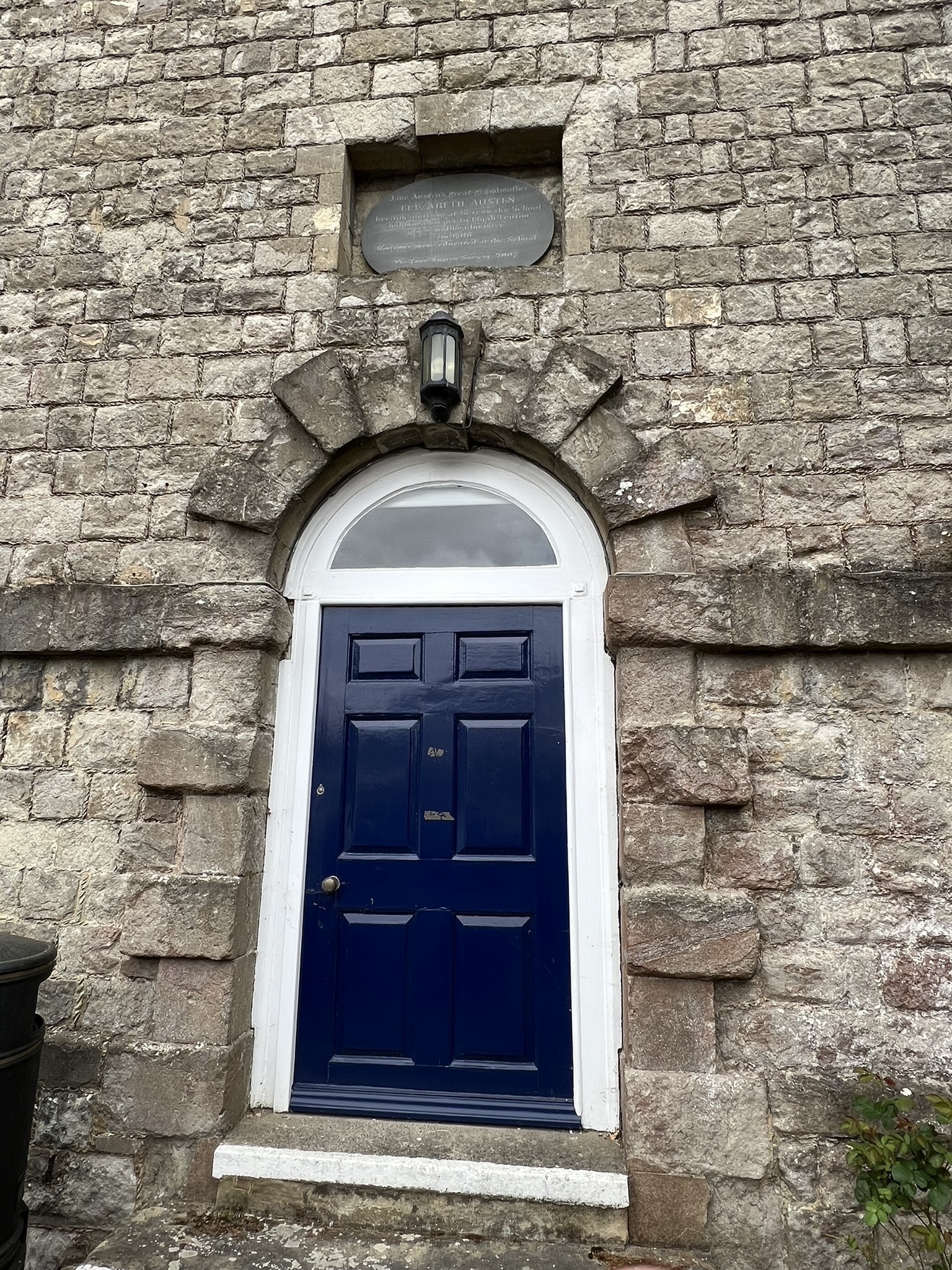
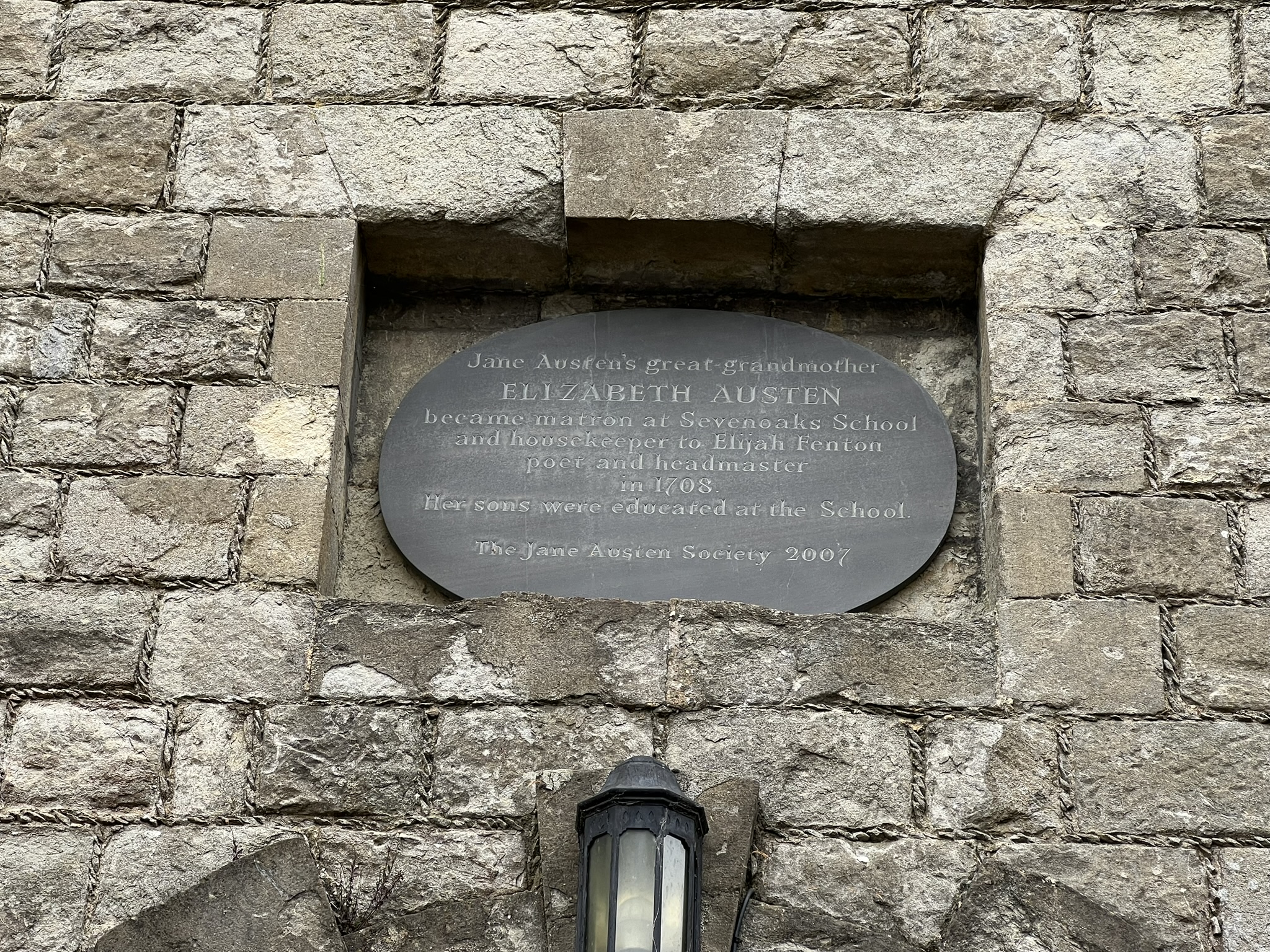
We are off today to Sevenoaks to learn more about the John Austen family. Several members of the Kent Branch joined us again – we walked down the High Street to see the Red House, where George Austen’s uncle Francis lived, Sevenoaks School where George’s father William had been a pupil, and to learn more about John Austen’s wife Elizabeth Weller, Jane’s great grandmother. Weller had to take a housekeeping job at Sevenoaks School in 1708 to keep her family together –

Here is the plaque to her on the Sevenoaks School building, a fitting tribute to a very strong woman in Austen’s ancestry.

You can read more about Weller in this recent Persuasions On-Line essay by Azar Hussain with an extensive bibliography for further sources on this side of the family.

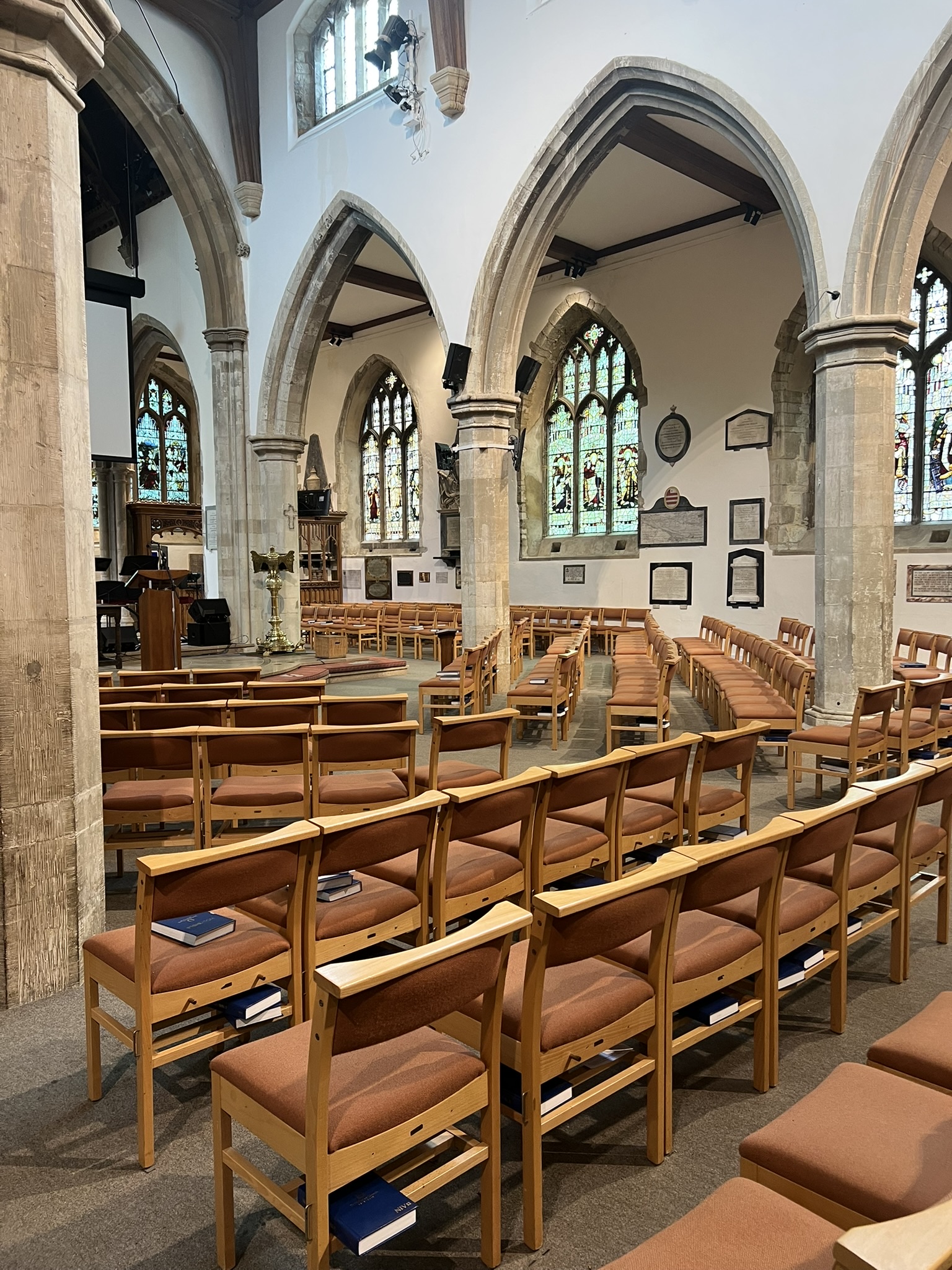
Then off to visit yet another St Nicholas Church, where a number of Austen family are buried, and where the Kent JAS members offered us some fine refreshments before we wandered around the churchyard [you can see it is now freezing!].

[You can just make out the “Austen”]

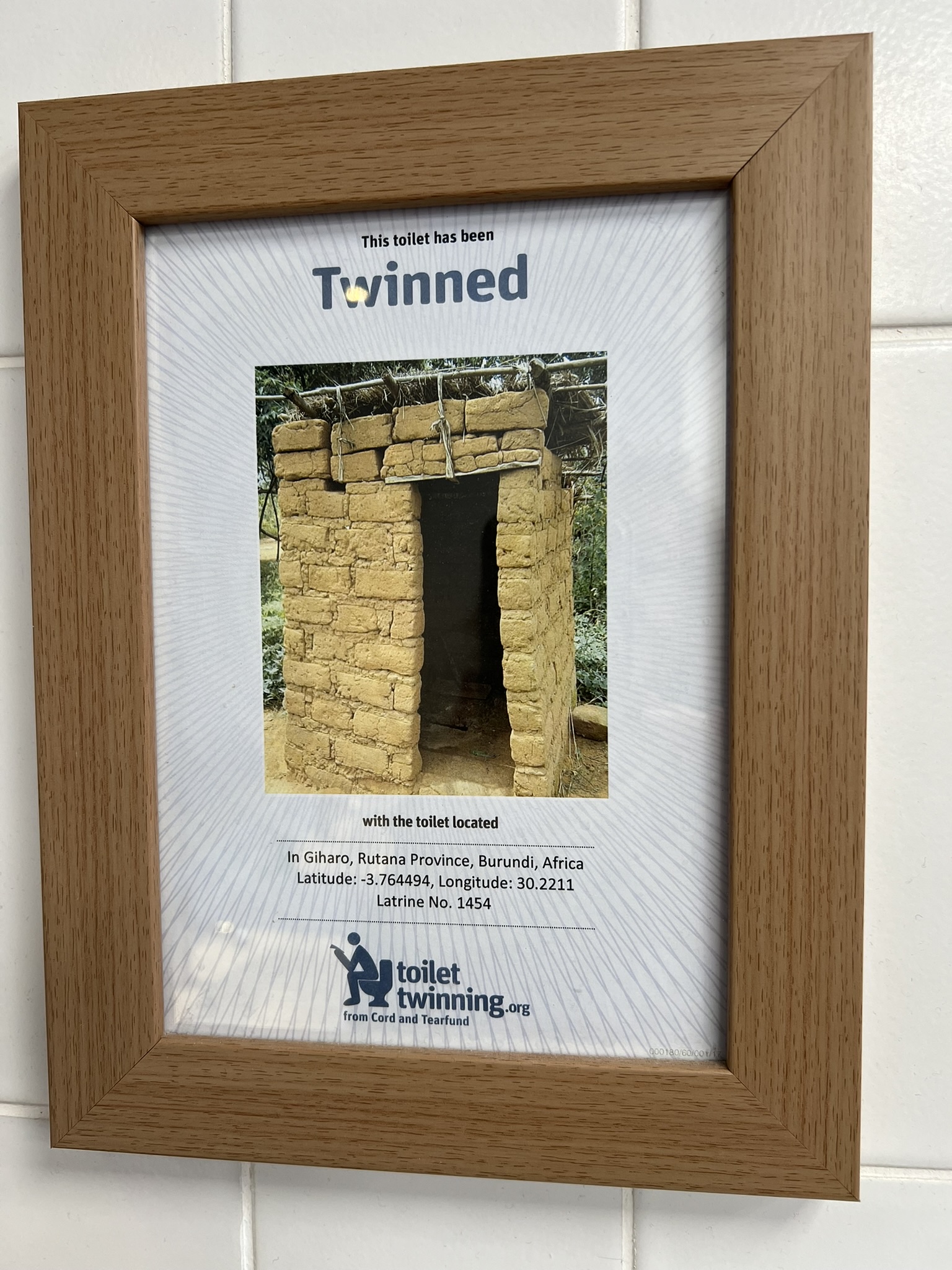
And another “Twinned Toilet”!

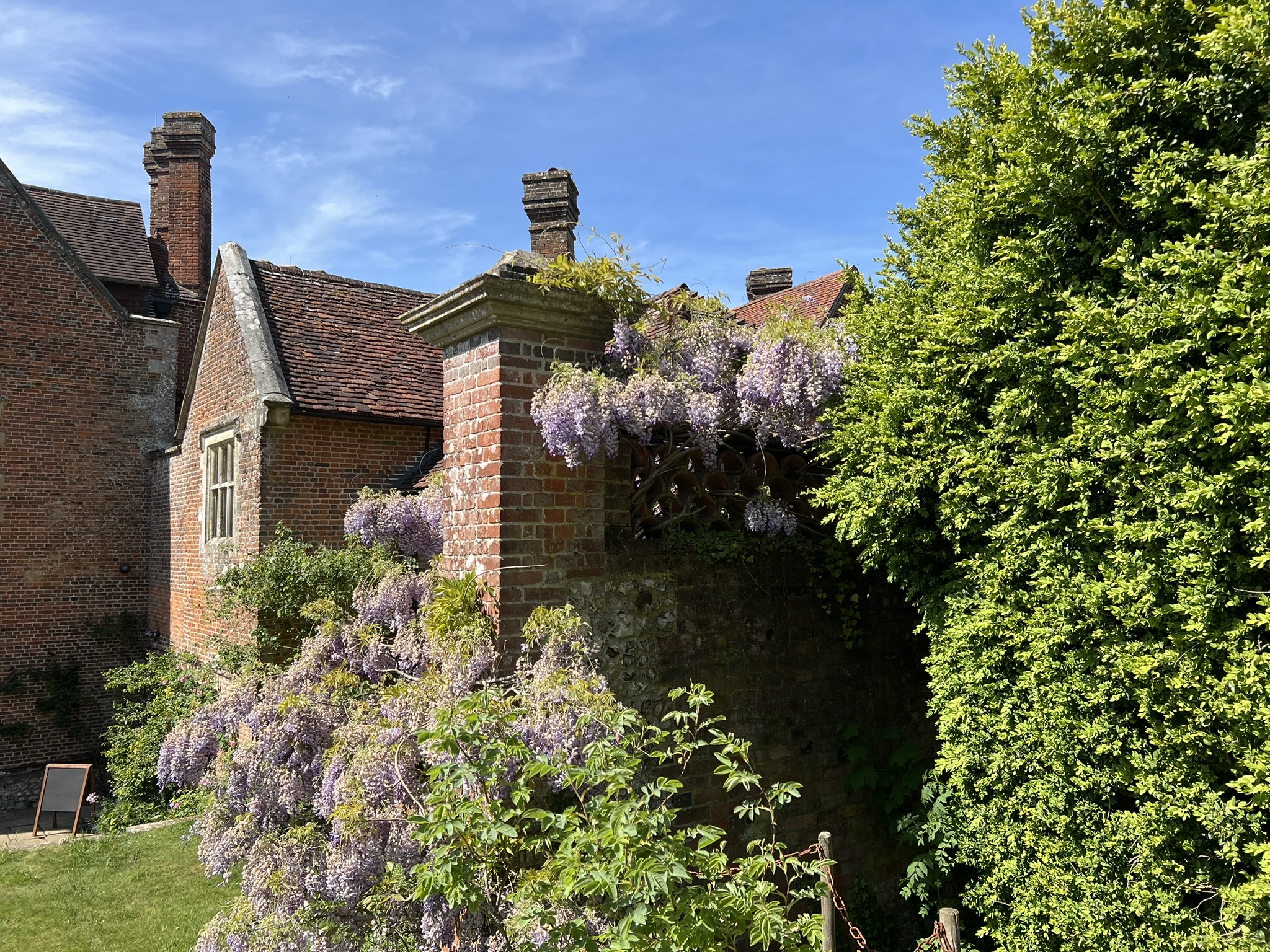
And another wisteria fix:

[NOTE: Sheila Johnson Kindred wrote a fine blog post about this whole area of Kent – you can read that here.]

********

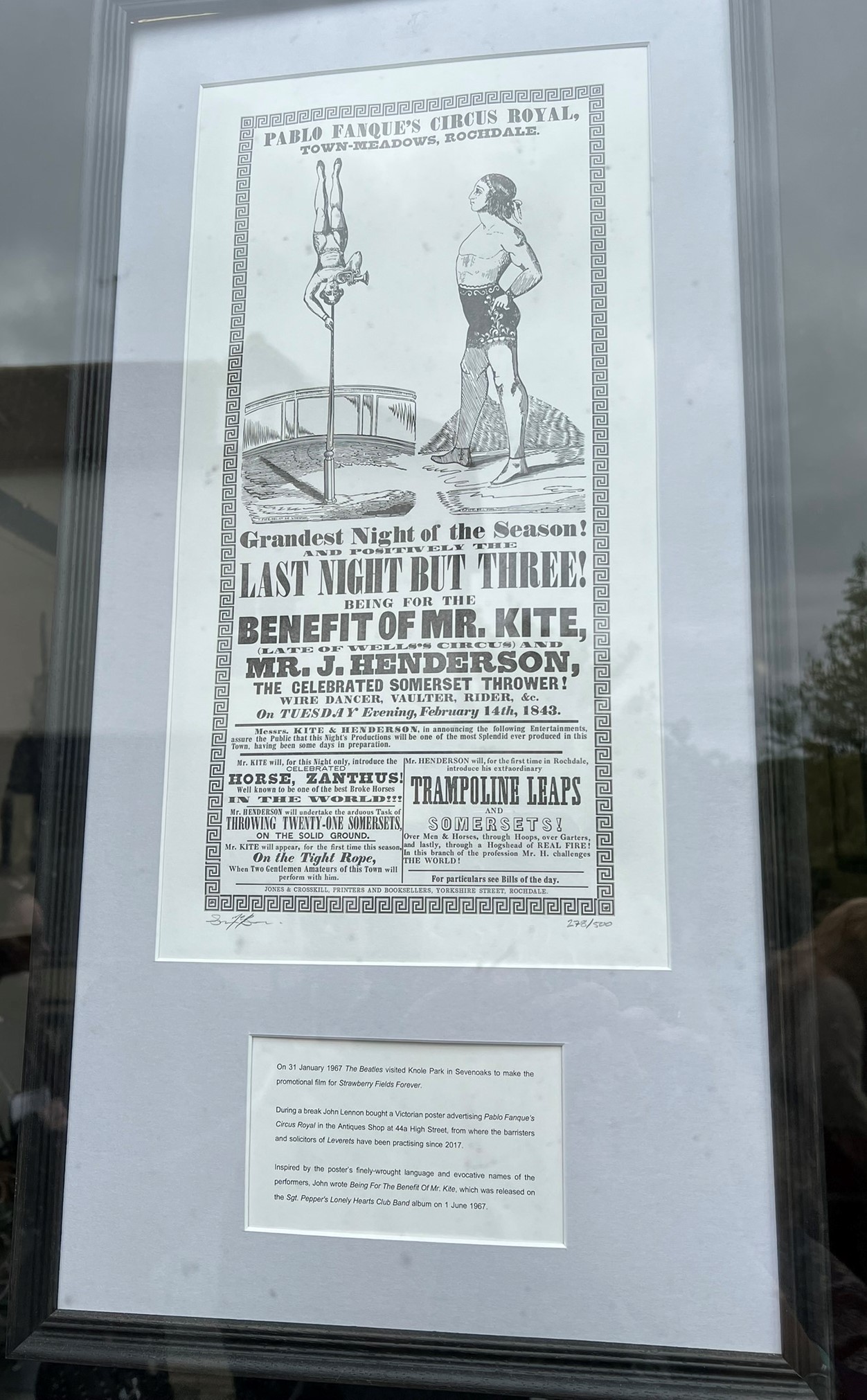
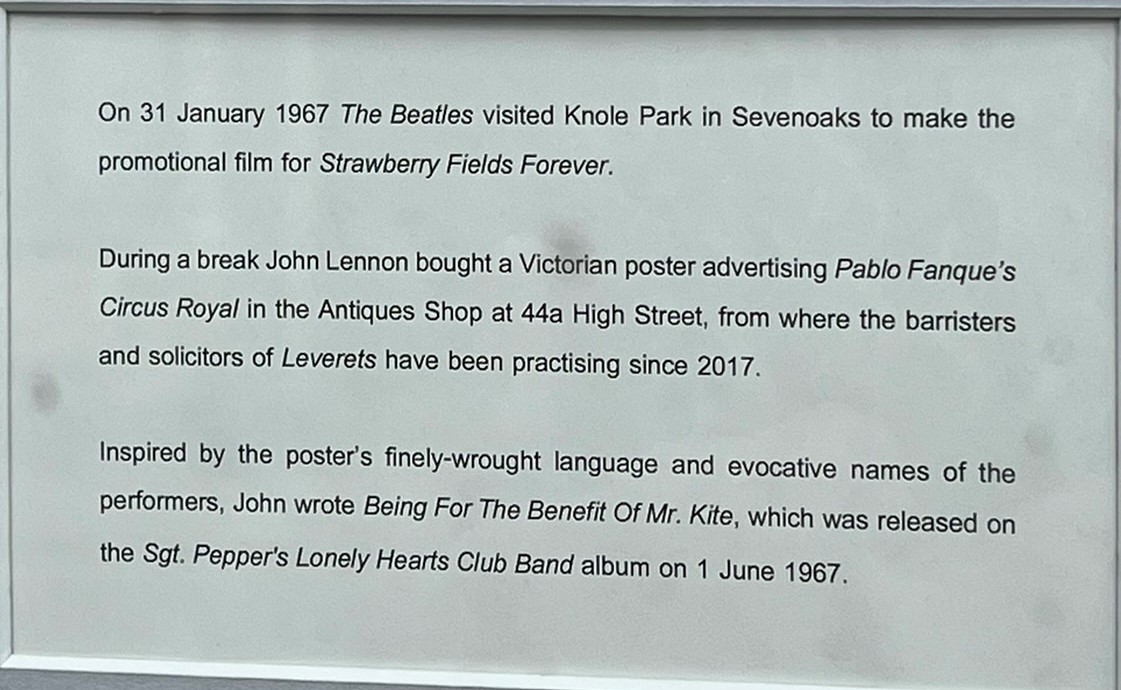
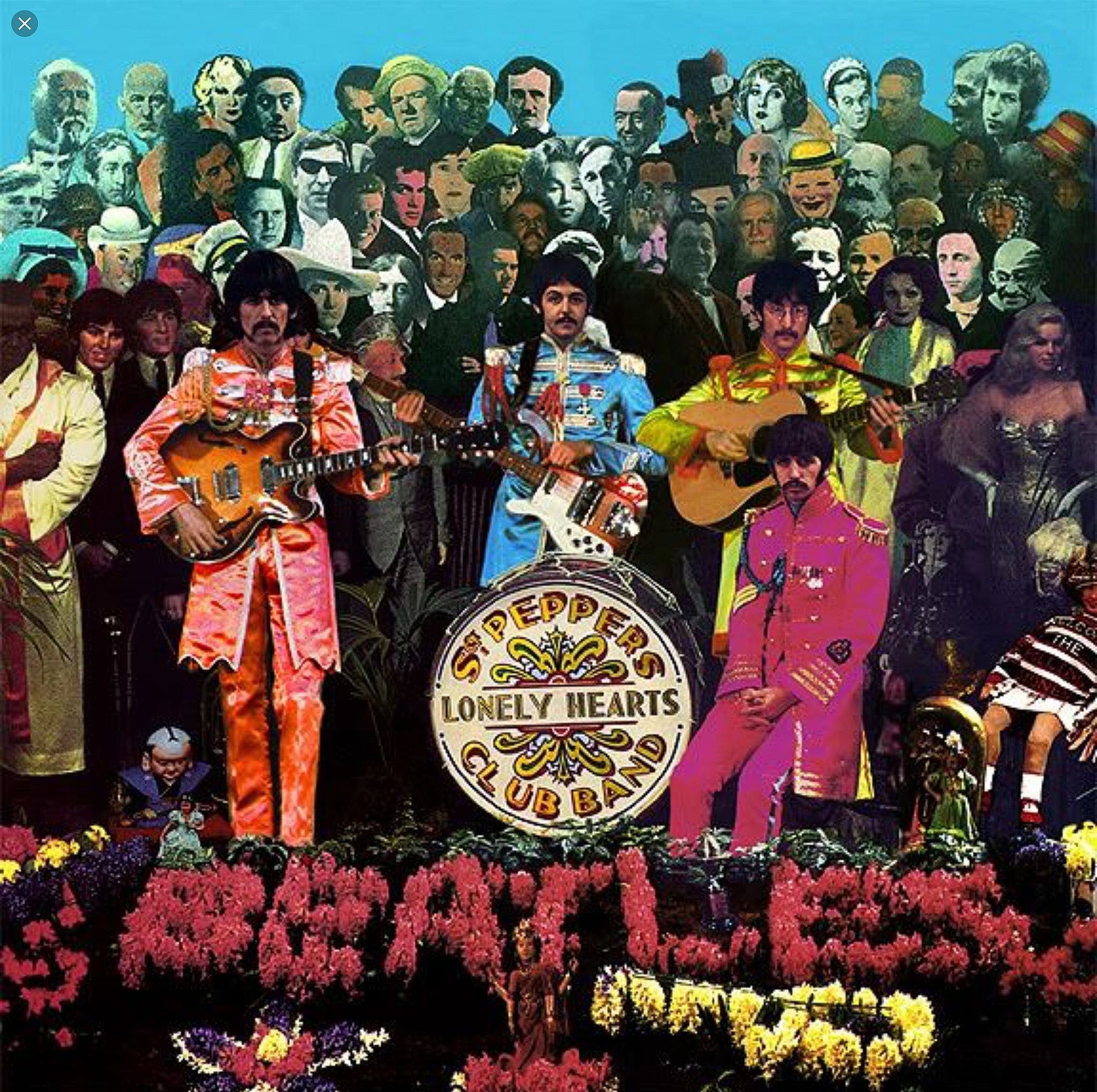
A Beatles aside: a quick return to the 20th century with this advert in a window in the former antique shop at 44a High Street – you can read about it on this sign and how John Lennon made a song from it all…on their Sgt. Pepper’s Lonely Hearts Club Band album:

***********

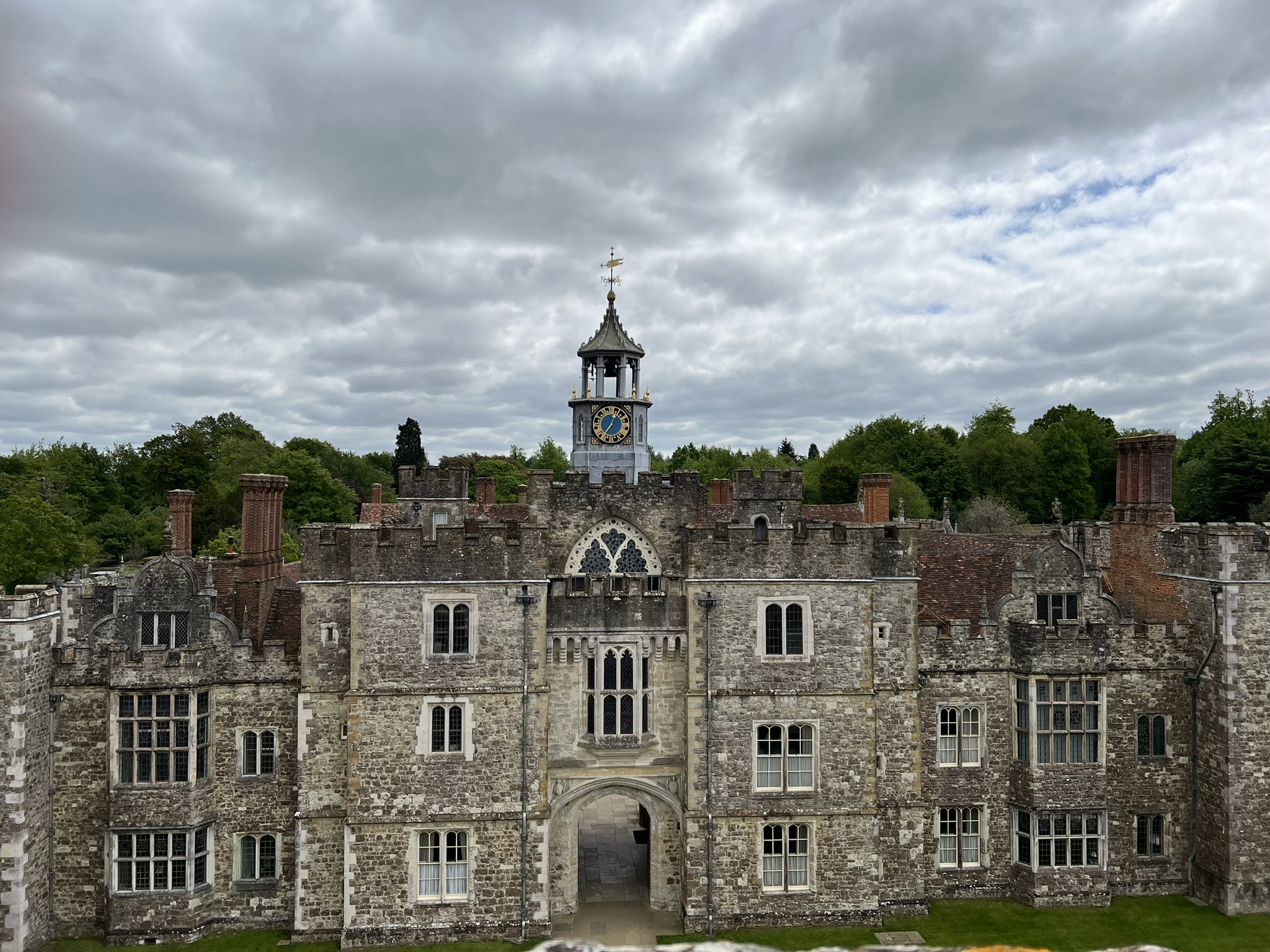
Ok, now we head back to the 15th century – we are off to Knole, one of the largest country houses in Britain, and in the hands of the Sackville family since 1605 [and now part of the National Trust]. The history here is startling and a guidebook essential to understand the intricate maze of rooms – I could not get out of my mind the joys of playing hide-and-seek in such a place, participants never found and now likely molding skeletons around every corner. The history covers every century since its inception, the walls filled with portraits of all manner of famous people, rooms you know Vita Sackville-West and Virginia Woolf [writing her Orlando] knew well. I loved it here, and was so engrossed I forgot to use my camera! – but here are a few of things that spoke to me – none of this does justice to the place – you must add it to your next trip itinerary:

The exterior:

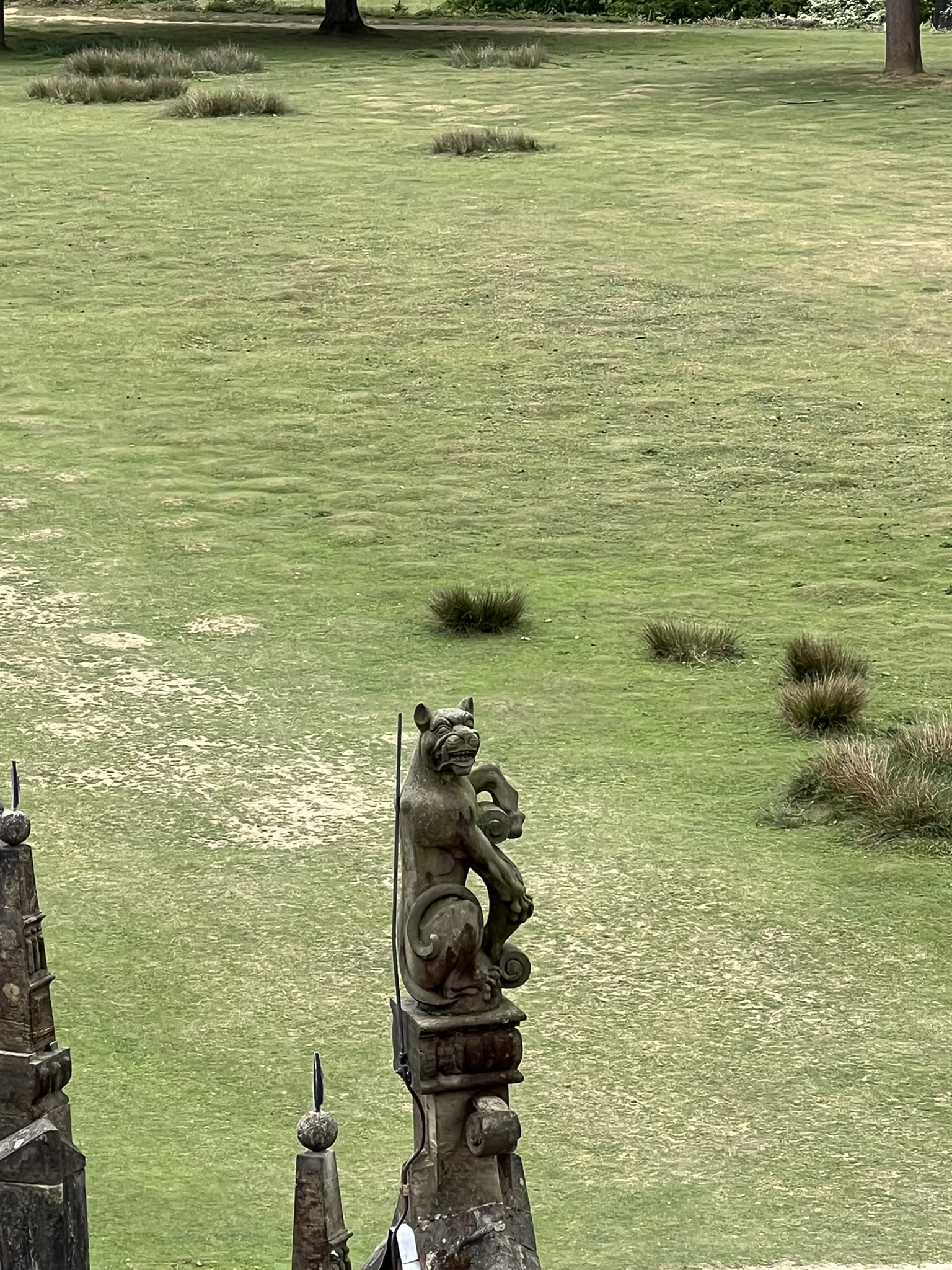
The leopard stone statues:

The Great Stair with its stunning artwork [leopards here too]:

Guess who?! [he is everywhere…]

The Orangery, awaiting the upcoming Beatrix Potter exhibition:

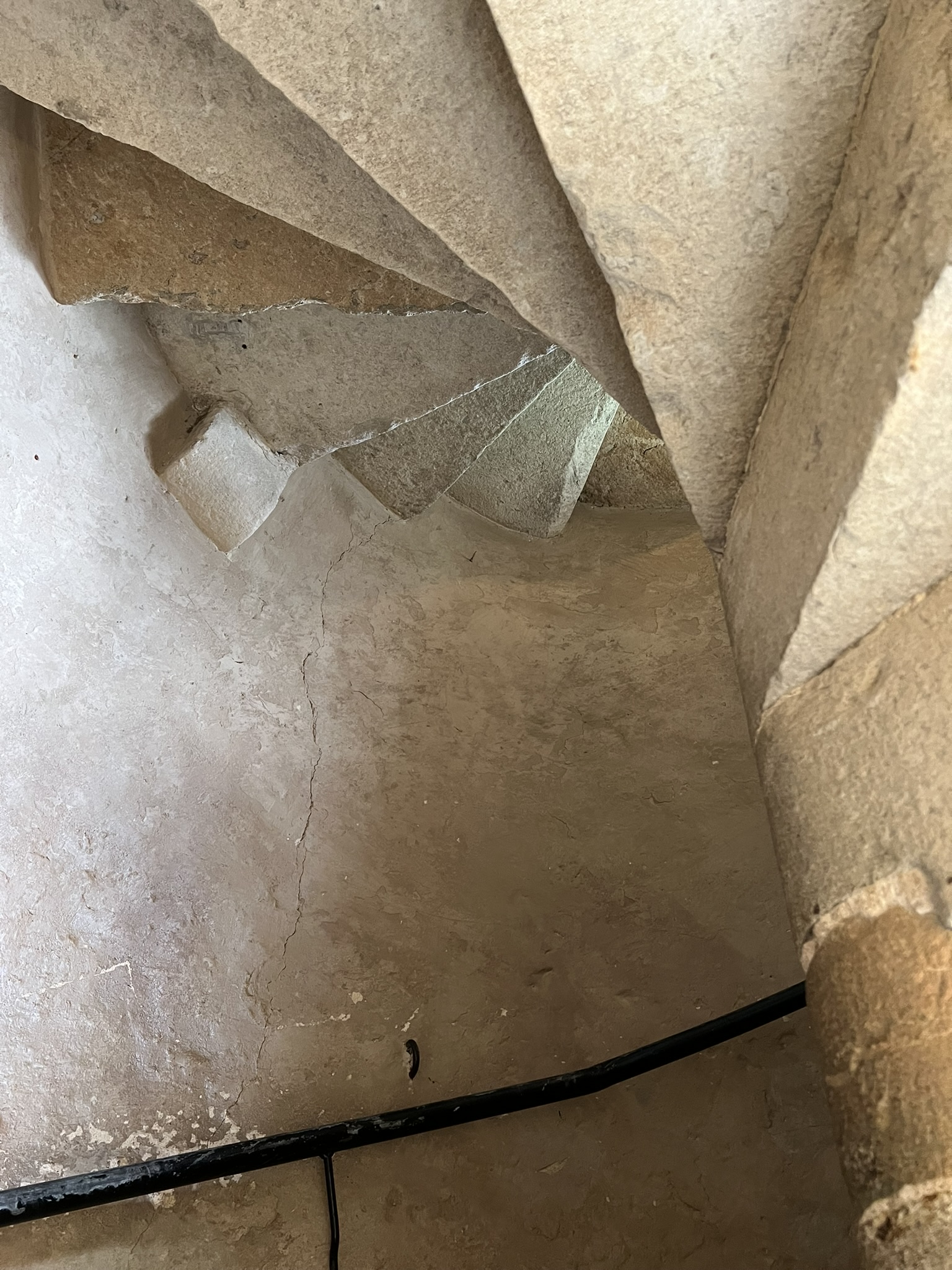
The winding staircase to Eddy Sackville-West’s gatehouse tower [do not attempt after a glass of wine…]:


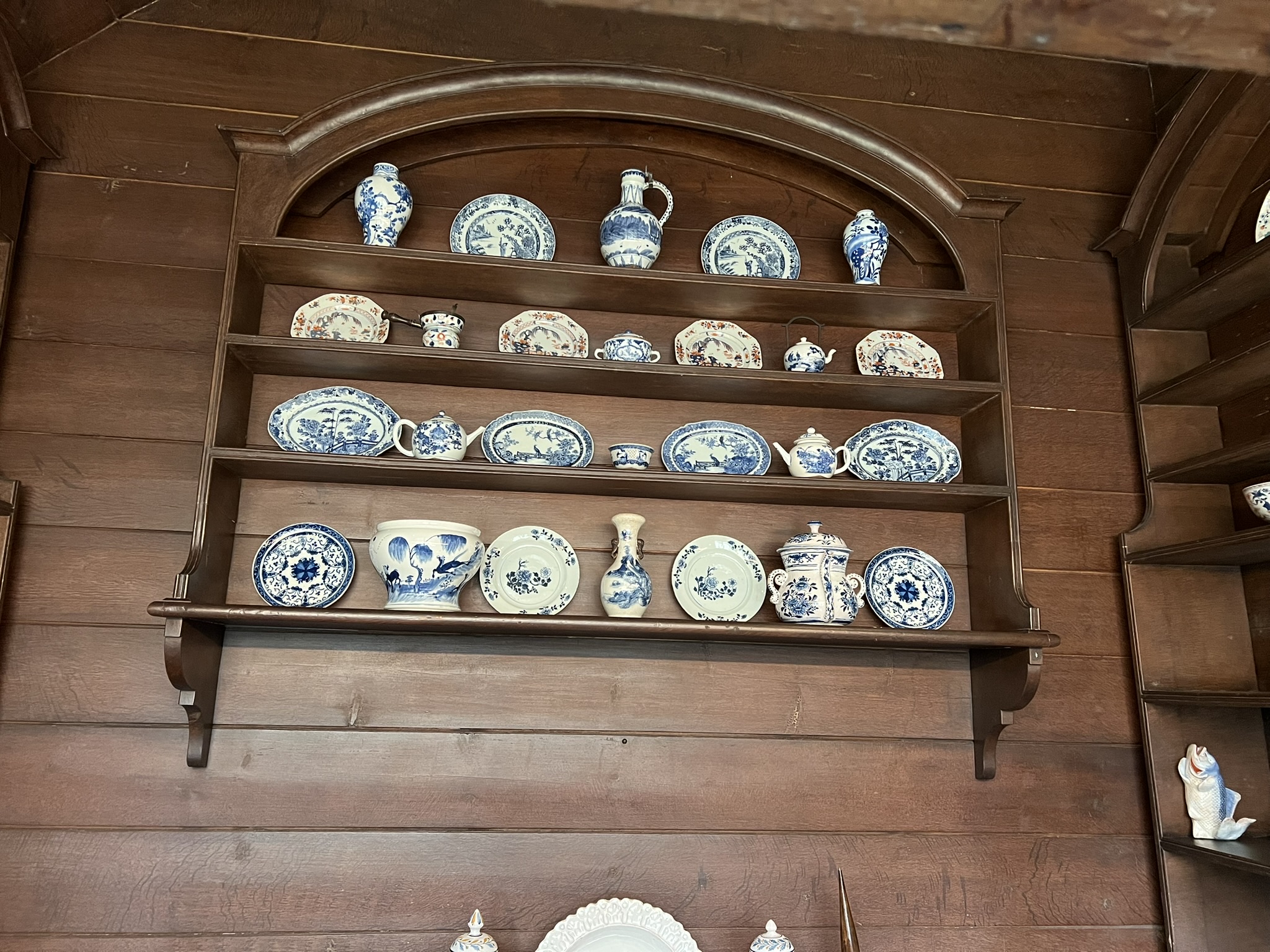
I was captivated by the story of Lady Betty, Lady Elizabeth Germaine (1680-1769), who lived at Knole in the 18th century – her bedroom and dressing room are presented as historically accurate to her times. She had a passion for porcelain, and here on display are some of her blue and white collection [my own passion…]

We were on our own for lunch and the tea room here was most accommodating…

It is a worthwhile endeavor to give Knole and its history a bit of your time: at the National Trust site, and Wikipedia does not disappoint.

*******************

More Austen family history as we drove to Tonbridge, to see where George Austen was born in 1731 and went to school; as well as another church visit to St Peter and St Paul’s. You can follow our walk with this guide “In Austen Family Footsteps: A Circular Walk in Tonbridge” – again with the Kent Branch members.

The School:

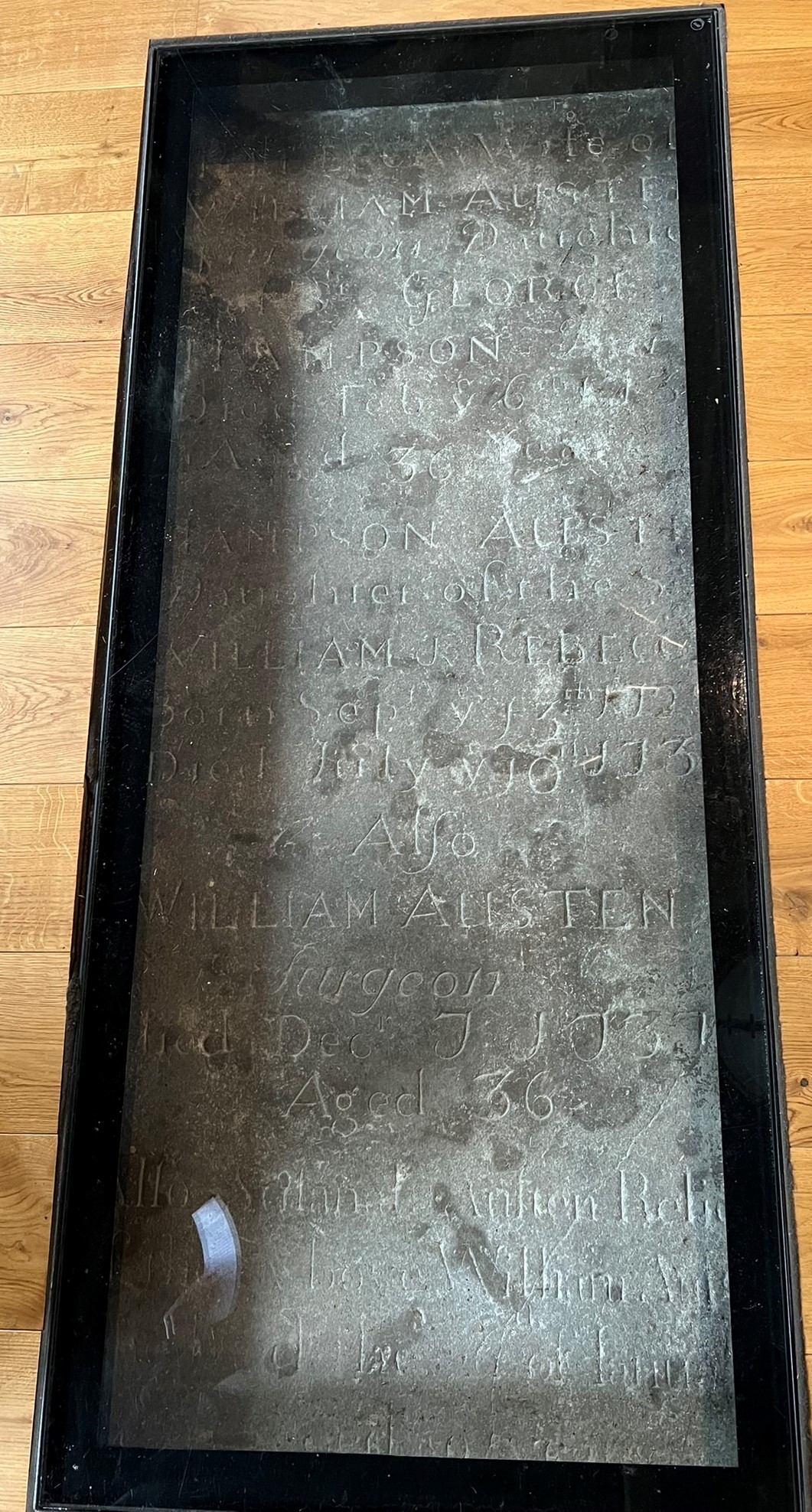
The Church of St Peter and St Paul, where Jane Austen’s grandfather William is buried with his first wife Rebecca Hampson and his second wife Susanna – the grave is now protected with glass so you can read the inscriptions and no more trodding on them:

************

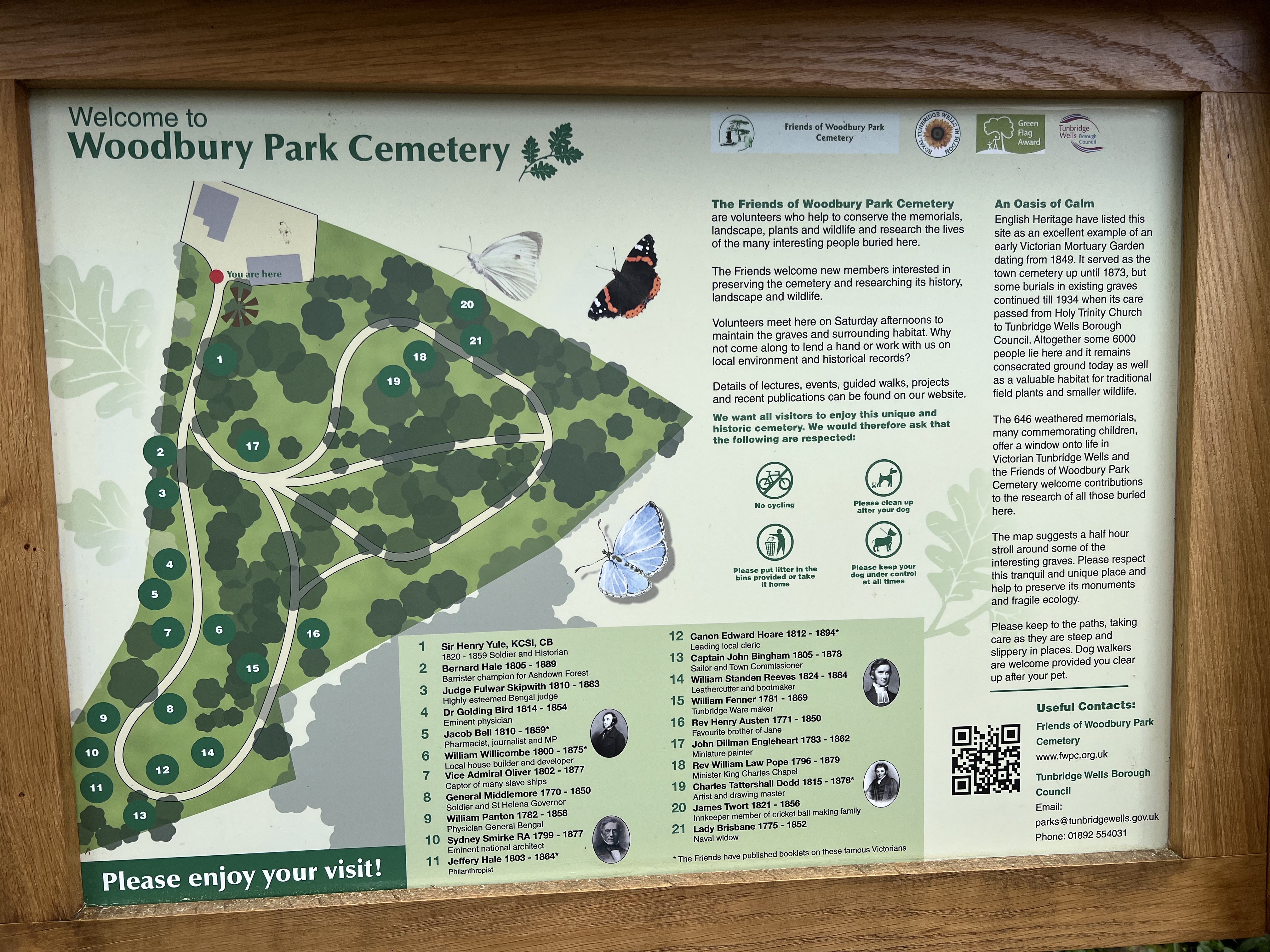
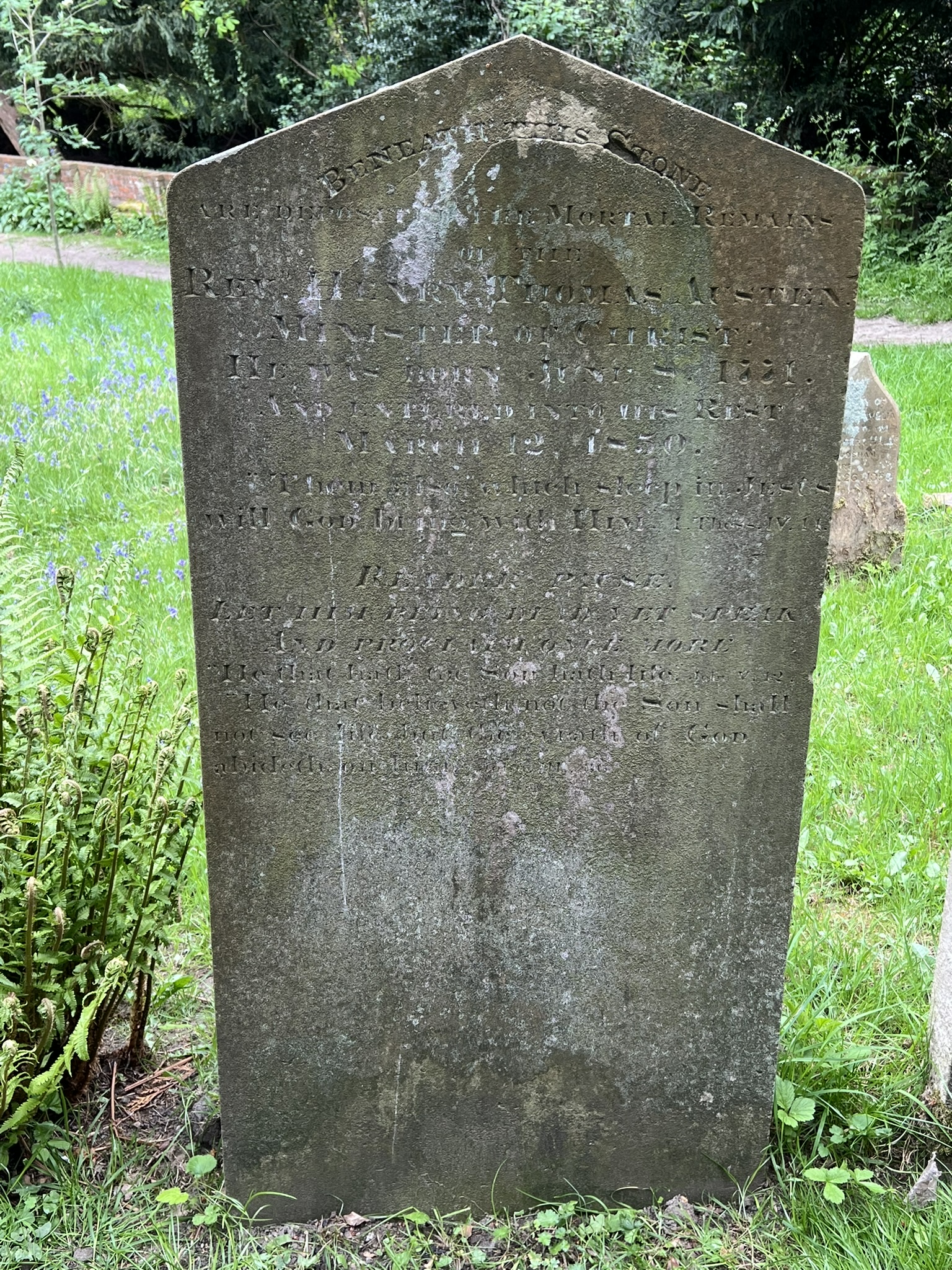
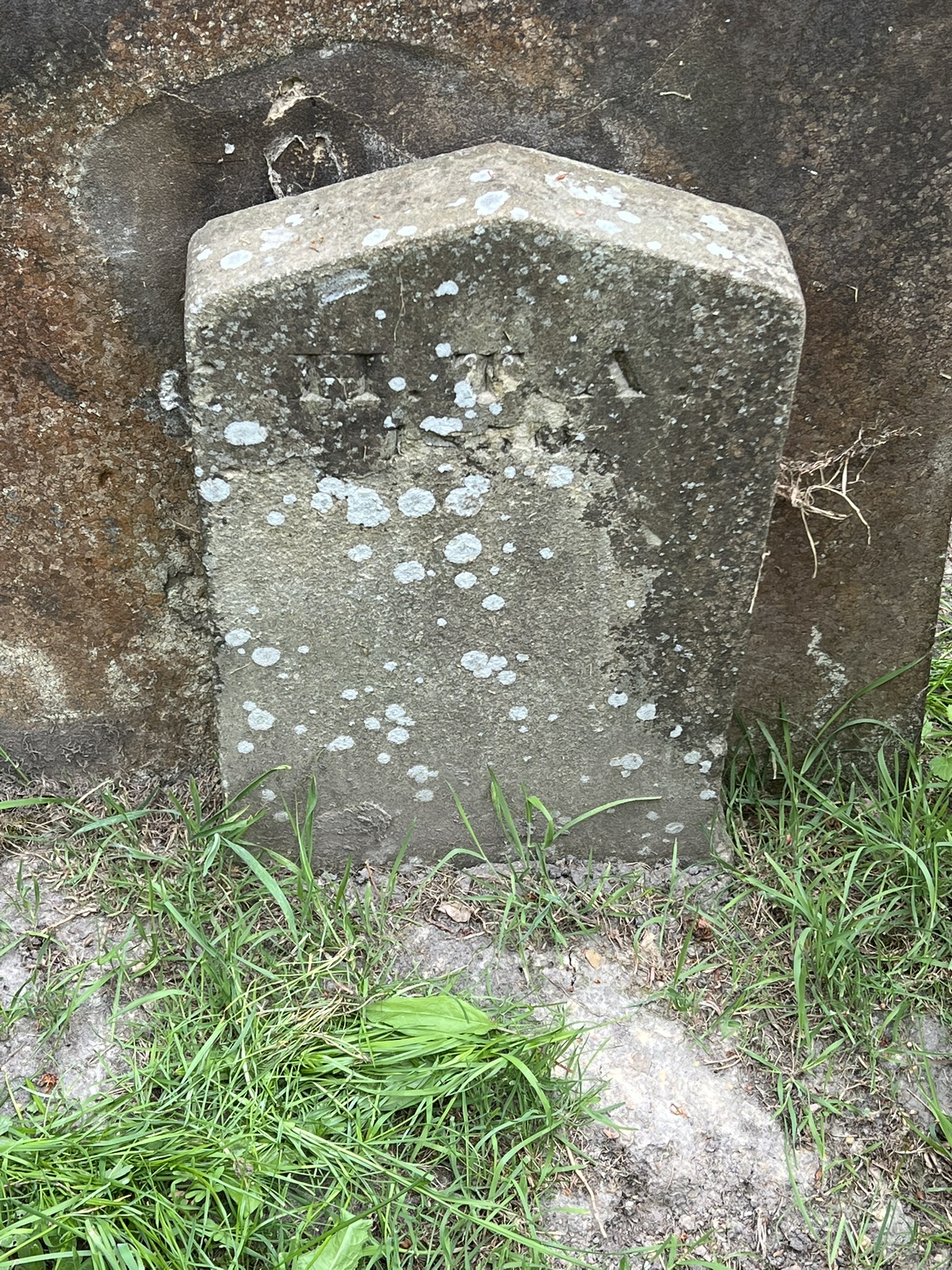
And the day ended at the Woodbury Park Cemetery in Tonbridge Wells, where Henry Austen (1771-1850) is buried, along with several other notables. It is a lovely spot, all maintained by volunteers, with new walkways recently installed. I felt a sadness here, thinking of Henry here all alone, with Eliza buried in the cemetery of St John-at-Hampstead in North London, and his second wife Eleanor Jackson, who died in 1864, who knows where? [does anyone know?] So here lies Henry, the liveliest of Austen’s brothers, the likely model for her various Henrys [Oh! What a Henry!], as well as her publishing champion, all alone in Tonbridge Wells – I was quite overcome really…

***********

Dinner again at our hotel, joined by several of the Kent Branch members who had so graciously guided us at the various spots to give us a deeper understanding of George Austen’s family in Kent. I hate to repeat “a day well-spent” but it was, as each proceeding and succeeding day proved – the “Beautifull Cassandra” would be quite jealous with her only one such day…

************

c2025JaneAustenInVermont

The hot-air balloon shower in the Montgolfier room:

Austen Literary History & Criticism · Georgian Period · Great Britain - History · Jane Austen · Jane Austen Circle · Jane Austen Genealogy · Jane Austen Societies · JASNA · Literature · Regency England · Social Life & Customs

Adventures with Jane! JASNA Tour Day II ~ Off to Kent…
One of the reasons I wanted to do the JASNA tour this year [other than the doable May option] was in it following the life and times of Jane for her 250th and therefore Kent was on the itinerary. I have been only to Canterbury a million years ago as well as to Dover [for one of the worst crossings in English Channel history – only two people on the ship did not get sick: me and my not-yet husband – perhaps destiny stepped in right then and there…]. But Kent was an important place in Jane Austen’s life, and so I was most curious to visit all the known spots with Austen family connections.

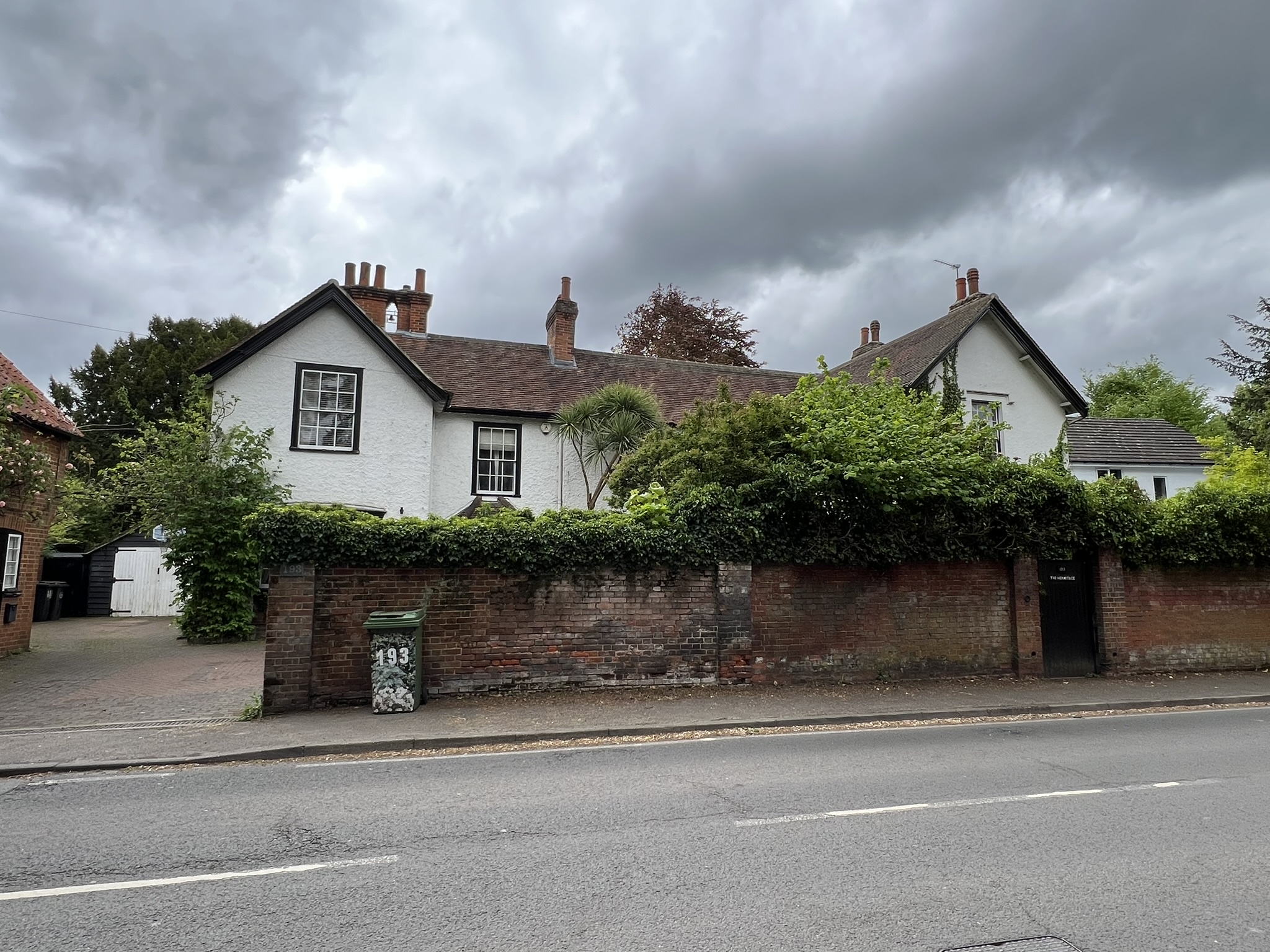
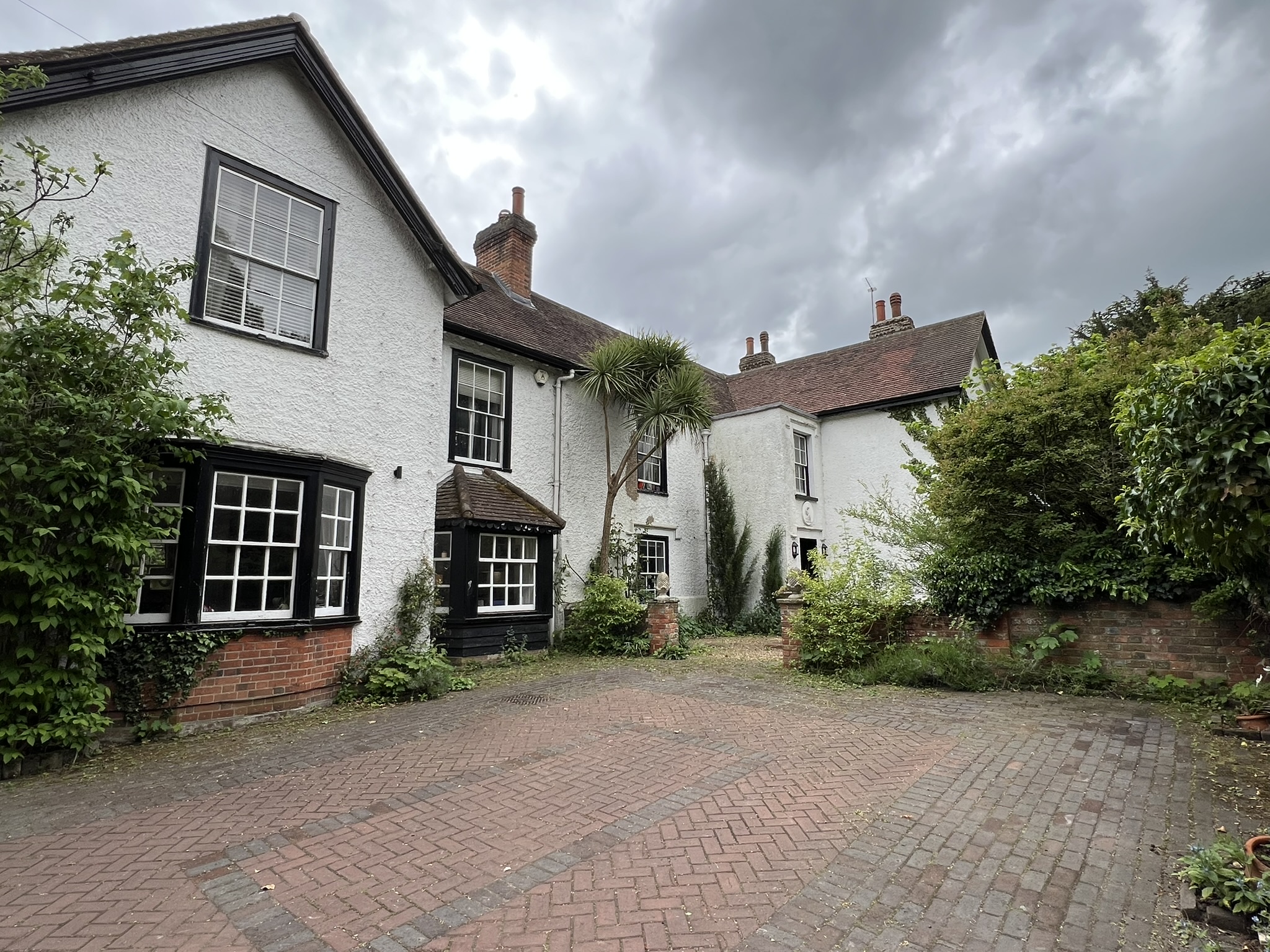
We left Windsor and headed east by way of Surrey to stop in Great Bookham, home to Samuel Cooke as well as another Frances Burney spot on my side-view Burney trek – she lived here from 1793, shortly after her marriage to D’Arblay, until 1802 when they left for France [bad timing – they remained in France for over 10 years due to the Napoleonic Wars]. The home they lived in there is now called The Hermitage:

[it is lovely – they need a gardener…]

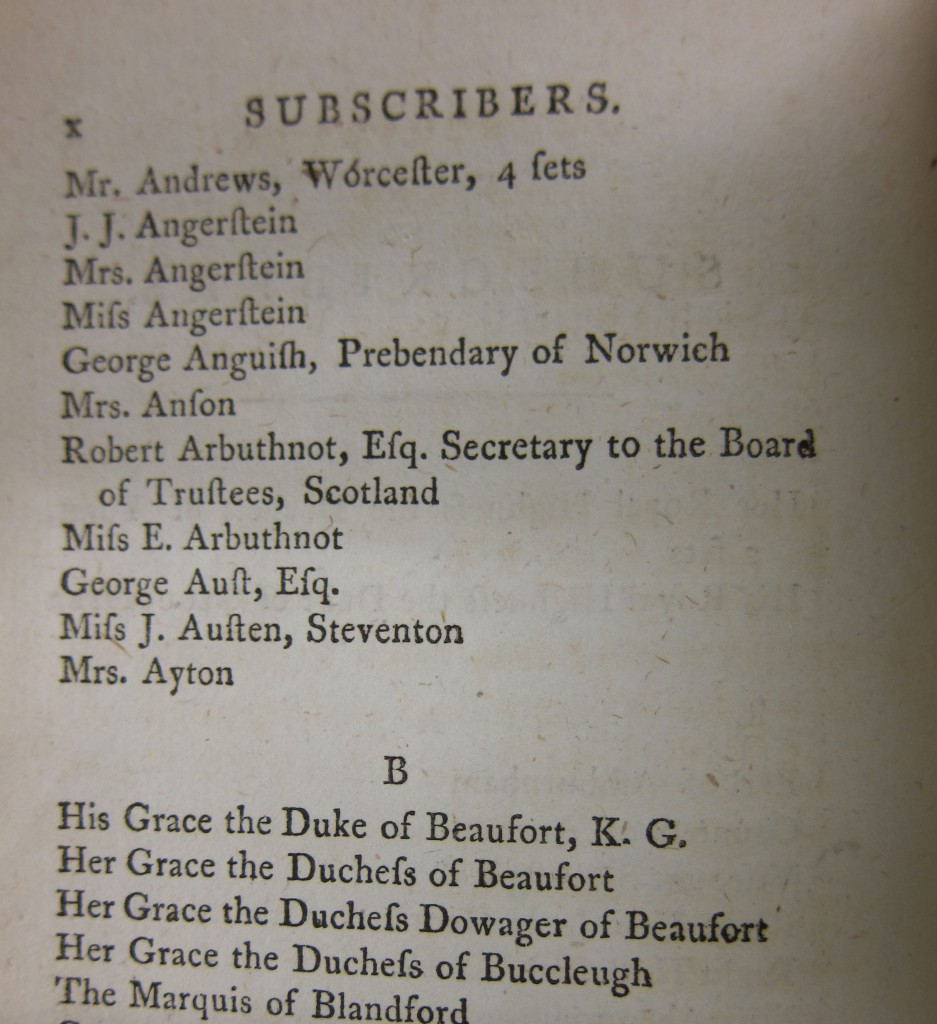
this is where Burney wrote Camilla (1796), the book where Austen’s name first appears in print as a subscriber:

Apparently Burney’s husband General D’Arblay attempted to manage the extensive gardens with military zeal – “he demolished an established asparagus bed and pruned the fruit trees with his sword.” 1

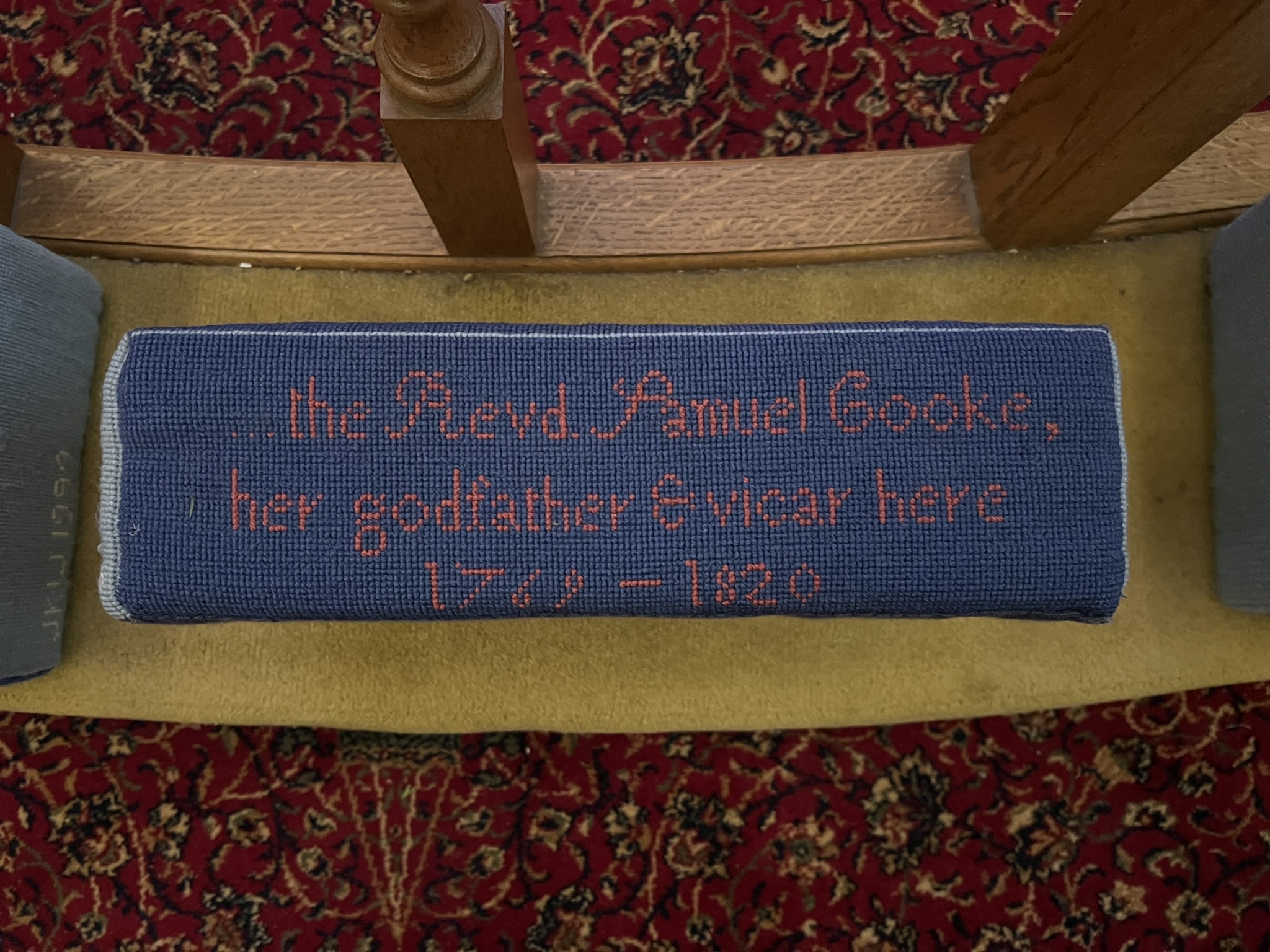
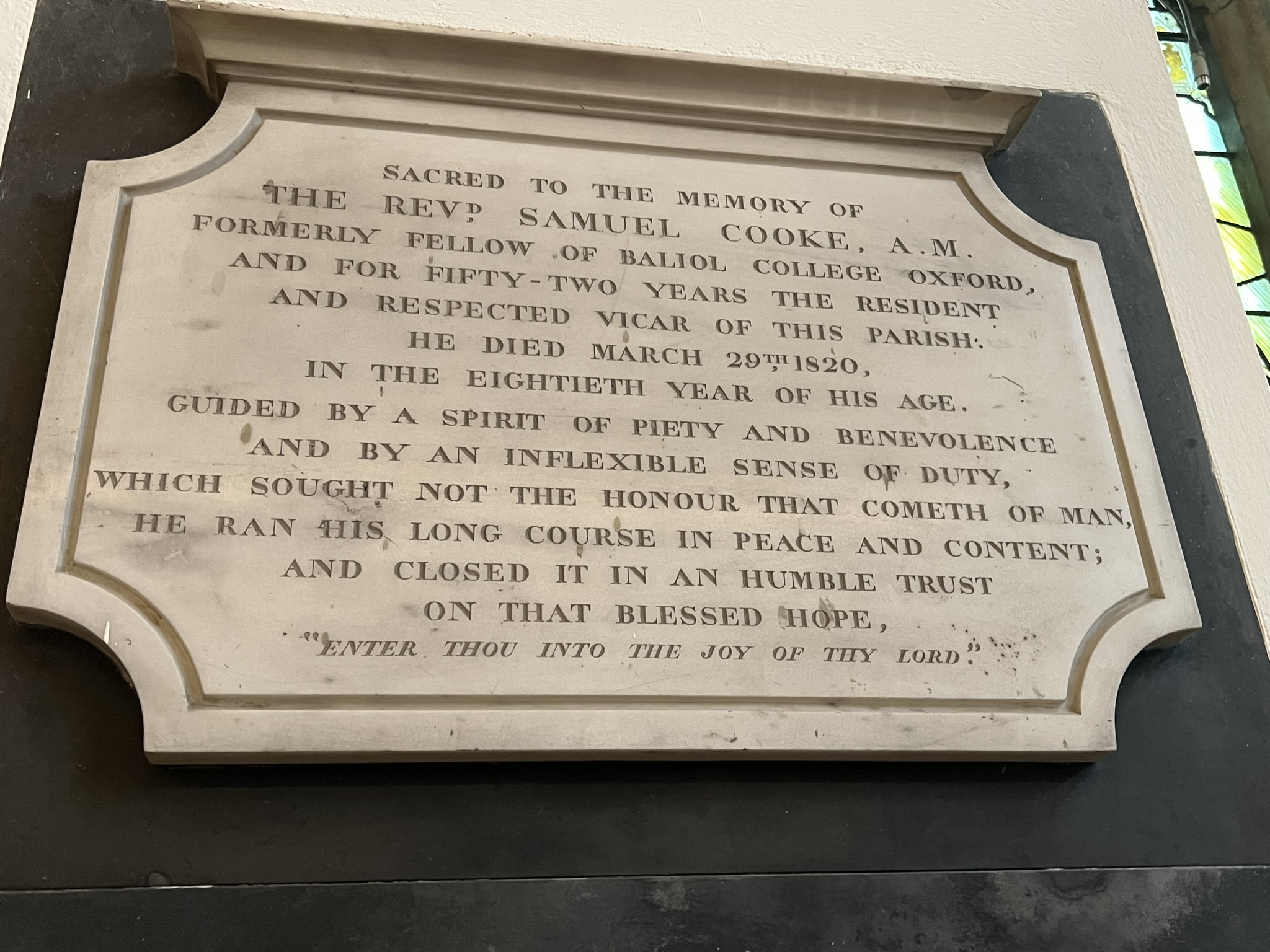
The Rev. Samuel Cooke (1741-1820) was the vicar of this first of our St Nicolas Churches for 52 years…
[notice that some have an “h” and some do not: Nicholas vs. Nicolas– no explanation for this to be found, other than this from the never-wrong AI:

“The variation in spelling (St. Nicholas vs. St. Nicolas) for churches dedicated to Saint Nicholas is due to historical and linguistic shifts. The “ch” in “Nicholas” was adopted in the 12th century in English, based on the Greek pronunciation of the “chi” letter in the name’s original Greek form. While “Nicholas” is the more common English spelling, “Nicolas” is occasionally used and reflects a more direct pronunciation of the Greek origin.”]

Samuel Cooke married a Cassandra Leigh, first cousin to Austen’s mother, also named Cassandra Leigh; he was Jane’s godfather [one way to lose your mind on any given day is to try to absorb the genealogies of the Austen, Cooke, and Leigh families…] and the families were close.

Tony Grant wrote a blog post about this several years ago, so you can visit here for more info.

And here some pictures of the Church:

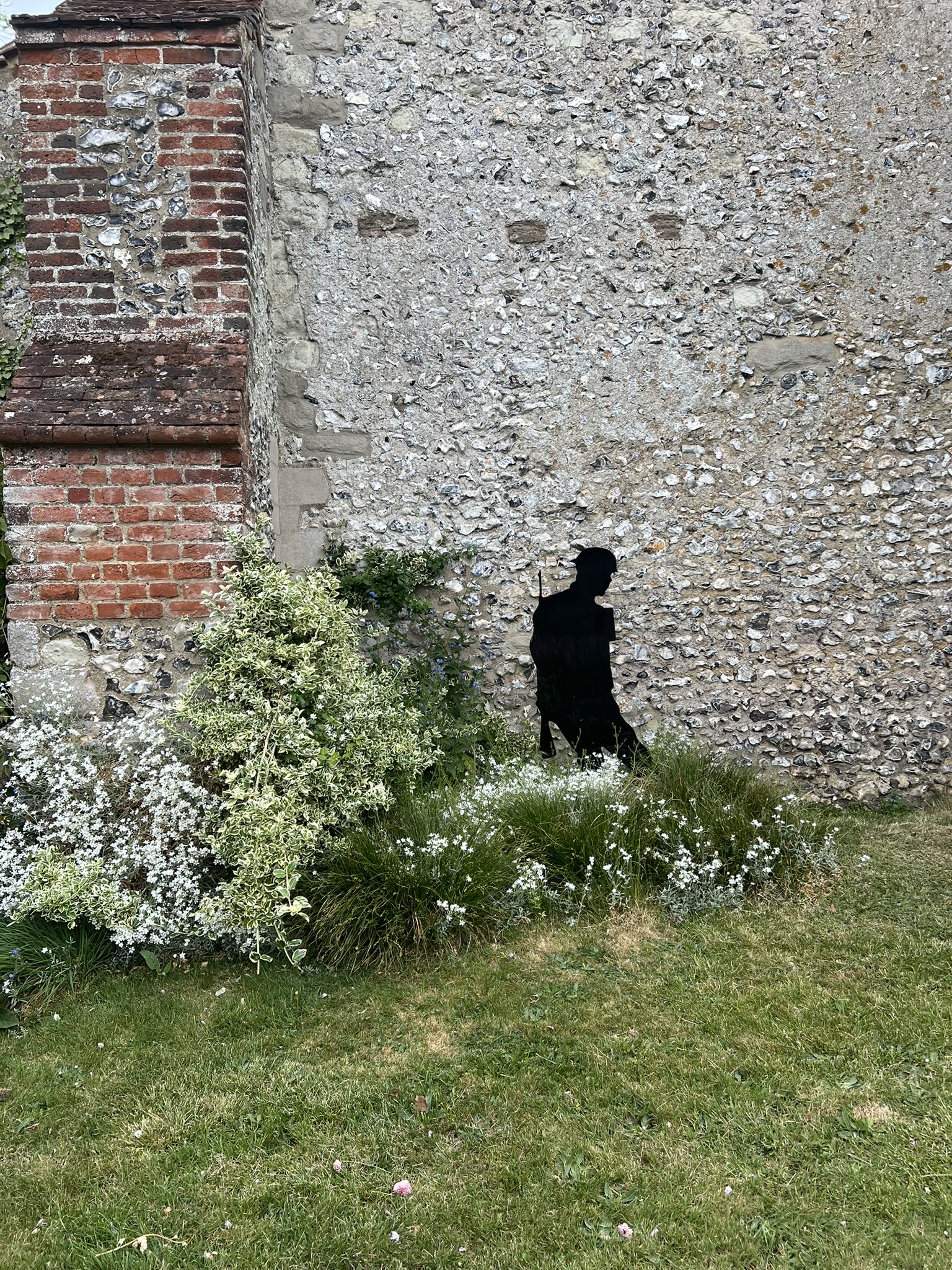
For VE Day

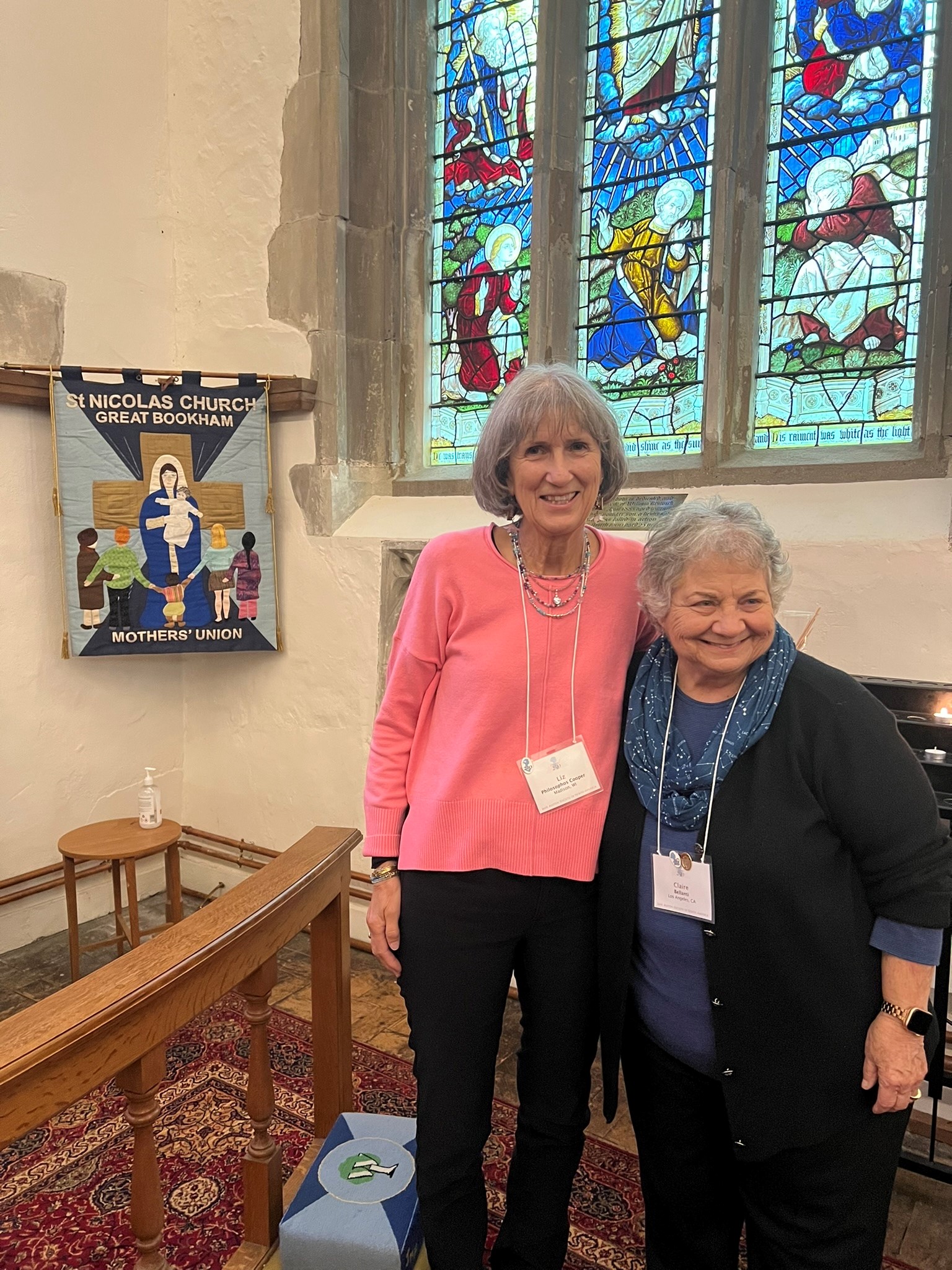
Lucky us! we had both Liz and Claire on our trip!

Found these signs in a few toilets in our travels… you can read all about “Toilet Twinning” here – who knew??]

***********

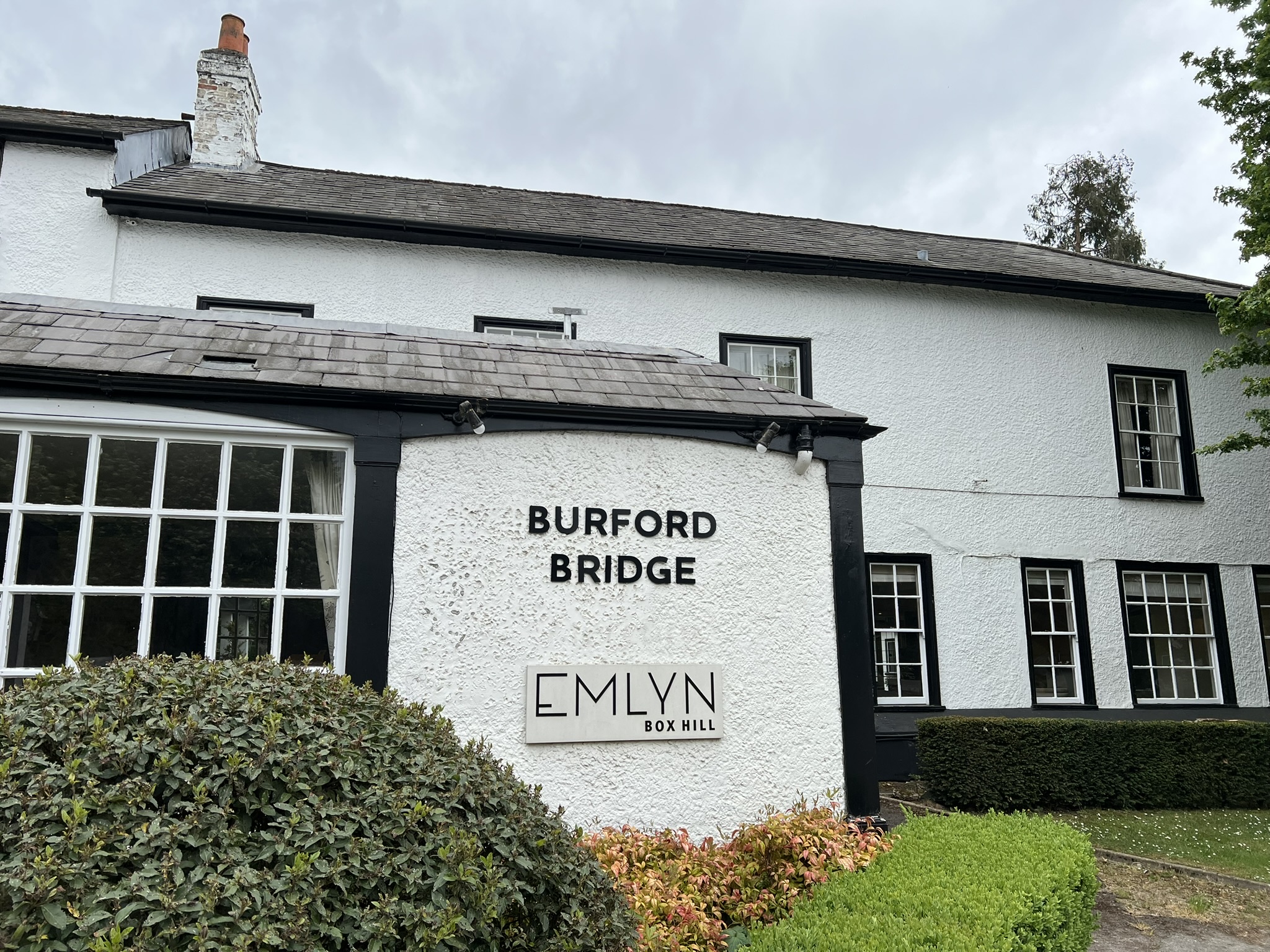
We next headed to the Box Hill area and had lunch at the Burford Bridge Hotel [I had been by there on my day with Tony and Marilyn when we trekked Box Hill] – an interesting old Inn with a number of notable guests as Wikipedia tells me:

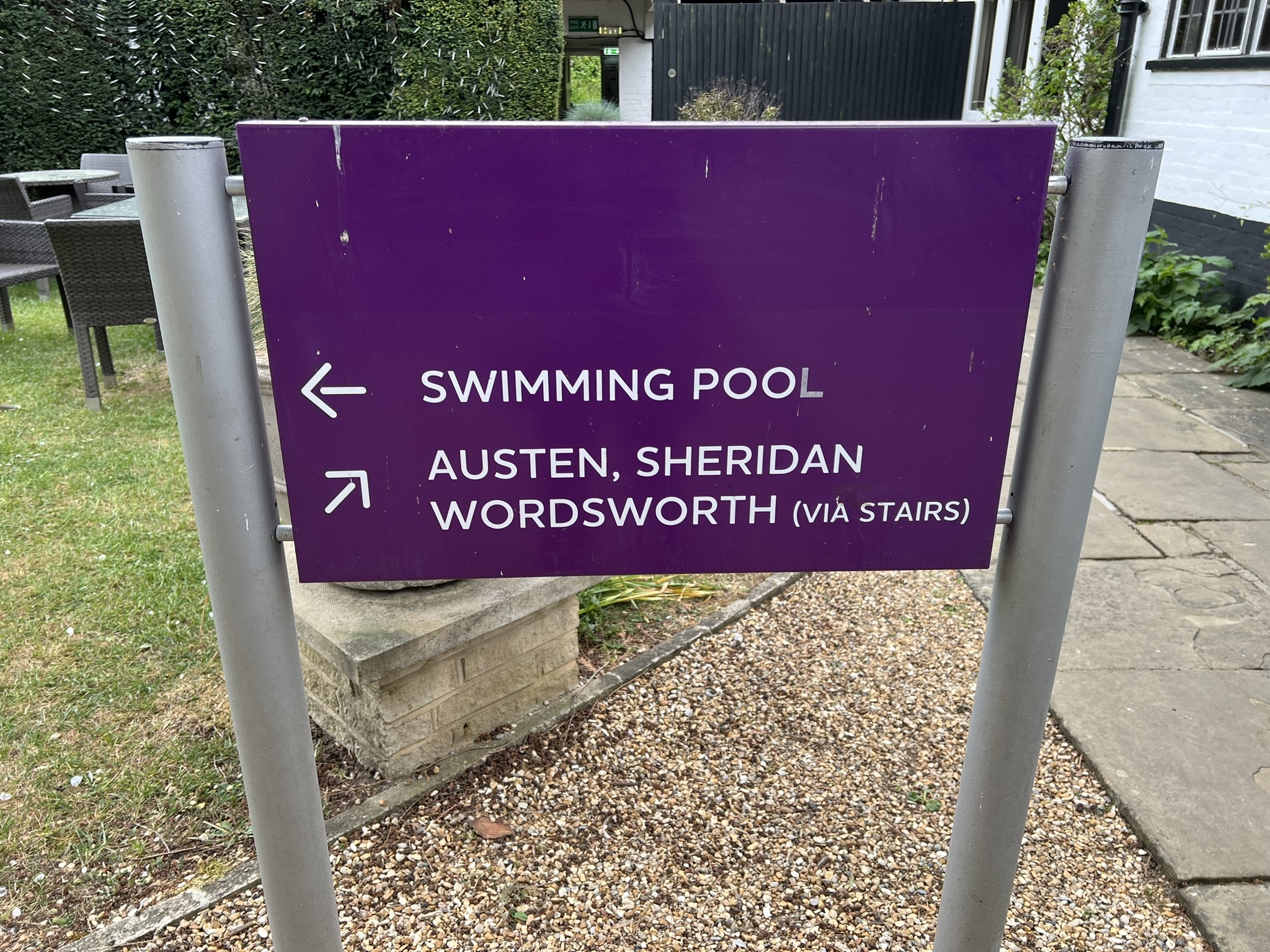
“After leaving London, John Keats took a room overlooking the gardens, and completed his epic poem “Endymion” there in 1817. (Keats is said to have been recommended the hotel by the essayist and literary critic William Hazlitt  [I am not a fan of Hazlitt – he said terrible things about the Bluestockings..].) Robert Louis Stevenson was a guest in March 1878, during which time he wrote two short stories: “Story of the Young Man with the Cream Tarts” and “Story of the Physician and the Saratoga Trunk.” Other prominent visitors included Queen Victoria, Jane Austen, William Wordsworth and Sheridan. It was here too that Lord Nelson spent secret hours with his love Emma Hamilton, before going to vanquish Napoleon’s fleet at the Battle of Trafalgar.”

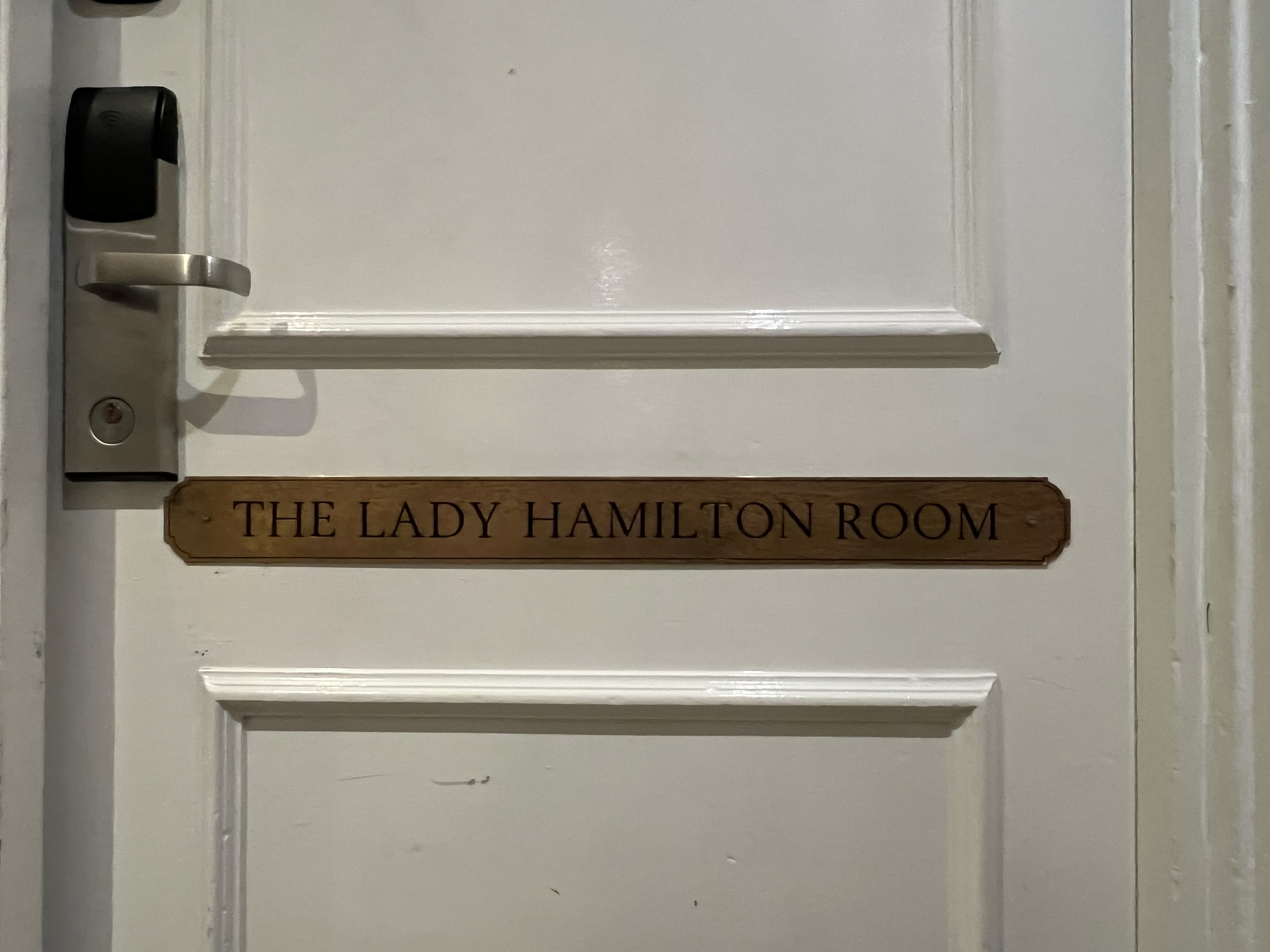
Notable indeed! Lady Hamilton’s room is now a boring conference room but nicely labelled thus:

Rooms reflect the hotel’s history:

And Box Hill was just above us:

***************

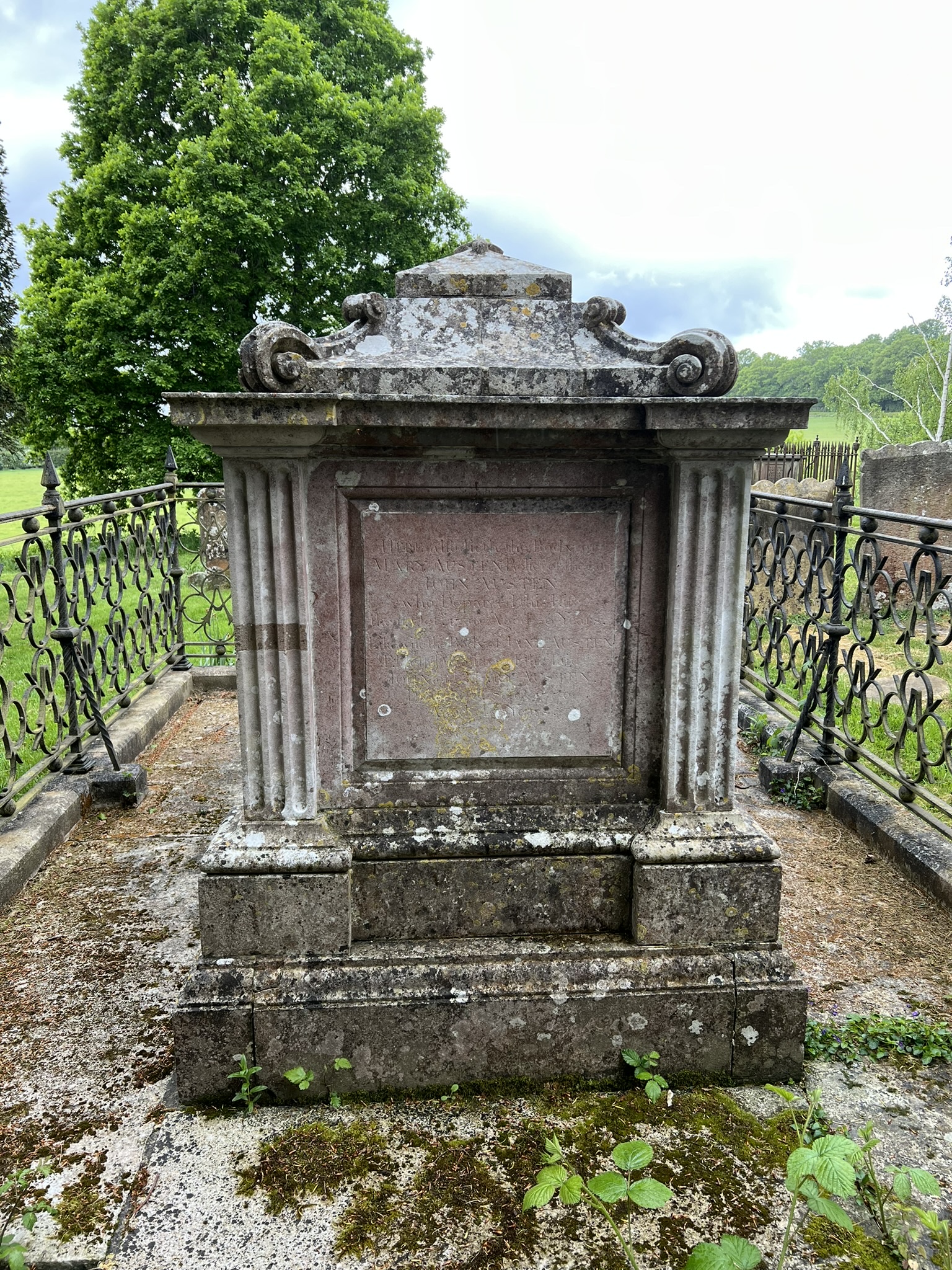
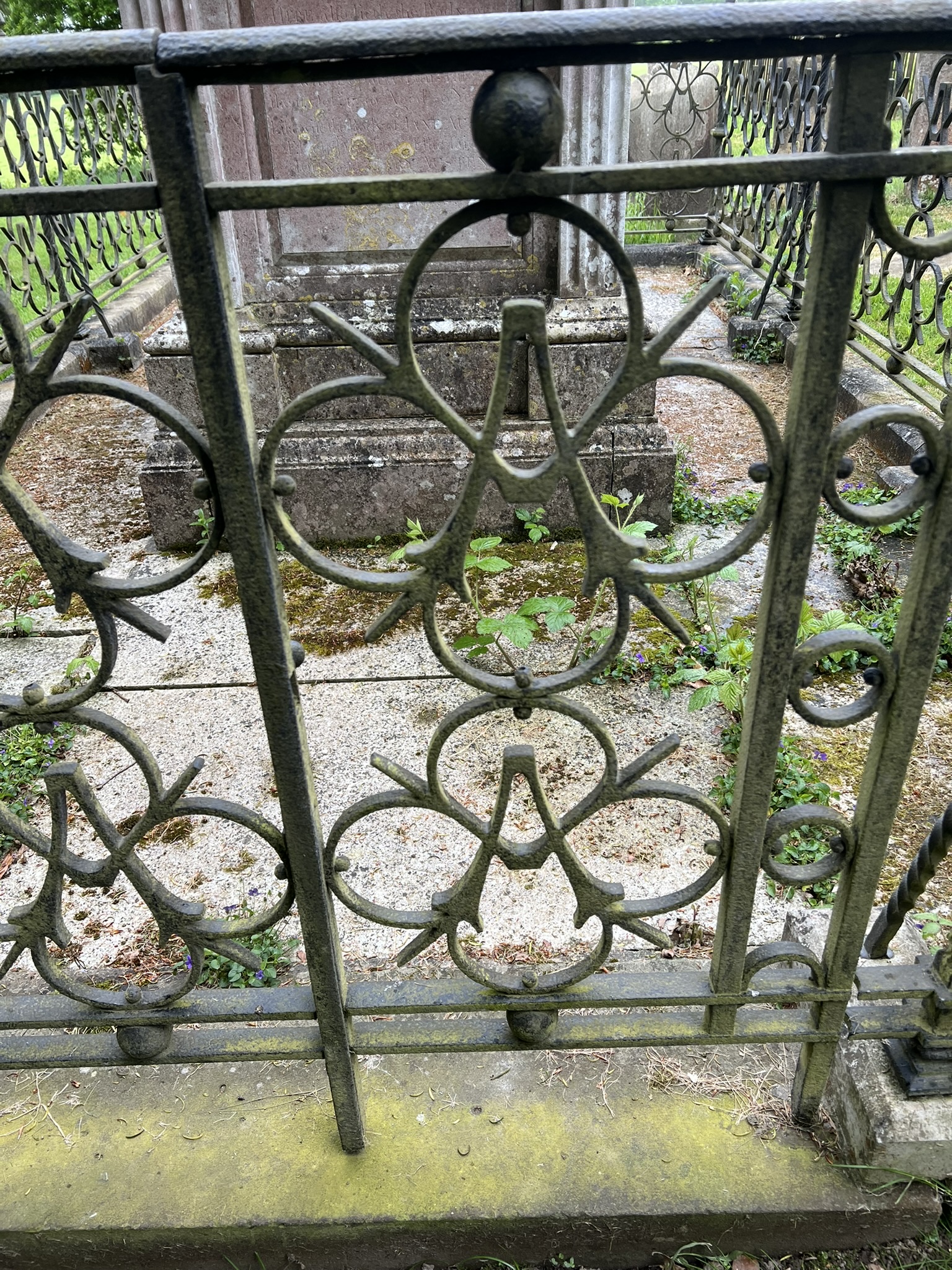
After a fine lunch we headed off to Horsmonden to visit the Church of St. Margaret – this was delightful as we met some of the JAS Kent Branch members who graciously told us about the church and its ties to the Austen family. The John Austen family [John Austen was Jane’s great-grandfather but the family goes back to the first John Austen (1560-1620) – more on them tomorrow] lived here and there are various memorials in the church and churchyard – here one of the tombs: notice the “A” on the gate, signifying “Austen”:

Note: And Ron Dunning joined us here as well – you can read a post of his about Horsmonden from the vantage of a hot-air balloon!]

Liz and Ron

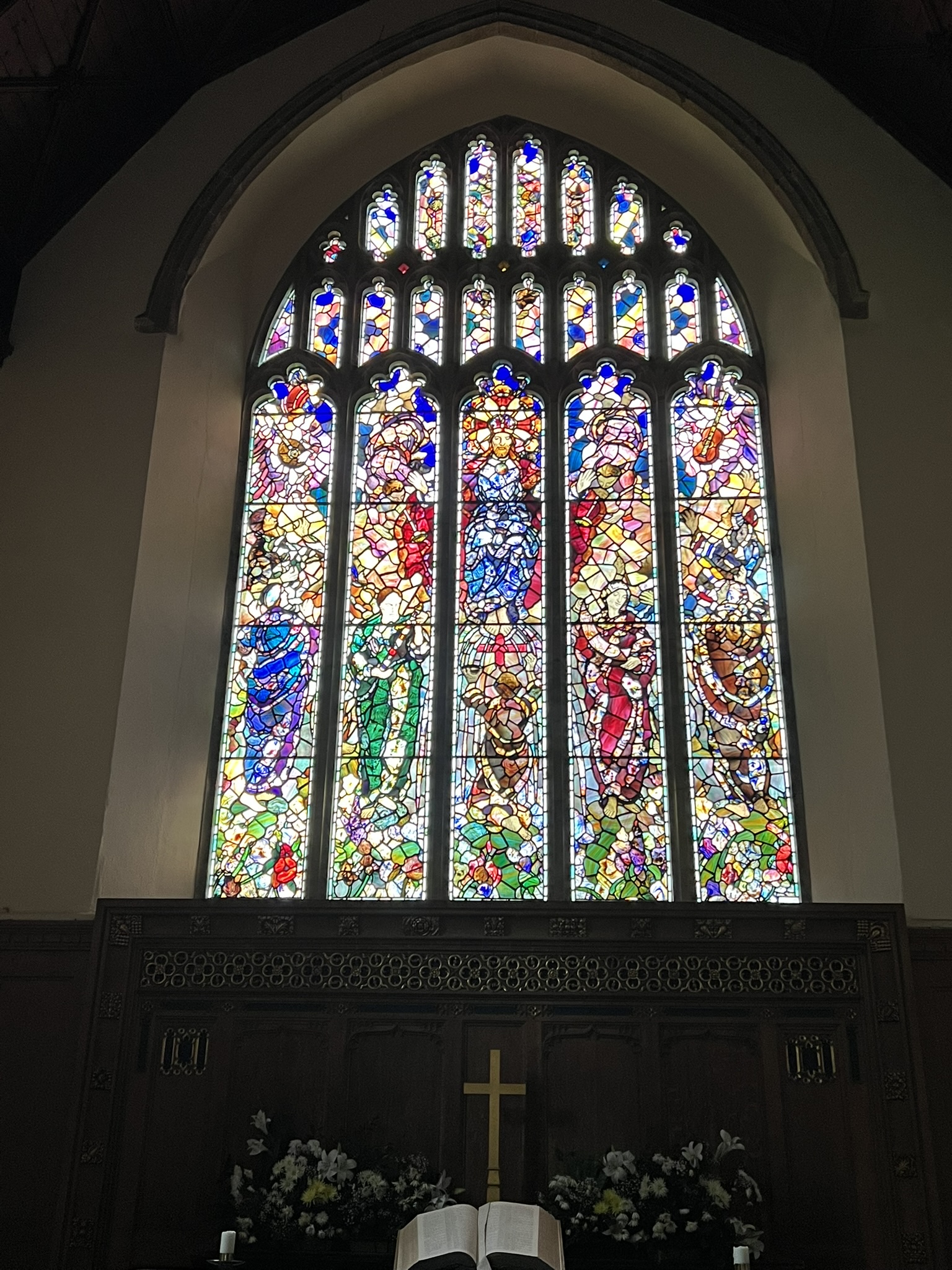
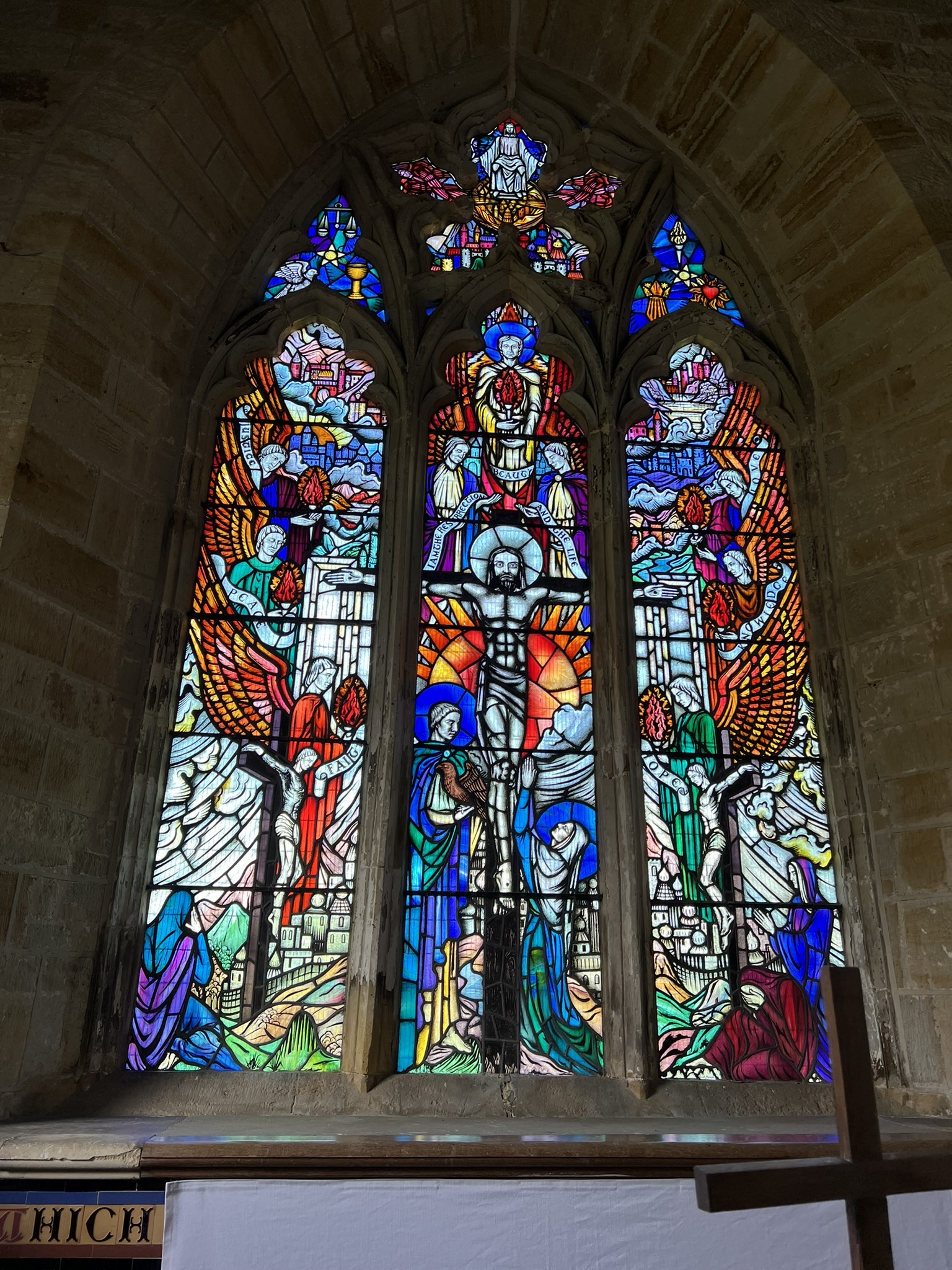
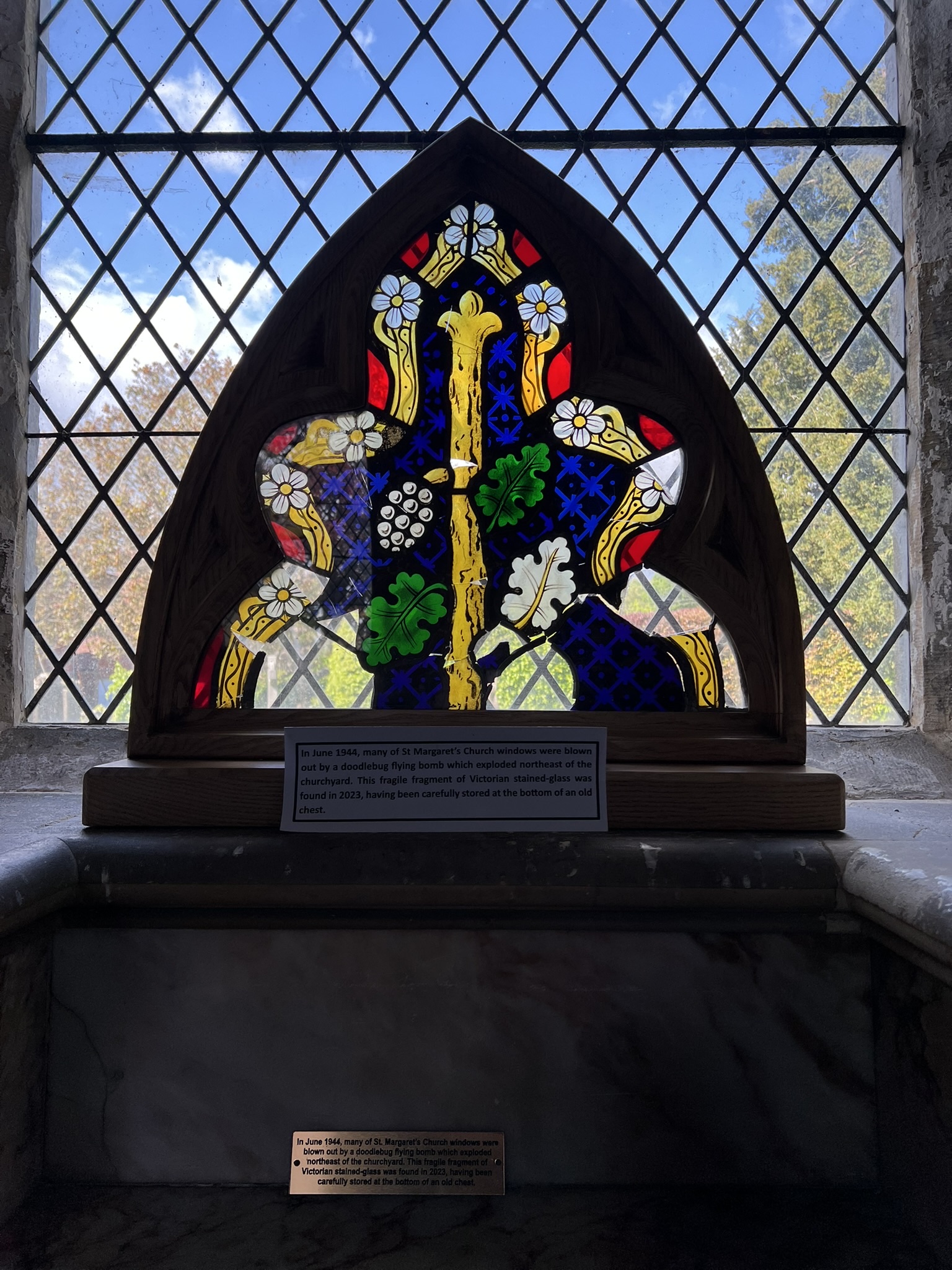
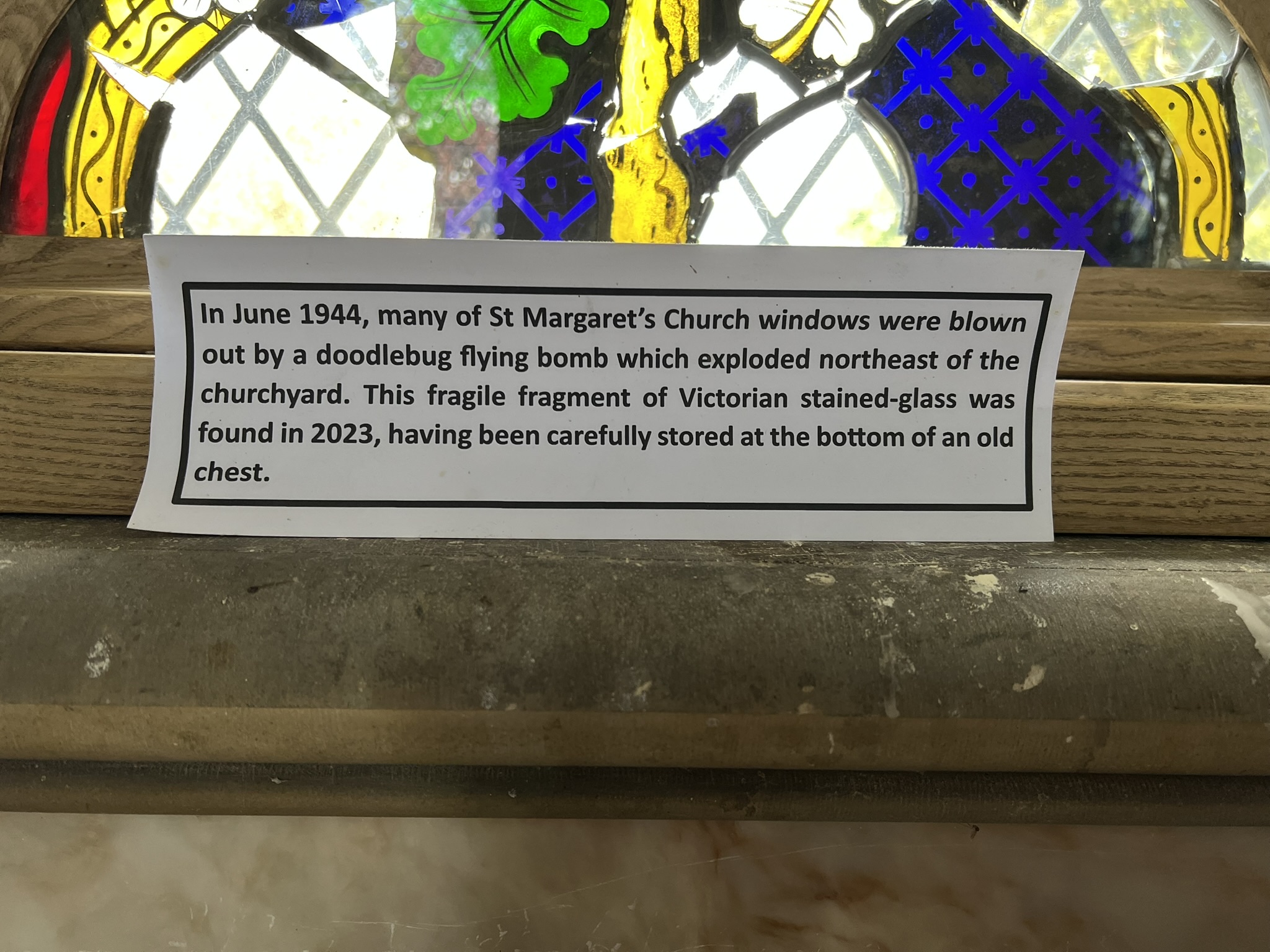
The stained glass windows in this church are stunning. A WWII bombing blew out all the windows on the north and east sides with little of the glass surviving – many of the now existing windows have been designed by notable artists. And a very recent discovery in an old chest at the church of an intact piece of window gives us this lovely example of what the whole window must have looked like:

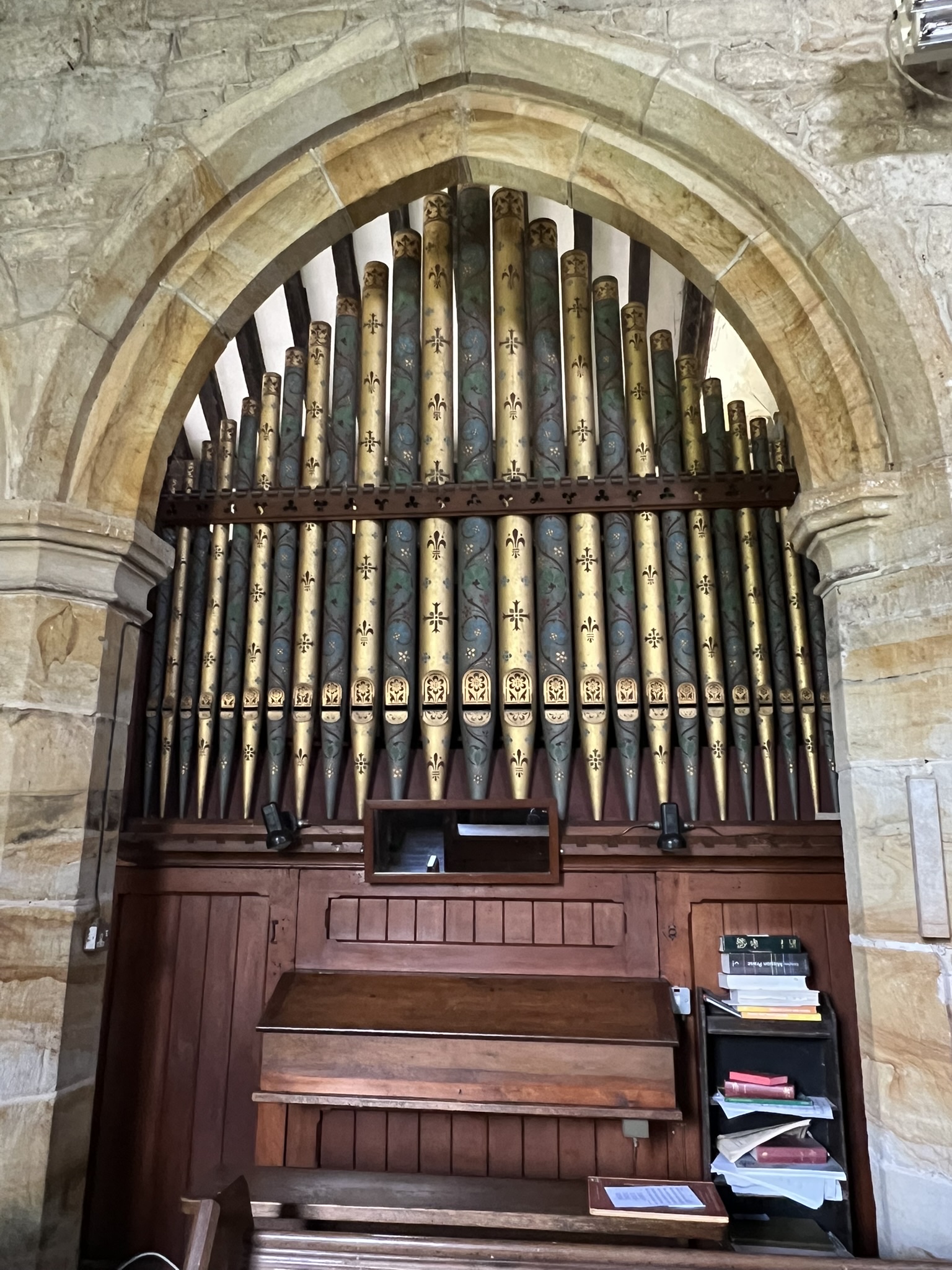
The organ pipes are also a work of art:

 ************

We then headed to our hotel in Lenham where we stayed for three days to allow for further exploring of Kent…and more of the John Austen family …

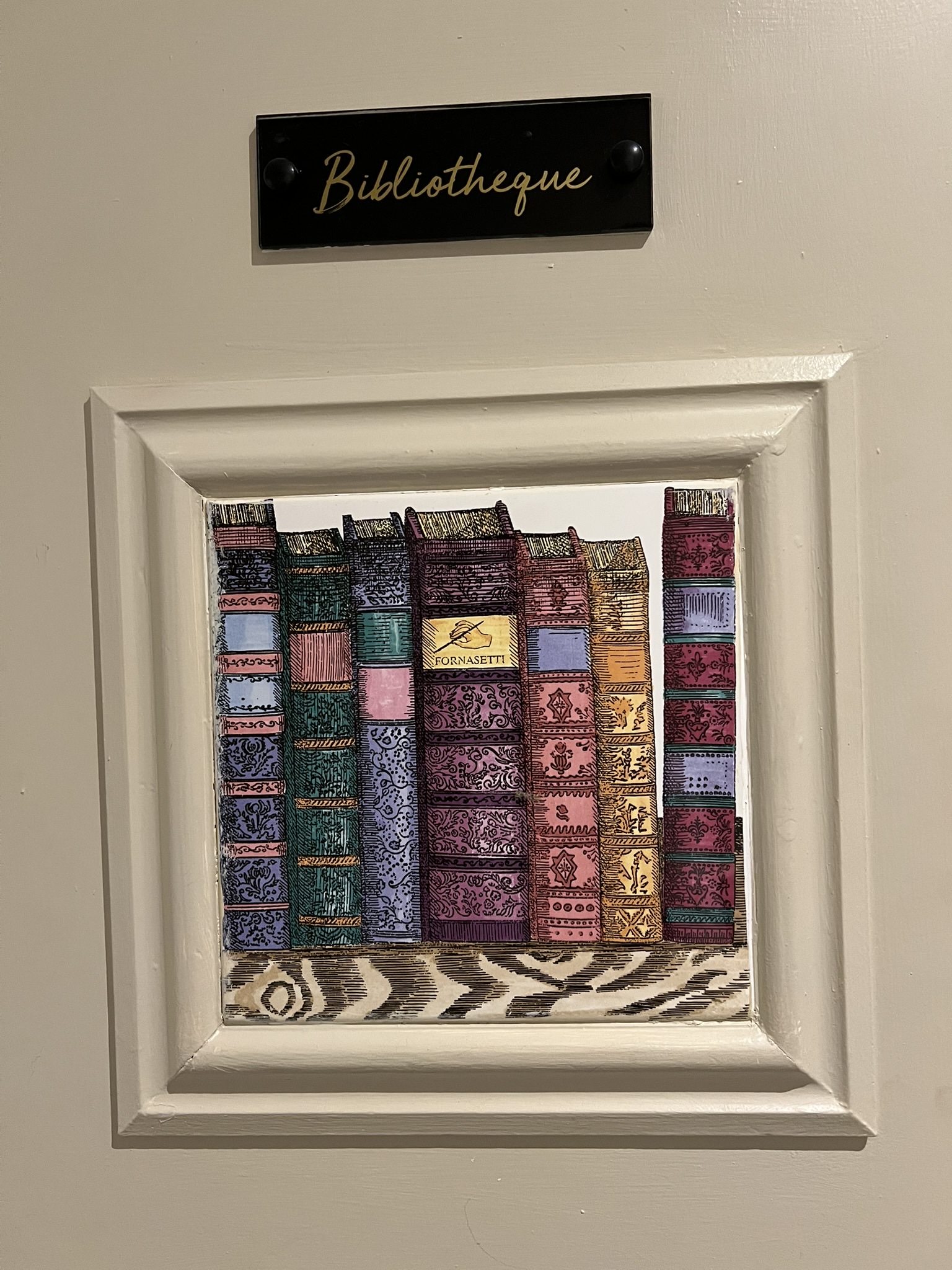
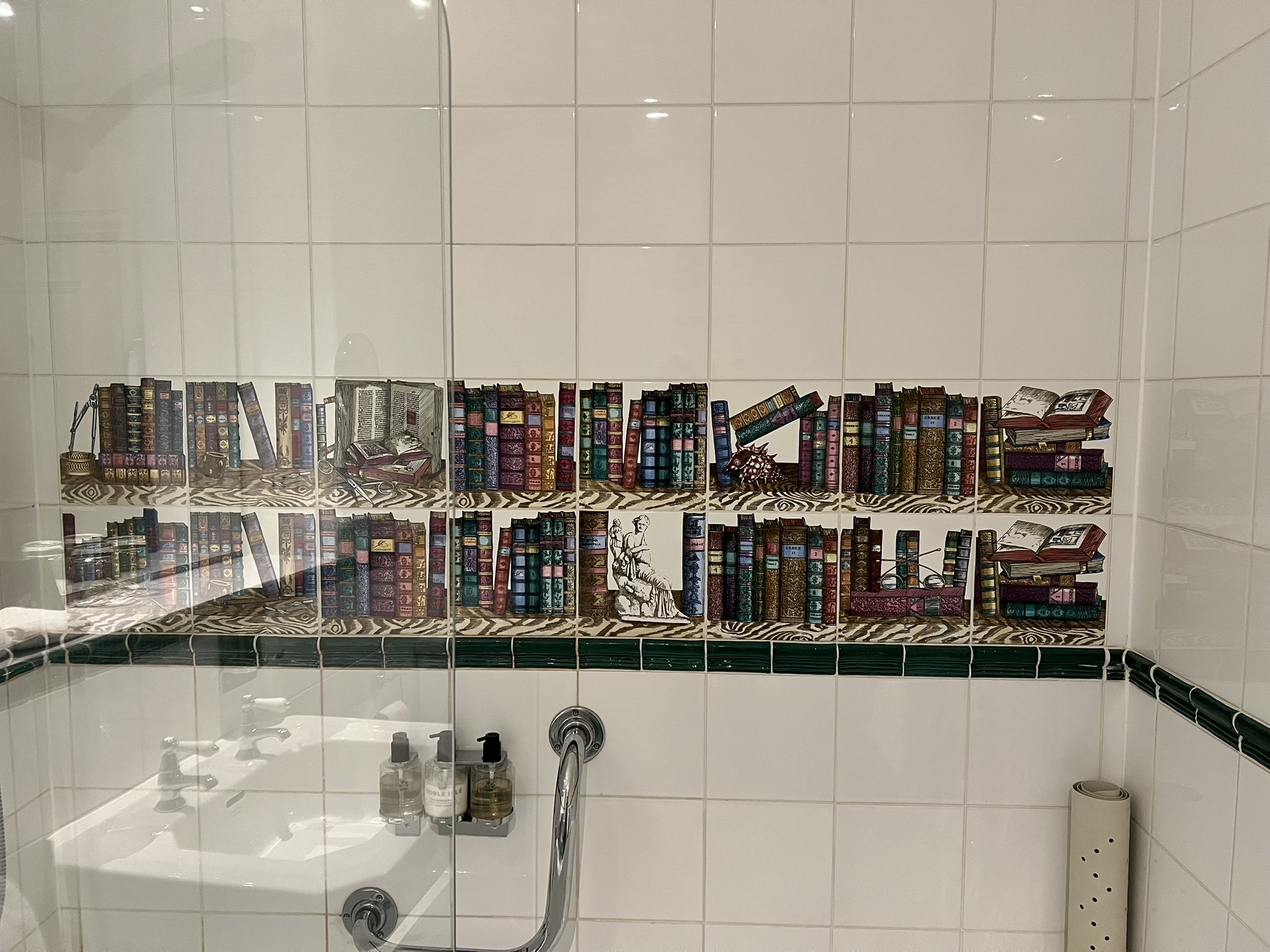
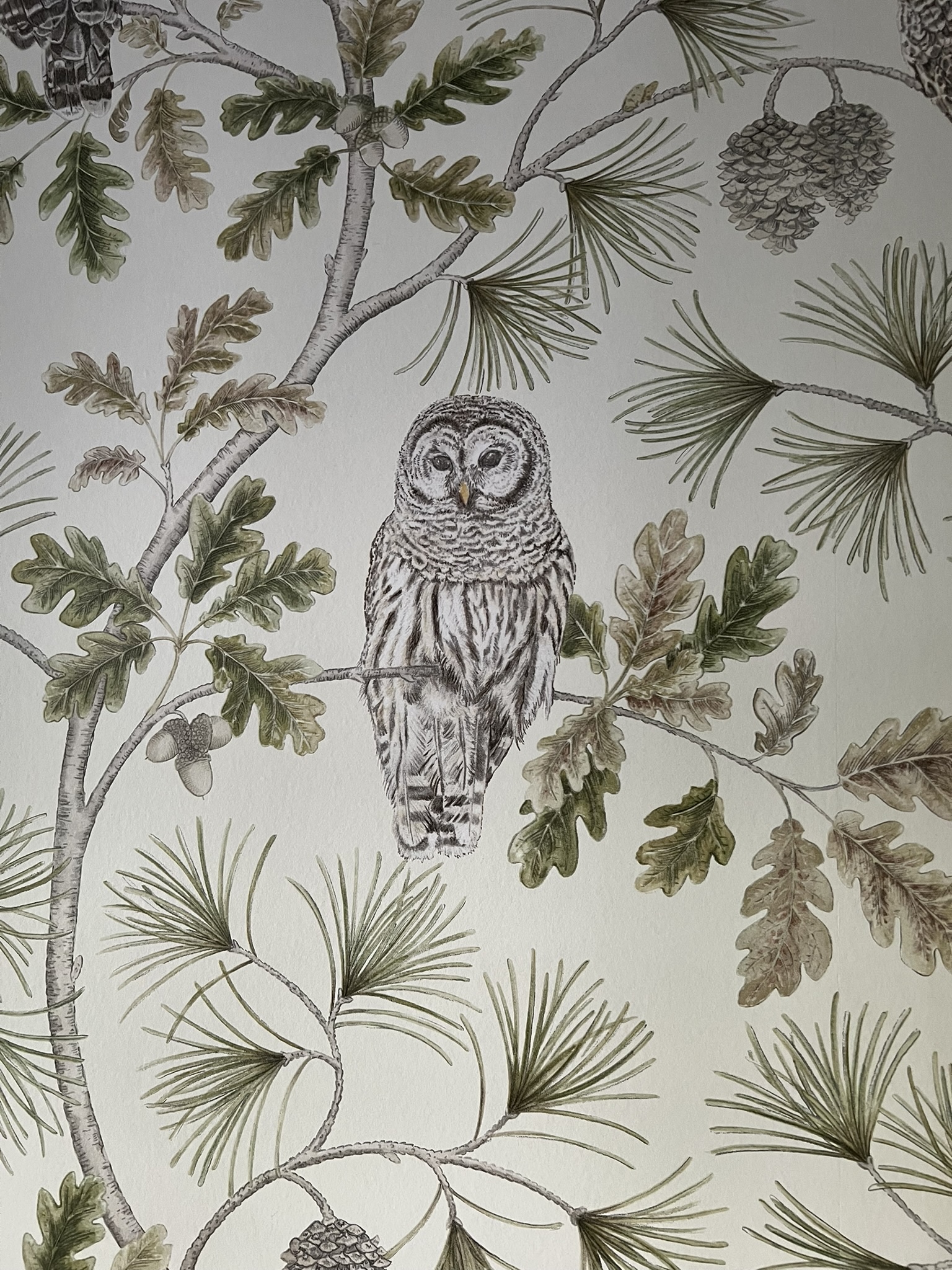
The Chilston Park Hotel was pure pleasure – the cold days and nights had set in [after unseasonably hot days in London], so walking the property was limited, but the hotel was grand, with each room named and decorated according to various themes such as Art Deco, Carousel, Montgolfier (Hot Air Ballooning!) – not sure whether the knowledge gods were at work but my room was the “Bibliotheque” – here is our door, and the tub, along with a bookcase full of books, and this “wise” fellow on the wall:

And another day well-spent! Stay tuned for tomorrow…

_________

1. Elizabeth Matts, et al. 1800: Great Bookham at the Time of Jane Austen, Fanny Burney and R B Sheridan. Parochial Church Council of St. Nicolas, [circa 2008], p. 26. [Published with the support of the JASNA Churches fund.]

c2025JaneAustenInVermont

Austen Literary History & Criticism · Books · Collecting Jane Austen · Georgian Period · Godmersham Park Library · Jane Austen · Jane Austen Circle · Jane Austen Societies · JASNA · Literature · Rare Books · Regency England

“Jane Austen, Book Owner”

This was the title of my talk at the JASNA AGM in Cleveland last month. I covered a variety of topics, focusing mostly on female book ownership in Jane’s Austen’s time and how she fit into that world of being a “book owner.” David Gilson in his A Bibliography of Jane Austen lists 20 titles that are known to have been owned by Austen, the only way of knowing for sure because she inscribed them. There were others that she gifted to family members and I have included those as well.

The wealth of information on Jane Austen as a reader is quite overwhelming – I direct you to the recently published What Jane Austen’s Characters Read (and Why) by Susan Allen Ford (Bloomsbury, 2024), where there is an excellent summary of her reading in the introduction and chapter one. Also see my bibliography posted below. But my focus was just on the books Austen owned, fitting those into the various subject categories of a gentleman’s or elite lady’s private library, and thereby seeing the variety of works she felt strongly enough about to inscribe her name with that pride of ownership.


I will not be publishing this paper, though I might gradually publish it in sections on this blog – but I did have handouts at the talk and so I am putting both of those on here now: the list of books Austen owned and where they are now, and a very select bibliography of the many books and articles and websites I consulted during my research.

I will add that the Richardson Sir Charles Grandison that was in David Gilson’s private collection is indeed at King’s College Library, Cambridge, as Peter Sabor suggested at the end of my talk. So I have edited the handout to reflect that.

More to come on this very interesting topic, but wanted to get these handouts available to people, as we didn’t have enough during the breakout session.

Jane Austen’s Library:

Jane Austen, Book Owner: Select Bibliography:

*************
Thank you to all of you who came to my session – very hard choices – I wanted to be at other talks myself! For those of you who have the virtual component of the meeting, my talk was recorded and is available at that virtual JASNA link you would have been sent via email.

If you have any questions, please feel free to contact me.

c2024JaneAustenInVermont
Jane Austen · Jane Austen Societies · JASNA-Vermont events · Regency England · Schedule of Events

JASNA-Vermont Meeting ~ Laura Rocklyn! ~ Oct 6, 2024 ~ Join Us!

You are Cordially Invited to JASNA-VT’s October Meeting

Featuring actor and scholar
Laura Rocklyn

Who Dares to be an Authoress

Sunday, Oct 6, 1:00-3:00 pm
Charlotte Senior Center,
212 Ferry Rd, Charlotte, VT
******************


The year is 1815, and Jane Austen has just returned from a visit to the Prince Regent’s London residence. The honor of this invitation prompts her to reminisce about the events that led the daughter of a country clergyman to a position of such prominence.

Join us for a dramatic living history portrayal of this moment in Austen’s life.

Laura Rocklyn is an actress, writer, museum educator, and first-person historical interpreter who has performed with theaters across the country.

~ Free & open to the public ~ Light refreshments ~
For more information:
Email: JASNAVTregion [at] gmail.com
Facebook: Jane Austen in Vermont

****************

Save the date: Join us for a Jane Austen Birthday Tea on Sunday, December 8 with entertainment by Donna Chaff. The program “Musical Jane” will feature music from the life, novels, and films of Jane Austen with selections chosen from the Austen Family Music Collection.

c2024JaneAustenInVermont
Fashion & Costume · Great Britain - History · Jane Austen · Jane Austen Societies · JASNA-SC Events · Regency England · Social Life & Customs

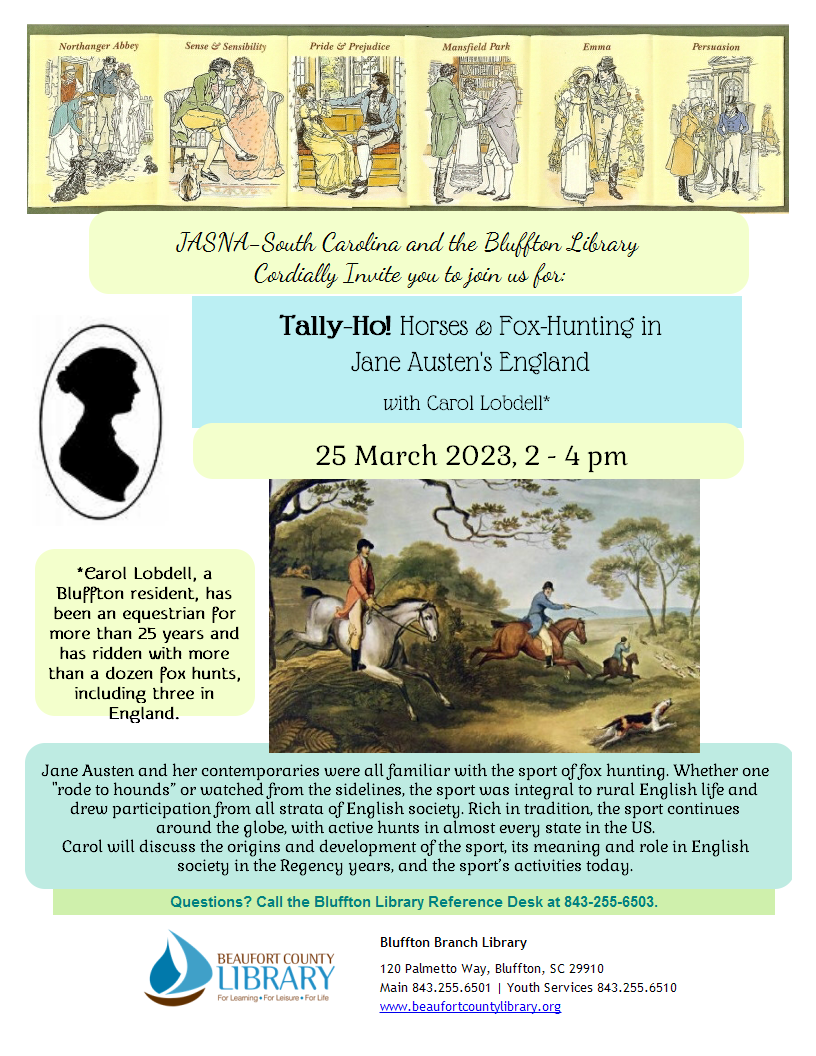
JASNA-South Carolina Event! March 25, 2023 ~ Horses & Fox-Hunting in Jane Austen’s England, with Carol Lobdell

The South Carolina Region of the Jane Austen Society of North America and the Bluffton Library present:

March 25, 2023, 2 – 4 pm

Bluffton Library
Free and open to the public / Light refreshments served

******************


******************

“Tally-Ho! Horses and Fox-Hunting in Jane Austen’s England”

Jane Austen and her contemporaries were all familiar with the sport of fox hunting, whether they “rode to hounds” themselves or watched the action from the sidelines. The sport was integral to rural English communities and social interactions, and drew participation from all strata of English society. Mounted fox hunting had practical origins — foxes preyed on poultry, sheep, and cattle, so farmers were happy to be rid of them — and evolved over time into a major social and sporting activity. Rich in tradition, the sport continues around the globe, with active hunts in almost every state in the US.

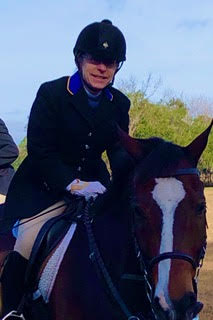
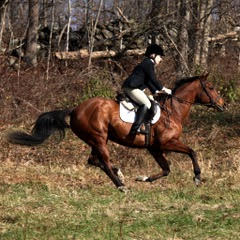
Carol Lobdell, a Bluffton resident, has been an equestrian for more than 25 years and is a fox hunter herself. She has ridden with more than a dozen different hunts, including three in England. She will discuss the origins and development of the sport, its meaning and role in English society in the Regency years, and the sport’s activities today.

Questions? Call the Bluffton Library 843-255-6503.

More details: http://jasnasc.org/events/events-mar2023/

Carol on LJ

Carol on Daisy [LJ’s Mom!]
c2023 Jane Austen in Vermont