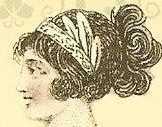
The 12 Days of Christmas:
- Day 1: A Minitaure Edition of Emma
- Day 2: A Literary Tour with Susannah Fullerton, President of the Jane Austen Society of Australia
Day 3: a Jane Austen Cuff Bracelet:
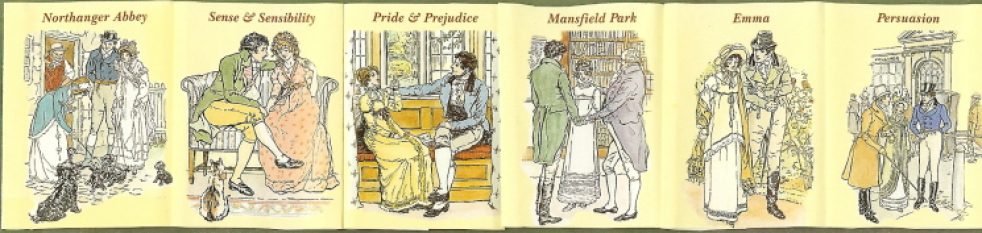
The 12 Days of Christmas:
Day 3: a Jane Austen Cuff Bracelet:
I cannot think of a gift I would want more than this! [do hope my caro sposo is paying close attention!]– I had the pleasure of meeting Susannah Fullerton at the JASNA AGM in Brooklyn – she goes above and beyond as the President of the Jane Austen Society of Australia (JASA), has just published A Dance with Jane Austen [she wrote a guest post here], and she has a new book coming out in early 2013 Celebrating Pride and Prejudice (titled Happily Ever After in the UK)
I begin today a run through the next 12 days of the Christmas Season with some thoughts on gifts for your favorite Austen fan or gifts to add to your own “Want-List” – if you have been “nice” and not naughty all year [please do check Henry Tilney’s dispute over the meaning of the word in Vol. I, ch. 14 of Northanger Abbey], you might find some of these under your tree!
Day 1. A miniature edition of Emma, from Plum Park Press [see update on a second printing below!]

The January/February issue (No. 61) of Jane Austen’s Regency World magazine, marking the bicentenary of Pride & Prejudice, has just been published and is being mailed to subscribers over the holiday period.
Continue reading “Hot off the Press! ~ Jane Austen’s Regency World Magazine, No. 61″

Inquiring Readers: I welcome today Tony Grant with a guest post on Tenby, Wales, a place that in all probability Jane Austen had visited. Tony, who writes often for Vic’s Jane Austen’s World blog , as well as his own blog London Calling, and I had been cyber-discussing Jane Austen’s knowledge of the seaside – I sent him the link to the Brian Southam essay “Jane Austen Beside the Seaside” (see below) – he was immediately prompted to write more about Tenby, a place he is very familiar with because it is his wife’s birthplace. Just reading this piece and seeing Tony’s pictures makes me want to go back to Wales and continue to explore more of this incomparable coastline! … The question today however is, did Jane Austen actually visit Tenby? If she did it seems to have taken place in those no-letters gap years of 1801-04, so we cannot know for sure…. Read here what Tony has to say about it all…
Continue reading “Jane Austen at the Seaside ~Tenby, Wales ~ Guest post by Tony Grant”
Comment below for the chance to win a surprise Jane Austen-related giveaway!
*****************
The Ten Best Reasons to Go to a JASNA AGM, Or, Why I would celebrate Jane Austen’s Birthday
by Spiriting Her Around Such an Event
Well, I had the best of intentions to do a full write-up of all the major events at the latest JASNA AGM in Brooklyn – a special location for me personally as I am a New Yorker born and bred – but as I have mentioned elsewhere life gets in the way of our best-laid plans and as the AGM now seems light-years away, I propose to just offer a grand summary in the context of why one should go to this annual Jane Austen conference; and why do so many plan on being there year after year? Friends and family just shake their heads with the typical “she only wrote 6 books, whatever can you talk about for 4 days??” and I nod knowingly that a lifetime of conferences would not satisfy… It takes me a long while to re-enter the 21st century – how delightful it is to enjoy the late 18th and early 19th without all the attendant inconveniences! I shall make a best effort to give the salient points of this year’s conference, memory perhaps failing me, with a dependence upon sketchy notes, not enough pictures taken (and those that were, not very good…)
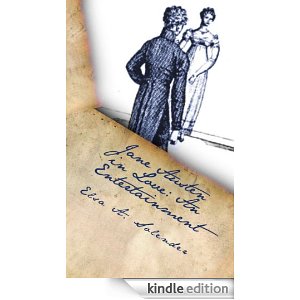
Elsa Solender’s book Jane Austen in Love: An Entertainment was released last year as a kindle ebook only – it is now available as a real hold-in-the-hand, turn-the-pages book! – Hurray! – you can find it here at Amazon.com:

You can read my interview with Elsa here:
Diana Birchall reviewed the book for this blog here:
My review of the book will appear in this winter’s JASNA News [and why it is not here on the blog] – if you are a collector of Jane Austen materials, you should add this book to your collection without delay – the kindle edition has been great to read, but there is nothing like the real thing on your bookshelves when it comes to Jane Austen! – and a perfect Holiday gift to your favorite Austen fan…
Several months ago I posted an interview with Ron Dunning about his Jane Austen Family Tree website

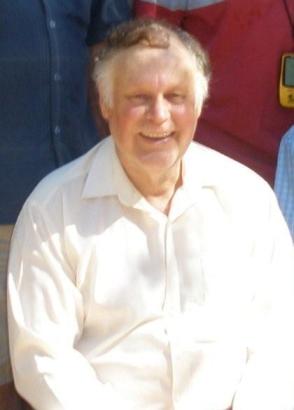
I have recently heard from another Austen who lives in Australia. Brian Austen has been long at work on his own Austen Families, and while it does not yet appear that there is a relation to Jane Austen, his efforts have put him in touch with many of her descendants, including Ron Dunning! – Brian has been compiling his own family tree with global connections to both the Austen and Austin families [see website links below]. He has graciously written a few words on his findings, and I welcome him here today to share his story with you.
By chance and while googling for Ron Dunning’s website address, I came across the Jane Austen website with your interview with Ron Dunning on his wonderful genealogical contribution on Jane’s family. As I said in my comments* I have met Ron and emailed him on a number of occasions to solicit his help, answer a query of his or to give him a lead.
Quite some years ago I began to research my own Austen family history. Not much was known. My father thought that his father was born on the boat coming to Tasmania but that was all. However the Tasmanian archives did have a record of his passenger record, albeit spelt as IN.
Nevertheless I was underway. I was given copies of some family letters written during WW2 so I had various family stories, and some names and relationships. So armed I wrote to several Austens listed in the Kent (UK) telephone directory. I since found out that this did cause quite some consternation as none of the recipients knew of Australian connections! – but a couple were familiar with some of the people I had mentioned. I had pretty much scored a bulls eye, and across different branches of the family, branches that no longer had contact. So I managed to unite families in Kent and across the world.
Gradually I pieced together a part of the family history. But I realised that the task might be made a lot easier if I searched for others who had researched the family. I decided to track down genealogical histories of Austen families and although this was before the tremendous surge in the popularity of family history, I soon had a mushrooming pile of Austen information. Unfortunately none of it related to my family.
But it did two things. It demonstrated that although the name was relatively uncommon in Tasmania, it was much more common in England, very common in fact and we shared the same name and spelling as England’s famous Jane. If only we were related to her! And I did learn that part of the family folklore is that yes, we are related, although no one knew how.
I also learnt that I enjoyed the collecting and examining of other people’s family histories. Occasionally I would find connections between families who were overjoyed at being given links to lost family members. I exchanged emails, research and information with many Austens across the world and was even invited to family gatherings and reunions. This was great fun. I joined the Austins Families Association of America and attended Conventions. I joined other Genealogical groups and went on holidays meeting fraternal Austen researchers. And it hasn’t stopped.
Gradually I built my own tree by broadening the number of branches, rather than by extending very far back in time: [see the website Austens of St Peters and Tasmania ]. But it has been very satisfying to find new “cousins” and add to the store of family stories such as “Rediffusion” (early days of cable television in England) and a connection with the breaking of the German Enigma Code. But no connection with Jane, unfortunately. And I am not alone.
Most of the Austen families with whom I have been in contact claim an unknown family connection to Jane Austen; the rest just hope to be related. Naturally (before I found Ron – actually he found me) I developed a Jane Austen tree, which although being incomplete was nevertheless quite good which all too often gave me the information to be able to disappoint a lot of people, including myself. But the search for links goes on for even though Jane’s immediate family has now been well documented (thanks to Ron and others), there are still enough gaps in the families of her ancestors to be encouraged while her distant past remains unproven….
[For some recent considerations see “Untangling the Austens” by Pam Griffiths: http://www.genealogycrank.co.uk/austen.php – the document is here: http://www.genealogycrank.co.uk/pdfs/austen_evidence.pdf ].
To that end my great hope is to be able to convince a genuine, documented family descendant of one of Jane’s brothers to provide a properly conducted DNA sample. We are still looking and are still hopeful for there are some descendants somewhere in the world yet to locate.
So after twenty years what have I found? Mainly that despite an expanding collection of Austen families, I have just scratched the surface. And I really have not done very much at all with our sister families, the INs. I do have to learn how to improve my website presentation, (http://austenfamilies.weebly.com/ ) and I need to recruit extra hands to the task. But it keeps me off the street, and it is fun, especially meeting new family and contacts.
by Brian Austen, Hobart, Australia
************************
Thank you Brian for sharing your family histories and the joys of genealogy! When you first contacted me, I related to you my own story of recently receiving a call from a young man in Australia who has been looking for my family for 10 years – his great-grandmother was my grandfather’s sister – we were the side of the English family who came to America in 1912 – there were five siblings – two stayed in the UK, two went to Australia, and my father and his family all came to America, losing touch through the years – now this young man, eager to find us has gotten us all together, cousins appearing everywhere! – so I understand the great joy that these connections can generate! I have no Austens in my family [none that I know of anyway!], but it is the global aspect of bringing veritable strangers together that is the most intriguing and heartening, as you so rightly say! Perhaps you and I are even related somewhere there in Australia!
*Brian’s comment on the JAIV Ron Dunning Interview: In the course of my attempt at collecting Austen family histories I have exchanged many emails with Ron and met him in London. I regard his work as a role model, a fine example for all of us who are trying to research and present our family histories. Thank you for this interview and transcript; I shall add a link to it from my page on Jane Austen’s family.
Brian Austen Hobart Australia
If anyone would like to comment or ask Brian a question, please to so below.
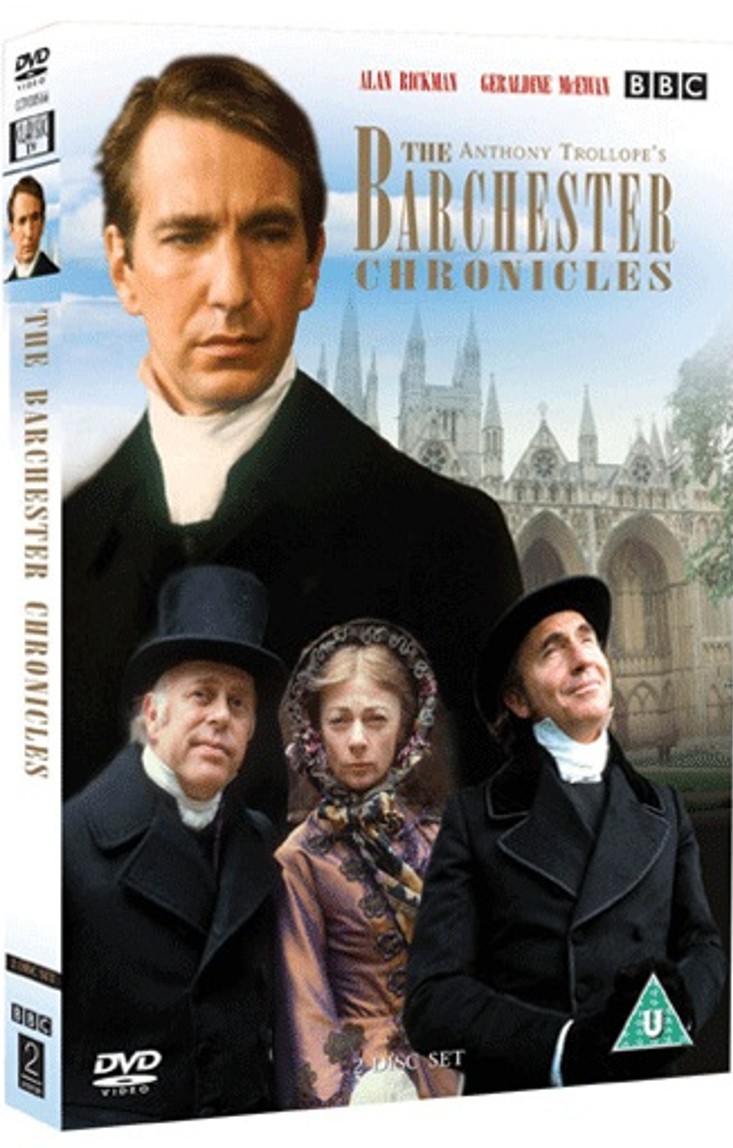
Our JASNA Jane Austen Reading Group has wandered astray and is currently reading Anthony Trollope. We have started with Barchester Towers and will be discussing this on Wednesday night, though we know the series really starts with The Warden, which some have already read – some have seen the 1982 BBC production with Alan Rickman playing Slope [perhaps a prerequisite for playing Snape?], and some have listened to it on audiobooks – we most certainly shall have a lively discussion this week!
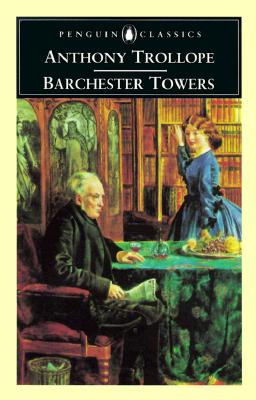
Anyway, I have had a few complaints about this Trollope read and have asked a member of the famed Men’s Austen Book Group from Montpelier [they started out with Austen and have gone onto Eliot and now Hardy, and now call themselves ‘Finches of the Grove’, from Great Expectations] – John is in another co-ed off-shoot of that group and they have wandered into Trollope as well – I have asked him to share with us why he loves Trollope so much. You can also see the blog of two members of this group, Sarah and Michelle, who write about their collective reading – here are their thoughts on Barchester Towers at Two Girls Fishing .
So I welcome John Bollard, on Anthony Trollope:
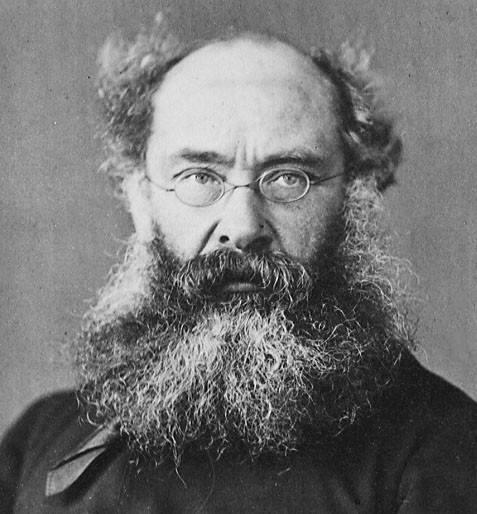
Hi Deb,
You asked me a while ago to write something about why I like Anthony Trollope so much, which I will now attempt to do. Share with others if you wish.
One thing I really like is the narrator. Trollope’s narrator is always very much a character, although not a character who participates in the action–so the point of view is not quite omnipotent, but not quite first person either. I love the way he (the narrator) invites the reader into the story, invites him to take a particular view of this or that character or situation–to be not too hard on this character because of that circumstance, or to remember that this other character has shown a certain weakness in the past, and so forth. It’s a device that’s very much out of fashion these days, but I find that it draws the reader in, and creates a unique intimacy between the reader and the story. Sitting down to read a Trollope novel is like sitting down for a cup of tea with a good friend who knows all the news and gossip and talks about it in the most charming, entertaining way.
Another thing I like is Trollope’s heroines. They are very nuanced characters–always good, of course, but not without flaws. They tend to succeed by courageous adherence to principle–in fact, stubbornness is probably their most common failing, vide Eleanor Bold. In this they are more like Jane Austen’s heroines than like anyone else’s. All Trollope’s characters, even the comic ones, are complex. Villains tend to be more ignorant or blind than really evil. Heroes have their weaknesses, their vanities, etc. Trollope, through the narrator, always has a very gentle touch with his characters. Virtue is rewarded and vice punished, but there is always affection and sympathy even for the most difficult people.
Many of the novels involve whole networks of relationships, and do not simply follow the progress of a single hero and heroine; Trollope often chooses to comment on a particular relationship by contrasting it or setting it in conflict with another. Many of the books revolve around an Austen-style marriage plot, but Trollope is also very interested in marriages per se, especially the inner dynamic versus the outer appearance.
Look at all the marriages in Barchester Towers: the Grantlys, the Stanhopes, the Proudies, the Quiverfuls, even the quasi-marriage of the Thornes of Ullathorn. Quite a cast, you must admit, and quite an elaborate social scene in which to bring the love and the money together at the end.
Since I discovered Trollope, a couple of years ago, I’ve read a dozen of his novels, and the only one I have not cared for is The Way We Live Now. I mention this because many critics have claimed that this is his greatest, so any of your members who enjoyed Barchester Towers, and were looking for more might be steered that way. I would suggest rather sticking with the Barsetshire series and going on to Dr. Thorne, which is a delightful book, although not at all a continuation BT. (Books 3 through 5 in the series deal mainly with other characters in the county, and the BT characters are mentioned only casually. Things come together a bit in the final book with a return to the affairs of Barchester and the clergy.) Or, the first novel of the Palliser series: Can You Forgive Her?, which is wonderful, and typical Trollope. (Three heroines! Six suitors!) There is sly, gentle humor in all his books, however Barchester Towers is by far the most overtly comic, and is in that sense not quite typical.
Some have wondered why Trollope is not more widely read, and I have no real answer for that. Perhaps in part because he rather deprecated his own work. Perhaps he is more read in England than here, but I don’t really know that. I always imagine there is a book group in England who are scratching their heads, wondering why nobody reads Mark Twain.
******************
Thanks John for sharing your love of Trollope with us! – Anyone out there who is a Trollope reader? – please comment and offer your reasons for liking him – I love John’s comment about Mark Twain – anyone in the UK who is scratching their head about him??
Further Reading:
and if you must, there is this:
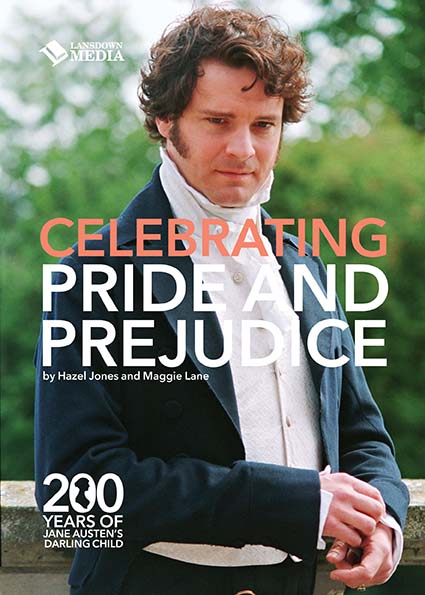
I had the pleasure to converse a bit with author Maggie Lane at the Brooklyn AGM last month – she signed a copy for me of her new book co-authored with Hazel Jones Celebrating Pride and Prejudice (Bath: Lansdown Media, 2012]
But Ms. Lane has been very busy! – I also purchased her just published Understanding Austen: Key Concepts in the Six Novels (London: Robert Hale, 2012) and in February 2013, her invaluable Jane Austen’s World: The Life and Times of England’s Most Popular Novelist (Carlton, 2013) will be published in a new revised edition with a new cover.
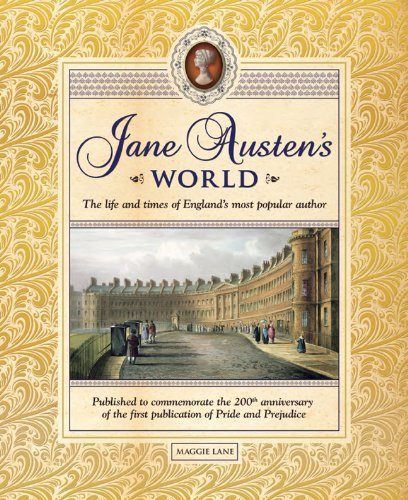
[You may pre-order here at Amazon.uk ]
Those of us who subscribe to the Jane Austen’s Regency World magazine [and who does not! – if you have perchance let this fall through the cracks, it is a perfect holiday gift to request for yourself and / or give to your Austen friends: http://janeaustenmagazine.co.uk/subscribe/
… but those who do already subscribe will know that Maggie is the consultant editor, and author in each issue of the always interesting take on Austen “minutiae”, wherein she will take what the average reader will often gloss over and suggest the significance of the most obscure terms, themes or ideas, thereby making a reading all the more interesting and compelling. Indeed in the latest Nov – Dec 2012 issue in her essay on “Shoelaces and Shawls”, Maggie addresses the clothing accessories in Emma’s Highbury, offering a discussion of shawls and shoes, and tippets and umbrellas, and the “elegance” of Mrs. Elton’s garish purple and gold; and she too makes reference to the importance of the already-famous Mr. Knightley’s gaiters…
But today I want to share with you some of Maggie Lane’s own words on her book Understanding Austen. She has most graciously written us a lovely essay on how the book came into being. If you have any questions for Maggie or would like more information on the book, please comment below – she will be happy to answer you.

For some years now I have enjoyed being Consultant Editor of, and writer for, the Jane Austen and her Regency World magazine. While other contributors explore the visual, social or political aspects of the world that Jane Austen inhabited, or discuss prominent personalities of the period, when writing my own articles I see my brief as keeping close to the novels themselves. In each issue, I attempt to illuminate some theme or idea that plays a subtle yet vital part in Austen texts. Thus it was that I hit on the idea of investigating some of the abstract nouns – elegance, openness and reserve, to take three examples – that feature so often in the six novels.
I soon realised that there was far more to say about these concepts than could be encompassed in the word-length of an article. The idea for a new book was born! The subject seems to me replete with interest. There is the linguistic interest of how the meanings of certain words have shifted in the two centuries between Jane Austen’s time and our own. Candour is a good example of that. It now means frankness amounting sometimes even to rudeness, yet in Austen’s time it still carried the sense of generosity of spirit, of giving other people the benefit of the doubt, which Elizabeth Bennet so admires in her sister Jane. And then there is the moral weight which Austen attaches to certain words. Composure is almost always a quality to be recommended and tried for. It preserves the individual from unpleasant notice and calms the nerves. Yet when Willoughby displays composure in his London encounter with the deeply distressed Marianne, he is behaving as a heartless cad. Anne Elliot’s “elegance of mind” is of a wholly different calibre from “the sameness and the elegance” of her eldest sister’s way of life.
The nuances which Jane Austen accords to all her favourite abstract terms make them an endlessly fascinating study. By focussing on her vocabulary, noticing which words keep company with others, juxtaposing and comparing familiar sentences from across the novels, I gained new insights and new understanding which I hope my readers will share.
*******************
Thank you Maggie!
I append here the Table of Contents to the work – an abundance of terms under discussion!
By way of example, let’s look at the Heroes of the novels and how they fare comparatively in the chapter on “Person and Countenance”:
Henry Tilney had a pleasing countenance, a very intelligent and lively eye, and if not quite handsome, was very near it; Bingley was good looking and gentlemanlike; he had a pleasant countenance and easy, unaffected manners; but alas! his friend Mr. Darcy is soon discovered to be proud, to be above his company and above being pleased; and not all his large estate in Derbyshire could then save him from having a most forbidding, disagreeable countenance.
Wickham had all the best part of beauty, a fine countenance, a good figure, and a very pleasing address.
Edward Ferrars does not at first appeal: at first sight, his address is certainly not striking, and his person can hardly be called handsome; Brandon: though his face was not handsome, his countenance was sensible, and his address was particularly gentlemanlike. And Willoughby? His person and air were equal to what her [Marianne] fancy had ever drawn for the hero of a favourite story. – which should send up red flags to the reader immediately!
Frank Churchill – his countenance had a great deal of the spirit and liveliness of his father’s – he looked quick and sensible.
And this description of Henry Crawford has always given me a chuckle: he was plain to be sure, but then he had so much countenance, and his teeth were so good. !
And Elizabeth Elliot is quick to observe [in the chapter on “Air and Address” which links quite nicely with “Person and Countenance”] this about Captain Wentworth: [she] had been long enough in Bath to understand the importance of a man of such an air and appearance as his…Captain Wentworth would move about well in her drawing room. Indeed!
And so it goes – are you not intrigued to find how Mr. Knightley is so described? I highly recommend this book – you will find you shall choose to re-read all the novels all over again, all the more appreciating the language and narrative meaning through Maggie’s insightful view – it is perhaps another holiday gift to add to your own ‘want-list’?
Do you have a favorite term or description in Austen that you would like to share? or a question about a term that might be confusing to you? – please comment below, along with any questions for Maggie.
About the author:
 Maggie Lane is the author of numerous (and invaluable!) works on Jane Austen [see list below]–
She has also published articles in the Jane Austen Society Annual Reports,
the JASNA journal Persuasions, and has lectured on Austen
in the UK, the US, Canada, and Australia.
Having served for many years on the committee of the Jane Austen Society UK,
she is now Chair of its South West branch; she lives in Exeter.
Maggie Lane.
Understanding Austen: Key Concepts in the Six Novels.
London: Robert Hale, 2012.
ISBN: 978-0-7090-9078-6
£16.99 ($24.95)
Her works:
 Jane Austen in Vermont