The set of Jane Austen’s novels published by Bentley in 1833 and up for auction at Bonham’s sale today [June 8, 2010] has come under the gavel and has sold for £3,360 [= @ $4827.] [the estimate was for £2000 – £3000 ]
Here are the details:
AUSTEN, Jane. Works, Bentley’s Standard Novel edition, 6 vol. in 5, 5 engraved frontispieces and additional titles, some light spotting to first and final few leaves, small corner tear to printed title “Pride and Prejudice”, without half-titles, ownership inscription of Eularia E. Burnaby (1856) on printed titles, bookplate of Henry Vincent, bookseller’s label of H.M. Gilbert, Southampton, uniform contemporary half calf, red and dark green morocco labels, extremities lightly rubbed [Gilson D1-D5], 8vo, R. Bentley, 1833
Sold for £3,360 inclusive of Buyer’s Premium
Footnote:
“No English reissue of JA’s novels is known after 1818 until in 1832 Richard Bentley decided to include them in his series of Standard Novels” (Gilson, p.211). See illustration on preceding page.
See the Bonham’s site here for details and other auction items in this ‘Printed Books, Maps and Manuscripts’ auction [Sale No. 17809]
See Laurel Ann’s post analyzing this set [along with her super sleuthing as to the provenance!] atAustenprose
Someone has gone home very happy today! [and hopefully this has gone to either a fine institution or a fine home with an Austen-loving owner…]
When I wrote the previous post on the Steventon Parsonage, I looked in vain for a copy of a pamphlet I have [or was sure I had!] titled Steventon and the Austens: Jane Austen bi-centenary 1775-1975, written by Keith Irons. This is the souvenir booklet and programme for the July 18- July 27, 1975 Jane Austen celebration in Steventon. Well, I could not find it, and thus did not have much data on the new Rectory that was built by Edward Knight for his son William Knight, the rector who took over the curacy from Henry Austen in 1823, or the Manor House referred to in various sources. – but as always one finds things when not actually looking for the particular item madly searched for a week ago – and so here it is, on my reading table, and has been there for a bit, out of place, but now happily found…
So I can give more information on the new Rectory that was built in 1826 after the demolition of Austen’s own home, and the subject of the auction sale in the news article found in my book. But as you will see, I am more confused than ever! I quote from this pamphlet directly:
Edward Knight remained in possession of the estate until 1855 [Edward Knight died in 1852] when he sold it to the second Duke of Wellington, who in turn sold it in 1877 to a Mr. Henry Harris. Mr. Harris, a man of considerable wealth, farmed the estate himself and built a substantial new manor house of red brick with cottages surrounding it, and a new farm house and outbuildings now known as Home Farm. Before this the estate had been farmed by the Digweed family who had been tenants and had lived at the old manor house for nearly 100 years. The estate remained in the possession of the Harris family until 1910 when it was sold to Mr. Robert Mills. In 1932 the brick manor house was damaged by fire with the residential quarters being completely gutted. The then owner, Mr. Onslow Fane, decided to add a new wing to the old Tudor manor rather than to rebuild the Victorian one. [This old Tudor manor was called Steventon Manor House, and the Digweeds lived here – Edward Knight owned it as it was part of the estate…David Cecil has a picture of this house in his Portrait of Jane Austen, but it is also misnamed as the Chawton Great House (p.159)…]
He [Mr. Fane] lived in it briefly before the house was requisitioned by military authorities during the war, but it was never reoccupied afterwards which contributed largely to its decay, leading to its eventual demolition [in 1970]. The servant’s wing of the Victorian manor, undamaged by the fire in 1932, still stands, but it is now used only as a machinery store and barn; although it will have one brief period of glory again when it serves as a threatre during the Jane Austen bi-centenary celebrations. [Irons, Steventon and the Austens, 1975]
Irons says the new rectory that Edward Knight built in 1826 was on the other side of the valley on an elevated site, so this is the reference as in the previous post that is the house for sale last October. There is mention also of the cottages that “straddled the lane toward the village” and home to Mrs. Littlewort, Jane Austen’s Nanny and mentioned in her letters. Anna LeFroy also sketched these cottages, but they, according to Irons “disappeared in the mid 1820s, demolished for spoiling the view from the new Rectory, it would seem.”
I also quote here Constance Hill’s description of Steventon, the Rectory and the Manor House, in her book Jane Austen, Her homes and Friends [London 1904] – [and also titled Jane Austen: her Houses and Haunts] – the full-text of the 1923 edition is available online at A Celebration of Women Writers– read this book if you can – it is a delightful account of traveling to various Austen sites, coupled with references to Austen’s letters and works: here is a portion of the Steventon chapters, complete with drawings:
Leaving the park, the road turns abruptly to the right, and we find ourselves entering the sunny village of Steventon, which lies in a gentle hollow. We alight from our chaise and walk between the gardens of pretty cottages that border the road. These cottages, it seems, form the village, and passing them we proceed along Steventon Lane. A knoll, on the left, is surmounted by the new rectory, and on the right, green fields and woods cover a hillside, on the top of which, we are told, we shall find the church. Presently we reach a meadow at the foot of the hill and notice that the ground slopes up to a grassy terrace. This is the place! We cannot mistake it. This is the site of the old parsonage-house where Jane Austen was born! For her nephew tells us that “along the upper or southern side of the garden ran a terrace of the finest turf.” There is the very terrace described! We know that the house stood between it and the lane, but what is the exact site? Can no one tell us? May there not be some person yet living who remembers the parsonage pulled down in 1826?
Inspired by this idea, we hurry back to the cottages and speculate upon each open door as to what might be gained from its dark interior. At last we see an old man leaning on his garden-gate.
“Can you tell us,” we anxiously inquire, “where the old parsonage stood in which the Austen family lived long ago?”
“Ay, that I can,” he exclaims: “maybe you’ve seen the field at the corner where the church lane cooms out o’ Steventon Lane? Well, if you saw that, did you notice a pump in the middle o’ the field?”
“Yes, yes!”
“Well, that pump stood i’ the washhouse at the back o’ the parsonage. There’s a well under the pump. The Austens got their water from that well. I was a little ‘un when the old house was pulled down, but I well recollect seeing all the bricks and rubbish lyin’ about on the ground.”
“The house faced the road, did it not?” we ask.
“Yes; and the gates o’ the drive were at the corner o’ the field, between the church lane and Steventon Lane. I remember when you could make out the line o’ the drive quite well, ’cause the grass grew poor and thin where the gravel had been.”
Presently we learn that our informant’s grandfather, whose name was Littlewart, was coachman to Mr. James Austen, Jane’s eldest brother.
” I used to hear a deal about the Austens when I was a lad,” continued our friend. “from my mother, for she was a god-daughter o’ Miss Jane’s. People tell me now that Miss Jane wrote some fine stories, and I’ve just seen her name in a newspaper. I’ll go and fetch the paper for you to see.” And the old man hurries into his cottage.
Whilst he is away I refer to a volume of Jane Austen’s Letters which I carry under my arm [don’t we all do this!], to see if, by chance, the name of Littlewart occurs in any of them. Yes! here it is in one dated November 1798. Jane is writing from Steventon to a sister-in-law, and after telling her that “their family affairs are somewhat deranged” owing to illness among the servants, she goes on to say “You and Edward will be amused, I think, when you know that Nanny Littlewart dresses my hair.” It was evidently this Nanny Littlewart’s daughter that was godchild to Jane Austen. So we have been actually talking to the son of her god-daughter!
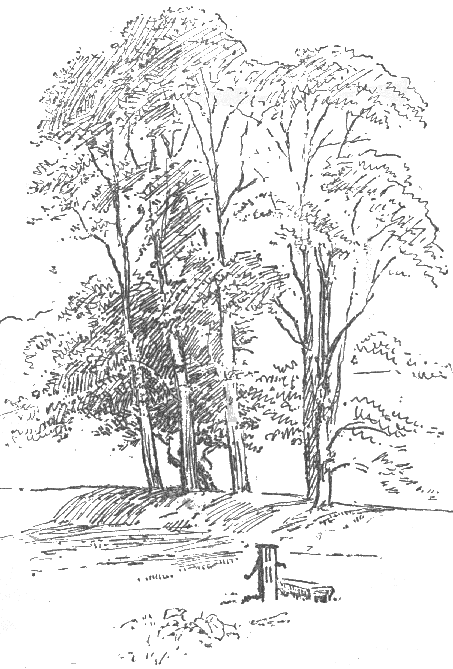
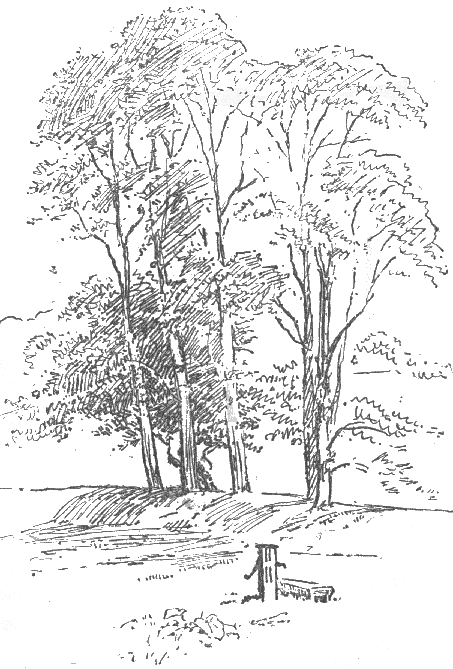
After showing proper appreciation of the newspaper paragraph, we return to the meadow where the parsonage stood. My companion sits down on a bank to sketch the terrace and the pump, for the pump, barely noticed before, has become interesting now as the only visible relic of the Austens’ home. Meanwhile I wander over the field endeavouring to
“Summon from the shadowy past
The forms that once have been.”
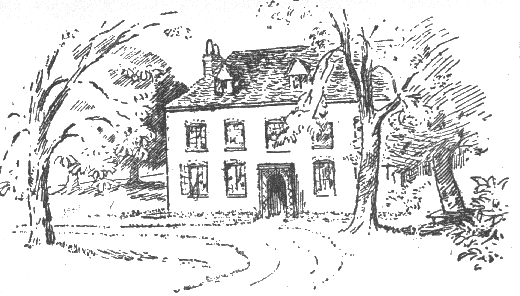
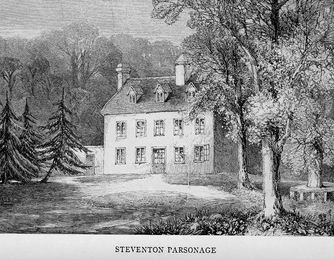
I can now picture to myself the exact spot where the parsonage stood, and can fancy the carriage drive approaching it “between turf and trees” from the gates at the corner of the two lanes. I can even fancy the house itself, being familiar with two old pencil views of it taken by members of the Austen family. These show that the front had a latticed porch, and that the back
STEVENTON PARSONAGE (FRONT VIEW)
had two projecting wings and looked on to the garden which sloped up to the terrace “walk.” In both sketches fine trees are introduced, and as I saunter about I notice some great flat stumps of elm-trees in the grass. The sight of these brings to mind a letter of Jane’s, written in November 1800, in which she says: “We have had a dreadful storm of wind in the fore part of this day, which has done a great deal of mischief among our trees. I was sitting alone in the dining-room when an odd kind of crash startled me; in a moment afterwards it was repeated. I then went to the window, which I reached just in time to see the last of our two highly-valued elms descend into the Sweep!!!! The other, which had fallen, I suppose, in the first crash, and which was the nearest to the pond, taking a more easterly direction, sank among our screen of chestnuts and firs, knocking down one spruce fir, beating off the head of another, and stripping the two corner chestnuts of several branches in its fall. This is not all. One large elm, out of the two on the left-hand side as you enter what I call the elm walk, was likewise blown down; the maple bearing the weathercock was broke in two, and what I regret more than all the rest is, that all the three elms which grew in Hall’s meadow, and gave such ornament to it, are gone; two were blown down, and the other so much injured that it cannot stand. I am happy to add,” she continues, “that no greater evil than the loss of trees has been the consequence of the storm in this place, or in our immediate neighbourhood. We grieve therefore in some comfort.”[1]
The “elm walk” alluded to, which is sometimes called the “wood walk” in the “Letters,” extended from the terrace westward and led to a rustic shrubbery. The shrubbery has disappeared, but there are groups of trees on the slope of the terrace that may have shaded the “walk.” One group is especially beautiful. It consists of tall sycamores with their pale grey stems and dark green foliage, among which an old thorn has entwined its branches. We read in one of the “Letters” from Steventon: “The bank along the elm walk is sloped down for the reception of thorns and lilacs.”
Perhaps these features of her home may have been in the author’s mind when she described “Cleveland” in “Sense and Sensibility.” “It had no park, but the pleasure grounds were tolerably extensive . . . . It had its open shrubbery and closer wood walk . . . . The house itself was under the guardianship of the fir, the mountain ash, and the acacia.”
The ground between the house and the terrace “was occupied by one of those old-fashioned gardens in which vegetables and flowers are combined, flanked and protected on the east by one of the thatched mud walls common in that country, and overshadowed by fine elms.”[1] I look on the sloping grass “where once this garden smiled,” and fancy I see fruit-trees and flowers and that I even catch a glimpse of two girlish forms moving among them – those of Jane Austen and her sister Cassandra; that only sister so dear to the heart of Jane, of whom she spoke, “even in the maturity of her powers, as of one wiser and better than herself.”
We are told that a path called the “Church walk” started from the eastern end of the terrace and ascended the steep hill behind the parsonage to the church. It ran between “hedgerows under whose shelter the earliest primroses, anemones, and wild hyacinths were to be found.” Let us cross the meadow, gentle reader, where the path ran which the Austens must have trod each Sunday morning as they walked to church. Leaving the meadow, we enter a small wood, and, on emerging from this wood, find ourselves on high tableland. There above us stands the church, a modest edifice of sober grey, seen through a screen of great arching elms and sycamores. Behind us stretches a fertile valley fading into a blue distance. The only sounds that meet the ear on this still September day are the twittering of birds and the distant bleating of sheep. How often must Jane Austen have listened to these sounds as she passed on her way to church!
We follow a path which crosses the churchyard beneath the boughs of an ancient yew-tree, and enter the small silent church. Our attention is caught at once by the squire’s pew on the right of the chancel arch. Square and big and towering above the modern benches it stands – solid oak below, but with elegant open tracery above through which the occupants could see and be seen. In the Austens’ time a family named Digweed rented the Manor of Steventon. Its owner was Mr. Thomas Knight, a distant relative of the Rev. George Austen, but the Digweeds held the property for more than a hundred years.
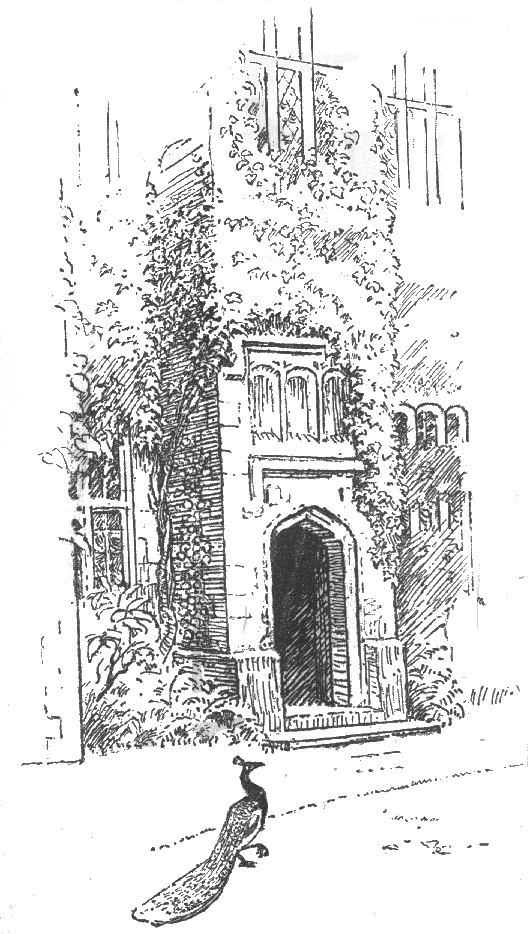
After examining, with great interest, many tablets to Austens and Digweeds, we quit the dark church and step into the sunshine once more; and, passing through a wicket gate, find ourselves upon a wide spreading lawn adorned with great sycamores. Beyond the trees rises a stately mansion of early Tudor date, with its stone porch, its heavy mullioned windows, and its great chimney-stacks all wreathed with ivy – the old Manor House of Steventon.
The house is no longer inhabited, for the present owner, we learn, has migrated to a new mansion erected hard by, but the old building itself has suffered no alteration, as far as its outward walls are concerned, since the Digweeds lived there, when there was much intercourse between the squire’s and the rector’s families.
We sit down upon a grassy bank under the shade of tall limes and, looking to the right of the old grey building, we can see the corner of a gay flower garden, whose red and white dahlias and yellow sunflowers rise above a high box hedge. To our left is a bowling-green, across which the shadows of great trees are sweeping. Whilst my companion sketches the porch of the Manor House
THE OLD MANOR HOUSE
I turn over the leaves of Jane Austen’s “Letters” and my eye falls upon these playful remarks, written in November 1800 to her sister Cassandra: “The three Digweeds all came on Tuesday, and we played a pool at commerce. James Digweed left Hampshire to-day. I think he must be in love with you, from his anxiety to have you go to the Faversham balls, and likewise from his supposing that the two elms fell from their grief at your absence. Was not it a gallant idea? It never occurred to me before, but I daresay it was so.”
We are told that “Mr. Austen used to join Mr. Digweed in buying twenty or thirty sheep, and that all might be fair it was their custom to open the pen, and the first half of the sheep which ran out were counted as belonging to the rector. Going down to the fold on one occasion after this process had been gone through, Mr. Austen remarked one sheep among his lot larger and finer than the rest. ‘Well, John,’ he observed to John Bond (his factotum), ‘I think we have had the best of the luck with Mr. Digweed to-day, in getting that sheep.’ ‘Maybe not so much in the luck as you think, sir,’ responded the faithful John, ‘I see’d her the moment I come in and set eyes on the sheep, so when we opened the pen I just giv’d her a “huck” with my stick, and out a’ run.'”[1]
When evening approaches we leave the old manor house and its smooth lawns under the glowing light of the setting sun and descend the hill to Steventon Lane. There our chaise awaits us and we make our way, not back to Deane, but on to Popham Lane, the main road between Basingstoke and Micheldever, and establish ourselves at an old posting inn, called the Wheatsheaf, which we find will be within reach of many a place visited by Jane Austen as well as of Steventon. [Hill, Jane Austen: Her Homes and her Friends, pp. 6-22]
**********************************
So one does need another trek to Steventon to place all these buildings in context – those still standing [what of the building used as the theatre in 1975?] and those now lost, but on the glebe maps to view.
So a rather useless update here with just a little bit more information, a few more names, a few more buildings, a few lost buildings, and more questions… anyone living in or near Steventon that sees this, please, please help me to fill in the gaps!
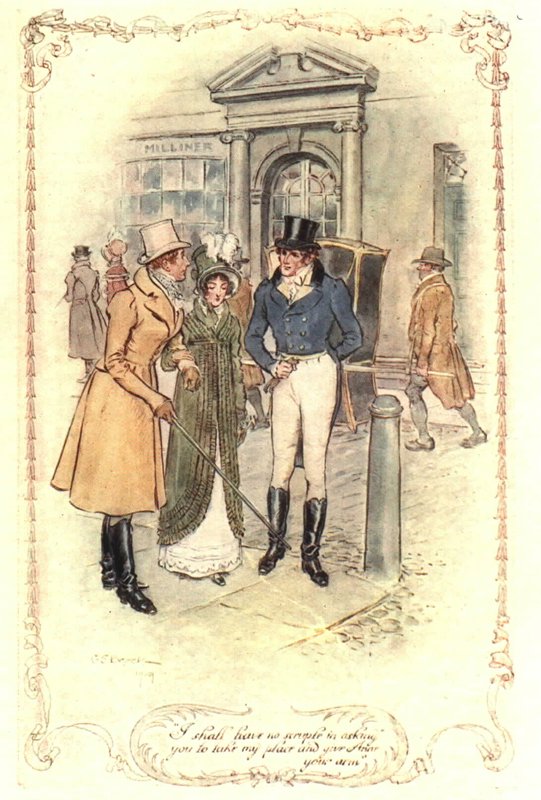
BROCK, Charles Edmund, R.I. (1870-1938). A series of fine ink and watercolour drawings for Jane Austen’s Persuasion, 1909.
14 pen and ink and watercolour drawings including one for the title-page (most c.280 x 180mm) on paper (390 x 270mm), and later mounted on card. Provenance: J.M. Dent and Co. (sold, part lot 769, 19 June 1987, £33,000).
14 ORIGINAL DRAWINGS FOR AUSTEN’S PERSUASION published by J.M. Dent and Co. in 1909. Together with J.M. Dent and Co.’s stamped file copy, in the original cloth, of a 1909 edition of Persuasion in which the drawings were published. (15)
Estimate: £7,000 – £9,000 ($10,108 – $12,996)
Price Realized: £10,000 ($14,710) [Price includes buyer’s premium]
There are 23 illustrations + the title page in this edition of Persuasion, so this is not a complete lot – but still I would have been happy to add all this to my Austen collection!
Further Reading:
*Visit Molland’s to view all of Brock’s illustrations: [these links are under “e-texts”]
One of the things I love most about old books is what you sometimes find in them, be it bookplates, inscriptions, the odd bookmark or pictures or postcards or notes or newspaper articles, some history of the book or the owners, or something relating to the subject of the book in your hands – alas! I have never found money! [but I did find a check once and I called the person so they could have it re-issued – a corporate check from only a few years before – the customer was thrilled! ] – so if it looks like something the previous owner might want I send it to them] – but as that is not usually the case, I find the possibilities endless – indeed I have several shoe boxes filled with the stuff, someday to be gone through in my dotage. But I recently bought a book by R.W. Chapman [to be posted about another time], our esteemed editor and scholar of Jane Austen and in it was the following news article [dated 1931]:
The Estate market: a link with Jane Austen
Steventon Rectory, in Hampshire, is for sale with 20 acres of garden and pasture. The formal notice of the auction, to be held at Basingstoke on September 9, in The Times yesterday, refers to building frontages on adjoining land, and indicates that there will be two lots. So any admirer of Jane Austen anxious to acquire a house where the great novelist was “without impertinence” called “Jane” needs to bid only for the rectory and grounds. A short history of Steventon speaks of Edward Knight as patron of the living in 1830. There, for those who know Jane Austen’s family connexions, is a name that is eloquent of her life at Godmersham, near Canterbury, and Chawton House, near Alton. Jane Austen was born in the parsonage at Steventon in 1775, her father, the Rev. George Austen, being the rector. She lived there for 16 years. The contemplated sale of the Steventon Rectory is by Messrs. Daniel Smith, Oakley and Garrand {Charles-street, St. James’s-square, and Rochester) and Messrs. Clutton [Great College-street, Westminster). The freehold will be sold in low reserve, and it is worthwhile to add that private offers before the auction will be considered by Sir John Oakley’s firm.
No date on the news-clipping, but there are a few notices on the reverse side with dates of 1931, so I am assuming this auction took place on September 9, 1931.
Other real estate noted in this clipping [and pictures of what the houses look like now]:
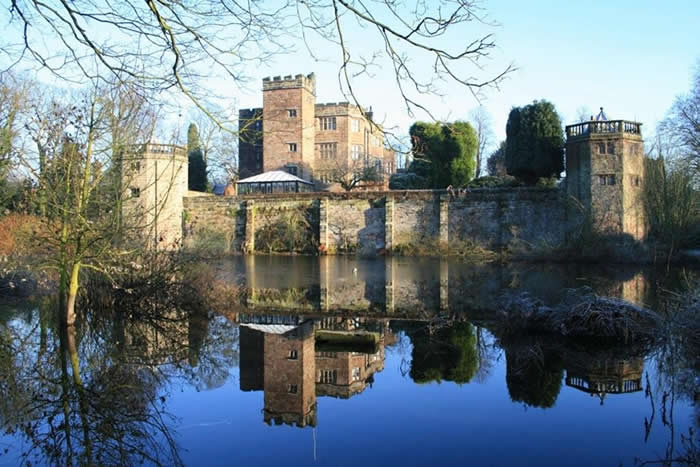
Caverswall Castle, Staffs. A fortified manor house that has escaped the perils of siege and the sometimes equally defacing hand of the restorer, is for slae by Messrs Hampton and Sons (St. James’s-square). An Edwardian tenure of the estate by Sir William de Caverswall followed that of his ancestors in the reign of Richard I…. [it is now a luxury wedding and events venue]
Shendish House, with 90 or 525 acres, and the rest of the 1,300 acres of Shendish estate, Kings Langley, will come under the hammer of Messrs. John D. Wood and Co (Berkeley-square) on September 15 in Watford. There are farms of from 120 to 320 acres, two residences, and 18 cottages. The land has frontages for development…. [now called Shendish Manor, a hotel and golf course]
And
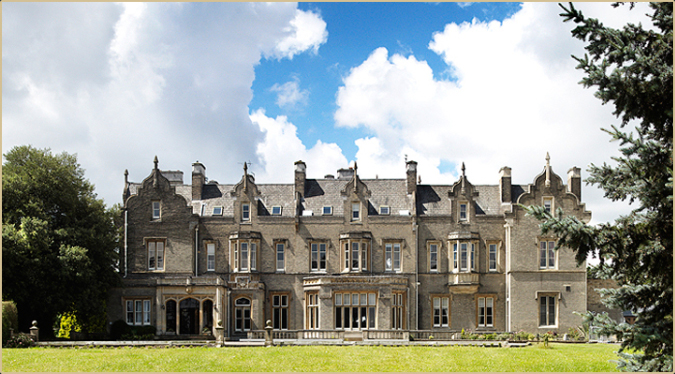
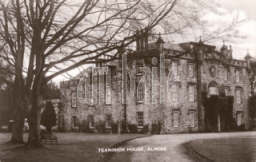
Teaninich, Cromarty Firth, is for sale by Messrs. Knight, Frank and Rutley (Hanover-square). It includes 2,000 acres, Teaninich House, a grouse moor, and salmon and sea trout fishing in the Alness and loch trouting. [picture of an old postcard of Teaninich House – is this now called Teaninich Castle?, a small hotel]
******************************
But what of the Steventon Rectory sale and the reference to Austen? This auction announcement cannot be correct, as we know that the parsonage where Jane was born was demolished by her brother Edward Knight in 1826 [or 1824 – see below] – and I have not seen anything about the house that he built to replace it to serve as the rectory when his son took over the benefice from his uncle, Jane’s brother Henry Austen in 1822.
All trips to Steventon, and books on the subject, guide you to the lonely pump sitting in a distant field that you can only document with a telephoto-lens camera – this the only remains of the rectory where Jane lived from her birth in 1775 until the move to Bath in 1801.
Old Steventon Parsonage site
[Image from Constance Hill biography]
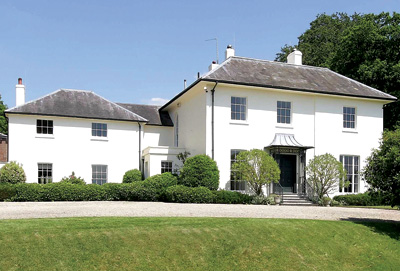
But I have not seen anything about this second rectory that was built after James and Henry let the original rectory where Jane was born go to seed – that is until recently when it appeared on the market again in October 2009 [ it was on the market for £4.5 million, I can find no listing for it now, so assuming it has sold] – see this article at Country Life as well as this blog post at Austenonly.]
******************************
So this little newsprint set me to research what I could find about this house, misnamed in the 1931 announcement as the house Austen grew up in [it also states she lived there for 16 years…], and of course what one finds is so many varying accounts of the original rectory and nothing of this newer house at all. I first discovered the discrepancies in dates as to when Edward demolished the house, then further variances in what the house looked like in a number of sources I have. Then a search on the JASNA.org site led me to the Linda Robinson Walker article in Persuasions On-Line [Winter 2005] – where she has meticulously reviewed all these different depictions of the rectory to understand why Jane Austen was sent from home for so many years of her childhood.
The varying history [some sources say the land was given to Rev. Austen by the Knight family, some say the Austen family, some say he rented the land he farmed (called Cheesedown Farm), and some say he sold that land when he moved to Bath], discrepancies in dates [the dates of the sketches, the dates the house was demolished, how long Austen lived there], various pictures [some resources show one front view, some the other, and David Cecil in his A Portrait of Jane Austen [Constable, 1978] is wrong in identifying the rectory as Chawton Cottage!] – all this conjectural history is dizzying, and one sees the danger of interpreting such flimsy data for a biography! [though certainly some of these discrepancies can be due to newer data coming to light at various periods…]
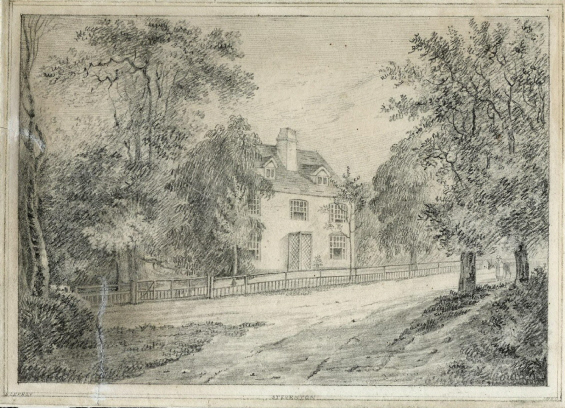
What the Rectory actually looked like is by no means clear – all knowledge is based on the original drawing by Anna LeFroy [James Austen’s daughter – she lived in the house as a child when Jane was there and then later when her father took over as curate in 1801] – and information gleaned from letters and the early memoirs / biographies of the family who actually knew the rectory [i.e. Anna LeFroy, Fanny Knight, Caroline Austen, and James Edward Austen-Leigh, as well as Jane Austen’s own comments in her letters about the house]. Anna made several sketches of the house, front and back view, and a street of cottages in Steventon. [but see: Deirdre Le Faye in her Jane Austen: a Family Record [2nd edition, Cambridge 2004] states that for the 1870 Memoir “Anna provided a ‘little drawing of Julia’s [her second daughter] made from my description of the Parsonage: more pretty than true, yet, some thing perhaps might be made of it…’ This joint composition formed the basis for the engraving of Steventon rectory used in the Memoir, and Anna added a note to the drawing in her possession: ‘The Door should have more Glass and less wood work – The Windows were Casements.” [Le Faye, p. 280, quoting a LeFroy letter and the LeFroy MS]
As you can see the two drawings of the house from the front do not compute – and Walker concludes that the engraving made from one of the drawings that was put into the 1870 Memoir was just another example of “beefing- up” Austen’s image, just as was done with her portrait – and that the smaller house was actually the rectory and Jane and Cassandra were sent from home to a boarding school to allow room for Rev. Austen’s boarding [and paying] male students. Walker believes the larger house to be a sketch of Ibthorpe [still standing, privately owned – I was fortunate enough to have tea there during the JASNA AGM in Winchester in 2003!] and a house much visited by all the Austen family. Walker does a most admirable job of computing all this data, based on family reminiscences, comments in letters as to location of rooms, etc. – but it is likely to be a mystery for all time, or at least a full-time research project to expand on what Walker has done. But in the end I am inclined to concur with Tom Carpenter’s thoughts that the smaller house view is actually a side view of the rectory [Walker cites Carpenter’s opinion in her note no. 2 on page 20-21]. An aside on this: I have the 1926 Memoir as edited by Chapman: the frontispiece of Austen is the Victorianized / “beautified” Austen, and the parsonage is the engraving that Walker refers to. But I also have the Folio Society edition of 1989, based on Chapman’s edition – the frontispiece is the facing-away sketch of Austen in the blue dress and the rectory is the original drawing by LeFroy of the smaller house. Why this change in the illustrations?? Are you all sufficiently confused at this point?! It is interesting to note that David Nokes in his 1997 biography of Austen has no illustration at all of the parsonage – perhaps he saw this jumble in the making and opted out?!
As to when the original rectory was demolished and the new one built, an article in Persuasionsby Patricia Jo Kulischeck [Vol. 7, 1985, pp. 39-40 ]– [the full text for this issue is not available, so I will quote from it directly] gives us the following information from land records of the time, Memorandum for a supplementary affidavit respecting Steventon Glebe Apl 1824, docketed in Edward Knight’s handwriting [text is in another hand]:
There is no rectory house in the Parish of Steventon excepting the new one now nearly finished built on a part of the land proposed to be added to the original glebe. The former house was situated low and subject to be flooded, distant from the greater part of the village and in a dilapidated state. The present house is placed above the valley in a more healthy spot and nearer the village. The inhabitants are about 150 persons. The original glebe consisting of only 3 A. OR. 23P [presumably 3 acres, or 23 parcels of land] in two disunited pieces was quite inefficient for the necessary accommodation of a resident clergyman’s family and as there are besides cottages only farm houses in the Parish and very few resident incumbents in the adjoining Parishes, it is most particularly desirable that the Rector of Steventon should reside there rather than on any other preferment he may eventually have and nothing is so likely to secure that residence as the proposed addition to the glebe which will add so materially to the comforts and in some degree to the respectability of the Rector. There can be no doubt what ever but very sensible advantages will be felt as well in several of the adjoining Parishes as in that of Steventon by securing the residence of the Rector in that Parish.
After the Austens moved to Bath in 1801, Rev. Austen retained the Steventon living and its income in his retirement and his son, James Austen, held the curacy, until his father’s death in 1805, when he became the Rector, and was so until his death in December 1819. As the living was part of the Knight estate that Edward Austen owned, Henry Austen took over the living until Edward’s fourth son William Knight was old enough to take it on in 1822. [Henry moved on to be curate of Farnham in Surrey.] William lived here in the new rectory with his wife, Caroline Portal, who had eight children in twelve years [and died in childbirth with the last one, much like her sister-in-law, Elizabeth Knight, Edward’s wife, who died after giving birth to her 12th child]– this from Claire Tomalin’s biography of Austen, and I find nothing more mentioned about this new rectory…
Kulisheck also quotes from an entry in the Victoria County History of Hampshire, printed in 1911:
St. Nicholas’ Church is on the eastern boundary of the parish. The rectory standing in very pretty and well-wooded grounds of 53 acres is some distance north of the church…situated about 500 yards from where the old one used to stand. At present no vestige of it remains, but up to within the last twenty years garden flowers used to bloom every season in the meadow where it formerly stood.”[Kulisheck, p. 40, quoting the History,vol. IV, p. 171.]
The October 2009 advertisement for this property, now called Steventon House, [see picture above] says it was bought by the Duke of Wellington in 1855, sold to a Harris family in 1877 – the house remained a rectory for the village until 1930 [1931], when it sold and became a private home [and that would be the sale from the auction in the newspaper that started this whole circuitous post…] [this current information from the Austenonly blog and a number of news articles about the sale]
So this is a very convoluted explanation of the original Steventon Parsonage where Jane Austen spent the first 25 years of her life !- the mystery remains, I feel more confused than ever! – more reading on the agenda… and certainly a required trip to the Hampshire Records Office – how awful that work gets in the way of such adventures!
Sources and further reading:
-Austen-Leigh, James Edward. A Memoir of Jane Austen by her Nephew. With introduction, Notes and Index by R.W. Chapman. Oxford, 1926.
-Austen-Leigh, J.E. A Memoir of Jane Austen by her Nephew. Introduction by Fay Weldon; based on the Second Edition of 1871 edited by R.W. Chapman for the Clarendon Press in 1926. The Folio Society, 1989.
-Cecil, David. A Portrait of Jane Austen. Constable, 1978.
The following fabulous information just received from Janeite Hope!
Last year there was quite a bit of discussion around the kerfuffle between author Claire Harman (Jane’s Fame) and Professor Kathryn Sutherland (Jane Austen’s Textual Lives) [see post: Discord in Austen Land from March 15, 2009]. The dust appears to have settled and now we can be indebted to Professor Sutherland for yet another wonderful contribution to all Janeites and the world of Jane Austen scholarship.
Under the direction of Professor Sutherland, and a joint project of the University of Oxford and Kings College London, the Centre for Computing in the Humanities of King’s College London has published the website: Jane Austen’s Fiction Manuscripts. The site includes transcriptions as well as high quality facsimiles. Of particular interest to scholars, though not yet apparent on the website, is the fact that the manuscripts have been encoded with “orthographic variants and punctuation symbols in minute detail for subsequent computational interrogation” as well as complex structural metadata. This means that interesting reconstruction, deconstruction and analysis will be possible.
Meanwhile we have the current Austen site to study and enjoy.
“Jane Austen’s fiction manuscripts are the first significant body of holograph evidence surviving for any British novelist. They represent every stage of her writing career and a variety of physical states: working drafts, fair copies, and handwritten publications for private circulation. The manuscripts were held in a single collection until 1845, when at her sister Cassandra’s death they were dispersed among family members, with a second major dispersal, to public institutions and private collections, in the 1920s Digitization enables their virtual reunification and will provides scholars with the first opportunity to make simultaneous ocular comparison of their different physical and conceptual states; it will facilitate intimate and systematic study of Austen’s working practices across her career, a remarkably neglected area of scholarship within the huge, world-wide Austen critical industry.
Many of the Austen manuscripts are frail; open and sustained access has long been impossible for conservation and location reasons. Digitization at this stage in their lives not only offers the opportunity for the virtual reunification of a key manuscript resource, it will also be accompanied by a record in as complete a form as possible of the conservation history and current material state of these manuscripts to assist their future conservation.
The digital edition will include in the first instance all Jane Austen’s known fiction manuscripts and any ancillary materials held with them.”
Manuscripts now online are:
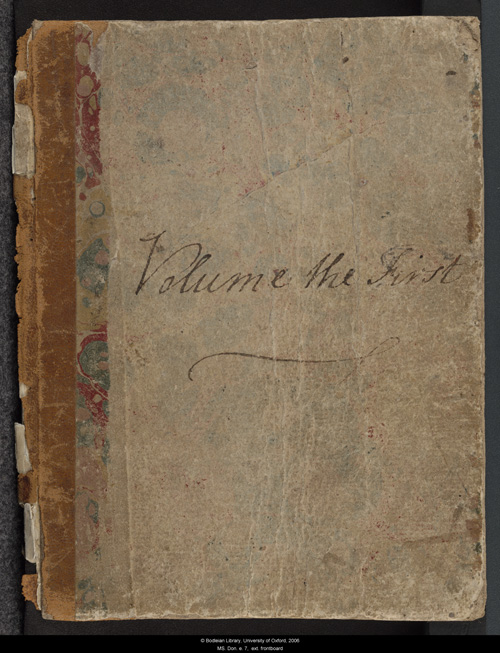
• Volume the First, Bodleian Library, Oxford
• Volume the Second, British Library, London
• Volume the Third, British Library, London
• Lady Susan, Morgan Library & Museum, New York
• Susan, Morgan Library & Museum, New York
• The Watsons, Morgan Library & Museum, New York
• The Watsons, Queen Mary, University of London, London
• Persuasion, British Library, London
• Sanditon, King’s College Cambridge, Cambridge
• Opinions of Mansfield Park Opinions of Emma, British Library, London
• Plan of a Novel, according to hints from | various quarters, Morgan Library & Museum, New York
• Profits of my Novels, Morgan Library & Museum, New York
No, I am not talking about Baseball or Hockey [though I am very pleased to see the Montreal Canadiens in the Stanley Cup Semi-Finals!] – these endless sport finals have nothing to do with Jane Austen after all [but can we assume that Catherine Morland likely played some form of hockey on a pond in her village…?]
This “Triple-Play” was a lovely “An Afternoon with Jane Austen” in a Montreal micro-brewery where members of JASNA-Montreal / Quebec celebrated Jane Austen with cheese, chocolate and BEER! – all the while listening to three lectures about Jane:
JASNA President Marsha Huff’s lovely “Viewing Austen through Vermeer’s Camera Obscura” and assisted by Helen Mayer and Peter Sabor as readers [always nice to hear Captain Wentworth’s heart-stopping letter read aloud by a gentleman with the proper accent!]; McGill Professor Peter Sabor gave his Philadelphia AGM talk on “Brotherly and Sisterly Dedications in Jane Austen’s Juvenilia”; and Professor Elaine Bander of Dawson College spoke on “Revisiting Northanger Abbey at Chawton”.
I confess to actually having heard EACH of these talks – but much like re-reading Austen herself, a few hours of re-listening to others talk ABOUT her is a double treat not to be missed whenever possible [and interesting to see the variations in my notes from each talk!] – and connecting with other Austen fans, coupled with a few shots of beer makes for a perfect afternoon!
Huff’s Austen / Vermeer talk is a wonderful exploration into several of Vermeer’s paintings, building on what Sir Walter Scott wrote in his review of Emma where he likened Austen’s talents to the Flemish School of Painting. Huff offer’s a visual comparison with Vermeer’s “The Concert” to the party at the Cole’s in Emma; “The Music Lesson” with Elizabeth performing at Rosings for Col. Fitzwilliam and Darcy; “Lady Reading a Letter” to the various scenes in Austen of heroines reading letters: Elinor, Fanny, Emma, Ann Elliot, and Elizabeth – these are just a few examples, and one must see and hear this talk to really see the connections. Marsha has been touring all of North America in her term as JASNA President, and if you get a chance to see this, get thee hence to it immediately [and do so even if you have already heard it – it gets better each time!] [Note that she will be doing this talk for our JASNA-Vermont group on September 26, 2010]
[We all clamor for publication of this talk, but Ms. Huff believes there would be copyright issues with the paintings. You can visit the very complete and indeed “essential” website Essential Vermeer to see all his works [and source of above image of “Girl with a Pearl Earring”]
Peter Sabor teaches at the Department of English at McGill University, where he is Canada Research Chair in Eighteenth-Century Studies and Director of the Burney Centre. He has recently edited the Cambridge University edition of Austen’s Juvenilia, and the Juvenilia Press editions of Evelyn (1999) and Frederic and Elfrida (2002). He is currently working on a new biography of Austen.
As many of us know, Austen dedicated only one of her novels to anyone – Emma to the Prince Regent, and likely much against her will! But her juvenilia have dedications all over the place! – and eleven of these are to her brothers and Cassandra. Are they ironic or reflective of the fictional characters? Professor Sabor offers an amusing and scholarly take on the mind of the young Austen and her relationships with each of her siblings. [Note that Prof. Sabor will be giving this talk to our JASNA-Vermont group at our annual Birthday Tea on December 5, 2010 – though he might be changing this as we get closer as this talk is in the just-arrived-in-your-mailbox Persuasions 31 [pp. 33-45]– so you can read all about it, though lacking Sabor’s not-to-be-missed lively delivery…]
Juvenilia Press edition
Elaine Bander is one of my favorite AGM speakers – whatever the topic of the Break-out Session, I go if she is the headliner. [Professor Bander is Regional Coordinator of JASNA / Montreal-Quebec, and President of JASNA-Canada; she is currently on the editorial board for Persuasions] – she gave this talk this past summer at Chawton, and also in Boston in the fall – her blurb for this talk:
In “Catharine,” the last of the Juvenilia, Austen shifts from the mocking fictional conventions through burlesque to dramatizing misreadings through the character of Camilla Stanley, who is contrasted to the sensible heroine Catharine Percival. In Northanger Abbey, the only pre-Chawton novel still essentially in its pre-Chawton form, the narrator, not the heroine, has quixotic expectations, while Catherine Morland, resolutely empirical, is [briefly] led astray not by literature but by love.
Indeed Dr. Bander gives Catherine all due credit for being a worthy heroine, eschewing those critics who find her too innocent or silly: Catherine observes, reflects, then chooses her course throughout the book, and it is only when Henry comes into the picture that her sound judgments are disturbed – you can read this article also in the new Persuasions [pp.209-219]
After these three thought-provoking talks [and always nice to end with images of Henry Tilney!] – the McAuslan Brewing Company in Montreal offered a tasting feast of five McAuslan beers, two beer cheeses, and dark chocolate – much Austen chat ensued as we opined on the various beers to be tasted, and this fabulous afternoon ended with a very happy crowd wandering out into the windy, rain-soaked streets!
Available through JASNA-Montreal/Quebec Region is Dr. Bander’s pamphlet written for this special event: Jane Austen and … Beer? [Montreal: Hartfield Editions, 2010]. [There are also two other pamphlets by Dr. Bander: In Defence of Fanny Price [2006] [a must-read for everyone!] and On Drinking Tea in Jane Austen’s Novels [2002]; contact me if you are interested in any of these and I will forward your request to the Montreal Region]
*Please bring a chair or blanket, an umbrella for the sun [or a bonnet!], and a picnic lunch if you wish [desserts and ice teas will be provided]
************************************
• Upcoming Events: [please contact us to be on our mailing list]
September 26: JASNA President Marsha Huff on “Viewing Austen through Vermeer’s Camera Obscura” [Champlain College] December 5: Annual Birthday Tea with Professor Peter Sabor on the Juvenilia and Prof. Elaine Bander on Mr. Darcy [Champlain College] March 27, 2011: “Jane Austen’s London in Fact and Fiction” w/ Suzanne Boden & Deb Barnum [Champlain College] June 5, 2011: A Concert with William Tortolano at Vermont College of Fine Arts
The Sotheby’s Auction, A Celebration of the English Country House [Sale No 8625], I mentioned in my previous post took place today [April 15, 2010] and you can view the results here.
Sale Total: 3,035,376 USD* [so far: session 2 is still ongoing] [see below for update]
a few samplings:
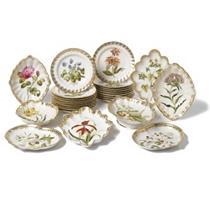
Lot 2: A DERBY PORCELAIN BOTANICAL PART DESSERT SERVICE, CIRCA 1800 5,000—7,000 USD
Lot Sold. Hammer Price with Buyer’s Premium: 10,000 USD
Lot 21: A FINE GEORGE III INLAID TULIPWOOD AND MAHOGANY CARD TABLE IN THE MANNER OF THOMAS CHIPPENDALE, CIRCA 1775 8,000—12,000 USD
Lot Sold. Hammer Price with Buyer’s Premium: 43,750 USD
See the Sotheby’s website for the complete catalogue and ongoing results…
********************************
PS: here are the final results, with one more item:
Sale Total: 3,172,254 USD
LOT 256: A GEORGE III SILVER LARGE INKSTAND FROM THE WAR OFFICE, ROBERT & SAMUEL HENNELL, LONDON, 1805
8,000—10,000 USD
Lot Sold. Hammer Price with Buyer’s Premium: 17,500 USD
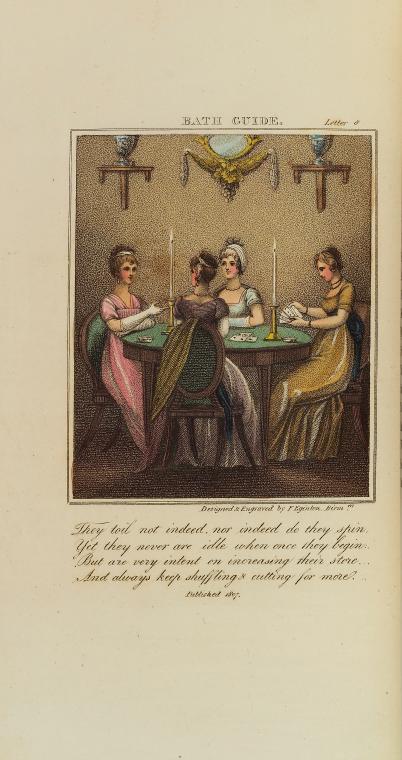
They toil not indeed, nor indeed do they spin. | Yet they never are idle when once they begin. | But are very intent on … (1807) [Bath Guide. Image from the NYPL Digital Collection]
3. A blog just discovered: Bitch in a Bonnet, “reclaiming Jane Austen from the stiffs, the snobs, the simps and the saps”
Jane Austen exhibition reveals author’s life and brings new prominence to her final resting place
22 March 2010. As the bicentenary decade of Jane Austen’s heyday and early death approaches, a new permanent exhibition at her resting place in Winchester Cathedral opens on 10 April 2010 to unveil the life and times of the renowned author like never before.
The exhibition, which will document Jane’s home and social life, will be supported by a mix of permanent and rolling exhibits borrowed from collections around the world. From 10 April until 20 September items from Winchester Cathedral’s and Winchester College’s archives will be on display. Some of these items have rarely, if ever, been displayed publicly before and include her burial register, first editions and fragments of Jane’s own writing.
Guided tours, specific exhibition and talks will take visitors through her life and works to mark her legacy and set the stage for Jane’s bicentenary. Stand out events are:
I May: Special Evensong to mark Jane Austen’s life, and place in the Cathedral’s history
16-18 July: Jane Austen Weekend (including Regency Dinner) which coincides with the Jane Austen Society AGM
5-6 August: Outside theatre production of Pride and Prejudice
Extended tours which take visitors beyond the Cathedral to see Jane’s final home just beyond the Cathedral Inner Close.
6. London Remembers, a site documenting all the memorials in London [people, events, etc.] – search “Jane Austen” and two sites come up, both locations where her brother Henry Austen lived in London.
7. Search the blogLondon Calling for “Jane Austen” and you will find a number of posts on Austen: about the theatre, William Wilberforce, Southampton, Steventon, etc. – informative posts with great photographs from this Austen-obsessed Londoner [lucky guy!]
8. After Austen’s time, but an interesting online exhibit to view at Facing the Late Victorians, containing rarely seem images of and by British artists in the Mark Samuels Lasner Collection: [click on each image for an enlarged view]
In the Oxford Austen online class I have just completed, I discovered a number of websites relating to the British Navy that we studied for the units on Mansfield Park and Persuasion. The Historical Maritime Society has a wealth of information and is worth a look-see – I append here one bit of interesting revolutionary-era history that was new to me, and quite a good chuckle as well, so prepare for a belly-laugh!:
The French Revolutionary Calendar
One of the peculiar manifestations of the French Revolution was the adoption of a totally new calendar, ‘The Calendar of Reason’, which was based on the system used by the Ancient Egyptians. From time to time anyone reading contemporary documents will be aware of this system and a brief explanation is included here.
In the build-up to the Revolution it was not just the aristocratic class that was despised by the new ‘thinkers’ but also the Roman Catholic church with its all-pervading influence on the lives of ordinary people, its feasts and fasts, coupled with its reactionary support of the hated ‘aristos’. Consequently one of the aims of the 1789 Revolution was the rejection of the relatively new Gregorian calendar (promulgated by Pope Gregory) adopted by France in December 1582 (although not in Britain until 1752).
In 1792 the revolutionary Committee of Public Instruction began to investigate the possibilities of this change and formed a subcommittee to do this. It contained Astronomers, Mathematicians and also Poets and Dramatists and finally published the results of its deliberations in September 1793. This was followed by a decree in October bringing in the new calendar.
The start date for this was 22nd September 1792, the date which marked the start of the French Republic, a date which, it was claimed, marked the beginning of equality for all Frenchmen. The calendar consisted of 12 months, each with 30 days. On top of this there were to be 5 ‘jours complémentaires’ (originally called ‘sansculottides’ after the practice of common non-aristocrats of wearing trousers, not breeches) and leap years were to have an extra jour complémentaire. This was based on the Ancient Egyptian calendar, still used by some Eastern Orthodox Christian churches.
The poets among the committee chose the names of the new months and in particular this task fell to Philip François Nazaire Fabre d’Eglantine, whose nomenclature reflected the character of each particular month. These are presented below with an explanation (mine) of the word’s root. Remember when reading these that the calendar began in late September (Gregorian).
Vendémiaire Wine-harvesting
Brumaire Foggy
Frimaire Frosty
Nivose Snowy
Pluviôse Rainy
Ventose Windy
Germinal Plant germination
Floréal Flowering season
Prairial Meadows
Messidor Reaping and harvesting
Thermidor Heat
Fructidor Fruit harvest
Predictably the furiously anti-French literary establishment across the Channel in Britain made fun of this by christening the months, Wheezy, Sneezy, Freezy, Slippy, Drippy, Nippy, Showery, Flowery, Bowery, Wheaty, Heaty and Sweety!!
[text from Historical Maritime Society – click here for more information: when at the home page, click on “Nelson and his Navy” and follow the various links]
Further Reading:
Hubback, J.H. and Edith C. Hubback. Jane Austen’s Sailor Brothers, [published 1906] at Molland’s Circulating Library
Southam, B.C., Jane Austen and the Navy, Greenwich Maritime Museum, 2005.








 Jane Austen in Vermont
