Jane Austen loved a garden. She took a keen interest in flower gardening and kitchen gardening alike. The Austens grew their own food whenever they could and had flower gardens wherever they lived, at their parsonage at Steventon in Hampshire, their town gardens at Bath and Southampton, and when they returned to Hampshire, at their cottage garden at Chawton. In Jane’s letters to her sister Cassandra, we see her planning the details of these family gardens, discussing the planting of fruit, flowers, and trees with enthusiasm. In the course of her life, she also had the opportunity to visit many of the grander gardens of England: her brother’s two estates at Chawton and Godmersham, the manor houses of friends and family, and probably even the great estate at Chatsworth, assumed by many to be the inspiration for Pemberley…
So begins the new book “In the Garden with Jane Austen,” by Kim Wilson, author of Tea with Jane Austen, published by Jones Books [2008], one of my purchases at the AGM Emporium in Chicago, and for those of you enamored of the traditional English garden, a lovely addition to your bookshelf.
Wilson takes us on a visual journey through various gardens Austen would have created for herself, visited, or imagined in her novels, all interspersed with photographs, quotes from her works and letters, and vignettes of engravings and poetry from her contemporaries.
We begin at Chawton Cottage, Austen’s home from 1809-1817, and the setting of the cottage and kitchen gardens that she wrote about so lovingly… “You cannot imagine – it is not Human Nature to imagine what a nice walk we have round the orchard” [31 May 1811], and then references to farm and parsonage gardens, which we see in Emma (Robert Martin’s summer house in his farm garden), and who can forget Mr. Collins day-long labors in his garden, much to Mrs. Collins’s satisfaction!
The chapter on Mansion and Manor House Gardens takes us to Godmersham Park and Chawton House, Austen’s brother Edward’s estates in Kent and Hampshire, Blenheim Palace, Chatsworth, and Stoneleigh Abbey [in Warwickshire] and the Vyne where “every park has its beauty and its prospects” where “one likes to get out into a shrubbery,” and we are reminded of Mr. Rushworth and his “improvements,” and the settings of Pemberley, Rosings, Mansfield Park, and in Emma, where the garden is nearly the heroine’s only place for solace, and Fanny with her own geraniums in her room (but she cuts roses for Mrs. Norris! …and a nice touch here … “Recipes for Mrs. Norris’s Dried Roses”)
Gilbert White's House, Selborne
Austen’s life in the cities of her times was confining, and one of her joys was the City Gardens. Wilson travels through the gardens of Georgian Bath, a variety of London’s garden squares (Henry Austen lived in several places in London and the areas surrounding these show up in her novels as the London homes of her characters:, Brunswick Square in Emma, Hanover Square and Portman Square in S&S), the garden at the Royal Pavilion in Brighton (where Austen’s characters visited, if not Jane herself), and the small town garden the Austens had in Southampton.
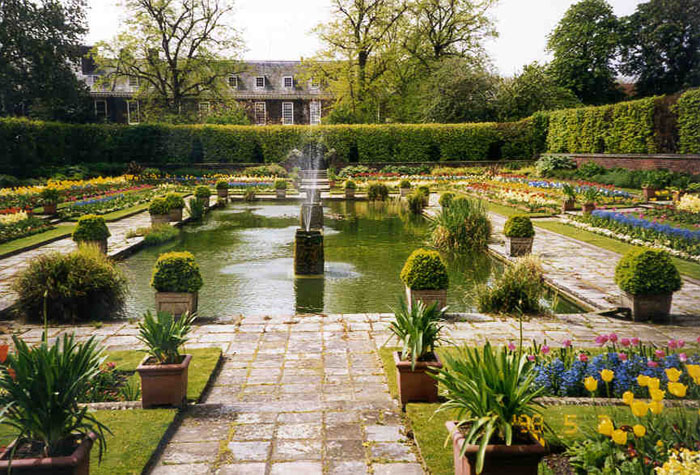
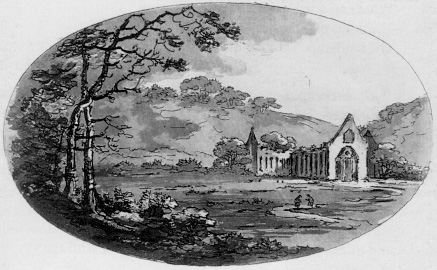
We all know that Austen was a self-described “desperate walker” much as she imagined Elizabeth Bennet, so her love of Public Gardens & Parks is apparent in her novels and letters: Kensington Gardens, St. James and Hyde Park in London, Sydney Gardens and Alexandra Park at Beechen Cliff in Bath, Box Hill (made famous in Emma), and the tours of the picturesque (as Elizabeth’s tour through Derbyshire in P&P), and Netley Abbey near Southampton.
Kensington Gardens
The chapter on Recreating Jane Austen’s Garden offers plans on the Chawton Cottage kitchen garden and flower border, the border garden of Houghton Lodge, the herb garden at Gilbert White’s House (in Selborne, near Chawton), and a Georgian garden with plans of the Kennard Hotel garden in Bath.
Gardens featured in Austen film adaptations closes the book with a list of the various real-life houses, gardens and parks that breath life into Austen’s stories…many are open for tours and how better to experience the places that Austen herself created for us than to take a leisurely walk around the grounds of these locations.
Wilson provides a bibliography to entice the reader with yet more books to peruse: they run the gamut from “The Formal Garden in England” [R. Blomfield, 1901] to Cowper’s “Poems” to “Hints for the Preservation of Wood-Work Exposed to the Weather” [J. Crease, 1808] and “The Juvenile Gardener, Written by a Lady for the Use of her Own Children” [London, 1824]
So this quick summary is of course lacking in what makes this book so charming – the many photographs, the quotes from the novels, the flowers! Ms. Wilson has given us a gift! I live in an English cottage cape, surrounded by what were once charming gardens…I struggle to keep them looking as I know they must have in some long-gone past, … I have many books on cottage and English gardening, perennials and borders, herb gardens, Gertrude Jekyll’s gardens, Penelope Hobhouse on all manner of gardens, even how to make an all-white garden … so this book is a delight to add to my collection, combining as it does my love of an English garden and my love of Austen….it is a visual feast, a good quick read that brings so many elements to the table…it is unfortunate that we are now upon the winter scene here in Vermont, and though I cling to my last rose struggling mightily against the frost that visits us every night, I can perhaps make some new plans through the long winter, or better yet, plan a garden tour through the English countryside next spring…or at least do a re-read of this lovely book……
Austenprose celebrated its first anniversary this week… so we offer hearty congratulations to Laurel Ann for her consistently insightful “musings” with hopes that she shall continue to enlighten us every day with her “celebration of the brilliance of Jane Austen’s writing.” It has been an especially fine month of Gothic doings delving into the hidden crannies of Northanger Abbey…
Jane Austen’s World was selected for two blog awards… 1) Elizabeth fromScandalous Women, and
2) Alyssa Miller from The Love Coach, (who also selected Austenprose)…these are both great literary blogs to add to your favorites; and then link to Jane Austen’s World to see her choices for best blogs (hint: Ms. Place most kindly chose JAIV … so thank you Vic! I now need to select my own 15 favorites…so stand-by for that!)
AustenBlog has posted information on Sue Forgue’s online Regency Encyclopedia, a first-stop resource for all things Regency, geared toward fan-fiction writers. The site is searchable and browse-able by subject and includes interactive maps, book lists and links to online resources. Go to Austenblog for the information and user password that Mags provides. Expect to be visiting the site for at least the entire weekend… ! I have just taken a fabulous tour through Regency London….and am now perhaps off to Bath…
Jane Odiwe shares one of her watercolors of Austen based on the Cassandra sketch, as well as a few words on the Chawton Cottage and gardens.
Here’s a new one…a horse named Jane Austen won big in the the latest Irish racing event. Read all about it here at the independent.ie
Ellen Moody’s blog on her latest readings on Austen life and works, along with some lovely pictures of Steventon and Chawton.
Two patterns for cross-stich samplers with Jane Austen quotes can be found at Pattern Mart; click here for the second pattern.
Sunday, November 2, 2008, a lecture at the Princeton Branch of the English Speaking Union on “The Facts and Fictions of Jane Austen”by Elizabeth Steele, the regional coordinator of the Eastern PA JASNA Chapter. See the article and website for more information.
Paul Johnson at the Spectator.uk writes on “Jane knew All about a Banking Crisis”, giving some history of Jane’s knowledge of banking issues through her brother Henry’s mostly disastrous banking experiences. But see Jezebelwhere she sounds off on just being plain exhausted with seeing Jane Austen’s name linked to EVERYTHING going on in the world! (I heartily concur!)
See the Regency World of author Lesley Anne McLeod blog for information on a new contest offering the out-of-print book “Everybody’s Historic England” : the contest begins October 31…. there are also several new additions to her website.
See this Architect Design blog post about the 2006 BBC movie about Beau Brummell, the Regency dandy…starring the always fabulous James Purefoy (Vanity Fair, Rome, he also played Tom Bertram in the newest Mansfield Park); however did I miss this one??
Lady Helga at her Jane Austen PodNovel blog has hit the 50 mark, i.e. her 50th show…stay tuned for her next podcast! [she has been reading P&P]
This of interest to those in New England: an interactive touring map linking you to the websites of stores specializing in children’s books in the New England area [the map is at the site of the the New England Children’s Bookselling Advisory (NECBA)] My favorite shop here in Vermont is the Flying Pig Bookstorein Shelburne.
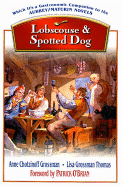
For you lovers of Patrick O’Brian, click on the following link for POB’s Riches, a listing of (nearly) all the literary (and non-literary) quotations and allusions in O’Brian’s books. [with thanks to an alert Janeite who posted this on the Janeites discussion group]…. in a very cursory browse, I find only one direct quote to Jane Austen, though we know he loved her dearly. And speaking of Mr. O’Brian, I have recently added to my bookshelf “Lobscouse & Spotted Dog” a gastronomic companion to the Aubrey/Maturin novels, by Anne C. Grossman and Lisa G. Thomas [Norton, 1997], and will be brushing up on my Whipt Syllabub [page 26], as Jane would be pleased…
For a little much needed humor, here are the rules for “The Jane Austen Drinking Game” created by Mostly Water Theater. Click on the YouTube link for their rendition of the game while viewing Sense & Sensibility.
Book reviews: I link you to only one this week…(more to come I promise): Ms. Place on Mansfield Revisited.
And I end this post, it being Halloween, I give you a fine post by Ms. Place on some Halloween happenings at Jane Austen Today… see also her link to the History of Halloween.
The long-awaited and much talked about Pride & Prejudice, The New Musical finally had its first run last night in Rochester NY… read a review at the online Rochester City Newspaper. And read more about it at the play’s website.
Jane (in Cork Street, London) to Cassandra (Steventon? not noted)
Boston Public Library (since 1966)
There has been a gap of seven months since Letter no. 2 (of January 1796), but Letter 3 finds Jane in London, likely staying at at the home of Benjamin Langlois in Cork Street (see below) and she hurriedly pens a quick letter to Cassandra. She begins with her oft-quoted
Here I am once more in this Scene of Dissipation & vice, and I begin already to find my Morals corrupted.
and “hoping you are all alive after our melancholy parting.” She reports on the trip in a Chaise and “without suffering so much from the heat as I had hoped to do.” She has traveled with her brothers Edward and Frank and “they are both gone out to seek their fortunes; the latter is to return soon & help us to seek ours. The Former we shall never see again.”
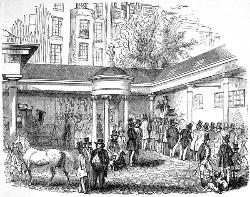
They are off to “Astley’s” to night” [ Astley’s Amphitheatre near Westminster Bridge, an equestrian circus open from Easter through November or so] See Emma chapters 54 and 55 for references to Astley’s.
Then a reference to Henry driving his then fiance Miss [Mary] Pearson to Rowling, where Jane is headed on Thursday, so her visit to London is a short one [Rowling is in Kent, and the home of the Bridges family; Jane’s brother Edward married Elizabeth Bridges]; and Austen signs off with hopes that Cassandra “pursued your intended avocation with Success.-” not sure what this refers to…will see if mention is made in a subsequent letter.
An interesting note about this letter is in the viewing of it in Modert’s compilation of facsimiles; one finds Austen’s writing much larger and sprawling than most of her other letters…. she perhaps had no concerns here about the costs of posting, or wrote it very quickly and just wanted to send it off without thinking of adding more the next day, as she often did…
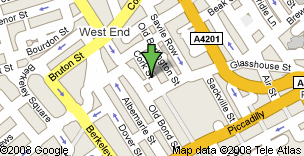
One of my great finds at the AGM was this book titled Jane Austen Visits London by Vera Quin. Ms. Quin was one of the presenters, giving a delightful talk on Austen’s Landscape. In this book, just published in 2008 by Cappella Archive, Quin takes us through Austen’s letters from London, numbering thirty out of the 160 or so extant letters. So I will return to this book again and again as I read the letters. But here I am interested in what she says about this letter and Austen’s stay at Cork Street. Quin takes us along the street to identify what was there during Austen’s time…and the house she likely stayed in was that of Benjamin Langlois, an MP and Under-Secretary, and a bachelor who lived alone in this small house at 18 Cork Street, but more importantly the Uncle to Tom Lefroy, the subject of Jane’s previous two letters, and this home is where Tom stayed when he was in London. Ms. Quin references the theory, albeit she adds with no evidence, that Jane stayed here with perhaps the intention of seeing Tom and seeking his Uncle’s approval for a possible engagement… (p. 9)
…but that not forthcoming, Quin continues with her thoughts that Jane would have walked the streets of the surrounding squares and perhaps put her imagination to work…this is where you find Mrs. Ferrars, Mrs. Jennings and her daughters, John and Fanny Dashwood, all of S&S and the Hursts of P&P. (p. 10)Austen’s later trips to London found her at her brother Henry’s. All speculation aside, it is an interesting question as to why Jane spent these two days at this house, noted as being too small to house guests comfortably…is there any more thought or research on this? I know that Joan Ray’s article on Austen and Lefroy makes it clear that Tom would not have been there at this time because his classes were not in session. And I agree wth Ray that there is no reason to link the comment about her “morals being corrupted” with Lefroy being there… this is just Austen making fun of the prevailing take on London as a place of lose morals….
Further reading: there is no beginning with links to Regency London; I collect books on London and am well-aware that it is a lifetime commitment! Here are just a few of the good sources out there. I will refer to more of them as I come upon other Austen letters sent from London.
Ray, Joan Klingel. “The One-Sided Romance of Jane Austen and Tom Lefroy” Persuasions Online, vol.28, no. 1 (Winter 2007)
There are a number of good books on London at this time, notably Liza Picard’s Dr. Johnson’s London [St. Martins Press, 2000] with its tantalizing sub-title: “coffee-houses and climbing boys, medicine, toothpaste and gin, poverty and press-gangs, freakshows and female education.”
Also Roy Porter, London: A Social History [Penguin, 1996] and Stella Margetson Regency London [Cassell / Praeger, 1971]; and Peter Thorold, The London Rich, the Creation of a Great City, from 1699 to the Present [ St Martin’s, 2000]
and there is an excellent collection of essays on Jane Austen in London at the JASA website, which covers a number of topics on life in London during the Regency.
This is a great mishmash, as I have been a tad out of the loop these past two weeks ( I think I am still in 19th-century mode after 4 glorious days in Chicago…), so please excuse the the lack of any order (and perhaps sense) in this selection…
*Ms. Place at Jane Austen’s World has several posts on Bath (on bathing and dancing, in that order…), to accompany Laurel Ann’s NA journey.
*A review of Colleen McCullough’s new book about Mary Bennet: at The Australian online
*Another Cassandra and Jane (by Jill Pitkeathley) review at the always insightful Ripple Effects. Blog author Arti also has posted a poll on “Which Austen heroine do you think Jane was most like?” A good question and one I think has not one answer, i.e. I think that Austen was a little bit like each of her characters… Arti also continues his Jane Austen reading with reviews of two of the Austen biographies: by Claire Tomalin and Carol Shields.
*See this interesting blog at Publisher’s Weekly where the question is posed: “which book would you rescue if your house was on fire?” I did not see a single Austen [or Shakespeare for that matter] in the comments, but they are worth looking at nonetheless (“I capture the Castle” had TWO saves…. I mean I LOVE this book, but really, this over Shakespeare??, though I do understand some of the comments focus on the monetary value of the book they wish to save] So it is a great question…which of YOUR books would you grab on the way out the door (i.e after you first saved Fido… and just maybe your husband’s golf clubs?)
*And this from alert Janeite Arthur L. about Elizabeth Jane Howard’s new book: Love All ~ the name of the protagonist is Mary Musgrove. See this review of the book at Telegraph.co.uk and another at Timesonline.
*Here is a blog I just discovered: Books Please, Ramblings of a Bookwormthat reviews book just read as well as lists of those endless TBR piles! Like I need another list….
*The Jane Austen Centre Online Newsletter is always a welcome addition to my inbox, and this month’s issue is filled with goodies (including fruit-cake recipes!) [ you can sign up for the newsletter here ] …in the meantime a few items of interest:
A new book by Maggie Lane The Immortal Jane Austen is available at the Jane Austen Centre shop
*Jane Odiwe at her Jane Austen Sequels blog posts about Traveling in Regency England, inspired by a Hugh Thomson illustration, and sites a poem by Jonathan Swift who shares the joys of such travel!
*Regency Reader blogs about Jackson’s, a boxing club in Regency England.
*See the Literature Page for searchable full-text of Lady Susan, P&P, S&S, MP, Emma, NA, and Persuasion.
*For those of you in the vicinity of Riverdale Park, Maryland, there is a Ladies’ Regency Day planned for Saturday, November 15 at the Riversdale House Museum. Ladies will participate in cooking workshops, make a period fashion book, Regency readings courtesy of docent and published author, Janet Mullany,and more! The afternoon will end on a high note as participants enjoy tea accompanied by Regency music and harp demonstrations. This is a perfect (and unique!) gift or treat for any Regency or Jane Austen enthusiast you might know of! Registration is $50 for Prince George’s & Montgomery Counties and $60 for everyone else.
[For any questions or to register, call 301.864.0420.]
*If, on the other hand, you are headed to Brighton (!) for a weekend, click here for MindFood for some travel tips.
*Bollywood returns with news of an Emma production…
*A review of an Emma production in St Louis’s Repertory Theatre in West End Word; the musical is ongoing through November 2.
*See this article at the Pennsylvania TimesLeader.com on the stage production of “Jane Austen & Friends” which ponders Austen’s love life. The play will be at the New American Vic, 411 Studio, Lackawanna Avenue, Olyphant [PA], 8 p.m. Fridays and Saturdays and 2 p.m. Sundays, through Oct. 26.
*And finally if you are having any thoughts of moving to Lyme Regis, here are some sobering real estate facts.
Tomorrow I promise Letter #3 (finally…) and a book review….
Diary ~ Day Four: Brunch & Music & Darcy & Farewells / Final Thoughts
Early morning RC meeting, another helpful gathering…I am returning home with a suitcase full of ideas (not to mention those books!)
Off to Brunch and “A Conversation about Creativity, Collaboration, and Creaking Doors”
JASNA announcements including awarding prizes for the Young Writers Workshop ~ you can see the list of winners and read the winning essays at the JASNA website…all excellent and insightful! And then the Philadelphia entourage took the stage for a humorous skit and the passing of the JASNA banner from Chicago’s William Phillips to the coordinators of the next AGM, “Jane Austen’s Brothers and Sisters in the City of Brotherly Love“ October 9-11, 2009 in Philadelphia. Mark your calendars!
Lindsay Baker & Amanda Jacobs
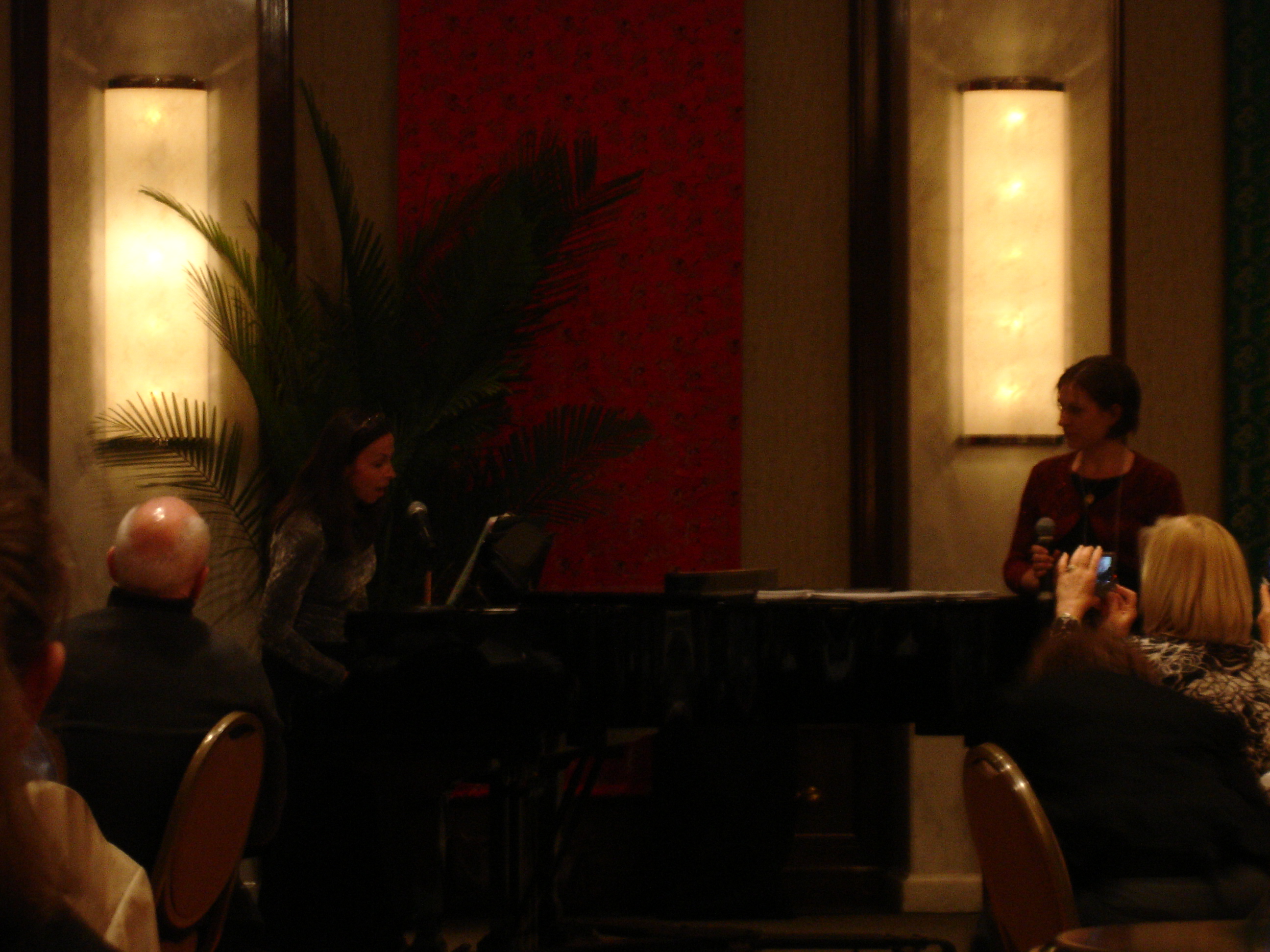
Lindsay Baker, Arlene Crewdson, Colin Donnell and Amanda Jacobs then thoroughly delighted the audience of rapt Janeites with the story of bringing Pride & Prejudice, the Musical to the Broadway stage. A fascinating account of their collaboration on music and lyrics, their years of work and their efforts to remain true to Austen’s story – they returned over and over to the book throughout this musical journey (and a very well worn and loved copy it was!)
The audience could not contain itself in wanting to see and hear from Colin Donnell (can his name REALLY be COLIN?!) – in their search for the perfect Mr. Darcy, they propped up all the head-shots of possibles on the kitchen counter and chose the one who most looked like Darcy to them…hoping fervently that he could SING! Which he quickly showed us all that indeed he could! Two songs from the show, Elizabeth’s “When I Fall in Love” and Darcy’s “Fine Eyes”gave us a taste of what is to come….just lovely, and everyone snapping pictures of this latest Darcy incarnation. Mr. Donnell was all accommodation – though he did admit that standing before all of us obsessed Janeites was quite a “daunting” task! [no worries, ” you had us at ‘hello’ “!]
The show is having its grand pre-Broadway debut on October 21 in Rochester, NY, the place where it all began. See their website at http://www.prideandprejudicebroadway.com/ for updates and information (and pictures!) about the cast. (I append two pictures here that I was able to get of Mr. Donnell, albeit a disappointment (the picture, not him!), but I did get to ask him what his Mom thought about his being Mr. Darcy…he said she has been very supportive and having fun with the whole idea, so kudos to her!) [I am not sure I could handle my son being Mr. Darcy…though he could be, or so I am told; but I do know that nothing on earth would get him to put on those leggings!]
Final Thoughts upon departing Chicago ~
So off to the airport and a moment to reflect, and notes on a few of the Emporium tables not posted on above that you can visit online…
A visit to the Chawton House Library table, manned by Gillian Dow, was the annual reminder of how important this resource library is, how much I love receiving their great publication The Female Spectator, and how even the smallest contribution is appreciated by them. See their website to learn more about their collection of books on women’s writing in English from 1600 to 1830 and upcoming events.
The Goucher College table had paper dolls for sale – all the heroes of Austen’s novels, designed by Donald Hendricks. I was most lucky to get there early, as my favorite Captain Wentworth was still available (though a tough choice between him, Darcy, and Henry Tilney!) Amused to find the following day that they were all gone except one –
Edmund Bertram rested alone on the table with no takers ~ perhaps it IS only Fanny who has eyes for Austen’s Mansfield Park hero! (and hopefully someone rescued him before the end of the day…)
Mr. Hendricks Paper Doll Gallery at Legacy Designs has many of the characters from Austen’s novels, and many more besides (perfect for holiday gifts…!)
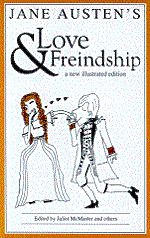
Another table of must-have treats was the Juvenilia Press, with Juliet McMaster – this collection of the youthful writings of Austen as well as other authors, accompanied by McMaster’s engaging illustrations, should be added to everyone’s Austen library. See their website for information on ordering.
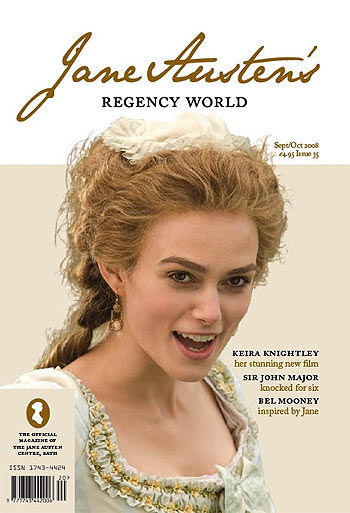
The new publisher of Jane Austen’s Regency World Magazine, Tim Bullamore, was present to show us all the latest issue (Sept / Oct 2008) with its many changes. He is offering a 20% discount to all JASNA members, and though it is costly when coupled with the shipping, it is well worth the investment and another fine addition to your Austen collection. I will post more on this cram-packed issue, but in the meantime, you can read the free articles from previous issues available online at their website and news on the upcoming Nov / Dec issue.
So back to the real world! I am most thankful to the Chicago Chapter and especially William Phillips, and JASNA President Marsha Huff, and all the many other volunteers who made this such a terrific AGM! Four days of intelligent musings, good company, lovely fashions, laughter all around, tons of BOOKS and other Austen-inspired goodies, and time to ramble about in this bygone time…it just doesn’t get any better than this!
Diary ~ Day Three: Filled with Talks, Banquets & Balls (and a little side of Romance!)
The Plenary this morning featured Claudia Johnson, on Can We Ever have Enough of Jane Austen? Professor Johnson, chairman of Princeton University’s English Department and author of several books of Austen scholarship (and especially appreciated by this blog writer for her “Jane Austen: Women, Politics and the Novel”), is always a delight at the AGMs and she did not disappoint in Chicago! Focusing on textual criticism, Dr. Johnson told of her experience in editing a new edition of Mansfield Park and the “dilemma of a comma” – in the two editions of MP published during Austen’s lifetime in 1814 and 1816, there is a discrepancy in the placement of a comma – is this the publisher’s handiwork, a printing error, or more importantly an editing change by Austen herself? In comparing this textual analysis to one of the many variants in Shakespeare’s Hamlet, Johnson showed us the process of editing and the importance of a misplaced comma in the comprehension of a single sentence. Eventually Johnson “conjures” Austen herself, when in the quiet of her study, she hears “an intake of breath,” a ghostly Jane telling of the errant comma’s intended placement.
Johnson went on the discuss this “channeling Austen” and how the various biographers – Constance Hill in Jane Austen’s homes and haunts, Oscar Fay Adam’s view that Austen’s characters are alive, and how Janeites are often referred to as being “possessed” or “manical” and PROUD OF IT!, and how we strive to “collapse the distance” between us and Austen with our gatherings, our Regency balls, banquets and the making of reticules.
So much humor in this talk! – lost in translation I am afraid, but the packed house was nearly rolling in the aisles at some of her allusions! I was a tad spooked because my daughter had just left me phone message doing a little “channeling’ of her own – Austen in heaven most appreciative that I was at her conference and babbling on about her lively discussions with Shakespeare (in and out of bed I might add, though I shouldn’t!) and how heaven was indeed a grand place for these literary giants – (my daughter is a middle school English teacher and thus goes to great imaginative lengths!) – so how timely and unnerving to head into Johnson’s talk on conjuring Austen! Yikes!
Next up another Breakout Session, this time to the talk on Shades of Jane Austen in Ian McEwan’s Atonement by Juliette Wells.As many of you might not know, the epigraph to Atonement is Henry Tilney’s “voluntary spies” speech to Catherine in Northanger Abbey. McEwan has said he has an affinity to Austen but cites no specifics in his works, so Wells tellingly does it for him: the likeness of Briony as Austen herself, the precocious child writer; the family theatricals; the play “The Trials of Arabella” had similar versions in Austen’s juvenilia; the name of “Tilney’s Hotel;” etc. Wells then discussed aspects of the film that also invoke Austen, and though there are no specific references, Austen pervades the movie in a number of ways, both visually and thematically: Joe Wright directed this and the 2005 P&P; Kiera Knightly stars in both; James McAvoy starred as Austen’s “boyfriend” in Becoming Jane; Brenda Blethyn as Mrs. Bennet and as Robbie Turner’s mother; both productions had the same costume designer and the same soundtrack composer (Dario Marianelli); similar kissing scenes; the appearance of the PIGS…all these visuals are very powerful with their oblique references.
I loved Atonement, both book and movie, and found this talk most interesting…I hope it is published in Persuasions, so those not there can enjoy it as well.
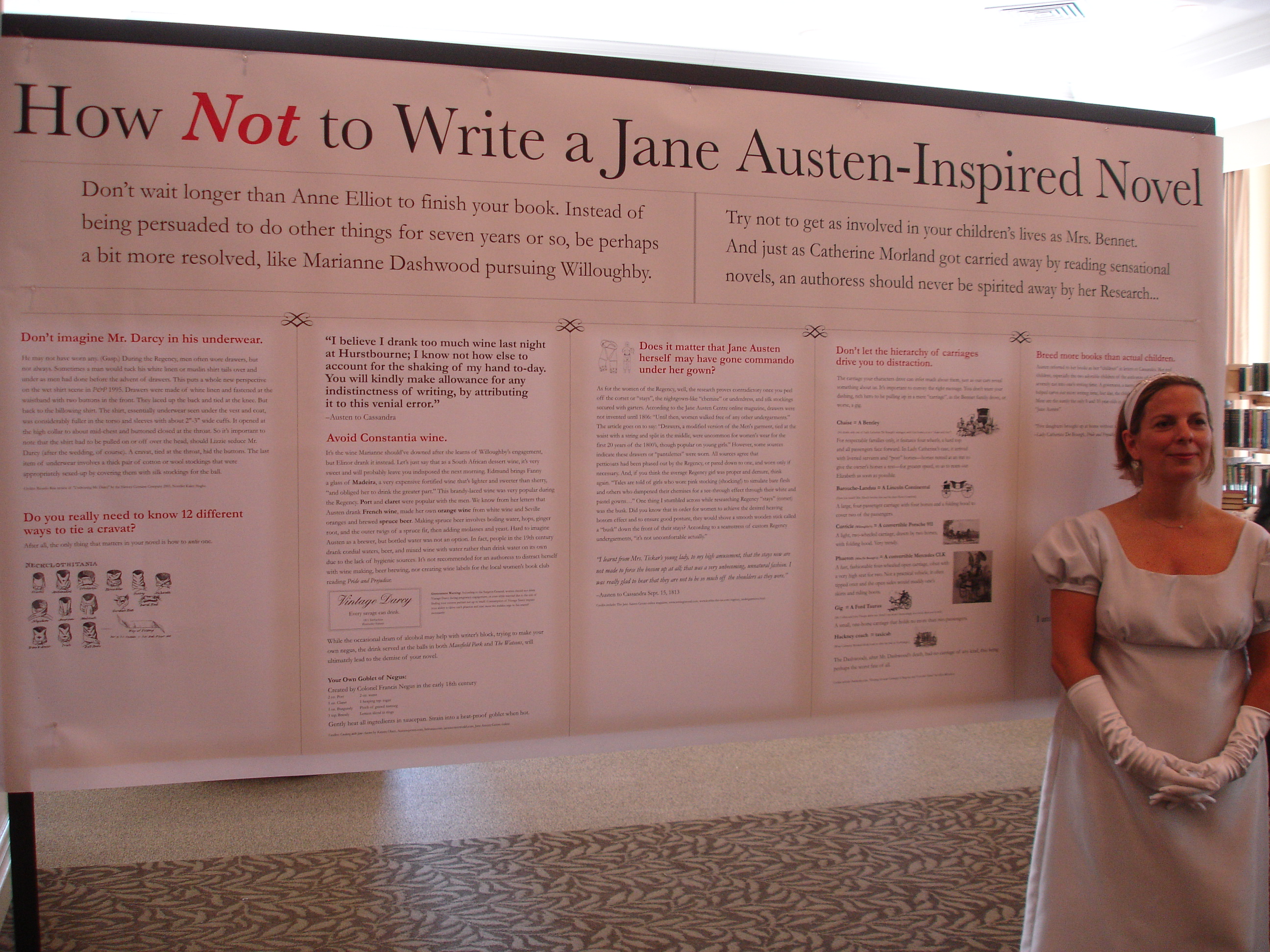
Off next to Poster Session 2 (I missed Session 1 due to meetings) – this is a new feature at the AGMs and quite wonderful. I visited several of the presentations: delighted to meet Maggie Sullivan of Austenblog, who had a board filled with Blogging Jane; Elaine Bander of Montreal had posted a series of thoughts on comparing Susanna Clarke’s 2004 fantasy novel Jonathan Strange & Mr. Norrell to Austen’s world (this book had been sitting on my bedside table for way too long- indeed because it IS way too long!…I now have the incentive to pick it up finally, despite its “dark forces of Magic”); loved the How Not to Write an Austen-Inspired Novel (see photo) by Karen Doornebos; and a pleasure to meet and discuss Persuasions and Persuasions On-Line with editor Susan Allen Ford; tons of photos to-be-adored of Colin Firth et.al in Mr. Darcy as an Actor by Katherine Zimolzak; and several others. I very much liked this poster session idea, though I quibble that the presenters had to get it all up and down within a 3-hour period…I realize there was a space problem, so for future AGMs it would be nice to have these set up and left for perusal during the 3 days with their creators needing to be there for only a few hours. They were too interesting a visual treat (not to mention a lot of work!) to not be enjoyed for longer (and so sorry that I completely missed the first group.) I understand that this was William Philips’s idea, so kudos to him for a very informative addition to the meeting!
Looking at Landscape with Austen in Her Time and Ours with Margaret Chittick and Vera Quin (author of the book Jane Austen in London) was the next session I attended…. great fun and so informative on Austen’s use of Gilpin and the “picturesque” in her works: Henry’s speech in NA (one of my favorites!) and Edward Ferrars in S&S on his ignorance of the Picturesque (Edward at his funniest and I think often overlooked in the general view that Edward is a bore); in P&P, Elizabeth’s journey to Derbyshire exactly follows Gilpin’s; how the description of Lyme Regis in Persuasion reads almost like a travelogue and so unlike Austen; how Austen’s character’s view of nature and the landscape conveys to the reader who they are almost as much as their dialogue; and finally, how all the successful proposal scenes are all OUTSIDE in the open air All was presented with visuals of the various landscapes, with back and forth talk and citing passages from the novels. Again, hoping this will appear in print!
Phew! On to the next…with barely a moment for a breath or lunch, but cannot miss a Plenary with the crowd-pleasing Joan Ray! Like Johnson, Ray never disappoints, and today she was a hoot! Fully dressed in Doctor garb, “ Doctor of Austenology” embroidered on her white coat, Ray launched into an update of the old board game “Operation” and in a play on her own book Jane Austen for Dummies, she regaled us with Jane Austen for Smarties! Working through some of the earliest writings on Austen, both biographical and critical, Ray singles out those who most understood Austen: George Lewes (whose blurb for Sense & Sensibility in an 1897 Bentley’s publisher ad was erroneously attributed to George Eliot); Margaret Oliphant, author of 98 novels and a foresighted feminist critic; Richard Simpson who early on detected Austen’s humor, irony and mockery and her emphasis on rational love over romantic love; Mrs. Humphey Ward; and of course Mark Twain, though often quoted for disliking Austen with a vengeance, does say how “every time I read P&P…”. Ray ends withsummarizingher five points that if you understand this about Austen you will officially be a JA Smartie:
her skill in creating life-like characters
dramatic presentation: her characters are revealed through dialogue
her feminine cynicism her social criticism through satire – irony and humor
her self-restraint: she never wrote a throwaway line
and all this presented with the naked (though discreetly-covered!) “Operation” doll peering at us through the joys of Power-point!
Another breakout session (are you completely exhausted yet?…and my son always questions me “whatever can you talk about for 4 days when she only wrote SIX books?”)…can people not know that you can have a very powerful discussion on the mere placement of a COMMA?
So off to hear one of my favorites Elaine Bander from Montreal. I have attended Elaine’s talks at every AGM I have gone to because she is so accessible…she says what I am thinking, but so much better! Her talk today on The Challenge of Reading Jane Austen Reading posits that Austen’s genius as a writer was due to her being a reader, and understanding her works presumes a familiarity with those traditions. Austen’s books challenge us and either a careless reading of the novels or any of the film adaptations do not and cannot meet this challenge (excepting perhaps “Clueless” which succeeds in reimaging Emma.)
Austen came of age with the English novel and while invoking the conventions, she then undermines them: Northanger Abbey is her obvious teasing take on them all and introduces Catherine at the outset to undercut the expected work featuring the “beautiful modest heroine, the recognized hero, the obstacles in their way, the fall of the suitor, the melodramatic rescue, and the requisite happy ending.” The narrator reminds the reader that Catherine is not going to fulfill any of these conventions, all the while introducing them in part. We are given Willoughby, Frank Churchill, Henry Crawford and Wickham in her other works and are led to believe that they are the heroes, only to have romantic expectations played with (but even in S&S Elinor is still left feeling a pang for the cad Willoughby after his late-night confessing his love for Marianne); Emma is reading everyone’s lives but her own in a romantic cliché, with Harriet as the burlesque of the heroine – as Bander says so well, “Austen cuts her cloth on the bias.” And then finally, as everyone seems to do because they are so much with us, Bander refers to the films and their inability to convey this: with the loss of the narrative voice and the putting of these novel clichés back in to the visual telling, the films become standardized versions and we lose our own view of the story and the author’s intention. Bander references here Austen’s Plan of the Novel, her complete spoof on what she will not put to paper though all around her clamor for these traditions. It is quite funny and I suggest you all read it [linked here at the Republic of Pemberley]. And I concur with Bander that one must GO BACK TO THE BOOKS!
One of course is missing so many other sessions, equally interesting…a perfect example of needing to clone oneself. My friend Sara and I try to go to different sessions at these meetings so we can share our notes, but alas! at this AGM we found ourselves wanting to go to almost all the same sessions, and in the end a useless exercise as Sara does not take notes!
So the evening awaits! The Banquet and the Ball, a walk down Michigan Avenue and an Evening talk on Romance!
There were more costumes at this AGM than ever seen before (there were rentals available and many took advantage)… last year I promised that I would make a dress and pelisse but got only as far as purchasing the pattern, so perhaps next year?
So off to dinner, a lovely event with all the details of setting up an AGM all around us: the table settings, centerpieces, place-cards, etc… with the hours of work behind it all most appreciated… I scouted out Lorraine Hanaway, former JASNA president and lately at one of our Vermont meetings to share about the beginnings of the Society…I was so pleased to see her honored for being the “fourth” founding member of JASNA.
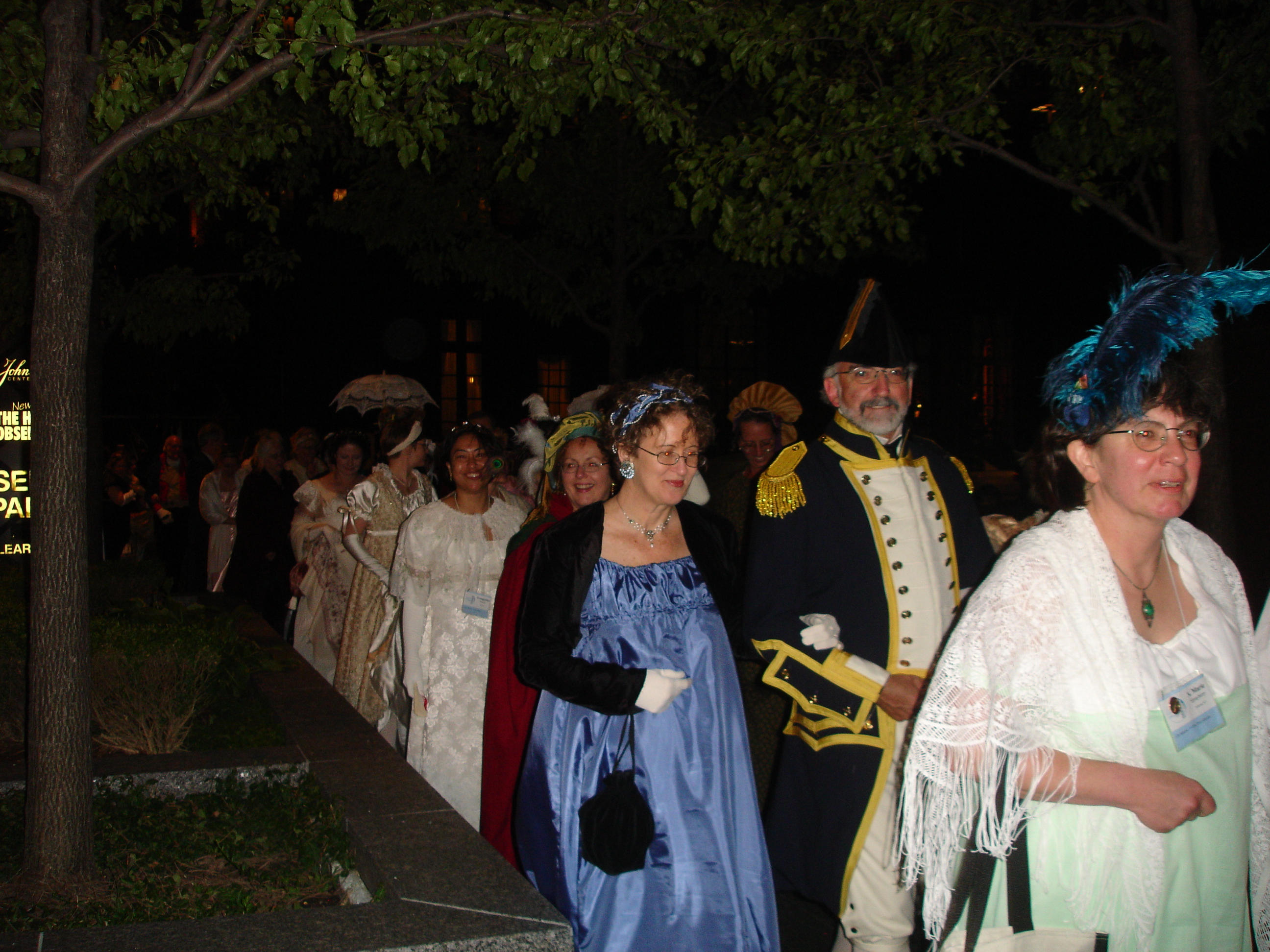
After dinner chat with seat mates, always a treat to reconnect and make new friends, and then off for the walk down Michigan Avenue. If anything could stop traffic in Chicago, it would be hundreds of Regency-costumed, Austen-crazed attendees promenading along this main thoroughfare, walkers and drivers all agape…it was quite the scene! And I was lucky enough to spot the lovely “Jane Austen Addict” Laurie Viera Rigler!
Author Laurie Viera Rigler
Sara and I opted to skip the Ball, so after a short peek into the festivities we headed off to the evening session on Romance Fiction in the Wake of Austen, with a panel of four, Sarah Frantz, Eloisa James, Eric Selinger and Pamela Regis. I confess, along with Sara, of going in here with all my prejudices of romance fiction clearly apparent. Like sequels and continuations, I do not read romance novels. I own a used bookstore and when I had an open retail shop, I had mystery, science fiction and fantasy sections, but not a single “romance” and referred the (many I might add!) disappointed shoppers to another local store. I do admit to reading most of Victoria Holt over a two-month period, but I put this down to a backlash from working on my English Masters (too much Milton!) as well as being pregnant with my first child, and thus perhaps hormones had run amok….but this is all years ago and as a voracious reader I am always struck with the truth of “so many books, so little time” and romance novels are not even in the running. But I did go into this evening session with an open mind and after a very full glass of wine was prepared for anything!…and found myself in a nearly standing-room only crowd….
…and, all I can say is that I LOVED THIS TALK! (and Sara did too!) The panel selected and introduced by the most excellent Sarah Franz was terrific, starting with Ms. Franz herself, clearly stating her position that “it’s all about the men!” Myths about Austen not being a romance writer was her starting point and she didn’t let up until we were all convinced otherwise! [Franz, by the way has a terrific Persuasions article on Austen’s men in vol. 25 (2003) “Jane Austen’s Heroes and the great masculine Renunciation”.]
Pamela Regis, author of “The Natural history of the Romance Novel” (University of Pennsylvania, 2003 (hc), 2007 (pb)) says that P&P is the best romance novel ever written (we all concur!) and how it exhibits all of the eight elements of a romance. Eloisa James (i.e. English Professor and Shakespearian scholar at Fordham University Mary Bly) was just a delight in sharing with us her writing of her many historical “bodice-rippers” that she could not tell her colleagues about until after her fourth book came out…she told us all to “take the gift you have” and run with it, and that Austen was really the first to write about the man in a domestic novel being “wrong” and his needing to learn about himself in the course of the novel. She intersperses Shakespearian allusions and poetry throughout her books, reason enough to go out and get a few! And finally Eric Selinger, a poet, English professor at DePaul University, and founder of the collaborative blog about romance fiction called Teach Me Tonightdiscussed ways in which romance novels present the moral education of the characters, especially the hero, and unlike in Austen where the narrator is a separate character to lead us along; in contemporary romance novels there is a tendency toward psychological and therapeutic healing of the characters. The talk was followed by a rousing Q&A, a free book being given to each person who asked a question…there were many, and more discussion on the various romance writers, the Harlequins, Mills & Boon, the “chick-lit” phenomenon, and a variety of suggestions as to where to start on your own romance-reading journey..
So the evening ended where it had started…conjuring Austen at every turn! I have never been shy in saying that along with everything else that Austen offers, her love stories are fabulous! So why does one always feel a little guilty saying this? like it is an apology, or an admission that you might just have not read the book deeply enough with a keen enough eye? What a relief to be in a room of like minds and appreciate the romance! And another confession…I ran out as soon as I was home to pick up a few of those Eloisa James “Duchess” titles…[and of course awaiting my arrival at the used bookstore I sent all my romance-seeking customers to!] … one is always in need of a Shakespeare fix with a little romance on the side [now if I can just get past those covers!]
Day Four tomorrow….with huge apologies that this 4-day event is taking more than a week to relate!…life does get in the way of blogging!
Further Reading:
See Sarah Franz’s own blog post on this evening on Teach Me Tonight
See Austenblog’s posts for Day 1, Day 2, Day 3 and Day 4 and her final wrap-up (and offered in a more timely fashion!)…I admit to not yet reading her posts so as not to color my own….so I assume there might be duplication, aahh! but “can we ever have enough Austen?”
“When I am gone…,” Jill Pitkeathley’s Cassandra Austen muses on the letters written to her by her sister Jane. “When I am gone, perhaps before, they will want them, they will pour over them, examine them in detail and discuss them without limit.” Who would Cassandra’s they have been? She may immediately have thought of family, but how apt that they can be broadened to include, yes, this very reader. For ‘pour over’ and ‘examine’ is exactly what Austen-lovers do with her extant letters. James Edward Austen-Leigh utilized letters in his early biography; Lord Brabourne published (though not entirely verbatim) the letters in his possession; the son and grandson of Austen-Leigh included them in their family biography; Deirdre Le Faye brought out editions of both that biography and the letters themselves. Romanticists invent romances; writers cite Austen’s few references regarding writing and publishing; historians pluck from them pictures of England and London during the reign of George III and the Prince Regent. We all mine Austen’s letters for what they can tell us about what we most want to know, be it her life, her art, her world.
A morning of Regional Chapter training, an excellent gathering with many ideas thrown about. Kudos to the JASNA team for all their efforts in coordinating this…. I missed the dance classes but “duty called” and it was well worth it!
…and then on to the first Plenary with five North American scholars discussing “How Far Across Countries, Cultures and Disciplines does Jane Austen’s Legacy Reach?”
Elizabeth Lenckos, of the University of Chicago, introduced the panel and then queried the audience -“are we the protectors of Jane Austen’s legacy?”, discussed her iconic stature, and lamented that in many adaptations, both books and movies, the “power of her voice” goes missing.
Inger Sigrun Brodey, of the University of North Carolina, emphasizing that Austen’s books are alive (versus the term “legacy” which denotes “dead”), spoke about the various translations of Austen, especially the popularity of Chinese and Japanese editions.
Gillian Dow of the Chawton House Library, spoke on Austen’s contemporaries: Maria Edgeworth, Hannah More, Felicia Hemans, Ann Radcliffe, etc, as well as telling us about Isabelle de Montolieu’s translation of Austen’s Sense & Sensibility into French in 1815…though it was far from a direct translation with quite hysterical results, something akin perhaps to today’s many loose adaptations?
Paula Morantz Cohen of Drexel University and author of several scholarly works, but known mostly for her Jane Austen in Scarsdale / and Boca, spoke on the social realism and romantic idealism in Austen’s domestic novels – Austen’s greatest legacy being her ability to analyze homogeneous societies, and how that translates in today’s world to the social dynamics of a gated community in Florida (Boca), “Clueless” in a high school, or the British singles scene in “Bridget Jones’ Diary.”
…and finally Peter Graham, of Virginia Polytechnic Institute and author of the newly released Jane Austen and Charles Darwin: Naturalists and Novelists” – that Austen and Darwin were the two greatest empiricists of the 19th century; true knowledge = right reason, that Austen “got the scale of a study just right;” she wrote what she knew, her three or four families in a country village, observing all with a fine eye.
A lively discussion followed…
The Breakout Sessions were many and varied, and as always at the AGM, I was in a quandary as to which to attend- you can see all the options at JASNA.org and I do hope that many of the talks will be published in this December’s Persuasions, and so with that in mind I went for the visual treat of Deirdre Gilbert’s talk on “Covering Jane Austen.” As a bookseller and collector I have long been interested in Austen’s illustrators, publishers and book bindings, so I was intrigued by this session.
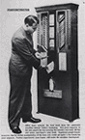
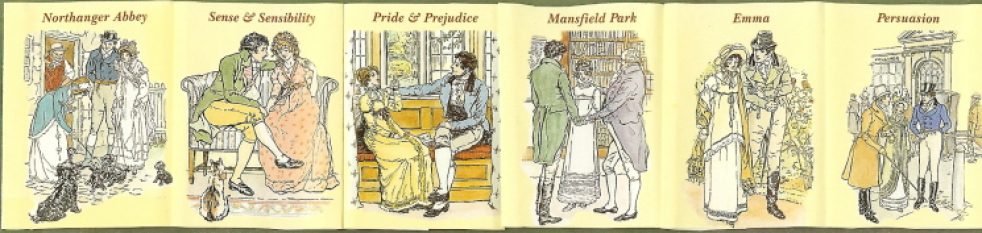
Ms. Gilbert, an independent scholar, traced the history of covers and book jackets, focusing mostly on the British editions. Starting with the cheap “yellowbacks” published by Routledge and sold in train stations, to such bindings by Macmillan in the early 20th-century as the “Peacock” edition with illustrations by Hugh Thomson, and on to the Burt’s Home Library Series, the Everyman Series, Dent’s publications, Penguin’s first Classics Series (with a dancing penguin!) sold in “Penguincubators” in train stations (this quite an amazing marketing tool!…see below,) the varied original art for dust jackets from the 1940s on, and to the present day with all the varied covers on all the novels with either period art reproductions or original contemporary designs. A visual feast!
Next I was off to hear the always fabulous Edith Lank on “Louisa Sets Lord Brabourne Straight” – she delighted the huge crowd with pictures and stories about her Austen collection. She started collecting any edition of Mansfield Park that she could find, and not setting out to be a book collector, she happily went along like this accruing all sorts of Austen-related works until she happened upon one of the Austen signatures that family members had cut from her letters to give to admirers…this letter accompanied by a letter from Francis Austen – Ms. Lank most generously handed this over to the audience who lovingly passed it from one to the next , each of us quietly “oohing and aahhing” and taking it all in… She shared her lovely edition of Emma, and her tales of acquiring the many foreign translations she has, finding the world a smaller and friendlier place with the sharing of Austen’s words. All this capped with her copy of the 1884 Brabourne edition of the Letters in which she discovered the notes of Louisa Langlois Lefroy (Anna Austen’s daughter and wife of Septimus Bellas; Louisa is the author of the Bellas MS)… a quick finish to the talk (running out of time) left us with the tidbit that Eliza de Feuillide was indeed the daughter of Warren Hastings (Eliza had a son named Hastings with De Feuillide and later married Henry Austen) as the notes imply. We all left wanting to hear more….!
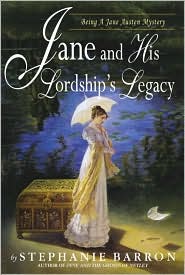
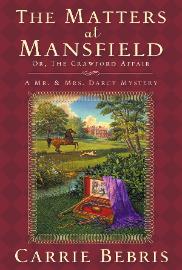
The evening was filled with “Mysteries and Characters” with another lively panel that included Stephanie Barron, Carrie Bebris, Jennifer Hunter, and Steve Martin (no, not THAT Steve Martin, but THIS Steve Martin was most entertaining…)
Following a brief but inclusive history of the detective story, Mr. Martin took us through his formula for determining the nature of personalities in Austen’s novels…sort of a Briggs-Myers test for fictional characters: the Good, True nature, Perceptive vs. the Bad, Facade, and Clueless. The ideal union would be based on an “intelligent love,” a partnership of the mind, with Darcy and Elizabeth being the perfect match (likened to Holmes and Watson!)…this was all quite a fascinating study and I am not giving its just due…but it gave food for thought, especially on how to characterize Henry Crawford (BPS: bad, perceptive and selfish) or Frank Churchill (GCS: good, clueless, and selfish)…get the idea?? [there was MUCH talk about Frank being “Good” !!]
Stephanie Barron, author of the Jane Austen mysteries, was asked why she chose Jane as the detective in her tales, rather than one of Austen’s characters… she explained that Jane is a “high analytic” with her reason predominant, she understands the human heart and motivation, and thus would make a perfect detective. Carrie Bebris on the other hand has the Darcys as her detectives because she felt that in Pride & Prejudice both Elizabeth and Darcy were the solvers of the underlying mysteries and she wanted to take that further – she sees them as the 19th-century Nick and Nora Charles. Both authors talked about their writing and revising techniques, use of language, and the incorporation of actual facts in Austen’s life and letters as starting points.
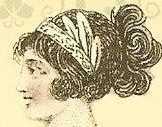
 So begins the new book “In the Garden with Jane Austen,” by Kim Wilson, author of Tea with Jane Austen, published by Jones Books [2008], one of my purchases at the AGM Emporium in Chicago, and for those of you enamored of the traditional English garden, a lovely addition to your bookshelf.












 “When I am gone…,” Jill Pitkeathley’s Cassandra Austen muses on the letters written to her by her sister Jane. “When I am gone, perhaps before, they will want them, they will pour over them, examine them in detail and discuss them without limit.” Who would Cassandra’s they have been? She may immediately have thought of family, but how apt that they can be broadened to include, yes, this very reader. For ‘pour over’ and ‘examine’ is exactly what Austen-lovers do with her extant letters. James Edward Austen-Leigh utilized letters in his early biography; Lord Brabourne published (though not entirely verbatim) the letters in his possession; the son and grandson of Austen-Leigh included them in their family biography; Deirdre Le Faye brought out editions of both that biography and the letters themselves. Romanticists invent romances; writers cite Austen’s few references regarding writing and publishing; historians pluck from them pictures of England and London during the reign of George III and the Prince Regent. We all mine Austen’s letters for what they can tell us about what we most want to know, be it her life, her art, her world.
 Ms. Gilbert, an independent scholar, traced the history of covers and book jackets, focusing mostly on the British editions. Starting with the cheap “yellowbacks” published by Routledge and sold in train stations, to such bindings by Macmillan in the early 20th-century as the “Peacock” edition with illustrations by Hugh Thomson, and on to the Burt’s Home Library Series, the Everyman Series, Dent’s publications, Penguin’s first Classics Series (with a dancing penguin!) sold in “Penguincubators” in train stations (this quite an amazing marketing tool!…see below,) the varied original art for dust jackets from the 1940s on, and to the present day with all the varied covers on all the novels with either period art reproductions or original contemporary designs. A visual feast!

 Jane Austen in Vermont