I welcome JASNA-Vermont member Margaret Harrington, who has written a few words on our last JASNA meeting. As part of the Burlington Book Festival, we were fortunate to have Susan J. Wolfson, Professor of English at Princeton University, speak on her annotated edition of Northanger Abbey (Harvard UP 2014). With many thanks to Champlain Collegefor allowing us their fabulous space in Aiken Hall, to our hospitality team Hope Greenberg and Heather Brothers, and all our generous bakers for the usual delicious fare! We were all very honored for the opportunity to listen to and talk with Dr. Wolfson, who made us all love and appreciate Northanger Abbey all the more.
We at JASNA-Vermont also heartily thank JASNA (the Jane Austen Society of North America) for graciously offering us a grant so we could bring Dr. Wolfson to Vermont for this Burlington Book Festival event – we could not have done it without them!
******************
Susan J. Wolfson spoke on “Jane Austen before She Became Jane Austen” at our JASNA-Vermont September 27th meeting which was also an event for the Burlington Book Festival.
Dr. Wolfson gave a multi-layered talk centered on Northanger Abbey, the first book Jane Austen wrote and sold. In an engaging lecture the Princeton professor placed the book into the history of the time so that we, the audience and readers, could understand events behind the episodes of the novel. We gained new insights into what captured the young author’s imagination because we were given a lively narration of the London riots, Sir William Pitt’s system of surveillance, the social circus in Bath, and most of all, the template of the Gothic novel on which Austen based Northanger Abbey.
Wolfson’s talk wrapped the novel in the fabric of the society of the time so that we could understand the characters better, especially the dynamic between Henry Tilney and Catherine Morland. We also were given provocative ideas
such as Northanger Abbey is about training the mind of the reader, and that Jane Austen was not really interested in married life yet her first book has a Meta marriage plot. We learned that although this was her first novel it was not published until after the author’s death and there were years when it sat on the publisher’s shelf prompting Jane Austen to sign her complaint to the publisher as Mrs. Ashton Dennis, an acronym for MAD.
As I write this short report, I have before me on my desk the Jane Austen Northanger AbbeyAnnotated Edition edited by Susan J. Wolfson. It is a beautiful book to see, to touch, to open, to smell, and soon I will be reading it. This gives a whole new life to the book for me because I had reread it on my eBook before the lecture. How wonderful to look forward to this edition after attending such an insightful, interesting, accessible, engaging talk.
**********
Some photos from our event:
Co-Rc Marcia M
Hope G setting up food
Heather B, Theresa R, and our youngest JASNA-Vermont member!
Maryann P with more food
Susan Wolfson with Champlain College student Kes S.
*Susan Wolfson is Professor of English at Princeton University, where she is a specialist in British Romanticism, a field in which she teaches Jane Austen’s novels. She has recently produced the Harvard AnnotatedNorthanger Abbey, a unique edition of the novel’s text that hews, with less intervention than standard editions, to the text of the 1818 publication, and as with other volumes in the Harvard series, includes page-by-page annotations, illustrations, and other supplementary materials. With her husband Ronald Levao, she has also edited Mary Shelley’s Frankenstein for the same series. And with her colleague Claudia L. Johnson, she edited Pride and Prejudice for Longman Cultural Editions, of which she is the General Editor, and in this capacity has supervised Emma (edited by Frances Ferguson), and Persuasion (edited by William Galperin). Her most recent book is Reading John Keats (Cambridge), about Keats as a reader as well as a writer, and about how this readerly quality shapes and stimulates how he is read (very Austenian in this way!). Susan Wolfson received her PhD from the University of California, Berkeley, and taught at Rutgers University New Brunswick for 13 years, before her present appointment at Princeton. Widely published in the field of Romantic-era studies, she is the recipient of grants and fellowships from the ACLS, the Guggenheim Foundation, the National Endowment for the Humanities, and the Andrew W. Mellon Foundation.
December 6, 2015:
Annual Birthday Tea & Ball at the Essex Inn –
Celebrating 20 years of the 1995 Pride & Prejudice mini-series!
– details forthcoming
(Colin Firth is welcome if he is available and happens to be in Vermont…)
When Jane Austen sold the copyright of her Pride and Prejudice outright to her publisher Thomas Egerton, she, we now know, made the biggest mistake of her life. But hindsight is a dangerous beast, and easy for us to lament this 200 years later. We could also regale Cassandra for selling all the remaining copyrights to Richard Bentley in 1832 for a meager £210 pounds (Bentley also paid the Egerton estate £40 for the P&P copyright). She must have thought it a good bargain at the time – how was she to know that her sister’s novels would continue to be read through the generations, thus granting heirs much in royalty checks.
We don’t really know why Jane Austen chose to sell the Pride & Prejudice copyright rather than publish on commission, the way she published her other works; in all likelihood she didn’t want to take the financial risk. But she really had four options to publish at the beginning of the 19-th century, as did other authors of this time:
Thomas Rowlandson’s “Dr. Syntax & Bookseller” from William Combe’s The Tour of Dr. Syntax in Search of the Picturesque (1812)
Profit-sharing: the publisher paid for printing and advertising costs; these expenses were repaid as books sold and any profit above those production costs was shared with the author; any loss was absorbed by the publisher. This was a popular way of publishing for unknown authors. Jan Fergus notes that if Austen had used this method for the four novels published in her lifetime, she would have made more money than she did. (Fergus, p. 16)
–
Commission: the author was responsible for all publication expenses – paper, printing, advertising – the publisher distributed the books and took a 10% commission on all copies sold. The author took all the risk here, as if not enough copies sold to cover the costs, the author would be responsible. Austen published all her books this way, excepting her Pride and Prejudice… and from her letters we know that her brother Henry Austen was her financial backer. This seems to have been the most popular way to publish in the early 19-th century, especially for women writers. And it is interesting to note that this form of publishing is in vogue again! – just see all the number of self-published works that appear on Amazon!, this “vanity” publishing no longer less respected than publishing in the traditional way.
–
Sale of Copyright: the author sells the copyright outright to the publisher and is no longer involved. Here the publisher takes all the risk, especially for an unknown author, but also has control over any future editions and can benefit if the book sells well. In the case of P&P, sold to Egerton for £110, Austen would have done better to have published by commission – it went into three editions, though she had no further input in making changes to the text.
–
Subscription: the author would solicit subscribers, who would pay in advance for the promised work and have the privilege of seeing their name in print in the list of subscribers in the work itself. This option usually only worked for well-known and successful authors, or for a work that people might want to see their name identified with. We can look at the concept of modern-day “crowd-funding” as an example of how this works.
***************
It is this last option of publishing that holds our interest today. Jane Austen published anonymously, “By a Lady” (on Sense and Sensibility), or “By the Author of ‘Sense and Sensibility’” (on P&P) (see note below) – she was an unknown authoress and would have had difficulty finding enough willing and wealthy donors to publish by subscription. But Frances Burney, a very successful author at the time, did publish her Camilla (1796) by subscription, the only work she did this way – and this first edition is notable because among the list of 1,058 subscribers (Dow, p. 38) is the name of “Miss J. Austen, Steventon,” only one of two times that Austen’s name appeared in print during her lifetime. She likely paid a guinea for the privilege (Dow, p. 40), and just look at the list on this one page of the illustrious fellow-subscribers!
I have thought for a number of years that this was the only place to find Austen’s name, but Gillian Dow in her article on “Jane, the Subscriber” notes that there is another such title: the non-fiction work Two Sermons by the Rev. T. Jefferson, published in 1808, and where her name is listed as “Miss Jane Austen” and her brother and sister-in-law as “Mr and Mrs Edward Austen of Godmersham.” A look at her letters finds Austen’s references to this Thomas Jefferson (1760-1829) of Tonbridge:
I have read Mr. Jefferson’s case to Edward, and he desires to have his name set down for a guinea and his wife’s for another, but does not wish for more than one copy of the work. [Letter 52. Le Faye, Letters, 4th ed. (2011), p. 132-3.]
And later:
I have now some money to spare, & I wish to have my name put down as a subscriber to Mr. Jefferson’s works. My last Letter was closed before it occurred to me how possible, how right, & how gratifying such a measure would be.” [Letter 54, p. 138]
Thus, we see Jane Austen’s name in print again – one wonders if others might yet surface!
Becoming a Subscriber at Chawton House Library
Chawton House Library
The point of all this is to tell you about a program at Chawton House Library, where you too can become a subscriber! An age-old way of publishing, where you can see your name in print, acquire a copy of a reprint edition of an interesting old title, and support the Chawton House Library in the bargain. Slightly more than a guinea is required of you, but not too much more (a minimum of $50)… You can read about the program and how to donate at the Chawton House Library website here: http://www.chawtonhouse.org/?page_id=58839
“Further to the success of our most recent subscriber publication, The Knight Family Cookbook, which thrilled Subscribers and has proven to be one of the most purchased books in our shop, we are now seeking to progress our latest publication- The Duties of a Lady’s Maid; with directions for conduct, and numerous receipts for the toilette (1825). This facsimile edition, with a new introduction by Mary Ann O’Farrell, will be a fascinating book certain to entertain those who would welcome guidance on how to behave as maid to Lady Catherine De Bourgh – or indeed those who wish to emulate Downton Abbey’s Miss O’Brien. Originally published in 1825, it is a rather rare conduct book offering a unique insight into the lives and duties of servants, as well as the trends and tastes of the Georgian age. Readers can learn how religion should direct a maid in her work, which character traits are essential, and how to keep family secrets. Amusing practical instructions, such as how to dress your lady using padding and bandages to improve her figure and tips on the most advantageous way to display the forehead, are also to be enjoyed.”
[From the CHL website]
Let’s take a peek into this book that you can own in a facsimile edition – no author is noted as you can see: The Duties of a Lady’s Maid; with directions for conduct, and numerous receipts for the toilette (1825).
title pageFrontispiece
Now, I must tell you that you can find this book on Google Books, or at the Hathi Trust – but where is the fun in that? You need this book on your shelf, not only because it is a rare book (it only seems to have been published in this one edition of 1825), but also because you will find the most indispensable information in order to continue on with your life as you know it – after all, we most of us have become our own Ladys’ Maids, haven’t we? – if for any reason you don’t find this all completely relevant (the chapters on cleaning your wardrobe definitely remain so!), then at least it will be a daily reminder of exactly how far we have come. Take a look at the Contents:
CONTENTS _______________
1. DUTIES OF BEHAVIOUR.
-Religion 6
-Honesty and Probity 19
-Diligence and Economy 26
-Attention 39
-Familiarity with Superiors 43
-Good Temper and Civility 50
-Confidence in Keeping Family Secrets 57
-Vanity and Dress 70
-Amusements 84
-Vulgar and Correct Speaking 98
-Change of Place 123
-Courtship 128
2. DUTIES OF KNOWLEDGE AND ART.
-Taste in the Colours of Dress 135
-Carnation 145
-Florid 146
-Fair 147
-Pale 148
-Sallow 149
-Brunette 150
-Artificial Flowers 159
-Taste in the Forms of Dress 162
-Stays and Corsets 175
-Padding, Bandaging, &c, to Improve the Figure 184
-Display of the Forehead 192
-Taste in Head Dresses 199
-Taste in Dressing the Hair 220
-Practical Directions for Hair Dressing, with Receipts. 233
-Cosmetics, &c. with. Receipts 256
-Paints, with Receipts for Rouge, Pearl White, &c 289
-Use and Abuse of Soap 306
-Dress-making and Fancy Needle-work 315
-Care of the Wardrobe, and the Method of Taking out Stains 321
-Method of Cleaning Silks and Chintz, and of Clear Starching, and Getting-up Lace and Fine Linen 324
******************
Some excerpts to entice you:
1. In case you perhaps don’t speak the King’s English – here are some pointers on correcting your shortcomings:
VULGARITIES PECULIAR TO ENGLAND.
The first vulgarity which I shall point out to you as prevalent among the lower orders in England, from Cumberland to Cornwall, is the practice of ending every thing they say with a question. For instance, instead of saying “the bonnet looks very smart,” an English girl will add the question, “an’t it?” or “don’t it?” If this practice of ending what is said by a question, were only employed occasionally, and when it appears necessary, it might be proper enough; but when it is repeated every time a person speaks, as you may observe is the case among the ill-educated all over England, it becomes extremely vulgar. You may thus hear a person say, “I went very quick, did’nt I?” for “I always do, don’t I?” or “Susan worked that very well, didn’t she? she is a good girl, an’t she? and I am very kind to her, an’t I?” You must carefully avoid this vulgar practice of ending what you say with a question, if you are desirous of speaking correctly….
Still more vulgar than either of these is a certain use of the words there and here, along with that and this, as when it is said “that there house,” instead of “that house,” or “this here book,” instead of “this book.” You may, however, without impropriety say “this book here,” or “that house there’s” but never, “this here” nor “that there.” …
One of the very common vulgarities prevalent in England is a peculiarly awkward way of bringing in the name of a person at the end of a sentence, with the words “is” or “was” before it. I cannot describe this more intelligibly, except by an example; for instance, you may hear an ill educated girl say “she was very kind to me, was Mrs. Howard,” instead of correctly saying “Mrs. Howard was very kind to me.” Again, “he is a very worthy man, is Mr. Howard” instead of “Mr. Howard is a very worthy man.” I say that such expressions are not only vulgar but uncouth and awkward, and more like the blunders of a foreigner than a person speaking in her mother tongue; yet nothing is more common than this awkward vulgarity, which I expect you, will never commit after it has been now pointed out to you….
The manner in which certain words are pronounced is also a very evident mark of vulgarity. One of the most remarkable instances of this kind in England is the sounding of an r at the close of words ending in a or o, as when you say “idear” for “idea,” or “fellor” for “fellow,” or “windor” for “window,” or “yellor” for “yellow.” This is extremely difficult to be corrected when once it has become a habit; and so regularly does it follow in every word of similar ending, that you may hear persons say “Genevar” for “Geneva,” as commonly as children say “mammar” and “papar.”
[etc, etc… the Author then goes on to cover the various “Vulgarities in Scotland”…]
***********
2. Mrs. Clay might find a solution to her unsightly freckles with these solutions, Sir Walter would be pleased to know:
CE Brock – Sir Walter Elliot (Mollands)
Freckles.—The sun produces red spots, which are known by the name of freckles. These have no apparent elevation but to the touch it may be perceived that they give a slight degree of roughness to the epidermis. These spots come upon the skin in those parts which are habitually exposed to the air. To prevent freckles, or sunburn, it is necessary to avoid walking abroad uncovered; a veil alone, or a straw hat, is sufficient for most women. There are however others whose more delicate skins require a more powerful preservative. The following is recommended by an intelligent physician:—
Take one pound of bullock’s gall, one drachma of rock alum, half an ounce of sugar candy, two drachms of borax, and one drachm of camphor. Mix them together, stir the whole for a quarter of an hour, and then let it stand. Repeat this three or four times a day, for a fortnight, that is to say, till the gall appears as clear as water. Then strain it through blotting paper, and put it away for use. Apply it when obliged to go abroad in the sunshine or into the country, taking care to wash your face at night with common water, those who have not taken the precautions mentioned above must resort to the means which art has discovered for removing these spots. The following process is recommended as one of the most efficacious for clearing a sunburnt complexion, and imparting the most beautiful tint to the skin ;—at night on going to bed, crush some strawberries upon the face, leaving them there all night and they will become, dry. Next morning wash with chervil water, and the skin will appear fresh, fair, and brilliant.
[Etc, etc – there are several other rather drastic directions…]
*************
3. I must say that the seven pages on “Display of the Forehead” is worth the price of admission alone! But this on making a French dressing for your hair is a must-learn:
Parisian Pomatum.—Put into a proper vessel two pounds and a half of prepared hog’s lard with two pounds of picked lavender flowers, orange flowers, jasmine, buds of sweet briar, or any other sweet scented flower, or a mixture according to your choice, and knead the whole with the hands into a paste as uniform as possible. Put this mixture into a pewter, tin, or stone pot, and cork it tight. Place the vessel in a vapour bath, and let it stand in it six hours, at the expiration of which time strain the mixture through a coarse linen cloth by means of a press. Now throw away the flowers which you have used as being useless, pour the melted lard back into the same pot, and add four pounds of fresh lavender flowers. Stir the lard and flowers together while the lard is in a liquid state, in order to mix them thoroughly, and repeat the first process. Continue to repeat this till you have used about ten pounds of flowers.[my emphasis]
After having separated the pomatum from the refuse of the flowers, set it in a cool place to congeal, pour off the reddish brown liquor, or juice extracted from the flowers, wash the pomatum in several waters, stirring it about with a wooden spatula to separate any remaining watery particles, till the last water remains perfectly colourless. Then melt the pomatum in a vapour bath, and let it stand in it about one hour, in a vessel well corked, then leave it in the vessel to congeal. Repeat this last operation till the watery particles are entirely extracted, when the wax must be added, and the pomatum melted for the last time in a vapour bath in a vessel closely corked, and suffered to congeal as before. When properly prepared it may be filled into pots, and tie the mouths of them over with wet bladder to prevent the air from penetrating. This pomatum will be very fragrant, and form an excellent preparation for improving the gloss and luxuriance of the hair.
[I’m exhausted just thinking about it…] – You might end up looking like this, flowers and all:
[Source: ‘The Flower Garden’ – hand-coloured etched engraving published by M Darly in 1777.
See Bibliodyssey for additional such outrageous hair-dos]
***************
So that gives you a very small inkling of what lies in store in this fascinating little book. You will find insights into the daily life and work of the many rarely seen but obviously-there-lurking-about servants in all of Austen’s novels – what was it like to be the lady’s maid to Lady Catherine or her daughter Anne – dreadful thought! Was it easier being maid to Mrs. Jennings with her overwhelming busyness, or Mrs. Bennet, despite her poor fluttering nerves? We watch Downton Abbey as much for the sometimes more interesting “below-stairs” life than anything that transpires upstairs – and indeed not much changed in servant’s lives from 1825 to the early 1900s. Certainly Anna would have been familiar with this book or something like it.
Think about adding this to your collection of conduct books [everyone should have a collection of conduct books, starting of course with Fordyce’s Sermons, Mr. Collins’ pride and joy in Pride and Prejudice, now published with an introduction by Susan Allen Ford and also available from the Chawton House Library: you can order it here through Jane Austen Books].
Hope I have convinced you of the need to become a subscriber to Duties of a Lady’s Maid – go to http://www.chawtonhouse.org/?page_id=58839 – click on the appropriate link for UK or US contributions. Or think what a great gift this would be for your favorite friend in need of a conduct book of her (or his) own!
The Library will be preparing for publication soon, as the list of subscribers is growing – don’t miss out in seeing your name, or a best friend’s, in print, just like Jane Austen….
1. Dow, Gillian. “Jane, the Subscriber.” Jane Austen’s Regency World 68 (Mar-Apr 2014), 38-43.
2. Fergus, Jan. The Professional Woman Writer.” Cambridge Companion to Jane Austen. Ed. Edward Copeland and Juliet McMaster. Cambridge UP, 1997. See this chapter in both editions of the Cambridge Companion, as well as her Jane Austen: A Literary Life. Macmillan, 1991.
3. The title pages of each of Austen’s works read as follows:
Sense and Sensibility: “By a Lady”
Pride and Prejudice: “By the Author of ‘Sense and Sensibility’
Mansfield Park: “By the Author of ‘Sense and Sensibility’ and ‘Pride and Prejudice’
Emma: “By the Author of ‘Pride and Prejudice,’ &c, &c.”
Northanger Abbey and Persuasion: “By the Author of ‘Pride and Prejudice,’ ‘Mansfield Park,’ &c.”
It only seems fitting to end 2014 with a final nod to Mansfield Park. My intention of course had been to spend the entire year discussing the various illustrators of this novel over the past 200 years, but alas! such best intentions are all I have to offer up – so here is the first and final post on illustrating Mansfield Park!
When Macdonald & Co. (London) published its first volume of Jane Austen’s work in 1948, Emma was the chosen work, with Philip Gough as illustrator. It was the 4thvolume in the Macdonald Illustrated Classics series. It is a small book, under 8 inches, bound in red leatherette, with a frontispiece and six full-page plates of watercolor drawings by Gough. There is no introduction. Macdonald published its next Jane Austen in this series in 1951 – Pride and Prejudice, with illustrations again by Gough and again no introduction. If you are lucky enough to have all the six volumes published by Macdonald, you will see that they appear to be a set, all with the same binding and all illustrated by Gough – but they were published over a period of years from 1948 to 1961 as follows – with the No. in the Macdonald series in ():
1948 – Emma (No. 4)
1951 – Pride & Prejudice (No. 23)
1957 – Mansfield Park (No. 34); introduction by Q. D. Leavis
1958 – Sense & Sensibility (No. 37), with Lady Susan and The Watsons; intro by Q. D. Leavis
1961 – Northanger Abbey (No. 40); intro by Malcolm Elwin
1961 – Perusasion (No. 41); intro by Malcolm Elwin
Not sure why Leavis did not do the other introductions – her essays on Jane Austen are magnificent, and a definite must-have for your Austen library. Her Mansfield Park introduction, after stating that MP is “now recognized as the most interesting and important of the Austen novels,” gives us a brief summary of Austen’s life and times, then writes of her theories that Lady Susan is the matrix of Mansfield Park, that Austen was “soaked in Shakespeare,” that the Sotherton sequence is one of the “most remarkable in any English novel” where all the action is symbolic and how its pattern of events is “exactly and awfully repeated” in the final outcome of the book, and finally how Mansfield Park is really a tragedy “in spite of the appearance of a happy ending.”
****************
There is little known about Philip Gough and I cannot find much researching the internet other than he was born in 1908, illustrated a number of children’s books, this Jane Austen series from Macdonald, and a goodly number of dust jackets for Georgette Heyer’s Regency novels.
But it is worth noting that in the introduction to the 1961 Persuasion by Malcolm Elwin (and also quoted by David Gilson in his entry E327 on this edition), Elwin states that the drawings of Hugh Thomson are said to be “too Victorian in their sentimentality to suit the spirit and period of the novels” – and that “Mr. Gough has shown himself a student of the Regency period, and many sound critics have judged him to have succeeded in conveying the subtlety of Jane Austen’s satiric humour.” Gilson also notes a TLS review of this edition (10 November 1961, 810), quoting that “Philip Gough’s illustrations have their own brand of sentimentality, this time of the pretty-pretty sub-Rex Whistler variety.”
How easy it is to get off-track when researching!
–
Children’s literature: Gough’s illustrations for children’s works range from Alice in Wonderland for the Heirloom Library to Hans Christian Andersen’s Fairy Tales:
Georgette Heyer: Philip Gough was one of Heyer’s favorite dust jacket illustrators (another was Arthur Barbosa) – you can see many of the jackets here.
But here are a few of your favorite Heyers – and clearly signed by Gough:
Illustrating Jane Austen:
Gough’s watercolors for the Jane Austen novels have a tendency toward “Pretty in Pink” (as they do for Heyer) – indeed I have always looked rather wide-eyed at the abundance of Pink in his Pride and Prejudice – especially in this portrait of Mr. Darcy at the pianoforte…!
You can see all the Emma watercolors here, where again, and as evident in the Gough illustration opening this post, you see one dominant color – it seems that Gough equated the Regency period and Jane Austen with the feminine Pink! https://www.fulltable.com/vts/aoi/g/emma/a.htm
But now to our Mansfield Park, with Gough’s illustrations in the order as they appear in the book:
Frontispiece
Now, go back and look at the illustrations and think about these questions [and comment below with your thoughts…]:
Do the illustrations tell the story?
Does Gough get the characters right?
Why do you think the illustrator chose these scenes to depict? Would you have chosen other scenes?
Do they give a sense of the time and place, the setting of MP?
Does anything in the illustrations give a clue to Gough’s time rather than the time of the novel?
Does Gough get anything really wrong?
Do you have another illustrated edition of MP that you think conveys the story better than these??
Please leave a comment on any and all of these questions – I am interested in your thoughts and welcome the chance to hear from you as we end this year-long celebration of Mansfield Park!
I have something in hand – which I hope on the credit of P. & P. will sell well, tho’ not half so entertaining.(Ltr. 86: 3 – 6 July 1813, to Capt. Francis Austen)
*****************
Dear Gentle Readers: This history of the publishing of Mansfield Park serves as an introduction to Sarah Emsley’s series “An Invitation to Mansfield Park,” which will begin on May 9th on her blog. As we celebrate this bicentenary of Austen’s third novel, published in May 1814, it seems only right to begin at the beginning, from when Austen first makes mention of Mansfield Park in her letters and its subsequent road to publication, to the later printings and early illustrated works. I am posting it here because of its length and number of illustrations – and Sarah will be re-blogging it immediately. Please continue to visit her blog for the interesting posts she has lined up for the next several months from various Jane Austen scholars and bloggers – a worthy tribute as we all give Mansfield Park the undivided attention it deserves!
~
The Publishing of Mansfield Park
We have Cassandra’s word that Jane Austen began Mansfield Park “sometime around February 1811 and finished soon after June 1813.” Letters during this time [you can read all the letters relating to Mansfield Park here] indicate that at least Cassandra was already very familiar with this work-in-progress – a few of the letters show how diligent Austen was in checking her facts about ordination and hedgerows, ships of the Royal Navy, and correct terminology for the Gibraltar “Commissioner.”
Early readers of the letters took her reference to “Ordination”
Now I will try to write of something else; – it shall be a complete change of subject – Ordination. (Ltr. 79: 29 Jan 1813)
to mean this was the theme of her next book, i.e. Mansfield Park. It is now generally accepted that she was just acknowledging her request in a previous letter for information on the process of ordination – to get it right about Edmund. (But see Michael Karounos, “Ordination and Revolution in Mansfield Park.” SEL 44.4 (2004): 715-36, for a discussion of what Austen meant by this word “ordination” and how it is indeed the theme of the novel.)
Henry Austen
[image: JASNA.org / Zohn]
Henry has this moment said that he likes my M. P. better & better; – he is in the 3d vol. – I believe now he has changed his mind as to foreseeing the end; – he said yesterday at least that he defied anybody to say whether H.C. would be reformed, or would forget Fanny in a fortnight.(Ltr. 98: 8 Mar 1814).
…indeed the question that has been plaguing readers ever since!
Austen is traveling with Henry to London in March 1814 to negotiate its publication with Thomas Egerton; Henry is reading the manuscript for the first time, i.e. he was not in on the story during its composition over the past two years, as Cassandra was – Henry did not see it until it was ready for the press. It is also telling that her primary interest is Henry’s opinion concerning the ending and what happens with Henry Crawford!
Mansfield Park was being written at the same time Austen was revising Pride & Prejudice for publication [published in January 1813] – Janet Todd makes note of this allusion to the first sentence of P&P: “…there certainly are not so many men of large fortune in the world, as there are pretty women to deserve them.” (Todd, 75). Was Austen perhaps making a sly nod to her previous novel? MP is also the first work to be entirely written after settling in Chawton in 1809. The secret of her authorship is already out, thanks largely to Henry, though she will continue to publish anonymously. She writes to her brother Francis in September 1813:
Francis Austen – wikipedia
…the Secret has spread so far as to be scarcely the Shadow of a secret now – & that I beleive whenever the 3d appears, I shall not even attempt to tell Lies about it. – I shall rather try to make all the Money than all the Mystery I can of it… (Ltr. 90: 25 Sept 1813)
The internal chronology has created its own controversy among scholars and readers – it is an especially important issue when deciphering her references to slavery (the topic of another post!). John Wiltshire in his introduction to The Cambridge Edition of Mansfield Park (2005) wonders why this book took so long to write (Feb 1811-June 1813), longer than her other works, and why the nine-month delay in getting it to London for publishing (March 1814). He speculates that “Mansfield Park is a novel carefully revised and perhaps thoroughly rewritten” and this accounts for the discrepancies in time, what he calls the “double-time scheme.” (Wiltshire, xxxi). But the delay could also be attributed to the long illness of Henry’s wife Eliza and her death in April of 1813. (Wiltshire, xxvii). [See links below for the chronologies.]
**********
This detective work on the composing of Mansfield Park is so very interesting, and essential to interpreting Austen’s intent in this controversial and often misunderstood novel. We are left largely with speculation and a host of unanswered questions. But today I am going to talk about the physical object, the book Mansfield Park as part of our material culture – how it came to be, what it looked like, who bought it and what it cost, followed by a brief introduction to the later printing history that included the American, illustrated and foreign editions.
~
The 1st Edition:
Mansfield Park title page – 1st edition
Like her S&S and P&P, Mansfield Park was published by Thomas Egerton in 1814. The title page states: “By the Author of ‘Sense & Sensibility,’ and ‘Pride & Prejudice.’” Writing to Francis on March 21, 1814, she hopes that
Perhaps before the end of April, Mansfield Park by the author of S&S. – P.&P. may be in the World. Keep the name to yourself. I sh’d not like to have it known beforehand.(Ltr. 100)
But it is not advertised until May 9, 1814, in The Star, and again on May 14, and further noted in The Morning Chronicle of May 23 and 27. Published on commission – Austen retained the copyright, paid for the costs of paper, printing, and advertising; the publisher distributes to the trade and takes about 10% of the profits – the author loses if the book does not sell well. This third novel came into the world in a run of about only 1250 copies, in 3-volumes, and sold for 18 shillings in boards. And it sells well – Austen writes in November of 1814 “You will be glad to hear that the first Edit. of M.P. is all sold.” (Ltr. 109). As with all the finished novels, excepting the cancelled chapters of Persuasion, there is no manuscript.
~
*What did it look like?
Pride and Prejudice 1st ed. – National Library of Scotland
The popular 3-volume format, called a “triple-decker” or a “three-decker,” was typical for novels of the day – what Susan Wolfson calls “a reader-friendly form for sequential purchasing and borrowing and family sharing.” (Wolfson, 112). This image is of a nearly perfect first edition of Pride & Prejudice at the National Library of Scotland – Mansfield Park would have looked like this, bound in blue-gray paper boards, with gray-brown or off-white paper backstrips and white paper spine labels. As Egerton engaged two different printers, many variations in quality and type result in the text. The volumes are 12mo, or duodecimo [about 7-8 inches], i.e. the original printed sheet has been folded four times to its constituent 12 leaves, resulting in 24 pages with about 23 lines to the page. [Note that P&P had 23 lines to the page; MP had 25 lines]
R. W. Chapman, editor of the Oxford complete works in 1923, writes in his memoir The Portrait of a Scholar:
“Those who have once read P&P in three slim duodecimos, with a ha’porth [= a halfpennyworth] of large type to the page, will not easily reconcile themselves to the inelegance of the modern reprint, close printed in one crowded volume.”
…as you can see from this first page of Pride & Prejudice:
But Mansfield Park was printed on much cheaper paper than P&P, with 25 lines to the page. Chapman, who relied on the 2nd edition of MP for his Oxford works, said that “of all the editions of the novels, the 1st edition of Mansfield Park is by far the worst printed.”(Chapman, xi-xii). Much scholarly debate has centered around the errors in the text, especially the lack of consistency in the spelling, grammar, and punctuation. We are reminded of Henry Tilney’s complaint to Catherine Morland about women letter-writers, where there is “a general deficiency of subject, a total inattention to stops, and a very frequent ignorance of grammar,” a criticism often directed at Austen herself! (I discuss this further under the 2nd edition below).
~
*Who bought copies?
-At a cost of 18s in boards – remember: 20 shillings = a pound – the average person earned maybe 15-20 pounds / year – so who was actually buying books? [See Wolfson on this]
½ purchased by circulating libraries
½ were purchased by the titled gentry and upper middle classes, who would often rebind the volumes in leather for their private libraries, an example here:
– There were no contemporary reviews of Mansfield Park. Wiltshire rather humorously compares this to the treatment of Fanny Price in the tale: “neglected, passed over, misunderstood, sneered at and ill-used” (Wiltshire, lvii). This lack of notice certainly distressed Austen. She kept a list of “Opinions of Mansfield Park” from family and friends (she later did the same for Emma) – a selection first appeared in James Edward Austen-Leigh’s Memoir of Jane Austen (1870), and all were published in Chapman’s edition of “Plan of a Novel” in 1926, and later reprinted in the Minor Works volume in 1954. You can read them here at Jane Austen’s Fiction Manuscripts in their original and transcribed form:
As you can see, the commentary from the time differs little from today: better than P&P / not as good as P&P; Fanny not likeable / Fanny the best; love Mary Crawford / hate Mary Crawford; Will Fanny marry Henry or Edmund?; Not enough love between Hero and Heroine, etc., etc. – all the same arguments we go round and round with! I especially like Cassandra who “delighted much in Mr. Rushworth’s stupidity,” and Mrs. Austen: “My Mother — not liked it so well as P. & P. — Thought Fanny insipid. – Enjoyed Mrs. Norris.”
Austen was later piqued by the 1816 review of Emma in the Quarterly Review (March 1816), and now known to be by Walter Scott. She writes to John Murray on April 1, 1816 (Ltr.139):
The Authoress of Emma has no reason I think to complain of her treatment in it – except in the total omission of Mansfield Park. – I cannot but be sorry that so clever a Man as the Reveiwer of Emma should consider it as unworthy of being noticed.
Did Jane Austen know this review was by Scott? – We can only conjecture…
~
*Where can you see a copy?
-David Gilson, in his Bibliography of Jane Austen, lists the various institutions and individuals who own first editions of Mansfield Park – certainly available for viewing in many of the major libraries in the US and UK. Of special interest is Cassandra’s copy, held by the University of Texas at Austin.
~
*The 2nd Edition:
Having sold the copyright of Pride & Prejudice to Egerton outright, Austen was unable to make any changes to its 2nd and 3rd editions. But for MansfieldPark she was able to correct the many errors of spelling and punctuation and made several technical edits. She hoped for a quick edition after November 1814 – it is not settled yet whether I do hazard a 2d Edition. We are to see Egerton today… (Ltr. 114). But Egerton did not publish – Did he refuse? Not offer good terms? Or was Jane Austen displeased with Egerton for the poor and mistake-ridden printing of the first?
She moved to the firm of John Murray to publish her Emma, and Murray took on the 2nd edition of MP as well. She writes on December 11, 1815 to Murray: I return also, Mansfield Park, as ready for a 2d Edit: I beleive, as I can make it. (Ltr. 130).
Austen likely gave him a marked up copy of the 1st edition. Succeeding editions have offered varying texts to the reading public, beginning with Richard Bentley’s “Standard Novels Series” of 1833 to Chapman’s Oxford edition of 1923, with his full textual analysis of the two editions, choosing the 2nd as the preferred text.
This analysis continues as to author intent (see for example Claudia Johnson’s “A Name to Conjure With,” Persuasions 30 (2008): 15-26), and current scholarly editions collate the two editions, updating Chapman, and offer the reader all instances of variation and a certain amount of confusion.
For the Penguin edition of 1996, Kathryn Sutherland relies on the 1st edition and includes seven pages of textual variants between the two editions. In her Textual Lives, Sutherland explains her preference for the first edition, feeling that Chapman’s “improvements” in his Oxford edition, especially those of punctuation, were at odds with [his] commitment to ‘recovery and restoration’ of the text. (Sutherland, 2007, 292).
Claudia Johnson in her Norton Critical Edition of Mansfield Park (1998) favors the 2nd edition – she praises Chapman for his “monumental achievement” in creating the Oxford Works, but finds his practice in collating the 2 editions was at times “capricious” and without justification. In writing of all the punctuation and spelling variants, Johnson surmises that Austen may have been relying on the printer to make corrections, as was often the practice in publishing at this time in order to ensure uniform punctuation. [Johnson cites Caleb Stower The Printer’s Grammar; or, Introduction to the Art of Printing (London, 1808).] (Johnson, xviii – xix).
John Wiltshire, in editing the 2005 Cambridge edition, returns to the text of the 2nd edition as Chapman had, concluding that both “Austen and Murray wished to produce a second edition of the novel which, whilst it may not have been closer than the first to the author’s original manuscript, would be more creditable to both.” (Wiltshire, xxxix).
~
*What did it look like?
750 copies were printed, published also on commission, Austen paying costs up front. It is again in the 3-volume format, set by three different printers, again an explanation for the lack of consistency; boards were gray-brown paper or blue-gray, on better quality paper. It was advertised in The Morning Post on February 19, 1816 and sold for 18 shillings. It did not sell well and most copies were remaindered; her costs were set against her profit on Emma, which as a result made little for her.
-It is important when reading your Mansfield Park to note which edition it is based on – these many variations, be they mistakes in the 1st edition, Austen’s own corrections for the 2nd, printer errors in both, or the various editorial decisions in subsequent publications, often change the meaning of the text, and trying to determine Austen’s intention just adds to the many questions we would ask her if we could…
~
Other Editions of interest:
*1st American Edition:
Mansfield Park – 1st Amer. Ed. Swann auction 11-21-13
The first of Austen’s novels to be published in America was Emma in 1816 by Matthew Carey of Philadelphia. It is unlikely that Austen knew of it. Mansfield Park first appeared in 1832 published by Carey & Lea, in two volumes, with a title page stating “by Miss Austen, Author of ‘Pride and Prejudice,’ ‘Emma,’ etc. etc.,” in drab paper boards with purple cloth spines and white paper spine labels. 1250 copies were printed, with a number of variations from the British text, most referring to the Deity, such as:
“Good Heaven!” = “Indeed!”
“Some touches of the angel” = “Some excellencies”
And Mr. Price’s many “By G__” are just completely omitted!
These 2-volume editions sold for around $2.00 and are quite rare today in the original boards.
~
*First Translated Edition:
Mansfield Park – 1st French ed. title page
1816 French ed. reprint (2012)
Mansfield Park was first translated into French and published in a series of extracts in 1815 in the Swiss periodical Bibliothèque britannique. A year later the 4-volume Le Parc de Mansfield, ou Les Trois Cousinespar l’Auteur de Raison et Sensibilité, ou Les Deux Manières d’Aimer; d’Orgueil et Préjugé, etc. Traduit de L’Anglais, par M. Henri V*****N [Vilmain], Paris, 1816, appeared. [see title page above] This translation is readily available today in a paperback reprint published by Hachette Livre.
~
*The First Sequel:
Mansfield Park does not have the following of P&P, where sequels and retellings abound. But of interest is the first such for MP, titled Susan Price, or Resolution by Mrs. Francis Brown (London: John Lane / Bodley Head, 1930.) It concerns Susan Price’s romance with her cousin Tom Bertram (Gilson, 423). Mrs. Brown is Edith Charlotte Hubback, great grand-daughter of Francis Austen. She also wrote continuations to S&S (Margaret Dashwood, or Interference, 1929) and a completion of The Watsons in 1928, as well as co-authored Jane Austen’s Sailor Brothers (1906).
~
*The First Illustrated Edition:
The topic of Jane Austen’s illustrators would take more than an entire book! – so will just here note that the first illustrated edition of any of Austen’s novels was the French translation of Persuasion as “La Famille Elliot” in 1821 – it was also the first edition to name “Miss Jane Austen” as the author.
Mansfield Park was first illustrated in the Richard Bentley one volume edition of 1833, with an engraved frontispiece and title page vignette by William Greatbatch after George Pickering. The frontispiece is of Fanny trying on the infamous necklace with the caption:
“Miss Crawford smiled her approbation and hastened to complete her gift by putting the necklace around her, and making her see how well it looked.” [this differs from the text!]
The title page vignette is of Sir Thomas encountering Mr. Yates on the stage, with Tom lurking in the background:
“The moment Yates perceived Sir Thomas, he gave perhaps the very best start he had ever given in the whole course of his rehearsals.”
These fashions are quite from the wrong era! – looking more like those from the 1940 film of P&P! It was not until the Dent edition of 1892 by R. Brimley Johnson with the illustrations of William Cooke and decorations by F. C. Tilney (no relation to the adorable Henry!) that illustrators actually got the Regency right. And these were rather quickly replaced by the Brock brothers for the Dent edition of 1898. H. M. Brock illustrated the Mansfield Park volume with a frontispiece and five plates:
“In vain were the well-meant condescensions of Sir Thomas”
Mansfield Park, illus. H. M. Brock (Dent 1898) [Mollands]
“Miss Price all alone!”
Mansfield Park, illus. H. M. Brock (Dent 1898) [Mollands]
And C. E. Brock later captured the same Yates / Sir Thomas scene in his Dent edition of 1908:
“A ranting young man who appeared likely to knock him down backwards”
Mansfield Park, illus. C. E. Brock (Dent 1908) [Mollands]
Our favorite illustrator Hugh Thomson, like the Brock Brothers, had a more humorous approach to the novels. As he had in his 1894 George Allen edition of P&P, Thomson illustrated Mansfield Park with a frontis and 39 line drawings. This was published in 1897 by Macmillan and included an introduction by Austin Dobson. An image here of Fanny and Henry Crawford:
Mansfield Park, illus. Hugh Thomson (Macmillan 1897) [Republic of Pemberley]
Another important illustrated edition to note was the 1875 Groombridge edition (London), with a lithograph frontis and six plates after drawings by A. F. Lydon (Alexander Francis Lydon). The only Austen novel from this publisher, and hard to find today, the illustrations offer a more serious, darker vision of the novel, with purplish-gray toned illustrations emphasizing Fanny’s isolation from the Park and all those in it. (See Carroll, 67).
Mansfield Park, illus. A. F. Lydon (Groombridge, 1875)
The numerous illustrated editions that have followed, right up until today, show these varied approaches to the tone of this novel. I’ve read Mansfield Park a good number of times – I find I would take a very different view from one reading to the next if I was attempting to illustrate the text. What about you? – how would you illustrate MP?
~
*What is it worth today?
-Prices vary, so this is a ball-park estimate with a few recent auction examples: note that the book in its original state, i.e. the paper-covered boards in the case of Mansfield Park, will have a higher value than even the most beautifully bound set – this is the first rule of book collecting; condition, condition, condition is the second! These estimates noted here are taken from the Quill & Brush Author Price Guide for Jane Austen, 2007, and are based on auction sales and bookseller catalogues.
1st edition: in original boards = $75, 000. / rebound = $25,000.
2nd edition: in original boards = $25,000. / rebound = $5,000.
1st American ed.: in original boards = $10,000. / rebound = $3,500. – rare in original boards
Bentley edition of 1833: vary from $3,000 – $5,000.
Available at present online are two 1st editions, all rebound and of varying condition – one is on sale for $15,000, one is for $38,000. There is also a 2nd edition in original boards online for $10,000. You can begin your search here at abebooks.com.
Mansfield Park – 1st ed. Sothebys 12-5-13
Recent Auctions:
1. This 1st edition sold at Sothebys in December 1813 for $13,750.; but a rebound 2nd edition recently sold for as little as $688. – so buyer beware!
2. 1st American edition, 2vols, Philadelphia: Carey & Lea, 1832. 8vo, original publisher’s 1/4 cloth-backed drab boards, lettering labels on. Estimate $4,000 – 6,000.; Price Realized $5,376.
***************
This only gives a brief introduction to the very varied and interesting publishing history of Austen’s third novel, with all the decorative bindings, illustrators, and scholarly editing and introductions not being touched upon here. She of course saw only the first and second editions, in their drab boards – what would she make of this visual feast of editions through the past 200 years? What would she think of the great variety of illustrations of her Fanny and Edmund, and Mary and Henry Crawford, Lady Bertram and her pug, and Sir Thomas and Mrs. Norris? And while she earned a meager £320 for Mansfield Park alone, what would she think of the costs of these first editions today?
A full collection of Mansfield Park will not take up as much space on your bookshelves as a collection of Pride & Prejudice – but the variety is just as beautiful and desirable – whether you think Fanny a “creep-mouse” or an independent woman who learns to value herself as others finally do, the book itself, in all its many incarnations, will always be worth your study, will always satisfy your collecting habits – like Fanny herself, you too can become “a subscriber – amazed at being anything in propria persona, amazed at [your] own doings in every way; to be a renter, a chuser of books!”
Austen, Jane. Jane Austen’s Letters. 3rd ed., edited by Deirdre Le Faye. Oxford, 1997. [I have the 4th edition but alas! it is not with me at present, so I continue to cite the 3rd ed.]
_____. Mansfield Park. Ed. R. W. Chapman. Oxford, 1966.
_____. Mansfield Park. Ed. Claudia L. Johnson. Norton, 1998.
_____. Mansfield Park. Ed. James Kinsley. Introd. Jane Stabler. Oxford, 2008.
Carroll, Laura, and John Wiltshire. “Jane Austen, Illustrated.” A Companion to Jane Austen. Ed. Claudia L. Johnson and Clara Tuite. Wiley-Blackwell, 2009. 62-77.
Chapman, R. W. Portrait of a Scholar. Oxford, 1923.
Gilson, David. A Bibliography of Jane Austen. Oak Knoll, 1997. The most invaluable resource of all. If you are collecting Jane Austen, you need this book!
Karounos, Michael. “Ordination and Revolution in Mansfield Park.” SEL 44.4 (2004): 715-36.
Sutherland, Kathryn. Jane Austen’s Textual Lives: From Aeschylus to Bollywood. Oxford, 2007.
Todd, Janet. The Cambridge Introduction to Jane Austen. Cambridge, 2006.
Wolfson, Susan J. “Re: Reading Pride and Prejudice ‘What Think you of Books?’” A Companion to Jane Austen. Ed. Claudia L. Johnson and Clara Tuite. Wiley-Blackwell, 2009. 112-22.
You’re invited to a conversation about Jane Austen’s
Mansfield Park
!
When: from May 9 to December 31, 2014
Where: right here at sarahemsley.com
I really hope you’ll join us in celebrating 200 years of Austen’s masterpiece. More than forty wonderful people are writing guest posts about Mansfield Park for my blog this year, and I hope you’ll all participate in the discussion in the comments. With exactly one month to go before the 200th anniversary of the novel’s publication, the countdown is on!
The party begins on Friday, May 9th, with Lyn Bennett’s thoughts on the first paragraph, followed in the next few weeks by Judith Thompson on Mrs. Norris and adoption, Jennie Duke on Fanny Price at age ten (“though there might not be much in her first appearance to captivate, there was, at least, nothing to disgust her relations”), Cheryl Kinney on Tom Bertram’s assessment of Dr. Grant’s health (“he…
As we begin celebrating the bicentenary of the publication of Mansfield Park [it was first advertised on May 9, 1814 in The Star], I post here all the references that Jane Austen made in her letters to her third book. My intention for the year ahead is to post about MP’s publishing history and the variety of illustrated and collectible editions. Then a post on Austen’s own “Opinions of Mansfield Park” where she collected and recorded all the comments from family and friends [she also did this for Emma] – she may have called P&P her “own darling Child” – but I think it is “universally acknowledged” that her very own favorite was MP – she seemed most concerned about others’ reactions to it and was discouraged that no review of MP appeared at the time of its publication. And then I will post on sequels / continuations – not as many as the other works [doesn’t anyone think of Edmund as a romantic Hero? – why hasn’t an oversized sculpture of him been dragged into the Serpentine?], but interesting all the same! … But first: her own commentary on MP – again, there is that feeling of Austen hovering over my shoulder as I read the letters – if only one could ask the many questions we all have – if you could, what would you ask Jane Austen about Mansfield Park?
References:
Oxford, 2008
Oxford, 1997
1. Austen, Jane. Jane Austen’s Letters. 3rd ed., edited by Deirdre Le Faye. Oxford, 1997. [I have the 4th edition but alas! it is not with me at present, so I continue to cite the 3rd ed.]
2. _____. Mansfield Park. Introd. Jane Stabler. Oxford, 2008, c2003.
2. Gilson, David. A Bibliography of Jane Austen. Oak Knoll, 1997.
********************
Image: Mansfield Park 1st edition, Printed for T. Egerton, 1814.
According to Cassandra Austen’s memorandum with regard to the writing of the novels, Austen was working on Mansfield Park from February 1811, finished soon after June 1813. These early letters make it clear that Cassandra was familiar with the story all along…
Ltr. 78 Sunday 24 January 1813 from Chawton to Cassandra at Steventon (p. 198-99)
I learn from Sir J. Carr that there is no Government House at Gibraltar. – I must alter it to the Commissioner’s.
NOTE: The Commissioner held a shore-posting, usually as rank of Captain; often given to injured sea officers. He was responsible to the administration of naval accounts at a local level. [MP, Oxford, 410]
Sir John Carr (wikipedia)
Carr is not in the Le Faye index …, but according to Gilson, this is Sir John Carr, author of Descriptive Travels in the Southern and Eastern parts of Spain and the Balearic Isles in the year 1809. (1811) – and what Austen must have read to confirm this information [Gilson, 48]
He [Henry Crawford] honoured the warm–hearted, blunt fondness of the young sailor [William Price], which led him to say, with his hands stretched towards Fanny’s head, “Do you know, I begin to like that queer fashion already, though when I first heard of such things being done in England, I could not believe it; and when Mrs. Brown, and the other women at the Commissioner’s at Gibraltar, appeared in the same trim, I thought they were mad; but Fanny can reconcile me to anything”… [MP, Vol. II, ch. vi]
*****************
In the same letter (78), Austen writes:
As soon as a Whist party was formed & a round Table threatened, I made my Mother an excuse, & came away; leaving just as many for their round Table, as there were at Ms. Grants. – I wish they might be as agreable a set.
NOTE: round table = eleven, less 4 for whist, and JA, leaves 6. The round table in MP consisted of Lady Bertram and Edmund, 2 Prices, and 2 Crawfords [Le Faye, 410].
******************
Ltr. 79. Friday 29 January 1813. From Chawton to Cassandra at Steventon (p. 202)
After a rather lengthy paragraph on the publication of Pride and Prejudice, Austen jumps into another topic:
Now I will try to write of something else; – it shall be a complete change of subject – Ordination. I am glad to find your enquiries have ended so well. – If you discover whether Northamptonshire is a Country of Hedgerows, I sh’d be glad again.
NOTE: This line has led early scholars to believe that she was referring to the theme of her newest novel – but if we notice the previous letter’s references to MP, we know that she is nearly half-way through its composition. Le Faye notes that the “enqueries” no doubt refer to the time necessary for the process of ordination – i.e. how long Edmund Bertram might be kept away from Mansfield Park for this purpose. Cassandra was then staying with James Austen, and could have provided these details. [Le Faye, 411]
Image: 17th century map of Northamptonshire, by John Speed (wikipedia)
NOTE: The hedgerows reference: Chapman assumed this meant Austen was thinking of using the device in MP she later uses in Persuasion [Anne overhearing the conversation between Capt. Wentworth and Louisa] – Cassandra told her there were no hedgerows in Northamptonshire – but she does use this in MP:
“This is pretty, very pretty,” said Fanny, looking around her as they were thus sitting together one day; “every time I come into this shrubbery I am more struck with its growth and beauty. Three years ago, this was nothing but a rough hedgerow along the upper side of the field, never thought of as anything, or capable of becoming anything;…” [MP, vol. II, ch. IV]
*******************
Ltr. 82 Tuesday 16 February 1813. From Chawton to Martha Lloyd [in Kintsbury]. (p. 208).
A reference to her questions about Northamptonshire as in the above letter to Cassandra.
I am obliged to you for your inquiries about Northamptonshire, but do not wish you to renew them, as I am sure of getting the intelligence I want from Henry, to whom I can apply at some convenient moment “sans peur et sans reproche.” [without fear and without reproach]
*****************
Ltr. 86. Saturday 3 – Tuesday 6 July 1813. From Chawton to Capt. Francis Austen on the HMS Elephant, Baltic. (p. 217)
Francis Austen (wikipedia)
Here she refers to MP as not being as entertaining as P&P, and asks her sailor brother if she can mention his Ships:
You will be glad to hear that every Copy of S&S is sold…I have now therefore written myself into £250. – which only makes me long for more. I have something in hand – which I hope on the credit of P. & P. will sell well, tho’ not half so entertaining. And by the bye – shall you object to my mentioning the Elephant in it, & two or three other of your old Ships? – I have done it, but it shall not stay, to make you angry. – They are only just mentioned.
NOTE: the ships mentioned in MP are the Cleopatra, Elephant, and Endymion.
Image: HMS Cleopatra, by Nicholas Pocock (Wikipedia)
*****************
Ltr. 90. Saturday 25 September 1813. From Godmersham Park To Francis Austen, HMS Elephant, Baltic. (p. 231)
Where she thanks her brother for permission to use his ships, tells him that the great Secret of her as author is now quite public, and goes on to lay the blame on Henry for telling all!
I thank you very warmly for your kind consent to my application & the kind hint which followed it. – I was previously aware of what I sh’d be laying myself open to – but the truth is that the Secret has spread so far as to be scarcely the Shadow of a secret now – & that I believe whenever the 3d appears, I shall not even attempt to tell Lies about it. – I shall rather try to make all the Money than all the Mystery I can of it. – People shall pay for their Knowledge if I can make them…
*****************
Ltr. 97. Wednesday 2 – Thursday 3 March 1814. From London (Henrietta St.) to Cassandra in Chawton. (p. 255-56)
Austen is travelling with Henry to London – it is assumed the reading she refers to is the proof-sheets of MP – she is returning to London in hopes of having Egerton publish the book in April.
We did not begin reading till Bentley Green. Henry’s approbation hitherto is even equal to my wishes; he says it is very different from the other two, but not appear to think it at all inferior. He has only married Mrs. R. I am afraid he has gone through the most entertaining part. – He took to Lady B. & Mrs. N most kindly, & gives great praise to the drawing of the Characters. He understands them all, likes Fanny & I think foresees how it will all be.
And later:
Henry is going on with Mansfield Park; he admires H. Crawford – I mean properly – as a clever, pleasant Man. – I tell you all the Good I can, as I know how much you will enjoy it…
Image: “His [Henry Crawford] reading was capital.” Vol. III, ch. iii. (Mollands)
Austen makes reference to a “Frederick” when referring to Christopher (Tilson) Chowne – it has been suggested that perhaps he played the role of Frederick in Lovers’ Vows at one of many amateur theatricals at Steventon. [Le Faye, 429]
***********************
Ltr. 98. Saturday 5 – Tuesday 8 March 1814. From Henrietta St. to Cassandra at Chawton. (p. 258)
Henry has this moment said that he likes my M. P. better & better; – he is in the 3d vol. – I believe now he has changed his mind as to foreseeing the end; – he said yesterday at least that he defied anybody to say whether H. C. would be reformed, or would forget Fanny in a fortnight.
*******************
Ltr. 99. Wednesday 9 March 1814. From Henrietta St. to Cassandra at Chawton. (p. 261)
Henry has finished Mansfield Park. & his approbation has not lessened. He found the last half of the last volume extremely interesting.
*********************
Ltr. 100. Monday 21 March 1814. From London (Henrietta St) to Francis Austen ? (p. 262) – fragment only
Perhaps before the end of April, Mansfield park by the author of S&S.– P.&P. may be in the World. Keep the name to yourself. I sh’d not like to have it know beforehand.
********************
Ltr. 101. Tuesday 14 June 1814. From Chawton to Cassandra in London. (p. 263)
In addition to their [Mr. and Mrs. Cooke] standing claims on me, they admire Mansfield Park exceedingly. Mr. Cooke says “it is the most sensible Novel he ever read” – and the manner in which I treat the Clergy, delights them very much. [Mr. Cooke was Rev. Samuel Cooke]
Image: Jane Austen and the Clergy, by Irene Collins (2004)
**********************
Ltr. 102. Thursday 23 Jun 1814. From Chawton to Cassandra in London. (p. 265)
We have called upon Miss Dusautoy & Miss Papillon & been very pretty. – Miss D. has a great idea of being Fanny Price, she & her youngest sister together, who is named Fanny.
Image: Fanny Price – Sylvestra Le Touzel as Fanny, MP (BBC, 1983)
(Miss Dashwood blog)
********************
Ltr. 106. Friday 2 September 1814. From London (Henrietta St) to Martha Lloyd in Bath. (p. 274)
Mr. Barlowe is to dine with us today, & I am in some hope of getting Egerton’s account before I go away.
NOTE: Mr. Barlowe is an employee of Henry’s London bank – she refers here to Egerton’s account of the 1st edition of MP. [Le Faye, 436.]
***********************
Ltr. 109. Friday 18-Sunday 20 November 1814. From Chawton to Fanny Knight at Goodnestone Park, Kent. (p. 281)
You will be glad to hear that the first Edit. of M.P. is all sold. – Your Uncle Henry is rather wanting me to come to Town, to settle about a 2d Edit: – but as I could not very conveniently leave home now, I have written him my Will & pleasure, & unless he still urges it, shall not go. – I am very greedy and want to make the most of it; – but as you are much above caring about money, I shall not plague with my particulars.- The pleasures of Vanity are more within your comprehension, & you will enter into mine, at receiving the praise which every now & then comes to me, through some channel or other.-
**************************
Ltr. 110. Tuesday 22 November 1814. From Chawton to Anna Lefroy in Hendon. (p. 282)
Make everybody at Hendon admire Mansfield Park.-
*********************
Ltr. 111. ?Thursday 24 November 1814. From Chawton to Anna Lefroy in Hendon. (p. 282-83)
Mrs. Creed’s opinion is gone down on my list[i.e. her opinions of MP list];but fortunately I may excuse myself from entering Mr as my paper only relates to Mansfield Park. I will redeem my credit with him, by writing a close Imitation of “Self-control” as soon as I can; – I will improve upon it…
Mary Brunton (Wikipedia)
NOTE: Self-Control was a novel written by Mary Brunton (1811) – Austen refers to it in her letters three times:
Ltr. 72 (p. 186): We have tried to get Self-controul, but in vain.- I should like to know where her Estimate is – but am always half afraid of finding a clever novel too clever – & of finding my own story & my own people all forestalled.
Ltr. 91 (p. 234). I am looking over Self-Control again, & my opinion is confirmed of its’ being an excellently-meant, elegantly-written Work, without anything of Nature or Probability in it. I declare I do not know whether Laura’s passage down the American River, is not the most natural, possible, every-day thing she ever does.
Ltr. 111 (p. 283). I will redeem my credit with him, by writing a close Imitation of “Self-control” as soon as I can; – I will improve upon it; – my Heroine shall not merely be wafted down an American river in a boat by herself, she shall cross the Atlantic in the same way, & never stop till she reaches Gravesent.-
*************************
Ltr. 114. 30 November 1814. From London (Hans Place) to Fanny Knight at Godmersham Park, Kent. (p. 287)
Contains one of Austen’s most-quoted lines:
Thank you – but it is not settled yet whether I do hazard a 2d Edition. We are to see Egerton today, when it will probably be determined. – People are more ready to borrow & praise, than to buy – which I cannot wonder at; – but tho’ I like praise as well as anybody, I like what Edward calls Pewter too.
NOTE: We know that Egerton did not publish this hoped for 2nd edition – Did he refuse? Did he not offer good terms? Or was Jane Austen displeased with Egerton’s printing of the 1st edition? We do not know, but Austen moved to the firm of John Murray to publish her Emma, and Murray took on the 2nd ed of MP, which was published on February 19, 1816.
*************************
John Murray (Wikipedia)
Ltr. 121. Tuesday 17 – Wednessday 18 October 1815. From London (Hans Place)to Cassandra at Chawton. (p. 291)
Mr Murray’s Letter is come; he is a Rogue of course, but a civil one. He offers £450- but wants to have the Copyright of MP. & S&S included. It will end in my publishing for myself I dare say. – He sends more praise however than I expected. It is an amusing Letter. You shall see it.
************************
Ltr. 122 (A) (D). ?Friday 20 / Saturday 21 October 1815. From Henry Austen in London to John Murray [inHenry Austen
London]. (p. 293-94)
I include this letter because it shows Henry’s involvement in his sister’s publishing history – he was very ill at the time and Jane was his nurse. She was in London at Hans Place to negotiate the publication of Emma, as well as the 2nd ed. of MP… [see my previous post on this letter ] – I just love the line: “great Error in my Arithmetical Calculation”!
[A Letter to Mr. Murray which Henry dictated a few days after his Illness began, & just before the severe Relapse which threw him into such Danger. – ]
Dear Sir
Severe illness has confined me to my Bed ever since I received Yours of ye 15th – I cannot yet hold a pen, & employ an Amuensis [sic]. – The Politeness & Perspicuity of your Letter equally claim my earliest Exertion. – Your official opinion of the Merits of Emma, is very valuable & satisfactory. – Though I venture to differ occasionally from your Critique, yet I assure you the Quantum of your commendation rather exceeds than falls short of the Author’s expectation & my own. – The Terms you offer are so very inferior to what we had expected, that I am apprehensive of having made some great Error in my Arithmetical Calculation. – On the subject of the expense & profit of publishing, you must be much better informed that I am; – but Documents in my possession appear to prove that the Sum offered by you, for the Copyright of Sense & Sensibility, Mansfield Park & Emma, is not equal to the Money which my Sister has actually cleared by one very moderate Edition of Mansfield Park –(You Yourself expressed astonishment that so small an Edit. of such a work should have been sent into the World) & a still smaller one of Sense & Sensibility.- …
Ltr. 124. Friday 3 November 1815. From London (Hans Place) to John Murray. (p. 295)
I mention this letter because it shows how involved Jane Austen was in her own publishing ventures. Here she writes about Henry being ill, requesting Murray to visit her at Hans Place to discuss Emma – she might have wished to also talk about the 2nd edition of MP – note that the drafted letter above to Murray was actually not sent until after this one; it also has one of my favorite lines from the letters, which I have underlined
Sir
My Brother’s severe Illness has prevented his replying to Yours of Oct. 15, on the subject of the MS of Emma, now in your hands-and as he is, though recovering, still in a state which we are fearful of harrassing by Business & I am at the same time desirous of coming to some decision on the affair in question, I must request the favour of you to call on me here, any day that may suit you best, at any hour in the Evening, or any in the Morning except from Eleven to One. – A short conversation may perhaps do more than much Writing.
My Brother begs his Compts & best Thanks for your polite attention in supplying him with a Copy of Waterloo.
I am Sir Your Ob. Hum: Servt Jane Austen
******************
Ltr. 125 (A). Thursday 16 November 1815. From James Stanier Clarke (Carlton House) to Jane Austen at Hans Place, London. (p. 296)
I include this because Clarke singles out MP so, which must have gratified her very much! I think Clarke had quite the crush on Jane Austen:
Your late Works, Madam, and in particular Mansfield Park reflect the highest honour on your Genius & your Principles; in every new work your mind seems to increase its energy and powers of discrimination. The Regent has read & admired all your publications…
Ltr. 128. Sunday 26 November 1815. From London (Hans Place) to Cassandra [at Chawton ]. (p. 301)
Mr. H. [Haden] is reading Mansfield Park for the first time & prefers it to P&P.
NOTE: I think Austen and / or her niece Fanny had a wild crush on Charles Thomas Haden. He was a London surgeon. She calls him ” a sort of wonderful nondescript Creature on two Legs, something between a Man & an Angel” [Le Faye, Ltr. 129, p. 303)
******************
Ltr. 130. Monday 11 December 1815. From London (Hans Place) to John Murray in London. (p. 305)
I return also, Mansfield Park, as ready for a 2d Edit: I believe, as I can make it.
NOTE: It is unknown whether Austen gave Murray a marked-up copy of the first edition [which had many errors], or she was working from new galleys…
********************
Ltr. 132(D). Monday 11 December 1815. From London (Hans Place) to James Stanier Clarke (London). (p. 306)
I must make use of this opportunity to thank you, dear Sir, for the very high praise you bestow on my other Novels – I am too vain to wish to convince you that you have praised them beyond their Merit.
My greatest anxiety at present is that this 4th work shd not disgrace what was good in the others. … I am very strongly haunted with the idea that to those Readers who have preferred P&P. it will appear inferior in Wit, & to those who have preferred MP. very inferior in good Sense.
*******************
Ltr. 134(A). Wednesday 27 December 1815. From the Countess of Morley at Saltram to Jane Austen at Chawton. (p. 308)
I am already become intimate in the Woodhouse family, & feel that they will not amuse & interest me less than the Bennetts [sic], Bertrams, Norriss & all their admirable predecessors – I can give them no higher praise-
NOTE: At the time, many believed the Countess of Morley to be the Authoress of both S&S and P&P.
*********************
Ltr. 139. Monday 1 April 1816. From Chawton to John Murray in London. (p. 313)
Dear Sir,
I return you the Quarterly Review with many Thanks. The Authoress of Emma has no reason I think to complain of her treatment in it – except in the total omission of Mansfield Park. – I cannot but be sorry that so clever a Man as the Reveiwer of Emma should consider it as unworthy of being noticed.
This is Austen’s final word on MP in her letters: she is peeved that MP is not mentioned in this anonymous review – we know now this reviewer of Emma was Sir Walter Scott, but did Austen know that?? Recall that she wrote this about him to her niece Anna, tongue in cheek of course, as we know that she liked his work very much:
Image: Portrait of Sir Walter Scott, by Henry Raeburn (wikipedia)
Walter Scott has no business to write novels, especially good ones. – It is not fair. – He has Fame & Profit enough as a Poet, and should not be taking the bread out of other people’s mouths. – I do not like him, & do not mean to like Waverley if I can help it-but fear I must. [Ltr. 108, p. 277]
****************
Image: C.E. Brock – “Oh, this is beautiful indeed!” Mansfield Park, Vol. II, ch. ix (Mollands)
Hoping you have not all been holding your breath about Mr Darcy’s feelings in Volume 3, but here I am finally to complete this series, and then can be ready to advance to Mansfield Park. We cannot in good conscience leave the ending unresolved… we last left Lizzie and Darcy at cards, neither giving the game proper attention because they are each rather otherwise occupied with their thoughts…
…They were confined for the evening at different tables, and she had nothing to hope, but that his eyes were so often turned towards her side of the room, as to make him play as unsuccessfully as herself….[p. 260]
We now move on to Vol. III, Ch. xiii, where Bingley visits Longbourn alone, Mr. Darcy to return in 10 days time…and all are in anticipation of Bingley proposing to Jane…
p. 263.
Not a word passed between the sisters concerning Bingley; but Elizabeth went to bed in the happy belief that all must speedily be concluded, unless Mr. Darcy returned within the stated time. Seriously, however, she felt tolerably persuaded that all this must have taken place with that gentleman’s concurrence.
C. E. Brock – P&P (Macmillan 1895) [Mollands] “On opening the door she perceived her sister and Bingley standing together over the hearth, as if engaged in earnest conversation…”
p. 268. Vol. III, Ch. xiv. Lady Catherine arrives at Longbourn. [something I never noticed before: when Lady C arrives, it is in the morning“too early in the morning for visitors…” – and Bingley is there, and he “instantly prevailed on Miss Bennett to avoid the confinement of such an intrusion, and walk away with him into the shrubbery”– one wonders if Bingley overheard the conversation between Elizabeth and Lady Catherine and was able to convey all that to Darcy, as well as Darcy learning it all from his Aunt directly…]
H. M. Brock – P&P [Mollands] “Tell me, once for all, are you engaged to him?”
p. 270. “A report of a most alarming nature” [notes refer the reader to John Sutherland’s essay on “Who Betrayed Elizabeth Bennet?” (in book of same title, Oxford, 1999.) – Sutherland points the finger at Charlotte Lucas.
p. 275. Elizabeth ponders Lady Catherine’s visit with a “discomposure of spirits”
…but from what the report of their engagement could originate, Elizabeth was at a loss to imagine; till she recollected that his being the intimate friend of Bingley, and her being the sister of Jane, was enough, at a time when the expectation of one wedding made everybody eager for another, to supply the idea. She had not herself forgotten to feel that the marriage of her sister must bring them more frequently together. And her neighbours at Lucas Lodge, therefore (for through their communication with the Collinses the report, she concluded, had reached Lady Catherine), had only set that down as almost certain and immediate, which she had looked forward to as possible, at some future time.
p. 276. Elizabeth’s internal meanderings flip-flop yet again – “he loves me, he loves me not, he loves me…..
“If, therefore, an excuse for not keeping his promise should come to his friend within a few days,” she added, “I shall know how to understand it. I shall then give over every expectation, every wish of his constancy. If he is satisfied with only regretting me, when he might have obtained my affections and hand, I shall soon cease to regret him at all.”
p. 276. This piece gets missed – Elizabeth thinks the letter from Mr. Collins is actually a letter from Mr. Darcy to her father:
The colour now rushed into Elizabeth’s cheeks in the instantaneous conviction of its being a letter from the nephew, instead of the aunt; and she was undetermined whether most to be pleased that he explained himself at all, or offended that his letter was not rather addressed to herself, when her father continued…
p. 277. Elizabeth’s embarrassment at her father’s jocular teasing about Mr. Darcy:
“Mr. Darcy, you see, is the man! … Mr. Darcy, who never looks at any woman but to see a blemish, and who probably never looked at you in his life! It is admirable!”
Elizabeth tried to join in her father’s pleasantry, but could only force one most reluctant smile. Never had his wit been directed in a manner so little agreeable to her.
p. 278. where Elizabeth questions her own supposition that Mr. Darcy does care for her still:
…To this question his daughter replied only with a laugh; and as it had been asked without the least suspicion, she was not distressed by his repeating it. Elizabeth had never been more at a loss to make her feelings appear what they were not. It was necessary to laugh, when she would rather have cried. Her father had most cruelly mortified her by what he said of Mr. Darcy’s indifference; and she could do nothing but wonder at such a want of penetration, or fear that, perhaps, instead of his seeing too little, she might have fancied too much.
p. 279. The Walk… one of “several miles”… two people completely out of it yet again…
Pride & Prejudice (Winston 1949) -illus. David Gorsline [Austenprose]
Elizabeth was secretly forming a desperate resolution; and, perhaps, he might be doing the same….
while her courage was high, she immediately said — “Mr. Darcy, I am a very selfish creature; and for the sake of giving relief to my own feelings, care not how much I may be wounding yours. I can no longer help thanking you for your unexampled kindness to my poor sister. Ever since I have known it, I have been most anxious to acknowledge to you how gratefully I feel it. Were it known to the rest of my family, I should not have merely my own gratitude to express.”
“I am sorry, exceedingly sorry,” replied Darcy, in a tone of surprise and emotion, “that you have ever been informed of what may, in a mistaken light, have given you uneasiness. I did not think Mrs. Gardiner was so little to be trusted.”
p. 280-84. Proposal #2. [every word should be inderlined here, so not adding any emphasis – the words stand on their own!]
C. E. Brock, P&P [Mollands] “If you will thank me,” he replied, “let it be for yourself alone. That the wish of giving happiness to you might add force to the other inducements which led me on, I shall not attempt to deny. But your family owe me nothing. Much as I respect them, I believe I thought only of you.” Elizabeth was too much embarrassed to say a word. After a short pause, her companion added, “You are too generous to trifle with me. If your feelings are still what they were last April, tell me so at once. My affections and wishes are unchanged; but one word from you will silence me on this subject for ever.”Elizabeth, feeling all the more than common awkwardness and anxiety of his situation, now forced herself to speak; and immediately, though not very fluently, gave him to understand that her sentiments had undergone so material a change since the period to which he alluded, as to make her receive with gratitude and pleasure his present assurances. The happiness which this reply produced was such as he had probably never felt before, and he expressed himself on the occasion as sensibly and as warmly as a man violently in love can be supposed to do. Had Elizabeth been able to encounter his eyes, she might have seen how well the expression of heartfelt delight diffused over his face became him; but, though she could not look, she could listen, and he told her of feelings which, in proving of what importance she was to him, made his affection every moment more valuable.
They walked on, without knowing in what direction. There was too much to be thought, and felt, and said, for attention to any other objects. She soon learnt that they were indebted for their present good understanding to the efforts of his aunt, who did call on him in her return through London, and there relate her journey to Longbourn, its motive, and the substance of her conversation with Elizabeth; dwelling emphatically on every expression of the latter which, in her ladyship’s apprehension, peculiarly denoted her perverseness and assurance, in the belief that such a relation must assist her endeavours to obtain that promise from her nephew which she had refused to give. But, unluckily for her ladyship, its effect had been exactly contrariwise.
“It taught me to hope,” said he, “as I had scarcely ever allowed myself to hope before. I knew enough of your disposition to be certain, that had you been absolutely, irrevocably decided against me, you would have acknowledged it to Lady Catherine, frankly and openly.”
Elizabeth coloured and laughed as she replied, “Yes, you know enough of my frankness to believe me capable of that. After abusing you so abominably to your face, I could have no scruple in abusing you to all your relations.”
… Your reproof, so well applied, I shall never forget: ‘Had you behaved in a more gentlemanlike manner.’ Those were your words. You know not, you can scarcely conceive, how they have tortured me; though it was some time, I confess, before I was reasonable enough to allow their justice.”
After walking several miles in a leisurely manner, and too busy to know anything about it… (p. 283)
P&P 1980 – Elizabeth Garvie and David Rintoul [Rintoul finally smiles!**] [Regency Relfections]
P&P 1995 – Jennifer Ehle and Colin Firth
P&P 2005 – Keira Knightley and Matthew Macfadyen
***************
Etc, etc – I direct you to the book! I shall take a page from Jane Austen herself and tell you no more! They later meander into that precious territory of “when did you first love me?” [with a thank you nod to Joan Klingel Ray on this!] – that all in love succumb to once the object at hand is achieved…:
W. D. Howells, Heroines of Fiction (1901) – Illus A. I. Keller
p. 291: Elizabeth’s spirits soon rising to playfulness again, she wanted Mr. Darcy to account for his having ever fallen in love with her. “How could you begin?” said she. “I can comprehend your going on charmingly, when you had once made a beginning; but what could set you off in the first place?”
Darcy: “I cannot fix on the hour, or the spot, or the look, or the words, which laid the foundation. It is too long ago. I was in the middle before I knew that I had begun.”
****************
Returning to the Proposal, one learns that Elizabeth has all these months kept the letter! [“The letter shall certainly be burnt…” p. 282.]
And other than“But for you, dearest, loveliest Elizabeth!” – what are your favorites lines of Proposal #2?
******************
p. 285. The Awkward evening that follows:
The acknowledged lovers talked and laughed; the unacknowledged were silent. Darcy was not of a disposition in which happiness overflows in mirth; and Elizabeth, agitated and confused, rather knew that she was happy, than felt herself to be so…
And Jane’s response: p. 285 – how like Elizabeth’s response to Charlotte on marrying Mr. Collins!
…she was absolutely incredulous here. “You are joking, Lizzy. This cannot be! — engaged to Mr. Darcy! — No, no, you shall not deceive me. I know it to be impossible.”
And Elizabeth’s answer to Jane’s “Will you tell me how long you have loved him?” – the one sentence that readers and scholars alike have discussed ad nauseum: [what do you think? – do you lean to seeing Elizabeth as more practical and a tad mercenary, or is she joking?? – this line recall is followed by “another intreaty that she would be serious…”]
p. 286. “It has been coming on so gradually, that I hardly know when it began. But I believe I must date it from my first seeing his beautiful grounds at Pemberley.”
Elizabeth told her the motives of her secrecy. She had been unwilling to mention Bingley; and the unsettled state of her own feelings had made her equally avoid the name of his friend. But now she would no longer conceal from her his share in Lydia’s marriage. All was acknowledged, and half the night spent in conversation.
And I love this, easily missed: Bingley conspires to get Elizabeth and Darcy on their own:
[p. 287] As soon as they entered, Bingley looked at her so expressively, and shook hands with such warmth, as left no doubt of his good information; and he soon afterwards said aloud, “Mrs. Bennet, have you no more lanes hereabouts in which Lizzy may lose her way again to-day?”
“I advise Mr. Darcy, and Lizzy, and Kitty,” said Mrs. Bennet, “to walk to Oakham Mount* this morning. It is a nice long walk, and Mr. Darcy has never seen the view.”
“It may do very well for the others,” replied Mr. Bingley; “but I am sure it will be too much for Kitty. Won’t it, Kitty?”
Kitty owned that she had rather stay at home. Darcy professed a great curiosity to see the view from the Mount, and Elizabeth silently consented…
-After Mr. Darcy returns from his visit to Mr. Bennet’s library:
p. 288. she sat in misery till Mr. Darcy appeared again, when, looking at him, she was a little relieved by his smile. [hurray, Mr. Darcy smiles! – I refer you again to John Wiltshire’s essay**]
C. E. Brock, P&P [Mollands]
Elizabeth to her father: “I do, I do like him,” she replied, with tears in her eyes; “I love him. Indeed he has no improper pride. He is perfectly amiable. You do not know what he really is; then pray do not pain me by speaking of him in such terms.”
-p. 289. Elizabeth can rest at last:
…after half an hour’s quiet reflection in her own room, she was able to join the others with tolerable composure. Everything was too recent for gaiety, but the evening passed tranquilly away; there was no longer anything material to be dreaded, and the comfort of ease and familiarity would come in time.
– and this, when Mrs. Bennet is told of the engagement – she is silent, a first perhaps? [p. 290]:
…on first hearing it, Mrs. Bennet sat quite still, and unable to utter a syllable. [p. 290] and then finally “how rich and how great you will be! What pin-money, what jewels, what carriages you will have! Jane’s is nothing to it — nothing at all. I am so pleased — so happy. Such a charming man! — so handsome! so tall!”
– Signs of Mr. Knightley [p. 292]:
“You might have talked to me more when you came to dinner.” “A man who had felt less, might.”
-Elizabeth’s letter to Aunt Gardiner [I love this!] [p. 293] –
“But now suppose as much as you chuse; give a loose to your fancy, indulge your imagination in every possible flight which the subject will afford…”
-Mrs. Bennet’s relief:
p. 295. Happy for all her maternal feelings was the day on which Mrs. Bennet got rid of her two most deserving daughters…
The Wedding! – P&P 1995
-But I love that Austen ends her Pride and Prejudice with a final nod to the Gardiners: [p. 297-98]
With the Gardiners they were always on the most intimate terms. Darcy, as well as Elizabeth, really loved them; and they were both ever sensible of the warmest gratitude towards the persons who, by bringing her into Derbyshire, had been the means of uniting them.
Most reader’s guides to Pride and Prejudice dismiss Oakham Mount as a mere imaginary location, ignoring the very real Hertfordshire geographical features that almost certainly inspired Jane Austen to create the prominence. Isolated heights, like the one that offered the hero and heroine of Pride and Prejudice a destination with a lovely pastoral view and a chance to speak privately, fringe the Chiltern Hills. These Marilyns command panoramic views of the Hertfordshire countryside divided by hedges, dabbed with groves, sprinkled with manors and villages, and bisected by lanes and streams. When Lizzy accompanied Darcy to Oakham Mount, the couple speak privately, at last, and enjoy the view. [from Georgian Index ]
** See John Wiltshire, “Mr. Darcy’s Smile.” The Cinematic Jane Austen: Essays on the Filmic Sensibility of the Novels. Ed. David Monaghan, Ariane Hudelet, and John Wiltshire. Jefferson, NC: McFarland, 2009. 94-110.
*************
Now on to Fanny and Edmund, not nearly as romantic, but a treasure just the same…
Dear Gentle Readers: I welcome today Janine Barchas with her review of the recently published Jane Austen: A New Revelation by Nicholas Ennos – his book tackles the question of who really authored Jane Austen’ s six novels and juvenilia…
***************
“Conspiracy is the Sincerest Form of Flattery”
Review of Nicholas Ennos, Jane Austen: A New Revelation (Senesino Books, Oct. 2013). Pp. 372. £25. Available from Amazon.com as an e-book for Kindle for $10.99.
The litmus test of true literary achievement is whether your works are deemed so great that you simply could not have written them.
Janeites need no longer envy students of Shakespeare their intricate web of Renaissance conspiracy theories. Whereas Shakespeare scholarship has long enjoyed the spectral presence of the Earl of Oxford, Austen studies can now boast a countess named Eliza de Feuillide.
The self-published Jane Austen: A New Revelation alleges that “a poor, uneducated woman with no experience of sex or marriage” could not possibly have written the sophisticated works of social satire and enduring romance that we traditionally attribute to Jane Austen. The book’s author, Nicholas Ennos (the aura of conspiracy allows that this is not necessarily his/her real name), asserts that biographers have been leading everyone by the nose. The true author of the Austen canon is, instead, Madame la Comtesse de Feuillide, born Eliza Hancock (1761-1813). Eliza was the worldly and well-educated older cousin of Jane Austen who, after being made a young widow by the French Revolution, married Henry Austen, Jane’s favorite brother. The sassy Eliza has long been pointed to as a model for the morally challenged characters of Lady Susan and Mary Crawford in the fictions. To identify Eliza as the actual author was, Ennos explains, the next logical step.
Just so, and also about two centuries into his literary afterlife, William Shakespeare’s lofty literary achievements were judged incompatible with his humble origins, sowing seeds of doubt that a person so little known could have achieved so much. Slowly, the man named Will Shakespeare from Stratford-upon-Avon came to be considered by a small-but-articulate fringe to be a mere front shielding the genuine author (or authors) of the works written under the pen name of Shakespeare. Austen’s genteel poverty, relative isolation, and biographical quiet allows for a similar approach. For how, asks Ennos, can genius thrive with so little food of experience to feed it?
The arguments for Shakespeare reattribution rely heavily upon biographical allusions as well as the absence of works in manuscript. Similarly, Austen critics who have been keen to spot biographical references to real places and family members in the fictions have apparently opened the door to skeptics who can now point to Cassandra’s “systematic destruction” of her sister’s letters as proof of a conspiracy. Ennos also draws attention to the “suspicious” parallel fact that no Austen novel survives in manuscript. The juvenilia, which does survive in Jane’s hand, is explained away as early secretarial work for Eliza during her visits to the Steventon household.
Eliza died in April of 1813, well before the publication of Mansfield Park (1814), Emma (1815), or Persuasion and Northanger Abbey (Dec 1817). The so-called Oxfordians overcame the timeline obstacles posed by Edward de Vere’s early death in 1604 by redating many Shakespeare texts, which (their logic dictates) must have been composed earlier than previously thought and squirreled away for later publication by an appointed agent. So too is the Austen corpus deftly redated by Ennos—with husband Henry, cousin Cassandra, and amanuensis Jane as co-conspirators. Some historians allow that Eliza was in all probability the natural daughter of politician Warren Hastings. Ennos adds to this existing context of secrecy that Eliza’s illegitimacy was the “disgrace” that the Austens “were determined to cover up after Eliza’s death” and the reason that “the myth of Jane Austen’s authorship was invented.”
Readers of Austen will doubtless need some time to process the implications of these revelations. For example, what of the presumed poignancy of Persuasion’s temporal setting? The events in this novel take place during the false peace of the summer of 1814—a short reprieve in the Napoleonic wars that saw the premature return of Britain’s navy men after the initial exile of Napoleon to Elba. Persuasion has been on record as composed between August 1815 and August 1816, in the full knowledge of both the false hopes of that summer and the true end to the war that came with the Battle of Waterloo in June 1815. Ennos moves the novel’s date of composition prior to April 1813. Although he does not go so far as to urge Eliza’s historical prescience, he suggests that these features are merely evidence of judicious tweaks to manuscripts left in Henry’s care at Eliza’s death.
Eliza de Feuillide Frances Burney Jane Austen
This is not all. Ennos further declares that the precocious Eliza also wrote the novels conventionally attributed to Frances Burney (1752-1840). The resemblances between Evelina and Pride and Prejudice have long been acknowledged by scholars who have (mistakenly, according to Ennos) attributed this to Burney’s literary influence upon the young Austen. Ennos reasons that Frances Burney’s lack of literary success after Eliza’s death, including her “truly dreadful” novel TheWanderer in 1814, is evidence of her being, in fact, an imposter. While future stylometric analysis may eventually confirm that Jane and Fanny were one and the same Eliza, this method has not settled the authorship question irrevocably for Shakespeare. Perhaps this is why Ennos does not turn to computer analysis or linguistics for help. He does identify Elizabeth Hamilton, the name of another minor authoress, as a further pseudonym used by the talented Eliza—ever widening the corpus of works that might appeal to those already interested in Austen.
It is a truth universally acknowledged that the novels attributed to Jane Austen were published anonymously during her lifetime. Logically, any book written anonymously must be in want of a conspiracy. The grassy knoll of this particular conspiracy is the biographical notice in Northanger Abbey, released simultaneously with Persuasion six months after Jane Austen’s death in 1817. History has taken Henry Austen, a failed banker, at his word in identifying the author as his sister. Ennos, who is not very gallant towards the species of academics and literary critics whom he dismisses as “simple souls,” suggests that Austen scholarship has been surprisingly gullible in accepting Henry’s attribution without question.
In the wake of the Ireland forgeries of the 1790s, generations of Shakespeare scholars offered dozens of different names for the man behind the mask of “Will Shakespeare.” Although the Earl of Oxford has garnered Hollywood’s vote, Francis Bacon and Christopher Marlowe are next in popularity. We can only hope that these allegations by Ennos prop open the doors of Austen authorship so that additional candidates can step forward to provide generations of graduate students with dissertation fodder.
Does the Eliza attribution theory expect to be taken seriously? Or does this maverick publication deliberately mock established scholarship by means of cartoonish imitation? I’m not sure it really matters. If this project had ambitions to be a serious Sokal-style hoax, then it did not manage to convince a top publisher and, as a result, lacks the ability to wound deeply. The prose is also too earnest and unadorned for an academic satire—devoid of the jargon that should dutifully accompany a spoof. The resulting pace is too sluggish for irony. That said, there are plenty of moments that even David Lodge could not improve upon. For example, Ennos points to an acrostic “proof” of hidden clues in the dedicatory poem to Evelina (only visible if decoded into Latin abbreviations). There is also the syllogistic central assertion that if the novels of both Burney and Austen resemble the Latinate style of Tacitus, then these could only have been written by 1) the same person and 2) someone schooled in Latin. Ergo, Eliza is the true author behind both, since only she could have learned Latin from Reverend George Austen, Jane’s father (who might teach a niece but never his youngest daughter). Finally, there are gestures towards wider bodies of knowledge: “In this respect the philosophy of both authors has been linked to the views of the Swedish philosopher, Swedenborg.” Perhaps Ennos is simply angling for someone to buy the movie option. “Anonymous” did well at the box office, so why not a film dubbed “Eliza”?
No matter what the intention, hearty congratulations are due to Jane Austen. For her, this news makes for a strong start to the New Year. Exactly two centuries into her literary afterlife, a doubting Thomas was the last requirement of literary celebrity still missing from her resume. Austen can now take her seat next to Shakespeare, secure in the knowledge that her authorship, too, has begun to be questioned.
You know you’ve hit the big time when you didn’t write your own work.
— Reviewed by Janine Barchas
*****************
Barchas is the author of Matters of Fact in Jane Austen: History, Location, and Celebrity (Johns Hopkins, 2012). She is also the creator of “What Jane Saw”, an on-line reconstruction of an art exhibit attended by Jane Austen on 24 May 1813. Recently, she has written for The New York Times and the Johns Hopkins University Press Blog.
c2014 Jane Austen in Vermont; text c2014 Janine Barchas
If you love Jane Austen’s Juvenilia [and who cannot!], then you must add this to your collection: the Bodleian Library has published the first volume of her youthful writings in a fine facsimile edition, with an introduction by Kathryn Sutherland.
Volume the First: A Facsimile. By Jane Austen, ed. Kathryn Sutherland.
Bodleian Library, 18 October 2013.
Page Dimensions: 224 pages, 188 x 142 x 21 mm
ISBN: 9781851242818
Format: Hardback
Price: £25.00
[available from the Bodleian Bookshop and various online book vendors; and for pre-order on Amazon (to be released May 2014 in the US)]
Synopsis (from the website):
A plain, blank stationer’s notebook from the 1780s in the Bodleian Library contains some of the most famous juvenilia in all of English literature. Copied out in Jane Austen’s youthful hand, Volume the First, which takes its name from the inscription on the cover, preserves the stories, playlets, verses, and moral fragments she wrote during her teenage years. For the first time, the entire manuscript of Volume the First is available in a printed facsimile. In it, we see the young author’s delight in language, in expressing ideas and sentiments sharply and economically. We also see Jane Austen learning the craft of genre by closely observing and parodying the popular stories of her day. Kathryn Sutherland’s introduction places Jane’s Austen’s earliest works in context and explains how she mimicked even the style and manner in which these stories were presented and arranged on the page. Clearly the work of a teenager, Volume the First reveals the development of the unmistakable voice and style that would mark out Jane Austen as one of the most popular authors of all time. None of her six famous novels survives in manuscript form.This is a unique opportunity to own a likeness of Jane Austen’s hand in the form of a complete manuscript facsimile.
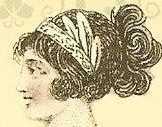
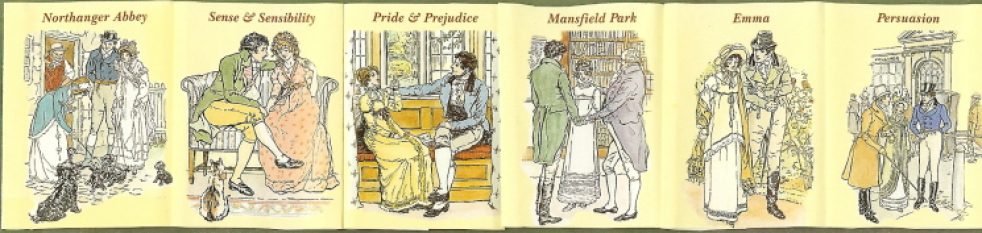


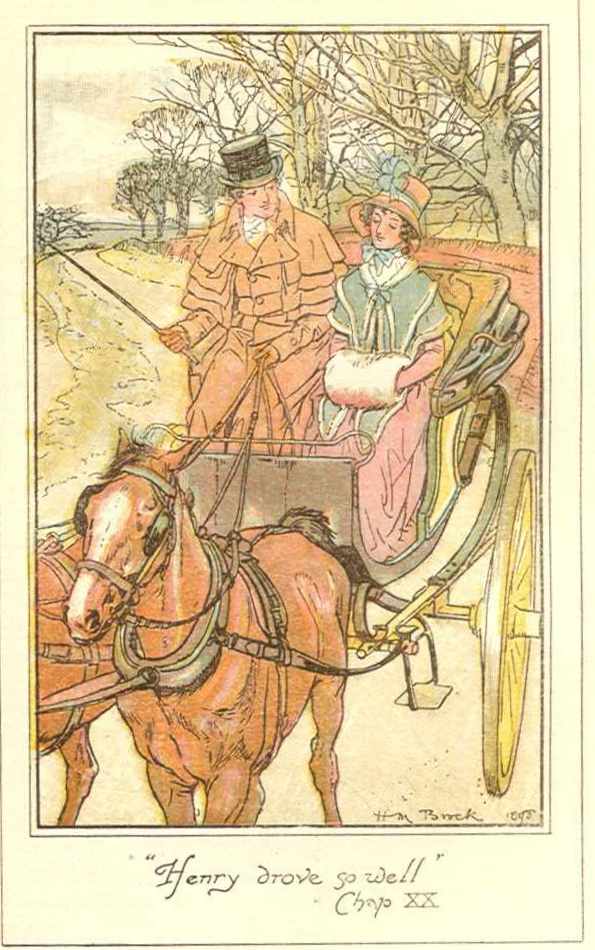
 As I write this short report, I have before me on my desk the Jane Austen Northanger Abbey Annotated Edition edited by Susan J. Wolfson. It is a beautiful book to see, to touch, to open, to smell, and soon I will be reading it. This gives a whole new life to the book for me because I had reread it on my eBook before the lecture. How wonderful to look forward to this edition after attending such an insightful, interesting, accessible, engaging talk.

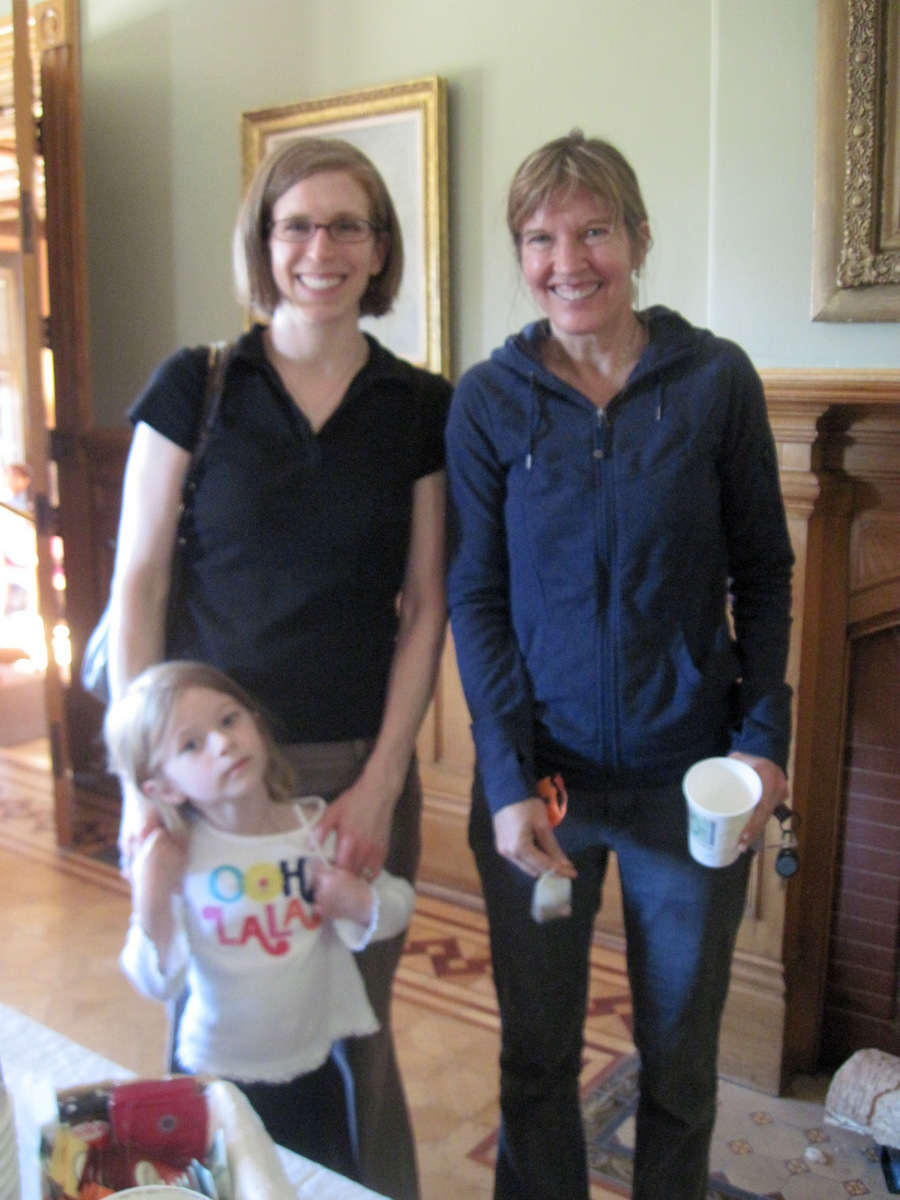




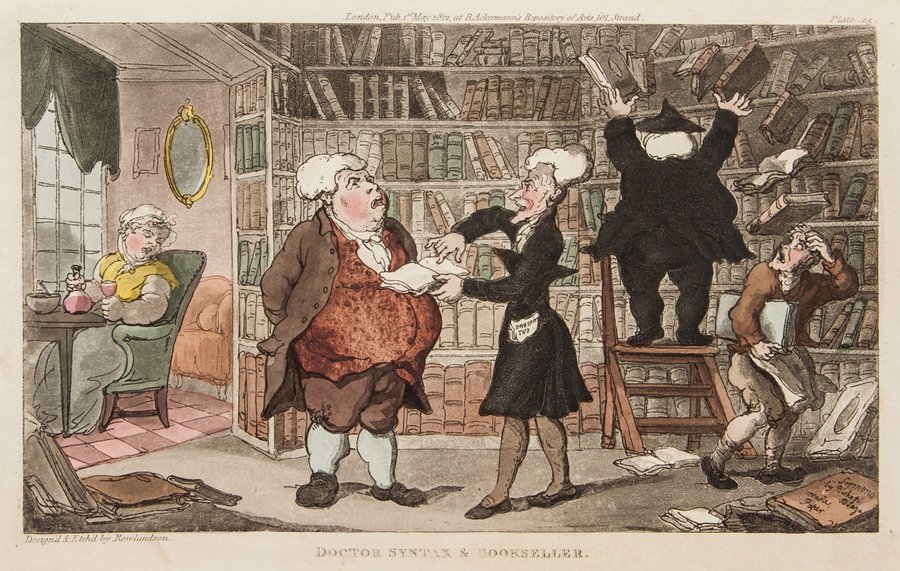


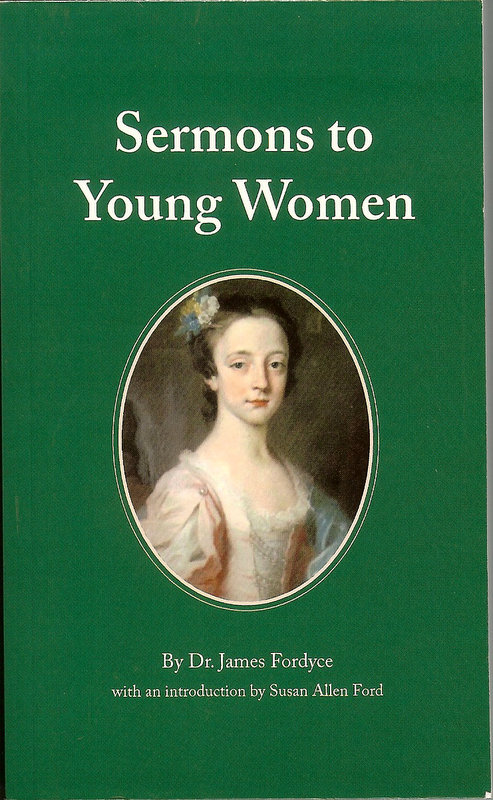

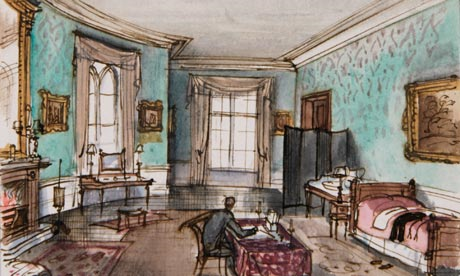


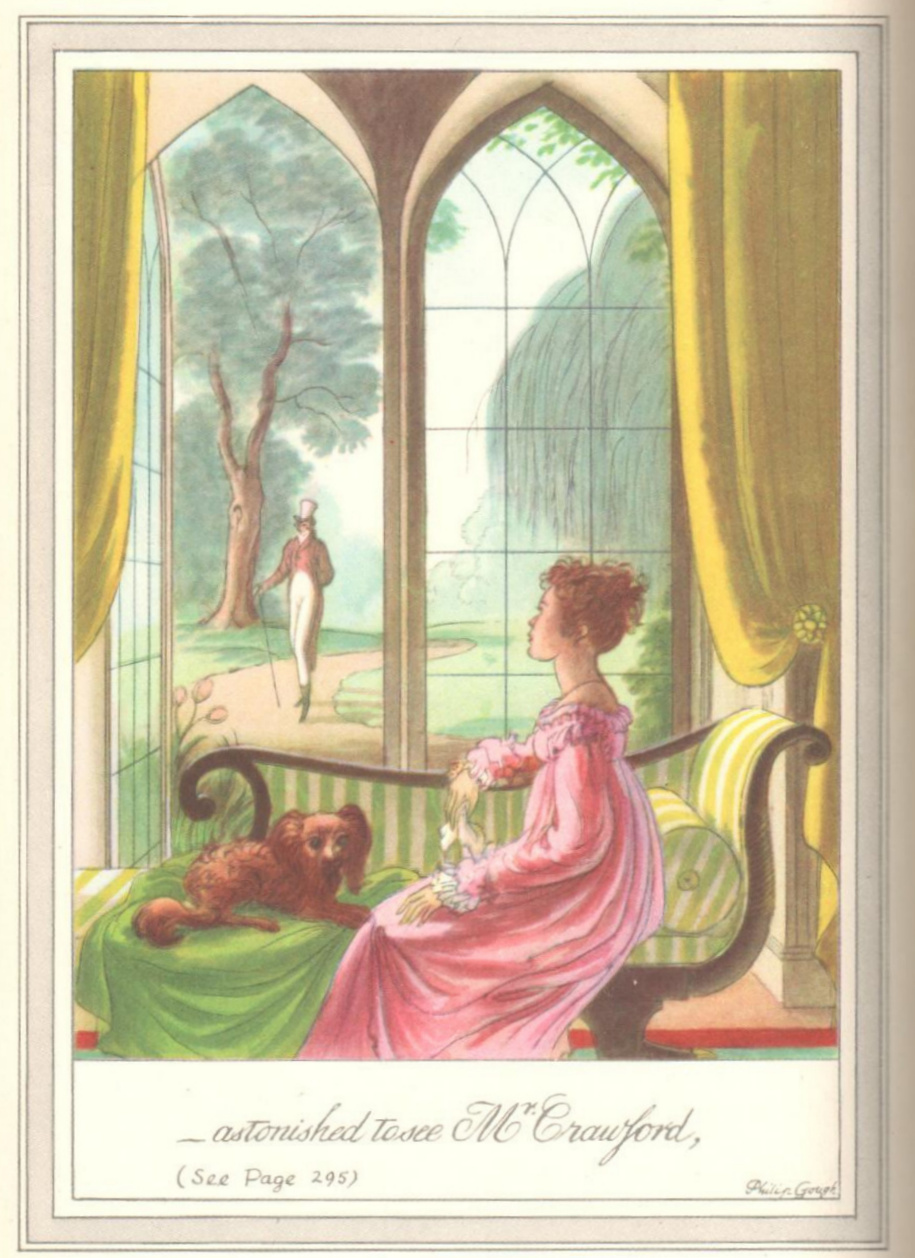


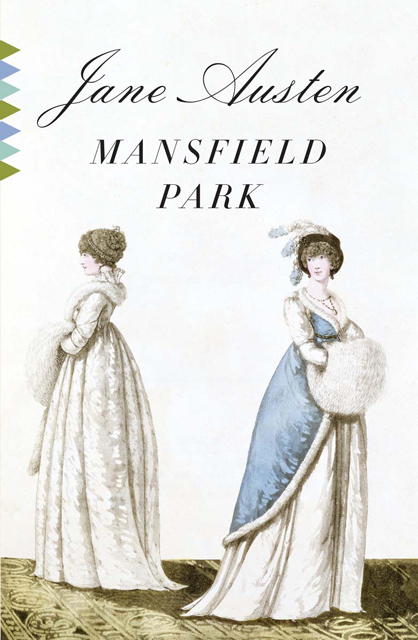


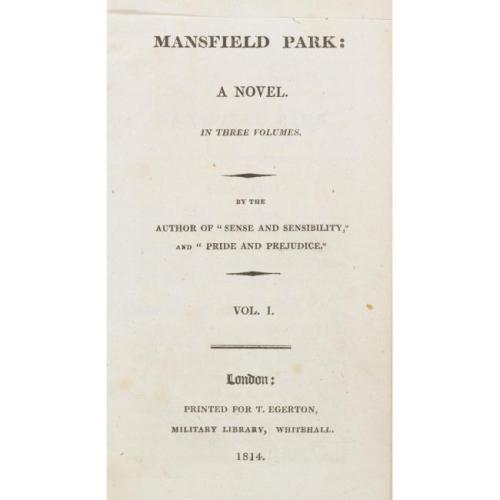


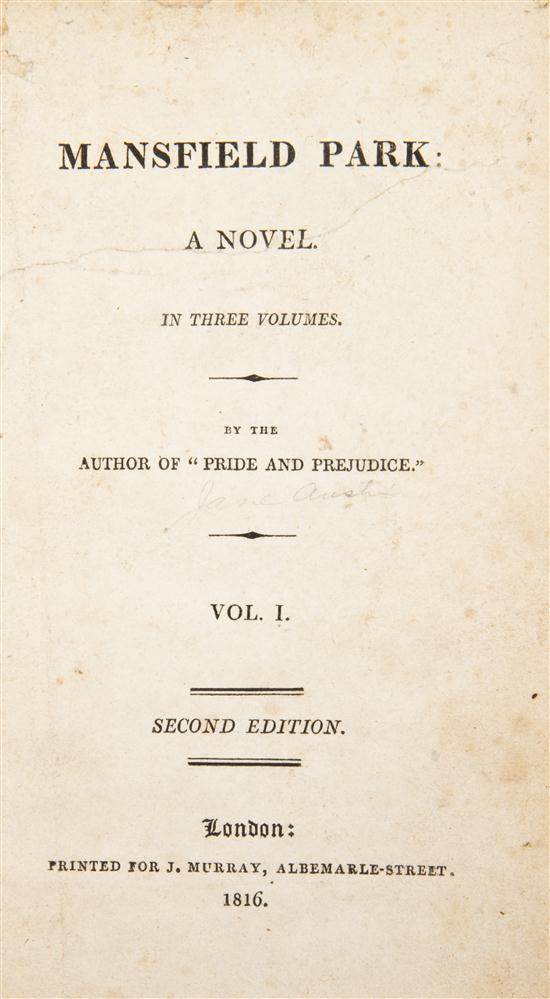


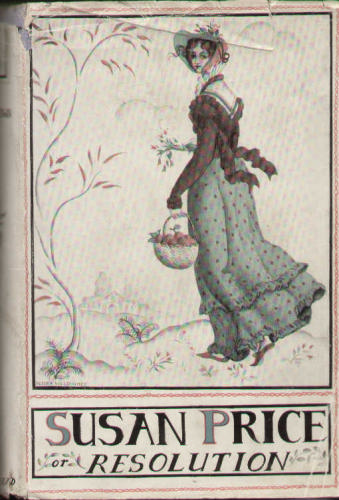


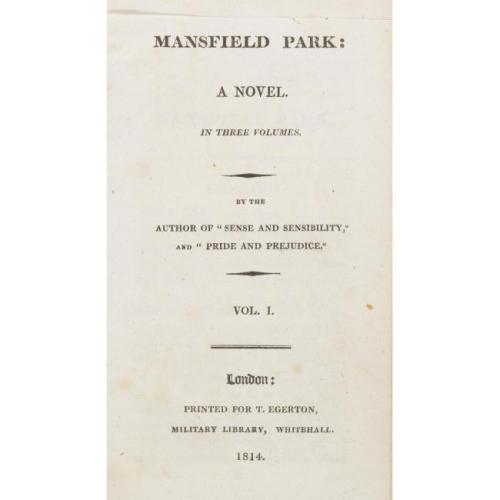

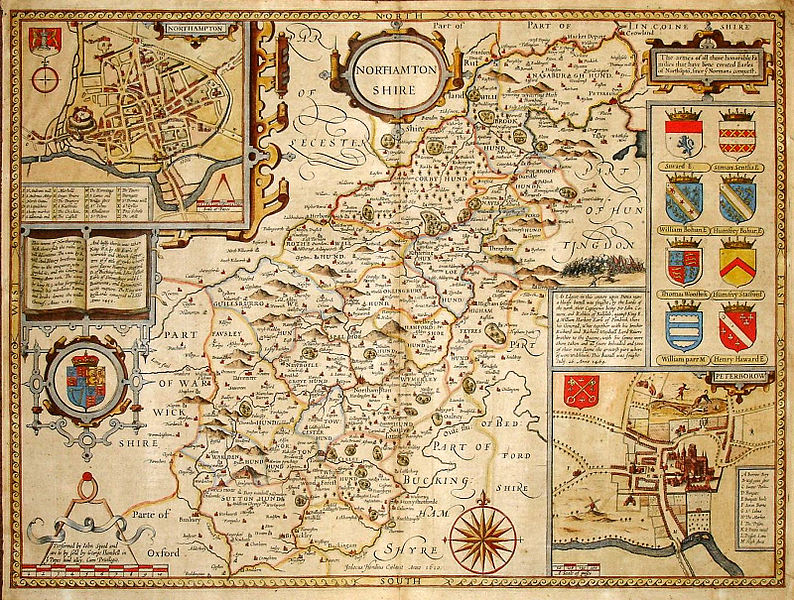


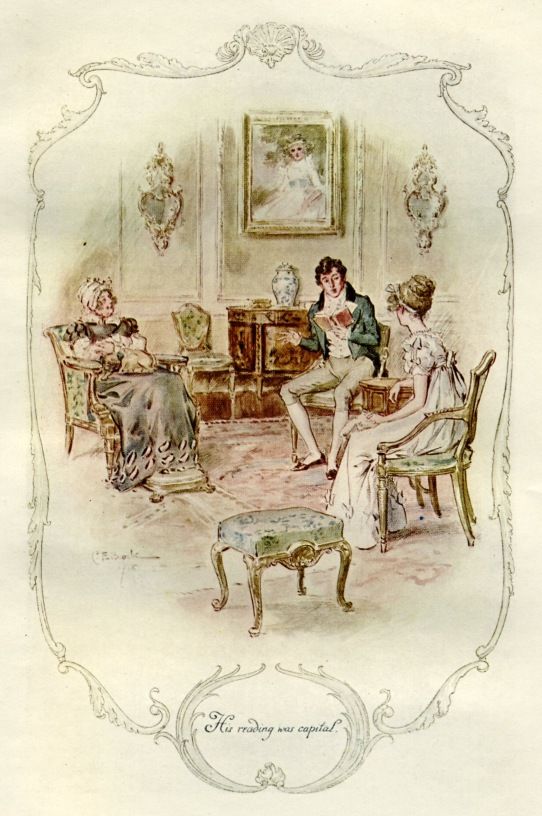
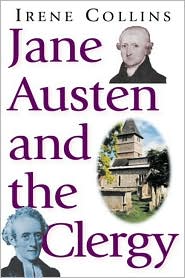


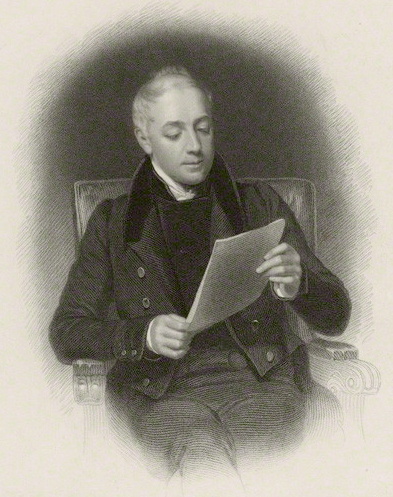
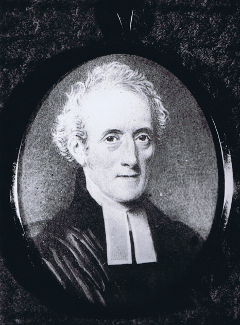


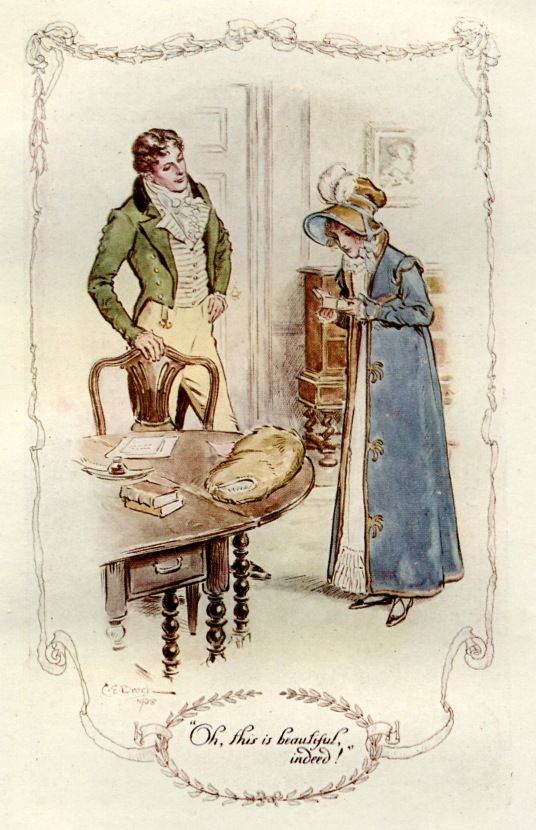
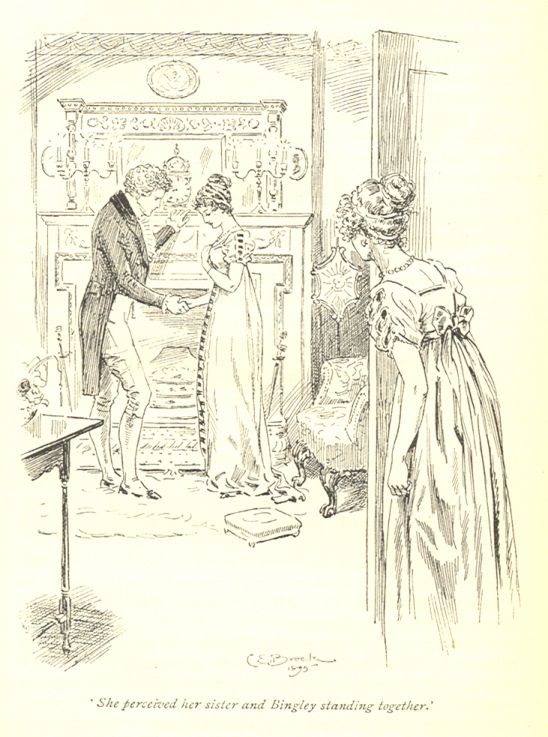

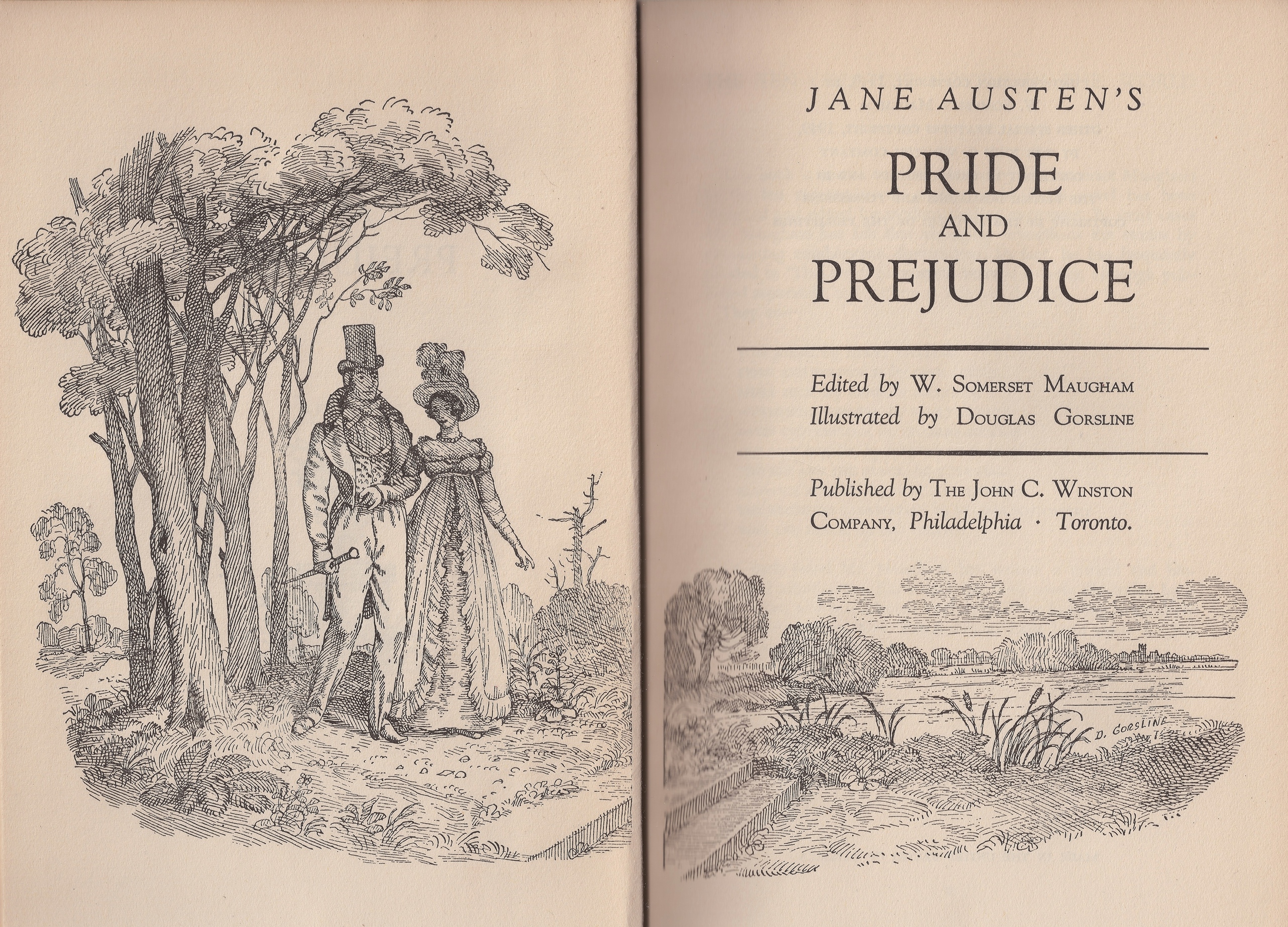
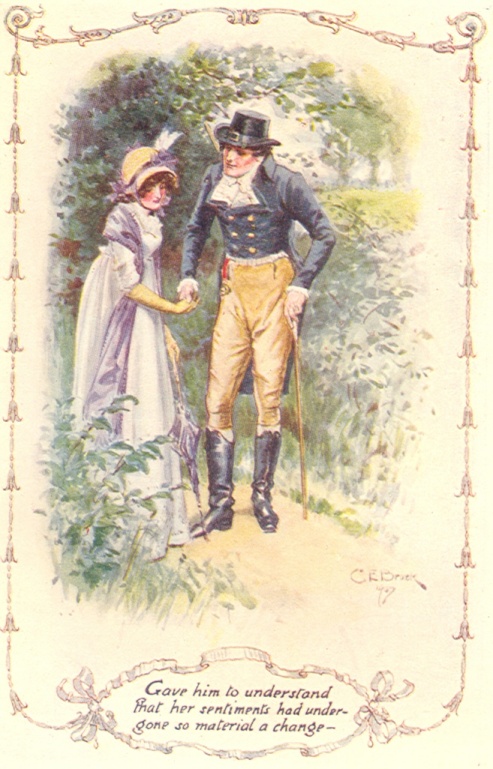
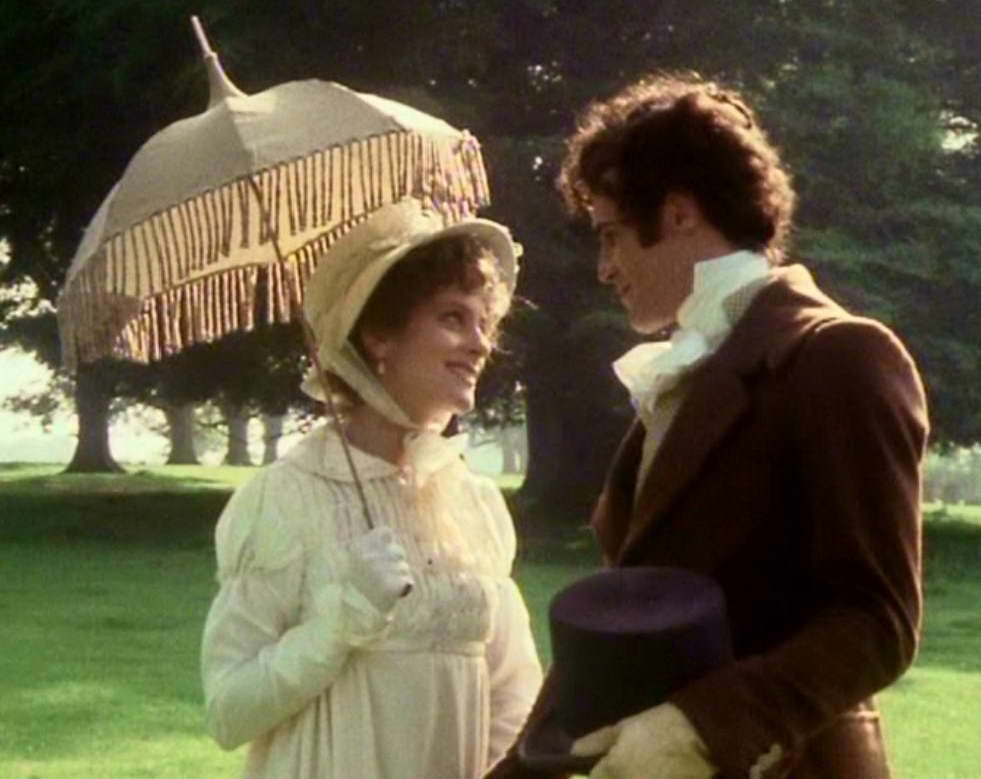
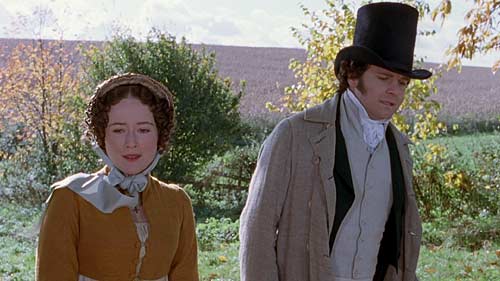




 Jane Austen in Vermont