Jane Austen · News · Publishing History

Sold! On the Block: Brock’s Illustrations for ‘Persuasion’

Sold at Christie’s London on June 2nd:  14 of C.E. Brock’s illustrations for Persuasion [plus J.M. Dent’s file copy of the 1909 edition of the novel!]


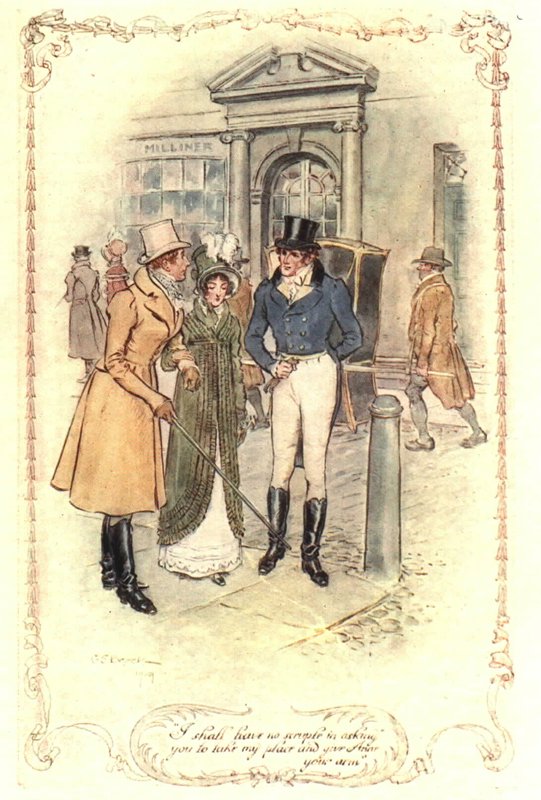
“I shall have no scruple in asking you to take my place, and give Anne your arm” ~ Volume II, Chapter XI (23)  [illustration from Molland’s]

Lot Description

BROCK, Charles Edmund, R.I. (1870-1938). A series of fine ink and watercolour drawings for Jane Austen’s Persuasion, 1909.

14 pen and ink and watercolour drawings including one for the title-page (most c.280 x 180mm) on paper (390 x 270mm), and later mounted on card. Provenance: J.M. Dent and Co. (sold, part lot 769, 19 June 1987, £33,000).

14 ORIGINAL DRAWINGS FOR AUSTEN’S PERSUASION published by J.M. Dent and Co. in 1909. Together with J.M. Dent and Co.’s stamped file copy, in the original cloth, of a 1909 edition of Persuasion in which the drawings were published. (15)

Estimate:   £7,000 – £9,000  ($10,108 – $12,996)   

Price Realized:   £10,000 ($14,710) [Price includes buyer’s premium]

Sale Information:  Christie’s Sale 7854 ,Valuable Manuscripts and Printed Books , 2 June 2010 , London, King Street

Click here for further information.

There are 23 illustrations + the title page in this edition of Persuasion, so this is not a complete lot – but still I would have been happy to add all this to my Austen collection! 

Further Reading:

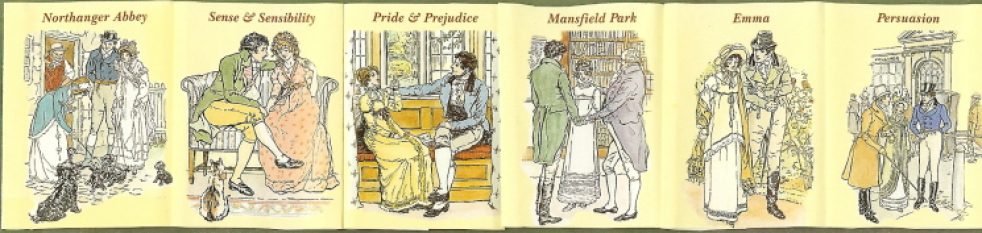
*Visit Molland’s to view all of Brock’s illustrations: [these links are under “e-texts”]

Illustrations for Sense and Sensibility
Illustrations for Pride and Prejudice
Illustrations for Mansfield Park
Illustrations for Emma
Illustrations for Northanger Abbey
Illustrations for Persuasion

*Visit Pemberley.com for more information on C.E. Brock.
*Keiko Parker’s
“Illustrating Jane Austen” in Persuasions 11 (1985)
*
Jane Austen’s World Blog on the Brock brothers


[Posted by Deb] 

Books · Jane Austen · Jane Austen Sequels · Literature · News · Publishing History

In the News!

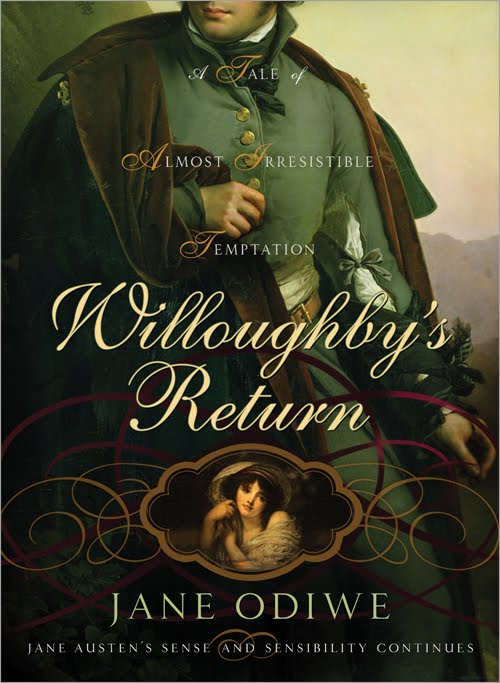
WilloughbyJane Odiwe has just announced the publication of her latest novel: Willoughby’s Return.

“I’m writing to everyone about my new book Willoughby’s Return, which is about to be published on November 1st and I’m hoping you will help me spread the word by mentioning its release to anyone you think might be interested.

Here’s a bit of blurb from the publisher Sourcebooks:

A lost love returns, rekindling forgotten passions…

In Jane Austen’s Sense and Sensibility, when Marianne Dashwood marries Colonel Brandon, she puts her heartbreak over dashing scoundrel John Willoughby in the past. Three years later, Willoughby’s return throws Marianne into a tizzy of painful memories and exquisite feelings of uncertainty. Willoughby is as charming, as roguish, and as much in love with her as ever. And the timing couldn’t be worse, with Colonel Brandon away and Willoughby determined to win her back, will Marianne find the strength to save her marriage, or will the temptation of a previous love be too powerful to resist?”

Jane is also doing a blog tour, and to celebrate publication there will be giveaways, competitions to win books and paintings, plus interviews over the next couple of weeks.

Information on her blog: http://www.janeaustensequels.blogspot.com/

* * *

One of my favorite websites is the book ‘repository’ A Celebration of Women Writers. Mary Mark Ockerbloom, our hostess who has been busy ‘rescuing’ books from Geocities (before that site closes down), has announced many additions to Celebrating Women’s website, but one in particular will interest Austen enthusiasts:

The Castle of Wolfenbach
by Eliza Parsons (1739-1811)
London : printed for William Lane, at the Minerva Press, and sold by
E. Harlow, 1793.

Writes Mary in her email introduction about the latest additions: “My personal favorite of the new titles, however, is Eliza Parsons’ “The Castle of Wolfenbach”. One of the seven “horrid novels” recommended with delightful anticipation by Isabella Thorpe in Jane Austen’s Northanger Abbey, The Castle of Wolfenbach is important as an early Gothic novel, predating both Ann Radcliffe’s The Mysteries of Udolpho and Monk Lewis’s The Monk.

A virtuous young woman in peril, a wicked uncle, a mysterious castle, a noble lover, what more could one ask?

Read and enjoy”

We’d love to post a ‘review’, should anyone be interested in reading then writing…

* * *

And last – Google’s book site has *finally* given us some (note the word!) volumes of Austen’s 1811 Sense and Sensibility!!

Only volumes I and II have been found – though Google books is notorious for making it difficult to find all volumes of a title (anyone listening to this complaint, Google?). I have not yet gone through the two volumes, for Google books is also notorious for skipping pages, missing pages, popping in pages twice, mis-scanning, etc etc. Though where can most of us see an Austen first edition, except through such a site! Now if only they will give us volume III as well as finish off Pride and Prejudice by supplying volume I for that trio.

[Posted by Kelly]

Austen Literary History & Criticism · Jane Austen · Publishing History

Austen on St. Swithin’s Day

On July 15, 1817, three days before she died, Jane Austen wrote several lines of comic verse, dictating them to her sister Cassandra.  Henry Austen refers to these verses in his biographical sketch: “The day preceding her death [though she died on July 18], she composed some stanzas replete with fancy and vigour.” [Biographical Notice]

Venta

[Written at Winchester on Tuesday the 15th of July 1817]

When Winchester races first took their beginning
It is said the good people forgot their old Saint
Not applying at all for the leave of St. Swithin
And that William of Wykham’s approval was faint.

The races however were fix’d and determin’d
The company met & the weather was charming
The Lords & the Ladies were sattin’d and ermin’d
And nobody saw any future alarming.– 

But when the old Saint was inform’d of these doings
He made but one spring from his shrine to the roof
Of the Palace which now lies so sadly in ruins
And then he address’d them all standing aloof. 

Oh subjects rebellious,  Oh Venta depraved
When once we are buried you think we are dead
But behold me Immortal. –  By vice you’re enslaved
You have sinn’d & must suffer. – Then further he said 

These races & revels & dissolute measures
With which you’re debasing a neighboring Plain
Let them stand–you shall meet with your curse in your pleasures
Set off for your course, I’ll pursue with my rain.

Ye cannot but know my command in July
Henceforward I’ll triumph in shewing my powers
Shift your race as you will it shall never be dry
The curse upon Venta is July in showers.

[text from Minor Works, ed. Chapman, Oxford, 1988 [revised edition]

*********************************

saint swithin 

St. Swithin [sometimes written as Swithun] was the Bishop of Winchester in the 9th century.  Legend has it that Swithin requested upon his death to be buried in the churchyard, but his remains were later brought into the church on July 15, 971.  The Saint’s obvious displeasure with this move resulted in a hard rain for forty days and he was thus removed again to the outside [the location of this grave was at the Old Minster, now covered by Winchester Cathedral – there is some authority for the belief that Swithin’s body parts may be buried in various places…] – but these mysterious rain happenings gave England the still-held weather prediction that:

St Swithun’s day if thou dost rain
For forty days it will remain
St Swithun’s day if thou be fair
 For forty days ’twill rain na mair 

The Winchester horse races were run on July 15th at “the neighboring plain” of Worthy Down.  Austen in a light-hearted moment composed these lines to  “Venta” [ Venta was the name given to Winchester during Roman Britain, “Venta Belgarum”, which means market or meeting place – it is also the name of the University of Winchester’s Alumni Magazine] – she was pointing out the incongruity of the races taking place on a Saint’s Day and his punishment for the “revels & dissolute measures.”

The appearance of these verses is an interesting side story in the history of publishing Austen’s works.  After Henry’s reference to them in his Biographical Notice, his comment was deleted from the 1833 edition.  James Edward Austen-Leigh in his 1870 Memoir makes no mention of them, nor in his second edition.  The fifth Earl Stanhope, an early collector of Austen’s works, had tried unsuccessfully to find out what these “stanzas replete with fancy and vigour” were actually about.  His efforts prompted Austen’s niece Caroline to write:

Nobody felt any curiosity about them then – but see what it is to have a growing posthumous reputation! we cannot keep anything to ourselves now it seems…. Tho’ there are no reasons ethical or orthodox against the publication of these stanzas, there are reasons of taste – I never thought there was much of a point to them – they were good enough for a passing thought, but if she had lived she would probably soon have torn them up – however, there is a much stronger objection to their being inserted in any memoir, than want of literary merit – If put in at all they must have been introduced as the latest working of her mind – Till a few hours before she died, she had been feeling much better, & there was hope of amendment at least, if not a recovery – but the joke about the dead Saint, & the Winchester races, all jumbled up together, would read badly as amongst the few details given, of the closing scene.  [Le Faye, p. 89-90]

So Austen’s last words fell to the axe of Henry’s protective spirit and the later Victorian sensibilities.  The poem was first published in 1906 in the Hubback’s Jane Austen’s Sailor Brothers.   Chapman in his notes to the Minor Works, questions at first if they are hers – that is until he realizes he was overlooking the clear evidence in Henry Austen’s deleted comment and concludes “that no doubt settles the question.” [Chapman, MW, p. 451] 

 There are actually two manuscripts, the copy in Cassandra’s hand as dictated by Austen [owned by the Carpenter family], where the lines “When once we are buried – but behold me Immortal” are underlined, likely by Cassandra at a later date, and a second copy written out by James Edward Austen-Leigh, now in the Berg Collection at the NY Public Library, and the manuscript used in Chapman’s edition.  There were a few changes to the text, especially with the use of the word “dead”, where the manuscript reads “gone” – this does not rhyme with the “said”, and again conjecture is the Cassandra could not write what Jane actually spoke.

For me, I am heartened that in her last few days, Austen was able to rally her spirit to write yet another of her light verses, reminiscent of her juvenilia, even in the face of what she knew had to be the fast-approaching end of her life.

Winchester House college st

Further Reading:

  1. Chapman, R.W.  Minor Works.  Oxford University Press, 1988 [c1954], pp. 450-452.
  2. Doody, Margaret Ann, ed.  Catharine and Other Writings.  Oxford University Press, 1998, pp. xxi-xxiii. 
  3. Le Faye, Deirdre.  “Jane Austen’s Verses and Lord Stanhope’s Disappointment,” Book Collector, Vol. 37, No.1  (Spring 1988), pp. 86-91.
  4. Modert, Jo., ed.  Jane Austen’s Manuscript Letters in Facsimile.  Southern Illinois University Press, 1990. pp. xxiii- xxiv.]
  5. see also Joanna Waugh’s post on on St. Swithin, Jane Austen: Sleeping with the Saints

[image of St. Swithin from Wikipedia]

*[today in Vermont it is FINALLY a bright and sunny day, after what has felt like forty days of rain – so hopefully this bodes well for an end to our soggy-summer!]

Posted by Deb

Austen Literary History & Criticism · Book reviews · Collecting Jane Austen · Jane Austen · Publishing History

Book Review ~ “Jane’s Fame” by Claire Harman

book cover jane's fameMany of us who grew up in the late 40s – early 50s had our Jane Austen force-fed to us in high school (unless we were fortunate enough to be blessed with an Austen-loving mother or father!).  Pride & Prejudice was the standard text with little reference to the other works; followed by George Eliot’s Silas Marner, Dickens’s A Tale of Two Cities and / or Great Expectations, Shakespeare (hopefully!), and Hemingway, Steinbeck, Salinger for contemporary authors.  But I’ve often thought that Austen got a bum-rap with this “required-reading” status, the educational system’s way of compensating for what an early critic said in calling Austen “a critic’s novelist – highly spoken of and little read.” [p. 120]  And while I am the first to admit that Austen is not for everyone [their terrible loss!], I have long believed that this approach to Austen added to her suffering from the great reader-turnoff. 

For me, a voracious reader as a youngster and teenager, I went on to read some of her novels, but alas! not all, feeling more at home with Alcott, the Brontes, Dickens, and later Wilkie Collins, all those more accessible Victorian novelists.  So it was in later life that I returned to Austen – and I perhaps needed that distance of time (and some wisdom!) to re-appreciate her brilliance – the humor and irony, the language, that characterization, and of course, the age-old love stories.  So from my current vantage point I marvel at Austen’s ability to stay fresh, to speak to different generations, and to speak to each individual in different ways through one’s own life. And in these fifteen plus years of “re-Austenising” myself, I’ve gone much beyond the novels, to the biographies, criticism, her Regency / Georgian world, and the current surfeit of films, and sequels and continuations, and even the latest parodies, creating quite a book collection in the process – and I have really barely begun!  

So I was most excited to hear about the release of Claire Harman’s new book, Jane’s Fame: How Jane Austen Conquered the World [Canongate, 2009], stirring up controversy even before it hit the bookstores [see my previous post, “Discord in Austen Land”].  [Harman has authored Fanny Burney: A Biography (Knopf, 2001) and works on Sylvia Townsend Warner and Robert Louis Stevenson].   It is an engaging read – historical, biographical, critical and anecdotal, all rolled into a capsule of Austen’s claim to fame – and just why was she so popular?  “the public whipped into a frenzy” [p. 243]  in the late nineteenth century and again in the late twentieth? – by “[James Edward] Austen-Leigh’s Memoir in the first instance, and in the second, a man in a wet shirt” [p. 243] [with thanks to Colin Firth!] – simplified reasoning perhaps, but a good chuckle and that glimmer of truth. 

Harman explains that

…this book charts the growth of Austen’s fame, the changing status of her work and what it has stood for, or been made to stand for, in English culture over the past two-hundred years.  In the foreground is the story of Austen’s authorship, one of persistence, accident, advocacy, and sometimes surprising neglect.  Not only did Austen publish her books anonymously and enjoy very little success during her lifetime, but publication itself only came very late, after twenty years of unrewarded labor.  I have sought to reconstruct these pre-fame years in the spirit of uncertainty through which Austen lived them.  Her prized irony and famous manipulation of tone I believe owes much to it; part of the reason why she pleases us so much now is that she was, for years, pleasing only herself.  [p. 7-8]

Thus, Harman starts by placing Austen squarely in the context of her times – her family and friends as writers – her mother, brothers James and Henry, her friend Anne Lefroy’s brother Samuel Egerton Brydges, and her pride in her own quite delightful juvenile writings.  Incorporating a general account of Austen’s life [Harman assumes the reader brings much knowledge of Austen’s life and gives only a cursory telling], she presents us with a great summary of Austen’s writings, the publication history and early responses to each work, drawing heavily on Brian Southam’s Jane Austen, The Critical Heritage [London 1968], and emphasizing Austen’s literary ambitions. [for more on this, see Jan Fergus’s The Professional Woman Writer” in The Cambridge Companion to Jane Austen, one of the earlier scholarly arguments to clearly see Austen in this light, far removed from the portrait painted by her brother Henry and later her nephew.]

Following Austen’s death in 1817, her copyrights still owned by Cassandra were sold to Richard Bentley and his issue of all six novels in 1833 did much to keep Austen in print; but her popularity waned, the rise of the Victorian novel sending Austen to the shadows, not to mention Charlotte Bronte’s dislike of Austen, quoted by Elizabeth Gaskell in her Bronte biography in 1857 [but ironically, how close is Gaskell’s North & South to Pride & Prejudice!]  So Austen remained largely unread until the Austen-Leigh Memoir of 1870, followed by various new editions of the novels and the selected letters in 1890. 

Harman explores in her chapter on the “Divine Jane” [quoting W.D. Howells] the publishing of these new editions and the illustrated versions that sought to “fix the characters in one’s mind” [p.159], the biographies, and critical analyses in this first burgeoning fame-fest, and her new status as darling of the intellectual snobbish-elite, championed by the likes of Leslie Stephen, Henry James, George Saintsbury, and Howells [and of course, not to leave out Mark Twain’s adamant dislike!] – all this culminating in R.W. Chapman’s Oxford edition of her works in 1923, “the first complete scholarly edition of any English novelist.” [p. 192]. 

In “Canon and Canonisation,” Harman chronicles the scholarly critical analysis that continues unabated to the present – the vast extent of academic and non-academic writing – on the one hand, Austen as a pleasure-read, the writer “who wrote so clearly and simply, and who was so small scale” [p. 200] – and on the other, the critical study of Austen’s “unconsciousness and brilliance” and here we see her “easy passage into English literature courses” [p. 201].  Austen makes critical literary history as manuscripts and contemporary memoirs became available for study – resulting in library collections, various illustrated editions, Jane Austen Societies, interest in her “homes and haunts,” more biographies from various standpoints, new paths of criticism taking into account the political, sociological and historical elements, and the many works on the manners and mores, fashion and handiwork, cookery and letter-writing – all things Austen indeed! [A friend visiting my home recently asked me what could all these Austen-related books on my shelves possibly be about when she only wrote six books!] 

And finally to film and what she terms “Jane Austen TM”, Harman again summarizing all that came before the “wet shirt” and after – the movies, the sequels, the internet and YouTube concoctions, the blogsphere , the Societies, the fan-fiction sites, the costume-driven fanatics, etc.  And Harman ends with the question, “What would Austen have made of all this? [p. 278] – in answer, she cites the differing views of D.W. Harding, Lionel Trilling, Henry James, and E.M. Forster to prove to us that “the significance of Jane Austen is so personal and so universal, so intimately connected with our sense of ourselves and of our whole society, that it is impossible to imagine a time when she or her works could have delighted us long enough.” [p. 281]

 One of the criticisms of Harman’s book has been her light non-academic approach to Austen [and perhaps her re-working of others’ ideas into this “popular” framework] – but it all works so well for what and for whom it is intended.  Harman’s gift is taking an inordinate amount of primary and secondary material and presenting it into a very readable, information-packed and anecdotal whole – everything you would ever want to know about Jane Austen all put together in a neat little package of 342 pages.  This of course may be its greatest shortcoming – too neat a package with strong authorial opinions thrown in [and a feeling to this reader of all being rather rushed at the end – “let’s wrap this up, throw in a few final tales and get it published” sort of feeling…] –  it must needs be leaving something out! [Indeed, the 2005 Pride & Prejudice barely gets a mention, either an oversight or the expression of the author’s opinion of that film – but no matter what your views of that adaptation might be, it has to be praised for bringing Jane Austen and P&P  to yet another generation who do not find Colin Firth’s wet shirt scene all that WE make it out to be – and thus it is a clear topic for Jane’s current and ongoing “fame.”] 

But as a resource, with a terrific reading list to be gleaned from the text and bibliography [though I do quibble with the number of un-sourced quotations and overly shortened citations that are unclear (especially in regard to the letters – a number and date would have been most helpful!)], Jane’s Fame should be required reading [not force-fed please…] for anyone interested in the facts of Austen’s writing life and how she has risen to such heights and commands such a presence in so many people’s lives.  And you will likely take away new and interesting tidbits such as finding what Katherine Mansfield had to say about Emma:  “Mr. Knightley in the shrubbery would be something!” [p. 247] [aah! indeed!]

4 1/2 full inkwells [out of 5]

 Further Reading: [all page citations above are to Janes’ Fame]

  • See my post on the various Reviews of Jane’s Fame
  • Copeland, Edward, Juliet McMaster, eds.  The Cambridge Companion to Jane Austen.  Cambridge University Press, 1997.
  • Fergus, Jan.  “The Professional Woman Writer” in The Cambridge Companion, pp. 12-31, where Fergus summarizes and expands these arguments first presented in her Jane Austen: A Literary Life. London: Macmillan 1991.  These are must-reads…
  • Sutherland, Kathryn.  Jane Austen’s Textual Lives: from Aeschylus to Bollywood. Oxford, 2005, pb 2007.  Note that it is Professor Sutherland who started the controversy that Harman essentially lifted her ideas – I have this book and have skimmed it only, so cannot comment fully – but just looking at the table of contents, one finds the similarities a little alarming, and the Sutherland book has far more depth to the notes and bibliography – but again, I emphasize the “popular” nature of Harman’s book. 
  • Todd, Janet, ed.  Jane Austen in Context.  Cambridge University Press, 2005, 2007 with corrections. 
  • Claire Harman’s website with cites to reviews of Jane’s Fame
  • Austenblog:  Mag’s review of Jane’s Fame

Posted by Deb

Austen Literary History & Criticism · Jane Austen · News · Publishing History

If you can wait until November ~

This is a tad ahead of schedule, but Mark your Calendars! 

The Pierpont Morgan Library in New York City will be hosting a Jane Austen exhibit to begin in November 2009:

Jane Austen
November 2009 through March 2010

austen-lady-susan-ms-morgan-library

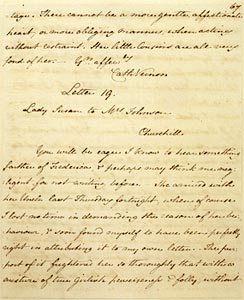
 Jane Austen, Lady Susan, autograph manuscript, written ca. 1793–94 and transcribed in fair copy soon after 1805. The Morgan Library & Museum, Purchased in 1947; MA 1226.


*********************************

This exhibition explores the life, work, and legacy of Jane Austen (1775–1817), regarded as one of the greatest novelists in the English language. During the past two decades, numerous successful motion picture and television adaptations of Austen’s novels have led to a resurgence of interest in Austen’s life and work. This show provides a close-up portrait of Austen, achieving tangible intimacy primarily through the presentation of her autograph manuscripts and personal letters which the Morgan has not exhibited in a generation.

The Morgan’s collection of Austen’s autograph manuscripts and letters is the largest of any institution in the world, and includes the darkly satiric Lady Susan, the only surviving manuscript of any of Austen’s novels. The exhibition will also include first and early illustrated editions of Jane Austen’s novels and letters, as well as contemporary drawings and prints depicting people, places, and events of significance in Austen’s life.

Responding to the revival of interest in Austen’s life and work, the exhibition provides a deeper insight into Austen’s essentially enigmatic character and personality, the craft of writing, and the historical context in which she lived and wrote. The exhibition will explore not only Austen’s personal reading, and the literary influences that inspired and informed her work, but also the response to Austen by later writers as diverse as Scott, Bronte, Nabokov, Twain, Chesterton, and Auden.

[From the Morgan Library website]

Books · Jane Austen · JASNA-Vermont events · Publishing History

Publishing ‘ Persuasion ‘

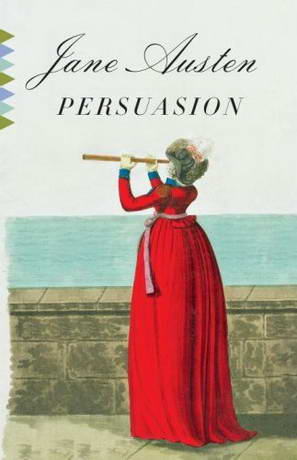
persuasion-cover-vintageWe had our JASNA-Vermont gathering last Sunday and Mary Ellen Bertolini of Middlebury College spoke on Persuasion [see Kelly’s post below on our event]

Mary Ellen brought Austen’s final novel to life for us all.  In speaking on “The Grace to Deserve” and taking as her starting point Captain Wentworth’s last spoken words in the book, “I must learn to brook being happier than I deserve.”  [Persuasion, ch. 23], she addressed the issue of “deserving” and “earning ones’ blessings”  in the context of the social and political realities of the time – the war in France and the role of the Navy; an analysis of the criteria of WHO deserves; and finally in the linguistics of the work – whose words deserve to be heard?  The plot centers on Anne moving from “nothingness” and” carrying “no weight” to realizing her own worth, and Wentworth moving from anger and disappointment to deserving to hear Anne’s words – their individual growth bringing them together at last. 

Prof. Bertolini’s insightful, dramatic and often humorous presentation on how Austen tells her tale around these three words “the grace to deserve” gave all in attendance much to think about and surely most of us went right home to begin a re-read of the novel!  So we thank you Mary Ellen for sharing your affection for this book with all of us, and turning a very cold winter day into a fabulous afternoon! 

**************************************

As a bookseller and librarian I am interested in the publishing history of the literature of the 18th and 19th centuries, and I spoke very briefly on the publishing journey of Persuasion;  I append that here:

 We know from Cassandra’s Memorandum [see Minor Works, facing pg.  242 ] in which she wrote the dates of Austen’s composition of each of her novels, that Jane Austen began Persuasion on August 8, 1815; it was finished July 18, 1816 – i.e. her first draft. We know she was unhappy with the ending, she thought it “tame and flat” and rewrote chapter 10 [i.e.chapter 10 of volume 2], added chapter 11, and retained chapter 12 (which had been the final chapter 11).  This final version was finished on August 6, 1816.  The manuscript of the original two chapters are the ONLY extant manuscripts of Austen’s novels.  These were first printed in the second edition of James Edward’s Austen-Leigh’s Memoir of 1871, and this was the accepted text until the actual MS became available on December 12, 1925  [ published separately by Chapman in 1926 under the title Two Chapters of Persuasion [Oxford, 1926]; the manuscripts are housed in the British Library].  This text is different from the printed cancelled chapter in the Memoir – so it is believed that Austen made a fresh copy of her final draft and this is what went to the printer. [Chapman,  NA & P, p. 253 ]

I am assuming that most everyone has read these cancelled chapters, as they are usually included in most printings of the novel.  But to summarize:  Austen has Anne meeting Admiral Croft on her way home from Mrs. Smith’s [where she has just learned the true nature of William Elliot] – she is invited to visit Mrs. Croft, and assured of her being alone, she accepts, and to her consternation finds Capt. Wentworth at home.  Admiral Croft has asked Wentworth to find out from Anne if the rumors are true she is to marry her cousin and thus might want to live at Kellynch Hall ~ and with Anne’s adamant denial of this, Wentworth and Anne had a 

 silent but very powerful Dialogue;- on his side, Supplication, on hers acceptance. – Still, a little nearer- and a hand taken and pressed – and “Anne, my own dear Anne!” – bursting forth in the fullness of exquisite feeling – and all Suspense & Indecision were over. – They were reunited.  They were restored to all that had been lost.

 Etc. etc… and then one more chapter of explanation and future plans.

 It is not my intention here to talk about these changes – we can argue the point of why she made them:  the need to pull all the characters together – the Musgroves, Benwick, & Harville, the Crofts, and the Elliots; the increased tension and suspense between Anne and Wentworth; Anne’s conversation with Harville overheard by Wentworth; and of course the LETTER – what would Persuasion be without “you pierce my soul” ? !

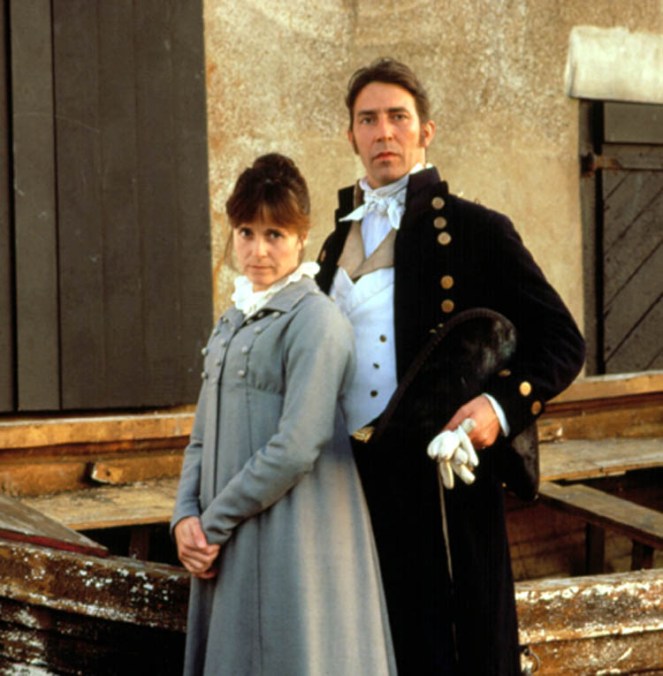
 However, in the movie version [Amanda Root – Ciaran Hinds, Sony/BBC 1995] a part of this scene with Wentworth confronting Anne is added to the plot – this is worthy of some further conversation!  
508950F

But one of Austen’s classic lines is not in the final novel – the first draft is a bit more comic in nature, and perhaps she thought it not fitting the rest of the work:

It was necessary to sit up half the Night & lie awake the remainder to comprehend with composure her present state, & pay for the overplus of Bliss, by Headake & Fatigue.

____________________________________________

That Austen made these changes was a gift to later generations, as it is in this manuscript that we have the only documentation of how meticulous she was in her writing and editing methods.  And what I find most fascinating is what she was working on at the same time:

 *In 1815, she was drafting Emma; began Persuasion in August; revised Mansfield Park  for its 2nd edition; and finished and passed Emma through publication [it was published in December 1815]

 *In 1816:  she was drafting and finalizing Persuasion; she wrote her very funny “Plan of a Novel”; she made revisions to “Susan” [later Northanger Abbey]; AND she was working with the publisher on the 3rd edition of Pride & Prejudice.

 As an aside:  in the context of the wider world, there was the ever-expanding and more competitive market for publishing novels in Austen’s time.  In 1775, the year she was born, 31 new novels were published; in 1811, when Sense & Sensibility appeared, 80 new fiction works appeared; for the year 1818, Northanger Abbey and Persuasion were published along with 61 other novels.  Altogether, 2,503 new novels were published in the years between 1775 and 1818. [Raven, p. 195-6]

We know little about Persuasion from Austen herself:  it is only mentioned in her Letters twice, though not by name: 

 On March 13, 1817, she wrote to her niece Fanny Knight:  

“I WILL answer your kind questions more than you expect. – Miss Catherine [meaning Northanger Abbey] is put upon the Shelve for the present, and I do not know if she will ever come out; – but I have a something ready for Publication, which may perhaps appear about a twelvemonth hence.  It is short, about the length of Catherine – This is for yourself alone…”  [Letter 153, Le Faye]

 And again on March 23, 1817: 

Do not be surprised at finding Uncle Henry acquainted with my having another ready for publication.  I could not say No when he asked me, but he knows nothing more of it. – You will not like it, so you need not be impatient.  You may PERHAPS like the Heroine, as she is almost too good for me. [Letter 155, Le Faye]

The working title for Persuasion was “The Elliots” – there is no evidence that Austen chose the titles for either Northanger Abbey [it is accepted that her brother Henry did this] or Persuasion [though the word is mentioned in one form or another more than 20 times – you can go to this link at the Republic of Pemberley for all the occurrences] 


So, the details of the book:
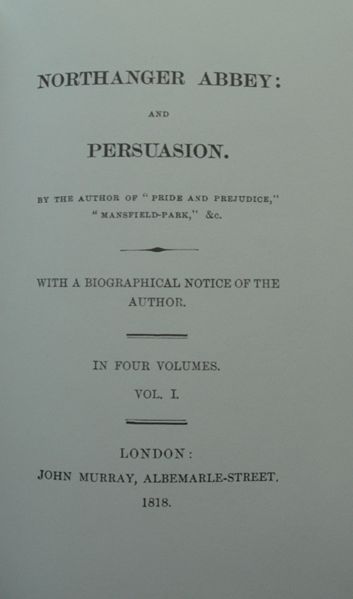


na-title-page

 [Title Page, 1st edition]

-It was published posthumously in December 1817 [though the title page says 1818] with Northanger Abbey

Title page states:  “By the Author of Pride & Prejudice, Mansfield Park, etc.”; With a Biographical Notice of the Author [dated Dec. 20, 1817, by Henry Austen, thus identifying his sister as the author to the public for the first time]

 -Included is the “Advertisement to Northanger Abbey by The Authoress [we discussed this at our NA gathering, where Austen “apologizes” for the datedness of the story, and zings the dastardly publisher for withholding the book for 10 years…]

Published by John Murray, London; 1818; in four volumes:  the two Northanger Abbeyvolumes printed by T. Davison; the two Persuasion volumes by C. Roworth. 

Advertised in the Morning Chronicle, Dec. 19 & 20, 1817

-Physical description:blue-grey boards, brown paper backstrips, white paper labels (there are a few variants)

Size of book:  about 19cm x 10.5 cm [ 7.5 x 4.25″]

Size of run: @ 1750 copies [various opinions on this] – 1409 copies sold very quickly [majority to circulating libraries]

Cost:  24 shillings for 4 volumes

Profit:  £515 [like Austen’s other works, Persuasion was published on commission:  Austen paid for costs of production and advertising and retained the copyright; the publisher paid a commission on each book sold – exception was Pride & Prejudice for which she sold the copyright] 

-Reviews:  minor notices until the first extensive review in January 1821. 

-Worth today:  a quick search brought up 7 copies of the 4-vol. first edition, all have been rebound in leather, range $9500. – $15,000. 

-Tidbit:  the Queen has in her personal library  Sir Walter Scott’s copy of the 1st edition.

First American edition:  not published until 1832 in Philadelphia; the title page says “by Miss Austen, author of P&P and MP, etc.” 

-French TranslationLa Famille Elliot ou “L’Ancienne Inclination” [ the old or former inclination] translated by Isabelle de Montolieu, Paris, 1821 :  this is the first published Austen work to have her full name on the title page and to include illustrations:  in vo1 1, Wentworth removing Walter Musgrove from Anne [see below]; vol 2:  Wentworth placing his letter before Anne.
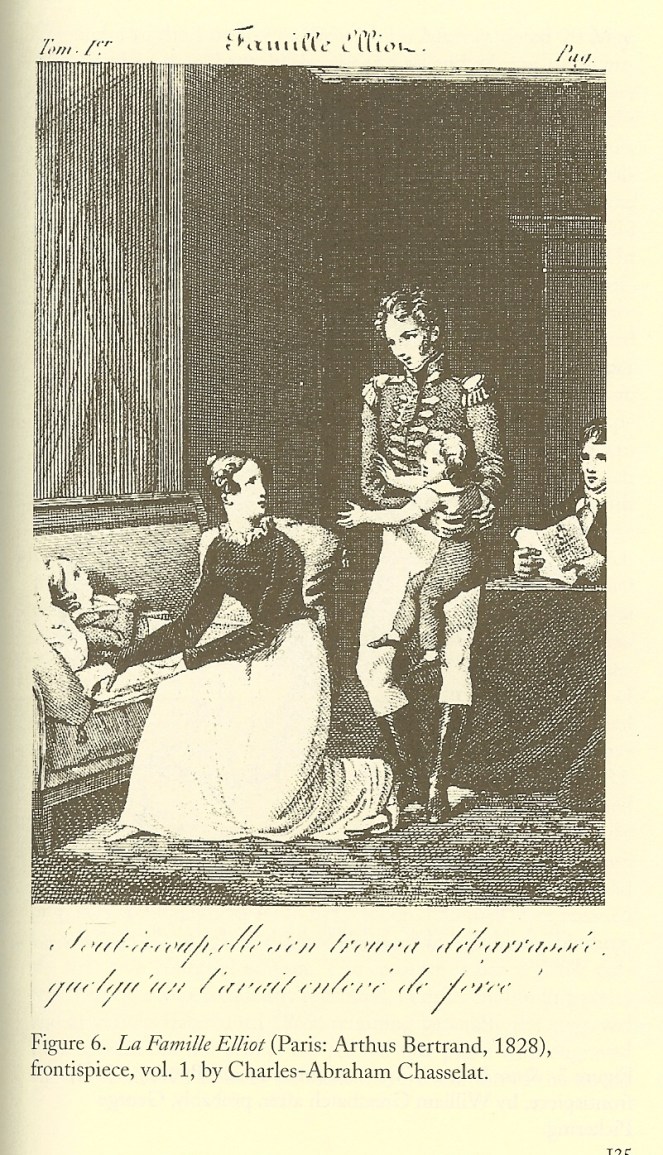
persuasion-french-illus

[Source:  Todd, p. 125] Anne was called Alice; one aside about these translations:  Baroness de Montolieu took liberties with the text :  made them more sentimental for the French audience – but this too is a topic for another discussion!

Sources: 

  1. Chapman, R.W.  The Novels of Jane Austen: the Text Based on Collation of the Early Editions.  3rd ed. Vol. V, Northanger Abbey & Persuasion, Oxford, 1933. [with revisions]  Introductory material.
  2. Gilson, David.  A Bibliography of Jane Austen.  Oak Knoll Press, 1997.
  3. Raven, James. “Book Production.” in Janet Todd, ed. Jane Austen in Context.  Cambridge, 2007.
Books · Jane Austen · Publishing History

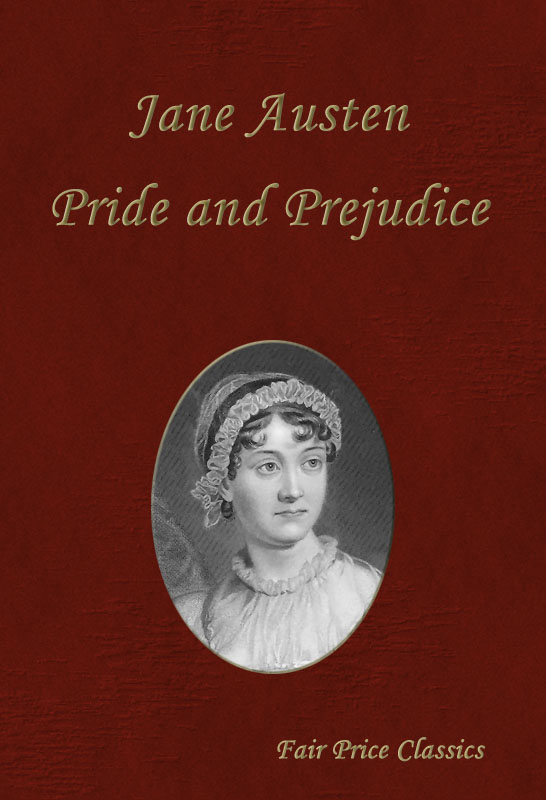
“Pride & Prejudice” Cover Art

Check out this post at Belle of the Books ~ she has pulled together a variety of Pride & Prejudice covers that have been published through the years…. vote on your favorite!

pride_and_prejudice-cover