Jane Austen · Literature · Regency England

The Mystery of Clare Darcy

For the past year I have been interspersing my regular reading with a taste of Georgette Heyer – a delightful romp through her Regency romances – not quite done yet [gad! There are so Many! – not to mention the Mysteries and the Historicals…], and I fear as I look back that I am getting them all confused – I must learn to take better notes! – But I have taken a break for a bit, and in looking around for other such books to get my “Regency fix” [or is it the “romance”?!], I have discovered Clare Darcy – or at least discovered her books, as there seems to be cloak of complete mystery about the author.  Even the know-it-all Internet brings up little evidence:

1.  A Wikipedia entry  that only lists her books and repeats the biography given on all the novels:  “an American novelist from Ohio” 

2.  The Books Themselves:  “…her recent Regency tales have all been acclaimed as the truest successors to those of Georgette Heyer.  It is hard not to believe that Miss Darcy was born and raised in the best Society of that day – rather than in the Ohio of our own time.”   All copyright notices state either the publisher “Walker and Company” or “Clare Darcy”

3.  Rave Reviews:  “The latest addition to the author’s piquant, literate romances of life among the ton in Regency England celebrates one of Darcy’s spunkiest heroines yet” [Publisher’s Weekly on Eugenia] and “An enchanting Regency novel…which makes one rejoice in finding what could have been taken for a new Georgette Heyer novel”  [Library Journal on Victoire]

4.  A Blog Post by the Regency author Lesley-Anne McLeod  dated September 16, 2008: Ms. McLeod raises the same questions I have: Who was she?  Where is she?  Was she a “she” or a “he”?  Is Clare Darcy a penname? [it must be!], Did she write other books?  she is obviously versed in Heyer, but original and knowledgeable enough to put the reader into a living, breathing Regency world.  Ms. McLeod asks for any information, and a reader commented: “I would like to point out in the front of my book it states that ‘this is the last of the novels discovered after Clare Darcy’s death’.  It was first published in 1982.” – this last title is Caroline and Julia.  [I have the Signet paperback and it makes no such mention, so this must be in the hardcover edition; but the author note in my copy says “Miss Darcy was very much at home in her special world, Regency England” and the previous books note that “she is very much at home…” [well, at least that answers ‘where she is’]

 [and BTW, on another post, Lesley Ann lists her top dozen Regency reads:  Clare Darcy’s Lydia sits in great company at number 11; Persuasion is 6, but the list is in no particular order]

 5.  At Good Ton there is a list of all her works with character names and short summaries

6.  There are two reviews at An Evening at Almack’s:  one of Lydia and one of Victoire

7.  And finally at Fantastic Fiction, there is a list of titles with several images of book covers, but nothing else

 So, scanty information!  I’ll share some thoughts and pen a few “rapid reviews” over my next few posts [don’t want to give too much away!] – I begin with the titles of her fourteen published works [thankfully, more manageable than Heyer!] – all published by Walker, and in paperback by Signet, other various reprints, no longer in print but readily available from used booksellers.  You can also search Amazon and read a few customer reviews.

 Here’s the list: 

  • Georgina [1971]
  • Cecily: Or a Young Lady of Quality [1972)]
  • Lydia: Or Love in Town [1973]
  • Victoire [1974]
  • Lady Pamela [1975]
  • Allegra [1976]
  • Elyza [1976]
  • Regina [1976]
  • Cressida [1977]
  • Eugenia [1977]
  • Gwendolen [1979]
  • Rolande [1979]
  • Letty [1980]
  • Caroline and Julia [1982]

******************************* 


So far I have read eight of the fourteen in my continuing efforts to flunk my regular bookgroup – and now, as with my Heyer immersion, I am getting all the plot lines confused, relying on notes to keep them fresh in my mind, and now taking a much needed break [not to mention that I am increasingly frustrated with my husband for not wanting to dress in superfine blue waistcoats and a cravat in the Mathematical style, his “dark locks”  in the Stanhope Crop, and must desist in those efforts for family harmony…]

I cannot compare Darcy to Heyer – she falls short; everyone does, just as anyone trying to imitate Jane Austen, fails miserably despite best efforts.  Heyer is incomparable in plot, characterization, and laugh-out-loud humor – I first read Faro’s Daughter and at every turn of the page I yelled at myself for not Reading Her Before Now –  so I will not compare them – read Clare Darcy for herself – here too we find great plots, characters [some that jump off the page], sparkling dialogue, and almost as much humor as Heyer – there is at least one classic scene in each novel that sends you into peels, and any of the books will certainly cure you of a “fit of the dismals”!   

Some Regency Romance conventions:

 The Romance Writers of America site defines the “Romance Genre” thusly – it must comprise these two elements:   

A Central Love Story: The main plot centers around two individuals falling in love and struggling to make the relationship work. A writer can include as many subplots as he/she wants as long as the love story is the main focus of the novel. 

An Emotionally-Satisfying and Optimistic Ending: In a romance, the lovers who risk and struggle for each other and their relationship are rewarded with emotional justice and unconditional love.

 A “Regency Romance” must have these and be set for the most part in Regency England.  And what else? – these seem to be the recurring conventions , what shows up in each tale, what we expect from page one to the end [I confess to NOT being a reader of romances, so bear with me as I try to piece all this together]

1.  The Regency World of Town and Country

real settings in England, either in London and during the London Season, or in a Country house; Ireland figures here and there, and one heroine is AMERICAN from New Orleans [and thus fashioned appropriately in all the latest French fashions]; Waterloo is also prominent:  we see settings such as Vauxhall Gardens; the Covent Garden Theatres, complete with the acting greats Kean, Kemble, Siddons; the boxing saloons and gambling houses; Almack’s and its Patronesses; circulating libraries; Tattersalls and horses [“ a bang-up set of blood and bones”] and carriages [chaises and hackney coaches and fast-driven curricles and gigs] and coaching inns for traveling escapades, complete with races, mishaps and crashes; Restorative Pork Jelly makes an appearance, as does even the Prince Regent himself.

 2.  A world of Regency fashion:– where male and female dress is described in full, vivid, colorful detail, ones attention to their dress delineating their character – there is indeed an abundance of the color “puce” – the “why” of this I will persue further… 

3.  Regency language:  Miss Darcy either kept lengthy notes while reading her Heyer or she had her own “Regency Lexicon” close by – each novel is replete with Regency cant, adding to the authenticity and the humor: you can read my post on Frederica  where all I do is compile a list of Heyer’s terms –  so here I list some of Darcy’s, in no particular order [and laughing at my frustrated spell-checker’s efforts!] – you can refer to the online Regency Lexicon if you need a definition!:   

outside of enough; flummery; fustian; fall into the ropes; rake-shame; faradiddle; light-skirts; roundaboutations [my very favorite!]; Banbury Tales and Cheltenham Tragedies; bumblebroth; miff-maff; flying up into the boughs; cloth-headed; moonlings; Top of the Trees, Lady of Quality; the ton; shatter-brained; bird-witted; gudgeon; on dits and tattle-boxes; put-downs and cuts and quizzing glasses;  those requisite vapours and dismals; don’t like it above half; rag-mannered; the high fidgets; cutting a wheedle; coming to cuffs; etc.  – you get the idea – we are in Heyeresque territory here…and feel quite at home.

4.  The Heroine:  she will be independent, feisty and high-spirited; a Lady of Quality but unconventional in her behaviors, setting the tattle-boxes wagging their tongues and the Hero intrigued; sometimes wealthy in her own right, but usually in need of some assistance, either for herself or a family member and thus searching for work, rank, money, an introduction into Society, etc; always beautiful, not always a “traditional” beauty, but can be dark, or titian / chestnut or blond; usually tall and slim, but can be petite [Elyza]; will have numerous gentleman sitting at her feet, interested in all manner of coupling arrangements; knows all the dances, even the WALTZ; adept at male-dominated activities as riding, hunting, fishing, carriage driving; seems to be most adept at getting into scrapes – enter the Hero; always calls the Hero “abominable” or “wretch” and is always “crossing swords” with him [that’s how we know he is The Hero… or as Lady St. Abbs says in Lady Pamela:

You mark my words… when a woman comes to dagger-drawin’ with a man every time she meets him, there’s mischief in it! [p.126]

5.  The Hero:  usually wealthy, either by birthright or inheritance from a distant relative; always has some grand name like Lord Dalven, or Sir Derek Herington, Lord Wrexam, Viscount Northover, Cleve Redmayne [Cleve??!], the Marquis of Tarn, or Robert Ranleigh; he will be handsome but not perfectly so [compare to Lord Harlbury in Lydia, first name “Shafto”, reason enough to rule him out as Hero, but he is also “a very worthy young man – and the most beautiful creature I have ever set eyes on – and an earl – and fabulously rich-“ – but alas! NOT our Hero]; OUR Hero is handsome but this is usually coupled with a sardonic, cynical look, a darkening brow; mostly dark locks, occasionally fair, with grey or black eyes; dressed like a dandy in the fashion of the moment, but detached enough from his own appearance to be attractive not foppish, with only the occasional grab for his snuff box – he wears a well-fitting superfine blue coat, starched neckcloths, he is ALWAYS broad-shouldered and powerfully built; he calls the heroine all sorts of charming endearments:  my girl, a chit, a vixen, hoyden, infant, brat [these can grate on my 21st century feminist leanings, but I shake it off in an effort to get into the spirit of it all…]; he is calm and rational and in control in the face of any hysteria, tribulation or catastrophe, his behavior bordering on the arrogant [those feminist sensibilities having trouble yet again…]; often languid with a “drawl” in speaking; a sense of humor, but has a “dangerous look” when pushed to the limit; is an accomplished boxer and knocks adversaries to the ground in one blow; and of course is an experienced whip.  In short, the perfect man for us all… except for that horrible gossip-feeding reputation as… a Rake…


6.  Other Characters:  often a sibling of the heroine in need of Help, can be a bit “bird-witted”; the Other Men, hanging about the Heroine, often Mama’s boys, dandies, or wimps; those gossipy Matrons of the ton, and the Mothers with marriageable daughters a la Lady Catherine de Bourgh; a coterie of landladies, butlers, cooks, maids, grooms and tigers, each with their own personality that propel the plot, add the humor, and give the main characters someone to sound off to, play off of…

7.  Like in Heyer, everything is revealed in the Eyes of the Hero – the gleam; the odd light; the intense warmth; the laughing eyes; the eyes that are alight; the hard grey eyes strangely softening… etc…

 8.  The Consummate Ending: the thickened voice of the hero; the melting heroine weak in the knees suddenly unable to look The Hero in the face; the “ruthless” nearly crushing embraces; the “violent” kisses… I could go on but won’t – you must read each ending…

 9. And Austen? – well of course, all these Heroes are made of Darcy’s [as in Fitzwilliam] cloth, so Austen is everywhere really – but in Lady Pamela there is this wonderful reference to Sir Charles Grandison by The Hero: 

In love with him! No, no – you mean you made up your mind to have him when you were a schoolroom chit and hadn’t any more idea of what you wanted in a man than what you read in novels.  And I must say Babcoke [another name to surely alert us to his I-am-not-the-hero status] could do Sir Charles Grandison very well if he had the least idea of what it was all about and didn’t fall asleep in the middle of it.  [p. 120]

Aah! The Hero has actually READ Sir Charles Grandison! 

And like Austen in her Letters where she freely used Capital Letters, there is a penchant in Lady Pamela for the same: it adds to the humor in the dialogue, such as “I will Get to the Bottom of This”.

A quick summary – but lest you think that all the stories are the same, be not afraid of treading into Clare Darcy’s land – each story, like most romance novels, begins on page one and by page two you have figured out who is the Heroine and who will be Her Hero, and I suppose you could turn to the last few pages and get into all the Ending Embraces and Kisses and call it a day – but don’t do that – each story brings unique characters, fun plot lines, all that Regency chatter, the lovely fashions described, the Heroine’s adventures amidst the Society constraints on her Behavior, the Hero’s awakening to being a “marrying man” after all, and the Heroine realizing that she really has had a passion for this “abominable wretch” quite from the start – we knew it all along, but don’t pass up the ride… 

Join me for several reviews, spaced over the next few days…. 

[Posted by Deb]

Jane Austen · Regency England · Social Life & Customs

English Country House Auction Results

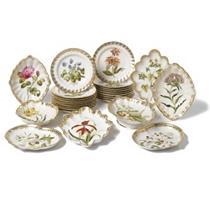
Dessert and cards, anyone??

The Sotheby’s Auction, A Celebration of the English Country House [Sale No 8625], I mentioned in my previous post took place today [April 15, 2010] and you can view the results here.


Sale Total:  3,035,376 USD*   [so far: session 2 is still ongoing] [see below for update]

a few samplings:


Lot 2:  A DERBY PORCELAIN BOTANICAL PART DESSERT SERVICE,  CIRCA 1800
5,000—7,000 USD
Lot Sold.  Hammer Price with Buyer’s Premium:  10,000 USD


 Lot 21:  A FINE GEORGE III INLAID TULIPWOOD AND MAHOGANY CARD TABLE IN THE MANNER OF THOMAS CHIPPENDALE, CIRCA 1775
8,000—12,000 USD
Lot Sold.  Hammer Price with Buyer’s Premium:  43,750 USD

See the Sotheby’s website for the complete catalogue and ongoing results…


********************************


PS:  here are the final results, with one more item: 
 
Sale Total: 3,172,254 USD

LOT 256:  A GEORGE III SILVER LARGE INKSTAND FROM THE WAR OFFICE, ROBERT & SAMUEL HENNELL, LONDON, 1805 

8,000—10,000 USD
Lot Sold.  Hammer Price with Buyer’s Premium:  17,500 USD  

 [Posted by Deb]


Books · Jane Austen · Jane Austen Circle · Regency England · Social Life & Customs

In My Mailbox…

The most recent issue of Jane Austen’s Regency World [March / April 2010, Issue 44], this issue titled “Jane Austen’s Musical World,” brought a delightful surprise – a free cd containing the six works by composers who were working in Bath in the late 18th century [see a list of the selections below], as well as  several articles on the music of Austen’s time:

~ the guest essay by Franz Joseph Hayden describing his visit to Bath in 1794

~ Maggie Lane on Jane Austen, Music Lover? where Ms. Lane posits that “Jane’s attitude toward music seems to have been occasionally hostile, often ambivalent, and only rarely enthusiastic.”

~ David Owen Norris on What was on Jane’s Ipod? on newly discovered music within the Austen family, suggesting that Eliza de Feuillide was an even more considerable pianist than previously thought, as well as the discovery of a hand-written piece possibly composed by Austen herself!

~ Patrick Wood on Thomas Linley, Mozart’s boyhood rival [and subject of one of Gainsborough’s famous paintings]

~ Mike Parker, Tidings of My Harp, “argues that Jane Austen uses the harp in her novels to identify privileged and spoilt women, while knowing little of the mechanics of the instrument herself.”  [think Mary Crawford, the Musgrove sisters and Georgiana Darcy]

~ our very own JASNA-Vermont ‘s Kelly McDonald in A Golden Time, tells of the diaries of Emma Austen-Leigh, wife of Austen’s nephew James Edward Austen-Leigh, which provide valuable insight into London’s music scene during the Regency – here focusing on the Knyvett family of musicians. 

~ Gillian Dooley considers the question of taste in Sense & Sensibility in Matters of Taste and its relationship to moral worth.

~ an interview with Austen scholar Richard Jenkyns – who enlightens us with admitting a special affection for Mansfield Park, thinking the latest BBC adaptation of MP “wins the competition for the worst ever adaptation of any classic novel by a mile”, and wanting most to be like Henry Tilney [but would like to marry Lizzy Bennet]!  [and I add that Jenkyns book A Fine Brush on Ivory: an Appreciation of Jane Austen (2004) is a wonderful read…]

~ articles from JASNA’s Carol Adams on the score for the 1995 P&P; JASA’s Ann Bates on their one-day symposium on Jane and Occupations; reviews of cds, letters, news from 1802, and as always, a great number of fabulous illustrations…

The enclosed cd contains works by:

  • Thomas Linley the Elder : Cantata: Awake my lyre and Invocation: Fly to my aid, O mighty love
  • Henry HarringtonEnchanting Harmonist
  • Thomas Linley the YoungerTo heal the wound a bee had made
  • William Jackson after Thomas ArneWhere the bee sucks
  • William HerschelSonata in D

Subscribe and enjoy!  Jane Austen’s Regency World Magazine

[Posted by Deb]

Jane Austen · News · Regency England · Social Life & Customs

A Jane Austen Weekend in Vermont!

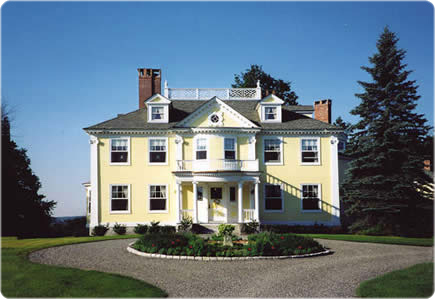
The Governor’s House in Hyde Park will be hosting another Jane Austen event this coming weekend on January 29 31 ~ topic is Sense and Sensibility.

governors inn

[imagine snow! – bring your woolies!]

Jane Austen Weekend: Sense & Sensibility
The Governor’s House in Hyde Park
Friday to Sunday, Jan 29-31 **

http://www.OneHundredMain.com/jane_austen.html
802-888-6888, tollfree 866-800-6888 or info@OneHundredMain.com

 Reservations are required! 

A leisurely weekend of literary-inspired diversions has something for every Jane Austen devoteé. Slip quietly back into Regency England in a beautiful old mansion. Take afternoon tea. Listen to Mozart. Bring your needlework. Share your thoughts at a discussion of Sense & Sensibility and how the movies stand up to the book.  Attend the talk entitled ~ “Making Sense of Jane Austen’s World” * ~  Test your knowledge of Sense & Sensibility and the Regency period and possibly take home a prize. Take a carriage ride or sleigh ride. For the gentleman there are riding and fly fishing as well as lots of more modern diversions if a whole weekend of Jane is not his cup of tea. Join every activity or simply indulge yourself quietly all weekend watching the movies. Dress in whichever century suits you. It’s not Bath, but it is Hyde Park and you’ll love Vermont circa 1800. 

  **************************

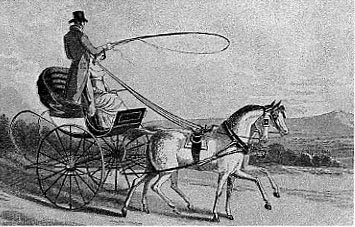
* “Making Sense of Jane Austen’s World” – Inn owner Suzanne Boden will be talking on the architecture, furnishings and other decorative arts of the Regency Period; Deb Barnum of JASNA-Vermont [yours truly] will be talking about travel in the late 18th and early 19th century – the horse and carriage era – and how Austen’s characters travelled in Sense & Sensibility – [and there is a lot of moving about in this book!]


*Or come for just an afternoon or evening and choose from these activities:

  • Informal Talk with Coffee and Dessert, Friday, 8:00 p.m., $14.00
  • Afternoon Tea, Saturday, 3:00 p.m., $20.00
  •  Book Discussion and Dinner, Saturday, 7:00 p.m., $35.00
  •  Jane Austen Quiz and Sunday Brunch, Sunday, 11:30 a.m., $15.00
  • All four activities: $75.00

The Governor’s House in Hyde Park
100 Main St
Hyde Park, VT 05655
http://www.OneHundredMain.com/jane_austen.html
802-888-6888, tollfree 866-800-6888 or info@OneHundredMain.com

**If you cannot make this weekend, make a note on your calendars of the  following dates as well:

series 3: Sense and Sensibility
Friday evening talk: Making Sense of the Regency World

Friday – Sunday, August 13 – 15, 2010
Friday – Sunday, September 10 – 12, 2010
Friday – Sunday, January 7 – 9, 2011

[Posted by Deb]

Jane Austen · Regency England · Social Life & Customs

We HAVE come a long way…

I have been lately reading a document titled A Brief Summary in Plain Language of the Most Important Laws Concerning Women, by Barbara Leigh Smith Bodichon, London, John Chapman, 1854. [click here for this link to the transcribed text] – it, as the title suggests, is a brief summary of the laws in England as of 1854 relating to women, i.e single women, married women, property rights of married women, separation and divorce, widows, illegitimate children and their mothers, etc.  Much of this one knows from just reading Jane Austen and understanding her life and times, but this is worth a look to see the realities all laid out in black and white …

But there was one section I must share, as it tells it all, and is quite funny in its context, so I offer this as your daily chuckle!

 No public employments:

The church and nearly all offices under government are closed to women.  The Post-office affords some little employment to them; but there is no important office which they can hold, with the single exception of that of Sovereign.

and to that I can only add, “Long live the Queen!”

[Posted by Deb]

Austen Literary History & Criticism · Books · Jane Austen · Jane Austen Circle · Regency England · Social Life & Customs

In such good company as this ~ the 2009 AGM!

The 2009 JASNA AGM ~  
Jane Austen’s Brothers and Sisters in the City of Brotherly Love

Philadelphia October 9-11, 2009

 AGM 2009 banner

The best-laid plans of course often go astray – so my hopes to do a close analysis of everything going on the 2009 AGM have been sadly reduced to a mild wish to present a quick summary… so here goes… 

The Eastern Pennsylvania Chapter of JASNA has indeed put on a lovely event – the City of Brotherly Love opened its wide arms for all 550 of us obsessed Janeites, offering great tours, excellent hospitality, lively and elegant evenings, and fabulous sessions filled with all things Jane.  I always upon returning home have the worst time re-entering the 21st century – and this time more than ever.  And time spent with my best-AGM and travel buddy Sara, just adds to the treat … and this year the special treat of JASNA-Vermont friends Kelly and Carol…

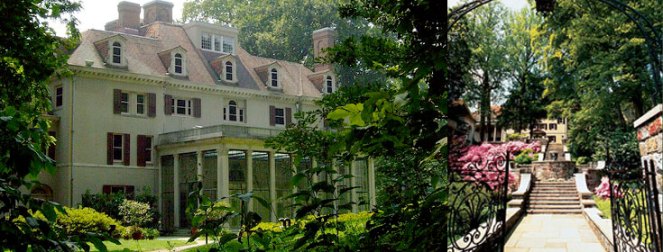
 Day 1:  A tour of Winterthur on the Thursday, one of my favorite places through books only, was a living reality of the beauties of home and garden, what one man with a lot of money was been able to preserve for future generations.  I discovered that Electra Havemeyer Webb, the founder of the Shelburne Museum here in Vermont and one of the first collectors of American art and decorative arts, was the inspiration behind Henry du Pont’s veering away from the popular collecting of European antiques toward acquiring Americana.  It was a lovely day and a wonderful way to start that entry into the late 18th-century the rest of the weekend promised!  [only downside: I missed the talks on writing and Wedgwood.]

winterthur-museum-header


Thursday evening ~ “Elizabeth Garvie in Conversation with Dr. Elisabeth Lenckos” was a special offering this year and began with a short clip of the first proposal scene in the 1980 Pride & Prejudice.  Ms. Garvie, who most everyone knows as Elizabeth Bennet in that adaptation, and now an active patron of the Jane Austen’s House Museum in Chawton, charmed the audience with her engaging and honest responses to Dr. Lenckos’s questions: the realities of filming a television production in the late seventies; how she portrayed a sister with four sister siblings without any of her own [she had a mother with FIVE sisters!]; a few comments on deleted scenes [falling off the log during that outdoor reading of Darcy’s letter…]; how each new P&P adaptation has something to offer each new generation with a reinterpretation of Austen [though she didn’t like the pig in the 2005 movie either!]  She ended the talk with a very humorous reading from one of Austen’s juvenilia pieces, “The Three Sisters.”

ElizabethGarvieElizabethBennett


Day 2:  Had breakfast with several Austen-L / Janeites participants [though I have been only a lurker for years!] – and ended up having a rousing discussion on Georgette Heyer!

An early visit to the Regency Emporium always ends with too many books and items that add to the weight of my suitcase [and those flying rules now are intimidating – even Austen cannot impel me to go over that 50lb limit!] – thankfully Jane Austen Books where I spent most of my time [and money] sends everything media mail after the conference, so I just set up a running account of sorts – almost guilt-free ~ and shopped happily away… The Emporium is great fun to catch up with many of the other regions, Chawton House Library [director Steve Lawrence was there], Jane Austen’s Regency World Magazine [with editor Tim Bullamore], Austentation [two tables filled with regency accessories!] and a few other vendors with Austen-related goodies ~ I went back many times over the course of the conference…

 Off to a talk on tea by Mim Enck from the East Indies Company – and learned how to make the perfect “cuppa”…  and then a talk with visuals by Louise West, from the Jane Austen’s House Museum, on the exciting new addition to Chawton Cottage, the dreams, the funding, and the lovely reality.  The grand opening was in July – if you have been to Chawton, but not since this work was done, put it on your next Austen trip itinerary!

chawton cottage

***************************

Marsha Huff, current JASNA President, welcomed all to the first official gathering, giving over the podium to our very own Vermont member Lorraine Hanaway [who was there for the founding of JASNA in 1978] who introduced the first Plenary speaker, Jan Fergus.  I love Dr. Fergus’s talks  – she inspired a whole new way of looking at Austen in her “The Whinnying of Harpies”? Humor in Jane Austen’s Letters” [Persuasions 27 (2005)] and has continued to regale her audiences with the humor of Austen’s whines ever since!  Today she spoke on “’Rivalry, Treachery between sisters!’ Tensions between Brothers and Sisters in Austen’s Novels” –  and the various ways in which Austen’s fictional siblings either love and support or compete with one another. Some of this thinking is based on the conduct books of the 18th-century, but also the reader must have awareness of the problems that arose between siblings due to the inheritance laws of the time.  Fergus showed by example Austen’s use of humor as a form of criticism between characters and how a sense of humor or lack thereof is an important gauge in understanding Austen’s characters:  i.e Marianne lacks humor and openness, thus her lack of understanding Elinor’s humor causes friction between them; Mr. Woodhouse has no sense of humor, just doesn’t get it!; and finally an emphasis on Elizabeth and Jane and how their different personalities and use of humor causes an undercurrent of almost comic aggression on Elizabeth’s part.  I liked this differing view of Elizabeth, not so perfect but with a tendency toward jealousy…

************************************

One of the problems in the AGM is choosing between the breakout sessions – so much to hear, so many speakers – whichever one you choose leaves you knowing that you are, regardless of how great your chosen session might be, missing so much else.  One can only hope that many of the talks you miss will be in the next issue of Persuasions.  I am a voluminous note-taker – but alas! none of my friends are, so after a full day of events and all things Austen being bandied about, one is lucky to get a few intelligible sentences about a missed session – I know if I didn’t take notes, I would have trouble piecing this all together – and indeed even my notes leave me stupefied occasionally! – so I can only present a few thoughts of the four sessions I did go to, knowing full well I am only scratching the surface of the possibilities…

I went to hear Jocelyn Harris, author of ….Jane Austen’s Art of Memory and A Revolution Almost Beyond Expression:  Jane Austen’s ‘Persusaion’, who spoke on “Jane Austen:  Frances Burney’s Younger Sister”.  Harris’s emphasis is to move away from the biological interpretation of Austen toward an historical one, Austen being very connected to her historical and literary references.  In Persuasion, Austen shows her knowledge of the Navy, Nelson and the Napoleonic Wars, but Harris also shows how the two cancelled chapters of Persuasion are steeped in Frances Burney’s The Wanderer.  I confess to having read several books by and about Burney, but The Wanderer has sat upon my TBR pile for many a year, never opened, largely due to the negative contemporary reviews and all those succeeding.  But Dr. Harris has inspired me to finally pick it up, though she says herself it will be a bit of a “slog” – a perfect winter read perhaps…?

*************************

Then on to Susan Allen Ford’s “’Exactly what a brother should be’? The Failures of Brotherly Love”:  Again, with an emphasis on the contemporary conduct literature [and with a very helpful handout with bibliography and selected paragraphs], Ford reviews the examples of fraternal love in the various novels in the context of the time – issues of inheritance, personality differences, the role of women and the emphasis on them as daughters and mothers rather than sisters, the economic realities of the sister’s lives.  And while she says that “the fraternal role is difficult to define in Austen because the characters as brothers are not often in the foreground”, it was an interesting discussion on their varying degrees of success and failure:  John Dashwood as a brother [yikes!]; the parallels between Edward and Robert Ferrars; Tom Bertram, the prodigal son; the jealousy between Darcy and Wickham, but Darcy’s anxiety and his overriding concern to be a good brother; James Morland as a good brother who wrongly throws his sister into the hands of the Thorpes [yikes again!]; and Edmund, brother / lover who neglects Fanny once Mary appears on the scene [this is when one audience member graciously invited everyone to join the SLEUTH club = “SLap Edmund Upside The Head” – there were many joiners on the spot!] ~ Dr. Ford’s choices? – Edmund the biggest failure [he indeed has NO relationship with his sisters], and most successful? [drum-roll please!] HENRY TILNEY [Mags are you listening??] – and I couldn’t agree more! [love the Henry!] – but an interesting question – who would yours be??

 Then off to dinner with Sara and friends of hers who live in Philadelphia for a few short hours back in the 21st century – we went to an Israeli restaurant right across from the hotel [ Zahav ] and one of the best meals I have had in a good while – even the wine from the Golem Heights was superb!

Up tomorrow – Day 3 and 4…. meanwhile post a comment on your choice for the best and worst brother in Austen…

Fashion & Costume · Jane Austen · News · Regency England · Social Life & Customs

Elegant Arts Society invites you…

New Haven, Connecticut is the scene for the Elegant Arts Society’s Regency Assembly, taking place on Saturday, October 17; further events on Sunday, October 18:

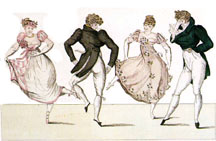
country-dance-pic“Please join the Ladies and Gentlemen of The Elegant Arts Society for a weekend of the delightful dances of the era of Jane Austen, Napoleon, Lords Nelson and Byron, and Beau Brummel.” There will be country dances done in period style, quadrilles, waltzes (including the bouncy sauteuse waltz), and reels, including the lively nine-person Country Bumpkin. “Spare Parts” provides the music.

This is part of a weekend of events that includes a park stroll, and tea-and-games on Sunday. Venues are Trinity Lutheran Church and St. Thomas Episcopal Church, both in New Haven. Advance reservations are strongly recommended, as the Assembly has a limit of sixty attendees.

We include the flyer (in PDF): page 1 and page 2; and a registration form.

As well, for further information, dance-instructor Susan de Guardiola’s website (www.kickery.com) and an email address for the Elegant Arts Society (info at elegantarts dot org).

A dance workshop takes place on the Saturday from 2:00 to 4:30, with the Assembly Ball beginning at 7:30 p.m. Period costume is admired and encouraged, but not required (though they will assist you in proper attire should you desire!); otherwise, dress is formal for the ball, informal (no jeans or T-shirts) for the card party, and casual for the workshop.

[posted by Kelly, thanks to Janeite Bonnie]

Austen Literary History & Criticism · Jane Austen · News · Regency England · Schedule of Events · Social Life & Customs

A Jane Austen Weekend in Vermont!

The Governor’s House in Hyde Park will be hosting another Jane Austen event next weekend on August 14-16 ~ topic is Pride & Prejudice.

governors inn

Jane Austen Weekend: Pride and Prejudice*

The Governor’s House in Hyde Park

Friday to Sunday, Aug. 14 – 16

[also the weekends of  Sept. 11 – 13, 2009 and Jan. 8 – 10, 2010]


http://www.OneHundredMain.com/jane_austen.html

802-888-6888, tollfree 866-800-6888 or info@OneHundredMain.com


Reservations are required!


A leisurely weekend of literary-inspired diversions has something for every Jane Austen devoteé. Slip quietly back into Regency England in a beautiful old mansion. Take afternoon tea. Listen to Mozart. Bring your needlework. Share your thoughts at a discussion of Pride and Prejudice and how the movies stand up to the book. Attend the talk entitled The World of Jane Austen. Test your knowledge of Pride and Prejudice and the Regency period and possibly take home a prize. Take a carriage ride or sleigh ride. For the gentleman there are riding and fly fishing as well as lots of more modern diversions if a whole weekend of Jane is not his cup of tea. Join every activity or simply indulge yourself quietly all weekend watching the movies. Dress in whichever century suits you. It’s not Bath, but it is Hyde Park and you’ll love Vermont circa 1800. 

Note that our very own Kelly McDonald will be speaking on 
“Georgiana Darcy and the ‘Naïve Art’ of Young Ladies”   ~ Looking into the lives of ladies like Georgiana Darcy (Pride & Prejudice), as expressed through their artwork.

mrs-hurst-review-at-dynas-hall [from “Mrs. Hurst Dancing”, illus. by Diana Sperling]

[see Kelly’s blog at Two Teens in the Time of Austen for more information on her talk…]

**************************

*Or come for just an afternoon or evening and choose from these activities:

  • Informal Talk with Coffee and Dessert, Friday, 8:00 p.m., $14.00
  • Afternoon Tea, Saturday, 3:00 p.m., $20.00
  •  Book Discussion and Dinner, Saturday, 7:00 p.m., $35.00
  •  Jane Austen Quiz and Sunday Brunch, Sunday, 11:30 a.m., $15.00
  • All four activities: $75.00

The Governor’s House in Hyde Park

100 Main St

Hyde Park, VT 05655


http://www.OneHundredMain.com/jane_austen.html

802-888-6888, tollfree 866-800-6888 or info@OneHundredMain.com


[Posted by Deb]

Books · Regency England · Women Writers

Some Thoughts on Georgette Heyer’s Heroines

The following is a guest post from one of our JASNA-Vermont members, Janeite Lynne.  After she commented on my post on Georgette Heyer’s ‘Frederica’ , Lynne and I were in touch and discovered that we both seem to be having a parallel summer of reading Heyer! – she sent along the following thoughts on Heyer’s heroines  ~ we welcome comments on YOUR favorite Heyer female lead and why ~ and thank you Lynne for sharing your thoughts!

I recently submitted a comment to Deb’s blog about Georgette Heyer’s novel Frederica.  I noted in my comment that Heyer’s plots were formulaic.    I hope that this isn’t a spoiler, but the lead male and female characters do end the novels by expressing, admitting, or realizing their love for their opposites.  The more Heyer you read, the more you see stock characters: the arrogant but honorable duke; the rake with a good heart; the headstrong heiress; the penniless relation in a noble family, etc.  Yet within these stock shells, Heyer brings out three dimensional characters.  

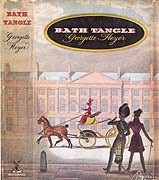
book cover bath tangle

I especially admire Heyer’s strong female leads.  But strong is not always the same.  Serena Spenborough in Bath Tangle is a powerful woman in the traditional sense.  She is rich, beautiful, and she travels in the highest circles of society.  The plot device of Bath Tangle involves her fortune being tied up after her father’s death until she marries.  Even when she is more financially constricted, you are never in doubt that she will always be rich, so this is one form of power.  She also refuses to follow the accepted social conventions that coddle and restrict women of her class.  She is a vigorous walker and refuses chairs in Bath.  She rides on horseback all day in pursuit of a runaway without thought to comfort or propriety.  And she cried off  from a marriage earlier in her life because she believed they would not suit without thinking about how it would affect her social standing.  Serena’s character is a good match for the male lead, the Marquis of Rotherham.  He is the man she rejected years before the novel opens, and the dialogue between them is like swordplay. 

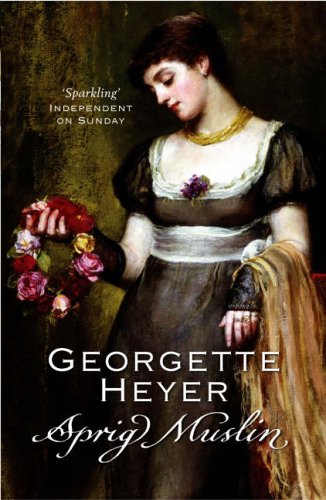
book cover sprig muslin

Still, powerful women in Heyer come in many different packages.  Another of my favorites is Lady Hester Theale in Sprig Muslin.  She is a spinster daughter whose father describes her as insipid and without fortune or “any extraordinary degree of beauty.”  When he tells Hester that she will soon receive a proposal from the extremely eligible Sir Gareth Ludlow, he says: “ I don’t mind owning to you, Hester, that when he broke it to me that it was my permission to address you that he was after, I thought he was either foxed, or I was!” Every member of her family attempts to browbeat her into accepting his proposal, but she refuses.  She reminds me of Melville’s Bartleby in his short story Bartleby the Scrivener.   She simply chooses not to.  Hester is the anti-Serena.  She is not rich or beautiful, and she has no one to support her, yet in her own ethereal way she asserts her independence.  She will not accept a marriage of convenience, even if it would seem to offer her a better life.  She knows what it is to love, and she will not compromise.

 So while there is formula in Heyer, there is also wonderful character development and dialogue.  Best of all, she was such a prolific writer that there are many novels to escape to during this rainy summer!

[by Janeite Lynne, posted by Deb]

Book reviews · Regency England

” Frederica ” ~ ‘Cutting One’s Eye Teeth’* on Georgette Heyer’s Regency Cant

Layout 1Frederica
Georgette Heyer
Sourcebooks Casablanca, 2008
ISBN:  1402214766
[originally published 1965]

I loved this book ~ just so full of humor and the usual fabulous Heyer-created characters – the scattered, talkative heroine, though surely not pretty enough to BE the heroine; the elegant and aloof hero, always “quizzing”; the off-the-wall family of the heroine [who else but to engage the hero?]; the elitist family of the hero appalled at the arrival into their midst of this not quite up-to-snuff relative; and a series of hilarious mishaps and one serious accident to give everyone a chance to show who they really are – a pure Heyer-romp, and one you must add to your to-be-read-pile.

A quick overview:  Frederica, already “on-the-shelf” at about twenty-four and the sole guardian of her younger siblings, entreats a distant cousin, Lord Alverstoke, to take on her sister’s coming-out in London.  The Marquis is the epitome of the Regency Buck, older [in his late thirties], rude and condescending to his sisters and their families, yet bored with his fashionable lifestyle.  When Frederica appears on the scene, he is in no way inclined to help this unheard of “cousin” with her beautiful sister and two out-of-control brothers – but he is taken in regardless and agrees to help her, at first just as an exercise to undercut his sisters, and little knowing that his easy, boring existence will never be the same again.

No full review or spoilers here! – you can see with the opening lines where this story will lead – but Heyer in Frederica gives us one humorous page after another, and the creation of the two young brothers Felix and Jessamy, one of a scientific bent, the other bound for the clergy, gives the reader an interesting diversion on the hero-heroine tale – what IS it about these boys that makes Alverstoke, who barely acknowledges his own nephews and nieces, take such a liking to them and their endless mis-adventures?

What I found so engaging about this book is the abundant collection of Regency “cant” thrown into every sentence whenever possible – Heyer had a field day in this book with her uncivil tongue!  During the Regency it was the fashion for upper-class men to pepper their speech with the language of the lower classes, especially boxing and horse-racing speak as well as that of the Regency underworld.  In Frederica, we have a heroine with three brothers who use this talk constantly – she is adept at it herself, much to Alverstoke’s surprise and delight [“…such cant expressions on the lips of delicately nurtured females are extremely unbecoming,” he says to her with a “gleam in his eye” -p. 177].  Most of the terms you can figure out in context, others you can look up in the Regency Lexicon for starters [though alas! so many are not there!] or if you have Jennifer Kloester’s very helpful Georgette Heyer’s Regency World, or The Regency Companion and see below for other sources and links on cant – otherwise you might be at a loss in reading this book!

I here append a list – you will see that many terms make reference to one’s “stupidity” or “denseness”, but there are many others that apply to all manner of situations – if you can figure them out OUT of context, you are a better “canter” than I! [and with apologies for any duplication – I feel like I am transcribing a foreign language!]

  • Tremendous swell
  • Rake-down
  • Moonling
  • Slow-top
  • Nip-farthing ball
  • Bumble bath
  • A complete hand
  • Ramshackle
  • Rubbishing style
  • Tongue runs like a fiddlestick
  • Cry craven
  • Stow it!
  • Rag–mannered
  • Little bagpipe
  • Shabster
  • Oh botheration!
  • Shag-rag
  • A regular trump
  • Frippery fellow
  • Gammon
  • Bird-witted
  • Pudding-hearts
  • Toadeaters
  • Shatter-brained
  • Pea-goose
  • A set-off
  • Wet-goose
  • Dovecots
  • Paper-skulled
  • You are a baggage
  • Rackety gadabout
  • Give you a pepper
  • Clodpole
  • Stupid little looby
  • Rats in your garrett
  • Complete to a shade
  • Young stiff-ramp
  • Nipperkin
  • Of all the plumpers
  • City-mushroom
  • Dagger-cheap
  • Ape-leader
  • A flat
  • On-dits
  • “coming”
  • Flummery
  • Needle-witted
  • Prattle-box
  • Gabblemongering
  • Purse-pinched
  • Basket-scrambler
  • Young cawker
  • Mill
  • Gudgeon
  • Ninnyhammer
  • Rusticated
  • O’clock
  • Blunt
  • Bag-wig feeling out of curl…cut up stiff
  • Mawworm
  • Moulder
  • Sapskull
  • Chawbacon
  • Cawkers
  • Jobbernoll
  • In the seeds
  • Hip
  • Cockloft
  • Barques of frailty
  • Top-lofty
  • Chancery suit upon the nob
  • Lobcoble
  • Gibble-gabbing
  • Peel eggs
  • Havey-cavey
  • Thratchgallows
  • Bacon-picker
  • Dicked in the nob
  • Bumble broth
  • Nipperkin
  • Mull
  • Poke nose
  • Top sawyer driving
  • Nip-shot
  • Go into whoops
  • Roll of flimsies
  • Jackstraw
  • Game as a pebble
  • Nodcock
  • Ugly as bull-beef
  • Take a damper
  • A knock in the cradle
  • Curst addle-plot
  • Watering pot!

[ *Cutting one’s eye teeth = to become knowing, to understand the world ]

5 full inkwells [out of 5]  ~ Highly recommended ~

Further Reading on Regency Cant:

Further Reading on Frederica:

Posted by Deb