Book reviews · Jane Austen · Regency England · Social Life & Customs

Book Review ~ ‘Walks Through Regency London’ by Louise Allen ~ Book Giveaway!

Book Giveaway! – see end of post for details

I love London – I had the fortune to spend a semester there in 1968 – the late 60s, a crazy invigorating time the likes the world has never seen again. When I started college, men and women were housed on opposite sides of the campus, by 1969, we were sharing dorms! I went to the London School of Economics to study political science, I, an English and sociology major – but there was one ‘political sociology’ course offered and more importantly the opportunity to finally visit the land where my parents were born.  So I ended up scouring The Times every day and learning politcal theory [ugh!] and British legal history [fascinating] and researching race relations in 1968 Britain to fulfill my sociology requirement [wonderful but exhausting and depressing], but I was in London! I had all sorts of plans to meet Prince Charles [we are of an age!], and we did have sort of an encounter [another tale!]; but alas! it was not to be, and surely I am none the worse! – but I did meet my future husband on this abroad program – and thus began my ongoing love affair with England. Today I collect books about London and try to visit when I can [never often enough] and I think I might have finally gotten a handle on the London map and the squares and the history only to discover another alley, nook, or cranny yet to be discovered and studied.

My London collection suffers the fate of most collectors: not enough shelves to house the ones I have and certainly not enough for the potential stacks of London-related books – I started to limit my collecting to children’s books about or set in London, then started to just find materials about the late Georgian – Regency periods – still too many books – I have notebooks filled with bibliographic data and now engage in mad forays into google-books, which substantially helps my shelf problem as well as my pocketbook but not the fact that I love BOOKS!

A friend and I are giving a talk on Jane Austen’s London next month, so I have been pulling a lot of research together, reading some of those books I have on the shelf [and the floor!] and finding the myriad of information online – it is quite daunting really! But in this search I discovered that the Regency Romance author Louise Allen was publishing a short guide titled Walks Through Regency London – certainly a book I had to have… so hot off the presses it arrived, and it is quite the delight!

This is a book of walks, it is not a history of Regency London – for that you can spend an inordinate amount of quality time reading all those resources I mention above. What Ms. Allen has given us is a guide to walking around the prime areas of Regency London. The major drawback for me in trying to write this review is that I am the ultimate armchair traveler here, chained to my sofa [no fainting allowed] in snowbound Vermont trying to imagine trekking around these streets – how I wish I had this guide last February when I last visited Town!  I took the Old Mayfair London Walks [1] tour, though I had been forewarned that it was not a literary-driven outing – What! I bellowed – no Jane Austen? No sneaking around the streets of Sense & Sensibility, looking for Willoughby or Edward, or Mrs. Jennings, or avoiding Fanny Dashwood if we should see her coming? No Jane Austen!? I cried! – “No Jane Austen” he said, clearly proud of eliminating her from the itinerary. It is great and instructive fun seeing the houses and imagining former inhabitants [thank that Blue Plaque program!], the architectural piece, but I wanted the “This is where Byron lived” (#8 St. James’s) and “This is where the Wedgwood had his showrooms”, and “This is where all the dancing took place at Almack’s.”

So how I wish I had this guide last year – it is the reason Louise wrote this book – her extensive Regency era research for her historical novels needed an outlet! And how hard the Regency is to pin down! – What was where when? When did that burn down? When was that demolished? Is that Victorian mansion camouflaging a Regency interior? Is this modern monstrosity on the plot of some famous building that Austen would have known and visited? One can get lost in their Horwood’s [2] trying to figure this all out – and even those maps changed so much over the several years of its editions, it could be a lifetime commitment to make sense of it all…
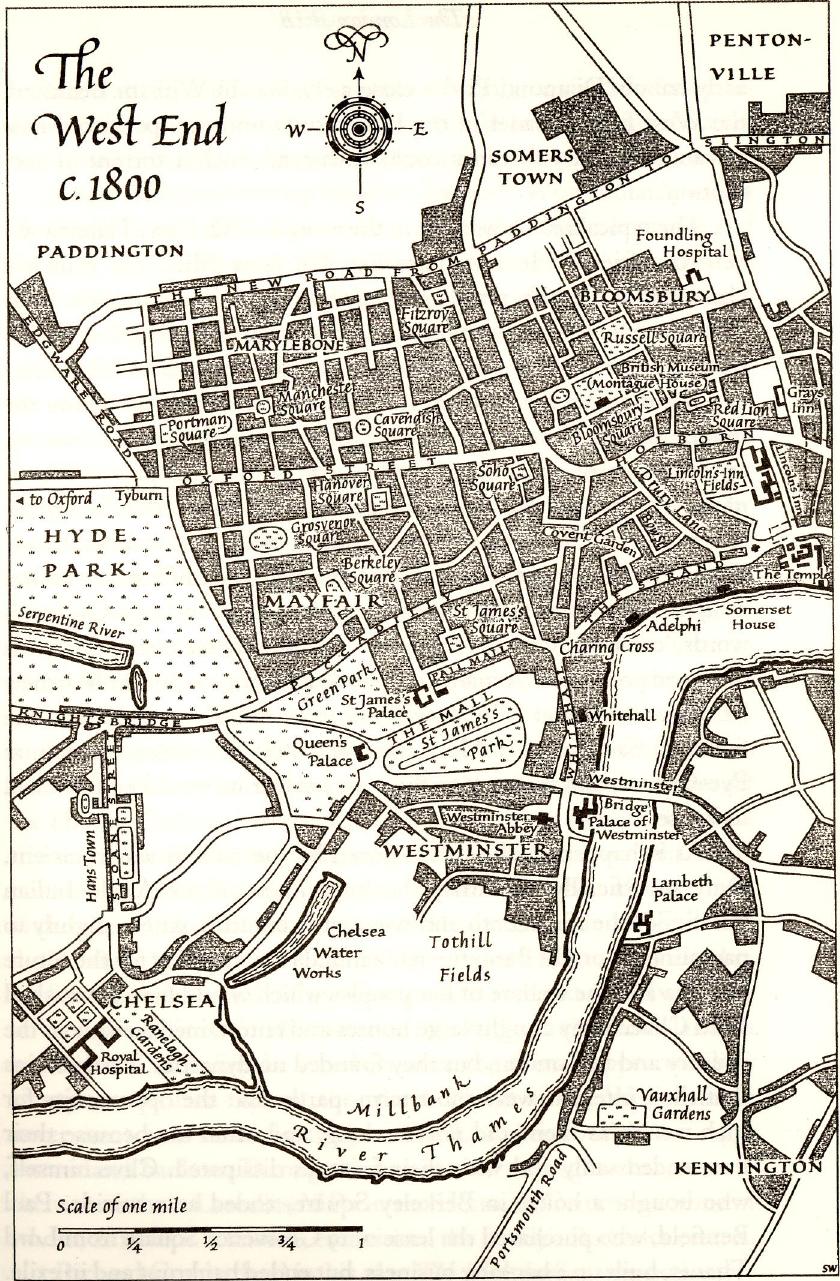
[Map image:  The West End, c.1800. From Christopher Hibbert, London: The Biography of a City, 1969.]

In Walks Through Regency London, Louise tries to do just that, give substance to this very illusive nature of the Regency, as she says “fire, war and redevelopment have destroyed, changed and blurred the physical evidence of [the] past – yet it can still be found, sometimes intact, sometimes only as a ghost.” [Intro, p. i.] Walks is by no means a comprehensive guide – it is factual and anecdotal as you follow the directions on each tour: on this corner, such and such stood, this is where Wellington had his boots custom made; this is where Princess Caroline lived during her trial (# 17, now rebuilt), and Almack’s, now a new modern building at 26-8 King St, and this is where Frances Burney lived, etc … a mere 46 pages, but cram-packed!

I cannot verify all the data and comment on its reliability without doing the physical piece the guide is meant to accompany – one can read and follow along with a map [3], registering the endless details the guide provides, feeling the Regency come to life as you round each corner, filled with the buildings Jane Austen would have strolled by, made purchases in, as she likely took her own notes on where to place her characters in Sense & Sensibility so firmly (and proudly!) in Mayfair.

In her interview, Louise says she had enough material for twenty walks but chooses only ten (there are ten walks of about 2 miles each), and indeed, this is my only quibble [4] with the book!  In its very compact 46 pages of quite small print, it all ends far too soon – I could have kept walking for at least another ten such tours! [easy to say from the sofa] – It is nicely presented with color illustrations from the author’s own print collection of London streets and fashions that set the scene; quotes from a contemporary source, the 1807 Picture of London (by John Feltham I believe, though this is not cited); walking directions; visiting information for public places (and sometimes a website); literary landmarks; shops, shops and more shops (so Regency!) – and add to this and Louise’s offering of the most interesting literary and historical tidbits and delicious gossip of the time and interspersed with commentary on what we see today.

Here are the ten walks:

  1. St. James’s
  2. Hyde Park and Kensington Gardens
  3. Mayfair North
  4. Piccadilly and South Mayfair
  5. Soho North
  6. Soho South to Somerset house
  7. British Museum to Covent Garden
  8. Trafalgar Square to Westminster
  9. The City from Bridewell to Bank
  10. Southwark and the South Bank

And here one short example from Walk 4: Piccadilly and South Mayfair where we happen to find Austen’s publisher John Murray:

Turn into the Royal Arcade, so through into Albemarle Street and turn left and walk down towards Piccadilly. (On Sundays go past the Arcade, turn left into Stafford Street and then left into Albemarle Street).

Virtually every literary ‘name’ of the 19th century must have come to Albemarle Street to visit the publisher John Murray. The firm moved to no. 50 in 1812 and has been there ever since. Amongst the greats, Murray published Jane Austen and Lord Byron, and, at Byron’s wish, burned his diaries after his death.

The street had at least three hotels in the Regency period including the Lothian and the Clarendon. The most famous was Grillon’s opposite John Murray’s. Louis XVIII stayed there in 1812 during the somewhat premature celebrations of Napoleon’s defeat.

Guests could have borrowed books from “Earle’s original French, English, Spanish and Italian circulating library … now moved to No, 47, Albemarle-street, Piccadilly, where all new books in the instructive and entertaining classes of literature are constantly added…”

Retrace your steps, turn left into Stafford Street to Dover Street and turn left.

Footnotes:

1. Note that London Walks  does have a Jane Austen tour in their itinerary – when I was there, the guide was ill, so no Jane Austen for me that week! But I do not see it now on the schedule either – but I highly recommend these London Walks, where you can visit the haunts of Shakespeare and Dickens, Sherlock Holmes, the Inns of Court, Secret or Haunted London, and Greenwich, etc – it is all there for your to discover with their knowledgeable and entertaining guides.

2.  For the most accessible access to the Horwood Map if you don’t have the Regency London A-Z book on your shelves, see the fabulous Regency Encyclopedia – you will need a password:  JAScholar / Academia [case-sensitive] – click on Map Gallery and then Tour Regency London and then go exploring!

3.  Ms. Allen says that “the book has been designed to not require a map. However, a standard tourist pocket map is helpful in locating tube stations and bus routes and in linking up walks. I use The Handy London Map and Guide by Bensons MapGuides. Otherwise all you need are a comfortable pair of shoes and an active imagination!” [p. i.]

4.  quibble #2:  a few spelling snafus: Cruickshank [should have no ‘c’] and Gilray [should have 2 ‘l’ s, though I believe it can also be spelled with one!] are both misspelled, but as Jane herself would likely overlook this, so alas! shall I!

4 1/2 full inkwells out of 5  ~ Highly recommended! … whether you are sitting in a chair or fortunate enough to have this guide as you meander around Town, you will enjoy the journey!

[Image from Nassau Library.org]

Your turn! – if anyone has any questions of Louise, please ask away! – see details for the book giveaway below… You can visit Louise’s website here and find her on Twitter @LouiseRegency

If you would like to order the Regency Walks book, you can do so directly from her website – I can attest to the book being mailed right away, arriving safe and sound and very quickly!

Book Giveaway: Please enter the drawing for a copy of Walks Through Regency London, compliments of ‘Jane Austen in Vermont’, by asking Louise a question or commenting on any of the three posts about this book. Drawing will take place next Wednesday 2 March 2011; comments accepted through 11 p.m. EST March 1st. [Delivery worldwide.]

Copyright @2011, Deb Barnum, at Jane Austen in Vermont.

Jane Austen · Regency England · Social Life & Customs

Travel in Sense & Sensibility ~ Part V ~ Carriages ~ Regency Sports Cars!

We have looked at travel and the various carriages of the Regency Period in four previous posts.  You can re-visit them here:

R. Havell – Roe, Sporting Prints

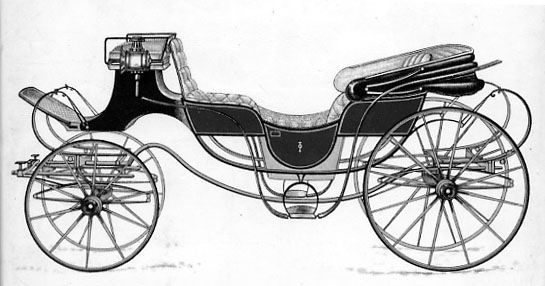
Now the fun part – on to the Regency sports cars! – those carriages that Austen assigns her young men and her rakes, those vehicles that Georgette Heyer made famous in her works, driven by all manner of her Regency bucks, and in many cases by her independent heroines.  We start with the Phaeton, the last of the four-wheeled vehicles but much more stylish than the larger, practical coaches we have looked at previously…    


Phaeton (Georgian Index)


The Phaeton:   termed “deliciously dangerous”

  • from the Greek “to shine” – in Greek mythology, the boy who tried to drive the sun chariot
  • a light 4-wheeled carriage with open sides in front of the seat; the front wheels were usually smaller that the rear
  • sleigh-like single body, for two passengers, luggage below
  • some had a folding top [a calash or callech = folding top] – a fair-weather carriage
  • for pleasure driving, it is owner-driven with no box or postillion
  • usually 1-2 horses or ponies
  • the largest and most varied of all pleasure carriages, the phaeton remained popular until the end of the carriage era
  • often called a “chaise” in England, a “cabriolet” in France
  • variations:  High-Perch Phaeton or “High-Flyer” – fast, sport driving with two horses – the favorite of the Prince Regent, later George IV who had six horses!  –  he used a low Phaeton after his weight increased to such a degree that he could not get into the high carriage!
  • Who in Austen?:  only Miss DeBourgh who has a pony phaeton; Mrs. Gardiner wants “a low phaeton with a nice little pair of ponies”  
Phaeton – NY Coachmakers

Two fashionable ladies in a “high-Perch Phaeton” driving about to see and “be seen”: 


High-Perch Phaeton


************ 

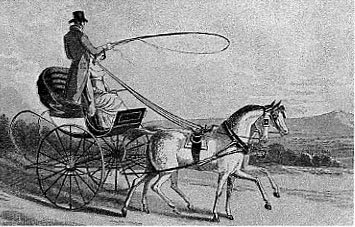
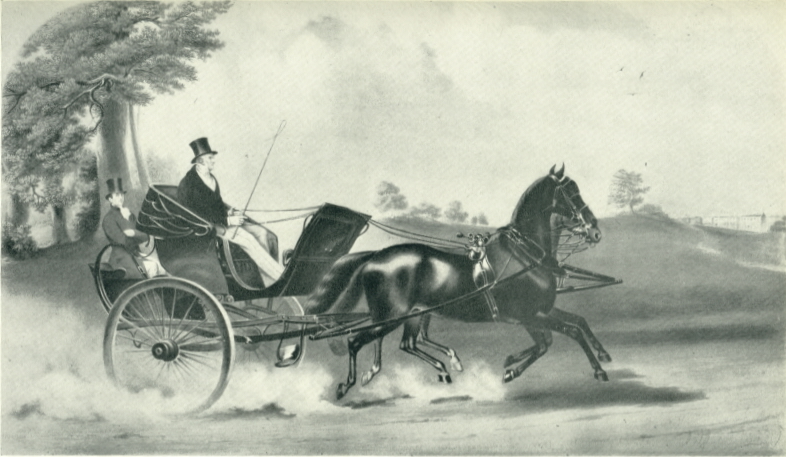
The Curricle: [only English] – the “Regency sports-car”

  • name from the Latin: curriculum = running course, a (race) chariot
  • a two-wheeled vehicle driven by a pair of horses that are perfectly matched, a bar across the back of the horses to carry the pole
  • has a folding hood
  • owner-driven, holds two passengers
  • C-springs – after 1804, equipped with elliptical springs
  • the popular Regency show-off vehicle – for long distances or park rides
  • cost @ 100 pounds
Curricle

A picture of the Marquis of Anglesey:


Curricle (Georgian Index)


In Sense & Sensibility: Willoughby has a curricle though he cannot afford it:

-Willoughby on Colonel Brandon:  “He has found fault with the hanging of my curricle…”     

-Narrator on the carriage drives:  …they might procure a tolerable composure of mind by driving about the country.  The carriages were then ordered.  Willoughby’s was first, and Marianne never looked happier that when she got into it.  He drove through the park very fast, and they were soon out of sight; and nothing more of them was seen till their return, which did not happen till after the return of the rest.   “Did not you know,” said Willoughby, “that we had been out in my curricle?” 
[Willoughby to Mrs. Jennings]

-then later, Marianne explains the impropriety to Elinor: “We went in an open carriage, it was impossible to have any other companion.”

Who else in Austen? – Mr. Darcy, Henry Tilney [sigh!], Charles Musgrove, Walter Elliot, Mr. Rushworth, and Charles Hayter; and Austen’s brother Henry Austen [see Letter 84, where Henry drives Austen back to London in his “Curricle”].


********** 

The Gig:  

“Many young men who had chambers in the Temple made a very good appearance in the first circles and drove about town in very knowing gigs” 


Chair back gig


  • Similar to the curricle, but more popular and economical; women could easily drive
  • Two-wheeled, but pulled by one horse, two passengers, owner-driven
  • Better suspension, easy to turn, more sophisticated than a chaise [often called a “one-horse chaise”]
  • Had various names and modifications:  the Dennet, Tilbury, Stanhope
  • one common variation:   a single seat behind the box for a groom, or a tiger
  • cost:  about 58 pounds
  • Who else in Austen?  the Crofts in Persuasion– they offer Anne a ride in their 2-passenger seat; Mr. Collins, Sir Edward Denham in Sanditon  
Persuasion – Croft’s gig (Jane Austen’s World)

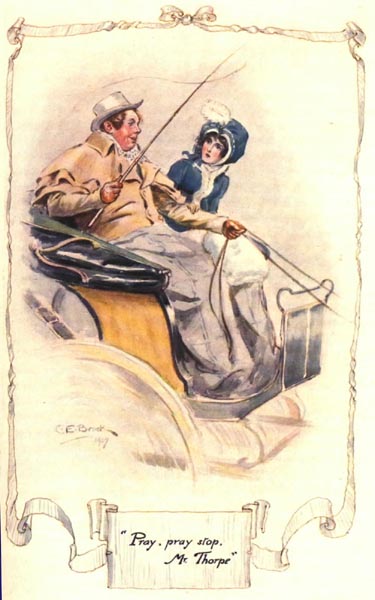
-and of course, John Thorpe in Northanger Abbey, the most horse-obsessed character in all of English literature!

Brock – NA (Molland’s)

“I defy any man in England to make my horse go less than ten miles an hour in harness… look at his forehead; look at this loins; only see how he moves; that horse cannot go less than ten miles an hour: tie his legs and he will get on.  What do you think of my gig, Miss Morland? a neat one, is not it?  Well hung; town built; I have not had it a month… curricle hung you see; seat, trunk, sword-case, splashing boards, lamps, silver moulding, all you see complete; the iron-work as good as new, or better… etc. on and on! 

-And the Narrator who must have her say, so we know just how Catherine and the Narrator feel about John Thorpe [and Henry Tilney!]:

“A very short trial convinced her that a curricle was the prettiest equipage in the world…But the merit of the curricle did not all belong to the horses; – Henry drove so well, – so quietly – without making any disturbance, without parading to her, or swearing at them; so different from the only gentleman-coachman whom it was in her power to compare him with! – To be driven by him, next to being dancing with him, was certainly the greatest happiness in the world.”

[ Brock, Northanger Abbey (Molland’s)]
————————–
In Sense & Sensibility, there are many instances where Austen does not name the specific carriage:  we can assume by the context that it was a post-chaise or owner-owned chaise:

-the Narrator on Colonel Brandon when he leaves to get Mrs. Dashwood: “The horses arrived before they were expected, and Colonel Brandon…hurried into the carriage; it was then about twelve o’clock” [he returns the following day sometime after 8pm]

When Willoughby travels from London to Cleveland, a distance of about 124 miles, he is in a chaise with four horses, it takes 12 hours, 8am – 8pm, a trip that would normally take two days:

-the Narrator on Elinor:  …she heard a carriage driving up to the house … the flaring lamps of a carriage were immediately in view.  By their uncertain light she thought she could discern it to be drawn by four horses; and this, while it told the excess of her poor mother’s alarm, gave some explanation to such unexpected rapidity.  – [and she runs downstairs to find it is Willoughby…!


******

Other Carriage terms:  not all are found in Austen 

  • Hackney = for hire, often discarded carriages of the wealthy
  • Dog Cart = a gig with a ventilated locker for dogs; for 4 people, 2 behind the driver seat back-to-back
  • Sulky = driver-only – one passenger, one horse
  • Tandem = a two-wheeled carriage drawn by 2 horses one in front of the other – Sidney Parker in Sanditon 
  • Whiskey or Chair – an early chaise; a light 2-wheeled vehicle without a top, in The Watsons 
  • Sedan-Chairs  – a seat in a box with 2 poles 10-12 ft long, carried by two men. In efforts to lessen the crowded streets in London, but by 1821 there were only a half dozen public sedans, by 1830 there were none.

  • “Britzochka” = German origin, most common of all carriages, for traveling [ called a “Brisker” or “Briskey”]
  • “Droitzeschka” = “Drosky” – Russian origin, low to ground for “the aged, languid, nervous persons and children”

 And finally, what did Jane Austen have? 

  • At Chawton she had a donkey cart
  • Henry Austen had a curricle and a barouche:  

“The Driving about, the Carriage [being] open, was very pleasant. – I liked my solitary elegance very much, & was ready to laugh all the time, at my being where I was. – I could not but feel that I had naturally small right to be parading about London in a Barouche.”  [Ltr. 85, 24 May 1813, p. 213-14] 

I love to think of Austen “parading” around London and enjoying her “solitary elegance” and laughing all the while! – one of my favorite passages from her letters…

Final post:  a Carriages Bibliography ~ Stay tuned!

Copyright @ 2011, Deb Barnum, of Jane Austen in Vermont

Austen Literary History & Criticism · Books · Jane Austen · Jane Austen Popular Culture · Regency England · Social Life & Customs

In Praise of Margaret Sullivan (and Her Henry Tilney)

A few words of praise for Margaret Sullivan, famed “Editrix” of Austenblog, developer of Molland’s, personal blogger at Tilney and Trap Doors, and authoress: 

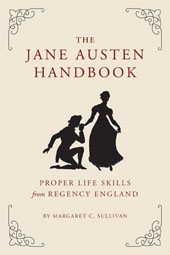
Her Jane Austen Handbook, first published in 2007 will be re-released in early March 2011 by Quirk Books.  Note that this is not a new edition; it has the same content with just a change in the subtitle from “A Sensible Yet Elegant Guide to Her World” to “Proper Life Skills from Regency England”.  There is a new cover design and a change from turquoise to a cocoa brown for text and illustations.  The illustrations by Kathryn Rathke are a delight.  All text and references are exactly the same, alerting you to such important concerns as:

  • How to Become an Accomplished Lady
  • How to Identify the Quality
  • How to Write a Letter [with directions on the proper fold]
  • How to Become Known as a Valuable Neighbor
  • How to Marry Off Your Daughter
  • How to Decline an Unwanted Proposal of Marriage
  • How to Behave at a Dinner Party 
  • How to Get Rid of Unwanted Guests

Certainly all necessary rules of etiquette we could all still learn and apply today ~ I for one do lament the loss of the letter-writing culture…!

An Appendix includes a short biography of Austen, a page summary of the novels and other works, and a few words on the film adaptations.  A short list of Resources, a very select Bibliography, a Glossary and index round it all out. 

If you didn’t get this book the first time around, don’t miss out again – it is a  must-have addition to your Austen collection – fun and informative [card games, dances, fashion, needlework, all manner of Regency social life and customs!], and filled with Sullivan’s well-known wit:

It is a truth universally acknowledged that in this world there are haves and have-nots.  Some are born to marry a man with ten thousand a year and have jewels and pin money second to none; some are destined to teach that woman’s children and be patronized by her servants.  In the sad event that you are forced to seek employment, here are a few acceptable ways for you to do so.  All are ill-paid and unpleasant in their own way and should be avoided if at all possible.   [She then outlines the following]

  •  Governess
  • Schoolteacher
  • Companion
  • Lady’s Maid
  • Authoress

[The Jane Austen Handbook, p. 87-88] 

Fortunately for us, Sullivan chose the latter, perhaps because, as her dedication so lovingly conveys, “For my mother, who let me read everything.”  We should all follow such sage advice!

**********************

I am late to the table one this one, but here ‘s another shout-out about Sullivan’s also recently re-published novella There Must Be Murder, a sequel to Northanger Abbey – as noted in her article in the latest JASNA News (Vol. 26, No. 3, Winter 2010), it is available from Librifiles.com  as a hardcopy [also at Amazon] and as a free ebook from Girlebooks.com  .  [It is also available on the Jane Austen Centre website where it was first published.]

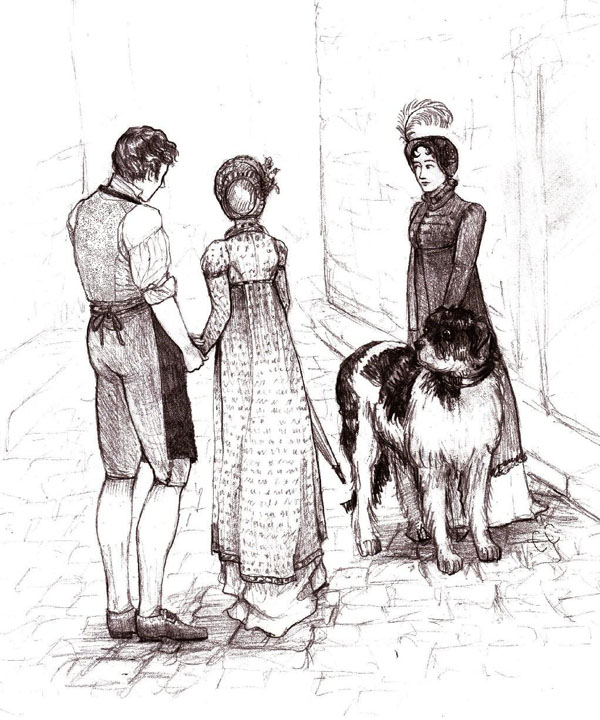
So I added this to my Kindle and have had the most enjoyable time with Henry and Catherine as they return to Bath shortly after their marriage – filled with Tilney’s expected wit and humor, Catherine’s laughing at her own efforts to not be temped into gothic thinking, an almost romantic General Tilney pursuing a lovely Bath widow, a possible rival for Henry’s attentions, a fair bit about Henry’s newfoundland much appreciated by dog-lovers everywhere, and a possible murder indeed [no spoilers here!].  The illustrations by Cassandra Chouinard are a perfect accompaniment to this fun read – who can resist a few hours with Henry Tilney! ~  highly recommended.

[illustration from the Jane Austen Center website]

 Further reading:

Copyright @2011, by Deb Barnum, at Jane Austen in Vermont

Jane Austen · Jane Austen Circle · Regency England · Social Life & Customs

Thomas Lawrence Visits Yale in New Haven

The “Thomas Lawrence: Regency Power and Brilliance”  exhibit that closed in late January at the National Portrait Gallery in London, will be opening on February 24 [through June 5, 2011] at the Yale Center for British Art in New Haven, CT.  For those of you, like me, who were unable to catch this in London, now is your chance – not to be missed, certainly for any Jane Austen fan in good standing!  – [and thankfully, not too far from me! – I will post my thoughts after seeing it…]

Sarah Barrett Moulton - Pinkie

This is from the Yale Center for British Art website:

Thomas Lawrence: Regency Power and Brilliance will be the first substantial examination of the artist in the United States since 1993 and the first Lawrence exhibition in the United Kingdom since 1979. It will include the artist’s greatest paintings and drawings alongside lesser-known works in order to provide a fresh understanding of Lawrence and his career. The show will also contrast his approach to sitters according to age and gender; juxtapose his public identity with the private world of the artist’s studio; explore Lawrence’s technical innovations as a draftsman and painter; and place him within the broader contexts of the aesthetic debates, networks of patronage, and international politics of his day. The exhibition will bring visitors “behind the scenes” to explore Lawrence’s working methods and the importance of his studio as a workspace, a social space in London, and a space for the display of Lawrence’s own works and his stellar collection of Old Master drawings.

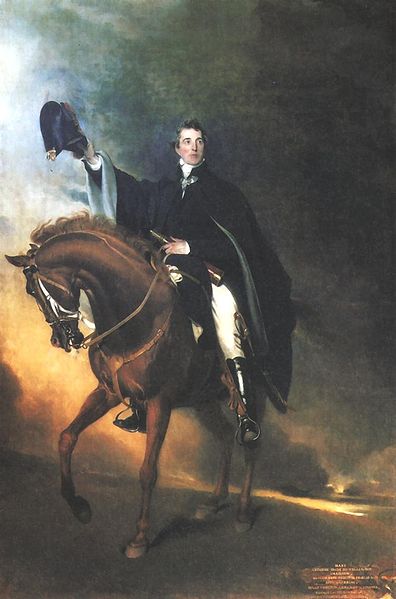
Spanning the scope of the artist’s career, the exhibition closely examines the Regency period, a time defined by the political and cultural role played by George IV (1762-1830), who was Prince of Wales between 1789 and 1811, and then, successively, Prince Regent (during his father’s illness between 1811 and 1820), and crowned king after his father’s death. The exhibition begins with a restaging of Lawrence’s first definitive Royal Academy success in 1790, where he showed Elizabeth Farren (Metropolitan Museum of Art) and Queen Charlotte (National Gallery of Art, London). A display of works from Lawrence’s controversial exhibitions from the 1790s will follow, including Arthur Atherley (Los Angeles County Museum of Art), which challenged traditional notions of masculinity. The next section will examine the period from 1805 to 1815, during which the artist experienced financial and emotional turmoil and created his most innovative and experimental group portraits and half-history portraits. Lawrence was sent abroad by the Prince Regent to paint the victors of Waterloo between 1818 and 1820, and a section of the exhibition will feature portraits such as Arthur Wellesley, 1st Duke of Wellington (private collection) and Charles William (Vane-)Stewart, later 3rd Marquess of Londonderry (National Portrait Gallery, London), as well as the innovative chalk-on-canvas drawings he made during his travels. 

Duke of Wellingon on Copenhagen

Another display will include some of his best works on paper, ranging from friendship portraits and commissioned portrait drawings to sketches of historical events, such as the treason trial of John Thelwall (National Portrait Gallery, London). Sparked by a drawing of his studio in 1824 (Yale Center for British Art), the last section of the exhibition will explore new paradigms of masculinity and femininity in Lawrence’s later work and also examine the importance of his portraits of children. The section proves definitively that Lawrence continued to challenge himself as an artist even in the last decade of his career. This display will also highlight an important portrait of the young Julia Peel (private collection), which will be shown exclusively in New Haven. Yale Center for British Art Director, Amy Meyers, asserts, “A critic once wrote of Lawrence’s work that ‘The magic of his art is thrown around the representations of the most ordinary things.’ We are thrilled to be able to share this magic with visitors drawn to the show by the beauty of Lawrence’s paintings, by interest in the period of the Napoleonic wars, and by the changing representations of gender roles in Lawrence’s work.” 

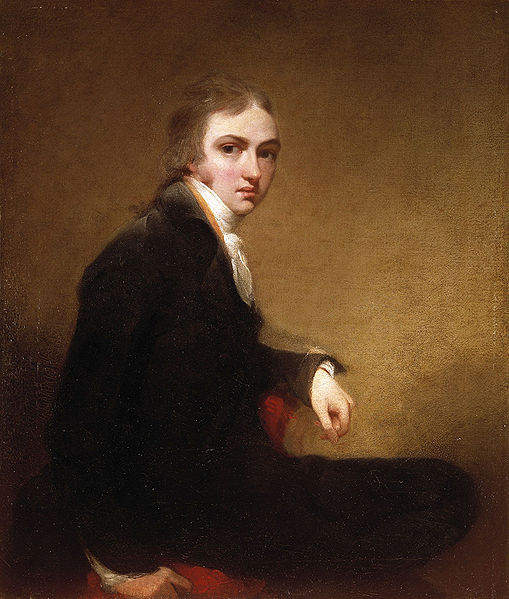
Beginning as a child prodigy working in pastels, Thomas Lawrence succeeded Sir Joshua Reynolds as Britain’s greatest portrait painter. While lacking in formal and artistic education, he rose to the highest ranks of his profession and was appointed President of the Royal Academy in 1820. With the temperament and flair to capture the glamour of the age, Lawrence created the image of Regency high society with dazzling brushwork and innovative use of color. He became not only the most popular chronicler of fashionable London society, but also one of the most lauded (and imitated) portraitists in Europe. Under his brush, portraits emerged that were both startlingly modern, yet grounded in historical forms. They owed their popularity to the fact that Lawrence represented his sitter’s idealized social persona, and also attempted to capture in paint a visual representation of their inner life and character. 

Thomas Lawrence: Regency Power and Brilliance has been curated by A. Cassandra Albinson, Associate Curator of Paintings and Sculpture at the Yale Center for British Art, and Peter Funnell, 19th Century Curator and Head of Research Programmes, and Lucy Peltz, 18th Century Curator, at the National Portrait Gallery, London. 

The exhibition is accompanied by a fully illustrated book, edited by A. Cassandra Albinson, Peter Funnell, and Lucy Peltz, with essays by Albinson, Funnell, and Marcia Pointon. The book has been published by the Yale Center for British Art in association with Yale University Press and will be available for purchase in the museum shop.

Self-Portrait - Thomas Lawrence

 [Images from Wiki-Commons]

Further reading:

Copyright @2011 Deb Barnum of Jane Austen in Vermont

Jane Austen · Social Life & Customs

Travel in Sense & Sensibility ~ Part IV ~ Carriages, cont’d

Finally, the next part of my post on travel and carriages in Sense & Sensibility!

You can re-visit the first three posts here:

***********************

Now on to the specific types of coaches of the Regency era, the great coaching age of travel, pre-steam, pre-railroad, an age where the roads saw improvement, carriages became more comfortable [slightly, that is!], and the higher classes traveled more easily from place to place – it is good to remember that the majority of people still traveled by foot.   Austen knew her carriages and is often very specific in what type of carriage a character has – as stated before, we know in just learning a little about the costs of carriages, the cost of horses and their upkeep, that Willoughby in Sense & Sensibility is living far beyond his means by owning a curricle, that his giving a horse [Queen Mab] to Marianne is outrageous, not only in its impropriety but also its lack of fiscal responsibility.  Austen does this throughout her works, and even if she does not specifically tell us the type of carriage or the exact income, we understand, as the readers of her day would have understood, another piece of the puzzle about any given character.

The last post ended with the generic term “Coach” – so now some specific types:

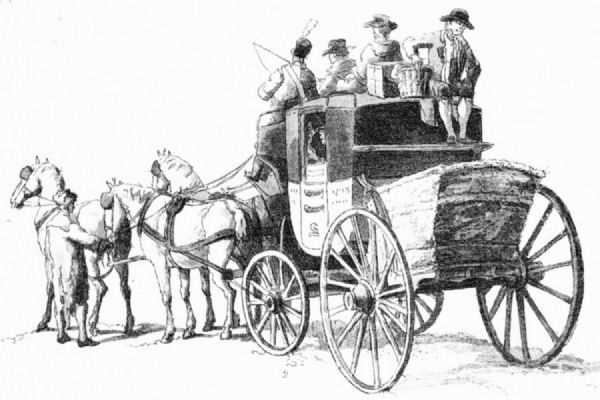
The Stage Coach:

  • very colorful
  • four passengers inside, up to eight outside
  • stopped at various pre-appointed stages, usually every 10 miles to pick up / drop-off passengers and to change horses
Stage Coach


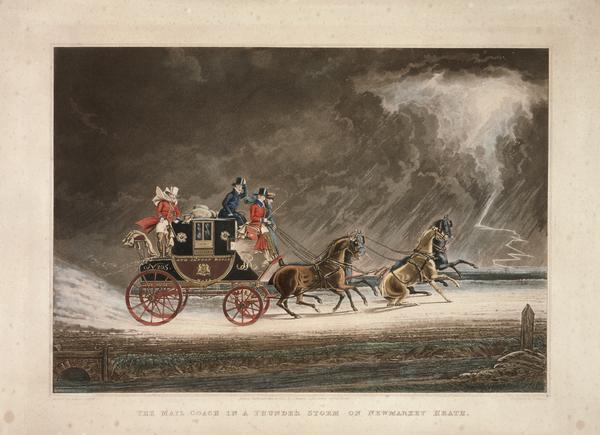
The Royal Mail Coach:  [after 1784] – there were 50 mail coaches in 1784, 700 in 1835

  • set paint color:  red wheels, maroon doors and lower body; black upper body; royal arms on each door
  • speed and excellence of Royal Mail service, usually six horses – faster because there were no tolls
  • held four inside passengers, and up to eight outside
  • Guard – a 3′ tin horn
  • cost about 1 penny / mile more than the stage coach but safer for passengers because of the guards
Royal Mail Coach


Private Coaches: 

  • simple color schemes with coat of arms on doors and boot
  • a fine carriage with owner livery, postilions, etc
  • expense:  coachman, postilions, under coachman, stable boys, footmen
  • not common because of the expense:  taxes on carriages and horses; even the wealthy often borrowed carriages and rented horses
  • cost in 1796 @ 130 pounds
  • in Sense & Sensibility:  Elinor and Mrs. Jennings visit Kensington Gardens by carriage, where Elinor connects with Miss Steele:   Miss Steele to Elinor:   “Mrs. Richardson was come in her coach to take one of us to Kensington Gardens”; and “He [Mr. Richardson] makes a monstrous deal of money, and they keep their own coach.”
  • who else:  the Bennet’s, the Musgroves [both large families]
Town Coach


Chaise:

  • an enclosed 4-wheel carriage, almost 1/2 the size of a full coach, seating up to three people, making this very tight, with one forward-facing seat, and often with a pull-out seat to add 2 more people
  • no coach box, driven by a postilion [rider mounted on one of the horses, the rear or left horse], usually two horses
  • cost @ 93 pounds in 1801 
  • In Sense & Sensibility:  Mrs. Jennings, the John Dashwoods; Robert Ferrars
  • a note on Mrs. Jennings’s carriages:  she has a chaise and a chariot, but did she have two carriages or as Chapman suggests, was Austen being uncharacteristically forgetful?  

“It will only be sending Betty by the coach and I hope I can afford that, we three will be able to go very well in my chaise.” 

Narrator:  Thomas seeing Mr. Ferrars and Lucy Steele ~“They was stopping in a chaise at the door of the New London Inn.”

  • who else?:  Mr. Bingley [ chaise & four]; General Tilney [a chaise & four]; Lady Catherine; Lady Bertram; Sir William Lucas;  and Mr. Gardiner

The Post Chaise = a chaise used with rented horses; always yellow; overlap with “hack-chaise”;

  • often a larger chaise with four horses with postilions on both lead horses and left near horse; you had more control over your trip rather than on the Stage Coach
  • a traveler who owned a carriage and horses would travel the first stage with them and then send them home with servants and rent horses the rest of the way

In Sense & Sensibility:  when Mrs. Jennings asks the Miss Steeles on their arrival in London: “Well my dear, how did you travel?”   Miss Steele to Mrs. Jennings:  “Not on the stage I assure you,” replied Miss Steele with quick exultation; “we came by post all the way and had a very smart beau to attend us.  Mr. Davies was coming to town, and we thought we would join him in a post chaise; and he behaved very genteelly, and paid ten or twelve shillings more than we did.”


Post Chaise


Chariothas the same body as the chaise, the difference is the addition of a coach-box and driver.

  • driver’s box, with four horses, four passengers, two seats facing forward like an automobile 
  • a classy vehicle, lighter than a coach, comfortable, speedy 
  • In Sense & Sensibility:  Mrs. Jennings, John Dashwoods:  Narrator on Fanny Dashwood:  …the great inconvenience of sending her carriage for the Miss Dashwoods [we know that the John Dashwoods have a chariot]
  • who else?:  Mrs. Rushworth


Barouche:
 

  • member of the coach family, a medium-sized, heavy 4-wheeled coach with two seats facing each other for four people with a folding top that covers only the rear seat
  • four horses with a driver box on outside for two people
  • aristocratic vehicle, for dress occasions, mainly used in town 
  • In Sense & Sensibility:  Palmers [her second carriage], though the narrator on Fanny about Edward:  It would have quieted her ambition to see him driving a barouche.  But Edward had no turn for great men or barouches. 
  • others:  Lady Dalrymple, Henry Crawford 


Barouche


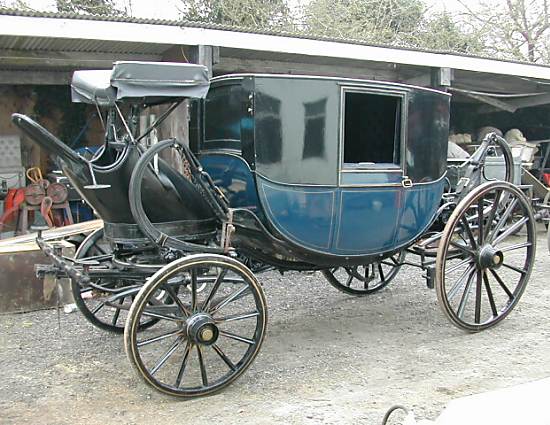
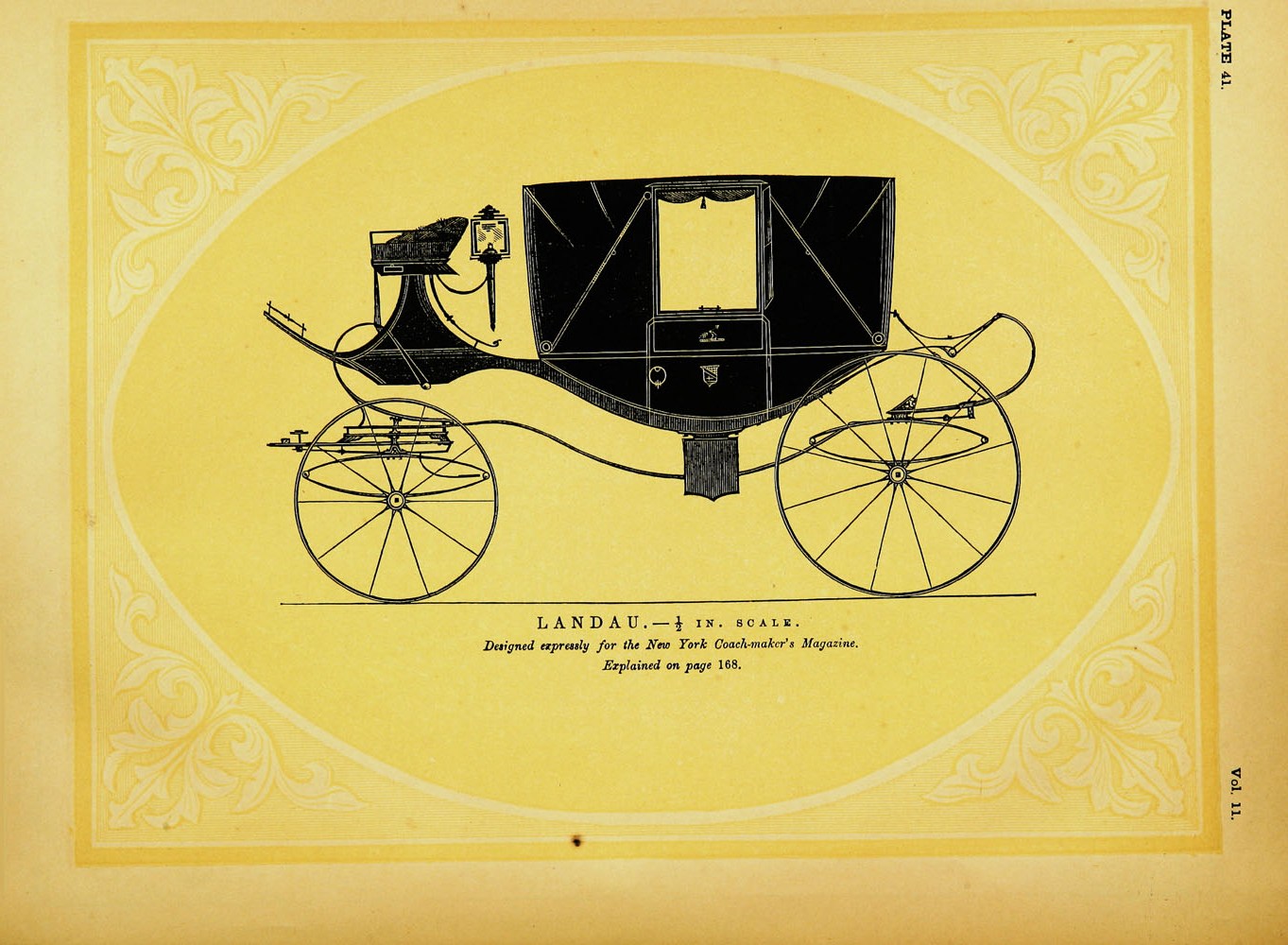
Landau [coach family]: 

  • a four-wheeled light carriage, two seats facing each other
  • two or four horses
  • high driver’s seat
  • two soft folding tops that close and lock in the middle [often made of leather], a low door
  • expensive to build and maintain:  cost @ 185 pounds, but it was popular due to its versatility in all weathers
  • In Sense & Sensibility: no one


Landau

Landaulette: 

  • landau for two passengers only; cost @ 156 pounds
  • In Sense & Sensibility:  no one
  • who else?  Anne Elliot Wentworth in Persuasion
Landaulette


Barouche-Landau:  “approach in awe”!

  • features of both, but not very popular 
  • a high driving seat
  • a rumble for two servants 
  • in Austen:  the only specific carriage named in Emma – Mrs. Elton’s sister, Mrs. Suckling
  • Chapman in the 1954 edition of Minor Works  finally supplies the illusive illustration [from Beau Monde, 1806] 
Barouche-Landau

Up next:  the sports cars of the Regency Period… [i.e Willoughby and friends!]

Copyright @2011, Deb Barnum, Jane Austen in Vermont

Austen Literary History & Criticism · Jane Austen · Regency England · Social Life & Customs

The ‘Sense & Sensibility’ Bicentenary Celebration

Maria Grazia at My Jane Austen Book Club is hosting a year-long celebration of the 200 year anniversary of the publication of Sense & Sensibility. Maria has invited twelve other Austen bloggers [including yours truly] to each post an article on Austen’s first published work.  Here is Maria’s invitation and the schedule:

October 2011 will mark the bicentenary of the publication of Jane Austen’s Sense and Sensibility. This is why ‘My Jane Austen Book Club’ wants to  dedicate a special space to the celebration and discussion of Austen’s first achievement as a published writer. I have invited some expert Janeites to contribute to the discussion and they have kindly and generously accepted . Katherine at November’s Autumn  and Gaskell Blog contributed the cute button on the left. Each month one of them will deal with a theme, a character, a topic somehow linked to Sense and Sensibility. The discussion will be open to you all with your comments, questions and suggestions. There will be a monthly giveaway and you will have the chance to win a book or DVD connected to our celebration. Here’s the schedule of our  virtual meetings. Take notes.

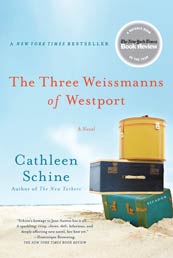
 1.  January“Marriage & Money in Sense & Sensibility” by Jennifer Becton – this article is now live on Maria’s site – If you comment  and leave your e-mail address on this first post or/and on the announcement of the Grand Event for Sense and Sensibility Bicentenary, you’ll be entered in the giveaway of The Three Weissmans of Westport by Cathleen Shine. This novel,  published by Picador,  is a new modern re-telling of Jane Austen’s Sense and Sensibility – this giveaway is for US readers only  but there will be others open worldwide. It ends 31st January.

  Stay tuned for:

2.  February – “Sense and Sensibility on Screen” by Alexa Adams

3.  March – “Inheritance Laws & Their Consequences in Sense & Sensibility” by C. Allyn Pierson

4.  April – “Lost in Sense & Sensibility” by Beth Patillo

5.  May – “Willoughby: A Rogue on Trial” by Jane Odiwe

6.  June – “Secrets in Sense & Sensibility” by Deb Barnum of Jane Austen in Vermont

7.  July – “Interview with Lucy Steele” by Laurie Viera Rigler  

8.  August – “Settling for the Compromise Marriage” by Regina Jeffers

9.  September – “The Origins of S&S: Richardson, Jane Austen, Elinor & Mariannne”  by Lynn Shepherd                           

10.  October – “Sense & Sensibility Fanfiction” by Meredith of Austenesque Reviews 

11. November – “Minor Characters in Sense & Sensibility” by Vic of Jane Austen’s World

12.  December – “Marianne Dashwood: A Passion for Dead Leaves & Other Sensibilities”  by Laurel Ann of Austenprose  

********************

A  year chock full of  S&S insights! – so check back to read these sure-to-be-interesting posts on S&S and a chance each month to win the latest giveaway.

There are also other Sense & Sensibility celebrations and blog tours – I will post on these another day – in the meantime, check out Jennifer Becton’s post on  “Marriage & Money in Sense & Sensibility”  at My Jane Austen Book Club.  With hearty thanks to Maria for setting this up!

Copyright @ 2011, Deb Barnum at Jane Austen in Vermont.

Books · Jane Austen Circle · Regency England · Social Life & Customs

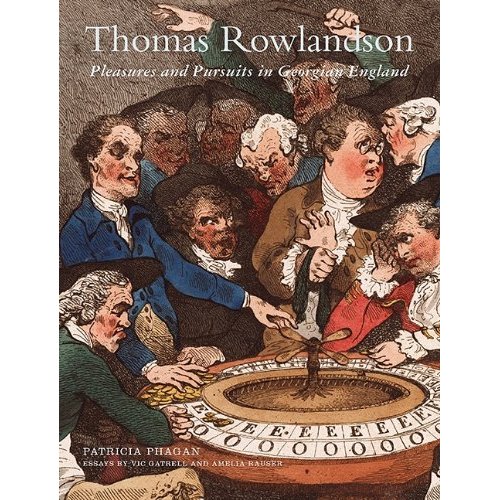
Book thoughts ~ ‘Thomas Rowlandson: Pleasures and Pursuits in Georgian England’

On my TBO* list:  with a release date of January 16, 2011 [as per Amazon; publisher release date is February 2011]

Thomas Rowlandson: Pleasures and Pursuits in Georgian England, by Patricia Phagan; essays by Vic Gatrell and Amelia Rauser.  Published by D Giles LTD in association with the Frances Lehman Loeb Art Center, Vassar College, Poughkeepsie, NY, 2011.

This illustrated volume which presents 72 watercolors, drawings, prints and illustrated books to reassess the legacy of this renowned 18th-century satirist. Accompanies the first major exhibition of Rowlandson’s work in North America for twenty years, showing at the Mary and Leigh Block Museum of Art, Northwestern University, Evanston, Illinois, Jan 14, 2011 – March 13, 2011 and the Frances Lehman Loeb Art Center, Vassar College, Poughkeepsie, April 8, 2011 – June 11, 2011 [Click here for information on the exhibit]  

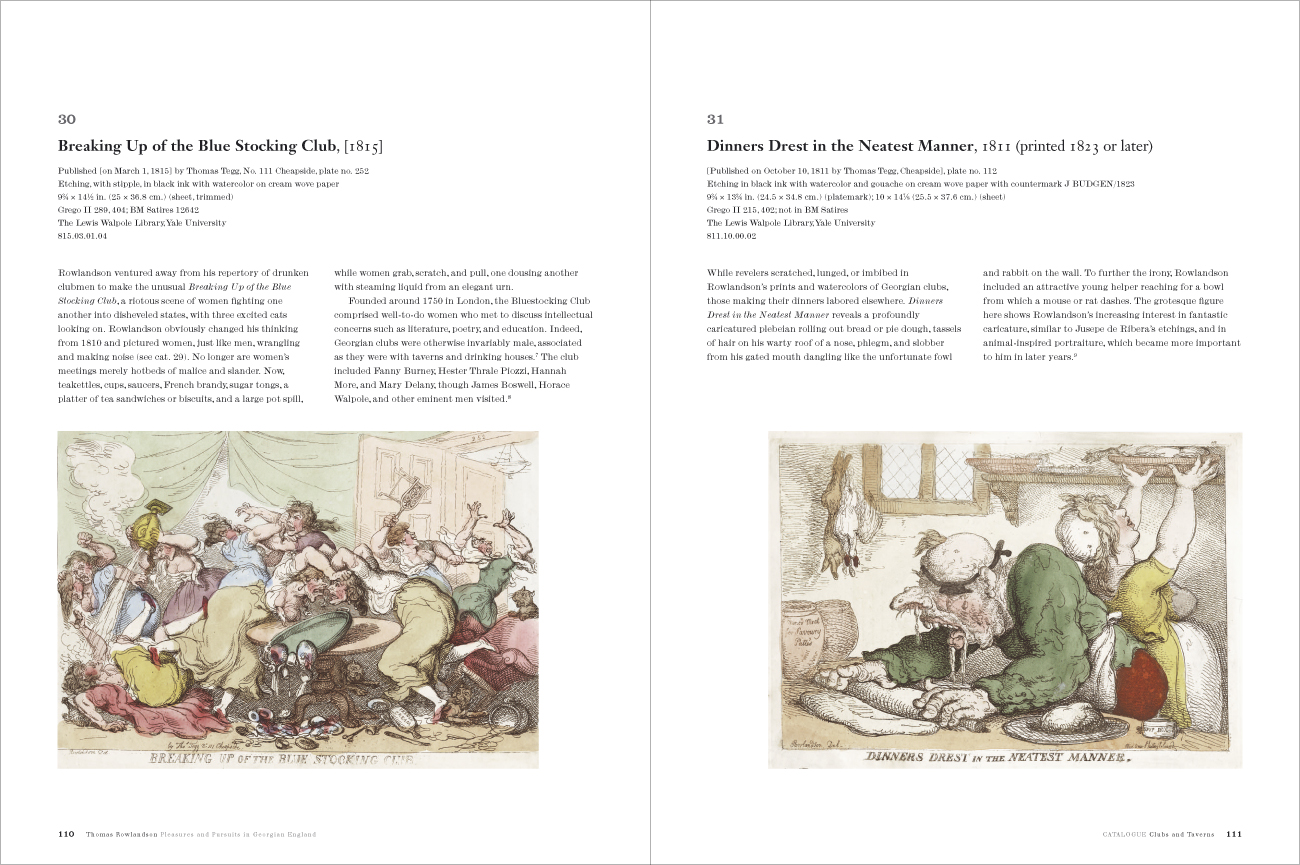
Thomas Rowlandson - Pages 110-11

[Click on to enlarge]

About the authors: 

Patricia Phagan is Philip and Lynn Straus Curator of Prints and Drawings at the Frances Lehman Loeb Art Center and the co-author of ‘The American Scene and the South: Paintings and Works on Paper, 1930-1946’ (1996) and ‘Images of Women in Seventeenth-Century Dutch Art: Domesticity and the Representation of the Peasant’ (1996).

Vic Gatrell is Life Fellow of Gonville and Caius College, Cambridge, and the author of ‘City of Laughter: Sex and Satire in Eighteenth-Century London’ (2006) [fabulous book!] and ‘The Hanging Tree: Execution and the English People 1770-1868‘ (1994).

Amelia Rauser is Associate Professor of Art History at Franklin and Marshall College, Lancaster, Pennsylvania, and author of ‘Caricature Unmasked: Irony, Authenticity and Individualism in Eighteenth-Century English Prints’ (2008). [from Amazon]

 See the publisher’s website at:  D Giles LTD; and Amazon.com   

            ISBN-10: 1904832784
            ISBN-13: 978-1904832782

*To Be Ordered

Copyright @ 2011, Deb Barnum, Jane Austen in Vermont

Austen Literary History & Criticism · Jane Austen · Literature · Social Life & Customs

Jane Austen’s ‘Outside of Enough’

Anyone who reads Georgette Heyer or other Regency-era historical fiction is surely familiar with the phrase “outside of enough” – one of those “cant” phrases that is self-explanatory, doesn’t need a lexicon or such to figure out its meaning.  It is a great turn of words, isn’t it? and so much more effective that “that’s enough” or “enough is enough” or “I’ve had enough” or “more than enough”, or “this is too much” or “enough already”!

But where did it come from? When was it first used? I don’t currently have access to the OED and it does not show up in the phrase reference sources I have or in online sources. Joanna Waugh on her website says it came into use around 1887.  It now seems overly used – certainly in every historical romance novel, but also in political writings, general conversation [just ‘google’ it!].  I am reminded of the phrase “gone missing”- a term I first heard in England years ago and needed to have it explained to me! – I later heard it on Canadian news programs, but now I hear it everywhere, read it in the newspapers, definitely a British turn of phrase adopted here in the US.

But back to “outside of enough” – I have assumed this was a term that Heyer perhaps had made up – she did do that with some of her Regency cant phrases so prevalent in her dialogue.   So I was quite surprised and delighted to discover this dialogue between Lucy Steele and Elinor in a recent re-read of Sense and Sensibility:

[Lucy Steele]  : “And what a charming little family they have! I never saw such fine children in my life. I declare I quite doat upon them already, and indeed I am always distractedly fond of children.”

   “I should guess so,” said Elinor with a smile, “from what I have witnessed this morning.”

   “I have a notion,” said Lucy, “you think the little Middletons rather too much indulged; perhaps they may be the outside of enough; but it is so natural in Lady Middleton; and for my part, I love to see children full of life and spirits; I cannot bear them if they are tame and quiet.”

    “I confess,” replied Elinor, “that while I am at Barton Park, I never think of tame and quiet children with any abhorrence.” 

[S&S, Vol. 1, Ch. xxi ]

Two Brock illustrations of “sweet” Lucy…

Fig. 1 "We have been engaged these four years"
Fig. 2 "She could have no doubt of its being Edward's face"


So we might think that Austen was the first writer to use the phrase, albeit putting it into the mouth of one of her more vulgar characters.  But a quick search of Google Books brings up the following sources:

1.  Algernon Sidney. Of the Use and Abuse of Parliaments: In Two Historical Discourses. 1744 – a reference is made to “outside of enough” as somewhere expressed by Shakespeare. [I did search the Shakespeare Concordance  and the term “outside” comes up 14 times in Shakespeare’s texts, but alas! all lacking the necessary “of enough”] 

2.  Colley Cibber.  The Dramatic Works of Colley Cibber.  1777. “…I’ll have everything on the outside of enough today.” 

3.  Joseph Gwilt, et al.  An Encyclopaedia of Architecture.  1842. re: “premising, that if the caution whereof we speak be taken, the thickness resulting from the following investigations will be much more than the outside of enough.” [p. 410]

4.  Henry C. K. Wyld.  A History of Modern Colloquial Idiom.  1920.  Wyld cites the above Austen passage as “largely the way of speech of the better society of an earlier age, which has come down in the world, and survives among a pretentious provincial bourgeoisie.” [p. 376] [which seems to indicate the term was used in an earlier period and Austen would have been familiar with that…]

So, I must carry on and dig deeper and find a better reference – if anyone has any thoughts, please comment – but shan’t we at least credit Austen (via Heyer I would think) with what appears to be the source for the excessive use of the term today? – I do feel the need to nearly scream, “all right, all right, the constant use of this phrase is really the outside of enough”!

Illustrations:

Copyright @Deb Barnum, Jane Austen in Vermont, 2011.

Fashion & Costume · Jane Austen · Regency England · Social Life & Customs

How the Fashion-obsessed Jane Austen Would Love What’s Under My Christmas Tree!

Two books I have wanted found their way under my Christmas tree by way of Santa and his sleigh.  These are books to savor, perhaps even drool over on these cold dark winter nights! Here is just a quick summary: 

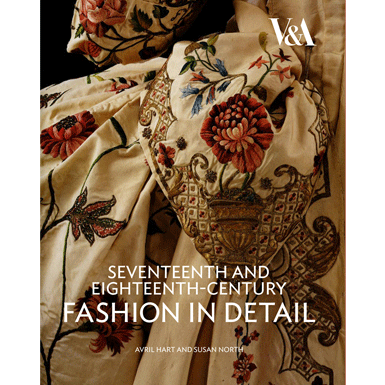
Seventeenth and Eighteenth-Century Fashion in Detail, by Avril Hart and Susan North.  Photographs by Richard Davis; Drawings by Leonie Davis.  London:  V&A Publishing, 2009.  [First published by V&A in 1998 as Historical Fashion in Detail from the 17th  and 18th Centuries].  ISBN 978 185177 567 5

From the introduction:  

These remarkable photographs of the V&A’s collection of historical dress capture the essence of each stylish garment, opening up new perspectives on high fashion between 1600 and 1800.  Offering a lively survey of fashionable patterns, fabrics and colours, the images depict a wide variety of styles and effects, from the minimalism of mid-18th-century white-work to the flamboyant excesses of high Baroque flowered silks…

Each chapter offers close-up photographs showing the varied details of dress, accompanied by line drawings and a full description of each piece.  I give as an example the description of “long sleeves” in the chapter on “Collars, Cuffs and Pockets”:   

Long sleeves in women’s dress became fashionable in the 1780s, and with them, new ways of fastening and decoration at the wrists.  In this very simple cotton gown from the late 1790s, the sleeve is closed with a narrow band of fabric, edged with piping, which fastens with hook and eye. 

While the pattern of the fabric is similar to that of the jacket on the left, the crispness and precision of the English printed cotton seen contrasts with the loose, flowing execution of the Indian printed fabric.  Block-printing on cotton began in England in the 1750s, imitating designs of imported Indian fabrics.  The pattern of floral trails seen here exhibits a blend of influences from Indian-painted and printed textiles, and rococo woven silks, a style which remained popular until the end of the century.  [Pictured is a woman’s gown of printed cotton, English, 1795-1799, followed by sleeve detail]  [p. 94-95]


Austen of course was concerned about her longs sleeves:  “I wear my gauze gown today, long sleeves & all; I shall see how they succeed, but as yet I have no reason to suppose long sleeves are allowable … [and later] … Mrs. Tilson has long sleeves too, & assured me that they are worn in the evening by many.  I was glad to hear this.– ” [Ltr. 99, 9 March 1814]

Chapters included: 

  • Stitching, Seams, Quilting and Cording
  • Gathers, Pleats and Looped Drapery
  • Collars, Cuffs and Pockets
  • Buttons
  • Trimmings
  • Applied Decoration
  • Slashing, Pinking and Stamping
  • Knitting, Lace and Openwork
  • Stomachers
  • Gloves and Shoes
  • Glossary and Select Bibliography 

**************** 

The great overlap of the 18th and 19th centuries meant that Santa had to do double duty and also leave the Nineteenth-Century Fashion in Detail, by Lucy Johnston, with Marion Kite and Helen Persson.  Photographs by Richard Davis; Drawings by Leonie Davis.  London:  V&A Publishing, 2009 [first published, 2005].  ISBN: 978 18177 572 9. 

Many of the Influences, innovations and stylistic changes that shaped nineteenth-century fashion are brought to life by the garments illustrated in this book.  The delicate embroidery on neo-classical gowns, elegant tailoring on men’s coats, vibrant colours of artificial dyes and profusion of ornate trimmings reveal some of the details which make this period so rich.  They also show how a woman’s silhouette was transformed during this era through whalebone corsets, cage crinolines, bustles and skilful garment construction…. [Introduction, p. 7]

Again, each piece of clothing is presented with a photograph, a line drawing, and a full description .  Chapters included: 

  • The Male Image
  • Historicism
  • Romantic Styles
  • Exoticism
  • Innovations
  • Construction Details
  • The Natural World
  • Glossary and Select Bibliography 

Two quite amazing books, filled with sumptuous detail, lovely patterns and fabrics, showing the clothing of the fashion-conscious middle and upper class men and women of these times.  If you have any interest in fashion, these definitely need to be added to your collection!  Thank you Santa for paying attention and seeing how much I needed these!  Makes one want to drag out the sewing machine…

P.S. There is another book in this series, titled, Underwear Fashion in Detail – [V&A Publishing, 2010] perhaps Santa was too embarrassed to bring this one?

Illustrations from the V&A website.  Books are available at the V&A online Shop, and also available at other booksellers.

Copyright @Jane Austen in Vermont, 2008-2010.

Austen Literary History & Criticism · Book reviews · Books · Collecting Jane Austen · Jane Austen · Literature · Regency England · Social Life & Customs

Book Review ~ “Jane Austen and Children” by David Selwyn

To be at the beginning of life, one must start at the end of the novel.  For although Jane Austen concludes her books with the marriage of the hero and heroine to which the whole thrust of the narrative has been leading, and the reader rejoices in the perfect happiness of the union, in reality the best is yet to come: they will have children – procreation  being not only the natural and desirable end of marriage, but also an economic and dynastic necessity.  And those children will have their own stories…What will become of the Darcy children?…”  (Ch. 1, Confinement, p. 5)

And thus does David Selwyn begin his treatise on Jane Austen and Children (Continuum, 2010), a most enjoyable journey through the world of childhood and parenting and education and growing-up in the life of Jane Austen, and the lives of her fictional characters.  If you are perhaps one of those people who think that Jane Austen does not like children, an idea certainly fed buy such comments about women “breeding again” or the child-generated “dirt and noise” or “the two parties of Children is the cheif Evil” [Ltr. 92], or the proper child-rearing “Method has been wanting” [Ltr. 86], etc. – you need to read this book!

Selwyn takes his reader essentially through the nine ages of man [with apologies to Shakespeare] beginning with confinement and birth, through infancy, childhood, parenting, sibling relations, reading and education, and finally maturity, as Selwyn says, the “end of the novel” when the Hero and Heroine come together, after all manner of trial and tribulation, to begin their own family.

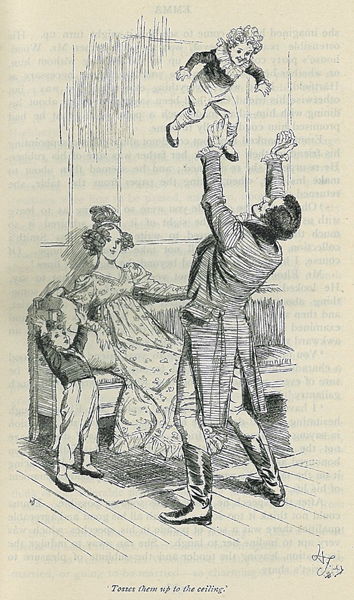
We are given a general survey of the shift in the attitudes toward children, that late eighteenth – early nineteenth century view that fell between viewing children as not just “little adults” to the Victorian view of “seen but not heard”, following Locke and Rousseau and believing children to be natural innocents.  In each chapter Selwyn seamlessly weaves pieces of Austen’s life as gleaned from her letters and scenes from all her writings – and it is masterly done, all with a historical perspective.  We see Jane as a child, as a madly composing adolescent, a loving and humorous Aunt imaginatively interacting with her nieces and nephews, and as an accomplished writer whose fictional children are far more worthy of our notice than we have previously supposed: the frolicsome Walter hanging on Anne’s neck in Persuasion; the spoiled Middletons; the noisy and undisciplined Musgroves; the grateful and engaging Charles Blake in The Watsons; the John Knightley brood in the air courtesy of their Uncle George; the dynamics of the five Bennet sisters; Henry Dashwood the center of attention for the manipulative Steele sisters; the reality-based scenes of Betsy and Susan Price at Portsmouth; and finally Fanny Price, Austen’s only heroine we see grow up from childhood, having an elegant come-out, finding true-live and ends “needing a larger home.”

In all her works, Austen uses children as “a resource for her narrative strategies” (p. 4), be that comedy, a plot device to further the action, or a means of revealing attitudes and responses of the adults around them (p. 3).  Austen’s children are easy to miss – they won’t be after reading this book – here they are brought to life, given character and meaning, and you will see what Selwyn terms “Austen’s satirical delight in children behaving in character” (p. 73)

If Austen’s fiction seems to gloss over the reality of childbirth [the exception is Sense and Sensibility’s two Elizas], her letters tell the tale of its dangers [Austen lost three sisters-in-law to death in childbirth], and Selwyn links all to the social structure of the day, the nursing of babies and swaddling practices, to child rearing theories and moralizing tracts, and governesses and Austen’s ambivalence toward them. We visit boarding schools along with Jane and her characters and we hear the voices of a number of contemporary diarists (Agnes Porter, Sophia Baker, Susan Sibbald, Elizabeth Ham and Sarah Pennington).  There is a lovely in-depth chapter on the reading materials written especially for children and Austen’s first-hand knowledge of these titles.  The discussion on sisters and brothers, those so important in Austen’s own life, and those in her fiction, for example, characters with confidants (Lizzy and Jane, Elinor and Marianne), those isolated (Fanny, Anne Elliot, Emma Watson, Mary Bennet), and those with younger sisters (Margaret Dashwood and Susan Price).  As part of the growing-up process, Selwyn uncovers much on “coming-out” as Austen herself writes of in her “Collection of Letters” [available online here] – with the emphasis here on Fanny as the only heroine to have a detailed “coming-out” party.

The chapter on “Parents” starts with the premise that “in Jane Austen’s novels the parents best suited to bringing up children are dead” (p.95) and Selwyn takes us from the historical view of parenting, through Dr. Johnson’s “Cruelty of Parental Tyranny” [shadows of Northanger Abbey] to a full discussion of the marriage debate in the 18th-century – that between the worldly concerns of wealth vs. choice of partner based on emotional love as personified in Sir Thomas and Fanny Price respectively.  Excerpts are included from James Austen’s very humorous Loiterer piece   “The Absurdity of Marrying from Affection.” (p. 207) and Dr. John Gregory’s A Father’s Legacy to his Daughters (1774) [viewable at Google Books here] , and the Edgeworth’s Practical Education (1798) [Vol. III at Google Books here].  One finds that in reading all of Austen’s letters and all the works you can indeed discover a complete instruction manual for good parenting!

Jane Austen and Children appropriately ends with Selwyn’s speculation on what sort of parents her Heroes and Heroines will be, all of course based on the subtle and not-so-subtle clues that Austen has given us throughout each work – conjecturing on this is perhaps why we have so many sequels with little Darcys, Brandons, Bertrams, Knightleys, Tilneys, and Ferrars running about!

Just as in his Jane Austen and Leisure, where Selwyn analyzes the various intellectual, domestic and social pursuits of the gentry as evidenced in Austen’s world and her works, he here gives us an accessible and delightful treatise on Austen’s children, culling from her works the many quotes and references related to children and linking all to the historical context of the place of children in the long eighteenth century.  The book has extensive notes, a fine bibliography of sources on child-rearing, contemporary primary materials, children’s literature, and literary history, and several black and white illustrations.  (I did note that there are a few mixed up footnotes in chapter 3, hopefully to be corrected in the next printing).  What will this book give you? – you will never again miss the importance of Austen’s many children, peaking from behind the page, there for a set purpose to show you what great parents the Gardners are, or just to make certain you see how very selfish the John Dashwoods and the Miss Steeles are, or to see the generosity of an Emma Watson in her rescue of Charles Blake, or to feel the lack for the poor Musgrove boys having Mary for a mother, the playfulness of an otherwise conservative Mr. Knightley, and the unnerving near touch of Captain Wentworth as he relieves Anne of her burden –  thank you David Selwyn for bringing all these children to life for Austen’s many readers – you have given us all a gift!

Emma – ‘Tosses them up to the ceiling’
[by Hugh Thomson, print at Solitary Elegance]

 __________________

Jane Austen and Children
Continuum, 2010
ISBN:  978-1847-250414

David Selwyn is a teacher at the Bristol School in Bristol, UK.  He has been involved with the Jane Austen Society [UK] for a number of years, has been the Chairman since 2008,  the editor of the JAS Report since 2001, and has written and edited several works on Austen.  He very graciously agreed to an “interview” about this latest work that you can find by clicking here.  See also the post on the various illustrations of Austen’s children by the Brocks and Hugh Thomson.  And finally, I append below a select bibliography of Selwyn’s writings on Jane Austen and her family.

 Select Bibliography:  

  1. Lane, Maggie, and David Selwyn, eds.  Jane Austen: A Celebration.  Manchester: Fyfield, 2000. 
  2. Selwyn, David, ed.  The Complete Poems of James Austen, Jane Austen’s Eldest Brother. Chawton: Jane Austen Society, 2003. 
  3. _____. “Consumer Goods.” Jane Austen in Context. Ed. Janet Todd. Cambridge Ed. of the Works of Jane Austen. New York: Cambridge UP, 2005. 215-24. 
  4. _____, ed.  Fugitive Pieces: Trifles Light as Air: The Poems of James Edward Austen-Leigh.  Winchester: Jane Austen Society, 2006. 
  5. _____. “A Funeral at Bray, 1876.” Jane Austen Society, Collected Reports V (1998): 480-86. 
  6. _____. “Games and Play in Jane Austen’s Literary Structures.” Persuasions 23: 15-28 
  7. _____. “Incidental closures in Mansfield Park.”  [Conference on “Jane Austen and Endings”, University of London, 17 November 2007] – unpublished paper. 
  8. _____. “James Austen – Artist.” Jane Austen Society Report 1998. 157-63. 
  9. _____.  Jane Austen and Leisure.  London: Hambledon Continuum, 1999. 
  10. _____, ed.  Jane Austen: Collected poems and Verse of the Austen Family.  Manchester:  Carcanet / Jane Austen Society, 1996. 
  11. _____, ed.  Jane Austen Society Report, 2001 – present. 
  12. ­_____. “Poetry.” Jane Austen in Context. Ed. Janet Todd. Cambridge Ed. of the Works of Jane Austen. New York: Cambridge UP, 2005. 59-67. 
  13. _____. “Shades of the Austens’ Friends.” Jane Austen Society Collected Reports V (2002): 134. 
  14. _____. “Some Sermons of Mr Austen.” Jane Austen Society Collected Reports V (2001): 37-38.