Austen Literary History & Criticism · Collecting Jane Austen · Jane Austen · Jane Austen Circle · Literature · Rare Books · Women Writers

Preserving Jane Austen and Her Literary Sisters ~ Book Conservation at the Chawton House Library

battered-books-2-CHL
Chawton House Library – books in need

When I was in Library School, one of my favorite classes was a study of book conservation and visit to the NEDCC (the Northeast Document Conservation Center) – this I thought was the place where the things I most loved were given the care they sorely needed. Sadly, I didn’t go into that field [hindsight is a dreadful thing!] – I was more into reading and making sure the right book got into the right person’s hands, believing that our system of free libraries was the grandest example of a free world. I remember as a 15 year-old page in our hometown library, roaming the shelves and discovering the Brownings, and rather than doing my job of re-shelving (I confess this now many years later), I was secretly discovering Poetry, finding Love and Words in the pages of these old books. I’ve never lost that love of an old book – the smell, the touch, the beauty of bindings and paper, the scribbled notes or bookplates or inscriptions of previous owners – not to mention the story being told. That I ended up a used bookseller was likely destiny at work – my favorite set of books in my home was an 1890 Encyclopedia Britannica! (I was not the most current student in history class!)

We now live in a world where the physical book is being rejected for the joy of carrying around 1500 titles on a small tablet that we can also use for all manner of interruptive connections to the real world. This escape into a book can be initiated wherever you are, whenever you want, without the inconvenience of lugging around poundage – I readily admit to loving my kindle! – But it is not the same, no matter how many people argue the point. I don’t remember the books I read this way – I don’t retain where such and such was on a particular page, I miss that smell, that touch, that communion with a physical object that has a history that somehow brings me closer to the author or a binder or papermaker or some previous owner or owners.
DentSet-dcb

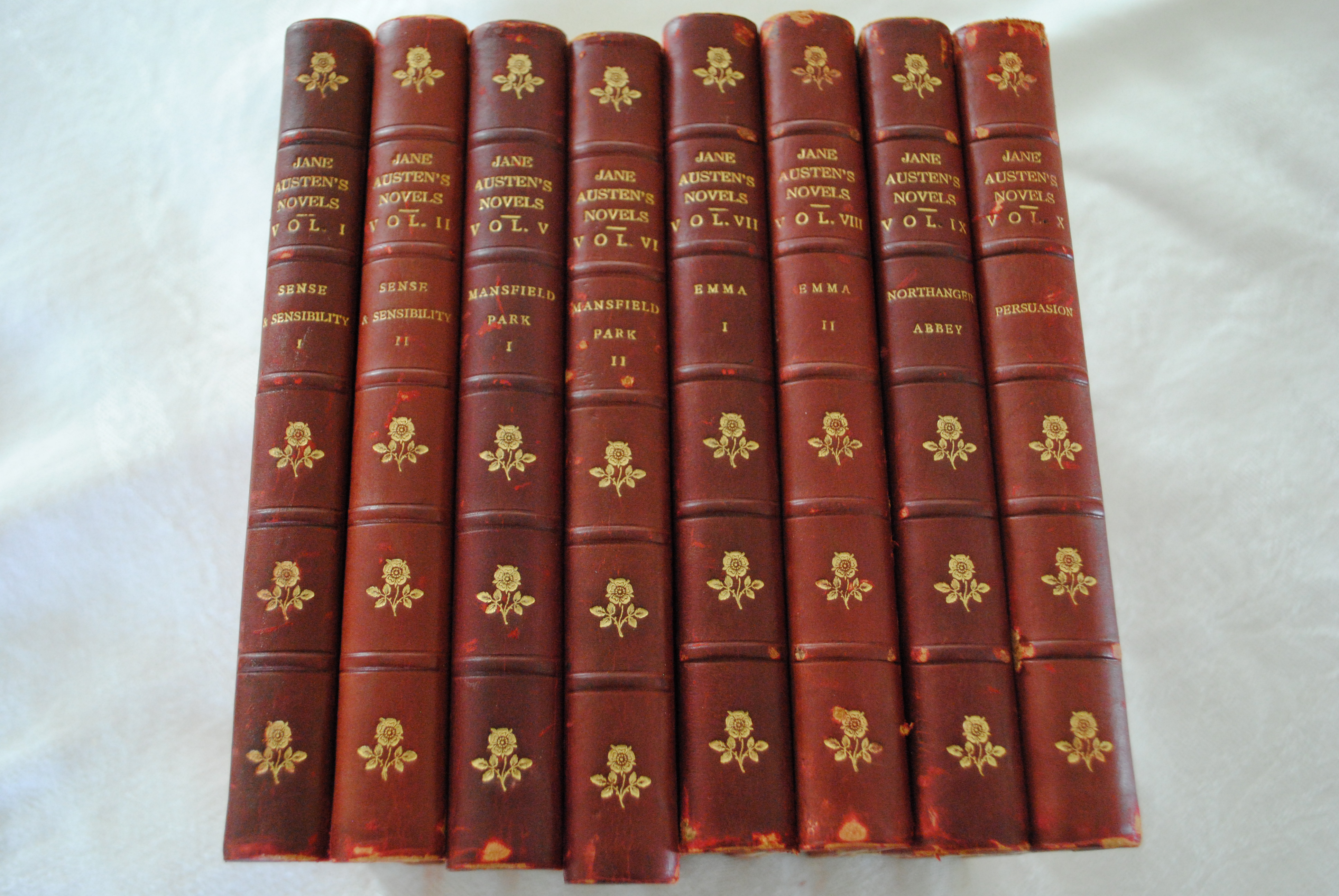
[1898 Dent edition of Jane Austen’s novels – trivia: what is missing??]

I think, I have to believe that the book is not Dead, that an appreciation for the book as an object of beauty and worth may even be stronger than ever, fear of it all disappearing making it all the more valuable to us. And this then brings us to Book Conservation. Because if we don’t take care we shall be losing our very own heritage. I have had any number of books come across my desk that are in appalling states, either too well loved through the years, or just left to disintegrate in some old attic or basement – it is one of the saddest things to encounter really – a book of special significance that is rendered nearly worthless by its poor condition. Enter the conservationist! – Magic can happen! I have been fortunate in finding the most brilliant of these magicians, who has salvaged many a book for me and my customers … And though the value of a repaired work can be affected by such tampering, it is the return to its former state that is the end result, to preserve, protect and savor for the future… The digitizing efforts of so many of our libraries is a glorious thing – making so much accessible to all – I marvel at what is only a keystroke away – but preserving the original must and should be part of this plan.
Chawton House Library

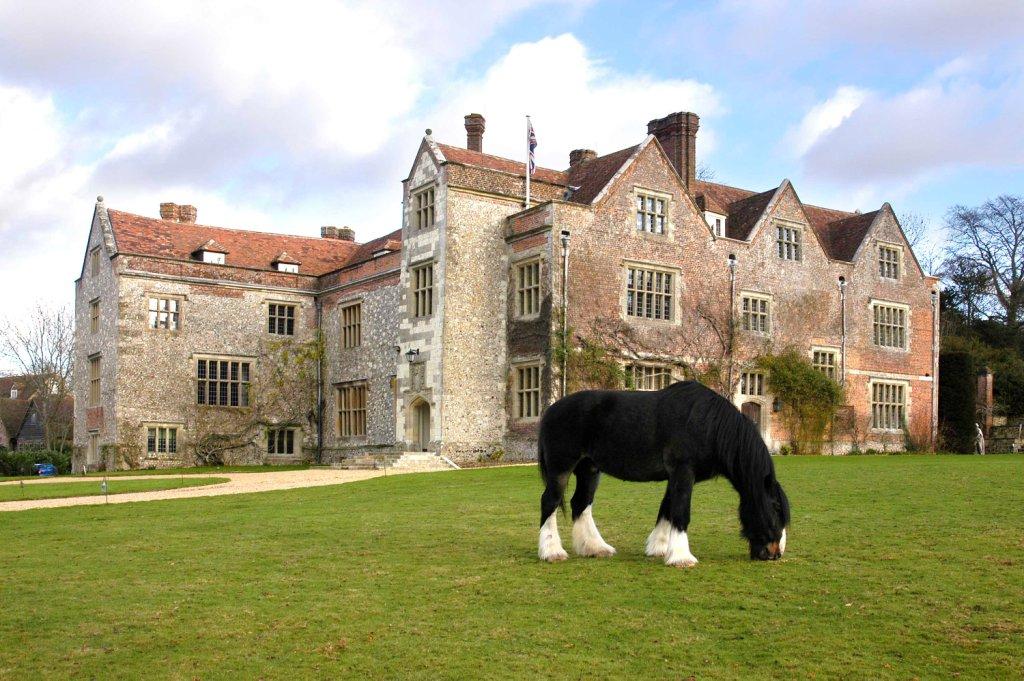
And this brings us to Chawton House Library and their appeal for their book conservation program – they need our help!

The history of the Chawton House Library [CHL] is a well-known story, at least among most of my readers here, who perhaps have come to know of CHL because Jane Austen brought us there. Read its history if you don’t know it, and you will come away with unending gratitude to Sandy Lerner for making it all possible. If you have read Dale Spender’s classic Mothers of the Novel: 100 Good Women Writers before Jane Austen (Pandora 1986), and other various titles on the subject, you know that the entire literary tradition of women writers has been essentially silenced – if you are over 50, how many women writers did you read in college? How many did you even know about? The foundation and purpose of CHL has been to correct that horrible omission in our collective history, to give these women writers a home of their own, and to make sure none of them are ever again consigned to the neglected heap of second-class literature.

The CHL website offers a wealth of information on many of these women writers:

[for example: Aphra Behn’s The Rover; or, the Banish’d Cavaliers (1729), and Penelope Aubin’s The Inhuman Stepmother, or the History of Miss Harriot Montague (1770)]

Aphra Behn (1640-1689) - wikipedia
Aphra Behn (1640-1689) – wikipedia
Charlotte Lennox (c.1730-1804)
  • The quarterly publication The Female Spectator is mailed to those who become Friends of the Library. Some of the past issues are available online from 1995 – 2010 here: http://www.chawtonhouse.org/?page_id=55522
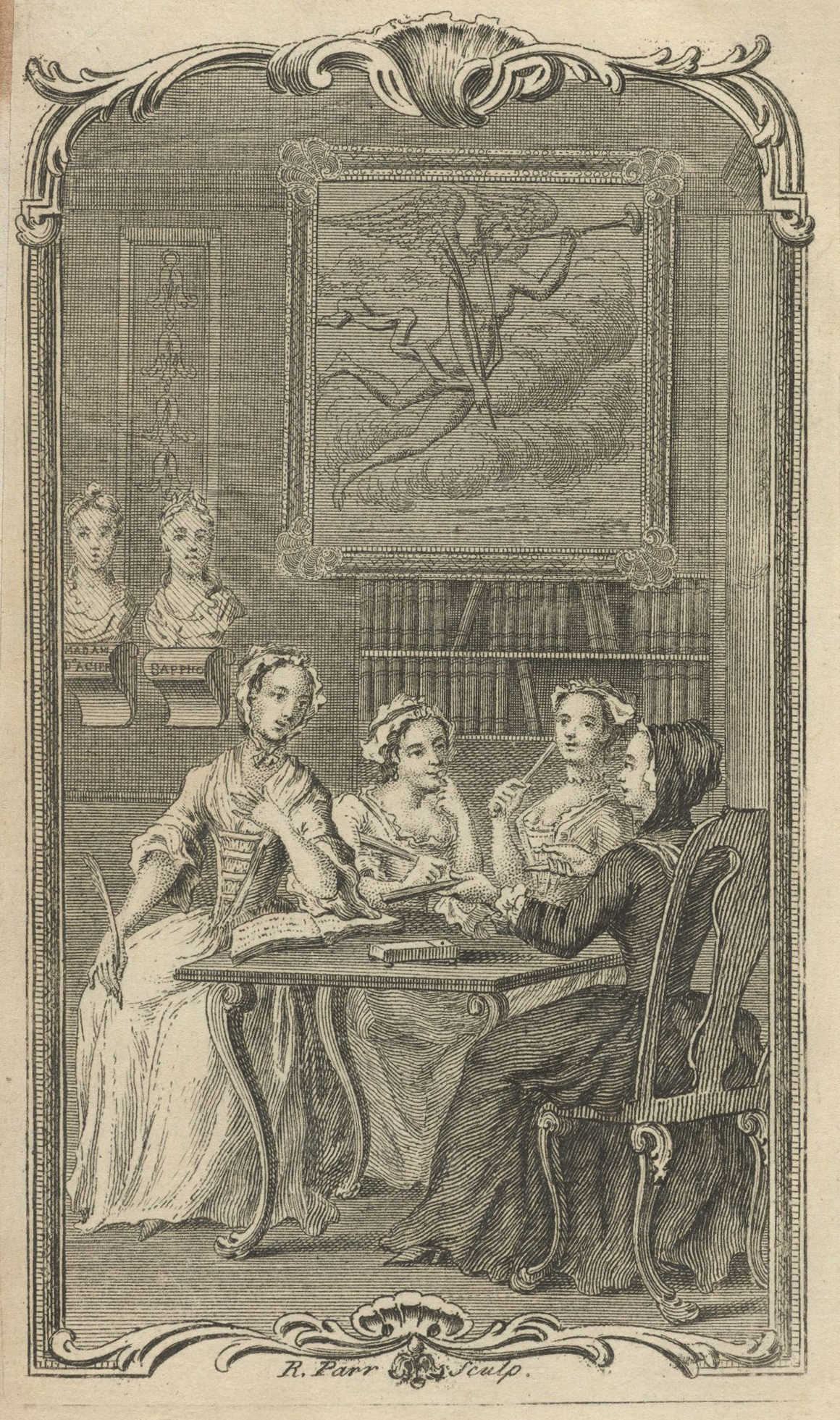
Female Spectator-frontis-wp

 Frontispiece, vol. 1 The Female Spectator, by Eliza Haywood (1744-46) – the title CHL now uses for its quarterly newsletter [image: wikipedia]
_________________

Chawton House Library
More books in need at Chawton House Library

But the books themselves, the majority really, are in need of repair. Keith Arscott, the Development Director of CHL, in the kick-off for this fund-raising effort, writes:

Thanks to our first and biggest single donation to date – over $3,000 from the George Cadbury Quaker Foundation – we have been able to organise our first conservation skills training day for 10 of our library volunteers to be run by a professional conservator. The donation also covers the first purchase of materials to enable our first volunteers to make a start. And for those of you that don’t know, we also had two generous donations at the reception – one from a red rose and the other from a yellow! [the reception for CHL members at the JASNA AGM in Montreal – we were all given roses!] But it is only a start – the Book Condition Survey that we were able to commission after a number of successful funding initiatives concluded that the cost of such a conservation programme would be easily a very large six figure sum  – if all the conservation work was undertaken by professional conservators in studio conditions. However, the tremendous interest that our appeal has had with volunteers and their willingness to give their time to help with much of the work – means we have an appeal target in mind of something in the $90,000 range.

And so this is where your help is needed. Gillian Dow, the Executive Director, writes on the website that small amounts of money can make a very big difference to our programme” and outlines how any donation can contribute to protecting this unique collection:

  • £1 / $1.70 can buy document repair tape
  • £6 / $10 can buy unbleached cotton archival ribbon
  • £10 / $17 can buy an archival box to protect a fragile book
  • £100 / $162 can pay for a full set of conservation equipment including unbleached cotton archival ribbon, document repair tape and archival boxes
  • £300 / $486 can pay for a volunteer training day, giving a whole team the necessary skills to carry out vital conservation work
  • £500 / $809 can restore a complete volume

______

Conservation tools at the NEDCC

__________ 

*You can visit the CHL website to watch a film on the program:  http://www.chawtonhouse.org/?page_id=58943

*You can also find on the CHL blog this post by Giorgia Genco, “A Career in Book Conservation” where she writes about assisting in the training of volunteers in this new program: http://www.chawtonhouse.org/?library_blog=a-career-in-book-conservation

*And here, some great PR from the BBC: last November, they visited CHL and produced a video on the appeal, where Frankenstein and Sense & Sensibility are featured among other titles: http://www.bbc.com/news/uk-england-hampshire-29949168

*For those of you near Chawton, there is an evening lecture on February 12, 2015 at 6:30 pm on “Conserving a Unique Literary Heritage at Chawton House Library” with library conservator Caroline Bendix – it is free, but donations graciously accepted! – and you must register [but alas! the event is fully booked!]: http://www.chawtonhouse.org/?lectures_talks=conserving-a-unique-literary-heritage-at-chawton-house-library

A tattered 'Sense & Sensibility' at CHL
A tattered ‘Sense & Sensibility’ at CHL

_______________

How to donate? For those of you living in the States, you can donate online directly to the North American Friends of Chawton House Library (NAFCHL) [NAFCHL is a U.S. 501 (c) (3) tax-exempt organization and all donations are deductible for purposes of U.S. income taxes]. NAFCHL will acknowledge U.S. donations as being specifically allocated to our Book Conservation Appeal. See the link on the right sidebar on this page: http://www.chawtonhouse.org/?page_id=58943 . [Everyone else can donate by visiting the same page and choosing the “Virgin Money Giving” link.]

______________

Mary Brunton (1778-1818) – Jane Austen writes about Brunton in her letters [image: wikipedia]

You will find if you spend a bit of time on the CHL website just how many of these women writers have been resurrected from their centuries-long oblivion. They are being studied more than ever as our female literary tradition finds its rightful place in the history of literature. The Chawton House Library has been and continues to be instrumental in finding and keeping these materials – the books, manuscripts, diaries, letters, and artifacts – and we need to preserve it all as best we can so that the Book as we now know it will be there for future generations of readers and scholars.  Any donation will be greatly appreciated…hope you can help!

Sources and further reading:

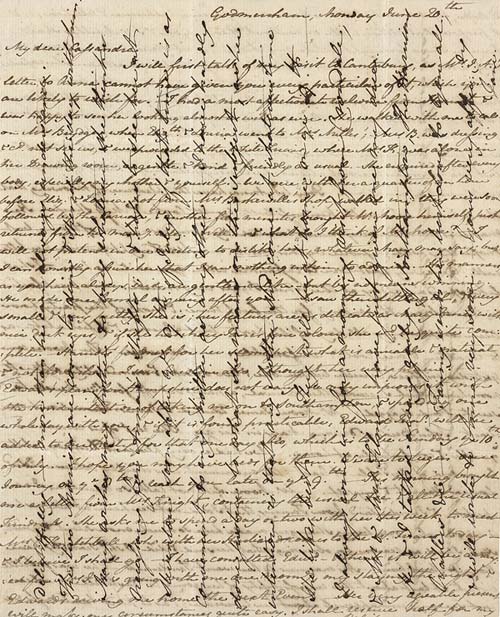
JA-letter-MorganJane Austen letter – the Morgan

c2015 Jane Austen in Vermont
Austen Literary History & Criticism · Book reviews · Books · Jane Austen · Jane Austen Circle · Literature · Publishing History · Women Writers

Book Review: Nicholas Ennos’ Jane Austen: A New Revelation ~ “Conspiracy is the Sincerest Form of Flattery”

Dear Gentle Readers: I welcome today Janine Barchas with her review of the recently published Jane Austen: A New Revelation by Nicholas Ennos – his book tackles the question of who really authored Jane Austen’ s six novels and juvenilia…

***************

“Conspiracy is the Sincerest Form of Flattery”

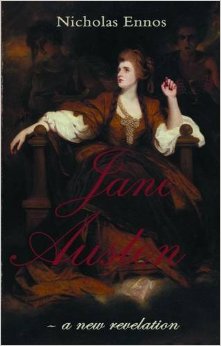
Review of Nicholas Ennos, Jane Austen: A New Revelation (Senesino Books, Oct. 2013).  Pp. 372.  £25.  Available from Amazon.com as an e-book for Kindle for $10.99. 

cover-ennos-jarevelation

The litmus test of true literary achievement is whether your works are deemed so great that you simply could not have written them.

Janeites need no longer envy students of Shakespeare their intricate web of Renaissance conspiracy theories.  Whereas Shakespeare scholarship has long enjoyed the spectral presence of the Earl of Oxford, Austen studies can now boast a countess named Eliza de Feuillide.

The self-published Jane Austen: A New Revelation alleges that “a poor, uneducated woman with no experience of sex or marriage” could not possibly have written the sophisticated works of social satire and enduring romance that we traditionally attribute to Jane Austen.  The book’s author, Nicholas Ennos (the aura of conspiracy allows that this is not necessarily his/her real name), asserts that biographers have been leading everyone by the nose.  The true author of the Austen canon is, instead, Madame la Comtesse de Feuillide, born Eliza Hancock (1761-1813).  Eliza was the worldly and well-educated older cousin of Jane Austen who, after being made a young widow by the French Revolution, married Henry Austen, Jane’s favorite brother.  The sassy Eliza has long been pointed to as a model for the morally challenged characters of Lady Susan and Mary Crawford in the fictions.  To identify Eliza as the actual author was, Ennos explains, the next logical step.

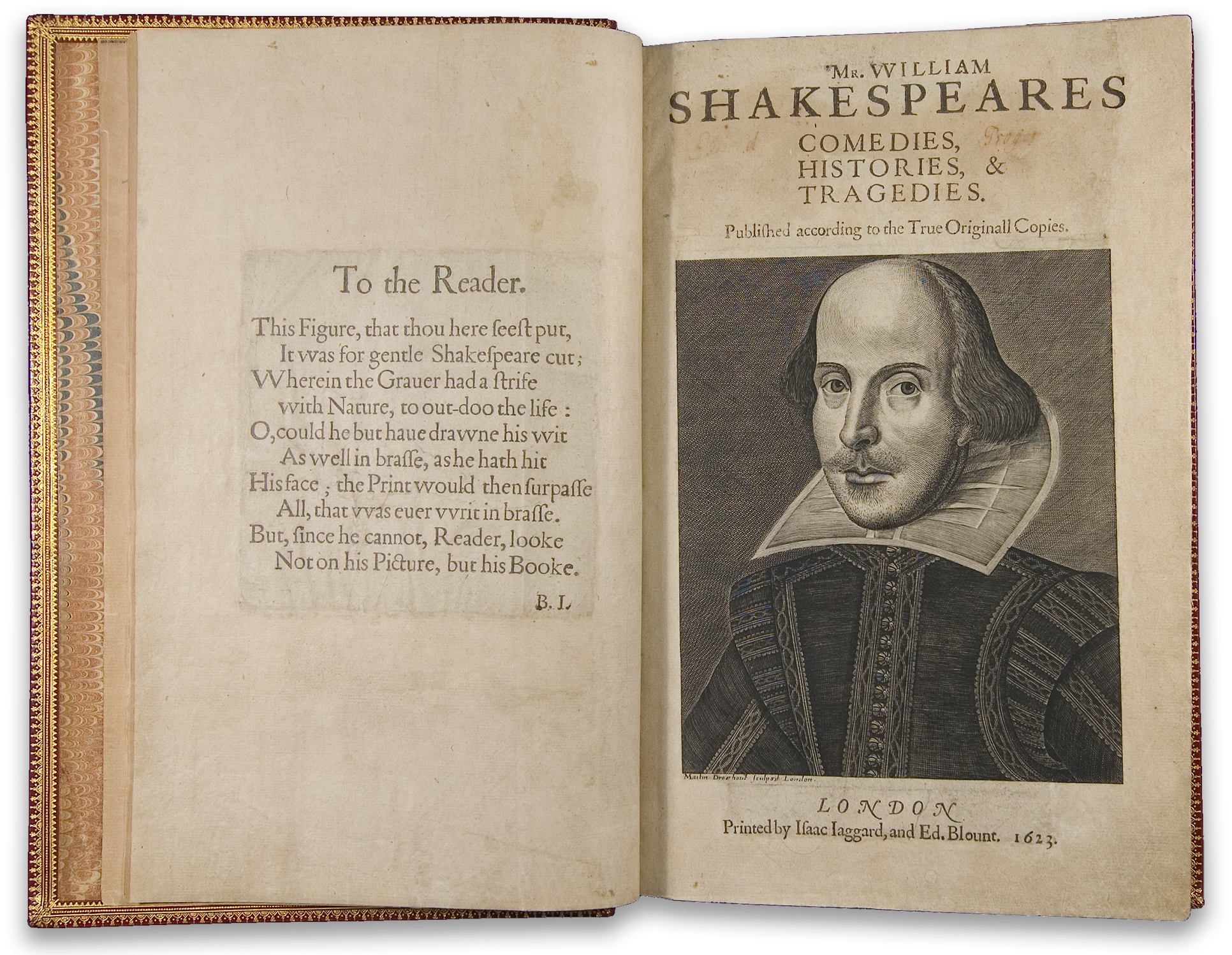
shakespeare-1stfolio-haverford

Shakespeare’s First Folio – Haverford.edu

Just so, and also about two centuries into his literary afterlife, William Shakespeare’s lofty literary achievements were judged incompatible with his humble origins, sowing seeds of doubt that a person so little known could have achieved so much.  Slowly, the man named Will Shakespeare from Stratford-upon-Avon came to be considered by a small-but-articulate fringe to be a mere front shielding the genuine author (or authors) of the works written under the pen name of Shakespeare.  Austen’s genteel poverty, relative isolation, and biographical quiet allows for a similar approach.  For how, asks Ennos, can genius thrive with so little food of experience to feed it?

The arguments for Shakespeare reattribution rely heavily upon biographical allusions as well as the absence of works in manuscript.  Similarly, Austen critics who have been keen to spot biographical references to real places and family members in the fictions have apparently opened the door to skeptics who can now point to Cassandra’s “systematic destruction” of her sister’s letters as proof of a conspiracy.  Ennos also draws attention to the “suspicious” parallel fact that no Austen novel survives in manuscript.  The juvenilia, which does survive in Jane’s hand, is explained away as early secretarial work for Eliza during her visits to the Steventon household.

Eliza died in April of 1813, well before the publication of Mansfield Park (1814), Emma (1815), or Persuasion and Northanger Abbey (Dec 1817).  The so-called Oxfordians overcame the timeline obstacles posed by Edward de Vere’s early death in 1604 by redating many Shakespeare texts, which (their logic dictates) must have been composed earlier than previously thought and squirreled away for later publication by an appointed agent.  So too is the Austen corpus deftly redated by Ennos—with husband Henry, cousin Cassandra, and amanuensis Jane as co-conspirators.  Some historians allow that Eliza was in all probability the natural daughter of politician Warren Hastings.  Ennos adds to this existing context of secrecy that Eliza’s illegitimacy was the “disgrace” that the Austens “were determined to cover up after Eliza’s death” and the reason that “the myth of Jane Austen’s authorship was invented.”

Readers of Austen will doubtless need some time to process the implications of these revelations.  For example, what of the presumed poignancy of Persuasion’s temporal setting?  The events in this novel take place during the false peace of the summer of 1814—a short reprieve in the Napoleonic wars that saw the premature return of Britain’s navy men after the initial exile of Napoleon to Elba.  Persuasion has been on record as composed between August 1815 and August 1816, in the full knowledge of both the false hopes of that summer and the true end to the war that came with the Battle of Waterloo in June 1815.  Ennos moves the novel’s date of composition prior to April 1813.  Although he does not go so far as to urge Eliza’s historical prescience, he suggests that these features are merely evidence of judicious tweaks to manuscripts left in Henry’s care at Eliza’s death.

Eliza de Feuillide                 Frances Burney                 Jane Austen

This is not all.  Ennos further declares that the precocious Eliza also wrote the novels conventionally attributed to Frances Burney (1752-1840).  The resemblances between Evelina and Pride and Prejudice have long been acknowledged by scholars who have (mistakenly, according to Ennos) attributed this to Burney’s literary influence upon the young Austen.  Ennos reasons that Frances Burney’s lack of literary success after Eliza’s death, including her “truly dreadful” novel The Wanderer in 1814, is evidence of her being, in fact, an imposter.  While future stylometric analysis may eventually confirm that Jane and Fanny were one and the same Eliza, this method has not settled the authorship question irrevocably for Shakespeare.  Perhaps this is why Ennos does not turn to computer analysis or linguistics for help.  He does identify Elizabeth Hamilton, the name of another minor authoress, as a further pseudonym used by the talented Eliza—ever widening the corpus of works that might appeal to those already interested in Austen.

It is a truth universally acknowledged that the novels attributed to Jane Austen were published anonymously during her lifetime.  Logically, any book written anonymously must be in want of a conspiracy.   The grassy knoll of this particular conspiracy is the biographical notice in Northanger Abbey, released simultaneously with Persuasion six months after Jane Austen’s death in 1817.  History has taken Henry Austen, a failed banker, at his word in identifying the author as his sister.  Ennos, who is not very gallant towards the species of academics and literary critics whom he dismisses as “simple souls,” suggests that Austen scholarship has been surprisingly gullible in accepting Henry’s attribution without question.

In the wake of the Ireland forgeries of the 1790s, generations of Shakespeare scholars offered dozens of different names for the man behind the mask of “Will Shakespeare.”  Although the Earl of Oxford has garnered Hollywood’s vote, Francis Bacon and Christopher Marlowe are next in popularity.  We can only hope that these allegations by Ennos prop open the doors of Austen authorship so that additional candidates can step forward to provide generations of graduate students with dissertation fodder.

Does the Eliza attribution theory expect to be taken seriously?  Or does this maverick publication deliberately mock established scholarship by means of cartoonish imitation?  I’m not sure it really matters.  If this project had ambitions to be a serious Sokal-style hoax, then it did not manage to convince a top publisher and, as a result, lacks the ability to wound deeply.  The prose is also too earnest and unadorned for an academic satire—devoid of the jargon that should dutifully accompany a spoof.  The resulting pace is too sluggish for irony.  That said, there are plenty of moments that even David Lodge could not improve upon.  For example, Ennos points to an acrostic “proof” of hidden clues in the dedicatory poem to Evelina (only visible if decoded into Latin abbreviations).  There is also the syllogistic central assertion that if the novels of both Burney and Austen resemble the Latinate style of Tacitus, then these could only have been written by 1) the same person and 2) someone schooled in Latin.  Ergo, Eliza is the true author behind both, since only she could have learned Latin from Reverend George Austen, Jane’s father (who might teach a niece but never his youngest daughter).  Finally, there are gestures towards wider bodies of knowledge: “In this respect the philosophy of both authors has been linked to the views of the Swedish philosopher, Swedenborg.”  Perhaps Ennos is simply angling for someone to buy the movie option.  “Anonymous” did well at the box office, so why not a film dubbed “Eliza”?

No matter what the intention, hearty congratulations are due to Jane Austen.  For her, this news makes for a strong start to the New Year.  Exactly two centuries into her literary afterlife, a doubting Thomas was the last requirement of literary celebrity still missing from her resume.  Austen can now take her seat next to Shakespeare, secure in the knowledge that her authorship, too, has begun to be questioned.

You know you’ve hit the big time when you didn’t write your own work.

— Reviewed by Janine Barchas

*****************

Barchas is the author of Matters of Fact in Jane Austen: History, Location, and Celebrity (Johns Hopkins, 2012).  She is also the creator of “What Jane Saw”, an on-line reconstruction of an art exhibit attended by Jane Austen on 24 May 1813.   Recently, she has written for The New York Times and the Johns Hopkins University Press Blog.

c2014 Jane Austen in Vermont; text c2014 Janine Barchas
Great Britain - History · Jane Austen · Jane Austen Popular Culture · News · Women Writers

Jane Austen and the Bank of England

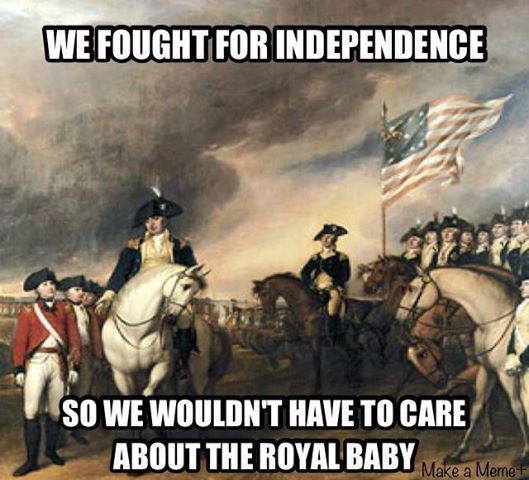
Well, this is everywhere so only posting this so everyone knows I am actually paying attention. The UK seems to be in the news an awful lot this week, and while I find this quite funny:

fbpolhumor-baby

[from https://www.facebook.com/politicalhumor ]

I don’t agree! I am unashamedly an Anglophile of the highest order [my parents were born there], and I had Tea every day as soon as I got home from school and have never changed the habit, and so all this stuff is just sort of ingrained…

So very excited this week, both about the Royal Baby AND the £10 note to feature Jane Austen.

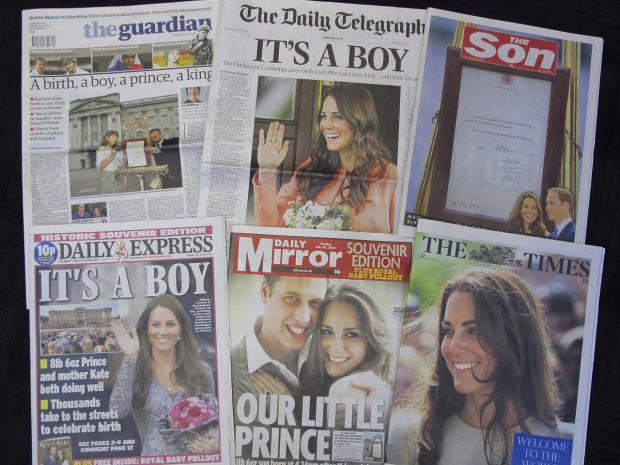
So first a hearty congratulations to all in the Royal Family about George Alexander Louis – after George Knightley I am assuming, and a fine model for any young man (not to mention his great-grandfather)…

willkatebaby-cbs

[Image:  CBS News]

************************

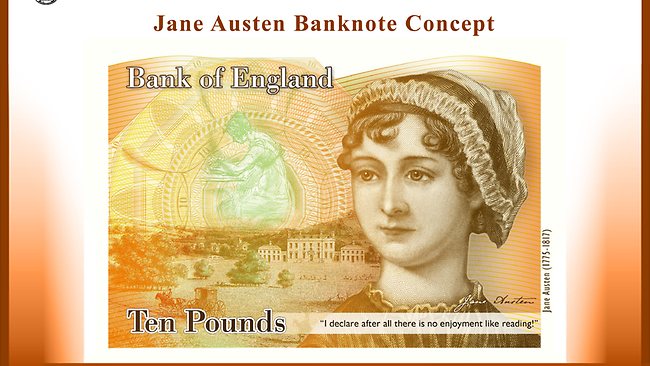
And then Jane takes front-row seat after several weeks of mind-boggling discussion and various petitions on who shall grace the next issue of the £10 note, a woman it was to be, and Jane Austen it is – we can assume the Bank of England was a tad nonplussed by all of Jane Austen fandom raving for her to be chosen…

Here are the details – though they will not be in circulation until 2017 – I do wonder if they are concerned that any such Austen covered notes appearing shall just as quickly disappear into people’s scrapbooks and they shall have to start all over again – I cannot even imagine SPENDING this money, can you??

ja10poundnote

[ Image: news.com.au ]

The portrait of Jane Austen, which will appear on the banknote, is adapted from a sketch drawn by her sister Cassandra Austen. Other features include:

• A quote from Pride and Prejudice – “I declare after all there is no enjoyment like reading!”

• An illustration of Elizabeth Bennet, one of the characters in Pride and Prejudice

• An image of Godmersham Park in Kent – the home of Jane Austen’s brother, Edward Austen Knight, and the inspiration for a number of novels

• A central background design of the author’s writing table which she used at home at Chawton Cottage in Hampshire

Fellow writers William Shakespeare and Charles Dickens have appeared on banknotes in recent times. Dickens was on the £10 note [Jane Austen shall be replacing Charles Darwin who is currently on the £10 note] and Shakespeare on the £20 note.

Bank of England notes can be spent throughout the UK. In addition, three banks in Scotland and four in Northern Ireland are authorised to issue banknotes.

On Twitter, Mr Osborne wrote: “[Incoming Bank of England governor] Mark Carney’s choice of Jane Austen as face of £10 note is great. After understandable row over lack of women, shows sense and sensibility.”

[Good to know someone knows their Austen…]

[Quoting from BBC News, where you can find a list of all the previous banknotes with famous faces…]

newscovers-baby

[Image:  CBS News]

******************

UPDATE:  adding a few links here to other writings on the kerfuffle of Jane on the £10 note:

c2013 Jane Austen in Vermont
Author Interviews · Books · Jane Austen · Jane Austen Popular Culture · Jane Austen Sequels · Regency England · Women Writers

On My Bookshelf ~ Jane Austen Scholar Janet Todd Turns to Fiction and Takes on Lady Susan!

Well, not sure if an ebook can be termed “on my bookshelf” but no matter – this new book out today by Austen scholar Janet Todd has already made its way to my kindle, so a virtual bookshelf it is … and I shall drop all my other reading and begin this immediately!

cover-ladysusan

Professor Todd has taken on Jane Austen‘s Lady Susan in her fictional account Lady Susan Plays the Game – this is from the Bloomsbury website:

A must-read for any devotee of Jane Austen, Janet Todd’s bodice-ripping reimagining of Austen’s epistolary novel Lady Susan will capture your literary imagination and get your heart racing.

Austen’s only anti-heroine, Lady Susan, is a beautiful, charming widow who has found herself, after the death of her husband, in a position of financial instability and saddled with an unmarried, clumsy and over-sensitive daughter. Faced with the unpalatable prospect of having to spend her widowed life in the countryside, Lady Susan embarks on a serious of manipulative games to ensure she can stay in town with her first passion — the card tables. Scandal inevitably ensues as she negotiates the politics of her late husband’s family, the identity of a mysterious benefactor and a passionate affair with a married man.

Accurate and true to Jane Austen’s style, as befits Todd’s position as a leading Austen scholar, this second coming of Lady Susan is as shocking, manipulative and hilarious as when Jane Austen first imagined her.

Published: 15-07-2013
Format: EPUB eBook
ISBN: 9781448213450
Imprint: Bloomsbury Reader 
RRP: £6.99  [ in the US, the kindle price is $7.19 :  Amazon.com

*******************

You can read a post by Janet Todd here at the Bloomsbury Reader blog –  where she “tells us her thoughts on writing, language, and the pressure of re-imagining Jane Austen:”

Anne Elliot, virtuous heroine of Persuasion, was ‘almost too good’ for Jane Austen. ‘Pictures of perfection make me sick and wicked,’ she remarked towards the end of her life. All Austen’s novel heroines are indeed ‘good’: two of them initially hazard improper or injudicious remarks—Elizabeth Bennet and Emma—but later they learn to repress such high spirits.

Now look at Jane Austen’s own letters. Recollect that most of them address her beloved Cassandra who, after Jane’s death, guarded her sister’s image by burning anything she deemed unsuitable—not so much for the public, since Jane was not yet famous enough to have her private correspondence of general interest, but for the younger members of the extended family now living in high Victorian rather than racy Regency times.  Yet even the unburnt letters show a woman very different from the fictional heroines, a woman with a naughty propensity sometimes to laugh at the virtuous, the vulnerable or the just plain unfortunate—a wife with an uncomely husband experiencing a still birth or young girls lacking beauty and unable to compensate for it.  This Jane Austen emerges very fully in a little work she wrote just as she was entering adulthood and long before she’d published any of her masterly novels: ‘Lady Susan’….

Continue reading…

*********************


About the Author:

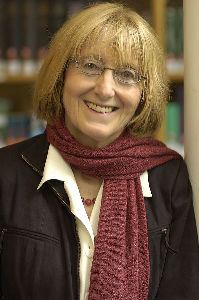
janet_toddJanet Todd is an internationally renowned scholar of early women writers. She has edited the complete works of England’s first professional woman writer, Aphra Behn, and the Enlightenment feminist Mary Wollstonecraft, as well as novels by Charlotte Smith, Mary Shelley and Eliza Fenwick and memoirs of the confidence trickster Mary Carleton. She is also the general editor of the 9-volume Cambridge Edition of the Works of Jane Austen and editor of Jane Austen in Context and the Cambridge Companion to Pride and Prejudice. Among her critical works are Women’s Friendship in Literature, The Sign of Angellica: Women, Writing and Fiction 1660-1800 and the Cambridge Introduction to Jane Austen. She has written four biographies: of Aphra Behn and three linked women, Mary Wollstonecraft, her daughter, and her aristocratic Irish pupils.

In the 1970s Janet Todd taught in the USA, during which time she began the first journal devoted to women’s writing. Back in the UK in the 1990s she co-founded the journal Women’s Writing. Janet has had a peripatetic and busy life, working at universities in Ghana, the US, and Puerto Rico, as well as England and Scotland. She is now an emeritus professor at the University of Aberdeen and lives in Cambridge.


Further reading:

book cover-LadySusanpenguin

c2013 Jane Austen in Vermont


Author Interviews · Collecting Jane Austen · Fashion & Costume · Jane Austen · Jane Austen Merchandise · Jane Austen Popular Culture · Social Life & Customs · Women Writers

Guest Post ~ Pride and Prejudice RPG with Vanessa Paugh

Gentle and Fun-Minded Readers: today I welcome Vanessa Paugh, creator of Pride and Prejudice RPG*, a mind-challenging Jane Austen-related game for your iphone. I have downloaded it, but alas! have not had the time to really become “accomplished” [one must practice as Elizabeth so wisely reprimands herself and Mr. Darcy] – but I invite you to read what Vanessa has to say about why she created this game – you can find it at the iTunes store for 99c – try it out and let me know how you fare! – and Thank You Vanessa for sharing your game with us today!

[*for the uninitiated: RPG = role-playing game]

*****************************

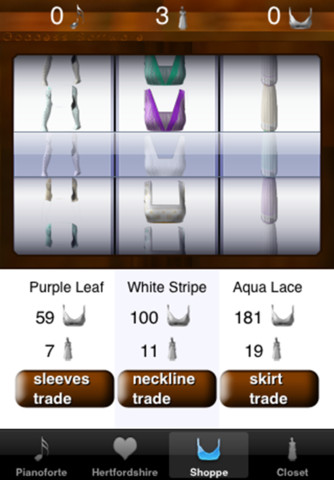
Pride and Prejudice RPG is a musical, fashion role playing game based on the first part of Jane Austen’s novel. The player becomes Elizabeth Bennett and strives to complete the accomplishments that will lead her to Mr. Darcy. There are four sections in the game: Pianoforte, Hertfordshire, Shoppe and Closet.

  • In the Pianoforte section, the player earns musical note points by practicing classical songs.
  • The player uses the notes in the Hertfordshire section to complete accomplishments such as “suffer Mother’s nerves” and “ascertain a blue coat” and to earn fortune points.
  • The Shoppe section allows the player to buy parts with her fortune that can be used to make gowns in…
  • …the Closet section. The more gowns the player makes, the more accomplishments she can do and finishing all the accomplishments wins the game.

With Pride and Prejudice RPG, the player can enjoy literature, fashion and music, and painlessly improve her math skills at the same time.

Pianoforte section

            The primary reason that I created Pride and Prejudice RPG was to ultimately increase the numbers of women in Science Technology Engineering and Math (STEM). As Ghandi said, “be the change you want to see.” Studies have shown that many gamers become interested in STEM from curiosity about the inner workings of the games they play. Subsequently, they want to make games themselves and eventually choose programming or other STEM fields as careers. In addition, when many women see how technology can solve problems which interest them, they realize that STEM fields don’t have inherent gender association.

Currently, many concerned woman are debating the best methods to increase the numbers of women in STEM. Some say that gender neutral toys, clothes, media and attitudes are the only way to go. Others are trying the girly geek route with perfume chemistry sets, pink Legos, computer engineer Barbie and glamourous magazine style math books. The problem comes when these groups forget the goal and end up fighting each other. STEM fields don’t have to be limited by gender and cultural gender norms don’t have to limit careers in STEM fields. According to Kim Tolley’s research, in the 1830’s, Americans debated whether women could study classics, because many “experts” thought they should continue to study science. In 2005, Americans debated whether woman could study science because some “experts” thought they should continue to study classics. It’s time to take the gender limitations out of academics, period. I hope Pride and Prejudice RPG is one step in that direction. It includes literature, musical math, historical fashion and creative experimentation. These are the four main subjects that we require all students to learn: Language Arts, Mathematics, History and Science. When roadblocks are removed and encouragement is not withheld, woman can learn all of them.

Although I had played many computer games, I never considered becoming a game designer until I heard about Brenda Laurel and Purple Moon’s “Rocket’s New School.” Janet H. Murray’s “Hamlet on the Holodeck” inspired me to read all of Austen’s work and start turning “Pride and Prejudice” into a game. I was enlightened by Sherri Graner Ray’s “Gender Inclusive Gaming” and investigated redesigning traditional violent gameplay into other game playing mechanisms. Talking with Julienne Gehrer, the developer of the Pride and Prejudice board game, inspired me to focus on selecting the genre of the game first. Emma Campbell Webster’s “Lost in Austen” confirmed my research that a role-playing game would be the most appropriate genre. I was also inspired by the mommy iPhone game company Appsnminded and intrigued by some iPhone task based RPGs, which led me to discover the right game mechanisms to trade narrative accomplishments for violent acts. A post on Balancing Jane’s blog gave me the idea to combine music and math. And after reading Peggy Orenstein’s “Cinderella Ate My Daughter” and debating on Reel Girl’s blog, I refined Pride and Prejudice RPG’s presentation, so that it was more about accomplishment and less reflective of cultural gender biases.
Hertfordshire section

I started designing my Pride and Prejudice game in 2004 with girls in mind, continuing in the footsteps of the girl games movement from ten years before. However, at the Women’s Game Conference in 2004, I heard a woman ask when games that reflected her fantasies would be addressed by the game industry. A man on the panel dismissed her question, so I started focusing on software for women. My research predicted that Jane Austen readers who hadn’t played games might try my game if the text was fairly literal. It also indicated that gamers who hadn’t read Austen might read her work as a result of playing a literal Pride and Prejudice game. Realizing that there had been a lot of debate among women over video game violence, I excluded weapons, stereotypes, and moving targets from my game. I also left out timed challenges, timed energy replacement, and long written passages from Pride and Prejudice RPG to make it more fun for novice gamers.

Shoppe section

 Closet section

The current version of Pride and Prejudice RPG covers the first part of Jane Austen’s novel up to the end of the Meryton Assembly. In future updates, I want to add accomplishments for Elizabeth’s adventures in Kent and Derbyshire, and important events such as refusing Mr. Collins and Mr. Darcy. I also plan to include more challenging songs, and of course, Elizabeth will need more shoes, gowns and bonnets. If women who play my game and love it let me know, I will be very glad to hear from them. However, I really challenge anyone who wishes Pride and Prejudice RPG were different to seriously consider making her own game. There are only three other electronic Jane games out there so far: Matches and Matrimony, Rogues and Romance, and Hidden Anthologies. There are millions of Jane Austen fans and thousands of openings in STEM fields waiting.

About the Author: 

Dr. Vanessa Paugh is a college professor and indie game developer in Dallas, Texas.
She holds a Bachelor’s in Electrical Engineering,
an MFA in Arts and Technology and a Ph.D in Aesthetic Studies.

Images and text courtesy of Vanessa Paugh, with thanks!

You can find the game at the iTunes store here:  http://itunes.apple.com/us/app/pride-and-prejudice-rpg/id510978515?mt=8

and please comment if you have any questions or thoughts for Vanessa about her game!

c2012 Jane Austen in Vermont
Books · Jane Austen · Literature · Museum Exhibitions · News · Social Life & Customs · Women Writers

In My Mailbox! ~ The Female Spectator Spring 2012

The Female Spectator, (Vol. 16, No. 2, Spring 2012), the newsletter of the Chawton House Library, showed up last week in my mailbox – this 12 page newsletter always offers something new and exciting to be discovered and shared!: 

1. “Chawton Chronicles: A Letter from the CEO” – Stephen Lawrence talks about what has been accomplished at the Library since its inception in 2003, especially the academic initiatives and activities and the Visiting Fellowship Programme.  And he writes of the upcoming Spring Gala of the JASNA-Greater Chicago Region where Sandy Lerner, Elizabeth Garvie, Lindsay Ashford, and Stephen will all be in attendance for the “Chawton Comes to Chicago” event [which took place on May 5 – visit the website for a photo gallery of the event – accessible to members only I’m sorry to say!]

2. A lovely tribute to Vera Quin, author of In Paris with Jane Austen (2005) and Jane Austen in London (2008), by Gillian Dow – you can read my blog post on Ms. Quin here. 

3.  “Talking Portraits at CHL” – by Sarah Parry – about the project to bring to life with actors in full costume the various portraits housed in the Library: the portraits of Mary Robinson, Elizabeth Hartley, and Catherine (Kitty) Clive were the portraits chosen for this first effort. 

[Image of  Catherine “Kitty” Clive from CHL at the BBC Collection]
4. “Curious Consumption: Cookery Books at CHL” – by Lindsey Phillips. An essay on her research into the exchange of culinary information and recipes between Britain and the West Indies; included is a recipe for “pepper pot” from Maria Eliza Ketelby Rundell’s American Domestic Cookery (ed. of 1823), which you can find here at Google Books. 

5. “The Day the Descendants Came to Tea: Revelations and Connections from a Chawton House Fellowship” – by Katharine Kittredge, on the author’s study of Melesina Trench (1768 – 1827), an Irish writer, poet and diarist, and Kittredge’s connection with her relatives after her research was published in Aphra Behn Online. [her article in ABO can be found here.]  And click here for Kittredge’s biography of Trench on the CHL website.

Melesina Trench – wikipedia

6.  “The Language of Women’s Fiction, 1750-1830” – a conference report by Christina Davidson – one hopes the papers discussed will be published at some point…?

7. “‘Not in All Things Perfect’: The North Welsh Gentry in Fiction and History” –  Mary Chadwick shares her research on a collection of English-language manuscript letters, poems, etc. written by members of a North Welsh gentry community and collected by one family, the Griffiths of Garn, and how this compares to the writing of the various novelists who set their tales in Wales (including Jane Austen in her Juvenilia!), in particular Elizabeth Hervey’s The History of Ned Evans (1796) [and recently re- published in the CHL / Pickering & Chatto series.

 ******************

And reasons to be at the CHL, and a continuing source of depression for those of us who cannot! : 

Lectures:

June 7 [today!]: Dr Laura Engel on “Much Ado About Muffs: Actresses, Accessories, and Austen”

June 20. Professor Elizabeth Kowaleski Wallace on “‘Penance and Mortification for Ever’: Jane Austen and Catholicism.”

June 25. Evening Talk and Book Launch: Dr. Katie Halsey “‘A Pair of Fine Eyes’: Sight and Insight in Jane Austen’s Novels.”

When Mr. Darcy meditates on the pleasure bestowed by “a pair of fine eyes” in Pride and Prejudice, he does so because eyes are so very expressive. In this talk, Dr Katie Halsey explores the relationship between the physical eye and the eyes of the mind in Austen’s novels.

This talk is part of Alton’s Jane Austen Regency Week, and the launch of Katie Halsey’s new book: Jane Austen and her Readers, 1786 – 1945 [and soon to be added to my bedside table…]

 Exhibition:

“Jane Austen’s Bookshop: An Exhibition” 18 June – 6 July, 2012

This exhibition explores how readers and writers in Winchester shared printed material (books, playbills, engravings &c). Men and women, young and old, gentry and middle classes, rich and poor, Protestant and Catholic – all participated. The Austen family purchased literature from the bookshop of John Burdon (today still a bookshop), while scholars at Winchester College published their works in their own city. The newly founded hospital produced annual reports, and local newspapers such as the Hampshire Chronicle promoted all kinds of publications in advertisements and reviews.

Come to Chawton House Library to learn more about book production and circulation. Find out what kind of material was published in Hampshire in the eighteenth century, and just what the Austen family might have read.

You can receive The Female Spectator from CHL by becoming a member / friend – information is here: I heartily recommend it!

@2012 Jane Austen inVermont
Austen Literary History & Criticism · Jane Austen · Jane Austen Societies · Women Writers

All I Want for Christmas ~ Anything Jane Austen !

Don’t forget to comment on the Jane Austen Birthday Soiree post below to be eligible to win the JASNA-Wisconsin 2012 Jane Austen Calendar!

**********************

For the next seven days I will post a daily want of Austen-related items that I think everyone should ask for this Christmas – [some of these things I already have, some I really want, so I hope my family or Santa is paying close attention…] – great ideas for the Austen-lover in your life and / or add these to your own want-list and I promise you will not be disappointed on Christmas morning!

DAY I: 19 December 2011

Chawton House -Wikipedia

A Membership in
North American Friends of Chawton House Library 
  

A terrific cause supporting early women writers, housed at the home of Jane Austen’s brother Edward Austen Knight…

You also receive their lovely newsletter 4 times a year: The Female Spectator – herewith the latest to grace my mailbox:  Volume 15, No. 4, received this past week: 

Starting with the “Chawton Chronicles” the column from Stephen Lawrence, CEO, is always a great summary of happenings in JA’s world both in and out of the CHL doors: this issue Steve recounts his attendance at JASNA’s AGM in Fort Worth. 

Other essays:

1.  The Diverse Women of Chawton House Library” – by Gillian Dow 

On the portrait of Mary Robinson which CHL has loaned to the National Portrait Gallery’s for the exhibition The First Actresses: Nell Gwynn to Sarah Siddons, along with Robinson’s 1801 Memoirs

Mary Robinsion as Perdita - John Hoppner

[Image from The Guardian UK – image copyright CHL; exhibit runs through January 12, 2012]

Dow also references the several lectures offered at CHL, with links to the podcasts of two of them [scroll down for the links]: Dr. Mark Towsey on Elizabeth Rose of Kilravock; and Dr. Debbie Welham on the life of Penelope Aubin.    

2.  “The Contradictory Rhetoric of Needlework in Jane Austen’s Letters and Novels,” by Ellen Kennedy Johnson, author of the dissertation [and forthcoming book? ] Alterations: Gender and Needlework in Late Georgian Arts and Letters.  [available now in dissertation format – you can add this to my want-list]

3. “Fiction in The Hampshire Chronicle, 1772-1829,” by Ruth Facer, author of the lately published Mary Bacon’s World: A Farmer’s Wife in Eighteenth-Century Hampshire.

[you can purchase this book at the CHL online shop here: http://chawton.org/shop/index.html  [I would like this also!]

You can read more about the The Hampshire Chronicle here.

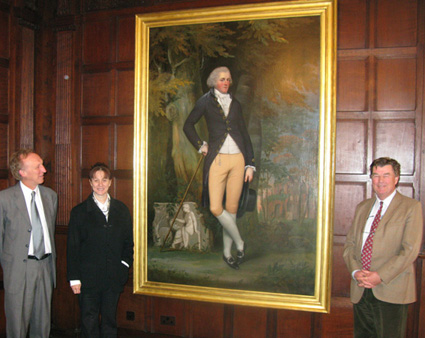
4. “Edward Austen’s Suit” – by Sarah Parry, tells of the portrait recently returned to CHL, and the suit as worn by Edward now on display [though not the same suit as in the portrait] 

 
Edward Austen Knight portrait, with Steve Lawrence, Sandy Lerner,
and Richard Knight [image: JAS Society]

5. “Jane Austen and Chawton House Library: A New Patron’s View” by Deirdre Le Faye. Ms. Le Faye shares her thoughts on new areas of study in Austen’s world.  She wrote of this also here in the Spring 2010 Persuasions On-Line and well-worth the read: http://jasna.org/persuasions/on-line/vol30no2/lefaye.html

6. “Literary and Literal Landscapes” by Eleanor Marsden, wherein you are reminded to help CHL in whatever way you can…

 7.  “North Meets South: Women’s Travel Narratives at Chawton House Library” by Isabelle Baudino, a Visiting Fellow at CHL in 2010, on her use of the CHLibrary for her research on women travel writers, such as Anne Plumptre.

Anne Plumptre (LibraryThing)

8. The quarterly column “Faces of Chawton” is in this issue about Ray Moseley, the Information Officer, and the man behind the various PR postings, the facebook and twitter pages, membership databases, and the CHL shop! – a feast of a job!

The Calendar of upcoming events is the only column that leaves me in quite a melancholic mood: so much going on with lectures, balls and gatherings, I am sick at being so far away… 

You can visit Chawton House Library on the web here: http://www.chawton.org

You can shop here:  http://www.shopcreator.com/mall/chawtonhouselibrary/

You can subscribe in the UK here [£30.+]:  http://www.chawton.org/support/friends.html

And in the US here [$50. and up]:  http://www.chawton.org/support/nafchl.html 

Treat yourself [you desesrve it] or a friend and help out CHL at the same time!

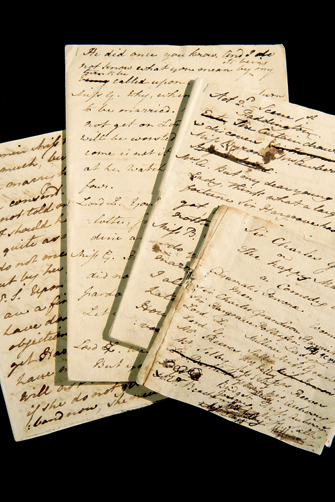
Austen - Grandison MS - CHL
Copyright @2011 Jane Austen in Vermont  
Austen Literary History & Criticism · Books · Jane Austen · Jane Austen Popular Culture · Jane Austen Societies · JASNA · Literature · London · Regency England · Women Writers

My Book Stash from the JASNA AGM

One cannot resist the Emporium at the JASNA AGM – and this year in Fort Worth was more fun than ever – tables filled with goodies from the various Regions, and a whole room filled with local vendors from Texas.  But I first always head to the book stalls – a bad and expensive habit – and this year I was not disappointed. Happy to see again, Traveler’s Tales from Canada [sorry, no website!], and Jane Austen Books, and though I had to think of weight and limit some purchases, this year I wisely bought what I wanted to and shipped them home – they came today [love the UPS man, don’t you?!] 

So here is my book list: some are titles I have had on my list for a while, others are what I call the “browser’s banquet” – those things you either didn’t know about or wanted to see and touch before buying – and finally those things I am ashamed to say should have been in my Austen Library years ago, but never made it there for some reason or other …  so here goes, with short annotations, in no particular order… 

Austen, Jane.  Volume the Second. Ed. Brian Southam. Oxford: 1963. – I’ve had vol. 1 and 3 for a good long time, so very happy to find this… 


Quin, Vera. In Paris with Jane Austen.  Cappella Archive, 2011. Her Jane Austen Visits London is terrific, so why not Paris…! 

Hurst, Jane. Jane Austen and Chawton. The Author / JAS, 2009.  Had to add this to my JAS collection… 

Such Things as Please my Own Appetite: Food and Drink in Jane Austen’s Time. JASNA-Washington DC, n.d.  40p.  A great compilation of essays, both contemporary and historical.   

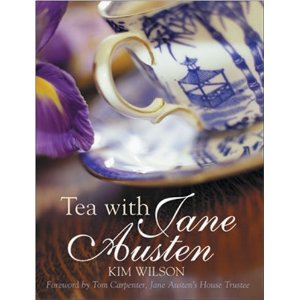
Wilson, Kim. Tea with Jane Austen. London: Frances Lincoln, 2011.  The new edition with color illustrations – I saw this in London in May and didn’t pick it up [that old weight problem…] – saw Ms. Wilson [we played Whist together!] but did not get it signed … oh well… lovely book – everyone who loves tea and Jane should have this, both editions really…    

_____. Flowers and Shrubs for Georgian and Regency Gardens, including a catalogue of Kitchen-garden Plants. The Author, 2011. 20 p.  A great list for the gardener in me… 

Noblesse Oblige: An Enquiry into the Identifiable Characteristics of the English Aristocracy. By Alan Ross, Nancy Mitford, Evelyn Waugh, et al. London: Hamish Hamilton, 1956. A must-have for your British collection, with requisite British “humour.” 

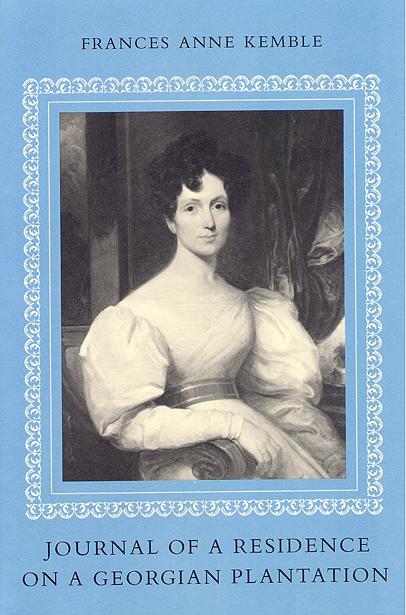
Kemble, Frances Anne.  Journal of a Residence on a Georgian Plantation in 1838-1839.  Athens: U of Georgia P, 1984, c1961. [originally published in 1863] – Kemble’s views on slavery in Georgia– compelling stuff I have long wanted to read…

Monaghan, David, ed. Emma: Contemporary Critical Essays. Macmillan, 1992. Didn’t have this one – now I do… 

Wright, Lawrence. Clean & Decent: The Fascinating History of the Bathroom and the Water-Closet. Penguin, 2000, c1960.  What every person with an interest in the most basic domestic matters should read… and the cover is really cool…

Vulliamy, C. E. English Letter Writers. London: Collins, 1945.  Part of the Britain in Pictures series, which I collect… 

Lefroy, Helen, and Gavin Turner, ed. The Letters of Mrs. Lefroy: Jane Austen’s Beloved Friend. Winchester, JAS, 2007.  why not?  more letters from Jane’s circle…

Adams, Jennifer. Little Miss Austen: Pride and Prejudice. Layton: Gibbs Smith, 2011. Because you have to have this if you collect everything to do with P&P

Ashford, Lindsay. The Mysterious Death of Miss Austen. Dinas Powys,Wales: Honno, 2011.  Ms. Ashford gave a most interesting talk at the AGM – brought this on the plane – almost done and will report on it soon! 

Piggott, Patrick. The Innocent Diversion: Music in the Life and Writings of Jane Austen. Moonrise, 2011, c1979.  A must-have, now reprinted… 

Barron, Stephanie. Jane and the Canterbury Tale. New York: Bantam, 2011. Because this is her latest – Ms. Barron was there, but alas! I did not get this signed either… I have heard it is great…

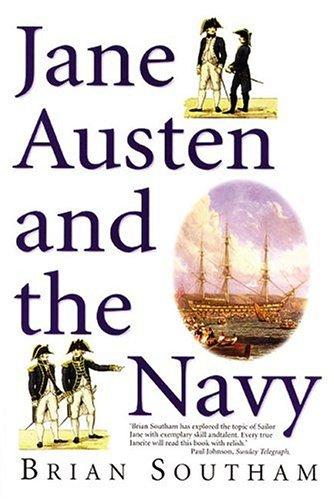
Southam, Brian. Jane Austen and the Navy. 2nd ed, rev. National Maritime Museum, 2005, c2000. Because I am shamed at not having read this – on my TBR pile, on top… 

Rubino, Jane, and Caitlen Rubino-Bradway. Lady Vernon and Her Daughter. New York: Crown, 2009.  Who cannot want more of Lady Susan?

Rees, Joan. Jane Austen: Woman and Writer. New York: St. Martin’s, 1976.  A biography I do not have – has an emphasis on the juvenilia and letters… 

McMullen, Lorraine. An Odd Attempt in a Woman: The Literary Life of Frances Brooke. Vancouver: U of British Columbia P, 1983.  I recently read The Excursion and wanted to know more about this author who Jane Austen read… 

Spacks, Patricia Meyer. Gossip. New York: Knopf, 1985.  Should have been on my shelf years ago – imagine Emma without “gossip”! 

A few finds on London, because one can never have enough:

Colby, Reginald. Mayfair: A Town within London. New York: Barnes, 1966. 

Hobhouse, Hermione. A History of Regent Street. London: MacDonald and Jane’s, 1975. 

Shepherd, Thomas, and James Elmes. London in the Nineteenth Century. New York: Mayflower, 1978. A reprint edition [originally published in 1827] but happy to finally have this… excellent pictures…

and of course this from my roomie – Jane Austen Made me Do It, by Laurel Ann Nattress – now signed and all! – not to mention a delightful read…

Oh dear, no space, no time…

Copyright @2011 Deb Barnum, of Jane Austen in Vermont 
Books · News · Women Writers

The Truth is Out ~ Georgette Heyer & Barbara Cartland

Those who have read anything of Georgette Heyer, her writings, and her life know about the hushed-up squabble with another romance writer during the 1950s – Heyer chose not to sue for plagiarism, but Heyer had her say and the writer was “politely” asked to just stop it.  Now finally the story is out, Barbara Cartland the offender, all the juicy details to be revealed in Jennifer Kloester’s* new work, Georgette Heyer: Biography of a Bestseller, to be released this fall by Heinemann.

Here is the story from Bookseller.com:

Heinemann to explore Heyer’s plagiarism fury

29.07.11 | Benedicte Page

A literary plagiarism allegation from the 1950s is set to be given its first detailed airing in a new biography of much-loved novelist Georgette Heyer.

Georgette Heyer: Biography of a Bestseller by Jennifer Kloester (Wm Heinemann, hb, £20, October) reveals the outrage felt by the queen of witty regency romances at the obvious similarities between Barbara Cartland’s historical novel Knave of Hearts and her own youthful story These Old Shades (published in 1926), when they were brought to her attention in 1950.

“I think I could have borne it better had Miss Cartland not been so common-minded, so salacious and so illiterate,” Heyer told her agent, Leonard Parker Moore, in no uncertain terms. “I think ill enough of the Shades, but, good God! That 19-year-old work has more style, more of what it takes, than this offal which she has written at the age of 46!”

Heyer was also indignant at Cartland’s “borrowing” of various character names. “Sir Montagu Reversby”, a character in Cartland’s novel Hazard of Hearts, was blatantly pinched, Heyer felt, from Sir Montagu Revesby, a character in her novel Friday’s Child.

But it was Cartland’s historical and linguistic errors that really offended the writer‚ herself a stickler for accuracy. “She displays an abysmal ignorance of her period. Cheek by jowl with some piece of what I should call special knowledge (all of which I can point out in my books), one finds an anachronism so blatant as to show clearly that Miss Cartland knows rather less about the period than the average schoolgirl,” said Heyer, who told her agent she would “rather by far that a common thief broke in and stole all the silver”.

A solicitor’s letter to Cartland followed, and according to Kloester: “There is no record of a response . . . but Georgette later noted that ‚’the horrible copies of my books ceased abruptly’.”

Kloester’s biography has been written with the backing of Heyer’s son and the late Jane Aitken Hodge, whose own biography was entitled The Private World of Georgette Heyer. The book’s editor, Georgina Hawtrey-Woore, said the book contains much new material, including photos and 400 of Heyer’s letters.

 [Thanks to the Teach Me Tonight blog for the information]

*Dr. Jennifer Kloester’s previous book, Georgette Heyer’s Regency World, is an engaging fact-packed compilation of all things Heyer.  She visited the Word Wenches blog last November – you can read her interview here where she talks about this upcoming biography.

For further reading on Georgette Heyer, see my bibliography post here, as well as the link to all the book reviews from Austenprose‘s fabulous Heyer celebration last year.

Copyright @2011 by Deb Barnum, of Jane Austen in Vermont
Jane Austen · Literature · News · Publishing History · Rare Books · Women Writers

On the Block! ~ Sarah Burney’s Copy of ‘Pride & Prejudice’

Heritage Auction Galleries: 2011 April New York Signature Rare Books Auction #6053 ; Lot # 36518

Novelist Sarah Burney’s Copy of Jane Austen’s Pride and Prejudice

[Jane Austen]. Pride and Prejudice: A Novel. In Three Volumes. By the Author of “Sense and Sensibility.” London: Printed for T. Egerton, 1813.

First edition. Three twelvemo volumes (7 3/8 x 4 1/2 inches). [4], 307, [1, blank]; [4], 239, [1, blank]; [4], 323, [1, blank] pp. Half-titles present but that for the first volume is in facsimile. Most sheets watermarked 1808.

Contemporary half green roan over marbled boards, smooth spines with gilt rules and lettering, edges sprinkled red. Some rubbing to joints and extremities. Scattered foxing. A very good copy with a fine association.

Sarah Harriet Burney’s copy, with her signature on the title of all three volumes. English novelist Sarah Harriet Burney (1772-1884), half-sister of Fanny Burney, published five novels during her lifetime. Among her more famous works are Tales of Fancy and Geraldine Fauconberg. Her work was admired by Jane Austen who, in one of her letters, remarks that she is reading one of Sarah Burney’s novels for the third time. In turn, Sarah Harriet Burney received Jane Austen’s novels from her publisher, and was one of the earliest readers to publicly recognize her genius. Sarah Burney’s life has strong echoes of Jane Austen’s fiction, but with scandalous overtones. In 1798, she eloped with her half-brother Captain James Burney, 22 years her senior, settling eventually in lodgings in Tottenham Court Road, “living in the most groveling mean style.” In 1803 James went back to live with his wife. Sarah then took a job as a governess, wrote novels as a means of earning money to support herself, and eventually left England for Florence, where she mixed with a circle or artists and authors including Henry Crabb Robinson. She received great sympathy from her three remaining half-sisters, Esther, Fanny, and Charlotte, on the death of James Burney in 1821. In 1822 she gained the post of governess to the grandchildren of Lord Crewe, with her own house and a salary of 300 pounds a year. She spent the last years of her life in ill health at a boarding house in Bath. In 1840, on the death of Fanny D’Arblay, Henry Crabb Robinson wrote that she bequeathed Sarah “1,200 per annum for her life.” She continued to socialize with Robinson and his friends until her death at Cheltenham on February 8, 1844. Some of her property was left to her half-nephew, Martin Charles Burney, James Burney’s son.

Gilson A3. Grolier, 100 English, 69. Keynes, Austen, 3. Sadleir 62b. Tinker 204.

Estimate: $90,000 – up.  Starting bid is $45,000.

*Absentee bidding has opened and ends on April 6, 2011.
*Live auction on April 7, 2011.

[Image and text from the Heritage Galleries website]

Copyright @2011 by Deb Barnum, of Jane Austen in Vermont