This week finds me jumping from Jane Austen’s sister-in-law Fanny Austen, to crazy bibliophiles, Rossetti’s wombats, the Coloring craze, Princess Margaret, and on to London, muons (whatever they are…), and more of course – it’s a mad world of information out there…
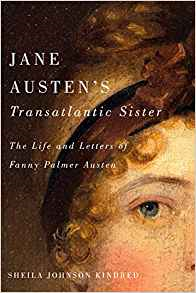
A new website and blog by Sheila Johnson Kindred, where she will explore Jane Austen’s naval world. Kindred is the author of Jane Austen’s Transatlantic Sister: The Life and Letters of Fanny Palmer Austen: https://www.sheilajohnsonkindred.com/
*
This made me laugh: always great stuff on The Londonist
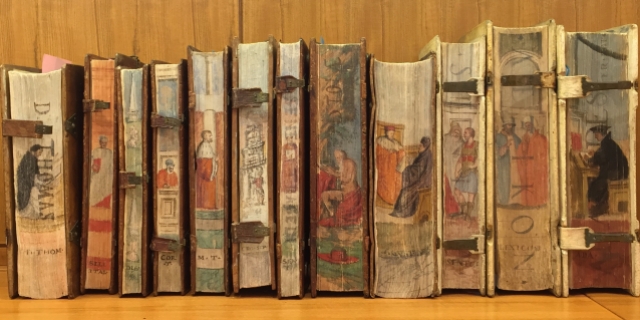
-which led me to this: https://franceswolfrestonhorbouks.com/, a blog by Sarah Lindenbaum, who is seeking to reconstruct the book collection of Frances Wolfreston (1607-1677), a gentrywoman from the English midlands with an expansive library; over 200 books have been identified thus far.
—…which leads you to this illustration from the color week in 2017: Louis Rhead, Romeo & Juliet, for Tales from Shakespeare by Charles and Mary Lamb—-and then back to #colorourcollections on twitter: https://twitter.com/search?q=%23colorourcollections&src=tyah
A new chamber in the Great Pyramid? If you know what a “muon” is, you might know that the use of muon technology has revealed an as yet undiscovered chamber in the Great Pyramid, where remaining treasures may lie: https://blog.oup.com/2019/02/power-mysterious-muon/
*
Here’s a bit of a head-scratcher: with thanks to Tony Grant:
The article shows a letter from Jane Austen to Cassandra that Ms. Watson has transcribed; but she states: “You can actually see how they have changed their manuscript – how Jane Austen changed Pride and Prejudice as she’s writing it… That blows my mind a bit. You see it, and you think – that’s so much better after she’s edited it than before.”
Well, I’m sorry but as far as I know there are no manuscripts of Pride and Prejudice, or any of the other 5 novels other than the cancelled chapters of Persuasion – so this is very interesting if she has been transcribing a P&P manuscript??
An 1800 letter from Jane Austen to her sister Cassandra
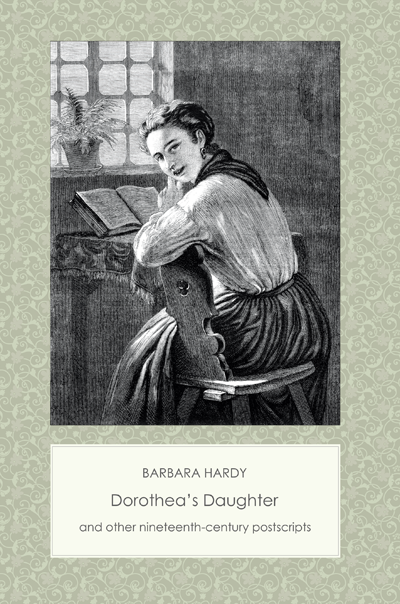
“Dorothea’s Daughter is a stunning new collection of short stories based on novels by Jane Austen, Charlotte Brontë, Charles Dickens, George Eliot, and Thomas Hardy. They are postscripts, rather than sequels, entering into dialogues with the original narratives by developing suggestions in the text. The authors’ conclusions are respected, with no changes made to the plot; instead, Barbara Hardy draws out loose threads in the original fabric to weave new material, imagining moments in the characters’ future lives.”
The stories are:
Twilight in Mansfield Parsonage (Mansfield Park by Jane Austen)
Mrs Knightley’s Invitation (Emma by Jane Austen)
Adèle Varens (Jane Eyre by Charlotte Brontë)
Lucy Snowe and Paulina Bretton: the Conversation of Women (Villette by Charlotte Brontë)
Edith Dombey and Son (Dombey and Son by Charles Dickens)
Harriet Beadle’s Message (Little Dorrit by Charles Dickens)
Lucy Deane (The Mill on the Floss by George Eliot)
Dorothea’s Daughter (Middlemarch by George Eliot)
’Liza-Lu Durbeyfield (Tess of the D’Urbervilles by Thomas Hardy)
Has anyone read this? It was first published in 2011. I’ve just ordered it and will let you know my thoughts…
Thanks for visiting… and Happy Reading…
ps: just a note as to why I leave in the full url of each link: if an imbedded link goes bad or far off into cyberspace, it is easier to find it if you have the details in the url – it doesn’t look as pretty, sorry to say, but more helpful in the end..
The Week of January 28 – Feb 3, 2019: all manner of things from Rembrandt, Vauxhall Gardens, drinking in London, to Thomas Jefferson’s books, Suffragettes, and Jane Austen, of course…
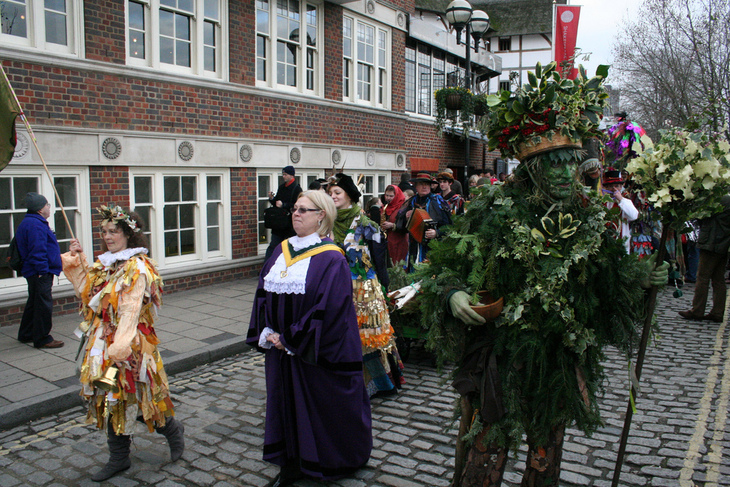
Twelfth Night: A blend of ancient midwinter customs and contemporary festivity occurs each January on Bankside. Things kick off outside Shakespeare’s Globe with the Holly Man — the winter guise of the Green Man spotted across the nation’s pubs. He’s decked out in wonderful foliage and accompanied by the devil Beelzebub and other eccentrically-dressed associates who join together to Wassail (or toast) the people.
A little known fact: I LOVED Superman as a kid – spend my weekly allowance at the down-the-street soda fountain to get the latest issue (so sad I didn’t keep them) – some original movie posters will appear in a Sothebys online auction in March, superheroes included, including my favorite: http://www.sothebys.com/en/auctions/2019/posters-sale-l19900.html?locale=en
The BBC’s ICONS – “Exploring the achievements of the greatest figures of the 20th century. The public vote for their favourites, ultimately deciding who is the greatest icon of them all.” – you can read about it and see the results as voted by the public here: http://www.bbc.co.uk/programmes/b0by86tp
**
One of my best memories of touring through Europe as a college student (MANY years ago) was seeing Rembrandt’s The Night Watch at the Rijksmuseum in Amsterdam – I knew the painting from the required art history class, but was still awed by its size. Two years ago I saw it again and reverted to those long ago days of awe – you can now see it and understand it as never before in this interactive documentary that analyzes the painting: https://nightwatchexperience.com/en/thema/geheimen
You should be registering for the Jane Austen Summer Program at Chapel Hill, NC – “Pride and Prejudice & its Afterlives”- Thursday-Sunday, June 20-23, 2019 – look here for the schedule: https://janeaustensummer.org/about/
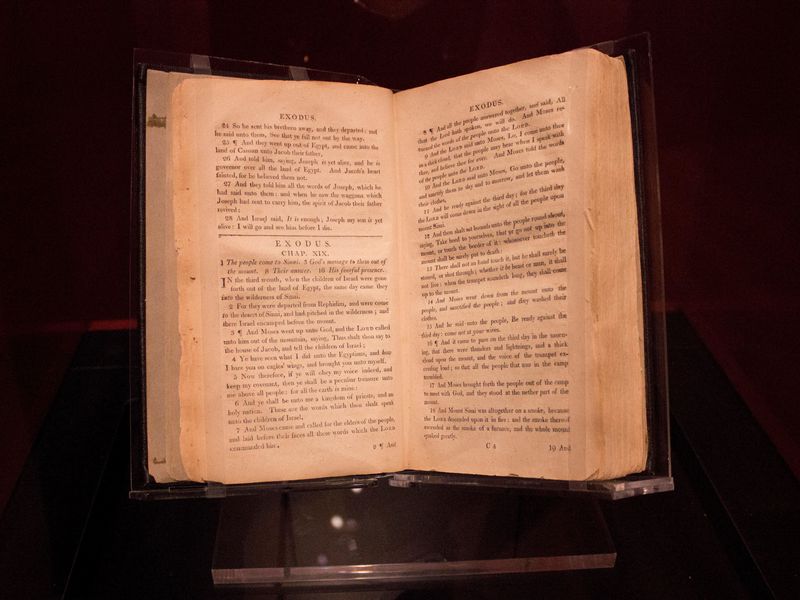
A book in Jefferson’s library: The Uncertainly of the Signs of Death… “Because of this book, fear of being buried alive became widespread in the eighteenth and nineteenth centuries, though modern scholars believe it rarely happened.” Good to know…
***
Embroidery/Spot motif sampler. Unidentified Maker. circa 1620.
Well, this is just plain fascinating – a Victorian literary gentleman, William Sharp, “a Scottish poet, novelist, biographer and editor who in 1893 began to write critically and commercially successful books under the name “Fiona Macleod.” He also corresponded with “her” and you can read these letters here, thanks to OpenBookPublishers [the pdf download is free]: https://www.openbookpublishers.com/product.php/793?793
Alas, no Austen, but a Hemingway, Dickens, L. M. Montgomery, Narnia, and Mickey Mouse…
And to top this all off – a new Austen youtube “Jane Austen – Sarcasm and Subversion – Extra History”:
***************
A very short reading list: Books I am reading / have just finished:
David McCullough’s The Greater Journey: Americans in Paris– fabulous, impressive, extraordinary lives.
The Mermaid and Mrs. Hancock, by Imogen Hermes Gowar – interesting, and a great setting in 1780s London, which I can never get enough of – Reminded me of The Essex Serpent – would like to discuss with someone…
The great biographer Claire Tomalin’s own biography: A Life of My Own – loved this book, love all her biographies
Vanity Fair, by the wordy Thackeray – for a Jane Austen book group – I confess to never having read it, though Becky Sharp is part of anyone’s knowledge if interested in Heroines (good and bad ones)
Duke by Default (Reluctant Royals) by Alyssa Cole – I read this because it was on many lists of best books of 2018 – I don’t know why – someone explain this to me…
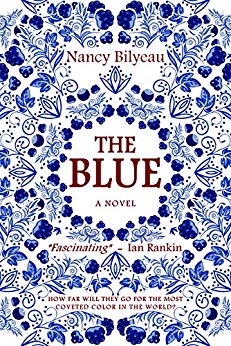
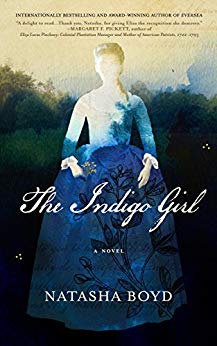
and finally, The Blue, by Nancy Bilyeau (I’m reading this because I am also reading the South Carolina based The Indigo Girl, by Natasha Boyd – in my humble opinion, one cannot get enough of the color blue…)
This totally depressed me: the author of the essay writes: “I recently realized that ethel / ᛟ, the word and rune, have been appropriated by white supremacists and neo-nazis.”
*
“This exhibition brings back to Strawberry Hill some of the most important masterpieces in Horace Walpole’s famous and unique collection for a once-in-a-lifetime exhibition. Horace Walpole’s collection was one of the most important of the 18th century. It was dispersed in a great sale in 1842. For the first time in over 170 years, Strawberry Hill can be seen as Walpole conceived it, with the collection in the interiors as he designed it, shown in their original positions.”
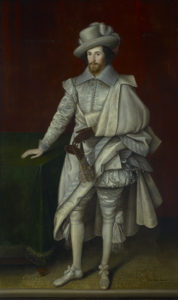
This portrait of Henry Carey by Marcus Geeraerts is the supposed inspiration behind Walpole’s The Castle of Otranto (a must-read for all dedicated Jane Austen fans…)
Image: Image: The Gaming House, A Rake’s Progress by William Hogarth. An early depiction of White’s which was at this time a notorious gambling den [Londonist]
A terrific book at Open Access on Victorian newspapers and periodicals: A Fleet Street in Every Town: The Provincial Press in England, 1855-1900, by Andrew Hobbs – https://www.openbookpublishers.com/product/835 [the pdf is a free download, all 470 pages!] – Hobbs has also set up a twitter account where he will post diary excerpts daily: https://twitter.com/HewitsonDiaries
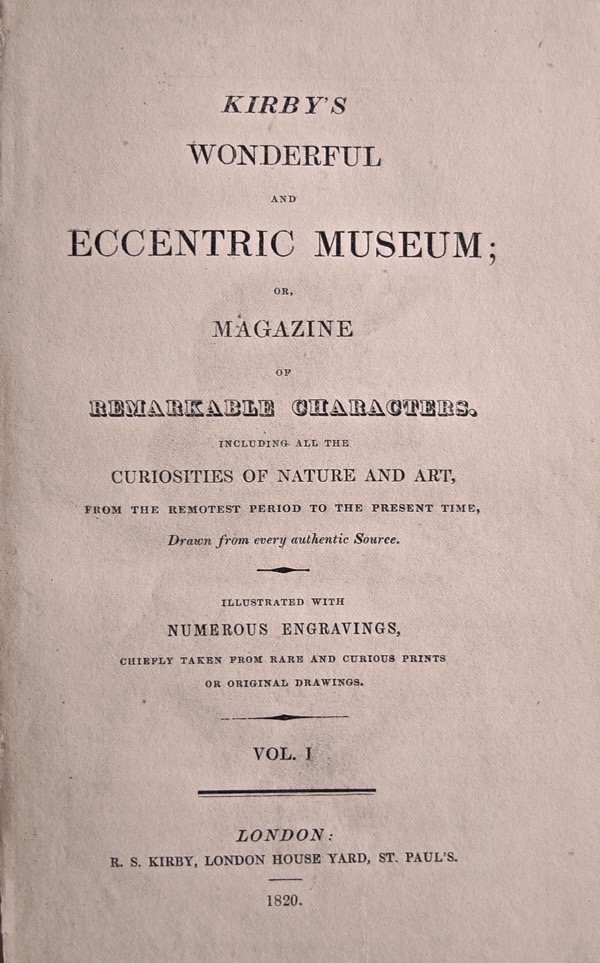
A collection of the wacky and weird, long before P. T. Barnum – Kirby’s Eccentric Museum, with thanks to The Gentle Author at “Spitalfields Life” (excellent images – one weirder than the next…): http://spitalfieldslife.com/2019/01/12/kirbys-eccentric-museum/
It is really rather churlish of me to post about an exhibit that is no longer there – give you a sample of something you can’t anywhere find the full feast – but so I shall do because the exhibit closed right after I went and then the holidays intervened. But with the permission of the Collections Manager at the Fleming Museum at the University of Vermont, I shall show you several of the fashions that were on display at their recent “The Impossible Ideal: Victorian Fashion and Femininity” which ran from September 21 – December 4, 2018.
All the fashions are part of the Fleming’s collection and not usually on display. The exhibition of clothing and accessories, along with excerpts from popular American women’s magazines (Godey’s Lady’s Book and Peterson’s Magazine), explores “how fashion embodied the many contradictions of Victorian women’s lives, and, eventually, the growing call for more diverse definitions of women’s roles and identities.”
It is not a large exhibition, but each gown or corset has its own story: the fabric and accessory details, the history of the wearer, and how it reflected the times in Victorian Vermont. We see the changes during this “Victorian era’s ‘cult of domesticity’ and the idea that women’s place was in the home and not in the public sphere,” to later in the century, “when sleeker skirts, broader shoulders, lighter fabrics, and suit styles gave women greater freedom of movement reflecting increasing autonomy.” [Quoted text from the Fleming Newsletter, Fall 2018].
It is interesting to see the Victorian shift from the Regency era’s flowing and revealing dresses and wonder how women ever let that happen!
I will show you here some of my favorites: I’d like to hear which is your favorite from this small sample…
****************************
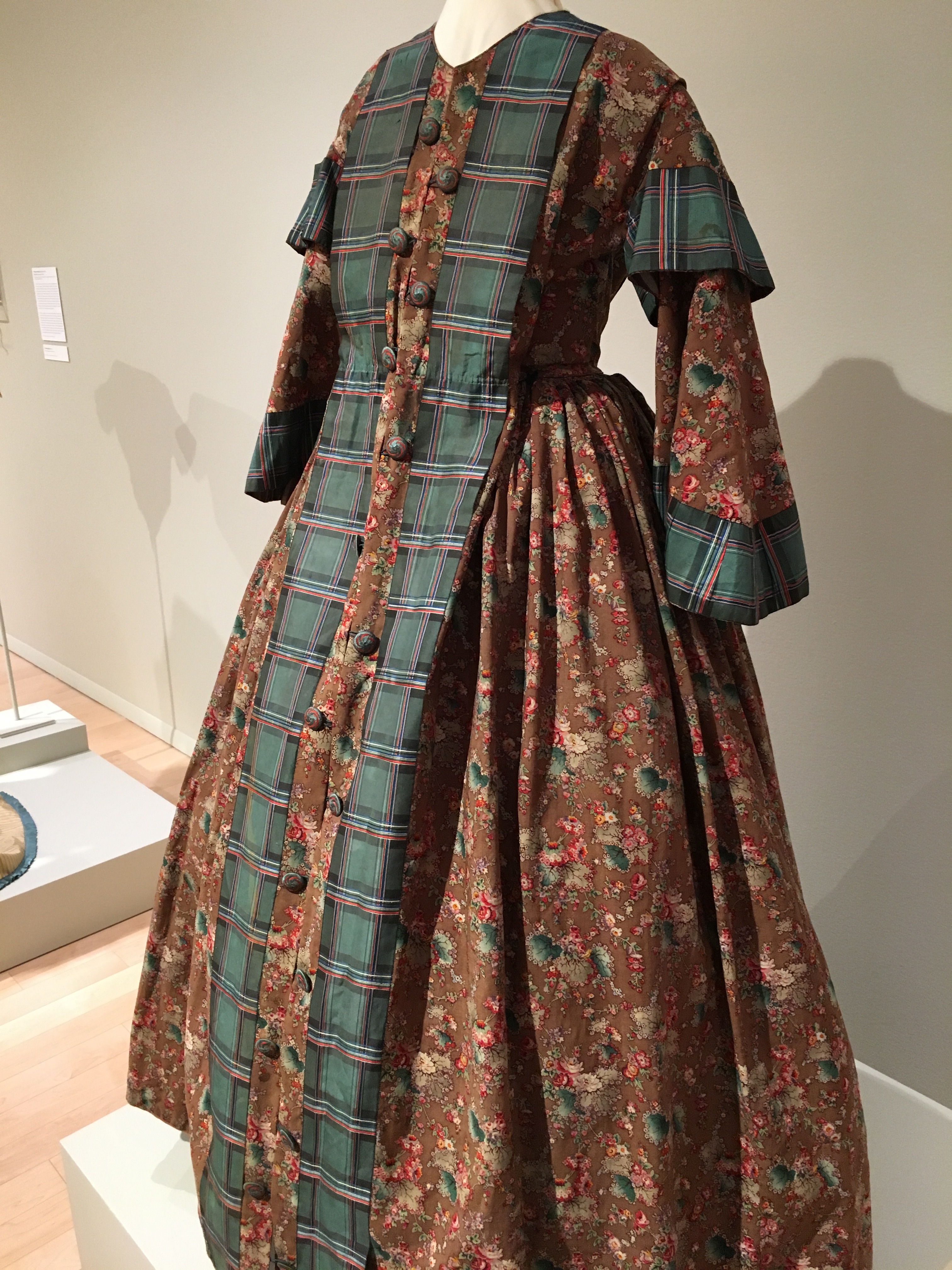
Wrapper, c1850:
printed floral cotton with silk taffeta trim and embroidered buttons; a loosely-fitted at-home dress usually worn at breakfast
Have you always wondered why the Victorians had such a penchant for plaid? See below for some further reading on the subject…
White Wedding Dress, 1857:
off-white damasked silk taffeta with gold silk-fringe. Tradition has it that the trend to wear white for weddings began with
Queen Victoria’s wedding in 1840
– but in reality, white was only used by the wealthiest of brides.
*
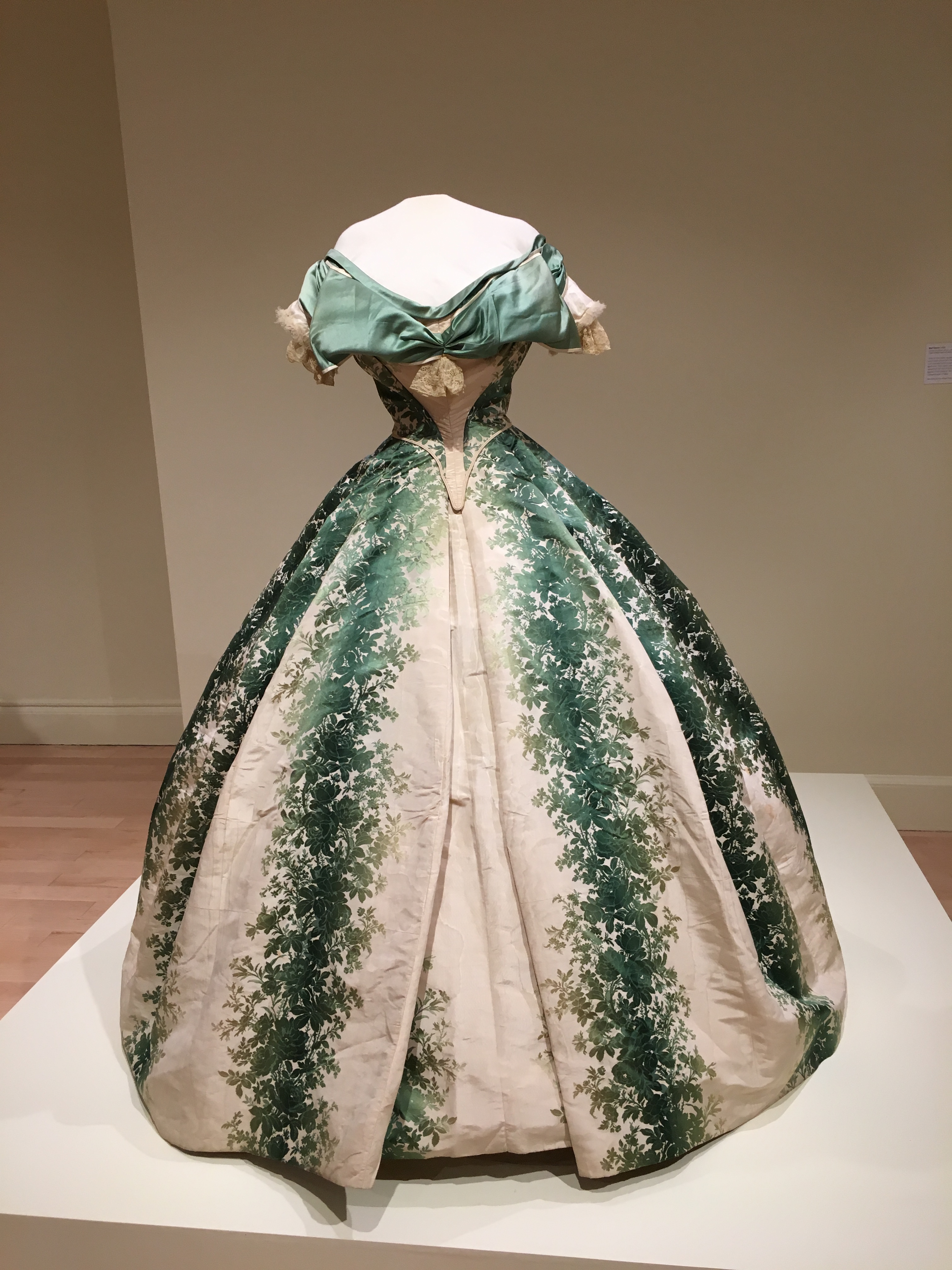
Ball Gown, 1860:
cream moiré silk taffeta with floral damask and trimmings in satin and lace
*
*Wedding Skirt (1865) and Afternoon Bodice (altered early 1870s): yellow and green striped silk taffeta. This is a prime example of how even the wealthiest of women would have adapted their clothes to reflect fashion crazes or bodily changes.
*
Princess Cut Dress, c1870s:
purple silk taffeta with silk organza trim. The cuirass bodice, named for the chest piece on medieval armor was the latest fashion craze. And by the late 1850s, synthetic chemical dyes began to replace vegetable-based dyes, allowing for brighter, longer-lasting colors – and not entirely safe, as some of the dyes contained arsenic!
*
Opera or “Fancy Dress” Gown, 1875:
aubergine silk velvet, satin brocade bobbin lace, glass beads and tortoise-shell buttons,
and absolutely stunning in real life! (hard not to touch…)
*
Blue dress worn at UVM graduation in 1878:
silk taffeta with mother-of-pearl buttons
The University of Vermont began accepting women in 1871and in 1875 was the first American University of admit women into the honor society Phi Beta Kappa. This dress was worn by Ellen Miller Johnson (1856-1938) of Burlington Vermont – she majored in Classical Courses and graduated with the fourth co-educational class in 1878, one of three women in a class of seventeen.
*
Two-Piece Traveling Wedding Dress, 1885:
garnet silk satin with dark purple velvet and white bobbin lace, and I confess this to be my favorite – who can resist garnet and purple!
*
Two-Piece Suit-Style Dress, 1895:
black and red textured silk with white bobbin lace. The beginnings of a more masculine-mode of dress
*
Riding Habit, c1900:
brown wool broadcloth with black silk satin
And we cannot forget about the all-important unmentionables:
with a Brattleboro, VT advertisement from Brasnahan & Sullivan:
Which obviously gave the publisher this idea for a Persuasion cover (having literally nothing to do with the story but it’s worth a chuckle…)
And a few hats and shoes to finish off this exhibition:
***********************
All photos c2018 Deborah Barnum; with my thanks to Margaret Tamulonis, Manager of Collections and Exhibitions at the Fleming Museum, for permission to publish these images. If you have any interest in knowing more about a particular dress and who wore it, please ask me in a comment.
When I first started this blog on March 31, 2008, I would post a weekly round-up of Jane Austen findings on the web. After a few years, Life got in the way of working on that weekly list, though I have continued to find things every day that I sometimes post on facebook or twitter, but now rarely even do that – there’s just SO MUCH information out there, and you all likely see and know more than I do on any given day. But I’ve decided to try my hand at sharing some weekly links – some about Jane Austen, others about books and reading, and a little bit of history thrown in – a mishmash really of things that interest me – and in hopes they interest you too. I am calling this round-up “The Pemberley Post,” the name of our no-longer-published JASNA-Vermont newsletter – just because I like the name (and “Highbury Gossips,” the best possible name ever is the title of JASNA-Montreal’s newsletter…)
I cannot promise I’ll do this every week, but shall make an effort, though some might be very short! – here is the first, for the week of January 1-7, 2019 – and as you can see, I am all over the map with information!
Your last chance to see the “Gainsborough Family Album” exhibit at the National Portrait Gallery (London) which closes February 3, 2019 (or buy the catalogue for £29.95): https://www.npg.org.uk/whatson/gainsborough/exhibition/
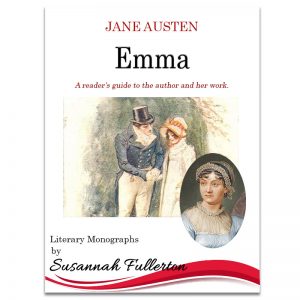
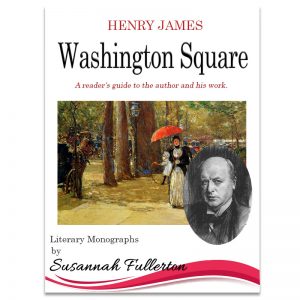
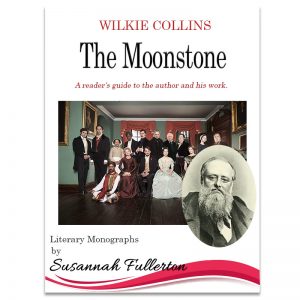
JASA’s incomparable president Susannah Fullerton has the perfect gift for you or any of your best reading buddies. You can follow her along each month for the twelve months of 2019 with a new book to read, learn about, and discuss via email or in your own book groups. Called her “Literary Reader Guides,” you can sign up for the full year or just buy those Guides individually that interest you. This year Susannah will be doing Jane Austen’s Emma (in February) – Austen is surrounded in great company as you can see:
Jan – Evelyn Waugh and Brideshead Revisited
Feb – Jane Austen and Emma
Mar – Jerome K. Jerome and Three Men in a Boat
Apr – Sir Arthur Conan Doyle and The Hound of the Baskervilles
May – Theodor Fontane and Effi Briest
Jun – Guy de Maupassant and “The Necklace”
Jul – L. P. Hartley and The Go-Between
Aug – Samuel Butler and The Way of All Flesh
Sep – W. Somerset Maugham and Cakes and Ale
Oct – Henry James and Washington Square
Nov – Jean Rhys and Wide Sargasso Sea
Dec – Wilkie Collins and The Moonstone
What a reading list! Your book group would be most content following this for the year ahead! Each guide features background information about the author, a publishing history of the title, many illustrations, and thoughtful discussion questions.
I signed on for the Guides last year, and found them most interesting and helpful in facilitating in the several book groups I belong to – I haven’t done all the featured books yet, but each of the monographs is downloadable and you can keep them for future use. The cost for 2019 for all 12 Guides is 40$AU (which is about 30$US, paypal accepted). You can also purchase previous Guides here: https://susannahfullerton.com.au/store/
And visit Susannah’s blog where you shall find all sorts of literary gems: Notes from a Book Addict
******************
*****************
I append this letter direct from Susannah (where she is celebrating a very hot Christmas Down Under…!):
Dear JASNA Member,
I think Jane Austen’s ‘Emma’ is the greatest novel ever written. Would you like to find out why I think that, and also learn more about its characters, themes and setting? I’d love to share with you my views on that most gorgeous of heroes, Mr Knightley, and my opinion of Emma herself. Is she really “faultless in spite of all her faults”?
Next year I am offering you not just my thoughts on ‘Emma’, but on 11 other fascinating literary works as well. Please consider joining this exciting literary journey via email. Let me share with you my insights about an author and what drove him or her to create the book. Let me guide you through the novel’s themes and inspirations, tell you about the memorable characters, and provide you with discussion questions to really make you think (or share with your book group).
My 2019 literary series contains an extraordinary short story (you can decide if it is the world’s best?), a book to make you laugh and one to make you cry, some mystery and detection, and some madness and adultery. I have chosen an intriguing mix of works from various parts of the world and from two different centuries. I hope you’ll get the feeling that I’m at your side, sharing my love for a thought-provoking work and discussing it with you and your friends. You can even talk it over directly with me via my website, I always love to hear from JASNA members.
2019 is JASA’s 30th birthday. I hope you will want to celebrate that special anniversary by joining me to discuss ‘Emma’ and other great books. The whole course is done via email, so you do not need to live in Sydney to be a part of it all. Please watch my short film to see just what I’m offering. Find out all about it here: https://susannahfullerton.com.au/come-with-me-on-a-literary-journey/
I hope that Christmas will bring you happy occasions with your family and time to re-read Jane Austen. Don’t forget that if you are planning a visit to Australia next year, JASA would love to welcome you.
Merry Christmas to you all, Susannah Fullerton President of JASA
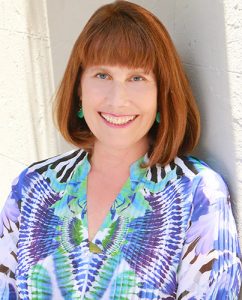
Susannah Fullerton, OAM, FRSN
Literary Lecturer, Author and Literary Tour Leader
President, Jane Austen Society of Australia
Patron, Rudyard Kipling Society of Australia
Works:
Brief Encounters: Literary Travellers in Australia Jane Austen & Crime [one of my all-time favorite books on Austen!] Happily Ever After: Celebrating Jane Austen’s ‘Pride and Prejudice’ A Dance with Jane Austen Jane & I: A Tale of Austen Addiction



































 Jane Austen in Vermont