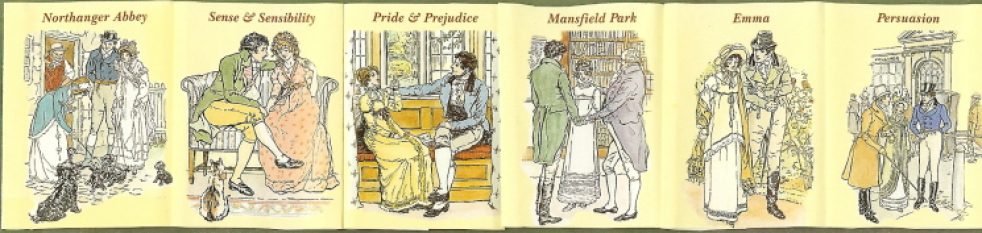
Jane Austen

A Portrait of Jane Austen – right here in Vermont!

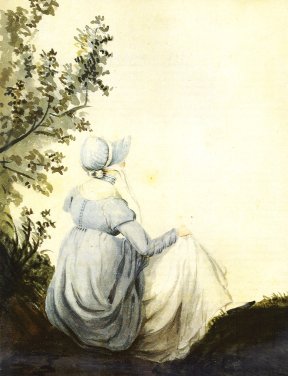
There are any number of images of Jane Austen – the one real one we have by Cassandra that all her family agreed was not a great rendering, and the other Cassandra portrait of her sister in bonnet and dress looking out.  Both have only increased one’s wondering what she really looked like… so as it seems in all things in Austenland, if there isn’t something real, let’s by all means make it up! 

The many fictional images of Jane Austen have become almost as much a part of our idea of what she looked like as the one real image we cling to.  In the Jane Austen Society Report for 2007, Deirdre Le Faye writes on these “Imaginary Portraits” [1], listing them in chronological order, and explaining the history and provenance of each one.  [a must-have article for your Jane Austen Library!] – this one perhaps the one we most often see as the “real Jane”:
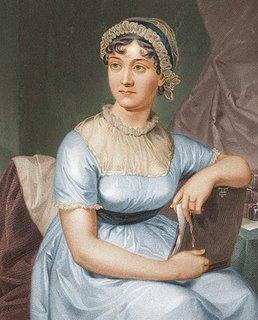
"Wedding ring portrait" - unknown American artist 1873

 But today, there is only one these portraits that Le Faye mentions that is of interest to us – the painting by Tom Clifford, from Vermont!  This what Le Faye writes:

Tom Clifford, 2001.  Three-quarter length, oil on birch-wood panel, 10×14 inches.  This is a rather stylized, two-dimensional representation, showing JA holding a book and standing in the garden outside Chawton Cottage as it is today, looking away from the viewer into the right distance.  In his article on the website, the artist explains that he tried to combine Cassandra’s sketch with the Austen family features as shown in the various portraits of Jane Austen’s parents and siblings – though the accounts to which he refers are unfortunately quoted inaccurately.  The resulting study is fairly like Cassandra’s sketch, but shows a very static, expressionless Jane Austen.  Clifford used to live in Winchester and often visited Chawton; he now lives in America, and retains ownership of the portrait.

[I will note that the image reproduced in the JAS Report is very dark compared to the original.]

Fast-forward to 2011.  I had been reading this Le Faye article because another imaginary portrait went up for auction in March of this year [see my post here: https://janeausteninvermont.wordpress.com/2011/03/07/on-the-block-an-imaginary-jane-austen/ ], and my thoughts must have been floating around in cyberspace [at least in this high-quality Vermont air!] when I received an email from a Tom Clifford telling me about his Jane Austen portrait – indeed THE Tom Clifford that Le Faye was writing about – so it all came together – an Austen image I was vaguely familiar with, Le Faye’s article, and a Mr. Clifford from Vermont! 

An aside: now Jane Austen herself writes of a Mr. Clifford in her juvenilia – the Mr. Clifford famous for his carriages, and the one clue to alert us to how familiar Austen was with the means of travel in her time!:  

“The Memoirs of Mr. Clifford: and Unfinished Tale” [MW 43],  written between 1787-90, when Austen was 12 – 15 years old:   

Mr Clifford lived at Bath; and having never seen London, set off one Monday morning determined to feast his eyes with a sight of that great Metropolis.  He travelled in his Coach & Four, for he was a very rich young Man & kept a great many Carriages of which I do not recollect half.  I can only remember that he had a Coach, a Chariot, a Chaise, a Landau, a Landaulet, a Phaeton, a Gig, a Whiskey, an Italian Chair, a Buggy, a Curricle & a wheelbarrow.  He had likewise an amazing fine stud of Horses.  To my knowledge he had six Greys, 4 Bays, eight Blacks & a poney.

 [Minor Works, Oxford UP, 1988, p. 43. One more page will show that Mr. Clifford does not get very far and despite his having all manner of carriages, travels at a snail’s pace for many months, is overtaken by a fever, never makes it nearly to his goal of London, and thus ends the tale of Mr. Clifford…]

Well, Vermont has its own Mr. Clifford and he has had no trouble or delay at all in getting from his end of Vermont to our meetings in Burlington! – he has attended the last two, and I had asked him to bring along his prints for sale, your truly very happy to add one to her Austen Library.  Our Mr. Clifford also has a piece of wood from the Winchester house where Jane Austen died, acquired when he lived in Winchester and the house on College Street was being refurbished – so that was an interesting piece for us to actually touch.     

But now back to the portrait, which hangs in a place of honor in Mr. Clifford’s Bed & Breakfast in Northfield, Vermont –  in, of course, the Jane Austen Room!

 [the B&B is called The Elizabethan – you can visit the website here: http://elizabnb.com/index.html ]

Tom writes me that: 

In this room I also have a very special book caddy with books by Jane Austen. This caddy was made from the wood that I obtained from the house in College Street, Winchester, where Jane spent her last days but that is another story…    The link to this room is http://elizabnb.com/jane.html 

So I asked Tom to tell me how he came to create his own portrait of Jane Austen: 

My wife, Rita (a Londoner) and I lived for many years in Winchester, not too far from Jane’s home at Chawton.  It was during that time that the BBC came to Winchester to film a portion of their production of Persuasion. I started to read Jane Austen for the first time, and was hooked. What a pleasant time that was reading the novels in Winchester and being able to visit her home at Chawton. In Winchester, I used to pass the house in College Street many days on my walk into town and also on occasion, visit the Cathedral and stop by her grave . 

All of these things brought me closer to Jane Austen but it wasn’t until we moved to Brookfield, Vermont, that I felt compelled to employ my talents as a painter to create a realistic portrait  of  Jane. “Absence makes the heart grow fonder “…  

The Victorian publishers used their invention of Jane’s likeness which is still propagated today.  I wanted to find the real Jane and spent many hours researching her family.

Reproductions of this painting have been used in various publications and one was presented to Chawton.   

So, Jane Austen can be found right here in Vermont [well, we of JASNA-Vermont know THAT!], and anyone interested in seeing this painting and other Jane things only need to contact me to arrange a visit. 

*You can visit his painting website for an explanation of his research in his effort to make his image of Austen as faithful to the truth as possible: http://www.paintingport.com/Jane%20Austen.html

Somewhere in here are perhaps the “inaccuracies” in the quotes that Deirdre Le Faye refers to: a project for another day perhaps? but I shall not quibble – [one does wish for Le Faye to be more specific in her complaints!] – but in the meantime read his explanation for how Tom Clifford’s Jane came into being, his Jane Austen in her cottage garden at Chawton – she is quite of her time and ours, don’t you think??

Jane Austen by Tom Clifford - giclee on canvas

Further Reading: 

1.  Tom Clifford’s website:  www.paintingport.com 

2.  Deirdre Le Faye. “Imaginary Portraits of Jane Austen.” JAS Report for 2007. [Winchester, UK]: JAS, 2007. 42-52. The 20 b/w and color plates of images are between pages 64-65.

[Images of the portrait are from Tom Clifford’s website and used with permission]
Copyright @2011 Deb Barnum, at Jane Austen in Vermont
Museum Exhibitions · News

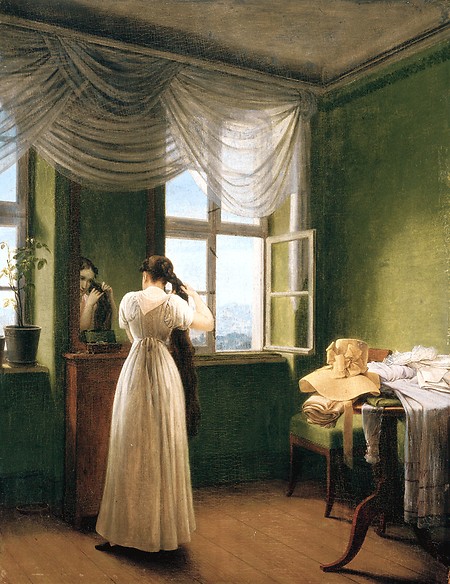
Exhibition ~ Rooms with a View: Open Windows in the 19th Century

When I travel, and when I have the good sense to have my camera with me, I most often take pictures of windows and doors – I am fascinated by these architectural details. But when I return, my husband invariably laments the lack of PEOPLE in my photos, completely bored by the endless stream of  such details on rarely identifiable buildings!  I often don’t disagree! – but I cannot help it – even as I look around my house, most of the artwork depicts windows and doorways, looking in and looking out. This says something about me psychologically I would suppose, but I needn’t go there today!

So I was intrigued to discover a special exhibition at the Metropolitan Museum of Art  titled “Rooms with a View: The Open Windows in the 19th Century“:

This exhibition focuses on the Romantic motif of the open window as first captured by German, Danish, French, and Russian artists around 1810–20. These works include hushed, sparse rooms showing contemplative figures, studios with artists at work, and window views as sole motifs. The exhibition features some thirty oils and thirty works on paper by, among others, C. D. Friedrich, C. G. Carus, G. F. Kersting, Adolph Menzel, C. W. Eckersberg, Martinus Rørbye, Jean Alaux, and Léon Cogniet. Loans to the exhibition have come from museums in Germany, Denmark, France, Austria, Sweden, Italy, and the United States.

You can view a good number of the paintings in the exhibition here: http://www.metmuseum.org/special/open_window/images.asp

You can also read a review of the exhibition here at Ellen Moody’s blog.

[Image and text from the MET website]

Copyright @2011, by Deb Barnum of Jane Austen in Vermont
Jane Austen · Jane Austen Circle · Regency England · Social Life & Customs

Thomas Lawrence Visits Yale in New Haven

The “Thomas Lawrence: Regency Power and Brilliance”  exhibit that closed in late January at the National Portrait Gallery in London, will be opening on February 24 [through June 5, 2011] at the Yale Center for British Art in New Haven, CT.  For those of you, like me, who were unable to catch this in London, now is your chance – not to be missed, certainly for any Jane Austen fan in good standing!  – [and thankfully, not too far from me! – I will post my thoughts after seeing it…]

Sarah Barrett Moulton - Pinkie

This is from the Yale Center for British Art website:

Thomas Lawrence: Regency Power and Brilliance will be the first substantial examination of the artist in the United States since 1993 and the first Lawrence exhibition in the United Kingdom since 1979. It will include the artist’s greatest paintings and drawings alongside lesser-known works in order to provide a fresh understanding of Lawrence and his career. The show will also contrast his approach to sitters according to age and gender; juxtapose his public identity with the private world of the artist’s studio; explore Lawrence’s technical innovations as a draftsman and painter; and place him within the broader contexts of the aesthetic debates, networks of patronage, and international politics of his day. The exhibition will bring visitors “behind the scenes” to explore Lawrence’s working methods and the importance of his studio as a workspace, a social space in London, and a space for the display of Lawrence’s own works and his stellar collection of Old Master drawings.

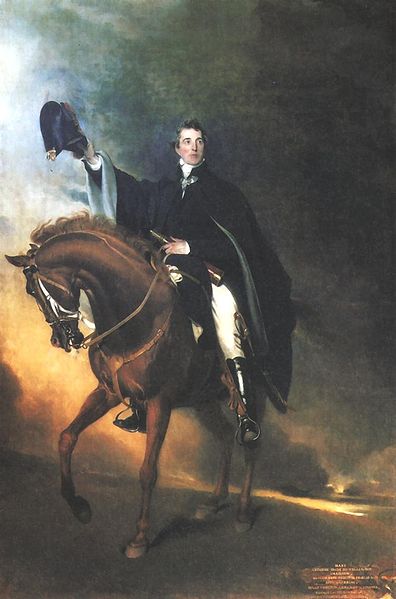
Spanning the scope of the artist’s career, the exhibition closely examines the Regency period, a time defined by the political and cultural role played by George IV (1762-1830), who was Prince of Wales between 1789 and 1811, and then, successively, Prince Regent (during his father’s illness between 1811 and 1820), and crowned king after his father’s death. The exhibition begins with a restaging of Lawrence’s first definitive Royal Academy success in 1790, where he showed Elizabeth Farren (Metropolitan Museum of Art) and Queen Charlotte (National Gallery of Art, London). A display of works from Lawrence’s controversial exhibitions from the 1790s will follow, including Arthur Atherley (Los Angeles County Museum of Art), which challenged traditional notions of masculinity. The next section will examine the period from 1805 to 1815, during which the artist experienced financial and emotional turmoil and created his most innovative and experimental group portraits and half-history portraits. Lawrence was sent abroad by the Prince Regent to paint the victors of Waterloo between 1818 and 1820, and a section of the exhibition will feature portraits such as Arthur Wellesley, 1st Duke of Wellington (private collection) and Charles William (Vane-)Stewart, later 3rd Marquess of Londonderry (National Portrait Gallery, London), as well as the innovative chalk-on-canvas drawings he made during his travels. 

Duke of Wellingon on Copenhagen

Another display will include some of his best works on paper, ranging from friendship portraits and commissioned portrait drawings to sketches of historical events, such as the treason trial of John Thelwall (National Portrait Gallery, London). Sparked by a drawing of his studio in 1824 (Yale Center for British Art), the last section of the exhibition will explore new paradigms of masculinity and femininity in Lawrence’s later work and also examine the importance of his portraits of children. The section proves definitively that Lawrence continued to challenge himself as an artist even in the last decade of his career. This display will also highlight an important portrait of the young Julia Peel (private collection), which will be shown exclusively in New Haven. Yale Center for British Art Director, Amy Meyers, asserts, “A critic once wrote of Lawrence’s work that ‘The magic of his art is thrown around the representations of the most ordinary things.’ We are thrilled to be able to share this magic with visitors drawn to the show by the beauty of Lawrence’s paintings, by interest in the period of the Napoleonic wars, and by the changing representations of gender roles in Lawrence’s work.” 

Beginning as a child prodigy working in pastels, Thomas Lawrence succeeded Sir Joshua Reynolds as Britain’s greatest portrait painter. While lacking in formal and artistic education, he rose to the highest ranks of his profession and was appointed President of the Royal Academy in 1820. With the temperament and flair to capture the glamour of the age, Lawrence created the image of Regency high society with dazzling brushwork and innovative use of color. He became not only the most popular chronicler of fashionable London society, but also one of the most lauded (and imitated) portraitists in Europe. Under his brush, portraits emerged that were both startlingly modern, yet grounded in historical forms. They owed their popularity to the fact that Lawrence represented his sitter’s idealized social persona, and also attempted to capture in paint a visual representation of their inner life and character. 

Thomas Lawrence: Regency Power and Brilliance has been curated by A. Cassandra Albinson, Associate Curator of Paintings and Sculpture at the Yale Center for British Art, and Peter Funnell, 19th Century Curator and Head of Research Programmes, and Lucy Peltz, 18th Century Curator, at the National Portrait Gallery, London. 

The exhibition is accompanied by a fully illustrated book, edited by A. Cassandra Albinson, Peter Funnell, and Lucy Peltz, with essays by Albinson, Funnell, and Marcia Pointon. The book has been published by the Yale Center for British Art in association with Yale University Press and will be available for purchase in the museum shop.

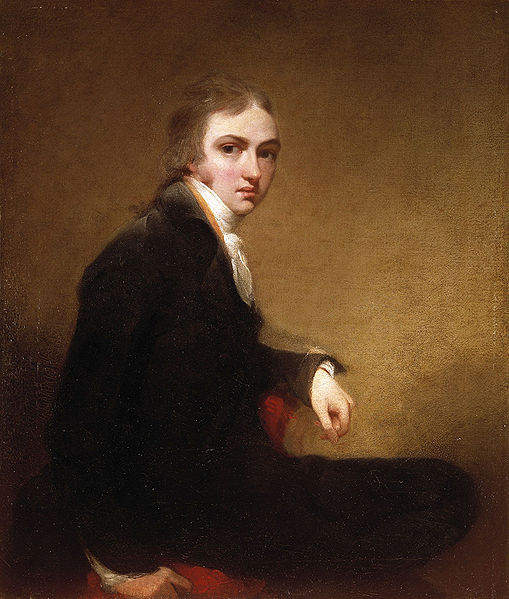
Self-Portrait - Thomas Lawrence

 [Images from Wiki-Commons]

Further reading:

Copyright @2011 Deb Barnum of Jane Austen in Vermont