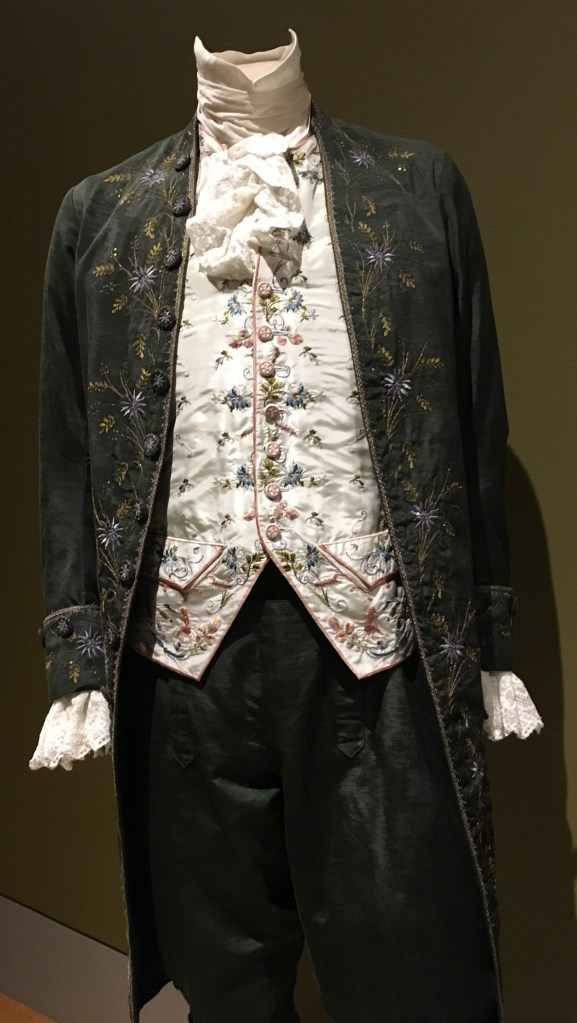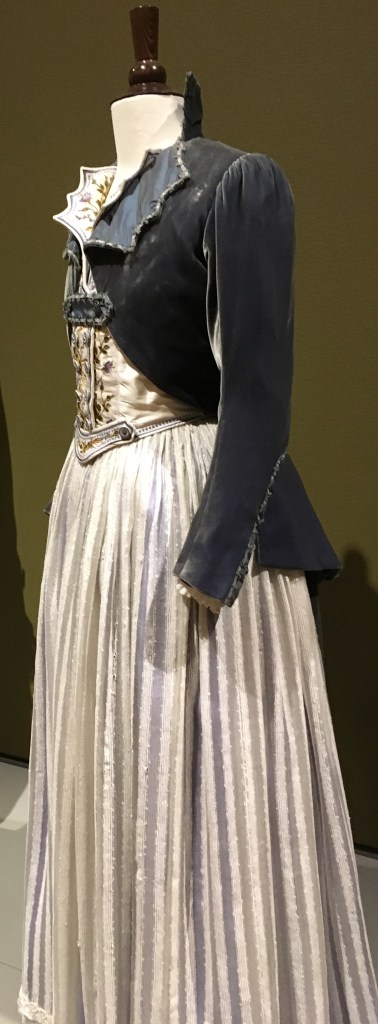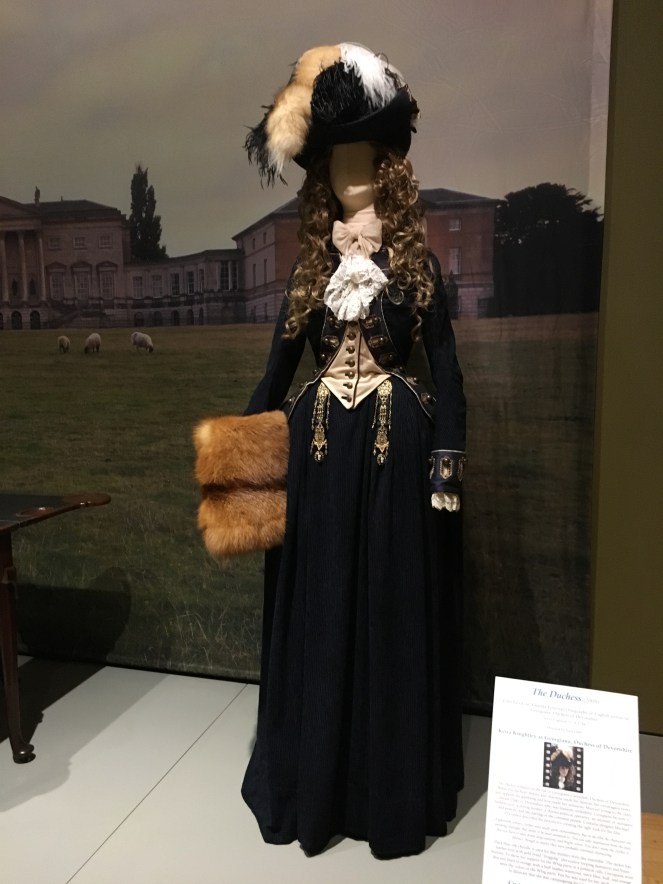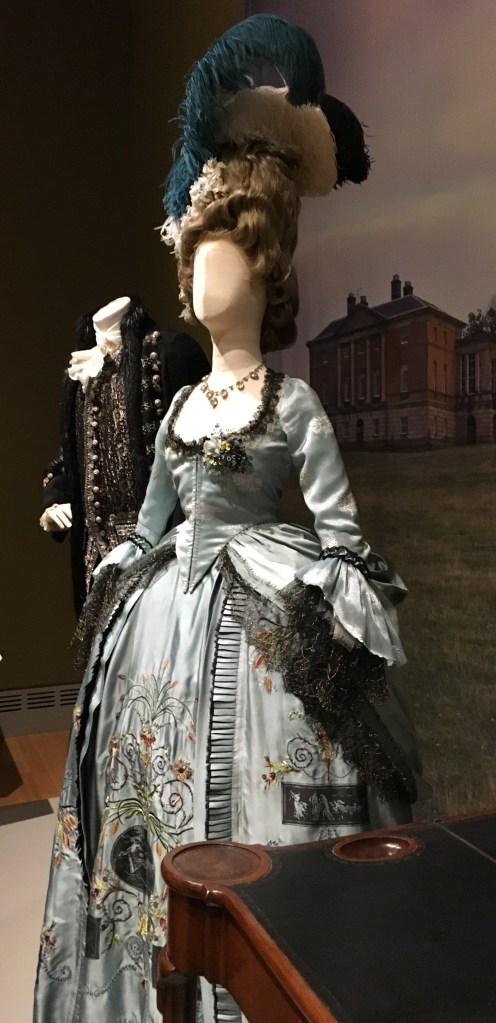
Author Interviews · Books · Jane Austen · Jane Austen Popular Culture · Regency England

Guest Post ~ “The Jane Austen Project” ~ by Kathleen A. Flynn

Dear Gentle Readers: I welcome today Kathleen A. Flynn, author of the just-released The Jane Austen Project, a time-travel tale wherein we will find ourselves in 1815 Regency England and meet up with Jane Austen. Kathleen includes here an excerpt from the first chapter – you will want to read the rest after this intro!

The Jane Austen Project

This excerpt is from early in the first chapter. Our time travelers, Rachel and Liam, have arrived in 1815, regaining consciousness in a field in Leatherhead, Surrey, a town that is now on the edge of greater London but at that time would have been well out of the city. With only the period-correct clothes on their back and a small fortune in fake banknotes concealed under those clothes, they pull themselves together and start on foot to the nearest coaching inn, the Swan. Their plan is to take rooms for the night to rest and recover from the physical ordeal of time travel before heading to London and their mission objectives. But in a development that will become a theme of their stay in the past, things do not go quite as intended.

The story is told from the perspective of Rachel, an outspoken doctor with a love of adventure and of Jane Austen. Her colleague, Liam, is an actor turned scholar, a more reserved and cautious person. Part of the conflict of the story will come, not only from the difficulty of their mission, but also from this clash of their characters, and with Rachel’s frustration with the limitations of being a woman in 1815.

*************************

As we started down the road, Liam’s stride was longer and I began to fall behind, though I’m normally a fast walker. Until now, indoors was the only place I’d worn my half boots, handmade products of the Costume Team. The soles were so thin I felt the gravel under my feet. And then, the intensity of everything: the smells of grass and soil, a far-off cry of an owl, it had to be an owl. The entire world seemed humming with life, a shimmering web of biomass.
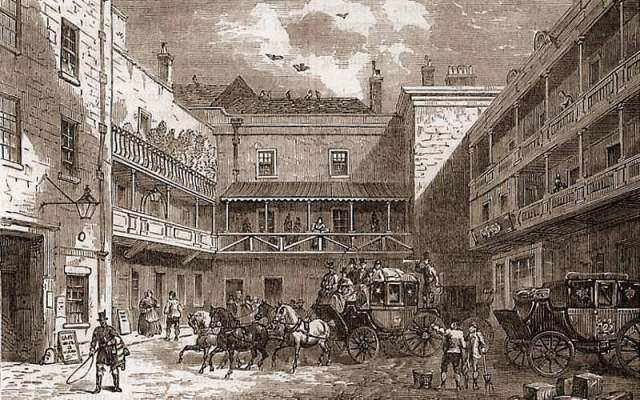
The Swan loomed as a whitewashed brick building outlined by flickering lamps along its facade, with an arched passageway into a courtyard and stables beyond. As we drew closer I heard men’s voices, a horse’s whinny, a dog’s bark. Fear swooped up my spine like vertigo. I stopped walking. I can’t do this. I must do this.

Liam had stopped too. He shook himself and took a few long, audible breaths. Then he seized my elbow with an unexpectedly strong grip and propelled us toward the door under the wooden sign of a swan.

“Remember, let me do the talking,” he said. “Men do, here.”

And we were inside.

It was warmer but dim, timbered ceiling, air thick with smoke, flickering light from not enough candles, and a large fireplace. A knot of men stood by the fire, while others sat at tables with bread and mugs of beer, platters of beef, ham, fowl, and other less identifiable foods.

“Look at all that meat,” I whispered. “Amazing.”

“Shh, don’t stare.”

“Do you see anyone who looks like they work here?”

“Shh!”

And he was upon us: a small man in a boxy suit, a dirty apron, and a scowl, wiping his hands on a dirty rag as he looked us up and down. “Are ye just come, then? Has someone seen to your horses, have they now?”

“Our friends set us down from their barouche a bit hence.” Liam had thrown his shoulders back and loomed over the man. “We are in want of rooms for the night, and a coach to town in the morning.” His inflection had changed, even his voice: a haughty lengthening of vowels, a nasal, higher-pitched tone. We’d done lots of improvisational work in Preparation, yet he’d never given me this eerie sense I had now, of his becoming an entirely different person.

“A barouche?” the man repeated. “I’ve seen no such equipage pass.”

“Had it passed here, they would have set us down at the door.”

This logic seemed sound, but the man surveyed us again, frown deepening. “À pied, is it?” It took me a moment to work out what he meant; nothing could have sounded less like French. “And not so much as a bag between the both of ye? Nay, we’ve no rooms.” A party of the three men nearest—rusty black suits, wigs askew—had stopped eating to observe us. “You could sup before you continue on your way.” He waved a hand at the room behind. “Show us the blunt first, though.”

Was our offense the presumed poverty of showing up without horses, or was something else wrong with our manners, our clothing, us? And if the first person we met saw it, what were our odds of survival here, let alone success? Liam had gone so pale, swaying a bit, that I feared he might faint, a known time-travel side effect.

Fear made me reckless. “William!” I whined, pulling on Liam’s sleeve and bracing myself under his elbow to shore him up. His eyes widened as he looked down at me; I heard his intake of breath. I went on in a stage whisper without a glance at the man, and if my mouth was dry, my accent was perfection: “I told you, Papa said this was a shocking inn. But if it has no rooms, perhaps it has horses. ’Tis moonlight! A chaise and four, or two, and we will be there by dawn. I said I would visit Lady Selden the instant we got to town, and that was to be last week, only you never can say no to Sir Thomas and his tedious gout.”

Liam looked from me to the man and drawled: “My sister’s word is law, sir. Should there be coach and horses, I would be happy to show the blunt, and to see what I hope will be the last of this inn.” He produced a golden coin, one of our authentic late-eighteenth-century guineas, flipping it into the air and catching it.

I held my breath. What if the inn had no horses in shape to go, no spare carriages? It happened, animals and vehicles being in constant transit from one coaching inn to another. And now we were robbery targets, with Liam waving around gold.

The man looked from me to Liam; his eyes returned to me. I raised my gaze to the ceiling with what I hoped was an expression of blasé contempt.

“I’ll have a word in the yard, sir. Would you and the lady take a seat?”

*******

It was colder, the waxing gibbous moon up, before we were in the post chaise, which was tiny and painted yellow, smelling of the damp straw that lined its floor as well as of mildew and horse. We’d drunk musty red wine and picked at a meat pie with a sinister leathery texture as we sat in a corner of the room feeling the weight of eyes upon us and not daring to believe, until a porter came to lead us to it, that there was actually going to be a chaise.
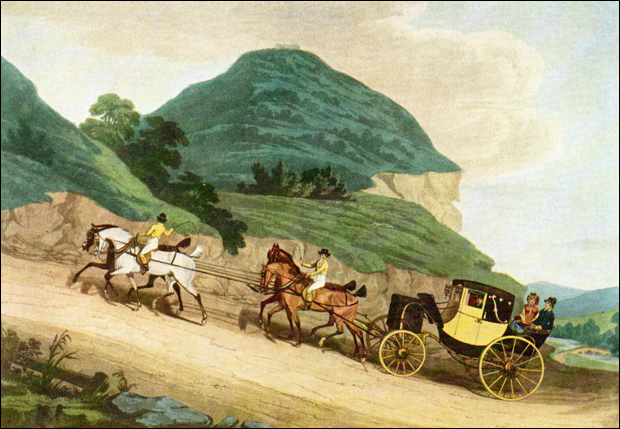
Our postilion swung himself onto one of the horses, and a large man wearing two pistols and a brass horn gave us a nod and climbed into the boot at the back. He had cost extra, nearly doubling the price of the journey—but it was no night to encounter highwaymen.

“You were good back there,” Liam said in his usual voice, so quiet I had to lean in to hear him as we creaked out from the yard. One seat, facing forward, was wide enough for three slender people. Drafty windows gave a view of the lanterns on each side, the road to London ahead of us, and the two horses’ muscular rumps. “Fast thinking. I know I told you not to talk, but—”

“A hopeless request. You know me better than that by now.”

He made a sound between a cough and a laugh and said after a pause, “So you really never acted? I mean, before this?”

I thought of the unscripted workshops we’d done together in Preparation: imagining meeting Henry Austen for the first time, say, or buying a bonnet. “Why would I have?”

We were bumping down the road, moon visible above the black tree shapes, the world beyond the lanterns’ glow spookily monochrome and depthless to the eye, but rich with smells. The Project Team’s guidance had been for us to spend the first night near the portal site, in Leatherhead, recovering from the time shift before braving town. Materializing in London, dense with buildings and life, was risky. Traveling by night was risky too, but here we were. I wondered what else would not go according to plan.

I don’t know how long I was asleep, but I woke up shivering. Liam was slumped with his head against the window, wig slid sideways, snoring. I pulled my shawl tighter around myself, coveting his waistcoat, neckcloth, and cutaway jacket—a light weight, but wool—and Hessian boots, the tall kind with tassels.

I had lots of layers too, but they lacked the heft of menswear: a chemise, then a small fortune in coins, forged banknotes, and letters of credit in a pouch wrapped around my torso, topped by a corset, a petticoat, a frock, and a shawl, synthetic re-creation of a Kashmir paisley. I had a thin lace fichu around my shoulders, over-the-knee knitted cotton stockings, dainty faux-kid gloves, and a straw bonnet, but no underpants; they would not catch on until later in the century.

The darkness was becoming less dark. I stared out; when did countryside turn urban? We had pored over old maps, paintings, and engravings; detailed flyover projections in 3-D had illuminated the wall screens of the institute. Yet no amount of study could have prepared me for this: the smell of coal smoke and vegetation, the creaking carriage, the hoofbeats of the horses like my own heartbeat. And something else, like energy, as if London were an alien planet, its gravitational field pulling me in.

Anything could happen to a person in Regency London: you could be killed by a runaway carriage, get cholera, lose a fortune on a wager or your virtue in an unwise elopement. Less dangerously, we hoped to find a place to live in a fashionable neighborhood and establish ourselves as wealthy newcomers in need of guidance, friends, and lucrative investments—all with the aim of insinuating ourselves into the life of Henry Austen, gregarious London banker and favorite brother of Jane. And through him, and the events we knew were waiting for them both this autumn, to find our way to her.
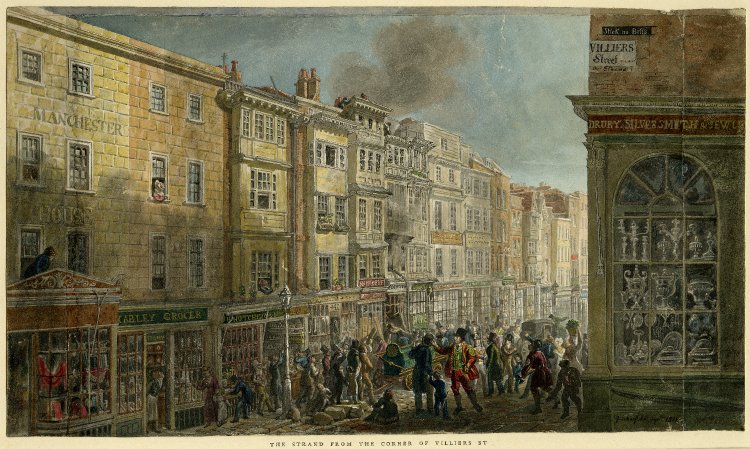
I eased next to Liam, the only warm object in the cold carriage, my relief at getting away from the Swan curdling to anxiety about everything that lay ahead. Queasy as I was from the bumping carriage, with the stink of horse and mildew in my nose, with the gibbet and the meat pie and the innkeeper’s rudeness still vivid, the Jane Austen Project no longer seemed amazing. What I’d wanted so badly stretched like a prison sentence: wretched hygiene, endless pretending, physical danger. What had I been thinking?

********************************
About the author

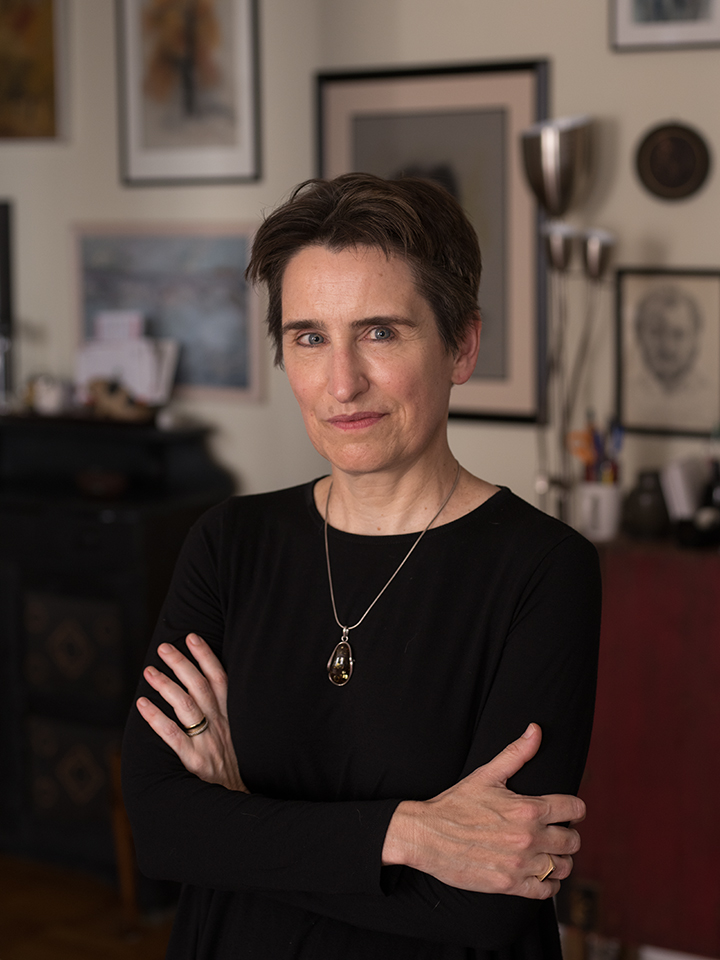
Kathleen A. Flynn grew up in tiny Falls Village, Conn. Currently a copy editor at The New York Times and resident of Brooklyn, Flynn has taught English in Hong Kong, washed dishes on Nantucket, and is a life member of the Jane Austen Society of North America. The Jane Austen Project is her first novel.

About the book 

September, 1815 : Two travelers, Rachel Katzman and Liam Finucane, arrive in a field in rural England, disheveled and weighed down with hidden money. They are not what they seem, but rather colleagues from a technologically advanced future, posing as wealthy West Indies planters—a doctor and his spinster sister. While Rachel and Liam aren’t the first team to go back, their mission is by far the most audacious: meet, befriend, and steal from Jane Austen herself.

Carefully selected and rigorously trained by The Royal Institute for Special Topics in Physics, disaster-relief doctor Rachel and actor-turned-scholar Liam have little in common besides the extraordinary circumstances they find themselves in. Circumstances that call for Rachel to stifle her independent nature and let Liam take the lead as they infiltrate Austen’s circle via her favorite brother, Henry.

But diagnosing Jane’s fatal illness and obtaining an unpublished novel hinted at in her letters pose enough of a challenge without the continuous convolutions of living a lie. While her friendship with Jane deepens and her relationship with Liam grows complicated, Rachel fights to reconcile the woman she is with the proper lady nineteenth-century society expects her to be. As their portal to the future prepares to close, Rachel and Liam struggle with their directive to leave history intact and exactly as they found it…however heartbreaking that may prove.

The Jane Austen Project, due out on May 2, 2017, is available as an e-book, a paperback, and an audiobook. Here are some buy links:

Regency images:
1. Swan Inn – Know Your London
2. Post Chaise: Regency Reader
3. London street – British Museum
c2017 Jane Austen in Vermont
Austen Literary History & Criticism · Georgian Period · Great Britain - History · Jane Austen · Jane Austen Societies · JASNA · JASNA-Vermont events · Regency England · Social Life & Customs

Our Next Meeting! June 4, 2017 with JASNA President Claire Bellanti

You are Cordially Invited to JASNA-Vermont’s June Meeting

with

JASNA President Claire Bellanti* 

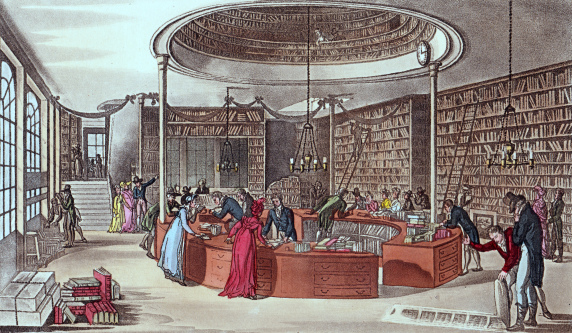
“‘You Can Get a Parasol at Whitby’s:’
Circulating Libraries in Jane Austen’s Time”

Sunday, 4 June 2017, 2:00 – 4:00 p.m.

Morgan Room, Aiken Hall,
83 Summit Street Champlain College,
Burlington VT**

********

Join us for an illustrated talk about an 18th century social institution that was very important to Jane Austen in her own life and her fiction, the Circulating Library. Claire will present its history and then, with references to Austen’s novels and letters, show how central such libraries were in the reading and sharing of books in Regency England. 

*Claire Bellanti holds an M.A. in History (UNLV) and an M.B.A (UCLA). She is retired from a 35 year career as a library professional at UCLA. She is currently President of the Jane Austen Society of North America, and has served in other capacities on the Board of JASNA SW and the Board of JASNA since 1994. She has written and lectured frequently about the UCLA Sadleir Collection of 19th Century Literature, including the Jane Austen contents and Silver Fork portions of the collection.

~ Free & open to the public ~ ~ Light refreshments served ~ 

For more information:   JASNAVTregion@gmail.com / 802-343-2294
Please visit our blog at: http://JaneAustenInVermont.wordpress.com

**************************** 

**Aiken Hall is located at 83 Summit St – #36 on the map here: https://www.champlain.edu/Documents/Admissions/Undergraduate%20Admissions/Campus-Map.pdf
Parking is on the street or in any College designated parking during the event.

Please Join Us!

c2017 Jane Austen in Vermont
Fashion & Costume · Jane Austen · Social Life & Customs

Ride Like an Austen Heroine: Sidesaddle

Dear Gentle Readers: I welcome today a member of our South Carolina Jane Austen Book Club, Carol Lobdell, who, besides being a lover of Jane Austen, is also an accomplished horsewoman. She recently tried riding sidesaddle for the first time and writes here about how it gave her a better understanding of each of Jane Austen’s horse-riding heroines – think Jane Bennet (in the rain), Fanny Price, Mary Crawford, Elinor Dashwood (alas! only in the movie)…and anyone else??

Ride Like an Austen Heroine: Sidesaddle

Elizabeth Bennett and most of Jane Austen’s heroines show no hesitation to stride miles about the countryside in order to visit friends and family. They also travel on horseback, in many ways the most practical and efficient means to get around the neighborhood at the time.

And if they rode, they did it in a sidesaddle.

Movies and programs like “Downton Abbey” make riding in a sidesaddle look effortless. The image of a woman trotting and cantering on a horse through the English countryside – garbed in elaborately embellished jackets, flowing skirts, and flattering feathered hats – is graceful, romantic, and powerful.

But, folks, it ain’t easy! Ginger Rogers, as the old saying goes, did everything Fred Astaire did, except in high heels and backwards. So too, lady riders for centuries did everything the men did, except with one stirrup!

Image: pinterest

Brief History of the Sidesaddle

Women in antiquity usually weren’t riding horses unless they were passengers, perhaps on a pillion (pillow or platform) behind a male rider (who rode astride) or in a horse-drawn cart. Part of the reason was culture – the males did most of the hunting and fighting, and they did quite a bit of that on horseback – and part was practicality – women wore long skirts that were not conducive to riding astride and risked immodesty. Riding astride was also seen as a risk to virginity and childbearing.

However, as the centuries went on and the titled elite and leisure classes grew, many women wanted to ride for sporting and social reasons.

Tradition has it that that Princess Anne of Bohemia rode side-saddle across Europe in 1382 on her way to marry King Richard II. Riding sidesaddle was seen as a way to protect virginity.

Sources say that the earliest functional sidesaddle was a chair-like construction, where the woman sat sideways on the horse with her feet on a footrest. Catherine de Medici is said to have developed a more practical design, placing the rider’s right leg around a pommel (a raised, curved projection or “horn”) at the front of the saddle. Riding this way allowed better control of the horse and enhanced stability, enabling the rider to move beyond the walk, to trot and canter safely. Some early sidesaddles had a U-shaped pommel for the right leg.

A second pommel for the left leg, added in the early 1800s, made “riding aside” even more safe, enabling the rider to gallop and jump, while maintaining modesty and decorum (and virginity). Upper-class ladies rode for pleasure and many “rode to hounds” with their local fox hunts, galloping through the English countryside over ditches, hedges, and fences. (As a rider myself, having fox-hunted in England, I can tell you it’s a challenge even in modern saddles!)

Riding attire evolved along with innovations in the tack. After struggling with daywear for riding, less voluminous “safety skirts” were developed in the late 1800s, evolving into an “apron skirt” which buttoned around the waist, covering the legs. Women donned riding britches under these aprons and that’s still the basic structure of formal sidesaddle attire today.

Diagram showing the position of the legs when riding sidesaddle
[image source – Wikipedia]

Modern Sidesaddles

The saddle and posture of a woman riding sidesaddle back in the day was very much as it is today. The rider first sits astride, with the right hip back to allow the shoulders to fall into line. The right leg is then placed on the front of the saddle (around the upper pommel), with the left leg bent and resting on the saddle (with the thigh under the lower pommel) and the foot in the stirrup.

Below: The right side of a modern sidesaddle. The girth is a standard type that could be used on most saddles. The extra stability strap affixed to the rear of the saddle is unique to a sidesaddle.

Below: The left side of a modern sidesaddle. You can clearly see the two “pommels” for the rider and the single stirrup (looped over the lower pommel).

Women began to ride astride – wearing split skirts or riding britches – in the early 20th Century. Sidesaddle fell out of favor for many years; however, traditionalists and riders looking for variety kept the sidesaddle alive. Today, groups across the country and around the world continue to “ride aside” for fun as well as for sport and competition.

What’s it like to ride like an Austen heroine? I’ve always ridden astride in English saddles, so the basic feel of the saddle was not very different, although it’s a flat saddle seat, not curved like many English saddles. English riding also calls for a straight posture, which is even more important in a sidesaddle to maintain balance. I found the basic posture to be comfortable, much like sitting in a chair with one knee crossed over the other.

Above: The author in a modern sidesaddle, about to take her first trot “aside.”

The biggest difference is that one doesn’t “post” in a sidesaddle (the up-and-down motion riders generally use at the trot) or rise into a half-seat for a jump. No matter what gait the horse is doing – walk, trot, canter or jumping – the sidesaddle rider stays glued to the seat of the saddle. For jumping, the rider bends forward at the hip to follow the motion of the horse, instead of rising into a half-seat as the horse jumps.

The first few minutes in the sidesaddle felt very unbalanced, though, as I’m used both legs hugging the horse and a firm seat on the horse’s back. With only one stirrup, I was very wary about stability and steering. However, I was able to walk in both directions in the sidesaddle pretty quickly, once I got the hang of the balance and kept my weight over on the right hipbone. Trotting took a bit more practice, with the key, again, keeping the balance to the right hipbone, an upright posture and firm seat on the saddle. It did feel odd not to have the right foot in a stirrup. The left foot (in the stirrup) was useful for steering, as always. Without the right stirrup, it was a little more difficult to steer, but happily, I was on an experienced sidesaddle horse for the lesson (Lulu, a lovely mare), so she was able to interpret my body language and instructions pretty well. A sidesaddle rider also uses a crop or whip in the right hand to help make up for the missing right stirrup. The riding was really quite comfortable, I thought. (Next time I give it a try, maybe a short canter!)

There are a number of sidesaddle groups around the USA and the UK. In the US, women don safety aprons and fox hunt as well as compete. Sidesaddle jumping is a standalone sport; only the brave need apply! The current world record for sidesaddle jumping has stood since 1915, when Esther Stace, of Australia, cleared a record 6’6” at the Sydney Royal Show.

In Mexican-style rodeos, the women in California’s Escaramuza Charra drill teams perform complicated patterns at high speed in sidesaddles. They ride aside, or “to mujeriegas,” in a saddle known as an albarda, in quick, complex maneuvers often performed on horses with reining training. Traditional costumes with layers of petticoats under decorated skirts or breeches and jackets are the usual garb. [image from damacharra.com]

I enjoyed my sidesaddle lesson and plan to take a few more. Whether I invest in a saddle and attire remains to be seen, but it’s always fun to try something new in a sport that I love, with the extra fun of riding like an Austen heroine!

For Further Reading:

*****************

Thank you Carol! Anyone out there want to share their own sidesaddle experiences? (and one question: is it side saddle, side-saddle or sidesaddle??)

c2017, Jane Austen in Vermont. Text and photographs (unless otherwise noted) by Carol Lobdell


Austen Literary History & Criticism · Collecting Jane Austen · Jane Austen · Publishing History · Rare Books

Recovering Katharine Metcalfe, Jane Austen Editor ~ With Thanks to Janine Barchas

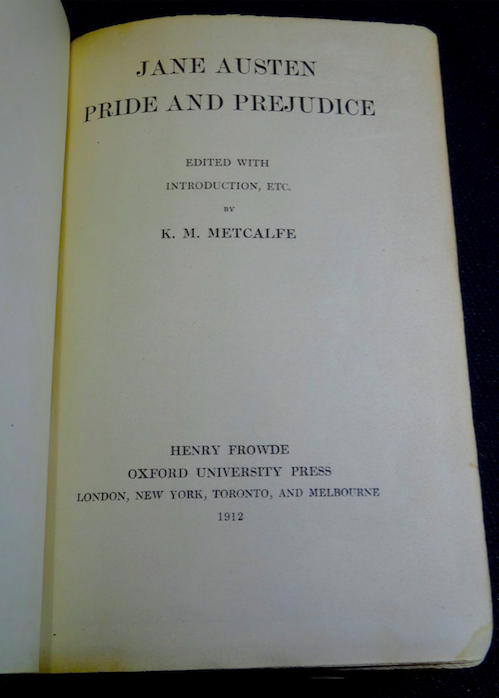
When I have given talks on the publishing history of Pride and Prejudice, one of my favorite editions to share is the little-known Pride and Prejudice edited by K. M. Metcalfe and published by Oxford University Press in 1912.

       Pride and Prejudice, ed. K M Metcalfe, Oxford, 1912

I first “discovered” this edition several years ago when reading an essay by Margaret Lane in her book Purely for Pleasure (London, 1966), a collection of biographical pieces that never quite made it into book form. In a chapter on R. W. Chapman, she writes of an edition of P&P published by Oxford in 1912, edited by K. M. Metcalfe – that is, Katharine Metcalfe, a young tutor at Oxford’s Somerville College [there is, for the trivia minded, a Lady Metcalfe in P&P!]. It was “a new, textually accurate edition of P&P” [Lane] – and included an introduction, an overview of Austen’s life and works; essays on social history, domestic life, and language in the Regency period; as well as criticism and textual notes. There are no illustrations…

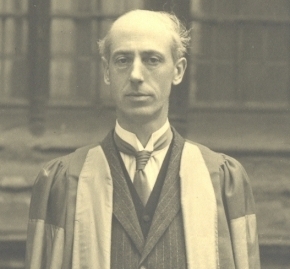
R W Chapman in 1928 – OED

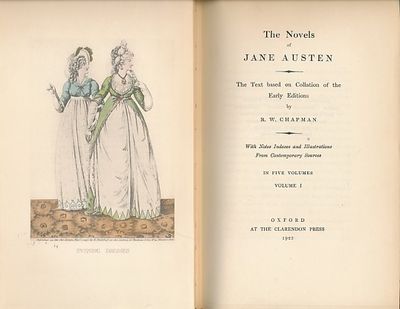
At some point in 1912, Metcalfe met Chapman, he an editor at the Oxford University Press – by all accounts it was a whirlwind courtship – they shared a love of book collecting! – and they married in 1913. Metcalfe clearly introduced Chapman to Austen and they planned to jointly produce an edited complete works.  All was cut short by the First World War in which Chapman served, and Metcalfe, now married with children (and thus required to give up her fellowship) “had little time or strength for editorial labours.” [Lane, 197].  Chapman’s Oxford set of the novels was published in 1923. But Metcalfe had also published her own Northanger Abbey four months earlier [see Gilson, E151, what Kathryn Sutherland calls “an unexplained oddity” in her Jane Austen’s Textual Lives (Oxford, 2005)[Sutherland, 43].  The interesting bit is that the text of her own P&P edition (as well as her Northanger Abbey) was used for Chapman’s edition – same pagination, etc. – yet he does not mention her anywhere. In his 1948 Jane Austen: Facts and Problems he pens grateful acknowledgments to those critics…, etc., etc. and “my wife” in his preface.

[photo courtesy of J Barchas]

In Chapman’s Jane Austen: A Critical Bibliography (Oxford: Clarendon Press, 1953), again there is no mention of Metcalfe, but he annotates her 1912 edition of P&P thusly:

“This unassuming edition is equipped with a perceptive introduction and notes, and anticipates the textual rigours of the next item.” [Chapman, 6

That next item is his 1923 edition of the novels! – which takes up a full page of annotation!

And he makes no mention at all of her 1923 Northanger Abbey!

Sutherland believes that Metcalfe essentially provided the model for Chapman’s editions – and she wonders at his public silence – I wonder what went on at their dinner table!! In studying Chapman’s papers, Sutherland does find that Metcalfe continued to work on editing the novels – there is a note in the margin of the Mansfield Park work in progress: “I want, oh so badly, to do it at least once with you.” [Sutherland, 44].

Don’t’ ever say that bibliography isn’t interesting!! – there is a novel in there somewhere!

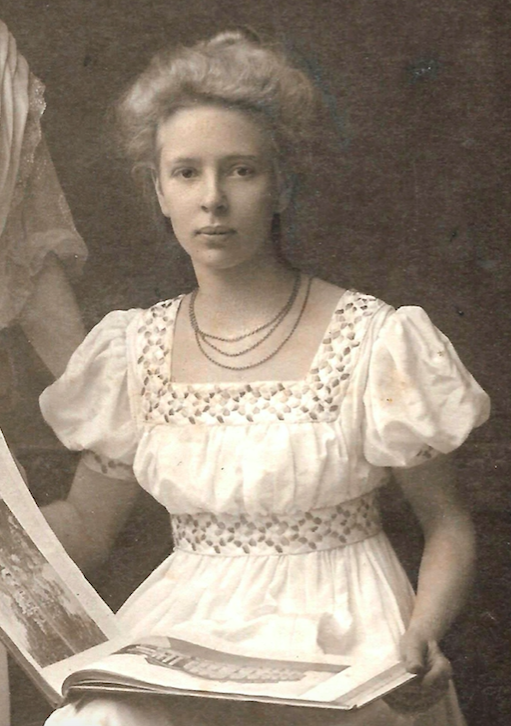
So I have long had lingering questions – there has to be more to this story than just these few references in scholarly texts – who was she? what did she look like? how did Chapman seem to take over her earlier editing work? what really was Metcalfe’s influence on Chapman in the making of his great Oxford edition of Austen’s works, and what were her feelings about being surpassed as Austen’s editor, and barely referenced by her own husband for the work she did do.

Well, thanks to the diligent scholarly detective work of Janine Barchas, Professor of English at the University of Texas at Austin, and three years in the making, my questions, and yours, have finally been answered! Her essay has just been published online in The Review of English Studies: you will need access to their database – it will be in print in the next issue. [ link: https://academic.oup.com/res/article-abstract/doi/10.1093/res/hgw149/2999313/Why-K-M-Metcalfe-Mrs-Chapman-is-Really-the?redirectedFrom=fulltext

Finding many letters and notes in both the Chapman and Metcalfe papers at Chawton and the Bodleian, Barchas traces the complete history of Metcalfe’s editing and her hand in the subsequent work by Chapman.

Barchas found her own copy of this edition in an Australian bookstore – it is a presentation copy with Metcalfe’s inscription to her Uncle Hugh, sure proof of pride in her creation:

Presentation copy of Jane Austen’s Pride and Prejudice, edited by K. M. Metcalfe and inscribed by her to ‘Uncle Hugh’ (Oxford, 1912).  Photo courtesy of J Barchas

[You might like to note that Janine has just loaned this copy to the Chawton House Library, where it will be on display in their upcoming Austen/De Stael exhibition beginning in July 2017].

*************

At Chawton, Barchas discovers a letter addressed to the founder of the Chawton Cottage Museum (now the Jane Austen House Museum) where Metcalfe states “I was really the originator in the editing of Jane Austen (when I married my publisher in the process!)” (Letter to T. Edward Carpenter, 22 May 1954) [Barchas, 12].
Ferreting out the documented facts of the Metcalfe / Chapman collaboration, Barchas conveys the truth of the times:

“The mundane facts of the case may be sexist but it would be naïve and anachronistic to think these professional restraints surprising in historical context. Here is not a grand conspiracy but a commonplace wrong. Plenty of parallel examples exist in the history of editing where a woman’s scholarship became merely contributory to that of her male partner…” [Barchas, 7]

Find this essay however you can – it is brilliant in its recovery work of the woman who, long before Chapman, saw the importance of returning to Austen’s original editions to truly give the modern reader a pure printing of her work.

Katharine Marion Metcalfe, 1912. Photo was provided by the Chapman family for use in the RES article by J Barchas. This detail is used with her permission here.

*****************

I treasure my copy of Metcalfe’s Pride and Prejudice, despite a fair amount of writing and it smells a tad off (!), but I am very happy to own it, flaws and all!  The introduction is a lovely meditation on Jane Austen and should be more readily available. Find this as well if and where you can. Hopefully the work now done by Professor Barchas might induce a publisher to issue an edition with Metcalfe’s insightful introduction. It should certainly stand proudly aside and before any of Chapman’s works.

About the author: Janine Barchas is Professor of English at the University of Texas at Austin.  She is the author of  Matters of Fact in Jane Austen: History, Location, and Celebrity (Johns Hopkins University Press, August 2012).  Her  first book, Graphic Design, Print Culture, and the Eighteenth-Century Novel (Cambridge UP, 2003), won the SHARP book prize for best work in the field of book history.  You can visit (and spend hours browsing!) her online digital project What Jane Saw (www.whatjanesaw.org) which includes the gallery of the British Institution that Jane Austen visited on May 24, 1813 and the “Shakespeare Gallery of 1796.” Barchas, along with colleague Kristina Straub, recently curated an exhibition at the Folger on Will & Jane: Shakespeare, Austen, and the Cult of Celebrity. (You can read more about that exhibition here.)

c2017, Jane Austen in Vermont
Domestic Arts · Fashion & Costume · Georgian England · Georgian Period · Jane Austen · Jane Austen Popular Culture · Movies · Museum Exhibitions · Regency England · Social Life & Customs
Museum Musings: “Cut! Costume and the Cinema” ~ with a little bit of Jane Austen

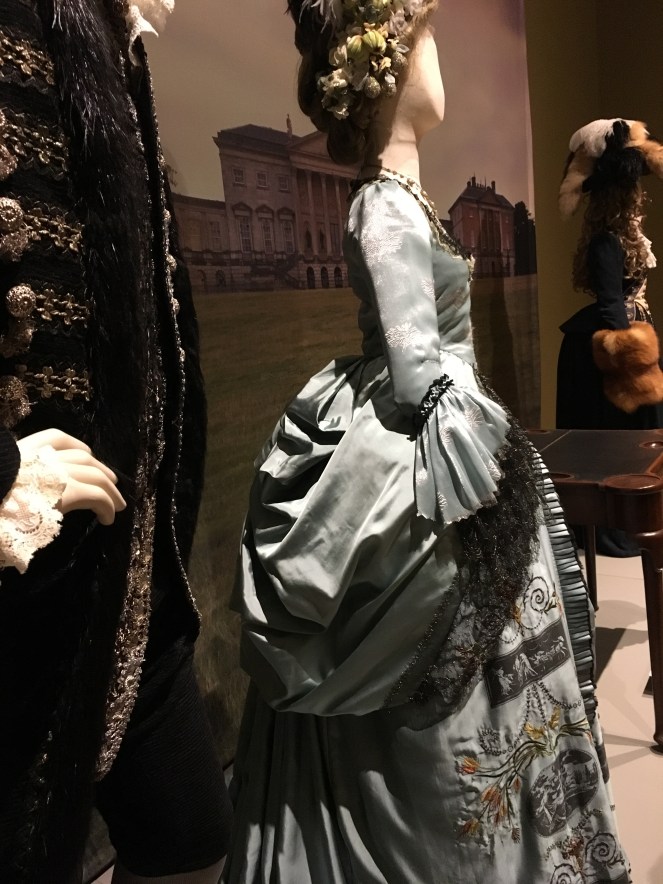
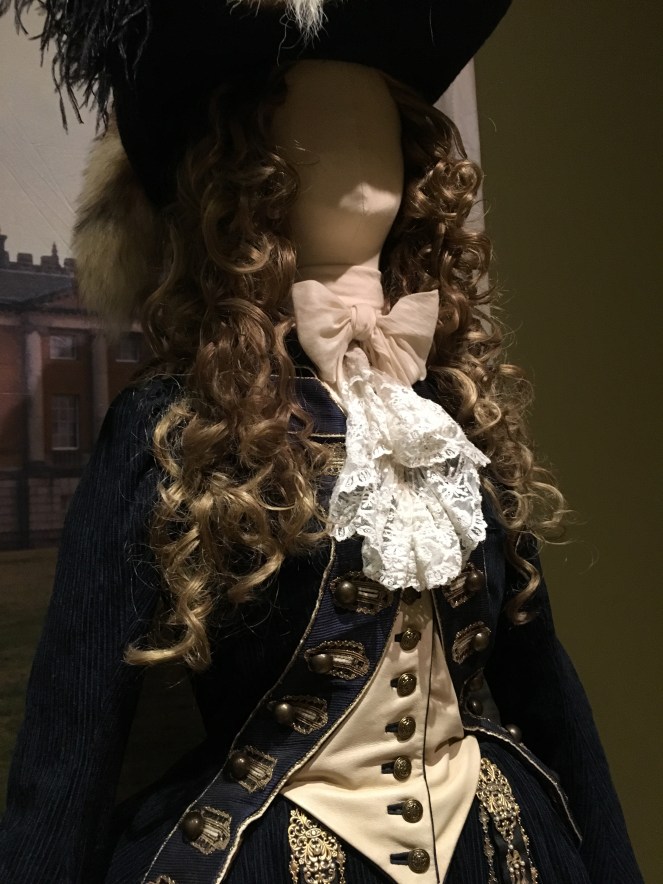
Cut! Costume and the Cinema has been showing at the Columbia Museum of Art since November and closes today February 19, 2017. The exhibit takes us chronologically through the various fashions made for the movies by COSPROP, a London-based designer of authentic period costumes.

img_1247

Step into the exciting world of costume design with CUT! Costume and the Cinema. Through more than 40 period costumes we will expose the art of making costumes for film. The exhibition will reveal how film costumes set the scene and establish authenticity in films. These perfectly crafted costumes uncover clues about a character’s status, age, class and wealth as well as their role in the story.  The films represented in the exhibition depict five centuries of history, drama and comedy with period costumes worn by famous film stars Johnny Depp, Keira Knightley, Ralph Fiennes, Daniel Craig, Kate Winslet, Sandra Bullock, Uma Thurman, Angelica Huston, and many others. In all, more than 30 actors will be represented from 26 films…

World-renowned British costumer Cosprop Ltd. earned its first Academy Award for Costume Design in 1986 in A Room with a View.  Since then, the costumier has been nominated more than a dozen times. In 2007 three of the five Oscar nominees came from the Cosprop shop, only to be topped by winning the following year for The Duchess. Like their period prototypes, these opulent costumes are crafted of sumptuous fabrics and decorated with intricate embroidery and lace.

[From the distributor’s website: http://www.exhibitsdevelopment.com/Cut!.html]

Watch this youtube of the exhibit when it was at the BYU Museum of Art:

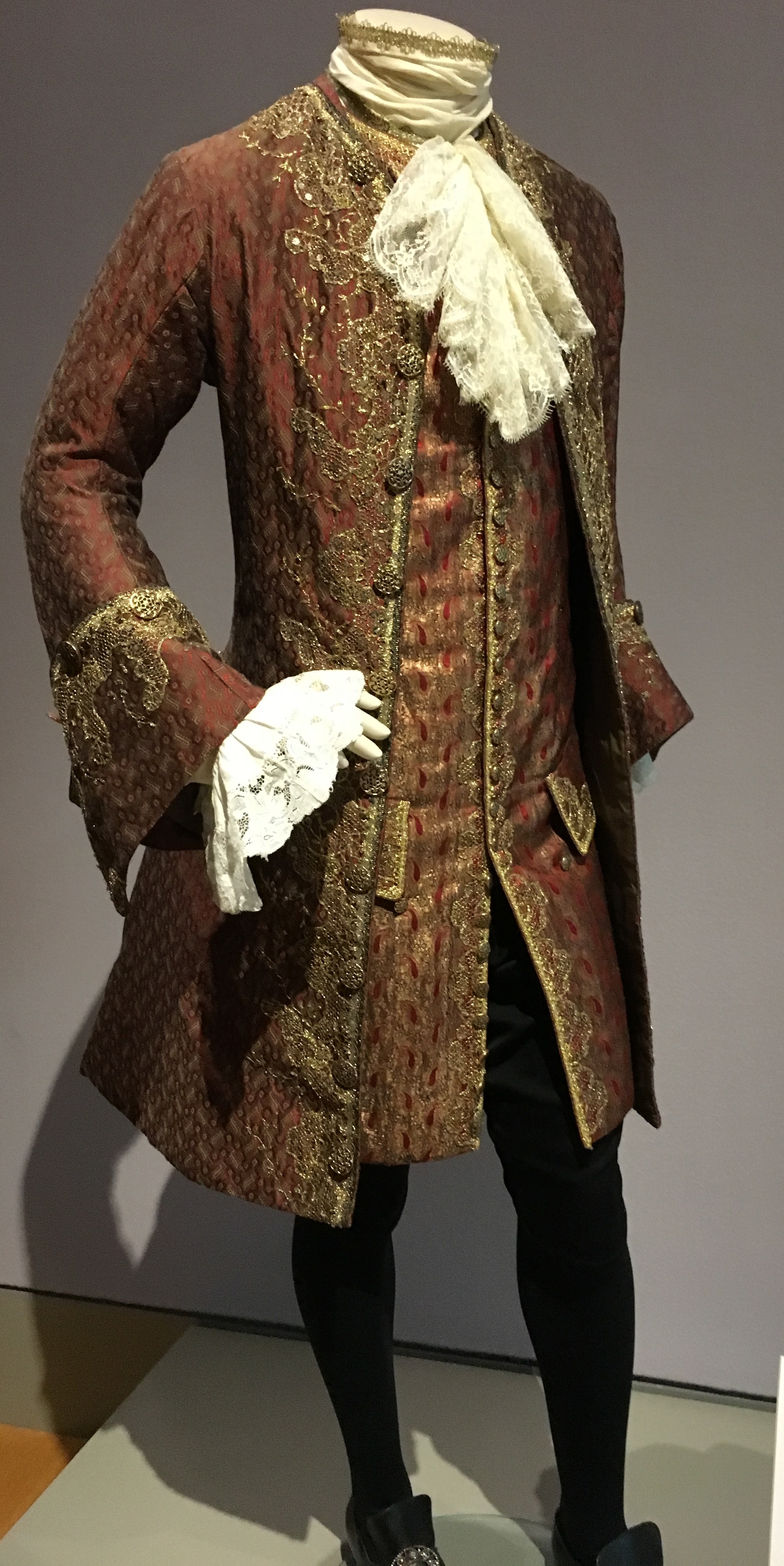
This exhibition has been traveling for the past ten years and finally made it to South Carolina. Joyful that I could take pictures (no flash), and as alas! there is no exhibition catalogue, I here offer a good sampling of what was on view. A picture cannot nearly capture the exquisite detail of these fashions – they must be seen up close and personal. And quite amazing to see how tiny some of these actresses (and actors) actually are! It also offers a terrific list of must-see movies, some that had somehow fallen through the cracks and others to be revisited with a new-found appreciation for the costumes.

The costumes are arranged chronologically. And YES, there is a Jane Austen, but alas! only one … we begin in the Renaissance period with this stunning dark green velvet: (you can click on any picture to enlarge it and see more detail)

everafter-huston

Angelica Huston in Ever After: A Cinderella Story (1998)

cassanova-ledger
Heath Ledger in Cassanova (2005)
pirates-depp-2
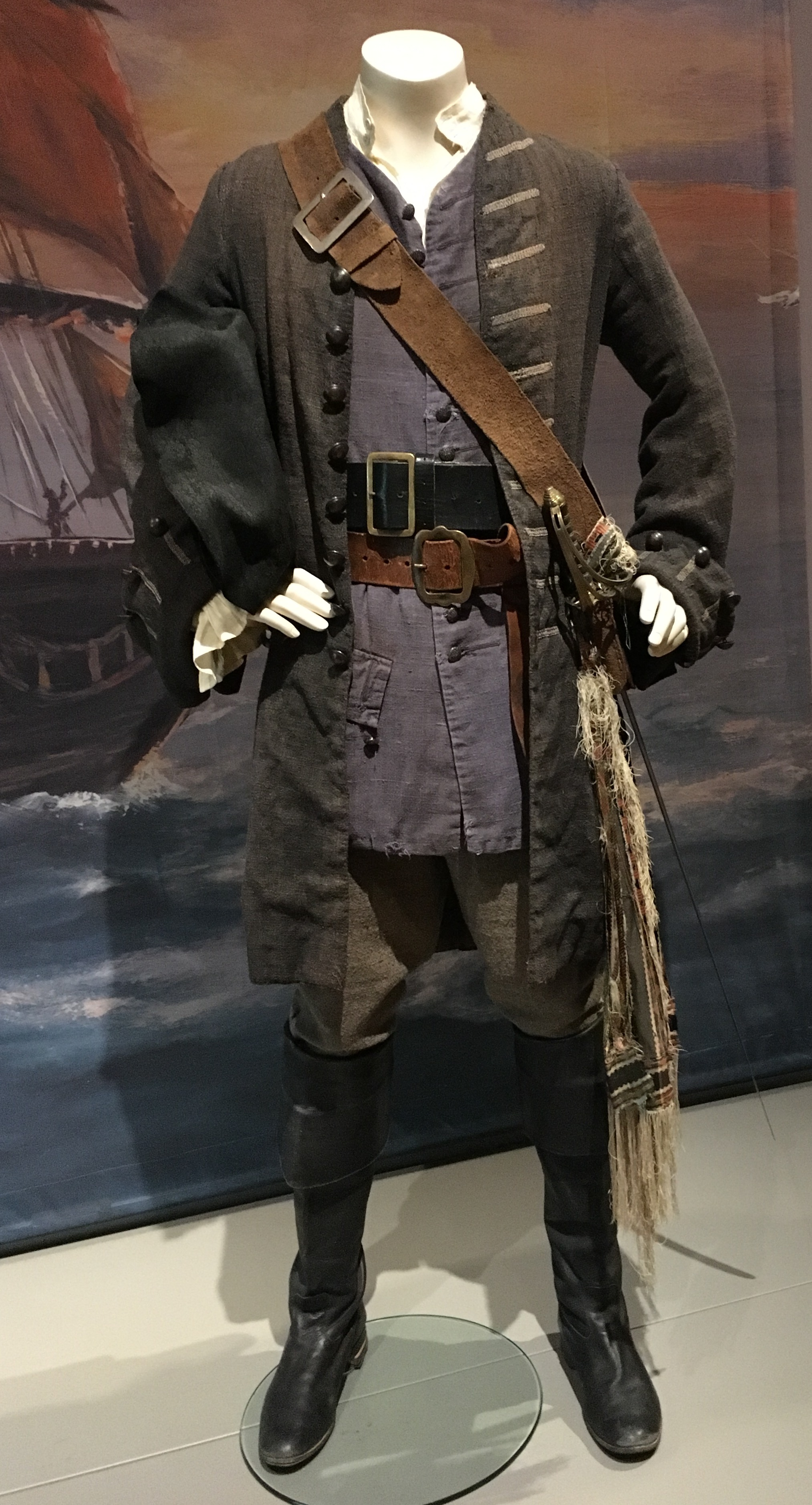
Johnny Depp in Pirates of the Caribbean: The Curse of the Black Pearl (2003)
kingcharles-henderson
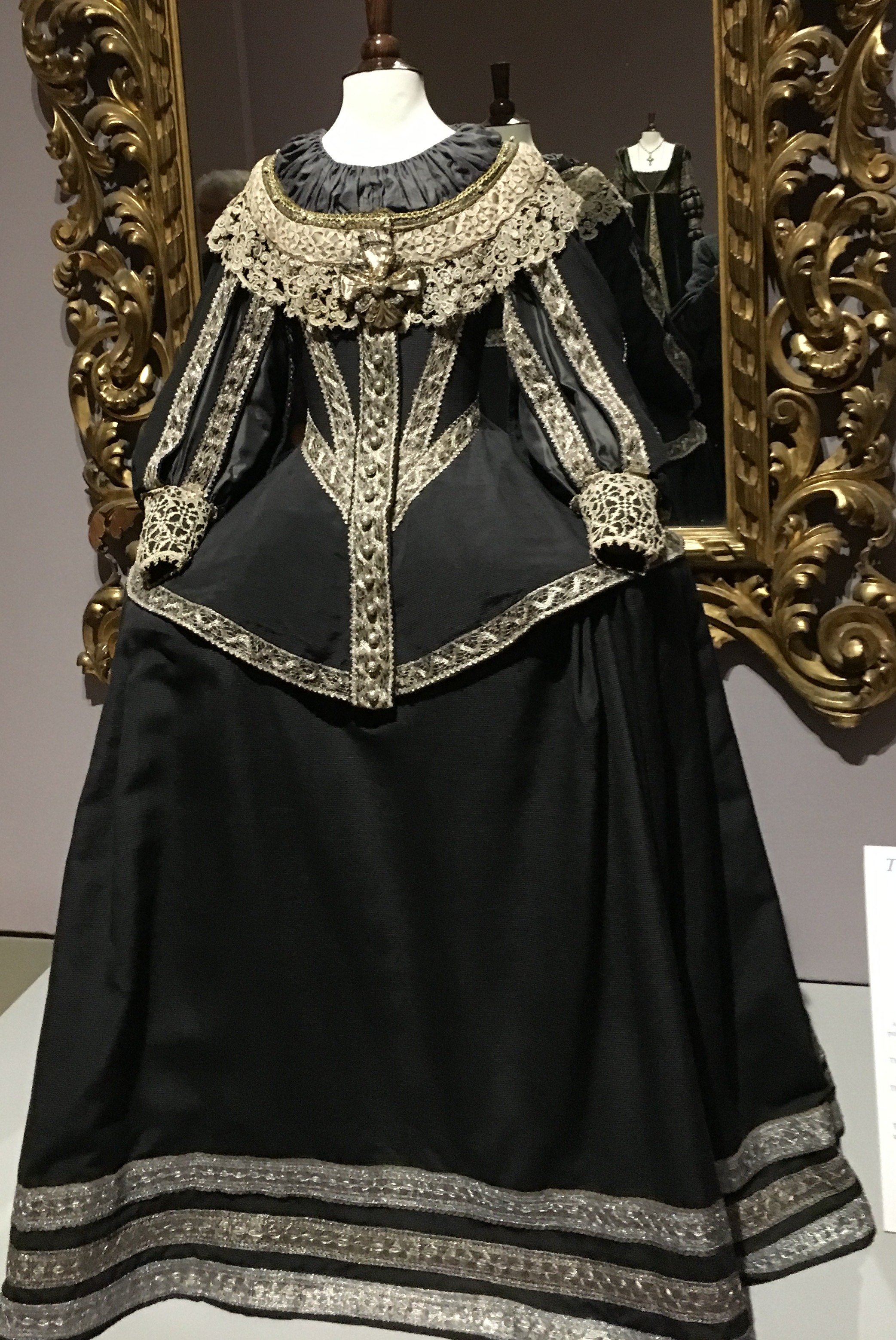
Shirley Henderson as Catharine of Braganza “The Last King: The Power and the Passion of Charles II” (2003)

***************


****************
The Georgians: outlandish (and to-die-for) fashions from The Duchess (2008):

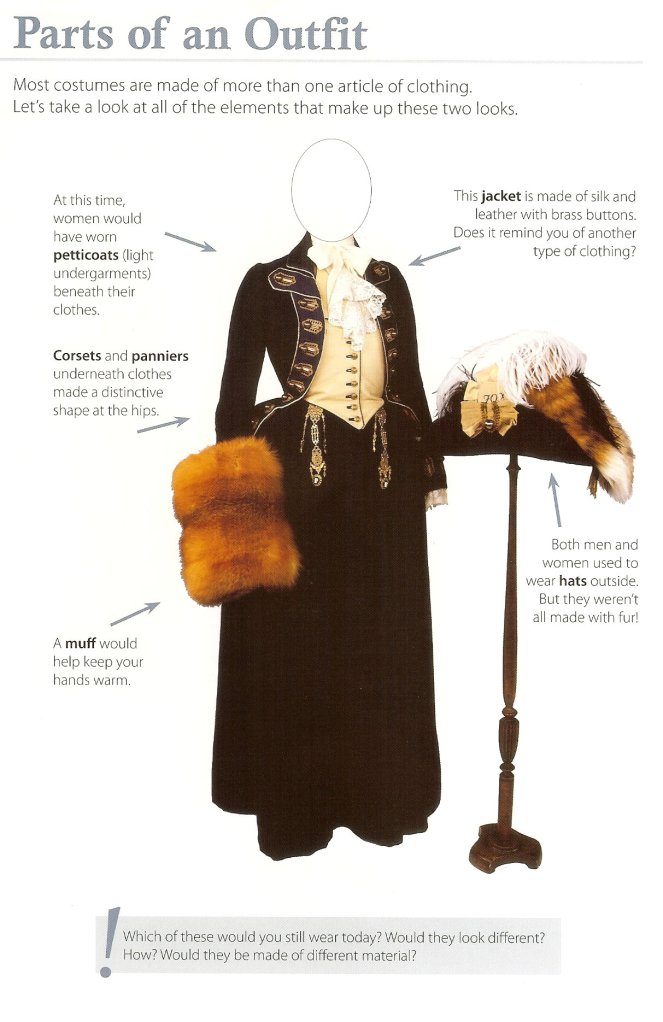
And a close-up of Keira Knightley’s Whig-inspired outfit, and this helpful description from the “Family Guide” to the exhibition:

*************

Finally Jane Austen!  Kate Winslet as Marianne in Sense and Sensibility (1995)

*************

Victorian times with Dickens:

littledorrit-foy
“Little Dorrit” (2008) with Claire Foy

and Bronte:

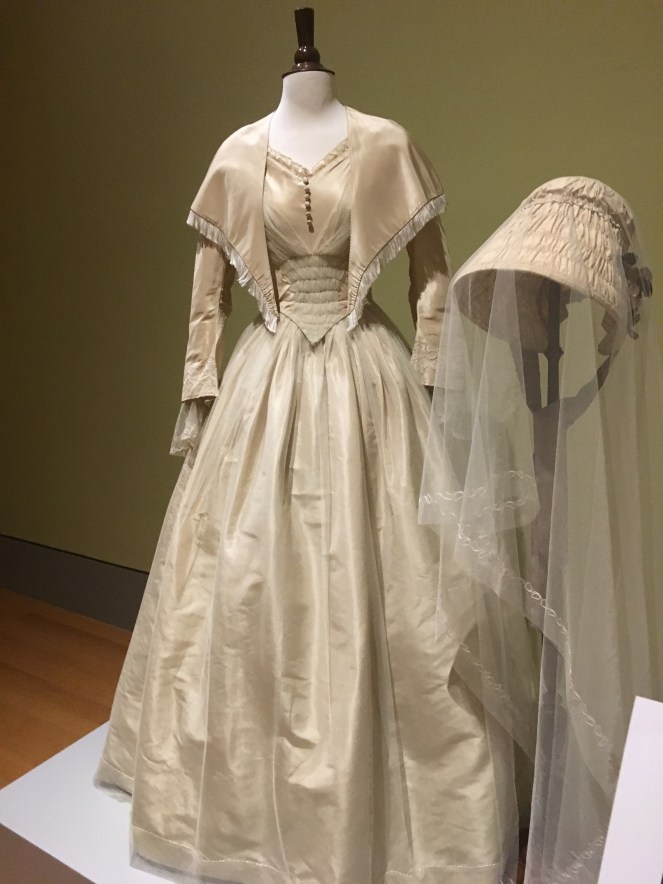
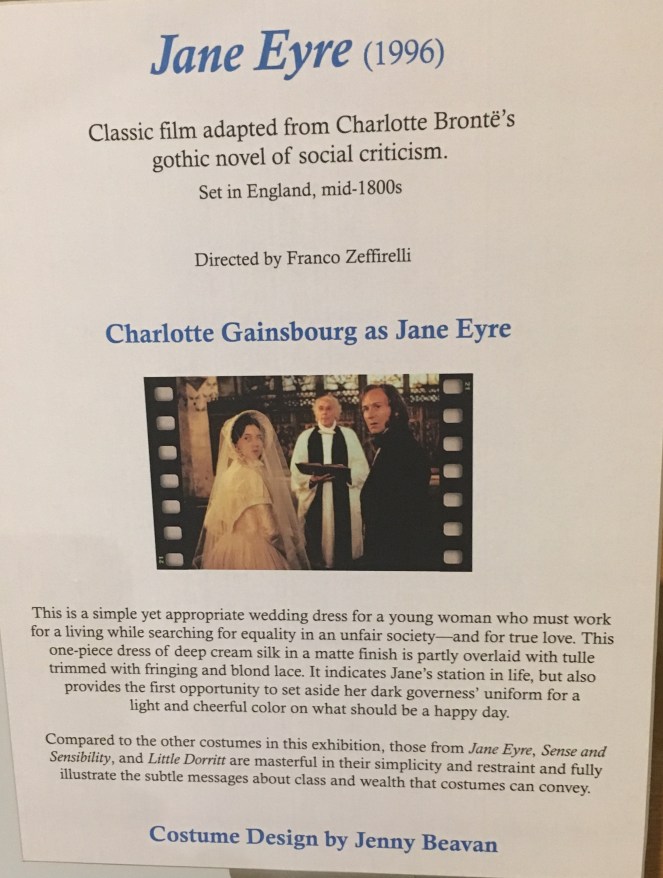
The wedding dress in the 1996 Jane Eyre (with William Hurt)

And the all important hoop for Victorian ladies:

hoop

***********

Phantom of the Opera (2004) gives us these two stunning outfits, worn by Emmy Rossum and Minnie Driver:
portraitlady

***********

We now head into the later 1880s and beyond with this from Henry James’ Portrait of a Lady, here a dress worn by Nicole Kidman (I want this!)

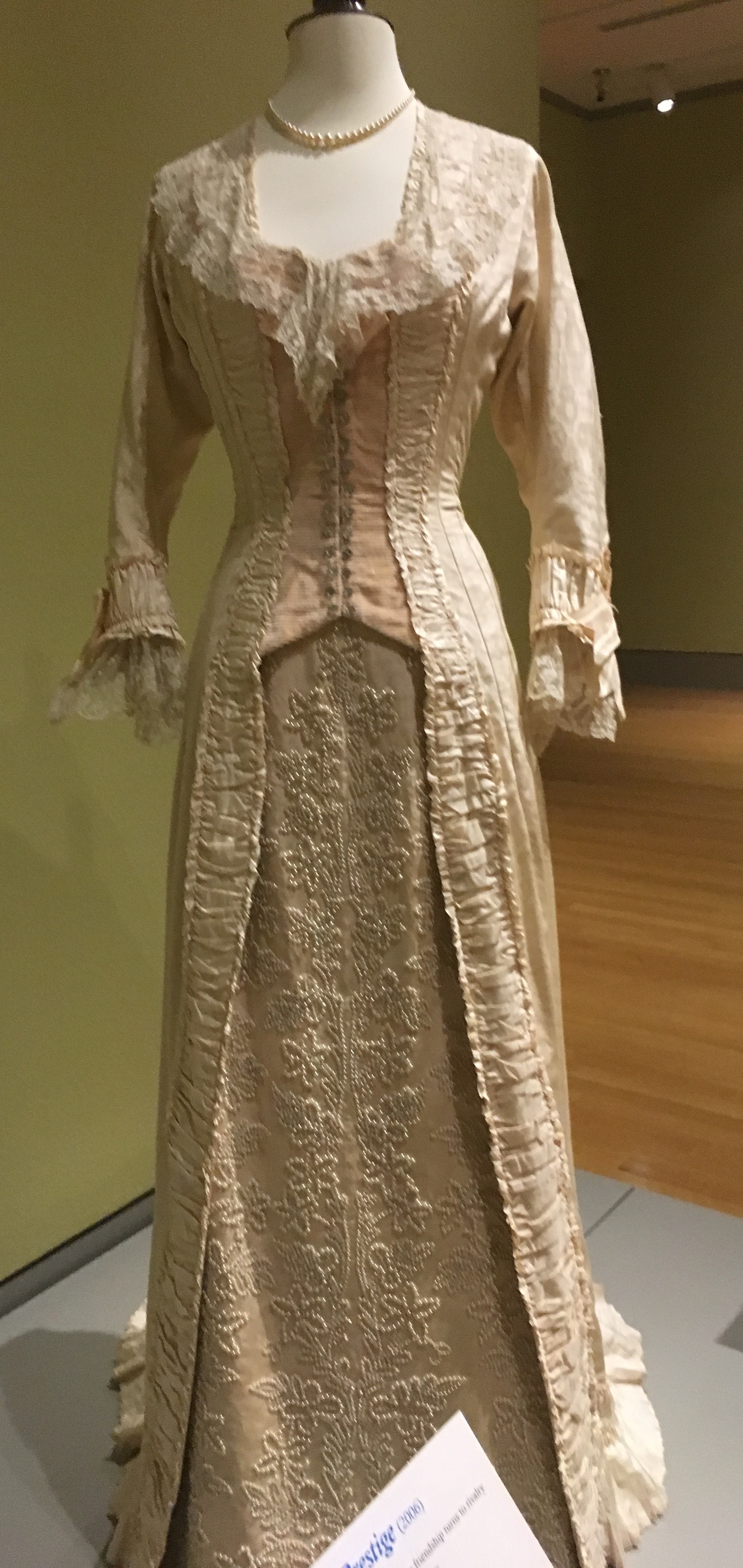
prestige

and this worn by Scarlett Johansson in The Prestige (2006)
– one of my favorite movies…

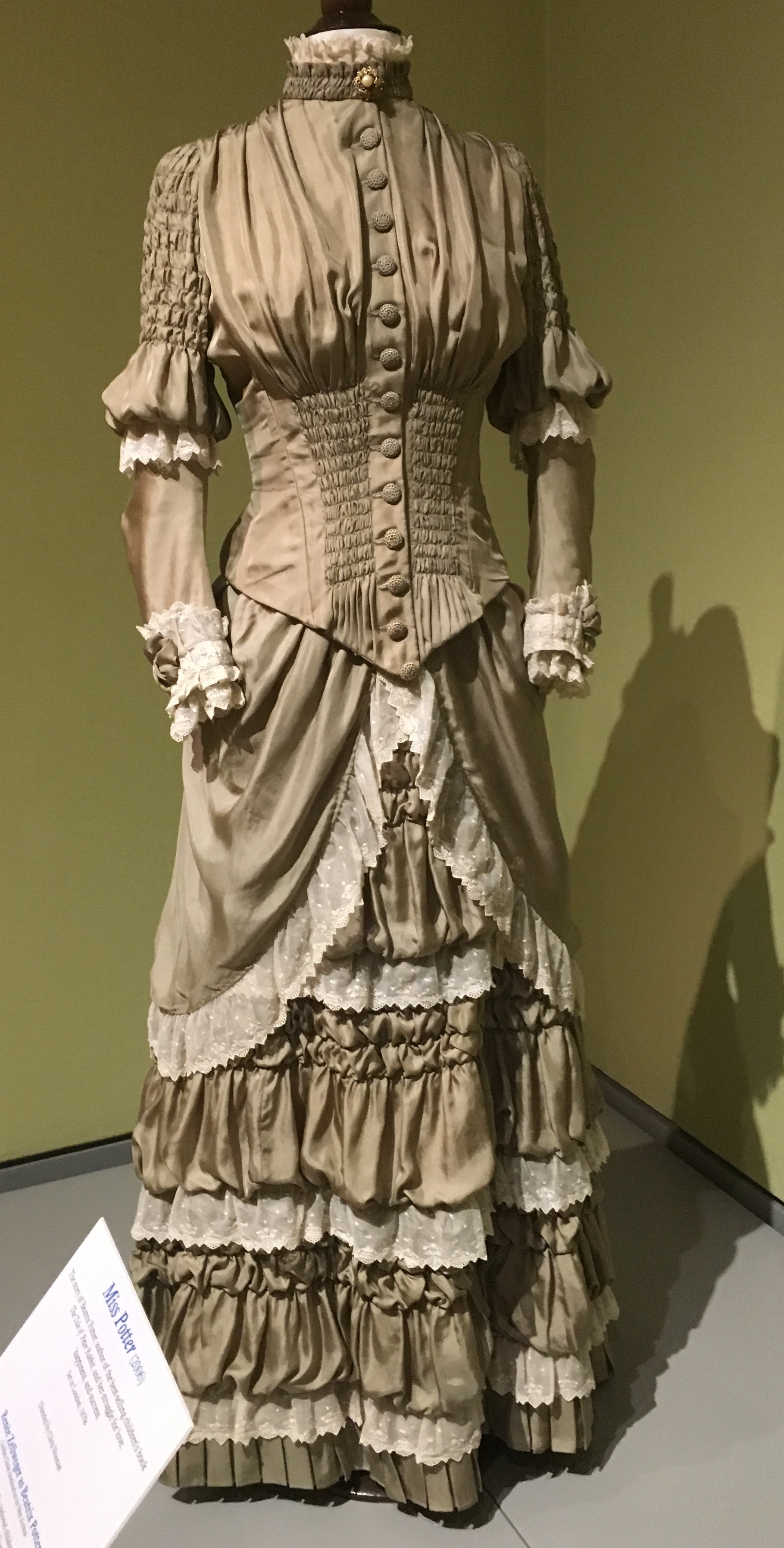
Renee Zellweger as Miss Potter (2006):misspotter

****************

Finding Neverland (2004) with Kate Winslet yet again and Rahda Mitchell as Mrs. Barrie (look at the detail in this dress!)

We’ll give the men a short nod here with Robert Downey Jr. and Jude Law in Sherlock Holmes (2009):

sherlockholmes

[click on picture for info]
********
A stunning Emma Thompson in Howards End (1992):howardsend-thompson

lovewar-pettigrew

In Love and War (1997) with Sandra Bullock (left) and
Amy Adams in Miss Pettigrew Lives for a Day (2008)

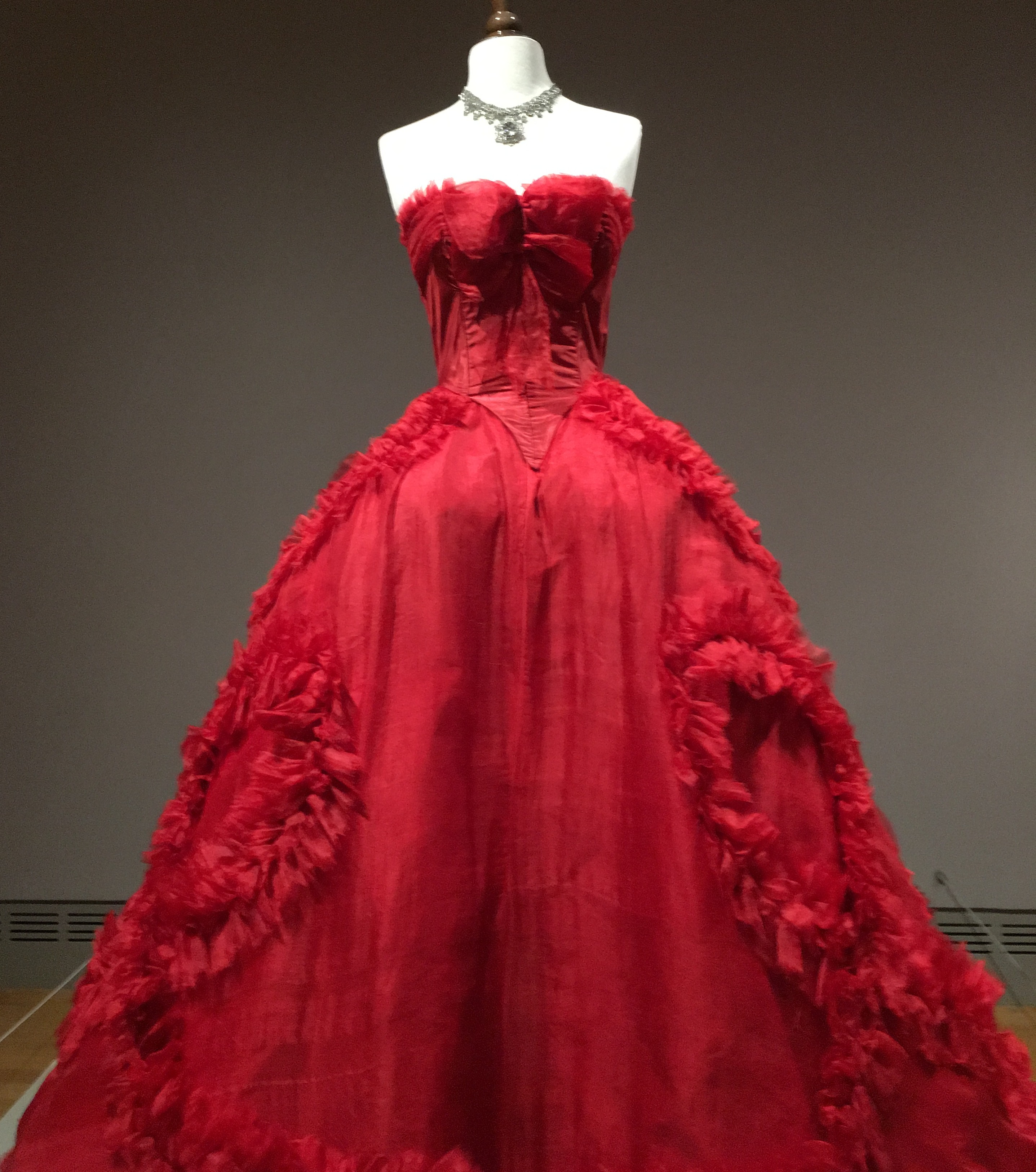
And finally, the costume that headlines all the publicity, this from The Land of the Blind, a movie I confess to knowing nothing about other than it starred Ralph Fiennes and had this gorgeous dress!

landblind

Movies included in the exhibition but my pictures were not worth posting (all movies worth seeing!):

  • Hamlet (1996), with Julie Christie, Kenneth Branagh, and Kate Winslet (!)
  • Gosford Park (2001), Maggie Smith pre-Dowager Lady Grantham…
  • Mrs. Dalloway (1997) with Vanessa Redgrave 
  • The New World (2006) with Colin Farrell as Captain Smith and Q’orianka Kilcher as Pocahontas
  • The Golden Bowl (2000), with Kate Beckinsale,,Uma Thurman and Jeremy Northam

Join the discussion: What are some of your favorite fashions from period movies or TV?

c2017 Jane Austen in Vermont, all photos by the author
Holidays · Jane Austen

Happy New Year One and All!!

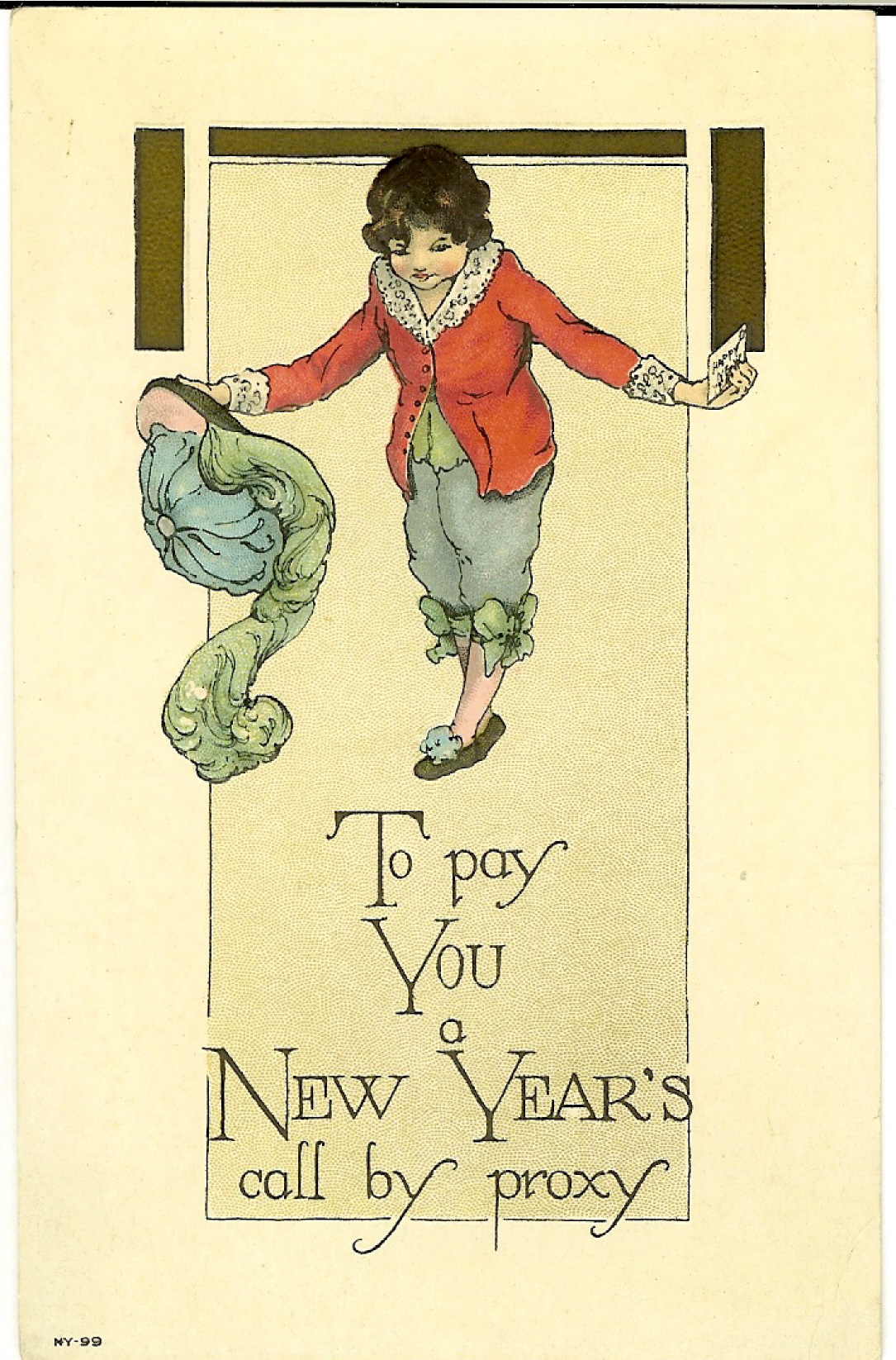
New Years postcard

Wishing you all a very Happy New Year, with gratitude to all for your visits, your comments, and your discussions of all things Jane!  ~ Thank you for including Jane Austen in Vermont in your daily blog surfing!  Welcome to 2017! – Yikes, how did that happen?

Today in Jane Austen’s life:  [from the JASNA-Wisconsin “A Year with Jane Austen” calendar]

  • 1787: Cousins Edward and Jane Cooper come to stay at Steventon for the New Year holidays.
  • 1812: Princess Charlotte of Wales writes that she intends to read Sense and Sensibility soon.
c2017, Jane Austen in Vermont
Austen Literary History & Criticism · Holidays · Jane Austen · Regency England

“Happy Christmas to All ~ And to All a Good Night!” from ‘Jane Austen in Vermont’

christmas-postcard[Image: Vintage Postcard, illus. Marion Miller]

**

I send you to a previous post on Jane Austen’s Very Own Scrooge!

[Dinner at Randalls at Chrismologist.blogspot.com]

********************************

Wishing You All a Very Merry Christmas!!

With Love from Deb 
at Jane Austen in Vermont
*************

Copyright @2016, Jane Austen in Vermont
Austen Literary History & Criticism · Collecting Jane Austen · Jane Austen · Jane Austen Circle · Jane Austen Popular Culture · Jane Austen Societies · JASNA · Literature · Social Life & Customs

Wishing Jane Austen a Very Happy Birthday!

austen-silhouetteThe first order of business today, on this 241st birthday of Jane Austen, is the annual publication of JASNA’s Persuasions On-Line Vol. 37, No. 1 (Winter 2016). Click here for the Table of Contents to yet another inspiring collection of essays, some from the 2016 AGM in Washington DC on EMMA AT 200, “NO ONE BUT HERSELF” and other “Miscellany” – all about Jane Austen…and perfect winter reading material…

Here is the link: http://www.jasna.org/persuasions/on-line/vol37no1/toc.html

pollogo

Here are the essays: (you might especially notice Gillian Dow’s essay on the Emma exhibition at Chawton House Library this year (website under redevelopment til Christmas) – for those of you who could not attend, this is the next best thing to being there!)

“The Encouragement I Received”: Emma and the Language of Sexual Assault
Celia Easton

“Could He Even Have Seen into Her Heart”: Mr. Knightley’s Development of Sympathy
Michele Larrow

Emma’s “Serious Spirit”: How Miss Woodhouse Faces the Issues Raised in Mansfield Park and Becomes Jane Austen’s Most Complex Heroine
Anna Morton

“Small, Trifling Presents”: Giving and Receiving in Emma
Linda Zionkowski

Oysters and Alderneys: Emma and the Animal Economy
Susan Jones

Epistolary Culture in Emma: Secrets and Social Transgressions
L. Bao Bui

Divas in the Drawing Room, or Italian Opera Comes to Highbury
Jeffrey Nigro and Andrea Cawelti

Mrs. Elton’s Pearls: Simulating Superiority in Jane Austen’s Emma
Carrie Wright

Multimedia Emma: Three Adaptations
Linda Troost and Sayre Greenfield

Jane Austen’s Emma at 200: From English Village to Global Appeal
Gillian Dow

MISCELLANY

Discerning Voice through Austen Said: Free Indirect Discourse, Coding, and Interpretive (Un)Certainty
Laura Moneyham White and Carmen Smith

“The Bells Rang and Every Body Smiled”: Jane Austen’s “Courtship Novels”
Gillian Dooley

Courtship and Financial Interest in Northanger Abbey
Kelly Coyne

Curious Distinctions in Sense and Sensibility
Ethan Smilie

“If Art Could Tell”: A Miltonic Reading of Pride and Prejudice
James M. Scott

Looking for Mr. Darcy: The Role of the Viewer in Creating a Cultural Icon
Henriette-Juliane Seeliger

Replacing Jane: Fandom and Fidelity in Dan Zeff’s Lost in Austen (2008)
Paige Pinto

Fanny Price Goes to the Opera: Jonathan Dove’s and Alasdair Middleton’s Mansfield Park
Douglas Murray

Austen at the Ends of the Earth: The Near and the Far in Persuasion
Katherine Voyles

Jane Austen Bibliography, 2015
Deborah Barnum

****************

Let’s look at what Austen’s father wrote about her arrival on December 16, 1775:

You have doubtless been for some time in expectation of hearing from Hampshire, and perhaps wondered a little we were in our old age grown such bad reckoners but so it was, for Cassy certainly expected to have been brought to bed a month ago:  however last night the time came, and without a great deal of warning, everything was soon happily over.  We have now another girl, a present plaything for her sister Cassy and a future companion.  She is to be Jenny, and seems to me as if she would be as like Henry, as Cassy is to Neddy.  Your sister thank God is pure well after it, and send her love to you and my brother, not forgetting James and Philly…

[Letter from Mr. Austen to his sister Philadelphia Walter, December 17, 1775, as quoted from Deirdre Le Faye, Jane Austen, A Family Record, Cambridge, 2004, p.27.]

Happy Birthday Miss Austen! – you continue to inspire, intrigue, and offer insights like no other!

c2016 Jane Austen in Vermont
Books · Fashion & Costume · Great Britain - History · Jane Austen · Jane Austen Merchandise · Jane Austen Popular Culture · Jane Austen Societies · JASNA · Museum Exhibitions · Regency England · Social Life & Customs · Women Writers

My Jane Austen Book Stash ~ From the 2016 JASNA AGM on Emma

jasnabannerThere has been a good deal to write about this year’s terrific JASNA AGM in Washington DC on Emma – but while it always takes me a good while to re-emerge into the 21st century after these events, little time has been accorded me to actually write anything about it. But I did want to give you a quick summary of the books and other “stuff” I bought this year – less than usual because I bought a DRESS and a SPENCER, which did my pocketbook some serious damage…(see the image below*).

But to the matter at hand, here are the books, etc. – most would make fine holiday gifts for your favorite Austen follower, or for your own stocking for that matter… except this first one which would not in any way fit:

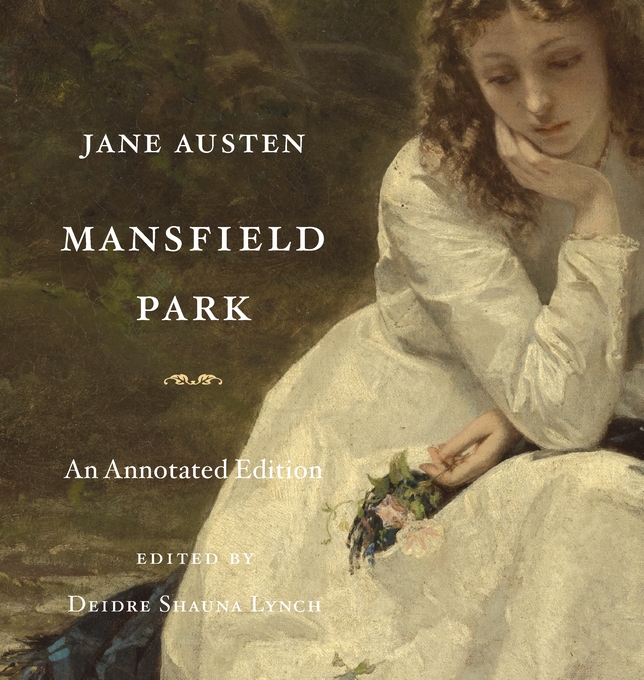
  1. cover-mp-harvardJane Austen. Mansfield Park: An Annotated Edition. Edited by Deidre Shauna Lynch. Harvard UP, 2016.

Very excited to have this, completing my collection of these beautiful Harvard editions. The book was released during the AGM and thankfully Jane Austen Books had copies. I have only skimmed through it, but it promises to live up to the other Harvard editions with an insightful introduction and notes by Lynch, and color illustrations throughout that give you the sense of time, place, and history that surround the adventures of Fanny Price. A must have and a perfect holiday gift for your Austen friends (and at $35, this is the best book deal out there, bar none…)

2. Alden O’Brien, et al. ‘An Agreeable Tyrant’: Fashion after the Revolution. Exhibition Catalogue. Washington DC: DAR Museum, 2016.

The catalogue that goes along with the fabulous exhibition at the DAR Museum that many of us at the AGM werecover-agreeabletyrant-dar privileged to see. Ms. O’Brien spoke at the AGM to take us through the history behind and the creation of this fashion exhibit – complete with characters from Jane Austen’s Pride and Prejudice found in the “Pemberley Room” – it runs from October 7, 2016 – April 29, 2017 and is described on the website as: “…displaying men’s and women’s clothing from 1780 to 1825 in a dozen period rooms throughout the museum. It considers how Americans fashioned a new identity through costume; on the one hand, Americans sought to be free from Europe, yet they still relied heavily on European manufacturing and materials.”

The catalogue is quite lovely, showing full page color illustrations of fashions of the time as well as photographs of costumes in the DAR Museum collection. A must-have for every good Janeite with any fashion sense and perhaps in need of a new dress idea…it also contains various patterns in the back. You can purchase the book through the Museum’s website here. And my friend Kelly has written about the exhibit on her blog Two Teens in the Time of Austen.

Here are a few of my shots of the exhibit:

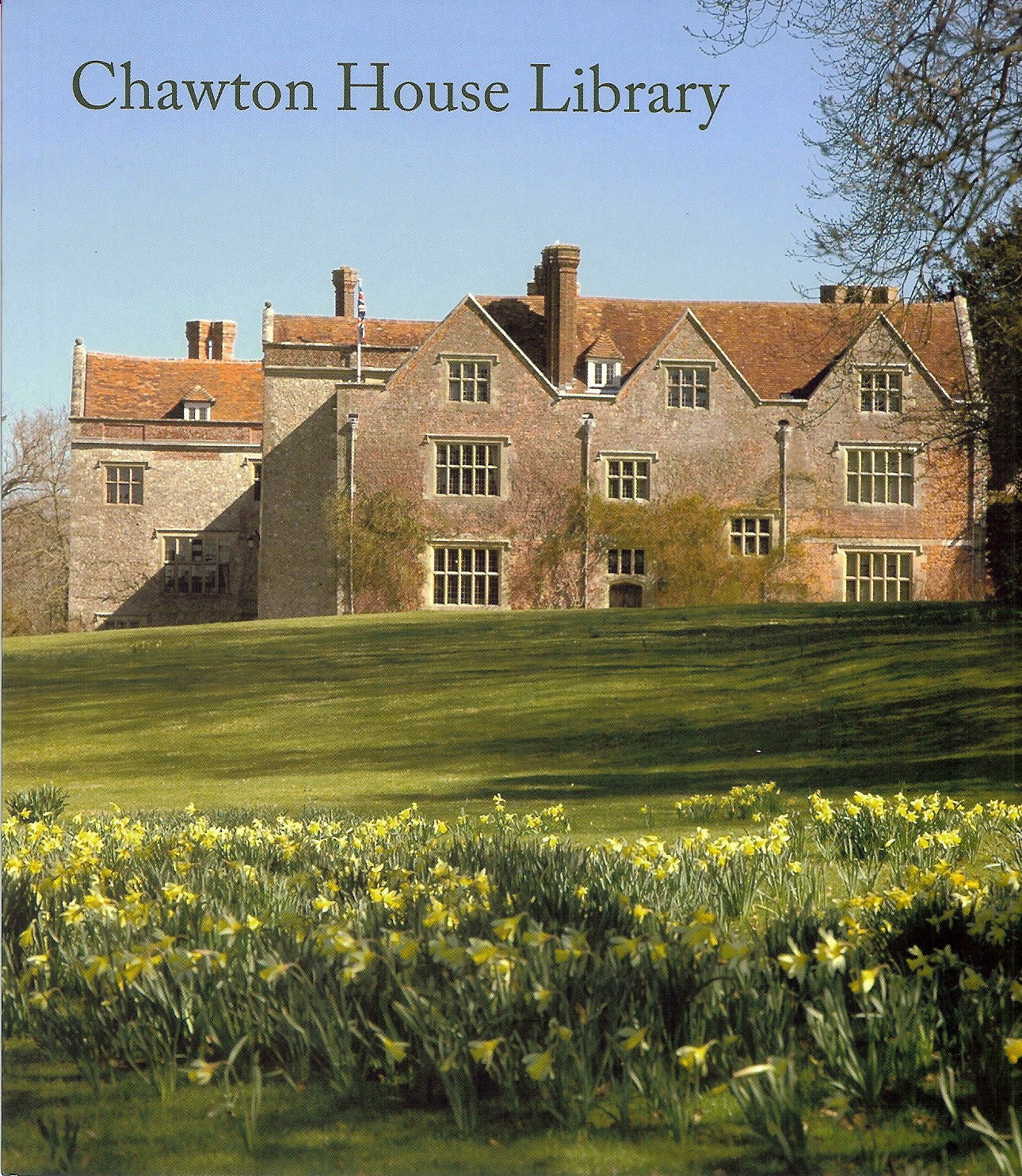
3. Chawton House Library – their new brochure and guide, text by Helen Cole, et al. CHL, 2016.cover-chl-db2

This is Lovely! It tells the history of the Chawton Great House, Jane Austen’s connection with it, the development of it as a learning centre for the study of early women’s writing from 1600 to 1830. There is much detail with fine illustrations of the house itself: the Library; the various rooms and staircases; exhibition and conference information; the furnishings, art and portraits; the gardens and grounds; and a bit of the history of women writers and their place in our literary heritage. For $12 you get to armchair-tour the house at leisure, and then you will add this to your next-trip-to-England itinerary, as well as a commitment to become a valued Friend of the Library (also a nice gift in a friend’s name).

[Note that the CHL online shop is currently experiencing the dreaded tech difficulties – if you would like a copy, please contact me and I will get one to you.]

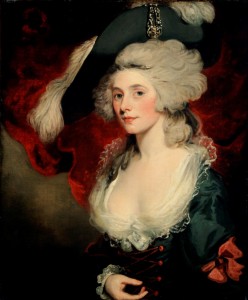
chl-mary-robinson-by-hoppner

Portrait of Mary Robinson, by John Hoppner c1782 (at CHL)

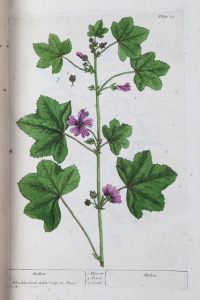
Also from the Chawton House Library – their table at the AGM was jam-packed with goodies – I bought their collection of 8 botanical cards from Elizabeth Blackwell’s A Curious Herbal (frameable!) – you can also “Adopt” this book as a way to support the Library!

blackwellcards-chl

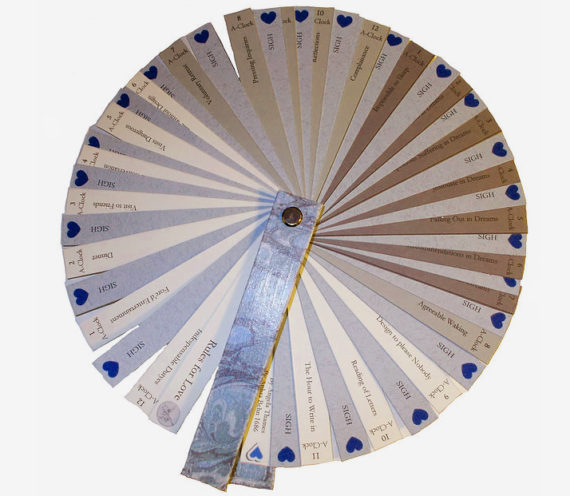
Also couldn’t resist this book-fan “The Rules for Love,” by book artist Angela Thames from Aphra Behn’s 1686 La Montre –  (you can read about Ms. Thames as artist-in-residence at CHL here).

thames-ruleslove-ai

[Image from: a-n The Artists Information ]

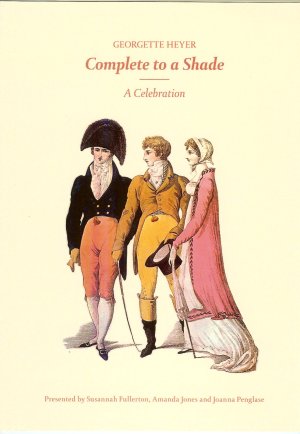
cover-heyer-jasa-db4. Susannah Fullerton, Amanda Jones, and Joanna Penglase, ed. Georgette Heyer: Complete to a Shade: A Celebration. JASA, 2016.
Exactly what the title tells us and another must-have – a collection of essays from various JASA folk who have long-been or are new to the joys of reading Georgette Heyer, based on their conference on Heyer in August 2016. Complete with lovely contemporary illustrations, this was just off the press in time for the AGM – $12 (I think) – you can contact JASA for information on how to purchase.

**************

Alas! I was very disappointed not to find a single book on London that I didn’t already have at either of the book stalls – but did find a few oldies worth perusing:

  1. Lt. Col. W. P. Drury. A Regency Rascal. London: Collins, 1971.

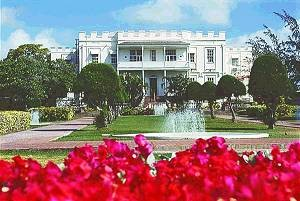
The tale of Jack Peregrine, a regency rascal to say the least, who arranges a marriage of convenience for himself to helpcover-regencyrascal-db him through a financial crisis, and then finds himself the heir to an estate in Barbados – all based on the true story of Sam Lord and his Castle (most recently a hotel in Barbados*) – who cannot resist a story of such a man (Heyer couldn’t)! First published in 1937 by Hutchinson, it gives a glimpse of Regency-era life in both London and the Colonies. Will see if it lives up to the hype… [*The property was run as an exquisite hotel for many years but unfortunately it was destroyed by fire in 2010 – it is currently being reconstructed and will open in 2018 as a Wyndham Grand Resort. The 450-room resort will feature 3 restaurants, meeting facilities and a luxury spa] – sign me up!

samlordscastle-barbados
Sam Lord’s Castle, Barbados, pre-fire
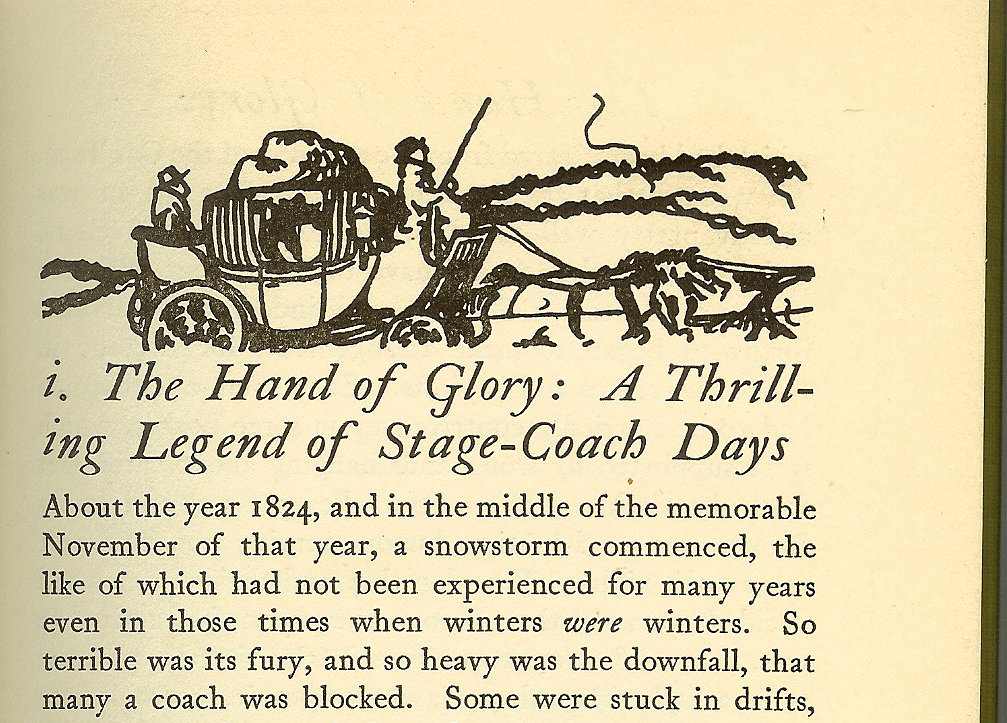
  1. J. Fairfax Blakeborough, ed. Legends of Highwaymen and Others. New York: Frederick Stokes, 1924.

Just because I am a sucker for carriages and highwaymen tales!

legends-page13-db

(now, doesn’t that peak your interest just a little?)

  1. Hazel Mews. Frail Vessels: Woman’s Role in Women’s Novels from Fanny Burney to George Eliot. U of London: Athlone Press, 1969.cover-frailvessels-dbWhy not? – adds to my collection on women writers – but it also had an inscription that I first thought read “Catherine Morland” and that cracked me up – heavy reading for Catherine! (it reads on close analysis “Catherine R. Harland”).

cover-ss-trollope-ab

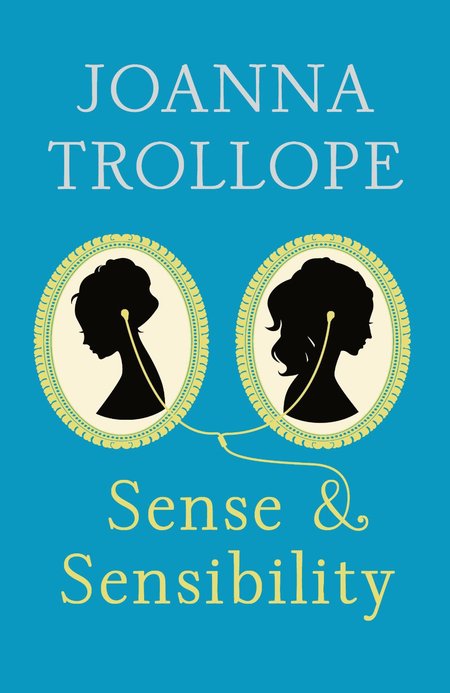
8. Joanna Trollope. Sense and Sensibility. New York: HarperCollins, 2013.

Only because I haven’t read this first of the Austen Project retellings and my Vermont Jane Austen book group has scheduled an S&S re-read this year and thought we would try this to compare…(though I know we will likely be gravely disappointed…)


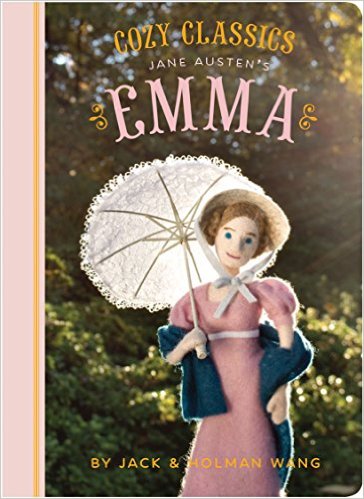
9.  Jack and Holman Wang. Jane Austen’s Emma [Cozy Classics]. Chronicle Books, 2013.

This to add to my other board books, and a generous gift from the author. He attended my talk on “Illustrating Emma” and I could not have been more embarrassed to have not included this cover in my talk! (caveat: I did not include any of the covers of the many recent renditions due to lack of time – I have added them to the talk for those times where I can speak longer than the time-constrained AGM) – so with hearty apologies to Mr. Wang – this is of course a simply delightful addition to anyone’s Austen collection!

cover-emma-cozyclassics


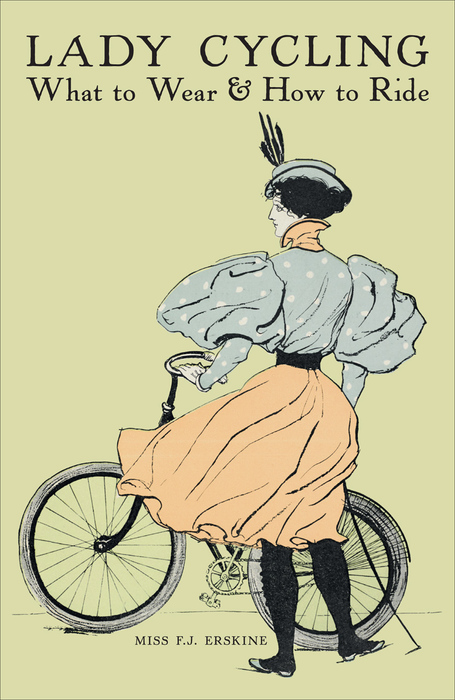
  1. cover-ladycyclingErskine, Miss F. J. Lady Cycling: What to Wear and How to Ride. The British Library, 2014. Originally published by Walter Scott in 1897.

I have a friend who recently gave a talk on women and bicycles and my daughter is an avid cyclist – I bought this at The Folger Library shop (there seeing the simply amazing Will & Jane exhibit) as a gift but am now loth to give it away! Women and bicycles have an interesting joint history – here is a worthy account of the whole phenomenon here: http://www.annielondonderry.com/womenWheels.html

*******

So, as usual, I have my reading cut out for me – I would love to hear what YOU bought at the AGM this year

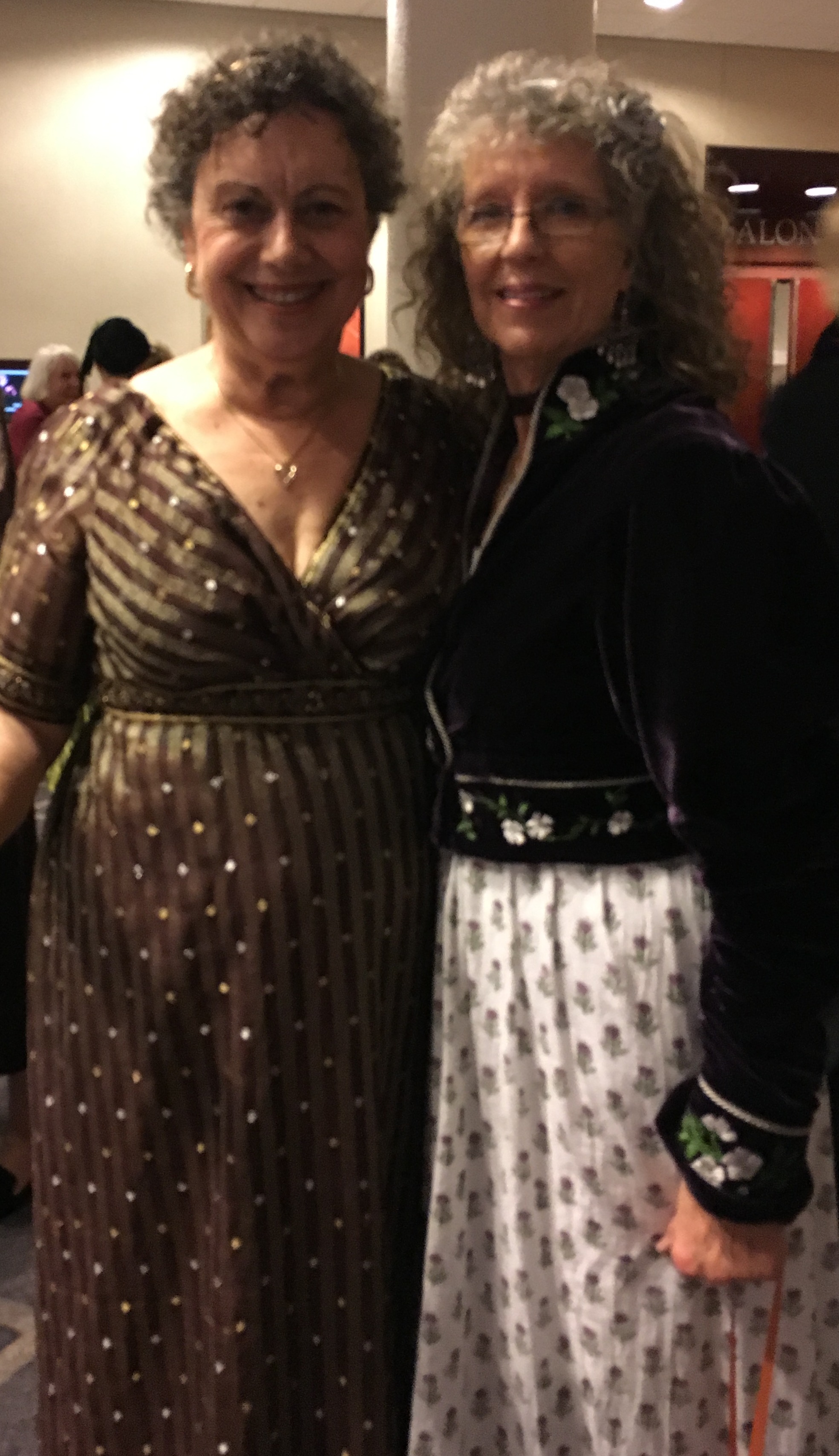
*and here is my new costume – I am with my Good Buddy Marcia, who is wearing a Regency dress for the FIRST TIME!! (we bought our fabulous fashions at Matti’s Millinery & Costumes (visit their site here and have fun shopping!)

agm-marcia-deb-db

C2016 Jane Austen in Vermont
Auctions · Austen Literary History & Criticism · Jane Austen · Jane Austen's Letters · Rare Books

Austen on the Block! ~ Sotheby’s 13 December 2016

A few Austen-related lots shall appear at Sotheby’s London on December 13, 2016: English Literature, History, Children’s Books and IllustrationsIt is worth browsing. I list below the six Austen items, but please note that the images do not copy from the Sotheby’s website – I have taken pictures from elsewhere (and so noted) to show each lot. 

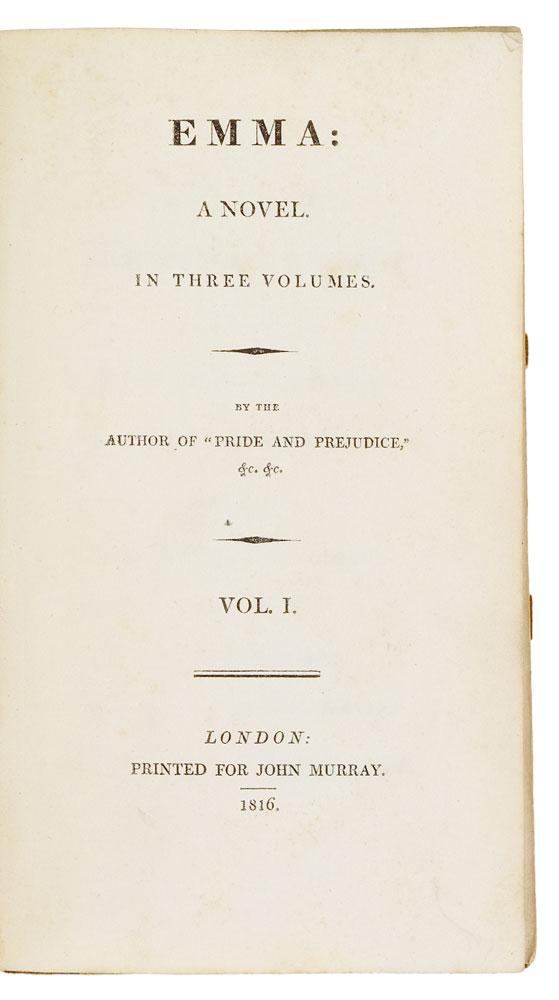
1816-1stedtitlepage-blackwellsLot 125.  Austen, Jane. Emma: A Novel. John Murray, 1816.

Estimate: £8,000 – 12,000 / $9,814 – 14,720

3 volumes, 12mo, FIRST EDITION, half-titles supplied in facsimile, paper watermarked “1815 | H”, “Budgen 1815” and “J Budgen 1815”, 1p. publisher’s advertisements on verso of the final leaf of text in volume 3, later full calf, gilt border, flat spine gilt, titled in gilt on red labels, volume numbers and dated in gilt on green labels, gilt dentelles, marbled endpapers, together in collector’s brown slipcase, many leaves strengthened at gutter, some spotting and browning, some repairs to page edges.

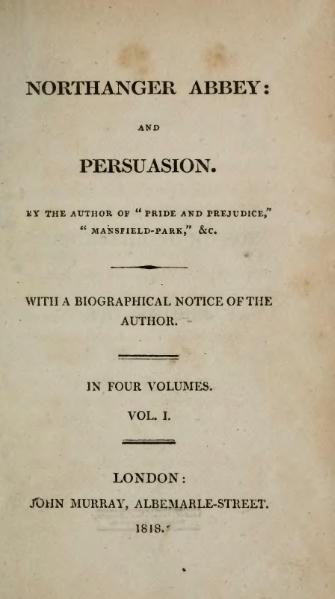
Lot 126. Austen, Jane. Northanger Abbey: and Persuasian (sic). Johnna-tp-wp Murray, 1818.

Estimate: £6,000 – 8,000 / $7,360 – 9,814

4 volumes, 12mo, FIRST EDITION, half-titles (between the preliminary leaves and first page of text in each volume, as issued), paper watermarked “AP | 1816 | 2”, later full calf, gilt border, flat spine gilt, titled in gilt on red labels, volume numbers and dated in gilt on red and green labels, all edges speckled, gilt dentelles, marbled endpapers, titles and a few leaves strengthened at gutter, some spotting and browning.
_________

The provenance states: J.C. Fowle, ownership signature on title of each volume – one wonders if there is a connection to the Fowle family that Cassandra was intended to marry into – I find no names in the biographical index in Deirdre Le Faye’s Jane Austen’s Letters (4th ed.) under the Fowle family where a “J. C.” would work…

A snarky (a la Austenblog) aside: I hate it when auction catalogues get it wrong: first there is the Persuasion typo, then this:  ” [Northanger Abbey] was finally brought out after Austen’s death in July 1817 alongside Persuasion, which was completed by Austen over the summer of 1816, shortly before she was forced to stop writing due to ill health.”– so somehow all her efforts on Sanditon have been relegated to the trash heap… especially odd when the next lot is…

Lot 127. [Austen, Jane]. Lefroy, Anna. Autograph Manuscript Continuation of Austen’s Unfinished Novel Sanditon 

Estimate: £20,000 — 30,000 / $24,534 – 36,801

annalefroy-borgantiq2Description: The working manuscript with extensive revisions, mostly with interlinear revisions but partially written on rectos only with revisions and additions on facing versos, two pages entirely cancelled and pasted over with revised text, in three stab-stitched fascicules respectively composed of 8, 11 (lacking final blank) and 8 bifolia, the third with an additional leaf stitched in, with a final section of 11 loose bifolia and one single leaf (the conjugate leaf torn away), on unwatermarked wove paper with indistinct blind stamp in upper left corners, altogether 113 pages, plus blanks, 8vo (180 x 110mm), probably 1840s, light spotting

[with:] Two autograph manuscript reminiscences of Jane Austen: retained copy of a letter to her brother James Edward Austen-Leigh when he was preparing his Memoir of Jane Austen, 9 pages, c.1864; further reminiscences (commencing “I cannot remember distinctly the face of either Aunt…”) in two draft texts, one incomplete, 5 pages; 8vo (180 x 110mm) [also with:] Autograph manuscript note on the manuscript of Sanditon (“I have in my possession a few pages of M.S. the last effort of my dear Aunt’s pen…”), 2 pages, 8vo (205 x 132mm), with a later subscription in the hand of Lefroy’s grand-daughter M. Isabel Lefroy.

Provenance: Sotheby’s, 13 December 1977: “The Property of the great-great nephews of Jane Austen”

[Image: Anna Lefroy, from Borg Antiquarian]

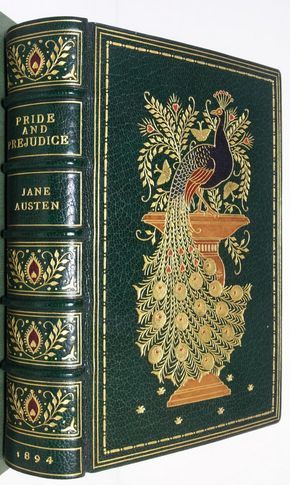
Lot 128. Austen, Jane. Pride and Prejudice. George Allen, 1894. Illus. by Hugh Thomson.

Estimate: £3,000 — 5,000 / $3,680 – 6,133pp-allen-1894-pinterest

Description: 8vo, FIRST EDITION THUS, half-title, frontispiece and illustrations by Hugh Thomson, full pictorial teal morocco gilt by Sangorski & Sutcliffe, motif of peacock standing on an urn on upper board with morocco onlays, within a border of peacock feathers, single red jewel for peacock’s eye, spine gilt in compartments with designs of peacock feathers and butterflies, all edges gilt and gauffered, teal and purple morocco doublures, silk endpapers, collector’s slipcase, spine slightly rubbed, front free endpaper coming loose.

The peacock design of this sumptuous binding evokes Hugh Thomson’s design for the original cloth binding, as well as the peacock motif on the title page. The book contains 160 line drawings by Thomson, including headpieces, tailpieces, ornamental initials and the wholly drawn title page, which he began in the autumn of 1893. The book was published in October 1894.

[Image: Pinterest]

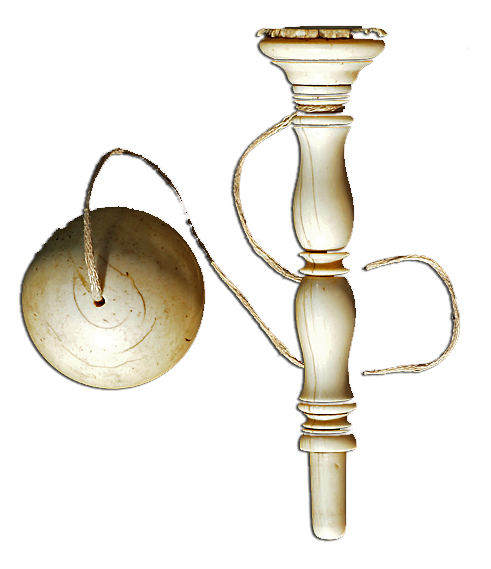
Lot 123. [Austen, Jane]. Cup-and-Ball Game (Bilbocatch) – believed to have been Jane Austen’s

Estimate: £20,000 — 30,000 / $24,534 – 36,801

Description: height 175 mm, ball c.60mm diameter, ivory with modern string, possibly English, c.1800, chipped at base, hairline cracks. Cup-and-Ball, or bilbocatch (from the French bilboquet) was a popular domestic game at which Jane Austen excelled. She gives a good indication of the game’s part of daily routine in a letter to Cassandra of 29 October 1809: “We do not want amusement: bilbocatch, at which George is indefatigable; spillikins, paper ships, riddles, conundrums, and cards, with watching the flow and ebb of the river, and now and then a stroll out, keep us well employed; and we mean to avail ourselves of our kind papa’s consideration, by not returning to Winchester till quite the evening of Wednesday.”

This Cup-and-Ball game, which has always remained in the family of Jane Austen, has always been associated with the author including on the rare occasions when it has been publicly exhibited…

SONY DSC

[Image: the same bilbocatch that was on display at the Jane Austen House Museum: https://www.janeausten.co.uk/bilbocatch-old-fashioned-ball-and-cup-fun/ ]

 Lot 124. Austen, Jane. Autograph Letter Signed (“JA”), To Her Sister Cassandra, 8-9 Nov 1800

Estimate: £40,000 – 60,000 / $49,068 – 73,602

ja-lettercorrected-nov1800-blDescription: 4 pages, with interlinear postscript added upside down to first page, 4to, Steventon, 8-9 November 1800, integral address panel and postal marks, seal tear, fold tears, professionally conserved. Jane Austen’s Letters, ed. Deirdre Le Faye (1995), no. 25.

Letter on family affairs and local news, with a charming account of new furniture acquired for the rectory at Steventon, news of Earle Harwood, their neighbour’s son then serving in the army (“…About ten days ago, in cocking a pistol in the guard room at Marcau [St Marcouf], he accidentally shot himself through the Thigh…”) and currently in hospital in Gosport, with a terse account of a ball attended by her brother James when visiting Earle Harwood (“…It was in general a very ungenteel one, & there was hardly a pretty girl in the room…”), describing a quiet evening spent with friends in a neighbouring village (“…Sometimes we talked & sometimes we were silent; I said two or three amusing things, & Mr [James] Holder made a few infamous puns…”), Also mentioning the state of health of Harris Bigg-Wither, whose proposal of marriage Jane was to accept briefly in 1802, with three postscripts, the first including news of their brother Charles’ capture of a Turkish ship and the second, written in the evening, describing the dramatic effects of a storm earlier in the day (“…I was sitting alone in the dining room, when an odd kind of crash startled me – in a moment afterwards it was repeated; I then went to the window, which I reached just in time to see the last of our two highly valued Elms descend into the Sweep!!!!!…”).

ja-letter2-nov1800-bl

[Image: this letter is on the British Library website and has been on loan to them since 1936]

[All text excepting my commentary is from the Sotheby’s catalogue]

Happy bidding!

C2016 Jane Austen in Vermont