What better way to celebrate Valentine’s Day than to think of Love in Jane Austen terms. I think we can say that it is a “truth universally acknowledged” that Captain Wentworth’s letter to Anne in Persuasion* is the grandest expression of Love in all of literature – who would not want to receive such a letter as this? But what of Love in Jane Austen’s own life? – we know so little; where did Mr. Darcy come from, or any of her other heroes? What of True Love in her own life? We can only imagine… so I lead you to a fine imaginative rendering of ‘Jane Austen in love’ in Elsa Solender’s Jane Austen in Love: An Entertainment. When published last February, it was only available as an ebook, delightful to read but nothing to put upon the shelf. We had to wait until this past December to see it finally published in real book form at Amazon.com.
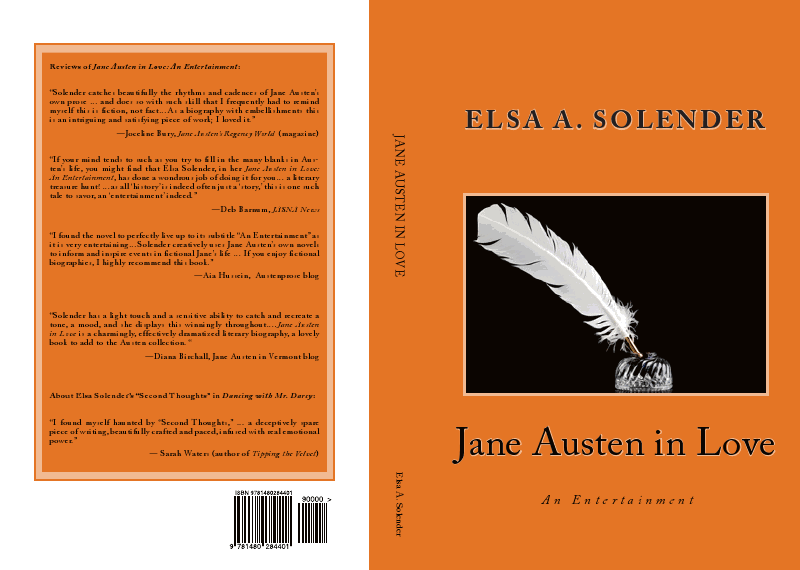
book cover
At the time of its release as a kindle book, Elsa graciously “sat” for an interview here at Jane Austen in Vermont – you can read that here. And as my review was to be published in the JASNA News (just out in the Winter 2012 issue), I did not post a review of the book on this blog; Diana Birchall very graciously did so for me here. But as my review is now published and available online, I append it here in part and then direct you to the JASNA site for the remainder [Note: all book reviews in the JASNA News are available online from 1998 to the present: click here.] – and Elsa has offered a copy for a book giveaway [see below] in celebration of Valentine’s Day!
Jane Austen in Love: An Entertainment, by Elsa Solender.
Review by Deborah Barnum
Imagine a young Jane Austen reading aloud her History of England, Cassandra sketching Henry as Henry V, their Mother as Elizabeth I, and Jane as Mary Queen of Scots; or young Jane at school nearly dying of typhus; or hearing Jane’s thoughts on first encountering Madame Lefroy; or sparking a laugh from the intimidating Egerton Brydges. Imagine the suitor you might like your Jane Austen to meet by the seaside, she falling madly in love but destined to suffer the pangs of lost love, forever irreplaceable. If your mind tends to such as you try to fill in the many blanks in Austen’s life, you might find that Elsa Solender, in her Jane Austen in Love: An Entertainment, has done a wondrous job of doing it for you.
Ms. Solender, former president of JASNA and a prize-winning journalist, has taken her story “Second Thoughts,” runner-up in the 2009 Chawton House Library Short Story Contest, and expanded this one moment in Austen’s life to other places and times, all through the lens and voice of Cassandra Austen—it is part real, part imaginary, and part Austen’s own fiction, dialogue and story all beautifully woven together in this tribute to love in the life of Jane Austen—her love for her sister, her family, her cousin Eliza, and her mentor and friend Madam Lefroy; her flirtation with Tom Lefroy; the proposal from Bigg-Wither; and her Mysterious Suitor of the Seaside.
About the author: Elsa A. Solender, a New Yorker, was president of the Jane Austen Society of North America from 1996-2000. Educated at Barnard College and the University ofChicago, she has worked as a journalist, editor, and college teacher in Chicago, Baltimore and New York. She represented an international non-governmental women’s organization at the United Nations during a six-year residency in Geneva. She wrote and delivered to the United Nations Social Council the first-ever joint statement by the Women’s International Non-Governmental Organizations (WINGO) on the right of women and girls to participate in the development of their country. She has published articles and reviews in a variety of American magazines and newspapers and has won three awards for journalism. Her short story, “Second Thoughts,” was named one of three prizewinners in the 2009 Chawton House Library Short Story Competition. Some 300 writers from four continents submitted short stories inspired by Jane Austen or the village of Chawton, where she wrote her six novels. Ms. Solender was the only American prizewinner, and she is the only American writer whose story was published in Dancing With Mr. Darcy, an anthology of the twenty top-rated stories of the contest.
Ms. Solender’s story “A Special Calling” was a finalist in the Glimmer Train Short Short Story Competition. Of more than 1,000 stories submitted, Ms. Solender’s story was ranked among the top fifty and was granted Honorable Mention. She has served on the boards of a non-profit theater, a private library and various literary and alumnae associations. Ms. Solender is married, has two married sons and seven grandchildren, and lives in Manhattan.
****************
For Valentine’s Day, Elsa has graciously offered a copy of her book [as she did with her ebook] to the winner of a random drawing – please comment below on what reading Jane Austen has taught you about Love. Or you can pose a question to Ms. Solender. Deadline is Thursday February 21, 2013 at 11:59 pm; winner will be announced the next day. Domestic mailings only [sorry global readers, but our postal service has skyrocketed their overseas prices!]
Thank you Elsa, and good luck everyone!
*********************
‘Placed it before Anne’
[Image: C. E. Brock, Persuasion, vo. II, ch. XI; from Mollands.net]
*Captain Wentworth’s letter: [because I cannot resist]
‘I can listen no longer in silence. I must speak to you by such means as are within my reach. You pierce my soul. I am half agony, half hope. Tell me not that I am too late, that such precious feelings are gone for ever. I offer myself to you again with a heart even more your own than when you almost broke it, eight years and a half ago. Dare not say that man forgets sooner than woman, that his love has an earlier death. I have loved none but you. Unjust I may have been, weak and resentful I have been, but never inconstant. You alone have brought me to Bath. For you alone I think and plan. – Have you not seen this? Can you fail to have understood my wishes? – I had not waited even these ten days, could I have read your feelings, as I think you must have penetrated mine. I can hardly write. I am every instant hearing something which overpowers me. You sink your voice, but I can distinguish the tones of that voice when they would be lost on others. – Too good, too excellent creature! You do us justice, indeed. You do believe that there is true attachment and constancy among men. Believe it to be most fervent, most undeviating, in
F. W.
‘I must go, uncertain of my fate; but I shall return hither, or follow your party, as soon as possible. A word, a look will be enough to decide whether I enter your father’s house this evening or never.’ [Perusasion, Vol. II, ch. XI]
Let’s just be honest about our superficiality. Even when it comes to the high-minded business of literature, people do judge books by their covers. Perhaps that’s why Amazon produces glossy mock “covers” for its disembodied e-books, to be inspected and decided upon alongside the traditional print offerings.
Book covers may be especially important when it comes to the classics. After all, many of us have a general sense of, if not a thorough familiarity with, the contents within. Perhaps more than anything else, these covers show what matters to prospective buyers. Two centuries of Jane Austen’s “Pride and Prejudice” are particularly revealing about the novel’s broad and sustained popular reach….
Enquiring Minds: Tony Grant of London Calling, and a regular contributor to Jane Austen’s World, had written a post for me on Marble Hill House in Twickenham– but alas! I have been so delayed in getting this on the blog that we agreed he should post it himself and I will link to it… so herewith the tale of Marble Hill House, home to Henrietta Howard, mistress of George II. This all started with a conversation over Joshua Reynolds’s house, which led to Richmond Hill, and then on to Henrietta Howard and Marble Hill House, and then Pope and Swift, Horace Walpole, John Gay and the Scriblerus Club, a bit on Wordsworth and Sir Walter Scott and on to Dickens and Virginia and Leonard Woolf, and of course Jane Austen gets her required mention – you get the idea – this is cram-packed with literary tourism and as always, Tony’s fine photographs…
****************
The Thames from Richmond Hill
The River Thames wends its tortuous way across England from Thames Head in Gloucestershire until it reaches the southernmost part of the North Sea. Its journey stretches for 215 miles. Finally the wide Thames Estuary which pours its contents into The North Sea is bordered on the north bank by the Essex coast and Southend on Sea and at its southern bank by the Kent coast, Sheerness and the entrance to the Medway.
Along its course The Thames passes though some beautiful English countryside before it enters the Greater London area passing by Sunbury and on to Hampton, then Hampton Court, Kingston upon Thames, Twickenham and Richmond. At last it reaches the centre of London with its iconic landmarks. The Thames, from London along its whole length, has a long history of Iron Age villages, Roman habitation, Saxon towns, and mediaeval settlements, Tudor Palaces and Georgian and Victorian Villas. London itself began as a Roman settlement for trade, built at the nearest bridging point to the coast where they had their port called Ritupiae (Richborough). They wanted to penetrate the hinterland north of the Thames. Indeed the names Thames which was Celtic in origin but had its Roman equivalent (Tamesas recorded in Latin as Tamesis) and London (Londinium) come to us from Roman times.
Over the centuries the Thames outside of London has provided a beautiful Arcadian retreat for the wealthy, the famous, the aristocracy and the monarchy away from the stench and diseases prevalent in many periods of London’s history. They built palaces and grand houses and villas with adjoining estates and landscaped parks to relax and take their leisure in. Marble Hill House is a Palladian Villa built between 1724 and 1729, very close to Richmond upon Thames but on the northern bank of the Thames near Twickenham. It was built for George II’s mistress, Henrietta Howard….
Gentle Readers who love to travel, especially those who love to follow in Jane Austen’s Footsteps: I am linking to this post by Nan Quick, one of our JASNA members from New Hampshire. She had emailed me recently to tell me of her website for armchair travelers, with one of her posts on Jane Austen’s Bath … I append it here – with lovely pictures and lively commentary, how perfect to visit such a place as this, when so many of us are snowed-in! So with dreams of warmer climes and Jane Austen hovering nearby, here you go…
I really wanted to call this Armchair Traveler Chapter “Jane Austen’s Bath.” But holding forth about Jane’s bathing habits would have given me ammunition for a brief and not very interesting article. So, instead it’ll be “Jane Austen AND Bath.” I’ll try to describe the City as it was during the times when she lived there, and I’ll show you many of the locations that she used in two of her books. Happily, the built world of today’s Bath is largely unchanged from Jane’s time. Over the past two centuries the City’s fame has protected it from indiscriminate “improvements,” and so visiting Bath today gives a fairly good impression of what Jane’s days there might have been like.
If you’re reading this, it’s likely you’re Austen-informed, and have thus read NORTHANGER ABBEY and PERSUASION, which are called Austen’s Bath novels.
On May 28th, 2011 I had the pleasure of spending an afternoon in Bath. Of course, in England, the weather has a mind of its own, and storms from a place called “Bill’s Mother’s” descended. Here’s how it is with Bill: the locals always say bad weather is blown in from a mythical place called “Bill’s Mother’s.” I thought you should know, just in case you go to Bath and people start talking weather. On that Saturday my British friends and I were rained upon, blown about, and generally frozen; late May felt like early March. But I’d asked Anne and David and Janet (who you’ve met in my earlier Armchair Traveler pieces) to make the long round-trip drive on the traffic-jammed M5 with me from the Midlands down to Bath, expressly so I could make the following words REAL to myself:
“The Crescent,” “Milsom Street,” “Pulteney Street,” “The Pump Yard.” I also wanted to clear my confusion, once and for all, about all those infernal ROOMS that Austen’s characters scurried between: the Upper Rooms, or the New Assembly Rooms; the Lower Rooms; and the Pump Room. Even though my time there was short, and the weather awful, I managed to get a sense of the lay of the land, which is what I’d like to share with you.
This is a long post, so if Jane is your only interest, then scroll through it to the end – but I advise you see read the whole thing – I was in a Liverpool a few years ago and it was very nice to re-live that trip – so thank you Nan!
Richard III, by an unknown artist – National Portrait Gallery
Richard III has been getting much-needed attention these past few days – his Bones, it seems, have been languishing beneath a parking lot …
About 22 years ago on a trip to Scotland with the Appalachian Mountain Club, we stayed in Beauly not far from Inverness in a Castle called Aigas (now the Aigas Field Centre), hosted by Sir John Lister-Kaye and his Lady Lucy. We spent our days studying the flora, fauna, and geology of the surrounding area, a glorious adventure, as you can imagine – but one of the most memorable parts of the trip was meeting another guest staying at the Castle – he was not part of our group, but came there every year to go birding, an elderly gentleman blessed with a brilliant mind and great charm – his one great obsession other than birds was Richard III, and from him I learned about the Richard III Society. He went off into spasms of ecstasy telling of his also annual treks to Bosworth where he could hear the “swish, swish” of the swords on the field where Richard was slain in 1485.
Illustration depicting the Battle of Bosworth Field, with King Richard III on the white horse.
Credit: The Print Collector/Heritage-Images – from Britannica.com
******************
The earliest surviving portrait of Richard III – from the RIII Society website
I came home with my own obsession with the long-dead Richard – read everything I could find on him, beginning with Josephine Tey’s The Daughter of Time, her tribute to Richard [she was a staunch member of the Society] and the clear statement of her belief in his innocence. Shakespeare had done the young King a dirty deed it seems, maligned forever in History as the murderer of the Princes in the Tower and various other souls including his Wife, and perpetrator of all manner of other nefarious politically-induced deeds…
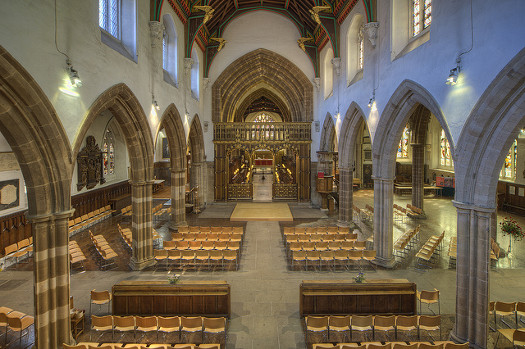
I confess to having forgotten more than I ever actually knew about RIII, and now other than Shakespeare and Tey, he has largely fallen off my radar, or at least I no longer need to get into discussions with everyone I meet in a rabid defense of his innocence… but I am excited about his Bones being found and restored to a rightful burial place at Leicester Cathedral; this discovery shall certainly bring on a re-assessment of who he might really have been…
Leicester Cathedral – RutlandChurches.co.uk
Which brings us to Jane Austen:
Austen, as avid readers know, had an aversion to the name of “Richard”: let’s recall her first paragraph in Northanger Abbey, where she denigrates Catherine’s father so:
Her father was a clergyman, without being neglected, or poor, and a very respectable man, though his name was Richard …
And later in a 1796 letter to her sister, she remarks on Mr. Richard Harvey’s match being put off, “till he has got a better Christian name, of which he has great Hopes.” [Letters, p. 10]
And famously in Persuasion, and one of the nastiest comments in all her novels, on poor Dick Musgrove:
The real circumstances of this pathetic piece of family history were, that the Musgroves had had the ill fortune of a very troublesome, hopeless son, and the good fortune to lose him before he reached his twentieth year; that he had been sent to sea, because he was stupid and unmanageable on shore; that he had been very little cared for at any time by his family, though quite as much as he deserved; seldom heard of, and scarcely at all regretted, when the intelligence of his death abroad had worked its way to Uppercross, two years before.
He had, in fact, though his sisters were now doing all they could for him, by calling him “poor Richard,” been nothing better than a thick-headed, unfeeling, unprofitable Dick Musgrove, who had never done any thing to entitle himself to more than the abbreviation of his name, living or dead. [Persuasion v. I, ch. VI]
Ouch!
No one has ever satisfactorily explained this aversion of Austen’s to the name ‘Richard’ – one could certainly explain it as her disliking Richard III with such a passion that anyone named Richard should suffer her admonition; but here is what she says about Richard in her History of England, with such a contradictory tone, one does not quite know what she really thought [forever the illusive Jane] – but on the whole I think she believes him to be mistreated by History – perhaps she would have been a reigning member of the Richard III Society!
Cassandra’s portrait of Richard III
Richard the 3d
The Character of this Prince has been in general very severely treated by Historians, but as he was a York, I am rather inclined to suppose him a very respectable Man. It has indeed been confidently asserted that he killed his two Nephews & his Wife, but it has also been declared that he did not kill his two Nephews, which I am inclined to beleive true; & if this is the case, it may also be affirmed that he did not kill his Wife, for if Perkin Warbeck was really the Duke of York, why might not Lambert Simnel be the Widow of Richard. Whether innocent or guilty, he did not reign long in peace, for Henry Tudor E. of Richmond as great a villain as ever lived, made a great fuss about getting the Crown & having killed the King at the battle of Bosworth, he succeeded to it.
So what do you think? Should Richard III be exonerated of his dastardly deeds? Should we do as Jane did and be “rather inclined to suppose him a very respectable Man”? I will just say that may Richard at least from henceforth Rest in Peace…
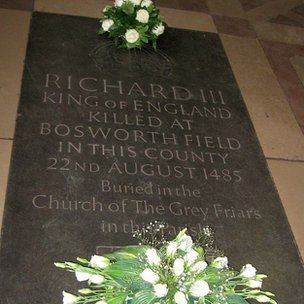
[Richard III Memorial in Leicester Cathedral]
And I must add this final image sent just this morning from a friend – only the English can get away with this sort of thing, but I laughed ‘til tears came… somehow I think Jane Austen would be laughing too…
A big thank you to Julie at Austenonly for blogging about this. And do visit the link to Harrington’s other Austen materials – a treasure-trove for the Austen-collector…
Actually my first experience with P&P ever was watching last 5 minutes of episode 4 in mini series of 1995 when I was 13 or 14. Those 5 minutes intrigued me so much, that I watched all the remaining episodes and then went in search for the original. I remember reading it the same year during my summer vacation. I loved everything about the book, its plot and style, its heros and heroines, and since that time P&P has become the best love story for me: witty, humorous, illustrative of different human characters, satisfying and with wonderful happy end. After P&P I read other works by Jane Austen, and some of them I liked, some of them I liked very much, but P&P was and still remains the best for me.
Congratulations Oloore! – Please send me your contact information [full name, address, phone, email] as soon as you can and I will get the book off to you right away. So glad you went from the 1995 movie to the book and discovered even more of its treasures!
Again, many thanks to all who commented with their stories of first encountering Pride and Prejudice – an interesting study in itself, and illustrative of the power of this book that so many remember the joys of that first reading! I included all the comments on this post on the Pride and Prejudice anniversary posted on January 28th: you can read all the “first impressions of P&P” from members of JASNA-Vermont here.
And hearty thanks to Susannah Fullerton for joining us, and for writing the book! and to Voyageur Press for generously supplying the giveaway copy!
Letter 79. January 29, 1813, Jane Austen to her sister Cassandra, from Chawton
I want to tell you that I have got my own darling Child from London; – on Wednesday I received one Copy, sent down by Falknor, with three lines from Henry to say that he had given another to Charles & sent a 3d by the Coach to Godmersham; just the two Sets which I was least eager for the disposal of. I wrote to him immediately to beg for my own two other Sets, unless he would take the trouble of forwarding them at once to Steventon & Portsmouth – not having any idea of his leaving Town before today; – by your account however he was gone before my Letter was written. The only evil is the delay, nothing more can be done till his return. Tell James & Mary so, with my Love. – For your sake I am as well pleased that it shd be so, as it might be unpleasant to you to be in the Neighborhood at the first burst of the business. – The Advertisement is in our paper to day [the Morning Chronicle of January 28, 1813]. – 18s – He shall ask £1-1- for my two next, & £1-8 – for my stupidest of all. I shall write to Frank, that he may not feel himself neglected. Miss Benn dined with us on the very day of the Books coming, & in the eveng we set fairly at it & read half the 1st vol. to her – prefacing that having intelligence from Henry that such a work wd soon appear we had desired him to send it whenever it came out – & I beleive it passed with her unsuspected. – She was amused, poor soul! that she cd not help you know, with two such people to lead the way [JA and her mother]; but she really does seem to admire Elizabeth. I must confess that I think her as delightful a creature as ever appeared in print, & how I shall be able to tolerate those who do not like her at least, I do not know. – There are a few Typical errors – & a “said he” or a “said she” would sometimes make the Dialogue more immediately clear – but “I do not write for such dull Elves” “As have not a great deal of Ingenuity themselves.” [from Scott’s Marmion] – The 2d vol. is shorter than I cd wish – but the difference is not so much in reality as in look, there being a a larger proportion of Narrative in that part. I have lopt & cropt so successfully however that I imagine it must be rather shorter than S. & S. altogether. – Now I will try to write of something else; – it shall be a complete change of subject – Ordination.[p. 201-2]
On this day that celebrates the publication of Jane Austen’s Pride and Prejudice 200 years ago, I asked members of our JASNA-Vermont region to share a few words on what their “first impressions” were on reading Austen’s “light, bright and sparkling … own darling Child.” I will be posting throughout this year a number of thoughts on Pride and Prejudice, but today it seems more important to see what this book has done for so many of us across years and generations, how some of us moved from a force-fed dislike to just plain awe, how some of us recall that first reading as feeling the earth shift, how multiple readings have enlarged our life in immeasurable ways.
I love Jane Austen, and even I am nearly exhausted with all the hoopla about this 200th bicentenary! – numerous new books on Austen and a number specific to this work; journals and newspapers from all corners of the earth have published articles; blogs, twitter and facebook abound in it; there are special websites, conferences, festivals – I must assume that the non-Austen folk out there are quite sick of it! But the one thing I am most enjoying is the slow re-read of Pride and Prejudice in the quiet of my study – no movies, no scholarly interpretations, no internet babblings – I just want to go back to Jane Austen and closely look at every word, every sly comment, every character brought to life on the page, every laugh-out-loud moment – and try to remember the first time I read her, a teenager lost in the corner of a library discovering the beauties of the English language from such a pen as Miss Austen’s….
Here now are a number of wonderful Pride and Prejudice memories from our JASNA-Vermont members – I have so enjoyed reading these, so hope you do too – and then please share yours with us in the comment section below…
************************
Believing Elizabeth: My First Reading of Pride and Prejudice
I was in the middle of Spring final exams, my third year at the City College of New York when I read Pride & Prejudice for the first time. I turned to it for relief because my exams were felt endless and relentless and I was desperate to read something, anything which wasn’t school work. I had fallen in love with Jane Eyre at age 16 and I was aware of the name Jane Austen. The phrase ‘pride and prejudice,’ was like ‘war and peace,’ an esteemed part of the language.
Around the corner from where I lived there was a warm, dark paneled public library called The Ottendorfer; it was either an old mansion or had been built to look and feel like an old mansion. So there I went, found Pride & Prejudice and was hooked from the first line.
In this first reading I saw the world completely as Elizabeth was seeing it. This meant that when Wickham told the story that outraged Elizabeth I heard it as she heard it, with outrage. Farther on in the novel I was as shocked as she was when I learned that Wickham was a liar and a scoundrel. My exams were finally over, a year later I graduated and life happened. When I next picked up Pride & Prejudice – many years later – I understood with some sadness that I could never again read it with that unconscious merging naivete.
-Michele C.
****************
I didn’t read Pride and Prejudice until I was 40, more than a decade after finishing everything Georgette Heyer had written. I had been enchanted with the words and manners of Heyer’s characters, often thinking that I might have been quite content to live in their society. And with Heyer I could always count on laughing out loud. In desperation when there were no Heyers left, I even tried writing my own, but got only half way through the second chapter.
Collecting books has always seemed the most natural thing for me and I bought a three-volume set of Austen along with a similar set of Bronte, thinking I couldn’t go wrong with something routinely labeled a classic. Trying a Bronte first, all six were immediately relegated to a distant corner of my brain if not a distant corner of my library.
I don’t remember what prompted me, years later, to finally reach for Pride and Prejudice, but I knew on page one that it was perfect. Heyer had been only an appetizer; this was Christmas dinner. As they say, life begins at 40!
Now, more than 20 years further along, I’ve discovered happily that I’ve forgotten enough of Georgette Heyer’s books to reread them with pleasure. But the real magic is that I don’t have to wait until I forget a plot to reread Jane Austen. I can start right over again and slip comfortably into a world I know well and always find a new delight. And I’m still laughing out loud.
-Susanne B.
***********
I believe I first read P&P in 1996. I had watched P&P 95 on video, as well as the movies for S&S and Emma. Alas, I can’t remember which came first. I love sweet Jane Bennet, especially when played by Rosamund Pike in 2005. I wish I could be a 10th as good as sweet Jane Bennet.
Cheers!
Kirk C.
*****
Pride and Prejudice has provided ongoing lessons in my life. I am seeking yet another lesson from this story. I met someone recently, and my first impression of this person was very unsettling. I found myself quick to judge and assumed things about the person, due to behavior I observed. I am seeking ways to better understand this person, who may be an extended part of my life for a long time. Being open to possibilities of accepting his person will take time and understanding. The following exchanges from the book give me hope that my first impressions may not remain as they are, at present.
I look to Elizabeth Bennet, whose initial thoughts of Mr. Darcy, changed dramatically in the plot of Pride and Prejudice. Elizabeth is touring Pemberly with housekeeper, Mrs. Reynolds, along with her aunt and uncle, the Gardiners. Mrs. Reynolds says of Mr. Darcy, “I have never had a cross word from him in my life, and I have known him ever since he was four years old.” Elizabeth’s own thoughts of Mr. Darcy begin to shift:
“This was praise, of all others most extraordinary, most opposite to her ideas. That he was not a good tempered man, had been her firmest opinion. Her keenest attention was awakened: she longed to hear more, and was grateful to her uncle for saying, “There are few people of whom so much can be said. You are lucky in having such a master.”
“Yes, sir, I know I am. If I was to go through the world, I could not meet with a better. But I have always observed, that they who are good-natured when children, are good-natured when they grow up: and he was always the sweetest-tempered, most generous-hearted, boy in the world.”
“Elizabeth almost stared at her. “Can this be Mr. Darcy!” thought she.
“His father was an excellent man,” said Mrs. Gardiner.
“Yes, ma’am, that he was indeed; and his son will be just like him- just as affable to the poor.”
“Elizabeth listened, wondered, doubted, and was impatient for more.”
A few pages later in the book, Mr. Darcy returned home a day early, and encountered Elizabeth, her aunt, and uncle, on the grounds at Pemberley. Darcy held his composure and spoke kindly with the party. Elizabeth was overwhelmed after the initial meeting.
“She blushed again and again over the perverseness of the meeting. And his behavior, so strikingly altered-what could it mean? That he should even speak to her was amazing!-but to speak with such civility, to enquire after her family? Never in her life had she seen his manners so little dignified, never had he spoken with such gentleness as on this unexpected meeting. What contrast did it offer to his last address in Rosings Park, when he put his letter into her hand! She knew not what to think, nor how to account for it.”
I’m hoping for greater understanding in this new relationship.
-Barb F.
******
I first read P&Pat a time when I could be said to have been “on the marriage mart”—I had just graduated from college and was deciding where to go from there. My mother was no Mrs. Bennet, but still the push to marry young (coming not so much from her as from the social standards of the time) was strong.
As I saw it, the two main approaches outlined in the book were 1) Elizabeth Bennet’s, in which a woman holds to her own views and doesn’t dismiss her feelings or trim her remarks and actions to fit the goal of catching (tricking actually) and marrying the most eligible man of her acquaintance whether she likes him or not, and would much rather be a despised spinster than to settle for a marriage void of love and respect; and 2) Caroline Bingley’s, in which a woman tracks, traps, and bags her prize using whatever means necessary, with no thought given to the probability that she’s also trapping herself in a lifetime of mutual loathing between herself and the man whose proposal she’s so desperate to win. Integrity versus flattery and deceit.
Two extremes, sure, but the contrast is a helpful reminder when navigating among the shoals on the way to finding a life partner—or indeed when working toward any kind of goal.
-Donna G.
*****
I first ready P&P in 10th grade English class for a book report…my teacher had recommended it to me. I don’t remember much from that first reading, except that I did enjoy it. I’ll be giving away my age, but that was in the 1960’s. In 1992, we moved just outside London for about 2 years, and I stopped in the local bookshop for something to read. I prefer better literature, and they had a display of all of Jane Austen’s works. I remember thinking that I had enjoyed P&P, but I chose Emma, not knowing anything about it. I couldn’t put it down and read it so fast, I turned right around and read it a second time in 2 days, much slower the 2nd time. Then I chose Persuasion, and then the rest of the novels, and love some of the stories in the book of her juvenilia. I love her History of England! I couldn’t get enough of them and have since read all them at least 3 times and get something new from them every time.
I was able to visit Chawton, Lyme Regis, and Winchester Cathedral. I’ll always cherish my time in England. Living there certainly has given me new insight into the locations of Jane’s novels.
Now I keep the books in various places around the house so I can always pick one up to read again or peruse my favorite passages. In P&P, my favorite part is when Elizabeth is reading Mr. Darcy’s letter and the descriptions as she realizes she’s made a big mistake and is starting to change her mind. I find that an incredible piece of writing.
-Phyllis G.
*****
Pride & Prejudice was the first high school play I was in at a small Catholic academy for girls on the upper east side in NYC. There were 20 students each class, total 80 students in the high school. It was in my freshman year and it was the play before Christmas. The year was 1956 and I was 13 years old.
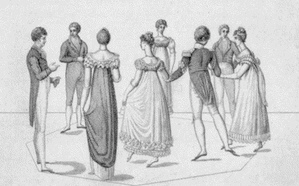
Although the stage was small, the production was opulent enough. I had a non-speaking role as a minuet dancer at an assembly. I wore a perruque, a beautiful blue ball gown, carried a reticule and sported a beauty spot. My partner was another girl in white stockings, silk breeches and waistcoat and dancing slippers. We wore lots of makeup which was professionally applied. It was a complete minuet lasting several minutes. I enjoyed rehearsals immensely and we dazzled the audience. We had only two performances.
I never got the chance to watch the whole play but I did rehearse lines with the senior girl, Sheila C., all of 17 or 18 years old, who played Elizabeth Bennet. We travelled home on the same hour long subway ride to the Bronx. We were both academic scholarship students. I would give her the cue from the sides. When you rehearse from sides you get only the lead in line. So I would say, “….but he believes that it was left to him conditionally only.” Sheila-Elizabeth replied, “I have no doubt of Mr. Bingley’s sincerity, but you must excuse my not being convinced by assurances only. Mr. Bingley’s defense of his friend was a very able one, I dare say; but since he is unacquainted with several parts of the story, and has learnt the rest from that friend himself, I shall venture to still think of both gentlemen as I did before.”
Did we have an audience as we stood on the subway train dressed in our blue uniforms, white blouses, white gloves, blue, ground gripper shoes and blue hats? I don’t remember because I was so transfixed by what Elizabeth said and how Sheila’s skin changed color from pale to pink as she spoke the lines so forcefully. That following summer I would read P&P for the first time, but nothing can compare to the full dose of Elizabeth Bennet given to me by a senior girl whom I stood in awe of and who befriended me so kindly albeit with a good dose of arch humor.
(I’m enjoying rereading P&P and it’s fun to take part in this 200th celebration)
-Margaret H.
*****
I found Pride and Prejudice in a local bookstore when I was in high school. It was my first reading of Austen, and I soon decided that this book was different. From that reading, I have been in awe of Austen’s ability to create characters. What stood out for me as a teenager was the description of Elizabeth’s dawning self-awareness over many chapters. At the mid-point of the novel, for example, she must grapple with Mr. Darcy’s letter: “…she was in a fair way of soon knowing [the letter] by heart. She studied every sentence; and her feelings towards its writer were at times widely different. When she remembered the style of his address, she was still full of indignation; but when she considered how unjustly she had condemned and upbraided him, her anger was turned against herself…” Here, and throughout the novel, Austen never rushes to get to her point. Many years later, I am still in awe!
-Lynne H.
*****
I once read a single passage of Pride and Prejudice and Zombies in a bookshop which lingers in memory and somehow makes me love Jane Austen’s original all the more. Don’t ask me if I remember it right; I don’t care. I didn’t buy the book. But what I recall is one blissful moment when Jane and Elizabeth launch themselves at Mr. Collins and tear out his throat.
Isn’t that secretly what we all long for?
-Stuart B.
*****
By the time I was 12 years old I had become an ardent fan of the works of Georgette Heyer. I don’t remember if I swooned over the romance or the costume descriptions and hilarious cant, but I do remember being intrigued with Heyer’s version of the Georgian and Regency world. I was happy, therefore, to find out that there was ‘another writer’ who wrote about this time period—and one that had actually lived in it. This Jane Austen person would surely make for a fun read. I found Pride and Prejudice. I now admit, to my secret shame, that I found it overlong, too wordy, with heavy-handed irony, and rather too slow a pace. I even tried a couple more Austen’s to no avail.
Fortunately I gave her one more try, this time in a literature course in college. Thank goodness! I had grown up just enough in the intervening years to realize that P&P was not long at all, had just the right amount of irony, lots more subtle wit, and was paced to perfection. My only complaint at that, and subsequent, readings was that it was too short! I could have spent much more time among the residents of Longbourn (and Mansfield, and Highbury and…). And as I am sure so many have found, subsequent readings always bring something new.
-Hope G.
*****
I first tried reading P&Pwhen I was in the eighth grade. I knew it was a “classic,” but I found it terribly dull. I decided to try again when I was sixteen, and this time I saw all of the humor that I had missed in my first attempt. That was it–I was hooked! It’s still my overall favorite of JA’s books.
-Christie M.
*****
With varying degrees of intensity, all of Jane Austen’s novels are propelled by her almost unerring instinct for counter-balance in a scene. Rarely does Austen’s passionate story-telling NOT pair satire with fear, or irony with kindness, or absurdity with melancholy, or self-knowledge with self-deception. With a razor-sharpened pen and a delicately calibrated scale, Austen dissects and weighs the hearts of her characters as they do battle with the expectations of their closely-knit societies.
In Austen’s earlier novels, the tone tends toward lightness. Her later works more heavily embrace the seriousness of the human condition. In the deftness of PRIDE & PREJUDICE we see Austen performing her most virtuosic balancing act: each barb is followed by a balm.
Because of this ameliorating rhythm, we may first worry, but we ultimately smile as we ponder her tale about the indignities faced by women who are NOT in possession of a good fortune, but who are VERY much in want of a husband.
-Nan Q.
*****
Loving Pride and Prejudice
I’m not going to lie and say I loved Pride and Prejudice the first time I read it. I was a senior in high school and just didn’t get what the fuss was about. What I did understand, however, was that my English teacher loved Jane Austen. Even after I went to college and became an English major, Ms. Henry remained my favorite English teacher and her love of Austen forever put those six novels on my radar. Like so very many of us, I am indebted to a teacher’s passion and enthusiasm.
It’s true that now that I love Pride and Prejudice best of Austen’s novels and of nearly all others entirely. It has become the standard against which I compare much of what I read. I happen to love its “bright and sparkling” quality and the packed action of “one country village.” There’s something about her work that makes my life better because I’ve read it.
My love for Jane Austen’s work has led me to join JASNA and to book a weekend at a bed and breakfast here in Vermont with the weekend focus of this great novel. I can’t wait to discuss Pride & Prejudice over afternoon tea and maybe play a little trivia. I get what the fuss is about, finally, and it never gets old.
Jane Austen weekend at Governor’s House
I love this line by Caroline Bingley: “To walk three miles, or four miles, or five miles, or whatever it is, above her ancles in dirt, and alone, quite alone! what could she mean by it? It seems to me to shew an abominable sort of conceited independence, a most country town indifference to decorum.”
Michelle S.
*****
Mr. Collins is certainly not my favorite character (!) ….but Elizabeth, of course, is. I was moved by her strength, wisdom and insight when I first encountered her in Freshman English…and then I became an even greater admirer more than 60 years later when I made her acquaintance once again…..this time via an audio recording as I made daily automobile trips around Vermont this past summer.
-Sallie S.
*****
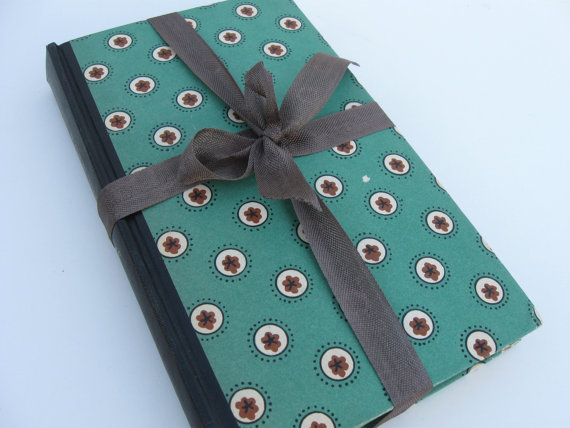
When I was twelve, my mother gave me a beautiful edition of “Pride and Prejudice” with leather ends and sprigged wall paper covers; it is charming. I read it then with the intellect of a twelve year old and re-read each year unto my current 75th year with delight, awe and the greatest pleasure. My husband, of fifty five years, held the Darcy conversation, sprightly, ironic, engaged and bountiful, to my Elizabeth, for fifty-five years. I have been enriched on both counts. Each of my granddaughters has a beautiful copy to read when she is ready. I spoke of Austen often during forty years of my teaching life. Bravo for Miss Austen.
ladysusanpdx: I first read Pride & Prejudice when I was 13, when my grandmother gave it to me. Seeing how struck I was by the story and especially Elizabeth Bennet, my father surprised me by letting me stay up very late to watch the 1940 movie version with Greer Garson and Lawrence Olivier. That was 50 years ago and it remains my favorite novel and an important part of my life.
Stefanie Henry: Although I teach Pride and Prejudice every year, I never grow tired of discovering some unknown nuance, and I always enjoy the faces of my students as they fall in love. The classes celebrate Austen by preparing and dressing for high tea. Hopefully, my love of Austen will continue to inspire students to read more and more.
Sharon Henson: I was an avid reader from the moment that letters formed words for me, but I didn’t have to read Austen in high school–or in college. I picked up Pride and Prejudicewhile living in London, England, where my husband was a Fulbright Scholar. From then on I was hooked, reading the rest of Austen’s books, and seeing all of the films based on her books. I’ve read books based on her characters, and various biographies on Austen and, still, over 40 years later, can’t get enough Austen.
Oloore: Actually my first experience with P&Pever was watching last 5 minutes of episode 4 in mini- series of 1995 when I was 13 or 14. Those 5 minutes intrigued me so much, that I watched all the remaining episodes and then went in search for the original. I remember reading it the same year during my summer vacation. I loved everything about the book, its plot and style, its heroes and heroines, and since that time P&P has become the best love story for me: witty, humorous, illustrative of different human characters, satisfying and with wonderful happy end. After P&P I read other works by Jane Austen, and some of them I liked, some of them I liked very much, but P&P was and still remains the best for me.
Mary Preston:I can’t remember the very first time I read PRIDE AND PREJUDICE. It’s been a very long time. What I do know is that I appreciate it more with each reading.
Pinterest – JA International
Monica: I also can’t remember when I read P&P for the first time. I must have been in my early teens and it was an Italian translation. Maybe it didn’t make a great impression on me then. I reread it later and read also the other Austen novels and liked them very much. I have just reread P&P to celebrate this bicentenary and am really enjoying all the attention it is currently receiving. I will definitely read Celebrating Pride & Prejudice!
esolender: First time? Well, I was 15, I think, when my mother gave P&P to me for a second time — I had tried it once at 12, was too young, and left it unfinished. But this time, I read it through, loved it and then gulped down the additional five — all in one insatiable summer treat. Couldn’t get enough Jane so I read P&P a SECOND time that magical summer. But it was the THIRD reading —in college at age 17— that was truly a revelation: It was as if I were reading an entirely new and wonderful novel. That’s because I was two years older, brought more to the reading, and saw nuances and wit and wonder that I had missed the first time. It was also because Jan Ferrers Weeks (later Thaddeus) was my guide through the novel this time in freshman English at Barnard. I suspected —accurately, it turned out— that I could read it again and again with pleasure — and shall again this celebratory year.
Tanya: Oh I would love to win a copy of this book – I just saw notice of it on Amazon yesterday and HAVE to have it. I adore Jane … all things Jane. Pride and Prejudice is well, tops! I design needlework inspired by Miss Austen’s novels. Never can get enough out of such few books!!I actually put a free pattern on the blog today to also mark the 200th Anniversary of this wonderful novel, P&P. If you do needlework, please do stop by and print a copy of it for your stitching basket: http://atthehoneysuckletree.blogspot.com/2013/01/literary-love-2013-souvenir-of-1813.html
Katherine: I also can’t remember the first time I read P&P. I do remember the first time I read it critically (as literature, not strictly entertainment) – in a class on the English Novel in college. My professor considered Jane the greatest of English novelists, with which I heartily agree. I would love to have a copy of this book!
Ruth B.: My friend thinks that the first line of P and P is one of the best known of all first lines. I agree with her and know that it is certainly MY favorite first line. I will be happily reading your book soon, I hope. It sounds fantastic.
gongjumonica: A question for Susannah. If you could change a scene in Pride and Prejudice, what would it be and why?
Susannah Fullerton: It has been fascinating to read about the first reading of P & P for other people. We are all so lucky to have had our lives enriched by this book. Gongjumonica asked me if there was any scene I would change. The answer is NO, I do not want to change any scene at all. I adore it just as it is. Does anyone else think any scene should be changed? I do hope that whoever wins my book loves reading it.
Felicia: I remember the first time I read Pride and Prejudice, I just loved Elizabeth Bennet so much, I wanted to be her. It was not until the second reading that I truly appreciated Mr. Darcy. Maybe I was too prejudice?? :)
Tiffany: I first read P&P in 8th grade… I remember desperately wanting to be a Bennet – crazy family and all. I agree with Felicia – Mr. Darcy didn’t catch on until I was a little older :).
A. Marie: It was the summer I turned 16. I was at a low ebb, for various reasons: the usual too homely/too bright teenager angst, plus serious family dysfunction (frankly, the Bennets looked pretty good to me at that point). In addition, I’d just read Eugene O’Neill’s Long Day’s Journey into Night because someone thought I should, and I felt about the way anyone feels after reading that one. So I happened to pick up the battered old Everyman P&P that had belonged to my step-grandfather (bless you, Grandpa Bill, for throwing me a lifeline!). I was instantly hooked. I remember thinking before I finished the first chapter, “Jeez, I didn’t know it was OK to be funny in the early 19th century,” and I finished the book before bed that night–not just to find out whether Elizabeth and Darcy finally got together, but because I was completely drawn in and along by the language. And I still am, after too many readings to count.
Hugh Thomson – Elizabeth Bennet
Danielle C.: I fell in love with Austen when I was a young girl. I have found that as I got older and understood more about love and life I now fully appreciate what a great writer she was. Can’t wait to read this book.
Lúthien84: My mum introduced it to me when I was 12. She borrowed an abridged edition and having nothing else to do because school’s over and it was the holidays, I decided to read it. I’m joining the P&P 200th Anniversary blog hop party organised by Alyssa Goodnight so stop by on my blog to read my experience on Monday. I’ll also be giving away a copy of an Austenesque novel. Hope to see you there.
Kim W.: I came to Jane Austen late in life–I was in my early thirties when I started enjoying her movies–Emma was my first!!–and then my mid thirties when I started to read her books. Pride and Prejudice was the first book I read, which I got out of the library, and I was so surprised how easy it was to read! No memories of hard assignments by my 9th grade English teacher here!! I think that if I had met Jane earlier in life and understood her gentle sisterly advice, I could have avoided a lot of heartache. She is a truth teller even 200 years later!! Fingers crossed and Huzzah! for the publication of Ms. Fullerton’s book!
********
********
Thank you one and all for sharing your Pride and Prejudice stories! – would love to hear from others, so please comment below on:
1. when you first read P&P and what it meant to you at the time / or how subsequent readings have influenced your life; or,
2. your favorite passage from the book and why; or,
3. thoughts on your favorite character in P&P and why.
Or, all three of the above!
Note: I will continue to post on Pride and Prejudice throughout 2013: next up will be “Places of Pride and Prejudice: St. Clements”, so stay tuned!
Hello all Jane Austen Readers! I append a note from Elizabeth Bankhead about her soon-to-be-released The Jane Game :
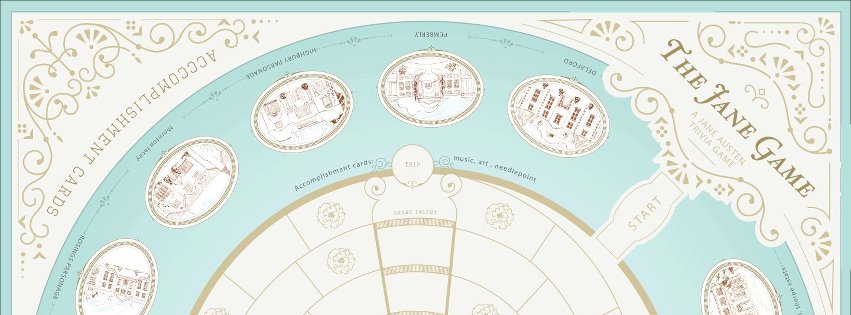
The Jane Game
Hello, I am a fellow JASNA member and for three years have been developing The Jane Game, a Jane Austen board game with trivia from all six of her novels. You can finally see it in all its splendor at www.thejanegame.com. Right now the game is not for sale, though, you can enjoy daily trivia fun at www.facebook.com/thejanegame. And you can follow on Twitter here: https://twitter.com/thejanegame
Below is a visual teaser of the game-
I plan on bringing The Jane Game to market through Kickstarter.com . This is a web forum where funding of the game’s production can be provided by pre-orders. If you like the game and would like to own it someday, please do one (or all) of the following:
1. On the website — go to “The Game” at bottom left, then scroll down to the “Notify Me” button and fill in your email address
2. Send me your email address ( janesgame [at] gmail [dot] com ) preferably with your name and, if you feel inclined, one thing very clever, two things moderately clever, or three things very dull indeed. I promise to laugh heartily at them all :)
With your email (option 1 and 2) I will notify you when the game’s kickstarter campaign starts for pre-orders. The facebook page will stay updated with the game’s progress as well as provide trivia fun every day.
If you know anyone who would be interested in a Jane Austen trivia game, please let them know (forward this blog post or invite them to the Facebook trivia page). The more people who know about this game, the faster it will come!
Some examples: [from The Jane Game facebook daily trivia]
Mansfield Park: The day after the ball at Mansfield, two men leave. Who were they (choose two)? Mr. Crawford, Edmund, William, Tom, Mr. Yates
Pride and Prejudice: What is Georgiana Darcy’s most praised accomplishment?
Emma: Who was the first person to tell Emma that Mr. Elton could very well be in love with her?–“Mr. Elton in love with me! What an idea!”
Sense and Sensibility: How old is Colonel Brandon when we first meet him?
Persuasion: On meeting the Harvilles and Captain Benwick, Anne admires their informal hospitality, ingenuity and charm. Why does she struggle to remain in high spirits?
Northanger Abbey: Who does the heroine, Catherine Morland, marry?
****************
Thank you Elizabeth! – and best of luck with this – sounds like a great deal of fun, and who can resist anything to do with Jane Austen!
Today is the birthday of Robert Burns (25 January 1759 – 21 July 1796). One cannot forget those Robert Burns poems we all had to recite in high school, often our first introduction to the “romantic” poets – ‘O, My Luve is Like a Red, Red Rose’ or ‘Tam O’Shanter’ or ‘To a Louse: on seeing one on a Lady’s bonnet at church’ – and of course how often do we sing or hear ‘Sweet Afton’ and ‘Auld Lang Syne’!
Robert Burns – from wikipedia
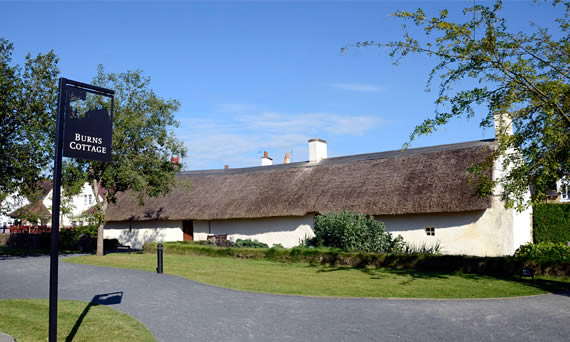
I had the fortune a number of years ago to visit Burns’s home in Alloway, Ayr, Scotland, and became sort of enamored with him – who can not? But what of Jane Austen and Burns? – she certainly read his poetry. And we now know that in her music notebooks she had copied out the music notation of two of Burns’s songs: My Love She’s But a Lassie Yet, and My Ain Kind Dearie – and Gillian Dooley has recently noted that Austen had written out in her own hand Their Groves o’ Sweet Myrtle, [see the link below to this full article] where it shows that Austen had transcribed the words “Save Love’s willing fetters – the chains of his Jean” to “the charms of his Jane” – evidence perhaps that Austen secretly admired Burns after all…?! [see full text of this song below]
Burns Cottage, Ayr
All we have of her written words as to how she may have felt about Burns appear in Sanditon, with the ridiculous Sir Edward Denham spewing forth the following:
But while we are on the subject of Poetry, what think you, Miss Heywood, of Burns’ Lines to his Mary? — Oh I there is Pathos to madden one! — If ever there was a Man who felt, it was Burns. — Montgomery has all the Fire of Poetry, Wordsworth has the true soul of it — Campbell in his Pleasures of Hope has touched the extreme of our Sensations — “Like Angel’s visits, few & far between.’ Can you conceive any thing more subduing, more melting, more fraught with the deep Sublime than that Line? — But Burns — I confess my sence of his Pre-eminence, Miss Heywood — If Scott has a fault, it is the want of Passion. — Tender, Elegant, Descriptive — but Tame. — The Man who cannot do justice to the attributes of Woman is my contempt. — Sometimes indeed a flash of feeling seems to irradiate him — as in the Lines we were speaking of — “Oh! Woman in our hours of Ease’. — But Burns is always on fire. — His Soul was the Altar in which lovely Woman sat enshrined, his Spirit truly breathed the immortal Incence which is her Due. –”
To which Charlotte replies, in what critics have assumed is Jane Austen’s voice:
“I have read several of Burns’ Poems with great delight”, said Charlotte, as soon as she had time to speak, “but I am not poetic enough to separate a Man’s Poetry entirely from his Character; — & poor Burns’s known Irregularities greatly interrupt my enjoyment of his Lines. — I have difficulty in depending on the Truth of his Feelings as a Lover. I have not faith in the sincerity of the affections of a Man of his Description. He felt & he wrote & he forgot.”
“Oh! no no” exclaimed Sir Edward in an extacy (sic). “He is all about ardour and Truth! – His genius and his susceptibilities might lead him into some Aberrations – But who is perfect?…. Nor can you, loveliest Miss Heywood (speaking with an air of deep sentiment) – nor can any Woman be a fair judge of what a Man may be propelled to say, write or do, by the sovereign impulses of illimitable Ardour.”
[from Sanditon, ch. VII]
So I leave you with these thoughts on Jane Austen and Robert Burns and a few links for further reading:
Their groves o’ sweet myrtle let Foreign Lands reckon, Where bright-beaming summers exalt the perfume; Far dearer to me yon lone glen o’ green breckan, Wi’ the burn stealing under the lang, yellow broom. Far dearer to me are yon humble broom bowers Where the blue-bell and gowan lurk, lowly, unseen; For there, lightly tripping, among the wild flowers, A-list’ning the linnet, aft wanders my Jean.
Tho’ rich is the breeze in their gay, sunny valleys, And cauld Caledonia’s blast on the wave; Their sweet-scented woodlands that skirt the proud palace, What are they? – the haunt of the Tyrant and Slave. The Slave’s spicy forests, and gold-bubbling fountains, The brave Caledonian views wi’ disdain; He wanders as free as the winds of his mountains, Save Love’s willing fetters – the chains of his Jean.

 About the author: Elsa A. Solender, a New Yorker, was president of the Jane Austen Society of North America from 1996-2000. Educated at Barnard College and the University ofChicago, she has worked as a journalist, editor, and college teacher in Chicago, Baltimore and New York. She represented an international non-governmental women’s organization at the United Nations during a six-year residency in Geneva. She wrote and delivered to the United Nations Social Council the first-ever joint statement by the Women’s International Non-Governmental Organizations (WINGO) on the right of women and girls to participate in the development of their country. She has published articles and reviews in a variety of American magazines and newspapers and has won three awards for journalism. Her short story, “Second Thoughts,” was named one of three prizewinners in the 2009 Chawton House Library Short Story Competition. Some 300 writers from four continents submitted short stories inspired by Jane Austen or the village of Chawton, where she wrote her six novels. Ms. Solender was the only American prizewinner, and she is the only American writer whose story was published in Dancing With Mr. Darcy, an anthology of the twenty top-rated stories of the contest.






















 Jane Austen in Vermont