Austen Literary History & Criticism · Jane Austen · Literature · News

Hot off the Presses! ~ ‘Jane Austen’s Regency World Magazine’ and ‘The Female Spectator’

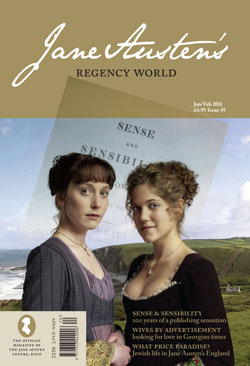
Will await this showing up in my mailbox [though see the publisher’s note about weather-induced delivery delays] –  here is the latest table of contents from Jane Austen’s Regency World magazine, the January/February 2011 issue No. 49: 

  • Sense & Sensibility at 200 ~  Leading writers look at the history, relevance, importance and morality of Jane Austen’s first published novel
     
  • What price Paradise? ~ Life as a Jewish person in Regency England
     
  • Wives by Advertisement ~ The risks and rewards of Georgian lonely hearts’ adverts
     
  • Jane Austen and Robert Burns ~ What she really thought about the Scottish poet
     
  • Jane Austen edited by a man ~  One writer’s angry response to recent news reports 

*The new curator at Jane Austen’s House Museum reveals what Jane means to her 

*Plus: All the latest news from the world of Jane Austen, as well as letters, book reviews, quiz, competition and news from JAS and JASNA 

Wondering what to ask Santa for Christmas?  Well if you have been “good” and “nice” and not “naughty” or “shouting” or “crying” the whole year through, then you deserve a subscription to JARW!  For further information, and to subscribe, visit: http://www.janeaustenmagazine.co.uk/index.html


[PLEASE NOTE:

 1.      The March/April 2011 issue of Jane Austen’s Regency World magazine will be the FIFTIETH issue!
2.      Overseas subscribers, especially in the US and Canada: be advised that the January/February issue may be delayed by 7-10 days because of a backlog of cargo in the UK following recent bad weather, and sorting difficulties in both the US and Canadian postal services. We apologise for any delay or inconvenience this may cause. Jane Austen’s Regency World ~ well worth waiting for!

 *****

Chawton House Library has published the latest issue of its newsletter The Female Spectator, Vol. 14, No. 3 (Autumn 2010) [and thankfully, this has arrived in my mailbox!] :   

  • Chawton Chronicles” from CEO Steve Lawrence re: Edward Austen Knight’s silk suit
  • “Brian Charles Southam”, an obituary – by Gillian Dow
  • “Reading and Re-reading in Sarah Fielding’s The Countess of Dellwyn” – by Louise Curran
  • “Aspects of Household Management during the Long Eighteenth Century: The Invalid’s Dietary” – by Catherine Morley
  • “A Birthday Banquet for Sarah Fielding” [ her 300th!]  – by Linda Bree and Peter Sabor, on the November conference at CHL on Sarah Fielding.  Link provided to a podcast of Isobel Grundy’s lecture here:  http://www.soton.ac.uk/scecs/newsandevents/2010/fielding_grundy.shtml
  •  The Education Programme at CHL – by Sarah Parry 
  • “Stories behind the Paintings”  by Jacqui Grainger – this essay on the portrait of Mary Robinson, actress and mistress of the Prince Regent, that hangs in the Great Hall of the Chawton House Library [with a heads-up re: the National Portrait Gallery [the UK NPG-  sorry folks!] exhibition entitled “The First Actresses: Nell Gwyn to Sarah Siddons” set for 20 Oct 2011 – 8 Jan 2012] 
  • “The Shire Horses” – by Angie McLaren  
  • “House and Estate News”:  Conservation Projects – by Paul Dearn; The Park and Gardens – by Alan Bird
  • “Dates for Your Diary” – as always, lovely to see what is coming up, and, as always, quite depressed that I am on this side of the world…

You too can receive this quarterly newsletter in your mailbox [weather notwithstanding…] by becoming a member of the CHL – information is  here: Chawton House Library membership [see link for North American members].  See also the several links to full-text [pdf] past newsletters here, and a contents listing of all issues here.

And please check out the latest news on the CHL website – there is a new short story competition in the offing – so start mending your pens and submit your creation by March 31, 2011 – guidelines are here.

Happy reading and writing all!

Austen Literary History & Criticism · Book reviews · Books · Collecting Jane Austen · Jane Austen · Literature · Regency England · Social Life & Customs

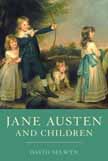
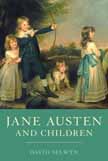
Book Review ~ “Jane Austen and Children” by David Selwyn

To be at the beginning of life, one must start at the end of the novel.  For although Jane Austen concludes her books with the marriage of the hero and heroine to which the whole thrust of the narrative has been leading, and the reader rejoices in the perfect happiness of the union, in reality the best is yet to come: they will have children – procreation  being not only the natural and desirable end of marriage, but also an economic and dynastic necessity.  And those children will have their own stories…What will become of the Darcy children?…”  (Ch. 1, Confinement, p. 5)

And thus does David Selwyn begin his treatise on Jane Austen and Children (Continuum, 2010), a most enjoyable journey through the world of childhood and parenting and education and growing-up in the life of Jane Austen, and the lives of her fictional characters.  If you are perhaps one of those people who think that Jane Austen does not like children, an idea certainly fed buy such comments about women “breeding again” or the child-generated “dirt and noise” or “the two parties of Children is the cheif Evil” [Ltr. 92], or the proper child-rearing “Method has been wanting” [Ltr. 86], etc. – you need to read this book!

Selwyn takes his reader essentially through the nine ages of man [with apologies to Shakespeare] beginning with confinement and birth, through infancy, childhood, parenting, sibling relations, reading and education, and finally maturity, as Selwyn says, the “end of the novel” when the Hero and Heroine come together, after all manner of trial and tribulation, to begin their own family.

We are given a general survey of the shift in the attitudes toward children, that late eighteenth – early nineteenth century view that fell between viewing children as not just “little adults” to the Victorian view of “seen but not heard”, following Locke and Rousseau and believing children to be natural innocents.  In each chapter Selwyn seamlessly weaves pieces of Austen’s life as gleaned from her letters and scenes from all her writings – and it is masterly done, all with a historical perspective.  We see Jane as a child, as a madly composing adolescent, a loving and humorous Aunt imaginatively interacting with her nieces and nephews, and as an accomplished writer whose fictional children are far more worthy of our notice than we have previously supposed: the frolicsome Walter hanging on Anne’s neck in Persuasion; the spoiled Middletons; the noisy and undisciplined Musgroves; the grateful and engaging Charles Blake in The Watsons; the John Knightley brood in the air courtesy of their Uncle George; the dynamics of the five Bennet sisters; Henry Dashwood the center of attention for the manipulative Steele sisters; the reality-based scenes of Betsy and Susan Price at Portsmouth; and finally Fanny Price, Austen’s only heroine we see grow up from childhood, having an elegant come-out, finding true-live and ends “needing a larger home.”

In all her works, Austen uses children as “a resource for her narrative strategies” (p. 4), be that comedy, a plot device to further the action, or a means of revealing attitudes and responses of the adults around them (p. 3).  Austen’s children are easy to miss – they won’t be after reading this book – here they are brought to life, given character and meaning, and you will see what Selwyn terms “Austen’s satirical delight in children behaving in character” (p. 73)

If Austen’s fiction seems to gloss over the reality of childbirth [the exception is Sense and Sensibility’s two Elizas], her letters tell the tale of its dangers [Austen lost three sisters-in-law to death in childbirth], and Selwyn links all to the social structure of the day, the nursing of babies and swaddling practices, to child rearing theories and moralizing tracts, and governesses and Austen’s ambivalence toward them. We visit boarding schools along with Jane and her characters and we hear the voices of a number of contemporary diarists (Agnes Porter, Sophia Baker, Susan Sibbald, Elizabeth Ham and Sarah Pennington).  There is a lovely in-depth chapter on the reading materials written especially for children and Austen’s first-hand knowledge of these titles.  The discussion on sisters and brothers, those so important in Austen’s own life, and those in her fiction, for example, characters with confidants (Lizzy and Jane, Elinor and Marianne), those isolated (Fanny, Anne Elliot, Emma Watson, Mary Bennet), and those with younger sisters (Margaret Dashwood and Susan Price).  As part of the growing-up process, Selwyn uncovers much on “coming-out” as Austen herself writes of in her “Collection of Letters” [available online here] – with the emphasis here on Fanny as the only heroine to have a detailed “coming-out” party.

The chapter on “Parents” starts with the premise that “in Jane Austen’s novels the parents best suited to bringing up children are dead” (p.95) and Selwyn takes us from the historical view of parenting, through Dr. Johnson’s “Cruelty of Parental Tyranny” [shadows of Northanger Abbey] to a full discussion of the marriage debate in the 18th-century – that between the worldly concerns of wealth vs. choice of partner based on emotional love as personified in Sir Thomas and Fanny Price respectively.  Excerpts are included from James Austen’s very humorous Loiterer piece   “The Absurdity of Marrying from Affection.” (p. 207) and Dr. John Gregory’s A Father’s Legacy to his Daughters (1774) [viewable at Google Books here] , and the Edgeworth’s Practical Education (1798) [Vol. III at Google Books here].  One finds that in reading all of Austen’s letters and all the works you can indeed discover a complete instruction manual for good parenting!

Jane Austen and Children appropriately ends with Selwyn’s speculation on what sort of parents her Heroes and Heroines will be, all of course based on the subtle and not-so-subtle clues that Austen has given us throughout each work – conjecturing on this is perhaps why we have so many sequels with little Darcys, Brandons, Bertrams, Knightleys, Tilneys, and Ferrars running about!

Just as in his Jane Austen and Leisure, where Selwyn analyzes the various intellectual, domestic and social pursuits of the gentry as evidenced in Austen’s world and her works, he here gives us an accessible and delightful treatise on Austen’s children, culling from her works the many quotes and references related to children and linking all to the historical context of the place of children in the long eighteenth century.  The book has extensive notes, a fine bibliography of sources on child-rearing, contemporary primary materials, children’s literature, and literary history, and several black and white illustrations.  (I did note that there are a few mixed up footnotes in chapter 3, hopefully to be corrected in the next printing).  What will this book give you? – you will never again miss the importance of Austen’s many children, peaking from behind the page, there for a set purpose to show you what great parents the Gardners are, or just to make certain you see how very selfish the John Dashwoods and the Miss Steeles are, or to see the generosity of an Emma Watson in her rescue of Charles Blake, or to feel the lack for the poor Musgrove boys having Mary for a mother, the playfulness of an otherwise conservative Mr. Knightley, and the unnerving near touch of Captain Wentworth as he relieves Anne of her burden –  thank you David Selwyn for bringing all these children to life for Austen’s many readers – you have given us all a gift!

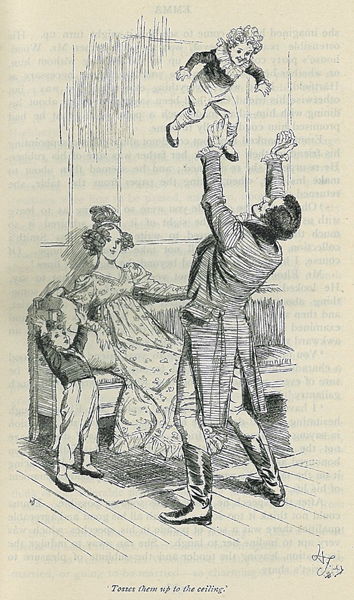
Emma – ‘Tosses them up to the ceiling’
[by Hugh Thomson, print at Solitary Elegance]

 __________________

Jane Austen and Children
Continuum, 2010
ISBN:  978-1847-250414

David Selwyn is a teacher at the Bristol School in Bristol, UK.  He has been involved with the Jane Austen Society [UK] for a number of years, has been the Chairman since 2008,  the editor of the JAS Report since 2001, and has written and edited several works on Austen.  He very graciously agreed to an “interview” about this latest work that you can find by clicking here.  See also the post on the various illustrations of Austen’s children by the Brocks and Hugh Thomson.  And finally, I append below a select bibliography of Selwyn’s writings on Jane Austen and her family.

 Select Bibliography:  

  1. Lane, Maggie, and David Selwyn, eds.  Jane Austen: A Celebration.  Manchester: Fyfield, 2000. 
  2. Selwyn, David, ed.  The Complete Poems of James Austen, Jane Austen’s Eldest Brother. Chawton: Jane Austen Society, 2003. 
  3. _____. “Consumer Goods.” Jane Austen in Context. Ed. Janet Todd. Cambridge Ed. of the Works of Jane Austen. New York: Cambridge UP, 2005. 215-24. 
  4. _____, ed.  Fugitive Pieces: Trifles Light as Air: The Poems of James Edward Austen-Leigh.  Winchester: Jane Austen Society, 2006. 
  5. _____. “A Funeral at Bray, 1876.” Jane Austen Society, Collected Reports V (1998): 480-86. 
  6. _____. “Games and Play in Jane Austen’s Literary Structures.” Persuasions 23: 15-28 
  7. _____. “Incidental closures in Mansfield Park.”  [Conference on “Jane Austen and Endings”, University of London, 17 November 2007] – unpublished paper. 
  8. _____. “James Austen – Artist.” Jane Austen Society Report 1998. 157-63. 
  9. _____.  Jane Austen and Leisure.  London: Hambledon Continuum, 1999. 
  10. _____, ed.  Jane Austen: Collected poems and Verse of the Austen Family.  Manchester:  Carcanet / Jane Austen Society, 1996. 
  11. _____, ed.  Jane Austen Society Report, 2001 – present. 
  12. ­_____. “Poetry.” Jane Austen in Context. Ed. Janet Todd. Cambridge Ed. of the Works of Jane Austen. New York: Cambridge UP, 2005. 59-67. 
  13. _____. “Shades of the Austens’ Friends.” Jane Austen Society Collected Reports V (2002): 134. 
  14. _____. “Some Sermons of Mr Austen.” Jane Austen Society Collected Reports V (2001): 37-38. 
Austen Literary History & Criticism · Jane Austen

Illustrations of the Children in Jane Austen

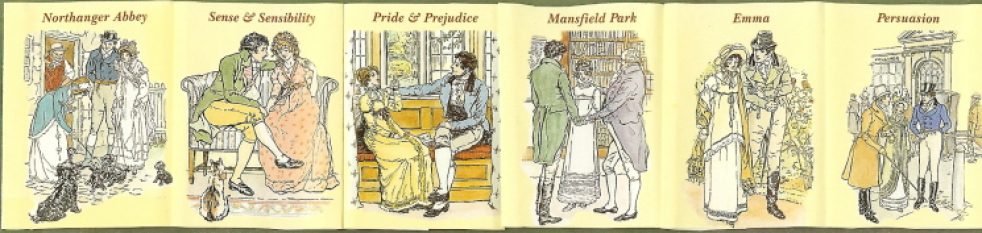
In my previous post interviewing David Selwyn on his new book Jane Austen and Children [book review will be posted tomororw], I commented on discovering how many children there actually are in Austen’s novels, and how easy they are to miss.  So I started thinking about Austen’s works as published through the years accompanied by the various illustrators.  Here are several selections by the Brocks and Hugh Thomson, showing that in each novel there is at least one illustration with children as the subject ~ and how delightful they are!

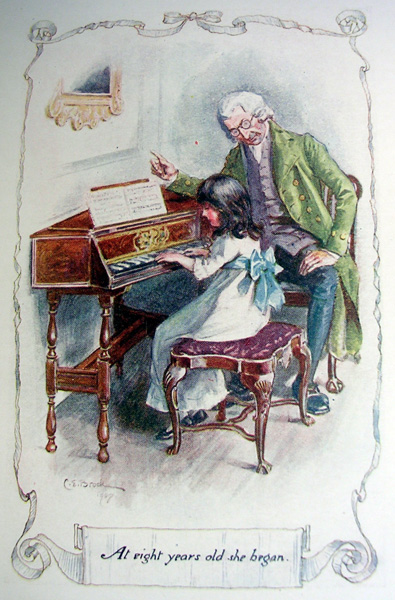
Northanger Abbey ~ C.E. Brock ~ Catherine at the piano ~ “At eight years old she began…[Vol. I, Ch. I]

***

Sense and Sensibility~  C.E. Brock – “ The time may come when Harry will regret that so large a sum was parted with”  [Vol.I, Ch. II]


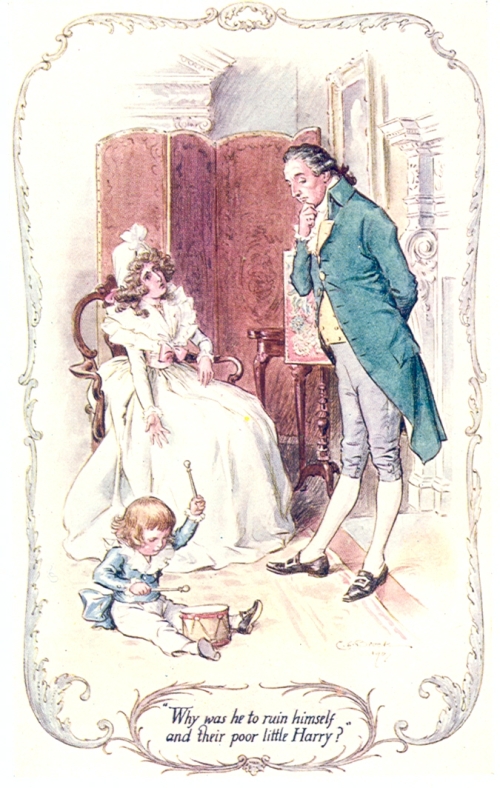
Sense and Sensbility ~ C.E. Brock ~ “Why was he to ruin himself and their poor little Harry?”  [Vol. I, Ch. II]

***

Pride and Prejudice ~  C.E. Brock  ~ “On the stairs were a troop of little boys and girls”  [Vol. II, Ch. IV]

 ***

Mansfield Park ~ C.E. Brock ~  Fanny on arriving in Mansfield Park ~ ” In vain were the well-meant condescensions of Sir Thomas”  [Vol. I, Ch. II]

and the same scene from H.M. Brock:


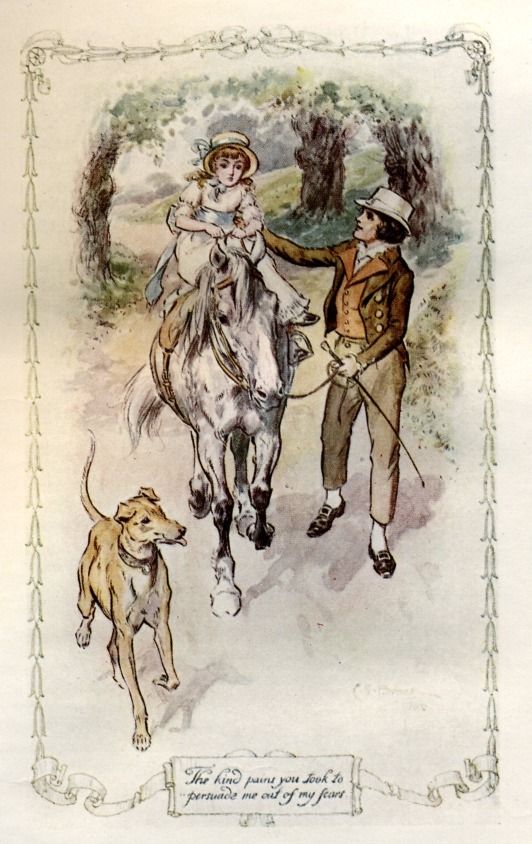
 Mansfield Park ~ C.E. Brock ~ “The kind pains you took to…persuade me out of my fears”  [Vol. I, Ch. III]

Mansfield Park ~ Hugh Thomson ~ “Mrs. Price … only discomposed if she saw Rebecca pass by with a flower in her hat.” [Ch.  42]

 ***

Emma  ~ Hugh Thomson ~ “With a slice of wedding cake” [Vol. I, Ch. II]

Emma  ~ Hugh Thomson “Tosses them up to the ceiling” [Vol. I, Ch. IX]

 ***

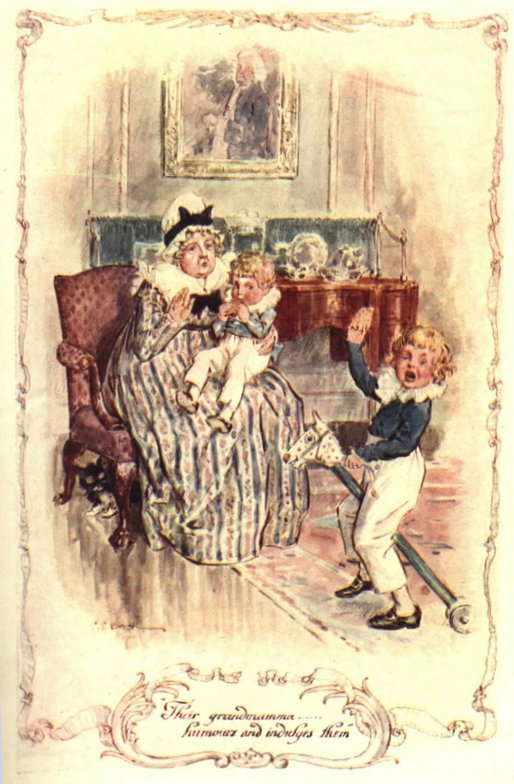
 Persuasion ~ C.E. Brock ~  Their Grandmamma…humours and indulges them” [Vol. I, Ch.VI]

Persuasion ~ C. E. Brock ~ ‘Brought Home in consequence of a bad fall…’ [Vol. i, Ch. VII]

Persuasion ~ C.E. Brock ‘ In another moment…someone was taking him from her” [Vol. I, Ch. IX]

___________________________________________

Sources:  all Brock illustrations are from Mollands; the Hugh Thomson illustrations are from Solitary Elegance. and the Thomson illus of Mrs. Price and children is from Pemberley.com

Fashion & Costume · Jane Austen · Social Life & Customs

Happy Birthday, Jane Austen!

Breaking news!  what a birthday gift for some Austen collector out there:  the Sotheby’s auction today saw the sale of Emma: first edition, all volumes with the ownership signatures of Jane Austen’s closest female friend Martha Lloyd ( Hammer Price with Buyer’s Premium:  37,250 GBP); and another Emma first edition, volumes 1 and 3 (lacking volume 2), the copy sent by Jane Austen to her fellow novelist Maria Edgeworth, with the ownership signature “Maria Edgeworth” on title page of volume 1, (Hammer price with Buyer’s Premium, 79, 250 GBP) – more on this in a full post tomorrow….
__________________________________________________________

First, the grand announcement that the latest JASNA Persuasions On-Line Vol. 31, No.1, [click here for the Table of Contents ],  published annually on Jane Austen’s birthday, December 16th, is now available for viewing.  As always, a treasure-trove of essays on all things Austen – some from the 2010 AGM on Northanger Abbey, where “mystery, mayhem and muslin” ruled, and other “Miscellany” on topics ranging from Austen films and chick-lit, gender issues, to new thoughts on Austen’s death and Juliet McMaster on “Jane Austen’s Children” [perhaps signalling a new area in Austen research – see my posted interview with David Selwyn on his new book Jane Austen and Children and my upcoming review]…

And new this year, the “Jane Austen Bibliography”  has been reinstituted.  This annual compilation has not been published since 2006, since the death of the long-term compiler Professor Barry Roth in 2008.  Yours truly has taken on the task with this 2009 bibliography – my background in librarianship and antiquarian bookselling, as well as a love of bibliography [how weird is that!], not to mention Austen knowledge, has led me to this JASNA task – I will be tackling the missing years of 2007 and 2008 and those will be published along with the 2010 biblio in the 2011 Persuasions On-Line next December.  Any additions, corrections, suggestions appreciated…

*******************************

But now on to the Birthday Celebration!  I was away and did not get to Maria Grazia at her Jane Austen Book Club blog in time to be a part of her Birthday Blog Tour – but I send you to her site and encourage you to follow the links to the other 15 Austen bloggers, all posting today on this 235th year of our “Dear Jane” – visit and comment – there are many wonderful Austen-inspired prizes!

****************************

For this year’s Birthday post, I have decided to compile a selection of presents that I think Austen would appreciate herself – we are so taken with all the Austen-related items for sale, slipping them onto our “want lists” and discretely leaving said lists around inconspicuous places for family and friends to find, or buying for our Austen-loving friends the latest and greatest in Austen-land books and paraphernalia for their birthdays and holidays – but what about Jane?  This is after all her day – and if we read the letters and her works and the various biographies, we get a true sense of what meant the most to her.  She led a fairly penny-pinching lifestyle once her father passed away and only through the generosity of family was she able to live the life of the gentry she was born to – a widowed mother and two unmarried sisters – exactly the stuff of her novels – and without any men of “good fortune” to “rescue” them, they learned to live frugally and well, but Jane still had her passions for certain things – and so if I could, I would give her all of these [and this is just a small sampling of all the possibilities!] ~ 

Tea:  from Twinings of course – “I am sorry to hear there has been a rise in tea…I do not mean to pay Twining until later in the day.” (Ltr. 98)

and served in a Wedgwood cup and saucer; “On Monday I had the pleasure of receiving, unpacking & approving our Wedgwood ware.” (Ltr. 75)


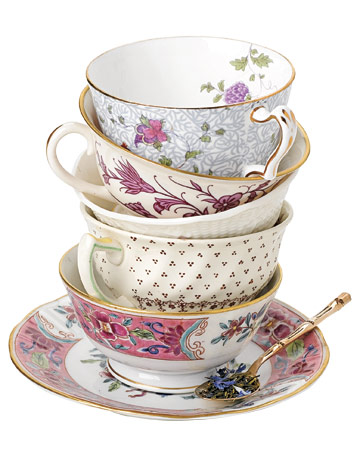
Teacup:  Wedgwood Harlequin  

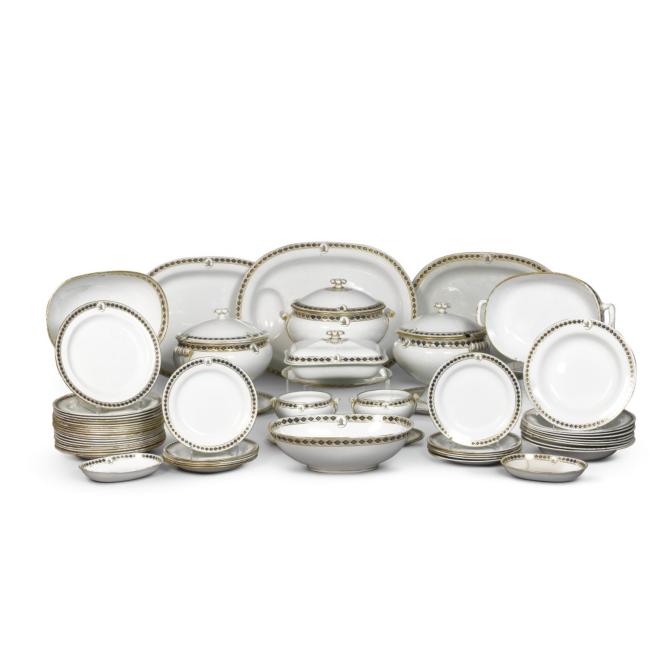
*Note that Edward Austen’s dinnerware is up for sale at auction today at Sotheby’s – estimate is 50,000 – 70,000 GBP – the very set that “we went to Wedgwoods where my Br & Fanny chose a Dinner Set. – I beleive the pattern is a small Lozenge in purple, between Lines of narrow Gold; – and it is to have the Crest.” (Ltr. 224)


***

Stationary:  an unlimited supply of paper, ink and postage stamps, so she can write all that she will with no need to stop at one sheet or hope for a charitable “franking”:

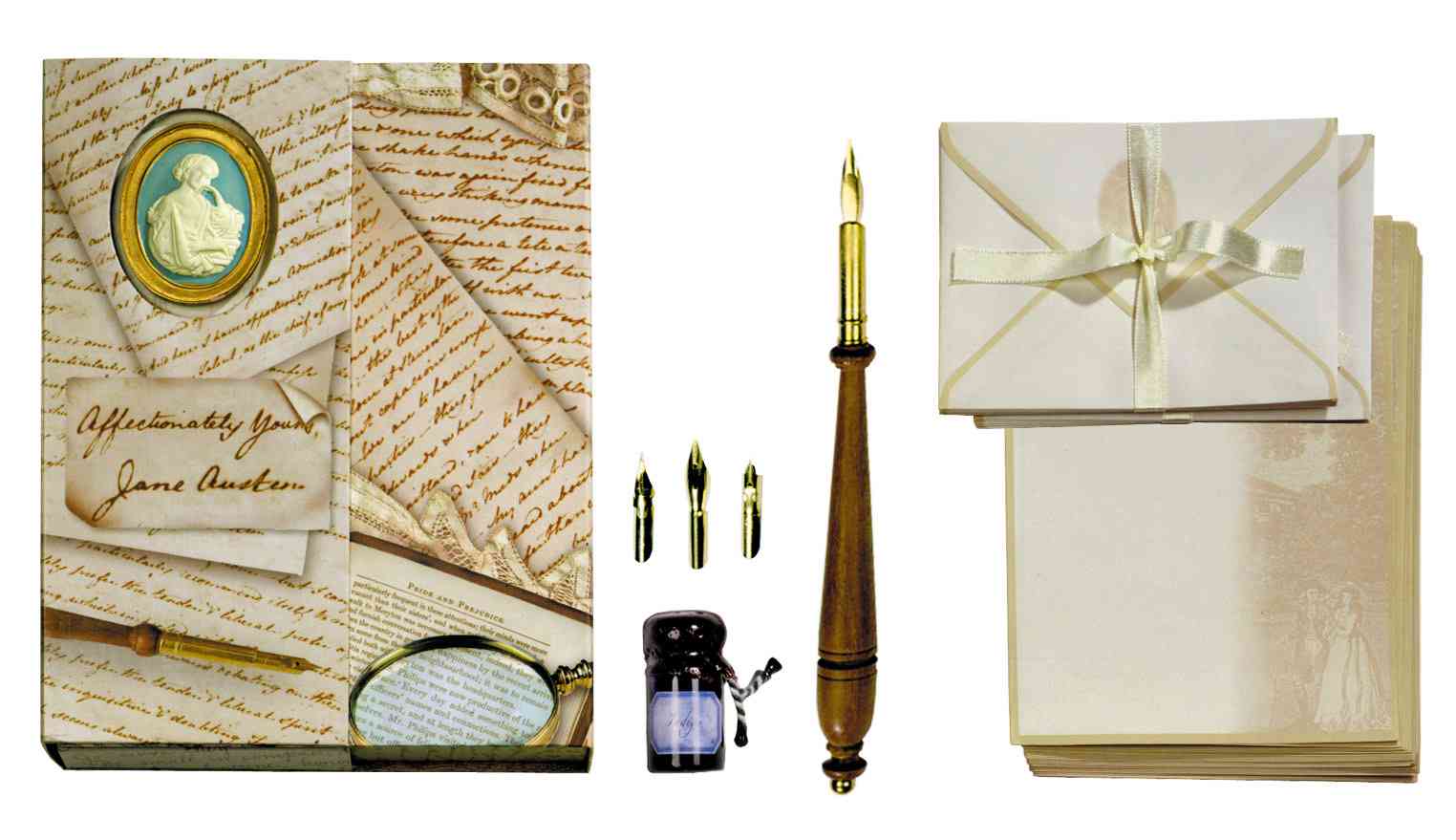
Writing Paper and ink:  from Plazaverde.net


Postage stamps:  from Stamp Circuit

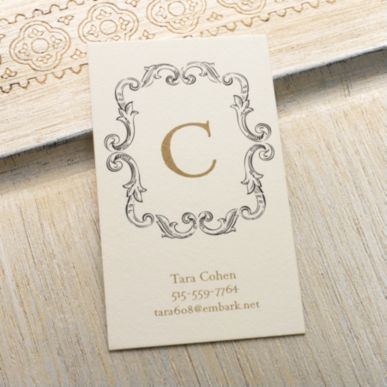
Calling cards:  From Cambria Cove, so she can visit all over Hampshire, Kent, Bath, and London to her heart’s content:

 [please substitute an “A” for the “C”…]

***

Fashion needs and accessories:  never enough for Jane of any of these, but I present to her for this birthday:

1.  A New Bonnet, this one fashionably covered in fruit, from HorrorShirts.co.uk ~ “Flowers are very much worn, & Fruit is still more the thing. – Eliz: has a bunch of Strawberries, & I have seen Grapes, Cherries, Plumbs & Apricots – There are likewise Almonds & raisins, french plumbs & Tamarinds at the Grocers, but I have never seen any of them in hats…” (Ltr. 20) ~

 or maybe this one at Miss Amelia’s Miniatures:   


2.  A variety of Floral ribbon trimmings at HymanHendler.com ~ “Must we buy lace , or will ribbon do?” (Ltr. 47)

or this:


3.  Fabric: a painted cotton from India at Jessamyn’s Regency Costume Companion:  and hopefully it will be “as wide as it used to be” (Ltr. 72) – “I shall want two new coloured gowns for the summer, for my pink one will not do more than clear me from Steventon.” (Ltr. 33)


4.  Stockings: always in need, never enough money –  “You say nothing of the silk stockings; I flatter myself, therefore, that Charles has not purchased any, as I cannot very well afford to pay for them; all my money is spent in buying white gloves and pink persian.” (Ltr. 1) – here is a year’s supply from Liverpool Museums ~


5.  And “a kerseymere Spencer” which will be “quite the comfort” in this year’s snow-bound England! (Ltr. 55)

 [from Costumes.org ]

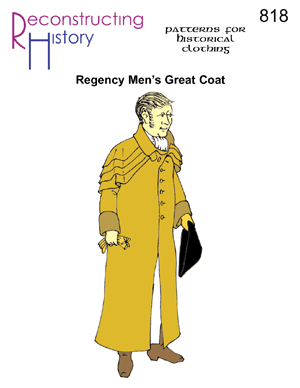
6.  and for the men in her life ~ A Pattern for a Great Coat, which she so lovingly bestows upon her Hero Henry –  “And then his hat sat so well, and the innumerable capes of his greatcoat looked so becomingly important!” (NA, v.II, ch. 5) – this is from Reconstructing History:

 ***

Books for Jane’s Library: 

1.  A Magazine subscription to the Lady’s Monthly Museum – so she will be forever current in news, literature, and fashion:

[from Monash University Library] and Google Books for the volume from 1817.

2.  From her beloved “Dear Dr. Johnson”, a copy of  Samuel Johnson’s  Rasselas:


3.  Samuel Richardson, author of her favorite book, Sir Charles Grandison, and the author referenced in Austen’s only footnote (NA, v.I, ch. 3), I offer a lovely bound copy of Richardson’s  Pamela at Stikeman Bindings:

  “Samuel Richardson; “The Complete Works” in Twenty Volumes in Deluxe Bindings, Autograph Edition; From a set of Twenty Volumes, this is the Novel “Pamela” in Five Volumes, 4to, of Full Green Crushed Morroco; Boards of Wide Borders in an Art Nouveau style, four Bright Scarlet Tulipform onlays on each board, and three Red Rose Onlays in the spine compartments (55 onlays in all); Spines sunned, here digitally retouched to approximate the original green. Hinges cracked and starting © Jeff Stikeman”

Travel accommodations:  her very own Barouche so she can travel at her own whim rather her brothers’ schedules:  “I liked my solitary elegance very much, & was ready to laugh all the time, at my being where I was. I could not feel that I had naturally small right to be parading about London in a Barouche.” (Ltr. 85) – she will now have all the right possible…


Food:  and just because she mentions it so much, she must have some true affection for it! ~ her very own Bowl of Gruel:  from BBC News 


***

Popular Culture:  just because I think she would get a chuckle out of all this… 

1.  Lost in Austen at Amazon or your local bookseller


2.  Such a lover of puzzles might like her very own:


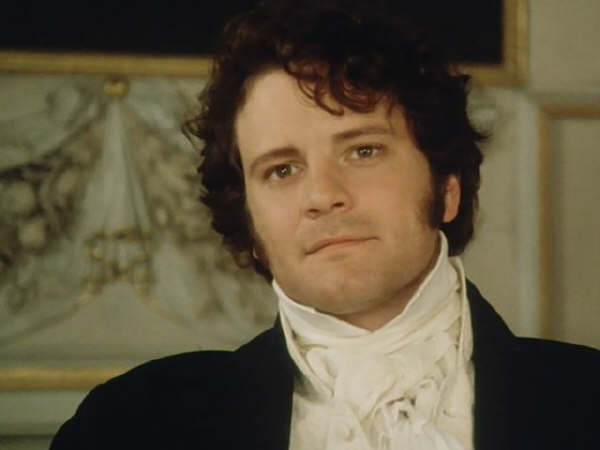
3.  A Larger-than-life wall poster of the generations-obsessed-over Mr. Darcy ~ [please take your pick…]

or

 or

or

or

***

7.  And lastly, her “own darling Child” (Ltr. 79) ~ Pride and Prejudice – the  1st edition:  so she would at last get a portion of the worth of her own pen!

[From Paul Fraser Collectibles.com]

*************************

Happy Birthday Jane ~ enjoy your handsome and “noble Gifts” [though alas! no Ermine Tippet this year!] (Ltr. 98)

Readers all ~ what would you give Jane Austen for her birthday?

Austen Literary History & Criticism · Book reviews · Collecting Jane Austen · Jane Austen · Regency England

Author Interview ~ David Selwyn on ‘Jane Austen and Children’

David Selwyn had graciously offered to answer my questions about his newest book, Jane Austen and Children (Continuum, 2010).  David is the current Chairman of the Jane Austen Society, editor of the Annual JAS Report since 2001,  and author of numerous works and articles on Austen.  His previous Jane Austen and Leisure (Hambledon Continuum, 1999)) is a must-read treasure trove of social and domestic activities that Austen engaged in and referred to in her novels. His current work is another must-read that weaves the historical, the factual and the fictional world of Austen and her works, all relating to children.  I will post a review of the book in a few days [after the 16th Birthday celebration] –  but I will say now that I most highly recommend this book, and suggest that you add this to your holiday “want” list and hope it may be found under your tree on Christmas morn…!

 Welcome David! 

JAIV:  I think when reading the novels, it is so very easy to overlook the number of children and how Austen’s presents them – but after reading your book one sees indeed how many children there are in her works and their importance to the narrative – is this what prompted you to write the book? the fact that too many people really do not see?

DS:      Yes, and I was struck by the fact that nobody had written on the subject, nor as far as I knew lectured on it. 

JAIV:  Jane Austen is often said to have not been particularly fond of children – was this another main reason in writing your book? – to show that as not the case? – 

DS:      As regards the novels, it always seemed to be assumed that her world was essentially an adult one (which I suppose largely it is) and the crucial role that children play in her exploration of it had been missed. As regards her own feelings about children, nobody who reads the letters can be in any doubt as to her fondness for her nephews and nieces.

JAIV:  Did anything surprise you in your research? 

DS:      How sensible she was about the bringing up of children – but then, I suppose one ought never to be surprised by JA’s wisdom on any matter!

JAIV:  And such extensive research! – the references in her letters, other family reminiscences, all the novels and minor works, and the historical context of child rearing in the long 18th century! – how long have you been working on this? 

DS:      For some years, but the editing of JEAL’s poems (Fugitive Pieces) intervened.

JAIV:  And this book presents such a seamless weaving of this real life, historical and fictional contexts – what are your working habits, writing process to achieve this?

DS:      I re-read the novels, minor works and letters, making notes of anything relevant in notebooks (one for each text) and highlight the notes in different colours according to theme. I did this for Jane Austen and Leisure and found that it worked. You’ll notice that at this stage I don’t use a computer. I also do a lot of background reading in social history, biography etc, and make notes on those books too of course.

JAIV:  You say that Jane Austen “makes use of her children to reveal aspects of her adult characters” – what is your favorite example of this?

DS:      It is difficult to choose, because each time she does it it is so wholly convincing. Annamaria Middleton and the naughty little Musgrove boy are the funniest, and the latter creates the most delicately balanced mood of comedy and emotion in any scene with children in it; but I love the little Gardiners, whose charming behaviour shows just how children should be brought up.

JAIV:  And then secondly, that Austen uses children as a means of advancing the plot – what is the best example of this?

DS:      It would certainly have been Charles Blake in ‘The Watsons’ had JA finished the novel.

JAIV:  There is much on Mansfield Park, perhaps because unlike the other heroines [other than the quick summary of Catherine Morland’s childhood], Fanny is presented to us as a child – but you seem to write most fondly of this novel, indeed, you end your book with thoughts on Fanny and Edmund making the best parents.  Is Mansfield Park your favorite among the novels? Or is this an unfair question! [who can ever choose!]

DS:      As you say, an impossible question. Yes, I do admire MP very much (and think that Fanny is often under-rated: she knows exactly what she wants and in the end gets it); but ultimately my favourite is Emma, partly because it is surely the subtlest and cleverest novel before Henry James, and partly because I think Miss Bates is, as well as being very funny, one of the most moving examples of human goodness in any literary work – JA touches us profoundly with the portrayal of a single woman who centres all the energy of a loving heart on her mother and niece (which is why the scene at Box Hill is so truly climactic – Emma’s thoughtless crushing of such a good heart is appalling, as she herself soon realises). By the way, another thing about Miss Bates: how brilliant of JA to be able to create such a wholly imagined voice that another character (Emma) can mimic it – flannel petticoats etc. 

JAIV:  It has always “troubled” me that Jane is the only child in this Austen family with only one given name – you speak of her having two godmothers both named “Jane” – do you think this is the reason? or do you have other thoughts? 

DS:      But she wasn’t: James, George and Edward had no second names, and nor did their parents. It may well be that the habit of giving two Christian names was becoming more fashionable during this period. 

JAIV:  One of the most famous child-based scenes in Austen is in Persuasion when Captain Wentworth helps Anne by the swift removal of her troublesome nephew – why is this scene so important to the plot? 

DS:      It brings Anne and Captain Wentworth intimately close for the first time in the novel – though JA is delicate enough to depict that intimacy with the child’s hands preventing direct physical contact between them.

JAIV:  Where much of The Watsons can be seen to appear in her other works, the most marvelous piece, when Emma Watson engages young Charles Blake in the dance, is nowhere to be found anywhere else [though it has been said that Mr. Knightley’s dancing with Harriet Smith is Austen’s reworking of this scene].  Do you think Austen could have placed this somewhere in her surviving novels? 

DS:     No, I don’t think she was ever to give a child quite such individual prominence again. 

JAIV:  You start your chapter on “Parents”: “In Jane Austen’s novels the parents best suited to bringing up children are dead.”  Who of the living parents do you think are the most effective? Who the least?  

DS:      The Gardiners are far and away the best. Sir Walter Elliot (though not of course the late Lady Elliot) is a disgrace to the Baronetage in which he takes such pride!

JAIV:  You so obviously love Jane Austen!  – when did this begin for you? 

DS:      In  picking up a stray copy of Emma when I was at home ill once, when I was a (music) student. But I was also thrilled to see a real live JA MS which used to be on display in the Pump Room at Bath (it is now safely tucked away in the offices of Bath City Council); it was the ‘headache’ poem, and it was hung in a hinged frame enabling you to see the reverse, on which there was one of the versions of the ‘Gill-Gell’ verse. I remember noting in the Minor Works volume that Chapman (re-edited by Brian Southam) said that he did not know where that particular version of the Gill’ Gell poem was, and I gleefully thought to myself, ‘I do – it’s in Bath!’ I seem to remember writing to OUP, but I didn’t get a reply.

JAIV:  You say that “it is highly unlikely that Jane Austen ever read a word of Mary Wollstonecraft (though she did read the novels of her radical husband, William Godwin)” – how are you so sure she did not read Wollstonecraft, and how so sure she did read Godwin? 

DS:      This is, I concede, speculation. JA refers to Godwin in a letter and Deirdre Le Faye suggests that she ‘was probably acquainted with Caleb Williams’; I am not sure she didn’t read Hannah More, but I think it unlikely.

JAIV:  One of the many things I took from your book in its focus, its seeing all through the lens of childhood, was a pattern of new themes emerging in all the novels – for instance, the theme in Emma of unconditional love, the love parents have for children, but in Emma, this love that Emma has for her father, Miss Bates for her mother and Jane Fairfax, Mr. Knightley for Emma – i.e. as you say “the unconditional love for people who may, consciously or unconsciously, require sacrifices to be made for them.” [p.111]. What are some other themes that became clearer for you since approaching the novels from this viewpoint? 

DS:      Not so much themes as procedures, and in particular the technique of introducing children not really for their own sake but as a contrivance for some aspect of plot or characterisation – and in the process, being JA, to bring them wonderfully to life.

JAIV:  One could read your book, re-read all of Austen, and get a very lucid and valuable instruction manual for good parenting! – did you have this perception yourself before reading and studying the books through this lens? 

DS:      No, it had never occurred to me that JA could be seen in such a light until I looked closely and specifically at what she says about children and parents.

JAIV:  Your book on Jane Austen and Leisure also offered a very valuable (and very enjoyable!) contribution to an understanding of Austen in the context of social history, her reading, her novels and her life and letters – again in many instances taking a few well-placed words in Austen and giving them such meaning.  What is up next for you?? 

DS:      I hope to do some more editing for a JA Society book. What a pity that JEAL’s sister Caroline destroyed the MSS of her poems; I should like to have brought those out.    

********************

Thank you so much David for answering all my questions!  Stay tuned for my review and a select bibliography on David Selwyn’s other Austen-related works. 

 [Getty Images.com]

Jane Austen · JASNA-Vermont events

Our Jane Austen Annual Tea!

We all had a fabulous day – celebrating Jane’s 235th birthday – but alas! no pictures – will write more about the day, Elaine and Peter’s talk, the tea and the delicious fare, the chat, how cold the room was, and the many many thanks yous to pass around – as well as our upcoming events – and all the posts I have in the queue awaiting the end of this day – so check back soon!

[Image from CountryLiving.com]

Jane Austen · JASNA-Vermont events · News

JASNA-Vermont’s Annual Birthday Tea! ~ December 5th

Please Note:   Regency Dress Encouraged!!

[see below for other Austen-related events]

You are Cordially Invited to JASNA-Vermont’s December Meeting

 ~The Annual Jane Austen Birthday Tea!~ featuring 

   Dr. Elaine Bander*
‘Doubting Mr. Darcy’

&

Dr. Peter Sabor**
 ‘Austen’s Letter Writers in
Sense & Sensibility

and Pride & Prejudice


*****


~  Traditional English Afternoon Tea ~

Sunday, 5 December 2010, 2 – 5 p.m.
 Champlain College, Hauke Conference Center
375 Maple St Burlington VT 
 

$20. / person ~ $15. / JASNA Members ~ $5. / student 

RSVPs required!  ~ Register by 28 Nov 2010

Flyer:  Dec_2010_flyer_final
Reserve form:  Dec_Tea_Reservation_form final
For more information:
   JASNAVermont [at] gmail [dot] com 
Visit our blog at: http://JaneAustenInVermont.wordpress.com

Please Join Us!

************************************ 

We are honored to welcome our Canadian neighbors and noted Austen scholars:


Elaine Bander


*Dr. Elaine Bander has recently retired from teaching English at Dawson College, Montreal


Peter Sabor

**Dr. Peter Sabor is the Canada Research Chair in 18th-Century Studies and Director of the Frances Burney Centre at McGill University. 


Upcoming in 2011 ~
March 27: ‘Jane Austen’s London in Fact and Fiction’ with Suzanne Boden & Deb Barnum
June 5: A Lecture & Concert on the ‘Music of Jane Austen’s World’ with Prof. William Tortolano 
at Vermont College of Fine Arts, Montpelier

*******************

Other Events of note:

December 1, 7pm ~ Newport, VT: Vermont Humanities Council First Wednesday Lecture:

Dartmouth professor emeritus James Heffernan will discuss the use of the fairy tale in Jane Austen’s novel Pride and Prejudice in a talk at Goodrich Memorial Library in Newport on December 1. His talk, “In Want of a Wife: Romance and Realism in Jane Austen’s Pride and Prejudice,” is part of the Vermont Humanities Council’s First Wednesdays lecture series and takes place at 7:00 p.m. 

In the history of literature, Jane Austen is typically considered a realist of social relations—and yet Pride and Prejudice remains perennially popular because it incorporates a potent feature of the fairy tale: it fulfills the fondest wishes of its poor and not conspicuously beautiful heroine. Heffernan will show how Austen reconstructs the fairy tale within the framework of social realism.  Heffernan is Professor of English, Emeritus and Frederick Sessions Beebe ’35 Professor in the Art of Writing at Dartmouth College. Author of numerous books and articles and lecturer for The Teaching Company, he has lectured around the world.

For more information, contact Goodrich Memorial Library at 802.334.7902, or contact the Vermont Humanities Council at 802.262.2626 or info@vermonthumanities.org, or visit www.vermonthumanities.org.

*December 12, 2010:  JASNA-Massachusetts Region :  Jane Austen Birthday Celebration!

 Enjoy light refreshments, including a birthday toast, and entertainment by the JASNA Massachusetts Players presenting Austen on Austen

Cost is $10* per person ($5* for JASNA Massachusetts members)
Please R.S.V.P. by Tuesday, December 7 by remitting your check with this form.

Wheelock College, Brookline Campus
43 Hawes Street, Brookline, MA
For more information:  Visit the JASNA-MA website

*December 11, 2010 ~ JASNA-Greater New York Region: 

 “Reading Pride & Prejudice Backwards”, with Professor Mary Poovey followed by the Annual Birthday Celebration!
 See their website for more information

Jane Austen · News

The Chawton House Library Short Story Competition

Writer alert:  Get your pens mended!  As last year with the short story compilation Dancing with Mr. Darcy, The Chawton House Library has announced another Jane Austen short story competition.  Please visit their website for details.

[Image from zazzle.com]

Books · Jane Austen · Query

Query: Are You Reading Jane Austen on your eReader??

This sent from Nili Olay of JASNA-Greater NY Region – the author, Phyllis Fine had attended one of their book discussion gatherings and wrote the following for OMMA [Magazine of Online Media, Marketing & Advertising: http://www.mediapost.com/ – I am appending the whole article here: [and thanks Nili for sharing!]

 “Don’t be Prejudiced: Janeites Aren’t Necessarily Luddites”   by Phyllis Fine

The new member of the Jane Austen Society of North America (JASNA) looked sheepish. “Um, I know you ladies don’t approve, but I’m thinking of buying a Nook,” she said. Some looked puzzled, and a quick tutorial on ebooks ensued. Then Nili Olay, JASNA’s New York Metro Region cochair, showed she had her heart in both the 19th and 21st centuries. “Why shouldn’t we approve?” she asked. “We want everybody to read as much as they can, any way they can.” 

Olay had a point. If you’re devoted to the classic novels the modern world has arguably messed with the most, why should you scream heresy when you now find them accessible electronically? 

In fact, Austen devotees have already seen her works invaded by the undead (Pride and Prejudice and Zombies) and the water-logged (Sense and Sensibility and Sea Monsters). Faced with such indignities, some adapted and others complained. 

Not surprisingly, Janeites are also highly sophisticated, knowledgeable readers. They remember the names of minor characters in the Austen oeuvre (Darcy’s cousin Colonel Fitzwilliam in Pride and Prejudice – that’s for amateurs! How about Darcy’s housekeeper, Mrs. Reynolds?), and are willing to entertain the theory that the oh-so-reserved Jane Fairfax is secretly pregnant in a shadow version of Emma. So they’re a good test of how the most literate are adapting to the electronic book. 

Polled during a discussion group of roughly 15 JASNA members, only three identified themselves as regular ebook readers. Yet these three were enthusiastic e-cheerleaders, using words like “love” to describe their relationship with the devices. 

Linda Dennery, executive vice president of benefits at Advance Newspaper Group, must keep up with the latest in media professionally, so she has both a Kindle and an iPad. 

Ann Herendeen enjoys her Kindle, “but when I’m reading a book between Austen and escapist trash, it drives me crazy,” she said. If she’s looking for a certain scene that isn’t searchable by an easy keyword, she’d rather flip through physical pages than slowly go through electronic ones. “It’s like reading through a narrow hole, a periscope that illuminates one spot only,” she said. 

Olay is an economical ebook reader: She uses her iPhone rather than a dedicated e-reader, and the volumes she reads are free because they’re in the public domain. She’d just finished reading Daisy’s Aunt by E.F. Benson and was currently in the midst of Dickens’ Our Mutual Friend. 

Others in the group were yet-to-be-convinced that ebooks have value – like Marilyn Goldfried, who gave perhaps the most erudite counterpoint possible to Olay’s testimony on the beauty of packing just one small device to fulfill all your literary vacation needs. Goldfried reported that when Noel Coward was on a cruise, he lightened his book burden by throwing pages into the water as he finished reading them. 

Olay, noting another e-advantage, said, “You don’t need a bookmark; it always keeps your place for you automatically.” 

“But let’s not exaggerate the problem of using bookmarks,” Goldfried quickly retorted. 

“Well, I’m always losing bookmarks,” Olay came back. 

June Shapiro was more of a Luddite than many in the group, noting “I don’t trust a computer at all, and I would probably throw a mobile phone across the room.” And yet she said, “Good for anybody who reads Austen, any way.” 

Dennery, perhaps the most tech-savvy, related a story about how quickly habits can change: “I was reading a ‘real’ book a few weeks ago, and when I closed it, I went to turn it off in the back.” 

______________________________

So, you know that I am a bookseller of fine collectible books, and we in that bookselling world I live in have been discussing this for a good number of years – and we read the daily notices of book sales down, ebook sales up, bookstores closing, and who is buying used books if no one wants new books, etc. – but I have a kindle and an iphone with ebooks on it [great in traffic jams!] and I have been listening to books on tape and cds and now my ipod / iphone for years – and I still buy books and collect books, and read books – I think that we have here just one other way to disseminate and absorb information, and if people are reading Austen on their kindle or nook, we should celebrate that at least they are reading Austen

 What are your thoughts  about reading Austen on kindles and nooks and iphones and ipads and whatever is the next  rage of the moment?? –  and are you still buying BOOKS?  please weigh in!

 [Image from MacWorld.com]

Austen Literary History & Criticism · Jane Austen · Publishing History · Regency England

A Visit to Carlton House ~ November 13, 1815

Today in Jane Austen’s life:  on November 13, 1815, Jane Austen visited Carlton House, the London home of the Prince Regent, at the invitation of the Prince’s Librarian James Stanier Clarke.  Austen was “asked” to dedicate her next book  – Emma – to the Prince – it is the only dedication in her six novels [her juvenilia was humorously dedicated to her family members – see Peter Sabor’s article in Persuasions 31 (2009) “Brotherly and Sisterly Dedications in Jane Austen’s Juvenilia”]. 

Carlton House - front view

This is Austen’s  letter to Clarke on the 15th:

Wednesday 15 November 1815

Sir,

I must take the liberty of asking You a question – Among the many flattering attentions which I rec’d from you at Carlton House, on Monday last, was the Information of my being at liberty to dedicate any future Work to HRH the P.R. without the necessity of any Solicitation on my part.  Such at least, I beleived to be your words; but as I am very anxious to be quite certain of what was intended, I intreat you to have the goodness to inform me how such Permission is to be understood, & whether it is incumbent on me to shew my sense of the Honour, by inscribing the Work now in the Press, to H.R.H. – I sh’d be equally concerned to appear either presumptuous or Ungrateful.-

I am etc…

[Le Faye, Ltr. 125 (D), p. 296]

Clarke responded immediately:

“It is certainly not incumbent on you to dedicate your work now in the Press to His Royal Highness: but if you wish to do the Regent that honour either now or at some future period, I am happy to send you that permission which need not require any more trouble or solicitation on your Part.”  (Ltr. 125 (A), p.296)

Austen and Clarke engaged in a lively correspondence about this dedication and Clarke’s efforts to have Austen write a book about a clergyman… Austen responded in her most humorous fashion:

“I am fully sensible than an Historical Romance founded on the House of Saxe Cobourg might be more to the purpose of Profit or Popularity, than such pictures of domestic Life in Country Villages as I deal in – but I could no more write a Romance than an Epic Poem. – I could not sit seriously down to write a serious Romance under any other notice than to save my Life, & if it were indispensible for me to keep it up & never relax into laughing at myself or other people, I am sure I should be hung before I finished the first Chapter.- No – I must keep to my own style & go on in my own Way…” (Ltr. 138(D), p. 312).

It is unfortunate that no letter exists in which Jane writes Cassandra her impressions of Carlton House and the Prince’s request – it surely must have been written – how could Austen resist sharing her thoughts about Clarke and Carlton House with her sister! – it is likely one of those that Cassandra felt could not be passed on perhaps for its anti-P.R. sentiments. – In Letter 128 to Cassandra (Le Faye, 300), Austen writes “I did mention the P.R.- in my note to Mr. Murray, it brought me a fine compliment in return…” – which seems to indicate that Austen had written just previously to Cassandra about this request for a dedication.  But all we have is Austen’s very humorous dedication to Emma:

TO HIS ROYAL HIGHNESS THE PRINCE REGENT,

THIS WORK IS, BY HIS ROYAL HIGHNESS’S PERMISSION,
MOST RESPECTFULLY DEDICATED,
BY HIS ROYAL HIGHNESS’S
DUTIFUL AND OBEDIENT HUMBLE SERVANT,

THE AUTHOR

***********


Carlton House staircase

Further reading:

[Images from the Wikipedia article on Carlton House]