Great Britain - History · Jane Austen · London · Museum Exhibitions · Regency England

“What Jane [Austen] Saw” ~ Launching on May 24, 2013 ~ by Janine Barchas

We have been both to the Exhibition & Sir J. Reynolds’, – and I am disappointed, for there was nothing like Mrs. D. [Darcy] at either. – I can only imagine that Mr. D. prizes any Picture of her too much to like it should be exposed to the public eye. – I can imagine he w’d have that sort [of omitted] feeling – that mixture of Love, Pride & Delicacy.- Setting aside this disappointment, I had great amusement among the Pictures…”

[Jane Austen, Letter 85, Monday 24 May 1813]

Those who have read Jane Austen’s letters are familiar with her comments on visiting London. It has been an ongoing project of mine to figure out where she went and what she did and how she uses the pieces of her London treks in her novels.  One of the more interesting and frustrating is her reference to the art exhibit of Sir Joshua Reynolds – what did she see there, other than not finding a portrait of Mrs. Darcy? It has been revealed today that we will now have a chance to see exactly that, sort of following Jane herself around the galleries, as Professor Janine Barchas of the University of Texas at Austin launches What Jane Saw – a complete reconstruction of that exhibit. You will surely want to bookmark this new website and mark your calendars to view the happening on May 24, 2013!

From the website:

Home_a

On 24 May 1813, Jane Austen visited an art exhibit at the British Institution in Pall Mall, London. The popular show was the first-ever retrospective of the works of Sir Joshua Reynolds (1723-1792), England’s celebrated portrait painter.  On 24 May 2013, two centuries to the day that Austen viewed the 141 paintings in that exhibit, this site will open its doors as a public e-gallery, offering the modern visitor a precise historical reconstruction of that long-lost Regency blockbuster.

******************

I will be posting more on this as we near the launch date – this is very exciting, so stay tuned!!

[image from What Jane Saw]

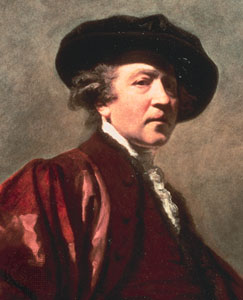
reynolds - self-portrait detail - britannica

Self-portrait of Sir Joshua Reynolds

c2013 Jane Austen in Vermont
Austen Literary History & Criticism · Books · Jane Austen · Jane Austen Illustrators · Jane Austen Popular Culture · Publishing History

200 Years of Pride and Prejudice Covers

P&P cover - movie - barchasP&P penquin cover


Professor Janine Barchas has an article in this weekend’s New York Times on covers for Pride and Prejudice over the past 200  years:

The 200-Year Jane Austen Book Club

Let’s just be honest about our superficiality. Even when it comes to the high-­minded business of literature, people do judge books by their covers. Perhaps that’s why Amazon produces glossy mock “covers” for its disembodied e-books, to be inspected and decided upon alongside the traditional print offerings.

Book covers may be especially important when it comes to the classics. After all, many of us have a general sense of, if not a thorough familiarity with, the contents within. Perhaps more than anything else, these covers show what matters to prospective buyers. Two centuries of Jane Austen’s “Pride and Prejudice” are particularly revealing about the novel’s broad and sustained popular reach….

Continue reading…

– the article links to a slide-show of twelve covers here – this will be in the print edition on Sunday.

P&P peacock barchasP&P peacock barchas P&P cover - barchas 1

Austen Literary History & Criticism · Books · Jane Austen

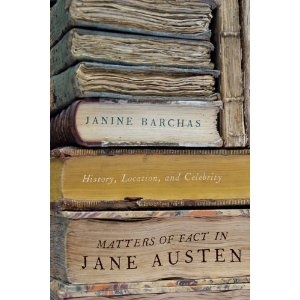
Here is your chance to win Janine Barchas’s Matters of Fact in Jane Austen!

brendanccoyne's avatarJohns Hopkins University Press Blog

Okay Austen-philes, now that the 2012 JASNA (that’s the Jane Austen Society of America to the uninitiated) is through and your lives have returned to some semblance of normalcy, here’s your chance to test your knowledge of Jane Austen and her times.

Allowing for variant spellings, the real-world occupants at Baddesley Clinton share with Austen’s protagonists in Sense and Sensibility so prominent a name (first and last) that it remains emblazoned upon the stained-glass windows of their medieval manor.  What is this shared name?

We’ll send a copy of Janine Barchas’s Matters of Fact in Jane Austen to the first two people to correctly answer this question in comments to this post.

(Hint: Savvy readers might pick up on the answer simply by reading Professor Barchas’s recent post to our blog. A close look at the illustrations in her book also gives away the answer.)

Have at it!

View original post

Austen Literary History & Criticism · Author Interviews · Books · Collecting Jane Austen · Great Britain - History · Jane Austen · Jane Austen Circle · Regency England

Guest Post: Janine Barchas ~ A Janecation in Yorkshire? ~ Jane Austen’s Real Wentworths

Gentle Readers:  I welcome today, Janine Barchas, associate professor of English at the University of Texas, Austin, where she teaches, perfectly situated you might say, Austen in Austin. She has published a number of scholarly articles on Jane Austen and the just released Matters of Fact in Jane Austen: History, Location and Celebrity (Johns Hopkins UP, 2012).  She has graciously offered to share a bit of one of the tales expounded on in her book, the Wentworth family of Yorkshire.  I think you will want to know more about her very interesting findings – I highly recommend the book! – and see below for a contest offering from the publisher that starts this coming Friday October 26 [see the blog here: http://jhupressblog.com/ ] – and please comment or ask Janine a question!

***********************

A Janecation in Yorkshire?  Jane Austen’s Real Wentworths

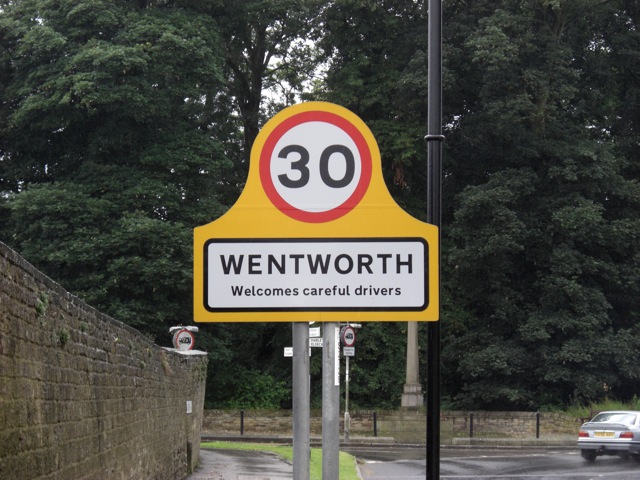
Although South Yorkshire may seem an unlikely destination for a Janeite pilgrim, the research for my book Matters of Fact in Jane Austen: history, location, and celebrity (Johns Hopkins UP, 2012) led me to two breathtaking country estates with histories that connect to Austen’s fictions: Wentworth Castle and Wentworth Woodhouse.

I was not tracing Austen’s physical steps, but following some of her leading names—particularly Wentworth, Woodhouse, Fitzwilliam, Darcy, Watson, and Vernon.  When Austen selected these surnames for her fictional protagonists, they hung on the real-world family trees of these two neighboring Yorkshire estates.  Not unlike the Kennedy family in our own era, the Wentworth clan consisted of high-profile politicians and celebrities—with newspapers assiduously tracking all sightings and London shops selling reproductions of family portraits as cheap paper pinups.  Jane Austen, too, seems to have been keenly aware of Wentworth celebrity.

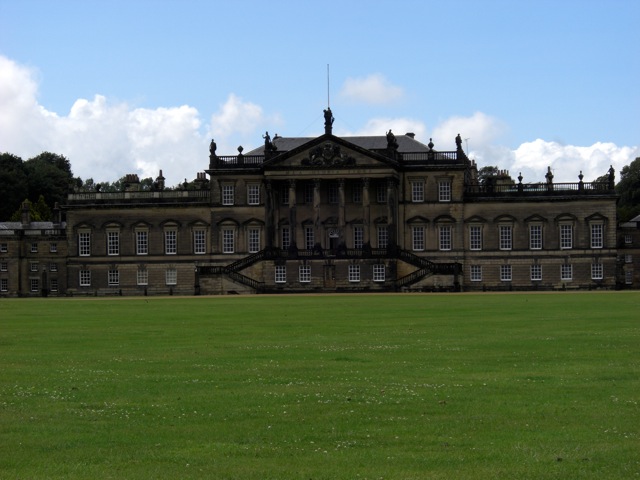
Wentworth Woodhouse

Even a short summary of the history of Wentworth Woodhouse can make an Austen fan sit up with the surprise of recognition.  After Robert Wentworth married a rich heiress named Emma Wodehouse, their Yorkshire family so prospered that in 1611 its senior line achieved a baronetcy, just as the owner’s sister married the heir of the wealthy D’Arcy family.  The eldest son of that same first baronet was the hapless Thomas Wentworth, first Earl of Strafford and martyr to the royalist cause.  With the Restoration, the estate was returned to Strafford’s eldest son, William Wentworth.  But when William died without issue in 1695, it transferred to the children of his sister, Anne Wentworth, wife to the head of the Watson family.  When in 1751, Charles Watson, heir to these princely estates, succeeded his father as the second Marquess of Rockingham, he became one of the wealthiest peers in England.  Charles Watson Wentworth, having added his mother’s maiden name to his own, was twice elected Prime Minister of England.  But he died unexpectedly and childless in 1782, just after his second election at age 52.  Thus, when Austen was a mere girl, the combined fortunes of the Woodhouses, Wentworths, and Watsons transferred to their next of kin, the Fitzwilliams.

Wentworth Castle
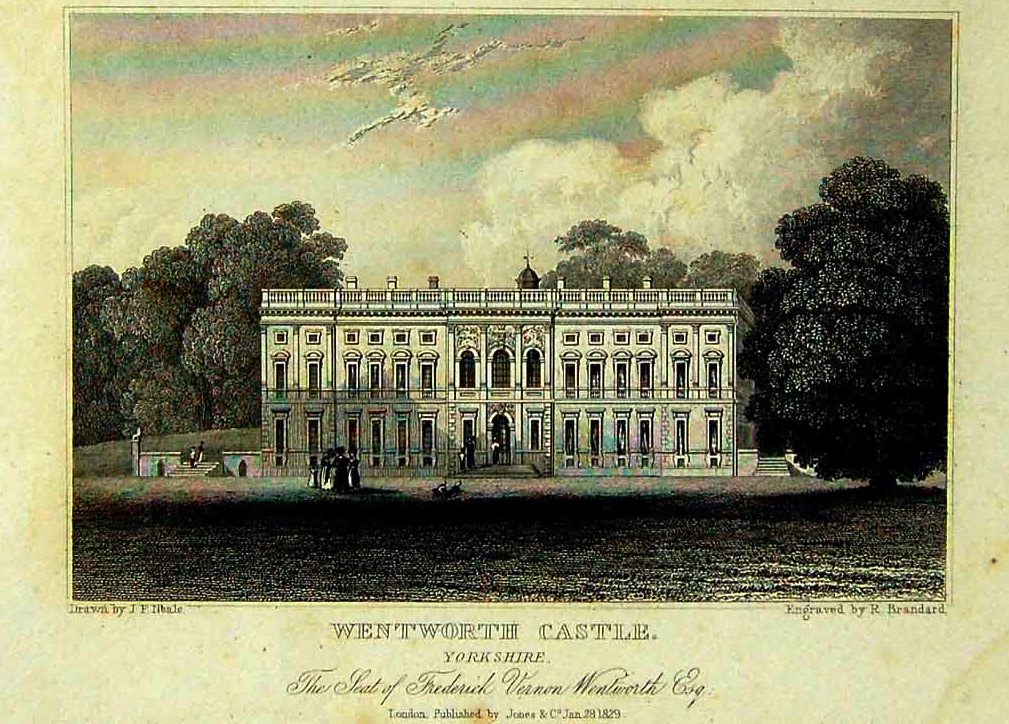
Wentworth Castle, 1829

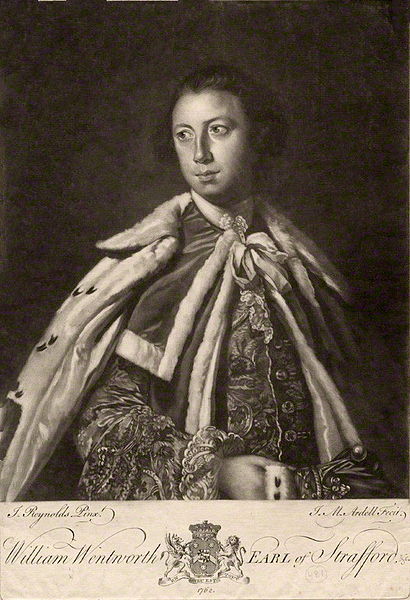
By then, a family feud between Wentworth cousins (Tory and Whig) had resulted in Wentworth Castle.  Even the name of the rival estate deliberately taunted the mere “House” six miles away.  Major renovations to Wentworth Castle were duly answered with elaborate improvements to nearby Wentworth Woodhouse, shaping English garden design through one family’s political rivalry.  The competitive landscaping at these neighboring estates, the bulk of which took place between 1710 and 1790, was a prolonged endeavor that occurred on a grand scale and in the national spotlight.  It was in 1791, when Austen was in her teens, that the Wentworth Castle estate and titles were inherited by an obscure gentleman from Dorset named (I’m not making this up!) Frederick Wentworth, making him the third and last Earl of Strafford.  When Austen reached her late 20s, Wentworth Castle became the property of young Frederick Vernon after another heated Wentworth-family dispute. The historical circumstances surrounding this contested transfer of Wentworth wealth resemble those in Lady Susan, which features at least two characters named Frederic Vernon as well as a dispute over a family castle.

William Wentworth – 2nd Earl of Strafford

[Image from wikipedia]

After years of wily namedropping, and perhaps because her contemporary readers would have instantly connected the hero of Persuasion with this glamorous Wentworth family, Austen disclaims in her final novel.  She has the sycophantic Sir Walter Elliot sneeringly dismiss any link between Capt. Frederick Wentworth, the story’s self-made naval officer, and the highborn Wentworths from Yorkshire, who held titles such as the Earl of Strafford: “Mr. Wentworth was nobody, I remember, quite unconnected; nothing to do with the Strafford family.”  By placing the requisite disclaimer in the mouth of Sir Walter, Austen keeps her own tongue firmly in her cheek.  Sir Walter is notoriously unreliable—a narcissistic fop who lacks judgment.  Despite, or perhaps because of, Sir Walter’s dismissal, the name of Frederick Wentworth so flagrantly invites contemporary associations that the upending of those expectations (a landless sailor named after one of England’s most famous landowning families?) becomes part of the story’s piquancy and contemporary appeal.

Anne Wentworth, Countess of Strafford – by Joshua Reynolds c1745

[Image from wikipedia]

Today, both properties are being renovated and have opened their gardens to visitors.  Privately owned Wentworth Woodhouse has plans for a spa and hotel by 2015, while the Wentworth Castle Trust (the house is a teacher training college) has already restored the castle folly for which the property is known.  In both cases, the grounds and vistas are as stunning as eighteenth-century and regency guidebooks record.  While enjoying the picturesque herds of deer that, according to the locals, have roamed there since 1066, I could not help smiling at how the popularity of Austen’s fictional characters—especially Fitzwilliam Darcy and Frederick Wentworth—have succeeded in eclipsing their historical namesakes, casting a Janeite shadow over the once-glittering owners of these estates.

Wentworth Castle folly
Wentworth Castle Estate
Wentworth Woodhouse estate

If you’re an Austen enthusiast who has already been to Bath, Lyme Regis, and Chawton, then consider a visit to Wentworth Woodhouse and Wentworth Castle.  Meanwhile, I hope that my book takes you partway there.

The Fitzwilliam Arms in nearby Rotherham

***************************

For a few photos as well as more information about these and other glamorous places alluded to by Austen, see the JHU Press Blog post by Janine “Jane Austen on Location”: http://jhupressblog.com/2012/09/12/jane-austen-on-location/

Johns Hopkins UP is about to run a small contest that would give away copies of my book to the first few who answer correctly a historical question with an Austen twist.  Look for the question on the JHU Press Blog, starting on 26 October.

****************

About the author: Janine Barchas is the author of Graphic Design, Print Culture, and the Eighteenth-Century Novel (Cambridge UP, 2003), the editor of The Annotations in Lady Bradshaigh’s Copy of Clarissa (English Literary Studies, U of Victoria, 1998), and numerous scholarly works on Austen (search her name on the Jasna.org website here). Her research interests include eighteenth-century literature and culture, the British novel, book history, textual studies, Jane Austen, and early fiction by women. At the JASNA 2012 AGM, she spoke on “Austen Between the Covers: A Brief History of Book Cover Art”, and will be one of the plenary speakers at the JASNA 2013 AGM in Minneapolis, the AGM celebrating 200 years of Pride and Prejudice.

Further Reading:

Wentworth Castle:

Wentworth Woodhouse:

And note that The Country House Revealed is a six part BBC series first aired on BBC Two in May 2011 in which British architectural historian Dan Cruickshank visits six houses never before open to public view, and examines the lives of the families who lived there. Wentworth Woodhouse s featured in Episode 4.

All photographs by Janine Barchas.

Please leave any comments or questions for Janine below – and don’t forget to check out the JHU Press blog on October 26, and see if you can answer the Jane Austen question!

c2012 Jane Austen in Vermont
Austen Literary History & Criticism · Book reviews · Books · Collecting Jane Austen · Jane Austen · Jane Austen Societies · JASNA · Literature · Regency England

The JASNA 2012 AGM in Brooklyn ~ Part I: My Jane Austen Book Stash

I have not gone missing, though it may seem that indeed I have fallen off the planet – not quite so dramatic though it does almost feel like that – we have sold our house and amidst the joys of house packing, packing up my book business – all gone to storage as we do not have a place to call home – concerns about my son’s surgery, a September 23rd JASNA-Vermont event of grandiose proportions [three speakers, a fabulous afternoon!], and then off to the JASNA AGM in Brooklyn – a lovely respite into the late 18th century from which I am still fighting re-entry!  I was hoping to post about the AGM right away and fear I am slowly forgetting about all the fabulous events of Jane Austen Land in Brooklyn – but I shall start today with a booklist of new purchases – the Emporium filled with goodies as usual – and though the lack of a home and the memory of packing all those books forced me into more conservative behavior at the book stalls, I confess that book buying is my only true vice and I could not completely resist, so here are the latest additions to my Jane Austen library:!

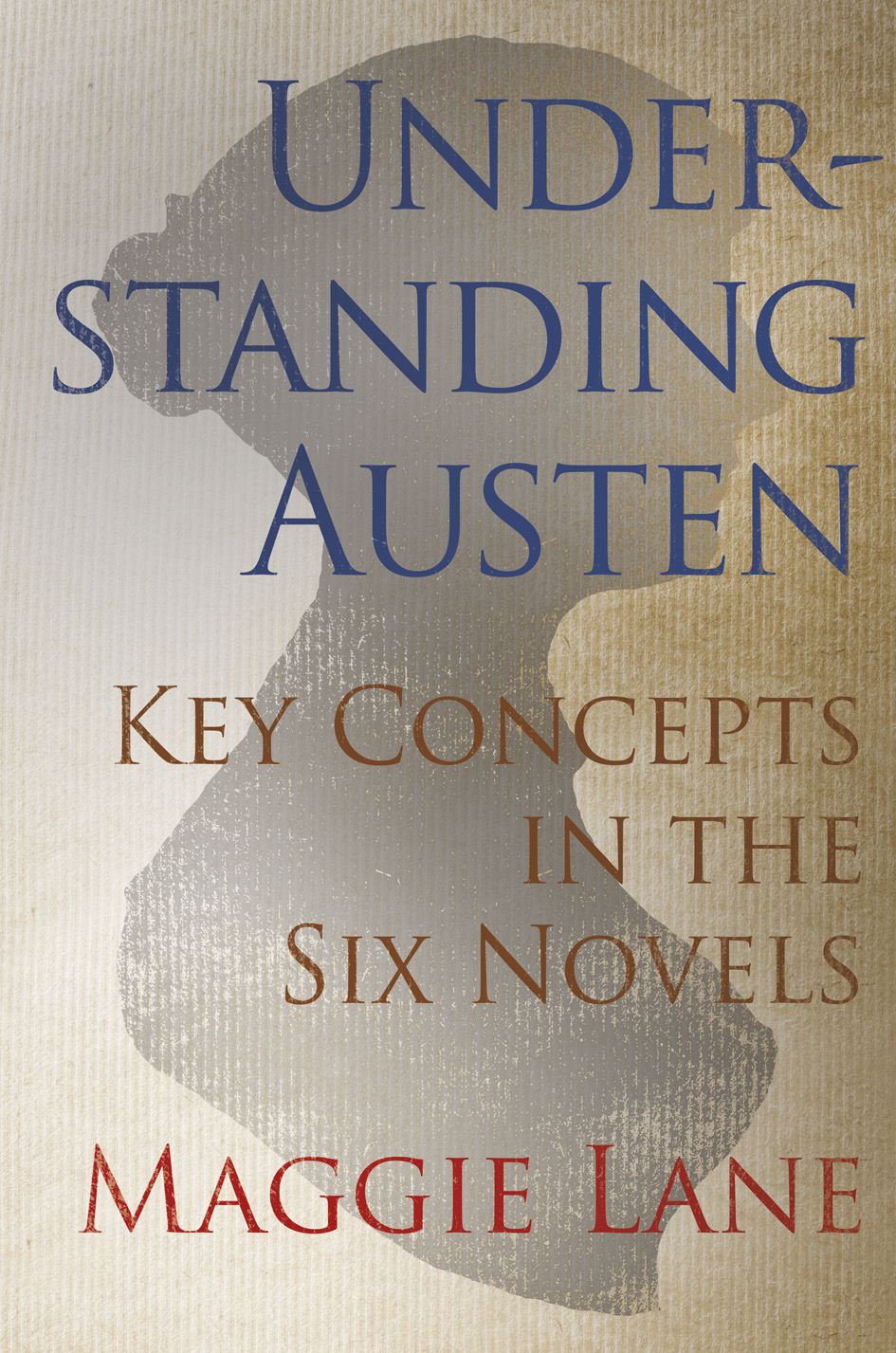
Maggie Lane. Understanding Austen: Key Concepts in the Six Novels. London: Robert Hale, 2012.  ISBN: 978-0-7090-9078-6

Lane has written a number of Austen-related texts and this book will be a most welcome addition to my collection of her other works. Her essays in Jane Austen’s Regency World magazine are always insightful, often just focusing on a single term and how Austen employs it [for example in the Mar / April 2011 issue, she takes on Austen’s concept of “home”] – in this book, Lane delineates Austen’s 18th century language, clarifying for the reader the meanings of such words as “elegance” and “openness” to “candour” and “gentility” and “mind” and “spirit” – a lively entry into Austen’s world that adds to our understanding and appreciation of what she was really saying to her readers…

Devoney Looser. British Women Writers and the Writing of History, 1670-1820.  Baltimore: Johns Hopkins UP, 2000. ISBN: 0-8018-6448-8

Ashamed to say I do not have this in my collection – so happy to remedy that with this discussion of Lady Hutchinson, Lady Mary Wortley Montagu, Charlotte Lennox, Catharine Macaulay, Hester Lynch Piozzi, and Jane Austen and their historically-informed writings… perfect winter reading…

James Fordyce. Sermons to Young Women. Introduction by Susan Allen Ford. Chawton: Chawton House Press, 2012.
ISBN: 978-1-907254-07-9

One of the best-selling conduct books of Jane Austen’s day, Fordyce’s Sermons to Young Women we mostly know as the reading material of the odious Mr. Collins, the words of which Lydia Bennet patently ignored… This is a paperback facsimile of the 10th edition from the Chawton House Library collection, and necessary reading material if one is to understand the world that Jane Austen was writing in – we might laugh at some of the directives for female behavior now and think we indeed have “come a long way baby” – but read it we must to truly “get” Austen… purchase supports the Chawton House Library, and as Susan Allen Ford, JASNA’s intrepid Persuasions editor, has written the introduction, one should just add this to their shelves without further ado…

******************

Janine Barchas. Matters of Fact in Jane Austen: History, Location, and Celebrity. Baltimore: Johns Hopkins UP, 2012.  ISBN: 978-1-4214-0640-4

“Janine Barchas makes the bold assertion that Jane Austen’s novels allude to actual high-profile politicians and contemporary celebrities as well as to famous historical figures and landed estates…the first scholar to conduct extensive research into the names and locations in Austen’s fiction by taking full advantage of the explosion of archival materials now available online.” [from the jacket]

I had the pleasure of introducing Professor Barchas at her AGM presentation on “Jane Austen Between the Covers: A Brief History of Book Cover Art.” She took us through the last 200 years of marketing Jane Austen through the physical aspect of the book, a long-term project she is working on to create a visual bibliography of Austen’s works.  Barchas has given a number of breakout sessions at the past AGMs, always incorporating the graphic and visual aspects of Austen’s world and tying them to her fiction.  I am most anxious to read her newest work, and can heartily recommend it…

Claudia L. Johnson. Jane Austen’s Cults and Cultures Chicago: U Chicago P, 2012.  ISBN: 978-0-226-40203-1

Also another must-have for your Austen collection… Johnson “shows us how Jane Austen became ‘Jane Austen,’ an exalted yet seemingly ordinary figure… [by passing] through the four critical phases of Austen’s reception: the Victorian era, the First and Second World Wars, and the establishment of the Austen House and Museum in 1949…” [from the jacket]

Elizabeth Aldrich. From the Ballroom to Hell: Grace and Folly in Nineteenth-Century Dance Evanston: Northwester UP, 1991.  ISBN: 0-8101-0913-1

This book went into a second printing in 2000, so very happy to pick it up. It offers up “a collection of over 100 little-known excerpts from dance, etiquette, beauty , and fashion manuals from roughly 1800-1890, to include step-by-step instructions for performing the various dances, as well as musical scores, costume patterns,  and the proper way to hold one’s posture, fork, gloves, and fan…”

Hazel Jones and Maggie Lane. Celebrating Pride and Prejudice: 200 Years of Jane Austen’s Darling Child.  Bath: Lansdown Media, 2012.  ISBN: 978-0-9573570-0-6

A compact, illustration-filled tribute to P&P, as Jones and Lane “investigate the reasons for its popularity and describe the extraordinary history, reception and afterlife of the phenomenon that is Pride and Prejudice.” [from the back cover].  I was fortunate enough to be purchasing this from publisher Tim Bullamore just as Maggie Lane was at the Jane Austen’s Regency World magazine table – so having it signed by both authors is an additional treat! – and Colin Firth graces the cover, so who could resist!

Sarah Emsley, ed. Jane Austen and the North Atlantic: Essays from the 2005 Jane Austen Society Conference in Halifax, Nova Scotia, Canada Jane Austen Society, 2006. ISBN: 0-9538174-7-4

I had wanted to go to this conference but was alas! unable to, so happy to pick up this collection of four essays – have meant to since 2006 when it was first published…

The Jane Austen Companion to Love. Naperville: Sourcebooks, 2009.  ISBN:  978-1-4022-4016-4

This was a lovely gift from Sourcebooks in our AGM bag of goodies…. Filled with quotes from the novels and illustrations by the two Brock brothers – a perfect bedside book…and gift for your favorite Austen-loving friend.

***********************

Several books highlighted at the AGM I already have, so shall give them a mention here as well:

Ava Farmer, a.k.a. Sandy Lerner. Second Impressions.  Chawton House Press, 2011. ISBN: 978-1-61364-750-9

Ms. Lerner was at the AGM as a plenary speaker – her talk “Money Now and Then: Has Anything Changed?” – was an interesting analysis of whether Jane Austen was knowledgeable about the issue of money in her novels – will write more about this in another post – but want to mention her book here – she will be coming to Vermont in December to speak at our annual birthday Tea! – and her book will be available for sale, all profits to support Chawton House Library. You can visit the book’s website here: http://www.secondimpressions.us/

Susannah Fullerton. A Dance with Jane Austen: How a Novelist and her Characters went to the Ball.  London: Frances Lincoln, 2012.  ISBN:  978-0-7112-3245-7

A delight to meet and chat with Susannah, the president of JASA, and author also of Jane Austen and Crime, one of my favorite books on Austen.  Here Susannah takes on the Regency ballroom, filled with beautiful contemporary illustrations, and everything you wanted to know about Dance!

Juliette Wells. Everybody’s Jane: Austen in the Popular Imagination New York: Continuum, 2011.  ISBN:  9781441145543

Nearly done with this one – and another must-have for your Austen library: “An investigation of Jane Austen’s popular significance today – why Austen matters to readers, how they make use of her novels, what they gain from visiting places associated with her, and why they create works of fiction and nonfiction inspired by her novels and life.” [from the back cover]

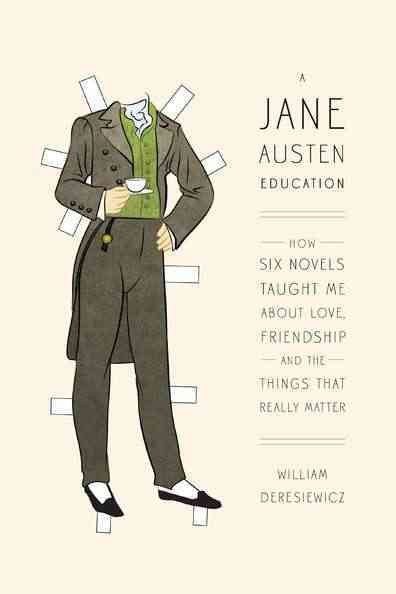
William Deresiewicz. A Jane Austen Education: How Six Novels Taught Me About Love, Friendship, and the Things That Really Matter.  New York: Penguin, 2011.

Deresiewicz spoke the evening of the Ball on “Becoming a Hero: Being a Man in Austen’s World” – his book is a delightful journey through the six novels and how his reading of them made him a better man…

*************************

Used Books? – my real downfall, but I only bought two items from the used bookseller Traveler’s Tales, where I usually drop a bit more blunt – I didn’t get to the booth until a few days after the Emporium opened and most items of interest were already gone… but I did find this:

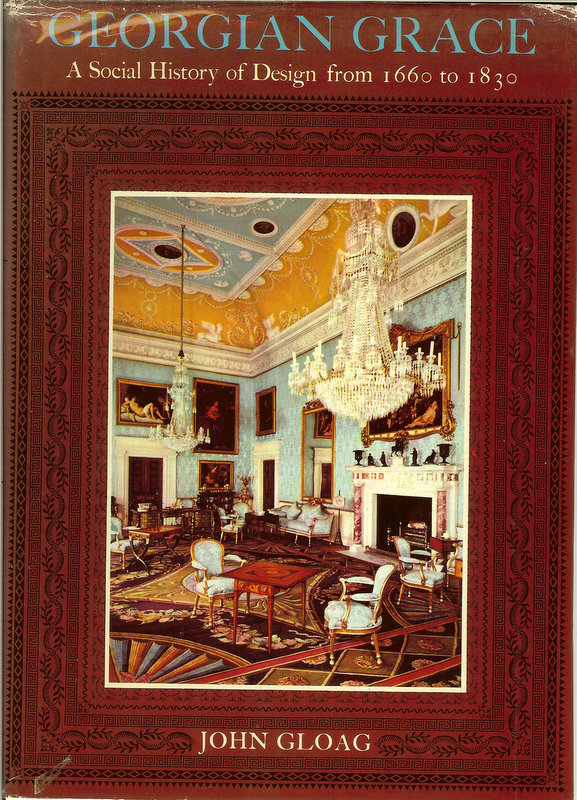
John Gloag. Georgian Grace: A Social History of Design from 1600 to 1830. London: Spring Books, 1967, c1956. – a must have for anyone interested in the architecture and decorative arts of the period – who can resist a book with chapters such as “‘A Dish of Tea’” and “Pray be seated” and “‘The toilet stands dispay’d’” and the like!

And this, a Rowlandson print – you must visit the Jane Austen’s World blog where Vic [my delightful roommate!] shares her purchase of FOUR of these Rowlandson prints!

Here is my one and only: “The Harvest Home” by Thomas Rowlandson (1821)

****************

…and last but not least, my favorite annual purchase at the AGMs is the Wisconsin Region’s “A Year with Jane Austen” Calender, this for 2013 a celebration of Pride and Prejudice: you can order your own copy here: http://www.jasna.org/merchandise/calendar-2013.html [I purchased a number to sell at our JASNA-Vermont Austen Boutique…]

******************

More to come about the AGM so stay tuned!

c2012 Jane Austen in Vermont
Austen Literary History & Criticism

A First-Timer’s AGM

Upon arrival at the AGM Registration desk you are *marked* for the remainder of the conference: Pale blue ribbons on the name badges around your necks denote the First-Time AGM Attendees.
AGM 2009 bannerA bit too late to join in the prefunction Welcome Reception, my first official AGM engagement was the “conversation” between Elisabeth Lenckos and actress Elizabeth Garvie, better know to her Austen fans as Elizabeth Bennet (1980 BBC production). A rather long and narrow room meant those off to one side got a bit of a crook in our necks, but how thrilling to be all collected together to talk about what has to be my favorite production of P&P. The great pity was that no time was reserved for questions from the audience.

Dr. Lenckos’ questions were not especially thought-provoking, but they did bring out small tidbits about Ms. Garvie’s life in the nearly thirty years since this production, as well as some fascinating insights into  TV production of the period – sans steady cams and extensive on-location filming. Garvie credited being in “the right place at the right time” for her being cast as Elizabeth, though in her finely-drawn portrait her audience recognizes that “right time” might have gotten her in the door, while a rightness for the role got her before the cameras.

A couple memorable remembrances: During the first three weeks of their April to September filming schedule, all exterior shots were filmed — this included (on the third day!) the walk taken with Darcy after Elizabeth had accepted him!  Otherwise, they filmed episode by episode – Garvie likened the experience to “episodes shot like little plays.” She commented on the greater immediacy now possible with the smaller cameras. Then she related that while seated on the log to read Darcy’s letter, the log wobbled and over she fell!

The talk began late and ended early…

Friday packed in a full day, starting with a 10 am call to Tea: Mim Enck talking about tea, that is. She showcased some wonderful photographs of the women tea-pickers who work the slopes in tea-regions half a world away. From the audience comments and questions (yes, we did get to ask questions here), most of her information about the growing, picking, processing and drinking of tea was new to many. Guess they don’t order from my favorite loose-leaf tea company… One useful comment made: do a tea tasting with same tea but different water.

Spotted an interestingly-titled book in the hands of an audience member nearby: A History of Jane Austen’s Family. Wonder if there’s anything on Edward and Emma??

The next hour brought Louise West, of the Jane Austen House Museum (aka Chawton Cottage) and her discussion of the museum’s obtaining funding through the UK National Lottery Fund for its very recent house ‘make over’. Some background history was provided through pictures for those of us who don’t recognize all the names and faces that made Chawton Cottage what it was and has become – as well as the close ties between the ‘Cottage’ and the ‘House’ (Chawton House Library). Her discussion of bringing Austen and Austen’s home to young students and those who might otherwise be unable to afford a few hours there was very thought-provoking for those of us hoping to do the same sorts of outreach – without such a museum! – with our chapter organizations.

News included that the Austen quilt had been lent to an exhibition of quilts being held in Winchester! Great to see a photograph, too, of R.W.  Chapman (his are the editions I use when writing). Visit the website – all new!

Lunched at POSITANO with Janeites Deb and Carol; and got to meet the woman who is so good at sending membership information every month and on demand: Bobbie Gay. Nice to put a face to a name.

After lunch, 1:30 to be precise, the 2009 AGM was officially ‘opened’. The AGM coordinator, Elizabeth Jane Steele (how apropos her name) was our master of ceremonies at all of these mini-events. How did she manage to be everywhere? Though, obviously, no one does such coordinating singlehandedly and Eastern PA had a great pack of volunteers.

Jan Fergus, whom I had met in Montreal in the summer (giving an early version of this plenary speech), spoke on “‘Rivalry, Treacherybetween Sisters!’: Tensions between Brothers and Sisters in Austen’s Novels”. Poor Jan had injuried herself only a few weeks earlier, so she had to deliver her talk sitting down. We wish her a speedy recovery…

Break-out Sessions began at 3:15 – my session was Kathleen Anderson‘s “‘A Most Beloved Sister: The Influence of Sisterly Love on Romantic Relationships in Austen’s Novels”.

Little did I realize at the time, but the next speaker sat in the audience; they teach at the same Florida university. This was the 4:30 break-out session by Susan Jones on “‘My Brother was an Only Child”: Onlies and Lonelies in Jane Austen’s World of Brotherly Love”. As an only child, how could I not attend such a lecture??? Though the more informative proved to be Jones’ thoughts on the ‘lonelies’ in Austen (ie, Mary Bennet).

After a long afternoon on some rather uncomfortable chairs and hours of being talked at and lectured, I nipped back to the hotel room for some rest and hopes of less-intense headache.

Saturday brought a brighter day: it closed with the most interesting lecture of the entire AGM.

Carol and I joined AGMers for a lovely continental breakfast at the Sheraton Society Hill (the conference hotel), meeting JASNA members from as far away as California as well as closer-to-home Boston. One enthusiastic Boston member hadn’t read my last Persuasions article, but was absolutely thrilled that a non-professor actually gives Austen-related lectures and she just loved the idea of my combining Jane Austen with Abigail Adams. We all need a little encouragement from time to time…

Maggie Lane’s plenary talk opened today events (9:30). I had hoped on finding her Austens through Five Generations book at the Boutique – but nope… And more on books later.

Maggie Lane‘s “Brothers of the More Famous Jane: the Literary Aspirations, Achievements and Influence of James and Henry Austen” was right up my alley. In my research, these two brothers are on the fringe: James being the father of James-Edward Austen (my Emma’s eventual husband) and Henry having his stint as a banker — though, in conversation with Maggie Lane after her talk (I got her autograph!), she had never heard of the banking firm Goslings and Sharpe (but she did give me the name of someone who’s looked into Henry’s life as banker).

When the Break-out sessions began at 11:00 I had a good seat for one of the best presentations, “The Bingley Sisters Advise their Brother Charles” – the sisters played by sisters-in-law Liz Philosophos Cooper and Molly Philosophos. Although instructive to the audience, in words and PowerPoint pictures, I must confess that their talk’s title made me envision a different lecture. However, as a performance piece, with pointed humor pulled from what must be their favorite P&P (the 1995 Ehle/Firth production), simply brimming with information on Regency life and delightful visuals, the Bingleys provided a highpoint for an entertaining lecture.

The after lunch events began promptly at 1:00 – Lisa Brown‘s entertaining, enlightening and informative “Dressing Mr Darcy”, a fashion demonstration. Saying that she usually passed around the articles of clothing to an audience more in the range of 15 people, Ms Brown solved her problem by finding volunteer models. Oh the howls that came from the audience when they were told they ‘mustn’t touch the models’! One wished the runway was less “down the middle” (in such a large crowd it was difficult to see), but a few times the models took it upon themselves to stroll down side aisles, thereby giving those on the sides a chance to see what was being discussed – whether it was frills on shirts or the heft of an all-linen coat. The most enthusiastic model – the only Miss Darcy in the group – was simply a delight, and gave me the idea to dress in male clothing should I ever wish to go in costume (how much more comfortable!). BTW, Lisa, I will sooner or later get to emailing you about your handouts, as well as that letter reference to a “pudding”…

The next plenary speaker, Ruth Perry on “Brotherly Love”, followed on the heels of this memorable demonstration. Her concept focussed on Consanguinal versus Conjugal family, and how the trend changed more and more towards the conjugal over the nineteenth century. Quite useful for my research.

The 3 o’clock hour brought the last Break-out, and my session had been originally called “‘Brother and sister! No, indeed!’ From Friendship to Courtship in the Novels of Jane Austen”. Nora Stovel, however, informed her audience that the talk had taken a bit of a turn; while the opening Emma quote still retained its place in the title, the rest of it changed to “From Siblings to Suitors” and looked at pseudo-siblings (ie, Edmund) or paternalistic men (Darcy, Knightly) who end by courting. I had hoped for some insight on why Charles Smith (Emma’s brother) might have turned to a woman he’d grown up with after the death of his first wife. Alas… when late changes are made… the audience is the last to know.

I then made a quick dash across the hotel to the actual Annual General Meeting – a far smaller crowd! And at only a half-an-hour, business was quickly gotten through: new officers were named, including incoming President Iris Lutz — who was on hand as VP for Regions when our Vermont Chapter was first forming! It will be a pleasure to welcome her as President next year. Americans were prompted booted out so the Canadians could have their meeting; I darted back to my hotel room to change for the banquet – thereby missing the Author’s book signing. BUT: I had my signatures…

At Maggie Lane’s plenary talk, she was greeted by Freydis Welland – daughter of Joan Austen-Leigh and one of the movers behind the book A Life in the Country which shows off the silhouettes Edward Austen-Leigh cut for his young children in the 1830s. I had missed talking to Mrs Welland in obtaining Ms Lane’s signature in this book – but guess who showed up as a guest in the audience for the Bingley sisters!? I made bold and introduced myself afterwards; Mrs Welland was kindness itself – and even said she may have illustrations for my next article (though it may be harder to illustrate an article based on Emma’s cousins Lord and Lady Compton…unless she had more “shades” in her collection than I dare hope!). Likewise, on Friday I had introduced myself to Susan Allen Ford (after her talk, which I had not been able to attend); she is the hard-working editor of Persuasions, and is very complimentary of my work–especially “Derbyshires Corresponding,” which appeared in the last issue and appears online at JASNA.org.

At the banquet I sat between Carol and a woman from close-by PA. The volume of chatter in a room with 600 persons meant I only got a few words with the Southern woman sitting beside Carol and none at all really with those a mile away at the other half of the table! A bit of a squeeze (I suspect tables were more for parties of six?), but a delicious vegetarian ravioli. Tea came too late for me to want to imbibe and risk being awake all night. (My hotel room nestled between two highways and a major bridge to New Jersey meant I got about as much sleep as I manage at home being next to a highway and way too close to a ‘new and improved’ airport…) And wouldn’t you have thought a nice cup of tea just the thing at a Jane Austen convention – yet all participants were ever offered in the Break-out sessions was ice water.

After watching the promenade of Costumed participants (though I’m sure a few had on street clothes, just like me), I got a good seat for what turned out to be the most enlightening – and original – talk of the entire AGM: Janine Barchas on “The Sisterly Art of Painting and Jane Austen”. She opened with a litany of names – Wentworths, Elliots, etc. who had connections one with another in REAL life; she’s obviously been performing the feats of a true genealogist in tracing these connections. Needless to say, she had my full attention. But when she brought up names of artists – for we all know the well-conceived idea that in Mrs Reynolds (Pemberley’s housekeeper) Austen nodded at Sir Joshua Reynolds – who perhaps also appear in the naming of minor and not so minor characters, I was astonished: such an avenue of original, thought-provoking research! Janine is another one I promised to email, for Reynolds too portrayed portraits within portraits, as in his picture of Lady Cunliffe who wears her husband’s portrait on her wrist.

Needless to say, after this stimulation, even without cups of tea, I was wide awake half the night… As well I was looking foward to tomorrow’s Boutique and the books I had scoped out earlier.

Sunday opened with a quick breakfast and then off to the Regional Coordinators’ meeting. This was a stimulating session – meeting some who were old hands at being their region’s RC, while others were quite new to the position. Again, a wish for more time… An AGM goes so quickly (though some of the talks were a bit over long, especially when you sit on the same stackable chairs for days on end).

Breakfast brought a hello, come join us from Peter Sabor and his wife. I had first met Peter over email – he was in Surrey not far from where the Goslings lived – then met him in person at last December’s Jane Austen Birthday celebration in Montreal (he was their guest speaker).

The last speaker of the 2009 AGM, John Mullen, closed with his thoughts on “Sisterly Chat” – which brought up the remarkable ‘find’ that a Basingstoke furniture company had sold the Austens two beds, ie, for Cassandra and Jane; what things turn up in historical records, huh?!

The ‘promotions’, as announced in the program, proved to be promoting the next couple AGM regions with ‘invitations’ for the audience to come and join them. Poor Portland, Ore. had a hard act to follow (although they host the next, 2010, AGM on Northanger Abbey) when Fort Worth brought out two well-spoken gents and two musical cowboys and offered up Sense and Sensibility‘s 200th anniversary AGM. By the way, it was announced at the General Meeting that Pride and Prejudice‘s 200th anniversary (the 2013 AGM) was awarded to Minneapolis!

And I leave the AGM (and all this typing…) with their song, which still has my toes tapping. The tune is “Home on the Range” but the piece is entitled “Homeless on the Page“:


Oh give us a home,
Where Marianne roams,
And Colonel Brandon can visit all day
Where the rent is quite low,
And Fanny won’t go,
And London is not far away
(chorus)

Norland was entailed away,
Then Willoughby left for Miss Gray,
Lucy Steele gets a spouse,
But she’s still quite a louse,
Elinor is pragmatic all day
(chorus)

Come to Fort Worth and see,
A toast to Sense and Sensibility
There’s museums galore,
Teas, gardens, and tours,
And you can win the Texas Hold ’em Trophy

So in two thousand eleven,
Come to Texas, it’s heaven,
We will talk of Jane Austen all day

Learn the Two Step and Glide,
There’s a bull you can ride,
Or just chit-chat with Deirdre LeFaye

Oh give us a home on the range!!!!!!!

Singing cowboys: Leo Sherlock (Woody – Hank Dashwood) and Brian Keeler ( Willy – Johnny Willoughby); hear Leo’s band Mile 77 at  www.myspace.com/mileseventy7)
Lyrics by: Uncle Lenny, Craig, Cheryl, and Kathy 

[Posted by Kelly]
Books · Jane Austen · News · Rare Books · Regency England · Social Life & Customs

Hot off the Press!

persuasions-cover30Yesterday, a FedEx box left on my stoop prior to lunch yielded up a BIG surprise: my contributor’s copies of JASNA’s annual journal PERSUASIONS, vol. 30 (2008). A brief email to Susan Allen Ford, the journal editor, to congratulate her on an ‘awesome’ volume, was answered by an email which said she hadn’t received her copies yet! Vermont’s good fortune (and mine) to be located next door to New Hampshire — from where the packages seem to have originated…

The first article I read was Edith Lank‘s telling of her annotated Brabourne edition of Austen letters. One curious thing: how could the books languish EIGHT years on her shelves, unopened?! A used book never passes my threshold without a thorough perusal! There is more on Miss Lank’s edition in Persuasions-Online.

Joan Klingel Ray offers up an interesting look at Victorian era perceptions of Austen, though I must comment that to Edward — a nephew who was in his late teens when his aunt died — Jane would surely have remained, over the 50 ensuing years, his “dear Aunt Jane”. Joan and I take differently, I think, to James-Edward Austen-Leigh’s Memoir of Jane Austen. Joan knows the descendents; but I’ve come to know Edward and Emma through their own words! So: a discussion to look forward to when Joan Klingel Ray visits Vermont in September (see our EVENTS page).

I would be telling a lie if I didn’t confess that the very first article I checked out was my own… Oh, the pictures look lovely! (They come via the collection of The British Museum.) I had been so worried after seeing the proofs. Susan Allen Ford has been very positive in her reaction (the anonymous reader, too) to this article, in which I examine an Emma Austen 1833 trip to Derbyshire in the steps of Elizabeth Bennet. The article was only improved by their wishes for a lengthier piece and some illustrations.

The Chicago AGM’s theme of Austen’s legacy brings up many fascinating ideas: Jocelyn Harris invokes Dr. Johnson; Deb will surely be interested in turning straightaway to Janine Barchas‘ article on Gaskell’s North & South (Deb highly recommends the new TV series, which she’s been watching) — but what will she think of the author’s assumption that it is a veiled recreation of P&P??? Sarah Parry‘s article on “The Pemberley Effect: Austen’s Legacy to the Historic House Industry” is surely next on my list.

A special ‘legacy’: the writing desk that once belonged to Austen, has been in the family, and now has been donated to The British Library. Freydis Welland‘s personal take on this piece of history opens the always pleasurable MISCELLANY section of Persuasions. Although I’ve not seen Lost in Austen, Laurie Kaplan‘s article which closes the journal has the oh-so-tempting title “‘Completely without Sense’: Lost in Austen“.

More comments than this — teasing tantalizers or tantalizing teasers, since the journal (according to the JASNA website) is schedule to mail out on May 1st — will have to wait. The one thing that keeps me from delving deep into my copy is an article I’m working on, and I must get back to work.