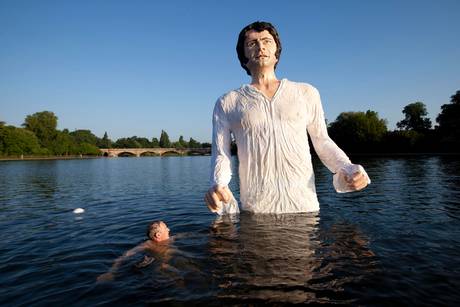
Colin Firth’s memorable wet shirt scene in Pride and Prejudice has been recreated thanks to a giant statue of Mr Darcy which has been built in The Serpentine.
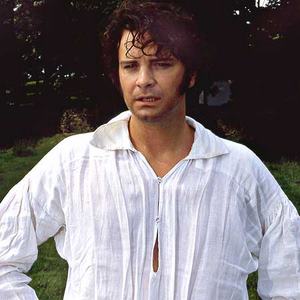
The fibreglass sculpture, which closely resembles Firth, stretches 12ft out of the water at London’s Hyde Park. The image of Firth emerging dripping wet from the lake at Lyme Park, Cheshire featured in the 1995 BBC adaption of the Jane Austen novel. The scene, which caused a stir at the time, recently topped a viewers’ poll of the most memorable TV moments ever.
The model of Darcy took a team of three sculptors in excess of two months to design, construct and paint. Lead sculptor Toby Crowther said: “The challenge for us was capturing the spirit of Darcy as handsome and noble but also aloof and proud. The Mr Darcy sculpture is a real mix of the many portrayals of Jane Austen’s most famous hero.” The sculpture will tour a number of locations before being installed in Lyme Park, where it will remain until February.
Adrian Wills, general manager of Drama, said: “Jane Austen spent a lot of time walking in Hyde Park and along the banks of the Serpentine, so we would like to think she would have approved of our new dashing Darcy.”
The statue has been built to celebrate today’s launch of new UKTV channel Drama, a free-to-air station on Sky and Freeview.
“La! You are so strange! But I must tell you how it went off. We were married, you know, at St. Clement’s, because Wickham’s lodgings were in that parish. And it was settled that we should all be there by eleven o’clock. My uncle and aunt and I were to go together; and the others were to meet us at the church. Well, Monday morning came, and I was in such a fuss! I was so afraid, you know, that something would happen to put it off, and then I should have gone quite distracted. And there was my aunt, all the time I was dressing, preaching and talking away just as if she was reading a sermon. However, I did not hear above one word in ten, for I was thinking, you may suppose, of my dear Wickham. I longed to know whether he would be married in his blue coat.
“Well, and so we breakfasted at ten as usual; I thought it would never be over; for, by the bye, you are to understand, that my uncle and aunt were horrid unpleasant all the time I was with them. If you’ll believe me, I did not once put my foot out of doors, though I was there a fortnight. Not one party, or scheme, or any thing. To be sure London was rather thin, but, however, the Little Theatre was open. Well, and so just as the carriage came to the door, my uncle was called away upon business to that horrid man Mr. Stone. And then, you know, when once they get together, there is no end of it. Well, I was so frightened I did not know what to do, for my uncle was to give me away; and if we were beyond the hour, we could not be married all day. But, luckily, he came back again in ten minutes time, and then we all set out. However, I recollected afterwards that if he had been prevented going, the wedding need not be put off, for Mr. Darcy might have done as well.”
“Mr. Darcy!” repeated Elizabeth, in utter amazement.
Pride and Prejudice, v. III, ch. IX
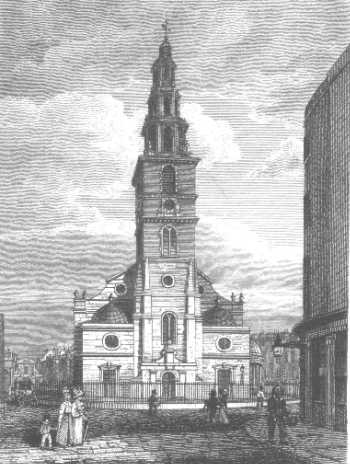
St Clement Danes – Strand (London Views)
Jane Austen often gives clues to the whereabouts of her locations, especially in her London passages – we know she knew London well and placed her characters in just the right spot to tell her readers who they were by where they lived. We famously have a few “____shire”s scattered about regarding the militia, for an element of secrecy one might assume? But in Pride and Prejudice there are two locations that she specifies that bring only confusion, and both involve Wickham and Lydia: St. Clement, where they were married, and Edward Street, home to Mrs. Younge, Georgiana’s former governess and friend and devious helper to Wickham. Today I will deal with the former…
When Lydia remarks that “We were married, you know, at St. Clement’s, because Wickham’s lodgings were in that parish.” – she gives a clue that perhaps contemporary readers would not have found confusing, but we are left with not being completely sure which St. Clements she is referring to: St Clement Danes in the Strand, or St. Clement Eastcheap. Neither is mentioned in her extant letters.
Pat Rogers notes in her 2006 Cambridge edition of Pride and Prejudice that the fairly large parish of St. Clement Danes had a population of 12,000 in 1801 and “contained areas of cheap lodgings and some raffish districts, notably a part of Drury Lane” (531-32). Most who have written on this would agree (see Kaplan and Fullerton cites below), largely because the other St. Clement (Eastcheap), on St. Clement’s Lane between Lombard Street and Great Eastcheap, would have been too close to the Gardiner’s who lived on Gracechurch Street [see maps for location of both churches]. Wickham would not have placed himself in such a smaller parish, with a population of 350 in 1801 (Rogers, 531), and so close to those who might find him out. Another reason that Rogers selects this as the best option is that in order to marry in this parish, one of the parties had to have residence there for fifteen days (Rogers, 532). Laurie Kaplan adds that “the length of time required for residency functions perfectly for the elopement plot of the novel, for tension increases the longer Lydia and Wickham remain unmarried” (Kaplan, 7). But we know Wickham had no mind to marry Lydia … .another story entirely… (the text is very clear on this: Mrs. Gardiner relates to Elizabeth: “…it only remained, he [Darcy] thought, to secure and expedite a marriage, which in his very first conversation with Wickham, he easily learnt, had never been his design.” (357).
But perhaps in the end, we should just abide by Susannah Fullerton, where in her Celebrating Pride and Prejudice, she blames Lydia for the whole confusing mess: “How typical of Lydia to be inexact in her information!” (p. 94-95)
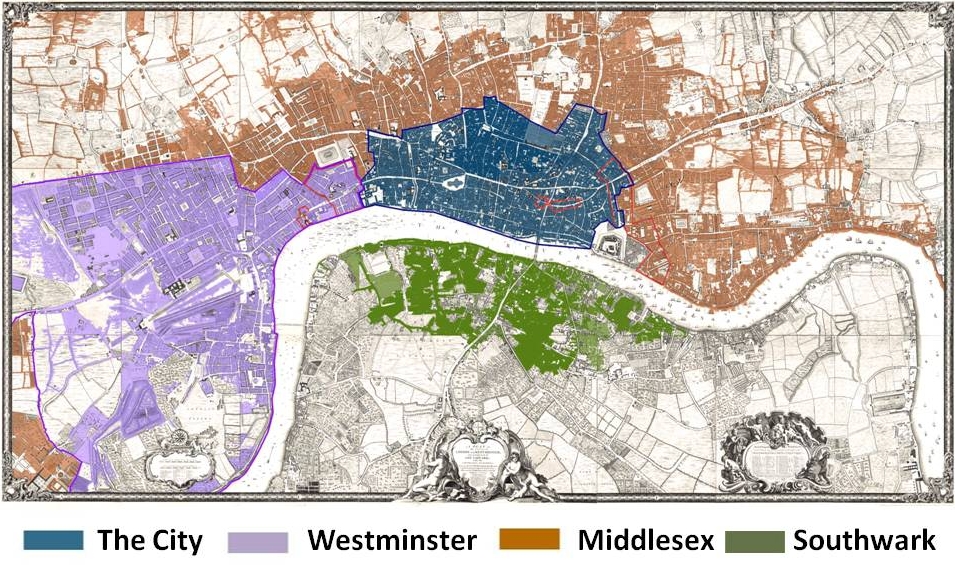
Horwood Map panel 14. [RICHARD HORWOOD – MAP OF LONDON, WESTMINSTER AND SOUTHWARK, 1813] St Clement Danes is located at the heart of London, placed on an island in the middle of the Strand,
opposite the Royal Courts of Justice, the Temple and Fleet Street – on the map above circled in purple.
(Click on map and zoom in; map courtesy of Sue Forgue at Regency Encyclopedia, from the Guildhall Library, London)
St. Clement Danes: The first church on the site was founded by Danes in the 9th century, and named after St. Clement, patron saint of mariners. It has been rebuilt by William the Conqueror, later again in the Middle Ages, and rebuilt yet again in 1680-82 by Christopher Wren, a steeple added in 1719-20. It was gutted during the blitz, only the walls and tower left standing, and since reconstruction has served as the central church for the Royal Air Force.
An early street view of the Strand and St Clement Danes Church, 1753. On the right is the original entrance to the building.
cTrustees of the British Museum; image from Christina Parolin, Radical Spaces (ANU, 2010).
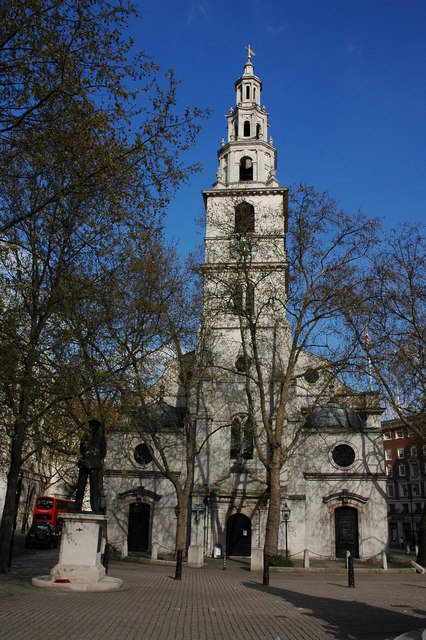
St Clement Danes today: when in London in May 2011 I visited the Church for the first time, finding it a quite lovely and peacful setting on its little island in the midst of bustling London – here are a few shots, alas! not that well focused and no exterior shots of the facade, so I include one from Geograph.org.uk, with thanks.
St Clement DanesSt Clement Danes, interiorSt Clement Danes ceilingflag in St Clement Danes
St Clement Danes exterior – cPhilip Halling, Geograph.org.uk
[A movie aside: You will notice that there are no entrance steps, as there are no steps for St Clements Eastcheap – if you recall from the 1995 movie, Lydia is running up the steps to the church, so neither of these sites were used in the movie [and I find no picture of this scene – if anyone knows where that exterior shot was filmed, please let me know!]
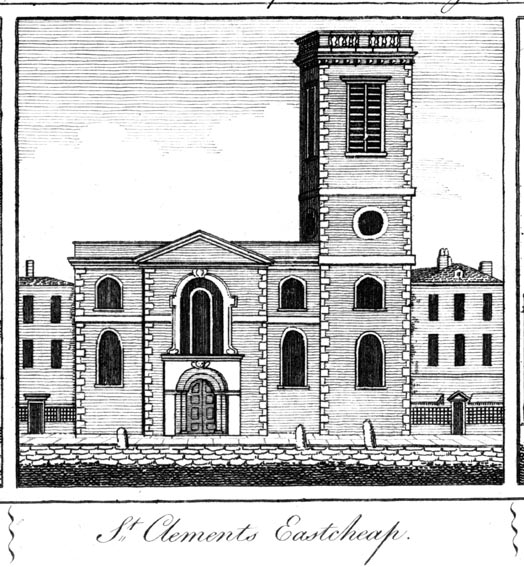
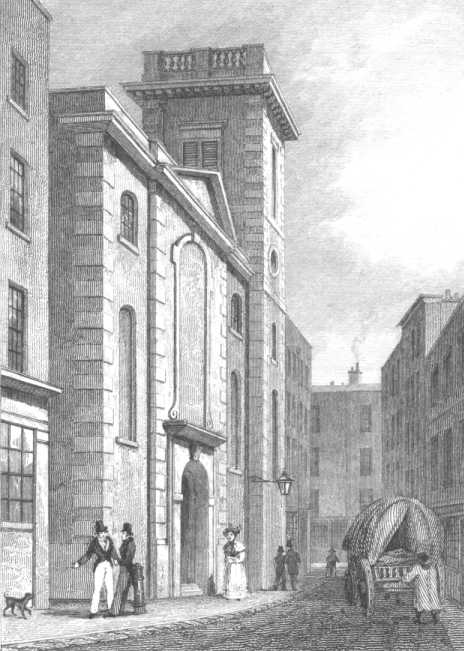
Facade St Clement Eastcheap
c.1760, from Walter Harrison’s History of London (1777) – wikipedia
******************
St. Clement Eastcheap: located on St. Clement’s Lane between Lombard Street and Great Eastcheap [today on Clement’s Lane, off King William Street] and close to London Bridge and the River Thames – see here on the Horwood panel 15:
Horwood Map panel 15. [RICHARD HORWOOD – MAP OF LONDON, WESTMINSTER AND SOUTHWARK, 1813]
The purple marks Gracechurch Street, home ot the Gardiners, and ends at the botton at Great Eastcheap,
go one block to the left to find St. Clement’s Lane, the Church is on the right.
(Click on map and zoom in; map courtesy of Sue Forgue at Regency Encyclopedia, from the Guildhall Library, London)
Though we are quite sure that this is not where Austen had Lydia and Wickham marrying, it is still worth noting – perhaps we are wrong in our assumptions after all, and Wickham was just “hiding in plain sight”? This St. Clement has possible Roman origins; it was destroyed in 1666 in the Great Fire of London, and rebuilt in the 1680s and also designed by Wren. And one should note that “cheap” is an old Saxon word meaning “market” and does not mean “cheap” as we associate it today. Here are a few images:
St Clement Eastcheap – London ViewsSt Clement Eastcheap today – wikipedia
The St Clement argument does not just revolve around Jane Austen [and indeed may she just been throwing out a very sly reference to her sailor brothers? – just a thought, St. Clement being the patron saint of sailors] … The Churches apparently have a long-standing “quibble” over which is the St. Clement referred to in the nursery rhyme “Oranges and Lemons” – here is the full rhyme: [the long version from wikipedia: http://en.wikipedia.org/wiki/Oranges_and_Lemons ]. It is the bells of St. Clement Danes that ring out the tune of the rhyme three times a day.
“Oranges And Lemons”, Nicholl Bouvier Games 1874, “The Pictorial World” by Agnes Rose Bouvier (1842 – 1892) – wikipedia
Gay go up and gay go down, To ring the bells of London town.
Oranges and lemons, Say the bells of St. Clements.
Bull’s eyes and targets, Say the bells of St. Margret’s.
Brickbats and tiles, Say the bells of St. Giles’.
Halfpence and farthings, Say the bells of St. Martin’s.
Pancakes and fritters, Say the bells of St. Peter’s.
Two sticks and an apple, Say the bells of Whitechapel.
Pokers and tongs, Say the bells of St. John’s.
Kettles and pans, Say the bells of St. Ann’s.
Old Father Baldpate, Say the slow bells of Aldgate.
You owe me ten shillings, Say the bells of St. Helen’s.
When will you pay me? Say the bells of Old Bailey.
And finally, to bring this back to Jane Austen, where all begins and ends after all, there is behind the St Clement Danes church a statue, by Percy Hetherington Fitzgerald and erected in 1910, of all people, Jane Austen’s very own Dear Dr. Johnson. I think she would be pleased, don’t you?
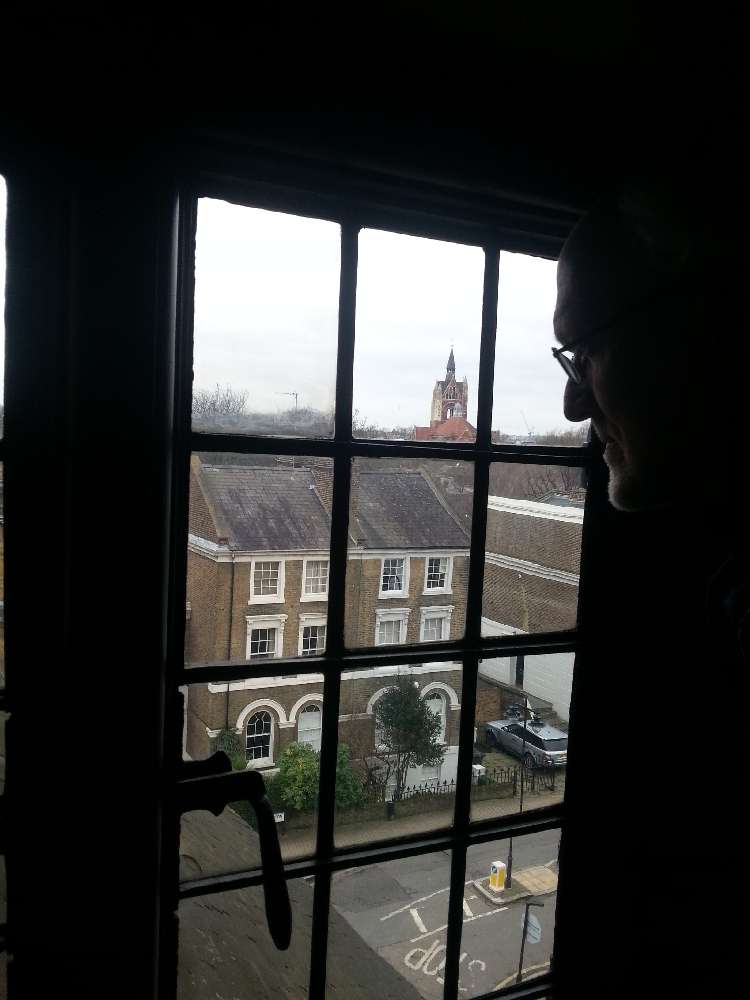
Enquiring Readers: Last week I had posted a comment about Macbeth during the hoopla about Richard III; Ron Dunning [of the Jane Austen Family Tree fame] and I have been in communication since about how everything it seems comes back to Jane Austen, further evidenced by a recent tour he took of Canonbury Tower…. read on for yet another connection to Jane Austen!
****************
Canonbury on the map: Londontown.com
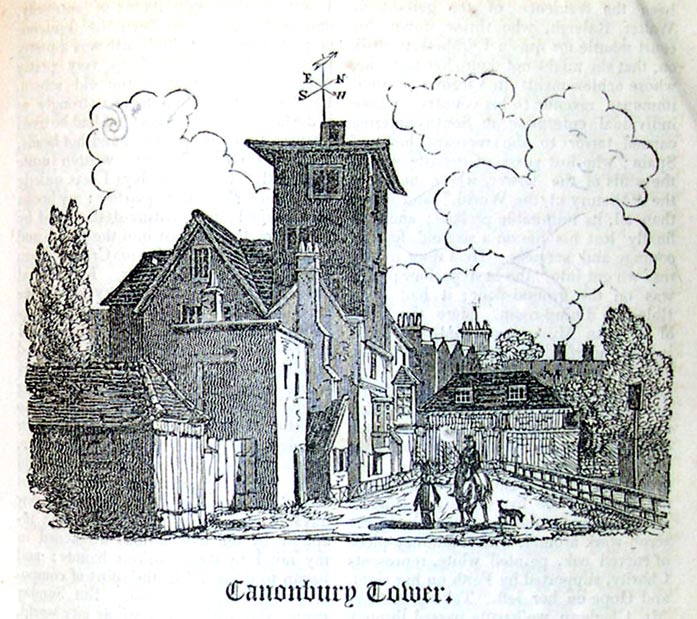
Our esteemed [blush…] blogiste and editrix remarked a few days ago, in reference to the fact that Macbeth’s victim Duncan I was an ancestor of Jane Austen, that “ALL in life that one thinks or does comes back to Jane Austen”. It’s true – it does. Earlier in the week, I went on a guided tour of Canonbury Tower, in the Islington area of London, with my accomplice in exploration, Catherine Delors. [Ed. note: Catherine is the much moreso esteemed historical novelist who blogs at Versailles and More]. For all we knew, it would be no more than a fascinating view of one of London’s few remaining precious Tudor residences, little suspecting that there would turn out to be an Austen connection.
Canonbury Tower – wikipedia
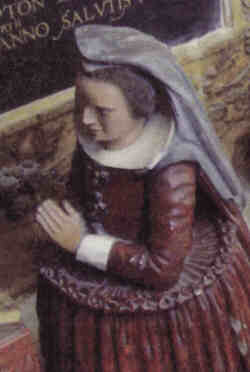
Canonbury was a Saxon manor, and after 1066 was awarded by William the Conqueror to the de Berners family. It was only a brief horse ride from the centre of London, and even walkable, so it became the residence of various abbots and other dignitaries. In the late 1500’s the manor was owned by Sir John Spencer (d. 1610), a very wealthy merchant and sometime Lord Mayor of London – who had a pretty young daughter, Elizabeth.More to the point, she was worth £40,000 on her marriage – some five million pounds today. Her father had promised her to several men, in consideration of the usual dynastic criteria, but she met and fell in love with the spendthrift William Compton, Lord Compton (and later to become Earl of Northampton, d. 1630). John Spencer was vehemently opposed to this match, not least because William owed him money. She managed somehow to elope with William, one version of the story claiming that he disguised himself as a baker’s boy and smuggled Elizabeth out of the house in a blanket.
John Spencer refused to be reconciled to this marriage, until Queen Elizabeth intervened. When he and his wife died intestate (not without suspicions of subterfuge on that score), William and Elizabeth inherited the entire estate, then valued at between £300,000 and £800,000. William immediately spent over £70,000 on horses and gambling, and it appears that Elizabeth had no qualms about spending money, either.
So far, I haven’t told you what the Austen connection was. I knew that William and Elizabeth were in my Austen database but with 13,500 people in it, I couldn’t remember their connection. Checking when I got home I realized that they were ancestors of Adela Portal, the wife of Edward Knight (the younger), Jane’s nephew. Among others, the current doyenne of the Austen family, Diana Shervington, is a descendant of that line.
There is a further literary connection, in that William and Elizabeth were also the ancestors of Vita Sackville-West. The time has long since passed when I was surprised that almost anyone that you could name was connected with the Austens, but the particular individuals and their stories continue to fascinate!
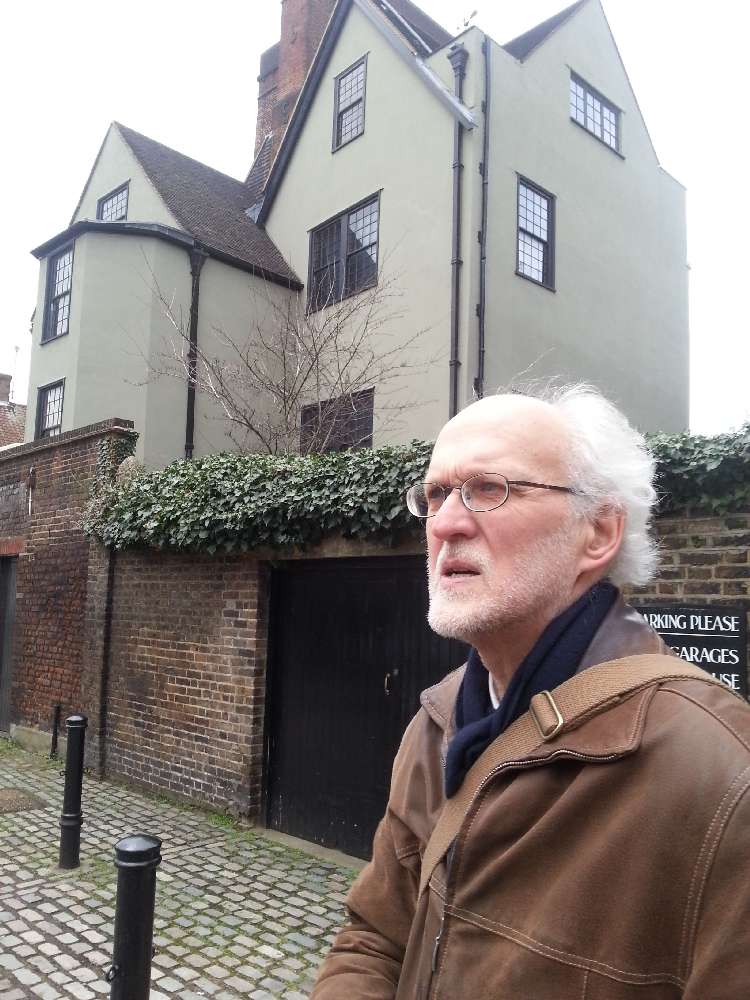
Ron Dunning outside Canonbury Tower
[image: c2013, Catherine Delors]
Catherine Delors
Wish I had been there with the two of you! Thank you Ron for your continued insights on all things in the Austen family!
******************
Further reading: the problem with these sort of postings is that one can spend an inordinate amount of time researching all these new connections! – here are a few places to start, Elizabeth Spencer having quite the interesting story!
Thomas Cromwell, Lord Privy Seal, lived in Canonbury Tower from 1533. His residency ended abruptly in 1540 when he was beheaded by King Henry VIII. Cromwell has been the subject of Hilary Mantel’s critically-acclaimed Wolf Hall and Bring up the Bodies.
Sir Francis Bacon, King James I’s Lord Chancellor, lived in Canonbury Tower, 1616-1626.
Chimney-piece and panelling in the Compton Oak Room, late 16th-century. Image: ‘Plate 102: Islington: Canonbury Tower’,
An Inventory of the Historical Monuments in London,
Volume 2: West London (1925), pp. 102. British History Online.
And finally, and again from the William Hone (1780-1842) archive:
Those who have been before and not lately, will view “improvement” rapidly devastating the forms of nature around this once delightful spot; others who have not visited it at all may be amazed at the extensive prospects; and none who see the “goings on” and “ponder well,” will be able to foretell whether Mr. Symes [the resident when Hone visited] or the tower will enjoy benefit of survivorship.
To Canonbury Tower
As some old, stout, and lonely holyhock,
Within a desolate neglected garden,
Doth long survive beneath the gradual choke
Of weeds, that come and work the general spoil;
So, Canonbury, thou dost stand awhile:
Yet fall at last thou must; for thy rich warden
Is fast “improving;” all thy pleasant fields
Have fled, and brick-kilns, bricks, and houses rise
At his command; the air no longer yields
A fragrance—scarcely health; the very skies
Grow dim and townlike; a cold, creeping gloom
Steals into thee, and saddens every room:
And so realities come unto me,
Clouding the chambers of my mind,
and making me—like thee.
*****************
And so here we are almost 200 years later, still visiting Canonbury Tower!
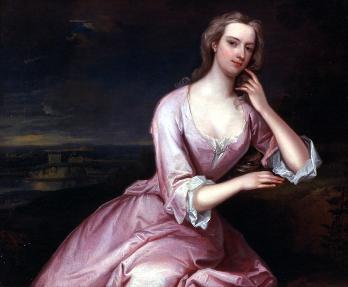
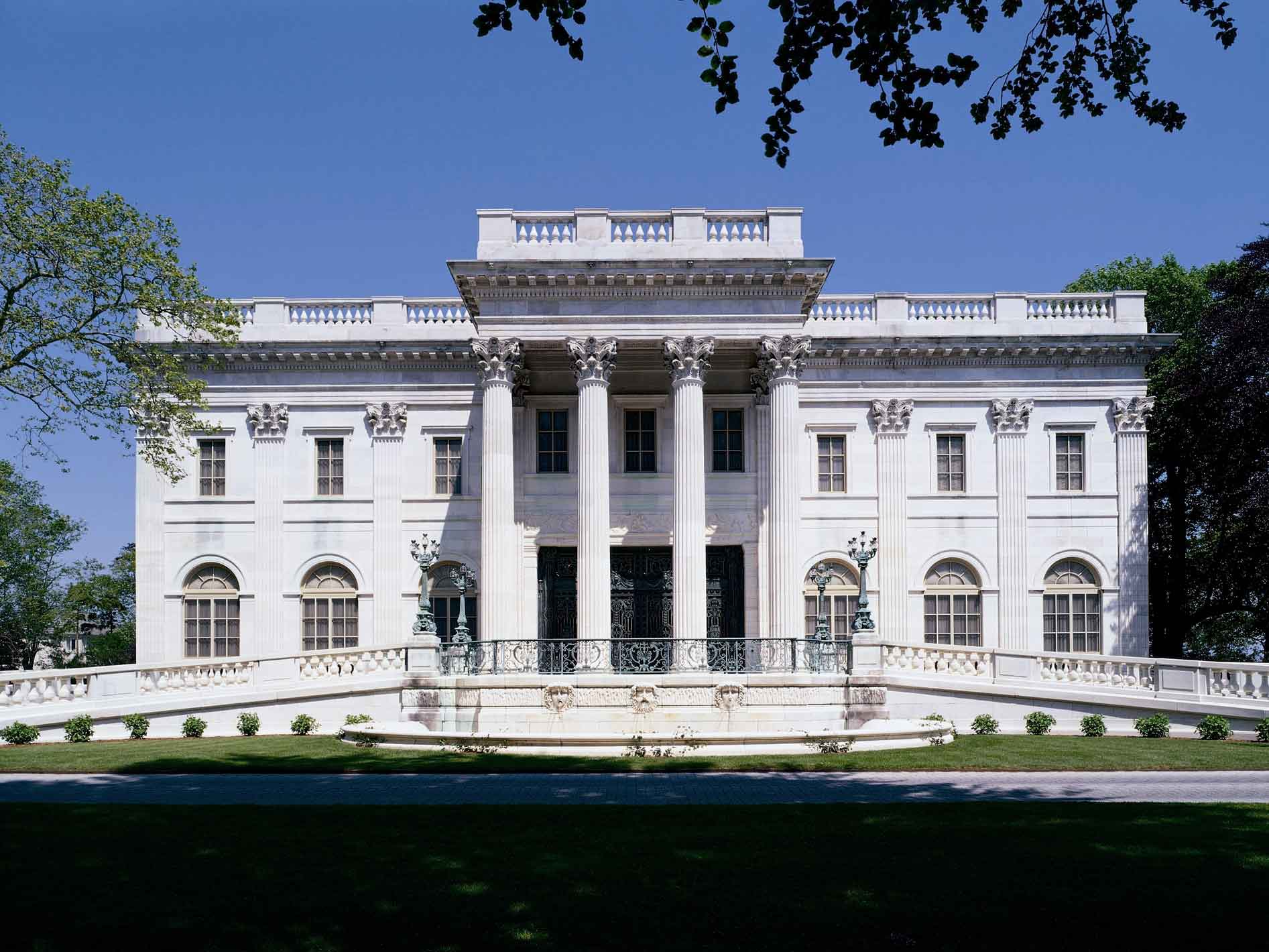
Enquiring Minds: Tony Grant of London Calling, and a regular contributor to Jane Austen’s World, had written a post for me on Marble Hill House in Twickenham– but alas! I have been so delayed in getting this on the blog that we agreed he should post it himself and I will link to it… so herewith the tale of Marble Hill House, home to Henrietta Howard, mistress of George II. This all started with a conversation over Joshua Reynolds’s house, which led to Richmond Hill, and then on to Henrietta Howard and Marble Hill House, and then Pope and Swift, Horace Walpole, John Gay and the Scriblerus Club, a bit on Wordsworth and Sir Walter Scott and on to Dickens and Virginia and Leonard Woolf, and of course Jane Austen gets her required mention – you get the idea – this is cram-packed with literary tourism and as always, Tony’s fine photographs…
****************
The Thames from Richmond Hill
The River Thames wends its tortuous way across England from Thames Head in Gloucestershire until it reaches the southernmost part of the North Sea. Its journey stretches for 215 miles. Finally the wide Thames Estuary which pours its contents into The North Sea is bordered on the north bank by the Essex coast and Southend on Sea and at its southern bank by the Kent coast, Sheerness and the entrance to the Medway.
Along its course The Thames passes though some beautiful English countryside before it enters the Greater London area passing by Sunbury and on to Hampton, then Hampton Court, Kingston upon Thames, Twickenham and Richmond. At last it reaches the centre of London with its iconic landmarks. The Thames, from London along its whole length, has a long history of Iron Age villages, Roman habitation, Saxon towns, and mediaeval settlements, Tudor Palaces and Georgian and Victorian Villas. London itself began as a Roman settlement for trade, built at the nearest bridging point to the coast where they had their port called Ritupiae (Richborough). They wanted to penetrate the hinterland north of the Thames. Indeed the names Thames which was Celtic in origin but had its Roman equivalent (Tamesas recorded in Latin as Tamesis) and London (Londinium) come to us from Roman times.
Over the centuries the Thames outside of London has provided a beautiful Arcadian retreat for the wealthy, the famous, the aristocracy and the monarchy away from the stench and diseases prevalent in many periods of London’s history. They built palaces and grand houses and villas with adjoining estates and landscaped parks to relax and take their leisure in. Marble Hill House is a Palladian Villa built between 1724 and 1729, very close to Richmond upon Thames but on the northern bank of the Thames near Twickenham. It was built for George II’s mistress, Henrietta Howard….
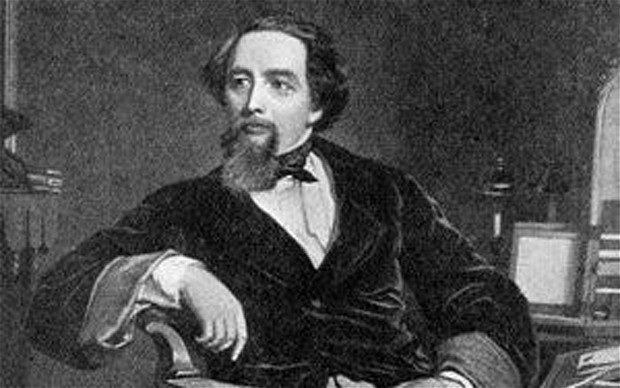
*The Yale Center for British Art begins its 2012 film tribute to Dickens with the first film in the series “Dickens’London”, a 1924 12-minute silent film:
*The DeGoyler Library at Southern Methodist University is hosting a Dickens exhibit:
Charles Dickens: The First Two Hundred Years. An Exhibition from the Stephen Weeks Collection. January 19-May 12, 2012 – a catalogue is available for purchase: http://smu.edu/cul/degolyer/exhibits.htm
* A bookseller’s list of some of his works that they have for sale [Tavistock Books]: http://tinyurl.com/7c2t2y3
* This one is very exciting as it combines my love of Dickens and my love of London and makes full use of my iphone capabilities: Dickens Dark London from The Museum of London:
*There is also the Dickens Exhibition at The Morgan Library. Here is the online component you can visit without leaving home: you can view 20 pages of A Christmas Carol and read a letter penned by Dickens…
February 26, 2012 at 9pm (Check local listings) The Old Curiosity Shop One 90-minute episode
A teenage girl and her grandfather lose everything to a maniacal moneylender and flee his relentless pursuit. Derek Jacobi (I, Claudius) stars as Grandfather, with Sophie Vavasseur (Northanger Abbey) as Nell and Toby Jones (Tinker Tailor Soldier Spy) as Quilp.
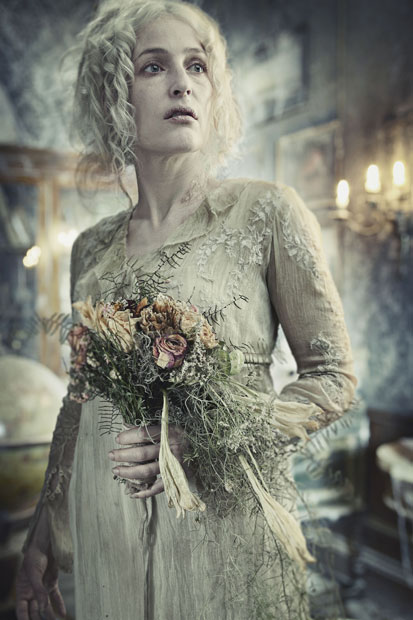
Gillian Anderson - Great Expectations
April 1 & 8, 2012 Great Expectations
Gillian Anderson, David Suchet and Ray Winstone star in this new adaptation of Great Expectations, widely considered one of the greatest novels by Charles Dickens. Great Expectationsfollows orphan boy Pip as he rises from an apprentice to a gentleman.
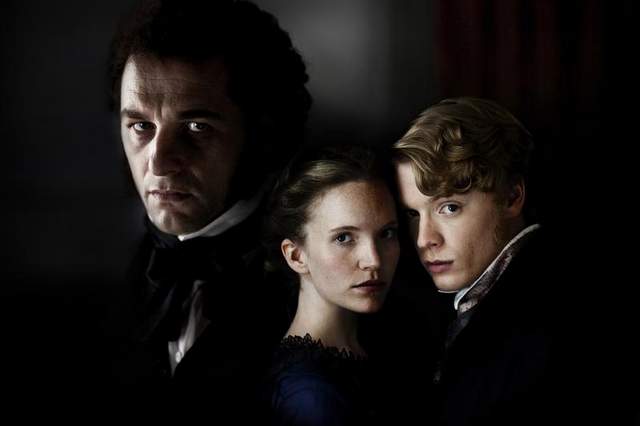
Masterpiece - Edwin Drood
April 15, 2012 The Mystery of Edwin Drood The Mystery Of Edwin Drood is a psychological thriller about a provincial choirmaster’s obsession with 17-year-old Rosa Bud and the lengths he will go to attain her. The cast includes Matthew Rhys (Brothers & Sisters) and Julia MacKenzie (Miss Marple).
I am currently reading Bleak House, one of those books on my TBR pile literally for the past 40 years! I have signed up for a four-session class on “Dickens and the Law” and figure I should be at least somewhat up to speed on Jarndyce and Jarndyce! – What better gift to an author than this – reading and re-reading their works 200 years after they were born! Anyone else reading Dickens this year of his bicentennial? Please share!
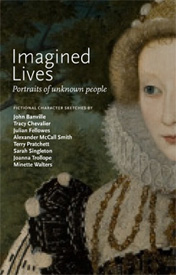
Eight internationally acclaimed authors have invented imaginary biographies and character sketches based on fourteen unidentified portraits. Who are these men and women, why were they painted, and why do they now find themselves in the Collection of the National Portrait Gallery? With fictional letters, diaries, mini-biographies and memoirs, Imagined Lives creates vivid stories about these unknown sitters from the sixteenth and seventeenth centuries.
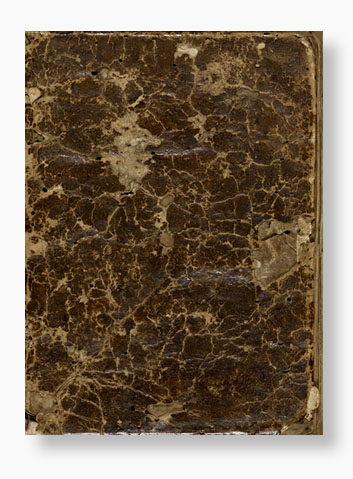
For your iphone, ipad and such: Ebook Treasures: We already know that Austen’s History of England is available from the British Library, but look at this, a 14th Century Cookbook:
“The Forme of Cury is the oldest surviving cookbook in the world, dating from the late 14th century. Originally made by the cooks of the court of Richard II, very few copies survive, and this one, from the John Rylands Library in Manchester, is probably the best and earliest. Written in Middle English, the script can be hard to interpret, and some of the recipes unfamiliar. The book gives an incredible insight into medieval kitchens, as well as medieval life itself. The book contains one hundred and ninety-four recipes which reveal the amazing variety and elaboration of the dishes available to the elite, including stews, roast dishes, jellies, tarts and custards. Among the recipes are ‘Chyckens in gravey’, ‘Blank manger’ (a white savory stew, from which the word ‘blancmange’ derives),‘Furmente with porpays’ (porpoise in wheat porridge), and ‘Crypses’ (fried pastries).
The manuscript is still in a very worn, and possibly original, binding and it may well have been used as a practical cookery book in an aristocratic or royal kitchen. However, unlike modern recipe books, the Forme of Cury doesn’t give exact quantities or cooking times, so a lot is left to the skill and imagination of the cook.
This iBook contains the complete manuscript along with transcriptions from the Middle English. iTunes £3.99 ” [from the website]___________________________________
Michael Dirda of the Washington Post reviews Death Comes to Pemberley – this is on the top of my TBR pile…
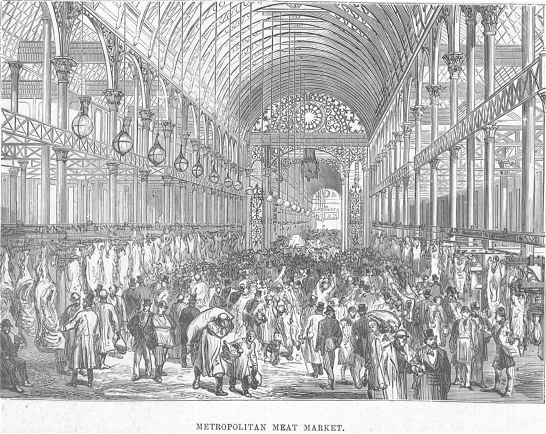
For those non-vegetarians out there with an interest in the Meat of London, here is a tasty read [and perhaps an unsettling one?]:
Meat, Commerce and the City: The London Food Market, 1800–1855 by Robyn Metcalfe – all you ever wanted to know about the Smithfield Meat Market, due out in March 2012 from Pickering & Chatto.
[image from Victorian London.org]
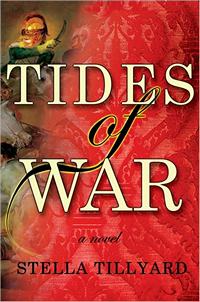
Tides of War, by Stella Tillyard
An epic novel about love and war, set in Regency England and Spain during the Peninsular War (1812-15), by the acclaimed historian and bestselling author of “Aristocrats.” Tides of War opens in England with the recently married, charmingly unconventional Harriet preparing to say goodbye to her husband, James, as he leaves to join the Duke of Wellington’s troops in Spain….
A book about the plague, Ralph Tailor’s Summer by Keith Wrightson – visit the publisher Yale Books where you can read a fascinating extract from the preface.
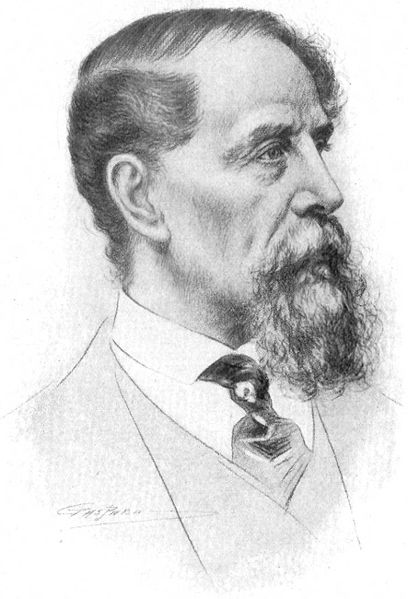
Charles Dickens is getting a good number of exhibitions all over in celebration of his 200th birthday: you can check the various happenings at the Dickens 2012 website.
*There is also the Dickens Exhibition at The Morgan Library. Here is the online component you can visit without leaving home: you can view 20 pages of A Christmas Carol and read a letter penned by Dickens…
Organized to complement the Center’s major exhibition on Johan Zoffany, who spent six productive years in India, Adapting the Eye explores the complex and multifaceted networks of British and Indian professional and amateur artists, patrons, and scholars in British India in the later eighteenth and early nineteenth centuries, and their drive to create and organize knowledge for both aesthetic and political purposes. Selected from the Center’s rich holdings, the exhibition includes a diverse range of objects from both high art and popular culture, including albums, scrapbooks, prints, paintings, miniatures, and sculpture, demonstrating how collecting practices and artistic patronage in India during that period constituted a complex intersection of culture and power.
Auction News
At auction this coming week: Bonham’s Fine Books and manuscripts, December 15, 2011:
Lot No: 5159WALKER, MRS. ALEXANDER.Female Beauty, as Preserved and Improved by Regimen, Cleanliness and Dress. London: Thomas Hurst, 1837.
8vo (183 x 107mm). With 11 lithographed illustrations, 10 hand-colored, each with hand-colored overlay, showing how physical characteristics (thick waist, broad jaws, short limbs, etc.) can be camouflaged in order to enhance one’s appearance. Later morocco by Sangorski & Sutcliffe, spine gilt, a.e.g. Custom slipcase. Some staining to spine, minor foxing throughout, offset from plates. Estimate: US$500 – 700.
And more of Mr. Dickens! Lot No: 5177: DICKENS, CHARLES. 1812-1870.
A Christmas Carol. In Prose. Being a Ghost Story of Christmas. London: Chapman & Hall, 1843.
8vo. [viii], 166, [2] ad pp. Hand-colored engraved frontispiece and 3 hand-colored plates. Original cloth blindstamped and gilt, a.e.g. Custom morocco pull-off case by Scroll Club Bindery. Pp 64-70 lightly foxed, binding slightly cocked and faded.
Provenance: Jerome Kern (morocco book label); Frank Brewer Bemis [1861-1935],Bostoncollector, whose collection was dispersed by Rosenbach and Goodspeed (bookplate).
FIRST EDITION, THE KERN-BEMIS COPY. Second issue of the text, with “Stave One” on page [1], title page in red and blue dated 1843, and yellow endpapers, but first state of the binding (the closest interval between blindstamped border and gilt holly wreath being 14-15 mm not 12 mm, and the upper left serif of D intact). Todd calls this binding point a “desideratum … encompassing all the others,” and of greater importance in priority than the textual points (The Book Collector, 1961, pp 449-454). Eckel, p 116; Sadleir 684. Estimate: US$4,000 – 6,000.
Lot No: 5284 : GEORGE III. 1738-1820.
Document Signed (“George R.”), 1 p (with conjoined docketed blank), folio, St. James’s, May 25, 1781, being a pay warrant for General Henry Seymour Conway for the Royal Horse Guards for the year 1779, additionally signed by CHARLES JENKINSON, Earl of Liverpool, toned, tape stains at upper and lower right corners, small chips at edges, matted and framed.
Provenance: with Thomas F. Madigan,New Yorkautograph dealer (signed letter of authenticity, October 26, 1935). Estimate: US$800 – 1,200.
Prices Realized at Auction:
Mr. Dickens yet again!: A complete set in fine bindings of the first editions of Charles Dickens’s Christmas Books. Five volumes, uniformly bound, London, 1843-1848. Includes A Christmas Carol. Sold for $6,480. [Swann]
***********************
Dance Card for the Union Ball in Honor of the Inauguration of Abraham Lincoln, $3,840 at Swann Galleries of New York on December 1.
A dance card issued to the guests atLincoln’s inaugural ball in 1861. Courtesy of Swann Galleries.These cards, with die-cut decorative border and a ribbon through one corner, were issued to guests at the inauguration ball inWashington,D.C.on March 4, 1861. On the second of the four pages are listed the twenty-three planned dances that will take place to the music provided by L. F. Weber’s band, while on the third is space to write in one’s partner for each dance. On the rear panel are printed the names of Lincoln and his vice president, Hannibal Hamlin, around an illustration of a bald eagle, captioned “The Constitution.” [Invitations to the ball appear from time to time and sell for upwards of $8,000, but Swann could find no previous record of a dance card at auction.]
If you are into hair collecting [a little late for our Regency tastes, but what good Victorianist is not into hair…], here is a short essay on the topic at Paul Fraser Collectibles.
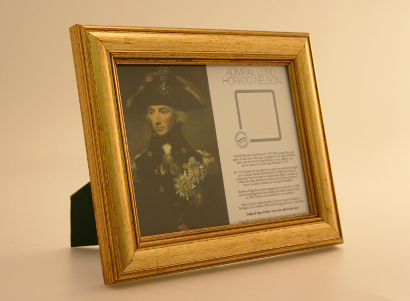
And then you might like to add this to your collection: Lord Nelson’s hair for £49.95, or Napoleon, and the Duke of Wellingon, all the same price – also Dickens and Steinbeck and Paul McCartney, etc – but alas! – no Jane Austen!
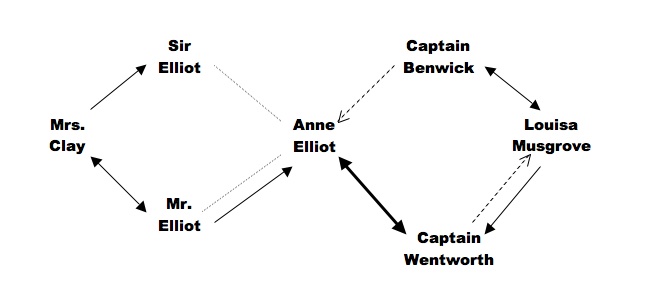
And this is way too much fun to look at – The Love Diagrams of Jane Austenat Diana Peterfreund’s website: [visit her site for diagrams of the other novels]
And finally, this is all over the airwaves, and we will have to wait until December 16th for it all to be unveiled, but visit the website of The Austen Games.com to whet your appetite and ponder.…
*Lindsay Ashford on her new book The Mysterious Death of Miss Austen – and how Austen perhaps died from arsenic poisoning, whether intentional or not – has created quite the kerfuffle on the airwaves. Miss Ashford has written a fictional account of what might have happened [and it certainly reveals a good number of Austen family secrets! – all fiction of course…or is it?]
[I had the pleasure of meeting Ms. Ashford at the Fort Worth AGM – I’ve also read the book! – more on this in a future post I hope… has anyone else read it? – it deserves some conversation!]
*Those who have been following Downton Abbey [and who in their right costume-drama mind is not] will be pleased to know that the series has been granted a third season! – meanwhile we on this side of the pond “patiently” wait until January for Series 2, now finished in the UK – watch your PBS station for details on the re-running of Season 1 prior to the new shows – [do I dare admit that at our WWW (Wild Women Weekend) we watched the entire first season straight through [well, parts 5 and 6 on the Sunday morning – is there anything better than sharing this show with your very own group of fabulous wild women?!]
The JASNA website has added its annual link to Austen-related gifts from various JASNA Regions here: http://jasna.org/merchandise/index.html – a great place to start your holiday shopping, even for those not so Austen-crazed – what a better time than this to convert a few friends…
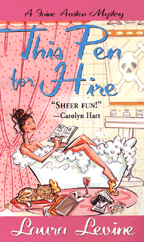
Humor is the key ingredient in this slick debut by television comedy writer Levine. Freelancer Jaine Austen (her mother loved the classics but couldn’t spell) makes a living writing love letters, personal ads and industrial brochures, but she never expected her work to involve her in murder.
FB&C asks: Have any FB&C readers attempted to collect all known editions and translations of Austen’s debut title? Does anyone know of any individual or institution that may have made such an attempt…?
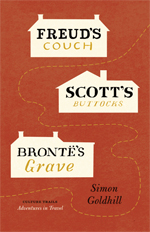
* A new book with a great title: Freud’s Couch, Scott’s Buttocks, Bronte’s Grave by Simon Goldhill. There are chapters on traveling to the homes and haunts of Shakespeare, Bronte, Wordsworth, Scott, and Freud, but alas! no Austen – what was Mr. Goldhill thinking?!: http://press.uchicago.edu/ucp/books/book/chicago/F/bo10997683.html
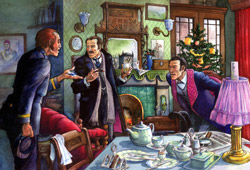
And while we are on Mr. Holmes, visit the website for the Sherlock Holmes Society of London: http://www.sherlock-holmes.org.uk/ – where you can order your Christmas cards for 2011 complete with Holmes and Watson in the “Blue Carbuncle”…
This all in preparation for the second installment in the Holmes / Watson – Downey / Law due out it is said on of all days, December 16th! Would Jane Austen like Sherlock Holmes?? what do you think??
Harvard recently published the annotated editions of Pride and Prejudice and Persuasion – Emma, NA, MP, and S&S are forthcoming. Note that our esteemed Austenblog and Jane Austen’s World blog are both included in the resource list! Congratulations to Mags and Vic!
*One can never have enough of London, as Samuel Johnson so wisely opined – so here is yet another site to visit to satisfy your London wanderlust: the online exhibition Glimpses of London’s Past at the University of Otago: http://www.library.otago.ac.nz/exhibitions/london/index.html
*An oldie but worth a listen: Claire Tomalin on Jane Austen at TTBOOK.org: http://ttbook.org/book/claire-tomalin-jane-austen
[TTBOOOK = To the Best of Our Knowledge – check out the various interview podcasts…]
*Old Print Giclees – reproducing prints of all sorts – here is a Gibson print – you can own your own [and very affordable], either on paper or canvas in any size – check out the website for other print selections on various subjects: http://old-print-giclees.com/?wpsc_product_category=gibsonbook
The First Ladies explores the unofficial but important position of first lady and the ways that different women have shaped the role to make their own contributions to the presidential administrations and the nation. The exhibition features more than two dozen gowns from the Smithsonian’s almost 100-year old First Ladies Collection, including those worn by Frances Cleveland, Lou Hoover, Jacqueline Kennedy, Laura Bush, and Michelle Obama. A section titled “Changing Times, Changing First Ladies” highlights the roles played by Dolley Madison, Mary Lincoln, Edith Roosevelt, and Lady Bird Johnson and their contributions to their husband’s administrations. The First Ladies encourages visitors to consider the changing role played by the first lady and American women over the past 200 years.
*Begin your holiday gift giving by sending all your friends this Jacquie Lawson Advent Calendar – London again! http://www.jacquielawson.com/advent/london [click this link not the picture for the demo]
One cannot resist the Emporium at the JASNA AGM – and this year in Fort Worth was more fun than ever – tables filled with goodies from the various Regions, and a whole room filled with local vendors from Texas. But I first always head to the book stalls – a bad and expensive habit – and this year I was not disappointed. Happy to see again, Traveler’s Tales from Canada [sorry, no website!], and Jane Austen Books, and though I had to think of weight and limit some purchases, this year I wisely bought what I wanted to and shipped them home – they came today [love the UPS man, don’t you?!]
So here is my book list: some are titles I have had on my list for a while, others are what I call the “browser’s banquet” – those things you either didn’t know about or wanted to see and touch before buying – and finally those things I am ashamed to say should have been in my Austen Library years ago, but never made it there for some reason or other … so here goes, with short annotations, in no particular order…
Austen, Jane. Volume the Second. Ed. Brian Southam. Oxford: 1963. – I’ve had vol. 1 and 3 for a good long time, so very happy to find this…
Quin, Vera. In Paris with Jane Austen. Cappella Archive, 2011. Her Jane Austen Visits London is terrific, so why not Paris…!
Hurst, Jane. Jane Austen and Chawton. The Author / JAS, 2009. Had to add this to my JAS collection…
Such Things as Please my Own Appetite: Food and Drink in Jane Austen’s Time. JASNA-Washington DC, n.d. 40p. A great compilation of essays, both contemporary and historical.
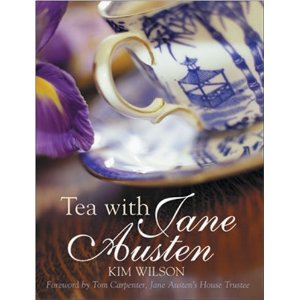
Wilson, Kim. Tea with Jane Austen. London: Frances Lincoln, 2011. The new edition with color illustrations – I saw this in London in May and didn’t pick it up [that old weight problem…] – saw Ms. Wilson [we played Whist together!] but did not get it signed … oh well… lovely book – everyone who loves tea and Jane should have this, both editions really…
_____. Flowers and Shrubs for Georgian and Regency Gardens, including a catalogue of Kitchen-garden Plants. The Author, 2011. 20 p. A great list for the gardener in me…
Noblesse Oblige: An Enquiry into the Identifiable Characteristics of the English Aristocracy. By Alan Ross, Nancy Mitford, Evelyn Waugh, et al. London: Hamish Hamilton, 1956. A must-have for your British collection, with requisite British “humour.”
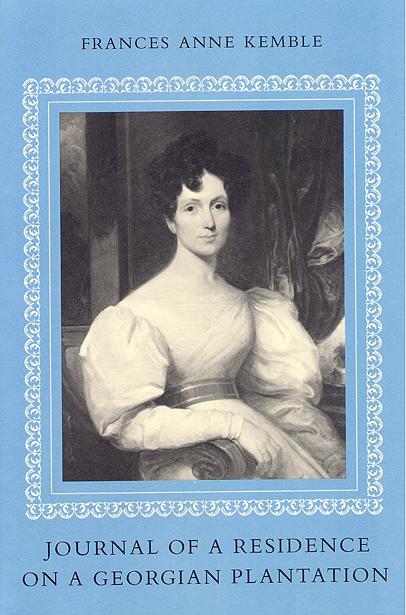
Kemble, Frances Anne. Journal of a Residence on a Georgian Plantation in 1838-1839. Athens: U of Georgia P, 1984, c1961. [originally published in 1863] – Kemble’s views on slavery in Georgia– compelling stuff I have long wanted to read…
Monaghan, David, ed. Emma: Contemporary Critical Essays. Macmillan, 1992. Didn’t have this one – now I do…
Wright, Lawrence. Clean & Decent: The Fascinating History of the Bathroom and the Water-Closet. Penguin, 2000, c1960. What every person with an interest in the most basic domestic matters should read… and the cover is really cool…
Vulliamy, C. E. English Letter Writers. London: Collins, 1945. Part of the Britain in Pictures series, which I collect…
Lefroy, Helen, and Gavin Turner, ed. The Letters of Mrs. Lefroy: Jane Austen’s Beloved Friend. Winchester, JAS, 2007. why not? more letters from Jane’s circle…
Adams, Jennifer. Little Miss Austen: Pride and Prejudice. Layton: Gibbs Smith, 2011. Because you have to have this if you collect everything to do with P&P…
Ashford, Lindsay. The Mysterious Death of Miss Austen. Dinas Powys,Wales: Honno, 2011. Ms. Ashford gave a most interesting talk at the AGM – brought this on the plane – almost done and will report on it soon!
Piggott, Patrick. The Innocent Diversion: Music in the Life and Writings of Jane Austen. Moonrise, 2011, c1979. A must-have, now reprinted…
Barron, Stephanie. Jane and the Canterbury Tale. New York: Bantam, 2011. Because this is her latest – Ms. Barron was there, but alas! I did not get this signed either… I have heard it is great…
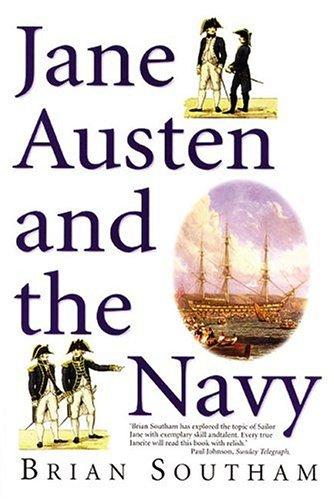
Southam, Brian. Jane Austen and the Navy. 2nd ed, rev. National Maritime Museum, 2005, c2000. Because I am shamed at not having read this – on my TBR pile, on top…
Rubino, Jane, and Caitlen Rubino-Bradway. Lady Vernon and Her Daughter. New York: Crown, 2009. Who cannot want more of Lady Susan?
Rees, Joan. Jane Austen: Woman and Writer. New York: St. Martin’s, 1976. A biography I do not have – has an emphasis on the juvenilia and letters…
McMullen, Lorraine. An Odd Attempt in a Woman: The Literary Life of Frances Brooke. Vancouver: U of British Columbia P, 1983. I recently read The Excursion and wanted to know more about this author who Jane Austen read…
Spacks, Patricia Meyer. Gossip. New York: Knopf, 1985. Should have been on my shelf years ago – imagine Emma without “gossip”!
A few finds on London, because one can never have enough:
Colby, Reginald. Mayfair: A Town within London. New York: Barnes, 1966.
Hobhouse, Hermione. A History of Regent Street. London: MacDonald and Jane’s, 1975.
Shepherd, Thomas, and James Elmes. London in the Nineteenth Century. New York: Mayflower, 1978. A reprint edition [originally published in 1827] but happy to finally have this… excellent pictures…
and of course this from my roomie – Jane Austen Made me Do It, by Laurel Ann Nattress – now signed and all! – not to mention a delightful read…
Oh dear, no space, no time…
Copyright @2011 Deb Barnum, of Jane Austen in Vermont
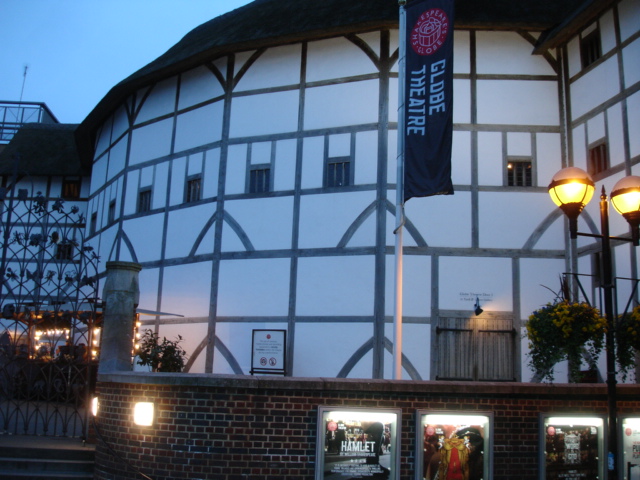
A visit to the Globe Theatre in Southwark is an essential stop in London. Close to its original site, re-built through the efforts of Sam Wanamaker, the Globe had its official opening season in June 1997. Tours are conducted year-round and the museum housing the Globe Exhibition is a must-see – I have taken this tour a few times but have never been in London during the show season, usually late April to early October [ click here for this year’s offerings ] – so I was thrilled this trip to finally see a performance, and a play I have neither read nor seen: All’s Well That Ends Well!
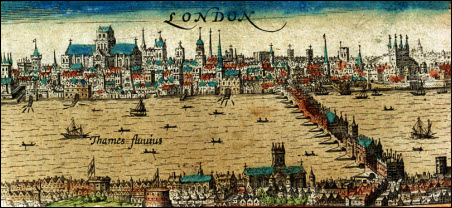
London 1611, John Speed map. Genmaps.
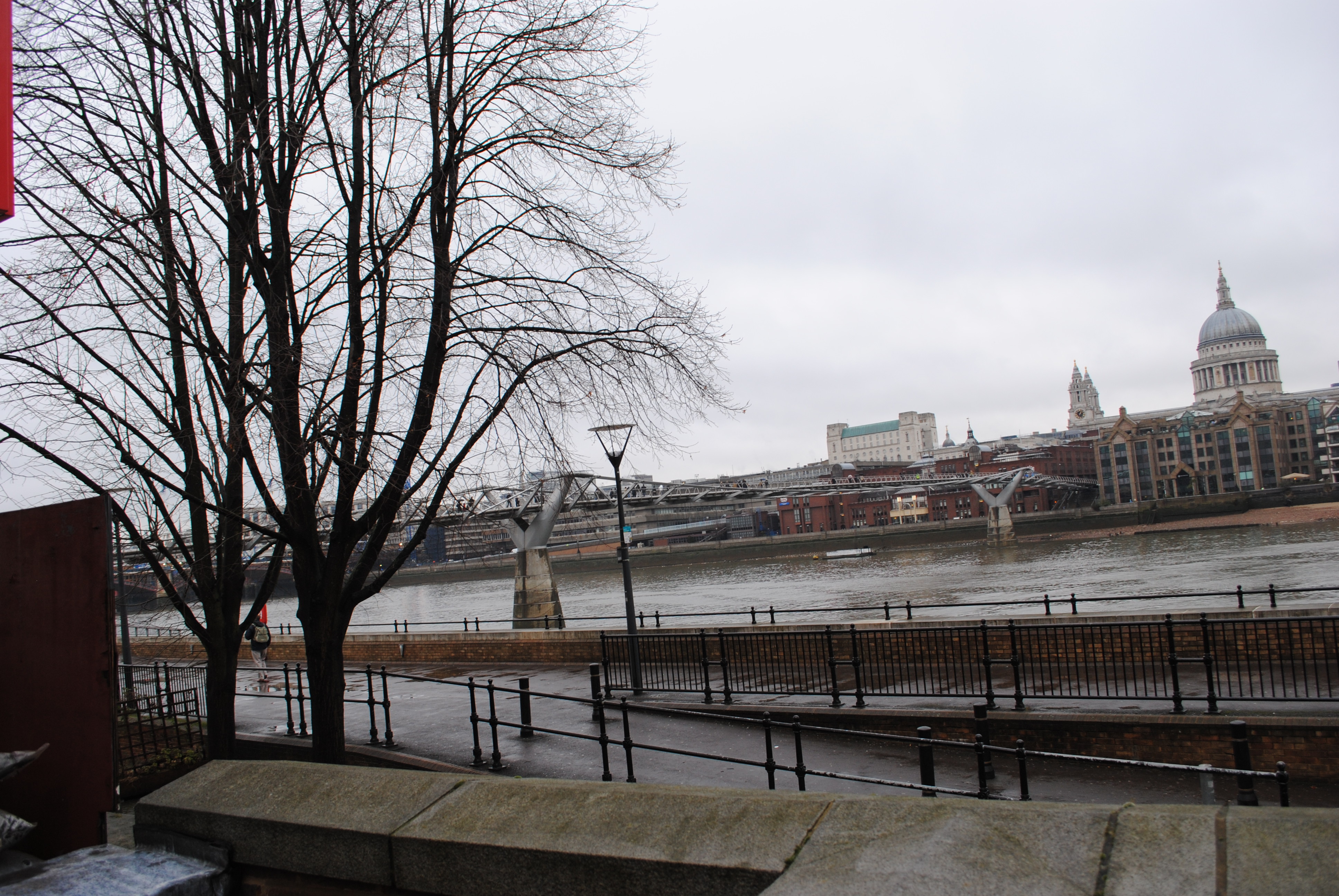
The best way to get there is to walk across the Millenium Bridge:
Millenium Bridge from the Globe – 2010 rainy visit!
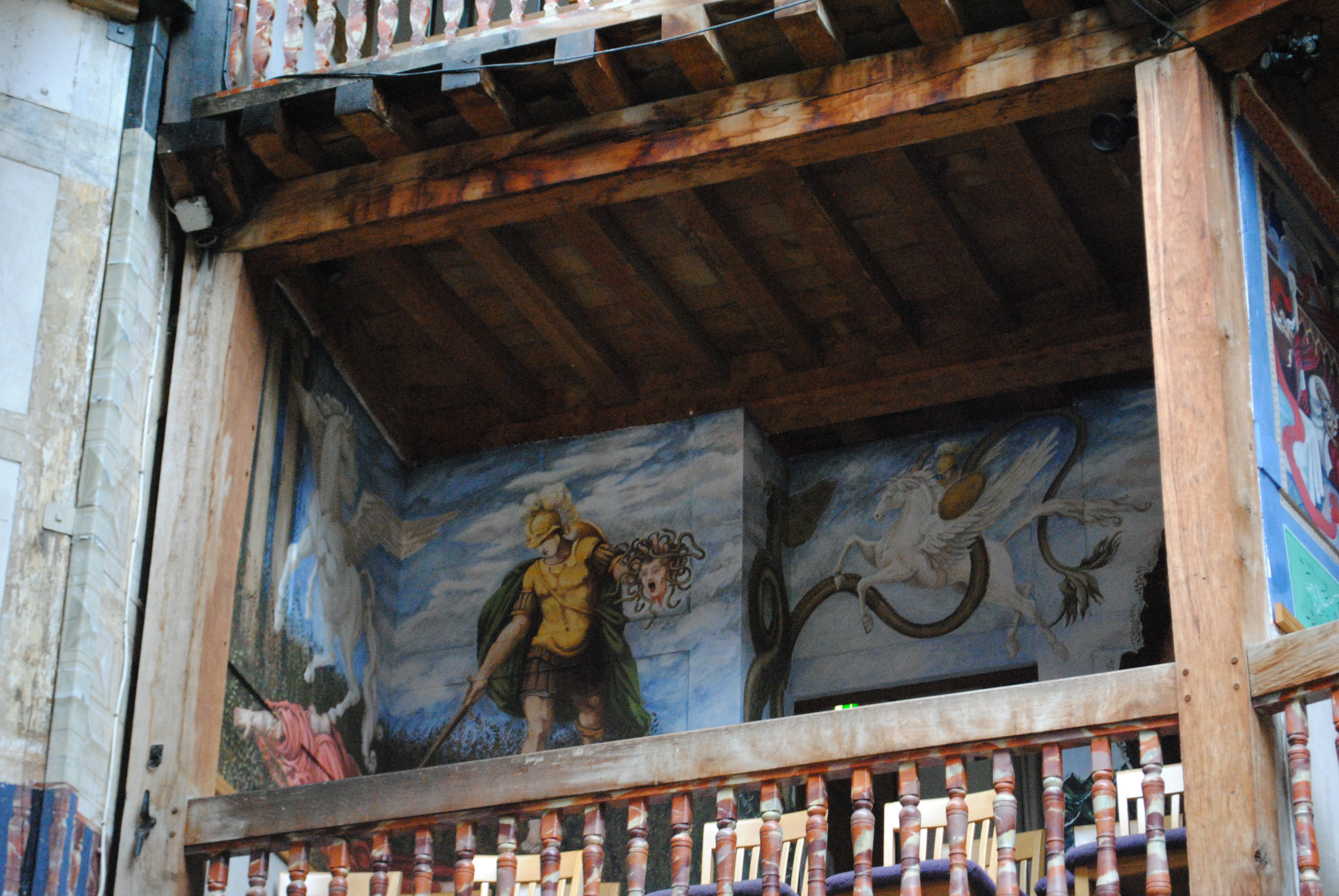
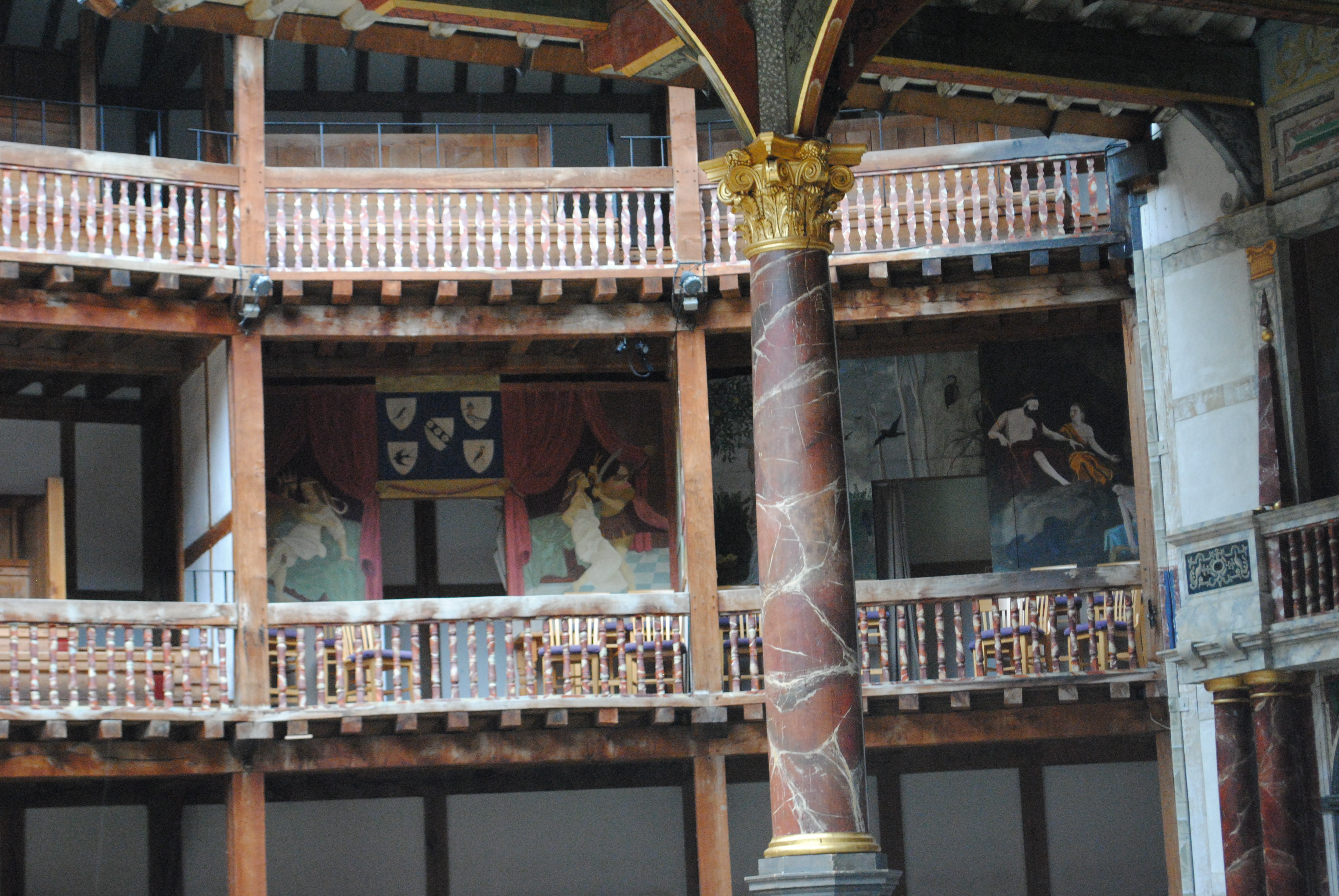
Globe Stage
We had fabulous seats, front row of the first balcony with the railing to lean on, looking down onto the stage and the lowly “pit-dwellers” [and cautioned to NOT drape anything or hold drinks over the rail for fear of droppings on the standing-room only crowd below] – and one piece of advice – either bring your own or rent a cushion – offered for £1 and worth every pence!]
The Seats! - the Globe Tour, Feb 2010, hence the coats
What an experience! – transported back into Shakespeare’s day –
the language, the costumes, the comedy! Though there was no such
Globe Theatre during Austen’s day, Shakespeare was produced in the
theatres and Austen was a regular theatre-goer when visiting Henry
and Eliza in London. Austen and Shakespeare is, however, book not
blog post material! – there are numerous allusions to Shakespeare in
her letters and writings [ Richard III, Macbeth, King John, Hamlet, Henry IV, The Merchant of Venice for starters…], but as heard in this
dialogue between Henry Crawford and Edmund Bertram in Mansfield Park,
we can perhaps get a sense of Austen’s true feelings about Shakespeare:
Crawford: “… I do not think I have had a volume of Shakespeare in my hand before since I was fifteen. I once saw Henry the Eighth acted, or I have heard of it from somebody who did, I am not certain which. But Shakespeare one gets acquainted with without knowing how. It is a part of an Englishman’s constitution. His thoughts and beauties are so spread abroad that one touches them everywhere; one is intimate with him by instinct. No man of any brain can open at a good part of one of his plays without falling into the flow of his meaning immediately.”
And Edmund replies: “No doubt one is familiar with Shakespeare in a degree from one’s earliest years. His celebrated passages are quoted by everybody; they are in half the books we open, and we all talk Shakespeare, use his similes, and describe with his descriptions; but this is totally distinct from giving his sense as you gave it. To know him in bits and scraps is common enough; to know him pretty thoroughly is, perhaps, not uncommon; but to read him well aloud is no everyday talent.”
[Mansfield Park, Vol. III, Ch. 3, p. 338]
But back to All’s Well That Ends Well: I turn to my trusty Shakespeare
text from college [we were using the G. B. Harrison text of 1952 in 1967!
yikes!] – now, I confess, quite torn and tattered, one of the few books I vigorously attacked with marginalia and underlining – but alas!, AWTEW remains pristine, a glaring anomaly, and I wonder what my professor had against this play?! This must be one of Shakespeare’s duds – a comedy
without humor, a romance without a hero. Indeed, this textbook says
[dated though it is!):
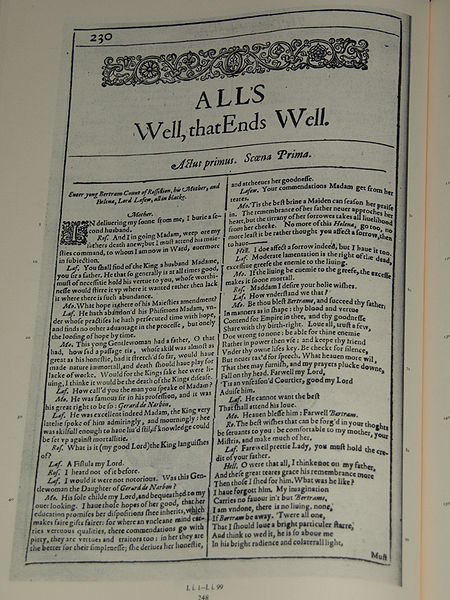
“The play seems never to have been popular. Scholars have found no contemporary mention of quotation. There is, therefore, no external fact by which the date of writing can be determined, nor is there any topical allusion or other clue within the play itself. The style is uneven, but in the best passages, both verse and prose, there is a maturity which shows that the play was written in the latter half of Shakespeare’s career…. [thus] a date is assigned somewhere between 1601 and 1604.” [Harrison, p. 1018.] It first appeared in print in the First Folio of 1623, after Shakespeare’s death in 1616.
First Folio - AWTEW - Wikipedia
Its original source was from Boccaccio’s Decameron, likely from William Painter’s collection of Italianate tales, The Palace of Pleasure (1566), Shakespeare following the tale of Giglietta de Narbone and Beltram de Rossiglione quite closely, with his usual added subplots of fools and
braggarts.
Basic story: Bertram, a young Count whose father has just died, leaves
home to attend the Court of the ailing King of France. Bertram bids adieu
to his mother, the delightful Countess* of Roussillon, and her ward, Helena,
the daughter of a well-respected physician. Helena is in love with Bertram,
but as she is of a lower class, her affection is not, cannot be reciprocated [though Bertram does carry Helena’s handkerchief with him for the entire play, all the while eschewing her love]. Conveniently the King of France is dying; Helena offers to cure him with the knowledge she has learned from her father; her prize if she is successful to choose a husband from his courtiers; the Countess sends her off to Paris, and the fun begins.
The King is cured, Helena chooses Bertram [the selection process is very funny!], he declines due to her low social status [he is a man on the way UP],
the King insists, they marry, and Bertram sends her home without a wedding night. He then heads off to war in Italy to make a name for himself, writing Helena that he will remain her husband in name only unless she can get the
ring from his finger and prove she is pregnant with his child [difficult with no wedding night…]. Helena leaves immediately for Italy, with full approval of
her now mother-in-law The Countess who loves her as a true daughter, and she discovers Bertram making merry with the young Italian lasses, one in particular named Diana. Helena tells her tale of woe to Diana and her mother and they agree to the infamous “bed-trick” whereby Helena will secretly appear to Bertram as his lover Diana – she requests his ring, she, or course, is left with child, her identity is revealed, Bertram confesses his true love after all, and as the saying goes, “all’s well that ends well”! [This very brief summary gives
short shift to the subplot of Bertram’s right-hand man, Parolles, a coward and
a traitor, blindly followed by Bertram until his true colors are revealed – and
all up to humorous par with Shakespeare’s other such braggarts.]
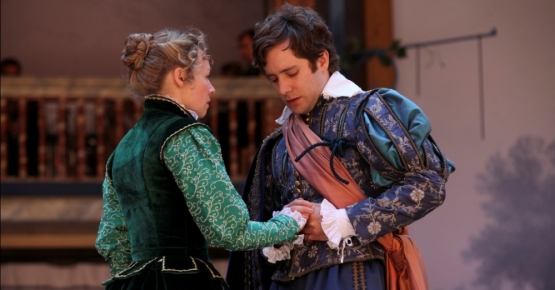
Helena (Ellie Piercy) & Bertram (Sam Crane) - Globe website
The play has been rarely acted, and has no glowing reviews, as the following example of Samuel Johnson attests:
The play has many delightful scenes, though not sufficiently probable, and some happy characters, though not new, nor produced by any deep knowledge of human nature. …I cannot reconcile my heart to Bertram, a man noble without generosity, and young without truth, who marries Helen [sic] as a coward, and leaves her as a profligate; when she is dead by his unkindness, sneaks home to a second marriage, is accused by a woman he has wronged, defends himself by falsehood, and is dismissed to happiness.
[Samuel Johnson, Notes on the Plays of Shakespeare, 1765] –
in Harrison, p. 1019.
But enjoyable it was, despite the hero being a bit of a jerk [does “Bertram’
have a familiar ring as a hero sorely lacking??!] – he does every thing to hurt Helena, is obsessed with his social status, chooses friends who are scoundrels, whines, whines and whines again, lies his way into the beds of maidens, and in the last five minutes, is, as Johnson says, “dismissed to happiness.”
But who needs a dashing romantic hero when one has The Globe in one’s periphery and a play with much lively wit in prose and verse [the King’s
timely “I am wrapped in dismal thinkings” nearly brought the roof down, though alas! no roof in sight! – I shall now use this phrase repeatedly and annoy all my friends!], and it all ends with a lengthy round of dancing – all characters participating in the raucous festivities where one is finally able to see Bertram as a more lively and affectionate lover. My traveling companion and I agreed – all plays should end in such a way! [we later in the week saw Wicked and were much disappointed that the characters came out only for a bow and did not break into ten minutes of dancing!]
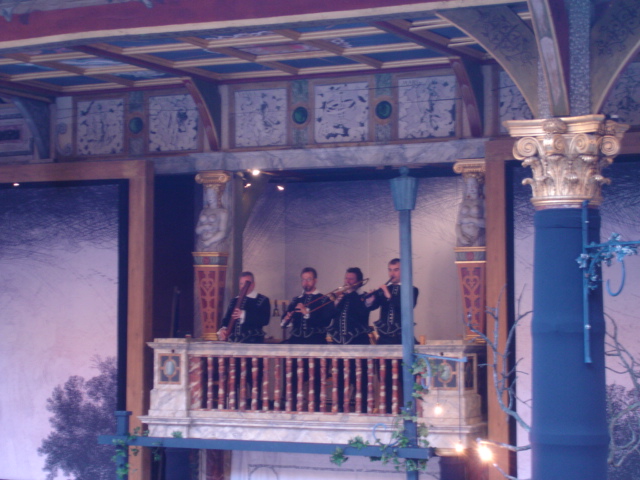
Musicians for AWTEW
* an Austen 6 degrees of separation stretch but worthy of note!:
The Countess is played by Janie Dee, who is also cast as Adam Dalgliesh’s lovely Emma in P. D. James’s Death in Holy Orders and The Murder Room – Emma of course being the perfect mate for her Austen-loving detective and recipient of a very Wentworth–worthy letter of Dalgliesh’s professed love!
Helena and the Countess (Janie Dee) - The Telegraph
A side note: the program guide is worth the price of admission! – with a short history of the Globe, Shakespeare in London, the background and history of the play to include its contemporary contexts all with pictures, photographs of the actors in rehearsal, extensive biographies of the cast, excellent ads, and the latest news at The Globe, a very exciting bit being the new indoor Jacobean Theatre which will allow winter performances. Hurray!
If you are in London this season, I can only emphatically say, get thee hence to The Globe! – this season’s offerings besides AWTEW are Hamlet, As You Like It, Much Ado About Nothing, Doctor Faustus, Anne Boleyn, The Globe Mysteries, and The God of Soho – see the link here for more information.
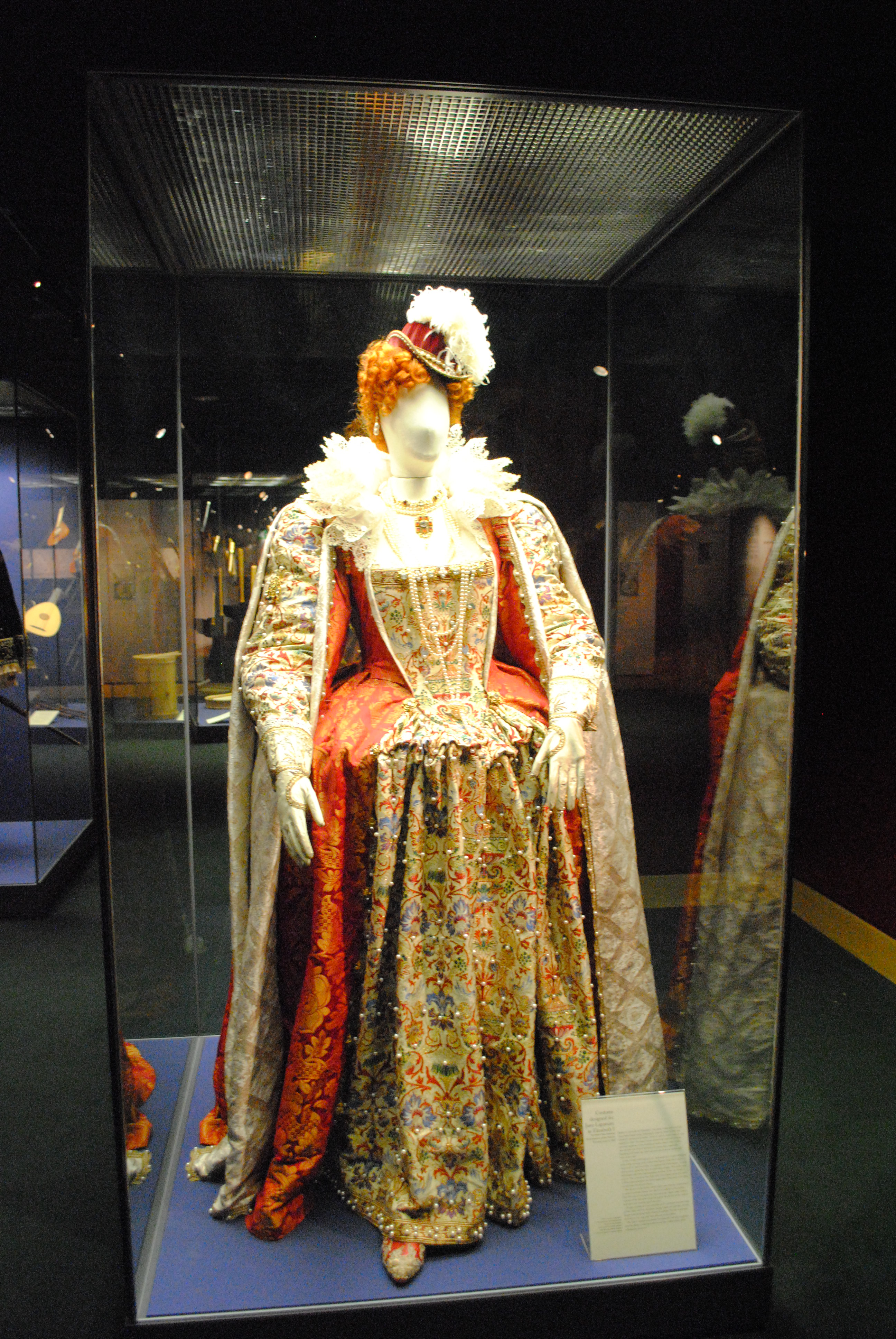
From The Globe Exhibition:
Elizabeth I dress
FurtherReading: [a very brief smattering of Shakespeare]
Shakespeare, William. Shakespeare, the Complete Works. Ed. G. B. Harrison. New York: Harcourt, 1952.
Shakespeare’s Globe Theatre: http://www.shakespearesglobe.com/ visit for this season’s schedule, the shop, membership, tour information, etc…































 Jane Austen in Vermont