The JASNA AGM in Montreal was quite wonderful – five days immersed in Mansfield Park! – Fanny Price and Jane Austen were celebrated in style and received their just due in attention and adoration… The Montreal-Quebec Region outdid themselves in making us all comfortable [much more than “tolerable”!], entertained, and enlightened! I haven’t had a chance to post anything but start here with my annual compilation of book purchases at the Emporium [Jane Austen Books, Traveller’s Tales from Picton Ontario, and The Word Bookstore in Montreal] – successful as always with finding several goodies at the book stalls! – in no particular order…
1. Mudrick, Marvin. Jane Austen: Irony as Defense and Discovery. Berkeley: U of California P, 1968. [originally published in 1952 by Princeton UP].
One of the classic works of Austen literary criticism – I’ve always borrowed this from the library – now happy to have my own copy. Mudrick was one of the earliest to appraise the ironic aspects of Jane Austen – “her ironic detachment that enabled her to expose and dissect, in novels that are masterpieces of comic wit and brilliant satire, the follies and delusions of eighteenth-century English society.” In his preface, Mudrick writes “this book began as an essay to document my conviction that Emma is a novel admired, even consecrated, for qualities which it in fact subverts or ignores.” – and he goes on from there to apply his theory to all the novels, juvenilia and minor works. A must have for your Austen collection…
2. Mrs. Beeton’s Book of Needlework, Consisting of Descriptions and Instructions, Illustrated by 600 Engravings. London: Bounty Books, 2007.
A facsimile of the original 1870 edition by Ward, Lock and Tyler. Just because I didn’t have this, and do quite adore anything my dear Mrs. Beeton [despite being in the wrong period].
3. Fleishman, Avrom. A Reading of Mansfield Park: An Essay in Critical Synthesis. Minneapolis: U of Minnesota P, 1967.
One of the few critical works just on an Austen novel, and in this year of celebrating MP, I wanted to add this to my collection… I have not read it other than in excerpts in other essays.
4. Favret, Mary A. Romantic Correspondence: Women, Politics and the Fiction of Letters. Cambridge: Cambridge UP, 1993.
Has a chapter “Jane Austen and the Look of Letters” which examines the letters in Austen’s fiction as well as her real-life correspondence. A must-have…
5. Lamb, Charles. The Book of the Ranks and Dignities of British Society. London Jonathan Cape, 1924.
A reprint of Lamb’s 1805 edition published by William Henry for Tabart & Co. Includes 8 coloured plates and 16 in monochrome [the original edition has 24 in color]. I couldn’t resist, as you can see from this plate of “A Marquis.” The original seems to range upwards from $350.
*********
6. Tristram, W. Outram. Coaching Days and Coaching Ways. Illus. Hugh Thomson and Herbert Railton. London: Macmillan, 1894.
A 3rd printing of the 2nd edition [first edition published in 1888] – another must-have for anyone with an interest in travel and the carriages of Austen’s period – with the added plus of Thomson’s and Railton’s 214 illustrations. [You also must try to say the author’s name 10 times very fast …]
From an exhibition during the Overton Regency Sheep Fair, 2008. With many illustrations of ephemera from the time. Overton was near Steventon and Basingstoke; Austen would have walked there and mentions it in her letters.
8. The Knight Family Cookbook; Preface by Richard Knight. Introd. Gillian Dow. Chawton House Press, 2013.
A Facsimile edition of the handwritten cookbook of the Knight Family, never published but dated circa 1793. Who can resist this family treasure so you too can make some of the recipes that were in use at Chawton House and Godmersham Park during Jane Austen’s time:
To Make Plumb Porridge (p. 70)
To Make Cracknails (p. 51)
To Make Hedge-Hog-Cream (p. 35)
To Make Tansy without Frying (p. 28)
To dress a Codds-Head (p. 111)
To Pickle Pigeons (p. 193)
There is even a handwritten index, but alas! I find nothing to help make Mr. Woodhouse’s famous gruel – just as well I think!
This book was published by subscription; i.e. if you had made a donation to Chawton House Library as a subscriber (just as Jane Austen subscribed to Frances Burney’s Cecilia), your name will be listed on the “subscriber” page. More information on this at the CHL website. Their next book is The Duties of a Lady’s Maid; with directions for conduct, and numerous receipts for the toilette (1825). Make a donation if you can and see your name in print!
9. Simo, Melanie Louise. Loudon and the Landscape: From County Seat to Metropolis, 1783-1843. New Haven: Yale UP, 1988.
John Claudius Loudon (1783-1843) was the designer of England’s first public park and inventor of the means to construct curvilinear glasshouses, and the first landscape gardener to address the problems of the modern city. A must-have study to have on your shelves next to your Humphry Repton, Capability Brown, and others. Illustrated with maps, photographs, and drawings.
10. Prochaska, Alice and Frank Prochaska, eds. Margaretta Acworth’s Georgian Cookery Book. London: Pavilion / Michael Joseph, 1987.
The cookery book of a London housewife of the Georgian period, of which 90 recipes are transcribed and “updated” with modern ingredients and modern cooking practices by the Prochaskas. Lovely black and white and full-page color illustrations. The introduction offers biographical background on Acworth.
11. Lucas, E. V. Mr. Punch’s County Songs. Illus. Ernest H. Shepard. London: Methuen, 1928.
A delightful book of poems by Lucas on each county in England with each on the recto, verso is blank. Shepard’s [of Winnie-the-Pooh fame] drawings get you into the spirit of each place, and the poems tell of history and story.
Here is the page on Austen’s own Hampshire
But I bought this solely for its page on London:
Though a Wren built St. Paul’s, sacerdotal and grey,
That fame is a stronghold of pigeons today:
They bill there and coo there and bring up their brood,
And swarm on the pavement at lunchtime for food.
…. Etc.
**********
12. Archbold, Rick. Last Dinner on the Titanic. Recipes by Dana McCauley. Introd. Walter Lord. New York: Hyperion, 1997.
Wonderful illustrations of the Titanic interior and the various recipes from the last meal. Why you ask? Well, I have been obsessed with the Titanic since I was a little girl. Both my parents emigrated from England as children, but my father was 11 years old in 1912, when his entire family boarded a ship to take them to America only a few months after the Titanic had taken its maiden and tragic voyage. I always thought that if my father had been on the Titanic I would not exist – I also have marveled at how brave they all were to do this crossing… so hence I have collected various Titanic things for years. I do not have this book and especially like it because it is signed by the author…
13. The Infant’s Grammar, or a Picnic Party of the Parts of Speech. London: Scholar Press, 1977. Reprint of the original 1824 edition by Harris and Son.
This picture says it all:
*******
14. Rocque’s Map of Georgian London, 1746. Colchester, Essex, UK: Old House, 2013.
First published in 1746, it extends from Marylebone to Bow and from Vauxhall to Knightsbridge and Hyde Park. Reproduced here in four detailed sheets, it gives a fascinating glimpse of Georgian London in the early industrial age and is a perfect research tool for the historian and genealogist. As well as over 5,500 street and place names, the survey also includes: Markets, churches, barracks, parks, bridges, hospitals, workhouses, schools, prisons, asylums, theatres, inns and much more.
*********
15. Crow, Donna Fletcher. A Jane Austen Encounter (#3 The Elizabeth and Richard Mysteries). Boise: StoneHouse Ink, 2013.
I haven’t read the previous two mysteries (about Dorothy L. Sayers and Shakespeare), but this one is about the married professors Elizabeth and Richard on a vacation trekking through Jane Austen country – they encounter murder and mayhem and a missing letter about The Watsons. Can’t wait to read this one…
16. Jones, Will. How to Read Houses: A Crash Course in Domestic Architecture. New York: Rizzoli, 2014.
I picked this up at the Musee des Beaux-Arts Montreal shop – a compact little guide to architecture with photographs and drawings and enlightening text to answer all your questions about the differences between Queen Ann and Georgian and Federal and all the various decorations…
17. First Day of Issue – Royal Mint coin commemorating Charles and Diana’s wedding with stamps; and another First Day of Issue from the Falkland Islands with new stamps:
–
***********
So, all in all, a goodly haul – this time I didn’t have to worry about luggage weight, only crossing through immigration from Canada into Vermont. They only seem to ask about alcohol, cigarettes and fruit! so Jane Austen passed through with nary a glitch… now to find room on the bookshelves and the added dilemma of time for reading…
Over at Sarah Emsley’s blog tomorrow, I will be posting some thoughts on Mansfield Park and the issue of slavery by looking at Sir Thomas’s sentiments on the subject. [This is now posted at Sarah’s blog: Jane Austen’s “dead silence” – or, How Guilty is Sir Thomas Bertram?]. Jane Austen gives us little to go on and there has been much conjecture as to Sir Thomas’s guilt as a slaver, as well as to Austen’s own sentiments about slavery and the slave trade. As a starting place, we must begin with the text itself, and I compile here all the references to the slave trade, slavery, Antigua and the West Indies. Let me know if I have missed any – and please share your thoughts on what Austen may have been saying to her readers about slavery, a hotly-debated topic at the time of her writing Mansfield Park. Why does she introduce it into this novel?
Mansfield Park and Slavery: specific references to the Slave Trade, Slavery, Antigua.
[Note: citations are to Chapman]
1. …as his [Sir Thomas’s] own circumstances were rendered less fair than heretofore, by some recent losses on his West India Estate. [Narrator, 24]
2. “Why, you know Sir Thomas’s means will be rather straitened, if the Antigua estate is to make such poor returns.” [Mrs. Norris to Lady Bertram who responds “Oh! that will soon be settled. Sir Thomas has been writing about it, I know.” 30.]
3. Sir Thomas found it expedient to go to Antigua himself, for the better arrangement of his affairs… probability of being nearly a twelvemonth absent.[Narrator, 32]
4. …the travellers’ safe arrival in Antigua after a favourable voyage. [Narrator, 34: with an account of Mrs. Norris’ hysteria.]
5. …unfavorable circumstances has suddenly arisen at a moment when he was beginning to turn all his thoughts towards England, and the very great uncertainly in which every thing was then involved… [Narrator, 38. Young Tom is sent home alone, Mrs. Norris’s hysterics again of “foreboding evil” and “dreadful sentiments.”]
6. Letters from Antigua… his business was so nearly concluded as to justify him in[returning home by November]… [Narrator, 107.]
7. “…such an absence not only long, but including so many dangers.”[Edmund on his father in Antigua, to Mary Crawford, 108.]
8. Sir Thomas was to return in November, and his eldest son had duties to call him earlier home. [Narrator, 114.]
9. “It would show a great want of feeling on my father’s account, absent as he is, and in some degree of constant danger….”[Edmund to all on acting, 125.] – and Tom responds [one of Austen’s funnier moments]: “.. for the expectation of his return must be a very anxious period to my mother… it is a veryanxious period for her.” [Tom, 126.] – “…each looked towards their mother… just falling into a gentle doze…”!
10. “…I have been slaving myself till I can hardly stand…” [Mrs. Norris to Fanny, 166.]
11. …he was grown thinner and had the burnt, fagged, worn look of fatigue and a hot climate…[Narrator giving us Fanny’s thoughts on first seeing Sir Thomas, 178.]
12. His business in Antigua had latterly been prosperously rapid, and he came directly from Liverpool… [Narrator recounting Sir Thomas’ travel, 1787.]
13. …the alarm of a French privateer…[Narrator continuing Sir Thomas’ telling of his travels – such a vessel would have been armed, 180.]
[East Indiaman HMS Kent battling Confiance, a privateer vessel commanded by French corsair Robert Surcouf in October 1800, as depicted in a painting by Ambroise Louis Garneray – Wikipedia]
14. “I love to hear my uncle talk of the West Indies. I could listen to him for an hour together…” [Fanny to Edmund, 197.]
15. “But I do talk to him more that is used. I am sure I do. Did not you hear me ask him about the slave trade last night?” [Fanny to Edmund, 198.]
“I did – and was in hopes the question would be followed up by others. It would have pleased your uncle to be inquired of farther.” [Edmund to Fanny]
“And I longed to do it – but there was such a dead silence! And while my cousins were sitting by without speaking a word, or seeming at all interested in the subject, I did not like – I thought it would appear as if I wanted to set myself off at their expense, by shewing a curiosity and pleasure in his information which he must wish his own daughters to feel.” [Fanny, 198. Edmund you will notice proceeds to only talk of Mary Crawford…]
Slave ship diagram-1790-wikipedia
16. “…He [Edmund] knows that human nature needs more lessons that a weekly sermon can convey, and that if he does not live among his parishioners and prove himself by constant attention their well-wisher and friend, he does very little either for their good or his own.” [Sir Thomas to Henry Crawford and Edmund, 198.]
17. Sir Thomas …prolonged the conversation on dancing in general, and was so well engaged describing the balls of Antigua… [Narrator, 251.]
Sir Thomas talking with William and Fanny, by C. E. Brock [Mollands]
18. ‘Advice’ was his word, but it was the advice of absolute power… shewing her persuadableness.[Narrator on Sir Thomas thoughts on sending Fanny to bed, 280.]
“Am I to understand,” said Sir Thomas, “that you mean to refuse Mr. Crawford?” ~ Vol. III, Ch. I [C. E. Brock – Mollands]
19. The Narrator’s words describing Fanny’s feelings about a marriage to Henry: revolt, painful alarm, terror, formidable threat, sudden attack, misery, wretched feelings, aching heart, distressing evil. [Narrator, 357ff.]
20. But he [Sir Thomas] was master at Mansfield Park. [Narrator, 370.]
21. Henry Crawford as an absentee landlord at Everingham, with an “agent of some underhand dealing.” [Narrator on Fanny’s thoughts about Henry going to his estate, 404.]
***************
Quotes from other works:
–Emma: this very telling dialogue between Jane Fairfax and Mrs. Elton [Vol. II, Ch. 17, p. 300-01)
“When I am quite determined as to the time, I am not at all afraid of being long unemployed. There are places in town, offices, where inquiry would soon produce something — offices for the sale, not quite of human flesh, but of human intellect.”
“Oh! my dear, human flesh! You quite shock me; if you mean a fling at the slave-trade, I assure you Mr. Suckling was always rather a friend to the abolition.”
“I did not mean, I was not thinking of the slave-trade,” replied Jane; “governess-trade, I assure you, was all that I had in view; widely different certainly, as to the guilt of those who carry it on; but as to the greater misery of the victims, I do not know where it lies.”
*********
Persuasion: we have Captain Wentworth in the West Indies and Santa Domingo; Mrs. Croft in the East Indies and Bermuda and Bahama; Mrs. Smith has an Estate in the West Indies.
“So wretched an example of what a sea-faring life can do” ~ Vol. I, Ch. III – C. E. Brock [Mollands]
***********
Sanditon: we have the wealthy Miss Lambe, a mulatto, briefly mentioned: “A Miss Lambe too! A young West Indian of large fortune…”– and whatever Jane Austen intended for her, we cannot know…
Lisa Brown will present an enlightening talk on how the Royal Navy figures in Mansfield Park and Persuasion. We will learn about the uniforms, the ships, the rating system, prize money, and more; as well as discover how very knowledgeable Jane Austen was about the Royal Navy because of her brothers’ involvement. Various uniforms will be on display – but, alas! without a Captain Wentworth in sight!
A. Marie Sprayberry investigates why Jane Austen wrote of the Princess of Wales in 1813: “Poor Woman, I shall support her as long as I can, because she is a Woman, & because I hate her Husband.” The Prince Regent brazenly personified the three themes of sex, money, and power – as long as the money was someone else’s! But did Jane Austen have particular reasons for disdaining him? And how might her views of the Prince have influenced her work? Photos of contemporary royal commemorative china and medals will illustrate the talk, all from Marie’s collection.
*Lisa and Marie are co-regional coordinators of the Syracuse Region; Lisa also co-chairs the Rochester Region, is an ECD teacher, owns a Regency era costume business, and has given various talks on the Royal Navy and Regency fashion; she works as a proof reader. Marie has spoken to JASNA on the Prince Regent and will be speaking at the Montreal AGM on “Fanny Price as Fordyce’s Ideal Woman?” She works from her Syracuse home for a NYC-based publisher.
Free & open to the public ~ Light refreshments served
Not sure about anyone else out there, but I’ve always thought Tom Bertram as nearly a throwaway character – other than the plot device of his being the eldest son and heir, which sort of messes everything up for Edmund and Mary, for what purpose is he in Mansfield Park? He leaves the action early on to go to Antigua with Sir Thomas, and like Mary Crawford, we soon forget all about him … He brings grief to the Park with his profligate ways, but as a character, who is he really?
On this latest re-read of MP, I decided to pay close attention to Mr. Bertram, and find to my surprise and delight that he is quite the Talker! – He babbles on incessantly about all manner of things, often for a laugh-out-loud moment! Who knew MP was so funny??
I give here one such example; it is a long passage but just read it through – I promise a few laughs! – and then I wonder what your thoughts are about Tom – tell me in the comments below…
The scene: Fanny at her first Ball, a very spontaneous Ball pulled together at Mansfield Park – [Vol. I, Ch. xii]
Fanny could listen no farther. Listening and wondering were all suspended for a time, for Mr. Bertram was in the room again; and though feeling it would be a great honour to be asked by him, she thought it must happen. He came towards their little circle; but instead of asking her to dance, drew a chair near her, and gave her an account of the present state of a sick horse, and the opinion of the groom, from whom he had just parted. Fanny found that it was not to be, and in the modesty of her nature immediately felt that she had been unreasonable in expecting it. When he had told of his horse, he took a newspaper from the table, and looking over it, said in a languid way, “If you want to dance, Fanny, I will stand up with you.” With more than equal civility the offer was declined; she did not wish to dance. “I am glad of it,” said he, in a much brisker tone, and throwing down the newspaper again, “for I am tired to death. I only wonder how the good people can keep it up so long. They had need be all in love, to find any amusement in such folly; and so they are, I fancy. If you look at them you may see they are so many couple of lovers—all but Yates and Mrs. Grant—and, between ourselves, she, poor woman, must want a lover as much as any one of them. A desperate dull life hers must be with the doctor,” making a sly face as he spoke towards the chair of the latter, who proving, however, to be close at his elbow, made so instantaneous a change of expression and subject necessary, as Fanny, in spite of everything, could hardly help laughing at. “A strange business this in America, Dr. Grant! What is your opinion? I always come to you to know what I am to think of public matters.”
“My dear Tom,” cried his aunt soon afterwards, “as you are not dancing, I dare say you will have no objection to join us in a rubber; shall you?” Then leaving her seat, and coming to him to enforce the proposal, added in a whisper, “We want to make a table for Mrs. Rushworth, you know. Your mother is quite anxious about it, but cannot very well spare time to sit down herself, because of her fringe. Now, you and I and Dr. Grant will just do; and though we play but half–crowns, you know, you may bet half–guineas with him.”
“I should be most happy,” replied he aloud, and jumping up with alacrity, “it would give me the greatest pleasure; but that I am this moment going to dance.” Come, Fanny, taking her hand, “do not be dawdling any longer, or the dance will be over.”
Fanny was led off very willingly, though it was impossible for her to feel much gratitude towards her cousin, or distinguish, as he certainly did, between the selfishness of another person and his own.
“A pretty modest request upon my word,” he indignantly exclaimed as they walked away. “To want to nail me to a card–table for the next two hours with herself and Dr. Grant, who are always quarrelling, and that poking old woman, who knows no more of whist than of algebra. I wish my good aunt would be a little less busy! And to ask me in such a way too! without ceremony, before them all, so as to leave me no possibility of refusing. That is what I dislike most particularly. It raises my spleen more than anything, to have the pretence of being asked, of being given a choice, and at the same time addressed in such a way as to oblige one to do the very thing, whatever it be! If I had not luckily thought of standing up with you I could not have got out of it. It is a great deal too bad. But when my aunt has got a fancy in her head, nothing can stop her.”
*******************************
The above scene is depicted by C. E. Brock in the Mansfield Park of 1908 [Mollands]
There are more such scenes with Tom I shall post on – but I just love this one, with Fanny sitting there and nervously thinking that he must ask her to dance, but he just goes on and on about a sick horse and Mrs. Grant in need of a proper lover…
Do you have a favorite scene that stars Tom Bertram?? Or, who is your favorite Tom Bertram at the Movies? My personal favorite, I must confess, is…..
…. James Purefoy as Tom Bertram – Mansfield Park (1999) [Pinterest]
I have something in hand – which I hope on the credit of P. & P. will sell well, tho’ not half so entertaining.(Ltr. 86: 3 – 6 July 1813, to Capt. Francis Austen)
*****************
Dear Gentle Readers: This history of the publishing of Mansfield Park serves as an introduction to Sarah Emsley’s series “An Invitation to Mansfield Park,” which will begin on May 9th on her blog. As we celebrate this bicentenary of Austen’s third novel, published in May 1814, it seems only right to begin at the beginning, from when Austen first makes mention of Mansfield Park in her letters and its subsequent road to publication, to the later printings and early illustrated works. I am posting it here because of its length and number of illustrations – and Sarah will be re-blogging it immediately. Please continue to visit her blog for the interesting posts she has lined up for the next several months from various Jane Austen scholars and bloggers – a worthy tribute as we all give Mansfield Park the undivided attention it deserves!
~
The Publishing of Mansfield Park
We have Cassandra’s word that Jane Austen began Mansfield Park “sometime around February 1811 and finished soon after June 1813.” Letters during this time [you can read all the letters relating to Mansfield Park here] indicate that at least Cassandra was already very familiar with this work-in-progress – a few of the letters show how diligent Austen was in checking her facts about ordination and hedgerows, ships of the Royal Navy, and correct terminology for the Gibraltar “Commissioner.”
Early readers of the letters took her reference to “Ordination”
Now I will try to write of something else; – it shall be a complete change of subject – Ordination. (Ltr. 79: 29 Jan 1813)
to mean this was the theme of her next book, i.e. Mansfield Park. It is now generally accepted that she was just acknowledging her request in a previous letter for information on the process of ordination – to get it right about Edmund. (But see Michael Karounos, “Ordination and Revolution in Mansfield Park.” SEL 44.4 (2004): 715-36, for a discussion of what Austen meant by this word “ordination” and how it is indeed the theme of the novel.)
Henry Austen
[image: JASNA.org / Zohn]
Henry has this moment said that he likes my M. P. better & better; – he is in the 3d vol. – I believe now he has changed his mind as to foreseeing the end; – he said yesterday at least that he defied anybody to say whether H.C. would be reformed, or would forget Fanny in a fortnight.(Ltr. 98: 8 Mar 1814).
…indeed the question that has been plaguing readers ever since!
Austen is traveling with Henry to London in March 1814 to negotiate its publication with Thomas Egerton; Henry is reading the manuscript for the first time, i.e. he was not in on the story during its composition over the past two years, as Cassandra was – Henry did not see it until it was ready for the press. It is also telling that her primary interest is Henry’s opinion concerning the ending and what happens with Henry Crawford!
Mansfield Park was being written at the same time Austen was revising Pride & Prejudice for publication [published in January 1813] – Janet Todd makes note of this allusion to the first sentence of P&P: “…there certainly are not so many men of large fortune in the world, as there are pretty women to deserve them.” (Todd, 75). Was Austen perhaps making a sly nod to her previous novel? MP is also the first work to be entirely written after settling in Chawton in 1809. The secret of her authorship is already out, thanks largely to Henry, though she will continue to publish anonymously. She writes to her brother Francis in September 1813:
Francis Austen – wikipedia
…the Secret has spread so far as to be scarcely the Shadow of a secret now – & that I beleive whenever the 3d appears, I shall not even attempt to tell Lies about it. – I shall rather try to make all the Money than all the Mystery I can of it… (Ltr. 90: 25 Sept 1813)
The internal chronology has created its own controversy among scholars and readers – it is an especially important issue when deciphering her references to slavery (the topic of another post!). John Wiltshire in his introduction to The Cambridge Edition of Mansfield Park (2005) wonders why this book took so long to write (Feb 1811-June 1813), longer than her other works, and why the nine-month delay in getting it to London for publishing (March 1814). He speculates that “Mansfield Park is a novel carefully revised and perhaps thoroughly rewritten” and this accounts for the discrepancies in time, what he calls the “double-time scheme.” (Wiltshire, xxxi). But the delay could also be attributed to the long illness of Henry’s wife Eliza and her death in April of 1813. (Wiltshire, xxvii). [See links below for the chronologies.]
**********
This detective work on the composing of Mansfield Park is so very interesting, and essential to interpreting Austen’s intent in this controversial and often misunderstood novel. We are left largely with speculation and a host of unanswered questions. But today I am going to talk about the physical object, the book Mansfield Park as part of our material culture – how it came to be, what it looked like, who bought it and what it cost, followed by a brief introduction to the later printing history that included the American, illustrated and foreign editions.
~
The 1st Edition:
Mansfield Park title page – 1st edition
Like her S&S and P&P, Mansfield Park was published by Thomas Egerton in 1814. The title page states: “By the Author of ‘Sense & Sensibility,’ and ‘Pride & Prejudice.’” Writing to Francis on March 21, 1814, she hopes that
Perhaps before the end of April, Mansfield Park by the author of S&S. – P.&P. may be in the World. Keep the name to yourself. I sh’d not like to have it known beforehand.(Ltr. 100)
But it is not advertised until May 9, 1814, in The Star, and again on May 14, and further noted in The Morning Chronicle of May 23 and 27. Published on commission – Austen retained the copyright, paid for the costs of paper, printing, and advertising; the publisher distributes to the trade and takes about 10% of the profits – the author loses if the book does not sell well. This third novel came into the world in a run of about only 1250 copies, in 3-volumes, and sold for 18 shillings in boards. And it sells well – Austen writes in November of 1814 “You will be glad to hear that the first Edit. of M.P. is all sold.” (Ltr. 109). As with all the finished novels, excepting the cancelled chapters of Persuasion, there is no manuscript.
~
*What did it look like?
Pride and Prejudice 1st ed. – National Library of Scotland
The popular 3-volume format, called a “triple-decker” or a “three-decker,” was typical for novels of the day – what Susan Wolfson calls “a reader-friendly form for sequential purchasing and borrowing and family sharing.” (Wolfson, 112). This image is of a nearly perfect first edition of Pride & Prejudice at the National Library of Scotland – Mansfield Park would have looked like this, bound in blue-gray paper boards, with gray-brown or off-white paper backstrips and white paper spine labels. As Egerton engaged two different printers, many variations in quality and type result in the text. The volumes are 12mo, or duodecimo [about 7-8 inches], i.e. the original printed sheet has been folded four times to its constituent 12 leaves, resulting in 24 pages with about 23 lines to the page. [Note that P&P had 23 lines to the page; MP had 25 lines]
R. W. Chapman, editor of the Oxford complete works in 1923, writes in his memoir The Portrait of a Scholar:
“Those who have once read P&P in three slim duodecimos, with a ha’porth [= a halfpennyworth] of large type to the page, will not easily reconcile themselves to the inelegance of the modern reprint, close printed in one crowded volume.”
…as you can see from this first page of Pride & Prejudice:
But Mansfield Park was printed on much cheaper paper than P&P, with 25 lines to the page. Chapman, who relied on the 2nd edition of MP for his Oxford works, said that “of all the editions of the novels, the 1st edition of Mansfield Park is by far the worst printed.”(Chapman, xi-xii). Much scholarly debate has centered around the errors in the text, especially the lack of consistency in the spelling, grammar, and punctuation. We are reminded of Henry Tilney’s complaint to Catherine Morland about women letter-writers, where there is “a general deficiency of subject, a total inattention to stops, and a very frequent ignorance of grammar,” a criticism often directed at Austen herself! (I discuss this further under the 2nd edition below).
~
*Who bought copies?
-At a cost of 18s in boards – remember: 20 shillings = a pound – the average person earned maybe 15-20 pounds / year – so who was actually buying books? [See Wolfson on this]
½ purchased by circulating libraries
½ were purchased by the titled gentry and upper middle classes, who would often rebind the volumes in leather for their private libraries, an example here:
– There were no contemporary reviews of Mansfield Park. Wiltshire rather humorously compares this to the treatment of Fanny Price in the tale: “neglected, passed over, misunderstood, sneered at and ill-used” (Wiltshire, lvii). This lack of notice certainly distressed Austen. She kept a list of “Opinions of Mansfield Park” from family and friends (she later did the same for Emma) – a selection first appeared in James Edward Austen-Leigh’s Memoir of Jane Austen (1870), and all were published in Chapman’s edition of “Plan of a Novel” in 1926, and later reprinted in the Minor Works volume in 1954. You can read them here at Jane Austen’s Fiction Manuscripts in their original and transcribed form:
As you can see, the commentary from the time differs little from today: better than P&P / not as good as P&P; Fanny not likeable / Fanny the best; love Mary Crawford / hate Mary Crawford; Will Fanny marry Henry or Edmund?; Not enough love between Hero and Heroine, etc., etc. – all the same arguments we go round and round with! I especially like Cassandra who “delighted much in Mr. Rushworth’s stupidity,” and Mrs. Austen: “My Mother — not liked it so well as P. & P. — Thought Fanny insipid. – Enjoyed Mrs. Norris.”
Austen was later piqued by the 1816 review of Emma in the Quarterly Review (March 1816), and now known to be by Walter Scott. She writes to John Murray on April 1, 1816 (Ltr.139):
The Authoress of Emma has no reason I think to complain of her treatment in it – except in the total omission of Mansfield Park. – I cannot but be sorry that so clever a Man as the Reveiwer of Emma should consider it as unworthy of being noticed.
Did Jane Austen know this review was by Scott? – We can only conjecture…
~
*Where can you see a copy?
-David Gilson, in his Bibliography of Jane Austen, lists the various institutions and individuals who own first editions of Mansfield Park – certainly available for viewing in many of the major libraries in the US and UK. Of special interest is Cassandra’s copy, held by the University of Texas at Austin.
~
*The 2nd Edition:
Having sold the copyright of Pride & Prejudice to Egerton outright, Austen was unable to make any changes to its 2nd and 3rd editions. But for MansfieldPark she was able to correct the many errors of spelling and punctuation and made several technical edits. She hoped for a quick edition after November 1814 – it is not settled yet whether I do hazard a 2d Edition. We are to see Egerton today… (Ltr. 114). But Egerton did not publish – Did he refuse? Not offer good terms? Or was Jane Austen displeased with Egerton for the poor and mistake-ridden printing of the first?
She moved to the firm of John Murray to publish her Emma, and Murray took on the 2nd edition of MP as well. She writes on December 11, 1815 to Murray: I return also, Mansfield Park, as ready for a 2d Edit: I beleive, as I can make it. (Ltr. 130).
Austen likely gave him a marked up copy of the 1st edition. Succeeding editions have offered varying texts to the reading public, beginning with Richard Bentley’s “Standard Novels Series” of 1833 to Chapman’s Oxford edition of 1923, with his full textual analysis of the two editions, choosing the 2nd as the preferred text.
This analysis continues as to author intent (see for example Claudia Johnson’s “A Name to Conjure With,” Persuasions 30 (2008): 15-26), and current scholarly editions collate the two editions, updating Chapman, and offer the reader all instances of variation and a certain amount of confusion.
For the Penguin edition of 1996, Kathryn Sutherland relies on the 1st edition and includes seven pages of textual variants between the two editions. In her Textual Lives, Sutherland explains her preference for the first edition, feeling that Chapman’s “improvements” in his Oxford edition, especially those of punctuation, were at odds with [his] commitment to ‘recovery and restoration’ of the text. (Sutherland, 2007, 292).
Claudia Johnson in her Norton Critical Edition of Mansfield Park (1998) favors the 2nd edition – she praises Chapman for his “monumental achievement” in creating the Oxford Works, but finds his practice in collating the 2 editions was at times “capricious” and without justification. In writing of all the punctuation and spelling variants, Johnson surmises that Austen may have been relying on the printer to make corrections, as was often the practice in publishing at this time in order to ensure uniform punctuation. [Johnson cites Caleb Stower The Printer’s Grammar; or, Introduction to the Art of Printing (London, 1808).] (Johnson, xviii – xix).
John Wiltshire, in editing the 2005 Cambridge edition, returns to the text of the 2nd edition as Chapman had, concluding that both “Austen and Murray wished to produce a second edition of the novel which, whilst it may not have been closer than the first to the author’s original manuscript, would be more creditable to both.” (Wiltshire, xxxix).
~
*What did it look like?
750 copies were printed, published also on commission, Austen paying costs up front. It is again in the 3-volume format, set by three different printers, again an explanation for the lack of consistency; boards were gray-brown paper or blue-gray, on better quality paper. It was advertised in The Morning Post on February 19, 1816 and sold for 18 shillings. It did not sell well and most copies were remaindered; her costs were set against her profit on Emma, which as a result made little for her.
-It is important when reading your Mansfield Park to note which edition it is based on – these many variations, be they mistakes in the 1st edition, Austen’s own corrections for the 2nd, printer errors in both, or the various editorial decisions in subsequent publications, often change the meaning of the text, and trying to determine Austen’s intention just adds to the many questions we would ask her if we could…
~
Other Editions of interest:
*1st American Edition:
Mansfield Park – 1st Amer. Ed. Swann auction 11-21-13
The first of Austen’s novels to be published in America was Emma in 1816 by Matthew Carey of Philadelphia. It is unlikely that Austen knew of it. Mansfield Park first appeared in 1832 published by Carey & Lea, in two volumes, with a title page stating “by Miss Austen, Author of ‘Pride and Prejudice,’ ‘Emma,’ etc. etc.,” in drab paper boards with purple cloth spines and white paper spine labels. 1250 copies were printed, with a number of variations from the British text, most referring to the Deity, such as:
“Good Heaven!” = “Indeed!”
“Some touches of the angel” = “Some excellencies”
And Mr. Price’s many “By G__” are just completely omitted!
These 2-volume editions sold for around $2.00 and are quite rare today in the original boards.
~
*First Translated Edition:
Mansfield Park – 1st French ed. title page
1816 French ed. reprint (2012)
Mansfield Park was first translated into French and published in a series of extracts in 1815 in the Swiss periodical Bibliothèque britannique. A year later the 4-volume Le Parc de Mansfield, ou Les Trois Cousinespar l’Auteur de Raison et Sensibilité, ou Les Deux Manières d’Aimer; d’Orgueil et Préjugé, etc. Traduit de L’Anglais, par M. Henri V*****N [Vilmain], Paris, 1816, appeared. [see title page above] This translation is readily available today in a paperback reprint published by Hachette Livre.
~
*The First Sequel:
Mansfield Park does not have the following of P&P, where sequels and retellings abound. But of interest is the first such for MP, titled Susan Price, or Resolution by Mrs. Francis Brown (London: John Lane / Bodley Head, 1930.) It concerns Susan Price’s romance with her cousin Tom Bertram (Gilson, 423). Mrs. Brown is Edith Charlotte Hubback, great grand-daughter of Francis Austen. She also wrote continuations to S&S (Margaret Dashwood, or Interference, 1929) and a completion of The Watsons in 1928, as well as co-authored Jane Austen’s Sailor Brothers (1906).
~
*The First Illustrated Edition:
The topic of Jane Austen’s illustrators would take more than an entire book! – so will just here note that the first illustrated edition of any of Austen’s novels was the French translation of Persuasion as “La Famille Elliot” in 1821 – it was also the first edition to name “Miss Jane Austen” as the author.
Mansfield Park was first illustrated in the Richard Bentley one volume edition of 1833, with an engraved frontispiece and title page vignette by William Greatbatch after George Pickering. The frontispiece is of Fanny trying on the infamous necklace with the caption:
“Miss Crawford smiled her approbation and hastened to complete her gift by putting the necklace around her, and making her see how well it looked.” [this differs from the text!]
The title page vignette is of Sir Thomas encountering Mr. Yates on the stage, with Tom lurking in the background:
“The moment Yates perceived Sir Thomas, he gave perhaps the very best start he had ever given in the whole course of his rehearsals.”
These fashions are quite from the wrong era! – looking more like those from the 1940 film of P&P! It was not until the Dent edition of 1892 by R. Brimley Johnson with the illustrations of William Cooke and decorations by F. C. Tilney (no relation to the adorable Henry!) that illustrators actually got the Regency right. And these were rather quickly replaced by the Brock brothers for the Dent edition of 1898. H. M. Brock illustrated the Mansfield Park volume with a frontispiece and five plates:
“In vain were the well-meant condescensions of Sir Thomas”
Mansfield Park, illus. H. M. Brock (Dent 1898) [Mollands]
“Miss Price all alone!”
Mansfield Park, illus. H. M. Brock (Dent 1898) [Mollands]
And C. E. Brock later captured the same Yates / Sir Thomas scene in his Dent edition of 1908:
“A ranting young man who appeared likely to knock him down backwards”
Mansfield Park, illus. C. E. Brock (Dent 1908) [Mollands]
Our favorite illustrator Hugh Thomson, like the Brock Brothers, had a more humorous approach to the novels. As he had in his 1894 George Allen edition of P&P, Thomson illustrated Mansfield Park with a frontis and 39 line drawings. This was published in 1897 by Macmillan and included an introduction by Austin Dobson. An image here of Fanny and Henry Crawford:
Mansfield Park, illus. Hugh Thomson (Macmillan 1897) [Republic of Pemberley]
Another important illustrated edition to note was the 1875 Groombridge edition (London), with a lithograph frontis and six plates after drawings by A. F. Lydon (Alexander Francis Lydon). The only Austen novel from this publisher, and hard to find today, the illustrations offer a more serious, darker vision of the novel, with purplish-gray toned illustrations emphasizing Fanny’s isolation from the Park and all those in it. (See Carroll, 67).
Mansfield Park, illus. A. F. Lydon (Groombridge, 1875)
The numerous illustrated editions that have followed, right up until today, show these varied approaches to the tone of this novel. I’ve read Mansfield Park a good number of times – I find I would take a very different view from one reading to the next if I was attempting to illustrate the text. What about you? – how would you illustrate MP?
~
*What is it worth today?
-Prices vary, so this is a ball-park estimate with a few recent auction examples: note that the book in its original state, i.e. the paper-covered boards in the case of Mansfield Park, will have a higher value than even the most beautifully bound set – this is the first rule of book collecting; condition, condition, condition is the second! These estimates noted here are taken from the Quill & Brush Author Price Guide for Jane Austen, 2007, and are based on auction sales and bookseller catalogues.
1st edition: in original boards = $75, 000. / rebound = $25,000.
2nd edition: in original boards = $25,000. / rebound = $5,000.
1st American ed.: in original boards = $10,000. / rebound = $3,500. – rare in original boards
Bentley edition of 1833: vary from $3,000 – $5,000.
Available at present online are two 1st editions, all rebound and of varying condition – one is on sale for $15,000, one is for $38,000. There is also a 2nd edition in original boards online for $10,000. You can begin your search here at abebooks.com.
Mansfield Park – 1st ed. Sothebys 12-5-13
Recent Auctions:
1. This 1st edition sold at Sothebys in December 1813 for $13,750.; but a rebound 2nd edition recently sold for as little as $688. – so buyer beware!
2. 1st American edition, 2vols, Philadelphia: Carey & Lea, 1832. 8vo, original publisher’s 1/4 cloth-backed drab boards, lettering labels on. Estimate $4,000 – 6,000.; Price Realized $5,376.
***************
This only gives a brief introduction to the very varied and interesting publishing history of Austen’s third novel, with all the decorative bindings, illustrators, and scholarly editing and introductions not being touched upon here. She of course saw only the first and second editions, in their drab boards – what would she make of this visual feast of editions through the past 200 years? What would she think of the great variety of illustrations of her Fanny and Edmund, and Mary and Henry Crawford, Lady Bertram and her pug, and Sir Thomas and Mrs. Norris? And while she earned a meager £320 for Mansfield Park alone, what would she think of the costs of these first editions today?
A full collection of Mansfield Park will not take up as much space on your bookshelves as a collection of Pride & Prejudice – but the variety is just as beautiful and desirable – whether you think Fanny a “creep-mouse” or an independent woman who learns to value herself as others finally do, the book itself, in all its many incarnations, will always be worth your study, will always satisfy your collecting habits – like Fanny herself, you too can become “a subscriber – amazed at being anything in propria persona, amazed at [your] own doings in every way; to be a renter, a chuser of books!”
Austen, Jane. Jane Austen’s Letters. 3rd ed., edited by Deirdre Le Faye. Oxford, 1997. [I have the 4th edition but alas! it is not with me at present, so I continue to cite the 3rd ed.]
_____. Mansfield Park. Ed. R. W. Chapman. Oxford, 1966.
_____. Mansfield Park. Ed. Claudia L. Johnson. Norton, 1998.
_____. Mansfield Park. Ed. James Kinsley. Introd. Jane Stabler. Oxford, 2008.
Carroll, Laura, and John Wiltshire. “Jane Austen, Illustrated.” A Companion to Jane Austen. Ed. Claudia L. Johnson and Clara Tuite. Wiley-Blackwell, 2009. 62-77.
Chapman, R. W. Portrait of a Scholar. Oxford, 1923.
Gilson, David. A Bibliography of Jane Austen. Oak Knoll, 1997. The most invaluable resource of all. If you are collecting Jane Austen, you need this book!
Karounos, Michael. “Ordination and Revolution in Mansfield Park.” SEL 44.4 (2004): 715-36.
Sutherland, Kathryn. Jane Austen’s Textual Lives: From Aeschylus to Bollywood. Oxford, 2007.
Todd, Janet. The Cambridge Introduction to Jane Austen. Cambridge, 2006.
Wolfson, Susan J. “Re: Reading Pride and Prejudice ‘What Think you of Books?’” A Companion to Jane Austen. Ed. Claudia L. Johnson and Clara Tuite. Wiley-Blackwell, 2009. 112-22.
Henry Crawford:“…But Shakespeare one gets acquainted with without knowing how. It is a part of an English-man’s constitution. His thoughts and beauties are so spread abroad that one touches them every where; one is intimate with him by instinct. – No man of any brain can open at a good part of one of his plays, without falling into the flow of his meaning immediately.”
“No doubt, one is familiar with Shakespeare in a degree,” said Edmund, “from one’s earliest years. His celebrated passages are quoted by every body; they are in half the books we open, and we all talk Shakespeare, use his similes, and describe with his descriptions; but this is totally distinct from giving his sense as you gave it. To know him in bits and scraps is common enough; to know him pretty thoroughly is, perhaps, not uncommon; but to read him well aloud is no everyday talent.”
– Jane Austen, Mansfield Park, Vol. III, Ch. III
“His reading was capital…” Mansfield Park, illus. CE Brock [Mollands]
Dear Gentle Readers: Continuing in my efforts to celebrate all things Mansfield Park through 2014, I welcome today Tony Grant, of London Calling fame, who writes on the visit to Sotherton, that all-important metaphor-filled dramatic scene in the novel where character is revealed, plot points are suggested, sides are taken, and where Fanny, in her usual state of aloneness, observes it all – Tony’s emphasis is on the concept of “improving” the estate.
**************
A Visit to Sotherton Court
Harlestone House, Northamptonshire, which has some of the elements of Sotherton. From Jane Austen Town and Country Style by Susan Watkins (Thames & Hudson, 1990) [from JASA website]
~
Eighteenth-century gardens were not merely intended to be pretty places for listening to birdsong and observing plants and trees. Of course you could do that if you wanted to but they were much more than that. The new landscaped gardens of the 18th century “improved” nature, reflected European landscape art of the time and were spiritual and emotional places. Jane Austen, by introducing the idea that her characters in Mansfield Park should visit Sotherton and provide suggestions for the “improvement” of the landscape, was creating a situation where individuals would be able to express their “taste,” and so reveal their inner characters. This scene in Mansfield Park is full of metaphors, which indeed an 18th century landscaped garden itself would embody. At Sotherton there is the ancient Tudor mansion, dark and sombre from the past; the ancient oak avenue, about which Fanny feels so concerned, and the wilderness.
Tom Bertram, who Miss Crawford found entertaining company, decides to take off for the races at B…… Nobody expects him to return for weeks so Maria Crawford prepares herself for a less lively time at the dining table at Mansfield Park. However, no sooner had Tom Bertram left the scene but Mr Rushworth, Maria Bertram’s betrothed, appears, just returned from his own travels to visit his friend, Smith, who has had his property Compton improved by an “improver.” Mr Rushworth’s head is full of thoughts for now improving his own estate at Sotherton. This was no light matter in the 18th century. The process involved the revealing of a person’s “taste.” The concept of acquiring taste in the 18th century was a serious matter. Young men from wealthy and aristocratic families travelled Europe on what was termed the Grand Tour to finish their education and to acquire “taste” by visiting the art galleries of Europe and visiting the houses and homes of the European aristocracy to observe all the new concepts in architecture and landscape design. The wealthy employed architects and landscape gardeners to turn their estates into examples of “taste” for them.
In the mid-18th century the social commentator George Coleman decried the great fashion of his time:
“Taste is at present the darling idol of the polite world…The fine ladies and gentlemen dress with Taste; the architects, whether Gothic or Chinese, build with Taste; the painters paint with Taste; critics read with Taste; and in short, fiddlers, players, singers, dancers, and mechanics themselves, are all the sons and daughters of Taste. Yet in this amazing super-abundancy of Taste, few can say what it really is, or what the word itself signifies.”
In Mansfield Park, it seems everybody is asked their opinion. Mr Rushworth is the only one who apparently doesn’t have a clue.
“I must try to do something with it,” said Mr Rushworth, “but I do not know what. I hope I shall have some good friend to help me.”
This is a terrible admission in the 18th – early 19th century from one who is the owner of an estate, who is wealthy, and who has apparently had all the advantages.
Miss Bertram answers him with restrained disdain,
“Your best friend upon such an occasion, said Miss Bertram, calmly, “would be Mr Repton, I imagine.”
Mrs Norris provides her view,
“Such a place as Sotherton Court deserves every thing that taste and money can do….planting and improving.”
Lady Bertram puts her view, “…..a very pretty shrubbery.”
And even, shy, mouse-like Fanny Price confidently disagrees with Mr Rushworth when he suggests that an ancient oak avenue should be cut down…
“Cut down an avenue! What a pity. Does not it make you think of Cowper? ‘Ye fallen avenues once more I mourn your fate unmerited.’”
All that poor Mr Rushworth can say meekly is, “I think I shall have Repton.”
It seems as though Mr Rushworth cannot win and the whole discussion shows him to have inferior or no taste at all. A terrible handicap.
Stoneleigh Abbey
Stoneleigh Abbey, perhaps a source for Sotherton Court, especially the Chapel scene – image from a guide book to Stoneleigh Abbey in Henley, Staffordshire, printed by Wood, Mitchell and Co Ltd. (Windows on Warwickshire website)
When everybody is at Sotherton the unsuitableness of the house and its estate is apparent:
“Henry Crawford was looking grave and shaking his head at the windows. Every room on the west front looked across a lawn to the beginning of the avenue immediately beyond tall iron palisades and gates.”
There is a lengthy discussion about how they are to tour the estate. Carriages are suggested and who is going to go with whom and which horses should be used is detailed, and Mrs Norris fusses at her fussiest best:
“Mrs Norris was beginning to arrange by what junction of carriages and horses most could be done, when the young people, meeting with an outward door, temptingly open on a flight of steps which led immediately to turf and shrubs and all the sweets of pleasure grounds, as by one impulse, one wish for air and liberty, all walked out.”
And they all emerged into the wilderness. It is strange, but from this point onwards all thought of “improvements” seems to dissipate. Well, apart from one lame joke:
“Mr Crawford was the first to move forward (Where did they think they were? An alien planet?)to examine the capabilities of that end of the house.”
This is so corny. Jane must have had a chuckle to herself over that pun.
Mr Rushworth at the gate – CE Brock (Mollands)
For most of the time in the wilderness Fanny is abandoned. She interacts, first with Edmund and Maria Crawford, when they are “clumped” together like a copse of trees; but Edmund and Miss Crawford wander off leaving her alone. Mr Crawford, Miss Bertram and Mr Rushworth then meet her, but Mr Rushworth returns to the house to get the key to let them out of the locked gate that leads from wilderness to the park beyond. Mr Crawford and Miss Bertram, impatient, wander off too and find their own way into the park and aim for a grassy knoll where they can get a better overview of the “situation.” Fanny sits worrying about everybody. There seems to be a loss of etiquette and social standards. There is a sense of the loosening of society’s usual rules. The very name “wilderness” suggests biblical references and a wild place of danger. There are unlocked doors, locked gates, iron fences, hidden barriers in the form of a ha-ha, and an open world beyond the park – a myriad of things that can be seen as psychological and social barriers as well as physical barriers.
“In the late 18th century the term ‘wilderness garden’ meant something different from what we might think of it these days in the modern world of horticulture. Inspired by the Grand Tour and the new literary form of nature poetry by Romantic poets such as Wordsworth and Coleridge, these fashionable wilderness gardens satisfied the demand for the world beyond the gate. They were tamed, but not entirely.They were a place where well-heeled ladies and gentlemen could experience a frisson from a brush with nature without ever having to stray too far from the relative safety of the English countryside. And they were a direct contrast to the formality of gardens nearer the great house where everything was managed and controlled.”[“Witley Court’s Wilderness” at English Heritage.org]
**********
There is a wonderful example of a “wilderness” in the grounds of Hampton Court. It is not a very large area, perhaps no larger than a cricket field, and from it you can see the Lion Gate, the palace through the trees and doorways through the surrounding brick wall into the more formal gardens. It is an area comprising a web of pathways dissecting a meadow which in the spring is carpeted with bluebells and daffodils. These untamed lawns are set beneath a woodland of apparently randomly growing trees. The area is shaded and has a feel of freedom, an untamed essence.
Hampton Court (Wikipedia)
The guide book to Hampton Court says,
“The term ‘wilderness’ refers to a place to wander, rather than an uncultivated area of garden. William III would have walked through the wilderness at Hampton Court Palace with his devoted wife Mary II. It would have comprised 18ft high hornbeam hedges, with interstices planted with elm. The Wilderness was the English version of a French ‘bosquet’. The high hedges, secluded benches and winding paths made it a place where members of the Royal Court could go for privacy and where gentlemen in particular could entertain ladies in private.”
Mr Rushworth seems to be “rushing,” to get his estate “improved,” an eagerness reflected in his wishing to marry Maria Bertram. His mother appears just as eager for him in all these aspects too. Jane Austen has chosen her character’s name carefully to fit his character. The quickest way he can think of doing it is by hiring Humphrey Repton to do all the work. This suggests that he will not and perhaps cannot contribute to the process. He wants a garden “off the peg” so to speak. Is this also a metaphor for the state of his relationship with Maria Bertram? Is she too an “off the peg” marriage? Is she too just for show? So Repton was to design his garden and Mr Crawford was to provide the requirements his future wife might want, or am I being too cruel? If this is the case he will feel no emotional attachment to his prospective wife and nor feel ownership of his garden. He wants others to be impressed by what he has, that is all. He can throw money at these projects but no ideas.
Edmund on the other hand suggests,
“…but had I a place to new fashion, I should not put myself into the hands of an improver. I would rather have an inferior degree of beauty, of my own choice, and acquired progressively. I would rather abide by my own blunders than by his.”
A much more independent view – Edmund would rather satisfy himself than others and not worry about their opinions. We can think of his future relationship with Fanny Price in these terms too.
Avenue of oak trees, cTony Grant
Fanny Price, shocked at the thought of the avenue of oaks being cut down, makes a powerful request to see them, which is a surprising demand from her. We are not used to her making demands. Perhaps this visit to Sotherton marks the rise of Fanny Price and is a pointer to the future. Oak trees are ancient trees and avenues are straight and regimented. To walk down a long avenue of trees, especially in the Spring and Summer when the foliage is at its height, provides an experience of shade and light, the rustling of leaves and the sound of birdsong but you are lead into the distance along a straight path. They are a combination of natural beauty and grace but they also provide an undeviating path. Perhaps a metaphor for Fanny Price herself, unwavering in her innocence, honesty and intelligence grounded in a strong moral foundation but also a breath of natural air. It would be a shame to cut down an avenue of oaks. They take hundreds of years to grow. They span many generations. They are an historical record and link together generations. Fanny’s sense of their worth is in contrast to Mary Crawford, whose following statement is true on one level but does not take into account that the best of the past should not only be kept but built upon:
“Every generation has its improvements.”
Part of the lake at Painshill Park, cTony Grant
The estates of the aristocracy and the wealthy in the 18th century were places designed to provide emotional experiences. The Honourable Charles Hamilton, the 9th son of the Earl of Aberavon was born in 1704. Being the 9th son he could not hope to inherit his father’s estates but through the provision of a good education, an intelligent mind, the completion of two Grand Tours, energetic ambitions and the acquisition of some well-paid government posts, he bought land at Painshill near Cobham in Surrey. His life’s work began creating a park inspired by the European artists, Nicolas Poussin, Claude Lorrain and Salvator Rosa. He succeeded magnificently and his park atPainshill has been, in recent years, renovated and is open to the public today. He created a landscape of far vistas, an undulating landscape, a strategically positioned serpentine lake, bridges, mounds, trees and woods. He created different areas that contrived different moods formed by ruined abbeys, tall turrets, Turkish tents, Gothic temples and crystal lined grottos. From the influence of Pousin’s paintings we might conjecture about the sort of parties he held inside the crystalline grottos.
Salvator Rosa
Rosa – Evening Landscape
[Images: Wikipedia]
West Wycombe Park, developed by Sir Francis Dashwood 2nd baronet between1740 and 1800, leaves us in no doubt about its purpose and uses. He famously began the Hell Fire Club in the caves of West Wyckham. He too had his temples and Palladian and Neoclassical follies based on the Italian Villas he had encountered on his Grand Tour. He spent limitless amounts of money on his park and employed three architects and two landscape gardeners. He actually employed Humphrey Repton at one stage. His park included temples to Apollo, Diana and Venus. The activities that went on in these places have been recorded and were debauched to say the least.
Humphry Repton (Wikipedia)
Who was Humphry Repton the gentleman who Mr Rushworth was intent on employing to “improve” the park at Sotherton? He was a gardening author and landscape designer. He began his career as a landscape gardener late in life at the age of 36 in 1788. He followed in the footsteps of Capability Brown who had died in 1783. Hence the pun that Jane makes in chapter 9,
“Mr Crawford was the first to move forward, to examine the capabilities of that end of the house.”
His basic theory, which he repeated on many estates, was to create a terrace near the house, and produce a serpentine park between clumps of woodland and lakes creating different views. He was accused of “advising the same thing at different places.” However, most of his work was done during the time of the Napoleonic Wars when money was not so readily at hand for the great landowners. In contrast to Capability Brown, whose landscape gardening was more creative. Repton’s designs were not as ambitious. Browns approach, continued by Repton, was to offer a variety of services. He could provide a survey and a plan for the property owner to develop themselves, or he could provide the planning service and a foreman to oversee the work, or he could oversee the work himself. He built on this process by also writing and producing what were called “The Red Books.” These were bound volumes with recommendations and included, what perhaps was most useful for the client to envisage what his estate might look like, before and after sketches. Repton was a contemporary of Jane Austen and the current popular landscape designer of the time she was writing Mansfield Park. In her choice of referring to Repton, she was right up with the latest fashions and “taste.”
Repton’s Before and After sketches (Wikipedia)
Capability Brown (Wikipedia)
Returning to Capability Brown, what is interesting is that towards the end of his career he was employed at Hampton Court as the King’s gardener. He lived in a house in the palace grounds called Wilderness House which is still there today, right next to, the Wilderness.
*************
And finally, as we join the Sotherton Party heading home, we discover what we really knew all along, that Mrs Norris partakes of the selfish practice of “spunging”-
“What else have you been spunging?” said Maria, half–pleased that Sotherton should be so complimented.
“Spunging, my dear! It is nothing but four of those beautiful pheasants’ eggs, which Mrs. Whitaker would quite force upon me: she would not take a denial.”
I was so delighted to hear her described that way returning after their day at Sotherton by one of the Miss Bertram’s. It might appear as spoken in a fit of pique but oh how true it is. Austen provides one or two other jokes during the visit to Sotherton, but it is this one that satisfies me the most; it describes Mrs Norris exactly.
Nicolas Poussin – Bacchanal before a herm (1632-33) – National Gallery London (Wikipedia)
c2014, Jane Austen in Vermont; text by Tony Grant, images as noted.
You’re invited to a conversation about Jane Austen’s
Mansfield Park
!
When: from May 9 to December 31, 2014
Where: right here at sarahemsley.com
I really hope you’ll join us in celebrating 200 years of Austen’s masterpiece. More than forty wonderful people are writing guest posts about Mansfield Park for my blog this year, and I hope you’ll all participate in the discussion in the comments. With exactly one month to go before the 200th anniversary of the novel’s publication, the countdown is on!
The party begins on Friday, May 9th, with Lyn Bennett’s thoughts on the first paragraph, followed in the next few weeks by Judith Thompson on Mrs. Norris and adoption, Jennie Duke on Fanny Price at age ten (“though there might not be much in her first appearance to captivate, there was, at least, nothing to disgust her relations”), Cheryl Kinney on Tom Bertram’s assessment of Dr. Grant’s health (“he…
Have finished yet another re-read of Mansfield Park, in celebration of its bicentenary, and as always with a slow, deliberate re-read of anything Austen, one finds all sorts of new insights, new sentences, new cause for chuckles [yes! even Mansfield Park is chuckle-worthy!] – but as I have little time at present to engage in long semi-thoughtful posts on this novel, I shall just begin posting every few days some of my favorite lines, passages, all exhibiting the best of Jane Austen … and welcome your comments…
Today I start with a sentence in the first paragraph. Without the legendary opening line of Pride & Prejudice’s “a truth universally acknowledged” to start the tale, Mansfield Park begins rather like a family accounting – how the three Ward sisters fared with husband finding. And then we have this sentence, rather snuck in there I think to echo Pride and Prejudice:
“But there certainly are not so many men of large fortune in the world, as there are pretty women to deserve them.”
[MP, Vol. I, Ch. I]
And we find in the three Ward sisters the limited options available to women of limited fortune in Jane Austen’s day: Maria lands the baronet, Frances marries for Love and ends up the worst of the lot, and the eldest becomes a vicar’s wife and one of Austen’s most beastly characters … and thus begins Mansfield Park…
As we begin celebrating the bicentenary of the publication of Mansfield Park [it was first advertised on May 9, 1814 in The Star], I post here all the references that Jane Austen made in her letters to her third book. My intention for the year ahead is to post about MP’s publishing history and the variety of illustrated and collectible editions. Then a post on Austen’s own “Opinions of Mansfield Park” where she collected and recorded all the comments from family and friends [she also did this for Emma] – she may have called P&P her “own darling Child” – but I think it is “universally acknowledged” that her very own favorite was MP – she seemed most concerned about others’ reactions to it and was discouraged that no review of MP appeared at the time of its publication. And then I will post on sequels / continuations – not as many as the other works [doesn’t anyone think of Edmund as a romantic Hero? – why hasn’t an oversized sculpture of him been dragged into the Serpentine?], but interesting all the same! … But first: her own commentary on MP – again, there is that feeling of Austen hovering over my shoulder as I read the letters – if only one could ask the many questions we all have – if you could, what would you ask Jane Austen about Mansfield Park?
References:
Oxford, 2008
Oxford, 1997
1. Austen, Jane. Jane Austen’s Letters. 3rd ed., edited by Deirdre Le Faye. Oxford, 1997. [I have the 4th edition but alas! it is not with me at present, so I continue to cite the 3rd ed.]
2. _____. Mansfield Park. Introd. Jane Stabler. Oxford, 2008, c2003.
2. Gilson, David. A Bibliography of Jane Austen. Oak Knoll, 1997.
********************
Image: Mansfield Park 1st edition, Printed for T. Egerton, 1814.
According to Cassandra Austen’s memorandum with regard to the writing of the novels, Austen was working on Mansfield Park from February 1811, finished soon after June 1813. These early letters make it clear that Cassandra was familiar with the story all along…
Ltr. 78 Sunday 24 January 1813 from Chawton to Cassandra at Steventon (p. 198-99)
I learn from Sir J. Carr that there is no Government House at Gibraltar. – I must alter it to the Commissioner’s.
NOTE: The Commissioner held a shore-posting, usually as rank of Captain; often given to injured sea officers. He was responsible to the administration of naval accounts at a local level. [MP, Oxford, 410]
Sir John Carr (wikipedia)
Carr is not in the Le Faye index …, but according to Gilson, this is Sir John Carr, author of Descriptive Travels in the Southern and Eastern parts of Spain and the Balearic Isles in the year 1809. (1811) – and what Austen must have read to confirm this information [Gilson, 48]
He [Henry Crawford] honoured the warm–hearted, blunt fondness of the young sailor [William Price], which led him to say, with his hands stretched towards Fanny’s head, “Do you know, I begin to like that queer fashion already, though when I first heard of such things being done in England, I could not believe it; and when Mrs. Brown, and the other women at the Commissioner’s at Gibraltar, appeared in the same trim, I thought they were mad; but Fanny can reconcile me to anything”… [MP, Vol. II, ch. vi]
*****************
In the same letter (78), Austen writes:
As soon as a Whist party was formed & a round Table threatened, I made my Mother an excuse, & came away; leaving just as many for their round Table, as there were at Ms. Grants. – I wish they might be as agreable a set.
NOTE: round table = eleven, less 4 for whist, and JA, leaves 6. The round table in MP consisted of Lady Bertram and Edmund, 2 Prices, and 2 Crawfords [Le Faye, 410].
******************
Ltr. 79. Friday 29 January 1813. From Chawton to Cassandra at Steventon (p. 202)
After a rather lengthy paragraph on the publication of Pride and Prejudice, Austen jumps into another topic:
Now I will try to write of something else; – it shall be a complete change of subject – Ordination. I am glad to find your enquiries have ended so well. – If you discover whether Northamptonshire is a Country of Hedgerows, I sh’d be glad again.
NOTE: This line has led early scholars to believe that she was referring to the theme of her newest novel – but if we notice the previous letter’s references to MP, we know that she is nearly half-way through its composition. Le Faye notes that the “enqueries” no doubt refer to the time necessary for the process of ordination – i.e. how long Edmund Bertram might be kept away from Mansfield Park for this purpose. Cassandra was then staying with James Austen, and could have provided these details. [Le Faye, 411]
Image: 17th century map of Northamptonshire, by John Speed (wikipedia)
NOTE: The hedgerows reference: Chapman assumed this meant Austen was thinking of using the device in MP she later uses in Persuasion [Anne overhearing the conversation between Capt. Wentworth and Louisa] – Cassandra told her there were no hedgerows in Northamptonshire – but she does use this in MP:
“This is pretty, very pretty,” said Fanny, looking around her as they were thus sitting together one day; “every time I come into this shrubbery I am more struck with its growth and beauty. Three years ago, this was nothing but a rough hedgerow along the upper side of the field, never thought of as anything, or capable of becoming anything;…” [MP, vol. II, ch. IV]
*******************
Ltr. 82 Tuesday 16 February 1813. From Chawton to Martha Lloyd [in Kintsbury]. (p. 208).
A reference to her questions about Northamptonshire as in the above letter to Cassandra.
I am obliged to you for your inquiries about Northamptonshire, but do not wish you to renew them, as I am sure of getting the intelligence I want from Henry, to whom I can apply at some convenient moment “sans peur et sans reproche.” [without fear and without reproach]
*****************
Ltr. 86. Saturday 3 – Tuesday 6 July 1813. From Chawton to Capt. Francis Austen on the HMS Elephant, Baltic. (p. 217)
Francis Austen (wikipedia)
Here she refers to MP as not being as entertaining as P&P, and asks her sailor brother if she can mention his Ships:
You will be glad to hear that every Copy of S&S is sold…I have now therefore written myself into £250. – which only makes me long for more. I have something in hand – which I hope on the credit of P. & P. will sell well, tho’ not half so entertaining. And by the bye – shall you object to my mentioning the Elephant in it, & two or three other of your old Ships? – I have done it, but it shall not stay, to make you angry. – They are only just mentioned.
NOTE: the ships mentioned in MP are the Cleopatra, Elephant, and Endymion.
Image: HMS Cleopatra, by Nicholas Pocock (Wikipedia)
*****************
Ltr. 90. Saturday 25 September 1813. From Godmersham Park To Francis Austen, HMS Elephant, Baltic. (p. 231)
Where she thanks her brother for permission to use his ships, tells him that the great Secret of her as author is now quite public, and goes on to lay the blame on Henry for telling all!
I thank you very warmly for your kind consent to my application & the kind hint which followed it. – I was previously aware of what I sh’d be laying myself open to – but the truth is that the Secret has spread so far as to be scarcely the Shadow of a secret now – & that I believe whenever the 3d appears, I shall not even attempt to tell Lies about it. – I shall rather try to make all the Money than all the Mystery I can of it. – People shall pay for their Knowledge if I can make them…
*****************
Ltr. 97. Wednesday 2 – Thursday 3 March 1814. From London (Henrietta St.) to Cassandra in Chawton. (p. 255-56)
Austen is travelling with Henry to London – it is assumed the reading she refers to is the proof-sheets of MP – she is returning to London in hopes of having Egerton publish the book in April.
We did not begin reading till Bentley Green. Henry’s approbation hitherto is even equal to my wishes; he says it is very different from the other two, but not appear to think it at all inferior. He has only married Mrs. R. I am afraid he has gone through the most entertaining part. – He took to Lady B. & Mrs. N most kindly, & gives great praise to the drawing of the Characters. He understands them all, likes Fanny & I think foresees how it will all be.
And later:
Henry is going on with Mansfield Park; he admires H. Crawford – I mean properly – as a clever, pleasant Man. – I tell you all the Good I can, as I know how much you will enjoy it…
Image: “His [Henry Crawford] reading was capital.” Vol. III, ch. iii. (Mollands)
Austen makes reference to a “Frederick” when referring to Christopher (Tilson) Chowne – it has been suggested that perhaps he played the role of Frederick in Lovers’ Vows at one of many amateur theatricals at Steventon. [Le Faye, 429]
***********************
Ltr. 98. Saturday 5 – Tuesday 8 March 1814. From Henrietta St. to Cassandra at Chawton. (p. 258)
Henry has this moment said that he likes my M. P. better & better; – he is in the 3d vol. – I believe now he has changed his mind as to foreseeing the end; – he said yesterday at least that he defied anybody to say whether H. C. would be reformed, or would forget Fanny in a fortnight.
*******************
Ltr. 99. Wednesday 9 March 1814. From Henrietta St. to Cassandra at Chawton. (p. 261)
Henry has finished Mansfield Park. & his approbation has not lessened. He found the last half of the last volume extremely interesting.
*********************
Ltr. 100. Monday 21 March 1814. From London (Henrietta St) to Francis Austen ? (p. 262) – fragment only
Perhaps before the end of April, Mansfield park by the author of S&S.– P.&P. may be in the World. Keep the name to yourself. I sh’d not like to have it know beforehand.
********************
Ltr. 101. Tuesday 14 June 1814. From Chawton to Cassandra in London. (p. 263)
In addition to their [Mr. and Mrs. Cooke] standing claims on me, they admire Mansfield Park exceedingly. Mr. Cooke says “it is the most sensible Novel he ever read” – and the manner in which I treat the Clergy, delights them very much. [Mr. Cooke was Rev. Samuel Cooke]
Image: Jane Austen and the Clergy, by Irene Collins (2004)
**********************
Ltr. 102. Thursday 23 Jun 1814. From Chawton to Cassandra in London. (p. 265)
We have called upon Miss Dusautoy & Miss Papillon & been very pretty. – Miss D. has a great idea of being Fanny Price, she & her youngest sister together, who is named Fanny.
Image: Fanny Price – Sylvestra Le Touzel as Fanny, MP (BBC, 1983)
(Miss Dashwood blog)
********************
Ltr. 106. Friday 2 September 1814. From London (Henrietta St) to Martha Lloyd in Bath. (p. 274)
Mr. Barlowe is to dine with us today, & I am in some hope of getting Egerton’s account before I go away.
NOTE: Mr. Barlowe is an employee of Henry’s London bank – she refers here to Egerton’s account of the 1st edition of MP. [Le Faye, 436.]
***********************
Ltr. 109. Friday 18-Sunday 20 November 1814. From Chawton to Fanny Knight at Goodnestone Park, Kent. (p. 281)
You will be glad to hear that the first Edit. of M.P. is all sold. – Your Uncle Henry is rather wanting me to come to Town, to settle about a 2d Edit: – but as I could not very conveniently leave home now, I have written him my Will & pleasure, & unless he still urges it, shall not go. – I am very greedy and want to make the most of it; – but as you are much above caring about money, I shall not plague with my particulars.- The pleasures of Vanity are more within your comprehension, & you will enter into mine, at receiving the praise which every now & then comes to me, through some channel or other.-
**************************
Ltr. 110. Tuesday 22 November 1814. From Chawton to Anna Lefroy in Hendon. (p. 282)
Make everybody at Hendon admire Mansfield Park.-
*********************
Ltr. 111. ?Thursday 24 November 1814. From Chawton to Anna Lefroy in Hendon. (p. 282-83)
Mrs. Creed’s opinion is gone down on my list[i.e. her opinions of MP list];but fortunately I may excuse myself from entering Mr as my paper only relates to Mansfield Park. I will redeem my credit with him, by writing a close Imitation of “Self-control” as soon as I can; – I will improve upon it…
Mary Brunton (Wikipedia)
NOTE: Self-Control was a novel written by Mary Brunton (1811) – Austen refers to it in her letters three times:
Ltr. 72 (p. 186): We have tried to get Self-controul, but in vain.- I should like to know where her Estimate is – but am always half afraid of finding a clever novel too clever – & of finding my own story & my own people all forestalled.
Ltr. 91 (p. 234). I am looking over Self-Control again, & my opinion is confirmed of its’ being an excellently-meant, elegantly-written Work, without anything of Nature or Probability in it. I declare I do not know whether Laura’s passage down the American River, is not the most natural, possible, every-day thing she ever does.
Ltr. 111 (p. 283). I will redeem my credit with him, by writing a close Imitation of “Self-control” as soon as I can; – I will improve upon it; – my Heroine shall not merely be wafted down an American river in a boat by herself, she shall cross the Atlantic in the same way, & never stop till she reaches Gravesent.-
*************************
Ltr. 114. 30 November 1814. From London (Hans Place) to Fanny Knight at Godmersham Park, Kent. (p. 287)
Contains one of Austen’s most-quoted lines:
Thank you – but it is not settled yet whether I do hazard a 2d Edition. We are to see Egerton today, when it will probably be determined. – People are more ready to borrow & praise, than to buy – which I cannot wonder at; – but tho’ I like praise as well as anybody, I like what Edward calls Pewter too.
NOTE: We know that Egerton did not publish this hoped for 2nd edition – Did he refuse? Did he not offer good terms? Or was Jane Austen displeased with Egerton’s printing of the 1st edition? We do not know, but Austen moved to the firm of John Murray to publish her Emma, and Murray took on the 2nd ed of MP, which was published on February 19, 1816.
*************************
John Murray (Wikipedia)
Ltr. 121. Tuesday 17 – Wednessday 18 October 1815. From London (Hans Place)to Cassandra at Chawton. (p. 291)
Mr Murray’s Letter is come; he is a Rogue of course, but a civil one. He offers £450- but wants to have the Copyright of MP. & S&S included. It will end in my publishing for myself I dare say. – He sends more praise however than I expected. It is an amusing Letter. You shall see it.
************************
Ltr. 122 (A) (D). ?Friday 20 / Saturday 21 October 1815. From Henry Austen in London to John Murray [inHenry Austen
London]. (p. 293-94)
I include this letter because it shows Henry’s involvement in his sister’s publishing history – he was very ill at the time and Jane was his nurse. She was in London at Hans Place to negotiate the publication of Emma, as well as the 2nd ed. of MP… [see my previous post on this letter ] – I just love the line: “great Error in my Arithmetical Calculation”!
[A Letter to Mr. Murray which Henry dictated a few days after his Illness began, & just before the severe Relapse which threw him into such Danger. – ]
Dear Sir
Severe illness has confined me to my Bed ever since I received Yours of ye 15th – I cannot yet hold a pen, & employ an Amuensis [sic]. – The Politeness & Perspicuity of your Letter equally claim my earliest Exertion. – Your official opinion of the Merits of Emma, is very valuable & satisfactory. – Though I venture to differ occasionally from your Critique, yet I assure you the Quantum of your commendation rather exceeds than falls short of the Author’s expectation & my own. – The Terms you offer are so very inferior to what we had expected, that I am apprehensive of having made some great Error in my Arithmetical Calculation. – On the subject of the expense & profit of publishing, you must be much better informed that I am; – but Documents in my possession appear to prove that the Sum offered by you, for the Copyright of Sense & Sensibility, Mansfield Park & Emma, is not equal to the Money which my Sister has actually cleared by one very moderate Edition of Mansfield Park –(You Yourself expressed astonishment that so small an Edit. of such a work should have been sent into the World) & a still smaller one of Sense & Sensibility.- …
Ltr. 124. Friday 3 November 1815. From London (Hans Place) to John Murray. (p. 295)
I mention this letter because it shows how involved Jane Austen was in her own publishing ventures. Here she writes about Henry being ill, requesting Murray to visit her at Hans Place to discuss Emma – she might have wished to also talk about the 2nd edition of MP – note that the drafted letter above to Murray was actually not sent until after this one; it also has one of my favorite lines from the letters, which I have underlined
Sir
My Brother’s severe Illness has prevented his replying to Yours of Oct. 15, on the subject of the MS of Emma, now in your hands-and as he is, though recovering, still in a state which we are fearful of harrassing by Business & I am at the same time desirous of coming to some decision on the affair in question, I must request the favour of you to call on me here, any day that may suit you best, at any hour in the Evening, or any in the Morning except from Eleven to One. – A short conversation may perhaps do more than much Writing.
My Brother begs his Compts & best Thanks for your polite attention in supplying him with a Copy of Waterloo.
I am Sir Your Ob. Hum: Servt Jane Austen
******************
Ltr. 125 (A). Thursday 16 November 1815. From James Stanier Clarke (Carlton House) to Jane Austen at Hans Place, London. (p. 296)
I include this because Clarke singles out MP so, which must have gratified her very much! I think Clarke had quite the crush on Jane Austen:
Your late Works, Madam, and in particular Mansfield Park reflect the highest honour on your Genius & your Principles; in every new work your mind seems to increase its energy and powers of discrimination. The Regent has read & admired all your publications…
Ltr. 128. Sunday 26 November 1815. From London (Hans Place) to Cassandra [at Chawton ]. (p. 301)
Mr. H. [Haden] is reading Mansfield Park for the first time & prefers it to P&P.
NOTE: I think Austen and / or her niece Fanny had a wild crush on Charles Thomas Haden. He was a London surgeon. She calls him ” a sort of wonderful nondescript Creature on two Legs, something between a Man & an Angel” [Le Faye, Ltr. 129, p. 303)
******************
Ltr. 130. Monday 11 December 1815. From London (Hans Place) to John Murray in London. (p. 305)
I return also, Mansfield Park, as ready for a 2d Edit: I believe, as I can make it.
NOTE: It is unknown whether Austen gave Murray a marked-up copy of the first edition [which had many errors], or she was working from new galleys…
********************
Ltr. 132(D). Monday 11 December 1815. From London (Hans Place) to James Stanier Clarke (London). (p. 306)
I must make use of this opportunity to thank you, dear Sir, for the very high praise you bestow on my other Novels – I am too vain to wish to convince you that you have praised them beyond their Merit.
My greatest anxiety at present is that this 4th work shd not disgrace what was good in the others. … I am very strongly haunted with the idea that to those Readers who have preferred P&P. it will appear inferior in Wit, & to those who have preferred MP. very inferior in good Sense.
*******************
Ltr. 134(A). Wednesday 27 December 1815. From the Countess of Morley at Saltram to Jane Austen at Chawton. (p. 308)
I am already become intimate in the Woodhouse family, & feel that they will not amuse & interest me less than the Bennetts [sic], Bertrams, Norriss & all their admirable predecessors – I can give them no higher praise-
NOTE: At the time, many believed the Countess of Morley to be the Authoress of both S&S and P&P.
*********************
Ltr. 139. Monday 1 April 1816. From Chawton to John Murray in London. (p. 313)
Dear Sir,
I return you the Quarterly Review with many Thanks. The Authoress of Emma has no reason I think to complain of her treatment in it – except in the total omission of Mansfield Park. – I cannot but be sorry that so clever a Man as the Reveiwer of Emma should consider it as unworthy of being noticed.
This is Austen’s final word on MP in her letters: she is peeved that MP is not mentioned in this anonymous review – we know now this reviewer of Emma was Sir Walter Scott, but did Austen know that?? Recall that she wrote this about him to her niece Anna, tongue in cheek of course, as we know that she liked his work very much:
Image: Portrait of Sir Walter Scott, by Henry Raeburn (wikipedia)
Walter Scott has no business to write novels, especially good ones. – It is not fair. – He has Fame & Profit enough as a Poet, and should not be taking the bread out of other people’s mouths. – I do not like him, & do not mean to like Waverley if I can help it-but fear I must. [Ltr. 108, p. 277]
****************
Image: C.E. Brock – “Oh, this is beautiful indeed!” Mansfield Park, Vol. II, ch. ix (Mollands)

 2. Mrs. Beeton’s Book of Needlework, Consisting of Descriptions and Instructions, Illustrated by 600 Engravings. London: Bounty Books, 2007.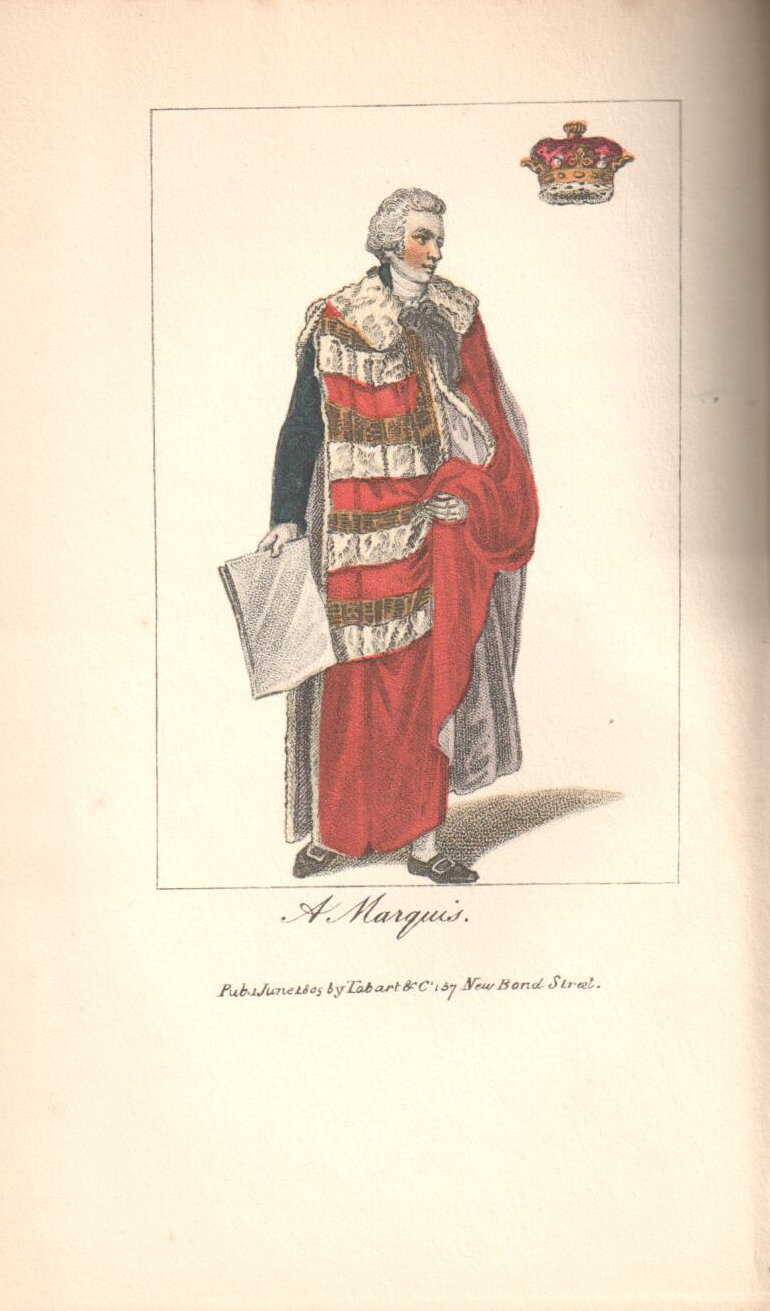


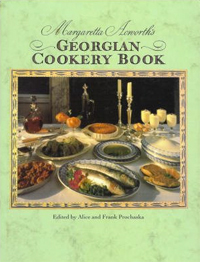


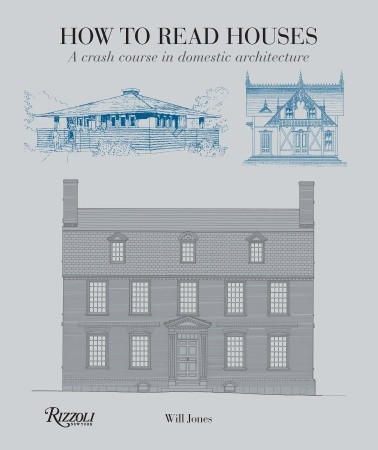

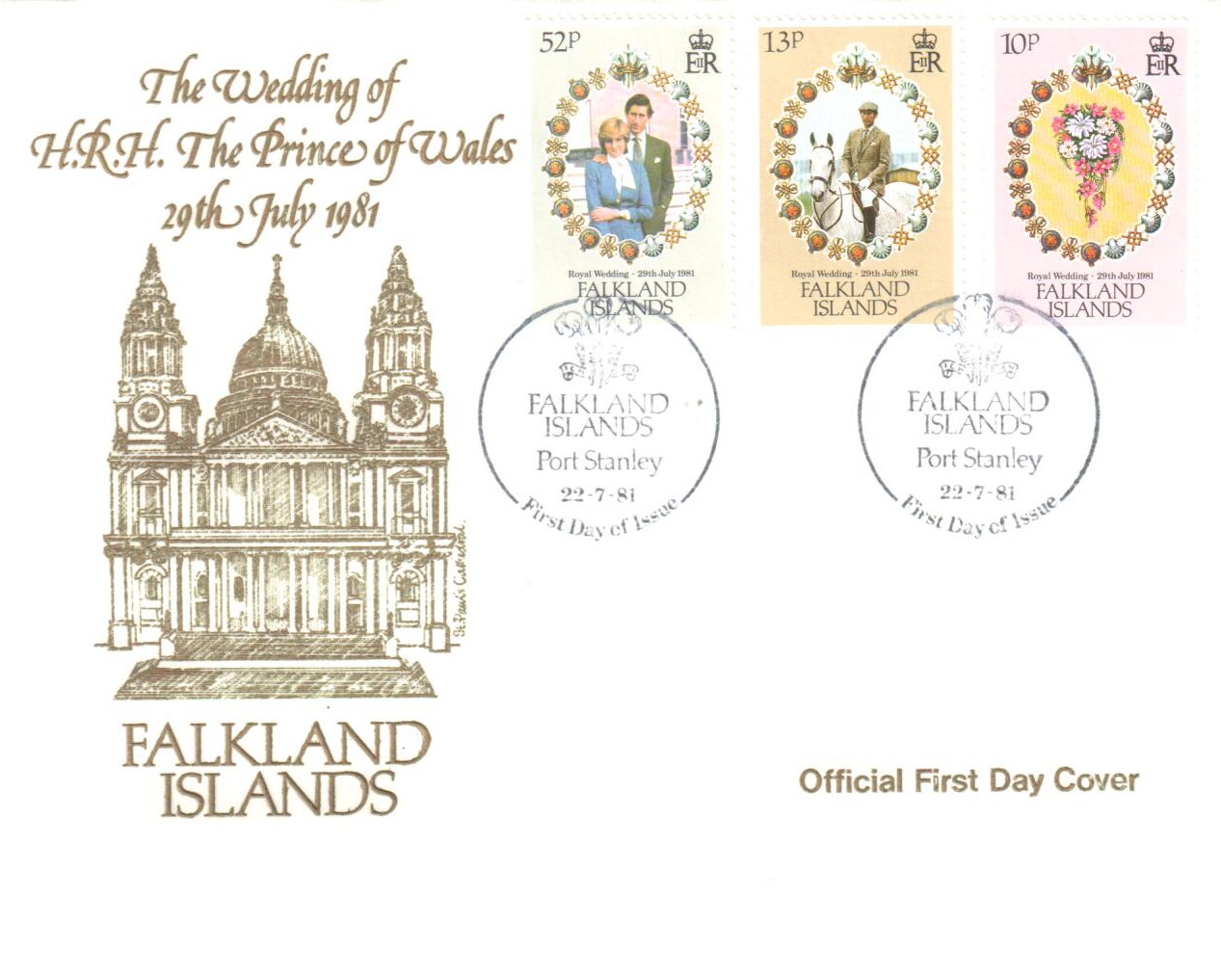


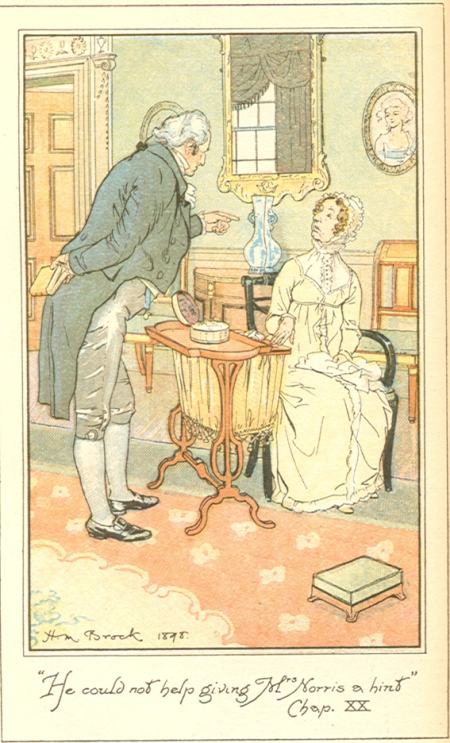




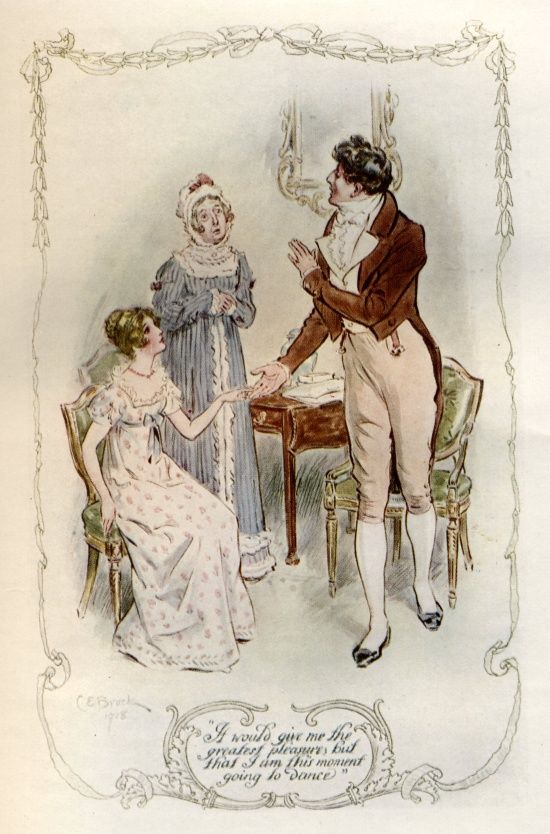
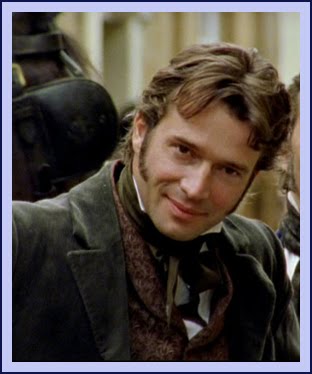
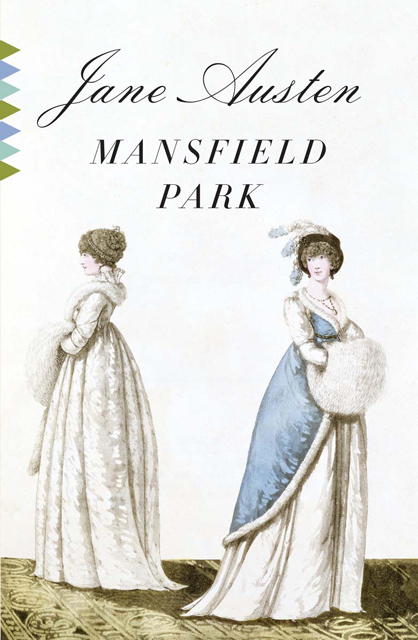


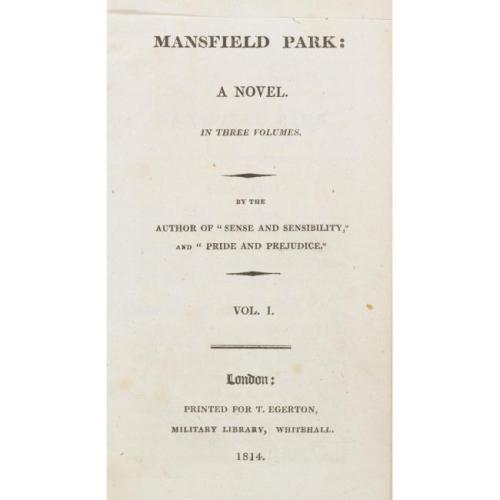


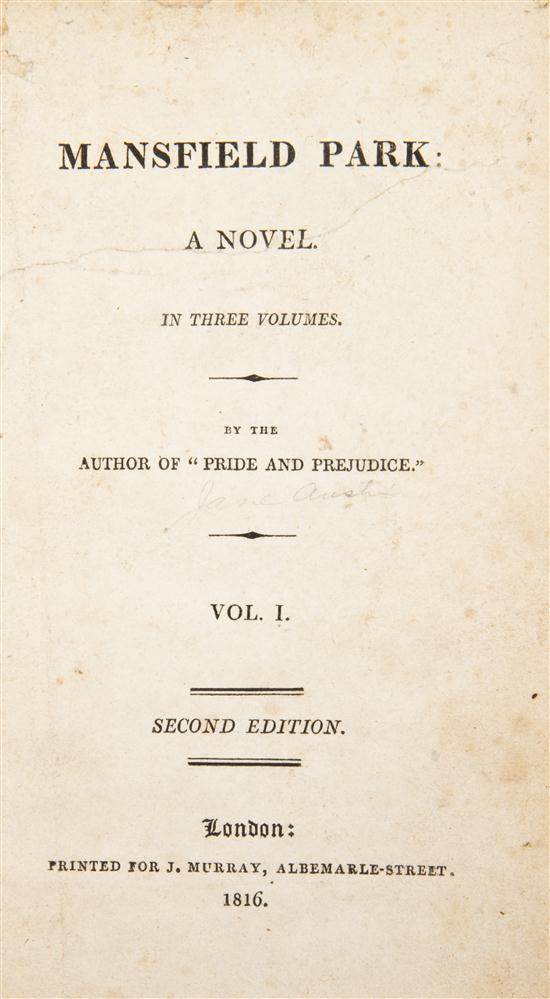


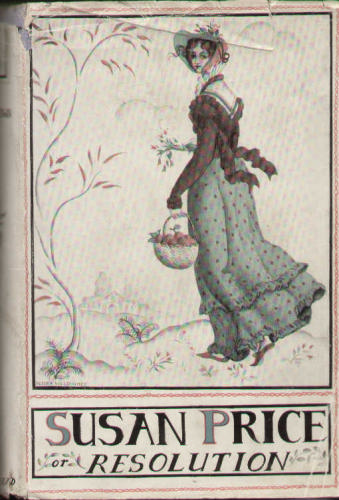


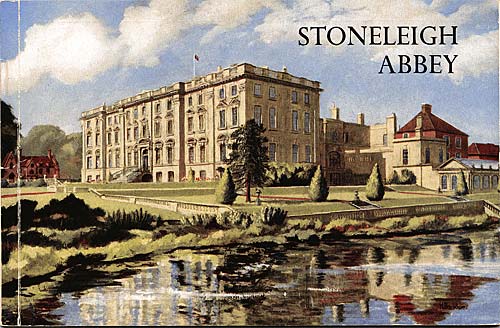
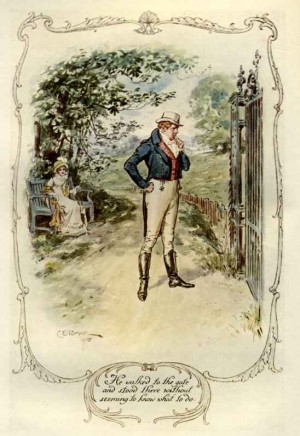

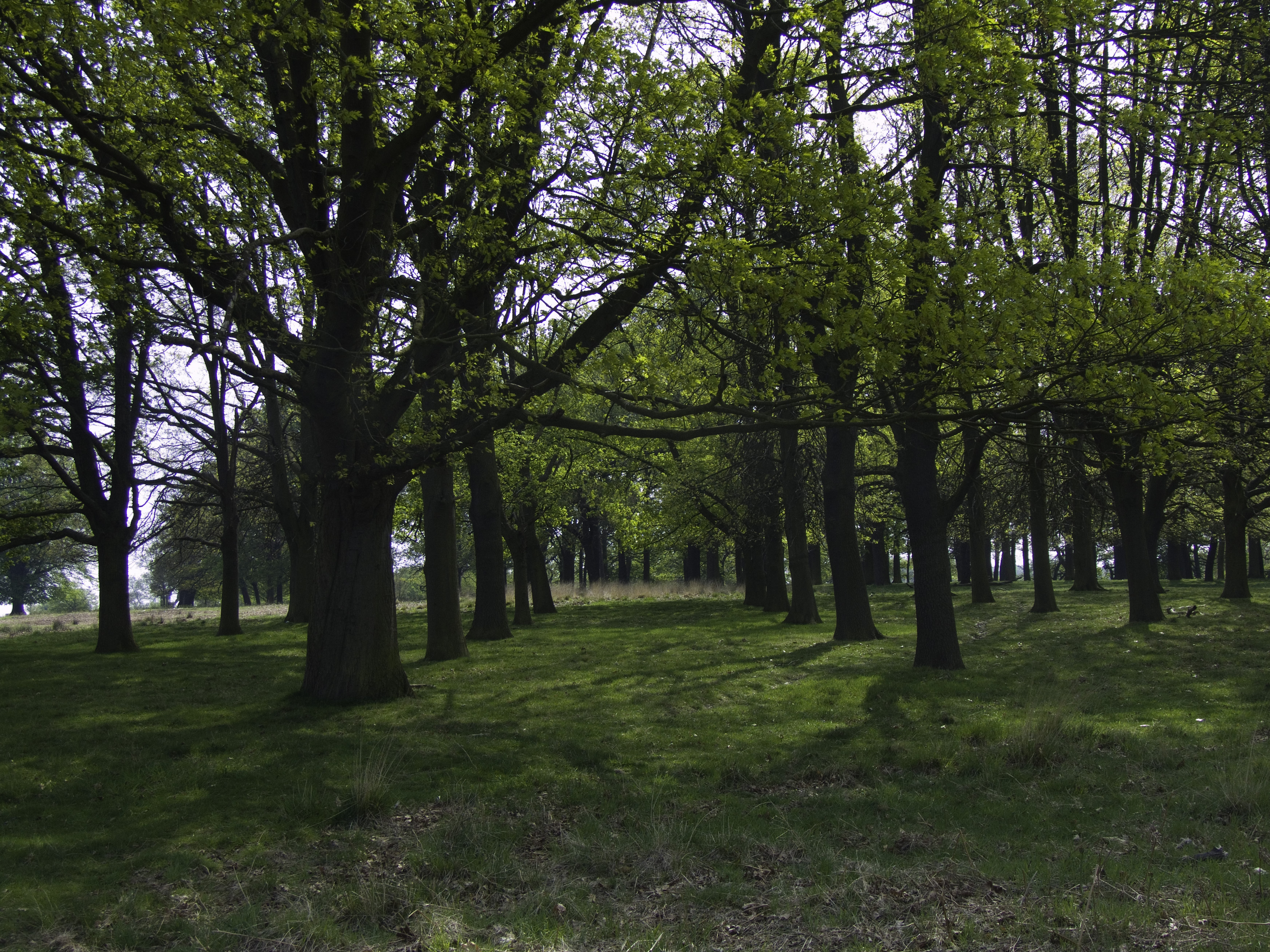
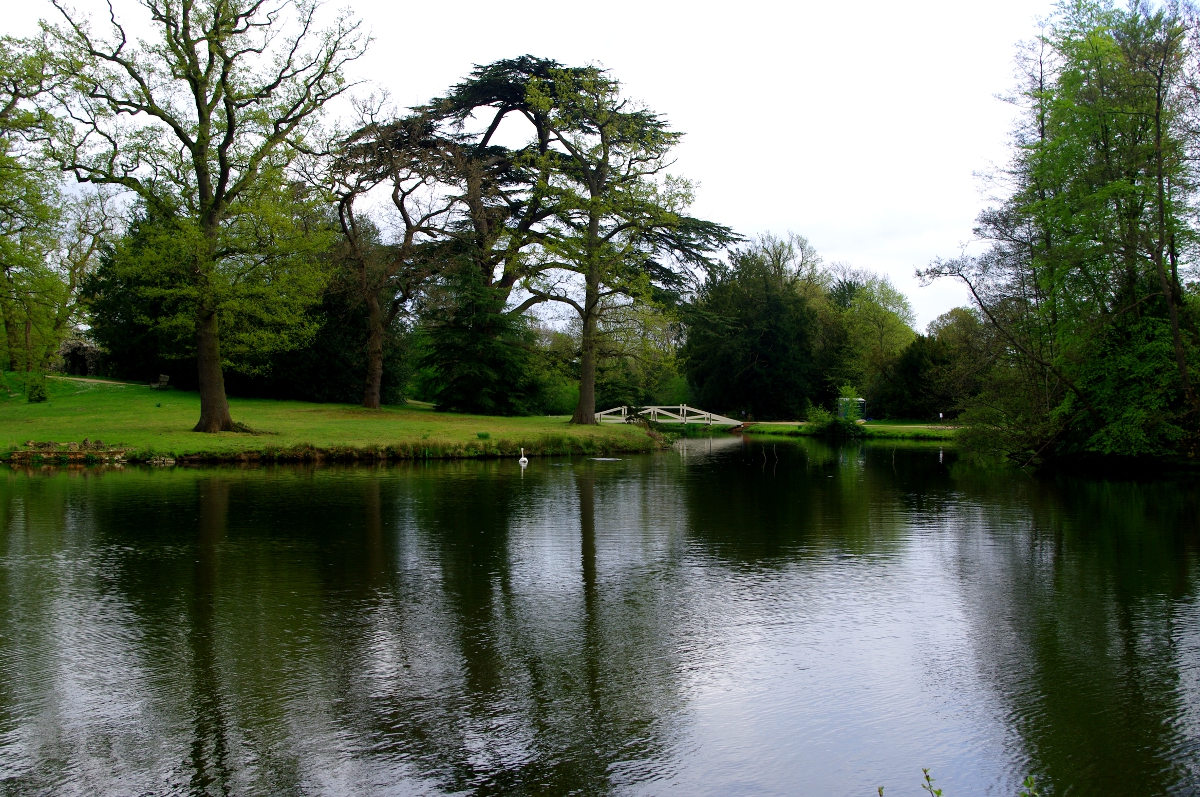


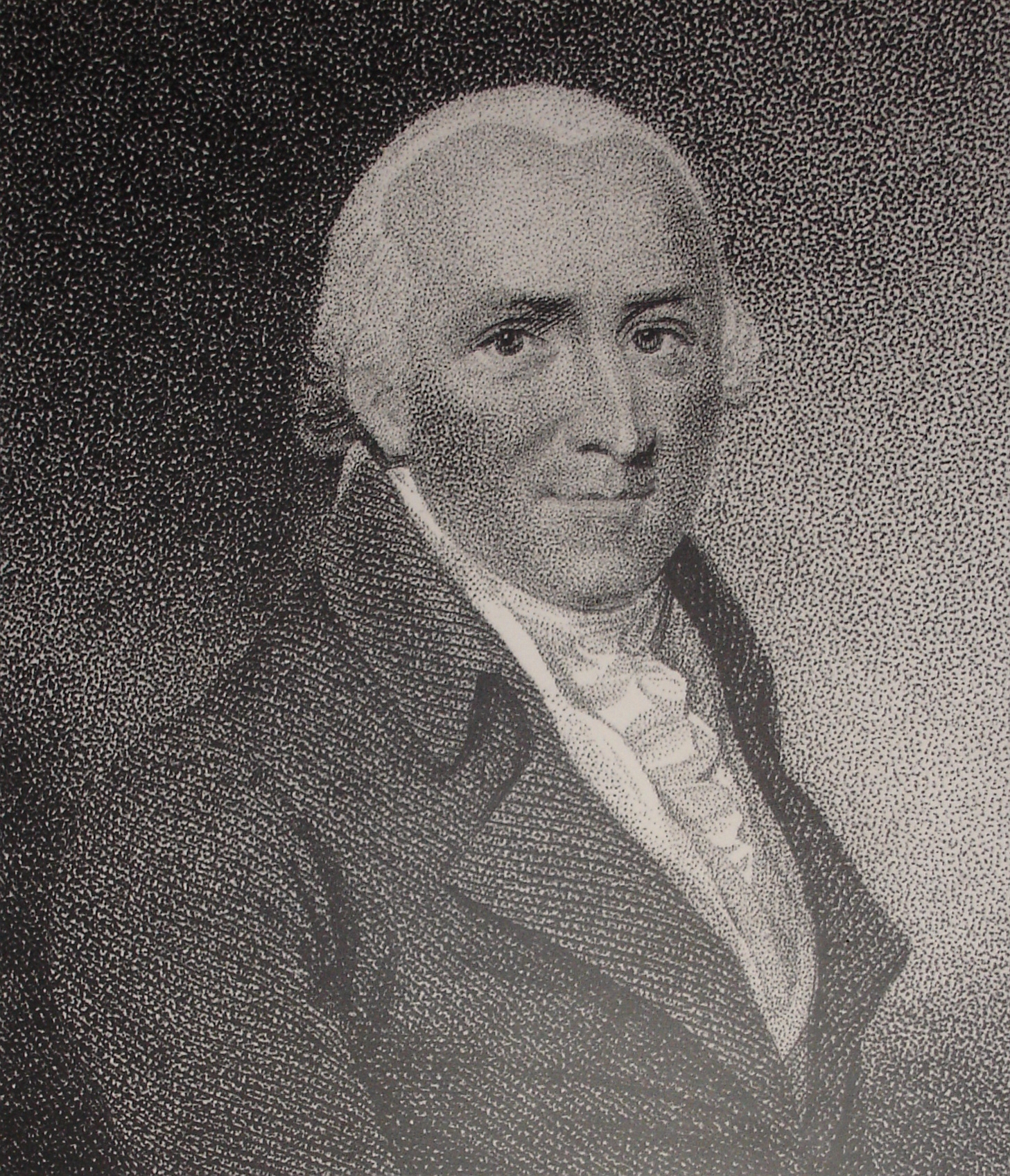
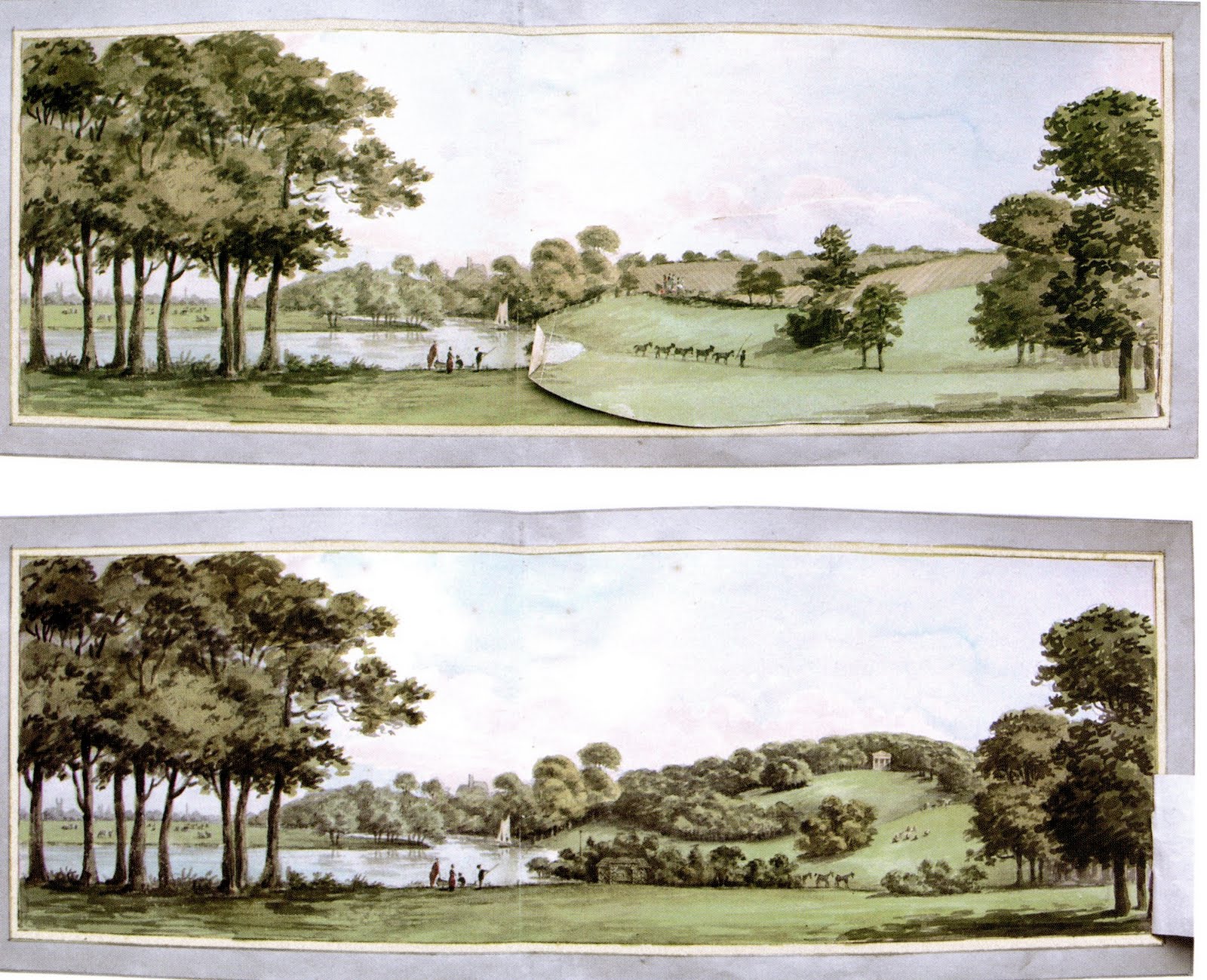

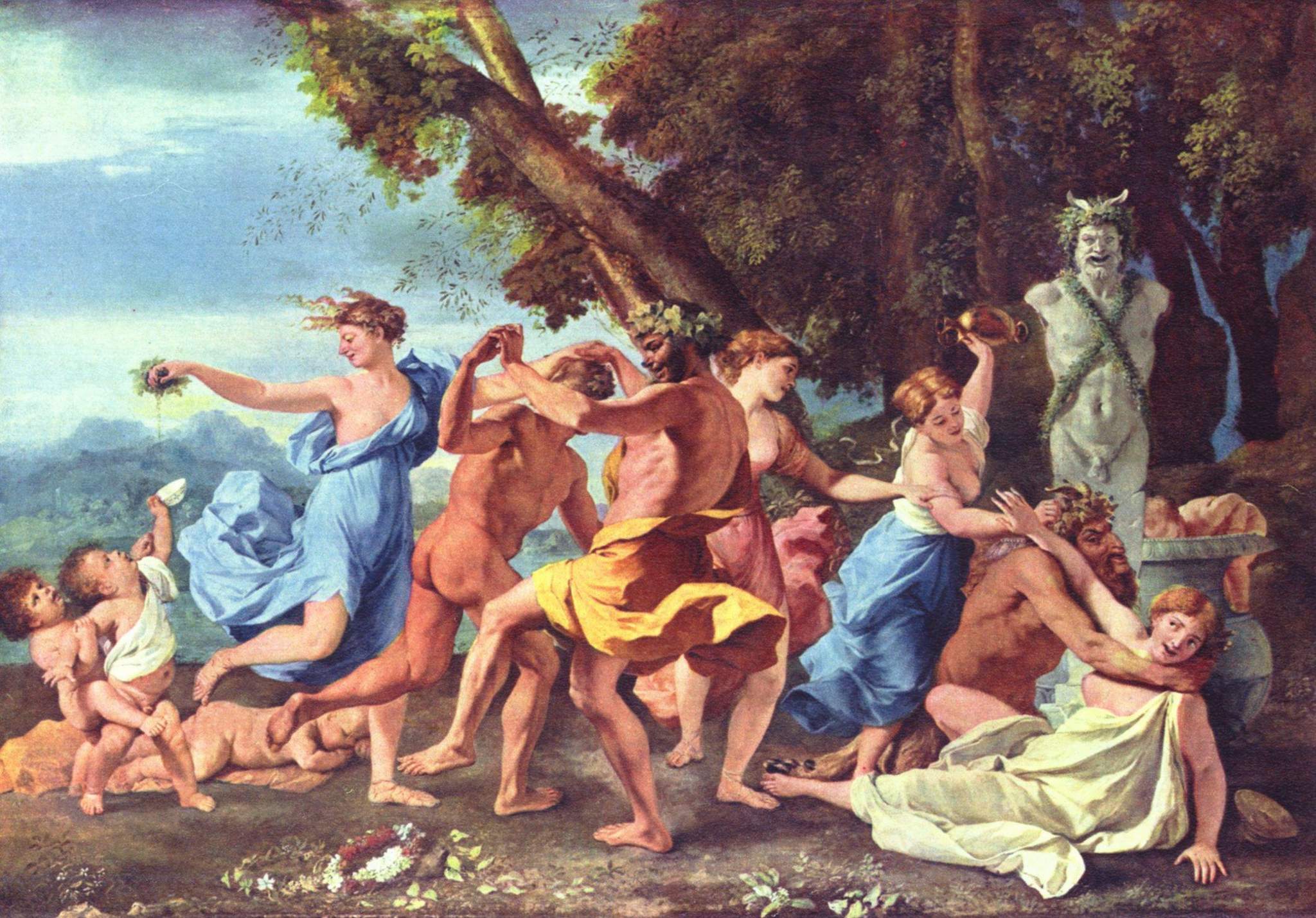


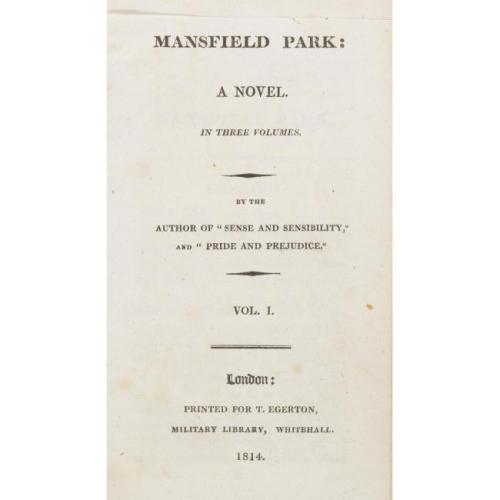

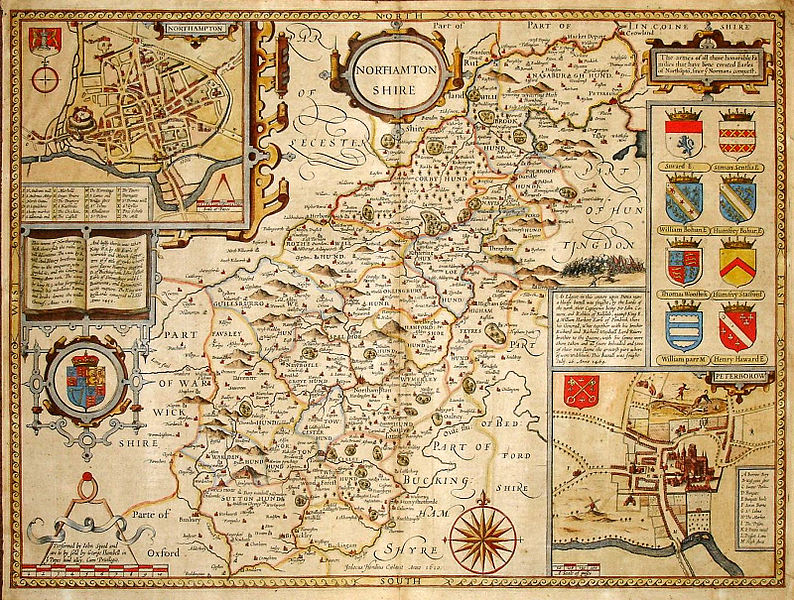


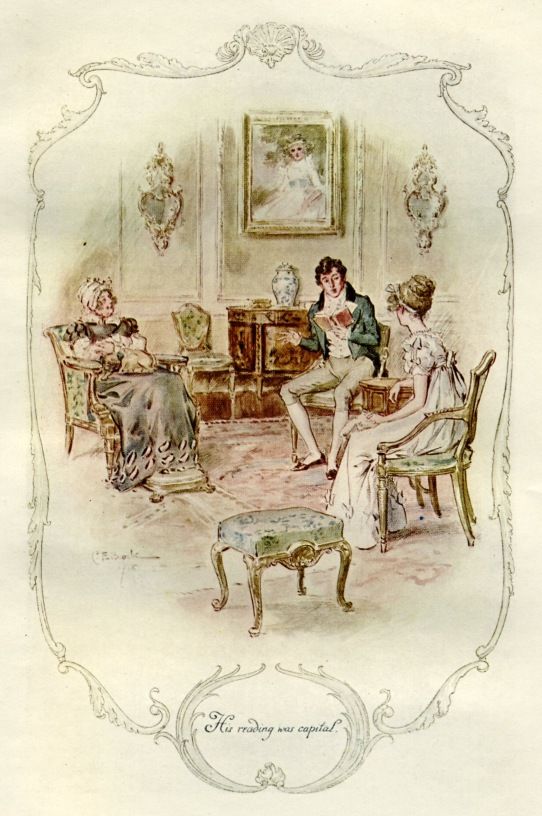


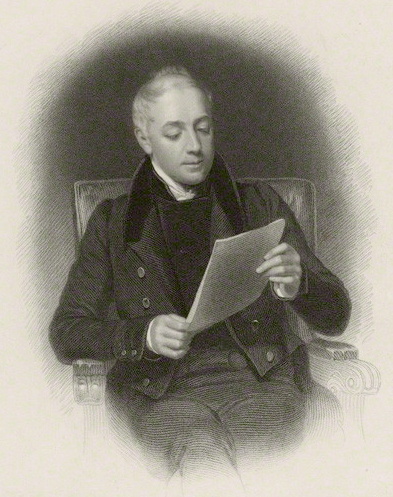
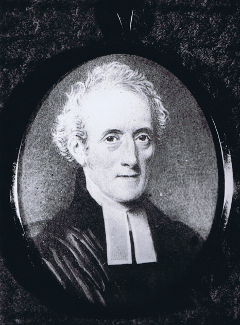


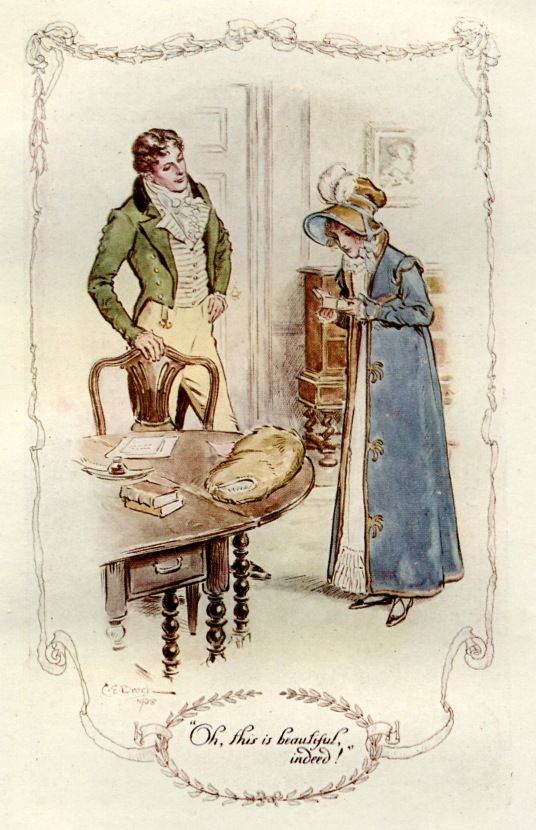
 Jane Austen in Vermont