Austen Literary History & Criticism · Georgian Period · Great Britain - History · Jane Austen · Jane Austen Circle · Jane Austen Genealogy · Jane Austen Societies · JASNA · Literature · Regency England · Social Life & Customs

Adventures with Jane! JASNA Tour Day II ~ Off to Kent…

One of the reasons I wanted to do the JASNA tour this year [other than the doable May option] was in it following the life and times of Jane for her 250th and therefore Kent was on the itinerary. I have been only to Canterbury a million years ago as well as to Dover [for one of the worst crossings in English Channel history – only two people on the ship did not get sick: me and my not-yet husband – perhaps destiny stepped in right then and there…]. But Kent was an important place in Jane Austen’s life, and so I was most curious to visit all the known spots with Austen family connections.

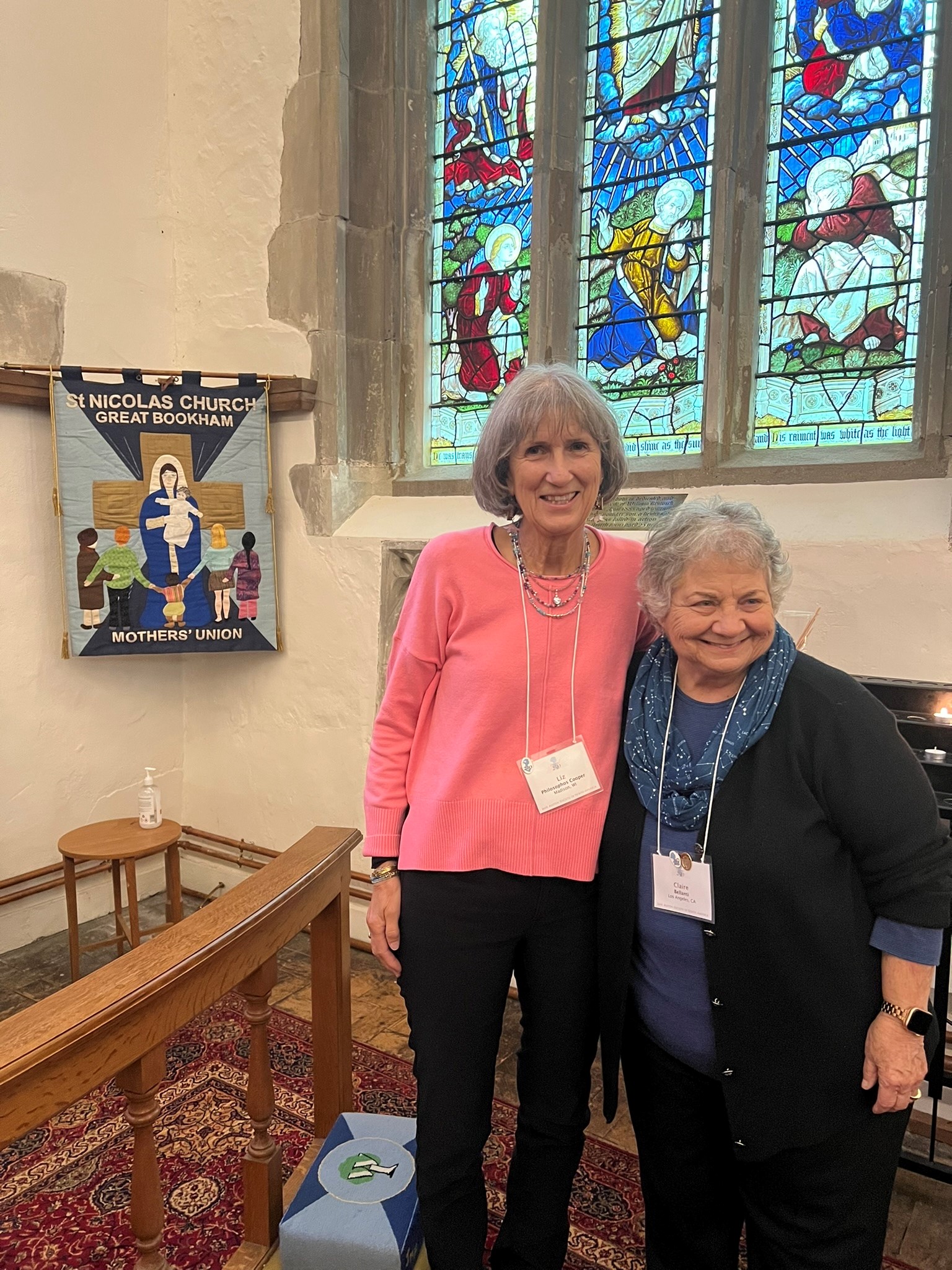
We left Windsor and headed east by way of Surrey to stop in Great Bookham, home to Samuel Cooke as well as another Frances Burney spot on my side-view Burney trek – she lived here from 1793, shortly after her marriage to D’Arblay, until 1802 when they left for France [bad timing – they remained in France for over 10 years due to the Napoleonic Wars]. The home they lived in there is now called The Hermitage:
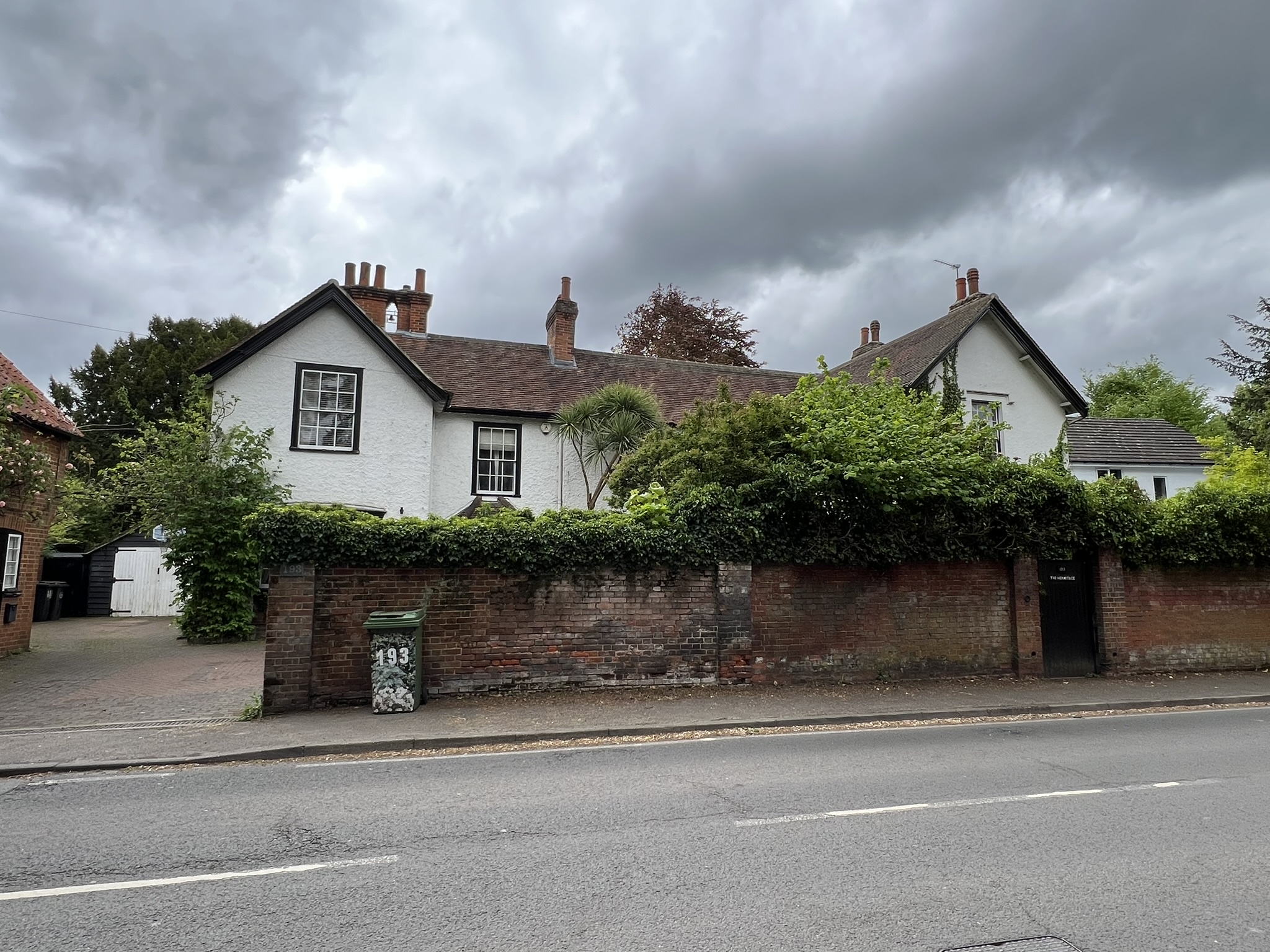
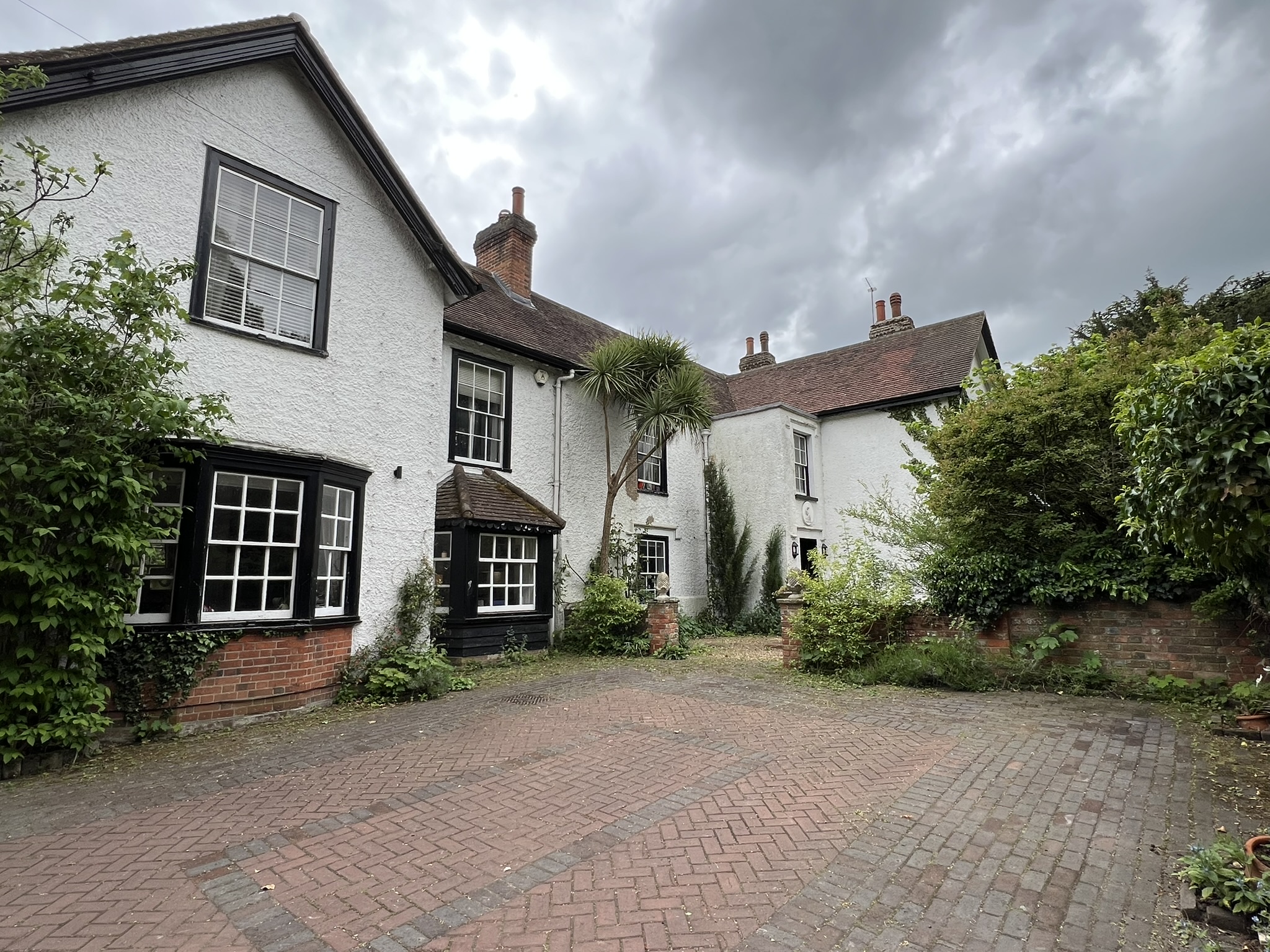
[it is lovely – they need a gardener…]

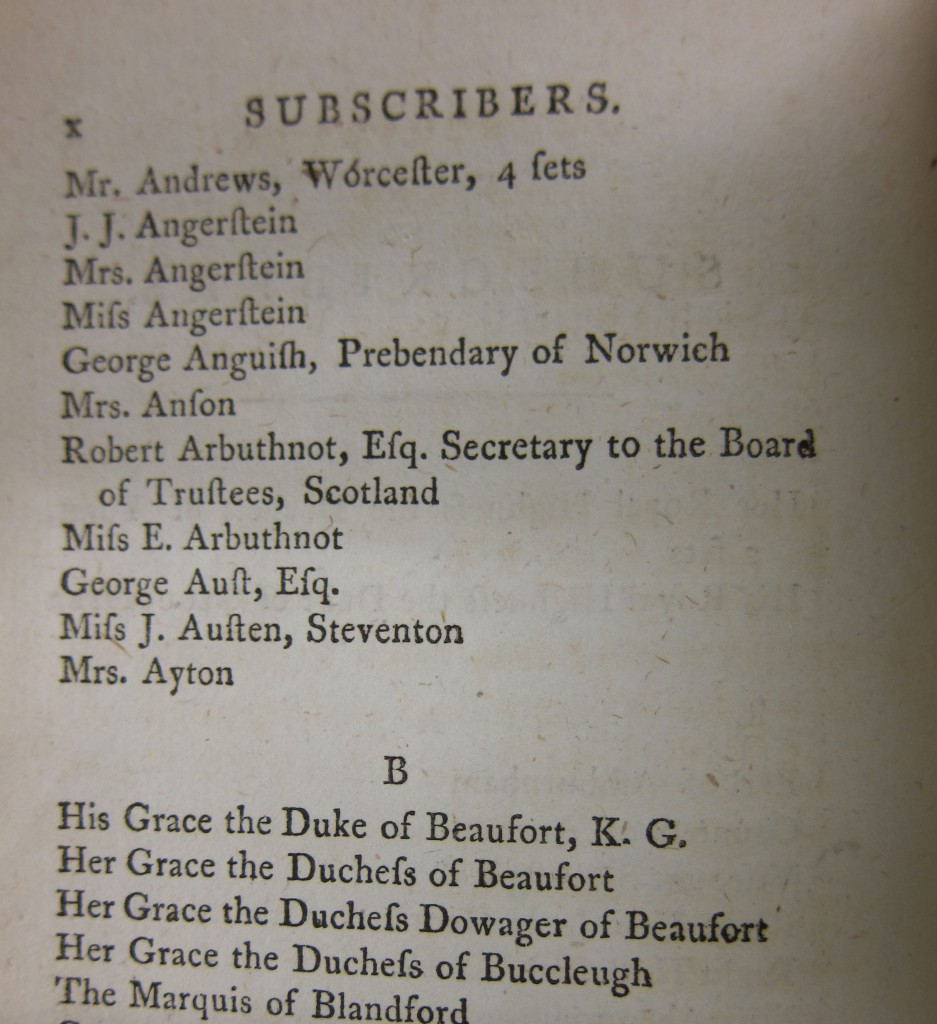
this is where Burney wrote Camilla (1796), the book where Austen’s name first appears in print as a subscriber:
Apparently Burney’s husband General D’Arblay attempted to manage the extensive gardens with military zeal – “he demolished an established asparagus bed and pruned the fruit trees with his sword.” 1

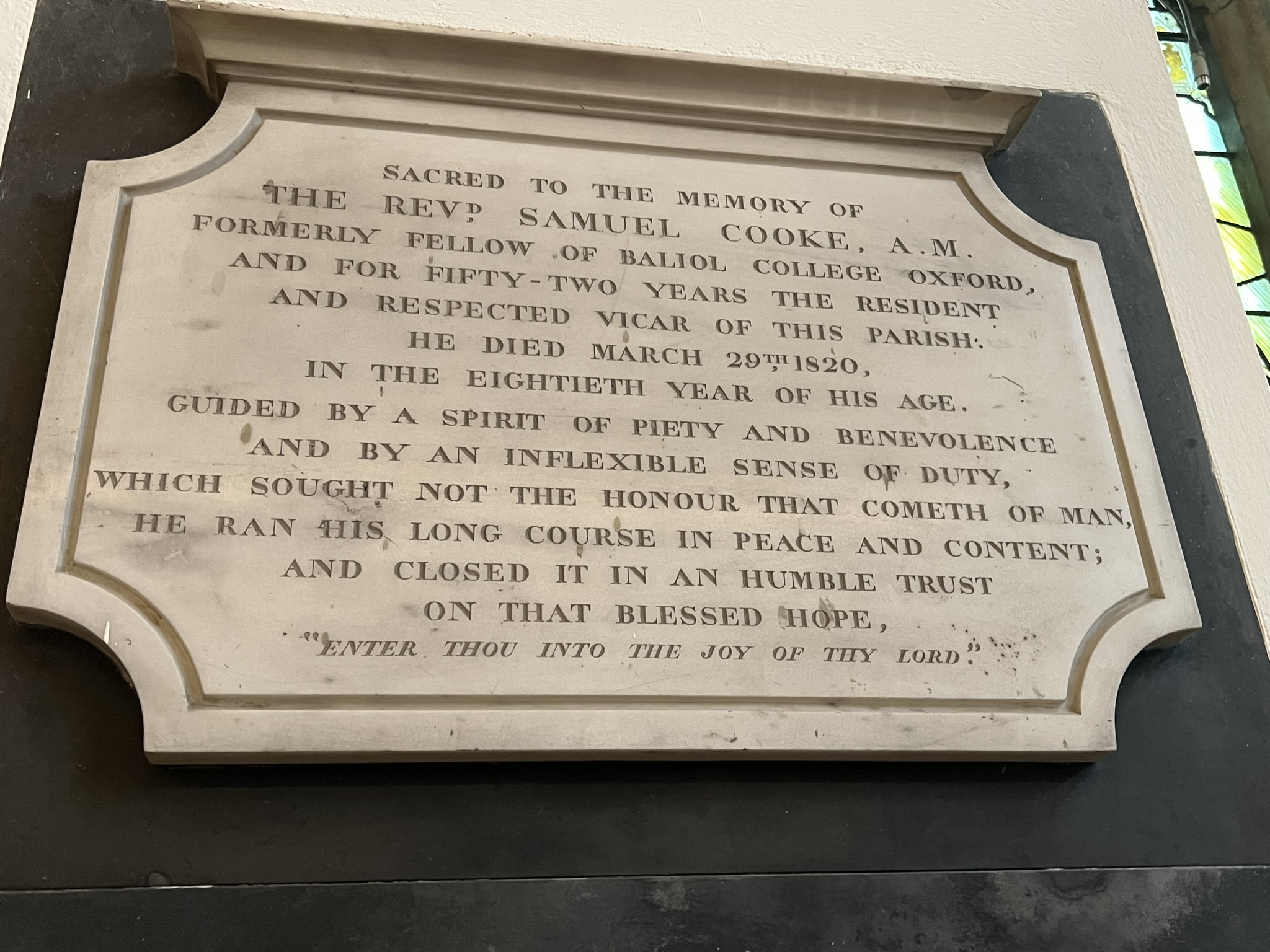
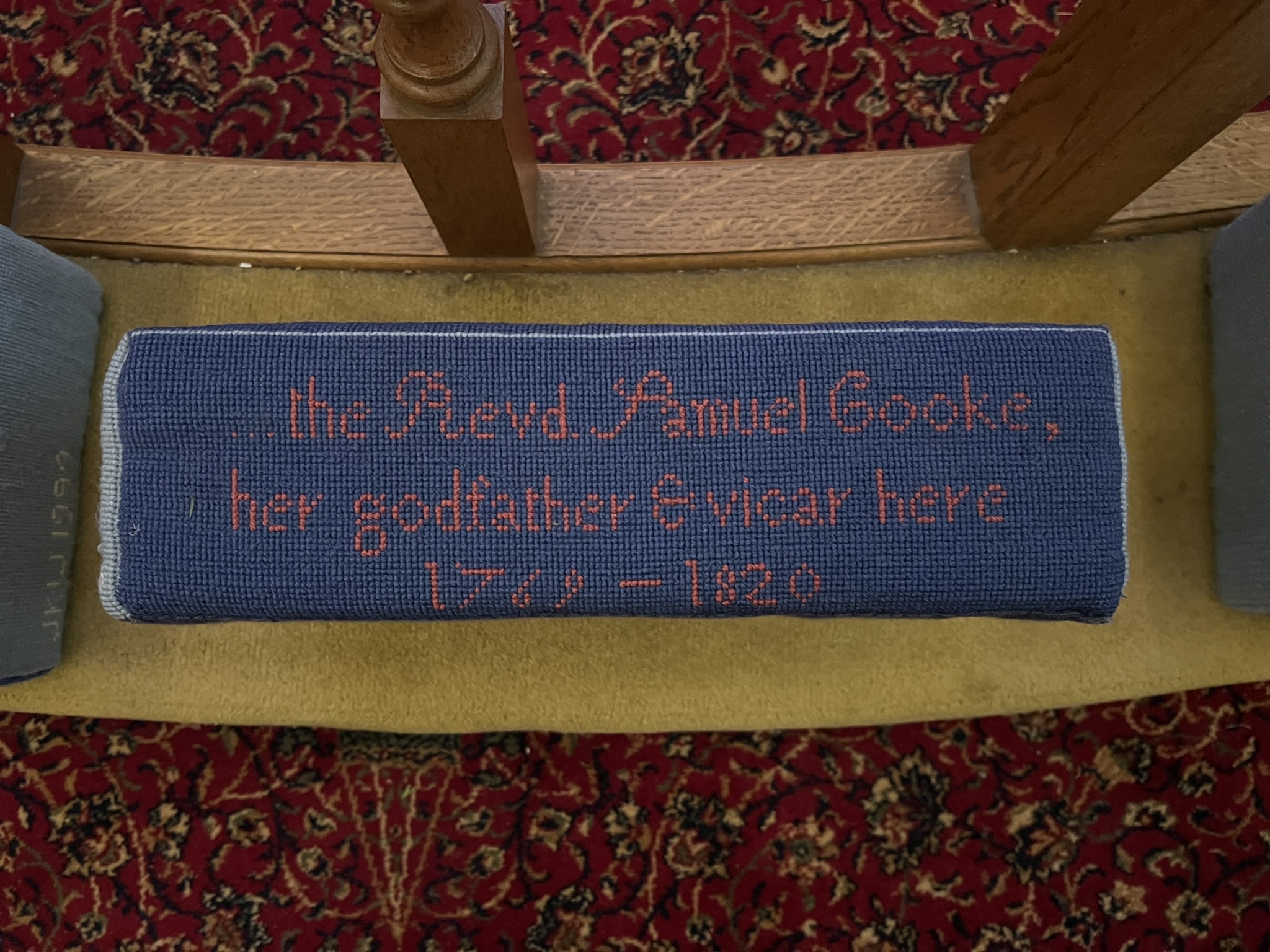
The Rev. Samuel Cooke (1741-1820) was the vicar of this first of our St Nicolas Churches for 52 years…

[notice that some have an “h” and some do not: Nicholas vs. Nicolas– no explanation for this to be found, other than this from the never-wrong AI:

“The variation in spelling (St. Nicholas vs. St. Nicolas) for churches dedicated to Saint Nicholas is due to historical and linguistic shifts. The “ch” in “Nicholas” was adopted in the 12th century in English, based on the Greek pronunciation of the “chi” letter in the name’s original Greek form. While “Nicholas” is the more common English spelling, “Nicolas” is occasionally used and reflects a more direct pronunciation of the Greek origin.”]

Samuel Cooke married a Cassandra Leigh, first cousin to Austen’s mother, also named Cassandra Leigh; he was Jane’s godfather [one way to lose your mind on any given day is to try to absorb the genealogies of the Austen, Cooke, and Leigh families…] and the families were close.

Tony Grant wrote a blog post about this several years ago, so you can visit here for more info.

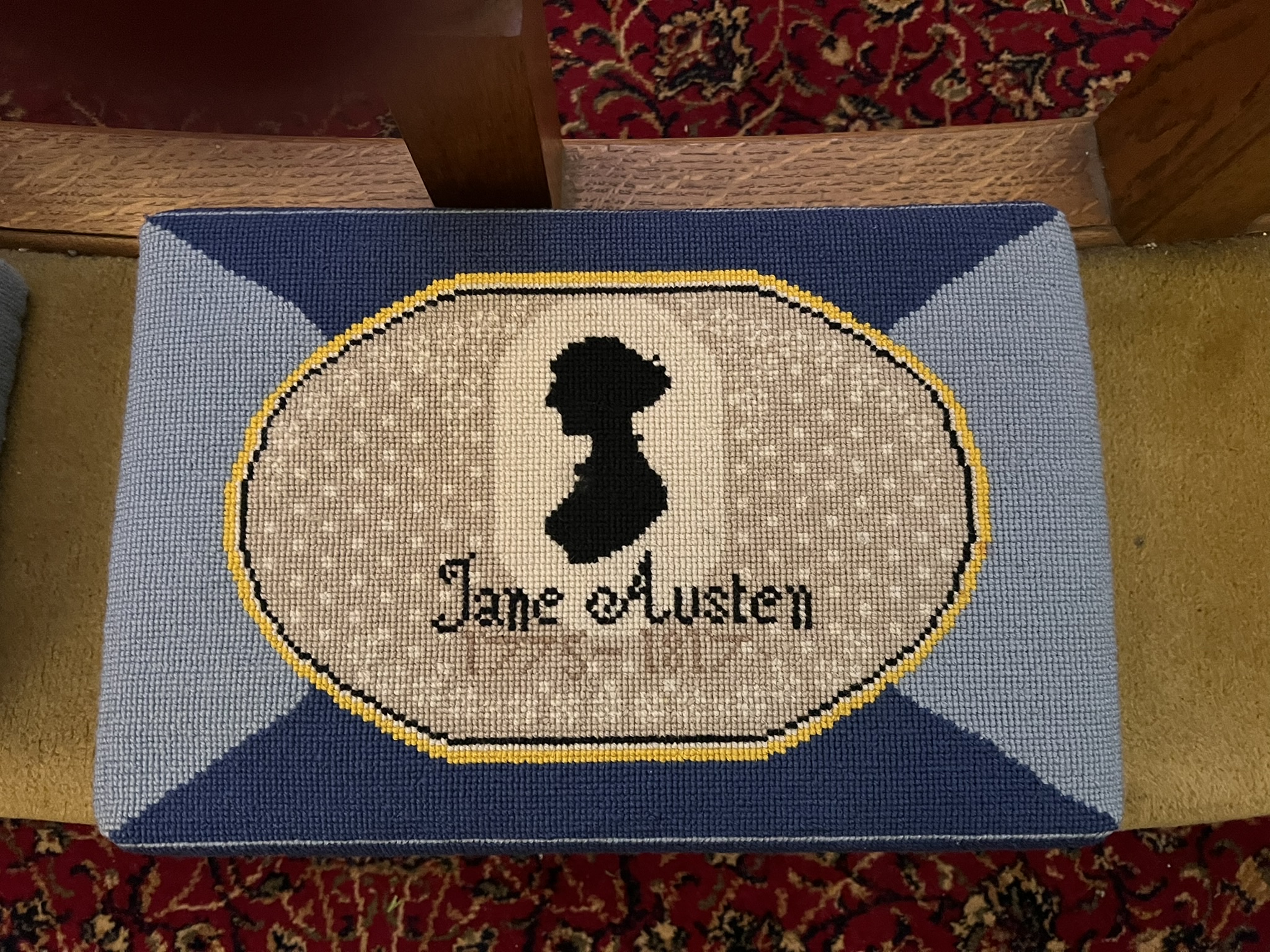
And here some pictures of the Church:

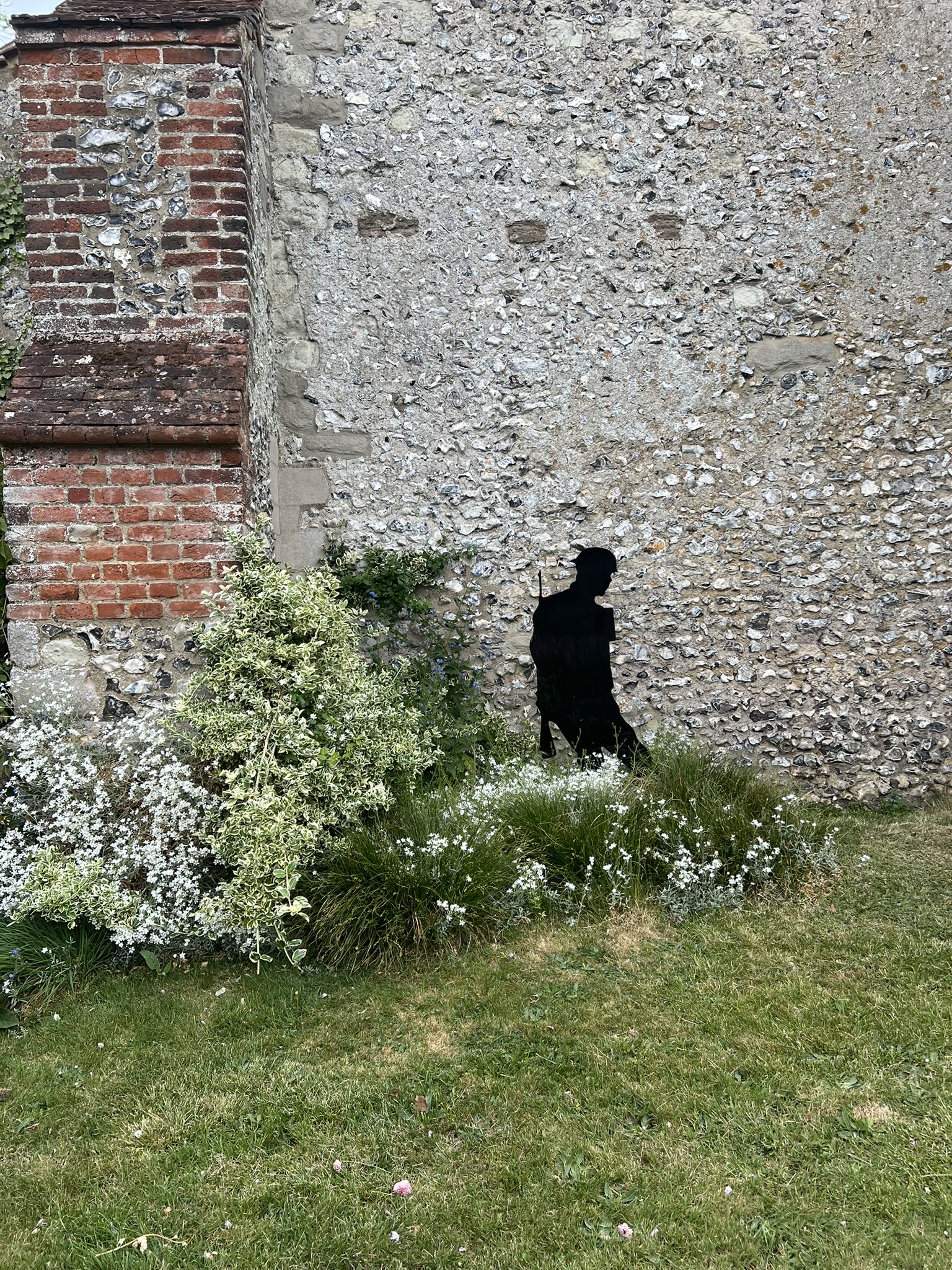
For VE Day
Lucky us! we had both Liz and Claire on our trip!

Found these signs in a few toilets in our travels… you can read all about “Toilet Twinning” here – who knew??]

***********

We next headed to the Box Hill area and had lunch at the Burford Bridge Hotel [I had been by there on my day with Tony and Marilyn when we trekked Box Hill] – an interesting old Inn with a number of notable guests as Wikipedia tells me:

“After leaving London, John Keats took a room overlooking the gardens, and completed his epic poem “Endymion” there in 1817. (Keats is said to have been recommended the hotel by the essayist and literary critic William Hazlitt  [I am not a fan of Hazlitt – he said terrible things about the Bluestockings..].) Robert Louis Stevenson was a guest in March 1878, during which time he wrote two short stories: “Story of the Young Man with the Cream Tarts” and “Story of the Physician and the Saratoga Trunk.” Other prominent visitors included Queen Victoria, Jane Austen, William Wordsworth and Sheridan. It was here too that Lord Nelson spent secret hours with his love Emma Hamilton, before going to vanquish Napoleon’s fleet at the Battle of Trafalgar.”

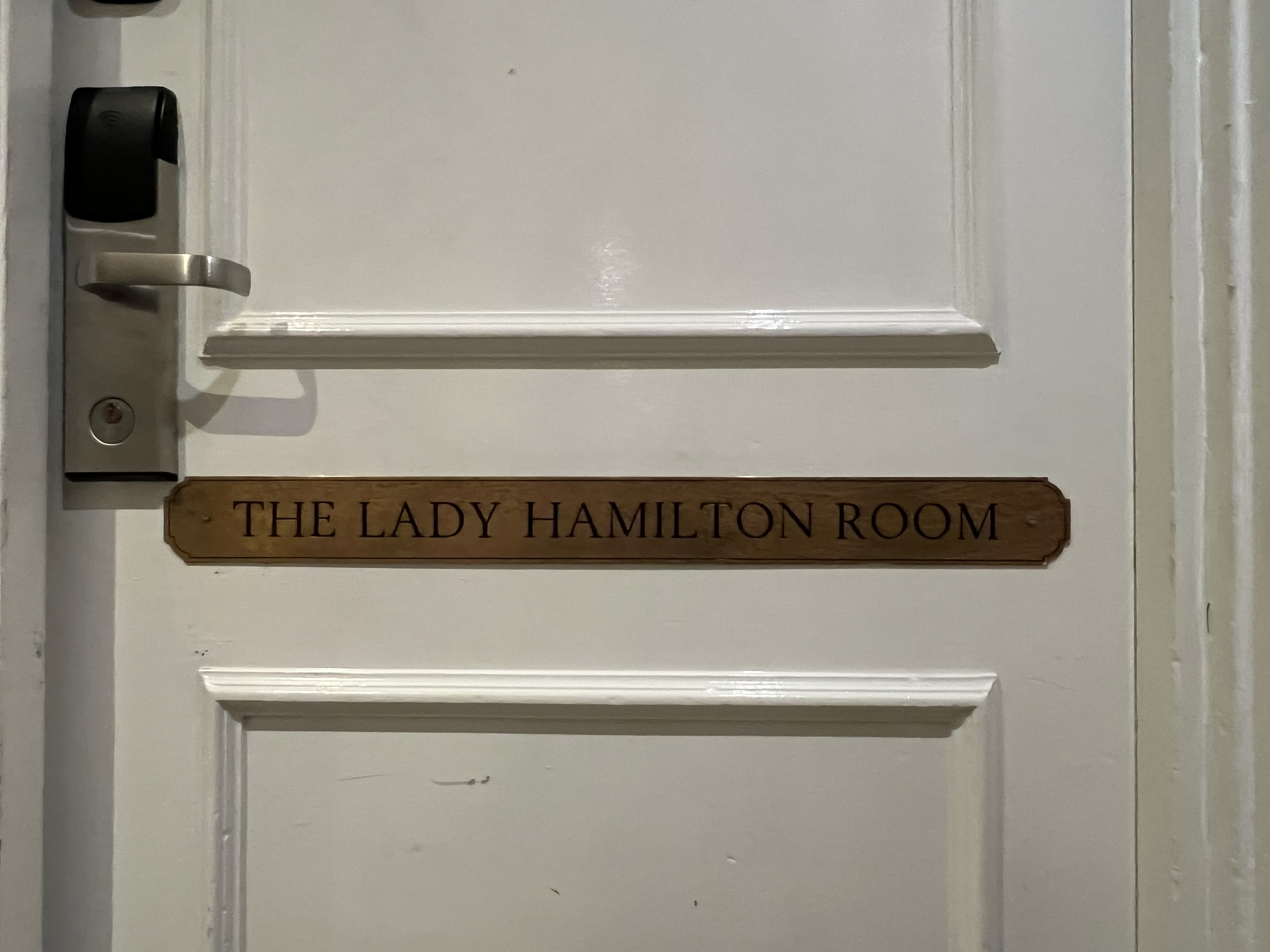
Notable indeed! Lady Hamilton’s room is now a boring conference room but nicely labelled thus:
Rooms reflect the hotel’s history:
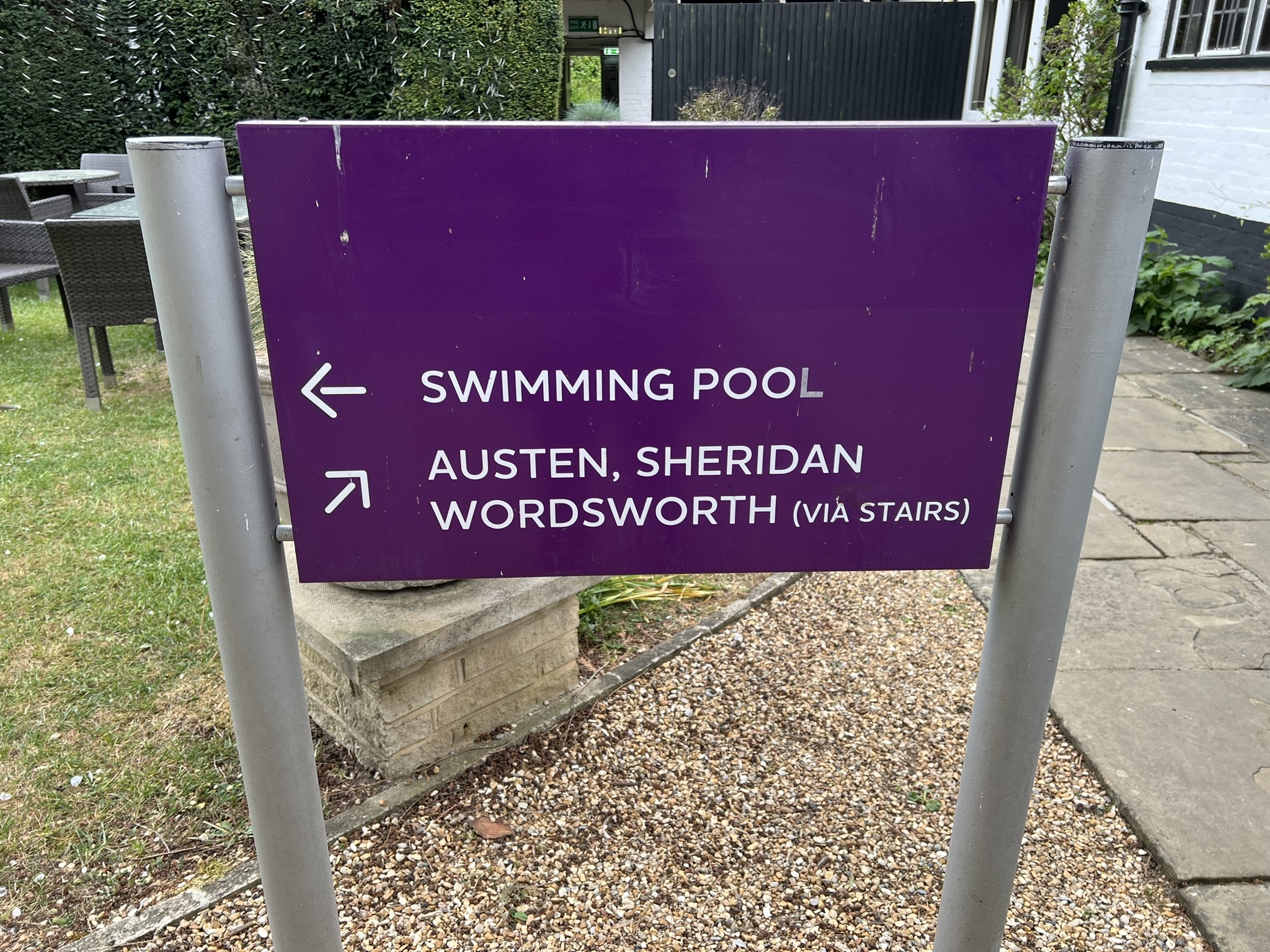
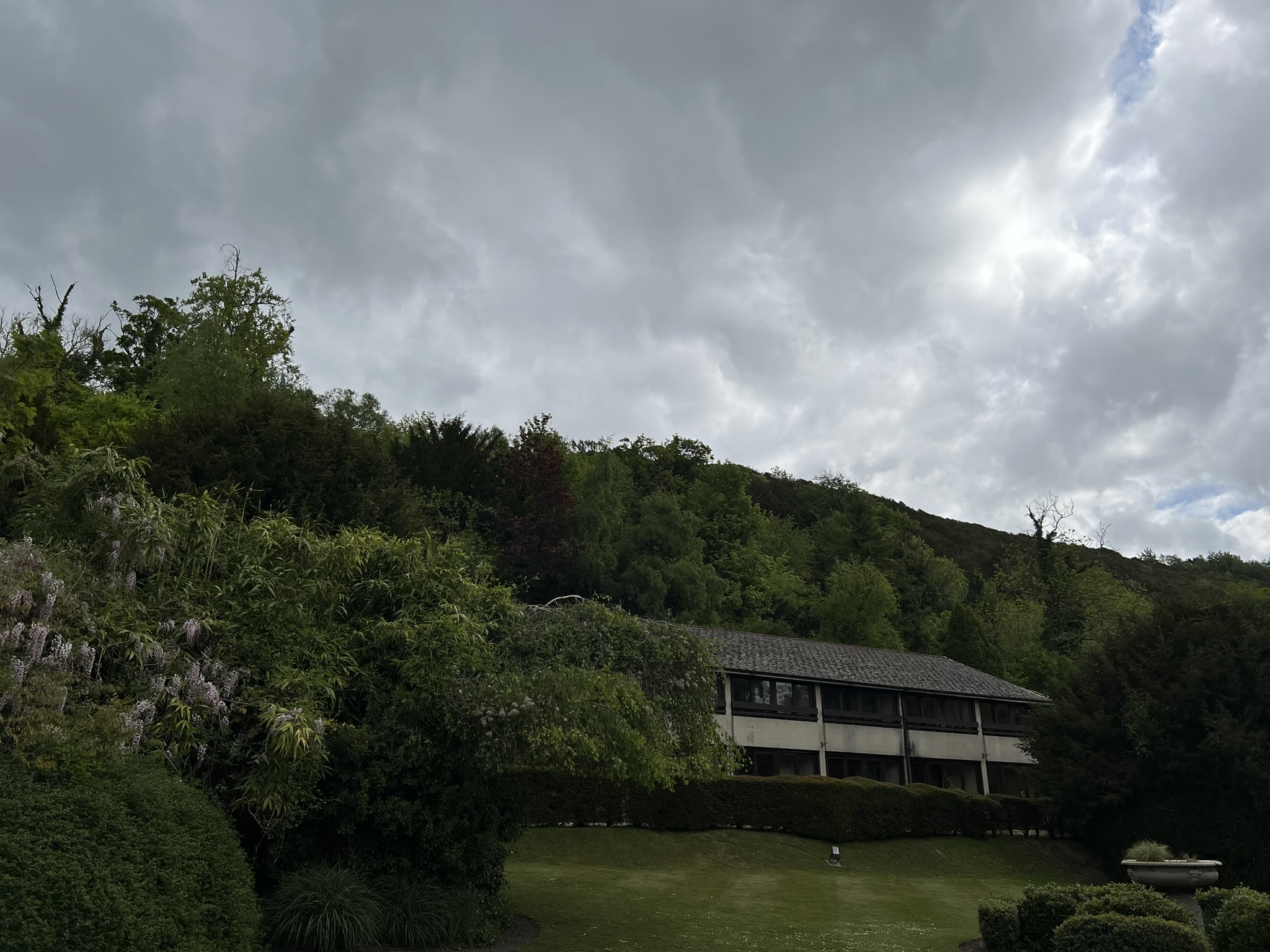
And Box Hill was just above us:
***************

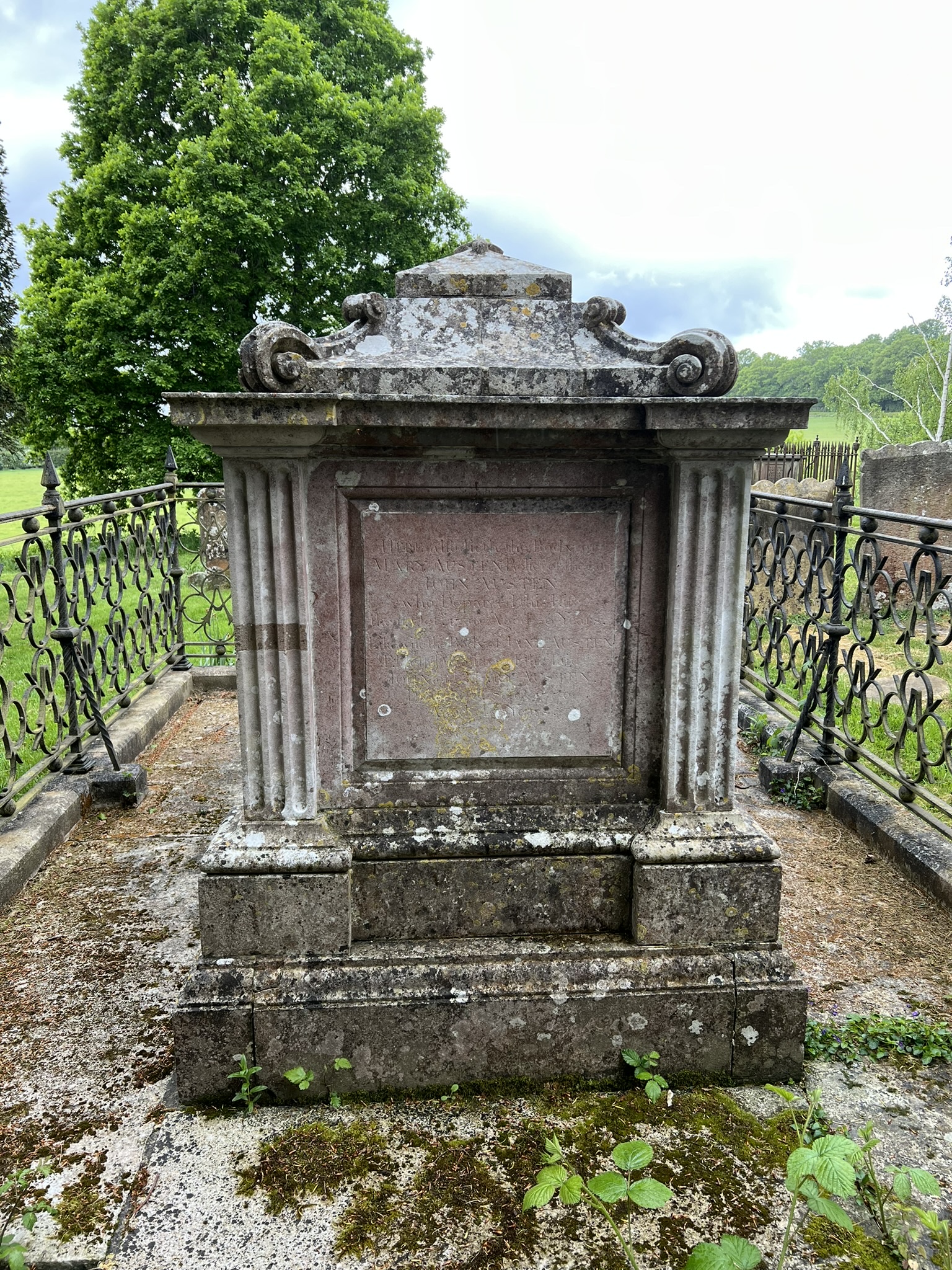
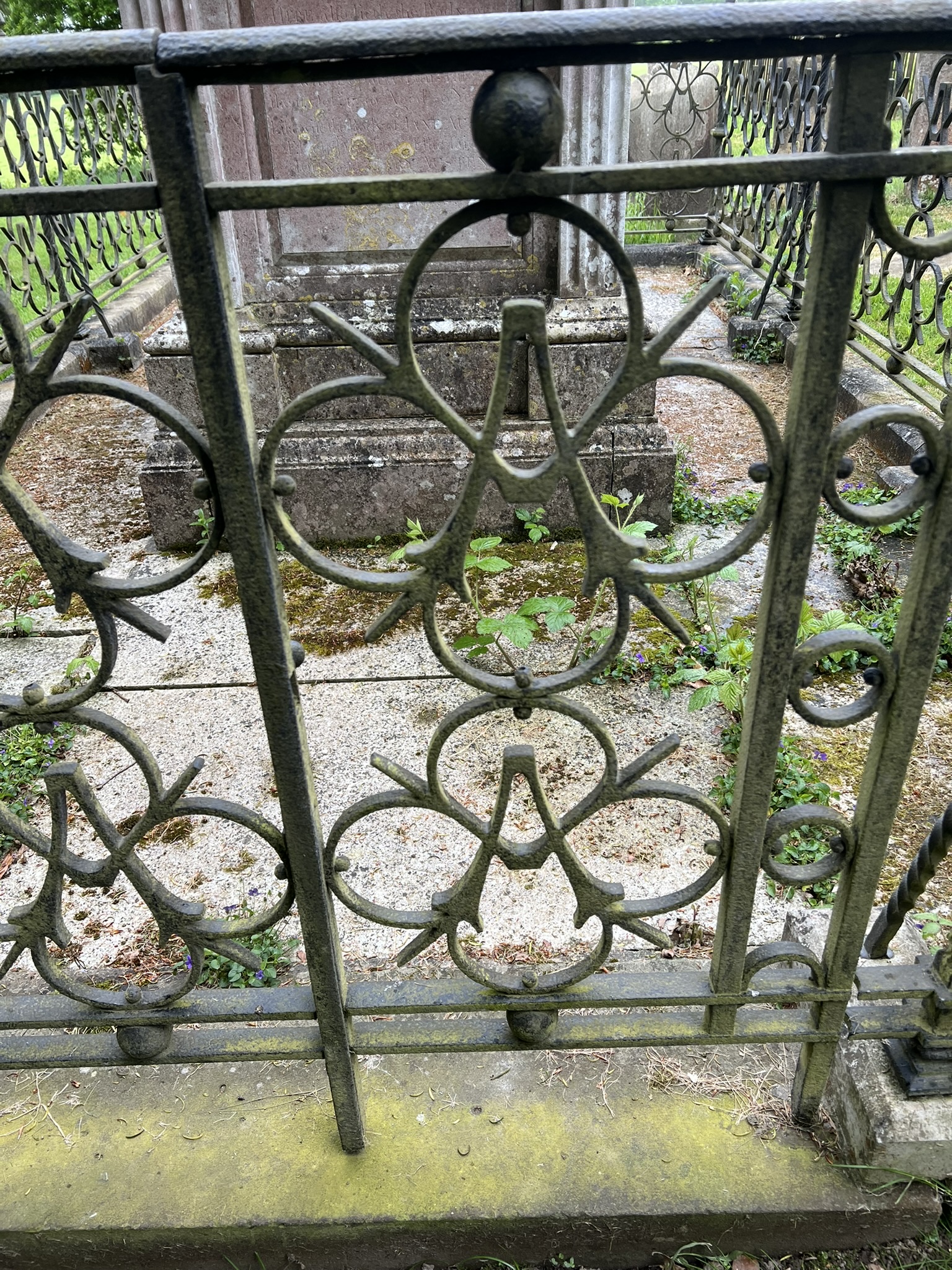
After a fine lunch we headed off to Horsmonden to visit the Church of St. Margaret – this was delightful as we met some of the JAS Kent Branch members who graciously told us about the church and its ties to the Austen family. The John Austen family [John Austen was Jane’s great-grandfather but the family goes back to the first John Austen (1560-1620) – more on them tomorrow] lived here and there are various memorials in the church and churchyard – here one of the tombs: notice the “A” on the gate, signifying “Austen”:
Note: And Ron Dunning joined us here as well – you can read a post of his about Horsmonden from the vantage of a hot-air balloon!]
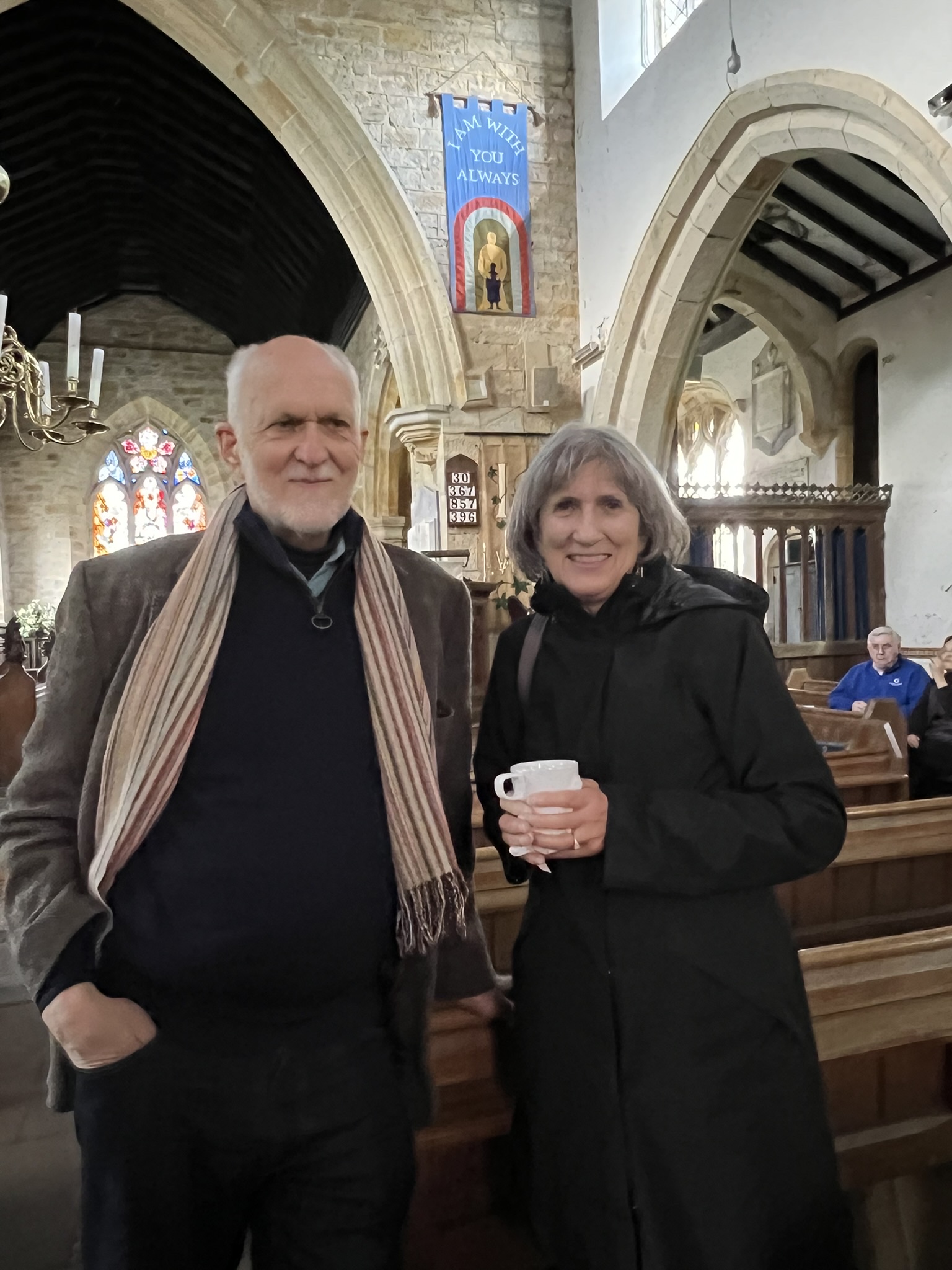
Liz and Ron
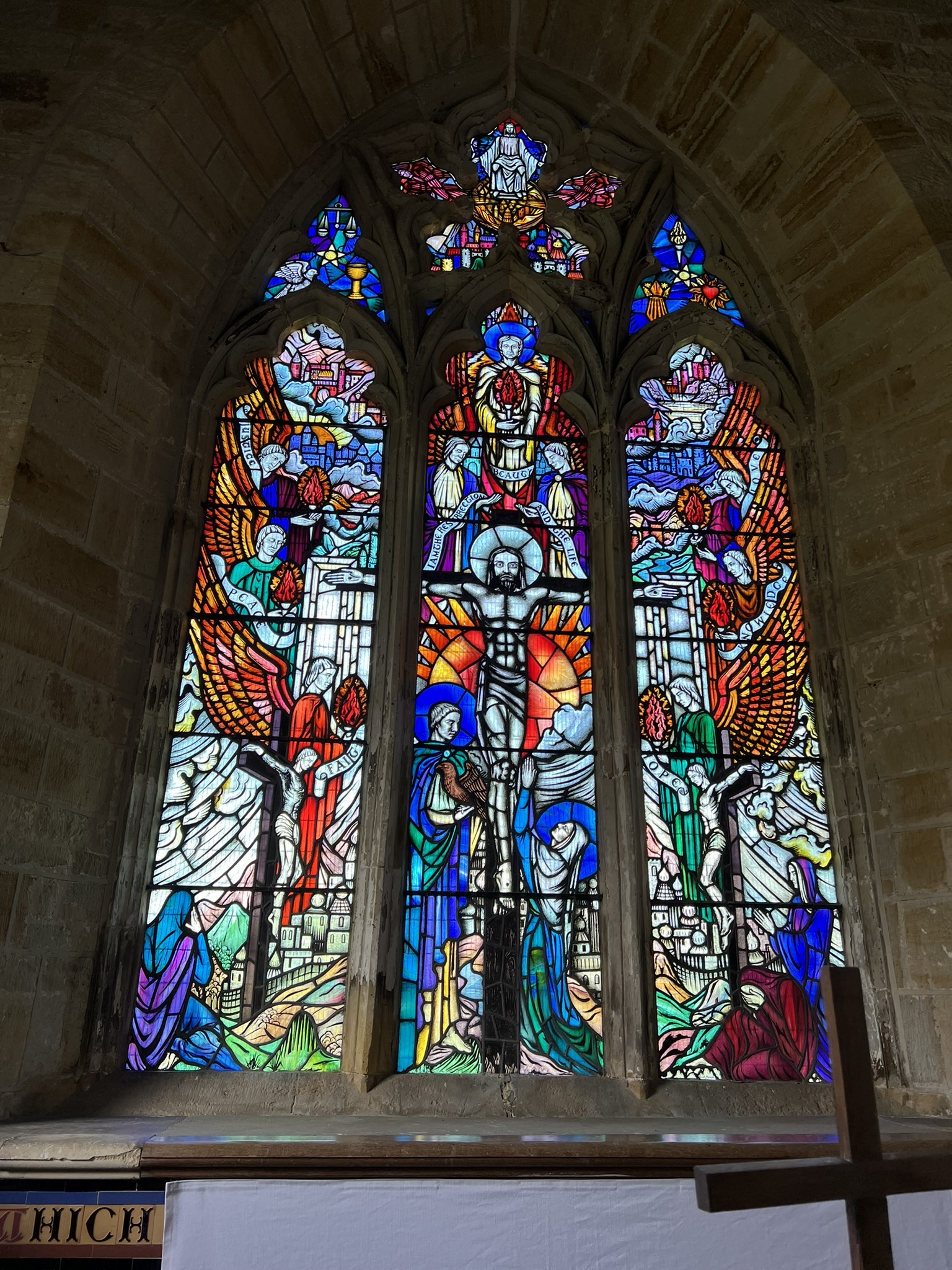
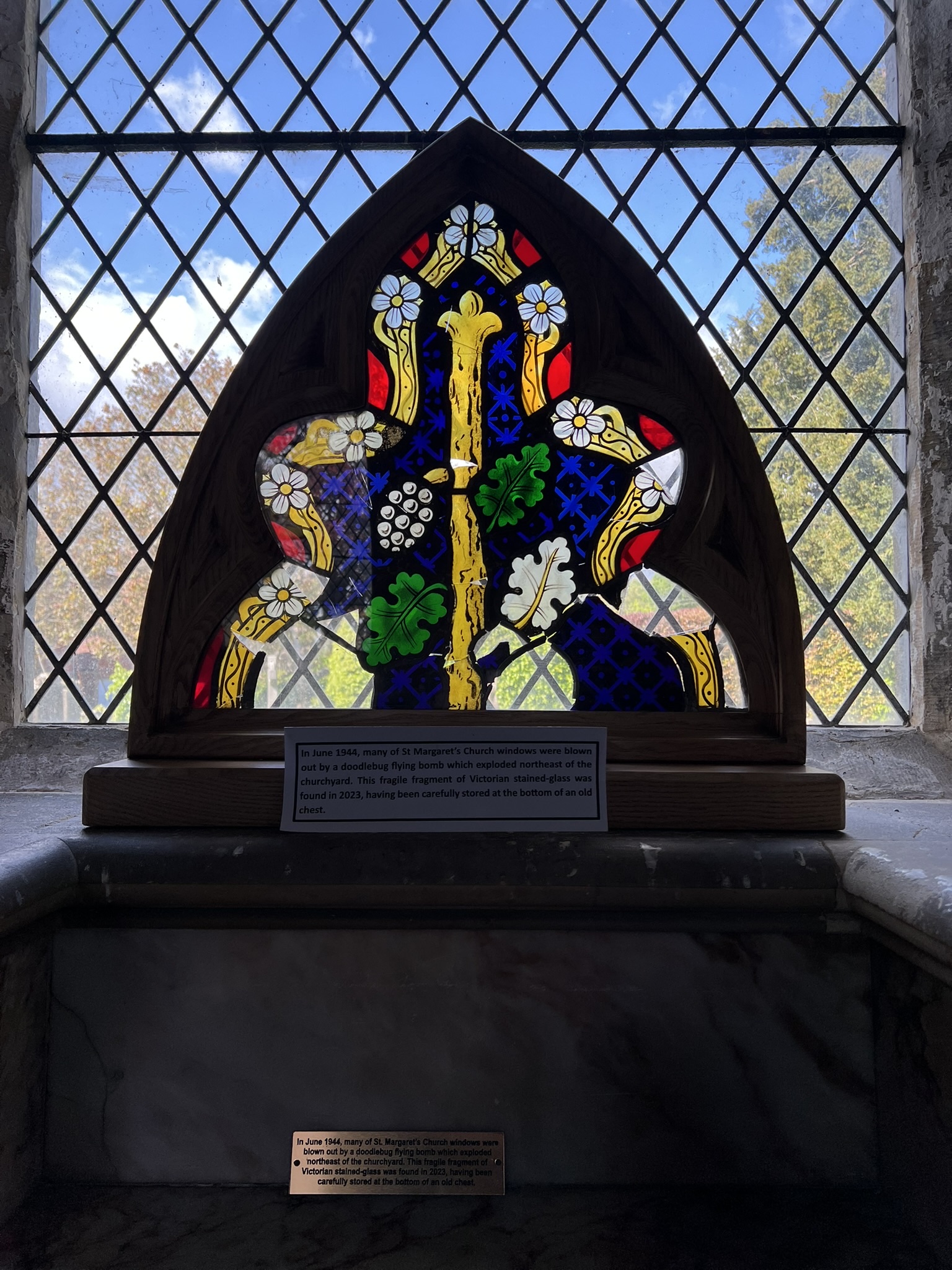
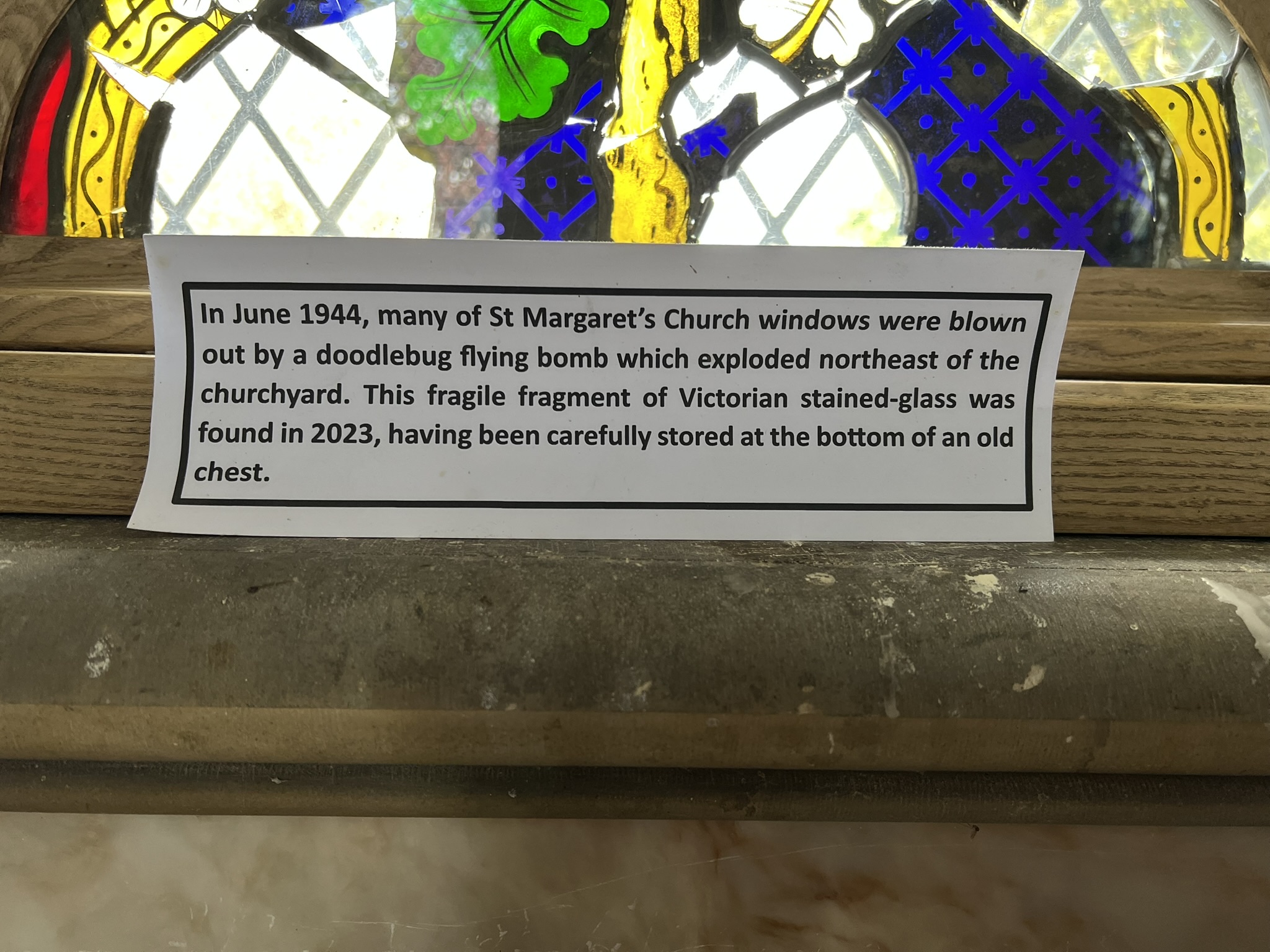
The stained glass windows in this church are stunning. A WWII bombing blew out all the windows on the north and east sides with little of the glass surviving – many of the now existing windows have been designed by notable artists. And a very recent discovery in an old chest at the church of an intact piece of window gives us this lovely example of what the whole window must have looked like:
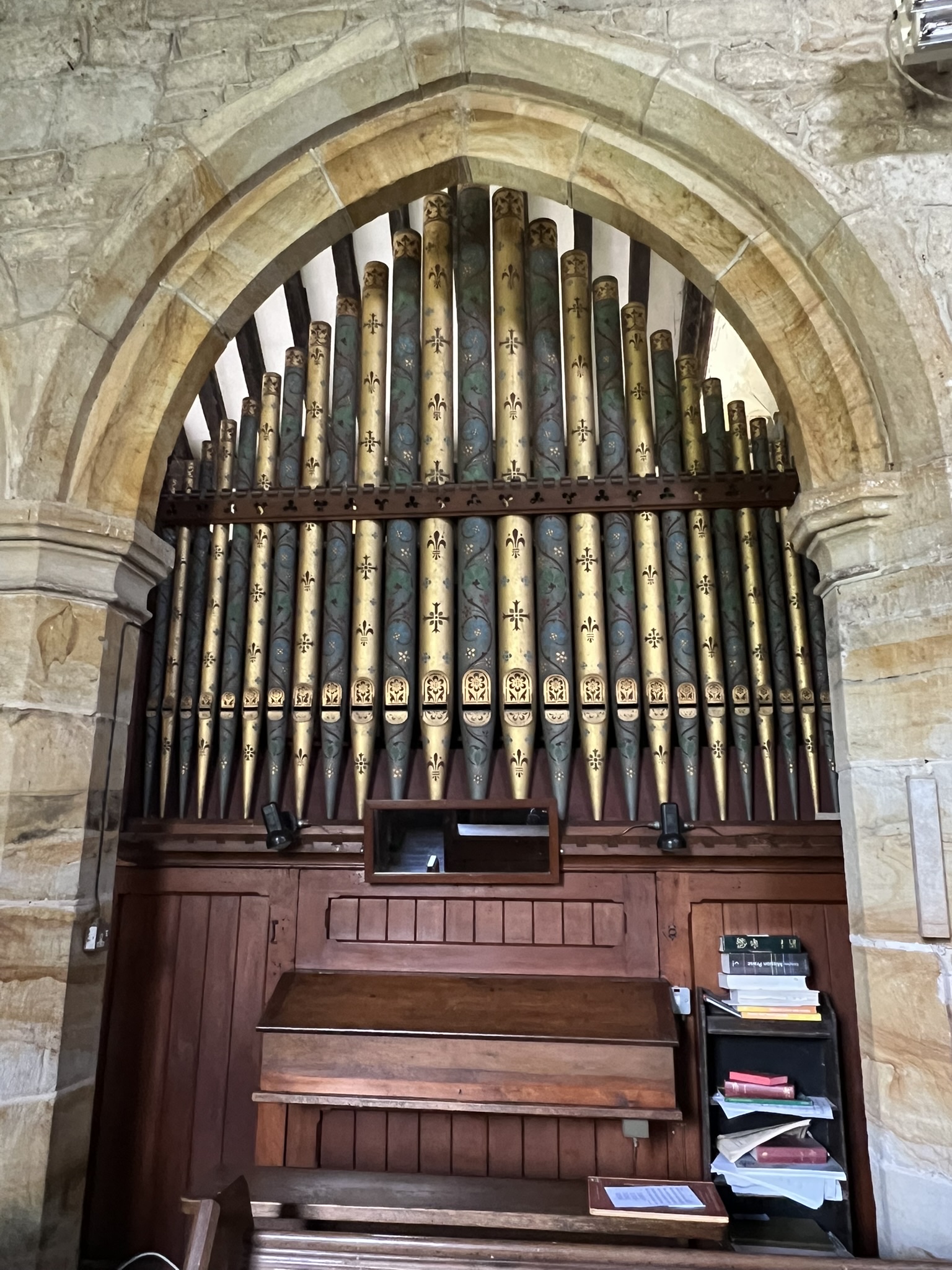
The organ pipes are also a work of art:
 ************

We then headed to our hotel in Lenham where we stayed for three days to allow for further exploring of Kent…and more of the John Austen family …

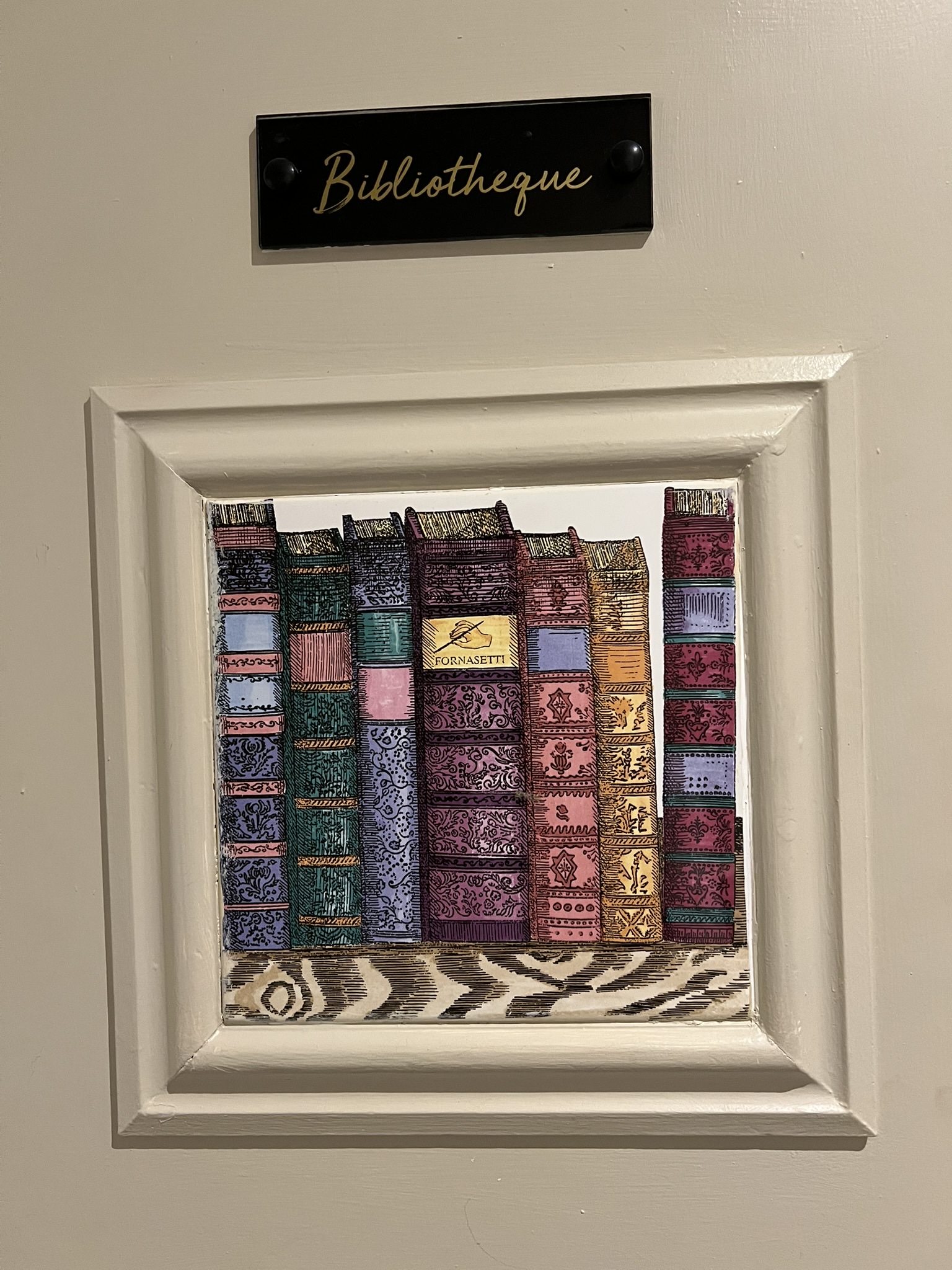
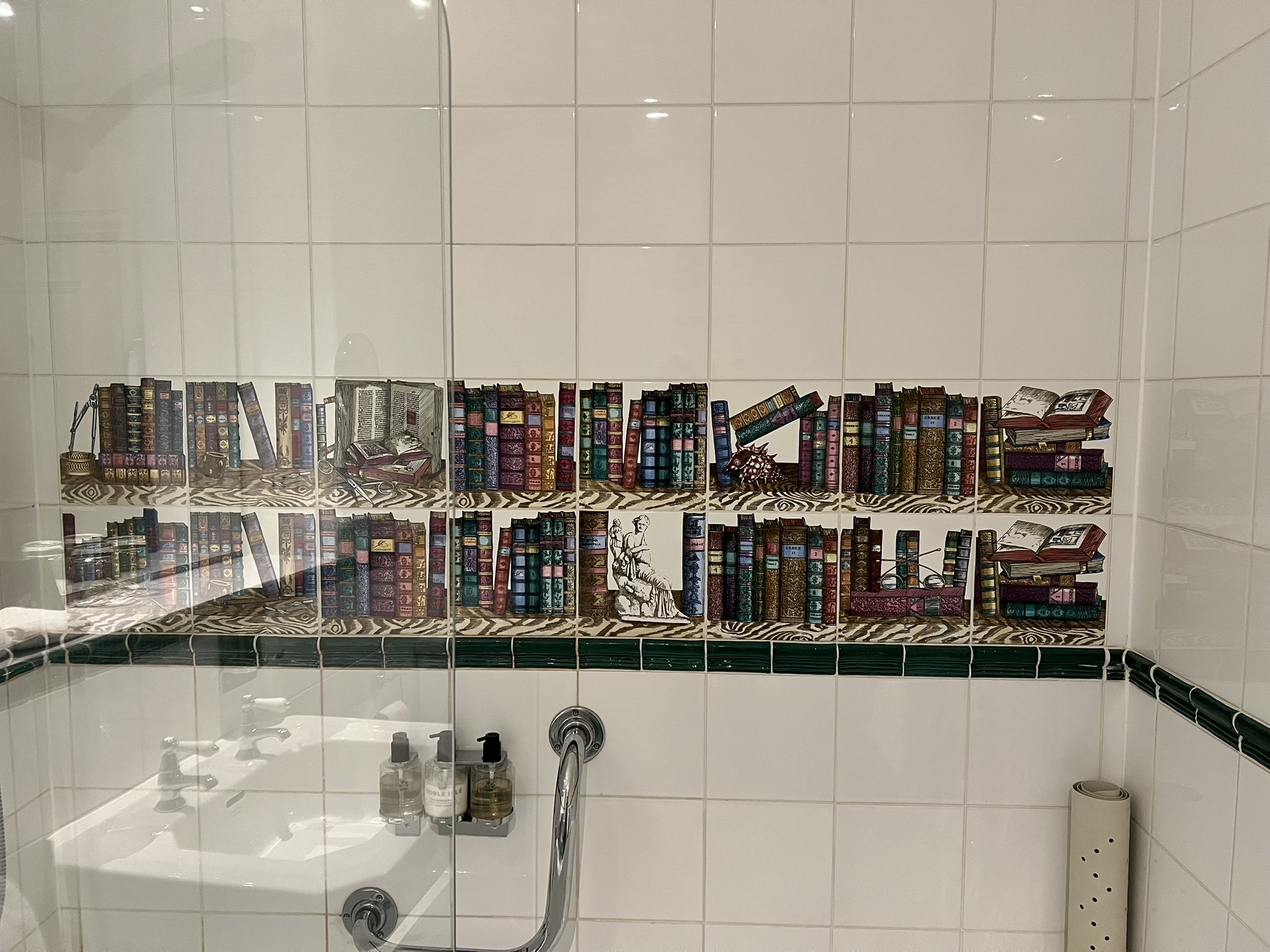
The Chilston Park Hotel was pure pleasure – the cold days and nights had set in [after unseasonably hot days in London], so walking the property was limited, but the hotel was grand, with each room named and decorated according to various themes such as Art Deco, Carousel, Montgolfier (Hot Air Ballooning!) – not sure whether the knowledge gods were at work but my room was the “Bibliotheque” – here is our door, and the tub, along with a bookcase full of books, and this “wise” fellow on the wall:
And another day well-spent! Stay tuned for tomorrow…

_________

1. Elizabeth Matts, et al. 1800: Great Bookham at the Time of Jane Austen, Fanny Burney and R B Sheridan. Parochial Church Council of St. Nicolas, [circa 2008], p. 26. [Published with the support of the JASNA Churches fund.]

c2025JaneAustenInVermont

Decorative Arts · Georgian England · Great Britain - History · Jane Austen · Jane Austen Circle · JASNA · London · Museum Exhibitions · Regency England · Social Life & Customs · Travel

Adventures with Jane! ~ All About the Duke of Wellington and a Little Bit of Henry Austen…

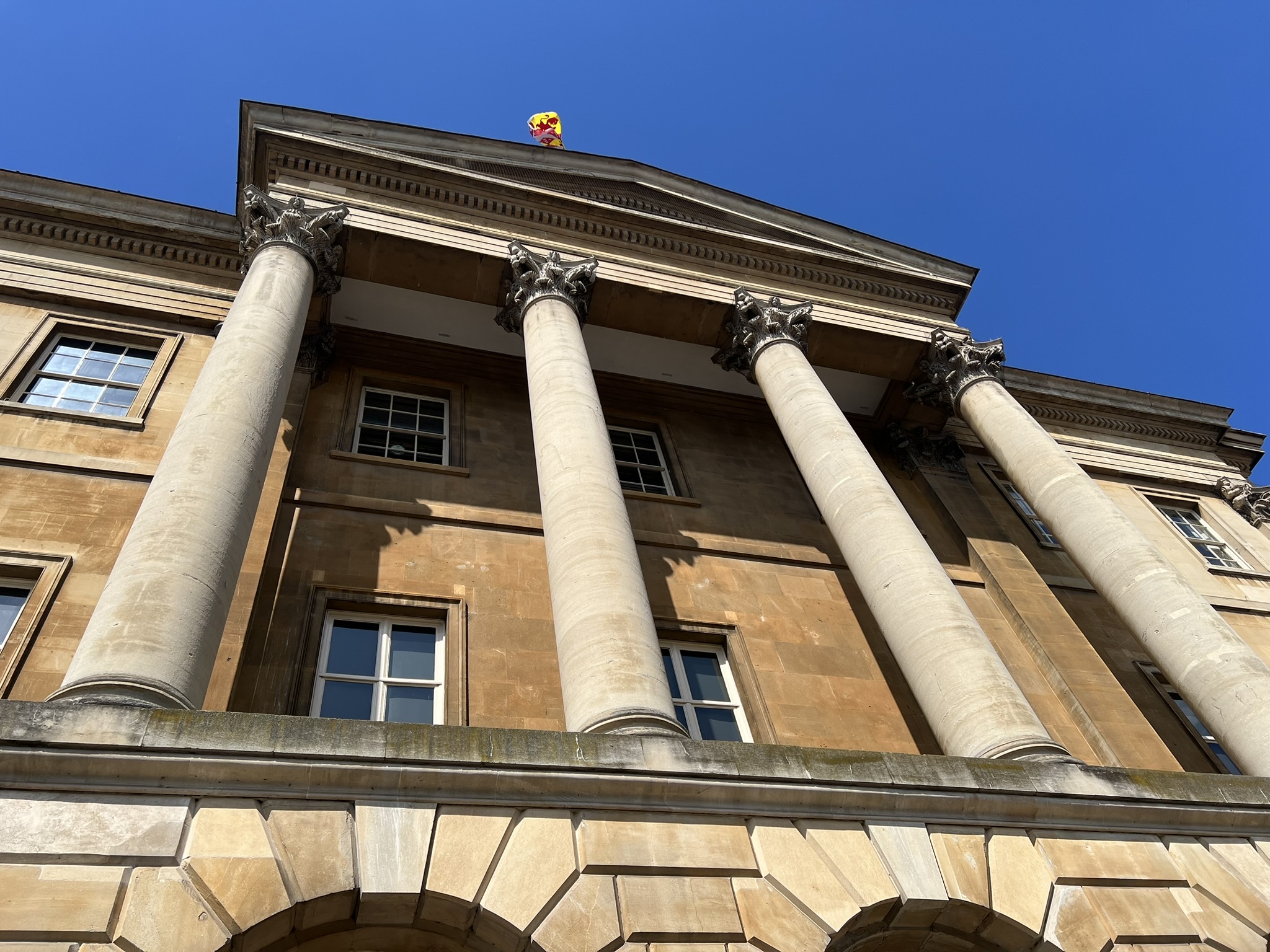
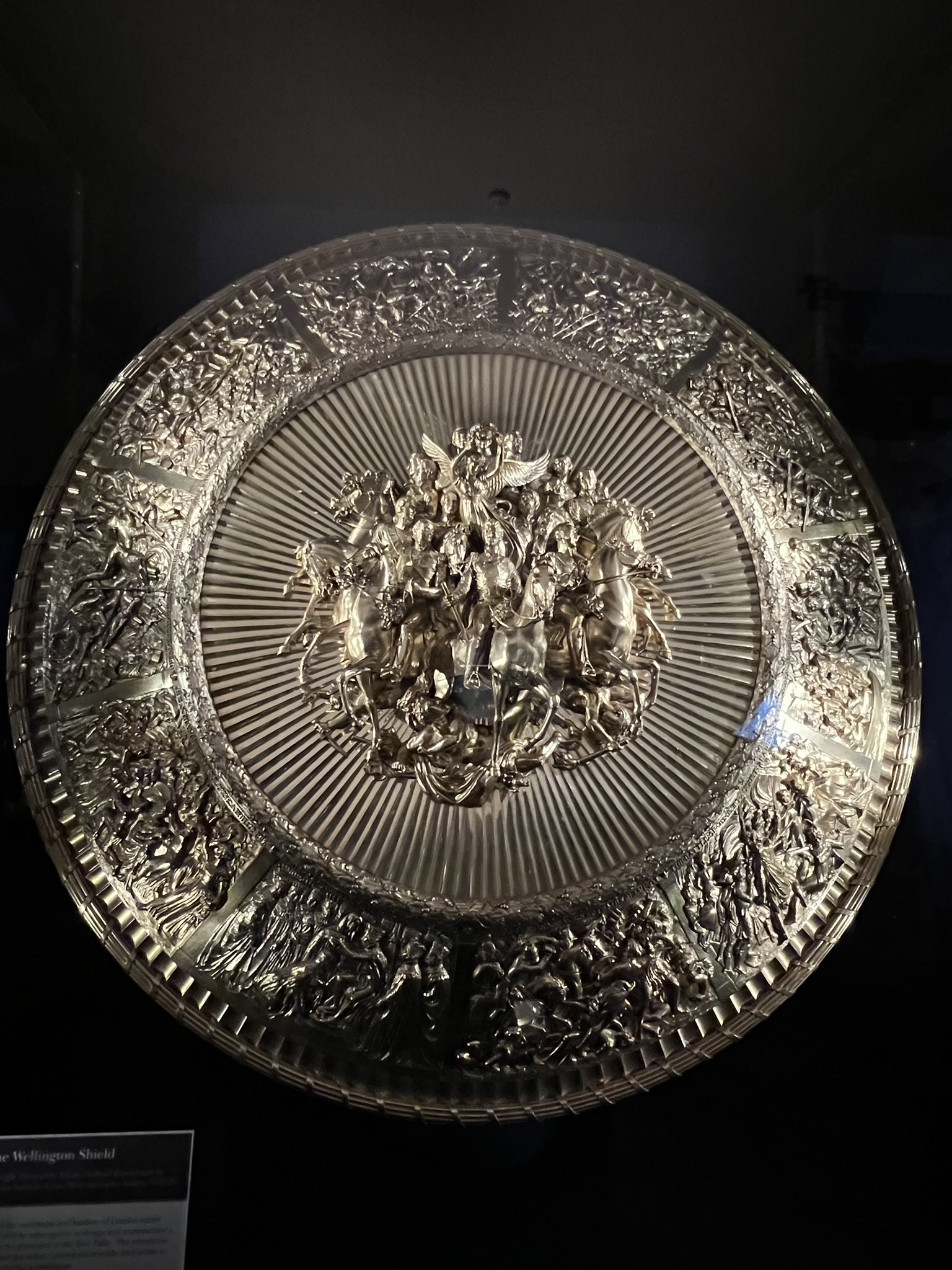
I am ashamed to say I have never been to Apsley House, home of the Duke of Wellington, so that was my goal this day – Ron had never been either, so we met there [right at the Hyde Park Gate, address is One London as you exit from Hyde Park] – and if you had a doubt as to whose home this was [and is], the number of portraits, sculptures, and paraphernalia of the Duke would certainly give you a hint… not to mention the statue of said Duke in the park across the street…

And the Wellington Arch: it is crowned by the largest bronze sculpture in Europe: the Angel of Peace descending on the Chariot of War. You can read about its history [and controversy] here.

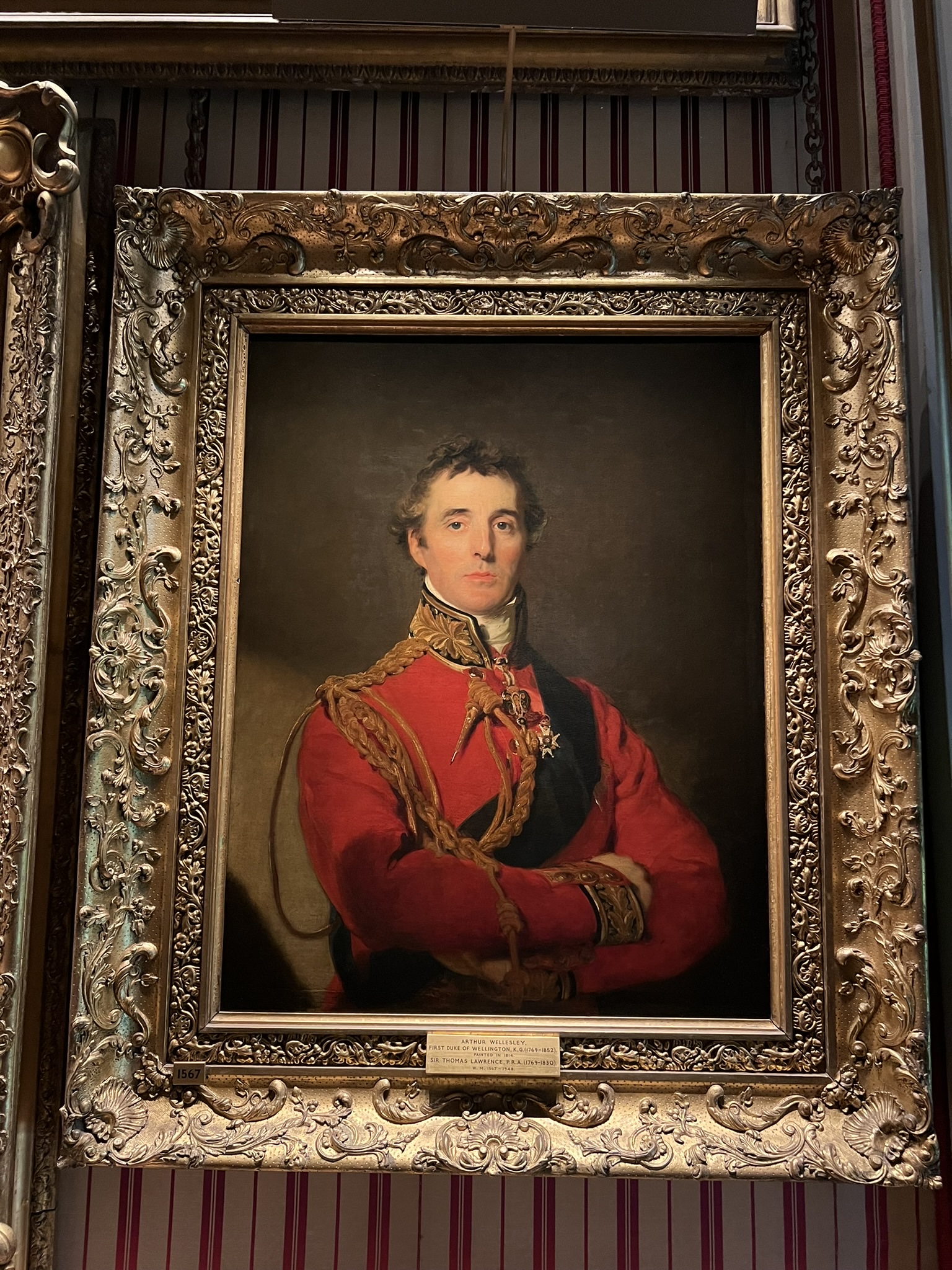
One of the many portraits of the Duke

Your basic dining room…

*****************

I loved it here – and art collection beyond compare – I could have spent many more hours. But for a man who by all accounts liked the simple life of being on a campaign, the extent of elaborate decorative arts and sumptuous décor seems to belie that – the color RED everywhere, and YELLOW…

************

One of two great surprises at Apsley is the extensive Spanish art collection in the Waterloo Gallery, “one of the great palatial interiors of Britain” [the Apsley House Guidebook by English Heritage] – a gift of King Ferdinand of Spain in 1816, the 165 paintings were found in an abandoned baggage carriage of Napoleon’s brother Joseph Bonaparte, then King of Spain. I give one fine example: “The Gambler,” by “a follower of Caravaggio”:

The other grand surprise was to find on entering the house a large nude statue of all people Napoleon! Napoleon as Mars the Peacemaker by Canova. It had been commissioned by Napoleon but had been covered up at the Louvre – after Waterloo Britain bought it for 66,000 francs and the Prince Regent [George IV] gifted it to Wellington. The entry stairwell was the only possible location and the floor had to be reinforced to support the great weight. Wellington admired Napoleon and there are several paintings of him in the art collection here. You can see the stairwell and the size in my more modest photo (!) here – this better picture of the whole statue is from the guidebook [it actually looks much larger than this image conveys – I did burst out laughing when I saw it was Napoleon…]

A friend of mine went several years ago to Apsley House for one of their occasional Regency balls – I can only imagine the swoosh of the dresses and music all around … you can see such a one in this youtube: https://www.facebook.com/ApsleyHouse/videos/2444115022311548

Alas! I had to content myself with an audio guide and a vivid imagination…

**************

Next up was Henry Austen! Ron and I were off to Sloane Square, where I served as a grateful listener for one of Ron’s walking tours of Austen sites. I had done this part of Henry Austen’s life before but Ron’s history of it all added much to my knowledge, not to mention another glorious weather day… all followed by lunch in a crowded outside eatery right in the middle of the weekend Sloane Square market – made one feel like a real Londoner!

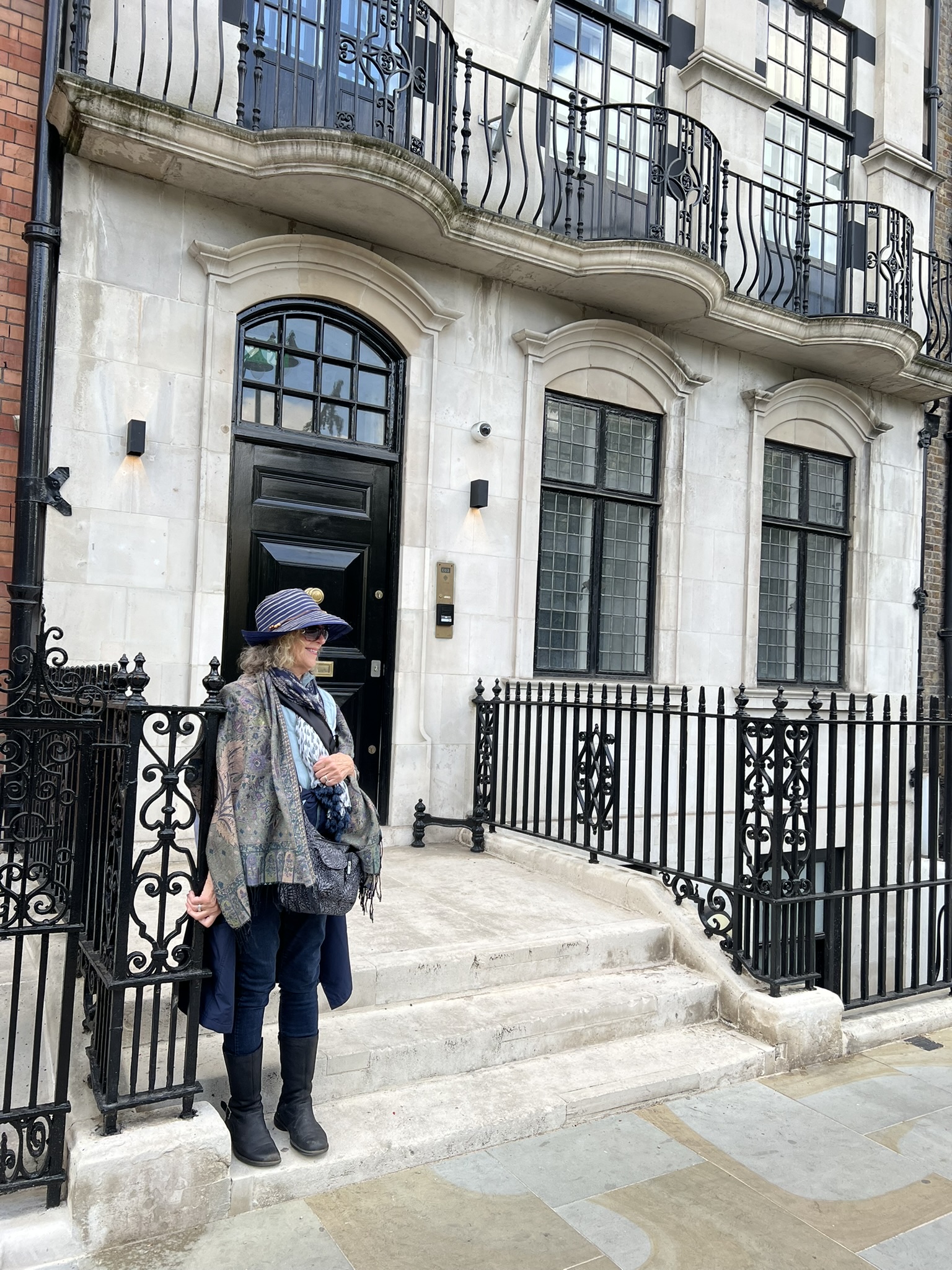
Henry’s house in Hans Place…

What Henry’s house would have looked like then…

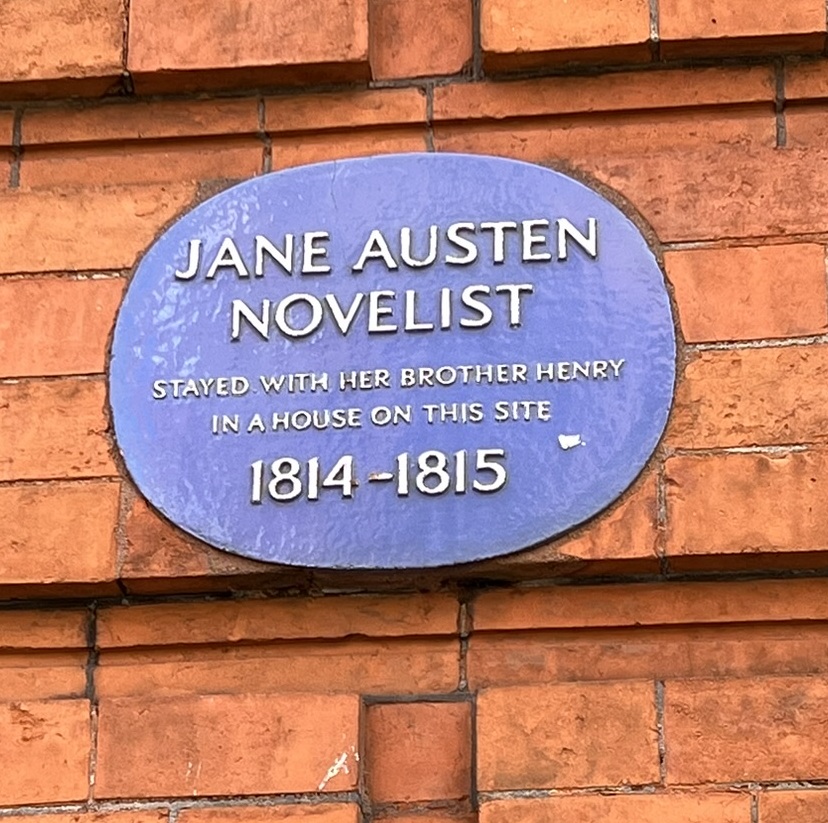
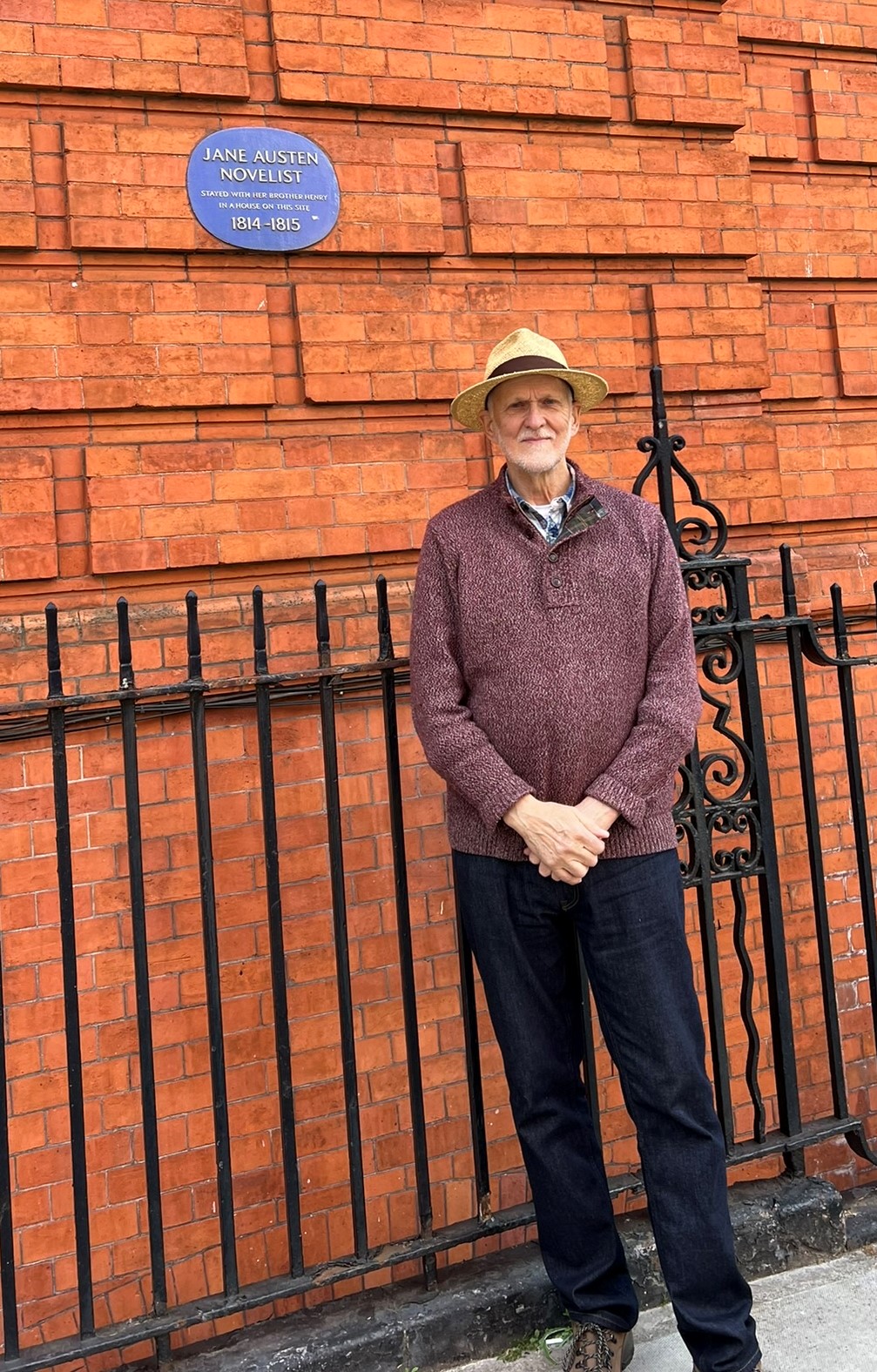
And the requisite Blue Plaque so we know it’s true…

adding this sketch from Constance Hill’s book JA: Her Homes and Her Friends (1902):

**************

Another great day with Ron…we bid adieu ’til a next visit [we have already lined up an itinerary…] – and I had a fine dinner later at my hotel [that is water not vodka!]:


Next up: the beginning of the JASNA Tour starting in Windsor!

c2025JaneAustenInVermont
Georgian England · Georgian Period · Great Britain - History · Jane Austen · Jane Austen Circle · London · Museum Exhibitions · Regency England · Social Life & Customs

Adventures with Jane! ~ Twickenham with Ron Dunning

This day I had the pleasure of spending time with Ron Dunning – we have in the past visited estates and famous houses, and this time the plan was to go to Horace Walpole’s Strawberry Hill

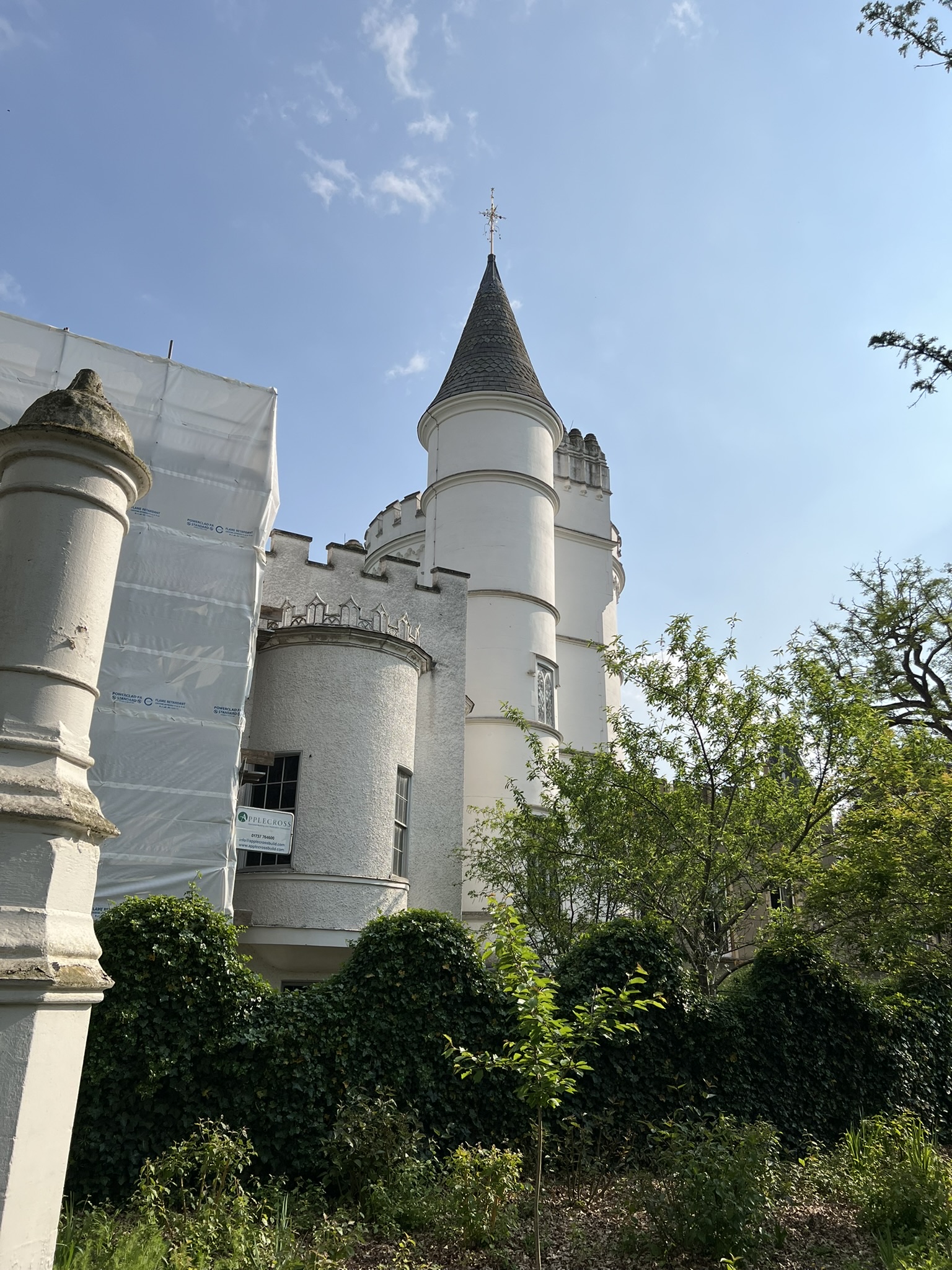
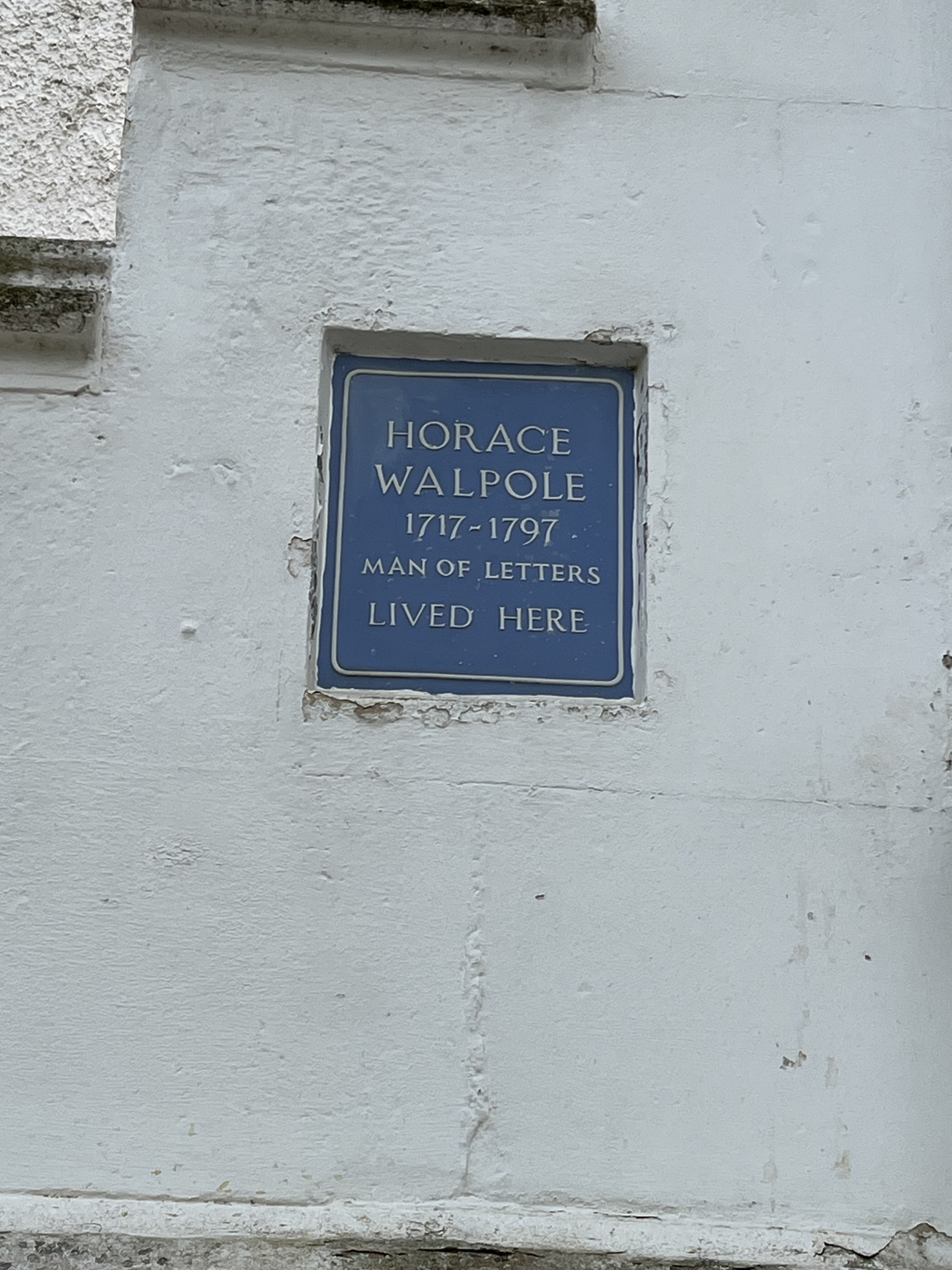
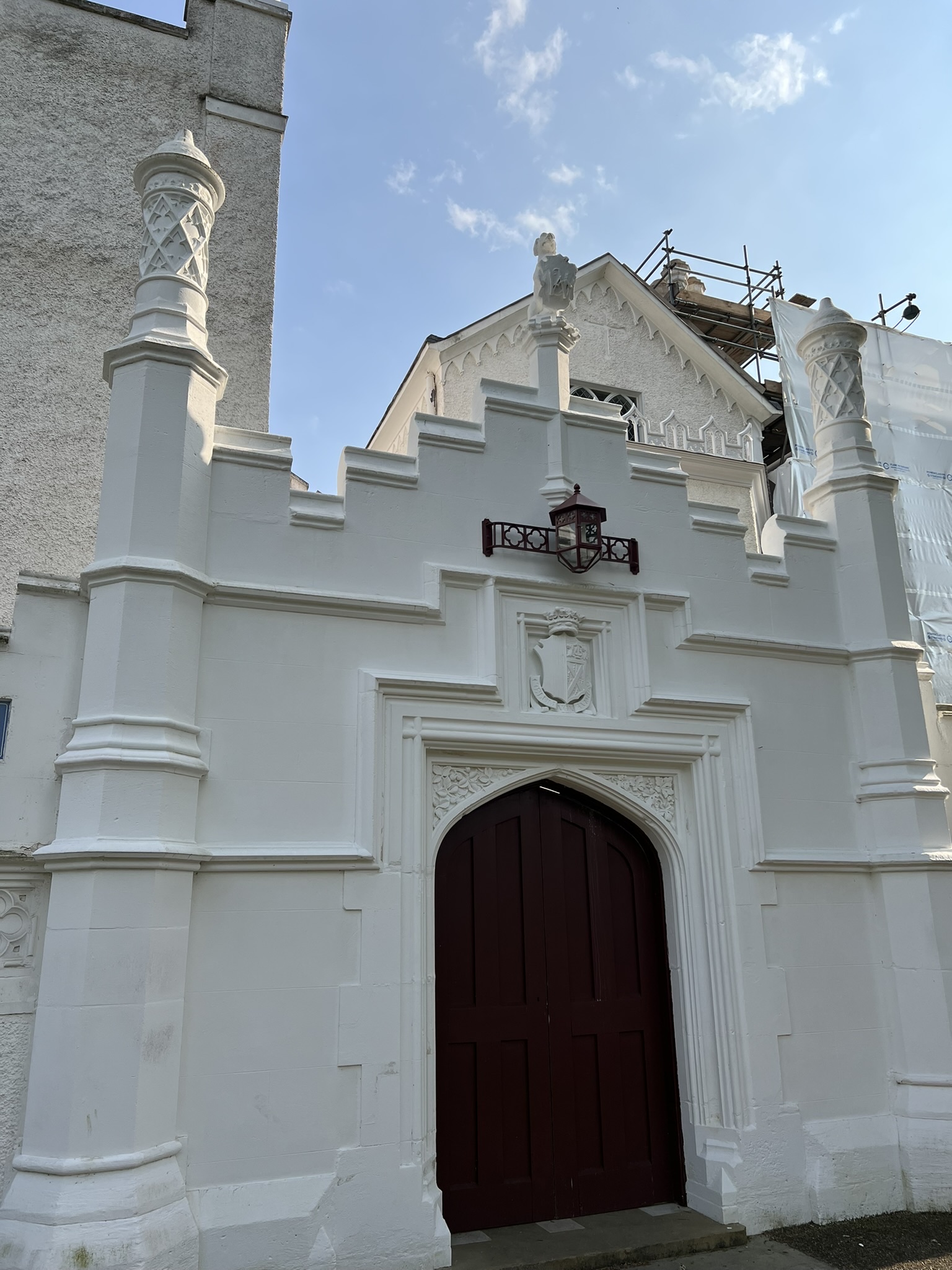
– alas! it was CLOSED [who closes a tourist site on a Friday??!] – but a few outside photos give you a sense of its grandeur – inside for another trip I am sorry to say – but you can visit it virtually here:

*****************

But Marble Hill was a lovely surprise – home to Henrietta Howard, mistress of George II [for which George’s wife Caroline was most grateful] – apparently George spoke no English and Henrietta was deaf, so a perfect relationship that lasted until he took on another mistress [you can read the ever-interesting George’s mistress stories here.

Howard was unhappily married, separated, but a well-loved and respected woman of education, wit, and grace. She also had a “home of her own” – she designed and lived in Marble Hill beginning in the 1720s, one of the many villas built along the Thames – it remains a rare example of a house built for and by a woman in Georgian England, thankfully saved by an Act of Parliament in 1902. Unlike many such estates, it feels like a very real and livable home, not a museum – you can read more about Henrietta and Marble Hill here.

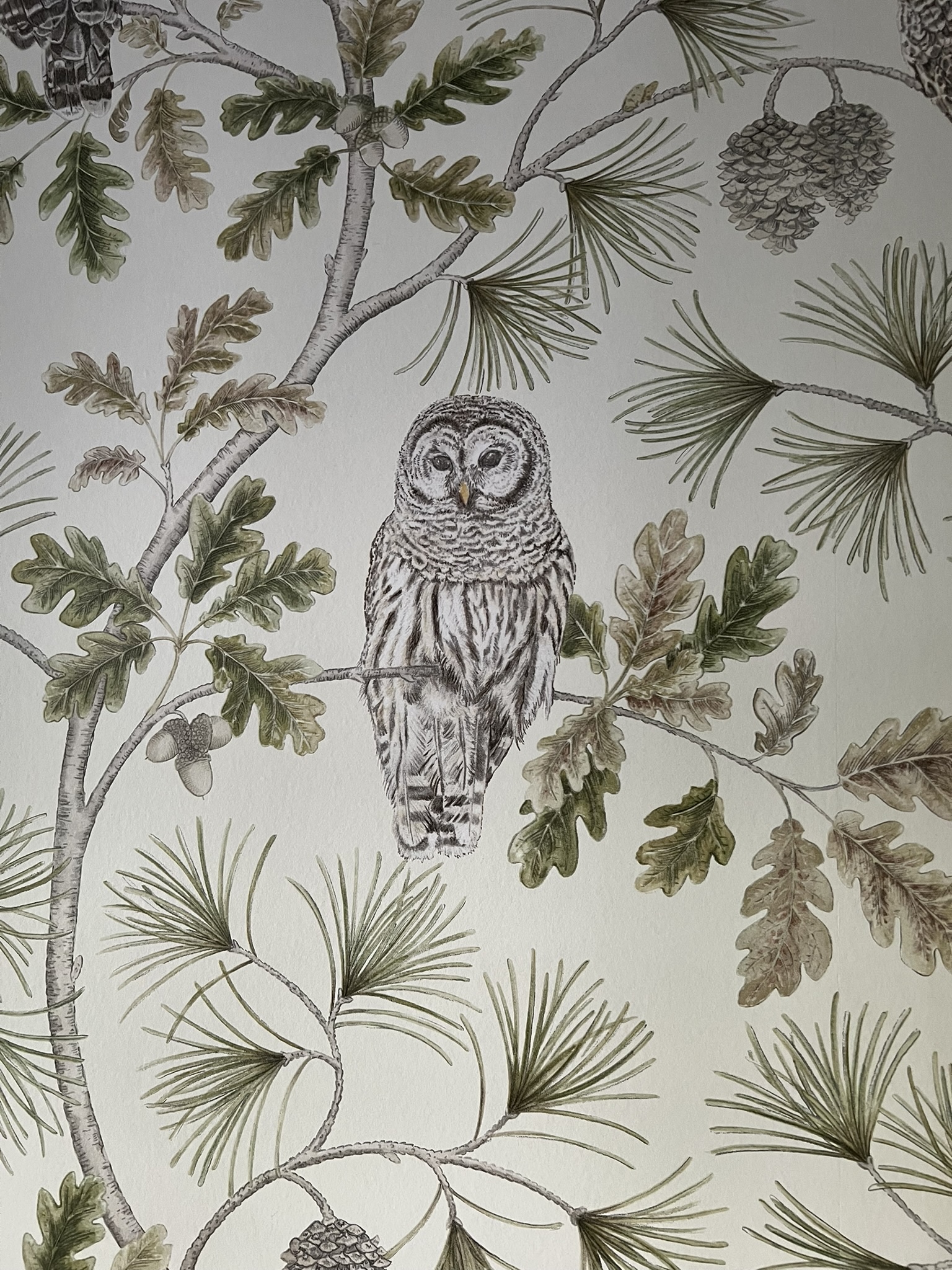
Love this dining room wallpaper:

View from the Thames:

And now a view of the modern Thames, not likely what Henrietta saw!:

Lunch at the Couch House café was an added treat.

[You can read more about Marble Hill at this post by Tony Grant from 2013!]

***************

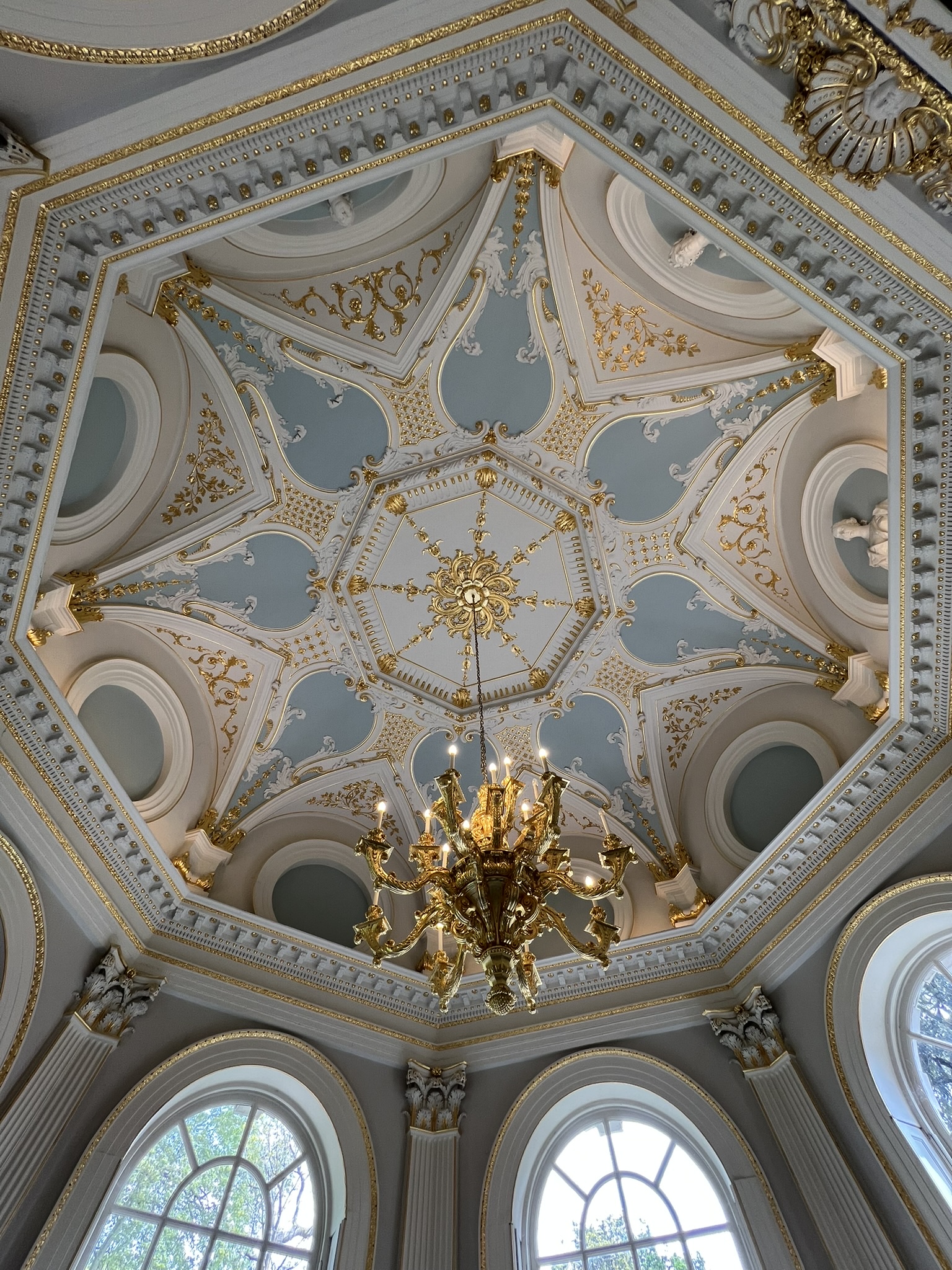
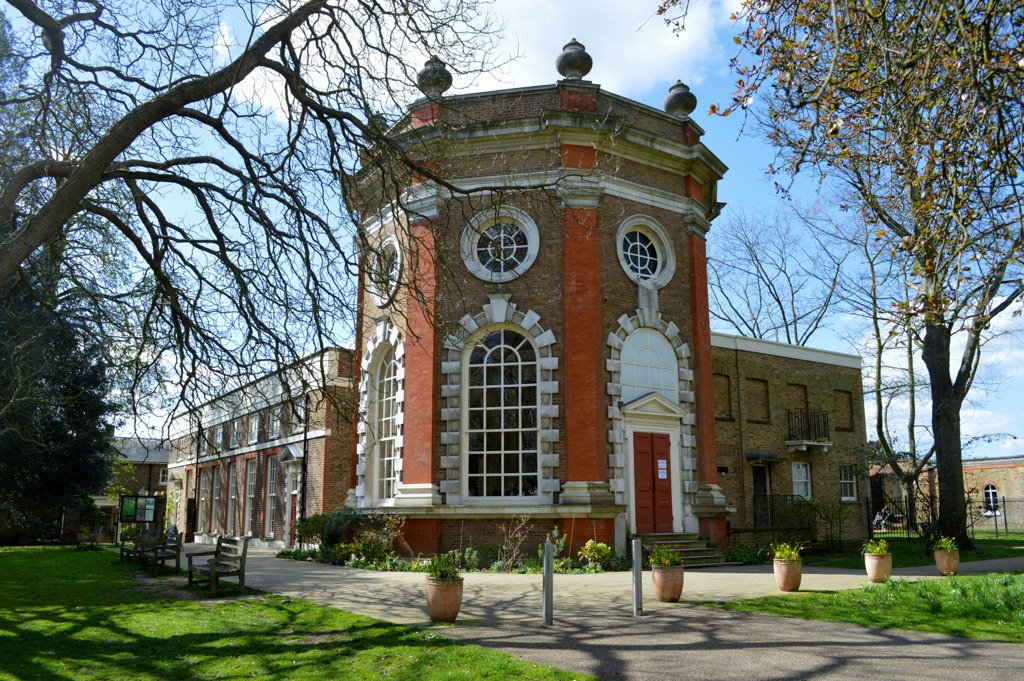
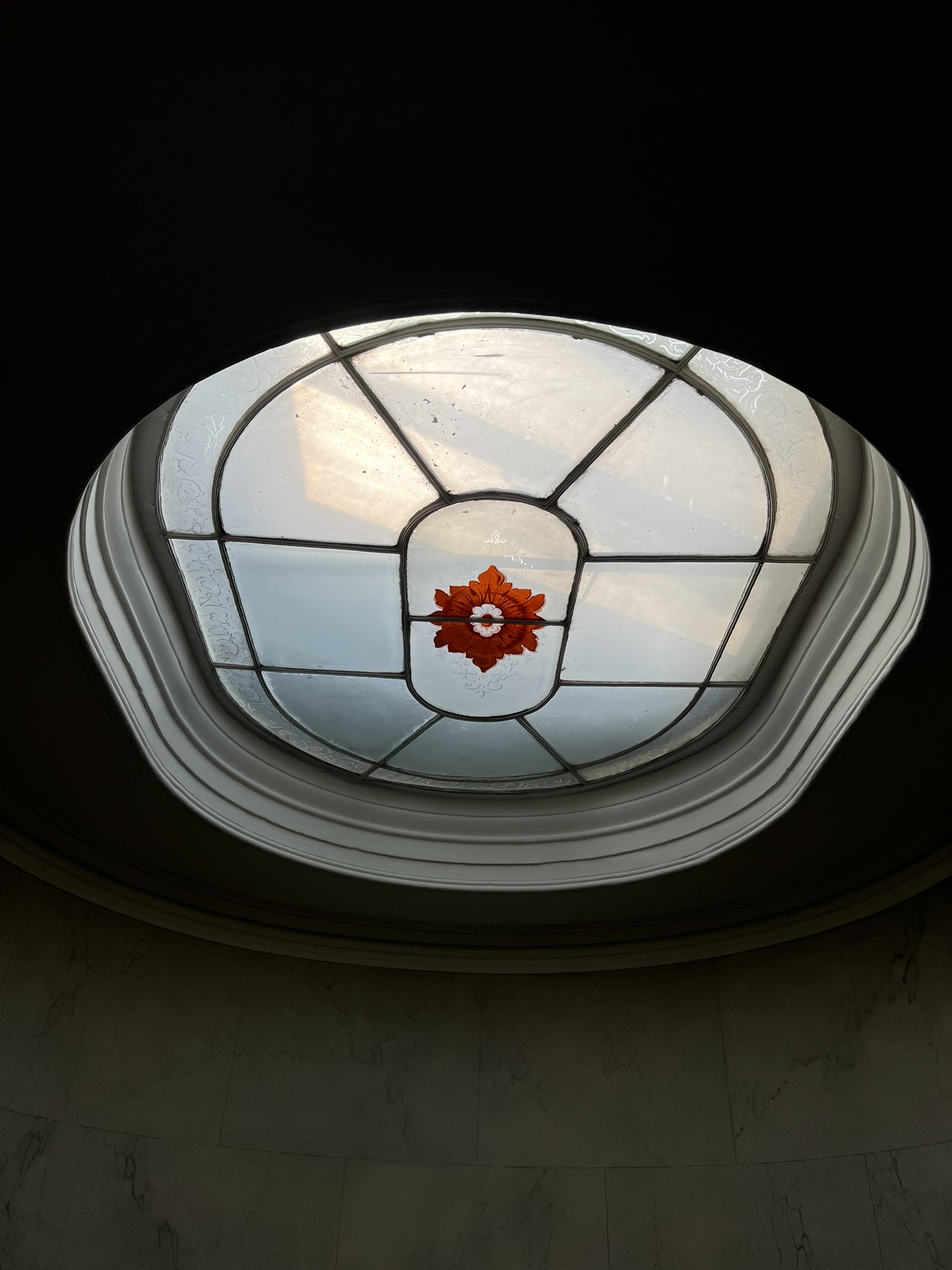
We did go to nearby Orleans House, now really just the Gallery standing – I only took a picture of the exquisite ceiling, but here is also an exterior shot courtesy of Wikipedia:

*****************

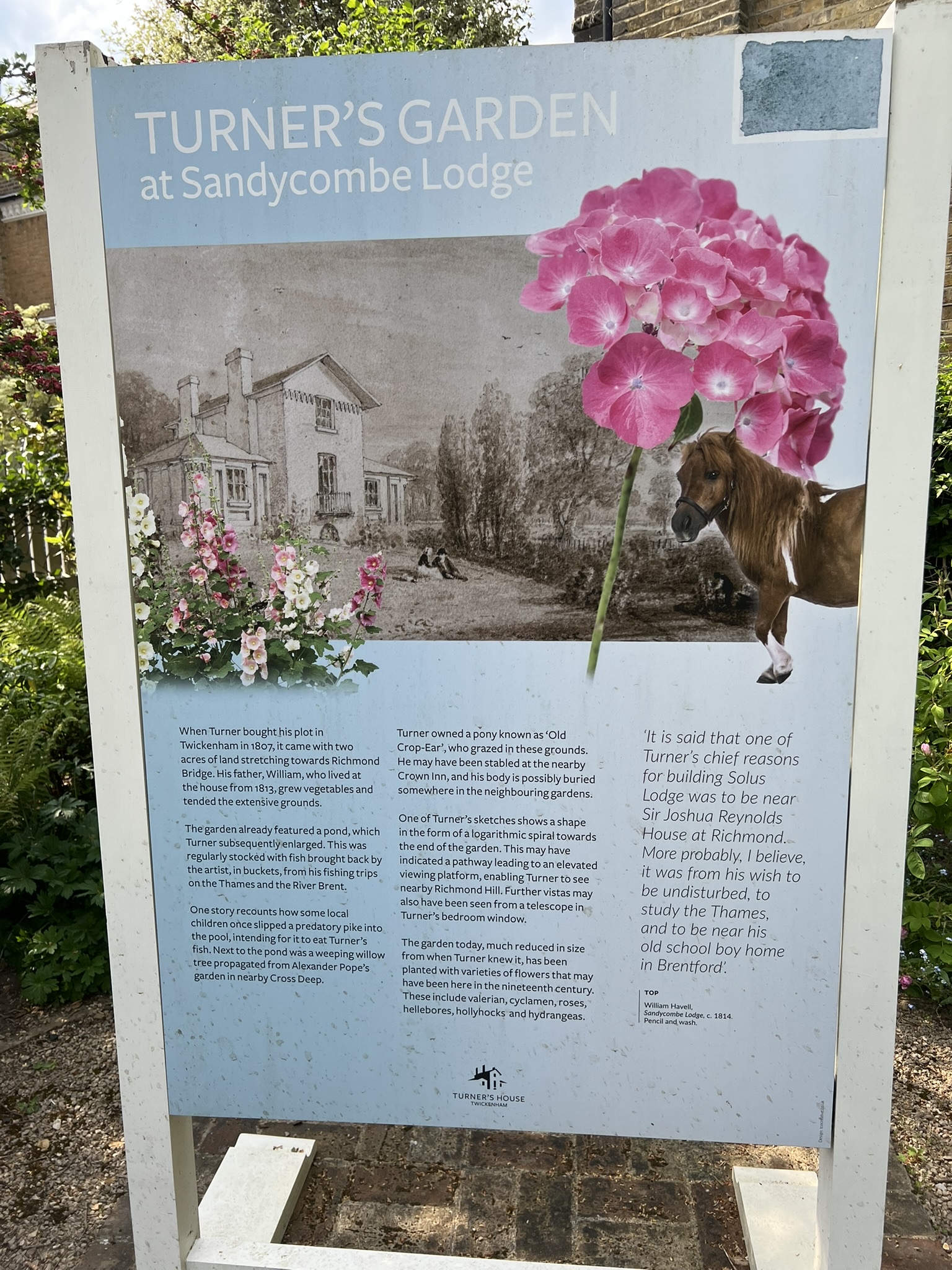
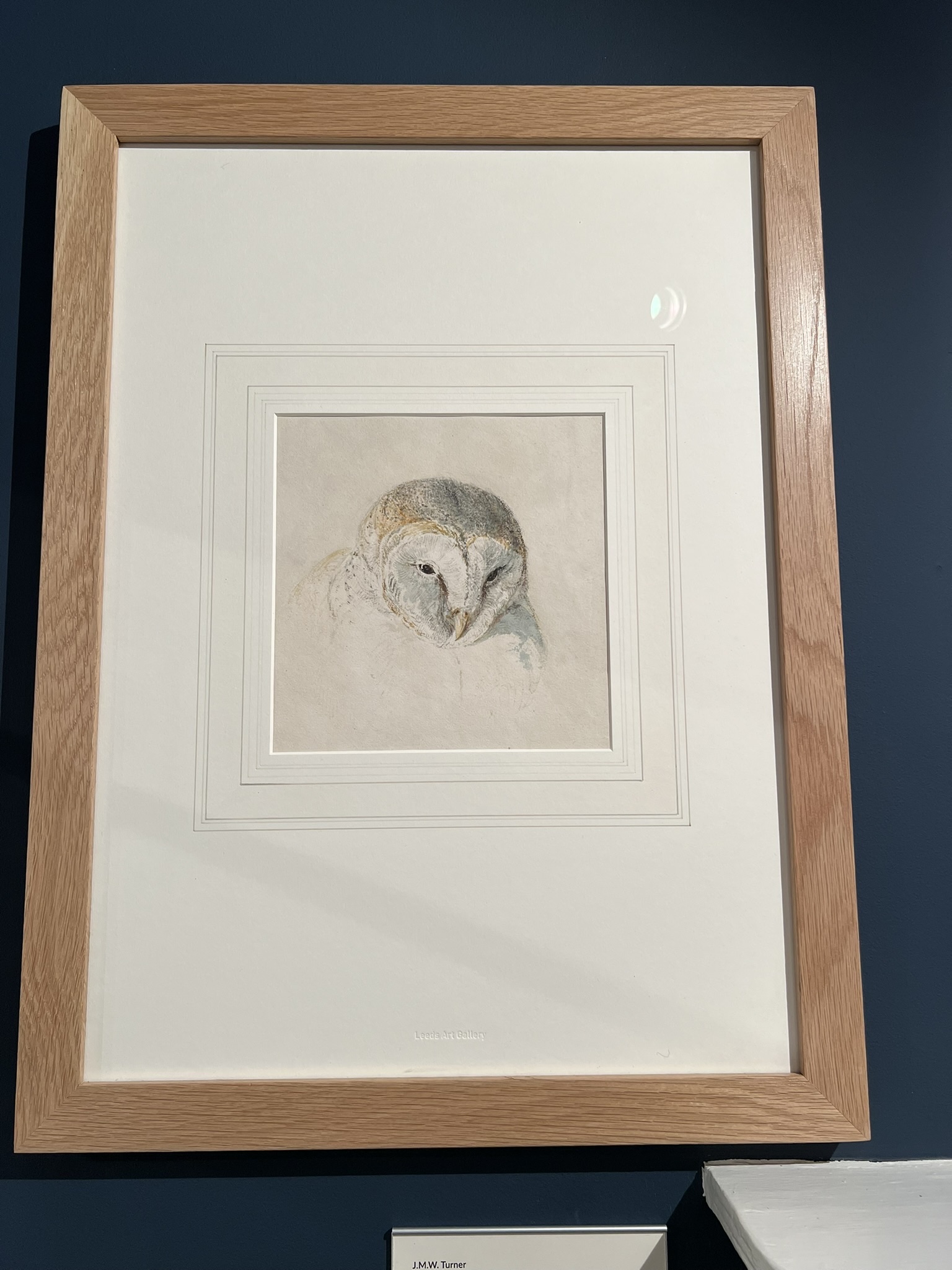
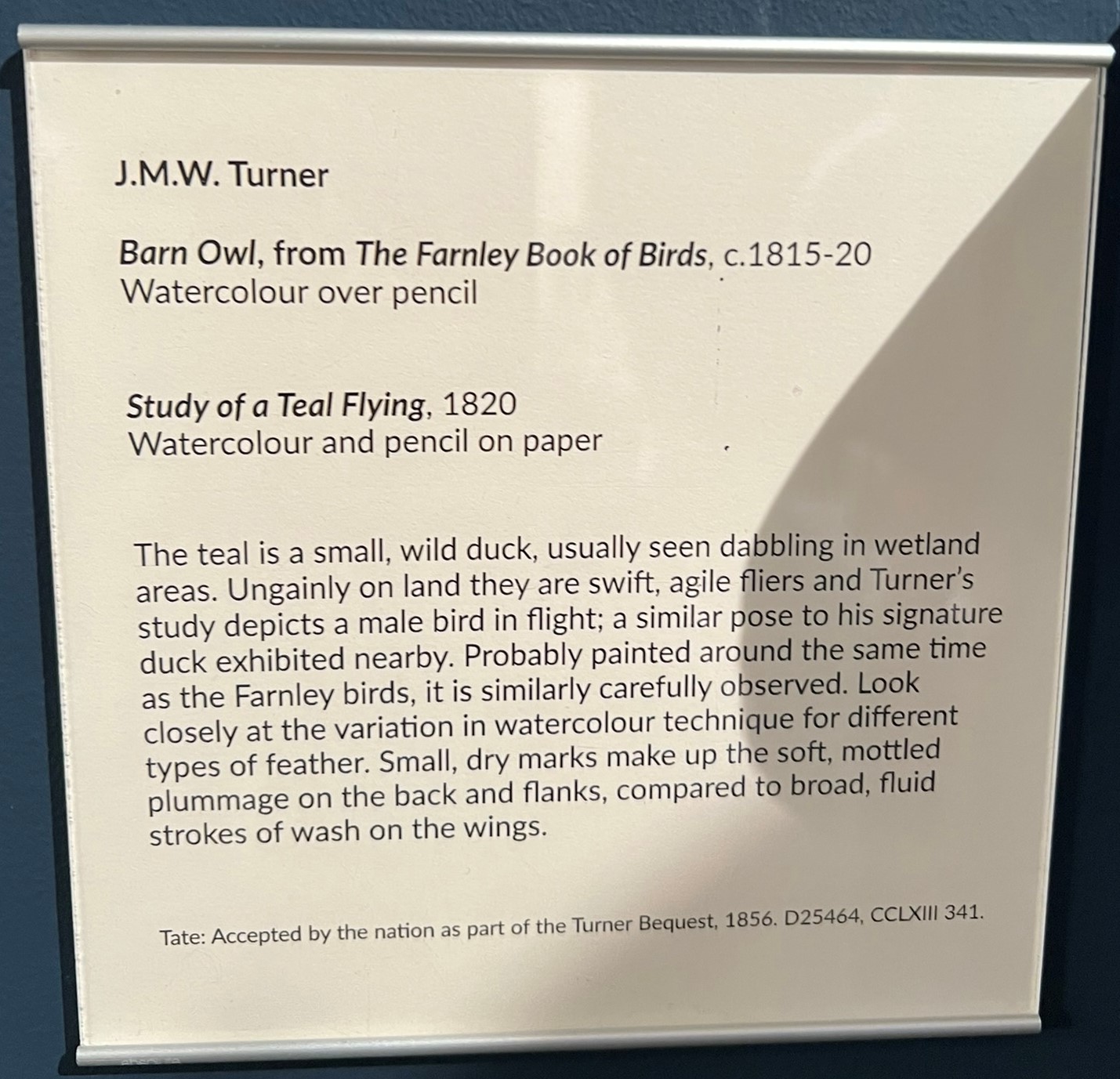
And to finish off the day, we took in the country home Sandycombe Lodge of J. M. W. Turner, where there was an inspiring watercolor exhibit of “Turner’s Kingdom: Beauty, Birds, and Beasts,” and very unlike the large and dramatic landscapes we associate with him. Celebrating Turner’s 250th [just like Jane!], the house, designed by Turner, is a small retreat that Turner lived in with his father.

************

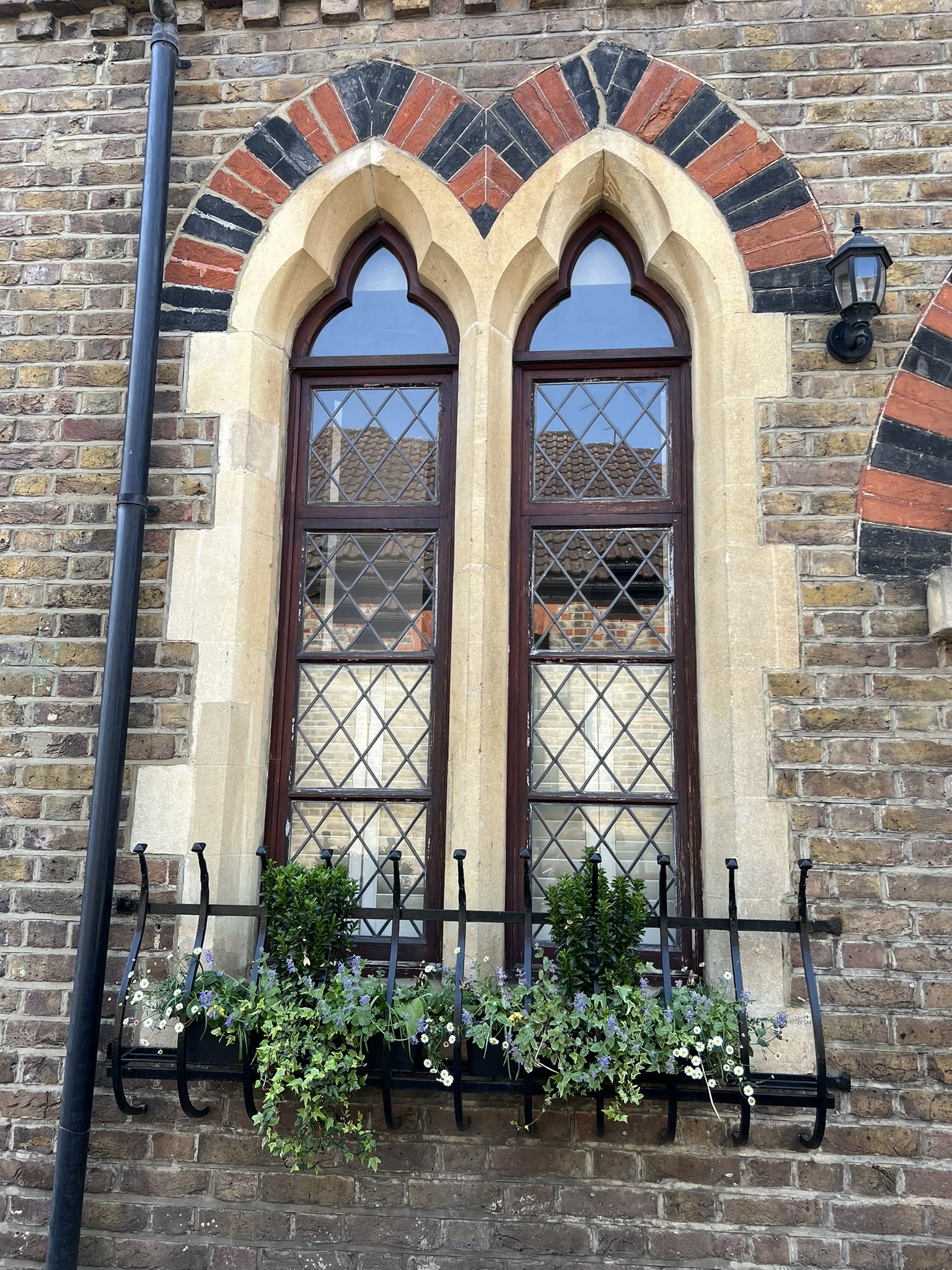
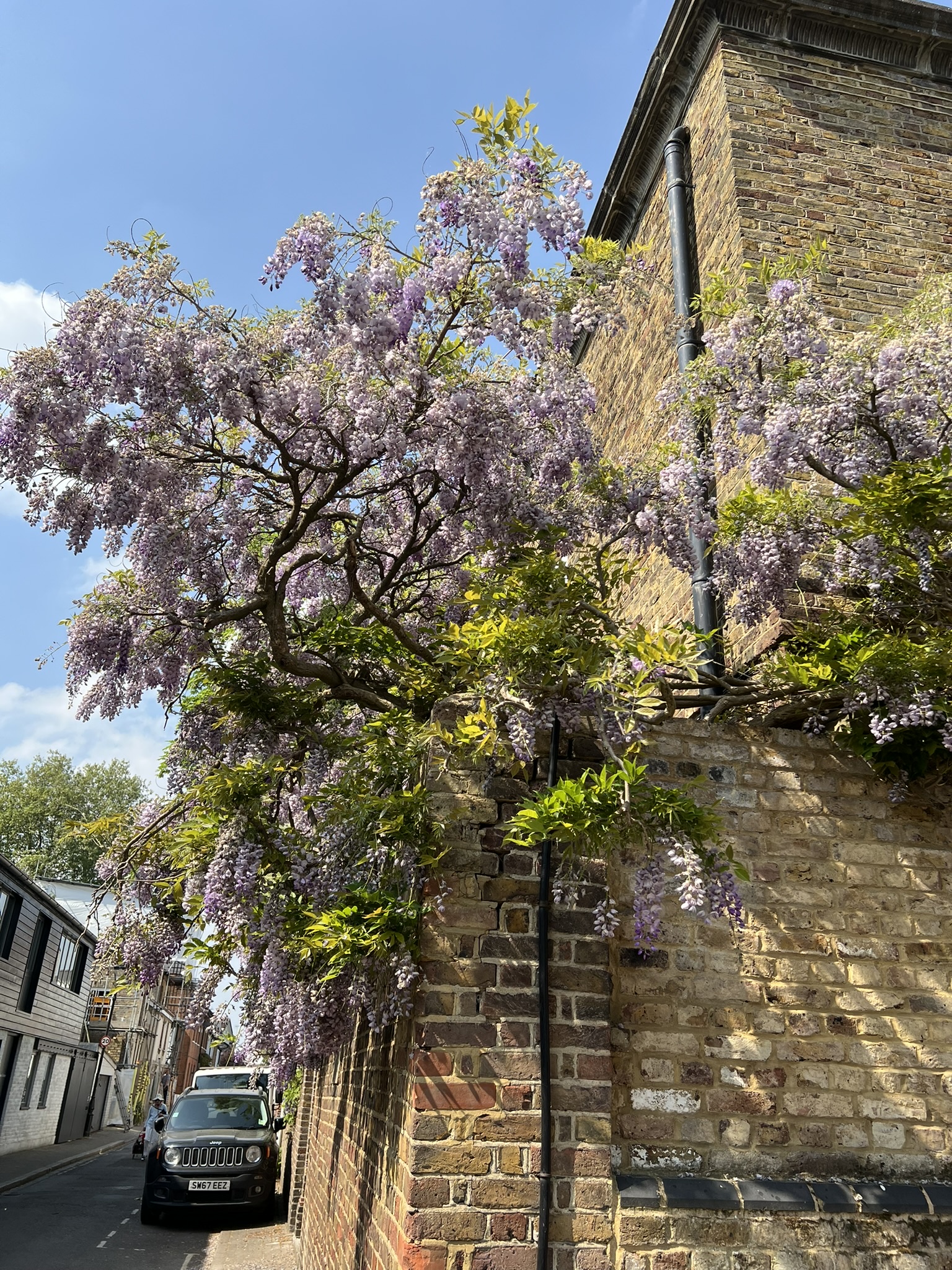
And this just another window of interest – and wisteria EVERYWHERE! [just like in SC…]

And another day “well-spent” – Thank you Ron for shepherding me around the sites of Twickenham!

c2025JaneAustenInVermont
Great Britain - History · Jane Austen · Jane Austen Genealogy · Travel

Travels with Ron Dunning ~ Jane Austen’s Horsmonden from on High

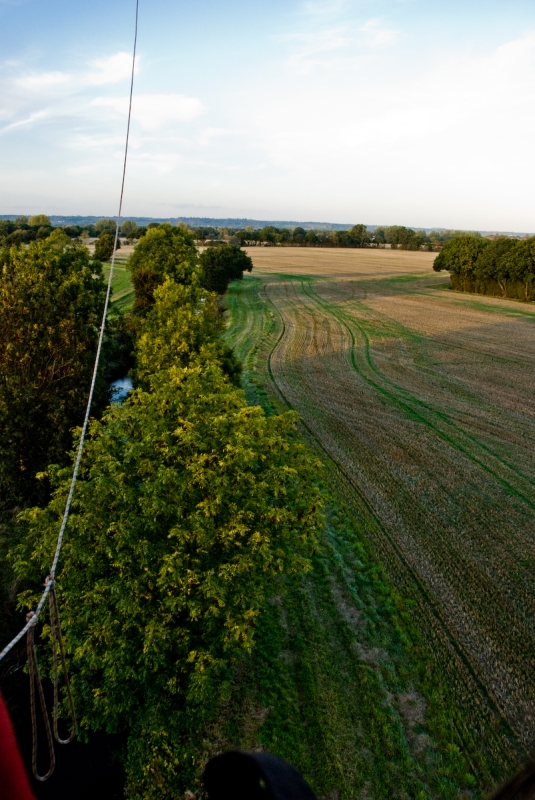
Gentle Readers: I welcome today Ron Dunning, author of the Jane Austen’s Family Website. Ron had written here before on Horsmonden in “Jane Austen and the Huguenots” – but today he tells of a hot air balloon ride he and his wife Helena took in 2008 where he took these wonderful pictures of Kent and the surrounding countryside – enjoy the ride!

*******

17 Sheep
Sheep

Horsmonden from on High

by Ron Dunning

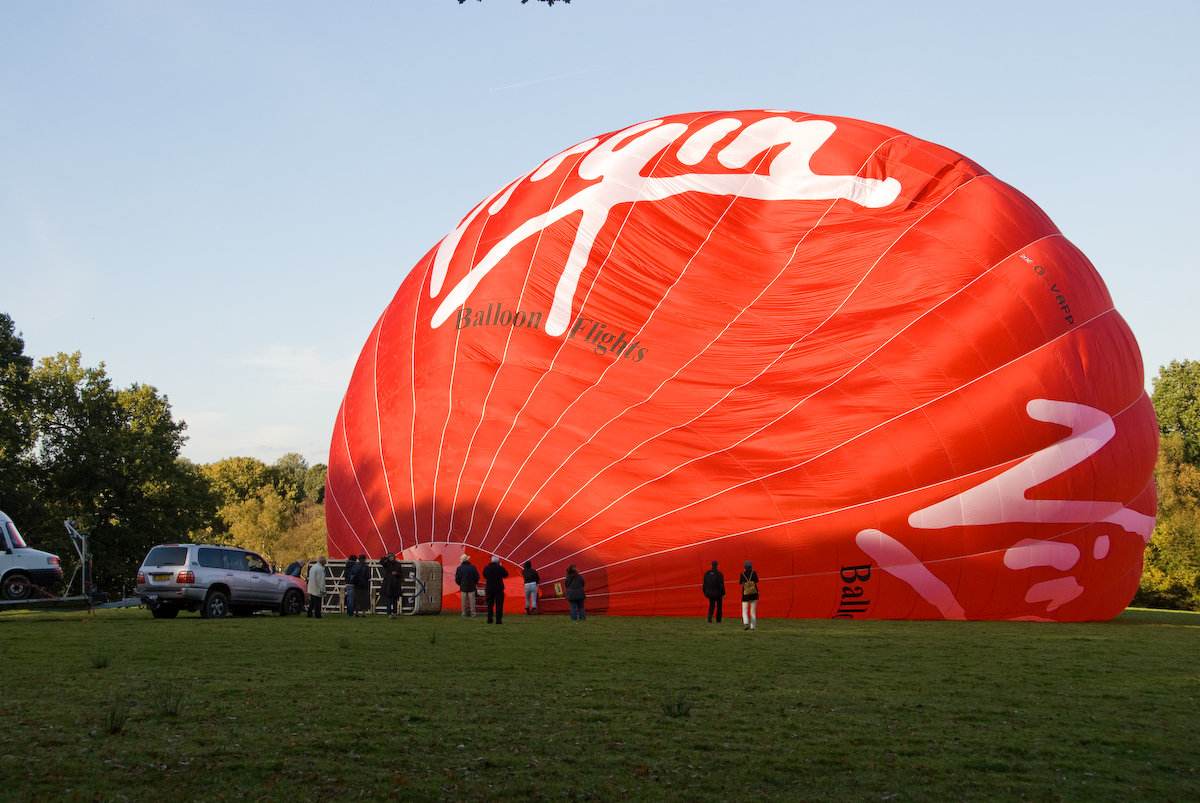
For my birthday in the spring of 2008 Helena, my wife, bought me a ticket for a hot-air balloon flight. I preferred to share the pleasure, so I waited till her birthday a few months later, and bought one for her.  The weather that summer was very wet, and it wasn’t possible to book a flight until early October. We chose a launch site in Wadhurst, on the Sussex border with Kent, an area that we know and love, on what turned out to be a golden Indian summer’s afternoon.

The direction of a balloon’s flight is entirely dependent on the wind. I had given no prior thought to the fact that the Austens’ ancestral heartland of Goudhurst and Horsmonden lay only some ten miles away, but the wind took us, at 12 mph, precisely in that direction. I only realised that this was our on our route as we passed over St Margaret of Antioch in Pisidia – Horsmonden’s parish church, with its collection of Austen graves and memorial brasses.

Till then I had simply been enjoying the wonderfully calm experience. (Even though a balloon flies a few thousand feet above ground level its passengers aren’t troubled by wind, since it is blown along at the same speed as the air.) Now I began to scan the horizon for Broadford, and possibly even Grovehurst, the Austen houses. I couldn’t find Broadford. It may have been possible to see it, but I wouldn’t have recognised it from the south, the direction from which we were travelling, since I’d only ever seen the front, which faces north.

Grovehurst lies at least a mile further beyond the village, in wooded country. The wind, and our so ground speed, had dropped. I spent the next fifteen minutes straining my eyes for a glimpse of the house, to no avail. Then, just as we were descending in search of a landing site in a friendly farmer’s field, and as the pilot was announcing a Gypsy site to the left, and as I had quite given up on spotting it, there was Grovehurst on the right. The pilot turned the balloon through 360 degrees (I don’t know how he managed that!) for everyone to see, and marked the Austen’s ancestral home on his map to show future passengers.

I don’t believe that there is any record of Jane Austen’s visiting Horsmonden, where her grandfather William Austen was born. His heroic mother, Elizabeth Weller, had to take a housekeeping job at Sevenoaks School in 1708 to keep her family together, and that broke the Austens’ relationship with the village. It would not be an anachronism to imagine Jane, if she had visited, seeing her ancestral home by air – on 19 September 1783 Pilatre De Rozier, a scientist, launched the first hot air balloon called ‘Aerostat Reveillon.’ The first manned flight came two months later on November 21, with a balloon made by two French brothers, Joseph and Etienne Montgolfier.

At that time, when the fastest land transport proceeded at the rate of a trotting horse, ascending in a balloon and flying with the wind would have struck most people as terrifying and mad. As it happens my wife, who is normally fearless, asked me if I too had been worried. I confess that my imagination is generally vividly aware of consequences – and there we were at 2000 feet, with no parachutes, in a wicker laundry basket! But I was so absorbed in reconnaissance that I had forgotten to give the danger any thought.

Arrival
Arrival

Still a Blank Slate
Still a Blank Slate

Taking Shape
Taking Shape I

Taking Shape
Taking Shape II

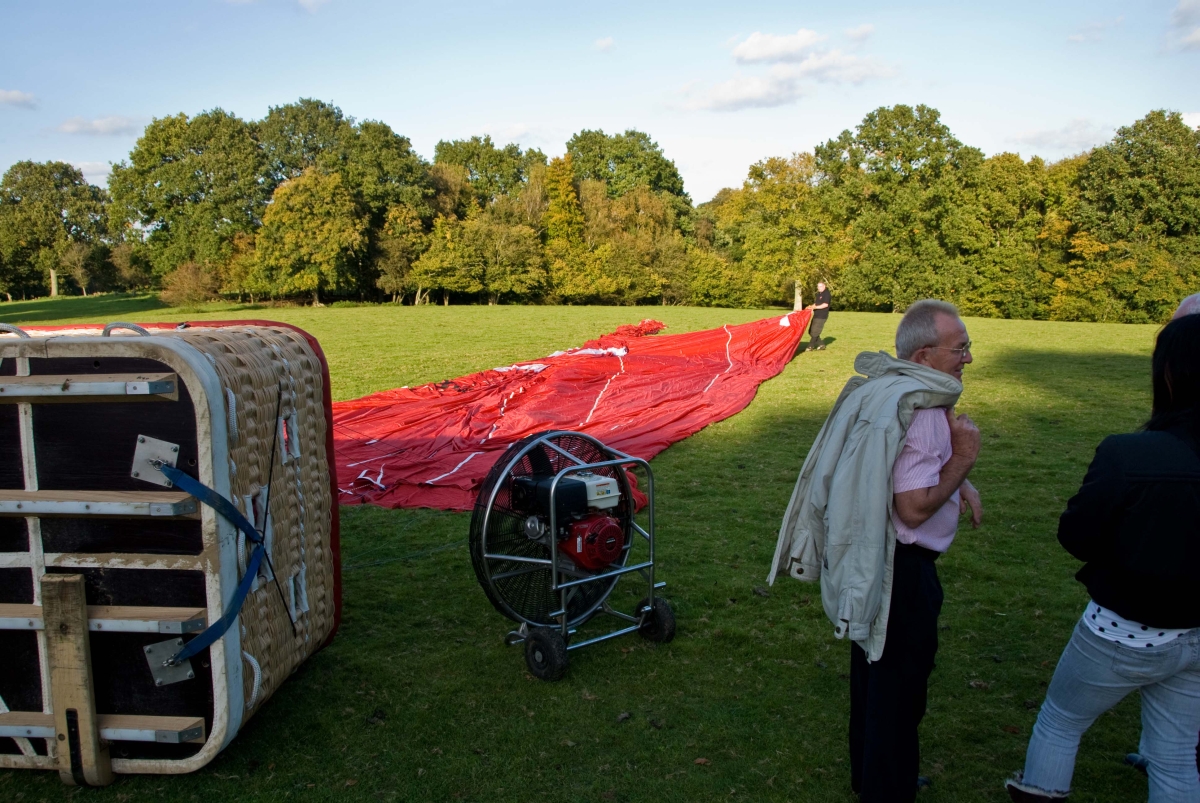
Inflation
Inflation

Inflation II
Inflation II

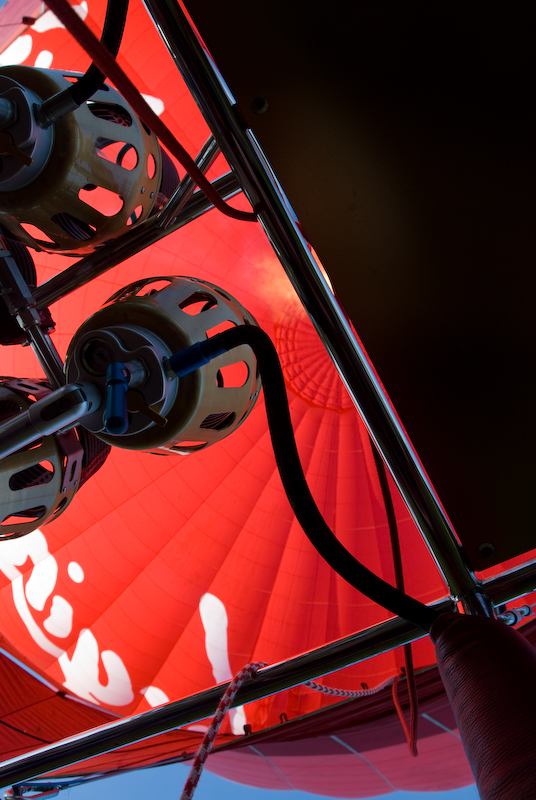
Firing up
Firing up

Rising Up
Rising Up

Rising Up II
Rising Up II

Lifting Off
Lifting Off

Aloft
Aloft

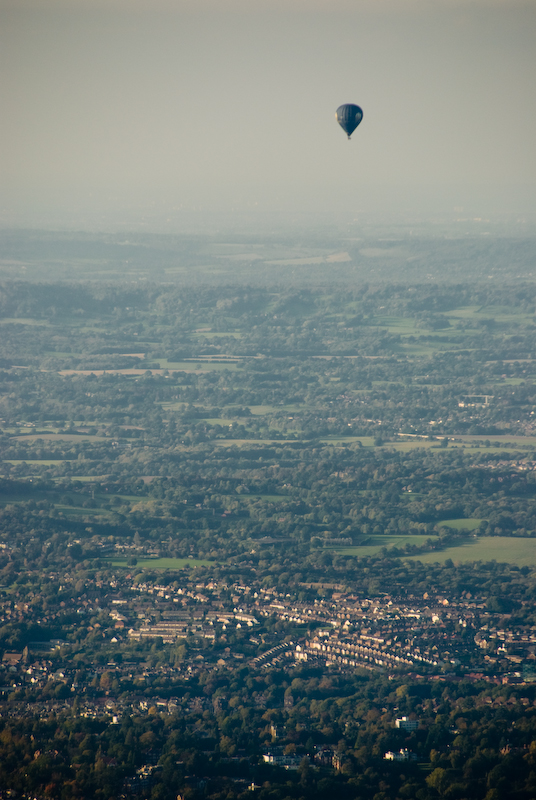
Neighbour
Neighbour!

Bayham Abbey Ruins
Bayham Abbey Ruins

Lamberhurst
Lamberhurst

Bewl Water
Bewl Water

St Margaret of Antioch in Pisidia

Horsmonden
Horsmonden

Grovehurst
Grovehurst

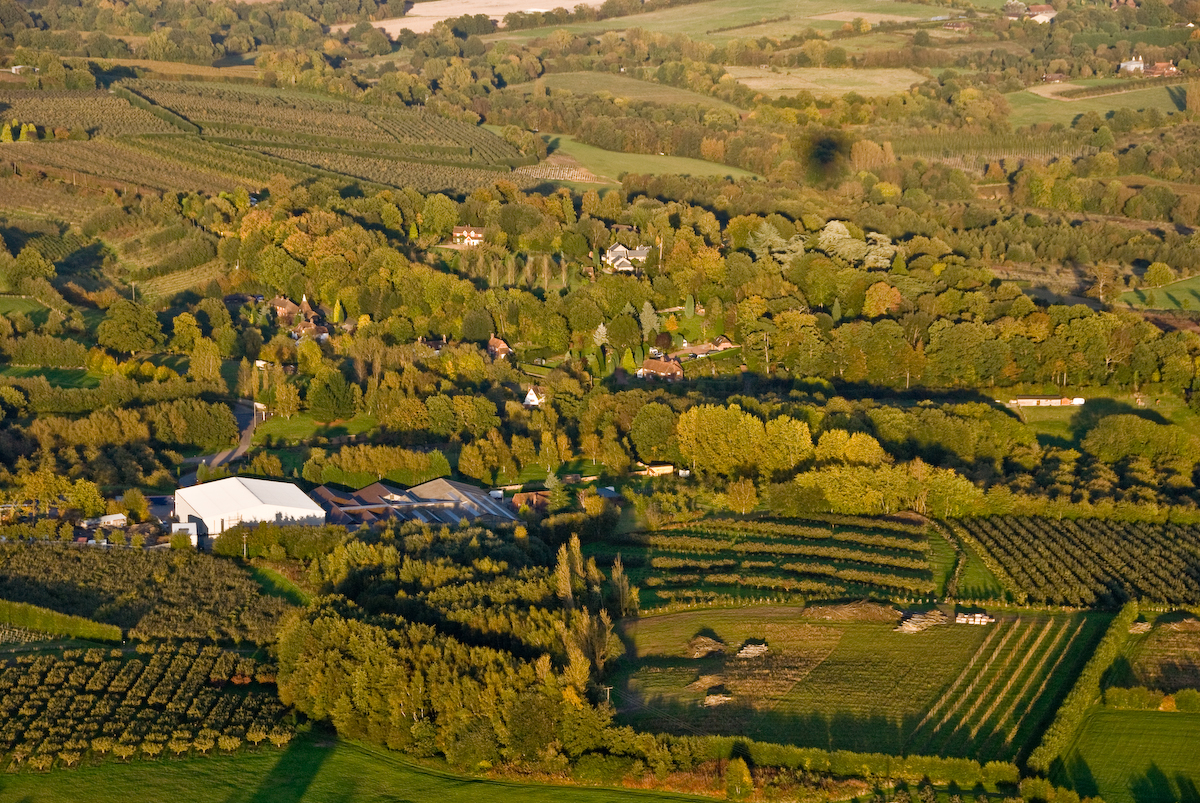
Kent
Kent

Groundlings
Groundlings

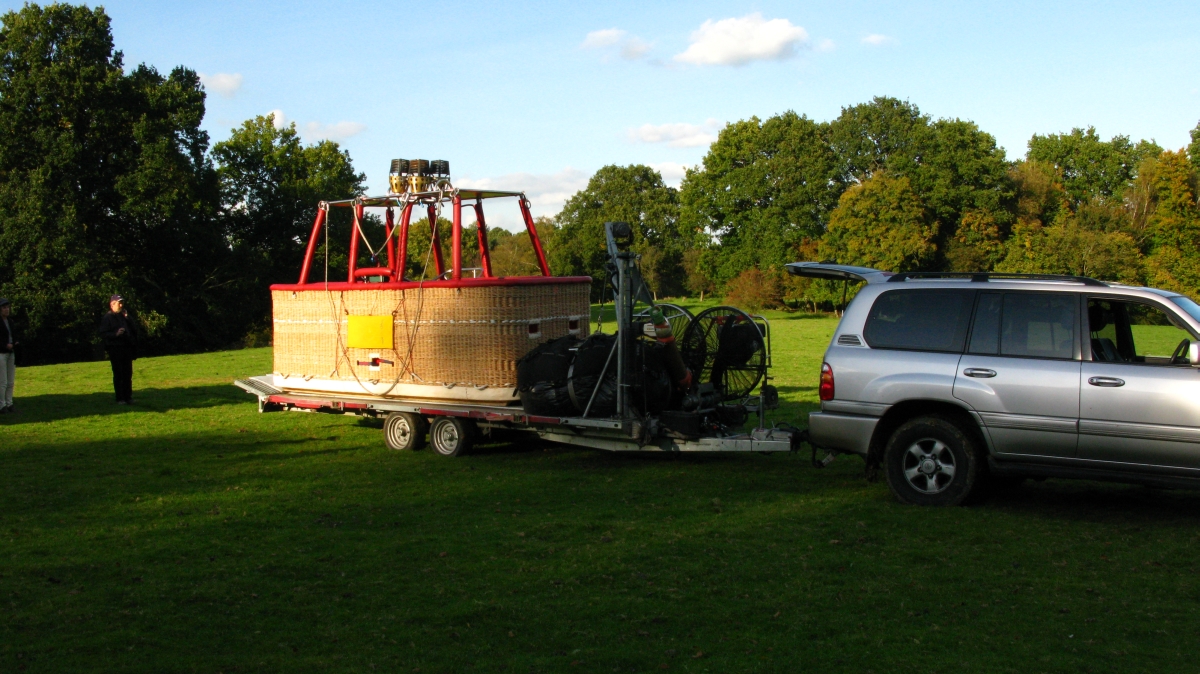
Pursuit Vehicle
Pursuit Vehicle

Landing Strip
Landing Strip

Skid Marks
Skid Marks

Packing Up
Packing Up

Stowing Away
Stowing Away

**********

Thank you Ron for this beautiful travelogue of Kent from the air!

I have to add that I have won a raffle only one time in my life, and that was for a hot-air balloon ride – it was quite the adventure, a totally unique experience of floating above the world without the usual noisy airplane sounds, so quiet and peaceful that I never wanted it to end – but we had a sudden wind pick-up and took off away from the tracer car [and my family who were following – my son, 7 years old at the time thought I had disappeared into the ether, never to be seen again; my nearly teenaged daughter was hoping beyond hope that was true!] and had a quite dramatic crash landing at a reservoir, all diving out of the basket to keep the balloon from falling into the water – but alas! my pictures, though quite lovely of the Connecticut countryside, are all on slides and do not, believe it or not, have anything to do with Jane Austen…

Anyone want to comment on Ron’s journey and photographs? or add any of your own ballooning adventures [whether Jane Austen-related or not!]?

Text and images copyright by Ronald Dunning, with thanks!

c 2014 Jane Austen in Vermont
Great Britain - History · Jane Austen · Jane Austen Circle · London · Social Life & Customs

Jane Austen and the Huguenots ~ Guest Post by Ron Dunning

Dear Readers: I welcome today Ron Dunning, who wrote here last year about his Akin to Jane” website – today he shares with us an article he wrote for the Huguenots of Spitalfields newsletter “Strangers” – here expanded somewhat and with pictures – and see how Jane Austen connects to various families and traditions of Spitalfields life in London.

*******************

Christ Church Spitalfields

[View looking down Brushfield Street toward Christ Church, Spitalfields – image from HofS facebook page, from Bishopsgate Institute]

Jane Austen’s Family and the Huguenots

To have lived in London for the past 40 years has been an immense pleasure. Now I’ve discovered a new one, and that is to be retired in London. I’ve always loved to explore, but was only able to appreciate the various parts of town for their ambience. Now there’s time to appreciate them more deeply, to learn about their associations with history, about interesting residents. Many have passed out of fashion and been built over – in which case there’s only the odd surviving building to stimulate the imagination – but in other areas, where the faded charm is obvious and where their economic value has not been great enough to attract the redevelopers, new residents have moved in to restore houses and revive the life of the community.

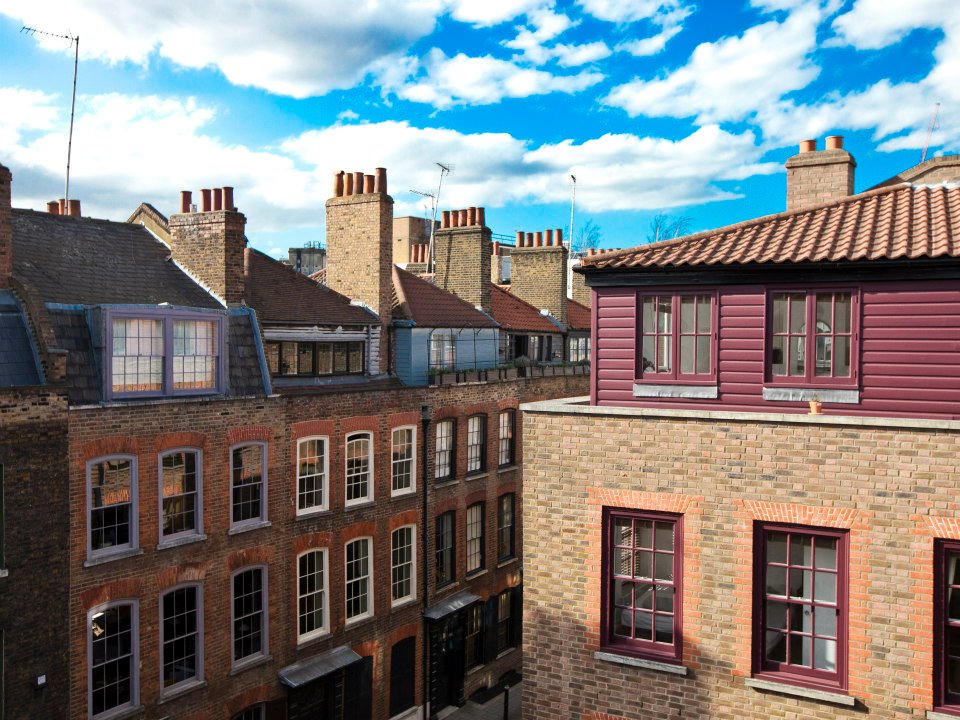
Spitalfields rooftops cRon Dunning

[Rooftops of Spitalfields, formerly the workrooms of the silk weavers and now gentrified – c Jeremy Freedman]

One such area that I’ve come to know much better is Spitalfields, just to the east of London’s old city walls. Its development by speculative builders was begun in the early 1700s, as a new suburb. Huguenot refugees from France and the Low Countries soon settled there, particularly those involved in the silk fabric trade. They brought their skills and their contacts from the continent and quickly restored their prosperity. Some 150 years later the mechanising of weaving, relaxation of tariffs on imports from France, and robust trade with China destroyed the Spitalfields silk trade.
silkweaving-spitalfields

 [Image from the Huguenots of Spitalfields Facebook page]

The houses had aged by the mid-19th century too, and to some extent Spitalfields became a slum, housing successive waves of immigrants – who each moved on once they became prosperous. By the 1970s, when the latest wave of new arrivals to the poorer streets was Bengali, city redevelopment was threatening to overtake it. Just in the nick of time young artists discovered the antique charm of the weavers’ houses, which could be bought for a pittance. They are now worth over £1,000,000.

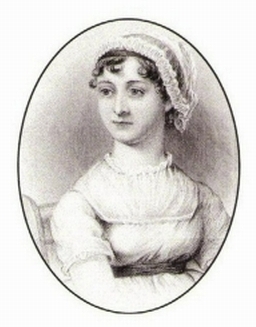
jane-austen-frontispiece-1870I’ve been researching the Austen pedigree for long enough that it’s possible to link her family with almost anyone.  Though the worlds of the Huguenots and of Jane Austen would seem almost to inhabit separate universes, a surprising number of Huguenot families had close connections with hers. I’ve made a list of the most notable.

Anyone who has read Jon Spence’s book, Becoming Jane Austen (or seen the film Becoming Jane), will recognise the name of Lefroy. Antoine Loffroy, a native of Cambray, took refuge in England from religious persecution in the Low Countries in about 1587, and settled at Canterbury, where he and his family engaged in the business of silk dyeing. His descendant Tom Lefroy was the one young man with whom Jane was said to be truly in love. Tom at that point didn’t have an income with which to support a wife, and was quickly bundled off by his elders and betters. He rose eventually to become the Chief Justice of the Court of Queen’s Bench in Ireland and, at the end of his life, remembered Jane with great affection. Ben Lefroy, from a later generation, did marry an Austen – one of Jane’s favourite nieces, Jane Anna Elizabeth.

The Portals were an ancient and noble Protestant family of Toulouse who stood firmly by the faith of their fathers, and several of them suffered death rather than recant it. They were among the Huguenots who introduced the art of fine paper making to England – Henry Portal established a mill at Laverstoke, on the River Itchen in Hampshire. He achieved such a reputation that the Bank of England awarded him the contract to produce bank notes. Living in Hampshire, the Portals had extensive social contacts with the Austens. Adela Portal married Jane’s nephew Edward Knight, while her sister Caroline married Edward’s brother William.

The Chenevixes were another distinguished family of Protestants, this time from Lorraine, who fled after the 1685 Revocation of the Edict of Nantes. One branch settled in Ireland, and were much attracted to the military and clerical professions. Melesina Chenevix, the poet and diarist, and granddaughter of Richard Chenevix, the Anglican Bishop of Waterford and of Lismore, was the ancestor of a number of people linked to the Austen pedigree. Melesina had married Richard Trench – the de la Tranches were yet another family who had taken refuge in England shortly after the massacre of St. Bartholomew – and their descendants assumed the double-barrelled surname of Chenevix-Trench. Their granddaughter Melesina Mary Chenevix-Trench married Chomley Austen-Leigh, Jane’s great nephew. Melesina Mary’s sister Helen Emily married Arthur Blundell George Sandys Hill, another great nephew. Their brother Charles married Emily Mary Lefroy, a cousin of Tom Lefroy. Their cousin Melesina Gladys, as well as being the mother of the famous editor of the Daily Telegraph, Bill Deedes, was the grandmother of FitzWalter Plumptre, the Baron FitzWalter – who can also trace his pedigree to the family of Eleanor Bridges, the wife of Jane’s brother Edward.  Lord FitzWalter still lives at Goodnestone, the seat of the Bridges family, where Edward and Eleanor lived before they could move into Godmersham.

David Papillon, the first of his family to settle in England, had been sent with his mother and siblings by his father, to escape persecution. They were shipwrecked while crossing the English Channel, and his mother drowned. The story of the mingling of genes between David’s descendants and the Austens, through the Brodnaxes, is a bit too obscure to tell here, but one of them featured in Jane’s life – the Rev John Rawstorne Papillon. The living of Chawton parish was offered to him; should he decline, it was then to pass to Jane’s brother Henry. John did take it and became the rector of the village in which Jane lived during her final years. There is a neat bracketing of Huguenot suitors for her hand, from the beginning and the end of her adult life – Mrs Knight, the widow of Thomas Brodnax and elderly benefactor of both the Austens and the Papillons, suggested that the Rev John, a life-long bachelor, would make a suitable husband. With characteristic irony Jane remarked in a note to her sister: ‘I am very much obliged to Mrs Knight for such a proof of the interest she takes in me – & she may depend upon it, that I will marry Mr Papillon, whatever may be his reluctance or my own – I owe her much more than such a trifling sacrifice.’

I could end this essay here, but want to mention another resonance between the Huguenots and the Austens, and to return Spitalfields to the fore. Jane’s paternal ancestors, going back three generations and further, were clothiers of Kent – staunchly Protestant, fiercely independent, wool and woollen fabric merchants. The organisation of their business was very similar to that of the silk merchants in London. I was struck, while gazing up to the roofs of Spitalfields, by a parallel.  In both industries labour was organised by narrowly demarcated skills, and in both the weavers’ workplace was accommodated on the top floor of merchant’s houses. I was seized by a vivid impression of crabbed men and no doubt women, in both London and Kent, toiling for 14 hours a day in those garrets for a pittance!

Grovehurst House c Ron Dunning

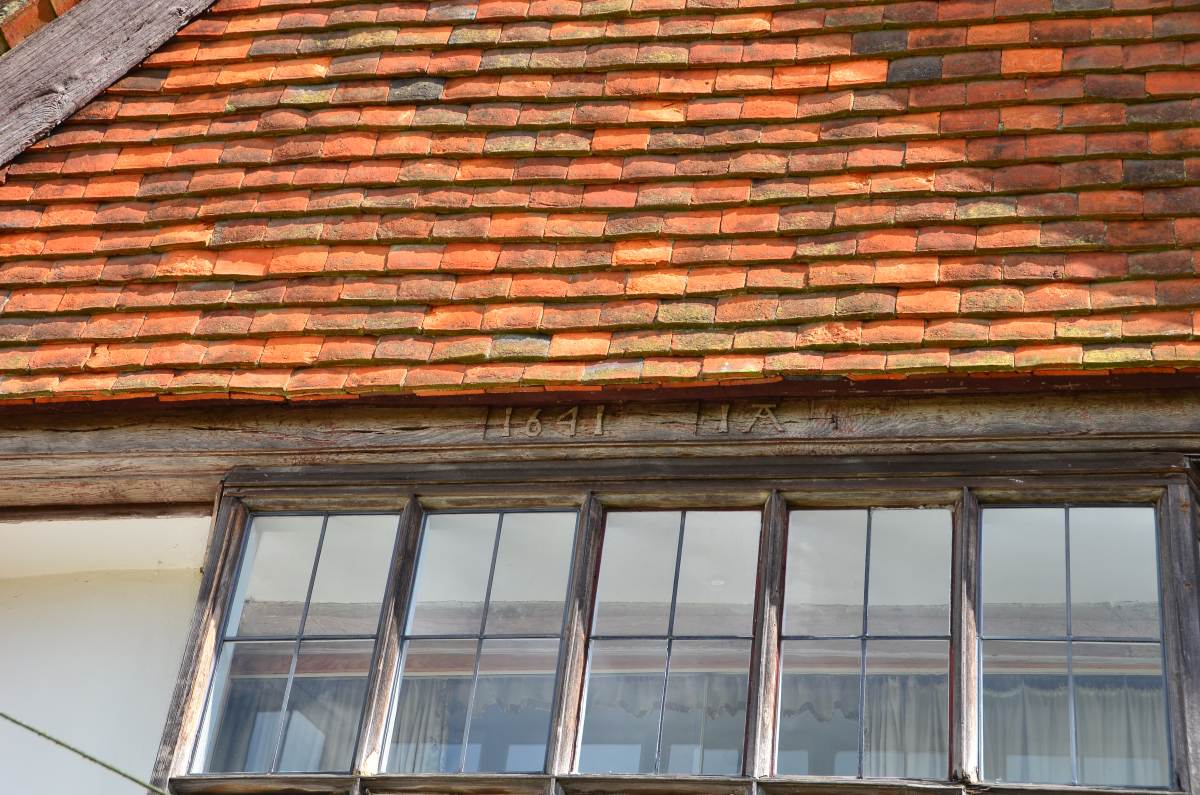
[Grovehurst House:  one of the Austen houses at Horsmonden in Kent, which dates in parts from the 14th century –  I was struck by the resonance between Spitalfields and the Kentish Austens – they were clothiers, and their industry in wool was structured much like silk weaving in London.  My understanding is that the weavers worked in the loft of this house.]

Grovehurst4-initials

[Initials of John (Iohannes, presumably) Austen, over the middle window upstairs, cRon Dunning]

 Horsmondenhouse

 [Another Austen house (Broadford) at Horsmonden, Kent where the weavers laboured on the top floor]

*******************

A brief history of the Huguenots

The St. Bartholomew’s Day Massacre in 1572 was a targeted group of assassinations, followed by a wave of Roman Catholic mob violence, directed against the French Calvinist Protestants (known as Huguenots) during France’s Wars of Religion. The Edict of Nantes, issued on 13 April 1598 by King Henry IV of France, granted them substantial rights in the interest of civil unity. In October 1685 Louis XIV, Henry IV’s grandson, revoked the Edict of Nantes with the Edict of Fontainebleau, and declared Protestantism illegal. As many as 400,000 Protestants chose to leave France, moving to Great Britain, Prussia, the Dutch Republic, Switzerland, South Africa, and the new French colonies in North America. This exodus deprived France of many of its most skilled and industrious individuals.

*********************

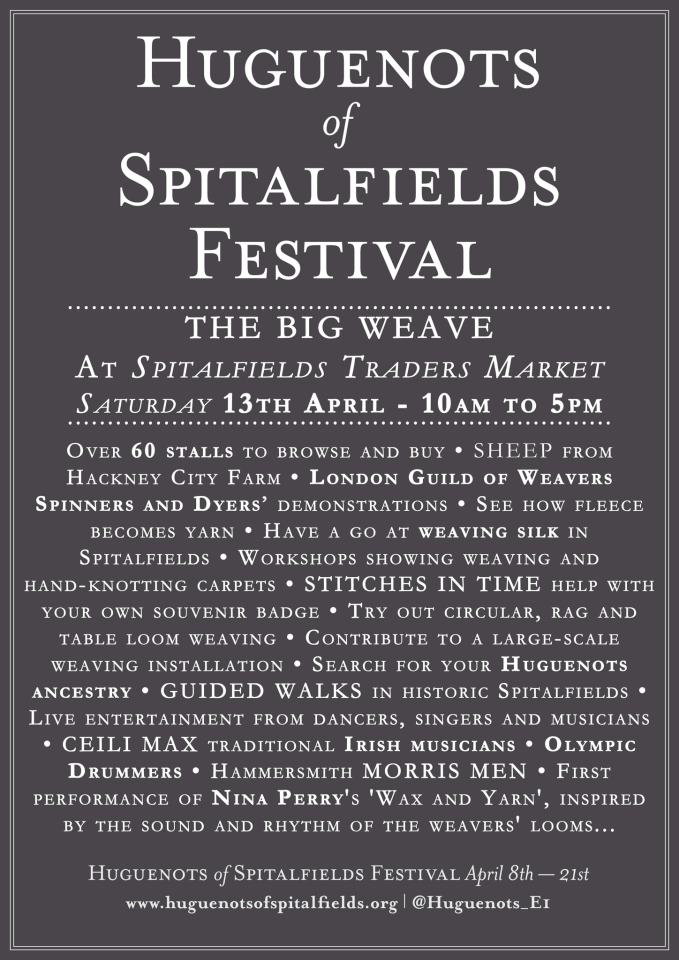
bigweaveposter

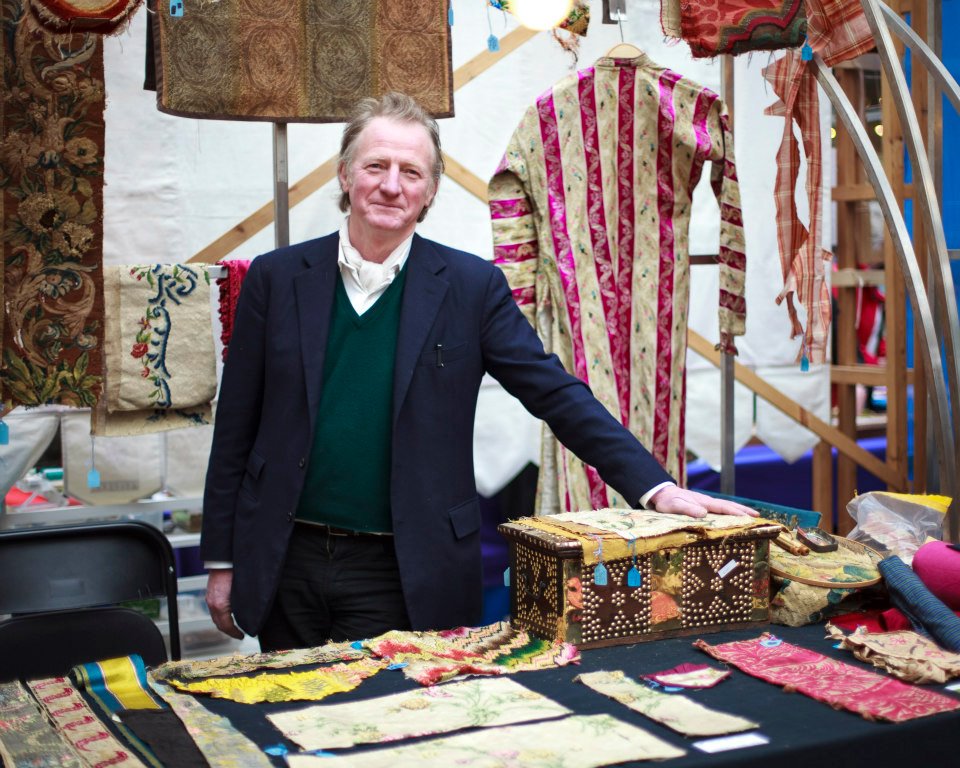
The Big Weave c Jeremy Freedman

Spitalfieldsrowhouses
Spitalfields, c Jeremy Freedman

Links and attributions, with thanks to all!

c2013 Jane Austen in Vermont