Social Life & Customs

Games People Play

WHIST is a card game well associated with the 18th and 19th centuries. But here is a game which sounds so much more up Jane Austen’s alley; it is called Conversation. The description of the game comes from the two-volume set of diaries (edited by Andrew Oliver) of Samuel Curwen. Curwen was an American, but he spent much time in England – hence the name of the book published by Harvard University Press in 1972: The Journal of Samuel Curwen, Loyalist.

It is March 1784, and Curwen is in London:

28. Fair but very cold sharp air… Dined at Mr. Charles Brand’s in Lambs Conduit street with our whole family, by invitation given 10 days ago. Drank tea and passed evening till near 12 o’clock there, the younger part playing at a game called Conversation Cards, which is done in the following manner. To each person is dealt 9, by 3 at each time, on each card is inscribed a word as King, Queen, Gentleman, Lady, Night, Morning, or any short sentence. The person on the dealer’s left hand throws one and addresses or speaks it, and so each peson successively adding some pertinent as he can invent till all being out of hand, the cards are [one word {ie, illegible or missing word; I wonder: gathered?} ] and the person who first threw a card down forms a story from his hand taking the words on his card for the text filling up the interval in the best manner he can till each has told his story; these being laid aside a new parcel is dealt as before &c. &c.
                        — The Journal of Samuel Curwen, Loyalist (vol 2), pp. 979-80

Conversation Cards, anyone??

Books

The “Northanger Canon”: Jane Austen’s Booklist

Most of us who read Jane Austen are always seeking new titles to read, and ways to answer the 200-year old question of “what to read when you have finished all of Jane Austen.”  Other than the almost mandatory requirement to RE-READ Austen whenever possible, it is a “truth universally acknowledged” that an Austen reader will be soon in want of another book!   I have seen many such lists and though always subjective to the list-maker, they are a great start.  But what about Austen’s own reading?  A number of articles have been written on this, as much is known from her letters, but as our JASNA-Vermont Chapter recently had a meeting and discussion on Northanger Abbey, and we know that NA was Austen’s tribute to the novel and reading, I would like to provide a list of books she actually cites throughout NA….it is an illuminating compilation and should keep us all busy for the next year at least!  [ please note that there is no particular order to this list…. and if I have left anything out, please let me know!]

The Northanger Canon [ i.e. the “Horrid” Novels as referenced by Isabella Thorpe in Chapter 6 of NA]; also see the article describing each book in more detail at The University of Virginia’s Gothic Books Collection.

  • THE MYSTERIES OF UDOLPHO.  by Ann Ward Radcliffe.  London, 1794.
  • THE CASTLE OF WOLFENBACH.  by Mrs. Eliza Parsons. London, 1793.
  • CLERMONT: A TALE.  by Regina Maria Roche.  London, 1798.
  • THE MYSTERIOUS WARNING.  by Mrs. Eliza Parsons.  London, 1796.
  • THE NECROMANCER; OR THE TALE OF THE BLACK FOREST, FOUNDED ON FACTS.  Translated from the German of Lawrence Flammenberg by Peter Teuthold.  London, 1794.
  • THE MIDNIGHT BELL, A GERMAN STORY.  by Francis Lathom.  London, 1798.
  • THE ORPHAN OF THE RHINE: A ROMANCE.  by Mrs. Eleanor Sleath.  London, 1798.
  • THE HORRID MYSTERIES, A STORY FROM THE GERMAN OF THE MARQUIS OF GROSSE.  by P. Will.  London, 1796.
  • THE ITALIAN.  by Ann Ward Radcliffe.  London, 1797.

Other titles cited in Northanger Abbey:                          

  1. Burney, Fanny.  CECELIA, OR MEMOIRS OF AN HEIRESS  (1782)
  2. ____________.   CAMILLA, OR A PICTURE OF YOUTH (1796)
  3. Edgeworth, Maria.  BELINDA  (1801)
  4. Fielding, Henry.  TOM JONES  (1749)
  5. Richardson, Samuel.  SIR CHARLES GRANDISON (1753-4)
  6. _________________.  #97 THE RAMBLER  (quoted)
  7. Lewis, Matthew Gregory. THE MONK  (1796)
  8. Johnson, Samuel.  JOHNSON’S DICTIONARY (1755)
  9. Blair, Hugh.  LECTURES OF RHETORIC  (1783)
  10. Hume, David.  HISTORY OF ENGLAND  (1754-62)
  11. Robertson, William.  HISTORY OF SCOTLAND  (1759)
  12. “The Mirror”, an essay by John Homespun, March 6, 1779.
  13. Cowper, William [noted in the Biographical Notice by Henry Austen as JA’s favorite poetic moralist]
  14. Gilpin, William. Three essays on the Picturesque: Beauty, Travel, Sketching Landscape (1792)
  15. Gay, John. FABLES: “The Hare and Many Friends” (1727)
  16. Pope, Alexander.  “Elegy to the Memory of an Unfortunate Lady” (1717)
  17. Gray, Thomas.  [his ELEGY is misquoted]
  18. Shakespeare, William.  [misquoted OTHELLO, MEASURE FOR MEASURE, TWELFTH NIGHT ]
  19. Thompson… “The Seasons” [misquoting “The Spring” ]
  20. Milton, John.  [ mentioned ]
  21. Moss, Rev. Thomas.  “The Beggars Petition” from POEMS ON SEVERAL OCCASIONS  (1769)
  22. Prior, Matthew.  [there is an undocumented reference to Prior in the “Literary Allusions” listing noted below for NA; Prior’s HENRY AND EMMA (1709) is alluded to in Persuasion]
  23. THE SPECTATOR
  24. Sterne, Laurence.  A SENTIMENTAL JOURNEY
William Gilpin's "Picturesque" View of Tintern Abbey

Sources: 

1. “Literary Allusions in Jane Austen’s Writings” at The Republic of Pemberley (mostly compiled from Chapman’s indexes)

2. Ehrenpreis, Anne Henry.  “Introduction to Northanger Abbey“ [ Penguin, 1972 ].  An excellent introduction to the novel, with notes on all the books cited by Austen, with a nice discussion of the “horrid” novels as well as references to other works cited in the novel.

3.  Chapman, R.W.  Indexes to Northanger Abbey and Persuasion [ volume 5 of his edition ]

Book reviews · Books

Some Reading Thoughts…

Not that we all don’t have a full bedside table, but here are a few random thoughts, so make room for more…and don’t forget to look at the list of 100 books posted here last week…  and I welcome any of your suggestions for a great read, so please comment….

  • Nella Last’s War:  see our own Janeite Kelly’s short blurb on this diary on her other blog, Two Teens in the Time of Austen.
  • Laurel Ann and Ellen Moody offer up book reviews on the 2008 Oxford edition of Pride & Prejudice  at Austenprose.  See also their previous review of the Oxford edition of Sense & Sensibility. 
  •  Ms. Place at Jane Austen’s World has a post on the Oxford re-issue of A Memoir of Jane Austen by her  nephew James Edward Austen-Leigh. She also appends a link to the “Dummies” article on “Tracing Jane Austen’s Popularity.”
  • Cassandra and Jane, by  Jill Pitkeathley. Harper, 2008Following Jane Austen’s untimely death in 1817 at age 41, her “most beloved sister” destroyed most of their correspondence; in her first novel, House of Lords peer Pitkeathley attempts to fill in the gaps through the eyes of Cassandra, Jane’s closest confidante and sharpest critic. Cassandra tells of the Austen family’s precarious position on the lowest tier of Hampshire’s aristocracy, Jane’s early attempts at “scribbling” and the crushing romantic disappointments of the two. Throughout, Cassandra’s detailed look at her younger sister showcases not only Jane’s literary accomplishments and “the low spirits, the anger, even the bitterness in her,” but also her indefatigable romanticism. Cassandra’s voice is perfectly pitched, true to Austen’s England, and jam-packed with Austen trivia. Descriptions of known events in the sisters’ lives, however, tend toward the didactic, especially compared to Pitkeathley’s imaginative leaps regarding the sisters’ secrets; as such, the seams between actual and imagined history are entirely too visible. Ardent Austen devotees will be undeterred by the uneven narrative, but casual fans may want to pass.
  • “The Spanish Bride” by Georgette Heyer :  see a review on Jane Austen Today, posted by Miss Anne.
  • a Blog reviewing Sense & Sensibilityhttp://danitorres.typepad.com/workinprogress/2008/07/jane-austens-se.html
  • Five Austen-related audiobook reviews:  http://www.audiobookss.com/2008/07/jane-austen-5-top-audiobooks/
  • A review of another Darcy book (have we had enough?)…. “Seducing Mr. Darcy”    this one with a bodice-ripper cover.  Author Gwen Cready posts about her book on the Jane Austen Today blog. 
  • Austenblog’s review of “The Darcys Give a Ball” from March 2008, and another at Amazon with several customer reviews
  • Laurie Viera Rigler posts a Q&A by Booking Mama Blog on her book Confessions of a Jane Austen Addict.  Ms. Rigler will also be on a live chat at Jane Austen’s World on August 12 at 7pm Pacific time and 10pm EST (and check out the site for a free book giveaway…)
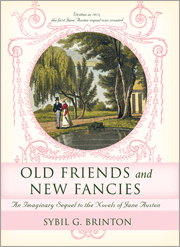
  • Old Friend and New Fancies, by Sylvia Brinton (noted on both the Austen-tatious and Jane Austen Today blogs), is quite a delightful read.  In this current world of Austen sequels, this was the first to take on the continued life of Austen’s characters; originally written in 1913 and published by Hodder & Stoughton, London in 1914….it has now been republished by Sourcebooks.  But Brinton takes it all a step further, as ALL the couples in ALL the novels make an entrance in this magical confection… I enjoyed it very much (and had intended to write a review, but alas! there are so many out there! –  at A Lady’s DiversionsAustenblog, and numerous others found on a google search; it is also referred to in the Persuasions (vol 11, 1989) article by Kathleen Glancy “The Many Husbands of Georgiana Darcy“)
  •  a current list of Austen sequels for sale at Sourcebooks(a wonderful reading list if you are looking for somewhere to start on your sequels read (remember that the AGM in Chicago this year is on Austen’s Legacy….)
  • Jane Austen’s Sailor Brothers, by J.H. Hubback (published in 1906) is now available as a free e-book at Manybooks.net (Jane Austen, a Family Record, and the Memoir by James Edward Austen-Leigh are also available for download…)
  • A booklist perfect for summer reading from The Guardian.UK:  10 best romps and romances
  • Conviction: a sequel to P&P by Skylar Hamilton Burris (2006) has received some favorable reviews at Amazon.com (has anyone out there read this?….please comment!)

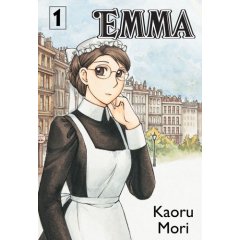
And finally, a review of another Emma, this one by Kaoru Mori, translated by Sheldon Drzka, and set in Victorian London (this is a 7 volume comic book, each available on Amazon for $9.99)

Jane Austen · Movies

Jane Austen starring on YouTube

Ok, here is a visual treat for this Saturday AM…I should be tending my gardens, but who can resist the likes of the following Austen-related YouTubes…

  • Austen’s heroines accompanied by “Maneater”  is very funny (and Mary Crawford just shines!)
  •  “Holding out for a Hero” applied to all those Austen men and a few other Regency men (but where oh where is DARCY??)
  • “Somewhere only We Know” to see all your Austen characters in their most tender moments together……
  • And “This Kiss” with all your favorite couples (oh! what would JANE say?!), and another “You and Me.”
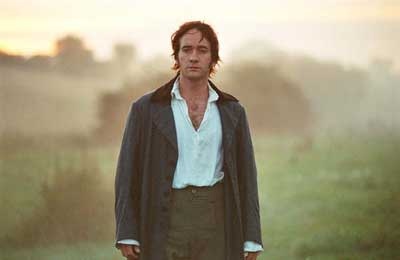
  • And just in case you did not get enough of Darcy, this is a must see – a full THREE minutes of Colin Firth in “I’m Too Sexy”(no surprise there…); and if you tend toward Matthew MacFadyen’s Darcy (and who cannot!), no worries…because he is the prime star in “Every Breath you Take” (a full FOUR minutes), but also has his own “I’m Too Sexy”  ….
  • So this is enough for me…my gardens await.  I know that many of these videos have been out there for a few years, but I only discovered them this morning (did I have a life before this morning??) when I stumbled upon the post on the Rethinking Jane Austen blog…. have a look yourself on You Tube:  just search “Jane Austen” for a ton of entries (2210), or “Jane Austen tributes” for a more manageable lot (54), or even just search “Mr Darcy” (an absurd but delightful 1050), turn up your sound and enjoy the feast! (or perhaps this can wait for winter??)

Books · News

Cassatt/Austen

As I find my pose, I think about how, when I first met Degas, he gave me the impression of an intelligent but fierce dog…
     And yet, something else emerged as he asked me questions. ‘Had I begun to feel better?,’ he asked, and ‘What was I reading?’ When I told him, ‘Jane Austen,’ he looked curious. ‘Ah, lequel?’ ‘Persuasion,’ I said, and then, surprisingly, his eyes lit on mine. A feeling connected us, quickly and with an absorbing depth.” (pp. 16-17)

I have just finished Lydia Cassatt Reading the Morning Paper by Harriet Scott Chessman. It is a small book, but I read slowly … to savor it.

It is a book I bought (used) some years ago (published date is 2001) after having read a library copy. It tells the compelling story of Mary Cassatt and her sister Lydia, through Lydia’s words and strung out in scenes centering on her modeling for several of Mary’s paintings. One of the paintings lends it name to the book: Lydia is shown reclining in a green chair, reading the newspaper. But this quiet little story has great depth. Lydia (like Austen one might be tempted to say) faces her past, her present, and the shortness of her future – for the action begins in September 1878, ends in June 1881, and Lydia died (of Bright’s disease) in November 1882. So it confronts death, sisterly-affection, sibling-rivalry, lovers lost and gained. An exquisite book.

It is particularly a propos at this moment, for the Shelburne Museum (Shelburne, VT) is hosting a Cassatt exhibition. Entitled “Mary Cassatt: Friends and Family,” the retrospective offers more than 60 works, gathered together from many sources. The guest curator is Cassatt ‘authority’, Dr. Nancy Mowll-Mathews. Highly recommended, and on until 26 October 2008.