Book reviews · News

Another Austen Web Round-Up ….. there is no keeping up!

Some interesting items this week to pass on:

*JASNA-New York Region has published its Fall 2008 newsletter online with much on the Austen-Byron Conference, the news that New York City will host the 2012 AGM, and other chapter happenings.

*The Rethinking Jane Austen blog has a post on Austenmania, the blog author’s efforts to find the strangest item “boasting Jane Austen’s image”….. there are a few good ones out there!

*Jane Austen’s World has posted Ellen Moody’s take on the Mansfield Park 2007 movie.  See also Austenprose’s ongoing MP discussion.

*The Guardian.uk and a blogger’s review of Cassandra and Jane by Jill Pitkeathley.

*A blog on vintage fashion, ZipZip’s Vintage Clothing, offers “thoughts about vintage and period sewing patterns, lists of links to worthwhile online vintage sewing resources, comments on sewing with treadle sewing machines.”

*Click here for the Sunday Herald (Scotland) interview with Keira Knightley on playing the Duchess of Devonshire

*A resource on Regency Information has been compiled by the Favors and Fortunes blog: there are some great links here, including references to a map of London for 1827, card games, cost of living values, a slang dicitonary, and many others.  But NOTHING compares to the links to Regency Social Life and Customs than those compiled by Ms. Place at Jane Austen’s World… if you have an extra 24 hour day sometime in this long upcoming winter, take a look at this grand resource!

*And more on ITV’s Lost in Austen show at Austenblog, with numerous comments, as well as the show’s fansite filled with all sorts of information on this Pride & Prejudice in space!

And just added: The Musee McCord Museum in Montreal has posted an interactive game on 19th century women’s fashion.  Click here for the game and instructions.  There are also other interactive games on 19th century high fashion (for beginner and expert), interior decoration, and games and toys:  click here for the Museum’s website and list of games.

Book reviews

Another view…The Lost Memoirs of Jane Austen

I’ve mentioned before (see review of Mrs. Darcy’s Dilemma) that I am no lover of sequels; yet these past few months have brought many to my bedside table and the pile is slowly being depleted (in an effort to be somewhat prepared for the October JASNA AGM)…Syrie James’ The Lost Memoirs of Jane Austen was a most enjoyable task in this journey of mine.  My co-blogger, Janeite Kelly, and I don’t see eye to eye on this book (see her review ), and I just needed to say a few words from the other side of the inkwell…

The Lost Memoirs should head its own category of “Fictionalizing Jane Austen’s Life.”  Like Becoming Jane, James also gives us a fictional tale of Jane’s lost love, this time, not her girlish love of Tom LeFroy, but her mature love, the “mystery man” that Jane met at the seaside as per Cassandra’s brief mention to her niece Caroline, and hence we have a lovely piece of romantic fluff, giving the reader along the way all sorts of references from Austen’s letters and a storyline that harkens back to the novels (and alas! sometimes even footnoted for your edification!) and the many biographies.

James’ knowledge shines throughout- she obviously knows her Austen- she says herself in the Author’s Note, that despite all her efforts to suggest this is the real “lost memoir” of Austen, indeed it is not- only a fiction derived from her Austen-obsessed imagination.  All of us who read and study Austen have always wanted the Jane who wrote such brilliant love stories to have had that experience herself.  Cassandra’s grand conflagration and excising much in those letters that survived, created a literary future for her sister of so much speculation and theory- certainly, we believe, everything that was destroyed would answer all our questions…

So James has done for us, as she says herself, much like the gift we were given in Shakespeare in Love – a tiny glimpse into the author’s life that indeed explains almost EVERYTHING that comes after.  She creates the story of that mystery man and names him Frederick Ashford; we meet him (appropriately in the third chapter) saving Austen from a fall off the infamous steps at the Cobb in Lyme Regis…. we are thus swept into Persuasion with names and incident (and Frederick is, of course, in a DARK BLUE coat, not the dreaded “light” coat of Tom LeFroy…)  We hear Austen in this first person narrative speaking the words as they appear in her letters and novels (this reader does question if there is anything original here!).  We see characters appear with names similar to her fictions:  Mrs. Jenkins (Mrs. Jennings in S&S); Charles Churchill (Emma), married to Maria (MP, though she behaves like Mary in Persuasion and then slips into Isabella-mode from NA); Charles’s sister Isabella Churchill (from NA who falls for the scoundrel Wellington [a.k.a. Captain Tilney, but who morphs into Willoughby from S&S])…have I lost you yet??  there is plenty more…. Ashford’s home in Derbyshire is called Pembroke Hall, and the almost exact scene is played out as Lizzy in P&P  visiting Pemberley; Mr, Morton is Mr. Collins right down to the bizarre marriage proposal…the list goes on, this constant weaving of fact and fiction- the family history; life in Bath, Southampton and lastly Chawton; Austen’s writing habits; publishing history; the Bigg-Wither proposal; her niece’s request for help with her writing; Austen’s love of nature and walking (rhapsodizing about a tree as Fanny does in MP); her reading of Udolpho in two days “my hair standing on end the whole time” (Henry in NA); her views on novel-reading (the letters and NA); Austen’s own obsession with fashion and “trimmings” — all are blended together seamlessly. 

But this is the story of Jane and Frederick, their meeting, falling in love and how that changes their lives (no spoilers here!)… James gives us the story of Sense & Sensibility, as it may have occurred in Austen’s own life and Austen’s subsequent re-writing of the novel.  It all falls into place…if you have wondered why Austen wrote nothing in her Bath years, why there are such gaps in correspondence, James creates for us a delightful fiction and a love interest who is part Darcy, part Edward Ferrars, part Wentworth (“you pierce my soul”), a bit of Colonel Brandon (he is soooo old…) and Knightley all rolled into one perfect fellow…who could want for more?

If you are not a certified “Janeite,” you will find this a fine romance; but if you know Austen like James does (i.e you can recite verbatim and by page number everything she ever said or wrote!), then you will marvel at this confection filled with so many facts, so much speculation, and so much of Austen’s fiction…you will have a fun time reading it and seeing all this together in one place!  I offer only one caveat:  by creating this grand illusion (“if I believe in your story as you have told it, then it is as good as if it were true?”), James conjures up a fine tale, but there is nothing of Austen’s turn of phrase, or humor or characterization that keeps us returning again and again to her writings, just a sort of pale carbon copy, a re-telling of all, mashed together in a fictional blender… but I shook this off and stepped back a bit and just offer high marks to Syrie James for bringing Austen into our life; this book is like the movie adaptations that are so far from the original source, but we like them all the same, and it might just send you scurrying back to your bookshelves for another Austen re-read!

3 full inkwells…(out of 4)

Book reviews · Books

The Lost Memoirs of Jane Austen (a review)

THE LOST MEMOIRS OF JANE AUSTEN by Syrie James boasts a classic set-up: a hidden trunk discovered in the attics of Chawton House Library is found to contain a ring and a batch of manuscript booklets that read like memoirs and journals. The first chapter sets the scene well: Jane confesses why she writes these memoirs, then relates the occasion of her well-known swoon after Mama Austen announces their removal from Steventon upon Papa Austen’s retirement. When you read these few pages in the bookstore, or online, you want this novel. Continue reading “The Lost Memoirs of Jane Austen (a review)”

Book reviews · Books

Some Reading Thoughts…

Not that we all don’t have a full bedside table, but here are a few random thoughts, so make room for more…and don’t forget to look at the list of 100 books posted here last week…  and I welcome any of your suggestions for a great read, so please comment….

  • Nella Last’s War:  see our own Janeite Kelly’s short blurb on this diary on her other blog, Two Teens in the Time of Austen.
  • Laurel Ann and Ellen Moody offer up book reviews on the 2008 Oxford edition of Pride & Prejudice  at Austenprose.  See also their previous review of the Oxford edition of Sense & Sensibility. 
  •  Ms. Place at Jane Austen’s World has a post on the Oxford re-issue of A Memoir of Jane Austen by her  nephew James Edward Austen-Leigh. She also appends a link to the “Dummies” article on “Tracing Jane Austen’s Popularity.”
  • Cassandra and Jane, by  Jill Pitkeathley. Harper, 2008Following Jane Austen’s untimely death in 1817 at age 41, her “most beloved sister” destroyed most of their correspondence; in her first novel, House of Lords peer Pitkeathley attempts to fill in the gaps through the eyes of Cassandra, Jane’s closest confidante and sharpest critic. Cassandra tells of the Austen family’s precarious position on the lowest tier of Hampshire’s aristocracy, Jane’s early attempts at “scribbling” and the crushing romantic disappointments of the two. Throughout, Cassandra’s detailed look at her younger sister showcases not only Jane’s literary accomplishments and “the low spirits, the anger, even the bitterness in her,” but also her indefatigable romanticism. Cassandra’s voice is perfectly pitched, true to Austen’s England, and jam-packed with Austen trivia. Descriptions of known events in the sisters’ lives, however, tend toward the didactic, especially compared to Pitkeathley’s imaginative leaps regarding the sisters’ secrets; as such, the seams between actual and imagined history are entirely too visible. Ardent Austen devotees will be undeterred by the uneven narrative, but casual fans may want to pass.
  • “The Spanish Bride” by Georgette Heyer :  see a review on Jane Austen Today, posted by Miss Anne.
  • a Blog reviewing Sense & Sensibilityhttp://danitorres.typepad.com/workinprogress/2008/07/jane-austens-se.html
  • Five Austen-related audiobook reviews:  http://www.audiobookss.com/2008/07/jane-austen-5-top-audiobooks/
  • A review of another Darcy book (have we had enough?)…. “Seducing Mr. Darcy”    this one with a bodice-ripper cover.  Author Gwen Cready posts about her book on the Jane Austen Today blog. 
  • Austenblog’s review of “The Darcys Give a Ball” from March 2008, and another at Amazon with several customer reviews
  • Laurie Viera Rigler posts a Q&A by Booking Mama Blog on her book Confessions of a Jane Austen Addict.  Ms. Rigler will also be on a live chat at Jane Austen’s World on August 12 at 7pm Pacific time and 10pm EST (and check out the site for a free book giveaway…)
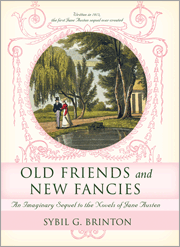
  • Old Friend and New Fancies, by Sylvia Brinton (noted on both the Austen-tatious and Jane Austen Today blogs), is quite a delightful read.  In this current world of Austen sequels, this was the first to take on the continued life of Austen’s characters; originally written in 1913 and published by Hodder & Stoughton, London in 1914….it has now been republished by Sourcebooks.  But Brinton takes it all a step further, as ALL the couples in ALL the novels make an entrance in this magical confection… I enjoyed it very much (and had intended to write a review, but alas! there are so many out there! –  at A Lady’s DiversionsAustenblog, and numerous others found on a google search; it is also referred to in the Persuasions (vol 11, 1989) article by Kathleen Glancy “The Many Husbands of Georgiana Darcy“)
  •  a current list of Austen sequels for sale at Sourcebooks(a wonderful reading list if you are looking for somewhere to start on your sequels read (remember that the AGM in Chicago this year is on Austen’s Legacy….)
  • Jane Austen’s Sailor Brothers, by J.H. Hubback (published in 1906) is now available as a free e-book at Manybooks.net (Jane Austen, a Family Record, and the Memoir by James Edward Austen-Leigh are also available for download…)
  • A booklist perfect for summer reading from The Guardian.UK:  10 best romps and romances
  • Conviction: a sequel to P&P by Skylar Hamilton Burris (2006) has received some favorable reviews at Amazon.com (has anyone out there read this?….please comment!)

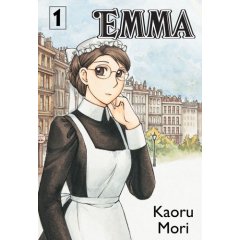
And finally, a review of another Emma, this one by Kaoru Mori, translated by Sheldon Drzka, and set in Victorian London (this is a 7 volume comic book, each available on Amazon for $9.99)

Book reviews · News

The Web Round-up: all things Austen

 Some tidbits for this week:

Book reviews · News

In the mailbox…

Finally, on Tuesday, PERSUASIONS (the annual journal of the Jane Austen Society of North America) hit the mailbox. And what a wonderful array of articles – with so many more online!

I’ve not had a lot of time, and definitely haven’t read the journal cover to cover, but a few interesting tidbits have already surfaced. On page 10, Marcia Huff alludes to 2006’s AGM (in Tucson), which of course was on Mansfield Park. In just a few sentences, she has made me reassess Fanny Price and her role in this novel. Living in Vermont, which has its corn crop and apple crop, as well as the celebrated maple-sugaring season, I was most intrigued to see how Shannon Campbell would ‘vindicate’ Jane Austen’s allusion to an apple orchard in blossom in July (for which Jane’s brother took her to task) — but what an entertaining article! It must, indeed, have been fascinating to work with the National Fruit Collection at Brogdale. And I personally am grateful to have some hints of where to look for meteorological information on London in 1814…

I met Alice Villaseñor in Winchester last summer, and was particularly interested to read about her finds at the Chawton House Library; she studied the contents of the Knight Collection, which is currently housed there; it formed part of the library of books owned by Jane’s brother, Edward Knight. I had a chuckle over the conclusions drawn by Phyllis Ferguson Bottomer – though I ask: must everyone be diagnosed with some syndrome nowadays??

One of the most noteworthy of the articles read so far has to be Douglas Murray and his routing out several ‘portraits’ of George, the Prince of Wales in the novel dedicated (reluctantly?) to him: Emma. Fascinating. And, very a propos to our June 22nd meeting: a persuasive article by Tenille Nowak on one of the ‘horrid novels’ in Northanger Abbey. Recommended reading for anyone planning to attend our meeting in a couple weeks.

I am in the middle of an eye-opening look at Mr Knightley written by Theresa Kenney. And next up, I think, must be Margie Burns‘ look at ‘George and Georgiana’, aka: Mr Wickham and Miss Darcy.

While I hesitate to toot my own horn (but who else will, if I don’t?), I do want to say that I hope readers find some interest in the courtship of Emma Smith and James-Edward Austen (Jane’s nephew), as well as Emma’s possible involvement, a la Emma Woodhouse, in the courtship of her own brother Sir Charles Joshua Smith and his second wife, Mary Gosling. The article is ‘Edward Austen’s Emma Reads Emma.’ I’ve just begun a blog of my own, relating to Emma and Mary, as I try to track down more diaries and letters of all the families involved (Emma and Mary both came from substantial families).

A full table of contents for Persuasions, vol. 29 (2007) is available online at JASNA. And don’t forget the offerings at Persuasions-Online, including the ‘new’ vol. 28, No. 2 issue: Global Jane Austen. There is also Barry Roth’s 2006 Jane Austen bibliography, if you’re looking for something new to read on JA.

* * *

Also in the mailbox: a copy of Jane Odiwe‘s Lydia Bennet’s Story. Right now, Lydia has just hit the town of Brighton – and she seems to have an eye for a certain young man who is NOT Mr Wickham… It is fun to read the little hints of what has been going on in Pride and Prejudice (so I would say a knowledge of that book is useful), but Ms. Odiwe goes her own direction with this storyline and it can certainly be enjoyed on its own terms. Will post a full review of the book once it’s been read.

Book reviews · Books

Book Review: Mrs. Darcy’s Dilemma

I am no lover of sequels. I just shut down really, when, in anticipation of a beloved author’s continued words on a character or plot or unfolding event, I run smack into a wall of some stranger’s thoughts.  I want JANE AUSTEN’s words, I want new works from her, something more to read, to savor, not a return to or a rehashing of any of the nearly perfect worlds of her six novels.  Those are complete to me, and I want them left alone, I want to protect her characters from someone else’s mutterings.  So I confess to not reading any of the many sequels and much prefer to just re-read Austen, who says most everything better than anyone. [After writing this, I was looking at Joan Klingel Ray’s Jane Austen for Dummies and find her words on pg 297, almost mine exactly…”  I have to admit that when I need more Jane Austen, I just reread Jane Austen….I am not a fan of sequels…and I would never attempt to convince [others] not to read the sequels…but I am content to let Austen’s characters’ lives end with her novels…” (p297)  So I am in good company I think!  ]… Continue reading “Book Review: Mrs. Darcy’s Dilemma”

Book reviews · News

A Few Words on Elizabeth Gaskell

PBS Masterpiece will be showing Cranford May 4, 11 & 18.  It has an all-star cast, to include Judi Dench, Eileen Atkins, Imelda Staunton and others. [see PBS Masterpiece for a preview and cast information.]   Elizabeth Cleghorn Gaskell (1810-1865) is most known to us as the author of the then-controversial biography of Charlotte Bronte, where she laid bare the oddities of the Bronte household, publicizing the behavior of the semi-mad father and the destructive life and affairs of the son .   But she was a well-respected and popular author in her own day and we are now perhaps seeing a resurgence of that popularity with the broadcast of Wives & Daughters, North & South, and the soon-to-be-seen Cranford.  So I give a brief outline of her life and works, with a few references for further reading.

Born in Cheshire to William Stevenson, a Unitarian minister, Elizabeth was raised by her aunt, the sister of her mother who died shortly after her birth.  The town of Knutsford and the country life she experienced there became her setting in Cranford and her “Hollingford” in Wives and Daughters.  She married William Gaskell of Manchester, also a Unitarian minister, in 1832, had four daughters and one son, who died in infancy.  The loss of her son had a devastating effect on her and to keep herself from sinking into an ever-deeper depression, she took pen in hand and started to write.  She published her first book Mary Barton in 1848 (using the pseudonym Cotton Mather Mills), though there is some speculation that she actually started to write Sylvia’s Lovers (1863) first but put it aside to write the more socially-conscious Mary Barton.  Gaskell, according to Lucy Stebbins, was chiefly concerned with the ethical question of “The Lie”, i.e a belief that “deception was the greatest obstacle to the sympathetic understanding which was her panacea for individual and class quarrels.” (1)  This reconciliation between individuals of different classes and between the wider world of masters and workers was her hope for humanity and it was this zeal that often led her into false sentiment in her novels and stories.(2)  But because she saw both sides of the labor question and pitied both the oppressor and the oppressed, she was thus able to portray with often explicit candor the realities of her world.  But Stebbins also says that life was too kind to her as a woman to make her a great artist.  Her tales of vengeance and remorse were written more to satisfy public taste, after she started publishing in Dickens’ Household Words.  And David Cecil calls Gaskell “a typical Victorian woman….a wife and mother”….he emphasizes her femininity, which he says gives her the strengths of her detail and a “freshness of outlook” in her portrayals of the country gentry, while at the same time this femininity limits her imagination.  In comparing her to Jane Austen, Cecil writes:

“It is true Mrs. Gaskell lived a narrow life, but Jane Austen, living a life just as narrow, was able to make works of major art out of it.  Jane Austen…was a woman of very abnormal penetration and intensity of genius. ….. [Gaskell] cannot, as Jane Austen did, make one little room an everywhere; pierce through the surface facts of a village tea-party to reveal the universal laws of human conduct that they illustrate.  If she [Gaskell] writes about a a village tea-party, it is just a village tea-party…”(3)

   Cecil is critical of her melodrama, her “weakness for a happy ending”, her overlong works that lack imagination and passion.  But he does credit her four major works (Sylvia’s Lovers, Cranford, Wives & Daughters, and Cousin Phillis) as classic and worthy English domestic novels. 

Anne Thackeray Ritchie, in her introduction to Cranford, published in 1891, also compares Gaskell to Austen, and finds the latter lacking:

Cranford is farther removed from the world, and yet more attuned to its larger interests than Meryton or Kellynch or Hartfield….Drumble, the great noisy manufacturing town, is its metropolis, not Bath with its successions of card parties and Assembly Rooms.” …. and on love, “there is more real feeling in these few signs of what once was, than in all the Misses Bennett’s youthful romances put together…only Miss Austen’s very sweetest heroines (including her own irresistible dark-eyed self, in her big cap and faded kerchief) are worthy of this old place….”  and later, “it was because she had written Mary Barton that some deeper echoes reach us in Cranford than are to be found in any of Jane Austen’s books, delightful though they be.” (4)

Margaret Lane in her wonderful book of essays on biography, Purely for Pleasure [which also includes the essay “Jane Austen’s Sleight-of-hand”], has two essays on Mrs. Gaskell.  Lane calls her one of the greatest novelists of the time, and especially praises Wives & Daughters over Cranford for its stature, sympathies, mature grasp of character and its humour, and its effect of “creating the illusion of a return to a more rigid but also more stable and innocent world than ours” and we feel refreshed in spirit after a reading. (5)
Wives & Daughters, Gaskell’s last work, and considered her finest, was published as a serial novel in Cornhill, the last unfinished part appearing in January 1866.  Gaskell had literally dropped dead in the middle of a spoken sentence at the age of 55, and the work remained unfinished, with only a long note from the Cornhill editor following the last serial installment.  Wives and Daughters tells the story of Molly Gibson and her new stepsister Cynthia, and their coming of age in the male-dominated mid-Victorian society of “Hollingford.”

But it is Lane’s essay on “Mrs. Gaskell’s Task” in which she so highly praises Gaskell’s achievement in her biography of Charlotte Bronte.  While Gaskell obviously suppressed some facts (the letters to M. Heger) and exaggerated others (Mr. Bronte as a father and Branwell as a son), Lane says “her great biography remains a stirring and noble work, one of the first in our language…. and it is in essence ‘truer’ than anything about the Brontes which has been written since…”(6)

Such contrary opinions!…certainly reminiscent of Austen’s admirers and critics!    Perhaps as Pam Morris says in her introduction to W&D, “Gaskell resists any simple categorization…her work ranges across the narrative forms of realism and fairytale, protest fiction and pastoralism, melodrama and the domestic novel.” (7)  I confess to having only read the Bronte biography and that years ago…but I have also had three of her novels (MB, C and W&D) sitting on my TBR shelf for many a year….I see a great task ahead in order to give Gaskell her just due! (or do I dare just see the movies??!)

________________________________________

Notes:

1.  Stebbins, Lucy Poate. A Victorian Album: Some lady Novelists of the Period (Columbia, 1946) p. 96.

2.  Ibid.

3.  Cecil, David.  Victorian Novelists: Essays in Revaluation (Chicago, 1962) p. 187.

4.  Ritchie, Anne Thackeray.  Preface to Cranford (Macmillan, 1927) pp. vii, xix.

5.  Lane, Margaret.  Purely for Pleasure (Hamish Hamilton, 1966)  p. 153.

6.  Ibid, p. 170.

7.  Morris, Pam.  Introduction to Wives and Daughters (Penguin, 2001) p. vii.

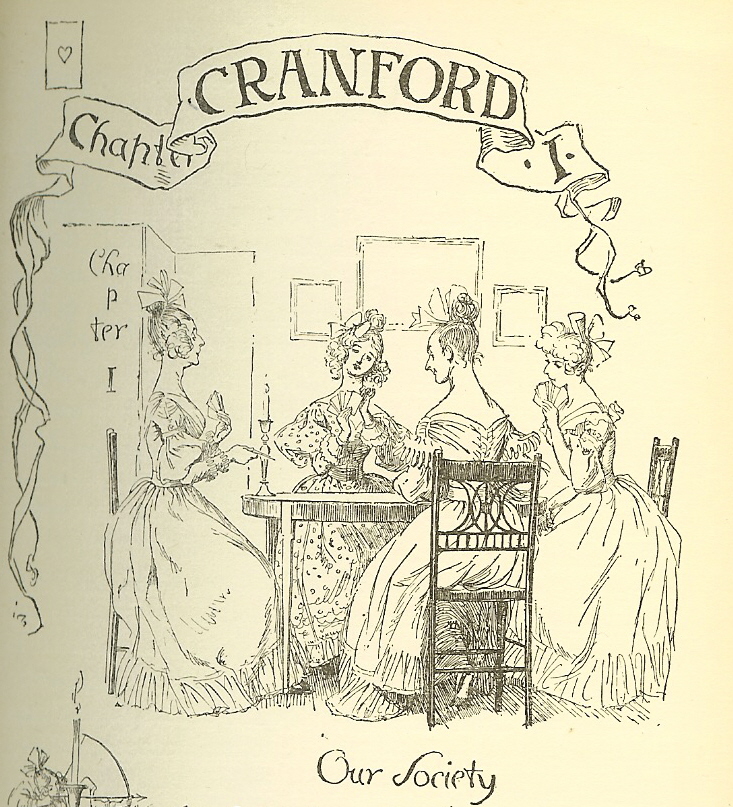
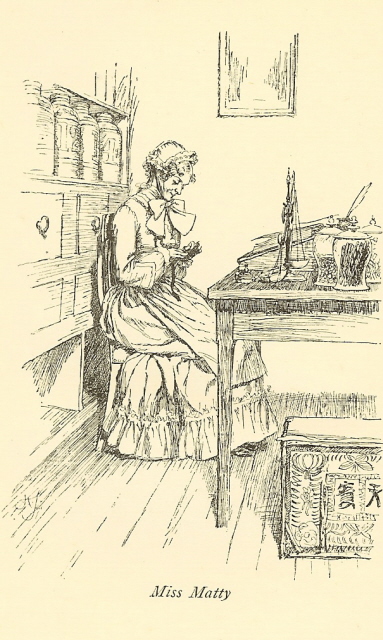
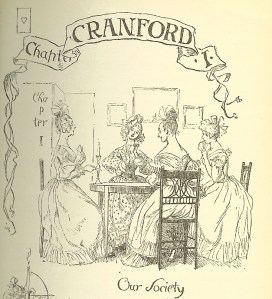
* Both illustrations above are from the London Macmillan edition of Cranford, illustrated by Hugh Thomson (originally published in 1891). This copy is also available at the Illustrated Cranford site.

Further references:

The Gaskell Information Page which includes many links to other information, societies, etc.

The E-Texts of all her works.

A few biographies: by Angus Easson (London, 1979); Winifred Gerin (Oxford, 1980); Aina Rubenius, The Woman Question in Mrs. Gaskell’s Life and Work (Upsala, 1950); Jenny Uglow, Elizabeth Gaskell: A Habit of Stories (London, 1993)1

And see also the recent Jane Austen Today Blog where Ms. Place discusses Cranford along with an interview with Judi Dench.

Mrs. Gaskell’s Works:

  1. Mary Barton: A Tale of Manchester Life, anonymous (2 volumes, London: Chapman & Hall, 1848; 1 volume, New York: Harper, 1848);
  2. Libbie Marsh’s Three Eras: A Lancashire Tale, as Cotton Mather Mills, Esquire (London: Hamilton, Adams, 1850);
  3. Lizzie Leigh: A Domestic Tale, from “Household Words,” attributed to Charles Dickens (New York: Dewitt & Davenport, 1850);
  4. The Moorland Cottage, anonymous (London: Chapman & Hall, 1850; New York: Harper, 1851);
  5. Ruth: A Novel, anonymous (3 volumes, London: Chapman & Hall, 1853; 1 volume, Boston: Ticknor, Reed & Fields, 1853);
  6. Cranford, anonymous (London: Chapman & Hall, 1853; New York: Harper, 1853);
  7. Lizzie Leigh and Other Tales, anonymous (London: Chapman & Hall, 1855; Philadelphia: Hardy, 1869);
  8. Hands and Heart and Bessy’s Troubles at Home, anonymous (London: Chapman & Hall, 1855);
  9. North and South, anonymous (2 volumes, London: Chapman & Hall, 1855; 1 volume, New York: Harper, 1855);
  10. The Life of Charlotte Brontë; Author of “Jane Eyre,” “Shirley,” “Villette” etc., 2 volumes (London: Smith, Elder, 1857; New York: Appleton, 1857);
  11. My Lady Ludlow, A Novel (New York: Harper, 1858); republished as Round the Sofa (2 volume’s, London: Low, 1858);
  12. Right at Last, and Other Tales (London: Low, 1860; New York: Harper, 1860);
  13. Lois the Witch and Other Tales (Leipzig: Tauchnitz 1861);
  14. Sylvia’s Lovers (3 volumes, London: Smith, Elder, 1863; 1 volume, New York: Dutton, 1863);
  15. A Dark Night’s Work (London: Smith, Elder, 1863; New York: Harper, 1863);
  16. Cousin Phillis: A Tale (New York: Harper, 1864); republished as Cousin Phillis and Other Tales (London: Smith, Elder, 1865);
  17. The Grey Woman and Other Tales (London: Smith, Elder, 1865; New York: Harper, 1882);
  18. Wives and Daughters: An Every-Day Story (2 volumes, London: Smith, Elder, 1866; 1 volume, New York: Harper, 1866).

(this list from the Edgar Wright Gaskell Page)
Book reviews · Movies · News

A Colin Firth sighting!

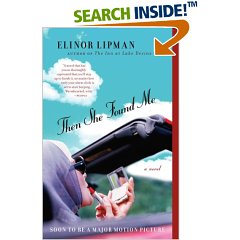
Ok, so I am confused.  I heard that there was a great first book written by Elinor Lipman called Then She Found Me (1990).  It tells the story of a 36 year-old high school Latin teacher named April Epner, who was adopted as a baby by a couple who had survived the Holocaust.  She has never married, has a fairly distant but caring relationship with her younger brother (Freddie, also adopted)…..we are told he is a gorgoeus hunk who indescriminately beds any women within reaching distance…she has a few friends from work, but is otherwise fairly lonely and missing her parents who have recently passed on.  Out of the blue, her birth mother comes into her life….a fairly obnoxious and quite famous tv talk-show host….telling her that she is actually the illegitimate daughter of John F. Kennedy, the result of a few mad months of passion, after which he abandoned her upon learning of the impending child.  She takes all this information as cause to research her roots and finds the school librarian (Dwight) a great (and very interested!) ally.  He is portrayed as very tall, very geeky, quite unattracive and a source for ongoing humor among faculty and students.  And then, of course, her REAL birth father shows up, obviously not JFK, bringing a whole new dimension to April’s family dynamics.  So much for the story…I leave it to the reader to decide if they want to read any more.  I will say that I enjoyed the book…but after just having finished a close reading of both Emma and Northanger Abbey, this seemed a sorry substitute.  But forever willing to give the writer her/his just due, I plodded on because in the end I did really care enough about April to want to see what happens to her and her mother, and of course, the librarian!  And I should add that the real reason I picked up this book was because I knew that it was being made into a movie with Helen Hunt (both starring in but also directing her first feature film)….Bette Midler,  and Colin Firth…and therein lies the draw!  Who can resist a Colin Firth movie….??!

So fast foward….the movie is due out April 25th.  I was a bit mystified after finishing the book, as to who actually Colin would be playing…the gorgeous brother or the geeky librarian??  Not a good fit for either…we want our Colin as the romantic lead, do we not??  But being a librarian, I was all for him playing the geeky fellow who turns out to be a prince behind those glasses and shuushhing sounds!…

But alas! as Hollywood does so well, there is nothing of the book to be found in the movie….!  I have just watched the trailer and this is the basic plot synopsis:  April, whose adoptive mother is still alive, inexplicably decides to get married to a do-nothing, self-absorbed fellow (Matthew Broderick); her real mother (Bette Midler) shows up wanting to have a relationship and tells her that her father was Steve McQueen; April’s husband decides to leave her because he is bored; she meets the father (Frank, played by Colin) of one of her students, who expresses interest in getting to know her; she asks him out on a date, they click; her husband wants her back, she sleeps with him, she gets pregnant, and we do not know who the father is, but therein lies the story’s hook…..will she end up with Colin or Matthew? and all through this her new found mother brings great trouble as well as comfort into her life….I get all this from the trailer…it is called a dramady.  Colin is supposed to throw wild fits and therefore appear to be an unstable lover and thus perhaps not the best father of her child, etc, etc… So I ask you, if you read my first paragraph, is there anything in this movie that sounds like the book??? yikes!  Steve McQueen???  (but please note that there is this interesting bit of literary trivia in the movie:  Salman Rushdie plays the gynecologist!)

So I leave further discussion for after actually seeing the movie, for who in their right mind would miss Colin Firth in any sort of movie??, though I really was looking forward to seeing him as the geeky librarian….!  We Janeites can certainly see how easy it is for movies to NOT BE ANYTHING LIKE THE BOOK, and still get made! (not to bring Austen adaptations into the discussion, but there you have it!)  Comments welcome from anyone who has seen the movie and / or read the book, though I would love to know what Ms. Lipman thinks of all this!

Book reviews · Books

Recent Reading…

In need of something entertaining to read, I searched my library and came up with EVELINA, by Fanny Burney. I own a few Burney items: two biographies, her Cecilia (nearly as large and thick as Richardson’s Clarissa), and a journal volume. EVELINA came from TUTTLE’s Antiquarian Books in Rutland — now sadly gone (and one less reason to travel from Burlington to Rutland!).

Who knows if I will finish EVELINA. Burney’s epistolary novel holds my interest, but at the same time I have to say I find nine-tenths of the characters thoroughly obnoxious! Early on, this novel feels a genuine precursor to Austen in several ways: the young girl entering society (Catherine in Northanger Abbey; though Bath vs London society); the odious suitor (Evelina’s Sir Clement Willoughby; Catherine’s Mr Thorpe or Elizabeth Bennet’s Mr Collins); the eligible hero (Evelina’s Lord Orville and Elizabeth’s Mr Darcy). Or IS Orville a ‘hero’?? Part of me wants to peek at the end to see if he turns out to be Lovelace-like instead!

Austen’s crowd of characters are funny, endearing, even when they slightly annoy (I’m talking about the BOOKS, not films; a little Lydia sometimes goes a long way…), while Burney’s cast here seems black or white – innocent Evelina; obnoxious Capt. Mirvan; lovely Mrs Mirvan; odious Mme Duval, etc. etc; and the scenes chatter on at such length. This would undoubtedly make for entertaining reading aloud, as would have often been done in Austen’s day. It reads VERY like a play, with a VAST amount of dialogue. Poor Evelina must surely have gotten writer’s cramp after penning some of her missives! (Was Les liaisons dangereuses as wordy w/o plot movement? Hardly… Short, pithy letters that feel like correspondence; in fact, the letters become the dialogue.)

Trying to get some AUSTEN research read, I took out from the library the second edition of Deirdre Le Faye’s Jane Austen: A Family Record. One interesting thing about it is the amount of family diaries and letters Le Faye culls in order to fill in the narrative of Austen’s life, whereabouts, and actions. I was telling Deb about the references to SUSAN, Austen’s original title for Northanger Abbey (‘til another novel of the same title got published in 1809): Publisher buys it, promises to publish quickly — then sits and sits and sits on the manuscript. How frustrating for her! So with great joy, one reads this paragraph: “It was probably early in 1816, ‘when four novels of steadily increasing success had given the writer some confidence in herself’, that Jane decided to recover the manuscript of Susan from Crosby & Co. Henry undertook the negotiation, and ‘found the purchaser very willing to receive back his money, and to resign all claim to the copyright. [Crosby had paid Jane a mere £10.] When the bargain was concluded and the money paid, but not till then, the negotiator had the satisfaction of informing him that the work which had been so lightly esteemed was by the author of “Pride and Prejudice”.’”

This is not my favorite Austen biography, there are a few too many phrases containing ‘maybe, perhaps, probably’ tossed into the narrative; but Le Faye includes much primary information, from published and unpublished sources, not found in a lot of other biographies, and therefore she presents a fleshed-out picture of Austen’s life, even when the evidence for a particular period is a bit thin. For an interesting evaluation of SEVERAL Austen biographies, see Keiko Parker, ‘Sense and “Non-Sense” in Eight Jane Austen Biographies.’