Book reviews · Books · Collecting Jane Austen · Jane Austen · Social Life & Customs

Another “Companion” to Jane Austen

companion-to-jane-austen-coverNew book soon to be published:  A Companion to Jane Austen (Blackwell Companions to Literature and Culture), edited by Claudia L. Johnson and Clara Tuite [Blackwell, 2009], described as follows at Blackwell.com:  a comprehensive survey of contemporary Austen studies while covering the full breadth of the novelist’s work and career. Focusing on changing contexts and cultures of reception, this work provides groundbreaking interpretations in more than forty essays by a distinguished team of influential literary critics and Austen scholars. Sections include: The Life and the Texts; Reading the Texts; Literary Genres and Genealogies; Political, Social and Cultural Worlds; and Reception and Reinvention. As a scholarly reference and comprehensive survey of the most innovative speculative developments in the field, A Companion to Jane Austen illuminates the power of Austen’s novels to enchant readers.”  Priced at a hefty $199.95… you can pre-order before its official publication at the end of January.

And not to be confused with the four other “companion” titles, also all “essential Austen”:

  • The Jane Austen Companion, edited by J. David Grey, A. Walton Litz, and Brian Southam [Macmillan, 1986]
  • The Cambridge Companion to Jane Austen, edited by Edward Copeland and Juliet McMaster [Cambridge, 1997]
  • Jane Austen: a Companion, by Josephine Ross [John Murray, 2002]
  • The Jane Austen Companion. a 1996 DVD of popular music from Austen’s times by Haydn, Fasch, J.C. Bach, Boyce, Schubert and others.
Book reviews · Books · Regency England

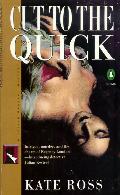
Book Review ~ “Cut to the Quick”

cut_to_the_quickI spent a good part of the December holidays making the acquaintance of Julian Kestrel – Regency dandy, amateur sleuth, and main character in a series of mysteries by Kate Ross [alas! not unlike Jane Austen, Ms. Ross died of cancer at a young age and we have only four of these Kestrel novels to read, and re-read, and likely read again.]  I highly recommend you head immediately to your local library or local bookstore and start the first book, RIGHT NOW.  You are in for a most fabulous journey!


 Cut to the Quick [Viking 1993] is sort of an Agatha Christie whodunit – all the characters together in a large cavernous country house named Bellegarde, partly built in the time of Queen Elizabeth I, with winding staircases and secret passageways; an unknown woman is found dead, everyone in the house has a back story and the plot unfolds…. 

The novel begins with Julian Kestrel rescuing a very “in his cups” Hugh Fontclair from a game of hazard at a London gaming establishment. In gratitude Fontclair asks Kestrel to be best man at his wedding, though they have only just met, and as Kestrel has no idea why he is being asked, he decides to head to the country to find out why. 

Enter the characters:  Hugh Fontclair, just 21, forced into a marriage with a woman he does not know; Sir Robert and Lady Fontclair, Hugh’s parents, agreeing to the marriage but obviously hiding something; Lady Tarleton, Sir Robert’s sharp-tongued, very angry sister; Colonel Fontclair, Sir Robert’s brother, a war hero; Guy, the Colonel’s son, a likeable, ne’er do-well, often drunk rake; Philippa Fontclair, Hugh’s eleven-year old sister, immediately smitten with Kestrel; Isabelle, the orphaned cousin with hopeless feelings for Hugh; Maud Craddock, Hugh’s wife-to-be, a pawn in her father’s plans, who befriends Kestrel; Mark Craddock, Maud’s father, a wealthy tradesman shunned by the Fontclairs – but he holds all the cards; Dr. MacGregor, summoned to the house to deal with the dead body – he becomes Kestrel’s confidante and friend; Dipper, Kestrel’s manservant; and of course, the unidentified corpse … WHO is found dead in Kestrel’s bed.  As they are the unknown house quests, both Kestrel and Dipper are the prime suspects, and Kestrel is drawn into solving the crime, at first to prove his own and Dipper’s innocence and then because his sleuthing skills are far superior to anyone else’s, including the local magistrates and London’s Bow Street Runners.  Not all is as it seems at Bellegarde. 

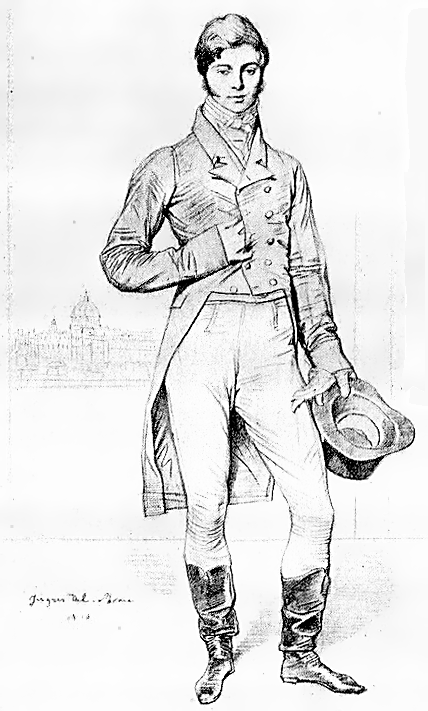
And so we are introduced to Ross’s alter ego, her young Regency dandy, the “top of the tree,” the fashionista of London’s “Quality”, where what Kestrel does (or doesn’t do) is copied by one and all: 

Kestrel had first appeared in London society a year or two ago, and hardly anything was known about him, though he was said to be related in some dubious way to a landed family in the north.  If he had been anything but a dandy, such vagueness about his pedigree would have been fatal, but of course the most spectacular of the dandies was absolved from society’s usual inquisition into breeding and birth.

 ‘He always wears black in the evening – it’s all the crack in the dandy set, and of course Kestrel, being such a howling swell, was one of the first to take it up…’

 And we learn more about his appearance through the eyes of 11-year old Philippa when she first sees him:

 She looked at him approvingly, liking him much better that the dull, handsome men [her sister] Joanna admired.  He had a dark, irregular face and hair of a rich brown, like mahogany.  His eyes were brown too, but with a green gleam about them, especially when he smiled, or was looking at you very intently.  He was slender and spare and not above medium height, but he had presence – the way royalty probably did in the old days, before it was fat and fussy and came from Germany.  He looked splendid in his clothes, and yet there was nothing showy or striking about them, except that his linen was so spotless, and everything fit him so well.  Being a dandy was not so much what you wore, Philippa decided, but how you wore it.
regency-dandy

But we quickly learn that Kestrel too is not what he seems – he has a past we only see glimpses of, his present life of apparent wealth not quite the case; he has a thief for a manservant; and he has a charm and a wit that disarms most every woman he encounters, and many of the men as well.  His integrity is never in doubt – he is honest and true, and he can read others with little fuss – in short, the perfect objective detective [even his name is telling!] – he is another Peter Wimsey, Adam Dalgliesh, Alan Grant, Roderick Alleyn – all themselves a mystery to draw the reader in, but here with the setting of Regency England.  And in each book, Ross gives out a few tidbits of information about him: see how much we discover about him from this description of his home:

 Julian Kestrel lived in a first-floor flat in Clarges Street.  The ceilings were high, and the windows large.  The walls were painted ivory.  The mahogany furniture was handsome but not too plentiful; Julian hated clutter.  Here and there were keepsakes he had picked up on his travels:  a Venetian glass decanter, a Moorish prayer rug, a marble head of a Roman goddess, an oil painting of the Tuscan hills.  Crossed rapiers hung over the mantelpiece; they looked ornamental, but closer inspection revealed they had seen a good deal of use.  A small bust of Mozart occupied a place of honor by the pianoforte.  Under the piano was a canterbury full of well-worn sheets of music.

 And Ross showcases the Regency in all its glories – it helps to know something of the period (the Regency Lexicon is most useful!), as she weaves her story through country roads, in carriages and coaches, in London’s streets, the architecture of the houses, the description of the fashions, the elegant social life – it is all here.  And did I mention that this is a MYSTERY?? – it is deftly drawn, Ross a master of characterization and plot.  No more on that score, as you must just read the book! But as for me, I am on to the next, Broken Vessel, another mystery with hopefully a few more facts about Kestrel and I will continue my reviewing henceforth!

4 1/2 full inkwells (out of 5)
Book reviews

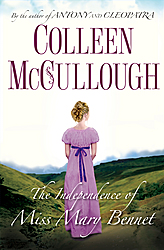
The Independence of Miss Mary Bennet (a review)

bennet

What can be said about a book that has nothing to recommend it? The Independence of Miss Mary Bennet cannot boast of being well-written, well-researched, or well-plotted. Despite the association of Austen and her Pride and Prejudice characters, never mind the ample name-recognition of its author, this novel should not have seen the light of day.

Working with a promising premise – the later life of middle sister Mary Bennet – Colleen McCullough sends her from one prison (a twenty-year sentence as companion to Mrs Bennet) to yet another, more literal prison as the underground captive of a religious zealot named Father Dominus. This is “independence”?  Continue reading “The Independence of Miss Mary Bennet (a review)”

Book reviews · Books · Collecting Jane Austen

ESSENTIAL AUSTEN: Jane Austen’s Letters AND Austen Papers (a review)

Austenian scholarship would do well to emulate Mozartean scholarship; in Le Faye’s Chronology of Jane Austen and Her Family we finally have an equivalent to Deutsch’s superb Mozart: Dokumenten seinen Leben, published in English as Mozart: A Documentary Biography. (Le Faye in fact surpasses Deutsch in inclusiveness, as there are more Austen family materials in existence – bank records, diaries, letters – that she is able to cull.) Therefore, might we hope that someday Austen’s letters will be published intermingled with the letters of her family, in emulation of Mozart: Briefe und Auszeichnungen. This seven-volume set includes the grand tour travel diaries of Mozart’s sister and father as well as other family writings, and is comprehensively annotated and indexed (the index alone comprises one volume; the letters, four volumes; the remaining two are all commentary). Continue reading “ESSENTIAL AUSTEN: Jane Austen’s Letters AND Austen Papers (a review)”

Book reviews

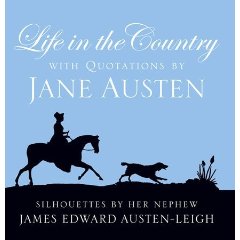
Life in the Country (a review)

life-in-the-country-coverIn time for holiday giving, Life in the Country should find a pleasant reception. Pairing the prose and letters of Jane Austen (in quotation format) with the fine artistic narrative of her nephew James Edward Austen-Leigh, Life in the Country provides visuals and words that both entertain and entrance. Accompanying essays provide nice overviews of Jane Austen; silhouettes in general and Austen-Leigh’s work within the genre; and a concise discourse on Austen-Leigh by his great-granddaughter Joan Austen-Leigh. Serious scholars will be able to delve deeper into various topics thanks to the short bibliography. (Though heavily centered on Austen scholarship, the list does include such as Sue McKechnie’s British Silhouette Artists, a must-have reference for those interested in this art form.)
Continue reading “Life in the Country (a review)”

Book reviews · Books · Regency England

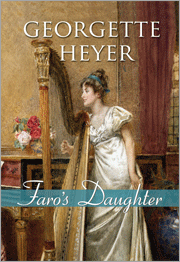
Book Review ~ “Faro’s Daughter” by Georgette Heyer

 I’ve said it before – I am not an Austen sequel’s reader or a romance reader.  I wrote about the Chicago AGM and my delight in the evening on Romance and have since been a regular reader of the “Teach me Tonight” blog.  As soon as I returned from Chicago,  a quick run to the local used bookstore that stocks romances sent me home with all of the novels of Eloisa James’s Desperate Duchesses” series.  The first was a quick and enjoyable read – the rest await my time!

 So with this intro, it is easy to confess that Jane Austen lover that I am, as well as all things English and Regency, I have never read ANY Georgette Heyer (is this perhaps slightly worse than my previous admission that I am a NY Yankees fan?…)  and not that I haven’t wanted to…. She has been on my to-be-read list for years, and among some great company, but I’ve never been sure where to start.  So I was thrilled to receive a review copy of Faro’s Daughter, originally published in 1941 now reprinted by Sourcebooks, and have finally begun my Heyer journey, and what a delightful beginning!

faros-daughter-cover


Deborah Grantham (called Deb, so perhaps I am taken in immediately!), is an independent, feisty, level-headed, take-no-prisoners, absolutely beautiful heroine – living with her Aunt, Lady Bellingham, who runs a high-society London gaming establishment and is presently in serious financial straits.  Here is Deb as we are first introduced:

 ...a tall young woman with chestnut hair, glowing in the candlelight, and a pair of laughing, dark eyes set under slim, arched brows.  Her luxuriant hair was quite simply dressed, without powder, being piled up on top of her head, and allowed to fall back in thick, smooth curls.  One of these had slipped forward, as she bent over the table, and lay against her white breast… the lady’s eyes were the most expressive and brilliant…. ever seen.  Their effect upon an impressionable youth would…be most destructive.

 Several suitors seek her favor, the young Lord Adrian Mablethorpe and the older, odious Mr. Ormskirks.  The book begins with a Mr. Ravenscar  visiting his Aunt, Lady Mablethorpe, Adrian’s mother, who is in a near apoplectic state over Adrian’s wishes to marry Deb; Lady M wishes her nephew to prevent this at all costs, and from here the plot is in motion and the fun begins – a fast-paced, highly amusing high-jinx comedy of manners – the insults and name-calling and behaviors suiting neither a Regency lady nor a proper gentleman run rampant – and I can tell no more, no spoilers here!

Similarities to Pride & Prejudice abound:  Deb is not unlike Lizzie Bennet – she speaks her mind, she reacts strongly to insults to her character and social standing (though she goes to quite unlady-like lengths to exact her revenge!) and she is a caring niece, sister and employer…. and of course those “dark eyes” !…. ; there are moments of Mrs. Bennet in both Lady Bellingham and Lady Mablethorpe (Oh! my nerves!); Miss Ravenscar as an interesting mix of Georgiana Darcy and Lydia Bennet; young Adrian needing advice much like Mr. Bingley; and Ravenscar who makes his entrance on page one: 

...very tall, with a good pair of legs, encased in buckskins and topboots, fine broad shoulders under a coat of superfine cloth, and a lean, harsh-featured countenance with an uncompromising mouth, and extremely hard grey eyes. His hair, which was black, and slightly curling, was cut into something perilously near a Bedford crop

... so is Max Ravenscar our Darcy, or a Willoughby ? or even a Wickham?

But there are also similarties to Eloisa James’s Desperate Duchesses (perhaps because it is still fresh in my mind, or likely because they all follow a basic formula) – in both books we see gaming strategies, the tensions, sexual and otherwise, the characters of Ravenscar and the Duke of Villiers both made of the same cloth.  It is clear that you have been to this place before, but that’s fine ~ it’s a great place to visit!

Filled with Regency terminology and slang, card games and some well-described female and male fashions (and fashion faux-pas!) – have your Regency dictionary close at hand [see this online Regency Lexicon for starters.]  Heyer weaves her knowledge of late 18th– early 19th century London:  the streets and squares (St. James, Brunswick Square, Grosvenor, Brook St, Vauxhall Gardens), all manner of carriages; card games; horse-racing and betting; the male clubs Brookes’s and White’s; the world of the “good ton” and the not so good; the vulnerability of females – at the mercy of their parents maneuverings, their need to marry for financial security, the risk of social ostracism for not following the “rules.”

Heyer is brilliant at presenting these regency realities with a plot that though predictable, (you don’t need to be a romance reader to know where this is headed from page one!) is so entertaining and the heroine and her sidekicks so engaging, the plot so outrageous within the social confines of the time, that I am not sure when I last read a book I just had to finish RIGHT NOW.  Just not sure what to pick up next!  Are they all this much fun? …  so I seek any suggestions and recommendations from the greater world out there of seasoned Georgette Heyer readers.  Can I really have gone through my life thus far without having read a single one of her books?  I am shamed!


Further reading:  there is a wealth of information on Heyer, both in print and online… I append a few sources for your perusal ~ it is just a beginning…

Reference books (see the bibliography listed in online resources; I list here just a few must-haves)

  • Georgette Heyer’s Regency World, by Jennifer Kloester [2005, already out-of-print; newly published by Arrow 2008 in pb]
  • Georgette Heyer’s Regency England, by Teresa Chris [London, 1989] ~  impossible to find at an affordable price.
  • The Regency Companion,  by Sharon Laudermilk and Teresa L. Hamlin [Garland 1989] – ditto
  • The Private World of Georgette Heyer, by Jane Aiken Hodge [1983] ~ the biography, available from used bookshops.
  • Georgette Heyer: A Critical Retrospective, by Mary Fahnestock-Thomas [PrinnyWorld Press, 2001] ~ includes Heyer’s short published pieces, reviews of her books, obituaries and responses, and critical articles and books – an indispensible resource.

 Further Reading: online

Blogs either reviewing or chatting about Heyer are too numerous to list… but here are a few:

Book reviews · Books

ESSENTIAL AUSTEN: Jane Austen Fashion (a review)

In two words, JANE AUSTEN FASHION is . . . a treasure! Concise and informative, its focus on Jane Austen – in comments from her letters as well as her novels – makes this little volume essential to every Austen collector.

fashionNewly republished by Moonrise Press (Ludlow, England), author Penelope Byrde’s book on fashion is now in its second regeneration. Initially published in the 70s as A Frivolous Distinction, it found a new lease on life in an expanded edition put out by Excellent Press in 1999. It has now been rescued from its consignment to used bookstores (if you were lucky enough to find a copy) by this paperback edition. May Moonrise Press profit from its belief in the continuing interest in this subject – fashion not only in Austen’s day but, more precisely, in Austen’s own life. Continue reading “ESSENTIAL AUSTEN: Jane Austen Fashion (a review)”

Book reviews · Books

Two Guys Read Jane Austen (a review)

two-guys

With women predominating JASNA-Vermont’s chapter, one question that continually arises is: What do MEN have to say about Jane Austen’s novels?? In the end, according to TWO GUYS READ JANE AUSTEN, the answer is multi-faceted and not always gender-specific.

TWO GUYS READ JANE AUSTEN is a delight, guaranteed to make the reader chuckle – and read certain sections out loud to anyone who will listen. Being quickly published proves a boon, as timely topics like Anne Hathaway and Becoming Jane are subjects of the first letters: 

 “…I was hoping you and Kathy could weigh in with an opinion. We just saw Anne in the film Becoming Jane ….Miranda didn’t much like her, but then, in my experience, Anne Hathaway is a bit of a litmus test. If you like her, you’re a man; if you don’t you’re a woman.”

The epistolary style of the book (email versus letters) recalls 84, Charing Cross Road, although the poignancy of that novel is missing. While readers will learn a bit about the lives of authors Steve Chandler and Terry Hill, it is for their quips and deeper thoughts on Jane Austen and Pride and Prejudice that will have you pulling this off the shelf for a re-read every once in a while. TWO GUYS READING JANE AUSTEN would be useful to many book groups; it would engender discussion on (especially) Pride and Prejudice. Continue reading “Two Guys Read Jane Austen (a review)”

Book reviews · Books · Jane Austen · News

Round-Up ~ All Things Austen

This week is mostly about books….!

Jane Odiwe tells of her new book:  a sequel to S&S, Mr. Willoughby Returns: (see her blog for more info)

When Marianne Dashwood weds Colonel Brandon both are aware of the other’s past attachments; Marianne’s grand passion for the charming but ruthless John Willoughby and Brandon’s tragic amour for his lost love Eliza. Three years on Marianne is living with her husband and child at Delaford Park, deeply in love and contented for the most part, although Marianne’s passionate, impulsive and sometimes jealous behaviour is an impediment to her true happiness. News that John Willoughby and his wife have returned to the West Country brings back painful memories for Marianne and with the demise of Mrs Smith of Allenham Court comes the possibility of Mr Willoughby and his wife returning to live near Barton and the surrounding area of Devon and Dorset, a circumstance which triggers a set of increasingly challenging, yet often amusing perplexities for Marianne and the families who live round about.

lost-years-ja-cover

 Alert Janeite Nancy M. has posted about The Lost Years of Jane Austen, by Barbara Ker Wilson [Ulysses Press, Nov. 2008]

“Thanks to her meticulous diaries and frequent letters, Jane Austen’s life is well documented. Except for a mysterious period in her early 20s , when, for unknown reasons, her sister Cassandra burned all of Jane’s personal writings.”

A fantasy of what could have happened in the lost years.
Australia and Wentworth are mentioned [but as Laurel Ann proposes, is the a book written in 1984 titled Jane in Australia ?]


 Peter Ackroyd, author of many a British literary tome – novels and all manner of non-fiction, has a new book,  The Thames: A Biography [Nan Talese, 2008] to follow his London: A Biography of 2000. Published last year in the U.K. under the title Thames: Sacred River, and now available in the US, this is a must for my London collection!  Here is a review from Publisher’s Weekly:


 For a river with such a famous history, England’s Thames measures only 215 miles. Acclaimed novelist and biographer Ackroyd (Hawksmoor; Shakespeare) invites readers on an eclectic, sprawling and delightful cruise of this important waterway. The Thames has been a highway, a frontier and an attack route; it has been a playground and a sewer, a source of water and a source of power, writes Ackroyd. Historians believe the river may have been important for transport and commerce as early as the Neolithic Age. The ancient Egyptian goddess Isis has a long association with the Thames, which was used for baptisms, both pagan and Christian, during the Roman Empire. The British tribes tried to use the Thames as a defense against Julius Caesar’s invasion, and the Normans built the Tower of London and Windsor Castle on the Thames as symbols of military preeminence. The royal waterway carried Anne Boleyn to both her coronation and her beheading, and famously served as inspiration for paintings by Turner and Monet and for Handel’s Water Music, commissioned to associate the German-born George I with a potent source of English power. Elegant and erudite, Ackroyd’s gathering of rich treats does the famed tributary proud. Illus., maps. (Nov. 4)
See this LA Times review 

thames-brit-cover

thames-amer-cover1


stratagem_webcover8


Lavolta Press has published this French book from 1820: 

The Lady’s Stratagem: A Repository of 1820s Directions for the Toilet, Mantua-Making, Stay-Making, Millinery & Etiquette


Edited, translated, and with additional material by Frances Grimble
Publication date: November 3, 2008
755 pages; 98 line drawings, 36 halftones
Glossary, bibliography, and index
ISBN: 978-0-9636517-7-8
Cover price: $75.00

Lavolta Press
20 Meadowbrook Drive
San Francisco, California 94132
415/566-6259
www.lavoltapress.com

and also see this review at PR-Canada.net


heyerfridays-child


 The Books Please blog reviews Georgette Heyer’s Friday’s Child.  [Margeret has created a very thoughtful reading blog and is one you should visit often…] for this, her first Heyer read, she links to the Georgette Heyer Reading Challenge Blog.  I confess to just starting MY first Heyer, Faro’s Daughter, and will post a review soon.


And finally a visit to Austenprose for her November booklist… [some duplicates I fear, but we are always looking for the same thing!]

For those of you interested in textiles, visit R. John Howe’s blog on Textiles and Text  where he reports on the recent textile symposium in Washington DC… many lovely photographs to view!

 And for those of you who are hungry, Regency Reader Blog writes about the typical Regency breakfast; and while you are there, look at the other recent posts on Bath, Tattersall’s, and various historical Regency novels that have been reviewed. 

And finally for a bit of end-of- the-week humor (or maybe not…), take a quick look at the results of the Guardian.co.uk contest on redesigning covers of literary classics for a “dumbed-down” age.  Dickens had the most entries it seems, but as you can see, Jane made the list!

ppflag-cover

bleakhousecover


Happy reading!

Deb

Book reviews · Books · Jane Austen · Social Life & Customs

On My Bookshelf ~ “In the Garden with Jane Austen”

Jane Austen loved a garden.  She took a keen interest in flower gardening and kitchen gardening alike. The Austens grew their own food whenever they could and had flower gardens wherever they lived, at their parsonage at Steventon in Hampshire, their town gardens at Bath and Southampton, and when they returned to Hampshire, at their cottage garden at Chawton.  In Jane’s letters to her sister Cassandra, we see her planning the details of these family gardens, discussing the planting of fruit, flowers, and trees with enthusiasm.  In the course of her life, she also had the opportunity to visit many of the grander gardens of England:  her brother’s two estates at Chawton and Godmersham, the manor houses of friends and family, and probably even the great estate at Chatsworth, assumed by many to be the inspiration for Pemberley…

So begins the new book “In the Garden with Jane Austen,” by Kim Wilson, author of Tea with Jane Austen, published by Jones Books [2008], one of my purchases at the AGM Emporium in Chicago, and for those of you enamored of the traditional English garden, a lovely addition to your bookshelf.

Wilson takes us on a visual journey through various gardens Austen would have created for herself, visited, or imagined in her novels, all interspersed with photographs, quotes from her works and letters, and vignettes of engravings and poetry from her contemporaries. 

We begin at Chawton Cottage, Austen’s home from 1809-1817, and the setting of the cottage and kitchen gardens that she wrote about so lovingly… “You cannot imagine – it is not Human Nature to imagine what a nice walk we have round the orchard” [31 May 1811], and then references to farm and parsonage gardens, which we see in Emma (Robert Martin’s summer house in his farm garden), and who can forget Mr. Collins day-long labors in his garden, much to Mrs. Collins’s satisfaction!


The chapter on Mansion and Manor House Gardens takes us to Godmersham Park and Chawton House, Austen’s brother Edward’s estates in Kent and Hampshire, Blenheim Palace, Chatsworth, and Stoneleigh Abbey [in Warwickshire] and the Vyne where “every park has its beauty and its prospects” where “one likes to get out into a shrubbery,” and we are reminded of Mr. Rushworth and his “improvements,” and the settings of Pemberley, Rosings, Mansfield Park, and in Emma, where the garden is nearly the heroine’s only place for solace, and Fanny with her own geraniums in her room (but she cuts roses for Mrs. Norris! …and a nice touch here … “Recipes for Mrs. Norris’s Dried Roses”)

Gilbert White's House, Selborne


Austen’s life in the cities of her times was confining, and one of her joys was the City Gardens.  Wilson travels through the gardens of Georgian Bath, a variety of London’s garden squares (Henry Austen lived in several places in London and the areas surrounding these show up in her novels as the London homes of her characters:, Brunswick Square in Emma, Hanover Square and Portman Square in S&S), the garden at the Royal Pavilion in Brighton (where Austen’s characters visited, if not Jane herself), and the small town garden the Austens had in Southampton.

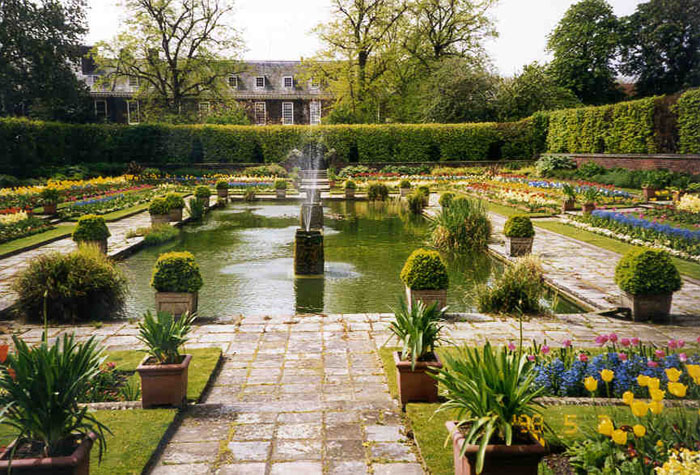
We all know that Austen was a self-described “desperate walker” much as she imagined Elizabeth Bennet, so her love of Public Gardens & Parks is apparent in her novels and letters:  Kensington Gardens, St. James and Hyde Park in London, Sydney Gardens and Alexandra Park at Beechen Cliff in Bath, Box Hill (made famous in Emma), and the tours of the picturesque (as Elizabeth’s tour through Derbyshire in P&P), and Netley Abbey near Southampton.

Kensington Gardens


The chapter on Recreating Jane Austen’s Garden offers plans on the Chawton Cottage kitchen garden and flower border, the border garden of Houghton Lodge, the herb garden at Gilbert White’s House (in Selborne, near Chawton), and a Georgian garden with plans of the Kennard Hotel garden in Bath.

Gardens featured in Austen film adaptations closes the book with a list of the various real-life houses, gardens and parks that breath life into Austen’s stories…many are open for tours and how better to experience the places that Austen herself created for us than to take a leisurely walk around the grounds of these locations. 

Wilson provides a bibliography to entice the reader with yet more books to peruse: they run the gamut from “The Formal Garden in England” [R. Blomfield, 1901] to Cowper’s “Poems” to “Hints for the Preservation of Wood-Work Exposed to the Weather” [J. Crease, 1808] and “The Juvenile Gardener, Written by a Lady for the Use of her Own Children” [London, 1824]

So this quick summary is of course lacking in what makes this book so charming – the many photographs, the quotes from the novels, the flowers!  Ms. Wilson has given us a gift!  I live in an English cottage cape, surrounded by what were once charming gardens…I struggle to keep them looking as I know they must have in some long-gone past, … I have many books on cottage and English gardening, perennials and borders, herb gardens, Gertrude Jekyll’s gardens, Penelope Hobhouse on all manner of gardens, even how to make an all-white garden … so this book is a delight to add to my collection, combining as it does my love of an English garden and my love of Austen….it is a visual feast, a good quick read that brings so many elements to the table…it is unfortunate that we are now upon the winter scene here in Vermont, and though I cling to my last rose struggling mightily against the frost that visits us every night, I can perhaps make some new plans through the long winter, or better yet, plan a garden tour through the English countryside next spring…or at least do a re-read of this lovely book……

Chawton Cottage Garden