Syrie James on her latest book, the last in her trilogy The Audacious Sisterhood of Smoke & Fire – it releases today, October 28, 2025!
DANGER AT DARKMOOR PARK: A VICTORIAN MURDER MYSTERY
Hidden treasure. Murder. Mystery. Romance. All while snowbound at Christmas.
DANGER AT DARKMOOR PARK is out in the wild today!
The book is set at an English country manor house over the Christmas holidays, where a group of suspicious guests are trapped during a blizzard, and murder and mayhem (and romance!) ensue. My smart, bold, take-charge heroine, Selena Taylor, enlists a handsome, mysterious doctor who arrives out of the storm, to help her investigate two murders and to find a cache of hidden money. Selena and Dr. Scott make a brilliant sleuthing team—which is complicated when they fall heart-poundingly in love and find themselves in terrible danger. But secrets abound, and the man who has stolen her heart is definitely hiding something. Can she trust him and stay two steps ahead of a determined killer?
DANGER AT DARKMOOR PARK is book 3 in my Audacious Sisterhood of Smoke & Fire series and can be enjoyed as a stand-alone. It was so much fun to write this book. I hope you love it!
The book has received blush-worthy advance reviews from fellow authors. Here are just a few:
“A festive mystery brimming with romance, thrills, and sumptuous historical detail … this Victorian-set whodunit is a cozy Christmas delight!” —Julia Seales, bestselling author of A Most Agreeable Murder
“A wonderfully atmospheric story in the best Gothic tradition!” —Vanessa Kelly, bestselling author of The Emma Knightley Mysteries
“A perfect tale for this season and late nights by the fire. Enjoy!” —Katherine Reay, bestselling author of The English Masterpiece
“A likeable heroine and a handsome, mysterious doctor search for a hidden fortune and a murderer. If you like Jane Austen and Agatha Christie, you’ll enjoy this one, too. ” —Julie Klassen, author of Whispers at Painswick Court
******************
I LOVED this book! Treat yourself to the perfect reading escape with this last story in James’ trilogy ~ enter her Victorian world that offers up a mystery, a murder, and a romance, and all the while you shall feel quite content to be snowed-in for however long it takes to get to the final denouement… I am sorry to see this final chapter in the lives of these three sisters – what’s up next Syrie??
About the author: International, USA TODAY, and Amazon bestselling author of historical mystery, historical fiction, and historical romance published in 21 languages. Playwright. Screenwriter. I love words, theater, gardens, Jane Austen, Jane Eyre, and All Things English!
The Folio Society has a long history of publishing Jane Austen’s novels – some as sets, some as stand-alone editions of individual novels – I have them all and marvel at their variety, the different illustrators who bring their own vision to Austen’s tales.
There is a new edition on the horizon, all in celebration of Austen’s 250th, a full box set, and limited to 750 copies – I give you the full press release from Folio – and may you be one of the fortunate ones to acquire this for your collection! – it will be available September 9, 2025.
The Complete Novels by Jane Austen, The Folio Society, 2025.
**************
THE COMPLETE NOVELS BY JANE AUSTEN
Illustrated by: Sarah Young Foreword by: Lucy Worsley
(The Folio Society | Six-Volume Box Set | Limited Edition: 750 copies | $1,250 | September 9, 2025)
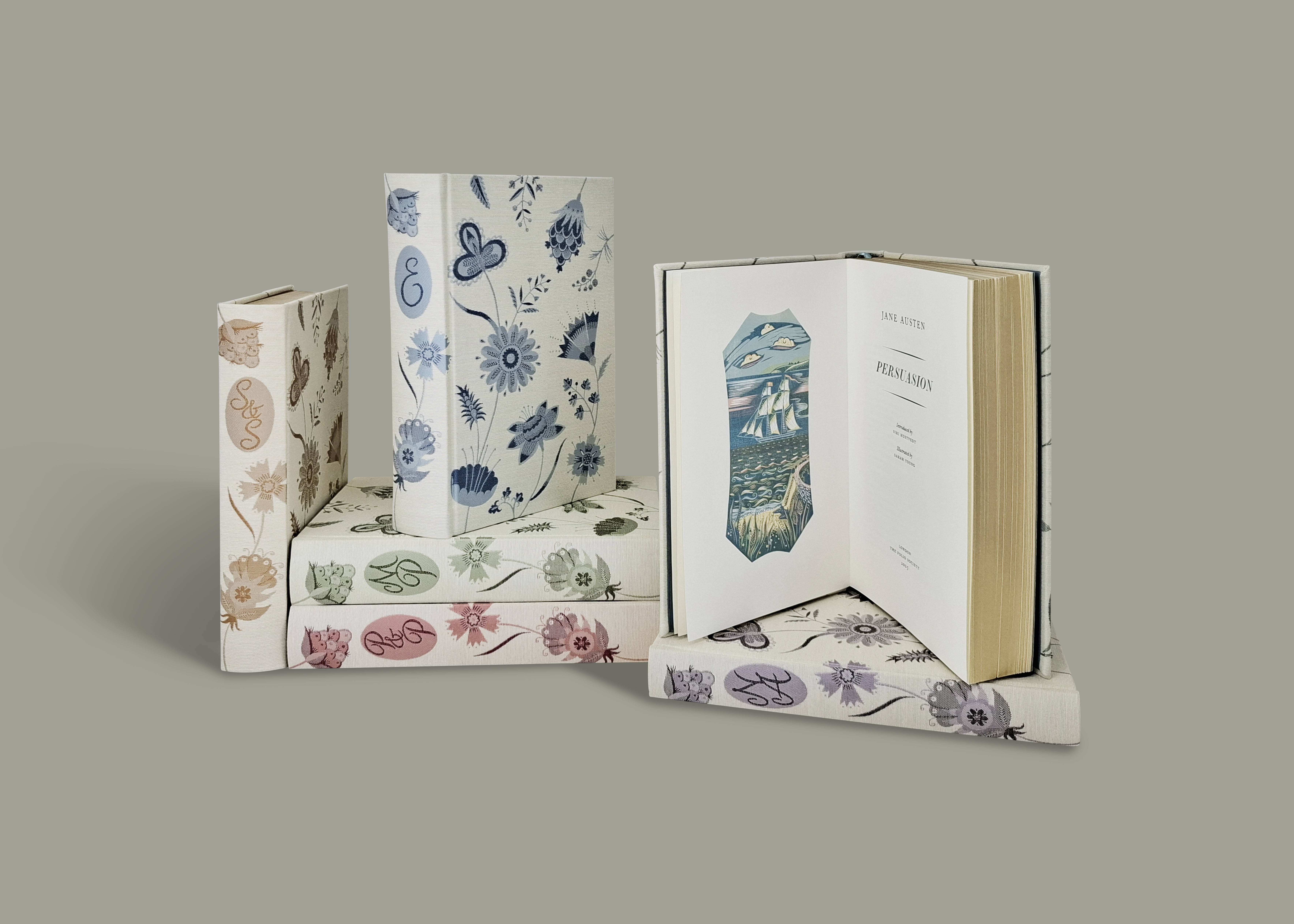
Featuring all six of Jane Austen’s major novels, encased in delicately woven, silk-and-cotton covers and reimagined with spectacular, original illustrations by Sarah Young, the latest limited edition from The Folio Society is guaranteed to bewitch readers, body and soul.
The Folio Society proudly presents The Complete Novels by Jane Austen—a landmark, six-volume limited edition of Austen’s major works, published to celebrate the 250th anniversary of her birth. With a new foreword by historian and bestselling author Lucy Worsley and breathtaking color illustrations by acclaimed artist Sarah Young, this edition is the definitive tribute to Jane Austen’s literary legacy.
Delightful, witty, and enduringly relevant, Jane Austen is one of the most beloved novelists in the English language. Her novels Sense and Sensibility, Pride and Prejudice, Mansfield Park, Emma, Northanger Abbey, and Persuasion have enchanted readers for generations and inspired countless retellings. Austen is peerless in her ability to blend sharp social commentary with unforgettable characters; her critiques on love, class, marriage, and gender remain relevant centuries later.
The Complete Novels by Jane Austen, The Folio Society, 2025.
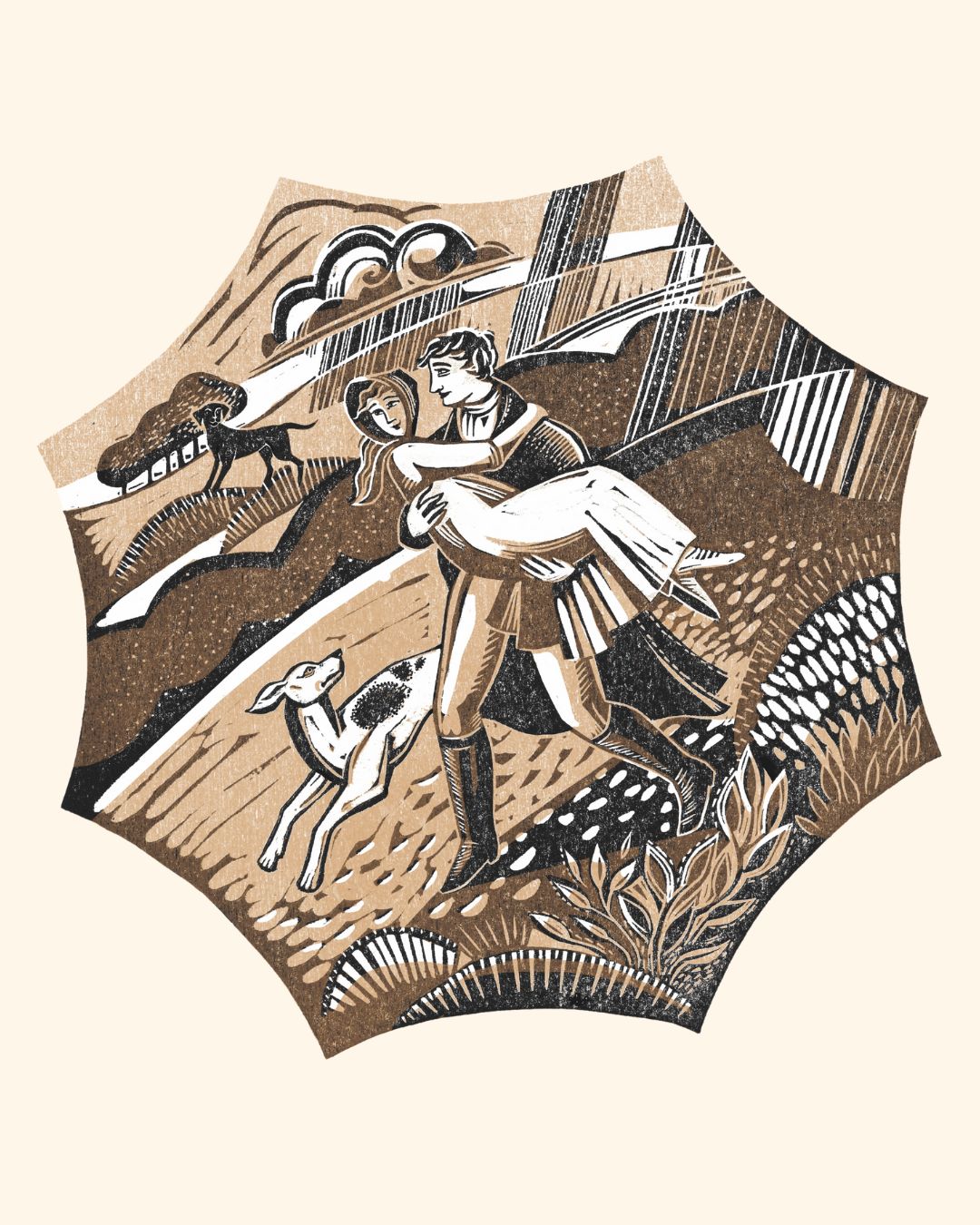
Every detail of this edition has been crafted with exceptional care. Each of the six novels will include a woodcut frontispiece, five linocut illustrations, and fifteen vignettes by Sarah Young, who brings a folkloric sensibility to Austen’s world; a monogram specially commissioned from prize-winning calligrapher Ruth Rowland; gilded edges; a ribbon maker; and first edition text, with introductions by Elena Ferrante, Sebastian Faulks, Lucy Worsley, Fay Weldon, Val McDermid, and Siri Hustvedt.
The novels will be covered in silk-and-cotton jacquard cloth specially woven by Stephen Walters—a luxury silk maker that weaves fabric for royal coronations and weddings, including the silk used in Princess Diana’s wedding dress. The six books will be housed in a gorgeous box designed by award-winning graphic designer Emily Benton.
The Complete Novels by Jane Austen is a true celebration of a master storyteller, and a treasure to be handed down from generation to generation.
PRODUCTION DETAILS
• Limited Box Set: 750 copies, $1,250 • Six volumes: Sense and Sensibility (392 pages); Pride and Prejudice (400 pages); Mansfield Park (476 pages); Emma (496 pages); Northanger Abbey (260 pages); Persuasion (268 pages) • Each volume includes a 2pp frontispiece, five illustrations, and fifteen vignettes spread throughout the text, illustrated in full color by Sarah Young • Full bound in jacquard silk-and-cotton cloth woven by Stephen Walters • Printed 4/4 throughout on Munken Pure paper • Gilded on 3 edges • Presented in a box designed by Emily Benton, covered in blocked cloth • Monograms commissioned from Ruth Roland • Limitation tip printed letterpress • Ribbon marker
Jane Austen was born in Hampshire in 1775, the seventh child and youngest daughter of George Austen, rector of Deane and Steventon, and his wife, Cassandra. She began writing poems, plays and stories for her family from a young age, and her first published novel, Sense and Sensibility, was released by Thomas Egerton to sell-out acclaim in 1811. Pride and Prejudice (1813), Mansfield Park (1814) and Emma (1815) followed, and these were the last of Austen’s works to come out in her lifetime. Her novels, including the posthumously published Northanger Abbey (1818) and Persuasion (1818), are today considered amongst the finest in the English language. She died at Winchester in 1817.
Sarah Young is a painter, printmaker, and illustrator. She is also the maker and originator, with Jon Tutton, of a traveling puppet theater. Her work is often narrative, drawing on folktales, myths, and fairytales, and has been shown in galleries throughout the UK, from the Shetland Islands to Cornwall. As an illustrator, she has most recently worked on book covers for Stephen Fry’s Mythos series, Pat Barker’s Trojan War novels, and the complete works of Shakespeare for Oxford University Press. Tutton and Young organize contemporary art and craft events, including Made London and the Brighton Art Fair, and run Atelier Beside the Sea—an art gallery, shop, and creative teaching space in Brighton.
Lucy Worsley OBE is a historian, author and television presenter. After studying history at New College, Oxford, she served for 21 years as Chief Curator at the charity Historic Royal Palaces, based at Hampton Court Palace. She won a BAFTA in 2018 for the BBC documentary Suffragettes with Lucy Worsley. She is the author of Jane Austen at Home, Queen Victoria, and the Sunday Times #1 bestselling book Agatha Christie: A Very Elusive Woman. Lucy is also the author of a historical novel for younger readers, The Austen Girls.
– ABOUT THE FOLIO SOCIETY
Foliois an employee-owned, independent publisher that has thrilled and delighted a band of dedicated readers across the globe since 1947. Today, from our workspace in the heart of London’s vibrant Shad Thames, Folio continues that tradition by crafting exquisite, illustrated books. Folio publishes many of the greatest names in publishing, in editions which reflect an extraordinary commitment to the craft of book-making and design. Folio’s award-winning books include George R. R. Martin’s A Game of Thrones, Madeline Miller’s A Song of Achilles, Alice Walker’s The Color Purple, and Diana Wynne Jones’s Howl’s Moving Castle. Proudly independent for over 75 years, in 2021 The Folio Society became an Employee Ownership Trust. Folio’s team of editors, designers and artisans will do whatever it takes to give each title everything it deserves, from outstanding intellectual firepower to extraordinary craftsmanship.
The Complete Novels by Jane Austen, The Folio Society, 2025.
Hotel Indigo [from their website – I forgot to take a picture!]
Our last group breakfast at our Hotel Indigo in Bath – hugs and goodbyes and “safe travels” to all who boarded the bus to Heathrow – and those of us doing the London extension boarded ours – we were a small group, and each of us with our own London agenda. We would be gathering only for breakfast each day and then on our own until the next evening’s play Clueless [more on that tomorrow…]
Our London hotel in Bloomsbury [love staying in Bloomsbury!] was a tad bizarre with the ugliest couch I have ever encountered – but we managed for the two nights as were never there…
[Not sure what that shadow is – appears to be a Knight in Shining Armor – but he too was frightened away by the couch…]
But first, a photo of this wallpaper – I think it was in the hotel in Bath – but this is a favorite pattern of mine so have to share:
**************
As Joy and I had a few of the same agenda high spots, off we went, walking everywhere, just so overJOYed to be in London again…
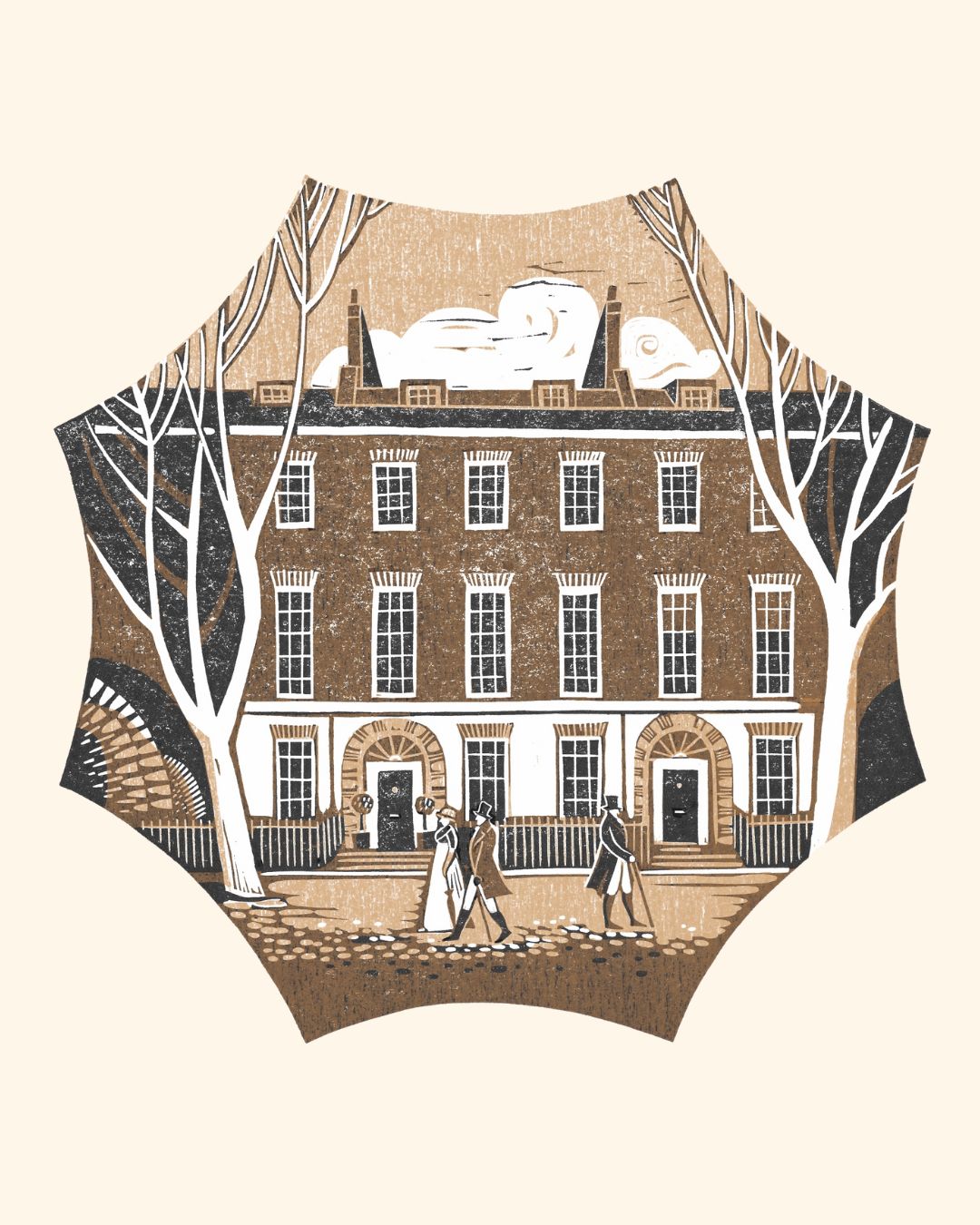
First, the John Soane Museum, comprising three houses in Lincoln’s Inn Fields – Soane’s architectural office, his home and library, and later home to his extraordinary collections. Since his death in 1857, everything has remained the same – all the works of art, sculptures, and furniture – all as he had it arranged (similar again to the Isabella Stewart Gardner Museum in Boston) and why there is minimal signage and no labels.
Exterior of the Soane Museum [from their website]
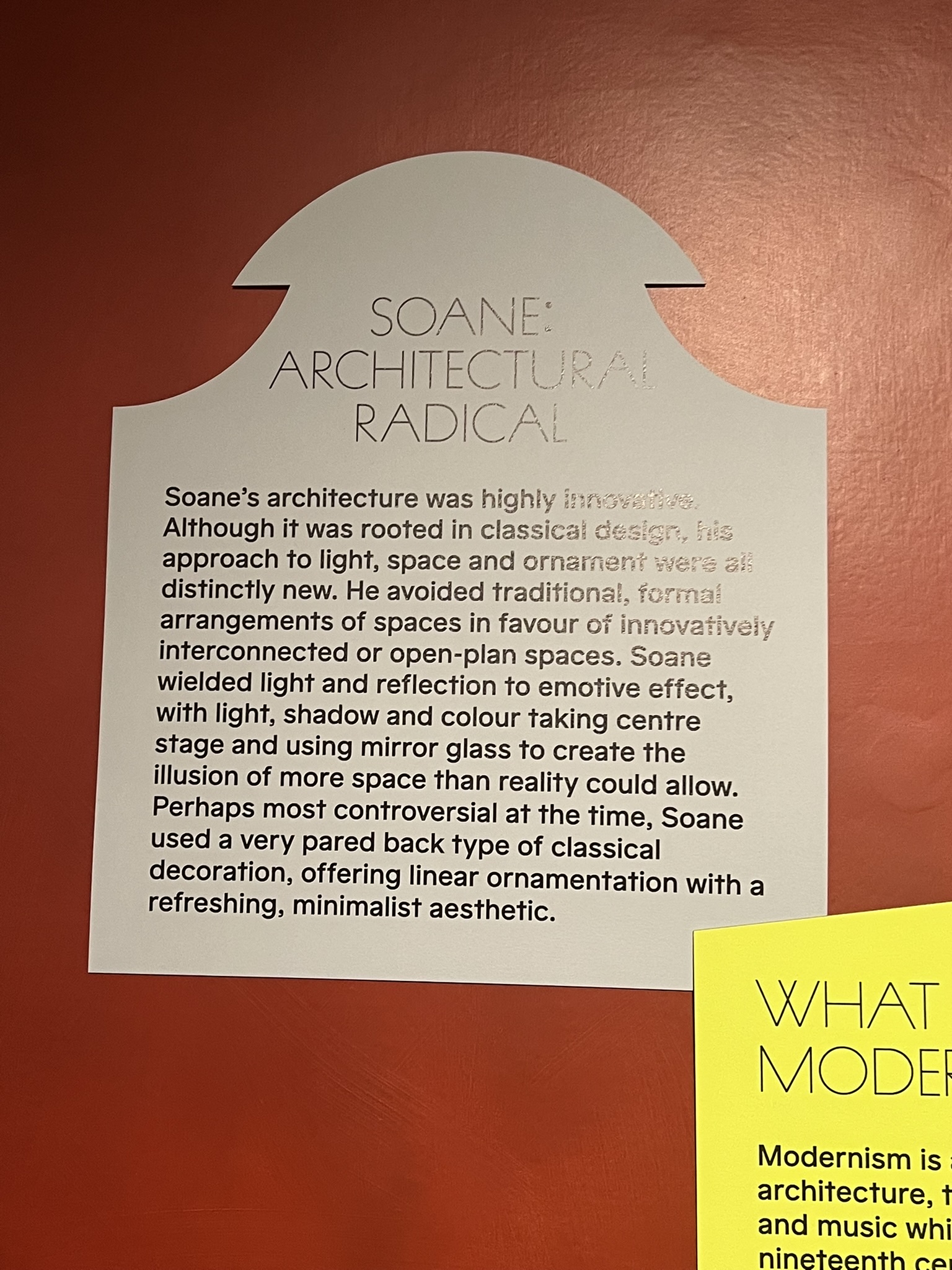
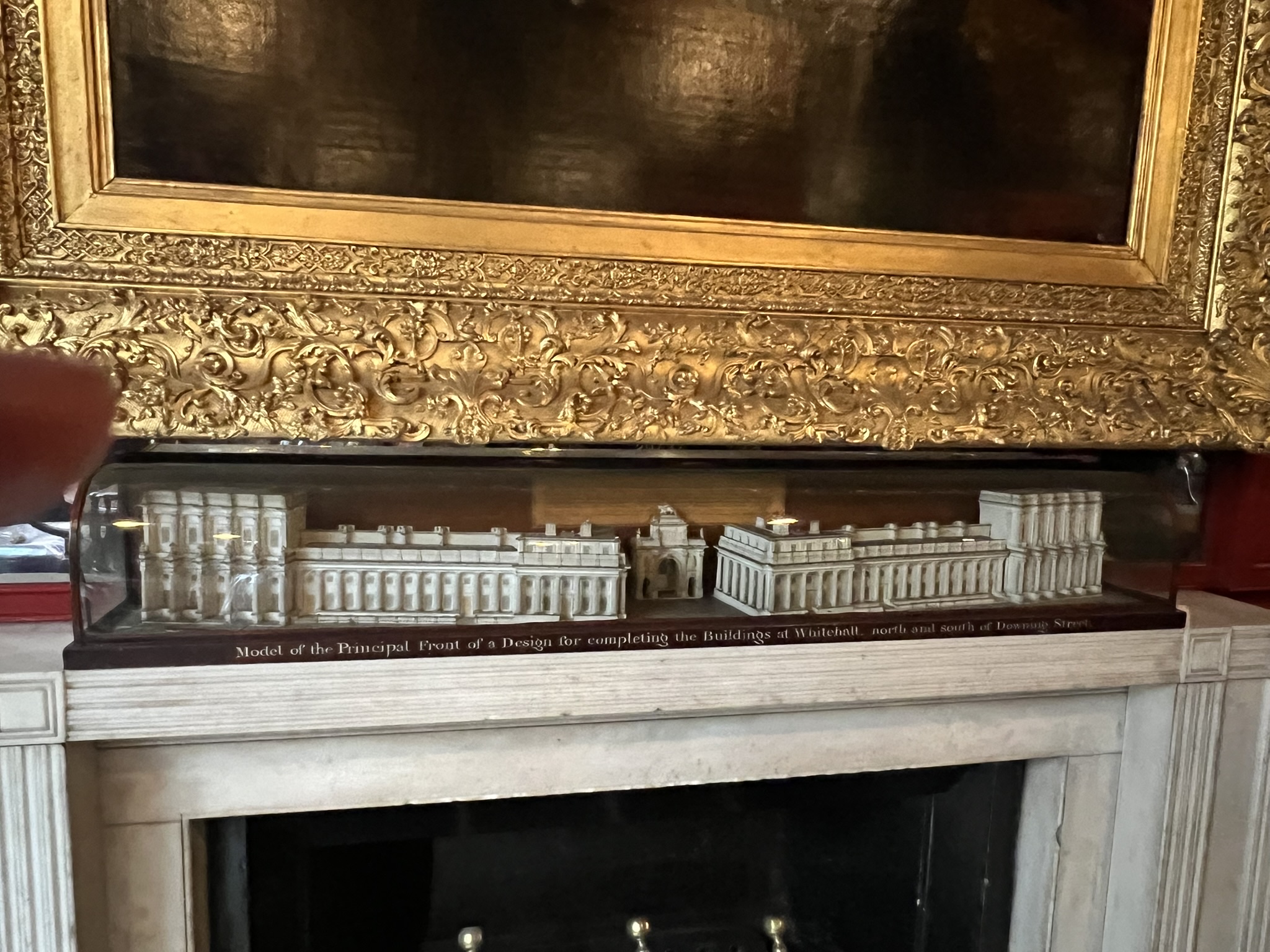
Soane is considered one of Britain’s greatest and most innovative architects – though his design for Whitehall, here as a model, was never executed:
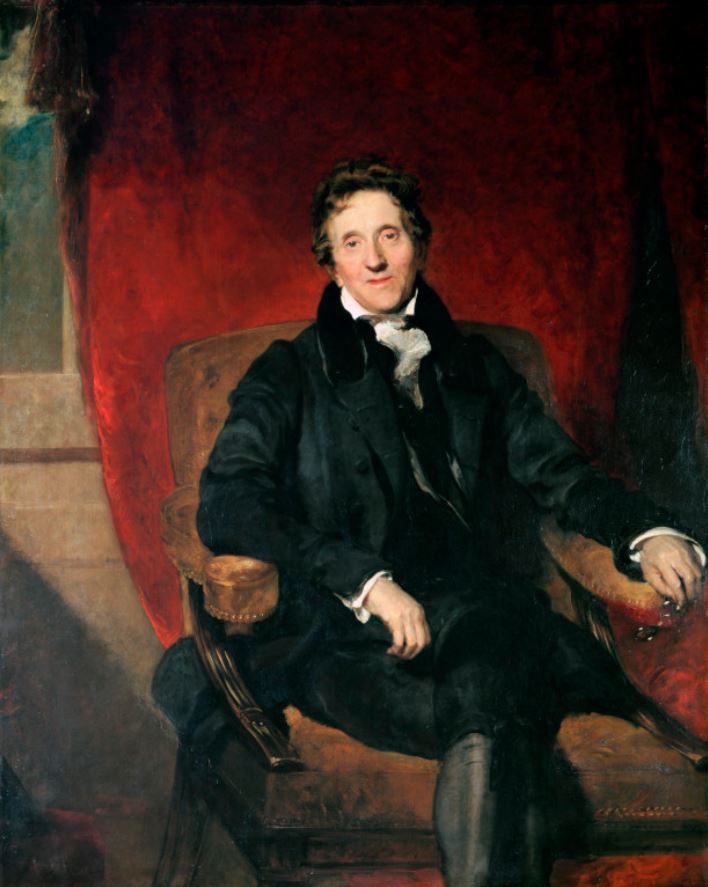
As you first enter the dining room and library, you come face to face with his portrait by Thomas Lawrence.
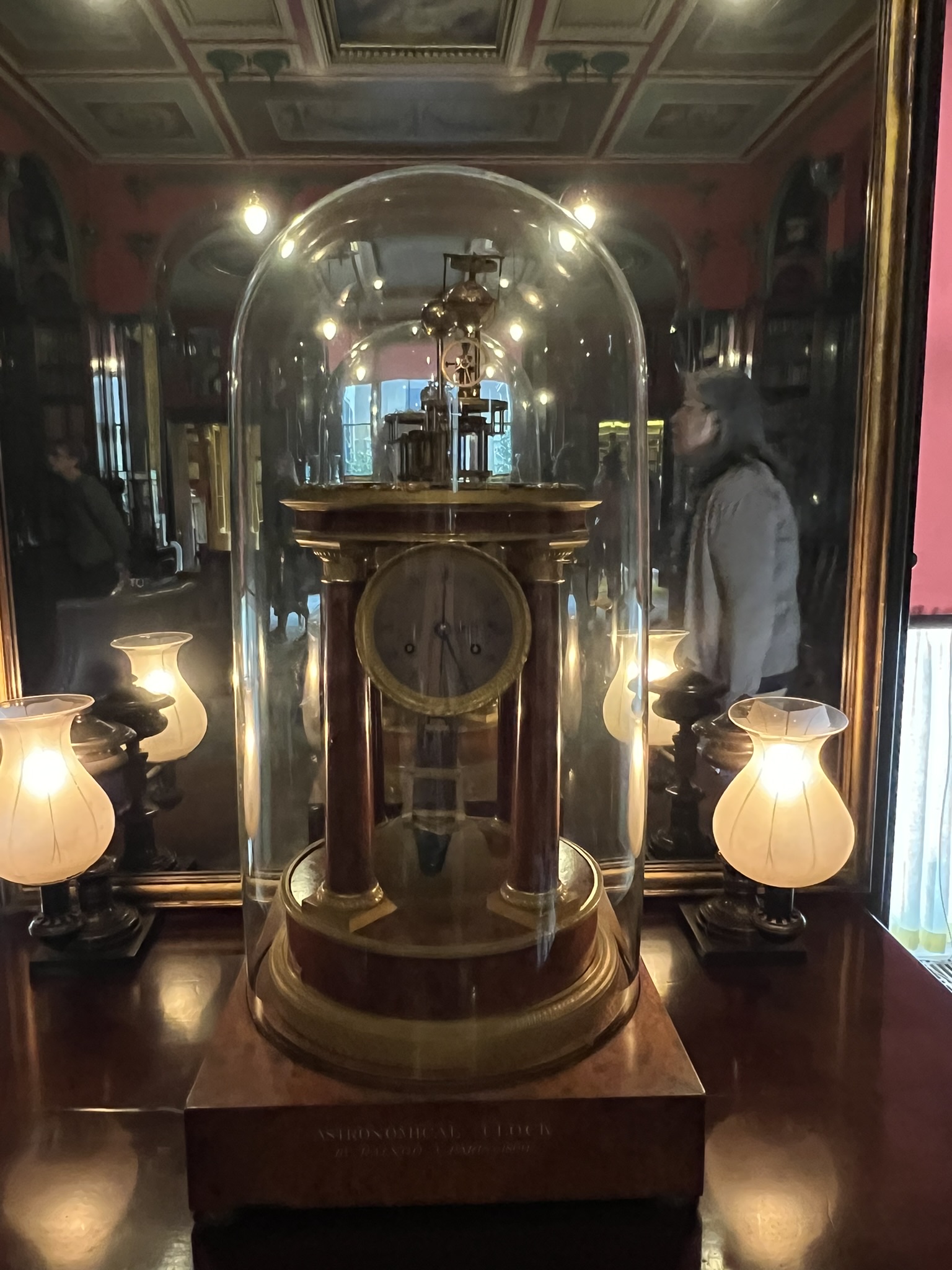
The entire museum is a maze of rooms filled from top to bottom with Soane’s collections – one couldn’t take it all in in with daily visits for months – a few hours just leaves one quite overwhelmed [not to mention humbled…]
Let’s take a quick tour with a few of the photos I took [not enough!]
The Picture Room:
– Venetian scenes by Canaletto [alas! no photos…idiot]
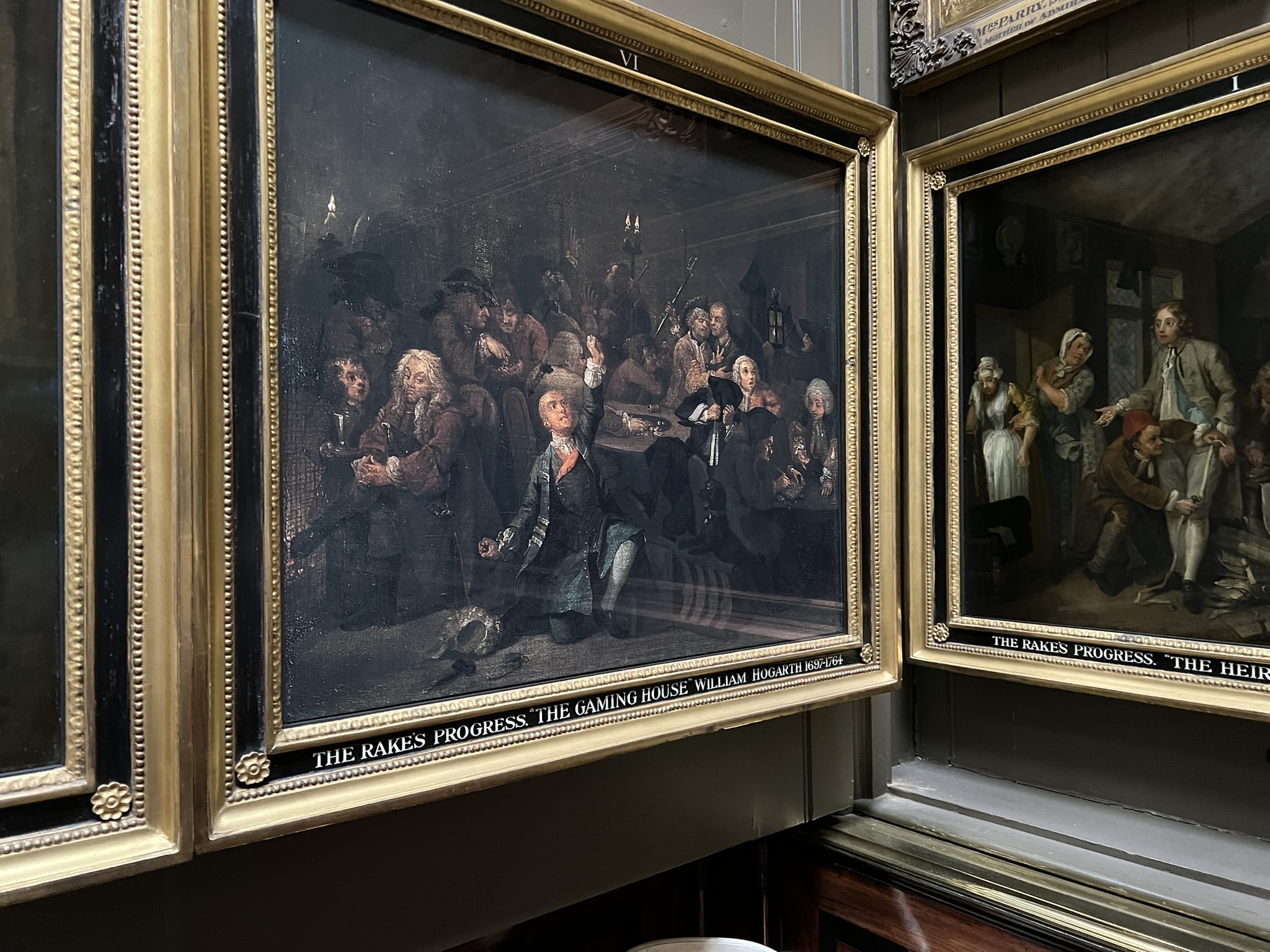
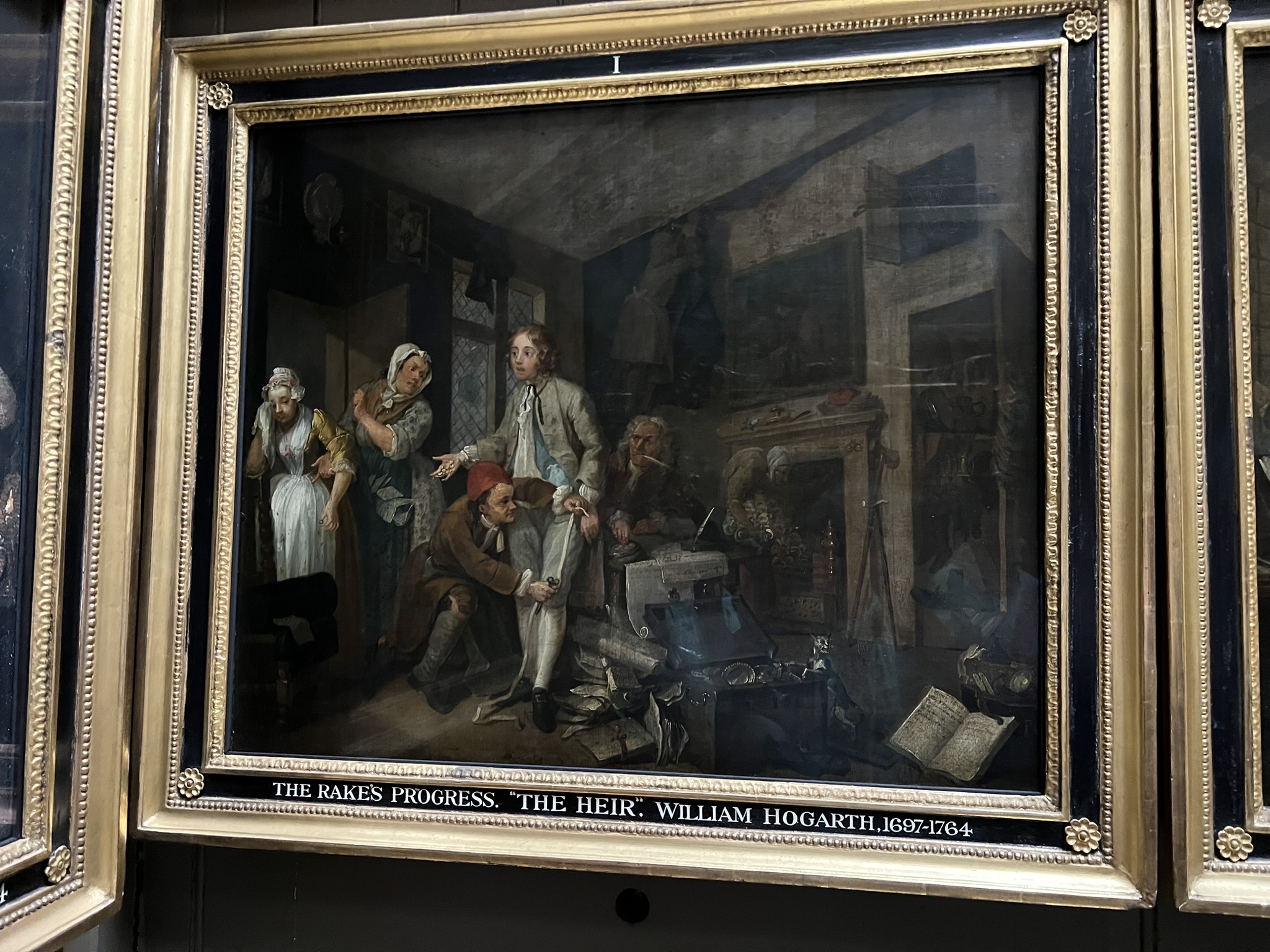
– hidden behind large wooden doors that open up to another group of paintings – only about 10 people are allowed in for the timed viewings – we were SO lucky to arrive just in time – behind the panels we found Hogarth’s The Rake’s Progress – here just a few (but you can see the whole series here: https://en.wikipedia.org/wiki/A_Rake%27s_Progress
Austen as we know knew her Hogarth – she references him in a letter to Cassandra [8 Sept 1796]:
she has decided to not go to London with Frank for fear her friends will not be there –
“…for if the Pearsons were not at home, I should inevitably fall a Sacrifice to the arts of some fat Woman who would make me drunk with Small Beer.”
She is referencing here in her witty way the first plate of Hogarth’s The Harlot’s Progress – Austen understands the reality of a young woman alone in London:
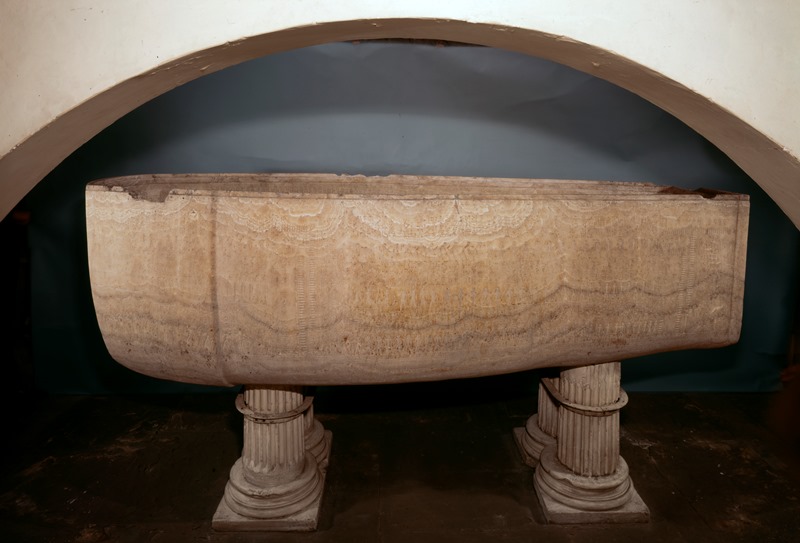
In the basement you find the Monks Parlour: Soane here making fun of the Gothic style – the “monk” was Padre Giovanni, Soane’s imaginary alter ego – you could be invited here to tea – between this and the nearby sarcophagus of King Seti I (1303-1290 BC), considered one of the most important of all surviving Egyptian antiquities, I might have rethought a nighttime visit to Mr. Soane’s basement parlour…
[from the Soane fb page]
[from the Soane Museum website]
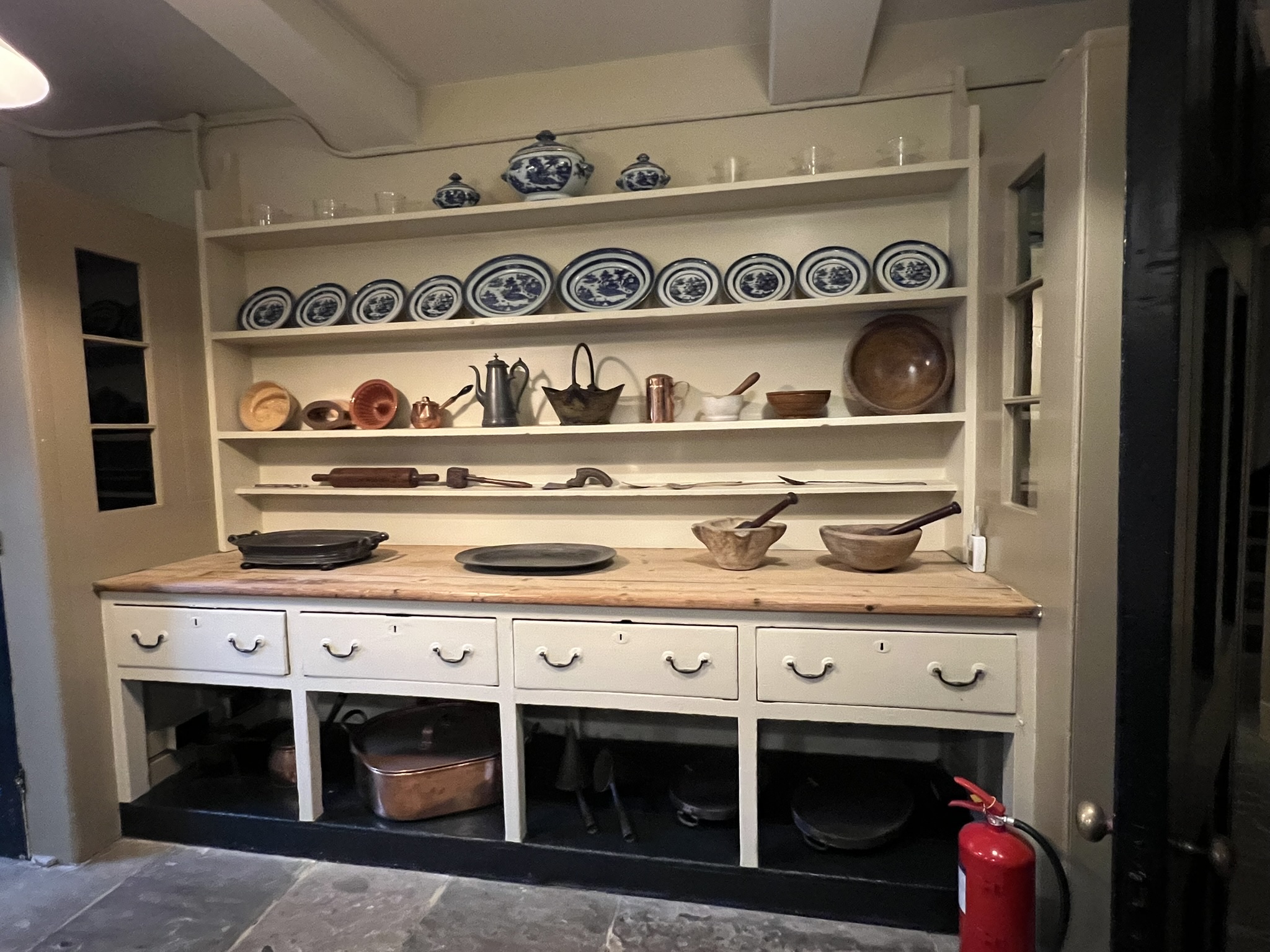
The Kitchen:
I can never resist an old kitchen – and here we have a patent range dating from 1812, as well as the china pantry with my favorite blue and white…
We find Shakespeare with his own hallowed place in the stairwell:
And the Drawing Rooms, painted in “Turner’s patent yellow,” we find family portraits and fine furniture:
[South Drawing Room – from the Soane Museum website]
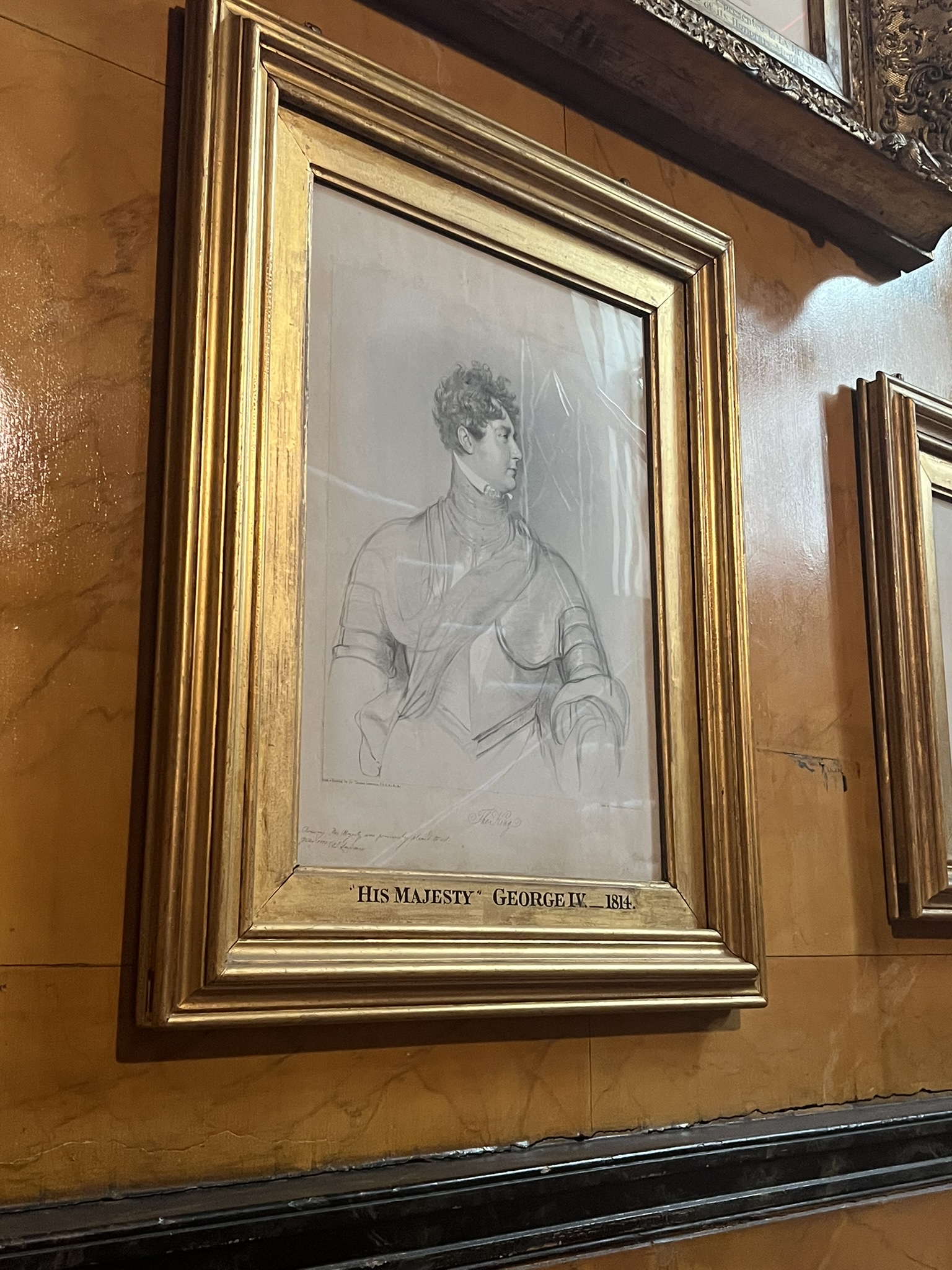
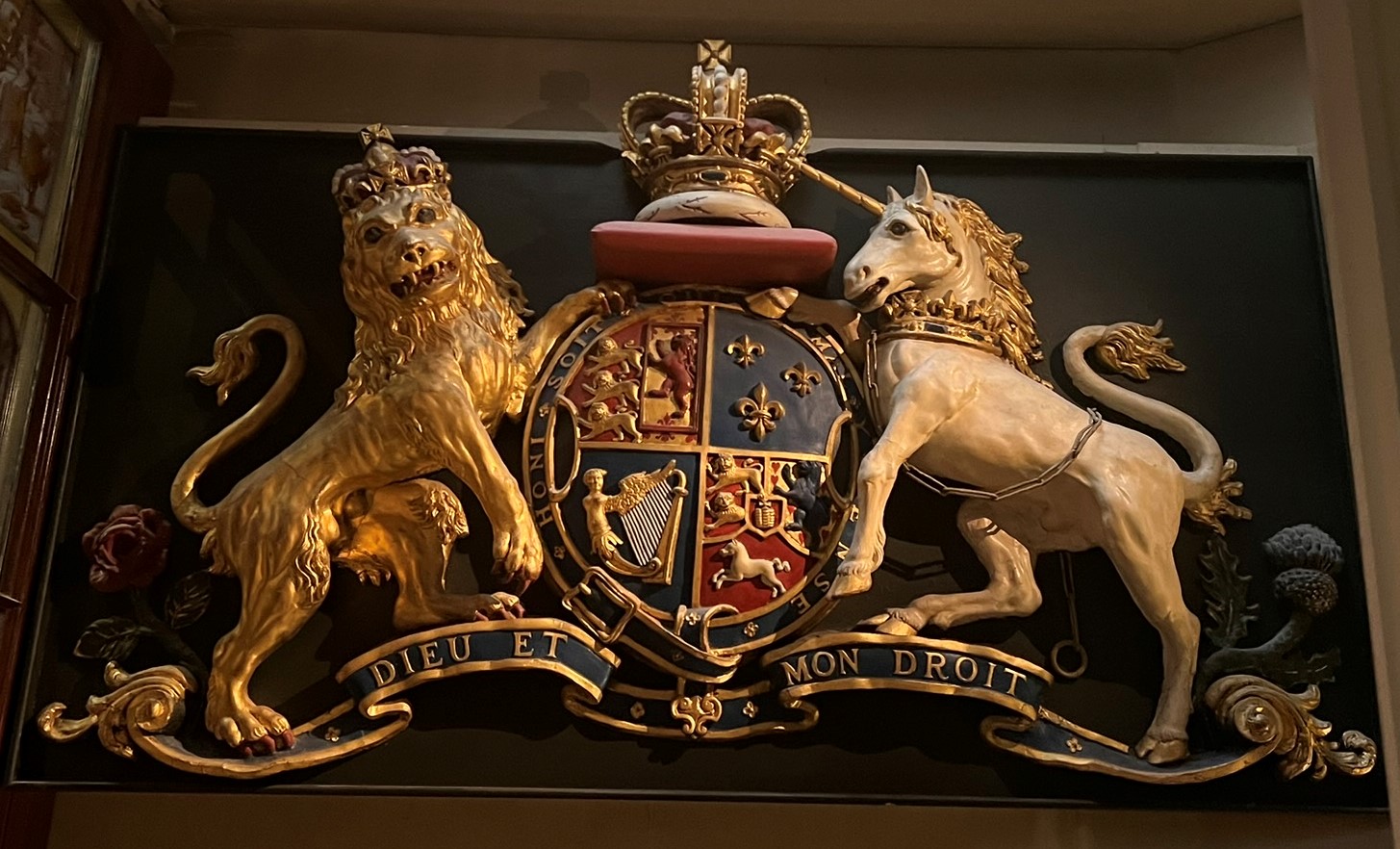
And can we ever have a day without finding a George IV on the wall??
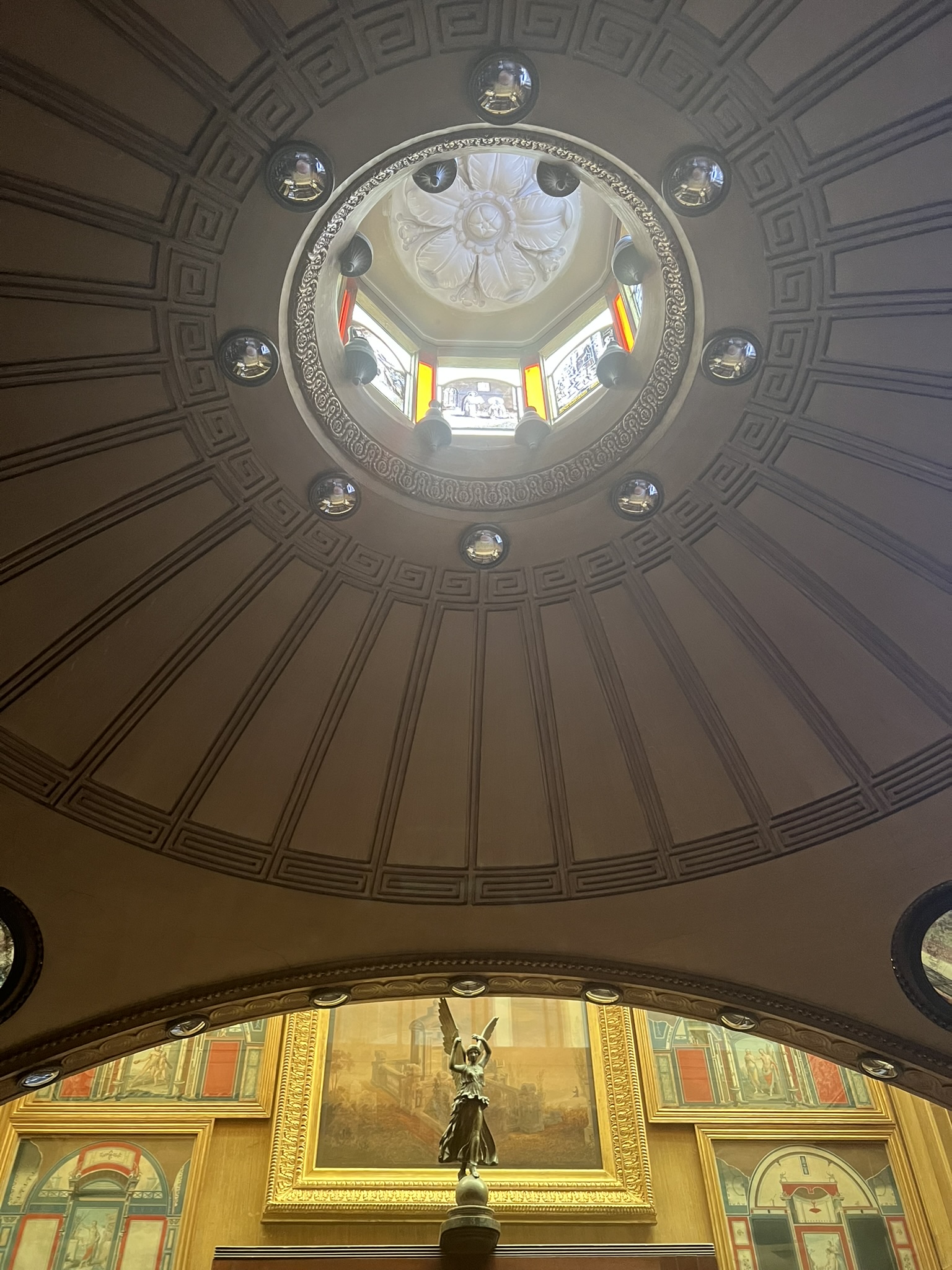
One of the dome ceilings:
And a secret photo of Joy and me! [I didn’t see this until I got home!]
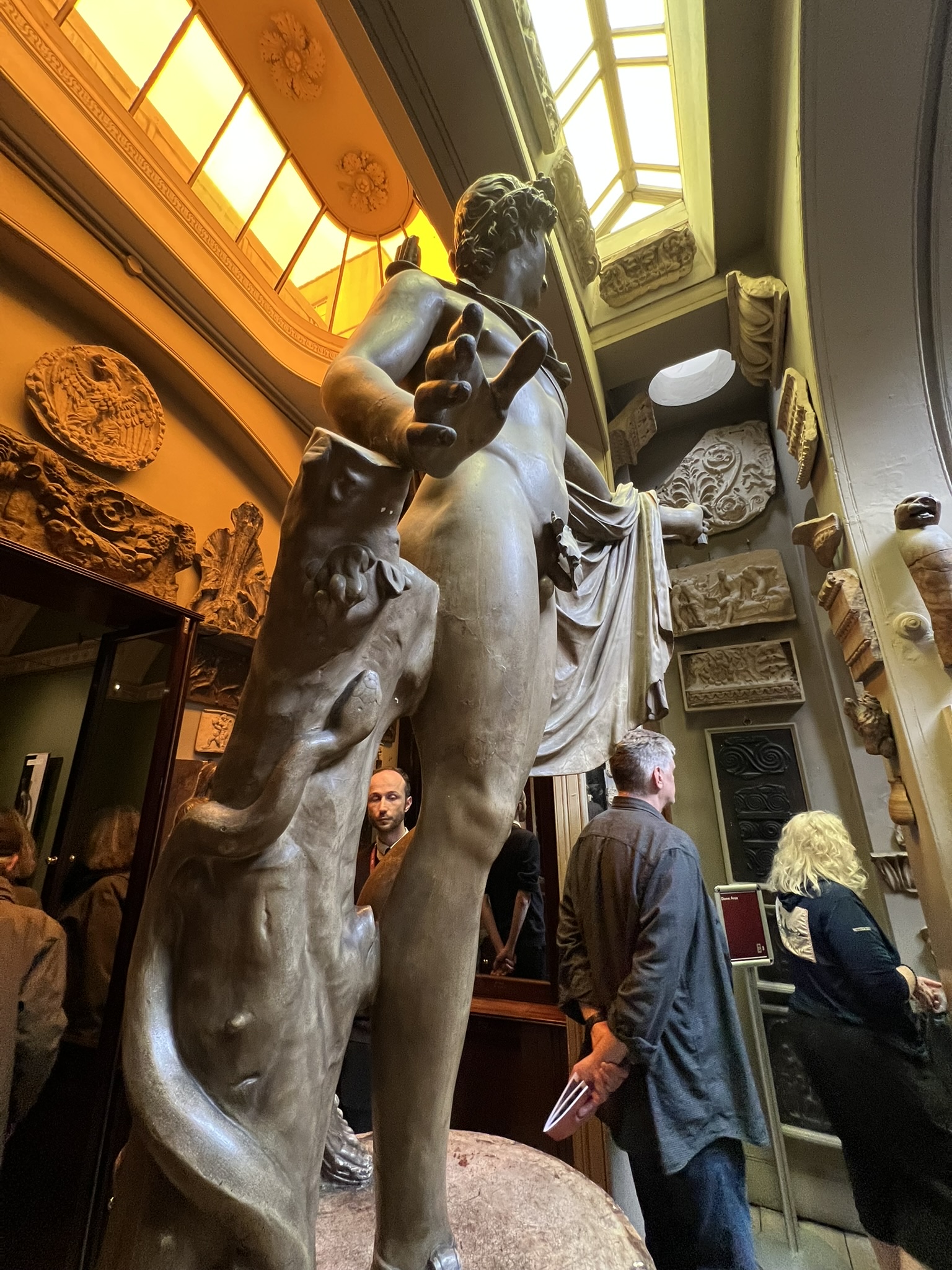
The Apollo Belvedere [a cast from the one in Rome]: a very odd angle, not sure what I was thinking…
And the famous Dome Ceiling:
***************
Lovely time here – wish we could have spent more, but I was quite dizzy as we emerged into the light of day…and now time to just do a little more wandering to must-see places:
I passed LSE where I had gone to classes on my semester abroad in 1968:
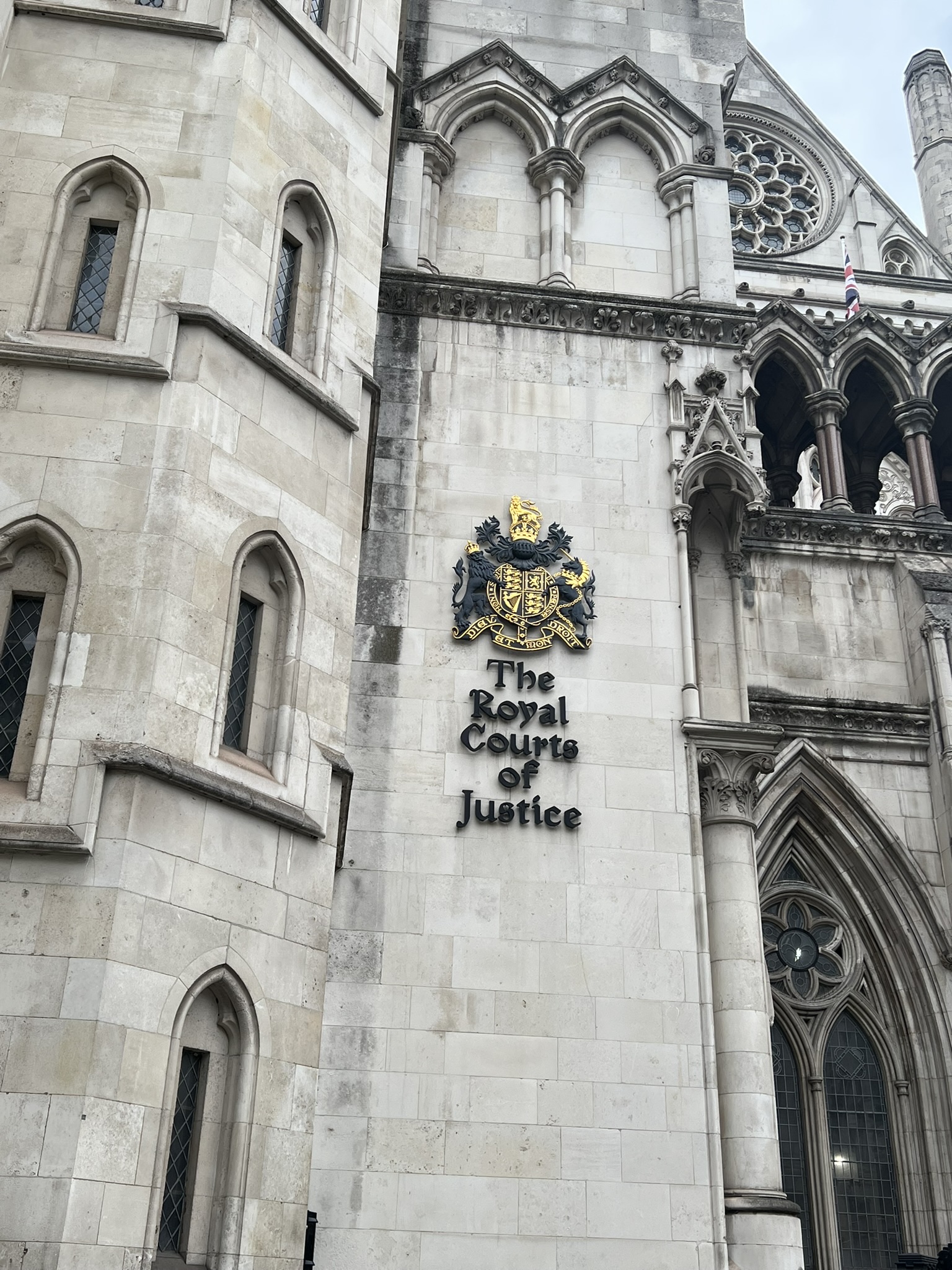
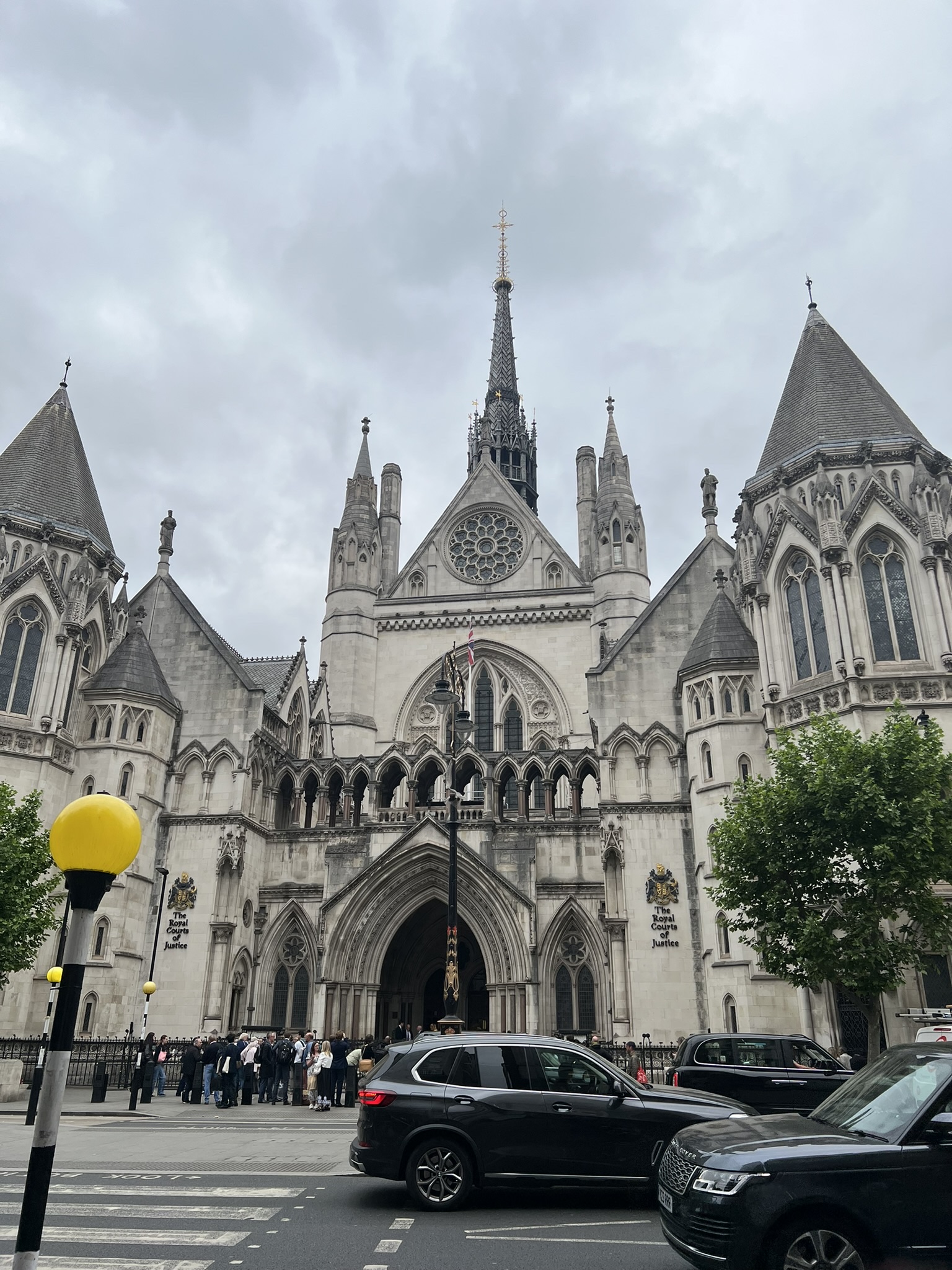
Passing the Royal Courts of Justice, we saw much press activity about a famous court case about to be decided – I knew nothing about any of it and still don’t and cannot find anything in the news!
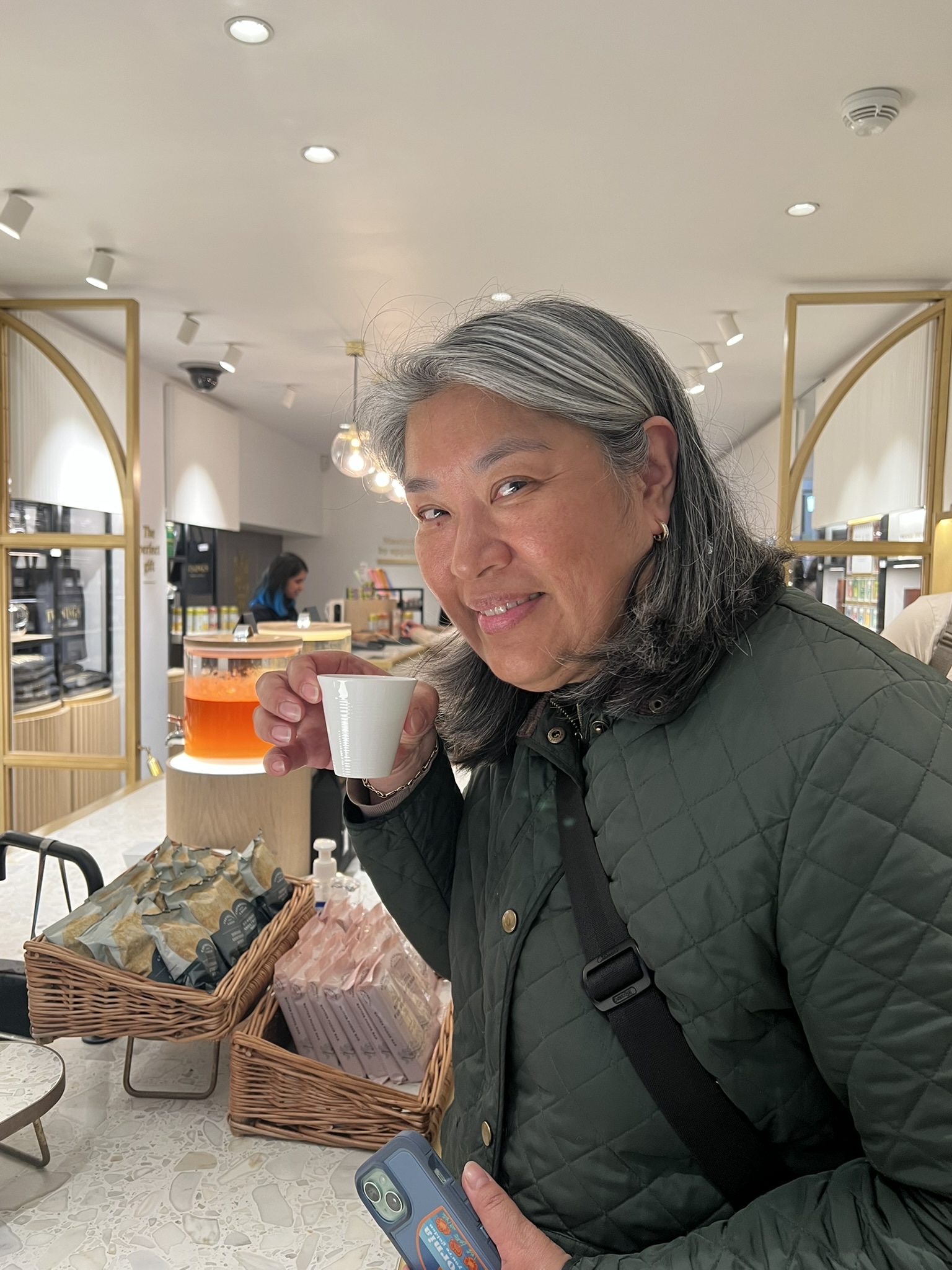
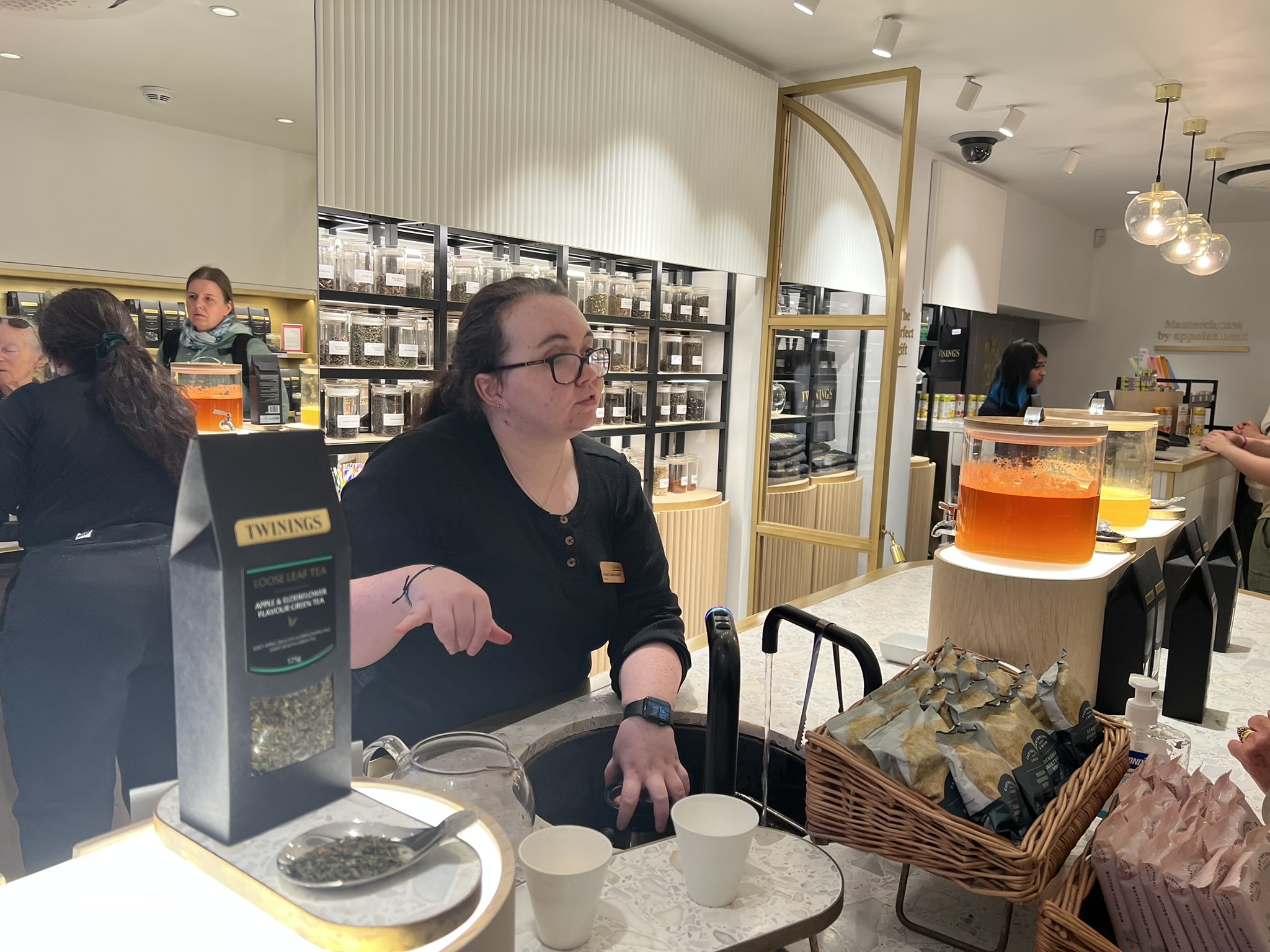
Of course a trip to London is never complete without a visit to Twinings [Jane would approve as well]
I have never understood why in a country founded and sustained by Tea, they do not serve iced tea – yet, here at Twinings at the sample tea bar in the back of the store, one of the “flavours of the day” was an iced tea – here is the recipe: Enjoy, wherever you are…
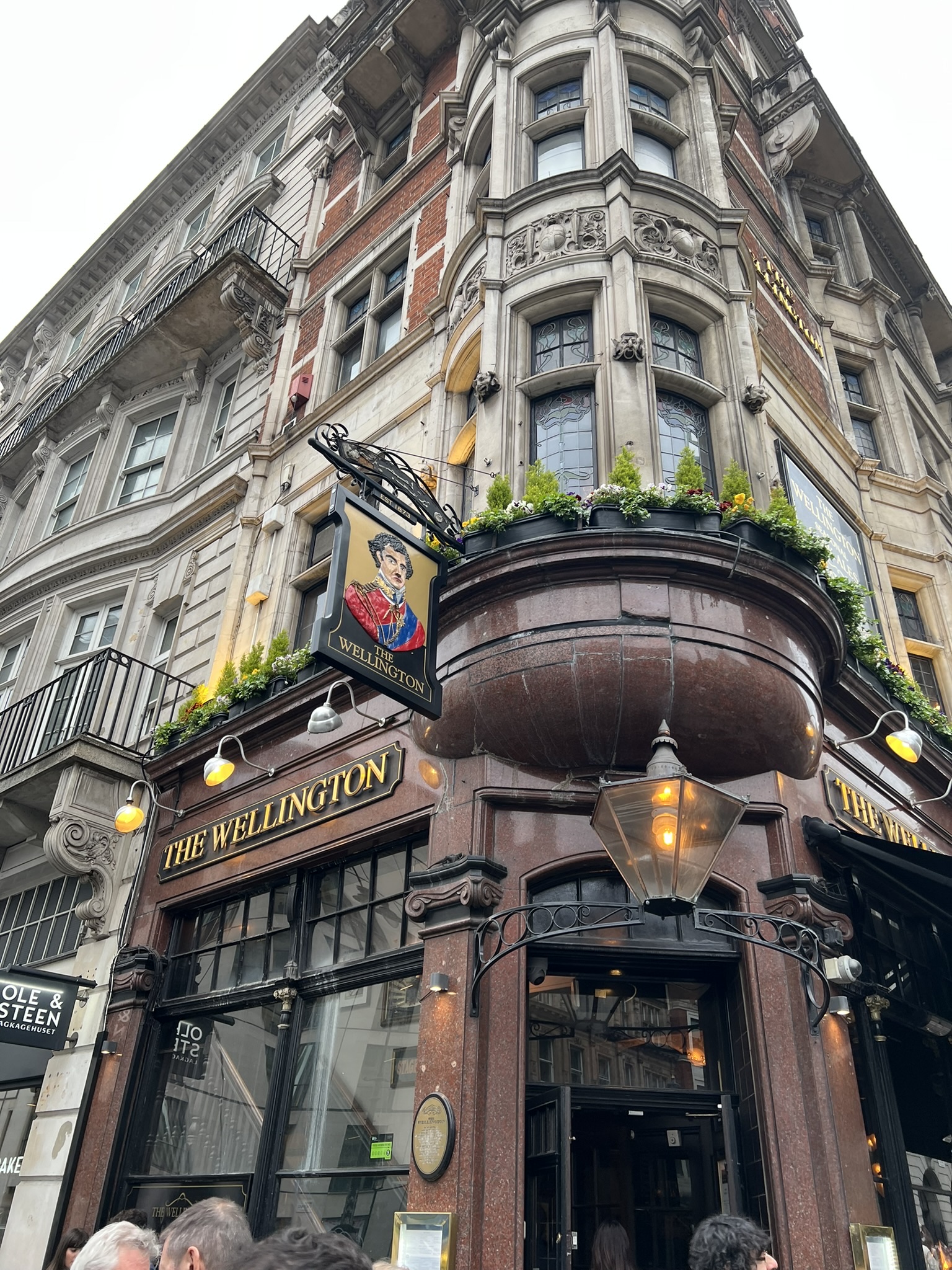
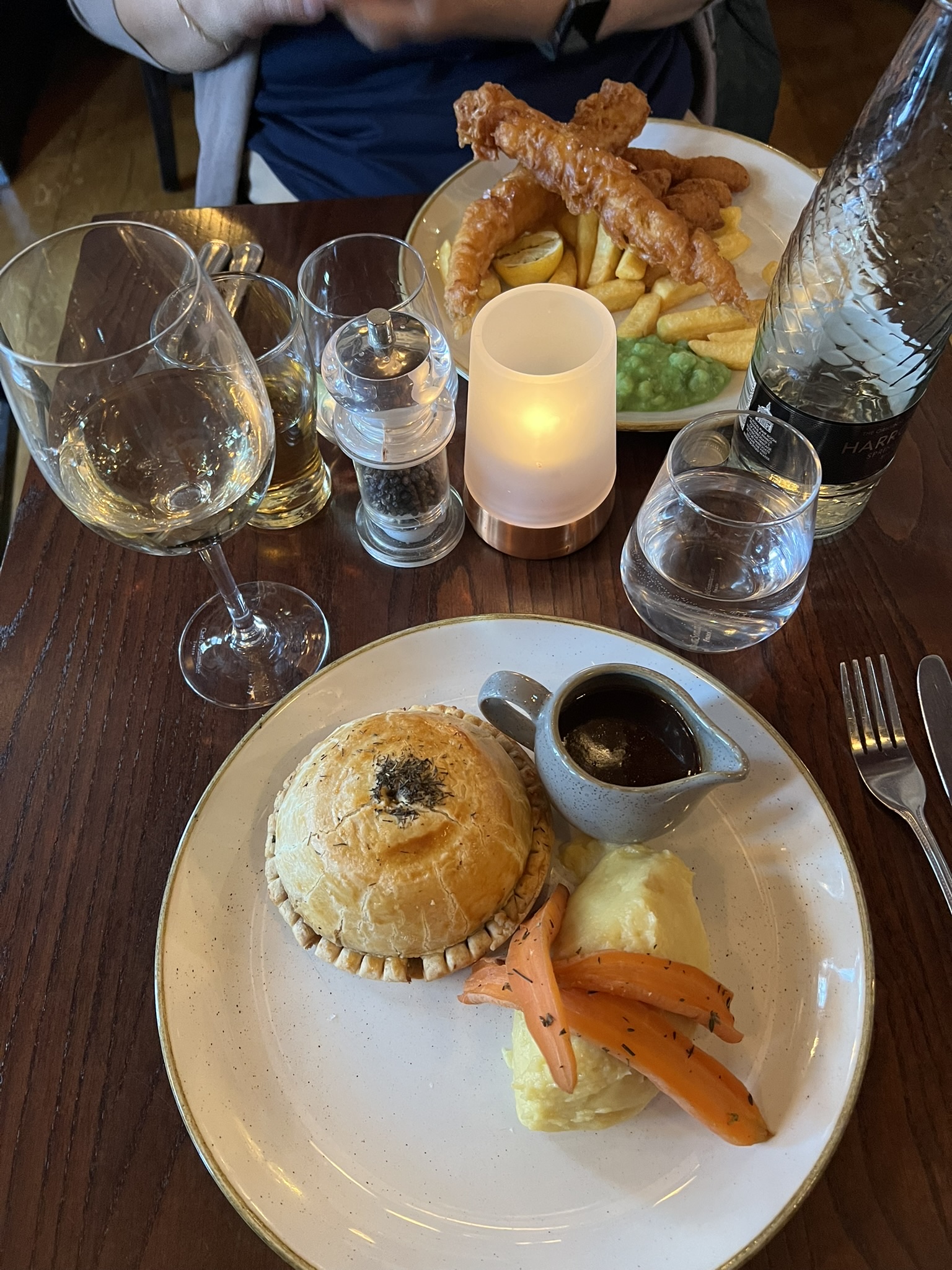
Dinner at The Wellington [appropriate since I started this trip engrossed in the guy – see first posts of this trip] was to finish our day – delicious beef pie – with Joy spotting a Winston Churchill behind her!
Walking back to hotel we took in the Royal Drury Lane Theatre,
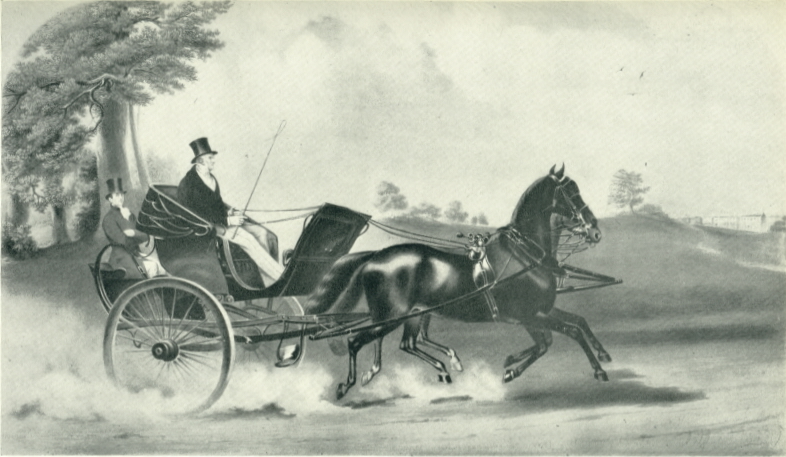
And The Marquess of Anglesey – I feel connected to the good Marquess because I use an image of him in his curricle in my talks on Regency carriages and travel in Jane Austen’s time:
Passing by this artful extravaganza: quite the magical show – we could not stop smiling!:
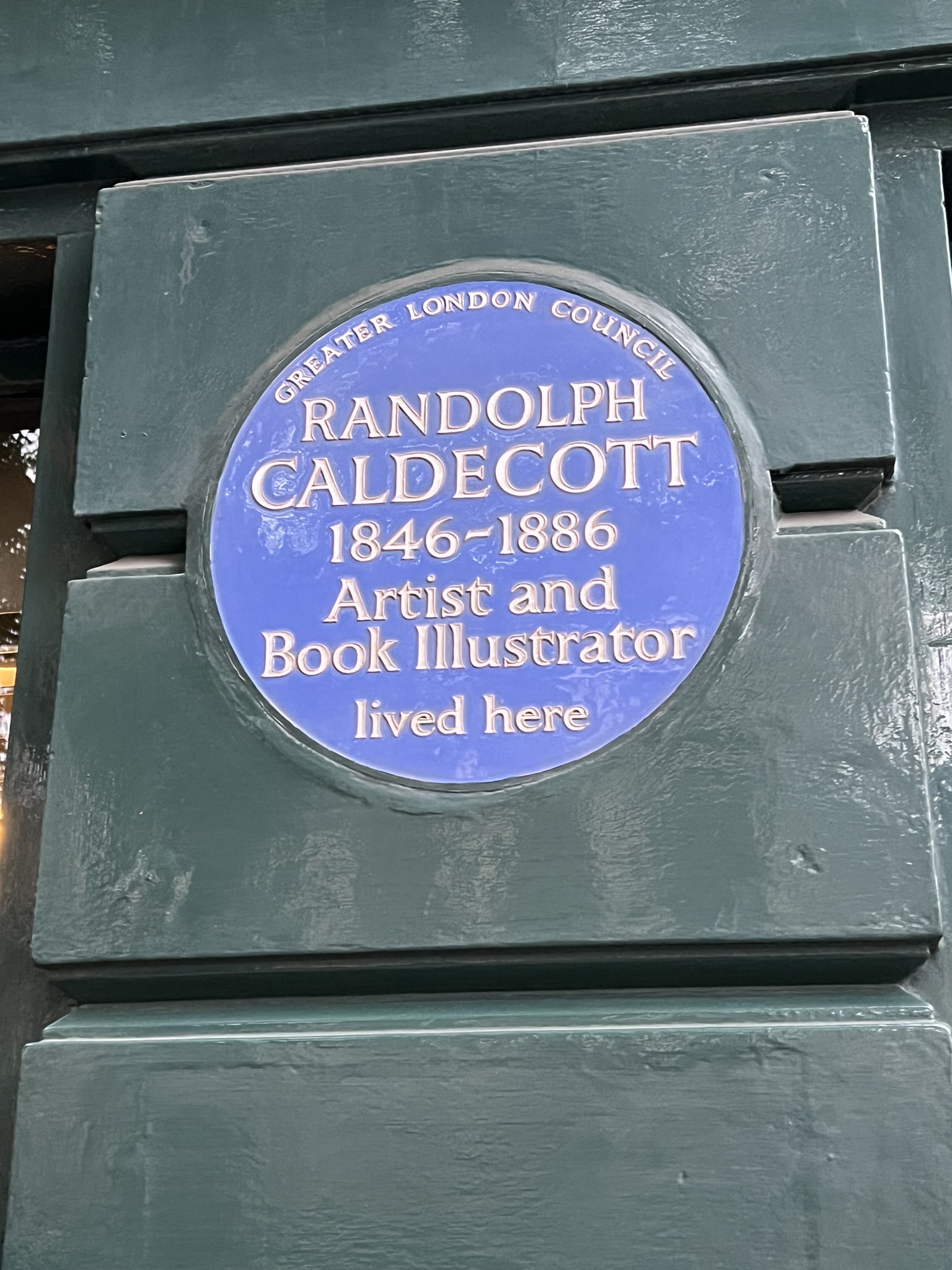
Found the home of Randolph Caldecott, complete Hero in the history of children’s literature – I love him:
Caldecott’s John Gilpin
And finally the London Review of Books Bookshop, a favorite spot, but this evening closed because of an author event in progress…
So ‘til tomorrow – last day! Aren’t you exhausted??
This was the title of my talk at the JASNA AGM in Cleveland last month. I covered a variety of topics, focusing mostly on female book ownership in Jane’s Austen’s time and how she fit into that world of being a “book owner.” David Gilson in his A Bibliography of Jane Austen lists 20 titles that are known to have been owned by Austen, the only way of knowing for sure because she inscribed them. There were others that she gifted to family members and I have included those as well.
The wealth of information on Jane Austen as a reader is quite overwhelming – I direct you to the recently published What Jane Austen’s Characters Read (and Why) by Susan Allen Ford (Bloomsbury, 2024), where there is an excellent summary of her reading in the introduction and chapter one. Also see my bibliography posted below. But my focus was just on the books Austen owned, fitting those into the various subject categories of a gentleman’s or elite lady’s private library, and thereby seeing the variety of works she felt strongly enough about to inscribe her name with that pride of ownership.
I will not be publishing this paper, though I might gradually publish it in sections on this blog – but I did have handouts at the talk and so I am putting both of those on here now: the list of books Austen owned and where they are now, and a very select bibliography of the many books and articles and websites I consulted during my research.
I will add that the Richardson Sir Charles Grandison that was in David Gilson’s private collection is indeed at King’s College Library, Cambridge, as Peter Sabor suggested at the end of my talk. So I have edited the handout to reflect that.
More to come on this very interesting topic, but wanted to get these handouts available to people, as we didn’t have enough during the breakout session.
************* Thank you to all of you who came to my session – very hard choices – I wanted to be at other talks myself! For those of you who have the virtual component of the meeting, my talk was recorded and is available at that virtual JASNA link you would have been sent via email.
If you have any questions, please feel free to contact me.
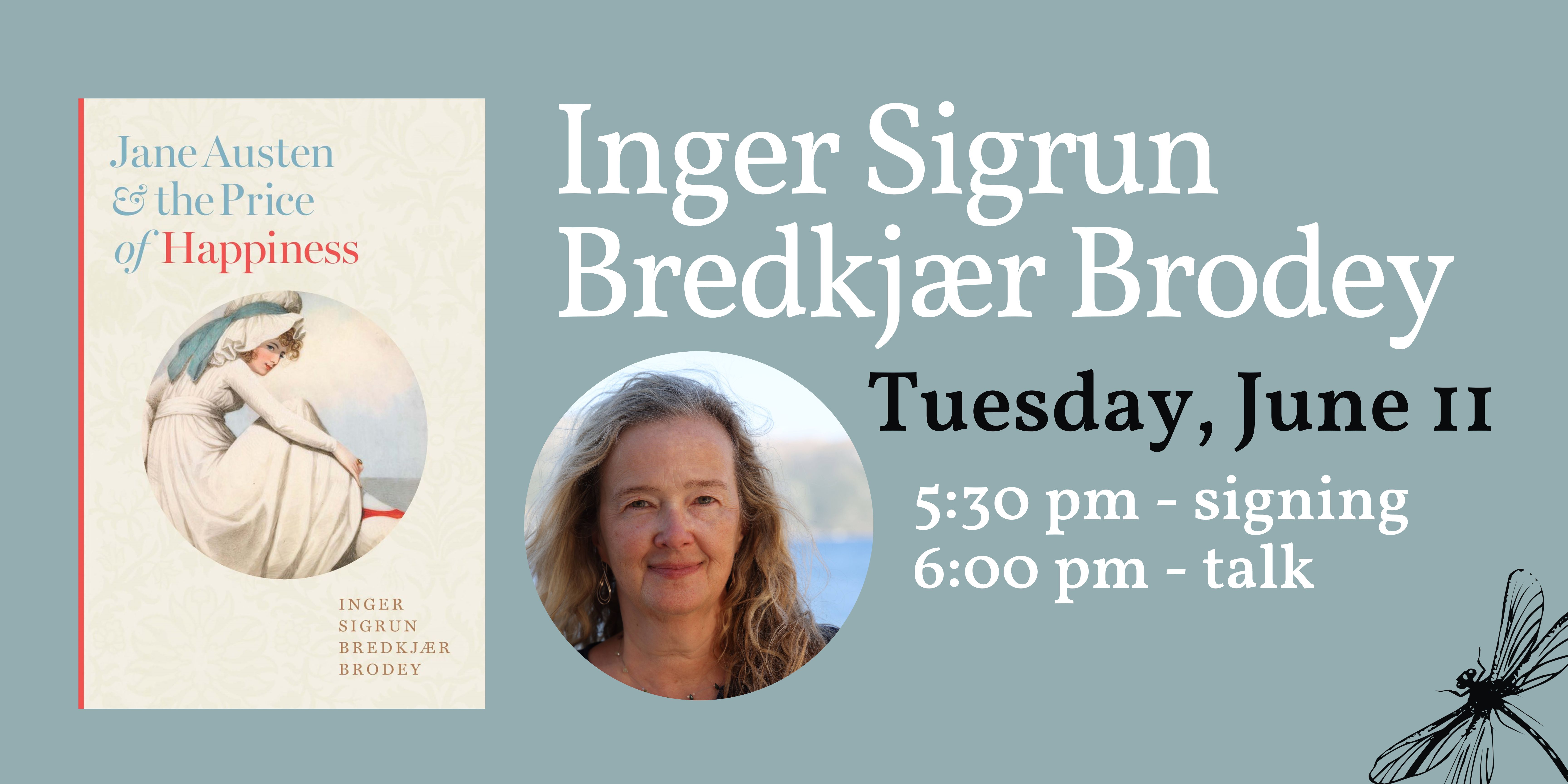
A new book about Jane Austen is soon to be released! Professor Inger Sigrun Bredkjær Brodey’s Jane Austen & the Price of Happiness
The official launch event will be at Flyleaf Books in Chapel Hill on June 11, 2024 at 5:30 pm! [details below: address is 752 Martin Luther King Jr. Blvd. Chapel Hill, NC 27514]
“Do Jane Austen novels truly celebrate—or undermine—romance and happy endings?
How did Jane Austen become a cultural icon for fairy-tale endings when her own books end in ways that are rushed, ironic, and reluctant to satisfy readers’ thirst for romance? In Jane Austen and the Price of Happiness, Austen scholar Inger Sigrun Bredkjær Brodey journeys through the iconic novelist’s books in the first full-length study of Austen’s endings. Through a careful exploration of Austen’s own writings and those of the authors she read during her lifetime—as well as recent cultural reception and adaptations of her novels—Brodey examines the contradictions that surround this queen of romance.
Brodey argues that Austen’s surprising choices in her endings are an essential aspect of the writer’s own sense of the novel and its purpose. Austen’s fiercely independent and deeply humanistic ideals led her to develop a style of ending all her own. Writing in a culture that set a monetary value on success in marriage and equated matrimony with happiness, Austen questions these cultural norms and makes her readers work for their comic conclusions, carefully anticipating and shaping her readers’ emotional involvement in her novels.
Providing innovative and engaging readings of Austen’s novels, Jane Austen and the Price of Happiness traces her development as an author and her convictions about authorship, novels, and the purpose of domestic fiction. In a review of modern film adaptions of Austen’s work, the book also offers new interpretations while illustrating how contemporary ideas of marriage and happiness have shaped Austen’s popular currency in the Anglophone world and beyond.”
****************
Inger Sigrun Bredkjær Brodey is a professor of English and comparative literature at the University of North Carolina at Chapel Hill. She is the cofounder and director of the Jane Austen Summer Program and Jane Austen & Co., and the principal investigator of “Jane Austen’s Desk” [forthcoming].
Please join us for a talk at the Charleston Library Society by Stuart Bennett on his historical novel The Charleston Gambit.
Stuart has spoken to us before on his Jane Austen-inspired novel The Perfect Visit, and we welcome him once again to share his newest work about Lord Rawdon, later Lord Moira, and his role in the Revolutionary War in our very own Charleston South Carolina. [Note that Stuart’s second novel, Lord Moira’s Echo was a fictional account of this same Lord Rawdon and his relationship with Jane Austen herself!] Come hear how all these tales intersect…
Light refreshments and amiable conversation will be available to all – free and open to the public.
January 28, 1813: Pride and Prejudice is published! I retreated into the archives to repost this from 2013 which is in itself a repost from 2 years earlier [I am a big fan of recycling…] – it’s all about what Jane Austen had to say about her “own darling Child” – a Darling Child for many of us as well who reread this novel on an annual basis…
******************
Gentle Readers: This year we have just entered upon will be a long and interesting 365 days of celebrating the 1813 publication of Pride and Prejudice ! There are festivals, conferences, blog postings, reading challenges, and already many newspaper and journal articles on this timeless work by Jane Austen. I would like to start off my own celebration of this beloved classic with repeating a post I wrote two years ago, where I had pulled together all the references that Austen makes to this, her “own darling Child,” in her letters. It makes fascinating reading to “hear” her…
The publishing history of Pride and Prejudice, Jane Austen’s most popular book, then and now, is an interesting study in the book trade of early 19th century England. First completed in 1797 (and called First Impressions) and rejected by the publisher her father took the manuscript to, Austen reworked her draft over time and submitted it to Thomas Egerton, the publishing house of her Sense & Sensibility, in 1812 (it was published on January 28, 1813). She sold the copyright outright for £110, and did not incur other expenses in its publication, as she did in the three other works published in her lifetime [see links below for more information.] How we would love to know her thoughts on this road to publication! – how we would love to have her letters written while in the process of the writing to give us some idea of her imagination at work – where WAS the model for Pemberley? was Mr. Darcy someone REAL? was Elizabeth Bennet her alter ego? was MR COLLINS drawn from life? – or to have the letters to her brother Henry and his to Egerton – but alas! we have very little, just a few comments scattered among the surviving letters.
The Blog Tour for Godmersham Park: A Novel of the Austen Family by Gill Hornby began on October 24 and runs through November 7, 2022. A work of biographical historical fiction, it is a richly imagined novel inspired by the true story of Anne Sharp, a governess who became very close with Jane Austen and her family. In 2020, Hornby published the acclaimed Miss Austen, about Cassandra Austen, and PBS /Masterpiece has recently announced it is to be a mini-series. We can only hope for the same about this newest work. I am hard at work on casting the major roles…who would you choose to play these characters??
*******************
Summary and Advance Praise:
On January 21, 1804, Anne Sharpe arrives at Godmersham Park in Kent to take up the position of governess to Edward and Elizabeth Austen’s daughter Fanny, but also often expected to supervise the other children as well. At thirty-one years old, she has no previous experience of either teaching or fine country houses. Her mother has died, and she has nowhere else to go. Anne is left with no choice. For her new charge—twelve-year-old Fanny Austen—Anne’s arrival is all novelty and excitement.
The governess role is a uniquely awkward one. Anne is neither one of the servants, nor one of the family, and to balance a position between the “upstairs” and “downstairs” members of the household is a diplomatic chess game. One wrong move may result in instant dismissal. Anne knows that she must never let down her guard.
When members of the Austen family come to visit, Anne forms an immediate attachment to Jane. They write plays together and enjoy long discussions. However, in the process, Anne reveals herself as not merely pretty, charming, and competent; she is clever too. Even her sleepy, complacent, mistress can hardly fail to notice.
Meanwhile Jane’s brother Henry begins to take an unusually strong interest in the lovely young governess. And from then on, Anne’s days at Godmersham Park are numbered.
*************
“This is a deeply imagined and deeply moving novel. Reading it made me happy and weepy in equally copious amounts…I read it straight through without looking up.”— Karen Joy Fowler, author of The Jane Austen Bookclub
Hornby’s skillful mix of fact and fiction captures the complexities of the Austens and their era, and her crisp, nimble prose sparkles throughout. Best of all, Hornby genuinely channels the sentiment of 19th-century English literature. Janeites aren’t the only readers who will relish this smart, tender tale.”— Publishers Weekly, starred review
“…a well-written and delightfully observant novel…an excellent read.”— The Historical Novel Society
*********************
My thoughts:
Godmersham Park begins:
“At half past six, in the bleak icy evening of 21 January in the year 1804, Anne Sharp arrived on the threshold of Godmersham Park.” [p.3]
Anne Sharp stayed for two years… In the Author’s Note at the end of the novel, Hornby writes of the known details of Sharp’s life after she leaves her post and her continued correspondence with Jane Austen and the occasional but all too rare visit. Nothing is known about Sharp’s life before her taking on her governess post, and this novel gives the reader a fine grounding in how life as a governess in a fine house would have played out – all this based on real contemporary biographies of young women thrust into a working life. Fanny’s daily diary entries gave Hornby the true details of the Edward Austen’s home-life, and she brilliantly weaves all into a more than probable tale of Anne Sharp’s time at Godmersham. It is an endearing and warm-hearted tale, at times a tad melancholy, brightened by the growing and real-life friendship between Austen and Sharp, both creative and spirited women. The sprinkling of literary allusions to Austen and other 19th-century writers makes it all the more delightful.
Without giving anything away, I will only add Austen’s own exclamation about her brother: “Oh! what a Henry” [Ltr. 102, 23 June 1814] – and leave it for you, dear reader, to find out what I mean!
What is known about Sharp is all pieced together from various sources – I’ll work up a bibliography of these for another post, as this book will surely peak your interest to know more about this dear friend of Austen’s. One bit to savor is that Sharp’s own copy of Emma, given to her by Austen through her publisher, was treasured by Sharp throughout her life – it just sold once again at auction for £375,000 [it had sold in 2008 for nearly £200,000 – a fine investment indeed] – this copy will be on display at Chawton House in 2023, thanks to the generosity of the anonymous purchaser. [You can read about this here.]
***************************
Watercolor of Fanny Austen Knight, by Cassandra Austen
An Excerpt from Chapter XI [p 81-85]:
‘Miss Sharp!’ Fanny burst into the Godmersham attic. ‘Look!’ She brandished a letter. ‘All that time, I was expecting to hear by the morning post, and it came by the evening.’
They both studied the paper, weighed up its width and its quality, ran their eyes over it to judge the length of what was written upon it. ‘In my mind’s eye, I had seen myself receiving it at breakfast and reading it there, just as Mama does. I mean, like a proper young lady.’ She worried at her lip. ‘But now is just as good, is it not?’
‘I should say it is a fine time for the reading of letters,’ Anne reassured her. ‘A lovely end to the day. And remember, my dear, if this is to be a full correspondence, you can look forward to more in the future . . .’
Fanny breathed out. ‘You are so right. I am beginning to think, Miss Sharp, that you are in the habit of being right on all matters. So, what happens now?’
Anne was becoming a little concerned by her pupil’s over-keen sense of deference. If they went on like this, Fanny would soon be incapable of putting one foot in front of the other without appealing for guidance. ‘I suggest that you read it?’
‘Oh,’ Fanny gave a little laugh. ‘Of course! Shall we do so together?’
‘No, my dear,’ replied Anne, though she was not un- intrigued. ‘This is to you.’
Fortunately, Fanny – who was one of the world’s greatest sharers – chose to read it out loud:
My dear Fanny,
Your letter occasioned such joy among all in your Bath family – but in me, in particular. I cannot imagine what I have done to deserve such an honour – and nor can your superior aunt, my dear sister. When the post came for me, there was a danger that she might drop dead from sheer jealousy, but I quickly revived her with my shrewd observation – Cassandra is harder to spell and consumes too much ink. God bless my short, simple name!
We all marvelled at hearing your Godmersham news, and you have the advantage of me. How can my dull existence compare with the revelation that you have a new governess? It is clear she is a woman of substance for your pen was clear and the contents quite perfect. If you are so kind as to reply to me now, please do us the favour of addressing the following concerns. We all long to know what books you are reading – in particular, which poets? Your grandfather desires that you acquire a sound basis in Shakespeare and, as always – he cannot be helped – issues a plea on behalf of the Classics. Is your Miss S. – among her other perfections – strong in the Classics? If so, then she is truly a paragon.
As you know, your Grandmama has been most unwell and the worry and fear has kept us at home more than is usual. But I am here to report she is now well on the mend, and her spirits returned to their usual height. It cannot be long before we return to the social round. Though I am relieved that the illness is over, I cannot rejoice at being turned out of doors. The streets of Bath are made so dirty by this dreadful wet weather – it keeps one in a perpetual state of inelegance.
We all look forward to hearing from you again, and pray you send our love to all of the Godmersham family.
Your fond Aunt, Jane Austen.
Each expressed their delight in tones of great rapture and agreed it to be one of the greatest – possibly the best – letter yet to be written. Fanny read it twice more, so as to be thoroughly sure, before disappearing down to the library to share it anew. Anne, at last, was able to pick up her own pen, and then Sally came in.
The sullen maid of Anne’s first evening had warmed into a garrulous creature and now, while Anne sat alone working, Sally would work alongside her. Her clear philosophy was that, while the hands toiled at tidying and cleaning, the tongue should not idle.
‘What is it you’re up to there, miss?’ She was sifting through Fanny’s drawers and refolding the inexpertly folded. ‘Another letter, is it? You do write a lot of letters and no mistake.’ She came and looked over Anne’s shoulder. Anne covered her page. ‘Don’t worry about that, miss. All scribbles to me.’
‘You cannot read or write, Sally?’ Anne felt that glorious, prickling anticipation of a new project. ‘Would you like me to teach you? When is your afternoon off? I am sure I could spare a few hours every week.’ She was quite magnificent in her own generosity.
‘Ta, miss, but I’m right as I am.’ Sally went back to her work. ‘My afternoons off are my afternoons off, thanking you very much. I go out on the gad, then, with Becky.’ Anne picked up her pen again, crushed. Suddenly intrigued, she put it back down. ‘You must be most expert gadders to find any gadding to be had in Godmersham, surely?’ The village did not even have a shop, let alone a High Street. Anne had found no amusements beyond solitary walks. How does one even begin to gad in a field? ‘You’d be surprised, miss. There’s some new lads down at the tithe barn.’ Sally gave a little shriek. ‘Ooh, but we do like a laugh with them.’
‘And Mrs Salkeld does not object?’ Anne herself could never be so brave as to incur the wrath of the housekeeper.
Sally shrugged her thin shoulders. ‘If she does, she daren’t say so. We’re still young, miss. Got to enjoy yourself, haven’t you? It’s only a job, after all. If they stopped me, I’d tell them to stick it.’
Anne paused to reflect on their relative positions. She was certainly paid more, but Sally – with her uniform and its upkeep provided – had fewer expenses. Sally enjoyed hours off in the day and the companionship of life in the servants’ hall; Anne belonged neither to staff nor family, was almost always on duty and, when not, entirely alone. It appeared that a maid could make an exhibition of herself abroad and it was tolerated, yet if a governess were to attract even the eye of a gentleman, she would face instant dismissal. The comparison provided food for thought on the question of privilege and the cost of its benefits.
*******************
About the Author: Gill Hornby is the author of the novels Miss Austen, The Hive, and All Together Now, as well as The Story of Jane Austen, a biography of Austen for young readers. She lives in Kintbury, England, with her husband and their four children.
A good many of you were enthralled by Natalie Jenner’s first novel and international bestseller The Jane Austen Society. I thoroughly enjoyed getting into the lives of Jenner’s cast of characters who populated that novel set in 1940s England. [You can read my review here]. Evie Stone was one of her most endearing, a young servant at Chawton House who takes a liking to the library and all the books in it – and spends her time there doing far more than the required cleaning. It was difficult to close the book on Evie and not want to know more about her life after Chawton, and obviously, it was hard for Natalie Jenner to let her go as well.
Her newest novel, titled Bloomsbury Girls, (not due out until May 2022!) gives us just what we could wish for – and not only the continuing story of Evie but also that of two other women caught up in life in a bookshop in the aftermath of World War II. How we shall wait until May 2022 is my biggest concern!
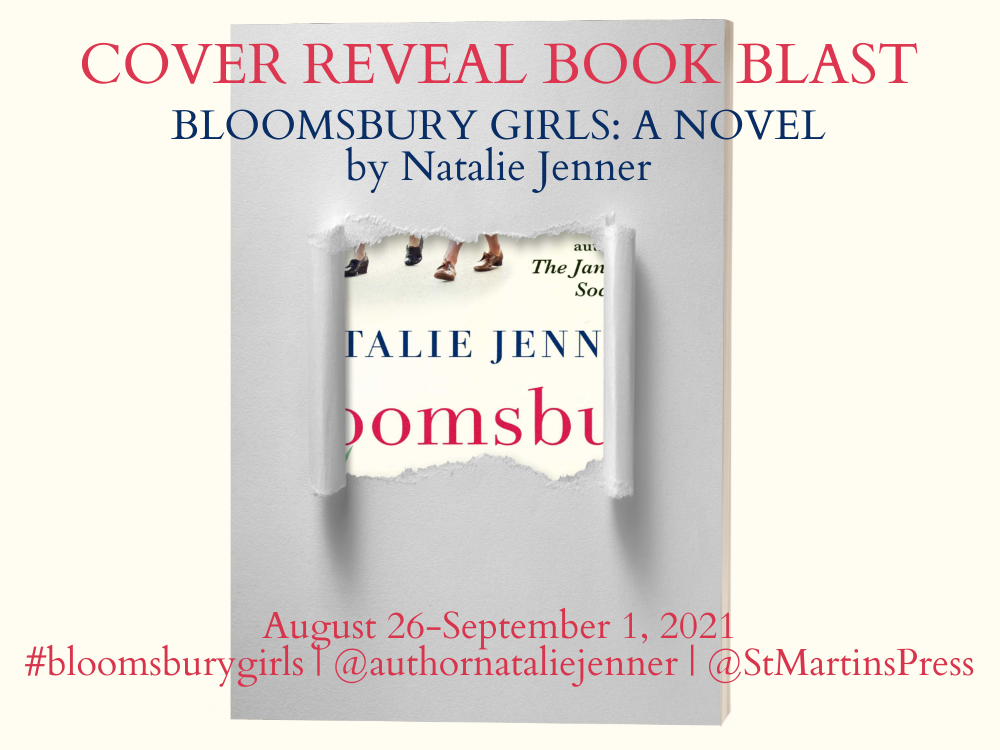
But this week, a group of bloggers headed by Laurel Ann at Austenprose, are giving you a small taste of what’s coming, starting with this Cover Reveal!
First, what’s it about?
“One bookshop. Fifty-one rules. Three women who break them all.”
The Internationally Bestselling author of The Jane Austen Society returns with a compelling and heartwarming story of post-war London, a century-old bookstore, and three women determined to find their way in a fast-changing world.
Bloomsbury Books is an old-fashioned new and rare bookstore that has persisted and resisted change for a hundred years, run by men and guided by the general manager’s unbreakable fifty-one rules. But in 1950, the world is changing, especially the world of books and publishing, and at Bloomsbury Books, the girls in the shop have plans:
Vivien Lowry: Single since her aristocratic fiancé was killed in action during World War II, the brilliant and stylish Vivien has a long list of grievances – most of them well justified and the biggest of which is Alec McDonough, the Head of Fiction.
Grace Perkins: Married with two sons, she’s been working to support the family following her husband’s breakdown in the aftermath of the war. Torn between duty to her family and dreams of her own.
Evie Stone: In the first class of female students from Cambridge permitted to earn a degree, Evie was denied an academic position in favor of her less accomplished male rival. Now she’s working at Bloomsbury Books while she plans to remake her own future.
As they interact with various literary figures of the time – Daphne Du Maurier, Ellen Doubleday, Sonia Blair (widow of George Orwell), Samuel Beckett, Peggy Guggenheim, and others – these three women with their complex web of relationships, goals and dreams are all working to plot out a future that is richer and more rewarding than anything society will allow.
Author Natalie Jenner on Bloomsbury Girls:
“I never intended for Evie Stone to be a major character in my debut novel, let alone inspire my second one, Bloomsbury Girls. But as time went on, I found I could not leave her behind in Chawton with the other society members. And then one day I rewatched a favourite movie, 84 Charing Cross Road, and I remember thinking, there’s a whole other story in here still to be told, of an upstairs-downstairs motley crew of booksellers, and right away the figures came to life.”
“As with The Jane Austen Society, Bloomsbury Girls features multiple characters and storylines revolving around one very charming location: this time, the quintessential Dickensian-type bookshop.”
“If The Jane Austen Society was the book I wrote when I was coming out of sadness, Bloomsbury Girls was written when I was very happy, and I hope it provides a little cheer to readers during this difficult time.
*******************
Drum roll please … Cover Reveal!!*
About the Author:
Natalie Jenner is the author of two books, the instant international bestseller THE JANE AUSTEN SOCIETY and BLOOMSBURY GIRLS. A Goodreads Choice Award finalist for best debut novel and historical fiction, THE JANE AUSTEN SOCIETY was a USA Today and #1 national bestseller and has been sold for translation in twenty countries. Born in England and raised in Canada, Natalie has been a corporate lawyer, a career coach and, most recently, an independent bookstore owner in Oakville, Ontario, where she lives with her family and two rescue dogs.
You can follow the Cover Reveal Book Blast at the other bloggers here: at Austenprose (scroll to the bottom).
****************
*I love this cover! Like The Jane Austen Society, it has real people on the cover (with the appropriate footwear), a bookstore in the background, and the requisite floral accompaniment! Cannot wait to enjoy the inside!































 Jane Austen in Vermont