Books · Jane Austen · Movies

Online Discussion: Sense & Sensibility

from the JASNA.org website:

Masterpiece Classic on PBS will rebroadcast Sense and Sensibility in two parts, on February 1 and 8, 2009. Check local listings for the schedule in your area. Professor Joan Ray, JASNA Past President, will lead an online discussion about the adaptation February 2-13 on the Barnes and Noble Classics Book Club website.

Barnes and Noble Book Clubs are free and open 24 hours a day. Use this link to join the discussion. Sign up is easy: click on the “Register” link (located in the upper left corner of the page, just above the “Classics” banner) and fill in the information when prompted.

Books · Jane Austen · Literature · Rare Books

January 28, 1813 ~ Pride & Prejudice Published!

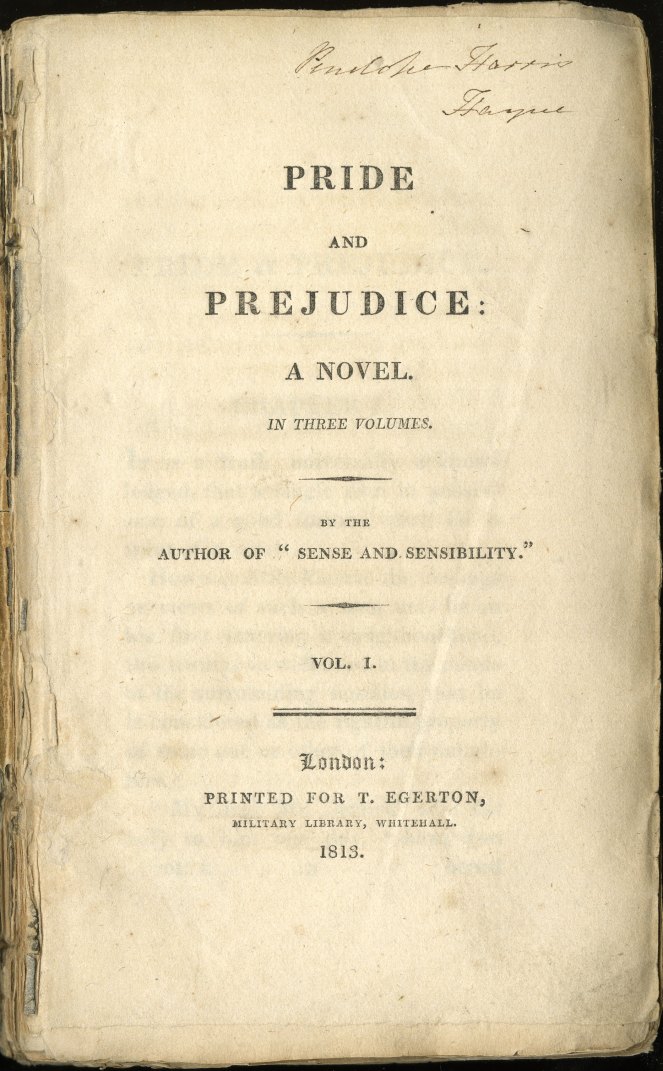
It was on this day, happy day indeed! ~  in 1813, that Pride & Prejudice “by the author of Sense & Sensibility” was published by T. Egerton, London. 

Austen received her own copy on January 27, as she states in her letter of January 29,  “I have got my own darling Child from London.”   [LeFaye, Letter 79; Chapman Letter 76].  It was advertised in The Morning Chronicle on Thursday January 28 under “Books Published This Day” in a run of an unknown number of copies, assumed to be around 1500 [see Keynes Bibliography].  The first edition sold out rapidly, a second edition was also printed in 1813 and a third edition came out four years later.  The first edition, published in three volumes, was bound in blue paper-covered boards with a white paper label on the spine.  Austen sold the copyright to Egerton for £110; the book sold for 18s.  Today this first edition is for sale starting at £65,000.  [see Abebooks.com for a listing of a few available first editions]… but as we all know the true value of this book is not to be calculated in numbers….  thank you Jane Austen for enlarging so many lives with your brilliance!

pp-first-edition

prideandprejudicetitlepage
First Edition Title Page
Books · Collecting Jane Austen · Jane Austen · Literature

Austen’s Manuscripts

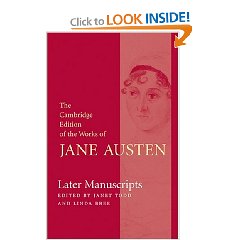
Later Manuscripts [The Cambridge Edition of the Works of Jane Austen], edited by Janet Todd and Linda Bree, Cambridge Universitry Press, January 2009, is now available.  Priced at $130.  but weighs in at a hefty 872 pages.

Contents include:

  •  Austen’s fiction:  Lady Susan, The Watson’s, and Sanditon
  •  Jane Austen on Fiction, to include her letters to friends and family on writing, her “Plan of a Novel”, and her collection of opinions of Mansfield Park and Emma
  •  Austen’s poems and charades
  • Appendices that include transcriptions of two of the manuscripts, “Sir Charles Grandison”, Prayers, attributed poems, and family poems.
  • Extensive explanatory notes

later-manuscripts-cambridge

Books · Jane Austen · Literature · News

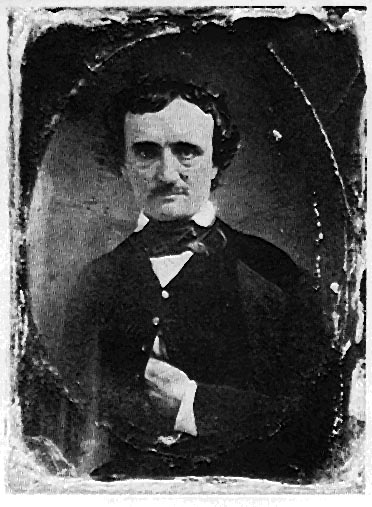
Edgar Allan Poe ~ January 19, 1809

I again direct you to my Bygone Books Blog for a celebration of the birthday of Edgar Allan Poe, 1809-1849.  Though you may wonder what this has to do with Jane Austen, and I agree that the link is tenuous as best [though indeed, is Emma not a mystery??]   But I did find this link to the Book Mine Set blog that quoted Mark Twain as saying the following about Poe (and we know what he had to say about our Dear Jane!):

Of Poe, [Mark Twain] said,”To me his prose is unreadable—like Jane Austen’s.”

This Book Mine Set blog does a weekly post “The Great Wednesday Compare” pitting two authors against each other. Austen beat out Poe 48-8! [she then went on to beat Lucy Montgomery and Kurt Vonnegut, but lost by 2 points to Dr. Seuss the following week!] Go to the blog and read the many comments…it is quite entertaining! 

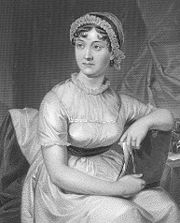
 edgar-allan-poe-imagejane-austen-poe


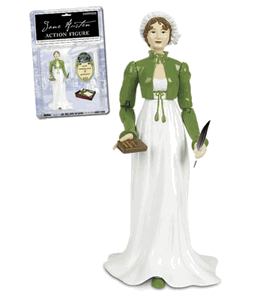
And there are of course those action figures…

poe-action-figure

jane-austen-action-figure

Books · Literature

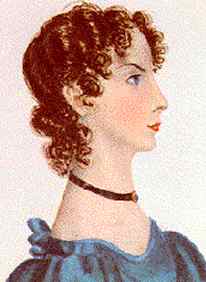
Anne Bronte ~ January 17, 1820

I refer you to my Bygone Books Blog which celebrates today the birthday of Anne Bronte [1820-1849], author of Agnes Grey and The Tenant of Wildfell Hall.

anne_bronte

Books · Jane Austen · News · Rare Books

For Sale in Hong Kong: Anne Sharp’s “Emma”

The 1816 first edition of Emma that Jane Austen signed and gave to her friend Anne Sharp [thought to be the inspiration for the character of Mrs. Weston] will be available for sale at this weekend’s International Antiquarian Book Fair in Hong Kong [January 17-19, 2009].   It will cost you a mere HK$3.95 million.  See the full article about other titles for sale at The Standard.com.hk and the link above for the full downloadable catalogue of fair offerings.

By my calculations (this can vary depending on which currency converter you use):

  • this book sold for £180,000 at a Bonhams auction in June = US $262,692.
  • it is for sale at the book fair for HK $ 3,950,000.
  • which equals £348,744. GBP or US $508,958.
  • which is a profit of £168,744 GBP or US $246,265.
  • …if it sells..
  • and whatever would Jane (or Anne!) think!

Jane Austen's 'Emma'


Further reading:

Book reviews · Books · Regency England

Book Review ~ “A Broken Vessel”

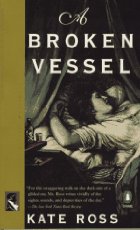
ross-broken-vessel-coverJulian Kestrel returns in this second mystery by Kate Ross [Viking 1994], A Broken Vessel.  Several months after his amateur but superior sleuthing at Bellegarde, home of the Fontclairs, [see Ross’s first book, Cut to the Quick, and my review] Kestrel is again thrown into the mix of murder and mayhem when the sister of his manservant, Dipper, shows up in her brother’s life after a two-year absence.  Sally Stokes is a prostitute and a thief, made of the same cloth as her now-reformed [hopefully] pick-pocket brother. After an evening of turning tricks with three very different “coves,” from each of whom she steals a handkerchief,  she discovers a letter written by an unknown woman, mysteriously locked up in an unnamed place, begging forgiveness and help from her family.  But whose pocket did Sally lift the letter from? – Bristles, the middle-aged skittish man; Blue Eyes, the elegant and handsome gentleman of the “Quality”; or Blinkers, the be-speckled young man who played all too rough with Sally, leaving her sore, battered and frightened. 

Here is how we first see Sally: 

She pulled the pins out of her hair and put them on the washstand for safe-keeping; she was always losing hairpins.  Her nut-brown hair tumbled over her shoulders: long at the back, but curling at the front and sides, in imitation of the fashion plates in shop windows.  Not that she would ever look like one of them, with their fair skins, straight noses, and daintily pursed lips.  She had a brown complexion, a snub nose and a wide mouth, with a missing tooth just visible when she smiled.  Still, she was satisfied with her face.  There was not much an enterprising girl could not do with a little cunning and a pair of liquid brown eyes.

So Dipper brings Sally to his apartment to get her off the street and give her a chance to heal.  He shares this apartment with his employer, Julian Kestrel, the Regency dandy, known far and wide for his fashion and manners, the man everyone emulates in all things dress and gentlemanly behavior.  We have already learned in Ross’s first book that there is so much more to Kestrel than this dandified appearance – his growing friendship with Dr. MacGregor serves as a foil for the reader to see Kestrel in more human terms, and MacGregor’s unasked questions become ours: all we know is that Kestrel’s father was a gentleman, disinherited upon marrying an actress, and that Kestrel has been an orphan for a good many years.  Although he appears to have money and is viewed as such by his cohorts, we, the reader, and Dipper know this not to be the case – but where DOES he get the funds to lead this gentleman’s life, buy these fine clothes, live in France and Italy for years before settling in London?  We learn a bit more in this book…but not much!

 Here is Dr. MacGregor, not of London and critical of all the goings-on there, learning about the gentlemanly art of duelling:

 ‘If you thought he was lying or hiding something. Why didn’t you tax him with it?’ asks MacGregor.

[Kestrel]  ‘If I called him a liar point-blank, I should have had to stand up with him, which would have been deuced inconvenient, and not at all part of my plans.’

‘Do you mean to say you’d have exchanged pistol shots with him over a mere matter of words?’

‘Not if there were any honourable way to avoid it.  But accusing a gentleman of lying is the deadliest of insults. If he’d insisted on receiving satisfaction, I should have had no choice but to give it to him.”

‘But that’s preposterous! It’s criminal!  I don’t understand you at all.  One minute you’re investigating a possible murder with all the seriousness it deserves – and the next minute you say you’d stand up and shoot at a man because he took offence at something you said!’

‘Duelling isn’t murder, whatever the press and pulpit say about it.  If one gentleman insults another, he knows what the consequences will be: they’ll fight according to the laws of honour, as nations fight according to the laws of war.  Killing an unarmed man, or -God forbid!- a woman, is completely different.’

‘Well, I suppose you can’t help those wrong-eaded notions.  You probably learned them at your father’s knee before you were old enough to know better.’

‘Oddly enough, my father had much the same view of duelling as you do.  But then, my father was too good to live.’ He added quietly,  ‘And he didn’t.’


 The discovery of the letter wrapped up in one of Sally’s stolen handkerchiefs sets the plot in motion – they must find which of the three men carried the letter, who the woman is, and where she is being held.  Many plot twists, many characters appearing, each with a tale to tell – are they all connected in some way, or are they all separate unrelated but oh so interesting mysteries of their own?  When Sally finally discovers that the woman who wrote the letter was an “inmate” of the Reclamation Society’s prison-like home for recovering prostitutes and has been found dead from an apparent suicide, Kestrel’s shackles are raised, his detective skills in high gear, and he, Sally and Dipper pursue the three men to find out the truth.  And along the way, we see Dr. MacGregor’s astute eye upon Sally and her effect on Kestrel – can this street-wise, sharp little spitfire possibly soften the edges of the leader of the ton?  Or is Kestrel immune to such feminine wiles? (and those “liquid brown eyes!) 

Ross writes a compelling tale, her research into Regency England, its language (she is adept at presenting the dialect of the streets and the Regency-speak of the “Quality”), the manners and mores, evident on every page; her knowledge of the underside of London life makes the telling very graphic and realistic – you will learn much about prostitution on the streets of London, the religious zealots who acted against it (indeed, the title is from a Psalm), the Bow Street Runners and the all too-ineffective police forces of the time, and best of all, the mystery is excellent!  and while I often “figure” these things out, I was most pleased to have the various side stories pull together with a few surprises along the way.  All in all, a fine mystery, with wonderfully drawn characters, and enough tidbits about Kestrel’s background to more than gently coax this reader into the third book in the series, Whom the Gods Love.

 4 1/2 full inkwells (out of 5)

Books · Literature

A Few Words on Wilkie Collins

I send you over to my Bygone Books Blog for a few short words on one of my favorite writers, Wilkie Collins ~ January 8, 1824 – September 23, 1889.

woman-in-white-cover

Book reviews · Books · Collecting Jane Austen · Jane Austen · Social Life & Customs

Another “Companion” to Jane Austen

companion-to-jane-austen-coverNew book soon to be published:  A Companion to Jane Austen (Blackwell Companions to Literature and Culture), edited by Claudia L. Johnson and Clara Tuite [Blackwell, 2009], described as follows at Blackwell.com:  a comprehensive survey of contemporary Austen studies while covering the full breadth of the novelist’s work and career. Focusing on changing contexts and cultures of reception, this work provides groundbreaking interpretations in more than forty essays by a distinguished team of influential literary critics and Austen scholars. Sections include: The Life and the Texts; Reading the Texts; Literary Genres and Genealogies; Political, Social and Cultural Worlds; and Reception and Reinvention. As a scholarly reference and comprehensive survey of the most innovative speculative developments in the field, A Companion to Jane Austen illuminates the power of Austen’s novels to enchant readers.”  Priced at a hefty $199.95… you can pre-order before its official publication at the end of January.

And not to be confused with the four other “companion” titles, also all “essential Austen”:

  • The Jane Austen Companion, edited by J. David Grey, A. Walton Litz, and Brian Southam [Macmillan, 1986]
  • The Cambridge Companion to Jane Austen, edited by Edward Copeland and Juliet McMaster [Cambridge, 1997]
  • Jane Austen: a Companion, by Josephine Ross [John Murray, 2002]
  • The Jane Austen Companion. a 1996 DVD of popular music from Austen’s times by Haydn, Fasch, J.C. Bach, Boyce, Schubert and others.
Book reviews · Books · Regency England

Book Review ~ “Cut to the Quick”

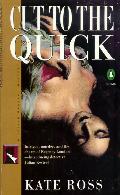
cut_to_the_quickI spent a good part of the December holidays making the acquaintance of Julian Kestrel – Regency dandy, amateur sleuth, and main character in a series of mysteries by Kate Ross [alas! not unlike Jane Austen, Ms. Ross died of cancer at a young age and we have only four of these Kestrel novels to read, and re-read, and likely read again.]  I highly recommend you head immediately to your local library or local bookstore and start the first book, RIGHT NOW.  You are in for a most fabulous journey!


 Cut to the Quick [Viking 1993] is sort of an Agatha Christie whodunit – all the characters together in a large cavernous country house named Bellegarde, partly built in the time of Queen Elizabeth I, with winding staircases and secret passageways; an unknown woman is found dead, everyone in the house has a back story and the plot unfolds…. 

The novel begins with Julian Kestrel rescuing a very “in his cups” Hugh Fontclair from a game of hazard at a London gaming establishment. In gratitude Fontclair asks Kestrel to be best man at his wedding, though they have only just met, and as Kestrel has no idea why he is being asked, he decides to head to the country to find out why. 

Enter the characters:  Hugh Fontclair, just 21, forced into a marriage with a woman he does not know; Sir Robert and Lady Fontclair, Hugh’s parents, agreeing to the marriage but obviously hiding something; Lady Tarleton, Sir Robert’s sharp-tongued, very angry sister; Colonel Fontclair, Sir Robert’s brother, a war hero; Guy, the Colonel’s son, a likeable, ne’er do-well, often drunk rake; Philippa Fontclair, Hugh’s eleven-year old sister, immediately smitten with Kestrel; Isabelle, the orphaned cousin with hopeless feelings for Hugh; Maud Craddock, Hugh’s wife-to-be, a pawn in her father’s plans, who befriends Kestrel; Mark Craddock, Maud’s father, a wealthy tradesman shunned by the Fontclairs – but he holds all the cards; Dr. MacGregor, summoned to the house to deal with the dead body – he becomes Kestrel’s confidante and friend; Dipper, Kestrel’s manservant; and of course, the unidentified corpse … WHO is found dead in Kestrel’s bed.  As they are the unknown house quests, both Kestrel and Dipper are the prime suspects, and Kestrel is drawn into solving the crime, at first to prove his own and Dipper’s innocence and then because his sleuthing skills are far superior to anyone else’s, including the local magistrates and London’s Bow Street Runners.  Not all is as it seems at Bellegarde. 

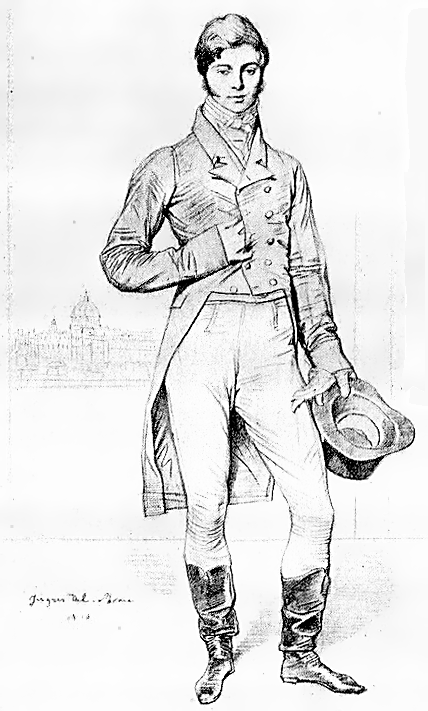
And so we are introduced to Ross’s alter ego, her young Regency dandy, the “top of the tree,” the fashionista of London’s “Quality”, where what Kestrel does (or doesn’t do) is copied by one and all: 

Kestrel had first appeared in London society a year or two ago, and hardly anything was known about him, though he was said to be related in some dubious way to a landed family in the north.  If he had been anything but a dandy, such vagueness about his pedigree would have been fatal, but of course the most spectacular of the dandies was absolved from society’s usual inquisition into breeding and birth.

 ‘He always wears black in the evening – it’s all the crack in the dandy set, and of course Kestrel, being such a howling swell, was one of the first to take it up…’

 And we learn more about his appearance through the eyes of 11-year old Philippa when she first sees him:

 She looked at him approvingly, liking him much better that the dull, handsome men [her sister] Joanna admired.  He had a dark, irregular face and hair of a rich brown, like mahogany.  His eyes were brown too, but with a green gleam about them, especially when he smiled, or was looking at you very intently.  He was slender and spare and not above medium height, but he had presence – the way royalty probably did in the old days, before it was fat and fussy and came from Germany.  He looked splendid in his clothes, and yet there was nothing showy or striking about them, except that his linen was so spotless, and everything fit him so well.  Being a dandy was not so much what you wore, Philippa decided, but how you wore it.
regency-dandy

But we quickly learn that Kestrel too is not what he seems – he has a past we only see glimpses of, his present life of apparent wealth not quite the case; he has a thief for a manservant; and he has a charm and a wit that disarms most every woman he encounters, and many of the men as well.  His integrity is never in doubt – he is honest and true, and he can read others with little fuss – in short, the perfect objective detective [even his name is telling!] – he is another Peter Wimsey, Adam Dalgliesh, Alan Grant, Roderick Alleyn – all themselves a mystery to draw the reader in, but here with the setting of Regency England.  And in each book, Ross gives out a few tidbits of information about him: see how much we discover about him from this description of his home:

 Julian Kestrel lived in a first-floor flat in Clarges Street.  The ceilings were high, and the windows large.  The walls were painted ivory.  The mahogany furniture was handsome but not too plentiful; Julian hated clutter.  Here and there were keepsakes he had picked up on his travels:  a Venetian glass decanter, a Moorish prayer rug, a marble head of a Roman goddess, an oil painting of the Tuscan hills.  Crossed rapiers hung over the mantelpiece; they looked ornamental, but closer inspection revealed they had seen a good deal of use.  A small bust of Mozart occupied a place of honor by the pianoforte.  Under the piano was a canterbury full of well-worn sheets of music.

 And Ross showcases the Regency in all its glories – it helps to know something of the period (the Regency Lexicon is most useful!), as she weaves her story through country roads, in carriages and coaches, in London’s streets, the architecture of the houses, the description of the fashions, the elegant social life – it is all here.  And did I mention that this is a MYSTERY?? – it is deftly drawn, Ross a master of characterization and plot.  No more on that score, as you must just read the book! But as for me, I am on to the next, Broken Vessel, another mystery with hopefully a few more facts about Kestrel and I will continue my reviewing henceforth!

4 1/2 full inkwells (out of 5)