Austen Literary History & Criticism · Books · Collecting Jane Austen · Illustrations · Jane Austen · Jane Austen Illustrators · Jane Austen Merchandise · Jane Austen Popular Culture · Literature · News · Publishing History · Rare Books

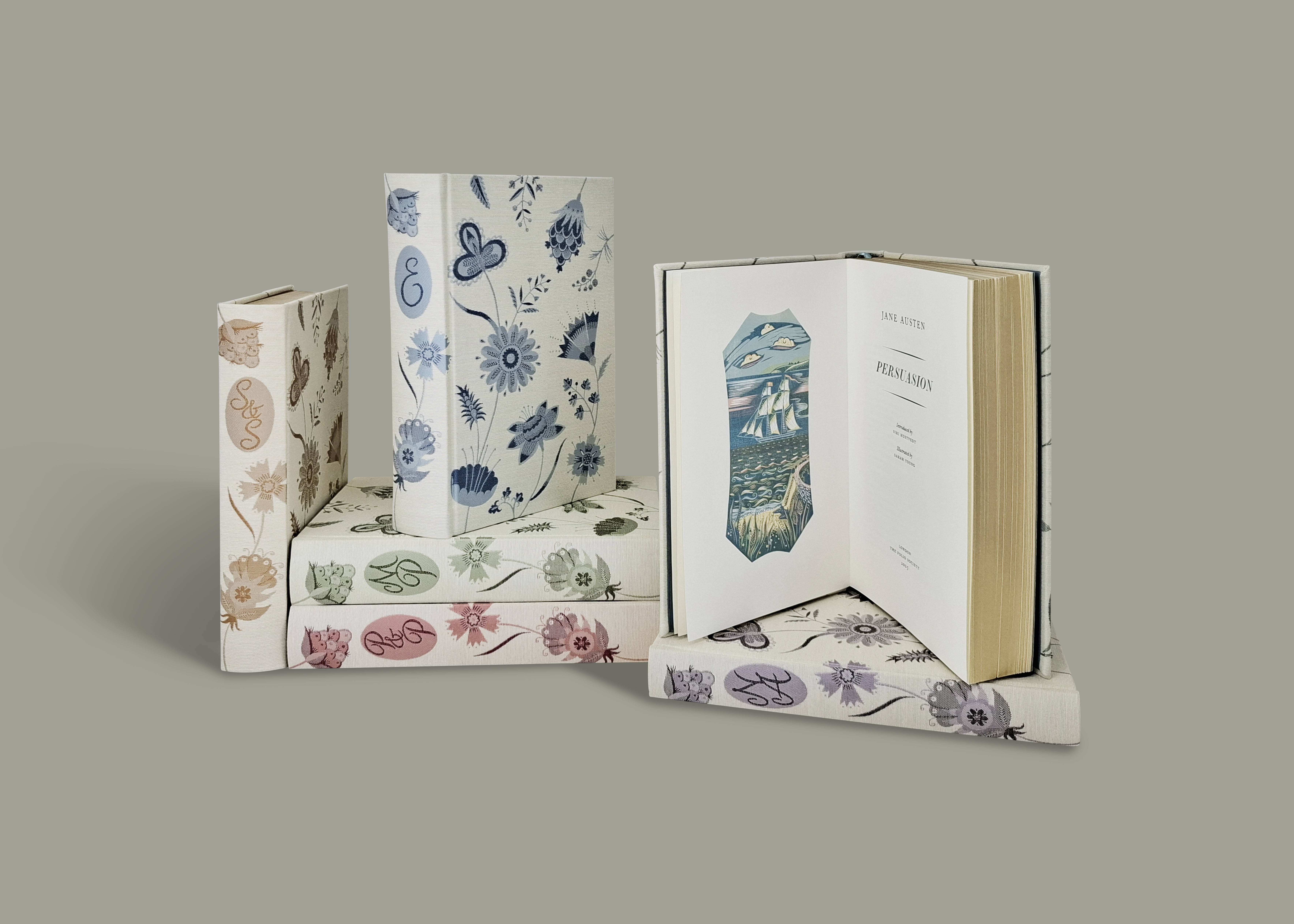
A New Jane Austen Edition! Folio Society 2025

The Complete Novels by Jane Austen, The Folio Society, 2025.

**************

The Complete Novels by Jane Austen, The Folio Society, 2025.

From Pride and Prejudice: “…in earnest contemplation…”
Illustrations © Sarah Young 2025, from The Complete Novels by Jane Austen, The Folio Society.

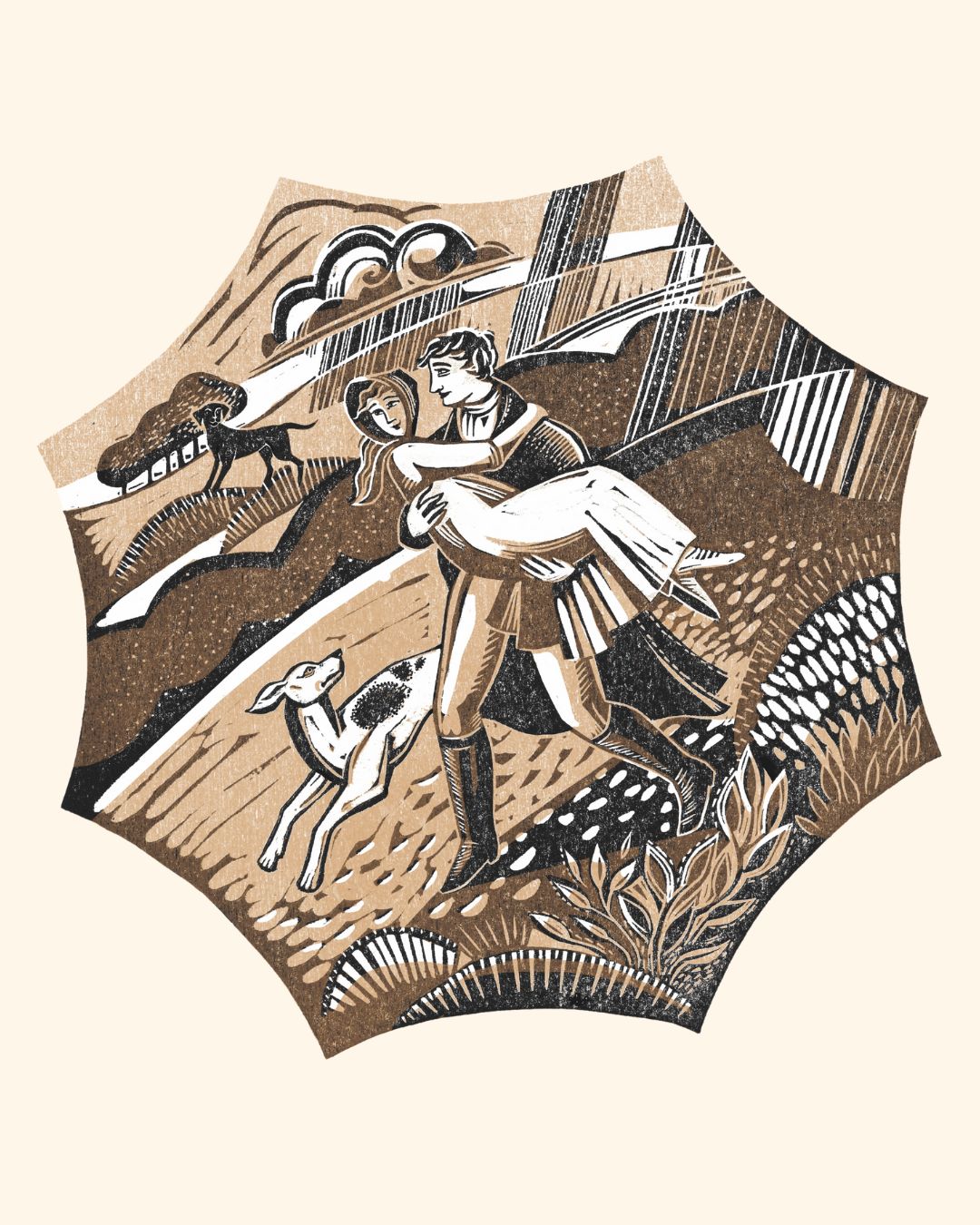
From Sense and Sensibility: the Willoughby rescue…
Illustrations © Sarah Young 2025, from The Complete Novels by Jane Austen, The Folio Society.

From Pride and Prejudice: The Letter!
Illustrations © Sarah Young 2025, from The Complete Novels by Jane Austen, The Folio Society.

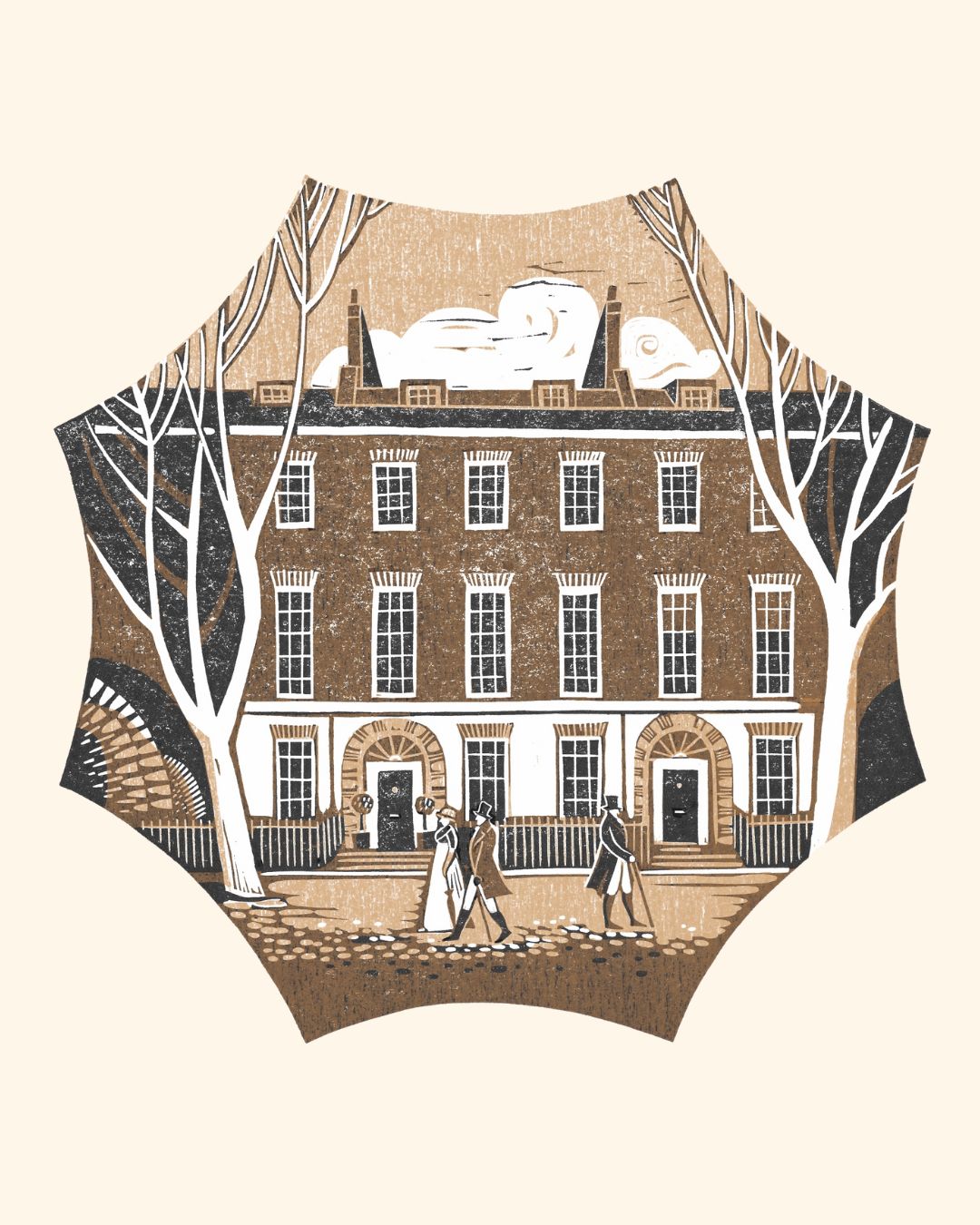
From Sense and Sensibility.
Illustrations © Sarah Young 2025, from The Complete Novels by Jane Austen, The Folio Society.

[you can follow her work on instagram here: https://www.instagram.com/sarah.a.c.young/ ]

The Complete Novels by Jane Austen, The Folio Society, 2025.

c2025JaneAustenInVermont
Austen Literary History & Criticism · Books · Collecting Jane Austen · Georgian Period · Godmersham Park Library · Jane Austen · Jane Austen Circle · Jane Austen Societies · JASNA · Literature · Rare Books · Regency England

“Jane Austen, Book Owner”

This was the title of my talk at the JASNA AGM in Cleveland last month. I covered a variety of topics, focusing mostly on female book ownership in Jane’s Austen’s time and how she fit into that world of being a “book owner.” David Gilson in his A Bibliography of Jane Austen lists 20 titles that are known to have been owned by Austen, the only way of knowing for sure because she inscribed them. There were others that she gifted to family members and I have included those as well.

The wealth of information on Jane Austen as a reader is quite overwhelming – I direct you to the recently published What Jane Austen’s Characters Read (and Why) by Susan Allen Ford (Bloomsbury, 2024), where there is an excellent summary of her reading in the introduction and chapter one. Also see my bibliography posted below. But my focus was just on the books Austen owned, fitting those into the various subject categories of a gentleman’s or elite lady’s private library, and thereby seeing the variety of works she felt strongly enough about to inscribe her name with that pride of ownership.


I will not be publishing this paper, though I might gradually publish it in sections on this blog – but I did have handouts at the talk and so I am putting both of those on here now: the list of books Austen owned and where they are now, and a very select bibliography of the many books and articles and websites I consulted during my research.

I will add that the Richardson Sir Charles Grandison that was in David Gilson’s private collection is indeed at King’s College Library, Cambridge, as Peter Sabor suggested at the end of my talk. So I have edited the handout to reflect that.

More to come on this very interesting topic, but wanted to get these handouts available to people, as we didn’t have enough during the breakout session.

Jane Austen’s Library:

Jane Austen, Book Owner: Select Bibliography:

*************
Thank you to all of you who came to my session – very hard choices – I wanted to be at other talks myself! For those of you who have the virtual component of the meeting, my talk was recorded and is available at that virtual JASNA link you would have been sent via email.

If you have any questions, please feel free to contact me.

c2024JaneAustenInVermont
Austen Literary History & Criticism · Books · Collecting Jane Austen · Jane Austen · Jane Austen Circle · Literature · News

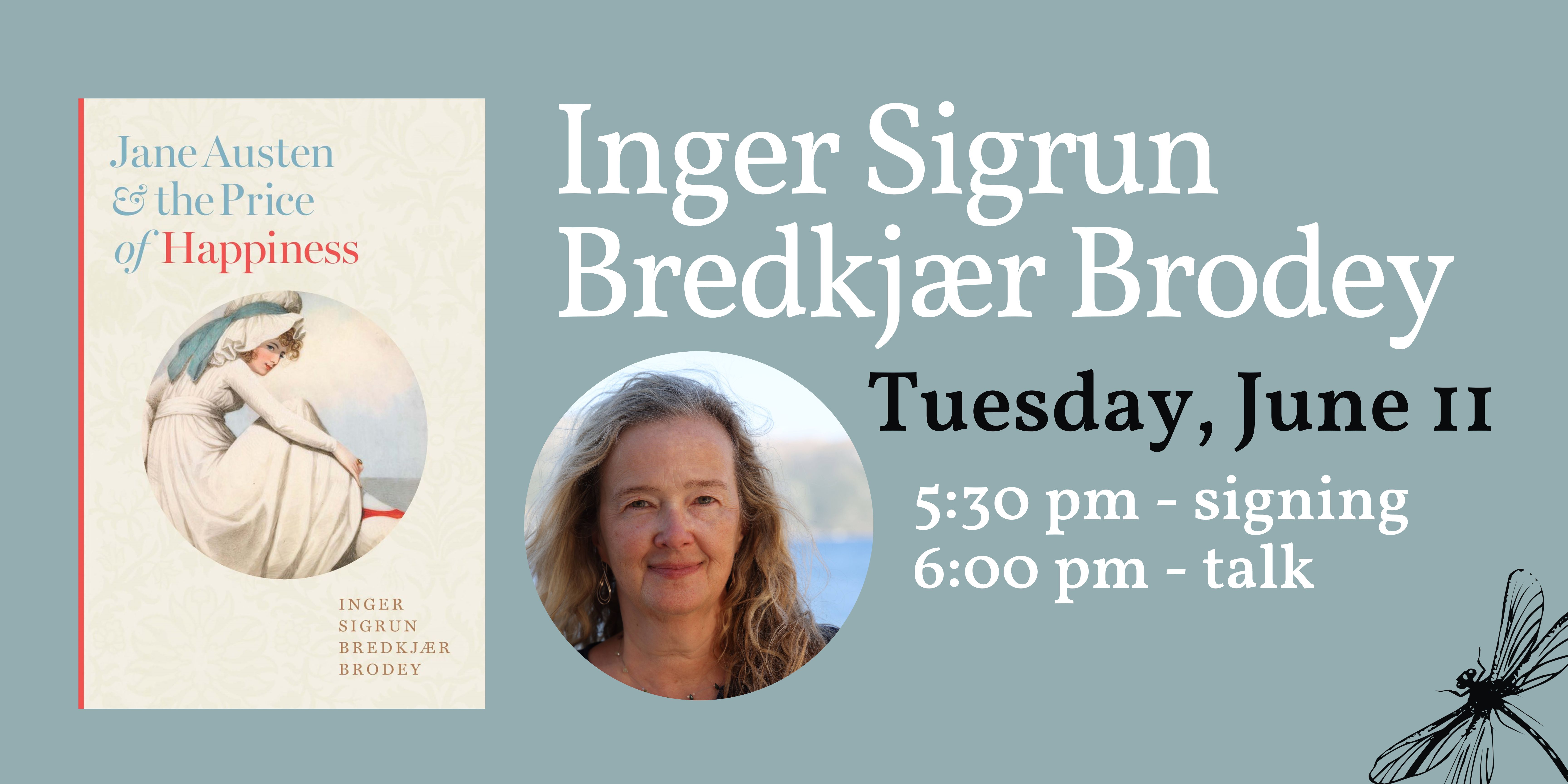
Book Launch! Inger Brodey’s ‘Jane Austen & The Price of Happiness’

A new book about Jane Austen is soon to be released!
Professor Inger Sigrun Bredkjær Brodey’s
Jane Austen & the Price of Happiness

The official launch event will be at Flyleaf Books in Chapel Hill on June 11, 2024 at 5:30 pm!
[details below: address is 752 Martin Luther King Jr. Blvd. Chapel Hill, NC 27514]

What’s is all about??

From the Johns Hopkins University Press website:

“Do Jane Austen novels truly celebrate—or undermine—romance and happy endings?

How did Jane Austen become a cultural icon for fairy-tale endings when her own books end in ways that are rushed, ironic, and reluctant to satisfy readers’ thirst for romance? In Jane Austen and the Price of Happiness, Austen scholar Inger Sigrun Bredkjær Brodey journeys through the iconic novelist’s books in the first full-length study of Austen’s endings. Through a careful exploration of Austen’s own writings and those of the authors she read during her lifetime—as well as recent cultural reception and adaptations of her novels—Brodey examines the contradictions that surround this queen of romance.

Brodey argues that Austen’s surprising choices in her endings are an essential aspect of the writer’s own sense of the novel and its purpose. Austen’s fiercely independent and deeply humanistic ideals led her to develop a style of ending all her own. Writing in a culture that set a monetary value on success in marriage and equated matrimony with happiness, Austen questions these cultural norms and makes her readers work for their comic conclusions, carefully anticipating and shaping her readers’ emotional involvement in her novels.

Providing innovative and engaging readings of Austen’s novels, Jane Austen and the Price of Happiness traces her development as an author and her convictions about authorship, novels, and the purpose of domestic fiction. In a review of modern film adaptions of Austen’s work, the book also offers new interpretations while illustrating how contemporary ideas of marriage and happiness have shaped Austen’s popular currency in the Anglophone world and beyond.”

****************

Inger Sigrun Bredkjær Brodey is a professor of English and comparative literature at the University of North Carolina at Chapel Hill. She is the cofounder and director of the Jane Austen Summer Program and Jane Austen & Co., and the principal investigator of “Jane Austen’s Desk” [forthcoming].

You can order the book here from Jane Austen Books.

Here from John Hopkins University Press.

Or here from Flyleaf Books – hope you can attend the launch!


c2024 JaneAusteninVermont
Austen Literary History & Criticism · Blog Tours · Book Giveaway · Book reviews · Collecting Jane Austen · Great Britain - History · Jane Austen · Jane Austen Circle · Social Life & Customs

Winner of “Fashionable Goodness” by Brenda S. Cox!

The winner has been drawn – and the winner is A. Marie! I will email you and get your information for Brenda, who will send the book directly to you. Thank you all for participating!

And hearty thanks to Brenda for sharing your thoughts with us and for offering the book giveaway. For those who didn’t win, buy the book! – it will make a fine addition to your Jane Austen Collection.

c2022Jane Austen in Vermont
Austen Literary History & Criticism · Author Interviews · Blog Tours · Book Giveaway · Book reviews · Collecting Jane Austen · Georgian England · Great Britain - History · Jane Austen · Jane Austen Circle · Regency England · Social Life & Customs

“Fashionable Goodness” by Brenda S. Cox ~ Book Excerpt and Giveaway

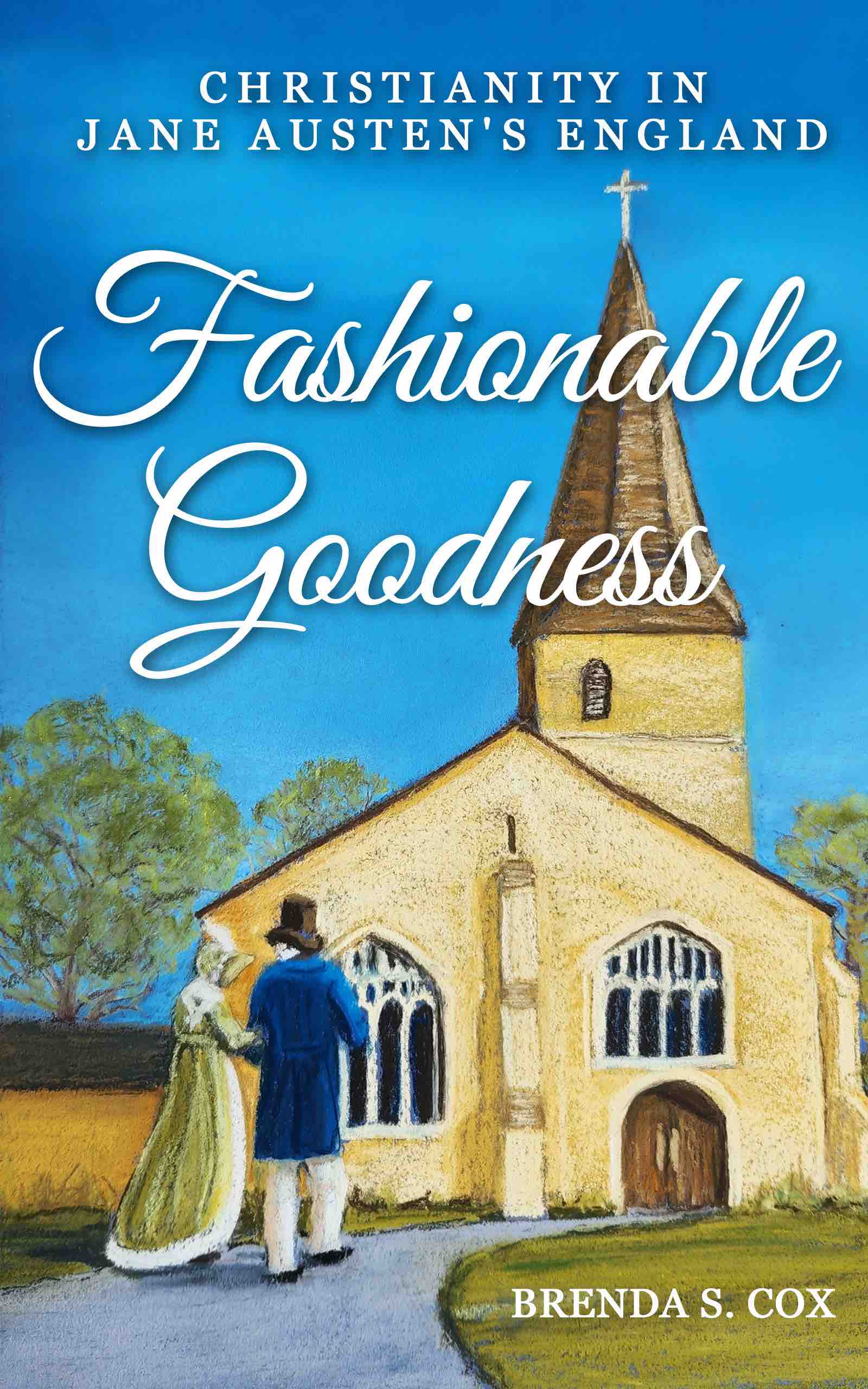
Today’s post is about Brenda Cox and her just-published Fashionable Goodness: Christianity in Jane Austen’s England. You can follow the other blog posts on this tour here. [See at the end of this post for information on the giveaway.]

A few thoughts: I was honored when Brenda asked me to write a blurb for the cover, and I repeat that here with a few additional thoughts. I would first say that I have read a few works on Austen and religion, all of them enlightening in their own way. We do need to have some inkling of this religious world Austen grew up in, and the religion she practiced, to see that dimension in her writing.  I am a born and raised Episcopalian [my parents were Anglican] and much of what Brenda writes in her book was very superficially known to me, at least those parts about the Church hierarchy, prayers and liturgy and hymns. What was enlightening was how Brenda wove all the details of the Church itself, and its spiritual foundations into a fuller understanding of what Jane Austen is actually saying in her novels, in the plots, the characters, and the settings – this book is a compelling read and you won’t look at the novels and the characters in the same way ever again. Just the tables, definitions, and references alone are worth the price of admission.

My blurb:

Fashionable Goodness is a meticulously researched, faultlessly organized, and engaging study of how religion, in all its forms, features in Jane Austen’s world, her life, and her writings.

Starting with Henry Tilney’s famous defense of “the English” in Northanger Abbey, Cox reveals the facts of Jane Austen’s faith, the realities and challenges of practicing religion in the Regency period, and with biographical sketches of the leading religious leaders and analysis of the various denominations of the time, she puts into context the explicit and subtle religious references in Austen’s novels. This Christian world permeates Austen’s writings and a fuller understanding of the Church and its clerical hierarchy and the emphasis on living a moral “good” life will open up a clearer view of Austen’s plots, characters, and underlying themes. You will look at Mr. Collins, the Crawfords and the Dashwoods, the Tilneys, the Wickhams and Willoughbys, all the “good” and the “not so good” people that populate the novels (and especially Fanny Price!) with new and surprising insights. Bravo to Brenda Cox for giving us this very accessible illuminating take on the “fashionable goodness” of Austen’s era.

*****************

An Excerpt from the first chapter, beginning as I say above with my favorite Hero, Henry Tilney:

C. E. Brock, Northanger Abbey, 1907

“Jane Austen’s England, A Foreign Country (Foreign to Modern Readers)”

“Remember the country and the age in which we live. Remember that we are English, that we are Christians.”—Henry Tilney, Northanger Abbey, ch. 24

How can we understand “the country and the age” in which Jane Austen lived? Her society is poles apart from our modern world, despite some points of similarity. As L. P. Hartley insightfully begins a novel set in 1900 [The Go-Between], “The past is a foreign country; they do things differently there.” The world of Austen’s novels is foreign to us, whether we live in the United States, modern England, or elsewhere. To enter this “foreign country,” the civilization that spawned Elizabeth Bennet, Mr. Darcy, and Emma Woodhouse, we need to learn its language and culture. While we may interpret Austen’s timeless novels according to our own experiences and values, we can enjoy them more deeply as we get to know Austen’s world.

Religious practices and values influenced many aspects of Austen’s culture. For example, in politics, the Church of England was (and is) the national church of England; the Pilgrims and Puritans fled to America to escape its authority. The sovereign was the head of the church, bishops and archbishops were members of the House of Lords, and Parliament made laws regulating worship, the clergy, and churches. From 1810 to 1820 (the Regency), the Prince Regent governed the country because of his father’s illness. Jane Austen disapproved of the Regent’s immoral lifestyle, but when he asked her to dedicate Emma to him, she respectfully complied, since it was her duty as a Christian to obey her country’s leader.

Religious values also guided family relationships. Honoring one’s parents was an important religious duty, given in the Ten Commandments in the Bible and elaborated in the Church of England catechism. In Mansfield Park, Edmund and Fanny are shocked by Mary’s disrespect for her uncle who raised her; Mary is showing poor moral values (ch. 7). Mr. Collins of Pride and Prejudice carries this to a ridiculous extreme when he delays reconciling with his cousins out of respect for his father’s memory, since his father was at odds with them (ch. 13). Disrespect toward a husband or wife was also considered immoral. In Sense and Sensibility, Willoughby shows his poor character by criticizing his wife, and Elinor rebukes him (ch. 44).

As Laura Mooneyham White points out in Jane Austen’s Anglicanism, the “foundational worldview” of modern Christians, including modern Anglicans, differs radically from the worldview of the Georgian-era Anglican Church. Because of this, we may miss some of the deeper dimensions of Austen’s novels….

A Worldly Bishop and a Godly Curate: Pillars of the Church, anonymous, 1810-1820. Satirical cartoons of the time showed serious issues in the church. Rich bishops were contrasted with destitute curates. This curate’s pocket holds “Sermons for Rent.” Sermons were often bought and sold. In Austen, the curate Charles Hayter of Persuasion cannot afford to marry, while Dr. Grant of Mansfield Park gets a high church position and dies of gluttony.
Image courtesy of The Lewis Walpole Library, Yale University.

To understand the church’s pervasive influence in Austen’s world, we also need to recognize some the issues it was facing. Edmund Bertram and Mary Crawford argue about several: clergy without a calling, clergy who did not live in their parishes, and “fashionable goodness.” Was it enough to follow the fashions of the city and show up at church on Sundays, ignoring religion the rest of the week? Or, as new movements in the church stressed, should people seek a personal relationship with God that affected their hearts and behavior? Even for Mr. Darcy, being “given good principles” – knowing theoretical religious truths – was insufficient to make him a man Elizabeth could respect and marry…

Jane Austen’s religious beliefs, and the beliefs of her society, are often overlooked. She does not talk as openly about religion as today’s Christian writers do, or even as some of her contemporaries did. And yet, as Henry Tilney points out, being “Christian” was part of the English identity. Jane Austen’s personal identity was also Christian, as we shall see in the next chapter. In the rest of the book, we’ll explore the crucial part Christianity played in Austen’s stories and in her world. In Austen’s England, morality came directly from religion….

From Fashionable Goodness, Christianity in Jane Austen’s England, by Brenda S. Cox, Topaz Cross Books. © Brenda S. Cox 2022, used by permission.

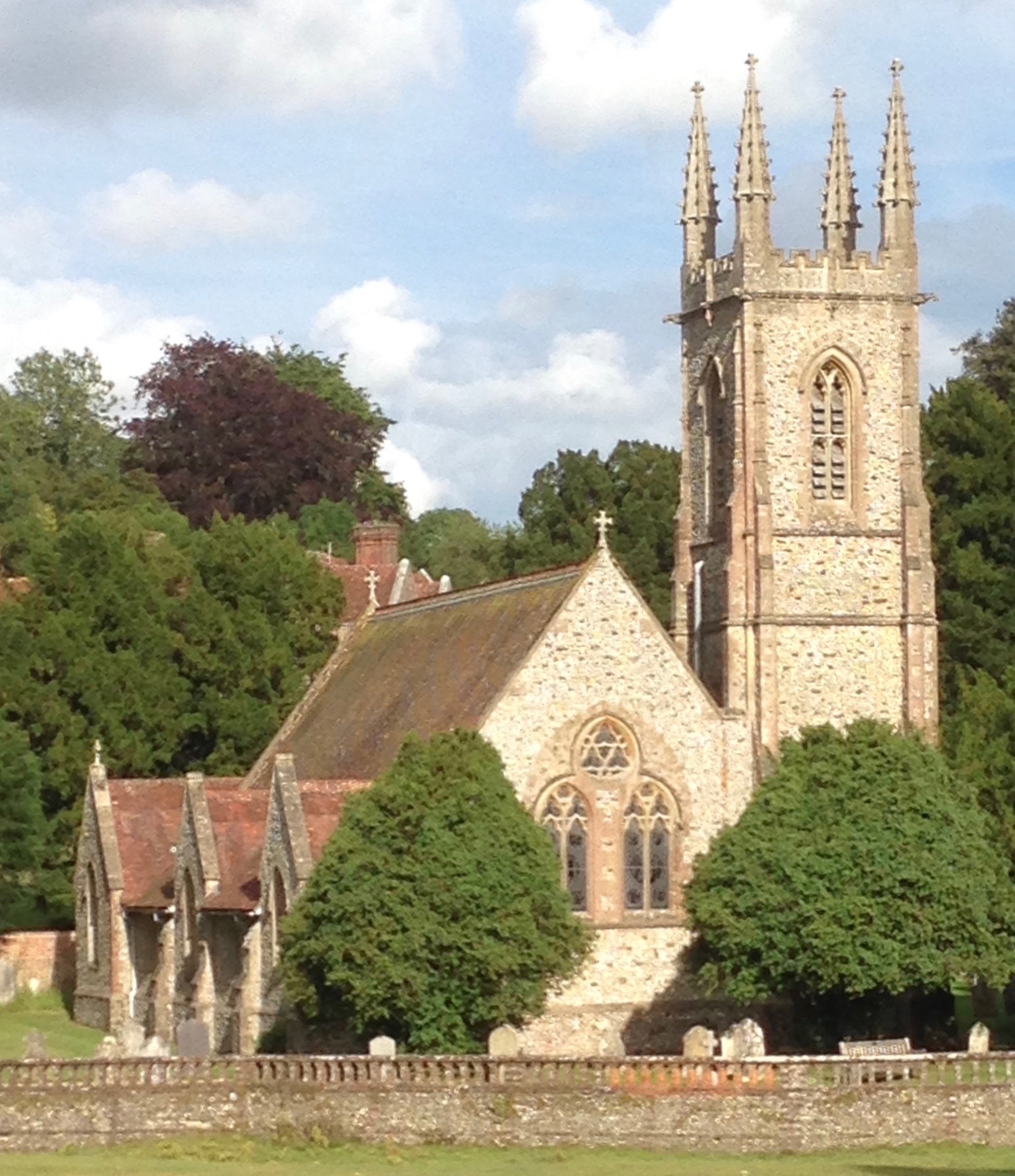
St Nicholas Church, Chawton: Jane Austen attended this church while she was writing or rewriting all her novels.
Photo © Brenda S. Cox, 2022

***************

St. Swithin’s, Bath
Austen does mention this church, “Walcot Church,” in Northanger Abbey. Her parents were married here, and so was William Wilberforce. Wilberforce led the abolition movement in England as well as the movement to reform England’s moral behavior. He set an example of integrity, humility, love, and joy for later generations.
Photo © Brenda S. Cox, 2022

****************************

Author interview: I asked Brenda a few questions about why she wrote this book and how it has affected her reading of Austen:

DEB: You have said you titled the book Fashionable Goodness: Christianity in Jane Austen’s England, because during Austen’s time, it was fashionable to attend church and pretend to be “good,” but that the immorality of the Prince Regent and others seemed more fashionable, leading the influential William Wilberforce and others to try to reform “manners” [meaning behavior] –  Edmund Bertram in Mansfield Park explains that “manners” meant behavior, how people acted based on their religious principles. So I would ask you: which of Austen’s novels focuses most on the church and this idea of “manners”?

BRENDA: Mansfield Park, hands down. Edmund and Mary Crawford discuss the importance of the clergy (those responsible for “all that is of the first importance to mankind”). Edmund and Henry Crawford discuss preaching and leading church services. Fanny, physically weak, displays great moral strength in refusing to marry an “unprincipled” (irreligious) man. Also, godly traditional values are contrasted with the immorality of the city. I appreciate Mansfield Park far more than I did before, now that I understand its religious background.

DEB:   Your book is packed with information, from how the Church of England is organized, the challenges the church faced during Austen’s time, and the legacy it still holds for us. How did you decide to organize it?

BRENDA: My background is in engineering, and I tried to structure Fashionable Goodness logically. It starts, of course, with Jane Austen and her novels. We look at things like her personal faith, the lives of her clergymen, and worship during her time. Two chapters address how some of the church’s values played out in everyday life, particularly in the areas of marriage and divorce, and in scientific advances.

Part 2 then looks at challenges to Austen’s Church of England. Some of those, like the system of patronage and different levels of clergymen, are addressed in the novels. Others, like the Methodist movement and the place of different economic groups and races in the church, give background. I wove in fascinating stories of men and women leaders of the time.

As I saw how the church was making an impact on the country and the world, I added Part 3. It shows the impact of committed Christians of Austen’s era, ranging from the abolition of the slave trade to the Sunday school movement that educated millions of poor children and adults, breaking cycles of poverty and dependence.

DEB: What spiritual messages do you think Austen was trying to convey through her novels?

BRENDA: Austen always promoted moral behavior. But she didn’t do it by preaching and telling people what to do. Instead, she showed examples, both positive and negative. Readers of Pride and Prejudice, for instance, might learn to avoid judging and ridiculing other people. We might instead want to be more like Jane Bennet, assuming the best of others until the worst is clearly proven. (This was a religious virtue called candour in Austen’s time; posts on my blog explore this and other “faith words.”)

DEB: Which of her novels speaks most strongly to you personally?

BRENDA: Usually my favorite Austen novel, and the one that speaks to me most, is whichever one I have read most recently. Right now that is Sense and Sensibility, which I’ve read repeatedly in the months leading up to the JASNA AGM. It has made me more aware of emotions and their effect on us and other people. We can express our emotions selfishly, as Marianne did, not caring how we make others feel. Or we can recognize them in ourselves, as Elinor did, and choose ways to respond that do not hurt our loved ones. In this, Elinor was doing her Christian “duty,” to love her neighbour as herself. However, I also think Austen put Elinor in a worst-case scenario. Elinor’s promise to Lucy made it impossible for Elinor to tell her family what she felt. In other circumstances she might have shared her pain with her family in healthy ways.  

*********************

About the Author: Brenda S. Cox has loved Jane Austen since she came across a copy of Emma as a young adult; she went out and bought a whole set of the novels as soon as she finished it! She has spent years researching the church in Austen’s England, visiting English churches and reading hundreds of books and articles, including many written by Austen’s contemporaries. She speaks at Jane Austen Society of North America meetings (including three AGMs) and writes for Persuasions On-Line [JASNA journal) and the websites Jane Austen’s World and Brenda’s own blog Faith, Science, Joy, and Jane Austen. You can find bonus material on the book here as well.
Where to Buy:

Fashionable Goodness: Christianity in Jane Austen’s England is now available from Jane Austen Books and Amazon. [The link for international Amazon purchases is here: https://mybook.to/FashionableGoodness ]

**********************

The GIVEAWAY:*

Brenda is offering a book giveaway [paperback or ebook] – Please comment below or ask Brenda a question [she will respond here] by Wednesday November 9 and you will be entered into the random drawing for a copy [there are some limitations to worldwide shipping] – I will announce the winner on November 10th. Here are some prompts for commenting, or please ask your own.

1. What is one character trait you think Jane Austen most valued, based on her novels?

2. Who is your favorite clergyman or clergyman’s wife from Austen’s novels? And why?

3. What is one question you have about the church in Austen’s England, or the church and clergy in her novels?

*[N.B.: The giveaway is limited to addresses in the US, UK, Australia, Canada, Germany, Spain, France, or Italy for a print copy of the book. The author can only send a giveaway ebook to a US address. (However, both the ebook and paperack are available for sale to customers from any of these countries, and some others that have amazon.)

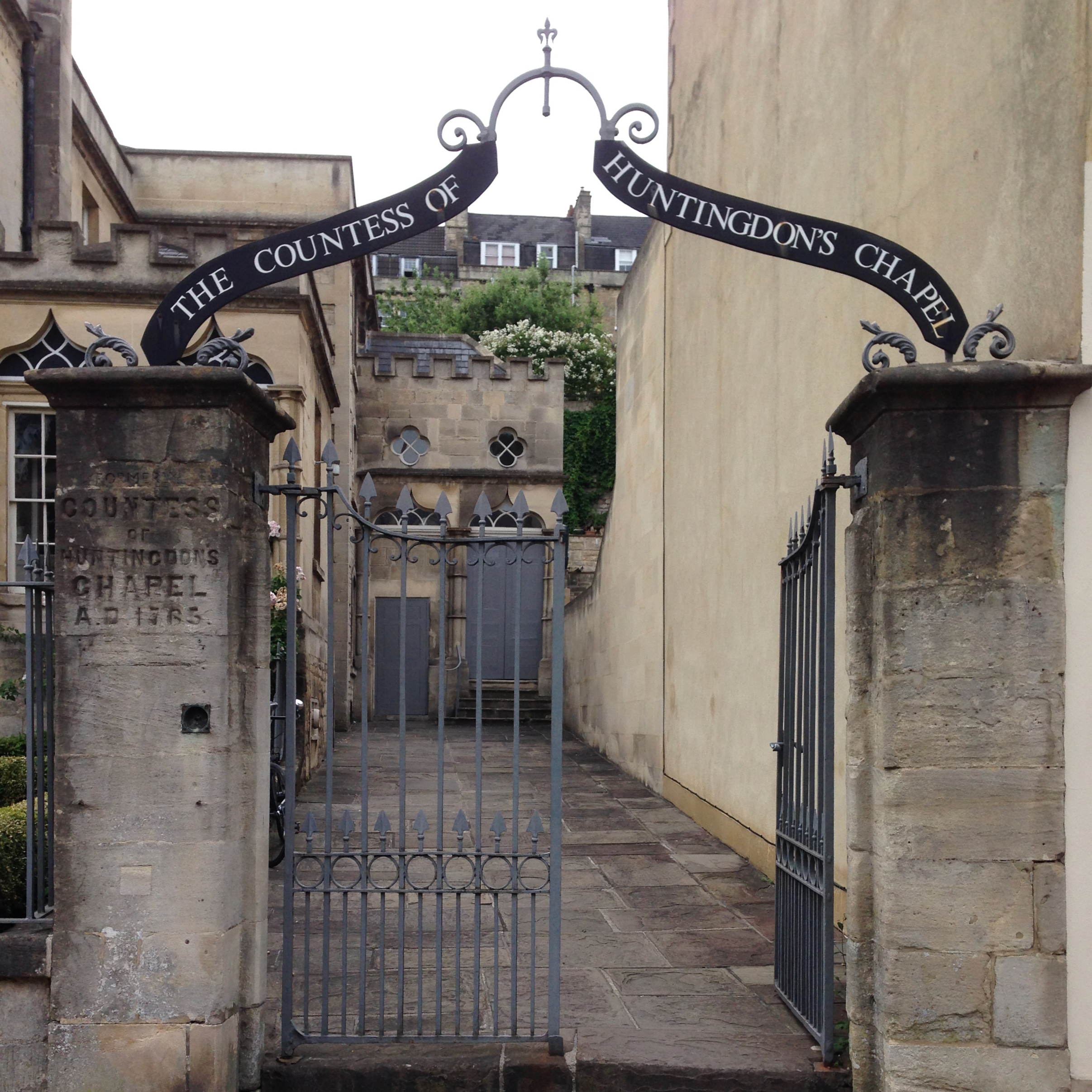
Countess of Huntingdon’s Chapel, Bath
The Countess of Huntingdon’s Chapel is now a museum in Bath. The Countess was a leader of the Methodist movement. She built houses for herself with attached “private” chapels (which she could do as a noblewoman) to give Methodist leaders very public venues for preaching and leading church services.
Photo © Brenda S. Cox, 2022
You can read more about the Countess of Huntingdon’s Chapel here.
©2022, Jane Austen in Vermont
Austen Literary History & Criticism · Collecting Jane Austen · Illustrations · Jane Austen · Jane Austen Illustrators · Rare Books

Guest Post: Philip Gough, Jane Austen Illustrator ~ by Hazel Mills

Gentle Readers: I welcome today, Hazel Mills, who has most generously written a post about one of Austen’s many illustrators, Philip Gough. I had written two posts on Gough [see below for links] but little was known about him personally. Hazel has done some extensive research into his life and works, and she shares this most interesting information with us here. Thank you Hazel!

***************

Philip Henry Cecil Gough

by Hazel Mills

          The artist, Philip Henry Cecil Gough, was born on the 11th June 1908 in Warrington, Lancashire, England, the eldest of four children. He was born to Cyril Philip Gough and Winifred Mary Hutchings.

          Philip was from a long line of leather tanners, curriers and bark factors, the latter using bark to soften leather. His family were wealthy owners of tanneries with evidence of his father travelling abroad to the USA in 1925 on business.

          Philip’s paternal grandfather, also a Philip, had carried on the family business in Wem, Cheshire with two of his three brothers. It obviously provided a good income as all four brothers had been to private boarding schools. In 1880, the tannery company of grandfather, Philip, and his brother was dissolved and Philip continued alone.[1]

          It is Philip’s maternal side that gives us the clue to his artistic side. His mother Winifred, also born into a family of tanners, travelled to Brussels to study Art and Music before her marriage. She also played the viola in various orchestras. [2]

          Before 1914 the Gough family moved to Moore, near Runcorn in Cheshire [3] and then in 1921, at the age of 12, Philip was sent to Loretto School, just outside Edinburgh, Scotland, as a boarder.[4] On the 4th and 5th April of that year Philip assisted in the painting of the scenery in the staging of “Much Ado About Nothing” [5] in the gymnasium of the school. The art master he assisted was Colonel Buchanan-Dunlop, who, during the famous ceasefire at Christmas 1914, led the singing of the carols from a sheet sent to him from Loretto School. [6]

          Again in 1924, Philip painted scenery for the school production of “A Midsummer Night’s Dream”, which was performed in aid of the Edinburgh Royal Infirmary, again assisting Col. Buchanan-Dunlop. [7]

Liverpool Art School record

          Philip left school in 1925. [8] It is known that he attended art school in Cornwall and Liverpool. He entered Liverpool College of Art in February 1926 and a year later, while still at the college, designed the scenery for the pantomime, “Robinson Crusoe”, at the Garrick Theatre in London. In 1928, after leaving the Liverpool College of Art, he designed about 60 costumes for “A Midsummer Night’s Dream” for the Liverpool Playhouse with a photo being published in the “Graphic newspaper” on 19th January 1929 [9] It is also thought that he designed shop windows around this time.

Midsummer Night’s Dream – Gough scenery and costumes

          1929 saw Philip working on a prestigious new project. He was responsible for all the scenery and costumes for A.A. Milne’s new play, “Toad of Toad Hall” at the Liverpool Playhouse, based on Kenneth Grahame’s book, “Wind in the Willows”. “The Stage” described Philip’s work as “both novel and extremely beautiful”. [10] At this time, Philip was still only twenty one years old. A.A. Milne also wrote a play of “Pride and Prejudice” called “Miss Elizabeth Bennet”. This was also produced at the Liverpool Playhouse. But sadly it was not Philip that did the scenery for this one, but a Charles Thomas. [11]

          In September of the following year, Philip designed scenery and costumes for “Charlots’s Masquerade”, a variety show at the Cambridge Theatre in London. There is even some Pathé News footage of this in existence. [you can view it here:

****************

It must be around this time that Philip meets his first wife, Mary O’Gorman, as the London Electoral register of 1930 shows him living in what appears to be a lodging house at the same address as her. It’s not know if they were actually living together as the listing is just alphabetical. Over the next eight years Gough is involved in costume and set design for at least seven productions, the first two at the Liverpool Playhouse but the following ones were all in various locations in London.

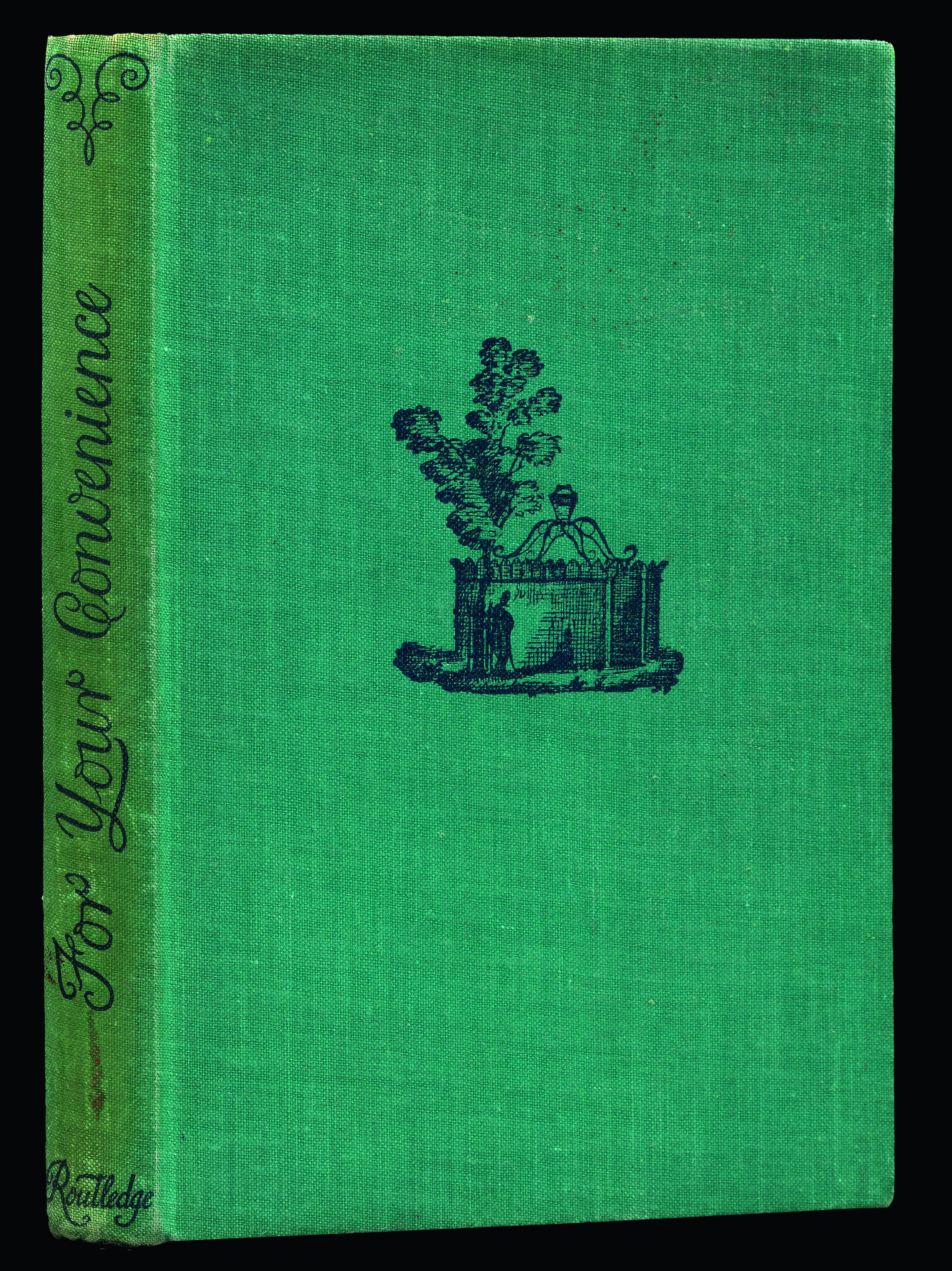
          Towards the end of this time the first book illustrated by Gough that I could find was the wonderfully named*, For Your Convenience: a learned dialogue instructive to all Londoners & London visitors, overheard in the Thélème Club and taken down verbatim by Paul Fry, [pseudonym for Thomas Burke] and published by Routledge in 1937.

“For Your Convenience”
“For Your Convenience” endpaper map

[* this book is republished today as For Your Convenience: A Classic 1930’s Guide to London Loos – in 1937 it was a heavily disguised guide to London toilets for homosexual encounters.]

***********

In 1939 Philip married Mary Catherine O’Gorman in Chelsea. The 1939 England and Wales register shows the married couple living in elegant  Walpole Street, Chelsea. The house is again the home of what appears to be boarders. Philip is described as working as an artist and designer of theatrical scenery, Mary is a secondary school teacher.

The following year Philip worked on “The Country Wife” at the Little Theatre, Haymarket, London and The Illustrated London News reported that the “décor by  Mr. Philip Gough is the chief charm of this production.” [12]

“New Book of Days”


The next few years, over the time of the Second World War, seem to be a very quiet time for Philip. I can only find his illustration of a book by Eleanor Farjeon called The New Book of Days, an anthology of rhymes, proverbial tales, traditions, short essays, biographical sketches and miscellaneous information, one piece for each day of the year. In 1936, Philip had also designed the sets and costumes for a play by Eleanor and Hubert Farjeon, called “The Two Bouquets”.

Philip’s father died in 1946 when Philip was still living in Chelsea. In 1948 he appears to have left his wife and is now living at another address in Chelsea with a Joan Sinclair.

1947 was a prolific year as a book illustrator, with four books for Peter Lunn publishers including “Fairy Tales” by Hans Christian Andersen. The following year would be his foray into Jane Austen Novels with the 1948 publication of Emma, published by MacDonald for their Illustrated Classics series. 

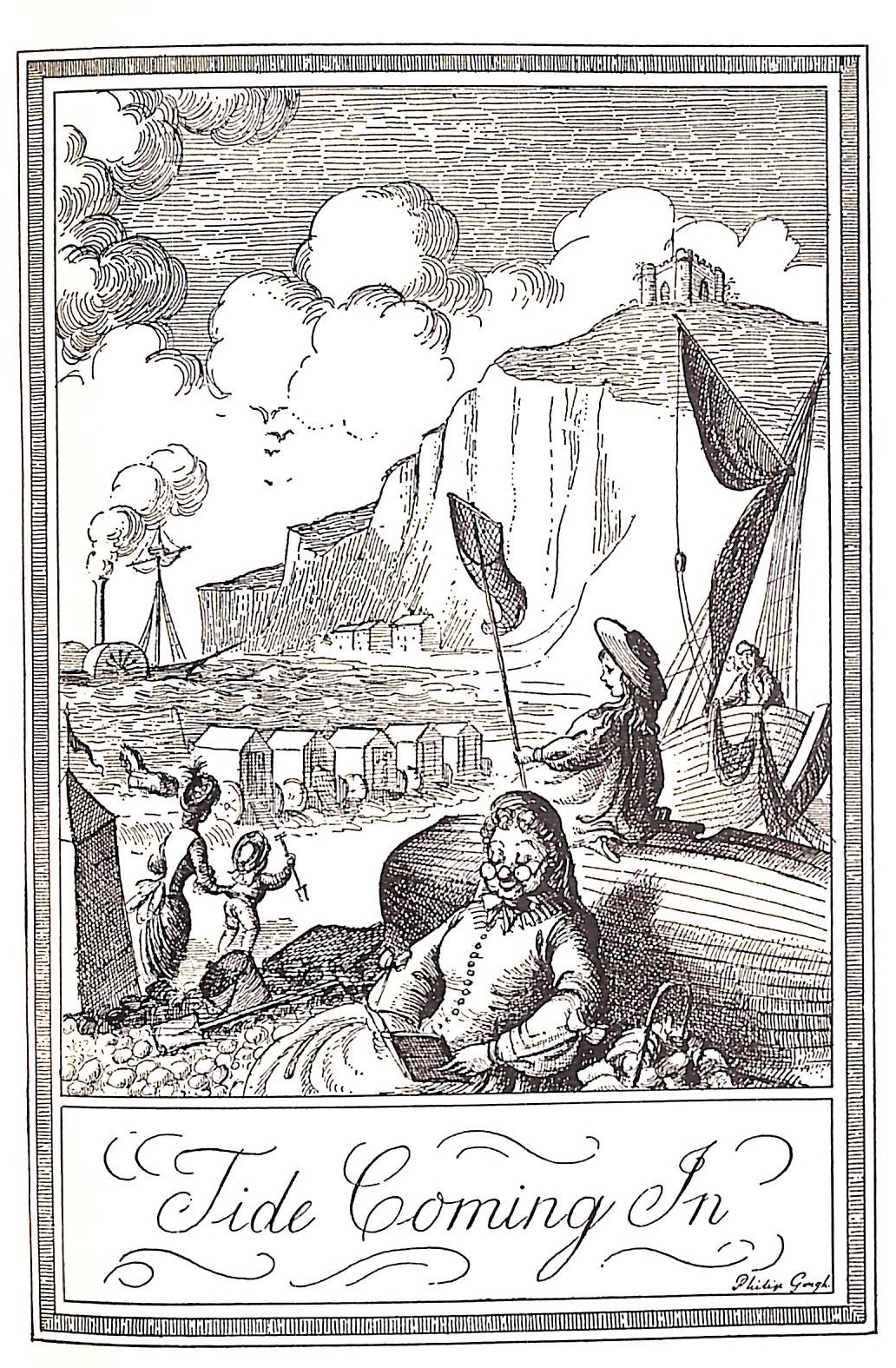
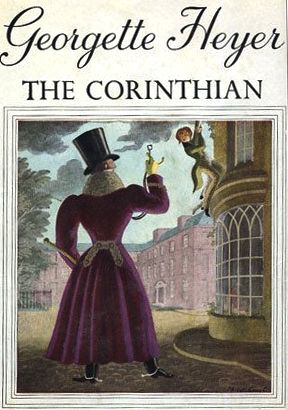
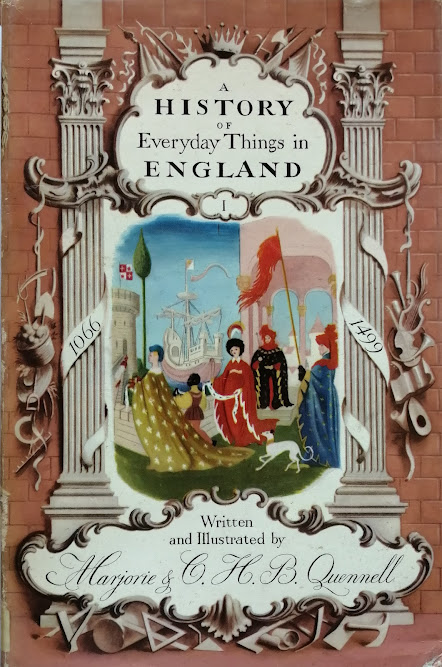
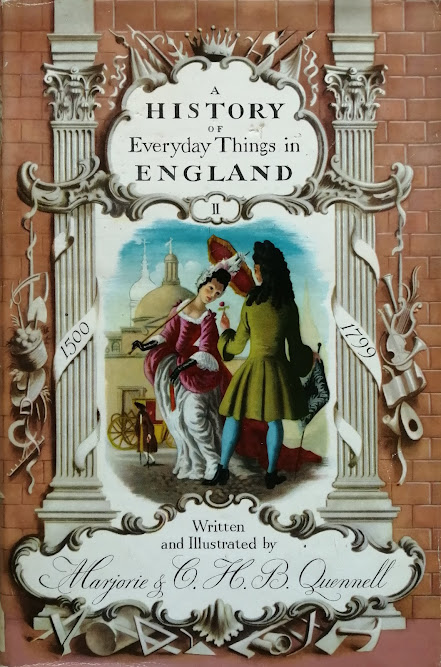
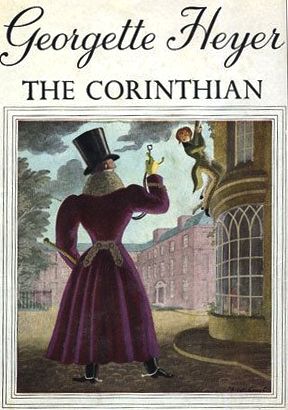
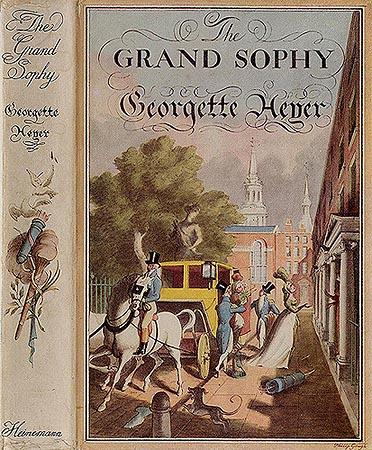
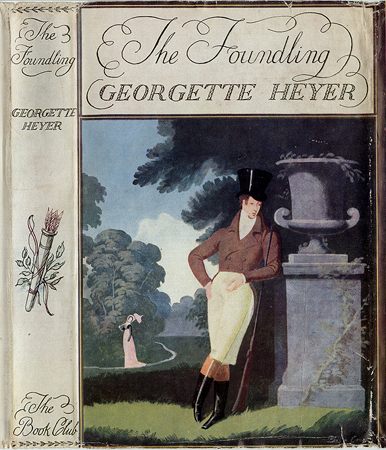
I have tracked down forty-two books between 1937 and 1973 where he drew illustrations throughout, but in addition Philip designed many, many more dust jackets for novels such as those of Georgette Heyer:

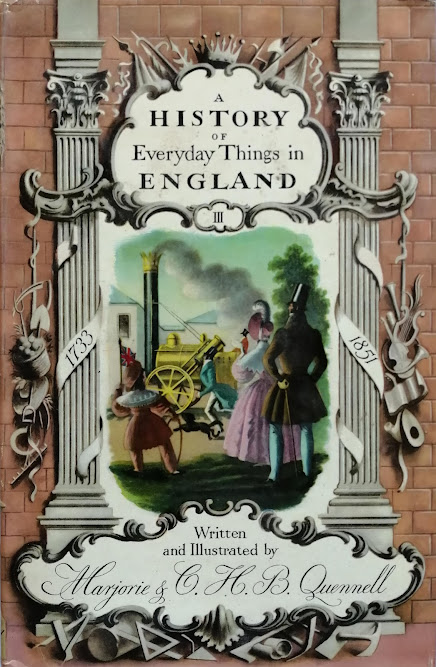
and non fiction tiles such as 1960s reprints of the four volume “A History of Everyday Things in England” that first appeared in 1918:


Philip also did a few more set designs in the 1950s but more of his time was spent illustrating books including Pride and Prejudice (1951), Mansfield Park (1957) and Sense and Sensibility (1958) for Macdonald. You can see many of the illustrations here:

https://janeausteninvermont.blog/2021/08/15/collecting-jane-austen-macdonald-illustrated-classics-illus-by-philip-gough/

and here:

https://janeausteninvermont.blog/2014/12/30/jane-austens-mansfield-park-in-pictures-the-illustrations-of-philip-gough/

*****************

In Philip’s personal life, tragedy hit when his mother was killed in an accident when she was hit by an army truck in 1952.  Philip married Joan in 1953 which is the last year in which I can find any more set and costume designing.

Northanger Abbey

          1961 saw the Macdonald publication of both Northanger Abbey and Persuasion with his illustrations and he continued to illustrate books until at least 1973.

          Philip Gough died in London on 24th February 1986, leaving a fortune of £42,661.

          Philip’s sisters also deserve a mention. Sheila May Gough was qualified as a nurse and during WWII joined the ‘Queen Alexandra’s Imperial Military Nursing Service’. She served in Europe before being posted to Malta.  In 1943 Malta became the base for the invasion of Sicily.  It was codenamed ‘Operation Husky’ and began on the night of 9 July and lasted for six weeks.  Sheila was awarded the ‘Associate of the Royal Red Cross’ for “special devotion to duty…and complete disregard for her own safety”. [13] Sheila remained unmarried until the age of 58, in 1975, when she married Donald Verner Taylor C.B.E. who had been in the Army Dental Corps in Malta at the same time as her.

          Less is known of his sister Gwendoline Winifred other than she was a school teacher at a boarding school in Nottingham in 1939 [14] but in 1941 sailed to South Africa where she stayed until 1946. [15] More is known of  Brenda Irene, or rather Flight Officer Brenda Irene Gough. The 1939 register records that Brenda was working as a secretary for the Civil Nursing Reserve and living in Wimbledon.  She joined the WAAF (The Women’s Auxiliary Air Force) after May 1941 .  In 1943, Brenda was promoted to Section Officer in the Administrative and Special Services Branch and later promoted to Flying Officer.  During the war women were paid two thirds of the salary of their male counterparts.

Philip Gough has left an enormous body of work and original works of his illustrations can achieve high prices today, for example, a signed original gouache artwork  for the dust wrapper to Georgette Heyer’s The Foundling currently commands a price of around $2,500.

**********************

Footnotes:

  1. The London gazette May 27 1881
  2. Obituary Cheshire Observer Dec 01 1951
  3. Kelly’s Directory 1914
  4. https://archives.loretto.com/archive/the-lorettonian/1921-vol-44/777604-1921-vol-44-0031jpg?q=gough
  5. https://archives.loretto.com/archive/the-lorettonian/1923-vol-46/777827-1923-vol-46-0026jpg?q=gough
  6. https://www.loretto.com/christmas-truce-commemoration/47361.html
  7. https://archives.loretto.com/archive/the-lorettonian/1924-vol-47/777740?q=gough
  8. https://archives.loretto.com/archive/the-lorettonian/1925-vol-48/777849?q=gough
  9. The Graphic – Saturday 19 January 1929
  10. The Stage – Thursday 26 December 1929
  11. The Era – Wednesday 9 September 1936
  12. Illustrated London News – Saturday 20 April 1940
  13. National Archives
  14. 1939 England and Wales Register
  15. UK incoming and Outgoing passenger lists

Image acknowledgements:

  • Liverpool College of Art Record -Liverpool College of Art Archives
  • Mid summer Night’s Dream Image courtesy of Mary Evans Picture Library (c) Illustrated London News/Mary Evans Picture Library.
  • For Your Convenience images – Care of Daniel Crouch Rare Books – crouchrarebooks.com

________________________________

Author bio:

Hazel Mills is a retired science teacher and a founder member and Chair of the Cambridge Group of the UK Jane Austen Society. Until her move to Denmark, she was a Regional Speaker for the Society. Hazel discovered Austen as a thirteen year old Dorset schoolgirl when reading Pride and Prejudice and fell in love for the first time with Mr Darcy. She has researched the history of Jane Austen’s time, presenting illustrated talks, around England and Scotland, on diverse subjects including: Travel and Carriages in Jane Austen’s time; the Life of John Rawstorn Papillon, Rector of Chawton; Food production and Dining; Amateur Theatricals at Steventon, and the Illustrators of Austen’s novels. She lives in a lovely house overlooking the sea with her husband who built her a library to house her extensive Austen collection, which includes over 230 different copies of Pride and Prejudice.

***************

Do you have a favorite Philip Gough illustration?? Please leave a comment below.

©2022, Jane Austen in Vermont and Hazel Mills
Austen Literary History & Criticism · Collecting Jane Austen · Illustrations · Jane Austen · Jane Austen Illustrators · Publishing History · Rare Books

Collecting Jane Austen: Macdonald Illustrated Classics, illus by Philip Gough

So I am back from an RV trek up north – finally able to get to Vermont and visit with family and friends – almost SEVEN weeks with no stable or reliable internet connection on any given day – and I actually survived the deprivation. Thankfully Trooper was not writing his usual journal of this trip [ https://trooperslog.wordpress.com/  ] so did not need to be uploading all his commentary and pictures every day.

But now back home with access to my shelves and resuming posts on “Collecting Jane Austen” with a short post on one of my favorite sets of Jane Austen’s novels: The Macdonald Illustrated Classics (London, 1948-61), with illustrations by Philip Gough and introductions by various scholars for four of the six volumes.

I have written about this set before, and so direct you to that blog that focused mostly on Gough’s illustrations for Mansfield Park: https://janeausteninvermont.blog/2014/12/30/jane-austens-mansfield-park-in-pictures-the-illustrations-of-philip-gough/

I’ll repeat here the description of the set:

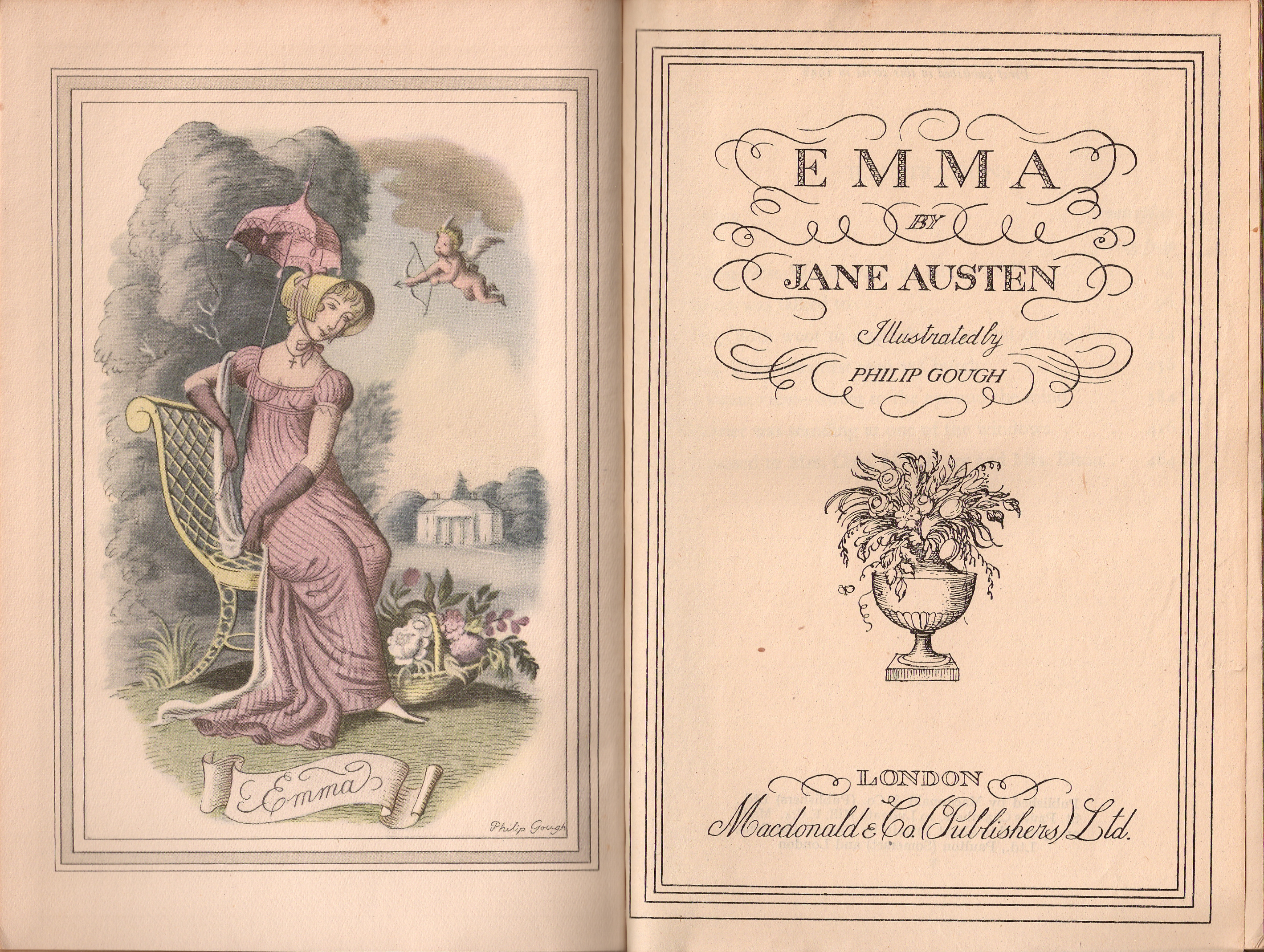
When Macdonald & Co. (London) published its first volume of Jane Austen’s work in 1948, Emma was the chosen work, with Philip Gough as illustrator. It was the 4thvolume in the Macdonald Illustrated Classics series. It is a small book, under 8 inches, bound in red leatherette, with a frontispiece and seven other full-page plates of watercolor drawings by Gough. There is no introduction. Macdonald published its next Jane Austen novel in this series in 1951 – Pride and Prejudice, with illustrations again by Gough and again no introduction.  If you are lucky enough to have all the six volumes published by Macdonald, you will see that they appear to be a set, all with the same binding and all illustrated by Gough – but they were published over a period of years from 1948 to 1961 as follows – with the No. in the Macdonald series in ():

  • 1948 – Emma (No. 4)
  • 1951 – Pride & Prejudice (No. 23)
  • 1957 – Mansfield Park (No. 34); introduction by Q. D. Leavis
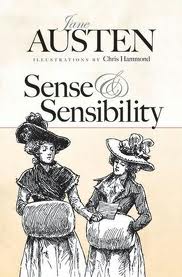
  • 1958 – Sense & Sensibility (No. 37), with Lady Susan and The Watsons; intro by Q. D. Leavis
  • 1961 – Northanger Abbey (No. 40); intro by Malcolm Elwin
  • 1961 – Perusasion (No. 41); intro by Malcolm Elwin

Not sure why Leavis did not do the other introductions – her essays on Jane Austen are magnificent, and a definite must-have for your Austen library. Her Mansfield Park introduction, after stating that MP is “now recognized as the most interesting and important of the Austen novels,” gives us a brief summary of Austen’s life and times, then writes of her theories that Lady Susan is the matrix of Mansfield Park, that Austen was “soaked in Shakespeare,” that the Sotherton sequence  is one of the “most remarkable in any English novel” where all the action is symbolic and how its pattern of events is “exactly and awfully repeated” in the final outcome of the book, and finally how Mansfield Park is really a tragedy “in spite of the appearance of a happy ending.”

All of the novels were published with a stiff clear mylar wrapper with the title and “Illustrated by Philip Gough” in mustard yellow, and “By Jane Austen” in blue, with nothing on the spine but the gilt titles on the red backstrip showing through. These wrappers are nearly impossible to find. I only have the one for my Emma volume.

****************

There is little known about Philip Gough and I cannot find much researching the internet other than he was born in 1908, illustrated a number of children’s books (Alice in Wonderland, Hans Christian Andersen’s Fairy Tales are two examples); this Jane Austen series from Macdonald; and a goodly number of dust jackets for Georgette Heyer’s Regency novels (see below). There is a list of 14 books on Goodreads illustrated by him but this list is not complete – Jane Austen is not listed!)
[ https://www.goodreads.com/author/list/1981672.Philip_Gough ]

It is worth noting that in the introduction to the 1961 Persuasion by Malcolm Elwin (and also quoted by David Gilson in his entry E327 on this edition in his A Bibliography of Jane Austen), Elwin states that the drawings of Hugh Thomson are said to be “too Victorian in their sentimentality to suit the spirit and period of the novels” – and that “Mr. Gough has shown himself a student of the Regency period, and many sound critics have judged him to have succeeded in conveying the subtlety of Jane Austen’s satiric humour.” Gilson also notes a TLS review of this edition (10 November 1961, 810), quoting that “Philip Gough’s illustrations have their own brand of sentimentality, this time of the pretty-pretty sub-Rex Whistler variety.”

[example of a Rex Whistler drawing]

[Source: http://www.theguardian.com/artanddesign/2013/aug/25/rex-whistler-british-artist-exhibition ]

*********************

Illustrating Jane Austen:

Each of the novels begins with a chapter I heading drawing in black and white as well as a drawing on the title page. Emma as the first published of the novels is an exception – there are chapter heading illustrations for each of the odd-numbered chapters; all the other novels have only the one heading chapter I as well as the title page. Each novel has 7 watercolors (Sense and Sensibility only has five; there is one watercolor each for Lady Susan and The Watsons and each begins with a black and white drawing.) I find these watercolor illustrations a little too precious – there is a tendency toward “Pretty in Pink”– as you will see in these examples from each novel in the order of publication below. There is also some rather odd scenes of what Gough chose to illustrate and they are often placed so far from the actual text being quoted that they serve more as a distraction rather than illuminating the story. But these are quibbles – I love this set and am privileged to have it on my shelf – it is almost impossible to find as a full set, and each volume can be quite expensive when located (Emma is the most elusive) – my advice is to buy them when you see them and grin and bear it.

So now for a few examples of Gough’s illustrations from each of the novels:

Emma (1948): Gough definitely equated the Regency period and Jane Austen with the feminine Pink – and in Emma there is a good deal of it!

You can see all the Emma illustrations here, including two of the many chapter headings: https://www.fulltable.com/vts/aoi/g/emma/a.htm

Title page and frontis – notice the Cupid!
“A sweet view…” with what appears to be a Mormon tabernacle standing in for Donwell Abbey

Pride and Prejudice (1951): I have always looked rather wide-eyed at the abundance of Pink in Gough’s Pride and Prejudice especially in this portrait of Mr. Darcy at the pianoforte…!

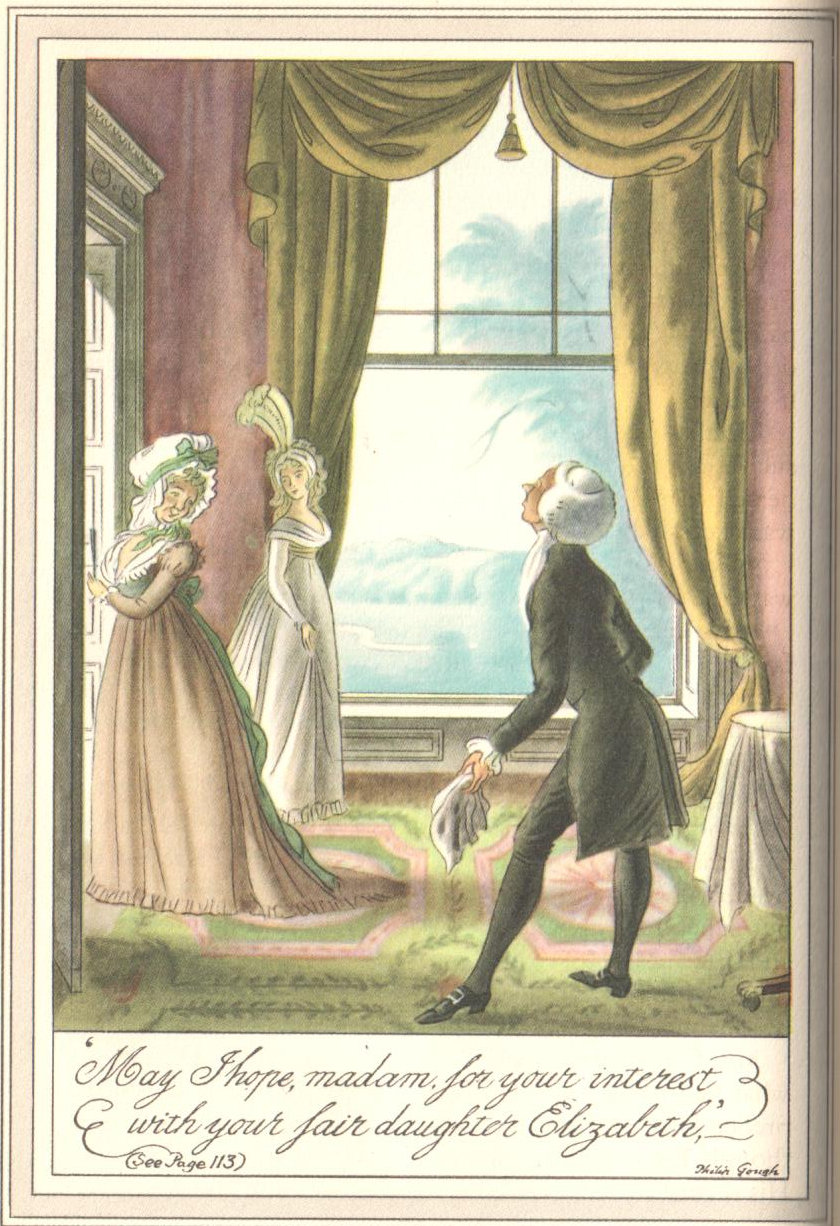
And we must include Gough’s simpering Mr. Collins:

****************

Mansfield Park (1957): here is one example, but as noted above you can see all seven illustrations here: https://janeausteninvermont.blog/2014/12/30/jane-austens-mansfield-park-in-pictures-the-illustrations-of-philip-gough/

Sense and Sensibility (1958):

And of course it is indeed not Willoughby, but Edward…

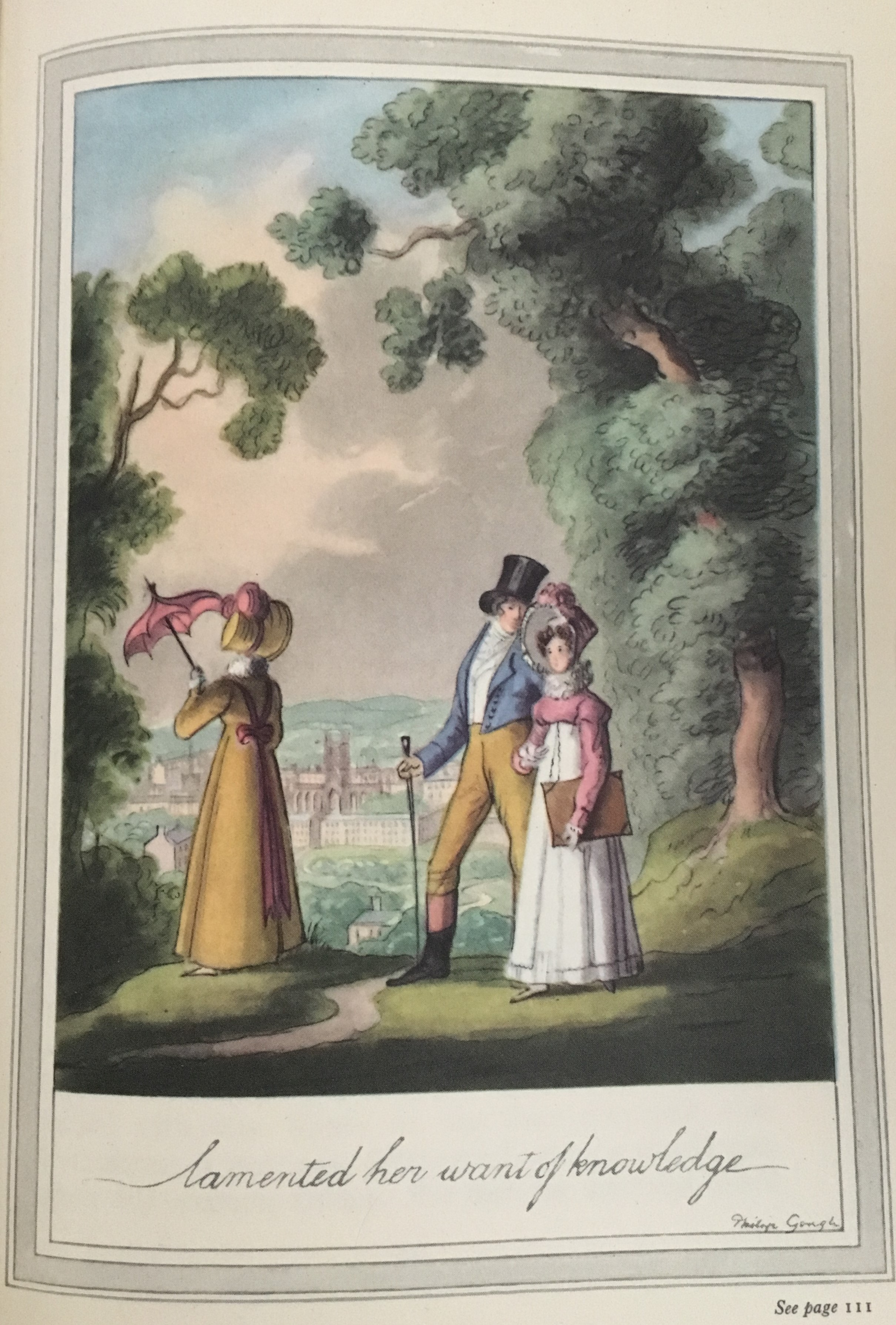
Northanger Abbey (1961):

Persuasion: (1961)

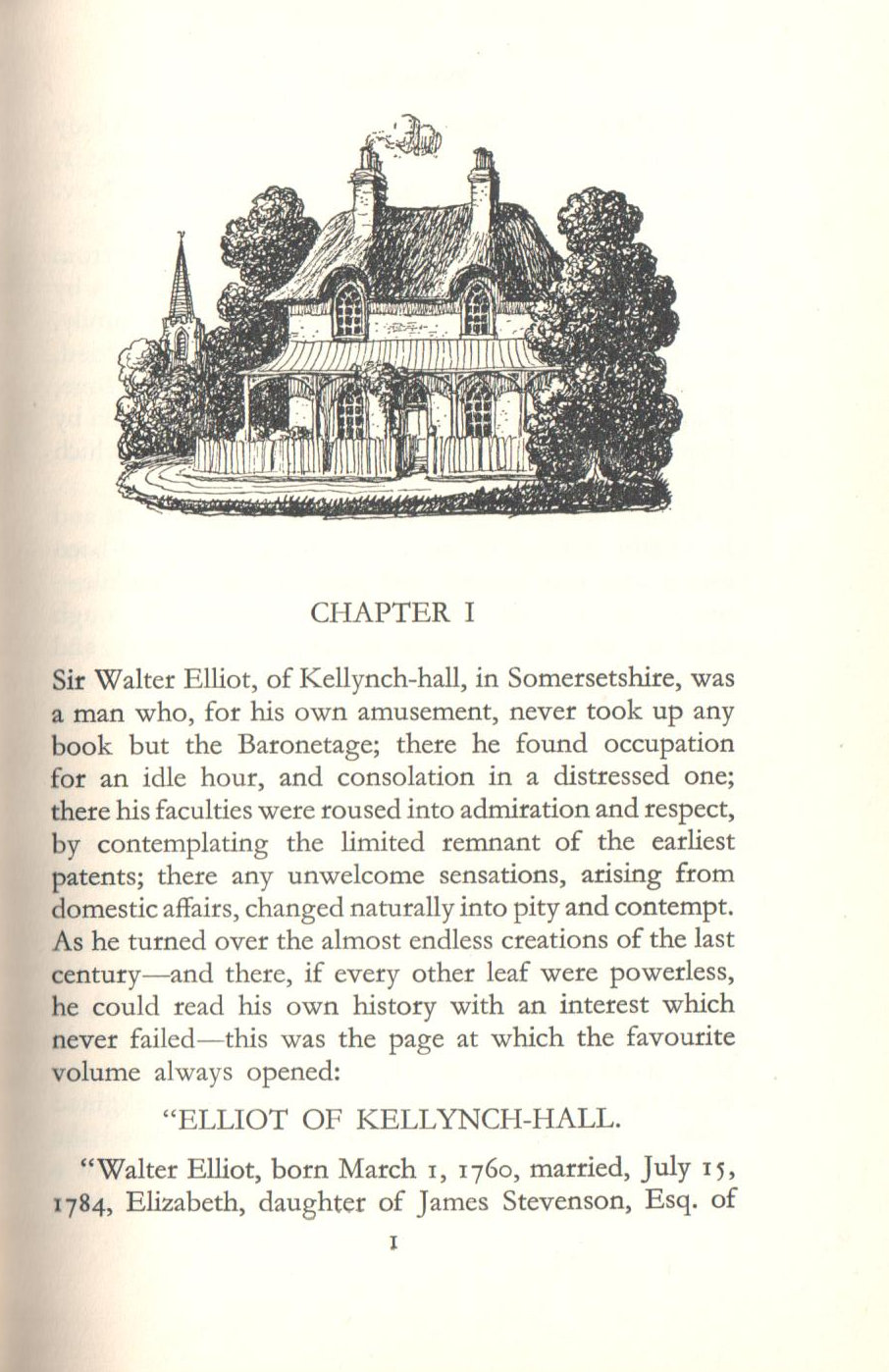
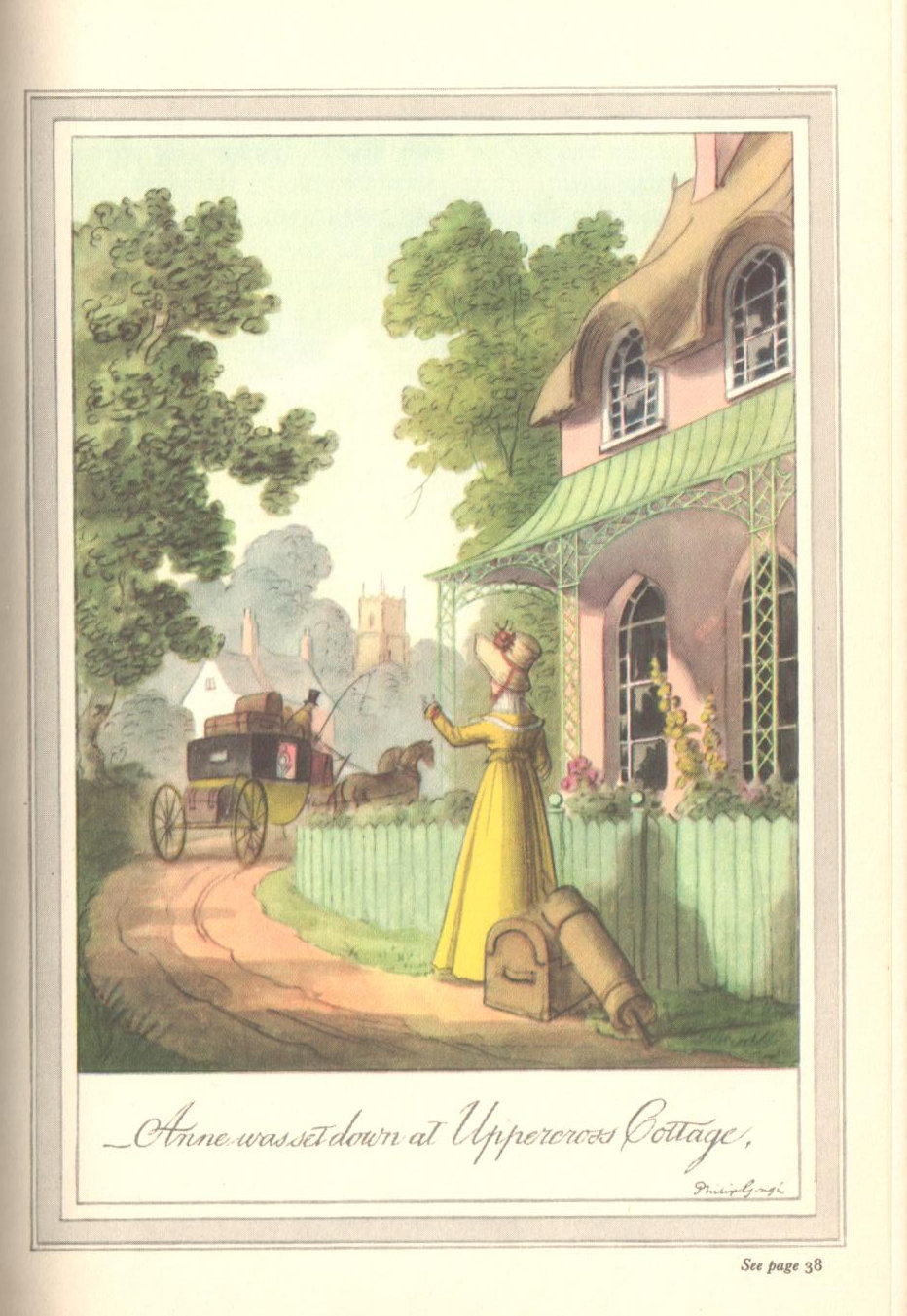
Chapter heading from Ch. I of Persuasion: you would think this should be Kellynch Hall at the start of the novel – but this is certainly not grand enough for Sir Walter! We find on page 42 that it is Uppercross Cottage and here we see it in full color:

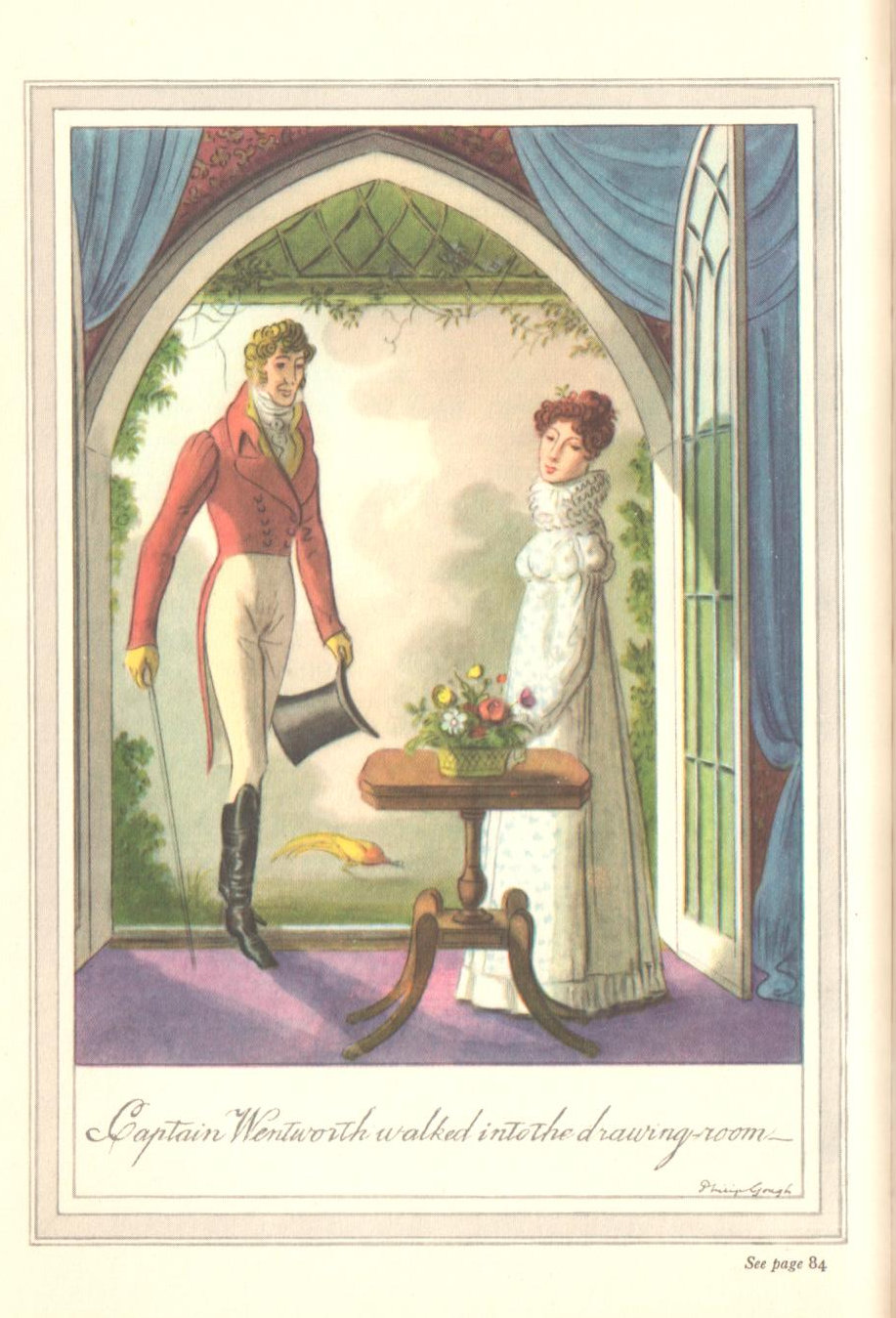
We shall end with Captain Wentworth, because, why not – we see him neither in a navy uniform (this is for another post – how many illustrators portray the good Captain in uniform??), nor is he in Pink, but an odd color nonetheless!

******************

Gough cover illustrations for Georgette Heyer – some examples (I LOVE these!):

Do you have a favorite Gough illustration??

©2021 Jane Austen in Vermont

Books · Collecting Jane Austen · Great Britain - History · Jane Austen · London · Regency England

Collecting Jane Austen: Regency London

Jane Austen and London is a subject that should have its own shelf(ves). This is one of those down the rabbit hole in collecting that will either find you on a completely different path of book buying or become for you “the road not taken.” There will be many such roads if you embark on the adventure of collecting Jane Austen – as you all likely know, it is an endless morass…

Long before I began to collect Jane Austen, I started a collection of books on London – I love London for many reasons – my parents were born in England so I became an anglophile from an early age; I studied in London for a college semester (political science – don’t ask!); and during that semester met my husband, so it serves as a Romantic haven for me. I started collecting any books I could find on London – a heady task (almost as impossible as Jane Austen) – then narrowed it to children’s books about or set in London (many more than you would think) – then when Austen hit my radar I began to focus just on Regency-era London (a bit more manageable but larger than my pocket book or shelf space nonetheless). So I now have rather a mish-mash of various titles, some very collectible and some just commonplace treatises great for reference and beautiful pictures. When I began doing talks on Jane Austen and London, I found a real use for the books I had as well as an excuse to acquire more….and so you see my mighty fall into the Rabbit Hole of collecting….

Today I will just share three titles of the many, for no particular reason other than to show the diversity of what’s out there – I append at the end the very select bibliography handout for the talk I give, though is now a bit outdated and does not contain all the books I have – if you have any favorite books on London, please share the titles in the comments.

1. Regency London, by Stella Margetson. New York: Praeger, 1971 [London: Cassell, 1971].

Margetson wrote a few novels but also a number of books of English social history especially of the late 18th and the 19th-century. This book on Regency London is a short introductory text that covers the basics, with black and white contemporary illustrations throughout:

  1. Carlton House
  2. The Mercantile City
  3. Westminster and Government
  4. The Regent and the Architect
  5. High Society
  6. Entertainment
  7. The Artists and the Writers
  8. The Populace
  9. Some Visitors to London [Jane gets a few pages on her stays in London]
  10. An Expanding City

 FYI: Cassell / Praeger did a series of five books on London:

  • Roman London, by Ralph Merrifield
  • Medieval London, by Timothy Baker           
  • Elizabethan London, by Martin Holmes       
  • Regency London, by Stella Margetson
  • Victorian London, by Priscilla Metcalf

******************

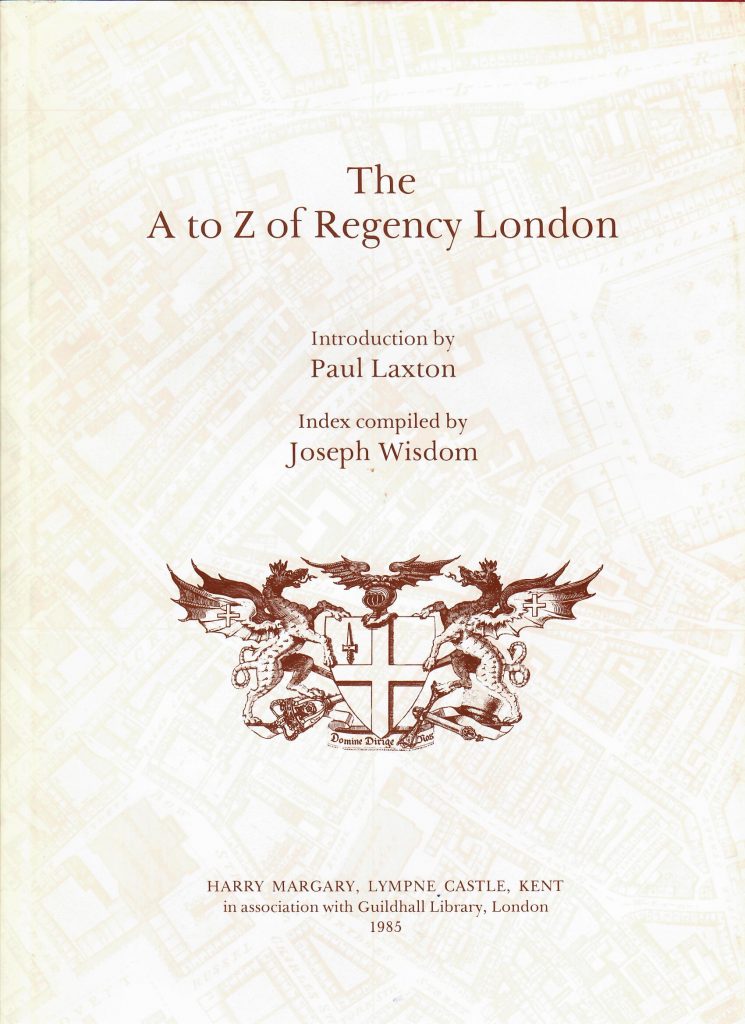
2. The A to Z of Regency London, Introduction by Paul Laxton; index compiled by Joseph Wisdom. Lympne Castle, Kent: Harry Margary, in association with Guildhall Library, London, 1985.

This historical atlas is based on Richard Horwood’s survey of London in 1792-9 and updated by William Faden in 1813 – it shows the streets, lanes, courts, yards, and alleys, but also every individual building with its street number – the 40 sheets of the original Horwood have been photographically reduced, and the index for this edition expands the original by threefold.

The Horwood map is available online in various formats [a terrific one is here: https://www.romanticlondon.org/explore-horwoods-plan/#16/51.5112/-0.0747], but this is a treasure to have close at hand. One can easily trace Austen’s meanderings described in her letters, and follow the many characters in Sense and Sensibility – where they live, visit, and shop – her one novel where London is central to the plot (though it is also where the dilemma of Harriet gets sorted!)

For those of you who love maps, there are others to choose from in this series: The A to Z of Elizabethan London, Restoration London, Georgian London, Victorian London, and Edwardian London (there is also one for Georgian Dublin)

Horwood Map, p 13: Covent Garden

****************

3. One Day in Regency England, by Alastair Scott. Brighton: Robert Tyndall, 1974.

This is a children’s book, and about all of England not just London – but it is a delightful introduction to the period and filled with color and black and white contemporary illustrations; the cover is designed by Gordon King.

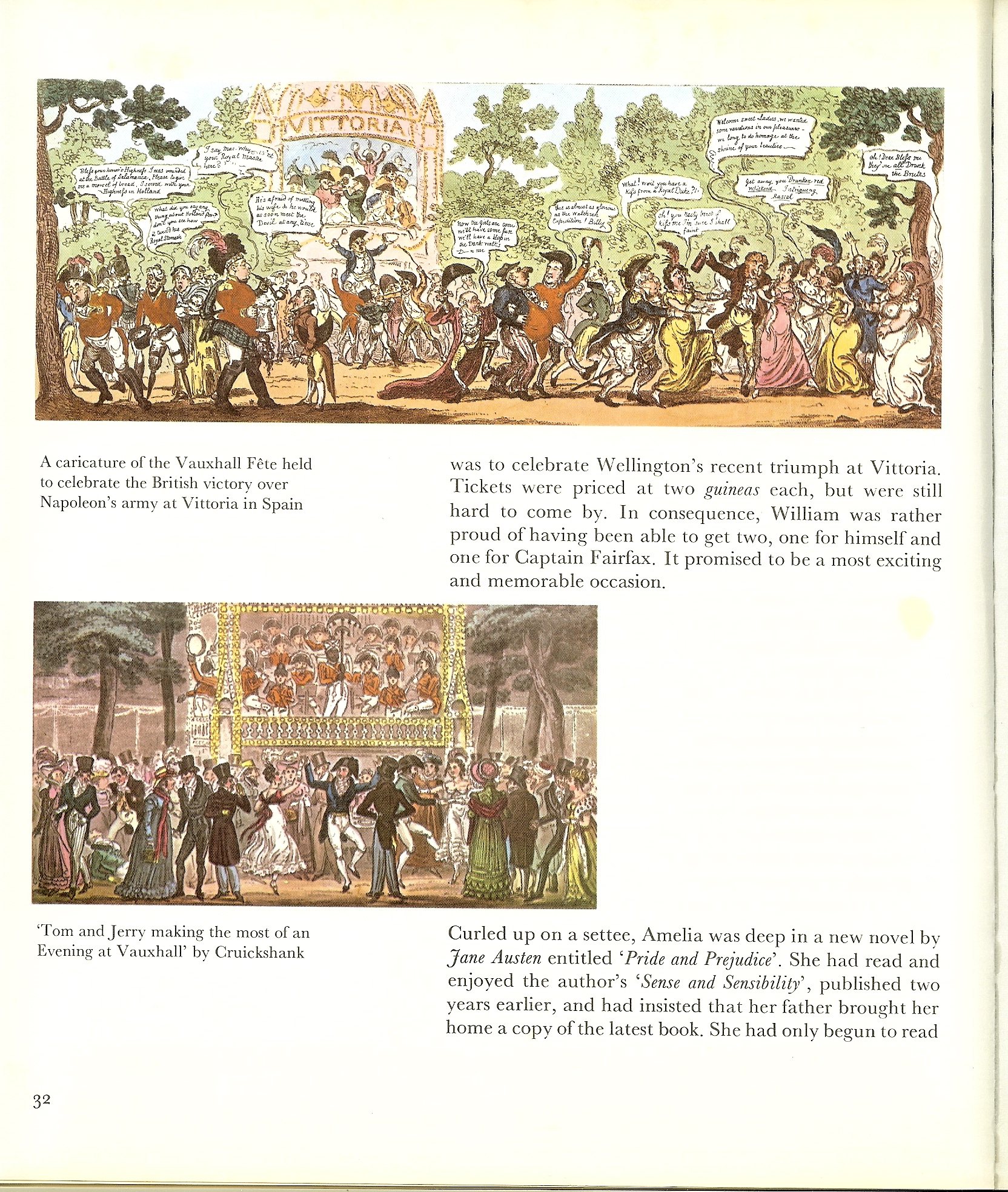
The book presents the day of July 20, 1813 in the lives of several characters, starting in the home of Charles Henry Longhurst – we meet him and his family and their friends and his servants, the children in school, life in the country vs. the day in the City – all presented as what goes on in these individual lives in the Morning, Afternoon and Evening. It is skillfully and entertainingly done and in 48 pages takes us in to traveling carriages, cookery in the kitchen, a dinner party and then off to Vauxhall Gardens, all the while getting a glimpse of those doing all the work behind the scenes! It is quite an exhausting day!

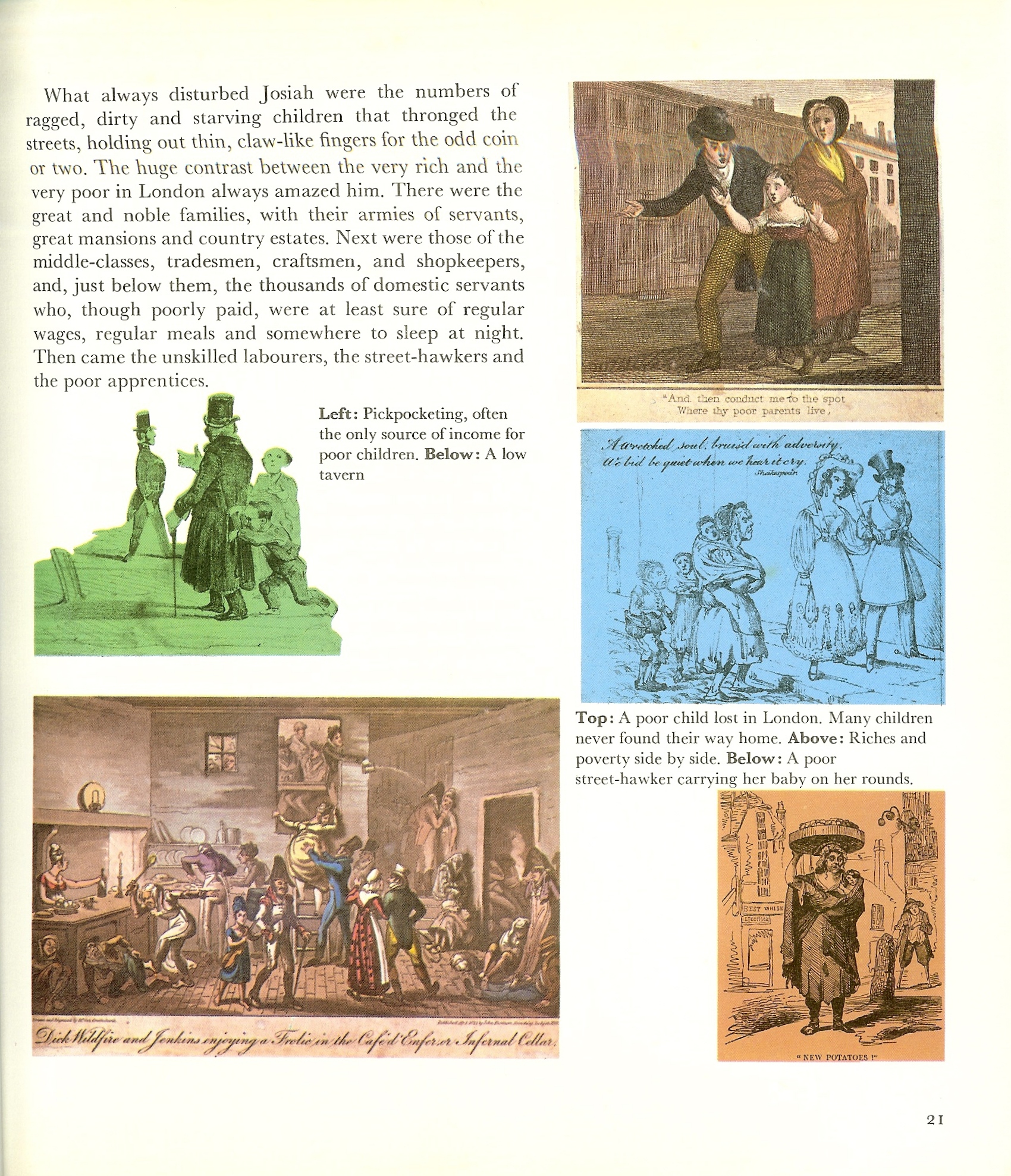
As you can see in the bottom paragraph in the above page image, Scott writes that Longhurst’s daughter Amelia is quite taken with Jane Austen and reading Pride and Prejudice – when suddenly her attention is drawn to the arrival of a small chimney-sweep – and thus we are privy to that bit of history, of poor, young, soot-covered boys and the realities and dangers of that job.

[This Day Book Series also includes a number of other “One Day” adventures in a variety of time periods in England and elsewhere: Shakespeare’s England, Roman Britain, Victorian, Medieval, WWI, WWII, etc.]

***********

As noted, this bibliography is very select but gives you an idea of the variety of works on London and specifically London during Jane Austen’s time – again, it is a bit outdated….

 ‘Jane Austen’s London in Fact and Fiction’: Select Bibliography

The A – Z of Regency London; introduction by Paul Laxton. London: Harry Margary / Guildhall Library, 1985.

Ackermann, R. The Microcosm of London, or London in Miniature. Rpt. ed. London: Methuen, 1904.

Ackroyd, Peter. London: The Biography.  London:  Chatto & Windus, 2000.

Allen, Louise. Walks Through Regency London.  UK: Shire, 2013. [2nd revised ed. 2014]

Borer, Mary Cathcart. An Illustrated Guide to London 1800.  New York:  St. Martin’s, 1988.

Byrne, Paula. Jane Austen and the Theatre.  London: Hambledon, 2002.

Cunningham, Peter. Handbook of London: Past and Present. New ed. London: Murray, 1850.

Easton, Celia. “Austen’s Urban Redemption: Rejecting Richardson’s View of the City.” Persuasions 26 (2004): 121-35.

Edwards, Anne-Marie. In the Steps of Jane Austen. 3rd ed. Newbury, UK: Countryside, 1996.

Elmes, James. A Topographical Dictionary of London and Its Environs. London: Whitaker, 1831. Google Book.

George, Dorothy.  London Life in the XVIIIth Century. London: Kegan, Paul, 1925.

Hibbert, Christopher.  London: The Biography of a City. London: Longmans, 1969.

Hill, Douglas. A Hundred Years of Georgian London from the Accession of George I to the Heyday of the Regency.  London:  MacDonald, 1970.

Hughson, David. Walks Through London. London: Sherwood, Neely and Jones, 1817.

Kaplan, Laurie. “Emma and ‘the children in Brunswick Square.’” Perusasions 31 (2009): 236-47.

Knight, Charles, ed. London. London: Charles Knight, 1841. Ebook, Tufts Digital Library < http://hdl.handle.net/10427/53832  >

Leigh, Samuel. Leigh’s New Picture of London. New ed. London: Leigh, 1827.

Margetson, Stella. Regency London.  New York: Praeger, 1971.

Picard, Liza. Dr. Johnson’s London. London: Weidenfeld, 2000.

_____. Victorian London. London: Weidenfeld, 2005.

Porter, Roy. London: A Social History.  Cambridge: Harvard UP, 1995.

Richardson, John. Covent Garden Past. London:  Historical, 1995.

_____. London and Its People: A Social History from Medieval Times to the Present Day.  London: Barrie & Jenkins, 1995.

Quin, Vera. Jane Austen Visits London. Cappella Archive, 2008.

Saunders, Ann. The Art and Architecture of London: An Illustrated Guide. 2nd ed. Oxford: Phaidon, 1988.

Stabler, Jane. “Cities.” Jane Austen in Context. Ed. Janet Todd. Cambridge: Cambridge UP, 2005. 204-14.

Summerson, John. Georgian London. New ed. New Haven: Yale UP, 2003.

Tannahill, Reay. Regency England.  London: Folio Society, 1964.

Vickery, Amanda. Behind Closed Doors: At Home in Georgian England.  New Haven: Yale UP, 2009.

Watson, Winifred. Jane Austen in London.  Chawton: JAS, 1960.

Whitfield, Peter. London: A Life in Maps.  London: British Library, 2006.

Worsley, Giles. Architectural Drawings of the Regency Period, 1790-1837. London: Andre Deutsch, 1991.

Select Online Sources:

[some are no longer available; there have been many more sources added to the internet since I first compiled this]

Austenonly [Julie Wakefield]: http://austenonly.com/ ; http://ajaneaustengazetteer.com/

Bolles Collection:  History of London.  Tufts Digital Library:  http://dl.tufts.edu/

British History Online: Survey of London:  http://www.british-history.ac.uk/place.aspx?region=1

British Library:  http://www.bl.uk/

Collage, City of London:  http://collage.cityoflondon.gov.uk/collage/app

Geograph Great Britain and Ireland. http://www.geograph.org.uk/

Georgian Index:  http://www.georgianindex.net/

Georgian London:  http://www.georgianlondon.com/

Jane Austen’s London blog (Louise Allen): http://janeaustenslondon.com/

Jane Austen’s World: http://janeaustensworld.wordpress.com/

JASA – Jane Austen Society of Australia.  “Jane Austen in London” Conference. March 2001.  http://www.jasa.net.au/london/index.htm [no longer available]

Lewis Walpole Library:  http://www.library.yale.edu/walpole/

London Ancestor: http://www.londonancestor.com/

London Calling [Tony Grant]: http://general-southerner.blogspot.com/

London Lives 1690-1800: http://www.londonlives.org/

London Museum: http://www.museumoflondon.org.uk/English/

London’s Past Online:  http://www.history.ac.uk/projects/londons-past-online

Mapco:  http://mapco.net/london.htm

Mollands:  http://www.mollands.net/

Nancy Regency Researcher:  http://www.susannaives.com/nancyregencyresearcher/ [no longer available]

Old London Maps: http://www.oldlondonmaps.com/

One London One blog: http://onelondonone.blogspot.com/

Pascal Bonenfant: http://www.pascalbonenfant.com/

Regency Encyclopedia:  http://www.reg-ency.com/

The Republic of Pemberley:  http://www.pemberley.com/

Romantic London: https://www.romanticlondon.org/ [an amazing new site!]

[Compiled by Deborah Barnum. 3-24-11 (partially updated 3/2016)]

©2021, Jane Austen in Vermont
Austen Literary History & Criticism · Books · Collecting Jane Austen · Jane Austen · Jane Austen Circle · Jane Austen's Letters · Publishing History · Social Life & Customs

Collecting Jane Austen: The Letters

Jane Austen to Cassandra, from Sloan St London, 25 April 1811 – British Library

Jane Austen’s Letters are an absolute must-have in your collection. There is nothing like reading these late at night, Jane Austen hovering over your shoulder. Considered rather mundane by the scholarly world when they first appeared – filled as they are with local gossip, fashion and food news, the periodic snide comment about friends and neighbors, and very little about her reading and writing – they have in succeeding years been picked over, and picked over again, to find the minutest insight into Austen and her world.

I find them a pure delight – seeing Austen as she was, mostly in missives to her sister, but also to her brothers, her friends, and publishers – it is like being inside her head at any given moment as she shares her thoughts, observations, and very caustic wit about the goings-on around her – a participant, but always the objective, sometimes judgmental, observer…

One-hundred and sixty letters remain from what has been surmised to have been thousands Austen likely wrote. Cassandra’s “great conflagration” before her own death in 1845 saw the destruction of who knows what else Austen had to say about her own life  – the gaps in dates give the reader such a sense of loss – what happened in those intervening days and years?? – and thus the fabric of novels is made. Of these 160 extant letters, most are scattered around various institutions or remain in private hands – location of each is noted in Le Faye’s exhaustive work.

This example of just her signature sold for over $16,000 in 2017!

So which of the published Letters to have??

Well, a true collector should have them all – you can find a good list in Gilson at G, a mere 8 pages (1982 ed.) with an additional three pages in the revised edition of 1997. While having them all would be a collector’s dream, you at least must have the 4th ed. by Le Faye if you are to understand anything at all about Jane Austen. But here is my list of the basic should-haves:

1. 1817: Henry Austen’s “Biographical Notice” postscript dated 20 December 1817 – Henry included a few extracts from her letters in this notice that appeared in the first edition of Northanger Abbey and Persuasion (London: John Murray, 1818).

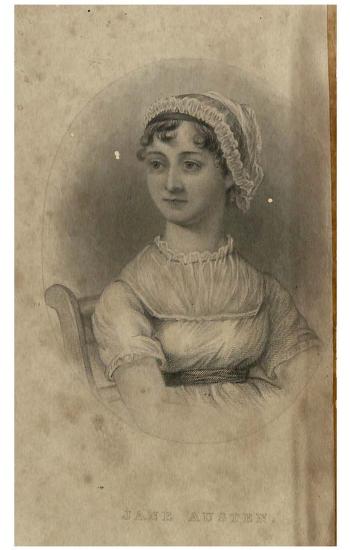
2. 1870: James Edward Austen-Leigh, A Memoir of Jane Austen (London: Bentley, 1870) – includes extracts and some letters in their entirety.

Frontispiece to the Memoir – the prettified Jane

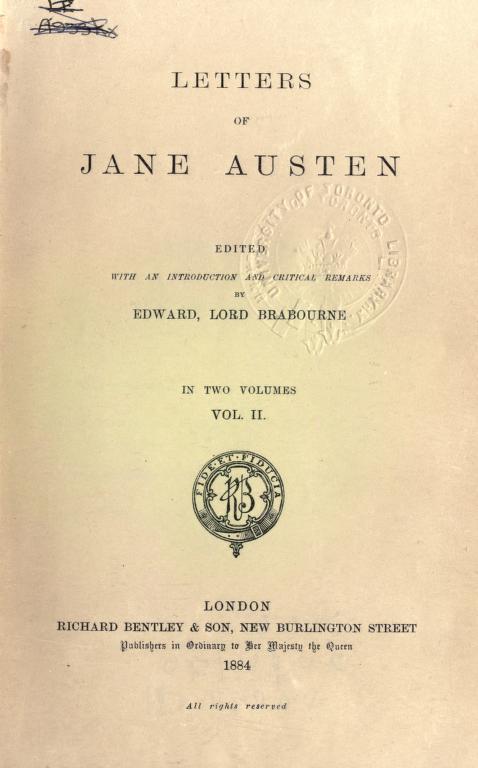
3. 1884: The Letters of Jane Austen, edited with an introduction and critical remarks by Edward, Lord Brabourne (London: Bentley, 1884). Edward Knatchbull-Hugessen, son of Austen’s niece Fanny Knight, published 96 of the letters left to him by his mother – mostly includes letters to Cassandra, but also to Fanny, Anna Lefroy, and the two letters written by Cassandra on Austen’s death.

You can read them all here: https://en.wikisource.org/wiki/Letters_of_Jane_Austen_(Brabourne)
or here: https://pemberley.com/janeinfo/brablets.html

For a fascinating history of an Austen family-owned and annotated copy of these Letters, you can read Edith Lank’s account of her copy here:

“Family and Scholarly Annotations in Lord Brabourne’s Letters: Adventures of an Amateur Academic,” by Edith Lank. Persuasions 30 (2008): 76-87 – citation only, full–text unavailable.

But Lank also made a list of all the annotations online in POL 29.1 (2008), which you can read here: http://www.jasna.org/persuasions/on-line/vol29no1/lank.html

4. 1906: Jane Austen’s Sailor Brothers, by John Henry Hubback and Edith Charlotte Hubback (London: John Lane, 1906) – this biography of Francis and Charles Austen includes for the first time Jane’s letters to her sailor brothers.

5. 1913: Jane Austen: Her Life and Letters, A Family Record, by William Austen-Leigh and Richard Arthur Austen-Leigh (London: Smith-Elder, 1913) – quoted from all the letters known at that time.

6. 1924: Five Letters from Jane Austen to her Niece Fanny Knight, printed in facsimile (Oxford: Clarendon, 1924) – the full text of the letters from Austen to her niece (they were incompletely printed in Brabourne’s collection.

7. 1925: The Letters of Jane Austen, selected with an introduction by R. Brimley Johnson (London: John Lane, 1925) – a selection of 44 letters from the Brabourne Letters, The Sailor Brothers, and the Austen-Leigh Life.

Chapman, Letters, 1932

8. 1932: Jane Austen’s Letters to Her Sister Cassandra, collected and edited by R. W. Chapman (Oxford: Clarendon, 1932) – the first definitive edition, printed from the actual manuscripts where possible with those letters not accessible taken from Brabourne. There was a 2nd ed. published in 1952 with the addition of 6 more letters but few other changes. Chapman also published a selection of the letters (about one-third) in 1955, and again in 1985 with an introduction by Marilyn Butler.

9. 1981: Five Letters from Jane Austen to Her Sister Cassandra, 1813, with an introduction by David Gilson (Brisbane: Lock’s Press, 1981) – a limited edition of 60 copies.

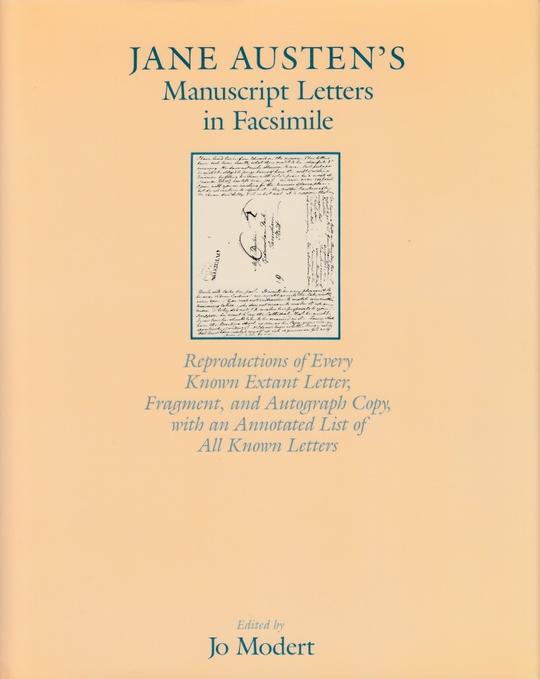
10. 1990: Jane Austen’s Manuscript Letters in Facsimile, edited by Jo Modert (Carbondale: Southern Illinois UP, 1990 – a reproduction of all letters that could be located – the introduction is invaluable and seeing each letter in its original state is fascinating.

11. 1990: My Dear Cassandra…a collection of Jane Austen’s Letters selected and introduced by Penelope Hughes-Hallett (London: Collins and Brown, 1990) – letters selected from the Brabourne Letters, not complete, but it does include many fabulous contemporary illustrations.

12. 1992: “Seven letters from Austen to Francis and Charles” published as a keepsake for those at the JASNA AGM (Alto Loma: Bookhaven Press, 1992) – a miniature booklet limited to 300 copies, these were given to attendees of the 1992 AGM in Santa Monica, CA – the theme was “The Letters, Focusing on Travel and the Sea.”

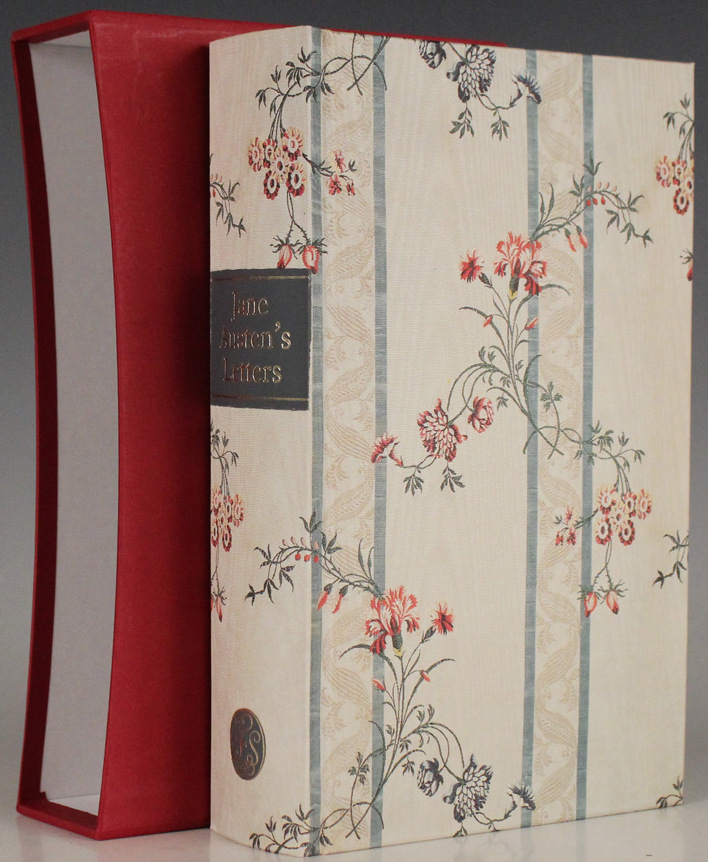
13. 1995: Jane Austen’s Letters, New Edition, collected and edited by Deirdre Le Faye (Oxford: Oxford UP, 1995) – a 3rd edition of the Chapman Letters but with Le Faye’s ceaseless and energetic scholarship into those not fully identified by Chapman as well as the addition of 12 more letters – Le Faye’s notes are mine of information on provenance, current location of each letter (if known), every detail on people and places and allusions are noted; includes biographical and topographical indexes. The lacking full subject indexes found in Chapman were added into the 4th edition (see below)…

There is also a fine publication of this 1995 edition by the Folio Society:

14. 2004: Selected Letters [of Jane Austen], selected with an introduction and notes by Vivien Jones (Oxford: Oxford UP, 2004) – based on the 3rd ed. of the letters by Deirdre Le Faye from 1995. You need these paperback editions so you have something to write-in and underline (!).

14. 2011: Jane Austen’s Letters, 4th ed., collected and edited by Deirdre Le Faye (Oxford: Oxford UP, 2011; paperback ed. 2014) – no new letters have been discovered since the 1995 ed, but much additional information has been added regarding Austen’s life and her endless references in the letters. Indexes and notes have been updated, as well as the addition of the all-important Subject Index.

There are other editions out there – I also have the small Oxford World Classics blue hardcover of Chapman Letters with the dust jacket, not often seen – if you should find this, buy it immediately…

[Please note: Our house is being renovated and all my books are packed up – so while some of these images are mine, I had to also mine the internet for others!]

Do you have a favorite edition of the Letters??

©2021 Jane Austen in Vermont
Austen Literary History & Criticism · Books · Collecting Jane Austen · Decorative Arts · Domestic Arts · Fashion & Costume · Georgian England · Georgian Period · Great Britain - History · Jane Austen · Jane Austen Circle · Regency England · Social Life & Customs · Victorian Period

Collecting Jane Austen: ‘The Accomplished Lady’ by Noël Riley

“It is amazing to me,” said Bingley, “how young ladies can have patience to be so very accomplished as they all are.”

   “All young ladies accomplished! My dear Charles, what do you mean?”

   “Yes, all of them, I think. They all paint tables, cover screens, and net purses. I scarcely know any one who cannot do all this, and I am sure I never heard a young lady spoken of for the first time, without being informed that she was very accomplished.”

   “Your list of the common extent of accomplishments,” said Darcy, “has too much truth. The word is applied to many a woman who deserves it no otherwise than by netting a purse or covering a screen. But I am very far from agreeing with you in your estimation of ladies in general. I cannot boast of knowing more than half a dozen, in the whole range of my acquaintance, that are really accomplished.”

   “Nor I, I am sure,” said Miss Bingley.

“Then,” observed Elizabeth, “you must comprehend a great deal in your idea of an accomplished woman.”

   “Yes, I do comprehend a great deal in it.”

   “Oh! certainly,” cried his faithful assistant, “no one can be really esteemed accomplished who does not greatly surpass what is usually met with. A woman must have a thorough knowledge of music, singing, drawing, dancing, and the modern languages, to deserve the word; and besides all this, she must possess a certain something in her air and manner of walking, the tone of her voice, her address and expressions, or the word will be but half deserved.”

   “All this she must possess,” added Darcy, “and to all this she must yet add something more substantial, in the improvement of her mind by extensive reading.”

   “I am no longer surprised at your knowing only six accomplished women. I rather wonder now at your knowing any.”

   “Are you so severe upon your own sex as to doubt the possibility of all this?”

   “I never saw such a woman. I never saw such capacity, and taste, and application, and elegance, as you describe united.”

[Pride & Prejudice, Vol. 1, Ch. 8]

*********************

And so, to truly understand what Mr. Darcy is driving at, to understand anything about Jane Austen’s world, you need to study this quite formidable lady, if indeed such a one existed! – and there is no better book on the subject than Noël Riley’s The Accomplished Lady: A History of Genteel Pursuits c.1660-1860 (Oblong, 2017).

“This is a study of the skills and pastimes of upper-class women and the works they produced during a 200-year period. These activities included watercolours, printmaking and embroidery, shell work, rolled and cut paper work, sand painting, wax flower modelling, painting on fabrics and china, leather work, japanning, silhouettes, photography and many other activities, some familiar and others little known.

The context for these activities sets the scene: the general position of women in society and the constraints on their lives, their virtues and values, marriage, domestic life and education. This background is amplified with chapters on other aspects of women’s experience, such as sport, reading, music, dancing and card-playing.” [from the book jacket].

Table of Contents:

Introduction

1.  A Woman’s Lot
2.  Educating a Lady
3.  Reading and Literary Pursuits [my favorite chapter]
4.  Cards, Indoor Games and Theatricals
5.  The Sporting Lady
6.  Dancing and Public Entertainment
7.  Music
8.  Embroidery
9.  Threads and Ribbons
10. Beadwork
11. Shellwork
12. Nature into Art
13. Paperwork
14. Drawing and Painting
15. Creativity with Paints and Prints
16. Japanning
17. Penwork
18. Silhouettes
19. Photography and the Victorian Lady
20. Sculpture, Carving, Turning and Metalwork
21. Toys and Trifles.

Includes extensive notes, an invaluable bibliography of primary and secondary sources, and an index.

I have mentioned before that in collecting Jane Austen, you will often go off into necessary tangents to learn about her Life and Times – this can take you in any number of directions, but understanding the Domestic Arts of the Regency period is an absolute must – and there are MANY books on the subject, cookery alone could fill shelves. But here in this one book we find a lavishly illustrated, impeccably researched study of all the possible activities a lady of leisure [no cookery for My Lady] can get herself caught up in….whether she becomes accomplished or not is beyond our knowing, but certainly Mr. Darcy would find at least ONE lady in these pages who might meet his strict requirements, despite Elizabeth’s doubting rant.

The Georgian Society of East Yorkshire offers a nice review here with a sample page: http://www.gsey.org.uk/post/992/book-review-the-accomplished-lady-a-history-of-genteel-pursuits-c-16601860-by-nol-riley

It is always a worthwhile effort to check the index of every book you pick up to see if Jane Austen gets a mention. And here we are not disappointed – Austen shows up on many pages, and five of her six novels are cited in the bibliography – all but Persuasion for some odd reason – one would think Anne Elliot’s skills at the pianoforte would have merited a mention?

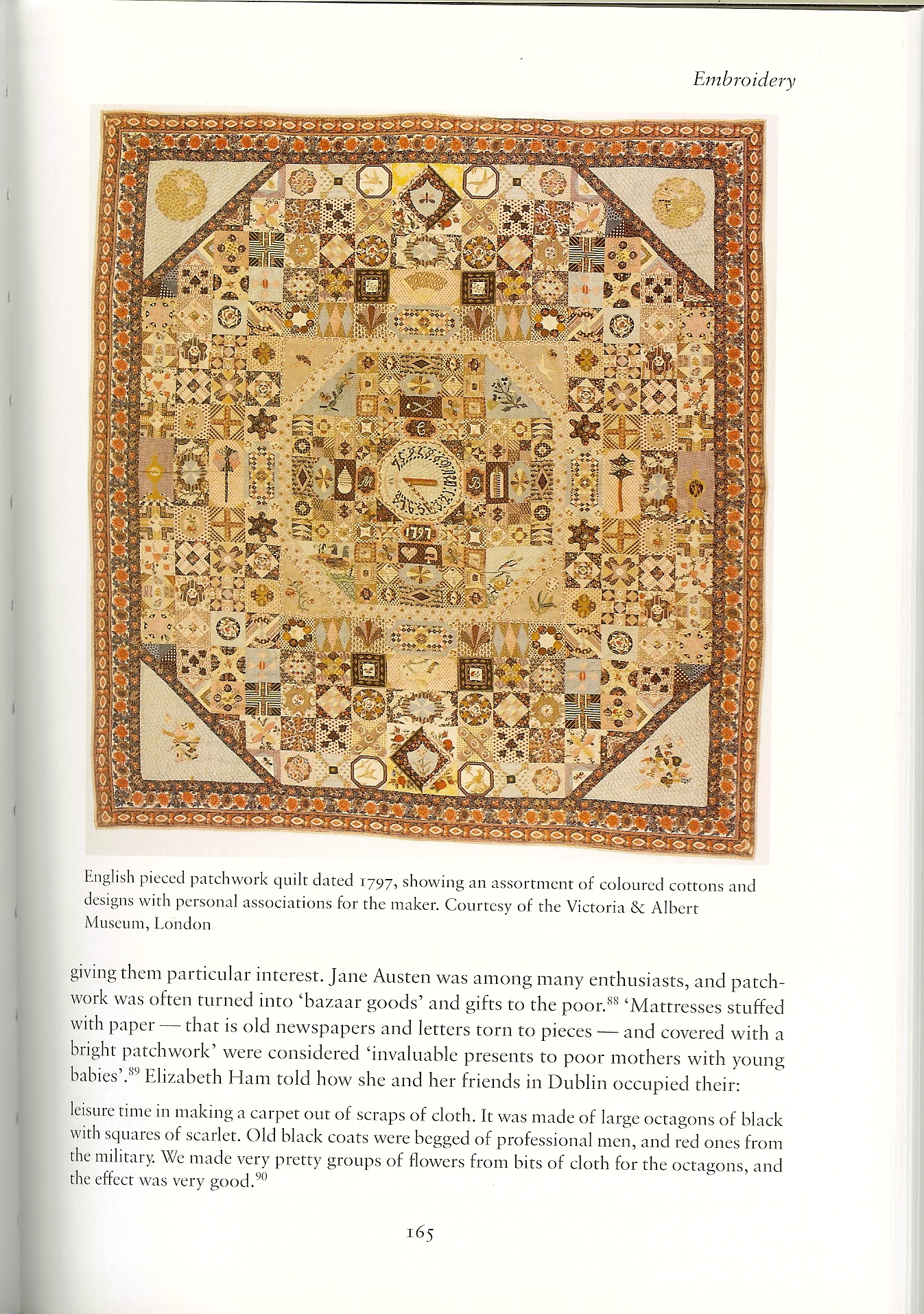
This image of page 165 quotes Austen about patchwork when she writes to Cassandra on 31 May 1811:“Have you remembered to collect peices for the Patchwork?”

So, let’s stop to think about the varied accomplishments of Austen’s many female characters…anyone want to comment and give a shout out to your own favorite and her accomplishments / or lack thereof? Is anyone up to Mr. Darcy’s standards?

©2021 Jane Austen in Vermont