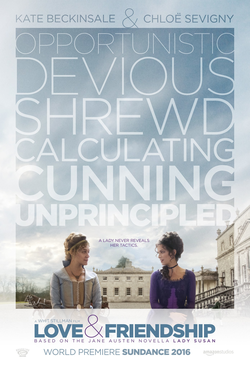
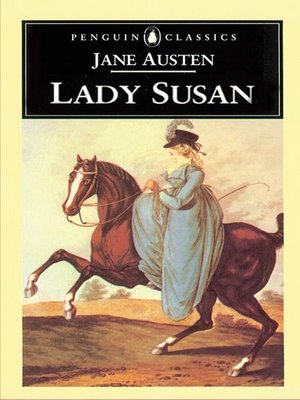
Just posting here all the reviews that have been piling in from Sundance – we have been waiting all year for this film – from the very first announcement that Whit Stillman was going to film Jane Austen’s Lady Susan, but bizarrely calling it “Love & Friendship.” Starring Kate Beckinsale and Chloë Sevigny.
Now if you know Austen’s Juvenilia, you know that “Love & Freindship” is one of her funnier over the top pieces (my favorite line: “run mad as often as you chose, but do not faint….”). It has nothing to do with Lady Susan of course – but whatever the reason for the title shift,* by all accounts it is a terrific film, with a Heroine just like other of Austen’s delicious “baddies” – Lady Susan the queen of them. At least there are no zombies to worry about…
*In the above cited interview, Stillman explains the title change:
She had no title on it. I’ve seen the manuscript. It’s in the Morgan Library. Her nephew, when he published it in 1871, put the title Lady Susan on it. Austen had sort of shifted as she went along from character names to imposing noun names for titles. Sense and Sensibility was supposed to be called Elinor and Marianne. So we took the title from a juvenile short story to give it that Austen sound.
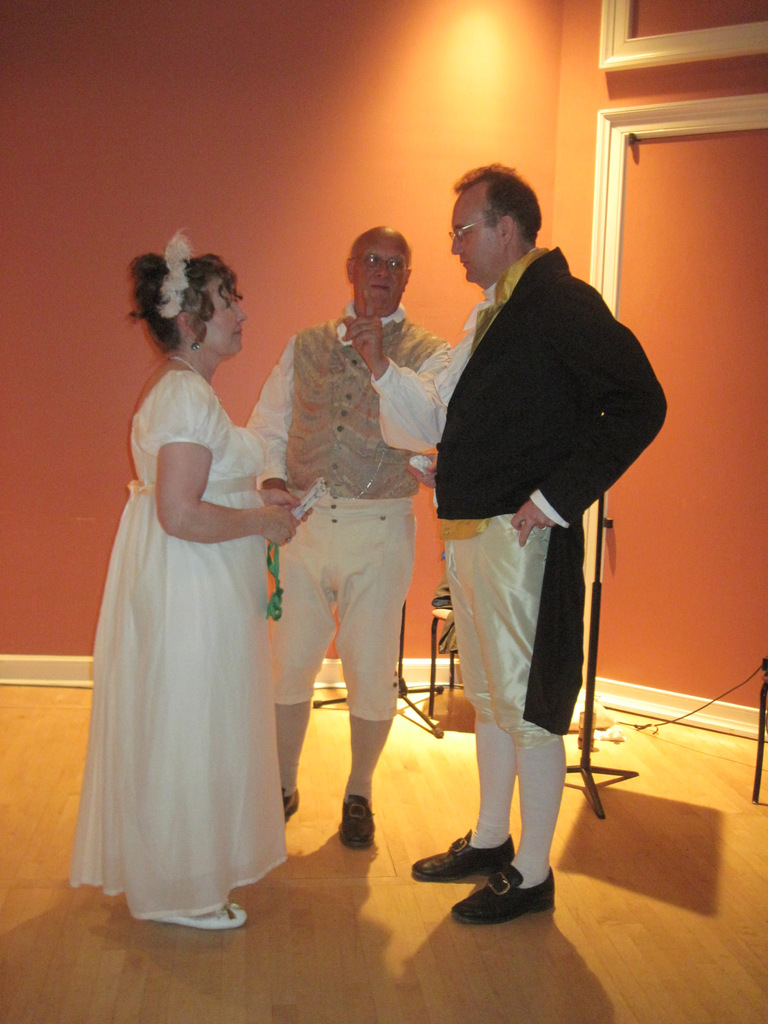
* Our Regency Ball features Val Medve and the Burlington Country Dancers, music by “Impropriety” – Aaron Marcus (piano), Laura Markowitz (violin) and Ana Ruesink (viola) – instruction given, all skill levels welcome!
** We ask you to tell us in advance your favorite scene in the 1995 Pride & Prejudice – we will be showing and discussing these during the Tea.
We welcome today Margaret Harrington of JASNA-Vermont as she shares her thoughts on and several pictures from the 2015 Jane Austen Summer Program at the University of North Carolina, Chapel Hill that she attended in June.
**********
My Rave for the 3rd Annual JASP
“EMMA At 200”
The Jane Austen Summer Program 2015 University Of North Carolina, Chapel Hill
by Margaret Harrington, JASNA-Vermont
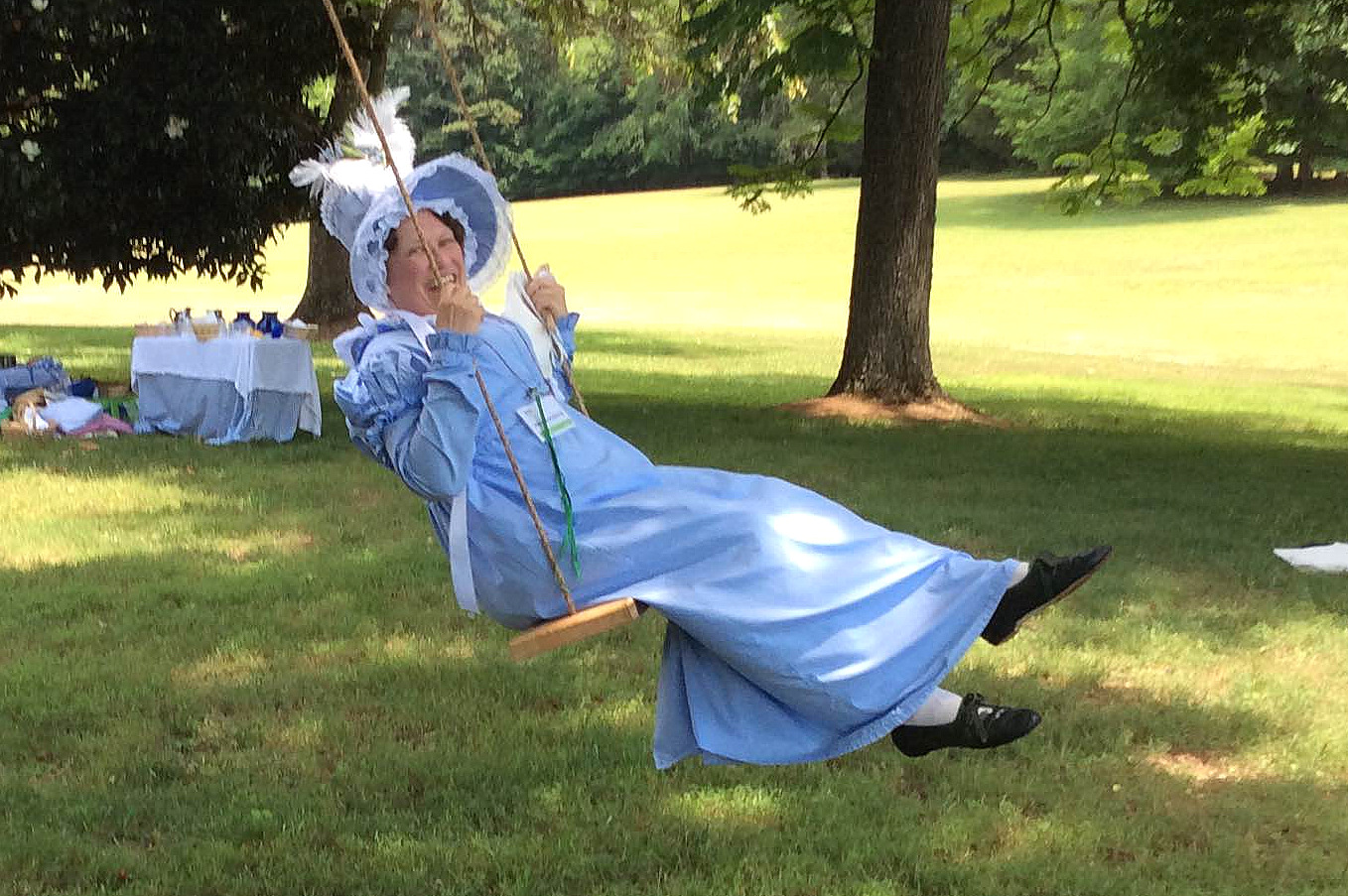
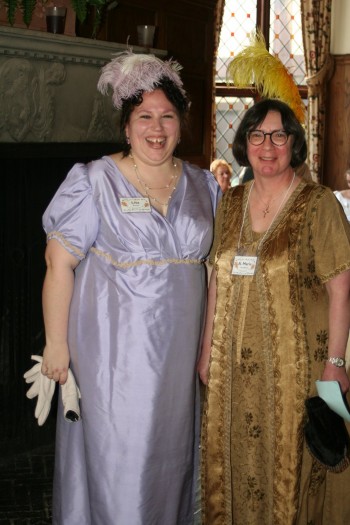
Hope G – JASNA-Vermont fashionista
I had an excellent experience at this year’s Jane Austen Summer Program because I gained new insights into the marvelous book, Emma, and had a good time doing it. The JASP co-directors, Dr. Inger Brody and Dr. James Thompson, planned everything so astutely that each lecture flowed naturally into the following event and led participants happily up the road to new discoveries about Jane Austen. In my opinion, Emma is Austen’s most deeply realized character and she lives and breathes in Austen’s most intricately structured rural society, so it was a consummate pleasure to attend this conference and to come away with a deeper understanding of the book.
Participants were greeted warmly by the graduate students and volunteers. Every day and evening of the conference we were engaged with knowledgeable lecturers and wonderful events, plus dance instruction for the ball.
Highlights were Game Night, the Box Hill Picnic at Ayr Mount, and of course the welcoming dinner, the Duchess of Richmond’s Regency Ball and a delightful production of Austen’s “Henry and Eliza” by the UNC players.
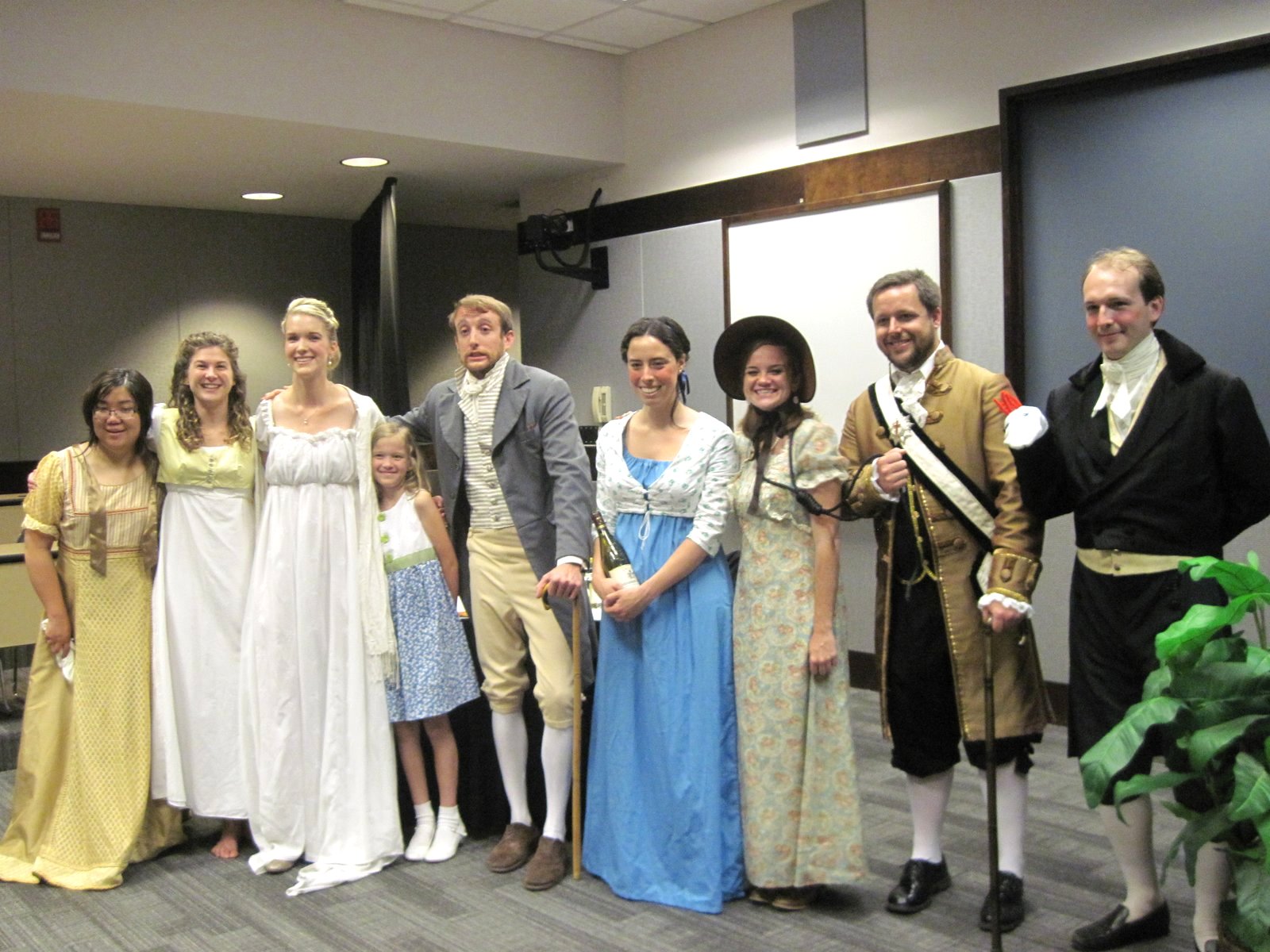
These pictures feature Hope Greenberg from JASNA-Vermont who wore different costumes of her own making for every occasion.
I certainly plan to return for next year’s JASP and Mansfield Park.
Hope turbaned…
Strawberries!
Hope off her swing
Box Hill anyone?
Presenting “Henry and Eliza”
Deciphering Emma‘s many puzzles
Off to the Duchess of Richmond’s Regency Ball…
Learning to not dance like a savage … (oops! wrong book…)
“…she had herself the highest value for Elegance…”
********************
Thank you Margaret for sharing your photos with us (but alas! none of you!) – it looks to have been a grand time!
For more information on the JASP “Emma at 200” you can see the full schedule here. But rather than feeling sad that you missed it all this year, you can already start planning to participate in next year’s JASP – read about it here:
The JASP website is worth a visit: it offers several teaching guides based on the various talks at JASP: on food, medicine, games, and class status in Emma, Austen’s use of free indirect discourse, an adaptation of “Henry and Eliza” – among others – good stuff here! http://janeaustensummer.org/teaching-guides/
And finally, JASP offers a replica of this beautiful Jane Austen bracelet as a fund-raiser for the Jane Austen Summer Program. Cost is $120.00 plus $5 shipping fees. You can order it here.
c2015 Jane Austen in Vermont, photos courtesy of Margaret Harringon
When Jane Austen sold the copyright of her Pride and Prejudice outright to her publisher Thomas Egerton, she, we now know, made the biggest mistake of her life. But hindsight is a dangerous beast, and easy for us to lament this 200 years later. We could also regale Cassandra for selling all the remaining copyrights to Richard Bentley in 1832 for a meager £210 pounds (Bentley also paid the Egerton estate £40 for the P&P copyright). She must have thought it a good bargain at the time – how was she to know that her sister’s novels would continue to be read through the generations, thus granting heirs much in royalty checks.
We don’t really know why Jane Austen chose to sell the Pride & Prejudice copyright rather than publish on commission, the way she published her other works; in all likelihood she didn’t want to take the financial risk. But she really had four options to publish at the beginning of the 19-th century, as did other authors of this time:
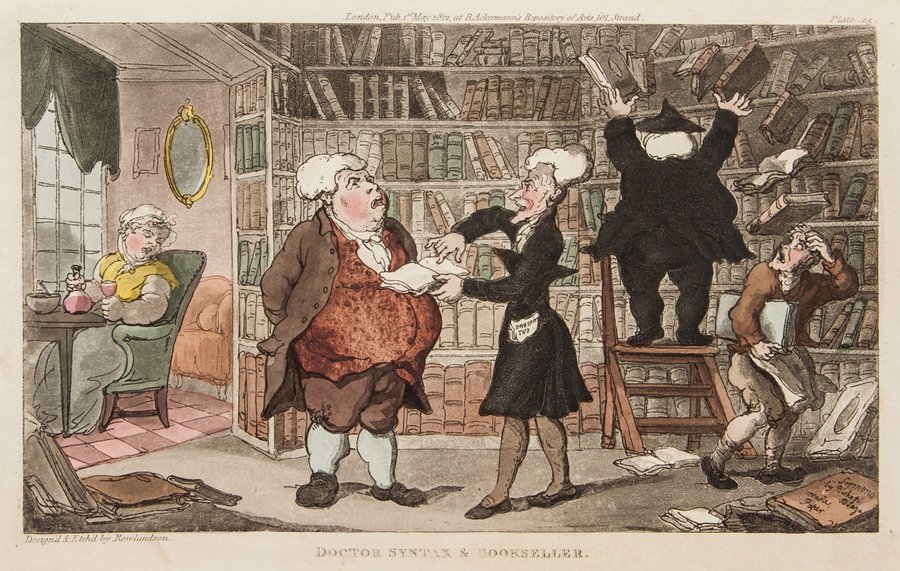
Thomas Rowlandson’s “Dr. Syntax & Bookseller” from William Combe’s The Tour of Dr. Syntax in Search of the Picturesque (1812)
Profit-sharing: the publisher paid for printing and advertising costs; these expenses were repaid as books sold and any profit above those production costs was shared with the author; any loss was absorbed by the publisher. This was a popular way of publishing for unknown authors. Jan Fergus notes that if Austen had used this method for the four novels published in her lifetime, she would have made more money than she did. (Fergus, p. 16)
–
Commission: the author was responsible for all publication expenses – paper, printing, advertising – the publisher distributed the books and took a 10% commission on all copies sold. The author took all the risk here, as if not enough copies sold to cover the costs, the author would be responsible. Austen published all her books this way, excepting her Pride and Prejudice… and from her letters we know that her brother Henry Austen was her financial backer. This seems to have been the most popular way to publish in the early 19-th century, especially for women writers. And it is interesting to note that this form of publishing is in vogue again! – just see all the number of self-published works that appear on Amazon!, this “vanity” publishing no longer less respected than publishing in the traditional way.
–
Sale of Copyright: the author sells the copyright outright to the publisher and is no longer involved. Here the publisher takes all the risk, especially for an unknown author, but also has control over any future editions and can benefit if the book sells well. In the case of P&P, sold to Egerton for £110, Austen would have done better to have published by commission – it went into three editions, though she had no further input in making changes to the text.
–
Subscription: the author would solicit subscribers, who would pay in advance for the promised work and have the privilege of seeing their name in print in the list of subscribers in the work itself. This option usually only worked for well-known and successful authors, or for a work that people might want to see their name identified with. We can look at the concept of modern-day “crowd-funding” as an example of how this works.
***************
It is this last option of publishing that holds our interest today. Jane Austen published anonymously, “By a Lady” (on Sense and Sensibility), or “By the Author of ‘Sense and Sensibility’” (on P&P) (see note below) – she was an unknown authoress and would have had difficulty finding enough willing and wealthy donors to publish by subscription. But Frances Burney, a very successful author at the time, did publish her Camilla (1796) by subscription, the only work she did this way – and this first edition is notable because among the list of 1,058 subscribers (Dow, p. 38) is the name of “Miss J. Austen, Steventon,” only one of two times that Austen’s name appeared in print during her lifetime. She likely paid a guinea for the privilege (Dow, p. 40), and just look at the list on this one page of the illustrious fellow-subscribers!
I have thought for a number of years that this was the only place to find Austen’s name, but Gillian Dow in her article on “Jane, the Subscriber” notes that there is another such title: the non-fiction work Two Sermons by the Rev. T. Jefferson, published in 1808, and where her name is listed as “Miss Jane Austen” and her brother and sister-in-law as “Mr and Mrs Edward Austen of Godmersham.” A look at her letters finds Austen’s references to this Thomas Jefferson (1760-1829) of Tonbridge:
I have read Mr. Jefferson’s case to Edward, and he desires to have his name set down for a guinea and his wife’s for another, but does not wish for more than one copy of the work. [Letter 52. Le Faye, Letters, 4th ed. (2011), p. 132-3.]
And later:
I have now some money to spare, & I wish to have my name put down as a subscriber to Mr. Jefferson’s works. My last Letter was closed before it occurred to me how possible, how right, & how gratifying such a measure would be.” [Letter 54, p. 138]
Thus, we see Jane Austen’s name in print again – one wonders if others might yet surface!
Becoming a Subscriber at Chawton House Library
Chawton House Library
The point of all this is to tell you about a program at Chawton House Library, where you too can become a subscriber! An age-old way of publishing, where you can see your name in print, acquire a copy of a reprint edition of an interesting old title, and support the Chawton House Library in the bargain. Slightly more than a guinea is required of you, but not too much more (a minimum of $50)… You can read about the program and how to donate at the Chawton House Library website here: http://www.chawtonhouse.org/?page_id=58839
“Further to the success of our most recent subscriber publication, The Knight Family Cookbook, which thrilled Subscribers and has proven to be one of the most purchased books in our shop, we are now seeking to progress our latest publication- The Duties of a Lady’s Maid; with directions for conduct, and numerous receipts for the toilette (1825). This facsimile edition, with a new introduction by Mary Ann O’Farrell, will be a fascinating book certain to entertain those who would welcome guidance on how to behave as maid to Lady Catherine De Bourgh – or indeed those who wish to emulate Downton Abbey’s Miss O’Brien. Originally published in 1825, it is a rather rare conduct book offering a unique insight into the lives and duties of servants, as well as the trends and tastes of the Georgian age. Readers can learn how religion should direct a maid in her work, which character traits are essential, and how to keep family secrets. Amusing practical instructions, such as how to dress your lady using padding and bandages to improve her figure and tips on the most advantageous way to display the forehead, are also to be enjoyed.”
[From the CHL website]
Let’s take a peek into this book that you can own in a facsimile edition – no author is noted as you can see: The Duties of a Lady’s Maid; with directions for conduct, and numerous receipts for the toilette (1825).
title pageFrontispiece
Now, I must tell you that you can find this book on Google Books, or at the Hathi Trust – but where is the fun in that? You need this book on your shelf, not only because it is a rare book (it only seems to have been published in this one edition of 1825), but also because you will find the most indispensable information in order to continue on with your life as you know it – after all, we most of us have become our own Ladys’ Maids, haven’t we? – if for any reason you don’t find this all completely relevant (the chapters on cleaning your wardrobe definitely remain so!), then at least it will be a daily reminder of exactly how far we have come. Take a look at the Contents:
CONTENTS _______________
1. DUTIES OF BEHAVIOUR.
-Religion 6
-Honesty and Probity 19
-Diligence and Economy 26
-Attention 39
-Familiarity with Superiors 43
-Good Temper and Civility 50
-Confidence in Keeping Family Secrets 57
-Vanity and Dress 70
-Amusements 84
-Vulgar and Correct Speaking 98
-Change of Place 123
-Courtship 128
2. DUTIES OF KNOWLEDGE AND ART.
-Taste in the Colours of Dress 135
-Carnation 145
-Florid 146
-Fair 147
-Pale 148
-Sallow 149
-Brunette 150
-Artificial Flowers 159
-Taste in the Forms of Dress 162
-Stays and Corsets 175
-Padding, Bandaging, &c, to Improve the Figure 184
-Display of the Forehead 192
-Taste in Head Dresses 199
-Taste in Dressing the Hair 220
-Practical Directions for Hair Dressing, with Receipts. 233
-Cosmetics, &c. with. Receipts 256
-Paints, with Receipts for Rouge, Pearl White, &c 289
-Use and Abuse of Soap 306
-Dress-making and Fancy Needle-work 315
-Care of the Wardrobe, and the Method of Taking out Stains 321
-Method of Cleaning Silks and Chintz, and of Clear Starching, and Getting-up Lace and Fine Linen 324
******************
Some excerpts to entice you:
1. In case you perhaps don’t speak the King’s English – here are some pointers on correcting your shortcomings:
VULGARITIES PECULIAR TO ENGLAND.
The first vulgarity which I shall point out to you as prevalent among the lower orders in England, from Cumberland to Cornwall, is the practice of ending every thing they say with a question. For instance, instead of saying “the bonnet looks very smart,” an English girl will add the question, “an’t it?” or “don’t it?” If this practice of ending what is said by a question, were only employed occasionally, and when it appears necessary, it might be proper enough; but when it is repeated every time a person speaks, as you may observe is the case among the ill-educated all over England, it becomes extremely vulgar. You may thus hear a person say, “I went very quick, did’nt I?” for “I always do, don’t I?” or “Susan worked that very well, didn’t she? she is a good girl, an’t she? and I am very kind to her, an’t I?” You must carefully avoid this vulgar practice of ending what you say with a question, if you are desirous of speaking correctly….
Still more vulgar than either of these is a certain use of the words there and here, along with that and this, as when it is said “that there house,” instead of “that house,” or “this here book,” instead of “this book.” You may, however, without impropriety say “this book here,” or “that house there’s” but never, “this here” nor “that there.” …
One of the very common vulgarities prevalent in England is a peculiarly awkward way of bringing in the name of a person at the end of a sentence, with the words “is” or “was” before it. I cannot describe this more intelligibly, except by an example; for instance, you may hear an ill educated girl say “she was very kind to me, was Mrs. Howard,” instead of correctly saying “Mrs. Howard was very kind to me.” Again, “he is a very worthy man, is Mr. Howard” instead of “Mr. Howard is a very worthy man.” I say that such expressions are not only vulgar but uncouth and awkward, and more like the blunders of a foreigner than a person speaking in her mother tongue; yet nothing is more common than this awkward vulgarity, which I expect you, will never commit after it has been now pointed out to you….
The manner in which certain words are pronounced is also a very evident mark of vulgarity. One of the most remarkable instances of this kind in England is the sounding of an r at the close of words ending in a or o, as when you say “idear” for “idea,” or “fellor” for “fellow,” or “windor” for “window,” or “yellor” for “yellow.” This is extremely difficult to be corrected when once it has become a habit; and so regularly does it follow in every word of similar ending, that you may hear persons say “Genevar” for “Geneva,” as commonly as children say “mammar” and “papar.”
[etc, etc… the Author then goes on to cover the various “Vulgarities in Scotland”…]
***********
2. Mrs. Clay might find a solution to her unsightly freckles with these solutions, Sir Walter would be pleased to know:
CE Brock – Sir Walter Elliot (Mollands)
Freckles.—The sun produces red spots, which are known by the name of freckles. These have no apparent elevation but to the touch it may be perceived that they give a slight degree of roughness to the epidermis. These spots come upon the skin in those parts which are habitually exposed to the air. To prevent freckles, or sunburn, it is necessary to avoid walking abroad uncovered; a veil alone, or a straw hat, is sufficient for most women. There are however others whose more delicate skins require a more powerful preservative. The following is recommended by an intelligent physician:—
Take one pound of bullock’s gall, one drachma of rock alum, half an ounce of sugar candy, two drachms of borax, and one drachm of camphor. Mix them together, stir the whole for a quarter of an hour, and then let it stand. Repeat this three or four times a day, for a fortnight, that is to say, till the gall appears as clear as water. Then strain it through blotting paper, and put it away for use. Apply it when obliged to go abroad in the sunshine or into the country, taking care to wash your face at night with common water, those who have not taken the precautions mentioned above must resort to the means which art has discovered for removing these spots. The following process is recommended as one of the most efficacious for clearing a sunburnt complexion, and imparting the most beautiful tint to the skin ;—at night on going to bed, crush some strawberries upon the face, leaving them there all night and they will become, dry. Next morning wash with chervil water, and the skin will appear fresh, fair, and brilliant.
[Etc, etc – there are several other rather drastic directions…]
*************
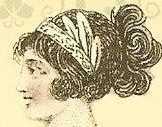
3. I must say that the seven pages on “Display of the Forehead” is worth the price of admission alone! But this on making a French dressing for your hair is a must-learn:
Parisian Pomatum.—Put into a proper vessel two pounds and a half of prepared hog’s lard with two pounds of picked lavender flowers, orange flowers, jasmine, buds of sweet briar, or any other sweet scented flower, or a mixture according to your choice, and knead the whole with the hands into a paste as uniform as possible. Put this mixture into a pewter, tin, or stone pot, and cork it tight. Place the vessel in a vapour bath, and let it stand in it six hours, at the expiration of which time strain the mixture through a coarse linen cloth by means of a press. Now throw away the flowers which you have used as being useless, pour the melted lard back into the same pot, and add four pounds of fresh lavender flowers. Stir the lard and flowers together while the lard is in a liquid state, in order to mix them thoroughly, and repeat the first process. Continue to repeat this till you have used about ten pounds of flowers.[my emphasis]
After having separated the pomatum from the refuse of the flowers, set it in a cool place to congeal, pour off the reddish brown liquor, or juice extracted from the flowers, wash the pomatum in several waters, stirring it about with a wooden spatula to separate any remaining watery particles, till the last water remains perfectly colourless. Then melt the pomatum in a vapour bath, and let it stand in it about one hour, in a vessel well corked, then leave it in the vessel to congeal. Repeat this last operation till the watery particles are entirely extracted, when the wax must be added, and the pomatum melted for the last time in a vapour bath in a vessel closely corked, and suffered to congeal as before. When properly prepared it may be filled into pots, and tie the mouths of them over with wet bladder to prevent the air from penetrating. This pomatum will be very fragrant, and form an excellent preparation for improving the gloss and luxuriance of the hair.
[I’m exhausted just thinking about it…] – You might end up looking like this, flowers and all:
[Source: ‘The Flower Garden’ – hand-coloured etched engraving published by M Darly in 1777.
See Bibliodyssey for additional such outrageous hair-dos]
***************
So that gives you a very small inkling of what lies in store in this fascinating little book. You will find insights into the daily life and work of the many rarely seen but obviously-there-lurking-about servants in all of Austen’s novels – what was it like to be the lady’s maid to Lady Catherine or her daughter Anne – dreadful thought! Was it easier being maid to Mrs. Jennings with her overwhelming busyness, or Mrs. Bennet, despite her poor fluttering nerves? We watch Downton Abbey as much for the sometimes more interesting “below-stairs” life than anything that transpires upstairs – and indeed not much changed in servant’s lives from 1825 to the early 1900s. Certainly Anna would have been familiar with this book or something like it.
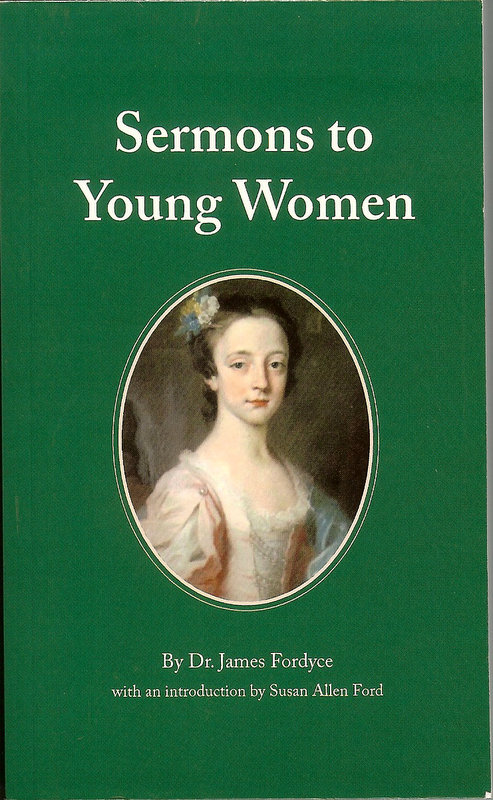
Think about adding this to your collection of conduct books [everyone should have a collection of conduct books, starting of course with Fordyce’s Sermons, Mr. Collins’ pride and joy in Pride and Prejudice, now published with an introduction by Susan Allen Ford and also available from the Chawton House Library: you can order it here through Jane Austen Books].
Hope I have convinced you of the need to become a subscriber to Duties of a Lady’s Maid – go to http://www.chawtonhouse.org/?page_id=58839 – click on the appropriate link for UK or US contributions. Or think what a great gift this would be for your favorite friend in need of a conduct book of her (or his) own!
The Library will be preparing for publication soon, as the list of subscribers is growing – don’t miss out in seeing your name, or a best friend’s, in print, just like Jane Austen….
1. Dow, Gillian. “Jane, the Subscriber.” Jane Austen’s Regency World 68 (Mar-Apr 2014), 38-43.
2. Fergus, Jan. The Professional Woman Writer.” Cambridge Companion to Jane Austen. Ed. Edward Copeland and Juliet McMaster. Cambridge UP, 1997. See this chapter in both editions of the Cambridge Companion, as well as her Jane Austen: A Literary Life. Macmillan, 1991.
3. The title pages of each of Austen’s works read as follows:
Sense and Sensibility: “By a Lady”
Pride and Prejudice: “By the Author of ‘Sense and Sensibility’
Mansfield Park: “By the Author of ‘Sense and Sensibility’ and ‘Pride and Prejudice’
Emma: “By the Author of ‘Pride and Prejudice,’ &c, &c.”
Northanger Abbey and Persuasion: “By the Author of ‘Pride and Prejudice,’ ‘Mansfield Park,’ &c.”
Dear Gentle Readers: Today I welcome Margaret Harrington, a member of JASNA and happily for us, the Vermont Region. Margaret recently returned from her immersion in Sense and Sensibility at the Jane Austen Summer Program at UNC Chapel Hill, June 12-15, 2014. She shares with us her thoughts with pictures – looks to have been a delightful adventure!
**************
The Jane Austen Summer Program at UNC ~
“Sense & Sensibility Revisited”
by Margaret Harrington, JASNA Vermont member
Jane Austen’s juvenilia play “Jack and Alice” given a lively performance
I experienced blissful immersion in Jane Austen’s novel Sense and Sensibility during this four day conference at the University of North Carolina, Chapel Hill. From the gracious reception at the UNC Friday Center throughout the days and evenings of serious enjoyment, I conclude that this was a wonderful personal adventure. There were lectures, teas, regency dancing, a play, movies, intense conversations about Jane Austen, and some thunder storms. The conference offered study of the book itself, provided insight into the culture in which it was written, and even gave a pleasant glimpse of one or two aspects of contemporary culture in the American south.
A warm welcome from Emma, Emily and Rachel at the UNC Friday Center
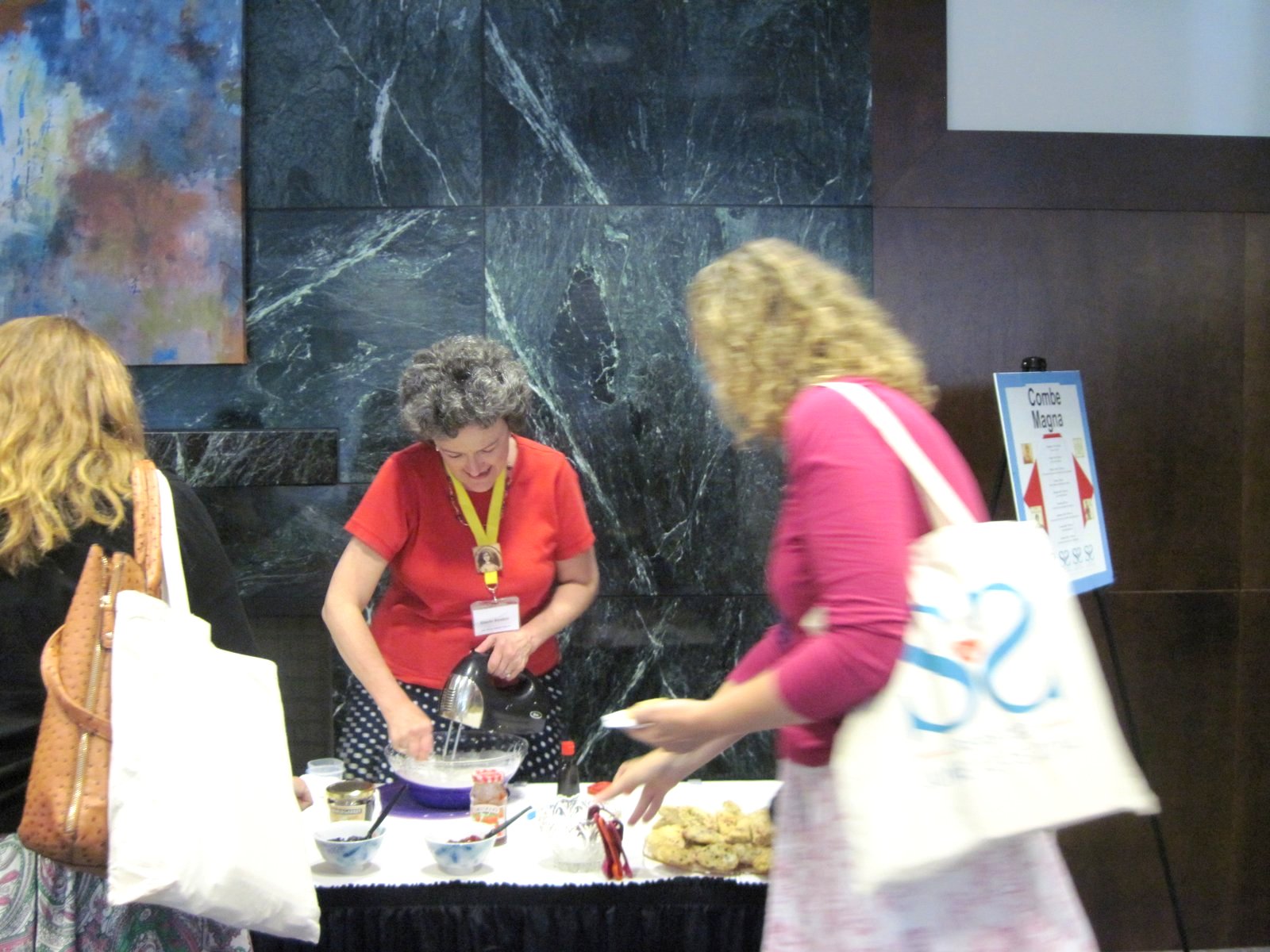
‘Elevenses’ of clotted cream and scones dished up by Gisele Rankin of JASNA North Carolina
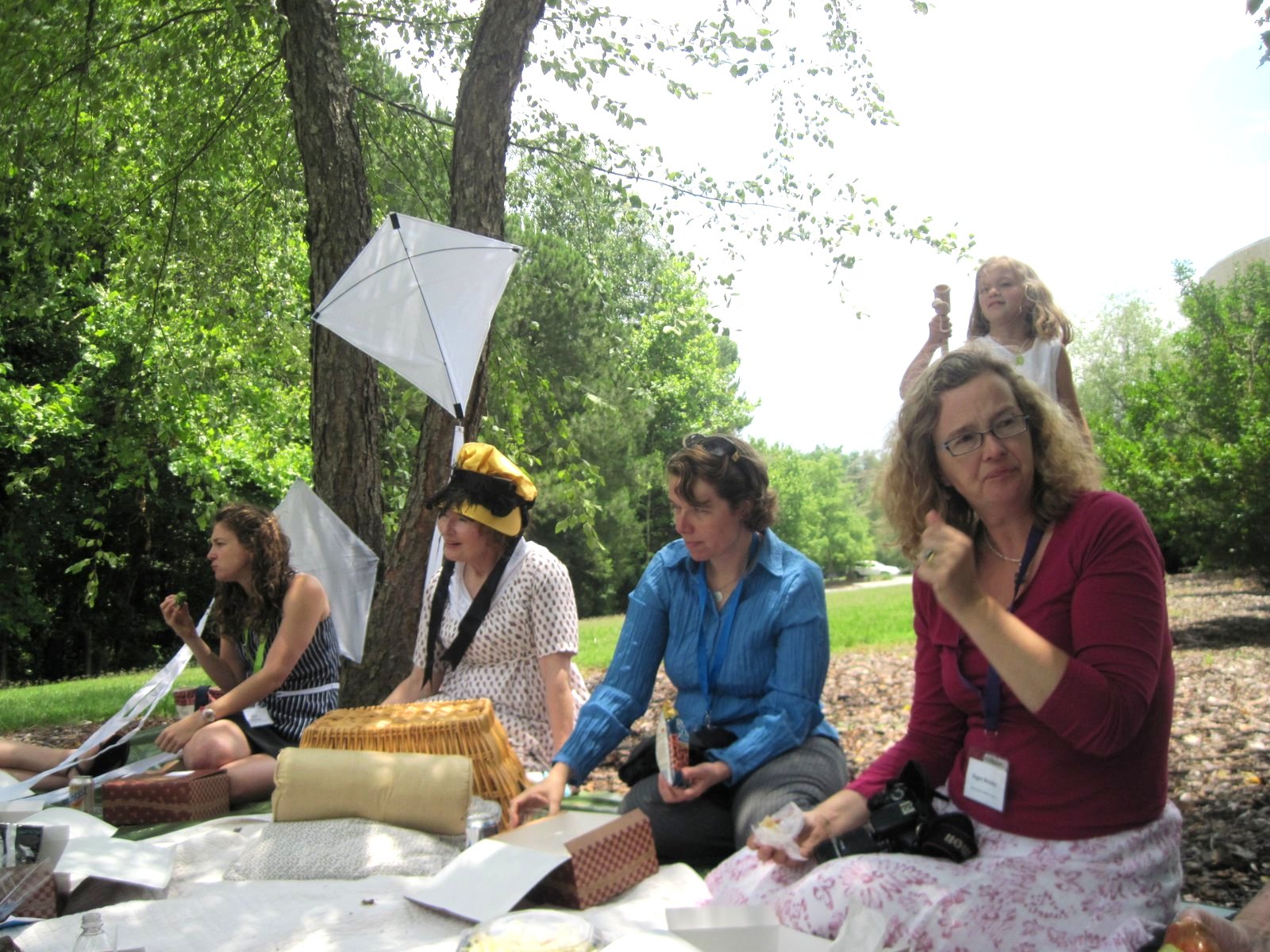
Lunch on the lawn with kite flying and shuttlecock
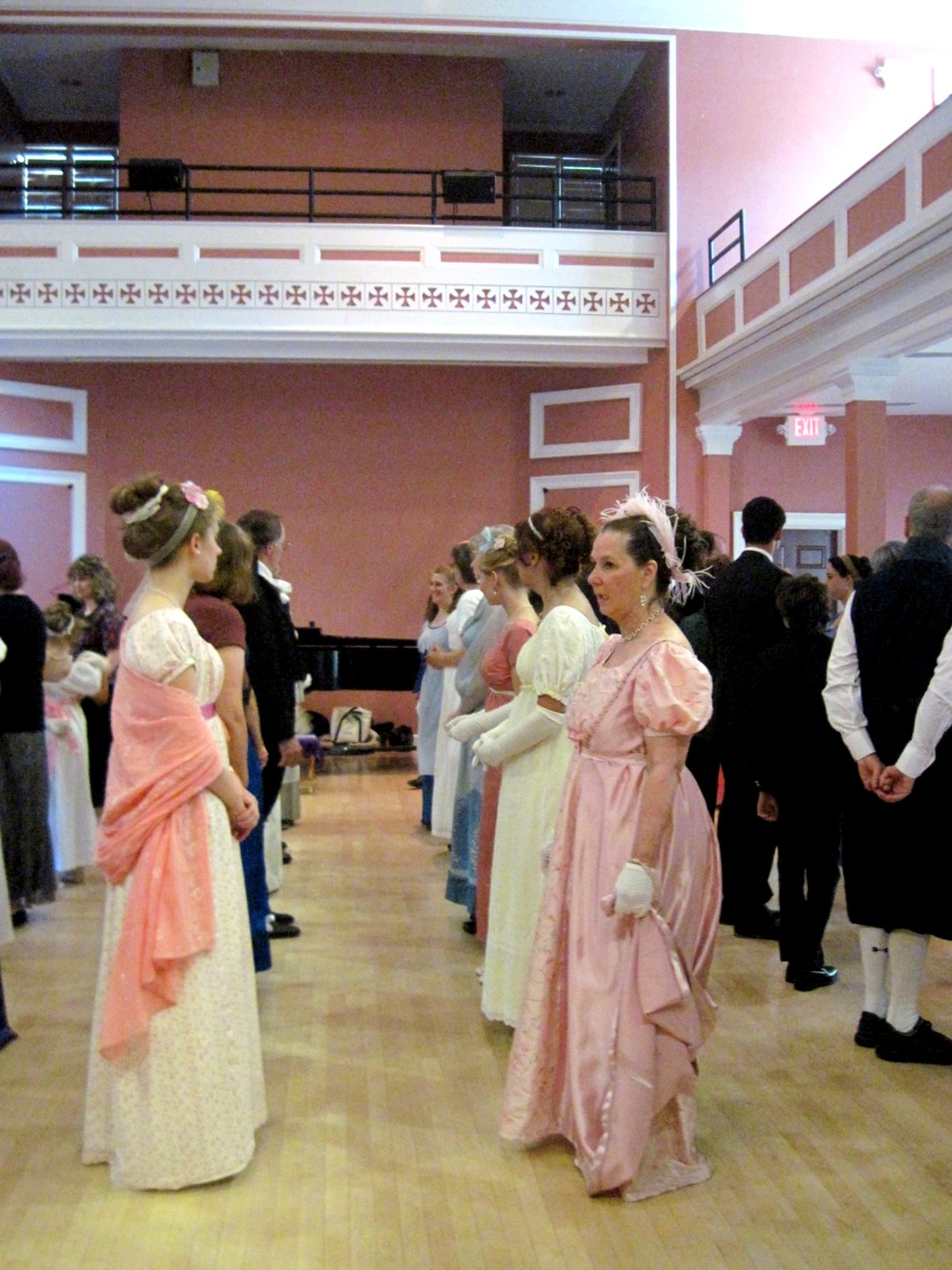
The ‘Sense and Sensibility’ Ball at Gerrard Hall, UNC
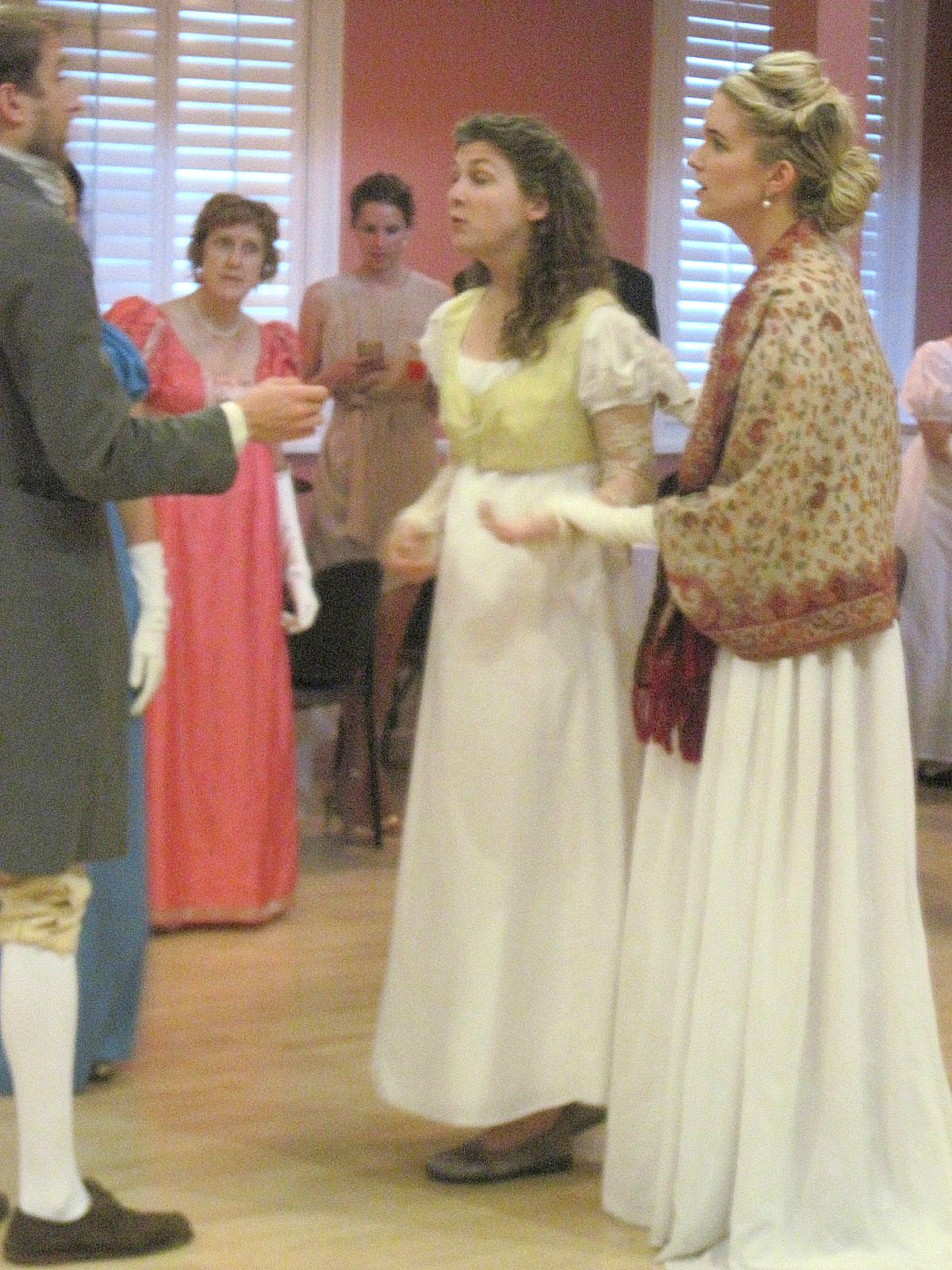
Drama at the Sense and Sensibility Ball
************
Dr. James Thompson of UNC-Chapel Hill co-hosted the event and set the tone for the conference as both formally educational and informally warm and welcoming.
Inger Brodey
The initial lecture by his co-host Dr. Inger Brodey, also of UNC-Chapel Hill, entitled “Making Sense of Sensibility” placed us in the Regency world of the philosophers and other writers who influenced Jane Austen’s concepts. I gleaned from this opening lecture that to interpret the novel as a dichotomy between sense and sensibility or as a tension between the two mind sets of Marianne and Elinor is to limit perception. Professor Brodey opened up a whole world of ideas which were accessible to Austen and evidenced in her writing and showed me that Sense and Sensibility has a richness of texture I had not been aware of prior to the lecture.
In fact the days were planned to deepen understanding of the novel with 15 minute context corners on the subjects of Law and Inheritance, Childhood and Education, Medicine and Illness, and the Clergy and the Church. These were followed with 45 minute Context Response sessions during which we, the participants, exchanged ideas. Then of course there were ‘Elevenses’ with scones and clotted cream. There were boxed lunches on the lawn with kites, battledore and shuttlecock as period entertainment. There were dance workshops to prepare us for the Regency ball. There was an amusing and informative lecture by Colgate University Professor Deborah Knuth Klenck on: “Jane Austen’s School of Rhetoric: Style, Substance and ‘Delicacy of Mind.’”
Jade Bettin, UNC-Chapel Hill, demonstrates (on a willing participant) the way to corset up properly during her lecture “‘But he talked of flannel waistcoats’: How Clothing Makes the Men and Women of S&S.”
Dr. Robert Clark, University of East Anglia, Norwich, England, author of The Literary Encyclopedia, was an amazing speaker in the two lectures he gave to expand and deepen our understanding of Sense and Sensibility. In the first he concentrated on the economic facts that drove Jane Austen’s world, such as The Inclosure Act of 1773, which diminished the number of people who could own land to under 500 in all of England, entitling an oligarchical society to the prestige and privileges Austen’s characters scramble so hard to hold onto in her novels. In his second lecture entitled “The White Glare of Bath,” Professor Clark made Jane Austen’s playground of intrigue, balls, and shopping come alive up from the ground in the white stones and mortar and rubble that savvy developers offered to the rich for their recreational homes. In his remarkable lecture I could see Jane Austen moving about Bath, shopping and promenading, visiting, plotting her novels.
Dr. Robert Clark relaxes a moment after his talk on Bath
***********
All in all my experience was totally wonderful and I’d recommend it to Janeites everywhere. Next year’s conference is entitled “Emma at 200.”
Imagine that!
I leave you with a picture of Janeite Maureen O’Connor who attended the conference from far away Brooklyn and dressed authentically for every occasion:
Maureen O’Connor
Text and images by Margaret Harrington, with thanks!
With hearty thanks to Lisa Brown for sharing her love of the Royal Navy with us Vermont Janeites, and to Marie Sprayberry for telling us of her shared-with-Jane rabid dislike of the Prince Regent and why, and displaying examples from her Georgian era royal collectibles – a most delightful day, despite the intense heat of Burlington’s heat wave and the Fletcher Free Library’s air conditioning on the fritz… [I have now successfully subjected our members and guests to one freezing December Tea where the computerized heating system refused to cooperate and we listened most intently to the two speakers, quietly shivering in our winter coats; and now the reverse of overheating the same members and guests with no air and loud fans in the skylight heated Pickering Room – as one guest bravely noted – “it was all a cost-free day in a sauna” ] – I find I have some control over these meetings, but alas! minus zero control over the weather and heating / cooling system snafus – I do apologize and thank you for your tolerance and good grace as an audience…
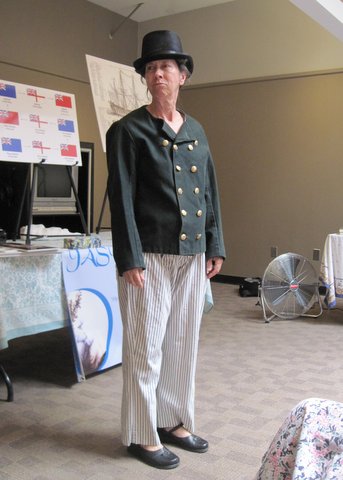
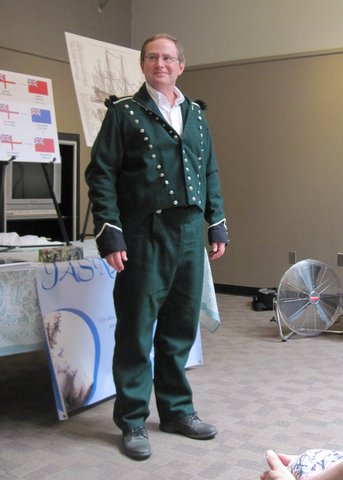
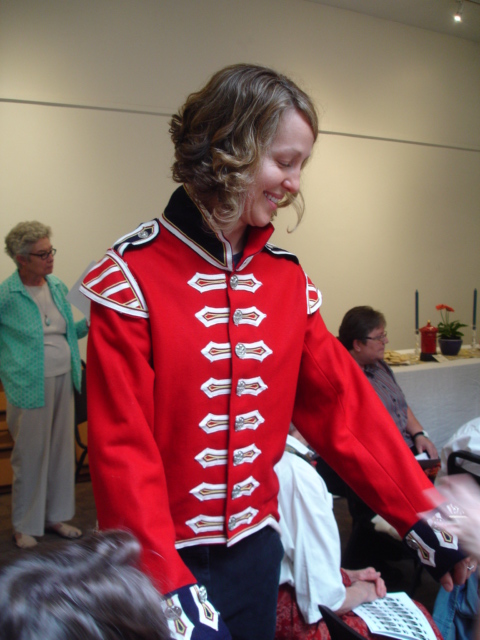
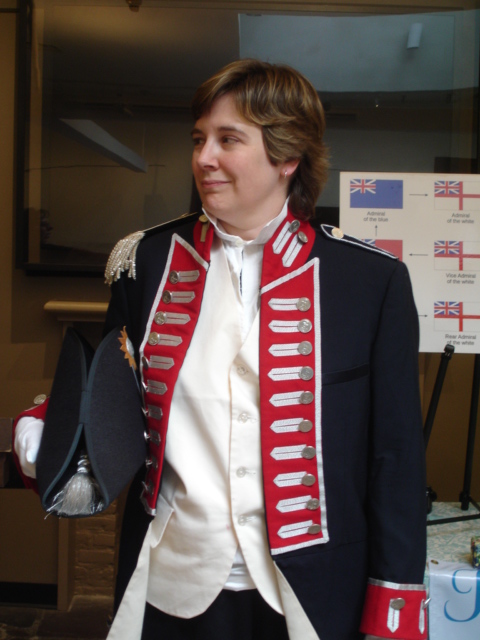
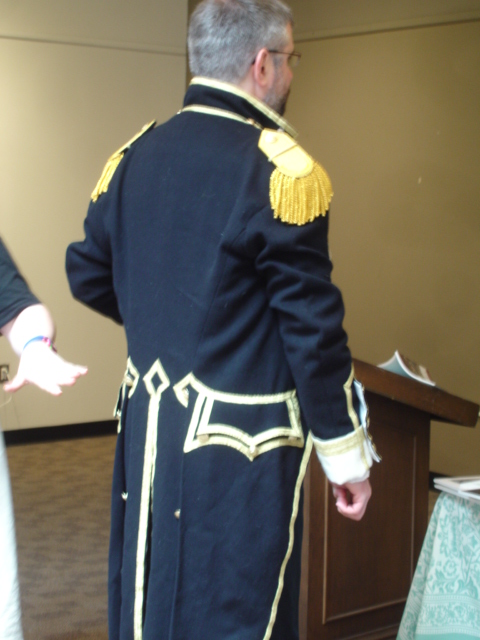
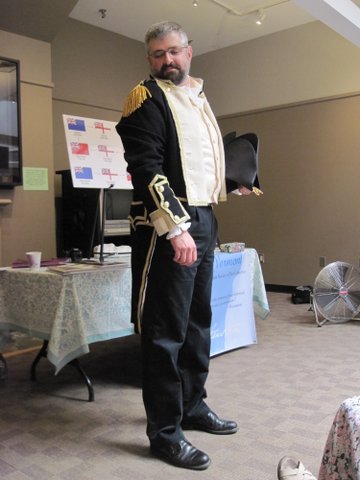
That said, extra kudos go to the models who courageously wore their wool-clad Royal Navy uniforms with elegance and style, as they paraded for us samples from Lisa’s wonderful collection. Here are a few pictures with descriptions of each, with thanks to our fearless models for being such good sports:
Marilyn as appropriately clad “able seaman”
[photo: c2014 M. Harrington]
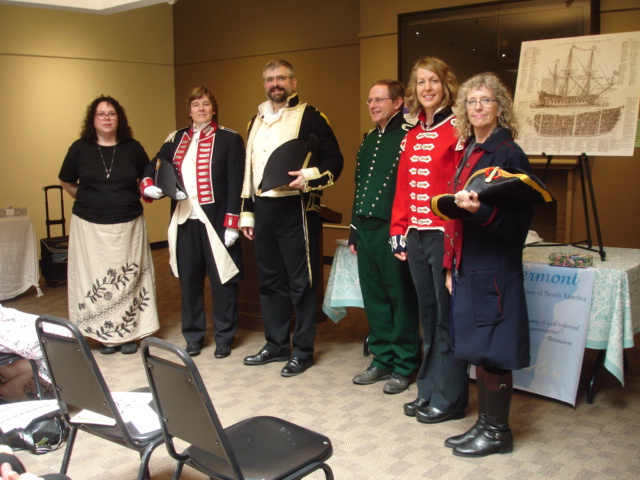
And a group shot of us all with Lisa (minus the able seaman, who had left to swab the deck), and with yours truly in the quickly donned uniform of a French Navy Lieutenant.
*************************
Marie’s talk on the Prince Regent was cut short near the end by the heat and near fainting attendees, which was too bad as we were all quite taken with her chat on the dastardly Prince and his wicked ways – you can read the rest of her talk here in Persuasions-OnLine 33.1 (2012):
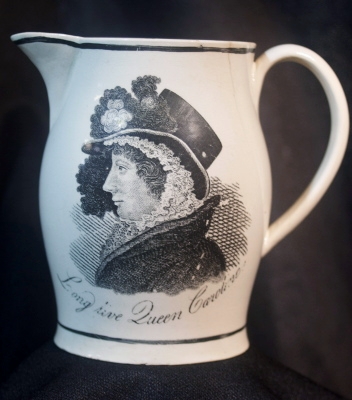
“Long Live Queen Caroline!” ceramic jug (1820)
[from the collection of A. Marie Sprayberry and Edward R. Voytovich;
photo by E. Voytovich] [see the POL article for more images of Marie’s collection]
****************
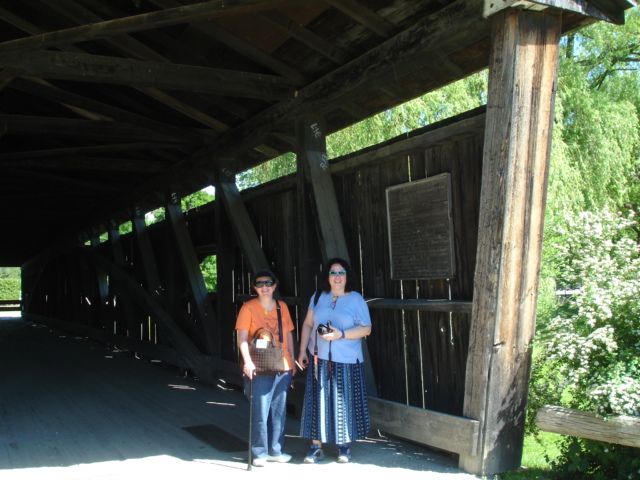
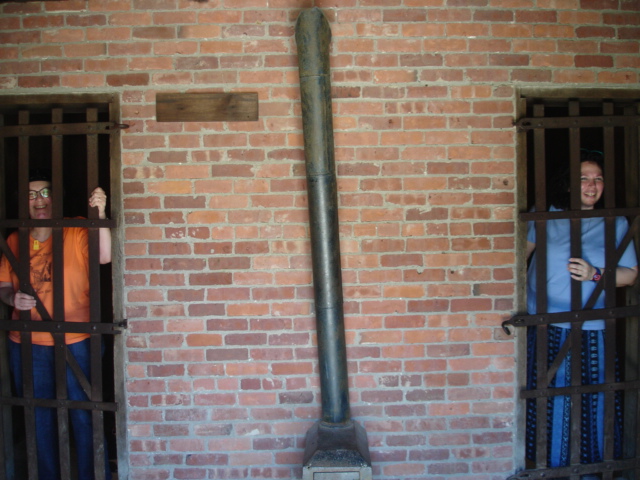
All in all a great day, with a great audience, and a fun weekend with Marie and Lisa, here cavorting about at the incomparable Shelburne Museum… Marie (left) and Lisa (right) on a Vermont covered bridge:
Gaoled JASNA Regional Coordinators Marie and Lisa (hoping to be released in time for the Montreal AGM]
[All images c2014 by Deb Barnum, unless otherwise noted; and with special thanks to Margaret Harrington!]
The Wellcome Library announced on Monday its plan to release over 100,000 images from its collection of treasures – all in the Public Domain! [CC-BY = please give credit to the Wellcome Library when using any image]
One fine example:
A pretty barmaid drawing beer. Coloured lithograph, c. 1825. Published: Tregear London (123, Cheapside); Printed: Dean & Manday, lithographers [London]
Image credit: the Wellcome Library, London
A quick search brings up nothing “Jane Austen” – but as you imagine there are nearly 300 Rowlandson prints – here is one to bring to mind summer while more than half the country is in a deep-freeze:
L0017751 – Venus’s Bathing (Margate) – A woman diving off a bathing wagon in to the sea
Hand-coloured etching 1790 By: Thomas Rowlandson Image Credit: Wellcome Library, London
Another book to be added to your wish list, due out early December!
Jane Austen and the Arts: Elegance, Propriety, and Harmony Edited by Natasha Duquette and Elisabeth Lenckos.
Lehigh U P / Rowman & Littlefield, 2013
What makes this book so special to JASNA-Vermont is that one of the chapters is by our founding member Kelly McDonald! – see chapter 2 in the table of contents below, and her blog post on it here. Congratulations Kelly!
Contributions by Jessica Brown; Diane N. Capitani; Christine Colón; Alice Davenport; Deborah Kennedy; Kathryn L. Libin; Kelly McDonald; Belisa Monteiro; Jeffrey Nigro; J. Russell Perkin; Erin J. Smith; Vivasvan Soni; Melora G. Vandersluis and Frederick A. Duquette.
The essays collected in Jane Austen and the Arts; Elegance, Propriety, and Harmony examine Austen’s understanding of the arts, her aesthetic philosophy, and her role as artist. Together, they explore Austen’s connections with Edmund Burke, Adam Smith, Johann Wolfgang von Goethe, Madame de Staël, Joanna Baillie, Jean Jacques Rousseau, Mary Anne Schimmelpenninck, and other writers engaged in debates on the sensuous experience and the intellectual judgment of art. Our contributors look at Austen’s engagement with diverse art forms, painting, ballet, drama, poetry, and music, investigating our topic within historically grounded and theoretically nuanced essays. They represent Austen as a writer-thinker reflecting on the nature and practice of artistic creation and considering the social, moral, psychological, and theological functions of art in her fiction. We suggest that Austen knew, modified, and transformed the dominant aesthetic discourses of her era, at times ironically, to her own artistic ends. As a result, a new, and compelling image of Austen emerges, a “portrait of a lady artist” confidently promoting her own distinctly post-enlightenment aesthetic system.
***************
Table of Contents:
Preface: Jane Austen’s Critique of Aesthetic Judgment by Vivasvan Soni
Introduction by Natasha Duquette and Elisabeth Lenckos
I. The Fine Arts in Austen’s World: Music, Dance, and Portraiture
Ch 1. “Daily Practice, Musical Accomplishment, and the Example of Jane Austen” – Kathryn Libin Ch 2.”A ‘Reputation for Accomplishment’: Marianne Dashwood and Emma Woodhouse as Artistic Performers” – Kelly McDonald Ch 3. “Miss Bingley’s Walk: The Aesthetics of Movement in Pride and Prejudice” – Erin Smith
Ch 4. “The Sister Artist: Cassandra Austen’s Portraits of Jane Austen in Art-Historical Context” – Jeffrey Nigro
II. Austen and Romanticism: Female Genius, Gothicism, and Sublimity
Ch 5 – “Portrait of a Lady (Artist): Jane Austen’s Anne Elliot, Madame de Staël’s Corrine, and the Woman of Genius Novel” – Elisabeth Lenckos
Ch 6 – “Jane Austen’s Comic Heroines and the Controversial Pleasures of Wit” – Belisa Monteiro
Ch 7 – “An Adaptable Aesthetic: Eighteenth-Century Landscapes, Ann Radcliffe, and Jane Austen” – Alice Davenport
Ch 8. “Exploring the Transformative Power of Literature: Joanna Baillie, Jane Austen and the Aesthetics of Moral Reform” – Christine Colón
Ch 9. “Jane Austen’s Influence on Stephenie Meyer” – Deborah Kennedy
III. Austen in Political, Social, and Theological Context
Ch 10. “Aesthetics, Politics, and the Interpretation of Mansfield Park” – Russell Perkin
Ch 11. “Reflections on Mirrors: Austen, Rousseau, and Socio-Politics” – Melora Vandersluis
Ch 12. “‘So much novelty and beauty!’: Spacious Reception through an Aesthetic of Restraint in Persuasion” – Jessica Brown
Ch 13. “Augustinian Aesthetics in Jane Austen’s World: God as Artist” – Diane Capitani
Ch 14. “‘Delicacy of Taste’ Redeemed: The Aesthetic Judgments of Austen’s Clergymen Heroes” – Fred and Natasha Duquette
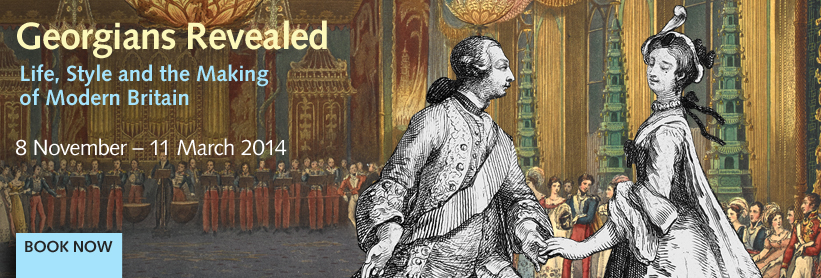
Opening today! ~ “Georgians Revealed: Life, Style and the Making of Modern Britain” – 8 November – 11 March 2014 at the British Library
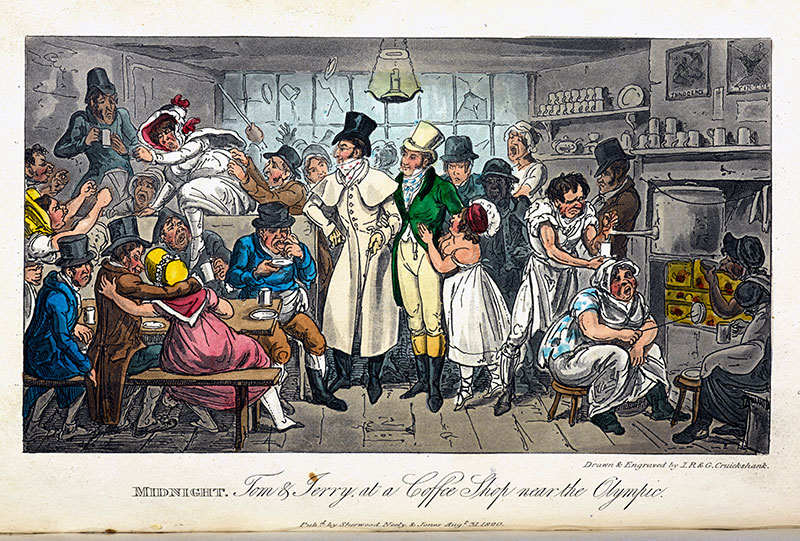
I.R. and G. Cruikshank. ‘Tom & Jerry at a Coffee Shop near the Olympic’ – Pierce Egan, Life in London (London, 1823).
Tasteful and polite, or riotous and pleasure-obsessed? Discover the Georgians as they really were, through the objects that tell the stories of their lives.
From beautifully furnished homes to raucous gambling dens, Georgians Revealed explores the revolution in everyday life that took place between 1714 and 1830. Cities and towns were transformed. Taking tea, reading magazines, gardening and shopping for leisure were commonplace, and conspicuous consumption became the pastime of the emerging middle classes.
Popular culture as we know it began, and with it the unstoppable rise of fashion and celebrity. Art galleries, museums and charities were founded. In this time of incredible innovation, ideas were endlessly debated in the new coffee houses and spread via the information highway that was mass print.
Drawing on the British Library’s uniquely rich and rare collections of illustrated books, newspapers, maps and advertisements, as well as loaned artworks and artifacts, “Georgians Revealed” brings to life the trials and triumphs of the ordinary people who transformed Britain forever.
And check out the online shop where all manner of Georgian -related treasures are for sale, as well as a catalogue of the exhibition, another must-have for your Jane Austen collection!
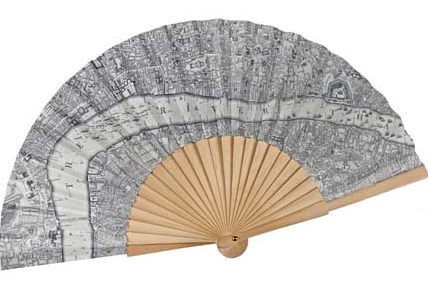
Rocque map of London fan, £8
A beautiful wooden fan, featuring a historic map created by John Rocque.
The fan has been created exclusively for the British Library. Wood/ canvas.
[Images and text from the British Library website]
I am posting here several pictures from the JASNA-New York Capital Region’s Retreat from a few weeks ago – a fabulous time was had by all as we learned about, discussed, laughed over, and watched Jane Austen’s Persuasion. The overnight retreat was held at the Wiawaka Holiday House located on Lake George, New York, a perfect setting for a 24-hour immersion in the early 19th century. [See here for information on the weekend]
Wiawaka House c2013 Mary Huber
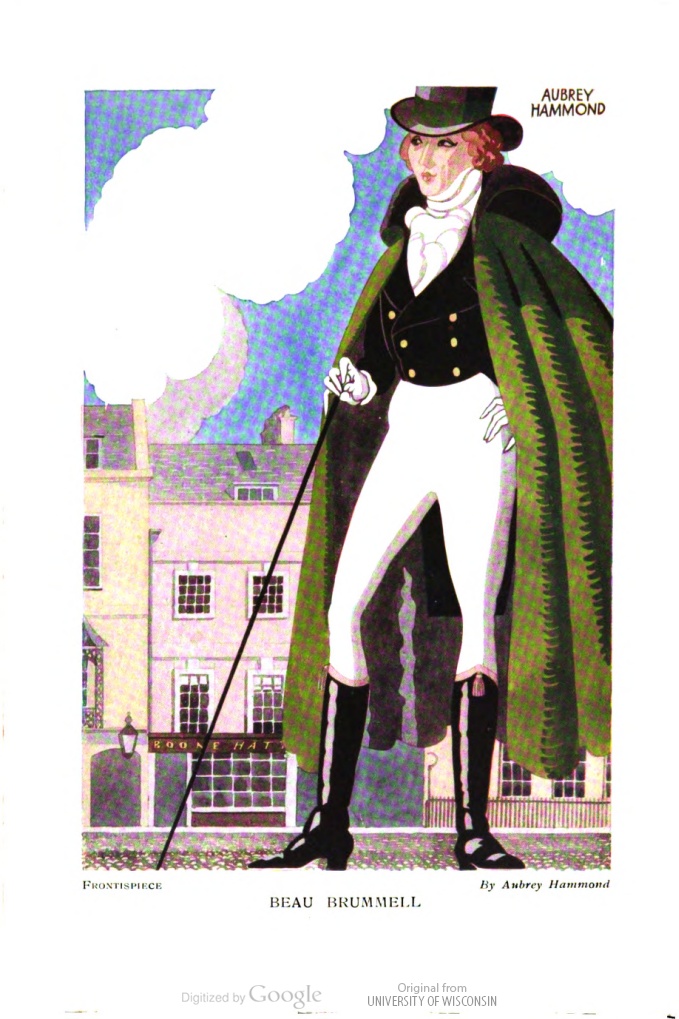
The event was facilitated by member Billie Franchini, who offered up great discussion questions, and kept us all on track and everything running very smoothly. We had the pleasure of listening to local author Marilyn Rothstein talk about the Regency Period, with tales of the Prince Regent, life in London for the upper classes, and Beau Brummell.
[Beau Brummell, by Aubrey Hammond, in Lewis Melville, Beau Brummell (NY: Doran, 1925) – at Hathi Trust]
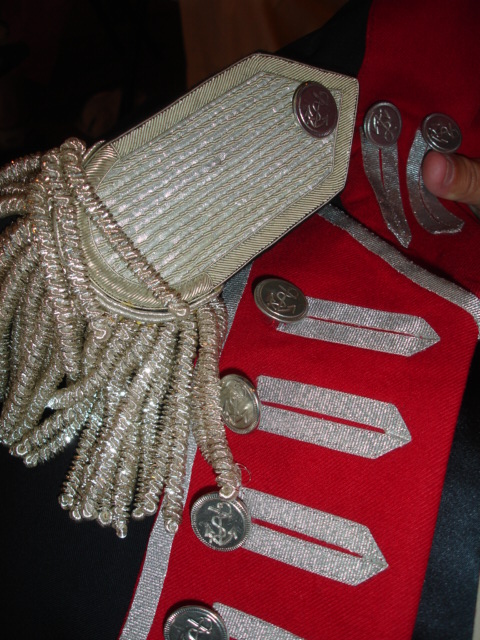
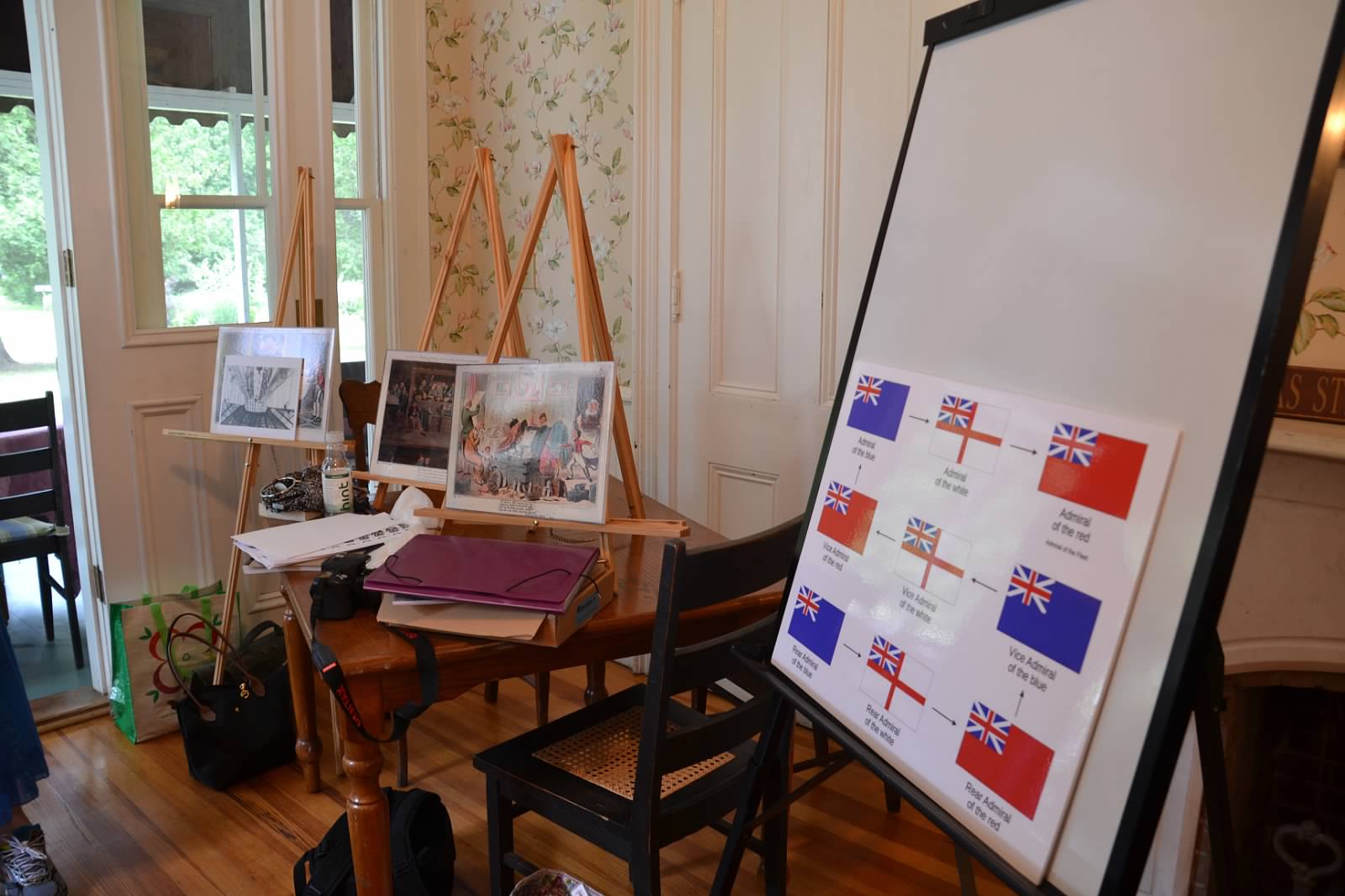
Lisa Brown, from the Syracuse and Rochester JASNA regions (and who has said she really just joined JASNA so she could talk about her first Love, The Royal Navy!), gave an enlightening talk on the uniforms of the Royal Navy from the period, as she passed around various examples of jackets made of superfine wool with epaulettes and buttons that we could handle and ooh! and aah! over [alas! – all empty with no Captain Wentworth in sight!]
the all-important epaulette c2013 D BarnumNavy Uniforms 1795-1812 – Lisa Brown
***************
Lisa spoke the next day as well on “How Captain Wentworth Made His Fortune” – wherein we learned about the various ships of the period (and those that Wentworth commanded), the rating system, how one became an officer with hopes of success in battle and a future as an admiral, how one earned their prize money, how often a sailor was relegated to half-pay status [think Capt. Harville] and how very knowledgeable Jane Austen was about the Royal Navy because of her brothers’ involvement. Lisa is a veritable encyclopedia about the RN and she handled our peppering with questions admirably! [very excited to announce that Lisa will be speaking at our JASNA-Vermont June 2014 meeting!]
Lisa’s exhibits – c2013 Mary HuberTea on the Porch! c2013 D Barnum
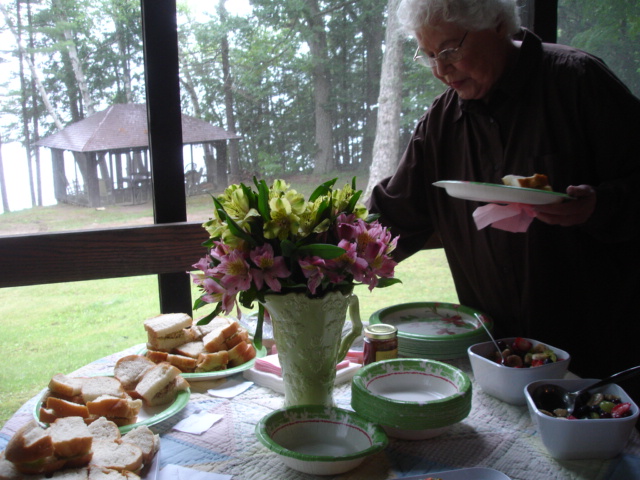
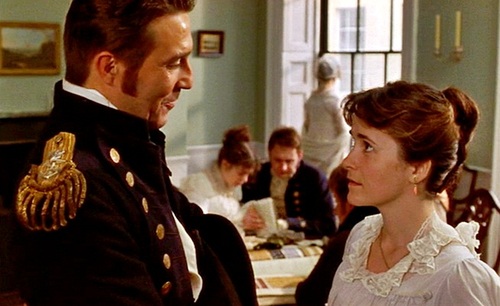
The weekend ended with a sumptuous Tea, prepared mostly by RC Pat Friesen, and a final discussion of the joys of viewing the movie adaptation of Persuasion – thankfully the one with Amanda Root and Ciaran Hinds! – which we had done the night before… one never tires of this nearly perfect adaptation, and one always sees things not seen before, moreso when viewing it with a group…
A lovely 24-hour immersion! – up for next year is Northanger Abbey, and a more perfect setting I cannot imagine. Thank you all in the Capital Region JASNA group for making us all feel so very welcome and offering up insightful Austen discussion!
 Just posting here all the reviews that have been piling in from Sundance – we have been waiting all year for this film – from the very first announcement that Whit Stillman was going to film Jane Austen’s Lady Susan, but bizarrely calling it “Love & Friendship.” Starring Kate Beckinsale and Chloë Sevigny.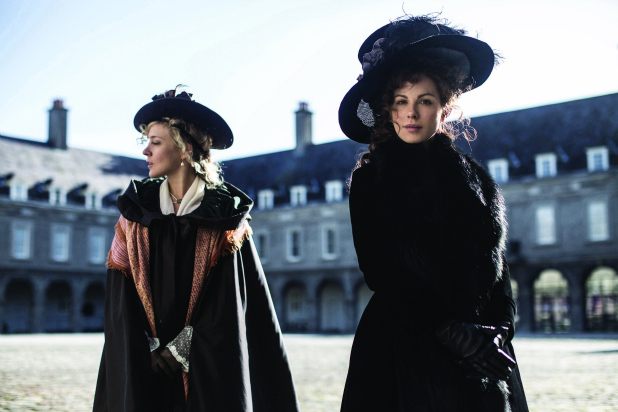























 Jane Austen in Vermont