Great Britain - History · Jane Austen · London

Jane Austen, Elizabeth Spencer, and Canonbury Tower ~ Guest post by Ron Dunning

Enquiring Readers: Last week I had posted a comment about Macbeth during the hoopla about Richard III; Ron Dunning [of the Jane Austen Family Tree fame] and I have been in communication since about how everything it seems comes back to Jane Austen, further evidenced by a recent tour he took of Canonbury Tower…. read on for yet another connection to Jane Austen!

****************

Canonbury on the map: Londontown.com

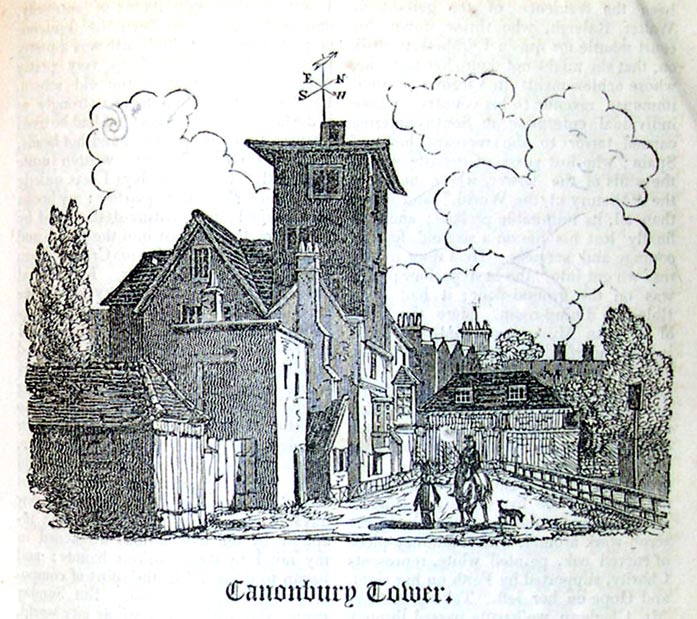
Our esteemed [blush…] blogiste and editrix remarked a few days ago, in reference to the fact that Macbeth’s victim Duncan I was an ancestor of Jane Austen, that “ALL in life that one thinks or does comes back to Jane Austen”.  It’s true – it does.  Earlier in the week, I went on a guided tour of Canonbury Tower, in the Islington area of London, with my accomplice in exploration, Catherine Delors. [Ed. note: Catherine is the much moreso esteemed historical novelist who blogs at Versailles and More].  For all we knew, it would be no more than a fascinating view of one of London’s few remaining precious Tudor residences, little suspecting that there would turn out to be an Austen connection.

Canonbury_Tower wp
Canonbury Tower – wikipedia

Canonbury was a Saxon manor, and after 1066 was awarded by William the Conqueror to the de Berners family.  It was only a brief horse ride from the centre of London, and even walkable, so it became the residence of various abbots and other dignitaries.  In the late 1500’s the manor was owned by Sir John Spencer (d. 1610), a very wealthy merchant and sometime Lord Mayor of London – who had a pretty young daughter, Elizabeth.More to the point, she was worth £40,000 on her marriage – some five million pounds today.  Her father had promised her to several men, in consideration of the usual dynastic criteria, but she met and fell in love with the spendthrift William Compton, Lord Compton (and later to become Earl of Northampton, d. 1630).  John Spencer was vehemently opposed to this match, not least because William owed him money.  She managed somehow to elope with William, one version of the story claiming that he disguised himself as a baker’s boy and smuggled Elizabeth out of the house in a blanket.

John Spencer refused to be reconciled to this marriage, until Queen Elizabeth intervened.  When he and his wife died intestate (not without suspicions of subterfuge on that score), William and Elizabeth inherited the entire estate, then valued at between £300,000 and £800,000.  William immediately spent over £70,000 on horses and gambling, and it appears that Elizabeth had no qualms about spending money, either.
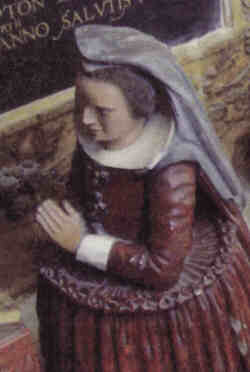
spencer,elizabeth(effigy)

Elizabeth Spencer: effigy on her parents’ tomb in St. Helen’s Bishopsgate.
[Image: “A Who’s Who of Tudor Women” – a fabulous site!]

So far, I haven’t told you what the Austen connection was.  I knew that William and Elizabeth were in my Austen database but with 13,500 people in it, I couldn’t remember their connection.  Checking when I got home I realized that they were ancestors of Adela Portal, the wife of Edward Knight (the younger), Jane’s nephew.  Among others, the current doyenne of the Austen family, Diana Shervington, is a descendant of that line.

There is a further literary connection, in that William and Elizabeth were also the ancestors of Vita Sackville-West.  The time has long since passed when I was surprised that almost anyone that you could name was connected with the Austens, but the particular individuals and their stories continue to fascinate!
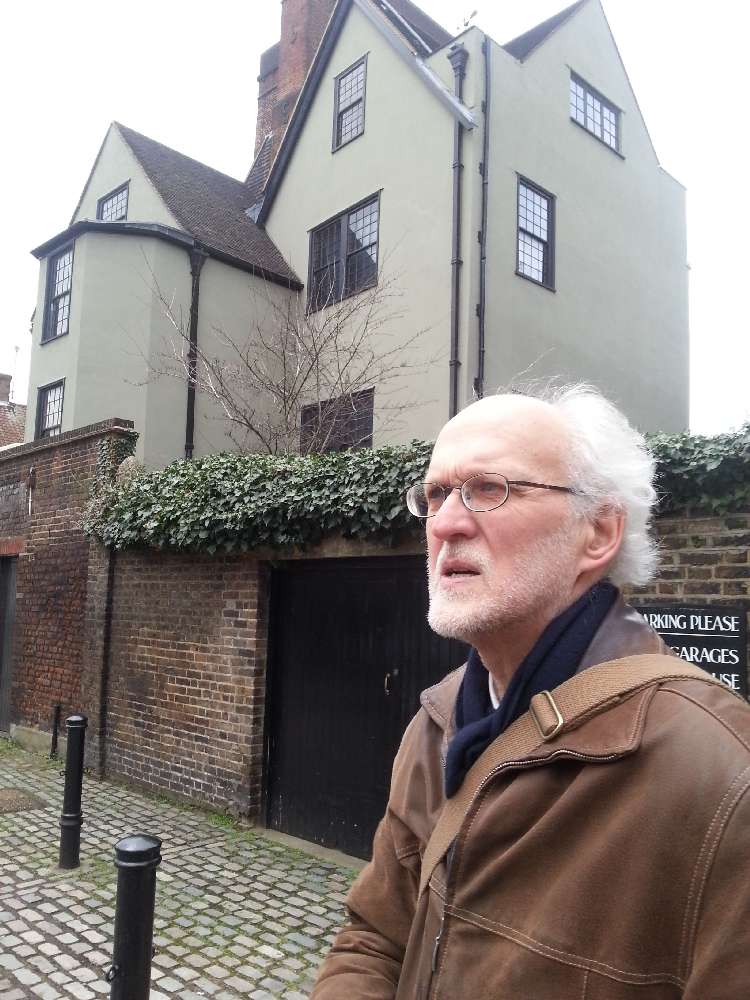
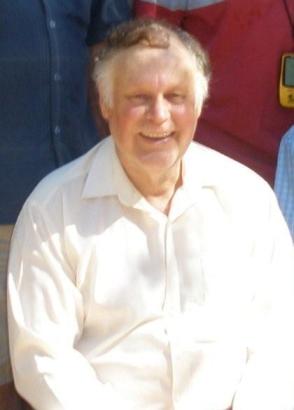
Ron Dunning outside Canonbury Tower

[image: c2013, Catherine Delors]

Catherine Delors
Catherine Delors

Wish I had been there with the two of you! Thank you Ron for your continued insights on all things in the Austen family!

******************

Further reading: the problem with these sort of postings is that one can spend an inordinate amount of time researching all these new connections! – here are a few places to start, Elizabeth Spencer having quite the interesting story!

Canonbury-tower - Hone

Interesting bits:

  • Thomas Cromwell, Lord Privy Seal, lived in Canonbury Tower from 1533. His residency ended abruptly in 1540 when he was beheaded by King Henry VIII. Cromwell has been the subject of Hilary Mantel’s critically-acclaimed Wolf Hall and Bring up the Bodies.
  •  Sir Francis Bacon, King James I’s Lord Chancellor, lived in Canonbury Tower, 1616-1626.
  • Charles Dickens set one of his Christmas stories in Canonbury Tower, titled The Lamplighter: you can read it here.

Compton room-canonbury

Chimney-piece and panelling in the Compton Oak Room, late 16th-century. Image: ‘Plate 102: Islington: Canonbury Tower’,
An Inventory of the Historical Monuments in London,
Volume 2: West London (1925), pp. 102. British History Online.

And finally, and again from the William Hone (1780-1842) archive:

Those who have been before and not lately, will view “improvement” rapidly devastating the forms of nature around this once delightful spot; others who have not visited it at all may be amazed at the extensive prospects; and none who see the “goings on” and “ponder well,” will be able to foretell whether Mr. Symes [the resident when Hone visited] or the tower will enjoy benefit of survivorship.

To Canonbury Tower

As some old, stout, and lonely holyhock,
Within a desolate neglected garden,
Doth long survive beneath the gradual choke
Of weeds, that come and work the general spoil;
So, Canonbury, thou dost stand awhile:
Yet fall at last thou must; for thy rich warden
Is fast “improving;” all thy pleasant fields
Have fled, and brick-kilns, bricks, and houses rise
At his command; the air no longer yields
A fragrance—scarcely health; the very skies
Grow dim and townlike; a cold, creeping gloom
Steals into thee, and saddens every room:
And so realities come unto me,
Clouding the chambers of my mind,
and making me—like thee.

*****************
And so here we are almost 200 years later, still visiting Canonbury Tower!
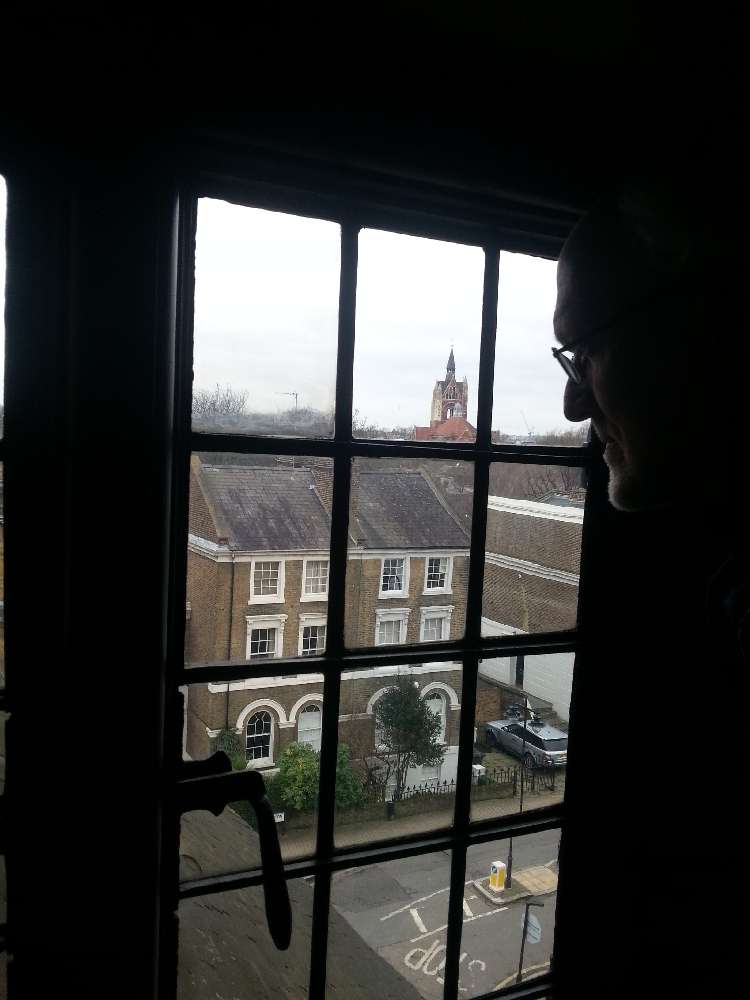
Ron at window

[Image: c2013, Catherine Delors]

c2013 Jane Austen in Vermont
Great Britain - History · Jane Austen · Literature · London · Museum Exhibitions · Regency England · Travel

Touring with Jane Austen ~ Marble Hill House, Twickenham, and Richmond

Enquiring Minds: Tony Grant of London Calling, and a regular contributor to Jane Austen’s World, had written a post for me on Marble Hill House in Twickenham – but alas! I have been so delayed in getting this on the blog that we agreed he should post it himself and I will link to it… so herewith the tale of Marble Hill House, home to Henrietta Howard, mistress of George II. This all started with a conversation over Joshua Reynolds’s house, which led to Richmond Hill, and then on to Henrietta Howard and Marble Hill House, and then Pope and Swift, Horace Walpole, John Gay and the Scriblerus Club, a bit on Wordsworth and Sir Walter Scott and on to Dickens and Virginia and Leonard Woolf, and of course Jane Austen gets her required mention – you get the idea – this is cram-packed with literary tourism and as always, Tony’s fine photographs…

****************

The Thames from Richmond Hill

The River Thames wends its tortuous way across England from Thames Head in Gloucestershire until it reaches the southernmost part of the North Sea. Its journey stretches for 215 miles. Finally the wide Thames Estuary which pours its contents into The North Sea is bordered on the north bank by the Essex coast and Southend on Sea and at its southern bank by the Kent coast, Sheerness and the entrance to the Medway.

Along its course The Thames passes though some beautiful English countryside before it enters the Greater London area passing by Sunbury and on to Hampton, then Hampton Court, Kingston upon Thames, Twickenham and Richmond. At last it reaches the centre of London with its iconic landmarks. The Thames, from London along its whole length, has a long history of Iron Age villages, Roman habitation, Saxon towns, and mediaeval settlements, Tudor Palaces and Georgian and Victorian Villas.  London itself began as a Roman settlement for trade, built at the nearest bridging point to the coast   where they had their port called Ritupiae (Richborough). They wanted to penetrate the hinterland north of the Thames. Indeed the names Thames which was Celtic in origin but had its Roman equivalent (Tamesas recorded in Latin as Tamesis)  and London (Londinium) come to us from Roman times.

Over the centuries the Thames outside of London has provided a beautiful Arcadian retreat for the wealthy, the famous, the aristocracy and the monarchy away from the stench and diseases prevalent in many periods of London’s history. They built palaces and grand houses and villas with adjoining estates and landscaped parks to relax and take their leisure in. Marble Hill House is a Palladian Villa built between 1724 and 1729, very close to Richmond upon Thames but on the northern bank of the Thames near Twickenham. It was built for George II’s mistress, Henrietta Howard….

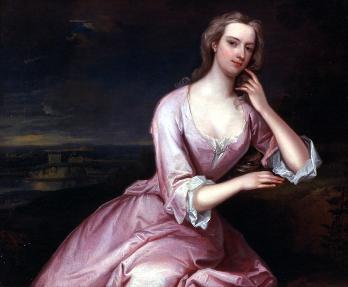
Henrietta Howard
Henrietta Howard

 Continue reading…

Thank you Tony for this sun-drenched tour through London!

For more on Marble Hill House, etc,  you can look here:

Marble Hill House
Marble Hill House

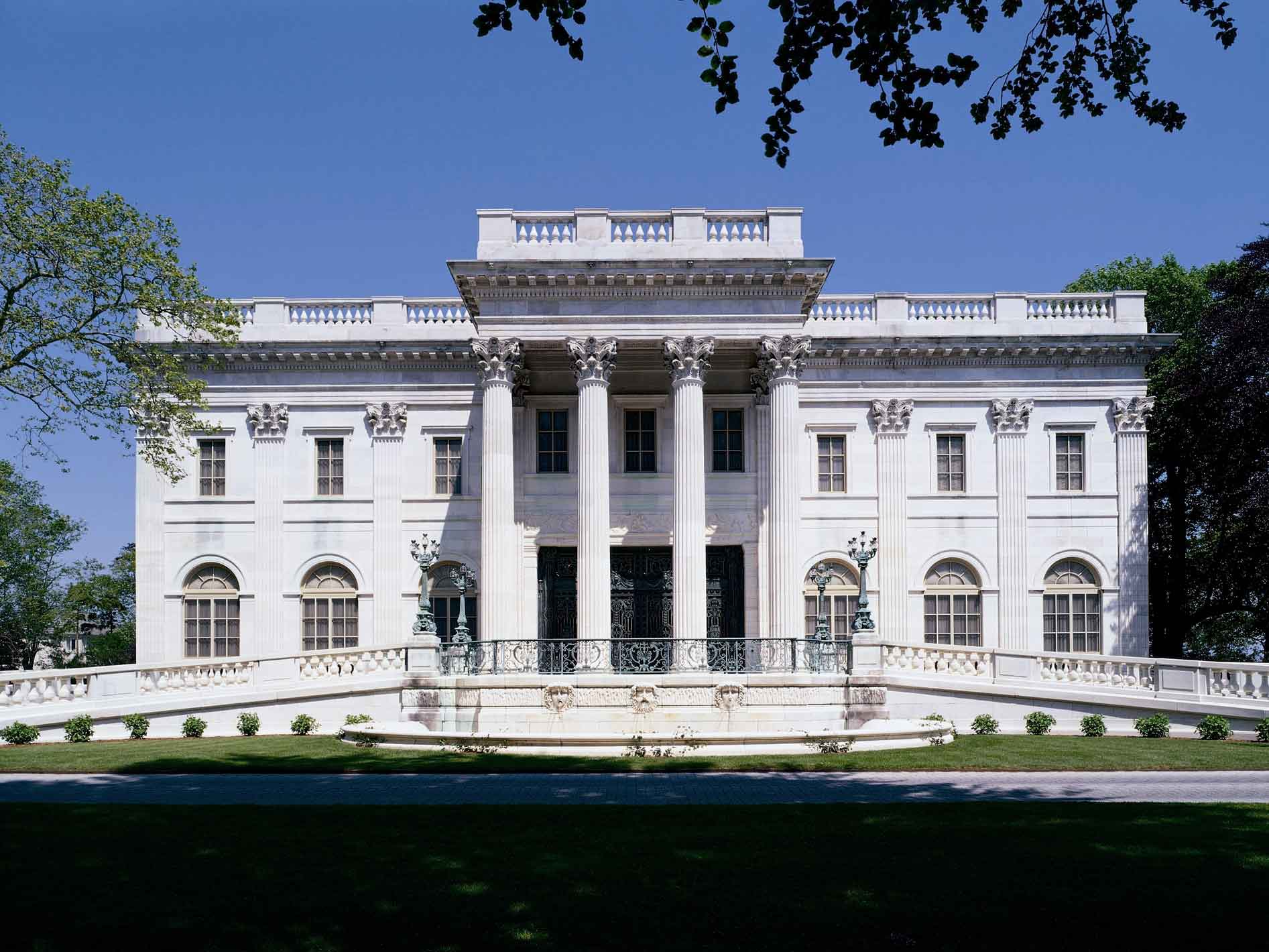
…and not to be confused with our very own MARBLE HOUSE, the William Vanderbilt’s summer “cottage” in Newport, Rhode Island:

Marble House, Newport, RI
c2013 Jane Austen in Vermont
Great Britain - History · Jane Austen · Regency England · Travel

Touring with Jane Austen ~ Bath, England

Gentle Readers who love to travel, especially those who love to follow in Jane Austen’s Footsteps:  I am linking to this post by Nan Quick, one of our JASNA members from New Hampshire.  She had emailed me recently to tell me of her website for armchair travelers, with one of her posts on Jane Austen’s Bath … I append it here – with lovely pictures and lively commentary, how perfect to visit such a place as this, when so many of us are snowed-in! So with dreams of warmer climes and Jane Austen hovering nearby, here you go…

Bath 1 - Nan Q

I really wanted to call this Armchair Traveler Chapter “Jane Austen’s Bath.” But holding forth about Jane’s bathing habits would have given me ammunition for a brief and not very interesting article. So, instead it’ll be “Jane Austen AND Bath.” I’ll try to describe the City as it was during the times when she lived there, and I’ll show you many of the locations that she used in two of her books. Happily, the built world of today’s Bath is largely unchanged from Jane’s time. Over the past two centuries the City’s fame has protected it from indiscriminate “improvements,” and so visiting Bath today gives a fairly good impression of what Jane’s days there might have been like.

If you’re reading this, it’s likely you’re Austen-informed, and have thus read NORTHANGER ABBEY and PERSUASION, which are called Austen’s Bath novels.

On May 28th, 2011 I had the pleasure of spending an afternoon in Bath. Of course, in England, the weather has a mind of its own, and storms from a place called “Bill’s Mother’s” descended. Here’s how it is with Bill: the locals always say bad weather is blown in from a mythical place called “Bill’s Mother’s.” I thought you should know, just in case you go to Bath and people start talking weather. On that Saturday my British friends and I were rained upon, blown about, and generally frozen; late May felt like early March. But I’d asked Anne and David and Janet (who you’ve met in my earlier Armchair Traveler pieces) to make the long round-trip drive on the traffic-jammed M5 with me from the Midlands down to Bath, expressly so I could make the following words REAL to myself:

“The Crescent,” “Milsom Street,” “Pulteney Street,” “The Pump Yard.” I also wanted to clear my confusion, once and for all, about all those infernal ROOMS that Austen’s characters scurried between: the Upper Rooms, or the New Assembly Rooms; the Lower Rooms; and the Pump Room. Even though my time there was short, and the weather awful, I managed to get a sense of the lay of the land, which is what I’d like to share with you.

Continue reading…

Bath 2 - Nan Q
[Images from Nan Quick.com]

Nan has also written a post on CONTEMPLATING THE GENIUS OF PLACE, & THE PLACES OF GENIUSES —

  • Liverpool (Gormley, McCartney, Lennon) ;
  • The Ruins at Witley Court ;
  • and ending with Chawton and Jane Austen’s House

This is a long post, so if Jane is your only interest, then scroll through it to the end – but I advise you see read the whole thing – I was in a Liverpool a few years ago and it was very nice to re-live that trip – so thank you Nan!

Austen Literary History & Criticism · Great Britain - History · Jane Austen · News

Jane Austen on Richard III ~ Guilty, or “A Very Respectable Man”?

richard III - yorkshire branch website
Richard III, by an unknown artist – National Portrait Gallery

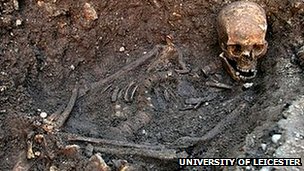
Richard III has been getting much-needed attention these past few days – his Bones, it seems, have been languishing beneath a parking lot

the bones

About 22 years ago on a trip to Scotland with the Appalachian Mountain Club, we stayed in Beauly not far from Inverness in a Castle called Aigas (now the Aigas Field Centre), hosted by Sir John Lister-Kaye and his Lady Lucy. We spent our days studying the flora, fauna, and geology of the surrounding area, a glorious adventure, as you can imagine – but one of the most memorable parts of the trip was meeting another guest staying at the Castle – he was not part of our group, but came there every year to go birding, an elderly gentleman blessed with a brilliant mind and great charm – his one great obsession other than birds was Richard III, and from him I learned about the Richard III Society.  He went off into spasms of ecstasy telling of his also annual treks to Bosworth where he could hear the “swish, swish” of the swords on the field where Richard was slain in 1485.

Bosworth Battlefield - Britannica

Illustration depicting the Battle of Bosworth Field, with King Richard III on the white horse.

Credit: The Print Collector/Heritage-Images – from Britannica.com
******************
Richard_III_earliest_surviving_portrait - wp
The earliest surviving portrait of Richard III – from the RIII Society website

I came home with my own obsession with the long-dead Richard – read everything I could find on him, beginning with Josephine Tey’s The Daughter of Time, her tribute to Richard [she was a staunch member of the Society] and the clear statement of her belief in his innocence.  Shakespeare had done the young King a dirty deed it seems, maligned forever in History as the murderer of the Princes in the Tower and various other souls including his Wife, and perpetrator of all manner of other nefarious politically-induced deeds…

I confess to having forgotten more than I ever actually knew about RIII, and now other than Shakespeare and Tey, he has largely fallen off my radar, or at least I no longer need to get into discussions with everyone I meet in a rabid defense of his innocence… but I am excited about his Bones being found and restored to a rightful burial place at Leicester Cathedral; this discovery shall certainly bring on a re-assessment of who he might really have been…

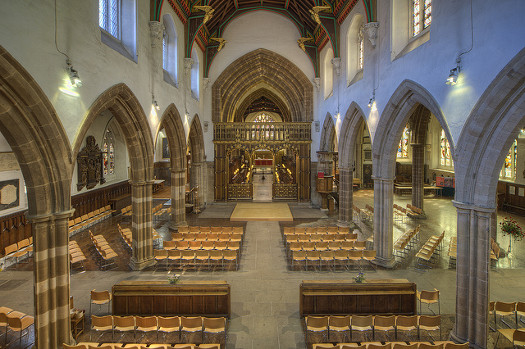
Leicester Cathedral
Leicester Cathedral – RutlandChurches.co.uk

Which brings us to Jane Austen:

Austen, as avid readers know, had an aversion to the name of “Richard”: let’s recall her first paragraph in Northanger Abbey, where she denigrates Catherine’s father so:

Her father was a clergyman, without being neglected, or poor, and a very respectable man, though his name was Richard … 

And later in a 1796 letter to her sister, she remarks on Mr. Richard Harvey’s match being put off,till he has got a better Christian name, of which he has great Hopes.” [Letters, p. 10]

And famously in Persuasion, and one of the nastiest comments in all her novels, on poor Dick Musgrove:

The real circumstances of this pathetic piece of family history were, that the Musgroves had had the ill fortune of a very troublesome, hopeless son, and the good fortune to lose him before he reached his twentieth year; that he had been sent to sea, because he was stupid and unmanageable on shore; that he had been very little cared for at any time by his family, though quite as much as he deserved; seldom heard of, and scarcely at all regretted, when the intelligence of his death abroad had worked its way to Uppercross, two years before.

He had, in fact, though his sisters were now doing all they could for him, by calling him “poor Richard,” been nothing better than a thick-headed, unfeeling, unprofitable Dick Musgrove, who had never done any thing to entitle himself to more than the abbreviation of his name, living or dead. [Persuasion  v. I, ch. VI]

Ouch!

No one has ever satisfactorily explained this aversion of Austen’s to the name ‘Richard’ – one could certainly explain it as her disliking Richard III with such a passion that anyone named Richard should suffer her admonition; but here is what she says about Richard in her History of England, with such a contradictory tone, one does not quite know what she really thought [forever the illusive Jane] – but on the whole I think she believes him to be mistreated by History – perhaps she would have been a reigning member of the Richard III Society!

Cassandra's portrait of Richard III
Cassandra’s portrait of Richard III

 Richard the 3d

The Character of this Prince has been in general very severely treated by Historians, but as he was a York, I am rather inclined to suppose him a very respectable Man. It has indeed been confidently asserted that he killed his two Nephews & his Wife, but it has also been declared that he did not kill his two Nephews, which I am inclined to beleive true; & if this is the case, it may also be affirmed that he did not kill his Wife, for if Perkin Warbeck was really the Duke of York, why might not Lambert Simnel be the Widow of Richard. Whether innocent or guilty, he did not reign long in peace, for Henry Tudor E. of Richmond as great a villain as ever lived, made a great fuss about getting the Crown & having killed the King at the battle of Bosworth, he succeeded to it.

 ***********

You can read Austen’s complete History of England here at the British Library, and here at Jane Austen’s Fiction Manuscripts , both in the original edition and facsimile.

So what do you think? Should Richard III be exonerated of his dastardly deeds? Should we do as Jane did and be “rather inclined to suppose him a very respectable Man”? I will just say that may Richard at least from henceforth Rest in Peace…

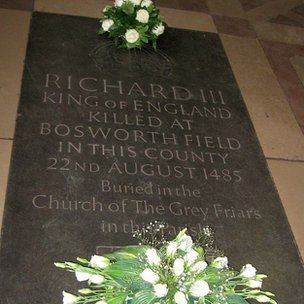
RIII memorial leicester

 [Richard III Memorial in Leicester Cathedral]

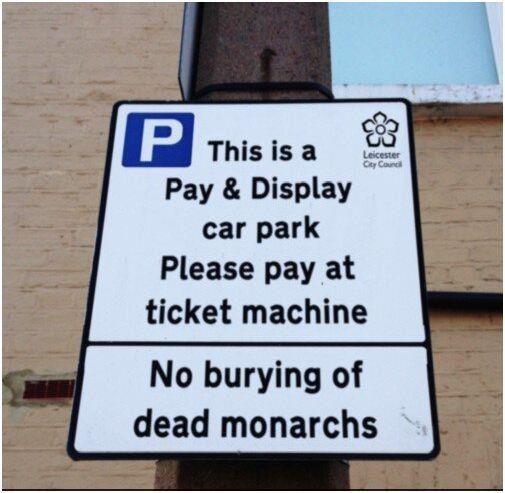
And I must add this final image sent just this morning from a friend – only the English can get away with this sort of thing, but I laughed ‘til tears came… somehow I think Jane Austen would be laughing too…

car park sign

Further reading:

book cover - daughter of time - tey[like Jane Austen, Tey wrote just over a handful of novels – read them!]

 c2013, Jane Austen in Vermont
Great Britain - History · Jane Austen Popular Culture · Masterpiece Theatre

Downton Abbey ~ Carson’s Song

Last week, Downton Abbey ended with Carson singing a song while polishing the silver, quite jovial over hearing the positive prognosis for Mrs. Hughes.  We can wonder at the plot turn – there have been previous intimations that Hughes and Carson should somehow hook up and exert even greater control over downstairs life – they do after all seem to genuinely care about and respect each other … but who knows what direction this shall all take – but just want to append the words of the song he was singing – a sure clue in this alone:

DA - Carson

The song is titled “Dashing Away with the Smoothing Iron” – “a traditional English folk song written in the 19th century about a housewife carrying out her linen chores” [wikipedia]:

‘Twas on a Monday morning
When I beheld my darling
She looked so neat and charming
In every high degree She looked so neat and nimble, O
A-washing of her linen, O

Refrain
Dashing away with the smoothing iron
She stole my heart away.

‘Twas on a Tuesday morning
When I beheld my darling
She looked so neat and charming
In every high degree
She looked so neat and nimble, O
A-hanging out her linen, O (Refrain)

‘Twas on a Wednesday morning
When I beheld my darling
She looked so neat and charming
In every high degree
She looked so neat and nimble, O
A-starching of her linen, O (Refrain)

‘Twas on a Thursday morning
When I beheld my darling
She looked so neat and charming
In every high degree
She looked so neat and nimble, O
A-ironing of her linen, O (Refrain)

‘Twas on a Friday morning
When I beheld my darling
She looked so neat and charming
In every high degree
She looked so neat and nimble, O
A-folding of her linen, O (Refrain)

‘Twas on a Saturday morning
When I beheld my darling
She looked so neat and charming
In every high degree
She looked so neat and nimble, O
A-airing of her linen, O (Refrain)

‘Twas on a Sunday morning
When I beheld my darling
She looked so neat and charming
In every high degree
She looked so neat and nimble, O
A-wearing of her linen, O (Refrain)

[Text from contemplator.com]

dashing away smoothing iron

Further reading (and listening!):

c2013, Jane Austen in Vermont
Great Britain - History · Jane Austen · Jane Austen Merchandise · Jane Austen Popular Culture · Regency England · Social Life & Customs

All I Want for Christmas ~ Anything Jane Austen Please! ~ Day 4: Tony Heaton’s Greetings from England Cards

The 12 Days of Christmas:

Day 4:  Jane Austen Cards from “Greetings from England”

Continue reading “All I Want for Christmas ~ Anything Jane Austen Please! ~ Day 4: Tony Heaton’s Greetings from England Cards”

Books · Great Britain - History · Jane Austen · Jane Austen Circle · Jane Austen Societies · Travel

All I Want for Christmas? ~ Anything Jane Austen Please! Day 2: Take a Literary Tour with Susannah Fullerton, President of the Jane Austen Society of Australia

I cannot think of a gift I would want more than this! [do hope my caro sposo is paying close attention!]– I had the pleasure of meeting Susannah Fullerton at the JASNA AGM in Brooklyn – she goes above and beyond as the President of the Jane Austen Society of Australia (JASA), has just published A Dance with Jane Austen [she wrote a guest post here], and she has a new book coming out in early 2013 Celebrating Pride and Prejudice (titled Happily Ever After in the UK)

Continue reading “All I Want for Christmas? ~ Anything Jane Austen Please! Day 2: Take a Literary Tour with Susannah Fullerton, President of the Jane Austen Society of Australia”

Great Britain - History · Jane Austen · Regency England · Travel

Jane Austen at the Seaside ~Tenby, Wales ~ Guest post by Tony Grant

Tenby map wp

Inquiring Readers: I welcome today Tony Grant with a guest post on Tenby, Wales, a place that in all probability Jane Austen had visited. Tony, who writes often for Vic’s Jane Austen’s World blog , as well as his own blog London Calling, and I had been cyber-discussing Jane Austen’s knowledge of the seaside – I sent him the link to the Brian Southam essay  “Jane Austen Beside the Seaside” (see below) – he was immediately prompted to write more about Tenby, a place he is very familiar with because it is his wife’s birthplace.  Just reading this piece and seeing Tony’s pictures makes me want to go back to Wales and continue to explore more of this incomparable coastline! … The question today however is, did Jane Austen actually visit Tenby?  If she did it seems to have taken place in those no-letters gap years of 1801-04, so we cannot know for sure…. Read here what Tony has to say about it all…

Continue reading “Jane Austen at the Seaside ~Tenby, Wales ~ Guest post by Tony Grant”

Austen Literary History & Criticism · Fashion & Costume · Great Britain - History · Jane Austen · Jane Austen Popular Culture · JASNA · Regency England · Schedule of Events · Social Life & Customs

Happy Birthday Jane Austen! ~ The Ten Best Reasons to Go to a JASNA AGM ~ It’s All About You Jane!

Comment below for the chance to win a surprise Jane Austen-related giveaway!

*****************

The Ten Best Reasons to Go to a JASNA AGM, Or, Why I would celebrate Jane Austen’s Birthday
by Spiriting Her Around Such an Event

Well, I had the best of intentions to do a full write-up of all the major events at the latest JASNA AGM in Brooklyn – a special location for me personally as I am a New Yorker born and bred – but as I have mentioned elsewhere life gets in the way of our best-laid plans and as the AGM now seems light-years away, I propose to just offer a grand summary in the context of why one should go to this annual Jane Austen conference; and why do so many plan on being there year after year? Friends and family just shake their heads with the typical “she only wrote 6 books, whatever can you talk about for 4 days??” and I nod knowingly that a lifetime of conferences would not satisfy… It takes me a long while to re-enter the 21st century – how delightful it is to enjoy the late 18th and early 19th without all the attendant inconveniences!  I shall make a best effort to give the salient points of this year’s conference, memory perhaps failing me, with a dependence upon sketchy notes, not enough pictures taken (and those that were, not very good…)

Continue reading “Happy Birthday Jane Austen! ~ The Ten Best Reasons to Go to a JASNA AGM ~ It’s All About You Jane!”

Great Britain - History · Jane Austen

Guest Post ~ Brian Austen on “A Genealogical Interest in Jane and the Many Other Austens”

Several months ago I posted an interview with Ron Dunning about his Jane Austen Family Tree website

Dunning - jane-austen-frontispiece-1870

I have recently heard from another Austen who lives in Australia. Brian Austen has been long at work on his own Austen Families, and while it does not yet appear that there is a relation to Jane Austen, his efforts have put him in touch with many of her descendants, including Ron Dunning! –  Brian has been compiling his own family tree with global connections to both the Austen and Austin families [see website links below].  He has graciously written a few words on his findings, and I welcome him here today to share his story with you.

A Genealogical Interest in Jane and
the Many Other Austens

By chance and while googling for Ron Dunning’s website address, I came across the Jane Austen website with your interview with Ron Dunning on his wonderful genealogical contribution on Jane’s family. As I said in my comments* I have met Ron and emailed him on a number of occasions to solicit his help, answer a query of his or to give him a lead.

Quite some years ago I began to research my own Austen family history. Not much was known. My father thought that his father was born on the boat coming to Tasmania but that was all. However the Tasmanian archives did have a record of his passenger record, albeit spelt as IN.

Nevertheless I was underway. I was given copies of some family letters written during WW2 so I had various family stories, and some names and relationships. So armed I wrote to several Austens listed in the Kent (UK) telephone directory. I since found out that this did cause quite some consternation as none of the recipients knew of Australian connections! – but a couple were familiar with some of the people I had mentioned. I had pretty much scored a bulls eye, and across different branches of the family, branches that no longer had contact. So I managed to unite families in Kent and across the world.

Gradually I pieced together a part of the family history. But I realised that the task might be made a lot easier if I searched for others who had researched the family. I decided to track down genealogical histories of Austen families and although this was before the tremendous surge in the popularity of family history, I soon had a mushrooming pile of Austen information. Unfortunately none of it related to my family.

But it did two things. It demonstrated that although the name was relatively uncommon in Tasmania, it was much more common in England, very common in fact and we shared the same name and spelling as England’s famous Jane. If only we were related to her! And I did learn that part of the family folklore is that yes, we are related, although no one knew how.

I also learnt that I enjoyed the collecting and examining of other people’s family histories. Occasionally I would find connections between families who were overjoyed at being given links to lost family members. I exchanged emails, research and information with many Austens across the world and was even invited to family gatherings and reunions. This was great fun. I joined the Austins Families Association of America and attended Conventions. I joined other Genealogical groups and went on holidays meeting fraternal Austen researchers. And it hasn’t stopped.

Gradually I built my own tree by broadening the number of branches, rather than by extending very far back in time: [see the website Austens of St Peters and Tasmania ]. But it has been very satisfying to find new “cousins” and add to the store of family stories such as “Rediffusion” (early days of cable television in England) and a connection with the breaking of the German Enigma Code. But no connection with Jane, unfortunately. And I am not alone.

Most of the Austen families with whom I have been in contact claim an unknown family connection to Jane Austen; the rest just hope to be related. Naturally (before I found Ron – actually he found me) I developed a Jane Austen tree, which although being incomplete was nevertheless quite good which all too often gave me the information to be able to disappoint a lot of people, including myself. But the search for links goes on for even though Jane’s immediate family has now been well documented (thanks to Ron and others), there are still enough gaps in the families of her ancestors to be encouraged while her distant past remains unproven….

[For some recent considerations see “Untangling the Austens” by Pam Griffiths: http://www.genealogycrank.co.uk/austen.php – the document is here: http://www.genealogycrank.co.uk/pdfs/austen_evidence.pdf ].

To that end my great hope is to be able to convince a genuine, documented family descendant of one of Jane’s brothers to provide a properly conducted DNA sample. We are still looking and are still hopeful for there are some descendants somewhere in the world yet to locate.

So after twenty years what have I found? Mainly that despite an expanding collection of Austen families, I have just scratched the surface. And I really have not done very much at all with our sister families, the INs. I do have to learn how to improve my website presentation, (http://austenfamilies.weebly.com/ ) and I need to recruit extra hands to the task. But it keeps me off the street, and it is fun, especially meeting new family and contacts.

by Brian Austen, Hobart, Australia

Brian Austen

************************

Thank you Brian for sharing your family histories and the joys of genealogy!  When you first contacted me, I related to you my own story of recently receiving a call from a young man in Australia who has been looking for my family for 10 years – his great-grandmother was my grandfather’s sister – we were the side of the English family who came to America in 1912 – there were five siblings – two stayed in the UK, two went to Australia, and my father and his family all came to America, losing touch through the years – now this young man, eager to find us has gotten us all together, cousins appearing everywhere! – so I understand the great joy that these connections can generate!  I have no Austens in my family [none that I know of anyway!], but it is the global aspect of bringing veritable strangers together that is the most intriguing and heartening, as you so rightly say! Perhaps you and I are even related somewhere there in Australia!

*Brian’s comment on the JAIV Ron Dunning Interview:  In the course of my attempt at collecting Austen family histories I have exchanged many emails with Ron and met him in London. I regard his work as a role model, a fine example for all of us who are trying to research and present our family histories. Thank you for this interview and transcript; I shall add a link to it from my page on Jane Austen’s family.

Brian Austen Hobart Australia

If anyone would like to comment or ask Brian a question, please to so below.

c2012 Jane Austen in Vermont