Coming soon to your mailbox! ~ the new issue of Jane Austen’s Regency World (May/June 2012, No 57):
Mozart’s Sister: a stunning new film tells of the talented musician eclipsed by a famous brother
Oops, I did it again: drink, drugs, sex and gambling… lax morals prevailed in Georgian England
Taking a tour around Steventon, birthplace of Jane Austen
Rage against the machine: how the Luddites sought to protect their jobs and their families
Exploring the character of Elizabeth Bennet
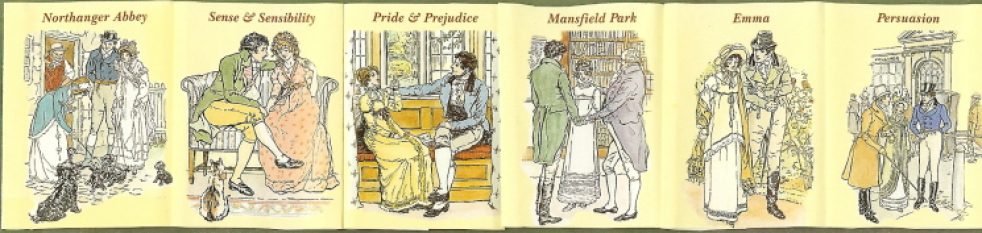
Plus … all the latest news from the world of Jane Austen, your letters, round-ups from the Jane Austen Society of the UK and the Jane Austen Society of North America, book reviews and quiz!
I have just heard from a friend of mine, Chris Sandrawich, membership secretary of the Jane Austen Society Midlands Branch, and his concern about the threat to the “Library Passage” in Worthing. This path is termed a “twitten” – an old Sussex dialect word said to be a corruption of “betwixt and between.” Jane Austen stayed in Worthing in the fall of 1805 after the death of her father, and there met Edward Ogle, Worthing’s leading citizen. Austen was there with her mother, friend Martha Lloyd, and sister Cassandra [and why we have no letters!], and they would have used this “twitten” as a short-cut by-way to both the sea-front and the Library.
[You can read more about Austen’s connection with Worthing and Mr. Ogle in this October 2011 article in Sussex Life. [[and note that the full-text of this article is in the JAS Report for 2010, “Edward Ogle of Worthing and Jane Austen’s Sanditon.”]
The importance of Austen’s stay in Worthing and her meeting Mr. Ogle? – the town is very likely the model for Sanditon, and Mr. Ogle the inspiration for Tom Parker.
The former Library is now a bus station and the bus company wants to close this passage off for what they say are safety reasons – this connection to Jane Austen is at risk of disappearing. The house in Warwick Street where Jane Austen stayed was called Stanford’s Cottage – it is now a Pizza Express, but proudly displays a plaque on the wall commemorating Austen’s stay.
Mr. Sandrawich visited Worthing last year on a tour with his Midlands group – he has written an essay on this tour which will be published in their journal Transactions this year – and I append here, with his permission, an extract from his article on this twitten: [and I append a map here in the event you haven’t a clue where Worthing actually is…]
West Sussex - wikipedia
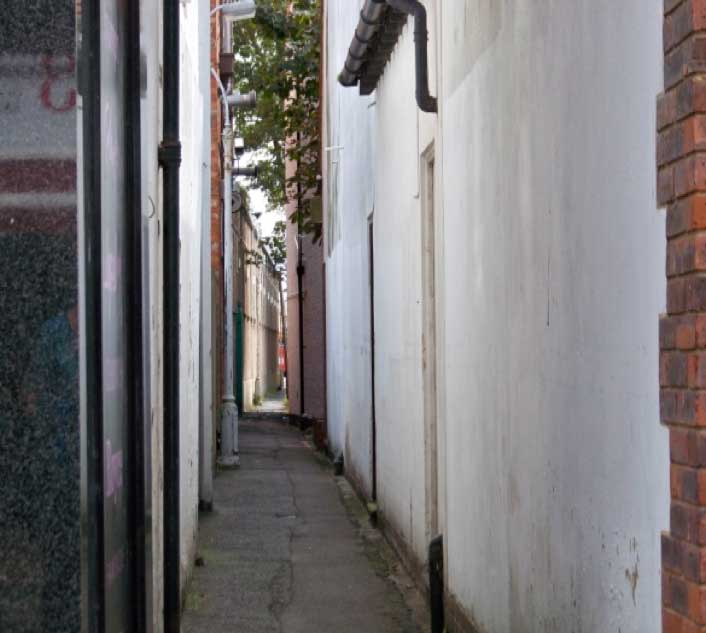
So, what of Worthing the place? It is clear that the town is struggling through the doldrums given the number of estate agents’ signs over empty shop fronts, but it is pleasant enough to stroll through, and you can always find something of interest. For example, the history of English is varied and fascinating and along with so many new words we have some that are very old, and still in use. Worthing has an interesting old Sussex dialect word, twitten , said to be a corruption of ‘betwixt and between’ although the on-line Oxford Dictionary suggests it is an early 19th Century word (unbelievably!) perhaps related to Low German twiete ‘alley, lane’, used for a path or an alleyway. It is still in common use in both East and West Sussex, and oddly enough in Hampstead Garden Suburb. As tussen, steggen or steeg in the Netherlands has a similar meaning it would be all too easy to assume that source as the derivation. Such pathways between buildings have other names around the world, but elsewhere in England twittens are called variously, twitchells (north-west Essex, east Hertfordshire and Nottingham), chares (north-east England, especially Newcastle), ginnels – which can also be spelt jennels or gennels – (Manchester, Oldham, Sheffield and south Yorkshire), opes (Plymouth), jiggers or entry (Liverpool), gitties or jitty (Derbyshire and Leicestershire), snickleways or snicket (York), shuts (Shropshire) and are called vennels inScotland; but it is not known what our Jane called them, but it is very likely she may have called the “Library Passage” shown on the right a twitten as Jane used it with her family to get from Stanford Cottage to Stafford’s Library, as well as the sea front. This fine example of a Worthing twitten is just off Warwick Street, and only a lady’s baseball (see Northanger Abbey) throw from Stanford Cottage. Janet Clarke informed me that this twitten is currently under threat from a bus company, Stagecoach, who owns the land and wish to “stop it up” permanently. This twitten now runs from Warwick Street into the bus depot. Of course, anything being an ancient historic “right of way” for the ordinary people of England and Wales does not put off Companies from making such proposals whenever it suits the moment. Look at it again, while you have the chance, and if this twitten through your half-closed eyes and with some imagination resembles a footpath through dense woodland; then, there you have it.
********************
Mr. Sandrawich is looking to muster support from all of us who have an interest in Jane Austen, asking us to voice our concern for the loss of this pathway, so What can we do?
Here is the text of the letter that the Midlands Branch has sent to Janet Clarke of Worthing, who is spearheading this effort to halt the closure:
The Jane Austen Society Midlands
A Worthing twitten, and right-of-way, known as “Library Passage”
We understand that you are seeking support to prevent the present owners of the land including the ‘Library Passage’ from permanently stopping it up and at one stroke preventing future use as a short-cut and right of way, and also removing an historical connection between Worthing and Jane Austen.
As you know, in 1805, at the time of the Trafalgar and Nelson’s famous victory Jane Austen and her family stayed at Stanford’s Cottage, adjacent to this twitten, and would certainly have used this short-cut known as the ‘Library Passage’ to gain direct access to both the sea-front and the library. The library in those days was the focal point of social gatherings to meet, discuss and converse as well as to see and be seen and take refreshments whilst perhaps reading papers, magazines and books. In their months staying in Worthing Jane Austen and her family probably used this route on a daily basis.
This very library has changed its use and now forms part of the administrative buildings for the bus depot, where the twitten ends.
Sir Walter Scott is famous for his fulsome praise of Jane Austen but Anthony Trollope also praised her work and wrote, “Miss Austen was surely a great novelist. What she did, she did perfectly. Her work, as far as it goes, is faultless.” and many other examples in praise of her genius can be found placing Jane Austen at the forefront of great British novelists.
The connection between Worthing and Jane Austen has only comparatively recently come to light and our Society visited Worthing in October last year, and we were very interested to see the twitten known as the ‘Library Passage’ and to understand its connection with Jane Austen’s stay. We feel sure that our Society’s visit to Worthing will be only one of many, as other Societies all around the world learn of this Austen connection, and any Jane Austen fan would be very pleased to see the twitten, she must certainly have used, remain open and unaltered and would be equally dismayed to see it lost forever.
We, the Committee of The Jane Austen Society Midlands, fully support the view that the twitten known as ‘Library Passage’ should remain open and its connection with Jane Austen made more widely known.
Yours sincerely
Chris Sandrawich, Membership Secretary
and Jennifer Walton, Chairman
_________________________________________
Written submissions have to be in before March 28th and the actual hearing is on April 25th at the Chatsworth Hotel in Worthing. If you would like to have a voice in this, please comment here and I will let you know who and where to send your letter of support.
Thank you all! – this is your chance to be proactive and do something to save this important connection to Jane Austen’s life and her writing of Sanditon.
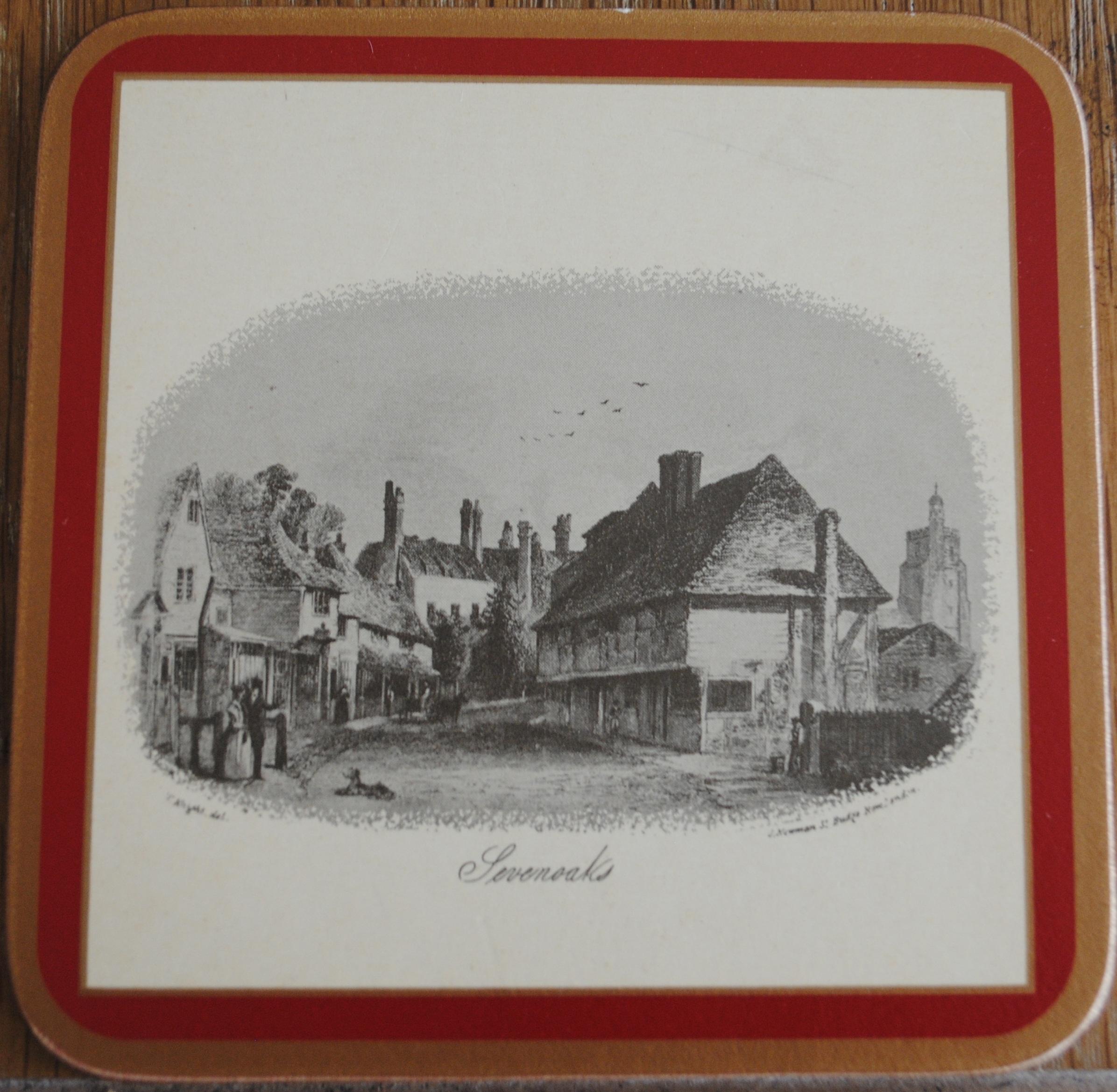
Browsing around an antique shop last week, I spotted a boxed set of six Pimpernel coasters, each coaster’s image an engraving of a British Heritage site in Kent, and all bordered by red and gold bands.
Pimpernel Coasters - British Heritage, Kent
Not sure how old these are – the box is plain white with an image on the front, but they were $3.00 in unused condition, and who could resist them? – all places that Jane Austen may have visited on her many trips to Kent [alas! my book Jane Austen in Kent by David Waldron Smithers is not in hand – I am lost!]
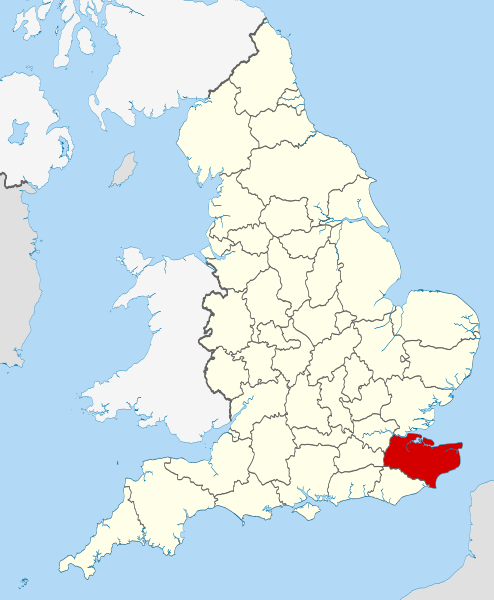
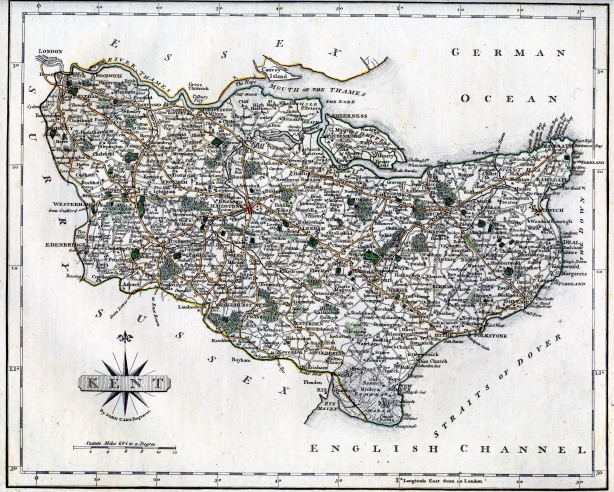
I have been to England many times, but have not seen the Jane Austen sites in Kent, so let’s take a short tour through these six coastered” sites, wondering if Austen visited any of them, beginning with, where IS Kent anyway?
We do know that Jane Austen visited Kent many times, traveling through to her brother Edward Austen-Knight’s home at Godmersham Park, and staying in various coaching inns along the way:
and to Goodnestone Park, the home of the Bridges family and Jane Austen’s sister-in-law Elizabeth Bridges [when Austen’s brother Edward and Elizabeth first married, they lived in Rowling, a house on the Goodnestone estate.
Austen may have indeed visited each of these places on my now treasured coasters. We have only her letters to tell us for sure and I depend upon the homework already done by Deirdre Le Faye in her indexes to those letters [4th ed., Oxford, 2011], and by Julie Wakefield at the aforementioned sister site to Austenonly, A Jane Austen Gazetteer, where Kentish sites are cross-referenced to the letters.
So here are the six places on the coasters – a perfect journey through Kent, with a little bit of history thrown in, and perhaps following in Jane Austen’s footsteps!
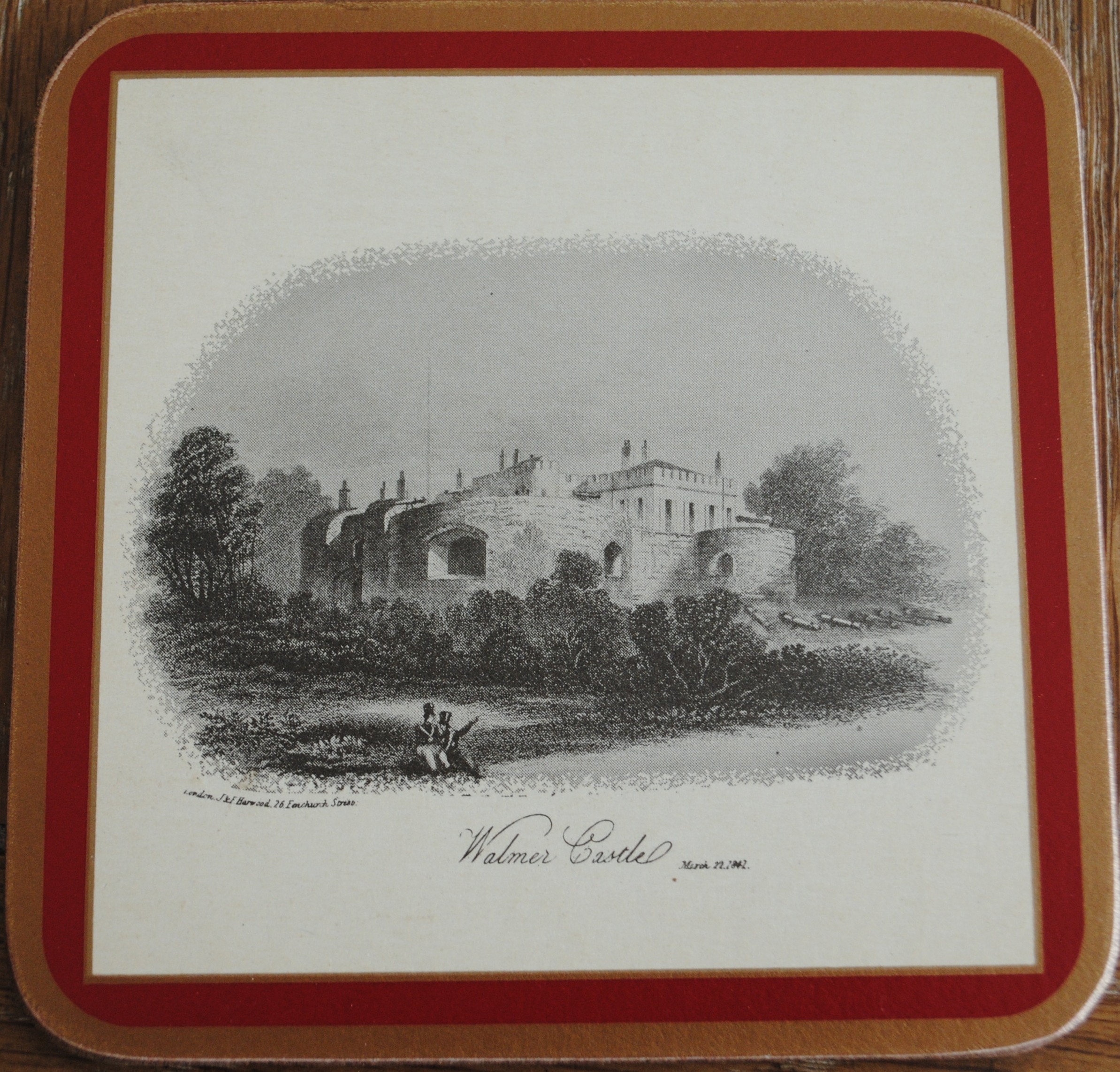
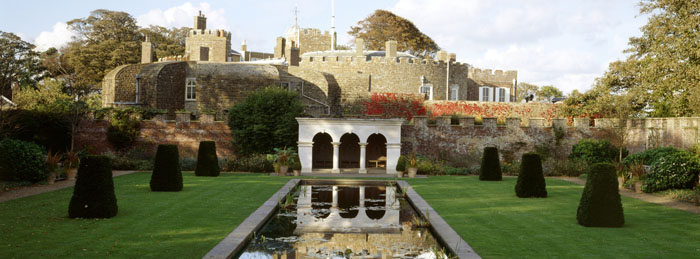
1. Walmer Castle, Kingsdown Road, Deal, Kent
Built during the reign of King Henry VIII, Walmer Castle is one of the most fascinating visitor attractions in the South East. Originally designed as part of a chain of coastal artillery defences it evolved into the official residence of the Lord Warden of the Cinque Ports. The Duke of Wellington held the post for 23 years and enjoyed his time spent at the castle and in recent years Her Majesty Queen Elizabeth the Queen Mother made regular visits to the castle.
The armchair in which Wellington died and an original pair of ‘Wellington boots’ along with some of the rooms used by the Queen Mother are among the highlights. And with the magnificent gardens, a woodland walk and some excellent bird spotting there’s something for everyone to enjoy. There is also a pleasant cycle path along the beach front to nearby Deal Castle.
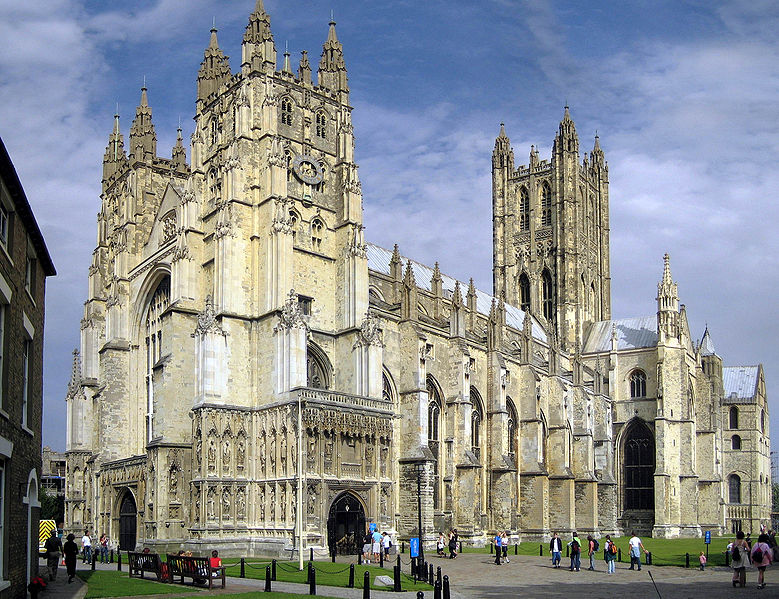
St Augustine, the first Archbishop of Canterbury, arrived on the coast of Kent as a missionary to England in 597 AD. He came from Rome, sent by Pope Gregory the Great. It is said that Gregory had been struck by the beauty of Anglo slaves he saw for sale in the city market and dispatched Augustine and some monks to convert them to Christianity.
Augustine was given a church at Canterbury (St Martin’s, after St Martin of Tours, still standing today) by the local King, Ethelbert whose Queen, Bertha, a French Princess,, was already a Christian. This building had been a place of worship during the Roman occupation of Britain and is the oldest church in England still in use. (from the Cathedral website)
“It wanted five minutes of twelve when we left Sittingbourne, from whence we had a famous pair of horses, which took us to Rochester in an hour and a quarter; the postboy seemed determined to show my mother that Kentish drivers were not always tedious, and really drove as fast as Cax.”
Austen’s letter No. 9 of 24 Oct. 1798. Letters p. 14.
Rochester Castle stands on the east bank of the River Medway in Rochester, Kent, England. The 12th-century keep or stone tower, which is the castle’s most prominent feature, is one of the best preserved in England or France. Located along the River Medway and Watling Street, Rochester was a strategically important royal castle. During the medieval period it helped protect England’s south-east coast from invasion. The first castle at Rochester was founded in the aftermath of the Norman Conquest. It was given to Bishop Odo by his half-brother, William the Conqueror. During the Rebellion of 1088 over the succession to the English throne, Odo supported Robert Curthose, the Conqueror’s eldest son, against William Rufus. It was during this conflict that the castle first saw military action; the city and castle were besieged after Odo made Rochester a headquarters for the rebellion. After the garrison capitulated, this first castle was abandoned. [wikipedia]
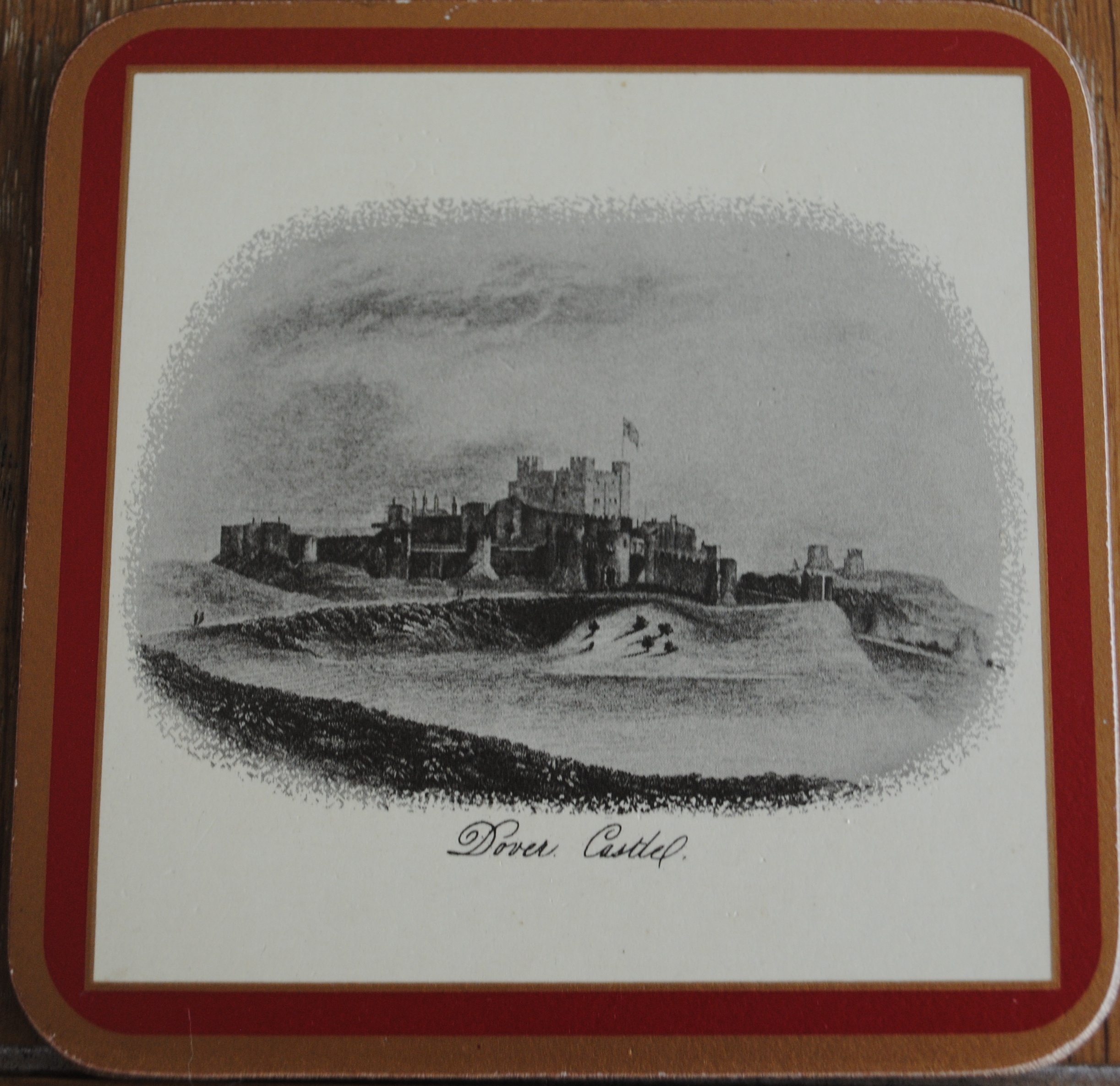
Commanding the shortest sea crossing between England and the continent, Dover Castle has a long and immensely eventful history. Many centuries before King Henry II began the great stone castle here in the 1160s, its spectacular site atop the famous ‘White Cliffs’ was an Iron Age hill fort, and it still houses a Roman lighthouse, one of the best-preserved in Europe. The Anglo-Saxon church beside it was once probably part of a Saxon fortified settlement: very soon after his victory at Hastings in 1066, this was converted by William the Conqueror into a Norman earthwork and timber-stockaded castle.
From then on Dover Castle was garrisoned uninterruptedly until 1958, a continuous nine-century span equalled only by the Tower of London and Windsor Castle. The stronghold hosted royal visits by Henry VIII, Elizabeth I and Charles I’s Queen Henrietta Maria: and from 1740 until 1945, its defences were successively updated in response to every European war involving Britain. [from English Heritage]
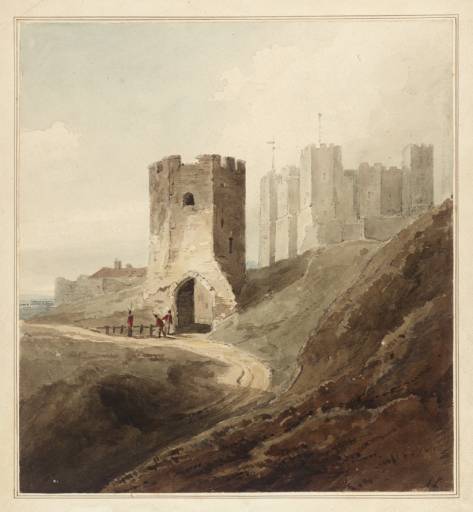
Dover Castle, by Amelia Long (Lady Farnborough) 1772-1837, No date, prior to 1837
Source: Tiny image at the Tate Gallery
Francis Austen, a great-uncle of Jane’s, was a solicitor in Sevenoaks. Austen sends a letter to her cousin Philadelphia Walter in Seal, an area of Sevenoaks [Ltr. 8].
Sevenoaks is a commuter town situated on the London fringe of west Kent, England, some 20 miles (31.2 km) south-east of Charing Cross, on one of the principal commuter rail lines from the capital. The town gives its name to the Sevenoaks district, of which it is the principal town, followed by Swanley and Edenbridge.
The presence of Knole House, a large mansion, led to the earlier settlement becoming a village and in the 13th century a market was established. Sevenoaks became part of the modern communications network when one of the earlier turnpikes was opened in the 18th century; the railway was relatively late in reaching it. [wikipedia]
Knole House image: Morris’s Seats of Noblemen and Gentlemen (1880) – wikipedia
High Street in Chiddingstone, a village in the Sevenoaks area, [and where James Stanier Clarke visits when he is writing to Jane Austen in Letters 125(A) and 132(A)], has been described as “the most perfect surviving example of a Tudor village in the county.”
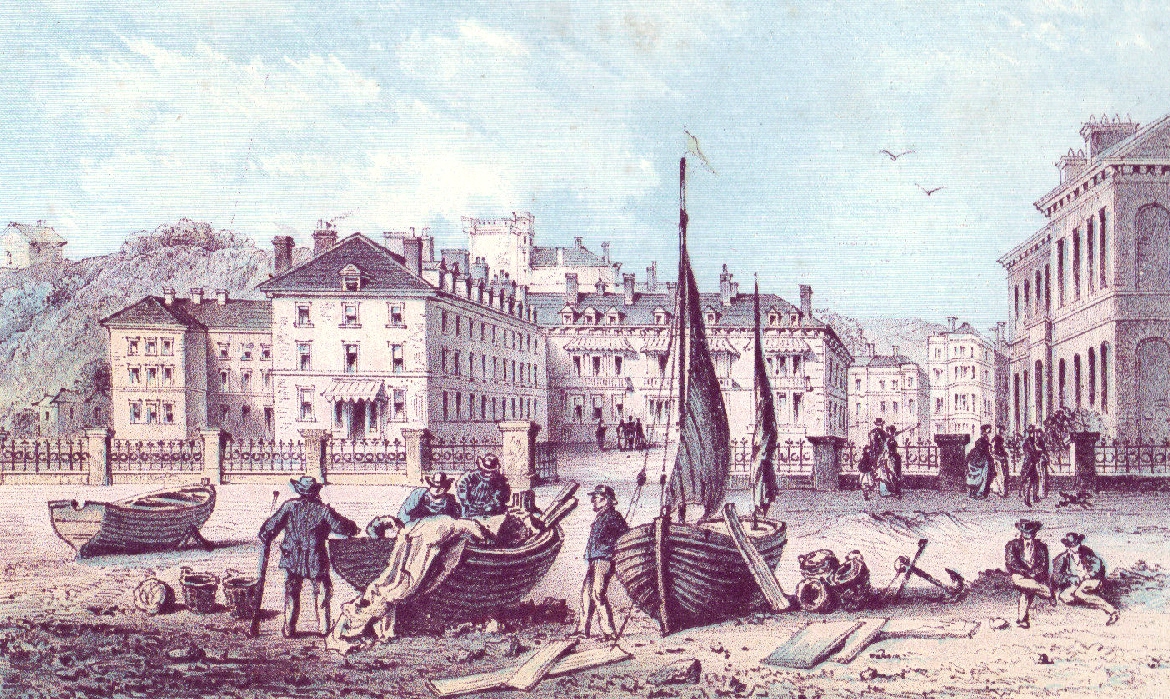
A Norman knight held a Barony of Folkestone, by which time the settlement had become a fishing village. That led to its entry as a part of the Cinque Ports in the thirteenth century and with that the privilege of being a wealthy trading port. At the start of the Tudor period it had become a town in its own right. Wars with France meant that defences had to be built here and soon plans for a Folkestone Harbour began. Folkestone, like most settlements on the south coast, became involved in smuggling during the eighteenth century. At the beginning of the 1800s a harbour was developed, but it was the coming of the railways in 1843 that would have the bigger impact.
Until the 19th century Folkestone remained a small fishing community with a seafront that was continually battered by storms and encroaching shingle that made it hard to land boats. In 1807 an Act of Parliament was passed to build a pier and harbour which was built by Thomas Telford in 1809. By 1820 a harbour area of 14 acres (5.7 hectares) had been enclosed. Folkstone’s trade and population grew slightly but development was still hampered by sand and silt from the Pent Stream. The Folkestone Harbour Company invested heavily in removing the silt but with little success. In 1842 the company became bankrupt and the Government put the derelict harbour up for sale. It was bought by the South Eastern Railway Company (SER), which was then building the London to Dover railway line. George Turnbull was responsible in 1844 for building the Horn pier. Dredging the harbour, and the construction of a rail route down to it, began almost immediately, and the town soon became the SER’s principal packet station for the Continental traffic to Boulogne.
So thank you for joining me on my journey through Kent – I should like to write more on this, once I have my proper research tools in hand – especially about the coaching inns that Austen stayed in her travels – so stay tuned please! And if any of you have any Kentish tales to share, especially those involving Jane Austen, please do!
And with hearty thanks to Julie at Austenonly for her references and map and to Deirdre Le Faye for her invaluable indexes!











 Jane Austen in Vermont