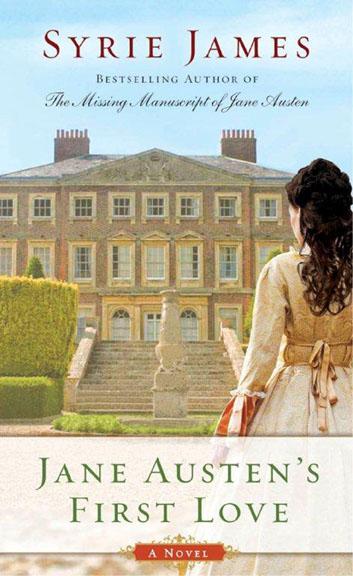
Just a reminder about the giveaway for Syrie James’s newest book, Jane Austen’s First Love. I am extending the deadline for another week, through the holiday weekend until Tuesday September 2, 2014, with the winner announced Wednesday September 3. Please either comment on this post or the original post where Syrie wrote about Lady Bridges’ letters on her daughters’ marriages – one of those daughters, Elizabeth, married Jane Austen’s brother Edward Austen (later Austen-Leigh). (Sad to say, Elizabeth died at the age of 35 shortly after the birth of her eleventh child). These letters from Lady Bridges to her friend tell the tale of the desire to marry one’s daughters well – not unlike Mrs. Bennet!
Syrie’s new book is about Jane Austen’s acquaintance with Edward Taylor whom she met while visiting the Bridges’s home at Goodnestone Park in Kent. It is the imagined story of Jane Austen’s first love, based on extensive research. Syrie’s previous books on Jane Austen have been first class entertainments as she has taken us into the Regency world we all so love to visit! – and I highly recommend this new work, where we have real-life and fiction so beautifully intertwined.
Please comment or ask Syrie a question either here or on the previous post:
About the Author: Syrie James, hailed by Los Angeles Magazine as “the queen of nineteenth century re-imaginings,” is the bestselling author of nine critically acclaimed novels including The Missing Manuscript of Jane Austen (“A literary feast for Anglophiles”—Publisher’s weekly), The Lost Memoirs of Jane Austen (named one of the best first novels of the year by Library Journal), and The Secret Diaries of Charlotte Brontë (Audie Award, Romance 2011; Great Group Read, Women’s National Book Association). Syrie’s books have been translated into eighteen languages. She is a member of the Writer’s Guild of America and a life member of JASNA. Follow Syrie on twitter, visit her on facebook, and learn more about her and her books at syriejames.com.
Best of luck in the giveaway – You have until September 3rd!
Just a reminder about the giveaway for Syrie James’s newest book, Jane Austen’s First Love. I am extending the deadline for another week, through the holiday weekend until Tuesday September 2, 2014, with the winner announced Wednesday September 3. See below for Giveaway details!
Gentle Readers: I welcome Syrie James today with a post on a bit of her background research for her new book Jane Austen’s First Love. Syrie has based her tale on the real-life Edward Taylor, mentioned by Austen in her letters – he may have been her never-forgotten First Love and hence perhaps a model for her very own Mr. Darcy. Syrie’s previous books on Jane Austen have been first class entertainments as she has taken us into the Regency world we all so love to visit – and I highly recommend this new work, where we have real-life and fiction so beautifully intertwined. – see details at the end of the post on how to win a copy of your own…
Letters From Lady Bridges on the Engagements of Her Three Daughters
“It is certainly a very singular instance of good fortune in One Family, that 3 Girls, almost unknown, should have attach’d to themselves three Young Men of such unexceptionable Characters.” —Lady Bridges of Goodnestone Park, July 10, 1791
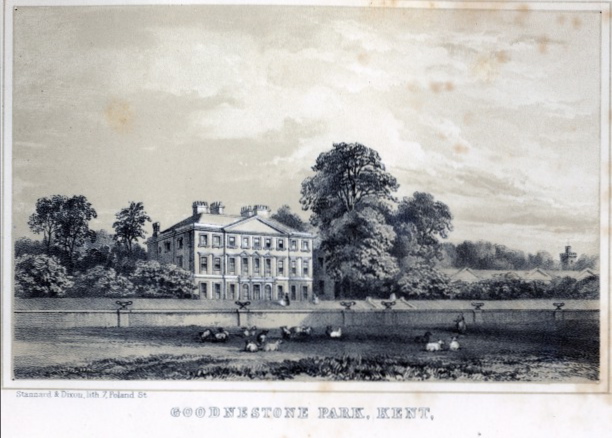
The above was written by Lady Bridges, the former Fanny Fowler, wife of Sir Brook Bridges, 3rd Baronet of Goodnestone Park in Kent. Lady Bridges had eleven children including Elizabeth Bridges, who married Jane Austen’s brother Edward Austen in December, 1791. That year must have been a very busy and happy one for the Bridges family, as sisters Elizabeth and Fanny became engaged within weeks of each other, and another sister Sophia became engaged a few months later—an unusual occurrence in any family at any time, as Lady Bridges gleefully notes.
This remarkable circumstance in the Bridges family is one of several things which inspired me to write my novel, JANE AUSTEN’S FIRST LOVE. The book takes place during the summer of 1791, when fifteen-year-old Jane visits the Bridges family to join in a month of festivities celebrating their daughters’ engagements. While at Goodnestone Park, Jane meets and falls in love with devilishly handsome Edward Taylor, heir to the nearby, ancestral estate of Bifrons. Edward Taylor is a real person who Jane adored in her youth, as mentioned in several of her letters to her sister Cassandra—references that made me eager to learn more about him, and to write about their relationship.
During my research, I uncovered a trove of information about the remarkable Edward Taylor and his family which was previously unknown to Austen biographers. He spent much of his youth living and traveling abroad, and was extremely well-read and accomplished, qualities which must have greatly appealed to the young Jane. Learning all this was exciting, and it helped me to bring him to life in my novel accurately and in vivid detail.
Another Austen fact that inspiredJANE AUSTEN’S FIRST LOVE is that in 1791, Jane wrote a comedic short story, The Three Sisters, featuring characters named Fanny and Sophia. I felt certain that Jane visited Kent that summer, where she not only met the young ladies who inspired that story, but also met and became enamored of Edward Taylor—and that her experiences there greatly shaped her views forever after regarding love and marriage.
During my research for the book, I was excited to come upon three letters which Lady Bridges wrote in 1791, announcing the engagement of her daughters Elizabeth, Fanny, and Sophia. The letters are little gems, providing us with a glimpse of that family’s history. Here are the letters in their entirety:
LETTER #1
To Mrs. Fielding, St. James’ Palace, London.
Goodnestone: (March 2, 1791)
MY DEAR MRS. FIELDING,
Elizabeth Bridges
I cannot leave to my Daurs the pleasure of informing you of an Event that gives us the greatest satisfaction. We had for some time observed a great attachment between Mr. Austin (Mr. Knight’s Relation) and our dear Elizth; and Mr. Knight has, in the handsomest manner, declared his entire approbation of it; but as they are both very young, he wish’d it not to take place immediately, and as it will not suit him to give up much at present, their Income will be small, and they must be contented to live in the Country, which I think will be no hardship to either party, as they have no high Ideas, and it is a greater satisfaction to us than if she was to be thrown upon the world in a higher sphere, young and inexperienced as she is. He is a very sensible, amiable young man, and I trust and hope there is every prospect of Happiness to all parties in their union. This Affair has very much agitated Sir B., and he has not been quite so well for some days past as he had been for a month before; but now it is decided he will, I make no doubt, be better again in a few days, but I have long observed that when his mind has been agitated he has had a return of cough and oppression. He has sent his case to Bath, and if he is encouraged to go there, we shall set out according to the time pointed out from thence, as he has desired to know when the Waters have most efficacy. Fatty is so good (as) to stay with my Girls during our absence, or I should be much distress’d at leaving them so long. She has been pretty well, upon the whole, ever since she has been here, and in remarkable good Looks and Spirits.
Adieu, my dearest Mrs. Fielding. All here unite with me in kindest love and compts: as due. My Daurs desire their duty to you.
Believe me ever yours affectionately, F. B.
[NOTES: “F.B” is Lady Bridges, whose Christian name was Fanny, the same as her eldest daughter. “Sir B” is Sir Brook, her husband. “Fatty” was Isabella, sister of Mrs. C. Fielding’s husband. A popular woman, she was known all her life as Fatty Fielding, and often visited at Goodnestone Park and Godmersham Park.]
Edward Austen Knight
***********
LETTER #2
Goodnestone: (March 28, 1791)
MY DEAR MRS. FIELDING,
I flatter myself you are so truly interested in the welfare of my dearest children, that I am not afraid of being troublesome in writing again so soon, but must inform you that my dearest Fanny has received an offer of Marriage from Mr. Lewis Cage, a Gentleman of this County of an unexceptionable good character. His proposal has our entire approbation. As you was so kind to express a wish to be acquainted with Mr. Austin, I inform’d him of it, in consequence of which he call’d at St. James’s, and was very much disappointed he was not so fortunate to find you at home, as his Time would not permit him to make a Second Attempt; indeed, I should be quite happy that your two future Nephews should be known to you, and I hope it will not be long before they have an opportunity of being introduced. My Daughters are going to-morrow to Godmersham for a Week; I do not accompany them, as Mr. Bridges is here. Sir Brook continues charmingly well, and is in very good spirits. I hope we shall get a glimpse of you as we pass through town to Bath the middle of next month, tho’ our stay will be very short. How is Miss Finch? I hope much recovered since she left Margate. I am quite delighted to hear such good accounts of Augusta, and hope she feels no remains of her severe Illness, but that she and all the rest of your Family are well. All here unite with me in kindest Love to you all.
Believe me, ever yours affectionately, F. B.
[NOTES: “Miss Finch” was probably one of Mrs. Fielding’s three sisters. “Augusta Sophia” was the youngest daughter of Mrs. Fielding.]
A close-up of Goodnestone in Austen’s Day
***********
LETTER #3
Brock St., Bath: (July 10, 1791)
MY DEAR MRS. FIELDING,
After having wrote to you so lately you will be no doubt surprized at hearing again so soon, and not less so to find that the Cause of my addressing myself to you is to inform you that we have received proposals of Marriage from Mr. William Deedes for your God-daughter, our dear Sophia. He is a young Man of a very Amiable Disposition and universally beloved, and his Father has been so kind to approve his Choice. I hope it will meet with your approbation, and think she bids as fair to be happy with her Connection as her sisters with theirs. It is certainly a very singular instance of good fortune in One Family, that 3 Girls, almost unknown, should have attach’d to themselves three Young Men of such unexceptionable Characters, and I pray to God that their future conduct will ever do Credit to their Choice. Mr. William Deedes is gone with Mr. Knight on the Scotch Tour; he had been long engaged to accompany them, but did not choose to set out on so long an excursion till he had explain’d himself. As I have many letters to write I will not obtain you longer than to beg our best Love and good wishes to you and all your dear Family, and kind Compliments to Lady Charlotte and Miss Finch.
About the Author: Syrie James, hailed by Los Angeles Magazine as “the queen of nineteenth century re-imaginings,” is the bestselling author of nine critically acclaimed novels including The Missing Manuscript of Jane Austen (“A literary feast for Anglophiles”—Publisher’s weekly), The Lost Memoirs of Jane Austen (named one of the best first novels of the year by Library Journal), and The Secret Diaries of Charlotte Brontë (Audie Award, Romance 2011; Great Group Read, Women’s National Book Association). Syrie’s books have been translated into eighteen languages. She is a member of the Writer’s Guild of America and a life member of JASNA. Follow Syrie on twitter, visit her on facebook, and learn more about her and her books at syriejames.com.
***********
Thank you Syrie for sharing those wonderful letters with us – a perfect example of the marriage market of the late 18th century – such a happy year for these parents in 1791! And how interesting that you discovered these letters in your research into Edward Taylor. Readers, please either comment or ask Syrie a question about her new book and you will be entered into a giveaway for a copy of Jane Austen’s First Love.
Deadline is Tuesday, September 2, 2014 at 11:59 pm (EST) – winner will be announced September 3rd. Limited to US residents, sorry to say – and with hearty thanks to the publisher Berkley for the giveaway.
__________
UPDATE:
I add this comment here from Janine Barchas who wished to send this along to Syrie James: the cover of a Mansfield Park (Philadelphia, circa 1900) with the image of Fanny Brydges as seen above. Thank you Janine for sharing this – always nice to bring Mansfield Park into the mix whenever possible!
c2014 Jane Austen in Vermont; text and images courtesy of Syrie James, with thanks.
Syrie James on her new novel “Jane Austen’s First Love” – don’t miss out on the giveaways from Austenprose and others on the Blog Tour! Can’t wait to read this – Love Syrie James’ books!
I am very pleased to welcome author Syrie James to Austenprose today to officially open her virtual book launch party and blog tour of Jane Austen’s First Love, published by Berkley Trade. This new Austenesque novel is a fascinating combination of fact and fiction, exploring the first romance of fifteen year-old Jane Austen with the handsome and sophisticated Edward Taylor.
Syrie has generously offered a guest blog sharing her inspiration to write her new book—and to add to the festivities—we will be offering an amazing selection of giveaways including: trade paperback copies of Jane Austen’s First Love, a muslin tote bag stuffed with Jane Austen goodies, and a specially commissioned painting inspired by the novel. Just leave a comment following this blog post to enter. The contest details are listed below. Good luck to all.
Dear Gentle Readers: Today I welcome Margaret Harrington, a member of JASNA and happily for us, the Vermont Region. Margaret recently returned from her immersion in Sense and Sensibility at the Jane Austen Summer Program at UNC Chapel Hill, June 12-15, 2014. She shares with us her thoughts with pictures – looks to have been a delightful adventure!
**************
The Jane Austen Summer Program at UNC ~
“Sense & Sensibility Revisited”
by Margaret Harrington, JASNA Vermont member
Jane Austen’s juvenilia play “Jack and Alice” given a lively performance
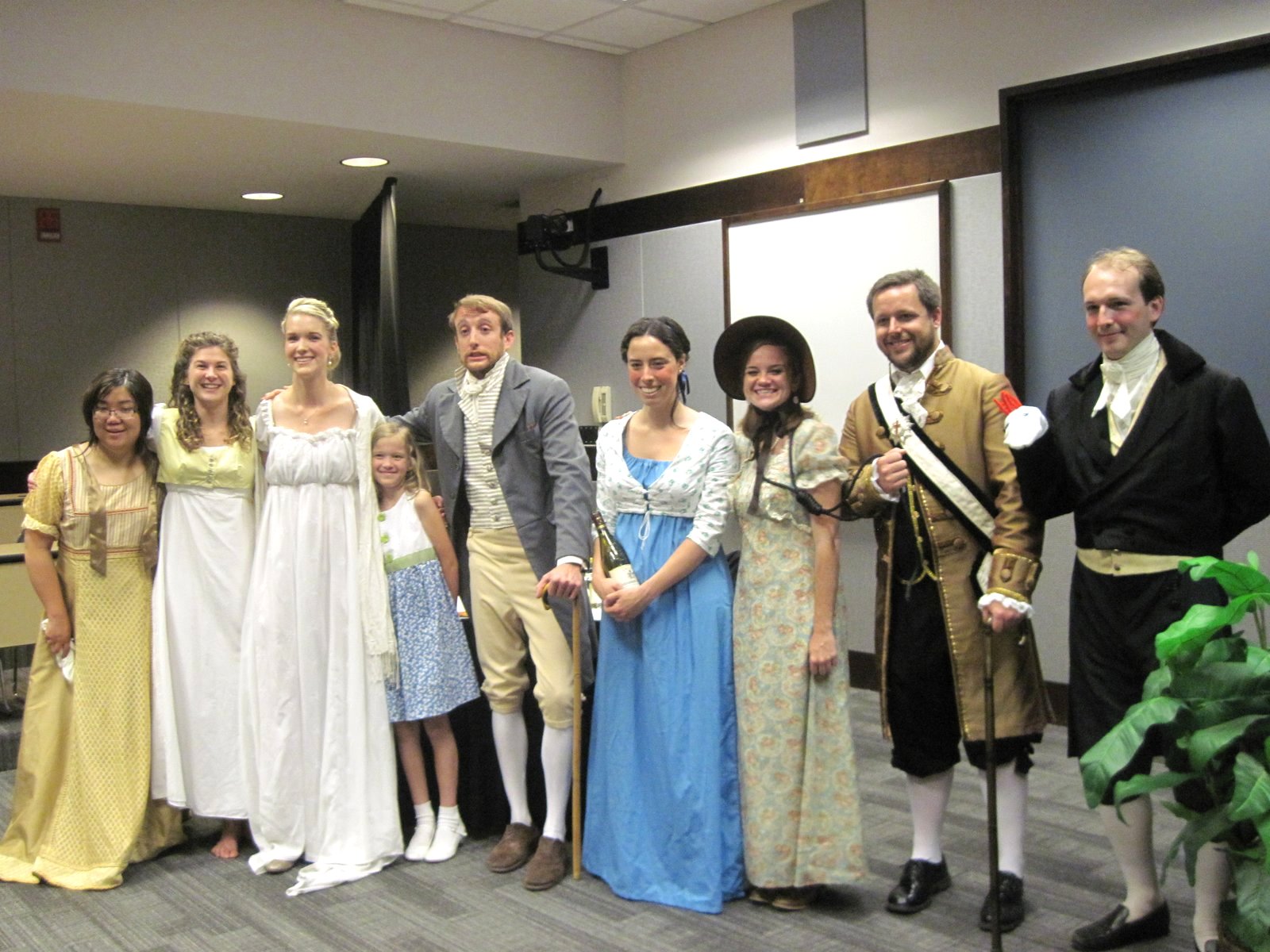
I experienced blissful immersion in Jane Austen’s novel Sense and Sensibility during this four day conference at the University of North Carolina, Chapel Hill. From the gracious reception at the UNC Friday Center throughout the days and evenings of serious enjoyment, I conclude that this was a wonderful personal adventure. There were lectures, teas, regency dancing, a play, movies, intense conversations about Jane Austen, and some thunder storms. The conference offered study of the book itself, provided insight into the culture in which it was written, and even gave a pleasant glimpse of one or two aspects of contemporary culture in the American south.
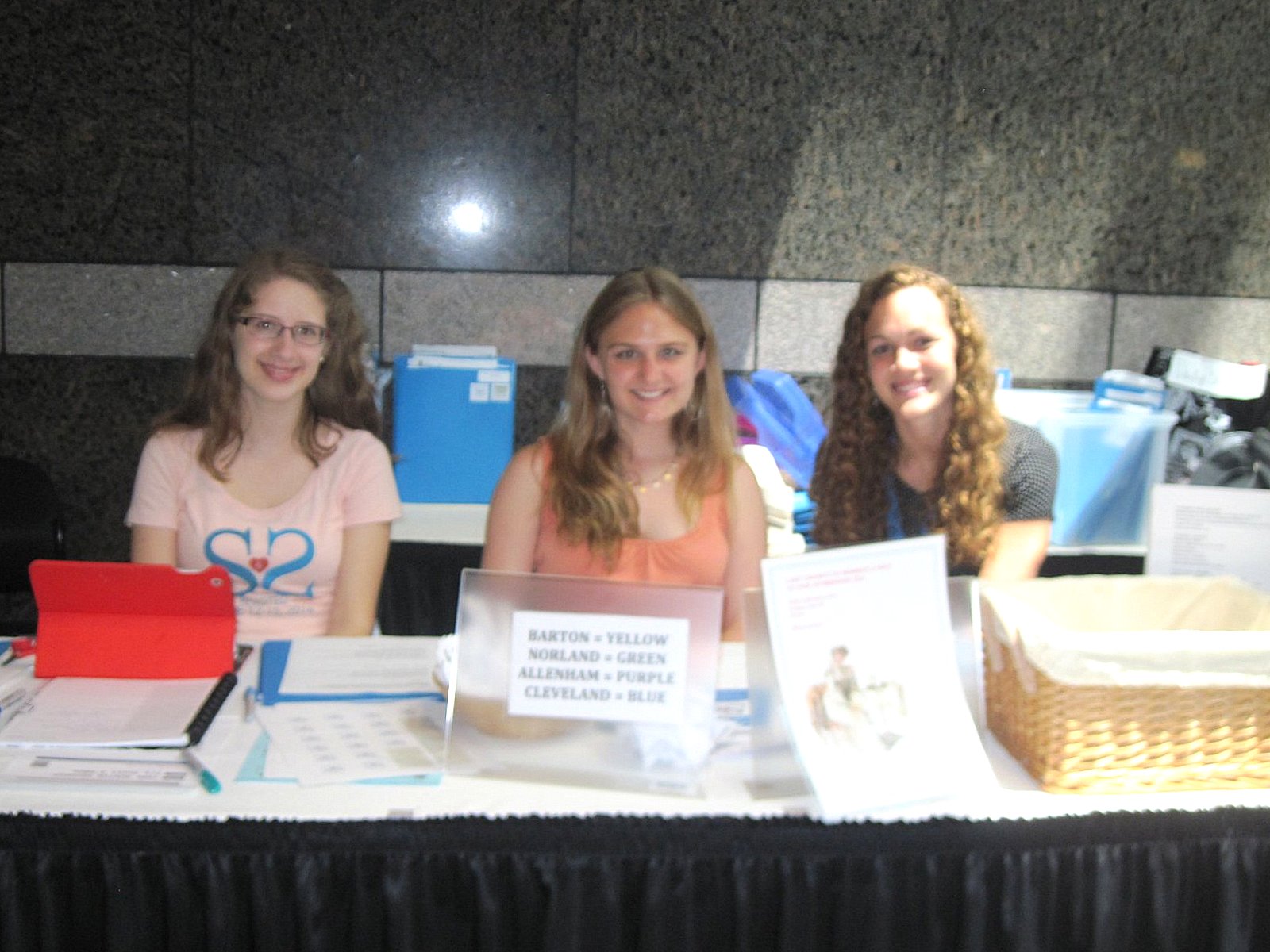
A warm welcome from Emma, Emily and Rachel at the UNC Friday Center
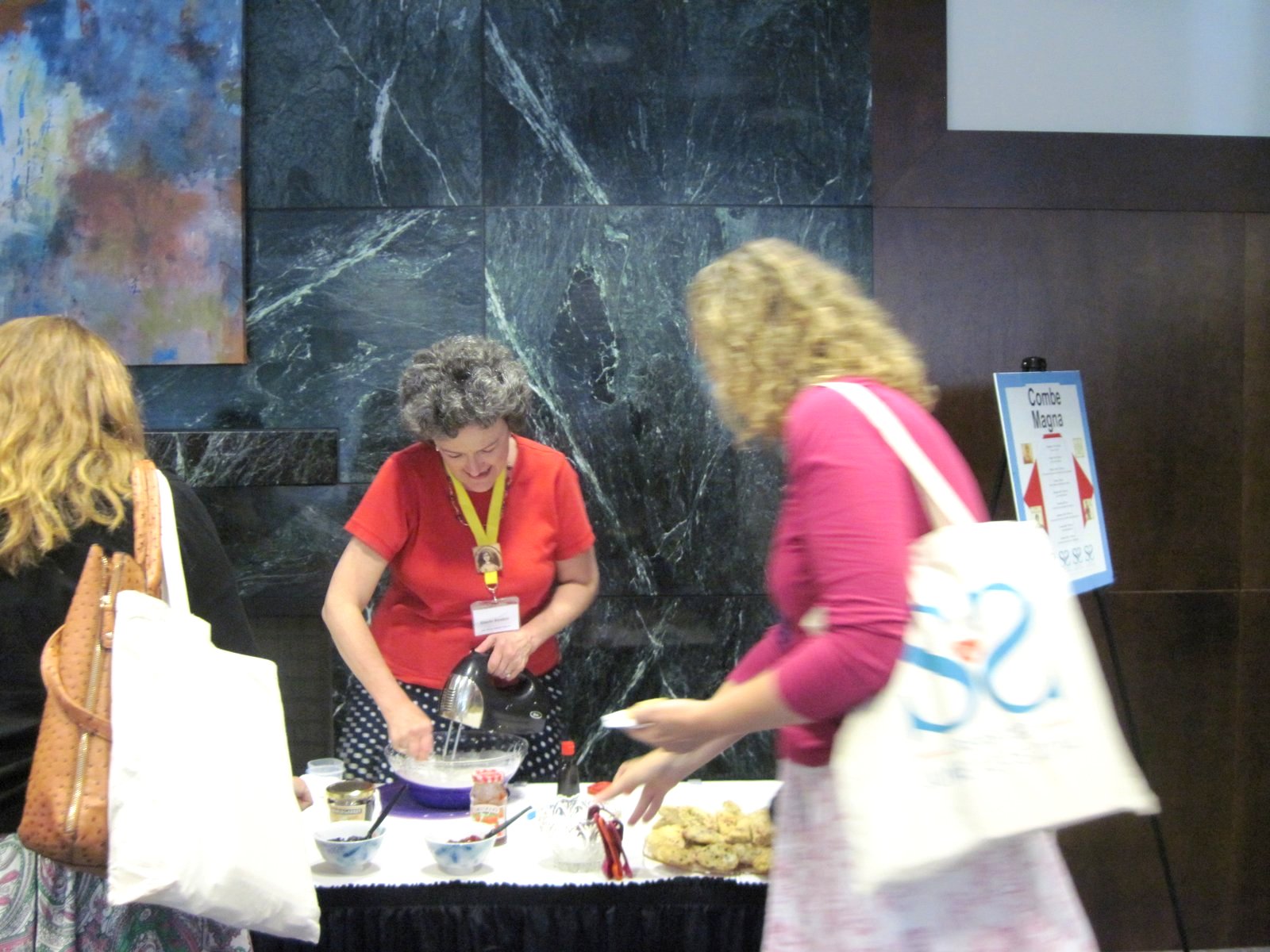
‘Elevenses’ of clotted cream and scones dished up by Gisele Rankin of JASNA North Carolina
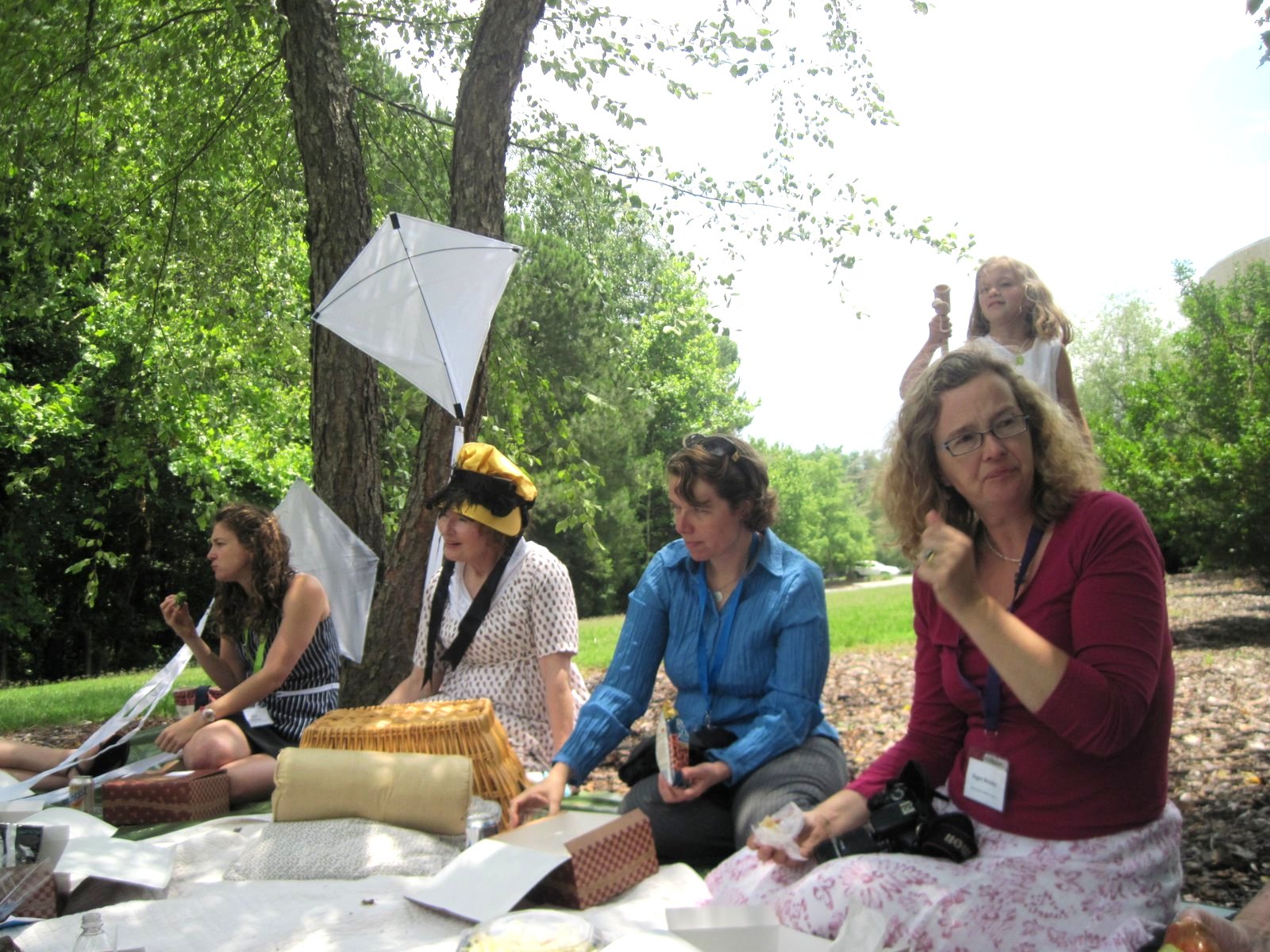
Lunch on the lawn with kite flying and shuttlecock
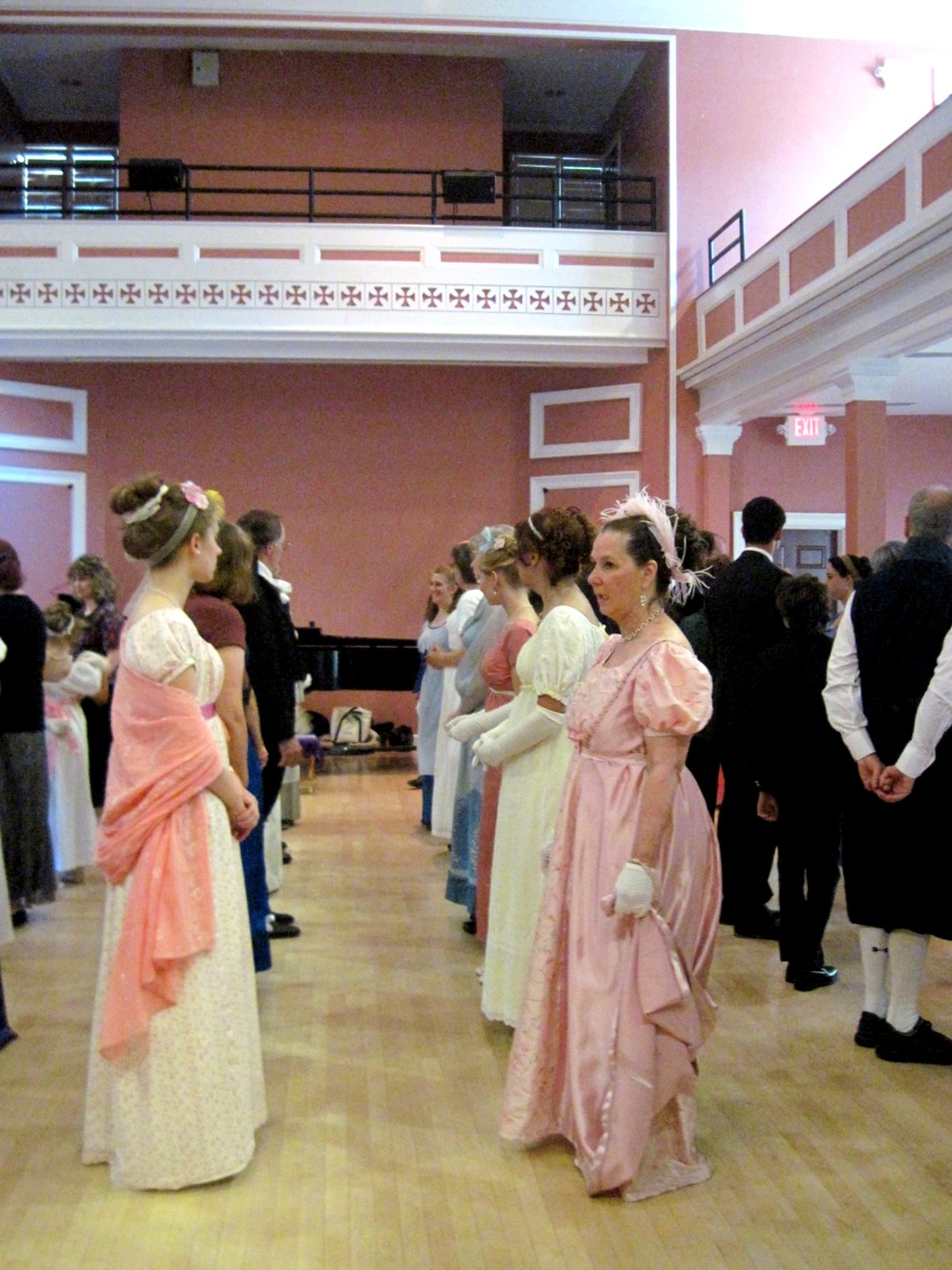
The ‘Sense and Sensibility’ Ball at Gerrard Hall, UNC
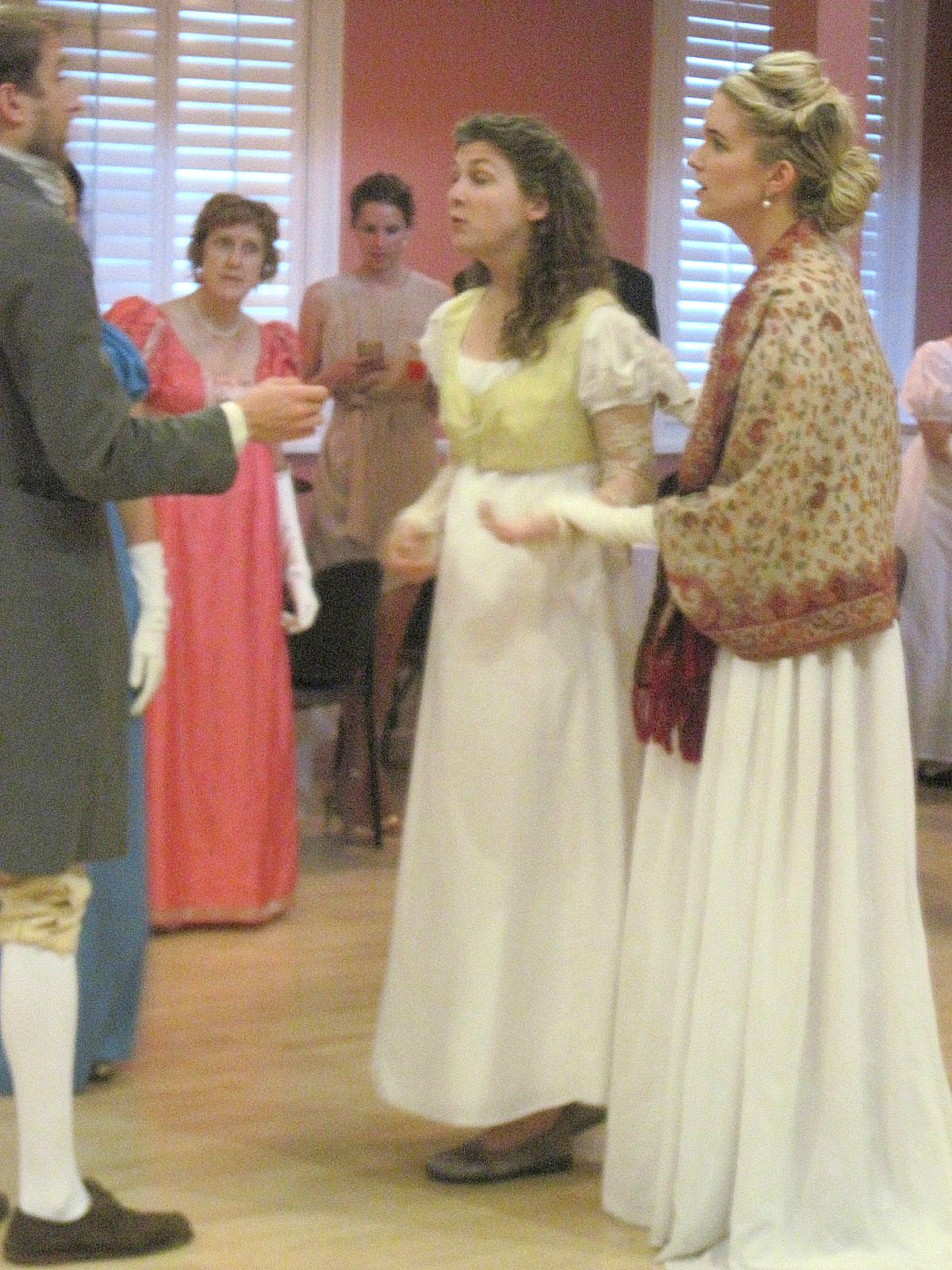
Drama at the Sense and Sensibility Ball
************
Dr. James Thompson of UNC-Chapel Hill co-hosted the event and set the tone for the conference as both formally educational and informally warm and welcoming.
Inger Brodey
The initial lecture by his co-host Dr. Inger Brodey, also of UNC-Chapel Hill, entitled “Making Sense of Sensibility” placed us in the Regency world of the philosophers and other writers who influenced Jane Austen’s concepts. I gleaned from this opening lecture that to interpret the novel as a dichotomy between sense and sensibility or as a tension between the two mind sets of Marianne and Elinor is to limit perception. Professor Brodey opened up a whole world of ideas which were accessible to Austen and evidenced in her writing and showed me that Sense and Sensibility has a richness of texture I had not been aware of prior to the lecture.
In fact the days were planned to deepen understanding of the novel with 15 minute context corners on the subjects of Law and Inheritance, Childhood and Education, Medicine and Illness, and the Clergy and the Church. These were followed with 45 minute Context Response sessions during which we, the participants, exchanged ideas. Then of course there were ‘Elevenses’ with scones and clotted cream. There were boxed lunches on the lawn with kites, battledore and shuttlecock as period entertainment. There were dance workshops to prepare us for the Regency ball. There was an amusing and informative lecture by Colgate University Professor Deborah Knuth Klenck on: “Jane Austen’s School of Rhetoric: Style, Substance and ‘Delicacy of Mind.’”
Jade Bettin, UNC-Chapel Hill, demonstrates (on a willing participant) the way to corset up properly during her lecture “‘But he talked of flannel waistcoats’: How Clothing Makes the Men and Women of S&S.”
Dr. Robert Clark, University of East Anglia, Norwich, England, author of The Literary Encyclopedia, was an amazing speaker in the two lectures he gave to expand and deepen our understanding of Sense and Sensibility. In the first he concentrated on the economic facts that drove Jane Austen’s world, such as The Inclosure Act of 1773, which diminished the number of people who could own land to under 500 in all of England, entitling an oligarchical society to the prestige and privileges Austen’s characters scramble so hard to hold onto in her novels. In his second lecture entitled “The White Glare of Bath,” Professor Clark made Jane Austen’s playground of intrigue, balls, and shopping come alive up from the ground in the white stones and mortar and rubble that savvy developers offered to the rich for their recreational homes. In his remarkable lecture I could see Jane Austen moving about Bath, shopping and promenading, visiting, plotting her novels.
Dr. Robert Clark relaxes a moment after his talk on Bath
***********
All in all my experience was totally wonderful and I’d recommend it to Janeites everywhere. Next year’s conference is entitled “Emma at 200.”
Imagine that!
I leave you with a picture of Janeite Maureen O’Connor who attended the conference from far away Brooklyn and dressed authentically for every occasion:
Maureen O’Connor
Text and images by Margaret Harrington, with thanks!
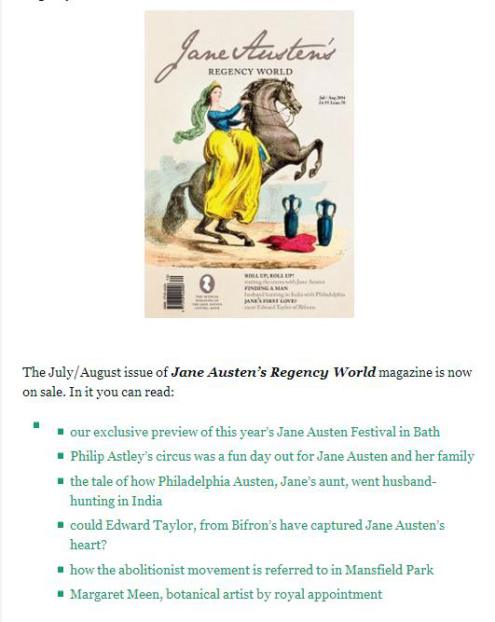
Just thrilled to bits to see the release of the July/August issue of Jane Austen’s Regency World magazine: my article on Margaret Meen is included:
Margaret Meen – believed by some to have been governess to the four Smith sisters of Erle Stoke Park – AKA, Lady Northampton, Mrs Chute, Mrs Smith and Miss Smith – was definitely a painter (on vellum and paper) of botanicals, and a teacher. Including, as the JARW line suggests: to the Royal family of Queen Charlotte and her girls. I truly hope that I’ve uncovered a bit of “life” for this somewhat undiscovered artist — and invite you to seek out a copy of the full-color publication that promises to deliver “EVERYTHING that is happening in the world of Jane Austen“, including this tidbit of Smith & Gosling history.
Stuart, I do have a question if you do not mind. Since this is fiction based on facts, what percentage is fact and what percentage is fiction? The premise is intriguing.
Stuart answered:
The “fact/fiction proportion” question is a great one, and not that easy to answer. Apart from my fictional Vanessa and her romantic interest, almost every character in the novel is real and could have been when and where I put them. This is especially important, of course, in the case of Lord Moira himself. But the Jane Austen narrative is deliberately put in the years when almost nothing is known of her movements, and although I have appropriated the surviving rumors about her for 1801-1802, I can’t say these, or my narrative is actually “historical.”
One of the best reviews I ever read of Patrick O’Brian’s Aubrey/Maturin novels said that if one of Jane Austen’s nautical brothers had shared her literary gifts, he would have written like O’Brian. I make no such claim for my own writing, of course, but what I think the O’Brian reviewer meant – among other things – was that O’Brian’s books transported the reader to Nelson’s navy and, once there, the reader never felt the anachronistic lurches that turn up in so many would-be historical novels. Readers have complimented my books on their historical accuracy, and if you’ll allow me to include the details of my novel in the fact/fiction equation I think I can safely say the factual side is well in the ascendant.
Thanks for writing!
******
The Perfect Visit
Lord Moira’s Echo
Thank you all for commenting; and congratulations to Joy!
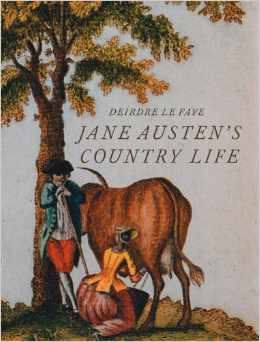
•An exclusive interview with Deirdre Le Faye, doyenne of the Austen world, about her career as a Janeite and her new book
[Note: Le Faye’s new book, Jane Austen’s Country Life: Uncovering the Rural Backdrop to her Life, Her Letters and Her Novels, is due out June 1, 2014 from Frances Lincoln]
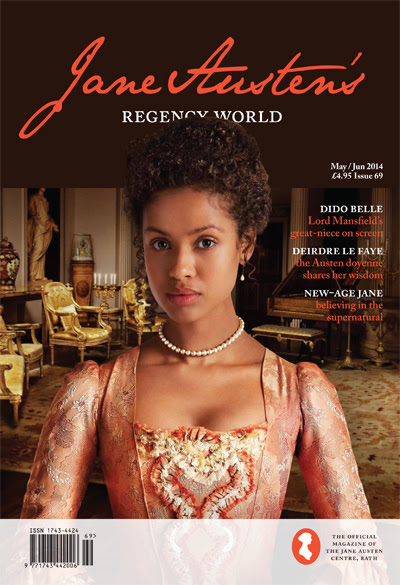
•Belle, the new film about Lord Mansfield’s great-niece, is out soon
[Note: the film is released May 1, 2014; cover image is of Belle, played by Gugu Mbatha-Raw; for more information and the trailer see http://www.foxsearchlight.com/Belle/ ]
•Could an eminent harpist have discovered Jane ‘s piano tuning key?
Godmersham 1779 – wikipedia
•Glorious Godmersham: a visit to the home of Edward Austen Knight
•Adlestrop, the village that influenced both Jane and a poet
•How Georgian England was fascinated by spiritualism and the supernatural
*Plus News, Letters, Book Reviews and information from Jane Austen Societies in the US, UK and Australia
*************
To subscribe [and you should!] click here – and make sure that you are among the first to read all the news from Jane Austen’s Regency World.
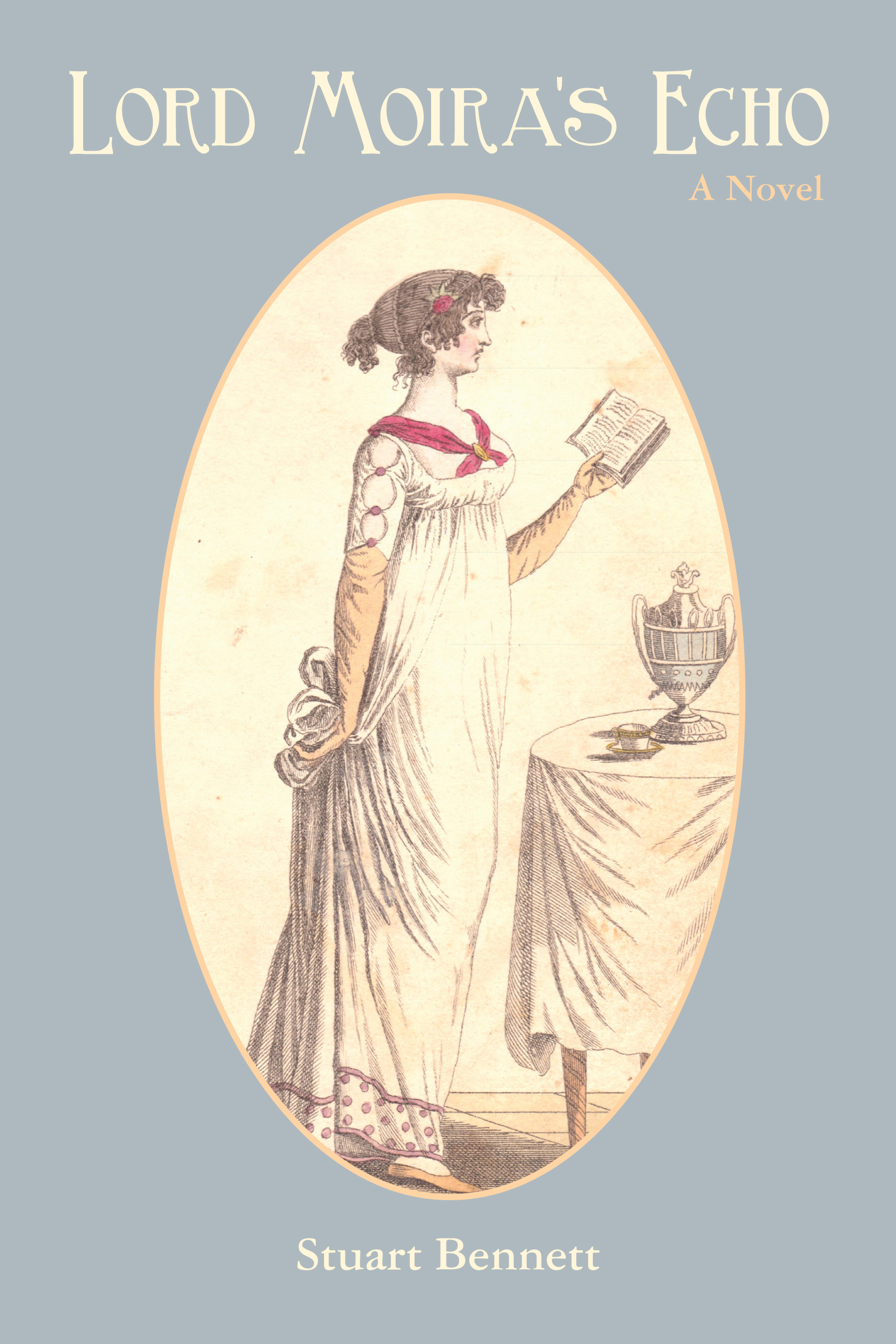
I welcome today Stuart Bennett [no relation to our esteemed Mr. Bennet – the difference a “t” can make!], antiquarian bookseller and author of two novels starring Jane Austen. You can read my April 2012 interview with Stuart about his first novel The Perfect Visit here:
As you know I loved this book because of its time-travel intrigue wherein we meet Shakespeare and Jane Austen, as well as its literary and bibliographical adventure through the London and Bath of the 16th and 19th century. Stuart’s new novel, Lord Moira’s Echo, has just been published and has a new and historically fascinating take on Jane Austen’s “lost” years from the spring of 1801 through the fall of 1804. I highly recommend it – it offers a tale of those years when “Jane Austen went missing” as biographer David Nokes writes, that is certainly as plausible and interesting as any of the other various fictional efforts in this vein out there. I cannot say more because the post would be an entire “Spoiler Alert” that would ruin the pleasure of your own reading! Please see below for the book giveaway.
I have been asked if one should read The Perfect Visit first, and I say that while this second book does stand completely on its own, an understanding of Vanessa and her story of being catapulted into Jane Austen’s England would only enhance your enjoyment.
~
So in lieu of an all-out review, I have asked Stuart to tell us something about this new work:
Stuart: I discovered references to the Austen family in the unpublished Hastings family archive at the Huntington Library in California. From these, I felt I could introduce this historical character, Francis Rawdon Hastings, the second Earl of Moira, as one who might have met Jane Austen during those lost years. The novel tells its story from two perspectives, Lord Moira’s own, and a young Canadian musician, Vanessa Horwood, who was the protagonist of The Perfect Visit; Vanessa is from our time, caught in a time-travel snafu and stuck in early 19th-century England. The narrative of my new novel shifts back and forth from 1823 to 1801 and 1802, imagining what might have happened if the Earl, about whom Jane’s banker brother Henry spoke bitterly even after Jane’s death in 1817 and who features in Austen family correspondence well into the 1830s, had been more than a just a shadowy figure in the lives of the Austens.
Jane herself plays a major part in the 1801-1802 sections of Lord Moira’s Echo. Lord Moira, whom I first discovered in a glancing reference in Brian Southam’s Jane Austen and the Navy, really could have played the role I give him. The social history of Regency England is full of much stranger tales.
*************
Thank you Stuart, and also a hearty thanks for offering a copy to commenters. For those in the Vermont JASNA region, Stuart spoke on this novel as a work-in-progress in September 2012, where we were all intrigued to hear of his take on Jane Austen’s mystery love. He just recently spoke at the JASNA-MA and JASNA-SC regions, and is scheduled with the JASNA-Maine group in September. For readers wanting the full historical tale behind the references to the Austen family in the Hastings archive, Bennett’s essay, “Lord Moira and the Austens,” will appear in the next issue of Persuasions – Vol. 35 (2013), due out this May.
About the author: Stuart Bennett was an auctioneer at Christie’s in London before starting his own rare book business. He is the author of the Christie’s Collectors Guide How to Buy Photographs (1987), Trade Binding in the British Isles (2004) which the London Times Literary Supplement called “a bold and welcome step forward” in the history of bookbinding, and many publications on early photography, auctions and auctioneers, and rare books, and of course these two novels on Jane Austen. He currently lives and works near Boston, Massachusetts.
Book Giveaway!
Please leave your questions or comments for Stuart in the comment section below to be eligible for a free inscribed copy of Lord Moira’s Echo by Monday April 21, 2014, 11:59 pm. Winner will be announced on Tuesday April 22nd. Open to US respondents only (sorry, but postal rates are now over-the-top!)
2. I’m adding here two questions from the comments with Stuart’s very thoughtful answers, as they give a little more insight into the writing of this tale of Jane Austen in love, and I didn’t want them to get lost in the comments……:)
*What made you be inspired to write the book? [Patricia Finnegan]
Dear Patricia Finnegan,
Thank you for writing. The inspiration to write the Lord Moira novel came in the same odd way that it did for my first novel, The Perfect Visit. I imagined a character in a situation (it was one of the time-travelers for the first novel) and, once imagined, the character wouldn’t let go of me. Other characters appeared to join him and they all started doing things, and waking me in the middle of the night with their conversations (this is true, and I had to write the conversations down right away because by morning they were gone).
When I discovered Lord Moira in a glancing reference in Brian Southam’s Jane Austen and the Navy, he intrigued me, and when I discovered the Hastings archive at the Huntington Library and started reading his letters, and the repeated references to the Austen family, that did it. Lord Moira came alive, started reminiscing, and one thing led to another. As Deb Barnum says in her blog, if I give you more than that I’ll have to cry “spoiler alert.”
~
*Stuart, I do have a question if you do not mind. Since this is fiction based on facts, what percentage is fact and what percentage is fiction? The premise is intriguing. [Joy King]
Dear Joy King,
The “fact/fiction proportion” question is a great one, and not that easy to answer. Apart from my fictional Vanessa and her romantic interest, almost every character in the novel is real and could have been when and where I put them. This is especially important, of course, in the case of Lord Moira himself. But the Jane Austen narrative is deliberately put in the years when almost nothing is known of her movements, and although I have appropriated the surviving rumors about her for 1801-1802, I can’t say these, or my narrative is actually “historical.”
One of the best reviews I ever read of Patrick O’Brian’s Aubrey/Maturin novels said that if one of Jane Austen’s nautical brothers had shared her literary gifts, he would have written like O’Brian. I make no such claim for my own writing, of course, but what I think the O’Brian reviewer meant – among other things – was that O’Brian’s books transported the reader to Nelson’s navy and, once there, the reader never felt the anachronistic lurches that turn up in so many would-be historical novels. Readers have complimented my books on their historical accuracy, and if you’ll allow me to include the details of my novel in the fact/fiction equation I think I can safely say the factual side is well in the ascendant.
You’re invited to a conversation about Jane Austen’s
Mansfield Park
!
When: from May 9 to December 31, 2014
Where: right here at sarahemsley.com
I really hope you’ll join us in celebrating 200 years of Austen’s masterpiece. More than forty wonderful people are writing guest posts about Mansfield Park for my blog this year, and I hope you’ll all participate in the discussion in the comments. With exactly one month to go before the 200th anniversary of the novel’s publication, the countdown is on!
The party begins on Friday, May 9th, with Lyn Bennett’s thoughts on the first paragraph, followed in the next few weeks by Judith Thompson on Mrs. Norris and adoption, Jennie Duke on Fanny Price at age ten (“though there might not be much in her first appearance to captivate, there was, at least, nothing to disgust her relations”), Cheryl Kinney on Tom Bertram’s assessment of Dr. Grant’s health (“he…
As we usher in spring, we are pleased to announce the release of Persuasions On-Line, Vol. 34, No. 2, a collection of essays on “Teaching Austen and Her Contemporaries.” This issue, which is freely accessible on our website, furthers JASNA’s commitment to fostering the study and appreciation of Jane Austen’s works, life, and genius. Relatively little has been published on teaching Jane Austen, and the articles in this edition expand on that important area of Austen scholarship.
Many thanks to Persuasions Editor Susan Allen Ford and Co-Editors Bridget Draxler (Monmouth College) and Misty Krueger (University of Maine) for developing this unique issue.

 About the Author: Syrie James, hailed by Los Angeles Magazine as “the queen of nineteenth century re-imaginings,” is the bestselling author of nine critically acclaimed novels including The Missing Manuscript of Jane Austen (“A literary feast for Anglophiles”—Publisher’s weekly), The Lost Memoirs of Jane Austen (named one of the best first novels of the year by Library Journal), and The Secret Diaries of Charlotte Brontë (Audie Award, Romance 2011; Great Group Read, Women’s National Book Association). Syrie’s books have been translated into eighteen languages. She is a member of the Writer’s Guild of America and a life member of JASNA. Follow Syrie on twitter, visit her on facebook, and learn more about her and her books at syriejames.com.