Austen Literary History & Criticism · Jane Austen · News · Publishing History

If you can wait until November ~

This is a tad ahead of schedule, but Mark your Calendars! 

The Pierpont Morgan Library in New York City will be hosting a Jane Austen exhibit to begin in November 2009:

Jane Austen
November 2009 through March 2010

austen-lady-susan-ms-morgan-library

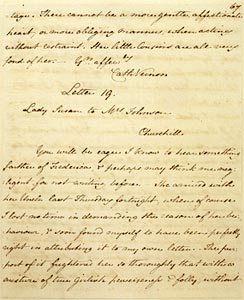
 Jane Austen, Lady Susan, autograph manuscript, written ca. 1793–94 and transcribed in fair copy soon after 1805. The Morgan Library & Museum, Purchased in 1947; MA 1226.


*********************************

This exhibition explores the life, work, and legacy of Jane Austen (1775–1817), regarded as one of the greatest novelists in the English language. During the past two decades, numerous successful motion picture and television adaptations of Austen’s novels have led to a resurgence of interest in Austen’s life and work. This show provides a close-up portrait of Austen, achieving tangible intimacy primarily through the presentation of her autograph manuscripts and personal letters which the Morgan has not exhibited in a generation.

The Morgan’s collection of Austen’s autograph manuscripts and letters is the largest of any institution in the world, and includes the darkly satiric Lady Susan, the only surviving manuscript of any of Austen’s novels. The exhibition will also include first and early illustrated editions of Jane Austen’s novels and letters, as well as contemporary drawings and prints depicting people, places, and events of significance in Austen’s life.

Responding to the revival of interest in Austen’s life and work, the exhibition provides a deeper insight into Austen’s essentially enigmatic character and personality, the craft of writing, and the historical context in which she lived and wrote. The exhibition will explore not only Austen’s personal reading, and the literary influences that inspired and informed her work, but also the response to Austen by later writers as diverse as Scott, Bronte, Nabokov, Twain, Chesterton, and Auden.

[From the Morgan Library website]

Book reviews · Jane Austen · Regency England

Book Review ~ “Regency Buck” by Georgette Heyer

regency-buck-cover2

Georgette Heyer had a bit of a formula for many of her Regency novels – the established man in his mid-30s, often a fashionable dandy, and the younger woman he somehow becomes responsible for, and against all odds and all possible personality conflicts, they come together and all ends well.  Indeed, quite funny along the way, and filled with period details of such accuracy, the reader wonders how Heyer wrote these in the early 20th century and was not herself a “Lady of Quality” in early 19th century England!

So I began Regency Buck thinking I may have already read it – had to indeed check my list to be sure! – but a few pages in, I knew that, though it all seemed familiar enough, Heyer had succeeded yet again in setting a scene and telling a tale peopled with well-drawn characters [really, who can resist a character with the name of Mrs. Scattergood?], abounding in witty repartee, bringing the Regency period to life, and this time with a bit of a mystery thrown in for good measure.

The wealthy Judith Taverner, a feisty, independent almost-of-age beauty and her brother Peregrine, a year younger and the inheritor of a large estate, are on the way to London to settle in town after the death of their father to meet their unknown guardian, the Fifth Earl of Worth, and expecting one of their father’s gout-ridden comrades are shocked to discover Lord Worth to be a young handsome man of fashion and great friend to a select group of higher ups in London society .  Due to a previous encounter with him involving a hair-raising road accident and for Judith a less than appropriate embarrassing kiss, the young Taverners take an instant dislike to their guardian and he in turn makes it quite clear that he is not amused by suddenly having two wards foisted upon him. 

Here is Judith as we first see her~

She was a fine young woman, rather above the average height, and had been used for the past four years to hearing herself proclaimed a remarkably handsome girl.  She could not, however, admire her own beauty, which was of a type she was inclined to despise.  She had rather had black hair; she thought the fairness of her gold curls insipid.  Happily, her brows and lashes were dark, and her eyes which were startlingly blue (in the manner of a wax doll, she once scornfully told her brother) had a directness and a fire which gave a great deal of character to her face.  At first glance one might write her down a mere Dresden china miss, but a second glance would inevitably discover the intelligence in her eyes, and the decided air of resolution in the curve of her mouth.

And here is Lord Worth as first seen by Miss Taverner ~

From the first moment of setting eyes on him she knew that she disliked him…He was the epitome of a man of fashion.  His beaver hat was set over black locks carefully brushed into a semblance of disorder; his cravat of starched muslin supported his chin in a series of beautiful folds; his driving-coat of drab cloth bore no less than fifteen capes, and a double row of silver buttons. Miss Taverner had to own him a very handsome creature, but found no difficulty in detesting the whole cast of his countenance.  He had a look of self-consequence; his eyes, ironically surveying her from under weary lids, were the hardest she had ever seen, and betrayed no emotion but boredom.  His nose was too straight for her taste.  His mouth was very well-formed, firm but thin-lipped.  She thought it sneered….. His driving had been magnificent; there must be unsuspected strength in those elegantly gloved hands holding the reins in such seeming carelessness, but in the name of God why must he put on an air of dandified affectation?

And thus we are introduced.  Heyer serves up her usual mix of shenanigans, the endless clashing of wills, and the historically accurate Regency social life so well portrayed, such as this detailed description of the Royal Pavilion in Brighton, that you, the reader are instantly transported ~

royal_pavilion_brighton_3

At first site it was all a blaze of red and gold, but after her [Miss Taverner] first gasp of astonishment she was able to take a clearer view of the whole, and to see that she was standing, not in some fantastic dream-palace, but in a square apartment with rectangular recesses at each end, fitted up in a style of Oriental splendour.  The square part was surmounted by a cornice ornamented with shield-work, and supported by reticulated columns, shimmering with gold-leaf.  Above this was an octagon gallery formed by a series of elliptical arches, and pierced by windows of the same shape.  A convex cove rose over this, topped by leaf ornaments in gold and chocolate; and above this was the central dome, lined with scale-work of glittering green and gold.  In the middle of it a vast foliated decoration was placed, from whose calyx depended an enormous luster of cut-glass in the shape of a pagoda.  To this was attached by chains a lamp made to resemble a huge water-lily, coloured crimson and gold and white.  Four gilded dragons clung to the under-side of the lamp, and below them hung a smaller glass water-lily… still more dragons writhed above the window draperies, which were of blue and crimson satin and yellow silk.  The floor was covered by a gigantic Axminster carpet where golden suns, stars, serpents, and dragons ran riot on a pale blue background; and the sofas and chairs were upholstered in yellow and dove-coloured satin….

We are treated to various episodes of cock-fighting, boxing, horse racing, and carriage rides of all sorts; fashion displays of the first quality; and gatherings with the real life characters of Beau Brummell and the Prince Regent himself!  and with further references to Byron’s poetry and Austen’s Sense & Sensibility!  we are truly comforted by the authenticity of the times. 

cockfighting

But danger lurks – the Taverner’s wealth make them both targets in their new London environment and Heyer juxtaposes the humor of the avaricious suitors for Judith’s hand [to include nearly every eligible young man within striking distance and a few skin-crawling efforts [to this reader!] by the over-zealous Prince Regent!] – all this set against the apparent attempts to murder Peregrine – who would most benefit from his death? – his own sister? a long-lost on-the-skids cousin who begins to fall in love with Judith? or their guardian’s brother Charles, the second son in the military with no money of his own who becomes immediately smitten with his brother’s comely and wealthy ward? or indeed, Lord Worth himself, with his expensive tastes and a penchant for gambling and horse-racing?

And who of the lot will capture the heart of the lovely Judith? and can she withstand her guardian’s efforts to keep her in line according to HIS rules of a lady’s behavior for the very long year before her 21st birthday?   Worth is insufferable and rude and nearly cruel on one too many occasions to keep this reader from cringing a bit with my feminist sensibilities on high alert…  but Heyer, as expected, brings it all to a fine conclusion,  all in fun and with a satisfying end where all are accorded their just dues, a great ride! … definitely add this gem of a read to your TBR pile!

 4 full inkwells [out of 5]

Regency Buck, by Georgette Heyer.  Sourcebooks, 2008 [originally published in 1935]

[also available in the UK from Arrow Books, 2004]

For further reading, see my review of Faro’s Daughter, which appends reading lists, etc. about Heyer.
Austen Literary History & Criticism · Jane Austen

Bishop’s PRIDE, part II

Prof. Robert Morrison
Queen’s University, Kingston
“Getting Around Pride & Prejudice: Gothicism, Fairy Tales & the Very World of All Us”.

In a thought-provoking premise, Dr. Morrison equated the “Gothic” literary tradition with a fear of spinsterhood and the deeper fear of its relation, poverty.

Citing sources such as Byron and Wollstonecraft, his ideas contained such laden words as humility, compassion, love, humiliation, terror, anguish, in short: firm Gothic Territory. Neoclassical in form and structure, with fairytale endings of “happily ever after,” Austen’s writings are often paired with Shelley’s in Dr. Morrison’s classes. Pretty women, estates, happy marriages. ” ‘What calm lives those people had,’ said Churchill of Austen’s characters.” But Austen’s major achievement, hidden perhaps, are the shortage of men, passing mentions of prize money and economic crises: “Politics seems to shape the novel at every turn”. Austen cannot continue to suppress or ignore the ‘individual’. Citing Howells, we could all agree that Elizabeth – a gentleman’s daughter – was more a ‘lady’ than even Lady Catherine de Bourgh. Elizabeth’s triumph over Lady Catherine can be taken as a triumph of humanity over rank.

The linchpin is realism, Dr Morrison concluded, but her novels touch on the fears (the Gothic).

Some points and arguments that Dr Morrison advanced which caught my particular attention:

Citing Martin Amis, he commented on Austen’s thoughts and rhythms invading his own thoughts and rhythms. I would heartily agree; it makes such a difference in my quality of writing (even speech), when I read the phrases of a powerful author as opposed to a pedestrian hack.

He brought up the reactions of such readers as Annabelle Milbank and Henry Crabbe Robinson. These are precious, as they are reactions to the novels, from people living during Austen’s lifetime, and wholly untainted by memories of films and teleplays. HCR even called Mr Collins ‘a masterpiece’! My thoughts exactly (which made a later comment [see below] hard to fathom).

Dr Morrison made a joke of Catherine Morland’s name; citing that everyone in the novels wants ‘more land’. He promoted the idea of a woman being “her father’s burden; her husband’s property”. But the comment of Charlotte Lucas committing “respectable prostitution” – well, that seemed out of place. Actually, it left me shaking my head – ‘No!’ When Dr Morrison said that his ‘skin crawled’ at the idea of the Collinses’ marriage, that sounded more ‘colored by film depictions of Mr Collins’ than genuine thoughts about the plight of both characters: one in want of a good wife; the other in want of a good home.

In equating the Gothic, there was this thought-provoking idea behind Darcy’s comment on Elizabeth’s looks: Darcy doesn’t want to dance (doesn’t even wish to be at the dance); and all people talk about is his money! Darcy’s “tolerable” evaluation of Elizabeth “haunts her – raises the specter of spinsterhood”. Her greatest asset (no dowry) is her looks. Excellent way of digging deeper into this much-quoted comment by Darcy.

Elizabeth is wrong about Charlotte, willing to be wrong about Wickham, and wrong about Darcy. Darcy’s letter helps her see herself more clearly. The implacable resentment Elizabeth attributes to Darcy, she feels herself.

One unanswered – until that evening – observation: when Dr Morrison spoke of Austen’s use of words and cited her deliberate use of “a month” in Elizabeth’s rejection of Darcy. Dr. Morrison’s thoughts centered on Lizzy’s inability to forgive the slight Darcy had inflicted. But as the question period opened and this was addressed (with more than one person saying ‘I never really noticed’) it became apparent that Austen meant more by this specific period of time: not an hour, not a day – but “I had not known you a month”. The Play that evening answered this hitherto unanswered observation – and it is in the novel: When Mr Wickham is ‘confessing’ his life story to Elizabeth, he asks her how long Darcy has stayed with Bingley. The magic answer: “About a month.” Obviously Austen wanted readers to conclude, in the proposal scene, that  Lizzy’s enmity against Darcy survived the slight to her ‘tolerable’ looks, but surfaced to the fore from the point at which she ‘knows’ Darcy to have harmed the prospects of Mr Wickham!

An audience member then brought up this acute observation: Miss de Bourgh, in being sickly, is quite Gothic and can be seen as the symbol of “the dead end,” the dying system that once was predicated upon blood (again the idea of rank versus the humanity of Elizabeth). And on that thought, which touched on the truly Gothic – the vampire tales, we broke for beverages, cookies and oranges. There will be more to say on this subject when the Play is discussed; for the actress portraying Miss de Bourgh gave the role something never seen before.

Jane Austen · Literature · News

Previewing Persuasions

JASNA has posted a link to the table of contents for volume 30 (2008) of the Jane Austen Society of North America’s journal Persuasions. This annual is a peer-reviewed journal, featuring both articles based on papers presented at the October AGMs (Annual General Meeting; in 2008 it took placed in Chicago) and ‘miscellany’ — which includes my own article on the 1833 Austen-Smith journey to Derbyshire: they travelled pretty much in the shoes of Elizabeth Bennet! Watch the JASNA website, for I have been told the article might be posted on their “maps” page (a very interesting and quite useful resource, now augmented with related articles on places and travel pulled from the Persuasions archive).

Austen Literary History & Criticism · Jane Austen · News · Schedule of Events · Uncategorized

Bishop’s PRIDE

Two Saturdays ago (March 14th, to be exact) I ventured up to Bishop’s University (Lennoxville, Quebec) for a Pride & Prejudice Weekend – a symposium, thanks to English department professor Claire Grogan; a delicious ‘Jane Austen’s Cream Tea’ at Uplands; a Pride & Prejudice play, adapted by drama professor George Rideout; and an Austen-era Sunday Service in the university’s beautiful chapel. Sure the footlights have dimmed, the curtain has dropped, and the weekend’s events have faded into memory – but readers should know what they missed; and why they should keep an eye out for a production of this well-thought-out new play.

Saturday afternoon’s symposium featured three speakers; a full-hall (a good 70 people) had gathered to hear them.

Prof. Peter Sabor
McGill University, Montreal
“Portraying Jane Austen: How Anonymous became a Celebrity”. 
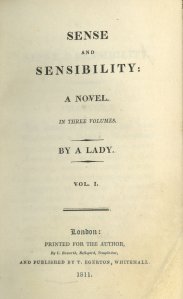
senseandsensibilitytitlepage

Illustrated by images, Dr. Sabor brought the audience along Austen’s circuitous route to celebrity – beginning with the original “BY A LADY” title page of Sense and Sensibility and showing near the end a publicity photo that made everyone chuckle: Jane Austen Hollywood-ized, complete with cell phone (the giant, 1980s version), conducting business while lounging on a poolside chaise.

In between these humble beginnings and the 20th-century hype lay a lot of Austen territory to be explored. Austen, of course, sold the copyright to Pride & Prejudice – her most popular novel – for ₤110. In 1813, the three volumes sold for 18 shilling (“about $2 Canadian today”).

Austen’s name has been located on a few subscription lists (Burney’s Camilla; the 1808 sermons of the Rev. Thomas Jefferson). Dr. Sabor explained that it was costly to purchase books by subscription. Such lists, however, can be invaluable to the researcher (I have located many Goslings and Smiths on subscription lists; it gives a thrill to realize they knew the author or valued the work enough to purchase a copy – or more than one – before the presses rolled).

The anonymous review (in reality Walter Scott) of Emma highlights Austen’s soon-acknowledged authorship a few years later: Although the title page of Northanger Abbey cited “By the author of ‘Pride and Prejudice,’ ‘Mansfield Park,’ &c,” the first volume included brother Henry’s biographical notice – thereby naming in print for the first time exactly who authored all six of these novels. [See also Henry’s updated version in the Bentley edition (1833) of S&S.] Beginning in 1818, we see reviews that mention Austen by name. (In an aside: Emma Smith, the future Mrs James-Edward Austen, was in 1817 already citing her as the author, specifically, of Mansfield Park; though Emma spelled the last name, as many did and often still do, Austin.)

A French translation of Austen’s last completed novel – published under the title La famille Elliot – becomes the first book in which Austen’s name appears as author on a title page. The year is 1821. [For information on the translator, see Ellen Moody.]

When discussion of the known and purported Austen portraits began, the audience was given a truly informative lesson on the pitfalls, as well as hopes and shattered dreams, of claimants to “authentic Janes”. Even the 1804 sketch: Is it a depiction of Jane by her sister Cassandra?? Anna Lefroy (half-sister to James-Edward Austen) inherited it, and to this day it resides within the family. (It was first presented by Chapman in his volume of Letters.)

The illustrations of Austen grow more wild as the publicity picks up – paper dolls, figures made for ‘action,’ plush and bobble-headed dolls, even an Austen Powers ‘superhero’. From recreations to fantasy depictions, Austen’s ‘anonymity’ has certainly turned a complete 360-degrees.

ADDENDUM: for an observation on the so-called ‘wedding ring portrait’ of Jane Austen (which Dr. Sabor called “bizarre”, see SEPARATED AT BIRTH?)

*

next: Prof. Robert Morrison (Queen’s), “Getting Around Pride & Prejudice: Gothicism, Fairy Tales & the Very World of All Us”

Waiting in the Wings: read insights into the character of Miss Bingley by actress Stephanie Izsak.

Books · Jane Austen · News

Pride & Prejudice ~ the Comic Book

marvel-comic-pp

Late to the table, but here is a reminder about the first issue of the Marvel Comic’s Pride & Prejudice  due out April 1st.  See the story and images from the first issue at Marvel.com :

Two-time Rita Award-Winner Nancy Butler and acclaimed artist Hugo Petrus bring PRIDE & PREJUDICE #1 to life—and we’ve got an exclusive preview for you! Follow the gripping story of Lizzy Bennet and her loveable, yet eccentric, family as they navigate the treacherous waters of British high society, in this faithful adaptation of the seminal Jane Austen novel.

Further reading:

Books · Collecting Jane Austen · Jane Austen

Novels & Letters (1906) now complete

mpFINALLY!

Internet Archive now has all twelve volumes of the 1906 edition entitled “The Novels & Letters of Jane Austen”. Especially, I was happy to see the second part of Mansfield Park (the illustration is the volume’s frontispiece).

The search is still on to provide our audience with the missing volume of Pride & Prejudice‘s first edition; ditto the entire three-volume set of Sense & Sensibility.

Find all the online editions via our bibliography, or click on the tabs above to go to the individual works.

Books · Jane Austen · Literature · News

An Austen-Inspired Author ~

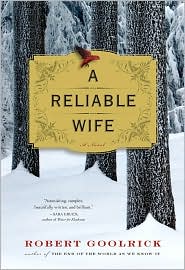
Robert Goolrick, author of the upcoming book A Reliable Wife, has this to say about Jane Austen:

If anything, I was inspired by earlier writers. I’m always inspired by Jane Austen, curiously enough. She has a great thing that she does, which is her novels are about complicated, romantic situations in which all the happiness comes at the very end—like a magic trick. I love that about her, and I wanted to write a novel in which people seemingly unable to be happy suddenly find redemption and happiness all in a second.

[Quoted from Publisher’s Weekly]

book-cover-reliable-wife 


Goolrick’s new work, following his memoir The End of the World as We Know It, will be released on March 31, 2009….


Synopsis:

Rural Wisconsin, 1909. In the bitter cold, Ralph Truitt, a successful businessman, stands alone on a train platform waiting for the woman who answered his newspaper advertisement for “a reliable wife.” But when Catherine Land steps off the train from Chicago, she’s not the “simple, honest woman” that Ralph is expecting. She is both complex and devious, haunted by a terrible past and motivated by greed. Her plan is simple: she will win this man’s devotion, and then, ever so slowly, she will poison him and leave Wisconsin a wealthy widow. What she has not counted on, though, is that Truitt — a passionate man with his own dark secrets —has plans of his own for his new wife. Isolated on a remote estate and imprisoned by relentless snow, the story of Ralph and Catherine unfolds in unimaginable ways.

With echoes of Wuthering Heights and Rebecca, Robert Goolrick’s intoxicating debut novel delivers a classic tale of suspenseful seduction, set in a world that seems to have gone temporarily off its axis.

[from the Barnes & Noble website]

[BTW, the book has already been optioned for a movie and is hitting various favorite lists, so this is not the first you will hear about this book…]

Austen Literary History & Criticism · Books · Jane Austen · Literature

Discord in Austen Land

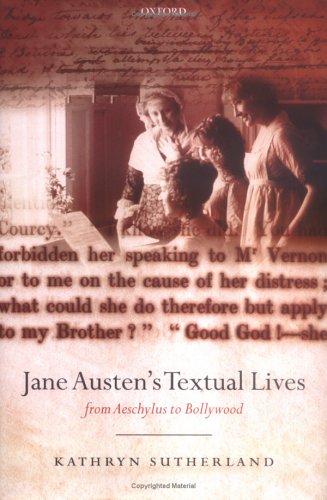
Here is an interesting article at the Guardian.co.uk about a new book on Austen by Claire Harman (author of the 2001 biography Fanny Burney) ~ Jane’s Fame: How Jane Austen Conquered the World, to be published next month, and a conflict with the academic writings of Professor Kathryn Sutherland, author of the ground-breaking 2005 Jane Austen’s Textual Lives, from Aeschylus to Bollywood.  It’s quite the kerfuffle….

book-cover-janes-fame

book-cover-ja-textual-lives

Further reading:

[Adding here 3/17/09:  I had noted in my comments below that Ellen Moody has addressed this issue in more depth on Austen-L and Janeites as well as her blog, so I add here the link to her post: 

http://server4.moody.cx/index.php?id=1016#comment

 NB: scroll down further on her blog as there is quite a bit more after the reference to Emily Hahn’s book on Fanny Burney]

Jane Austen · Literature

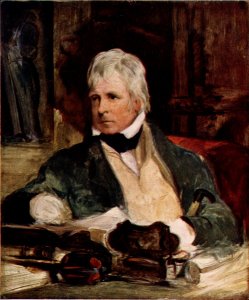
Sir Walter Scott on Austen ~ March 14, 1826

scott-portrait1

Sir Walter Scott wrote in his journal on March 14, 1826:

I have amused myself occasionally very pleasantly during the last few days, by reading over Lady Morgan’s novel of _O’Donnel_,[221] which has some striking and beautiful passages of situation and description, and in the comic part is very rich and entertaining. I do not remember being so much pleased with it at first. There is a want of story, always fatal to a book the first reading–and it is well if it gets a chance of a second. Alas! poor novel! Also read again, and for the third time at least, Miss Austen’s very finely written novel of _Pride and Prejudice_. That young lady had a talent for describing the involvements and feelings and characters of ordinary life, which is to me the most wonderful I ever met with. The Big Bow-wow strain I can do myself like any now going; but the exquisite touch, which renders ordinary commonplace things and characters interesting, from the truth of the description and the sentiment, is denied to me. What a pity such a gifted creature died so early![222]

Scott’s journal entry for September 18, 1827, has the following reference  to Austen: 

September 18.–Wrote five pages of the _Tales_. Walked from Huntly Burn, having gone in the carriage. Smoked my cigar with Lockhart after dinner, and then whiled away the evening over one of Miss Austen’s novels. There is a truth of painting in her writings which always delights me. They do not, it is true, get above the middle classes of society, but there she is inimitable.

And this is Austen’s famous comment on Scott:

Walter Scott has no business to write novels, especially good ones. – It is not fair. – He has Fame & Profit enough as a Poet, and should not be taking the bread out of other people’s mouths. – I do not like him, & do not mean to like Waverley if I can help it – but fear I must…

[ Letter 108, 28 September 1814, to Anna Austen (Le Faye)]

Further reading on Scott:

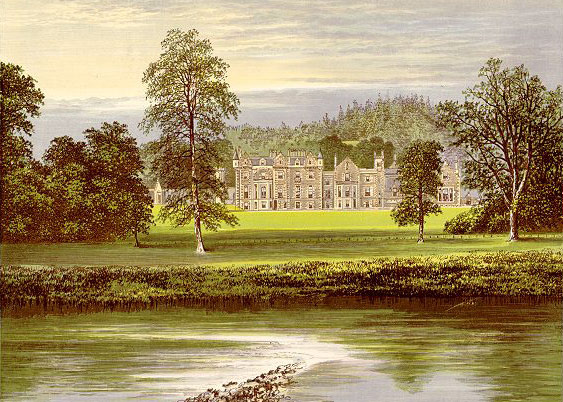
scott-abbotsford-house
Abbotsford
  • Millgate, Jane.  “Persuasion and the Presence of Scott,”  Persuasions 15, 1993
  • Sabor, Peter.  “Finished up to Nature” :  Walter Scott’s Review of Emma, Persuasions 13, 1991
  • text of Scott’s review of Emma in the Quarterly Review (1816) at The Literary Encyclopedia

 [Portrait image from University of Michigan website]