Austen Literary History & Criticism · Books · Jane Austen · Literature · News

Persuasions No. 1 ~ Now Online!

JASNA.org has added online** the full text of the Number 1 Persuasions journal that has long been out-of-print:

persuasions no 1 cover

Persuasion*  No. 1.  December 16, 1979 

Board of Directors
President’s Report 
Brief highlights of the meeting 
St. Nicholas Appeal      -George H. Tucker
Our First Dinner   – Lorraine Hanaway
Pemberley Revisited     -Donald Greene
The Picturesque in Pride and Prejudice   – A. Walton Litz
A Member’s First Pilgrimage to Winchester   – Hilma D. Barrett
Some notes on the “parish business” in Emma    -Cathy Fried
Telegram from the Jane Austen Society 
Letter from James T. Farrell 
Quiz Angela Addison
Meeting aboard the Elizabeth Bennet

* The first issue was titled “Persuasion” – it was decided to change the name to Persuasions for subsequent issues

**[Many thanks go to Montreal member Renée Charron (Treasurer, Canada), who scanned and corrected the full text of Persuasion No. 1, as she also did for the other eleven out-of-print issues of Persuasions.]

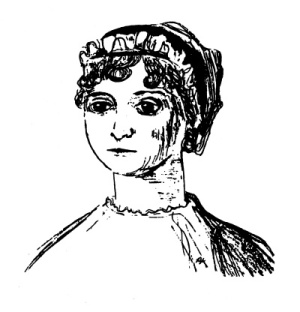
Drawing from the cover of Persuasion No. 1
by Pamela Susan Koppel, age 15, of Tucson, Arizona

[Posted by Deb]

Books · Jane Austen · Literature · News

Interview with Lane Ashfeldt ~ Author of ‘Snowmelt’ from the Dancing with Mr. Darcy Short Story Anthology

Lane Ashfeldt
Lane Ashfeldt


Please join me in welcoming author Lane Ashfeldt to our JASNA-Vermont blog today!   Ms. Ashfeldt is the author of one of the selected stories in the 2009 Chawton House Library Jane Austen Short Story competition, set to appear in the forthcoming collection Dancing with Mr. Darcy, to be published in October by Honno Press.  [See below for link to my previous post on this].  Her story is titled “Snowmelt” and she tells us about it here:

 Lane, what was the inspiration for your own story? 

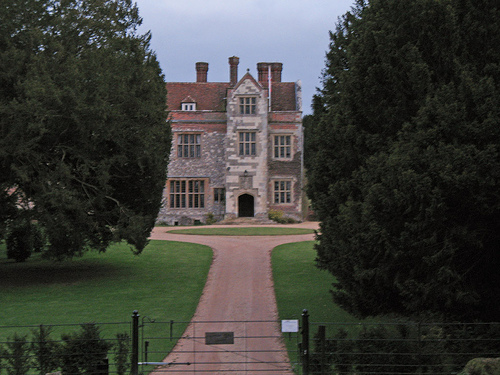
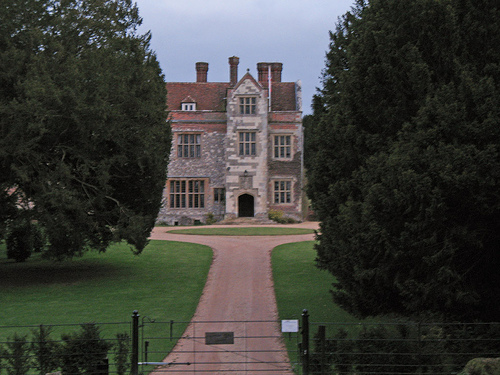
My story, ‘Snowmelt’, has an obvious parallel with Austen’s life in that it’s about woman who moves to Chawton to write. My main inspiration came from a visit to Chawton House Library one bright snowy day in February 2009, after an unusually heavy snowfall across England. We don’t often see much snow in south east England, and the snow worked its way into my story — even providing a title.

Chawton House Library

 Sounds interesting. Can you tell me a little more? 

The central character in ‘Snowmelt’, Miss Campbell, works in a suburban library which is undergoing radical modernisation. Potentially, this is the end of the library as she knows it. Miss Campbell’s own life is reaching its autumn years, and she also suffers a more general “end of the world” malaise triggered by reports of extreme weather and by fears of a viral plague. (Coincidentally, I wrote the story in early 2009, a month or two before the international swine flu epidemic.) 

Oh! I can imagine that must have felt a bit strange! 

Well, I might have felt awkward if the swine flu epidemic had happened while I was still writing, but in fact my story had been completed before then.  My interest as a writer was in how we manage — or don’t manage — fears like the fear of dying in a pandemic, or fear of terrorism, fear of change. This is what I wanted to explore in ‘Snowmelt’. 

In the story, Miss Campbell visits Chawton House Library and reads a novel written nearly two centuries earlier in which a plague causes the end of the world. This sets her own fears in context and makes them seem faintly ridiculous. People often fear the end of the world; this does not mean it is imminently about to happen. And even if it is, panicking is unlikely to help. At any event, Miss Campbell makes an uncharacteristically upbeat and impulsive decision to quit her job and move to Chawton, where she will work as a library volunteer at Chawton House Library and write in her free time. We leave her as she’s on the train, on the way to her new life. 

How much, if any, of your story was autobiographical?

 I have to admit, my own visit to Chawton while writing ‘Snowmelt’ was so enjoyable that for a while I toyed with the notion of moving there, but without actually taking a moment to peer in estate agent windows — I didn’t have time. On a later visit, the day of the award presentation, I learned from author Lindsay Ashford that one of the reasons Jane Austen chose to live at Chawton was that her house there was a short walk from the shops. This struck a chord with me, as I’d been thinking the exact same thing myself! But sadly there’s no danger of a family member bequeathing me a stately home in the area, as happened to Jane Austen’s brother, thus affording her a place to live in Chawton. 

It’s an interesting question, though. Curiously, when I attended the award ceremony at Chawton, two of the judges who had read my story thoughtfully advised me that there was an imminent vacancy for a librarian at Chawton House Library. We had a chuckle as I confessed that, unlike the character in my story, I am not a trained librarian. I was flattered though, since it suggested they found ‘Snowmelt’ believable — it’s always nice to be told when you’ve written a convincing piece of fiction. 

This short story award is a new prize for stories inspired by Jane Austen and themes in her writing, or by the Chawton House Library.  Do you have any advice for other writers thinking of entering in future years? 

There’s talk that the competition may run again in 2011. If anyone is thinking of entering a story for the next Jane Austen Short Story award, and if you are not too far away, then a visit to Chawton is very much recommended. Chawton House Library’s ongoing programme of public events are listed on its website (as are events at the nearby Jane Austen House Museum which is managed as a separate concern). 

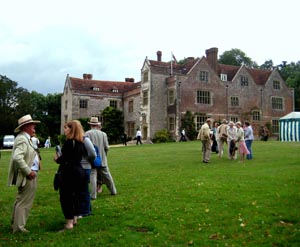
lane ahsfeldt chawton


Partly because judge Sarah Waters is known for her historical fiction, my guess was, the winning stories would have historical settings. But it doesn’t sound as though ‘Snowmelt’ does… 

I do like historical fiction — in fact I previously won the Fish Short Histories Prize — but this particular story has a contemporary setting. That said, a consciousness of history runs through it, perhaps because Chawton is one of those areas that seems to catapult the visitor back in time.  In ‘Snowmelt’, as Miss Campbell develops a stronger sense of history and of how she is connected to it, this becomes a crucial trigger of change for her.

What about the other winning stories, I wonder? 

I don’t yet know what proportion of the stories submitted were historical as I’ve not read them, but Sarah Waters said as she presented the prizes that over half the stories she selected for the anthology are contemporary. 

Well, I very much look forward to getting a copy of the book to read “Snowmelt” and all the other stories!  Lane, thank you so much for joining us today and sharing a bit about your story and your visit to Chawton. 

Thank you, Deb; it was very nice of you to invite me!

********************************

Lane has graciously offered to answer any of your questions – so please leave a comment on this post and I will see that she responds to them here. 

For further information: 

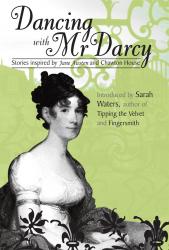
book cover dancing mr darcy

Posted by Deb

Jane Austen · Literature · Women Writers

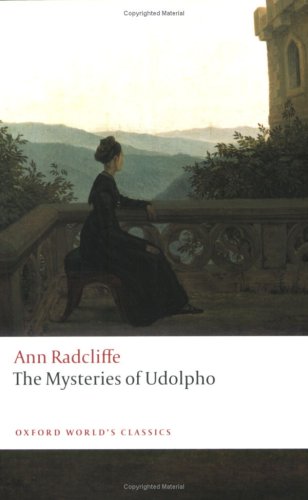
Ann Radcliffe ~ July 9, 1764

You are cordially invited to visit my Bygone Books blog for a short bio – bibliography on Ann Radcliffe, born today, July 9, 1764.

cover mysteries udolpho

Posted by Deb

Books · Jane Austen · Literature · News · Rare Books

Auction Results ~ Austen on the Block

The Jane Austen Pride & Prejudice  for sale at the New York Bloomsbury Auction of June 23, 2009 with an estimate of $50,000. – $70, 000.  remains unsold [for more details on this see my original post here]

A quick summary of a few other items of interest:

Bronte [Acton, Currer and Ellis Bell]. Poems. Philadelphia: Lea and Blanchard, 1848. first american edition. est. $800 – $1000. Sold for $700

Samuel Taylor Coleridge.  Poems on Various Subjects.London: for G.G. and J. Robinsons, and J. Cottle, Bristol, 1796. first edition of Coleridge’s first book of poems, issued together with the first published verses of Charles Lamb, signed C.L. Hayward est. $1000 – $1500.  Sold for $2600 [a few other Coleridge items either did not sell or sold for less than the estimate]

John Keats – a first edition of his last collection of poems estimated at $12,000 – 15,000 was unsold

Percy Bysshe Shelley. Queen Mab; A Philosophical Poem: With Notes. London: privately printed by P.B. Shelley, 1813. very rare. est. $12000 – $18000; Sold for $11000 [ most other Shelley items did not sell]

William Wordsworth. Lyrical Ballads, with Pastoral and Other Poems, in Two Volumes. London: R. Taylor and Co., 1805. 2 volumes [the last edition in which Coleridge’s poems appear]. est. $1500 – $2000; Sold for $1700 [other Wordsworth items sold for lower than estimates or not at all]

Thomas Hardy. There were 22 Hardy items for sale, many of the books remain unsold, but most of the autograph letters sold mid-range or less than the estimates- here is one example:   Three autograph letters signed to Florence Yolland on the Death of Emma, Hardy’s first wife.Max Gate, Dorchester: 24 December 1912 to 22 October 1913. 6 manuscript pages, 8vo (varying sizes). Mourning stationery, three autograph envelopes (all labeled “opened by censor” when sent to F. Adams in 1939) est. $2000 – $3000; Sold for $1000.

Full auction results can be found at the Bloomsbury Auction website.

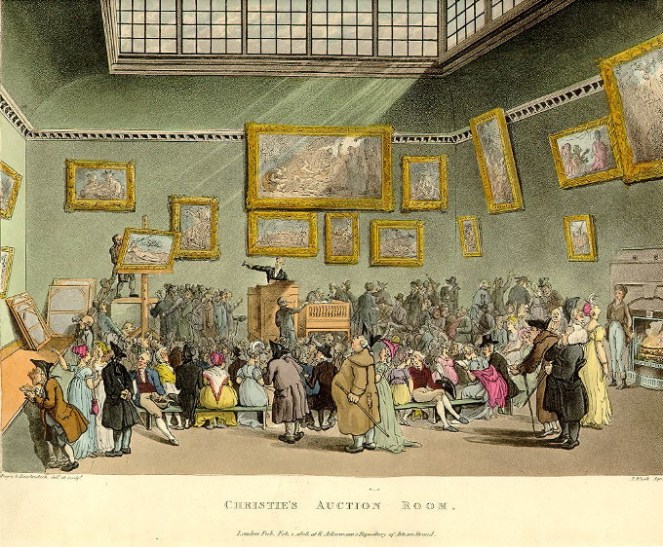
Christies auction room image

[image from the NYPL.org]

Posted by Deb

Books · Jane Austen · Literature · News

Mark Twain on Jane Austen ~ Methinks he protests too much!

My son popped in the other night, quite excited about his discovery in a new Mark Twain book of an essay on Jane Austen – he was thrilled to pass on to me the curmudgeon-par-excellence of Twain bashing Austen.  He was disappointed to discover I already knew about Twain’s avid dislike of Austen – but I appreciated his concern for my feelings!

who-is-mark-twain-cover

The new Twain book is Who is Mark Twain, edited by Robert H. Hirst, The Mark Twain Foundation, 2009 [texts copyrighted 2001].  As Hirst explains in his Note:

I have described all twenty-four pieces as ‘previously unpublished,’ by which I mean not printed or otherwise made readily accessible to the general reader.  More strictly speaking, all of them were included in a microfilm edition issued by the Mark Twain Project in 2001…. But Who is Mark Twain? represents the first time any of these manuscripts has been published for a general audience.

The book is a collection of essays penned by Twain over the years but never published – one of these is titled “Jane Austen” written in 1905.  I knew of this essay because it was actually published by Emily Auerbach in the Virginia Quarterly Review [Winter 1999] and latterly in an Appendix in her Searching for Jane Austen [University of Wisconsin, 2004], along with an insightful article on Twain.  But alas! the book sits upon my shelf, skimmed, and I did not read this until my son gave me the nudge. [There have also been other posts on some of the Austen blogs about this and I don’t mean to be repetitive, but finally just getting to this … thanks to my son!]

Auerbach asks the question in her article “A Barkeeper Entering the Kingdom of Heaven:  Did Mark Twain Really Hate Jane Austen?” – she concludes that perhaps Twain was “a closet Janeite, a fake who read and appreciated far more of Jane Austen than he admitted” [p.299]; that his astute and unfinished essay on Austen indeed proved that he really “got” her [p.301], and despite all his moanings to the contrary, they were more alike than not in observing and depicting human foibles and relying on humor to best express their views [Auerbach compares Twain and Austen to the pairing of Bogart and Hepburn in the film The African Queen: Twain “the irrepressible riverboat pilot, and Austen, the tea-drinking maiden aunt.” [p. 302]- this made me smile!]

I am appending several passages from Twain’s essay, as it quite delightful and many of you may not have read it.  Go out and buy the book – and the other essays cover all manner of Twain’s humorous musings.

Whenever I take up “Pride and Prejudice” or “Sense and Sensibility,” I feel like a barkeeper entering the Kingdom of Heaven. I mean, I feel as he would probably feel, would almost certainly feel. I am quite sure I know what his sensations would be—and his private comments. He would be certain to curl his lip, as those ultra-good Presbyterians went filing self-complacently along. Because he considered himself better than they? Not at all. They would not be to his taste—that is all.

*****

Does Jane Austen do her work too remorselessly well? For me, I mean? Maybe that is it. She makes me detest all her people, without reserve. Is that her intention? It is not believable. Then is it her purpose to make the reader detest her people up to the middle of the book and like them in the rest of the chapters? That could be. That would be high art. It would be worth while, too. Some day I will examine the other end of her books and see.

***

All the great critics praise her art generously.  To start with, they say she draws her characters with sharp distinction and a sure touch.  I believe that this is true, as long as the characters she is drawing are odious.  I am doing “Sense and Sensibility” now, and have accomplished the first third of it – not for the first time.  To my mind, Marianne is not attractive; I am sure I should not care for her, in actual life. I suppose she was intended to be unattractive.  Edward Ferrars has fallen in love with Elinor, and she with him; the justification of this may develop later, but thus far there is no way to account for it; for, thus far, Elinor is a wax figure and Edward a shadow, and how could such manufactures as these warm up and feel a passion.

Edward is an unpleasant shadow, because he has discarded his harmless waxwork and engaged himself to Lucy Steele, who is coarse, ignorant, vicious, brainless, heartless, a flatterer, a sneak— and is described by the supplanted waxwork as being “a woman superior in person and understanding to half her sex;” and “time and habit will teach Edward to forget that he ever thought another superior to her.” Elinor knows Lucy quite well. Are those sentimental falsities put into her mouth to make us think she is a noble and magnanimous waxwork, and thus exalt her in our estimation? And do they do it?

Willoughby is a frankly cruel, criminal and filthy society-gentleman.

Old Mrs. Ferrars is an execrable gentlewoman and unsurpassable course and offensive.

Mr. Dashwood, gentleman, is a coarse and cold-hearted money-worshipper; his Fanny is coarse and mean. Neither of them ever says or does a pleasant thing.

Mr. Robert Ferrars, gentleman, is coarse, is a snob, and an all-round offensive person.

Mr. Palmer, gentleman, is coarse, brute-mannered, and probably an ass, though we cannot tell, yet, because he cloaks himself behind silences which are not often broken by speeches that contain material enough to construct an analysis out of.

His wife, lady, is coarse and silly.

Lucy Steele’s sister is coarse, foolish, and disagreeable.

[from Who is Mark Twain, pages 47-50]

And there it ends – quite the review! [and as almost everyone has pointed out, Twain applies the word “course” to nearly all the characters in the book]- one would think he was actually enjoying EVERY minute of his reading of S&S! [don’t you just LOVE the “filthy” Willoughby!?]

mark_twain_mug_shot


Further reading:

  • Auerbach, Emily, Searching for Jane Austen [University of Wisconsin Press, 2004]
  • Flavin, James.  The Sincerest Form of Flattery:  Twain’s Imitation of Austen.  Persuasions 25, [2003], pp. 103-109 [not online] [Flavin’s premise is that Twain actually COPIED Austen’s famous scene of money manipulation between Fanny and John Dashwood in S&S in his Life on the Mississippi] – a great article
  • Twain, Mark; Robert H. Hirst, editor.  Who is Mark Twain? [ Mark Twain Foundation, 2009]
  • The Offical Website of Mark Twain
  • The Mark Twain House [Hartford Connecticut]

Posted by Deb

Books · Jane Austen · Literature · News

Silksoundbooks ~ Audiobooks read by your favorite actors

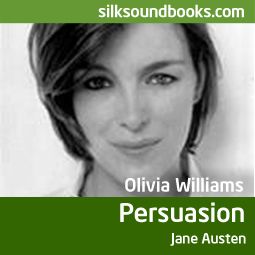
 I stumbled upon this yesterday – Silksoundbooks.com, an audiobooks website with some of your favorite actors reading their favorite classics:

silksoundbooks persuasion

Silksoundbooks is a collaboration of English and American actors who came together and decided to record their favourite literature for you to enjoy. Headed by Bill Nighy (Pirates of the Caribbean / Love Actually / Underworld), many of the artists involved believe so much in the project, that they have waived performance fees in favour of taking shares in the company.

Unlike some audio book download websites, we record all our audio books in the leading recording studios in London and New York, with some of the most experienced directors from the worlds of radio, TV & film…… we are sure you will hear the difference!

We started this project with one simple aim – to deliver great quality audio books to you at great value – Just $14.95 each! Enjoy!

[from the website]

Check out the website at Silksoundbooks.com and see the catalogue of 64 books currently available, all are unabridged and exclusive to this project. Here is a sampling of books and the readers [but alas! no Richard Armitage, yet …  can we petition for him?!]  Part of the delight is to find a good number of actors / actresses related to Jane Austen films in some way, and two of Austen’s novels:

  • Jane Austen.  Persuasion, read by Olivia Williams
  • Jane Austen.  Northanger Abbey, read by Lynn Redgrave
  • Elizabeth Gaskell.  My Lady Ludlow, read by Susannah York
  • Henry James.  Washington Square, read by Jennifer Ehle 
  • Emily Bronte.  Wuthering Heights, read by Juliet Stevenson
  • Charlotte Bronte.  Jane Eyre, read by Emily Woof
  • Fanny Burney.  Evelina, read by Finty Williams, Judi Dench and Geoffrey Palmer
  • Mary Shelley.  Frankenstein, read by Derek Jacobi
  • Joseph Conrad.  Heart of Darkness, read by Toby Stephens
  • Gustave Flaubert.  Madame Bovary, read by Julie Christie
  • Henry James.  The Aspern Papers, read by Jeremy Northam
  • Henry Fielding.  Joseph Andrews, read by Rufus Sewell
  • George Eliot.  Mill on the Floss, read by Fiona Shaw
  • Hans Christian Andersen.  The Snow Queen and other Fairy Stories, read by Greta Scacchi
  • Thomas Hughes.  Tom Brown’s Schooldays, read by Hugh Bonneville

And this is just a short listing!  Visit the website and experience this feast – I have already downloaded Washington Square read by Jennifer Ehle [a.k.a. Elizabeth Bennet!] to my ipod – it is easy to do [you will need a current version of Java] and quite wonderful listening! 

silksoundbooks washington square

Further reading:  an article in The Guardian when the site was first launched; and another at Timeout.com

Book reviews · Jane Austen · Literature · Women Writers

Book Review ~ ‘North and South’ by Elizabeth Gaskell [with special thanks to Richard Armitage]

North-and-South cover

I think I must be the only costume-drama-loving-female in all of America who did not see the 2004 (2005 USA) adaptation of Elizabeth Gaskell’s North and South – where my head was that year I do not know – and add to that a further confession of never having read the book! – I am ashamed of myself!  Can I have lived this long so in the dark?  Are my English degrees so worthless in the light of this omission? 

I have a good number of Gaskell’s books on my shelves, but there they sit awaiting that future day to begin my Gaskell immersion.  But all this endless chatter on the airwaves [as well as a few friends imploring me to see the movie – largely a Richard Armitage thing…],  I finally broke one of my cardinal rules – I saw the movie before reading the book.  There were advantages of course to this sequence – every appearance of John Thornton on the page most pleasantly brought the absolutely lovely Mr. Armitage to mind – not a bad punishment for breaking this long-held rule of mine! – but I digress…

 The story [for those of you more in the sand than me…] – Margaret Hale, a young woman from rural southern England [Austen’s Hampshire to be exact], daughter of a clergyman, proud of her roots and her class, must adjust to the changes in her life when her father resigns from his clerical post and moves the family to the northern industrial town of Milton [Gaskell’s fictitonalized Manchester].  Margaret gradually discovers her own strengths in taking on the many domestic duties of her now ill mother and those of their former servants.  But Margaret carries with her the prejudices of the gentrified South with her “queenly” snobbish views of the industrial North and the manufacturers and tradesmen who run the mills.  She is soon introduced to John Thornton, a self-made “Master” of one of the cotton mills and a local magistrate, well respected by his peers and his employees, yet aware of his shortcomings in the social and intellectual worlds outside of Milton.  He comes to Reverend Hale for tutoring and intellectual stimulation – but it is Margaret who soon captures his heart, his passions aroused in spite of himself, all too sure of his own unworthiness in her eyes…

n&s- margaret

Margaret opened the door and went in with the straight, fearless, dignified presence habitual to her.  She felt no awkwardness; she had too much the habits of society for that.  Here was a person come on business to her father; and, as he was one who had shown himself obliging, she was disposed to treat him with a full measure of civility.  Mr. Thornton was a good deal more surprised and discomfited than she.  Instead of a quiet, middle-aged clergyman, a young lady came forward with frank dignity – a young lady of a different type to most of those he was in the habit of seeing.  Her dress was very plain: a close straw bonnet of the best material and shape, trimmed with white ribbon; a dark silk gown, without any trimming or flounce; a large Indian shawl, which hung about her in long heavy folds, and which she wore as an empress wears her drapery.  He did not understand who she was, as he caught the simple, straight, unabashed look, which showed that his being there was of no concern to the beautiful countenance, and called up no flush of surprise to the pale ivory of the complexion.  He had heard that Mr. hale had a daughter, but he had imagined that she was a little girl …  Mr. Thornton was in habits of authority himself, but she seemed to assume some kind of rule over him at once…. [p 72-3]   He almost said to himself that he did not like her, before their conversation ended; he tried so to compensate himself for the mortified feeling, that while he looked upon her with an admiration he could not repress, she looked at him with proud indifference, taking him, he thought for what, in his irritation, he told himself he was – a great rough fellow, with not a grace or a refinement about him.  Her quiet coldness of demeanour he interpreted into contemptuousness, and resented it is his heart … [p.74]

 And Margaret’s view of Thornton:

 “Oh! I hardly know what he is like,” said Margaret lazily; too tired to tax her powers of description much.  And then rousing herself, she said, “He is a tall, broad-shouldered man, about- how old, papa?”…  “About thirty, with a face that is neither exactly plain, nor yet handsome, nothing remarkable – not quite a gentleman; but that was hardly to be expected.”… “altogether a man who seems made for his niche, mamma; sagacious and strong, as becomes a great tradesman.”
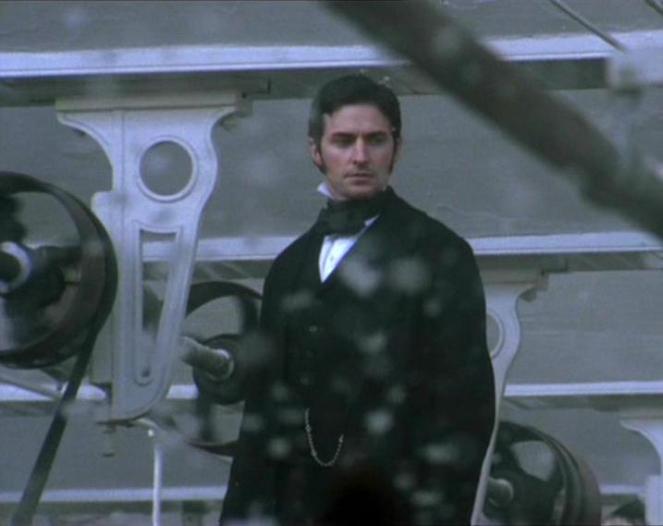
n&s first look


 Ahh!  the pride and prejudices are set on each side, each thwarting their developing relationship – and a scenario not unlike Austen’s Pride & Prejudice unfolds.  Margaret’s ingrained dislike of northern ways are gradually tempered by her sympathetic friendship with a family of mill workers and her growing appreciation for Thornton’s true nature;  and Thornton’s own views of his employees and his responsibility to them are enlarged by Margaret’s very “democratic” views of an industrialized social system gone awry.  It is a compelling read – [alert! there are some spoilers here ]– 

Gaskell wrote North and South in 1854-5 – it appeared in serialized novel form in Dickens’s Household Words [Gaskell felt the ending was “unnatural” and “deformed” (1) – she added and edited for its publication as a book in 1855].  North and South is another of her works to focus on the social ills of the day – religious doubt; “Master” vs. hands and accompanying union struggles; male vs. female in the male-dominated industrial world; the responsibility of the owner / ruling classes to involve themselves in the lives of the less fortunate.  But this novel has a more romantic telling than her previous works and perhaps why it remains one of her most enduring titles.. [ See my previous post on Gaskell for some background.] 

And this comparison to Austen’s Pride & Prejudice cannot be ignored [just the title alone echoes Austen’s work] — Jenny Uglow in her introduction to the book (2) and in her fabulous biography of Gaskell (3) called North and South an “industrialized Pride & Prejudice,” “sexy, vivid and full of suspense” (4) – and indeed this states the case most eloquently.  At last year’s JASNA AGM in Chicago on Austen’s legacy, Janine Barchas spoke on Gaskell’s North and South being the first of many Pride & Prejudice clones (5).  The basic formula of P&P is what keeps people coming back for more, an annual re-read one of life’s many pleasures – and one can readily make a list of the similarities, all too clear despite Gaskell’s never making mention of her debt to Austen – this conflict of pride and prejudices, though often a gender reversal in Gaskell’s work [see Barchas’s article for a complete analysis of Margaret as Darcy and Thornton as Elizabeth], the awakening of their passions, and the emotional growth of Margaret and Thornton, the similarities in the secondary characters [Thornton’s sister Fanny is certainly as silly as Lydia; Mrs. Thornton’s visit to Margaret is almost a word for word Lady Catherine exhorting Elizabeth]; Thornton anonymously saving Margaret from a shameful exposure just as Darcy saves Elizabeth by forcing Wickham to do right by Lydia; and a final resolution of two people who finally overcome their own limited mindsets;  and of course the turning point in both novels is the proposal scene, halfway through each book, the language similar, the devastating results the same.

But in Austen, who never felt comfortable with writing what she did not know, the mind of Darcy is never fully exposed to the reader [and the reason for the endless stream of sequels from Darcy’s point of view! –  and also why the Andrew Davies adaptation with a glaring, agonized Colin Firth has such a strong hold on us all…] – but Gaskell was no prim Victorian in bringing the thoughts of Thornton to the page – he is clearly obsessed with Margaret from their first meeting noted above –  and when he is visiting the Hales for tea, he focuses relentlessly on her arm and her bracelet: 

She stood by the tea-table in a light-coloured muslin gown, which had a good deal of pink about it.  She looked as if she was not attending to the conversation, but solely busy with the tea-cups, among which her round ivory hands moved with pretty, noiseless daintiness.  She had a bracelet on one taper arm, which would fall down over her round wrist.  Mr. Thornton watched the replacing of this troublesome ornament with far more attention that he listened to her father.  It seemed as if it fascinated him to see her push it up impatiently until it tightened her soft flesh; and then to mark the loosening – the fall.  He could almost have exclaimed – “there it goes again!”  [p. 95]

Thornton watches her, listens to her, seeks her out, thinks of her all the time, and only when he believes he must protect her virtue does he express these pent-up feelings to her.  Her rejection of him is devastating, though only unexpected because he believes she can do no less than submit to him – Gaskell clearly gives us a picture of a passionate, inconsolable man, almost beautiful in his agony – we do not need an Andrew Davies to draw this picture for us.  It is as though Gaskell needed to put some finishing touches on the Darcy of our imaginations…

His heart throbbed loud and quick.  Strong man as he was, he trembled at the anticipation of what he had to say, and how it might be received.  She might droop, and flush, and flutter to his arms, as her natural home and resting-place.  One moment he glowed with impatience at the thought that she might do this – the next he feared a passionate rejection, the very idea of which withered up his future with so deadly a blight that he refused to think of it…

He offers his love, she rejects him:

 “Yes, I feel offended.  You seem to fancy that my conduct of yesterday was a personal act between you and me; and that you come to thank me for it, instead of perceiving, as a gentleman would – yes! a gentleman,” she repeated….. – he says she does not understand him; she says “I do not care to understand” –  [p.242-3] … and she afterward thinks, “how dared he say that he would love her still, even though she shook him off with contempt?” [p.245]


As only Hollywood [and the BBC] can do, there is the usual mucking about with the novel – a few changes [how they first meet, how they at last connect for starters!],  deletions and insertions, a few character shifts, to make the movie more palatable to a contemporary audience – and though one can always quibble with the results of these probable midnight discussions [and I so often ask – WHY did they DO that?  Why not just leave the book as it is, PLEASE!] – but that all aside, this movie is just lovely, no way around it… Daniela Denby-Ashe is a beautiful heroic and compassionate Margaret, and Richard Armitage SO perfect as John Thornton – he brings Thornton’s internal life so beautifully to the screen – it is a pitch-perfect performance [and the spring-board for his subsequent career – not to mention the Armitage online sites, the Facebook pages, YouTube concoctions, endless bloggings, women the world over in a communal swoon about this man!] [and alas! we ALL suffer for his NOT being the latest now-in-production Knightley incarnation…]  Really, this all makes the 1995 Darcy-fever / Colin Firth insanity look like a kindergarten flirtation.  I should just do an Armitage post with all the many links, pictures, readings – but I AM struggling here to stick to the book! 

[but as an aside, if you haven’t seen Armitage as the evil Guy of Gisborne in BBC’s latest Robin Hood, get thee hence to your nearest video store and see the first two seasons now – there was never such fun in obsessing over the ultimate bad guy – a man just shouldn’t look and sound this lovely! – and after that, see The Impressionists [he is the young Monet], and then for a complete hoot see the last two shows of The Vicar of Dibley…] – but back to North and South [who can resist?], is there any scene in ANY movie to compare to “Look back – Look back at me” ?? !

N&S look back at me

[though even I have to admit it has to run a close second to Cary Grant in An Affair to Remember at his wrenching discovery of the painting in Deborah Kerr’s bedroom]…

But again, I digress! –  Gaskell has given us a story similar to Pride & Prejudice in the basics, but set in the northern Victorian world she depicts so graphically – this is darker than Austen, without her language and ironic wit, there are certainly no Mr. Collinses around to give us needed comic relief [though on second thought, Fanny Thornton jumps right off the page as a very real self-absorbed very ridiculous girl and there are indeed many moments of humor] – this is a fabulous read, not easily forgotten with its powerful romance with its strong sexual tensions and the very real social issues of the time with such engaging characters in the lower class world of the mill workers.  Read this book – then buy the movie [you will want to see it more than once!] – and thank you Richard Armitage for bringing me to this book in the most delightful roundabout way!

N&S kiss


Notes and Further reading: 

1.  Uglow, Jenny.  Elizabeth Gaskell: A Habit of Stories.  NY:  Farrar Straus Giroux, 1993, p. 368.

2.  Gaskell, Elizabeth.  North and South, with an introduction by Jenny Uglow.  London:  Vintage Books, 2008. [page numbers cited are to this edition]

north and south vintage cover

3.  Uglow, Jenny. 1993 biography.

4.  Gaskell, Elizabeth.  North and South, 2008 edition, p. xvi.

5.  Barchas, Janine.  “Mrs. Gaskell’s North and South: Austen’s Early Legacy.”  Persuasions, No. 30, 2008, pp. 53-66.

 Movies: 

1. North and South, BBC 2004 [2005 USA] starring Daniela Denby-Ashe and Richard Armitage [see Imdb.com]

2. North and South, BBC 1975, starring Rosalie Shanks and Patrick Stewart [see Imdb.com]

Links: [a very select few to Gaskell, the book, the movie, and finally Richard Armitage, who indeed requires a post all his own…]
Books · Literature · News

A Bit of Armitage with your Heyer?

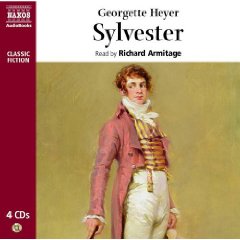
A recent find:  Richard Armitage reading Georgette Heyer’s Sylvester, to be released in the UK in July…

sylvester audiobook

The audiobook is due for release on 1st July.  Written in 1957, ‘Sylvester’ is one of the most popular of Heyer’s Regency romances. Witty and romantic, its heroine is Phoebe Marlow, who flees her home to avoid marrying Sylvester, the wealthy Duke of Salford. But the pair are fated to meet again…

The audiobook can be pre-ordered at Amazon UK, Amazon Germany and Amazon Canada. It’s listed at Amazon USA, though it’s not yet available for ordering there. It’ll also be available as an MP3 download from the Naxos website.

[from RichardArmitageOnline.com]

 If you cannot wait until July, you can listen to this 10-minute audio-clip from the opening of the book released by Naxos Audiobooks.  You can find the link to the audio here at Richard Armitage Online:  scroll down through the latest news to the item titled “Sylvester excerpt” and listen away! [oh that voice!] 


richard-armitage4


Books · Jane Austen · Literature · Rare Books

Austen on the Block ~ the Results, May 6, 2009

The results of the Bloomsbury Auction that took place on May 6, 2009 in New York have been posted online.  [click here to see my previous post on this auction]

bloomsbury auction austen

The Austen titles sold as follows [sale price in brackets]:

127. [AUSTEN, Jane] Thomas Hazlehurst… Portrait miniature of Elizabeth Bridges …
estimate: $2000 – $3000 – [unsold]

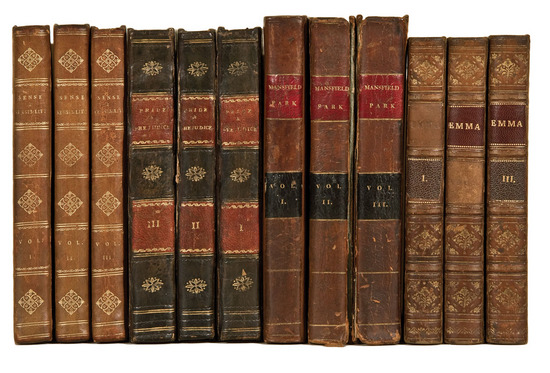
128. AUSTEN, Jane. Sense and Sensibility: A Novel. London …
estimate: $25000 – $35000 – [$38000]

129.  AUSTEN, Jane.  Pride and Prejudice…. estimate: $20000 – $30000 – [$26000]

130. AUSTEN, Jane. Mansfield Parkestimate: $7000 – $10000 –[$7500]

131. AUSTEN, Jane. Emma: London … estimate: $8000 – $12000 – [$9500]

132. AUSTEN, Jane. Northanger Abbey: And Persuasion. …estimate: $5000 – $8000 – [$5500]

*************************

Works by the Brontes, Burney [many autograph letters] and Edgeworth also sold for hefty prices, as well as  works by Samuel Johnson, Hester Thrale Piozzi, Lord Byron, Charlotte Lennox, and others  ~  see all the results at the Bloomsbury Auctions website.

Austen Literary History & Criticism · Literature · Women Writers

In My Mailbox ~ ‘The Female Spectator’

I am always thrilled to find in my mailbox the latest issue [Vol. 13, No. 1, Winter 2009] of The Female Spectator, the newsletter of the Chawton House Library. 

The first article by Helen Cole, a PhD candidate at the University of Southampton, is on “The  Minerva Press and the Illustrations of the Late Eighteenth-Century Novel” – Cole is researching the Minerva Press novels of the 1790s, regarded by many as “historically interesting but of minimal literary value”, yet often illustrated with engravings that had little to do with the narrative, or enhanced with an engraved bookplate, or rebound in fine bindings, thus proving that at the time these books were likely considered valuable to the owner.  The bound-in engravings were not consistently present,  leading one to question on what basis the publisher made these binding decisions.  Cole’s research has been made all the easier since the availability of the Eighteenth Century Collections Online[ECCO]* which allows access to many little-known 18th-century novels. [*note that this source is accessible only to subscribing institutions]

A second article, ” ‘A Chawton Experience’ : Women and Education in the Gentleman’s Magazine and the Anti-Jacobin (1797-1799)” by Helen Loader, a PhD candidate at the University of Winchester, summarizes her research into the reviews in these two journals of works written by or about women, and the often prevailing male view of the lack of education among women writers and the dangers of reading such novels.  Ms. Loader cites to two sources that are available online: 

Emily Lorraine de Montluzin “Attributions of Authorship in the Gentleman’s Magazine 1731-1868: an Electronic Union List, University of Virginia – http://etext.lib.virginia.edu/bsuva/gm2/index.html

and Mary Darby Robinson, A Letter to the Women of England on the Injustice of Mental Subordination (1799) at http://romantic.arhu.umd.edu/editions/robinson/

[this text, part of the University of Maryland’s Romantic Circles database also includes various other related resources]

Other news from the Library:

  • A new acquisition:  a small collection of manuscript family recipe books dating from the 18th and early 19th centuries belonging to three inter-related families.
  • Information on the forthcoming conference, “New Directions in Austen Studies”, July 9-11, 2009, celebrating Austen’s move to Chawton in 1809.
  • Application information for the Chawton House Library visiting fellowships – there are now four scholars in residence positions and applications are due by May 30, 2009.

For more information on the Library, the Conference, the Fellowships and other events, see the Library website .

For information on becoming a member of the Library, click here.  It is worth every penny so you too can find this newsletter in YOUR mailbox!

chawton-house-library