Literature

Charlotte Bronte ~ April 21, 1816

charlotte-bronte-image


Happy Birthday! to Charlotte Bronte, born April 21, 1816 in Thornton, Yorkshire. 

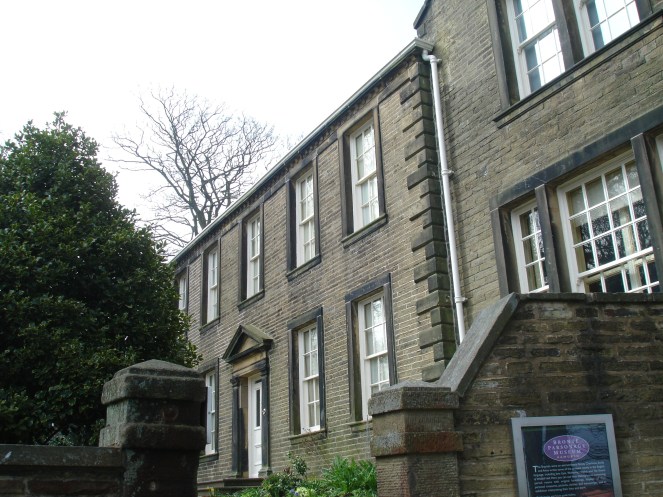
I just had the good fortune to finally visit Haworth and tour the Bronte Parsonage.  One of the special extras was the display of the various costumes worn in the latest BBC production of Wuthering Heights [but alas! no pictures allowed!] 

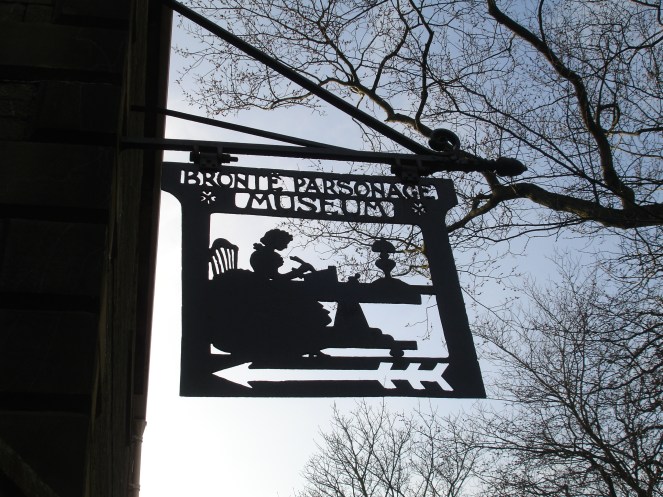
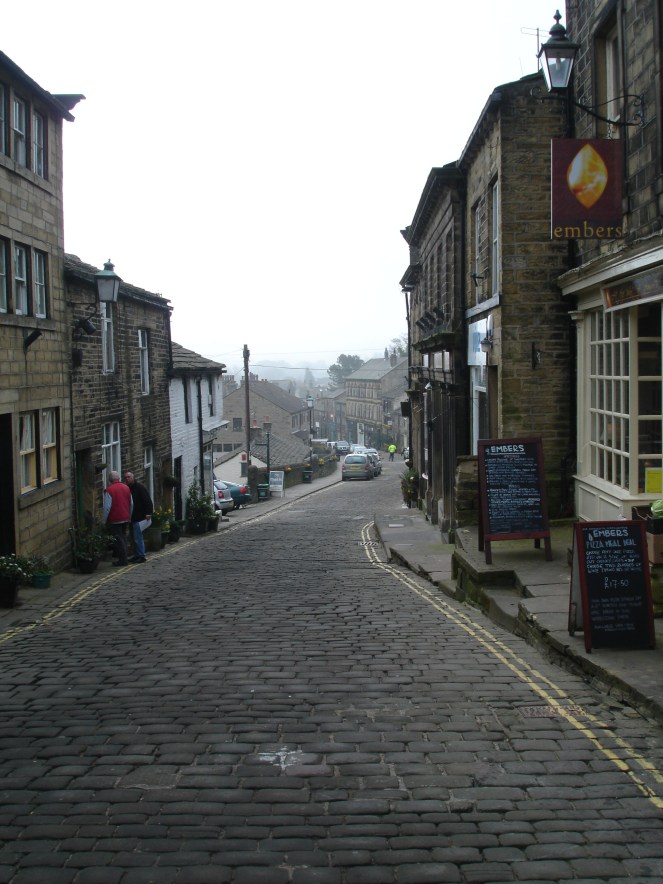
I append here a few of my photographs of the Parsonage as well as several links for further reading…


dsc04899

dsc04878

dsc04894

dsc04888

dsc04903


Main Street, Haworth


Further Reading:

The Bronte Blog, an excellent source for all things Bronte –  various links to the e-texts, other web sites, a bibliography of sources, etc.

The Bronte Parsonage Museum & Bronte Society

The Bronte Family

Jane Austen · Literature · News

Previewing Persuasions

JASNA has posted a link to the table of contents for volume 30 (2008) of the Jane Austen Society of North America’s journal Persuasions. This annual is a peer-reviewed journal, featuring both articles based on papers presented at the October AGMs (Annual General Meeting; in 2008 it took placed in Chicago) and ‘miscellany’ — which includes my own article on the 1833 Austen-Smith journey to Derbyshire: they travelled pretty much in the shoes of Elizabeth Bennet! Watch the JASNA website, for I have been told the article might be posted on their “maps” page (a very interesting and quite useful resource, now augmented with related articles on places and travel pulled from the Persuasions archive).

Book reviews · Literature · Regency England

Book Review ~ ‘Whom the Gods Love’

book-cover-whom-gods-loveJulian Kestrel is back in this third Kate Ross mystery, Whom the Gods Love [Viking 1995], again faced with a murder the authorities cannot solve.  The larger than life Alexander Falkland, one of the leaders of The Quality, young, handsome, with a beautiful wife, elegant home and many admirers, is found murdered in his study, bludgeoned with a fireplace poker during a house party.  Falkland’s father, Sir Malcolm, so frustrated by the dead-end investigations of the Bow Street Runners, turns to Kestrel to find his son’s killer.  Faced with a good number of suspects among family, friends and servants (so many in fact, that Ross prefaces the work with a listing of the cast of characters!), Kestrel falls whole-heartedly into his role as amateur sleuth.  A dandified man of fashion [but we the reader know him to be so much more], Kestrel knows many of Falkland’s set and embarks on his questioning of all suspects in his charming way, all the while wondering if Alexander Falkland may not be all that he seems. 

Ross is a master of plot and character – even the minor parts are well-fleshed out, and as the story turns and clues are uncovered with each chapter (Ross’s chapter headings alone are perfectly tuned), the reader is drawn deeper and deeper into the complicated mystery surrounding Falkland’s death.  Kestrel stumbles upon another murder, and as in Ross’s previous two mysteries, Cut to the Quick and A Broken Vessel, Kestrel needs to identify an unknown woman as well as unravel the mystery of who had reason to kill her. 

We are again transported into Regency London, with all the social life at Almacks, Tattersalls, Cornhill, Rotten Row, the Grand Strut in Hyde Park, and various outlying Inns, all portrayed as it would have been.  The language of the lower classes and the “Beau Monde” is spot-on [blue-deviled, missish], the carriages: gigs, cabriolets, hackneys, etc.; architectural details abound; fashion description is so exact, you feel you are there, sitting in the room:  in this passage, one of the “Quality” suspects is thusly described:

 Felix was about Julian’s age, the son of an autocratic peer from the bleak northeastern counties.  Julian suspected that the grey, barren landscapes of his childhood accounted for his taste in clothes, which certainly needed excusing.  Today he was wearing a canary-yellow tailcoat, white trousers, and two waistcoats, the inner of scarlet satin, the outer with black and white stripes.  His neckcloth was a cherry-coloured India print, splashed with blue and yellow flowers.  A bunch of gold seals, all shaped like chessmen, dangled from his watch-chain.  He had an amiable rangy figure and curly brown hair that tended to stand on end.  [p. 132]

[Yikes!]

regency-male-fashion

[from The Regency Fashion Page]

Ross depicts the legal system in England at the time – Lincoln’s Inn figures prominently, and Kestrel is often critical of the lack of a strong police force and the present state of law enforcement [the magistrate system and the Bow Street Runners].  There is much scholarly discussion between the characters, with references to Wollstonecraft’s “A Vindication of the Rights of Women” and the state of the woman’s position in society; there is even a bit of phrenology thrown in! 

But it is Julian Kestrel who pulls all these diverse goings-on together.  He is witty [“I’m afraid I’m obliged to trample on your sensibilities”], with a ready retort always at hand to put one on edge, but also sensitive and sympathetic, always with a kind word or deed to put one at ease.  And, as in the previous two books, Ross gives us fleeting glimpses of Kestrel’s own past, his background as mystifying to the other characters and to us readers as the mystery he is set on solving.  In this book, we hear only a faint mention of Sally from A Broken Vessel; we learn that he and his father went to London plays; that he gained his wide knowledge from his own stay on the Continent where he read the controversial Wollstonecraft in French translation; and we learn more about his actress mother and his disinherited father.  Kestrel remains the most loveable enigma, with all his shadowy past life, his apparent shallow present life of leader of fashion extraordinaire:

      In the afternoon, Julian went home for a session with his tailor.  His hobby of detection could not be allowed to interfere with his profession of dress.  The tailor measured him for some sporting garments for the autumn and made yet another attempt to persuade him to pad his coats.  ‘The very latest fashion, Mr. Kestrel!’ he pleaded.

      ‘My dear man, if I followed the fashions, I should lose any power to lead them.  And not for you nor anyone else will I consent to look like a pincushion with legs.’ [p. 169] 

With all this, Kestrel masterfully guides us along in solving the murders, feeling at home in the halls of the Quality, as well as in the environs of the poorer classes. I will tell no more of the plot – it is a fabulous journey, and leaves me quite anxious to get on to the next book!

5 full inkwells

 See my reviews of Cut to the Quick and A Broken Vessel
Books · Jane Austen · Literature · News

An Austen-Inspired Author ~

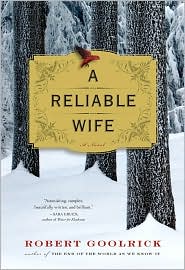
Robert Goolrick, author of the upcoming book A Reliable Wife, has this to say about Jane Austen:

If anything, I was inspired by earlier writers. I’m always inspired by Jane Austen, curiously enough. She has a great thing that she does, which is her novels are about complicated, romantic situations in which all the happiness comes at the very end—like a magic trick. I love that about her, and I wanted to write a novel in which people seemingly unable to be happy suddenly find redemption and happiness all in a second.

[Quoted from Publisher’s Weekly]

book-cover-reliable-wife 


Goolrick’s new work, following his memoir The End of the World as We Know It, will be released on March 31, 2009….


Synopsis:

Rural Wisconsin, 1909. In the bitter cold, Ralph Truitt, a successful businessman, stands alone on a train platform waiting for the woman who answered his newspaper advertisement for “a reliable wife.” But when Catherine Land steps off the train from Chicago, she’s not the “simple, honest woman” that Ralph is expecting. She is both complex and devious, haunted by a terrible past and motivated by greed. Her plan is simple: she will win this man’s devotion, and then, ever so slowly, she will poison him and leave Wisconsin a wealthy widow. What she has not counted on, though, is that Truitt — a passionate man with his own dark secrets —has plans of his own for his new wife. Isolated on a remote estate and imprisoned by relentless snow, the story of Ralph and Catherine unfolds in unimaginable ways.

With echoes of Wuthering Heights and Rebecca, Robert Goolrick’s intoxicating debut novel delivers a classic tale of suspenseful seduction, set in a world that seems to have gone temporarily off its axis.

[from the Barnes & Noble website]

[BTW, the book has already been optioned for a movie and is hitting various favorite lists, so this is not the first you will hear about this book…]

Austen Literary History & Criticism · Books · Jane Austen · Literature

Discord in Austen Land

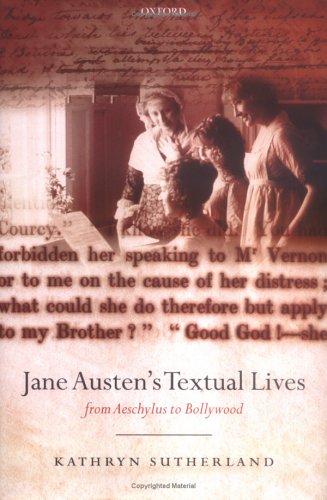
Here is an interesting article at the Guardian.co.uk about a new book on Austen by Claire Harman (author of the 2001 biography Fanny Burney) ~ Jane’s Fame: How Jane Austen Conquered the World, to be published next month, and a conflict with the academic writings of Professor Kathryn Sutherland, author of the ground-breaking 2005 Jane Austen’s Textual Lives, from Aeschylus to Bollywood.  It’s quite the kerfuffle….

book-cover-janes-fame

book-cover-ja-textual-lives

Further reading:

[Adding here 3/17/09:  I had noted in my comments below that Ellen Moody has addressed this issue in more depth on Austen-L and Janeites as well as her blog, so I add here the link to her post: 

http://server4.moody.cx/index.php?id=1016#comment

 NB: scroll down further on her blog as there is quite a bit more after the reference to Emily Hahn’s book on Fanny Burney]

Jane Austen · Literature

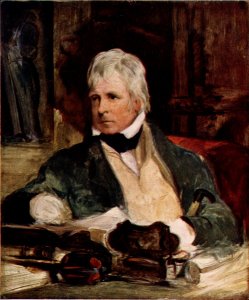
Sir Walter Scott on Austen ~ March 14, 1826

scott-portrait1

Sir Walter Scott wrote in his journal on March 14, 1826:

I have amused myself occasionally very pleasantly during the last few days, by reading over Lady Morgan’s novel of _O’Donnel_,[221] which has some striking and beautiful passages of situation and description, and in the comic part is very rich and entertaining. I do not remember being so much pleased with it at first. There is a want of story, always fatal to a book the first reading–and it is well if it gets a chance of a second. Alas! poor novel! Also read again, and for the third time at least, Miss Austen’s very finely written novel of _Pride and Prejudice_. That young lady had a talent for describing the involvements and feelings and characters of ordinary life, which is to me the most wonderful I ever met with. The Big Bow-wow strain I can do myself like any now going; but the exquisite touch, which renders ordinary commonplace things and characters interesting, from the truth of the description and the sentiment, is denied to me. What a pity such a gifted creature died so early![222]

Scott’s journal entry for September 18, 1827, has the following reference  to Austen: 

September 18.–Wrote five pages of the _Tales_. Walked from Huntly Burn, having gone in the carriage. Smoked my cigar with Lockhart after dinner, and then whiled away the evening over one of Miss Austen’s novels. There is a truth of painting in her writings which always delights me. They do not, it is true, get above the middle classes of society, but there she is inimitable.

And this is Austen’s famous comment on Scott:

Walter Scott has no business to write novels, especially good ones. – It is not fair. – He has Fame & Profit enough as a Poet, and should not be taking the bread out of other people’s mouths. – I do not like him, & do not mean to like Waverley if I can help it – but fear I must…

[ Letter 108, 28 September 1814, to Anna Austen (Le Faye)]

Further reading on Scott:

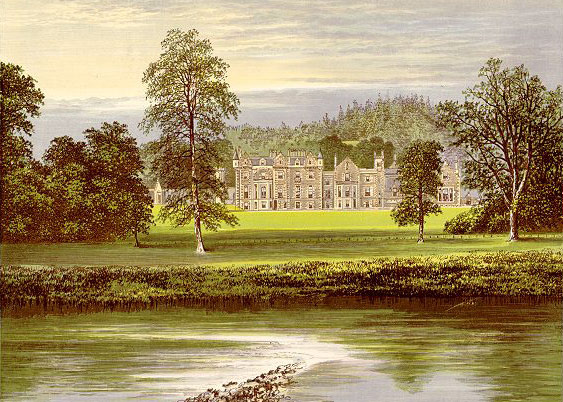
scott-abbotsford-house
Abbotsford
  • Millgate, Jane.  “Persuasion and the Presence of Scott,”  Persuasions 15, 1993
  • Sabor, Peter.  “Finished up to Nature” :  Walter Scott’s Review of Emma, Persuasions 13, 1991
  • text of Scott’s review of Emma in the Quarterly Review (1816) at The Literary Encyclopedia

 [Portrait image from University of Michigan website]

Literature · News

Shakespeare?

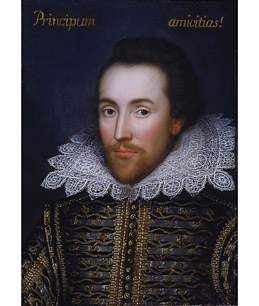
There is much in the news today about this portrait being a true likeness of Shakespeare:

shakespeare-portrait-309

 Up to now only two images have been accepted as authentic representations of what Shakespeare may have looked like. One is the engraving by Martin Droeshout published in the First Folio of 1623. The other is the portrait bust in Holy Trinity Church, Stratford-upon-Avon; the monument is mentioned in the Folio and therefore must have been in place by 1623. Both are posthumous –- Shakespeare died in 1616. The engraver, who was only in his teens when Shakespeare died, must have had a picture, until now unidentified, to work from. Professor Wells believes it to be the one he has revealed today and that it was done from life, in about 1610, when he was 46 years old.

[From the Shakespeare Birthplace Trust website]

The portrait [now called the Cobb Portrait after the owner] will be on public view at the Shakespeare Birthplace Trust in Stratford-upon Avon beginning April 23, 2009.

See this article at Time.com;  and another at the NYTimes for a full report.

Literature · Query

Weekly Geeks # 6 – What’s in a Name?

Here is a new, thoughtful book-related game to play.  Weekly Geeks offers up each week a theme to muse on and share with other “geeks” – “One week might be ‘catch up on your library books week’  and the next might be ‘redecorate your blog week’ or ‘organize your challenges’ week or ‘catch up on your reviews week’ –  It’ll be fairly bookblogocentric, but not exclusively.” 

Some past “weekly geeks” have been what are your passions other that books, how do you feel about “classic” literature?,  and judging a book by its cover – go to the Weekly Geek website to learn about participating.  This week’s theme is about characters:

For this week’s edition of Weekly Geeks, we’re going to take a closer look at character names. What are some of your favorite character names?

Go to Google or a baby name site like this one or this one, and look up a favorite character’s name. What does their name mean? Do you think the meaning fits the character? Why or why not?

If you’d like, look up your own name as well and share the meaning.

   **************************************

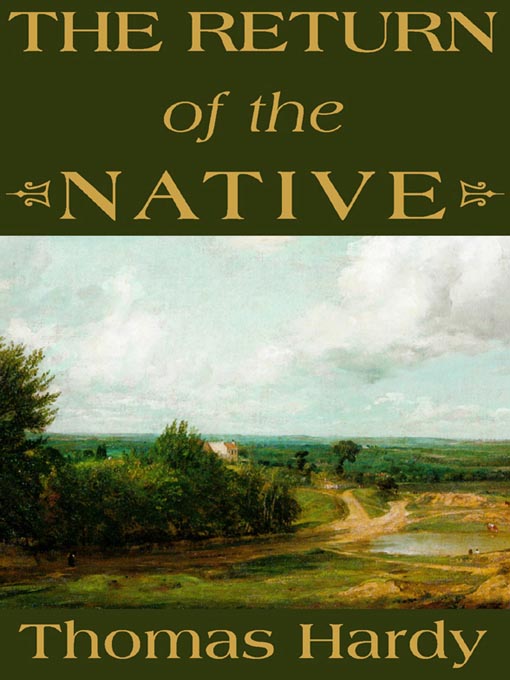
 One of my favorite names from a novel was Eustacia from Hardy’s Return of the Native ~ such a sad, forlorn figure, her name conveying such an ethereal nature, always out of ones reach, aloof, never at rest, haunting. 

I thought as a teenager that I would name my daughter Eustacia, but ended up dating a guy in college who had a sister with this name, so it never felt right after that ~ I do have a daughter, named her Jessica [after my grandmother and my middle name], but she also so loved the book and name she called her pet rabbit Eustacia!…so life comes full circle!

The “Tuttle Dictionary of First Names” [Tuttle 1992] says this:

[Eustace: Eustacia, feminine form; uncommon except for the derivative “Stacy”]  This comes from the Greek meaning “good harvest” and was the name of a saint who was popular in the Middle Ages but who was probably fictional.  His legend had many connections with that of St. Hubert; it involves the loss of possessions, wife and children and their miraculous recovery, in a form found elsewhere in medieval romance.

Other baby name sites refer to its Greek meaning as “bountiful grapes,” “fruitful,” yet another site says it is from the Latin and means “tranquil” [Eustacia Vye is not tranquil!]

Hardy obviously chose this name for its classical and tragic allusions – and how you interpret his meaning depends upon whether you sympathize with Clym or Eustacia in the novel (and that’s a whole other post, maybe a whole other BLOG!]

returnofthenative-cover


As for my name, Deborah:

a Hebrew name meaning “bee”.  From the account of the original Deborah in the Old Testament book of Judges, she must have been a formidable woman, for at a time when the role of women was very much that of a subordinate, she was a prophetess, a judge of the people, and even a leader of the army.

[and so alas! that is a hard act to follow…]

I welcome your comments – what is your favorite character name?  and if you have your own blog, check out Weekly Geeks and participate with other online book-lovers…

[for instance, why does Austen name Knightley “George”?  did you know that “George” is derived from the Greek word for “farmer” ~ literally “earth-worker” and is also the name of the patron saint of England?]

Have fun with this…

Literature

Charles Dickens ~ February 7, 1812

I direct you to my Bygone Books blog for a short birthday tribute to Charles Dickens.  And don’t forget to watch Part 2 of Sense & Sensibility Sunday night February 8th on Masterpiece Classic, followed by MONTHS  of Dickens adaptations beginning on February 15th! A perfect antidote to winter…

charlesdickenswriting2

Books · Jane Austen · Literature · Rare Books

January 28, 1813 ~ Pride & Prejudice Published!

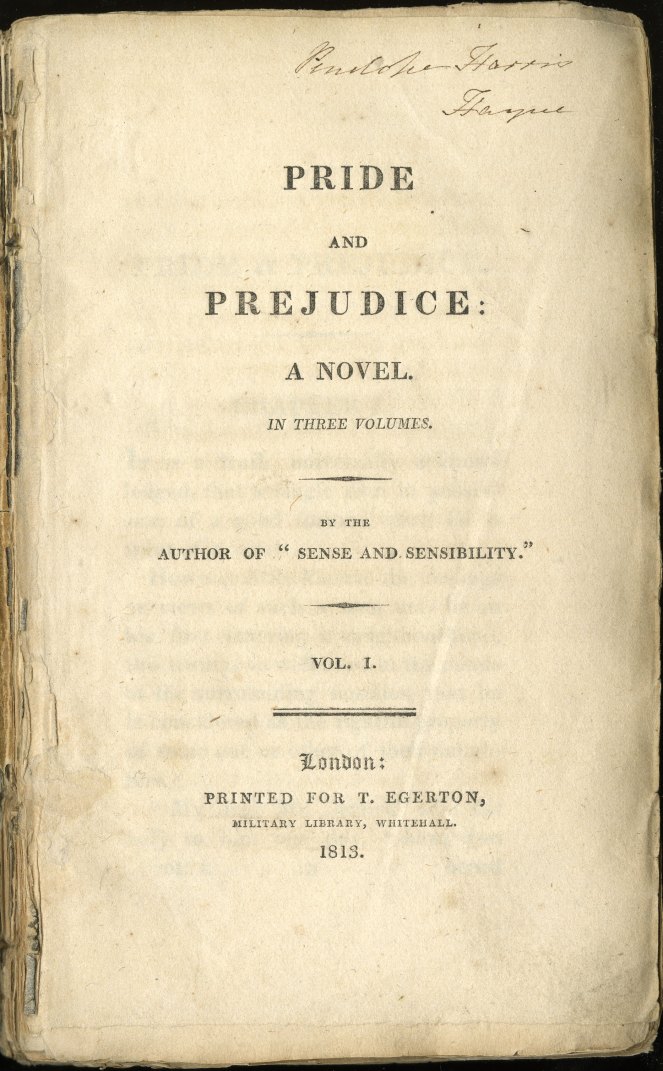
It was on this day, happy day indeed! ~  in 1813, that Pride & Prejudice “by the author of Sense & Sensibility” was published by T. Egerton, London. 

Austen received her own copy on January 27, as she states in her letter of January 29,  “I have got my own darling Child from London.”   [LeFaye, Letter 79; Chapman Letter 76].  It was advertised in The Morning Chronicle on Thursday January 28 under “Books Published This Day” in a run of an unknown number of copies, assumed to be around 1500 [see Keynes Bibliography].  The first edition sold out rapidly, a second edition was also printed in 1813 and a third edition came out four years later.  The first edition, published in three volumes, was bound in blue paper-covered boards with a white paper label on the spine.  Austen sold the copyright to Egerton for £110; the book sold for 18s.  Today this first edition is for sale starting at £65,000.  [see Abebooks.com for a listing of a few available first editions]… but as we all know the true value of this book is not to be calculated in numbers….  thank you Jane Austen for enlarging so many lives with your brilliance!

pp-first-edition

prideandprejudicetitlepage
First Edition Title Page