News · Query

Tidbits

Some short, little things:

Read (finally! I’ve owned it for months) the first in the news Rhys Bowen series: Her Royal Spyness. It is a cute and quaint 1930s mystery with Lady Georgiana Rannoch, 34th in line to the throne. And one man she meets along the way: Darcy O’Mara. Hmm… wonder where those names came from???

Sobering to think that Abraham Lincoln, whose 200th anniversary of his birth we celebrated on 12 February, was born in the year that Jane Austen moved to Chawton – which is seen as the impetus she required to revise and write anew her six major novels.

A note to JASNA-Vermonters: check out the Members’ Page: we’ve some new contenders for naming our chapter newsletter; The Pemberley Post has a nice ring to it. Add YOUR suggestions!

Bishop’s University in Sherbrooke, Quebec is offering a Pride and Prejudice Symposium – three speakers on Saturday, March 14; a new P&P play on Saturday night; a reception with the playwright on Sunday. We will post information on the events page soon. If you want to see just the play, it runs from March 11-15. Performances held in the Théâtre Centennial Theatre. See: www.ubishops.ca.

Have been thinking about how we might do an online book discussion – any ideas, let us know. With all this Pride & Prejudice in the air, that might be a good novel to begin with.

Two items I forgot! (too many bits of paper…): Looking up something totally different, I found some interesting and I trust useful “clothing” websites: Regency Fashion (which Deb had already found and posted on the sidebar) and at the Met Museum. If you browse around the Met’s site, you will find other centuries and even undergarments.

Jane Austen · News · Query

Austen Portraits??

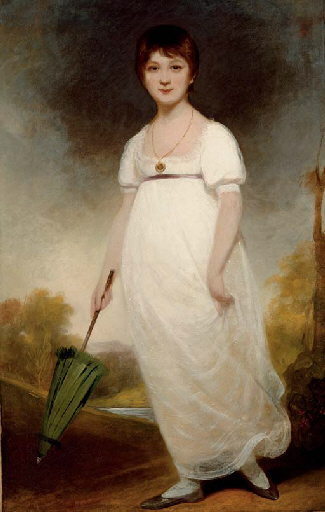
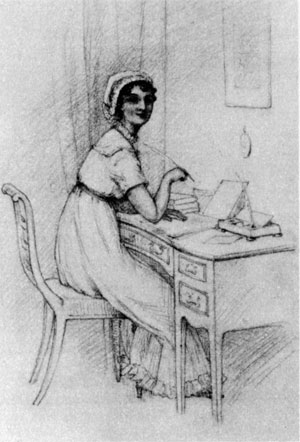
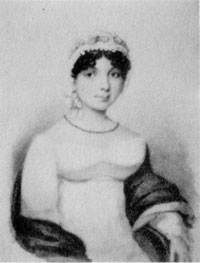
JASNA has just recently made Persuasions No. 5  (1983) available online.  An alert Janeite (thanks Arnie!) raises a question on the article by Joan Austen-Leigh titled “Godmersham,”  on the auction of this property once owned by Austen’s brother Edward Austen Knight.  Also auctioned in that sale were two portraits of Jane Austen [reproduced below].  Does anyone know anything about these?  The Jane of the second portrait looks very much like the infamous “Rice” portrait, still questioned as actually being Jane:

rice-portrait
Jane Austen - "Rice" portrait

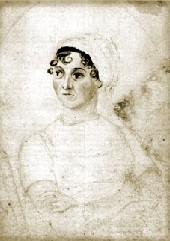
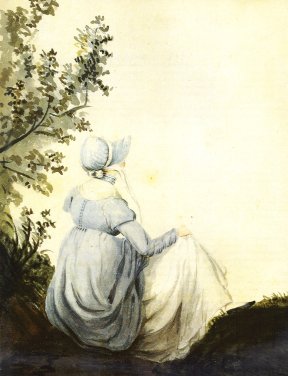
The only two pictures of Jane that are continually bandied about are the two watercolors done by her sister Cassandra:

janesketch

jane-austen-watercolor1 


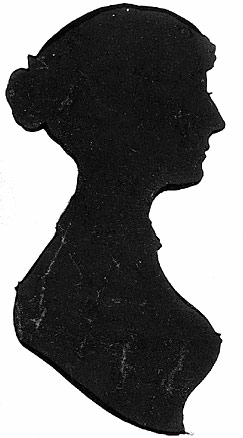
and this silhouette believed to be her:

austen-silhouette
Jane Austen silhouette? - circa 1810-1815

Has there been further research into these two mentioned in Austen-Leigh’s article?  They are lovely, the first being exactly as I have pictured Austen (and also seems to be very like the “improved” renditions of the past fifty years.)  Any thoughts appreciated…

austen-portrait1-austen-leigh-article
Jane Austen - circa 1810, pencil & watercolor


austen-portrait2-austen-leigh
Jane Austen - circa 1810, watercolor


P.S.  When I posted this this morning, I did not do any research and have since had a few comments and done a little detective work and do find a few mentions of these portraits.  See the comments below for more information and citations.  But as I have been out of the loop for a few days and have not been checking the other Austen sites and blogs, I did not realize that Laurel Ann at Austenprose had posted a bit on Austen’s various portraits just 2 days ago!…so please check her site for a great run-through of the many faces of Jane Austen!

Query

Separated at Birth???

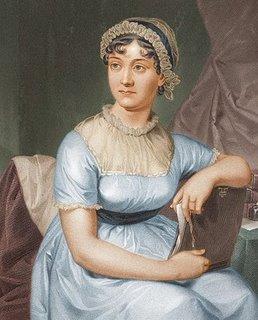
There are so few portraits of Jane Austen, that people keep reinventing her image – either from imagination, or by ‘tweaking’ what already exists. One of the oddest is the so-called Wedding Ring portrait:

weddingring

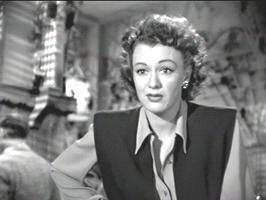
This has been in use for quite some time – from the New York Times‘ article announcing the formation of JASNA, to jackets for some decidedly scholarly tomes. There was always something about the face that felt familiar. One day the ‘why’ finally clicked:

 evearden

Eve Arden in MILDRED PIERCE.

Jane Austen · JASNA-Vermont events · Query

“Why Jane Austen Matters”

I am just reading an article in the online Charlotte Observer by Kay McSpadden on Why Jane Austen Matters.  McSpadden is a high school English teacher in South Carolina and writes of her student’s love of reading, and how Jane Austen speaks to them.  I am reminded again of why Austen matters to me, but I put the question out there to you … as her December 16th birthday approaches, and we here in our Vermont JASNA Chapter prepare for the annual tea celebration on December 7th, I wonder,  why does Jane Austen matter to you?  Please comment! ~ I would like to share some of your responses at our gathering.  Thank you!

Books · Jane Austen · News · Query

Our Jane and Baseball…??

This cannot wait for the weekly round-up!  See this article in today’s  CNN.com edition :

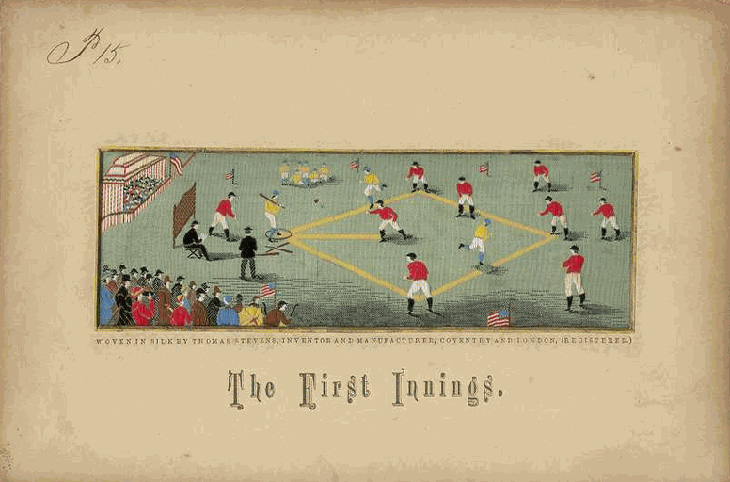
According to author Julian Norridge baseball originated in Britain, and part of his proof comes from a reference in Jane Austen’s novel “Northanger Abbey.”

Norridge, whose book “Can we Have our Balls Back, Please?” focuses on Britain’s role in writing the rulebooks for a long list of sports, says Austen mentioned baseball in the opening pages of “Northanger Abbey,” which was written in 1797-98.

Norridge says that Austen referenced the sport while introducing her tomboy heroine Catherine Morland, writing: “It was not very wonderful that Catherine, who had nothing heroic about her, should prefer cricket, baseball, riding on horseback, and running about the country at the age of 14, to books.”

He argues in his book that the reference indicates British people were familiar with the sport prior to its supposed invention much later in the United States.

Can I have read this book so many times without that word jumping off the page??  Baseball is spelled “base ball” in my text …. but as a die-hard Yankees fan [OMG, what an admission!], I should have certainly at least noticed this! …. so I put this out to you, Kind Readers, and ask for your thoughts … and has anyone written about this before??

early-baseball-game


Further reading: 

Book reviews · Books · Jane Austen · Query

“The Darcys and the Bingleys”… a visit from Marsha Altman!

Sourcebooks Inc. has several new Austen-related books coming out this month, but one by debut author Marsha Altman, gives us new insights into the Darcy – Bingley relationship:  The Darcys & the Bingleys, a Tale of Two Gentlemen’s Marriages to Two Most Devoted Sisters.  I have just started to read it and hope to do a full review by weeks end, but am delighted to find already in the first few chapters that Ms. Altman has perfectly presented the Darcy I most love [the young proud man bound to his family duties, but oh so endearingly socially inadequate, unable to “perform before strangers”….], as well as giving Mr. Bingley a voice of his own…

So today we offer you a post from the author as well as a CONTEST for a free giveaway of the book, courtesy of Sourcebooks.  Ms. Altman has been most generous in sending us her thoughts on writing this sequel to Jane Austen’s Pride & Prejudice, and I append her post forthwith…  and we invite your questions and comments over the next week with Ms. Altman answering your queries!  On September 10, we will randomly draw a name from those commenting and the happy winner will receive a copy of this latest addition to the Austen legacy.  So PLEASE JOIN IN AND COMMENT!… and thank you Ms. Altman for joining us here this week! [ and for more information on the author and her book, go to the Marsha Altman.com website ]

**************************************
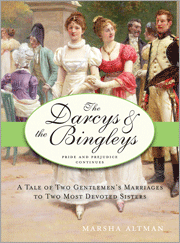
My name is Marsha Altman and I’m the author of the Pride and Prejudice sequel, The Darcys and the Bingleys

We’re currently enjoying a wave of Austen sequels, continuations, paraliterature, or whatever fancy term you want to give fan fiction. This shouldn’t be a huge surprise – Jane Austen is very much in vogue right now, and these floods generally follow a major adaptation by a year or two. The 1995 Pride and Prejudice miniseries gave way to a lot of sequels, mostly self-published around 1997-98. With the 2005 movie, it’s not surprising that we’re in 2008 and talking about sequels again. Because publishing is sometimes based on speed and convenience, much of the current stock is composed of formerly self-published books, purchased and republished by a larger company. However, with new technologies and the internet, anyone can be an author and the potentials are therefore limitless. 

That doesn’t explain away the compulsive need to read and produce this spin-off literature, just proves the timing of production. The answer to the question of “What is all this nonsense?” in response to a torrent of fan fiction about the work of one of the greatest English novelists is simple: We can’t leave it behind. The book ends, the movie credits roll, the miniseries comes out with the definitive DVD edition and companion book, and we’re not ready to let go yet. Austen’s characters are too compelling. We want to stay with them a little longer, whatever the diminished literary quality. It’s the only way to explain how Emma Tennant’s Pemberley, a book I have never met a fan of, has stayed in print for 15 years – about 12 years beyond the shelf life of good books. 

Every sequel – and for brevity, let’s call them all sequels, as no one has written a prequel, just many books from Darcy’s POV – faces the same existential challenge: How to keep Austen on her well-deserved pedestal but take the characters down without having appeared to. The result is haphazard. Loyalists merely rewrite the story from Darcy’s perspective (or occasionally someone else’s), without adding any unexpected color that might offend purists, and lifting a lot of dialogue from Pride and Prejudice. There are sequels – actual continuations – that attempt to copy Austen’s style. Dorothy Hunt’s Pemberley Shades was probably the best attempt at that, but generally these things can fall flat because our task is different. Austen wrote contemporary fiction; we’re writing historical fiction while attempting to imitate the style of the Regency period. She wrote what she knew; we’re writing what we think she may have known. And let’s face it. None of us are Jane Austen, and no one’s claiming to be. We’re just using her public domain characters because we love them.

 Then there are authors who let themselves go and tell the story they want to tell, staying relatively within the lines when it suits them and moving into fantasy when it does not. Darcy has a scandalous past, Darcy and Elizabeth solve crimes, Elizabeth has magic powers, Darcy and Elizabeth have the best sex life in the history of mankind and the author isn’t short in the details. Purists rant and rave, but that’s usually because they’ve bought the book and read it, which meant, well, they bought the book. Linda Berdoll is reviled by many, but she’s the best-selling author of all time in this genre and she knows it. She wrote the story she wanted to write and she’s not ashamed of it.

 When I started writing Jane Austen fanfic (and I’m not going to distinguish between published work and fanfic, because much of the work on shelves was originally fan fiction), I had a story I wanted to tell. When I first read Pride and Prejudice in high school, I thought Mr. Bingley was shortchanged. If you read the story without knowing the plot ahead of time, you think for the first hundred pages or so that the story is about the Bennet sisters trying to marry off Jane to Mr. Bingley, and things go so well you wonder why there seem to be another 300 pages left. Darcy is a sucker-punch protagonist, the one you don’t see coming until Hunsford. That doesn’t mean I don’t think Darcy isn’t the ultimate romantic hero, but Bingley has been pretty ignored in sequels and even Darcy stories, which logically should contain a lot of Bingley. Precisely, there’s often no discussion – or just a throwaway line – to how they met, and as their friendship is so crucial to Darcy’s introduction to Elizabeth, I felt there was material there I wanted to play around with. That is how “A Bit of Advice” – the first of the two stories in my book – came about. Darcy and Bingley can be as much dramatic foils as Elizabeth and Darcy, just without the romance. 

The story was put up online and some people seemed to like it, so I rode that wave of confidence and decided to set up the ultimate challenge – making Miss Bingley a sympathetic character without making her pathetic or unrealistic. With so much ink devoted to different scenarios with Georgiana, Kitty Bennet, and Elizabeth’s life at Pemberley after their marriage, I wanted to do something that hadn’t been done yet except in a few obscure fanfics. Whether I did it successfully or not is up to the reader to decide. 

What are you looking for in a sequel? What stories do you feel are left untold?

Books · Query

A Jane Fairfax Conundrum

Over the weekend I read Penny Gay’s thought-provoking Persuasions article: “Jane Fairfax and the ‘She Tragedies’ of the Eighteenth Century.” But I am curious as to where a statement (not footnoted) comes from; can anyone out there help ???

Dr Gay makes a wonderful case for Jane Fairfax to be compared with the type of characters portrayed so well onstage by Sarah Siddons; these characters usually went mad, killed themselves, or simply died. To sustain the proposed connection page 128 has the following parenthetical claim: Austen, of course, knew well where Jane [Fairfax] really belonged as a character: she told her family that Jane did not long survive her marriage to Frank [Churchill].

Told her family made me conclude that A Memoir of Jane Austen was the source; but that cannot be, for here are all the statements regarding the ‘future’ of Austen’s characters in the 1871 edition:

“She [Jane Austen] certainly took a kind of parental interest in the beings whom she had created, and did not dismiss them from her thoughts when she had finished her last chapter. … She would, if asked, tell us many little particulars about the subsequent career of some of her people. In this traditionary way we learned that Miss Steele never succeeded in catching the Doctor; that Kitty Bennet was satisfactorily married to a clergyman near Pemberley, while Mary obtained nothing higher than one of her uncle Philip’s clerks, and was content to be considered a star in the socitey of Meriton; that the ‘considerable sum’ given by Mrs. Norris to William Price was one pound; that Mr. Woodhouse survived his daughter’s marriage, and kept her and Mr. Knightley from settling at Donwell, about two years; and that the letters placed by Frank Churchill before Jane Fairfax, which she swept away unread, contained the word ‘pardon.’ Of the good people in ‘Northanger Abbey’ and ‘Persuasion’ we know nothing more than what is written…” (pp. 148-9)

Did Dr Gay mix up Mr Woodhouse’s demise with the Frank-Jane ‘pardon’?? Or does a more extensive list of what happened to Jane Austen’s characters after the book(s) ended exist elsewhere??

I do have Le Faye’s Reminiscences of Caroline Austen to check, but see nothing there in a cursory look; I do not own Caroline’s My Aunt Jane Austen, but have searched through MA Austen-Leigh’s Personal Aspects of Jane Austen and find no mention of ‘fairfax’ or ‘churchill’ – so I throw open the question for discussion:

Did Jane Fairfax, according to Jane Austen, not long survive her marriage??

Query

Why is Jane Austen so Popular?

I was having dinner with a great buddy the other night and we of course got talking about Jane Austen, as we are wont to do….we have both been reading Austen for a good number of years, attend the annual JASNA meetings together, and discuss the latest movies, occasionally disagreeing, but have terrific conversations nonetheless.  We most often quibble over Fanny Price and Mansfield Park (she dislikes Fanny with a passion, loves Mary & Henry Crawford and hence the whole book tends to lose its bite!) … I have told her that there is now a wonderful new Blog just about Mansfield Park, but alas! she does not care….

But our discussion the other night, with my very NOT Austen-loving husband in rapt attention, tended to the very basic question of “why is Jane Austen so popular right now?”  We can say that the movies and Hollywood are driving the popular culture, that Colin Firth as Darcy has changed the face of the romantic hero for all time, that she has always been popular so what’s all the fuss, that she gives us a respite in the world of computers and television and cell phones and ipods always THERE demanding our attention, that her writing is so superb we cannot but read and re-read because there is nothing to compare, her wit and social commentary are unparalleled, etc., etc. …. there is no one answer for sure….but I thought I would put this to the blog test and see what sort of response we can get from the cyberspace world out there that is filled with Austen blogs, sites, comments, articles…and just give you all a chance to wax poetic on this very basic thought:  why IS Austen so popular now? and why are her 6 novels (plus all the other wonderful jottings) on YOUR reading pile?  Any thoughts and comments appreciated….especially from those who might be better than me at convincing my friend that Mansfield Park is quite a delightful book after all!

[there is a great article on this question at the Masterpiece Theatre site, titled Why Jane? Why Now? ]

Query

Fashion help?

I am studying a letter written 1 February 1794, the subject of which, at this juncture, is the latest London fashions:

 …your Friend Mrs. Gosling has been obliged to put on the Cravat, but all Bows are left off, for the Ladies either a very full Muslin plain Stock with a larger Pudding, or the long cravats like your old one twisted round the neck & fastened behind: this moment Maria has made her appearance with the plain Stock but no pudding, she sais these are very comfortable no ends to treble [sic: trouble] her, we are really much entertained with her new appearance…

I am without my subscription to the OED at present, so my question is: What was a ‘pudding’? Any helpful hint would be appreciated! Pictures (illustrations) would be welcome.