Books · Fashion & Costume · Great Britain - History · Jane Austen · Jane Austen Merchandise · Jane Austen Popular Culture · Jane Austen Societies · JASNA · Museum Exhibitions · Regency England · Social Life & Customs · Women Writers

My Jane Austen Book Stash ~ From the 2016 JASNA AGM on Emma

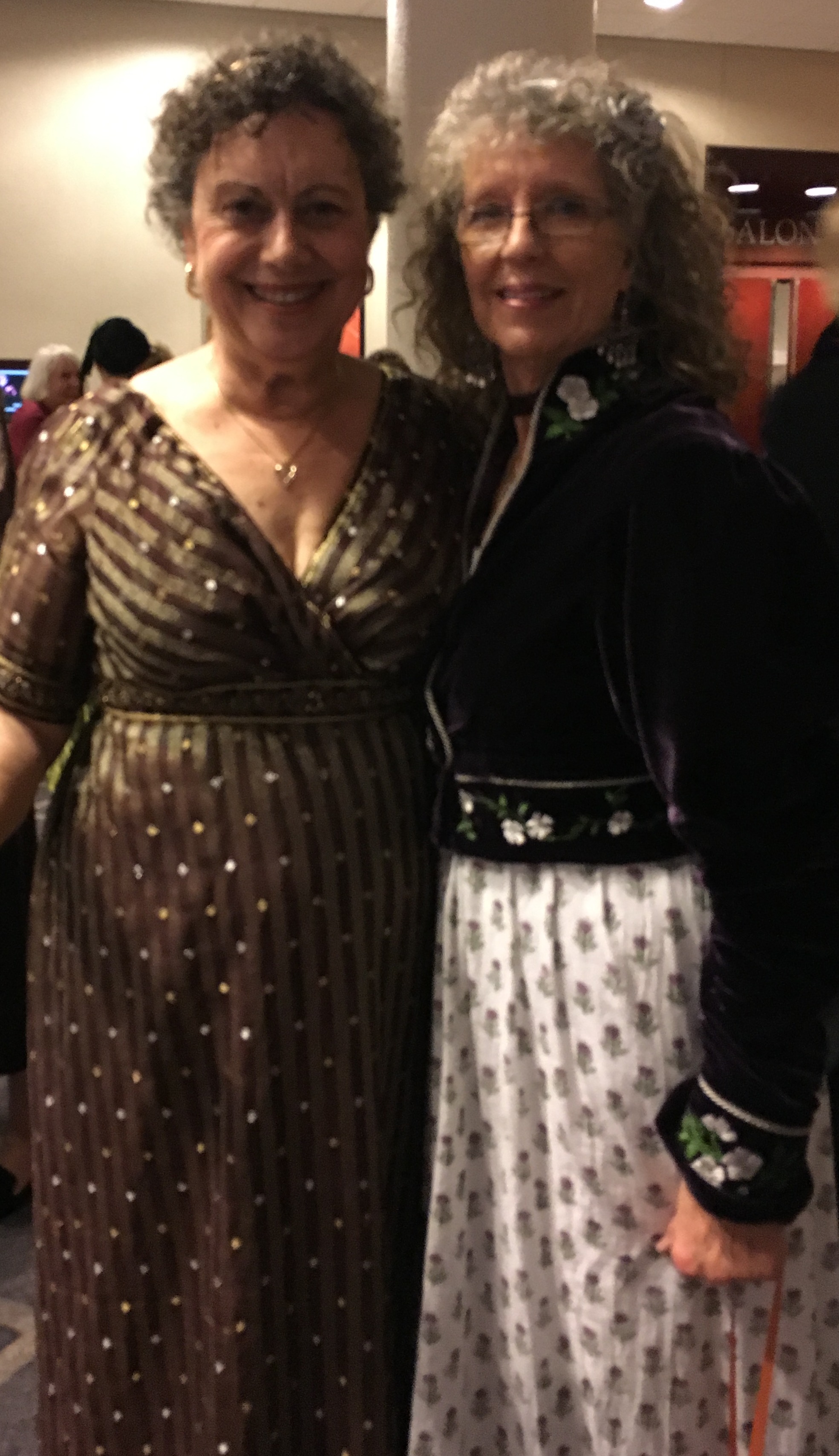
jasnabannerThere has been a good deal to write about this year’s terrific JASNA AGM in Washington DC on Emma – but while it always takes me a good while to re-emerge into the 21st century after these events, little time has been accorded me to actually write anything about it. But I did want to give you a quick summary of the books and other “stuff” I bought this year – less than usual because I bought a DRESS and a SPENCER, which did my pocketbook some serious damage…(see the image below*).

But to the matter at hand, here are the books, etc. – most would make fine holiday gifts for your favorite Austen follower, or for your own stocking for that matter… except this first one which would not in any way fit:
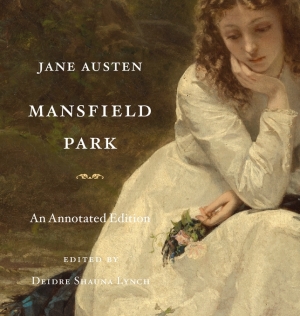
  1. cover-mp-harvardJane Austen. Mansfield Park: An Annotated Edition. Edited by Deidre Shauna Lynch. Harvard UP, 2016.
Very excited to have this, completing my collection of these beautiful Harvard editions. The book was released during the AGM and thankfully Jane Austen Books had copies. I have only skimmed through it, but it promises to live up to the other Harvard editions with an insightful introduction and notes by Lynch, and color illustrations throughout that give you the sense of time, place, and history that surround the adventures of Fanny Price. A must have and a perfect holiday gift for your Austen friends (and at $35, this is the best book deal out there, bar none…)

2. Alden O’Brien, et al. ‘An Agreeable Tyrant’: Fashion after the Revolution. Exhibition Catalogue. Washington DC: DAR Museum, 2016.

The catalogue that goes along with the fabulous exhibition at the DAR Museum that many of us at the AGM werecover-agreeabletyrant-dar privileged to see. Ms. O’Brien spoke at the AGM to take us through the history behind and the creation of this fashion exhibit – complete with characters from Jane Austen’s Pride and Prejudice found in the “Pemberley Room” – it runs from October 7, 2016 – April 29, 2017 and is described on the website as: “…displaying men’s and women’s clothing from 1780 to 1825 in a dozen period rooms throughout the museum. It considers how Americans fashioned a new identity through costume; on the one hand, Americans sought to be free from Europe, yet they still relied heavily on European manufacturing and materials.”

The catalogue is quite lovely, showing full page color illustrations of fashions of the time as well as photographs of costumes in the DAR Museum collection. A must-have for every good Janeite with any fashion sense and perhaps in need of a new dress idea…it also contains various patterns in the back. You can purchase the book through the Museum’s website here. And my friend Kelly has written about the exhibit on her blog Two Teens in the Time of Austen.

Here are a few of my shots of the exhibit:

3. Chawton House Library – their new brochure and guide, text by Helen Cole, et al. CHL, 2016.cover-chl-db2
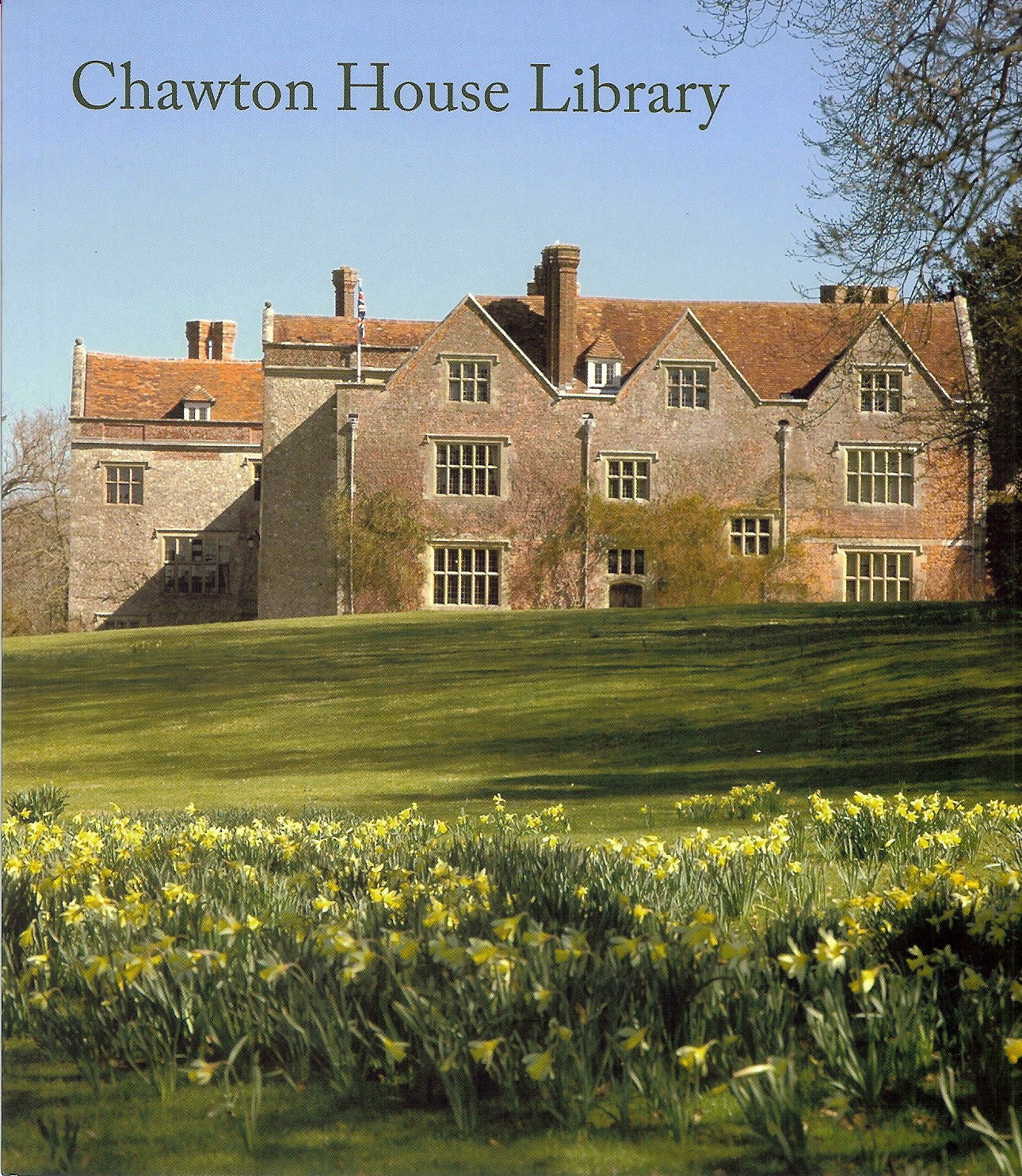
This is Lovely! It tells the history of the Chawton Great House, Jane Austen’s connection with it, the development of it as a learning centre for the study of early women’s writing from 1600 to 1830. There is much detail with fine illustrations of the house itself: the Library; the various rooms and staircases; exhibition and conference information; the furnishings, art and portraits; the gardens and grounds; and a bit of the history of women writers and their place in our literary heritage. For $12 you get to armchair-tour the house at leisure, and then you will add this to your next-trip-to-England itinerary, as well as a commitment to become a valued Friend of the Library (also a nice gift in a friend’s name).

[Note that the CHL online shop is currently experiencing the dreaded tech difficulties – if you would like a copy, please contact me and I will get one to you.]
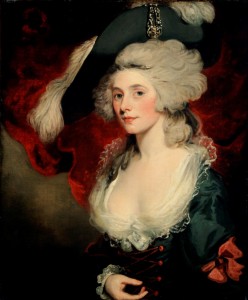
chl-mary-robinson-by-hoppner

Portrait of Mary Robinson, by John Hoppner c1782 (at CHL)

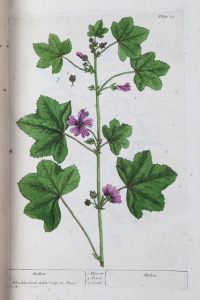
Also from the Chawton House Library – their table at the AGM was jam-packed with goodies – I bought their collection of 8 botanical cards from Elizabeth Blackwell’s A Curious Herbal (frameable!) – you can also “Adopt” this book as a way to support the Library!
blackwellcards-chl

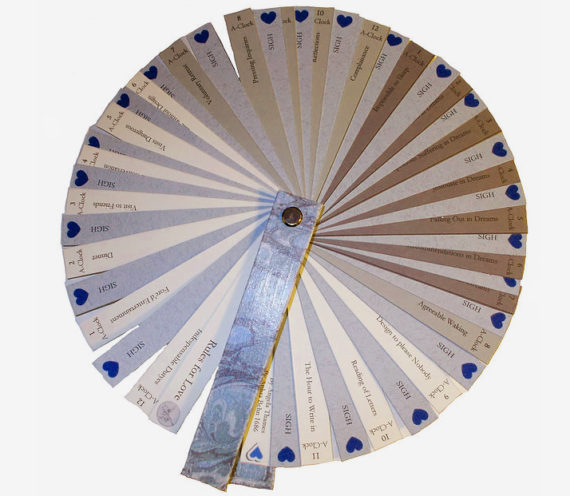
Also couldn’t resist this book-fan “The Rules for Love,” by book artist Angela Thames from Aphra Behn’s 1686 La Montre –  (you can read about Ms. Thames as artist-in-residence at CHL here).
thames-ruleslove-ai

[Image from: a-n The Artists Information ]
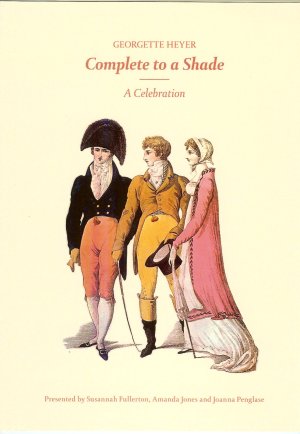
cover-heyer-jasa-db4. Susannah Fullerton, Amanda Jones, and Joanna Penglase, ed. Georgette Heyer: Complete to a Shade: A Celebration. JASA, 2016.

Exactly what the title tells us and another must-have – a collection of essays from various JASA folk who have long-been or are new to the joys of reading Georgette Heyer, based on their conference on Heyer in August 2016. Complete with lovely contemporary illustrations, this was just off the press in time for the AGM – $12 (I think) – you can contact JASA for information on how to purchase.

**************

Alas! I was very disappointed not to find a single book on London that I didn’t already have at either of the book stalls – but did find a few oldies worth perusing:

  1. Lt. Col. W. P. Drury. A Regency Rascal. London: Collins, 1971.

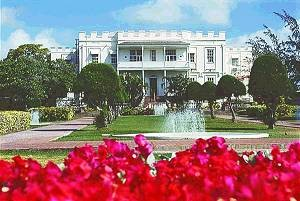
The tale of Jack Peregrine, a regency rascal to say the least, who arranges a marriage of convenience for himself to helpcover-regencyrascal-db him through a financial crisis, and then finds himself the heir to an estate in Barbados – all based on the true story of Sam Lord and his Castle (most recently a hotel in Barbados*) – who cannot resist a story of such a man (Heyer couldn’t)! First published in 1937 by Hutchinson, it gives a glimpse of Regency-era life in both London and the Colonies. Will see if it lives up to the hype… [*The property was run as an exquisite hotel for many years but unfortunately it was destroyed by fire in 2010 – it is currently being reconstructed and will open in 2018 as a Wyndham Grand Resort. The 450-room resort will feature 3 restaurants, meeting facilities and a luxury spa] – sign me up!
samlordscastle-barbados
Sam Lord’s Castle, Barbados, pre-fire
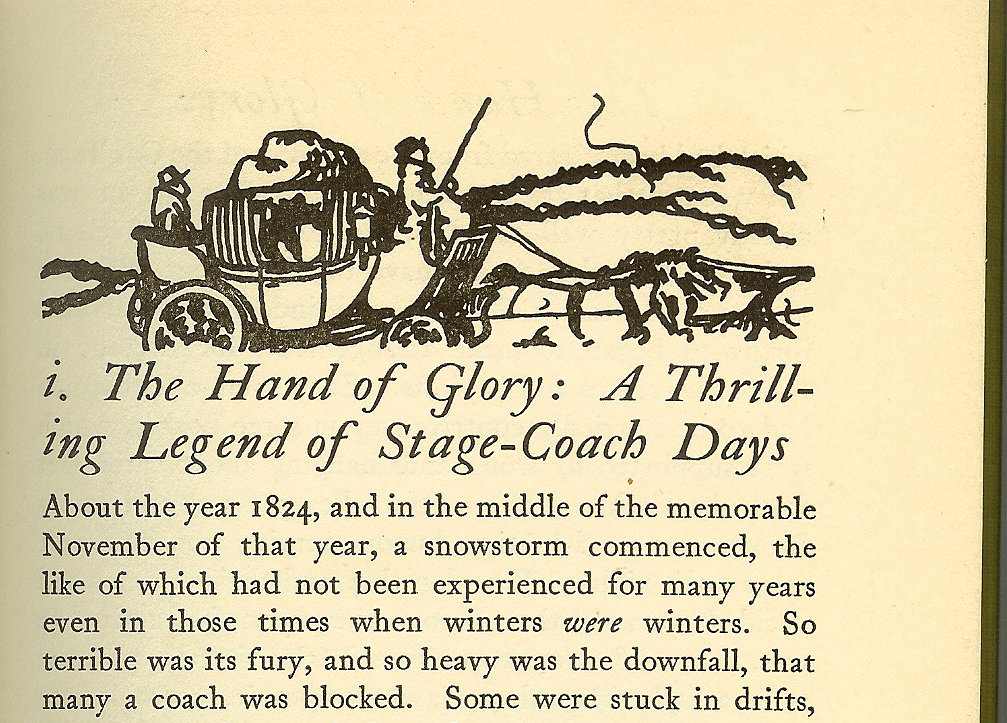
  1. J. Fairfax Blakeborough, ed. Legends of Highwaymen and Others. New York: Frederick Stokes, 1924.

Just because I am a sucker for carriages and highwaymen tales!
legends-page13-db

(now, doesn’t that peak your interest just a little?)

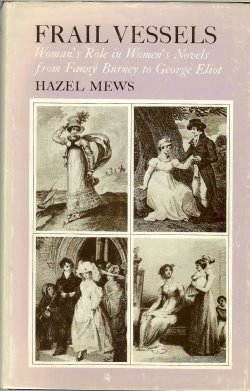
  1. Hazel Mews. Frail Vessels: Woman’s Role in Women’s Novels from Fanny Burney to George Eliot. U of London: Athlone Press, 1969.cover-frailvessels-dbWhy not? – adds to my collection on women writers – but it also had an inscription that I first thought read “Catherine Morland” and that cracked me up – heavy reading for Catherine! (it reads on close analysis “Catherine R. Harland”).

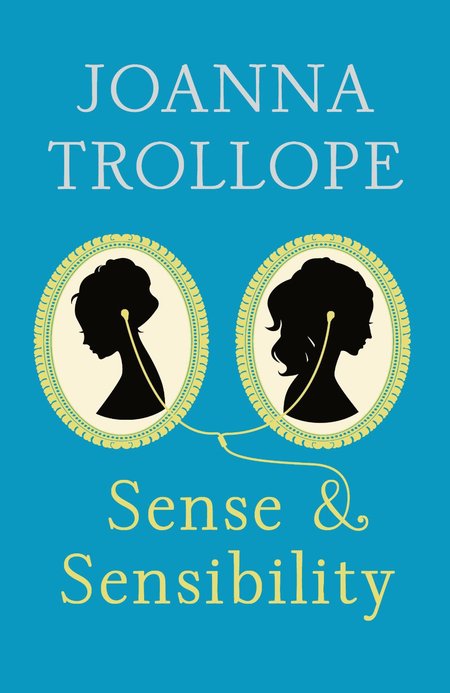
cover-ss-trollope-ab

8. Joanna Trollope. Sense and Sensibility. New York: HarperCollins, 2013.

Only because I haven’t read this first of the Austen Project retellings and my Vermont Jane Austen book group has scheduled an S&S re-read this year and thought we would try this to compare…(though I know we will likely be gravely disappointed…)


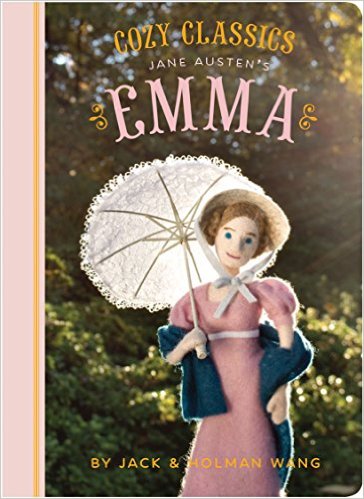
9.  Jack and Holman Wang. Jane Austen’s Emma [Cozy Classics]. Chronicle Books, 2013.

This to add to my other board books, and a generous gift from the author. He attended my talk on “Illustrating Emma” and I could not have been more embarrassed to have not included this cover in my talk! (caveat: I did not include any of the covers of the many recent renditions due to lack of time – I have added them to the talk for those times where I can speak longer than the time-constrained AGM) – so with hearty apologies to Mr. Wang – this is of course a simply delightful addition to anyone’s Austen collection!
cover-emma-cozyclassics


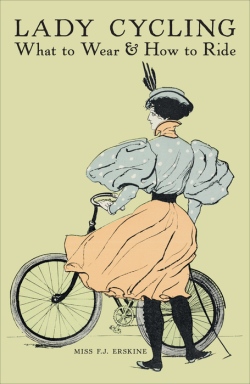
  1. cover-ladycyclingErskine, Miss F. J. Lady Cycling: What to Wear and How to Ride. The British Library, 2014. Originally published by Walter Scott in 1897.
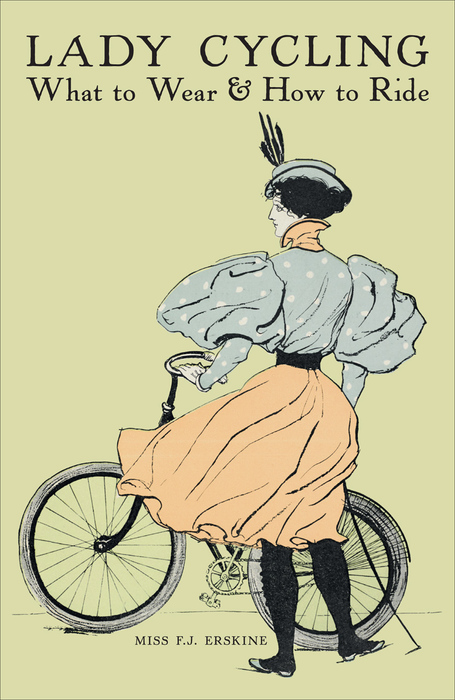
I have a friend who recently gave a talk on women and bicycles and my daughter is an avid cyclist – I bought this at The Folger Library shop (there seeing the simply amazing Will & Jane exhibit) as a gift but am now loth to give it away! Women and bicycles have an interesting joint history – here is a worthy account of the whole phenomenon here: http://www.annielondonderry.com/womenWheels.html

*******

So, as usual, I have my reading cut out for me – I would love to hear what YOU bought at the AGM this year

*and here is my new costume – I am with my Good Buddy Marcia, who is wearing a Regency dress for the FIRST TIME!! (we bought our fabulous fashions at Matti’s Millinery & Costumes (visit their site here and have fun shopping!)
agm-marcia-deb-db

C2016 Jane Austen in Vermont
Austen Literary History & Criticism · Decorative Arts · Fashion & Costume · Georgian Period · Great Britain - History · Jane Austen · Jane Austen Circle · Regency England · Social Life & Customs

Jane Austen & The Arts Conference ~ March 23-25, 2017 at SUNY-Plattsburgh

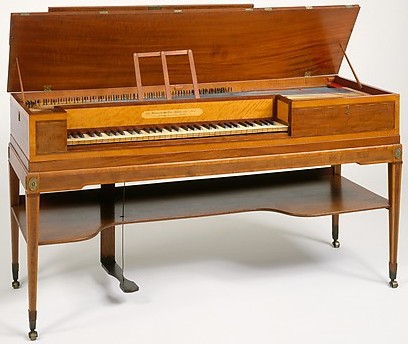
John Broadwood & Sons square piano (1797), NY-MMA - 1982.76
John Broadwood & Sons square piano (1797), NY-MMA

Mark your calendars! The “Jane Austen & The Arts” Conference, scheduled for March 23-25, 2017 at SUNY-Plattsburgh has just announced its speaker line-up – a terrific group! – here they are alphabetically: (and note that our very own Hope Greenberg will be sharing her thoughts on Fashion!)

  • Elaine Bander (Dawson College, CA), “Austen’s ‘Artless’ Heroines: Catherine and Fanny”
  • Barbara Benedict (Trinity College, CT), “‘What Oft was Thought’: Wit, Conversation, Poetry and Pope in Jane Austen’s Works”
  • Natasha Duquette (Tyndale University College, CA), “‘A Very Pretty Amber Cross’: Material Sources of Austenian Aesthetics”
  • Tim Erwin (UNLV), “The Comic Visions of Emma Woodhouse”
  • Marilyn Francus (West Virginia University), “Jane Austen, Marginalia, and Book Culture”
  • Marcie Frank (Cornell), “Theater and Narrative Form in Austen’s Mansfield Park”
  • Hope Greenberg (University of Vermont), “Jane Austen and the Art of Fashion”
  • Jocelyn Harris (University of Otago, NZ), “What Jane Saw–in Henrietta Street”
  • John Havard (Binghamton University), “Jane Austen and Woody Allen”
  • Jacqueline George (SUNY New Paltz), “Motion Sickness: The Fate of Reading in ‘Modern’ Sanditon”
  • Nancy E. Johnson (SUNY New Paltz), “Jane Austen and the Art of Law”
  • John Lefell (SUNY Cortland), “The Art of Speculation in Austen’s Sanditon”
  • Ellen Moody (George Mason University), “Ekphrastic Patterns in Jane Austen”
  • Tonay J. Moutray (Russell Sage Colleges, NY), “Religious Views: Austen’s Picturesque and Sublime Abbeys”
  • Douglas Murray (Belmont University, TN), “Jane Austen Goes to the Opera”
  • Cheryl Nixon (University of Massachusetts), “Jane Austen and Family Law”
  • John O’Neill (Hamilton College), “Adaptation, Appropriation, and Intertextuality in Whit Stillman’s Love and Friendship”
  • Deborah C. Payne (American University), “Jane Austen and the Theatre? Perhaps Not So Much”
  • Peter Sabor (McGill University), Keynote Address: “Portrait Miniatures and Misrepresentation in Austen’s Novels”
  • Juliette Wells (Goucher College, MD), “‘A Likeness Pleases Everyone’: Portraiture, Ekphrasis, and the Accomplished Woman in Emma”
  • Cheryl Wilson (University of Baltimore), “Jane Austen and Dance”

More info here: https://janeaustenandthearts.com/

c2016 Jane Austen in Vermont
Austen Literary History & Criticism · Georgian Period · Jane Austen · Jane Austen Circle · Jane Austen Societies · JASNA · JASNA-Vermont events · Literature · Regency England · Schedule of Events

JASNA~Vermont Meeting ~ September 18, 2016 ~ Jane Austen & Mary Wollstonecraft

Photos can be viewed on the event facebook page: https://www.facebook.com/events/2094244057466958/permalink/2116252491932781/

Thank you Nancy for a delightful talk!

~
You are Cordially Invited to JASNA-Vermont’s September Meeting
at the Burlington Book Festival 

“Planting the Seeds for the Austen Oeuvre:
Mary Wollstonecraft and the Rights of Woman.”
with
Nancy Means Wright*

OLYMPUS DIGITAL CAMERA

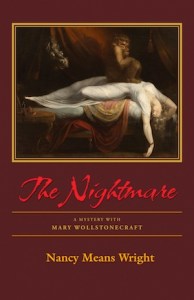
In an illustrated talk, Wright will describe 18th-century writer Mary Wollstonecraft’s traumatic and unconventional life in an era when women were victims of primogeniture and considered incapable of reason. She will discuss Mary’s groundbreaking Vindication of the Rights of Woman, and her Unitarian publisher’s circle of Dissidents; her years in revolutionary Paris when she lost her head to a feckless American captain – and her voyage to Scandinavia as a lone woman in search of a missing “silver ship.” She will also consider the ongoing question: Was Jane Austen influenced by Mary Wollstonecraft?

Sunday, September 18, 2016 2 – 4 pm
Morgan Room, Aiken Hall**
83 Summit Street
Champlain College
Burlington VT

********
Sponsored by JASNA-Vermont and Bygone Books

~ Free & open to the public ~
~ Light refreshments served
 ~ 

For more information:   JASNAVTregion [at] gmail.com 
Please visit our blog at: http://JaneAustenInVermont.wordpress.com
Burlington Book Festival website: http://burlingtonbookfestival.com/ 

************************************  

*Vermont author Nancy Means Wright has published fiction with St Martin’s Press, Dutton, Perseverance Press, and elsewhere, including a trilogy of historical mysteries featuring 18th-century Mary Wollstonecraft. Her most recent works are Queens Never Make Bargains, a novel, and The Shady Sisters, a collection of poems. Short stories and poems appear in American Literary Review, Green Mountains Review, Carolina Quarterly, and others. Her children’s books have received an Agatha Award and a grant from the Society of Children’s Book Writers. A former teacher and Bread Loaf Scholar, Nancy lives in Middlebury, Vermont, with her spouse and two Maine Coon cats. Her books will be available for purchase and signing.

**Aiken Hall is located at 83 Summit St – #36 on the map here: https://www.champlain.edu/Documents/Admissions/Undergraduate%20Admissions/Campus-Map.pdf  Parking is on the street or in any College designated parking during the event.
wollstonecraft_vindication-tp-britannica
[Britannica.com]

************
Hope you can join us!

c2016, Jane Austen in Vermont
Austen Literary History & Criticism · Book Giveaway · Georgian England · Great Britain - History · Jane Austen · Jane Austen Popular Culture · Literature · Museum Exhibitions · Regency England · Social Life & Customs

“Will & Jane” Exhibit at the Folger ~ Interview with Co-Curator Janine Barchas ~ Brochure Giveaway!

UPDATE #2: watch “Will & Jane: The Movie” – 6 minutes on youtube: https://www.youtube.com/watch?v=3pevAsxvhts

UPDATE #1: new images from the exhibition have been added!

W&J-FolgerProgramCover
Folger Exhibit Brochure

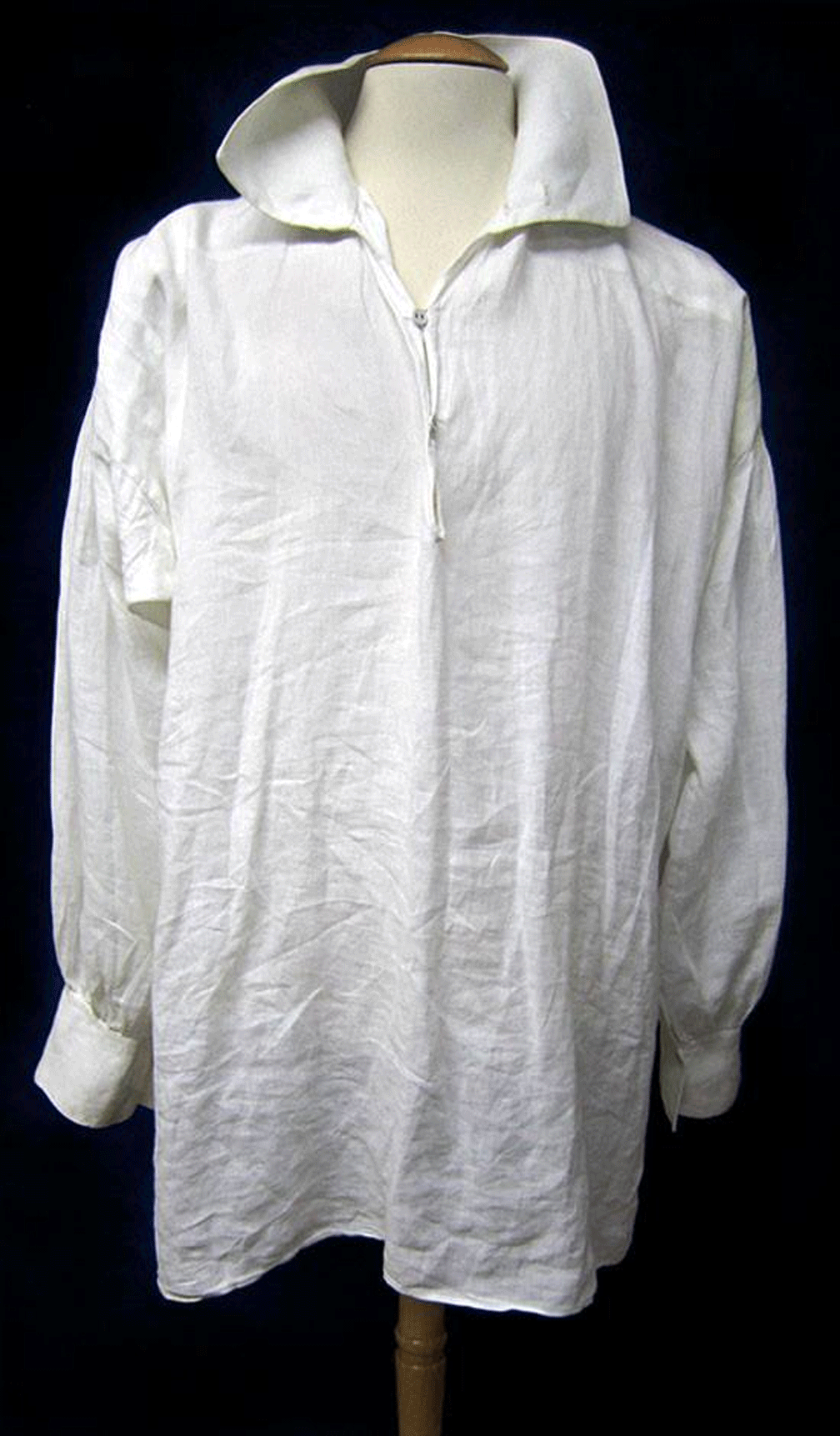
The Will & Jane: Shakespeare, Austen, and the Cult of Celebrity exhibit at the Folger Shakespeare Library is garnering a good deal of press (as it should!). Apparently there are record crowds wanting to get a glimpse of their two favorite Literary Heroes and how they have shown up in popular culture for the past 200 years – and “The Shirt” is no small part of this (a.k.a. Colin Firth as Mr. Darcy) – no, no, don’t get your hopes up, Mr. Firth is not part of the Exhibit (though he would be most welcome…), but rather the shirt worn for the endlessly-youtubed scene of Darcy emerging from a pool of standing water at Pemberley is on display in a locked glass case where it can be on view but protected from the expected mass hysteria of, well, the masses… Kissing a glass case is not quite the same as stroking a cotton shirt, albeit hanging rather listlessly from a plastic form… but it is still a must see if you can get there! Grown women have been known to faint away, despite the message from a young Jane to “run mad as often as you chuse; but do not faint…” I do hope the Folger is up to the task of a gallery full of shirt-mad persons… (and dare I add that though I am NOT one of the shirt-hysteric Janeites who think this scene is the best in all of the nearly 6 hour film, I do confess a strong interest in getting a glimpse of the actual shirt worn by Colin Firth…)

If you are able to attend the JASNA AGM this year, to be held in Washington DC, October 21-23  (but do allow extra days for all there is to see and do) – you will get a chance to go to the Folger and see what all the fuss is about – the two curators (Janine Barchas of the University of Texas at Austin, and Kristina Straub of Carnegie Mellon University) will be on hand to tell us all about it. If you are not at the AGM, the exhibit runs from August 6 – November 6, 2016 and admission is free. In the sad event you shall miss it entirely, there are also various articles to read – see the links below.

***************

will-jane-porcelain-figures2-jb[1]
18th-century Staffordshire porcelain of William Shakespeare (Folger) /
and 20th-century figurine of Jane Austen (Joan Doyle)

Today however, I welcome Janine Barchas, who most graciously answered a few of my questions about how the idea of this Will & Jane grouping came about… if you have any questions, please comment below and she will get back to you. As an incentive, and especially for those of you unable to make it to the Folger, Janine has provided us a copy of the 18-page exhibit brochure – another piece of Jane Austen celebrity “stuff” we all like to collect! (see below for details)

***************

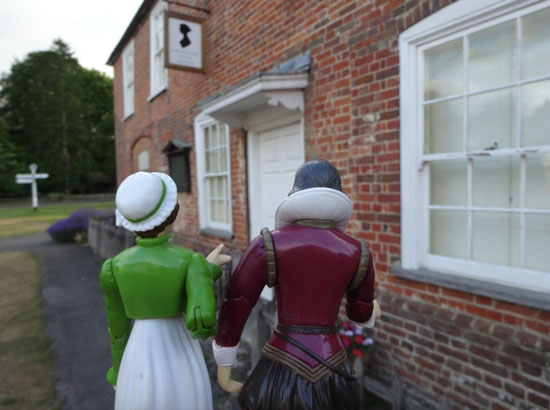
Will-Jane-02
Will and Jane at Chawton Cottage

JAIV: Tell us how this exhibit came about?

JB: This was a case of classic academic one-upmanship. In 2012, Michael Witmore, the Director of the Folger Shakespeare Library, came to the University of Texas at Austin for a conference about the fate of books in a digital world.  Over a meal, I joked that Jane Austen was “giving Shakespeare a run for his money” and asked what he was planning to do about it.  As Mike and I continued to spar about the differences and similarities between the fan cultures around these two famous authors, an idea was born: “Will & Jane.”

Will-Jane-busts-JB

Busts of William Shakespeare (Folger) and Jane Austen (Joan Doyle)

JAIV: How did you and Kristina Straub come to work on this exhibit together?

JB: Our partnership was the result of solid academic matchmaking! Mike Witmore was her former colleague at Carnegie Mellon University, so Kristina’s name came up right away in the context of her deep knowledge of Shakespeare’s reception in the 18th century.  She and I had never met before our work on “Will & Jane” even though we are both 18th-century scholars and know many of the same people in what is a smallish field.  This exhibition has been a full three years in the making, during which time we have grown very close.  I look at our publications and label text and cannot tell you what sentence began as mine and which was first drafted by Kristina.  Given that academics are known for their social awkwardnesses and a tendency to work best when alone, our partnership on “Will & Jane” has been an extraordinary intellectual experience – even outside of the unique content of the show.

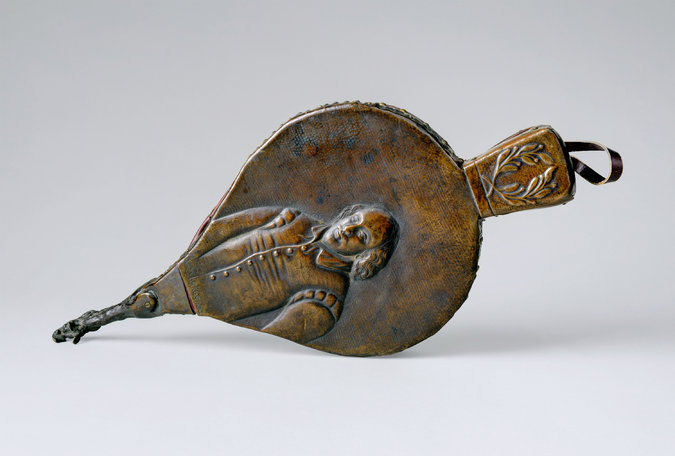
Shakespeare bellows - Folger
Shakespeare bellows – Folger

JAIV: You mostly talk and write about Jane Austen, but also the book itself as part of the material culture of the eighteenth and early nineteenth centuries. What was the biggest challenge in taking on this exhibit that largely deals with the artifacts of celebrity created and collected over the past 200 years?

will-jane-porcelain-figures-jb[2]Royal Worcester porcelain figurine of “Emma Woodhouse” (1998) from the collection of Joan Doyle / and a colored pottery tableau entitled “Othello Relates his Story (ca. 1880) from the collections of the Folger
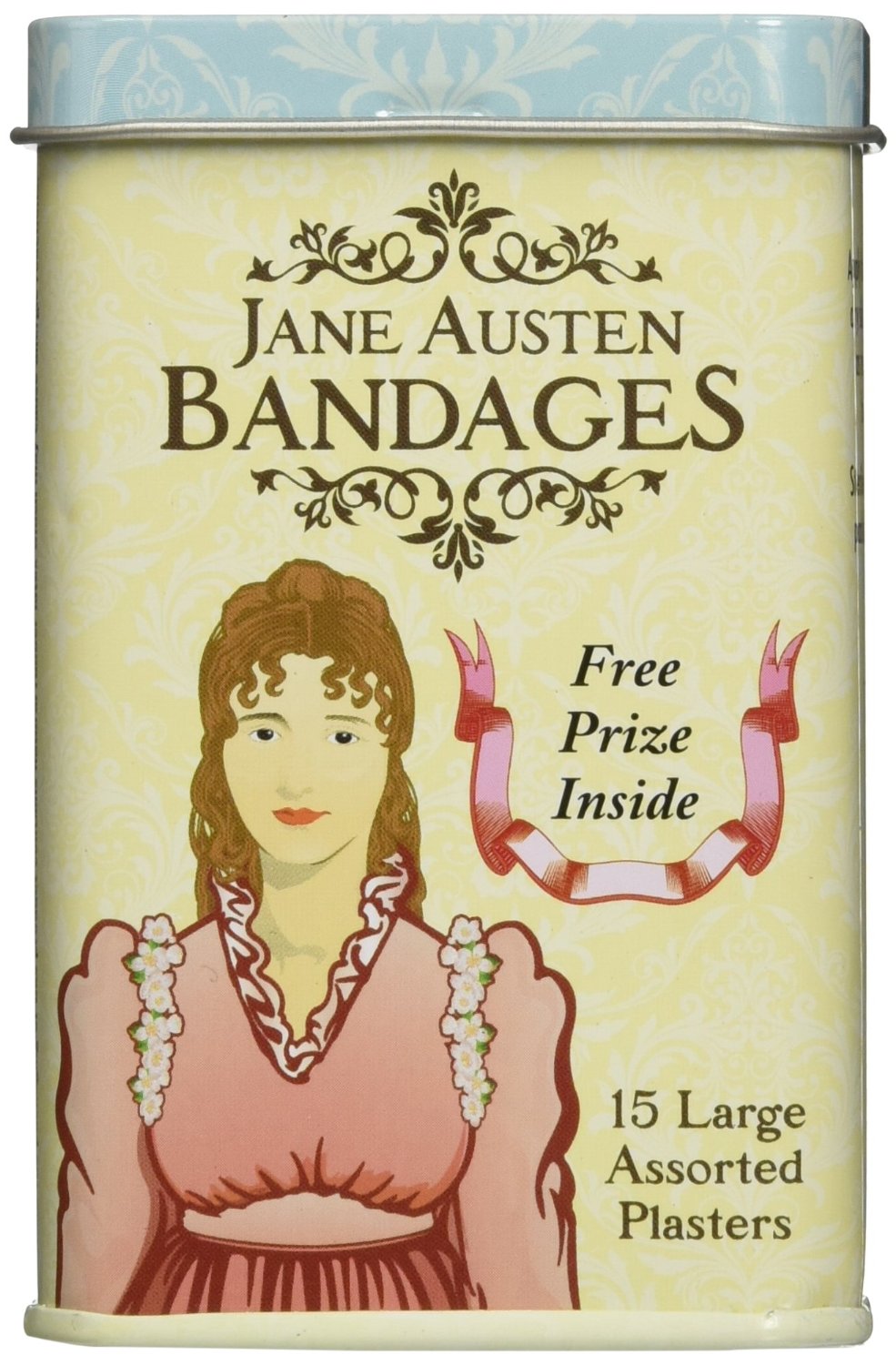
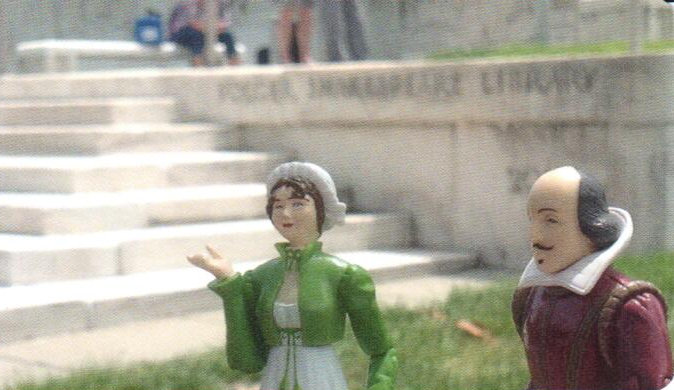
JB: The dominance of non-book artifacts in this exhibition (ceramics, paintings, odd assortments of relics, tchotchkes, and souvenirs) may seem at odds with a serious library of rare books such as the Folger. However, although both Shakespeare and Austen are fundamentally admired for their great literary works, the history of their afterlives and the nature of their modern celebrity is not just about steady streams of new editions but about the material objects that ordinary fans crave and collect.  This exhibition took us out of the usual library stacks of books and into art vaults and collections of so-called “realia.”  Part of the challenge, then, of putting this exhibition together was for two academics who were used to talking about the language of plays and novels to learn how to think and talk about non-book and JABandages-Amazonwordless objects and the stories they can tell. Mixing high and low culture in this exhibition (books with bobble-heads, so to speak) has been both a joy and a challenge.  In practical terms, today’s objects that celebrate Jane Austen at her 200-year mark lack the historical patina of those Shakespeare “relics” and souvenirs that have been carefully preserved for two centuries.  And yet we wanted these authors to stand together as potential equals.  This meant that every juxtaposition of old and new objects, every comparison between the afterlives of Will and Jane, had to show similar impulses across centuries of fandom – in spite of any obvious differences between current market values of the materials shown.

JAIV: What most surprised you in your findings?

JB: We initially thought that in order to fill 20 large display cases, we might have to stretch the comparison a bit here and there. But we were amazed by the tight parallels between, for example, the public spectacles that celebrated Shakespeare around his 200 mark (e.g. a museum dedicated to the Bard and a Jubilee) and today’s BBC bonnet dramas that, in essence, do some of that same work to promote Jane Austen.  Also, we were genuinely surprised by the manner in which Henry and Emily Folger resembled, in their dedication to all things Shakespeare, the collecting impulses of Alberta and Henry Burke, the couple who amassed the world’s most significant Jane Austen collection (now split between the Morgan Library and Goucher College).  One thread across the exhibition is how these two American couples, collecting decades apart and focused on two very different writers, pursued their purchases in the same way.

JAIV: What do you hope visitors will take away from this exhibit?

W&JAction-Folgercard
Will and Jane at the Folger

JB: A sense of fun. We hope the combination of whimsy and scholarship is infectious and will help folks to see that even pop culture benefits from a larger historical framework.

JAIV: What has been the response so far?

A chalice made from the mulberry tree Shakespeare planted (Folger) /
a lock of Jane Austen’s hair (Jane Austen’s House Museum)

JB: A lively and lavishly illustrated review across two pages of the NYT weekend section on opening day surely helped to boost visitor numbers as well as raise our curatorial spirits.  The public seems genuinely curious about a show that pairs these equally famous but very different authors.  So far, we’ve had some record numbers in terms of daily visitors and received enthusiastic feedback from Folger docents.  The docents are the well-informed volunteers who lead daily group tours and have their finger on the pulse of true public reaction.  When they remain enthusiastic, you know a show is doing well.

JAIV: Who besides Shakespeare and Jane Austen has had such an impact on our celebrity-obsessed culture?

JB: Modern movie stars (and before them the starry thespians of the 18th-century stage) have glammed up both Will and Jane.  Our exhibition features a number of film actors who have their feet in both Shakespeare and Austen camps and whose own celebrity is in a symbiotic relationship with these authors.  From Laurence Olivier (photo stills and movie clips) to Emma Thompson (she loaned us the original typescript of her Sense and Sensibility screenplay), objects about and from movie stars adds a bit of Hollywood sparkle throughout the exhibition.

DarcyShirt-BBC
The Shirt – Colin Firth as Mr. Darcy (BBC)

JAIV: What is your next project???

JB: Hopefully another project with Kristina. It will indeed also be very hard to go back to a steady diet of “just books” after this.   I suspect that odd bits of material culture will cling to all my research from now on.  I see both Will and Jane differently now.  They are each bigger than their written works alone.

Will-Jane-album-JB

This collector’s album for cigarette cards (London: Carreras Limited, ca. 1935) is one of many items in the exhibition showing Will and Jane being used to advertise non-book products

******************

Thank you Janine! – very much looking forward to seeing you and Kristina at the Folger in October!

If you would like to comment or ask Janine a question, please do so in the reply box below. Deadline will be Wednesday August 31, 2016 at 11:59pm – winner will be announced on Thursday Sept 1, 2016. Domestic only, sorry to say (our postal rates have soared).

barchas-janineJanine Barchas is Professor of English at the University of Texas at Austin.  She is the author of  Matters of Fact in Jane Austen: History, Location, and Celebrity (Johns Hopkins University Press, August 2012).  Her  first book, Graphic Design, Print Culture, and the Eighteenth-Century Novel (Cambridge UP, 2003), won the SHARP book prize for best work in the field of book history.  You can visit (and spend hours browsing!) her online digital project What Jane Saw (www.whatjanesaw.org) which includes the gallery of the British Institution that Jane Austen visited on May 24, 1813 and the “Shakespeare Gallery of 1796.” Barchas, along with colleague Kristina Straub, is currently curating an exhibition at the Folger on Will & Jane: Shakespeare, Austen, and the Cult of Celebrity.

Further reading:

“Will & Jane: Shakespeare, Austen, and the Cult of Celebrity” runs August 6 through Nov. 6, 2016 at the Folger Shakespeare Library, 201 East Capitol Street S.E., Washington; 202-544-7077.
DarcyShirt-Folger
“The Shirt” at the Folger
c2016, Jane Austen in Vermont
Decorative Arts · Georgian England · Great Britain - History · Jane Austen · Jane Austen Circle · Jane Austen Genealogy · Regency England · Social Life & Customs

Heraldry Windows at Chawton House Library ~ Part III: The Great Hall

Dear Readers: Today I am posting Part III on the Heraldic windows at Chawton House Library, this post giving details on the shields in the Great Hall, as well as two more family pedigrees, and a very short course on the meaning of the various colors in the heraldic crests.

And again I thank Edward Hepper, one of the Chawton House Library’s invaluable volunteers, for sharing with us his expertise on heraldry! Please comment if you have any questions or anything to add to any of these three posts.

Chawton-Library-CH-CHL

Chawton House Library and Church
[Image: DH and DigLibArts]

Part III: The Great Hall

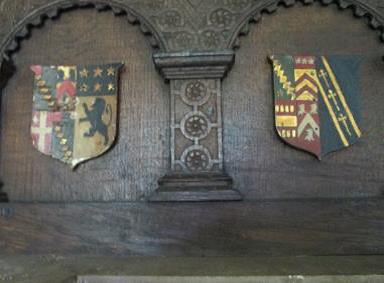
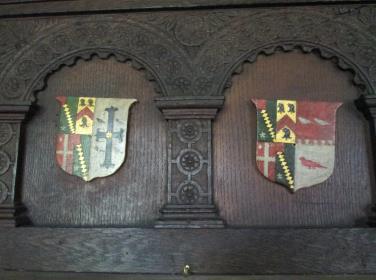
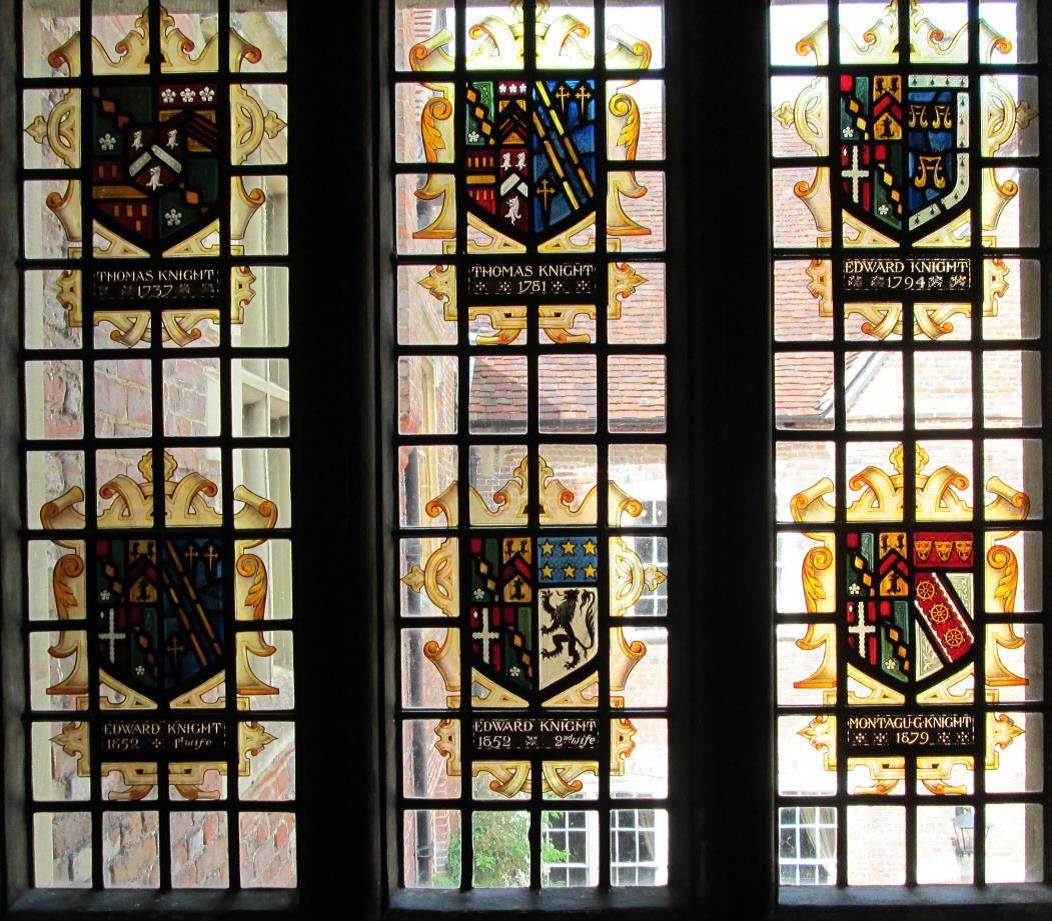
Various painted shields show the arms of different branches of the family since the 17th century. Some of those above the fireplace include Knights and their wives from the early 20th century. They were probably painted for Montagu Knight in the years just before the 1st World War. [You can see portraits of these named in the previous two posts.]

CHL - Great Hall 1-EKnight-TKnight

Edward Knight (jr) & Adela Portal: Thomas Knight (jr) & Catharine Knatchbull

*******

CHL - Great Hall 2-CKnight-LKnight

Charles E Knight & Emma Patrickson (?): Lionel C E Knight & Dorothy Deedes

*******

CHL -Great Hall 3-JMonk-TKnight

Jane Monk; Thomas (Brodnax) Knight (sr)

***********

Pedigree: Knight Family

Pedigree 4a, Knights 19th to 20th centuries 1309 001

The Chawton Manor Succession:

Chawton Succn_Austen adoption


The Meaning of the colors: a brief summary, and please note that there is a wide variation in assigning a meaning to a color, with many experts disagreeing…

CHL-GreatStaircase-1-Landing

Great Staircase Landing

  • Blue: the use of blue in heraldry means truth and loyalty
  • Green: green symbolizes hope joy and loyalty in love
  • White:   White backgrounds usually refer to innocence and purity
  • Red: red or gules (a tincture with the color red) represents magnanimity and fortitude
  • Yellow/Orange: The orange represents, worthy ambition

CHL-Great Gallery-MonkKnight

Great Gallery

************

The Austens had their own crest:

Austen coat of arms

[From Ron Dunning: JA’s Family Genealogy]

************* 

If you have an interest in heraldry, you might like to visit some of these various sites: 

Here’s my very own“caro sposo’s”: (apologies for fuzziness – it is scanned under glass, but you get the idea…)

Starr-Crest

**************

c2016 Jane Austen in Vermont  
Austen Literary History & Criticism · Decorative Arts · Georgian England · Georgian Period · Great Britain - History · Jane Austen · Regency England

Musing on a Passage in Jane Austen’s “Persuasion” ~ Guest Post by Heather Brothers

Gentle Readers: I welcome today one of our JASNA-Vermont members, Heather Brothers, as she muses on a certain passage in “Persuasion” that she “discovered” during a recent re-listen. We’ve had a bit of an email discussion over this, so now want to it share with you and solicit your thoughts too.

Persuasion-Naxos-Stevenson

The Musgrove’s Parlour

Several years ago I came upon the audio version of Persuasion as read by Juliet Stevenson. The manner of her reading infused more meaning into Persuasion than I ever picked up reading it myself. And through listening to this several times, I have noticed some fascinating passages that I would otherwise have overlooked. Here is one and I am happy to share others:

Anne-MrsMusgrove-Kellynch

Anne Elliot and Mrs Musgrove: http://www.kellynch.com/Anne.php

Anne has arrived at Uppercross and is going to visit the Musgroves with Mary…

To the Great House accordingly they went, to sit the full half hour in the old-fashioned square parlour, with a small carpet and shining floor, to which the present daughters of the house were gradually giving the proper air of confusion by a grand piano forte and a harp, flower-stands and little tables placed in every direction. Oh! Could the originals of the portraits against the wainscot, could the gentleman in brown velvet and the ladies in blue satin have seen what was going on, have been conscious of such an overthrow of all order and neatness! The portraits themselves seemed to be staring in astonishment.

[Persuasion, Vol. I, Ch. 5]

******************

I have come to understand that Persuasion is written on the cusp of a new time period. Just before this passage above, Mr. and Mrs. Musgrove are described as representing the old ways and the two Miss Musgroves as the new ways. I get the impression that Jane Austen is using even the parlor in the Musgrove house as showing this change – that the minutia of interior design itself represents a change from the old ways to the new ways.

What was happening in interior design at this time? What architectural changes were taking place? I understand from fashion that ionic columns and flowing lines were the mode, but simplicity doesn’t seem to be the case with the Musgrove girls’ additions to the parlor. When I read this piece to my husband, who is an architect, he immediately got the impression that the girls were over-decorating; that they were building up the style to improve and impress.

This leads me to think that the astonishing overthrow of all order and neatness is both referring to the style of the room but also to the girls themselves. What would the portraits have thought of Henrietta and Louisa Musgrove in their endless pursuit of happiness, fun and excitement?

Seen in an earnest light, Henrietta and Louisa’s behavior is seriously flawed. Henrietta almost loses a good, stable life with a man she really likes and Louisa almost kills herself through taking their love-struck silliness to too high of a level. Did it all start in the parlor? Would the piano forte have been sufficient, but the additional harp, flower-stands and little tables represent the overthrow of moderation? Is Jane Austen’s commentary on the parlor a harbinger of what’s to come for these girls or for society?

If anyone can recommend books on this subject – please let me know!

********************

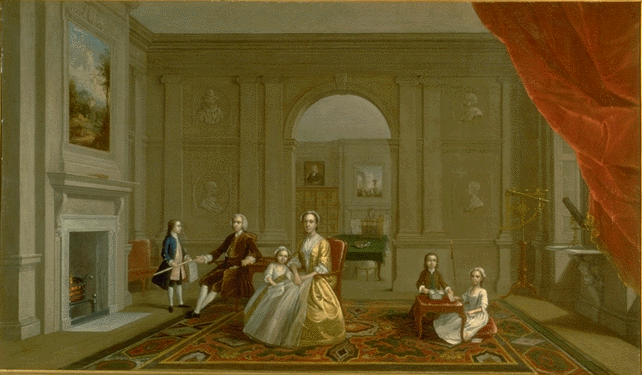
This portrait may serve as an example of what Jane Austen is referring to, hanging on the Musgrove parlor walls “against the wainscot,” where all is “order and neatness.”
devis2alg

1742-1743 the John Bacon family, by Arthur Devis
(Yale Center for British Art – New Haven, CT)
[Source: http://www.gogmsite.net/reign-of-louis-xv/1742-1743-john-bacon-family.html]

Austen packs into this one rather obscure sentence much about what is going on in the Musgrove household and the wider world! Thoughts anyone?

cover-IntroGent-BrothersHeather Brothers is one of our “Team of Janeites” in Vermont who helps with Hospitality and Boutique sales at our quarterly meetings. She is a young mother of two adorable girls, and also the author of a Regency-era novel, The Introduction of a Gentleman (2013) – it is a terrific read – you can find it on Amazon (and interesting to note that the cover depicts a young lady sitting at a pianoforte!)

Heather has also initiated at our meetings “The Awesome Austen Moment” – where we ask someone to read aloud a short passage from any of the Works, just to remind us all exactly what Austen could convey in any given sentence, this Persuasion piece a perfect example.

You can read more about Heather and her book here:

Books · Collecting Jane Austen · Georgian England · Georgian Period · Great Britain - History · Jane Austen · Jane Austen Circle · London · Regency England · Social Life & Customs

Guest Post: Into the Shadowy World of “Regency Spies” ~ Sue Wilkes on The Cato Street Controversy

Join us today for a guest post by Sue Wilkes, as she shares one of her spy tales from her new book Regency Spies: Secret Histories of Britain’s Rebels & Revolutionaries (more information on the book below).

reg spies highrescover1

The Cato Street Conspiracy, 1820

The year 1820 began with grave news – the death of George III on 29 January, after years of illness. The King was buried a week later with great pomp and ceremony on 16 February. But his son George IV’s reign did not get off to a good start. A week later, news broke to an astounded British public of the arrest of ‘a gang of diabolical ruffians’ at Cato Street, in London. The conspirators, led by the ‘notorious’ Arthur Thistlewood, planned to kill members of the Cabinet (government ministers) while they dined at Earl Harrowby’s house in Mansfield Street (Gentleman’s Magazine, February 1820).

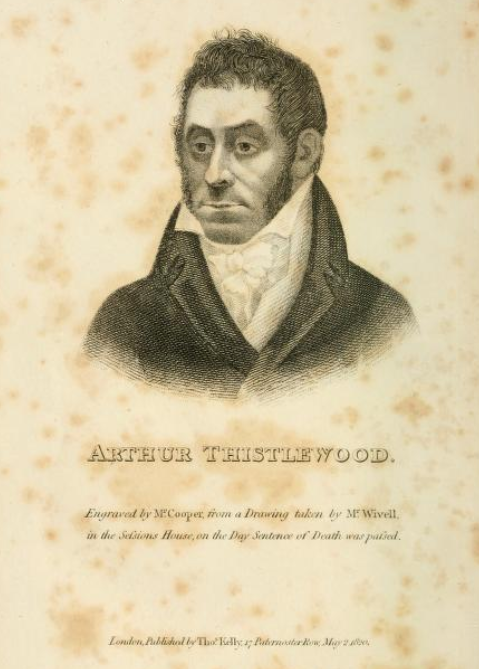
Arthur Thistlewood

This was no chance discovery, however. Thistlewood and his gang were well known to the authorities – the government’s spies had kept them under surveillance for years. Arthur Thistlewood, a brooding, dangerous man known to be deadly with a sword, led a group of revolutionaries called the ‘Spencean Philanthropists’.

The Spenceans were followers of the late Thomas Spence, who advocated the common ownership of all land – a truly anarchic idea in an unequal society rooted in land, wealth and property. Thistlewood first came to prominence in the Spa Fields riot of December 1816 in London. The riot was thought to be a ‘trial run’ by the Spenceans to see if they could get enough popular support to attack the Tower of London, Bank of England, and seize the city. Thistlewood and his friends were arrested and tried for treason the following year, but acquitted as most of the evidence against them was based on unreliable spy evidence.

After his release from prison, Thistlewood and his followers were constantly watched. In 1817 a spy called Shegoe reported, ‘They entertain the plan of assassination, and Lords Castlereagh, Sidmouth, Liverpool and Ellenborough have been marked as objects of their pursuit’. Some conspirators guessed that Shegoe was a spy, however, and his usefulness declined.

A new spy, George Edwards (code-name ‘W—r’ in the surveillance reports) infiltrated the gang and actively encouraged their plans. Edwards also recruited more conspirators: one of the people he ‘groomed’ was John Thomas Brunt, a shoe-maker. Another was Richard Tidd, who came from Thistlewood’s native Lincolnshire, and met Edwards through Brunt. Edwards’ actions and words were so ludicrously violent that several men he approached sent him packing, convinced that he was trying to entrap them.

Early in 1820, Edwards brought Thistlewood the news he had been waiting for: a Cabinet dinner was planned at Lord Harrowby’s house. Thistlewood and his gang rented a loft in Cato Street. They arranged to meet on Tuesday 22 February, bringing as many weapons as they could lay their hands on. But thanks to Edwards, the time and place for the planned assassination were already known to the police and Home Office. Everything was now set to nip the conspiracy in the bud.

Cato St execution - Newgate

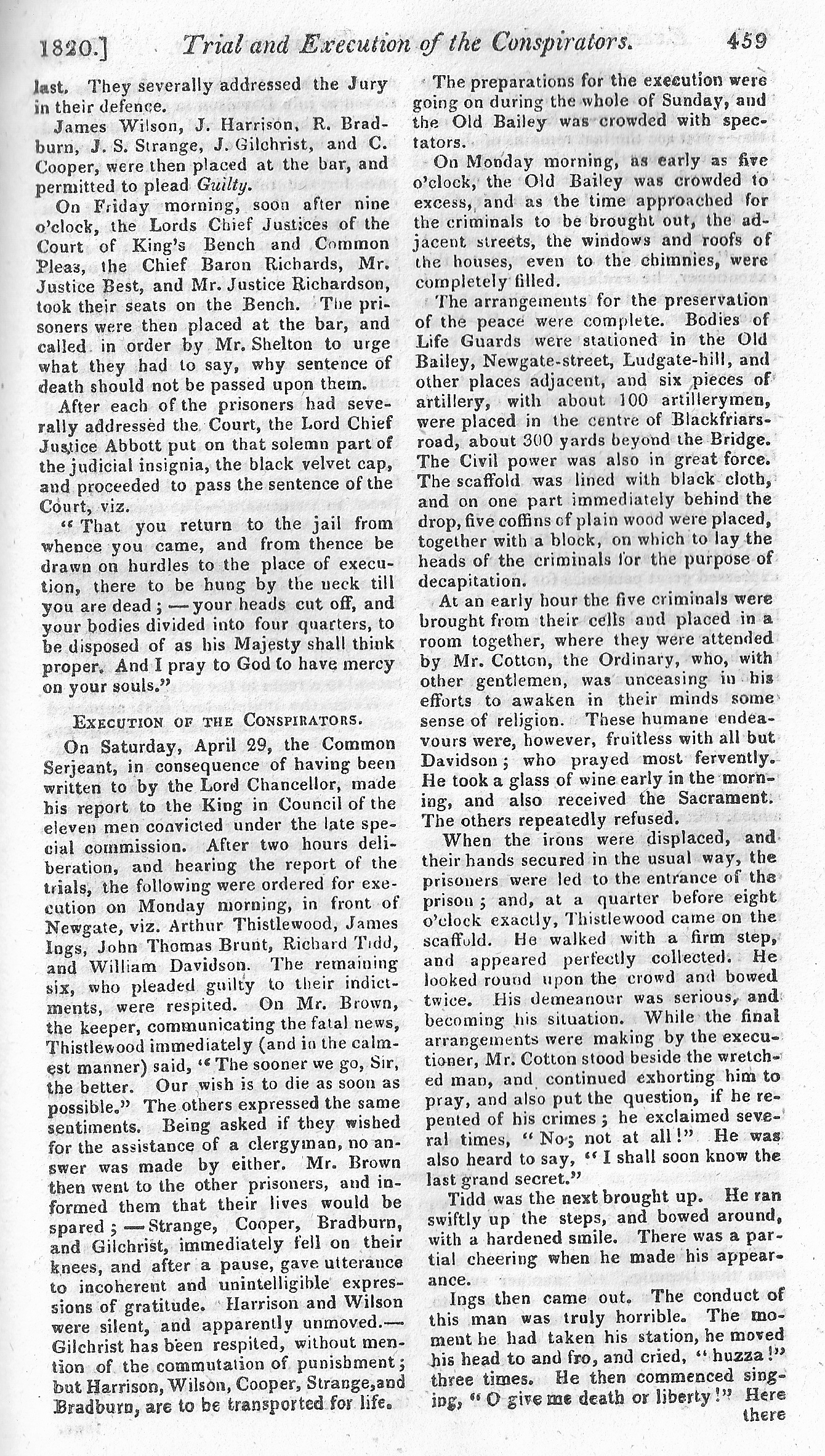
On Monday 1 May 1820, Arthur Thistlewood, James Ings, John Thomas Brunt, Richard Tidd and William Davidson were executed guilty for high treason at Newgate. But was it really Thistlewood’s idea to kill the Cabinet – or was it the spy George Edwards’s plan, as Arthur claimed at his trial?

cato st gentmag may1820 exec1

An account of the death sentence passed by the judge, and the conspirators’ execution,
from the Gentleman’s Magazine, May 1820. (Author’s collection).

********************

About the book: [from the jacket]

reg spies highrescover1In her new book, Sue Wilkes reveals the shadowy world of Britain’s spies, rebels and secret societies from the late 1780s until 1820. Drawing on contemporary literature and official records, Wilkes unmasks the real conspirators and tells the tragic stories of the unwitting victims sent to the gallows.

In this ‘age of Revolutions’, when the French fought for liberty, Britain’s upper classes feared revolution was imminent. Thomas Paine’s incendiary Rights of Man called men to overthrow governments which did not safeguard their rights. Were Jacobins and Radical reformers in England and Scotland secretly plotting rebellion? Ireland, too, was a seething cauldron of unrest, its impoverished people oppressed by their Protestant masters.

Britain’s governing elite could not rely on the armed services – even Royal Navy crews mutinied over brutal conditions. To keep the nation safe, a ‘war chest’ of secret service money funded a network of spies to uncover potential rebels amongst the underprivileged masses. It had some famous successes: dashing Colonel Despard, friend of Lord Nelson, was executed for treason. Sometimes in the deadly game of cat-and-mouse between spies and their prey suspicion fell on the wrong men, like poets Wordsworth and Coleridge.

Even peaceful reformers risked arrest for sedition. Political meetings like Manchester’s ‘Peterloo’ were ruthlessly suppressed, and innocent blood spilt. Repression bred resentment – and a diabolical plot was born. The stakes were incredibly high: rebels suffered the horrors of a traitor’s death when found guilty. Some conspirators’ secrets died with them on the scaffold…

Sue Wilkes4About the author:

Sue Wilkes is the author of several works of social and family history: Regency Spies (Pen & Sword, 2016) and A Visitor’s Guide to Jane Austen’s England (Pen & Sword, 2014), Regency Cheshire (Robert Hale, 2011), The Children History Forgot (Robert Hale, 2010), Narrow Windows, Narrow Lives (Tempus, 2007), as well as guides for family historians on tracing ancestors in various UK counties and towns.

Read her blogs at:

Book info:

Publisher: Pen and Sword (February 19, 2016)
ISBN-10: 1783400617 / ISBN-13: 978-1783400614
Price: $39.95 / £19.99
Pen & Sword: http://www.pen-and-sword.co.uk/Regency-Spies-Hardback/p/11177
Amazon: http://www.amazon.com/Regency-Spies-Histories-Britains-Revolutionaries/dp/1783400617

Read another post by Sue here: Regency Explorer

*************

Thank you Sue for telling us about one your tales! This book is filled with such – I will be interviewing Sue in the coming weeks, so please return to learn more about this world of spies in Jane Austen’s time … my first question? Whatever would our dear Henry Tilney have to say about it all?!

NA-Brock-staircase-mollandsDear Miss Morland, consider the dreadful nature of the suspicions you have entertained. What have you been judging from? Remember the country and the age in which we live. Remember that we are English, that we are Christians. Consult your own understanding, your own sense of the probable, your own observation of what is passing around you. Does our education prepare us for such atrocities? Do our laws connive at them? Could they be perpetrated without being known, in a country like this, where social and literary intercourse is on such a footing, where every man is surrounded by a neighbourhood of voluntary spies, and where roads and newspapers lay everything open? Dearest Miss Morland, what ideas have you been admitting?”
[NA, Vol. II, Ch ix. Image: Mollands.net]

Image sources:

All four images from George Theodore Wilkinson, The Newgate Calendar Improved Vol. 5, (Thomas Kelly, 1836). Courtesy the Internet Archive, archive.org.

c2016, Jane Austen in Vermont
Author Interviews · Blog Tours · Book Giveaway · Book reviews · Books · Collecting Jane Austen · Great Britain - History · Jane Austen · Jane Austen Popular Culture · Regency England

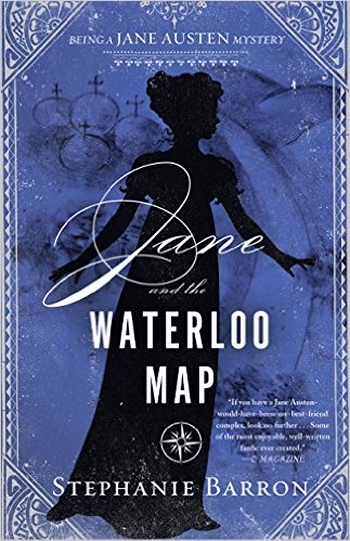
Jane Austen Sleuth! ~ Stephanie Barron’s “Jane and the Waterloo Map” ~ Excerpt & Book Giveaway

JANE AND WATERLOO - Blog Tour Horizontal

Amateur sleuth Jane Austen returns in Jane and the Waterloo Map,
the thirteenth novel in Stephanie Barron’s delightful Regency-era mystery series.

Gentle Readers: Today Jane Austen in Vermont is taking part in the ‘Jane Austen and the Waterloo Map’ blog tour that began on February 2, 2016 (see other tour stops below). Ms. Barron has done it again! – this time taking us into the Battle of Waterloo, but not before presenting our Jane with a body in the Carlton House Library! Read here an except from Chapter 8, followed by the details for the Giveaway – you can comment here or any of the other blog posts until February 29th.

***************************

Waterloo cover x 350About the book:

November, 1815. The Battle of Waterloo has come and gone, leaving the British economy in shreds; Henry Austen, high-flying banker, is about to declare bankruptcy—dragging several of his brothers down with him. The crisis destroys Henry’s health, and Jane flies to his London bedside, believing him to be dying. While she’s there, the chaplain to His Royal Highness the Prince Regent invites Jane to tour Carlton House, the Prince’s fabulous London home. The chaplain is a fan of Jane’s books, and during the tour he suggests she dedicate her next novel—Emma—to HRH, whom she despises. However, before she can speak to HRH, Jane stumbles upon a body—sprawled on the carpet in the Regent’s library. The dying man, Colonel MacFarland, was a cavalry hero and a friend of Wellington’s. He utters a single failing phrase: “Waterloo map” . . . and Jane is on the hunt for a treasure of incalculable value and a killer of considerable cunning.

 And now….

AN EXCERPT FROM CHAPTER 8:
In which Jane discusses the Battle of Waterloo with one of its survivors,
Lieutenant James Dunross of the Scots Greys.

“I did wonder whether the Colonel’s final words had any connexion to his valor on the field at Waterloo.” I looked at the Lieutenant rather than my hostess’s rigid form. “I have heard him described as a Hero. Would it trouble you to speak of him—or might I persuade you to recount his actions on that glorious day?”

There was the briefest pause.

“James?” Miss MacFarland queried in a lowered tone, her gaze fixed on the glowing coals.

“My dear,” he replied.

“Will it distress you?”

“Naturally. But as I expect to be hearing of Waterloo for the rest of my life, I had as well become accustomed.” The Lieutenant’s aspect was light, but his voice betrayed his distaste. “I should not use the word glory, however, to describe it. Carnage is more apt.”

“No,” Miss MacFarland protested. She turned impulsively to face us. “It shall always be a day of glory to me, because you and Ewan were spared! I cannot tell you how incomprehensible it is, Miss Austen, that my brother survived that battle—only to end in the fashionable desert of Carlton House.  Incomprehensible!”

“The Colonel belonged to the Scots Greys, I believe?”

“He began military life in an hussar regiment, and saw years of active service in the Peninsula; but being better suited to heavy dragoon work, exchanged two years ago into the Greys. That is how we came to be acquainted with Lieutenant Dunross—James served in the regiment under my brother.”

Battle_of_Waterloo_1815-Sadler-wp
                               Battle of Waterloo 1815 – William Sadler [Wikipedia]
The gentleman forced himself heavily to his feet, and crossed with the aid of his cane to the draped window. He pulled aside the dark blue curtain and leaned into the casement, staring expressionlessly down at Keppel Street.“Are you at all familiar with the course of the battle?” Miss MacFarland asked.

“What little I learned from published accounts.”

“Then you will know that the cavalry was commanded by Lord Uxbridge.”

As who did not? Uxbridge had cut a dash among the Great for most of his life: He was an earl as well as a general; head of the Paget family; a darling of the ton; and Wellington’s reputed enemy. A few years since, Uxbridge ran off with the Duke’s sister-in-law, and embarrassed all their acquaintance. Divorce and outrage are nothing new to people of Fashion, however; and tho’ Uxbridge and Wellington might not sit down to whist together, once battle was joined with Napoleon, one was in command of the other’s cavalry. Some ten brigades, in fact.

“In the early afternoon of that wearing day, Wellington’s left was under serious attack from the French batteries,” Miss MacFarland said. I collected from her unvaried tone that she had told this story—or heard it told by her brother—many times. “General Picton was killed, and shells were exploding with horrific effect all along the British line. Our troops were giving way under the assault of d’Erlon’s columns. Uxbridge saw it as Wellington could not, being far down the right. The Earl threw Lord Edward Somerset and the Household Brigade into the thick of the fight, then galloped off to the Union Brigade.  This is composed, as perhaps you may know, of three regiments: the English, or Royals; the Scots Greys; and the Irish, or Inniskillings.”

“Ah,” I managed. I had never thought to consider which regiments comprised the Union Brigade.

“Sir William Ponsonby was in command.”

Another man of Fashion. The Ponsonbys had spawned Lady Caroline Lamb, one of most outrageous ladies I have ever encountered.

“And above Ponsonby was Uxbridge,” I said encouragingly, having got it all straight. “So Somerset and Ponsonby and Uxbridge—who might normally have met peaceably in a ballroom—charged off together on horseback to slaughter the French.”

“Indeed. Or at least, their gun batteries.” Miss MacFarland glanced almost unwillingly at Lieutenant Dunross, but the silent figure by the parlour window gave no sign that he was attending to our conversation.

“The Greys were supposed to be held in reserve,” she continued. “But in fact they attacked the longest—well after the Royals and the Inniskillings had given up.”

“Of their own volition? –Without waiting for the command to charge?”

“No Scotsmen would be left in the rear while the English and Irish attack,” Miss MacFarland said proudly. “And indeed, the Union Brigade succeeded in their object so well that the French were turned.”

“For a little while, perhaps,” James Dunross tossed over his shoulder. “A half hour, even. But as is so often true in the smoke and confusion of battle, the hunters became the hunted.”

“I am sure that Ewan regarded that charge as having won the day,” Miss MacFarland argued.

“So he may have done! But he was wrong, Georgie. The battle was won by Blücher and his Prussians, not the Scots Greys.” He turned abruptly from the window and stumped back to us on his cane, his countenance alight with anger. “You must apprehend, Miss Austen, that most of our commanders and cavalrymen know nothing of military science. Excellent fellows, to be sure—Uxbridge was an hussar in his youth, and could not be called green—but we are gentlemen first and soldiers a distant second.  What we know of cavalry manoeuvres was learnt on the hunting field. We are apt to get carried away by our own daring, as tho’ a confrontation with the French were a day’s hunting with the Quorn. Which is rather what happened at Waterloo.”

I stared at him frowningly. “You were distracted by a fox?”

“In our enthusiasm to have at Buonaparte, we charged too far,” Dunross explained, “and then could not get back again to the British lines. Most of us had never been in battle before.  Ponsonby was unhorsed—he’d left his best charger in the rear because he could not bear to expose so expensive a mount to enemy fire. When the hack he rode into battle failed him, he was shot dead where he stood. The French cavalry counterattacked with Lancers. Do you know of them?”

I shook my head.

“Quite a new thing in military circles, but utterly terrifying. They carry something like a jousting stick and can stab anything on two or four legs to death. One of them stabbed me as I lay on the ground, unhorsed after that celebrated charge.”

“The hunters became the hunted, as you say?”

He smiled thinly. “Our cavalry were broken up, cut off, surrounded, and destroyed.”

I glanced at Miss MacFarland. Her expression was grim, as tho’ it were physical pain to hear Dunross speak.

“You will admit, James, that the Greys showed the most dramatic charge of all, in the midst of a sunken lane between hedges, where they sabered the French to pieces?” she cried. “You will admit that they seized one of Napoleon’s Eagles–the most dreadful shame a Frenchman may know?”

“Certainly,” he returned. “And then the French threw themselves down and pretended to surrender to us. Being honourless rogues, however, they stood up and fired on us as we approached to disarm them.”

She threw up her hands. “I wonder you regard even my brother as worthy of your respect, James,” she cried.

“I must,” he returned. “I owe him my life. Such as it is.”

******************

Grand Giveaway Contest!!

Win One of Three Fabulous Prizes

Waterloo Map Blog Tour Prizes x 500

In celebration of the release of Jane and the Waterloo Map, Stephanie is offering a chance to win one of three prize packages filled with an amazing selection of Jane Austen-inspired gifts and books!

To enter the giveaway contest, simply leave a comment on any or all of the blog stops on Jane and the Waterloo Map Blog Tour starting February 02, 2016 through 11:59 pm PT, February 29, 2016. Winners will be drawn at random from all of the comments and announced on Stephanie’s website on March 3, 2016. Winners have until March 10, 2016 to claim their prize. Shipment is to US addresses. Good luck to all!

Further reading:

***************

A review from Library Journal:

“Barron deftly imitates Austen’s voice, wit, and occasional melancholy while spinning a well-researched plot that will please historical mystery readers and Janeites everywhere. Jane Austen died two years after the events of Waterloo; one hopes that Barron conjures a few more adventures for her beloved protagonist before historical fact suspends her fiction.”

The Blog Tour: For more about Jane and the Waterloo Map, you can visit and comment on these other blogs throughout the month of February – there are reviews, interviews, guest blogs, and more excerpts, plus the fabulous giveaway opportunity. Join the fun! 

JANE AND THE WATERLOO MAP BLOG TOUR SCHEDULE: 

Stephanie Barron headshot 2016 photo credit Marea Evans x 150About the Author:

Stephanie Barron was born in Binghamton, New York, the last of six girls. She attended Princeton and Stanford Universities, where she studied history, before going on to work as an intelligence analyst at the CIA. She wrote her first book in 1992 and left the Agency a year later. Since then, she has written fifteen books. She lives and works in Denver, Colorado. Learn more about Stephanie and her books at her website, visit her on Facebook and Goodreads.

All the FACTS:

  • Title: Jane and the Waterloo Map (Being a Jane Austen Mystery)
  • Author: Stephanie Barron
  • Tour Dates: February 02 – February 22, 2016
  • Genre: Regency-era Mystery/ Historical Mystery/Austenesque Mystery
  • Publisher: Soho Crime (February 02, 2016)
  • Hardcover ISBN: 978-1616954253
  • eBook ISBN: 978-1616954260
  • Author’s website: http://www.stephaniebarron.com/books.php
  • Blog Tour page: http://stephaniebarron.com/blog-tour.php

Purchase options:

Amazon | Barnes & Noble | Book Depository | Indiebound | Goodreads

Waterloo cover x 350


 c2016 Jane Austen in Vermont
Books · Georgian England · Jane Austen · Jane Austen Popular Culture · Jane Austen Sequels · Movies · Regency England

Fending Off Zombies, Jane Austen Style ~ A ‘Pride and Prejudice’ for a Modern World

cover-P&P&ZOk, so I should start this post by saying that I LOVE the movies and am easily entertained – if I take confession further, I also loved Roy Rogers, thought I WAS Dale Evans, and dressed exclusively as Annie Oakley for about four years – so please keep that in mind when I tell you I LOVED this movie…

But then I also liked the 2005 Pride & Prejudice, one among few at the JASNA AGM in Milwaukee . While most everyone was disgusted with the pigs in the kitchen, the Bennets having a sex life, and a Darcy with chest hair exposed at early dawn, I just sat there for two+ hours with a smile on my face – they got it! I thought – the sense of the story, albeit compacted, but in the end Austen’s tale, her characters, her wit was all there (I do think you have to like Keira Knightley to like the movie…and I do concede the American ending was atrocious). No one can duplicate the 1995 Ehle-Firth – it is brilliant and 20 years on, still nearly a perfect adaptation – but I think Joe Wright got it right enough in 2005, much like Clueless gave us a perfectly rendered Emma set 200 years later. How well Austen translates to different worlds, different tellings.

So Pride & Prejudice & Zombies? – does Austen translate into a world of the undead? Blood and guts amidst Regency gowns and an etiquette-proscribed society? I didn’t think so – as much as my early years of “Million Dollar Movie” trained me well (can re-watch Roman Holiday, An Affair to Remember over and over and still cry every time), such things as Mummies and Zombies and Vampires and Blobs, and any and all Creatures of the Deep were never my cup of tea. I much prefer spies and westerns and civilized space invaders to anything emerging from a decaying earth. But I did buy P&P&Z – every self-respecting Jane Austen collector should have it on their shelf, a must-have really, but alas! there it sits unread –  I couldn’t get past the first mention of  “a zombie in possession of brains,” whether universally acknowledged or not. Indeed the frontispiece alone told it all:

Frontispiece

“A few of the guests, who had the misfortune of being too near the windows, were seized and feasted on at once”

And that’s about all I needed to know – with 85% of the language from Jane, I felt creepily imaginative enough to fill in the other 15%… – so perhaps I am not a fair critic – I don’t know how much it follows the Grahame-Smith invention – but I went only to see a visual presentation of a P&P set in your everyday zombie-infested England – sort of a black plague on steroids… and what we really have here is the base story of P&P, a good solid dose of Austenian wit, a few drastic changes to the plot to make it fit into this rather gross world, and really just good plain fun.

But I must set the scene first: This was a spur of the moment decision to see this movie (a late matinee) – a quick email to my Jane Austen cohorts brought various no’s – other plans, hate zombies, etc., all good excuses, and there was no inducing my husband on this one – so I went alone, afraid the movie won’t be around here very long – and when I say alone, I mean ALONE – there was not another single soul in the theater! – a private screening (do they run a film if NO ONE shows up?) – I had no idea what to expect – I have purposely read no reviews, avoided all press on the movie, so I was there quite innocent of the oncoming mayhem – so I hunkered down and only briefly considered the gruesome truth that it was just me and the zombies, and me without a single weapon…

So here goes my checklist of a review, brief to avoid spoilers of any kind… and with my emphatic advice to just go see it…

Bella Heathcote (left) and Lily James star in Screen Gems' PRIDE AND PREJUDICE AND ZOMBIES.
Bella Heathcote (Jane) and Lily James (Lizzie)
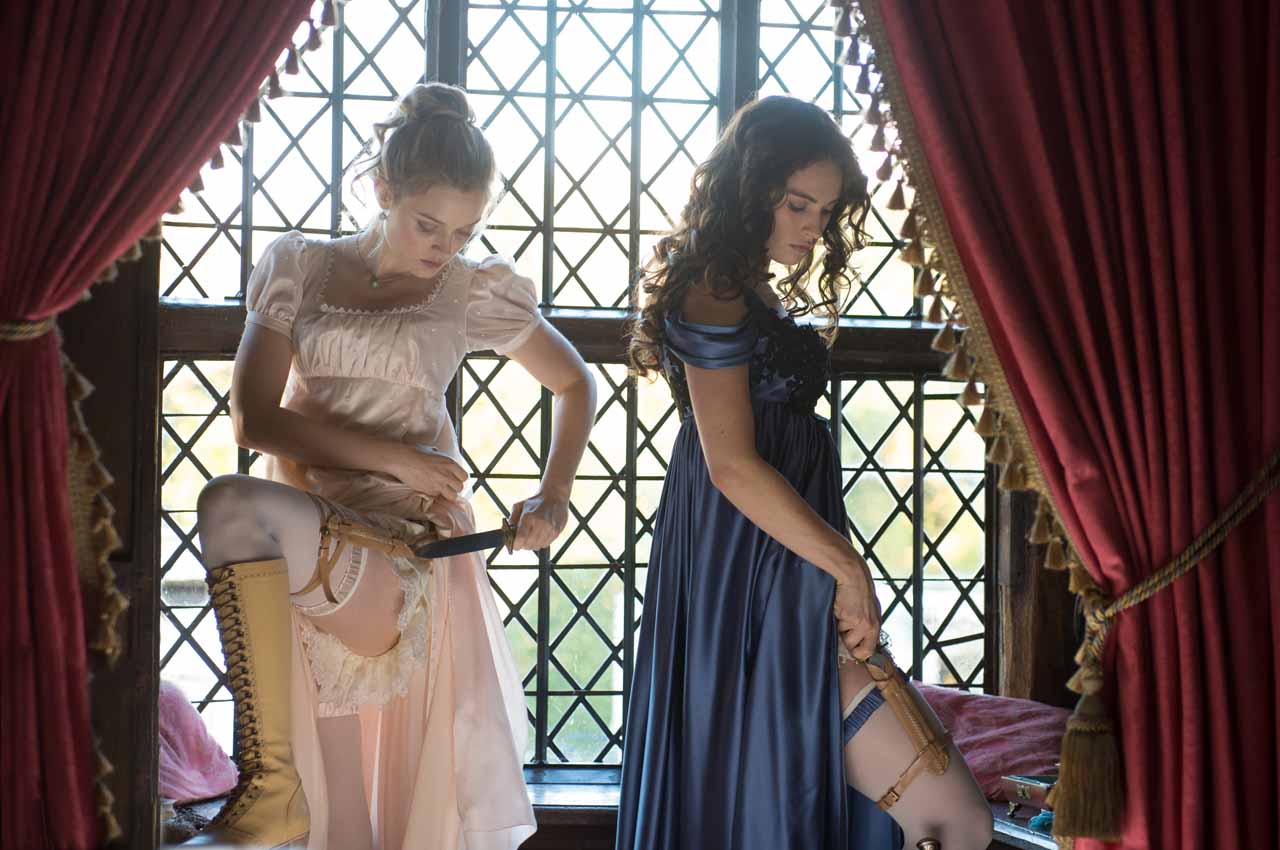
  1. Elizabeth Bennet (Lily James): other than periodically confusing her with Natasha in the just-finished-the night-before War & Peace (some of the clothing strikingly similar – same time period so I guess it should), James makes a compelling Lizzie – those “fine eyes” are very present, she’s a terrific and fearless warrior, and I am sure that Andrew Davies must have had a hand here, or at least sat in a sub-director chair bellowing “more heaving bosoms please”… But this Lizzie is also Darcy’s equal in every way… and loved watching them find their way to each other… expertly slinging all manner of machetes along the way.
  2. Mr. and Mrs. Bennet  (Charles Dance and Sally Phillips): well cast, all the right lines there to clearly identify them as Austen’s parents, she ridiculous and he negligent (though Charles Dance, thankfully resurrected from Games of Thrones, and still hiding in his Library, did have the good sense to have his girls (and all FIVE are present and accounted for) trained as warriors). There is no embroidery or ribbons for these young ladies (though all are stunningly dressed!)- they spend their idle hours cleaning weapons – one feels safe in such a home as this.

fivebennets-youtube

The Bennet Sisters, warriors all (youtube)

  1. Lady Catherine (Lena Headey, in Game of Thrones mode) – ha! – delightful – a black patch becomes her…

LadyC-winteriscoming

Lena Headey as Lady Catherine (winteriscomingblog)

  1. Wickham (Jack Huston) – Huston was perhaps born for this role – Wickham’s evil side taken to new heights – I shall say only this so as not to give anything away – “pig brains.”

Wickcham-Huston-finalreel

Jack Huston as Wickham (finalreel.co.uk)

  1. Who knew that Charlotte Lucas snores?? – one can almost have sympathy for Mr. Collins… well maybe just a little…

     6. Ok, Darcy’s turn…

Darcy-Riley-screenrant

Sam Riley as Darcy (screenrant)

Darcy, or “Fitz” as Wickham affectionately calls him (Sam Riley): I expect black leather great coats to become the latest fashion statement– too reminiscent of Nazi-Germany perhaps, but at least the costume here of the good guys. Riley shall be added to the Darcy roster, another name to check off in the endless “your favorite Darcy” polls – this Darcy, no idle aristocrat tending his own land, but fully armed with a small jar of dead-skin-detecting flies, is a Colonel in the Zombie-Annihilating Army, who like his black-clad not-so-distant cousin Batman, has the good sense to show up at exactly the right time, every time. (And obsessed Firth fans, have no fear – there is the barest glimpse of that essential piece of male wardrobe – the white shirt). Smitten with Elizabeth from the first look (after his initial requisite “she is tolerable” speech), his heartfelt but so hopelessly cringe-inducing proposal results in more than just Austen’s war of words – oh, most of the words are there, purists don’t worry, but if we line up all the available proposal scenes (such fun to do this – there are eleven I think, if you include Wishbone…) – this one shall surpass them all for pure energy and brilliant choreography… (and Davies was definitely here for this, coaching the proper removal of buttons…).

Here’s the rest of him:

Darcy-Riley-movieweb


  1. All other characters terrific – Jane and Bingley, alas! Caroline given short-shift, Mr. Collins (Matt Smith) as good as any of his predecessors, a stone-like Anne De Bourgh…

JM4_9719.NEF

Matt Smith as Mr. Collins (craveonline)

  1. Fun things to look for: lots of Austen quotes from her various writings – it will keep the Austen-knowledgeables on their toes and give the Austen newbies a new found appreciation of her brilliance. They might even go on to read the real book, sans zombies. My favorite line: “…if adventures will not befall a young lady in her own village, she must seek them abroad” – and thus a zombie warrior is called to her destiny. [quiz: which novel?]
  2. The Zombies? – and Austen? If one is tempted to shake their heads in disgust and moan “Austen must be rolling over in her grave” – perhaps not an apt phrase for this particular story line – please go see it before you profess to know how Jane might feel. All told, this latest adaptation has a deep respect for the original text. It is not a “camp” over-the-top retelling but rather it seems to take the realities of this invasion of England very seriously – just another human-induced war of Good vs. Evil, no different perhaps than depicting Napoleon and the French army conquering the shores of England, a valid fear in Austen’s day. There are laughs to be sure – who cannot when a demure-looking Elizabeth suddenly hoists up her Regency finery to expose her sword-clad leg, grabs her weapons, and deftly slices off the head of a trespassing undead; or Darcy, in his frustration over Lizzie’s refusal, engaging in sword-play with most of Lady Catherine’s lovingly sculptured boxwood topiaries. Mr. Collins at the dance? – he’s perfect; the black-patched Lady Catherine (fashion or function? asks Mrs. Bennet) as the Queen of Zombie Warriors? – Game of Thrones trained her well…  So much of it all laugh-out loud (does one laugh-out loud if alone in a movie theater?)
screenrelish.com
screenrelish.com

But no, not “camp” at all – this all just seems to be almost real, a straight-on approach to a real threat to life as we know it, no one’s tongue in their cheek (well, maybe a little). One must just let go and get into the spirit of the thing, beginning with the introduction, a clever illustrated story-book depiction of the past 100 years of the zombie epidemic. And wonderful to know that all of Austen’s characters seamlessly fit into this world  – I think she’d be far from a turn-over in her grave, appalled at yet another mash-up of her “light, bright and sparkling” tale – I think she’d be sitting up and shouting Brava! Bravo! to her Elizabeth and Darcy and everyone else involved. It is after all, not much removed from her very own Juvenilia.

And the zombies themselves? Rest assured, they are really not that bad (have you seen The Picture of Dorian Gray recently?) – a few gruesome faces with blood and snot and rot, but all thankfully quickly dispatched – heads removed, bodies kicked and stomped with boots (lovely boots) – and most of it done in a flash or just shy of camera-range – brilliantly done really – and I confess to only once or twice turning around in the empty theater to be sure I was indeed alone…

PP&P&Z-poster

One piece of advice – stay for the credits…

[Stay tuned for another post with links to reviews, etc.]

c2106 Jane Austen in Vermont
Books · Georgian England · Georgian Period · Great Britain - History · Jane Austen Circle · Regency England · Social Life & Customs

For your Bookshelf: “What’s the Play and Where’s the Stage?” by Alan Stockwell

Today a guest post by Alan Stockwell, author of What’s the Play and Where’s the Stage? A Theatrical Family of the Regency Era, as he tells us a bit about his new book. I shall add this to my TBR file – it has all the makings of a Regency era soap opera of the highest order, all the better because it is all true! Please comment below if you have any questions for Mr. Stockwell…

Stockwell-cover

What’s the Play and Where’s the Stage?
A Theatrical Family of the Regency Era

The lives of eminent London actors of the Regency period – Kean, Mrs Siddons, Kemble, Cooke, Macready, Grimaldi et al, are more than amply recorded. This book ploughs a more unusual, rarer, furrow.

It reveals the theatrical lives of a family of provincial players who tramped the highways and byways bringing the latest London hits and classic plays to unsophisticated audiences in tiny country theatres and large manufacturing towns. The author offers not a specialist tome for theatre historians – although they will find previously unknown material and new revelations here – but a beguiling story of a family of three thespian siblings, their spouses and their children.

This is a Regency world far removed from the novels of Jane Austen. There are highs and lows, riches and poverty, twists and turns, and extraordinary events as in the script of any modern television saga.  The marked difference being that – for the Jonas and Penley Company of Comedians – this was real life.

In Georgian and Regency times even the tiniest country town had its theatre visited regularly by travelling players. These companies were usually family based and my book is an account of one such troupe – more adventurous than most – the Jonas & Penley Company, grandiloquently self-styled “His Majesty’s Servants of the Theatre Royal Windsor”. The troupe under their indefatigable leader Sampson Penley comprised three siblings, their spouses and two dozen children.

EdmundKean-GarrickClub-vesperhawk

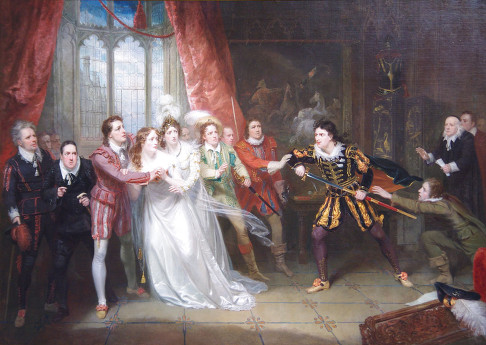
This picture from the Garrick Club shows Edmund Kean the brightest star of the Regency stage.  The man in pink on the left is Sampson Penley Jr of the once well-known Penley family of provincial players.
[Source: VesperHawk.com ]

I purposely divided the text into discrete biographies, allowing the narrative of each to flow. However, the subjects all being closely related, the parts form an inter-connected whole. So that their separate stories are easy to read, and are not interrupted by notes etc, all such things are grouped in appendices, which can be ignored if you are not interested in the research necessarily compiled for such a project as a historical biography. Although the book revolves around the theatre of the time there is much information on other aspects of social history – wages, transport, childbirth, postal system etc, which all impinged on the everyday life of players. Authors of Regency fiction may find such things of professional interest. Below is a brief look at the family members described:

  • Sampson Penley & his brother-in-law John Jonas and all their trials and tribulations setting up a circuit of theatres in south-east England during the Napoleonic Wars while touring with ever-enlarging families. Events include becoming lessees of the Windsor theatre and playing to the royal family; leasing a London theatre (a failure); the first English company to tour the continent in 1814 after the fall of Napoleon; the first English company to play in Paris since Elizabethan times and the riot that ensued; imprisonment for debt and bankruptcy.
  • Mr & Mrs William Penley who were Sampson’s brother and sister-in-law. For several years Mrs W P was the leading tragedy queen in the Jonas & Penley company while her husband was at Drury Lane theatre for ten seasons. Of outstanding interest is that George III’s queen “adopted” their six-year old son, had him educated at public school and provided £300 to facilitate his joining the Indian army where he ended up a major.  William became affluent and two of his sons became artists – Aaron of sufficient eminence to paint Queen Victoria and Prince Albert.
  • Sampson Penley Jr who was a leading man at sixteen, joined Drury Lane where he was a principal member of the company for many years in spite of receiving the most consistently damning of reviews. He wrote several plays but only one success. He supported Edmund Kean in many plays and when he lost his place in London he became a manager in Windsor, Newcastle and Leicester. He fell in love at first sight and married after a whirlwind courtship, fled to Paris to avoid debts and died there far too young.
  • The three acting daughters of Sampson, Rosina, Phoebe and Emma Penley relate their careers in tandem. Rosina was the most important and she was the first British actress to be hailed by the intelligentsia of Paris for her Shakespearean performances. Rosina’s peregrinations as a respectable single woman travelling throughout the land, playing a multitude of parts in many towns and circumstances is very different from the typical lives of other women of the period whether rich or poor. Her sisters Phoebe and Emma played the same repertory of parts and on many occasions pairs of sisters acted together.
  • Sampson’s son Montague Penley who was an artist and drawing teacher (a pupil was Princess Augusta) as well as an actor, scenic artist and manager. He acquired the lease of the Lyceum theatre in London which resulted in a swift financial debacle and yet another Penley fleeing to France.
  • Belville Penley was Sampson’s youngest son who as a child acted in Brussels on the eve of Waterloo and afterwards with his family visited the battlefield. He did not become an adult actor but was a theatre manager. His wife was a singer whom he impregnated prior to marriage causing press condemnation. Belville went into partnership with the actor James Anderson at Leicester, Cheltenham and Gloucester. The partnership ended with another bankruptcy. Mrs Belville Penley went on to be a well-known singer of oratorio and religious works and her husband became lessee of the Roman Baths at Bath.
  • Cousins Maria Jonas and Frederick Jonas who also had substantial theatrical careers.

Stockwell-rearcover

*******************

What’s the Play and Where’s the Stage? is a hardback of 420 pages with an ISBN 978-0-9565013-6-3. You can visit my website for more information www.vesperhawk.com.

And what is the significance of the title? It is a quotation from an anecdote you will find on page 28!

*************

About the Author: Alan Stockwell MBE was a professional puppeteer for over forty years. Latterly, he has devoted much of his time to writing, and is the author of several books and many articles on the theatre, magic, circus and puppetry. He is a long-time member of the Society for Theatre Research and the Irving Society [that would be Henry, not Washington].  And has written on Sherlock Holmes and Charles Dickens (see website for more information).

Thank you Alan for sharing about your book! – Readers, please reply below if you have any comments or questions.

You can purchase the book here:

c2016 Jane Austen in Vermont