Fashion & Costume · Jane Austen · Social Life & Customs

Happy Birthday, Jane Austen!

Breaking news!  what a birthday gift for some Austen collector out there:  the Sotheby’s auction today saw the sale of Emma: first edition, all volumes with the ownership signatures of Jane Austen’s closest female friend Martha Lloyd ( Hammer Price with Buyer’s Premium:  37,250 GBP); and another Emma first edition, volumes 1 and 3 (lacking volume 2), the copy sent by Jane Austen to her fellow novelist Maria Edgeworth, with the ownership signature “Maria Edgeworth” on title page of volume 1, (Hammer price with Buyer’s Premium, 79, 250 GBP) – more on this in a full post tomorrow….
__________________________________________________________

First, the grand announcement that the latest JASNA Persuasions On-Line Vol. 31, No.1, [click here for the Table of Contents ],  published annually on Jane Austen’s birthday, December 16th, is now available for viewing.  As always, a treasure-trove of essays on all things Austen – some from the 2010 AGM on Northanger Abbey, where “mystery, mayhem and muslin” ruled, and other “Miscellany” on topics ranging from Austen films and chick-lit, gender issues, to new thoughts on Austen’s death and Juliet McMaster on “Jane Austen’s Children” [perhaps signalling a new area in Austen research – see my posted interview with David Selwyn on his new book Jane Austen and Children and my upcoming review]…

And new this year, the “Jane Austen Bibliography”  has been reinstituted.  This annual compilation has not been published since 2006, since the death of the long-term compiler Professor Barry Roth in 2008.  Yours truly has taken on the task with this 2009 bibliography – my background in librarianship and antiquarian bookselling, as well as a love of bibliography [how weird is that!], not to mention Austen knowledge, has led me to this JASNA task – I will be tackling the missing years of 2007 and 2008 and those will be published along with the 2010 biblio in the 2011 Persuasions On-Line next December.  Any additions, corrections, suggestions appreciated…

*******************************

But now on to the Birthday Celebration!  I was away and did not get to Maria Grazia at her Jane Austen Book Club blog in time to be a part of her Birthday Blog Tour – but I send you to her site and encourage you to follow the links to the other 15 Austen bloggers, all posting today on this 235th year of our “Dear Jane” – visit and comment – there are many wonderful Austen-inspired prizes!

****************************

For this year’s Birthday post, I have decided to compile a selection of presents that I think Austen would appreciate herself – we are so taken with all the Austen-related items for sale, slipping them onto our “want lists” and discretely leaving said lists around inconspicuous places for family and friends to find, or buying for our Austen-loving friends the latest and greatest in Austen-land books and paraphernalia for their birthdays and holidays – but what about Jane?  This is after all her day – and if we read the letters and her works and the various biographies, we get a true sense of what meant the most to her.  She led a fairly penny-pinching lifestyle once her father passed away and only through the generosity of family was she able to live the life of the gentry she was born to – a widowed mother and two unmarried sisters – exactly the stuff of her novels – and without any men of “good fortune” to “rescue” them, they learned to live frugally and well, but Jane still had her passions for certain things – and so if I could, I would give her all of these [and this is just a small sampling of all the possibilities!] ~ 

Tea:  from Twinings of course – “I am sorry to hear there has been a rise in tea…I do not mean to pay Twining until later in the day.” (Ltr. 98)

and served in a Wedgwood cup and saucer; “On Monday I had the pleasure of receiving, unpacking & approving our Wedgwood ware.” (Ltr. 75)


Teacup:  Wedgwood Harlequin  

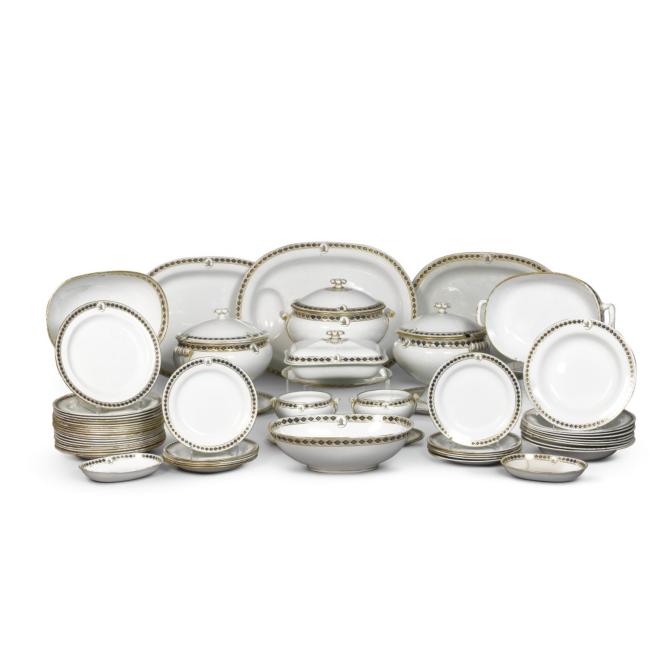
*Note that Edward Austen’s dinnerware is up for sale at auction today at Sotheby’s – estimate is 50,000 – 70,000 GBP – the very set that “we went to Wedgwoods where my Br & Fanny chose a Dinner Set. – I beleive the pattern is a small Lozenge in purple, between Lines of narrow Gold; – and it is to have the Crest.” (Ltr. 224)
 

***

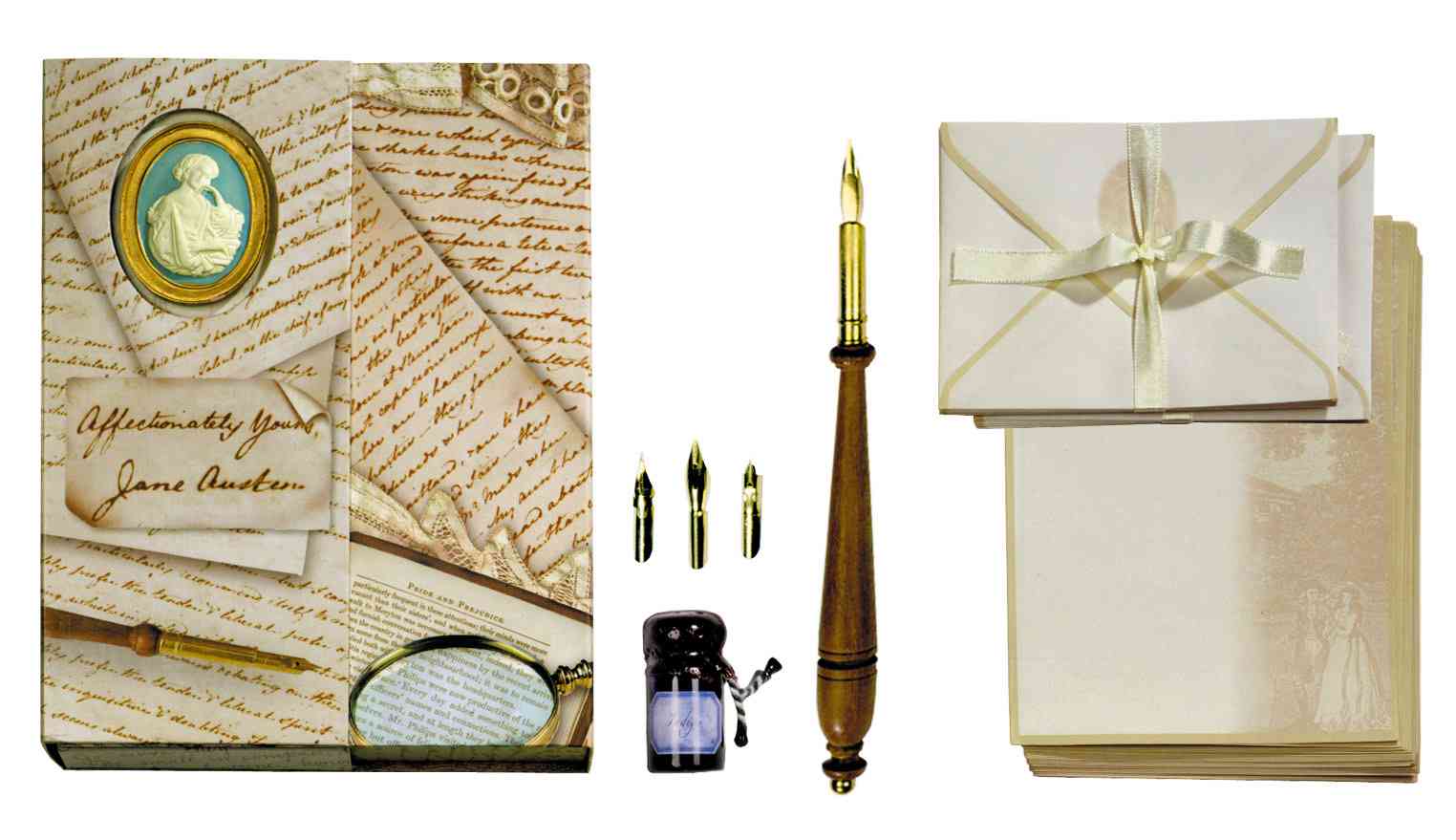
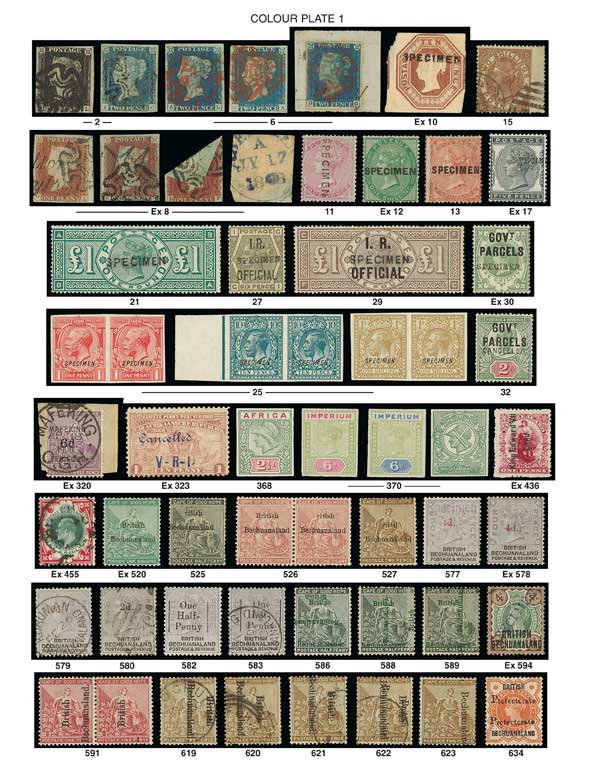
Stationary:  an unlimited supply of paper, ink and postage stamps, so she can write all that she will with no need to stop at one sheet or hope for a charitable “franking”:

Writing Paper and ink:  from Plazaverde.net
 

Postage stamps:  from Stamp Circuit
Calling cards:  From Cambria Cove, so she can visit all over Hampshire, Kent, Bath, and London to her heart’s content:
 [please substitute an “A” for the “C”…]

***

Fashion needs and accessories:  never enough for Jane of any of these, but I present to her for this birthday:

1.  A New Bonnet, this one fashionably covered in fruit, from HorrorShirts.co.uk ~ “Flowers are very much worn, & Fruit is still more the thing. – Eliz: has a bunch of Strawberries, & I have seen Grapes, Cherries, Plumbs & Apricots – There are likewise Almonds & raisins, french plumbs & Tamarinds at the Grocers, but I have never seen any of them in hats…” (Ltr. 20) ~

 or maybe this one at Miss Amelia’s Miniatures:   


2.  A variety of Floral ribbon trimmings at HymanHendler.com ~ “Must we buy lace , or will ribbon do?” (Ltr. 47)

or this:


3.  Fabric: a painted cotton from India at Jessamyn’s Regency Costume Companion:  and hopefully it will be “as wide as it used to be” (Ltr. 72) – “I shall want two new coloured gowns for the summer, for my pink one will not do more than clear me from Steventon.” (Ltr. 33)


4.  Stockings: always in need, never enough money –  “You say nothing of the silk stockings; I flatter myself, therefore, that Charles has not purchased any, as I cannot very well afford to pay for them; all my money is spent in buying white gloves and pink persian.” (Ltr. 1) – here is a year’s supply from Liverpool Museums ~


5.  And “a kerseymere Spencer” which will be “quite the comfort” in this year’s snow-bound England! (Ltr. 55)

 [from Costumes.org ]

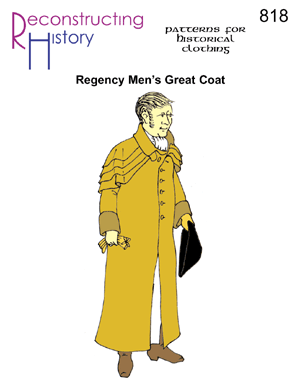
6.  and for the men in her life ~ A Pattern for a Great Coat, which she so lovingly bestows upon her Hero Henry –  “And then his hat sat so well, and the innumerable capes of his greatcoat looked so becomingly important!” (NA, v.II, ch. 5) – this is from Reconstructing History:
 ***

Books for Jane’s Library: 

1.  A Magazine subscription to the Lady’s Monthly Museum – so she will be forever current in news, literature, and fashion:

[from Monash University Library] and Google Books for the volume from 1817.

2.  From her beloved “Dear Dr. Johnson”, a copy of  Samuel Johnson’s  Rasselas:


3.  Samuel Richardson, author of her favorite book, Sir Charles Grandison, and the author referenced in Austen’s only footnote (NA, v.I, ch. 3), I offer a lovely bound copy of Richardson’s  Pamela at Stikeman Bindings:

  “Samuel Richardson; “The Complete Works” in Twenty Volumes in Deluxe Bindings, Autograph Edition; From a set of Twenty Volumes, this is the Novel “Pamela” in Five Volumes, 4to, of Full Green Crushed Morroco; Boards of Wide Borders in an Art Nouveau style, four Bright Scarlet Tulipform onlays on each board, and three Red Rose Onlays in the spine compartments (55 onlays in all); Spines sunned, here digitally retouched to approximate the original green. Hinges cracked and starting © Jeff Stikeman”

Travel accommodations:  her very own Barouche so she can travel at her own whim rather her brothers’ schedules:  “I liked my solitary elegance very much, & was ready to laugh all the time, at my being where I was. I could not feel that I had naturally small right to be parading about London in a Barouche.” (Ltr. 85) – she will now have all the right possible…


Food:  and just because she mentions it so much, she must have some true affection for it! ~ her very own Bowl of Gruel:  from BBC News 


***

Popular Culture:  just because I think she would get a chuckle out of all this… 

1.  Lost in Austen at Amazon or your local bookseller


2.  Such a lover of puzzles might like her very own:


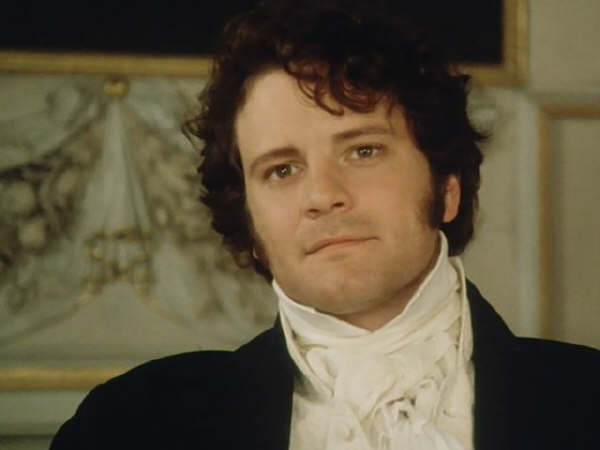
3.  A Larger-than-life wall poster of the generations-obsessed-over Mr. Darcy ~ [please take your pick…]
or

 or

or

or

***

7.  And lastly, her “own darling Child” (Ltr. 79) ~ Pride and Prejudice – the  1st edition:  so she would at last get a portion of the worth of her own pen!

[From Paul Fraser Collectibles.com]

*************************

Happy Birthday Jane ~ enjoy your handsome and “noble Gifts” [though alas! no Ermine Tippet this year!] (Ltr. 98)

Readers all ~ what would you give Jane Austen for her birthday?
Jane Austen · Regency England · Social Life & Customs

Follow Friday ~ Number One London

 “When a man is tired of London, he is tired of life; for there is in London all that life can afford.”
-from Boswell’s Life of Johnson


Obsessed with London? – you can get a daily fix from the comfort of your own computer screen by visiting the blog Number One London – at http://onelondonone.blogspot.com  –  poor substitute I know for the real thing, but the best one can do most days… and blog creators Kristine Hughes and Victoria Hinshaw do their very best to make it an enjoyable visit:

Welcome . . . You’ve arrived at Number One London, an address for those with an interest in England past and present and a passion for daily life during the Georgian, Regency and Victorian eras. Share with us your book finds, favorite films and websites, on dits regarding your research pursuits, travel adventures across the pond and historic treasures. If you spend an inordinate amount of time reading, researching and pondering past and present England, then you’ve found a place to share information and make the aquaintance of others who feel at home at Number One London. *

Number One, London was the home of the Duke of Wellington – and a perfect place to start your immersion in London’s past and present… todays’ post is about Benedict Cumberbatch, the latest Sherlock Holmes on Masterpeice Mystery; the site is filled with all manner of goodies, like the weather since 1500, and all you ever wanted to know about William and Kate, and as Ms. Hinshaw was at the JASNA AGM, you can follow her summary of the happenings… [she spoke with Kim Wilson on “About Those Abbeys: A Trip Through History, Literature and the Picturesque” which I unfortunately missed..]

Enjoy your cyberspace trek to London!

[* From the blog Number One London]

Fashion & Costume · Jane Austen · Regency England · Social Life & Customs

Follow Friday ~ The Regency Encyclopedia

I have posted about this very rich resource before, but doing so again as much had been added: The Regency Encyclopedia.  I met up with the creator, Sue, at the Portland JASNA AGM, and we talked about some of the new items – maps, authors, and various bells and whistles. This is a password protected site, but Sue gave me permission to again provide the logins [case-sensitive]:

User ID – JAScholar
PW – Academia

I suggest you first look at the 18-page User’s Guide [no worries – it is largely visual with big print!] – to get a sense of how the database works.  Then scan the various categories; and always check the “What’s New” tab to see what has been added – it is constantly being updated and Sue asks for suggestions of good resources that she can add.  Here are the categories to give you an idea of what is included – all are keyword searchable:

  • Map Gallery that includes a Time & Distances option – this all based on John Cary’s New Itinerary (1819)
  • London: many maps, a tour, and shopping locations!
  • Georgian Names index
  • Fashion Print Gallery
  • Novel Calendars w/ Chapman’s Lists of Characters
  • Source list of work catalogued [my only criticism: this is a great bibliography of Regency resources but it is listed A-Z by first name, not the most helpful access point]
  • Online resource links [a select list]

A perfect weekend project – this database need some time spent with it to find all that is hidden behind its main menu page!

Austen Literary History & Criticism · Fashion & Costume · Jane Austen · Jane Austen Circle · JASNA · Regency England · Social Life & Customs

Jane Austen AGM ~ Day 3 Recap: Gothic Horror, Catherine’s Imagination, Henry as Hero [again!], Fashion, Conduct Books, & a Ball!

Day Three at the JASNA AGM in Portland:  A quick continental breakfast with Laurel Ann and a few friends at the table – discovered that Elaine Bander is quite a scholar of Dorothy L. Sayers –more on this in another post – and then off to the Plenary with JASNA North American Scholar Juliet McMaster on  – “‘A Surmise of such Horror’: Catherine Morland’s Imagination.”  I have heard Prof. McMaster speak on several occasions and she never fails to express “in the best chosen language” all there is to love about Jane Austen. Today she begins with showing us a “cheap” 1965 paperback edition of Northanger Abbey, where “gothic’ is everything, cover and blurbs teasing us with the horrors that await us in these pages – she ends her talk with surmising that perhaps they didn’t get it so wrong!  She presents this by examining the quality of Catherine’s mind – a combination of innocence and wisdom, likening her to the “holy fool” of Shakespeare or Dickens, a “good fool”.  Where Henry Tilney is so often the focus of Northanger Abbey criticism, Catherine relegated to the “heroine” that Austen herself seems to denigrate, McMaster gives us a gift: Catherine redeemed and placed in her rightful home next to Austen’s other great heroines.


Juliet McMaster

Catherine, as we know, is described in negatives in those first pages, and Henry teases her about the “intellectual poverty” of a visit with Mrs. Allen – McMaster likens her “brain as a closet,” Catherine’s cluttered and well-stocked but vacuous [Henry and Eleanor are well-stocked but ordered; John Thorpe has a “double occupancy”!] –  this “moving toyshop of her mind” is a perfect metaphor for Catherine – she learns aesthetic sensibility [that hyacinth!], not unlike the Romantic sensibility of Coleridge and Wordsworth, and her gothic readings and Henry’s very near prediction of her experiences in the Abbey all serve Catherine in her “awakening, an imaginative awakening, and we end able to love her “faults and all.” [as Mr. Knightley on his Emma!] –  and what of Henry’s reprimand? The one scene in NA that has caused the most commentary? often an expression of concern that Henry could end up as tyranical as his father? McMaster believes that Henry is revitalized and rejuvenated by Catherine, and she views his rebuke as almost a “cover-up” – that his surmising Catherine’s thoughts before she has clearly expressed them [go back and read the book!], that Henry is all too aware of the truths about his father – Catherine awakens his own fears, and indeed contributes to his strength in openly defying his father.

I later, in yet another trip to the Emporium!, talked with Professor McMaster and added four more books to my Juvenilia Press edition, now complete as to Austen’s works, with McMaster’s fanciful illustrations… and one last thought – McMaster threw out this tidbit – “pay attention to when Austen uses the word ‘almost.’”

Juliet McMaster with her "The Beautiful Cassandra"

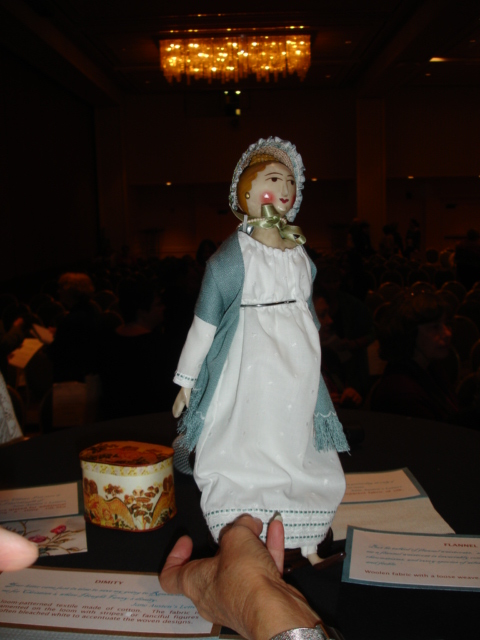
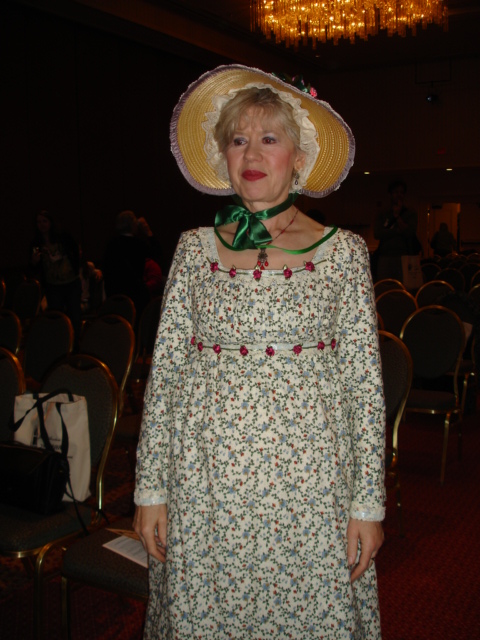
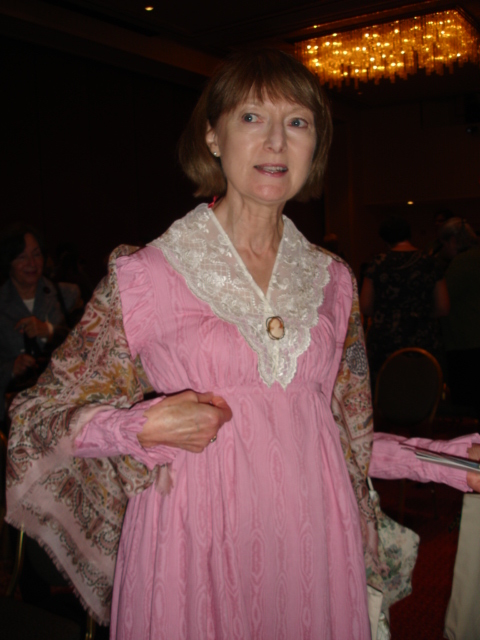
So after feeling quite confident in Catherine’s true place in the Austen canon, on to a fashion session with Mary Hafner-Laney, a specialist in construction of historic clothing in “ ‘I was tempted by a pretty coloured muslin’: Jane Austen and the Art of being Fashionable” – a presentation covering the various fashion sources in magazines, such as La Belle Assemblee, the use of fashion dolls [see illus. below] in the marketing, purchasing and sewing process, all the while citing Austen’s many references to the fashions of the day in her letters, filled as well all know with fashion gossip! and her novels. Mary took us through the process of purchasing the materials, choosing styles, finding a dressmaker, and the costs – i.e. nothing off the racks in Austen’s time!  She spoke about Eleanor’s white gowns and other color options, types of fabrics and where they came from and the stores that sold them.  Then a few words on undergarments, laundering, remaking and dying, and how one can never have “too much trim”!  A lovely and informative talk! and now some pictures of the beautifully clad listeners:

fashion doll

Syrie James and Bonnie Wise
Kimberly Brangwin
Pat Panshin
the always lovely Baronda Bradley!

******* 

And here, one of the rare negatives at a JASNA event but have to mention because I was so stunned! – Mary did not expect such a large audience [149!] and came without enough handouts – a facsimile of La Belle Assemblee [100], a booklet of fashion samples [50], and a regency fashion illustration with samples [50] – before Mary finished her Q&A, several people started going up front to get a handout – raging mutiny from the ranks! – they returned to their seats abashed [but with their booty…] and I turned to the woman next to me and said “Oh dear! This is going to be like a bra sale at Filene’s basement!” [what are the chances that this woman used to actually work at a Filene’s basement! – yikes!] and sure enough, as soon as Mary gave the go, a mad rush to the front, pushing and grabbing and quite appalling really! – who would have thought this lovely sedate group [and some so fashionably attired] could turn into such a greedy rabble! – yikes again!

On to Elvira Casel – always expected to present a thought-provoking topic, this time on “The Abduction of Catherine Morland: Deception, Sex and Courtship in Northanger Abbeyshe began with first eliminating any expectations that this talk would be about “SEX” – sex is inferred in Austen but that courtship process is full of sexual overtones in being all about finding a sexual / life partner –  and the sex part dealt with, she talked about “how honest people can negotiate a world that is often dishonest.” Casal gives us a Henry and a John Thorpe as rivals in the first part of the book – Thorpe’s abduction of Catherine tantamount to a gothic rape, his insidious lies, though propelling the plot, are ineffective because Catherine is on to him early on – and Henry’s immediate attraction to Catherine [who asked for that introduction from Mr. King after all?!], their conversation of the dance showing their developing relationship – Catherine might be puzzled but she does understand that Henry is defining his values, his idea of commitment.  Casal posits Henry and Thorpe as would-be narrators – Thorpe’s “fictions” propel the plot, but it is Henry as the true narrator / storyteller – he is very attuned to others, but there are concerns about his controlling nature – it is he who introduces the gothic story to Catherine, he stimulates her imagination – he is culpable here – but Casal sees Henry as ceasing to be the narrator when he seeks to be the hero in Catherine’s own story in the making.  During the Q&A, she said what I thought was the most interesting point in her argument:  Henry Tilney most resembles Elizabeth Bennet as a character – they both use humor to distance themselves from pain, disguising their true feelings.

Fourth session [wow! My brain is totally taxed – McMaster’s “closet” of clutter, and completely disordered!]

Susan Allen Ford on “Ingenious Torments: Reading Instructive Texts in Northanger Abbey– Professor Ford, who is working on a book about what Austen’s characters are reading focused on the didactic texts inherent in Northanger Abbey – those specifically mentioned or inferred: Mrs. Morland’s Mirror, with info on John Homespun and family [i.e Henry McKenzie of The Man of Feeling fame] as “cousins” of the Morlands  – plain country folk, yet Mrs. Morland’s inadequacy as a parent in her oft-quoted platitudes and clichés of life; the Richardson footnote on woman’s behavior in courtship; and finally Jane Collier’s An Essay on the Art of Ingeniously Tormenting, a satiric anti-conduct book.  Collier outlines the various human relationships, emphasizing the aspects of teasing and torment  [recall Catherine’s historians “labouring only for the torment of little boys and girls”] in all these relationships.  Prof. Ford talks of Austen’s use of the word “torment” – Henry four times, Catherine three, how Isabella personifies the “tormenting” by a friend, the extent of General Tilney “tormenting” Mrs. Tilney.  In the end, Austen mocks the prevailing didactic texts of the time by showing their inadequacies “for the emotional tortures in friendship, courtship and family relationships.”


End of breakouts! – so much learned,  so much missed – look forward to Persuasions On-line [December 2010]  and Persuasions 32 [May 2011] to fill in the gaps!

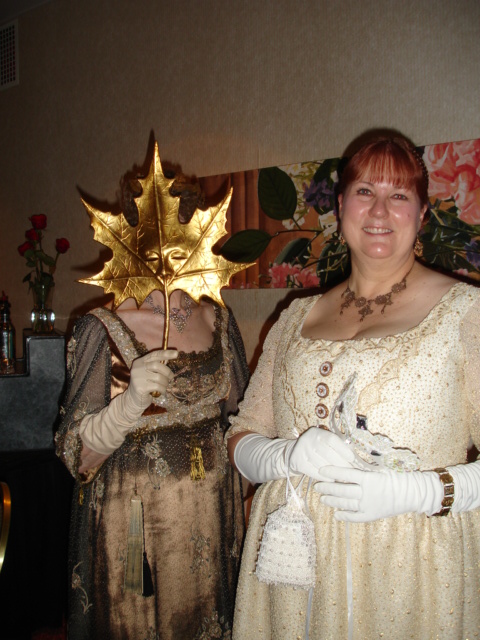
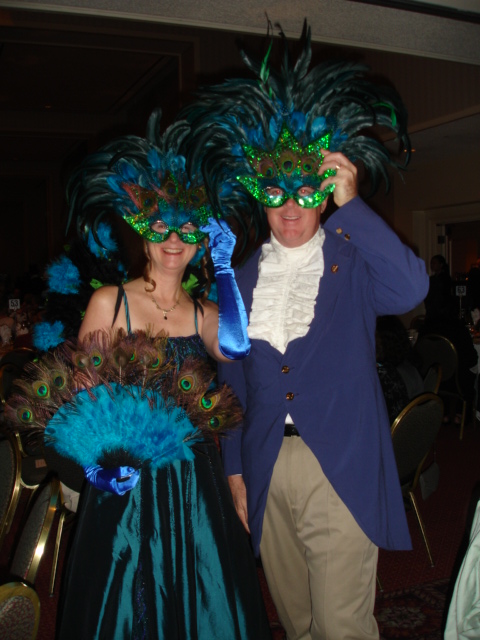
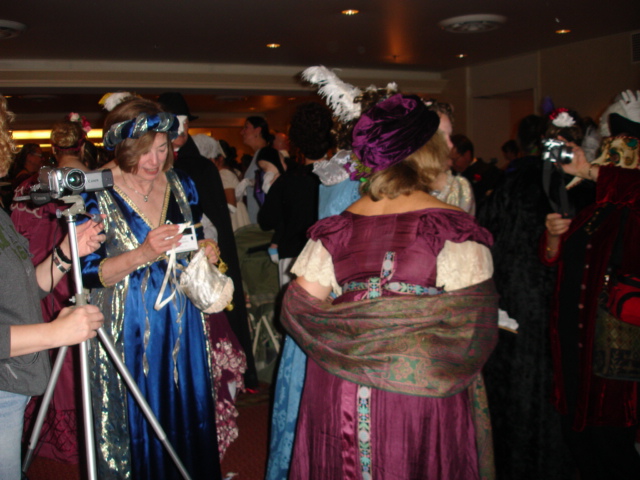
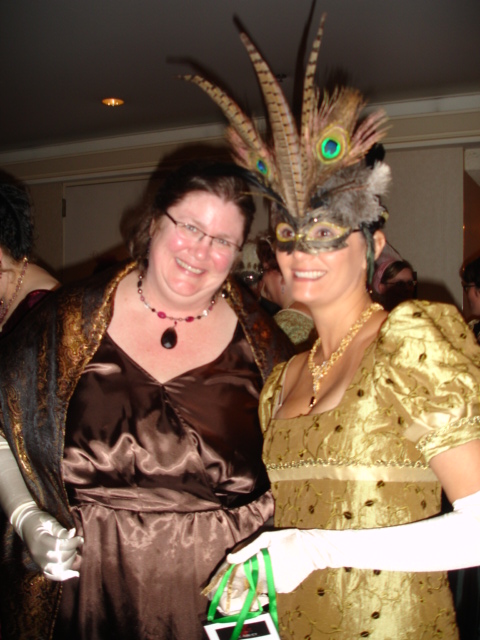
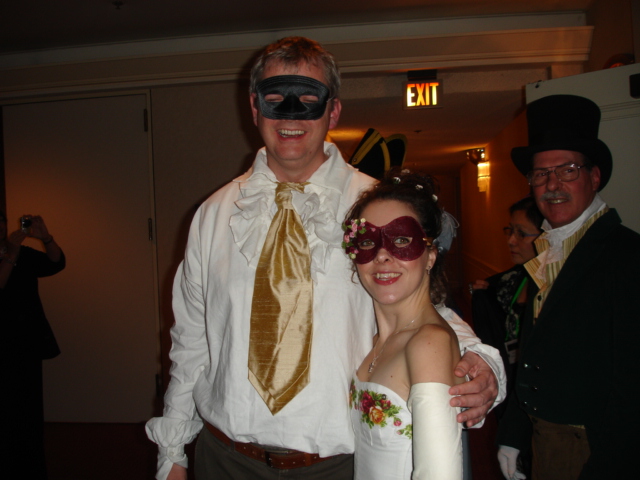
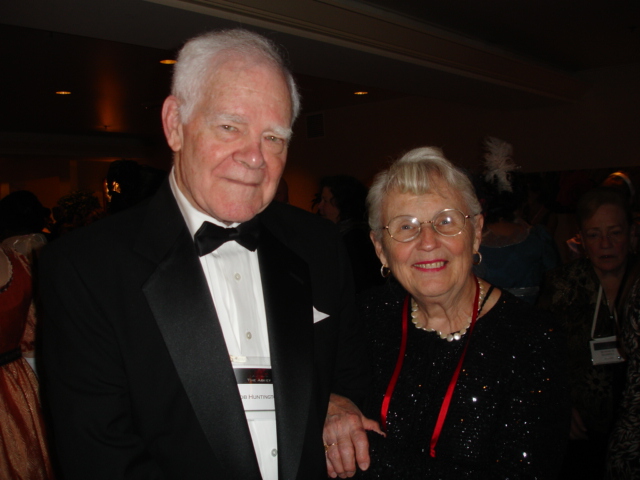
And then, the Banquet and Ball – the AGM had more fashionable Ladies and Gentlemen than I have ever seen – some elaborate Regency, some outrageous costumes for the Bal Masque – my costume still the “pattern-in-the-bag state – only a black velvet Spencer over a long dress – best I could do, but certainly not Promenade material! – which was great because I could just stand there and take pictures.  Dinner was great fun – we had a fun table and met all manner of Austen bloggers and web masters:  Sue Forgue of Regency Encyclopedia [contact me for passwords]; Diana Birchall of Mrs. Darcy’s Dilemma fame and her blog “Light, Bright and Sparkling”- we bonded on our “born and bred” in New York heritage; she introduced me to Ellen Moody, long known to me from the Austen listservs – I marvel at her Calendars of the novels – so great to meet  her – we also bonded on our “born and bred” in New York heritage!… others across the table beyond the hollering needed to hear – will get in touch with them via email – then off to see the Promenade, a fiasco of elevator limitations, so no parading about the streets of Portland for this year – no matter, the foyer and ballroom were quite fine to exhibit the finery!  pictures follow with names of those I got permission from – I did go into the Monster Mash event for a bit to hear the three different talks on the gothic – but headed back to the room for a needed respite – alas! my skills at English Country Dance to be exhibited next year! – and again, more and more people up there dancing this year – this is a wonderful trend at the AGMs – back to the sewing machine and ECD instruction for me!


Laurel Ann and Laurie Viera Rigler
absolutely stunning!
Syrie James and husband Bill
Diana Birchall

Baronda and Eric
a perfect Phantom!

Debbie Aldous and Christina Boyd
lovely in purple!

and friend”]
Tim Bullamore and friend
Jo Ann and Philip Staples

“]
Liz Cooper

Ceil and Bob Huntington
Lorraine and William Hanaway

Carol Moss - JASNA webmaster!
Laurel Ann and her roomie!
Portland at night...
Jane Austen · Regency England · Social Life & Customs

Travel in ‘Sense & Sensibility’ Part III ~ Carriages

We will now [finally!] get to how they traveled ~ you can review the previous posts on ‘Travel in Sense & Sensibility‘ here:

There is much that we do not know about Jane Austen, and the much that we do “know” has been pieced together from letters and family remembrances and historical contexts. But one thing we know for sure is that Austen was familiar with ALL the carriages of her day.  This is best illustrated by her Juvenilia piece “The Memoirs of Mr. Clifford: an Unfinished Tale” [MW 43],  written between 1787-90, when Austen was 12 – 15 years old:  this is what she says:

Mr Clifford lived at Bath; and having never seen London, set off one Monday morning determined to feast his eyes with a sight of that great Metropolis.  He travelled in his Coach & Four, for he was a very rich young Man & kept a great many Carriages of which I do not recollect half.  I can only remember that he had a Coach, a Chariot, a Chaise, a Landau, a Landaulet, a Phaeton, a Gig, a Whiskey, an Italian Chair, a Buggy, a Curricle & a wheelbarrow.  He had likewise an amazing fine stud of Horses.  To my knowledge he had six Greys, 4 Bays, eight Blacks & a poney. 

[what! no barouche!!] 

Austen used carriages in her novels as a way to indicate income and social status but also as a way to delineate character – for example, we know most everything about John Thorpe in Northanger Abbey by just listening to the way he describes his horse and carriage! [Thorpe has been called the most horse-obsessed character in all of literature!]; we know that Willoughby cannot afford the carriage and horses that he has, that he is a fast driver, and that his driving a large chaise with four horses to visit Marianne when he thinks she is dying show how much he wants to get there and quickly, at any cost [but of course he is now married to Miss Gray, so cost does not matter to him…]. 

Coaching Inns:

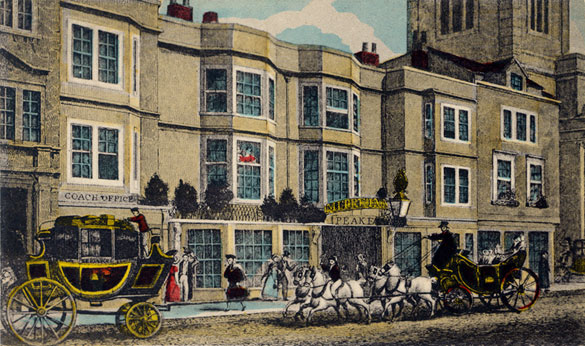
Austen would have also known the Coaching Inns of her day – she would have stayed in them during her own numerous travels. But in Sense and Sensibility there are only two mentions:  Edward staying at an Inn when he leaves London after he is disinherited, and Robert and Lucy Ferrars at the New London Inn in Exeter following their marriage.  But all the characters would have stayed at Inns for any of the longer trips, as was explained in the previous post.  

Carriages:

There are numerous specifically noted carriages in S&S.  “Carriage” is a general term: there were many variations in nomenclature and design, and big discrepancies even among the same “named” vehicle.  There were differences in “construction, function, size, speed and appearance.” [Rogers]  And there was a full class-system of horse-drawn vehicles; the wealthy often had unique designs made to order.  

Some understanding of the parts of a carriage helps to identify a particular type:  see this link at The Georgian Index for a glossary of carriage terms, as well as this diagram:

So, just a few carriage part terms:  

1.  C-Springs:  a curved spring of C-shape, made up of several overlapping plates or leaves. They where introduced in the late 18th century (shortly after the S-Spring) and replaced the primitive wooden pillar attached to the axle, from which braces extended to the coach body. 

2.  Elliptical spring: Carriage spring made up of two sets of overlapping steel plates or leaves bolted together in elliptical or semi-elliptical form. It was invented by Obadiah Elliot in England (1804) and made the ride much smoother and the carriages more stable.

3.  Lights:  called “moons” [as per Chapman]:  for dress carriages: the simplest were wax candles in tin tubes in a circular casing; for traveling coaches –  lamps with oil in square casing [Adams]

In the country, social engagements were dependent upon the moon, traveling at night unsafe:  for example in S&S, Sir John Middleton has asked other neighbors to join their party, but “it was moonlight and everybody was full of engagements.”

A few definitions about the people of the horse and carriage era:

1.   Postilion or post boy: a person who rides the leading nearside horse of a team or pair drawing a coach or carriage, when there is no coachman 

2.  Groom:  a male servant employed to care for horses; at times accompanying an owner’s carriage 
 

3.  Ostler:  a groom or stable boy employed at an Inn to take care of guest’s horses 

4.  Tiger:  a boy or small man employed as a groom on the back of a curricle or other small carriage.  Name derived from the yellow and black striped waist coat worm by the groom  [OED:  A smartly-liveried boy acting as groom or footman; formerly often provided with standing-room on a small platform behind the carriage, and a strap to hold on by; less strictly, an outdoor boy-servant. obs. slang. ] 

5.  Livery:  historical- distinctive dress or uniform worn by an official, retainer, or servant (and given to him or her by the employer) [term from c1290 in Old French] – a footman’s livery of two suits would cost about £20, as much as his year’s wages 


                                             ********************

And now to the carriages ~ I will post about each type and how and where they appear in Austen’s works over the next several days:


FOUR WHEELED VEHICLES:   
 

1.  Long Wagon:  

-similar to the American covered wagon

-carried goods and passengers – did “the practical work of the nation” with 6-8 draft horses

-not specifically mentioned in Austen, except off stage

 2. Carts

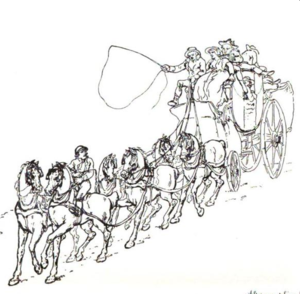
 3.  the Coach:  “Kings of the Road” – called the most dignified of moving objects 

•           a large, enclosed 4-wheeled carriage, a fixed head, doors and windows

•           pulled by at least four horses, for long-distance travel, traveled @ 7 miles / hour

•           4-6 passengers, in two seats facing each other; also passengers on top

•           C-springs helped as shock absorbers

•           public use OR persons of wealth or high rank

[the term “hackney coach”  is what we would call a modern day taxi, and were most often cast-off coaches from the original owners]

Coach builders

Stay tuned for various types of coaches…

Tiger in carriage


Postilion


Austen Literary History & Criticism · Jane Austen · Regency England · Social Life & Customs

Thoughts on Travel in ‘Sense and Sensibility’ ~ Part II

Part II.  A Study of Character’s Movement in Sense and Sensibility

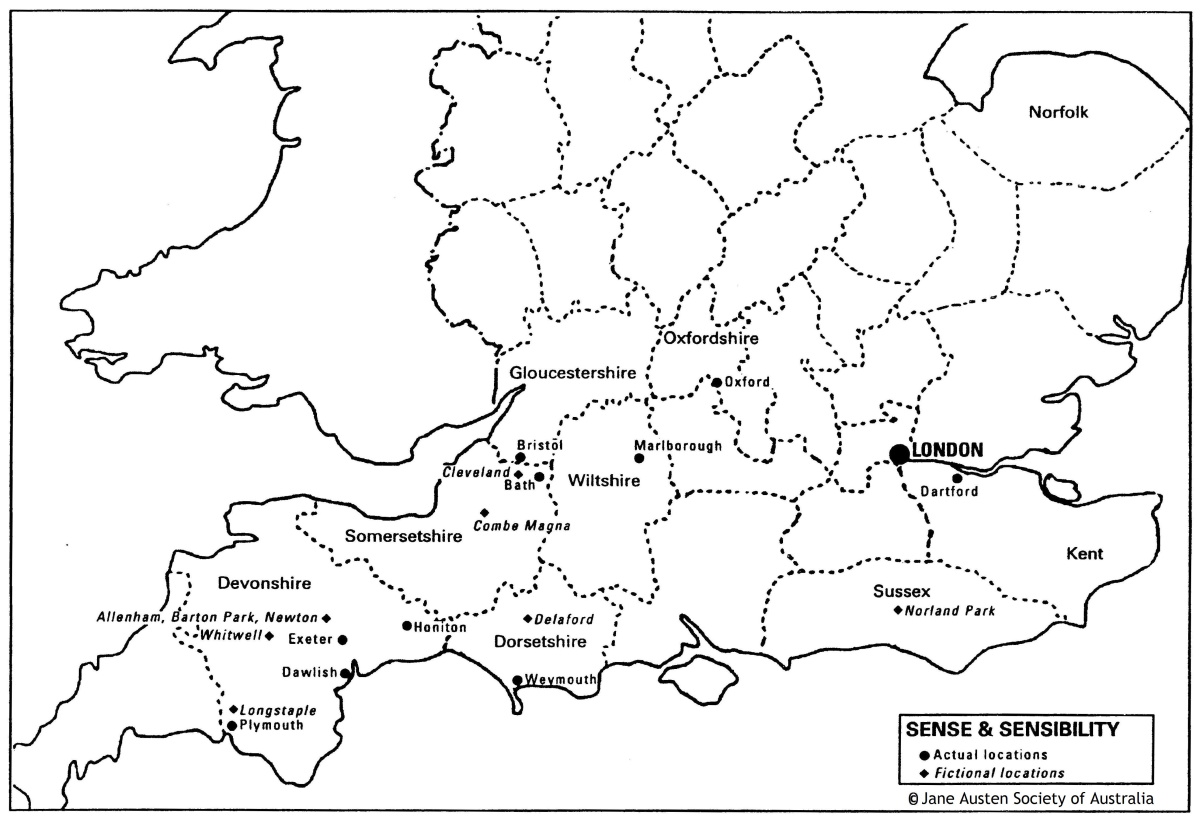
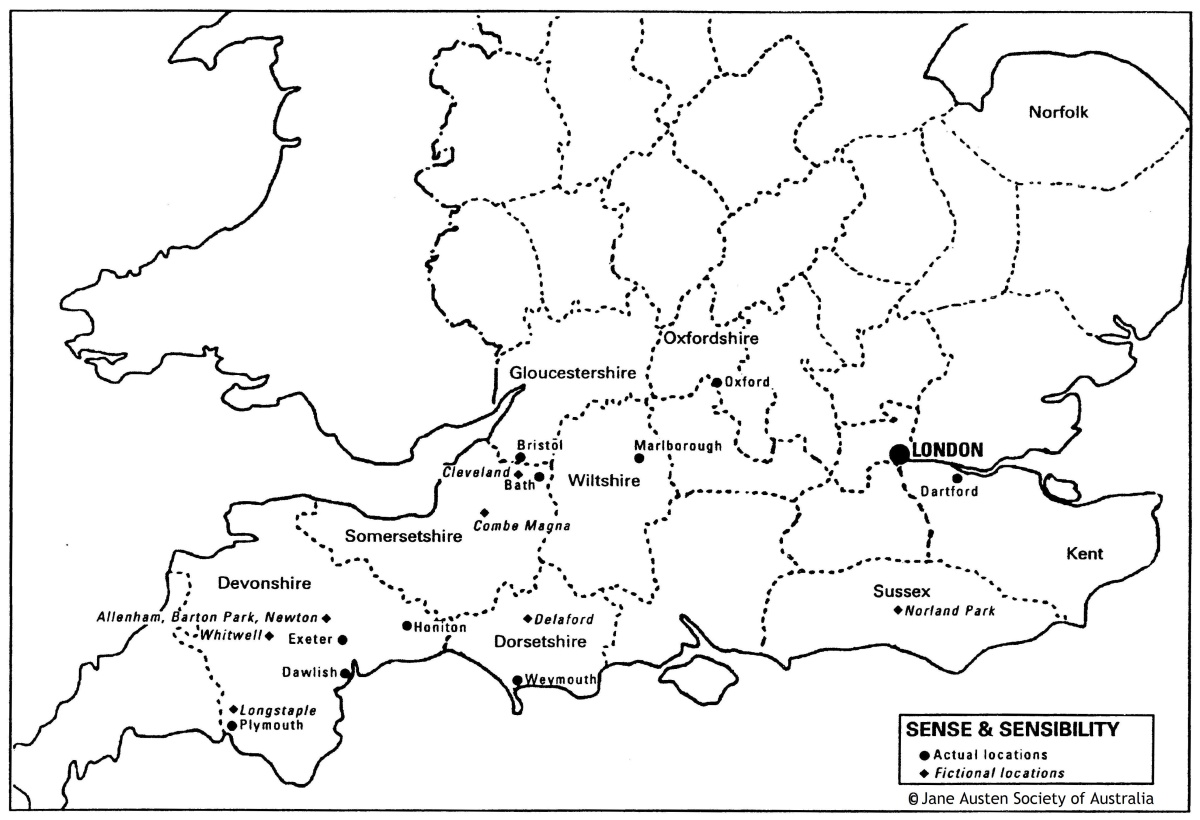
Fig. 1. Sense & Sensibility map

A startling fact! – there are 49 mentions of movement and 46 mentions of carriages [to include a few referring to travel by horseback] – and people say that nothing happens in Jane Austen!  That is a great deal of  traveling in what I have just described in the previous post as a not easy or inexpensive world to travel in!

To begin, let’s place the characters where they live and their income if known:

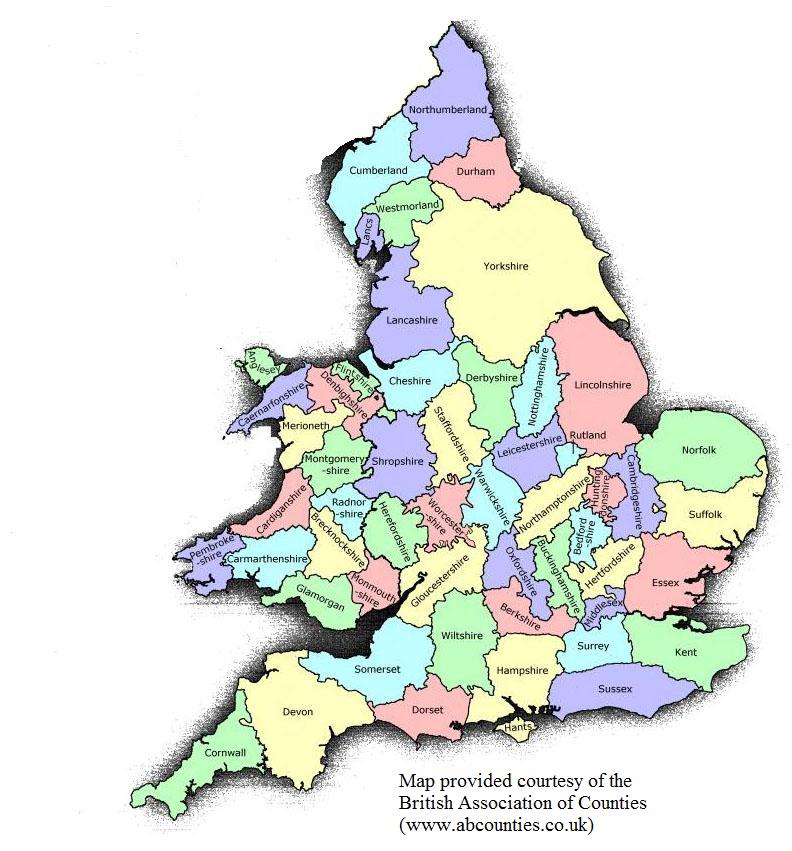
A.  Where the characters live:  see the map of England’s Counties below, and the map of places, both real and fictional above

  • Counties = Sussex, Somerset, Dorset, Devon
  • London [“Town” = London], largely Mayfair


The Dashwoods:

  • Henry Dashwood – Norland, Sussex
  • Mrs. Henry Dashwood – Norland, moves to Barton Cottage, Devonshire – £7000 = £350 / yr
  • Mrs. Dashwood’s mother – Stanhill [Sussex]
  • John and Fanny Dashwood –  Norland, Sussex; Harley St, London [renting?]; purchase East Kingham Farm, near Norland – £5,000 – £6,000 / year
  • Elinor / Marianne / Margaret:  Norland, Sussex, move to Barton Cottage, Devonshire; each have £1000 capital from their uncle = £50 pounds each annual income = £500 total for the four of them  [150 + 350 = £500]
Sussex
Devonshire

Colonel Brandon:  Delaford in Dorset; St. James St, London –  £2000 / year

  • Eliza Williams, his ward – Avignon [Brandon’s sister] – where? – found her in London
  • Brandon’s brother-in-law:  Whitwell,  near Barton
Dorset

The Ferrars:

  • Mrs. Ferrars – Park St, London
  • Edward –  his mother’s house; Pall Mall, London, after leaving home; Oxford; Edward and Elinor after marriage will have £350 / year (though this will increase to £850 with Edward’s inheritance of £10,000 from Mrs. Ferrars, reluctantly given!)
  • Robert – his mother’s house? later London with Lucy Steele
  • Fanny Ferrars Dashwood [see above]
Cavendish Square, London

John Willoughby – Combe Magna, Somerset; Bond St, London –  about £600-700 /yr 

  • Mrs. Smith, Willoughby’s Aunt – Allenham Court, Devonshire
  • Miss Gray, Willoughby’s wife – £50,000 = £2,500 /yr

The Jennings / Middletons / Palmers:

  • Sir John and Lady Mary Middleton [Mrs. Jennings daughter]:  Barton Park, Devonshire; Conduit St, London
  • Mrs. Jennings:  Berkeley St, London,  near Portman Square, otherwise she is visiting her daughters
  • Mr. Thomas Palmer and Charlotte Palmer [Mrs. Jennings’ daughter]: Cleveland, Somerset; Hanover Square, London [renting?]
Hanover Square, London

The Steeles:

  • Lucy and Anne [Nancy] Steele – Bartlett’s Buildings, London
  • Mr. Pratt  [the Steele’s Uncle] –  Longstaple [near Plymouth]


Miss Morton:
 Edward’s intended, London somewhere – £30,000 = £1500/yr 

Fig. 2. England Counties

**************************************

 B.  Movement of characters – a quick summary:

1.  The novel starts out with Mrs. Dashwood and her three daughters moving from Norland Park [Sussex] to Barton Cottage [Devonshire] – their furniture goes by way of the water [i.e. canal system]

 2.  The Elinor and Marianne go to London with Mrs. Jennings [and most everyone else], then return to Cleveland, then back to Barton Cottage, where they await their destiny, both ending up at Delaford.

 3.  Colonel Brandon lives in Delaford, but he is quite often at Barton Park, he goes to London to see his ward, later moves to London with everyone else, and when staying in London, he goes back and forth to Delaford “a few times”, and then later returns home via Cleveland and has to fetch Mrs. Dashwood in the middle of the night back and forth from Cleveland to Barton Cottage, and then finally seems to be at Barton Park / Cottage an awful lot…

Barton Cottage

4.  Edward Ferrars visits Barton Cottage and later we find that he was actually first in Plymouth – he travels a few times back and forth to London to his mother’s, then off to an unnamed Inn somewhere after he is disinherited, then to Oxford, then back to London settling in Pall Mall, and then of course to Barton to visit then marry Elinor, and they move to the parsonage at Delaford and we expect will live happily ever after…

5.  Willoughby lives in London, has his estate home at Combe Magna in Somerset, visits his Aunt in Allenham Court [Devonshire], leaves for London when HE is disinherited; he later visits Cleveland [Somerset] to see the dying Marianne, and then back to London to live with his boring, but wealthy wife

Willoughby

6.  The Middletons live at Barton Park [Devonshire], but travel to London with everyone else…

7.  The Palmers live at Cleveland [Somerset], they visit Barton Park [Devonshire], then back to Cleveland and then to London with everyone else; return to Cleveland and then leave again as Marianne falls ill.

8.  Mrs. Jennings, of course, lives in London but travels all over to visit her children at Barton Park and Cleveland

9.  the Miss Steeles live in Plymouth with their Uncle, visited Exeter and then to Barton Park, then to London where they stay with first the Middletons, then the John Dashwoods, then Lucy with her now husband Robert Ferrars leave London for Dawlish, then return to London to live unhappily ever after, while her abandoned sister has to borrow money from Mrs. Jennings to catch a coach back to Plymouth [in the endless, hopeless search of her Doctor…]

10.  Mrs. Dashwood is taken to Cleveland by Col. Brandon to see Marianne at Cleveland [Somerset]; she is the only character who does not go to London.

11.  As noted above, Everyone but Mrs. Dashwood goes to London, and while there they travel for their daily visiting calls and excursions around Town.

12.  And of course, Mrs. Ferrars stays put, selecting / de-selecting her heir from her comfortable seat in London – BUT the book ends with her visiting Elinor and Edward: ‘She came to inspect the happiness which she was almost ashamed of having authorized.”

Fig. 3. 1812 Cary map England

And how did they travel?? –  stay tuned for Part III:  Carriages in Sense and Sensibility

*****************************************

Sources:  Fig. 1 and 2 maps from the JASNA.org website; Fig. 3 Cary map from Pemberley.com

Austen Literary History & Criticism · Jane Austen · Regency England · Social Life & Customs

Thoughts on Travel in ‘Sense and Sensibility’

Sense & Sensibility is about so many things, but there is an emphasis on income, inheritance and money, and how the world of the late 18th, early 19th century figured in the lives of Austen’s characters, especially the women in her novels.  But one of the things one notices after a number of readings is the amount of movement in this novel – the constant  comings and goings of the characters, with their visiting, travels to London, moving from one end of England to the other.  On first reading, you might almost miss the extent of this movement, after all, nothing really ever happens in Austen, isn’t that what we always hear?!  But take a look at the map on the JASNA.org site for Sense and Sensibility and you will see what I mean. And if you know anything about travel in late 18th – early 19th century England, you will be know how arduous such travel was.  I am going to chart the movement of characters in the novel and the means whereby they moved from place to place, or as Mrs. Jennings so aptly asks of the Misses Steele:  “How did you travel?”  

Austen knew first-hand the travel issues of her day [read her letters!] – and she was very knowledgable and consistent in writing about it in her novels – often not necessarily specific but there are clues all around!   But alas!, there is so much to discuss about travel: carriages and their parts; the history of the postal system; the history of coaching and the turnpike system; the economics of the time – taxation, income and inheritance – all these; but I will in the next several posts offer a brief outline of the travel in Regency England, its difficulty and costs with a few thoughts on economics; then a discussion of movement in S&S; the types of carriages in use in Regency England and those used by Austen’s characters; and finally a few words on the London of S&S – it has the most mention of any of her novels, and interesting to see where each character was housed in Town.  And at the end of this series of posts, I will provide a bibliography and further reading references.
 

 Part I:  Travel in Regency England  

[English Counties: Map from JASNA.org]

  • -The difficulty of travel due to the condition of the roads – each parish was responsible for its own roads but they were largely dirty and muddy, and dangerous
  • -most people traveled by foot:  certainly true of the lower classes, but recall Mrs. Dashwood: 

 …his [Mr. Middleton’s ] repeated assurances of his carriage being always at their service, the independence of Mrs. Dashwood’s spirit overcame the wish of society for her children; and she was resolute in declining to visit any family beyond the distance of a walk.  

  •   -traveling in vehicles in the daytime or only in the nights with bright moonlight, little travel in winter, no travel on Sunday
  • -improper for women to travel alone [if you read Austen’s letters, you will see that she was completely dependent upon her brothers to visit anyone or travel any distance; and how outrageous that Northanger Abbey’s Catherine Morland was put on that coach all alone!]
  • -for overnights at coaching inns, travelers often brought their own linens or silverware…
  • -travel vehicles were uncomfortable and dangerous due to the road conditions and highwaymen
  • -despite all this, the late 18th-century saw a great improvement in the roads, and one could travel great distances more quickly [and if they had the money!].   Paterson’s British Itinerary, a travel guide had 17 editions between 1785-1832 – it outlined the roads used by the stage and mail coaches, the tolls, the bridges, etc.   

[Image from Georgianindex.net]

A quick review of travel times [varies depending upon vehicles]:  

  • – Mr. Darcy:  8 miles/hr –  recall his famous line to Elizabeth:  ‘what is 50 miles of good road? little more than half a day’s journey’
  • -the Stage Coach [and General Tilney]:  7 miles /hr
  • -average travel time:  4-6 miles / hr
  • -100 miles = 2 days of travel [and remember, no travel on Sunday]
  • -in 1800, London to Edinburgh took 60 hrs; London to Norwich, 19 hrs 

The estimated mileages in Sense and Sensibility: [this is in todays distances] 

  • London to Bristol = @ 106 miles
  • London to Bath = @ 97 miles
  • London to Exeter = @ 157 miles
  • London to Plymouth = @ 192 ,iles
  • Exeter to Honiton = @ 16 miles
  • Honiton to Weymouth = @ 35 miles

[Map of S&S: from JASNA.org]

Cost of living ~ some basic facts: 

The economy in Britain during this time was very unstable – hard to effectively calculate the meaning of what the cost of living was in the early 19th century and to compare it with ours today; also some items cost more in Austen’s times than they do today, some less.

One 1988 article calculated that one pound in 1811 = $33., so Darcy’s income of 10,000 = $330,000.  The following month another article said that to compare 1810 with 1990, one should multiply today’s average per capita income by 300 [in 1990 this was $20,894.] = $6,300,000. would be Darcy’s income in today’s language.  Another article:  the pound in 1800 = $100. , so Darcy’s 10,000 = 1 million! – to be honest I just got dizzy with this whole thing!  [There are various websites where you can play around calculating these amounts, such as Measuring Worth, and the National Archives Currency Converter]

And remember that Austen often tells you exactly what someone is worth – this was common knowledge at the time and was not considered rude to talk about it.  But when there is a reference to money, for the men, she is referring to their annual income [Darcy 10,000; Bingley 5,000; Brandon 2,000; etc], but when referring to a woman, the reference is to her total assets, i.e. this money would be invested at 5% and she would earn the income from that each year, so Miss Gray’s 50,000 [Austen’s richest woman] is not her income, but rather the income from that, so £2,500 / year to live on.  [note that this is not always consistent, but is largely a general rule in Austen]

 So rather than trying to figure out what something would be worth today, it is better to look at the cost of living, i.e. what things cost in Austen’s time,  so to gain some perspective, keep the following in mind:

  • the world that Jane Austen writes about and the world we see visually in the film adaptations portrays a very small minority of the population, the “Polite World”, the upper 10,000; Austen might give various clues in each novel to that other world, but it is easy to forget it when reading about the romance and balls and carriages and fashion, etc.   
  • Edward Copeland, an Austen scholar who has written much on the economics of Austen’s world, and says she was “meticulous” in presenting these economic truths, states that this economic world in S&S is presented in terms of the power that money brings with it, and the frightening aspect of this for the women in the novel, where it seems that the “wicked, foolish and selfish” are rewarded.  
  • in 1799, in order to support and pay for the war with France, the British Government imposed a tax of 2s / pound on all income over £200; there were also taxes on windows, on malt, sugar, tea, coffee [considered a luxury tax], etc… 

Some hard economic facts ~ in a world where the lowest “respectable” income would be about £50 / year: 

  • a common laborour:  £25 / year – this to maintain himself, his wife, and 6 children in food, lodgings, clothes and fuel 
  • governess:  £25 / year 
  • curate w/ house and garden:  £40 / year  
  • average gentleman = £150 /yr
  • for a gentleman in 1825 with an income of £250 – for himself, his wife, three children and a maidservant, food cost a little over £2.5 / wk = £135 /yr.
  • £370 /yr – will support 2 servants 
  • £500 /yr – will support two servants, a boy, an occasional gardener  [Mrs. Dashwood and three daughters] 
  • Edward & Elinor when married will have £850  [after his mother gives him money – they would have married with only 350 – see Copeland in Cambridge Companion.]
  • £800 – 1200 will support a carriage  [hence Willoughby is living way beyond his means, as we shall see…]
  • £5000+ – the minimal income needed to partake of the “London Season” – [The John Dashwoods, etc] – renting and running the household, elegant parties, stabling horses, clothing, etc.

So if Austen doesn’t tell us directly about a character’s income, you can figure it out by inference:  London? any carriage? how many servants? 

 Costs of travel:  [estimates for 1800] 

  • Stage Coach:  2-3 pence / mile = 1.25 pounds from London to Bath / half-price if up top / outside [but remember the average income was about £30 / year 
  • Hired post-chaise =  estimate about £1 / mile [i.e @1 shilling / horse / mile, to include the postillion] 

Costs of Horses: for hunting, racing, riding, pleasure drives

  • -expensive to buy and maintain:  cost = 100 pounds; annual maintenance 120 pounds to stable in London
  • -costs of the carriages [discuss later] – but there were also taxes on private carriages and horses; toll roads
  •  -for perspective:  in 1801, 8 million population in England; in 1814, there were 69,200 taxed carriages [i.e. less than 1 / 100]:  23,400 four wheeled; 27,300 two-wheeled; 18,500 “tax-carts” [basic springless vehicles] [quoting All Things Austen]

 The economic realities in S&S ~ remember that Mrs. Dashwood could not keep a horse or a carriage after the loss of their inheritance:  

1.  Narrator on the Henry Dashwoods: 

…the horses that were left her by her husband had been sold soon after his death, and an opportunity now offering of disposing of her carriage, she agreed to sell that likewise at the earnest advice of her eldest daughter.  [and she had 500 pounds a year!]

 2.  Narrator on Willoughby’s gift of a horse to Marianne [his irresponsibility – the realities of owning a horse]:  

 …Willoughby had given her a horse, one that he had bred himself on his estate in Somersetshire, and which was exactly calculated to carry a woman.  Without considering that it was not in her mother’s plan to keep any horse, that if she were to alter her resolution in favour of this gift, she must buy another for a servant, and keep a servant to ride it, and after all, build a stable to receive them…

 3.  Marianne on a competence:  she wants 2000 pounds a year: 

I am sure I am not extravagant in my demands. A proper establishment of servants, a carriage, perhaps two, and hunters, cannot be supported on less.   [the irony being that that is exactly the income of Colonel Brandon!]  – and of course, Elinor responds:

TWO thousand a year! ONE is my wealth!

4.  Fanny Dashwood in the infamous scene talking down the inheritance: 

Their housekeeping will be nothing at all.  They will have no carriage, no horses, and hardly any servants; they will keep no company, and can have no expenses of any kind!

 And on that happy note, I will pause ~ next up:  what is the income of the characters in S&S, where do they live, and to where do they travel in this novel of many travels?


[Posted by Deb]

Jane Austen · Social Life & Customs

‘Talk Like Jane Austen Day’

Alert Janeite Bonnie sent me this link:  Talk Like Jane Austen Day,

in Celebration of the 199th anniversary of the publishing of Sense and Sensibility, 30 October, 2010.  This site has a growing list of words and language customs that Austen used that have lost their meaning to us – the list will be added to, so check back again… some examples:

Nice ~  fussy, over particular, affected

Numbers ~ not “twenty four”, but “four and twenty” 

Only ~ use instead of “just” as in “Only think of the Marquis of Granby being dead.”

Own ~ use instead of admit as in “I own I think our political horizon still lowers” 

Scruple ~ To doubt, to have reservations, as in “We have talked of it again this morning, and I am convinced that if you can make it suit in other respects you need not scruple on his account.”

and a link to Dr. Johnson’s Dictionary in case you want to look anything up…

Thanks Bonnie for passing this on!

[Posted by Deb]

Fashion & Costume · Jane Austen · Regency England · Social Life & Customs

It’s all about The Men

Here are a few interesting posts about men’s clothing, two Regency related from the fairly new [since May 2010] multi-author blog, Historical Belles and Beaus, and the other on Victorian men’s fashions from the Victorian Magazine Blog.

Regency author Linda Banche has written two posts on “Gorgeous Men in Tight Breeches and Ruffled Shirts” – where she addresses the often frustrating-to-the-reader mistakes in the cover depictions  [those open shirts were really not the thing!] and the descriptions of the man’s dress [trousers, not pants]

           Gorgeous Men, Post #1   and   Gorgeous Men, Post #2

The Victorian Magazine blog, Victoriana, offers a collection of men’s various fashion options for their various activities in “Guys ‘Just Want to Have Fun'”: 


The Jane Austen Centre Online Magazine offers a number of articles and images on Regency men’s fashions:


And a number of men’s fashion plates at The Regency Fashion Page


and ALL those images of Men Dressing at the Costumer’s Manifesto and Jessamyn’s Regency Costume Companion


I could go on, and on.. if you search google for “Regency Men’s Fashions”, a mere 402,00 are retrieved – certainly a daunting task…  this just gives a small taste of what is out there – and see also the post at Historical Hussies, on “Pants Breeches and Pantaloons, Oh My!”

[Posted by Deb]


Fashion & Costume · Jane Austen · Movies · Social Life & Customs

Follow Friday ~ Fashion Exhibit at ‘Austenonly’

Well, this should be a “Follow Friday” but it’s already Saturday, so hopefully no one notices….

Please visit Austenonly for this ‘absolutely fabulous’ post:  Austen Attired: Marvellous Costume Exhibit at the Magnificent Peckover House where Julie shares pictures of the  costumes from various Austen TV and film adaptations currently on exhibit at the Peckover House in Wisbech.  For those of us unable to visit, we can be most grateful to Julie for this birdseye view of the many costumes, and to the National Trust for giving her permission to take the pictures.  A catalogue of the exhibition would be most welcome!

[wedding attire of Marianne and Colonel Brandon in S&S]

from the Austenonly website:  visit to see close-up details of these and many more fashions on display.