Jane Austen · Literature · Schedule of Events · Social Life & Customs

A Jane Austen Weekend ~ Spectacular!

“My idea of good company, is the company of clever, well-informed people, who have a great deal of conversation; that is what I call good company.”
[Jane Austen, Persuasion]

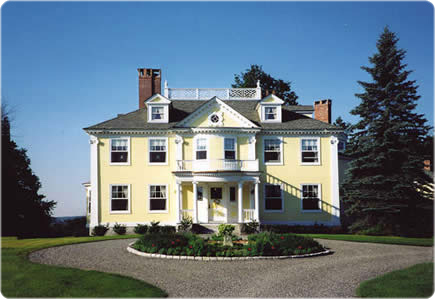
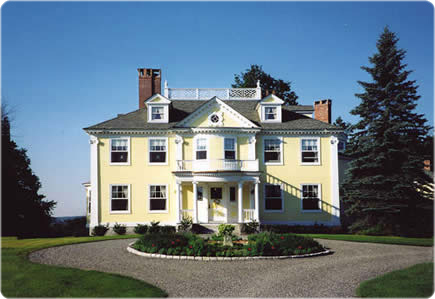
Well, just another summer weekend, lounging around in a lovely old Inn – a Victorian reproduction of a Georgian style house – in a sleepy Vermont town surrounded by mountains; being waited on by the Inn’s owner and most excellent cook for lavish breakfasts, a full Afternoon Tea, and a dinner reminiscent of the repast at the Netherfield Ball [lacking ‘white soup’ of course but that is saved for winter gatherings!]; and all this with lively discussions of Jane Austen and Sense & Sensibility late into the evening – Absolutely Perfect!
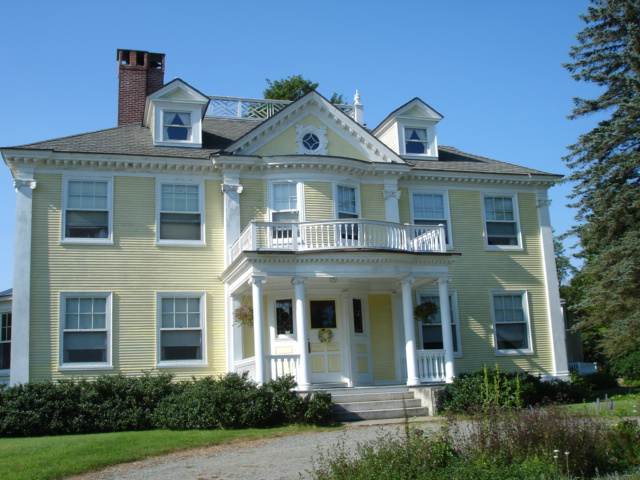
The Governor’s House in Hyde Park Vermont has been hosting these Jane Austen Weekends for the past few years – I have been to a few of the evening events and have stayed for those weekends where I was speaking – each event is made more special by the participants, people from all over who have found their way, for their very different reasons, to mingle with complete strangers and talk about Jane.  This past weekend brought a full house of fourteen people [sixteen to include Suzanne and me…] –

 *A mother celebrating her 50th birthday, her only wish for her two daughters [one still in high school, the other in college] and her two sisters to share in her love of Austen – none of them [except the Mom!] Austen readers in the least.  After being subjected to a nine-hour car ride listening to a BBC audio of S&S ALL the way, they arrived bleary-eyed and just FULL of S&S, and now I can safely say, all ready to go home to read the book! [love these convert stories!] – they win the “We’ll do anything to keep peace in the family [and this S&S thing isn’t so bad after all]” Award!

**********************************

*A couple from Minnesota [the husband one of the best sports I have yet to encounter!]  – he created a complete notebook of his wife’s ‘Jane Austen Collection’ – a bibliography of all her books, resources on the Regency period and Austen’s life, and a collection of all the emails received on their Minneapolis Region events – what a gift, a surprise no less! – and he actually really seems to be quite taken with Jane himself – though not so far as appearing in a superfine waistcoat [nor flannel for that matter!], pantaloons and hessians! – hopefully next time! – and his wife, a joy to see another so taken with Austen, re-discovering her, as so many do after the kids have left the house and there is time to reflect and savor – and she is enjoying all the recent sequels [with perhaps the exception of P&P and Zombies, a gift to her, that like me, she cannot quite get beyond that first page!] – they win the “Couples who read Austen together have a finer understanding of Love” Award!

********************************

*Another family, “dragged” away for the weekend by the elder Austen-loving daughter, good sports all – her Mother, her Aunt, and her younger sister – all cramming the reading of S&S into their busy lives over the past month [we did discover that those who were still cramming their S&S the night before the quiz, fared far better than those of us who actually have read the thing ten times!] – the Aunt came from a distance so a family reunion of sorts – they win the “Now will you finally believe me when I keep saying how wonderful Austen is” Award! [I think they believe her now…] – AND First Prize in the “Love to dress up in Regency” Award!

***************************** 

[two Austen-quoting friends with Suzanne pouring Tea]

*Two young women who love Austen, can recite most lines from the books AND movies on command [my son can do this with Caddyshack – and my goodness, how much more enjoyable to hear the quotes from Austen!], brought along the sister of one of them whose husband dropped them all off so he could mountain bike Vermont for a few days – they did their knitting and needlepoint and completed the very difficult Jane Austen puzzle in no time at all – [[but alas! the Regency dress made by hand by one of the sisters was not quite finished – she promises to wear it next time!] – they win the “We LOVE Jane Austen and want to shout it to the whole world” Award!

********************************
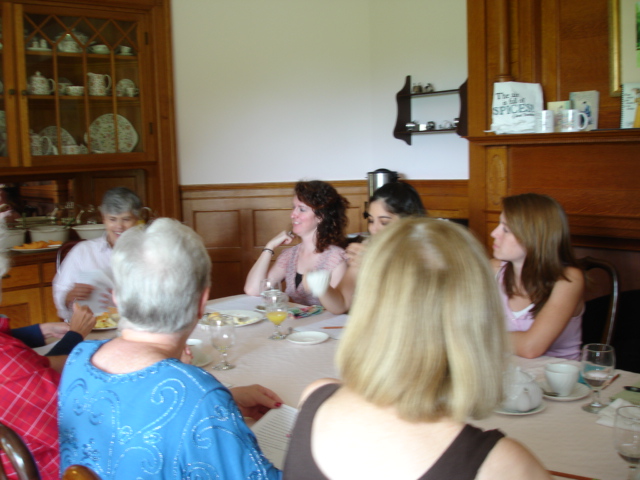
And the conversation? – Suzanne talked about the “lay of the land” during this Regency period – the government, town and village life, domestic life, AND the proper serving of Tea; I spoke on traveling in S&S – the economics, the distances, and the carriages of each of the characters [Willoughby and his curricle getting far too much attention] – and much discussion on who is “sense” and who is “sensibility” and what does “sensibility” mean anyway, and how does the first sentence compare to the opening line of Pride & Prejudice, and a most gruelling but laughter-inducing quiz with fabulous prizes, and of course the MOVIES – so many different opinions on each of the adaptations – Hugh Grant is to die-for to Hugh Grant is a wimp; Colonel Brandon is way cool in his waistcoat to Marianne is quite right to be disgusted with his aches and pains; Mr. Palmer we all agreed is the best of the comic characters, his wife a silly fool and more the pity for him [and Hugh Laurie got well-deserved high marks] – and though it was an S&S weekend, Colin Firth, a.k.a. Mr. Darcy was never far from the table conversation [as is quite proper] and the 2005 rendition causing quite the heated talk – endless chat, not one thought really completed, but certainly all agreeing that a more delightful weekend would be hard to come by!

On a personal note, one always finds at these gatherings how very small the world is – one group from a small town in New Jersey “I would never have heard of” which turned out to be where my college roommate grew up and I had visited it a number of times; and the mother of the other mother-daughter group was in the Army at the same place and same time that my husband and I were in the early 1970s – we were nearly neighbors!

And of course, great kudos and a hearty thank you to Suzanne who runs these weekends so beautifully, bringing so many people from all parts of the country together – new friends found in this resplendent world of Jane Austen – a step back from the 21st century for a few short days that energizes and soothes at the same time  – Jane would approve, I have no doubt  – she was there, after all…
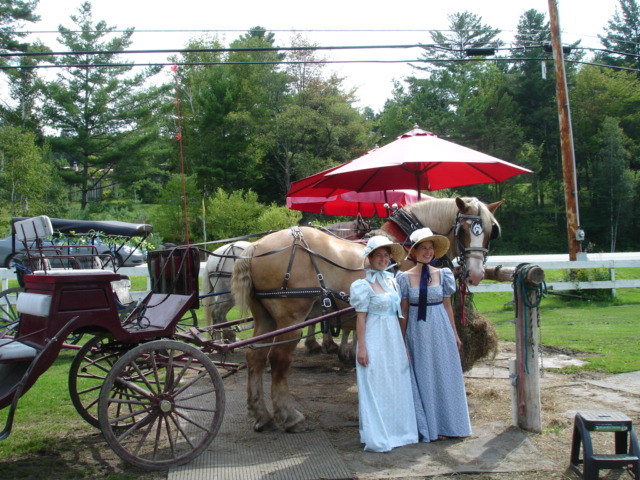
… the Austen-era feeling certainly was helped along with a
leisurely morning carriage ride through the Stowe Vermont woods…
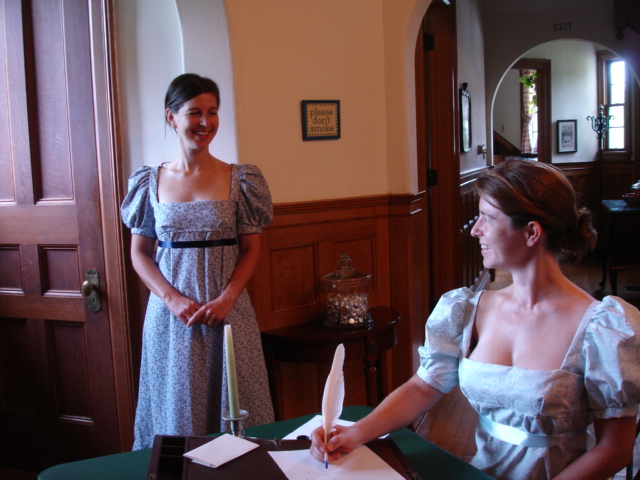
… and letter-writing exercises with quills
[but alas! no Darcy to mend our pens] …
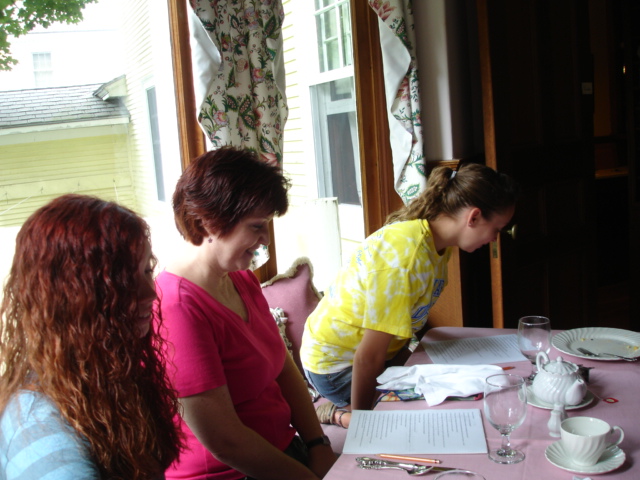
…and mulling over that very difficult quiz!

… and reading up on carriages, bonnets in hand awaiting an outing …

**********************************

Next up:  

series 3: Sense and Sensibility
Friday evening talk: Making Sense of the Regency World

Friday – Sunday, September 10 – 12, 2010
Friday – Sunday, January 7 – 9, 2011

Click here for more details and here for the Governor’s House website

[Posted by Deb] 
Austen Literary History & Criticism · Books · Jane Austen · News · Regency England · Schedule of Events · Social Life & Customs

A Jane Austen Weekend in Vermont!

The Governor’s House in Hyde Park will be hosting another Jane Austen event this coming weekend August 13 -15, 2010  ~ topic is Sense and Sensibility.

 Jane Austen Weekend: Sense & Sensibility
The Governor’s House in Hyde Park
Friday to Sunday, August 13-15, 2010

http://www.OneHundredMain.com/jane_austen.html
802-888-6888, tollfree 866-800-6888 or info@OneHundredMain.com

 Reservations are required! 

A leisurely weekend of literary-inspired diversions has something for every Jane Austen devoteé. Slip quietly back into Regency England in a beautiful old mansion. Take afternoon tea. Listen to Mozart. Bring your needlework. Share your thoughts at a discussion of Sense & Sensibility and how the movies stand up to the book.  Attend the talk entitled ~ “Making Sense of Jane Austen’s World” * ~  Test your knowledge of Sense & Sensibility and the Regency period and possibly take home a prize. Take a carriage ride. For the gentleman there are riding and fly fishing as well as lots of more modern diversions if a whole weekend of Jane is not his cup of tea. Join every activity or simply indulge yourself quietly all weekend watching the movies. Dress in whichever century suits you. It’s not Bath, but it is Hyde Park and you’ll love Vermont circa 1800. 

  **************************

* “Making Sense of Jane Austen’s World” – Inn owner Suzanne Boden will be talking on the architecture, furnishings and other decorative arts of the Regency Period; Deb Barnum of JASNA-Vermont [yours truly] will be talking about travel in the late 18th and early 19th century – the horse and carriage era – and how Austen’s characters travelled in Sense & Sensibility – [and there is a lot of moving about in this book!]

*Or come for just an afternoon or evening and choose from these activities:

  • Informal Talk with Coffee and Dessert, Friday, 8:00 p.m., $14.00
  • Afternoon Tea, Saturday, 3:00 p.m., $20.00
  •  Book Discussion and Dinner, Saturday, 7:00 p.m., $35.00
  •  Jane Austen Quiz and Sunday Brunch, Sunday, 11:30 a.m., $15.00
  • All four activities: $75.00

The Governor’s House in Hyde Park
100 Main St
Hyde Park, VT 05655
http://www.OneHundredMain.com/jane_austen.html
802-888-6888, tollfree 866-800-6888 or info@OneHundredMain.com

**If you cannot make this weekend, make a note on your calendars of the  following dates as well:

series 3: Sense and Sensibility
Friday evening talk: Making Sense of the Regency World

Friday – Sunday, September 10 – 12, 2010
Friday – Sunday, January 7 – 9, 2011

******************************

and for your 2011 calendar:

series 4: Persuasion
Friday evening talk: Captain Wentworth’s Royal Navy
Friday – Sunday, January, 28 – 30, 2011
[other dates TBA]

Jane Austen · Regency England · Social Life & Customs

So What the Heck are ‘Holland Covers’, anyway??

One of my most favorite scenes in a movie is the opening of the 1995 Persuasion  and the slow-motion laying on of the “holland covers” to protect all the Kellynch furniture as the Elliots retrench to Bath.  One can read just about any book of historical fiction and see this term used to refer to furniture coverings:  “shrouded in holland covers” or some such reference [just google ”holland covers” and you will see what I mean – even Balzac used the term!]  It is such a common reference in today’s historical fiction writings, and one reads along, knowing what it means, but where does the term come from? and most important of all, did Jane Austen ever use the term? 

 I have a book titled Regency Furniture, by Clifford Musgrave [any relation to The Watson’s Tom?], and there is much on Henry Holland, and I recall when I first bought this book that I thought perhaps this is where the term originated – Holland designed furniture, so coverings for said furniture could be called ‘holland covers’ – no?  Holland was the architect appointed by the Prince Regent [then the Prince of Wales] to rebuild and refurbish Carlton House, the Prince’s London establishment since 1783.  Carlton House was subjected to an endless series of alterations to the building and the furnishings for the next forty years, all to end in demolition in 1827.  But Mr. Holland is a topic for another post [he was the pupil and assistant of the landscape architect ‘Capability’ Brown and married his daughter Bridget, designed the PR’s Marine Pavilion in Brighton, laid out parts of the development of the fashionable Knightsbridge and Chelsea areas of London [including Sloane Square where Austen’s brother Henry lived] – so he will make a most interesting topic in his own right…] – but indeed he has nothing to do with ‘holland covers’ ….  But it is this thought that got me to wonder at its meaning…

Now,  if you search “Holland covers” on the ever-reliable, all-knowing, all-seeing internet, barely anything comes up, and certainly not an image in sight –  to whit: 

*There is a link to a description of the above-mentioned Persuasion

At the begining, we see Anne Elliot (Sally Hawkins) going through the rooms of her home, Kellynch Hall, as harried servants are trying to pack up, and placing holland covers on the furniture. She is marking items on lists and trying to direct the servants.

*A link to an online Google book  from 1909, Mrs. Wilfrid Ward’s Great Possessions, with chapter 33 titled “Brown Holland Covers”  [the full text is here in the event you cannot resist the whole book…]

*And Edith Nesbit makes mention of them here in her The Enchanted Castle.  

*There is a short advertisement in an 1856 edition of Punch, that is quite funny: 

 A MAD WAG’S ADVERTISEMENT.

 We beg leave to call the attention of ProFessor Owen to the very contradictory animal referred to in an extraordinary advertisement, relating to a Bath chair, which we are told “may be drawn by either a man or pony, painted maroon, lined with drab cloth and holland covers.” We can understand the possibility of painting either a man or a pony “maroon,” though we shonld question the good taste or the utility of applying such a mode of external decoration to either animal ; but that either of t them should be “lined with drab cloth and holland covers ” is a phenomenon we at once pro! nounce incredible. It is true that a man’s stomach has a coat, and so we presume has a pony’s, which may account in some degree for the very whimsical notion of a man or pony ” lined with cloth ;” and we hâve a faint glimmering of an idea suggestive of ” holland covers ” arising out of the tendency of an inveterate gin drinker to cover his inside with Hollands. Nevertheless, the advertisement is so odd, that if the advertiser were to take it into his head to poison half his relations, make away with himself, or steal a pound of pork sausages, we 1 dare say that no intelligent British jury would find any difficulty in pronouncing him ” Not Guilty,” on the ground of insanity.

*And from a book on Textiles in America, describing the proper way to make slipcovers, where we are told that these covers are removed for company, but that Holland, though the most durable, looks cold and chintz is thus much preferred…

*And a 1919 article in The Independent on “Summer Clothes for the House”.

[This dates me terribly I’m afraid to say, but my grandmother and mother always covered every piece of upholstered furniture in the summer with beautifully made slipcovers, holland covers being their precursor – they also rolled up all the rugs and put down lighter summer carpets and changed all the curtains to summer sheers and changed all the bedlinens [well, I still do that] and washed down all the walls – yikes!]

Now as for Austen:  I find no mention in the novels; indeed, the only reference comes up in a short tale found in the RoP’s “Bits of Ivory” section called The Key:   

He looked around at the furniture which has not seen any use for over five years, it was draped with Holland covers to keep off the dust–even though Mrs. Reynolds, being a conscientious housekeeper, regularly cleaned and dusted the room. Darcy was unaware that she often thought what a pity it was that the Master’s suite was not being used.

I can find no references in the letters, and wonder about the Juvenilia, where one would think Austen would have her heroines fainting on sofas that might be so covered…

So for me, back to the books:  A Dictionary of Costume and Fashion by Mary Brooks Picken [Dover, 1999] says the following under “Holland”: 

Closely woven linen fabric originally made in Holland.  The first Hollands were made of this fabric [i.e. a form-fitting foundation made by big establishments for special customers and used as a size guide in cutting and draping to save fittings] – a linen or fine cotton in plain weave, sized and often glazed [p. 175];

and under “Linens”:  firm, course, plain-woven, linen, unbleached or partly bleached, glazed and unglazed; originally from Holland.  Used for aprons, furniture covers, window shades, dress-form covers, etc. [p. 213]

And in Inside the Victorian Home: A Portrait of Domestic life in Victorian England, by Judith Flanders [Norton, 2004]:  

As the second half of the century progressed, hygiene became the overriding concern.  Mrs. Panton, still distressed about bedroom carpets, remembered a carpet that had spent twenty years on the dining room floor, “covered in Holland in the summer,” and preserved from winter wear by the most appallingly frightful printed red and green ‘felt square’ I ever saw.” [with a note:  Holland was a hard-wearing linen fabric, usually left undyed.  It was much used in middle- and upper-class households to cover and protect delicate fabrics and furniture.”  [p.  43] 

[quoting Mrs. Jane Ellen Panton, 1848-1923, author of many books on home decorations and home economics, her From Kitchen to Garret, published in eleven editions in ten years!]

And now I see that searching ‘holland linen’ and ‘holland cloth’ is more productive: 

*Here being the whole history of Dutch linen at A Fabric Collector’s Diary

*And at ehow.com, a definition and a picture of plain old linen: 

Holland linen is a plain-woven linen fabric that is treated with oil and starch, making it opaque and hard for the sunlight to penetrate. This quality makes it well-suited for use in making window shades and lampshades.


*And even at British History Online, we find history of the import of holland linen:   

Holland and its neighbours were major producers of LINEN of all grades, the finest of which was usually designated simply as HOLLAND or HOLLAND CLOTH. It was much used for making the highest quality of NAPERY and BED LINEN above those made of DIAPER, HUCKABACK, FLAXEN CLOTH, HEMPEN CLOTH and TOW.

OED earliest date of use: 1617

Found described as PLAIN

[From: ‘Hobnail – Holliwortle’, Dictionary of Traded Goods and Commodities, 1550-1820 (2007)]

*And on this side of the pond at the MFA in Boston – their CAMEO site on materials: 

Material Name: holland cloth : 

Originally, the name for any fine, plain-weave, linen cloth manufactured in the Netherlands. Holland cloth now refers to a plain-weave cotton or linen fabric made opaque by fillers, sizing, and/or glazing. It is typically sized with starch, then glazed with a filled oil. Holland cloth is used for window shades, lamp shades, bookbinding, upholstery, labels, and gummed tapes.

 And so it goes – this search, much like my previous short post on the Steventon Rectory that started from a real estate ad and resulted in two posts and is still to be updated with new and amazing information – has just opened a huge can of worms – I just want to find an IMAGE of a piece of furniture in “holland covers” – if anyone has such, and there MUST be one out there somewhere, please email me the link – I will be forever grateful, and can thus bring this post to a close… and lacking holland covers, I am having this awful feeling of the need to vacuum and dust…

Jane Austen · Jane Austen Circle · News · Social Life & Customs

Jane Austen’s Ipod ~ you can listen!

Three days left to listen to the BBC Radio 4 program of Jane Austen’s Ipod [first heard in January and now repeated] – here’s the link:

BBC Radio 4 Programme  – Jane Austen’s Ipod

A rare insight into the family life of Jane Austen through her favourite songs. She collected songs all her life, but many of them have only just come to light, in manuscripts inherited by one of her descendants. Jazz singer Gwyneth Herbert performs some of these songs.

Professor Richard Jenkyns inherited a pile of music manuscripts which are only just being looked at by the Austen scholars. He shows us what he found: some have been laboriously copied out by Jane herself – among the music manuscripts in Jane’s handwriting is a piano piece which he believes she composed.

David Owen Norris brings him together with scholars Deirdre Le Faye and Samantha Carrasco at Jane Austen’s house in Chawton, Hampshire. Together they cast a new light on one of our best-loved and most enigmatic writers.

Some of the songs included are:

  • A romantic song by Robert Burns, to which she changed the words, so that the final words referred to herself -“the charms of your Jane.”
  • A tragic French song, “Les Hirondelles”, which ends with imprisonment and death. Jane’s sister in law Eliza had lived in France, and her first husband was guillotined in the Terror.
  • “The Ploughboy” – a popular song of the time, witty, and with a politically subversive message about corrupt politicians who are only interested in money, and manage to buy their way into power.
  • “Goosey Goosey Gander” – Jane had a lot of nursery rhymes, and was constantly surrounded by boisterous nephews and nieces.

Producer: Elizabeth Burke
A Loftus production for BBC Radio 4.

[Image and text from the BBC site]

[Posted by Deb, with thanks to Janeite Kerri]

…AND if you happen to be around the University of Southampton on June 30th, don’t miss this Jane Austen program at Turner Sims:

Calling all Jane Austen enthusiasts!

Discover the music that influenced Jane Austen whilst writing her classic novels, as pianist David Owen Norris explores the nine newly-discovered volumes of the Austen family music collection. Entertaining Miss Austen is on Wednesday 30 June at 8pm.

David Owen Norris is Professor of Musical Performance at the University of Southampton, an Honorary Fellow of Keble College, Oxford, an Educational Fellow of the Worshipful Company of Musicians, and an authority and leading performer on early pianos and rare piano concertos. Joined by soprano Amanda Pitt, David sheds unique light on the musical loves of Jane Austen and her family.

This fascinating recital includes favourite airs and dances – and the only piece of music actually mentioned in Jane’s novels; Kiallmark’s ‘Robin Adair’, which is performed expertly by Jane Fairfax in Emma.

Tickets are £10 and free to Friends of Turner Sims.

[from the Turner Sims website]


Jane Austen · News · Schedule of Events · Social Life & Customs

Gala Event ~ Burlington Country Dancers ~ & You are Invited!

YOU’RE INVITED TO WATCH JANE AUSTEN’S FAVORITE PASTIME …


YOU’VE READ ABOUT ENGLISH COUNTRY DANCING
IN AUSTEN’S NOVELS ~ 
YOU’VE SEEN IT IN FILMS LIKE  “PRIDE & PREJUDICE”~
NOW YOU CAN SIT ON STAGE TO LISTEN TO THE BEAUTIFUL LIVE MUSIC,
WATCH THE COSTUMED DANCERS
(MANY DRESSED IN AUSTEN-ERA GARB),
AND, IF YOU LIKE, INDULGE IN TASTY REFRESHMENTS AT THE BREAK

ACROSS THE LAKE
An English Country Dance Gala
on the Vermont side of Lake Champlain

SATURDAY, JUNE 12, 2010
8 p.m. to 11 p.m.

Elley-Long Music Center
223 Ethan Allen Ave.
Colchester, VT
(in Fort Ethan Allen, off Route 15) 

Prompting by Orly Krasner
Music by Earl Gaddis ~ violin
Mary Lea ~ violin & viola
Jacqueline Schwab ~ piano
Wayne Hankin ~ woodwinds & more

SPECTATOR’S PRICE, AT THE DOOR:
$10 with sumptuous refreshments at break, $5 without


Website: www.burlingtoncountrydancers.org  
just click on Across the Lake for all the details!

[Image from the Hamilton English Dancers  website]

[From Janeite Val]

Jane Austen · Regency England · Social Life & Customs

English Country House Auction Results

Dessert and cards, anyone??

The Sotheby’s Auction, A Celebration of the English Country House [Sale No 8625], I mentioned in my previous post took place today [April 15, 2010] and you can view the results here.


Sale Total:  3,035,376 USD*   [so far: session 2 is still ongoing] [see below for update]

a few samplings:


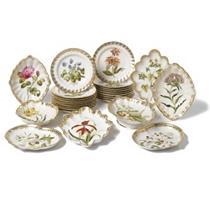
Lot 2:  A DERBY PORCELAIN BOTANICAL PART DESSERT SERVICE,  CIRCA 1800
5,000—7,000 USD
Lot Sold.  Hammer Price with Buyer’s Premium:  10,000 USD


 Lot 21:  A FINE GEORGE III INLAID TULIPWOOD AND MAHOGANY CARD TABLE IN THE MANNER OF THOMAS CHIPPENDALE, CIRCA 1775
8,000—12,000 USD
Lot Sold.  Hammer Price with Buyer’s Premium:  43,750 USD

See the Sotheby’s website for the complete catalogue and ongoing results…


********************************


PS:  here are the final results, with one more item: 
 
Sale Total: 3,172,254 USD

LOT 256:  A GEORGE III SILVER LARGE INKSTAND FROM THE WAR OFFICE, ROBERT & SAMUEL HENNELL, LONDON, 1805 

8,000—10,000 USD
Lot Sold.  Hammer Price with Buyer’s Premium:  17,500 USD  

 [Posted by Deb]


Jane Austen · Social Life & Customs

The French Revolutionary Calendar

In the Oxford Austen online class I have just completed, I discovered a number of websites relating to the British Navy that we studied for the units on Mansfield Park and Persuasion.  The Historical Maritime Society has a wealth of information and is worth a look-see – I append here one bit of interesting revolutionary-era history that was new to me, and quite a good chuckle as well, so prepare for a belly-laugh!:

The French Revolutionary Calendar

One of the peculiar manifestations of the French Revolution was the adoption of a totally new calendar, ‘The Calendar of Reason’, which was based on the system used by the Ancient Egyptians. From time to time anyone reading contemporary documents will be aware of this system and a brief explanation is included here.

In the build-up to the Revolution it was not just the aristocratic class that was despised by the new ‘thinkers’ but also the Roman Catholic church with its all-pervading influence on the lives of ordinary people, its feasts and fasts, coupled with its reactionary support of the hated ‘aristos’. Consequently one of the aims of the 1789 Revolution was the rejection of the relatively new Gregorian calendar (promulgated by Pope Gregory) adopted by France in December 1582 (although not in Britain until 1752).

In 1792 the revolutionary Committee of Public Instruction began to investigate the possibilities of this change and formed a subcommittee to do this. It contained Astronomers, Mathematicians and also Poets and Dramatists and finally published the results of its deliberations in September 1793. This was followed by a decree in October bringing in the new calendar.

The start date for this was 22nd September 1792, the date which marked the start of the French Republic, a date which, it was claimed, marked the beginning of equality for all Frenchmen. The calendar consisted of 12 months, each with 30 days. On top of this there were to be 5 ‘jours complémentaires’ (originally called ‘sansculottides’ after the practice of common non-aristocrats of wearing trousers, not breeches) and leap years were to have an extra jour complémentaire. This was based on the Ancient Egyptian calendar, still used by some Eastern Orthodox Christian churches.

The poets among the committee chose the names of the new months and in particular this task fell to Philip François Nazaire Fabre d’Eglantine, whose nomenclature reflected the character of each particular month. These are presented below with an explanation (mine) of the word’s root. Remember when reading these that the calendar began in late September (Gregorian).

  • Vendémiaire Wine-harvesting
  • Brumaire  Foggy 
  • Frimaire  Frosty 
  • Nivose Snowy
  • Pluviôse  Rainy
  • Ventose  Windy
  • Germinal  Plant germination 
  • Floréal  Flowering season
  • Prairial  Meadows
  • Messidor Reaping and harvesting 
  • Thermidor  Heat
  • Fructidor  Fruit harvest 

 Predictably the furiously anti-French literary establishment across the Channel in Britain made fun of this by christening the months, Wheezy, Sneezy, Freezy, Slippy, Drippy, Nippy, Showery, Flowery, Bowery, Wheaty, Heaty and Sweety!!


[text from Historical Maritime Society – click here for more information:  when at the home page, click on “Nelson and his Navy” and follow the various links]

Further Reading:

[Posted by Deb]

Books · Jane Austen · Jane Austen Circle · Regency England · Social Life & Customs

In My Mailbox…

The most recent issue of Jane Austen’s Regency World [March / April 2010, Issue 44], this issue titled “Jane Austen’s Musical World,” brought a delightful surprise – a free cd containing the six works by composers who were working in Bath in the late 18th century [see a list of the selections below], as well as  several articles on the music of Austen’s time:

~ the guest essay by Franz Joseph Hayden describing his visit to Bath in 1794

~ Maggie Lane on Jane Austen, Music Lover? where Ms. Lane posits that “Jane’s attitude toward music seems to have been occasionally hostile, often ambivalent, and only rarely enthusiastic.”

~ David Owen Norris on What was on Jane’s Ipod? on newly discovered music within the Austen family, suggesting that Eliza de Feuillide was an even more considerable pianist than previously thought, as well as the discovery of a hand-written piece possibly composed by Austen herself!

~ Patrick Wood on Thomas Linley, Mozart’s boyhood rival [and subject of one of Gainsborough’s famous paintings]

~ Mike Parker, Tidings of My Harp, “argues that Jane Austen uses the harp in her novels to identify privileged and spoilt women, while knowing little of the mechanics of the instrument herself.”  [think Mary Crawford, the Musgrove sisters and Georgiana Darcy]

~ our very own JASNA-Vermont ‘s Kelly McDonald in A Golden Time, tells of the diaries of Emma Austen-Leigh, wife of Austen’s nephew James Edward Austen-Leigh, which provide valuable insight into London’s music scene during the Regency – here focusing on the Knyvett family of musicians. 

~ Gillian Dooley considers the question of taste in Sense & Sensibility in Matters of Taste and its relationship to moral worth.

~ an interview with Austen scholar Richard Jenkyns – who enlightens us with admitting a special affection for Mansfield Park, thinking the latest BBC adaptation of MP “wins the competition for the worst ever adaptation of any classic novel by a mile”, and wanting most to be like Henry Tilney [but would like to marry Lizzy Bennet]!  [and I add that Jenkyns book A Fine Brush on Ivory: an Appreciation of Jane Austen (2004) is a wonderful read…]

~ articles from JASNA’s Carol Adams on the score for the 1995 P&P; JASA’s Ann Bates on their one-day symposium on Jane and Occupations; reviews of cds, letters, news from 1802, and as always, a great number of fabulous illustrations…

The enclosed cd contains works by:

  • Thomas Linley the Elder : Cantata: Awake my lyre and Invocation: Fly to my aid, O mighty love
  • Henry HarringtonEnchanting Harmonist
  • Thomas Linley the YoungerTo heal the wound a bee had made
  • William Jackson after Thomas ArneWhere the bee sucks
  • William HerschelSonata in D

Subscribe and enjoy!  Jane Austen’s Regency World Magazine

[Posted by Deb]

Jane Austen · News · Regency England · Social Life & Customs

A Jane Austen Weekend in Vermont!

The Governor’s House in Hyde Park will be hosting another Jane Austen event this coming weekend on January 29 31 ~ topic is Sense and Sensibility.

governors inn

[imagine snow! – bring your woolies!]

Jane Austen Weekend: Sense & Sensibility
The Governor’s House in Hyde Park
Friday to Sunday, Jan 29-31 **

http://www.OneHundredMain.com/jane_austen.html
802-888-6888, tollfree 866-800-6888 or info@OneHundredMain.com

 Reservations are required! 

A leisurely weekend of literary-inspired diversions has something for every Jane Austen devoteé. Slip quietly back into Regency England in a beautiful old mansion. Take afternoon tea. Listen to Mozart. Bring your needlework. Share your thoughts at a discussion of Sense & Sensibility and how the movies stand up to the book.  Attend the talk entitled ~ “Making Sense of Jane Austen’s World” * ~  Test your knowledge of Sense & Sensibility and the Regency period and possibly take home a prize. Take a carriage ride or sleigh ride. For the gentleman there are riding and fly fishing as well as lots of more modern diversions if a whole weekend of Jane is not his cup of tea. Join every activity or simply indulge yourself quietly all weekend watching the movies. Dress in whichever century suits you. It’s not Bath, but it is Hyde Park and you’ll love Vermont circa 1800. 

  **************************

* “Making Sense of Jane Austen’s World” – Inn owner Suzanne Boden will be talking on the architecture, furnishings and other decorative arts of the Regency Period; Deb Barnum of JASNA-Vermont [yours truly] will be talking about travel in the late 18th and early 19th century – the horse and carriage era – and how Austen’s characters travelled in Sense & Sensibility – [and there is a lot of moving about in this book!]


*Or come for just an afternoon or evening and choose from these activities:

  • Informal Talk with Coffee and Dessert, Friday, 8:00 p.m., $14.00
  • Afternoon Tea, Saturday, 3:00 p.m., $20.00
  •  Book Discussion and Dinner, Saturday, 7:00 p.m., $35.00
  •  Jane Austen Quiz and Sunday Brunch, Sunday, 11:30 a.m., $15.00
  • All four activities: $75.00

The Governor’s House in Hyde Park
100 Main St
Hyde Park, VT 05655
http://www.OneHundredMain.com/jane_austen.html
802-888-6888, tollfree 866-800-6888 or info@OneHundredMain.com

**If you cannot make this weekend, make a note on your calendars of the  following dates as well:

series 3: Sense and Sensibility
Friday evening talk: Making Sense of the Regency World

Friday – Sunday, August 13 – 15, 2010
Friday – Sunday, September 10 – 12, 2010
Friday – Sunday, January 7 – 9, 2011

[Posted by Deb]

Books · Jane Austen · Social Life & Customs

A Trifle for your Holiday Table

One of my favorite recipes for the holidays is a trifle, that mix of biscuits, cream, and fruit, that makes as much a table decoration as a delicious dessert.  Here is the recipe from The Jane Austen Cookbook by Maggie Black and Deirdre Le Faye [British Museum Press, 1995]  The first part of the recipe in italics is the text from either the manuscript of Martha Lloyd’s Recipe Book or Martha Rundell’s A New System of Domestic Cookery (1806);  followed by the modern interpretation by Black and Le Faye.

A Trifle:  From Martha Lloyd’s Recipe Book, p. 35:

Take three Naple Biscuits cut them in Slices dip them in sack lay them in the bottom of your dish, then make a custard of a pint of cream & five Eggs & put over them then make a whipt Syllabub as light as possible to cover the whole the higher it is piled the handsomer it looks.

********************************

  • 1 quantity Solid Custard [see below]
  • plain Madeira cake, cut in 1-inch slice to line the bottom and 1/3 of the sides of a 2 1/2 pint [6 1/4-cup] glass bowl
  • medium dry sherry to moisten
  • 1 quantity Solid Syllabub [see below]
  • chopped, candied or crystallized fruits to decorate [optional]

The original Naples biscuits were twice-baked, hard sponge cakes stored for use when needed for eating with or in 18th-century sweet “creams”; I have used instead plain Madeira cake.  The sack (sherry) was intended to soften the biscuits, so go easy when adding it to the softer modern cake.

Make the Solid Custard first so that it is cooled (but not yet set) when you are ready to add it to the sponge cake and before you want to add the syllabub.  The dessert will then have interesting, contrasting layers.  Follow the original recipe above for adding the syllabub.  Use chopped, candied or crystallized fruits, if you wish, for a period-style decoration on top of the trifle.  [Serves 6]  [page 121]

Solid Custard: [Martha Lloyd’s Recipe Book,  p. 90]

In a quart of Milk boil and oz. of Isinglass until the latter nis dissolved, then strain it through a Sive, let it stand a short time, add the Yolks of five Eggs well beaten, mix them with the Milk & set it on the fire until it is as thick as a rich boiled Custard, sweeten & put it into a Mould to prepare it for the Table – A few Bitter Almonds or a Bay leaf will improve the flavour very much. 

**************************************

  • 2 pints [5 cups]
  • 2 fresh bay leaves or 1 dried bay leaf
  • 1 1/2 tablespoons powdered gelatin
  • 4 egg-yokes, beaten
  • 1-2 tablespoons caster (superfine) sugar
  • fresh bay leaves to decorate (optional)

Bring the milk with the bay leaves or leaf almost to scalding point in a saucepan, scatter on the gelatine and stir until it dissolves.  Leave to stand for a few minutes, then take out the bay and whisk in the egg yolks  and sugar.  Heat the mixture very slowly, stirring occasionally, so that it thickens before reaching the boil.  Transfer it to a decorative mould or dish and leave it to get thoroughly cold before serving.  This may take several hours.  Decorate with 1 or 2 fresh bay leaves if you like.  For a pouring custard, reduce or omit the gelatine.  [p. 61]

Solid Syllabubs: [Martha Rundell.  A New System of Domestic Cookery, 1806 ed., p. 204]

Mix a quart of thick raw cream, one pound of refined sugar, a pint and a half of fine raisin wine in a deep pan, put to it the grated peel and the juice of three lemons.  Beat, or whisk it one way half an hour,  then put it in a sieve with a bit of thin mustard laid smooth in the shallow end till next day.  Put in glasses.  It will keep good, in a cool place, ten days.

**********************************************

  • juice and grated rind of 1 lemon
  • 1 tablespoon lump sugar, coarsely crushed
  • 14 fl oz [1 3/4 cups] double (heavy) cream
  • 7oz (1 cup) caster (superfine) sugar
  • 8fl oz (1 cup) medium-dry white wine
  • light sprinkling of dry English mustard powder

Beat the mixture in the bowl with an electric beater or rotary whisk until it is thick and stands in peaks.  Turn it into sparklingly clean dessert glasses and chill overnight.  As an attractive decoration, mix the reserved grated rind and crushed sugar and sprinkle this on the syllabubs just before serving. [p. 85]

Put aside half the grated lemon rind and all the lump sugar.  Mix all the rest of the ingredients in a deep bowl.  Use enough caster sugar to sweeten well but without being sickly; the exact quantity will depend on the sweetness of the wine.  Use only a thin sprinkling of mustard; it should just give “body” to the lemon and wine, not be noticable.

***************************************************

 Phew! that all seems exhausting, doesn’t it?  So for a simpler version [i.e the way I make it], you can use lady fingers or sponge cake, either make a soft custard or use vanilla pudding, alternate layers of the lady fingers, fresh fruit (strawberries, raspberries, blueberries, kiwis, bananas, or what you will), rum to soak the cakes at each layer, top with whipped cream and strawberries to decorate… it is lovely, just watch the rum- it sinks to the bottom so the last helpings can cause inebriation! – my Fannie Farmer cookbook calls this “Tipsy Pudding” for a reason!

[Trifle image from trendir.com]

[Posted by Deb]