Join us today for a guest post by Sue Wilkes, as she shares one of her spy tales from her new book Regency Spies: Secret Histories of Britain’s Rebels & Revolutionaries(more information on the book below).
The Cato Street Conspiracy, 1820
The year 1820 began with grave news – the death of George III on 29 January, after years of illness. The King was buried a week later with great pomp and ceremony on 16 February. But his son George IV’s reign did not get off to a good start. A week later, news broke to an astounded British public of the arrest of ‘a gang of diabolical ruffians’ at Cato Street, in London. The conspirators, led by the ‘notorious’ Arthur Thistlewood, planned to kill members of the Cabinet (government ministers) while they dined at Earl Harrowby’s house in Mansfield Street (Gentleman’s Magazine, February 1820).
This was no chance discovery, however. Thistlewood and his gang were well known to the authorities – the government’s spies had kept them under surveillance for years. Arthur Thistlewood, a brooding, dangerous man known to be deadly with a sword, led a group of revolutionaries called the ‘Spencean Philanthropists’.
The Spenceans were followers of the late Thomas Spence, who advocated the common ownership of all land – a truly anarchic idea in an unequal society rooted in land, wealth and property. Thistlewood first came to prominence in the Spa Fields riot of December 1816 in London. The riot was thought to be a ‘trial run’ by the Spenceans to see if they could get enough popular support to attack the Tower of London, Bank of England, and seize the city. Thistlewood and his friends were arrested and tried for treason the following year, but acquitted as most of the evidence against them was based on unreliable spy evidence.
After his release from prison, Thistlewood and his followers were constantly watched. In 1817 a spy called Shegoe reported, ‘They entertain the plan of assassination, and Lords Castlereagh, Sidmouth, Liverpool and Ellenborough have been marked as objects of their pursuit’. Some conspirators guessed that Shegoe was a spy, however, and his usefulness declined.
A new spy, George Edwards (code-name ‘W—r’ in the surveillance reports) infiltrated the gang and actively encouraged their plans. Edwards also recruited more conspirators: one of the people he ‘groomed’ was John Thomas Brunt, a shoe-maker. Another was Richard Tidd, who came from Thistlewood’s native Lincolnshire, and met Edwards through Brunt. Edwards’ actions and words were so ludicrously violent that several men he approached sent him packing, convinced that he was trying to entrap them.
Early in 1820, Edwards brought Thistlewood the news he had been waiting for: a Cabinet dinner was planned at Lord Harrowby’s house. Thistlewood and his gang rented a loft in Cato Street. They arranged to meet on Tuesday 22 February, bringing as many weapons as they could lay their hands on. But thanks to Edwards, the time and place for the planned assassination were already known to the police and Home Office. Everything was now set to nip the conspiracy in the bud.
On Monday 1 May 1820, Arthur Thistlewood, James Ings, John Thomas Brunt, Richard Tidd and William Davidson were executed guilty for high treason at Newgate. But was it really Thistlewood’s idea to kill the Cabinet – or was it the spy George Edwards’s plan, as Arthur claimed at his trial?
An account of the death sentence passed by the judge, and the conspirators’ execution,
from the Gentleman’s Magazine, May 1820. (Author’s collection).
********************
About the book: [from the jacket]
In her new book, Sue Wilkes reveals the shadowy world of Britain’s spies, rebels and secret societies from the late 1780s until 1820. Drawing on contemporary literature and official records, Wilkes unmasks the real conspirators and tells the tragic stories of the unwitting victims sent to the gallows.
In this ‘age of Revolutions’, when the French fought for liberty, Britain’s upper classes feared revolution was imminent. Thomas Paine’s incendiary Rights of Man called men to overthrow governments which did not safeguard their rights. Were Jacobins and Radical reformers in England and Scotland secretly plotting rebellion? Ireland, too, was a seething cauldron of unrest, its impoverished people oppressed by their Protestant masters.
Britain’s governing elite could not rely on the armed services – even Royal Navy crews mutinied over brutal conditions. To keep the nation safe, a ‘war chest’ of secret service money funded a network of spies to uncover potential rebels amongst the underprivileged masses. It had some famous successes: dashing Colonel Despard, friend of Lord Nelson, was executed for treason. Sometimes in the deadly game of cat-and-mouse between spies and their prey suspicion fell on the wrong men, like poets Wordsworth and Coleridge.
Even peaceful reformers risked arrest for sedition. Political meetings like Manchester’s ‘Peterloo’ were ruthlessly suppressed, and innocent blood spilt. Repression bred resentment – and a diabolical plot was born. The stakes were incredibly high: rebels suffered the horrors of a traitor’s death when found guilty. Some conspirators’ secrets died with them on the scaffold…
About the author:
Sue Wilkes is the author of several works of social and family history: Regency Spies (Pen & Sword, 2016) and A Visitor’s Guide to Jane Austen’s England (Pen & Sword, 2014), Regency Cheshire (Robert Hale, 2011), The Children History Forgot (Robert Hale, 2010), Narrow Windows, Narrow Lives (Tempus, 2007), as well as guides for family historians on tracing ancestors in various UK counties and towns.
Thank you Sue for telling us about one your tales! This book is filled with such – I will be interviewing Sue in the coming weeks, so please return to learn more about this world of spies in Jane Austen’s time … my first question? Whatever would our dear Henry Tilney have to say about it all?!
Dear Miss Morland, consider the dreadful nature of the suspicions you have entertained. What have you been judging from? Remember the country and the age in which we live. Remember that we are English, that we are Christians. Consult your own understanding, your own sense of the probable, your own observation of what is passing around you. Does our education prepare us for such atrocities? Do our laws connive at them? Could they be perpetrated without being known, in a country like this, where social and literary intercourse is on such a footing, where every man is surrounded by a neighbourhood of voluntary spies, and where roads and newspapers lay everything open? Dearest Miss Morland, what ideas have you been admitting?” [NA, Vol. II, Ch ix. Image: Mollands.net]
Image sources:
All four images from George Theodore Wilkinson, The Newgate Calendar Improved Vol. 5, (Thomas Kelly, 1836). Courtesy the Internet Archive, archive.org.
Today a guest post by Alan Stockwell, author of What’s the Play and Where’s the Stage? A Theatrical Family of the Regency Era, as he tells us a bit about his new book. I shall add this to my TBR file – it has all the makings of a Regency era soap opera of the highest order, all the better because it is all true! Please comment below if you have any questions for Mr. Stockwell…
What’s the Play and Where’s the Stage? A Theatrical Family of the Regency Era
The lives of eminent London actors of the Regency period – Kean, Mrs Siddons, Kemble, Cooke, Macready, Grimaldi et al, are more than amply recorded. This book ploughs a more unusual, rarer, furrow.
It reveals the theatrical lives of a family of provincial players who tramped the highways and byways bringing the latest London hits and classic plays to unsophisticated audiences in tiny country theatres and large manufacturing towns. The author offers not a specialist tome for theatre historians – although they will find previously unknown material and new revelations here – but a beguiling story of a family of three thespian siblings, their spouses and their children.
This is a Regency world far removed from the novels of Jane Austen. There are highs and lows, riches and poverty, twists and turns, and extraordinary events as in the script of any modern television saga. The marked difference being that – for the Jonas and Penley Company of Comedians – this was real life.
In Georgian and Regency times even the tiniest country town had its theatre visited regularly by travelling players. These companies were usually family based and my book is an account of one such troupe – more adventurous than most – the Jonas & Penley Company, grandiloquently self-styled “His Majesty’s Servants of the Theatre Royal Windsor”. The troupe under their indefatigable leader Sampson Penley comprised three siblings, their spouses and two dozen children.
This picture from the Garrick Club shows Edmund Kean the brightest star of the Regency stage. The man in pink on the left is Sampson Penley Jr of the once well-known Penley family of provincial players.
[Source: VesperHawk.com ]
I purposely divided the text into discrete biographies, allowing the narrative of each to flow. However, the subjects all being closely related, the parts form an inter-connected whole. So that their separate stories are easy to read, and are not interrupted by notes etc, all such things are grouped in appendices, which can be ignored if you are not interested in the research necessarily compiled for such a project as a historical biography. Although the book revolves around the theatre of the time there is much information on other aspects of social history – wages, transport, childbirth, postal system etc, which all impinged on the everyday life of players. Authors of Regency fiction may find such things of professional interest. Below is a brief look at the family members described:
Sampson Penley & his brother-in-law John Jonas and all their trials and tribulations setting up a circuit of theatres in south-east England during the Napoleonic Wars while touring with ever-enlarging families. Events include becoming lessees of the Windsor theatre and playing to the royal family; leasing a London theatre (a failure); the first English company to tour the continent in 1814 after the fall of Napoleon; the first English company to play in Paris since Elizabethan times and the riot that ensued; imprisonment for debt and bankruptcy.
–
Mr & Mrs William Penley who were Sampson’s brother and sister-in-law. For several years Mrs W P was the leading tragedy queen in the Jonas & Penley company while her husband was at Drury Lane theatre for ten seasons. Of outstanding interest is that George III’s queen “adopted” their six-year old son, had him educated at public school and provided £300 to facilitate his joining the Indian army where he ended up a major. William became affluent and two of his sons became artists – Aaron of sufficient eminence to paint Queen Victoria and Prince Albert.
–
Sampson Penley Jr who was a leading man at sixteen, joined Drury Lane where he was a principal member of the company for many years in spite of receiving the most consistently damning of reviews. He wrote several plays but only one success. He supported Edmund Kean in many plays and when he lost his place in London he became a manager in Windsor, Newcastle and Leicester. He fell in love at first sight and married after a whirlwind courtship, fled to Paris to avoid debts and died there far too young.
–
The three acting daughters of Sampson, Rosina, Phoebe and Emma Penley relate their careers in tandem. Rosina was the most important and she was the first British actress to be hailed by the intelligentsia of Paris for her Shakespearean performances. Rosina’s peregrinations as a respectable single woman travelling throughout the land, playing a multitude of parts in many towns and circumstances is very different from the typical lives of other women of the period whether rich or poor. Her sisters Phoebe and Emma played the same repertory of parts and on many occasions pairs of sisters acted together.
–
Sampson’s son Montague Penley who was an artist and drawing teacher (a pupil was Princess Augusta) as well as an actor, scenic artist and manager. He acquired the lease of the Lyceum theatre in London which resulted in a swift financial debacle and yet another Penley fleeing to France.
–
Belville Penley was Sampson’s youngest son who as a child acted in Brussels on the eve of Waterloo and afterwards with his family visited the battlefield. He did not become an adult actor but was a theatre manager. His wife was a singer whom he impregnated prior to marriage causing press condemnation. Belville went into partnership with the actor James Anderson at Leicester, Cheltenham and Gloucester. The partnership ended with another bankruptcy. Mrs Belville Penley went on to be a well-known singer of oratorio and religious works and her husband became lessee of the Roman Baths at Bath.
–
Cousins Maria Jonas and Frederick Jonas who also had substantial theatrical careers.
*******************
What’s the Play and Where’s the Stage? is a hardback of 420 pages with an ISBN 978-0-9565013-6-3. You can visit my website for more information www.vesperhawk.com.
And what is the significance of the title? It is a quotation from an anecdote you will find on page 28!
*************
About the Author: Alan Stockwell MBE was a professional puppeteer for over forty years. Latterly, he has devoted much of his time to writing, and is the author of several books and many articles on the theatre, magic, circus and puppetry. He is a long-time member of the Society for Theatre Research and the Irving Society [that would be Henry, not Washington]. And has written on Sherlock Holmes and Charles Dickens (see website for more information).
Thank you Alan for sharing about your book! – Readers, please reply below if you have any comments or questions.
* Our Regency Ball features Val Medve and the Burlington Country Dancers, music by “Impropriety” – Aaron Marcus (piano), Laura Markowitz (violin) and Ana Ruesink (viola) – instruction given, all skill levels welcome!
** We ask you to tell us in advance your favorite scene in the 1995 Pride & Prejudice – we will be showing and discussing these during the Tea.
Is there a better summer read (we still have three weeks left – don’t rush it please!) than a Regency Romance? And one laced with a mystery, a good number of secrets, and echoes of Jane Eyre?[Please see below for the Book Giveaway info].
Julie Klassen’s latest title is Lady Maybe, a tale of a young woman, an unwed mother, who does all in her power to protect her son, and unwilling to divulge the father’s name. This is one of the many intriguing secrets in this historical romance, and once again Klassen portrays the gruesome reality of the “fallen woman” in Regency England – Hannah Rogers’ only choice is to leave home and try to manage on her own, an impossible task in a world where women are the victims of a system that affords them no way to survive alone, or at least survive respectably.
The book begins with a horrible carriage accident and from there we encounter so many secrets and betrayals that to write any sort of substantial review would spoil the reading journey! Nothing is as it seems – you must puzzle it all out along with the characters – and though it is clear who our Heroine is after the first few chapters, the Real Hero is not truly revealed until the end. And along the way, any number of social issues in early nineteenth-century England are spread before the reader: the plight of unwed mothers, the difficulties of divorce, the prejudicial justice system, and the vagaries of gossip – all this, with some compelling bits of Jane Eyre hovering about, makes Lady Maybe an engaging must-read.
Jokingly, I say the real reason I write books is to justify my long-held desire to travel to England. But the truth is, my research trips there enrich my novels’ settings and add a great deal of historical detail. So far, I’ve been able to go three times.
While writing Lady Maybe, set in Regency England, I needed to find a road dangerously near a cliff’s edge overlooking the sea. Initially, I searched for the location using Google Earth, old maps, and web sites. I finally found the ideal setting—a coastal road in North Devon along the Bristol Channel near Lynton & Lynmouth. These twin villages are nestled amid the dramatic landscape of Exmoor National Park—also the setting of the novel Lorna Doone by R.D. Blackmore.
I wrote my first draft before I ever visited the area. Then, last year, an old friend and I had the privilege of traveling there. We drove on winding, breathtakingly-narrow roads as far as we could, then continued on by foot, walking on a carriage road hundreds of years old. Wind whipped hair in our faces, pulled hoods from our heads, and drowned out our voices as we searched for the perfect spot to send a carriage careening down into the water far below. Standing on the edge of that cliff, overlooking the sun-streaked blue and gray water, the opening scenes began to play like a movie in my mind: a lady’s companion, a carriage accident, and a desperate woman trying to rescue her child…
During an earlier trip to England, my husband and I visited a carriage museum in Devon. There, I learned the difference between a landau, barouche, traveling chariot, gig, chaise, and more. How fascinating to see so many historic carriages up close, to peer into the rich interiors, and imagine my characters heading off on their life-changing journey.
[a Barouche]
I hope readers will enjoy the journey as well!
************
Lady Maybe synopsis (from the rear cover):
A woman’s startling secrets lead her into unexpected danger and romance in Regency England…
One final cry…”God almighty, help us!” and suddenly her world shifted violently, until a blinding collision scattered her mind and shook her bones. Then, the pain. The freezing water. And as all sensation drifted away, a hand reached for hers, before all faded into darkness…
Now she has awakened as though from some strange, suffocating dream in a warm and welcoming room she has never seen before, and tended to by kind, unfamilar faces. But not all has been swept away. She recalls fragments of the accident. She remembers a baby. And a ring on her finger reminds her of a lie.
But most of all, there is a secret. And in this house of strangers she can trust no one but herself to keep it.
Lady Maybe Berkley Trade, July 2015
Price: $16.
ISBN: 978-0-425-28207-6
**************************
For those of you who love Klassen’s Regency novels, the wait for the next one is short one! The Painter’s Daughter will be released on December 1, 2015 (it is available for pre-order now). Here is the synopsis:
Sophie Dupont, daughter of a portrait painter, assists her father in his studio, keeping her own artwork out of sight. She often walks the cliffside path along the north Devon coast, popular with artists and poets. It’s where she met the handsome Wesley Overtree, the first man to tell her she’s beautiful. Captain Stephen Overtree is accustomed to taking on his brother’s neglected duties. Home on leave, he’s sent to find Wesley. Knowing his brother rented a cottage from a fellow painter, he travels to Devonshire and meets Miss Dupont, the painter’s daughter. He’s startled to recognize her from a miniature portrait he carries with him–one of Wesley’s discarded works. But his happiness plummets when he realizes Wesley has left her with child and sailed away to Italy in search of a new muse. Wanting to do something worthwhile with his life, Stephen proposes to Sophie. He does not offer love, or even a future together, but he can save her from scandal. If he dies in battle, as he believes he will, she’ll be a respectable widow with the protection of his family. Desperate for a way to escape her predicament, Sophie agrees to marry a stranger and travel to his family’s estate. But at Overtree Hall, her problems are just beginning. Will she regret marrying Captain Overtree when a repentant Wesley returns? Or will she find herself torn between the father of her child and her growing affection for the husband she barely knows?
*********************
About the Author:
Julie Klassen loves all things Jane—Jane Eyre and Jane Austen. She is the bestselling author of ten novels set in Regency England, including her new release, Lady Maybe. Julie is a member of the Jane Austen Society of North America, and enjoys traveling to England to research her books whenever she can. A graduate of the University of Illinois, Julie worked as a fiction editor for sixteen years and now writes full time. Three of her novels have won the Christy Award for Historical Romance. She also won the Minnesota Book Award, and has been a finalist in the Romance Writers of America’s RITA Awards. Julie and her husband have two teenaged sons and live in St. Paul, Minnesota.
Please comment or ask a question of Julie in the box below to be entered into the random drawing for a copy of Lady Maybe, with hearty thanks to Julie and her publisher Berkley Books. Deadline is Tuesday September 15, 2015 11:59 pm – winner will be announced the next day – domestic mailings only, sorry to say.
Whereas Marcel Proust offers us one evocative madeleine, Jane Austen talks of pork, apples, and cheeses.
I was born in Holland, where I spent my childhood in Den Haag until the age of eleven. I now live in Texas and, like all displaced souls around the globe, know what it is like to crave foods whose tastes and smells convey a sense of home (for me that includes hagelslag, stroopwafels, oude kaas, pannekoeken met spek, and, of course, verse haring). Although my fancy local grocery store in Austin, Texas, now carries many of the Dutch foods from my youth (or the ingredients that would allow me to make them myself), part of me protests the very idea of relocated delicacies. Some foods are simply not going to taste the same in a different place. Eating imported stroopwafels in Texas (perversely made with honey instead of echte stroop) violates a palpable sense of authenticity and belonging.
In many respects, Emma is a novel about that sense of belonging to a certain place, which Austen rather grandly refers to as “amor patriae.” Remarkably, in Emma the central action never leaves Highbury, a small imaginary village in Surrey. All of Austen’s other heroines, whatever their financial or social dependence, traverse significant geographic distances, travelling by necessity or pleasure to multiple counties and towns, including fashionable cities like London and Bath, or seaside resorts like Lyme Regis. But the “handsome, clever, and rich” Emma Woodhouse has never seen the sea and admits that the picnic at celebrated Box Hill, a mere seven miles away, is her first-ever sojourn to even this nearby tourist spot. Critics are divided about the novel’s narrow focus, with some warming to Emma’s small-town setting as snug or consoling and others detecting an acute claustrophobia or constant dread of feeling trapped and boxed in (think of all those puns hiding in Box Hill and Boxing Day)….
Janine Barchas is Associate Professor of English at the University of Texas at Austin. She is the author of Matters of Fact in Jane Austen: History, Location, and Celebrity (Johns Hopkins University Press, August 2012). Her first book, Graphic Design, Print Culture, and the Eighteenth-Century Novel (Cambridge UP, 2003), won the SHARP book prize for best work in the field of book history. You can visit (and spend hours browsing!) her online digital project What Jane Saw(www.whatjanesaw.org) which includes the gallery of the British Institution that Jane Austen visited on May 24, 1813. Look for the upcoming “Shakespeare Gallery of 1796” on this website as well . Barchas, along with colleague Kristina Straub, will be curating an exhibition at the Folger on Will & Jane: Shakespeare, Austen, and the Cult of Celebrity – look for this in 2016.
[I append here the post I wrote in 2009 on this day]
July 18, 1817. Just a short commemoration on this sad day…
No one said it better than her sister Cassandra who wrote
I have lost a treasure, such a Sister, such a friend as never can have been surpassed,- She was the sun of my life, the gilder of every pleasure, the soother of every sorrow, I had not a thought concealed from her, & it is as if I had lost a part of myself…”
(Letters, ed. by Deidre Le Faye [3rd ed, 1997], From Cassandra to Fanny Knight, 20 July 1817, p. 343; full text of this letter is at the Republic of Pemberley)
There has been much written on Austen’s lingering illness and death; see the article by Sir Zachary Cope published in the British Medical Journal of July 18, 1964, in which he first proposes that Austen suffered from Addison’s disease. And see also Claire Tomalin’s biography Jane Austen: A life, “Appendix I, “A Note on Jane Austen’s Last Illness” where she suggests that Austen’s symptoms align more with a lymphoma such as Hodgkin’s disease.
….where no mention is made of her writing life on her grave:
It was not until after 1870 that a brass memorial tablet was placed by her nephew James Edward Austen-Leigh on the north wall of the nave, near her grave:
It tells the visitor that:
Jane Austen
[in part] Known to many by her writings,
endeared to her family
by the varied charms of her characters
and ennobled by her Christian faith and piety
was born at Steventon in the County of Hants.
December 16 1775
and buried in the Cathedral
July 18 1817.
“She openeth her mouth with wisdom
and in her tongue is the law of kindness.”
The Obituaries:
David Gilson writes in his article “Obituaries” that there are eleven known published newspaper and periodical obituary notices of Jane Austen: here are a few of them:
Hampshire Chronicle and Courier (vol. 44, no. 2254, July 21, 1817, p.4): “Winchester, Saturday, July 19th: Died yesterday, in College-street, Miss Jane Austen, youngest daughter of the late Rev. George Austen formerly Rector of Steventon, in this county.”
Hampshire Telegraph and Sussex Chronicle (vol. 18, no. 928, p. 4)…”On Friday last died, Miss Austen, late of Chawton, in this County.”
Courier (July 22, 1817, no. 7744, p. 4), makes the first published admission of Jane Austen’s authorship of the four novels then published: “On the 18th inst. at Winchester, Miss Jane Austen, youngest daughter of the late Rev. George Austen, Rector of Steventon, in Hampshire, and the Authoress of Emma, Mansfield Park, Pride and Prejudice, and Sense and Sensibility. Her manners were most gentle; her affections ardent; her candor was not to be surpassed, and she lived and died as became a humble Christian.” [A manuscript copy of this notice in Cassandra Austen’s hand exists, as described by B.C. Southam]
The Hampshire Telegraph and Sussex Chronicle published a second notice in its next issue (July 28, 1817, p. 4) to include Austen’s writings.
There are seven other notices extant, stating the same as the above in varying degrees. The last notice to appear, in the New Monthly Magazine (vol. 8, no. 44, September 1, 1817, p. 173) wrongly gives her father’s name as “Jas” (for James), but describes her as “the ingenious authoress” of the four novels…
[from Gilson’s article “Obituaries”, THE JANE AUSTEN COMPANION [Macmillan 1986], p. 320-1]
Gentle Readers: Today I welcome Linda Slothouber, author of Jane Austen, Edward Knight, & Chawton: Commerce & Community (Woodpigeon Publishing, 2015), the result of her research at Chawton House Library in 2013. As the recipient of a grant through JASNA’s International Visitor Program, Linda’s project was to research the management of the Chawton estate in Hampshire during Edward Knight’s [nee Austen] ownership and this recently published book presents her findings. It is a most interesting and informative read, giving insights into the life and character of Jane Austen’s brother, thereby showing us how knowledgeable Jane Austen was in creating her own Heroes as landlords [think Mr. Knightley and Mr. Darcy! Henry Crawford, not so much…] – she had a fine model in her very own brother! I cannot improve upon what Deirdre Le Faye has written, that this book is “an essential addition to the Austenian bookshelf.”
I asked Linda how she chose this topic, what prompted her to apply for the JASNA grant, and here is her response: “Having written about other businesses in Jane Austen’s time, such as Wedgwood and Richard Arkwright’s cotton-spinning empire, I was very interested in how the business of estate management worked, both in the real world and in Jane Austen’s fiction. I made some preliminary inquiries and found out from Chawton House Library about the Knight Archive and other potential resources. My original intention, when I applied to JASNA’s International Visitor Program, was to write a much shorter book, but each question I answered spawned two more, and I discovered some stories and information I just couldn’t bear to leave out.” She tells us more about it all in her post below.
Linda has generously offered us a copy of her book for a giveaway, so please leave any comments and questions for her after this post in order to be entered into the random drawing [details below].
**************
Edward Knight, Landlord by Linda Slothouber
The number of books, websites, magazines, and television programs that aim to explain the world in which Jane Austen lived must number well into the hundreds. Many of them give a broad view of historical events and cultural conditions, compressing decades of time and significant regional diversities into a notional Georgian/Regency England.
In researching my book, Jane Austen, Edward Knight, & Chawton: Commerce and Community, I wanted to complement the more general histories by looking closely at specific people in a specific place. My goal was to answer my own questions about the structure and economy of the English estate by looking at the experience of the estate-owner who would have been most familiar to Jane Austen: her brother, Edward. Adopted by rich relations, Edward inherited Godmersham Park in Kent; property in Chawton, Steventon, and elsewhere in Hampshire; and property in three other counties, changing his surname to Knight as a condition of the inheritance. (Ronald Dunning gives more background on the Knight family here.)
Presentation of Edward Austen to Thomas and Catherine Knight – wikipedia
I knew that the landed gentry made their money from renting and using their inherited lands, but how exactly did that happen? How involved were landowners in estate management? Jane Austen’s brother was an excellent case study. I also wanted to explore how Chawton actually functioned as a community and get a better look at the people who lived in the cottages and farmhouses. Who were the people that Jane Austen would have encountered during her years in Chawton? When Chawton Great House was vacant or in the hands of tenants, what effect did that have on the estate and the village?
A View of Chawton @1740 by Mellichamp. Chawton House Library (BBC – Your Paintings)
My research into these questions was possible because of the availability of the Knight Archive, a treasure trove of several centuries’ worth of papers. In 1961, 1986, and at various points in the 1990s, the Knight family gathered up record books, official documents, and random bits of paper from Chawton House and turned them over to the Hampshire Record Office in Winchester. The HRO’s archivists created an index, but, because many entries refer to bundles of documents, the index can’t comprehensively describe everything in the archive. The experience of going through one bundle after another, carefully unfolding 200-year-old papers to discover what each one contained, is something I will never forget! Among the fascinating odds and ends I came across were the bills for Elizabeth Austen’s funeral and for the care of Jane and Edward’s brother George in his last weeks, the seating plan for the church in Chawton, and the list of poor old ladies to whom flannel petticoats were given after Edward Knight’s death.
Most of the documents in the Knight Archive concern the management of the Chawton estate and other Knight holdings. While there are significant gaps, what has survived provides important insight into the Knights’ estate operations in Hampshire over a long period of time. I read estate papers written by Elizabeth Knight and her steward in the early 1700s, and then turned to an estate wages book from the early 1900s, when Montagu Knight was the squire; some of the activities done on the estate remained remarkably constant, and some of the same surnames appeared on the lists of workers in both centuries. As the focus of my research fell exactly between these two points, the range of documents provided an invaluable context for understanding Edward Knight’s period of ownership.
Excerpt from Edward Knight’s 1807 bank ledger, showing several deposits of estate income made by his steward, Bridger Seward, and forwarded through Henry Austen’s bank in Alton. (Courtesy of Barclays Group Archives)
The period between 1808 and 1819, encompassing the years when Jane Austen lived in Chawton, is, by chance, particularly well documented. An estate accounts book has survived and is supported by bundles of vouchers documenting specific purchases and jobs done on the estate. To pursue some questions, such as how much money Edward Knight earned from all his property in a typical year, I had to do some detective work, comparing the data found in the Knight Archive with that from other sources, including the Godmersham Heritage Centre, Barclays Group Archives (which holds Knight’s banking ledgers), and previously published sources such as Deirdre Le Faye’s Chronology of Jane Austen and Her Family.
So what did I learn? It turns out Edward Knight had more land, and less money, than has commonly been believed. I estimate that his contemporaries would have spoken of him as having “7,000 or 8,000 pounds a year,” not the £15,000 his near-contemporary Mary Russell Mitford stated (admittedly based on hearsay) as his income. Knight had to contend with a lawsuit that threatened his ownership of his Hampshire property – that much is well-known – but his wealth was also affected by changes in the national economy that affected land values and farming income, presenting problems that plagued him throughout the 1820s and seem to have had an effect on his health, as well.
Edward Austen Knight – CHL
Knight felt deeply his responsibilities to his family, to the community, and to his own posterity – his son and the future heirs of the Knight estates. Throughout his life, he provided financial assistance to many members of his family, though his female relations received far less direct financial support than his brothers did, or received assistance in ways that were not recorded in bank ledgers. As for the community, Knight’s support for education, health care, and housing for the poor made Chawton more stable and less miserable than many other villages at the time. It may be tempting to criticize some of his actions and omissions from our 21st-century vantage point, but L.P. Hartley’s maxim holds true: “The past is another country: they do things differently there.”
Learning about Edward Knight’s history and experience in estate management is valuable in its own right, but adding to the body of knowledge about Jane Austen is always a goal. By discovering more about the people she knew during her eight years in Chawton and comparing the facts of their lives with what she wrote about them, we may come a tiny step closer to understanding her views and feelings.
One individual she knew well is William Triggs, Edward Knight’s gamekeeper at Chawton. Triggs was by far the most well-paid of the Chawton estate servants; his salary of £52 was nearly half that of the estate steward. His primary responsibility was to protect game on the estate for Edward Knight’s sons and guests to shoot when they came to stay. Since this didn’t happen often, some of his time was spent overseeing hay-making and other projects on the land, paying workers, and selling hay and potatoes on behalf of the estate (all tasks a bailiff might have done, but Knight didn’t employ one at Chawton at the time). He was trusted with the money required to carry out these tasks and he earned a commission on sales. He had guns and dogs and a horse that was purchased with estate funds, as was his hat, which cost a guinea (four times the cost of a common laborer’s hat). Gamekeepers at the time were often resented by villagers for their high-handed ways and for siding with landowners, and this may have been the case with Triggs. I found only one record in Knight’s estate accounts of poachers being conveyed to jail, but I did find a mention of a charge of assault brought against Triggs, which was settled by the estate paying the large sum of 9 pounds to the victim.
Jane Austen mentioned Triggs several times in her letters. She found in him a worthy subject of long-running jokes shared with several members of her family. She ended one letter, written from Godmersham Park to Cassandra back in Chawton, “With love to you all, including Triggs.” In another letter, she wrote of seeing Triggs scurry down the lane, laden with birdcages and luggage, to meet the coach—not the kindest observation surely, but it seems to me she took some delight in seeing Triggs lose his swagger and struggle with lowly tasks. In 1817, an interesting meeting took place: “Tell William [Edward Knight’s son] that Triggs is as beautiful & condescending as ever, & was so good as to dine with us today,” wrote Jane. We must imagine Triggs, the servant who perhaps acted above his station, sitting down to dine with the Austen women, who were related to the squire at the Great House but living in much humbler circumstances. How did Jane Austen feel about being condescended to by her brother’s employee? She tried to make conversation with him, but was it the sort of conversation Mr. Bennet had with Mr. Collins at dinner? Did she speak aloud, teasingly, what she later wrote in her letter, that Triggs must have looked “very handsome” in his green coat at a recent funeral procession? By discovering more about the dinner guest at the cottage table, it becomes easier to at least formulate such questions, even if the answers remain elusive.
A final word: Even a scrap of paper of no obvious significance, which might easily have gone in the fire 200 years ago, has its magic today: the words, the spelling, the quality of signatures (or X’s marked down by the unlettered), and the amount of paper allocated to a particular purpose all tell us something. If such ephemera is worth saving and studying, then how much more essential is it to preserve a unique document that is central to Jane Austen’s life story? Right now, Jane Austen’s House Museum is engaged in a campaign to collect £10,000 to purchase the letter that Cassandra Austen wrote to her niece Fanny immediately after Jane Austen’s death. To secure the letter, this sum must be collected within less than three months. Please read about the letter and consider contributing to the fundraising campaign. [ The letter is CEA / 3, dated July 29, 1817 – Le Faye, 4th ed., p. 363 – you can read the text here]
**************
About the Author: A 20-year career in management and technology consulting, degrees in English and Administration, and a stint as JASNA’s International Visitor to Chawton in 2013 created the foundation for Linda to write her 2015 book, Jane Austen, Edward Knight, & Chawton: Commerce & Community. The book is available from Amazon, Woodpigeon Publishing, and Jane Austen Books in the U.S., and is available in the shop at Chawton House Library. Linda blogs about new findings and supplemental research at chawtoncommerceandcommunity.blogspot.com. [Please note that Linda will be donating all profits from U.S. sales to the JASNA 2016 AGM. For those of you attending JASNA-Vermont’s 7 June 2015 meeting, I will have copies for sale.]
*************
Book Giveaway:
Thanks you so much Linda for your guest post on Edward Knight! Readers, please leave a comment or question for Linda in order to be entered into a random drawing to win a copy of Jane Austen, Edward Knight, & Chawton: Commerce and Community. Deadline is next Friday May 22, 2015 at 11:59 pm. Winner will be announced on May 23. Limited to domestic mailings, sorry to say, but don’t let that keep you from commenting!
Chawton House Library today – cTony Grant
[Tony Grant and I visited CHL last May on a very rainy day –
his picture was better than mine so I use it here with thanks!]
You are Cordially Invited to JASNA-Vermont’s June Meeting
“The Mystery of Emma Austen’s Aunt Emma ~ An Interactive Presentation”
with Kelly McDonald*
Sunday, 7 June 2015, 1:00 – 3:00 p.m.
Morgan Room, Aiken Hall, 83 Summit Street
Champlain College, Burlington VT**
********
Brief sentences in a series of letters lays out the basic “mystery”: the 200-year-old family secret of a highly discouraged relationship between two women. Were the quarrels based on religion, class, station, or sexual attraction? In the spirit of Sanditon or Edwin Drood, no definitive conclusion exists; the audience is invited to brainstorm as family history unfolds. The connection to Jane Austen? Emma Austen was married to Austen’s nephew and biographer James Edward Austen Leigh.
Kelly McDonald
We all know Kelly McDonald as the prime mover in the founding of the Vermont JASNA region – she “retired” as co-RC when her research and publication work became her main focus. She is working on a 4-volume biography of the lives and families of Emma Smith and Mary Gosling – you can read all about them at Kelly’s blog “Two Teens in the Time of Austen”: https://smithandgosling.wordpress.com. Kelly has also published various essays in Persuasions, the monograph Jane Austen and the Arts, online articles via Academia.edu, has spoken at JASNA AGMs and will again be presenting at the 2015 AGM on Childbirth in early 19th-century England. You can read a full list of her writings here: https://smithandgosling.wordpress.com/the-author/
~ Free & open to the public ~
~ Light refreshments served ~
Gentle Readers: Today I welcome Chris Sandrawich, from the Midlands Branch of the Jane Austen Society. This is based on a talk he gave at Stoneleigh Abbey in 2014, and the essay has just recently been published in the Midlands annual publication Transactions. There are really three separate topics to his talk so I will be posting it in three parts over the next few days. And it is all about Mansfield Park! If you have any comments or questions for Chris, please do leave a reply and he will get back to you.
************
Jane Austen’s Mansfield Park and Stoneleigh Abbey
by Chris Sandrawich
Outline: This article is based around a short presentation I gave at Stoneleigh Abbey in 2014. Mansfield Park is by common consent amongst the world’s leading literary academics one of the greatest novels ever written. Just like Emma and Persuasion, Mansfield Park was written in Jane Austen’s maturity around 1813 and published 200 years ago when Jane was 38 years old. She published it on commission rather than for a fee and it sold out in six months raising £330. So, she made rather more with this book than the others. Possibly £300,000 in today’s values, but I will say more about the comparative values of money later.
As a callow youth I found Fanny Price to be an insipid, weak character who compared badly in my youthful eyes with the feisty and far sexier Elizabeth Bennet, (who is everything to me that Darcy is to many women) and so Mansfield Park was not my favourite novel. However, with the years I have discovered that Fanny Price is every bit as immovably tough as Lady Catherine de Bourgh found Lizzy Bennet to be. Both leading ladies display fierce determination and firm convictions when they think they are right. Also, it is important to note that Mary Crawford is every bit as sexy and attractive as Elizabeth Bennet and so Jane Austen by setting Mary and Fanny in undeclared competition for Edmund is showing that the real heroine of the novel to win true love does not have to be the most glamorous person in it. Fanny Price has grown on me, and liking Fanny is the key to liking the novel which is still ranked very low in most Janeites’ favourites’ list.
George Crabbe by Pickersgill – wikipedia
“Fanny Price” is also the name given to the heroine in the Parish Register by George Crabbe (above) published in 1807. Fanny in Crabbe’s poem resists the sexual advances of an amorous knight by remaining “meekly firm”, and it seems too similar in its basic plot for Jane Austen’s choice of name for her heroine not to have been deliberate.
I could write a book on the ideas and topics emerging from this great work and so regretfully many interesting aspects, to be found in the novel are omitted from this paper. With regret this includes Lovers’ Vows, but I will discuss in detail:
Links with both Stoneleigh Abbey and Cottesbrook Hall in Northamptonshire
Jane Austen’s fascination with money and inheritance in her novels, and Stoneleigh Abbey’s importance in this
Consider the influence of Shakespeare directly and indirectly on the novel’s plot and structure
Look at one of Mansfield Park’s characters and touch on a few of the others
General Remarks:
Here are a few preliminary points about Mansfield Park to get a context for this great work:
The novel covers the greatest period in years of any of Jane Austen’s six novels as it begins when Fanny is only nine years old and we see her develop and eventually marry her cousin Edmund in her late teens or early twenties. As Jane Austen says, “I purposely abstain from dates . . . . . . .” and so she allows us to have our own ideas on how long it takes exactly for Edmund to get over the scintillating, beautiful, and all-too-charming Mary Crawford.
–
By naming the novel Mansfield Park and by giving the owner of it an interest in the slave trade and by making the
Lord Mansfield – wikipedia
building modern and therefore likely to have been built from the profits of slavery (about one pound in every three of the UK economy of that period was reckoned to arise from the slave trade) is Jane Austen drawing a reference to the Lord Chief Justice, Lord Mansfield? Lord Mansfield made a significant contribution to the abolition of the slave trade by his famous ruling on the runaway slave James Somerset; that no man living on English soil could be a slave. Paula Byrne has written a biography on Mansfield’s adopted daughter Dido Elizabeth Belle adapted for a film, and has an article on Mansfield Park in a July 2014’s Daily Telegraph. Certainly there are lots of parallels to be drawn in the raising of Dido Belle and Fanny Price, both taken from their families, adopted and raised in a mansion but with doubtful status: are they servant or lady?
Dido Elizabeth Belle and
The influences of the country and cities on forming character and shaping behaviour are well drawn. The fateful tainting of the Crawfords’ morals arising from living with the Admiral in Hill Street and by adopting values of their rich set of friends in London mean that in the end they lose their chances of marrying Edmund and Fanny.
–
Especially in “Fanny’s nest of comforts” but in many other ways the transfer of the possession of things highlight how material objects can be viewed and valued very differently by different people.
–
Eliza de Feuillide -wikipedia
Despite Sir Thomas and Fanny being against the acting of plays at home, these opinions are not meant to reflect Jane Austen’s views of the theatre. Whilst Jane Austen was negotiating the publication of this novel and staying with her brother Henry in London her letters show she was constantly at the theatre. She loved seeing all sorts of live performance and plays and she followed the star performers’ lives with a keen interest. Also the whole Austen family engaged in the production of stage plays at home in their barn at Steventon, with a juvenile Jane Austen turning the weighty novel Sir Charles Grandison into a crisp five act play. In 1787 (Jane was only 11 years old) the Austens were joined by their exotic cousin Eliza de Feuillide, a French Countess, and both James and Henry were rivals for Eliza’s affections and Henry married her some ten years later. It seems too good an association of ideas not to conjecture that the flirtations Jane must have witnessed at close hand reappear in Henry Crawford’s behaviour with both Julia and Maria in Mansfield Park and Lovers Vows. Two centuries ago, most writers wrote plays and everyone was familiar with the theatre, and the revealing of character through dialogue – which is so brilliantly displayed in Jane Austen’s novels – owes much to her understanding of how plays are constructed as well as performed.
********************
Links with Stoneleigh Abbey, Cottesbrook Hall (Northamptonshire) and Inheritance
Stoneleigh Abbey – wikipedia
Stoneleigh Abbey, the home of the Leigh Family, has direct links to two of Jane Austen’s novels and indirect links to them all. The physical appearance of the Abbey has reverberating echoes for Northanger Abbey. Stoneleigh Abbey was maintained and added to over time by the wealth of the Leigh family and has an odd mix of styles: it has an Elizabethan East Wing, an 18 th Century West Wing and a 14th Century Gate House. Its rooms are altogether lighter and more colourful than one might expect – and one can easily imagine Catherine Morland having to swallow her disappointment at the shortage of Gothic Horrors. Just how far we can go to claiming that Stoneleigh Abbey as the model for Northanger Abbey is aided by the existence of a now concealed staircase leading from the stable yard that might have been the model for Henry Tilney to ascend and surprise Catherine when she was seeking Mrs Tilney’s bedroom. What is more credible, however, is the chapel at Stoneleigh Abbey being the model for the chapel at Sotherton Court in Mansfield Park. From the vantage point of the chapel balcony one sees, “the profusion of mahogany and the crimson velvet cushions appearing over the ledge of the family balcony above” and as Fanny Price noted, “no aisles, no inscription, no banners.”
Stoneleigh Abbey Chapel – austenonly
Mr Rushworth is keen to improve his home using Humphrey Repton, the only developer cited by name in any of the novels. Repton was employed at Stoneleigh Abbey in 1808, and he foreshadowed nineteenth century developments, creating a perfect cricket pitch called ‘home lawn’ in front of the west wing and a bowling green lawn between the gatehouse and the house. Repton worked on over 60 great and small houses in England. It is not right to think Jane Austen was not interested in sports. The earliest mention of “Baseball” appears in Northanger Abbey.
Jane Austen came to Stoneleigh Abbey in 1806 with her sister and Mother (who was related to the Leigh family as was the Reverend Edward Cooper, at Hamstall Ridware, who gained two livings from the Leigh family. Edward and Jane were cousins because their mothers were sisters and granddaughters of Theophilus Leigh of Adlestrop.) The Austens had been staying with The Reverend Thomas Leigh (Mrs Austen’s cousin) in Adlestrop and upon hearing of the death of their relative The Honorable Mary Leigh travelled for a family gathering at Stoneleigh Abbey. Later they travelled further north to stay with the Coopers. Jane Austen stayed for some time in Stoneleigh Abbey, admired the rooms and views from their windows and strolled through the grounds.
We can get an understanding of just what the Austen’s thought of and did at Stoneleigh Abbey by looking at two letters from Mrs Austen. The first is a description of the house:
There are 45 windows in front (which is quite strait with a flat roof) 15 in a row. You go up a considerable flight of stairs (some offices are under the house) into a large hall: on the right hand the dining parlour, within [ie beyond] that the breakfast room, where we generally sit, and reason good ‘tis the only room (except the chapel) that looks towards the river. On the left hand of the hall is the best drawing room, within that a smaller. These rooms are rather gloomy brown wainscoat and dark crimson furniture; so we never use them but to walk thro’ them to the old picture gallery. Behind the smaller drawing room is the state bed chamber, with a high dark crimson velvet bed: an alarming apartment just fit for a heroine; the old gallery opens into it; behind the hall and parlours is a passage all across the house containing three staircases and two small back parlours, There are 25 bed chambers in the new part of the house & a great many (some say good ones) in the old. There is another gallery fitted with modern prints on buff paper & a large billiard-room.
The second a description of what she had for breakfast: “Chocolate, Coffee and Tea, Plumb Cake, Pound Cake, Hot Rolls, Cold Rolls, Bread and Butter and Dry Toast.”
Now if like me you scratch your head at the mention of a Pound Cake here is a description of how to bake one by the Austen’s friend, Martha Lloyd:
Take a lb of fine flour well dried. Then take a lb of butter and work it well with your hands till it is soft. Then work into it half a lb of sugar. Then take twelve eggs, putting away half the whites, then work them also into your butter and sugar. Then strew your flour into your butter, sugar and eggs, by little and little, till all be in, then strew in 2 oz of caraway seeds. Butter your pan and bake it in a quick oven, – an hour and a half will bake it.
“You know how interesting the purchase of a sponge-cake is to me.”[Jane at Godmersham to Cassandra in Southampton, 15th June 1808.] From this we see an interest in “cakes” shared by many in the Austen family.
Now Jane would have been familiar with Stoneleigh Abbey, by name, from a very young age as well as the complicated Leigh family and its connections. Preferment and the importance of kinship would have been known to Jane Austen as both her elder brothers James and Henry received educations at St John’s College Oxford as they were “Founder’s Kin.” Jane would have been introduced over time to the importance of inheritance on the lives of families. Her novels are full of it. Let’s take the first two for example. In Pride and Prejudice the Bennet estate is entailed away from the daughters to “heirs male”, favouring Mr Collins, to Mrs Bennet’s eternal bafflement. As a reaction to this entail, her constant drive is to see all the Bennet ladies married well. Sense and Sensibility begins with a death and the disinheritance from their home of a man’s second wife and three daughters in favour of the eldest son from his first marriage. In both examples the poor treatment of females, as well to a lesser extent of second sons, in this inheritance merry-go-around would seem quite deliberate, to highlight this issue.
The importance of money and livings on family life brought through kinship was a subject familiar to Jane Austen and even though her Mother’s and therefore her own chances of inheriting anything significant amongst the numerous Leighs was slight; the family living and invitations to visit relatives at great houses and to mix with the wealthy and connected in society gave Jane Austen a colourful and varied lifestyle. The view that she lived obscurely in a village and saw nobody but her immediate family is well wide of the mark. Jane Austen, largely through the Leigh family connection, but also through her brother Edward who inherited through adoption the Knight family income and had more money than “Darcy”, travelled and stayed away a great deal and met and mixed with many much wealthier than she was. Jane observed them all and later when writing her novels drew upon her wide experience and never lost sight of the importance of money.
Austen Topaz crosses
An example of Jane using her own experiences in her novels is illustrated by having William Price with brotherly love buying an Amber Cross for Fanny. Jane’s own brother, Charles in the Royal Navy as part of his £50 prize money from the taking of a privateer bought Cassandra and Jane topaz crosses as well as suitable chains for them. Jane showed she was much taken with this handsome gesture of affection by working it into Mansfield Park. However, Jane then goes further by using William’s gift of an amber cross for Fanny as a plot device. William could not afford the chain as well only being a midshipman. We witness the machinations of Mary and Henry in trying to get Fanny to wear Henry’s chain for her new cross.
A Short Aside on Money:
Money has its importance in the novels but how are we to understand the value represented in Jane Austen’s day with our experience? Fifty pounds does not seem to be a great deal as a share for taking a “prize”. I offer you three means of making a comparison each as solid or unreliable as any other. Economists rule this area of expertise and we may recall what George Bernard Shaw said about them, “If all the economists in the world were laid end to end they still would not reach a conclusion.”
By looking at bundles of commodities over short time periods for 200 years we end up with a movement in the RPI of around 60 x and so the purchasing power in today’s terms of Charles’ £50 is £3,000. Alternatively, if we look at the movement in earnings over the last two centuries we can increase this value over 800 x and so Charles’ £50 becomes £40,000. As a piece of whimsy I offer you a “Beef Index” as well. Picking just one commodity is fraught with danger, of course. Louis Simond quotes in his excellent journal of a tour of the British Isles in 1810/11 that beef cost 9d (old money) a pound. Well there is beefsteak and beefsteak and quite a range of prices and qualities in today’s supermarkets. But uprating to the mid-values gives us 250 x and so Charles’ £50 is worth £12,500 in beef purchasing power. Of course different commodities give different results. Tea in Jane Austen’s time was kept under lock and key and at £1 a pound it was almost 30 times more expensive than beef and if it had maintained that price a pound of tea would cost well over £300 today. Supermarkets might like those prices but we don’t. If you are scratching your heads at these comparisons I refer you to George Bernard Shaw’s remark on economists and conclusions.
Cottesbrooke Hall
Almost all of what I have to say on Cottesbrooke Hall is gleaned from Julie Wakefield’s excellent AustenOnly website. Cottesbrooke Hall in Northamptonshire has its fans amongst the great and the good as the model for Mansfield Park. About the same time Jane Austen was composing Mansfield Park she wrote to her sister Cassandra and to her close friend Martha Lloyd asking for information about the landscape of Northamptonshire, even down to hedgerows. It is extremely unlikely that Jane Austen went into Northamptonshire but “she knew a man that did”, her brother Henry who was familiar with the house, the owners and the countryside round about. Henry knew the Sandford and Tilson families who were in turn related to the Langhams who owned the Hall. “Taking all this information into account, Sir Frank MacKinnon, the British High Court judge and Austen scholar, suggested that Cottesbrooke was indeed the inspiration for Mansfield. Dr R. W. Chapman, the Austen scholar supreme of the early 20 th-century, published this information in 1931 in the Times Literary Supplement and seemed to agree with Sir Frank’s assessment.”
From these remarks you would say that the role of Cottesbrooke Hall as a model for Mansfield Park seems fairly certain, but Mansfield Park is described in the novel as: A spacious modern-built house, but at the time Jane Austen was writing, Cottesbrooke Hall could not be described as modern, for it was originally built in 1702, some 111 years prior to the composition of Mansfield Park. So Mansfield Park is more likely to be an amalgam of fine gentlemen’s homes and country seats, Cottesbrooke Hall included, taken from life and descriptions readily available in tour guides and other sources.
***************
Sources read as background or alluded to in this paper:
George Crabbe – The Parish Register
Paula Byrne – Biography of Dido Elizabeth Belle
Austen Family letters.
Transactions No’s 3 and 6 especially Nell Poucher “Jane Austen in the Midlands “
Stoneleigh Abbey The House, It’s Owners, It’s Lands edited by Robert Bearman
Thank you Chris for your insights into Mansfield Park – I will be posting your thoughts on Shakespeare’s influence on this novel, and your take on Mrs. Norris! Readers, please stay tuned over the next few days – you may comment below with your own thoughts or questions and Chris will get back to you.
c2015 Jane Austen in Vermont; text by Chris Sandrawich; image sources as noted.
When Jane Austen sold the copyright of her Pride and Prejudice outright to her publisher Thomas Egerton, she, we now know, made the biggest mistake of her life. But hindsight is a dangerous beast, and easy for us to lament this 200 years later. We could also regale Cassandra for selling all the remaining copyrights to Richard Bentley in 1832 for a meager £210 pounds (Bentley also paid the Egerton estate £40 for the P&P copyright). She must have thought it a good bargain at the time – how was she to know that her sister’s novels would continue to be read through the generations, thus granting heirs much in royalty checks.
We don’t really know why Jane Austen chose to sell the Pride & Prejudice copyright rather than publish on commission, the way she published her other works; in all likelihood she didn’t want to take the financial risk. But she really had four options to publish at the beginning of the 19-th century, as did other authors of this time:
Thomas Rowlandson’s “Dr. Syntax & Bookseller” from William Combe’s The Tour of Dr. Syntax in Search of the Picturesque (1812)
Profit-sharing: the publisher paid for printing and advertising costs; these expenses were repaid as books sold and any profit above those production costs was shared with the author; any loss was absorbed by the publisher. This was a popular way of publishing for unknown authors. Jan Fergus notes that if Austen had used this method for the four novels published in her lifetime, she would have made more money than she did. (Fergus, p. 16)
–
Commission: the author was responsible for all publication expenses – paper, printing, advertising – the publisher distributed the books and took a 10% commission on all copies sold. The author took all the risk here, as if not enough copies sold to cover the costs, the author would be responsible. Austen published all her books this way, excepting her Pride and Prejudice… and from her letters we know that her brother Henry Austen was her financial backer. This seems to have been the most popular way to publish in the early 19-th century, especially for women writers. And it is interesting to note that this form of publishing is in vogue again! – just see all the number of self-published works that appear on Amazon!, this “vanity” publishing no longer less respected than publishing in the traditional way.
–
Sale of Copyright: the author sells the copyright outright to the publisher and is no longer involved. Here the publisher takes all the risk, especially for an unknown author, but also has control over any future editions and can benefit if the book sells well. In the case of P&P, sold to Egerton for £110, Austen would have done better to have published by commission – it went into three editions, though she had no further input in making changes to the text.
–
Subscription: the author would solicit subscribers, who would pay in advance for the promised work and have the privilege of seeing their name in print in the list of subscribers in the work itself. This option usually only worked for well-known and successful authors, or for a work that people might want to see their name identified with. We can look at the concept of modern-day “crowd-funding” as an example of how this works.
***************
It is this last option of publishing that holds our interest today. Jane Austen published anonymously, “By a Lady” (on Sense and Sensibility), or “By the Author of ‘Sense and Sensibility’” (on P&P) (see note below) – she was an unknown authoress and would have had difficulty finding enough willing and wealthy donors to publish by subscription. But Frances Burney, a very successful author at the time, did publish her Camilla (1796) by subscription, the only work she did this way – and this first edition is notable because among the list of 1,058 subscribers (Dow, p. 38) is the name of “Miss J. Austen, Steventon,” only one of two times that Austen’s name appeared in print during her lifetime. She likely paid a guinea for the privilege (Dow, p. 40), and just look at the list on this one page of the illustrious fellow-subscribers!
I have thought for a number of years that this was the only place to find Austen’s name, but Gillian Dow in her article on “Jane, the Subscriber” notes that there is another such title: the non-fiction work Two Sermons by the Rev. T. Jefferson, published in 1808, and where her name is listed as “Miss Jane Austen” and her brother and sister-in-law as “Mr and Mrs Edward Austen of Godmersham.” A look at her letters finds Austen’s references to this Thomas Jefferson (1760-1829) of Tonbridge:
I have read Mr. Jefferson’s case to Edward, and he desires to have his name set down for a guinea and his wife’s for another, but does not wish for more than one copy of the work. [Letter 52. Le Faye, Letters, 4th ed. (2011), p. 132-3.]
And later:
I have now some money to spare, & I wish to have my name put down as a subscriber to Mr. Jefferson’s works. My last Letter was closed before it occurred to me how possible, how right, & how gratifying such a measure would be.” [Letter 54, p. 138]
Thus, we see Jane Austen’s name in print again – one wonders if others might yet surface!
Becoming a Subscriber at Chawton House Library
Chawton House Library
The point of all this is to tell you about a program at Chawton House Library, where you too can become a subscriber! An age-old way of publishing, where you can see your name in print, acquire a copy of a reprint edition of an interesting old title, and support the Chawton House Library in the bargain. Slightly more than a guinea is required of you, but not too much more (a minimum of $50)… You can read about the program and how to donate at the Chawton House Library website here: http://www.chawtonhouse.org/?page_id=58839
“Further to the success of our most recent subscriber publication, The Knight Family Cookbook, which thrilled Subscribers and has proven to be one of the most purchased books in our shop, we are now seeking to progress our latest publication- The Duties of a Lady’s Maid; with directions for conduct, and numerous receipts for the toilette (1825). This facsimile edition, with a new introduction by Mary Ann O’Farrell, will be a fascinating book certain to entertain those who would welcome guidance on how to behave as maid to Lady Catherine De Bourgh – or indeed those who wish to emulate Downton Abbey’s Miss O’Brien. Originally published in 1825, it is a rather rare conduct book offering a unique insight into the lives and duties of servants, as well as the trends and tastes of the Georgian age. Readers can learn how religion should direct a maid in her work, which character traits are essential, and how to keep family secrets. Amusing practical instructions, such as how to dress your lady using padding and bandages to improve her figure and tips on the most advantageous way to display the forehead, are also to be enjoyed.”
[From the CHL website]
Let’s take a peek into this book that you can own in a facsimile edition – no author is noted as you can see: The Duties of a Lady’s Maid; with directions for conduct, and numerous receipts for the toilette (1825).
title pageFrontispiece
Now, I must tell you that you can find this book on Google Books, or at the Hathi Trust – but where is the fun in that? You need this book on your shelf, not only because it is a rare book (it only seems to have been published in this one edition of 1825), but also because you will find the most indispensable information in order to continue on with your life as you know it – after all, we most of us have become our own Ladys’ Maids, haven’t we? – if for any reason you don’t find this all completely relevant (the chapters on cleaning your wardrobe definitely remain so!), then at least it will be a daily reminder of exactly how far we have come. Take a look at the Contents:
CONTENTS _______________
1. DUTIES OF BEHAVIOUR.
-Religion 6
-Honesty and Probity 19
-Diligence and Economy 26
-Attention 39
-Familiarity with Superiors 43
-Good Temper and Civility 50
-Confidence in Keeping Family Secrets 57
-Vanity and Dress 70
-Amusements 84
-Vulgar and Correct Speaking 98
-Change of Place 123
-Courtship 128
2. DUTIES OF KNOWLEDGE AND ART.
-Taste in the Colours of Dress 135
-Carnation 145
-Florid 146
-Fair 147
-Pale 148
-Sallow 149
-Brunette 150
-Artificial Flowers 159
-Taste in the Forms of Dress 162
-Stays and Corsets 175
-Padding, Bandaging, &c, to Improve the Figure 184
-Display of the Forehead 192
-Taste in Head Dresses 199
-Taste in Dressing the Hair 220
-Practical Directions for Hair Dressing, with Receipts. 233
-Cosmetics, &c. with. Receipts 256
-Paints, with Receipts for Rouge, Pearl White, &c 289
-Use and Abuse of Soap 306
-Dress-making and Fancy Needle-work 315
-Care of the Wardrobe, and the Method of Taking out Stains 321
-Method of Cleaning Silks and Chintz, and of Clear Starching, and Getting-up Lace and Fine Linen 324
******************
Some excerpts to entice you:
1. In case you perhaps don’t speak the King’s English – here are some pointers on correcting your shortcomings:
VULGARITIES PECULIAR TO ENGLAND.
The first vulgarity which I shall point out to you as prevalent among the lower orders in England, from Cumberland to Cornwall, is the practice of ending every thing they say with a question. For instance, instead of saying “the bonnet looks very smart,” an English girl will add the question, “an’t it?” or “don’t it?” If this practice of ending what is said by a question, were only employed occasionally, and when it appears necessary, it might be proper enough; but when it is repeated every time a person speaks, as you may observe is the case among the ill-educated all over England, it becomes extremely vulgar. You may thus hear a person say, “I went very quick, did’nt I?” for “I always do, don’t I?” or “Susan worked that very well, didn’t she? she is a good girl, an’t she? and I am very kind to her, an’t I?” You must carefully avoid this vulgar practice of ending what you say with a question, if you are desirous of speaking correctly….
Still more vulgar than either of these is a certain use of the words there and here, along with that and this, as when it is said “that there house,” instead of “that house,” or “this here book,” instead of “this book.” You may, however, without impropriety say “this book here,” or “that house there’s” but never, “this here” nor “that there.” …
One of the very common vulgarities prevalent in England is a peculiarly awkward way of bringing in the name of a person at the end of a sentence, with the words “is” or “was” before it. I cannot describe this more intelligibly, except by an example; for instance, you may hear an ill educated girl say “she was very kind to me, was Mrs. Howard,” instead of correctly saying “Mrs. Howard was very kind to me.” Again, “he is a very worthy man, is Mr. Howard” instead of “Mr. Howard is a very worthy man.” I say that such expressions are not only vulgar but uncouth and awkward, and more like the blunders of a foreigner than a person speaking in her mother tongue; yet nothing is more common than this awkward vulgarity, which I expect you, will never commit after it has been now pointed out to you….
The manner in which certain words are pronounced is also a very evident mark of vulgarity. One of the most remarkable instances of this kind in England is the sounding of an r at the close of words ending in a or o, as when you say “idear” for “idea,” or “fellor” for “fellow,” or “windor” for “window,” or “yellor” for “yellow.” This is extremely difficult to be corrected when once it has become a habit; and so regularly does it follow in every word of similar ending, that you may hear persons say “Genevar” for “Geneva,” as commonly as children say “mammar” and “papar.”
[etc, etc… the Author then goes on to cover the various “Vulgarities in Scotland”…]
***********
2. Mrs. Clay might find a solution to her unsightly freckles with these solutions, Sir Walter would be pleased to know:
CE Brock – Sir Walter Elliot (Mollands)
Freckles.—The sun produces red spots, which are known by the name of freckles. These have no apparent elevation but to the touch it may be perceived that they give a slight degree of roughness to the epidermis. These spots come upon the skin in those parts which are habitually exposed to the air. To prevent freckles, or sunburn, it is necessary to avoid walking abroad uncovered; a veil alone, or a straw hat, is sufficient for most women. There are however others whose more delicate skins require a more powerful preservative. The following is recommended by an intelligent physician:—
Take one pound of bullock’s gall, one drachma of rock alum, half an ounce of sugar candy, two drachms of borax, and one drachm of camphor. Mix them together, stir the whole for a quarter of an hour, and then let it stand. Repeat this three or four times a day, for a fortnight, that is to say, till the gall appears as clear as water. Then strain it through blotting paper, and put it away for use. Apply it when obliged to go abroad in the sunshine or into the country, taking care to wash your face at night with common water, those who have not taken the precautions mentioned above must resort to the means which art has discovered for removing these spots. The following process is recommended as one of the most efficacious for clearing a sunburnt complexion, and imparting the most beautiful tint to the skin ;—at night on going to bed, crush some strawberries upon the face, leaving them there all night and they will become, dry. Next morning wash with chervil water, and the skin will appear fresh, fair, and brilliant.
[Etc, etc – there are several other rather drastic directions…]
*************
3. I must say that the seven pages on “Display of the Forehead” is worth the price of admission alone! But this on making a French dressing for your hair is a must-learn:
Parisian Pomatum.—Put into a proper vessel two pounds and a half of prepared hog’s lard with two pounds of picked lavender flowers, orange flowers, jasmine, buds of sweet briar, or any other sweet scented flower, or a mixture according to your choice, and knead the whole with the hands into a paste as uniform as possible. Put this mixture into a pewter, tin, or stone pot, and cork it tight. Place the vessel in a vapour bath, and let it stand in it six hours, at the expiration of which time strain the mixture through a coarse linen cloth by means of a press. Now throw away the flowers which you have used as being useless, pour the melted lard back into the same pot, and add four pounds of fresh lavender flowers. Stir the lard and flowers together while the lard is in a liquid state, in order to mix them thoroughly, and repeat the first process. Continue to repeat this till you have used about ten pounds of flowers.[my emphasis]
After having separated the pomatum from the refuse of the flowers, set it in a cool place to congeal, pour off the reddish brown liquor, or juice extracted from the flowers, wash the pomatum in several waters, stirring it about with a wooden spatula to separate any remaining watery particles, till the last water remains perfectly colourless. Then melt the pomatum in a vapour bath, and let it stand in it about one hour, in a vessel well corked, then leave it in the vessel to congeal. Repeat this last operation till the watery particles are entirely extracted, when the wax must be added, and the pomatum melted for the last time in a vapour bath in a vessel closely corked, and suffered to congeal as before. When properly prepared it may be filled into pots, and tie the mouths of them over with wet bladder to prevent the air from penetrating. This pomatum will be very fragrant, and form an excellent preparation for improving the gloss and luxuriance of the hair.
[I’m exhausted just thinking about it…] – You might end up looking like this, flowers and all:
[Source: ‘The Flower Garden’ – hand-coloured etched engraving published by M Darly in 1777.
See Bibliodyssey for additional such outrageous hair-dos]
***************
So that gives you a very small inkling of what lies in store in this fascinating little book. You will find insights into the daily life and work of the many rarely seen but obviously-there-lurking-about servants in all of Austen’s novels – what was it like to be the lady’s maid to Lady Catherine or her daughter Anne – dreadful thought! Was it easier being maid to Mrs. Jennings with her overwhelming busyness, or Mrs. Bennet, despite her poor fluttering nerves? We watch Downton Abbey as much for the sometimes more interesting “below-stairs” life than anything that transpires upstairs – and indeed not much changed in servant’s lives from 1825 to the early 1900s. Certainly Anna would have been familiar with this book or something like it.
Think about adding this to your collection of conduct books [everyone should have a collection of conduct books, starting of course with Fordyce’s Sermons, Mr. Collins’ pride and joy in Pride and Prejudice, now published with an introduction by Susan Allen Ford and also available from the Chawton House Library: you can order it here through Jane Austen Books].
Hope I have convinced you of the need to become a subscriber to Duties of a Lady’s Maid – go to http://www.chawtonhouse.org/?page_id=58839 – click on the appropriate link for UK or US contributions. Or think what a great gift this would be for your favorite friend in need of a conduct book of her (or his) own!
The Library will be preparing for publication soon, as the list of subscribers is growing – don’t miss out in seeing your name, or a best friend’s, in print, just like Jane Austen….
1. Dow, Gillian. “Jane, the Subscriber.” Jane Austen’s Regency World 68 (Mar-Apr 2014), 38-43.
2. Fergus, Jan. The Professional Woman Writer.” Cambridge Companion to Jane Austen. Ed. Edward Copeland and Juliet McMaster. Cambridge UP, 1997. See this chapter in both editions of the Cambridge Companion, as well as her Jane Austen: A Literary Life. Macmillan, 1991.
3. The title pages of each of Austen’s works read as follows:
Sense and Sensibility: “By a Lady”
Pride and Prejudice: “By the Author of ‘Sense and Sensibility’
Mansfield Park: “By the Author of ‘Sense and Sensibility’ and ‘Pride and Prejudice’
Emma: “By the Author of ‘Pride and Prejudice,’ &c, &c.”
Northanger Abbey and Persuasion: “By the Author of ‘Pride and Prejudice,’ ‘Mansfield Park,’ &c.”
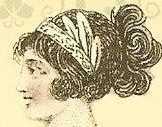
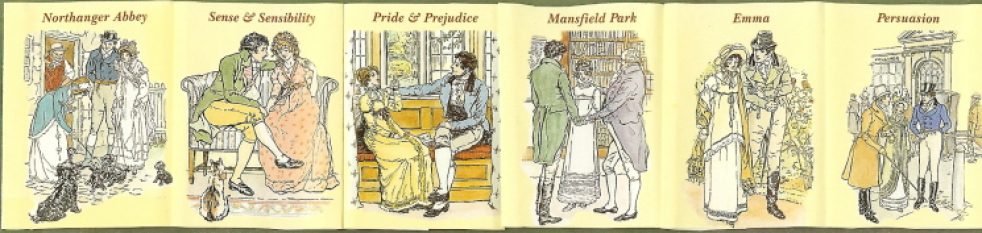

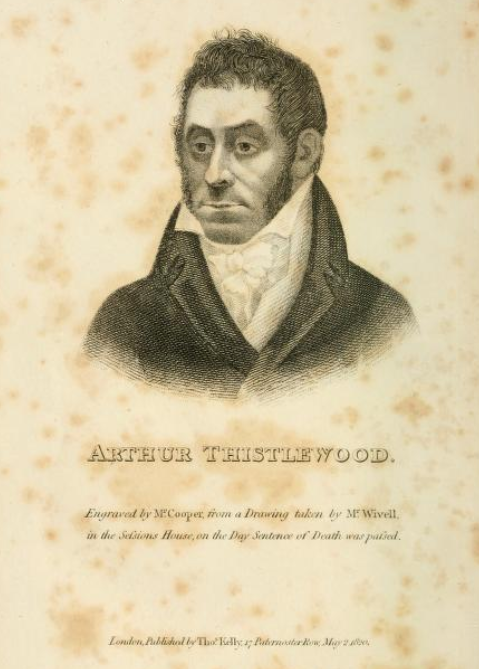


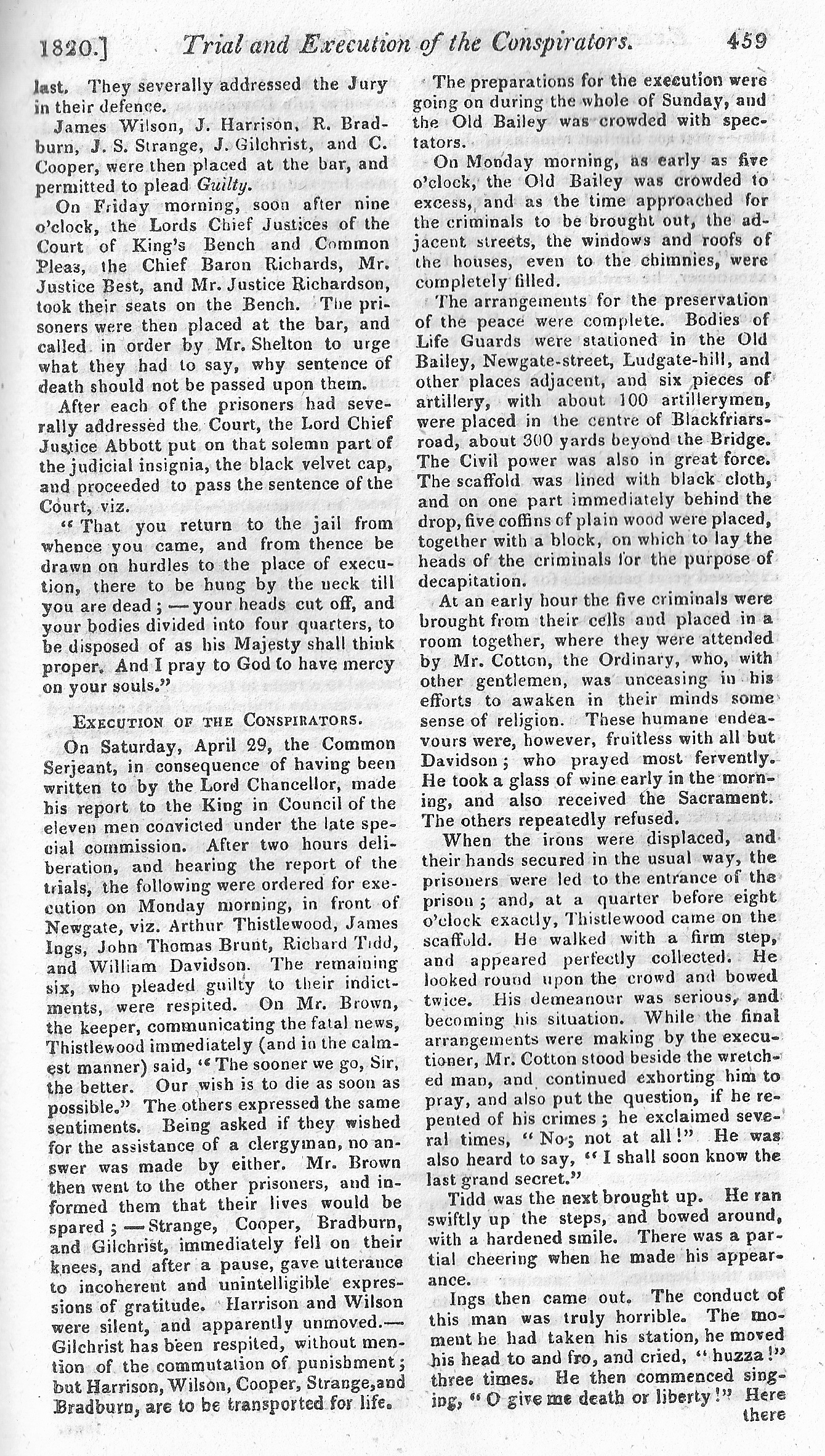
In her new book, Sue Wilkes reveals the shadowy world of Britain’s spies, rebels and secret societies from the late 1780s until 1820. Drawing on contemporary literature and official records, Wilkes unmasks the real conspirators and tells the tragic stories of the unwitting victims sent to the gallows.
 About the author:
Dear Miss Morland, consider the dreadful nature of the suspicions you have entertained. What have you been judging from? Remember the country and the age in which we live. Remember that we are English, that we are Christians. Consult your own understanding, your own sense of the probable, your own observation of what is passing around you. Does our education prepare us for such atrocities? Do our laws connive at them? Could they be perpetrated without being known, in a country like this, where social and literary intercourse is on such a footing, where every man is surrounded by a neighbourhood of voluntary spies, and where roads and newspapers lay everything open? Dearest Miss Morland, what ideas have you been admitting?”


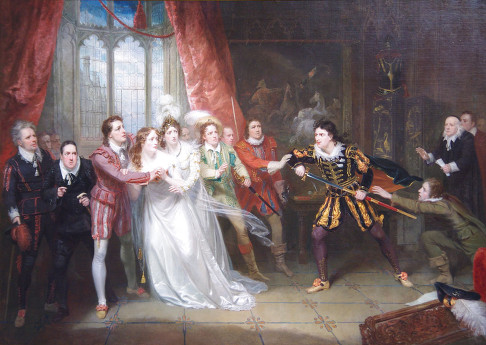



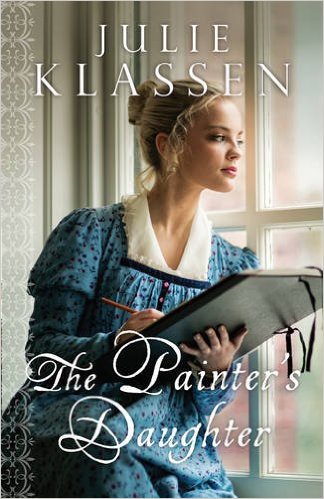

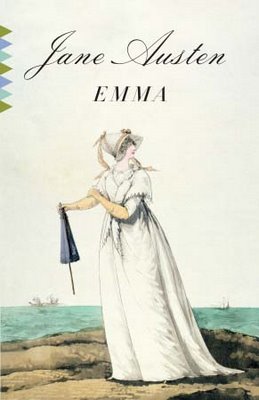

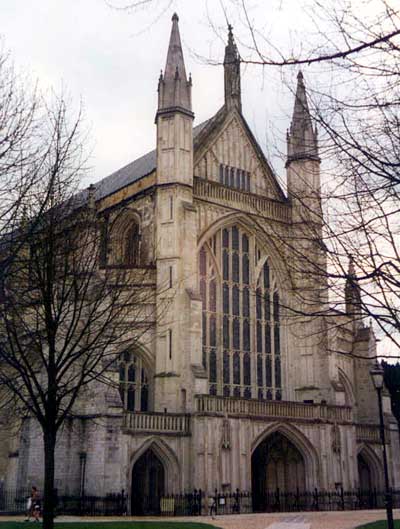
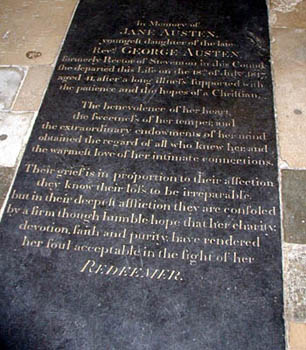
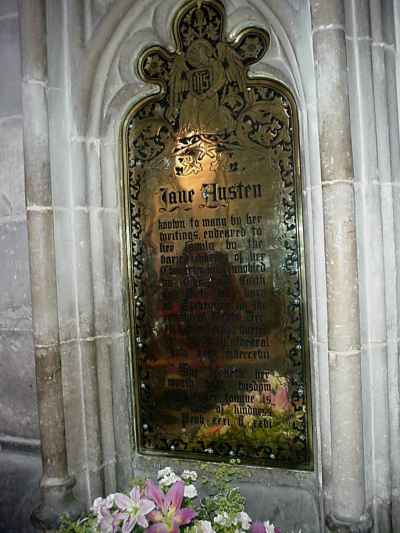
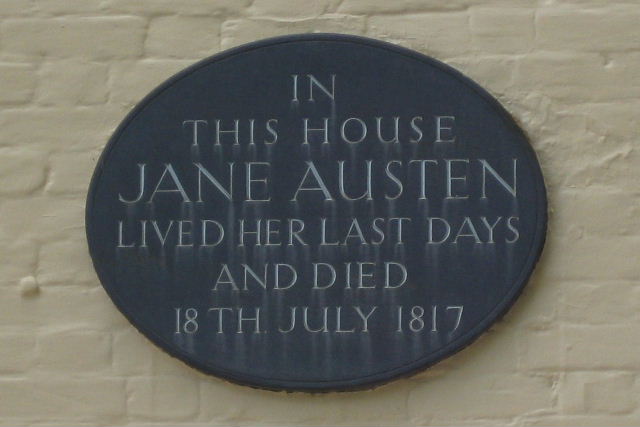

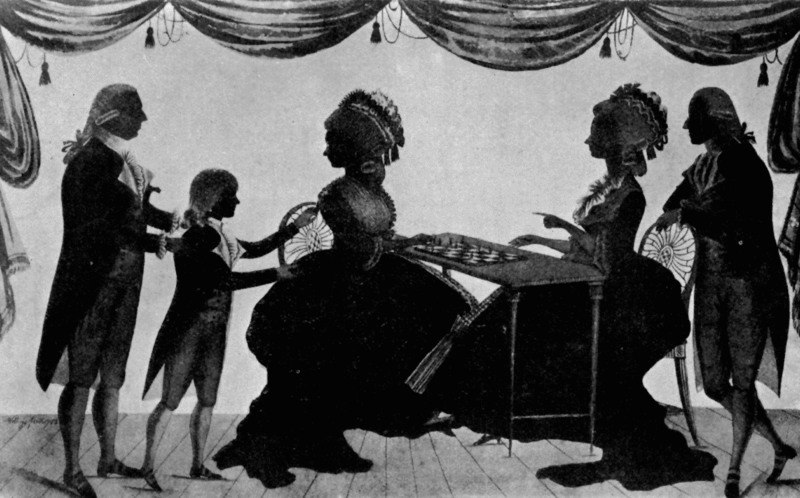


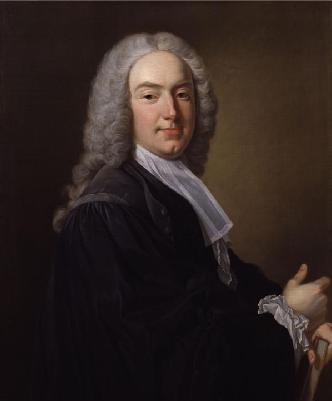

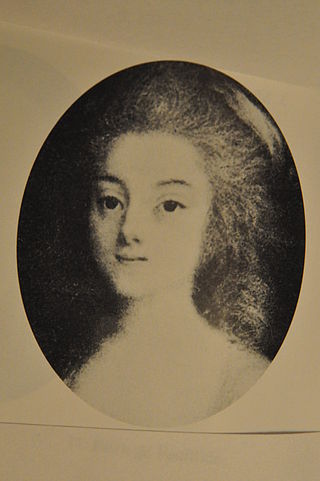
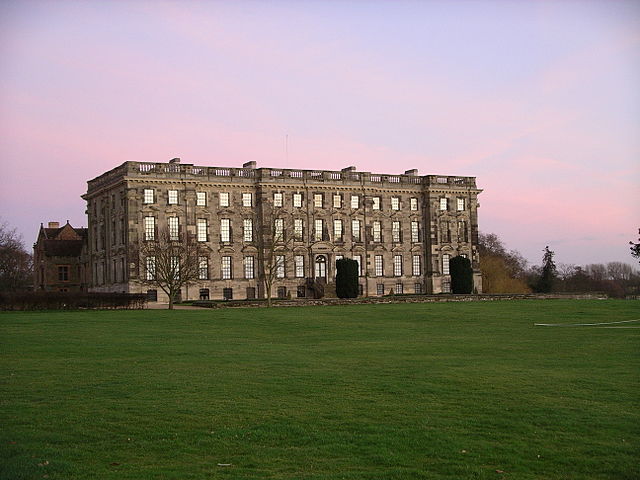
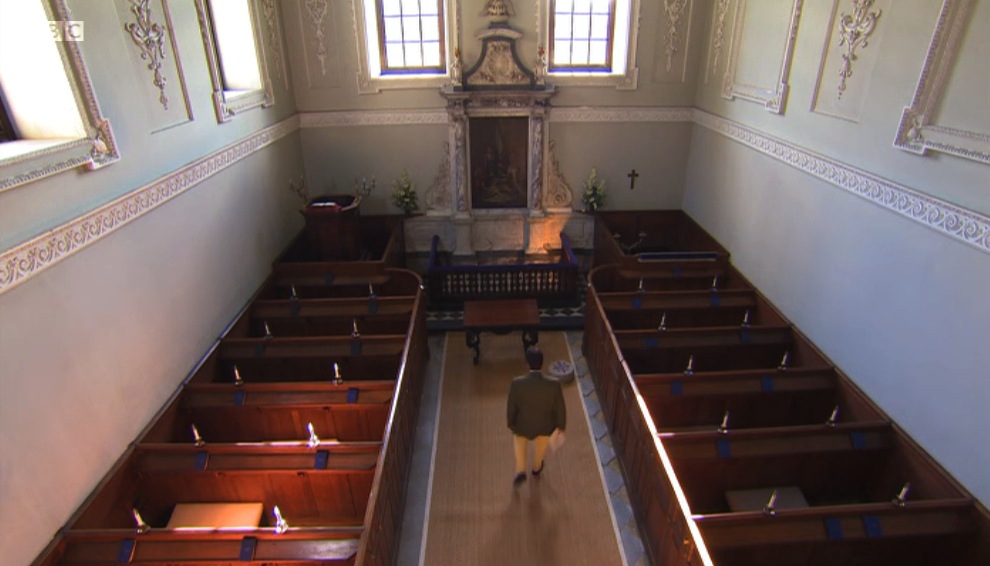

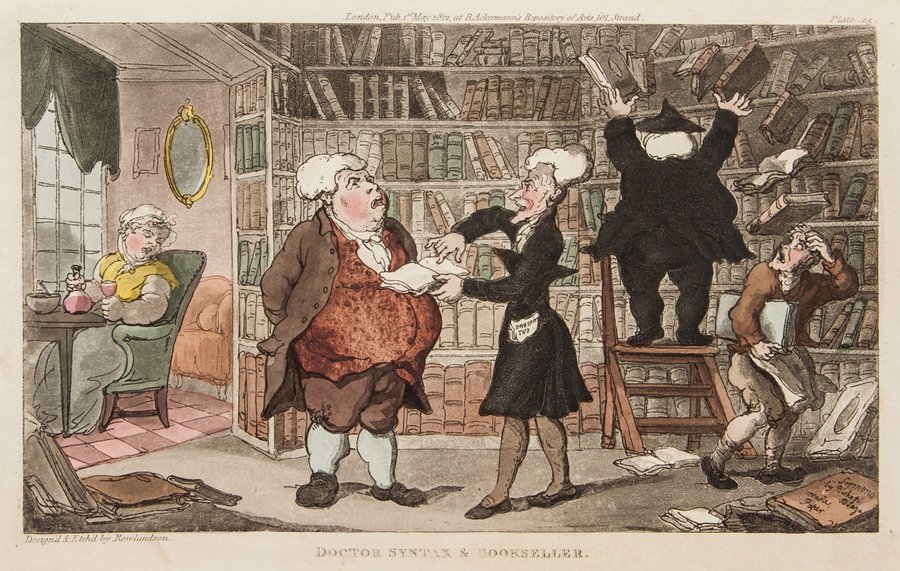


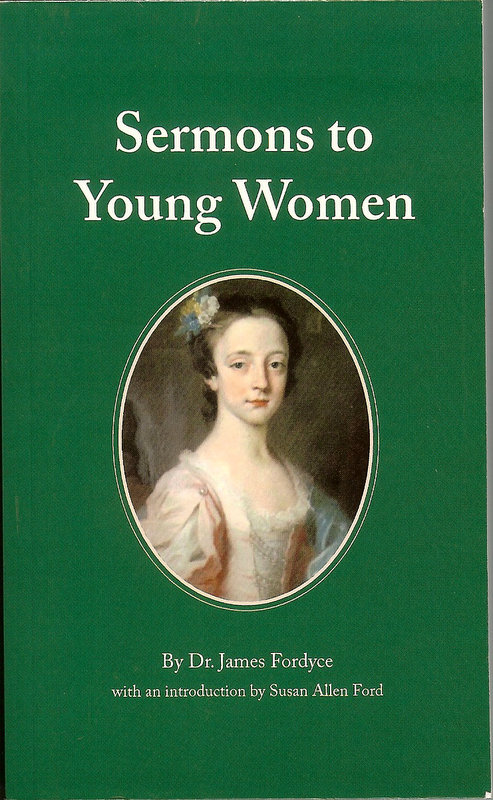
 Jane Austen in Vermont