Gentle Readers: I welcome today one of our JASNA-Vermont members, Heather Brothers, as she muses on a certain passage in “Persuasion” that she “discovered” during a recent re-listen. We’ve had a bit of an email discussion over this, so now want to it share with you and solicit your thoughts too.
The Musgrove’s Parlour
Several years ago I came upon the audio version of Persuasion as read by Juliet Stevenson. The manner of her reading infused more meaning into Persuasion than I ever picked up reading it myself. And through listening to this several times, I have noticed some fascinating passages that I would otherwise have overlooked. Here is one and I am happy to share others:
Anne has arrived at Uppercross and is going to visit the Musgroves with Mary…
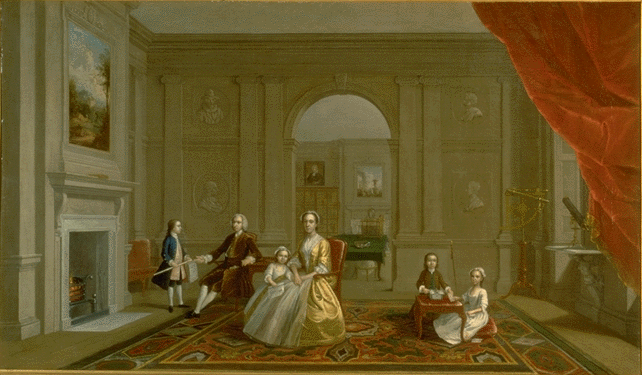
To the Great House accordingly they went, to sit the full half hour in the old-fashioned square parlour, with a small carpet and shining floor, to which the present daughters of the house were gradually giving the proper air of confusion by a grand piano forte and a harp, flower-stands and little tables placed in every direction. Oh! Could the originals of the portraits against the wainscot, could the gentleman in brown velvet and the ladies in blue satin have seen what was going on, have been conscious of such an overthrow of all order and neatness! The portraits themselves seemed to be staring in astonishment.
[Persuasion, Vol. I, Ch. 5]
******************
I have come to understand that Persuasion is written on the cusp of a new time period. Just before this passage above, Mr. and Mrs. Musgrove are described as representing the old ways and the two Miss Musgroves as the new ways. I get the impression that Jane Austen is using even the parlor in the Musgrove house as showing this change – that the minutia of interior design itself represents a change from the old ways to the new ways.
What was happening in interior design at this time? What architectural changes were taking place? I understand from fashion that ionic columns and flowing lines were the mode, but simplicity doesn’t seem to be the case with the Musgrove girls’ additions to the parlor. When I read this piece to my husband, who is an architect, he immediately got the impression that the girls were over-decorating; that they were building up the style to improve and impress.
This leads me to think that the astonishing overthrow of all order and neatness is both referring to the style of the room but also to the girls themselves. What would the portraits have thought of Henrietta and Louisa Musgrove in their endless pursuit of happiness, fun and excitement?
Seen in an earnest light, Henrietta and Louisa’s behavior is seriously flawed. Henrietta almost loses a good, stable life with a man she really likes and Louisa almost kills herself through taking their love-struck silliness to too high of a level. Did it all start in the parlor? Would the piano forte have been sufficient, but the additional harp, flower-stands and little tables represent the overthrow of moderation? Is Jane Austen’s commentary on the parlor a harbinger of what’s to come for these girls or for society?
If anyone can recommend books on this subject – please let me know!
********************
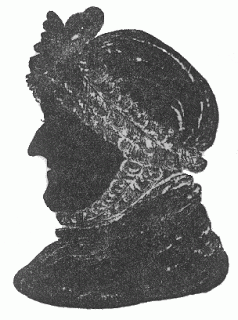
This portrait may serve as an example of what Jane Austen is referring to, hanging on the Musgrove parlor walls “against the wainscot,” where all is “order and neatness.”
Austen packs into this one rather obscure sentence much about what is going on in the Musgrove household and the wider world! Thoughts anyone?
Heather Brothers is one of our “Team of Janeites” in Vermont who helps with Hospitality and Boutique sales at our quarterly meetings. She is a young mother of two adorable girls, and also the author of a Regency-era novel, The Introduction of a Gentleman (2013) – it is a terrific read – you can find it on Amazon (and interesting to note that the cover depicts a young lady sitting at a pianoforte!)
Heather has also initiated at our meetings “The Awesome Austen Moment” – where we ask someone to read aloud a short passage from any of the Works, just to remind us all exactly what Austen could convey in any given sentence, this Persuasion piece a perfect example.
You can read more about Heather and her book here:
Gentle Readers: Today I welcome Tony Grant as he writes about his visit this week to the “EMMA 200” exhibit at Chawton House Library, he being my feet on the ground so to speak as I am woefully not able to be there myself. Hope those of you who are able to go will do so – and send me pictures and your thoughts when you do!
[Update: please read Tony Grant’s post about walking around Chawton at the “Jane Austen’s World” Blog]
EMMA 200: English Village to Global Appeal
(Chawton House Library 21st March – 25th September 2016)
On Wednesday 20th April I drove from Wimbledon to Chawton in Hampshire over the Hogs Back with views stretching across Surrey into the distance. It was a bright sunny day and seeing the Surrey countryside green and pleasant and shining in the bright sunshine under blue skies was appropriate for my adventure. I was driving to Chawton House Library to visit the “Emma 200 exhibition.” Emma is Jane Austen’s Surrey novel and this year is the 200th anniversary of its publication and it is entirely set within that county.
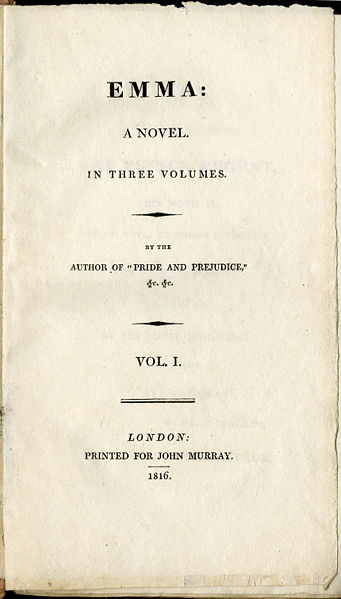
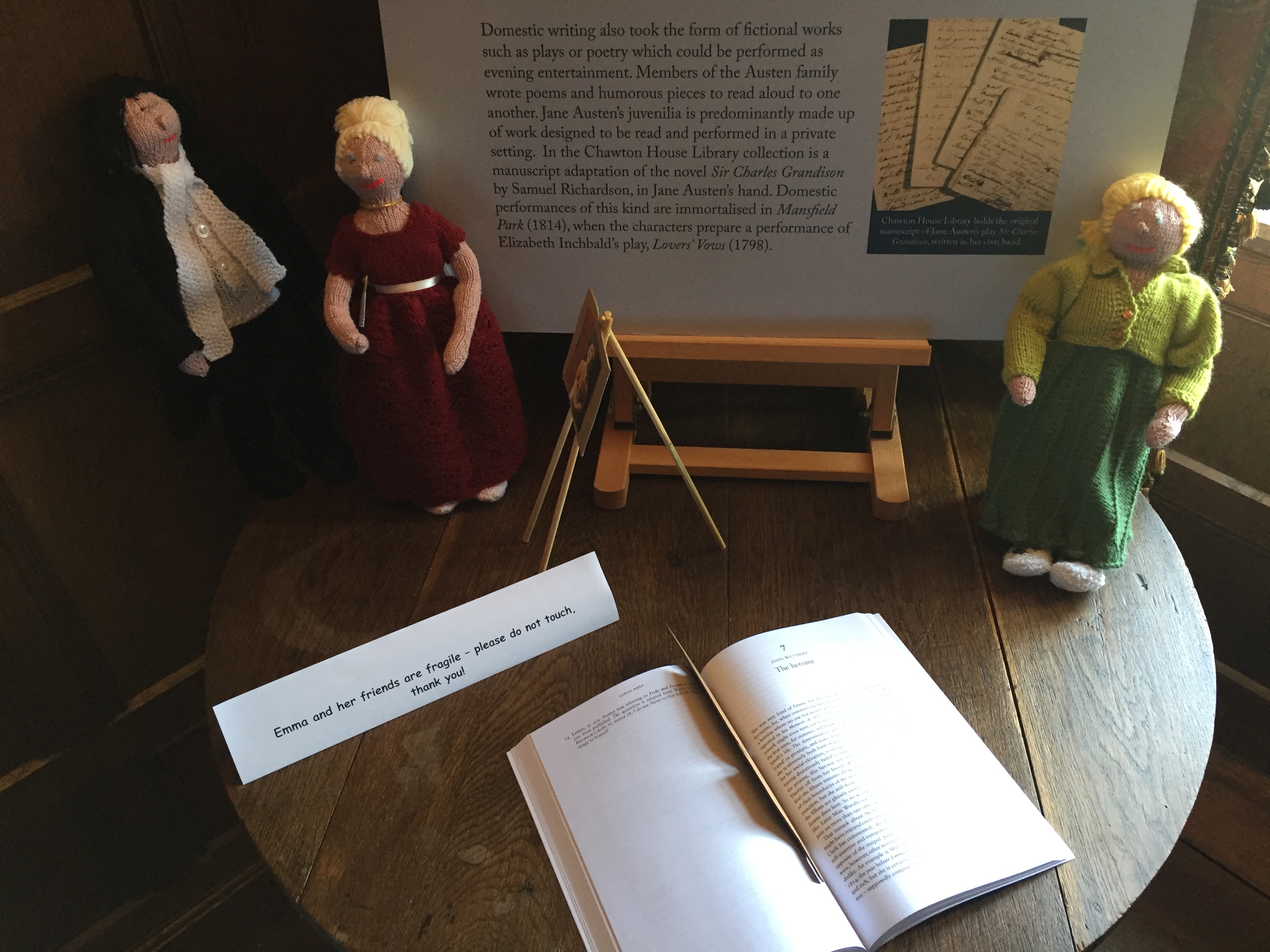
Emma was published by John Murray II of Albemarle Street on the 23rd December 1815, although its title page reads 1816. This exhibition has items from Chawton House’s own collection and from the Knight family collection, as well as other items on loan. The exhibition covers the reception of Emma through the nineteenth, twentieth and twenty first centuries; it also considers the country setting of the novel and the places that were possible influences. It covers the global appeal of Emma. It has a large section about John Murray II and nineteenth century publishing practices through letters and comments made by Jane herself and fellow authoresses also published by Murray. It highlights authors mentioned in the novel and nineteenth century ideas about female accomplishments such as music, embroidery and painting. It shows the connection with Shakespeare and has a section about the reception of the novel. In particular, there is a letter written by Charlotte Bronte to her own publisher, W.S. Williams, discussing her thoughts about Emma and Jane Austen as a writer.
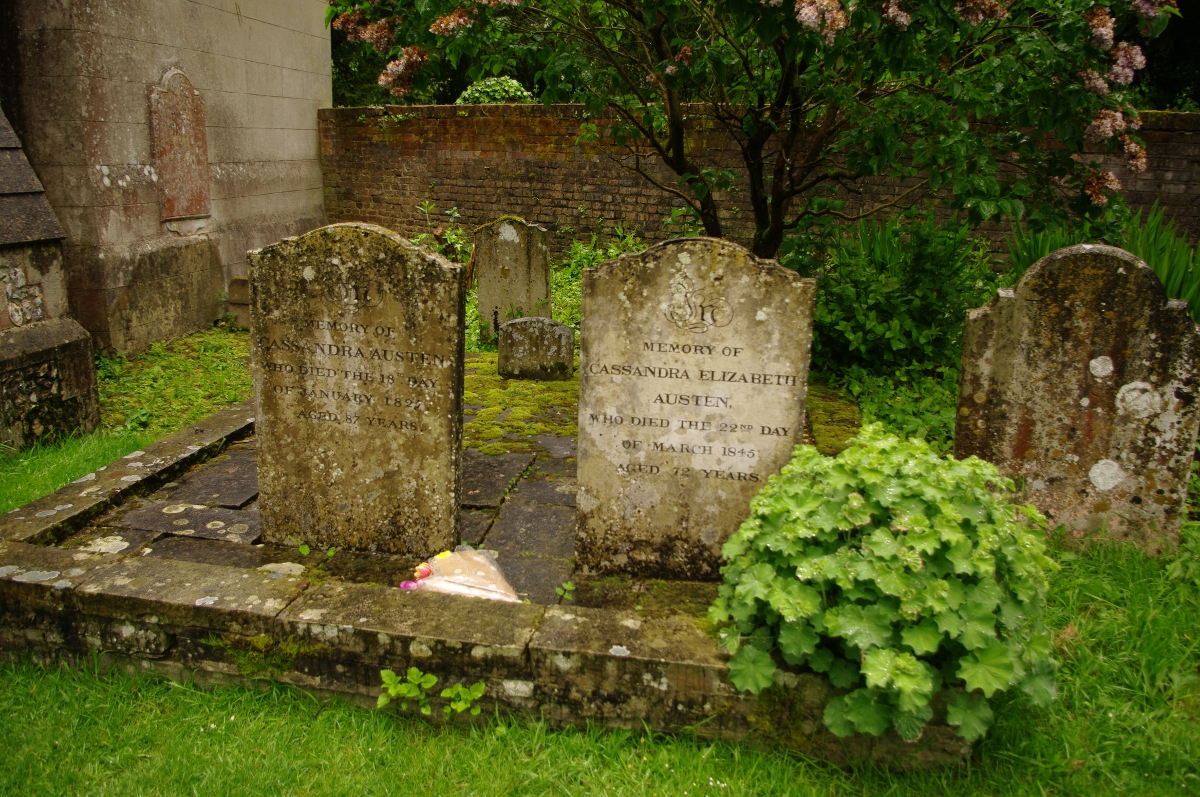
I arrived at the electronically operated gates early. The house opens at 1.30pm Monday to Friday. I was there promptly at 1.10pm. I decided to have a look around and inside of St Nicholas Church nearby, which is Chawton’s parish church and where Jane Austen and her family worshipped. The church we see today is not the church Jane knew. There was a fire sometime after Jane’s death and it had to be rebuilt, though some of the structure from the church that Jane knew remains. I read the memorials to the Austens and Knights within and then went round to the back of the church through an arbor of dark and gloomy ancient yew trees to see the side-by-side graves of Austen’s sister, Cassandra Elizabeth Austen, and mother, Cassandra Austen.
**************
Chawton House Library
It was such a nice day and I still had about ten minutes left so I sat on a stone bollard near the entrance gate and watched a gentleman sitting on a motor mower mowing the grass verges along the drive. As I sat there I noticed a smartly dressed lady leaving the front entrance of the great house with a dog on a lead. She approached the gate and opened it, placing a notice board on a stand giving the times and prices of entry. I asked jokingly if this meant I can go in. I pointed out it was still ten minutes to half past. She laughed and said by the time I walked up the driveway I should arrive at the door on time. “Just knock and they will let you in,” she told me. I knocked on the door with five minutes to and it was immediately opened by a smiling lady who ushered me in. The house is staffed by volunteers except in the kitchens where the official housekeeper keeps her domain but more about that nice lady later. I found everybody so enthusiastic and full of smiles and really, extremely welcoming. I paid my entrance fee and one lady took me into the great hall on the left of the entrance and showed me a map of the house with the route marked by numbered rooms. It is a self-guided tour so I was given the map to hold as I went round. There are volunteers in every room who you can talk to and ask information of.
**************
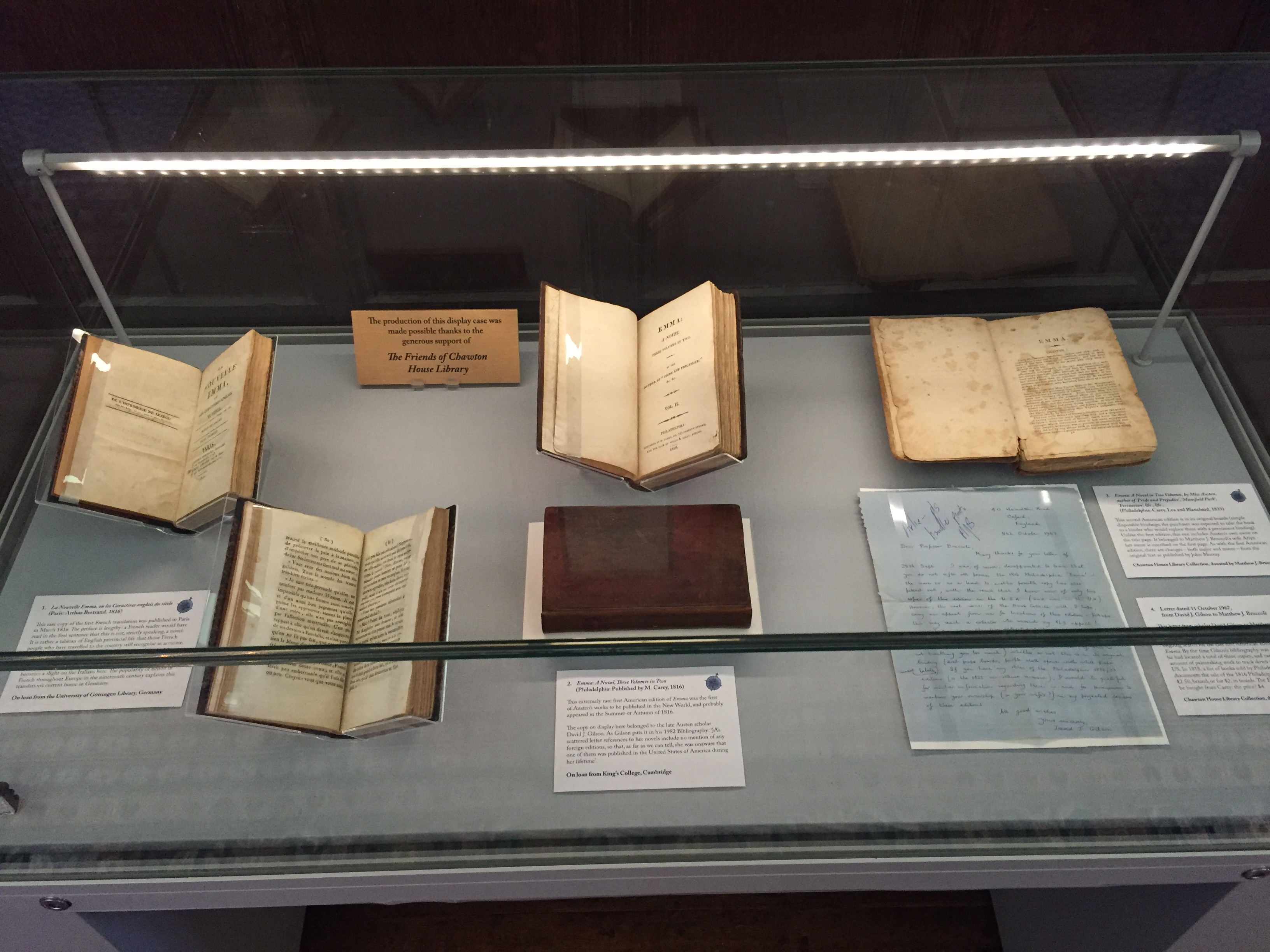
The exhibition began in the great hall. A glass case displays some first editions dated 1816. There was an edition in French as well as one published by Mathew Carey a publisher in Philadelphia. Somehow Carey had read Sir Walter Scott’s review of Emma and obviously liked it. He sold his version at a much cheaper price than John Murray’s London version. He produced a card backed version printed on cheap paper for $2. Murray’s London version, which was a much better quality, was twice the price. Very few American first editions have survived as a consequence of the poorer quality and the copy in this exhibition shows signs of much yellowing of the paper and black mold spots. It looks an inferior book to both the French and English versions. I felt honoured to able to lean over the glass case and read the opening few lines of the Murray edition.
“Emma Woodhouse, handsome, clever, and rich, with a comfortable home and happy disposition, seemed to unite some of the best blessings of existence:…”
There were no such things as copyright laws in those days and both the French and American versions, probably unknown to Jane Austen, brought her no income. Later in the nineteenth century Dickens went over to America and tried to do something about copyright laws in America but to no avail and to his great consternation. The fact that copies of Emma were being published abroad within the first year of its initial publication in England tells us something about publishing and the book trade at the time. Money could be made from books.
Emma 1st ed.
Dedication page
*****************
John Murray – NPG (Wikipedia)
John Murray II was the head of the foremost publishing company in Britain. He was a hard headed business man and if he could get an advantage, especially, it seems over the authors he published he would. I think Jane Austen had the measure of him. Her brother Henry who had dealt with publishers for Jane initially became ill and Jane took over negotiations with Murray herself. She was very direct and firm in her dealings. She said of Murray, “He is a Rogue, but a civil one.” In corresponding with Murray over the publication of Emma, for instance, on 3rd of November 1815, a month before the publication of Emma, she writes,
“…I am at the same time desirous of coming to some decision on the affair in question, I must request the favour of you to call on me here, on any day after the present that may suit you best, at any hour in the evening, or any in the morning except from eleven to one. – A short conversation may perhaps do more than much writing.”
It sounds as though Murray has been given his marching orders and she isn’t going to have any truck with being messed about. She is firm but polite with the “Rogue.” She knows the power of a face to face encounter. Some of her contemporaries were perhaps not quite so strong with Murray but learned a lesson.
Domestic Cookery, 1813 ed (Wikipedia)
One of the exhibits on display, putting Jane Austen’s publishing experiences with Murray in context, is a book called Domestic Cookery, published by Murray in 1806. It was very popular and made a lot of sales and presumably a lot of money for Murray. It was written by Maria Rundell. Rundell had been paid £150 by Murray. She regarded Murray as a friend but she was not aware at first that her book had become such a bestseller. When she found out she felt that Murray was not upholding the copyright agreement he had with her. Eventually Murray paid her £2100 but kept the right to continue publishing the book himself. Jane Austen’s comments about him being “a rogue but a civil one” come to mind. Murray was obviously a very astute business man and could make money from trouble.
Another exhibit displays copies of books written by the French authoress, Germaine de Stael. She wrote books about Rousseau, Revolutionary Politics and Marie Antoinette’s trial. She was virtually banned by Napoleon Bonaparte. He had her book, De L’Allemagne pulped. Murray saw a chance. He took her on. In 1813 he used three printers to publish the French original and English translations simultaneously. He relied on anti-French feelings to make Stael’s books best sellers.
Madame_de_Staël (Wikipedia)
Jane Austen had her critics who made both good and not so good comments about her work. She took notice of what people said about her books and noted down these various opinions. Sir Walter Scott, her illustrious contemporary, who was also published by John Murray, wrote of Emma,
“We bestow no mean compliment on the author of Emma, when we say that keeping close to common incidents, and to such characters that occupy the ordinary walks of life, she has produced sketches of such spirit and originality that we never miss the excitation which depends upon a narrative of uncommon events, arising from the consideration of minds, manners and sentiments greatly above our own.”
Sir Walter Scott (Wikipedia)
It appears that Murray regularly sent copies of newly published books to other writers he published for their comments. This can be seen as eliciting positive comments from people who wanted to keep in with Murray. Jane Austen mentions in her letters to Murray how thankful she is for the copy of Waterloo he sent her to read and actually asks him if he has any more she can have a look at. This suggests she knows how to play the publishing game. She is as astute as Murray himself it seems. In one way Scott’s positive comments could be read as keeping in with Murray. If Murray and his publishing house does well and sells lots of books it can only benefit himself after all, but there is more to Scott’s review. I think he has recognized what is original in her writing. She is a realist. Her style is about everyday common occurrences and everyday people and she makes them heroic. People reading Jane Austen can see themselves and people they know in her writing. It is said that reading a novel is good emotional and psychological therapy, and Austen hit a powerful vein.
Charlotte Bronte (Wikipedia)
The highlight of the whole exhibition for me, even more so than seeing and reading a first edition, is the actual letter Charlotte Bronte wrote to her publisher, W.S. Williams, on April 12, 1850, in which she writes a lengthy paragraph about her thoughts on Jane Austen and Emma. I found it easy to read Bronte’s small, thin, precise handwriting that flows clearly across the page.
“I have likewise read one of Miss Austen’s works—Emma—read it with interest and with just the degree of admiration which Miss Austen herself would have thought sensible and suitable. Anything like warmth or enthusiasm—anything energetic, poignant, heart-felt is utterly out of place in commending these works: all such demonstration the authoress would have met with a well-bred sneer, would have calmly scorned as outré and extravagant. She does her business of delineating the surface of the lives of genteel English people curiously well. There is a Chinese fidelity, a miniature delicacy in the painting. She ruffles her reader by nothing vehement, disturbs him by nothing profound. The passions are perfectly unknown to her; she rejects even a speaking acquaintance with that stormy sisterhood…”
Bronte continues:
“What sees keenly, speaks aptly, moves flexibly, it suits her to study; but what throbs fast and full, though hidden, what the blood rushes through, what is the unseen seat of life and the sentient target of death—this Miss Austen ignores. “
And she goes on. Charlotte Bronte is actually agreeing with Scott’s comments when he describes her writing as
“……close to common incidents, and to such characters that occupy the ordinary walks of life”
The difference is that Scott makes his view a positive while Bronte makes her view a negative. I agree with what she says. Austen writes about the ordinary. Bronte on the other hand and her sisters wrote about,
“what throbs fast and full, though hidden, what the blood rushes through, what is the unseen seat of life and the sentient target of death”
Charlotte Bronte is actually describing the differences between their two styles. I have read articles published on some blogs where the writer tries to pit Charlotte Bronte against Jane Austen. Who do you like the best? Who do you think is the better writer? And so on. These are a childish approach to comparing two great writers. Two geniuses. Their styles are different. Every one of us reads different types of books for different reasons at different times to fit, very often , our different moods. We can read a poem by Wordsworth one day and on other days a romantic comedy, a ghost story, a swashbuckling adventure, a horror story or maybe a present day thriller. We can enjoy each genre for what it is and what it brings to us. Austen and Bronte are not enemies, they are not one better than the other. They are different and we can enjoy both. I can imagine how Bronte could be critical. She had a harder life than Jane Austen. Her novels and those of her sisters, were full of passion and deep feelings and filled with great moral uncertainties testing the moral status quo to the limit. Their ideas made their lives worth living and helped them live their short lives with feeling. Jane Austen had a much easier existence. I can see how Charlotte Bronte might not understand Austen’s standpoint. She probably could not bear to live the way Austen’s characters are portrayed. However, we can love them both.
The exhibition demonstrates many of the influences Jane Austen might have used in her writing of Emma. There is the suggestion, for instance, that the fictional places Highbury and Hartfield in Emma are modelled on Chawton and the local town Alton. These are in Hampshire but the novel is set in Surrey. Others I know would not agree. Some say Leatherhead in Surrey, which is near Box Hill, a major location in the book. Others suggest Highbury is a generic English village, and I think this more likely.
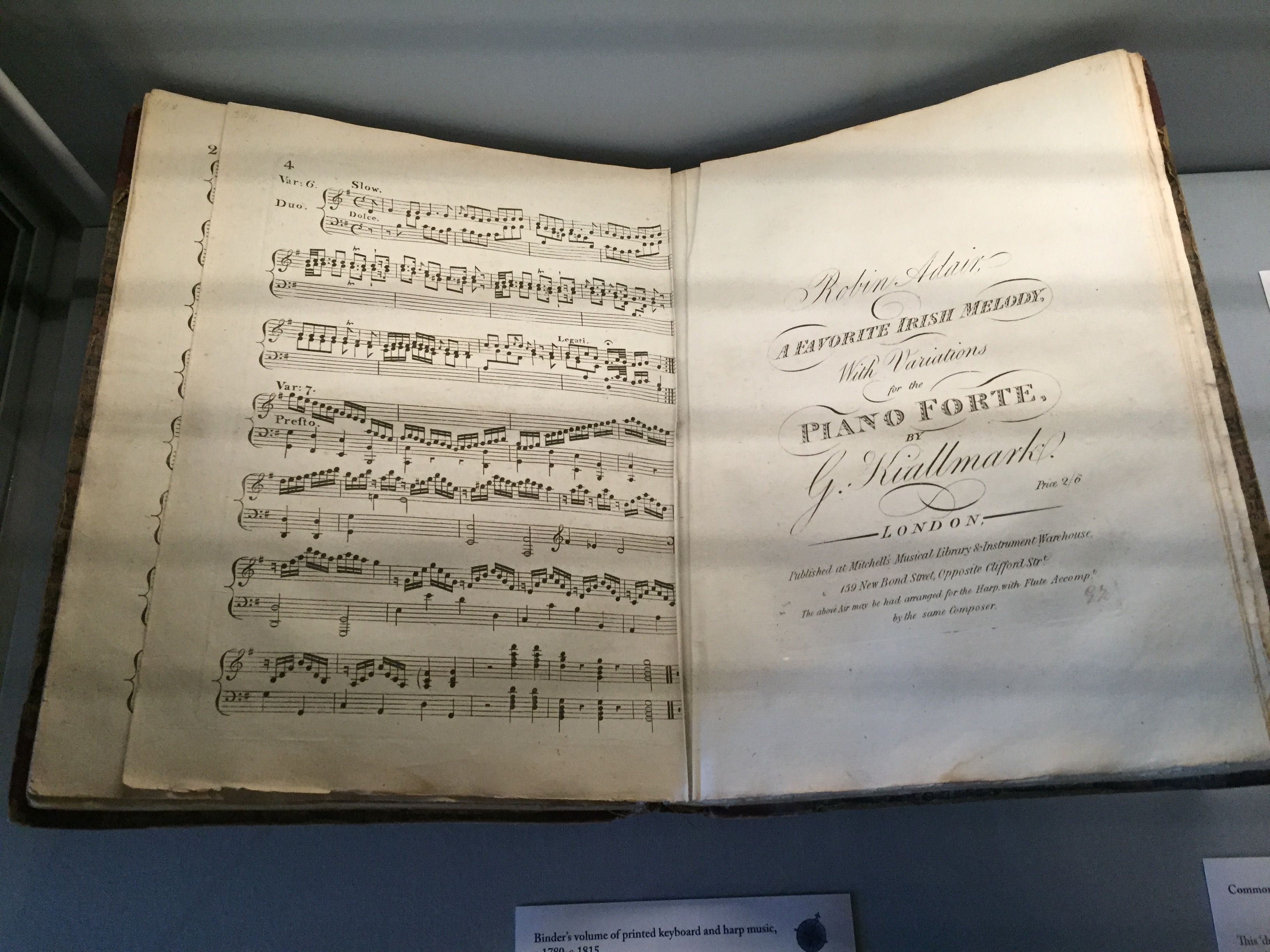
In Emma Jane Fairfax plays a tune called “Robin Adair” on the newly arrived pianoforte. There is on display a copy of “Binder’s volume of printed keyboard and harp music, 1780-1815,” annotated and autographed by Jane’s sister Cassandra. It includes the music to “Robin Adair.” [Ed. You can read this online here: https://archive.org/details/austen1677439-2001 ]
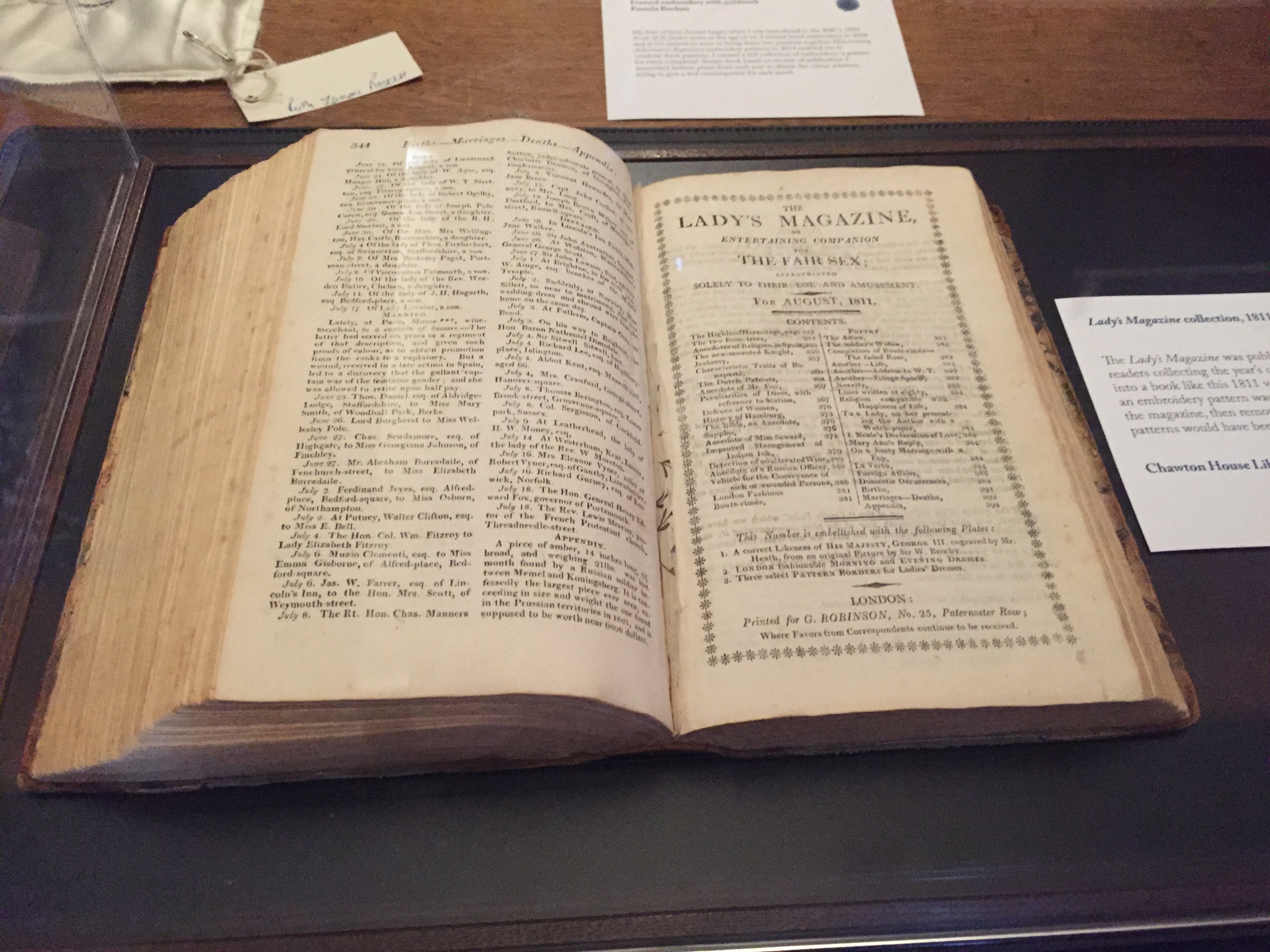
There is a bound set of The Ladies Magazine (1770-1832) which provides sewing patterns for young ladies. It is the sort of magazine that Jane Austen had access too. In Emma, sewing and painting are pastimes for young ladies.
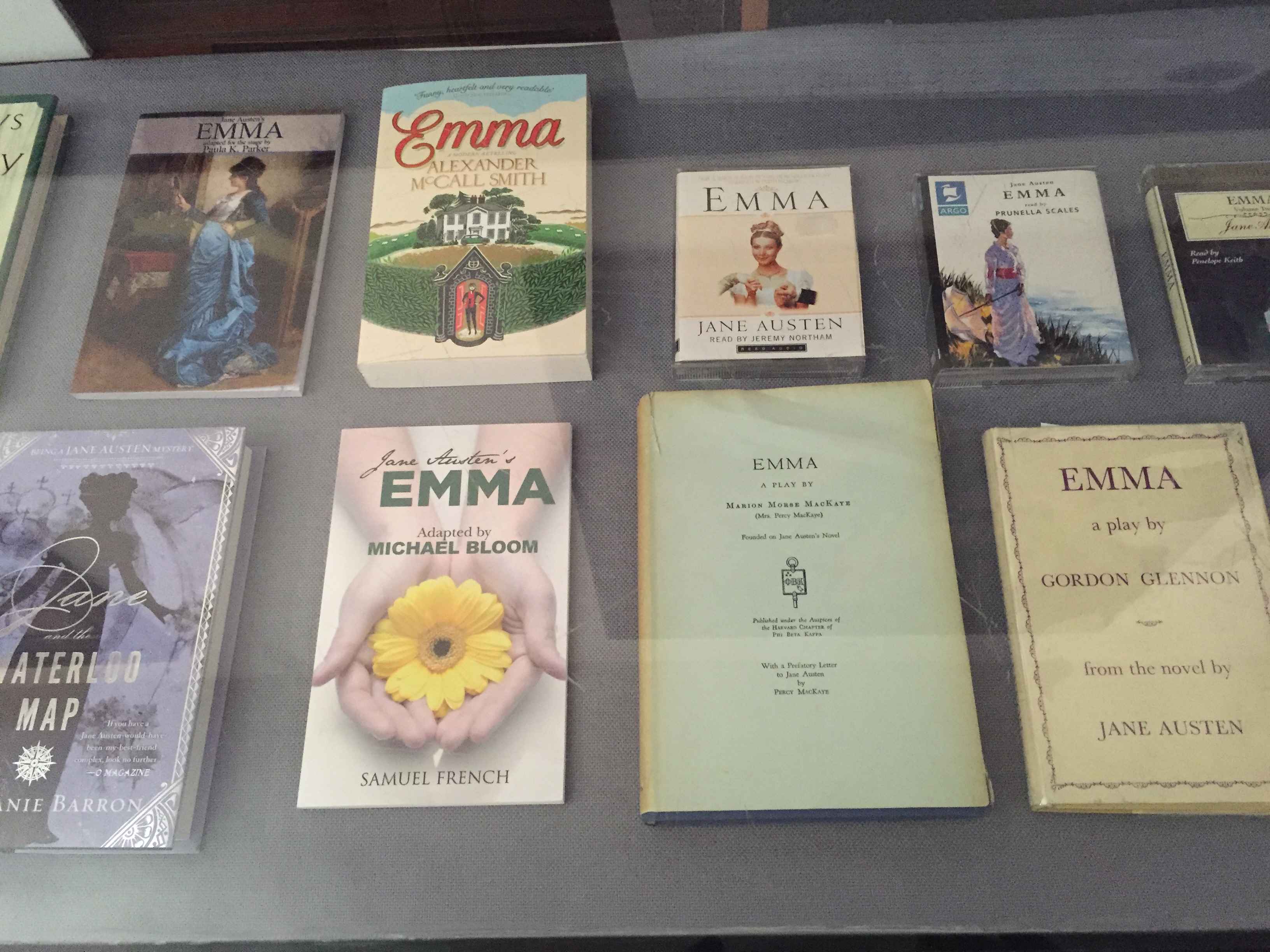
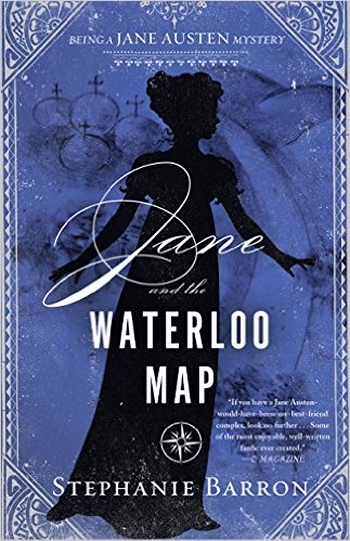
A final display cabinet shows the influences that Emma has had on culture over the centuries. There are various spin-off novels, including the latest modern version of Emma written by Alexander McCall Smith. There are play scripts written by various playwrights turning Emma into a stage version. These include plays by Gordon Glennan and Marion MacKaye. There are a number of radio adaptations. One read by Prunella Scales, another by Jeremy Northam. There are the film versions and the films influenced by Emma such as Clueless set in modern times. Spin-off novels are represented by a copy of the latest Stephanie Barron mystery The Waterloo Map. [Ed. Note that this latest Barron mystery has Jane visiting Carlton House where she meets with the Prince Regent’s Librarian – this all really took place on 13 November 1815; he “suggests” that she dedicate her newest book, Emma, to the Prince Regent – Barron has her also coming upon a dead body in the Library…]
****************
The exhibition is definitely worth seeing and just as much is the opportunity to walk around Chawton House where Jane Austen herself and her family lived and breathed. I also took the opportunity to take a walk in the gardens. I came across a snake lying across my path as I walked up to the walled gardens. I must tell you that in all my life I only recall seeing two other snakes in Britain in the wild. This was a grass snake and was totally harmless. The adder is the only poisonous snake in Britain and they are very shy creatures. I think I saw one once in the New Forest.
*************
“Portrait of a Lady” at CHL
The people who volunteer at Chawton are wonderful. They want to talk to you and tell you things. I had a very amusing moment with an elderly gentleman volunteer at the top of the great staircase. He was sitting on the landing. When I approached he showed me an information leaflet and we discussed its contents. One thing it mentioned was the original William Morris wallpaper. I looked around and couldn’t see any. “Well, then where’s the wallpaper?” I joked. He laughed and said “come with me.” We walked half way down the staircase and then turned and got on our hands and knees. There indeed, almost hidden behind the balustrade, was a patch of darkened William Morris print. He also kindly showed me the large 1714 map of London displayed on the folding panels of a screen.
We found Henrietta Street and other places associated with Jane Austen when she visited London. Then I went into the old kitchen which is used as a shop and cafe and met a lovely lady who told me she was the housekeeper. I had a delicious chocolate cake and a cup of coffee. All together I had a wonderful visit to the “Emma 200 exhibition.”
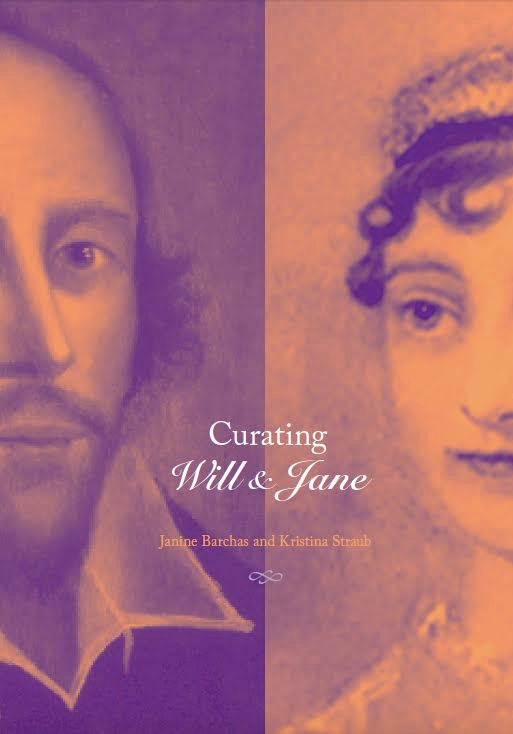
Eighteenth-Century Life has just published “Curating Will & Jane” by Janine Barchas and Kristina Straub. The article is an overview of their upcoming “Will & Jane: Shakespeare, Austen, and the Cult of Celebrity” exhibition at the Folger Shakespeare Library (opens 6 August and closes 6 Nov).
Because of public interest in the show, Duke University Press has just made the article freely available for a whole year while Cedric Reverand, enthusiastic editor of Eighteenth-Century Life, made possible an unprecedented thirty-seven illustrations, many in color. It takes about 10 seconds to download.
Join us today for a guest post by Sue Wilkes, as she shares one of her spy tales from her new book Regency Spies: Secret Histories of Britain’s Rebels & Revolutionaries(more information on the book below).
The Cato Street Conspiracy, 1820
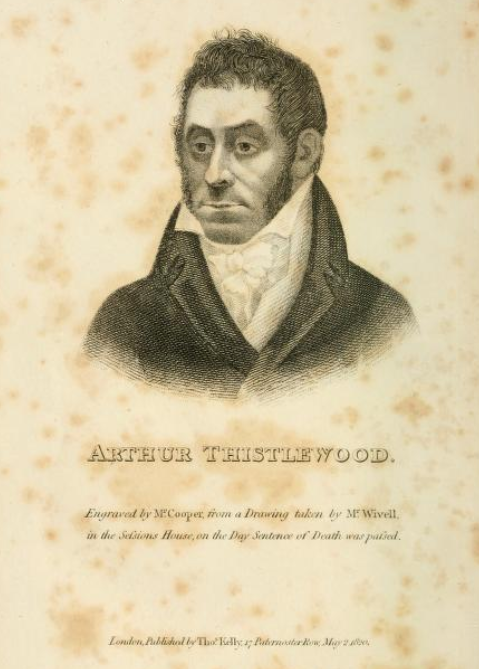
The year 1820 began with grave news – the death of George III on 29 January, after years of illness. The King was buried a week later with great pomp and ceremony on 16 February. But his son George IV’s reign did not get off to a good start. A week later, news broke to an astounded British public of the arrest of ‘a gang of diabolical ruffians’ at Cato Street, in London. The conspirators, led by the ‘notorious’ Arthur Thistlewood, planned to kill members of the Cabinet (government ministers) while they dined at Earl Harrowby’s house in Mansfield Street (Gentleman’s Magazine, February 1820).
This was no chance discovery, however. Thistlewood and his gang were well known to the authorities – the government’s spies had kept them under surveillance for years. Arthur Thistlewood, a brooding, dangerous man known to be deadly with a sword, led a group of revolutionaries called the ‘Spencean Philanthropists’.
The Spenceans were followers of the late Thomas Spence, who advocated the common ownership of all land – a truly anarchic idea in an unequal society rooted in land, wealth and property. Thistlewood first came to prominence in the Spa Fields riot of December 1816 in London. The riot was thought to be a ‘trial run’ by the Spenceans to see if they could get enough popular support to attack the Tower of London, Bank of England, and seize the city. Thistlewood and his friends were arrested and tried for treason the following year, but acquitted as most of the evidence against them was based on unreliable spy evidence.
After his release from prison, Thistlewood and his followers were constantly watched. In 1817 a spy called Shegoe reported, ‘They entertain the plan of assassination, and Lords Castlereagh, Sidmouth, Liverpool and Ellenborough have been marked as objects of their pursuit’. Some conspirators guessed that Shegoe was a spy, however, and his usefulness declined.
A new spy, George Edwards (code-name ‘W—r’ in the surveillance reports) infiltrated the gang and actively encouraged their plans. Edwards also recruited more conspirators: one of the people he ‘groomed’ was John Thomas Brunt, a shoe-maker. Another was Richard Tidd, who came from Thistlewood’s native Lincolnshire, and met Edwards through Brunt. Edwards’ actions and words were so ludicrously violent that several men he approached sent him packing, convinced that he was trying to entrap them.
Early in 1820, Edwards brought Thistlewood the news he had been waiting for: a Cabinet dinner was planned at Lord Harrowby’s house. Thistlewood and his gang rented a loft in Cato Street. They arranged to meet on Tuesday 22 February, bringing as many weapons as they could lay their hands on. But thanks to Edwards, the time and place for the planned assassination were already known to the police and Home Office. Everything was now set to nip the conspiracy in the bud.
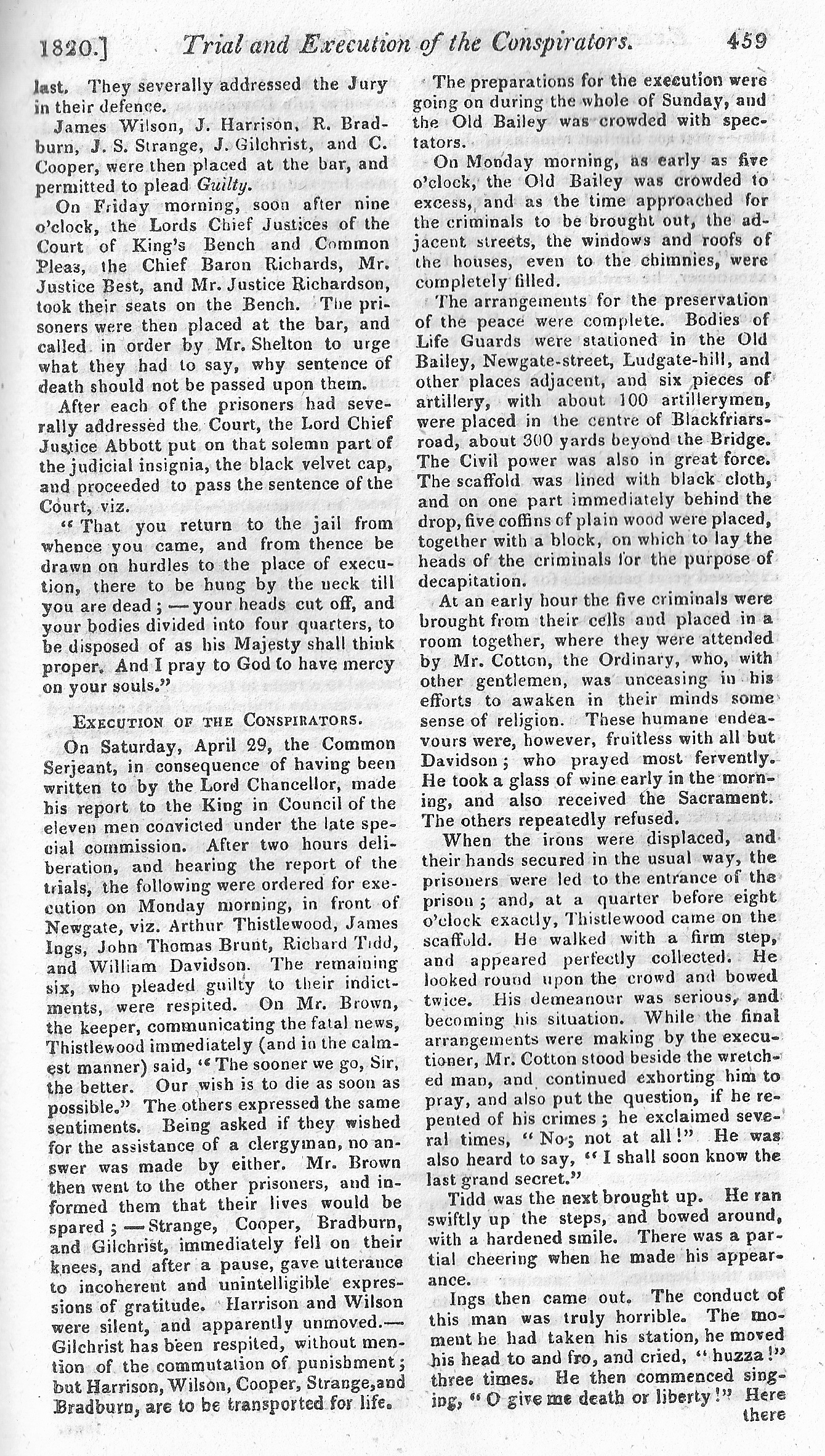
On Monday 1 May 1820, Arthur Thistlewood, James Ings, John Thomas Brunt, Richard Tidd and William Davidson were executed guilty for high treason at Newgate. But was it really Thistlewood’s idea to kill the Cabinet – or was it the spy George Edwards’s plan, as Arthur claimed at his trial?
An account of the death sentence passed by the judge, and the conspirators’ execution,
from the Gentleman’s Magazine, May 1820. (Author’s collection).
********************
About the book: [from the jacket]
In her new book, Sue Wilkes reveals the shadowy world of Britain’s spies, rebels and secret societies from the late 1780s until 1820. Drawing on contemporary literature and official records, Wilkes unmasks the real conspirators and tells the tragic stories of the unwitting victims sent to the gallows.
In this ‘age of Revolutions’, when the French fought for liberty, Britain’s upper classes feared revolution was imminent. Thomas Paine’s incendiary Rights of Man called men to overthrow governments which did not safeguard their rights. Were Jacobins and Radical reformers in England and Scotland secretly plotting rebellion? Ireland, too, was a seething cauldron of unrest, its impoverished people oppressed by their Protestant masters.
Britain’s governing elite could not rely on the armed services – even Royal Navy crews mutinied over brutal conditions. To keep the nation safe, a ‘war chest’ of secret service money funded a network of spies to uncover potential rebels amongst the underprivileged masses. It had some famous successes: dashing Colonel Despard, friend of Lord Nelson, was executed for treason. Sometimes in the deadly game of cat-and-mouse between spies and their prey suspicion fell on the wrong men, like poets Wordsworth and Coleridge.
Even peaceful reformers risked arrest for sedition. Political meetings like Manchester’s ‘Peterloo’ were ruthlessly suppressed, and innocent blood spilt. Repression bred resentment – and a diabolical plot was born. The stakes were incredibly high: rebels suffered the horrors of a traitor’s death when found guilty. Some conspirators’ secrets died with them on the scaffold…
About the author:
Sue Wilkes is the author of several works of social and family history: Regency Spies (Pen & Sword, 2016) and A Visitor’s Guide to Jane Austen’s England (Pen & Sword, 2014), Regency Cheshire (Robert Hale, 2011), The Children History Forgot (Robert Hale, 2010), Narrow Windows, Narrow Lives (Tempus, 2007), as well as guides for family historians on tracing ancestors in various UK counties and towns.
Thank you Sue for telling us about one your tales! This book is filled with such – I will be interviewing Sue in the coming weeks, so please return to learn more about this world of spies in Jane Austen’s time … my first question? Whatever would our dear Henry Tilney have to say about it all?!
Dear Miss Morland, consider the dreadful nature of the suspicions you have entertained. What have you been judging from? Remember the country and the age in which we live. Remember that we are English, that we are Christians. Consult your own understanding, your own sense of the probable, your own observation of what is passing around you. Does our education prepare us for such atrocities? Do our laws connive at them? Could they be perpetrated without being known, in a country like this, where social and literary intercourse is on such a footing, where every man is surrounded by a neighbourhood of voluntary spies, and where roads and newspapers lay everything open? Dearest Miss Morland, what ideas have you been admitting?” [NA, Vol. II, Ch ix. Image: Mollands.net]
Image sources:
All four images from George Theodore Wilkinson, The Newgate Calendar Improved Vol. 5, (Thomas Kelly, 1836). Courtesy the Internet Archive, archive.org.
Orlando, the subscription database from Cambridge University Press on “Women’s Writings in the British Isles from the Beginnings to the Present” – is available for free for Women’s History Month thoughout March.
The Orlando Project “provides entries on authors’ lives and writing careers, contextual material, timelines, sets of internal links, and bibliographies.”
If you are wondering about the symbol of the Oak Tree, here is the explanation from the website:
“. . . a little square book bound in red cloth fell from the breast of her leather jacket—her poem The Oak Tree.” —Virginia Woolf, Orlando
Virginia Woolf’s Orlando, a Biography, 1928, inspires this work in literary history. Woolf’s biographical and historical fantasy explores the changing conditions of possibility for women writing in England from the time of Elizabeth I to her own day, and gives us a poet protagonist who is at work throughout the whole of this history on the composition of her poem “The Oak Tree”. The Orlando Project team sees in the oak tree a suggestion of the history of women’s writing in the British Isles, the growth of history from biography, and (in a kind of visual pun) the tree-like structure of our text encoding.
Fabulous resource – spend the month indulging in this feast of information!
Amateur sleuth Jane Austen returns in Jane and the Waterloo Map,
the thirteenth novel in Stephanie Barron’s delightful Regency-era mystery series.
Gentle Readers: Today Jane Austen in Vermont is taking part in the ‘Jane Austen and the Waterloo Map’ blog tour that began on February 2, 2016 (see other tour stops below). Ms. Barron has done it again! – this time taking us into the Battle of Waterloo, but not before presenting our Jane with a body in the Carlton House Library! Read here an except from Chapter 8, followed by the details for the Giveaway – you can comment here or any of the other blog posts until February 29th.
***************************
About the book:
November, 1815. The Battle of Waterloo has come and gone, leaving the British economy in shreds; Henry Austen, high-flying banker, is about to declare bankruptcy—dragging several of his brothers down with him. The crisis destroys Henry’s health, and Jane flies to his London bedside, believing him to be dying. While she’s there, the chaplain to His Royal Highness the Prince Regent invites Jane to tour Carlton House, the Prince’s fabulous London home. The chaplain is a fan of Jane’s books, and during the tour he suggests she dedicate her next novel—Emma—to HRH, whom she despises. However, before she can speak to HRH, Jane stumbles upon a body—sprawled on the carpet in the Regent’s library. The dying man, Colonel MacFarland, was a cavalry hero and a friend of Wellington’s. He utters a single failing phrase: “Waterloo map” . . . and Jane is on the hunt for a treasure of incalculable value and a killer of considerable cunning.
And now….
AN EXCERPT FROM CHAPTER 8: In which Jane discusses the Battle of Waterloo with one of its survivors,
Lieutenant James Dunross of the Scots Greys.
“I did wonder whether the Colonel’s final words had any connexion to his valor on the field at Waterloo.” I looked at the Lieutenant rather than my hostess’s rigid form. “I have heard him described as a Hero. Would it trouble you to speak of him—or might I persuade you to recount his actions on that glorious day?”
There was the briefest pause.
“James?” Miss MacFarland queried in a lowered tone, her gaze fixed on the glowing coals.
“My dear,” he replied.
“Will it distress you?”
“Naturally. But as I expect to be hearing of Waterloo for the rest of my life, I had as well become accustomed.” The Lieutenant’s aspect was light, but his voice betrayed his distaste. “I should not use the word glory, however, to describe it. Carnage is more apt.”
“No,” Miss MacFarland protested. She turned impulsively to face us. “It shall always be a day of glory to me, because you and Ewan were spared! I cannot tell you how incomprehensible it is, Miss Austen, that my brother survived that battle—only to end in the fashionable desert of Carlton House. Incomprehensible!”
“The Colonel belonged to the Scots Greys, I believe?”
“He began military life in an hussar regiment, and saw years of active service in the Peninsula; but being better suited to heavy dragoon work, exchanged two years ago into the Greys. That is how we came to be acquainted with Lieutenant Dunross—James served in the regiment under my brother.”
Battle of Waterloo 1815 – William Sadler [Wikipedia]The gentleman forced himself heavily to his feet, and crossed with the aid of his cane to the draped window. He pulled aside the dark blue curtain and leaned into the casement, staring expressionlessly down at Keppel Street.“Are you at all familiar with the course of the battle?” Miss MacFarland asked.
“What little I learned from published accounts.”
“Then you will know that the cavalry was commanded by Lord Uxbridge.”
As who did not? Uxbridge had cut a dash among the Great for most of his life: He was an earl as well as a general; head of the Paget family; a darling of the ton; and Wellington’s reputed enemy. A few years since, Uxbridge ran off with the Duke’s sister-in-law, and embarrassed all their acquaintance. Divorce and outrage are nothing new to people of Fashion, however; and tho’ Uxbridge and Wellington might not sit down to whist together, once battle was joined with Napoleon, one was in command of the other’s cavalry. Some ten brigades, in fact.
“In the early afternoon of that wearing day, Wellington’s left was under serious attack from the French batteries,” Miss MacFarland said. I collected from her unvaried tone that she had told this story—or heard it told by her brother—many times. “General Picton was killed, and shells were exploding with horrific effect all along the British line. Our troops were giving way under the assault of d’Erlon’s columns. Uxbridge saw it as Wellington could not, being far down the right. The Earl threw Lord Edward Somerset and the Household Brigade into the thick of the fight, then galloped off to the Union Brigade. This is composed, as perhaps you may know, of three regiments: the English, or Royals; the Scots Greys; and the Irish, or Inniskillings.”
“Ah,” I managed. I had never thought to consider which regiments comprised the Union Brigade.
“Sir William Ponsonby was in command.”
Another man of Fashion. The Ponsonbys had spawned Lady Caroline Lamb, one of most outrageous ladies I have ever encountered.
“And above Ponsonby was Uxbridge,” I said encouragingly, having got it all straight. “So Somerset and Ponsonby and Uxbridge—who might normally have met peaceably in a ballroom—charged off together on horseback to slaughter the French.”
“Indeed. Or at least, their gun batteries.” Miss MacFarland glanced almost unwillingly at Lieutenant Dunross, but the silent figure by the parlour window gave no sign that he was attending to our conversation.
“The Greys were supposed to be held in reserve,” she continued. “But in fact they attacked the longest—well after the Royals and the Inniskillings had given up.”
“Of their own volition? –Without waiting for the command to charge?”
“No Scotsmen would be left in the rear while the English and Irish attack,” Miss MacFarland said proudly. “And indeed, the Union Brigade succeeded in their object so well that the French were turned.”
“For a little while, perhaps,” James Dunross tossed over his shoulder. “A half hour, even. But as is so often true in the smoke and confusion of battle, the hunters became the hunted.”
“I am sure that Ewan regarded that charge as having won the day,” Miss MacFarland argued.
“So he may have done! But he was wrong, Georgie. The battle was won by Blücher and his Prussians, not the Scots Greys.” He turned abruptly from the window and stumped back to us on his cane, his countenance alight with anger. “You must apprehend, Miss Austen, that most of our commanders and cavalrymen know nothing of military science. Excellent fellows, to be sure—Uxbridge was an hussar in his youth, and could not be called green—but we are gentlemen first and soldiers a distant second. What we know of cavalry manoeuvres was learnt on the hunting field. We are apt to get carried away by our own daring, as tho’ a confrontation with the French were a day’s hunting with the Quorn. Which is rather what happened at Waterloo.”
I stared at him frowningly. “You were distracted by a fox?”
“In our enthusiasm to have at Buonaparte, we charged too far,” Dunross explained, “and then could not get back again to the British lines. Most of us had never been in battle before. Ponsonby was unhorsed—he’d left his best charger in the rear because he could not bear to expose so expensive a mount to enemy fire. When the hack he rode into battle failed him, he was shot dead where he stood. The French cavalry counterattacked with Lancers. Do you know of them?”
I shook my head.
“Quite a new thing in military circles, but utterly terrifying. They carry something like a jousting stick and can stab anything on two or four legs to death. One of them stabbed me as I lay on the ground, unhorsed after that celebrated charge.”
“The hunters became the hunted, as you say?”
He smiled thinly. “Our cavalry were broken up, cut off, surrounded, and destroyed.”
I glanced at Miss MacFarland. Her expression was grim, as tho’ it were physical pain to hear Dunross speak.
“You will admit, James, that the Greys showed the most dramatic charge of all, in the midst of a sunken lane between hedges, where they sabered the French to pieces?” she cried. “You will admit that they seized one of Napoleon’s Eagles–the most dreadful shame a Frenchman may know?”
“Certainly,” he returned. “And then the French threw themselves down and pretended to surrender to us. Being honourless rogues, however, they stood up and fired on us as we approached to disarm them.”
She threw up her hands. “I wonder you regard even my brother as worthy of your respect, James,” she cried.
“I must,” he returned. “I owe him my life. Such as it is.”
******************
Grand Giveaway Contest!!
Win One of Three Fabulous Prizes
In celebration of the release of Jane and the Waterloo Map, Stephanie is offering a chance to win one of three prize packages filled with an amazing selection of Jane Austen-inspired gifts and books!
To enter the giveaway contest, simply leave a comment on any or all of the blog stops on Jane and the Waterloo Map Blog Tour starting February 02, 2016 through 11:59 pm PT, February 29, 2016. Winners will be drawn at random from all of the comments and announced on Stephanie’s website on March 3, 2016. Winners have until March 10, 2016 to claim their prize. Shipment is to US addresses. Good luck to all!
“Barron deftly imitates Austen’s voice, wit, and occasional melancholy while spinning a well-researched plot that will please historical mystery readers and Janeites everywhere. Jane Austen died two years after the events of Waterloo; one hopes that Barron conjures a few more adventures for her beloved protagonist before historical fact suspends her fiction.”
The Blog Tour: For more about Jane and the Waterloo Map, you can visit and comment on these other blogs throughout the month of February – there are reviews, interviews, guest blogs, and more excerpts, plus the fabulous giveaway opportunity. Join the fun!
Stephanie Barron was born in Binghamton, New York, the last of six girls. She attended Princeton and Stanford Universities, where she studied history, before going on to work as an intelligence analyst at the CIA. She wrote her first book in 1992 and left the Agency a year later. Since then, she has written fifteen books. She lives and works in Denver, Colorado. Learn more about Stephanie and her books at her website, visit her on Facebook and Goodreads.
All the FACTS:
Title: Jane and the Waterloo Map (Being a Jane Austen Mystery)
Ok, so I should start this post by saying that I LOVE the movies and am easily entertained – if I take confession further, I also loved Roy Rogers, thought I WAS Dale Evans, and dressed exclusively as Annie Oakley for about four years – so please keep that in mind when I tell you I LOVED this movie…
But then I also liked the 2005 Pride & Prejudice, one among few at the JASNA AGM in Milwaukee . While most everyone was disgusted with the pigs in the kitchen, the Bennets having a sex life, and a Darcy with chest hair exposed at early dawn, I just sat there for two+ hours with a smile on my face – they got it! I thought – the sense of the story, albeit compacted, but in the end Austen’s tale, her characters, her wit was all there (I do think you have to like Keira Knightley to like the movie…and I do concede the American ending was atrocious). No one can duplicate the 1995 Ehle-Firth – it is brilliant and 20 years on, still nearly a perfect adaptation – but I think Joe Wright got it right enough in 2005, much like Clueless gave us a perfectly rendered Emma set 200 years later. How well Austen translates to different worlds, different tellings.
So Pride & Prejudice & Zombies? – does Austen translate into a world of the undead? Blood and guts amidst Regency gowns and an etiquette-proscribed society? I didn’t think so – as much as my early years of “Million Dollar Movie” trained me well (can re-watch Roman Holiday, An Affair to Remember over and over and still cry every time), such things as Mummies and Zombies and Vampires and Blobs, and any and all Creatures of the Deep were never my cup of tea. I much prefer spies and westerns and civilized space invaders to anything emerging from a decaying earth. But I did buyP&P&Z – every self-respecting Jane Austen collector should have it on their shelf, a must-have really, but alas! there it sits unread – I couldn’t get past the first mention of “a zombie in possession of brains,” whether universally acknowledged or not. Indeed the frontispiece alone told it all:
“A few of the guests, who had the misfortune of being too near the windows, were seized and feasted on at once”
And that’s about all I needed to know – with 85% of the language from Jane, I felt creepily imaginative enough to fill in the other 15%… – so perhaps I am not a fair critic – I don’t know how much it follows the Grahame-Smith invention – but I went only to see a visual presentation of a P&P set in your everyday zombie-infested England – sort of a black plague on steroids… and what we really have here is the base story of P&P, a good solid dose of Austenian wit, a few drastic changes to the plot to make it fit into this rather gross world, and really just good plain fun.
But I must set the scene first: This was a spur of the moment decision to see this movie (a late matinee) – a quick email to my Jane Austen cohorts brought various no’s – other plans, hate zombies, etc., all good excuses, and there was no inducing my husband on this one – so I went alone, afraid the movie won’t be around here very long – and when I say alone, I mean ALONE – there was not another single soul in the theater! – a private screening (do they run a film if NO ONE shows up?) – I had no idea what to expect – I have purposely read no reviews, avoided all press on the movie, so I was there quite innocent of the oncoming mayhem – so I hunkered down and only briefly considered the gruesome truth that it was just me and the zombies, and me without a single weapon…
So here goes my checklist of a review, brief to avoid spoilers of any kind… and with my emphatic advice to just go see it…
Bella Heathcote (Jane) and Lily James (Lizzie)
Elizabeth Bennet (Lily James): other than periodically confusing her with Natasha in the just-finished-the night-before War & Peace (some of the clothing strikingly similar – same time period so I guess it should), James makes a compelling Lizzie – those “fine eyes” are very present, she’s a terrific and fearless warrior, and I am sure that Andrew Davies must have had a hand here, or at least sat in a sub-director chair bellowing “more heaving bosoms please”… But this Lizzie is also Darcy’s equal in every way… and loved watching them find their way to each other… expertly slinging all manner of machetes along the way.
–
Mr. and Mrs. Bennet (Charles Dance and Sally Phillips): well cast, all the right lines there to clearly identify them as Austen’s parents, she ridiculous and he negligent (though Charles Dance, thankfully resurrected from Games of Thrones, and still hiding in his Library, did have the good sense to have his girls (and all FIVE are present and accounted for) trained as warriors). There is no embroidery or ribbons for these young ladies (though all are stunningly dressed!)- they spend their idle hours cleaning weapons – one feels safe in such a home as this.
The Bennet Sisters, warriors all (youtube)
Lady Catherine (Lena Headey, in Game of Thrones mode) – ha! – delightful – a black patch becomes her…
Lena Headey as Lady Catherine (winteriscomingblog)
Wickham (Jack Huston) – Huston was perhaps born for this role – Wickham’s evil side taken to new heights – I shall say only this so as not to give anything away – “pig brains.”
Jack Huston as Wickham (finalreel.co.uk)
Who knew that Charlotte Lucas snores?? – one can almost have sympathy for Mr. Collins… well maybe just a little…
6. Ok, Darcy’s turn…
Sam Riley as Darcy (screenrant)
Darcy, or “Fitz” as Wickham affectionately calls him (Sam Riley): I expect black leather great coats to become the latest fashion statement– too reminiscent of Nazi-Germany perhaps, but at least the costume here of the good guys. Riley shall be added to the Darcy roster, another name to check off in the endless “your favorite Darcy” polls – this Darcy, no idle aristocrat tending his own land, but fully armed with a small jar of dead-skin-detecting flies, is a Colonel in the Zombie-Annihilating Army, who like his black-clad not-so-distant cousin Batman, has the good sense to show up at exactly the right time, every time. (And obsessed Firth fans, have no fear – there is the barest glimpse of that essential piece of male wardrobe – the white shirt). Smitten with Elizabeth from the first look (after his initial requisite “she is tolerable” speech), his heartfelt but so hopelessly cringe-inducing proposal results in more than just Austen’s war of words – oh, most of the words are there, purists don’t worry, but if we line up all the available proposal scenes (such fun to do this – there are eleven I think, if you include Wishbone…) – this one shall surpass them all for pure energy and brilliant choreography… (and Davies was definitely here for this, coaching the proper removal of buttons…).
Here’s the rest of him:
All other characters terrific – Jane and Bingley, alas! Caroline given short-shift, Mr. Collins (Matt Smith) as good as any of his predecessors, a stone-like Anne De Bourgh…
Matt Smith as Mr. Collins (craveonline)
Fun things to look for: lots of Austen quotes from her various writings – it will keep the Austen-knowledgeables on their toes and give the Austen newbies a new found appreciation of her brilliance. They might even go on to read the real book, sans zombies. My favorite line: “…if adventures will not befall a young lady in her own village, she must seek them abroad” – and thus a zombie warrior is called to her destiny. [quiz: which novel?]
–
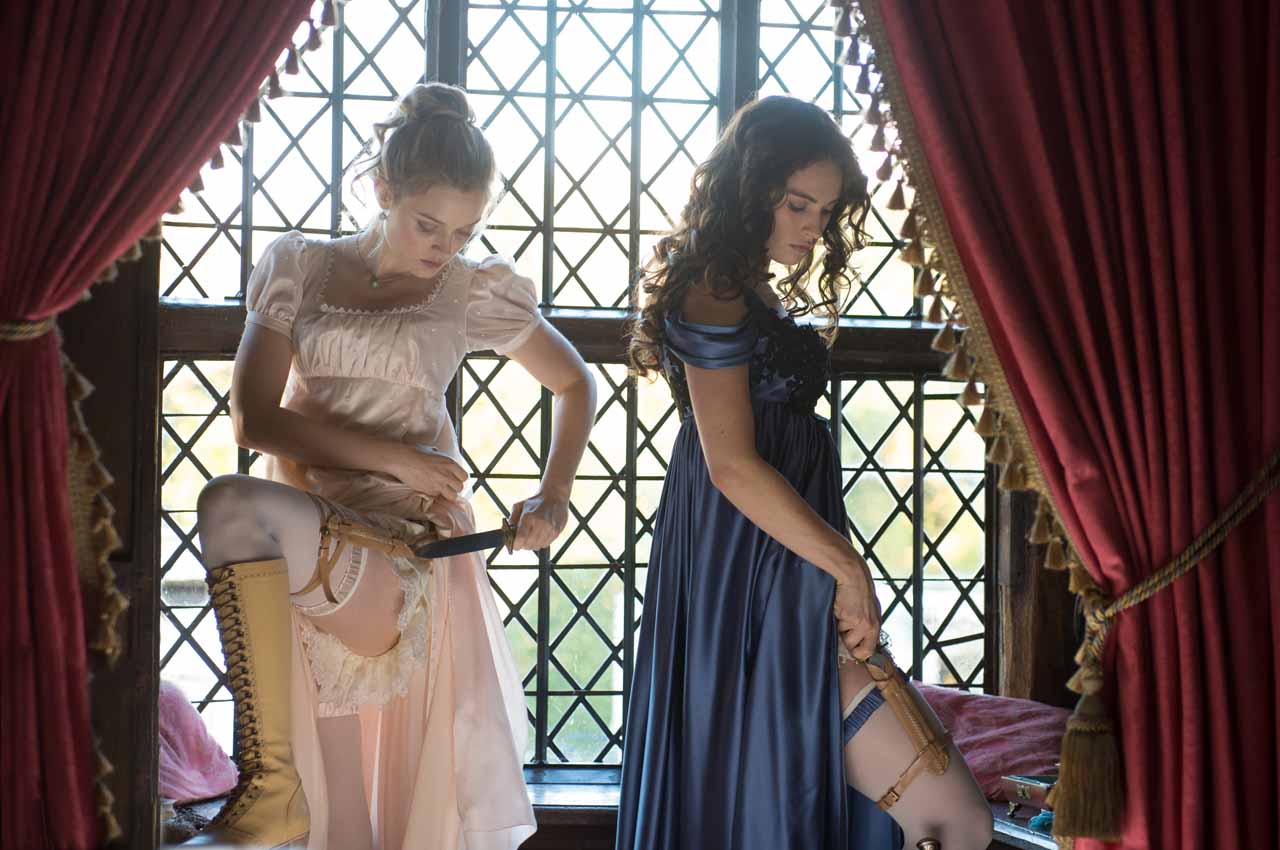
The Zombies? – and Austen? If one is tempted to shake their heads in disgust and moan “Austen must be rolling over in her grave” – perhaps not an apt phrase for this particular story line – please go see it before you profess to know how Jane might feel. All told, this latest adaptation has a deep respect for the original text. It is not a “camp” over-the-top retelling but rather it seems to take the realities of this invasion of England very seriously – just another human-induced war of Good vs. Evil, no different perhaps than depicting Napoleon and the French army conquering the shores of England, a valid fear in Austen’s day. There are laughs to be sure – who cannot when a demure-looking Elizabeth suddenly hoists up her Regency finery to expose her sword-clad leg, grabs her weapons, and deftly slices off the head of a trespassing undead; or Darcy, in his frustration over Lizzie’s refusal, engaging in sword-play with most of Lady Catherine’s lovingly sculptured boxwood topiaries. Mr. Collins at the dance? – he’s perfect; the black-patched Lady Catherine (fashion or function? asks Mrs. Bennet) as the Queen of Zombie Warriors? – Game of Thrones trained her well… So much of it all laugh-out loud (does one laugh-out loud if alone in a movie theater?)
screenrelish.com
But no, not “camp” at all – this all just seems to be almost real, a straight-on approach to a real threat to life as we know it, no one’s tongue in their cheek (well, maybe a little). One must just let go and get into the spirit of the thing, beginning with the introduction, a clever illustrated story-book depiction of the past 100 years of the zombie epidemic. And wonderful to know that all of Austen’s characters seamlessly fit into this world – I think she’d be far from a turn-over in her grave, appalled at yet another mash-up of her “light, bright and sparkling” tale – I think she’d be sitting up and shouting Brava! Bravo! to her Elizabeth and Darcy and everyone else involved. It is after all, not much removed from her very own Juvenilia.
And the zombies themselves? Rest assured, they are really not that bad (have you seen The Picture of Dorian Gray recently?) – a few gruesome faces with blood and snot and rot, but all thankfully quickly dispatched – heads removed, bodies kicked and stomped with boots (lovely boots) – and most of it done in a flash or just shy of camera-range – brilliantly done really – and I confess to only once or twice turning around in the empty theater to be sure I was indeed alone…
One piece of advice – stay for the credits…
[Stay tuned for another post with links to reviews, etc.]
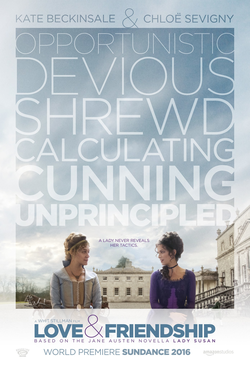
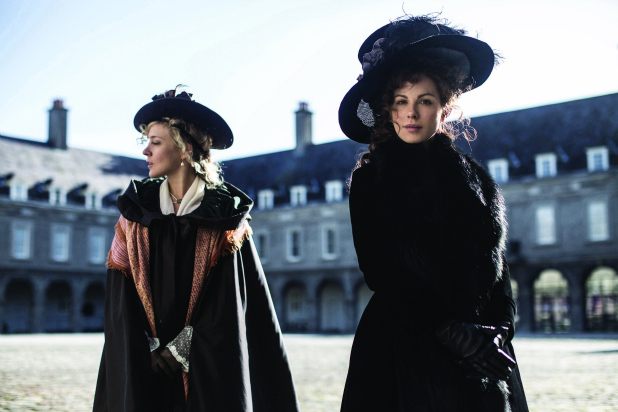
Just posting here all the reviews that have been piling in from Sundance – we have been waiting all year for this film – from the very first announcement that Whit Stillman was going to film Jane Austen’s Lady Susan, but bizarrely calling it “Love & Friendship.” Starring Kate Beckinsale and Chloë Sevigny.
Now if you know Austen’s Juvenilia, you know that “Love & Freindship” is one of her funnier over the top pieces (my favorite line: “run mad as often as you chose, but do not faint….”). It has nothing to do with Lady Susan of course – but whatever the reason for the title shift,* by all accounts it is a terrific film, with a Heroine just like other of Austen’s delicious “baddies” – Lady Susan the queen of them. At least there are no zombies to worry about…
*In the above cited interview, Stillman explains the title change:
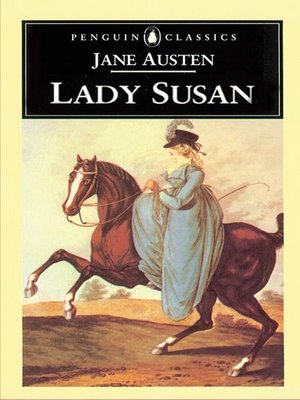
She had no title on it. I’ve seen the manuscript. It’s in the Morgan Library. Her nephew, when he published it in 1871, put the title Lady Susan on it. Austen had sort of shifted as she went along from character names to imposing noun names for titles. Sense and Sensibility was supposed to be called Elinor and Marianne. So we took the title from a juvenile short story to give it that Austen sound.
Today a guest post by Alan Stockwell, author of What’s the Play and Where’s the Stage? A Theatrical Family of the Regency Era, as he tells us a bit about his new book. I shall add this to my TBR file – it has all the makings of a Regency era soap opera of the highest order, all the better because it is all true! Please comment below if you have any questions for Mr. Stockwell…
What’s the Play and Where’s the Stage? A Theatrical Family of the Regency Era
The lives of eminent London actors of the Regency period – Kean, Mrs Siddons, Kemble, Cooke, Macready, Grimaldi et al, are more than amply recorded. This book ploughs a more unusual, rarer, furrow.
It reveals the theatrical lives of a family of provincial players who tramped the highways and byways bringing the latest London hits and classic plays to unsophisticated audiences in tiny country theatres and large manufacturing towns. The author offers not a specialist tome for theatre historians – although they will find previously unknown material and new revelations here – but a beguiling story of a family of three thespian siblings, their spouses and their children.
This is a Regency world far removed from the novels of Jane Austen. There are highs and lows, riches and poverty, twists and turns, and extraordinary events as in the script of any modern television saga. The marked difference being that – for the Jonas and Penley Company of Comedians – this was real life.
In Georgian and Regency times even the tiniest country town had its theatre visited regularly by travelling players. These companies were usually family based and my book is an account of one such troupe – more adventurous than most – the Jonas & Penley Company, grandiloquently self-styled “His Majesty’s Servants of the Theatre Royal Windsor”. The troupe under their indefatigable leader Sampson Penley comprised three siblings, their spouses and two dozen children.
This picture from the Garrick Club shows Edmund Kean the brightest star of the Regency stage. The man in pink on the left is Sampson Penley Jr of the once well-known Penley family of provincial players.
[Source: VesperHawk.com ]
I purposely divided the text into discrete biographies, allowing the narrative of each to flow. However, the subjects all being closely related, the parts form an inter-connected whole. So that their separate stories are easy to read, and are not interrupted by notes etc, all such things are grouped in appendices, which can be ignored if you are not interested in the research necessarily compiled for such a project as a historical biography. Although the book revolves around the theatre of the time there is much information on other aspects of social history – wages, transport, childbirth, postal system etc, which all impinged on the everyday life of players. Authors of Regency fiction may find such things of professional interest. Below is a brief look at the family members described:
Sampson Penley & his brother-in-law John Jonas and all their trials and tribulations setting up a circuit of theatres in south-east England during the Napoleonic Wars while touring with ever-enlarging families. Events include becoming lessees of the Windsor theatre and playing to the royal family; leasing a London theatre (a failure); the first English company to tour the continent in 1814 after the fall of Napoleon; the first English company to play in Paris since Elizabethan times and the riot that ensued; imprisonment for debt and bankruptcy.
–
Mr & Mrs William Penley who were Sampson’s brother and sister-in-law. For several years Mrs W P was the leading tragedy queen in the Jonas & Penley company while her husband was at Drury Lane theatre for ten seasons. Of outstanding interest is that George III’s queen “adopted” their six-year old son, had him educated at public school and provided £300 to facilitate his joining the Indian army where he ended up a major. William became affluent and two of his sons became artists – Aaron of sufficient eminence to paint Queen Victoria and Prince Albert.
–
Sampson Penley Jr who was a leading man at sixteen, joined Drury Lane where he was a principal member of the company for many years in spite of receiving the most consistently damning of reviews. He wrote several plays but only one success. He supported Edmund Kean in many plays and when he lost his place in London he became a manager in Windsor, Newcastle and Leicester. He fell in love at first sight and married after a whirlwind courtship, fled to Paris to avoid debts and died there far too young.
–
The three acting daughters of Sampson, Rosina, Phoebe and Emma Penley relate their careers in tandem. Rosina was the most important and she was the first British actress to be hailed by the intelligentsia of Paris for her Shakespearean performances. Rosina’s peregrinations as a respectable single woman travelling throughout the land, playing a multitude of parts in many towns and circumstances is very different from the typical lives of other women of the period whether rich or poor. Her sisters Phoebe and Emma played the same repertory of parts and on many occasions pairs of sisters acted together.
–
Sampson’s son Montague Penley who was an artist and drawing teacher (a pupil was Princess Augusta) as well as an actor, scenic artist and manager. He acquired the lease of the Lyceum theatre in London which resulted in a swift financial debacle and yet another Penley fleeing to France.
–
Belville Penley was Sampson’s youngest son who as a child acted in Brussels on the eve of Waterloo and afterwards with his family visited the battlefield. He did not become an adult actor but was a theatre manager. His wife was a singer whom he impregnated prior to marriage causing press condemnation. Belville went into partnership with the actor James Anderson at Leicester, Cheltenham and Gloucester. The partnership ended with another bankruptcy. Mrs Belville Penley went on to be a well-known singer of oratorio and religious works and her husband became lessee of the Roman Baths at Bath.
–
Cousins Maria Jonas and Frederick Jonas who also had substantial theatrical careers.
*******************
What’s the Play and Where’s the Stage? is a hardback of 420 pages with an ISBN 978-0-9565013-6-3. You can visit my website for more information www.vesperhawk.com.
And what is the significance of the title? It is a quotation from an anecdote you will find on page 28!
*************
About the Author: Alan Stockwell MBE was a professional puppeteer for over forty years. Latterly, he has devoted much of his time to writing, and is the author of several books and many articles on the theatre, magic, circus and puppetry. He is a long-time member of the Society for Theatre Research and the Irving Society [that would be Henry, not Washington]. And has written on Sherlock Holmes and Charles Dickens (see website for more information).
Thank you Alan for sharing about your book! – Readers, please reply below if you have any comments or questions.
UPDATE: see below for the tale of the bad apostrophe in Southampton…and Tony’s fix!
Dear Readers: I welcome Tony Grant today as he offers us an imaginary diary entry for a single day in the life Jane Austen, a day in Southampton, a town that Tony knows very well – wouldn’t it be lovely if such a diary existed!!
A Jane Austen Manuscript – British Library
**********
JANE AUSTEN: A DAY IN THE LIFE OF…
By Tony Grant
As we are now into celebrating the 200th anniversary of the publishing of Emma by Jane Austen (published December 23, 1815), I have taken a scene from that novel as my cue for this fanciful piece of writing.
Once they have arrived at the top of Box Hill on their excursion from Hartfield and Highbury, Emma Woodhouse, Mrs Elton, Mr Knightley, Mr Weston, Miss Bates et al are affronted by Frank Churchill’s assertive direction for them all to talk.
“Ladies and gentlemen, I am ordered by Miss Woodhouse (who wherever she is, presides,) to say, that she desires to know what you are all thinking of.”
Mr Knightley answered this request with,
“Is Miss Woodhouse sure she would like to hear what we are all thinking of?”
The whole idea of privacy and private thoughts is the crux of this scene. Do any of us want to say what we are actually thinking? Don’t we in polite society automatically set up a barrier between what we think and what we say? We all would like to tell the truth and I am sure we generally do, but within limits. All sorts of safe guards come into play. We don’t want to insult anybody or reveal our true feelings in case of embarrassment or revealing something too personal about ourselves. Where can we reveal our true selves? Maybe we never do. But certain things can get us close. Writing a personal diary is one of them. A diary that we keep secret and just put our own personal thoughts, ideas and feelings into is a private place we can inhabit. Samuel Pepys even wrote his famous diary in a coded short hand. Anybody in his household picking it up would not have had a clue what he had written. Samuel Pepys probably intended that nobody should ever have access to his inner life and thoughts -especially the King or other government officials and certainly not his wife.
The 19th century was a strange world in the sense that privacy was not what we would think of it today. Many people were servants who often shared garret rooms. Where was privacy for them? The masters and mistresses of a wealthy house had an extended family that included their servants who lived with them. Where was their privacy?
However, the idea of privacy and private thoughts today is maybe not what we might think also. With the internet, social media and the logging of all our most personal details by obscure internet providers and companies is there such a thing as privacy at all?
As far as we know Jane Austen did not keep a diary. All that she wrote, novels, letters and a few poems and some juvenilia were for others to read. They were intended for an audience.
Where could the private Jane Austen, the Jane Austen with an inner life not for publication go? Many of her beliefs and thoughts, I am sure, come through in her novels and letters. However they are her thoughts chosen, subtly inserted and intended to be read by others. We can get a sense of her as a person, but what of those raw unedited emotions, her deepest moods, her deepest thoughts, not for publication?
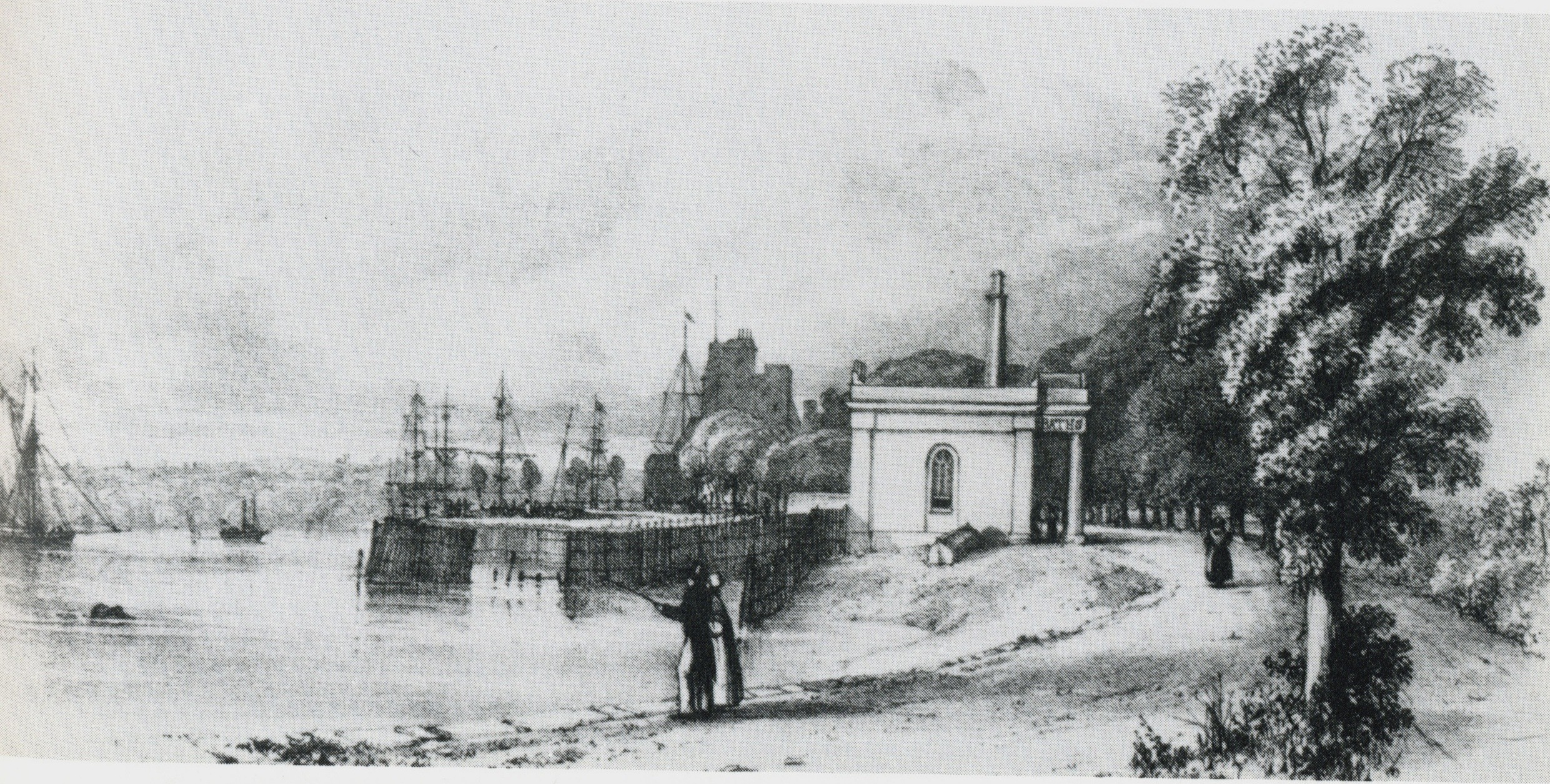
Southampton 1801
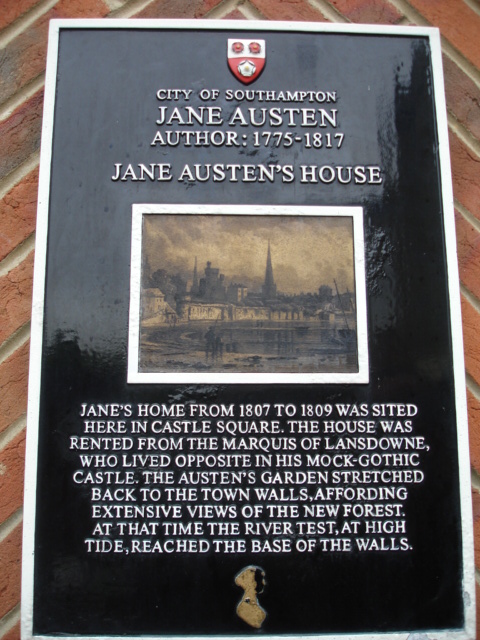
I have used some real events taken from some of her letters while she lived in Southampton (Austen lived there from 1806-1809) and then rewrote them as though Jane had written a diary. It is a diary entry about one day, for nobody else to read, EVER!!!! A secret place for her thoughts and emotions.
*****************
Southampton ,Tuesday 6th January 1807
Jane’s house in Castle Square, located at the base of the keep
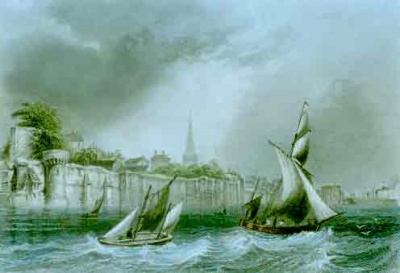
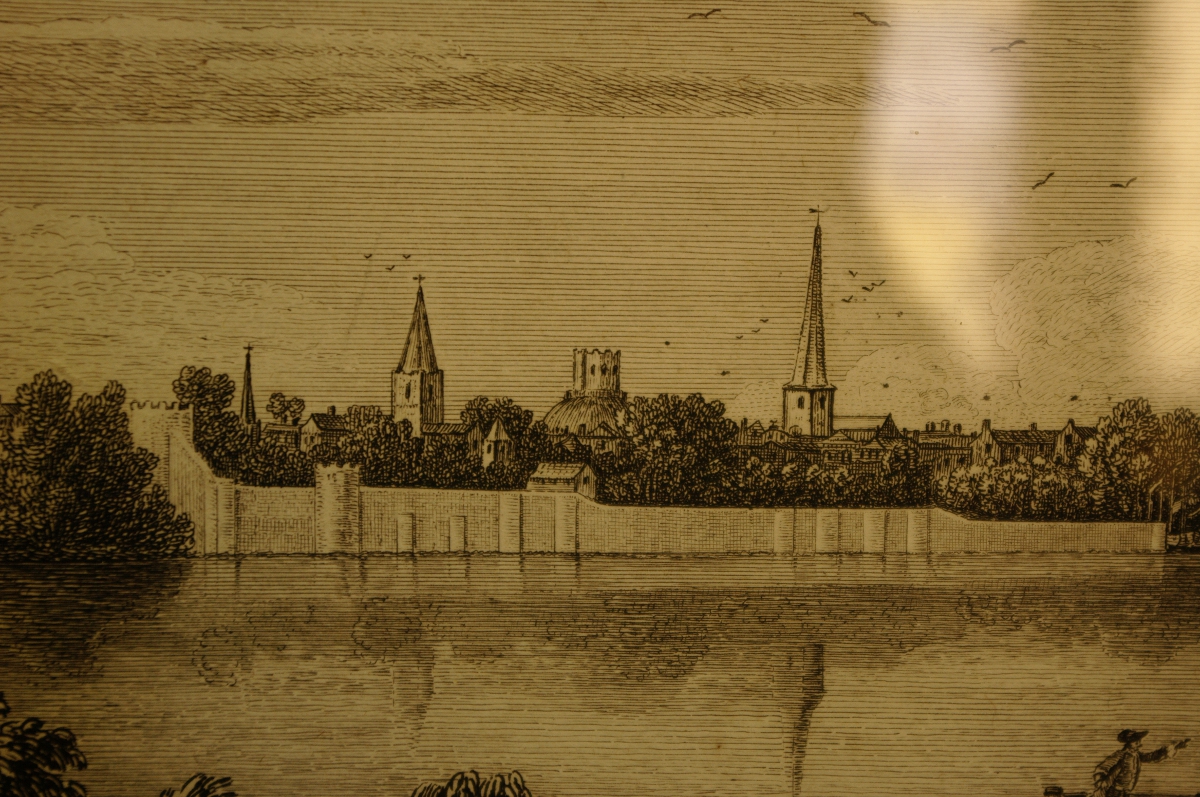
We have been here for nearly four months now. This Castle Square house is well positioned within the town walls. Our garden backs on to the towns great medieval defences. The top parapet makes a picturesque, and moss embossed vertical expanse against which we grow raspberries and gooseberries. I think the sun must heat up the ancient stones and the heat from the stones brings along the fruit bearing shrubs admirably. We have already had one harvest, soon after we arrived, last October. Molly and Jenny, our two servants who we hired in the town, collected three huge baskets of the juicy fruit. We have had raspberry and gooseberry pies ever since. Surely our stock must run out soon and then we will have to wait all through the summer until autumn comes once more for those delights to be ripe enough to pick once more?
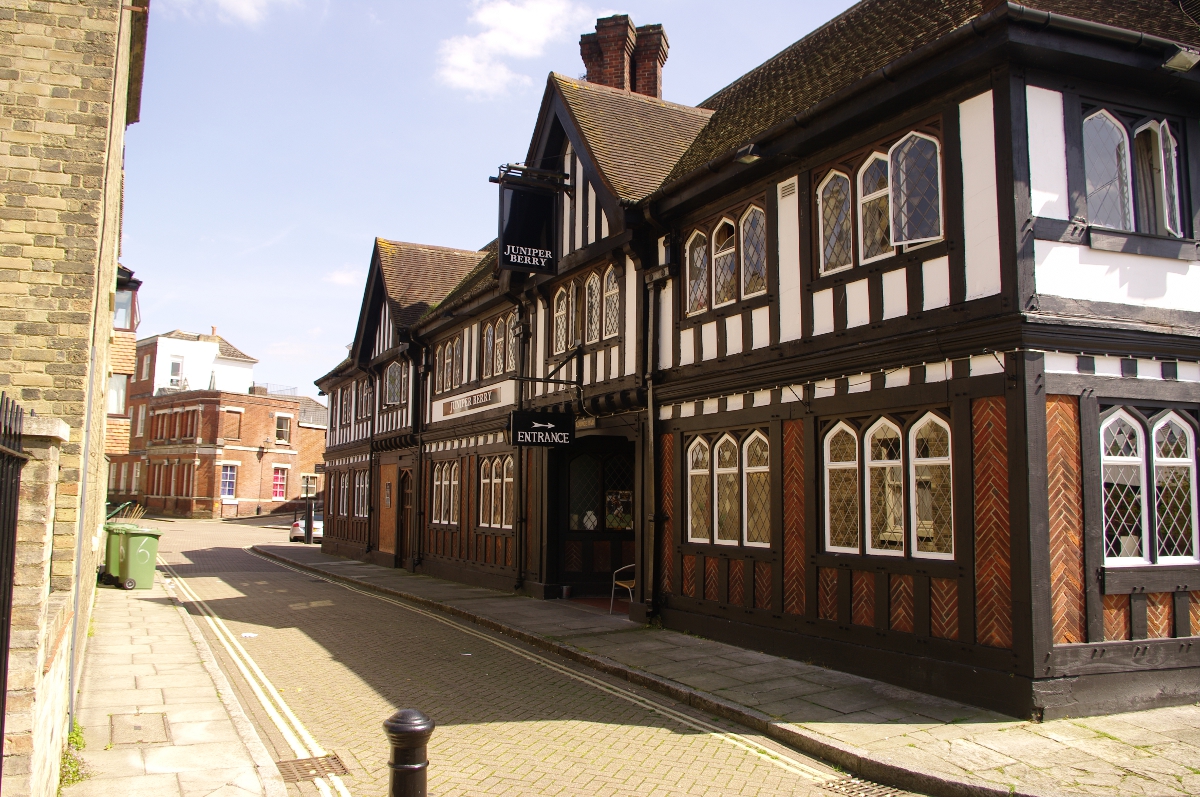
Rear of the Juniper Berry, site of Jane Austen’s house
Sight of Austen’s house in Castle Square, cBarnum
[with thanks to Tony for “fixing” this sign and making all of us grammarians out there rest easy. Jane may not have been strong on punctuation, but we shall assume that she is pleased as well…]
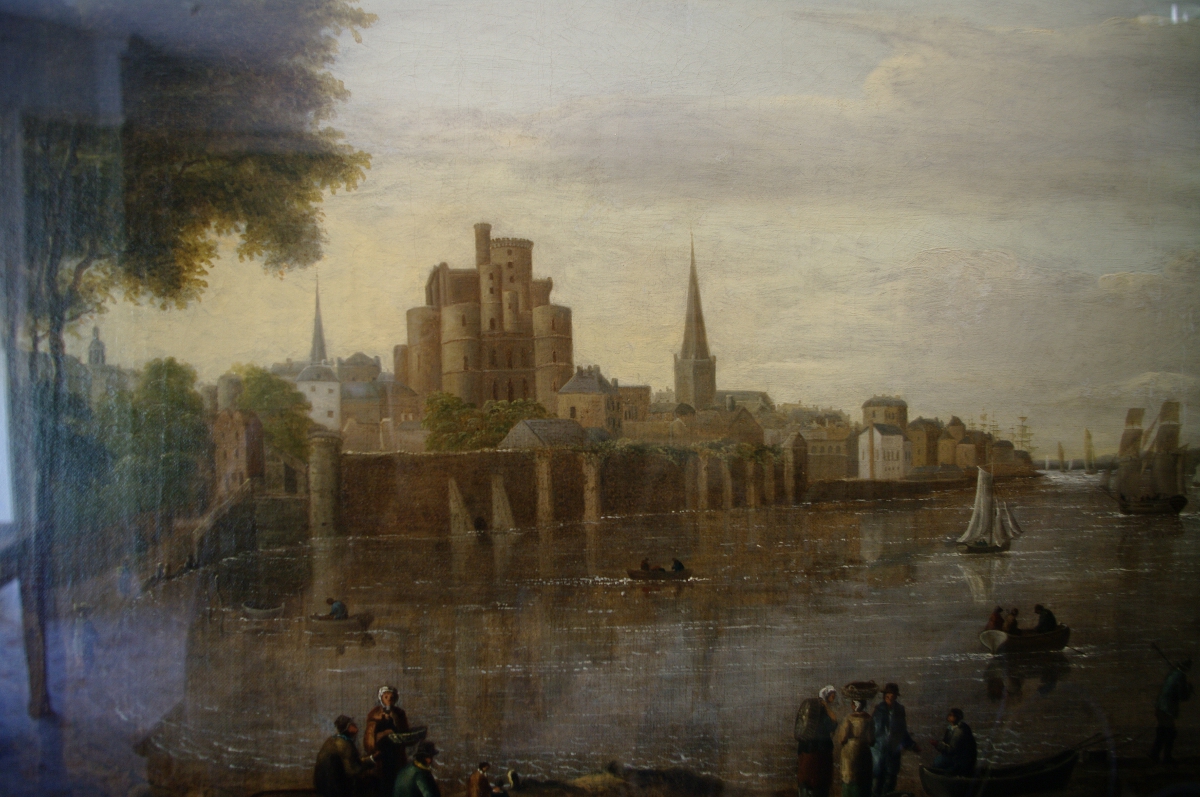
From my very own room at the back of the house I have some wonderfully entertaining views. Fishermen pull their boats up to the narrow harbour wall beneath our garden and spend their time sewing nets and scraping barnacles off the keels of their skiffs. I often try and listen to their conversations but their accents are so thick with oys and aghs and yeh’s. I am all a wonder at what a ,”mush,” is or a ,”nipper?” I can never quite fully catch what they say but the other day I heard two burly sailors nearly come to fisticuffs, “ Oy, mush what yer staring at?” said one rather aggressively to the other. I turned away quickly in case they saw me watching them. I might get a few choice words aimed my way. I blame it on The Royal Standard Inn just along the walls from us, next to the postern gateway – A drinking den of iniquity if ever there was one. Sometimes I hear a song, maybe a shanty, of some sort. I often see fishing smacks setting sail for Southampton Water to fish for the local dabs which are a great delicacy. Often a Man of War ventures this far up the Solent and anchors off Marchwood, in the Test estuary. They come up to the refitting yard I have been told. They get new masts there. The proximity to the New Forest provides a ready source of timber.
Southampton area 1740 map
On a clear bright day the New Forest stretches green and verdant in the distance far across the sparkling waters surrounding this peninsula on which Southampton is chiefly situated. We really must take a carriage ride there.
Today a new man arrived to tend our garden. He seems much more reliable than the last one who wanted more remuneration than my mother could afford. He says he is going to replace our forlorn and stringy wild roses with a stronger fuller variety. And some syringas, some laburnum, which will look beautiful and luxuriant, dripping with their blooms all through the summer months. We will get some Cowper’s Line too. Oh! that reminds me of Cowper:
Cowper
There’s not an echo round me,
But I am glad should learn,
How pure a fire has found me,
The love with which I burn.
For none attends with pleasure
To what I would reveal;
They slight me out of measure,
And laugh at all I feel.
“The love with which I burn.”
Burn with love. What must that be like? Cassandra, my so called sister, berates me with my past errors, hah! Martha, friend, is she? Sometimes my mother, when she is in one of her overbearing moods, teases me about that boy, that stuttering poor boy, Bigg-Wither who proposed. What was I thinking? How could I? Oh yes, “and laugh at all I feel,” indeed. I can feel my stomach tie into a knot as I remember even now. What crushing anguish and embarrassment that has caused me. I wanted a burning love. I wanted a pure fire inside me. Why can’t I ever experience that? I feel all this energy inside me wanting to burst out.
I know, it does burst out. My writing. My poor substitute for real lived life and love. I can make my characters experience truelove. I know how it all works. I can make it happen for them but, not, me. Look at those poor puppets, Elizabeth and Darcy. Ha! Another stuttering fool. He changed into something though. I did that for Elizabeth. No Bigg-Wither for her. There I go again. Darcy is NOT real!!!! Why do I let myself go off into this fantasy world? My fantasies are better than my lived life. How can that be? A spinster, destined for what?
Mary, my brother’s new wife, is pregnant. She is full with new life. She has expanded, rather quickly, shall we say. It is
Francis Austen – wikipedia
Frank’s command that we be here, to live with and pander after, his wonderful Mary. I sound too abrasive, I know. We all love her. But we are here doing our duty, for our dearest brother. They only had a short time after the wedding too. He must have put all his efforts and strength into it. Another for this baby-making family. Ha! They have two spare wombs in Cassandra and myself as well. I wonder what will become of our two dry pods? I wonder what it would be like to carry a child?
Cassandra still languishes at Godmersham looking after Edward’s baby. A maiden aunt. Is that all she is good for poor thing? I know that she is worth far more. I know she takes my share of these, duties. It is a form of slavery. It should be banned by parliament. It is all so unfair. There I go. It truly is a man’s world.
What is that awful sound? I hear my mother calling. That shriek. That demanding forceful will of hers. Damn her.
Mrs Austen
What does she want? I will be back. Here, in this little book, this little place, are all my real thoughts. My real thoughts! It’s where I can truly be myself.
I want to go on writing in here forever and nowhere else. Where else can I say these things, that nobody will hear, nobody will see? Not even you, mother!
“I am coming!”
I seem to say those words a lot.
………… Ah, all it was, was piffle. She, wanted to tell me, once more, about her finances. She had £85 at the close of last year. She spent £27 during the year. At the start of this year she has £99. A triumph!! But I know this already. She has told me twenty times. And she will tell me again, next week.
And we have visitors tonight. How many, is not sure. Can we feed them? Have we got enough fuel to keep the fire going to warm them? Nobody knows. My mother and her finances don’t know.
Marquis of Lansdowne’s castle and Jane’s house
…………………. So they came. Mr Husket, Lord Lansdowne’s painter, or interior decorator I should say, came across from his Lordships “castle.” Mr Harrison called in with his two daughters. They laugh a lot but are not too silly, thank goodness. Mr Debary with his sister came too. Most of them arrived about 7 o’clock. The men were all wrapped up, buttoned to the neck, in great coats and the ladies wore thick pelisses and carried umbrellas against the rain. Why couldn’t the rain stop them from coming? But they came. A house-full. We stoked up the fire, (at what expense?) so it heated the dining room admirably. We drank tea and Jenny and Molly worked hard at providing muffins and fruit cake. What did we play? Oh yes, we had a pool of commerce and a table of spillikins. Mr Harrison won at everything. He was so pleased with himself. He grins a lot. His fat cheeks became puffed out and swollen like two full cows udders. For tuppence I would have milked them for him and given him a round slap in the process!
Southampton Beach
The weather is damp. A wind blows off the water. It carries a chill. I am shivering now in my unheated room. I can actually smell the salt in the air. There is a mixture of seaweed in it too.
Hark! I just heard Lord Lansdowne’s coach coming out of his stables opposite us. At this time of night of all things. I wonder what’s up? The smell of straw and horse dung can be overpowering at times from that place. However the wind is from the sea tonight so we are spared that malodorous problem. I feel fatigued. I will have a little nap. Tomorrow these private and wonderful white pages await me again. I would never write another novel if it were not the fact the writing of them provides me a few extra pounds and pence….
*****************
Some additional pictures of Jane Austen’s Southampton: [I had the pleasure in May 2014 of touring all around Southampton with Tony – some of these pictures are mine, some his – it was a glorious day despite drenching rains…]
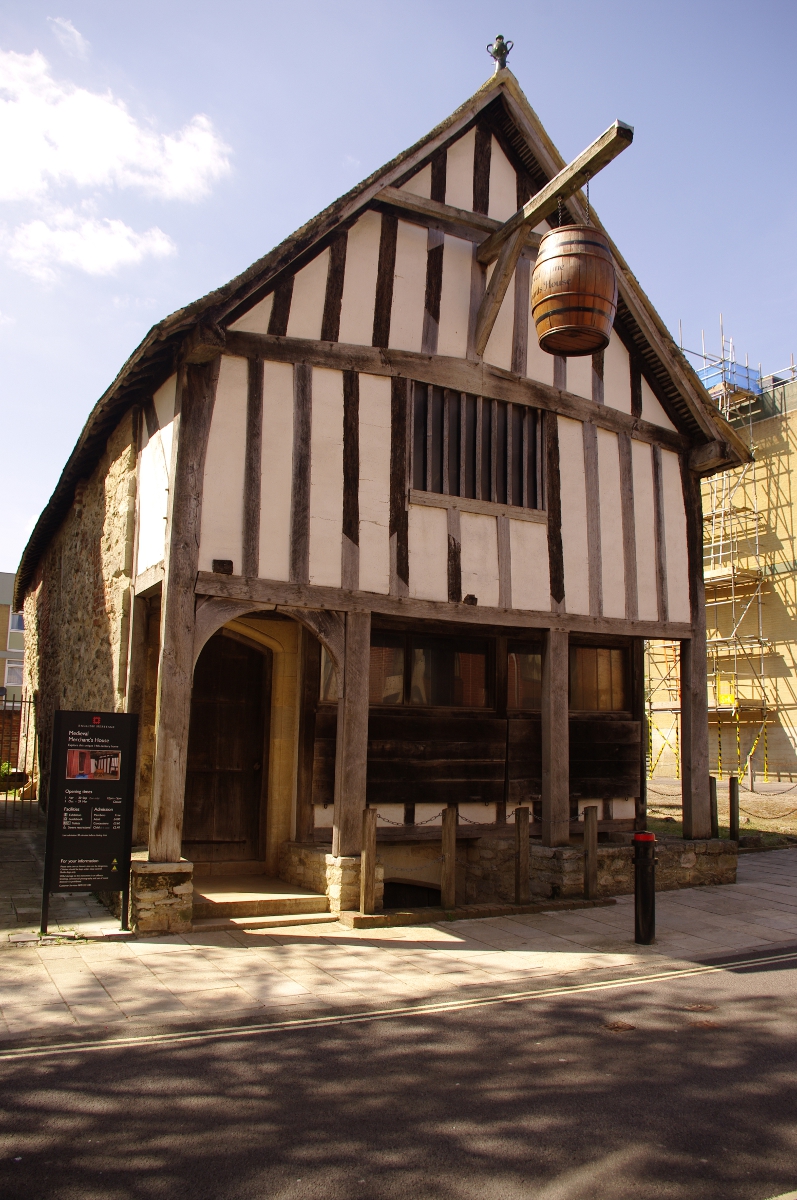
A medieval shop
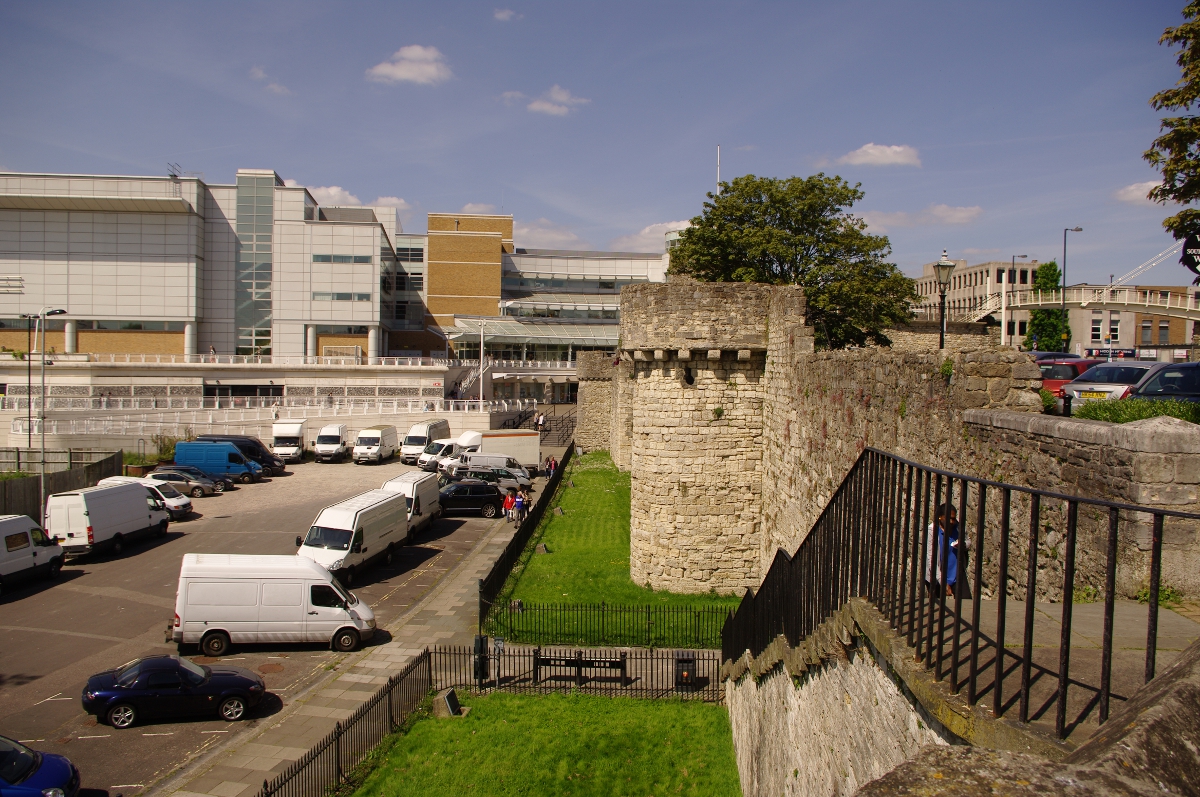
Catchcold Tower – part of the medieval walls
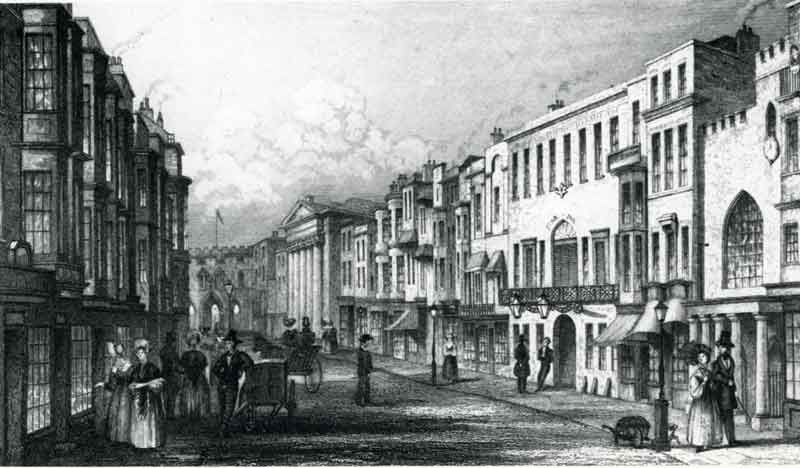
High Street, Southampton 1805
Jane goes to the spa
St Michael’s medieval Church
Jane’s school was close to The Bargate
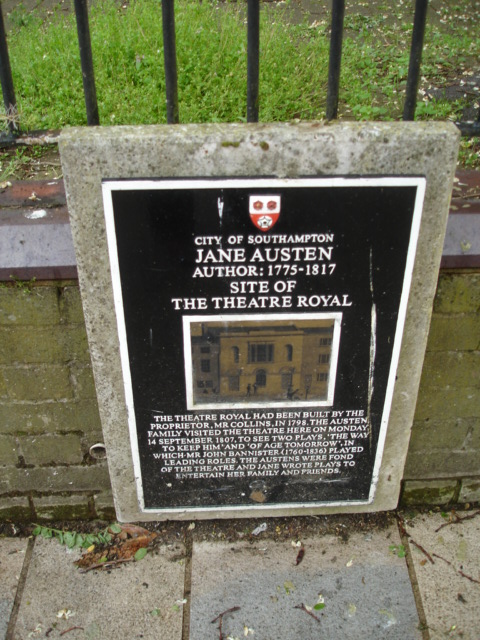
Theatre Royal – where Jane visited (cBarnum)
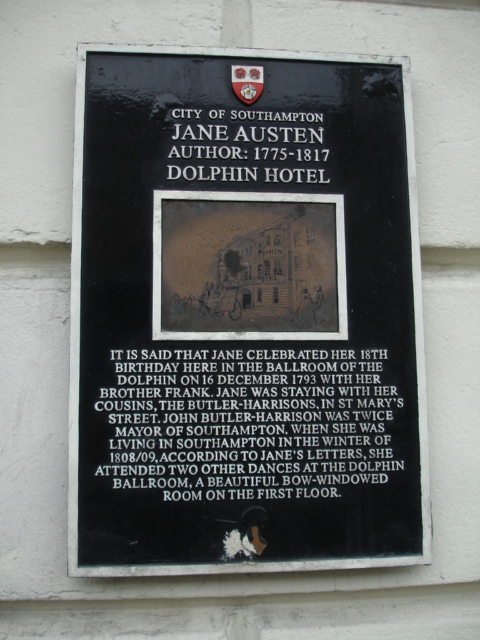
Dolphin Hotel fireplace – Jane danced in this room (cBarnum)
Dolphin Hotel Sign – JA danced here (cBarnum)
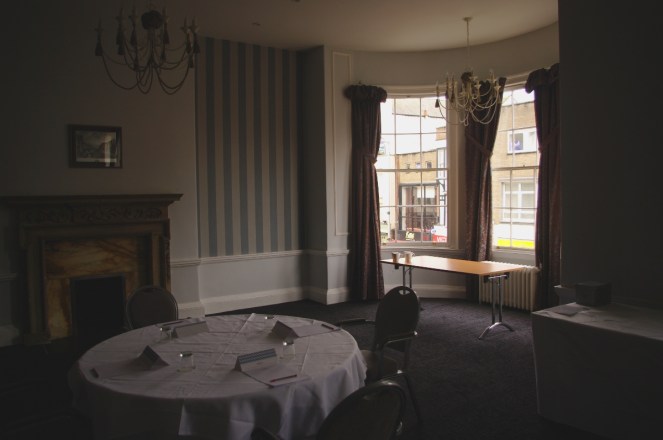
Bay window in the Dolphin Inn Ballroom
View from the walls
***************
Thank you Tony for this interesting foray into a fantasy Jane Austen diary entry! Please comment – if you could read a diary entry of Jane Austen’s, what inner-most thoughts of hers would you most want to read about?
c2016 Jane Austen in Vermont [all images from Tony Grant unless otherwise indicated]


 Heather Brothers is one of our “Team of Janeites” in Vermont who helps with Hospitality and Boutique sales at our quarterly meetings. She is a young mother of two adorable girls, and also the author of a Regency-era novel, The Introduction of a Gentleman (2013) – it is a terrific read – you can find it on Amazon (and interesting to note that the cover depicts a young lady sitting at a pianoforte!)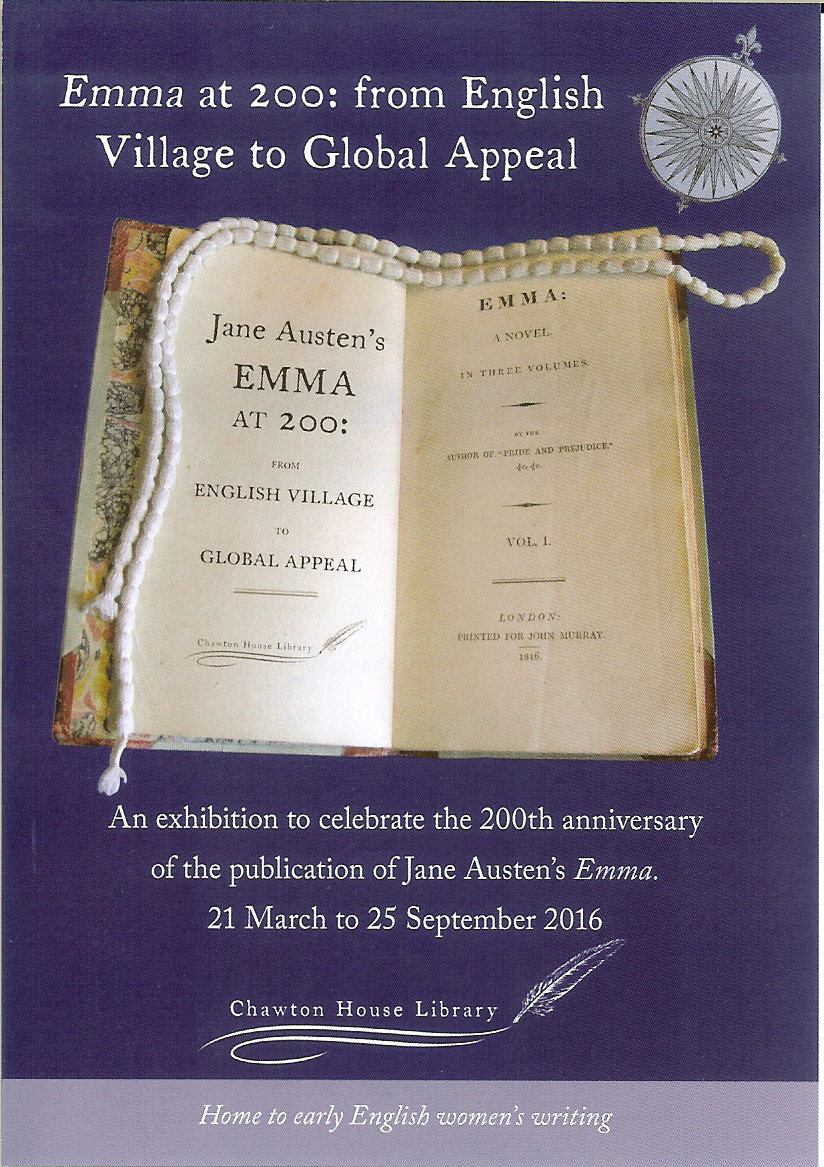































 Jane Austen in Vermont