This totally depressed me: the author of the essay writes: “I recently realized that ethel / ᛟ, the word and rune, have been appropriated by white supremacists and neo-nazis.”
*
Well, first a very Happy New Year to one and all!! – I have been away from my computer, and find some of my gathered “news” is no longer actually new, so I include here just some goodies discovered on the internet, a good number only peripherally related to Jane, but interesting nonetheless… [or so I believe…]
News /Gossip
* How about taking a Jane Austen Cruise?! This coming July, you can head from Southampton to Guernsey, Spain and France for an 8-day cruise filled with all manner of Jane Austen diversions – http://janeaustencruise.com/
* The Amanda Vickery broadcast of The Many Lovers of Jane Austen may have only aired in the UK, but we can view it here, with thanks to Diana Birchall for sending me the video link:
You might also like to check in at Jane Austen’s Regency World blog to see a review of the show by Tony Grant and the numerous (some indignant!) comments on his take on the Fort Worth JASNA AGM. You should watch the video and then read the review and comment if you can…!
The Circulating Library
* If you have enjoyed the Bitch in a Bonnet blog, you will be interested to know that Rodi’s writings on the first three Austen novels are available for your ereader! – all for 99c… read about it here:
* Dr. Maureen Mulvihill spoke at the Florida Bibliophile Society on “The Evolution and Education of a Collector (1980s-): The Mulvihill Collection of Rare and Special Books and Images.” http://www.floridabibliophilesociety.org/mulvihill.html
* If you have an interest in bygone etiquette books, Abebooks compiled a list several months ago – here are some items for sale by various booksellers:
The Lady's Guide to Perfect Gentility - Emily Thornwell, 1856
Jane Austen’s six complete novels and her juvenilia are examined in the context of civil society and gender. Steiner’s study uses a variety of contexts to appraise Austen’s work: Scottish Enlightenment theories of societal development, early-Romantic discourses on gender roles, modern sociological theories on the civilizing process and postmodern feminist positions on moral development and interpersonal relations.
Austen is presented as a writer who not only participated in late eighteenth-century debates, but who is able to address twenty-first-century concerns of a theoretical and practical nature.
* Gentleman’s Magazine exhibit at University of Otago – not yet online:
Gentleman's Magazine - Monash University
Special Collections,University of Otago Library, is fortunate to have an entire run of the Gentleman’s Magazine from 1731 to 1866. Started by Edward Cavein January 1731, and printed form many years at St. John’s Gate in London, it was a ‘repository of all things worth mentioning’. It was the first ‘magazine’ in the modern sense. It was also the most important periodical in 18th century England, reflecting in its pages the diversity of Georgian life, politics and culture. It covered current affairs, political opinion, lead articles from other journals, miscellaneous information such as quack cures and social gossip, prices of stocks, science and technological discoveries, notices of births, deaths, and marriages, ecclesiastical preferments, travel, parliamentary debates, and poetry. Writers such as Dr Johnson, John Hawkesworth, Richard Savage, and Anna Seward were just a few of the thousands who contributed to it. At 6d per issue, it was an outstanding bargain. It remains an inexhaustible mine of information for scholars of eighteenth century life, and because of the wealth of genealogical information and records, it has become an important resource for family historians.
Our exhibition ‘The Gentleman’s Magazine. The 18th century Answer to Google ‘ begins on 21 December 2011 and runs through to 16 March 2012, just in time for the new student intake. Eventually it will be online.
But while we wait for that – you can visit their latest online exhibition “In Search of Scotland”
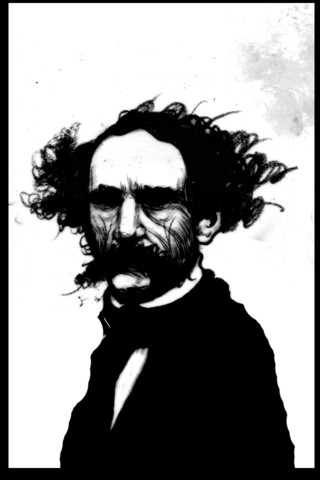
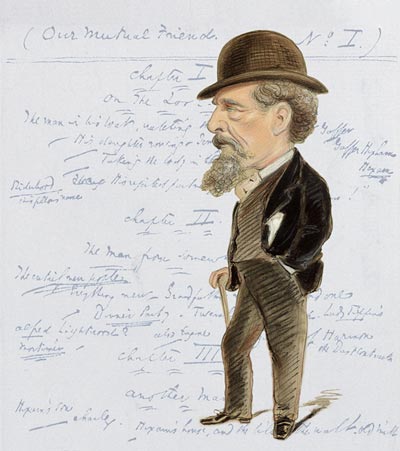
As we will are celebrating Charles Dickens 200th birthday throughout 2012, I will be posting a number of Dickens-related goings-on – I can only think that Austen would heartily approve of giving him his just due, and thus, he now has his own category in the PPWR:
1. A bookseller’s list of some of his works that they have for sale [Tavistock Books]: http://tinyurl.com/7c2t2y3
2. This one is very exciting as it combines my love of Dickens and my love of London and makes full use of my iphone capabilities: Dickens Dark London from The Museum of London:
* Thomas Jefferson’s Granddaughter in Queen Victoria’s England: The Travel Diary of Ellen Wayles Coolidge, 1838-1839. Edited by Ann Lucas Birle and Lisa A. Francavilla. Hardbound, 464 pages, 20 color and 10 black and white illustrations. Copublished by the Massachusetts Historical Society and the Thomas Jefferson Foundation. http://www.monticellocatalog.org/205632.html
Ellen Wayles Coolidge arrived in London in June 1838 at the advent of QueenVictoria’s reign – the citizens were still celebrating the coronation. During her nine-month stay, Coolidge kept a diary that reveals the uncommon education of her youth, when she lived and studied at Monticello with her grandfather Thomas Jefferson. This volume brings the full text of her diary to publication for the first time, opening up her text for today’s reader with carefully researched annotations that provide the historical context.
London’s clocks, theaters, parks, public buildings, and museums all come under Coolidge’s astute gaze as she and her husband, Joseph Coolidge, Jr., travel the city and gradually gain entry into some of the most coveted drawing rooms of the time. Coolidge records the details of her conversations with writers such as Samuel Rogers, Thomas Carlyle, and Anna Jameson and activists including Charles Sumner and Harriet Martineau. She gives firsthand accounts of the fashioning of the young queen’s image by the artists Charles Robert Leslie and Sir Francis Chantrey and takes notes as she watches the queen open Parliament and battle the first scandal of her reign. Her love of painting reawakened, Coolidge chronicles her opportunities to view over four hundred works of art held in both public and private collections, acknowledging a new appreciation for the modern art of J. M. W. Turner and a fondness for the Dutch masters.
As rich as her experience in England proves to be, Coolidge often reflects on her family in Boston andVirginia and her youth at Monticello. As she encounters her mother’s schoolgirl friends and recalls the songs her grandfather sang while working in his study, Coolidge’s thoughts return to Monticello and the lessons she learned there. Across the spectrum of her observations, Coolidge’s diary is always strikingly vivid and insightful – and frequently quite funny.
* Cambridge University Press has just published Samuel Johnson in Context, a collection of 47 short essays about the great lexicographer and his world. The book, which is aimed at a college and general audience, is edited by DSNA member Jack Lynch (also author of The Lexicographer’s Dilemma: The Evolution of English from Shakespeare to South Park [2009]).Lynda Mugglestone contributes an article on “Dictionaries” and Lisa Berglund, the introductory chapter on “Life.” Visit the Cambridge UP website for a complete Table of Contents: http://www.cambridge.org/gb/knowledge/isbn/item6476720/?site_locale=en_GB
Few authors benefit from being set in their contemporary context more than Samuel Johnson. Samuel Johnson in Context is a guide to his world, offering readers a comprehensive account of eighteenth-century life and culture as it relates to his work. Short, lively and eminently readable chapters illuminate not only Johnson’s own life, writings and career, but the literary, critical, journalistic, social, political, scientific, artistic, medical and financial contexts in which his works came into being. Written by leading experts in Johnson and in eighteenth-century studies, these chapters offer both depth and range of information and suggestions for further study and research. Richly illustrated, with a chronology of Johnson’s life and works and an extensive bibliography, this book is a major new work of reference on eighteenth-century culture and the age of Johnson. [from CUP site]
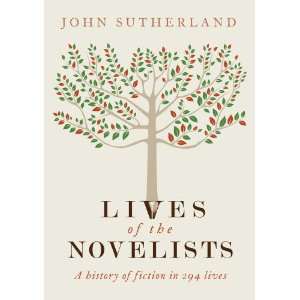
* John Sutherland, Lives of the Novelists: A History of Fiction in 294 Lives (Profile Books, 2011)
[ok. I have finished this – will post a short review and a compilation of other reviews – very mixed – but most Austen people seem to be universally disappointed … a shame really – it should have been better…]
Articles of Interest
* Rudd, Amanda. “The Spaces Between: Creating A Space for Female Sexuality in Frances Burney’s Evelina, Ann Radcliffe’s The Italian, and Jane Austen’s Sense and Sensibility.” Plaza: Dialogues in Language and Literature 2.1 (2011): 82-91. Full text here: http://journals.tdl.org/plaza/article/viewFile/5934/pdf_415
Queens in Waiting: Charlotte & Victoria [26 November 2011 – 9 September 2012]
Princess Charlotte and Prince Leopold
[by William Thomas Fry, after George Dawe, 1817]
In the early nineteenth century two young women would occupy the position of ‘heir to the throne’ in quick succession. One died tragically early, while the other, born to replace her, went on to reign for over sixty years as Queen Victoria. Telling a tale of romance, sorrow and renewed hope, this display focuses on the fateful linkage in the history of Princess Charlotte of Wales and Princess Victoria of Kent, and how both their lives pivoted around Prince Leopold – beloved husband to one, and trusted uncle to the other.
Featuring a range of portraits in wax, watercolour, and print, as well as commemorative images, it includes an engraving of Princess Charlotte’s last portrait from life by Sir Thomas Lawrence, completed posthumously. By bringing together these images, the display traces the idealised nature of the imagery used to represent a young woman in direct line to the throne at a time when the nation tired of the debauched Prince Regent’s rule. [from the NPG website]
* Exhibition at the Boston Public Library – Rare Books Exhibition Room, through March 30, 2012:
From Pen to Print: the Handwriting Behind the Book features handwritten letters, notes, postcards, and other manuscripts that reveal personal, private, and otherwise veiled aspects of the production of books. Putting authors’ manuscript materials on display alongside their print books, the exhibition reveals the passions, obsessions, lofty dreams, and gritty realizations triggered by the writing and publishing process. These materials capture the relationships between 19th- and 20th-century American authors, editors, and readers, including Nathaniel Hawthorne, Edgar Allan Poe, Alice Cary, Walt Whitman, Henry Wadsworth Longfellow, Robert Frost, and more. Open in the Rare Books Lobby at the Central Library in Copley Square through Friday, March 30, 2012, 617-536-5400. Special hours: M, T, W, F: 9am-5pm; Th: 11am-7pm
* American Christmas Cards 1900-1960: by Kenneth Ames: the exhibit at the Bard Graduate Center is now over, but you can read about it here:
And you can follow the Museum’s Textile Tuesday, a weekly post of a piece from their extensive textile collection : http://charlestonmuseum.tumblr.com/
Shopping: [I’m done with shopping…]
For Fun:
Visit the blog of the Jane Austen House Museum [now penned by Julie Wakefield of Austenonly!] for a post on board games for the holidays – “Snakes and Ladders the Jane Austen Way” …
For those who did not go to the AGM [and for those who did because the sound was flawed] – here is the video previewing the upcoming AGM in New York City next October [via Kerri]: http://jasna.org/agms/newyork/video/
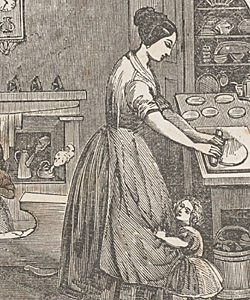
“The Making of a Homemaker” – a Smithsonian Institution online exhibition about the domestic guidebooks written for the 19th century American housewife: many images
Image: Mrs. Lydia Green Abell. The Skillful Housewife’s Book: or Complete Guide to Domestic Cookery, Taste, Comfort and Economy. New York: R. T. Young, 1853.
Articles of Interest
Gemmill, Katie. “Jane Austen as Editor: Letters on Fiction and the Cancelled Chapters of Persuasion.” ECF 24.1 (2011): 105-122
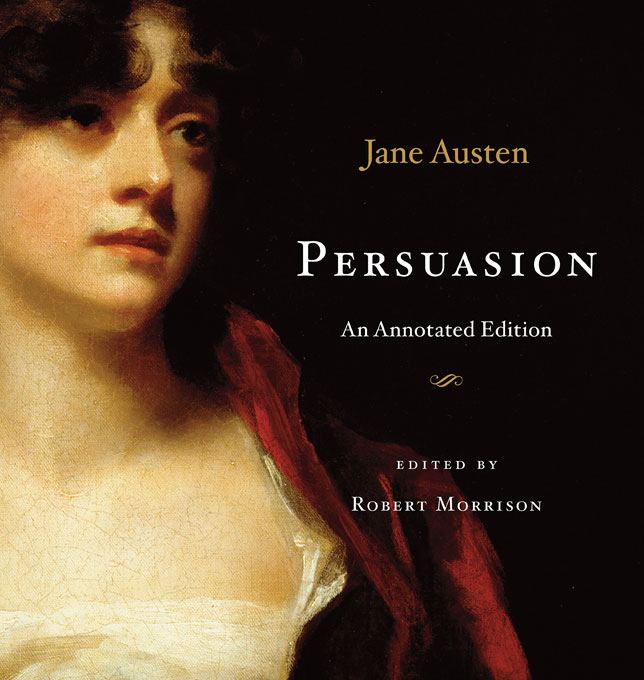
Persuasion, An Annotated Edition, edited by Robert Morrison [in the same series as the Annotated Pride and Prejudice edited by Patricia Myers Spacks] – http://www.hup.harvard.edu/catalog.php?recid=31301
I think I might weigh in after reading it myself – I thoroughly enjoyed the Hodge biography…
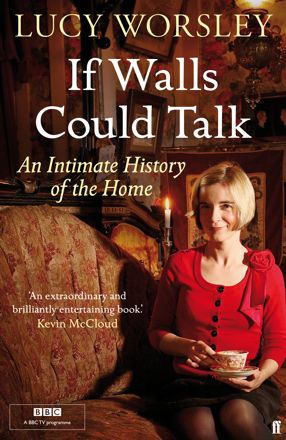
If you have read Bill Bryson’s At Home and Amanda Vickery’s Behind Closed Doors [and etc. regarding her titles] – and need another fix for your domestic matters obsessions, here is a must-have: If Walls Could Talk by Lucy Worsley [image US and UK cover: note that it is not available in the US until 2/2012 and has a different cover] – Ms. Worsley recently aired her Elegance and Decadence, The Age of the Regency on BBC4, also not available here until when ?? [though it is available for streaming, on youtube, etc.] [makes one want to abandon the colonies for good and head to the mothership?]
“Britain leaves us awed by ancient castles, ruins and museums. History pours out a legacy of battles, a developing monarchy, a structured class system, court-inspired behaviors and fashions, artwork and writings that have created an international hoard of Anglophiles. From among them have come forth those who feel that they must fuel the fire. Welcome to the happy home of English Period Authors. We have come together to share, inspire and celebrate and to reach out to our cherished readers.”
“What links Jane Austen, John Nash, Humphry Repton and Blaise Hamlet?” at the Georgian Gentleman blog:
Thrifty Jane blog – interviews with various Austen characters, esp the “thrifty” sort! [i.e. Mrs. Norris, Lucy Steele, Lady C, etc…] http://thriftyjane.wordpress.com/
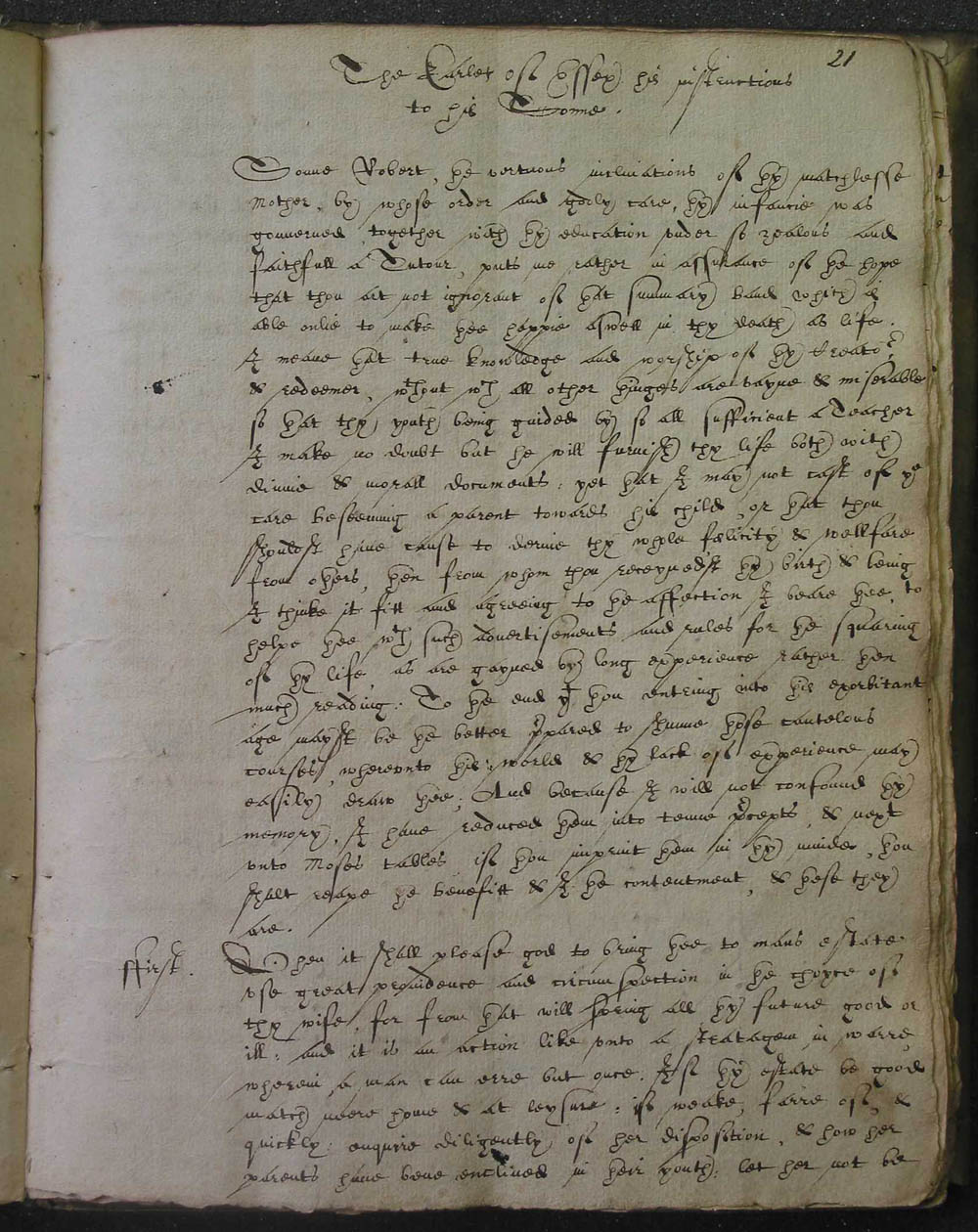
Any interest in English Handwriting?? – here is an amazing online course for free – makes me want to dig out my old calligraphy pens and settle in for a winter class!:
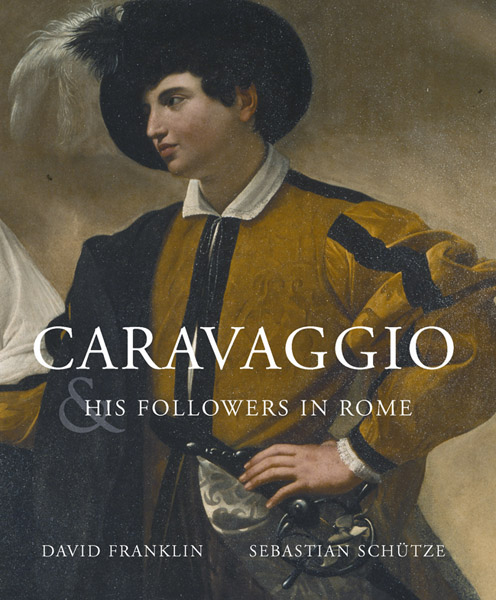
Caravaggio and His Followers in Rome: this exhibit was at the Kimball Art Museum in Fort Worth, but I was unfortunately unable to go – Laurel Ann at Austenprose did see it on the Sunday as she was leaving later than me – she said I must buy the book, so here you go, another lovely art book to peruse: http://yalepress.yale.edu/yupbooks/book.asp?isbn=9780300170726
DESCRIPTION: Have you ever read a mystery where the heroine sounds like
an oversexed gangster? Or a romance where the hero sounds more like a
girlfriend than a man? Chances are, the oversexed heroine was created by
a male author; the tender, emotional hero by a woman. Men and women
think, act, and talk differently – which causes problems for writers
who are trying to create characters of the opposite sex. Learn about the
most common gender differences, and use them to create believable
characters of the opposite sex. (And along the way, you may get some
great ideas about how to deal with your husband, boyfriend, boss, big
brother, or other assorted males — or for the first time, understand
what’s really going on inside the head of your wife, girlfriend, mom…)
Fee: $20 CRW Members; $25 Non-CRW Members. FMI about the workshops or
speakers, or to register: http://crw-rwa.ning.com
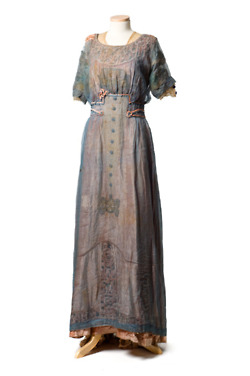
Sage and other variants were very fashionable during the Regency period as a green dye that did not fade or darken was invented. However, it was literaly the colour to die for – the pigment contained a poisonous copper arsenic compound!
Plum is a much nicer word than ‘Puce’, which was popular in the Regency period. The purplish pink shade was named after the French word for ‘Flea’ as it resembled the shade of the blood sucking insect after a meal. Yuck!
Teal and shades of blue were also in demand. In Jane Austen’s time dyes were expensive, pigments made of natural substances and the resulting hues rather muted compared to our modern artificial dyes, hence this lovely soft shade of teal would have been considered as being quite bright!
[from the Jane Austen Centre website]
[sage, plum and teal being my favorite colors – I knew I was born in the wrong century!]
For Fun
A joke on twitter – Victorian London:
“Why are a chimney sweep and a bugler good partners at cards?
One can follow soot, the other can trumpet.” joke, 1884
 “Becoming Americans” at Charleston Museum tells the story of Charleston’s role in the American Revolution – including several artifacts of Francis Marion, “The Swamp Fox”: https://www.charlestonmuseum.org/exhibits/permanent/3/becoming-americans


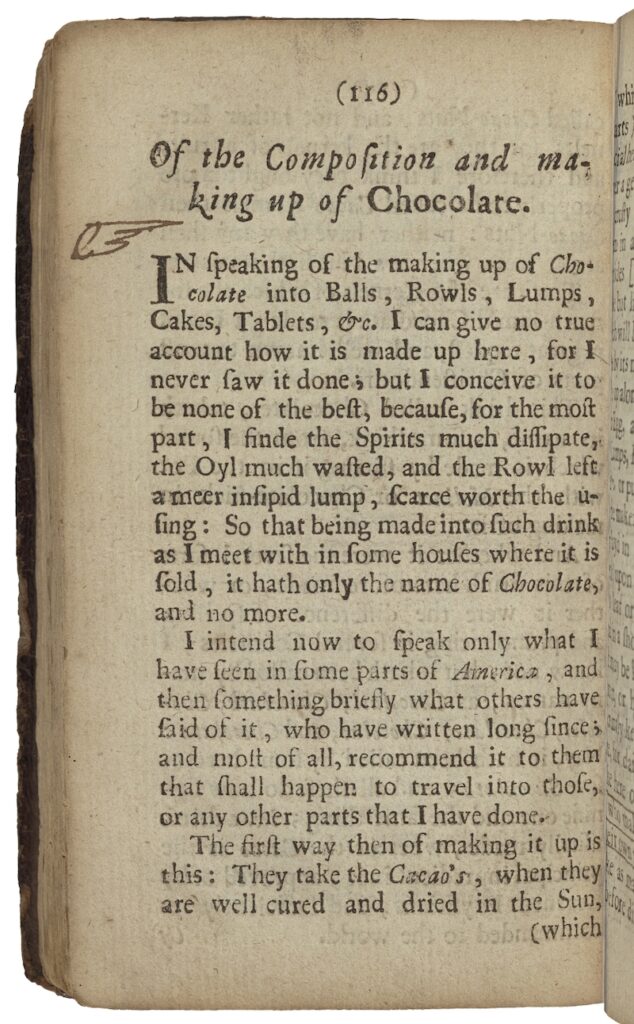 The perfect winter repast – the Folger on an early recipe for hot chocolate: https://shakespeareandbeyond.folger.edu/2019/01/15/the-american-nectar-william-hughess-hot-chocolate/
 Alexander Hamilton’s doctor and America’s first Botanic Garden: https://publicdomainreview.org/2019/01/24/flower-power-hamiltons-doctor-and-the-healing-power-of-nature/
























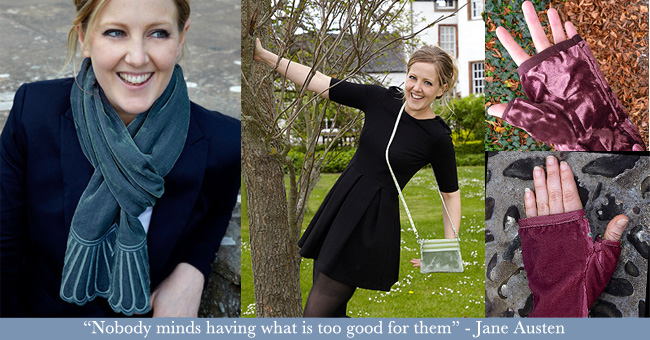

 Jane Austen in Vermont